EP3896393A1 - Methods for initializing a navigation system without heading information and devices thereof - Google Patents
Methods for initializing a navigation system without heading information and devices thereof Download PDFInfo
- Publication number
- EP3896393A1 EP3896393A1 EP21168735.5A EP21168735A EP3896393A1 EP 3896393 A1 EP3896393 A1 EP 3896393A1 EP 21168735 A EP21168735 A EP 21168735A EP 3896393 A1 EP3896393 A1 EP 3896393A1
- Authority
- EP
- European Patent Office
- Prior art keywords
- filters
- heading
- processor
- computing device
- set forth
- Prior art date
- Legal status (The legal status is an assumption and is not a legal conclusion. Google has not performed a legal analysis and makes no representation as to the accuracy of the status listed.)
- Pending
Links
Images




Classifications
-
- G—PHYSICS
- G01—MEASURING; TESTING
- G01C—MEASURING DISTANCES, LEVELS OR BEARINGS; SURVEYING; NAVIGATION; GYROSCOPIC INSTRUMENTS; PHOTOGRAMMETRY OR VIDEOGRAMMETRY
- G01C21/00—Navigation; Navigational instruments not provided for in groups G01C1/00 - G01C19/00
- G01C21/10—Navigation; Navigational instruments not provided for in groups G01C1/00 - G01C19/00 by using measurements of speed or acceleration
- G01C21/12—Navigation; Navigational instruments not provided for in groups G01C1/00 - G01C19/00 by using measurements of speed or acceleration executed aboard the object being navigated; Dead reckoning
- G01C21/16—Navigation; Navigational instruments not provided for in groups G01C1/00 - G01C19/00 by using measurements of speed or acceleration executed aboard the object being navigated; Dead reckoning by integrating acceleration or speed, i.e. inertial navigation
- G01C21/165—Navigation; Navigational instruments not provided for in groups G01C1/00 - G01C19/00 by using measurements of speed or acceleration executed aboard the object being navigated; Dead reckoning by integrating acceleration or speed, i.e. inertial navigation combined with non-inertial navigation instruments
-
- G—PHYSICS
- G01—MEASURING; TESTING
- G01S—RADIO DIRECTION-FINDING; RADIO NAVIGATION; DETERMINING DISTANCE OR VELOCITY BY USE OF RADIO WAVES; LOCATING OR PRESENCE-DETECTING BY USE OF THE REFLECTION OR RERADIATION OF RADIO WAVES; ANALOGOUS ARRANGEMENTS USING OTHER WAVES
- G01S19/00—Satellite radio beacon positioning systems; Determining position, velocity or attitude using signals transmitted by such systems
- G01S19/38—Determining a navigation solution using signals transmitted by a satellite radio beacon positioning system
- G01S19/39—Determining a navigation solution using signals transmitted by a satellite radio beacon positioning system the satellite radio beacon positioning system transmitting time-stamped messages, e.g. GPS [Global Positioning System], GLONASS [Global Orbiting Navigation Satellite System] or GALILEO
- G01S19/42—Determining position
-
- G—PHYSICS
- G01—MEASURING; TESTING
- G01C—MEASURING DISTANCES, LEVELS OR BEARINGS; SURVEYING; NAVIGATION; GYROSCOPIC INSTRUMENTS; PHOTOGRAMMETRY OR VIDEOGRAMMETRY
- G01C25/00—Manufacturing, calibrating, cleaning, or repairing instruments or devices referred to in the other groups of this subclass
- G01C25/005—Manufacturing, calibrating, cleaning, or repairing instruments or devices referred to in the other groups of this subclass initial alignment, calibration or starting-up of inertial devices
-
- G—PHYSICS
- G01—MEASURING; TESTING
- G01S—RADIO DIRECTION-FINDING; RADIO NAVIGATION; DETERMINING DISTANCE OR VELOCITY BY USE OF RADIO WAVES; LOCATING OR PRESENCE-DETECTING BY USE OF THE REFLECTION OR RERADIATION OF RADIO WAVES; ANALOGOUS ARRANGEMENTS USING OTHER WAVES
- G01S19/00—Satellite radio beacon positioning systems; Determining position, velocity or attitude using signals transmitted by such systems
- G01S19/38—Determining a navigation solution using signals transmitted by a satellite radio beacon positioning system
- G01S19/39—Determining a navigation solution using signals transmitted by a satellite radio beacon positioning system the satellite radio beacon positioning system transmitting time-stamped messages, e.g. GPS [Global Positioning System], GLONASS [Global Orbiting Navigation Satellite System] or GALILEO
- G01S19/393—Trajectory determination or predictive tracking, e.g. Kalman filtering
-
- G—PHYSICS
- G01—MEASURING; TESTING
- G01S—RADIO DIRECTION-FINDING; RADIO NAVIGATION; DETERMINING DISTANCE OR VELOCITY BY USE OF RADIO WAVES; LOCATING OR PRESENCE-DETECTING BY USE OF THE REFLECTION OR RERADIATION OF RADIO WAVES; ANALOGOUS ARRANGEMENTS USING OTHER WAVES
- G01S19/00—Satellite radio beacon positioning systems; Determining position, velocity or attitude using signals transmitted by such systems
- G01S19/38—Determining a navigation solution using signals transmitted by a satellite radio beacon positioning system
- G01S19/39—Determining a navigation solution using signals transmitted by a satellite radio beacon positioning system the satellite radio beacon positioning system transmitting time-stamped messages, e.g. GPS [Global Positioning System], GLONASS [Global Orbiting Navigation Satellite System] or GALILEO
- G01S19/52—Determining velocity
-
- G—PHYSICS
- G01—MEASURING; TESTING
- G01S—RADIO DIRECTION-FINDING; RADIO NAVIGATION; DETERMINING DISTANCE OR VELOCITY BY USE OF RADIO WAVES; LOCATING OR PRESENCE-DETECTING BY USE OF THE REFLECTION OR RERADIATION OF RADIO WAVES; ANALOGOUS ARRANGEMENTS USING OTHER WAVES
- G01S19/00—Satellite radio beacon positioning systems; Determining position, velocity or attitude using signals transmitted by such systems
- G01S19/38—Determining a navigation solution using signals transmitted by a satellite radio beacon positioning system
- G01S19/39—Determining a navigation solution using signals transmitted by a satellite radio beacon positioning system the satellite radio beacon positioning system transmitting time-stamped messages, e.g. GPS [Global Positioning System], GLONASS [Global Orbiting Navigation Satellite System] or GALILEO
- G01S19/53—Determining attitude
-
- G—PHYSICS
- G01—MEASURING; TESTING
- G01S—RADIO DIRECTION-FINDING; RADIO NAVIGATION; DETERMINING DISTANCE OR VELOCITY BY USE OF RADIO WAVES; LOCATING OR PRESENCE-DETECTING BY USE OF THE REFLECTION OR RERADIATION OF RADIO WAVES; ANALOGOUS ARRANGEMENTS USING OTHER WAVES
- G01S19/00—Satellite radio beacon positioning systems; Determining position, velocity or attitude using signals transmitted by such systems
- G01S19/38—Determining a navigation solution using signals transmitted by a satellite radio beacon positioning system
- G01S19/39—Determining a navigation solution using signals transmitted by a satellite radio beacon positioning system the satellite radio beacon positioning system transmitting time-stamped messages, e.g. GPS [Global Positioning System], GLONASS [Global Orbiting Navigation Satellite System] or GALILEO
- G01S19/42—Determining position
- G01S19/48—Determining position by combining or switching between position solutions derived from the satellite radio beacon positioning system and position solutions derived from a further system
- G01S19/49—Determining position by combining or switching between position solutions derived from the satellite radio beacon positioning system and position solutions derived from a further system whereby the further system is an inertial position system, e.g. loosely-coupled
Definitions
- This technology relates to methods for initializing a navigation system, such as an Inertial Navigation System (INS)/Global Navigation Satellite System (GNSS), without heading information and devices thereof.
- INS Inertial Navigation System
- GNSS Global Navigation Satellite System
- Strapdown inertial navigation performance in for example an Inertial Navigation System (INS)/Global Navigation Satellite System (GNSS), requires good initialization data, such as position, velocity, and attitude, to function.
- position data can be initialized by the GNSS or last known position from a previous run stored in a non-volatile or other memory.
- velocity data is given by GNSS or may be assumed to be zero since a vehicle usually starts from a stationary position.
- Pitch and roll are initialized by an accelerometer leveling with a gravity vector, but heading is hardly initialized without the use of other sensors, such as for example, a magnetometer, a dual antenna GNSS, or a gyrocompass.
- the determining the estimated heading of the object further comprises determining, by the computing device, the estimated heading based on the initial heading of one of the filters with a largest one of the iteratively determined weights.
- the determining the estimated heading of the object further comprises determining, by the computing device, the estimated heading based on an average of the initial headings of the filters each adjusted based on a corresponding one of the iteratively determined weights.
- the method further comprises limiting, by the computing device, a number of the iterative determinations of the weight associated with each of the filters based on a threshold before the estimated heading is determined.
- the determining the estimated heading of the object further comprises determining, by the computing device, the estimated heading based on the initial heading of one of the filters with a highest probability of accuracy based on the iteratively determined weights and at least one programmed detection rule defined by a probability of a false alarm.
- the plurality of filters in the adaptive estimation model comprise a plurality of Kalman filters.
- a non-transitory computer readable medium having stored thereon instructions comprising executable code which when executed by a processor, causes the processor to: receive ongoing position data and velocity data of an object with a Global Navigation Satellite System (GNSS) receiver system and an inertial measurement unit; iteratively determine a weight associated with each of a plurality of filters in an adaptive estimation model based on an initial heading for each of the filters and the ongoing obtained position data and the velocity data of the object; and determine an estimated heading of the object based on the iteratively determined weight associated with each of the filters.
- GNSS Global Navigation Satellite System
- the determine the estimated heading of the object further comprises executable code which when executed by a processor causes the processor to determine the estimated heading based on the initial heading of one of the filters with a largest one of the iteratively determined weights.
- the determine the estimated heading of the object further comprises executable code which when executed by a processor causes the processor to determine the estimated heading based on an average of the initial headings of the filters each adjusted based on a corresponding one of the iteratively determined weights.
- the medium further comprises executable code which when executed by a processor causes the processor to limit a number of the iterative determinations of the weight associated with each of the filters based on a threshold before the estimated heading is determined.
- the determine the estimated heading of the object further comprises executable code which when executed by a processor causes the processor to determine the estimated heading based on the initial heading of one of the filters with a highest probability of accuracy based on the iteratively determined weights and at least one programmed detection rule defined by a probability of a false alarm.
- the plurality of filters in the adaptive estimation model comprise a plurality of Kalman filters.
- the plurality of Kalman filters are equal distributed over three hundred sixty degrees.
- a computing apparatus includes a memory coupled to the processor which is configured to be capable of executing programmed instructions stored in the memory to receive ongoing position data and velocity data of an object with a Global Navigation Satellite System (GNSS) receiver system and an inertial measurement unit.
- GNSS Global Navigation Satellite System
- a weight associated with each of a plurality of filters in an adaptive estimation model is iteratively determined, by the computing device, based on an initial heading for each of the filters and the ongoing obtained position data and the velocity data of the object.
- An estimated heading of the object is determined, by the computing device. based on the iteratively determined weight associated with each of the filters.
- GNSS Global Navigation Satellite System
- the determine the estimated heading of the object further comprises executable code which when executed by a processor causes the processor to determine the estimated heading based on the initial heading of one of the filters with a largest one of the iteratively determined weights.
- the determine the estimated heading of the object further comprises executable code which when executed by a processor causes the processor to determine the estimated heading based on an average of the initial headings of the filters each adjusted based on a corresponding one of the iteratively determined weights.
- the device further comprises executable code which when executed by a processor causes the processor to limit a number of the iterative determinations of the weight associated with each of the filters based on a threshold before the estimated heading is determined.
- the determine the estimated heading of the object further comprises executable code which when executed by a processor causes the processor to determine the estimated heading based on the initial heading of one of the filters with a highest probability of accuracy based on the iteratively determined weights and at least one programmed detection rule defined by a probability of a false alarm.
- the plurality of filters in the adaptive estimation model comprise a plurality of Kalman filters.
- the plurality of Kalman filters are equal distributed over three hundred sixty degrees.
- This technology provides a number of advantages including providing methods and devices for initializing strapdown inertial navigation with navigation systems, such as an Inertial Navigation System (INS)/Global Navigation Satellite System (GNSS), without heading information.
- additional sensors such as a magnetometer, a dual antenna GNSS, or a gyrocompass, which can introduce issues and/or other complexities and costs are not required.
- accurate estimated heading information may be obtained with lower cost inertial measurement units which may not utilize or have the other additional sensors discussed earlier.
- FIG. 1 An example of an environment with an exemplary positioning, navigation and timing (PNT) system 10 is illustrated in FIG. 1 .
- the positioning, navigation and timing (PNT) system 10 includes a PNT computing device 12, an inertial measurement unit (IMU) 14, and a Global Navigation Satellite System (GNSS) system 16, although the system may have other types and/or other numbers of systems, devices, components or other elements in other configurations.
- IMU inertial measurement unit
- GNSS Global Navigation Satellite System
- This technology provides a number of advantages including providing methods and devices for initializing strapdown inertial navigation with navigation systems, such as an Inertial Navigation System (INS)/Global Navigation Satellite System (GNSS), without heading information.
- INS Inertial Navigation System
- GNSS Global Navigation Satellite System
- the PNT computing device in this example includes at least one processor, memory, a communication interface which are coupled together by a bus or other communication link, although the PNT computing device can include other types and/or numbers of elements in other configurations.
- the processor of the PNT computing device may execute programmed instructions stored in the memory for the any number of the functions or other operations illustrated and described by way of the examples herein.
- the processor of the PNT computing device may include one or more CPUs or other processors with one or more processing cores, for example, although other types of processor(s) can also be used.
- the memory of the PNT computing device stores these programmed instructions and/or other data for one or more aspects of the present technology as illustrated and described herein, although some or all of the programmed instructions could be stored elsewhere.
- a variety of different types of memory storage devices such as random access memory (RAM), read only memory (ROM), hard disk (HDD), solid state drives (SSD), flash memory, or other computer readable medium which is read from and written to by a magnetic, optical, or other reading and writing system that is coupled to the processor(s), can be used for the memory.
- the memory of the PNT computing device can store application(s) that can include executable instructions that, when executed by the user equipment computing device, cause the PNT computing device to perform actions, such as to transmit, receive, or otherwise process signals related to navigation or other positioning and to perform other actions illustrated and described by way of the examples herein with reference to FIGS. 1-6B and 7A-8B .
- the application(s) can be implemented as modules or components of other application(s). Further, the application(s) can be implemented as operating system extensions, modules, plugins, or the like.
- the memory includes an adaptive estimation module 32 that includes an algorithm for an adaptive estimation model along with other programmed instructions to initialize a navigation system, such as an Inertial Navigation System (INS)/Global Navigation Satellite System (GNSS), without heading information as illustrated and described by way of the examples herein.
- INS Inertial Navigation System
- GNSS Global Navigation Satellite System
- the communication interface of the PNT computing device operatively couples and communicates between the PNT computing device and the IMU 14 and the GNSS system 16 by a bus 32, although other types and/or numbers of connections and/or configurations to other devices and/or elements can be used.
- the communication network(s) can include local area network(s) (LAN(s)) or wide area network(s) (WAN(s)), and/or wireless networks by way of example only, although other types and/or numbers of protocols and/or communication networks can be used.
- the inertial measurement unit (IMU) 14 is an electronic device that measures and reports a body's specific, angular rate, and sometimes the orientation of the body, using a combination of accelerometers, gyroscopes, and in some examples magnetometers, although other types of IMUs may be used. In this example, an IMU without a magnetometer or other additional sensor is used to further reduce the cost of examples of this technology while still maintaining heading accuracy. Additionally, in this example the IMU 14 is illustrated separate from the PNT computing device 12 and connected by a bus 32, although the IMU 14 may be incorporated within the PNT computing device 12 and/or may be coupled to the PNT computing device 12 in other wired or wireless manner via other types of network connections.
- the GNSS system 16 includes a GNSS receiver 25 with a single antenna in this example, a control clock device 28 and a GNSS disciplined oscillator 30 which are coupled together and are configured to operate as a GNSS receiver timing device, although other types of receiver devices external or internal in the PNT computing device 12 may be used.
- the GNSS receiver is configured to capture signals, such as data packets, from GNSS satellites when navigation or other positioning is to be determined, although other types of receivers may be used.
- the GNSS disciplined oscillator is an oscillator whose output is controlled to agree with the signals broadcast by GNSS satellites, although other types of controlled or disciplined oscillators or other timing elements with similar accuracy may be used.
- the GNSS disciplined oscillator is an oscillator with at least about 10 -6 stability to provide in these examples the necessary accuracy for the calculated measurements, although other stability ranges may be used.
- the GNSS disciplined oscillator 30 may be a TCXO - Temperature Compensated quartz crystal Oscillator with at least about 10 -6 stability, an OCXO - Oven Controlled quartz crystal Oscillator with about a 10 -8 - 10 -10 stability, or an Atomic Oscillator with about a 10 -11 - 10 -12 stability.
- one or more GNSS satellite transmitters are configured to broadcast signals which can be received and processed by the PNT computing device for positioning and navigation.
- Portions of all of the examples of the technology illustrated and described herein may also be embodied as one or more non-transitory computer readable media having instructions stored thereon for one or more aspects of the present technology.
- the instructions in some examples include executable code that, when executed by the processor of the user equipment computing device, cause the processor to carry out steps necessary to implement the methods of the examples of this technology that are illustrated and described herein.
- INS Inertial Navigation System
- GNSS Global Navigation Satellite System
- FIGS. 1-3 An exemplary method for initializing a navigation system, such as an Inertial Navigation System (INS)/Global Navigation Satellite System (GNSS), without heading information will now be described with reference to FIGS. 1-3 .
- the PNT system 10 comprising the PNT computing device 12, the IMU 14, and the GNSS system 16 in this example, may be mounted or otherwise coupled or associated with an object, such as an airplane or other vehicle by way of example only, that requires initialization for navigation.
- the PNT computing device 12 begins to receive ongoing velocity data and position data of an object from the an inertial measurement unit 14 and the Global Navigation Satellite System (GNSS) receiver system, although the velocity data and/or position data may be obtained in other manners and/or other types of data may be received.
- GNSS Global Navigation Satellite System
- the PNT computing device 12 may determine a weight associated with each of a plurality of filters in an adaptive estimation model in module 32 based on an initial heading for each of the filters and the ongoing obtained position and the velocity data of the object, although other manners for applying the adaptive estimation model.
- the initial heading data is unknown and a guess of a value for this initial heading data is made by employing a Multiple Model Adaptive Estimation (MMEA) method in the adaptive estimation model in module 32.
- MMEA Multiple Model Adaptive Estimation
- EKFs extended Kalman filters
- ⁇ nb 0 , i n , z 1 : k w k ⁇ 1 , i , where w k,i is the weight of sub-filter i at epoch k , ⁇ nb 0 , i n its initial heading, z k the observation vector, and z 1: k ⁇ z 1 , z 2 ,..., z k ).
- z k herein includes GNSS position and velocity measurements.
- subscript b and n denote body and navigation frames, respectively, and subscript 0 presents the initial value of the corresponding variable.
- ⁇ nb 0 n is the initial (subscript 0) heading ⁇ of body frame (subscript b ) with respect to local navigation frame (subscript n ) and resolving in navigation frame (superscript n ).
- the likelihood function in (1) is given as: p z k
- ⁇ nb 0 , i n , z 1 : k 1 2 ⁇ m H k , i P k , i ⁇ H k , i T + R k exp ⁇ 1 2 ⁇ z k , i T H k , i P k , i ⁇ H k , i T + R k , i ⁇ 1 ⁇ z k , i ⁇ , where m denotes the dimension of z k , H k,i the measurement matrix, P k , i ⁇ the propagated state covariance matrix, R i,k the noise covariance matrix, and ⁇ z k , i ⁇ the measurement innovation vector.
- the PNT computing device 12 may optionally determine if a threshold number of iterations of determining a weight associated with each of a plurality of filters in an adaptive estimation model has been reached, although in other examples this step may not be required. In this example, after some number of iterations, a few weights are updated and thus become dominant in comparison with the others. By monitoring the weights of each sub-filter and comparing them with a predefined threshold by the PNT computing device 12, a criterion may be introduced to stop the heading calibration when it converges.
- the predefined threshold is fine-tuned by the PNT computing device 12 to stop the algorithm for the MMAE in module 32 before losing the diversity of the weights (similar to the particle depletion in particle filtering).
- step 304 the PNT computing device 12 determines that the threshold number of iterations has not been reached or converged. If in step 304, the PNT computing device 12 determines that the threshold number of iterations has been reached or has converged, then the Yes branch is taken back to step 306.
- the PNT computing device 12 may determine an estimated heading of the object based on the iteratively determined weight associated with each of the filters.
- the initial heading estimate ⁇ ⁇ nb 0 n can be determined by the PNT computing device 12 by examining the initial heading given to the one of the sub-filters whose weight is largest (or computing the weighted mean of all initial headings). If there was an erroneous initial heading value, then the PNT system 10 can be reinitialized.
- reinitializing of the PNT system 10 can be done by replaying the sequential estimation from the beginning until the current epoch as described in the steps above, although other options may be used.
- the PNT computing device 12 may determine an estimated heading of the object based on an average of the initial headings of the filters each adjusted based on a corresponding one of the iteratively determined weights, although other manners for determining the estimated heading may be used.
- the current heading value is determined by the PNT computing device 12 by the current averaged/blended heading estimates ⁇ ⁇ nb , k , blended n of all the sub-filter as follows: ⁇ ⁇ nb , k , blended n ⁇ ⁇ i ⁇ ⁇ nb , k , i n w k , i , where ⁇ ⁇ nb , k , i n is the heading estimate of sub-filter i at epoch k . Note that the (4) is approximate. The exact solution lies in computing the weighted mean of full rotation matrix or quaternion.
- the PNT computing device 12 may determine an estimated heading of the object based on the initial heading of one of the filters with a highest probability of accuracy based on the iteratively determined weights and at least one programmed detection rule defined by a probability of a false alarm, although other manners for determining the estimated heading may be used.
- a true initial or estimated heading typically lies between the two potential values given by two of the sub-filter.
- the sub-filter is chosen by the PNT computing device 12 based on a detection rule defined by a probability of false alarm for example.
- RTK real-time kinematic
- FIGS. 4A and 4B graphs of an example of attitude comparison with reference (left) and attitude errors (right) for this first example using a 12-filter MMAE in module 32 to recalibrate the heading ⁇ (red curves) are illustrated.
- the true initial heading was about 89° while the PNT system 10 was being initialized with the north direction leading to the heading error at the beginning of about -89°.
- FIGS. 5A and 5B examples of graphs of attitude errors and position errors for the whole trajectory in this first example are illustrated.
- This test run exhibits a very long outage about 1200s which results in a large position drift.
- this the solution with this first example of the PNT system 12 was compared with another system that used a magnetometer to initialize the heading.
- FIGS. 6A and 6B examples of graphs of attitude and position errors for the first example using the magnetometer to initialize the heading.
- This example illustrates that the magnetometer fails to get the initial heading (>100 deg error at the beginning in left sub-figure).
- the position error is much larger than that with the example of the PNT system 12 with the MMAE in module 32 as shown in FIGS. 4A-5B .
- FIGS. 7A-7C additional graphs illustrating the failure of the system with the magnetometer to initialize the heading due to the bad estimation of hard-iron offsets.
- FIGS. 7A-7C illustrate graphs of calibrated magnetometer measurement, scale and offset estimations for this first example.
- the graph in FIG. 7A compares the magnetometer measurement (i.e., total magnetic flux density) with the reference (calculated by ground truth heading and an earth magnetic model like IGRF). This graph shows that there are offsets in magnetometer measurements that are not compensated.
- the graphs in FIGS. 7B and 7C present the estimated soft-iron scales and hard-iron offsets which are prone to errors in case iron objects are surrounded.
- FIGS. 8A and 8B graphs of attitude error during a whole test (left) and during the first 200 s (right) are illustrated in a second example.
- the true initial heading was about 87° and the main EKF is initialized with the North leading to -87° heading error.
- the MMAE corrects the main EKF leading to heading error of 8 deg.
- this technology provides a number of advantages including providing methods and devices for initializing strapdown inertial navigation with navigation systems, such as an Inertial Navigation System (INS)/Global Navigation Satellite System (GNSS), without heading information.
- INS Inertial Navigation System
- GNSS Global Navigation Satellite System
- additional sensors such as a magnetometer, a dual antenna GNSS, or a gyrocompass, which can introduce issues and/or other complexities and costs are not required.
- accurate estimated heading information may be obtained with lower cost inertial measurement units which may not utilize or have the other additional sensors discussed earlier.
Landscapes
- Engineering & Computer Science (AREA)
- Radar, Positioning & Navigation (AREA)
- Remote Sensing (AREA)
- Physics & Mathematics (AREA)
- General Physics & Mathematics (AREA)
- Computer Networks & Wireless Communication (AREA)
- Manufacturing & Machinery (AREA)
- Automation & Control Theory (AREA)
- Navigation (AREA)
- Position Fixing By Use Of Radio Waves (AREA)
Abstract
Description
- This technology relates to methods for initializing a navigation system, such as an Inertial Navigation System (INS)/Global Navigation Satellite System (GNSS), without heading information and devices thereof.
- Strapdown inertial navigation performance, in for example an Inertial Navigation System (INS)/Global Navigation Satellite System (GNSS), requires good initialization data, such as position, velocity, and attitude, to function. Usually position data can be initialized by the GNSS or last known position from a previous run stored in a non-volatile or other memory. Additionally, velocity data is given by GNSS or may be assumed to be zero since a vehicle usually starts from a stationary position. Pitch and roll are initialized by an accelerometer leveling with a gravity vector, but heading is hardly initialized without the use of other sensors, such as for example, a magnetometer, a dual antenna GNSS, or a gyrocompass.
- Accordingly, with prior technologies other sensors are required for initialization of heading, but unfortunately there can be issues and/or other complexities with using these other sensors for initializing heading. For example, when the other sensor for initializing heading is a magnetometer, the magnetometer is prone to disturbances when there are ferrous objects nearby. In another example, when the other sensor for initializing heading is a dual antenna GNSS, the dual antenna GNSS requires more complex settings and the presence of a valid GNSS signal. In yet another example, when the other sensor for initializing heading involves a gyrocompass, gyrocompassing only works with a high-performance navigation grade Inertial Measurement Units (IMUs).
- There is provided a method for initializing a navigation system without heading information, the method comprising:
- receiving, by a computing device, ongoing position data and velocity data of an object with a Global Navigation Satellite System (GNSS) receiver system and an inertial measurement unit;
- iteratively determining, by the computing device, a weight associated with each of a plurality of filters in an adaptive estimation model based on an initial heading for each of the filters and the ongoing obtained position data and the velocity data of the object; and
- In accordance with an aspect of the invention, the determining the estimated heading of the object further comprises determining, by the computing device, the estimated heading based on the initial heading of one of the filters with a largest one of the iteratively determined weights.
- In accordance with another aspect of the invention, the determining the estimated heading of the object further comprises determining, by the computing device, the estimated heading based on an average of the initial headings of the filters each adjusted based on a corresponding one of the iteratively determined weights.
- In accordance with an aspect of the invention, the method further comprises limiting, by the computing device, a number of the iterative determinations of the weight associated with each of the filters based on a threshold before the estimated heading is determined.
- In accordance with another aspect of the invention, the determining the estimated heading of the object further comprises determining, by the computing device, the estimated heading based on the initial heading of one of the filters with a highest probability of accuracy based on the iteratively determined weights and at least one programmed detection rule defined by a probability of a false alarm.
- In accordance with an aspect of the invention, the plurality of filters in the adaptive estimation model comprise a plurality of Kalman filters.
- In accordance with another aspect of the invention, wherein the plurality of Kalman filters are equal distributed over three hundred sixty degrees.
- There is also provided a non-transitory computer readable medium having stored thereon instructions comprising executable code which when executed by a processor, causes the processor to: receive ongoing position data and velocity data of an object with a Global Navigation Satellite System (GNSS) receiver system and an inertial measurement unit; iteratively determine a weight associated with each of a plurality of filters in an adaptive estimation model based on an initial heading for each of the filters and the ongoing obtained position data and the velocity data of the object; and determine an estimated heading of the object based on the iteratively determined weight associated with each of the filters.
- In accordance with an aspect of the invention, the determine the estimated heading of the object further comprises executable code which when executed by a processor causes the processor to determine the estimated heading based on the initial heading of one of the filters with a largest one of the iteratively determined weights.
- In accordance with another aspect of the invention, the determine the estimated heading of the object further comprises executable code which when executed by a processor causes the processor to determine the estimated heading based on an average of the initial headings of the filters each adjusted based on a corresponding one of the iteratively determined weights.
- In accordance with an aspect of the invention, the medium further comprises executable code which when executed by a processor causes the processor to limit a number of the iterative determinations of the weight associated with each of the filters based on a threshold before the estimated heading is determined.
- In accordance with another aspect of the invention, the determine the estimated heading of the object further comprises executable code which when executed by a processor causes the processor to determine the estimated heading based on the initial heading of one of the filters with a highest probability of accuracy based on the iteratively determined weights and at least one programmed detection rule defined by a probability of a false alarm.
- In accordance with an aspect of the invention, the plurality of filters in the adaptive estimation model comprise a plurality of Kalman filters.
- In accordance with another aspect of the invention, the plurality of Kalman filters are equal distributed over three hundred sixty degrees.
- There is further provided a computing apparatus includes a memory coupled to the processor which is configured to be capable of executing programmed instructions stored in the memory to receive ongoing position data and velocity data of an object with a Global Navigation Satellite System (GNSS) receiver system and an inertial measurement unit. A weight associated with each of a plurality of filters in an adaptive estimation model is iteratively determined, by the computing device, based on an initial heading for each of the filters and the ongoing obtained position data and the velocity data of the object. An estimated heading of the object is determined, by the computing device. based on the iteratively determined weight associated with each of the filters.
- In accordance with an aspect of the invention, the determine the estimated heading of the object further comprises executable code which when executed by a processor causes the processor to determine the estimated heading based on the initial heading of one of the filters with a largest one of the iteratively determined weights.
- In accordance with another aspect of the invention, the determine the estimated heading of the object further comprises executable code which when executed by a processor causes the processor to determine the estimated heading based on an average of the initial headings of the filters each adjusted based on a corresponding one of the iteratively determined weights.
- In accordance with an aspect of the invention, the device further comprises executable code which when executed by a processor causes the processor to limit a number of the iterative determinations of the weight associated with each of the filters based on a threshold before the estimated heading is determined.
- In accordance with an aspect of the invention, the determine the estimated heading of the object further comprises executable code which when executed by a processor causes the processor to determine the estimated heading based on the initial heading of one of the filters with a highest probability of accuracy based on the iteratively determined weights and at least one programmed detection rule defined by a probability of a false alarm.
- In accordance with another aspect of the invention, the plurality of filters in the adaptive estimation model comprise a plurality of Kalman filters.
- In accordance with an aspect of the invention, the plurality of Kalman filters are equal distributed over three hundred sixty degrees.
- This technology provides a number of advantages including providing methods and devices for initializing strapdown inertial navigation with navigation systems, such as an Inertial Navigation System (INS)/Global Navigation Satellite System (GNSS), without heading information. With this technology, additional sensors, such as a magnetometer, a dual antenna GNSS, or a gyrocompass, which can introduce issues and/or other complexities and costs are not required. With this technology, accurate estimated heading information may be obtained with lower cost inertial measurement units which may not utilize or have the other additional sensors discussed earlier.
- By way of example only, an embodiment of the invention will now be described with reference to the accompanying drawings.
-
-
FIG. 1 is a block diagram of an example of an environment with an exemplary positioning, navigation and timing (PNT) computing device; -
FIG. 2 is a functional block diagram of an Multiple Model Adaptive Estimation (MMAE) algorithm for execution by the PNT computing device with inputs from an inertial measurement unit and from a Global Navigation Satellite System (GNSS); -
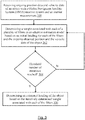
FIG. 3 is a flowchart of an example of initializing a navigation system, such as an Inertial Navigation System (INS)/Global Navigation Satellite System (GNSS), without heading information; -
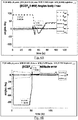
FIGS. 4A and 4B are graphs of an example of an attitude comparison with reference (left) and attitude errors (right) for an example using the exemplary MMAE shown inFIG. 2 with twelve filters to recalibrate the heading ψ (red curves; -
FIGS. 5A and 5B are graphs of examples of attitude errors and position errors for a whole trajectory for the example shown inFIG. 4A and 4B ; -
FIGS. 6A and 6B are graphs of examples of attitude and position errors for the example shown inFIG. 4A and 4B when a magnetometer is used to initialize the heading; -
FIGS. 7A-7C are graphs of examples illustrating a failure of the magnetometer used to initialize the heading for the example shown inFIG. 4A and 4B due to the bad estimation of hard-iron offsets; and -
FIGS. 8A and 8B are graphs of another example of attitude error during a test and during a first 200 seconds. - An example of an environment with an exemplary positioning, navigation and timing (PNT)
system 10 is illustrated inFIG. 1 . In this example, the positioning, navigation and timing (PNT)system 10 includes aPNT computing device 12, an inertial measurement unit (IMU) 14, and a Global Navigation Satellite System (GNSS)system 16, although the system may have other types and/or other numbers of systems, devices, components or other elements in other configurations. This technology provides a number of advantages including providing methods and devices for initializing strapdown inertial navigation with navigation systems, such as an Inertial Navigation System (INS)/Global Navigation Satellite System (GNSS), without heading information. - Referring more specifically to
FIG. 1 , the PNT computing device in this example includes at least one processor, memory, a communication interface which are coupled together by a bus or other communication link, although the PNT computing device can include other types and/or numbers of elements in other configurations. - The processor of the PNT computing device may execute programmed instructions stored in the memory for the any number of the functions or other operations illustrated and described by way of the examples herein. The processor of the PNT computing device may include one or more CPUs or other processors with one or more processing cores, for example, although other types of processor(s) can also be used.
- The memory of the PNT computing device stores these programmed instructions and/or other data for one or more aspects of the present technology as illustrated and described herein, although some or all of the programmed instructions could be stored elsewhere. A variety of different types of memory storage devices, such as random access memory (RAM), read only memory (ROM), hard disk (HDD), solid state drives (SSD), flash memory, or other computer readable medium which is read from and written to by a magnetic, optical, or other reading and writing system that is coupled to the processor(s), can be used for the memory.
- Accordingly, the memory of the PNT computing device can store application(s) that can include executable instructions that, when executed by the user equipment computing device, cause the PNT computing device to perform actions, such as to transmit, receive, or otherwise process signals related to navigation or other positioning and to perform other actions illustrated and described by way of the examples herein with reference to
FIGS. 1-6B and7A-8B . The application(s) can be implemented as modules or components of other application(s). Further, the application(s) can be implemented as operating system extensions, modules, plugins, or the like. In this particular example, the memory includes anadaptive estimation module 32 that includes an algorithm for an adaptive estimation model along with other programmed instructions to initialize a navigation system, such as an Inertial Navigation System (INS)/Global Navigation Satellite System (GNSS), without heading information as illustrated and described by way of the examples herein. - The communication interface of the PNT computing device operatively couples and communicates between the PNT computing device and the
IMU 14 and theGNSS system 16 by abus 32, although other types and/or numbers of connections and/or configurations to other devices and/or elements can be used. By way of example only, the communication network(s) can include local area network(s) (LAN(s)) or wide area network(s) (WAN(s)), and/or wireless networks by way of example only, although other types and/or numbers of protocols and/or communication networks can be used. - The inertial measurement unit (IMU) 14 is an electronic device that measures and reports a body's specific, angular rate, and sometimes the orientation of the body, using a combination of accelerometers, gyroscopes, and in some examples magnetometers, although other types of IMUs may be used. In this example, an IMU without a magnetometer or other additional sensor is used to further reduce the cost of examples of this technology while still maintaining heading accuracy. Additionally, in this example the
IMU 14 is illustrated separate from thePNT computing device 12 and connected by abus 32, although theIMU 14 may be incorporated within thePNT computing device 12 and/or may be coupled to thePNT computing device 12 in other wired or wireless manner via other types of network connections. - The
GNSS system 16 includes aGNSS receiver 25 with a single antenna in this example, acontrol clock device 28 and a GNSSdisciplined oscillator 30 which are coupled together and are configured to operate as a GNSS receiver timing device, although other types of receiver devices external or internal in thePNT computing device 12 may be used. The GNSS receiver is configured to capture signals, such as data packets, from GNSS satellites when navigation or other positioning is to be determined, although other types of receivers may be used. In this example, the GNSS disciplined oscillator is an oscillator whose output is controlled to agree with the signals broadcast by GNSS satellites, although other types of controlled or disciplined oscillators or other timing elements with similar accuracy may be used. In this example, the GNSS disciplined oscillator is an oscillator with at least about 10-6 stability to provide in these examples the necessary accuracy for the calculated measurements, although other stability ranges may be used. By way of example only, the GNSSdisciplined oscillator 30 may be a TCXO - Temperature Compensated quartz crystal Oscillator with at least about 10-6 stability, an OCXO - Oven Controlled quartz crystal Oscillator with about a 10-8 - 10-10 stability, or an Atomic Oscillator with about a 10-11 - 10-12 stability. In this example, one or more GNSS satellite transmitters are configured to broadcast signals which can be received and processed by the PNT computing device for positioning and navigation. - Although the user equipment computing device, the GNSS satellite transmitters (1-n), attacker equipment computing device, and optional UTC source are illustrated and described in the illustrative examples herein, other types and/or numbers of systems, devices, components, and/or elements in other topologies can be used. It is to be understood that the systems of the examples described herein are for exemplary purposes, as many variations of the specific hardware and software used to implement the examples are possible, as will be appreciated by those skilled in the relevant art(s).
- Portions of all of the examples of the technology illustrated and described herein may also be embodied as one or more non-transitory computer readable media having instructions stored thereon for one or more aspects of the present technology. The instructions in some examples include executable code that, when executed by the processor of the user equipment computing device, cause the processor to carry out steps necessary to implement the methods of the examples of this technology that are illustrated and described herein.
- An exemplary method for initializing a navigation system, such as an Inertial Navigation System (INS)/Global Navigation Satellite System (GNSS), without heading information will now be described with reference to
FIGS. 1-3 . In this example, the method for initializing INS/GNSS using only information from alower grade IMU 14 and a single antennaGNSS receiver system 16, although other types of IMUs and/or positioning systems may be used. - Referring more specifically to
FIG. 3 , instep 300 thePNT system 10, comprising thePNT computing device 12, theIMU 14, and theGNSS system 16 in this example, may be mounted or otherwise coupled or associated with an object, such as an airplane or other vehicle by way of example only, that requires initialization for navigation. When the object begins to move, thePNT computing device 12 begins to receive ongoing velocity data and position data of an object from the aninertial measurement unit 14 and the Global Navigation Satellite System (GNSS) receiver system, although the velocity data and/or position data may be obtained in other manners and/or other types of data may be received. - In
step 302, thePNT computing device 12 may determine a weight associated with each of a plurality of filters in an adaptive estimation model inmodule 32 based on an initial heading for each of the filters and the ongoing obtained position and the velocity data of the object, although other manners for applying the adaptive estimation model. In this example, the initial heading data is unknown and a guess of a value for this initial heading data is made by employing a Multiple Model Adaptive Estimation (MMEA) method in the adaptive estimation model inmodule 32. In particular, in this example, a bank of extended Kalman filters (EKFs) are utilized and their initial heading values are equally distributed over 360°. By way of example, a band of 12 EKFs has -180°, -150°, -120°, -90°, -60°, -30°, 0°, 30°, 60°, 90°, 120°, and 150° headings for each sub-filter i with equal probability w 0,i = 1/12, but other numbers of bands may be used. The larger the number of bands, the higher the accuracy of this example of the method, but increasing the number of bands requires more processing power. - When the object with the
PNT system 10, comprising thePNT computing device 12, theIMU 14, and theGNSS system 16 in this example moves, the GNSS position and velocity sequences can be used to update a weight wi,k of each sub-filter i as follows:
where wk,i is the weight of sub-filter i at epoch k,
- Note that throughout the subscripts b and n denote body and navigation frames, respectively, and
subscript 0 presents the initial value of the corresponding variable. For instance,
- The likelihood function in (1) is given as:

where m denotes the dimension of zk, Hk,i the measurement matrix,

- In
step 304, thePNT computing device 12 may optionally determine if a threshold number of iterations of determining a weight associated with each of a plurality of filters in an adaptive estimation model has been reached, although in other examples this step may not be required. In this example, after some number of iterations, a few weights are updated and thus become dominant in comparison with the others. By monitoring the weights of each sub-filter and comparing them with a predefined threshold by thePNT computing device 12, a criterion may be introduced to stop the heading calibration when it converges. - In this example, the predefined threshold is fine-tuned by the
PNT computing device 12 to stop the algorithm for the MMAE inmodule 32 before losing the diversity of the weights (similar to the particle depletion in particle filtering). Inspired by particle filtering, the MMAE inmodule 32 is supposed to converge in this example when the following condition is met:
where Nth is a predefined threshold and usually a fraction of the size of filter bank L i.e., Nth = γL. - Accordingly, if in
step 304, thePNT computing device 12 determines that the threshold number of iterations has not been reached or converged, then the No branch is taken back tostep 302. If instep 304, thePNT computing device 12 determines that the threshold number of iterations has been reached or has converged, then the Yes branch is taken back tostep 306. - In
step 306, thePNT computing device 12 may determine an estimated heading of the object based on the iteratively determined weight associated with each of the filters. In one example, after a few iterations of determining each weight, the initial heading estimate
PNT computing device 12 by examining the initial heading given to the one of the sub-filters whose weight is largest (or computing the weighted mean of all initial headings). If there was an erroneous initial heading value, then thePNT system 10 can be reinitialized. - In this example, reinitializing of the
PNT system 10 can be done by replaying the sequential estimation from the beginning until the current epoch as described in the steps above, although other options may be used. For example, thePNT computing device 12 may determine an estimated heading of the object based on an average of the initial headings of the filters each adjusted based on a corresponding one of the iteratively determined weights, although other manners for determining the estimated heading may be used. In this example, the current heading value is determined by thePNT computing device 12 by the current averaged/blended heading estimates

where
- Similarly, the initial heading estimate is given as:

- In yet another example, the
PNT computing device 12 may determine an estimated heading of the object based on the initial heading of one of the filters with a highest probability of accuracy based on the iteratively determined weights and at least one programmed detection rule defined by a probability of a false alarm, although other manners for determining the estimated heading may be used. In this example, a true initial or estimated heading typically lies between the two potential values given by two of the sub-filter. Thus, in this example to avoid wrong selection, the sub-filter is chosen by thePNT computing device 12 based on a detection rule defined by a probability of false alarm for example. - A prototype of the
PNT system 10 that combines signals from anIMU 14 and a single frequencyGNSS receiver system 16 was tested. The performance was benchmarked by comparing with ground truth provided by a real-time kinematic (RTK) receiver. Drive tests were conducted on suburban streets in Rochester NY (latitude 43°N) in order to evaluate the solution. A couple of test examples are chosen to present. - Referring to
FIGS. 4A and 4B , graphs of an example of attitude comparison with reference (left) and attitude errors (right) for this first example using a 12-filter MMAE inmodule 32 to recalibrate the heading ψ (red curves) are illustrated. The true initial heading was about 89° while thePNT system 10 was being initialized with the north direction leading to the heading error at the beginning of about -89°. The MMAE algorithm inmodule 32 was able to reset the error after 52 seconds of processing (8.5 deg error at t=52 s). Note that the vehicle with thePNY system 10 starts to run at t=44 s that heading is observable; thus, MMAE only needs 8 s to calibrate); - Referring to
FIGS. 5A and 5B , examples of graphs of attitude errors and position errors for the whole trajectory in this first example are illustrated. This test run exhibits a very long outage about 1200s which results in a large position drift. Next, this the solution with this first example of thePNT system 12 was compared with another system that used a magnetometer to initialize the heading. - Referring to
FIGS. 6A and 6B , examples of graphs of attitude and position errors for the first example using the magnetometer to initialize the heading. This example illustrates that the magnetometer fails to get the initial heading (>100 deg error at the beginning in left sub-figure). As a result, the position error is much larger than that with the example of thePNT system 12 with the MMAE inmodule 32 as shown inFIGS. 4A-5B . - Referring to
FIGS. 7A-7C , additional graphs illustrating the failure of the system with the magnetometer to initialize the heading due to the bad estimation of hard-iron offsets. In particular,FIGS. 7A-7C illustrate graphs of calibrated magnetometer measurement, scale and offset estimations for this first example. The graph inFIG. 7A compares the magnetometer measurement (i.e., total magnetic flux density) with the reference (calculated by ground truth heading and an earth magnetic model like IGRF). This graph shows that there are offsets in magnetometer measurements that are not compensated. The graphs inFIGS. 7B and 7C present the estimated soft-iron scales and hard-iron offsets which are prone to errors in case iron objects are surrounded. - Referring to
FIGS. 8A and 8B , graphs of attitude error during a whole test (left) and during the first 200 s (right) are illustrated in a second example. In this second example withPNT system 10, the true initial heading was about 87° and the main EKF is initialized with the North leading to -87° heading error. At t = 62 s, the MMAE corrects the main EKF leading to heading error of 8 deg. - Accordingly, as illustrated and described by way of the examples herein, this technology provides a number of advantages including providing methods and devices for initializing strapdown inertial navigation with navigation systems, such as an Inertial Navigation System (INS)/Global Navigation Satellite System (GNSS), without heading information. With this technology, additional sensors, such as a magnetometer, a dual antenna GNSS, or a gyrocompass, which can introduce issues and/or other complexities and costs are not required. With this technology, accurate estimated heading information may be obtained with lower cost inertial measurement units which may not utilize or have the other additional sensors discussed earlier.
- Having thus described the basic concept of the invention, it will be rather apparent to those skilled in the art that the foregoing detailed disclosure is intended to be presented by way of example only, and is not limiting. Various alterations, improvements, and modifications will occur and are intended to those skilled in the art, though not expressly stated herein. These alterations, improvements, and modifications are intended to be suggested hereby, and are within the spirit and scope of the invention. Additionally, the recited order of processing elements or sequences, or the use of numbers, letters, or other designations therefore, is not intended to limit the claimed processes to any order except as may be specified in the claims. Accordingly, the invention is limited only by the following claims and equivalents thereto.
Claims (15)
- A method for initializing a navigation system without heading information, the method comprising:receiving, by a computing device, ongoing position data and velocity data of an object with a Global Navigation Satellite System (GNSS) receiver system and an inertial measurement unit;iteratively determining, by the computing device, a weight associated with each of a plurality of filters in an adaptive estimation model based on an initial heading for each of the filters and the ongoing obtained position data and the velocity data of the object; anddetermining, by the computing device, an estimated heading of the object based on the iteratively determined weight associated with each of the filters.
- The method as set forth in claim 1 wherein the determining the estimated heading of the object further comprises determining, by the computing device, the estimated heading based on the initial heading of one of the filters with a largest one of the iteratively determined weights.
- The method as set forth in claim 1 wherein the determining the estimated heading of the object further comprises determining, by the computing device, the estimated heading based on an average of the initial headings of the filters each adjusted based on a corresponding one of the iteratively determined weights.
- The method as set forth in claim 3 further comprising limiting, by the computing device, a number of the iterative determinations of the weight associated with each of the filters based on a threshold before the estimated heading is determined.
- The method as set forth in claim 1 wherein the determining the estimated heading of the object further comprises determining, by the computing device, the estimated heading based on the initial heading of one of the filters with a highest probability of accuracy based on the iteratively determined weights and at least one programmed detection rule defined by a probability of a false alarm.
- The method as set forth in claim 1 wherein the plurality of filters in the adaptive estimation model comprise a plurality of Kalman filters.
- The method as set forth in claim 6 wherein the plurality of Kalman filters are equal distributed over three hundred sixty degrees.
- A non-transitory computer readable medium having stored thereon instructions comprising executable code which when executed by a processor, causes the processor to implement a method as claimed in any of claims 1 to 7.
- A computing apparatus comprising:a processor; anda memory coupled to the processor which is configured to be capable of executing programmed instructions stored in the memory to:
receive ongoing position data and velocity data of an object with a Global Navigation Satellite System (GNSS) receiver system and an inertial measurement unit;iteratively determine a weight associated with each of a plurality of filters in an adaptive estimation model based on an initial heading for each of the filters and the ongoing obtained position data and the velocity data of the object; anddetermine an estimated heading of the object based on the iteratively determined weight associated with each of the filters. - The device as set forth in claim 9 wherein the determine the estimated heading of the object further comprises executable code which when executed by a processor causes the processor to:
determine the estimated heading based on the initial heading of one of the filters with a largest one of the iteratively determined weights. - The device as set forth in claim 9 wherein the determine the estimated heading of the object further comprises executable code which when executed by a processor causes the processor to:
determine the estimated heading based on an average of the initial headings of the filters each adjusted based on a corresponding one of the iteratively determined weights. - The device as set forth in claim 11 further comprising executable code which when executed by a processor causes the processor to:
limit a number of the iterative determinations of the weight associated with each of the filters based on a threshold before the estimated heading is determined. - The device as set forth in claim 9 wherein the determine the estimated heading of the object further comprises executable code which when executed by a processor causes the processor to:
determine the estimated heading based on the initial heading of one of the filters with a highest probability of accuracy based on the iteratively determined weights and at least one programmed detection rule defined by a probability of a false alarm. - The device as set forth in claim 9 wherein the plurality of filters in the adaptive estimation model comprise a plurality of Kalman filters.
- The medium as set forth in claim 14 wherein the plurality of Kalman filters are equal distributed over three hundred sixty degrees.
Applications Claiming Priority (1)
| Application Number | Priority Date | Filing Date | Title |
|---|---|---|---|
| US16/852,086 US11372113B2 (en) | 2020-04-17 | 2020-04-17 | Methods for initializing a navigation system without heading information and devices thereof |
Publications (1)
| Publication Number | Publication Date |
|---|---|
| EP3896393A1 true EP3896393A1 (en) | 2021-10-20 |
Family
ID=75562553
Family Applications (1)
| Application Number | Title | Priority Date | Filing Date |
|---|---|---|---|
| EP21168735.5A Pending EP3896393A1 (en) | 2020-04-17 | 2021-04-15 | Methods for initializing a navigation system without heading information and devices thereof |
Country Status (2)
| Country | Link |
|---|---|
| US (1) | US11372113B2 (en) |
| EP (1) | EP3896393A1 (en) |
Cited By (2)
| Publication number | Priority date | Publication date | Assignee | Title |
|---|---|---|---|---|
| CN113804202A (en) * | 2021-11-19 | 2021-12-17 | 智道网联科技(北京)有限公司 | Integrated navigation method, electronic device and storage medium |
| CN114111771A (en) * | 2021-11-25 | 2022-03-01 | 九江中船仪表有限责任公司(四四一厂) | Dynamic attitude measurement method of double-shaft stable platform |
Families Citing this family (1)
| Publication number | Priority date | Publication date | Assignee | Title |
|---|---|---|---|---|
| CN115734163B (en) * | 2022-11-22 | 2025-11-21 | 北京航空航天大学 | Collaborative navigation and optimal control method for component PNT elastic terminal |
Citations (1)
| Publication number | Priority date | Publication date | Assignee | Title |
|---|---|---|---|---|
| EP1862764A1 (en) * | 2006-05-31 | 2007-12-05 | Honeywell International Inc. | High speed gyrocompass alignment via multiple kalman filter based hypothesis testing |
Family Cites Families (1)
| Publication number | Priority date | Publication date | Assignee | Title |
|---|---|---|---|---|
| US9491585B2 (en) | 2014-05-31 | 2016-11-08 | Apple Inc. | Location determination using dual statistical filters |
-
2020
- 2020-04-17 US US16/852,086 patent/US11372113B2/en active Active
-
2021
- 2021-04-15 EP EP21168735.5A patent/EP3896393A1/en active Pending
Patent Citations (2)
| Publication number | Priority date | Publication date | Assignee | Title |
|---|---|---|---|---|
| EP1862764A1 (en) * | 2006-05-31 | 2007-12-05 | Honeywell International Inc. | High speed gyrocompass alignment via multiple kalman filter based hypothesis testing |
| EP1862764B1 (en) * | 2006-05-31 | 2011-09-28 | Honeywell International Inc. | High speed gyrocompass alignment via multiple kalman filter based hypothesis testing |
Non-Patent Citations (1)
| Title |
|---|
| HIDE CHRISTOPHER ET AL: "Multiple Model Kalman Filtering for GPS and Low-cost INS Integration", GNSS 2004 - PROCEEDINGS OF THE 17TH INTERNATIONAL TECHNICAL MEETING OF THE SATELLITE DIVISION OF THE INSTITUTE OF NAVIGATION (ION GNSS 2004), THE INSTITUTE OF NAVIGATION, 8551 RIXLEW LANE SUITE 360 MANASSAS, VA 20109, USA, 24 September 2004 (2004-09-24), pages 1096 - 1103, XP056009224 * |
Cited By (3)
| Publication number | Priority date | Publication date | Assignee | Title |
|---|---|---|---|---|
| CN113804202A (en) * | 2021-11-19 | 2021-12-17 | 智道网联科技(北京)有限公司 | Integrated navigation method, electronic device and storage medium |
| CN113804202B (en) * | 2021-11-19 | 2022-02-22 | 智道网联科技(北京)有限公司 | Integrated navigation method, electronic device and storage medium |
| CN114111771A (en) * | 2021-11-25 | 2022-03-01 | 九江中船仪表有限责任公司(四四一厂) | Dynamic attitude measurement method of double-shaft stable platform |
Also Published As
| Publication number | Publication date |
|---|---|
| US20210325546A1 (en) | 2021-10-21 |
| US11372113B2 (en) | 2022-06-28 |
Similar Documents
| Publication | Publication Date | Title |
|---|---|---|
| US12135380B2 (en) | Method and system for calibrating a system parameter | |
| US7873472B2 (en) | Methods and systems for implementing an iterated extended Kalman filter within a navigation system | |
| US11982753B2 (en) | Method and system for calibrating a system parameter | |
| US9939532B2 (en) | Heading for a hybrid navigation solution based on magnetically calibrated measurements | |
| US10605925B2 (en) | Processing GPS drifting | |
| EP3598177B1 (en) | Selected aspects of advanced receiver autonomous integrity monitoring application to kalman filter based navigation filter | |
| EP3896393A1 (en) | Methods for initializing a navigation system without heading information and devices thereof | |
| US6496778B1 (en) | Real-time integrated vehicle positioning method and system with differential GPS | |
| US20080114544A1 (en) | Estimate of relative position between navigation units | |
| KR20130143576A (en) | Apparatuses and methods for estimating the yaw angle of a device in a gravitational reference system using measurements of motion sensors and a magnetometer attached to the device | |
| EP2927640A1 (en) | Global positioning system (gps) self-calibrating lever arm function | |
| US11914054B2 (en) | System and methods for estimating attitude and heading based on GNSS carrier phase measurements with assured integrity | |
| Mohamed | Optimizing the estimation procedure in INS/GPS integration for kinematic applications | |
| US20250198761A1 (en) | Sensor data fusion system with noise reduction and fault protection | |
| Emami et al. | A novel intelligent adaptive Kalman Filter for estimating the Submarine's velocity: With experimental evaluation | |
| US9423507B2 (en) | Methods and apparatuses for multipath estimation and correction in GNSS navigation systems | |
| CN115166802A (en) | Aircraft positioning method, device and electronic device | |
| EP3882665B1 (en) | Implementing single differences within a solution separation framework | |
| Wang et al. | A MIMU/GPS/magnetometer integrated alignment method based on sequential robust estimation | |
| CN116625404A (en) | Navigation information processing method, computer storage medium and terminal | |
| US12455384B2 (en) | Systems, methods, and media for analyzing multiple filters in a solution domain to identify filter instability | |
| CN112924999A (en) | Unmanned aerial vehicle positioning method, system, device and medium | |
| Wang et al. | Enhanced Redundant Measurement and Innovation-Based Adaptive Extended Kalman Filter for INS/GNSS Integrated Navigation | |
| CN121477238A (en) | A method for detecting spoofing interference in satellite navigation signals based on observability weighting | |
| KR20080055479A (en) | Multipath Error Elimination Method in Vehicle Navigation System |
Legal Events
| Date | Code | Title | Description |
|---|---|---|---|
| PUAI | Public reference made under article 153(3) epc to a published international application that has entered the european phase |
Free format text: ORIGINAL CODE: 0009012 |
|
| STAA | Information on the status of an ep patent application or granted ep patent |
Free format text: STATUS: THE APPLICATION HAS BEEN PUBLISHED |
|
| AK | Designated contracting states |
Kind code of ref document: A1 Designated state(s): AL AT BE BG CH CY CZ DE DK EE ES FI FR GB GR HR HU IE IS IT LI LT LU LV MC MK MT NL NO PL PT RO RS SE SI SK SM TR |
|
| B565 | Issuance of search results under rule 164(2) epc |
Effective date: 20210826 |
|
| STAA | Information on the status of an ep patent application or granted ep patent |
Free format text: STATUS: REQUEST FOR EXAMINATION WAS MADE |
|
| 17P | Request for examination filed |
Effective date: 20220419 |
|
| RBV | Designated contracting states (corrected) |
Designated state(s): AL AT BE BG CH CY CZ DE DK EE ES FI FR GB GR HR HU IE IS IT LI LT LU LV MC MK MT NL NO PL PT RO RS SE SI SK SM TR |
|
| STAA | Information on the status of an ep patent application or granted ep patent |
Free format text: STATUS: EXAMINATION IS IN PROGRESS |
|
| 17Q | First examination report despatched |
Effective date: 20231005 |