EP3895863A1 - Wood treatment - Google Patents
Wood treatment Download PDFInfo
- Publication number
- EP3895863A1 EP3895863A1 EP20203710.7A EP20203710A EP3895863A1 EP 3895863 A1 EP3895863 A1 EP 3895863A1 EP 20203710 A EP20203710 A EP 20203710A EP 3895863 A1 EP3895863 A1 EP 3895863A1
- Authority
- EP
- European Patent Office
- Prior art keywords
- wood
- carrier liquid
- mineral binder
- piece
- liquid
- Prior art date
- Legal status (The legal status is an assumption and is not a legal conclusion. Google has not performed a legal analysis and makes no representation as to the accuracy of the status listed.)
- Granted
Links
Images





Classifications
-
- B—PERFORMING OPERATIONS; TRANSPORTING
- B27—WORKING OR PRESERVING WOOD OR SIMILAR MATERIAL; NAILING OR STAPLING MACHINES IN GENERAL
- B27K—PROCESSES, APPARATUS OR SELECTION OF SUBSTANCES FOR IMPREGNATING, STAINING, DYEING, BLEACHING OF WOOD OR SIMILAR MATERIALS, OR TREATING OF WOOD OR SIMILAR MATERIALS WITH PERMEANT LIQUIDS, NOT OTHERWISE PROVIDED FOR; CHEMICAL OR PHYSICAL TREATMENT OF CORK, CANE, REED, STRAW OR SIMILAR MATERIALS
- B27K3/00—Impregnating wood, e.g. impregnation pretreatment, for example puncturing; Wood impregnation aids not directly involved in the impregnation process
- B27K3/005—Impregnating wood, e.g. impregnation pretreatment, for example puncturing; Wood impregnation aids not directly involved in the impregnation process employing compositions comprising microparticles
-
- B—PERFORMING OPERATIONS; TRANSPORTING
- B27—WORKING OR PRESERVING WOOD OR SIMILAR MATERIAL; NAILING OR STAPLING MACHINES IN GENERAL
- B27K—PROCESSES, APPARATUS OR SELECTION OF SUBSTANCES FOR IMPREGNATING, STAINING, DYEING, BLEACHING OF WOOD OR SIMILAR MATERIALS, OR TREATING OF WOOD OR SIMILAR MATERIALS WITH PERMEANT LIQUIDS, NOT OTHERWISE PROVIDED FOR; CHEMICAL OR PHYSICAL TREATMENT OF CORK, CANE, REED, STRAW OR SIMILAR MATERIALS
- B27K3/00—Impregnating wood, e.g. impregnation pretreatment, for example puncturing; Wood impregnation aids not directly involved in the impregnation process
- B27K3/02—Processes; Apparatus
- B27K3/0278—Processes; Apparatus involving an additional treatment during or after impregnation
-
- B—PERFORMING OPERATIONS; TRANSPORTING
- B27—WORKING OR PRESERVING WOOD OR SIMILAR MATERIAL; NAILING OR STAPLING MACHINES IN GENERAL
- B27K—PROCESSES, APPARATUS OR SELECTION OF SUBSTANCES FOR IMPREGNATING, STAINING, DYEING, BLEACHING OF WOOD OR SIMILAR MATERIALS, OR TREATING OF WOOD OR SIMILAR MATERIALS WITH PERMEANT LIQUIDS, NOT OTHERWISE PROVIDED FOR; CHEMICAL OR PHYSICAL TREATMENT OF CORK, CANE, REED, STRAW OR SIMILAR MATERIALS
- B27K3/00—Impregnating wood, e.g. impregnation pretreatment, for example puncturing; Wood impregnation aids not directly involved in the impregnation process
- B27K3/02—Processes; Apparatus
- B27K3/08—Impregnating by pressure, e.g. vacuum impregnation
- B27K3/10—Apparatus
-
- B—PERFORMING OPERATIONS; TRANSPORTING
- B27—WORKING OR PRESERVING WOOD OR SIMILAR MATERIAL; NAILING OR STAPLING MACHINES IN GENERAL
- B27K—PROCESSES, APPARATUS OR SELECTION OF SUBSTANCES FOR IMPREGNATING, STAINING, DYEING, BLEACHING OF WOOD OR SIMILAR MATERIALS, OR TREATING OF WOOD OR SIMILAR MATERIALS WITH PERMEANT LIQUIDS, NOT OTHERWISE PROVIDED FOR; CHEMICAL OR PHYSICAL TREATMENT OF CORK, CANE, REED, STRAW OR SIMILAR MATERIALS
- B27K3/00—Impregnating wood, e.g. impregnation pretreatment, for example puncturing; Wood impregnation aids not directly involved in the impregnation process
- B27K3/16—Inorganic impregnating agents
- B27K3/18—Compounds of alkaline earth metals
-
- B—PERFORMING OPERATIONS; TRANSPORTING
- B27—WORKING OR PRESERVING WOOD OR SIMILAR MATERIAL; NAILING OR STAPLING MACHINES IN GENERAL
- B27K—PROCESSES, APPARATUS OR SELECTION OF SUBSTANCES FOR IMPREGNATING, STAINING, DYEING, BLEACHING OF WOOD OR SIMILAR MATERIALS, OR TREATING OF WOOD OR SIMILAR MATERIALS WITH PERMEANT LIQUIDS, NOT OTHERWISE PROVIDED FOR; CHEMICAL OR PHYSICAL TREATMENT OF CORK, CANE, REED, STRAW OR SIMILAR MATERIALS
- B27K3/00—Impregnating wood, e.g. impregnation pretreatment, for example puncturing; Wood impregnation aids not directly involved in the impregnation process
- B27K3/16—Inorganic impregnating agents
- B27K3/26—Compounds of iron, aluminium, or chromium
Definitions
- the present disclosure relates to the treatment of wood.
- the present disclosure relates to modifying the properties of a piece of wood by impregnation.
- Impregnating a piece of wood allows depositing substances in the piece of wood that change the (natural) properties of the piece.
- impregnating a piece of wood may be directed at reducing the susceptibility of the piece to shrinking/swelling, increasing its strength, increasing its resistance to decay, fire, etc.
- the present disclosure is directed at a method of treating wood, an impregnated piece of wood and a system for treating wood.
- wood and piece of wood as used throughout the description and claims are to be construed broadly and shall include natural wood and wood pieces, but also derivative wood products, i.e., any structure comprising wood cells.
- a wood cell may have a cell wall comprising cellulose, hemicellulose and lignin.
- wood pieces may come in various forms (veneers, panels, boards, beams, etc.).
- the method comprises providing a mixture comprising a mineral binder and a carrier liquid, pressure impregnating a piece of wood with the mixture and activating hydration or carbonation of the mineral binder.
- mixture particularly refers to a heterogeneous mixture of a liquid and solid particles (dispersion, colloid, sol, suspension).
- the solid particles may be sufficiently large for sedimentation such that providing the mixture may involve agitating the liquid to disperse the solid particles in the liquid. Moreover, mixing the liquid and the solid particles at a certain speed and/or for a certain duration may be required to avoid or break up particle clogging.
- the particles may have a size that is smaller than a size of the cells or pores of the piece of wood, but particle agglomerates may have a size that is larger than the size of cells or pores and thus necessitate breaking-up the agglomerates.
- mineral binder as used throughout the description and the claims, particularly refers to solid particles of substances that chemically react with water and/or air, thereby forming a mineral structure.
- the mineral binder reacting with water and air may form (inter alia) mineral hydrates and mineral carbonates, respectively.
- the mineral binder may comprise particles of different substances.
- the mass fractions of the substances that form the mineral binder may be fixed or within given ranges and different substances may occur at different mass fractions (and particle sizes).
- the mineral binder may be cement.
- the cement may comprise Portland cement clinker. In addition to Portland cement clinker, the cement may comprise slag, silica fume, pozzolana, fly ash, burnt shale or limestone.
- the cement may also comprise latent hydraulic substances such as blast furnace slag in combination with calcium oxide or calcium hydroxide.
- the cement may also be trass cement or alumina cement.
- cement types may be used including (notation according to EN 197-1) Portland (CEM 1), Portland-slag (CEM II/A-S, CEM II/B-S), Portland-silica fume (CEM II/A-D), Portland-pozzolana (CEM II/A-P, CEM II/B-P, CEM II/A-Q, CEM II/B-Q), Portland-fly ash (CEM II/A-V, CEM II/B-V, CEM II/A-W, CEM II/B-W), Portland-burnt shale (CEM II/A-T, CEM II/B-T), Portland-limestone (CEM II/A-L, CEM II/B-L, CEM II/A-LL, CEM II/B-LL, Portland-composite (CEM II/A-M, CEM II/B-M), Blastfurnace (CEM III/A, CEM III/B, CEM III/C), Pozzolanic
- carrier liquid as used throughout the description and the claims, particularly refers to a liquid that may be used to transport the particles into the cells or pores of (or cracks within) the piece of wood, without activating hydration or carbonation.
- the carrier liquid may be a non-aqueous carrier liquid (that does not activate hydration).
- the carrier liquid may be provided with organic or inorganic additives that reduce the susceptibility of the piece to shrinking/swelling and/or increase its resistance to decay and/or its fire resistance.
- the carrier liquid may be recycled.
- the mineral binder particles may be filtered from the carrier liquid or a loss in mineral binder particle concentration (in the mixture) may be compensated by adding mineral binder particles to the mixture.
- the mixture may be used for several impregnation cycles.
- sedimentation may be prevented by agitating the mixture, or the mineral binder particles and the carrier liquid may be mixed between consecutive cycles.
- Mixing may be scheduled at certain intervals or at need.
- the mixture may be monitored for sedimentation and mixing may be scheduled (or started right away) if it is detected that sedimentation occurs or that a degree of sedimentation reaches or approaches a threshold.
- pressure impregnation as used throughout the description and the claims, particularly refers to increasing a pressure at which the mixture is forced into the cell walls, cell lumen or pores (or cracks).
- the piece of wood may be placed in a pressure chamber which is evacuated (and may be floated with the mixture after an evacuation period). Once the pressure in the chamber is increased, the mixture in which the piece of wood may be immersed, may be soaked/forced into the cell walls, cell lumen or pores (or cracks). This evacuation-floating-procedure might be repeated several times before hydration.
- the formulation "activating hydration”, as used throughout the description and the claims particularly refers to providing for conditions under which hydration occurs or under which hydration is accelerated.
- the formulation "activating carbonation”, as used throughout the description and the claims particularly refers to providing for conditions under which carbonation occurs or under which carbonation is accelerated.
- activating hydration may involve adding a substance required for hydration to take place (such as, for instance, water) or removing a substance that inhibits (or slows down) hydration.
- Activating hydration may also involve changing a condition which affects the hydration such as changing a temperature (e.g., heating) of the mixture.
- activating carbonation may involve adding a substance required for carbonation to take place (such as, for instance, carbon dioxide) or removing a substance that inhibits (or slows down) carbonation.
- Activating carbonation may also involve changing a condition which affects the carbonation such as changing a temperature (e.g., heating) of the mixture.
- the carrier liquid may be a non-aqueous carrier liquid.
- non-aqueous as used throughout the description and the claims, particularly refers to a solution in which the solvent is a liquid, different from water.
- Activating hydration of the mineral binder may comprise immersing the impregnated piece of wood into an aqueous liquid or water.
- the formulation "immersing the impregnated piece of wood into an aqueous liquid or water”, as used throughout the description and the claims, shall encompass immersing the impregnated piece of wood into any fluid that contains water or any aqueous solution.
- aqueous solution shall extend to any solution in which the solvent is water.
- the formulation "immersing the impregnated piece of wood into an aqueous liquid or water”, as used throughout the description and the claims, shall also encompass immersing the impregnated piece of wood into a bath that contains only (or substantially only) water.
- the method may further comprise replacing a liquid in which the impregnated piece of wood is immersed, with aqueous liquid or water.
- the liquid in which the impregnated piece of wood is immersed may be (substantially) a solution comprising water and the carrier liquid, or a mixture comprising water, the carrier liquid and mineral hydrates. This liquid may be replaced with water to accelerate hydration.
- the method may further comprise removing the non-aqueous carrier liquid from the liquid in which the impregnated piece of wood is immersed.
- the liquid in which the impregnated piece of wood is immersed may be subject to liquid-liquid phase separation allowing for the (full or partial) removal of the non-aqueous carrier liquid.
- the mineral binder may comprise calcium oxide, CaO.
- the mineral binder may comprise silicon dioxide, SiO 2 .
- the calcium oxide and the silicon dioxide may form dicalcium silicate (alite) and/or tricalcium silicate (belite).
- the mineral binder may comprise a metal oxide.
- the mineral binder may comprise sodium oxide or potassium oxide.
- the metal oxides may form hydroxides during reaction with water.
- the hydroxides may react with latent hydraulic substances.
- the mineral binder may comprise aluminum oxide, Al 2 O 3 .
- the calcium oxide and the aluminum oxide may form calcium aluminate (krotite and dmitryivanovite), tricalcium aluminate (celite), calcium dealuminate (grossite) or dodecacalcium hepta-aluminate (mayanite).
- the mineral binder may comprise iron oxide, Fe 2 O 3 .
- the calcium oxide, the aluminum oxide and the iron oxide may form tetracalcium alumino ferrite (ferrite).
- the mineral binder may comprise calcium sulfate.
- the mineral binder may form AFm phases (upon hydration).
- the mineral binder may comprise aluminum hydroxide or aluminum oxide hydroxide. Furthermore, the mineral binder may comprise aluminum oxide (or another substance) which is converted to aluminum hydroxide and/or aluminum oxide hydroxide during hydration.
- the mineral binder may comprise magnesium hydroxide. Furthermore, the mineral binder may comprise magnesium oxide (or another substance) which is converted to magnesium hydroxide during hydration.
- the hydroxides may serve as flame retardants.
- reaction products of the hydration e.g. ettringite, thaumasite, ...) may also serve as flame retardants.
- the mineral binder may comprise fly ash.
- Providing the mixture may comprise adding mineral binder particles with an average particle size of less than 100 micrometer ( ⁇ m), preferably of less than 50 ⁇ m and even more preferably of less than 10 ⁇ m to the carrier liquid and agitating the mixture.
- ⁇ m micrometer
- particle size may refer to a diameter (for spherical particles), or to a volume-based particle size which equals a diameter of a sphere that has the same volume as the particle.
- the mineral binder particles may comprise cement particles.
- the cement particles may be Portland cement particles or particles of another cement type described above.
- the carrier liquid may comprise alcohol and/or ether.
- the carrier liquid may be an alcohol.
- the alcohol may be a glycol selected from the group consisting of monoethylene glycol, diethylene glycol, triethylene glycol, oligomere ethylene glycol, and polyethylene glycol.
- a mass ratio of glycol and cement may be between 0.4 and 1.2, preferably between 0.6 and 1.0 (e.g., 0.8).
- the carrier liquid may comprise an alkoxylate.
- the alkoxylate may be an alkoxylate of a Zerewitinoff-active compound, e.g., an alcohol, a fatty alcohol, a phenol, a diol, a triol, a tetrol, ..., a monosaccharide, an oligosaccharide, ammonia, a primary or secondary amine, a diamine, ..., which has reacted (block-wise or statistical) with, for example, ethylene oxide, propylene oxide, butylene oxide (or mixtures thereof).
- a Zerewitinoff-active compound e.g., an alcohol, a fatty alcohol, a phenol, a diol, a triol, a tetrol, ..., a monosaccharide, an oligosaccharide, ammonia, a primary or secondary amine, a diamine, ..., which has reacted (block-wise or statistical) with
- the alkoxylate may be selected from the group consisting of an ethoxylate, a propoxylate and a butoxylate.
- the ethoxylate may be an ethoxylate of a Zerewitinoff-active compound (alcohols, fatty alcohols, phenols, diols, triols, tetrols, ..., monosaccharides, oligosaccharides, ammonia, primary or secondary amines, diamines, .
- the propoxylate may be a propoxylate of a Zerewitinoff-active compound (alcohols, fatty alcohols, phenols, diols, triols, tetrols, ..., monosaccharides, oligosaccharides, ammonia, primary or secondary amines, diamines, ).
- the butoxylate may be a butoxylate of a Zerewitinoff-active compound (alcohols, fatty alcohols, phenols, diols, triols, tetrols, ..., monosaccharides, oligosaccharides, ammonia, primary or secondary amines, diamines, ).
- the OH groups of the alcohol or alkoxylate can be fully or partially transformed (e.g., blocked or functionalized).
- the functionalization may be etherification or esterification (e.g., poly(ethylene glycol) methacrylate).
- Etherification may involve the terminal OH group(s) of an alkoxylate being blocked.
- Esterification may involve transesterification, a reaction with acid anhydrides, acid halides, etc.
- the acid component of the ester may be an alkane carboxylic acid (e.g., formic acid, acetic acid, ...), an unsaturated acid (e.g. acrylic acid, methacrylic acid, unsaturated fatty acids, ...) etc.
- the OH groups of a diol or a polyol may be completely esterified (e.g,, poly(ethylene glycol) monomethacrylate).
- the carrier liquid may comprise an acrylic ester or a methacrylic acid ester of a Zerewitinoff-active compound.
- the carrier liquid may comprise an oligo-tetrahydrofuran or poly-tetrahydrofuran (or its acrylic ester or methacrylic acid ester).
- the impregnated piece of wood comprises cells which are at least partially filled with inorganic hydrates and/or carbonates.
- the impregnated piece of wood may further comprise at least one substantially flat surface area.
- the impregnated piece of wood may comprise two substantially flat surface areas that are perpendicular.
- the shape of the impregnated piece of wood may be a cuboid.
- the inorganic hydrates may comprise calcium silicate hydrates and the inorganic carbonates may comprise calcium carbonates.
- the calcium silicate hydrates may be formed by cement hydration.
- the inorganic hydrates may comprise metal hydrates.
- the cells may comprise a hydroxide.
- the cells may comprise AFm phases or other crystalline phases occurring during the hydration or carbonation of a mineral binder described above.
- the cells may comprise a hydroxide selected from the group consisting of aluminum hydroxide, aluminum oxide hydroxide and magnesium hydroxide.
- the hydrates and hydroxides may serve as flame retardants.
- other substances which, when exposed to heat, release water may also be used as flame retardants.
- the cells may comprise inorganic hydroxides or hydrates of sodium, potassium, lithium, barium, calcium, magnesium, boron, aluminum, zinc, nickel, boric acid and their partially dewatered derivatives.
- Further substances that may serve as flame retardants are also known from WO 2015/197744 A1 , the content of which is incorporated herein by reference in its entirety.
- Exemplary flame retardants that may be comprised in the cells include zinc borate, huntite, hydromagnesite, thermonatrite, soda, pirssonite, gaylussite, trona, gypsum, bassanite, boehmite, nesquehonite, wormlandite, thaumasite, artinite, ettringite, hydrocalumite, hydrotalkite, alumohydrocalcite, scarbroit, hydrogranate, dawsonite, water-containing zeolite, vermiculite, colemanite, perlite, mica, alkali silicates, borax, modified carbons and graphites, silicas.
- substances which, when exposed to heat, release a non-burning gas such as CO 2 may also be used as flame retardants, for example, a carbonate (e.g., calcium carbonate).
- a carbonate e.g., calcium carbonate
- the piece of wood may be a piece of hardwood.
- the system for treating wood comprises a first container for a mineral binder, preferably for a cement, a second container for a carrier liquid, a mixer, a first feeder for feeding the mineral binder to the mixer, a second feeder for feeding the carrier liquid to the mixer and a pressure chamber for pressure impregnating a piece of wood.
- the system for treating wood may further comprise means for activating setting and hardening of the mineral binder.
- the system for treating wood may further comprise a separator for separating the carrier liquid from an aqueous liquid or water.
- the separated carrier liquid may be fed to the mixer for reuse.
- the system may be used for carrying-out a method in which wood is impregnated with a substance and a reaction of said substance (with another substance) is initiated after said impregnation.
- a reaction of said substance with another substance
- the reaction does not occur during (and does hence not interfere with) said impregnation.
- Containers 12 and 16 are connected by feeders 20 and 22 to mixer 24.
- Mineral binder 14 may be a Portland cement with a particle size of 5 ⁇ m. Such cement is sold by Dyckerhoff GmbH of Wiesbaden, Germany under the trade name Mikrodur.
- Carrier liquid 18 may be glycol or polyethylene glycol dimethacrylate (PEGDMA). Mineral binder 14 and carrier liquid 18 maybe mixed at 12,000 rpm for 5 minutes to provide mixture 26.
- PEGDMA polyethylene glycol dimethacrylate
- System 10 further comprises pressure chamber 28.
- wood pieces 30 Before feeding mixture 26 into pressure chamber 28, wood pieces 30 may be exposed to an absolute pressure of about 0.1 bar or less (vacuum) for 30-60 minutes. Once mixture 26 is fed into pressure chamber 28, wood pieces 30 may soak up mixture 26. The pressure in pressure chamber 28 may be increased to 12-15 bar to force mixture 26 into wood pieces 30. The pressure in pressure chamber 28 may then be decreased to about 0.1 bar for 30-60 minutes.
- mixer 24 and pressure chamber 28 need not be two separate entities but can be realized as a pressure chamber 28 with an integrated disperser.
- hydration of mineral binder 14 may be activated by immersing impregnated wood pieces 30 into water 32. Wood pieces 30 may remain in water tank 34 for a period (of time) long enough for mineral binder 14 to set and harden (e.g., 48 hours) and the liquid in water tank 34 may be exchanged with water 32 several times during that period. Alternatively, or in addition, carrier liquid 18 and superfluous/set mineral binder 14 may be removed from water tank 34 or the carrier liquid may be withdrawn from water tank 34 by separator 34a.
- mineral binder 14 may set and harden in cells 36 of wood piece 30 and form inorganic material 38.
- the walls of the cells 36 may comprise lignin.
- Inorganic material 38 may comprise inorganic hydrates such as calcium silicate hydrates and/or metal hydrates.
- inorganic material 38 in cells 36 may comprise flame retardants which may have been added to mineral binder 14 or which may result from the reactions of ingredients in mineral binder 14 and water 32.
- a cementitious mineralization process as described above may be used in relation to peeled wood veneers.
- the process may be used to introduce a (nontoxic) flame-retardant into veneers which may then be used to produce laminated veneer lumber.
- veneers e.g., peeled beech, Fagus sylvatica L.
- the veneers may be subsequently manufactured into laminated veneer lumber specimens.
- the ethylene glycol may be used as a carrier liquid which prevents the hydraulic Portland cement from prematurely hydrating before and/or during the (cyclic) vacuum-pressure impregnation process.
- the Ethylene glycol carrier liquid may be used and mixed (e.g., for 3 minutes at 12000 rpm) with the Ethylene glycol carrier liquid.
- the veneers may be impregnated with the cement-glycol suspension.
- the veneers may be kept under vacuum (e.g., for about 45 minutes at an absolute pressure of about 0.3 MPa or less) before flooding the impregnation vessel (e.g., pressure chamber 28) with the cement-glycol suspension. Thereafter, the pressure may be increased (e.g., to an absolute pressure of about 15 MPa which may be applied for about three hours). The increase may be followed by a final vacuum cycle (e.g., 45 minutes at an absolute pressure of about 0.3 MPa).
- the hydration reaction (and curing process) of the hydraulic fine cement particles in the wood pores may be initiated by storing the veneers in water (e.g., for 48 hours). Due to an osmotic process, the Ethylene glycol may be replaced by water. The necessary cement hydration time may be evaluated by a calorimetric determination of the reaction time.
- Fig. 3 shows a flow chart of the steps for treating wood pieces 30.
- mixture 26 comprising mineral binder 14 and carrier liquid 18 is provided.
- mixture 26 may be provided by mixing mineral binder 14 and carrier liquid 18 in mixer 24.
- wood pieces 30 are pressure impregnated with mixture 26.
- wood pieces 30 in pressure chamber 28 may be exposed to an increased pressure (above the normal pressure) after exposing wood pieces 30 to a vacuum for a certain period (of time).
- wood pieces 30 may be exposed to a vacuum for a certain period (of time) after having increased the pressure (above normal pressure).
- hydration or carbonation of mineral binder 14 is activated.
- wood pieces 30 may be immersed into water 32 and carrier liquid 18 in cells 36 may be exchanged with water 32 by osmosis.
- TGA thermogravimetric analysis
- the peeled beech wood veneers of size 250x90x2 mm 3 were stored at 65 % relative humidity (RH) and 20°C.
- RH relative humidity
- the glycol served as a carrier fluid and prevented the cement from premature hydration.
- the veneers were kept for 30 minutes at an absolute pressure of 0.3 MPa. After the cement glycol suspension had been infused into the vacuum chamber, an absolute pressure of 15 MPa was applied to the veneers for three hours during which the veneers were immersed in the suspension. Thereafter, an absolute pressure of 0.3 MPa was applied for 30 minutes.
- the impregnation process was the same as described in the preceding paragraph.
- thermogravimetric analysis TGA was used with a heating rate of 10 K/min and a nitrogen atmosphere with a gas flow of 25 ml/min. Before starting the TGA process which involved a temperature increase up to 600°C (at a given heating rate), the specimens were conditioned at 103 °C for 15 minutes.
- WPG weight percentage gain
- Fig. 4 shows boxplots of the single-flame source test. Therein, whiskers mark the range between minimum (Min) and maximum (Max). The lower (Q25) and upper (Q75) quartiles are shown by a box. The median (x ⁇ ) is given by a horizontal line and the arithmetic mean ( x ) is given by a square. A symmetric boxplot with a relatively small distance between x ⁇ and x indicates a normal distribution.
- the single flame source test indicates a strong reduction of the flammability compared to the control specimens.
- the median time until the flame reaches the 150 mm mark is 42 seconds for the control specimens, while it is 49.5 seconds for the cement/oxalate impregnation.
- AL(OH) 3 treatment leads to a time of 45 seconds. The highest value was achieved with the cement impregnation (56 seconds).
- Fig. 8 depicts weight loss per temperature (%/°C) versus process temperature. Although an increased weight loss can be observed, impregnating inorganic solids increases the temperature peak at the point of maximum weight loss.
Landscapes
- Life Sciences & Earth Sciences (AREA)
- Engineering & Computer Science (AREA)
- Wood Science & Technology (AREA)
- Forests & Forestry (AREA)
- Chemical & Material Sciences (AREA)
- Inorganic Chemistry (AREA)
- Chemical And Physical Treatments For Wood And The Like (AREA)
Abstract
Description
- The present disclosure relates to the treatment of wood. In particular, the present disclosure relates to modifying the properties of a piece of wood by impregnation.
- Impregnating a piece of wood allows depositing substances in the piece of wood that change the (natural) properties of the piece. For example, impregnating a piece of wood may be directed at reducing the susceptibility of the piece to shrinking/swelling, increasing its strength, increasing its resistance to decay, fire, etc.
- The present disclosure is directed at a method of treating wood, an impregnated piece of wood and a system for treating wood.
- In this regard, the terms "wood" and "piece of wood" as used throughout the description and claims are to be construed broadly and shall include natural wood and wood pieces, but also derivative wood products, i.e., any structure comprising wood cells. A wood cell may have a cell wall comprising cellulose, hemicellulose and lignin. Notably, wood pieces may come in various forms (veneers, panels, boards, beams, etc.).
- The method comprises providing a mixture comprising a mineral binder and a carrier liquid, pressure impregnating a piece of wood with the mixture and activating hydration or carbonation of the mineral binder.
- In this regard, the term "mixture", as used throughout the description and the claims, particularly refers to a heterogeneous mixture of a liquid and solid particles (dispersion, colloid, sol, suspension).
- The solid particles may be sufficiently large for sedimentation such that providing the mixture may involve agitating the liquid to disperse the solid particles in the liquid. Moreover, mixing the liquid and the solid particles at a certain speed and/or for a certain duration may be required to avoid or break up particle clogging. For example, the particles may have a size that is smaller than a size of the cells or pores of the piece of wood, but particle agglomerates may have a size that is larger than the size of cells or pores and thus necessitate breaking-up the agglomerates.
- The term "mineral binder", as used throughout the description and the claims, particularly refers to solid particles of substances that chemically react with water and/or air, thereby forming a mineral structure. For example, the mineral binder reacting with water and air may form (inter alia) mineral hydrates and mineral carbonates, respectively.
- The mineral binder may comprise particles of different substances. The mass fractions of the substances that form the mineral binder may be fixed or within given ranges and different substances may occur at different mass fractions (and particle sizes). The mineral binder may be cement. The cement may comprise Portland cement clinker. In addition to Portland cement clinker, the cement may comprise slag, silica fume, pozzolana, fly ash, burnt shale or limestone. The cement may also comprise latent hydraulic substances such as blast furnace slag in combination with calcium oxide or calcium hydroxide. The cement may also be trass cement or alumina cement.
- In other words, various different cement types may be used including (notation according to EN 197-1) Portland (CEM 1), Portland-slag (CEM II/A-S, CEM II/B-S), Portland-silica fume (CEM II/A-D), Portland-pozzolana (CEM II/A-P, CEM II/B-P, CEM II/A-Q, CEM II/B-Q), Portland-fly ash (CEM II/A-V, CEM II/B-V, CEM II/A-W, CEM II/B-W), Portland-burnt shale (CEM II/A-T, CEM II/B-T), Portland-limestone (CEM II/A-L, CEM II/B-L, CEM II/A-LL, CEM II/B-LL, Portland-composite (CEM II/A-M, CEM II/B-M), Blastfurnace (CEM III/A, CEM III/B, CEM III/C), Pozzolanic (CEM IV) and Composite (CEM V).
- The term "carrier liquid", as used throughout the description and the claims, particularly refers to a liquid that may be used to transport the particles into the cells or pores of (or cracks within) the piece of wood, without activating hydration or carbonation.
- For example, the carrier liquid may be a non-aqueous carrier liquid (that does not activate hydration). The carrier liquid may be provided with organic or inorganic additives that reduce the susceptibility of the piece to shrinking/swelling and/or increase its resistance to decay and/or its fire resistance. The carrier liquid may be recycled. For example, the mineral binder particles may be filtered from the carrier liquid or a loss in mineral binder particle concentration (in the mixture) may be compensated by adding mineral binder particles to the mixture.
- Moreover, the mixture may be used for several impregnation cycles. In this regard, sedimentation may be prevented by agitating the mixture, or the mineral binder particles and the carrier liquid may be mixed between consecutive cycles. Mixing may be scheduled at certain intervals or at need. For example, the mixture may be monitored for sedimentation and mixing may be scheduled (or started right away) if it is detected that sedimentation occurs or that a degree of sedimentation reaches or approaches a threshold.
- The term "pressure impregnation", as used throughout the description and the claims, particularly refers to increasing a pressure at which the mixture is forced into the cell walls, cell lumen or pores (or cracks).
- For instance, the piece of wood may be placed in a pressure chamber which is evacuated (and may be floated with the mixture after an evacuation period). Once the pressure in the chamber is increased, the mixture in which the piece of wood may be immersed, may be soaked/forced into the cell walls, cell lumen or pores (or cracks). This evacuation-floating-procedure might be repeated several times before hydration. Moreover, the formulation "activating hydration", as used throughout the description and the claims, particularly refers to providing for conditions under which hydration occurs or under which hydration is accelerated. Furthermore, the formulation "activating carbonation", as used throughout the description and the claims, particularly refers to providing for conditions under which carbonation occurs or under which carbonation is accelerated.
- For example, activating hydration may involve adding a substance required for hydration to take place (such as, for instance, water) or removing a substance that inhibits (or slows down) hydration. Activating hydration may also involve changing a condition which affects the hydration such as changing a temperature (e.g., heating) of the mixture.
- Similarly, activating carbonation may involve adding a substance required for carbonation to take place (such as, for instance, carbon dioxide) or removing a substance that inhibits (or slows down) carbonation. Activating carbonation may also involve changing a condition which affects the carbonation such as changing a temperature (e.g., heating) of the mixture.
- The carrier liquid may be a non-aqueous carrier liquid.
- In this regard, the term "non-aqueous", as used throughout the description and the claims, particularly refers to a solution in which the solvent is a liquid, different from water.
- Activating hydration of the mineral binder may comprise immersing the impregnated piece of wood into an aqueous liquid or water.
- In this regard, the formulation "immersing the impregnated piece of wood into an aqueous liquid or water", as used throughout the description and the claims, shall encompass immersing the impregnated piece of wood into any fluid that contains water or any aqueous solution. The term "aqueous solution" shall extend to any solution in which the solvent is water. Moreover, the formulation "immersing the impregnated piece of wood into an aqueous liquid or water", as used throughout the description and the claims, shall also encompass immersing the impregnated piece of wood into a bath that contains only (or substantially only) water.
- The method may further comprise replacing a liquid in which the impregnated piece of wood is immersed, with aqueous liquid or water.
- For example, the liquid in which the impregnated piece of wood is immersed may be (substantially) a solution comprising water and the carrier liquid, or a mixture comprising water, the carrier liquid and mineral hydrates. This liquid may be replaced with water to accelerate hydration.
- The method may further comprise removing the non-aqueous carrier liquid from the liquid in which the impregnated piece of wood is immersed.
- For example, the liquid in which the impregnated piece of wood is immersed may be subject to liquid-liquid phase separation allowing for the (full or partial) removal of the non-aqueous carrier liquid.
- The mineral binder may comprise calcium oxide, CaO.
- The mineral binder may comprise silicon dioxide, SiO2.
- The calcium oxide and the silicon dioxide may form dicalcium silicate (alite) and/or tricalcium silicate (belite).
- The mineral binder may comprise a metal oxide.
- The mineral binder may comprise sodium oxide or potassium oxide.
- The metal oxides may form hydroxides during reaction with water. The hydroxides may react with latent hydraulic substances.
- The mineral binder may comprise aluminum oxide, Al2O3.
- The calcium oxide and the aluminum oxide may form calcium aluminate (krotite and dmitryivanovite), tricalcium aluminate (celite), calcium dealuminate (grossite) or dodecacalcium hepta-aluminate (mayanite).
- The mineral binder may comprise iron oxide, Fe2O3.
- The calcium oxide, the aluminum oxide and the iron oxide may form tetracalcium alumino ferrite (ferrite).
- The mineral binder may comprise calcium sulfate.
- The mineral binder may form AFm phases (upon hydration).
- The mineral binder may comprise aluminum hydroxide or aluminum oxide hydroxide. Furthermore, the mineral binder may comprise aluminum oxide (or another substance) which is converted to aluminum hydroxide and/or aluminum oxide hydroxide during hydration.
- The mineral binder may comprise magnesium hydroxide. Furthermore, the mineral binder may comprise magnesium oxide (or another substance) which is converted to magnesium hydroxide during hydration.
- The hydroxides may serve as flame retardants. In addition, reaction products of the hydration (e.g. ettringite, thaumasite, ...) may also serve as flame retardants.
- The mineral binder may comprise fly ash.
- Providing the mixture may comprise adding mineral binder particles with an average particle size of less than 100 micrometer (µm), preferably of less than 50µm and even more preferably of less than 10µm to the carrier liquid and agitating the mixture.
- In this regard, the term "particle size", as used throughout the description and the claims, may refer to a diameter (for spherical particles), or to a volume-based particle size which equals a diameter of a sphere that has the same volume as the particle.
- The mineral binder particles may comprise cement particles. The cement particles may be Portland cement particles or particles of another cement type described above.
- The carrier liquid may comprise alcohol and/or ether. In particular, the carrier liquid may be an alcohol.
- The alcohol may be a glycol selected from the group consisting of monoethylene glycol, diethylene glycol, triethylene glycol, oligomere ethylene glycol, and polyethylene glycol.
- A mass ratio of glycol and cement (glycol/cement) may be between 0.4 and 1.2, preferably between 0.6 and 1.0 (e.g., 0.8).
- The carrier liquid may comprise an alkoxylate. The alkoxylate may be an alkoxylate of a Zerewitinoff-active compound, e.g., an alcohol, a fatty alcohol, a phenol, a diol, a triol, a tetrol, ..., a monosaccharide, an oligosaccharide, ammonia, a primary or secondary amine, a diamine, ..., which has reacted (block-wise or statistical) with, for example, ethylene oxide, propylene oxide, butylene oxide (or mixtures thereof).
- The alkoxylate may be selected from the group consisting of an ethoxylate, a propoxylate and a butoxylate. The ethoxylate may be an ethoxylate of a Zerewitinoff-active compound (alcohols, fatty alcohols, phenols, diols, triols, tetrols, ..., monosaccharides, oligosaccharides, ammonia, primary or secondary amines, diamines, ...). The propoxylate may be a propoxylate of a Zerewitinoff-active compound (alcohols, fatty alcohols, phenols, diols, triols, tetrols, ..., monosaccharides, oligosaccharides, ammonia, primary or secondary amines, diamines, ...). The butoxylate may be a butoxylate of a Zerewitinoff-active compound (alcohols, fatty alcohols, phenols, diols, triols, tetrols, ..., monosaccharides, oligosaccharides, ammonia, primary or secondary amines, diamines, ...).
- The OH groups of the alcohol or alkoxylate can be fully or partially transformed (e.g., blocked or functionalized). The functionalization may be etherification or esterification (e.g., poly(ethylene glycol) methacrylate). Etherification may involve the terminal OH group(s) of an alkoxylate being blocked. Esterification may involve transesterification, a reaction with acid anhydrides, acid halides, etc. The acid component of the ester may be an alkane carboxylic acid (e.g., formic acid, acetic acid, ...), an unsaturated acid (e.g. acrylic acid, methacrylic acid, unsaturated fatty acids, ...) etc. The OH groups of a diol or a polyol may be completely esterified (e.g,, poly(ethylene glycol) monomethacrylate).
- The carrier liquid may comprise an acrylic ester or a methacrylic acid ester of a Zerewitinoff-active compound.
- The carrier liquid may comprise an oligo-tetrahydrofuran or poly-tetrahydrofuran (or its acrylic ester or methacrylic acid ester).
- The impregnated piece of wood comprises cells which are at least partially filled with inorganic hydrates and/or carbonates. The impregnated piece of wood may further comprise at least one substantially flat surface area.
- For example, the impregnated piece of wood may comprise two substantially flat surface areas that are perpendicular. The shape of the impregnated piece of wood may be a cuboid.
- The inorganic hydrates may comprise calcium silicate hydrates and the inorganic carbonates may comprise calcium carbonates.
- The calcium silicate hydrates may be formed by cement hydration.
- The inorganic hydrates may comprise metal hydrates.
- The cells may comprise a hydroxide.
- The cells may comprise AFm phases or other crystalline phases occurring during the hydration or carbonation of a mineral binder described above.
- The cells may comprise a hydroxide selected from the group consisting of aluminum hydroxide, aluminum oxide hydroxide and magnesium hydroxide.
- The hydrates and hydroxides may serve as flame retardants. Notably, other substances which, when exposed to heat, release water may also be used as flame retardants. In this regard, the cells may comprise inorganic hydroxides or hydrates of sodium, potassium, lithium, barium, calcium, magnesium, boron, aluminum, zinc, nickel, boric acid and their partially dewatered derivatives. Further substances that may serve as flame retardants are also known from
WO 2015/197744 A1 , the content of which is incorporated herein by reference in its entirety. Exemplary flame retardants that may be comprised in the cells include zinc borate, huntite, hydromagnesite, thermonatrite, soda, pirssonite, gaylussite, trona, gypsum, bassanite, boehmite, nesquehonite, wormlandite, thaumasite, artinite, ettringite, hydrocalumite, hydrotalkite, alumohydrocalcite, scarbroit, hydrogranate, dawsonite, water-containing zeolite, vermiculite, colemanite, perlite, mica, alkali silicates, borax, modified carbons and graphites, silicas. - Moreover, substances which, when exposed to heat, release a non-burning gas such as CO2 may also be used as flame retardants, for example, a carbonate (e.g., calcium carbonate).
- The piece of wood may be a piece of hardwood.
- The system for treating wood comprises a first container for a mineral binder, preferably for a cement, a second container for a carrier liquid, a mixer, a first feeder for feeding the mineral binder to the mixer, a second feeder for feeding the carrier liquid to the mixer and a pressure chamber for pressure impregnating a piece of wood.
- The system for treating wood may further comprise means for activating setting and hardening of the mineral binder.
- The system for treating wood may further comprise a separator for separating the carrier liquid from an aqueous liquid or water.
- The separated carrier liquid may be fed to the mixer for reuse.
- More generally, the system may be used for carrying-out a method in which wood is impregnated with a substance and a reaction of said substance (with another substance) is initiated after said impregnation. Thus, the reaction does not occur during (and does hence not interfere with) said impregnation.
- The foregoing aspects and many of the attendant advantages will become more readily appreciated as the same becomes better understood by reference to the following description of embodiments, when taken in conjunction with the accompanying drawings, wherein like reference numerals refer to like parts throughout the various views, unless otherwise specified.
-
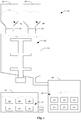
Fig. 1 schematically illustrates a system for treating wood. -
Fig. 2 schematically illustrates a cross-sectional view of a treated piece of wood. -
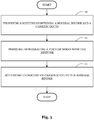
Fig. 3 shows a flow chart of a method of treating wood. -
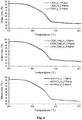
Fig. 4 to Fig. 6 illustrate the properties of a piece of wood treated in accordance with the method. -
Fig. 7 andFig. 8 show a comparison of properties of pieces of wood treated in accordance with the method and pieces of wood treated in accordance with other methods. - Notably, the drawings are not drawn to scale and unless otherwise indicated, they are merely intended to conceptually illustrate the structures and procedures described herein.
-
System 10 schematically illustrated inFig. 1 comprisescontainer 12 formineral binder 14 andcontainer 16 forcarrier liquid 18.Containers feeders mixer 24.Mineral binder 14 may be a Portland cement with a particle size of 5µm. Such cement is sold by Dyckerhoff GmbH of Wiesbaden, Germany under the trade name Mikrodur.Carrier liquid 18 may be glycol or polyethylene glycol dimethacrylate (PEGDMA).Mineral binder 14 andcarrier liquid 18 maybe mixed at 12,000 rpm for 5 minutes to providemixture 26. -
System 10 further comprisespressure chamber 28. Before feedingmixture 26 intopressure chamber 28,wood pieces 30 may be exposed to an absolute pressure of about 0.1 bar or less (vacuum) for 30-60 minutes. Oncemixture 26 is fed intopressure chamber 28,wood pieces 30 may soak upmixture 26. The pressure inpressure chamber 28 may be increased to 12-15 bar to forcemixture 26 intowood pieces 30. The pressure inpressure chamber 28 may then be decreased to about 0.1 bar for 30-60 minutes. Notably,mixer 24 andpressure chamber 28 need not be two separate entities but can be realized as apressure chamber 28 with an integrated disperser. - After pressure impregnating
wood pieces 30, hydration ofmineral binder 14 may be activated by immersing impregnatedwood pieces 30 intowater 32.Wood pieces 30 may remain inwater tank 34 for a period (of time) long enough formineral binder 14 to set and harden (e.g., 48 hours) and the liquid inwater tank 34 may be exchanged withwater 32 several times during that period. Alternatively, or in addition,carrier liquid 18 and superfluous/setmineral binder 14 may be removed fromwater tank 34 or the carrier liquid may be withdrawn fromwater tank 34 byseparator 34a. - After
mineral binder 14 has set and (sufficiently) hardened,wood pieces 30 may be dried. As schematically illustrated inFig. 2 ,mineral binder 14 may set and harden incells 36 ofwood piece 30 and forminorganic material 38. The walls of thecells 36 may comprise lignin.Inorganic material 38 may comprise inorganic hydrates such as calcium silicate hydrates and/or metal hydrates. Moreover,inorganic material 38 incells 36 may comprise flame retardants which may have been added tomineral binder 14 or which may result from the reactions of ingredients inmineral binder 14 andwater 32. - A cementitious mineralization process as described above may be used in relation to peeled wood veneers. In particular, the process may be used to introduce a (nontoxic) flame-retardant into veneers which may then be used to produce laminated veneer lumber.
- For instance, veneers (e.g., peeled beech, Fagus sylvatica L.) may be impregnated in a vacuum-pressure process using an ethylene glycol-Portland cement suspension. The veneers may be subsequently manufactured into laminated veneer lumber specimens. The ethylene glycol may be used as a carrier liquid which prevents the hydraulic Portland cement from prematurely hydrating before and/or during the (cyclic) vacuum-pressure impregnation process. To enable the cement particles to penetrate the wood pores, a fine cement (e.g., a cement with a maximum aggregate size of d95 = 8 µm) may be used and mixed (e.g., for 3 minutes at 12000 rpm) with the Ethylene glycol carrier liquid.
- The veneers may be impregnated with the cement-glycol suspension. For example, the veneers may be kept under vacuum (e.g., for about 45 minutes at an absolute pressure of about 0.3 MPa or less) before flooding the impregnation vessel (e.g., pressure chamber 28) with the cement-glycol suspension. Thereafter, the pressure may be increased (e.g., to an absolute pressure of about 15 MPa which may be applied for about three hours). The increase may be followed by a final vacuum cycle (e.g., 45 minutes at an absolute pressure of about 0.3 MPa).
- After impregnating the veneers, the hydration reaction (and curing process) of the hydraulic fine cement particles in the wood pores may be initiated by storing the veneers in water (e.g., for 48 hours). Due to an osmotic process, the Ethylene glycol may be replaced by water. The necessary cement hydration time may be evaluated by a calorimetric determination of the reaction time.
-
Fig. 3 shows a flow chart of the steps for treatingwood pieces 30. Atstep 40,mixture 26 comprisingmineral binder 14 andcarrier liquid 18 is provided. As shown inFig. 1 ,mixture 26 may be provided by mixingmineral binder 14 andcarrier liquid 18 inmixer 24. Atstep 42,wood pieces 30 are pressure impregnated withmixture 26. As described in relation toFig. 1 ,wood pieces 30 inpressure chamber 28 may be exposed to an increased pressure (above the normal pressure) after exposingwood pieces 30 to a vacuum for a certain period (of time). Moreover,wood pieces 30 may be exposed to a vacuum for a certain period (of time) after having increased the pressure (above normal pressure). Atstep 44, hydration or carbonation ofmineral binder 14 is activated. As described in relation toFig. 1 ,wood pieces 30 may be immersed intowater 32 andcarrier liquid 18 incells 36 may be exchanged withwater 32 by osmosis. - In the following, different mixtures are compared regarding their effects on the thermal properties and the fire resistance of beech veneers (Fagus sylvatica L.). The mixtures comprise Portland fine cement mixed with glycol (mass ratio of glycol and cement W/B=0.8), Portland fine cement and calcium oxalate monohydrate (COM) (ratio: 80/20) mixed with glycol (W/B=1.2), or aluminium hydroxide (ATH) mixed with glycol (W/B=1.2). The effects were investigated based on a thermogravimetric analysis (TGA). Furthermore, the reaction to fire was tested based on a single-flame source test (European Standard EN ISO 11925-2, 2010: Prüfungen zum Brandverhalten - Entzündbarkeit von Produkten bei direkter Flammeneinwirkung - Teil 2: Einzelflammentest).
- Before further treatment, the peeled beech wood veneers of size 250x90x2 mm3 (no defects like knots and cracks) were stored at 65 % relative humidity (RH) and 20°C. For the mixtures, Portland fine cement with a maximum aggregate size of d95 = 8 µm (available from Dyckerhoff under the trade name "Microdur"), ethylene glycol (100%), calcium oxalate-monohydrate CaC2O4·H2O (99.5%), and aluminium hydroxide d50 = 13-17 µm AL(OH)3 (99.5%) were used.
- The Portland fine cement was mixed with glycol (W/B= 0.8) and then dispersed for 3 minutes at 12000 rpm. The glycol served as a carrier fluid and prevented the cement from premature hydration. The veneers were kept for 30 minutes at an absolute pressure of 0.3 MPa. After the cement glycol suspension had been infused into the vacuum chamber, an absolute pressure of 15 MPa was applied to the veneers for three hours during which the veneers were immersed in the suspension. Thereafter, an absolute pressure of 0.3 MPa was applied for 30 minutes.
- The Portland fine cement was mixed with COM powder (80/20) and then dispersed for 3 minutes at 12000 rpm using glycol (W/B= 1.2). The impregnation process was the same as described in the preceding paragraph.
- ATH powder was dispersed with glycol (W/B = 1.2) and the suspension was used to impregnate veneers as described above.
- After the impregnation, all veneers were stored in water for 48 hours and then oven-dried at 6o°C. While being stored in water, a liquid exchange occurred, and the glycol was replaced by water which initiated cement hydration. The impregnation process and the preparation of the chemicals and specimens is summarized in the following table.
Process/Batch Control Cement Cement/Oxalate AL(OH)3 Conditioning (relative humidity % and temperature °C) °C/% 20/65 20/60 20/60 20/65 Materials Cement/ Glycol Cement/Oxalate/ Glycol AL(OH)3/ Glycol Ratio 80/100 (80/20)/83 100/83 Mixing at 12000 rpm in minutes 3 3 3 Pressure applied for 30 minutes in MPa 0.3 0.3 0.3 Pressure applied for 3 hours MPa 15 15 15 Pressure applied for 30 minutes in MPa 0.3 0.3 0.3 Time of Storage in H2O in hours 48 48 48 Drying temperature in ° C 60 60 60 Sample conditioning 20/65 20/65 20/65 - For each mixture, twelve samples were prepared (from three impregnated veneers). The mass and dimensions were measured after conditioning at 20°C/65% and oven drying until the weight remained constant. The difference in weight between the control and the prepared veneers has been determined and the weight percentage gain (WPG) of the oven dried materials has been calculated as follows.

- For each sample the dimensions were measured to determine the gross density.
- For twelve samples, a single flame source test was performed (according to European Standard EN ISO 11925-2, 2010: Prüfungen zum Brandverhalten - Entzündbarkeit von Produkten bei direkter Flammeneinwirkung - Teil 2: Einzelflammentest).
- Three specimens with a diameter of four millimetres each were punched out of every impregnated veneer. One at the top, one at the middle, and one at the bottom. A thermogravimetric analysis TGA was used with a heating rate of 10 K/min and a nitrogen atmosphere with a gas flow of 25 ml/min. Before starting the TGA process which involved a temperature increase up to 600°C (at a given heating rate), the specimens were conditioned at 103 °C for 15 minutes.
- A weight percentage gain (WPG) determination of the impregnated specimens revealed that cement led to the highest mass gain, when compared to the other inorganic materials.
-
Fig. 4 shows boxplots of the single-flame source test. Therein, whiskers mark the range between minimum (Min) and maximum (Max). The lower (Q25) and upper (Q75) quartiles are shown by a box. The median (x̃) is given by a horizontal line and the arithmetic mean (x ) is given by a square. A symmetric boxplot with a relatively small distance between x̃ andx indicates a normal distribution. - A mean rank comparison test between the impregnants and untreated wood (
Fig. 5 ) shows a significant decrease of flammability for cement and cement-oxalate impregnants. - The single flame source test indicates a strong reduction of the flammability compared to the control specimens. The median time until the flame reaches the 150 mm mark is 42 seconds for the control specimens, while it is 49.5 seconds for the cement/oxalate impregnation. AL(OH)3 treatment leads to a time of 45 seconds. The highest value was achieved with the cement impregnation (56 seconds).
- The flammability-reducing potential of impregnated wood using inorganic solids is illustrated in
Fig. 8 which depicts weight loss per temperature (%/°C) versus process temperature. Although an increased weight loss can be observed, impregnating inorganic solids increases the temperature peak at the point of maximum weight loss.Specimens Temp. peak in °C Char in % Control 353,06 20,42 Beech cement 365,04 23,01 Beech cement oxalate 364,20 22,74 Beech aluminum hydroxide 364,55 17,64 -
- 10
- system
- 12
- container
- 14
- mineral binder
- 16
- container
- 18
- carrier liquid
- 20
- feeder
- 22
- feeder
- 24
- mixer
- 26
- mixture
- 28
- pressure chamber
- 30
- piece of wood
- 32
- water
- 34
- water tank
- 34a
- separator
- 36
- cell
- 38
- inorganic material
- 40
- step
- 42
- step
- 44
- step
Claims (17)
- A method of treating wood, comprising:providing (40) a mixture (26) comprising a mineral binder (14) and a carrier liquid (18);pressure impregnating (42) a piece (30) of wood with the mixture (26); andactivating hydration or carbonation of the mineral binder (14).
- The method of treating wood according to claim 1, wherein the carrier liquid (18) is a non-aqueous carrier liquid and activating hydration of the mineral binder (14) comprises immersing the impregnated piece (30) of wood into an aqueous liquid or water (32).
- The method of treating wood according to claim 2, further comprising:replacing a liquid in which the impregnated piece (30) of wood is immersed, with aqueous liquid or water (32); orremoving the non-aqueous carrier liquid (18) from the liquid in which the impregnated piece (30) of wood is immersed.
- The method of treating wood according to any one of claims 1 to 3, wherein the mineral binder (14) comprises calcium oxide and/or silicon dioxide.
- The method of treating wood according to any one of claims 1 to 4, wherein the mineral binder (14) comprises:aluminum hydroxide or aluminum oxide hydroxide; ormagnesium hydroxide; oraluminum oxide which is converted to aluminum hydroxide and/or aluminum oxide hydroxide during hydration; ormagnesium oxide which is converted to magnesium hydroxide during hydration.
- The method of treating wood according to any one of claims 1 to 5, wherein providing the mixture (26) comprises adding mineral binder (14) particles with an average particle size of less than 100µm and preferably of less than 50µm to the carrier liquid (18) and agitating the mixture (26).
- The method of treating wood according to claim 6, wherein the mineral binder (14) particles comprise cement particles.
- The method of treating wood according to any one of claims 1 to 7, wherein the carrier liquid (18) comprises alcohol and/or ether.
- The method of claim 8, wherein the alcohol is a glycol selected from the group consisting of monoethylene glycol, diethylene glycol, triethylene glycol, oligomere ethylene glycol, and polyethylene glycol.
- The method of treating wood according to any one of claims 1 to 7, wherein the carrier liquid (18) comprises
an alkoxylate selected from the group consisting of an ethoxylate, a propoxylate and a butoxylate. - The method of treating wood according to any one of claims 1 to 7, wherein the carrier liquid (18) comprises an acrylic ester or a methacrylic acid ester of a Zerewitinoff-active compound.
- The method of treating wood according to any one of claims 1 to 7, wherein the carrier liquid (18) comprises an oligo-tetrahydrofuran or poly-tetrahydrofuran.
- An impregnated piece (30) of wood, comprising:cells (36) which are at least partially filled with inorganic hydrates and/or carbonates; andat least one substantially flat surface area.
- The impregnated piece (30) of wood of claim 13, wherein the inorganic hydrates comprise calcium silicate hydrates and/or metal hydrates and the inorganic carbonates comprise calcium carbonates.
- The impregnated piece (30) of wood of claim 13 or 14, wherein the cells (36) comprise a hydroxide selected from the group consisting of aluminum hydroxide, aluminum oxide hydroxide and magnesium hydroxide.
- A system (10) for treating wood, comprising:a first container (12) for a mineral binder, preferably for a cement;a second container (16) for a carrier liquid (18);a mixer (24);a first feeder (20) for feeding the mineral binder to the mixer (24);a second feeder (22) for feeding the carrier liquid (18) to the mixer (24); anda pressure chamber (28) for pressure impregnating a piece (30) of wood.
- The system (10) for treating wood of claim 16, further comprising:
a separator (34a) for separating the carrier liquid (18) from an aqueous liquid or water (32).
Applications Claiming Priority (1)
| Application Number | Priority Date | Filing Date | Title |
|---|---|---|---|
| EP20169815 | 2020-04-16 |
Publications (2)
| Publication Number | Publication Date |
|---|---|
| EP3895863A1 true EP3895863A1 (en) | 2021-10-20 |
| EP3895863B1 EP3895863B1 (en) | 2025-04-23 |
Family
ID=70292847
Family Applications (1)
| Application Number | Title | Priority Date | Filing Date |
|---|---|---|---|
| EP20203710.7A Active EP3895863B1 (en) | 2020-04-16 | 2020-10-23 | Wood treatment |
Country Status (1)
| Country | Link |
|---|---|
| EP (1) | EP3895863B1 (en) |
Cited By (1)
| Publication number | Priority date | Publication date | Assignee | Title |
|---|---|---|---|---|
| WO2023235901A1 (en) * | 2022-06-02 | 2023-12-07 | Michael Windsor Symons | Mineralisation of wood products and mineralised wood products |
Citations (1)
| Publication number | Priority date | Publication date | Assignee | Title |
|---|---|---|---|---|
| EP2937193A1 (en) * | 2014-04-24 | 2015-10-28 | ETH Zurich | Mineralized wood materials and methods providing mineralized wood materials |
Family Cites Families (1)
| Publication number | Priority date | Publication date | Assignee | Title |
|---|---|---|---|---|
| JP6368939B2 (en) * | 2014-01-14 | 2018-08-08 | Agc株式会社 | Method for producing flame retardant wood |
-
2020
- 2020-10-23 EP EP20203710.7A patent/EP3895863B1/en active Active
Patent Citations (1)
| Publication number | Priority date | Publication date | Assignee | Title |
|---|---|---|---|---|
| EP2937193A1 (en) * | 2014-04-24 | 2015-10-28 | ETH Zurich | Mineralized wood materials and methods providing mineralized wood materials |
Cited By (1)
| Publication number | Priority date | Publication date | Assignee | Title |
|---|---|---|---|---|
| WO2023235901A1 (en) * | 2022-06-02 | 2023-12-07 | Michael Windsor Symons | Mineralisation of wood products and mineralised wood products |
Also Published As
| Publication number | Publication date |
|---|---|
| EP3895863B1 (en) | 2025-04-23 |
Similar Documents
| Publication | Publication Date | Title |
|---|---|---|
| US11680015B2 (en) | CO2 solidified fiber cement board and its preparation method | |
| Shen et al. | Effects of silicate modulus and alkali dosage on the performance of one-part electric furnace nickel slag-based geopolymer repair materials | |
| EP0197061B1 (en) | Fire-resistant wood composites, in particular wallboards, process for manufacture of same and use of a bonding agent in the manufacture | |
| CA2699903C (en) | Cementitious formulations and products | |
| Zhang et al. | Effect of cementitious capillary crystalline waterproofing coating on the gas permeability of mortar | |
| JP2002539061A (en) | Water resistant prefabricated structural members | |
| CN116789410B (en) | Carbon-fixing concrete and preparation process thereof | |
| CN113968700A (en) | High-toughness high-strength low-wet-expansion fiber cement external wall panel and preparation method thereof | |
| Yang et al. | Effects of sodium aluminate on fleeting semi-dry carbonation and properties of steel slag powders in low concentration CO2 atmosphere | |
| Wang et al. | Effects of alkali activator on the chloride-ion permeability of one-part alkali-activated nickel slag concrete | |
| Balčiūnas et al. | Long-term curing impact on properties, mineral composition and microstructure of hemp shive-cement composite | |
| EP3895863B1 (en) | Wood treatment | |
| Hentges et al. | Comparative study of porous recycled concrete aggregates treated with pozzolanic slurry or carbonation and resulting recycled concrete properties | |
| CN115925349B (en) | Quick-setting environment-friendly high-strength cement and preparation method thereof | |
| CN118771772B (en) | Acid corrosion resistant material for well cementation and preparation method and application thereof | |
| CN106316443A (en) | Fly ash aerated concrete blocks with sinter-dried desulfurization ash and preparation method thereof | |
| CN116194421A (en) | Sulfate-poor calcium-containing porous mineral materials | |
| CN115894075B (en) | Carbonized product and preparation method and application thereof | |
| KR20220094624A (en) | Accelerated carbonation of recycled aggregates and steel-making using the pressurized supercritical carbon dioxide sparging process | |
| CN119263660A (en) | A high-efficiency chloride ion migration-blocking auxiliary gelling material and its preparation method and application | |
| CN110981271A (en) | Special composite anti-cracking agent for ultra-high performance concrete | |
| CN110922081A (en) | Treating agent for red mud, Bayer process red mud treatment method, concrete and building material | |
| Xu et al. | Effect of mitigating strength retrogradation of alkali accelerator by the synergism of sodium sulfate and waste glass powder | |
| KR102958943B1 (en) | Carbonation Reaction Promoting Admixture Composition and Method for Producing the Same | |
| CN119930245B (en) | Carbonized aerated concrete and preparation method thereof |
Legal Events
| Date | Code | Title | Description |
|---|---|---|---|
| PUAI | Public reference made under article 153(3) epc to a published international application that has entered the european phase |
Free format text: ORIGINAL CODE: 0009012 |
|
| STAA | Information on the status of an ep patent application or granted ep patent |
Free format text: STATUS: REQUEST FOR EXAMINATION WAS MADE |
|
| 17P | Request for examination filed |
Effective date: 20210629 |
|
| AK | Designated contracting states |
Kind code of ref document: A1 Designated state(s): AL AT BE BG CH CY CZ DE DK EE ES FI FR GB GR HR HU IE IS IT LI LT LU LV MC MK MT NL NO PL PT RO RS SE SI SK SM TR |
|
| B565 | Issuance of search results under rule 164(2) epc |
Effective date: 20210630 |
|
| STAA | Information on the status of an ep patent application or granted ep patent |
Free format text: STATUS: EXAMINATION IS IN PROGRESS |
|
| 17Q | First examination report despatched |
Effective date: 20230417 |
|
| GRAP | Despatch of communication of intention to grant a patent |
Free format text: ORIGINAL CODE: EPIDOSNIGR1 |
|
| STAA | Information on the status of an ep patent application or granted ep patent |
Free format text: STATUS: GRANT OF PATENT IS INTENDED |
|
| INTG | Intention to grant announced |
Effective date: 20241129 |
|
| GRAS | Grant fee paid |
Free format text: ORIGINAL CODE: EPIDOSNIGR3 |
|
| GRAA | (expected) grant |
Free format text: ORIGINAL CODE: 0009210 |
|
| STAA | Information on the status of an ep patent application or granted ep patent |
Free format text: STATUS: THE PATENT HAS BEEN GRANTED |
|
| AK | Designated contracting states |
Kind code of ref document: B1 Designated state(s): AL AT BE BG CH CY CZ DE DK EE ES FI FR GB GR HR HU IE IS IT LI LT LU LV MC MK MT NL NO PL PT RO RS SE SI SK SM TR |
|
| REG | Reference to a national code |
Ref country code: GB Ref legal event code: FG4D |
|
| REG | Reference to a national code |
Ref country code: CH Ref legal event code: EP |
|
| REG | Reference to a national code |
Ref country code: DE Ref legal event code: R096 Ref document number: 602020049856 Country of ref document: DE |
|
| REG | Reference to a national code |
Ref country code: IE Ref legal event code: FG4D |
|
| REG | Reference to a national code |
Ref country code: NL Ref legal event code: MP Effective date: 20250423 |
|
| PG25 | Lapsed in a contracting state [announced via postgrant information from national office to epo] |
Ref country code: NL Free format text: LAPSE BECAUSE OF FAILURE TO SUBMIT A TRANSLATION OF THE DESCRIPTION OR TO PAY THE FEE WITHIN THE PRESCRIBED TIME-LIMIT Effective date: 20250423 |
|
| REG | Reference to a national code |
Ref country code: AT Ref legal event code: MK05 Ref document number: 1787371 Country of ref document: AT Kind code of ref document: T Effective date: 20250423 |
|
| PG25 | Lapsed in a contracting state [announced via postgrant information from national office to epo] |
Ref country code: PT Free format text: LAPSE BECAUSE OF FAILURE TO SUBMIT A TRANSLATION OF THE DESCRIPTION OR TO PAY THE FEE WITHIN THE PRESCRIBED TIME-LIMIT Effective date: 20250825 Ref country code: ES Free format text: LAPSE BECAUSE OF FAILURE TO SUBMIT A TRANSLATION OF THE DESCRIPTION OR TO PAY THE FEE WITHIN THE PRESCRIBED TIME-LIMIT Effective date: 20250423 Ref country code: FI Free format text: LAPSE BECAUSE OF FAILURE TO SUBMIT A TRANSLATION OF THE DESCRIPTION OR TO PAY THE FEE WITHIN THE PRESCRIBED TIME-LIMIT Effective date: 20250423 |
|
| REG | Reference to a national code |
Ref country code: LT Ref legal event code: MG9D |
|
| PG25 | Lapsed in a contracting state [announced via postgrant information from national office to epo] |
Ref country code: NO Free format text: LAPSE BECAUSE OF FAILURE TO SUBMIT A TRANSLATION OF THE DESCRIPTION OR TO PAY THE FEE WITHIN THE PRESCRIBED TIME-LIMIT Effective date: 20250723 Ref country code: GR Free format text: LAPSE BECAUSE OF FAILURE TO SUBMIT A TRANSLATION OF THE DESCRIPTION OR TO PAY THE FEE WITHIN THE PRESCRIBED TIME-LIMIT Effective date: 20250724 |
|
| PG25 | Lapsed in a contracting state [announced via postgrant information from national office to epo] |
Ref country code: PL Free format text: LAPSE BECAUSE OF FAILURE TO SUBMIT A TRANSLATION OF THE DESCRIPTION OR TO PAY THE FEE WITHIN THE PRESCRIBED TIME-LIMIT Effective date: 20250423 |
|
| PG25 | Lapsed in a contracting state [announced via postgrant information from national office to epo] |
Ref country code: BG Free format text: LAPSE BECAUSE OF FAILURE TO SUBMIT A TRANSLATION OF THE DESCRIPTION OR TO PAY THE FEE WITHIN THE PRESCRIBED TIME-LIMIT Effective date: 20250423 |
|
| PGFP | Annual fee paid to national office [announced via postgrant information from national office to epo] |
Ref country code: GB Payment date: 20250904 Year of fee payment: 6 |
|
| PG25 | Lapsed in a contracting state [announced via postgrant information from national office to epo] |
Ref country code: HR Free format text: LAPSE BECAUSE OF FAILURE TO SUBMIT A TRANSLATION OF THE DESCRIPTION OR TO PAY THE FEE WITHIN THE PRESCRIBED TIME-LIMIT Effective date: 20250423 |
|
| PG25 | Lapsed in a contracting state [announced via postgrant information from national office to epo] |
Ref country code: AT Free format text: LAPSE BECAUSE OF FAILURE TO SUBMIT A TRANSLATION OF THE DESCRIPTION OR TO PAY THE FEE WITHIN THE PRESCRIBED TIME-LIMIT Effective date: 20250423 |
|
| PGFP | Annual fee paid to national office [announced via postgrant information from national office to epo] |
Ref country code: FR Payment date: 20250908 Year of fee payment: 6 |
|
| PG25 | Lapsed in a contracting state [announced via postgrant information from national office to epo] |
Ref country code: RS Free format text: LAPSE BECAUSE OF FAILURE TO SUBMIT A TRANSLATION OF THE DESCRIPTION OR TO PAY THE FEE WITHIN THE PRESCRIBED TIME-LIMIT Effective date: 20250723 |
|
| PG25 | Lapsed in a contracting state [announced via postgrant information from national office to epo] |
Ref country code: IS Free format text: LAPSE BECAUSE OF FAILURE TO SUBMIT A TRANSLATION OF THE DESCRIPTION OR TO PAY THE FEE WITHIN THE PRESCRIBED TIME-LIMIT Effective date: 20250823 |
|
| PG25 | Lapsed in a contracting state [announced via postgrant information from national office to epo] |
Ref country code: LV Free format text: LAPSE BECAUSE OF FAILURE TO SUBMIT A TRANSLATION OF THE DESCRIPTION OR TO PAY THE FEE WITHIN THE PRESCRIBED TIME-LIMIT Effective date: 20250423 |
|
| PGFP | Annual fee paid to national office [announced via postgrant information from national office to epo] |
Ref country code: DE Payment date: 20251031 Year of fee payment: 6 |
|
| PG25 | Lapsed in a contracting state [announced via postgrant information from national office to epo] |
Ref country code: SM Free format text: LAPSE BECAUSE OF FAILURE TO SUBMIT A TRANSLATION OF THE DESCRIPTION OR TO PAY THE FEE WITHIN THE PRESCRIBED TIME-LIMIT Effective date: 20250423 Ref country code: DK Free format text: LAPSE BECAUSE OF FAILURE TO SUBMIT A TRANSLATION OF THE DESCRIPTION OR TO PAY THE FEE WITHIN THE PRESCRIBED TIME-LIMIT Effective date: 20250423 |
|
| PG25 | Lapsed in a contracting state [announced via postgrant information from national office to epo] |
Ref country code: CZ Free format text: LAPSE BECAUSE OF FAILURE TO SUBMIT A TRANSLATION OF THE DESCRIPTION OR TO PAY THE FEE WITHIN THE PRESCRIBED TIME-LIMIT Effective date: 20250423 |
|
| PG25 | Lapsed in a contracting state [announced via postgrant information from national office to epo] |
Ref country code: EE Free format text: LAPSE BECAUSE OF FAILURE TO SUBMIT A TRANSLATION OF THE DESCRIPTION OR TO PAY THE FEE WITHIN THE PRESCRIBED TIME-LIMIT Effective date: 20250423 |
|
| REG | Reference to a national code |
Ref country code: DE Ref legal event code: R097 Ref document number: 602020049856 Country of ref document: DE |
|
| PG25 | Lapsed in a contracting state [announced via postgrant information from national office to epo] |
Ref country code: RO Free format text: LAPSE BECAUSE OF FAILURE TO SUBMIT A TRANSLATION OF THE DESCRIPTION OR TO PAY THE FEE WITHIN THE PRESCRIBED TIME-LIMIT Effective date: 20250423 Ref country code: SK Free format text: LAPSE BECAUSE OF FAILURE TO SUBMIT A TRANSLATION OF THE DESCRIPTION OR TO PAY THE FEE WITHIN THE PRESCRIBED TIME-LIMIT Effective date: 20250423 |
|
| PG25 | Lapsed in a contracting state [announced via postgrant information from national office to epo] |
Ref country code: IT Free format text: LAPSE BECAUSE OF FAILURE TO SUBMIT A TRANSLATION OF THE DESCRIPTION OR TO PAY THE FEE WITHIN THE PRESCRIBED TIME-LIMIT Effective date: 20250423 |
|
| PLBE | No opposition filed within time limit |
Free format text: ORIGINAL CODE: 0009261 |
|
| STAA | Information on the status of an ep patent application or granted ep patent |
Free format text: STATUS: NO OPPOSITION FILED WITHIN TIME LIMIT |
|
| REG | Reference to a national code |
Ref country code: CH Ref legal event code: L10 Free format text: ST27 STATUS EVENT CODE: U-0-0-L10-L00 (AS PROVIDED BY THE NATIONAL OFFICE) Effective date: 20260304 |
|
| 26N | No opposition filed |
Effective date: 20260126 |
|
| REG | Reference to a national code |
Ref country code: CH Ref legal event code: H13 Free format text: ST27 STATUS EVENT CODE: U-0-0-H10-H13 (AS PROVIDED BY THE NATIONAL OFFICE) Effective date: 20260527 |
|
| PG25 | Lapsed in a contracting state [announced via postgrant information from national office to epo] |
Ref country code: LU Free format text: LAPSE BECAUSE OF NON-PAYMENT OF DUE FEES Effective date: 20251023 |
|
| REG | Reference to a national code |
Ref country code: BE Ref legal event code: MM Effective date: 20251031 |
|
| PG25 | Lapsed in a contracting state [announced via postgrant information from national office to epo] |
Ref country code: LT Free format text: LAPSE BECAUSE OF FAILURE TO SUBMIT A TRANSLATION OF THE DESCRIPTION OR TO PAY THE FEE WITHIN THE PRESCRIBED TIME-LIMIT Effective date: 20250423 |
|
| PG25 | Lapsed in a contracting state [announced via postgrant information from national office to epo] |
Ref country code: MC Free format text: LAPSE BECAUSE OF FAILURE TO SUBMIT A TRANSLATION OF THE DESCRIPTION OR TO PAY THE FEE WITHIN THE PRESCRIBED TIME-LIMIT Effective date: 20250423 |
|
| PG25 | Lapsed in a contracting state [announced via postgrant information from national office to epo] |
Ref country code: CH Free format text: LAPSE BECAUSE OF NON-PAYMENT OF DUE FEES Effective date: 20251031 Ref country code: BE Free format text: LAPSE BECAUSE OF NON-PAYMENT OF DUE FEES Effective date: 20251031 |
|
| PG25 | Lapsed in a contracting state [announced via postgrant information from national office to epo] |
Ref country code: SE Free format text: LAPSE BECAUSE OF FAILURE TO SUBMIT A TRANSLATION OF THE DESCRIPTION OR TO PAY THE FEE WITHIN THE PRESCRIBED TIME-LIMIT Effective date: 20250423 |