EP3895671A1 - Width- and length-adjustable boot - Google Patents
Width- and length-adjustable boot Download PDFInfo
- Publication number
- EP3895671A1 EP3895671A1 EP18943290.9A EP18943290A EP3895671A1 EP 3895671 A1 EP3895671 A1 EP 3895671A1 EP 18943290 A EP18943290 A EP 18943290A EP 3895671 A1 EP3895671 A1 EP 3895671A1
- Authority
- EP
- European Patent Office
- Prior art keywords
- length
- boot
- width
- base
- foot
- Prior art date
- Legal status (The legal status is an assumption and is not a legal conclusion. Google has not performed a legal analysis and makes no representation as to the accuracy of the status listed.)
- Granted
Links
Images


Classifications
-
- A—HUMAN NECESSITIES
- A61—MEDICAL OR VETERINARY SCIENCE; HYGIENE
- A61F—FILTERS IMPLANTABLE INTO BLOOD VESSELS; PROSTHESES; DEVICES PROVIDING PATENCY TO, OR PREVENTING COLLAPSING OF, TUBULAR STRUCTURES OF THE BODY, e.g. STENTS; ORTHOPAEDIC, NURSING OR CONTRACEPTIVE DEVICES; FOMENTATION; TREATMENT OR PROTECTION OF EYES OR EARS; BANDAGES, DRESSINGS OR ABSORBENT PADS; FIRST-AID KITS
- A61F5/00—Orthopaedic methods or devices for non-surgical treatment of bones or joints; Nursing devices ; Anti-rape devices
- A61F5/01—Orthopaedic devices, e.g. long-term immobilising or pressure directing devices for treating broken or deformed bones such as splints, casts or braces
- A61F5/0102—Orthopaedic devices, e.g. long-term immobilising or pressure directing devices for treating broken or deformed bones such as splints, casts or braces specially adapted for correcting deformities of the limbs or for supporting them; Ortheses, e.g. with articulations
- A61F5/0104—Orthopaedic devices, e.g. long-term immobilising or pressure directing devices for treating broken or deformed bones such as splints, casts or braces specially adapted for correcting deformities of the limbs or for supporting them; Ortheses, e.g. with articulations without articulation
- A61F5/0111—Orthopaedic devices, e.g. long-term immobilising or pressure directing devices for treating broken or deformed bones such as splints, casts or braces specially adapted for correcting deformities of the limbs or for supporting them; Ortheses, e.g. with articulations without articulation for the feet or ankles
-
- A—HUMAN NECESSITIES
- A43—FOOTWEAR
- A43B—CHARACTERISTIC FEATURES OF FOOTWEAR; PARTS OF FOOTWEAR
- A43B3/00—Footwear characterised by the shape or the use
- A43B3/26—Footwear characterised by the shape or the use adjustable as to length or size
-
- A—HUMAN NECESSITIES
- A43—FOOTWEAR
- A43B—CHARACTERISTIC FEATURES OF FOOTWEAR; PARTS OF FOOTWEAR
- A43B13/00—Soles; Sole-and-heel integral units
- A43B13/14—Soles; Sole-and-heel integral units characterised by the constructive form
- A43B13/16—Pieced soles
-
- A—HUMAN NECESSITIES
- A43—FOOTWEAR
- A43B—CHARACTERISTIC FEATURES OF FOOTWEAR; PARTS OF FOOTWEAR
- A43B5/00—Footwear for sporting purposes
- A43B5/16—Skating boots
Definitions
- the object of this invention is a length- and width-adjustable boot, that is, the boot allows a width and length adjustment for different foot dimensions of different users.
- this invention takes into account the fact that the anatomy of the foot maintains the same length-to-width ratio regardless the size of the foot. E.g. a person with a 36 European foot, will have the same length/width ratio as a person with a 46 foot.
- the present invention achieves such change in proportions (width and length), simply by tightening a single screw in the heel of the boot.
- the walker boot is a very functional immobilization, both for the patient as for the professionals who supervise the treatment.
- the walker boots on the market offer a very limited number of sizes, so they do not allow adequate adaptation and compression to the foot necessary during the treatment of injuries.
- some existing models incorporate a camera of air (foams, sponges) to fill in the gaps between the boot cover and the ankle.
- account must be taken of the fact that the volume of the injured foot changes during the healing process, so sometimes a new boot of a different size is required at a certain point in the treatment.
- the object of the present invention is an adjustable boot that covers a wide range of foot sizes, which in a possible embodiment can cover from a foot size corresponding to 36 EU to 46 EU.
- the boot is made up of four pieces assembled together using rail plus a fixing system, so that the displacement of one of the four pieces produces the corresponding displacement of the rest of the pieces proportionally and anatomically, that is, it is a displacement that corresponds to the width and length of the foot.
- Said four pieces are, a forward base component (BA), a rearward base component (BP), a left side (LL), and a right side (LR).
- BA forward base component
- BP rearward base component
- LL left side
- LR right side
- the forward and rearward bases form an inverted isosceles trapezium (due to the shape of the foot, wider in the front than in the heel). Having determined the inclination of the sides of the trapezium with respect to its axis of symmetry, by the relationship between the width of the forefoot and the heel.
- the fixation system is a screw, which is located on the axis of symmetry of the aforementioned trapezium.
- This screw runs through the forward base, is screwed into the rearward base, and is fixed to the assembly by means of a ring safety or circlip. So that a movement of the screw in the clockwise movement produces an approach of the forward and rearward bases, and a counterclockwise movement causes a separation or distance. Thus provoking a change in the length of the total base of the boot. (being the total base of the boot, the forward base plus the rearward base plus the space between both of them).
- the rearward base also has guide rail (BPr1, BPr2) for those that run or slide the left (LL) and right (LR) side pieces.
- the angle ⁇ of inclination of these rail with respect to the axis of symmetry of the boot is determined by the length / width ratio of the foot
- each side has two rail at the bottom, the left side (LLr1, LLr3) and the right side (LRr2, LRr4).
- the LLr1 and LRr2 rail fit on the rearward base, and LLr3 and LRr4 on the forward base.
- the rail on the sides that fit into the rearward base (LLr1, LRr2), allow a movement between the rearward base, and both sides right and left.
- the direction of movement of these parts is determined by the angle ⁇ .
- the rail on the sides that attach to the forward base allow a movement between pieces (forward base and sides), in the direction perpendicular to the axis of symmetry of the total base of the boot, that is, towards the outside of each side.
- This system of four rail, two on the forward base, and two on the rearward base is the one that allows that when a movement occurs in one of the four pieces, this movement is transferred to the rest of the set. And because of that, when a clockwise movement is exerted on the screw described above, there is an approach between the forward and rearward bases, and an approach of the sides; the boot gets shorter, and narrower. And on the other hand, when a counterclockwise movement is exerted on the screw, the forward and rearward bases move away, and the laterals separate; the boot becomes wider and longer.
- boot object of the invention comprises:
- the four pieces, forward base, rearward base, right side and left side are connected to each other by rail.
- the rearward base has two inner rail (BPr1, BPr2).
- the inclination of these rail with respect to the axis of symmetry of the boot is determined by ⁇ .
- the forward base piece has two inner rail (BAr3, BAr4) perpendicular to its axis of symmetry.
- the side pieces have two rail each.
- the right side piece (LR) has the rail (LRr2, LRr4)
- the left side piece (LL) has the rail (LLr1, LLr3). So that the LLr1 and LRr2 rail couple into the rail of the rearward base (BPr1, BPr2), and the LLr3 and LRr4 rail on the rail of the forward base (BAr3, BAr4).
- a screw is placed at the back of the forward based piece (BA). This screw runs along the axis of symmetry of the rearward base, thread in the rearward base piece (BP), and is fixed to the assembly by means of a safety ring or circlip.
- the angle ⁇ determines the ratio between the length and width of the boot each time it is acted on the fixing screw. And the angle ⁇ determines the trapezoidal shape of the base of the boot due to the difference in width between the heel of the foot, and the instep.
- the length of the forward and rearward bases, and the length of the set screw determine the range of foot sizes that the boot is suitable for.
- the forward and rearward bases must add up to 22cm in length.
- the adjusting screw should measure at least the length of the base above plus the difference in length between sizes.
Landscapes
- Health & Medical Sciences (AREA)
- Nursing (AREA)
- Orthopedic Medicine & Surgery (AREA)
- Engineering & Computer Science (AREA)
- Biomedical Technology (AREA)
- Heart & Thoracic Surgery (AREA)
- Vascular Medicine (AREA)
- Life Sciences & Earth Sciences (AREA)
- Animal Behavior & Ethology (AREA)
- General Health & Medical Sciences (AREA)
- Public Health (AREA)
- Veterinary Medicine (AREA)
- Footwear And Its Accessory, Manufacturing Method And Apparatuses (AREA)
Abstract
Description
- As the title of the invention establishes, the object of this invention is a length- and width-adjustable boot, that is, the boot allows a width and length adjustment for different foot dimensions of different users.
- Moreover, this invention takes into account the fact that the anatomy of the foot maintains the same length-to-width ratio regardless the size of the foot. E.g. a person with a 36 European foot, will have the same length/width ratio as a person with a 46 foot.
- Therefore, we get a boot for different uses such as medical use (post-traumatic immobilization, post-surgical immobilization, rehabilitation), sports use (skating, skiing, water skiing and other sports that use boots), or work use (safety boots), allowing its use in a wide range of sizes or foot size.
- Furthermore, the present invention achieves such change in proportions (width and length), simply by tightening a single screw in the heel of the boot.
- Currently the boots for use in the sports field, and some areas of medical use (walker boots), are marketed in different sizes; with respect to the manufacturing level, this implies higher costs in production, molds and storage; and even so many times the different sizes are not fit properly to foot size.
- In the specific case of walker boots, these stand out for allowing an increased activity of the patient and accelerate the recovery period of injuries, and in this way, avoid a greater loss of muscle tone very frequent after long periods of immobilization with other systems like plasters.
- The walker boot is a very functional immobilization, both for the patient as for the professionals who supervise the treatment.
- The walker boots on the market offer a very limited number of sizes, so they do not allow adequate adaptation and compression to the foot necessary during the treatment of injuries. To achieve the proper adaptation and immobilization some existing models incorporate a camera of air (foams, sponges) to fill in the gaps between the boot cover and the ankle. Also, account must be taken of the fact that the volume of the injured foot changes during the healing process, so sometimes a new boot of a different size is required at a certain point in the treatment.
- Therefore, it is the object of the present invention to develop a boot that allows continuous adjustment, and thus a better adaptation to the user's foot, to while eliminating production and warehousing problems (storage of a multitude of sizes), developing a boot like the one that is described below, and is collected in its essentiality in the first claim.
- The object of the present invention is an adjustable boot that covers a wide range of foot sizes, which in a possible embodiment can cover from a foot size corresponding to 36 EU to 46 EU.
- The boot is made up of four pieces assembled together using rail plus a fixing system, so that the displacement of one of the four pieces produces the corresponding displacement of the rest of the pieces proportionally and anatomically, that is, it is a displacement that corresponds to the width and length of the foot.
- Said four pieces are, a forward base component (BA), a rearward base component (BP), a left side (LL), and a right side (LR).
- In a preferred embodiment, the forward and rearward bases form an inverted isosceles trapezium (due to the shape of the foot, wider in the front than in the heel). Having determined the inclination of the sides of the trapezium with respect to its axis of symmetry, by the relationship between the width of the forefoot and the heel.
- Preferably, the fixation system is a screw, which is located on the axis of symmetry of the aforementioned trapezium. This screw runs through the forward base, is screwed into the rearward base, and is fixed to the assembly by means of a ring safety or circlip. So that a movement of the screw in the clockwise movement produces an approach of the forward and rearward bases, and a counterclockwise movement causes a separation or distance. Thus provoking a change in the length of the total base of the boot. (being the total base of the boot, the forward base plus the rearward base plus the space between both of them).
- The rearward base also has guide rail (BPr1, BPr2) for those that run or slide the left (LL) and right (LR) side pieces. The angle α of inclination of these rail with respect to the axis of symmetry of the boot is determined by the length / width ratio of the foot
- In turn, each side has two rail at the bottom, the left side (LLr1, LLr3) and the right side (LRr2, LRr4). The LLr1 and LRr2 rail fit on the rearward base, and LLr3 and LRr4 on the forward base.
- The rail on the sides that fit into the rearward base (LLr1, LRr2), allow a movement between the rearward base, and both sides right and left. The direction of movement of these parts is determined by the angle α.
- The rail on the sides that attach to the forward base (LLr3, LRr4), allow a movement between pieces (forward base and sides), in the direction perpendicular to the axis of symmetry of the total base of the boot, that is, towards the outside of each side.
- This system of four rail, two on the forward base, and two on the rearward base, is the one that allows that when a movement occurs in one of the four pieces, this movement is transferred to the rest of the set. And because of that, when a clockwise movement is exerted on the screw described above, there is an approach between the forward and rearward bases, and an approach of the sides; the boot gets shorter, and narrower. And on the other hand, when a counterclockwise movement is exerted on the screw, the forward and rearward bases move away, and the laterals separate; the boot becomes wider and longer.
- Unless otherwise indicated, all technical and scientific elements used herein have the meaning that is usually understood by an average expert on the matter in the state of art to which this invention pertains. Procedures and materials may be used in the practice of the present invention which are similar or equivalent to the ones described in the specifications.
- Throughout the description and claims the word "comprises" and its variants are not intended to exclude other technical characteristics, additives, components or steps. For the experts on the matter, other objects, advantages and characteristics of the invention will emerge in part from the description and in part from the practice of the invention.
- To complement the description that is being made and in order to help a better understanding of the characteristics of the invention, it is enclosed as an integral part of the said description, a set of drawings in where, for illustrative and non-limiting purposes, the following has been represented:
-
Figure 1 - You can see a 3D design of the set of parts. Forward base (BA), rearward base (BP), left side (LL), right side (LR), fixing screw (Screw), and safety ring (SR). -
Figure 2 - you can see a 3D design of the right side (LR) and left side (LL) with their respective rail LRr2, LRr49 and LLr1, LLr2. -
Figure 3 - you can see a 3D design of the forward base (BA) and rearward base (LR), with their respective rail. The pieces have been made transparent to be able to appreciate the inner rail BPr1,BPr2 and BAr3, BAr4. -
Figure 4 - you can see a 3D design of the whole set of parts, BA, BP,LL, LR, fixing screw (Screw), and safety ring (SR). The forward base (BA) and rearward base (BP) have been made transparent so that all the rail can be appreciated. The angle α can also be seen drawn, which indicates the inclination of the rail of the rearward base (BP), with respect to the axis of symmetry of the boot (X axis). -
Figure 5 - you can see a simple conceptual scheme, made up of the forward base (BA) and the rearward base (BP), and a screw (Screw), which runs through the axis of symmetry X. The inverted trapezoid shape of the total forefoot base comes determined by the ratio of the width of the forefoot to the heel (angle β). Two rail run inside the rearward base (BP) (BPr1, BPr2), inclined. The angle α of inclination of the rail determines the foot length / width ratio. -
Figure 6 - you can see a simple conceptual diagram in which the pieces BA, BP, LL, LR are represented joined by the rail. Arrows indicate the directions of movement of all the pieces along their respective rail. -
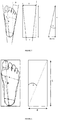
Figure 7 - you can see the calculation of the angle Alpha, α = arc tg B / L. -
Figure 8 - you can see the calculation of the angle Beta, β = arctg (B-Y) / 2 / X). - In
figure 1 we can see that the boot object of the invention comprises: - 1. a rearward base piece (BP)
- 2. a forward base piece (BA)
- 3. a right side piece (LR)
- 4. a left side piece (LL)
- 5. an adjusting and fixing screw (Screw)
- The four pieces, forward base, rearward base, right side and left side are connected to each other by rail. The rearward base has two inner rail (BPr1, BPr2). The inclination of these rail with respect to the axis of symmetry of the boot is determined by α.
- The forward base piece has two inner rail (BAr3, BAr4) perpendicular to its axis of symmetry.
- The side pieces have two rail each. The right side piece (LR) has the rail (LRr2, LRr4), and the left side piece (LL) has the rail (LLr1, LLr3). So that the LLr1 and LRr2 rail couple into the rail of the rearward base (BPr1, BPr2), and the LLr3 and LRr4 rail on the rail of the forward base (BAr3, BAr4).
- Any displacement of one of the four pieces causes a displacement in the other three.
- To adjust and fix the assembly of parts in a simple way, a screw (Screw) is placed at the back of the forward based piece (BA). This screw runs along the axis of symmetry of the rearward base, thread in the rearward base piece (BP), and is fixed to the assembly by means of a safety ring or circlip.
- When the screw threads clockwise (screw tightening), the forward and rearward bases are closer to each other (the boot becomes shorter), and the sides also get closer to each other (the boot becomes narrower). When the screw rotates counterclockwise, the opposite effect occurs, the bases (BA, BP), and the laterals (LL, LR) move away, making the boot wider and longer.
- The angle α determines the ratio between the length and width of the boot each time it is acted on the fixing screw. And the angle β determines the trapezoidal shape of the base of the boot due to the difference in width between the heel of the foot, and the instep.
- To calculate the angles α and β, we take into account the anatomical tables of Chockalingham (REF: Chockalingam N & Ashford RL (2002) Foot length ratios for selected dimensions in a non clinical male simple). According to these tables, approximate ratios for the dimensions of the foot are fulfilled. Dimensions X, Y, B, L, and calculation of the angles α and β are described in
Figures 4 and5 .L/B=3.3 L/Y=5.5 L/X=1.3 - Therefore, for L = 1 we have Y = 0.18, B = 0.3 and X = 0.77.
- β = arctg (B-Y) / 2 / X; β = 4.5°
- α = arc tg B / L; tg α = B / L; α = 16.85°
- The length of the forward and rearward bases, and the length of the set screw determine the range of foot sizes that the boot is suitable for.
- Thus, for a minimum foot size 36EU (22cm), the forward and rearward bases must add up to 22cm in length. And for a maximum foot size of 46EU (28.5cm), the adjusting screw should measure at least the length of the base above plus the difference in length between sizes.
- Sufficiently described the nature of the present invention, as well as the way of putting it into practice, it is stated that, within its essentiality, may be put into practice in other embodiments that differ in detail of the one indicated by way of example, and to which the protection that is sought will also reach, provided that there is no alteration, change or modification of its fundamental principle.
Claims (6)
- A length- and wide-adjustable boot characterized by the fact that it comprises:1. a rearward base piece (BP)2. a forward base piece (BA)3. a right side piece (LR)4. a left side piece (LL)5. a fixing system.The four pieces, forward base, rearward base, right side and left side are connected to each other by rails.
The inclination of the rails of one of the two bases (BP or BA) with respect to the axis of symmetry of the boot is determined by the length / width ratio of the foot. Such angle of inclination α can be between 0 ° and 90 °.
The movement of any of the four pieces (BP, BA, LR, LL) produces a movement proportional to the width and length of the foot in the other three pieces.
Movement of any of the four parts (BP, BA, LR, LL) causes the adjustment of the size of the boot (width and length).
The lacing system locks all four pieces to wear the boot. - A length- and wide-adjustable boot according to claim 1 characterized because it has means of adjustment and fixation, which regulate the distance between the rearward and forward base piece. Said adjusting means causes a change of dimensions in the length and width of the boot.
- A length- and wide-adjustable boot according to claim 1 characterized because it has adjustment and fixing means that regulate the distance between the right side piece and the left side piece. Said means of adjustment causes a change in dimensions in the length and width of the boot.
- A length- and wide-adjustable boot according to any of the claims above characterized in that the fixing and adjustment means are a screw threaded (7) with a circlip or safety ring.
- A length- and wide-adjustable boot according to claim 1 characterized because the rails inclined at an angle α, which determine the ratio length / width of the foot, are placed in the forward base.
- A length- and wide-adjustable boot according to claim 1 characterized because the rails inclined at an angle α, which determine the ratio length / width of the foot, are placed in the rearward base.
Applications Claiming Priority (1)
| Application Number | Priority Date | Filing Date | Title |
|---|---|---|---|
| PCT/ES2018/070806 WO2020120811A1 (en) | 2018-12-15 | 2018-12-15 | Width- and length-adjustable boot |
Publications (4)
| Publication Number | Publication Date |
|---|---|
| EP3895671A1 true EP3895671A1 (en) | 2021-10-20 |
| EP3895671A4 EP3895671A4 (en) | 2022-08-10 |
| EP3895671C0 EP3895671C0 (en) | 2024-04-24 |
| EP3895671B1 EP3895671B1 (en) | 2024-04-24 |
Family
ID=71075945
Family Applications (1)
| Application Number | Title | Priority Date | Filing Date |
|---|---|---|---|
| EP18943290.9A Active EP3895671B1 (en) | 2018-12-15 | 2018-12-15 | Width- and length-adjustable boot |
Country Status (5)
| Country | Link |
|---|---|
| US (1) | US12137770B2 (en) |
| EP (1) | EP3895671B1 (en) |
| CN (1) | CN113194887B (en) |
| ES (1) | ES2983929T3 (en) |
| WO (1) | WO2020120811A1 (en) |
Families Citing this family (3)
| Publication number | Priority date | Publication date | Assignee | Title |
|---|---|---|---|---|
| US20210177636A1 (en) * | 2019-12-13 | 2021-06-17 | Iq Medical Llc | Adjustable-Footplate, Equinus Brace With Toe Wedge |
| WO2021142149A1 (en) * | 2020-01-07 | 2021-07-15 | Fast Ip, Llc | Footwear having micro adjustability |
| US12186220B1 (en) * | 2024-06-21 | 2025-01-07 | Joseph B Sia | Stimulating foot brace |
Family Cites Families (19)
| Publication number | Priority date | Publication date | Assignee | Title |
|---|---|---|---|---|
| US452284A (en) * | 1891-05-12 | Driving-calk | ||
| US1316251A (en) * | 1919-09-16 | Skate | ||
| US4083128A (en) * | 1977-05-25 | 1978-04-11 | Rossman Robert A | Adjustable boot |
| US4998358A (en) * | 1988-08-22 | 1991-03-12 | Aluxa Ag | Size-adjustable ski boot |
| EP0443293A1 (en) * | 1990-02-20 | 1991-08-28 | Aluxa Ag | Skiboot with adjustable size |
| US5794362A (en) * | 1996-04-24 | 1998-08-18 | Polk, Iii; Louis F. | Size adjustable athletic boot |
| US6092306A (en) * | 1999-03-18 | 2000-07-25 | Newton-Dunn; Tracey | Tap shoe taps cover system |
| CN2442538Y (en) * | 2000-10-09 | 2001-08-15 | 谢超金 | Shoe tree |
| US7137635B2 (en) * | 2001-05-18 | 2006-11-21 | K-2 Corporation | Expandable in-line skate |
| CA2413894A1 (en) * | 2002-12-06 | 2004-06-06 | Mike Soo | Adjustable skate having a bladder |
| ITTV20020149A1 (en) | 2002-12-09 | 2004-06-10 | Benetton Spa | SPORTS FOOTWEAR STRUCTURE. |
| KR200364758Y1 (en) * | 2004-07-13 | 2004-10-16 | 주식회사 신경화학 | The shoes of being adjustable in length and width |
| CN202438125U (en) * | 2012-02-13 | 2012-09-19 | 叶清和 | Improved ice skates with shoe length and fore foot width synchronization regulation structure |
| CN203789244U (en) * | 2014-04-01 | 2014-08-27 | 温州铭瑞鞋材有限公司 | Telescopic shoe |
| US9510965B2 (en) | 2014-07-01 | 2016-12-06 | Ortho Systems | Adjustable walking apparatus |
| CN206612276U (en) * | 2016-08-29 | 2017-11-07 | 浙江工贸职业技术学院 | An adjustable shoe size shoe |
| CN206462511U (en) * | 2017-01-21 | 2017-09-05 | 陕西科技大学 | A kind of interchangeable head dummy footwear calibrator of full-size |
| KR101894716B1 (en) * | 2017-06-30 | 2018-09-04 | 이동렬 | Medical leg splint |
| CN107736688A (en) * | 2017-11-16 | 2018-02-27 | 遵义师范学院 | A kind of Intelligent insole of more size talipes varus talipes valgus detections |
-
2018
- 2018-12-15 WO PCT/ES2018/070806 patent/WO2020120811A1/en not_active Ceased
- 2018-12-15 EP EP18943290.9A patent/EP3895671B1/en active Active
- 2018-12-15 CN CN201880100235.4A patent/CN113194887B/en active Active
- 2018-12-15 ES ES18943290T patent/ES2983929T3/en active Active
- 2018-12-15 US US17/413,836 patent/US12137770B2/en active Active
Also Published As
| Publication number | Publication date |
|---|---|
| ES2983929T3 (en) | 2024-10-28 |
| EP3895671C0 (en) | 2024-04-24 |
| EP3895671B1 (en) | 2024-04-24 |
| CN113194887A (en) | 2021-07-30 |
| WO2020120811A1 (en) | 2020-06-18 |
| US12137770B2 (en) | 2024-11-12 |
| EP3895671A4 (en) | 2022-08-10 |
| US20220079283A1 (en) | 2022-03-17 |
| CN113194887B (en) | 2024-01-09 |
Similar Documents
| Publication | Publication Date | Title |
|---|---|---|
| US11839563B2 (en) | Orthopedic walking brace having a curved sole | |
| US5345701A (en) | Adjustable orthotic | |
| US10632006B2 (en) | Device and methods for treating a lower limb joint pathology and lower limb pain | |
| KR102017595B1 (en) | Methods for treating spine pathologies | |
| KR102080154B1 (en) | Device and methods for treating neurological disorders | |
| US12290145B2 (en) | Modular footwear protuberance assembly | |
| EP3895671A1 (en) | Width- and length-adjustable boot | |
| KR100877764B1 (en) | Functional footwear for degenerative knee arthritis | |
| US20140336012A1 (en) | Achilles stretching devices and methods performed therewith | |
| EP3130246A1 (en) | Joint load reducing footwear | |
| US5285584A (en) | Mechanical custom molding of footgear | |
| US20160239014A1 (en) | Adjustable Height Sole | |
| KR20120000447A (en) | Insole with removable internal and external wedges for knee pain relief and prevention | |
| Gijon-Nogueron et al. | Effect produced on ground reaction forces by a prefabricated, weight-bearing and non-weight-bearing foot orthosis in the treatment of pronated foot: Pilot study | |
| US20110028876A1 (en) | Foot abduction apparatus | |
| Urabe et al. | Effect of shoe insole for prevention and treatment of lower extremity injuries | |
| D'Ambrosia | Conservative management of metatarsal and heel pain in the adult foot | |
| CN203315133U (en) | Children multifunctional correction footwear | |
| Bae et al. | Analyses of plantar foot pressure and static balance according to the type of insole in the elderly | |
| KR100984263B1 (en) | Outsole having inclined plane and correcting lower extremity misalignment and knee joint osteoarthritis shoes involving this | |
| RU208981U1 (en) | DEVICE FOR THE TREATMENT OF CONGENITAL FOOT DEFORMATION IN INFANT CHILDREN | |
| RU143629U1 (en) | DEVICE FOR THE TREATMENT OF CONGENITAL COLORFOOL IN CHILDREN OF EARLY AGE | |
| Kondo et al. | Evaluation of the relationship between the static measurement of transverse arch flexibility of the forefoot and gait parameters in healthy subjects | |
| Parashar et al. | The Influence of foot orthotic interventions on workplace ergonomics | |
| EP0550842A1 (en) | Adjustable orthotic |
Legal Events
| Date | Code | Title | Description |
|---|---|---|---|
| STAA | Information on the status of an ep patent application or granted ep patent |
Free format text: STATUS: THE INTERNATIONAL PUBLICATION HAS BEEN MADE |
|
| PUAI | Public reference made under article 153(3) epc to a published international application that has entered the european phase |
Free format text: ORIGINAL CODE: 0009012 |
|
| STAA | Information on the status of an ep patent application or granted ep patent |
Free format text: STATUS: REQUEST FOR EXAMINATION WAS MADE |
|
| 17P | Request for examination filed |
Effective date: 20210623 |
|
| AK | Designated contracting states |
Kind code of ref document: A1 Designated state(s): AL AT BE BG CH CY CZ DE DK EE ES FI FR GB GR HR HU IE IS IT LI LT LU LV MC MK MT NL NO PL PT RO RS SE SI SK SM TR |
|
| DAV | Request for validation of the european patent (deleted) | ||
| DAX | Request for extension of the european patent (deleted) | ||
| A4 | Supplementary search report drawn up and despatched |
Effective date: 20220712 |
|
| RIC1 | Information provided on ipc code assigned before grant |
Ipc: A43B 13/16 20060101ALI20220706BHEP Ipc: A43B 5/16 20060101ALI20220706BHEP Ipc: A43B 5/04 20060101ALI20220706BHEP Ipc: A43B 3/26 20060101ALI20220706BHEP Ipc: A61F 5/01 20060101AFI20220706BHEP |
|
| GRAP | Despatch of communication of intention to grant a patent |
Free format text: ORIGINAL CODE: EPIDOSNIGR1 |
|
| STAA | Information on the status of an ep patent application or granted ep patent |
Free format text: STATUS: GRANT OF PATENT IS INTENDED |
|
| INTG | Intention to grant announced |
Effective date: 20231219 |
|
| GRAS | Grant fee paid |
Free format text: ORIGINAL CODE: EPIDOSNIGR3 |
|
| GRAA | (expected) grant |
Free format text: ORIGINAL CODE: 0009210 |
|
| STAA | Information on the status of an ep patent application or granted ep patent |
Free format text: STATUS: THE PATENT HAS BEEN GRANTED |
|
| RAP3 | Party data changed (applicant data changed or rights of an application transferred) |
Owner name: INDES MEDICAL SL |
|
| AK | Designated contracting states |
Kind code of ref document: B1 Designated state(s): AL AT BE BG CH CY CZ DE DK EE ES FI FR GB GR HR HU IE IS IT LI LT LU LV MC MK MT NL NO PL PT RO RS SE SI SK SM TR |
|
| REG | Reference to a national code |
Ref country code: GB Ref legal event code: FG4D |
|
| REG | Reference to a national code |
Ref country code: CH Ref legal event code: EP |
|
| REG | Reference to a national code |
Ref country code: DE Ref legal event code: R096 Ref document number: 602018068746 Country of ref document: DE |
|
| REG | Reference to a national code |
Ref country code: IE Ref legal event code: FG4D |
|
| U01 | Request for unitary effect filed |
Effective date: 20240522 |
|
| U07 | Unitary effect registered |
Designated state(s): AT BE BG DE DK EE FI FR IT LT LU LV MT NL PT SE SI Effective date: 20240613 |
|
| PG25 | Lapsed in a contracting state [announced via postgrant information from national office to epo] |
Ref country code: IS Free format text: LAPSE BECAUSE OF FAILURE TO SUBMIT A TRANSLATION OF THE DESCRIPTION OR TO PAY THE FEE WITHIN THE PRESCRIBED TIME-LIMIT Effective date: 20240824 |
|
| PG25 | Lapsed in a contracting state [announced via postgrant information from national office to epo] |
Ref country code: HR Free format text: LAPSE BECAUSE OF FAILURE TO SUBMIT A TRANSLATION OF THE DESCRIPTION OR TO PAY THE FEE WITHIN THE PRESCRIBED TIME-LIMIT Effective date: 20240424 |
|
| PG25 | Lapsed in a contracting state [announced via postgrant information from national office to epo] |
Ref country code: GR Free format text: LAPSE BECAUSE OF FAILURE TO SUBMIT A TRANSLATION OF THE DESCRIPTION OR TO PAY THE FEE WITHIN THE PRESCRIBED TIME-LIMIT Effective date: 20240725 |
|
| PG25 | Lapsed in a contracting state [announced via postgrant information from national office to epo] |
Ref country code: PL Free format text: LAPSE BECAUSE OF FAILURE TO SUBMIT A TRANSLATION OF THE DESCRIPTION OR TO PAY THE FEE WITHIN THE PRESCRIBED TIME-LIMIT Effective date: 20240424 |
|
| REG | Reference to a national code |
Ref country code: ES Ref legal event code: FG2A Ref document number: 2983929 Country of ref document: ES Kind code of ref document: T3 Effective date: 20241028 |
|
| PG25 | Lapsed in a contracting state [announced via postgrant information from national office to epo] |
Ref country code: PL Free format text: LAPSE BECAUSE OF FAILURE TO SUBMIT A TRANSLATION OF THE DESCRIPTION OR TO PAY THE FEE WITHIN THE PRESCRIBED TIME-LIMIT Effective date: 20240424 Ref country code: NO Free format text: LAPSE BECAUSE OF FAILURE TO SUBMIT A TRANSLATION OF THE DESCRIPTION OR TO PAY THE FEE WITHIN THE PRESCRIBED TIME-LIMIT Effective date: 20240724 Ref country code: IS Free format text: LAPSE BECAUSE OF FAILURE TO SUBMIT A TRANSLATION OF THE DESCRIPTION OR TO PAY THE FEE WITHIN THE PRESCRIBED TIME-LIMIT Effective date: 20240824 Ref country code: HR Free format text: LAPSE BECAUSE OF FAILURE TO SUBMIT A TRANSLATION OF THE DESCRIPTION OR TO PAY THE FEE WITHIN THE PRESCRIBED TIME-LIMIT Effective date: 20240424 Ref country code: GR Free format text: LAPSE BECAUSE OF FAILURE TO SUBMIT A TRANSLATION OF THE DESCRIPTION OR TO PAY THE FEE WITHIN THE PRESCRIBED TIME-LIMIT Effective date: 20240725 Ref country code: RS Free format text: LAPSE BECAUSE OF FAILURE TO SUBMIT A TRANSLATION OF THE DESCRIPTION OR TO PAY THE FEE WITHIN THE PRESCRIBED TIME-LIMIT Effective date: 20240724 |
|
| PG25 | Lapsed in a contracting state [announced via postgrant information from national office to epo] |
Ref country code: CZ Free format text: LAPSE BECAUSE OF FAILURE TO SUBMIT A TRANSLATION OF THE DESCRIPTION OR TO PAY THE FEE WITHIN THE PRESCRIBED TIME-LIMIT Effective date: 20240424 |
|
| PG25 | Lapsed in a contracting state [announced via postgrant information from national office to epo] |
Ref country code: RO Free format text: LAPSE BECAUSE OF FAILURE TO SUBMIT A TRANSLATION OF THE DESCRIPTION OR TO PAY THE FEE WITHIN THE PRESCRIBED TIME-LIMIT Effective date: 20240424 Ref country code: SK Free format text: LAPSE BECAUSE OF FAILURE TO SUBMIT A TRANSLATION OF THE DESCRIPTION OR TO PAY THE FEE WITHIN THE PRESCRIBED TIME-LIMIT Effective date: 20240424 |
|
| REG | Reference to a national code |
Ref country code: DE Ref legal event code: R097 Ref document number: 602018068746 Country of ref document: DE |
|
| PG25 | Lapsed in a contracting state [announced via postgrant information from national office to epo] |
Ref country code: SM Free format text: LAPSE BECAUSE OF FAILURE TO SUBMIT A TRANSLATION OF THE DESCRIPTION OR TO PAY THE FEE WITHIN THE PRESCRIBED TIME-LIMIT Effective date: 20240424 |
|
| U20 | Renewal fee for the european patent with unitary effect paid |
Year of fee payment: 7 Effective date: 20241220 |
|
| PG25 | Lapsed in a contracting state [announced via postgrant information from national office to epo] |
Ref country code: SM Free format text: LAPSE BECAUSE OF FAILURE TO SUBMIT A TRANSLATION OF THE DESCRIPTION OR TO PAY THE FEE WITHIN THE PRESCRIBED TIME-LIMIT Effective date: 20240424 Ref country code: SK Free format text: LAPSE BECAUSE OF FAILURE TO SUBMIT A TRANSLATION OF THE DESCRIPTION OR TO PAY THE FEE WITHIN THE PRESCRIBED TIME-LIMIT Effective date: 20240424 Ref country code: RO Free format text: LAPSE BECAUSE OF FAILURE TO SUBMIT A TRANSLATION OF THE DESCRIPTION OR TO PAY THE FEE WITHIN THE PRESCRIBED TIME-LIMIT Effective date: 20240424 Ref country code: CZ Free format text: LAPSE BECAUSE OF FAILURE TO SUBMIT A TRANSLATION OF THE DESCRIPTION OR TO PAY THE FEE WITHIN THE PRESCRIBED TIME-LIMIT Effective date: 20240424 |
|
| PLBE | No opposition filed within time limit |
Free format text: ORIGINAL CODE: 0009261 |
|
| STAA | Information on the status of an ep patent application or granted ep patent |
Free format text: STATUS: NO OPPOSITION FILED WITHIN TIME LIMIT |
|
| 26N | No opposition filed |
Effective date: 20250127 |
|
| PG25 | Lapsed in a contracting state [announced via postgrant information from national office to epo] |
Ref country code: MC Free format text: LAPSE BECAUSE OF FAILURE TO SUBMIT A TRANSLATION OF THE DESCRIPTION OR TO PAY THE FEE WITHIN THE PRESCRIBED TIME-LIMIT Effective date: 20240424 |
|
| REG | Reference to a national code |
Ref country code: CH Ref legal event code: PL |
|
| PG25 | Lapsed in a contracting state [announced via postgrant information from national office to epo] |
Ref country code: CH Free format text: LAPSE BECAUSE OF NON-PAYMENT OF DUE FEES Effective date: 20241231 |
|
| PG25 | Lapsed in a contracting state [announced via postgrant information from national office to epo] |
Ref country code: IE Free format text: LAPSE BECAUSE OF NON-PAYMENT OF DUE FEES Effective date: 20241215 |
|
| PGFP | Annual fee paid to national office [announced via postgrant information from national office to epo] |
Ref country code: GB Payment date: 20251222 Year of fee payment: 8 |
|
| U20 | Renewal fee for the european patent with unitary effect paid |
Year of fee payment: 8 Effective date: 20251223 |
|
| PGFP | Annual fee paid to national office [announced via postgrant information from national office to epo] |
Ref country code: ES Payment date: 20260115 Year of fee payment: 8 |