EP3894287B1 - Cruise control cancel, with brake precharge - Google Patents
Cruise control cancel, with brake precharge Download PDFInfo
- Publication number
- EP3894287B1 EP3894287B1 EP19832799.1A EP19832799A EP3894287B1 EP 3894287 B1 EP3894287 B1 EP 3894287B1 EP 19832799 A EP19832799 A EP 19832799A EP 3894287 B1 EP3894287 B1 EP 3894287B1
- Authority
- EP
- European Patent Office
- Prior art keywords
- brake
- rotor
- vehicle
- brake pads
- unit
- Prior art date
- Legal status (The legal status is an assumption and is not a legal conclusion. Google has not performed a legal analysis and makes no representation as to the accuracy of the status listed.)
- Active
Links
Images


Classifications
-
- B—PERFORMING OPERATIONS; TRANSPORTING
- B60—VEHICLES IN GENERAL
- B60T—VEHICLE BRAKE CONTROL SYSTEMS OR PARTS THEREOF; BRAKE CONTROL SYSTEMS OR PARTS THEREOF, IN GENERAL; ARRANGEMENT OF BRAKING ELEMENTS ON VEHICLES IN GENERAL; PORTABLE DEVICES FOR PREVENTING UNWANTED MOVEMENT OF VEHICLES; VEHICLE MODIFICATIONS TO FACILITATE COOLING OF BRAKES
- B60T13/00—Transmitting braking action from initiating means to ultimate brake actuator with power assistance or drive; Brake systems incorporating such transmitting means, e.g. air-pressure brake systems
- B60T13/10—Transmitting braking action from initiating means to ultimate brake actuator with power assistance or drive; Brake systems incorporating such transmitting means, e.g. air-pressure brake systems with fluid assistance, drive, or release
- B60T13/66—Electrical control in fluid-pressure brake systems
- B60T13/662—Electrical control in fluid-pressure brake systems characterised by specified functions of the control system components
-
- B—PERFORMING OPERATIONS; TRANSPORTING
- B60—VEHICLES IN GENERAL
- B60T—VEHICLE BRAKE CONTROL SYSTEMS OR PARTS THEREOF; BRAKE CONTROL SYSTEMS OR PARTS THEREOF, IN GENERAL; ARRANGEMENT OF BRAKING ELEMENTS ON VEHICLES IN GENERAL; PORTABLE DEVICES FOR PREVENTING UNWANTED MOVEMENT OF VEHICLES; VEHICLE MODIFICATIONS TO FACILITATE COOLING OF BRAKES
- B60T7/00—Brake-action initiating means
- B60T7/12—Brake-action initiating means for automatic initiation; for initiation not subject to will of driver or passenger
-
- B—PERFORMING OPERATIONS; TRANSPORTING
- B60—VEHICLES IN GENERAL
- B60K—ARRANGEMENT OR MOUNTING OF PROPULSION UNITS OR OF TRANSMISSIONS IN VEHICLES; ARRANGEMENT OR MOUNTING OF PLURAL DIVERSE PRIME-MOVERS IN VEHICLES; AUXILIARY DRIVES FOR VEHICLES; INSTRUMENTATION OR DASHBOARDS FOR VEHICLES; ARRANGEMENTS IN CONNECTION WITH COOLING, AIR INTAKE, GAS EXHAUST OR FUEL SUPPLY OF PROPULSION UNITS IN VEHICLES
- B60K31/00—Vehicle fittings, acting on a single sub-unit only, for automatically controlling vehicle speed, i.e. preventing speed from exceeding an arbitrarily established velocity or maintaining speed at a particular velocity, as selected by the vehicle operator
-
- B—PERFORMING OPERATIONS; TRANSPORTING
- B60—VEHICLES IN GENERAL
- B60T—VEHICLE BRAKE CONTROL SYSTEMS OR PARTS THEREOF; BRAKE CONTROL SYSTEMS OR PARTS THEREOF, IN GENERAL; ARRANGEMENT OF BRAKING ELEMENTS ON VEHICLES IN GENERAL; PORTABLE DEVICES FOR PREVENTING UNWANTED MOVEMENT OF VEHICLES; VEHICLE MODIFICATIONS TO FACILITATE COOLING OF BRAKES
- B60T1/00—Arrangements of braking elements, i.e. of those parts where braking effect occurs specially for vehicles
- B60T1/02—Arrangements of braking elements, i.e. of those parts where braking effect occurs specially for vehicles acting by retarding wheels
- B60T1/06—Arrangements of braking elements, i.e. of those parts where braking effect occurs specially for vehicles acting by retarding wheels acting otherwise than on tread, e.g. employing rim, drum, disc, or transmission or on double wheels
- B60T1/065—Arrangements of braking elements, i.e. of those parts where braking effect occurs specially for vehicles acting by retarding wheels acting otherwise than on tread, e.g. employing rim, drum, disc, or transmission or on double wheels employing disc
-
- B—PERFORMING OPERATIONS; TRANSPORTING
- B60—VEHICLES IN GENERAL
- B60T—VEHICLE BRAKE CONTROL SYSTEMS OR PARTS THEREOF; BRAKE CONTROL SYSTEMS OR PARTS THEREOF, IN GENERAL; ARRANGEMENT OF BRAKING ELEMENTS ON VEHICLES IN GENERAL; PORTABLE DEVICES FOR PREVENTING UNWANTED MOVEMENT OF VEHICLES; VEHICLE MODIFICATIONS TO FACILITATE COOLING OF BRAKES
- B60T2201/00—Particular use of vehicle brake systems; Special systems using also the brakes; Special software modules within the brake system controller
- B60T2201/12—Pre-actuation of braking systems without significant braking effect; Optimizing brake performance by reduction of play between brake pads and brake disc
Definitions
- the invention relates generally to a braking system having a pre-charge function, where the pre-charge function is activated upon deactivation of a vehicle's cruise control function.
- Hydraulic braking systems for vehicles typically include multiple braking units, each of which includes some type of actuator in electrical communication with a hydraulic electronic control unit (HECU).
- the actuator works with a caliper having a piston, and at least two brake pads to apply braking force to a brake rotor, or brake drum.
- the actuator is used to build pressure in one or more of the braking units, more specifically the caliper, and during operation of a vehicle having a hydraulic braking system, the pressure build-up is controlled by the HECU. This build-up of pressure typically occurs when the driver applies force to the brake pedal. When force is no longer applied to the brake pedal, fluid pressure in the calipers is relieved, and allowing the pistons to retract, releasing the brakes.
- deceleration of the vehicle may occur without the driver applying force to the brake pedal.
- One of the instances where this type of deceleration may occur is after the deactivation of the cruise control function.
- the driver of the vehicle may then apply force to the brake pedal to decelerate the vehicle, however, there is still no braking force generated by the braking units until after the pre-charge has occurred, which causes an increase in stopping distance of the vehicle.
- a delay is set to the amount of time needed to fill the brake system and the brake pad applied to the brake disc at the amount of braking force needed after the delay. When the braking force needed is less than the braking force actually occurring, the delay is set to zero.
- the present invention is an apparatus with a hydraulic brake system for a vehicle which has expanded functionality, where a pre-charge occurs in the brake system upon deactivation of the cruise control, reducing the time needed to generate pressure in each brake unit, and therefore reducing stopping distance.
- the hydraulic brake system includes several brake units, and each brake unit includes a caliper, and one or more brake pads which selectively apply force to a brake rotor.
- Each caliper is in fluid communication with some type of actuator capable of generating hydraulic pressure.
- the hydraulic brake system includes a pre-charge function, where the pre-charge function involves generating pressure in each caliper upon deactivation of the cruise control function of the vehicle, such that the hydraulic brake system is pre-charged prior to the driver of the vehicle applying force to the brake pedal, which reduces stopping distance.
- the pre-charge function includes generating enough pressure in each caliper such that the brake pads contact each corresponding rotor. In another embodiment, the pre-charge function includes generating enough pressure in each caliper such that the brake pads apply force to each rotor, providing a minimum amount of deceleration prior to the driver of the vehicle applying force to the brake pedal.
- the present invention is a braking system for a vehicle, which includes a hydraulic electronic control unit, at least one brake unit operable for being controlled by the hydraulic electronic control unit, at least one rotor, and a plurality of brake pads being part of the brake unit.
- a first of the plurality of brake pads is located on a first side of the rotor, and a second of the plurality of brake pads located on a second side of the rotor.
- the brake unit is operable for configuring the plurality of brake pads to selectively apply force to the rotor.
- the vehicle includes a cruise control function operable for configuring the vehicle to maintain a constant speed.
- the braking system also includes a pre-charge function which includes generating pressure in the brake unit such that the first of the plurality of brake pads is in contact with the first side of the rotor, and the second of the plurality of brake pads is in contact with the second side of the rotor.
- the pre-charge function is activated when the cruise control function is deactivated.
- a first air gap is located between the first side of the rotor and the first of the plurality of brake pads, and a second air gap located between the second side of the rotor and the second of the plurality of brake pads.
- the braking system also includes a brake pedal in communication with the hydraulic electronic control unit.
- the brake pedal may be in electrical communication or in hydraulic communication with the hydraulic electronic control unit.
- the hydraulic electronic control unit is operable for controlling the pressure generated by the brake unit based on the amount of force applied to the brake pedal.
- the pre-charge function is activated prior to the driver of the vehicle applying force to the brake pedal.
- the pre-charge function is activated when the vehicle is travelling on an exit ramp of a highway. In another embodiment, the pre-charge function is activated when the vehicle is travelling on the highway, and the driver of the vehicle anticipates having to decelerate the vehicle which may be due to an accident seen by the driver, or increased traffic volume.
- the braking system includes a plurality of brake units, wherein the pre-charge function includes generating pressure in each of the plurality of brake units when the cruise control function is deactivated.
- the pre-charge function includes generating enough pressure in the brake unit such that the first of the plurality of brake pads applies force the first side of the rotor, and the second of the plurality of brake pads applies force to the second side of the rotor, decreasing the rotational speed of the rotor.
- FIG. 1 A diagram showing a hydraulic braking system having a pre-charge function according to the present invention is shown in Figure 1 , generally at 10.
- the braking system 10 includes a hydraulic electronic control unit (HECU) 12, and the HECU 12 is in electrical communication with at least one brake unit, which in this embodiment is two rear brake units, shown generally at 14a,14b, which are part of a rear brake system, shown generally at 16A.
- the brake system 10 also includes two front brake units 14c,14d, which are part of a front brake system, shown generally at 16B.
- Each brake unit 14a, 14b, 14c, 14d is able to prevent the rotation of a corresponding rotatable element, which in this embodiment are rotors 18a, 18b, 18c, 18d connected a corresponding wheel (not shown).
- the hydraulic braking system 10 also includes an electronic parking brake function.
- Each rear brake unit 14a,14b includes an electronic parking brake actuator 20a,20b, and each electronic parking brake actuator 20a,20b is used with a piston located in a corresponding caliper 22a,22b to generate braking force.
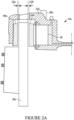
- the first brake unit 14a shown in Figures 2A-2B , includes the caliper 22a, and a piston 50 located in the caliper 22a.
- the caliper 22a has two brake pads 48a,48b located on opposite sides of the rotor 18a, and the electronic parking brake actuator 20a is able to configure the piston 50 to apply force which is transferred from the brake pads 48a,48b to the rotor 18a.
- the movement of the piston 50 is achieved by the parking brake actuator 20a, or by fluid pressure applied to the piston 50.
- the first brake unit 14a is shown in Figures 2A , 2B , however, the other brake units 14b, 14c, 14d have similar components.
- the EPB system 10 also includes a switch 24, which is also in electrical communication with the HECU 12.
- the switch 24 is used to actuate the brake units 14a,14b.
- the HECU 12 includes software such that the HECU 12 is programmed to command the actuators 20a,20b to generate a requested clamping force on the rotors 18a,18b based on the actuation of the switch 24 by the driver of the vehicle.
- the actuators 20a,20b are motor-gear-units, each of which includes a DC motor connected to a gear box for torque amplification, but it is within the scope of the invention that other types of actuators may be used, such as, but not limited to, a stand-alone DC motor (no gear box), a brushless DC motor, a stepper motor, or the like.
- the switch 24 may be used to perform the parking brake function, such as when the vehicle is in a parked location, and it is desired to prevent the vehicle from moving, such as when the vehicle is parked on a hill.
- the brake system 10 also includes a tandem master cylinder (TMC), shown generally at 26.
- TMC tandem master cylinder
- the TMC 26 is divided into various cavities, and has two pistons, one of which is connected to a connecting rod 28, and the connecting rod 28 is connected to and actuated by a brake pedal 30.
- the first primary feed conduit 32a is connected to and in fluid communication with a first accumulator 34a.
- the first primary feed conduit 32a splits, and is in fluid communication with a first solenoid valve 38a and a second solenoid valve 38b.
- the second valve 38b includes a check valve 40a to provide for pressure relief.
- check valves 40b,40c,40d,40e,40f which are part of the rear brake system 16A and function to provide pressure relief when necessary.
- the rear brake system 16A also includes a pump 42 for generating or relieving fluid pressure in the rear brake system 16A, and a restriction point 44 for controlling pressure, and several other conduits (not labeled) which provide fluid communication between the various components of the rear brake system 16A, as shown in Figure 1 .
- the accumulators 34a,34b,34c,36, the solenoid valves 38a,38b,38c,38d,38e,38f, as well as the check valves 40a,40b,40c,40d,40e,40f, and the pump 42 all control the flow of fluid and the fluid pressure in the conduits and the pressure in each caliper 22a,22b,22c,22d.
- Both the rear brake system 16A and the front brake system 16B have some type of actuator, which in this embodiment is the TMC 26, which generates fluid pressure in the rear brake system 16a based on the amount of force that is applied to the brake pedal 30 to generate braking force to decelerate the vehicle.
- the TMC 16 is activated when the driver applies force to the brake pedal 30, this may be controlled by the HECU 12, or in alternate embodiments, some other type of control unit.
- the driver of the vehicle applies force to the brake pedal 30, which generates pressure in the TMC 26, and therefore generates pressure in the brake systems 16A,16B.
- the other brake units 14b, 14c, 14d operate in a similar manner.
- the first brake unit 14a is shown to demonstrate the pre-charge function of the present invention, but is should be noted that the pre-charge function operates in the same manner with respect to the other brake units 14b, 14c, 14d.
- the pressure increase that is part of the pre-charge function is achieved by changing the configuration of the valves 38a,38b and activating the pump 42 such that pressure in the caliper 22a increases.
- This increase in pressure in the rear brake system 16A causes the piston 50 in the caliper 22a to move towards the pad 48b, applying force to the pad 48b, clamping the rotor 18a between both pads 48a,48b, generating a braking force to stop the vehicle.
- the pre-charge function of the present invention functions to generate pressure in the caliper 22a, moving the piston 50 such that each pad 48a,48b moves towards the rotor 18a, and contacts the rotor 18a, eliminating both gaps 52a,52b, as shown in Figure 2B .
- the pads 48a,48b contact the rotor 18a, no force is applied to the rotor 18a.
- the pressure in the rear brake system 16A is further increased such that the pressure in the caliper 22a moves the piston 50 such that force is applied to the rotor 18a by the pads 48a,48b, resulting in deceleration of the vehicle.
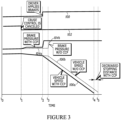
- FIG. 3 a diagram is shown comparing the operation of the brake system 10 without a pre-charge function and with a pre-charge function according to the present invention.
- the measurements of brake pressure 104a and vehicle velocity 106a are taken when the pre-charge function is used, and the measurements of brake pressure 104b and vehicle velocity 106b are taken when the pre-charge function is not used.
- the cruise control operating state 102 is active, the vehicle velocity 106a,106b is constant, there is no brake actuation 100, and the brake pressure 1 04a, 104b is zero.
- the cruise control operating state 102 is changed from being active to being deactivated by the driver (i.e., the driver deactivates the cruise control function), and the vehicle velocity 106a,106b begins to decrease as a result of the vehicle coasting. Also, between time t1 and time t2, once the cruise control operating state 102 is changed to being deactivated, the pre-charge function of the present invention is activated, and the brake pressure 104a increases, such that the pressure in the caliper 22a moves each set of brake pads 48a,48b, eliminating the air gap 52a,52b on each side of the rotor 18a (as shown in Figure 2B ).
- the driver then applies force to the brake pedal, shown by the increase in brake actuation 100 at time t2, which also causes a further increase in brake pressure 104a beginning at time t2, such that force is applied to the rotor 18a by the pads 48a,48b, causing a decrease in the vehicle velocity 106a. If the brake actuation 100 is maintained, as shown in Figure 3 , the vehicle velocity 106a is eventually reduced to zero, at time t4.
- the brake pressure between time t1 and time t2 is still zero.
- the brake pressure 104b increases, but the initial increase in brake pressure 104b moves the brake pads 48a,48b to eliminate each air gap 52a,52b, such that no force is applied to the rotor 18a by the pads 48a,48b. Therefore, between time t1 and t2, and between time t2 and t3, there is no force applied to the rotor 18a by the pads 48a,48b, and the only decrease in the vehicle velocity 106b is the result of drag during the coasting of the vehicle.
Landscapes
- Engineering & Computer Science (AREA)
- Transportation (AREA)
- Mechanical Engineering (AREA)
- Chemical & Material Sciences (AREA)
- Combustion & Propulsion (AREA)
- Regulating Braking Force (AREA)
- Braking Systems And Boosters (AREA)
Description
- This application claims priority to
US Provisional Application No. 62/778,672, filed December 12, 2018 US non-Provisional Application No. 16/291,591, filed March 4, 2019 - The invention relates generally to a braking system having a pre-charge function, where the pre-charge function is activated upon deactivation of a vehicle's cruise control function.
- Hydraulic braking systems for vehicles typically include multiple braking units, each of which includes some type of actuator in electrical communication with a hydraulic electronic control unit (HECU). The actuator works with a caliper having a piston, and at least two brake pads to apply braking force to a brake rotor, or brake drum. The actuator is used to build pressure in one or more of the braking units, more specifically the caliper, and during operation of a vehicle having a hydraulic braking system, the pressure build-up is controlled by the HECU. This build-up of pressure typically occurs when the driver applies force to the brake pedal. When force is no longer applied to the brake pedal, fluid pressure in the calipers is relieved, and allowing the pistons to retract, releasing the brakes.
- When the braking system is not in use, there is typically a gap between the rotor and each of the pads. Most hydraulic brake systems require a build-up of pressure in the braking units, such that each brake pad is positioned to be in contact with the corresponding rotor (eliminating the gaps) before any vehicle deceleration is achieved. This build-up of pressure, or "pre-charge," typically occurs after application of force to the brake pedal by the driver. This pre-charge increases the amount of time needed to generate braking force to decelerate the vehicle, causing a delay in the generation of braking force, and therefore increases the stopping distance of the vehicle.
- There are instances where deceleration of the vehicle may occur without the driver applying force to the brake pedal. One of the instances where this type of deceleration may occur is after the deactivation of the cruise control function. The driver of the vehicle may then apply force to the brake pedal to decelerate the vehicle, however, there is still no braking force generated by the braking units until after the pre-charge has occurred, which causes an increase in stopping distance of the vehicle. It is known from
US 2014/0100755 A1 to provide an indication to the brake system, when braking is needed and filling the brake system with a predetermined rate. A delay is set to the amount of time needed to fill the brake system and the brake pad applied to the brake disc at the amount of braking force needed after the delay. When the braking force needed is less than the braking force actually occurring, the delay is set to zero. - Accordingly, there exists a need for a hydraulic braking system which has expanded functionality, such that the pre-charge occurs after the deactivation of the cruise control, and prior to the driver applying force to the brake pedal, which results in braking force being achieved upon the application of force to the brake pedal by the driver, decreasing stopping distance.
- The present invention is an apparatus with a hydraulic brake system for a vehicle which has expanded functionality, where a pre-charge occurs in the brake system upon deactivation of the cruise control, reducing the time needed to generate pressure in each brake unit, and therefore reducing stopping distance. In one embodiment, the hydraulic brake system includes several brake units, and each brake unit includes a caliper, and one or more brake pads which selectively apply force to a brake rotor. Each caliper is in fluid communication with some type of actuator capable of generating hydraulic pressure. The hydraulic brake system includes a pre-charge function, where the pre-charge function involves generating pressure in each caliper upon deactivation of the cruise control function of the vehicle, such that the hydraulic brake system is pre-charged prior to the driver of the vehicle applying force to the brake pedal, which reduces stopping distance.
- In one embodiment, the pre-charge function includes generating enough pressure in each caliper such that the brake pads contact each corresponding rotor. In another embodiment, the pre-charge function includes generating enough pressure in each caliper such that the brake pads apply force to each rotor, providing a minimum amount of deceleration prior to the driver of the vehicle applying force to the brake pedal.
- In an embodiment, the present invention is a braking system for a vehicle, which includes a hydraulic electronic control unit, at least one brake unit operable for being controlled by the hydraulic electronic control unit, at least one rotor, and a plurality of brake pads being part of the brake unit. A first of the plurality of brake pads is located on a first side of the rotor, and a second of the plurality of brake pads located on a second side of the rotor. The brake unit is operable for configuring the plurality of brake pads to selectively apply force to the rotor.
- The vehicle includes a cruise control function operable for configuring the vehicle to maintain a constant speed. The braking system also includes a pre-charge function which includes generating pressure in the brake unit such that the first of the plurality of brake pads is in contact with the first side of the rotor, and the second of the plurality of brake pads is in contact with the second side of the rotor.
- In an embodiment, the pre-charge function is activated when the cruise control function is deactivated.
- A first air gap is located between the first side of the rotor and the first of the plurality of brake pads, and a second air gap located between the second side of the rotor and the second of the plurality of brake pads. Upon deactivation of the cruise control function and activation of the pre-charge function, as the pressure is generated in the brake-unit, the first of the plurality of brake pads is moved towards the first side of the rotor such that the first air gap is eliminated, and the second of the plurality of brake pads is moved towards the second side of the rotor such that the second air gap is eliminated.
- The braking system also includes a brake pedal in communication with the hydraulic electronic control unit. The brake pedal may be in electrical communication or in hydraulic communication with the hydraulic electronic control unit. The hydraulic electronic control unit is operable for controlling the pressure generated by the brake unit based on the amount of force applied to the brake pedal. In an embodiment, the pre-charge function is activated prior to the driver of the vehicle applying force to the brake pedal.
- In one embodiment, the pre-charge function is activated when the vehicle is travelling on an exit ramp of a highway. In another embodiment, the pre-charge function is activated when the vehicle is travelling on the highway, and the driver of the vehicle anticipates having to decelerate the vehicle which may be due to an accident seen by the driver, or increased traffic volume.
- In one embodiment, the braking system includes a plurality of brake units, wherein the pre-charge function includes generating pressure in each of the plurality of brake units when the cruise control function is deactivated.
- In one embodiment, the pre-charge function includes generating enough pressure in the brake unit such that the first of the plurality of brake pads applies force the first side of the rotor, and the second of the plurality of brake pads applies force to the second side of the rotor, decreasing the rotational speed of the rotor.
- Further areas of applicability of the present invention will become apparent from the detailed description provided hereinafter. It should be understood that the detailed description and specific examples, while indicating the preferred embodiment of the invention, are intended for purposes of illustration only and are not intended to limit the scope of the invention.
- The present invention will become more fully understood from the detailed description and the accompanying drawings, wherein:
-
Figure 1 is a diagram of a braking system for a vehicle, having a pre-charge function, according to embodiments of the present invention; -
Figure 2A is a diagram of a brake unit used as part of a braking system having a pre-charge function, where the pre-charge function is deactivated, according to embodiments of the present invention; -
Figure 2B is a diagram of a braking unit used as part of a braking system having a pre-charge function, where the pre-charge function is activated, according to embodiments of the present invention; and -
Figure 3 is a diagram depicting a comparison of the operation of a braking system with no pre-charge function and the operation of a braking system having a pre-charge function, according to embodiments of the present invention. - The following description of the preferred embodiment(s) is merely exemplary in nature and is in no way intended to limit the invention, its application, or uses.
- A diagram showing a hydraulic braking system having a pre-charge function according to the present invention is shown in
Figure 1 , generally at 10. Referring to the Figures generally, thebraking system 10 includes a hydraulic electronic control unit (HECU) 12, and the HECU 12 is in electrical communication with at least one brake unit, which in this embodiment is two rear brake units, shown generally at 14a,14b, which are part of a rear brake system, shown generally at 16A. Thebrake system 10 also includes twofront brake units brake unit rotors - The
hydraulic braking system 10 also includes an electronic parking brake function. Eachrear brake unit 14a,14b includes an electronicparking brake actuator 20a,20b, and each electronicparking brake actuator 20a,20b is used with a piston located in acorresponding caliper 22a,22b to generate braking force. By way of example, thefirst brake unit 14a, shown inFigures 2A-2B , includes thecaliper 22a, and apiston 50 located in thecaliper 22a. Thecaliper 22a has twobrake pads rotor 18a, and the electronicparking brake actuator 20a is able to configure thepiston 50 to apply force which is transferred from thebrake pads rotor 18a. The movement of thepiston 50 is achieved by theparking brake actuator 20a, or by fluid pressure applied to thepiston 50. Thefirst brake unit 14a is shown inFigures 2A ,2B , however, theother brake units - Referring again to
Figure 1 , theEPB system 10 also includes aswitch 24, which is also in electrical communication with theHECU 12. Theswitch 24 is used to actuate thebrake units 14a,14b. TheHECU 12 includes software such that theHECU 12 is programmed to command theactuators 20a,20b to generate a requested clamping force on therotors 18a,18b based on the actuation of theswitch 24 by the driver of the vehicle. In one embodiment, theactuators 20a,20b are motor-gear-units, each of which includes a DC motor connected to a gear box for torque amplification, but it is within the scope of the invention that other types of actuators may be used, such as, but not limited to, a stand-alone DC motor (no gear box), a brushless DC motor, a stepper motor, or the like. Theswitch 24 may be used to perform the parking brake function, such as when the vehicle is in a parked location, and it is desired to prevent the vehicle from moving, such as when the vehicle is parked on a hill. - The
brake system 10 also includes a tandem master cylinder (TMC), shown generally at 26. TheTMC 26 is divided into various cavities, and has two pistons, one of which is connected to a connectingrod 28, and the connectingrod 28 is connected to and actuated by abrake pedal 30. There is a firstprimary feed conduit 32a connected to and in fluid communication with the rear brake system 16A and theTMC 26, and a secondprimary feed conduit 32b connected to and in fluid communication with the front brake system 16B and theTMC 26. - More specifically, the first
primary feed conduit 32a is connected to and in fluid communication with afirst accumulator 34a. There are also severalother accumulators 34b,34c, and a low-pressure accumulator 36. The firstprimary feed conduit 32a splits, and is in fluid communication with afirst solenoid valve 38a and a second solenoid valve 38b. There are also severalother solenoid valves check valve 40a to provide for pressure relief. There are also severalother check valves restriction point 44 for controlling pressure, and several other conduits (not labeled) which provide fluid communication between the various components of the rear brake system 16A, as shown inFigure 1 . - The
accumulators solenoid valves check valves caliper TMC 26, which generates fluid pressure in therear brake system 16a based on the amount of force that is applied to thebrake pedal 30 to generate braking force to decelerate the vehicle. Referring again toFigure 1 , the TMC 16 is activated when the driver applies force to thebrake pedal 30, this may be controlled by theHECU 12, or in alternate embodiments, some other type of control unit. - In operation, the driver of the vehicle applies force to the
brake pedal 30, which generates pressure in theTMC 26, and therefore generates pressure in the brake systems 16A,16B. There is apressure sensor 46 which detects this pressure increase, and information regarding the increase in pressure is transferred from thepressure sensor 46 to theHECU 12. More specifically, in therear brake system 16a, based on the amount of force applied to thebrake pedal 30, theTMC 26 is able to increase the pressure in thefirst caliper 22a, moving thepiston 50 such that thepads first rotor 18a, limiting or preventing rotation of thefirst rotor 18a. Theother brake units - Referring now to
Figures 2A-2B , thefirst brake unit 14a is shown to demonstrate the pre-charge function of the present invention, but is should be noted that the pre-charge function operates in the same manner with respect to theother brake units valves 38a,38b and activating the pump 42 such that pressure in thecaliper 22a increases. This increase in pressure in the rear brake system 16A causes thepiston 50 in thecaliper 22a to move towards thepad 48b, applying force to thepad 48b, clamping therotor 18a between bothpads - However, when there is no force applied to the
brake pedal 30, and therotor 18a is released and allowed to rotate freely, there areair gaps 52a,52b on each side of therotor 18a, shown inFigure 2A . During actuation of thebrake unit 14a, thepiston 50 needs to be moved the combined distance of eachgap 52a,52b before force is applied to therotor 18a, and braking force is generated. This increases the amount of time necessary to generate braking force, and therefore increase the stopping distance of the vehicle. - There are often instances when the driver of the vehicle is operating the vehicle in a cruise-control mode, where the cruise control function is activated, and the vehicle maintains a desired speed set by the driver. However, there are instances where the driver of the vehicle deactivates the cruise control, prior to applying force to the
brake pedal 30, which (if the driver does not apply force to the accelerator pedal) results in the vehicle coasting. This may occur when the driver of the vehicle has moved to an exit ramp off a highway. Another instance where this may occur may be when driving on the highway, and the driver of the vehicle anticipates having to decelerate the vehicle, which may be due to an accident seen by the driver, or increased traffic volume. - The pre-charge function of the present invention functions to generate pressure in the
caliper 22a, moving thepiston 50 such that eachpad rotor 18a, and contacts therotor 18a, eliminating bothgaps 52a,52b, as shown inFigure 2B . However, although thepads rotor 18a, no force is applied to therotor 18a. Once the driver applies force to thebrake pedal 30, the pressure in the rear brake system 16A is further increased such that the pressure in thecaliper 22a moves thepiston 50 such that force is applied to therotor 18a by thepads - Referring now to
Figure 3 , a diagram is shown comparing the operation of thebrake system 10 without a pre-charge function and with a pre-charge function according to the present invention. There are several operating parameters shown, includingbrake actuation 100, cruisecontrol operating state 102, two different measurements ofbrake pressure 104a,104b, and two measurements ofvehicle velocity 106a,106b. The measurements ofbrake pressure 104a andvehicle velocity 106a are taken when the pre-charge function is used, and the measurements of brake pressure 104b and vehicle velocity 106b are taken when the pre-charge function is not used. - Between time t0 and t1, the cruise
control operating state 102 is active, thevehicle velocity 106a,106b is constant, there is nobrake actuation 100, and the brake pressure 1 04a, 104b is zero. - At time t1, the cruise
control operating state 102 is changed from being active to being deactivated by the driver (i.e., the driver deactivates the cruise control function), and thevehicle velocity 106a,106b begins to decrease as a result of the vehicle coasting. Also, between time t1 and time t2, once the cruisecontrol operating state 102 is changed to being deactivated, the pre-charge function of the present invention is activated, and thebrake pressure 104a increases, such that the pressure in thecaliper 22a moves each set ofbrake pads air gap 52a,52b on each side of therotor 18a (as shown inFigure 2B ). - At time t2, the driver then applies force to the brake pedal, shown by the increase in
brake actuation 100 at time t2, which also causes a further increase inbrake pressure 104a beginning at time t2, such that force is applied to therotor 18a by thepads vehicle velocity 106a. If thebrake actuation 100 is maintained, as shown inFigure 3 , thevehicle velocity 106a is eventually reduced to zero, at time t4. - When the pre-charge function is not used, the brake pressure between time t1 and time t2 is still zero. When the driver applies force to the brake pedal at time t2, the brake pressure 104b increases, but the initial increase in brake pressure 104b moves the
brake pads air gap 52a,52b, such that no force is applied to therotor 18a by thepads rotor 18a by thepads pads air gap 52a,52b has been eliminated, force is then applied to therotor 18a by thepads rotor 18a by thepads brake actuation 100 is maintained, as shown inFigure 3 , the vehicle velocity 106b is eventually reduced to zero, at time t5. - It is seen when looking at
Figure 3 that when the pre-charge function of the present invention is used, thevehicle velocity 106a is zero at time t4, and when the pre-charge function is not used, the vehicle velocity 106b is zero at time t5. The difference between time t4 and time t5 represents an increased amount of time required to stop the vehicle, which therefore results in an increased stopping distance. - The description of the invention is merely exemplary in nature and, thus, variations that do not depart from the gist of the invention are intended to be within the scope of the invention. Such variations are not to be regarded as a departure from the scope of the invention as defined in the claims.
Claims (16)
- An apparatus, comprising:
a braking system (10) for a vehicle, including:a hydraulic electronic control unit (12);at least one brake unit (14) operable for being controlled by the hydraulic electronic control unit(12);a cruise control function operable for configuring the vehicle to maintain a constant speed;a pre-charge function which includes generating pressure in the at least one brake unit (14);characterized in that the pre-charge function is activated by the hydraulic electronic control unit (12) when the cruise control function is deactivated. - The apparatus of claim 1, the at least one brake unit (14) further comprisingat least one rotor (18);a plurality of brake pads (48), a first of the plurality of brake pads (48) located on a first side of the at least one rotor (18), and a second of the plurality of brake pads (48) located on a second side of the at least one rotor (18), the brake unit (14) operable for configuring the plurality of brake pads (48) to selectively apply force to the at least one rotor (18);wherein the pre-charge function includes generating pressure in the at least one brake unit (14) such that the first of the plurality of brake pads (48) is in contact with the first side of the at least one rotor (18), and the second of the plurality of brake pads (48) is in contact with the second side of the at least one rotor (18).
- The apparatus of claim 2, further comprising:a first air gap (52) located between the first side of the at least one rotor (18) and the first of the plurality of brake pads (48);wherein upon deactivation of the cruise control function and activation of the pre-charge function, as the pressure is generated in the at least one brake-unit (14), the first of the plurality of brake pads (48) is moved towards the first side of the at least one rotor (18) such that the first air gap (52) is eliminated.
- The apparatus of claim 2, further comprising:a second air gap (52) located between the second side of the at least one rotor (18) and the second of the plurality of brake pads (48);wherein upon deactivation of the cruise control function and activation of the pre-charge function, as the pressure is generated in the at least one brake-unit (14), the second of the plurality of brake pads (48) is moved towards the second side of the at least one rotor (18) such that the second air gap (52) is eliminated.
- The apparatus of claim 2, wherein the pre-charge function includes generating enough pressure in the at least one brake unit (14) such that the first of the plurality of brake pads (48) applies force the first side of the at least one rotor (18), and the second of the plurality of brake pads (48) applies force to the second side of the at least one rotor (18), decreasing the rotational speed of the at least one rotor (18).
- The apparatus of claim 1, further comprising:a brake pedal (30) in communication with the hydraulic electronic control unit (12), the hydraulic electronic control unit (12) operable for controlling the pressure generated by the brake unit (14) based on the amount of force applied to the brake pedal (30);wherein the pre-charge function is activated prior to a driver of the vehicle applying force to the brake pedal (30).
- The apparatus of claim 1, the at least one brake unit (14) further comprising a plurality of brake units (14a, b, c, d), wherein the pre-charge function includes generating pressure in each of the plurality of brake units (14a, b, c, d) when the cruise control function is deactivated.
- The apparatus of claim 1, wherein the pre-charge function is activated when the vehicle is travelling on an exit ramp of a highway.
- The apparatus of claim 1, wherein the pre-charge function is activated when a driver of the vehicle anticipates having to decelerate the vehicle.
- A method for reducing a stopping distance of a vehicle,
comprising the steps of:providing braking system (10) for the vehicle;providing a hydraulic electronic control unit (12) being part of the braking system (10) of the vehicle;providing at least one brake unit (14) being part of the braking system, the at least one brake unit (14) operable for being controlled by the hydraulic electronic control unit (12);providing at least one rotor (18) being part of the braking system (10); providing a plurality of brake pads (48) being part of the at least one brake unit (14), a first of the plurality of brake pads (48) located on a first side of the at least one rotor (18), and a second of the plurality of brake pads (48) located on a second side of the at least one rotor (18), the brake unit (14) operable for configuring the plurality of brake pads (48) to selectively apply force to the at least one rotor (18);providing a cruise control function operable for configuring the vehicle to maintain a constant speed; andproviding a pre-charge function being part of the braking system (10), characterized in that the pre-charge function being activated by the hydraulic electronic control unit (12);activating the pre-charge function after the cruise control function is deactivated, the pre-charge function generating pressure in the at least one brake unit (14) such that the first of the plurality of brake pads (48) is placed in contact with the first side of the at least one rotor (18), and the second of the plurality of brake pads (48) is placed in contact with the second side of the at least one rotor (18). - The method of claim 10, further comprising the steps of:providing a first air gap (52) located between the first side of the at least one rotor (18) and the first of the plurality of brake pads (48); andproviding a second air gap (52) located between the second side of the at least one rotor (18) and the second of the plurality of brake pads (48);deactivating the cruise control function;eliminating the first air gap (52) by moving the first of the plurality of brake pads (48) towards the first side of the at least one rotor (18) upon deactivation of the cruise control function and activation of the pre-charge function;eliminating the second air gap (52) by moving the second of the plurality of brake pads (48) towards the second side of the at least one rotor (18) upon deactivation of the cruise control function and activation of the pre-charge function.
- The method of claim 10, further comprising the steps of:providing a brake pedal (30) in communication with the hydraulic electronic control unit (12);controlling the pressure generated by the brake unit (14) based on the amount of force applied to the brake pedal (30) using the hydraulic electronic control unit (12);activating the pre-charge function prior to the driver of the vehicle applying force to the brake pedal (30).
- The method of claim 10, further comprising the steps of activating the pre-charge function when the vehicle is travelling on an exit ramp of a highway.
- The method of claim 10, further comprising the steps of activating the pre-charge function when a driver of the vehicle anticipates having to decelerate the vehicle.
- The method of claim 10, further comprising the steps of:providing the at least one brake unit (14) to further comprise a plurality of brake units (14a, b, c, d);generating pressure in each of the plurality of brake units (14a, b, c, d) when the cruise control function is deactivated.
- The method of claim 10, the pre-charge function further comprising the steps of:generating enough pressure in the at least one brake unit (14) such that the first of the plurality of brake pads (48) applies force the first side of the at least one rotor (18);generating enough pressure in the at least one brake unit (14) such that the second of the plurality of brake pads (48) applies force to the second side of the at least one rotor (18);decreasing the rotational speed of the at least one rotor (18) as the first of the plurality of brake pads (48) applies force the first side of the at least one rotor (18), and the second of the plurality of brake pads (48) applies force to the second side of the at least one rotor (18).
Applications Claiming Priority (3)
| Application Number | Priority Date | Filing Date | Title |
|---|---|---|---|
| US201862778672P | 2018-12-12 | 2018-12-12 | |
| US16/291,591 US11077837B2 (en) | 2018-12-12 | 2019-03-04 | Cruise control cancel, with brake precharge |
| PCT/US2019/065746 WO2020123666A1 (en) | 2018-12-12 | 2019-12-11 | Cruise control cancel, with brake precharge |
Publications (2)
| Publication Number | Publication Date |
|---|---|
| EP3894287A1 EP3894287A1 (en) | 2021-10-20 |
| EP3894287B1 true EP3894287B1 (en) | 2023-09-13 |
Family
ID=71072342
Family Applications (1)
| Application Number | Title | Priority Date | Filing Date |
|---|---|---|---|
| EP19832799.1A Active EP3894287B1 (en) | 2018-12-12 | 2019-12-11 | Cruise control cancel, with brake precharge |
Country Status (4)
| Country | Link |
|---|---|
| US (1) | US11077837B2 (en) |
| EP (1) | EP3894287B1 (en) |
| CN (1) | CN113382899B (en) |
| WO (1) | WO2020123666A1 (en) |
Family Cites Families (17)
| Publication number | Priority date | Publication date | Assignee | Title |
|---|---|---|---|---|
| JPH01262226A (en) * | 1988-04-14 | 1989-10-19 | Aisin Seiki Co Ltd | Constant speed travel control device for electric motor drive |
| DE19629229C2 (en) * | 1996-07-20 | 2002-06-20 | Daimler Chrysler Ag | Procedure for performing an automatic braking process |
| DE19861109B4 (en) * | 1998-06-12 | 2006-04-06 | Robert Bosch Gmbh | Method and device for controlling a vehicle brake system |
| DE10036337A1 (en) * | 2000-07-26 | 2002-02-14 | Bayerische Motoren Werke Ag | Device and method for setting a target deceleration of a vehicle |
| JP3909647B2 (en) * | 2000-12-13 | 2007-04-25 | 本田技研工業株式会社 | Auto cruise equipment |
| JP2007536147A (en) * | 2004-05-06 | 2007-12-13 | ケルシ・ヘイズ、カムパニ | Slip control boost brake system |
| US20060125315A1 (en) * | 2004-12-15 | 2006-06-15 | Hool Patrick H | Passive pre-charge system for a vehicular brake system |
| US8433494B2 (en) * | 2009-07-14 | 2013-04-30 | GM Global Technology Operations LLC | Operating device for a cruise control system in a vehicle with regenerative braking capability |
| DE102009058154A1 (en) | 2009-12-12 | 2011-06-16 | Wabco Gmbh | Driver assistance system for a vehicle, in particular commercial vehicle, and method for controlling a brake system |
| US8698639B2 (en) | 2011-02-18 | 2014-04-15 | Honda Motor Co., Ltd. | System and method for responding to driver behavior |
| GB2492858C2 (en) * | 2011-12-06 | 2014-12-10 | Trevor Michael Mennie | Brake system |
| US8868311B2 (en) | 2012-10-04 | 2014-10-21 | Robert Bosch Gmbh | Method to deal with slow initial brake response for adaptive cruise control |
| US9475477B2 (en) * | 2012-11-01 | 2016-10-25 | GM Global Technology Operations LLC | System and method for reducing transient brake caliper drag |
| DE102012220361A1 (en) * | 2012-11-08 | 2014-05-22 | Robert Bosch Gmbh | Braking device for a motor vehicle with preparatory pre-deceleration and method for controlling such a brake device |
| KR102074210B1 (en) * | 2013-10-24 | 2020-02-06 | 현대모비스 주식회사 | Variable cruise control apparatus and method |
| JP6589442B2 (en) * | 2015-07-31 | 2019-10-16 | 株式会社アドヴィックス | Brake device |
| EP3251908B1 (en) * | 2016-06-03 | 2021-01-20 | Meritor Heavy Vehicle Braking Systems (UK) Limited | Brake system and method of control with air gap estimation |
-
2019
- 2019-03-04 US US16/291,591 patent/US11077837B2/en active Active
- 2019-12-11 EP EP19832799.1A patent/EP3894287B1/en active Active
- 2019-12-11 CN CN201980091914.4A patent/CN113382899B/en active Active
- 2019-12-11 WO PCT/US2019/065746 patent/WO2020123666A1/en not_active Ceased
Also Published As
| Publication number | Publication date |
|---|---|
| EP3894287A1 (en) | 2021-10-20 |
| US20200189544A1 (en) | 2020-06-18 |
| CN113382899A (en) | 2021-09-10 |
| WO2020123666A1 (en) | 2020-06-18 |
| US11077837B2 (en) | 2021-08-03 |
| CN113382899B (en) | 2024-09-10 |
Similar Documents
| Publication | Publication Date | Title |
|---|---|---|
| US12139112B2 (en) | Brake system, braking force distribution apparatus, and electric brake apparatus | |
| US20210078557A1 (en) | Electric brake device and electric brake control device | |
| US11059466B2 (en) | Method for operating a brake system of a motor vehicle, and control unit and brake system | |
| US20210146897A1 (en) | Method for Operating a Braking Assembly of a Motor Vehicle, and Control and/or Regulation Device | |
| CN107054335B (en) | Method for operating a parking brake in a vehicle | |
| US10981550B2 (en) | Method and device for operating a hydraulic brake system, brake system | |
| US10821949B2 (en) | Electronic brake boost on secondary brake system | |
| US11046297B2 (en) | Method for checking the braking force in a vehicle | |
| JP6846077B2 (en) | Brake system | |
| CN109963756B (en) | Method for automatically braking a vehicle | |
| JP6797634B2 (en) | Brake system | |
| EP3894287B1 (en) | Cruise control cancel, with brake precharge | |
| JP6221118B2 (en) | Brake system | |
| JP6745739B2 (en) | Brake system | |
| JP2007038764A (en) | Brake fluid pressure control system | |
| GB2367868A (en) | Delayed rear brake application in electro-hydraulic (EHB) braking systems | |
| US12017630B2 (en) | Method and control apparatus for avoiding jolt moments during a deceleration of a vehicle | |
| EP3823867B1 (en) | Epb low residual torque software function | |
| JP6755619B2 (en) | Vehicle braking device | |
| JP2015145138A (en) | brake control device | |
| KR20230122358A (en) | Method for controlling auto vehicle hold system |
Legal Events
| Date | Code | Title | Description |
|---|---|---|---|
| STAA | Information on the status of an ep patent application or granted ep patent |
Free format text: STATUS: UNKNOWN |
|
| STAA | Information on the status of an ep patent application or granted ep patent |
Free format text: STATUS: THE INTERNATIONAL PUBLICATION HAS BEEN MADE |
|
| PUAI | Public reference made under article 153(3) epc to a published international application that has entered the european phase |
Free format text: ORIGINAL CODE: 0009012 |
|
| STAA | Information on the status of an ep patent application or granted ep patent |
Free format text: STATUS: REQUEST FOR EXAMINATION WAS MADE |
|
| 17P | Request for examination filed |
Effective date: 20210712 |
|
| AK | Designated contracting states |
Kind code of ref document: A1 Designated state(s): AL AT BE BG CH CY CZ DE DK EE ES FI FR GB GR HR HU IE IS IT LI LT LU LV MC MK MT NL NO PL PT RO RS SE SI SK SM TR |
|
| DAV | Request for validation of the european patent (deleted) | ||
| DAX | Request for extension of the european patent (deleted) | ||
| STAA | Information on the status of an ep patent application or granted ep patent |
Free format text: STATUS: EXAMINATION IS IN PROGRESS |
|
| 17Q | First examination report despatched |
Effective date: 20220707 |
|
| GRAP | Despatch of communication of intention to grant a patent |
Free format text: ORIGINAL CODE: EPIDOSNIGR1 |
|
| STAA | Information on the status of an ep patent application or granted ep patent |
Free format text: STATUS: GRANT OF PATENT IS INTENDED |
|
| INTG | Intention to grant announced |
Effective date: 20230419 |
|
| GRAS | Grant fee paid |
Free format text: ORIGINAL CODE: EPIDOSNIGR3 |
|
| GRAA | (expected) grant |
Free format text: ORIGINAL CODE: 0009210 |
|
| STAA | Information on the status of an ep patent application or granted ep patent |
Free format text: STATUS: THE PATENT HAS BEEN GRANTED |
|
| AK | Designated contracting states |
Kind code of ref document: B1 Designated state(s): AL AT BE BG CH CY CZ DE DK EE ES FI FR GB GR HR HU IE IS IT LI LT LU LV MC MK MT NL NO PL PT RO RS SE SI SK SM TR |
|
| REG | Reference to a national code |
Ref country code: CH Ref legal event code: EP |
|
| REG | Reference to a national code |
Ref country code: DE Ref legal event code: R096 Ref document number: 602019037538 Country of ref document: DE |
|
| REG | Reference to a national code |
Ref country code: IE Ref legal event code: FG4D |
|
| REG | Reference to a national code |
Ref country code: LT Ref legal event code: MG9D |
|
| REG | Reference to a national code |
Ref country code: NL Ref legal event code: MP Effective date: 20230913 |
|
| PG25 | Lapsed in a contracting state [announced via postgrant information from national office to epo] |
Ref country code: GR Free format text: LAPSE BECAUSE OF FAILURE TO SUBMIT A TRANSLATION OF THE DESCRIPTION OR TO PAY THE FEE WITHIN THE PRESCRIBED TIME-LIMIT Effective date: 20231214 |
|
| PG25 | Lapsed in a contracting state [announced via postgrant information from national office to epo] |
Ref country code: SE Free format text: LAPSE BECAUSE OF FAILURE TO SUBMIT A TRANSLATION OF THE DESCRIPTION OR TO PAY THE FEE WITHIN THE PRESCRIBED TIME-LIMIT Effective date: 20230913 Ref country code: RS Free format text: LAPSE BECAUSE OF FAILURE TO SUBMIT A TRANSLATION OF THE DESCRIPTION OR TO PAY THE FEE WITHIN THE PRESCRIBED TIME-LIMIT Effective date: 20230913 Ref country code: NO Free format text: LAPSE BECAUSE OF FAILURE TO SUBMIT A TRANSLATION OF THE DESCRIPTION OR TO PAY THE FEE WITHIN THE PRESCRIBED TIME-LIMIT Effective date: 20231213 Ref country code: LV Free format text: LAPSE BECAUSE OF FAILURE TO SUBMIT A TRANSLATION OF THE DESCRIPTION OR TO PAY THE FEE WITHIN THE PRESCRIBED TIME-LIMIT Effective date: 20230913 Ref country code: LT Free format text: LAPSE BECAUSE OF FAILURE TO SUBMIT A TRANSLATION OF THE DESCRIPTION OR TO PAY THE FEE WITHIN THE PRESCRIBED TIME-LIMIT Effective date: 20230913 Ref country code: HR Free format text: LAPSE BECAUSE OF FAILURE TO SUBMIT A TRANSLATION OF THE DESCRIPTION OR TO PAY THE FEE WITHIN THE PRESCRIBED TIME-LIMIT Effective date: 20230913 Ref country code: GR Free format text: LAPSE BECAUSE OF FAILURE TO SUBMIT A TRANSLATION OF THE DESCRIPTION OR TO PAY THE FEE WITHIN THE PRESCRIBED TIME-LIMIT Effective date: 20231214 Ref country code: FI Free format text: LAPSE BECAUSE OF FAILURE TO SUBMIT A TRANSLATION OF THE DESCRIPTION OR TO PAY THE FEE WITHIN THE PRESCRIBED TIME-LIMIT Effective date: 20230913 |
|
| REG | Reference to a national code |
Ref country code: AT Ref legal event code: MK05 Ref document number: 1610967 Country of ref document: AT Kind code of ref document: T Effective date: 20230913 |
|
| PG25 | Lapsed in a contracting state [announced via postgrant information from national office to epo] |
Ref country code: NL Free format text: LAPSE BECAUSE OF FAILURE TO SUBMIT A TRANSLATION OF THE DESCRIPTION OR TO PAY THE FEE WITHIN THE PRESCRIBED TIME-LIMIT Effective date: 20230913 |
|
| PG25 | Lapsed in a contracting state [announced via postgrant information from national office to epo] |
Ref country code: IS Free format text: LAPSE BECAUSE OF FAILURE TO SUBMIT A TRANSLATION OF THE DESCRIPTION OR TO PAY THE FEE WITHIN THE PRESCRIBED TIME-LIMIT Effective date: 20240113 |
|
| PG25 | Lapsed in a contracting state [announced via postgrant information from national office to epo] |
Ref country code: AT Free format text: LAPSE BECAUSE OF FAILURE TO SUBMIT A TRANSLATION OF THE DESCRIPTION OR TO PAY THE FEE WITHIN THE PRESCRIBED TIME-LIMIT Effective date: 20230913 |
|
| PG25 | Lapsed in a contracting state [announced via postgrant information from national office to epo] |
Ref country code: ES Free format text: LAPSE BECAUSE OF FAILURE TO SUBMIT A TRANSLATION OF THE DESCRIPTION OR TO PAY THE FEE WITHIN THE PRESCRIBED TIME-LIMIT Effective date: 20230913 |
|
| PG25 | Lapsed in a contracting state [announced via postgrant information from national office to epo] |
Ref country code: SM Free format text: LAPSE BECAUSE OF FAILURE TO SUBMIT A TRANSLATION OF THE DESCRIPTION OR TO PAY THE FEE WITHIN THE PRESCRIBED TIME-LIMIT Effective date: 20230913 Ref country code: RO Free format text: LAPSE BECAUSE OF FAILURE TO SUBMIT A TRANSLATION OF THE DESCRIPTION OR TO PAY THE FEE WITHIN THE PRESCRIBED TIME-LIMIT Effective date: 20230913 Ref country code: IS Free format text: LAPSE BECAUSE OF FAILURE TO SUBMIT A TRANSLATION OF THE DESCRIPTION OR TO PAY THE FEE WITHIN THE PRESCRIBED TIME-LIMIT Effective date: 20240113 Ref country code: ES Free format text: LAPSE BECAUSE OF FAILURE TO SUBMIT A TRANSLATION OF THE DESCRIPTION OR TO PAY THE FEE WITHIN THE PRESCRIBED TIME-LIMIT Effective date: 20230913 Ref country code: EE Free format text: LAPSE BECAUSE OF FAILURE TO SUBMIT A TRANSLATION OF THE DESCRIPTION OR TO PAY THE FEE WITHIN THE PRESCRIBED TIME-LIMIT Effective date: 20230913 Ref country code: CZ Free format text: LAPSE BECAUSE OF FAILURE TO SUBMIT A TRANSLATION OF THE DESCRIPTION OR TO PAY THE FEE WITHIN THE PRESCRIBED TIME-LIMIT Effective date: 20230913 Ref country code: AT Free format text: LAPSE BECAUSE OF FAILURE TO SUBMIT A TRANSLATION OF THE DESCRIPTION OR TO PAY THE FEE WITHIN THE PRESCRIBED TIME-LIMIT Effective date: 20230913 Ref country code: SK Free format text: LAPSE BECAUSE OF FAILURE TO SUBMIT A TRANSLATION OF THE DESCRIPTION OR TO PAY THE FEE WITHIN THE PRESCRIBED TIME-LIMIT Effective date: 20230913 Ref country code: PT Free format text: LAPSE BECAUSE OF FAILURE TO SUBMIT A TRANSLATION OF THE DESCRIPTION OR TO PAY THE FEE WITHIN THE PRESCRIBED TIME-LIMIT Effective date: 20240115 |
|
| PG25 | Lapsed in a contracting state [announced via postgrant information from national office to epo] |
Ref country code: PL Free format text: LAPSE BECAUSE OF FAILURE TO SUBMIT A TRANSLATION OF THE DESCRIPTION OR TO PAY THE FEE WITHIN THE PRESCRIBED TIME-LIMIT Effective date: 20230913 Ref country code: IT Free format text: LAPSE BECAUSE OF FAILURE TO SUBMIT A TRANSLATION OF THE DESCRIPTION OR TO PAY THE FEE WITHIN THE PRESCRIBED TIME-LIMIT Effective date: 20230913 |
|
| REG | Reference to a national code |
Ref country code: DE Ref legal event code: R097 Ref document number: 602019037538 Country of ref document: DE |
|
| PG25 | Lapsed in a contracting state [announced via postgrant information from national office to epo] |
Ref country code: DK Free format text: LAPSE BECAUSE OF FAILURE TO SUBMIT A TRANSLATION OF THE DESCRIPTION OR TO PAY THE FEE WITHIN THE PRESCRIBED TIME-LIMIT Effective date: 20230913 |
|
| PLBE | No opposition filed within time limit |
Free format text: ORIGINAL CODE: 0009261 |
|
| STAA | Information on the status of an ep patent application or granted ep patent |
Free format text: STATUS: NO OPPOSITION FILED WITHIN TIME LIMIT |
|
| PG25 | Lapsed in a contracting state [announced via postgrant information from national office to epo] |
Ref country code: DK Free format text: LAPSE BECAUSE OF FAILURE TO SUBMIT A TRANSLATION OF THE DESCRIPTION OR TO PAY THE FEE WITHIN THE PRESCRIBED TIME-LIMIT Effective date: 20230913 |
|
| REG | Reference to a national code |
Ref country code: CH Ref legal event code: PL |
|
| 26N | No opposition filed |
Effective date: 20240614 |
|
| PG25 | Lapsed in a contracting state [announced via postgrant information from national office to epo] |
Ref country code: LU Free format text: LAPSE BECAUSE OF NON-PAYMENT OF DUE FEES Effective date: 20231211 |
|
| PG25 | Lapsed in a contracting state [announced via postgrant information from national office to epo] |
Ref country code: MC Free format text: LAPSE BECAUSE OF FAILURE TO SUBMIT A TRANSLATION OF THE DESCRIPTION OR TO PAY THE FEE WITHIN THE PRESCRIBED TIME-LIMIT Effective date: 20230913 |
|
| GBPC | Gb: european patent ceased through non-payment of renewal fee |
Effective date: 20231213 |
|
| REG | Reference to a national code |
Ref country code: BE Ref legal event code: MM Effective date: 20231231 |
|
| PG25 | Lapsed in a contracting state [announced via postgrant information from national office to epo] |
Ref country code: MC Free format text: LAPSE BECAUSE OF FAILURE TO SUBMIT A TRANSLATION OF THE DESCRIPTION OR TO PAY THE FEE WITHIN THE PRESCRIBED TIME-LIMIT Effective date: 20230913 Ref country code: LU Free format text: LAPSE BECAUSE OF NON-PAYMENT OF DUE FEES Effective date: 20231211 |
|
| REG | Reference to a national code |
Ref country code: IE Ref legal event code: MM4A |
|
| PG25 | Lapsed in a contracting state [announced via postgrant information from national office to epo] |
Ref country code: IE Free format text: LAPSE BECAUSE OF NON-PAYMENT OF DUE FEES Effective date: 20231211 |
|
| PG25 | Lapsed in a contracting state [announced via postgrant information from national office to epo] |
Ref country code: GB Free format text: LAPSE BECAUSE OF NON-PAYMENT OF DUE FEES Effective date: 20231213 |
|
| PG25 | Lapsed in a contracting state [announced via postgrant information from national office to epo] |
Ref country code: BE Free format text: LAPSE BECAUSE OF NON-PAYMENT OF DUE FEES Effective date: 20231231 |
|
| PG25 | Lapsed in a contracting state [announced via postgrant information from national office to epo] |
Ref country code: CH Free format text: LAPSE BECAUSE OF NON-PAYMENT OF DUE FEES Effective date: 20231231 |
|
| PG25 | Lapsed in a contracting state [announced via postgrant information from national office to epo] |
Ref country code: SI Free format text: LAPSE BECAUSE OF FAILURE TO SUBMIT A TRANSLATION OF THE DESCRIPTION OR TO PAY THE FEE WITHIN THE PRESCRIBED TIME-LIMIT Effective date: 20230913 |
|
| PG25 | Lapsed in a contracting state [announced via postgrant information from national office to epo] |
Ref country code: SI Free format text: LAPSE BECAUSE OF FAILURE TO SUBMIT A TRANSLATION OF THE DESCRIPTION OR TO PAY THE FEE WITHIN THE PRESCRIBED TIME-LIMIT Effective date: 20230913 Ref country code: IE Free format text: LAPSE BECAUSE OF NON-PAYMENT OF DUE FEES Effective date: 20231211 Ref country code: GB Free format text: LAPSE BECAUSE OF NON-PAYMENT OF DUE FEES Effective date: 20231213 Ref country code: CH Free format text: LAPSE BECAUSE OF NON-PAYMENT OF DUE FEES Effective date: 20231231 Ref country code: BE Free format text: LAPSE BECAUSE OF NON-PAYMENT OF DUE FEES Effective date: 20231231 |
|
| PG25 | Lapsed in a contracting state [announced via postgrant information from national office to epo] |
Ref country code: BG Free format text: LAPSE BECAUSE OF FAILURE TO SUBMIT A TRANSLATION OF THE DESCRIPTION OR TO PAY THE FEE WITHIN THE PRESCRIBED TIME-LIMIT Effective date: 20230913 |
|
| PG25 | Lapsed in a contracting state [announced via postgrant information from national office to epo] |
Ref country code: BG Free format text: LAPSE BECAUSE OF FAILURE TO SUBMIT A TRANSLATION OF THE DESCRIPTION OR TO PAY THE FEE WITHIN THE PRESCRIBED TIME-LIMIT Effective date: 20230913 |
|
| PG25 | Lapsed in a contracting state [announced via postgrant information from national office to epo] |
Ref country code: CY Free format text: LAPSE BECAUSE OF FAILURE TO SUBMIT A TRANSLATION OF THE DESCRIPTION OR TO PAY THE FEE WITHIN THE PRESCRIBED TIME-LIMIT; INVALID AB INITIO Effective date: 20191211 |
|
| PG25 | Lapsed in a contracting state [announced via postgrant information from national office to epo] |
Ref country code: HU Free format text: LAPSE BECAUSE OF FAILURE TO SUBMIT A TRANSLATION OF THE DESCRIPTION OR TO PAY THE FEE WITHIN THE PRESCRIBED TIME-LIMIT; INVALID AB INITIO Effective date: 20191211 |
|
| PG25 | Lapsed in a contracting state [announced via postgrant information from national office to epo] |
Ref country code: TR Free format text: LAPSE BECAUSE OF FAILURE TO SUBMIT A TRANSLATION OF THE DESCRIPTION OR TO PAY THE FEE WITHIN THE PRESCRIBED TIME-LIMIT Effective date: 20230913 |
|
| PGFP | Annual fee paid to national office [announced via postgrant information from national office to epo] |
Ref country code: FR Payment date: 20251223 Year of fee payment: 7 |
|
| PGFP | Annual fee paid to national office [announced via postgrant information from national office to epo] |
Ref country code: DE Payment date: 20251231 Year of fee payment: 7 |