EP3893436B1 - Coap-based opc ua message transmission method, and server - Google Patents
Coap-based opc ua message transmission method, and server Download PDFInfo
- Publication number
- EP3893436B1 EP3893436B1 EP19893820.1A EP19893820A EP3893436B1 EP 3893436 B1 EP3893436 B1 EP 3893436B1 EP 19893820 A EP19893820 A EP 19893820A EP 3893436 B1 EP3893436 B1 EP 3893436B1
- Authority
- EP
- European Patent Office
- Prior art keywords
- server
- coap
- opc
- data message
- data
- Prior art date
- Legal status (The legal status is an assumption and is not a legal conclusion. Google has not performed a legal analysis and makes no representation as to the accuracy of the status listed.)
- Active
Links
Images


Classifications
-
- H—ELECTRICITY
- H04—ELECTRIC COMMUNICATION TECHNIQUE
- H04L—TRANSMISSION OF DIGITAL INFORMATION, e.g. TELEGRAPHIC COMMUNICATION
- H04L41/00—Arrangements for maintenance, administration or management of data switching networks, e.g. of packet switching networks
- H04L41/02—Standardisation; Integration
- H04L41/0246—Exchanging or transporting network management information using the Internet; Embedding network management web servers in network elements; Web-services-based protocols
-
- H—ELECTRICITY
- H04—ELECTRIC COMMUNICATION TECHNIQUE
- H04L—TRANSMISSION OF DIGITAL INFORMATION, e.g. TELEGRAPHIC COMMUNICATION
- H04L41/00—Arrangements for maintenance, administration or management of data switching networks, e.g. of packet switching networks
- H04L41/02—Standardisation; Integration
- H04L41/0226—Mapping or translating multiple network management protocols
-
- H—ELECTRICITY
- H04—ELECTRIC COMMUNICATION TECHNIQUE
- H04L—TRANSMISSION OF DIGITAL INFORMATION, e.g. TELEGRAPHIC COMMUNICATION
- H04L67/00—Network arrangements or protocols for supporting network services or applications
- H04L67/01—Protocols
- H04L67/12—Protocols specially adapted for proprietary or special-purpose networking environments, e.g. medical networks, sensor networks, networks in vehicles or remote metering networks
-
- H—ELECTRICITY
- H04—ELECTRIC COMMUNICATION TECHNIQUE
- H04L—TRANSMISSION OF DIGITAL INFORMATION, e.g. TELEGRAPHIC COMMUNICATION
- H04L67/00—Network arrangements or protocols for supporting network services or applications
- H04L67/50—Network services
- H04L67/56—Provisioning of proxy services
- H04L67/565—Conversion or adaptation of application format or content
-
- H—ELECTRICITY
- H04—ELECTRIC COMMUNICATION TECHNIQUE
- H04L—TRANSMISSION OF DIGITAL INFORMATION, e.g. TELEGRAPHIC COMMUNICATION
- H04L69/00—Network arrangements, protocols or services independent of the application payload and not provided for in the other groups of this subclass
- H04L69/08—Protocols for interworking; Protocol conversion
Definitions
- the present disclosure relates to the technical field of industrial communication, and particularly, to a method for transmitting an OPC UA message based on CoAP.
- CoAP Constrained Application Protocol
- OPC Unified Architecture is a key technology released by OPC Foundation in 2006 to solve the problem of data interconnection in a multi-protocol network. In addition to seamless data transmission, OPC UA also has characteristics of building an information model, and secure and platform-independent communication. OPC UA provides a common technology and semantic operation layer for machine-to-machine (M2M) communication, which plays a vital role in realizing interconnection of industrial Internet.
- M2M machine-to-machine
- OPC UA Message Transmission Method over CoAP; draft-wang-core-opcua-transmission-02.txt", OPC UA MESSAGE TRANSMISSION METHOD OVER COAP; DRAFT- WANG-CORE-OPCUA-TRANSMISSION-02.TXT; INTERNET-DRAFT: CORE, INTERNET ENGINEERING TASK FORCE, IETF; STANDARDWORKINGDRAFT, INTERNET SOCIETY (ISOC) 4, RUE DES FALAISES CH- 1205 GENEVA, SWITZERLAND, no. 2, 7 September 2017, pages 1 -12, XP015121682 , it is provides some transmission methods for message of OPC UA over CoAP.
- a method for transmitting an OPC UA message based on CoAP is provided in the present disclosure, which can meet a need of a resource-constrained industrial field device to access a Web service, to realize seamless connection of an industrial field network from top (such as cloud, enterprise resource planning (ERP), and manufacturing execution system (MES)) to down (such as a gateway, and an underlying field device).
- top such as cloud, enterprise resource planning (ERP), and manufacturing execution system (MES)
- MES manufacturing execution system
- the present disclosure provides the following technical solutions.
- the invention is related to a method according to claim 1. Further embodiments of the invention are defined by the dependent claims .
- a method for transmitting an OPC UA message based on CoAP including: an OPC UA server using CoAP (hereinafter “UA-CoAP server”) obtains data from an data acquisition terminal of a resource-constrained industrial field device, encapsulates the data using an OPC unified architecture (OPC UA) information model, encodes the encapsulated data in binary format or extensive markup language (XML) format, and encapsulates the entire OPC UA data message into a payload of a CoAP message, i.e., an UA-CoAP data message, then the UA-CoAP server queries whether there is a proxy server (hereinafter “CoAP-to-HTTP proxy server", which is usually installed on a boundary gateway or boundary router) that converts hypertext transfer protocol (HTTP) into the CoAP in a network.
- a proxy server hereinafter "CoAP-to-HTTP proxy server”
- the UA-CoAP server sends the UA-CoAP data message to the CoAP-to-HTTP proxy server located at a network boundary (which is usually the boundary gateway or boundary router) of an underlying industrial field device; if there is no CoAP-to-HTTP proxy server, the UA-CoAP server discards the UA-CoAP data message, and perform direct transmission in a manner of transmission control protocol (TCP).
- TCP transmission control protocol
- the process that the UA-CoAP server encapsulates the collected original data using the OPC UA information model, encodes the encapsulated data in a binary format or XML format, and encapsulates the OPC UA data message into the payload of the CoAP message includes: the UA-CoAP server reconstructs a header in constructing the UA-CoAP data message, the main content contained in the header is a type of message function, an unique message identifier (ID) for repeated check and error check, an encoding type of OPC UA information, an option of additional CoAP function, and length of data message.
- ID unique message identifier
- the process that the UA-CoAP server queries whether there is the CoAP-to-HTTP proxy server in the network includes: sending a request frame to query whether the border gateway or border router has a function of proxy conversion, and determining that the CoAP-to-HTTP proxy server exists if a corresponding acknowledgement frame is received; and determining that the CoAP-to-HTTP proxy server does not exist if no acknowledgement frame is received within a limited period of time.
- the method further includes: when the UA-CoAP server sends the query request frame to the border gateway or border router, the proxy server replies the acknowledgement frame to the UA-CoAP server if the CoAP-to-HTTP proxy server exists, and the UA-CoAP server discards the constructed UA-CoAP data message and transmits the data message in a manner of OPC UA-TCP if no acknowledgement frame is received after sending query request frame multiple times within the limited period of time.
- the present disclosure designs the method for transmitting the OPC UA message based on CoAP which is suitable for the underlying device.
- REST architecture of the CoAP can realize a function that the underlying device to access the Web service, while the OPC UA can perform uniform modeling on data in multiple protocol formats at an underlying layer.
- the combination of the REST architecture of the CoAP and the OPC UA can ensure interconnection and lightweight communication of the data of the underlying device to a certain extent.
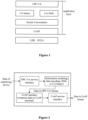
- Figure 1 is a communication protocol stack designed by a preferred embodiment of the present disclosure.
- the communication protocol stack mainly includes: OPC UA, a secure channel, and an application layer protocol family constituted by CoAP.
- OPC UA may adopt UA binary or XML encoding format for encoding according to application scenarios.
- Figure 2 is a UA-CoAP server designed by a preferred embodiment of the present disclosure.
- a main function of the UA-CoAP server is: receiving underlying data and constructing an OPC UA information model, encoding the constructed data and encapsulating the encoded data into a payload of a standard CoAP data message, and sending a query request frame to query whether there is a proxy conversion server.
- Figure 3 is a header of a UA-CoAP data message designed by a preferred embodiment of the present disclosure.
- Main content of the header of the UA-CoAP data message includes: IP protocol version, a type of message function, the unique message ID for repeated check and error check, an encoding type of OPC UA information, option of additional CoAP function and length of the data message.
- Figure 4 is a communication mode when there is a proxy conversion service designed by a preferred embodiment of the present disclosure.
- Main content of the communication mode includes that: the redesigned UA-CoAP server transmits data to a CoAP-to-HTTP proxy server at a network boundary, a converted HTTP data message can be communicated with a standard OPC UA client directly.
- An advantage of this communication mode is to better support a Web service, and the original UA client does not need to be changed.
- Figure 5 is a process of a method for transmitting an OPC UA message based on CoAP in a preferred embodiment of the present disclosure.
- the transmission method is mainly carried out on the server, the client and the proxy conversion server.
- a specific implementation process is described in Steps 1-5 below.
- Step 1 the UA-CoAP server collects data of an underlying device, encodes the collected data in a binary format or XML format, and encapsulates the data in OPC UA format.
- Step 2 in the UA-CoAP server, the data in OPC UA format is encapsulated into the payload of the CoAP data message. Meanwhile, the header of the UA-CoAP data message is reconstructed, encoding format information of the OPC UA data in the payload is added, and a unique number is given to ensure a correct data transmission sequence.
- Step 3 the UA-CoAP server queries whether there is a CoAP-to-HTTP proxy conversion server in a network, proceeds to a next step if the CoAP-to-HTTP proxy conversion server exists, and discards the UA-CoAP data packet and transmit the OPC UA information in a manner of TCP if the CoAP-to-HTTP proxy conversion server does not exist.
- Step 4 if the HTTP-CoAP proxy conversion server exists in the network, the UA-CoAP server sends the UA-CoAP data message to the proxy server for format conversion, to convert the UA-CoAP data message into the standard HTTP data message.
- Step 5 since OPC UA protocol itself supports a transmission mode of HTTP, a standard OPC UA client can be used to receive the converted UA-CoAP data message. After that, the client extracts data modeling information and a data value in the message for further data processing.
- the aforementioned UA-CoAP server and CoAP-to-HTTP proxy conversion server include hardware structures and/or software modules corresponding to each function.
- a first server is used to represent the UA-CoAP server
- a second server is used to represent the CoAP-to-HTTP proxy conversion server.
- the first server may be implemented by one physical device, or may be implemented by multiple physical devices together, or may be a logical function module in one physical device
- the second server may be implemented by one physical device, or may be implemented by multiple physical devices, or may be a logical function module in one physical device, which are not specifically limited in the embodiments of the present disclosure.
- the first server or the second server may be implemented by a communication device in Figure 6.
- Figure 6 illustrates a schematic diagram of a hardware structure of a communication device provided by an embodiment of the present disclosure.
- the communication device includes: a communication interface 601 and a processor 602, and may also include a memory 603.
- the communication interface 601 may be any device such as a transceiver, and is configured to communicate with other device or communication network, such as Ethernet, radio access network (RAN), and wireless local area networks (WLAN).
- RAN radio access network
- WLAN wireless local area networks
- the processor 602 includes but is not limited to one or more of a central processing unit (CPU), a network processor (NP), an application-specific integrated circuit (ASIC) and a programmable logic device (PLD).
- the above-mentioned PLD may be a complex programmable logic device (CPLD), a field-programmable gate array (FPGA), a generic array logic (GAL) or any combination thereof.
- the processor 602 is responsible for a communication line 604 and general processing, and may also provide various functions, including timing, peripheral interfaces, voltage regulation, power management, and other control functions.
- the memory 603 may be used to store data used by the processor 602 when performing operations.
- the memory 603 may be a read-only memory (ROM) or other type of static storage devices that can store static information and instructions, random access memory (RAM), or other type of dynamic storage devices that can store information and instructions, or may also be electrically erasable programmable read-only memory (EEPROM), compact disc read-only memory (CD-ROM) or other optical disk storage, CD storage (including compressed CD, laser disk, CD, digital versatile CD, and Blu-ray CD), magnetic disk storage medium or other magnetic storage device, or any other medium that can be used to carry or store desired program codes in a form of instructions or data structures and can be accessed by a device, but are not limited to these.
- the memory may exist independently and connected to the processor 602 through the communication line 604.
- the memory 603 may also be integrated with the processor 602.
- the memory 603 and the processor 602 are independent devices, the memory 603 and the processor 602 are connected, for example, the memory 603 and the processor 602 can communicate through the communication line.
- the communication interface 601 and the processor 602 may communicate through the communication line, and the communication interface 601 may also be directly connected to the processor 602.
- the communication line 604 may include any number of interconnected buses and bridges, and the communication line 604 links various circuits including one or more processors 602 represented by the processor 602 and a memory represented by the memory 603 together.
- the communication line 604 may also link various other circuits such as a peripheral device, a voltage regulator, and a power management circuit together, which are all known in the art, and therefore, no further description thereof is provided in this application.
- the first server may include: a memory, a processor, and a communication interface.
- the memory is configured to store readable instructions.
- the processor is coupled with the memory, and is configured to execute the readable instructions in the memory to perform following operations:
- the communication interface is coupled to the processor, and is configured to, if the second proxy server exists, send a UA-CoAP data message to the second proxy server located at a network boundary of an underlying industrial field device, to cause the second proxy server, after receiving the data message, to convert the CoAP into the HTTP with OPC UA information being unchanged, and to form after the conversion an HTTP data message containing the original OPC UA information, and directly send the data message to a standard OPC UA client in an external network for subsequent data analysis; and if there is no second proxy server, the process discards the UA-CoAP data message, and performs direct transmission using transmission control protocol (TCP).
- TCP transmission control protocol
- the processor is specifically configured to: reconstruct a header in constructing the data message, the header comprising a type of message function, an encoding type of OPC UA information, an option of additional CoAP function, and length of the data message.
- the communication interface is specifically configured to send a request frame to query whether a border gateway or border router has a function of proxy conversion
- the processor is configured to determine that the second server exists if a corresponding acknowledgement frame is received, and determine that the second server does not exist if no acknowledgement frame is received by the communication interface within a limited period of time.
- the processor is specifically configured to, if no acknowledgement frame is received by the communication interface within the limited period of time, discard the constructed UA-CoAP data message, and transmit the date message in a manner of OPC UA-TCP.
- the second server may include: a communication interface, a memory, and a processor.
- the communication interface is configured to send and receive data messages.
- the memory is configured to store readable instructions.
- the processor is coupled with the memory, and is configured to execute the readable instructions in the memory to perform following operations:
- the communication interface is further configured to, if receiving a query request frame sent by the first server, reply an acknowledgement frame to the first server, so that the first server discards the constructed UA-CoAP data message and transmits the data message in a manner of OPC UA-TCP if the first server fails to get a reply of the acknowledgement frame after sending the query request frame within a limited period of time.
- the second proxy server runs on a border gateway or a border router, and supports a function of converting between standard CoAP data and a standard HTTP data message.
- the communication interface may be regarded as a transceiver unit of a node
- the processor with processing function may be regarded as a processing unit of the node
- the memory may be regarded as a storage unit of the node.
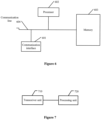
- the foregoing first server may include a transceiver unit 710 and a processing unit 720
- the second server may also include a transceiver unit 710 and a processing unit 720.
- the transceiver unit may also be referred to as a transceiver, a transceiver set, or a transceiver device.
- the processing unit may also be called a processor, a processing board, a processing module, or a processing device.
- a device for implementing a receiving function in the transceiver unit 710 may be regarded as a receiving unit, and a device for implementing a sending function in the transceiver unit 710 may be regarded as a sending unit, that is, the transceiver unit 710 includes a receiving unit and a sending unit.
- the transceiver unit may sometimes be called a transceiver set, a transceiver, or a transceiver circuit.
- the receiving unit may sometimes be called a receiving set, a receiver, or a receiving circuit.
- the sending unit may sometimes be called a transmitting set, a transmitter, or a transmitting circuit.
- the program product includes one or more instructions.
- the electronic device may be a general-purpose computer, a special-purpose computer, a sensor node, or other device that can recognize program instructions.
- the instructions may be stored in a readable storage medium, or transmitted from one readable storage medium to another readable storage medium.
- the instructions may be transmitted from a website, computer, sensor, server, or data center through a wired mode (for example, coaxial cable, optical fiber, or digital subscriber line (DSL)) or a wireless mode (such as infrared, wireless, or microwave) to another website site, computer, sensor, server or data center.
- a wired mode for example, coaxial cable, optical fiber, or digital subscriber line (DSL)
- a wireless mode such as infrared, wireless, or microwave
- the readable storage medium may be any available medium that can be stored by the electronic device or a data storage device such as a server or data center integrated with one or more available media.
- the available medium may be a magnetic medium (for example, a floppy disk, a hard disk, and a magnetic tape), an optical medium (for example, a DVD), or a semiconductor medium (for example, a solid state disk (SSD)).
- the program can be stored in a storage medium.
- the storage medium may include: ROM, RAM, Disk or CD.
Landscapes
- Engineering & Computer Science (AREA)
- Computer Networks & Wireless Communication (AREA)
- Signal Processing (AREA)
- Computer Security & Cryptography (AREA)
- Health & Medical Sciences (AREA)
- Computing Systems (AREA)
- General Health & Medical Sciences (AREA)
- Medical Informatics (AREA)
- Computer And Data Communications (AREA)
- Data Exchanges In Wide-Area Networks (AREA)
- Information Transfer Between Computers (AREA)
Description
- The present disclosure relates to the technical field of industrial communication, and particularly, to a method for transmitting an OPC UA message based on CoAP.
- Constrained Application Protocol (CoAP) is a Web transmission protocol specifically for a resource-constrained node and network in Internet of Things proposed by Internet Engineering Task Force (IETF) in 2014. Its appearance provides a solution with low power consumption, high security, and scalability for a network containing the resource-constrained node.
- OPC Unified Architecture (OPC UA) is a key technology released by OPC Foundation in 2006 to solve the problem of data interconnection in a multi-protocol network. In addition to seamless data transmission, OPC UA also has characteristics of building an information model, and secure and platform-independent communication. OPC UA provides a common technology and semantic operation layer for machine-to-machine (M2M) communication, which plays a vital role in realizing interconnection of industrial Internet.
- According to the document "OPC UA Message Transmission Method over CoAP; draft-wang-core-opcua-transmission-02.txt", OPC UA MESSAGE TRANSMISSION METHOD OVER COAP; DRAFT- WANG-CORE-OPCUA-TRANSMISSION-02.TXT; INTERNET-DRAFT: CORE, INTERNET ENGINEERING TASK FORCE, IETF; STANDARDWORKINGDRAFT, INTERNET SOCIETY (ISOC) 4, RUE DES FALAISES CH- 1205 GENEVA, SWITZERLAND, no. 2, 7 September 2017, pages 1 -12, XP015121682, it is provides some transmission methods for message of OPC UA over CoAP.
- At present, data of a resource-constrained industrial field device cannot be uniformly described and cannot be uniformly accessed.
- A method for transmitting an OPC UA message based on CoAP is provided in the present disclosure, which can meet a need of a resource-constrained industrial field device to access a Web service, to realize seamless connection of an industrial field network from top (such as cloud, enterprise resource planning (ERP), and manufacturing execution system (MES)) to down (such as a gateway, and an underlying field device).
- To achieve the above objectives, the present disclosure provides the following technical solutions.
- The invention is related to a method according to claim 1. Further embodiments of the invention are defined by the dependent claims .
- In a first aspect, a method for transmitting an OPC UA message based on CoAP is provided in the present disclosure, which including: an OPC UA server using CoAP (hereinafter "UA-CoAP server") obtains data from an data acquisition terminal of a resource-constrained industrial field device, encapsulates the data using an OPC unified architecture (OPC UA) information model, encodes the encapsulated data in binary format or extensive markup language (XML) format, and encapsulates the entire OPC UA data message into a payload of a CoAP message, i.e., an UA-CoAP data message, then the UA-CoAP server queries whether there is a proxy server (hereinafter "CoAP-to-HTTP proxy server", which is usually installed on a boundary gateway or boundary router) that converts hypertext transfer protocol (HTTP) into the CoAP in a network. If the CoAP-to-HTTP proxy server exists, the UA-CoAP server sends the UA-CoAP data message to the CoAP-to-HTTP proxy server located at a network boundary (which is usually the boundary gateway or boundary router) of an underlying industrial field device; if there is no CoAP-to-HTTP proxy server, the UA-CoAP server discards the UA-CoAP data message, and perform direct transmission in a manner of transmission control protocol (TCP).
- Optionally, in combination with the above first aspect, in a first possible implementation manner, the process that the UA-CoAP server encapsulates the collected original data using the OPC UA information model, encodes the encapsulated data in a binary format or XML format, and encapsulates the OPC UA data message into the payload of the CoAP message includes: the UA-CoAP server reconstructs a header in constructing the UA-CoAP data message, the main content contained in the header is a type of message function, an unique message identifier (ID) for repeated check and error check, an encoding type of OPC UA information, an option of additional CoAP function, and length of data message.
- Optionally, in combination with the above first aspect, in a second possible implementation manner, the process that the UA-CoAP server queries whether there is the CoAP-to-HTTP proxy server in the network includes: sending a request frame to query whether the border gateway or border router has a function of proxy conversion, and determining that the CoAP-to-HTTP proxy server exists if a corresponding acknowledgement frame is received; and determining that the CoAP-to-HTTP proxy server does not exist if no acknowledgement frame is received within a limited period of time.
- Optionally, in combination with the second possible implementation manner of the above first aspect, in a third possible implementation manner, the method further includes: when the UA-CoAP server sends the query request frame to the border gateway or border router, the proxy server replies the acknowledgement frame to the UA-CoAP server if the CoAP-to-HTTP proxy server exists, and the UA-CoAP server discards the constructed UA-CoAP data message and transmits the data message in a manner of OPC UA-TCP if no acknowledgement frame is received after sending query request frame multiple times within the limited period of time.
- In view of the problem that data of the resource-constrained industrial field device cannot be uniformly described and cannot be uniformly accessed, and to meet the need of the resource-constrained industrial field device to access the Web service, the present disclosure designs the method for transmitting the OPC UA message based on CoAP which is suitable for the underlying device. REST architecture of the CoAP can realize a function that the underlying device to access the Web service, while the OPC UA can perform uniform modeling on data in multiple protocol formats at an underlying layer. The combination of the REST architecture of the CoAP and the OPC UA can ensure interconnection and lightweight communication of the data of the underlying device to a certain extent.
-
-
Figure 1 is a schematic view of a communication protocol stack adopted in the present disclosure; -
Figure 2 is a structural chart of an UA-CoAP server provided in the present disclosure; -
Figure 3 is a schematic view of a header of a UA-CoAP data message provided in the present disclosure; -
Figure 4 is a connection diagram of communication when there is a proxy conversion service provided in the present disclosure; -
Figure 5 is a flow chart of a method for transmitting an OPC UA message based on CoAP provided in the present disclosure; -
Figure 6 is a structural chart of a communication device provided in the present disclosure; and -
Figure 7 is a structural chart of a communication device provided in the present disclosure. -
Figure 1 is a communication protocol stack designed by a preferred embodiment of the present disclosure. The communication protocol stack mainly includes: OPC UA, a secure channel, and an application layer protocol family constituted by CoAP. OPC UA may adopt UA binary or XML encoding format for encoding according to application scenarios. -
Figure 2 is a UA-CoAP server designed by a preferred embodiment of the present disclosure. A main function of the UA-CoAP server is: receiving underlying data and constructing an OPC UA information model, encoding the constructed data and encapsulating the encoded data into a payload of a standard CoAP data message, and sending a query request frame to query whether there is a proxy conversion server. -
Figure 3 is a header of a UA-CoAP data message designed by a preferred embodiment of the present disclosure. Main content of the header of the UA-CoAP data message includes: IP protocol version, a type of message function, the unique message ID for repeated check and error check, an encoding type of OPC UA information, option of additional CoAP function and length of the data message. -
Figure 4 is a communication mode when there is a proxy conversion service designed by a preferred embodiment of the present disclosure. Main content of the communication mode includes that: the redesigned UA-CoAP server transmits data to a CoAP-to-HTTP proxy server at a network boundary, a converted HTTP data message can be communicated with a standard OPC UA client directly. An advantage of this communication mode is to better support a Web service, and the original UA client does not need to be changed. -
Figure 5 is a process of a method for transmitting an OPC UA message based on CoAP in a preferred embodiment of the present disclosure. The transmission method is mainly carried out on the server, the client and the proxy conversion server. As illustrated inFigure 5 , a specific implementation process is described in Steps 1-5 below. - In Step 1, the UA-CoAP server collects data of an underlying device, encodes the collected data in a binary format or XML format, and encapsulates the data in OPC UA format.
- In Step 2, in the UA-CoAP server, the data in OPC UA format is encapsulated into the payload of the CoAP data message. Meanwhile, the header of the UA-CoAP data message is reconstructed, encoding format information of the OPC UA data in the payload is added, and a unique number is given to ensure a correct data transmission sequence.
- In Step 3, the UA-CoAP server queries whether there is a CoAP-to-HTTP proxy conversion server in a network, proceeds to a next step if the CoAP-to-HTTP proxy conversion server exists, and discards the UA-CoAP data packet and transmit the OPC UA information in a manner of TCP if the CoAP-to-HTTP proxy conversion server does not exist.
- In Step 4, if the HTTP-CoAP proxy conversion server exists in the network, the UA-CoAP server sends the UA-CoAP data message to the proxy server for format conversion, to convert the UA-CoAP data message into the standard HTTP data message.
- In Step 5, since OPC UA protocol itself supports a transmission mode of HTTP, a standard OPC UA client can be used to receive the converted UA-CoAP data message. After that, the client extracts data modeling information and a data value in the message for further data processing.
- It is understandable that, in order to realize the aforementioned functions, the aforementioned UA-CoAP server and CoAP-to-HTTP proxy conversion server include hardware structures and/or software modules corresponding to each function. In the following, a first server is used to represent the UA-CoAP server, and a second server is used to represent the CoAP-to-HTTP proxy conversion server. Those skilled in the art should easily realize that in combination with modules and algorithm steps of the examples described in the embodiments disclosed herein, the present disclosure can be implemented in a form of hardware or a combination of hardware and software. Whether a certain function is executed by hardware or software-driven hardware depends on a specific application and design constraint conditions of the technical solutions. Professionals can use different methods for each specific application to implement the described functions, but such implementation should not be considered beyond the scope of the present disclosure.
- Described in terms of hardware structure, the first server may be implemented by one physical device, or may be implemented by multiple physical devices together, or may be a logical function module in one physical device, and the second server may be implemented by one physical device, or may be implemented by multiple physical devices, or may be a logical function module in one physical device, which are not specifically limited in the embodiments of the present disclosure.
- For example, the first server or the second server may be implemented by a communication device in
Figure 6. Figure 6 illustrates a schematic diagram of a hardware structure of a communication device provided by an embodiment of the present disclosure. The communication device includes: acommunication interface 601 and aprocessor 602, and may also include amemory 603. - The
communication interface 601 may be any device such as a transceiver, and is configured to communicate with other device or communication network, such as Ethernet, radio access network (RAN), and wireless local area networks (WLAN). - The
processor 602 includes but is not limited to one or more of a central processing unit (CPU), a network processor (NP), an application-specific integrated circuit (ASIC) and a programmable logic device (PLD). The above-mentioned PLD may be a complex programmable logic device (CPLD), a field-programmable gate array (FPGA), a generic array logic (GAL) or any combination thereof. Theprocessor 602 is responsible for acommunication line 604 and general processing, and may also provide various functions, including timing, peripheral interfaces, voltage regulation, power management, and other control functions. Thememory 603 may be used to store data used by theprocessor 602 when performing operations. - The
memory 603 may be a read-only memory (ROM) or other type of static storage devices that can store static information and instructions, random access memory (RAM), or other type of dynamic storage devices that can store information and instructions, or may also be electrically erasable programmable read-only memory (EEPROM), compact disc read-only memory (CD-ROM) or other optical disk storage, CD storage (including compressed CD, laser disk, CD, digital versatile CD, and Blu-ray CD), magnetic disk storage medium or other magnetic storage device, or any other medium that can be used to carry or store desired program codes in a form of instructions or data structures and can be accessed by a device, but are not limited to these. The memory may exist independently and connected to theprocessor 602 through thecommunication line 604. Thememory 603 may also be integrated with theprocessor 602. If thememory 603 and theprocessor 602 are independent devices, thememory 603 and theprocessor 602 are connected, for example, thememory 603 and theprocessor 602 can communicate through the communication line. Thecommunication interface 601 and theprocessor 602 may communicate through the communication line, and thecommunication interface 601 may also be directly connected to theprocessor 602. - The
communication line 604 may include any number of interconnected buses and bridges, and thecommunication line 604 links various circuits including one ormore processors 602 represented by theprocessor 602 and a memory represented by thememory 603 together. Thecommunication line 604 may also link various other circuits such as a peripheral device, a voltage regulator, and a power management circuit together, which are all known in the art, and therefore, no further description thereof is provided in this application. - When the communication device is the first server, in a specific implementation, the first server may include: a memory, a processor, and a communication interface.
- The memory is configured to store readable instructions.
- The processor is coupled with the memory, and is configured to execute the readable instructions in the memory to perform following operations:
- encapsulating collected original data using an OPC UA information model, encoding the encapsulated data in a binary format or extensive markup language (XML) format , and encapsulating an OPC UA data message into a payload of a constrained application protocol (CoAP) message, the first server being an OPC UA server based on CoAP; and
- querying whether there is a second server in a network, the second server being a proxy server that converts the CoAP into hypertext transfer protocol (HTTP).
- The communication interface is coupled to the processor, and is configured to, if the second proxy server exists, send a UA-CoAP data message to the second proxy server located at a network boundary of an underlying industrial field device, to cause the second proxy server, after receiving the data message, to convert the CoAP into the HTTP with OPC UA information being unchanged, and to form after the conversion an HTTP data message containing the original OPC UA information, and directly send the data message to a standard OPC UA client in an external network for subsequent data analysis; and if there is no second proxy server, the process discards the UA-CoAP data message, and performs direct transmission using transmission control protocol (TCP).
- In a specific embodiment, the processor is specifically configured to: reconstruct a header in constructing the data message, the header comprising a type of message function, an encoding type of OPC UA information, an option of additional CoAP function, and length of the data message.
- In a specific embodiment, the communication interface is specifically configured to send a request frame to query whether a border gateway or border router has a function of proxy conversion, and the processor is configured to determine that the second server exists if a corresponding acknowledgement frame is received, and determine that the second server does not exist if no acknowledgement frame is received by the communication interface within a limited period of time.
- In a specific embodiment, the processor is specifically configured to, if no acknowledgement frame is received by the communication interface within the limited period of time, discard the constructed UA-CoAP data message, and transmit the date message in a manner of OPC UA-TCP.
- When the communication device is the second server, in a specific implementation, the second server may include: a communication interface, a memory, and a processor.
- The communication interface is configured to send and receive data messages.
- The memory is configured to store readable instructions.
- The processor is coupled with the memory, and is configured to execute the readable instructions in the memory to perform following operations:
- converting, after the communication interface receives the data message, constrained application protocol (CoAP) into hypertext transfer protocol (HTTP) with OPC UA information being unchanged, the data message being obtained by encapsulating by a first server collected original data using an OPC UA information model, encoding the encapsulated data in a binary format or XML format and encapsulating an OPC UA data message into a payload of a CoAP message, the second server being a proxy server that converts the CoAP into HTTP, and the first server being an OPC UA server based on CoAP; and
- forming, after conversion is performed by the processor, an HTTP data message containing the original OPC UA information, and the communication interface is further configured to directly send the data message to a standard OPC UA client in an external network for subsequent data analysis.
- In a specific implementation, the communication interface is further configured to, if receiving a query request frame sent by the first server, reply an acknowledgement frame to the first server, so that the first server discards the constructed UA-CoAP data message and transmits the data message in a manner of OPC UA-TCP if the first server fails to get a reply of the acknowledgement frame after sending the query request frame within a limited period of time.
- In a specific implementation, the second proxy server runs on a border gateway or a border router, and supports a function of converting between standard CoAP data and a standard HTTP data message.
- In the embodiments of the present disclosure, the communication interface may be regarded as a transceiver unit of a node, the processor with processing function may be regarded as a processing unit of the node, and the memory may be regarded as a storage unit of the node. As illustrated in
Figure 7 , the foregoing first server may include atransceiver unit 710 and aprocessing unit 720, and the second server may also include atransceiver unit 710 and aprocessing unit 720. The transceiver unit may also be referred to as a transceiver, a transceiver set, or a transceiver device. The processing unit may also be called a processor, a processing board, a processing module, or a processing device. Optionally, a device for implementing a receiving function in thetransceiver unit 710 may be regarded as a receiving unit, and a device for implementing a sending function in thetransceiver unit 710 may be regarded as a sending unit, that is, thetransceiver unit 710 includes a receiving unit and a sending unit. The transceiver unit may sometimes be called a transceiver set, a transceiver, or a transceiver circuit. The receiving unit may sometimes be called a receiving set, a receiver, or a receiving circuit. The sending unit may sometimes be called a transmitting set, a transmitter, or a transmitting circuit. - The foregoing embodiments may be implemented in whole or in part by software, hardware, firmware, or any combination thereof. When implemented by software, they can be implemented in the form of a program product in whole or in part.
- The program product includes one or more instructions. When the program instructions are loaded and executed on an electronic device, processes or functions described in the embodiments of the present disclosure are generated in whole or in part. The electronic device may be a general-purpose computer, a special-purpose computer, a sensor node, or other device that can recognize program instructions. The instructions may be stored in a readable storage medium, or transmitted from one readable storage medium to another readable storage medium. For example, the instructions may be transmitted from a website, computer, sensor, server, or data center through a wired mode (for example, coaxial cable, optical fiber, or digital subscriber line (DSL)) or a wireless mode (such as infrared, wireless, or microwave) to another website site, computer, sensor, server or data center. The readable storage medium may be any available medium that can be stored by the electronic device or a data storage device such as a server or data center integrated with one or more available media. The available medium may be a magnetic medium (for example, a floppy disk, a hard disk, and a magnetic tape), an optical medium (for example, a DVD), or a semiconductor medium (for example, a solid state disk (SSD)).
- Those of ordinary skill in the art can understand that all or part of the steps in the various methods of the above-mentioned embodiments can be completed by instructing relevant hardware through a program. The program can be stored in a storage medium. The storage medium may include: ROM, RAM, Disk or CD.
Claims (6)
- A method for transmitting an OPC United Architecture UA message over Constrained Application Protocol CoAP, comprising encapsulating, by a first server, data using an OPC UA information model, encoding the encapsulated data in a binary format or extensive markup language, XML, format to obtain an OPC UA data message, and encapsulating the OPC UA data message into a payload of a CoAP message to obtain an UA-CoAP data message, the first server being an OPC UA server based on CoAP;
the method is characterized in:querying, by the first server, whether there is a second proxy server in a network;if the second proxy server exists, sending, by the first server, the UA-CoAP data message to the second proxy server located at a network boundary of an underlying industrial field device;converting, by the second proxy server after receiving the UA-CoAP data message, CoAP into hypertext transfer protocol, HTTP, with OPC UA information being unchanged, the second server being a proxy server that converts the CoAP into the HTTP;forming, by the second proxy server after the conversion, an HTTP data message containing the original OPC UA information, and directly sending the data message to a standard OPC UA client in an external network for subsequent data analysis; andif there is no second proxy server, discarding, by the first server, the UA-CoAP data message, and performing direct transmission using transmission control protocol, TCP. - The method according to claim 1, wherein, encapsulating, by the first server, the data using the OPC UA information model, encoding the encapsulated data in a binary format or an XML format, and encapsulating the OPC UA data message into the payload of the CoAP message comprises:
reconstructing, by the first server, a header in constructing the data message, the header comprising a type of message function, an encoding type of OPC UA information, an option of additional CoAP function, and length of data message. - The method according to claim 1, wherein, querying, by the first server, whether there is a second server in the network, the second server being a proxy server that converts the CoAP into HTTP comprises:sending a request frame to query whether a border gateway or a border router has a function of proxy conversion, and determining that the second server exists if a corresponding acknowledgement frame is received; anddetermining that the second server does not exist if no acknowledgement frame is received within a limited period of time.
- The method according to claim 3, wherein, if no acknowledgement frame is received within the limited period of time, the method further comprises:
discarding, by the first server, the constructed UA-CoAP data message, and transmitting the date message in a manner of UA-TCP. - The method according to claim 1, wherein, the method further comprises:
if the second server receives a query request frame sent by the first server, replying, by the second server, an acknowledgement frame to the first server, so that the first server discards the constructed UA-CoAP data message and transmits the data message in a manner of UA-TCP if the first server fails to get a reply of the acknowledgement frame after sending the query request frame multiple times within a limited period of time. - The method according to claim 1, wherein,
the second proxy server runs on a border gateway or a border router, and supports a function of converting between a standard CoAP data message and a standard HTTP data message.
Applications Claiming Priority (2)
| Application Number | Priority Date | Filing Date | Title |
|---|---|---|---|
| CN201811476189.6A CN109687995B (en) | 2018-12-04 | 2018-12-04 | A CoAP-based OPC UA message transmission method suitable for resource-constrained industrial field devices |
| PCT/CN2019/116134 WO2020114186A1 (en) | 2018-12-04 | 2019-11-07 | Coap-based opc ua message transmission method, and server |
Publications (4)
| Publication Number | Publication Date |
|---|---|
| EP3893436A1 EP3893436A1 (en) | 2021-10-13 |
| EP3893436A4 EP3893436A4 (en) | 2022-09-07 |
| EP3893436C0 EP3893436C0 (en) | 2024-05-01 |
| EP3893436B1 true EP3893436B1 (en) | 2024-05-01 |
Family
ID=66187018
Family Applications (1)
| Application Number | Title | Priority Date | Filing Date |
|---|---|---|---|
| EP19893820.1A Active EP3893436B1 (en) | 2018-12-04 | 2019-11-07 | Coap-based opc ua message transmission method, and server |
Country Status (5)
| Country | Link |
|---|---|
| US (1) | US20220006684A1 (en) |
| EP (1) | EP3893436B1 (en) |
| JP (1) | JP7284528B2 (en) |
| CN (1) | CN109687995B (en) |
| WO (1) | WO2020114186A1 (en) |
Families Citing this family (19)
| Publication number | Priority date | Publication date | Assignee | Title |
|---|---|---|---|---|
| CN109687995B (en) * | 2018-12-04 | 2021-07-20 | 重庆邮电大学 | A CoAP-based OPC UA message transmission method suitable for resource-constrained industrial field devices |
| CN109976288A (en) * | 2019-04-25 | 2019-07-05 | 长春知和智能包装设备有限公司 | A kind of MES system collecting method based on OPC intelligence chemical industry equipment |
| EP3851928B1 (en) * | 2020-01-17 | 2024-04-24 | Siemens Aktiengesellschaft | A system for data transmission between a client device, a server device and a plurality of automation devices |
| CN112764944A (en) * | 2020-12-31 | 2021-05-07 | 哈尔滨宇龙自动化有限公司 | MOM system automation equipment data interaction integration platform and method based on OPC UA protocol |
| CN112910909B (en) * | 2021-02-08 | 2022-05-17 | 北京交通大学 | Data packet processing method based on CoAP protocol and HTTP protocol conversion |
| CN113031507B (en) * | 2021-03-25 | 2022-08-16 | 超越科技股份有限公司 | High-efficiency transmission method for field bus central server based on OPC UA |
| US11722549B2 (en) * | 2021-04-21 | 2023-08-08 | Tencent America LLC | Method and apparatus of CoAP support for IoT streaming devices in a media scene description system |
| CN113452754A (en) * | 2021-05-25 | 2021-09-28 | 国网山东省电力公司电力科学研究院 | CoAP protocol-based power distribution Internet of things network communication system |
| CN113411215B (en) * | 2021-06-18 | 2022-06-03 | 重庆邮电大学工业互联网研究院 | Time-sensitive network centralized user configuration method and system based on OPC UA |
| CN113438233A (en) * | 2021-06-21 | 2021-09-24 | 北京交通大学 | Method for mutual conversion between protocols |
| CN113779086B (en) * | 2021-08-27 | 2024-04-30 | 深圳百斯特控制技术有限公司 | Power station equipment data acquisition method, device, equipment and storage medium |
| CN113949725B (en) * | 2021-10-22 | 2024-02-23 | 哈尔滨工业大学 | Manufacturing resource access platform and method based on cloud-edge collaboration |
| CN114362885B (en) * | 2022-01-10 | 2024-04-26 | 中电望辰科技有限公司 | Data transmission method, communication system, equipment and medium of Internet of things |
| CN115086362B (en) * | 2022-05-18 | 2023-08-18 | 中国科学院沈阳自动化研究所 | Intelligent transmission control method for heterogeneous edge equipment in multiple complex modes |
| CN117220842A (en) * | 2022-05-30 | 2023-12-12 | 华为技术有限公司 | A communication method and device |
| WO2024039950A2 (en) * | 2022-07-21 | 2024-02-22 | Intel Corporation | Constrained application protocol for computing services in cellular networks |
| CN115857817B (en) * | 2022-12-15 | 2025-09-09 | 湖南麒麟信安科技股份有限公司 | NAS (network attached storage) encryption storage system and method |
| CN117348545A (en) * | 2023-10-11 | 2024-01-05 | 中冶南方工程技术有限公司 | Methods, middleware and storage media for industrial data collection and distribution |
| CN119135779A (en) * | 2024-08-26 | 2024-12-13 | 中国移动通信有限公司研究院 | Data processing method, device, equipment, storage medium and program product |
Family Cites Families (7)
| Publication number | Priority date | Publication date | Assignee | Title |
|---|---|---|---|---|
| KR101466712B1 (en) * | 2013-03-04 | 2014-12-10 | 삼성에스디에스 주식회사 | HTTP-CoAP PROXY APPARATUS AND METHOD FOR MANAGING TIMEOUT THEREOF |
| CN104936202B (en) * | 2015-06-04 | 2019-02-19 | 南京邮电大学 | 6LoWPAN wireless sensor network management system based on CoAP protocol |
| CN105142157B (en) * | 2015-07-29 | 2018-07-24 | 上海斐讯数据通信技术有限公司 | Message forwarding method, wireless controller based on SNMP and CoAP and Network Management System |
| KR101662507B1 (en) * | 2016-03-14 | 2016-10-14 | 주식회사 베스텍 | Remote automatic control system based on IoT using data conversion |
| CN108667870B (en) * | 2017-03-30 | 2022-03-01 | 华为云计算技术有限公司 | IoT data reporting method, device and system |
| CN108809972B (en) * | 2018-06-01 | 2021-04-02 | 南京邮电大学 | Internet of things comprehensive experiment and application development platform based on open source ecosystem |
| CN109687995B (en) * | 2018-12-04 | 2021-07-20 | 重庆邮电大学 | A CoAP-based OPC UA message transmission method suitable for resource-constrained industrial field devices |
-
2018
- 2018-12-04 CN CN201811476189.6A patent/CN109687995B/en active Active
-
2019
- 2019-11-07 EP EP19893820.1A patent/EP3893436B1/en active Active
- 2019-11-07 JP JP2021531584A patent/JP7284528B2/en active Active
- 2019-11-07 WO PCT/CN2019/116134 patent/WO2020114186A1/en not_active Ceased
- 2019-11-07 US US17/296,993 patent/US20220006684A1/en not_active Abandoned
Also Published As
| Publication number | Publication date |
|---|---|
| EP3893436C0 (en) | 2024-05-01 |
| EP3893436A4 (en) | 2022-09-07 |
| CN109687995A (en) | 2019-04-26 |
| CN109687995B (en) | 2021-07-20 |
| US20220006684A1 (en) | 2022-01-06 |
| EP3893436A1 (en) | 2021-10-13 |
| WO2020114186A1 (en) | 2020-06-11 |
| JP2022511008A (en) | 2022-01-28 |
| JP7284528B2 (en) | 2023-05-31 |
Similar Documents
| Publication | Publication Date | Title |
|---|---|---|
| US20220006684A1 (en) | Coap-based opc ua message transmission method, and server | |
| US11265218B2 (en) | Configuration management method and apparatus, and device | |
| Sheng et al. | Recent advances in industrial wireless sensor networks toward efficient management in IoT | |
| US9467499B2 (en) | Method and management apparatus for performing operation on device resource | |
| DK2914022T3 (en) | Device management method, middleware and machine-to-machine communication platform, device and system | |
| CN110022289A (en) | Data transmission method, apparatus and system | |
| CN101895520B (en) | Widget system data sharing method, server and data sharing system | |
| WO2023231770A1 (en) | Communication method and apparatus | |
| JP7774747B2 (en) | COMMUNICATION METHOD, COMMUNICATION DEVICE, AND COMMUNICATION SYSTEM | |
| US20250301337A1 (en) | Method and system for cloud extended attribute profile | |
| US8621016B2 (en) | Adaptive differential propagation of soap messages | |
| Elmangoush et al. | Application-derived communication protocol selection in M2M platforms for smart cities | |
| EP4030725A1 (en) | Data subscription method, apparatus and system | |
| Azzara et al. | The icsi m2m middleware for iot-based intelligent transportation systems | |
| CN113296986B (en) | Message processing method, device, server and storage medium | |
| Chu et al. | OMA DM v1. x compliant Lightweight Device Management for Constrained M2M devices | |
| EP3002910B1 (en) | Connecting computer management systems via cellular digital telecommunication networks | |
| CN118488043A (en) | Bus communication method, bus communication device, computer equipment and readable storage medium | |
| Kyusakov | Efficient web services for end-to-end interoperability of embedded systems | |
| US20200311040A1 (en) | Dynamically rendering an application programming interface for internet of things applications | |
| US11855902B2 (en) | Device and method for splitting data for transmission | |
| CN120017739B (en) | Industrial Ethernet and wireless network data exchange method and device | |
| Colitti et al. | Embedded web technologies for the internet of things | |
| Zhang | Protocol conversion technology based on edge computing | |
| CN120034417A (en) | Communication network management method and device |
Legal Events
| Date | Code | Title | Description |
|---|---|---|---|
| STAA | Information on the status of an ep patent application or granted ep patent |
Free format text: STATUS: THE INTERNATIONAL PUBLICATION HAS BEEN MADE |
|
| PUAI | Public reference made under article 153(3) epc to a published international application that has entered the european phase |
Free format text: ORIGINAL CODE: 0009012 |
|
| STAA | Information on the status of an ep patent application or granted ep patent |
Free format text: STATUS: REQUEST FOR EXAMINATION WAS MADE |
|
| 17P | Request for examination filed |
Effective date: 20210528 |
|
| AK | Designated contracting states |
Kind code of ref document: A1 Designated state(s): AL AT BE BG CH CY CZ DE DK EE ES FI FR GB GR HR HU IE IS IT LI LT LU LV MC MK MT NL NO PL PT RO RS SE SI SK SM TR |
|
| DAV | Request for validation of the european patent (deleted) | ||
| DAX | Request for extension of the european patent (deleted) | ||
| REG | Reference to a national code |
Ref country code: DE Ref legal event code: R079 Ipc: H04L0067120000 Ref country code: DE Ref legal event code: R079 Ref document number: 602019051698 Country of ref document: DE Free format text: PREVIOUS MAIN CLASS: H04L0012240000 Ipc: H04L0067120000 |
|
| A4 | Supplementary search report drawn up and despatched |
Effective date: 20220805 |
|
| RIC1 | Information provided on ipc code assigned before grant |
Ipc: H04L 41/0226 20220101ALI20220801BHEP Ipc: H04L 41/0246 20220101ALI20220801BHEP Ipc: H04L 69/08 20220101ALI20220801BHEP Ipc: H04L 67/565 20220101ALI20220801BHEP Ipc: H04L 67/12 20220101AFI20220801BHEP |
|
| GRAP | Despatch of communication of intention to grant a patent |
Free format text: ORIGINAL CODE: EPIDOSNIGR1 |
|
| STAA | Information on the status of an ep patent application or granted ep patent |
Free format text: STATUS: GRANT OF PATENT IS INTENDED |
|
| INTG | Intention to grant announced |
Effective date: 20231212 |
|
| GRAS | Grant fee paid |
Free format text: ORIGINAL CODE: EPIDOSNIGR3 |
|
| GRAA | (expected) grant |
Free format text: ORIGINAL CODE: 0009210 |
|
| STAA | Information on the status of an ep patent application or granted ep patent |
Free format text: STATUS: THE PATENT HAS BEEN GRANTED |
|
| AK | Designated contracting states |
Kind code of ref document: B1 Designated state(s): AL AT BE BG CH CY CZ DE DK EE ES FI FR GB GR HR HU IE IS IT LI LT LU LV MC MK MT NL NO PL PT RO RS SE SI SK SM TR |
|
| REG | Reference to a national code |
Ref country code: GB Ref legal event code: FG4D |
|
| REG | Reference to a national code |
Ref country code: CH Ref legal event code: EP |
|
| REG | Reference to a national code |
Ref country code: IE Ref legal event code: FG4D |
|
| REG | Reference to a national code |
Ref country code: DE Ref legal event code: R096 Ref document number: 602019051698 Country of ref document: DE |
|
| U01 | Request for unitary effect filed |
Effective date: 20240514 |
|
| U07 | Unitary effect registered |
Designated state(s): AT BE BG DE DK EE FI FR IT LT LU LV MT NL PT SE SI Effective date: 20240527 |
|
| PG25 | Lapsed in a contracting state [announced via postgrant information from national office to epo] |
Ref country code: IS Free format text: LAPSE BECAUSE OF FAILURE TO SUBMIT A TRANSLATION OF THE DESCRIPTION OR TO PAY THE FEE WITHIN THE PRESCRIBED TIME-LIMIT Effective date: 20240901 |
|
| PG25 | Lapsed in a contracting state [announced via postgrant information from national office to epo] |
Ref country code: HR Free format text: LAPSE BECAUSE OF FAILURE TO SUBMIT A TRANSLATION OF THE DESCRIPTION OR TO PAY THE FEE WITHIN THE PRESCRIBED TIME-LIMIT Effective date: 20240501 |
|
| PG25 | Lapsed in a contracting state [announced via postgrant information from national office to epo] |
Ref country code: GR Free format text: LAPSE BECAUSE OF FAILURE TO SUBMIT A TRANSLATION OF THE DESCRIPTION OR TO PAY THE FEE WITHIN THE PRESCRIBED TIME-LIMIT Effective date: 20240802 |
|
| PG25 | Lapsed in a contracting state [announced via postgrant information from national office to epo] |
Ref country code: ES Free format text: LAPSE BECAUSE OF FAILURE TO SUBMIT A TRANSLATION OF THE DESCRIPTION OR TO PAY THE FEE WITHIN THE PRESCRIBED TIME-LIMIT Effective date: 20240501 |
|
| PG25 | Lapsed in a contracting state [announced via postgrant information from national office to epo] |
Ref country code: PL Free format text: LAPSE BECAUSE OF FAILURE TO SUBMIT A TRANSLATION OF THE DESCRIPTION OR TO PAY THE FEE WITHIN THE PRESCRIBED TIME-LIMIT Effective date: 20240501 |
|
| PG25 | Lapsed in a contracting state [announced via postgrant information from national office to epo] |
Ref country code: PL Free format text: LAPSE BECAUSE OF FAILURE TO SUBMIT A TRANSLATION OF THE DESCRIPTION OR TO PAY THE FEE WITHIN THE PRESCRIBED TIME-LIMIT Effective date: 20240501 Ref country code: NO Free format text: LAPSE BECAUSE OF FAILURE TO SUBMIT A TRANSLATION OF THE DESCRIPTION OR TO PAY THE FEE WITHIN THE PRESCRIBED TIME-LIMIT Effective date: 20240801 Ref country code: IS Free format text: LAPSE BECAUSE OF FAILURE TO SUBMIT A TRANSLATION OF THE DESCRIPTION OR TO PAY THE FEE WITHIN THE PRESCRIBED TIME-LIMIT Effective date: 20240901 Ref country code: HR Free format text: LAPSE BECAUSE OF FAILURE TO SUBMIT A TRANSLATION OF THE DESCRIPTION OR TO PAY THE FEE WITHIN THE PRESCRIBED TIME-LIMIT Effective date: 20240501 Ref country code: GR Free format text: LAPSE BECAUSE OF FAILURE TO SUBMIT A TRANSLATION OF THE DESCRIPTION OR TO PAY THE FEE WITHIN THE PRESCRIBED TIME-LIMIT Effective date: 20240802 Ref country code: ES Free format text: LAPSE BECAUSE OF FAILURE TO SUBMIT A TRANSLATION OF THE DESCRIPTION OR TO PAY THE FEE WITHIN THE PRESCRIBED TIME-LIMIT Effective date: 20240501 Ref country code: RS Free format text: LAPSE BECAUSE OF FAILURE TO SUBMIT A TRANSLATION OF THE DESCRIPTION OR TO PAY THE FEE WITHIN THE PRESCRIBED TIME-LIMIT Effective date: 20240801 |
|
| PG25 | Lapsed in a contracting state [announced via postgrant information from national office to epo] |
Ref country code: CZ Free format text: LAPSE BECAUSE OF FAILURE TO SUBMIT A TRANSLATION OF THE DESCRIPTION OR TO PAY THE FEE WITHIN THE PRESCRIBED TIME-LIMIT Effective date: 20240501 |
|
| PG25 | Lapsed in a contracting state [announced via postgrant information from national office to epo] |
Ref country code: RO Free format text: LAPSE BECAUSE OF FAILURE TO SUBMIT A TRANSLATION OF THE DESCRIPTION OR TO PAY THE FEE WITHIN THE PRESCRIBED TIME-LIMIT Effective date: 20240501 Ref country code: SK Free format text: LAPSE BECAUSE OF FAILURE TO SUBMIT A TRANSLATION OF THE DESCRIPTION OR TO PAY THE FEE WITHIN THE PRESCRIBED TIME-LIMIT Effective date: 20240501 |
|
| PG25 | Lapsed in a contracting state [announced via postgrant information from national office to epo] |
Ref country code: SM Free format text: LAPSE BECAUSE OF FAILURE TO SUBMIT A TRANSLATION OF THE DESCRIPTION OR TO PAY THE FEE WITHIN THE PRESCRIBED TIME-LIMIT Effective date: 20240501 |
|
| PG25 | Lapsed in a contracting state [announced via postgrant information from national office to epo] |
Ref country code: SM Free format text: LAPSE BECAUSE OF FAILURE TO SUBMIT A TRANSLATION OF THE DESCRIPTION OR TO PAY THE FEE WITHIN THE PRESCRIBED TIME-LIMIT Effective date: 20240501 Ref country code: SK Free format text: LAPSE BECAUSE OF FAILURE TO SUBMIT A TRANSLATION OF THE DESCRIPTION OR TO PAY THE FEE WITHIN THE PRESCRIBED TIME-LIMIT Effective date: 20240501 Ref country code: RO Free format text: LAPSE BECAUSE OF FAILURE TO SUBMIT A TRANSLATION OF THE DESCRIPTION OR TO PAY THE FEE WITHIN THE PRESCRIBED TIME-LIMIT Effective date: 20240501 Ref country code: CZ Free format text: LAPSE BECAUSE OF FAILURE TO SUBMIT A TRANSLATION OF THE DESCRIPTION OR TO PAY THE FEE WITHIN THE PRESCRIBED TIME-LIMIT Effective date: 20240501 |
|
| REG | Reference to a national code |
Ref country code: DE Ref legal event code: R097 Ref document number: 602019051698 Country of ref document: DE |
|
| PLBE | No opposition filed within time limit |
Free format text: ORIGINAL CODE: 0009261 |
|
| STAA | Information on the status of an ep patent application or granted ep patent |
Free format text: STATUS: NO OPPOSITION FILED WITHIN TIME LIMIT |
|
| 26N | No opposition filed |
Effective date: 20250204 |
|
| REG | Reference to a national code |
Ref country code: CH Ref legal event code: PL |
|
| PG25 | Lapsed in a contracting state [announced via postgrant information from national office to epo] |
Ref country code: MC Free format text: LAPSE BECAUSE OF FAILURE TO SUBMIT A TRANSLATION OF THE DESCRIPTION OR TO PAY THE FEE WITHIN THE PRESCRIBED TIME-LIMIT Effective date: 20240501 |
|
| REG | Reference to a national code |
Ref country code: CH Ref legal event code: PL |
|
| U90 | Renewal fees not paid: noting of loss of rights |
Free format text: RENEWAL FEE NOT PAID FOR YEAR 06 Effective date: 20250620 |
|
| GBPC | Gb: european patent ceased through non-payment of renewal fee |
Effective date: 20241107 |
|
| PG25 | Lapsed in a contracting state [announced via postgrant information from national office to epo] |
Ref country code: CH Free format text: LAPSE BECAUSE OF NON-PAYMENT OF DUE FEES Effective date: 20241130 |
|
| U93 | Unitary patent lapsed |
Free format text: RENEWAL FEE NOT PAID Effective date: 20241130 |
|
| PG25 | Lapsed in a contracting state [announced via postgrant information from national office to epo] |
Ref country code: GB Free format text: LAPSE BECAUSE OF NON-PAYMENT OF DUE FEES Effective date: 20241107 |
|
| PG25 | Lapsed in a contracting state [announced via postgrant information from national office to epo] |
Ref country code: IE Free format text: LAPSE BECAUSE OF NON-PAYMENT OF DUE FEES Effective date: 20241107 |
|
| PG25 | Lapsed in a contracting state [announced via postgrant information from national office to epo] |
Ref country code: HU Free format text: LAPSE BECAUSE OF FAILURE TO SUBMIT A TRANSLATION OF THE DESCRIPTION OR TO PAY THE FEE WITHIN THE PRESCRIBED TIME-LIMIT; INVALID AB INITIO Effective date: 20191107 |
|
| PG25 | Lapsed in a contracting state [announced via postgrant information from national office to epo] |
Ref country code: CY Free format text: LAPSE BECAUSE OF FAILURE TO SUBMIT A TRANSLATION OF THE DESCRIPTION OR TO PAY THE FEE WITHIN THE PRESCRIBED TIME-LIMIT; INVALID AB INITIO Effective date: 20191107 |