EP3893043A1 - Geolocatable spectacles - Google Patents
Geolocatable spectacles Download PDFInfo
- Publication number
- EP3893043A1 EP3893043A1 EP18922283.9A EP18922283A EP3893043A1 EP 3893043 A1 EP3893043 A1 EP 3893043A1 EP 18922283 A EP18922283 A EP 18922283A EP 3893043 A1 EP3893043 A1 EP 3893043A1
- Authority
- EP
- European Patent Office
- Prior art keywords
- temple
- eyeglasses
- geolocation device
- geolocatable
- built
- Prior art date
- Legal status (The legal status is an assumption and is not a legal conclusion. Google has not performed a legal analysis and makes no representation as to the accuracy of the status listed.)
- Withdrawn
Links
Images
Classifications
-
- G—PHYSICS
- G02—OPTICS
- G02C—SPECTACLES; SUNGLASSES OR GOGGLES INSOFAR AS THEY HAVE THE SAME FEATURES AS SPECTACLES; CONTACT LENSES
- G02C11/00—Non-optical adjuncts; Attachment thereof
- G02C11/10—Electronic devices other than hearing aids
-
- G—PHYSICS
- G01—MEASURING; TESTING
- G01S—RADIO DIRECTION-FINDING; RADIO NAVIGATION; DETERMINING DISTANCE OR VELOCITY BY USE OF RADIO WAVES; LOCATING OR PRESENCE-DETECTING BY USE OF THE REFLECTION OR RERADIATION OF RADIO WAVES; ANALOGOUS ARRANGEMENTS USING OTHER WAVES
- G01S19/00—Satellite radio beacon positioning systems; Determining position, velocity or attitude using signals transmitted by such systems
-
- G—PHYSICS
- G02—OPTICS
- G02C—SPECTACLES; SUNGLASSES OR GOGGLES INSOFAR AS THEY HAVE THE SAME FEATURES AS SPECTACLES; CONTACT LENSES
- G02C5/00—Constructions of non-optical parts
- G02C5/14—Side-members
-
- H—ELECTRICITY
- H01—ELECTRIC ELEMENTS
- H01Q—ANTENNAS, i.e. RADIO AERIALS
- H01Q1/00—Details of, or arrangements associated with, antennas
- H01Q1/12—Supports; Mounting means
- H01Q1/22—Supports; Mounting means by structural association with other equipment or articles
- H01Q1/24—Supports; Mounting means by structural association with other equipment or articles with receiving set
- H01Q1/241—Supports; Mounting means by structural association with other equipment or articles with receiving set used in mobile communications, e.g. GSM
- H01Q1/242—Supports; Mounting means by structural association with other equipment or articles with receiving set used in mobile communications, e.g. GSM specially adapted for hand-held use
- H01Q1/245—Supports; Mounting means by structural association with other equipment or articles with receiving set used in mobile communications, e.g. GSM specially adapted for hand-held use with means for shaping the antenna pattern, e.g. in order to protect user against rf exposure
-
- H—ELECTRICITY
- H01—ELECTRIC ELEMENTS
- H01Q—ANTENNAS, i.e. RADIO AERIALS
- H01Q1/00—Details of, or arrangements associated with, antennas
- H01Q1/27—Adaptation for use in or on movable bodies
- H01Q1/273—Adaptation for carrying or wearing by persons or animals
-
- G—PHYSICS
- G02—OPTICS
- G02C—SPECTACLES; SUNGLASSES OR GOGGLES INSOFAR AS THEY HAVE THE SAME FEATURES AS SPECTACLES; CONTACT LENSES
- G02C5/00—Constructions of non-optical parts
- G02C5/14—Side-members
- G02C5/143—Side-members having special ear pieces
-
- G—PHYSICS
- G02—OPTICS
- G02C—SPECTACLES; SUNGLASSES OR GOGGLES INSOFAR AS THEY HAVE THE SAME FEATURES AS SPECTACLES; CONTACT LENSES
- G02C5/00—Constructions of non-optical parts
- G02C5/14—Side-members
- G02C5/146—Side-members having special front end
Definitions
- the object of the invention is a pair of eyeglasses that have a global positioning device built into one of the temples, such that the geographical position of the eyeglasses can be located on a map, for instance if the wearer should get lost.
- Eyeglasses specifically optical lenses for children and older people, apply in the optical industry.
- eyeglasses with built-in geolocation devices aimed at the sport market, such as eyeglasses for skiing or cycling.
- size of the eyeglasses is not a problem since the dimensions of the eyeglasses are such that the geolocation device can be part of the frame or attached to the straps used by the wearer to hold the eyeglasses in place.
- the ability to locate a child who has become lost in a crowd is important, given that children are generally excitable and are continuously moving about, and there are no known eyeglasses on the market that include in their constituent elements a built-in positioning device to locate the eyeglasses, and, in consequence, the wearer, other than those systems in which a foreign element is attached to the eyeglasses.
- the eyeglasses which form the object of the invention provide a geolocation system based on GPS technology, which does not involve any additional cost since the GPS system's satellites send waves that are free of charge, and position is transmitted through another network that is also free of charge.
- the field of application of the present invention relates to the eyeglasses manufacture industry, focusing particularly on the field of manufacture of eyeglasses for children and older people.
- the object of the invention is a pair of geolocatable eyeglasses, comprising a frame to which a temple is connected by means of hinges on each side of the frame, such that at least one temple comprises a geolocation device, wherein the geolocation device is built into the temple.
- the geolocation device comprises a first antenna built into the temple which is configured to connect to at least one global navigation system, a second antenna built into the temple which is configured to transmit the position of the eyeglasses over a UNB network, a control board, a socket, and a switch configured to activate or deactivate the geolocation device.
- the geolocation device's switch comprises a graphene surface on the same level as the surface of the temple.
- the geolocatable eyeglasses which form the object of the invention comprise a plurality of light elements configured to show the status of the geolocation device.
- the temple comprising the geolocation device comprises a protective cover for the components of the geolocation device.
- the switch is configured for operation by pressing for a certain length of time, with such pressing for a certain length of time resulting in the geolocation device being activated or deactivated.
- the geolocation device's socket comprises a micro USB connector.
- the geolocatable eyeglasses which form the object of the invention comprise a battery housed in the control plate and connected to the socket.
- the eyeglasses (1) which form the object of the invention have two temples (2), one of which houses a series of electronic components which form a geolocation device, such that the geolocation of the wearer of the eyeglasses can be ascertained.
- the geolocation device comprises:
- Both the first antenna (6) and the second antenna (7) of the geolocation device are built into the body of the temple (2), and both the first antenna (6) and the second antenna (7) are attached to the control plate (3) at different connection points, such that the control plate (3) handles all interaction between the two antennas (6, 7). Furthermore, the two antennas (6, 7) operate simultaneously.
- the solution of using two antennas is because the eyeglasses are located near the head of the wearer and the GPS signal should not be absorbed by the head, so the second antenna (7) acts as a reflector of the GPS signal picked up by the first antenna (6) and moves it away from the wearer's head, thus preventing this part of the GPS signal from being directed to the wearer's head, thereby increasing safety in use of the eyeglasses which form the object of the invention.
- All components of the geolocation device of the eyeglasses which form the object of the invention are located inside one of the temples (2) of the eyeglasses, with said temple (2) comprising a protective cover (9) which can be removed should the aforementioned components need to be repaired (see Figure 3 , where the cover has been removed to show inside the temple).
- the switch (5) of the eyeglasses which form the object of the invention is formed by a graphene surface, such that the user can act on the switch (5) by touching the graphene surface for a certain length of time, with such touching for a certain length of time resulting in the geolocation device being activated or deactivated.
- the switch (5) is therefore built into the surface of the temple (2), thus ensuring the temple has no protrusions or discontinuities, which can not only be uncomfortable but also dangerous for the wearer of the eyeglasses as they are close to parts of the human body that are sensitive to impact, such as the eyes or the skin of the ears.
- the solution of making the switch in the eyeglasses which form the object of the invention from graphene material therefore allows improved fulfilment of IP level in terms of anti-humidity standards, simplification of electronics, and greater durability of the assembly.
- the geolocation device's socket (4) is a micro USB connector.
- the battery (10) of the geolocation device is built into the control plate (3), and receives the energy stored by the battery (10) through the socket (4) in order to operate the geolocation device of the eyeglasses which form the object of the invention.
Landscapes
- Physics & Mathematics (AREA)
- Health & Medical Sciences (AREA)
- General Physics & Mathematics (AREA)
- Ophthalmology & Optometry (AREA)
- Optics & Photonics (AREA)
- Engineering & Computer Science (AREA)
- Acoustics & Sound (AREA)
- General Health & Medical Sciences (AREA)
- Otolaryngology (AREA)
- Computer Networks & Wireless Communication (AREA)
- Radar, Positioning & Navigation (AREA)
- Remote Sensing (AREA)
- Eyeglasses (AREA)
Abstract
Description
- The object of the invention is a pair of eyeglasses that have a global positioning device built into one of the temples, such that the geographical position of the eyeglasses can be located on a map, for instance if the wearer should get lost. Eyeglasses, specifically optical lenses for children and older people, apply in the optical industry.
- There are eyeglasses with built-in geolocation devices aimed at the sport market, such as eyeglasses for skiing or cycling. In this type of eyeglasses, size of the eyeglasses is not a problem since the dimensions of the eyeglasses are such that the geolocation device can be part of the frame or attached to the straps used by the wearer to hold the eyeglasses in place.
- Furthermore, the ability to locate a child who has become lost in a crowd is important, given that children are generally excitable and are continuously moving about, and there are no known eyeglasses on the market that include in their constituent elements a built-in positioning device to locate the eyeglasses, and, in consequence, the wearer, other than those systems in which a foreign element is attached to the eyeglasses.
- There are no known eyeglasses that integrate a geolocation device in a temple without this being a separate element from the temple, resulting in an additional element with dimensions unsuitable for normal use of eyeglasses.
- All attempts developed thus far to provide some form of geolocation system base their operation on a communications network and, as such, require a mobile phone line in order to transmit their position, resulting in an additional cost which users generally find excessive, meaning such embodiments have been less successful than envisaged.
- However, the eyeglasses which form the object of the invention provide a geolocation system based on GPS technology, which does not involve any additional cost since the GPS system's satellites send waves that are free of charge, and position is transmitted through another network that is also free of charge.
- The field of application of the present invention relates to the eyeglasses manufacture industry, focusing particularly on the field of manufacture of eyeglasses for children and older people.
- The object of the invention is a pair of geolocatable eyeglasses, comprising a frame to which a temple is connected by means of hinges on each side of the frame, such that at least one temple comprises a geolocation device, wherein the geolocation device is built into the temple.
- The geolocation device comprises a first antenna built into the temple which is configured to connect to at least one global navigation system, a second antenna built into the temple which is configured to transmit the position of the eyeglasses over a UNB network, a control board, a socket, and a switch configured to activate or deactivate the geolocation device.
- The geolocation device's switch comprises a graphene surface on the same level as the surface of the temple.
- The geolocatable eyeglasses which form the object of the invention comprise a plurality of light elements configured to show the status of the geolocation device.
- In the geolocatable eyeglasses which form the object of the invention, the temple comprising the geolocation device comprises a protective cover for the components of the geolocation device.
- In the geolocatable eyeglasses which form the object of the invention, the switch is configured for operation by pressing for a certain length of time, with such pressing for a certain length of time resulting in the geolocation device being activated or deactivated.
- In the geolocatable eyeglasses which form the object of the invention, the geolocation device's socket comprises a micro USB connector.
- The geolocatable eyeglasses which form the object of the invention comprise a battery housed in the control plate and connected to the socket.
- In order to complement and help understanding of the characteristics of the invention, a sheet of drawings is attached in which, for illustrative and non-limiting purposes, the following have been represented:
-
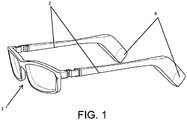
Figure 1 .- Shows a perspective view of the eyeglasses which form the object of the invention. -
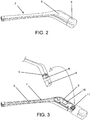
Figure 2 .- Shows a perspective view of a temple of the eyeglasses which form the object of the invention. -
Figure 3 .- Shows a view ofFigure 2 having removed the cover that protects the electronic components of the geolocation device of the eyeglasses which form the object of the invention. - Below is a list of the numerical references used in the Figures and the elements they refer to:
- 1.- eyeglasses,
- 2.- temple,
- 3.- control plate,
- 4.- socket,
- 5.- switch,
- 6.- first antenna,
- 7.- second antenna,
- 8.- cover,
- 9.- protective cover,
- 10.- battery,
- 11.- lighting elements and
- As can be seen in the figures, the eyeglasses (1) which form the object of the invention have two temples (2), one of which houses a series of electronic components which form a geolocation device, such that the geolocation of the wearer of the eyeglasses can be ascertained.
- The geolocation device comprises:
- a first antenna (6) built into the temple (2), configured to pick up the radio signal of one of the global navigation systems (GPS, Galileo, BeiDou, etc.);
- a second antenna (7), configured to broadcast the geolocation of the eyeglasses via UNB (Ultra Narrow Band) networks;
- a control board (3), which, in the preferential embodiment of the invention, is a printed circuit board;
- a battery (10) built into the control plate (3);
- a socket (4) to supply the battery (10);
- a plurality of light elements (11), configured to show the status of the geolocation device, which, in the preferential embodiment of the invention, are formed by a plurality of LED lights;
- a switch (5), configured to activate or deactivate the geolocation device; and
- a cover (9) to protect the socket (4).
- Both the first antenna (6) and the second antenna (7) of the geolocation device are built into the body of the temple (2), and both the first antenna (6) and the second antenna (7) are attached to the control plate (3) at different connection points, such that the control plate (3) handles all interaction between the two antennas (6, 7). Furthermore, the two antennas (6, 7) operate simultaneously.
- The solution of using two antennas is because the eyeglasses are located near the head of the wearer and the GPS signal should not be absorbed by the head, so the second antenna (7) acts as a reflector of the GPS signal picked up by the first antenna (6) and moves it away from the wearer's head, thus preventing this part of the GPS signal from being directed to the wearer's head, thereby increasing safety in use of the eyeglasses which form the object of the invention.
- All components of the geolocation device of the eyeglasses which form the object of the invention are located inside one of the temples (2) of the eyeglasses, with said temple (2) comprising a protective cover (9) which can be removed should the aforementioned components need to be repaired (see
Figure 3 , where the cover has been removed to show inside the temple). - The switch (5) of the eyeglasses which form the object of the invention is formed by a graphene surface, such that the user can act on the switch (5) by touching the graphene surface for a certain length of time, with such touching for a certain length of time resulting in the geolocation device being activated or deactivated. The switch (5) is therefore built into the surface of the temple (2), thus ensuring the temple has no protrusions or discontinuities, which can not only be uncomfortable but also dangerous for the wearer of the eyeglasses as they are close to parts of the human body that are sensitive to impact, such as the eyes or the skin of the ears.
- This solution means that it is not necessary to incorporate mechanical elements, which are associated with areas where dust and humidity can build up, in order to activate the geolocation device.
- The solution of making the switch in the eyeglasses which form the object of the invention from graphene material therefore allows improved fulfilment of IP level in terms of anti-humidity standards, simplification of electronics, and greater durability of the assembly.
- In the preferential embodiment of the invention, the geolocation device's socket (4) is a micro USB connector.
- The battery (10) of the geolocation device is built into the control plate (3), and receives the energy stored by the battery (10) through the socket (4) in order to operate the geolocation device of the eyeglasses which form the object of the invention.
- The invention should not be understood as limited to the preferential embodiment described herein, but rather the scope of the invention is defined by the Claims below.
Claims (6)
- Geolocatable eyeglasses, comprising a frame to which a temple on each side of the frame is connected by means of hinges, characterised in that at least one temple comprises a geolocation device, wherein the geolocation device is built into the temple (2), and wherein the geolocation device comprises:- a first antenna (6) built into the temple (2), configured to connect to at least one global navigation system;- a second antenna (7) built into the temple (2), configured to transmit the position of the eyeglasses over a UNB network;- a control plate (3);- a socket (4);- a switch (5), configured to activate or deactivate the geolocation device;wherein the switch (5) comprises a graphene surface, which is on the same level as the outer surface of the temple (2).
- Geolocatable eyeglasses according to Claim 1, characterised in that they comprise a plurality of light elements (11) configured to show the status of the geolocation device.
- Geolocatable eyeglasses according to either Claim 1 or 2, characterised in that the temple (2) comprising the geolocation device comprises a protective cover (9) for the components of the geolocation device.
- Geolocatable eyeglasses according to any of the Claims 1 to 3, characterised in that the switch (5) is configured for operation by touching for a certain length of time, with such touching for a certain length of time resulting in the geolocation device being activated or deactivated.
- Geolocatable eyeglasses according to any of the Claims 1 to 5, characterised in that the socket (4) of the geolocation device comprises a micro USB connector.
- Geolocatable eyeglasses according to any of the Claims 1 to 6, characterised in that they comprise a battery (10) housed in the control plate (3), with said battery (10) being connected to the socket (4).
Applications Claiming Priority (1)
| Application Number | Priority Date | Filing Date | Title |
|---|---|---|---|
| PCT/ES2018/000054 WO2019238982A1 (en) | 2018-06-12 | 2018-06-12 | Geolocatable spectacles |
Publications (2)
| Publication Number | Publication Date |
|---|---|
| EP3893043A1 true EP3893043A1 (en) | 2021-10-13 |
| EP3893043A4 EP3893043A4 (en) | 2022-01-26 |
Family
ID=68842490
Family Applications (1)
| Application Number | Title | Priority Date | Filing Date |
|---|---|---|---|
| EP18922283.9A Withdrawn EP3893043A4 (en) | 2018-06-12 | 2018-06-12 | GEOLOCALIZABLE GLASSES |
Country Status (4)
| Country | Link |
|---|---|
| US (1) | US20210263343A1 (en) |
| EP (1) | EP3893043A4 (en) |
| CA (1) | CA3103521A1 (en) |
| WO (1) | WO2019238982A1 (en) |
Families Citing this family (22)
| Publication number | Priority date | Publication date | Assignee | Title |
|---|---|---|---|---|
| USD1019747S1 (en) * | 2019-09-09 | 2024-03-26 | Amazon Technologies, Inc. | Wearable device |
| TWD203995S (en) * | 2019-09-11 | 2020-04-11 | 廣達電腦股份有限公司 | Eyewear display device |
| USD1031823S1 (en) * | 2020-03-06 | 2024-06-18 | SAFILO—Società Azionaria Fabbrica Italiana Lavorazione Occhiali—S.p.A. | Spectacles |
| USD998022S1 (en) * | 2021-05-26 | 2023-09-05 | Anker Innovations Technology Co., Ltd. | Spectacles |
| USD1059471S1 (en) * | 2021-07-06 | 2025-01-28 | Pauvazal, S.L.U. | Part of spectacle frames |
| CN113759573A (en) * | 2021-09-29 | 2021-12-07 | 优奈柯恩(北京)科技有限公司 | smart glasses |
| USD1020858S1 (en) * | 2023-02-09 | 2024-04-02 | Innovative Eyewear, Inc. | Smartglasses |
| USD1020854S1 (en) * | 2023-02-09 | 2024-04-02 | Innovative Eyewear, Inc. | Smartglasses |
| USD1020853S1 (en) * | 2023-02-09 | 2024-04-02 | Innovative Eyewear, Inc. | Smartglasses |
| USD1020852S1 (en) * | 2023-02-09 | 2024-04-02 | Innovative Eyewear, Inc | Smartglasses |
| USD1020857S1 (en) * | 2023-02-09 | 2024-04-02 | Innovative Eyewear, Inc. | Smartglasses |
| USD1020855S1 (en) * | 2023-02-09 | 2024-04-02 | Innovative Eyewear, Inc. | Smartglasses |
| USD1020851S1 (en) * | 2023-02-09 | 2024-04-02 | Innovative Eyewear, Inc. | Smartglasses |
| USD1020863S1 (en) * | 2023-02-09 | 2024-04-02 | Innovative Eyewear, Inc. | Smartglasses |
| USD1020850S1 (en) * | 2023-02-09 | 2024-04-02 | Innovative Eyewear, Inc. | Smartglasses |
| USD1019750S1 (en) * | 2023-02-09 | 2024-03-26 | Innovative Eyewear, Inc. | Smartglasses |
| USD1024177S1 (en) * | 2023-02-09 | 2024-04-23 | Innovative Eyewear, Inc. | Smartglasses |
| USD1020849S1 (en) * | 2023-02-09 | 2024-04-02 | Innovative Eyewear, Inc. | Smartglasses |
| USD1019746S1 (en) * | 2023-02-09 | 2024-03-26 | Innovative Eyewear, Inc. | Smartglasses |
| USD1020856S1 (en) * | 2023-02-09 | 2024-04-02 | Innovative Eyewear, Inc. | Smartglasses |
| USD1023123S1 (en) * | 2023-02-13 | 2024-04-16 | Innovative Eyewear, Inc. | Smartglasses temples |
| SE2450082A1 (en) * | 2024-01-26 | 2025-07-27 | Xocchiali Ab | Electronic eyeglass set |
Family Cites Families (15)
| Publication number | Priority date | Publication date | Assignee | Title |
|---|---|---|---|---|
| US5440355A (en) * | 1994-02-18 | 1995-08-08 | Ross; Kelly G. | Comfortable eyeglass cover |
| US7792552B2 (en) * | 2003-04-15 | 2010-09-07 | Ipventure, Inc. | Eyeglasses for wireless communications |
| US8109629B2 (en) * | 2003-10-09 | 2012-02-07 | Ipventure, Inc. | Eyewear supporting electrical components and apparatus therefor |
| US9158116B1 (en) * | 2014-04-25 | 2015-10-13 | Osterhout Group, Inc. | Temple and ear horn assembly for headworn computer |
| US20130169924A1 (en) * | 2012-01-04 | 2013-07-04 | Hayward LAMPLEY, JR. | Apparatus and system for data storage and retrieval |
| EP2973533A4 (en) * | 2013-03-15 | 2016-11-30 | Oakley Inc | ELECTRONIC ORNAMENTATION FOR EYEWEAR |
| KR102102643B1 (en) * | 2013-11-12 | 2020-04-21 | 엘지전자 주식회사 | Glass Type Terminal |
| FR3022665B1 (en) * | 2014-06-23 | 2016-07-15 | Sigfox | METHOD FOR RECOVERING AN AUTHENTICATION CODE REQUIRED BY A CONTROL TERMINAL AND CORRESPONDING SYSTEM |
| US9886146B2 (en) * | 2014-12-18 | 2018-02-06 | Piotr Nawrocki | Active graphene touch switch for electronic devices |
| US20160204839A1 (en) * | 2015-01-12 | 2016-07-14 | Futurewei Technologies, Inc. | Multi-band Antenna for Wearable Glasses |
| FR3035225B1 (en) * | 2015-04-20 | 2019-04-26 | Florence Poulet | GEOLOCATION DEVICE FOR RETRIEVING STOLEN OBJECTS |
| US9946098B2 (en) * | 2016-04-25 | 2018-04-17 | Eddie Bauer | Eyewear with a cellular GPS module |
| FR3055760B1 (en) * | 2016-09-02 | 2019-07-12 | Sigfox | ELECTRONIC APPARATUS COMPRISING AN ANTENNA STRUCTURE FOR TRANSMITTING AND / OR RECEIVING RADIO SIGNALS AND A STRING FOR ATTACHING THE APPARATUS |
| US10534203B2 (en) * | 2017-07-31 | 2020-01-14 | Snap Inc. | Near-field antenna for eyewear |
| CN207424385U (en) * | 2017-10-26 | 2018-05-29 | 太平洋未来科技(深圳)有限公司 | A kind of AR glasses |
-
2018
- 2018-06-12 US US17/251,936 patent/US20210263343A1/en not_active Abandoned
- 2018-06-12 CA CA3103521A patent/CA3103521A1/en not_active Abandoned
- 2018-06-12 WO PCT/ES2018/000054 patent/WO2019238982A1/en not_active Ceased
- 2018-06-12 EP EP18922283.9A patent/EP3893043A4/en not_active Withdrawn
Also Published As
| Publication number | Publication date |
|---|---|
| WO2019238982A1 (en) | 2019-12-19 |
| EP3893043A4 (en) | 2022-01-26 |
| CA3103521A1 (en) | 2019-12-19 |
| US20210263343A1 (en) | 2021-08-26 |
Similar Documents
| Publication | Publication Date | Title |
|---|---|---|
| EP3893043A1 (en) | Geolocatable spectacles | |
| US20230236444A1 (en) | Eyewear with connection region | |
| AU2017100276A4 (en) | Child's intelligent watch with video call function | |
| US11272761B2 (en) | System and method for embedding a tracking device in a footwear insole | |
| US8430507B2 (en) | Eyewear with touch-sensitive input surface | |
| US10345625B2 (en) | Eyewear with touch-sensitive input surface | |
| US12001599B2 (en) | Head-worn device with connection region | |
| KR102495254B1 (en) | Eyewear docking station and electronic module | |
| CN108139594B (en) | Electronic spectacle frame | |
| US20200271960A1 (en) | Modularized temple of spectacles and smart eyewear | |
| US10878687B2 (en) | Helmet and method of use for emergency notification | |
| KR102492607B1 (en) | Sports goggle | |
| KR20250169234A (en) | Tunable lens adjustment in electronic devices | |
| EP3051328A2 (en) | Wearable display device | |
| BG2263U1 (en) | HOCKEY FOR MOTORCYCLES AND PEOPLE, TRAINING WITH EXTREME TYPES OF ACTIVITIES | |
| GB2070221A (en) | Head attachment for personal use incorporating an electrical device such as a lamp or hearing aid | |
| CN206757045U (en) | A kind of footwear carry navigation positional device | |
| KR101420775B1 (en) | Goggle type telescope | |
| CN223068038U (en) | Smart helmet and smart helmet remote collaboration system | |
| WO2014204350A1 (en) | Helmet for motorcyclists and for people who engage in extreme activities | |
| KR20210068830A (en) | Beacon stray child prevention bracelet |
Legal Events
| Date | Code | Title | Description |
|---|---|---|---|
| STAA | Information on the status of an ep patent application or granted ep patent |
Free format text: STATUS: THE INTERNATIONAL PUBLICATION HAS BEEN MADE |
|
| APBK | Appeal reference recorded |
Free format text: ORIGINAL CODE: EPIDOSNREFNE |
|
| APBN | Date of receipt of notice of appeal recorded |
Free format text: ORIGINAL CODE: EPIDOSNNOA2E |
|
| APBR | Date of receipt of statement of grounds of appeal recorded |
Free format text: ORIGINAL CODE: EPIDOSNNOA3E |
|
| APBV | Interlocutory revision of appeal recorded |
Free format text: ORIGINAL CODE: EPIDOSNIRAPE |
|
| PUAI | Public reference made under article 153(3) epc to a published international application that has entered the european phase |
Free format text: ORIGINAL CODE: 0009012 |
|
| STAA | Information on the status of an ep patent application or granted ep patent |
Free format text: STATUS: REQUEST FOR EXAMINATION WAS MADE |
|
| 17P | Request for examination filed |
Effective date: 20210111 |
|
| AK | Designated contracting states |
Kind code of ref document: A1 Designated state(s): AL AT BE BG CH CY CZ DE DK EE ES FI FR GB GR HR HU IE IS IT LI LT LU LV MC MK MT NL NO PL PT RO RS SE SI SK SM TR |
|
| A4 | Supplementary search report drawn up and despatched |
Effective date: 20220104 |
|
| RIC1 | Information provided on ipc code assigned before grant |
Ipc: H01Q 1/27 20060101ALI20211221BHEP Ipc: H01Q 1/24 20060101ALI20211221BHEP Ipc: G01S 19/00 20100101ALI20211221BHEP Ipc: G02C 5/14 20060101AFI20211221BHEP |
|
| STAA | Information on the status of an ep patent application or granted ep patent |
Free format text: STATUS: THE APPLICATION IS DEEMED TO BE WITHDRAWN |
|
| 18D | Application deemed to be withdrawn |
Effective date: 20220802 |