EP3892930A1 - Apparatus management system - Google Patents
Apparatus management system Download PDFInfo
- Publication number
- EP3892930A1 EP3892930A1 EP19891982.1A EP19891982A EP3892930A1 EP 3892930 A1 EP3892930 A1 EP 3892930A1 EP 19891982 A EP19891982 A EP 19891982A EP 3892930 A1 EP3892930 A1 EP 3892930A1
- Authority
- EP
- European Patent Office
- Prior art keywords
- setting information
- information
- management system
- information terminal
- acquisition apparatus
- Prior art date
- Legal status (The legal status is an assumption and is not a legal conclusion. Google has not performed a legal analysis and makes no representation as to the accuracy of the status listed.)
- Withdrawn
Links
Images



Classifications
-
- G—PHYSICS
- G06—COMPUTING OR CALCULATING; COUNTING
- G06Q—INFORMATION AND COMMUNICATION TECHNOLOGY [ICT] SPECIALLY ADAPTED FOR ADMINISTRATIVE, COMMERCIAL, FINANCIAL, MANAGERIAL OR SUPERVISORY PURPOSES; SYSTEMS OR METHODS SPECIALLY ADAPTED FOR ADMINISTRATIVE, COMMERCIAL, FINANCIAL, MANAGERIAL OR SUPERVISORY PURPOSES, NOT OTHERWISE PROVIDED FOR
- G06Q10/00—Administration; Management
- G06Q10/06—Resources, workflows, human or project management; Enterprise or organisation planning; Enterprise or organisation modelling
-
- F—MECHANICAL ENGINEERING; LIGHTING; HEATING; WEAPONS; BLASTING
- F24—HEATING; RANGES; VENTILATING
- F24F—AIR-CONDITIONING; AIR-HUMIDIFICATION; VENTILATION; USE OF AIR CURRENTS FOR SCREENING
- F24F11/00—Control or safety arrangements
- F24F11/62—Control or safety arrangements characterised by the type of control or by internal processing, e.g. using fuzzy logic, adaptive control or estimation of values
- F24F11/63—Electronic processing
- F24F11/64—Electronic processing using pre-stored data
-
- F—MECHANICAL ENGINEERING; LIGHTING; HEATING; WEAPONS; BLASTING
- F24—HEATING; RANGES; VENTILATING
- F24F—AIR-CONDITIONING; AIR-HUMIDIFICATION; VENTILATION; USE OF AIR CURRENTS FOR SCREENING
- F24F11/00—Control or safety arrangements
- F24F11/50—Control or safety arrangements characterised by user interfaces or communication
- F24F11/54—Control or safety arrangements characterised by user interfaces or communication using one central controller connected to several sub-controllers
-
- F—MECHANICAL ENGINEERING; LIGHTING; HEATING; WEAPONS; BLASTING
- F24—HEATING; RANGES; VENTILATING
- F24F—AIR-CONDITIONING; AIR-HUMIDIFICATION; VENTILATION; USE OF AIR CURRENTS FOR SCREENING
- F24F11/00—Control or safety arrangements
- F24F11/50—Control or safety arrangements characterised by user interfaces or communication
- F24F11/56—Remote control
- F24F11/58—Remote control using Internet communication
-
- G—PHYSICS
- G06—COMPUTING OR CALCULATING; COUNTING
- G06Q—INFORMATION AND COMMUNICATION TECHNOLOGY [ICT] SPECIALLY ADAPTED FOR ADMINISTRATIVE, COMMERCIAL, FINANCIAL, MANAGERIAL OR SUPERVISORY PURPOSES; SYSTEMS OR METHODS SPECIALLY ADAPTED FOR ADMINISTRATIVE, COMMERCIAL, FINANCIAL, MANAGERIAL OR SUPERVISORY PURPOSES, NOT OTHERWISE PROVIDED FOR
- G06Q50/00—Information and communication technology [ICT] specially adapted for implementation of business processes of specific business sectors, e.g. utilities or tourism
- G06Q50/10—Services
- G06Q50/16—Real estate
-
- H—ELECTRICITY
- H04—ELECTRIC COMMUNICATION TECHNIQUE
- H04L—TRANSMISSION OF DIGITAL INFORMATION, e.g. TELEGRAPHIC COMMUNICATION
- H04L41/00—Arrangements for maintenance, administration or management of data switching networks, e.g. of packet switching networks
- H04L41/08—Configuration management of networks or network elements
- H04L41/0866—Checking the configuration
- H04L41/0869—Validating the configuration within one network element
-
- H—ELECTRICITY
- H04—ELECTRIC COMMUNICATION TECHNIQUE
- H04Q—SELECTING
- H04Q9/00—Arrangements in telecontrol or telemetry systems for selectively calling a substation from a main station, in which substation desired apparatus is selected for applying a control signal thereto or for obtaining measured values therefrom
-
- H—ELECTRICITY
- H04—ELECTRIC COMMUNICATION TECHNIQUE
- H04Q—SELECTING
- H04Q2209/00—Arrangements in telecontrol or telemetry systems
- H04Q2209/40—Arrangements in telecontrol or telemetry systems using a wireless architecture
- H04Q2209/43—Arrangements in telecontrol or telemetry systems using a wireless architecture using wireless personal area networks [WPAN], e.g. 802.15, 802.15.1, 802.15.4, Bluetooth® or Zigbee®
Definitions
- a device management system manages one or more devices installed in a property.
- the device management system includes an information terminal that stores first setting information of the one or more devices, and an acquisition apparatus that acquires second setting information of the one or more devices from the one or more devices.
- the information terminal includes a communication unit that communicates with the acquisition apparatus via a non-public line. The information terminal or the acquisition apparatus compares the first setting information stored in the information terminal with the second setting information acquired by the acquisition apparatus.
- a device management system is the device management system according to the first aspect, in which the communication unit communicates with the acquisition apparatus via the non-public line and acquires the second setting information acquired by the acquisition apparatus.
- the information terminal further includes a comparison unit that compares the first setting information stored in the information terminal with the second setting information acquired by the communication unit.
- a device management system is the device management system according to the first aspect, in which the communication unit communicates with the acquisition apparatus via the non-public line and transmits the first setting information stored in the information terminal to the acquisition apparatus.
- the acquisition apparatus compares the first setting information received from the information terminal via the non-public line with the second setting information acquired from the one or more devices.
- the acquisition apparatus transmits a result of comparison between the first setting information and the second setting information to the information terminal via the non-public line.
- a device management system is the device management system according to any one of the first to third aspects, in which the device management system further includes a management apparatus.
- the management apparatus is installed outside the property and is connected to the acquisition apparatus via a public line during operation of the one or more devices.
- a device management system is the device management system according to any one of the first to fourth aspects, in which the information terminal further includes an acquisition unit that acquires the first setting information from a storage medium that stores the first setting information.
- a device management system is the device management system according to any one of the first to sixth aspects, in which the information terminal further includes a change unit that changes at least one of the first setting information and the second setting information, based on a result of comparison between the first setting information and the second setting information, in a case where the first setting information is different from the second setting information.
- a device management system is the device management system according to any one of the first to seventh aspects, in which the first setting information and the second setting information each include at least address information of the one or more devices.
- a device management system is the device management system according to the eleventh aspect, in which the presentation unit presents, for each of the one or more devices, information about a difference between the first setting information and the second setting information.
- the device management system 100 is a system for managing one or more devices 20 installed in a property 10.
- the devices 20 are managed in units of properties 10.
- a person in charge who manages one or more devices 20 performs a test run check operation in the property 10 having the one or more devices 20 installed therein. In the test run check operation, an operation of checking information set to the one or more devices 20 is performed, as will be described below.
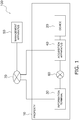
- Fig. 1 is a configuration diagram of the device management system 100.
- Fig. 1 illustrates only one property 10 having a device 20 installed therein.
- the device management system 100 is constituted mainly by the device 20, an information terminal 30, an acquisition apparatus 40, a management apparatus 50, a non-public line 60, and a public line 70.
- the device 20, the acquisition apparatus 40, and the non-public line 60 are installed inside the property 10.
- the management apparatus 50 and the public line 70 are installed outside the property 10.
- the device 20 and the acquisition apparatus 40 installed in the property 10 are capable of communicating with each other.
- the information terminal 30 is capable of communicating with the acquisition apparatus 40 via the non-public line 60.
- the management apparatus 50 is capable of communicating with the information terminal 30 and the acquisition apparatus 40 via the public line 70.
- the device 20 is an air conditioner.
- the device 20 is constituted mainly by one outdoor unit, a plurality of (for example, two to four) indoor units, and refrigerant pipes that connect the outdoor unit and the indoor units to each other.
- the information terminal 30 is a portable mobile terminal.
- the information terminal 30 is, for example, a smartphone or a tablet.
- a person in charge who manages the device 20 performs a test run check operation of the device 20 in the property 10 by using the information terminal 30.
- the person in charge who manages the device 20 performs an operation of comparing first setting information with second setting information by using the information terminal 30.
- the first setting information and the second setting information are each device setting information.
- the device setting information is information used to manage the device 20 in the property 10.
- the device setting information includes at least address information of the device 20.
- the device 20 is constituted by a plurality of devices, such as an air conditioner including an outdoor unit and an indoor unit, the device setting information includes at least pieces of address information of the respective devices. The details of the device setting information will be described below.
- the acquisition apparatus 40 is connected to the device 20 via a line, a connection cable, or the like installed in the property 10.
- the acquisition apparatus 40 is connected to the information terminal 30 via the non-public line 60 and is connected to the management apparatus 50 via the public line 70.
- the acquisition apparatus 40 is capable of acquiring the second setting information set to the device 20 by communicating with the device 20.
- the acquisition apparatus 40 stores the second setting information acquired from the device 20.
- the management apparatus 50 is installed in a management center or the like outside the property 10.
- the management apparatus 50 is connected to the information terminal 30 and the acquisition apparatus 40 via the public line 70.
- the management apparatus 50 stores the first setting information.
- the first setting information is, for example, registered in advance in the management apparatus 50 by a service engineer or the like of the management center.
- the management apparatus 50 is connected to the acquisition apparatus 40 via the public line 70. Accordingly, when the device 20 is operating, the management apparatus 50 communicates with the device 20 via the acquisition apparatus 40, thereby being capable of remotely managing the device 20.
- the public line 70 is, for example, the Internet.
- Fig. 2 is a block diagram of the information terminal 30.
- the information terminal 30 mainly includes a communication unit 31, a comparison unit 32, an acquisition unit 33, a change unit 34, a presentation unit 35, and a storage unit 36.
- the communication unit 31 communicates with the acquisition apparatus 40 via the non-public line 60 and receives the second setting information acquired by the acquisition apparatus 40 from the device 20.
- the acquisition unit 33 communicates with the management apparatus 50 via the public line 70 and receives the first setting information registered in advance in the management apparatus 50.
- the storage unit 36 stores the first setting information received by the acquisition unit 33 and the second setting information received by the communication unit 31.
- the comparison unit 32 compares the first setting information and the second setting information stored in the storage unit 36 with each other.
- the presentation unit 35 presents a result of the comparison performed by the comparison unit 32. Specifically, the presentation unit 35 displays, for each device 20, information about a difference between the first setting information and the second setting information on the display of the information terminal 30.
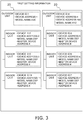
- Fig. 3 illustrates an example of first setting information.
- Fig. 4 illustrates an example of second setting information.
- the first setting information illustrated in Fig. 3 and the second setting information illustrated in Fig. 4 are device setting information about the devices 20 installed in the same property 10.
- the property 10 has two devices 20 (air conditioners) installed therein.
- Each device 20 has a configuration in which one outdoor unit is connected to a plurality of indoor units by refrigerant pipes.
- Each device 20 belongs to an independent refrigerant system.
- Device setting information is individually set to the outdoor unit and each of the indoor units.
- the device setting information of the device 20 is constituted by the device setting information of the outdoor unit and the pieces of device setting information of the respective indoor units.
- a device ID is an ID for uniquely identifying an outdoor unit or an indoor unit.
- a device address is address information of an outdoor unit or an indoor unit in the property 10. In the property 10, an identical device address is not assigned to a plurality of devices (an outdoor unit and indoor units). A device address is used as a key at the time of comparing the first setting information with the second setting information.
- the device setting information may include a plurality of device addresses.
- a model name is a character string representing the type of outdoor unit or indoor unit.
- a master device address included in the device setting information of each indoor unit is the device address of the outdoor unit connected to the indoor unit by a refrigerant pipe. The plurality of indoor units having an identical master device address set thereto are connected to the same outdoor unit.
- Fig. 5 is a flowchart of a test run check operation of the device 20.
- a service engineer or the like of the management center predetermines the first setting information of the device 20 and registers the first setting information in the management apparatus 50 in each property 10.
- step S11 the information terminal 30 acquires the first setting information of the device 20.
- a person in charge performs a predetermined operation on the information terminal 30, and accordingly the information terminal 30 receives the first setting information from the management apparatus 50 via the public line 70.
- step S14 the information terminal 30 acquires the second setting information of the device 20.
- the person in charge performs a predetermined operation on the information terminal 30, and accordingly the information terminal 30 receives the second setting information from the acquisition apparatus 40 via the non-public line 60.
- step S16 the information terminal 30 presents a comparison result.
- the person in charge performs a predetermined operation on the information terminal 30, and accordingly the information terminal 30 displays, on the display, information about a difference between the first setting information and the second setting information.
- step S17 in a case where there is a difference between the first setting information and the second setting information, the information terminal 30 instructs the person in charge to change at least one of the first setting information and the second setting information.
- the person in charge performs a predetermined operation on the information terminal 30, and thereby being able to make a change to match the first setting information to the second setting information or a change to match the second setting information to the first setting information.
- the person in charge may change both the first setting information and the second setting information as necessary.
- the model name of the outdoor unit whose device address is 1 is different between the first setting information and the second setting information.
- a comparison result indicating that the model name "ABC" included in the first setting information is wrong is presented, and the correct model name "ABX" is also presented.
- the indoor unit whose device address is 10 is not registered in the first setting information but is registered in the second setting information.
- a comparison result indicating that the indoor unit whose device address is 10 is not registered is presented.
- the master device address of the indoor unit whose device address is 11 is different between the first setting information and the second setting information.
- a comparison result indicating that the master device address "1" included in the first setting information is wrong is presented, and the correct master device address "4" is also presented.
- the correct master device address of the indoor unit whose device address is 11 is "4".
- the position of the indoor unit whose device address is 11 is changed so that the indoor unit whose device address is 11 is connected to the outdoor unit having the master device address "4".
- the person in charge compares the first setting information with the second setting information
- the person in charge needs to check, on a device-by-device basis, whether the first setting information matches the second setting information, and there is an issue that time or effort is required in the test run check operation.
- the person in charge is not able to acquire first setting information on site and is not able to perform a comparison process.
- the information terminal 30 is capable of directly receiving, via the public line 70 such as the Internet, the first setting information from the management apparatus 50 in which the first setting information is registered in advance.
- the person in charge is able to acquire the first setting information by using the information terminal 30.
- the information terminal 30 is capable of receiving the second setting information from the acquisition apparatus 40 connected to the device 20, via the non-public line 60 installed in the property 10.
- the acquisition apparatus 40 is capable of automatically recognizing the device 20 installed in the property 10 and automatically acquiring the second setting information from the device 20.
- the person in charge is able to automatically acquiring the second setting information by using the information terminal 30.
- the information terminal 30 is capable of comparing the acquired first setting information and second setting information and presenting a comparison result to the person in charge in a visible manner as illustrated in Fig. 6 .
- the second setting information different from the first setting information is intentionally set on the basis of an installation status in the property 10 or in a case where the second setting information different from the first setting information is set due to a setting error caused by the person in charge, the person in charge is able to easily grasp an error, a missing portion, or the like of information included in the first setting information and the second setting information.
- the information terminal 30 compares the first setting information acquired by the information terminal 30 with the second setting information received from the acquisition apparatus 40 via the non-public line 60.
- the acquisition apparatus 40 compares the first setting information with the second setting information, in stead of the information terminal 30.
- the acquisition apparatus 40 transmits a result of comparison between the first setting information and the second setting information to the information terminal 30.
- the acquisition apparatus 40 includes a communication unit 41, a comparison unit 42, and a storage unit 43.
- the communication unit 41 receives the first setting information from the information terminal 30 via the non-public line 60.
- the storage unit 43 stores the first setting information received by the communication unit 41 and the second setting information acquired from the device 20.
- the comparison unit 42 compares the first setting information and the second setting information that are stored in the storage unit 43 with each other.
- the communication unit 41 transmits a result of comparison between the first setting information and the second setting information by the comparison unit 42 to the information terminal 30 via the non-public line 60.
- the communication unit 31 of the information terminal 30 receives the result of comparison from the acquisition apparatus 40 via the non-public line 60.
- step S21 the information terminal 30 acquires the first setting information of the device 20.
- step S22 a person in charge sets second setting information to the device 20 when or after installing the device 20 in the property 10.
- step S23 the acquisition apparatus 40 acquires the second setting information of the device 20.
- step S24 the information terminal 30 transmits the first setting information to the acquisition apparatus 40.
- the person in charge performs a predetermined operation on the information terminal 30, and accordingly the information terminal 30 transmits the first setting information to the acquisition apparatus 40 via the non-public line 60.
- step S25 the acquisition apparatus 40 receives the first setting information from the information terminal 30 via the non-public line 60.
- step S26 the acquisition apparatus 40 compares the first setting information with the second setting information.
- the person in charge performs a predetermined operation on the information terminal 30, and accordingly the acquisition apparatus 40 compares the first setting information with the second setting information and extracts a difference between the first setting information and the second setting information.
- step S27 the acquisition apparatus 40 transmits a comparison result to the information terminal 30 via the non-public line 60.
- step S28 the information terminal 30 presents the comparison result.
- step S29 in a case where there is a difference between the first setting information and the second setting information, the information terminal 30 instructs the person in charge to change at least one of the first setting information and the second setting information.
- step S30 the information terminal 30 transmits the device setting information (at least one of the first setting information and the second setting information) changed in step S29 to the acquisition apparatus 40 as necessary. Furthermore, the information terminal 30 transmits to the acquisition apparatus 40 an instruction to change the device setting information set to the device 20 on the basis of the device setting information transmitted to the acquisition apparatus 40 as necessary. In a case where the result of the comparison operation in step S26 indicates that there is no difference between the first setting information and the second setting information, steps S29 to S30 are not performed.
- the information terminal 30 acquires the first setting information from the management apparatus 50 via the public line 70.
- the information terminal 30 may acquire the first setting information from a storage medium that stores the first setting information instead of acquiring the first setting information from the management apparatus 50.
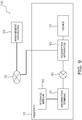
- Fig. 9 is a configuration diagram of a device management system 100 according to the present modification example.
- the information terminal 30 acquires the first setting information from a storage medium 80.
- the storage medium 80 is a device capable of communicating with the information terminal 30 by being connected to the information terminal 30.
- the storage medium 80 may be, for example, a recording medium such as an optical disc or a universal serious bus (USB) memory stick, or may be a terminal such as a personal computer.
- the person in charge performs a predetermined operation on the information terminal 30, and accordingly the information terminal 30 acquires the first setting information from the storage medium 80.
- the information terminal 30 does not acquire the first setting information from the management apparatus 50.
- the management apparatus 50 may communicate with the device 20 via the acquisition apparatus 40 to remotely manage the device 20.
- the device management system 100 need not necessarily include the management apparatus 50.
- the device 20 is an air conditioner.
- the device 20 is not limited to an air conditioner, and may be any device that is installed in the property 10 and that requires initial setting.
- the device 20 may be a ventilator, a humidity controller, or a refrigerator.
- the device 20 may be constituted by a plurality of types of devices selected from the group consisting of an air conditioner, a ventilator, a humidity controller, and a refrigerator.
- the information terminal 30 in a case where there is a difference between the first setting information and the second setting information when the first setting information and the second setting information are compared with each other by the information terminal 30, the information terminal 30 assumes that the first setting information is wrong and generates a comparison result.
- the information terminal 30 may assume that the second setting information is wrong and may generate a comparison result. In this case, the information terminal 30 may assume, for each of information pieces included in the first setting information or the second setting information, that the first setting information is wrong or the second setting information is wrong.
- the information terminal 30 instructs the person in charge to change at least one of the first setting information and the second setting information.
- the information terminal 30 may automatically change at least one of the first setting information and the second setting information. In this case, the information terminal 30 may notify the person in charge that at least one of the first setting information and the second setting information has been automatically changed and may notify the person in charge of the changed device setting information.
- a device management system is capable of suppressing the occurrence of wrong setting of setting information of a device installed in a client property.
Landscapes
- Engineering & Computer Science (AREA)
- Business, Economics & Management (AREA)
- General Engineering & Computer Science (AREA)
- Chemical & Material Sciences (AREA)
- Combustion & Propulsion (AREA)
- Mechanical Engineering (AREA)
- Signal Processing (AREA)
- Physics & Mathematics (AREA)
- Tourism & Hospitality (AREA)
- Strategic Management (AREA)
- Economics (AREA)
- Human Resources & Organizations (AREA)
- Human Computer Interaction (AREA)
- General Physics & Mathematics (AREA)
- Marketing (AREA)
- Entrepreneurship & Innovation (AREA)
- Theoretical Computer Science (AREA)
- Computer Networks & Wireless Communication (AREA)
- General Business, Economics & Management (AREA)
- Fuzzy Systems (AREA)
- Mathematical Physics (AREA)
- Health & Medical Sciences (AREA)
- Educational Administration (AREA)
- Quality & Reliability (AREA)
- Development Economics (AREA)
- Game Theory and Decision Science (AREA)
- Operations Research (AREA)
- General Health & Medical Sciences (AREA)
- Primary Health Care (AREA)
- Telephonic Communication Services (AREA)
- Air Conditioning Control Device (AREA)
- Selective Calling Equipment (AREA)
- Management, Administration, Business Operations System, And Electronic Commerce (AREA)
Abstract
Description
- A device management system for managing a device installed in a property
- Hitherto, as disclosed in PTL 1 (
Japanese Unexamined Patent Application Publication No. 2006-129004 - There is an issue that, in a case where Internet installation has not been completed in a client property when a device has been installed in the client property, it is not possible to acquire device setting information registered in advance in a server or the like and it is not possible to execute a process of comparison with device setting information acquired from the device.
- A device management system according to a first aspect manages one or more devices installed in a property. The device management system includes an information terminal that stores first setting information of the one or more devices, and an acquisition apparatus that acquires second setting information of the one or more devices from the one or more devices. The information terminal includes a communication unit that communicates with the acquisition apparatus via a non-public line. The information terminal or the acquisition apparatus compares the first setting information stored in the information terminal with the second setting information acquired by the acquisition apparatus.
- A device management system according to a second aspect is the device management system according to the first aspect, in which the communication unit communicates with the acquisition apparatus via the non-public line and acquires the second setting information acquired by the acquisition apparatus. The information terminal further includes a comparison unit that compares the first setting information stored in the information terminal with the second setting information acquired by the communication unit.
- A device management system according to a third aspect is the device management system according to the first aspect, in which the communication unit communicates with the acquisition apparatus via the non-public line and transmits the first setting information stored in the information terminal to the acquisition apparatus. The acquisition apparatus compares the first setting information received from the information terminal via the non-public line with the second setting information acquired from the one or more devices. The acquisition apparatus transmits a result of comparison between the first setting information and the second setting information to the information terminal via the non-public line.
- A device management system according to a fourth aspect is the device management system according to any one of the first to third aspects, in which the device management system further includes a management apparatus. The management apparatus is installed outside the property and is connected to the acquisition apparatus via a public line during operation of the one or more devices.
- A device management system according to a fifth aspect is the device management system according to the fourth aspect, in which the management apparatus stores the first setting information. The information terminal further includes an acquisition unit that acquires the first setting information from the management apparatus via the public line.
- A device management system according to a sixth aspect is the device management system according to any one of the first to fourth aspects, in which the information terminal further includes an acquisition unit that acquires the first setting information from a storage medium that stores the first setting information.
- A device management system according to a seventh aspect is the device management system according to any one of the first to sixth aspects, in which the information terminal further includes a change unit that changes at least one of the first setting information and the second setting information, based on a result of comparison between the first setting information and the second setting information, in a case where the first setting information is different from the second setting information.
- A device management system according to an eighth aspect is the device management system according to any one of the first to seventh aspects, in which the first setting information and the second setting information each include at least address information of the one or more devices.
- A device management system according to a ninth aspect is the device management system according to any one of the first to eighth aspects, in which the non-public line is near field wireless communication, a local area network, Wi-Fi (registered trademark), or Bluetooth (registered trademark).
- A device management system according to a tenth aspect is the device management system according to any one of the first to ninth aspects, in which the one or more devices include at least one of an air conditioner, a ventilator, a humidity controller, and a refrigerator.
- A device management system according to an eleventh aspect is the device management system according to any one of the first to tenth aspects, in which the information terminal further includes a presentation unit that presents a result of comparison between the first setting information and the second setting information.
- A device management system according to a twelfth aspect is the device management system according to the eleventh aspect, in which the presentation unit presents, for each of the one or more devices, information about a difference between the first setting information and the second setting information.
-
- <
Fig. 1 >Fig. 1 is a configuration diagram of adevice management system 100 according to a first embodiment. - <
Fig. 2 >Fig. 2 is a block diagram of aninformation terminal 30 according to the first embodiment. - <
Fig. 3 >Fig. 3 illustrates an example of first setting information according to the first embodiment. - <
Fig. 4 >Fig. 4 illustrates an example of second setting information according to the first embodiment. - <
Fig. 5 >Fig. 5 is a flowchart of a test run check operation of adevice 20 according to the first embodiment. - <
Fig. 6 >Fig. 6 illustrates an example of a result of comparison between first setting information and second setting information according to the first embodiment. - <
Fig. 7 >Fig. 7 is a block diagram of aninformation terminal 30 according to a second embodiment. - <
Fig. 8 >Fig. 8 is a flowchart of a test run check operation of adevice 20 according to the second embodiment. - <
Fig. 9 >Fig. 9 is a configuration diagram of adevice management system 100 according to modification example A. - A
device management system 100 according to a first embodiment will be described with reference to the drawings. Thedevice management system 100 is a system for managing one ormore devices 20 installed in aproperty 10. In a case where a plurality ofproperties 10 each have one ormore devices 20 installed therein, thedevices 20 are managed in units ofproperties 10. In the present embodiment, a person in charge who manages one ormore devices 20 performs a test run check operation in theproperty 10 having the one ormore devices 20 installed therein. In the test run check operation, an operation of checking information set to the one ormore devices 20 is performed, as will be described below. - Hereinafter, a description will be given of a case where the
device management system 100 manages one ormore devices 20 installed in acertain property 10.Fig. 1 is a configuration diagram of thedevice management system 100.Fig. 1 illustrates only oneproperty 10 having adevice 20 installed therein. As illustrated inFig. 1 , thedevice management system 100 is constituted mainly by thedevice 20, aninformation terminal 30, anacquisition apparatus 40, amanagement apparatus 50, anon-public line 60, and apublic line 70. Thedevice 20, theacquisition apparatus 40, and thenon-public line 60 are installed inside theproperty 10. Themanagement apparatus 50 and thepublic line 70 are installed outside theproperty 10. - The
device 20 and theacquisition apparatus 40 installed in theproperty 10 are capable of communicating with each other. In theproperty 10, theinformation terminal 30 is capable of communicating with theacquisition apparatus 40 via thenon-public line 60. Themanagement apparatus 50 is capable of communicating with theinformation terminal 30 and theacquisition apparatus 40 via thepublic line 70. - Next, the individual elements of the
device management system 100 will be described. - In the present embodiment, the
device 20 is an air conditioner. In this case, thedevice 20 is constituted mainly by one outdoor unit, a plurality of (for example, two to four) indoor units, and refrigerant pipes that connect the outdoor unit and the indoor units to each other. - The
information terminal 30 is a portable mobile terminal. Theinformation terminal 30 is, for example, a smartphone or a tablet. A person in charge who manages thedevice 20 performs a test run check operation of thedevice 20 in theproperty 10 by using theinformation terminal 30. - In the test run check operation of the
device 20, the person in charge who manages thedevice 20 performs an operation of comparing first setting information with second setting information by using theinformation terminal 30. The first setting information and the second setting information are each device setting information. The device setting information is information used to manage thedevice 20 in theproperty 10. The device setting information includes at least address information of thedevice 20. In a case where thedevice 20 is constituted by a plurality of devices, such as an air conditioner including an outdoor unit and an indoor unit, the device setting information includes at least pieces of address information of the respective devices. The details of the device setting information will be described below. - The first setting information is setting information registered in the
device management system 100 and is setting information stored in an apparatus outside the device 20 (management apparatus 50). The first setting information is setting information predetermined as information to be set to thedevice 20 before thedevice 20 is installed in theproperty 10. The second setting information is setting information stored in thedevice 20. The second setting information is setting information set to thedevice 20. - The
acquisition apparatus 40 is connected to thedevice 20 via a line, a connection cable, or the like installed in theproperty 10. Theacquisition apparatus 40 is connected to theinformation terminal 30 via thenon-public line 60 and is connected to themanagement apparatus 50 via thepublic line 70. Theacquisition apparatus 40 is capable of acquiring the second setting information set to thedevice 20 by communicating with thedevice 20. Theacquisition apparatus 40 stores the second setting information acquired from thedevice 20. - The
management apparatus 50 is installed in a management center or the like outside theproperty 10. Themanagement apparatus 50 is connected to theinformation terminal 30 and theacquisition apparatus 40 via thepublic line 70. Themanagement apparatus 50 stores the first setting information. The first setting information is, for example, registered in advance in themanagement apparatus 50 by a service engineer or the like of the management center. - The
management apparatus 50 is connected to theacquisition apparatus 40 via thepublic line 70. Accordingly, when thedevice 20 is operating, themanagement apparatus 50 communicates with thedevice 20 via theacquisition apparatus 40, thereby being capable of remotely managing thedevice 20. - The
non-public line 60 is a network line installed in theproperty 10. Thenon-public line 60 is a line available only to a person who has a predetermined access right mainly inside theproperty 10. Thenon-public line 60 is, for example, near field wireless communication using infrared rays or the like, local area network (LAN), Wi-Fi (registered trademark), or Bluetooth (registered trademark). Thenon-public line 60 may be a virtual private network (VPN) that is available via the Internet. - The
public line 70 is, for example, the Internet. -
Fig. 2 is a block diagram of theinformation terminal 30. As illustrated inFig. 2 , theinformation terminal 30 mainly includes acommunication unit 31, acomparison unit 32, anacquisition unit 33, achange unit 34, apresentation unit 35, and astorage unit 36. - The
communication unit 31 communicates with theacquisition apparatus 40 via thenon-public line 60 and receives the second setting information acquired by theacquisition apparatus 40 from thedevice 20. Theacquisition unit 33 communicates with themanagement apparatus 50 via thepublic line 70 and receives the first setting information registered in advance in themanagement apparatus 50. Thestorage unit 36 stores the first setting information received by theacquisition unit 33 and the second setting information received by thecommunication unit 31. Thecomparison unit 32 compares the first setting information and the second setting information stored in thestorage unit 36 with each other. Thepresentation unit 35 presents a result of the comparison performed by thecomparison unit 32. Specifically, thepresentation unit 35 displays, for eachdevice 20, information about a difference between the first setting information and the second setting information on the display of theinformation terminal 30. Thechange unit 34 provides a function of changing at least one of the first setting information and the second setting information in a case where the result of the comparison performed by thecomparison unit 32 indicates that there is a difference between the first setting information and the second setting information. Specifically, thechange unit 34 changes at least one of the first setting information and the second setting information on the basis of an input to theinformation terminal 30 by a person in charge. - In the
device management system 100, a person in charge who performs a test run check operation of thedevice 20 is capable of, after installing thedevice 20 and theacquisition apparatus 40 in theproperty 10, automatically performing an operation of comparing the first setting information and the second setting information by using theinformation terminal 30. Theinformation terminal 30 presents information about a difference between the first setting information and the second setting information on the basis of the result of the comparison between the first setting information and the second setting information. In a case where there is a difference between the first setting information and the second setting information, the person in charge is able to change at least one of the first setting information and the second setting information by using theinformation terminal 30. - Next, the details of the device setting information will be described.
Fig. 3 illustrates an example of first setting information.Fig. 4 illustrates an example of second setting information. The first setting information illustrated inFig. 3 and the second setting information illustrated inFig. 4 are device setting information about thedevices 20 installed in thesame property 10. Theproperty 10 has two devices 20 (air conditioners) installed therein. Eachdevice 20 has a configuration in which one outdoor unit is connected to a plurality of indoor units by refrigerant pipes. Eachdevice 20 belongs to an independent refrigerant system. Device setting information is individually set to the outdoor unit and each of the indoor units. The device setting information of thedevice 20 is constituted by the device setting information of the outdoor unit and the pieces of device setting information of the respective indoor units. - As illustrated in
Fig. 3 , the first setting information of each outdoor unit includes a device identifier (ID), a device address, and a model name, and the first setting information of each indoor unit includes a device ID, a device address, a model name, and a master device address. As illustrated inFig. 4 , the second setting information of each outdoor unit includes a device address and a model name, and the second setting information of each indoor unit includes a device address, a model name, and a master device address. The second setting information does not include a device ID. - A device ID is an ID for uniquely identifying an outdoor unit or an indoor unit. A device address is address information of an outdoor unit or an indoor unit in the
property 10. In theproperty 10, an identical device address is not assigned to a plurality of devices (an outdoor unit and indoor units). A device address is used as a key at the time of comparing the first setting information with the second setting information. The device setting information may include a plurality of device addresses. A model name is a character string representing the type of outdoor unit or indoor unit. A master device address included in the device setting information of each indoor unit is the device address of the outdoor unit connected to the indoor unit by a refrigerant pipe. The plurality of indoor units having an identical master device address set thereto are connected to the same outdoor unit. - Next, a description will be given of an example of a test run check operation of the
device 20 using theinformation terminal 30.Fig. 5 is a flowchart of a test run check operation of thedevice 20. Before start of the test run check operation, a service engineer or the like of the management center predetermines the first setting information of thedevice 20 and registers the first setting information in themanagement apparatus 50 in eachproperty 10. - First, in step S11, the
information terminal 30 acquires the first setting information of thedevice 20. For example, a person in charge performs a predetermined operation on theinformation terminal 30, and accordingly theinformation terminal 30 receives the first setting information from themanagement apparatus 50 via thepublic line 70. - Subsequently, in step S12, the person in charge sets second setting information to the
device 20 when or after installing thedevice 20 in theproperty 10. - Subsequently, in step S13, the
acquisition apparatus 40 acquires the second setting information of thedevice 20. For example, theacquisition apparatus 40 automatically recognizes thedevice 20 and automatically acquires the second setting information from thedevice 20, when being connected to thedevice 20. - Subsequently, in step S14, the
information terminal 30 acquires the second setting information of thedevice 20. For example, the person in charge performs a predetermined operation on theinformation terminal 30, and accordingly theinformation terminal 30 receives the second setting information from theacquisition apparatus 40 via thenon-public line 60. - Subsequently, in step S15, the
information terminal 30 compares the first setting information with the second setting information. For example, the person in charge performs a predetermined operation on theinformation terminal 30, and accordingly theinformation terminal 30 compares the first setting information with the second setting information and extracts a difference between the first setting information and the second setting information. - Subsequently, in step S16, the
information terminal 30 presents a comparison result. For example, the person in charge performs a predetermined operation on theinformation terminal 30, and accordingly theinformation terminal 30 displays, on the display, information about a difference between the first setting information and the second setting information. - Subsequently, in step S17, in a case where there is a difference between the first setting information and the second setting information, the
information terminal 30 instructs the person in charge to change at least one of the first setting information and the second setting information. For example, the person in charge performs a predetermined operation on theinformation terminal 30, and thereby being able to make a change to match the first setting information to the second setting information or a change to match the second setting information to the first setting information. At this time, the person in charge may change both the first setting information and the second setting information as necessary. - Subsequently, in step S18, the
information terminal 30 transmits the device setting information (at least one of the first setting information and the second setting information) changed in step S17 to theacquisition apparatus 40 as necessary. Furthermore, theinformation terminal 30 transmits to theacquisition apparatus 40 an instruction to change the device setting information set to thedevice 20 on the basis of the device setting information transmitted to theacquisition apparatus 40 as necessary. In a case where the result of the comparison operation in step S15 indicates that there is no difference between the first setting information and the second setting information, steps S17 to S18 are not performed. - The process of comparing the first setting information with the second setting information in step S15 in
Fig. 5 is performed by using a device address included in the first setting information and the second setting information as a key. Next, a description will be given of a specific example of a comparison process based on the first setting information illustrated inFig. 3 and the second setting information illustrated inFig. 4 . In this comparison process, in a case where there is a difference between the first setting information and the second setting information, a comparison result is generated under the assumption that the first setting information is wrong.Fig. 6 illustrates an example of a result of comparison between the first setting information and the second setting information. InFig. 6 , information about different points between the first setting information inFig. 3 and the second setting information inFig. 4 is added to the first setting information inFig. 3 , regarding the information other than the device IDs (device addresses, model names, and master device addresses). - In
Fig. 3 andFig. 4 , the model name of the outdoor unit whose device address is 1 is different between the first setting information and the second setting information. In this case, as illustrated inFig. 6 , a comparison result indicating that the model name "ABC" included in the first setting information is wrong is presented, and the correct model name "ABX" is also presented. - In
Fig. 3 andFig. 4 , the indoor unit whose device address is 10 is not registered in the first setting information but is registered in the second setting information. In this case, as illustrated inFig. 6 , a comparison result indicating that the indoor unit whose device address is 10 is not registered is presented. - In
Fig. 3 andFig. 4 , the second device address of the outdoor unit whose device address is 4 is different between the first setting information and the second setting information. In this case, as illustrated inFig. 6 , a comparison result indicating that the second device address "100" included in the first setting information is wrong is presented, and the correct second device address "105" is also presented. - In
Fig. 3 andFig. 4 , the master device address of the indoor unit whose device address is 11 is different between the first setting information and the second setting information. In this case, as illustrated inFig. 6 , a comparison result indicating that the master device address "1" included in the first setting information is wrong is presented, and the correct master device address "4" is also presented. In this case, as illustrated inFig. 4 , the correct master device address of the indoor unit whose device address is 11 is "4". Thus, inFig. 6 , the position of the indoor unit whose device address is 11 is changed so that the indoor unit whose device address is 11 is connected to the outdoor unit having the master device address "4". - In
Fig. 3 andFig. 4 , the indoor unit whose device address is 7 is included in the first setting information but is not included in the second setting information. In this case, as illustrated inFig. 6 , a comparison result indicating that there is not the indoor unit whose device address is 7 included in the first setting information is presented. - Hitherto, a person in charge who performs a test run check operation of a device installed in a client property has needed to compare device setting information determined in advance (first setting information) with device setting information actually set by the person in charge on site (second setting information). This is because, in a case where the first setting information is different from the second setting information, there is a possibility that the device operates in accordance with the first setting information. For example, in a case where a device that is not registered in the first setting information is installed in the property, there is a possibility that the device is regarded as not being present. In this case, however, when the person in charge compares the first setting information with the second setting information, the person in charge needs to check, on a device-by-device basis, whether the first setting information matches the second setting information, and there is an issue that time or effort is required in the test run check operation. In addition, there is an issue that, in a case where Internet installation has not been completed in the client property when the device has been installed in the client property, the person in charge is not able to acquire first setting information on site and is not able to perform a comparison process.
- In the
device management system 100 according to the present embodiment, a person in charge who performs a test run check operation of thedevice 20 installed in theproperty 10 is able to automatically compare the first setting information with the second setting information by using theinformation terminal 30. Thus, when performing the test run check operation, the person in charge does not need to visually check whether the first setting information matches the second setting information on a device-by-device basis. - In addition, the
information terminal 30 is capable of directly receiving, via thepublic line 70 such as the Internet, the first setting information from themanagement apparatus 50 in which the first setting information is registered in advance. Thus, even in a case where Internet installation has not been completed in theproperty 10, the person in charge is able to acquire the first setting information by using theinformation terminal 30. - In addition, the
information terminal 30 is capable of receiving the second setting information from theacquisition apparatus 40 connected to thedevice 20, via thenon-public line 60 installed in theproperty 10. At this time, theacquisition apparatus 40 is capable of automatically recognizing thedevice 20 installed in theproperty 10 and automatically acquiring the second setting information from thedevice 20. Thus, the person in charge is able to automatically acquiring the second setting information by using theinformation terminal 30. - In addition, the
information terminal 30 is capable of comparing the acquired first setting information and second setting information and presenting a comparison result to the person in charge in a visible manner as illustrated inFig. 6 . Thus, even in a case where the second setting information different from the first setting information is intentionally set on the basis of an installation status in theproperty 10 or in a case where the second setting information different from the first setting information is set due to a setting error caused by the person in charge, the person in charge is able to easily grasp an error, a missing portion, or the like of information included in the first setting information and the second setting information. - Thus, in the
device management system 100, it is possible to omit an operation in which the person in charge checks, for eachdevice 20, whether the first setting information matches the second setting information, and thus it is possible to reduce the time and cost required for a test run check operation. In addition, because theinformation terminal 30 automatically performs an operation of comparing the first setting information with the second setting information, thedevice management system 100 is capable of suppressing the occurrence of malfunction in which thedevice 20 having wrong device setting information set thereto operates. - In the first embodiment, the
information terminal 30 compares the first setting information acquired by theinformation terminal 30 with the second setting information received from theacquisition apparatus 40 via thenon-public line 60. In the second embodiment, theacquisition apparatus 40 compares the first setting information with the second setting information, in stead of theinformation terminal 30. In the present embodiment, theacquisition apparatus 40 transmits a result of comparison between the first setting information and the second setting information to theinformation terminal 30. -
Fig. 7 is a block diagram of theinformation terminal 30 and theacquisition apparatus 40 according to the present embodiment. As illustrated inFig. 7 , theinformation terminal 30 mainly includes acommunication unit 31, anacquisition unit 33, achange unit 34, and apresentation unit 35. Thecommunication unit 31 communicates with theacquisition apparatus 40 via thenon-public line 60 and transmits the first setting information stored in theinformation terminal 30 to theacquisition apparatus 40. Theacquisition unit 33, thechange unit 34, and thepresentation unit 35 are the same as those of the first embodiment. - The
acquisition apparatus 40 includes acommunication unit 41, acomparison unit 42, and astorage unit 43. Thecommunication unit 41 receives the first setting information from theinformation terminal 30 via thenon-public line 60. Thestorage unit 43 stores the first setting information received by thecommunication unit 41 and the second setting information acquired from thedevice 20. Thecomparison unit 42 compares the first setting information and the second setting information that are stored in thestorage unit 43 with each other. Thecommunication unit 41 transmits a result of comparison between the first setting information and the second setting information by thecomparison unit 42 to theinformation terminal 30 via thenon-public line 60. Thecommunication unit 31 of theinformation terminal 30 receives the result of comparison from theacquisition apparatus 40 via thenon-public line 60. - Next, a description will be given mainly of differences from the first embodiment, regarding an example of a test run check operation of the
device 20 using theinformation terminal 30 and theacquisition apparatus 40.Fig. 8 is a flowchart of a test run check operation of thedevice 20 according to the present embodiment. The differences from the flowchart of the first embodiment illustrated inFig. 5 are steps S24 to S27. Steps S21 to S23 and steps S28 to S30 inFig. 8 are the same as steps S11 to S13 and steps S16 to S18 inFig. 5 , respectively. - First, in step S21, the
information terminal 30 acquires the first setting information of thedevice 20. - Subsequently, in step S22, a person in charge sets second setting information to the
device 20 when or after installing thedevice 20 in theproperty 10. - Subsequently, in step S23, the
acquisition apparatus 40 acquires the second setting information of thedevice 20. - Subsequently, in step S24, the
information terminal 30 transmits the first setting information to theacquisition apparatus 40. For example, the person in charge performs a predetermined operation on theinformation terminal 30, and accordingly theinformation terminal 30 transmits the first setting information to theacquisition apparatus 40 via thenon-public line 60. - Subsequently, in step S25, the
acquisition apparatus 40 receives the first setting information from theinformation terminal 30 via thenon-public line 60. - Subsequently, in step S26, the
acquisition apparatus 40 compares the first setting information with the second setting information. For example, the person in charge performs a predetermined operation on theinformation terminal 30, and accordingly theacquisition apparatus 40 compares the first setting information with the second setting information and extracts a difference between the first setting information and the second setting information. - Subsequently, in step S27, the
acquisition apparatus 40 transmits a comparison result to theinformation terminal 30 via thenon-public line 60. - Subsequently, in step S28, the
information terminal 30 presents the comparison result. - Subsequently, in step S29, in a case where there is a difference between the first setting information and the second setting information, the
information terminal 30 instructs the person in charge to change at least one of the first setting information and the second setting information. - Subsequently, in step S30, the
information terminal 30 transmits the device setting information (at least one of the first setting information and the second setting information) changed in step S29 to theacquisition apparatus 40 as necessary. Furthermore, theinformation terminal 30 transmits to theacquisition apparatus 40 an instruction to change the device setting information set to thedevice 20 on the basis of the device setting information transmitted to theacquisition apparatus 40 as necessary. In a case where the result of the comparison operation in step S26 indicates that there is no difference between the first setting information and the second setting information, steps S29 to S30 are not performed. - In the embodiments, the
information terminal 30 acquires the first setting information from themanagement apparatus 50 via thepublic line 70. Alternatively, theinformation terminal 30 may acquire the first setting information from a storage medium that stores the first setting information instead of acquiring the first setting information from themanagement apparatus 50. -
Fig. 9 is a configuration diagram of adevice management system 100 according to the present modification example. InFig. 9 , theinformation terminal 30 acquires the first setting information from astorage medium 80. Thestorage medium 80 is a device capable of communicating with theinformation terminal 30 by being connected to theinformation terminal 30. Thestorage medium 80 may be, for example, a recording medium such as an optical disc or a universal serious bus (USB) memory stick, or may be a terminal such as a personal computer. In this case, in step S11 inFig. 6 , the person in charge performs a predetermined operation on theinformation terminal 30, and accordingly theinformation terminal 30 acquires the first setting information from thestorage medium 80. - In the present modification example, the
information terminal 30 does not acquire the first setting information from themanagement apparatus 50. However, as in the embodiments, themanagement apparatus 50 may communicate with thedevice 20 via theacquisition apparatus 40 to remotely manage thedevice 20. - In the present modification example, the
device management system 100 need not necessarily include themanagement apparatus 50. - In the embodiments, the
device 20 is an air conditioner. Thedevice 20 is not limited to an air conditioner, and may be any device that is installed in theproperty 10 and that requires initial setting. For example, thedevice 20 may be a ventilator, a humidity controller, or a refrigerator. Alternatively, thedevice 20 may be constituted by a plurality of types of devices selected from the group consisting of an air conditioner, a ventilator, a humidity controller, and a refrigerator. - In the embodiments, in a case where there is a difference between the first setting information and the second setting information when the first setting information and the second setting information are compared with each other by the
information terminal 30, theinformation terminal 30 assumes that the first setting information is wrong and generates a comparison result. Alternatively, in a case where there is a difference between the first setting information and the second setting information when the first setting information and the second setting information are compared with each other by theinformation terminal 30, theinformation terminal 30 may assume that the second setting information is wrong and may generate a comparison result. In this case, theinformation terminal 30 may assume, for each of information pieces included in the first setting information or the second setting information, that the first setting information is wrong or the second setting information is wrong. - In the embodiments, in a case where there is a difference between the first setting information and the second setting information, the
information terminal 30 instructs the person in charge to change at least one of the first setting information and the second setting information. Alternatively, in a case where there is a difference between the first setting information and the second setting information, theinformation terminal 30 may automatically change at least one of the first setting information and the second setting information. In this case, theinformation terminal 30 may notify the person in charge that at least one of the first setting information and the second setting information has been automatically changed and may notify the person in charge of the changed device setting information. - The embodiments of the present disclosure have been described above. It is to be understood that the embodiments and the details can be variously changed without deviating from the gist and scope of the present disclosure described in the claims.
- A device management system is capable of suppressing the occurrence of wrong setting of setting information of a device installed in a client property.
-
- 10
- property
- 20
- device
- 30
- information terminal
- 31
- communication unit
- 32
- comparison unit
- 33
- acquisition unit
- 34
- change unit
- 35
- presentation unit
- 40
- acquisition apparatus
- 50
- management apparatus
- 60
- non-public line
- 70
- public line
- 80
- storage medium
- 100
- device management system
- PTL 1:
Japanese Unexamined Patent Application Publication No. 2006-129004
Claims (12)
- A device management system (100) that manages one or more devices (20) installed in a property (10), comprising:an information terminal (30) that stores first setting information of the one or more devices; andan acquisition apparatus (40) that acquires second setting information of the one or more devices from the one or more devices, whereinthe information terminal includes a communication unit (31) that communicates with the acquisition apparatus via a non-public line (60), andthe information terminal or the acquisition apparatus compares the first setting information stored in the information terminal with the second setting information acquired by the acquisition apparatus.
- The device management system (100) according to Claim 1, whereinthe communication unit communicates with the acquisition apparatus via the non-public line and acquires the second setting information acquired by the acquisition apparatus, andthe information terminal further includes a comparison unit (32) that compares the first setting information stored in the information terminal with the second setting information acquired by the communication unit.
- The device management system (100) according to Claim 1, whereinthe communication unit communicates with the acquisition apparatus via the non-public line and transmits the first setting information stored in the information terminal to the acquisition apparatus, andthe acquisition apparatuscompares the first setting information received from the information terminal via the non-public line with the second setting information acquired from the one or more devices, andtransmits a result of comparison between the first setting information and the second setting information to the information terminal via the non-public line.
- The device management system according to any one of Claims 1 to 3, further comprising a management apparatus (50) that is installed outside the property and that is connected to the acquisition apparatus via a public line (70) during operation of the one or more devices.
- The device management system according to Claim 4, whereinthe management apparatus stores the first setting information, andthe information terminal further includes an acquisition unit (33) that acquires the first setting information from the management apparatus via the public line.
- The device management system according to any one of Claims 1 to 4, wherein the information terminal further includes an acquisition unit (33) that acquires the first setting information from a storage medium (80) that stores the first setting information.
- The device management system according to any one of Claims 1 to 6, wherein the information terminal further includes a change unit (34) that changes at least one of the first setting information and the second setting information, based on a result of comparison between the first setting information and the second setting information, in a case where the first setting information is different from the second setting information.
- The device management system according to any one of Claims 1 to 7, wherein the first setting information and the second setting information each include at least address information of the one or more devices.
- The device management system according to any one of Claims 1 to 8, wherein the non-public line is near field wireless communication, a local area network, Wi-Fi (registered trademark), or Bluetooth (registered trademark).
- The device management system according to any one of Claims 1 to 9, wherein the one or more devices include at least one of an air conditioner, a ventilator, a humidity controller, and a refrigerator.
- The device management system according to any one of Claims 1 to 10, wherein the information terminal further includes a presentation unit (35) that presents a result of comparison between the first setting information and the second setting information.
- The device management system according to Claim 11, wherein the presentation unit presents, for each of the one or more devices, information about a difference between the first setting information and the second setting information.
Applications Claiming Priority (2)
| Application Number | Priority Date | Filing Date | Title |
|---|---|---|---|
| JP2018226254 | 2018-12-03 | ||
| PCT/JP2019/047158 WO2020116424A1 (en) | 2018-12-03 | 2019-12-03 | Apparatus management system |
Publications (2)
| Publication Number | Publication Date |
|---|---|
| EP3892930A1 true EP3892930A1 (en) | 2021-10-13 |
| EP3892930A4 EP3892930A4 (en) | 2022-08-03 |
Family
ID=70974557
Family Applications (1)
| Application Number | Title | Priority Date | Filing Date |
|---|---|---|---|
| EP19891982.1A Withdrawn EP3892930A4 (en) | 2018-12-03 | 2019-12-03 | DEVICE MANAGEMENT SYSTEM |
Country Status (5)
| Country | Link |
|---|---|
| US (1) | US20210396420A1 (en) |
| EP (1) | EP3892930A4 (en) |
| JP (1) | JP2020094797A (en) |
| CN (1) | CN113167494A (en) |
| WO (1) | WO2020116424A1 (en) |
Families Citing this family (1)
| Publication number | Priority date | Publication date | Assignee | Title |
|---|---|---|---|---|
| CN112283871A (en) * | 2020-10-30 | 2021-01-29 | 海信(山东)空调有限公司 | Air conditioner self-checking method and multi-connected air conditioner |
Family Cites Families (11)
| Publication number | Priority date | Publication date | Assignee | Title |
|---|---|---|---|---|
| JP4667000B2 (en) | 2004-10-28 | 2011-04-06 | 三菱電機株式会社 | Building management system |
| JP4518208B2 (en) * | 2008-10-07 | 2010-08-04 | ダイキン工業株式会社 | Remote management system and remote management method for air conditioner |
| CN102589087B (en) * | 2012-02-29 | 2014-08-06 | 青岛海尔空调电子有限公司 | Wireless control method and wireless network system of air conditioner |
| JP5382169B1 (en) * | 2012-07-06 | 2014-01-08 | ダイキン工業株式会社 | Air conditioning management system |
| CN103472779B (en) * | 2013-08-30 | 2016-02-10 | 青岛海信日立空调系统有限公司 | The method of Smart Home building control system and access air-conditioning system thereof |
| CN103759386B (en) * | 2014-01-21 | 2017-03-29 | 广东美的制冷设备有限公司 | Air-conditioner, air-conditioner controller, system and its control method |
| US20170010014A1 (en) * | 2014-01-27 | 2017-01-12 | Johnson Controls-Hitachi Air Conditioning Technology (Hong Kong) Limited | Air conditioner test operation application, and air conditioner test operation system |
| CN105588294B (en) * | 2014-11-25 | 2018-03-30 | 青岛海信日立空调系统有限公司 | A kind of establishing method and device of air-conditioning address |
| JP2016133294A (en) * | 2015-01-22 | 2016-07-25 | ジョンソンコントロールズ ヒタチ エア コンディショニング テクノロジー(ホンコン)リミテッド | Air-conditioner maintenance and maintenance system and method |
| ES2790425T3 (en) * | 2016-02-26 | 2020-10-27 | Daikin Ind Ltd | Remote management system |
| KR101908306B1 (en) * | 2017-01-05 | 2018-10-16 | 엘지전자 주식회사 | Air-conditioner and Method thereof |
-
2019
- 2019-12-03 JP JP2019218524A patent/JP2020094797A/en active Pending
- 2019-12-03 EP EP19891982.1A patent/EP3892930A4/en not_active Withdrawn
- 2019-12-03 US US17/296,455 patent/US20210396420A1/en not_active Abandoned
- 2019-12-03 WO PCT/JP2019/047158 patent/WO2020116424A1/en not_active Ceased
- 2019-12-03 CN CN201980073384.0A patent/CN113167494A/en active Pending
Also Published As
| Publication number | Publication date |
|---|---|
| EP3892930A4 (en) | 2022-08-03 |
| CN113167494A (en) | 2021-07-23 |
| JP2020094797A (en) | 2020-06-18 |
| US20210396420A1 (en) | 2021-12-23 |
| WO2020116424A1 (en) | 2020-06-11 |
Similar Documents
| Publication | Publication Date | Title |
|---|---|---|
| EP2908469B1 (en) | System and method for commissioning wireless building system devices | |
| JP5349311B2 (en) | Method and system for supplying power to a portable electronic device | |
| US9389600B2 (en) | Central control system and method for setting control point thereof | |
| US20080185449A1 (en) | Integrated management system and method using enhanced remote communication protocal for controlling multi-type air conditioners | |
| US20110153079A1 (en) | Apparatus and method for distributing and monitoring robot application and robot driven thereby | |
| US11613285B2 (en) | Method for operating a rail vehicle | |
| EP2811693B1 (en) | Facility management device, facility management system, facility management method, and program | |
| CN105588294A (en) | Air conditioner address setting method and device | |
| EP3276874B1 (en) | Server, certificate generation instruction method, and program | |
| US20210396420A1 (en) | Device management system | |
| JP5887536B2 (en) | Device management system and device management method | |
| US12247755B2 (en) | Air conditioning system and method | |
| US10001430B2 (en) | Environmental conditioning unit testing | |
| US9972194B2 (en) | System and method for take-over protection for a security system | |
| WO2018158939A1 (en) | Communication test device, communication test method, and program | |
| EP3876551B2 (en) | Remote management device and remote management system | |
| WO2019198173A1 (en) | Air conditioning device maintenance system, management server, maintenance assistance method, and program | |
| EP4160103A1 (en) | Air conditioning system, air conditioner, management server, authentication information providing method and program | |
| JP2012022434A (en) | Maintenance system, maintenance device and maintenance method | |
| EP3979084A1 (en) | Connection management device, connection management system, connection management method, and program | |
| EP3979022B1 (en) | Remote monitoring system and remote monitoring method | |
| JP7557165B1 (en) | Integrated monitoring device, method, and program | |
| WO2025239309A1 (en) | Air conditioning device management system | |
| JP2016028549A (en) | Device management system and device management method | |
| CN103576040A (en) | On-site wiring error diagnosis and elimination system and method for electronic product |
Legal Events
| Date | Code | Title | Description |
|---|---|---|---|
| STAA | Information on the status of an ep patent application or granted ep patent |
Free format text: STATUS: THE INTERNATIONAL PUBLICATION HAS BEEN MADE |
|
| PUAI | Public reference made under article 153(3) epc to a published international application that has entered the european phase |
Free format text: ORIGINAL CODE: 0009012 |
|
| STAA | Information on the status of an ep patent application or granted ep patent |
Free format text: STATUS: REQUEST FOR EXAMINATION WAS MADE |
|
| 17P | Request for examination filed |
Effective date: 20210608 |
|
| AK | Designated contracting states |
Kind code of ref document: A1 Designated state(s): AL AT BE BG CH CY CZ DE DK EE ES FI FR GB GR HR HU IE IS IT LI LT LU LV MC MK MT NL NO PL PT RO RS SE SI SK SM TR |
|
| DAV | Request for validation of the european patent (deleted) | ||
| DAX | Request for extension of the european patent (deleted) | ||
| A4 | Supplementary search report drawn up and despatched |
Effective date: 20220704 |
|
| RIC1 | Information provided on ipc code assigned before grant |
Ipc: G06Q 10/06 20120101ALI20220628BHEP Ipc: H04L 41/00 20220101ALI20220628BHEP Ipc: H04Q 9/00 20060101ALI20220628BHEP Ipc: G06Q 50/16 20120101ALI20220628BHEP Ipc: F24F 11/50 20180101AFI20220628BHEP |
|
| STAA | Information on the status of an ep patent application or granted ep patent |
Free format text: STATUS: THE APPLICATION HAS BEEN WITHDRAWN |
|
| RAP3 | Party data changed (applicant data changed or rights of an application transferred) |
Owner name: DAIKIN INDUSTRIES, LTD. |
|
| 18W | Application withdrawn |
Effective date: 20221227 |