EP3892619B1 - Selective phosphatidylinositol 3 kinase (pi3k) inhibitors and use thereof - Google Patents
Selective phosphatidylinositol 3 kinase (pi3k) inhibitors and use thereof Download PDFInfo
- Publication number
- EP3892619B1 EP3892619B1 EP18942216.5A EP18942216A EP3892619B1 EP 3892619 B1 EP3892619 B1 EP 3892619B1 EP 18942216 A EP18942216 A EP 18942216A EP 3892619 B1 EP3892619 B1 EP 3892619B1
- Authority
- EP
- European Patent Office
- Prior art keywords
- group
- compound
- amino
- pyrazolo
- pyrimidin
- Prior art date
- Legal status (The legal status is an assumption and is not a legal conclusion. Google has not performed a legal analysis and makes no representation as to the accuracy of the status listed.)
- Active
Links
Images
Classifications
-
- A—HUMAN NECESSITIES
- A61—MEDICAL OR VETERINARY SCIENCE; HYGIENE
- A61K—PREPARATIONS FOR MEDICAL, DENTAL OR TOILETRY PURPOSES
- A61K45/00—Medicinal preparations containing active ingredients not provided for in groups A61K31/00 - A61K41/00
- A61K45/06—Mixtures of active ingredients without chemical characterisation, e.g. antiphlogistics and cardiaca
-
- A—HUMAN NECESSITIES
- A61—MEDICAL OR VETERINARY SCIENCE; HYGIENE
- A61K—PREPARATIONS FOR MEDICAL, DENTAL OR TOILETRY PURPOSES
- A61K31/00—Medicinal preparations containing organic active ingredients
- A61K31/33—Heterocyclic compounds
- A61K31/395—Heterocyclic compounds having nitrogen as a ring hetero atom, e.g. guanethidine or rifamycins
- A61K31/495—Heterocyclic compounds having nitrogen as a ring hetero atom, e.g. guanethidine or rifamycins having six-membered rings with two or more nitrogen atoms as the only ring heteroatoms, e.g. piperazine or tetrazines
- A61K31/505—Pyrimidines; Hydrogenated pyrimidines, e.g. trimethoprim
- A61K31/519—Pyrimidines; Hydrogenated pyrimidines, e.g. trimethoprim ortho- or peri-condensed with heterocyclic rings
-
- A—HUMAN NECESSITIES
- A61—MEDICAL OR VETERINARY SCIENCE; HYGIENE
- A61P—SPECIFIC THERAPEUTIC ACTIVITY OF CHEMICAL COMPOUNDS OR MEDICINAL PREPARATIONS
- A61P1/00—Drugs for disorders of the alimentary tract or the digestive system
-
- A—HUMAN NECESSITIES
- A61—MEDICAL OR VETERINARY SCIENCE; HYGIENE
- A61P—SPECIFIC THERAPEUTIC ACTIVITY OF CHEMICAL COMPOUNDS OR MEDICINAL PREPARATIONS
- A61P1/00—Drugs for disorders of the alimentary tract or the digestive system
- A61P1/04—Drugs for disorders of the alimentary tract or the digestive system for ulcers, gastritis or reflux esophagitis, e.g. antacids, inhibitors of acid secretion, mucosal protectants
-
- A—HUMAN NECESSITIES
- A61—MEDICAL OR VETERINARY SCIENCE; HYGIENE
- A61P—SPECIFIC THERAPEUTIC ACTIVITY OF CHEMICAL COMPOUNDS OR MEDICINAL PREPARATIONS
- A61P1/00—Drugs for disorders of the alimentary tract or the digestive system
- A61P1/12—Antidiarrhoeals
-
- A—HUMAN NECESSITIES
- A61—MEDICAL OR VETERINARY SCIENCE; HYGIENE
- A61P—SPECIFIC THERAPEUTIC ACTIVITY OF CHEMICAL COMPOUNDS OR MEDICINAL PREPARATIONS
- A61P11/00—Drugs for disorders of the respiratory system
-
- A—HUMAN NECESSITIES
- A61—MEDICAL OR VETERINARY SCIENCE; HYGIENE
- A61P—SPECIFIC THERAPEUTIC ACTIVITY OF CHEMICAL COMPOUNDS OR MEDICINAL PREPARATIONS
- A61P11/00—Drugs for disorders of the respiratory system
- A61P11/06—Antiasthmatics
-
- A—HUMAN NECESSITIES
- A61—MEDICAL OR VETERINARY SCIENCE; HYGIENE
- A61P—SPECIFIC THERAPEUTIC ACTIVITY OF CHEMICAL COMPOUNDS OR MEDICINAL PREPARATIONS
- A61P17/00—Drugs for dermatological disorders
-
- A—HUMAN NECESSITIES
- A61—MEDICAL OR VETERINARY SCIENCE; HYGIENE
- A61P—SPECIFIC THERAPEUTIC ACTIVITY OF CHEMICAL COMPOUNDS OR MEDICINAL PREPARATIONS
- A61P17/00—Drugs for dermatological disorders
- A61P17/06—Antipsoriatics
-
- A—HUMAN NECESSITIES
- A61—MEDICAL OR VETERINARY SCIENCE; HYGIENE
- A61P—SPECIFIC THERAPEUTIC ACTIVITY OF CHEMICAL COMPOUNDS OR MEDICINAL PREPARATIONS
- A61P19/00—Drugs for skeletal disorders
- A61P19/02—Drugs for skeletal disorders for joint disorders, e.g. arthritis, arthrosis
-
- A—HUMAN NECESSITIES
- A61—MEDICAL OR VETERINARY SCIENCE; HYGIENE
- A61P—SPECIFIC THERAPEUTIC ACTIVITY OF CHEMICAL COMPOUNDS OR MEDICINAL PREPARATIONS
- A61P25/00—Drugs for disorders of the nervous system
-
- A—HUMAN NECESSITIES
- A61—MEDICAL OR VETERINARY SCIENCE; HYGIENE
- A61P—SPECIFIC THERAPEUTIC ACTIVITY OF CHEMICAL COMPOUNDS OR MEDICINAL PREPARATIONS
- A61P25/00—Drugs for disorders of the nervous system
- A61P25/28—Drugs for disorders of the nervous system for treating neurodegenerative disorders of the central nervous system, e.g. nootropic agents, cognition enhancers, drugs for treating Alzheimer's disease or other forms of dementia
-
- A—HUMAN NECESSITIES
- A61—MEDICAL OR VETERINARY SCIENCE; HYGIENE
- A61P—SPECIFIC THERAPEUTIC ACTIVITY OF CHEMICAL COMPOUNDS OR MEDICINAL PREPARATIONS
- A61P27/00—Drugs for disorders of the senses
- A61P27/02—Ophthalmic agents
-
- A—HUMAN NECESSITIES
- A61—MEDICAL OR VETERINARY SCIENCE; HYGIENE
- A61P—SPECIFIC THERAPEUTIC ACTIVITY OF CHEMICAL COMPOUNDS OR MEDICINAL PREPARATIONS
- A61P29/00—Non-central analgesic, antipyretic or antiinflammatory agents, e.g. antirheumatic agents; Non-steroidal antiinflammatory drugs [NSAID]
-
- A—HUMAN NECESSITIES
- A61—MEDICAL OR VETERINARY SCIENCE; HYGIENE
- A61P—SPECIFIC THERAPEUTIC ACTIVITY OF CHEMICAL COMPOUNDS OR MEDICINAL PREPARATIONS
- A61P3/00—Drugs for disorders of the metabolism
- A61P3/04—Anorexiants; Antiobesity agents
-
- A—HUMAN NECESSITIES
- A61—MEDICAL OR VETERINARY SCIENCE; HYGIENE
- A61P—SPECIFIC THERAPEUTIC ACTIVITY OF CHEMICAL COMPOUNDS OR MEDICINAL PREPARATIONS
- A61P3/00—Drugs for disorders of the metabolism
- A61P3/08—Drugs for disorders of the metabolism for glucose homeostasis
- A61P3/10—Drugs for disorders of the metabolism for glucose homeostasis for hyperglycaemia, e.g. antidiabetics
-
- A—HUMAN NECESSITIES
- A61—MEDICAL OR VETERINARY SCIENCE; HYGIENE
- A61P—SPECIFIC THERAPEUTIC ACTIVITY OF CHEMICAL COMPOUNDS OR MEDICINAL PREPARATIONS
- A61P31/00—Antiinfectives, i.e. antibiotics, antiseptics, chemotherapeutics
-
- A—HUMAN NECESSITIES
- A61—MEDICAL OR VETERINARY SCIENCE; HYGIENE
- A61P—SPECIFIC THERAPEUTIC ACTIVITY OF CHEMICAL COMPOUNDS OR MEDICINAL PREPARATIONS
- A61P35/00—Antineoplastic agents
-
- A—HUMAN NECESSITIES
- A61—MEDICAL OR VETERINARY SCIENCE; HYGIENE
- A61P—SPECIFIC THERAPEUTIC ACTIVITY OF CHEMICAL COMPOUNDS OR MEDICINAL PREPARATIONS
- A61P35/00—Antineoplastic agents
- A61P35/02—Antineoplastic agents specific for leukemia
-
- A—HUMAN NECESSITIES
- A61—MEDICAL OR VETERINARY SCIENCE; HYGIENE
- A61P—SPECIFIC THERAPEUTIC ACTIVITY OF CHEMICAL COMPOUNDS OR MEDICINAL PREPARATIONS
- A61P37/00—Drugs for immunological or allergic disorders
- A61P37/02—Immunomodulators
- A61P37/06—Immunosuppressants, e.g. drugs for graft rejection
-
- A—HUMAN NECESSITIES
- A61—MEDICAL OR VETERINARY SCIENCE; HYGIENE
- A61P—SPECIFIC THERAPEUTIC ACTIVITY OF CHEMICAL COMPOUNDS OR MEDICINAL PREPARATIONS
- A61P7/00—Drugs for disorders of the blood or the extracellular fluid
-
- A—HUMAN NECESSITIES
- A61—MEDICAL OR VETERINARY SCIENCE; HYGIENE
- A61P—SPECIFIC THERAPEUTIC ACTIVITY OF CHEMICAL COMPOUNDS OR MEDICINAL PREPARATIONS
- A61P9/00—Drugs for disorders of the cardiovascular system
- A61P9/10—Drugs for disorders of the cardiovascular system for treating ischaemic or atherosclerotic diseases, e.g. antianginal drugs, coronary vasodilators, drugs for myocardial infarction, retinopathy, cerebrovascula insufficiency, renal arteriosclerosis
-
- C—CHEMISTRY; METALLURGY
- C07—ORGANIC CHEMISTRY
- C07D—HETEROCYCLIC COMPOUNDS
- C07D487/00—Heterocyclic compounds containing nitrogen atoms as the only ring hetero atoms in the condensed system, not provided for by groups C07D451/00 - C07D477/00
- C07D487/02—Heterocyclic compounds containing nitrogen atoms as the only ring hetero atoms in the condensed system, not provided for by groups C07D451/00 - C07D477/00 in which the condensed system contains two hetero rings
- C07D487/04—Ortho-condensed systems
Definitions
- This application relates to a compound serving as a selective PI3K ⁇ kinase inhibitor, and a method and use for using such a compound to inhibit PI3K ⁇ kinase activity.
- Phosphatidylinositol 3-kinase is a member of the lipid kinase family and an important part of the PI3K/AKT/mTOR signaling pathway. It can mediate the phosphorylation process within the body, thereby affecting a series of processes such as cell growth, proliferation, differentiation, migration and apoptosis. Studies have found that abnormal activation of the PI3K pathway is closely related to occurrence and progression of a variety of diseases, and different types of PI3Ks play different functions.
- PI3K family type I kinases mainly include PI3K ⁇ , PI3K ⁇ , PI3K ⁇ and PI3K ⁇ .
- PI3K ⁇ mutations are related to occurrence and progression of tumors; PI3K ⁇ can activate platelets and is related to progression of thrombotic diseases, and in PTEN-deficient tumors, PI3K ⁇ may promote tumor malignancy; PI3K ⁇ and PI3K ⁇ are mainly related to the immune system and hematopoietic system, and are closely related to occurrence of immunogenesis, hematological tumors and inflammation. PI3K ⁇ is a subtype of PI3K, and is mainly found in white blood cells. In recent years, PI3K ⁇ has been selected as a target to develop selective PI3K ⁇ inhibitors, which can treat lymphomas and hematological tumors related to B cells.
- PI3K ⁇ kinase has become a target for the treatment of hematological tumors, such as chronic lymphocytic leukemia (CLL), non-Hodgkin's lymphoma (NHL), Hodgkin's lymphoma (HL), mantle cell lymphoma (MCL), etc.
- CLL chronic lymphocytic leukemia
- NHL non-Hodgkin's lymphoma
- HL Hodgkin's lymphoma
- MCL mantle cell lymphoma
- PI3K ⁇ is a very critical protein in the development of B cells, and blocking the function of PI3K ⁇ can affect the function of B cells ( Vivanco and Sawyers, Nature Reviews Cancer, 2002, vol. 2, issue 7, 489-501 ).
- PI3K inhibitors are expected to provide therapeutic benefits via their role in regulating T-cell-mediated inflammatory responses associated with respiratory diseases such as asthma, COPD, and cystic fibrosis ( J. Biol. Chem., 2005, vol. 280, issue 44, 36952 ).
- the inventor found a selective PI3K ⁇ kinase inhibitor, as well as a method and use for using the kinase inhibitor to inhibit PI3K ⁇ kinase activity.
- CN 105 431 437 A discloses certain compounds useful as PI3K protein kinase modulators, in particular as PI3K delta ( ⁇ ) and/or gamma ( ⁇ ) protein kinase modulators.
- This document also discloses methods for preparing PI3K protein kinase modulators, pharmaceutical compositions containing them, and methods of treatment, prevention and/or amelioration of PI3K kinase mediated diseases or disorders with them.
- WO 2017/187324 A1 discloses certain fused pyrimidinone derivatives and synthetic intermediates that are useful in preparing such fused pyrimidinone derivatives. Further disclosed therein is a method for preparation of the fused pyrimidinone derivatives or intermediates, a pharmaceutical composition comprising the fused pyrimidinone derivatives, and use of the fused pyrimidinone derivatives.
- the invention provides a selective PI3K ⁇ kinase inhibitor.
- the invention provides a selective PI3K ⁇ kinase inhibitor, comprising a compound of formula (I) or a pharmaceutically acceptable salt, solvate, ester or acid thereof: wherein,
- X is CH.
- R 1 and R 2 are each independently selected from the group consisting of hydrogen and fluorine.
- R 3 is selected from the group consisting of cyclopropyl, cyclobutyl, cyclopentyl, and cyclohexyl.
- R 4 is selected from the group consisting of hydrogen, methyl, and ethyl.
- R 5 is selected from the group consisting of hydrogen, C 1-3 alkyl, C 1-3 alkoxy, C 2-3 alkylamido, and C 1-3 alkylaminoacyl; particularly preferably, R 5 is methoxy.
- R 6 is selected from the group consisting of hydrogen, hydroxy, halogen, C 1-3 alkyl, and C 1-3 alkoxy; particularly preferably, R 6 is selected from the group consisting of hydrogen, fluorine, and methoxy.
- the invention also relates to a pharmaceutical composition
- a pharmaceutical composition comprising the above compound or a pharmaceutically acceptable salt, solvate, ester or acid thereof.
- Disclosed is a method and use for using the compound or pharmaceutical composition to inhibit PI3K ⁇ kinase activity, and a method and use for the treatment, prevention or amelioration of diseases, disorders or conditions which are regulated by or affected by PI3K ⁇ kinase activity or in which PI3K ⁇ kinase activity is involved.
- alkyl refers to an aliphatic hydrocarbon group, which may have branched or straight chain. Depending on the structure, an alkyl group can be a monoradical or a diradical (i.e., an alkylene group). In the invention, the alkyl group is preferably an alkyl having 1 to 8 carbon atoms, and more preferably a "lower alkyl” having 1 to 6 carbon atoms, and even more preferably an alkyl having 1 to 4 carbon atoms. Typical alkyl groups include, but are not limited to, methyl, ethyl, propyl, butyl, pentyl, hexyl, and the like.
- alkyl includes all possible configurations and conformations of the alkyl group.
- the "propyl” mentioned herein includes n-propyl and isopropyl
- butyl includes n-butyl, isobutyl, and tert-butyl
- pent-3-yl the "propyl” mentioned herein includes n-propyl and isopropyl
- butyl includes n-butyl, isobutyl, and tert-butyl
- pentyl includes n-pentyl, isopentyl, neopentyl, tert-pentyl, and pent-3-yl.
- alkoxy refers to an -O-alkyl group, where the alkyl is as defined herein. Typical alkoxy groups include, but are not limited to, methoxy, ethoxy, propoxy, butoxy, pentyloxy, hexyloxy, and the like.
- alkoxyalkyl refers to an alkyl radical, as defined herein, substitutted with an alkoxy group, as defined herein.
- cycloalkyl refers to a monocyclic or polycyclic radical that contains only carbon and hydrogen. Cycloalkyl groups include groups having from 3 to 12 ring atoms. Depending on the structure, a cycloalkyl group can be a monoradical or a diradical (e.g., an cycloalkylene group). In the invention, the cycloalkyl group is preferably a cycloalkyl having 3 to 8 carbon atoms, and more preferably a "lower cycloalkyl" having 3 to 6 carbon atoms.
- cycloalkyl groups include, but are not limited to, cyclopropyl, cyclobutyl, cyclopentyl, cyclohexyl, cycloheptyl, cyclooctyl, cyclopentenyl, cyclohexenyl, cycloheptenyl, and adamantyl.
- alkyl(cycloalkyl) or "cycloalkylalkyl” refers to an alkyl radical, as defined herein, substituted with a cycloalkyl group, as defined herein.
- Non-limiting cycloalkylalkyl groups include cyclopropylmethyl, cyclobutylmethyl, cyclopentylmethyl, cyclohexylmethyl, and the like.
- aromatic refers to a planar ring having a delocalized ⁇ -electron system containing 4n+2 ⁇ ; electrons, where n is an integer. Aromatic rings can be formed from five, six, seven, eight, nine, or more than nine atoms. Aromatics can be optionally substituted.
- aromatic includes both carbocyclic aryl (e.g., phenyl) and heterocyclic aryl (or “heteroaryl” or “heteroaromatic”) groups (e.g., pyridine).
- the term includes monocyclic or fused-ring polycyclic (i.e., rings which share adjacent pairs of carbon atoms) groups.
- aryl refers to an aromatic ring wherein each of the atoms forming the ring is a carbon atom.
- Aryl rings can be formed from five, six, seven, eight, nine, or more than nine carbon atoms.
- Aryl groups can be optionally substituted. Examples of aryl groups include, but are not limited to phenyl, naphthalenyl, phenanthrenyl, anthracenyl, fluorenyl, and indenyl.
- an aryl group can be a monoradical or a diradical (i.e., an arylene group).
- aryloxy refers to an -O-aryl group, where the aryl is as defined herein.
- heteroaryl refers to an aryl group that includes one or more ring heteroatoms selected from the group consisting of nitrogen, oxygen and sulfur.
- An N-containing “heteroaryl” moiety refers to an aromatic group in which at least one of the skeletal atoms of the ring is a nitrogen atom.
- the heteroaryl group may be a monoradical or a diradical (i.e., a heteroarylene group).
- heteroaryl groups include, but are not limited to pyridinyl, imidazolyl, pyrimidinyl, pyrazolyl, triazolyl, pyrazinyl, tetrazolyl, furyl, thienyl, isoxazolyl, thiazolyl, oxazolyl, isothiazolyl, pyrrolyl, quinolinyl, isoquinolinyl, indolyl, benzimidazolyl, benzofuranyl, indazolyl, indolizinyl, phthalazinyl, pyridazinyl, isoindolyl, pteridinyl, purinyl, oxadiazolyl, thiadiazolyl, furyl, benzofuranyl, benzothiophenyl, benzothiazolyl, benzoxazolyl, quinazolinyl, naphthyridinyl, furopyridinyl
- alkyl(aryl) or “aralkyl” refers to an alkyl radical, as defined herein, substituted with an aryl group, as defined herein.
- Non-limiting alkyl(aryl) groups include benzyl, phenethyl, and the like.
- alkyl(heteroaryl) or “heteroarylalkyl” refers to an alkyl radical, as defined herein, substituted with a heteroaryl group, as defined herein.
- heteroalkyl refers to an alkyl group, as defined herein, in which one or more skeletal chain atoms is a heteroatom, e.g., oxygen, nitrogen, sulfur, silicon, phosphorus or combinations thereof.
- the heteroatom(s) may be placed at any interior position of the heteroalkyl group or at the position at which the heteroalkyl group is attached to the remainder of the molecule.
- heterocycloalkyl refers to a non-aromatic ring wherein one or more atoms forming the ring is a heteroatom selected from the group consisting of nitrogen, oxygen and sulfur.
- Heterocycloalkyl rings can be formed by three, four, five, six, seven, eight, nine, or more than nine atoms. Heterocycloalkyl rings can be optionally substituted.
- heterocycloalkyls include, but are not limited to, lactams, lactones, cyclic imides, cyclic thioimides, cyclic carbamates, tetrahydrothiopyran, 4H-pyran, tetrahydropyran, piperidine, 1,3-dioxin, 1,3-dioxane, 1,4-dioxin, 1,4-dioxane, piperazine, 1,3-oxathiane, 1,4-oxathiin, 1,4-oxathiane, tetrahydro-l,4-thiazine, 2H-l,2-oxazine, maleimide, succinimide, barbituric acid, thiobarbituric acid, dioxopiperazine, hydantoin, dihydrouracil, morpholine, trioxane, hexahydro-l,3,5-triazine, tetrahydrothiophene
- alkyl(heterocycloalkyl) or “heterocycloalkylalkyl” refers to an alkyl radical, as defined herein, substituted with a heterocycloalkyl group, as defined herein.
- alkoxy(heterocycloalkyl) or “heterocycloalkylalkoxy” refers to an alkoxy radical, as defined herein, substituted with a heterocycloalkyl group, as defined herein.
- halo or halogen refers to fluoro, chloro, bromo and iodo.
- haloalkyl examples include alkyl, alkoxy or heteroalkyl structures in which at least one hydrogen is replaced with a halogen atom. In certain embodiments in which two or more hydrogen atoms are replaced with halogen atoms, the halogen atoms are the same or different as one another.
- hydroxy refers to an -OH group.
- cyano refers to a -CN group.
- ester group refers to a chemical moiety having the formula -COOR, where R is selected from the group consisting of alkyl, cycloalkyl, aryl, heteroaryl (connected through a ring carbon atom), and heterocyclyl (connected through a ring carbon atom).
- amino refers to an -NH 2 group.
- aminoacyl refers to a -CO-NH 2 group.
- alkylaminoacyl refers to a -CO-NH-R group, where R is an alkyl group as defined herein.
- amide or “amido” refers to -NR-CO-R', wherein R and R' are independently hydrogen or alkyl.
- alkylamino refers to an amino substituent which is further substituted with one or two alkyl groups, specifically refers to the group - NRR', wherein R and R' are each independently selected from the group consisting of hydrogen or lower alkyl, with the proviso that -NRR' is not - NH 2 .
- Alkylamino includes groups of compounds in which the nitrogen atom of -NH 2 is attached to at least one alkyl group. Examples of alkylamino groups include, but are not limited to, methylamino, ethylamino, and the like.
- Dialkylamino includes groups in which the nitrogen atom of -NH 2 is attached to at least two other alkyl groups. Examples of dialkylamino groups include, but are not limited to, dimethylamino, diethylamino, and the like.
- arylamino and diarylamino refer to amino substituents further substituted with one or two aryl groups, specifically refer to an -NRR' group, wherein R and R' are each independently selected from the group consisting of hydrogen, lower alkyl, or aryl, where N is connected to at least one or two aryl groups.
- cycloalkylamino refers to an amino substituent further substituted with one or two cycloalkyl groups as defined herein.
- heteroalkylamino refers to an amino substituent further substituted with one or two heteroalkyl groups as defined herein.
- aralkylamino herein refers to an -NRR' group in which R is a lower aralkyl group and R' is hydrogen, lower alkyl, aryl, or lower aralkyl.
- heteroarylamino refers to an amino substituent further substituted with one or two heteroaryl groups as defined herein.
- heterocycloalkylamino refers to an amino radical, as defined herein, substituted with a heterocycloalkyl group, as defined herein.
- alkylaminoalkyl refers to an alkyl radical, as defined herein, substituted with an alkylamino group, as defined herein.
- aminoalkyl refers to an alkyl substituent further substituted with one or more amino groups.
- aminoalkoxy refers to an alkoxy substituent further substituted with one or more amino groups.
- hydroxyalkyl or "hydroxylalkyl” refers to an alkyl substituent further substituted with one or more hydroxy groups.
- cyanoalkyl refers to an alkyl substituent further substituted with one or more cyano groups.
- acyl refers to a monovalent atomic radical remaining after removal of the hydroxyl group from an organic or inorganic oxyacid, represented by a general formula of R-M(O)-, wherein M is usually C.
- alkanoyl or “alkylcarbonyl” refers to a carbonyl radical further substituted with an alkyl group.
- Typical alkanoyl groups include, but are not limited to, acetyl, propionyl, butyryl, valeryl, hexanoyl and the like.
- arylcarbonyl refers to a carbonyl radical, as defined herein, substituted with an aryl group, as defined herein.
- alkoxycarbonyl refers to a carbonyl radical further substituted with an alkoxy group.
- heterocycloalkylcarbonyl refers to a carbonyl radical further substituted with a heterocycloalkyl group.
- alkylaminocarbonyl refers to a carbonyl radical, as defined herein, substituted with an alkylamino, cycloalkylamino, arylamino, aralkylamino, or heteroarylamino group, as defined herein, respectively.
- alkylcarbonylalkyl or “alkanoylalkyl” refers to an alkyl radical further substituted with an alkylcarbonyl group.
- alkylcarbonylalkoxy or “alkanoylalkoxy” refers to an alkoxy radical further substituted with an alkylcarbonyl group.
- heterocycloalkylcarbonylalkyl refers to an alkyl radical further substituted with a heterocycloalkylcarbonyl group.
- mercapto refers to an -SH group.
- alkylthio refers to a mercapto radical, as defined herein, substituted with an alkyl group as defined herein.
- alkylaminosulfuryl refers to a sulfuryl radical, as defined herein, substituted with an alkylamino group, as defined herein.
- alkylsulfurylamino or "cycloalkylsulfurylamino” refers to an amino radical, as defined herein, substituted with an alkylsulfuryl group or a cycloalkylsulfuryl group, as defined herein.
- quaternary ammonium group refers to -N + RR'R", wherein R, R'and R" are each independently selected from the group consisting of alkyl groups having 1-8 carbon atoms.
- the term “optionally” means that one or more events described hereinafter may or may not occur, and include both the event(s) that may occur and the event(s) that may not occur.
- the term “optionally substituted” or “substituted” refers to that the mentioned group may be substituted with one or more additional groups which are each independently selected from the group consisting of alkyl, cycloalkyl, aryl, heteroaryl, heterocyclyl, hydroxy, alkoxy, cyano, halo, amide, nitro, haloalkyl, amino, methylsulfonyl, alkylcarbonyl, alkoxy carbonyl, heteroarylalkyl, heterocycloalkylalkyl, aminoacyl, amino protecting group, etc., wherein, the amino protecting group is preferably selected from the group consisting of pivaloyl, tert-butoxycarbonyl, benzyloxycarbonyl, 9-fluorenylmethoxycarbonyl, benzy
- tyrosine protein kinase as used herein is a type of kinase that catalyzes the transfer of ⁇ -phosphate from ATP to tyrosine residues of a protein, catalyzes phosphorylation of tyrosine residues of various substrate proteins, and plays an important role in cell growth, proliferation, and differentiation.
- inhibitor refers to inhibition of phosphotransferase activity.
- a “metabolite” of a compound disclosed herein is a derivative of that compound that is formed when the compound is metabolized.
- active metabolite refers to a biologically active derivative of a compound that is formed when the compound is metabolized.
- metabolism refers to the sum of the processes (including, but not limited to, hydrolysis reactions and reactions catalyzed by enzymes, such as, oxidation reactions) by which a particular substance is changed by an organism. Thus, enzymes may cause specific structural alterations.
- cytochrome P450 catalyzes a variety of oxidation and reduction reactions while uridine diphosphate glucuronyl transferases catalyze the transfer of an activated glucuronic acid molecule to aromatic alcohol, aliphatic alcohol, carboxylic acid, amine and free sulfhydryl group.
- uridine diphosphate glucuronyl transferases catalyze the transfer of an activated glucuronic acid molecule to aromatic alcohol, aliphatic alcohol, carboxylic acid, amine and free sulfhydryl group.
- Metabolites of the compounds disclosed herein can be identified either by administration of compounds to a host and analysis of tissue samples from the host, or by incubation of compounds with hepatic cells in vitro and analysis of the resulting compounds. Both methods are well known in the art.
- Metabolites of a compound may be formed by oxidation processes and correspond to the corresponding hydroxy-containing compound.
- a compound may be metabolized to pharmacologically active metabolites.
- modulate means to interact with a target either directly or indirectly so as to alter the activity of the target, including, by way of example only, to enhance the activity of the target, to inhibit the activity of the target, to limit the activity of the target, or to extend the activity of the target.
- target protein refers to a protein molecule or a portion of a protein capable of being bound by a selective binding compound.
- the target protein is tyrosine kinase PI3K ⁇ (including the wild type or various mutations or combinations thereof).
- GI 50 refers to a drug concentration required for 50% growth inhibition of cells, i.e., a drug concentration at which the growth of 50% cells (such as cancer cells) can be inhibited or controlled by the drug.
- IC 50 refers to an amount, concentration or dosage of a particular test compound that achieves a 50% inhibition of a maximal response, in an assay that measures such response.
- EC 50 refers to a dosage, concentration or amount of a test compound that elicits a dose-dependent response at 50% of maximal expression of a particular response that is induced, provoked or potentiated by the particular test compound.
- the invention provides a selective PI3K ⁇ kinase inhibitor, comprising a compound of formula (I) or a pharmaceutically acceptable salt, solvate, ester or acid thereof: wherein,
- X is CH.
- R 1 and R 2 are each independently selected from the group consisting of hydrogen and fluorine; more preferably, both R 1 and R 2 are hydrogen, or one of them is hydrogen and the other one is fluorine.
- R 3 is a C 3-6 cycloalkyl group, such as cyclopropyl, cyclobutyl, cyclopentyl, or cyclohexyl.
- R 4 is selected from the group consisting of hydrogen, methyl, and ethyl.
- R 6 is selected from the group consisting of hydrogen, hydroxy, halogen (such as fluorine, chlorine), C 1-3 alkyl (such as methyl), and C 1-3 alkoxy (such as methoxy); particularly preferably, R 6 is selected from the group consisting of hydrogen, fluorine, and methoxy.
- R 5 and R 6 are not hydrogen at the same time.
- particularly preferred compounds of formula (I) are selected from the group consisting of the compounds of Table 1 below.
- Table 1 No. Structure No. Structure 1 2 3 4 5 6 7 8 9 10 11 12 13 14 15 16 17 18 19 20 21 22 23 24 25 26 27 28 29 30 31 32 33 34 35 36 37 38 39 40 41 42 43 44 45 46 47 48 49 50 51 52 53 54 55 56 57 58 59 60 61 62 63 64 65 66 67 68 69 70 71 72 73 74 75 76 77 78 79 80 81 82
- the invention also relates to a pharmaceutical composition
- a pharmaceutical composition comprising the above compound or a pharmaceutically acceptable salt, solvate, ester or acid thereof.
- a method and use for using the compound or pharmaceutical composition to inhibit the activity of tyrosine kinase (including the wild type or various mutations or combinations thereof), and a method and use for the treatment, prevention or amelioration of diseases, disorders or conditions that are regulated by or affected by the activity of tyrosine kinase or in which the activity of tyrosine kinase is involved, wherein the tyrosine kinase may be PI3K ⁇ .
- Described herein is a novel kinase inhibitor.
- the pharmaceutically acceptable salts, solvates, esters and acids of these compounds are also described herein.
- compositions described herein may be formed as, and/or used as, pharmaceutically acceptable salts.
- pharmaceutical acceptable salts include, but are not limited to: (1) acid addition salts, formed by reacting the free base form of the compound with a pharmaceutically acceptable inorganic acid such as hydrochloric acid, hydrobromic acid, sulfuric acid, nitric acid, phosphoric acid, metaphosphoric acid, and the like; or with an organic acid such as acetic acid, propionic acid, hexanoic acid, cyclopentanepropionic acid, glycolic acid, pyruvic acid, lactic acid, malonic acid, malic acid, citric acid, succinic acid, maleic acid, tartaric acid, fumaric acid, trifluoroacetic acid, benzoic acid, 3-(4-hydroxybenzoyl) benzoic acid, cinnamic acid, mandelic acid, methanesulfonic acid, ethanesulfonic acid, 1,2-ethanedisulfonic acid
- organic bases include ethanolamine, diethanolamine, triethanolamine, trimethylamine, N-methylglucamine, and the like.
- Acceptable inorganic bases include aluminum hydroxide, calcium hydroxide, potassium hydroxide, sodium carbonate, sodium hydroxide, and the like.
- the corresponding counterions of the pharmaceutically acceptable salts may be analyzed and identified using various methods including, but not limited to, ion exchange chromatography, ion chromatography, capillary electrophoresis, inductively coupled plasma, atomic absorption spectroscopy, mass spectrometry, or any combination thereof.
- the salts are recovered by using at least one of the following techniques: filtration, precipitation with a non-solvent followed by filtration, evaporation of the solvent, or, in the case of aqueous solutions, lyophilization.
- the screening and characterization of the pharmaceutically acceptable salts, polymorphs and/or solvates may be accomplished using a variety of techniques including, but not limited to, thermal analysis, x-ray diffraction, spectroscopy, microscopy and element analysis.
- the various spectroscopic techniques used include, but are not limited to, Raman, FTIR, UVIS, and NMR (liquid and solid state).
- the various microscopy techniques include, but are not limited to, IR microscopy and Raman microscopy.
- This application also provides a pharmaceutical composition
- a pharmaceutical composition comprising at least one compound of formula (I), or a pharmaceutically acceptable salt, solvate, ester or acid of the compound, and a pharmaceutically acceptable carrier or excipient, and optionally other therapeutic agents.
- the medicament containing the compound of the invention may be administered to the patients through at least one of injection, oral administration, inhalation, rectal and transdermal administration.
- Other therapeutic agents may be selected from the group consisting of: immunosuppressants (e.g., tacrolimus, cyclosporin, rapamycin, methotrexate, cyclophosphamide, azathioprine, mercaptopurine, mycophenolate, or FTY720), glucocorticoids (e.g., prednisone, cortisone acetate, prednisolone, methylprednisolone, dexamethasone, betamethasone, triamcinolone, beclometasone, fludrocortisone acetate, deoxycorticosterone acetate, aldosterone), non-steroidal anti-inflammatory drugs (e.g., salicylates, arylalkanoic acids, 2-arylpropionic acids, N-arylanthranilic acids, oxicams, coxibs, or sulphonanilides), allergy vaccines, antihistamines, antileukot
- the other therapeutic agents may also be Rapamycin, Crizotinib, Tamoxifen, Raloxifene, Anastrozole, Exemestane, Letrozole, Herceptin TM (Trastuzumab), Gleevec TM (Imatinib), Taxol TM (Paclitaxel), Cyclophosphamide, Lovastatin, Minosine, Cytarabine, 5-Fluorouracil (5-FU), Methotrexate (MTX), Taxotere TM (Docetaxel), Zoladex TM (Goserelin), Vincristine, Vinblastine, Nocodazole, Teniposide, Etoposide, Gemzar TM (Gemcitabine), Epothilone, Navelbine, Camptothecin, Daunonibicin, Dactinomycin, Mitoxantrone, Amsacrine, Doxorubicin (Adriamycin), Epirubicin or I
- other therapeutic agents may be cytokines such as G-CSF (Granulocyte-Colony Stimulating Factor).
- other therapeutic agents may be for example, but are not limited to, CMF (Cyclophosphamide, Methotrexate and 5-Fluorouracil), CAF (Cyclophosphamide, Adriamycin and 5-Fluorouracil), AC (Adriamycin and Cyclophosphamide), FEC (5-Fluorouracil, Epirubicin and Cyclophosphamide), ACT or ATC (Adriamycin, Cyclophosphamide and Paclitaxel) or CMFP (Cyclophosphamide, Methotrexate, 5-Fluorouracil and Prednisone).
- CMF Cyclophosphamide, Methotrexate and 5-Fluorouracil
- CAF Cyclophosphamide, Adriamycin and 5-Fluorouracil
- the amount of a given agent will vary depending upon factors such as the particular dosing regimen, the type of the disease or condition and its severity, the characteristics (e.g., weight) of the subject or host in need of treatment, but can be routinely determined in a manner known in the art according to the particular circumstances surrounding the case, including, e.g., the specific agent being administered, the route of administration, the condition being treated, and the subject or host being treated.
- doses employed for adult human treatment will typically be in the range of 0.02-5000 mg per day, such as about 1-1500 mg per day.
- the desired dose may be conveniently presented in a single dose or as divided doses administered simultaneously (or over a short period of time) or at appropriate intervals, for example as two, three, four or more sub-doses per day. It will be appreciated by those skilled in the art that, although the above dosage ranges are given, the specific effective amounts may be appropriately adjusted depending on the condition of the patient and the judgment of the practitioner.
- the "treatment" of the invention can be therapeutic (such as symptomatic treatment) and/or prophylactic.
- a kinase inhibitor of the present invention, or a pharmaceutical composition comprising a kinase inhibitor of the present invention can be used in treatment or prevention of diseases or conditions associated with PI3K ⁇ tyrosine kinase activity, wherein the diseases or conditions are selected from the group consisting of chronic lymphocytic leukemia, non-Hodgkin's lymphoma, Hodgkin's lymphoma, mantle cell lymphoma, chronic obstructive pulmonary, rheumatoid arthritis, systemic lupus erythematosus and asthma.
- Preferred is the treatment of chronic lymphocytic leukemia, non-Hodgkin's lymphoma, Hodgkin's lymphoma, or mantle cell lymphoma.
- Asthma can be of whatever type or genesis including both intrinsic (non-allergic) asthma and extrinsic (allergic) asthma, mild asthma, moderate asthma, severe asthma, bronchitic asthma, exercise-induced asthma, occupational asthma and asthma induced following bacterial infection.
- Treatment of asthma is also to be understood as embracing treatment of subjects, e.g. of less than 4 or 5 years of age, exhibiting wheezing symptoms and diagnosed or diagnosable as "whezing symptoms and diagnosed or diagnosable as "whez infants", an established patient category of major medical concern and now often identified as incipient or early-phase asthmatics. For convenience this particular asthmatic condition is referred to as "whez-infant syndrome".
- Prophylactic efficacy in the treatment of asthma can be evidenced by reduced frequency or severity of symptomatic attack, e.g. of acute asthmatic or bronchoconstrictor attack, improvement in lung function or improved airways hyperreactivity. It may further be evidenced by reduced requirement for other, symptomatic therapy, i.e. therapy for or intended to restrict or abort symptomatic attack when it occurs, for example anti-inflammatory (e.g. corticosteroid) or bronchodilatory.
- Prophylactic benefit in asthma may in particular be apparent in subjects prone to "morning dipping". "Morning dipping" is a recognised asthmatic syndrome, common to a substantial percentage of asthmatics and characterised by asthma attack, e.g. between the hours of about 4 to 6 am, i.e. at a time normally substantially distant form any previously administered symptomatic asthma therapy.
- the medicament of the invention is particularly suitable for treating diseases selected from the group consisting of rheumatoid arthritis and systemic lupus erythematosus.
- the effectiveness of the compounds of the invention in inhibiting inflammatory conditions such as inflammatory airways diseases can be demonstrated in animal models, such as mouse or rat models of airways inflammation or other inflammatory conditions, as described in e.g., Szarka et al., J. Immunol. Methods (1997) 202:49-57 ; Renzi et al., Am. Rev. Respir. Dis. (1993) 148:932-939 ; Tsuyuki et al., J. Clin. 1nvest. (1995) 96:2924-2931 ; and Cernadas et al., Am. J. Respir. Cell Mol. Biol. (1999) 20:1-8 .
- the reactions can be employed in a linear sequence to provide the compounds described herein or they may be used to synthesize fragments which are subsequently joined by the methods described herein and/or known in the art.
- provided herein are methods of making and methods of using tyrosine kinase inhibitor compounds described herein.
- compounds described herein can be synthesized using the following synthetic schemes. Compounds may be synthesized using methodologies analogous to those described below by the use of appropriate alternative starting materials.
- the starting materials used for the synthesis of the compounds described herein may be synthesized or can be obtained from commercial sources.
- the compounds described herein, and other related compounds having different substituents can be synthesized using techniques and materials known to those of skill in the art.
- General methods for the preparation of compounds as disclosed herein may be derived from known reactions in the field, and the reactions may be modified by the use of appropriate reagents and conditions, as would be recognized by the skilled person, for the introduction of the various moieties into the molecules as provided herein.
- the products of the reactions may be isolated and purified, if desired, using conventional techniques, including, but not limited to, filtration, distillation, crystallization, chromatography and the like. Such products may be characterized using conventional means, including physical constants and spectral data.
- N-Cyclobutyl-2-fluoro-6-nitrobenzamide (B3) cyclobutylamine (9.8 ml) was added in a round bottom flask, followed by addition of tetrahydrofuran (50 ml), and N,N-diisopropylethylamine (39 ml). The system was then cooled to 0°C with an ice-water bath, and 2-fluoro-6-nitrobenzoyl chloride (15.4 g) was slowly added thereto. The reaction system was stirred at 0°C for one hour, then returned to room temperature, and was allowed for reaction for another 12 hours.
- N-Cyclobutyl-2-fluoro-6-nitro-N-propionylbenzamide (B4): N-cyclobutyl-2-fluoro-6-nitrobenzamide (6 g) was added in a microwave reactor, followed by addition of propionic anhydride (50 ml). The reaction system was allowed for reaction at 140°C and 150 watts for 3 hours. After the reaction, the system was diluted with methanol and evaporated to dryness under reduced pressure to obtain a black oily crude product B4. LC/MS: M+H 295.11.
- the reaction system was allowed for reaction for 8 hours under the protection of argon. After the reaction, the system was evaporated to dry the solvent under reduced pressure, and the resultant was diluted with water and extracted with dichloromethane. The organic phase was washed with water and saturated brine, respectively, and dried with anhydrous sodium sulfate. The organic phase was filtered and evaporated to dryness under reduced pressure to obtain a crude product. The crude product was purified by pressurized silica gel column chromatography to obtain compound 1. LC/MS: M+H 504.20.
- Example 48 4-(4-amino-1-(1-(3-cyclopropyl-5-fluoro-4-oxo-3,4-dihydroquinazolin-2-yl)propyl)-1H-pyrazolo[3,4-d]pyrimidin-3-yl)-N-methylbenzamide
- Example 57 4-(4-amino-1-(1-(3-cyclopropyl-6,7-difluoro-4-oxo-3,4-dihydroquinazolin-2-yl)propyl)-1H-pyrazolo[3,4-d]pyrimidin-3-yl)-N-methylbenzamide
- Example 58 2-(1-(4-amino-3-(3-fluoro-4-methoxyphenyl)-1H-pyrazolo [3,4-d]pyrimidin-1-yl)ethyl)-3-cyclopropyl-7-(trifluoromethyl)quinazolin-4(3H)-one
- Example 62 N-(4-(4-amino-1-(1-(3-cyclopropyl-6,7-difluoro-4-oxo-3,4-dihydroquinazolin-2-yl)propyl)-1H-pyrazolo[3,4-d]pyrimidin-3-yl)phenyl)acetamide
- Example 64 2-(1-(4-amino-3-(3,4-dimethoxyphenyl)-1H-pyrazolo[3,4-d] pyrimidin-1-yl)propyl)-3-cyclopropyl-6-fluoroquinazolin-4(3H)-one
- Example 65 4-(4-amino-1-(1-(3-cyclopropyl-6-fluoro-4-oxo-3,4-dihydroquinazolin-2-yl)propyl)-1H-pyrazolo[3,4-d]pyrimidin-3-yl)-N-methylbenzamide
- Example 70 2-(1-(4-amino-3-(6-methoxypyridin-3-yl)-1H-pyrazolo [3,4-d]pyrimidin-1-yl)ethyl)-3-cyclobutylquinazolin-4(3H)-one
- Example 75 2-(1-(4-amino-3-(3-hydroxyphenyl)-1H-pyrazolo[3,4-d] pyrimidin-1-yl)ethyl)-3-cyclopropyl-6-fluoroquinazolin-4(3H)-one
- Example 78 2-(1-(4-amino-3-(3-methoxyphenyl)-1H-pyrazolo [3,4-d]pyrimidin-1-yl)ethyl)-3-cyclopropylquinazolin-4(3H)-one
- (R)-2-Chloropropionyl chloride (C2) (R)-2-chloropropionic acid (1.5 g) was added in a round bottom flask, followed by addition of tetrahydrofuran (20 ml), and N,N-dimethylformamide (0.5 ml). The system was cooled to 0°C with an ice-water bath, and then oxalyl chloride (1.4 ml) was slowly added thereto. The reaction system was stirred at 0°C for one hour, then returned to room temperature, and was allowed for reaction for another 14 hours. After the reaction, the system was evaporated to dry the solvent under reduced pressure to obtain a crude oil C2.
- LC/MS M+H 126.97.
- 2-Amino-N-cyclobutyl-6-fluorobenzamide (D2) 2-amino-6-fluorobenzoic acid (1.0 g) was added in a round bottom flask, followed by addition of tetrahydrofuran (20 ml), N,N-diisopropyl ethylamine (2.3 ml), HATU (2.9 g) and cyclobutylamine (0.66 ml). The system was then cooled to 0°C with an ice-water bath. The reaction system was stirred at 0°C for one hour, then returned to room temperature, and was allowed for reaction for another 12 hours.
- the reaction system was allowed for reaction at room temperature for 8 hours under the protection of argon. After the reaction, the system was evaporated to dry the solvent under reduced pressure, and the resultant was diluted with water and extracted with dichloromethane. The organic phase was washed with water and saturated brine, respectively, and dried with anhydrous sodium sulfate. The organic phase was filtered and evaporated to dryness under reduced pressure to obtain a crude product. The crude product was purified by pressurized silica gel column chromatography to obtain compound D4. LC/MS: M+H 522.20.
- the reaction system was allowed for reaction under reflux for 8 hours under the protection of argon. After the reaction, the system was evaporated to dry the solvent under reduced pressure, and the resultant was diluted with water and extracted with dichloromethane. The organic phase was washed with water and saturated brine, respectively, and dried with anhydrous sodium sulfate. The organic phase was filtered and evaporated to dryness under reduced pressure to obtain a crude product. The crude product was purified by pressurized silica gel column chromatography to obtain compound 79. LC/MS: M+H 504.19.
- Example 80 2-((R)-1-(4-amino-3-(3-fluoro-4-methoxyphenyl)-1H-pyrazolo[3,4-d]pyrimidin-1-yl)ethyl)-3-cyclobutyl-5-fluoroquinazolin-4(3H)-one
- Example 81 2-((S)-1-(4-amino-3-(3-fluoro-4-methoxyphenyl)-1H-pyrazolo[3,4-d]pyrimidin-1-yl)propyl)-3-cyclopropyl-5-fluoroquinazolin-4(3H)-one
- Example 82 2-((R)-1-(4-amino-3-(3-fluoro-4-methoxyphenyl)-1H-pyrazolo[3,4-d]pyrimidin-1-yl)propyl)-3-cyclopropyl-5-fluoroquinazolin-4(3H)-one
- Example 83 In vitro test of inhibitory activity (enzyme activity)
- PI3K ⁇ , PI3K ⁇ , PI3K ⁇ , PI3K ⁇ , PI3K ⁇ ) and type II kinases PIK3C2A, PIK3C2B.
- Protein kinases PI3K ⁇ , PI3K ⁇ , PI3K ⁇ , PIK3C2A, and PIK3C2B were all purchased from Invitrogen (US); protein kinase PI3K ⁇ was purchased from sigma (US); the three substrates PIP2: PS, PI and PI: PS were purchased from Invitrogen (US).
- Protein kinases diluted to a certain concentration i.e., PI3K ⁇ 5.4 ⁇ L (with a final concentration of 0.16 ng/ ⁇ L), PI3K ⁇ 5.4 ⁇ L (with a final concentration of 6 ng/ ⁇ L), PI3K ⁇ 5.4 ⁇ L (with a final concentration of 1 ng/ ⁇ L), PI3K ⁇ 5.4 ⁇ L (with a final concentration of 5 ng/ ⁇ L), PIK3C2A 5.4 ⁇ L (with a final concentration of 5 ng/ ⁇ L), and PIK3C2B 5.4 ⁇ L (with a final concentration of 10 ng/ ⁇ L) were respectively reacted with 1 ⁇ L of the serially diluted drug compounds for 1 hour at room temperature (final drug concentrations were 10 ⁇ M, 1 ⁇ M, 0.3 ⁇ M, 0.1 ⁇ M, 0.03 ⁇ M, 0.01 ⁇ M, 0.003 ⁇ M, and 0.001 ⁇ M, respectively).
- the reaction buffer was 50 mM Hepes (pH 7.5) (Promega, USA), 3 mM MgCl 2 , 1 mM EGTA (Promega, US), 100 mM NaCl, 0.03% CHAPS (Promega, US).
- reaction buffer was 50 mM Hepes (pH 7.5), 3 mM MgCl 2 , 1 mM EGTA, 100 mM NaCl, 0.03% CHAPS.
- the compound of the invention is a selective inhibitor of PI3K ⁇ , has strong inhibitory activity against PI3K ⁇ , and has an excellent selectivity relative to other PI3K family kinases, and particularly has a selectivity of 10-fold or more relative to the inhibitory activity against PI3K ⁇ , preferably 20-fold or more.
- PI3K ⁇ and PI3K ⁇ are mainly expressed in lymphocytes, while it has been reported that PI3K ⁇ is also expressed in cardiomyocytes. If PI3K ⁇ is inhibited at the same time, cardiac function will be affected, and for example the neovascularization in patients with ischaemic heart disease may be affected ( Circ Res. 2010 March 5; 106(4): 757-768 ).
- Example 84 Test of the efficacy in rat model of rheumatoid arthritis
- the invention provides a selective PI3K ⁇ kinase inhibitor, which can be used to inhibit PI3K ⁇ kinase activity, and treat, prevent, or ameliorate diseases, disorders or conditions which are regulated by or affected by PI3K ⁇ kinase activity or in which PI3K ⁇ kinase activity is involved. Therefore, the compounds of the invention can be formulated into corresponding medicaments, suitable for industrial applications.
Landscapes
- Health & Medical Sciences (AREA)
- Chemical & Material Sciences (AREA)
- Organic Chemistry (AREA)
- Veterinary Medicine (AREA)
- Medicinal Chemistry (AREA)
- Pharmacology & Pharmacy (AREA)
- Life Sciences & Earth Sciences (AREA)
- Animal Behavior & Ethology (AREA)
- General Health & Medical Sciences (AREA)
- Public Health (AREA)
- General Chemical & Material Sciences (AREA)
- Nuclear Medicine, Radiotherapy & Molecular Imaging (AREA)
- Chemical Kinetics & Catalysis (AREA)
- Bioinformatics & Cheminformatics (AREA)
- Engineering & Computer Science (AREA)
- Diabetes (AREA)
- Immunology (AREA)
- Hematology (AREA)
- Pulmonology (AREA)
- Neurosurgery (AREA)
- Neurology (AREA)
- Biomedical Technology (AREA)
- Rheumatology (AREA)
- Oncology (AREA)
- Obesity (AREA)
- Dermatology (AREA)
- Orthopedic Medicine & Surgery (AREA)
- Physical Education & Sports Medicine (AREA)
- Epidemiology (AREA)
- Communicable Diseases (AREA)
- Emergency Medicine (AREA)
- Endocrinology (AREA)
- Vascular Medicine (AREA)
- Urology & Nephrology (AREA)
- Cardiology (AREA)
- Hospice & Palliative Care (AREA)
- Transplantation (AREA)
- Psychiatry (AREA)
- Heart & Thoracic Surgery (AREA)
- Pain & Pain Management (AREA)
Description
- This application relates to a compound serving as a selective PI3Kδ kinase inhibitor, and a method and use for using such a compound to inhibit PI3Kδ kinase activity.
- Phosphatidylinositol 3-kinase (PI3K) is a member of the lipid kinase family and an important part of the PI3K/AKT/mTOR signaling pathway. It can mediate the phosphorylation process within the body, thereby affecting a series of processes such as cell growth, proliferation, differentiation, migration and apoptosis. Studies have found that abnormal activation of the PI3K pathway is closely related to occurrence and progression of a variety of diseases, and different types of PI3Ks play different functions. PI3K family type I kinases mainly include PI3Kα, PI3Kβ, PI3Kγ and PI3Kδ. Among them, PI3Kα mutations are related to occurrence and progression of tumors; PI3Kβ can activate platelets and is related to progression of thrombotic diseases, and in PTEN-deficient tumors, PI3Kβ may promote tumor malignancy; PI3Kγ and PI3Kδ are mainly related to the immune system and hematopoietic system, and are closely related to occurrence of immunogenesis, hematological tumors and inflammation. PI3Kδ is a subtype of PI3K, and is mainly found in white blood cells. In recent years, PI3Kδ has been selected as a target to develop selective PI3Kδ inhibitors, which can treat lymphomas and hematological tumors related to B cells. Studies have shown that inhibition of PI3Kδ is effective in the treatment of hematological tumors, and thus PI3Kδ kinase has become a target for the treatment of hematological tumors, such as chronic lymphocytic leukemia (CLL), non-Hodgkin's lymphoma (NHL), Hodgkin's lymphoma (HL), mantle cell lymphoma (MCL), etc. In addition, PI3Kδ is a very critical protein in the development of B cells, and blocking the function of PI3Kδ can affect the function of B cells (Vivanco and Sawyers, Nature Reviews Cancer, 2002, vol. 2, issue 7, 489-501). Recent studies have shown that PI3Kδ mutations are related to induced respiratory infections and injuries, and studies have confirmed that inhibition of PI3Kδ is effective in the treatment of experimental arthritis, suggesting that PI3Kδ may be a target for the treatment of autoimmune diseases. Therefore, inhibition of PI3Kδ will play a role in the treatment of autoimmune diseases related to rheumatoid arthritis (RA), systemic lupus erythematosus (SLE) and asthma, etc. (J. Immunol., 2007, 178, 2328-2335; Blood, 2006, vol. 107, issue 2, 642-650). PI3K inhibitors are expected to provide therapeutic benefits via their role in regulating T-cell-mediated inflammatory responses associated with respiratory diseases such as asthma, COPD, and cystic fibrosis (J. Biol. Chem., 2005, vol. 280, issue 44, 36952).
- Through experiments, the inventor found a selective PI3Kδ kinase inhibitor, as well as a method and use for using the kinase inhibitor to inhibit PI3Kδ kinase activity.
-
CN 105 431 437 A discloses certain compounds useful as PI3K protein kinase modulators, in particular as PI3K delta (δ) and/or gamma (γ) protein kinase modulators. This document also discloses methods for preparing PI3K protein kinase modulators, pharmaceutical compositions containing them, and methods of treatment, prevention and/or amelioration of PI3K kinase mediated diseases or disorders with them. -
WO 2017/187324 A1 discloses certain fused pyrimidinone derivatives and synthetic intermediates that are useful in preparing such fused pyrimidinone derivatives. Further disclosed therein is a method for preparation of the fused pyrimidinone derivatives or intermediates, a pharmaceutical composition comprising the fused pyrimidinone derivatives, and use of the fused pyrimidinone derivatives. - Ma et al., European Journal of Medicinal Chemistry, 151 (2018), 9-17 discloses 2-tolyl and 2,6-dimethylphenyl quinazolinone derivatives which are PI3Kδ or PI3Kδ/y inhibitors.
- The invention is set out in the appended set of claims.
- The invention provides a selective PI3Kδ kinase inhibitor.
- More specifically, the invention provides a selective PI3Kδ kinase inhibitor, comprising a compound of formula (I) or a pharmaceutically acceptable salt, solvate, ester or acid thereof:

- X is selected from the group consisting of CH and N;
- R1 and R2 are each independently selected from the group consisting of hydrogen, halogen, and C1-6 haloalkyl;
- R3 is C3-8 cycloalkyl;
- R4 is selected from the group consisting of hydrogen and C1-6 alkyl;
- R5 is selected from the group consisting of hydrogen, C1-6 alkyl, C1-6 alkoxy, C2-6 alkylamido, and C1-6 alkylaminoacyl;
- R6 is selected from the group consisting of hydrogen, hydroxy, halogen, C1-6 alkyl, and C1-6 alkoxy;
- or R5 and R6 together form a phenyl group or a dioxolane group.
- In a preferred embodiment, X is CH.
- Preferably, R1 and R2 are each independently selected from the group consisting of hydrogen and fluorine.
- Further preferably, R3 is selected from the group consisting of cyclopropyl, cyclobutyl, cyclopentyl, and cyclohexyl.
- Still preferably, R4 is selected from the group consisting of hydrogen, methyl, and ethyl.
- Further preferably, R5 is selected from the group consisting of hydrogen, C1-3 alkyl, C1-3 alkoxy, C2-3 alkylamido, and C1-3 alkylaminoacyl; particularly preferably, R5 is methoxy.
- Still preferably, R6 is selected from the group consisting of hydrogen, hydroxy, halogen, C1-3 alkyl, and C1-3 alkoxy; particularly preferably, R6 is selected from the group consisting of hydrogen, fluorine, and methoxy.
- The invention also relates to a pharmaceutical composition comprising the above compound or a pharmaceutically acceptable salt, solvate, ester or acid thereof. Disclosed is a method and use for using the compound or pharmaceutical composition to inhibit PI3Kδ kinase activity, and a method and use for the treatment, prevention or amelioration of diseases, disorders or conditions which are regulated by or affected by PI3Kδ kinase activity or in which PI3Kδ kinase activity is involved.
-
-
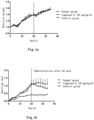
Figure 1a shows the effect of Compound 9 of the invention, vehicle, and physiological saline on body weight of rats after administration. -
Figure 1b shows the effect of Compound 9 of the invention, vehicle, and physiological saline on swelling of rat paws after administration. - Unless defined otherwise, all technical and scientific terms used herein have the same meaning as is commonly understood by one of skill in the art to which the claimed subject matter belongs.
- Unless otherwise indicated, conventional methods of mass spectroscopy, NMR, HPLC, protein chemistry, biochemistry, recombinant DNA techniques and pharmacology, within the skill of the art are employed in the invention. Unless specific definitions are provided, the nomenclature employed in connection with, and the laboratory procedures and techniques of, analytical chemistry, synthetic organic chemistry, and medicinal and pharmaceutical chemistry described herein are those known in the art. The foregoing techniques and procedures can be generally performed of conventional methods well known in the art and as described in various general and more specific references that are cited and discussed throughout the present specification.
- The term "alkyl" refers to an aliphatic hydrocarbon group, which may have branched or straight chain. Depending on the structure, an alkyl group can be a monoradical or a diradical (i.e., an alkylene group). In the invention, the alkyl group is preferably an alkyl having 1 to 8 carbon atoms, and more preferably a "lower alkyl" having 1 to 6 carbon atoms, and even more preferably an alkyl having 1 to 4 carbon atoms. Typical alkyl groups include, but are not limited to, methyl, ethyl, propyl, butyl, pentyl, hexyl, and the like. It should be understood that the "alkyl" mentioned herein includes all possible configurations and conformations of the alkyl group. For example, the "propyl" mentioned herein includes n-propyl and isopropyl, "butyl" includes n-butyl, isobutyl, and tert-butyl, "pentyl" includes n-pentyl, isopentyl, neopentyl, tert-pentyl, and pent-3-yl.
- The term "alkoxy" refers to an -O-alkyl group, where the alkyl is as defined herein. Typical alkoxy groups include, but are not limited to, methoxy, ethoxy, propoxy, butoxy, pentyloxy, hexyloxy, and the like.
- The term "alkoxyalkyl" refers to an alkyl radical, as defined herein, substitutted with an alkoxy group, as defined herein.
- The term "cycloalkyl" refers to a monocyclic or polycyclic radical that contains only carbon and hydrogen. Cycloalkyl groups include groups having from 3 to 12 ring atoms. Depending on the structure, a cycloalkyl group can be a monoradical or a diradical (e.g., an cycloalkylene group). In the invention, the cycloalkyl group is preferably a cycloalkyl having 3 to 8 carbon atoms, and more preferably a "lower cycloalkyl" having 3 to 6 carbon atoms. Examples of cycloalkyl groups include, but are not limited to, cyclopropyl, cyclobutyl, cyclopentyl, cyclohexyl, cycloheptyl, cyclooctyl, cyclopentenyl, cyclohexenyl, cycloheptenyl, and adamantyl.
- The term "alkyl(cycloalkyl)" or "cycloalkylalkyl" refers to an alkyl radical, as defined herein, substituted with a cycloalkyl group, as defined herein. Non-limiting cycloalkylalkyl groups include cyclopropylmethyl, cyclobutylmethyl, cyclopentylmethyl, cyclohexylmethyl, and the like.
- The term "aromatic" refers to a planar ring having a delocalized π-electron system containing 4n+2 π; electrons, where n is an integer. Aromatic rings can be formed from five, six, seven, eight, nine, or more than nine atoms. Aromatics can be optionally substituted. The term "aromatic" includes both carbocyclic aryl (e.g., phenyl) and heterocyclic aryl (or "heteroaryl" or "heteroaromatic") groups (e.g., pyridine). The term includes monocyclic or fused-ring polycyclic (i.e., rings which share adjacent pairs of carbon atoms) groups.
- As used herein, the term "aryl" refers to an aromatic ring wherein each of the atoms forming the ring is a carbon atom. Aryl rings can be formed from five, six, seven, eight, nine, or more than nine carbon atoms. Aryl groups can be optionally substituted. Examples of aryl groups include, but are not limited to phenyl, naphthalenyl, phenanthrenyl, anthracenyl, fluorenyl, and indenyl. Depending on the structure, an aryl group can be a monoradical or a diradical (i.e., an arylene group).
- The term "aryloxy" refers to an -O-aryl group, where the aryl is as defined herein.
- The term "heteroaryl" refers to an aryl group that includes one or more ring heteroatoms selected from the group consisting of nitrogen, oxygen and sulfur. An N-containing "heteroaryl" moiety refers to an aromatic group in which at least one of the skeletal atoms of the ring is a nitrogen atom. Depending on the structure, the heteroaryl group may be a monoradical or a diradical (i.e., a heteroarylene group). Examples of heteroaryl groups include, but are not limited to pyridinyl, imidazolyl, pyrimidinyl, pyrazolyl, triazolyl, pyrazinyl, tetrazolyl, furyl, thienyl, isoxazolyl, thiazolyl, oxazolyl, isothiazolyl, pyrrolyl, quinolinyl, isoquinolinyl, indolyl, benzimidazolyl, benzofuranyl, indazolyl, indolizinyl, phthalazinyl, pyridazinyl, isoindolyl, pteridinyl, purinyl, oxadiazolyl, thiadiazolyl, furyl, benzofuranyl, benzothiophenyl, benzothiazolyl, benzoxazolyl, quinazolinyl, naphthyridinyl, furopyridinyl, and the like.
- The term "alkyl(aryl)" or "aralkyl" refers to an alkyl radical, as defined herein, substituted with an aryl group, as defined herein. Non-limiting alkyl(aryl) groups include benzyl, phenethyl, and the like.
- The term "alkyl(heteroaryl)" or "heteroarylalkyl" refers to an alkyl radical, as defined herein, substituted with a heteroaryl group, as defined herein.
- As used herein, the term "heteroalkyl" refers to an alkyl group, as defined herein, in which one or more skeletal chain atoms is a heteroatom, e.g., oxygen, nitrogen, sulfur, silicon, phosphorus or combinations thereof. The heteroatom(s) may be placed at any interior position of the heteroalkyl group or at the position at which the heteroalkyl group is attached to the remainder of the molecule.
- As used herein, the term "heterocycloalkyl" or "heterocyclyl" refers to a non-aromatic ring wherein one or more atoms forming the ring is a heteroatom selected from the group consisting of nitrogen, oxygen and sulfur. Heterocycloalkyl rings can be formed by three, four, five, six, seven, eight, nine, or more than nine atoms. Heterocycloalkyl rings can be optionally substituted. Examples of heterocycloalkyls include, but are not limited to, lactams, lactones, cyclic imides, cyclic thioimides, cyclic carbamates, tetrahydrothiopyran, 4H-pyran, tetrahydropyran, piperidine, 1,3-dioxin, 1,3-dioxane, 1,4-dioxin, 1,4-dioxane, piperazine, 1,3-oxathiane, 1,4-oxathiin, 1,4-oxathiane, tetrahydro-l,4-thiazine, 2H-l,2-oxazine, maleimide, succinimide, barbituric acid, thiobarbituric acid, dioxopiperazine, hydantoin, dihydrouracil, morpholine, trioxane, hexahydro-l,3,5-triazine, tetrahydrothiophene, tetrahydrofuran, pyrroline, pyrrolidine, imidazolidine, pyrrolidone, pyrazoline, pyrazolidine, imidazoline, imidazolidine, 1,3-dioxole, 1,3-dioxolane, 1,3-dithiole, 1,3-dithiolane, isoxazoline, isoxazolidine, oxazoline, oxazolidine, oxazolidinone, thiazoline, thiazolidine, and 1,3-oxathiolane. Depending on the structure, a heterocycloalkyl group can be a monoradical or a diradical (i.e., a heterocycloalkylene group).
- The term "alkyl(heterocycloalkyl)" or "heterocycloalkylalkyl" refers to an alkyl radical, as defined herein, substituted with a heterocycloalkyl group, as defined herein.
- The term "alkoxy(heterocycloalkyl)" or "heterocycloalkylalkoxy" refers to an alkoxy radical, as defined herein, substituted with a heterocycloalkyl group, as defined herein.
- The term "halo" or "halogen" refers to fluoro, chloro, bromo and iodo.
- The terms "haloalkyl", "haloalkoxy" and "haloheteroalkyl" include alkyl, alkoxy or heteroalkyl structures in which at least one hydrogen is replaced with a halogen atom. In certain embodiments in which two or more hydrogen atoms are replaced with halogen atoms, the halogen atoms are the same or different as one another.
- The term "hydroxy" refers to an -OH group.
- The term "cyano" refers to a -CN group.
- The term "ester group" refers to a chemical moiety having the formula -COOR, where R is selected from the group consisting of alkyl, cycloalkyl, aryl, heteroaryl (connected through a ring carbon atom), and heterocyclyl (connected through a ring carbon atom).
- The term "amino" refers to an -NH2 group.
- The term "aminoacyl" refers to a -CO-NH2 group.
- The term "alkylaminoacyl" refers to a -CO-NH-R group, where R is an alkyl group as defined herein.
- The term "amide" or "amido" refers to -NR-CO-R', wherein R and R' are independently hydrogen or alkyl.
- The term "alkylamino" refers to an amino substituent which is further substituted with one or two alkyl groups, specifically refers to the group - NRR', wherein R and R' are each independently selected from the group consisting of hydrogen or lower alkyl, with the proviso that -NRR' is not - NH2. "Alkylamino" includes groups of compounds in which the nitrogen atom of -NH2 is attached to at least one alkyl group. Examples of alkylamino groups include, but are not limited to, methylamino, ethylamino, and the like. "Dialkylamino" includes groups in which the nitrogen atom of -NH2 is attached to at least two other alkyl groups. Examples of dialkylamino groups include, but are not limited to, dimethylamino, diethylamino, and the like.
- The terms "arylamino" and "diarylamino" refer to amino substituents further substituted with one or two aryl groups, specifically refer to an -NRR' group, wherein R and R' are each independently selected from the group consisting of hydrogen, lower alkyl, or aryl, where N is connected to at least one or two aryl groups.
- The term "cycloalkylamino" refers to an amino substituent further substituted with one or two cycloalkyl groups as defined herein.
- The term "heteroalkylamino" refers to an amino substituent further substituted with one or two heteroalkyl groups as defined herein.
- The term "aralkylamino" herein refers to an -NRR' group in which R is a lower aralkyl group and R' is hydrogen, lower alkyl, aryl, or lower aralkyl.
- The term "heteroarylamino" refers to an amino substituent further substituted with one or two heteroaryl groups as defined herein.
- The term "heterocycloalkylamino" refers to an amino radical, as defined herein, substituted with a heterocycloalkyl group, as defined herein.
- The term "alkylaminoalkyl" refers to an alkyl radical, as defined herein, substituted with an alkylamino group, as defined herein.
- The term "aminoalkyl" refers to an alkyl substituent further substituted with one or more amino groups.
- The term "aminoalkoxy" refers to an alkoxy substituent further substituted with one or more amino groups.
- The term "hydroxyalkyl" or "hydroxylalkyl" refers to an alkyl substituent further substituted with one or more hydroxy groups.
- The term "cyanoalkyl" refers to an alkyl substituent further substituted with one or more cyano groups.
- The term "acyl" refers to a monovalent atomic radical remaining after removal of the hydroxyl group from an organic or inorganic oxyacid, represented by a general formula of R-M(O)-, wherein M is usually C.
- The term "carbonyl" is an organic functional group (C=O) formed by carbon atom and oxygen atom through a double bond linkage.
- The term "alkanoyl" or "alkylcarbonyl" refers to a carbonyl radical further substituted with an alkyl group. Typical alkanoyl groups include, but are not limited to, acetyl, propionyl, butyryl, valeryl, hexanoyl and the like.
- The term "arylcarbonyl" refers to a carbonyl radical, as defined herein, substituted with an aryl group, as defined herein.
- The term "alkoxycarbonyl" refers to a carbonyl radical further substituted with an alkoxy group.
- The term "heterocycloalkylcarbonyl" refers to a carbonyl radical further substituted with a heterocycloalkyl group.
- The terms "alkylaminocarbonyl", "cycloalkylaminocarbonyl", "arylaminocarbonyl", "aralkylaminocarbonyl", and "heteroarylaminocarbonyl" refer to a carbonyl radical, as defined herein, substituted with an alkylamino, cycloalkylamino, arylamino, aralkylamino, or heteroarylamino group, as defined herein, respectively.
- The term "alkylcarbonylalkyl" or "alkanoylalkyl" refers to an alkyl radical further substituted with an alkylcarbonyl group.
- The term "alkylcarbonylalkoxy" or "alkanoylalkoxy" refers to an alkoxy radical further substituted with an alkylcarbonyl group.
- The term "heterocycloalkylcarbonylalkyl" refers to an alkyl radical further substituted with a heterocycloalkylcarbonyl group.
- The term "mercapto" refers to an -SH group. The term "alkylthio" refers to a mercapto radical, as defined herein, substituted with an alkyl group as defined herein.
- The term "sulfuryl" or "sulfonyl" refers to a functional group remaining after loss of hydroxyl groups from sulfonic acid, and specifically refers to a -S(=O)2- group.
- The term "sulfoxide" or "sulfinyl" refers to -S(=O)-.
- The term "aminosulfuryl" or "aminosulfonyl" refers to a -S(=O)2-NH2 group.
- The term "alkylsulfoxide" or "alkylsulfinyl" refers to alkyl-S(=O)-.
- The term "alkylsulfuryl" or "alkylsulfonyl" refers to -S(=O)2-R, where R is an alkyl group.
- The term "alkylaminosulfuryl" refers to a sulfuryl radical, as defined herein, substituted with an alkylamino group, as defined herein.
- The term "alkylsulfurylamino" or "cycloalkylsulfurylamino" refers to an amino radical, as defined herein, substituted with an alkylsulfuryl group or a cycloalkylsulfuryl group, as defined herein.
- The terms "cycloalkylsulfuryl" and "cycloalkylsulfonyl" refer to - S(=O)2-R, where R is a cycloalkyl group.
- The terms "alkylsulfonamido" and "cycloalkylsulfonamido" refer to - NH-S(=O)2-R, where R is an alkyl group and a cycloalkyl group, respectively.
- The term "quaternary ammonium group" refers to -N+RR'R", wherein R, R'and R" are each independently selected from the group consisting of alkyl groups having 1-8 carbon atoms.
- The term "optionally" means that one or more events described hereinafter may or may not occur, and include both the event(s) that may occur and the event(s) that may not occur. The term "optionally substituted" or "substituted" refers to that the mentioned group may be substituted with one or more additional groups which are each independently selected from the group consisting of alkyl, cycloalkyl, aryl, heteroaryl, heterocyclyl, hydroxy, alkoxy, cyano, halo, amide, nitro, haloalkyl, amino, methylsulfonyl, alkylcarbonyl, alkoxy carbonyl, heteroarylalkyl, heterocycloalkylalkyl, aminoacyl, amino protecting group, etc., wherein, the amino protecting group is preferably selected from the group consisting of pivaloyl, tert-butoxycarbonyl, benzyloxycarbonyl, 9-fluorenylmethoxycarbonyl, benzyl, p-methoxybenzyl, allyloxycarbonyl, trifluoroacetyl, and the like.
- The term "tyrosine protein kinase (TPK)" as used herein is a type of kinase that catalyzes the transfer of γ-phosphate from ATP to tyrosine residues of a protein, catalyzes phosphorylation of tyrosine residues of various substrate proteins, and plays an important role in cell growth, proliferation, and differentiation.
- The term "inhibit", "inhibitory", or "inhibitor" of a kinase, as used herein, refers to inhibition of phosphotransferase activity.
- A "metabolite" of a compound disclosed herein is a derivative of that compound that is formed when the compound is metabolized. The term "active metabolite" refers to a biologically active derivative of a compound that is formed when the compound is metabolized. The term "metabolized" as used herein, refers to the sum of the processes (including, but not limited to, hydrolysis reactions and reactions catalyzed by enzymes, such as, oxidation reactions) by which a particular substance is changed by an organism. Thus, enzymes may cause specific structural alterations. For example, cytochrome P450 catalyzes a variety of oxidation and reduction reactions while uridine diphosphate glucuronyl transferases catalyze the transfer of an activated glucuronic acid molecule to aromatic alcohol, aliphatic alcohol, carboxylic acid, amine and free sulfhydryl group. Further information on metabolism may be obtained from The Pharmacological Basis of Therapeutics, 9th Edition, McGraw-Hill (1996). Metabolites of the compounds disclosed herein can be identified either by administration of compounds to a host and analysis of tissue samples from the host, or by incubation of compounds with hepatic cells in vitro and analysis of the resulting compounds. Both methods are well known in the art. Metabolites of a compound may be formed by oxidation processes and correspond to the corresponding hydroxy-containing compound. A compound may be metabolized to pharmacologically active metabolites. The term "modulate" as used herein, means to interact with a target either directly or indirectly so as to alter the activity of the target, including, by way of example only, to enhance the activity of the target, to inhibit the activity of the target, to limit the activity of the target, or to extend the activity of the target.
- As used herein, the term "target protein" refers to a protein molecule or a portion of a protein capable of being bound by a selective binding compound. In certain embodiments, the target protein is tyrosine kinase PI3Kδ (including the wild type or various mutations or combinations thereof).
- As used herein, GI50 refers to a drug concentration required for 50% growth inhibition of cells, i.e., a drug concentration at which the growth of 50% cells (such as cancer cells) can be inhibited or controlled by the drug.
- As used herein, IC50 refers to an amount, concentration or dosage of a particular test compound that achieves a 50% inhibition of a maximal response, in an assay that measures such response.
- As used herein, EC50 refers to a dosage, concentration or amount of a test compound that elicits a dose-dependent response at 50% of maximal expression of a particular response that is induced, provoked or potentiated by the particular test compound.
- The invention provides a selective PI3Kδ kinase inhibitor, comprising a compound of formula (I) or a pharmaceutically acceptable salt, solvate, ester or acid thereof:

- X is selected from the group consisting of CH and N;
- R1 and R2 are each independently selected from the group consisting of hydrogen, halogen, and C1-6 haloalkyl;
- R3 is C3-8 cycloalkyl;
- R4 is selected from the group consisting of hydrogen and C1-6 alkyl;
- R5 is selected from the group consisting of hydrogen, C1-6 alkyl, C1-6 alkoxy, C2-6 alkylamido, and C1-6 alkylaminoacyl;
- R6 is selected from the group consisting of hydrogen, hydroxy, halogen, C1-6 alkyl, and C1-6 alkoxy;
- or R5 and R6 together form a phenyl group or a dioxolane group.
- In a preferred embodiment, X is CH.
- Preferably, R1 and R2 are each independently selected from the group consisting of hydrogen and fluorine; more preferably, both R1 and R2 are hydrogen, or one of them is hydrogen and the other one is fluorine.
- Further preferably, R3 is a C3-6 cycloalkyl group, such as cyclopropyl, cyclobutyl, cyclopentyl, or cyclohexyl.
- Still preferably, R4 is selected from the group consisting of hydrogen, methyl, and ethyl.
- Further preferably, R5 is selected from the group consisting of hydrogen, C1-3 alkyl (such as methyl, ethyl, isopropyl), C1-3 alkoxy (such as methoxy, ethoxy, isopropoxy), C2-3 alkylamido (such as acetamido-NH-(C=O)-CH3) and C1-3 alkylaminoacyl (such as methylaminoacyl-(C=O)-NH-CH3); particularly preferably, R5 is methoxy.
- Still preferably, R6 is selected from the group consisting of hydrogen, hydroxy, halogen (such as fluorine, chlorine), C1-3 alkyl (such as methyl), and C1-3 alkoxy (such as methoxy); particularly preferably, R6 is selected from the group consisting of hydrogen, fluorine, and methoxy.
- In a preferred embodiment, R5 and R6 are not hydrogen at the same time.
- In the invention, particularly preferred compounds of formula (I) are selected from the group consisting of the compounds of Table 1 below.
Table 1 No. Structure No. Structure 1 
2 
3 
4 
5 
6 
7 
8 
9 
10 
11 
12 
13 
14 
15 
16 
17 
18 
19 
20 
21 
22 
23 
24 
25 
26 
27 
28 
29 
30 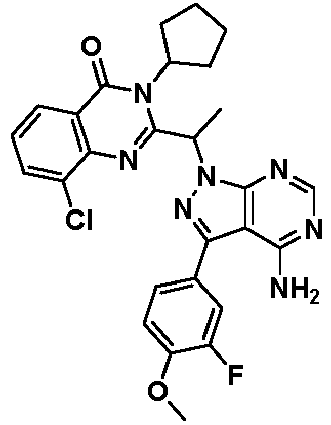
31 
32 
33 
34 
35 
36 
37 
38 
39 
40 
41 
42 
43 
44 
45 
46 
47 
48 
49 
50 
51 
52 
53 
54 
55 
56 
57 
58 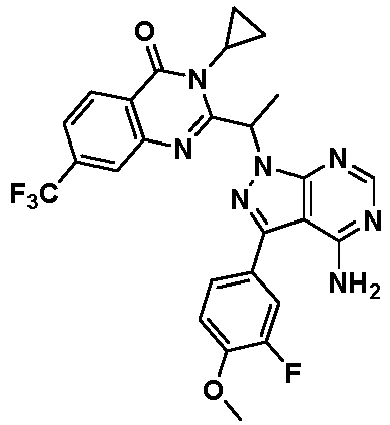
59 
60 
61 
62 
63 
64 
65 
66 
67 
68 
69 
70 
71 
72 
73 
74 
75 
76 
77 
78 
79 
80 
81 
82 
- The invention also relates to a pharmaceutical composition comprising the above compound or a pharmaceutically acceptable salt, solvate, ester or acid thereof. Also disclosed is a method and use for using the compound or pharmaceutical composition to inhibit the activity of tyrosine kinase (including the wild type or various mutations or combinations thereof), and a method and use for the treatment, prevention or amelioration of diseases, disorders or conditions that are regulated by or affected by the activity of tyrosine kinase or in which the activity of tyrosine kinase is involved, wherein the tyrosine kinase may be PI3Kδ.
- Any combination of the groups described above for the various variables is contemplated herein. It is understood that substituents and substitution patterns on the compounds provided herein can be selected by one of ordinary skill in the art to provide compounds that are chemically stable and that can be synthesized by techniques known in the art, as well as those set forth herein
- Described herein is a novel kinase inhibitor. The pharmaceutically acceptable salts, solvates, esters and acids of these compounds are also described herein.
- Compounds described herein may be formed as, and/or used as, pharmaceutically acceptable salts. The type of pharmaceutical acceptable salts, include, but are not limited to: (1) acid addition salts, formed by reacting the free base form of the compound with a pharmaceutically acceptable inorganic acid such as hydrochloric acid, hydrobromic acid, sulfuric acid, nitric acid, phosphoric acid, metaphosphoric acid, and the like; or with an organic acid such as acetic acid, propionic acid, hexanoic acid, cyclopentanepropionic acid, glycolic acid, pyruvic acid, lactic acid, malonic acid, malic acid, citric acid, succinic acid, maleic acid, tartaric acid, fumaric acid, trifluoroacetic acid, benzoic acid, 3-(4-hydroxybenzoyl) benzoic acid, cinnamic acid, mandelic acid, methanesulfonic acid, ethanesulfonic acid, 1,2-ethanedisulfonic acid, 2-hydroxyethanesulfonic acid, benzenesulfonic acid, toluenesulfonic acid, 4-methylbicyclo-[2.2.2] oct-2-ene-l-carboxylic acid, 2-naphthalenesulfonic acid, tertiary butylacetic acid, glucoheptonic acid, 4,4'-methylenebis-(3-hydroxy-2-ene-l-carboxylic acid), 3-phenylpropionic acid, trimethylacetic acid, lauryl sulfuric acid, gluconic acid, glutamic acid, salicylic acid, hydroxynaphthoic acid, stearic acid, muconic acid, and the like; (2) base addition salts formed when an acidic proton present in the parent compound either is replaced by a metal ion, e.g., an alkali metal ion (e.g. lithium, sodium, potassium), an alkaline earth metal ion (e.g. magnesium, or calcium), or an aluminum ion; or coordinates with an organic base. Acceptable organic bases include ethanolamine, diethanolamine, triethanolamine, trimethylamine, N-methylglucamine, and the like. Acceptable inorganic bases include aluminum hydroxide, calcium hydroxide, potassium hydroxide, sodium carbonate, sodium hydroxide, and the like.
- The corresponding counterions of the pharmaceutically acceptable salts may be analyzed and identified using various methods including, but not limited to, ion exchange chromatography, ion chromatography, capillary electrophoresis, inductively coupled plasma, atomic absorption spectroscopy, mass spectrometry, or any combination thereof.
- The salts are recovered by using at least one of the following techniques: filtration, precipitation with a non-solvent followed by filtration, evaporation of the solvent, or, in the case of aqueous solutions, lyophilization.
- The screening and characterization of the pharmaceutically acceptable salts, polymorphs and/or solvates may be accomplished using a variety of techniques including, but not limited to, thermal analysis, x-ray diffraction, spectroscopy, microscopy and element analysis. The various spectroscopic techniques used include, but are not limited to, Raman, FTIR, UVIS, and NMR (liquid and solid state). The various microscopy techniques include, but are not limited to, IR microscopy and Raman microscopy.
- This application also provides a pharmaceutical composition comprising at least one compound of formula (I), or a pharmaceutically acceptable salt, solvate, ester or acid of the compound, and a pharmaceutically acceptable carrier or excipient, and optionally other therapeutic agents.
- In the course of treatment, it may be used alone or in combination with one or more other therapeutic agents depending on the situation. The medicament containing the compound of the invention may be administered to the patients through at least one of injection, oral administration, inhalation, rectal and transdermal administration.
- Other therapeutic agents may be selected from the group consisting of: immunosuppressants (e.g., tacrolimus, cyclosporin, rapamycin, methotrexate, cyclophosphamide, azathioprine, mercaptopurine, mycophenolate, or FTY720), glucocorticoids (e.g., prednisone, cortisone acetate, prednisolone, methylprednisolone, dexamethasone, betamethasone, triamcinolone, beclometasone, fludrocortisone acetate, deoxycorticosterone acetate, aldosterone), non-steroidal anti-inflammatory drugs (e.g., salicylates, arylalkanoic acids, 2-arylpropionic acids, N-arylanthranilic acids, oxicams, coxibs, or sulphonanilides), allergy vaccines, antihistamines, antileukotrienes, β-agonists, theophylline, anticholinergics, or other selective kinase inhibitors (e.g., mTOR inhibitors, c-Met inhibitors) or her2 antibodies. In addition, the other therapeutic agents may also be Rapamycin, Crizotinib, Tamoxifen, Raloxifene, Anastrozole, Exemestane, Letrozole, Herceptin™ (Trastuzumab), Gleevec™ (Imatinib), Taxol™ (Paclitaxel), Cyclophosphamide, Lovastatin, Minosine, Cytarabine, 5-Fluorouracil (5-FU), Methotrexate (MTX), Taxotere™ (Docetaxel), Zoladex™ (Goserelin), Vincristine, Vinblastine, Nocodazole, Teniposide, Etoposide, Gemzar™ (Gemcitabine), Epothilone, Navelbine, Camptothecin, Daunonibicin, Dactinomycin, Mitoxantrone, Amsacrine, Doxorubicin (Adriamycin), Epirubicin or Idarubicin. Alternatively, other therapeutic agents may be cytokines such as G-CSF (Granulocyte-Colony Stimulating Factor). Alternatively, other therapeutic agents may be for example, but are not limited to, CMF (Cyclophosphamide, Methotrexate and 5-Fluorouracil), CAF (Cyclophosphamide, Adriamycin and 5-Fluorouracil), AC (Adriamycin and Cyclophosphamide), FEC (5-Fluorouracil, Epirubicin and Cyclophosphamide), ACT or ATC (Adriamycin, Cyclophosphamide and Paclitaxel) or CMFP (Cyclophosphamide, Methotrexate, 5-Fluorouracil and Prednisone).
- When a patient is treated, the amount of a given agent will vary depending upon factors such as the particular dosing regimen, the type of the disease or condition and its severity, the characteristics (e.g., weight) of the subject or host in need of treatment, but can be routinely determined in a manner known in the art according to the particular circumstances surrounding the case, including, e.g., the specific agent being administered, the route of administration, the condition being treated, and the subject or host being treated. In general, doses employed for adult human treatment will typically be in the range of 0.02-5000 mg per day, such as about 1-1500 mg per day. The desired dose may be conveniently presented in a single dose or as divided doses administered simultaneously (or over a short period of time) or at appropriate intervals, for example as two, three, four or more sub-doses per day. It will be appreciated by those skilled in the art that, although the above dosage ranges are given, the specific effective amounts may be appropriately adjusted depending on the condition of the patient and the judgment of the practitioner.
- The "treatment" of the invention can be therapeutic (such as symptomatic treatment) and/or prophylactic.
- A kinase inhibitor of the present invention, or a pharmaceutical composition comprising a kinase inhibitor of the present invention can be used in treatment or prevention of diseases or conditions associated with PI3Kδ tyrosine kinase activity, wherein the diseases or conditions are selected from the group consisting of chronic lymphocytic leukemia, non-Hodgkin's lymphoma, Hodgkin's lymphoma, mantle cell lymphoma, chronic obstructive pulmonary, rheumatoid arthritis, systemic lupus erythematosus and asthma.
- Preferred is the treatment of chronic lymphocytic leukemia, non-Hodgkin's lymphoma, Hodgkin's lymphoma, or mantle cell lymphoma.
- Asthma can be of whatever type or genesis including both intrinsic (non-allergic) asthma and extrinsic (allergic) asthma, mild asthma, moderate asthma, severe asthma, bronchitic asthma, exercise-induced asthma, occupational asthma and asthma induced following bacterial infection. Treatment of asthma is also to be understood as embracing treatment of subjects, e.g. of less than 4 or 5 years of age, exhibiting wheezing symptoms and diagnosed or diagnosable as "wheezy infants", an established patient category of major medical concern and now often identified as incipient or early-phase asthmatics. For convenience this particular asthmatic condition is referred to as "wheezy-infant syndrome".
- Prophylactic efficacy in the treatment of asthma can be evidenced by reduced frequency or severity of symptomatic attack, e.g. of acute asthmatic or bronchoconstrictor attack, improvement in lung function or improved airways hyperreactivity. It may further be evidenced by reduced requirement for other, symptomatic therapy, i.e. therapy for or intended to restrict or abort symptomatic attack when it occurs, for example anti-inflammatory (e.g. corticosteroid) or bronchodilatory. Prophylactic benefit in asthma may in particular be apparent in subjects prone to "morning dipping". "Morning dipping" is a recognised asthmatic syndrome, common to a substantial percentage of asthmatics and characterised by asthma attack, e.g. between the hours of about 4 to 6 am, i.e. at a time normally substantially distant form any previously administered symptomatic asthma therapy.
- The medicament of the invention is particularly suitable for treating diseases selected from the group consisting of rheumatoid arthritis and systemic lupus erythematosus.
- The effectiveness of the compounds of the invention in inhibiting inflammatory conditions such as inflammatory airways diseases can be demonstrated in animal models, such as mouse or rat models of airways inflammation or other inflammatory conditions, as described in e.g., Szarka et al., J. Immunol. Methods (1997) 202:49-57; Renzi et al., Am. Rev. Respir. Dis. (1993) 148:932-939; Tsuyuki et al., J. Clin. 1nvest. (1995) 96:2924-2931; and Cernadas et al., Am. J. Respir. Cell Mol. Biol. (1999) 20:1-8.
- Compounds of formula (I) may be synthesized using standard synthetic techniques known to those of skill in the art or using methods known in the art in combination with methods described herein. In addition, solvents, temperatures and other reaction conditions presented herein may vary according to those of skill in the art. As a further guide, the following synthetic methods may also be utilized.
- The reactions can be employed in a linear sequence to provide the compounds described herein or they may be used to synthesize fragments which are subsequently joined by the methods described herein and/or known in the art.
- In certain embodiments, provided herein are methods of making and methods of using tyrosine kinase inhibitor compounds described herein. In certain embodiments, compounds described herein can be synthesized using the following synthetic schemes. Compounds may be synthesized using methodologies analogous to those described below by the use of appropriate alternative starting materials.
- The starting materials used for the synthesis of the compounds described herein may be synthesized or can be obtained from commercial sources. The compounds described herein, and other related compounds having different substituents can be synthesized using techniques and materials known to those of skill in the art. General methods for the preparation of compounds as disclosed herein may be derived from known reactions in the field, and the reactions may be modified by the use of appropriate reagents and conditions, as would be recognized by the skilled person, for the introduction of the various moieties into the molecules as provided herein.
- The products of the reactions may be isolated and purified, if desired, using conventional techniques, including, but not limited to, filtration, distillation, crystallization, chromatography and the like. Such products may be characterized using conventional means, including physical constants and spectral data.
-

- 3-(3-Fluoro-4-methoxyphenyl)-1H-pyrazolo[3,4-d]pyrimidin-4-amine (A2): 3-iodo-1H-pyrazolo[3,4-d]pyrimidin-4-amine (2.0 g) was added in a round bottom flask, followed by addition of 1,4-dioxane (30 ml), water (10 ml), (3-fluoro-4-methoxyphenyl)boric acid (5.2 g), Pd(PPh3)4 (1.8 g), and potassium carbonate (2.1 g). The reaction system was allowed for reaction at 130°C for 24 hours under the protection of argon. After the reaction, the system was evaporated to dry the solvent under reduced pressure, and the resultant was diluted with water and filtered. The filtered solid product was washed with dichloromethane to obtain crude product A2. LC/MS: M+H 260.09.
- 2-Fluoro-6-nitrobenzoyl chloride (B2): 2-fluoro-6-nitrobenzoic acid (14.0 g) was added in a round bottom flask, followed by addition of tetrahydrofuran (50 ml) and N,N-dimethylformamide (0.5 ml). The system was then cooled to 0°C with an ice-water bath, and oxalyl chloride (7.7 ml) was slowly added thereto. The reaction system was stirred at 0°C for one hour, then returned to room temperature, and was allowed for reaction for another 14 hours. After the reaction, the system was evaporated to dry the solvent under reduced pressure to obtain a crude oil B2. LC/MS: M+H 203.99.
- N-Cyclobutyl-2-fluoro-6-nitrobenzamide (B3): cyclobutylamine (9.8 ml) was added in a round bottom flask, followed by addition of tetrahydrofuran (50 ml), and N,N-diisopropylethylamine (39 ml). The system was then cooled to 0°C with an ice-water bath, and 2-fluoro-6-nitrobenzoyl chloride (15.4 g) was slowly added thereto. The reaction system was stirred at 0°C for one hour, then returned to room temperature, and was allowed for reaction for another 12 hours. After the reaction, the system was evaporated to dry the solvent under reduced pressure, and the resultant was diluted with water and extracted with ethyl acetate. The organic phase was washed with water and saturated brine, respectively, and dried with anhydrous sodium sulfate. The organic phase was filtered and evaporated to dryness under reduced pressure to obtain a crude product. The crude product was purified by pressurized silica gel column chromatography to obtain compound B3. LC/MS: M+H 239.09.
- N-Cyclobutyl-2-fluoro-6-nitro-N-propionylbenzamide (B4): N-cyclobutyl-2-fluoro-6-nitrobenzamide (6 g) was added in a microwave reactor, followed by addition of propionic anhydride (50 ml). The reaction system was allowed for reaction at 140°C and 150 watts for 3 hours. After the reaction, the system was diluted with methanol and evaporated to dryness under reduced pressure to obtain a black oily crude product B4. LC/MS: M+H 295.11.
- 3-Cyclobutyl-2-ethyl-5-fluoroquinazolin-4(3H)-one (B5): N-cyclobutyl-2-fluoro-6-nitro-N-propionylbenzamide (7.4 g) was added in a round bottom flask, followed by addition of glacial acetic acid (50 ml). The system was then cooled to 0°C with an ice-water bath, and zinc powder (8.2 g) was slowly added thereto. The reaction system was stirred at 0°C for one hour, then returned to room temperature, and was allowed for reaction for another 5 hours. After the reaction, the system was evaporated to dry the solvent under reduced pressure, and the resultant was diluted with saturated sodium bicarbonate and extracted with ethyl acetate. The organic phase was washed with water and saturated brine, respectively, and dried with anhydrous sodium sulfate. The organic phase was filtered and evaporated to dryness under reduced pressure to obtain a crude product. The crude product was purified by pressurized silica gel column chromatography to obtain compound B5. LC/MS: M+H 247.13.
- 2-(1-Bromoethyl)-3-cyclobutyl-5-fluoroquinazolin-4(3H)-one (B6): 3-cyclobutyl-2-ethyl-5-fluoroquinazolin-4(3H)-one (1.3 g) was added in a round bottom flask, followed by addition of carbon tetrachloride (30 ml), N-bromosuccinimide (1.9 g) and azobisisobutyronitrile (0.9 g). The reaction system was allowed for reaction at 100°C for 8 hours under the protection of argon. After the reaction, the system was evaporated to dry the solvent under reduced pressure, and the resultant was diluted with water and extracted with dichloromethane. The organic phase was washed with water and saturated brine, respectively, and dried with anhydrous sodium sulfate. The organic phase was filtered and evaporated to dryness under reduced pressure to obtain a crude product. The crude product was purified by pressurized silica gel column chromatography to obtain compound B6. LC/MS: M+H 325.04.
- 2-(1-(4-Amino-3-(3-fluoro-4-methoxyphenyl)-1H-pyrazolo[3,4-d] pyrimidin-1-yl)ethyl)-3-cyclobutyl-5-fluoroquinazolin-4(3H)-one (1): 2-(1-bromoethyl)-3-cyclobutyl-5-fluoroquinazolin-4(3H)-one (120 mg) was added in a round bottom flask, followed by addition of N,N-dimethylformamide (2 ml), 3-(3-fluoro-4-methoxyphenyl)- 1H-pyrazolo[3,4-d]pyrimidin-4-amine (96 mg) and potassium carbonate (100 mg). The reaction system was allowed for reaction for 8 hours under the protection of argon. After the reaction, the system was evaporated to dry the solvent under reduced pressure, and the resultant was diluted with water and extracted with dichloromethane. The organic phase was washed with water and saturated brine, respectively, and dried with anhydrous sodium sulfate. The organic phase was filtered and evaporated to dryness under reduced pressure to obtain a crude product. The crude product was purified by pressurized silica gel column chromatography to obtain compound 1. LC/MS: M+H 504.20.
-

- The synthesis of the compound of Example 2 was completed by using procedures similar to those described in Example 1. MS(ESI) m/z(M+1)+: 518.21.
-
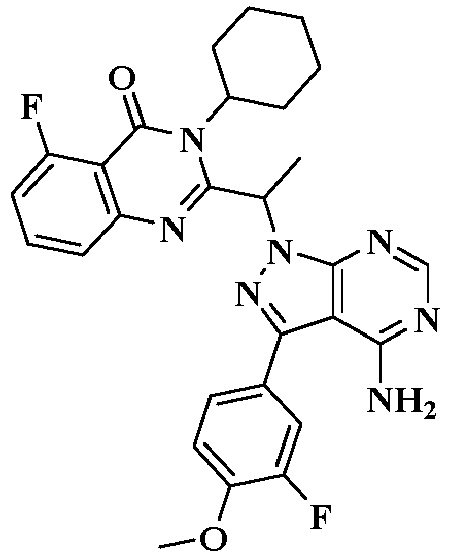
- The synthesis of the compound of Example 3 was completed by using procedures similar to those described in Example 1. MS(ESI) m/z(M+1)+: 532.23.
-

- The synthesis of the compound of Example 4 was completed by using procedures similar to those described in Example 1. MS(ESI) m/z(M+1)+: 504.20.
-

- The synthesis of the compound of Example 5 was completed by using procedures similar to those described in Example 1. MS(ESI) m/z(M+1)+: 518.21.
-

- The synthesis of the compound of Example 6 was completed by using procedures similar to those described in Example 1. MS(ESI) m/z(M+1)+: 476.17.
-

- The synthesis of the compound of Example 7 was completed by using procedures similar to those described in Example 1. MS(ESI) m/z(M+1)+: 490.18.
-

- The synthesis of the compound of Example 8 was completed by using procedures similar to those described in Example 1. MS(ESI) m/z(M+1)+: 490.18.
-

- The synthesis of the compound of Example 9 was completed by using procedures similar to those described in Example 1. MS(ESI) m/z(M+1)+: 504.20.
-

- The synthesis of the compound of Example 10 was completed by using procedures similar to those described in Example 1. MS(ESI) m/z(M+1)+: 472.19.
-

- The synthesis of the compound of Example 11 was completed by using procedures similar to those described in Example 1. MS(ESI) m/z(M+1)+: 486.21.
-

- The synthesis of the compound of Example 12 was completed by using procedures similar to those described in Example 1. MS(ESI) m/z(M+1)+: 488.20.
-

- The synthesis of the compound of Example 13 was completed by using procedures similar to those described in Example 1. MS(ESI) m/z(M+1)+: 470.21.
-

- The synthesis of the compound of Example 14 was completed by using procedures similar to those described in Example 1. MS(ESI) m/z(M+1)+: 500.22.
-

- The synthesis of the compound of Example 15 was completed by using procedures similar to those described in Example 1. MS(ESI) m/z(M+1)+: 528.25.
-

- The synthesis of the compound of Example 16 was completed by using procedures similar to those described in Example 1. MS(ESI) m/z(M+1)+: 474.19.
-

- The synthesis of the compound of Example 17 was completed by using procedures similar to those described in Example 1. MS(ESI) m/z(M+1)+: 456.20.
-
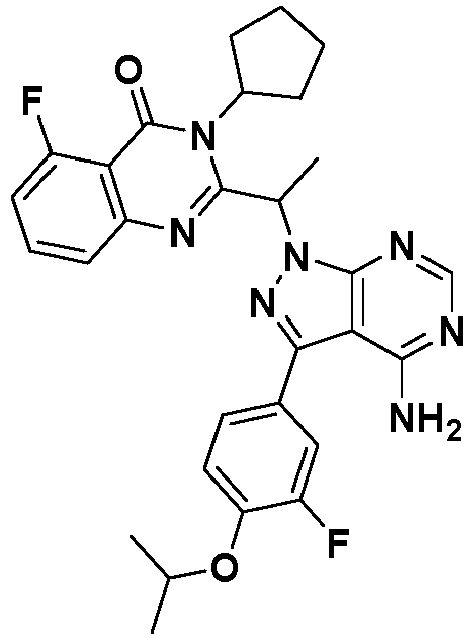
- The synthesis of the compound of Example 18 was completed by using procedures similar to those described in Example 1. MS(ESI) m/z(M+1)+: 546.25.
-

- The synthesis of the compound of Example 19 was completed by using procedures similar to those described in Example 1. MS(ESI) m/z(M+1)+: 486.21.
-

- The synthesis of the compound of Example 20 was completed by using procedures similar to those described in Example 1. MS(ESI) m/z(M+1)+: 514.24.
-

- The synthesis of the compound of Example 21 was completed by using procedures similar to those described in Example 1. MS(ESI) m/z(M+1)+: 532.23.
-
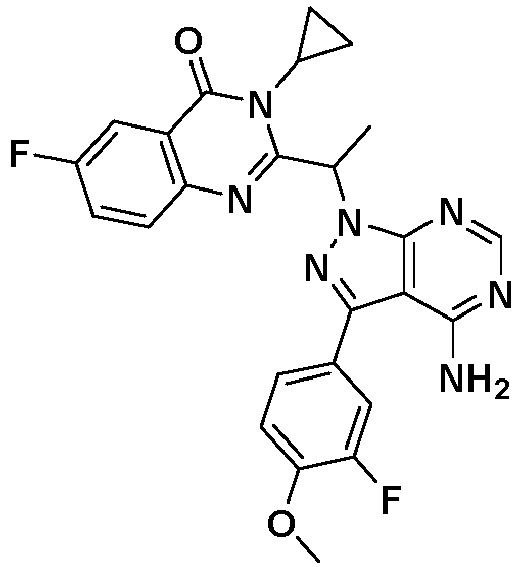
- The synthesis of the compound of Example 22 was completed by using procedures similar to those described in Example 1. MS(ESI) m/z(M+1)+: 490.18.
-

- The synthesis of the compound of Example 23 was completed by using procedures similar to those described in Example 1. MS(ESI) m/z(M+1)+: 504.20.
-

- The synthesis of the compound of Example 24 was completed by using procedures similar to those described in Example 1. MS(ESI) m/z(M+1)+: 512.26.
-

- The synthesis of the compound of Example 25 was completed by using procedures similar to those described in Example 1. MS(ESI) m/z(M+1)+: 502.22.
-

- The synthesis of the compound of Example 26 was completed by using procedures similar to those described in Example 1. MS(ESI) m/z(M+1)+: 521.22.
-

- The synthesis of the compound of Example 27 was completed by using procedures similar to those described in Example 1. MS(ESI) m/z(M+1)+: 516.22.
-

- The synthesis of the compound of Example 28 was completed by using procedures similar to those described in Example 1. MS(ESI) m/z(M+1)+: 498.24.
-

- The synthesis of the compound of Example 29 was completed by using procedures similar to those described in Example 1. MS(ESI) m/z(M+1)+: 520.17.
-

- The synthesis of the compound of Example 30 was completed by using procedures similar to those described in Example 1. MS(ESI) m/z(M+1)+: 534.18.
-

- The synthesis of the compound of Example 31 was completed by using procedures similar to those described in Example 1. MS(ESI) m/z(M+1)+: 516.19.
-

- The synthesis of the compound of Example 32 was completed by using procedures similar to those described in Example 1. MS(ESI) m/z(M+1)+: 530.21.
-

- The synthesis of the compound of Example 33 was completed by using procedures similar to those described in Example 1. MS(ESI) m/z(M+1)+: 518.21.
-

- The synthesis of the compound of Example 34 was completed by using procedures similar to those described in Example 1. MS(ESI) m/z(M+1)+: 500.22.
-

- The synthesis of the compound of Example 35 was completed by using procedures similar to those described in Example 1. MS(ESI) m/z(M+1)+: 500.19.
-

- The synthesis of the compound of Example 36 was completed by using procedures similar to those described in Example 1. MS(ESI) m/z(M+1)+: 514.24.
-

- The synthesis of the compound of Example 37 was completed by using procedures similar to those described in Example 1. MS(ESI) m/z(M+1)+: 468.22.
-

- The synthesis of the compound of Example 38 was completed by using procedures similar to those described in Example 1. MS(ESI) m/z(M+1)+: 498.23.
-

- The synthesis of the compound of Example 39 was completed by using procedures similar to those described in Example 1. MS(ESI) m/z(M+1)+: 482.23.
-

- The synthesis of the compound of Example 40 was completed by using procedures similar to those described in Example 1. MS(ESI) m/z(M+1)+: 486.21.
-

- The synthesis of the compound of Example 41 was completed by using procedures similar to those described in Example 1. MS(ESI) m/z(M+1)+: 486.21.
-

- The synthesis of the compound of Example 42 was completed by using procedures similar to those described in Example 1. MS(ESI) m/z(M+1)+: 472.19.
-

- The synthesis of the compound of Example 43 was completed by using procedures similar to those described in Example 1. MS(ESI) m/z(M+1)+: 474.19.
-
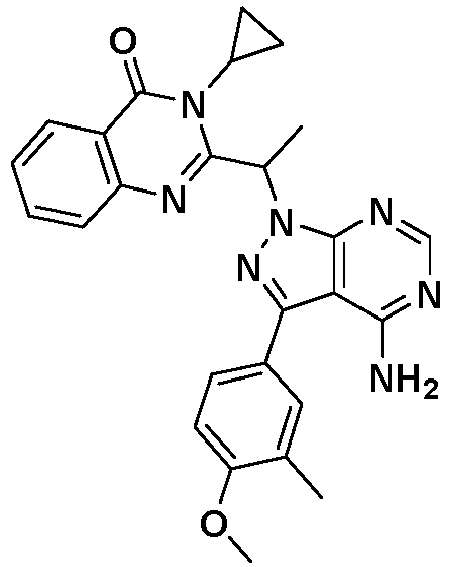
- The synthesis of the compound of Example 44 was completed by using procedures similar to those described in Example 1. MS(ESI) m/z(M+1)+: 468.22.
-
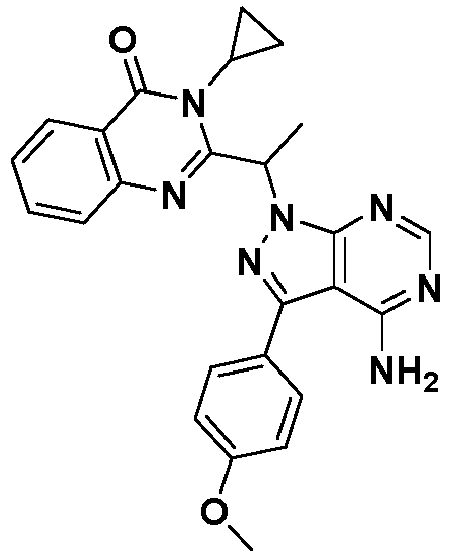
- The synthesis of the compound of Example 45 was completed by using procedures similar to those described in Example 1. MS(ESI) m/z(M+1)+: 454.20.
-

- The synthesis of the compound of Example 46 was completed by using procedures similar to those described in Example 1. MS(ESI) m/z(M+1)+: 514.20.
-

- The synthesis of the compound of Example 47 was completed by using procedures similar to those described in Example 1. MS(ESI) m/z(M+1)+: 516.22.
-

- The synthesis of the compound of Example 48 was completed by using procedures similar to those described in Example 1. MS(ESI) m/z(M+1)+: 513.22.
-

- The synthesis of the compound of Example 49 was completed by using procedures similar to those described in Example 1. MS(ESI) m/z(M+1)+: 513.22.
-

- The synthesis of the compound of Example 50 was completed by using procedures similar to those described in Example 1. MS(ESI) m/z(M+1)+: 487.20.
-

- The synthesis of the compound of Example 51 was completed by using procedures similar to those described in Example 1. MS(ESI) m/z(M+1)+: 500.18.
-

- The synthesis of the compound of Example 52 was completed by using procedures similar to those described in Example 1. MS(ESI) m/z(M+1)+: 513.21.
-

- The synthesis of the compound of Example 53 was completed by using procedures similar to those described in Example 1. MS(ESI) m/z(M+1)+: 513.21.
-

- The synthesis of the compound of Example 54 was completed by using procedures similar to those described in Example 1. MS(ESI) m/z(M+1)+: 487.20.
-

- The synthesis of the compound of Example 55 was completed by using procedures similar to those described in Example 1. MS(ESI) m/z(M+1)+: 484.22.
-
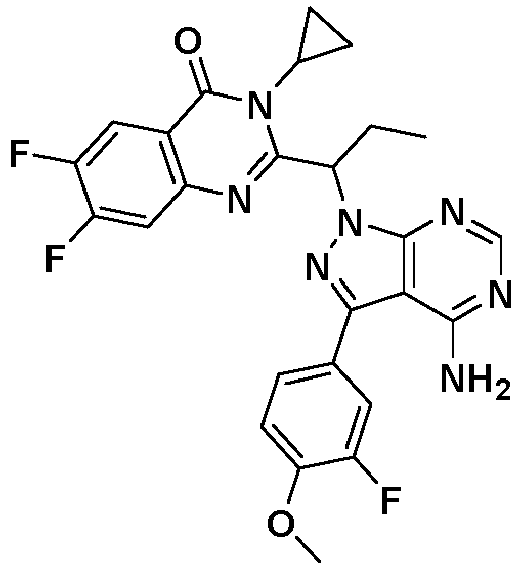
- The synthesis of the compound of Example 56 was completed by using procedures similar to those described in Example 1. MS(ESI) m/z(M+1)+: 522.18.
-

- The synthesis of the compound of Example 57 was completed by using procedures similar to those described in Example 1. MS(ESI) m/z(M+1)+: 531.20.
-

- The synthesis of the compound of Example 58 was completed by using procedures similar to those described in Example 1. MS(ESI) m/z(M+1)+: 540.17.
-

- The synthesis of the compound of Example 59 was completed by using procedures similar to those described in Example 1. MS(ESI) m/z(M+1)+: 522.18.
-

- The synthesis of the compound of Example 60 was completed by using procedures similar to those described in Example 1. MS(ESI) m/z(M+1)+: 552.53.
-
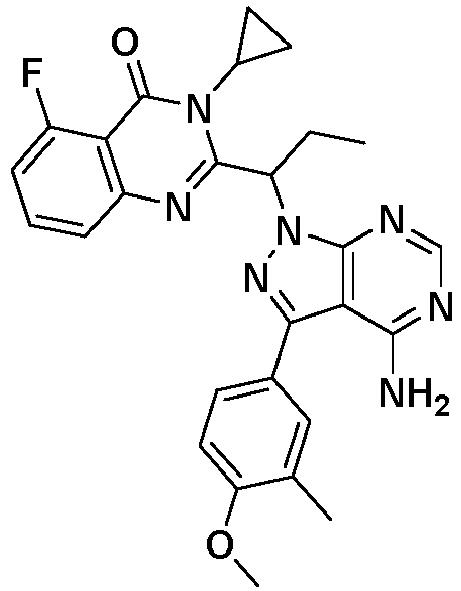
- The synthesis of the compound of Example 61 was completed by using procedures similar to those described in Example 1. MS(ESI) m/z(M+1)+: 500.22.
-

- The synthesis of the compound of Example 62 was completed by using procedures similar to those described in Example 1. MS(ESI) m/z(M+1)+: 531.20.
-

- The synthesis of the compound of Example 63 was completed by using procedures similar to those described in Example 1. MS(ESI) m/z(M+1)+: 486.20.
-
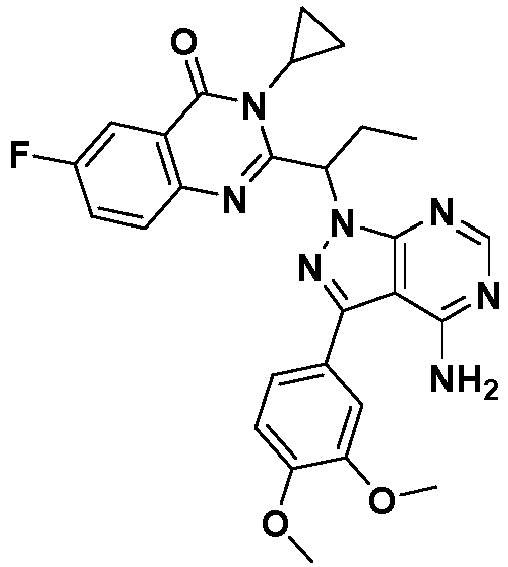
- The synthesis of the compound of Example 64 was completed by using procedures similar to those described in Example 1. MS(ESI) m/z(M+1)+: 516.21.
-

- The synthesis of the compound of Example 65 was completed by using procedures similar to those described in Example 1. MS(ESI) m/z(M+1)+: 513.21.
-

- The synthesis of the compound of Example 66 was completed by using procedures similar to those described in Example 1. MS(ESI) m/z(M+1)+: 513.21.
-

- The synthesis of the compound of Example 67 was completed by using procedures similar to those described in Example 1. MS(ESI) m/z(M+1)+: 487.20.
-

- The synthesis of the compound of Example 68 was completed by using procedures similar to those described in Example 1. MS(ESI) m/z(M+1)+: 495.22.
-

- The synthesis of the compound of Example 69 was completed by using procedures similar to those described in Example 1. MS(ESI) m/z(M+1)+: 495.22.
-

- The synthesis of the compound of Example 70 was completed by using procedures similar to those described in Example 1. MS(ESI) m/z(M+1)+: 469.21.
-

- The synthesis of the compound of Example 71 was completed by using procedures similar to those described in Example 1. MS(ESI) m/z(M+1)+: 468.21.
-

- The synthesis of the compound of Example 72 was completed by using procedures similar to those described in Example 1. MS(ESI) m/z(M+1)+: 454.20.
-

- The synthesis of the compound of Example 73 was completed by using procedures similar to those described in Example 1. MS(ESI) m/z(M+1)+: 486.20.
-

- The synthesis of the compound of Example 74 was completed by using procedures similar to those described in Example 1. MS(ESI) m/z(M+1)+: 472.19.
-

- The synthesis of the compound of Example 75 was completed by using procedures similar to those described in Example 1. MS(ESI) m/z(M+1)+: 458.17.
-

- The synthesis of the compound of Example 76 was completed by using procedures similar to those described in Example 1. MS(ESI) m/z(M+1)+: 472.19.
-

- The synthesis of the compound of Example 77 was completed by using procedures similar to those described in Example 1. MS(ESI) m/z(M+1)+: 440.18.
-

- The synthesis of the compound of Example 78 was completed by using procedures similar to those described in Example 1. MS(ESI) m/z(M+1)+: 454.20.
-

- (R)-2-Chloropropionyl chloride (C2): (R)-2-chloropropionic acid (1.5 g) was added in a round bottom flask, followed by addition of tetrahydrofuran (20 ml), and N,N-dimethylformamide (0.5 ml). The system was cooled to 0°C with an ice-water bath, and then oxalyl chloride (1.4 ml) was slowly added thereto. The reaction system was stirred at 0°C for one hour, then returned to room temperature, and was allowed for reaction for another 14 hours. After the reaction, the system was evaporated to dry the solvent under reduced pressure to obtain a crude oil C2. LC/MS: M+H 126.97.
- 2-Amino-N-cyclobutyl-6-fluorobenzamide (D2): 2-amino-6-fluorobenzoic acid (1.0 g) was added in a round bottom flask, followed by addition of tetrahydrofuran (20 ml), N,N-diisopropyl ethylamine (2.3 ml), HATU (2.9 g) and cyclobutylamine (0.66 ml). The system was then cooled to 0°C with an ice-water bath. The reaction system was stirred at 0°C for one hour, then returned to room temperature, and was allowed for reaction for another 12 hours. After the reaction, the system was evaporated to dry the solvent under reduced pressure, and the resultant was diluted with water and extracted with ethyl acetate. The organic phase was washed with water and saturated brine, respectively, and dried with anhydrous sodium sulfate. The organic phase was filtered and evaporated to dryness under reduced pressure to obtain a crude product. The crude product was purified by pressurized silica gel column chromatography to obtain compound D2. LC/MS: M+H 209.11.
- (R)-2-(2-Chloropropionamido)-N-cyclobutyl-6-fluorobenzamide (D3): 2-amino-N-cyclobutyl-6-fluorobenzamide (1.3 g) was added in a round bottom flask, followed by addition of tetrahydrofuran (30 ml) and N,N-diisopropyl ethylamine (3.4 ml). The system was then cooled to 0°C with an ice-water bath, and (R)-2-chloropropionyl chloride (0.88 g) was slowly added thereto. The reaction system was stirred at 0°C for one hour, then returned to room temperature, and was allowed for reaction for another 12 hours. After the reaction, the system was evaporated to dry the solvent under reduced pressure, and the resultant was diluted with water and extracted with ethyl acetate. The organic phase was washed with water and saturated brine, respectively, and dried with anhydrous sodium sulfate. The organic phase was filtered and evaporated to dryness under reduced pressure to obtain a crude product. The crude product was purified by pressurized silica gel column chromatography to obtain compound D3. LC/MS: M+H 299.09.
- 2-((S)-2-(4-amino-3-(3-fluoro-4-methoxyphenyl)-1H-pyrazolo[3,4-d] pyrimidin-1 -yl)propionamido)-N-cyclobutyl-6-fluorobenzamide (D4): (R)-2-(2-chloropropionamido)-N-cyclobutyl-6-fluorobenzamide (100 mg) was added in a round bottom flask, followed by addition of N,N-dimethylformamide (2 ml), 3-(3-fluoro-4-methoxyphenyl)-1H-pyrazolo[3,4-d]pyrimidin-4-amine (174 mg) and potassium carbonate (93 mg). The reaction system was allowed for reaction at room temperature for 8 hours under the protection of argon. After the reaction, the system was evaporated to dry the solvent under reduced pressure, and the resultant was diluted with water and extracted with dichloromethane. The organic phase was washed with water and saturated brine, respectively, and dried with anhydrous sodium sulfate. The organic phase was filtered and evaporated to dryness under reduced pressure to obtain a crude product. The crude product was purified by pressurized silica gel column chromatography to obtain compound D4. LC/MS: M+H 522.20.
- 2-((S)-1-(4-amino-3-(3-fluoro-4-methoxyphenyl)-1H-pyrazolo[3,4-d] pyrimidin-1-yl)ethyl)-3-cyclobutyl-5-fluoroquinazolin-4(3H)-one(79): 2-((S)-2-(4-amino-3-(3-fluoro-4-methoxyphenyl)-1H-pyrazolo[3,4-d] pyrimidin-1-yl)propionamido)-N-cyclobutyl-6-fluorobenzamide (100 mg) was added in a round bottom flask, followed by addition of acetonitrile (2 ml), zinc chloride (102 mg) and hexamethyldisilazane (132 µl). The reaction system was allowed for reaction under reflux for 8 hours under the protection of argon. After the reaction, the system was evaporated to dry the solvent under reduced pressure, and the resultant was diluted with water and extracted with dichloromethane. The organic phase was washed with water and saturated brine, respectively, and dried with anhydrous sodium sulfate. The organic phase was filtered and evaporated to dryness under reduced pressure to obtain a crude product. The crude product was purified by pressurized silica gel column chromatography to obtain compound 79. LC/MS: M+H 504.19.
-

- The synthesis of the compound of Example 80 was completed by using procedures similar to those described in Example 79. MS(ESI) m/z(M+1)+: 504.19.
-

- The synthesis of the compound of Example 81 was completed by using procedures similar to those described in Example 79. MS(ESI) m/z(M+1)+: 504.19.
-

- The synthesis of the compound of Example 82 was completed by using procedures similar to those described in Example 79. MS(ESI) m/z(M+1)+: 504.19.
- In vitro enzyme activity experiments were performed to determine the IC50 values of the compounds against PI3K family type I kinases (PI3Kα, PI3Kβ, PI3Kγ, PI3Kδ) and type II kinases (PIK3C2A, PIK3C2B). Protein kinases PI3Kα, PI3Kγ, PI3Kδ, PIK3C2A, and PIK3C2B were all purchased from Invitrogen (US); protein kinase PI3Kβ was purchased from sigma (US); the three substrates PIP2: PS, PI and PI: PS were purchased from Invitrogen (US).
- Protein kinases diluted to a certain concentration, i.e., PI3Kα 5.4 µL (with a final concentration of 0.16 ng/µL), PI3Kβ 5.4 µL (with a final concentration of 6 ng/µL), PI3Kδ 5.4 µL (with a final concentration of 1 ng/µL), PI3Kγ 5.4 µL (with a final concentration of 5 ng/µL), PIK3C2A 5.4 µL (with a final concentration of 5 ng/µL), and PIK3C2B 5.4 µL (with a final concentration of 10 ng/µL) were respectively reacted with 1 µL of the serially diluted drug compounds for 1 hour at room temperature (final drug concentrations were 10 µM, 1 µM, 0.3 µM, 0.1 µM, 0.03 µM, 0.01 µM, 0.003 µM, and 0.001 µM, respectively).
- To each reaction tube of the above PI3K family type I kinases, 6 µL of a mixture of ATP (Promega, US) and substrate PIP2:PS (final concentrations of ATP in the reaction systems of kinases PI3Kα, and PI3Kβ were 10 µM, and final concentrations of ATP in the reaction systems of kinases PI3Kδ, and PI3Kγ were 50 µM, and final concentrations of the substrate PIP2:PS were all 50 µM) was added, and reacted at 37°C for 1 hour. The reaction buffer was 50 mM Hepes (pH 7.5) (Promega, USA), 3 mM MgCl2, 1 mM EGTA (Promega, US), 100 mM NaCl, 0.03% CHAPS (Promega, US).
- To each reaction tube of the above PI3K family type II kinases, 6 µL of a mixture of ATP and substrate PI (final concentrations were 50 µM and 100 µM, respectively) was added, and reacted at 37°C for 1 hour. The reaction buffer was 50 mM Hepes (pH 7.5), 3 mM MgCl2, 1 mM EGTA, 100 mM NaCl, 0.03% CHAPS.
- 5 µL of kinase solution after reaction was placed in a 384-well plate (Corning, US), and 5 µL of ADP-Glo™ reagent (Promega, US) was added thereto and reacted at room temperature for 40 minutes to stop the kinase reaction and exhaust the remaining ATP; 10 µL of kinase detection reagent was added to convert ADP into ATP, and coupled luciferase/luciferin reaction was utilized to detect the newly synthesized ATP. Envision was utilized for readout and plotting, and Graphpad IC50 value was calculated. The experimental results were shown in Table 2 and Table 3.
- Experiments have shown that the compound of the invention is a selective inhibitor of PI3Kδ, has strong inhibitory activity against PI3Kδ, and has an excellent selectivity relative to other PI3K family kinases, and particularly has a selectivity of 10-fold or more relative to the inhibitory activity against PI3Kγ, preferably 20-fold or more. PI3Kδ and PI3Kγ are mainly expressed in lymphocytes, while it has been reported that PI3Kγ is also expressed in cardiomyocytes. If PI3Kγ is inhibited at the same time, cardiac function will be affected, and for example the neovascularization in patients with ischaemic heart disease may be affected (Circ Res. 2010 March 5; 106(4): 757-768). Therefore, selectively inhibiting PI3Kδ activity while relatively lowly inhibiting PI3Kγ or without inhibiting PI3Kγ has clinical significance. Compared with the control compound TGR1202 (MedChemExpress, China), the activity of the compound of the invention was improved by 14-fold and the selectivity relative to PI3Kγ was improved by 38-fold.
Table 2 No. PI3Kα/nM PI3Kβ/nM PI3Kγ/nM PI3Kδ/nM Compound 1 7409 2955 4093 27.4 Compound 5 5524 >10000 1719 18.6 Compound 6 1688 523.1 298.7 31 Compound 7 99.93 Compound 8 1718 1303 147.9 14 Compound 9 3354 1159 685.4 17.3 Compound 10122 102.8 6.4 Compound 11 270 389 18.3 Compound 12 82 Compound 14 >10000 >10000 31.9 Compound 19 547.4 688.7 37.9 Compound 22 1687 344.2 485 4.1 Compound 23 6444 998.7 922 9.5 Compound 24 21.53 Compound 25 17.5 Compound 26 55.7 Compound 27 1097 433.7 10.3 Compound 28 83.27 Compound 29 77.32 Compound 34 41.79 Compound 35 26.19 Compound 36 16.23 Compound 37 4211 3278 753.2 1 Compound 38 2233 581.4 261.5 9.59 Compound 39 23.49 Compound 4028.9 Compound 42 3770 690.1 575.9 8.3 Compound 43 27.3 Compound 44 39.8 Compound 45 27.2 Compound 46 34.7 Compound 47 32.1 Compound 50 48.5 Compound 53 43.77 Compound 54 38.97 Compound 56 56.73 Compound 81 790 470.5 16.4 Compound 82 36.7 Table 3 IC50/nM PIK3α PIK3β PIK3δ PIK3γ PI3KC2A PI3KC2B Compound 9 3354 1159 17.3 685.4 >10000 9961 TGR1202 >10000 260 362 - In this example, the experimental results of Compound 9 were tested in a rat model of adjuvant arthritis.
- The experimental procedures were illustrated as follows:
- (1) Sprague-Dawley (SD) rats, female, weighing 180g±20 g, were purchased from Beijing Vital River Laboratory Animal Technology Co., Ltd. and maintained in an SPF laboratory. Drinking water and litter were sterilized by autoclaving, and all operations related to the rats were performed under sterile conditions.
- (2) In the vehicle group and the treatment group, 10.0 mg/ml CFA (complete Freund's adjuvant, purchased from Sigma, US) was mixed thoroughly, and 0.1 ml of the CFA was injected intracutaneously into the right rear vola pedis of each rat on
day 0 to induce inflammation; the normal group was injected with saline in the same way. - (3) Body weight and paw swelling were measured every 3 or 4 days after modeling. Depending on the paw swelling, the systemic inflammation became evident on the 20th day, and thereafter the successfully modeled female SD rats were randomly divided into 2 groups, 5 mice in each group, namely the vehicle group (0.5% methyl cellulose solution, 0.05 ml/kg/day, purchased from Sinopharml, China) and the treatment group of compound 9 (at a dose of 25 mg/kg/day); the 5 rats in the normal group were each given normal saline (0.05 ml/kg/day). The groups were each administrated by oral gavage, once a day, for 14 days.
- (4) The body weight and paw swelling were measured every two days after administration, and the paw swelling was measured with a paw swelling meter. Before inflammation, a foot volume meter was used to measure the volume of left rear foot of each rat (non-inflammation side). After the inflammation, the volume of left rear foot was measured to obtain the swelling degree of the secondary paw (Δml = | paw volume after injection - paw volume before injection | ).
- The experimental results were shown in
Figures 1a and 1b . Compound 9 had no significant effect on the body weight of rats in the rat model of adjuvant arthritis, as shown inFigure 1a . The paw swelling of the rats after 14 days of administration of Compound 9 was significantly reduced as compared with the vehicle group, indicating that the compound of the invention has a therapeutic effect on rheumatoid arthritis. - The invention provides a selective PI3Kδ kinase inhibitor, which can be used to inhibit PI3Kδ kinase activity, and treat, prevent, or ameliorate diseases, disorders or conditions which are regulated by or affected by PI3Kδ kinase activity or in which PI3Kδ kinase activity is involved. Therefore, the compounds of the invention can be formulated into corresponding medicaments, suitable for industrial applications.
Claims (11)
- A kinase inhibitor, comprising a compound of formula (I) or a pharmaceutically acceptable salt, solvate, ester or acid thereof:
 X is selected from the group consisting of CH and N;R1 and R2 are each independently selected from the group consisting of hydrogen, halogen, and C1-6 haloalkyl;R3 is C3-8 cycloalkyl;R4 is selected from the group consisting of hydrogen and C1-6 alkyl;R5 is selected from the group consisting of hydrogen, C1-6 alkyl, C1-6 alkoxy, C2-6 alkylamido, and C1-6 alkylaminoacyl;R6 is selected from the group consisting of hydrogen, hydroxy, halogen, C1-6 alkyl, and C1-6 alkoxy;or R5 and R6 together form a phenyl group or a dioxolane group.
 - The kinase inhibitor of claim 1, wherein X is CH.
- The kinase inhibitor of claim 1, wherein R1 and R2 are each independently selected from the group consisting of hydrogen and fluorine.
- The kinase inhibitor of claim 1, wherein R3 is selected from the group consisting of cyclopropyl, cyclobutyl, cyclopentyl, and cyclohexyl.
- The kinase inhibitor of claim 1, wherein R4 is selected from the group consisting of hydrogen, methyl, and ethyl.
- The kinase inhibitor of claim 1, wherein R5 is selected from the group consisting of hydrogen, C1-3 alkyl, C1-3 alkoxy, C2-3 alkylamido, and C1-3 alkylaminoacyl.
- The kinase inhibitor of claim 1, wherein R6 is selected from the group consisting of hydrogen, hydroxy, halogen, C1-3 alkyl, and C1-3 alkoxy.
- The kinase inhibitor of claim 1, wherein R5 is methoxy, and R6 is selected from the group consisting of hydrogen, fluorine, and methoxy.
- The kinase inhibitor of claim 1, wherein the compound of formula (I) is selected from the group consisting of:
1 
2 
3 
4 
5 
6 
7 
8 
9 
10 
11 
12 
13 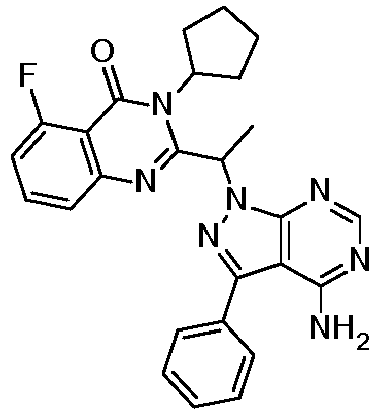
14 
15 
16 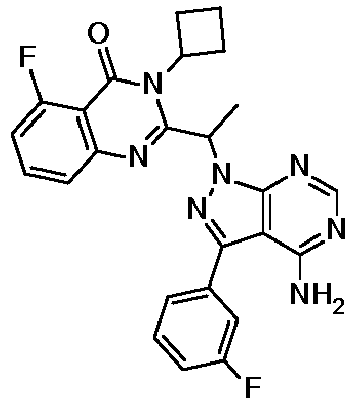
17 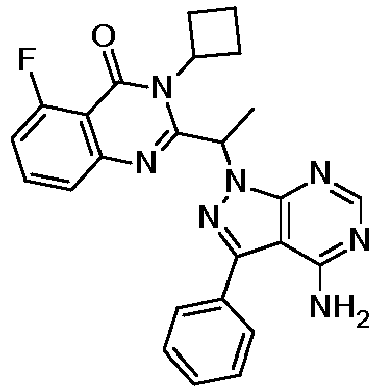
18 
19 
20 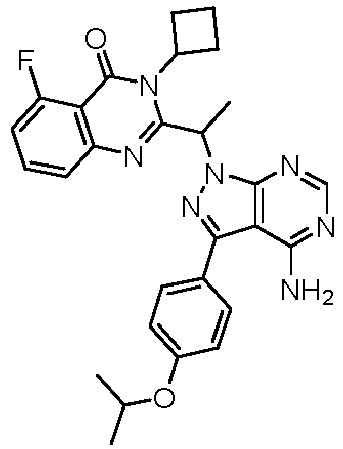
21 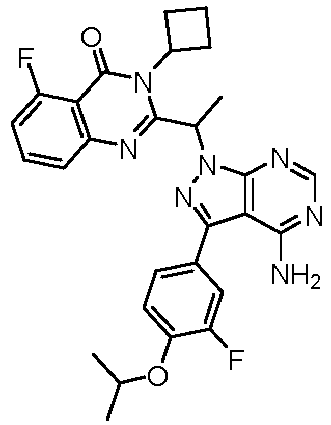
22 
23 
24 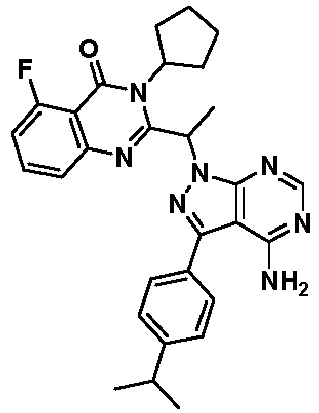
25 
26 
27 
28 
29 
30 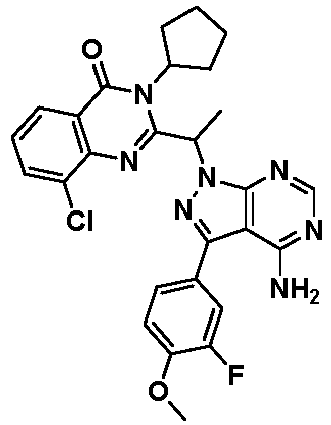
31 
32 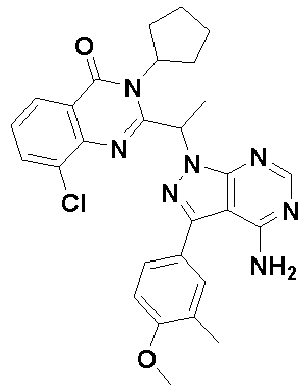
33 
34 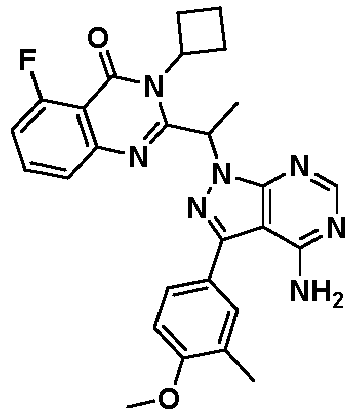
35 
36 
37 
38 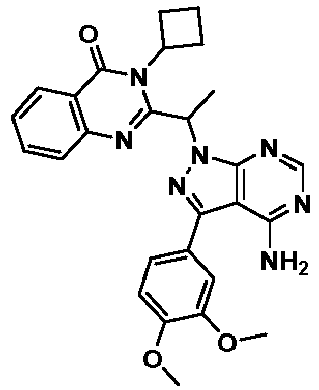
39 
40 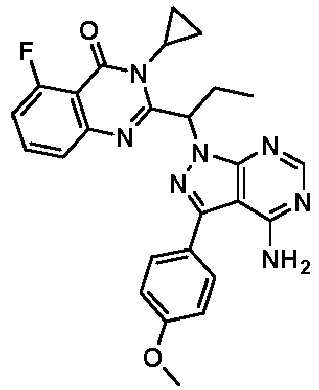
41 
42 
43 
44 
45 
46 
47 
48 
49 
50 
51 
52 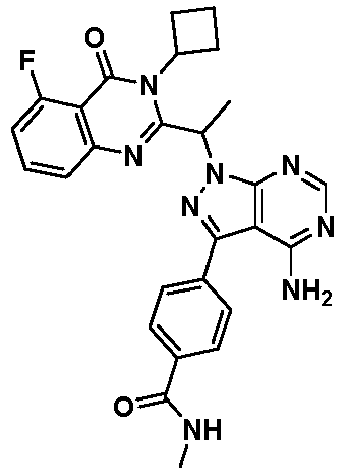
53 
54 
55 
56 
57 
58 
59 
60 
61 
62 
63 
64 
65 
66 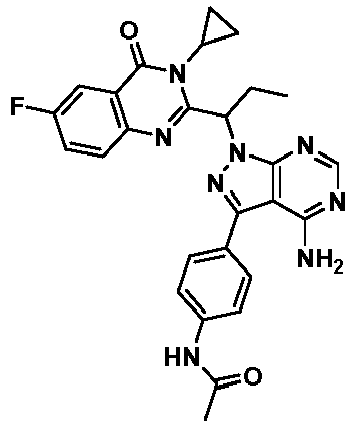
67 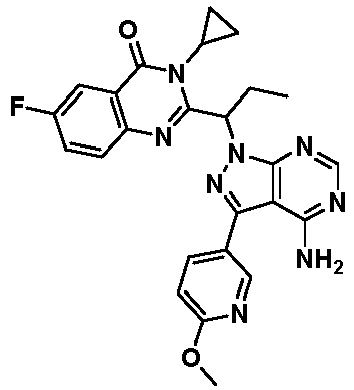
68 
69 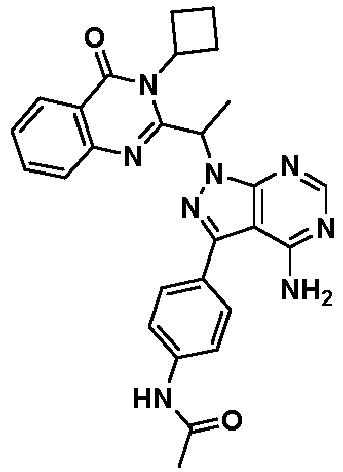
70 
71 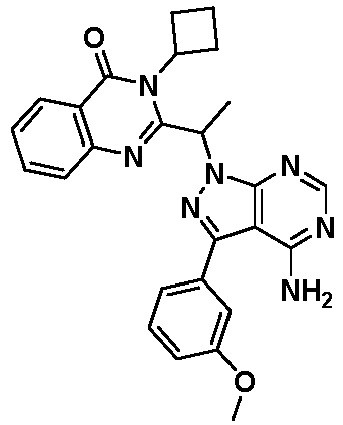
72 
73 
74 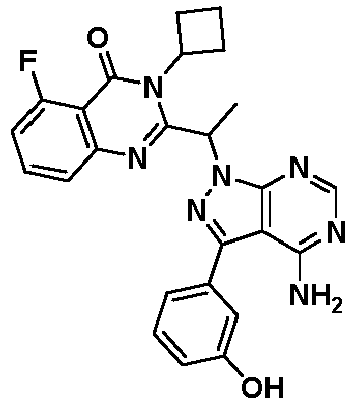
75 
76 
77 
78 
79 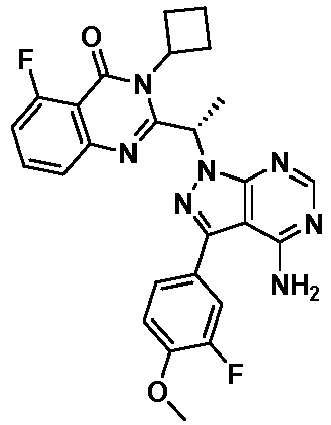
80 
81 
82 
- A pharmaceutical composition, comprising the kinase inhibitor of any one of claims 1-9, and a pharmaceutically acceptable carrier or excipient, and optionally other therapeutic agents.
- The kinase inhibitor of any one of claims 1-9, or the pharmaceutical composition of claim 10, for use in treatment or prevention of diseases or conditions associated with PI3Kδ tyrosine kinase activity, wherein the diseases or conditions are selected from the group consisting of chronic lymphocytic leukemia, non-Hodgkin's lymphoma, Hodgkin's lymphoma, mantle cell lymphoma, chronic obstructive pulmonary, rheumatoid arthritis, systemic lupus erythematosus and asthma.
Applications Claiming Priority (2)
| Application Number | Priority Date | Filing Date | Title |
|---|---|---|---|
| CN201811471591.5A CN111269231B (en) | 2018-12-04 | 2018-12-04 | A kind of selective PI3Kδ inhibitor and its application |
| PCT/CN2018/120685 WO2020113642A1 (en) | 2018-12-04 | 2018-12-12 | SELECTIVE PI3Kδ INHIBITOR AND USE THEREOF |
Publications (3)
| Publication Number | Publication Date |
|---|---|
| EP3892619A1 EP3892619A1 (en) | 2021-10-13 |
| EP3892619A4 EP3892619A4 (en) | 2022-08-24 |
| EP3892619B1 true EP3892619B1 (en) | 2024-06-26 |
Family
ID=70974105
Family Applications (1)
| Application Number | Title | Priority Date | Filing Date |
|---|---|---|---|
| EP18942216.5A Active EP3892619B1 (en) | 2018-12-04 | 2018-12-12 | Selective phosphatidylinositol 3 kinase (pi3k) inhibitors and use thereof |
Country Status (5)
| Country | Link |
|---|---|
| US (1) | US12221448B2 (en) |
| EP (1) | EP3892619B1 (en) |
| JP (1) | JP7330541B2 (en) |
| CN (1) | CN111269231B (en) |
| WO (1) | WO2020113642A1 (en) |
Families Citing this family (1)
| Publication number | Priority date | Publication date | Assignee | Title |
|---|---|---|---|---|
| WO2023206655A1 (en) * | 2022-04-26 | 2023-11-02 | 安徽中科拓苒药物科学研究有限公司 | PI3Kδ INHIBITOR AND USE THEREOF |
Family Cites Families (11)
| Publication number | Priority date | Publication date | Assignee | Title |
|---|---|---|---|---|
| DK2223922T3 (en) | 2000-04-25 | 2016-06-06 | Icos Corp | Inhibitors of HUMANPHOSPHATIDYL-inositol 3-KINASEDELTA |
| EA200870409A1 (en) | 2006-04-04 | 2009-04-28 | Дзе Риджентс Оф Дзе Юниверсити Оф Калифорния | ANTAGONISTS OF KINASE PI3 |
| SI2004654T1 (en) * | 2006-04-04 | 2013-11-29 | The Regents Of The University Of California | Pyrazolopyrimidine derivatives for use as kinase antagonists |
| CA2711558C (en) | 2008-01-04 | 2016-12-13 | Intellikine, Inc. | Phosphatidyl inositol-3 kinase inhibiting compounds |
| US20110269779A1 (en) * | 2008-11-18 | 2011-11-03 | Intellikine, Inc. | Methods and compositions for treatment of ophthalmic conditions |
| US20110135655A1 (en) * | 2009-01-13 | 2011-06-09 | PHILADELPHIA HEALTH AND EDUCATION CORPORATION d/b/a Drexel University College of Medicine; | Role of PI3K p110 delta Signaling in Retroviral Infection and Replication |
| RU2012112128A (en) * | 2012-03-29 | 2013-10-10 | Холин Максим Николаевич | PI3K / AKT / IKK / NF-kB SIGNAL PATH INHIBITORS, THEIR PHARMACEUTICALLY ACCEPTABLE SALTS AND THEIR COMPOSITIONS FOR PREVENTION AND TREATMENT OF VIRAL DISEASES |
| CA2915418C (en) | 2013-07-02 | 2022-05-03 | Rhizen Pharmaceuticals Sa | Novel selective pi3k delta and/or gamma protein kinase inhibitors |
| CN104844589B (en) * | 2014-12-26 | 2018-04-20 | 中国科学院合肥物质科学研究院 | A kind of PI3K kinase inhibitors |
| US20190070183A1 (en) * | 2015-11-04 | 2019-03-07 | The Trustees Of Columbia University In The City Of New York | Targeting Casein Kinase-1 and PI3K/AKT/mTOR Pathways for Treatment of c-Myc-Overexpressing Cancers, Organ Transplant Associated Complications and Autoimmune Diseases |
| TW201806953A (en) * | 2016-04-26 | 2018-03-01 | 印度商托仁特生技有限公司 | Substituted fused pyrimidinone compounds |
-
2018
- 2018-12-04 CN CN201811471591.5A patent/CN111269231B/en active Active
- 2018-12-12 EP EP18942216.5A patent/EP3892619B1/en active Active
- 2018-12-12 US US17/299,498 patent/US12221448B2/en active Active
- 2018-12-12 JP JP2021531814A patent/JP7330541B2/en active Active
- 2018-12-12 WO PCT/CN2018/120685 patent/WO2020113642A1/en not_active Ceased
Also Published As
| Publication number | Publication date |
|---|---|
| CN111269231A (en) | 2020-06-12 |
| CN111269231B (en) | 2023-06-09 |
| US20220024931A1 (en) | 2022-01-27 |
| JP7330541B2 (en) | 2023-08-22 |
| EP3892619A1 (en) | 2021-10-13 |
| EP3892619A4 (en) | 2022-08-24 |
| WO2020113642A1 (en) | 2020-06-11 |
| JP2022511039A (en) | 2022-01-28 |
| US12221448B2 (en) | 2025-02-11 |
Similar Documents
| Publication | Publication Date | Title |
|---|---|---|
| ES2467665T3 (en) | Salts of the kinase inhibitor Janus (R) -3- (4- (7H-pyrrolo [2,3-d] pyrimidin-4-yl) -1H-pyrazol-1-yl) -3-cyclopentylpropanonitrile | |
| CN102712645B (en) | compound | |
| ES2533570T3 (en) | Quinazolin-4 (3H) -one derivatives, which are used as inhibitors of PI3 kinases | |
| EP3159340B1 (en) | Bruton's tyrosine kinase inhibitor | |
| EP3438094A1 (en) | Selective c-kit kinase inhibitor | |
| EP2708540B1 (en) | Pyrimido-diazepinone compound | |
| KR20210129051A (en) | Selective inhibitor of protein arginine methyltransferase 5 (PRMT5) | |
| EP4089092B1 (en) | Polycyclic compound acting as kinase inhibitor | |
| ES3059191T3 (en) | Crystalline form of n-butyldeoxygalactonojirimycin | |
| EP3932913A1 (en) | New-type pan-raf kinase inhibitor and use thereof | |
| EP3892619A1 (en) | SELECTIVE PI3Ko INHIBITOR AND USE THEREOF | |
| CN109721531B (en) | Novel liposome kinase inhibitor | |
| CN113735859A (en) | Kinase inhibitor | |
| JP2020505437A (en) | Small molecule inhibitors of neutral sphingomyelinase 2 (nSMase2) for the treatment of neurodegenerative diseases | |
| EP4509125A1 (en) | Novel use of pyrazolopyrimidine compound | |
| EP3878841B1 (en) | Indazole kinase inhibitor and use thereof | |
| EP3896059B1 (en) | Pan-kit kinase inhibitor having quinoline structure and application thereof | |
| CN113350347A (en) | Novel use of indazole compound | |
| CN116444497B (en) | Pyridazinone compound, preparation and application thereof | |
| HK40052071A (en) | Pan-kit kinase inhibitor having quinoline structure and application thereof | |
| HK40052071B (en) | Pan-kit kinase inhibitor having quinoline structure and application thereof | |
| CN110283160A (en) | A kind of PDGFR kinase inhibitor | |
| HK1173728B (en) | Quinazolin-4(3h)-one derivatives used as pi3 kinase inhibitors |
Legal Events
| Date | Code | Title | Description |
|---|---|---|---|
| STAA | Information on the status of an ep patent application or granted ep patent |
Free format text: STATUS: THE INTERNATIONAL PUBLICATION HAS BEEN MADE |
|
| PUAI | Public reference made under article 153(3) epc to a published international application that has entered the european phase |
Free format text: ORIGINAL CODE: 0009012 |
|
| STAA | Information on the status of an ep patent application or granted ep patent |
Free format text: STATUS: REQUEST FOR EXAMINATION WAS MADE |
|
| 17P | Request for examination filed |
Effective date: 20210609 |
|
| AK | Designated contracting states |
Kind code of ref document: A1 Designated state(s): AL AT BE BG CH CY CZ DE DK EE ES FI FR GB GR HR HU IE IS IT LI LT LU LV MC MK MT NL NO PL PT RO RS SE SI SK SM TR |
|
| DAV | Request for validation of the european patent (deleted) | ||
| DAX | Request for extension of the european patent (deleted) | ||
| A4 | Supplementary search report drawn up and despatched |
Effective date: 20220725 |
|
| REG | Reference to a national code |
Ref legal event code: R079 Ipc: A61K0031519000 Ref country code: DE Ref legal event code: R079 Ref document number: 602018071174 Country of ref document: DE Free format text: PREVIOUS MAIN CLASS: C07D0403140000 Ipc: A61K0031519000 |
|
| GRAP | Despatch of communication of intention to grant a patent |
Free format text: ORIGINAL CODE: EPIDOSNIGR1 |
|
| STAA | Information on the status of an ep patent application or granted ep patent |
Free format text: STATUS: GRANT OF PATENT IS INTENDED |
|
| RIC1 | Information provided on ipc code assigned before grant |
Ipc: A61P 37/06 20060101ALI20240205BHEP Ipc: A61P 35/02 20060101ALI20240205BHEP Ipc: A61P 31/00 20060101ALI20240205BHEP Ipc: A61P 27/02 20060101ALI20240205BHEP Ipc: A61P 25/00 20060101ALI20240205BHEP Ipc: A61P 19/02 20060101ALI20240205BHEP Ipc: A61P 17/00 20060101ALI20240205BHEP Ipc: A61P 11/06 20060101ALI20240205BHEP Ipc: A61P 9/10 20060101ALI20240205BHEP Ipc: A61P 7/00 20060101ALI20240205BHEP Ipc: A61P 3/04 20060101ALI20240205BHEP Ipc: A61P 1/00 20060101ALI20240205BHEP Ipc: A61P 35/00 20060101ALI20240205BHEP Ipc: A61P 29/00 20060101ALI20240205BHEP Ipc: A61P 11/00 20060101ALI20240205BHEP Ipc: A61K 45/06 20060101ALI20240205BHEP Ipc: C07D 487/04 20060101ALI20240205BHEP Ipc: A61K 31/519 20060101AFI20240205BHEP |
|
| INTG | Intention to grant announced |
Effective date: 20240220 |
|
| GRAS | Grant fee paid |
Free format text: ORIGINAL CODE: EPIDOSNIGR3 |
|
| GRAA | (expected) grant |
Free format text: ORIGINAL CODE: 0009210 |
|
| STAA | Information on the status of an ep patent application or granted ep patent |
Free format text: STATUS: THE PATENT HAS BEEN GRANTED |
|
| AK | Designated contracting states |
Kind code of ref document: B1 Designated state(s): AL AT BE BG CH CY CZ DE DK EE ES FI FR GB GR HR HU IE IS IT LI LT LU LV MC MK MT NL NO PL PT RO RS SE SI SK SM TR |
|
| REG | Reference to a national code |
Ref country code: GB Ref legal event code: FG4D |
|
| REG | Reference to a national code |
Ref country code: CH Ref legal event code: EP |
|
| REG | Reference to a national code |
Ref country code: DE Ref legal event code: R096 Ref document number: 602018071174 Country of ref document: DE |
|
| PG25 | Lapsed in a contracting state [announced via postgrant information from national office to epo] |
Ref country code: BG Free format text: LAPSE BECAUSE OF FAILURE TO SUBMIT A TRANSLATION OF THE DESCRIPTION OR TO PAY THE FEE WITHIN THE PRESCRIBED TIME-LIMIT Effective date: 20240626 |
|
| PG25 | Lapsed in a contracting state [announced via postgrant information from national office to epo] |
Ref country code: HR Free format text: LAPSE BECAUSE OF FAILURE TO SUBMIT A TRANSLATION OF THE DESCRIPTION OR TO PAY THE FEE WITHIN THE PRESCRIBED TIME-LIMIT Effective date: 20240626 Ref country code: FI Free format text: LAPSE BECAUSE OF FAILURE TO SUBMIT A TRANSLATION OF THE DESCRIPTION OR TO PAY THE FEE WITHIN THE PRESCRIBED TIME-LIMIT Effective date: 20240626 |
|
| REG | Reference to a national code |
Ref country code: LT Ref legal event code: MG9D |
|
| PG25 | Lapsed in a contracting state [announced via postgrant information from national office to epo] |
Ref country code: GR Free format text: LAPSE BECAUSE OF FAILURE TO SUBMIT A TRANSLATION OF THE DESCRIPTION OR TO PAY THE FEE WITHIN THE PRESCRIBED TIME-LIMIT Effective date: 20240927 |
|
| PG25 | Lapsed in a contracting state [announced via postgrant information from national office to epo] |
Ref country code: LV Free format text: LAPSE BECAUSE OF FAILURE TO SUBMIT A TRANSLATION OF THE DESCRIPTION OR TO PAY THE FEE WITHIN THE PRESCRIBED TIME-LIMIT Effective date: 20240626 |
|
| REG | Reference to a national code |
Ref country code: NL Ref legal event code: MP Effective date: 20240626 |
|
| PG25 | Lapsed in a contracting state [announced via postgrant information from national office to epo] |
Ref country code: NO Free format text: LAPSE BECAUSE OF FAILURE TO SUBMIT A TRANSLATION OF THE DESCRIPTION OR TO PAY THE FEE WITHIN THE PRESCRIBED TIME-LIMIT Effective date: 20240926 Ref country code: LV Free format text: LAPSE BECAUSE OF FAILURE TO SUBMIT A TRANSLATION OF THE DESCRIPTION OR TO PAY THE FEE WITHIN THE PRESCRIBED TIME-LIMIT Effective date: 20240626 Ref country code: HR Free format text: LAPSE BECAUSE OF FAILURE TO SUBMIT A TRANSLATION OF THE DESCRIPTION OR TO PAY THE FEE WITHIN THE PRESCRIBED TIME-LIMIT Effective date: 20240626 Ref country code: GR Free format text: LAPSE BECAUSE OF FAILURE TO SUBMIT A TRANSLATION OF THE DESCRIPTION OR TO PAY THE FEE WITHIN THE PRESCRIBED TIME-LIMIT Effective date: 20240927 Ref country code: FI Free format text: LAPSE BECAUSE OF FAILURE TO SUBMIT A TRANSLATION OF THE DESCRIPTION OR TO PAY THE FEE WITHIN THE PRESCRIBED TIME-LIMIT Effective date: 20240626 Ref country code: BG Free format text: LAPSE BECAUSE OF FAILURE TO SUBMIT A TRANSLATION OF THE DESCRIPTION OR TO PAY THE FEE WITHIN THE PRESCRIBED TIME-LIMIT Effective date: 20240626 Ref country code: RS Free format text: LAPSE BECAUSE OF FAILURE TO SUBMIT A TRANSLATION OF THE DESCRIPTION OR TO PAY THE FEE WITHIN THE PRESCRIBED TIME-LIMIT Effective date: 20240926 |
|
| PG25 | Lapsed in a contracting state [announced via postgrant information from national office to epo] |
Ref country code: NL Free format text: LAPSE BECAUSE OF FAILURE TO SUBMIT A TRANSLATION OF THE DESCRIPTION OR TO PAY THE FEE WITHIN THE PRESCRIBED TIME-LIMIT Effective date: 20240626 |
|
| REG | Reference to a national code |
Ref country code: AT Ref legal event code: MK05 Ref document number: 1697141 Country of ref document: AT Kind code of ref document: T Effective date: 20240626 |
|
| PG25 | Lapsed in a contracting state [announced via postgrant information from national office to epo] |
Ref country code: NL Free format text: LAPSE BECAUSE OF FAILURE TO SUBMIT A TRANSLATION OF THE DESCRIPTION OR TO PAY THE FEE WITHIN THE PRESCRIBED TIME-LIMIT Effective date: 20240626 |
|
| PG25 | Lapsed in a contracting state [announced via postgrant information from national office to epo] |
Ref country code: PT Free format text: LAPSE BECAUSE OF FAILURE TO SUBMIT A TRANSLATION OF THE DESCRIPTION OR TO PAY THE FEE WITHIN THE PRESCRIBED TIME-LIMIT Effective date: 20241028 |
|
| PG25 | Lapsed in a contracting state [announced via postgrant information from national office to epo] |
Ref country code: PT Free format text: LAPSE BECAUSE OF FAILURE TO SUBMIT A TRANSLATION OF THE DESCRIPTION OR TO PAY THE FEE WITHIN THE PRESCRIBED TIME-LIMIT Effective date: 20241028 |
|
| PG25 | Lapsed in a contracting state [announced via postgrant information from national office to epo] |
Ref country code: PL Free format text: LAPSE BECAUSE OF FAILURE TO SUBMIT A TRANSLATION OF THE DESCRIPTION OR TO PAY THE FEE WITHIN THE PRESCRIBED TIME-LIMIT Effective date: 20240626 |
|
| PG25 | Lapsed in a contracting state [announced via postgrant information from national office to epo] |
Ref country code: EE Free format text: LAPSE BECAUSE OF FAILURE TO SUBMIT A TRANSLATION OF THE DESCRIPTION OR TO PAY THE FEE WITHIN THE PRESCRIBED TIME-LIMIT Effective date: 20240626 |
|
| PG25 | Lapsed in a contracting state [announced via postgrant information from national office to epo] |
Ref country code: AT Free format text: LAPSE BECAUSE OF FAILURE TO SUBMIT A TRANSLATION OF THE DESCRIPTION OR TO PAY THE FEE WITHIN THE PRESCRIBED TIME-LIMIT Effective date: 20240626 Ref country code: IS Free format text: LAPSE BECAUSE OF FAILURE TO SUBMIT A TRANSLATION OF THE DESCRIPTION OR TO PAY THE FEE WITHIN THE PRESCRIBED TIME-LIMIT Effective date: 20241026 |
|
| PG25 | Lapsed in a contracting state [announced via postgrant information from national office to epo] |
Ref country code: CZ Free format text: LAPSE BECAUSE OF FAILURE TO SUBMIT A TRANSLATION OF THE DESCRIPTION OR TO PAY THE FEE WITHIN THE PRESCRIBED TIME-LIMIT Effective date: 20240626 |
|
| PG25 | Lapsed in a contracting state [announced via postgrant information from national office to epo] |
Ref country code: RO Free format text: LAPSE BECAUSE OF FAILURE TO SUBMIT A TRANSLATION OF THE DESCRIPTION OR TO PAY THE FEE WITHIN THE PRESCRIBED TIME-LIMIT Effective date: 20240626 Ref country code: SK Free format text: LAPSE BECAUSE OF FAILURE TO SUBMIT A TRANSLATION OF THE DESCRIPTION OR TO PAY THE FEE WITHIN THE PRESCRIBED TIME-LIMIT Effective date: 20240626 |
|
| PG25 | Lapsed in a contracting state [announced via postgrant information from national office to epo] |
Ref country code: ES Free format text: LAPSE BECAUSE OF FAILURE TO SUBMIT A TRANSLATION OF THE DESCRIPTION OR TO PAY THE FEE WITHIN THE PRESCRIBED TIME-LIMIT Effective date: 20240626 Ref country code: SM Free format text: LAPSE BECAUSE OF FAILURE TO SUBMIT A TRANSLATION OF THE DESCRIPTION OR TO PAY THE FEE WITHIN THE PRESCRIBED TIME-LIMIT Effective date: 20240626 |
|
| PG25 | Lapsed in a contracting state [announced via postgrant information from national office to epo] |
Ref country code: SM Free format text: LAPSE BECAUSE OF FAILURE TO SUBMIT A TRANSLATION OF THE DESCRIPTION OR TO PAY THE FEE WITHIN THE PRESCRIBED TIME-LIMIT Effective date: 20240626 Ref country code: SK Free format text: LAPSE BECAUSE OF FAILURE TO SUBMIT A TRANSLATION OF THE DESCRIPTION OR TO PAY THE FEE WITHIN THE PRESCRIBED TIME-LIMIT Effective date: 20240626 Ref country code: RO Free format text: LAPSE BECAUSE OF FAILURE TO SUBMIT A TRANSLATION OF THE DESCRIPTION OR TO PAY THE FEE WITHIN THE PRESCRIBED TIME-LIMIT Effective date: 20240626 Ref country code: PL Free format text: LAPSE BECAUSE OF FAILURE TO SUBMIT A TRANSLATION OF THE DESCRIPTION OR TO PAY THE FEE WITHIN THE PRESCRIBED TIME-LIMIT Effective date: 20240626 Ref country code: IS Free format text: LAPSE BECAUSE OF FAILURE TO SUBMIT A TRANSLATION OF THE DESCRIPTION OR TO PAY THE FEE WITHIN THE PRESCRIBED TIME-LIMIT Effective date: 20241026 Ref country code: ES Free format text: LAPSE BECAUSE OF FAILURE TO SUBMIT A TRANSLATION OF THE DESCRIPTION OR TO PAY THE FEE WITHIN THE PRESCRIBED TIME-LIMIT Effective date: 20240626 Ref country code: EE Free format text: LAPSE BECAUSE OF FAILURE TO SUBMIT A TRANSLATION OF THE DESCRIPTION OR TO PAY THE FEE WITHIN THE PRESCRIBED TIME-LIMIT Effective date: 20240626 Ref country code: CZ Free format text: LAPSE BECAUSE OF FAILURE TO SUBMIT A TRANSLATION OF THE DESCRIPTION OR TO PAY THE FEE WITHIN THE PRESCRIBED TIME-LIMIT Effective date: 20240626 Ref country code: AT Free format text: LAPSE BECAUSE OF FAILURE TO SUBMIT A TRANSLATION OF THE DESCRIPTION OR TO PAY THE FEE WITHIN THE PRESCRIBED TIME-LIMIT Effective date: 20240626 |
|
| PG25 | Lapsed in a contracting state [announced via postgrant information from national office to epo] |
Ref country code: IT Free format text: LAPSE BECAUSE OF FAILURE TO SUBMIT A TRANSLATION OF THE DESCRIPTION OR TO PAY THE FEE WITHIN THE PRESCRIBED TIME-LIMIT Effective date: 20240626 |
|
| REG | Reference to a national code |
Ref country code: DE Ref legal event code: R097 Ref document number: 602018071174 Country of ref document: DE |
|
| PG25 | Lapsed in a contracting state [announced via postgrant information from national office to epo] |
Ref country code: DK Free format text: LAPSE BECAUSE OF FAILURE TO SUBMIT A TRANSLATION OF THE DESCRIPTION OR TO PAY THE FEE WITHIN THE PRESCRIBED TIME-LIMIT Effective date: 20240626 |
|
| PLBE | No opposition filed within time limit |
Free format text: ORIGINAL CODE: 0009261 |
|
| STAA | Information on the status of an ep patent application or granted ep patent |
Free format text: STATUS: NO OPPOSITION FILED WITHIN TIME LIMIT |
|
| 26N | No opposition filed |
Effective date: 20250327 |
|
| REG | Reference to a national code |
Ref country code: DE Ref legal event code: R119 Ref document number: 602018071174 Country of ref document: DE |
|
| PG25 | Lapsed in a contracting state [announced via postgrant information from national office to epo] |
Ref country code: MC Free format text: LAPSE BECAUSE OF FAILURE TO SUBMIT A TRANSLATION OF THE DESCRIPTION OR TO PAY THE FEE WITHIN THE PRESCRIBED TIME-LIMIT Effective date: 20240626 |
|
| REG | Reference to a national code |
Ref country code: CH Ref legal event code: PL |
|
| PG25 | Lapsed in a contracting state [announced via postgrant information from national office to epo] |
Ref country code: LU Free format text: LAPSE BECAUSE OF NON-PAYMENT OF DUE FEES Effective date: 20241212 |
|
| GBPC | Gb: european patent ceased through non-payment of renewal fee |
Effective date: 20241212 |
|
| PG25 | Lapsed in a contracting state [announced via postgrant information from national office to epo] |
Ref country code: SE Free format text: LAPSE BECAUSE OF FAILURE TO SUBMIT A TRANSLATION OF THE DESCRIPTION OR TO PAY THE FEE WITHIN THE PRESCRIBED TIME-LIMIT Effective date: 20240626 |
|
| REG | Reference to a national code |
Ref country code: BE Ref legal event code: MM Effective date: 20241231 |
|
| PG25 | Lapsed in a contracting state [announced via postgrant information from national office to epo] |
Ref country code: DE Free format text: LAPSE BECAUSE OF NON-PAYMENT OF DUE FEES Effective date: 20250701 |
|
| PG25 | Lapsed in a contracting state [announced via postgrant information from national office to epo] |
Ref country code: GB Free format text: LAPSE BECAUSE OF NON-PAYMENT OF DUE FEES Effective date: 20241212 Ref country code: BE Free format text: LAPSE BECAUSE OF NON-PAYMENT OF DUE FEES Effective date: 20241231 |
|
| PG25 | Lapsed in a contracting state [announced via postgrant information from national office to epo] |
Ref country code: FR Free format text: LAPSE BECAUSE OF NON-PAYMENT OF DUE FEES Effective date: 20241231 |
|
| PG25 | Lapsed in a contracting state [announced via postgrant information from national office to epo] |
Ref country code: CH Free format text: LAPSE BECAUSE OF NON-PAYMENT OF DUE FEES Effective date: 20241231 |
|
| PG25 | Lapsed in a contracting state [announced via postgrant information from national office to epo] |
Ref country code: IE Free format text: LAPSE BECAUSE OF NON-PAYMENT OF DUE FEES Effective date: 20241212 |
|
| PG25 | Lapsed in a contracting state [announced via postgrant information from national office to epo] |
Ref country code: CY Free format text: LAPSE BECAUSE OF FAILURE TO SUBMIT A TRANSLATION OF THE DESCRIPTION OR TO PAY THE FEE WITHIN THE PRESCRIBED TIME-LIMIT Effective date: 20240626 |