EP3892464A1 - Multilayer film for laser printing, multilayer body for electronic passports, multilayer body for plastic cards, film for plastic cards, plastic card, data sheet for electronic passports, and electronic passport - Google Patents
Multilayer film for laser printing, multilayer body for electronic passports, multilayer body for plastic cards, film for plastic cards, plastic card, data sheet for electronic passports, and electronic passport Download PDFInfo
- Publication number
- EP3892464A1 EP3892464A1 EP19894135.3A EP19894135A EP3892464A1 EP 3892464 A1 EP3892464 A1 EP 3892464A1 EP 19894135 A EP19894135 A EP 19894135A EP 3892464 A1 EP3892464 A1 EP 3892464A1
- Authority
- EP
- European Patent Office
- Prior art keywords
- layer
- resin composition
- bisphenol
- multilayer film
- film
- Prior art date
- Legal status (The legal status is an assumption and is not a legal conclusion. Google has not performed a legal analysis and makes no representation as to the accuracy of the status listed.)
- Pending
Links
- 229920003023 plastic Polymers 0.000 title claims description 37
- 239000004033 plastic Substances 0.000 title claims description 37
- 238000007648 laser printing Methods 0.000 title 1
- 239000011342 resin composition Substances 0.000 claims abstract description 76
- IISBACLAFKSPIT-UHFFFAOYSA-N bisphenol A Chemical compound C=1C=C(O)C=CC=1C(C)(C)C1=CC=C(O)C=C1 IISBACLAFKSPIT-UHFFFAOYSA-N 0.000 claims abstract description 61
- 238000010330 laser marking Methods 0.000 claims abstract description 60
- 229930185605 Bisphenol Natural products 0.000 claims abstract description 51
- 229920000728 polyester Polymers 0.000 claims abstract description 50
- 229920000515 polycarbonate Polymers 0.000 claims abstract description 48
- 239000004417 polycarbonate Substances 0.000 claims abstract description 48
- 150000001875 compounds Chemical class 0.000 claims abstract description 28
- 239000006096 absorbing agent Substances 0.000 claims abstract description 27
- 150000002009 diols Chemical class 0.000 claims abstract description 21
- OFOBLEOULBTSOW-UHFFFAOYSA-N Malonic acid Chemical compound OC(=O)CC(O)=O OFOBLEOULBTSOW-UHFFFAOYSA-N 0.000 claims description 16
- WERYXYBDKMZEQL-UHFFFAOYSA-N butane-1,4-diol Chemical compound OCCCCO WERYXYBDKMZEQL-UHFFFAOYSA-N 0.000 claims description 16
- 239000002250 absorbent Substances 0.000 claims description 11
- 230000002745 absorbent Effects 0.000 claims description 11
- 238000005809 transesterification reaction Methods 0.000 claims description 10
- 239000000470 constituent Substances 0.000 claims description 7
- 125000003118 aryl group Chemical group 0.000 claims description 6
- 239000003112 inhibitor Substances 0.000 claims description 6
- 239000000463 material Substances 0.000 abstract description 16
- 238000001125 extrusion Methods 0.000 abstract description 12
- 230000007774 longterm Effects 0.000 abstract description 4
- 239000010410 layer Substances 0.000 description 89
- 229920005989 resin Polymers 0.000 description 37
- 239000011347 resin Substances 0.000 description 37
- 238000000034 method Methods 0.000 description 28
- 230000000052 comparative effect Effects 0.000 description 16
- 239000006097 ultraviolet radiation absorber Substances 0.000 description 14
- -1 carbonate diester Chemical class 0.000 description 11
- 238000002845 discoloration Methods 0.000 description 9
- KKEYFWRCBNTPAC-UHFFFAOYSA-N Terephthalic acid Chemical compound OC(=O)C1=CC=C(C(O)=O)C=C1 KKEYFWRCBNTPAC-UHFFFAOYSA-N 0.000 description 8
- 229910044991 metal oxide Inorganic materials 0.000 description 8
- 229920005668 polycarbonate resin Polymers 0.000 description 8
- 239000004431 polycarbonate resin Substances 0.000 description 8
- 238000002835 absorbance Methods 0.000 description 7
- 239000011241 protective layer Substances 0.000 description 7
- 239000002356 single layer Substances 0.000 description 7
- UQSXHKLRYXJYBZ-UHFFFAOYSA-N Iron oxide Chemical compound [Fe]=O UQSXHKLRYXJYBZ-UHFFFAOYSA-N 0.000 description 6
- 239000003086 colorant Substances 0.000 description 6
- 238000011156 evaluation Methods 0.000 description 6
- 229910052751 metal Inorganic materials 0.000 description 6
- 239000002184 metal Substances 0.000 description 6
- 150000004706 metal oxides Chemical class 0.000 description 6
- 125000003354 benzotriazolyl group Chemical group N1N=NC2=C1C=CC=C2* 0.000 description 5
- 238000011109 contamination Methods 0.000 description 5
- VYPSYNLAJGMNEJ-UHFFFAOYSA-N Silicium dioxide Chemical compound O=[Si]=O VYPSYNLAJGMNEJ-UHFFFAOYSA-N 0.000 description 4
- GWEVSGVZZGPLCZ-UHFFFAOYSA-N Titan oxide Chemical compound O=[Ti]=O GWEVSGVZZGPLCZ-UHFFFAOYSA-N 0.000 description 4
- XLOMVQKBTHCTTD-UHFFFAOYSA-N Zinc monoxide Chemical compound [Zn]=O XLOMVQKBTHCTTD-UHFFFAOYSA-N 0.000 description 4
- 239000003963 antioxidant agent Substances 0.000 description 4
- 230000006866 deterioration Effects 0.000 description 4
- 230000000694 effects Effects 0.000 description 4
- 229920001971 elastomer Polymers 0.000 description 4
- 239000000806 elastomer Substances 0.000 description 4
- 239000000203 mixture Substances 0.000 description 4
- 239000002245 particle Substances 0.000 description 4
- 239000000049 pigment Substances 0.000 description 4
- 238000003860 storage Methods 0.000 description 4
- 229920006345 thermoplastic polyamide Polymers 0.000 description 4
- 229920002803 thermoplastic polyurethane Polymers 0.000 description 4
- LEVFXWNQQSSNAC-UHFFFAOYSA-N 2-(4,6-diphenyl-1,3,5-triazin-2-yl)-5-hexoxyphenol Chemical compound OC1=CC(OCCCCCC)=CC=C1C1=NC(C=2C=CC=CC=2)=NC(C=2C=CC=CC=2)=N1 LEVFXWNQQSSNAC-UHFFFAOYSA-N 0.000 description 3
- 239000002253 acid Substances 0.000 description 3
- 239000000654 additive Substances 0.000 description 3
- 239000006229 carbon black Substances 0.000 description 3
- 239000002131 composite material Substances 0.000 description 3
- 150000001991 dicarboxylic acids Chemical class 0.000 description 3
- MTHSVFCYNBDYFN-UHFFFAOYSA-N diethylene glycol Chemical compound OCCOCCO MTHSVFCYNBDYFN-UHFFFAOYSA-N 0.000 description 3
- 238000005562 fading Methods 0.000 description 3
- 238000005187 foaming Methods 0.000 description 3
- 238000002156 mixing Methods 0.000 description 3
- 238000006068 polycondensation reaction Methods 0.000 description 3
- 230000001012 protector Effects 0.000 description 3
- HCNHNBLSNVSJTJ-UHFFFAOYSA-N 1,1-Bis(4-hydroxyphenyl)ethane Chemical compound C=1C=C(O)C=CC=1C(C)C1=CC=C(O)C=C1 HCNHNBLSNVSJTJ-UHFFFAOYSA-N 0.000 description 2
- JYEUMXHLPRZUAT-UHFFFAOYSA-N 1,2,3-triazine Chemical group C1=CN=NN=C1 JYEUMXHLPRZUAT-UHFFFAOYSA-N 0.000 description 2
- VPWNQTHUCYMVMZ-UHFFFAOYSA-N 4,4'-sulfonyldiphenol Chemical compound C1=CC(O)=CC=C1S(=O)(=O)C1=CC=C(O)C=C1 VPWNQTHUCYMVMZ-UHFFFAOYSA-N 0.000 description 2
- BATCUENAARTUKW-UHFFFAOYSA-N 4-[(4-hydroxyphenyl)-diphenylmethyl]phenol Chemical compound C1=CC(O)=CC=C1C(C=1C=CC(O)=CC=1)(C=1C=CC=CC=1)C1=CC=CC=C1 BATCUENAARTUKW-UHFFFAOYSA-N 0.000 description 2
- UMPGNGRIGSEMTC-UHFFFAOYSA-N 4-[1-(4-hydroxyphenyl)-3,3,5-trimethylcyclohexyl]phenol Chemical compound C1C(C)CC(C)(C)CC1(C=1C=CC(O)=CC=1)C1=CC=C(O)C=C1 UMPGNGRIGSEMTC-UHFFFAOYSA-N 0.000 description 2
- IJWIRZQYWANBMP-UHFFFAOYSA-N 4-[2-(4-hydroxy-3-propan-2-ylphenyl)propan-2-yl]-2-propan-2-ylphenol Chemical compound C1=C(O)C(C(C)C)=CC(C(C)(C)C=2C=C(C(O)=CC=2)C(C)C)=C1 IJWIRZQYWANBMP-UHFFFAOYSA-N 0.000 description 2
- PVFQHGDIOXNKIC-UHFFFAOYSA-N 4-[2-[3-[2-(4-hydroxyphenyl)propan-2-yl]phenyl]propan-2-yl]phenol Chemical compound C=1C=CC(C(C)(C)C=2C=CC(O)=CC=2)=CC=1C(C)(C)C1=CC=C(O)C=C1 PVFQHGDIOXNKIC-UHFFFAOYSA-N 0.000 description 2
- VOWWYDCFAISREI-UHFFFAOYSA-N Bisphenol AP Chemical compound C=1C=C(O)C=CC=1C(C=1C=CC(O)=CC=1)(C)C1=CC=CC=C1 VOWWYDCFAISREI-UHFFFAOYSA-N 0.000 description 2
- HTVITOHKHWFJKO-UHFFFAOYSA-N Bisphenol B Chemical compound C=1C=C(O)C=CC=1C(C)(CC)C1=CC=C(O)C=C1 HTVITOHKHWFJKO-UHFFFAOYSA-N 0.000 description 2
- GIXXQTYGFOHYPT-UHFFFAOYSA-N Bisphenol P Chemical compound C=1C=C(C(C)(C)C=2C=CC(O)=CC=2)C=CC=1C(C)(C)C1=CC=C(O)C=C1 GIXXQTYGFOHYPT-UHFFFAOYSA-N 0.000 description 2
- SDDLEVPIDBLVHC-UHFFFAOYSA-N Bisphenol Z Chemical compound C1=CC(O)=CC=C1C1(C=2C=CC(O)=CC=2)CCCCC1 SDDLEVPIDBLVHC-UHFFFAOYSA-N 0.000 description 2
- VTYYLEPIZMXCLO-UHFFFAOYSA-L Calcium carbonate Chemical compound [Ca+2].[O-]C([O-])=O VTYYLEPIZMXCLO-UHFFFAOYSA-L 0.000 description 2
- BVKZGUZCCUSVTD-UHFFFAOYSA-L Carbonate Chemical compound [O-]C([O-])=O BVKZGUZCCUSVTD-UHFFFAOYSA-L 0.000 description 2
- 229910017502 Nd:YVO4 Inorganic materials 0.000 description 2
- 229910019142 PO4 Inorganic materials 0.000 description 2
- ATUOYWHBWRKTHZ-UHFFFAOYSA-N Propane Chemical compound CCC ATUOYWHBWRKTHZ-UHFFFAOYSA-N 0.000 description 2
- JUJWROOIHBZHMG-UHFFFAOYSA-N Pyridine Chemical compound C1=CC=NC=C1 JUJWROOIHBZHMG-UHFFFAOYSA-N 0.000 description 2
- 239000004433 Thermoplastic polyurethane Substances 0.000 description 2
- RTAQQCXQSZGOHL-UHFFFAOYSA-N Titanium Chemical compound [Ti] RTAQQCXQSZGOHL-UHFFFAOYSA-N 0.000 description 2
- WNLRTRBMVRJNCN-UHFFFAOYSA-N adipic acid Chemical compound OC(=O)CCCCC(O)=O WNLRTRBMVRJNCN-UHFFFAOYSA-N 0.000 description 2
- 125000000217 alkyl group Chemical group 0.000 description 2
- 230000004075 alteration Effects 0.000 description 2
- ADCOVFLJGNWWNZ-UHFFFAOYSA-N antimony trioxide Chemical compound O=[Sb]O[Sb]=O ADCOVFLJGNWWNZ-UHFFFAOYSA-N 0.000 description 2
- 230000003078 antioxidant effect Effects 0.000 description 2
- QVQLCTNNEUAWMS-UHFFFAOYSA-N barium oxide Chemical compound [Ba]=O QVQLCTNNEUAWMS-UHFFFAOYSA-N 0.000 description 2
- RWCCWEUUXYIKHB-UHFFFAOYSA-N benzophenone Chemical group C=1C=CC=CC=1C(=O)C1=CC=CC=C1 RWCCWEUUXYIKHB-UHFFFAOYSA-N 0.000 description 2
- QRUDEWIWKLJBPS-UHFFFAOYSA-N benzotriazole Chemical compound C1=CC=C2N[N][N]C2=C1 QRUDEWIWKLJBPS-UHFFFAOYSA-N 0.000 description 2
- 239000012964 benzotriazole Substances 0.000 description 2
- ZFVMWEVVKGLCIJ-UHFFFAOYSA-N bisphenol AF Chemical compound C1=CC(O)=CC=C1C(C(F)(F)F)(C(F)(F)F)C1=CC=C(O)C=C1 ZFVMWEVVKGLCIJ-UHFFFAOYSA-N 0.000 description 2
- 150000004649 carbonic acid derivatives Chemical class 0.000 description 2
- 238000005266 casting Methods 0.000 description 2
- 239000003054 catalyst Substances 0.000 description 2
- 239000003795 chemical substances by application Substances 0.000 description 2
- 238000001816 cooling Methods 0.000 description 2
- ROORDVPLFPIABK-UHFFFAOYSA-N diphenyl carbonate Chemical compound C=1C=CC=CC=1OC(=O)OC1=CC=CC=C1 ROORDVPLFPIABK-UHFFFAOYSA-N 0.000 description 2
- 239000004744 fabric Substances 0.000 description 2
- QQVIHTHCMHWDBS-UHFFFAOYSA-N isophthalic acid Chemical compound OC(=O)C1=CC=CC(C(O)=O)=C1 QQVIHTHCMHWDBS-UHFFFAOYSA-N 0.000 description 2
- 238000010030 laminating Methods 0.000 description 2
- NUJOXMJBOLGQSY-UHFFFAOYSA-N manganese dioxide Chemical compound O=[Mn]=O NUJOXMJBOLGQSY-UHFFFAOYSA-N 0.000 description 2
- 238000004519 manufacturing process Methods 0.000 description 2
- 229910052976 metal sulfide Inorganic materials 0.000 description 2
- 238000000465 moulding Methods 0.000 description 2
- 150000004767 nitrides Chemical class 0.000 description 2
- 150000003891 oxalate salts Chemical class 0.000 description 2
- 235000021317 phosphate Nutrition 0.000 description 2
- XNGIFLGASWRNHJ-UHFFFAOYSA-N phthalic acid Chemical compound OC(=O)C1=CC=CC=C1C(O)=O XNGIFLGASWRNHJ-UHFFFAOYSA-N 0.000 description 2
- 229920002647 polyamide Polymers 0.000 description 2
- 229920001225 polyester resin Polymers 0.000 description 2
- 230000002265 prevention Effects 0.000 description 2
- YGSDEFSMJLZEOE-UHFFFAOYSA-N salicylic acid Chemical group OC(=O)C1=CC=CC=C1O YGSDEFSMJLZEOE-UHFFFAOYSA-N 0.000 description 2
- CXMXRPHRNRROMY-UHFFFAOYSA-N sebacic acid Chemical compound OC(=O)CCCCCCCCC(O)=O CXMXRPHRNRROMY-UHFFFAOYSA-N 0.000 description 2
- 238000009958 sewing Methods 0.000 description 2
- 239000000377 silicon dioxide Substances 0.000 description 2
- NDVLTYZPCACLMA-UHFFFAOYSA-N silver oxide Chemical compound [O-2].[Ag+].[Ag+] NDVLTYZPCACLMA-UHFFFAOYSA-N 0.000 description 2
- 229920006346 thermoplastic polyester elastomer Polymers 0.000 description 2
- 229920006230 thermoplastic polyester resin Polymers 0.000 description 2
- 239000010936 titanium Substances 0.000 description 2
- 229910052719 titanium Inorganic materials 0.000 description 2
- OGIDPMRJRNCKJF-UHFFFAOYSA-N titanium oxide Inorganic materials [Ti]=O OGIDPMRJRNCKJF-UHFFFAOYSA-N 0.000 description 2
- 239000003039 volatile agent Substances 0.000 description 2
- 239000011787 zinc oxide Substances 0.000 description 2
- DNIAPMSPPWPWGF-VKHMYHEASA-N (+)-propylene glycol Chemical compound C[C@H](O)CO DNIAPMSPPWPWGF-VKHMYHEASA-N 0.000 description 1
- GPFJHNSSBHPYJK-UHFFFAOYSA-N (3-methylphenyl) hydrogen carbonate Chemical compound CC1=CC=CC(OC(O)=O)=C1 GPFJHNSSBHPYJK-UHFFFAOYSA-N 0.000 description 1
- JAKQQNJMLCVDDC-UHFFFAOYSA-N 1,1'-biphenyl;carbonic acid Chemical compound OC(O)=O.C1=CC=CC=C1C1=CC=CC=C1.C1=CC=CC=C1C1=CC=CC=C1 JAKQQNJMLCVDDC-UHFFFAOYSA-N 0.000 description 1
- OWEYKIWAZBBXJK-UHFFFAOYSA-N 1,1-Dichloro-2,2-bis(4-hydroxyphenyl)ethylene Chemical compound C1=CC(O)=CC=C1C(=C(Cl)Cl)C1=CC=C(O)C=C1 OWEYKIWAZBBXJK-UHFFFAOYSA-N 0.000 description 1
- YPFDHNVEDLHUCE-UHFFFAOYSA-N 1,3-propanediol Substances OCCCO YPFDHNVEDLHUCE-UHFFFAOYSA-N 0.000 description 1
- XQUPVDVFXZDTLT-UHFFFAOYSA-N 1-[4-[[4-(2,5-dioxopyrrol-1-yl)phenyl]methyl]phenyl]pyrrole-2,5-dione Chemical compound O=C1C=CC(=O)N1C(C=C1)=CC=C1CC1=CC=C(N2C(C=CC2=O)=O)C=C1 XQUPVDVFXZDTLT-UHFFFAOYSA-N 0.000 description 1
- TYVDNICDDQEMQA-UHFFFAOYSA-N 2-[3-[2-[3-(2-hydroxyphenyl)phenyl]propan-2-yl]phenyl]phenol Chemical compound C=1C=CC(C=2C(=CC=CC=2)O)=CC=1C(C)(C)C(C=1)=CC=CC=1C1=CC=CC=C1O TYVDNICDDQEMQA-UHFFFAOYSA-N 0.000 description 1
- DSKYSDCYIODJPC-UHFFFAOYSA-N 2-butyl-2-ethylpropane-1,3-diol Chemical compound CCCCC(CC)(CO)CO DSKYSDCYIODJPC-UHFFFAOYSA-N 0.000 description 1
- VSXIZXFGQGKZQG-UHFFFAOYSA-N 2-cyano-3,3-diphenylprop-2-enoic acid Chemical group C=1C=CC=CC=1C(=C(C#N)C(=O)O)C1=CC=CC=C1 VSXIZXFGQGKZQG-UHFFFAOYSA-N 0.000 description 1
- YMTYZTXUZLQUSF-UHFFFAOYSA-N 3,3'-Dimethylbisphenol A Chemical compound C1=C(O)C(C)=CC(C(C)(C)C=2C=C(C)C(O)=CC=2)=C1 YMTYZTXUZLQUSF-UHFFFAOYSA-N 0.000 description 1
- WUPHOULIZUERAE-UHFFFAOYSA-N 3-(oxolan-2-yl)propanoic acid Chemical compound OC(=O)CCC1CCCO1 WUPHOULIZUERAE-UHFFFAOYSA-N 0.000 description 1
- 229920000178 Acrylic resin Polymers 0.000 description 1
- 239000004925 Acrylic resin Substances 0.000 description 1
- 239000005995 Aluminium silicate Substances 0.000 description 1
- 0 C**c(cc1*c2cc(*)cc(-[n]3nc(cccc4)c4n3)c2O)cc(-[n]2nc(cccc3)c3n2)c1O Chemical compound C**c(cc1*c2cc(*)cc(-[n]3nc(cccc4)c4n3)c2O)cc(-[n]2nc(cccc3)c3n2)c1O 0.000 description 1
- 239000004709 Chlorinated polyethylene Substances 0.000 description 1
- 241000016649 Copaifera officinalis Species 0.000 description 1
- 239000004859 Copal Substances 0.000 description 1
- QPLDLSVMHZLSFG-UHFFFAOYSA-N Copper oxide Chemical compound [Cu]=O QPLDLSVMHZLSFG-UHFFFAOYSA-N 0.000 description 1
- 239000005751 Copper oxide Substances 0.000 description 1
- OIFBSDVPJOWBCH-UHFFFAOYSA-N Diethyl carbonate Chemical compound CCOC(=O)OCC OIFBSDVPJOWBCH-UHFFFAOYSA-N 0.000 description 1
- YCKRFDGAMUMZLT-UHFFFAOYSA-N Fluorine atom Chemical compound [F] YCKRFDGAMUMZLT-UHFFFAOYSA-N 0.000 description 1
- 238000012695 Interfacial polymerization Methods 0.000 description 1
- DJOWTWWHMWQATC-KYHIUUMWSA-N Karpoxanthin Natural products CC(=C/C=C/C=C(C)/C=C/C=C(C)/C=C/C1(O)C(C)(C)CC(O)CC1(C)O)C=CC=C(/C)C=CC2=C(C)CC(O)CC2(C)C DJOWTWWHMWQATC-KYHIUUMWSA-N 0.000 description 1
- ISWSIDIOOBJBQZ-UHFFFAOYSA-N Phenol Chemical compound OC1=CC=CC=C1 ISWSIDIOOBJBQZ-UHFFFAOYSA-N 0.000 description 1
- YGYAWVDWMABLBF-UHFFFAOYSA-N Phosgene Chemical compound ClC(Cl)=O YGYAWVDWMABLBF-UHFFFAOYSA-N 0.000 description 1
- 229920003171 Poly (ethylene oxide) Polymers 0.000 description 1
- 239000004696 Poly ether ether ketone Substances 0.000 description 1
- 229930182556 Polyacetal Natural products 0.000 description 1
- 239000004952 Polyamide Substances 0.000 description 1
- 239000004962 Polyamide-imide Substances 0.000 description 1
- 239000005062 Polybutadiene Substances 0.000 description 1
- 239000004695 Polyether sulfone Substances 0.000 description 1
- 239000004697 Polyetherimide Substances 0.000 description 1
- 239000004642 Polyimide Substances 0.000 description 1
- 239000004734 Polyphenylene sulfide Substances 0.000 description 1
- 239000004793 Polystyrene Substances 0.000 description 1
- 239000004372 Polyvinyl alcohol Substances 0.000 description 1
- 229920001328 Polyvinylidene chloride Polymers 0.000 description 1
- KDYFGRWQOYBRFD-UHFFFAOYSA-N Succinic acid Natural products OC(=O)CCC(O)=O KDYFGRWQOYBRFD-UHFFFAOYSA-N 0.000 description 1
- NRTOMJZYCJJWKI-UHFFFAOYSA-N Titanium nitride Chemical compound [Ti]#N NRTOMJZYCJJWKI-UHFFFAOYSA-N 0.000 description 1
- 239000005083 Zinc sulfide Substances 0.000 description 1
- YIMQCDZDWXUDCA-UHFFFAOYSA-N [4-(hydroxymethyl)cyclohexyl]methanol Chemical compound OCC1CCC(CO)CC1 YIMQCDZDWXUDCA-UHFFFAOYSA-N 0.000 description 1
- XHCLAFWTIXFWPH-UHFFFAOYSA-N [O-2].[O-2].[O-2].[O-2].[O-2].[V+5].[V+5] Chemical compound [O-2].[O-2].[O-2].[O-2].[O-2].[V+5].[V+5] XHCLAFWTIXFWPH-UHFFFAOYSA-N 0.000 description 1
- 239000011358 absorbing material Substances 0.000 description 1
- DHKHKXVYLBGOIT-UHFFFAOYSA-N acetaldehyde Diethyl Acetal Natural products CCOC(C)OCC DHKHKXVYLBGOIT-UHFFFAOYSA-N 0.000 description 1
- 125000002777 acetyl group Chemical class [H]C([H])([H])C(*)=O 0.000 description 1
- 230000002378 acidificating effect Effects 0.000 description 1
- 230000003213 activating effect Effects 0.000 description 1
- 239000001361 adipic acid Substances 0.000 description 1
- 235000011037 adipic acid Nutrition 0.000 description 1
- 150000007933 aliphatic carboxylic acids Chemical class 0.000 description 1
- 235000012211 aluminium silicate Nutrition 0.000 description 1
- GHPGOEFPKIHBNM-UHFFFAOYSA-N antimony(3+);oxygen(2-) Chemical compound [O-2].[O-2].[O-2].[Sb+3].[Sb+3] GHPGOEFPKIHBNM-UHFFFAOYSA-N 0.000 description 1
- 239000002216 antistatic agent Substances 0.000 description 1
- 239000004760 aramid Substances 0.000 description 1
- 229920003235 aromatic polyamide Polymers 0.000 description 1
- IRERQBUNZFJFGC-UHFFFAOYSA-L azure blue Chemical compound [Na+].[Na+].[Na+].[Na+].[Na+].[Na+].[Na+].[Na+].[Al+3].[Al+3].[Al+3].[Al+3].[Al+3].[Al+3].[S-]S[S-].[O-][Si]([O-])([O-])[O-].[O-][Si]([O-])([O-])[O-].[O-][Si]([O-])([O-])[O-].[O-][Si]([O-])([O-])[O-].[O-][Si]([O-])([O-])[O-].[O-][Si]([O-])([O-])[O-] IRERQBUNZFJFGC-UHFFFAOYSA-L 0.000 description 1
- 238000005452 bending Methods 0.000 description 1
- MUCRFDZUHPMASM-UHFFFAOYSA-N bis(2-chlorophenyl) carbonate Chemical compound ClC1=CC=CC=C1OC(=O)OC1=CC=CC=C1Cl MUCRFDZUHPMASM-UHFFFAOYSA-N 0.000 description 1
- 229910000416 bismuth oxide Inorganic materials 0.000 description 1
- 239000002981 blocking agent Substances 0.000 description 1
- 239000001055 blue pigment Substances 0.000 description 1
- BMRWNKZVCUKKSR-UHFFFAOYSA-N butane-1,2-diol Chemical compound CCC(O)CO BMRWNKZVCUKKSR-UHFFFAOYSA-N 0.000 description 1
- KDYFGRWQOYBRFD-NUQCWPJISA-N butanedioic acid Chemical compound O[14C](=O)CC[14C](O)=O KDYFGRWQOYBRFD-NUQCWPJISA-N 0.000 description 1
- QHIWVLPBUQWDMQ-UHFFFAOYSA-N butyl prop-2-enoate;methyl 2-methylprop-2-enoate;prop-2-enoic acid Chemical compound OC(=O)C=C.COC(=O)C(C)=C.CCCCOC(=O)C=C QHIWVLPBUQWDMQ-UHFFFAOYSA-N 0.000 description 1
- 229910052980 cadmium sulfide Inorganic materials 0.000 description 1
- 229910000019 calcium carbonate Inorganic materials 0.000 description 1
- 239000001913 cellulose Substances 0.000 description 1
- 229920002678 cellulose Polymers 0.000 description 1
- 229910017052 cobalt Inorganic materials 0.000 description 1
- 239000010941 cobalt Substances 0.000 description 1
- GUTLYIVDDKVIGB-UHFFFAOYSA-N cobalt atom Chemical compound [Co] GUTLYIVDDKVIGB-UHFFFAOYSA-N 0.000 description 1
- 229910000428 cobalt oxide Inorganic materials 0.000 description 1
- IVMYJDGYRUAWML-UHFFFAOYSA-N cobalt(ii) oxide Chemical compound [Co]=O IVMYJDGYRUAWML-UHFFFAOYSA-N 0.000 description 1
- 238000004040 coloring Methods 0.000 description 1
- 229920001577 copolymer Polymers 0.000 description 1
- 229940116318 copper carbonate Drugs 0.000 description 1
- 229910000431 copper oxide Inorganic materials 0.000 description 1
- GEZOTWYUIKXWOA-UHFFFAOYSA-L copper;carbonate Chemical compound [Cu+2].[O-]C([O-])=O GEZOTWYUIKXWOA-UHFFFAOYSA-L 0.000 description 1
- QYCVHILLJSYYBD-UHFFFAOYSA-L copper;oxalate Chemical compound [Cu+2].[O-]C(=O)C([O-])=O QYCVHILLJSYYBD-UHFFFAOYSA-L 0.000 description 1
- 239000003431 cross linking reagent Substances 0.000 description 1
- NLCKLZIHJQEMCU-UHFFFAOYSA-N cyano prop-2-enoate Chemical group C=CC(=O)OC#N NLCKLZIHJQEMCU-UHFFFAOYSA-N 0.000 description 1
- 230000007423 decrease Effects 0.000 description 1
- 230000002542 deteriorative effect Effects 0.000 description 1
- TYIXMATWDRGMPF-UHFFFAOYSA-N dibismuth;oxygen(2-) Chemical compound [O-2].[O-2].[O-2].[Bi+3].[Bi+3] TYIXMATWDRGMPF-UHFFFAOYSA-N 0.000 description 1
- QLVWOKQMDLQXNN-UHFFFAOYSA-N dibutyl carbonate Chemical compound CCCCOC(=O)OCCCC QLVWOKQMDLQXNN-UHFFFAOYSA-N 0.000 description 1
- FYIBPWZEZWVDQB-UHFFFAOYSA-N dicyclohexyl carbonate Chemical compound C1CCCCC1OC(=O)OC1CCCCC1 FYIBPWZEZWVDQB-UHFFFAOYSA-N 0.000 description 1
- IEJIGPNLZYLLBP-UHFFFAOYSA-N dimethyl carbonate Chemical compound COC(=O)OC IEJIGPNLZYLLBP-UHFFFAOYSA-N 0.000 description 1
- 230000008034 disappearance Effects 0.000 description 1
- 239000003063 flame retardant Substances 0.000 description 1
- 239000011737 fluorine Substances 0.000 description 1
- 229910052731 fluorine Inorganic materials 0.000 description 1
- 239000012760 heat stabilizer Substances 0.000 description 1
- XXMIOPMDWAUFGU-UHFFFAOYSA-N hexane-1,6-diol Chemical compound OCCCCCCO XXMIOPMDWAUFGU-UHFFFAOYSA-N 0.000 description 1
- 229920001519 homopolymer Polymers 0.000 description 1
- 230000007062 hydrolysis Effects 0.000 description 1
- 238000006460 hydrolysis reaction Methods 0.000 description 1
- 239000010954 inorganic particle Substances 0.000 description 1
- NLYAJNPCOHFWQQ-UHFFFAOYSA-N kaolin Chemical compound O.O.O=[Al]O[Si](=O)O[Si](=O)O[Al]=O NLYAJNPCOHFWQQ-UHFFFAOYSA-N 0.000 description 1
- UHNWOJJPXCYKCG-UHFFFAOYSA-L magnesium oxalate Chemical compound [Mg+2].[O-]C(=O)C([O-])=O UHNWOJJPXCYKCG-UHFFFAOYSA-L 0.000 description 1
- 239000000395 magnesium oxide Substances 0.000 description 1
- CPLXHLVBOLITMK-UHFFFAOYSA-N magnesium oxide Inorganic materials [Mg]=O CPLXHLVBOLITMK-UHFFFAOYSA-N 0.000 description 1
- AXZKOIWUVFPNLO-UHFFFAOYSA-N magnesium;oxygen(2-) Chemical compound [O-2].[Mg+2] AXZKOIWUVFPNLO-UHFFFAOYSA-N 0.000 description 1
- 238000002844 melting Methods 0.000 description 1
- 230000008018 melting Effects 0.000 description 1
- 229910000476 molybdenum oxide Inorganic materials 0.000 description 1
- FTWUXYZHDFCGSV-UHFFFAOYSA-N n,n'-diphenyloxamide Chemical group C=1C=CC=CC=1NC(=O)C(=O)NC1=CC=CC=C1 FTWUXYZHDFCGSV-UHFFFAOYSA-N 0.000 description 1
- ABMFBCRYHDZLRD-UHFFFAOYSA-N naphthalene-1,4-dicarboxylic acid Chemical compound C1=CC=C2C(C(=O)O)=CC=C(C(O)=O)C2=C1 ABMFBCRYHDZLRD-UHFFFAOYSA-N 0.000 description 1
- DFFZOPXDTCDZDP-UHFFFAOYSA-N naphthalene-1,5-dicarboxylic acid Chemical compound C1=CC=C2C(C(=O)O)=CC=CC2=C1C(O)=O DFFZOPXDTCDZDP-UHFFFAOYSA-N 0.000 description 1
- RXOHFPCZGPKIRD-UHFFFAOYSA-N naphthalene-2,6-dicarboxylic acid Chemical compound C1=C(C(O)=O)C=CC2=CC(C(=O)O)=CC=C21 RXOHFPCZGPKIRD-UHFFFAOYSA-N 0.000 description 1
- WPUMVKJOWWJPRK-UHFFFAOYSA-N naphthalene-2,7-dicarboxylic acid Chemical compound C1=CC(C(O)=O)=CC2=CC(C(=O)O)=CC=C21 WPUMVKJOWWJPRK-UHFFFAOYSA-N 0.000 description 1
- SLCVBVWXLSEKPL-UHFFFAOYSA-N neopentyl glycol Chemical compound OCC(C)(C)CO SLCVBVWXLSEKPL-UHFFFAOYSA-N 0.000 description 1
- 230000003472 neutralizing effect Effects 0.000 description 1
- QGLKJKCYBOYXKC-UHFFFAOYSA-N nonaoxidotritungsten Chemical compound O=[W]1(=O)O[W](=O)(=O)O[W](=O)(=O)O1 QGLKJKCYBOYXKC-UHFFFAOYSA-N 0.000 description 1
- 239000002667 nucleating agent Substances 0.000 description 1
- JRZJOMJEPLMPRA-UHFFFAOYSA-N olefin Natural products CCCCCCCC=C JRZJOMJEPLMPRA-UHFFFAOYSA-N 0.000 description 1
- 230000003287 optical effect Effects 0.000 description 1
- 230000008520 organization Effects 0.000 description 1
- TWNQGVIAIRXVLR-UHFFFAOYSA-N oxo(oxoalumanyloxy)alumane Chemical compound O=[Al]O[Al]=O TWNQGVIAIRXVLR-UHFFFAOYSA-N 0.000 description 1
- PQQKPALAQIIWST-UHFFFAOYSA-N oxomolybdenum Chemical compound [Mo]=O PQQKPALAQIIWST-UHFFFAOYSA-N 0.000 description 1
- HBEQXAKJSGXAIQ-UHFFFAOYSA-N oxopalladium Chemical compound [Pd]=O HBEQXAKJSGXAIQ-UHFFFAOYSA-N 0.000 description 1
- 229910003445 palladium oxide Inorganic materials 0.000 description 1
- 239000002530 phenolic antioxidant Substances 0.000 description 1
- NBIIXXVUZAFLBC-UHFFFAOYSA-K phosphate Chemical compound [O-]P([O-])([O-])=O NBIIXXVUZAFLBC-UHFFFAOYSA-K 0.000 description 1
- 239000010452 phosphate Substances 0.000 description 1
- 150000003013 phosphoric acid derivatives Chemical class 0.000 description 1
- 230000000704 physical effect Effects 0.000 description 1
- 239000004014 plasticizer Substances 0.000 description 1
- 229920003192 poly(bis maleimide) Polymers 0.000 description 1
- 229920001643 poly(ether ketone) Polymers 0.000 description 1
- 229920001200 poly(ethylene-vinyl acetate) Polymers 0.000 description 1
- 229920000747 poly(lactic acid) Polymers 0.000 description 1
- 229920002492 poly(sulfone) Polymers 0.000 description 1
- 229920002239 polyacrylonitrile Polymers 0.000 description 1
- 229920006122 polyamide resin Polymers 0.000 description 1
- 229920002312 polyamide-imide Polymers 0.000 description 1
- 229920002857 polybutadiene Polymers 0.000 description 1
- 229920001083 polybutene Polymers 0.000 description 1
- 239000004631 polybutylene succinate Substances 0.000 description 1
- 229920002961 polybutylene succinate Polymers 0.000 description 1
- 239000004645 polyester resin Substances 0.000 description 1
- 229920006393 polyether sulfone Polymers 0.000 description 1
- 229920002530 polyetherether ketone Polymers 0.000 description 1
- 229920001601 polyetherimide Polymers 0.000 description 1
- 229920005678 polyethylene based resin Polymers 0.000 description 1
- 229920001721 polyimide Polymers 0.000 description 1
- 229920001470 polyketone Polymers 0.000 description 1
- 239000004626 polylactic acid Substances 0.000 description 1
- 229920000306 polymethylpentene Polymers 0.000 description 1
- 239000011116 polymethylpentene Substances 0.000 description 1
- 229920006324 polyoxymethylene Polymers 0.000 description 1
- 229920001955 polyphenylene ether Polymers 0.000 description 1
- 229920000069 polyphenylene sulfide Polymers 0.000 description 1
- 229920002223 polystyrene Polymers 0.000 description 1
- 229920000166 polytrimethylene carbonate Polymers 0.000 description 1
- 229920002635 polyurethane Polymers 0.000 description 1
- 239000004814 polyurethane Substances 0.000 description 1
- 229920002451 polyvinyl alcohol Polymers 0.000 description 1
- 229920000915 polyvinyl chloride Polymers 0.000 description 1
- 239000004800 polyvinyl chloride Substances 0.000 description 1
- 239000005033 polyvinylidene chloride Substances 0.000 description 1
- 239000001294 propane Substances 0.000 description 1
- UMJSCPRVCHMLSP-UHFFFAOYSA-N pyridine Natural products COC1=CC=CN=C1 UMJSCPRVCHMLSP-UHFFFAOYSA-N 0.000 description 1
- 239000001054 red pigment Substances 0.000 description 1
- 238000007788 roughening Methods 0.000 description 1
- 229910001925 ruthenium oxide Inorganic materials 0.000 description 1
- WOCIAKWEIIZHES-UHFFFAOYSA-N ruthenium(iv) oxide Chemical compound O=[Ru]=O WOCIAKWEIIZHES-UHFFFAOYSA-N 0.000 description 1
- 239000004065 semiconductor Substances 0.000 description 1
- 235000012239 silicon dioxide Nutrition 0.000 description 1
- 229910001923 silver oxide Inorganic materials 0.000 description 1
- 239000012748 slip agent Substances 0.000 description 1
- 238000007711 solidification Methods 0.000 description 1
- 230000008023 solidification Effects 0.000 description 1
- 239000003381 stabilizer Substances 0.000 description 1
- 239000000126 substance Substances 0.000 description 1
- 230000001629 suppression Effects 0.000 description 1
- 239000000454 talc Substances 0.000 description 1
- 229910052623 talc Inorganic materials 0.000 description 1
- YLQBMQCUIZJEEH-UHFFFAOYSA-N tetrahydrofuran Natural products C=1C=COC=1 YLQBMQCUIZJEEH-UHFFFAOYSA-N 0.000 description 1
- XOLBLPGZBRYERU-UHFFFAOYSA-N tin dioxide Chemical compound O=[Sn]=O XOLBLPGZBRYERU-UHFFFAOYSA-N 0.000 description 1
- 229910001887 tin oxide Inorganic materials 0.000 description 1
- 239000004408 titanium dioxide Substances 0.000 description 1
- 238000009966 trimming Methods 0.000 description 1
- 229910001930 tungsten oxide Inorganic materials 0.000 description 1
- 229910001935 vanadium oxide Inorganic materials 0.000 description 1
- 229920002554 vinyl polymer Polymers 0.000 description 1
- 239000004034 viscosity adjusting agent Substances 0.000 description 1
- 239000012463 white pigment Substances 0.000 description 1
- 239000001052 yellow pigment Substances 0.000 description 1
- 229910052984 zinc sulfide Inorganic materials 0.000 description 1
- DRDVZXDWVBGGMH-UHFFFAOYSA-N zinc;sulfide Chemical compound [S-2].[Zn+2] DRDVZXDWVBGGMH-UHFFFAOYSA-N 0.000 description 1
Images

Classifications
-
- B—PERFORMING OPERATIONS; TRANSPORTING
- B42—BOOKBINDING; ALBUMS; FILES; SPECIAL PRINTED MATTER
- B42D—BOOKS; BOOK COVERS; LOOSE LEAVES; PRINTED MATTER CHARACTERISED BY IDENTIFICATION OR SECURITY FEATURES; PRINTED MATTER OF SPECIAL FORMAT OR STYLE NOT OTHERWISE PROVIDED FOR; DEVICES FOR USE THEREWITH AND NOT OTHERWISE PROVIDED FOR; MOVABLE-STRIP WRITING OR READING APPARATUS
- B42D25/00—Information-bearing cards or sheet-like structures characterised by identification or security features; Manufacture thereof
- B42D25/30—Identification or security features, e.g. for preventing forgery
- B42D25/36—Identification or security features, e.g. for preventing forgery comprising special materials
-
- B—PERFORMING OPERATIONS; TRANSPORTING
- B32—LAYERED PRODUCTS
- B32B—LAYERED PRODUCTS, i.e. PRODUCTS BUILT-UP OF STRATA OF FLAT OR NON-FLAT, e.g. CELLULAR OR HONEYCOMB, FORM
- B32B23/00—Layered products comprising a layer of cellulosic plastic substances, i.e. substances obtained by chemical modification of cellulose, e.g. cellulose ethers, cellulose esters, viscose
- B32B23/04—Layered products comprising a layer of cellulosic plastic substances, i.e. substances obtained by chemical modification of cellulose, e.g. cellulose ethers, cellulose esters, viscose comprising such cellulosic plastic substance as the main or only constituent of a layer, which is next to another layer of the same or of a different material
- B32B23/08—Layered products comprising a layer of cellulosic plastic substances, i.e. substances obtained by chemical modification of cellulose, e.g. cellulose ethers, cellulose esters, viscose comprising such cellulosic plastic substance as the main or only constituent of a layer, which is next to another layer of the same or of a different material of synthetic resin
-
- B—PERFORMING OPERATIONS; TRANSPORTING
- B32—LAYERED PRODUCTS
- B32B—LAYERED PRODUCTS, i.e. PRODUCTS BUILT-UP OF STRATA OF FLAT OR NON-FLAT, e.g. CELLULAR OR HONEYCOMB, FORM
- B32B23/00—Layered products comprising a layer of cellulosic plastic substances, i.e. substances obtained by chemical modification of cellulose, e.g. cellulose ethers, cellulose esters, viscose
- B32B23/10—Layered products comprising a layer of cellulosic plastic substances, i.e. substances obtained by chemical modification of cellulose, e.g. cellulose ethers, cellulose esters, viscose next to a fibrous or filamentary layer
-
- B—PERFORMING OPERATIONS; TRANSPORTING
- B32—LAYERED PRODUCTS
- B32B—LAYERED PRODUCTS, i.e. PRODUCTS BUILT-UP OF STRATA OF FLAT OR NON-FLAT, e.g. CELLULAR OR HONEYCOMB, FORM
- B32B27/00—Layered products comprising a layer of synthetic resin
- B32B27/06—Layered products comprising a layer of synthetic resin as the main or only constituent of a layer, which is next to another layer of the same or of a different material
- B32B27/08—Layered products comprising a layer of synthetic resin as the main or only constituent of a layer, which is next to another layer of the same or of a different material of synthetic resin
-
- B—PERFORMING OPERATIONS; TRANSPORTING
- B32—LAYERED PRODUCTS
- B32B—LAYERED PRODUCTS, i.e. PRODUCTS BUILT-UP OF STRATA OF FLAT OR NON-FLAT, e.g. CELLULAR OR HONEYCOMB, FORM
- B32B27/00—Layered products comprising a layer of synthetic resin
- B32B27/12—Layered products comprising a layer of synthetic resin next to a fibrous or filamentary layer
-
- B—PERFORMING OPERATIONS; TRANSPORTING
- B32—LAYERED PRODUCTS
- B32B—LAYERED PRODUCTS, i.e. PRODUCTS BUILT-UP OF STRATA OF FLAT OR NON-FLAT, e.g. CELLULAR OR HONEYCOMB, FORM
- B32B27/00—Layered products comprising a layer of synthetic resin
- B32B27/16—Layered products comprising a layer of synthetic resin specially treated, e.g. irradiated
-
- B—PERFORMING OPERATIONS; TRANSPORTING
- B32—LAYERED PRODUCTS
- B32B—LAYERED PRODUCTS, i.e. PRODUCTS BUILT-UP OF STRATA OF FLAT OR NON-FLAT, e.g. CELLULAR OR HONEYCOMB, FORM
- B32B27/00—Layered products comprising a layer of synthetic resin
- B32B27/18—Layered products comprising a layer of synthetic resin characterised by the use of special additives
- B32B27/20—Layered products comprising a layer of synthetic resin characterised by the use of special additives using fillers, pigments, thixotroping agents
-
- B—PERFORMING OPERATIONS; TRANSPORTING
- B32—LAYERED PRODUCTS
- B32B—LAYERED PRODUCTS, i.e. PRODUCTS BUILT-UP OF STRATA OF FLAT OR NON-FLAT, e.g. CELLULAR OR HONEYCOMB, FORM
- B32B27/00—Layered products comprising a layer of synthetic resin
- B32B27/28—Layered products comprising a layer of synthetic resin comprising synthetic resins not wholly covered by any one of the sub-groups B32B27/30 - B32B27/42
- B32B27/281—Layered products comprising a layer of synthetic resin comprising synthetic resins not wholly covered by any one of the sub-groups B32B27/30 - B32B27/42 comprising polyimides
-
- B—PERFORMING OPERATIONS; TRANSPORTING
- B32—LAYERED PRODUCTS
- B32B—LAYERED PRODUCTS, i.e. PRODUCTS BUILT-UP OF STRATA OF FLAT OR NON-FLAT, e.g. CELLULAR OR HONEYCOMB, FORM
- B32B27/00—Layered products comprising a layer of synthetic resin
- B32B27/28—Layered products comprising a layer of synthetic resin comprising synthetic resins not wholly covered by any one of the sub-groups B32B27/30 - B32B27/42
- B32B27/285—Layered products comprising a layer of synthetic resin comprising synthetic resins not wholly covered by any one of the sub-groups B32B27/30 - B32B27/42 comprising polyethers
-
- B—PERFORMING OPERATIONS; TRANSPORTING
- B32—LAYERED PRODUCTS
- B32B—LAYERED PRODUCTS, i.e. PRODUCTS BUILT-UP OF STRATA OF FLAT OR NON-FLAT, e.g. CELLULAR OR HONEYCOMB, FORM
- B32B27/00—Layered products comprising a layer of synthetic resin
- B32B27/28—Layered products comprising a layer of synthetic resin comprising synthetic resins not wholly covered by any one of the sub-groups B32B27/30 - B32B27/42
- B32B27/286—Layered products comprising a layer of synthetic resin comprising synthetic resins not wholly covered by any one of the sub-groups B32B27/30 - B32B27/42 comprising polysulphones; polysulfides
-
- B—PERFORMING OPERATIONS; TRANSPORTING
- B32—LAYERED PRODUCTS
- B32B—LAYERED PRODUCTS, i.e. PRODUCTS BUILT-UP OF STRATA OF FLAT OR NON-FLAT, e.g. CELLULAR OR HONEYCOMB, FORM
- B32B27/00—Layered products comprising a layer of synthetic resin
- B32B27/28—Layered products comprising a layer of synthetic resin comprising synthetic resins not wholly covered by any one of the sub-groups B32B27/30 - B32B27/42
- B32B27/288—Layered products comprising a layer of synthetic resin comprising synthetic resins not wholly covered by any one of the sub-groups B32B27/30 - B32B27/42 comprising polyketones
-
- B—PERFORMING OPERATIONS; TRANSPORTING
- B32—LAYERED PRODUCTS
- B32B—LAYERED PRODUCTS, i.e. PRODUCTS BUILT-UP OF STRATA OF FLAT OR NON-FLAT, e.g. CELLULAR OR HONEYCOMB, FORM
- B32B27/00—Layered products comprising a layer of synthetic resin
- B32B27/30—Layered products comprising a layer of synthetic resin comprising vinyl (co)polymers; comprising acrylic (co)polymers
- B32B27/302—Layered products comprising a layer of synthetic resin comprising vinyl (co)polymers; comprising acrylic (co)polymers comprising aromatic vinyl (co)polymers, e.g. styrenic (co)polymers
-
- B—PERFORMING OPERATIONS; TRANSPORTING
- B32—LAYERED PRODUCTS
- B32B—LAYERED PRODUCTS, i.e. PRODUCTS BUILT-UP OF STRATA OF FLAT OR NON-FLAT, e.g. CELLULAR OR HONEYCOMB, FORM
- B32B27/00—Layered products comprising a layer of synthetic resin
- B32B27/30—Layered products comprising a layer of synthetic resin comprising vinyl (co)polymers; comprising acrylic (co)polymers
- B32B27/304—Layered products comprising a layer of synthetic resin comprising vinyl (co)polymers; comprising acrylic (co)polymers comprising vinyl halide (co)polymers, e.g. PVC, PVDC, PVF, PVDF
-
- B—PERFORMING OPERATIONS; TRANSPORTING
- B32—LAYERED PRODUCTS
- B32B—LAYERED PRODUCTS, i.e. PRODUCTS BUILT-UP OF STRATA OF FLAT OR NON-FLAT, e.g. CELLULAR OR HONEYCOMB, FORM
- B32B27/00—Layered products comprising a layer of synthetic resin
- B32B27/30—Layered products comprising a layer of synthetic resin comprising vinyl (co)polymers; comprising acrylic (co)polymers
- B32B27/306—Layered products comprising a layer of synthetic resin comprising vinyl (co)polymers; comprising acrylic (co)polymers comprising vinyl acetate or vinyl alcohol (co)polymers
-
- B—PERFORMING OPERATIONS; TRANSPORTING
- B32—LAYERED PRODUCTS
- B32B—LAYERED PRODUCTS, i.e. PRODUCTS BUILT-UP OF STRATA OF FLAT OR NON-FLAT, e.g. CELLULAR OR HONEYCOMB, FORM
- B32B27/00—Layered products comprising a layer of synthetic resin
- B32B27/30—Layered products comprising a layer of synthetic resin comprising vinyl (co)polymers; comprising acrylic (co)polymers
- B32B27/308—Layered products comprising a layer of synthetic resin comprising vinyl (co)polymers; comprising acrylic (co)polymers comprising acrylic (co)polymers
-
- B—PERFORMING OPERATIONS; TRANSPORTING
- B32—LAYERED PRODUCTS
- B32B—LAYERED PRODUCTS, i.e. PRODUCTS BUILT-UP OF STRATA OF FLAT OR NON-FLAT, e.g. CELLULAR OR HONEYCOMB, FORM
- B32B27/00—Layered products comprising a layer of synthetic resin
- B32B27/32—Layered products comprising a layer of synthetic resin comprising polyolefins
-
- B—PERFORMING OPERATIONS; TRANSPORTING
- B32—LAYERED PRODUCTS
- B32B—LAYERED PRODUCTS, i.e. PRODUCTS BUILT-UP OF STRATA OF FLAT OR NON-FLAT, e.g. CELLULAR OR HONEYCOMB, FORM
- B32B27/00—Layered products comprising a layer of synthetic resin
- B32B27/32—Layered products comprising a layer of synthetic resin comprising polyolefins
- B32B27/325—Layered products comprising a layer of synthetic resin comprising polyolefins comprising polycycloolefins
-
- B—PERFORMING OPERATIONS; TRANSPORTING
- B32—LAYERED PRODUCTS
- B32B—LAYERED PRODUCTS, i.e. PRODUCTS BUILT-UP OF STRATA OF FLAT OR NON-FLAT, e.g. CELLULAR OR HONEYCOMB, FORM
- B32B27/00—Layered products comprising a layer of synthetic resin
- B32B27/34—Layered products comprising a layer of synthetic resin comprising polyamides
-
- B—PERFORMING OPERATIONS; TRANSPORTING
- B32—LAYERED PRODUCTS
- B32B—LAYERED PRODUCTS, i.e. PRODUCTS BUILT-UP OF STRATA OF FLAT OR NON-FLAT, e.g. CELLULAR OR HONEYCOMB, FORM
- B32B27/00—Layered products comprising a layer of synthetic resin
- B32B27/36—Layered products comprising a layer of synthetic resin comprising polyesters
-
- B—PERFORMING OPERATIONS; TRANSPORTING
- B32—LAYERED PRODUCTS
- B32B—LAYERED PRODUCTS, i.e. PRODUCTS BUILT-UP OF STRATA OF FLAT OR NON-FLAT, e.g. CELLULAR OR HONEYCOMB, FORM
- B32B27/00—Layered products comprising a layer of synthetic resin
- B32B27/36—Layered products comprising a layer of synthetic resin comprising polyesters
- B32B27/365—Layered products comprising a layer of synthetic resin comprising polyesters comprising polycarbonates
-
- B—PERFORMING OPERATIONS; TRANSPORTING
- B32—LAYERED PRODUCTS
- B32B—LAYERED PRODUCTS, i.e. PRODUCTS BUILT-UP OF STRATA OF FLAT OR NON-FLAT, e.g. CELLULAR OR HONEYCOMB, FORM
- B32B27/00—Layered products comprising a layer of synthetic resin
- B32B27/40—Layered products comprising a layer of synthetic resin comprising polyurethanes
-
- B—PERFORMING OPERATIONS; TRANSPORTING
- B32—LAYERED PRODUCTS
- B32B—LAYERED PRODUCTS, i.e. PRODUCTS BUILT-UP OF STRATA OF FLAT OR NON-FLAT, e.g. CELLULAR OR HONEYCOMB, FORM
- B32B5/00—Layered products characterised by the non- homogeneity or physical structure, i.e. comprising a fibrous, filamentary, particulate or foam layer; Layered products characterised by having a layer differing constitutionally or physically in different parts
- B32B5/02—Layered products characterised by the non- homogeneity or physical structure, i.e. comprising a fibrous, filamentary, particulate or foam layer; Layered products characterised by having a layer differing constitutionally or physically in different parts characterised by structural features of a fibrous or filamentary layer
-
- B—PERFORMING OPERATIONS; TRANSPORTING
- B32—LAYERED PRODUCTS
- B32B—LAYERED PRODUCTS, i.e. PRODUCTS BUILT-UP OF STRATA OF FLAT OR NON-FLAT, e.g. CELLULAR OR HONEYCOMB, FORM
- B32B5/00—Layered products characterised by the non- homogeneity or physical structure, i.e. comprising a fibrous, filamentary, particulate or foam layer; Layered products characterised by having a layer differing constitutionally or physically in different parts
- B32B5/14—Layered products characterised by the non- homogeneity or physical structure, i.e. comprising a fibrous, filamentary, particulate or foam layer; Layered products characterised by having a layer differing constitutionally or physically in different parts characterised by a layer differing constitutionally or physically in different parts, e.g. denser near its faces
- B32B5/147—Layered products characterised by the non- homogeneity or physical structure, i.e. comprising a fibrous, filamentary, particulate or foam layer; Layered products characterised by having a layer differing constitutionally or physically in different parts characterised by a layer differing constitutionally or physically in different parts, e.g. denser near its faces by treatment of the layer
-
- B—PERFORMING OPERATIONS; TRANSPORTING
- B32—LAYERED PRODUCTS
- B32B—LAYERED PRODUCTS, i.e. PRODUCTS BUILT-UP OF STRATA OF FLAT OR NON-FLAT, e.g. CELLULAR OR HONEYCOMB, FORM
- B32B7/00—Layered products characterised by the relation between layers; Layered products characterised by the relative orientation of features between layers, or by the relative values of a measurable parameter between layers, i.e. products comprising layers having different physical, chemical or physicochemical properties; Layered products characterised by the interconnection of layers
- B32B7/02—Physical, chemical or physicochemical properties
- B32B7/023—Optical properties
-
- B—PERFORMING OPERATIONS; TRANSPORTING
- B32—LAYERED PRODUCTS
- B32B—LAYERED PRODUCTS, i.e. PRODUCTS BUILT-UP OF STRATA OF FLAT OR NON-FLAT, e.g. CELLULAR OR HONEYCOMB, FORM
- B32B7/00—Layered products characterised by the relation between layers; Layered products characterised by the relative orientation of features between layers, or by the relative values of a measurable parameter between layers, i.e. products comprising layers having different physical, chemical or physicochemical properties; Layered products characterised by the interconnection of layers
- B32B7/02—Physical, chemical or physicochemical properties
- B32B7/025—Electric or magnetic properties
-
- B—PERFORMING OPERATIONS; TRANSPORTING
- B42—BOOKBINDING; ALBUMS; FILES; SPECIAL PRINTED MATTER
- B42D—BOOKS; BOOK COVERS; LOOSE LEAVES; PRINTED MATTER CHARACTERISED BY IDENTIFICATION OR SECURITY FEATURES; PRINTED MATTER OF SPECIAL FORMAT OR STYLE NOT OTHERWISE PROVIDED FOR; DEVICES FOR USE THEREWITH AND NOT OTHERWISE PROVIDED FOR; MOVABLE-STRIP WRITING OR READING APPARATUS
- B42D25/00—Information-bearing cards or sheet-like structures characterised by identification or security features; Manufacture thereof
- B42D25/20—Information-bearing cards or sheet-like structures characterised by identification or security features; Manufacture thereof characterised by a particular use or purpose
- B42D25/23—Identity cards
-
- B—PERFORMING OPERATIONS; TRANSPORTING
- B42—BOOKBINDING; ALBUMS; FILES; SPECIAL PRINTED MATTER
- B42D—BOOKS; BOOK COVERS; LOOSE LEAVES; PRINTED MATTER CHARACTERISED BY IDENTIFICATION OR SECURITY FEATURES; PRINTED MATTER OF SPECIAL FORMAT OR STYLE NOT OTHERWISE PROVIDED FOR; DEVICES FOR USE THEREWITH AND NOT OTHERWISE PROVIDED FOR; MOVABLE-STRIP WRITING OR READING APPARATUS
- B42D25/00—Information-bearing cards or sheet-like structures characterised by identification or security features; Manufacture thereof
- B42D25/20—Information-bearing cards or sheet-like structures characterised by identification or security features; Manufacture thereof characterised by a particular use or purpose
- B42D25/24—Passports
-
- B—PERFORMING OPERATIONS; TRANSPORTING
- B42—BOOKBINDING; ALBUMS; FILES; SPECIAL PRINTED MATTER
- B42D—BOOKS; BOOK COVERS; LOOSE LEAVES; PRINTED MATTER CHARACTERISED BY IDENTIFICATION OR SECURITY FEATURES; PRINTED MATTER OF SPECIAL FORMAT OR STYLE NOT OTHERWISE PROVIDED FOR; DEVICES FOR USE THEREWITH AND NOT OTHERWISE PROVIDED FOR; MOVABLE-STRIP WRITING OR READING APPARATUS
- B42D25/00—Information-bearing cards or sheet-like structures characterised by identification or security features; Manufacture thereof
- B42D25/40—Manufacture
- B42D25/405—Marking
- B42D25/41—Marking using electromagnetic radiation
-
- B—PERFORMING OPERATIONS; TRANSPORTING
- B42—BOOKBINDING; ALBUMS; FILES; SPECIAL PRINTED MATTER
- B42D—BOOKS; BOOK COVERS; LOOSE LEAVES; PRINTED MATTER CHARACTERISED BY IDENTIFICATION OR SECURITY FEATURES; PRINTED MATTER OF SPECIAL FORMAT OR STYLE NOT OTHERWISE PROVIDED FOR; DEVICES FOR USE THEREWITH AND NOT OTHERWISE PROVIDED FOR; MOVABLE-STRIP WRITING OR READING APPARATUS
- B42D25/00—Information-bearing cards or sheet-like structures characterised by identification or security features; Manufacture thereof
- B42D25/40—Manufacture
- B42D25/45—Associating two or more layers
-
- C—CHEMISTRY; METALLURGY
- C08—ORGANIC MACROMOLECULAR COMPOUNDS; THEIR PREPARATION OR CHEMICAL WORKING-UP; COMPOSITIONS BASED THEREON
- C08G—MACROMOLECULAR COMPOUNDS OBTAINED OTHERWISE THAN BY REACTIONS ONLY INVOLVING UNSATURATED CARBON-TO-CARBON BONDS
- C08G63/00—Macromolecular compounds obtained by reactions forming a carboxylic ester link in the main chain of the macromolecule
- C08G63/02—Polyesters derived from hydroxycarboxylic acids or from polycarboxylic acids and polyhydroxy compounds
- C08G63/12—Polyesters derived from hydroxycarboxylic acids or from polycarboxylic acids and polyhydroxy compounds derived from polycarboxylic acids and polyhydroxy compounds
- C08G63/16—Dicarboxylic acids and dihydroxy compounds
- C08G63/18—Dicarboxylic acids and dihydroxy compounds the acids or hydroxy compounds containing carbocyclic rings
- C08G63/19—Hydroxy compounds containing aromatic rings
- C08G63/193—Hydroxy compounds containing aromatic rings containing two or more aromatic rings
-
- C—CHEMISTRY; METALLURGY
- C08—ORGANIC MACROMOLECULAR COMPOUNDS; THEIR PREPARATION OR CHEMICAL WORKING-UP; COMPOSITIONS BASED THEREON
- C08G—MACROMOLECULAR COMPOUNDS OBTAINED OTHERWISE THAN BY REACTIONS ONLY INVOLVING UNSATURATED CARBON-TO-CARBON BONDS
- C08G63/00—Macromolecular compounds obtained by reactions forming a carboxylic ester link in the main chain of the macromolecule
- C08G63/68—Polyesters containing atoms other than carbon, hydrogen and oxygen
- C08G63/685—Polyesters containing atoms other than carbon, hydrogen and oxygen containing nitrogen
- C08G63/6854—Polyesters containing atoms other than carbon, hydrogen and oxygen containing nitrogen derived from polycarboxylic acids and polyhydroxy compounds
- C08G63/6856—Dicarboxylic acids and dihydroxy compounds
-
- C—CHEMISTRY; METALLURGY
- C08—ORGANIC MACROMOLECULAR COMPOUNDS; THEIR PREPARATION OR CHEMICAL WORKING-UP; COMPOSITIONS BASED THEREON
- C08K—Use of inorganic or non-macromolecular organic substances as compounding ingredients
- C08K3/00—Use of inorganic substances as compounding ingredients
- C08K3/18—Oxygen-containing compounds, e.g. metal carbonyls
- C08K3/20—Oxides; Hydroxides
- C08K3/22—Oxides; Hydroxides of metals
-
- C—CHEMISTRY; METALLURGY
- C08—ORGANIC MACROMOLECULAR COMPOUNDS; THEIR PREPARATION OR CHEMICAL WORKING-UP; COMPOSITIONS BASED THEREON
- C08L—COMPOSITIONS OF MACROMOLECULAR COMPOUNDS
- C08L69/00—Compositions of polycarbonates; Compositions of derivatives of polycarbonates
-
- B—PERFORMING OPERATIONS; TRANSPORTING
- B32—LAYERED PRODUCTS
- B32B—LAYERED PRODUCTS, i.e. PRODUCTS BUILT-UP OF STRATA OF FLAT OR NON-FLAT, e.g. CELLULAR OR HONEYCOMB, FORM
- B32B2250/00—Layers arrangement
- B32B2250/02—2 layers
-
- B—PERFORMING OPERATIONS; TRANSPORTING
- B32—LAYERED PRODUCTS
- B32B—LAYERED PRODUCTS, i.e. PRODUCTS BUILT-UP OF STRATA OF FLAT OR NON-FLAT, e.g. CELLULAR OR HONEYCOMB, FORM
- B32B2250/00—Layers arrangement
- B32B2250/05—5 or more layers
-
- B—PERFORMING OPERATIONS; TRANSPORTING
- B32—LAYERED PRODUCTS
- B32B—LAYERED PRODUCTS, i.e. PRODUCTS BUILT-UP OF STRATA OF FLAT OR NON-FLAT, e.g. CELLULAR OR HONEYCOMB, FORM
- B32B2250/00—Layers arrangement
- B32B2250/24—All layers being polymeric
-
- B—PERFORMING OPERATIONS; TRANSPORTING
- B32—LAYERED PRODUCTS
- B32B—LAYERED PRODUCTS, i.e. PRODUCTS BUILT-UP OF STRATA OF FLAT OR NON-FLAT, e.g. CELLULAR OR HONEYCOMB, FORM
- B32B2262/00—Composition or structural features of fibres which form a fibrous or filamentary layer or are present as additives
- B32B2262/02—Synthetic macromolecular fibres
- B32B2262/0261—Polyamide fibres
-
- B—PERFORMING OPERATIONS; TRANSPORTING
- B32—LAYERED PRODUCTS
- B32B—LAYERED PRODUCTS, i.e. PRODUCTS BUILT-UP OF STRATA OF FLAT OR NON-FLAT, e.g. CELLULAR OR HONEYCOMB, FORM
- B32B2262/00—Composition or structural features of fibres which form a fibrous or filamentary layer or are present as additives
- B32B2262/02—Synthetic macromolecular fibres
- B32B2262/0276—Polyester fibres
-
- B—PERFORMING OPERATIONS; TRANSPORTING
- B32—LAYERED PRODUCTS
- B32B—LAYERED PRODUCTS, i.e. PRODUCTS BUILT-UP OF STRATA OF FLAT OR NON-FLAT, e.g. CELLULAR OR HONEYCOMB, FORM
- B32B2264/00—Composition or properties of particles which form a particulate layer or are present as additives
- B32B2264/10—Inorganic particles
- B32B2264/102—Oxide or hydroxide
-
- B—PERFORMING OPERATIONS; TRANSPORTING
- B32—LAYERED PRODUCTS
- B32B—LAYERED PRODUCTS, i.e. PRODUCTS BUILT-UP OF STRATA OF FLAT OR NON-FLAT, e.g. CELLULAR OR HONEYCOMB, FORM
- B32B2264/00—Composition or properties of particles which form a particulate layer or are present as additives
- B32B2264/10—Inorganic particles
- B32B2264/104—Oxysalt, e.g. carbonate, sulfate, phosphate or nitrate particles
-
- B—PERFORMING OPERATIONS; TRANSPORTING
- B32—LAYERED PRODUCTS
- B32B—LAYERED PRODUCTS, i.e. PRODUCTS BUILT-UP OF STRATA OF FLAT OR NON-FLAT, e.g. CELLULAR OR HONEYCOMB, FORM
- B32B2270/00—Resin or rubber layer containing a blend of at least two different polymers
-
- B—PERFORMING OPERATIONS; TRANSPORTING
- B32—LAYERED PRODUCTS
- B32B—LAYERED PRODUCTS, i.e. PRODUCTS BUILT-UP OF STRATA OF FLAT OR NON-FLAT, e.g. CELLULAR OR HONEYCOMB, FORM
- B32B2274/00—Thermoplastic elastomer material
-
- B—PERFORMING OPERATIONS; TRANSPORTING
- B32—LAYERED PRODUCTS
- B32B—LAYERED PRODUCTS, i.e. PRODUCTS BUILT-UP OF STRATA OF FLAT OR NON-FLAT, e.g. CELLULAR OR HONEYCOMB, FORM
- B32B2307/00—Properties of the layers or laminate
- B32B2307/40—Properties of the layers or laminate having particular optical properties
- B32B2307/402—Coloured
- B32B2307/4026—Coloured within the layer by addition of a colorant, e.g. pigments, dyes
-
- B—PERFORMING OPERATIONS; TRANSPORTING
- B32—LAYERED PRODUCTS
- B32B—LAYERED PRODUCTS, i.e. PRODUCTS BUILT-UP OF STRATA OF FLAT OR NON-FLAT, e.g. CELLULAR OR HONEYCOMB, FORM
- B32B2307/00—Properties of the layers or laminate
- B32B2307/40—Properties of the layers or laminate having particular optical properties
- B32B2307/412—Transparent
-
- B—PERFORMING OPERATIONS; TRANSPORTING
- B32—LAYERED PRODUCTS
- B32B—LAYERED PRODUCTS, i.e. PRODUCTS BUILT-UP OF STRATA OF FLAT OR NON-FLAT, e.g. CELLULAR OR HONEYCOMB, FORM
- B32B2307/00—Properties of the layers or laminate
- B32B2307/40—Properties of the layers or laminate having particular optical properties
- B32B2307/418—Refractive
-
- B—PERFORMING OPERATIONS; TRANSPORTING
- B32—LAYERED PRODUCTS
- B32B—LAYERED PRODUCTS, i.e. PRODUCTS BUILT-UP OF STRATA OF FLAT OR NON-FLAT, e.g. CELLULAR OR HONEYCOMB, FORM
- B32B2307/00—Properties of the layers or laminate
- B32B2307/40—Properties of the layers or laminate having particular optical properties
- B32B2307/422—Luminescent, fluorescent, phosphorescent
-
- B—PERFORMING OPERATIONS; TRANSPORTING
- B32—LAYERED PRODUCTS
- B32B—LAYERED PRODUCTS, i.e. PRODUCTS BUILT-UP OF STRATA OF FLAT OR NON-FLAT, e.g. CELLULAR OR HONEYCOMB, FORM
- B32B2307/00—Properties of the layers or laminate
- B32B2307/70—Other properties
- B32B2307/732—Dimensional properties
-
- B—PERFORMING OPERATIONS; TRANSPORTING
- B32—LAYERED PRODUCTS
- B32B—LAYERED PRODUCTS, i.e. PRODUCTS BUILT-UP OF STRATA OF FLAT OR NON-FLAT, e.g. CELLULAR OR HONEYCOMB, FORM
- B32B2425/00—Cards, e.g. identity cards, credit cards
-
- B—PERFORMING OPERATIONS; TRANSPORTING
- B32—LAYERED PRODUCTS
- B32B—LAYERED PRODUCTS, i.e. PRODUCTS BUILT-UP OF STRATA OF FLAT OR NON-FLAT, e.g. CELLULAR OR HONEYCOMB, FORM
- B32B2554/00—Paper of special types, e.g. banknotes
-
- C—CHEMISTRY; METALLURGY
- C08—ORGANIC MACROMOLECULAR COMPOUNDS; THEIR PREPARATION OR CHEMICAL WORKING-UP; COMPOSITIONS BASED THEREON
- C08K—Use of inorganic or non-macromolecular organic substances as compounding ingredients
- C08K3/00—Use of inorganic substances as compounding ingredients
- C08K3/18—Oxygen-containing compounds, e.g. metal carbonyls
- C08K3/20—Oxides; Hydroxides
- C08K3/22—Oxides; Hydroxides of metals
- C08K2003/221—Oxides; Hydroxides of metals of rare earth metal
Definitions
- the present application relates to a multilayer film for laser marking which is used for ID cards, e-passports, etc., and a laminate for e-passports and a laminate for plastic cards which include the multilayer film; and relates to a film for plastic cards, and a plastic card including this film, and a data sheet for e-passports, and an e-passport including the sheet.
- Activating personnel's movement accompanying developing international exchanges makes a passport in which personal information is recorded more important as a means of identifying an individual to prove the identity.
- a passport is playing a role of so-called identification (such as identify papers) issued by a state that is a public entity at the same time, and has reliability.
- Such an e-passport makes it possible to identify and prove an individual. Therefore, if a third party other than states (or agencies for the state) can easily, e.g., alter or forge personal information, the reliability as identification decreases, and further, the development of international exchanges and global personnel's movement may be hindered.
- Patent Literature 3 discloses a film for laser marking where such an ultraviolet absorber is formulated.
- Patent Literature 4 discloses the structure and production method on a passport.
- An object of the present application is to solve the foregoing problems to provide a multilayer film for laser marking which does not contaminate equipment such as a T-die and rolls in melt extrusion molding, and brings about good laser marking performance, and where laser-marked information does not fade (due to discoloration of a base material) even in long-term use, and the base material does not deteriorate.
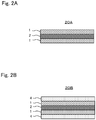
- a multilayer film for laser marking comprising: a layer (X) at least as an outermost layer, the layer (X) being made from a resin composition, the resin composition containing a bisphenol-based polycarbonate (A) and a polyester (B), the polyester (B) containing a compound of the following general formula (1) as a diol component, the resin composition containing the compound of the following general formula (1) in an amount of 0.1 to 20 mass%; and at least one layer (Y) made from a resin composition, the resin composition containing the bisphenol-based polycarbonate (A) and a laser beam energy absorber (C).
- the polyester (B) preferably contains an aromatic dicarboxylic acid as a major constituent of a dicarboxylic acid component in the polyester (B), and 1,4-butanediol in an amount of 50 mol% to 95 mol% on the basis of the total diol component.
- the layer (X) preferably contains a transesterification inhibitor.
- the present application discloses, as a second embodiment, a laminate for e-passports comprising the multilayer film for laser marking according to the first embodiment.
- the present application discloses, as a third embodiment, a laminate for plastic cards comprising the multilayer film for laser marking according to the first embodiment.
- a film for plastic cards comprising: a layer (X) at least as an outermost layer, the layer (X) being made from a resin composition, the resin composition containing a bisphenol-based polycarbonate (A) and a polyester copolymer (B), the polyester copolymer (B) including a UV absorbent group; and at least one layer (Y) made from a resin composition, the resin composition containing the bisphenol-based polycarbonate (A) and a laser beam energy absorber (C).
- the present application discloses, as a fifth embodiment, a plastic card comprising the film for plastic cards according to the fourth embodiment.
- a data sheet for e-passports comprising: at least one layer (X) made from a resin composition, the resin composition containing a bisphenol-based polycarbonate (A) and a polyester copolymer (B), the polyester copolymer (B) including a UV absorbent group; at least one layer (Y) made from a resin composition, the resin composition containing the bisphenol-based polycarbonate (A) and a laser beam energy absorber (C); and a hinge sheet layer (Z).
- the present application discloses, as a seventh embodiment, an e-passport comprising the data sheet for e-passports according to the sixth embodiment.
- the multilayer film for laser marking according to the present disclosure brings about laser marking performance without deterioration due to an ultraviolet absorber, and gives a maintained effect of absorbing ultraviolet rays, which make it possible to suppress fading of laser-marked personal names, symbols, letters and photographs (due to discoloration of a base material), and deterioration of the base material due to ultraviolet rays for a long time.
- This multilayer film can also suppress contamination of equipment in melt extrusion molding which is caused by volatilization of an ultraviolet absorber.
- the multilayer film for laser marking includes: a layer (X) at least as an outermost layer, the layer (X) being made from a resin composition (x) containing a bisphenol-based polycarbonate (A) and a polyester (B) containing a compound of the following general formula (1) as a diol component, the resin composition (x) containing the compound of the following general formula (1) in an amount of 0.1 to 20 mass%; and at least one layer (Y) made from a resin composition (y) containing the bisphenol-based polycarbonate (A) and a laser beam energy absorber (C).
- a layer (X) at least as an outermost layer the layer (X) being made from a resin composition (x) containing a bisphenol-based polycarbonate (A) and a polyester (B) containing a compound of the following general formula (1) as a diol component, the resin composition (x) containing the compound of the following general formula (1) in an amount of 0.1 to 20 mass%; and at least one layer (Y) made from
- the multilayer film according to the present disclosure including the layer (X) at least as an outermost layer thereof can suppress not only fading of the layer (Y) which laser marking is subjected to, and deterioration of the bisphenol-based polycarbonate in the layers (X) and (Y) due to ultraviolet rays, but also surface roughening due to foaming on a marked portion in laser marking, to suppress lowering of a contrast.
- the "diol component" of "containing a compound of the following general formula (1) as a diol component” means a diol component with which a dicarboxylic acid component forming the polyester (B) is polycondensed, and does not strictly mean that this component is a diol. Therefore, the compound of the formula (1) is a tetrol, but is regarded as a diol component according to the above meaning.
- Constants from the polycondensation of the compound of the formula (1) in an amount (mass%) within the foregoing range are present in the polyester (B).
- the resin composition (x) constituting the layer (X) of the multilayer film for laser marking according to the present disclosure is a resin composition having the bisphenol-based polycarbonate (A) and the polyester (B) containing the compound of the following general formula (1) as a diol component, the resin composition (x) containing the compound of the following general formula (1) in an amount of 0.1 to 20 mass%.
- a conventionally known method for giving the bisphenol-based polycarbonate (A) UV absorbance is a method of adding an ultraviolet absorber.
- equipment such as a T-die and rolls is contaminated by volatiles of the ultraviolet absorber in melt extrusion molding, which is problematic.
- the layer (X) containing an ultraviolet absorbing material and the layer (Y) containing the laser beam energy absorber are separated from each other, which prevents laser marking performance from lowering.
- the film obtained from the foregoing resin compositions is also applicable to any uses requiring optical properties because not contaminating equipment in melt extrusion molding, and having excellent UV absorbance and mechanical properties.
- the bisphenol-based polycarbonate (A) included in the resin composition (x) is such that at least 50 mol%, preferably at least 70 mol%, and preferably at least 90 mol% of the structural unit derived from a diol is bisphenol.
- the bisphenol-based polycarbonate (A) may be either a homopolymer or a copolymer.
- the bisphenol-based polycarbonate (A) may have a branching structure, or may have a linear chain structure, or may be any mixture of a branching structure and a linear chain structure.
- Any known method such as the phosgene method, the transesterification method and the pyridine method may be used as the method of producing the bisphenol-based polycarbonate (A), which is used in the present application.
- the method of producing a polycarbonate resin by the transesterification method will be described below.
- the transesterification method is a production method of adding bisphenol and a carbonate diester to a basic catalyst, and further adding an acidic substance that neutralizes this basic catalyst, to perform melt transesterification polycondensation.
- bisphenol 2,2-bis(4-hydroxyphenyl)propane, that is, bisphenol A is preferably used. Part or the entire of bisphenol A may be replaced with any other bisphenol.
- bisphenol examples include 2,2-bis(4-hydroxyphenyl)propane (bisphenol A), 1,1-bis(4-hydroxyphenyl)-1-phenylethane (bisphenol AP), 2,2-bis(4-hydroxyphenyl)hexafluoropropane (bisphenol AF), 2,2-bis(4-hydroxyphenyl)butane (bisphenol B), bis(4-hydroxyphenyl)diphenylmethane (bisphenol BP), 2,2-bis(3-methyl 4-hydroxyphenyl)propane (bisphenol C), 1,1-bis(4-hydroxyphenyl)ethane(bisphenol E), 2,2-bis(4-hydroxy-3-isopropylphenyl)propane (bisphenol G), 1,3-bis(2-(4-hydroxyphenyl)-2-propyl)benzene (bisphenol M), bis(4-hydroxyphenyl)sulfone (bisphenol S), 1,4-bis(2-(4-hydroxyphenyl)-2-propyl)benzene (bisphenol
- carbonate diesters include diphenyl carbonate, ditolyl carbonate, bis(chlorophenyl) carbonate, m-cresyl carbonate, dinaphthyl carbonate, bis(biphenyl) carbonate, diethyl carbonate, dimethyl carbonate, dibutyl carbonate, and dicyclohexyl carbonate.
- diphenyl carbonate is particularly preferably used.
- the weight average molecular weight of the bisphenol-based polycarbonate (A) used in the present application is usually 10,000 to 100,000, and preferably 30,000 to 80,000 in view of a balance between mechanical properties and moldability.
- only one bisphenol-based polycarbonate may be used alone, or two or more bisphenol-based polycarbonates may be used in combination as the bisphenol-based polycarbonate (A).
- the polyester (B) included in the resin composition (x) is a polyester containing the compound of the following general formula (1) as a diol component.
- the resin composition (x) has UV absorbance since this polyester (B) has a benzotriazole group.
- the content of the compound represented by the above general formula (1), which has benzotriazole is preferably 5 to 20 mol% on the basis of the total diol component. When this content is at least 5 mol%, sufficient UV absorbance can be given to the film. When this content is at most 20 mol%, the mechanical strength of the film can be improved.
- the content of the compound of the formula (1), which has benzotriazole, within the foregoing range leads to miscibility and transparency of the resin composition (x) obtained by mixing the bisphenol-based polycarbonate (A) and the polyester (B).
- the polyester (B) contains an aromatic dicarboxylic acid as a major constituent of the dicarboxylic acid component, and contains 1,4-butanediol in an amount of 50 mol% to 95 mol% on the basis of the total diol component.
- the major constituent of the dicarboxylic acid component forming the polyester (B) is an aromatic dicarboxylic acid.
- the major constituent means that at least 90 mol%, preferably at least 92 mol%, preferably at least 95 mol%, and preferably all (100 mol%) of the dicarboxylic acid component is an aromatic dicarboxylic acid.
- aromatic dicarboxylic acid examples include terephthalic acid, isophthalic acid, phthalic acid, 2,6-naphthalenedicarboxylic acid, 2,7-naphthalenedicarboxylic acid, 1,5-naphthalenedicarboxylic acid, and 1,4-naphthalenedicarboxylic acid.
- aromatic dicarboxylic acids may be used alone, or two or more thereof may be used in combination as necessary.
- terephthalic acid may be most preferably used in view of transparency of the resin composition to be obtained.
- at least 90 mol%, preferably at least 92 mol%, preferably at least 95 mol%, and preferably all (100 mol%) of the dicarboxylic acid component is terephthalic acid.
- dicarboxylic acids other than aromatic dicarboxylic acids include aliphatic carboxylic acids such as succinic acid, adipic acid, and sebacic acid. These dicarboxylic acids may be used in an amount of less than 5 mol% on the basis of the total dicarboxylic acid component. One dicarboxylic acid may be used alone, or two or more of dicarboxylic acids may be used in combination as necessary.
- the polyester (B) preferably contains 1,4-butanediol as a diol component other than the compound represented by the general formula (1) which is described above.
- the content of 1,4-butanediol is preferably 50 mol% to 95 mol%, and preferably 60 to 95 mol%, on the basis of the total diol component. When the content of 1,4-butanediol is less than 50 mol%, it is concerned that the resin may be colored.
- diol components other than 1,4-butanediol examples include 1,3-propanediol, 1,2-butanediol, 1,6-hexanediol, neopentyl glycol, 2-butyl-2-ethyl-1,3-propanediol, 1,4-cyclohexanedimethanol, and diethylene glycol. One of them may be used alone, or two or more of them may be used in combination as necessary.
- the method of producing the polyester (B) is not particularly limited, and can be carried out according to any known method.
- the composition ratio (mass ratio) of the bisphenol-based polycarbonate (A) and the polyester (B) in the resin composition (x) is not particularly limited as long as the compound represented by the general formula (1) is contained in an amount of 0.1 to 20% mass%.
- the proportion of the incorporated polyester (B) is preferably within the range of 1 to 45 mass%, preferably within the range of 3 to 40 mass%, and preferably within the range of 5 to 35 mass%, on the basis of the resin composition (x).
- the proportion of the incorporated polyester (B) within such a range, and the proportion of the compound represented by the general formula (1) within the range of 0.1 to 20 mass% lead to the resin composition (x) excellent in heat resistance and UV absorbance.
- the resin composition (x) contains the compound represented by the general formula (1) in an amount of 0.1 to 20 mass% on the basis of the resin composition (x) (100 mass%).
- the lower limit of the content is preferably at least 0.5 mass%, preferably at least 1 mass%, preferably at least 5 mass%, and preferably at least 7 mass%.
- the upper limit of the content is preferably at most 20 mass%, preferably at most 18 mass%, and preferably at most 15 mass%.
- the content is at least 0.1 mass%, the UV absorbance of the resin composition (x) is excellent.
- the heat resistance is good.
- the content of the compound represented by the general formula (1) is calculated from the mass ratio of the polyester (B) in the resin composition (x) forming the layer (X), and the mass ratio of the polymerized unit of the compound of the formula (1) in the polyester (B). Since the compound of the formula (1) is present in the polyester (B) in a polycondensed state, the mass ratio of the polymerized unit of the compound of the formula (1) is calculated as this fact is taken into account.
- the resin composition (x) further contains a transesterification inhibitor in view of suppression of sheet foaming due to hydrolysis.
- a transesterification inhibitor for example, a phenolic antioxidant, a phosphoric antioxidant, or a sulfuric antioxidant may be used.
- phosphoric antioxidants include alkyl acid phosphates.
- a transesterification inhibitor is preferably contained in an amount of 0.01 to 1 mass%, and preferably 0.04 to 0.5 mass%, on the basis of the resin composition (x) (100 mass%).
- the resin composition (y) constituting the layer (Y) of the multilayer film for laser marking according to the present disclosure is a resin composition containing the bisphenol-based polycarbonate (A) and the laser beam energy absorber (C).
- the bisphenol-based polycarbonate (A) in the resin composition (y) constituting the layer (Y) is the same as the bisphenol-based polycarbonate (A) in the layer (X).
- the laser beam energy absorber (C) is incorporated into the bisphenol-based polycarbonate (A) in the resin composition (y) constituting the layer (Y).
- the proportion of the incorporated laser beam energy absorber (C) is preferably 0.0005 to 1 mass% on the basis of the resin composition (y) constituting the layer (Y).
- the proportion of the incorporated laser beam energy absorber (C) within such a range leads to excellent chromogenicity in laser marking, and a sharp contrast between a base color and marked parts, so that clear letters, symbols and images are obtained.
- the lower limit of the proportion of the incorporated laser beam energy absorber (C) is preferably at least 0.0007 mass%, and preferably at least 0.001 mass%.
- the upper limit is preferably at most 0.9 mass%, and preferably at most 0.8 mass%.
- the laser beam energy absorber at least one selected from the group consisting of carbon black, titanium black, metal oxides, composite metal oxides, metal sulfides, metal nitrides, metal oxalates and metal carbonates is given.
- the average particle diameter of the laser beam energy absorber is preferably within the range of 10 nm to 10 ⁇ m. This average particle diameter within such a range can give excellent laser marking performance.
- the lower limit of the average particle diameter of the laser beam energy absorber is preferably at least 15 nm, and preferably at least 20 nm.
- the upper limit is preferably at most 5 ⁇ m, and preferably at most 3 ⁇ m.
- a metal oxide used as the laser beam energy absorber include zinc oxide, magnesium oxide, aluminum oxide, iron oxide, titanium dioxide, silicon dioxide, antimony trioxide, tin oxide, copper oxide, manganese dioxide, cobalt oxide, vanadium oxide, bismuth oxide, molybdenum oxide, ruthenium oxide, tungsten oxide, palladium oxide and silver oxide.
- a composite metal oxide ITO, ATO, AZO, a bismuth-neodymium metal oxide, or the like can be given.
- a metal sulfide include zinc sulfide and cadmium sulfide.
- a metal nitride include titanium nitride.
- metal oxalates examples include magnesium oxalate and copper oxalate.
- metal carbonates include basic copper carbonate. Among them, in view of chromogenicity, preferably, carbon black, a metal oxide or a composite metal oxide is used alone or they are used in combination.
- the resin composition (x) and the resin composition (y) are allowed to include any resin other than the bisphenol-based polycarbonate (A) and the polyester (B) as long as the effect of the multilayer film according to the present disclosure is not ruined.
- polystyrene-based resins polystyrene-based resins, polyvinyl chloride-based resins, polyvinylidene chloride-based resins, chlorinated polyethylene-based resins, polyester-based resins different from the polyester (B), polyamide-based resins, polyacetal-based resins, acrylic resins, ethylene vinyl acetate copolymers, polymethylpentene-based resins, polyvinyl alcohol-based resins, cyclic olefin-based resins, polylactic acid-based resins, polybutylene succinate-based resins, polyacrylonitrile-based resins, polyethylene oxide-based resins, cellulose-based resins, polyimide-based resins, polyurethane-based resins, polyphenylene sulfide-based resins, polyphenylene ether-based resins, polyvinyl acetal-based resins, polybutadiene-based resins, polybutene-based resins, polyamideimide-based resin
- the resin composition (x) and the resin composition (y) may suitably include generally incorporated additives in addition to the foregoing constituents as long as the effect of the multilayer film according to the present disclosure is not greatly inhibited.
- additives recycled resins generated from loss of trimmings etc., inorganic particles such as silica, talc, kaolin and calcium carbonate, pigments such as titanium oxide and carbon black, additives such as flame retardants, weathering stabilizers, heat stabilizers, antistatic agents, melt viscosity modifiers, crosslinking agents, glidant, nucleating agents, plasticizers, antioxidants, neutralizing agents, antifogging agents, anti-blocking agents, slip agents, and colorants which are added for the purpose of improving and adjusting moldability, productivity, and various physical properties of a porous film, are given.
- the resin composition (y) constituting the layer (Y) may contain an ultraviolet protector.
- the content thereof is preferably at most 0.7 mass%, and preferably at most 0.5 mass%, on the basis of the resin composition (y) (as 100 mass%).
- the resin composition (y) containing an ultraviolet protector in an amount of at most 0.7 mass% may prevent laser chromogenicity from deteriorating.
- the ratio of the proportion of an ultraviolet absorber contained in the layer (Y) (mass%) to the proportion of the compound of the general formula (1) contained in the layer (X) (mass%), that is, "ultraviolet absorber in the layer (Y) (mass%)"/"compound of the general formula (1) in the layer (X) (mass%)" is preferably at most 0.78, and preferably at most 0.56.
- Examples of the method of molding the multilayer film for laser marking according to the present disclosure include a method of carrying out melt extrusion molding on a resin composition constituting each layer so that the compositions have desired thicknesses, and layering the compositions; a method of forming each layer in the form of a film having a desired thickness, and laminating the layers; and a method of carrying out melt extrusion to form a plurality of layers, and laminating a separately formed film onto the layers.
- the method of melt extrusion molding and then layering is preferable.
- resin compositions constituting layers are respectively prepared, or pelletized as necessary, to be put into hoppers of a multilayer T-die extruder to which a common T-die is linked.
- the multilayer film for laser marking according to the present disclosure can be formed by any known method but is not limitedly formed by any of the above methods.
- the thickness of the multilayer film for laser marking is preferably 1 to 50 ⁇ m.
- the thickness of the layer (X) within such a range makes it possible to suppress fading of laser-marked personal names, symbols, letters and photographs (due to discoloration of a base material), and deterioration of the base material due to ultraviolet rays for a long time.
- the lower limit of the thickness of the layer (X) is preferably at least 2 ⁇ m, and preferably at least 3 ⁇ m.
- the upper limit is preferably at most 45 ⁇ m, and preferably at most 40 ⁇ m.
- the thickness of the layer (Y) is preferably 10 to 200 ⁇ m.
- the thickness of the layer (Y) within such a range can lead to laser marking excellent in chromogenicity.
- the lower limit of the thickness of the layer (Y) is preferably at least 20 ⁇ m, and preferably at least 30 ⁇ m.
- the upper limit is preferably at most 180 ⁇ m, and preferably at most 160 ⁇ m.
- the multilayer film for laser marking according to this disclosure is irradiated with laser beam energy to develop colors.
- laser beam energy gas lasers such as He-Ne lasers, Ar lasers, CO 2 lasers and excimer lasers, solid-state lasers such as YAG lasers and Nd:YVO 4 lasers, semiconductor lasers, and dye lasers are given. Among them, YAG lasers and Nd:YVO 4 lasers are preferable.
- the laser beam may be in a single mode, or may be in a multi mode. Not only a laser beam having a narrowed beam diameter such as 20-40 ⁇ m, but also a laser beam having a wide beam diameter such as 80-100 ⁇ m may be used.
- a single mode laser beam having a beam diameter of 20-40 ⁇ m is preferable because capable of making the contrast between marked and color-developed parts and the base at least three, to offer a marking quality with a clear contrast.
- the multilayer film for laser marking according to the present disclosure may be preferably used as a surface material of ID cards and e-passports.
- the laminate for e-passports according to the present disclosure includes the foregoing multilayer film for laser marking.
- the laminate for e-passports according to the present disclosure preferably includes the multilayer film for laser marking as a surface material.
- At least one sheet is layered by melt extrusion molding, to form the sheet for a core 2.
- the major constituent of the sheet for a core 2 is a polycarbonate resin.
- the sheet for a core 2 contains at least 1 mass% of a colorant on the basis of the polycarbonate resin as 100 mass%.
- the total thickness of the sheet for a core 2 is preferably 50 to 200 ⁇ m.
- As the colorant in the sheet for a core titanium oxide, barium oxide and zinc oxide as a white pigment, iron oxide and titanium yellow as a yellow pigment, iron oxide as a red pigment, and cobalt blue and ultramarine as a blue pigment are given.
- a pigment having a pale coloring or a light-colored pigment is preferable.
- a colorant for resins such as white dye and pigment which lead to a sharp contrast is more preferably added.
- the hinge sheet 3 in the laminate for e-passports is a sheet playing a role in order that a cover, other visa pages, etc. of a passport with which the following are integrated are firmly bound: (1) letters, figures, symbols, or information written in the multi-layer film for laser marking by laser marking; (2) information such as images and letters marked on the sheet for a core by marking or the like; and (3) various pieces of information stored in a storage medium such as an IC chip which is disposed in a so-called inlet sheet that is a sheet in which, for example, a storage medium such as an IC chip storing various pieces of information etc. is disposed (the inlet sheet is arranged as the sheet for a core 2).
- this hinge sheet 3 may be required to have excellent tear and tensile strength at a portion thereof bound using the sewing machine, and lightfastness and heat resistance at a hinge portion thereof.
- the hinge sheet 3 may be further required to be excellent in resistance to repeated bending, in other words, in hinge properties. Therefore, any of the following materials is preferably used as the hinge sheet 3 matching such purposes.
- the hinge sheet 3 playing such a role is preferably made as a sheet formed of at least one selected from a thermoplastic polyester resin, a thermoplastic polyester elastomer, a thermoplastic polyamide resin, a thermoplastic polyamide elastomer, a thermoplastic polyurethane resin, and a thermoplastic polyurethane elastomer.
- the hinge sheet 3 is preferably formed as a fabric of a polyester resin and/or a polyamide resin, or a laminate sheet made of a sheet formed of the fabric and at least one selected from a thermoplastic polyester resin, a thermoplastic polyester elastomer, a thermoplastic polyamide resin, a thermoplastic polyamide elastomer, a thermoplastic polyurethane resin, and a thermoplastic polyurethane elastomer.
- the protective layer 4 may be a layer for suppressing so-called "blistering" that is foaming on a laser-marked portion due to laser beam energy irradiation.
- the laminate for plastic cards according to the present disclosure includes the foregoing multilayer film for laser marking.
- the laminate for plastic cards according to the present disclosure preferably includes the multilayer film for laser marking as a surface material.
- Examples of plastic cards include an ID card, a cash card, a credit card and a tag.
- a three-layer laminate 20A formed of multilayer film for laser marking 1/sheet for a core 2/multilayer film for laser marking 1 shown in Fig. 2A , or a five-layer laminate 20B formed of protective layer 4/multilayer film for laser marking 1/sheet for a core for 2/ multilayer film for laser marking 1/protective layer 4 shown in Fig. 2B is preferable.
- the sheet for a core 2 in the laminate for plastic cards is the same as the foregoing except that the total thickness thereof is preferably 400 to 700 ⁇ m.
- the protective layer 4 is the same as the foregoing.
- the film for plastic cards according to the present disclosure includes: a layer (X) at least as an outermost layer, the layer (X) being made from a resin composition (x) containing the bisphenol-based polycarbonate (A) and a polyester copolymer (B), the polyester copolymer (B) including a UV absorbent group; and at least one layer (Y) made from the resin composition (y) containing the bisphenol-based polycarbonate (A) and the laser beam energy absorber (C).
- Bisphenol-based polycarbonate (A) is the same as that in the foregoing multilayer film for laser marking.
- the polyester copolymer (B) including a UV absorbent group is not particularly limited as long as a UV absorbent group is included in the structure of the polyester copolymer.
- a UV absorbent group a benzotriazole group, a benzophenone group, a salicylate group, an oxanilide group, a diphenylcyanoacrylate group, a triazine group, a salicylic acid group, a cyanoacrylate group, etc. are given.
- the UV absorbent group may be preferably a benzotriazole group, a benzophenone group, or a triazine group; and may be preferably a benzotriazole group.
- the UV absorbent group may be preferably a residue from the polycondensation of the compound of the general formula (1) having a benzotriazole group.
- the resin composition (x) may be preferably the same as the resin composition (x) constituting the layer (X) of the foregoing multilayer film for laser marking.
- the laser beam energy absorber (C) is the same as that in the multilayer film for laser marking.
- the resin composition (y) may be preferably the same as the resin composition (y) forming the layer (Y) of the multilayer film for laser marking.
- the plastic card according to the present disclosure includes the foregoing film for plastic cards.
- the plastic card according to the present disclosure preferably includes the film for plastic cards as a surface material.
- Examples of the plastic card include an ID card, a cash card, a credit card and a tag.
- the structure of the plastic card is the same as that in the foregoing laminate for plastic cards.
- the data sheet for e-passports includes: at least one layer (X) made from a resin composition (x), the resin composition (x) containing the bisphenol-based polycarbonate (A) and the polyester copolymer (B), the polyester copolymer (B) including a UV absorbent group; at least one layer (Y) made from the resin composition (y) containing the bisphenol-based polycarbonate (A) and the laser beam energy absorber (C); and a hinge sheet layer (Z).
- the layer (X) and the layer (Y) are the same as those in the foregoing film for plastic cards.
- "Hinge sheet layer (Z)” is the same as “hinge sheet” in the foregoing laminate for e-passports.
- the structure of the data sheet for e-passports other than the foregoing is not particularly limited.
- the data sheet for e-passports may have the same structure as the foregoing laminate for e-passports, and further specifically, may have the structure shown in Fig. 1A or 1B .
- the e-passport according to the present disclosure includes the foregoing data sheet for e-passports. Specifically, the e-passport according to the present disclosure further includes a cover, visa pages, etc. for passports, and is such that the hinge sheet layer (Z) in the foregoing data sheet for e-passports and these pages, etc. are bound to be integrated.
- Marking was carried out on the films obtained in the examples and comparative examples by irradiation with a YAG laser beam for marking (1064 nm in wavelength) using CLM-20 manufactured by NIDEC COPAL CORPORATION. Marking was carried out at 64 ⁇ m/Step ⁇ 50%. The mark density in the obtained marked films was evaluated.
- the chromaticity of the films obtained in the examples and comparative examples was measured by a spectrophotometer manufactured by KONICA MINOLTA JAPAN, INC.
- the films were irradiated with ultraviolet rays for 100 hours using EYE SUPER UV TESTER SUV-W151 from IWASAKI ELECTRIC CO., LTD. under the conditions of: 75 mW/cm 2 in irradiation intensity; 53°C in irradiation temperature; and 50%RH in irradiation humidity.
- the L*a*b* values were measured in the same manner.
- the color difference ⁇ E between the chromaticity before and after the irradiation with ultraviolet rays was evaluated based on the following criteria. Table 1 also shows the obtained values of ⁇ E.
- the films obtained in the examples and comparative examples were irradiated with ultraviolet rays for 100 hours using EYE SUPER UV TESTER SUV-W151 from IWASAKI ELECTRIC CO., LTD. under the conditions of: 75 mW/cm 2 in irradiation intensity; 53°C in irradiation temperature; and 50% RH in irradiation humidity. Thereafter, the films were folded by hand and it was confirmed whether the films cracked.
- (A)-1 polycarbonate resin (polycarbonate by the interfacial polymerization method, weight average molecular weight: approximately 53000)
- (C)-1 bismuth-neodymium metal oxide (average particle size: 1 to 3 ⁇ m)
- (X)-1, (B)-1 and (D)-1 were dry-blended at a mass ratio of 69.955:30:0.045, to be extruded at 240°C as a first layer and a third layer (both outer layers) via a two-kinds three-layer multi-manifold type lip using an extruder.
- (Y) as the layer (Y), (A)-1 and (C)-1 blended at a mass ratio of 99.75:0.25 were extruded at 240°C as a second layer (middle layer) via a lip of the same type.
- a multilayer film was made in the same manner as in example 1 except that the mixing mass ratio of (A)-1, (B)-1 and (D)-1 for the first layer and the third layer in example 1 was changed to 93.955:6:0.045, to be evaluated. The results are shown in Table 1.
- a multilayer film was made in the same manner as in example 1 except that the mixing mass ratio of (A)-1, (B)-1 and (D)-1 for the first layer and the third layer in example 1 was changed to 96.955:3:0.045, to be evaluated. The results are shown in Table 1.
- a multilayer film was made in the same manner as in example 1 except that (B)-1 and (D)-1 for the first layer and the third layer were not blended, to be evaluated. The results are shown in Table 1.
- Tinuvin 1577 manufactured by BASF SE was used instead of (B)-1.
- (A)-1, (C)-1 and Tinuvin 1577 were blended at a mass ratio of 98.95:0.15:0.9 so that a film was made in the same manner as in comparative example 2, and the foregoing evaluations were each carried out thereon.
- the evaluation results are shown in Table 1.
- the film of comparative example 2 which was a single-layer film containing the polycarbonate (A), the polyester (B) and the laser beam energy absorber (C), was inferior in laser chromogenicity.
- the multilayer films of examples 1 to 3 were superior in laser chromogenicity, resistance to discoloration due to ultraviolet rays, and ultraviolet durability, and further, did not lead to contamination of equipment. These results show that the multilayer film for laser marking according to the present disclosure is preferably used as an e-passport or an ID card that is required to have good laser chromogenicity in order to prevent forgery, and is required to have ultraviolet durability in order to enable long-term use.
Landscapes
- Chemical & Material Sciences (AREA)
- Health & Medical Sciences (AREA)
- Chemical Kinetics & Catalysis (AREA)
- Medicinal Chemistry (AREA)
- Polymers & Plastics (AREA)
- Organic Chemistry (AREA)
- Engineering & Computer Science (AREA)
- Manufacturing & Machinery (AREA)
- Physics & Mathematics (AREA)
- Electromagnetism (AREA)
- General Health & Medical Sciences (AREA)
- Toxicology (AREA)
- Laminated Bodies (AREA)
- Compositions Of Macromolecular Compounds (AREA)
- Credit Cards Or The Like (AREA)
- Thermal Transfer Or Thermal Recording In General (AREA)
Abstract
Description
- The present application relates to a multilayer film for laser marking which is used for ID cards, e-passports, etc., and a laminate for e-passports and a laminate for plastic cards which include the multilayer film; and relates to a film for plastic cards, and a plastic card including this film, and a data sheet for e-passports, and an e-passport including the sheet.
- Activating personnel's movement accompanying developing international exchanges makes a passport in which personal information is recorded more important as a means of identifying an individual to prove the identity. Especially, a passport is playing a role of so-called identification (such as identify papers) issued by a state that is a public entity at the same time, and has reliability.
- In particular, after the September 11 attacks in September 2001, a specialized agency of the United Nations, ICAO (International Civil Aviation Organization) established standards for stricter immigration and departure controls in each country, so that the introduction of an e-passport has been begun, which places importance on forgery prevention. Thus, interest in techniques of laser-marking personal names, symbols, letters, photographs, etc. has been increasing.
- Such an e-passport makes it possible to identify and prove an individual. Therefore, if a third party other than states (or agencies for the state) can easily, e.g., alter or forge personal information, the reliability as identification decreases, and further, the development of international exchanges and global personnel's movement may be hindered.
- An important problem with the foregoing e-passport is then how to prevent alteration or forgery. It is also important how in sharp contrast and how clear personal names, symbols, letters, photographs, etc. can be displayed since a standardized e-passport has a light, thin, short and small size. The market much expects achievement of a clear display in sharp contrast as well because achievement thereof leads to prevention of alteration, forgery, etc.
- For such a problem, the technique of laser-marking personal names, symbols, letters, photographs, etc., specifically, a multilayer film for laser marking is attracting interest. However, personal names, symbols, letters, photographs, etc. marked by laser marking may fade due to ultraviolet rays, which may lead to disappearance of information for identifying an individual during long-term storage. "Fade" here means that discoloration of a base material gradually makes laser-marked information unclear. It may be difficult to use a passport for a long time according to conditions of storage or use of the passport since a polycarbonate resin that is generally used as a base material for passports to be laser-marked in view of heat resistance and impact resistance easily deteriorates due to ultraviolet rays.
- A well-known method for solving such a problem is a method of adding a benzophenone-type ultraviolet absorber, a benzotriazole-type ultraviolet absorber, or a triazine-type ultraviolet absorber to a polycarbonate resin which is disclosed in
Patent Literatures Non Patent Literature 1.Patent Literature 3 discloses a film for laser marking where such an ultraviolet absorber is formulated. -
Patent Literature 4 discloses the structure and production method on a passport. -
- [PTL 1]
JP H6-64123 A - [PTL 2]
JP H10-17556 A - [PTL 3]
JP 2018-0591101 A - [PTL 4]
JP 5367945 2 B2 - [PTL 5]
JP 3845213 3 B - [NPL 1] Honma, Seiichi ed. (August 28, 1992). Porikabonetojyushi-Handobukku. THE NIKKAN KOGYO SHIMBUN, LTD.
- When an ultraviolet absorber is added to a polycarbonate resin as disclosed in the above literatures, improvements in hues etc. after ultraviolet irradiation are recognized, but, for example, as described in Patent Literature 5, a T-die, rolls, etc. are contaminated by volatiles of the ultraviolet absorber in melt extrusion molding, which is problematic.
- Addition of an ultraviolet absorber to a polycarbonate resin containing a laser beam energy absorber results in a poor laser marking performance to bring about an unclear display, which is also problematic.
- An object of the present application is to solve the foregoing problems to provide a multilayer film for laser marking which does not contaminate equipment such as a T-die and rolls in melt extrusion molding, and brings about good laser marking performance, and where laser-marked information does not fade (due to discoloration of a base material) even in long-term use, and the base material does not deteriorate.
- As a result of their intensive research to solve the foregoing problems, the inventors of the present invention have found that the foregoing problem can be solved, and then completed the following.
- The present application discloses, as a first embodiment, a multilayer film for laser marking, the multilayer film comprising: a layer (X) at least as an outermost layer, the layer (X) being made from a resin composition, the resin composition containing a bisphenol-based polycarbonate (A) and a polyester (B), the polyester (B) containing a compound of the following general formula (1) as a diol component, the resin composition containing the compound of the following general formula (1) in an amount of 0.1 to 20 mass%; and at least one layer (Y) made from a resin composition, the resin composition containing the bisphenol-based polycarbonate (A) and a laser beam energy absorber (C).

- In the first embodiment, the polyester (B) preferably contains an aromatic dicarboxylic acid as a major constituent of a dicarboxylic acid component in the polyester (B), and 1,4-butanediol in an amount of 50 mol% to 95 mol% on the basis of the total diol component.
- In the first embodiment, the layer (X) preferably contains a transesterification inhibitor.
- The present application discloses, as a second embodiment, a laminate for e-passports comprising the multilayer film for laser marking according to the first embodiment.
- The present application discloses, as a third embodiment, a laminate for plastic cards comprising the multilayer film for laser marking according to the first embodiment.
- The present application discloses, as a fourth embodiment, a film for plastic cards, the film comprising: a layer (X) at least as an outermost layer, the layer (X) being made from a resin composition, the resin composition containing a bisphenol-based polycarbonate (A) and a polyester copolymer (B), the polyester copolymer (B) including a UV absorbent group; and at least one layer (Y) made from a resin composition, the resin composition containing the bisphenol-based polycarbonate (A) and a laser beam energy absorber (C).
- The present application discloses, as a fifth embodiment, a plastic card comprising the film for plastic cards according to the fourth embodiment.
- The present application discloses, as a sixth embodiment, a data sheet for e-passports, the data sheet comprising: at least one layer (X) made from a resin composition, the resin composition containing a bisphenol-based polycarbonate (A) and a polyester copolymer (B), the polyester copolymer (B) including a UV absorbent group; at least one layer (Y) made from a resin composition, the resin composition containing the bisphenol-based polycarbonate (A) and a laser beam energy absorber (C); and a hinge sheet layer (Z).
- The present application discloses, as a seventh embodiment, an e-passport comprising the data sheet for e-passports according to the sixth embodiment.
- The multilayer film for laser marking according to the present disclosure brings about laser marking performance without deterioration due to an ultraviolet absorber, and gives a maintained effect of absorbing ultraviolet rays, which make it possible to suppress fading of laser-marked personal names, symbols, letters and photographs (due to discoloration of a base material), and deterioration of the base material due to ultraviolet rays for a long time. This multilayer film can also suppress contamination of equipment in melt extrusion molding which is caused by volatilization of an ultraviolet absorber.
-
-
Figs. 1A and 1B are both schematic views showing the structure of the layers of a laminate for e-passports (data sheet for e-passports); and -
Figs. 2A and 2B are both schematic views showing the structure of the layers of a laminate for plastic cards (plastic card). - Hereinafter, a multilayer film for laser marking, a laminate for e-passports, a laminate for plastic cards, a film for plastic cards, a plastic card, a data sheet for e-passports, and an e-passport according to the present disclosure will be described. The contents of the present application are not limited to the embodiments described below.
- Preferably, the multilayer film for laser marking according to the present disclosure includes: a layer (X) at least as an outermost layer, the layer (X) being made from a resin composition (x) containing a bisphenol-based polycarbonate (A) and a polyester (B) containing a compound of the following general formula (1) as a diol component, the resin composition (x) containing the compound of the following general formula (1) in an amount of 0.1 to 20 mass%; and at least one layer (Y) made from a resin composition (y) containing the bisphenol-based polycarbonate (A) and a laser beam energy absorber (C).
- The multilayer film according to the present disclosure including the layer (X) at least as an outermost layer thereof can suppress not only fading of the layer (Y) which laser marking is subjected to, and deterioration of the bisphenol-based polycarbonate in the layers (X) and (Y) due to ultraviolet rays, but also surface roughening due to foaming on a marked portion in laser marking, to suppress lowering of a contrast.
- Here, the "diol component" of "containing a compound of the following general formula (1) as a diol component" means a diol component with which a dicarboxylic acid component forming the polyester (B) is polycondensed, and does not strictly mean that this component is a diol. Therefore, the compound of the formula (1) is a tetrol, but is regarded as a diol component according to the above meaning.
- "Containing a compound of the following general formula (1) in an amount of 0.1 to 20 mass%" means that residues from the polycondensation of the compound of the formula (1) in an amount (mass%) within the foregoing range are present in the polyester (B).
- The resin composition (x) constituting the layer (X) of the multilayer film for laser marking according to the present disclosure is a resin composition having the bisphenol-based polycarbonate (A) and the polyester (B) containing the compound of the following general formula (1) as a diol component, the resin composition (x) containing the compound of the following general formula (1) in an amount of 0.1 to 20 mass%.

- A conventionally known method for giving the bisphenol-based polycarbonate (A) UV absorbance is a method of adding an ultraviolet absorber. In this method however, equipment such as a T-die and rolls is contaminated by volatiles of the ultraviolet absorber in melt extrusion molding, which is problematic.
- For the present application, it was found that not only the bisphenol-based polycarbonate (A) and the specific polyester (B) are miscible with each other in the resin composition, which results in excellent UV absorbance, but also the layer (X) containing an ultraviolet absorbing material and the layer (Y) containing the laser beam energy absorber are separated from each other, which prevents laser marking performance from lowering. The film obtained from the foregoing resin compositions is also applicable to any uses requiring optical properties because not contaminating equipment in melt extrusion molding, and having excellent UV absorbance and mechanical properties.
- The bisphenol-based polycarbonate (A) included in the resin composition (x) is such that at least 50 mol%, preferably at least 70 mol%, and preferably at least 90 mol% of the structural unit derived from a diol is bisphenol.
- The bisphenol-based polycarbonate (A) may be either a homopolymer or a copolymer. The bisphenol-based polycarbonate (A) may have a branching structure, or may have a linear chain structure, or may be any mixture of a branching structure and a linear chain structure.
- Any known method such as the phosgene method, the transesterification method and the pyridine method may be used as the method of producing the bisphenol-based polycarbonate (A), which is used in the present application. As an example, the method of producing a polycarbonate resin by the transesterification method will be described below.
- The transesterification method is a production method of adding bisphenol and a carbonate diester to a basic catalyst, and further adding an acidic substance that neutralizes this basic catalyst, to perform melt transesterification polycondensation.
- As a typical example of bisphenol, 2,2-bis(4-hydroxyphenyl)propane, that is, bisphenol A is preferably used. Part or the entire of bisphenol A may be replaced with any other bisphenol.
- Specific examples of bisphenol include 2,2-bis(4-hydroxyphenyl)propane (bisphenol A), 1,1-bis(4-hydroxyphenyl)-1-phenylethane (bisphenol AP), 2,2-bis(4-hydroxyphenyl)hexafluoropropane (bisphenol AF), 2,2-bis(4-hydroxyphenyl)butane (bisphenol B), bis(4-hydroxyphenyl)diphenylmethane (bisphenol BP), 2,2-bis(3-methyl 4-hydroxyphenyl)propane (bisphenol C), 1,1-bis(4-hydroxyphenyl)ethane(bisphenol E), 2,2-bis(4-hydroxy-3-isopropylphenyl)propane (bisphenol G), 1,3-bis(2-(4-hydroxyphenyl)-2-propyl)benzene (bisphenol M), bis(4-hydroxyphenyl)sulfone (bisphenol S), 1,4-bis(2-(4-hydroxyphenyl)-2-propyl)benzene (bisphenol P), 5,5'-(1-methylethylidene)-bis[1,1'-(bisphenyl)-2-ol]propane (bisphenol PH), 1,1-bis(4-hydroxyphenyl)3,3,5-trimethylcyclohexane (bisphenol TMC), and 1,1-bis(4-hydroxyphenyl)cyclohexane (bisphenol Z).
- Typical examples of carbonate diesters include diphenyl carbonate, ditolyl carbonate, bis(chlorophenyl) carbonate, m-cresyl carbonate, dinaphthyl carbonate, bis(biphenyl) carbonate, diethyl carbonate, dimethyl carbonate, dibutyl carbonate, and dicyclohexyl carbonate. Among them, diphenyl carbonate is particularly preferably used.
- The weight average molecular weight of the bisphenol-based polycarbonate (A) used in the present application is usually 10,000 to 100,000, and preferably 30,000 to 80,000 in view of a balance between mechanical properties and moldability. In the present application, only one bisphenol-based polycarbonate may be used alone, or two or more bisphenol-based polycarbonates may be used in combination as the bisphenol-based polycarbonate (A).
- The polyester (B) included in the resin composition (x) is a polyester containing the compound of the following general formula (1) as a diol component. The resin composition (x) has UV absorbance since this polyester (B) has a benzotriazole group.

- The content of the compound represented by the above general formula (1), which has benzotriazole, is preferably 5 to 20 mol% on the basis of the total diol component. When this content is at least 5 mol%, sufficient UV absorbance can be given to the film. When this content is at most 20 mol%, the mechanical strength of the film can be improved.
- The content of the compound of the formula (1), which has benzotriazole, within the foregoing range leads to miscibility and transparency of the resin composition (x) obtained by mixing the bisphenol-based polycarbonate (A) and the polyester (B).
- The dicarboxylic acid component and the diol component forming the polyester (B) will be described in detail. Preferably, the polyester (B) contains an aromatic dicarboxylic acid as a major constituent of the dicarboxylic acid component, and contains 1,4-butanediol in an amount of 50 mol% to 95 mol% on the basis of the total diol component.
- The major constituent of the dicarboxylic acid component forming the polyester (B) is an aromatic dicarboxylic acid. Here, the major constituent means that at least 90 mol%, preferably at least 92 mol%, preferably at least 95 mol%, and preferably all (100 mol%) of the dicarboxylic acid component is an aromatic dicarboxylic acid.
- Examples of an aromatic dicarboxylic acid include terephthalic acid, isophthalic acid, phthalic acid, 2,6-naphthalenedicarboxylic acid, 2,7-naphthalenedicarboxylic acid, 1,5-naphthalenedicarboxylic acid, and 1,4-naphthalenedicarboxylic acid. One of these aromatic dicarboxylic acids may be used alone, or two or more thereof may be used in combination as necessary.
- Among them, terephthalic acid may be most preferably used in view of transparency of the resin composition to be obtained. Preferably at least 90 mol%, preferably at least 92 mol%, preferably at least 95 mol%, and preferably all (100 mol%) of the dicarboxylic acid component is terephthalic acid.
- Examples of dicarboxylic acids other than aromatic dicarboxylic acids include aliphatic carboxylic acids such as succinic acid, adipic acid, and sebacic acid. These dicarboxylic acids may be used in an amount of less than 5 mol% on the basis of the total dicarboxylic acid component. One dicarboxylic acid may be used alone, or two or more of dicarboxylic acids may be used in combination as necessary.
- The polyester (B) preferably contains 1,4-butanediol as a diol component other than the compound represented by the general formula (1) which is described above. The content of 1,4-butanediol is preferably 50 mol% to 95 mol%, and preferably 60 to 95 mol%, on the basis of the total diol component. When the content of 1,4-butanediol is less than 50 mol%, it is concerned that the resin may be colored.
- Examples of diol components other than 1,4-butanediol include 1,3-propanediol, 1,2-butanediol, 1,6-hexanediol, neopentyl glycol, 2-butyl-2-ethyl-1,3-propanediol, 1,4-cyclohexanedimethanol, and diethylene glycol. One of them may be used alone, or two or more of them may be used in combination as necessary.
- The method of producing the polyester (B) is not particularly limited, and can be carried out according to any known method.
- The composition ratio (mass ratio) of the bisphenol-based polycarbonate (A) and the polyester (B) in the resin composition (x) is not particularly limited as long as the compound represented by the general formula (1) is contained in an amount of 0.1 to 20% mass%. In order not to deteriorate the heat resistance of the bisphenol-based polycarbonate (A), the proportion of the incorporated polyester (B) is preferably within the range of 1 to 45 mass%, preferably within the range of 3 to 40 mass%, and preferably within the range of 5 to 35 mass%, on the basis of the resin composition (x). The proportion of the incorporated polyester (B) within such a range, and the proportion of the compound represented by the general formula (1) within the range of 0.1 to 20 mass% lead to the resin composition (x) excellent in heat resistance and UV absorbance.
- The resin composition (x) contains the compound represented by the general formula (1) in an amount of 0.1 to 20 mass% on the basis of the resin composition (x) (100 mass%). The lower limit of the content is preferably at least 0.5 mass%, preferably at least 1 mass%, preferably at least 5 mass%, and preferably at least 7 mass%. The upper limit of the content is preferably at most 20 mass%, preferably at most 18 mass%, and preferably at most 15 mass%. When the content is at least 0.1 mass%, the UV absorbance of the resin composition (x) is excellent. When the content is at most 20 mass%, the heat resistance is good.
- The content of the compound represented by the general formula (1) is calculated from the mass ratio of the polyester (B) in the resin composition (x) forming the layer (X), and the mass ratio of the polymerized unit of the compound of the formula (1) in the polyester (B). Since the compound of the formula (1) is present in the polyester (B) in a polycondensed state, the mass ratio of the polymerized unit of the compound of the formula (1) is calculated as this fact is taken into account.
- Preferably, the resin composition (x) further contains a transesterification inhibitor in view of suppression of sheet foaming due to hydrolysis. As a transesterification inhibitor, for example, a phenolic antioxidant, a phosphoric antioxidant, or a sulfuric antioxidant may be used. Examples of phosphoric antioxidants include alkyl acid phosphates.
- A transesterification inhibitor is preferably contained in an amount of 0.01 to 1 mass%, and preferably 0.04 to 0.5 mass%, on the basis of the resin composition (x) (100 mass%).
- The resin composition (y) constituting the layer (Y) of the multilayer film for laser marking according to the present disclosure is a resin composition containing the bisphenol-based polycarbonate (A) and the laser beam energy absorber (C).
- The bisphenol-based polycarbonate (A) in the resin composition (y) constituting the layer (Y) is the same as the bisphenol-based polycarbonate (A) in the layer (X).
- Preferably, the laser beam energy absorber (C) is incorporated into the bisphenol-based polycarbonate (A) in the resin composition (y) constituting the layer (Y). The proportion of the incorporated laser beam energy absorber (C) is preferably 0.0005 to 1 mass% on the basis of the resin composition (y) constituting the layer (Y). The proportion of the incorporated laser beam energy absorber (C) within such a range leads to excellent chromogenicity in laser marking, and a sharp contrast between a base color and marked parts, so that clear letters, symbols and images are obtained. The lower limit of the proportion of the incorporated laser beam energy absorber (C) is preferably at least 0.0007 mass%, and preferably at least 0.001 mass%. The upper limit is preferably at most 0.9 mass%, and preferably at most 0.8 mass%.
- As the laser beam energy absorber, at least one selected from the group consisting of carbon black, titanium black, metal oxides, composite metal oxides, metal sulfides, metal nitrides, metal oxalates and metal carbonates is given. In order to maintain the transparency of the bisphenol-based polycarbonate (A), the average particle diameter of the laser beam energy absorber is preferably within the range of 10 nm to 10 µm. This average particle diameter within such a range can give excellent laser marking performance. The lower limit of the average particle diameter of the laser beam energy absorber is preferably at least 15 nm, and preferably at least 20 nm.
- The upper limit is preferably at most 5 µm, and preferably at most 3 µm.
- Specific examples of a metal oxide used as the laser beam energy absorber include zinc oxide, magnesium oxide, aluminum oxide, iron oxide, titanium dioxide, silicon dioxide, antimony trioxide, tin oxide, copper oxide, manganese dioxide, cobalt oxide, vanadium oxide, bismuth oxide, molybdenum oxide, ruthenium oxide, tungsten oxide, palladium oxide and silver oxide. As a composite metal oxide, ITO, ATO, AZO, a bismuth-neodymium metal oxide, or the like can be given. Specific examples of a metal sulfide include zinc sulfide and cadmium sulfide. Examples of a metal nitride include titanium nitride. Examples of metal oxalates include magnesium oxalate and copper oxalate. Examples of metal carbonates include basic copper carbonate. Among them, in view of chromogenicity, preferably, carbon black, a metal oxide or a composite metal oxide is used alone or they are used in combination.
- In the present application, the resin composition (x) and the resin composition (y) are allowed to include any resin other than the bisphenol-based polycarbonate (A) and the polyester (B) as long as the effect of the multilayer film according to the present disclosure is not ruined.
- As such other resins, polystyrene-based resins, polyvinyl chloride-based resins, polyvinylidene chloride-based resins, chlorinated polyethylene-based resins, polyester-based resins different from the polyester (B), polyamide-based resins, polyacetal-based resins, acrylic resins, ethylene vinyl acetate copolymers, polymethylpentene-based resins, polyvinyl alcohol-based resins, cyclic olefin-based resins, polylactic acid-based resins, polybutylene succinate-based resins, polyacrylonitrile-based resins, polyethylene oxide-based resins, cellulose-based resins, polyimide-based resins, polyurethane-based resins, polyphenylene sulfide-based resins, polyphenylene ether-based resins, polyvinyl acetal-based resins, polybutadiene-based resins, polybutene-based resins, polyamideimide-based resins, polyamide bismaleimide-based resins, polyetherimide-based resins, polyether ether ketone-based resins, polyetherketone-based resins, polyethersulfone-based resins, polyketone-based resins, polysulfone-based resins, aramid-based resins, fluorine-based resins, etc. are given.
- In the present application, the resin composition (x) and the resin composition (y) may suitably include generally incorporated additives in addition to the foregoing constituents as long as the effect of the multilayer film according to the present disclosure is not greatly inhibited. As such additives, recycled resins generated from loss of trimmings etc., inorganic particles such as silica, talc, kaolin and calcium carbonate, pigments such as titanium oxide and carbon black, additives such as flame retardants, weathering stabilizers, heat stabilizers, antistatic agents, melt viscosity modifiers, crosslinking agents, glidant, nucleating agents, plasticizers, antioxidants, neutralizing agents, antifogging agents, anti-blocking agents, slip agents, and colorants which are added for the purpose of improving and adjusting moldability, productivity, and various physical properties of a porous film, are given.
- The resin composition (y) constituting the layer (Y) may contain an ultraviolet protector. When the resin composition (y) contains an ultraviolet protector, the content thereof is preferably at most 0.7 mass%, and preferably at most 0.5 mass%, on the basis of the resin composition (y) (as 100 mass%). The resin composition (y) containing an ultraviolet protector in an amount of at most 0.7 mass% may prevent laser chromogenicity from deteriorating.
- The ratio of the proportion of an ultraviolet absorber contained in the layer (Y) (mass%) to the proportion of the compound of the general formula (1) contained in the layer (X) (mass%), that is, "ultraviolet absorber in the layer (Y) (mass%)"/"compound of the general formula (1) in the layer (X) (mass%)" is preferably at most 0.78, and preferably at most 0.56.
- Examples of the method of molding the multilayer film for laser marking according to the present disclosure include a method of carrying out melt extrusion molding on a resin composition constituting each layer so that the compositions have desired thicknesses, and layering the compositions; a method of forming each layer in the form of a film having a desired thickness, and laminating the layers; and a method of carrying out melt extrusion to form a plurality of layers, and laminating a separately formed film onto the layers. Among these, in view of productivity and cost, the method of melt extrusion molding and then layering is preferable.
- Specifically, resin compositions constituting layers are respectively prepared, or pelletized as necessary, to be put into hoppers of a multilayer T-die extruder to which a common T-die is linked.
- Further, melting is performed at a temperature ranging from 200 to 300°C, to carry out multilayer T-die melt extrusion molding. Next, cooling and solidification are performed at cooling rolls or the like. This makes it possible to form a multilayer film. The multilayer film for laser marking according to the present disclosure can be formed by any known method but is not limitedly formed by any of the above methods.
- There is no particular limitation on the thickness of the multilayer film for laser marking according to the present disclosure, but the thickness of the layer (X) is preferably 1 to 50 µm. The thickness of the layer (X) within such a range makes it possible to suppress fading of laser-marked personal names, symbols, letters and photographs (due to discoloration of a base material), and deterioration of the base material due to ultraviolet rays for a long time. The lower limit of the thickness of the layer (X) is preferably at least 2 µm, and preferably at least 3 µm. The upper limit is preferably at most 45 µm, and preferably at most 40 µm.
- The thickness of the layer (Y) is preferably 10 to 200 µm. The thickness of the layer (Y) within such a range can lead to laser marking excellent in chromogenicity. The lower limit of the thickness of the layer (Y) is preferably at least 20 µm, and preferably at least 30 µm. The upper limit is preferably at most 180 µm, and preferably at most 160 µm.
- The multilayer film for laser marking according to this disclosure is irradiated with laser beam energy to develop colors. As laser beam energy, gas lasers such as He-Ne lasers, Ar lasers, CO2 lasers and excimer lasers, solid-state lasers such as YAG lasers and Nd:YVO4 lasers, semiconductor lasers, and dye lasers are given. Among them, YAG lasers and Nd:YVO4 lasers are preferable.
- The laser beam may be in a single mode, or may be in a multi mode. Not only a laser beam having a narrowed beam diameter such as 20-40 µm, but also a laser beam having a wide beam diameter such as 80-100 µm may be used. A single mode laser beam having a beam diameter of 20-40 µm is preferable because capable of making the contrast between marked and color-developed parts and the base at least three, to offer a marking quality with a clear contrast.
- Since being excellent in laser marking performance and weather resistance, the multilayer film for laser marking according to the present disclosure may be preferably used as a surface material of ID cards and e-passports.
- The laminate for e-passports according to the present disclosure includes the foregoing multilayer film for laser marking. The laminate for e-passports according to the present disclosure preferably includes the multilayer film for laser marking as a surface material.
- As the structure of the laminate for e-passports, specifically, a five-
layer laminate 10A formed of multilayer film for laser marking 1/sheet for acore 2/hinge sheet 3/sheet for acore 2/multilayer film for laser marking 1 shown inFig. 1A , or a seven-layer laminate 10B formed ofprotective layer 4/multilayer film for laser marking 1/sheet for acore 2/hinge sheet 3/sheet for acore 2/multilayer film for laser marking 1/protective layer 4 shown inFig. 1B is preferable. - At least one sheet is layered by melt extrusion molding, to form the sheet for a
core 2. The major constituent of the sheet for acore 2 is a polycarbonate resin. The sheet for acore 2 contains at least 1 mass% of a colorant on the basis of the polycarbonate resin as 100 mass%. The total thickness of the sheet for acore 2 is preferably 50 to 200 µm. As the colorant in the sheet for a core, titanium oxide, barium oxide and zinc oxide as a white pigment, iron oxide and titanium yellow as a yellow pigment, iron oxide as a red pigment, and cobalt blue and ultramarine as a blue pigment are given. In order to enhance the contrast, a pigment having a pale coloring or a light-colored pigment is preferable. Among the foregoing colorants, a colorant for resins such as white dye and pigment which lead to a sharp contrast is more preferably added. - The
hinge sheet 3 in the laminate for e-passports is a sheet playing a role in order that a cover, other visa pages, etc. of a passport with which the following are integrated are firmly bound: (1) letters, figures, symbols, or information written in the multi-layer film for laser marking by laser marking; (2) information such as images and letters marked on the sheet for a core by marking or the like; and (3) various pieces of information stored in a storage medium such as an IC chip which is disposed in a so-called inlet sheet that is a sheet in which, for example, a storage medium such as an IC chip storing various pieces of information etc. is disposed (the inlet sheet is arranged as the sheet for a core 2). Therefore, rigid heat fusibility, suitable flexibility, heat resistance in a heat fusing step, etc. are necessary. For example, when bound to a cover (of a passport) or the like using a sewing machine, thishinge sheet 3 may be required to have excellent tear and tensile strength at a portion thereof bound using the sewing machine, and lightfastness and heat resistance at a hinge portion thereof. Thehinge sheet 3 may be further required to be excellent in resistance to repeated bending, in other words, in hinge properties. Therefore, any of the following materials is preferably used as thehinge sheet 3 matching such purposes. - The
hinge sheet 3 playing such a role is preferably made as a sheet formed of at least one selected from a thermoplastic polyester resin, a thermoplastic polyester elastomer, a thermoplastic polyamide resin, a thermoplastic polyamide elastomer, a thermoplastic polyurethane resin, and a thermoplastic polyurethane elastomer. Or, thehinge sheet 3 is preferably formed as a fabric of a polyester resin and/or a polyamide resin, or a laminate sheet made of a sheet formed of the fabric and at least one selected from a thermoplastic polyester resin, a thermoplastic polyester elastomer, a thermoplastic polyamide resin, a thermoplastic polyamide elastomer, a thermoplastic polyurethane resin, and a thermoplastic polyurethane elastomer. - The
protective layer 4 may be a layer for suppressing so-called "blistering" that is foaming on a laser-marked portion due to laser beam energy irradiation. - The laminate for plastic cards according to the present disclosure includes the foregoing multilayer film for laser marking. The laminate for plastic cards according to the present disclosure preferably includes the multilayer film for laser marking as a surface material. Examples of plastic cards include an ID card, a cash card, a credit card and a tag.
- As the structure of the laminate for plastic cards, specifically, a three-
layer laminate 20A formed of multilayer film for laser marking 1/sheet for acore 2/multilayer film for laser marking 1 shown inFig. 2A , or a five-layer laminate 20B formed ofprotective layer 4/multilayer film for laser marking 1/sheet for a core for 2/ multilayer film for laser marking 1/protective layer 4 shown inFig. 2B is preferable. - The sheet for a
core 2 in the laminate for plastic cards is the same as the foregoing except that the total thickness thereof is preferably 400 to 700 µm. Theprotective layer 4 is the same as the foregoing. - The film for plastic cards according to the present disclosure includes: a layer (X) at least as an outermost layer, the layer (X) being made from a resin composition (x) containing the bisphenol-based polycarbonate (A) and a polyester copolymer (B), the polyester copolymer (B) including a UV absorbent group; and at least one layer (Y) made from the resin composition (y) containing the bisphenol-based polycarbonate (A) and the laser beam energy absorber (C).
- "Bisphenol-based polycarbonate (A)" is the same as that in the foregoing multilayer film for laser marking.
- "The polyester copolymer (B) including a UV absorbent group" is not particularly limited as long as a UV absorbent group is included in the structure of the polyester copolymer. As the UV absorbent group, a benzotriazole group, a benzophenone group, a salicylate group, an oxanilide group, a diphenylcyanoacrylate group, a triazine group, a salicylic acid group, a cyanoacrylate group, etc. are given. The UV absorbent group may be preferably a benzotriazole group, a benzophenone group, or a triazine group; and may be preferably a benzotriazole group. The UV absorbent group may be preferably a residue from the polycondensation of the compound of the general formula (1) having a benzotriazole group.
- The resin composition (x) may be preferably the same as the resin composition (x) constituting the layer (X) of the foregoing multilayer film for laser marking.
- The laser beam energy absorber (C) is the same as that in the multilayer film for laser marking.
- The resin composition (y) may be preferably the same as the resin composition (y) forming the layer (Y) of the multilayer film for laser marking.
- The plastic card according to the present disclosure includes the foregoing film for plastic cards. The plastic card according to the present disclosure preferably includes the film for plastic cards as a surface material. Examples of the plastic card include an ID card, a cash card, a credit card and a tag.
- The structure of the plastic card is the same as that in the foregoing laminate for plastic cards.
- The data sheet for e-passports according to the present disclosure includes: at least one layer (X) made from a resin composition (x), the resin composition (x) containing the bisphenol-based polycarbonate (A) and the polyester copolymer (B), the polyester copolymer (B) including a UV absorbent group; at least one layer (Y) made from the resin composition (y) containing the bisphenol-based polycarbonate (A) and the laser beam energy absorber (C); and a hinge sheet layer (Z).
- The layer (X) and the layer (Y) are the same as those in the foregoing film for plastic cards. "Hinge sheet layer (Z)" is the same as "hinge sheet" in the foregoing laminate for e-passports.
- As long as the data sheet for e-passports has the foregoing structure, the structure of the data sheet for e-passports other than the foregoing is not particularly limited. For example, the data sheet for e-passports may have the same structure as the foregoing laminate for e-passports, and further specifically, may have the structure shown in
Fig. 1A or 1B . - The e-passport according to the present disclosure includes the foregoing data sheet for e-passports. Specifically, the e-passport according to the present disclosure further includes a cover, visa pages, etc. for passports, and is such that the hinge sheet layer (Z) in the foregoing data sheet for e-passports and these pages, etc. are bound to be integrated.
- The following are examples. These examples do not limit the present application at all.
- Films obtained in the examples and comparative examples were evaluated by the following methods.
- Marking was carried out on the films obtained in the examples and comparative examples by irradiation with a YAG laser beam for marking (1064 nm in wavelength) using CLM-20 manufactured by NIDEC COPAL CORPORATION. Marking was carried out at 64 µm/Step × 50%. The mark density in the obtained marked films was evaluated.
- A: high mark density, no blistering or deformation, and good visibility
- B: low mark density, or blistering or deformation, and poor visibility.
- The chromaticity of the films obtained in the examples and comparative examples (L*a*b* color coordinate system) was measured by a spectrophotometer manufactured by KONICA MINOLTA JAPAN, INC. Next, the films were irradiated with ultraviolet rays for 100 hours using EYE SUPER UV TESTER SUV-W151 from IWASAKI ELECTRIC CO., LTD. under the conditions of: 75 mW/cm2 in irradiation intensity; 53°C in irradiation temperature; and 50%RH in irradiation humidity. Thereafter, the L*a*b* values were measured in the same manner. The color difference ΔE between the chromaticity before and after the irradiation with ultraviolet rays was evaluated based on the following criteria. Table 1 also shows the obtained values of ΔE.
- A: No or a little visually-recognized discoloration (ΔE < 10)
- B: much visually-recognized discoloration (ΔE ≥ 10)
- The films obtained in the examples and comparative examples were irradiated with ultraviolet rays for 100 hours using EYE SUPER UV TESTER SUV-W151 from IWASAKI ELECTRIC CO., LTD. under the conditions of: 75 mW/cm2 in irradiation intensity; 53°C in irradiation temperature; and 50% RH in irradiation humidity. Thereafter, the films were folded by hand and it was confirmed whether the films cracked.
- A: not cracked even if folded
- B: cracked when folded
- In each of the examples and comparative examples, it was visually confirmed whether there were any deposits in equipment around a T-die after 3 hours had passed since T-die melt extrusion molding.
- A: no deposits visually recognizable
- B: presence of any deposits visually recognizable
- The materials used in each of the examples and comparative examples were as follows.
- (A)-1: polycarbonate resin (polycarbonate by the interfacial polymerization method, weight average molecular weight: approximately 53000)
- (B)-1: acid component: terephthalic acid = 100 mol%, diol component: 1,4-butanediol/2,2-methylenebis[4-(2-hydroxyethyl)-6-(2H-benzotriazole-2-yl)phenol] = 83.5/16.5 mol%)
- (C)-1: bismuth-neodymium metal oxide (average particle size: 1 to 3 µm)
- (D)-1: alkyl acid phosphate
- As the layer (X), (A)-1, (B)-1 and (D)-1 were dry-blended at a mass ratio of 69.955:30:0.045, to be extruded at 240°C as a first layer and a third layer (both outer layers) via a two-kinds three-layer multi-manifold type lip using an extruder. At the same time, as the layer (Y), (A)-1 and (C)-1 blended at a mass ratio of 99.75:0.25 were extruded at 240°C as a second layer (middle layer) via a lip of the same type. At this time, the discharge rate of the molten resins was adjusted so that the thicknesses of the layers were: first layer/second layer/third layer = 8/34/8 (µm). Next, this coextruded sheet was rapidly cooled at a casting roll at approximately 120°C, so that a multilayer film was obtained. The results of the evaluation on the obtained multilayer film are shown in Table 1.
- A multilayer film was made in the same manner as in example 1 except that the mixing mass ratio of (A)-1, (B)-1 and (D)-1 for the first layer and the third layer in example 1 was changed to 93.955:6:0.045, to be evaluated. The results are shown in Table 1.
- A multilayer film was made in the same manner as in example 1 except that the mixing mass ratio of (A)-1, (B)-1 and (D)-1 for the first layer and the third layer in example 1 was changed to 96.955:3:0.045, to be evaluated. The results are shown in Table 1.
- A multilayer film was made in the same manner as in example 1 except that (B)-1 and (D)-1 for the first layer and the third layer were not blended, to be evaluated. The results are shown in Table 1.
- (A)-1, (B)-1 and (C)-1 blended at a mass ratio of 96.85:3:0.15 were extruded at 240°C via a lip for a single-layer using an extruder so as to have a thickness of 50 µm. Next, this single-layer sheet was rapidly cooled at a casting roll at approximately 140°C, so that a single-layer film was obtained. The results of the evaluation on the obtained single-layer film are shown in Table 1.
- (A)-1, (B)-1 and (C)-1 were blended at a mass ratio of 96.75:3:0.25 so that a film was made in the same manner as in comparative example 2, and laser chromogenicity and contamination of equipment thereof were evaluated. The evaluation results are shown in Table 1.
- Tinuvin 1577 manufactured by BASF SE was used instead of (B)-1. (A)-1, (C)-1 and Tinuvin 1577 were blended at a mass ratio of 98.95:0.15:0.9 so that a film was made in the same manner as in comparative example 2, and the foregoing evaluations were each carried out thereon. The evaluation results are shown in Table 1.

- The film of comparative example 1, where the X layer did not contain the polyester (B), was inferior in resistance to discoloration due to ultraviolet rays, and ultraviolet durability since the X layer did not absorb ultraviolet rays. The film of comparative example 2, which was a single-layer film containing the polycarbonate (A), the polyester (B) and the laser beam energy absorber (C), was inferior in laser chromogenicity. The film of comparative example 3, which was a single-layer film containing a little more amount of the laser beam energy absorber (C), was also inferior in laser chromogenicity. The film of comparative example 4, which was a single-layer film containing the polycarbonate (A), an ultraviolet absorber (Tinuvin 1577) and the laser beam energy absorber (C), was inferior in laser chromogenicity, and led to contamination of equipment.
- The multilayer films of examples 1 to 3 were superior in laser chromogenicity, resistance to discoloration due to ultraviolet rays, and ultraviolet durability, and further, did not lead to contamination of equipment. These results show that the multilayer film for laser marking according to the present disclosure is preferably used as an e-passport or an ID card that is required to have good laser chromogenicity in order to prevent forgery, and is required to have ultraviolet durability in order to enable long-term use.
-
- 1: multilayer film for laser marking
- 2: sheet for a core
- 3: hinge sheet
- 4: protective layer
- 10a, 10b: laminate for e-passports
- 20a, 20b: laminate for plastic cards
Claims (9)
- A multilayer film for laser marking, the multilayer film comprising:a layer (X) at least as an outermost layer, the layer (X) being made from a resin composition, the resin composition containing a bisphenol-based polycarbonate (A) and a polyester (B), the polyester (B) containing a compound of the following general formula (1) as a diol component, the resin composition containing the compound of the following general formula (1) in an amount of 0.1 to 20 mass%; andat least one layer (Y) made from a resin composition, the resin composition containing the bisphenol-based polycarbonate (A) and a laser beam energy absorber (C).

- The multilayer film for laser marking according to claim 1,
wherein the polyester (B) contains an aromatic dicarboxylic acid as a major constituent of a dicarboxylic acid component in the polyester (B), and 1,4-butanediol in an amount of 50 mol% to 95 mol% on the basis of the total diol component. - The multilayer film for laser marking according to claim 1 or 2, wherein the layer (X) contains a transesterification inhibitor.
- A laminate for e-passports, the laminate comprising: the multilayer film for laser marking according to any one of claims 1 to 3.
- A laminate for plastic cards, the laminate comprising: the multilayer film for laser marking according to any one of claims 1 to 3.
- A film for plastic cards, the film comprising:a layer (X) at least as an outermost layer, the layer (X) being made from a resin composition, the resin composition containing a bisphenol-based polycarbonate (A) and a polyester copolymer (B), the polyester copolymer (B) including a UV absorbent group; andat least one layer (Y) made from a resin composition, the resin composition containing the bisphenol-based polycarbonate (A) and a laser beam energy absorber (C).
- A plastic card comprising: the film for plastic cards according to claim 6.
- A data sheet for e-passports, the data sheet comprising:at least one layer (X) made from a resin composition, the resin composition containing a bisphenol-based polycarbonate (A) and a polyester copolymer (B), the polyester copolymer (B) including a UV absorbent group;at least one layer (Y) made from a resin composition, the resin composition containing the bisphenol-based polycarbonate (A) and a laser beam energy absorber (C); anda hinge sheet layer (Z).
- An e-passport comprising the data sheet for e-passports according to claim 8.
Applications Claiming Priority (2)
| Application Number | Priority Date | Filing Date | Title |
|---|---|---|---|
| JP2018226807 | 2018-12-03 | ||
| PCT/JP2019/045821 WO2020116209A1 (en) | 2018-12-03 | 2019-11-22 | Multilayer film for laser printing, multilayer body for electronic passports, multilayer body for plastic cards, film for plastic cards, plastic card, data sheet for electronic passports, and electronic passport |
Publications (2)
| Publication Number | Publication Date |
|---|---|
| EP3892464A1 true EP3892464A1 (en) | 2021-10-13 |
| EP3892464A4 EP3892464A4 (en) | 2022-01-12 |
Family
ID=
Cited By (3)
| Publication number | Priority date | Publication date | Assignee | Title |
|---|---|---|---|---|
| WO2026109732A1 (en) * | 2024-11-22 | 2026-05-28 | Arkema France | Polyamide-based multilayer structure usable as a card |
| WO2026109748A1 (en) * | 2024-11-22 | 2026-05-28 | Arkema France | Composition for a polyamide-based multilayer structure usable as a card |
| FR3168893A1 (en) * | 2024-11-22 | 2026-05-29 | Arkema France | Composition for a multilayer structure based on polyamide usable as a card |
Cited By (5)
| Publication number | Priority date | Publication date | Assignee | Title |
|---|---|---|---|---|
| WO2026109732A1 (en) * | 2024-11-22 | 2026-05-28 | Arkema France | Polyamide-based multilayer structure usable as a card |
| WO2026109748A1 (en) * | 2024-11-22 | 2026-05-28 | Arkema France | Composition for a polyamide-based multilayer structure usable as a card |
| FR3168893A1 (en) * | 2024-11-22 | 2026-05-29 | Arkema France | Composition for a multilayer structure based on polyamide usable as a card |
| FR3168791A1 (en) * | 2024-11-22 | 2026-05-29 | Arkema France | Multilayer structure based on polyamide usable as a card |
| FR3168792A1 (en) * | 2024-11-22 | 2026-05-29 | Arkema France | Multilayer structure based on polyamide usable as a card |
Also Published As
| Publication number | Publication date |
|---|---|
| CN113165358A (en) | 2021-07-23 |
| KR102794312B1 (en) | 2025-04-11 |
| JPWO2020116209A1 (en) | 2021-02-15 |
| TW202028006A (en) | 2020-08-01 |
| KR20210098970A (en) | 2021-08-11 |
| US20210317304A1 (en) | 2021-10-14 |
| CN113165358B (en) | 2022-12-02 |
| WO2020116209A1 (en) | 2020-06-11 |
| TWI874336B (en) | 2025-03-01 |
| JP6747632B1 (en) | 2020-08-26 |
Similar Documents
| Publication | Publication Date | Title |
|---|---|---|
| US20210317304A1 (en) | Multilayer film for laser marking, laminate for e-passports, laminate for plastic cards, film for plastic cards, plastic card, data sheet for e-passports, and e-passport | |
| US8603633B2 (en) | Multilayer sheet for laser marking | |
| CN102307726B (en) | Layer structure and film for identification documents with improved laser etching | |
| JP4215817B1 (en) | Laser marking multilayer sheet for electronic passport and electronic passport | |
| TW201028293A (en) | ID cards having blocked laser engraving writability | |
| KR102876902B1 (en) | Laser-chromogenic multilayer film, laminate for plastic card including the multilayer film, laminate for electronic passport, passport including the multilayer film, and method for using the multilayer film as a passport, etc. | |
| EP2725063A1 (en) | Sheet for card | |
| KR20160091319A (en) | Transparent laser marking sheet, laminate, and method for laser marking | |
| TW201041738A (en) | Improved process for producing a laminated multi-layer composite | |
| EP3530458A1 (en) | Thermoplastic resin film laminate and resin sheet for card | |
| KR102507562B1 (en) | Plastic film for ID-documents with improved laser engraving properties and improved chemical resistance | |
| RU2530492C2 (en) | Multilayer film composite having polycarbonate layer | |
| US12600116B2 (en) | Special polymer layers for faster laminability of multilayer structures | |
| KR20210101204A (en) | Plastic film with high opacity and low transparency for ID documents with transparent window | |
| CN115884874B (en) | Resin composition, resin sheet, multilayer body, and card | |
| EP4321338A1 (en) | Laminate body, card, passport, and manufacturing method of these | |
| WO2019089048A1 (en) | Plastic films with reduced uv activity |
Legal Events
| Date | Code | Title | Description |
|---|---|---|---|
| STAA | Information on the status of an ep patent application or granted ep patent |
Free format text: STATUS: THE INTERNATIONAL PUBLICATION HAS BEEN MADE |
|
| PUAI | Public reference made under article 153(3) epc to a published international application that has entered the european phase |
Free format text: ORIGINAL CODE: 0009012 |
|
| STAA | Information on the status of an ep patent application or granted ep patent |
Free format text: STATUS: REQUEST FOR EXAMINATION WAS MADE |
|
| 17P | Request for examination filed |
Effective date: 20210610 |
|
| AK | Designated contracting states |
Kind code of ref document: A1 Designated state(s): AL AT BE BG CH CY CZ DE DK EE ES FI FR GB GR HR HU IE IS IT LI LT LU LV MC MK MT NL NO PL PT RO RS SE SI SK SM TR |
|
| A4 | Supplementary search report drawn up and despatched |
Effective date: 20211215 |
|
| RIC1 | Information provided on ipc code assigned before grant |
Ipc: B32B 27/40 20060101ALI20211209BHEP Ipc: B32B 27/34 20060101ALI20211209BHEP Ipc: B32B 27/32 20060101ALI20211209BHEP Ipc: B32B 27/30 20060101ALI20211209BHEP Ipc: B32B 27/28 20060101ALI20211209BHEP Ipc: B32B 27/16 20060101ALI20211209BHEP Ipc: B32B 27/08 20060101ALI20211209BHEP Ipc: B32B 7/023 20190101ALI20211209BHEP Ipc: B32B 5/14 20060101ALI20211209BHEP Ipc: B42D 25/41 20140101ALI20211209BHEP Ipc: B42D 25/24 20140101ALI20211209BHEP Ipc: B42D 25/23 20140101ALI20211209BHEP Ipc: B32B 27/36 20060101ALI20211209BHEP Ipc: B32B 27/20 20060101AFI20211209BHEP |
|
| DAV | Request for validation of the european patent (deleted) | ||
| DAX | Request for extension of the european patent (deleted) | ||
| STAA | Information on the status of an ep patent application or granted ep patent |
Free format text: STATUS: EXAMINATION IS IN PROGRESS |
|
| 17Q | First examination report despatched |
Effective date: 20230927 |