EP3890703B1 - Novel pharmaceutical formulation comprising a sting modulator - Google Patents
Novel pharmaceutical formulation comprising a sting modulator Download PDFInfo
- Publication number
- EP3890703B1 EP3890703B1 EP19821281.3A EP19821281A EP3890703B1 EP 3890703 B1 EP3890703 B1 EP 3890703B1 EP 19821281 A EP19821281 A EP 19821281A EP 3890703 B1 EP3890703 B1 EP 3890703B1
- Authority
- EP
- European Patent Office
- Prior art keywords
- compound
- acid
- suitably
- cancer
- pharmaceutical formulation
- Prior art date
- Legal status (The legal status is an assumption and is not a legal conclusion. Google has not performed a legal analysis and makes no representation as to the accuracy of the status listed.)
- Active
Links
Classifications
-
- A—HUMAN NECESSITIES
- A61—MEDICAL OR VETERINARY SCIENCE; HYGIENE
- A61K—PREPARATIONS FOR MEDICAL, DENTAL OR TOILETRY PURPOSES
- A61K31/00—Medicinal preparations containing organic active ingredients
- A61K31/33—Heterocyclic compounds
- A61K31/395—Heterocyclic compounds having nitrogen as a ring hetero atom, e.g. guanethidine or rifamycins
- A61K31/535—Heterocyclic compounds having nitrogen as a ring hetero atom, e.g. guanethidine or rifamycins having six-membered rings with at least one nitrogen and one oxygen as the ring hetero atoms, e.g. 1,2-oxazines
- A61K31/5375—1,4-Oxazines, e.g. morpholine
- A61K31/5377—1,4-Oxazines, e.g. morpholine not condensed and containing further heterocyclic rings, e.g. timolol
-
- A—HUMAN NECESSITIES
- A61—MEDICAL OR VETERINARY SCIENCE; HYGIENE
- A61K—PREPARATIONS FOR MEDICAL, DENTAL OR TOILETRY PURPOSES
- A61K9/00—Medicinal preparations characterised by special physical form
- A61K9/0012—Galenical forms characterised by the site of application
- A61K9/0019—Injectable compositions; Intramuscular, intravenous, arterial, subcutaneous administration; Compositions to be administered through the skin in an invasive manner
-
- A—HUMAN NECESSITIES
- A61—MEDICAL OR VETERINARY SCIENCE; HYGIENE
- A61K—PREPARATIONS FOR MEDICAL, DENTAL OR TOILETRY PURPOSES
- A61K47/00—Medicinal preparations characterised by the non-active ingredients used, e.g. carriers or inert additives; Targeting or modifying agents chemically bound to the active ingredient
- A61K47/06—Organic compounds, e.g. natural or synthetic hydrocarbons, polyolefins, mineral oil, petrolatum or ozokerite
- A61K47/08—Organic compounds, e.g. natural or synthetic hydrocarbons, polyolefins, mineral oil, petrolatum or ozokerite containing oxygen, e.g. ethers, acetals, ketones, quinones, aldehydes, peroxides
- A61K47/10—Alcohols; Phenols; Salts thereof, e.g. glycerol; Polyethylene glycols [PEG]; Poloxamers; PEG/POE alkyl ethers
-
- A—HUMAN NECESSITIES
- A61—MEDICAL OR VETERINARY SCIENCE; HYGIENE
- A61K—PREPARATIONS FOR MEDICAL, DENTAL OR TOILETRY PURPOSES
- A61K47/00—Medicinal preparations characterised by the non-active ingredients used, e.g. carriers or inert additives; Targeting or modifying agents chemically bound to the active ingredient
- A61K47/06—Organic compounds, e.g. natural or synthetic hydrocarbons, polyolefins, mineral oil, petrolatum or ozokerite
- A61K47/08—Organic compounds, e.g. natural or synthetic hydrocarbons, polyolefins, mineral oil, petrolatum or ozokerite containing oxygen, e.g. ethers, acetals, ketones, quinones, aldehydes, peroxides
- A61K47/12—Carboxylic acids; Salts or anhydrides thereof
-
- A—HUMAN NECESSITIES
- A61—MEDICAL OR VETERINARY SCIENCE; HYGIENE
- A61K—PREPARATIONS FOR MEDICAL, DENTAL OR TOILETRY PURPOSES
- A61K47/00—Medicinal preparations characterised by the non-active ingredients used, e.g. carriers or inert additives; Targeting or modifying agents chemically bound to the active ingredient
- A61K47/06—Organic compounds, e.g. natural or synthetic hydrocarbons, polyolefins, mineral oil, petrolatum or ozokerite
- A61K47/16—Organic compounds, e.g. natural or synthetic hydrocarbons, polyolefins, mineral oil, petrolatum or ozokerite containing nitrogen, e.g. nitro-, nitroso-, azo-compounds, nitriles, cyanates
- A61K47/18—Amines; Amides; Ureas; Quaternary ammonium compounds; Amino acids; Oligopeptides having up to five amino acids
- A61K47/183—Amino acids, e.g. glycine, EDTA or aspartame
-
- A—HUMAN NECESSITIES
- A61—MEDICAL OR VETERINARY SCIENCE; HYGIENE
- A61K—PREPARATIONS FOR MEDICAL, DENTAL OR TOILETRY PURPOSES
- A61K47/00—Medicinal preparations characterised by the non-active ingredients used, e.g. carriers or inert additives; Targeting or modifying agents chemically bound to the active ingredient
- A61K47/06—Organic compounds, e.g. natural or synthetic hydrocarbons, polyolefins, mineral oil, petrolatum or ozokerite
- A61K47/20—Organic compounds, e.g. natural or synthetic hydrocarbons, polyolefins, mineral oil, petrolatum or ozokerite containing sulfur, e.g. dimethyl sulfoxide [DMSO], docusate, sodium lauryl sulfate or aminosulfonic acids
-
- A—HUMAN NECESSITIES
- A61—MEDICAL OR VETERINARY SCIENCE; HYGIENE
- A61K—PREPARATIONS FOR MEDICAL, DENTAL OR TOILETRY PURPOSES
- A61K47/00—Medicinal preparations characterised by the non-active ingredients used, e.g. carriers or inert additives; Targeting or modifying agents chemically bound to the active ingredient
- A61K47/06—Organic compounds, e.g. natural or synthetic hydrocarbons, polyolefins, mineral oil, petrolatum or ozokerite
- A61K47/26—Carbohydrates, e.g. sugar alcohols, amino sugars, nucleic acids, mono-, di- or oligo-saccharides; Derivatives thereof, e.g. polysorbates, sorbitan fatty acid esters or glycyrrhizin
-
- A—HUMAN NECESSITIES
- A61—MEDICAL OR VETERINARY SCIENCE; HYGIENE
- A61K—PREPARATIONS FOR MEDICAL, DENTAL OR TOILETRY PURPOSES
- A61K47/00—Medicinal preparations characterised by the non-active ingredients used, e.g. carriers or inert additives; Targeting or modifying agents chemically bound to the active ingredient
- A61K47/30—Macromolecular organic or inorganic compounds, e.g. inorganic polyphosphates
- A61K47/32—Macromolecular compounds obtained by reactions only involving carbon-to-carbon unsaturated bonds, e.g. carbomers, poly(meth)acrylates, or polyvinyl pyrrolidone
-
- A—HUMAN NECESSITIES
- A61—MEDICAL OR VETERINARY SCIENCE; HYGIENE
- A61K—PREPARATIONS FOR MEDICAL, DENTAL OR TOILETRY PURPOSES
- A61K47/00—Medicinal preparations characterised by the non-active ingredients used, e.g. carriers or inert additives; Targeting or modifying agents chemically bound to the active ingredient
- A61K47/30—Macromolecular organic or inorganic compounds, e.g. inorganic polyphosphates
- A61K47/36—Polysaccharides; Derivatives thereof, e.g. gums, starch, alginate, dextrin, hyaluronic acid, chitosan, inulin, agar or pectin
- A61K47/38—Cellulose; Derivatives thereof
-
- A—HUMAN NECESSITIES
- A61—MEDICAL OR VETERINARY SCIENCE; HYGIENE
- A61K—PREPARATIONS FOR MEDICAL, DENTAL OR TOILETRY PURPOSES
- A61K9/00—Medicinal preparations characterised by special physical form
- A61K9/08—Solutions
-
- A—HUMAN NECESSITIES
- A61—MEDICAL OR VETERINARY SCIENCE; HYGIENE
- A61K—PREPARATIONS FOR MEDICAL, DENTAL OR TOILETRY PURPOSES
- A61K9/00—Medicinal preparations characterised by special physical form
- A61K9/14—Particulate form, e.g. powders, Processes for size reducing of pure drugs or the resulting products, Pure drug nanoparticles
- A61K9/19—Particulate form, e.g. powders, Processes for size reducing of pure drugs or the resulting products, Pure drug nanoparticles lyophilised, i.e. freeze-dried, solutions or dispersions
Definitions
- the present invention relates to a formulation and process of producing an injectable dosage form comprising ( E )-1-(4-(5-Carbamoyl-2-(1-ethyl-3-methyl-1H-pyrazole-5-carboxamido)-7-(3-morpholinopropoxy)-1H-benzo[d]imidazol-1-yl)but-2-en-1-yl)-2-(1-ethyl-3-methyl-1H-pyrazole-5-carboxamido)-7-methoxy-1H-benzo[d]imidazole-5-carboxamide, represented by the following structure and hereinafter referred to as Compound A:
- the invention particularly relates to a method of producing an aqueous, powder or lyophile pharmaceutical formulation.
- the aqueous formulation is ready to inject while the powder and lyophile formulations require reconstitution in a suitable media prior to administration.
- Compound A for the treatment of diseases in which modulation of STING (Stimulator of Interferon Genes) is beneficial, for example inflammation, allergic and autoimmune diseases, infectious diseases, hepatitis C virus (HCV), hepatitis B virus (HBV), influenza, skin warts, multiple sclerosis, human immunodeficiency virus (HIV) infection, AIDS, cancer, pre-cancerous syndromes and as immunogenic composition or vaccine adjuvant is disclosed in International Patent Application No. PCT/IB2018/057738, having an International filing date of October 4, 2018 , an International Patent Application Publication Number WO 2019/069275 and International Publication date of April 11, 2019 .
- STING Stimulator of Interferon Genes
- Pharmaceutical dosage forms are popular and useful forms of medications for dispensing pharmaceutically active compounds.
- a variety of such forms are known, including tablets, capsules, pellets, lozenges, and powders.
- an acceptable pharmaceutical dosage form on a commercial scale is not always straightforward.
- the formula and process of manufacture must be such as to provide an integral dosage form that maintains its integrity until used.
- Pharmaceutically active compounds with high molecular weight, low solubility and poor oral bioavailability can present particular challenges in preparing high quality dosage forms, since the physical properties of the drug influence the properties of the dosage form.
- the formulator must balance the drug's unique properties with the properties of each excipient in order to prepare a safe, efficacious and easy to use pharmaceutical dosage form.
- Compound A is a high molecular weight compound (MW 849.937) that presents the formulator with unique concerns when attempting to formulate this compound into a suitable dosage form, suitably for systemic administration, with a desirable pharmacokinetic profile.
- Such concerns include but are not limited to, the tendency of the salts and solvates of Compound A to be highly hygroscopic, Compound A has poor bioavailability, and is minimally soluble in water (solubility is less than 0.01mg/mL). Significant realization of these concerns will result in difficulties in formulating Compound A.
- the invention relates to a pharmaceutical formulation comprising:
- the formulation is prepared as a solution in water that comprises 2 mg of compound A, 96 mg mannitol, and 5.32 mg of L-aspartic acid.
- the solution is subsequently filled in a vial and lyophilized to a powder or cake.
- the lyophilized powder or cake is then reconstituted for use by dilution with a diluent, suitably water.
- the formulation is prepared as a solution in water that comprises 1 mg of compound A, 48 mg mannitol, and 2.66 mg of L-aspartic acid.
- the solution is subsequently filled in a vial and lyophilized to a powder or cake.
- the lyophilized powder or cake is then reconstituted for use by dilution with a diluent, suitably water.
- the formulation is prepared as a solution in water that comprises about 0.5 mg of compound A, about 48 mg mannitol, and 1.3 mg of L-aspartic acid.
- the solution is subsequently filled in a vial and lyophilized to a powder or cake.
- the lyophilized powder or cake is then reconstituted for use by dilution with a diluent, suitably water.
- Another aspect of the invention is related to altering the drug concentration from 0.1 mg/mL to 4 mg/mL in water by adjusting the pH with suitable concentration of aspartic acid and mannitol for isotonicity.
- the solution can be subsequently filled into a vial and lyophilized into a powder or cake for reconstitution. Further, the concentration of drug in reconstitution medium can be altered by the volume of reconstitution medium added to the lyophilized powder or cake.
- Another aspect of this invention relates to a composition for use in a method of treating a disease state selected from: inflammation, allergic and autoimmune diseases, infectious diseases, hepatitis C virus (HCV), hepatitis B virus (HBV), influenza, skin warts, multiple sclerosis, human immunodeficiency virus (HIV) infection, AIDS, cancer, and pre-cancerous syndromes, which method comprises administering to a patient in need thereof a therapeutically effective amount of a pharmaceutical dosage form of the present invention.
- a disease state selected from: inflammation, allergic and autoimmune diseases, infectious diseases, hepatitis C virus (HCV), hepatitis B virus (HBV), influenza, skin warts, multiple sclerosis, human immunodeficiency virus (HIV) infection, AIDS, cancer, and pre-cancerous syndromes
- Another aspect of this invention relates to a composition for use in a method of treating cancer which method comprises administering to a patient in need thereof a therapeutically effective amount of a pharmaceutical dosage form of the present invention.
- the present invention is directed to injectable, suitably lyophilized, pharmaceutical compositions that are safe and stable, which are particularly useful for delivering Compound A to patients in need thereof.
- the invention relates to a pharmaceutical formulation comprising:
- the invention relates to a pharmaceutical formulation comprising:
- the invention relates to a pharmaceutical formulation comprising:
- the invention relates to a pharmaceutical formulation comprising:
- the invention relates to a pharmaceutical formulation comprising:
- the invention relates to a pharmaceutical formulation comprising:
- the invention relates to a pharmaceutical formulation comprising:
- the invention relates to a pharmaceutical formulation comprising:
- the invention relates to a pharmaceutical formulation comprising:
- the invention relates to a pharmaceutical formulation comprising:
- the invention relates to a pharmaceutical formulation comprising:
- the invention relates to a pharmaceutical formulation comprising:
- the invention relates to a pharmaceutical formulation comprising:
- the invention relates to a pharmaceutical formulation comprising:
- the invention relates to a pharmaceutical formulation comprising:
- the invention relates to a pharmaceutical formulation comprising:
- the invention relates to a pharmaceutical formulation comprising:
- the invention relates to a pharmaceutical formulation comprising:
- the invention relates to a pharmaceutical formulation comprising:
- the invention relates to a pharmaceutical formulation comprising:
- the invention relates to a process to prepare a pharmaceutical formulation comprising the steps of:
- the invention relates to a process to prepare a pharmaceutical formulation comprising the steps of:
- the invention relates to a process to prepare a pharmaceutical formulation comprising the steps of:
- the invention relates to a process to prepare a pharmaceutical formulation comprising the steps of:
- the invention relates to a process to prepare a pharmaceutical formulation comprising the steps of:
- the invention relates to a process to prepare a pharmaceutical formulation comprising the steps of:
- the invention relates to a process to prepare a pharmaceutical formulation comprising the steps of:
- the invention relates to a pharmaceutical formulation for intravenous administration to a patient in need thereof, comprising,
- the invention relates to a process for making a pharmaceutical formulation comprising Compound A having the structure: which comprises the steps of:
- the invention relates to a method for treating a disease in which modulation of STING (Stimulator of Interferon Genes) is beneficial, in a patient in need thereof which comprises administering intravenously to said patient an effective amount of a formulation comprising from about 0.5 mg/ml to about 6 mg/ml of Compound A, mannitol in an amount from about 20 mg/ml to about 200 mg/ml, aspartic acid in an amount of about 2.66 mg per 1.0 mg of Compound A, and water.
- STING Stimulator of Interferon Genes
- the invention provides a pharmaceutical formulation of the present invention for use in the treatment of a disease in which modulation of STING is beneficial.
- the invention relates to a process for making a pharmaceutical formulation comprising Compound A having the structure:
- the invention relates to a process for making a pharmaceutical formulation comprising Compound A having the structure:
- the invention relates to a process for making a pharmaceutical formulation comprising Compound A having the structure:
- the invention relates to a process for making a pharmaceutical formulation comprising Compound A having the structure:
- the invention relates to a process for making a pharmaceutical formulation comprising Compound A having the structure:
- compositions for example by tablet, capsule, pellet, lozenge, or powder were unobtainable. Consequently, a suitable formulation for parenteral administration was sought.
- the compound To administer Compound A by parenteral administration, the compound must be made available in dissolved form in a suitable vehicle.
- concentration is within a range from 0.1 mg/mL to 4 mg/mL.
- the formulation composition of the present invention is designed to be soluble/bioavailable, satisfy pH and osmolality such that it can be injected "as is" via intravenous bolus or diluted further with a suitable medium, such as dextrose (D5W), for intravenous infusion, thereby solving the problem of formulating Compound A, a compound with poor bioavailability and low solubility, into an acceptable pharmaceutical dosage form.
- a suitable medium such as dextrose (D5W)
- Compound A for parenteral administration is to form a crystallized salt, hydrate or solvate of the compound that presents adequate solubility in formulation. Attempts to prepare a stable, crystalline form of Compound A as a salt, hydrate or solvate proved challenging. These alternative forms of Compound A were generally very hygroscopic, which is unsuitable for a pharmaceutical formulation as it tends to lead to dosage variation and increased degradation products.
- Formulations within the pH range of 4 to 9 are generally considered for IV administration. Formulations near the extremes of this pH range, especially the lower extreme, are of particular concern due to complications including: severe irritation at the injection site and thrombophlebitis.
- the pharmaceutical excipients, particularly the counterion and buffer capacity, of the formulation are critical. Formulations outside the physiological pH may have a tendency to precipitate in blood after injection due to decreased solubility at the normal human pH of 7.4 causing thrombophlebitis. ( S. H. YALKOWSKY Journal of Pharmaceutical Sciences Vol. 87, No. 7, 787-796, July 1998 ).
- formulations of the invention provide enhanced chemical stability and solubility to the pharmaceutical compositions.
- solubilizing agents to prepare injectable doses and dry powder, suitably lyophilized, formulations of Compound A resulted in the generation of a stable and soluble formulation suitable for parenteral administration.
- a more stable formulation will result in an extended pharmaceutical shelf life which offers significant economic advantages.
- Compound A is significantly more water soluble, and is more stable when in an aqueous formulation with a selected solubilizing agent or when reconstituted from lyophilized formulation prepared with a selected solubilizing agent, suitably the solubilizing agent is an organic acid.
- the solubilizing agent is selected from: aspartic acid, acetic acid, glutamic acid, methane sulfonic acid, lactic acid or glucuronic acid. It is understood that combinations of these acids are also useful in the invention.
- the solubilizing agent is acetic acid.
- the solubilizing agent is glutamic acid.
- the solubilizing agent is methane sulfonic acid.
- the solubilizing agent is lactic acid.
- the solubilizing agent is glucuronic acid.
- the solubilizing agent is aspartic acid.
- the solubilizing agent is selected from: aspartic acid, acetic acid, glutamic acid, and glucuronic acid.
- aspartic acid includes all forms or aspartic acid including D-aspartic acid, L-aspartic acid, and combinations thereof, which are considered equivalents for use in current invention.
- pH indications and ranges are all considered to be measured at room temperature (RT).
- RT room temperature
- RT is about 23 °C.
- Compound A includes the compound in any form, i.e., any tautomeric form, any isomeric form, any salt or non-salt form (e.g., as a free acid or base form, or as a salt, particularly a pharmaceutically acceptable salt thereof) and any physical form thereof (e.g., including non-solid forms (e.g., liquid or semi-solid forms), and solid forms (e.g., amorphous or crystalline forms, specific polymorphic forms, solvate forms, including hydrate forms (e.g., mono-, di- and hemi- hydrates)), and mixtures of various forms.
- any form i.e., any tautomeric form, any isomeric form, any salt or non-salt form (e.g., as a free acid or base form, or as a salt, particularly a pharmaceutically acceptable salt thereof) and any physical form thereof (e.g., including non-solid forms (e.g., liquid or semi-solid forms), and solid forms (e.g
- Compound A or a pharmaceutically acceptable salt thereof, or solvate (particularly, hydrates) thereof may exist in crystalline forms, non-crystalline forms or a mixture thereof.
- the compound or salt, or solvates (particularly, hydrates) thereof may also exhibit polymorphism (i.e. the capacity to occur in different crystalline forms). These different crystalline forms are typically known as "polymorphs.”
- polymorphs typically known as “polymorphs.” It is to be understood that the invention includes all polymorphs of Compound A, including any salts and/or solvates (particularly, hydrates) thereof, and mixtures thereof.
- the product is more stable, contains less of unwanted degradation products, is highly soluble and extends the shelf life of the composition.
- the invention is directed to a formulation comprising Compound A and excipients suitable for IV administration.
- the formulation can be an aqueous formulation that is ready to inject or a dry solid formulation, such as a powder formulation, suitably a lyophile formulation, that requires reconstitution prior to administration.
- the amount can be specified by weight, for example in mg, or by concentration, for example mg/mL, or by the effect the excipient has on the formulation, such as the amount needed to result in a specified pH or range. It is understood that, no matter how the amount is indicated, the amount is based on a concentration of mg/mL.
- the amount of aspartic acid is indicated as 2 mg/mL, that would equate to 2 mg of aspartic acid as a solid in a vial intended to be reconstituted to 1 mL or to an aqueous formulation that contains 2 mg of aspartic acid in every mL of water. If needed, the formulation can be subsequently diluted for infusion.
- the formulation of the invention includes an amount of selected solubilizing agent, suitably aspartic acid, suitably acetic acid, suitably glutamic acid, suitably glucuronic acid, suitably methane sulfonic acid, suitably lactic acid effective to provide a pH environment in the range of 2 to 4, suitably about 2.5 to about 3.8, suitably about 2.7 to about 3.6, suitably about 2.9 to about 3.5, suitably about 3.0 to about 3.5, suitably about 3, suitably about 3.1 suitably about 3.2, suitably about 3.3, suitably about 3.4, suitably about 3.5.
- Aspartic acid is particularly advantageous because it was unexpectedly found to solubilize Compound A in high concentrations, compared to other inorganic and organic acids.
- aspartic acid solubilizes Compound A in the formulation up to about 6 mg/mL; suitably up to about 4 mg/mL, suitably from about 0.1 mg/mL to about 6 mg/mL; suitably from about 0.5 mg/mL to about 4 mg/mL; suitably from about 1 mg/mL to about 4 mg/mL; suitably from about 2 mg/mL to about 4 mg/mL; suitably about 2 mg/mL; suitably about 3 mg/mL.
- Compound A is present in the dosage form in an amount from about 0.1 mg to about 6 mg; suitably from about 0.1 mg to about 4 mg; suitably from about 1 mg to about 5 mg; suitably from about 0.5 mg to about 2 mg; suitably from about 2 mg to about 4 mg; suitably about 0.1 mg; suitably about 0.2 mg; suitably about 0.3 mg; suitably about 0.4 mg; suitably about 0.5 mg; suitably about 0.6 mg; suitably about 0.7 mg; suitably about 0.8 mg; suitably about 0.9 mg; suitably about 1 mg; suitably about 1.25 mg; suitably about 1.5 mg; suitably about 2 mg; suitably about 3 mg; suitably about 4 mg.
- Compound A is present in the formulation in an amount from about 0.5 mg to about 6 mg; suitably from about 1 mg to about 5 mg; suitably from about 2 mg to about 4 mg; suitably about 0.5 mg; suitably about 1 mg; suitably about 2 mg; suitably about 3 mg; suitably about 4 mg.
- solubilizing agent suitably L-aspartic acid
- amount of solubilizing agent, suitably L-aspartic acid, needed is dependent on the amount of Compound A in the formulation and is typically present in the range from about 0.5 mg/mL to about 4 mg/mL, suitably from about 1 mg/mL to about 3.5 mg/mL, suitably from about 1.5 mg/mL to about 3 mg/mL suitably, from about 2 mg/mL to about 3 mg/mL, suitably about 2.66 mg/mL.
- solubilizing agent suitably L-aspartic acid
- amount of solubilizing agent, suitably L-aspartic acid, needed is dependent on the amount of Compound A in the formulation and is typically present in the range from about 0.5 mg/mL to about 3 mg/mL, suitably from about 1 mg/mL to about 3 mg/mL.
- the amount of solubilizing agent, suitably L-aspartic acid, in the formulation is about 2.66 mg per 1.0 mg of Compound A, suitably from about 0.1 mg to about 10 mg per 1.0 mg of Compound A, suitably from about 0.5 mg to about 10 mg per 1.0 mg of Compound A, suitably from about 0.5 mg to about 6 mg per 1.0 mg of Compound A, suitably from about 1 mg to about 4 mg per 1.0 mg of Compound A, suitably from about 1.5 mg to about 3.5 mg per 1.0 mg of Compound A, suitably from about 2 mg to about 3 mg per 1.0 mg of Compound A.
- solubilizing agent for example aspartic acid
- amount of solubilizing agent intended is that amount that will provide the specified pH upon reconstitution, for example with 1 mL water, at room temperature.
- an amount effective to provide a specified pH means an amount which provides the specified pH upon adding water to a dry powder or lyophilized cake of the present invention in the amount of 0.5 mL, 1 mL, 2 mL, 3 mL, 4 mL, 5 mL, 6 mL, 7 mL, 8 mL, 9 mL, 10 mL, 15 mL, 20 mL, 30 mL, 40 mL, 50 mL, or 100 mL at room temperature.
- the formulations of the invention are provided in a sealed vial as a dry powder.
- the dry powder is a lyophilized powder or cake that comprises Compound A; or an IV formulation comprising Compound A that is suitable for injection "as is” via intravenous bolus or for further dilution with a suitable medium, such as dextrose (D5W), for intravenous infusion.
- a suitable medium such as dextrose (D5W)
- bulking agents are excipients, e.g., excipient sugars, that are used to provide a suitable dry powder when formulated with Compound A.
- the dry powder is a lyophilized powder or cake.
- Suitable bulking agents for use in the present invention include: mannitol, mannose, melibiose, octulose, fructose, lactose, sucrose, trehalose, sorbitol, glucose, galactose, glycine, dextrose, raffinose, ribose, xylitol, xylose, cyclodextrin, dextran, celluloses, povidone, PEG's (such as, for example, PEG 300, PEG 400, PEG 3350, PEG 6000, PEG 8000 and the like) polygalacturonic acid galacturonic acid, amino acids (including amino acid salts) such as lysine, arginine,
- the dry powder provides for the dilution of the active ingredient throughout the powder and the final formulation.
- Suitable bulking agents useful in the invention consist essentially of: sucrose, lactose, mannitol, dextrose or combinations thereof.
- the bulking agent is mannitol, suitably D-mannitol.
- Suitable bulking agents useful in the invention include: sucrose, lactose, mannitol, dextrose or combinations thereof.
- Suitable bulking agents useful in the invention include: sucrose, lactose, mannitol or combinations thereof.
- the bulking agents are generally present in amounts from about 20 to about 200 mg/mL; suitably from about 40 to about 150 mg/mL; suitably from about 80 mg/mL to about 100 mg/mL, suitably about 48 mg/mL.
- the bulking agents are generally present in amounts from about 20 to about 200 mg per 1.0 mg of Compound A, suitably from about 40 to about 150 mg; suitably from about 80 mg to about 100 mg, suitably about 48 mg.
- the bulking agent is mannitol and the amount of mannitol in the formulation is about 48 mg per 1.0 mg of Compound A.
- the indicated amount of bulking agent is sufficient to form a lyophilized powder or cake.
- compositions may also include other pharmaceutically acceptable diluents, excipients or carriers.
- the formulations are suitable for long-term storage in glass containers commonly used in the pharmaceutical industry, e.g., standard USP Type I borosilicate glass containers.
- An aqueous injectable composition of Compound A can be manufactured by bringing together excipients, including a solubilizing agent, for example aspartic acid, suitably L-aspartic acid, and drug in water at a suitable temperature.
- a solubilizing agent for example aspartic acid, suitably L-aspartic acid
- One aspect of this invention relates to controlling the ratio of drug:solubilizing agent, suitably drug:aspartic acid, so as to achieve the required drug solubility and pH in the formulation.
- This molar ratio of Compound A:solubilizing agent can generally range from about 1:1 to 1:125, suitably 1:1 to 1:100 suitably 1:1 to 1:30, suitably from about 1:10 to 1:30, suitably from about 1:10 to 1:25, suitably from about 1:15 to 1:25, preferably at a ratio of around 1:20.
- the aqueous injectable composition of Compound A can be manufactured by first dissolving the solubilizing agent, suitably aspartic acid, in water followed by dissolution of Compound A in the acid media at a suitable temperature.
- a bulking agent suitably mannitol, is added to the above solution to adjust osmolality and the batch is QSed to required volume with water for injection.
- the solution may be aseptically filtered through sterile filters and aseptically filled into pre-washed, pre-sterilized/depyrogenated USP Type I clear glass vials for sealing.
- the filled vials may then be lyophilized, stoppered with, for example, pre-washed, pre-sterilized 20 mm grey stoppers under nitrogen flush and sealed.
- compositions of the invention are generally prepared as follows:
- the prepared lyophilized formulation can be reconstituted at the time of administration with a suitable diluent, for example water, to obtain a finished concentration of Compound A, or a tautomer or a hydrate, or a pharmaceutically acceptable salt thereof, for example of about 1.0 mg/mL, for example about 2.0 mg/mL, for example of about 4 mg/mL, for example of about 0.5 mg/mL, for example of about 0.1 mg/mL, for example of about 0.2 mg/mL, for example of about 0.3 mg/mL, for example of about 0.4 mg/mL, for example of about 0.6 mg/mL, for example of about 0.7 mg/mL, for example of about 0.8 mg/mL , for example of about 0.9 mg/mL, for example of about 1.25 mg/mL, for example of about 1.5 mg/mL, which is suitable for intravenous administration to a patient in need of Compound A.
- a suitable diluent for example water
- compositions of the invention are generally prepared as follows:
- the prepared dry powder formulation can be reconstituted at the time of administration with a suitable diluent, for example water, to obtain a finished concentration of Compound A, or a tautomer or a hydrate, or a pharmaceutically acceptable salt thereof, for example of about 1.0 mg/mL, for example about 2.0 mg/mL, for example of about 4 mg/mL, for example of about 0.5 mg/mL, for example of about 0.1 mg/mL, for example of about 0.2 mg/mL, for example of about 0.3 mg/mL, for example of about 0.4 mg/mL, for example of about 0.6 mg/mL, for example of about 0.7 mg/mL, for example of about 0.8 mg/mL , for example of about 0.9 mg/mL, for example of about 1.25 mg/mL, for example of about 1.5 mg/mL, which is suitable for intravenous administration to a patient in need of Compound A.
- a suitable diluent for example water
- compositions of the invention are generally prepared as follows:
- Parenteral administration constitutes a pertinent aspect of any injectable dosage form and there are several types of IV fluids available for this purpose.
- IV solutions are often prepared by mixing IV formulations with compatible IV fluids.
- the properties of IV solution should be such that sterility is not compromised and the drug remains physically and chemically stable in solution to cover a suitable in-use period following mixing of the formulation/reconstituted solution with the IV fluid until administration to the patient.
- the solution dosage form can be diluted in a suitable IV admixture medium, such as 5% dextrose, 5% mannitol for dilution to appropriate dose for administration.
- the Compound A lyophilized dosage form can be reconstituted with sterile water for injection to obtain a clear solution prior to IV administration using methods similar to that described for the solution dosage form.
- pharmaceutically effective amount of an active ingredient shall mean the amount that will elicit the biological or medical response of a tissue, system or animal, suitably a human, that is being sought by a researcher or clinician.
- patients refers to human patients.
- compositions of the invention may be administered to patients for the treatment of diseases and disorders as disclosed in International Patent Application Publication Number WO 2017/175147 including: cancer, pre-cancerous syndromes, infectious diseases, Influenza, HIV, HCV, HPV and HBV infection; and in International Patent Application Publication Number WO 2019/069275 , including inflammation, allergic and autoimmune diseases, skin warts, multiple sclerosis, and AIDS.
- diseases and disorders as disclosed in International Patent Application Publication Number WO 2017/175147 including: cancer, pre-cancerous syndromes, infectious diseases, Influenza, HIV, HCV, HPV and HBV infection; and in International Patent Application Publication Number WO 2019/069275 , including inflammation, allergic and autoimmune diseases, skin warts, multiple sclerosis, and AIDS.
- compositions of the invention are administered to patients for the treatment of cancer selected from: brain (gliomas), glioblastomas, astrocytomas, glioblastoma multiforme, Bannayan-Zonana syndrome, Cowden disease, Lhermitte-Duclos disease, Wilm's tumor, Ewing's sarcoma, Rhabdomyosarcoma, ependymoma, medulloblastoma, head and neck, kidney, liver, melanoma, ovarian, pancreatic, adenocarcinoma, ductal adenocarcinoma, adenosquamous carcinoma, acinar cell carcinoma, glucagonoma, insulinoma, prostate, sarcoma, osteosarcoma, giant cell tumor of bone, thyroid, lymphoblastic T cell leukemia, chronic myelogenous leukemia, chronic lymphocytic leukemia, hairy-cell leukemia, acute
- compositions of the invention are administered to patients for the treatment of cancer selected from: Non-Small Cell Lung Cancer (NSCLC), bladder, squamous cell carcinoma of the head and neck, cervical, endometrial, ovarian, pancreas, microsatellite stable colorectal cancer, microsatellite instable high colorectal cancer, gastric, esophageal endo, esophagogastric junction, esophageal, squamous, acute myeloid leukemia, and triple negative breast cancer.
- NSCLC Non-Small Cell Lung Cancer
- compositions of the invention are administered to patients for the treatment of pre-cancerous syndromes selected from: cervical intraepithelial neoplasia, monoclonal gammapathy of unknown significance (MGUS), myelodysplastic syndrome, aplastic anemia, cervical lesions, skin nevi (pre-melanoma), prostatic intraepithleial (intraductal) neoplasia (PIN), Ductal Carcinoma in situ (DCIS), colon polyps and severe hepatitis or cirrhosis.
- pre-cancerous syndromes selected from: cervical intraepithelial neoplasia, monoclonal gammapathy of unknown significance (MGUS), myelodysplastic syndrome, aplastic anemia, cervical lesions, skin nevi (pre-melanoma), prostatic intraepithleial (intraductal) neoplasia (PIN), Ductal Carcinoma in situ (DCIS), colon polyps and
- compositions of the present invention are selected in accordance with a variety of factors, including age, weight, sex and medical condition of the patient; the severity of the condition to be treated; the route of administration; and the renal and hepatic function of the patient.
- An ordinarily skilled physician can readily determine and prescribe the effective amount of the drug required to prevent, counter, or arrest the progress of the condition.
- preferred doses of Compound A will range from about 0.1 mg/mL to about 6 mg/mL; suitably 0.5 mg/mL to about 6 mg/mL; suitably 0.5 mg/mL to about 4 mg/mL; suitably 0.5 mg/mL to about 2 mg/mL; suitably 0.5 mg/mL to about 1.5 mg/mL; suitably 0.5 mg/mL to about 1 mg/mL; suitably from about 1 mg/mL to about 5 mg/mL; suitably from about 2 mg/mL to about 4 mg/ml; suitably 2 mg/mL; suitably 4 mg/mL.
- a formulation of the invention should have from about 0.5 mg/mL to about 6 mg/mL of Compound A for administration to a 50 kg patient.
- the most preferred doses of Compound A will range from about 0.1 mg/mL to about 4 mg/mL; suitably from about 0.1 mg/mL to about 3 mg/mL; suitably from about 2 mg/mL to about 4 mg/mL; suitably 2 mg/mL; suitably 1 mg/mL; suitably 0.1 mg/mL; suitably 0.2 mg/mL; suitably 0.3 mg/mL; suitably 0.4 mg/mL; suitably 0.5 mg/mL; suitably 0.6 mg/mL; suitably 0.7 mg/mL; suitably 0.8 mg/mL, suitably 0.9 mg/mL; suitably 1.25 mg/mL; suitably 1.5 mg/mL.
- a formulation of the invention should have from about 0.1 mg/mL to about 4 mg/mL of Compound A for administration to a 50 kg patient.
- Compound A the active ingredient, can be prepared as described in International Patent Application Publication Number WO 2017/175147 , Example 14.
- Compound A may exist in a tautomeric or an isomeric form, e.g., as
- formulation and derivatives thereof, unless otherwise defined refers to dry powder, suitably a lyophilized powder or cake, comprising Compound A, a solution comprising Compound A reconstituted from a dry powder, suitably a lyophilized powder or cake, a solution ready for injection comprising Compound A, or a dry mixture of excipients and Compound A.
- a formulation and process for producing an aqueous injectable dosage form of Compound A is listed below in Table A.
- the Compound A sterile solution dosage form composition presented in Table A is ready to inject since the pH and osmolality of formulation are controlled to avoid pain at the injection site.
- Table A An injectable composition of Compound A Ingredient Functionality Quantities for 1 mL Compound A Active 1.0 mg L-Aspartic acid Solubilizer 2.66 mg Mannitol Bulking agent 48.0 mg Water Vehicle QS to 1.0 mL
- compositions of Compound A lyophile for injection and process for producing the composition are listed below in Table B.
- Table B A composition of Compound A Lyophile for injection Ingredient Functionality Quantity per 10 cc vial Compound A Active 2.0 mg L-Aspartic acid, USP/Ph.Eur Solubilizer 5.32 mg Mannitol, USP/Ph.Eur Bulking agent 96.0 mg Water for injection 1 Vehicle - Nitrogen 2 Headspace filler - 1 - Water for injection is removed during lyophilization. 2 - Nitrogen gas is used as inert gas for headspace.
- composition of Table B is compounded and filled into vials for lyophilization to obtain a lyophilized dosage form having suitable pharmaceutical properties such as stability and shelf life.
- aspartic acid is used along with other acids, such as acetic acid, glucuronic acid, lactic acid, methanesulfonic acid or an amino acid possessing at least one pKa ⁇ 4, for example glutamic acid, to optimize the properties of the formulation such as stability and shelf life.
- a method of, or a formulation for, delivering Compound A by a parenteral route including intravenous, subcutaneous, or intraperitoneal routes.
- a method of solubilizing, or a solubilized composition comprising, Compound A which utilizes the principle of pH-solubility enhancement of the free base of a drug with a suitable "solubilizing agent".
- a suitable solubilizing agent is one which enables solubility enhancement to the desired formulation of Compound A.
- a method to achieve solubility of, or a solubilized composition comprising, Compound A within a pH range of 2 to 4, suitably 3.0 to 3.5, for parenteral formulations.
- the desired solubility is based on dose requirements for the specific route of administration to achieve a physiological response upon parenteral administration.
- a method to achieve solubility of, or a solubilized composition comprising, Compound A prepared using an appropriate solubilizing agent such that the formulation pH lies within a pH range of 2 to 4, suitably 3.0 to 3.5, for parenteral formulations due to favorable pHmax.
- a method to formulate, or a formulated composition comprising, Compound A in the region of pHmax while maintaining the pH in the range of 2 to 4, suitably 3.0 to 3.5, suitably 3.0 to 3.2, suitably 3.2, suitably 3.5, using an excess of solubilizing agent.
- a method to formulate, or a formulated composition comprising, Compound A using an appropriate excess of the solubilizing agent as buffering agent to prevent disproportionation of free base, in addition to its primary role as counterion.
- a method to formulate, or a formulated composition comprising, Compound A which utilizes or utilizes the hydrogen bonding propensity of a zwitterionic solubilizing agent via inter-molecular interactions with the drug compound, wherein the zwitterionic solubilizing agent is preferably aspartic acid, suitably D-aspartic acid, suitably L-aspartic acid.
- Compound A as utilized herein, may be in a free or unsalted form. It is contemplated that salts of Compound A, suitably pharmaceutically acceptable salts of Compound A, suitably non-hygroscopic pharmaceutically acceptable salts of Compound A, will perform similarly in the formulations of the invention. As such, salts of Compound A, suitably pharmaceutically acceptable salts of Compound A are contemplated equivalents in the formulations of the invention.
- an aqueous formulation of the invention could be adjusted between 2 and 4 by the addition of a minor amount of organic or inorganic acid other than aspartic acid, acetic acid, glutamic acid, lactic acid, or glucuronic acid, or a base, such as ammonium hydroxide, monoethanolamine, ethylene diamine, tromethamine, triethanolamine, suitably sodium hydroxide, without changing the utility of the formulation or the nature of the invention.
- Solubility of Compound A was conducted by adding a known quantity of drug to specific volume of aqueous media followed by 24 hour agitation at room temperature (RT). The results are presented below. Table 1 Compound A solubility up to 5 mg/mL in various aqueous media after stirring for 24 h at RT.
- Table 1 shows the solubility of Compound A in different aqueous media with a targeted solubility up to 5 mg/mL.
- 300 mM phosphoric acid and 115.7 mM maleic acid media failed to solubilize 1 mg/mL of Compound A.
- 50 mM citric acid showed solubility ⁇ 2 mg/mL.
- 9.5 mM lactic acid, 170 mM acetic acid and 72.8 mM methane sulfonic acid showed solubility >3.5 mg/mL.
- Table 2 shows solubility of Compound A in different aqueous media with a targeted solubility up to 2 mg/mL.
- 10 mM hydrochloric acid and 25 mM tartaric acid media could not solubilize 1 mg/mL of Compound A.
- 10 mM acetic acid, 10 mM methane sulfonic acid, 25 mM lactic acid, 25 mM citric acid, 25 mM aspartic acid showed solubility >1 mg/mL.
- the above data indicates that, surprisingly, there is not a correlation between pKa of the acid solubilizing agent and Compound A solubility.
- Inorganic and organic solubilizing agents were screened for their ability to promote the solubility of Compound A in water. Counter ions derived from inorganic acids such as hydrochloric acid, and phosphoric acid did not offer sufficient solubility enhancement compared to the organic counter ions.
- Organic solubilizing agents examined were: methane sulfonic acid, acetic acid, citric acid, lactic acid, tartaric acid, maleic acid and aspartic acid. Additional organic solubilizing agents examined were: glutamic acid and glucuronic acid.
- the Ksp measurements in Table 5 indicate that the pHmax for Compound A is (3.5-3.6) in L-aspartic acid media.
- a formulation between pH 3.0-3.5 would provide a safety margin for any pH shifts while maintaining the pH close to the generally acceptable pH range (4-9) for injectables.
Landscapes
- Health & Medical Sciences (AREA)
- Chemical & Material Sciences (AREA)
- Life Sciences & Earth Sciences (AREA)
- Veterinary Medicine (AREA)
- Epidemiology (AREA)
- Public Health (AREA)
- General Health & Medical Sciences (AREA)
- Animal Behavior & Ethology (AREA)
- Medicinal Chemistry (AREA)
- Pharmacology & Pharmacy (AREA)
- Engineering & Computer Science (AREA)
- Oil, Petroleum & Natural Gas (AREA)
- General Chemical & Material Sciences (AREA)
- Chemical Kinetics & Catalysis (AREA)
- Molecular Biology (AREA)
- Biochemistry (AREA)
- Bioinformatics & Cheminformatics (AREA)
- Dermatology (AREA)
- Inorganic Chemistry (AREA)
- Proteomics, Peptides & Aminoacids (AREA)
- Pharmaceuticals Containing Other Organic And Inorganic Compounds (AREA)
- Medicinal Preparation (AREA)
Description
- The present invention relates to a formulation and process of producing an injectable dosage form comprising (E)-1-(4-(5-Carbamoyl-2-(1-ethyl-3-methyl-1H-pyrazole-5-carboxamido)-7-(3-morpholinopropoxy)-1H-benzo[d]imidazol-1-yl)but-2-en-1-yl)-2-(1-ethyl-3-methyl-1H-pyrazole-5-carboxamido)-7-methoxy-1H-benzo[d]imidazole-5-carboxamide, represented by the following structure and hereinafter referred to as Compound A:

- or a tautomer thereof,
- or a pharmaceutically acceptable salt thereof.
- The invention particularly relates to a method of producing an aqueous, powder or lyophile pharmaceutical formulation. The aqueous formulation is ready to inject while the powder and lyophile formulations require reconstitution in a suitable media prior to administration.
- (E)-1-(4-(5-Carbamoyl-2-(1-ethyl-3-methyl-1H-pyrazole-5-carboxamido)-7-(3-morpholinopropoxy)-1H-benzo[d]imidazol-1-yl)but-2-en-1-yl)-2-(1-ethyl-3-methyl-1H-pyrazole-5-carboxamido)-7-methoxy-1H-benzo[d]imidazole-5-carboxamide is a compound which is disclosed and claimed, along with tautomers, pharmaceutically acceptable salts, and solvates, including hydrates, thereof, as being useful as a modulator of transmembrane protein 173 (TMEM173), which is also known as STING (Stimulator of Interferon Genes), and particularly in the treatment of inflammation, allergic and autoimmune diseases, infectious diseases, a variety of cancers, pre-cancerous syndromes and as a vaccine adjuvant, in International Patent Application No.
PCT/IB2017/051945, having an International filing date of April 5, 2017 , an International Patent Application Publication NumberWO 2017/175147 and an International Publication date of October 12, 2017 . - The systemic administration of Compound A for the treatment of diseases in which modulation of STING (Stimulator of Interferon Genes) is beneficial, for example inflammation, allergic and autoimmune diseases, infectious diseases, hepatitis C virus (HCV), hepatitis B virus (HBV), influenza, skin warts, multiple sclerosis, human immunodeficiency virus (HIV) infection, AIDS, cancer, pre-cancerous syndromes and as immunogenic composition or vaccine adjuvant is disclosed in International Patent Application No.
PCT/IB2018/057738, having an International filing date of October 4, 2018 , an International Patent Application Publication NumberWO 2019/069275 and International Publication date of April 11, 2019 . - Pharmaceutical dosage forms are popular and useful forms of medications for dispensing pharmaceutically active compounds. A variety of such forms are known, including tablets, capsules, pellets, lozenges, and powders.
- However, the formulation of an acceptable pharmaceutical dosage form on a commercial scale is not always straightforward. The formula and process of manufacture must be such as to provide an integral dosage form that maintains its integrity until used. Pharmaceutically active compounds with high molecular weight, low solubility and poor oral bioavailability can present particular challenges in preparing high quality dosage forms, since the physical properties of the drug influence the properties of the dosage form. The formulator must balance the drug's unique properties with the properties of each excipient in order to prepare a safe, efficacious and easy to use pharmaceutical dosage form.
- Compound A is a high molecular weight compound (MW 849.937) that presents the formulator with unique concerns when attempting to formulate this compound into a suitable dosage form, suitably for systemic administration, with a desirable pharmacokinetic profile. Such concerns include but are not limited to, the tendency of the salts and solvates of Compound A to be highly hygroscopic, Compound A has poor bioavailability, and is minimally soluble in water (solubility is less than 0.01mg/mL). Significant realization of these concerns will result in difficulties in formulating Compound A.
- It would be desirable to provide Compound A in a pharmaceutical dosage form on a commercial scale with a desirable pharmacokinetic profile.
- The invention relates to a pharmaceutical formulation comprising:
- a) a pharmaceutically effective amount of Compound A having the structure

- or a tautomer thereof,
- or a pharmaceutically acceptable salt thereof;
- b) a bulking agent or combination of bulking agents; and
- c) a solubilizing agent selected from: aspartic acid, acetic acid, glutamic acid, methane sulfonic acid, lactic acid, and glucuronic acid.
- In a specific embodiment of the invention, the formulation is prepared as a solution in water that comprises 2 mg of compound A, 96 mg mannitol, and 5.32 mg of L-aspartic acid. The solution is subsequently filled in a vial and lyophilized to a powder or cake. The lyophilized powder or cake is then reconstituted for use by dilution with a diluent, suitably water.
- In a specific embodiment of the invention, the formulation is prepared as a solution in water that comprises 1 mg of compound A, 48 mg mannitol, and 2.66 mg of L-aspartic acid. The solution is subsequently filled in a vial and lyophilized to a powder or cake. The lyophilized powder or cake is then reconstituted for use by dilution with a diluent, suitably water.
- In a specific embodiment of the invention, the formulation is prepared as a solution in water that comprises about 0.5 mg of compound A, about 48 mg mannitol, and 1.3 mg of L-aspartic acid. The solution is subsequently filled in a vial and lyophilized to a powder or cake. The lyophilized powder or cake is then reconstituted for use by dilution with a diluent, suitably water.
- Another aspect of the invention is related to altering the drug concentration from 0.1 mg/mL to 4 mg/mL in water by adjusting the pH with suitable concentration of aspartic acid and mannitol for isotonicity. The solution can be subsequently filled into a vial and lyophilized into a powder or cake for reconstitution. Further, the concentration of drug in reconstitution medium can be altered by the volume of reconstitution medium added to the lyophilized powder or cake.
- Another aspect of this invention relates to a composition for use in a method of treating a disease state selected from: inflammation, allergic and autoimmune diseases, infectious diseases, hepatitis C virus (HCV), hepatitis B virus (HBV), influenza, skin warts, multiple sclerosis, human immunodeficiency virus (HIV) infection, AIDS, cancer, and pre-cancerous syndromes, which method comprises administering to a patient in need thereof a therapeutically effective amount of a pharmaceutical dosage form of the present invention.
- Another aspect of this invention relates to a composition for use in a method of treating cancer which method comprises administering to a patient in need thereof a therapeutically effective amount of a pharmaceutical dosage form of the present invention.
- The present invention is directed to injectable, suitably lyophilized, pharmaceutical compositions that are safe and stable, which are particularly useful for delivering Compound A to patients in need thereof.
- In one embodiment, the invention relates to a pharmaceutical formulation comprising:
- a) a pharmaceutically effective amount of Compound A having the structure

- or a tautomer thereof,
- or a pharmaceutically acceptable salt thereof;
- b) a bulking agent or combination of bulking agents;
- c) a solubilizing agent selected from: aspartic acid, acetic acid, glutamic acid, methane sulfonic acid, lactic acid, and glucuronic acid, in an amount effective to provide a pH between about 2 and 4; and optionally
- d) water.
- In one embodiment, the invention relates to a pharmaceutical formulation comprising:
- a) a pharmaceutically effective amount of Compound A having the structure

- or a tautomer thereof,
- or a pharmaceutically acceptable salt thereof;
- b) a bulking agent or combination of bulking agents;
- c) a solubilizing agent selected from: aspartic acid, acetic acid, glutamic acid, methane sulfonic acid, lactic acid, and glucuronic acid, in an amount effective to provide a pH between about 2.7 and 3.6; and optionally
- d) water.
- In one embodiment, the invention relates to a pharmaceutical formulation comprising:
- a) a pharmaceutically effective amount of Compound A having the structure

- or a tautomer thereof,
- or a pharmaceutically acceptable salt thereof;
- b) a bulking agent or combination of bulking agents;
- c) a solubilizing agent selected from: aspartic acid, acetic acid, glutamic acid, methane sulfonic acid, lactic acid, and glucuronic acid, in an amount effective to provide a pH between about 2.9 and 3.5; and optionally
- d) water.
- In one embodiment, the invention relates to a pharmaceutical formulation comprising:
- a) a pharmaceutically effective amount of Compound A having the structure

- or a tautomer thereof,
- or a pharmaceutically acceptable salt thereof;
- b) a bulking agent or combination of bulking agents;
- c) a solubilizing agent selected from: aspartic acid, acetic acid, glutamic acid, methane sulfonic acid, lactic acid, and glucuronic acid, in an amount effective to provide a pH between about 3.0 and 3.5; and optionally
- d) water.
- In one embodiment, the invention relates to a pharmaceutical formulation comprising:
- a) a pharmaceutically effective amount of Compound A having the structure

- b) a pharmaceutically acceptable amount of a solubilizing agent effective to provide a pH between about 2 and 4; and
- c) a pharmaceutically acceptable amount of a bulking agent, such as mannitol, and optionally forming a lyophilized cake.
- In one embodiment, the invention relates to a pharmaceutical formulation comprising:
- a) a pharmaceutically effective amount of Compound A having the structure

- or a tautomer thereof,
- or a pharmaceutically acceptable salt thereof;
- b) a bulking agent or combination of bulking agents; and
- c) a solubilizing agent selected from: aspartic acid, acetic acid, glutamic acid, methane sulfonic acid, lactic acid, and glucuronic acid, in a molar ratio of Compound A:solubilizing agent from about 1:1 to 1:125; and optionally
- d) water.
- In one embodiment, the invention relates to a pharmaceutical formulation comprising:
- a) a pharmaceutically effective amount of Compound A having the structure

- or a tautomer thereof,
- or a pharmaceutically acceptable salt thereof;
- b) a bulking agent or combination of bulking agents; and
- c) a solubilizing agent selected from: aspartic acid, acetic acid, glutamic acid, methane sulfonic acid, lactic acid, and glucuronic acid, in a molar ratio of Compound A:solubilizing agent from about 1:1 to 1:30; and optionally
- d) water.
- In one embodiment, the invention relates to a pharmaceutical formulation comprising:
- a) a pharmaceutically effective amount of Compound A having the structure

- or a tautomer thereof,
- or a pharmaceutically acceptable salt thereof;
- b) a bulking agent or combination of bulking agents; and
- c) a solubilizing agent selected from: aspartic acid, acetic acid, glutamic acid, methane sulfonic acid, lactic acid, and glucuronic acid, in a molar ratio of Compound A:solubilizing agent from about 1:1 to 1:100; and optionally
- d) water.
- In one embodiment, the invention relates to a pharmaceutical formulation comprising:
- a) a pharmaceutically effective amount of Compound A having the structure

- or a tautomer thereof,
- or a pharmaceutically acceptable salt thereof;
- b) a bulking agent or combination of bulking agents; and
- c) a solubilizing agent selected from: aspartic acid, acetic acid, glutamic acid, methane sulfonic acid, lactic acid, and glucuronic acid, in a molar ratio of Compound A:solubilizing agent from about 1:10 to 1:30; and optionally
- d) water.
- In one embodiment, the invention relates to a pharmaceutical formulation comprising:
- a) a pharmaceutically effective amount of Compound A having the structure

- or a tautomer thereof,
- or a pharmaceutically acceptable salt thereof;
- b) a bulking agent or combination of bulking agents; and
- c) a solubilizing agent selected from: aspartic acid, acetic acid, glutamic acid, methane sulfonic acid, lactic acid, and glucuronic acid, in an amount from about 0.3 mg to about 4 mg per 1.0 mg of Compound A.
- In one embodiment, the invention relates to a pharmaceutical formulation comprising:
- a) a pharmaceutically effective amount of Compound A having the structure

- or a tautomer thereof,
- or a pharmaceutically acceptable salt thereof;
- b) a bulking agent or combination of bulking agents; and
- c) aspartic acid in an amount from about 1 mg to about 4 mg per 1.0 mg of Compound A.
- In one embodiment, the invention relates to a pharmaceutical formulation comprising:
- a) a pharmaceutically effective amount of Compound A having the structure

- or a tautomer thereof,
- or a pharmaceutically acceptable salt thereof;
- b) a bulking agent or combination of bulking agents; and
- c) aspartic acid in an amount from about 0.5 mg to about 10 mg per 1.0 mg of Compound A.
- In one embodiment, the invention relates to a pharmaceutical formulation comprising:
- a) a pharmaceutically effective amount of Compound A having the structure

- or a tautomer thereof,
- or a pharmaceutically acceptable salt thereof;
- b) a bulking agent or combination of bulking agents; and
- c) aspartic acid in an amount from about 0.5 mg to about 6 mg per 1.0 mg of Compound A.
- In one embodiment, the invention relates to a pharmaceutical formulation comprising:
- a) a pharmaceutically effective amount of Compound A having the structure

- or a tautomer thereof,
- or a pharmaceutically acceptable salt thereof;
- b) a bulking agent or combination of bulking agents; and
- c) aspartic acid in an amount from about 1 mg to about 4 mg per 1.0 mg of Compound A.
- In one embodiment, the invention relates to a pharmaceutical formulation comprising:
- a) a pharmaceutically effective amount of Compound A having the structure

- or a tautomer thereof,
- or a pharmaceutically acceptable salt thereof;
- b) a bulking agent or combination of bulking agents; and
- c) aspartic acid in an amount from about 1.5 mg to about 3.5 mg per 1.0 mg of Compound A.
- In one embodiment, the invention relates to a pharmaceutical formulation comprising:
- a) a pharmaceutically effective amount of Compound A having the structure

- or a tautomer thereof,
- or a pharmaceutically acceptable salt thereof;
- b) a bulking agent or combination of bulking agents; and
- c) aspartic acid in an amount from about 2 mg to about 3 mg per 1.0 mg of Compound A.
- In one embodiment, the invention relates to a pharmaceutical formulation comprising:
- a) from about 0.1 mg to about 4 mg of Compound A having the structure

- or a tautomer thereof,
- or a pharmaceutically acceptable salt thereof;
- b) a bulking agent or combination of bulking agents; and
- c) aspartic acid in an amount from about 2 mg to about 3 mg per 1.0 mg of Compound A.
- In one embodiment, the invention relates to a pharmaceutical formulation comprising:
- a) from about 0.1 mg to about 4 mg of Compound A having the structure

- or a tautomer thereof,
- or a pharmaceutically acceptable salt thereof;
- b) a bulking agent or combination of bulking agents; and
- c) a solubilizing agent selected from: aspartic acid, acetic acid, glutamic acid, methane sulfonic acid, lactic acid, and glucuronic acid, in a molar ratio of Compound A:solubilizing agent from about 1:1 to 1:25; and optionally
- d) water.
- In one embodiment, the invention relates to a pharmaceutical formulation comprising:
- a) from about 0.5 mg to about 1.5 mg of Compound A having the structure

- or a tautomer thereof,
- or a pharmaceutically acceptable salt thereof;
- b) a bulking agent or combination of bulking agents; and
- c) a solubilizing agent selected from: aspartic acid, acetic acid, glutamic acid, methane sulfonic acid, lactic acid, and glucuronic acid, in a molar ratio of Compound A:solubilizing agent from about 1:1 to 1:25; and optionally
- d) water.
- In one embodiment, the invention relates to a pharmaceutical formulation comprising:
- a) a pharmaceutically effective amount of Compound A having the structure

- or a tautomer thereof,
- or a pharmaceutically acceptable salt thereof;
- b) a bulking agent or combination of bulking agents; and
- c) aspartic acid in an amount from about 2.66 mg per 1.0 mg of Compound A.
- In one embodiment, the invention relates to a process to prepare a pharmaceutical formulation comprising the steps of:
- 1) combining into a mixture:
- a) a pharmaceutically effective amount of Compound A having the structure

- or a tautomer thereof,
- or a pharmaceutically acceptable salt thereof;
- b) a bulking agent or combination of bulking agents; and
- c) a solubilizing agent selected from: aspartic acid, acetic acid, glutamic acid, methane sulfonic acid, lactic acid, and glucuronic acid;
- d) water; and
- a) a pharmaceutically effective amount of Compound A having the structure
- 2) optionally evaporating or lyophilizing the mixture to form a powder or cake.
- In one embodiment, the invention relates to a process to prepare a pharmaceutical formulation comprising the steps of:
- 1) combining into a mixture:
- a) a pharmaceutically effective amount of Compound A having the structure

- or a tautomer thereof,
- or a pharmaceutically acceptable salt thereof;
- b) a bulking agent or combination of bulking agents; and
- c) a solubilizing agent selected from: aspartic acid, acetic acid, glutamic acid, methane sulfonic acid, lactic acid, and glucuronic acid, in an amount effective to provide a pH between about 2 and 4,
- a) a pharmaceutically effective amount of Compound A having the structure
- 2) adding water to solubilize the mixture, and
- 3) evaporating the mixture to form a powder.
- In one embodiment, the invention relates to a process to prepare a pharmaceutical formulation comprising the steps of:
- 1) combining into a mixture:
- a) a pharmaceutically effective amount of Compound A having the structure

- or a tautomer thereof,
- or a pharmaceutically acceptable salt thereof;
- b) a bulking agent or combination of bulking agents; and
- c) a solubilizing agent selected from: aspartic acid, acetic acid, glutamic acid, methane sulfonic acid, lactic acid, and glucuronic acid, in an amount effective to provide a pH between about 2 and 4,
- a) a pharmaceutically effective amount of Compound A having the structure
- 2) adding water to solubilize the mixture, and
- 3) lyophilizing the mixture to form a powder or cake.
- In one embodiment, the invention relates to a process to prepare a pharmaceutical formulation comprising the steps of:
- 1) combining into a mixture:
- a) a pharmaceutically effective amount of Compound A having the structure

- or a tautomer thereof,
- or a pharmaceutically acceptable salt thereof;
- b) a bulking agent or combination of bulking agents; and
- c) a solubilizing agent selected from: aspartic acid, acetic acid, glutamic acid, methane sulfonic acid, lactic acid, and glucuronic acid, in an amount effective to provide a pH between about 2 and 4,
- a) a pharmaceutically effective amount of Compound A having the structure
- 2) adding water to solubilize the mixture,
- 3) lyophilizing the mixture to form a powder or cake, and
- 4) optionally adding water, to form an injectable solution.
- In one embodiment, the invention relates to a process to prepare a pharmaceutical formulation comprising the steps of:
- 1) combining into a mixture:
- a) a pharmaceutically effective amount of Compound A having the structure
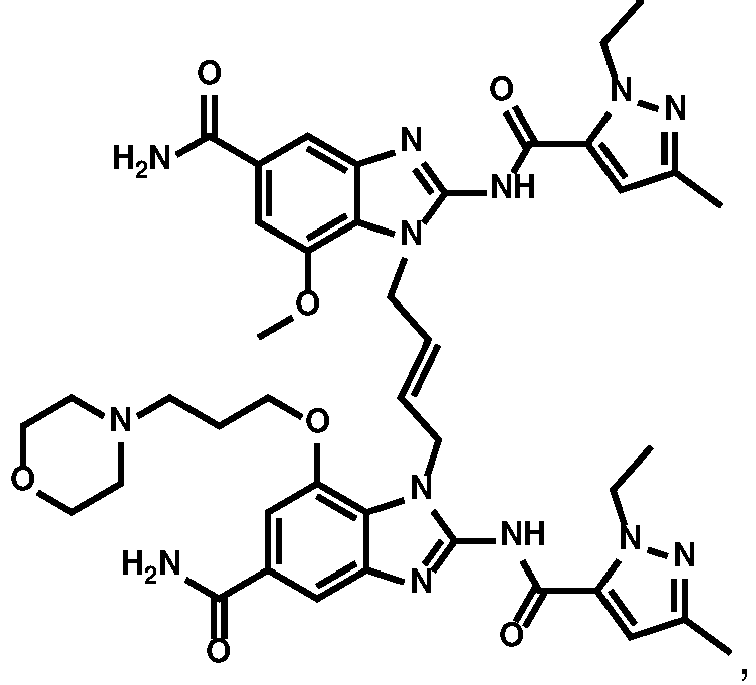
- or a tautomer thereof,
- or a pharmaceutically acceptable salt thereof;
- b) a bulking agent or combination of bulking agents; and
- c) a solubilizing agent selected from: aspartic acid, acetic acid, glutamic acid, methane sulfonic acid, lactic acid, and glucuronic acid, in an amount from about 0.3 mg to about 4 mg per 1.0 mg of Compound A,
- a) a pharmaceutically effective amount of Compound A having the structure
- 2) adding water to solubilize the mixture, and
- 3) evaporating the mixture to form a powder, and
- 4) optionally adding water, to form an injectable solution.
- In one embodiment, the invention relates to a process to prepare a pharmaceutical formulation comprising the steps of:
- 1) combining into a mixture:
- a) a pharmaceutically effective amount of Compound A having the structure

- or a tautomer thereof,
- or a pharmaceutically acceptable salt thereof;
- b) a bulking agent or combination of bulking agents; and
- c) a solubilizing agent selected from: aspartic acid, acetic acid, glutamic acid, methane sulfonic acid, lactic acid, and glucuronic acid, in a molar ratio of Compound A:solubilizing agent from about 1:10 to 1:25,
- a) a pharmaceutically effective amount of Compound A having the structure
- 2) adding water to solubilize the mixture,
- 3) lyophilizing the mixture to form a powder or cake, and
- 4) optionally adding water, to form an injectable solution.
- In one embodiment, the invention relates to a process to prepare a pharmaceutical formulation comprising the steps of:
- 1) combining into a mixture:
- a) a pharmaceutically effective amount of Compound A having the structure

- or a tautomer thereof,
- or a pharmaceutically acceptable salt thereof;
- b) a bulking agent or combination of bulking agents; and
- c) aspartic acid in an amount from about 1 mg to about 4 mg per 1.0 mg of Compound A,
- a) a pharmaceutically effective amount of Compound A having the structure
- 2) adding water to solubilize the mixture,
- 3) lyophilizing the mixture to form a powder or cake, and
- 4) optionally adding water, to form an injectable solution.
- In one embodiment, the invention relates to a pharmaceutical formulation for intravenous administration to a patient in need thereof, comprising,
- a) a pharmaceutically effective amount of Compound A having the structure

- b) a pharmaceutically acceptable amount of a bulking agent or combination of bulking agents;
- c) a pharmaceutically acceptable amount of a solubilizing agent selected from: aspartic acid, acetic acid, glutamic acid, and glucuronic acid, effective to provide a pharmaceutically acceptable pH; and optionally
- d) water.
- In one embodiment, the invention relates to a process for making a pharmaceutical formulation comprising Compound A having the structure:

- a) adding solubilizing agent selected from: aspartic acid, acetic acid, glutamic acid, and glucuronic acid, to water to form a solution;
- b) adding Compound A to dissolve while maintaining pH between about 3.0 and 3.3;
- c) dissolving a bulking agent or combination of bulking agents in the solution;
- d) filtering the solution thus prepared;
- e) optionally filling the filtered solution into a lyophilization vial and freezing at about -45 °C; and
- f) optionally freeze drying the frozen solution.
- In one embodiment, the invention relates to a method for treating a disease in which modulation of STING (Stimulator of Interferon Genes) is beneficial, in a patient in need thereof which comprises administering intravenously to said patient an effective amount of a formulation comprising from about 0.5 mg/ml to about 6 mg/ml of Compound A, mannitol in an amount from about 20 mg/ml to about 200 mg/ml, aspartic acid in an amount of about 2.66 mg per 1.0 mg of Compound A, and water.
- In one embodiment, the invention provides a pharmaceutical formulation of the present invention for use in the treatment of a disease in which modulation of STING is beneficial.
- In one embodiment, the invention relates to a process for making a pharmaceutical formulation comprising Compound A having the structure:

- or a tautomer thereof,
- or a pharmaceutically acceptable salt thereof;
- which comprises the steps of:
- a) forming a solution comprising
- i) at least one solubilizing agent selected from: aspartic acid, acetic acid, glutamic acid, methane sulfonic acid, lactic acid, and glucuronic acid;
- ii) Compound A, or a tautomer, or a pharmaceutically acceptable salt thereof, while maintaining pH between about 3.0 and 3.5;
- iii) a bulking agent or combination of bulking agents; and
- Iv) water;
- b) optionally filtering the solution;
- c) optionally filling the filtered solution into a lyophilization vial and freezing at about -45 °C; and
- d) freeze drying the frozen solution or evaporating the non-frozen solution.
- a) forming a solution comprising
- In one embodiment, the invention relates to a process for making a pharmaceutical formulation comprising Compound A having the structure:

- or a tautomer thereof,
- or a pharmaceutically acceptable salt thereof;
- which comprises the steps of:
- a) forming a solution comprising
- i) at least one solubilizing agent selected from: aspartic acid, acetic acid, glutamic acid, methane sulfonic acid, lactic acid, and glucuronic acid;
- ii) Compound A, or a tautomer, or a pharmaceutically acceptable salt thereof, while maintaining pH between about 3.0 and 3.5;
- iii) a bulking agent or combination of bulking agents; and Iv) water;
- b) optionally filtering the solution;
- c) optionally filling the filtered solution into a lyophilization vial and freezing at about -45 °C;
- d) freeze drying the frozen solution or evaporating the non-frozen solution; and
- e) optionally adding water, to form an injectable solution.
- a) forming a solution comprising
- In one embodiment, the invention relates to a process for making a pharmaceutical formulation comprising Compound A having the structure:
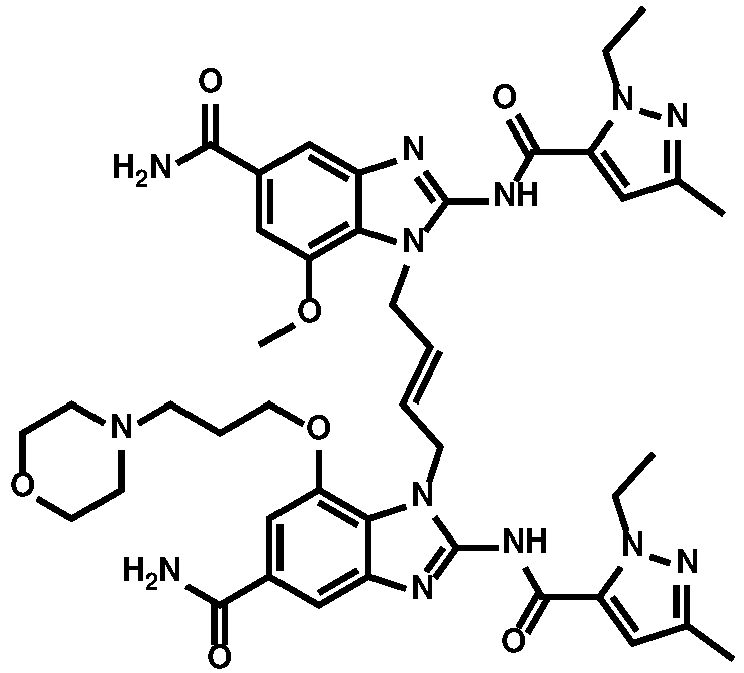
- or a tautomer thereof,
- or a pharmaceutically acceptable salt thereof;
- which comprises the steps of:
- a) forming a solution comprising
- i) at least one solubilizing agent selected from: aspartic acid, acetic acid, glutamic acid, methane sulfonic acid, lactic acid, and glucuronic acid in a molar ratio of Compound A:solubilizing agent from about 1:1 to 1:125;
- ii) from about 0.1 to about 4 mg of Compound A, or a tautomer, or a pharmaceutically acceptable salt thereof, while maintaining pH between about 3.0 and 3.5;
- iii) a bulking agent or combination of bulking agents in an amount from about 20 mg to about 200 mg per 1.0 mg of Compound A; and
- Iv) water;
- b) optionally filtering the solution;
- c) optionally filling the filtered solution into a lyophilization vial and freezing at about -45 °C;
- d) freeze drying the frozen solution or evaporating the non-frozen solution; and
- e) optionally adding water, to form an injectable solution.
- a) forming a solution comprising
- In one embodiment, the invention relates to a process for making a pharmaceutical formulation comprising Compound A having the structure:

- or a tautomer thereof,
- or a pharmaceutically acceptable salt thereof;
- which comprises the steps of:
- a) forming a solution comprising
- i) at least one solubilizing agent selected from: aspartic acid, acetic acid, glutamic acid, methane sulfonic acid, lactic acid, and glucuronic acid in a molar ratio of Compound A:solubilizing agent from about 1:1 to 1:100;
- ii) from about 0.5 to about 1.5 mg of Compound A, or a tautomer, or a pharmaceutically acceptable salt thereof, while maintaining pH between about 3.0 and 3.5;
- iii) a bulking agent or combination of bulking agents in an amount from about 20 mg to about 200 mg per 1.0 mg of Compound A; and
- Iv) water;
- b) optionally filtering the solution;
- c) optionally filling the filtered solution into a lyophilization vial and freezing at about -45 °C;
- d) freeze drying the frozen solution or evaporating the non-frozen solution; and
- e) optionally adding water, to form an injectable solution.
- a) forming a solution comprising
- In one embodiment, the invention relates to a process for making a pharmaceutical formulation comprising Compound A having the structure:

- or a tautomer thereof,
- or a pharmaceutically acceptable salt thereof;
- which comprises the steps of:
- a) forming a solution comprising
- i) aspartic acid in an amount from about 2 mg to about 3 mg per 1.0 mg of Compound A;
- ii) from about 0.5 to about 1.5 mg of Compound A, or a tautomer, or a pharmaceutically acceptable salt thereof, while maintaining pH between about 3.0 and 3.5;
- iii) a bulking agent or combination of bulking agents in an amount from 80 mg to about 100 mg per 1.0 mg of Compound A; and
- Iv) water;
- b) optionally filtering the solution;
- c) optionally filling the filtered solution into a lyophilization vial and freezing at about -45 °C;
- d) freeze drying the frozen solution or evaporating the non-frozen solution; and
- e) optionally adding water, to form an injectable solution.
- a) forming a solution comprising
- Due to the poor oral bioavailability of Compound A, oral administration, for example by tablet, capsule, pellet, lozenge, or powder, was unobtainable. Consequently, a suitable formulation for parenteral administration was sought. To administer Compound A by parenteral administration, the compound must be made available in dissolved form in a suitable vehicle. A formulation concentration of ≥0.1 mg/mL, suitably ≥0.5 mg/mL, suitably ≥1.0 mg/mL, is desired to meet this need, which is a challenge, because of the low solubility of Compound A. Suitably, the concentration is within a range from 0.1 mg/mL to 4 mg/mL. The formulation composition of the present invention is designed to be soluble/bioavailable, satisfy pH and osmolality such that it can be injected "as is" via intravenous bolus or diluted further with a suitable medium, such as dextrose (D5W), for intravenous infusion, thereby solving the problem of formulating Compound A, a compound with poor bioavailability and low solubility, into an acceptable pharmaceutical dosage form.
- One option in formulating Compound A for parenteral administration is to form a crystallized salt, hydrate or solvate of the compound that presents adequate solubility in formulation. Attempts to prepare a stable, crystalline form of Compound A as a salt, hydrate or solvate proved challenging. These alternative forms of Compound A were generally very hygroscopic, which is unsuitable for a pharmaceutical formulation as it tends to lead to dosage variation and increased degradation products.
- An IV (intravenous) formulation was attempted. Formulations within the pH range of 4 to 9 are generally considered for IV administration. Formulations near the extremes of this pH range, especially the lower extreme, are of particular concern due to complications including: severe irritation at the injection site and thrombophlebitis. In order to minimize irritation upon administration, the pharmaceutical excipients, particularly the counterion and buffer capacity, of the formulation are critical. Formulations outside the physiological pH may have a tendency to precipitate in blood after injection due to decreased solubility at the normal human pH of 7.4 causing thrombophlebitis. (S. H. YALKOWSKY Journal of Pharmaceutical Sciences Vol. 87, No. 7, 787-796, July 1998). It is a purpose of this invention to provide an IV formulation of Compound A either directly or following dilution in a suitable medium, which avoids irritation at the injection site upon administration. It is also a purpose of this invention to prevent thrombophlebitis upon injection of a formulation of Compound A either directly or following dilution in a suitable medium. As indicated by Example 17, IV formulations of this invention have been found to be safe for IV bolus administration.
- Surprisingly, it was found that the pHmax (pH of maximum solubility) for Compound A was dependent upon the counterion, where the concentration of the ionized form reached sufficient solubility to maintain a physically stable solution.
- The formulations of the invention provide enhanced chemical stability and solubility to the pharmaceutical compositions. The use of selected solubilizing agents to prepare injectable doses and dry powder, suitably lyophilized, formulations of Compound A resulted in the generation of a stable and soluble formulation suitable for parenteral administration. A more stable formulation will result in an extended pharmaceutical shelf life which offers significant economic advantages.
- It has been found that Compound A, particularly the freebase, is significantly more water soluble, and is more stable when in an aqueous formulation with a selected solubilizing agent or when reconstituted from lyophilized formulation prepared with a selected solubilizing agent, suitably the solubilizing agent is an organic acid. In a preferred embodiment, the solubilizing agent is selected from: aspartic acid, acetic acid, glutamic acid, methane sulfonic acid, lactic acid or glucuronic acid. It is understood that combinations of these acids are also useful in the invention. Suitably, the solubilizing agent is acetic acid. Suitably, the solubilizing agent is glutamic acid. Suitably, the solubilizing agent is methane sulfonic acid. Suitably, the solubilizing agent is lactic acid. Suitably, the solubilizing agent is glucuronic acid. Most preferably, the solubilizing agent is aspartic acid. Suitably the solubilizing agent is selected from: aspartic acid, acetic acid, glutamic acid, and glucuronic acid.
- As used herein, the term aspartic acid includes all forms or aspartic acid including D-aspartic acid, L-aspartic acid, and combinations thereof, which are considered equivalents for use in current invention.
- As used herein, unless otherwise defined, pH indications and ranges are all considered to be measured at room temperature (RT). Suitably RT is about 23 °C.
- As used herein, Compound A, includes the compound in any form, i.e., any tautomeric form, any isomeric form, any salt or non-salt form (e.g., as a free acid or base form, or as a salt, particularly a pharmaceutically acceptable salt thereof) and any physical form thereof (e.g., including non-solid forms (e.g., liquid or semi-solid forms), and solid forms (e.g., amorphous or crystalline forms, specific polymorphic forms, solvate forms, including hydrate forms (e.g., mono-, di- and hemi- hydrates)), and mixtures of various forms.
- It is understood that Compound A or a pharmaceutically acceptable salt thereof, or solvate (particularly, hydrates) thereof, may exist in crystalline forms, non-crystalline forms or a mixture thereof. The compound or salt, or solvates (particularly, hydrates) thereof, may also exhibit polymorphism (i.e. the capacity to occur in different crystalline forms). These different crystalline forms are typically known as "polymorphs." It is to be understood that the invention includes all polymorphs of Compound A, including any salts and/or solvates (particularly, hydrates) thereof, and mixtures thereof.
- By utilizing a selected solubilizing agent, the product is more stable, contains less of unwanted degradation products, is highly soluble and extends the shelf life of the composition.
- The invention is directed to a formulation comprising Compound A and excipients suitable for IV administration. It is understood that, unless otherwise indicated, the formulation can be an aqueous formulation that is ready to inject or a dry solid formulation, such as a powder formulation, suitably a lyophile formulation, that requires reconstitution prior to administration. When specifying the amounts of Compound A or excipients used in the invented formulations, the amount can be specified by weight, for example in mg, or by concentration, for example mg/mL, or by the effect the excipient has on the formulation, such as the amount needed to result in a specified pH or range. It is understood that, no matter how the amount is indicated, the amount is based on a concentration of mg/mL. For example, if the amount of aspartic acid is indicated as 2 mg/mL, that would equate to 2 mg of aspartic acid as a solid in a vial intended to be reconstituted to 1 mL or to an aqueous formulation that contains 2 mg of aspartic acid in every mL of water. If needed, the formulation can be subsequently diluted for infusion. The formulation of the invention includes an amount of selected solubilizing agent, suitably aspartic acid, suitably acetic acid, suitably glutamic acid, suitably glucuronic acid, suitably methane sulfonic acid, suitably lactic acid effective to provide a pH environment in the range of 2 to 4, suitably about 2.5 to about 3.8, suitably about 2.7 to about 3.6, suitably about 2.9 to about 3.5, suitably about 3.0 to about 3.5, suitably about 3, suitably about 3.1 suitably about 3.2, suitably about 3.3, suitably about 3.4, suitably about 3.5. Aspartic acid is particularly advantageous because it was unexpectedly found to solubilize Compound A in high concentrations, compared to other inorganic and organic acids. Depending on the amount relative to Compound A, aspartic acid solubilizes Compound A in the formulation up to about 6 mg/mL; suitably up to about 4 mg/mL, suitably from about 0.1 mg/mL to about 6 mg/mL; suitably from about 0.5 mg/mL to about 4 mg/mL; suitably from about 1 mg/mL to about 4 mg/mL; suitably from about 2 mg/mL to about 4 mg/mL; suitably about 2 mg/mL; suitably about 3 mg/mL.
- Suitably Compound A is present in the dosage form in an amount from about 0.1 mg to about 6 mg; suitably from about 0.1 mg to about 4 mg; suitably from about 1 mg to about 5 mg; suitably from about 0.5 mg to about 2 mg; suitably from about 2 mg to about 4 mg; suitably about 0.1 mg; suitably about 0.2 mg; suitably about 0.3 mg; suitably about 0.4 mg; suitably about 0.5 mg; suitably about 0.6 mg; suitably about 0.7 mg; suitably about 0.8 mg; suitably about 0.9 mg; suitably about 1 mg; suitably about 1.25 mg; suitably about 1.5 mg; suitably about 2 mg; suitably about 3 mg; suitably about 4 mg.
- One skilled in the art will understand the process of lyophilization and that this process results in the formation of a powder or cake. Both power and cake are considered equivalents in the art and as used herein.
- Suitably Compound A is present in the formulation in an amount from about 0.5 mg to about 6 mg; suitably from about 1 mg to about 5 mg; suitably from about 2 mg to about 4 mg; suitably about 0.5 mg; suitably about 1 mg; suitably about 2 mg; suitably about 3 mg; suitably about 4 mg.
- The amount of solubilizing agent, suitably L-aspartic acid, needed is dependent on the amount of Compound A in the formulation and is typically present in the range from about 0.5 mg/mL to about 4 mg/mL, suitably from about 1 mg/mL to about 3.5 mg/mL, suitably from about 1.5 mg/mL to about 3 mg/mL suitably, from about 2 mg/mL to about 3 mg/mL, suitably about 2.66 mg/mL.
- The amount of solubilizing agent, suitably L-aspartic acid, needed is dependent on the amount of Compound A in the formulation and is typically present in the range from about 0.5 mg/mL to about 3 mg/mL, suitably from about 1 mg/mL to about 3 mg/mL.
- Suitably the amount of solubilizing agent, suitably L-aspartic acid, in the formulation is about 2.66 mg per 1.0 mg of Compound A, suitably from about 0.1 mg to about 10 mg per 1.0 mg of Compound A, suitably from about 0.5 mg to about 10 mg per 1.0 mg of Compound A, suitably from about 0.5 mg to about 6 mg per 1.0 mg of Compound A, suitably from about 1 mg to about 4 mg per 1.0 mg of Compound A, suitably from about 1.5 mg to about 3.5 mg per 1.0 mg of Compound A, suitably from about 2 mg to about 3 mg per 1.0 mg of Compound A.
- As used herein, when the amount of solubilizing agent, for example aspartic acid, is expressed in terms such as: effective to provide a specified pH, it is understood that amount of solubilizing agent intended is that amount that will provide the specified pH upon reconstitution, for example with 1 mL water, at room temperature. In one embodiment, the phrase "an amount effective to provide a specified pH" means an amount which provides the specified pH upon adding water to a dry powder or lyophilized cake of the present invention in the amount of 0.5 mL, 1 mL, 2 mL, 3 mL, 4 mL, 5 mL, 6 mL, 7 mL, 8 mL, 9 mL, 10 mL, 15 mL, 20 mL, 30 mL, 40 mL, 50 mL, or 100 mL at room temperature.
- Suitably, the formulations of the invention are provided in a sealed vial as a dry powder. In one embodiment, the dry powder is a lyophilized powder or cake that comprises Compound A; or an IV formulation comprising Compound A that is suitable for injection "as is" via intravenous bolus or for further dilution with a suitable medium, such as dextrose (D5W), for intravenous infusion.
- As used herein bulking agents are excipients, e.g., excipient sugars, that are used to provide a suitable dry powder when formulated with Compound A. In one embodiment, the dry powder is a lyophilized powder or cake. Suitable bulking agents for use in the present invention include: mannitol, mannose, melibiose, octulose, fructose, lactose, sucrose, trehalose, sorbitol, glucose, galactose, glycine, dextrose, raffinose, ribose, xylitol, xylose, cyclodextrin, dextran, celluloses, povidone, PEG's (such as, for example, PEG 300, PEG 400, PEG 3350, PEG 6000, PEG 8000 and the like) polygalacturonic acid galacturonic acid, amino acids (including amino acid salts) such as lysine, arginine, glycine, and galactose), alone or in combination. In one embodiment, the dry powder provides for the dilution of the active ingredient throughout the powder and the final formulation. Suitable bulking agents useful in the invention consist essentially of: sucrose, lactose, mannitol, dextrose or combinations thereof. Suitably the bulking agent is mannitol, suitably D-mannitol. Suitable bulking agents useful in the invention include: sucrose, lactose, mannitol, dextrose or combinations thereof. Suitable bulking agents useful in the invention include: sucrose, lactose, mannitol or combinations thereof. The bulking agents are generally present in amounts from about 20 to about 200 mg/mL; suitably from about 40 to about 150 mg/mL; suitably from about 80 mg/mL to about 100 mg/mL, suitably about 48 mg/mL. The bulking agents are generally present in amounts from about 20 to about 200 mg per 1.0 mg of Compound A, suitably from about 40 to about 150 mg; suitably from about 80 mg to about 100 mg, suitably about 48 mg. Suitably the bulking agent is mannitol and the amount of mannitol in the formulation is about 48 mg per 1.0 mg of Compound A. In one embodiment, the indicated amount of bulking agent is sufficient to form a lyophilized powder or cake.
- The compositions may also include other pharmaceutically acceptable diluents, excipients or carriers. The formulations are suitable for long-term storage in glass containers commonly used in the pharmaceutical industry, e.g., standard USP Type I borosilicate glass containers.
- An aqueous injectable composition of Compound A (or drug as used herein) can be manufactured by bringing together excipients, including a solubilizing agent, for example aspartic acid, suitably L-aspartic acid, and drug in water at a suitable temperature. One aspect of this invention relates to controlling the ratio of drug:solubilizing agent, suitably drug:aspartic acid, so as to achieve the required drug solubility and pH in the formulation. This molar ratio of Compound A:solubilizing agent can generally range from about 1:1 to 1:125, suitably 1:1 to 1:100 suitably 1:1 to 1:30, suitably from about 1:10 to 1:30, suitably from about 1:10 to 1:25, suitably from about 1:15 to 1:25, preferably at a ratio of around 1:20. The aqueous injectable composition of Compound A can be manufactured by first dissolving the solubilizing agent, suitably aspartic acid, in water followed by dissolution of Compound A in the acid media at a suitable temperature. A bulking agent, suitably mannitol, is added to the above solution to adjust osmolality and the batch is QSed to required volume with water for injection. The solution may be aseptically filtered through sterile filters and aseptically filled into pre-washed, pre-sterilized/depyrogenated USP Type I clear glass vials for sealing. For manufacturing a lyophilized dosage form, the filled vials may then be lyophilized, stoppered with, for example, pre-washed, pre-sterilized 20 mm grey stoppers under nitrogen flush and sealed.
- In one embodiment of the invention, the compositions of the invention are generally prepared as follows:
- 1. The selected solubilizing agent, suitably aspartic acid, suitably acetic acid, suitably glutamic acid, suitably glucuronic acid, suitably methane sulfonic acid, suitably lactic acid, is added to water to form a solution;
- 2. Compound A is added and dissolved with the pH maintained between about 2.0 and 4.0, such as between 3.0 and 3.5;
- 3. A bulking agent, suitably mannitol, is added to the solution;
- 4. The solution is filtered and filled into a lyophilization vial and frozen at about -45 °C;
- 5. The frozen formulation is freeze dried at about -20 °C, with a secondary drying between about 25 and 45 °C; and
- 6. Lyophilized vials are stoppered and stored at about 25 °C.
- The prepared lyophilized formulation can be reconstituted at the time of administration with a suitable diluent, for example water, to obtain a finished concentration of Compound A, or a tautomer or a hydrate, or a pharmaceutically acceptable salt thereof, for example of about 1.0 mg/mL, for example about 2.0 mg/mL, for example of about 4 mg/mL, for example of about 0.5 mg/mL, for example of about 0.1 mg/mL, for example of about 0.2 mg/mL, for example of about 0.3 mg/mL, for example of about 0.4 mg/mL, for example of about 0.6 mg/mL, for example of about 0.7 mg/mL, for example of about 0.8 mg/mL , for example of about 0.9 mg/mL, for example of about 1.25 mg/mL, for example of about 1.5 mg/mL, which is suitable for intravenous administration to a patient in need of Compound A.
- In one embodiment of the invention, the compositions of the invention are generally prepared as follows:
- 1. The selected solubilizing agent, suitably aspartic acid, suitably acetic acid, suitably glutamic acid, suitably glucuronic acid, suitably methane sulfonic acid, suitably lactic acid, is added to water to form a solution;
- 2. Compound A is added and dissolved with the pH maintained between about 2.0 and 4.0, such as between 3.0 and 3.5;
- 3. A bulking agent, suitably mannitol, is added to the solution;
- 4. The solution is filtered and transferred to a suitable container;
- 5. The formulation is evaporated to form a dry powder; and
- 6. The dry powder is entered into vials and stoppered.
- The prepared dry powder formulation can be reconstituted at the time of administration with a suitable diluent, for example water, to obtain a finished concentration of Compound A, or a tautomer or a hydrate, or a pharmaceutically acceptable salt thereof, for example of about 1.0 mg/mL, for example about 2.0 mg/mL, for example of about 4 mg/mL, for example of about 0.5 mg/mL, for example of about 0.1 mg/mL, for example of about 0.2 mg/mL, for example of about 0.3 mg/mL, for example of about 0.4 mg/mL, for example of about 0.6 mg/mL, for example of about 0.7 mg/mL, for example of about 0.8 mg/mL , for example of about 0.9 mg/mL, for example of about 1.25 mg/mL, for example of about 1.5 mg/mL, which is suitable for intravenous administration to a patient in need of Compound A.
- In one embodiment of the invention, the compositions of the invention are generally prepared as follows:
- 1. The selected solubilizing agent, suitably aspartic acid, suitably acetic acid, suitably glutamic acid, suitably glucuronic acid, suitably methane sulfonic acid, suitably lactic acid, is added to water to form a solution;
- 2. Compound A is added and dissolved with the pH maintained between about 2.0 and 4.0, such as between 3.0 and 3.5;
- 3. A bulking agent, suitably mannitol, is added to the solution; and
- 4. The solution is filtered and transferred to a suitable container for IV administration.
- Parenteral administration constitutes a pertinent aspect of any injectable dosage form and there are several types of IV fluids available for this purpose. IV solutions are often prepared by mixing IV formulations with compatible IV fluids. The properties of IV solution should be such that sterility is not compromised and the drug remains physically and chemically stable in solution to cover a suitable in-use period following mixing of the formulation/reconstituted solution with the IV fluid until administration to the patient. Alternatively, the solution dosage form can be diluted in a suitable IV admixture medium, such as 5% dextrose, 5% mannitol for dilution to appropriate dose for administration. The Compound A lyophilized dosage form can be reconstituted with sterile water for injection to obtain a clear solution prior to IV administration using methods similar to that described for the solution dosage form.
- The term "pharmaceutically effective amount" of an active ingredient shall mean the amount that will elicit the biological or medical response of a tissue, system or animal, suitably a human, that is being sought by a researcher or clinician.
- Suitably, "patients" as used herein refers to human patients.
- Compositions of the invention may be administered to patients for the treatment of diseases and disorders as disclosed in International Patent Application Publication Number
WO 2017/175147 including: cancer, pre-cancerous syndromes, infectious diseases, Influenza, HIV, HCV, HPV and HBV infection; and in International Patent Application Publication NumberWO 2019/069275 , including inflammation, allergic and autoimmune diseases, skin warts, multiple sclerosis, and AIDS. - Suitably the compositions of the invention are administered to patients for the treatment of cancer selected from: brain (gliomas), glioblastomas, astrocytomas, glioblastoma multiforme, Bannayan-Zonana syndrome, Cowden disease, Lhermitte-Duclos disease, Wilm's tumor, Ewing's sarcoma, Rhabdomyosarcoma, ependymoma, medulloblastoma, head and neck, kidney, liver, melanoma, ovarian, pancreatic, adenocarcinoma, ductal adenocarcinoma, adenosquamous carcinoma, acinar cell carcinoma, glucagonoma, insulinoma, prostate, sarcoma, osteosarcoma, giant cell tumor of bone, thyroid, lymphoblastic T cell leukemia, chronic myelogenous leukemia, chronic lymphocytic leukemia, hairy-cell leukemia, acute lymphoblastic leukemia, acute myelogenous leukemia, chronic neutrophilic leukemia, acute lymphoblastic T cell leukemia, plasmacytoma, Immunoblastic large cell leukemia, mantle cell leukemia, multiple myeloma, megakaryoblastic leukemia, multiple myeloma, acute megakaryocytic leukemia, promyelocytic leukemia, erythroleukemia, malignant lymphoma, hodgkins lymphoma, non-hodgkins lymphoma, lymphoblastic T cell lymphoma, Burkitt's lymphoma, follicular lymphoma, neuroblastoma, bladder cancer, urothelial cancer, vulval cancer, cervical cancer, endometrial cancer, renal cancer, mesothelioma, esophageal cancer, salivary gland cancer, hepatocellular cancer, gastric cancer, nasopharangeal cancer, buccal cancer, cancer of the mouth, GIST (gastrointestinal stromal tumor) and testicular cancer.
- Suitably the compositions of the invention are administered to patients for the treatment of cancer selected from: Non-Small Cell Lung Cancer (NSCLC), bladder, squamous cell carcinoma of the head and neck, cervical, endometrial, ovarian, pancreas, microsatellite stable colorectal cancer, microsatellite instable high colorectal cancer, gastric, esophageal endo, esophagogastric junction, esophageal, squamous, acute myeloid leukemia, and triple negative breast cancer.
- Suitably the compositions of the invention are administered to patients for the treatment of pre-cancerous syndromes selected from: cervical intraepithelial neoplasia, monoclonal gammapathy of unknown significance (MGUS), myelodysplastic syndrome, aplastic anemia, cervical lesions, skin nevi (pre-melanoma), prostatic intraepithleial (intraductal) neoplasia (PIN), Ductal Carcinoma in situ (DCIS), colon polyps and severe hepatitis or cirrhosis.
- The dosage regimen utilizing the compositions of the present invention is selected in accordance with a variety of factors, including age, weight, sex and medical condition of the patient; the severity of the condition to be treated; the route of administration; and the renal and hepatic function of the patient. An ordinarily skilled physician can readily determine and prescribe the effective amount of the drug required to prevent, counter, or arrest the progress of the condition.
- Intravenously, preferred doses of Compound A will range from about 0.1 mg/mL to about 6 mg/mL; suitably 0.5 mg/mL to about 6 mg/mL; suitably 0.5 mg/mL to about 4 mg/mL; suitably 0.5 mg/mL to about 2 mg/mL; suitably 0.5 mg/mL to about 1.5 mg/mL; suitably 0.5 mg/mL to about 1 mg/mL; suitably from about 1 mg/mL to about 5 mg/mL; suitably from about 2 mg/mL to about 4 mg/ml; suitably 2 mg/mL; suitably 4 mg/mL. For example, a formulation of the invention should have from about 0.5 mg/mL to about 6 mg/mL of Compound A for administration to a 50 kg patient.
- Intravenously, the most preferred doses of Compound A will range from about 0.1 mg/mL to about 4 mg/mL; suitably from about 0.1 mg/mL to about 3 mg/mL; suitably from about 2 mg/mL to about 4 mg/mL; suitably 2 mg/mL; suitably 1 mg/mL; suitably 0.1 mg/mL; suitably 0.2 mg/mL; suitably 0.3 mg/mL; suitably 0.4 mg/mL; suitably 0.5 mg/mL; suitably 0.6 mg/mL; suitably 0.7 mg/mL; suitably 0.8 mg/mL, suitably 0.9 mg/mL; suitably 1.25 mg/mL; suitably 1.5 mg/mL. For example, a formulation of the invention should have from about 0.1 mg/mL to about 4 mg/mL of Compound A for administration to a 50 kg patient.
- Compound A, the active ingredient, can be prepared as described in International Patent Application Publication Number
WO 2017/175147 , Example 14. - As disclosed in International Patent Application Application No.
WO 2017/175147 , Compound A may exist in a tautomeric or an isomeric form, e.g., as - (E)-1-((E)-4-((E)-5-carbamoyl-2-((1-ethyl-3-methyl-1H-pyrazole-5-carbonyl)imino)-7-(3-morpholinopropoxy)-2,3-dihydro-1H-benzo[d]imidazol-1-yl)but-2-en-1-yl)-2-((1-ethyl-3-methyl-1H-pyrazole-5-carbonyl)imino)-7-methoxy-2,3-dihydro-1H-benzo[d]imidazole-5-carboxamide

- or (Z)-1-((E)-4-((Z)-5-carbamoyl-2-((1-ethyl-3-methyl-1H-pyrazole-5-carbonyl)imino)-7-(3-morpholinopropoxy)-2,3-dihydro-1H-benzo[d]imidazol-1-yl)but-2-en-1-yl)-2-((1-ethyl-3-methyl-1H-pyrazole-5-carbonyl)imino)-7-methoxy-2,3-dihydro-1H-benzo[d]imidazole-5-carboxamide

- All such tautomeric and isomeric forms, including mixtures thereof, and pharmaceutically acceptable salts, solvates and hydrates thereof are included in Compound A.
- As used herein, the term "formulation" and derivatives thereof, unless otherwise defined refers to dry powder, suitably a lyophilized powder or cake, comprising Compound A, a solution comprising Compound A reconstituted from a dry powder, suitably a lyophilized powder or cake, a solution ready for injection comprising Compound A, or a dry mixture of excipients and Compound A.
- In another embodiment of the invention, there is provided a formulation and process for producing an aqueous injectable dosage form of Compound A. The formulation is listed below in Table A. The Compound A sterile solution dosage form composition presented in Table A is ready to inject since the pH and osmolality of formulation are controlled to avoid pain at the injection site.
Table A An injectable composition of Compound A Ingredient Functionality Quantities for 1 mL Compound A Active 1.0 mg L-Aspartic acid Solubilizer 2.66 mg Mannitol Bulking agent 48.0 mg Water Vehicle QS to 1.0 mL - In another embodiment of the invention, there is provided a composition of Compound A lyophile for injection and process for producing the composition. The composition is listed below in Table B.
Table B A composition of Compound A Lyophile for injection Ingredient Functionality Quantity per 10 cc vial Compound A Active 2.0 mg L-Aspartic acid, USP/Ph.Eur Solubilizer 5.32 mg Mannitol, USP/Ph.Eur Bulking agent 96.0 mg Water for injection1 Vehicle - Nitrogen2 Headspace filler - 1 - Water for injection is removed during lyophilization.
2 - Nitrogen gas is used as inert gas for headspace. - In another embodiment of the invention, the composition of Table B is compounded and filled into vials for lyophilization to obtain a lyophilized dosage form having suitable pharmaceutical properties such as stability and shelf life. In another embodiment of the invention, aspartic acid is used along with other acids, such as acetic acid, glucuronic acid, lactic acid, methanesulfonic acid or an amino acid possessing at least one pKa ≤ 4, for example glutamic acid, to optimize the properties of the formulation such as stability and shelf life.
- In another embodiment of the invention, there is provided a method of, or a formulation for, delivering Compound A by a parenteral route, including intravenous, subcutaneous, or intraperitoneal routes.
- In another embodiment of the invention, there is provided a method of, or a formulation for, delivering Compound A by parenteral administration of a dosage form formulated as a solution, or a lyophile or a powder for reconstitution.
- In another embodiment of the invention, there is provided a method of solubilizing, or a solubilized composition comprising, Compound A which utilizes the principle of pH-solubility enhancement of the free base of a drug with a suitable "solubilizing agent". A suitable solubilizing agent is one which enables solubility enhancement to the desired formulation of Compound A.
- In another embodiment of the invention, there is provided a method to achieve solubility of, or a solubilized composition comprising, Compound A within a pH range of 2 to 4, suitably 3.0 to 3.5, for parenteral formulations. The desired solubility is based on dose requirements for the specific route of administration to achieve a physiological response upon parenteral administration.
- In another embodiment of the invention, there is provided a method to achieve solubility of, or a solubilized composition comprising, Compound A prepared using an appropriate solubilizing agent such that the formulation pH lies within a pH range of 2 to 4, suitably 3.0 to 3.5, for parenteral formulations due to favorable pHmax.
- In another embodiment of the invention, there is provided a method to formulate, or a formulated composition comprising, Compound A in the region of pHmax while maintaining the pH in the range of 2 to 4, suitably 3.0 to 3.5, suitably 3.0 to 3.2, suitably 3.2, suitably 3.5, using an excess of solubilizing agent.
- In another embodiment of the invention, there is provided a method to formulate, or a formulated composition comprising, Compound A using an appropriate excess of the solubilizing agent as buffering agent to prevent disproportionation of free base, in addition to its primary role as counterion.
- In another embodiment of the invention, there is provided a method to formulate, or a formulated composition comprising, Compound A which utilizes or utilizes the hydrogen bonding propensity of a zwitterionic solubilizing agent via inter-molecular interactions with the drug compound, wherein the zwitterionic solubilizing agent is preferably aspartic acid, suitably D-aspartic acid, suitably L-aspartic acid.
- Compound A, as utilized herein, may be in a free or unsalted form. It is contemplated that salts of Compound A, suitably pharmaceutically acceptable salts of Compound A, suitably non-hygroscopic pharmaceutically acceptable salts of Compound A, will perform similarly in the formulations of the invention. As such, salts of Compound A, suitably pharmaceutically acceptable salts of Compound A are contemplated equivalents in the formulations of the invention.
- It is contemplated that the pH of an aqueous formulation of the invention could be adjusted between 2 and 4 by the addition of a minor amount of organic or inorganic acid other than aspartic acid, acetic acid, glutamic acid, lactic acid, or glucuronic acid, or a base, such as ammonium hydroxide, monoethanolamine, ethylene diamine, tromethamine, triethanolamine, suitably sodium hydroxide, without changing the utility of the formulation or the nature of the invention.
- Without further elaboration, it is believed that one skilled in the art can, using the preceding description, utilize the present invention to its fullest extent. The following Examples are, therefore, to be construed as merely illustrative and not a limitation of the scope of the present invention in any way.
- Compound A, as the free base, was tested with various solubilizing agents to see if a suitable agent could be identified to solubilize the compound in water.
- Solubility of Compound A was conducted by adding a known quantity of drug to specific volume of aqueous media followed by 24 hour agitation at room temperature (RT). The results are presented below.
Table 1 Compound A solubility up to 5 mg/mL in various aqueous media after stirring for 24 h at RT. ACID media pKa of acid pH of acid media solution with Compound A Drug Solubility* (mg/mL) 300 mM Phosphoric acid 2.1 1.87 0.23 170 mM Acetic acid 4.75 3.16 4.05 9.5 mM Lactic acid 3.86 3.83 3.59 50 mM Citric acid 3.13 2.30 1.32 115.7 mM Maleic acid 1.9 1.52 0.15 72.8 mM Methane sulfonic acid -2.6 1.27 3.85 *Stirred for 24 h before centrifuging samples @8000 rpm for 15 min. Supernatant was analyzed after dilution by HPLC. - Table 1 shows the solubility of Compound A in different aqueous media with a targeted solubility up to 5 mg/mL. 300 mM phosphoric acid and 115.7 mM maleic acid media failed to solubilize 1 mg/mL of Compound A. 50 mM citric acid showed solubility <2 mg/mL. 9.5 mM lactic acid, 170 mM acetic acid and 72.8 mM methane sulfonic acid showed solubility >3.5 mg/mL.
-
Table2 Compound A solubility up to 2 mq/mL in various aqueous media after stirring for ACID media pKa1 of acid pH of acid media solution with Compound A Drug Solubility* (mg/mL) 10 mM HCl -7 1.98 0.36 10 mM Acetic acid 4.8 3.33 1.45 10 mM Methane sulfonic acid -1.2 1.99 1.78 25 mM Lactic acid 3.86 2.57 1.83 25 mM Citric acid 3.14 2.32 1.81 25 mM Aspartic acid 1.9 2.95 1.80 25 mM Tartaric acid 2.98 2.33 0.80 *Stirred for 24 h before centrifuging samples @8000 rpm for 15 min. Supernatant was analyzed after dilution by HPLC. - Table 2 shows solubility of Compound A in different aqueous media with a targeted solubility up to 2 mg/mL. 10 mM hydrochloric acid and 25 mM tartaric acid media could not solubilize 1 mg/mL of Compound A. 10 mM acetic acid, 10 mM methane sulfonic acid, 25 mM lactic acid, 25 mM citric acid, 25 mM aspartic acid showed solubility >1 mg/mL. The above data indicates that, surprisingly, there is not a correlation between pKa of the acid solubilizing agent and Compound A solubility.
- Acetic, citric and aspartic acids were explored further in Example 14.
-
Table 3 Compound A solubility in 20 mM acetic, citric and L-aspartic aqueous media as a function of pH at 22±1 °C with Compound A in excess amounts. Citric acid media Acetic acid media L-aspartic acid media pH Solubility mg/mL pH Solubility mg/mL pH Solubility mg/mL 2.47 0.4556 3.26 1.7587 3.05 5.2727 2.61 0.1947 3.58 1.0917 3.23 3.9676 2.74 0.0816 3.71 0.8103 3.76 0.4717 2.90 0.0415 3.91 0.3961 3.96 0.2269 3.40 0.0083 4.09 0.2686 4.18 0.0687 3.98 0.0054 4.64 0.0241 4.54 0.0167 4.94 0.004 4.85 0.0108 4.93 0.0050 5.91 0.0013 5.48 0.0029 6.14 0.0007 6.92 0.0005 6.42 0.0005 7.97 0.0005 8.82 0.0005 9.84 0.0005 8.87 0.0009 *pH measured before addition of Compound A; pH adjustment achieved with addition of NaOH before addition of Compound A - As per the solubility data in Table 3, the rank ordering of counterion for solubility enhancement is: L-aspartic acid>acetic acid>citric acid. At pH 4.0, none of the counter ions showed solubility >0.5 mg/mL. L-aspartic acid offered the greatest solubility in the pH range of 3-3.5. Surprisingly, only acetic and L-aspartic acids showed adequate solubility, in the pH region 3.
- Aqueous solubility of Compound A with glutamic acid and glucuronic acid were explored in Example 15. The results are reported in Table 4
Table 4 Media Adjusted pH Solubility (mg/mL)a Glutamic acid (1 mol eq), aqueous 4.1 4.5 Glucuronic acid (1 mol eq), aqueous 4.1 9.0 a Solubility values are reported for filtered supernatants - Inorganic and organic solubilizing agents were screened for their ability to promote the solubility of Compound A in water. Counter ions derived from inorganic acids such as hydrochloric acid, and phosphoric acid did not offer sufficient solubility enhancement compared to the organic counter ions. Organic solubilizing agents examined were: methane sulfonic acid, acetic acid, citric acid, lactic acid, tartaric acid, maleic acid and aspartic acid. Additional organic solubilizing agents examined were: glutamic acid and glucuronic acid.
- This data surprisingly demonstrated that the solubility was not only a function of pH but also depended on the nature of acid counterion. The equilibrium solubility data in Table 3 indicated that aspartic acid and acetic acid provided significantly better solubility at pH 3. Aspartic acid was found to provide the highest solubility at 4 mg/mL at pH <3.
- Compound A solubility was separately determined by controlling the mole ratio of L-aspartic acid relative to drug in Example 16. The concentrations of drug and counterion were measured in supernatant to calculate Ksp (Solubility product) (Table 5).
Table 5 pHmax determination of Compound A with L-aspartic acid (>110 hr stirring at RT) Drug Solubility (mg/mL) Drug Solubility (M) Counterion conc.(mM) Ksp S0 (mg/mL) S0 (M) pKa of drug pH max* 4.073 0.00479 8.45 4.05E-05 0.002 2.35E-06 7 3.57 3.946 0.00464 8.70 4.04E-05 0.002 2.35E-06 7 3.57 3.940 0.00464 9.18 4.26E-05 0.002 2.35E-06 7 3.56 4.144 0.00488 9.33 4.55E-05 0.002 2.35E-06 7 3.54 
- The Ksp measurements in Table 5 indicate that the pHmax for Compound A is (3.5-3.6) in L-aspartic acid media. A formulation between pH 3.0-3.5 would provide a safety margin for any pH shifts while maintaining the pH close to the generally acceptable pH range (4-9) for injectables.
- In vivo studies were conducted in cynomolgus monkeys administered IV doses of Compound A in a vehicle of 30 mM L-aspartic acid, 3.7% mannitol in Sterile Water for Injection, pH approximately 3.0. For these studies, Compound A was used in a non-stoichiometric hydrate form according to Table 6.
Table 6 Type of Study Route Species (Strain) Dose (mg/kg) No.lSex/Group Repeat Dose 1M&1F 3 weeks (3 doses) IV (bolus) Monkey (cynomolgus) 0.1, 0.6 0.3, 1, 3 4 weeks (5 doses) with 2 weeks off-dose period IV (bolus) Monkey (cynomolgus) 0,03, 0.6, 1 3M & 3F (+2M & 2F for recovery at 0 & 1 mg/kg) - Surprisingly, no Compound A-related injection site reactions were observed in monkeys following weekly IV bolus dosing of Compound A into the antecubital vein followed by a saline flush. These results support the conclusion that an IV formulation containing Compound A and aspartic acid with an approximate pH 3, was safe for human IV administration.
Claims (19)
- A pharmaceutical formulation comprising,a) a pharmaceutically effective amount of Compound A having the structure
 or a tautomer thereof,or a pharmaceutically acceptable salt thereof;b) a bulking agent or combination of bulking agents;c) a solubilizing agent selected from: aspartic acid, acetic acid, glutamic acid, methane sulfonic acid, lactic acid, and glucuronic acid, and optionallyd) water.
 - The pharmaceutical formulation according to claim 1, wherein the amount of aspartic acid, acetic acid, glutamic acid, methane sulfonic acid, lactic acid or glucuronic acid, is effective to provide a pH of between about 2 and about 4.
- The pharmaceutical formulation according to claim 1 or claim 2, wherein the molar ratio of Compound A: solubilizing agent is selected from about 1:1 to 1:125.
- The pharmaceutical formulation according to any one of claims 1 to 3 wherein the solubilizing acid is in an amount from about 0.5 mg to about 10 mg per 1.0 mg of Compound A.
- The pharmaceutical formulation according to any one of claims 1 to 4, wherein the solubilizing agent is aspartic acid.
- The pharmaceutical formulation according to any one of claims 1 to 5, wherein the bulking agent or combination of bulking agents are in an amount effective to form a dry powder or lyophilized powder or cake.
- The pharmaceutical formulation according to any one of claims 1 to 5, wherein the bulking agent or combination of bulking agents are in an amount from about 20 mg to about 200 mg per 1.0 mg of Compound A.
- The pharmaceutical formulation according to any one of claims 1 to 5, wherein the bulking agent comprises: mannitol, mannose, melibiose, octulose, fructose, lactose, sucrose, trehalose, sorbitol, glucose, galactose, glycine, dextrose, raffinose, ribose, xylitol, xylose, cyclodextrin, dextran, celluloses, povidone, PEG 300, PEG 400, PEG 3350, PEG 6000, PEG 8000, polygalacturonic acid, galacturonic acid, lysine, arginine, glycine, or galactose, or a combination thereof.
- The pharmaceutical formulation according to any one of claims 1 to 8, wherein the bulking agent consists essentially of mannitol.
- The pharmaceutical formulation according to any one of claims 1 to 9, comprising from about 0.1 mg to about 4 mg of Compound A.
- The pharmaceutical formulation according to any one of claims 1 to 10, where Compound A is in the form of a freebase.
- The pharmaceutical formulation according to any one of claims 1 to 11, wherein the formulation comprises:(i) 2 mg of compound A,(ii) 96 mg mannitol, and(iii) 5.32 mg of L-aspartic acid; orwherein the formulation comprises:(i) 1 mg of compound A,(ii) 48 mg mannitol, and(iii) 2.66 mg of L-aspartic acid; orwherein the formulation comprises:(i) 0.5 mg of compound A,(ii) 48 mg mannitol, and(iii) 1.3 mg of L-aspartic acid.
- A process to prepare a pharmaceutical formulation comprising Compound A having the structure:
 or a tautomer thereof,or a pharmaceutically acceptable salt thereof;which comprises the steps of:a) forming a solution comprisingi) at least one solubilizing agent selected from: aspartic acid, acetic acid, glutamic acid, methane sulfonic acid, lactic acid, and glucuronic acid;ii) Compound A, or a tautomer, or a pharmaceutically acceptable salt thereof, while maintaining pH between about 3.0 and 3.5;iii) a bulking agent or combination of bulking agents; andIv) water;b) optionally filtering the solution;c) optionally filling the filtered solution into a lyophilization vial and freezing at about -45 °C; andd) freeze drying the frozen solution or evaporating the non-frozen solution.
 - The process of claim 13 wherein:a) the bulking agent is mannitol in an amount from about 20 mg to about 200 mg;b) the solubilizing agent is L-aspartic acid in about 0.5 to 3.0 mg; andc) Compound A, or a tautomer, or a pharmaceutically acceptable salt thereof, is in an amount selected from about 0.1 mg to about 2 mg.
- A process to prepare a pharmaceutical formulation comprising the steps of:1) combining into a mixture:a) a pharmaceutically effective amount of Compound A having the structure
 or a tautomer thereof,or a pharmaceutically acceptable salt thereof;b) a bulking agent or combination of bulking agents; andc) a solubilizing agent selected from: aspartic acid, acetic acid, glutamic acid, methane sulfonic acid, lactic acid, and glucuronic acid;d) water; and2) optionally evaporating or lyophilizing the mixture to form a powder or cake.
 - A pharmaceutical formulation as defined in any one of claims 1 to 12 for use in the treatment of a disease in which modulation of STING (Stimulator of Interferon Genes) is beneficial selected from inflammation, allergic and autoimmune diseases, infectious diseases, hepatitis C virus (HCV), hepatitis B virus (HBV), influenza, skin warts, multiple sclerosis, human immunodeficiency virus (HIV) infection, AIDS, cancer, and pre-cancerous syndromes.
- The pharmaceutical formulation of claim 16, wherein the use is in the treatment of cancer selected from: brain (gliomas), glioblastomas, astrocytomas, glioblastoma multiforme, Bannayan-Zonana syndrome, Cowden disease, Lhermitte-Duclos disease, Wilm's tumor, Ewing's sarcoma, Rhabdomyosarcoma, ependymoma, medulloblastoma, head and neck, kidney, liver, melanoma, ovarian, pancreatic, adenocarcinoma, ductal adenocarcinoma, adenosquamous carcinoma, acinar cell carcinoma, glucagonoma, insulinoma, prostate, sarcoma, osteosarcoma, giant cell tumor of bone, thyroid, lymphoblastic T cell leukemia, chronic myelogenous leukemia, chronic lymphocytic leukemia, hairy-cell leukemia, acute lymphoblastic leukemia, acute myelogenous leukemia, chronic neutrophilic leukemia, acute lymphoblastic T cell leukemia, plasmacytoma, Immunoblastic large cell leukemia, mantle cell leukemia, multiple myeloma, megakaryoblastic leukemia, multiple myeloma, acute megakaryocytic leukemia, promyelocytic leukemia, erythroleukemia, malignant lymphoma, hodgkins lymphoma, non-hodgkins lymphoma, lymphoblastic T cell lymphoma, Burkitt's lymphoma, follicular lymphoma, neuroblastoma, bladder cancer, urothelial cancer, vulval cancer, cervical cancer, endometrial cancer, renal cancer, mesothelioma, esophageal cancer, salivary gland cancer, hepatocellular cancer, gastric cancer, nasopharangeal cancer, buccal cancer, cancer of the mouth, GIST (gastrointestinal stromal tumor) and testicular cancer.
- The pharmaceutical formulation of claim 16, wherein the use is in the treatment of cancer selected from: Non-Small Cell Lung Cancer (NSCLC), bladder, squamous cell carcinoma of the head and neck, cervical, endometrial, ovarian, pancreas, microsatellite stable colorectal cancer, microsatellite instable high colorectal cancer, gastric, esophageal endo, esophagogastric junction, esophageal, squamous, acute myeloid leukemia, and triple negative breast cancer.
- The pharmaceutical formulation of claim 16, wherein the use is in the treatment of pre-cancerous syndromes selected from: cervical intraepithelial neoplasia, monoclonal gammapathy of unknown significance (MGUS), myelodysplastic syndrome, aplastic anemia, cervical lesions, skin nevi (pre-melanoma), prostatic intraepithleial (intraductal) neoplasia (PIN), Ductal Carcinoma in situ (DCIS), colon polyps and severe hepatitis or cirrhosis.
Applications Claiming Priority (2)
| Application Number | Priority Date | Filing Date | Title |
|---|---|---|---|
| US201862776102P | 2018-12-06 | 2018-12-06 | |
| PCT/IB2019/060437 WO2020115676A1 (en) | 2018-12-06 | 2019-12-04 | Novel pharmaceutical formulation |
Publications (3)
| Publication Number | Publication Date |
|---|---|
| EP3890703A1 EP3890703A1 (en) | 2021-10-13 |
| EP3890703B1 true EP3890703B1 (en) | 2023-09-06 |
| EP3890703B8 EP3890703B8 (en) | 2023-10-11 |
Family
ID=68916494
Family Applications (1)
| Application Number | Title | Priority Date | Filing Date |
|---|---|---|---|
| EP19821281.3A Active EP3890703B8 (en) | 2018-12-06 | 2019-12-04 | Novel pharmaceutical formulation comprising a sting modulator |
Country Status (8)
| Country | Link |
|---|---|
| US (1) | US20220362253A1 (en) |
| EP (1) | EP3890703B8 (en) |
| JP (1) | JP7469308B2 (en) |
| CN (1) | CN113329734A (en) |
| BR (1) | BR112021009578A2 (en) |
| CA (1) | CA3121428A1 (en) |
| ES (1) | ES2959804T3 (en) |
| WO (1) | WO2020115676A1 (en) |
Families Citing this family (3)
| Publication number | Priority date | Publication date | Assignee | Title |
|---|---|---|---|---|
| CA3149482A1 (en) * | 2019-08-02 | 2021-02-11 | Mersana Therapeutics, Inc. | Bis-[n-((5-carbamoyl)-1h-benzo[d]imidazol-2-yl)-pyrazol-5-carboxamide] derivatives and related compounds as sting (stimulator of interferon genes) agonists for the treatment of cancer |
| BR112022019919A2 (en) | 2020-04-02 | 2023-02-14 | Mersana Therapeutics Inc | ANTIBODY-DRUG CONJUGATE COMPRISING STING AGONISTS |
| WO2021206158A1 (en) | 2020-04-10 | 2021-10-14 | 小野薬品工業株式会社 | Method of cancer therapy |
Family Cites Families (7)
| Publication number | Priority date | Publication date | Assignee | Title |
|---|---|---|---|---|
| DE102005001989A1 (en) * | 2005-01-15 | 2006-07-20 | Bayer Healthcare Ag | Intravenous formulations of PDE inhibitors |
| BRPI0619370A2 (en) * | 2005-11-29 | 2011-09-27 | Novartis Ag | quinolinone formulations |
| US20070149552A1 (en) * | 2005-12-16 | 2007-06-28 | Wyeth | Lyophilized compositions of a triazolopyrimidine compound |
| US10249042B2 (en) | 2015-09-24 | 2019-04-02 | Vuno, Inc. | Method and apparatus for providing medical information service on basis of disease model |
| CN113549110B (en) * | 2016-04-07 | 2024-08-16 | 葛兰素史密斯克莱知识产权发展有限公司 | Heterocyclic amides as protein modulators |
| US10773456B2 (en) | 2016-09-22 | 2020-09-15 | Freshmade 3D, LLC | Process for strengthening porous 3D printed objects |
| WO2019069275A1 (en) | 2017-10-05 | 2019-04-11 | Glaxosmithkline Intellectual Property Development Limited | Methods for administering sting agonists |
-
2019
- 2019-12-04 BR BR112021009578-0A patent/BR112021009578A2/en unknown
- 2019-12-04 EP EP19821281.3A patent/EP3890703B8/en active Active
- 2019-12-04 US US17/294,492 patent/US20220362253A1/en not_active Abandoned
- 2019-12-04 JP JP2021531948A patent/JP7469308B2/en active Active
- 2019-12-04 ES ES19821281T patent/ES2959804T3/en active Active
- 2019-12-04 CA CA3121428A patent/CA3121428A1/en active Pending
- 2019-12-04 WO PCT/IB2019/060437 patent/WO2020115676A1/en not_active Ceased
- 2019-12-04 CN CN201980090758.XA patent/CN113329734A/en active Pending
Also Published As
| Publication number | Publication date |
|---|---|
| US20220362253A1 (en) | 2022-11-17 |
| CN113329734A (en) | 2021-08-31 |
| JP7469308B2 (en) | 2024-04-16 |
| ES2959804T3 (en) | 2024-02-28 |
| JP2022510439A (en) | 2022-01-26 |
| CA3121428A1 (en) | 2020-06-11 |
| EP3890703A1 (en) | 2021-10-13 |
| WO2020115676A1 (en) | 2020-06-11 |
| BR112021009578A2 (en) | 2021-08-17 |
| EP3890703B8 (en) | 2023-10-11 |
Similar Documents
| Publication | Publication Date | Title |
|---|---|---|
| US20260076977A1 (en) | Methods for treatment of diseases | |
| US10517886B2 (en) | Drug formulations | |
| ES2898425T3 (en) | Aqueous composition comprising dantrolene | |
| ES2896971T3 (en) | Forms of long-acting growth hormone administration | |
| KR102262743B1 (en) | Composition for injection | |
| KR20090040258A (en) | Premixed, Instant Pharmaceutical Compositions | |
| JP6942182B2 (en) | Parenteral drug formulation containing calglumic acid | |
| KR101731155B1 (en) | Stabilized voriconazole composition | |
| JP7469308B2 (en) | New pharmaceutical formulations | |
| AU2017318591B2 (en) | Bendamustine solution formulations | |
| ES2290575T3 (en) | CONCENTRATES OF OXALIPLATINO SOLUTIONS. | |
| WO2019136817A1 (en) | Cabazitaxel composition for injection and preparation method therefor | |
| CN114306225A (en) | Stable esbociclib composition | |
| JP4475405B2 (en) | Pharmaceutical composition | |
| WO2017198224A1 (en) | Pharmaceutical composition of remimazolam | |
| JP2024522892A (en) | Pharmaceutical Compositions | |
| US20050176619A1 (en) | Antitumoral formulations of thioxanthenone | |
| WO2025128498A1 (en) | Pharmaceutical compositions | |
| CA2472342A1 (en) | Zoniporide mesylate pharmaceutical compositions and processes for improving solubility of zoniporide | |
| TW201302755A (en) | Pharmaceutical composition of Temozolomide comprising amino acid stabilizer and preparation method thereof | |
| CN103037848A (en) | An injectable dosage form of flupirtine | |
| JP2015205924A (en) | organic solvent-free gemcitabine aqueous solution composition |
Legal Events
| Date | Code | Title | Description |
|---|---|---|---|
| STAA | Information on the status of an ep patent application or granted ep patent |
Free format text: STATUS: UNKNOWN |
|
| STAA | Information on the status of an ep patent application or granted ep patent |
Free format text: STATUS: THE INTERNATIONAL PUBLICATION HAS BEEN MADE |
|
| PUAI | Public reference made under article 153(3) epc to a published international application that has entered the european phase |
Free format text: ORIGINAL CODE: 0009012 |
|
| STAA | Information on the status of an ep patent application or granted ep patent |
Free format text: STATUS: REQUEST FOR EXAMINATION WAS MADE |
|
| 17P | Request for examination filed |
Effective date: 20210622 |
|
| AK | Designated contracting states |
Kind code of ref document: A1 Designated state(s): AL AT BE BG CH CY CZ DE DK EE ES FI FR GB GR HR HU IE IS IT LI LT LU LV MC MK MT NL NO PL PT RO RS SE SI SK SM TR |
|
| DAV | Request for validation of the european patent (deleted) | ||
| DAX | Request for extension of the european patent (deleted) | ||
| GRAP | Despatch of communication of intention to grant a patent |
Free format text: ORIGINAL CODE: EPIDOSNIGR1 |
|
| STAA | Information on the status of an ep patent application or granted ep patent |
Free format text: STATUS: GRANT OF PATENT IS INTENDED |
|
| RIC1 | Information provided on ipc code assigned before grant |
Ipc: A61K 47/38 20060101ALI20221104BHEP Ipc: A61K 47/32 20060101ALI20221104BHEP Ipc: A61K 31/5377 20060101ALI20221104BHEP Ipc: A61K 47/26 20060101ALI20221104BHEP Ipc: A61K 47/18 20170101ALI20221104BHEP Ipc: A61K 47/12 20060101ALI20221104BHEP Ipc: A61K 47/10 20170101ALI20221104BHEP Ipc: A61K 9/19 20060101ALI20221104BHEP Ipc: A61K 9/08 20060101ALI20221104BHEP Ipc: A61K 9/00 20060101AFI20221104BHEP |
|
| INTG | Intention to grant announced |
Effective date: 20221123 |
|
| GRAJ | Information related to disapproval of communication of intention to grant by the applicant or resumption of examination proceedings by the epo deleted |
Free format text: ORIGINAL CODE: EPIDOSDIGR1 |
|
| STAA | Information on the status of an ep patent application or granted ep patent |
Free format text: STATUS: REQUEST FOR EXAMINATION WAS MADE |
|
| GRAP | Despatch of communication of intention to grant a patent |
Free format text: ORIGINAL CODE: EPIDOSNIGR1 |
|
| STAA | Information on the status of an ep patent application or granted ep patent |
Free format text: STATUS: GRANT OF PATENT IS INTENDED |
|
| INTC | Intention to grant announced (deleted) | ||
| INTG | Intention to grant announced |
Effective date: 20230330 |
|
| P01 | Opt-out of the competence of the unified patent court (upc) registered |
Effective date: 20230331 |
|
| GRAS | Grant fee paid |
Free format text: ORIGINAL CODE: EPIDOSNIGR3 |
|
| GRAA | (expected) grant |
Free format text: ORIGINAL CODE: 0009210 |
|
| STAA | Information on the status of an ep patent application or granted ep patent |
Free format text: STATUS: THE PATENT HAS BEEN GRANTED |
|
| AK | Designated contracting states |
Kind code of ref document: B1 Designated state(s): AL AT BE BG CH CY CZ DE DK EE ES FI FR GB GR HR HU IE IS IT LI LT LU LV MC MK MT NL NO PL PT RO RS SE SI SK SM TR |
|
| REG | Reference to a national code |
Ref country code: GB Ref legal event code: FG4D |
|
| REG | Reference to a national code |
Ref country code: CH Ref legal event code: PK Free format text: BERICHTIGUNG B8 Ref country code: CH Ref legal event code: EP |
|
| REG | Reference to a national code |
Ref country code: DE Ref legal event code: R081 Ref document number: 602019036994 Country of ref document: DE Owner name: GLAXOSMITHKLINE INTELLECTUAL PROPERTY DEVELOPM, GB Free format text: FORMER OWNER: GLAXOSMITHKLINE INTELLECTUAL PROPERTY DEVELOPMENT LTD., BRENTFORD, MIDDLESEX, GB |
|
| RAP4 | Party data changed (patent owner data changed or rights of a patent transferred) |
Owner name: GLAXOSMITHKLINE INTELLECTUAL PROPERTY DEVELOPMENT LTD |
|
| REG | Reference to a national code |
Ref country code: DE Ref legal event code: R096 Ref document number: 602019036994 Country of ref document: DE |
|
| REG | Reference to a national code |
Ref country code: IE Ref legal event code: FG4D |
|
| REG | Reference to a national code |
Ref country code: LT Ref legal event code: MG9D |
|
| REG | Reference to a national code |
Ref country code: NL Ref legal event code: MP Effective date: 20230906 |
|
| PG25 | Lapsed in a contracting state [announced via postgrant information from national office to epo] |
Ref country code: GR Free format text: LAPSE BECAUSE OF FAILURE TO SUBMIT A TRANSLATION OF THE DESCRIPTION OR TO PAY THE FEE WITHIN THE PRESCRIBED TIME-LIMIT Effective date: 20231207 |
|
| PG25 | Lapsed in a contracting state [announced via postgrant information from national office to epo] |
Ref country code: SE Free format text: LAPSE BECAUSE OF FAILURE TO SUBMIT A TRANSLATION OF THE DESCRIPTION OR TO PAY THE FEE WITHIN THE PRESCRIBED TIME-LIMIT Effective date: 20230906 Ref country code: RS Free format text: LAPSE BECAUSE OF FAILURE TO SUBMIT A TRANSLATION OF THE DESCRIPTION OR TO PAY THE FEE WITHIN THE PRESCRIBED TIME-LIMIT Effective date: 20230906 Ref country code: NO Free format text: LAPSE BECAUSE OF FAILURE TO SUBMIT A TRANSLATION OF THE DESCRIPTION OR TO PAY THE FEE WITHIN THE PRESCRIBED TIME-LIMIT Effective date: 20231206 Ref country code: LV Free format text: LAPSE BECAUSE OF FAILURE TO SUBMIT A TRANSLATION OF THE DESCRIPTION OR TO PAY THE FEE WITHIN THE PRESCRIBED TIME-LIMIT Effective date: 20230906 Ref country code: LT Free format text: LAPSE BECAUSE OF FAILURE TO SUBMIT A TRANSLATION OF THE DESCRIPTION OR TO PAY THE FEE WITHIN THE PRESCRIBED TIME-LIMIT Effective date: 20230906 Ref country code: HR Free format text: LAPSE BECAUSE OF FAILURE TO SUBMIT A TRANSLATION OF THE DESCRIPTION OR TO PAY THE FEE WITHIN THE PRESCRIBED TIME-LIMIT Effective date: 20230906 Ref country code: GR Free format text: LAPSE BECAUSE OF FAILURE TO SUBMIT A TRANSLATION OF THE DESCRIPTION OR TO PAY THE FEE WITHIN THE PRESCRIBED TIME-LIMIT Effective date: 20231207 Ref country code: FI Free format text: LAPSE BECAUSE OF FAILURE TO SUBMIT A TRANSLATION OF THE DESCRIPTION OR TO PAY THE FEE WITHIN THE PRESCRIBED TIME-LIMIT Effective date: 20230906 |
|
| REG | Reference to a national code |
Ref country code: AT Ref legal event code: MK05 Ref document number: 1607565 Country of ref document: AT Kind code of ref document: T Effective date: 20230906 |
|
| REG | Reference to a national code |
Ref country code: ES Ref legal event code: FG2A Ref document number: 2959804 Country of ref document: ES Kind code of ref document: T3 Effective date: 20240228 |
|
| PG25 | Lapsed in a contracting state [announced via postgrant information from national office to epo] |
Ref country code: NL Free format text: LAPSE BECAUSE OF FAILURE TO SUBMIT A TRANSLATION OF THE DESCRIPTION OR TO PAY THE FEE WITHIN THE PRESCRIBED TIME-LIMIT Effective date: 20230906 |
|
| PG25 | Lapsed in a contracting state [announced via postgrant information from national office to epo] |
Ref country code: IS Free format text: LAPSE BECAUSE OF FAILURE TO SUBMIT A TRANSLATION OF THE DESCRIPTION OR TO PAY THE FEE WITHIN THE PRESCRIBED TIME-LIMIT Effective date: 20240106 |
|
| PG25 | Lapsed in a contracting state [announced via postgrant information from national office to epo] |
Ref country code: AT Free format text: LAPSE BECAUSE OF FAILURE TO SUBMIT A TRANSLATION OF THE DESCRIPTION OR TO PAY THE FEE WITHIN THE PRESCRIBED TIME-LIMIT Effective date: 20230906 |
|
| PG25 | Lapsed in a contracting state [announced via postgrant information from national office to epo] |
Ref country code: SM Free format text: LAPSE BECAUSE OF FAILURE TO SUBMIT A TRANSLATION OF THE DESCRIPTION OR TO PAY THE FEE WITHIN THE PRESCRIBED TIME-LIMIT Effective date: 20230906 Ref country code: RO Free format text: LAPSE BECAUSE OF FAILURE TO SUBMIT A TRANSLATION OF THE DESCRIPTION OR TO PAY THE FEE WITHIN THE PRESCRIBED TIME-LIMIT Effective date: 20230906 Ref country code: IS Free format text: LAPSE BECAUSE OF FAILURE TO SUBMIT A TRANSLATION OF THE DESCRIPTION OR TO PAY THE FEE WITHIN THE PRESCRIBED TIME-LIMIT Effective date: 20240106 Ref country code: EE Free format text: LAPSE BECAUSE OF FAILURE TO SUBMIT A TRANSLATION OF THE DESCRIPTION OR TO PAY THE FEE WITHIN THE PRESCRIBED TIME-LIMIT Effective date: 20230906 Ref country code: CZ Free format text: LAPSE BECAUSE OF FAILURE TO SUBMIT A TRANSLATION OF THE DESCRIPTION OR TO PAY THE FEE WITHIN THE PRESCRIBED TIME-LIMIT Effective date: 20230906 Ref country code: AT Free format text: LAPSE BECAUSE OF FAILURE TO SUBMIT A TRANSLATION OF THE DESCRIPTION OR TO PAY THE FEE WITHIN THE PRESCRIBED TIME-LIMIT Effective date: 20230906 Ref country code: PT Free format text: LAPSE BECAUSE OF FAILURE TO SUBMIT A TRANSLATION OF THE DESCRIPTION OR TO PAY THE FEE WITHIN THE PRESCRIBED TIME-LIMIT Effective date: 20240108 Ref country code: SK Free format text: LAPSE BECAUSE OF FAILURE TO SUBMIT A TRANSLATION OF THE DESCRIPTION OR TO PAY THE FEE WITHIN THE PRESCRIBED TIME-LIMIT Effective date: 20230906 |
|
| PG25 | Lapsed in a contracting state [announced via postgrant information from national office to epo] |
Ref country code: PL Free format text: LAPSE BECAUSE OF FAILURE TO SUBMIT A TRANSLATION OF THE DESCRIPTION OR TO PAY THE FEE WITHIN THE PRESCRIBED TIME-LIMIT Effective date: 20230906 |
|
| REG | Reference to a national code |
Ref country code: DE Ref legal event code: R097 Ref document number: 602019036994 Country of ref document: DE |
|
| PG25 | Lapsed in a contracting state [announced via postgrant information from national office to epo] |
Ref country code: DK Free format text: LAPSE BECAUSE OF FAILURE TO SUBMIT A TRANSLATION OF THE DESCRIPTION OR TO PAY THE FEE WITHIN THE PRESCRIBED TIME-LIMIT Effective date: 20230906 |
|
| PLBE | No opposition filed within time limit |
Free format text: ORIGINAL CODE: 0009261 |
|
| STAA | Information on the status of an ep patent application or granted ep patent |
Free format text: STATUS: NO OPPOSITION FILED WITHIN TIME LIMIT |
|
| PG25 | Lapsed in a contracting state [announced via postgrant information from national office to epo] |
Ref country code: DK Free format text: LAPSE BECAUSE OF FAILURE TO SUBMIT A TRANSLATION OF THE DESCRIPTION OR TO PAY THE FEE WITHIN THE PRESCRIBED TIME-LIMIT Effective date: 20230906 Ref country code: SI Free format text: LAPSE BECAUSE OF FAILURE TO SUBMIT A TRANSLATION OF THE DESCRIPTION OR TO PAY THE FEE WITHIN THE PRESCRIBED TIME-LIMIT Effective date: 20230906 |
|
| REG | Reference to a national code |
Ref country code: CH Ref legal event code: PL |
|
| 26N | No opposition filed |
Effective date: 20240607 |
|
| PG25 | Lapsed in a contracting state [announced via postgrant information from national office to epo] |
Ref country code: LU Free format text: LAPSE BECAUSE OF NON-PAYMENT OF DUE FEES Effective date: 20231204 |
|
| PG25 | Lapsed in a contracting state [announced via postgrant information from national office to epo] |
Ref country code: MC Free format text: LAPSE BECAUSE OF FAILURE TO SUBMIT A TRANSLATION OF THE DESCRIPTION OR TO PAY THE FEE WITHIN THE PRESCRIBED TIME-LIMIT Effective date: 20230906 |
|
| REG | Reference to a national code |
Ref country code: BE Ref legal event code: MM Effective date: 20231231 |
|
| PG25 | Lapsed in a contracting state [announced via postgrant information from national office to epo] |
Ref country code: MC Free format text: LAPSE BECAUSE OF FAILURE TO SUBMIT A TRANSLATION OF THE DESCRIPTION OR TO PAY THE FEE WITHIN THE PRESCRIBED TIME-LIMIT Effective date: 20230906 Ref country code: LU Free format text: LAPSE BECAUSE OF NON-PAYMENT OF DUE FEES Effective date: 20231204 |
|
| REG | Reference to a national code |
Ref country code: IE Ref legal event code: MM4A |
|
| PG25 | Lapsed in a contracting state [announced via postgrant information from national office to epo] |
Ref country code: IE Free format text: LAPSE BECAUSE OF NON-PAYMENT OF DUE FEES Effective date: 20231204 |
|
| PG25 | Lapsed in a contracting state [announced via postgrant information from national office to epo] |
Ref country code: BE Free format text: LAPSE BECAUSE OF NON-PAYMENT OF DUE FEES Effective date: 20231231 |
|
| PG25 | Lapsed in a contracting state [announced via postgrant information from national office to epo] |
Ref country code: CH Free format text: LAPSE BECAUSE OF NON-PAYMENT OF DUE FEES Effective date: 20231231 |
|
| PG25 | Lapsed in a contracting state [announced via postgrant information from national office to epo] |
Ref country code: IE Free format text: LAPSE BECAUSE OF NON-PAYMENT OF DUE FEES Effective date: 20231204 Ref country code: CH Free format text: LAPSE BECAUSE OF NON-PAYMENT OF DUE FEES Effective date: 20231231 Ref country code: BE Free format text: LAPSE BECAUSE OF NON-PAYMENT OF DUE FEES Effective date: 20231231 |
|
| PG25 | Lapsed in a contracting state [announced via postgrant information from national office to epo] |
Ref country code: BG Free format text: LAPSE BECAUSE OF FAILURE TO SUBMIT A TRANSLATION OF THE DESCRIPTION OR TO PAY THE FEE WITHIN THE PRESCRIBED TIME-LIMIT Effective date: 20230906 |
|
| PG25 | Lapsed in a contracting state [announced via postgrant information from national office to epo] |
Ref country code: BG Free format text: LAPSE BECAUSE OF FAILURE TO SUBMIT A TRANSLATION OF THE DESCRIPTION OR TO PAY THE FEE WITHIN THE PRESCRIBED TIME-LIMIT Effective date: 20230906 |
|
| PGFP | Annual fee paid to national office [announced via postgrant information from national office to epo] |
Ref country code: DE Payment date: 20241121 Year of fee payment: 6 |
|
| PGFP | Annual fee paid to national office [announced via postgrant information from national office to epo] |
Ref country code: GB Payment date: 20241122 Year of fee payment: 6 |
|
| PGFP | Annual fee paid to national office [announced via postgrant information from national office to epo] |
Ref country code: FR Payment date: 20241121 Year of fee payment: 6 |
|
| PGFP | Annual fee paid to national office [announced via postgrant information from national office to epo] |
Ref country code: IT Payment date: 20241121 Year of fee payment: 6 |
|
| PGFP | Annual fee paid to national office [announced via postgrant information from national office to epo] |
Ref country code: ES Payment date: 20250102 Year of fee payment: 6 |
|
| PG25 | Lapsed in a contracting state [announced via postgrant information from national office to epo] |
Ref country code: CY Free format text: LAPSE BECAUSE OF FAILURE TO SUBMIT A TRANSLATION OF THE DESCRIPTION OR TO PAY THE FEE WITHIN THE PRESCRIBED TIME-LIMIT; INVALID AB INITIO Effective date: 20191204 |
|
| PG25 | Lapsed in a contracting state [announced via postgrant information from national office to epo] |
Ref country code: HU Free format text: LAPSE BECAUSE OF FAILURE TO SUBMIT A TRANSLATION OF THE DESCRIPTION OR TO PAY THE FEE WITHIN THE PRESCRIBED TIME-LIMIT; INVALID AB INITIO Effective date: 20191204 |
|
| PG25 | Lapsed in a contracting state [announced via postgrant information from national office to epo] |
Ref country code: TR Free format text: LAPSE BECAUSE OF FAILURE TO SUBMIT A TRANSLATION OF THE DESCRIPTION OR TO PAY THE FEE WITHIN THE PRESCRIBED TIME-LIMIT Effective date: 20230906 |