EP3890069B1 - Negative electrode plate, lithium metal battery, and device comprising lithium metal battery - Google Patents
Negative electrode plate, lithium metal battery, and device comprising lithium metal battery Download PDFInfo
- Publication number
- EP3890069B1 EP3890069B1 EP20862029.4A EP20862029A EP3890069B1 EP 3890069 B1 EP3890069 B1 EP 3890069B1 EP 20862029 A EP20862029 A EP 20862029A EP 3890069 B1 EP3890069 B1 EP 3890069B1
- Authority
- EP
- European Patent Office
- Prior art keywords
- parts
- negative electrode
- lithium
- electrode plate
- fluorine
- Prior art date
- Legal status (The legal status is an assumption and is not a legal conclusion. Google has not performed a legal analysis and makes no representation as to the accuracy of the status listed.)
- Active
Links
Images



Classifications
-
- H—ELECTRICITY
- H01—ELECTRIC ELEMENTS
- H01M—PROCESSES OR MEANS, e.g. BATTERIES, FOR THE DIRECT CONVERSION OF CHEMICAL ENERGY INTO ELECTRICAL ENERGY
- H01M4/00—Electrodes
- H01M4/02—Electrodes composed of, or comprising, active material
- H01M4/62—Selection of inactive substances as ingredients for active masses, e.g. binders, fillers
- H01M4/621—Binders
- H01M4/622—Binders being polymers
- H01M4/623—Binders being polymers fluorinated polymers
-
- C—CHEMISTRY; METALLURGY
- C08—ORGANIC MACROMOLECULAR COMPOUNDS; THEIR PREPARATION OR CHEMICAL WORKING-UP; COMPOSITIONS BASED THEREON
- C08G—MACROMOLECULAR COMPOUNDS OBTAINED OTHERWISE THAN BY REACTIONS ONLY INVOLVING UNSATURATED CARBON-TO-CARBON BONDS
- C08G63/00—Macromolecular compounds obtained by reactions forming a carboxylic ester link in the main chain of the macromolecule
- C08G63/02—Polyesters derived from hydroxycarboxylic acids or from polycarboxylic acids and polyhydroxy compounds
- C08G63/06—Polyesters derived from hydroxycarboxylic acids or from polycarboxylic acids and polyhydroxy compounds derived from hydroxycarboxylic acids
- C08G63/08—Lactones or lactides
-
- H—ELECTRICITY
- H01—ELECTRIC ELEMENTS
- H01M—PROCESSES OR MEANS, e.g. BATTERIES, FOR THE DIRECT CONVERSION OF CHEMICAL ENERGY INTO ELECTRICAL ENERGY
- H01M4/00—Electrodes
- H01M4/02—Electrodes composed of, or comprising, active material
- H01M4/36—Selection of substances as active materials, active masses, active liquids
- H01M4/362—Composites
-
- C—CHEMISTRY; METALLURGY
- C08—ORGANIC MACROMOLECULAR COMPOUNDS; THEIR PREPARATION OR CHEMICAL WORKING-UP; COMPOSITIONS BASED THEREON
- C08J—WORKING-UP; GENERAL PROCESSES OF COMPOUNDING; AFTER-TREATMENT NOT COVERED BY SUBCLASSES C08B, C08C, C08F, C08G or C08H
- C08J5/00—Manufacture of articles or shaped materials containing macromolecular substances
- C08J5/18—Manufacture of films or sheets
-
- C—CHEMISTRY; METALLURGY
- C09—DYES; PAINTS; POLISHES; NATURAL RESINS; ADHESIVES; COMPOSITIONS NOT OTHERWISE PROVIDED FOR; APPLICATIONS OF MATERIALS NOT OTHERWISE PROVIDED FOR
- C09D—COATING COMPOSITIONS, e.g. PAINTS, VARNISHES OR LACQUERS; FILLING PASTES; CHEMICAL PAINT OR INK REMOVERS; INKS; CORRECTING FLUIDS; WOODSTAINS; PASTES OR SOLIDS FOR COLOURING OR PRINTING; USE OF MATERIALS THEREFOR
- C09D127/00—Coating compositions based on homopolymers or copolymers of compounds having one or more unsaturated aliphatic radicals, each having only one carbon-to-carbon double bond, and at least one being terminated by a halogen; Coating compositions based on derivatives of such polymers
- C09D127/02—Coating compositions based on homopolymers or copolymers of compounds having one or more unsaturated aliphatic radicals, each having only one carbon-to-carbon double bond, and at least one being terminated by a halogen; Coating compositions based on derivatives of such polymers not modified by chemical after-treatment
- C09D127/12—Coating compositions based on homopolymers or copolymers of compounds having one or more unsaturated aliphatic radicals, each having only one carbon-to-carbon double bond, and at least one being terminated by a halogen; Coating compositions based on derivatives of such polymers not modified by chemical after-treatment containing fluorine atoms
- C09D127/16—Homopolymers or copolymers of vinylidene fluoride
-
- C—CHEMISTRY; METALLURGY
- C09—DYES; PAINTS; POLISHES; NATURAL RESINS; ADHESIVES; COMPOSITIONS NOT OTHERWISE PROVIDED FOR; APPLICATIONS OF MATERIALS NOT OTHERWISE PROVIDED FOR
- C09D—COATING COMPOSITIONS, e.g. PAINTS, VARNISHES OR LACQUERS; FILLING PASTES; CHEMICAL PAINT OR INK REMOVERS; INKS; CORRECTING FLUIDS; WOODSTAINS; PASTES OR SOLIDS FOR COLOURING OR PRINTING; USE OF MATERIALS THEREFOR
- C09D127/00—Coating compositions based on homopolymers or copolymers of compounds having one or more unsaturated aliphatic radicals, each having only one carbon-to-carbon double bond, and at least one being terminated by a halogen; Coating compositions based on derivatives of such polymers
- C09D127/02—Coating compositions based on homopolymers or copolymers of compounds having one or more unsaturated aliphatic radicals, each having only one carbon-to-carbon double bond, and at least one being terminated by a halogen; Coating compositions based on derivatives of such polymers not modified by chemical after-treatment
- C09D127/12—Coating compositions based on homopolymers or copolymers of compounds having one or more unsaturated aliphatic radicals, each having only one carbon-to-carbon double bond, and at least one being terminated by a halogen; Coating compositions based on derivatives of such polymers not modified by chemical after-treatment containing fluorine atoms
- C09D127/18—Homopolymers or copolymers of tetrafluoroethene
-
- C—CHEMISTRY; METALLURGY
- C09—DYES; PAINTS; POLISHES; NATURAL RESINS; ADHESIVES; COMPOSITIONS NOT OTHERWISE PROVIDED FOR; APPLICATIONS OF MATERIALS NOT OTHERWISE PROVIDED FOR
- C09D—COATING COMPOSITIONS, e.g. PAINTS, VARNISHES OR LACQUERS; FILLING PASTES; CHEMICAL PAINT OR INK REMOVERS; INKS; CORRECTING FLUIDS; WOODSTAINS; PASTES OR SOLIDS FOR COLOURING OR PRINTING; USE OF MATERIALS THEREFOR
- C09D167/00—Coating compositions based on polyesters obtained by reactions forming a carboxylic ester link in the main chain; Coating compositions based on derivatives of such polymers
- C09D167/04—Polyesters derived from hydroxycarboxylic acids, e.g. lactones
-
- C—CHEMISTRY; METALLURGY
- C09—DYES; PAINTS; POLISHES; NATURAL RESINS; ADHESIVES; COMPOSITIONS NOT OTHERWISE PROVIDED FOR; APPLICATIONS OF MATERIALS NOT OTHERWISE PROVIDED FOR
- C09D—COATING COMPOSITIONS, e.g. PAINTS, VARNISHES OR LACQUERS; FILLING PASTES; CHEMICAL PAINT OR INK REMOVERS; INKS; CORRECTING FLUIDS; WOODSTAINS; PASTES OR SOLIDS FOR COLOURING OR PRINTING; USE OF MATERIALS THEREFOR
- C09D7/00—Features of coating compositions, not provided for in group C09D5/00; Processes for incorporating ingredients in coating compositions
- C09D7/40—Additives
- C09D7/60—Additives non-macromolecular
- C09D7/61—Additives non-macromolecular inorganic
-
- C—CHEMISTRY; METALLURGY
- C09—DYES; PAINTS; POLISHES; NATURAL RESINS; ADHESIVES; COMPOSITIONS NOT OTHERWISE PROVIDED FOR; APPLICATIONS OF MATERIALS NOT OTHERWISE PROVIDED FOR
- C09D—COATING COMPOSITIONS, e.g. PAINTS, VARNISHES OR LACQUERS; FILLING PASTES; CHEMICAL PAINT OR INK REMOVERS; INKS; CORRECTING FLUIDS; WOODSTAINS; PASTES OR SOLIDS FOR COLOURING OR PRINTING; USE OF MATERIALS THEREFOR
- C09D7/00—Features of coating compositions, not provided for in group C09D5/00; Processes for incorporating ingredients in coating compositions
- C09D7/40—Additives
- C09D7/60—Additives non-macromolecular
- C09D7/63—Additives non-macromolecular organic
-
- C—CHEMISTRY; METALLURGY
- C09—DYES; PAINTS; POLISHES; NATURAL RESINS; ADHESIVES; COMPOSITIONS NOT OTHERWISE PROVIDED FOR; APPLICATIONS OF MATERIALS NOT OTHERWISE PROVIDED FOR
- C09D—COATING COMPOSITIONS, e.g. PAINTS, VARNISHES OR LACQUERS; FILLING PASTES; CHEMICAL PAINT OR INK REMOVERS; INKS; CORRECTING FLUIDS; WOODSTAINS; PASTES OR SOLIDS FOR COLOURING OR PRINTING; USE OF MATERIALS THEREFOR
- C09D7/00—Features of coating compositions, not provided for in group C09D5/00; Processes for incorporating ingredients in coating compositions
- C09D7/40—Additives
- C09D7/65—Additives macromolecular
-
- H—ELECTRICITY
- H01—ELECTRIC ELEMENTS
- H01M—PROCESSES OR MEANS, e.g. BATTERIES, FOR THE DIRECT CONVERSION OF CHEMICAL ENERGY INTO ELECTRICAL ENERGY
- H01M10/00—Secondary cells; Manufacture thereof
- H01M10/05—Accumulators with non-aqueous electrolyte
- H01M10/052—Li-accumulators
-
- H—ELECTRICITY
- H01—ELECTRIC ELEMENTS
- H01M—PROCESSES OR MEANS, e.g. BATTERIES, FOR THE DIRECT CONVERSION OF CHEMICAL ENERGY INTO ELECTRICAL ENERGY
- H01M10/00—Secondary cells; Manufacture thereof
- H01M10/05—Accumulators with non-aqueous electrolyte
- H01M10/052—Li-accumulators
- H01M10/0525—Rocking-chair batteries, i.e. batteries with lithium insertion or intercalation in both electrodes; Lithium-ion batteries
-
- H—ELECTRICITY
- H01—ELECTRIC ELEMENTS
- H01M—PROCESSES OR MEANS, e.g. BATTERIES, FOR THE DIRECT CONVERSION OF CHEMICAL ENERGY INTO ELECTRICAL ENERGY
- H01M10/00—Secondary cells; Manufacture thereof
- H01M10/05—Accumulators with non-aqueous electrolyte
- H01M10/056—Accumulators with non-aqueous electrolyte characterised by the materials used as electrolytes, e.g. mixed inorganic/organic electrolytes
- H01M10/0564—Accumulators with non-aqueous electrolyte characterised by the materials used as electrolytes, e.g. mixed inorganic/organic electrolytes the electrolyte being constituted of organic materials only
- H01M10/0566—Liquid materials
- H01M10/0569—Liquid materials characterised by the solvents
-
- H—ELECTRICITY
- H01—ELECTRIC ELEMENTS
- H01M—PROCESSES OR MEANS, e.g. BATTERIES, FOR THE DIRECT CONVERSION OF CHEMICAL ENERGY INTO ELECTRICAL ENERGY
- H01M10/00—Secondary cells; Manufacture thereof
- H01M10/42—Methods or arrangements for servicing or maintenance of secondary cells or secondary half-cells
- H01M10/4235—Safety or regulating additives or arrangements in electrodes, separators or electrolyte
-
- H—ELECTRICITY
- H01—ELECTRIC ELEMENTS
- H01M—PROCESSES OR MEANS, e.g. BATTERIES, FOR THE DIRECT CONVERSION OF CHEMICAL ENERGY INTO ELECTRICAL ENERGY
- H01M4/00—Electrodes
- H01M4/02—Electrodes composed of, or comprising, active material
- H01M4/04—Processes of manufacture in general
- H01M4/0402—Methods of deposition of the material
- H01M4/0404—Methods of deposition of the material by coating on electrode collectors
-
- H—ELECTRICITY
- H01—ELECTRIC ELEMENTS
- H01M—PROCESSES OR MEANS, e.g. BATTERIES, FOR THE DIRECT CONVERSION OF CHEMICAL ENERGY INTO ELECTRICAL ENERGY
- H01M4/00—Electrodes
- H01M4/02—Electrodes composed of, or comprising, active material
- H01M4/13—Electrodes for accumulators with non-aqueous electrolyte, e.g. for lithium-accumulators; Processes of manufacture thereof
- H01M4/134—Electrodes based on metals, Si or alloys
-
- H—ELECTRICITY
- H01—ELECTRIC ELEMENTS
- H01M—PROCESSES OR MEANS, e.g. BATTERIES, FOR THE DIRECT CONVERSION OF CHEMICAL ENERGY INTO ELECTRICAL ENERGY
- H01M4/00—Electrodes
- H01M4/02—Electrodes composed of, or comprising, active material
- H01M4/13—Electrodes for accumulators with non-aqueous electrolyte, e.g. for lithium-accumulators; Processes of manufacture thereof
- H01M4/139—Processes of manufacture
- H01M4/1395—Processes of manufacture of electrodes based on metals, Si or alloys
-
- H—ELECTRICITY
- H01—ELECTRIC ELEMENTS
- H01M—PROCESSES OR MEANS, e.g. BATTERIES, FOR THE DIRECT CONVERSION OF CHEMICAL ENERGY INTO ELECTRICAL ENERGY
- H01M4/00—Electrodes
- H01M4/02—Electrodes composed of, or comprising, active material
- H01M4/36—Selection of substances as active materials, active masses, active liquids
- H01M4/362—Composites
- H01M4/366—Composites as layered products
-
- H—ELECTRICITY
- H01—ELECTRIC ELEMENTS
- H01M—PROCESSES OR MEANS, e.g. BATTERIES, FOR THE DIRECT CONVERSION OF CHEMICAL ENERGY INTO ELECTRICAL ENERGY
- H01M4/00—Electrodes
- H01M4/02—Electrodes composed of, or comprising, active material
- H01M4/36—Selection of substances as active materials, active masses, active liquids
- H01M4/38—Selection of substances as active materials, active masses, active liquids of elements or alloys
- H01M4/381—Alkaline or alkaline earth metals elements
- H01M4/382—Lithium
-
- H—ELECTRICITY
- H01—ELECTRIC ELEMENTS
- H01M—PROCESSES OR MEANS, e.g. BATTERIES, FOR THE DIRECT CONVERSION OF CHEMICAL ENERGY INTO ELECTRICAL ENERGY
- H01M4/00—Electrodes
- H01M4/02—Electrodes composed of, or comprising, active material
- H01M4/62—Selection of inactive substances as ingredients for active masses, e.g. binders, fillers
-
- H—ELECTRICITY
- H01—ELECTRIC ELEMENTS
- H01M—PROCESSES OR MEANS, e.g. BATTERIES, FOR THE DIRECT CONVERSION OF CHEMICAL ENERGY INTO ELECTRICAL ENERGY
- H01M4/00—Electrodes
- H01M4/02—Electrodes composed of, or comprising, active material
- H01M4/62—Selection of inactive substances as ingredients for active masses, e.g. binders, fillers
- H01M4/621—Binders
- H01M4/622—Binders being polymers
-
- H—ELECTRICITY
- H01—ELECTRIC ELEMENTS
- H01M—PROCESSES OR MEANS, e.g. BATTERIES, FOR THE DIRECT CONVERSION OF CHEMICAL ENERGY INTO ELECTRICAL ENERGY
- H01M4/00—Electrodes
- H01M4/02—Electrodes composed of, or comprising, active material
- H01M4/62—Selection of inactive substances as ingredients for active masses, e.g. binders, fillers
- H01M4/628—Inhibitors, e.g. gassing inhibitors, corrosion inhibitors
-
- H—ELECTRICITY
- H01—ELECTRIC ELEMENTS
- H01M—PROCESSES OR MEANS, e.g. BATTERIES, FOR THE DIRECT CONVERSION OF CHEMICAL ENERGY INTO ELECTRICAL ENERGY
- H01M4/00—Electrodes
- H01M4/02—Electrodes composed of, or comprising, active material
- H01M4/64—Carriers or collectors
- H01M4/70—Carriers or collectors characterised by shape or form
- H01M4/72—Grids
- H01M4/73—Grids for lead-acid accumulators, e.g. frame plates
-
- C—CHEMISTRY; METALLURGY
- C08—ORGANIC MACROMOLECULAR COMPOUNDS; THEIR PREPARATION OR CHEMICAL WORKING-UP; COMPOSITIONS BASED THEREON
- C08J—WORKING-UP; GENERAL PROCESSES OF COMPOUNDING; AFTER-TREATMENT NOT COVERED BY SUBCLASSES C08B, C08C, C08F, C08G or C08H
- C08J2353/00—Characterised by the use of block copolymers containing at least one sequence of a polymer obtained by reactions only involving carbon-to-carbon unsaturated bonds; Derivatives of such polymers
-
- C—CHEMISTRY; METALLURGY
- C08—ORGANIC MACROMOLECULAR COMPOUNDS; THEIR PREPARATION OR CHEMICAL WORKING-UP; COMPOSITIONS BASED THEREON
- C08K—Use of inorganic or non-macromolecular organic substances as compounding ingredients
- C08K3/00—Use of inorganic substances as compounding ingredients
- C08K3/18—Oxygen-containing compounds, e.g. metal carbonyls
- C08K3/20—Oxides; Hydroxides
- C08K3/22—Oxides; Hydroxides of metals
- C08K2003/2227—Oxides; Hydroxides of metals of aluminium
-
- C—CHEMISTRY; METALLURGY
- C08—ORGANIC MACROMOLECULAR COMPOUNDS; THEIR PREPARATION OR CHEMICAL WORKING-UP; COMPOSITIONS BASED THEREON
- C08K—Use of inorganic or non-macromolecular organic substances as compounding ingredients
- C08K3/00—Use of inorganic substances as compounding ingredients
- C08K3/18—Oxygen-containing compounds, e.g. metal carbonyls
- C08K3/20—Oxides; Hydroxides
- C08K3/22—Oxides; Hydroxides of metals
- C08K2003/2237—Oxides; Hydroxides of metals of titanium
- C08K2003/2241—Titanium dioxide
-
- C—CHEMISTRY; METALLURGY
- C08—ORGANIC MACROMOLECULAR COMPOUNDS; THEIR PREPARATION OR CHEMICAL WORKING-UP; COMPOSITIONS BASED THEREON
- C08K—Use of inorganic or non-macromolecular organic substances as compounding ingredients
- C08K2201/00—Specific properties of additives
- C08K2201/002—Physical properties
- C08K2201/005—Additives being defined by their particle size in general
-
- C—CHEMISTRY; METALLURGY
- C08—ORGANIC MACROMOLECULAR COMPOUNDS; THEIR PREPARATION OR CHEMICAL WORKING-UP; COMPOSITIONS BASED THEREON
- C08K—Use of inorganic or non-macromolecular organic substances as compounding ingredients
- C08K2201/00—Specific properties of additives
- C08K2201/011—Nanostructured additives
-
- C—CHEMISTRY; METALLURGY
- C08—ORGANIC MACROMOLECULAR COMPOUNDS; THEIR PREPARATION OR CHEMICAL WORKING-UP; COMPOSITIONS BASED THEREON
- C08K—Use of inorganic or non-macromolecular organic substances as compounding ingredients
- C08K3/00—Use of inorganic substances as compounding ingredients
- C08K3/34—Silicon-containing compounds
- C08K3/36—Silica
-
- C—CHEMISTRY; METALLURGY
- C08—ORGANIC MACROMOLECULAR COMPOUNDS; THEIR PREPARATION OR CHEMICAL WORKING-UP; COMPOSITIONS BASED THEREON
- C08K—Use of inorganic or non-macromolecular organic substances as compounding ingredients
- C08K5/00—Use of organic ingredients
- C08K5/36—Sulfur-, selenium-, or tellurium-containing compounds
- C08K5/43—Compounds containing sulfur bound to nitrogen
-
- C—CHEMISTRY; METALLURGY
- C08—ORGANIC MACROMOLECULAR COMPOUNDS; THEIR PREPARATION OR CHEMICAL WORKING-UP; COMPOSITIONS BASED THEREON
- C08K—Use of inorganic or non-macromolecular organic substances as compounding ingredients
- C08K5/00—Use of organic ingredients
- C08K5/55—Boron-containing compounds
-
- C—CHEMISTRY; METALLURGY
- C08—ORGANIC MACROMOLECULAR COMPOUNDS; THEIR PREPARATION OR CHEMICAL WORKING-UP; COMPOSITIONS BASED THEREON
- C08L—COMPOSITIONS OF MACROMOLECULAR COMPOUNDS
- C08L2205/00—Polymer mixtures characterised by other features
- C08L2205/02—Polymer mixtures characterised by other features containing two or more polymers of the same C08L -group
- C08L2205/025—Polymer mixtures characterised by other features containing two or more polymers of the same C08L -group containing two or more polymers of the same hierarchy C08L, and differing only in parameters such as density, comonomer content, molecular weight, structure
-
- C—CHEMISTRY; METALLURGY
- C08—ORGANIC MACROMOLECULAR COMPOUNDS; THEIR PREPARATION OR CHEMICAL WORKING-UP; COMPOSITIONS BASED THEREON
- C08L—COMPOSITIONS OF MACROMOLECULAR COMPOUNDS
- C08L2205/00—Polymer mixtures characterised by other features
- C08L2205/03—Polymer mixtures characterised by other features containing three or more polymers in a blend
-
- H—ELECTRICITY
- H01—ELECTRIC ELEMENTS
- H01M—PROCESSES OR MEANS, e.g. BATTERIES, FOR THE DIRECT CONVERSION OF CHEMICAL ENERGY INTO ELECTRICAL ENERGY
- H01M4/00—Electrodes
- H01M4/02—Electrodes composed of, or comprising, active material
- H01M2004/026—Electrodes composed of, or comprising, active material characterised by the polarity
- H01M2004/027—Negative electrodes
-
- H—ELECTRICITY
- H01—ELECTRIC ELEMENTS
- H01M—PROCESSES OR MEANS, e.g. BATTERIES, FOR THE DIRECT CONVERSION OF CHEMICAL ENERGY INTO ELECTRICAL ENERGY
- H01M2220/00—Batteries for particular applications
- H01M2220/20—Batteries in motive systems, e.g. vehicle, ship, plane
-
- H—ELECTRICITY
- H01—ELECTRIC ELEMENTS
- H01M—PROCESSES OR MEANS, e.g. BATTERIES, FOR THE DIRECT CONVERSION OF CHEMICAL ENERGY INTO ELECTRICAL ENERGY
- H01M2300/00—Electrolytes
- H01M2300/0017—Non-aqueous electrolytes
- H01M2300/0025—Organic electrolyte
- H01M2300/0028—Organic electrolyte characterised by the solvent
- H01M2300/0034—Fluorinated solvents
-
- H—ELECTRICITY
- H01—ELECTRIC ELEMENTS
- H01M—PROCESSES OR MEANS, e.g. BATTERIES, FOR THE DIRECT CONVERSION OF CHEMICAL ENERGY INTO ELECTRICAL ENERGY
- H01M2300/00—Electrolytes
- H01M2300/0017—Non-aqueous electrolytes
- H01M2300/0025—Organic electrolyte
- H01M2300/0028—Organic electrolyte characterised by the solvent
- H01M2300/0037—Mixture of solvents
-
- Y—GENERAL TAGGING OF NEW TECHNOLOGICAL DEVELOPMENTS; GENERAL TAGGING OF CROSS-SECTIONAL TECHNOLOGIES SPANNING OVER SEVERAL SECTIONS OF THE IPC; TECHNICAL SUBJECTS COVERED BY FORMER USPC CROSS-REFERENCE ART COLLECTIONS [XRACs] AND DIGESTS
- Y02—TECHNOLOGIES OR APPLICATIONS FOR MITIGATION OR ADAPTATION AGAINST CLIMATE CHANGE
- Y02E—REDUCTION OF GREENHOUSE GAS [GHG] EMISSIONS, RELATED TO ENERGY GENERATION, TRANSMISSION OR DISTRIBUTION
- Y02E60/00—Enabling technologies; Technologies with a potential or indirect contribution to GHG emissions mitigation
- Y02E60/10—Energy storage using batteries
Definitions
- This application relates to the battery field, and in particular, to a negative electrode plate and a lithium metal battery.
- Lithium metal has become the best choice of negative electrode material for the next generation of high specific energy secondary batteries due to its advantages such as ultrahigh theoretical specific capacity: 3860 mAh g -1 , the lowest reduction potential: -3.04 V vs. standard hydrogen electrode, and low density: 0.534 g cm -3 .
- ultrahigh theoretical specific capacity 3860 mAh g -1
- the lowest reduction potential -3.04 V vs. standard hydrogen electrode
- low density 0.534 g cm -3 .
- uncontrollable growth of lithium dendrites caused by irregular deposition of lithium ions on the surface of negative electrode leads to safety problems during use of lithium metal batteries, and thus restricts the wide application of lithium metal batteries.
- a new SEI film is formed by utilizing the foregoing additives to adsorb, decompose, and polymerize with lithium metal to enhance the lithium metal surface and improve cycle performance of lithium secondary batteries.
- the protective film formed in situ has relatively weak mechanical strength and does not fully cover the lithium metal, and thus cannot entirely prevent the severe and continuous reorganization of SEI films caused by morphology change of lithium metal during lithium deposition/dissolution; and the generation of lithium dendrites and many problems that follow have not been substantively resolved.
- this application is intended to provide a negative electrode plate and a lithium metal battery to improve safety of lithium metal batteries during use.
- a first aspect of this application provides a negative electrode plate, including a negative electrode current collector and a lithium-metal negative electrode disposed on at least one surface of the negative electrode current collector, where a polymer protective film is disposed on a surface of the lithium-metal negative electrode away from the negative electrode current collector, the polymer protective film includes a citric acid copolymer, and a number-average molecular weight Mn of the citric acid copolymer is 10,000 to 1,000,000.
- a second aspect of this application provides a lithium metal battery, including a positive electrode plate, a negative electrode plate, a separator sandwiched between the positive electrode plate and the negative electrode plate, and an electrolyte, where the negative electrode plate is the negative electrode plate provided in the first aspect of this application.
- This application further provides an apparatus, including the foregoing lithium metal battery.
- the negative electrode plate there is a citric acid copolymer with a number-average molecular weight Mn of 10,000 to 1,000,000 on the surface of the lithium-metal negative electrode.
- a structure of the citric acid copolymer contains a large number of carboxyl groups and hydroxyl groups that can react with lithium metal, and therefore a polymer protective film with high tensile strength, high puncture strength, high elongation, and high electrolyte holding capacity can be formed on the surface of the negative electrode plate.
- Using the negative electrode plate provided by this application in a lithium-metal secondary battery can effectively slow down or even inhibit the growth of lithium dendrites, reduce consumption by side reactions between an electrolyte and the lithium metal, and improve initial charge and discharge coulomb efficiency of the lithium-metal secondary battery, thereby significantly improving cycle stability and safety of the lithium-metal secondary battery.
- the apparatus in this application includes the secondary battery provided by this application, and therefore provides at least the same advantages as the secondary battery.
- a negative electrode plate includes a negative electrode current collector and a lithium-metal negative electrode disposed on at least one surface of the negative electrode current collector, where a polymer protective film is disposed on a surface of the lithium-metal negative electrode away from the negative electrode current collector, the polymer protective film includes a citric acid copolymer, and a number-average molecular weight Mn of the citric acid copolymer is 10,000 to 1,000,000.
- the lithium-metal negative electrode has a polymer protective film provided on the surface, where the polymer protective film includes a citric acid copolymer with a number-average molecular weight Mn of 10,000 to 1,000,000, and a structure of the citric acid copolymer contains a large amount of carboxyl and hydroxyl groups that can react with lithium metal, thus a polymer protective film with high tensile strength, high puncture strength, high elongation, and high electrolyte holding capacity can be formed.
- the polymer protective film includes a citric acid copolymer with a number-average molecular weight Mn of 10,000 to 1,000,000, and a structure of the citric acid copolymer contains a large amount of carboxyl and hydroxyl groups that can react with lithium metal, thus a polymer protective film with high tensile strength, high puncture strength, high elongation, and high electrolyte holding capacity can be formed.
- Using the negative electrode plate of this application in a lithium-metal secondary battery can effectively slow down or even inhibit growth of lithium dendrites, reduce consumption by side reactions between an electrolyte and the lithium metal, and improve initial charge and discharge coulomb efficiency of the lithium-metal secondary battery, thereby significantly improving cycle stability and safety of the lithium-metal secondary battery.
- the citric acid copolymer includes a PLA-co-CA reactive block polymer represented by formula (I) and/or a PEG-co-CA reactive block polymer represented by formula (II): and where m is an integer selected from 10 to 5000, and n is an integer selected from 10 to 5000.
- m is an integer selected from 400 to 600
- n is an integer selected from 1000 to 2000
- Mn is 80,000 to 350,000.
- the citric acid copolymer includes a mixture of reactive block polymers represented by formula (I) and formula (II), where a mass ratio of the reactive block polymers represented by formula (I) and formula (II) is 1:1 to 1:2, and n/m is 2.5 to 3.5, preferably, 2.8 to 3.0.
- the polymer protective film further includes a fluorine-containing lithium salt, a fluorine-containing film former, and an inorganic filler, where the fluorine-containing lithium salt is selected from one or more of lithium bistrifluoromethanesulfonimide (LiTFSI), lithium bisfluoromethylsulfonimide (LiFSI), and lithium difluoro (oxalate) borate (LiDFOB), and these lithium salts are conducive to in-situ formation of LiF on the surface of lithium metal, which inhibits the growth of lithium dendrites to some extent; the fluorine-containing film former is selected from one or more of polyvinylidene fluoride (PVDF), polyvinylidene fluoride-hexafluoropropylene (PVDF-HFP), and polytetrafluoroethylene (PTFE), and these fluorine-containing film former can also form LiF in situ on the surface of the lithium metal
- the fluorine-containing lithium salt is selected
- the polymer protective film includes lithium bisoxalateborate (LiBOB), a fluorine-containing film former, and an inorganic filler, where the fluorine-containing film former and the inorganic filler are used as described above.
- LiBOB lithium bisoxalateborate
- a particle size of the inorganic filler is 10 nm to 1000 nm, preferably, 50 nm to 500 nm.
- the introduction of inorganic nano-particles in this size range can more effectively improve mechanical strength of the polymer protective film.
- parts by mass of the reactive block polymer, the fluorine-containing film former, the inorganic filler, and the fluorine-containing lithium salt in the polymer protective film are respectively 25 parts to 60 parts, 30 parts to 80 parts, 1 part to 10 parts, and 1 part to 10 parts. Further preferably, parts by mass of the reactive block polymer, the fluorine-containing film former, the inorganic filler, and the fluorine-containing lithium salt in the polymer protective film are respectively 30 parts to 40 parts, 50 parts to 70 parts, 3 parts to 8 parts, and 3 parts to 8 parts.
- Parts by mass of the reactive block polymer, the fluorine-containing film former, the inorganic filler, and the lithium bisoxalateborate in the polymer protective film are respectively 25 parts to 60 parts, 30 parts to 80 parts, 1 part to 10 parts, and 1 part to 10 parts.
- parts by mass of the reactive block polymer, the fluorine-containing film former, the inorganic filler, and the lithium bisoxalateborate in the polymer protective film are respectively 30 parts to 40 parts, 50 parts to 70 parts, 3 parts to 8 parts, and 3 parts to 8 parts.
- thickness of the polymer protective film is 5 ⁇ m to 30 ⁇ m, preferably, 15 ⁇ m to 20 ⁇ m.
- the thickness of the protective film is positively correlated with the ability to inhibit the growth of lithium dendrites, but an excessively thick protective film may increase battery polarization and affect battery energy efficiency.
- tensile strength of the polymer protective film is 0.5 MPa to 3.0 MPa, preferably, 2.0 MPa to 3.0 MPa; puncture strength of the polymer protective film is 0.5 MPa to 2.0 MPa, preferably, 0.9 MPa to 2.0 MPa; and elongation is 100% to 500%, preferably, 250% to 500%.
- the tensile strength, puncture strength and elongation can be adjusted by adjusting a ratio of reactive block polymer, fluorine-containing film former, fluorine-containing lithium salt, and inorganic filler in the formula. Relatively high tensile strength and puncture strength can more effectively inhibit the growth of lithium dendrites; and relatively high elongation ensures that the expansion of the lithium metal battery during charging and discharging may not cause damage to the protective film.
- electrolyte holding capacity of the polymer protective film is 50% to 200%, preferably, 100% to 200%.
- the negative electrode current collector is typically a structure or component that collects current.
- the negative electrode current collector may be various materials suitable to be used as the negative electrode current collector of an electrochemical energy storage apparatus in the art.
- the negative electrode current collector includes but is not limited to a metal foil, and more specifically includes but is not limited to a copper foil.
- the lithium-metal negative electrode can be arranged on one surface of the negative electrode current collector, or on two surfaces of the negative electrode current collector.
- a lithium metal battery in the second aspect of this application includes a positive electrode plate, a negative electrode plate, a separator sandwiched between the positive electrode plate and the negative electrode plate, and an electrolyte, where the negative electrode plate is the negative electrode plate in the first aspect of this application.
- the electrolyte preferably includes fluoroethylene carbonate, linear carbonate, and fluorine-containing lithium salt.
- a mass percentage of the fluoroethylene carbonate in the electrolyte is 20% to 50%; and the fluorine-containing lithium salt is a mixture of one or more of lithium bistrifluoromethanesulfonimide (LiTFSI), lithium bisfluoromethanesulfonimide (LiFSI) and lithium difluoro (oxalate) borate (LiDFOB), and a concentration of the fluorine-containing lithium salt in the electrolyte is 0.5 mol/L to 10 mol/L, preferably, 1 mol/L to 5 mol/L.
- LiTFSI lithium bistrifluoromethanesulfonimide
- LiFSI lithium bisfluoromethanesulfonimide
- LiDFOB lithium difluoro (oxalate) borate
- the electrolyte includes fluoroethylene carbonate, linear carbonate, and lithium bisoxalateborate (LiBOB), where a mass percentage of fluoroethylene carbonate is 20% to 50%.
- LiBOB lithium bisoxalateborate
- the foregoing electrolytes can be mixed in use, where the fluoroethylene carbonate and the fluorine-containing lithium salt can form a relatively stable electrolyte holding interface with the lithium metal negative electrode, thereby slowing down consumption of the electrolyte by the lithium metal to some extent; the polymer protective layer has relatively good electrolyte holding capacity for fluoroethylene carbonate, further reducing consumption of fluoroethylene carbonate; and linear carbonate has relatively low viscosity and high ionic conductivity, which can improve rate performance of the battery.
- the positive electrode plate and the separator in the lithium metal battery of this application may use a conventional positive electrode plate and separator in the art.
- the positive electrode plate may include a positive electrode current collector and a positive electrode active substance layer disposed on at least one surface of the positive electrode current collector.
- the positive electrode active substance layer can be disposed on one surface of the positive electrode current collector, or on two surfaces of the positive electrode current collector.
- the positive electrode active substance can be either a layered structural material to diffuse lithium ions in a two-dimensional space, or a spinel structure to diffuse lithium ions in a three-dimensional space.
- the positive electrode active substance may be selected from lithium transition metal oxides, where the lithium transition metal oxides may further be doped with other transition metals or non-transition metals or non-metals.
- the positive electrode active substance can be preferably selected from one or more of lithium cobalt oxide, lithium nickel oxide, lithium manganese oxide, lithium nickel manganese oxide, lithium nickel cobalt manganese oxide, lithium nickel cobalt aluminum oxide, and olivine-type lithium-containing phosphate.
- the general formula of the olivine-type lithium-containing phosphate may be LiFe 1-x-y Mn x M' y PO 4 , where 0 ⁇ x ⁇ 1, 0 ⁇ y ⁇ 1, 0 ⁇ x+y ⁇ 1, and M' is selected from one or more of transition metal elements or non-transition metal elements other than Fe and Mn, preferably one or more of Cr, Mg, Ti, Al, Zn, W, Nb, and Zr.
- the olivine-type lithium-containing phosphate is selected from one or more of lithium iron phosphate, lithium manganese phosphate, and lithium manganese iron phosphate.
- the lithium transition metal oxide is selected from one or more of LiCoO 2 , LiMnO 2 , LiNiO 2 , LiMn 2 O 4 , LiNi x Co y Mn 1-x-y O 2 , LiNi x Co y Al 1-x-y O 2 , and LiNi x Mn 2-x O 4 , where 0 ⁇ x ⁇ 1, 0 ⁇ y ⁇ 1, and 0 ⁇ x+y ⁇ 1; and preferably, the lithium transition metal oxide is selected from one or more of LiCoO 2 , LiNi 1/3 Co 1/3 Mn 1/3 O 2 , LiNi 0.5 Co 0.2 Mn 0.3 O 2 , LiNi 0.6 Co 0.2 Mn 0.2 O 2 , LiNi 0.8 Co 0.1 Mn 0.1 O 2 , LiNi 0.8 Co 0.15 Mn 0.05 O 2 , LiNi 0.8 Co 0.15 Al 0.05 O 2 , LiNi 0.5 Mn 1.5 O 4 , and LiMn 2 O 4 .
- the positive electrode active substance layer may further include a conductive agent and a binder.
- the conductive agent and the binder are not limited to any specific types or content amounts, but may be selected according to actual needs.
- the binder typically includes fluorine-containing polyolefin binders.
- water is usually a good solvent. In other words, the fluorine-containing polyolefin binders usually exhibit good solubility in water.
- the fluorine-containing polyolefin binders include but are not limited to polyvinylidene fluoride (PVDF), vinylidene fluoride copolymer, or their modified (for example, modified by carboxylic acid, acrylic acid, or acrylonitrile) derivatives.
- PVDF polyvinylidene fluoride
- the mass percentage of the binder in the positive electrode active substance layer is less than or equal to 2 wt% so as to obtain relatively low impedance of the electrode plate.
- the conductive agent of the positive electrode plate may be various conductive agents suitable for lithium-ion (secondary) batteries in the field, for example, including but not limited to one or more of acetylene black, conductive carbon black, vapor grown carbon fiber (VGCF), carbon nanotubes (CNT), Ketjen black, and the like.
- the weight of the conductive agent may account for 1 wt% to 10 wt% of the total weight of the positive electrode active substance layer. More preferably, a weight ratio of the conductive agent to the positive electrode active substance in the positive electrode plate is greater than or equal to 1.5:95.5.
- the positive electrode current collector is also not limited to any specific type, but may be selected according to actual needs.
- the positive electrode current collector may typically be layered, and the positive electrode current collector is typically a structure or component that can collect current.
- the positive electrode current collector may be various materials suitable to be used as the positive electrode current collector of an electrochemical energy storage apparatus in the art.
- the positive electrode current collector includes but is not limited to a metal foil, and more specifically, includes but is not limited to a nickel foil or an aluminum foil.
- the separator may be of various materials suitable for electrochemical energy storage apparatuses in the field, for example, including but not be limited to one or more of polyethylene, polypropylene, polyvinylidene fluoride, kevlar, polyethylene terephthalate, polytetrafluoroethylene, polyacrylonitrile, polyimide, polyamide, polyester, and natural fiber.
- the lithium metal battery may be prepared by a method known to those skilled in the art.
- the positive electrode plate, the separator, and the negative electrode plate may each be layered, and thus can be cut to a target size and then stacked in order.
- the stack may be further wound to a target size to form a battery core, which may be further combined with an electrolyte to form a lithium metal battery.
- this application further proposes a parameter for evaluating performance of the polymer protective film added in the lithium metal battery of this application, that is, an electrolyte holding coefficient (Electrolyte Holding coefficient, EH) of the protective film.
- EH Electrolyte Holding coefficient
- the test method is as follows: a mass of the lithium-metal negative electrode without the protective film is measured and recorded as m0 and a mass of the lithium-metal negative electrode with the protective film is measured and recorded as m1; and the lithium metal negative electrode with the protective film is immersed in the electrolyte for 8 hours and taken out after it is filled up with the electrolyte, with the electrolyte adhered on the surface wiped off, the mass of the negative electrode was measured and record as m2.
- the conventional electrolyte intake coefficient mainly reflects the storage of the electrolyte by physical structures such as pores of the protective film, and the electrolyte holding coefficient can reflect capacity of the chemical structure of the protective film to absorb the electrolyte, and can more truly reflect the storage of the electrolyte by the protective film in a long cycling lithium secondary battery, and thus has more reference value than the electrolyte intake coefficient.
- FIG. 6 shows a lithium metal battery 5 of a square structure as an example.
- the lithium metal battery may include an outer package for encapsulating a positive electrode plate, a negative electrode plate, a separator, and an electrolyte.
- the outer package of the lithium metal battery may be a soft package, for example, a soft bag.
- a material of the soft package may be plastic, for example, may include one or more of polypropylene PP, polybutylene terephthalate PBT, polybutylene succinate PBS, and the like.
- the outer package of the lithium metal battery may be a hard shell, for example, a hard plastic shell, an aluminum shell, and a steel shell.
- lithium metal batteries may be combined into a battery module, and the battery module may include a plurality of secondary batteries. A specific quantity may be adjusted based on application and capacity of the battery module.
- FIG. 7 shows a battery module 4 used as an example.
- a plurality of lithium metal batteries 5 may be sequentially arranged in a length direction of the battery module 4.
- the plurality of lithium metal batteries 5 may be arranged in any other manner. Further, the plurality of lithium metal batteries 5 may be fixed by using fasteners.
- the battery module 4 may further include a housing with an accommodating space, and the plurality of lithium metal batteries 5 are accommodated in the accommodating space.
- the foregoing battery modules may be further combined into a battery pack, and a quantity of battery modules included in the battery pack may be adjusted based on application and capacity of the battery pack.
- FIG. 8 and FIG. 9 show a battery pack 1 used as an example.
- the battery pack 1 may include a battery box and a plurality of battery modules 4 provided in the battery box.
- the battery box includes an upper case 2 and a lower case 3.
- the upper case 2 can cover the lower case 3 to form an enclosed space for accommodating the battery modules 4.
- the plurality of battery modules 4 may be arranged in the battery box in any manner.
- the second aspect of this application provides an apparatus, where the apparatus includes the lithium metal battery in the first aspect of this application.
- the lithium metal battery may be used as a power source for the apparatus, or an energy storage unit of the apparatus.
- the apparatus may be, but is not limited to, a mobile device (for example, a mobile phone or a notebook computer), an electric vehicle (for example, a battery electric vehicle, a hybrid electric vehicle, a plug-in hybrid electric vehicle, an electric bicycle, an electric scooter, an electric golf vehicle, or an electric truck), an electric train, a ship, a satellite, an energy storage system, and the like.
- a lithium metal battery, a battery module, or a battery pack may be selected for the apparatus according to requirements for using the apparatus.
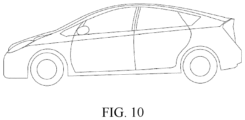
- FIG. 10 shows an apparatus used as an example.
- the apparatus is a battery electric vehicle, a hybrid electric vehicle, a plug-in hybrid electric vehicle, or the like.
- a battery pack or a battery module may be used.
- the apparatus may be a mobile phone, a tablet computer, a notebook computer, or the like.
- the apparatus is usually required to be light and thin, and therefore a secondary battery may be used as its power source.
- Lithium metal batteries of Examples 1 to 8 were prepared according to the above preparation method.
- the lithium metal battery includes a positive electrode plate, a negative electrode plate, a separator sandwiched between the positive electrode plate and the negative electrode plate, and an electrolyte.
- the negative electrode plate includes a negative electrode current collector (a copper foil) and a lithium-metal negative electrode disposed on at least one surface of the negative electrode current collector, where a polymer protective film is disposed on a surface of the lithium-metal negative electrode away from the negative electrode current collector.
- the positive electrode plate is made of nickel-cobalt-manganese ternary lithium material (NCM811, LiNi 0.8 Co 0.1 Mn 0.1 O 2 ).
- the electrolyte includes fluoroethylene carbonate, linear carbonate and fluorine-containing lithium salt, where a mass percentage of the fluoroethylene carbonate (FEC) in the electrolyte is 35%; and the lithium salt uses lithium bistrifluoromethanesulfonimide (LiTFSI) with a concentration of 1 mol/L.
- FEC fluoroethylene carbonate
- LiTFSI lithium bistrifluoromethanesulfonimide
- lithium metal batteries of Comparative Examples 1 and 2 were prepared using the same steps. These lithium metal batteries are difference from the lithium metal batteries of Examples 1 to 8 in that the lithium metal battery of Comparative Example 1 does not have a polymer protective film, and a polymer protective film in the lithium metal battery of Comparative Example 2 only contains a fluorine-containing film former and a fluorine-containing lithium salt.
- Table 1 below shows specific parameters of the polymer protective films in Examples 1 to 8 and Comparative Examples 1 to 2.
- Table 1 Specific parameters of polymer protective films in Examples and Comparative Examples Number Reactive block polymer Fluorine-containing film former Inorganic filler Fluorine-containing lithium salt Film preparation method Type Parts by mass Type Parts by mass Type Parts by mass Type Parts by mass Example 1
- PLA-co-CA 50 PVDF 40 Al 2 O 3 3 LiTFSI 7
- PEG-co-CA 60 PVDF-HFP 30 SiO 2 3 LiFSI 7 Wet
- Example 4 Mixture of PLA-co-CA and PEG-co-CA in a mass ratio of 2:1 25 PVDF 60 SiO 2 5 LiDFOB 10 Dry Example 5 PLA-co-CA 30 PVDF 60 SiO 2 5 LiTFSI 5 Dry Example 6 PEG-co-CA 25 PTFE 65 Al 2 O 3 4 LiFSI 6 Dry Example
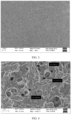
- FIG. 1 and FIG. 2 are scanning electron microscopy images (SEM images) of the polymer protective film in Comparative Example 2 at 1,000 times and 10,000 times magnification.
- FIG. 3 and FIG. 4 are scanning electron microscope images (SEM images) of the polymer protective film in Example 2 at 500 times and 10,000 times magnification.
- the ionic conductivity of the polymer films in Examples 1 to 8 and Comparative Example 2 was measured by electrochemical impedance spectroscopy (EIS, Solartron 1470e) under test conditions of 10 mV bias voltage and 106 to 0.01 Hz sweep frequency, with fitting calculation performed to obtain the ions conductivity.
- EIS electrochemical impedance spectroscopy
- electrolyte holding coefficient (Electrolyte Holding coefficient, EH) and the traditional electrolyte intake coefficient (electrolyte intake coefficient) were measured by the foregoing test method.
- the mechanical film properties of the polymer protective films in Examples 1 to 8 and Comparative Example 2 were tested by the following instruments and methods. Thickness of the protective film was tested by a Mitutoyo VL-50-B desktop force and thickness gauge. Acupuncture strength, tensile strength and elongation of the protective film were tested by a SUNS UTM6104 series electronic universal testing machine. According to China's national standard GB/T 1040.1-2018, the acupuncture strength test parameters include speed (50 mm/min) and sample thickness (0.015 mm), and tensile strength and elongation test parameters include spacing (50 mm), speed (500 mm/min), and sample thickness (0.015 mm).
- Example 2 The following tables 2 and 3 respectively show the mechanical film properties and morphology and electrical properties of the polymer protective films in Examples 1 to 8 and Comparative Example 2.
- Table 2 Mechanical film properties of polymer protective films in Examples and Comparative Examples Number Thickness of film Puncture strength (Mpa) Tensile strength (Mpa) Elongation Contact angle with electrolyte Example 1 15 ⁇ m 1.04 1.33 226% ⁇ 2% Approximately 0 Example 2 15 ⁇ m 1.58 1.63 220% ⁇ 4% Approximately 0 Example 3 15 ⁇ m 0.57 1.22 198% ⁇ 2% Approximately 0 Example 4 15 ⁇ m 0.55 1.15 205% ⁇ 4% Approximately 0 Example 5 15 ⁇ m 1.65 2.34 307% ⁇ 3% Approximately 0 Example 6 15 ⁇ m 1.64 2.88 479% ⁇ 4% Approximately 0 Example 7 15 ⁇ m 2.02 2.05 201% ⁇ 2% Approximately 0 Example 8 15 ⁇ m 1.52 1.99 207% ⁇ 3% Approximately 0 Comparative Example 1 / / / / Comparative Example 2 15 ⁇ m 0.
- Cycle performance of the lithium metal batteries in Examples 1 to 8 and Comparative Examples 1 and 2 was tested by the following method: the lithium metal battery was charged to 4.3 V at a constant current of 0.5 C (60 mA), then charged at a constant voltage of 4.3 V until the current dropped to 0.05 C (6 mA), and then discharged to 3.0 V with a constant current of 0.5 C (60 mA) to obtain the first cycle specific discharge capacity (Cai); and charging and discharging was repeated to the n th cycle and specific discharge capacity (C dn ) of the lithium secondary battery after n cycles was obtained.
- Capacity retention rate specific discharge capacity (C dn ) after n cycles/specific discharge capacity (Cai) in the first cycle. When the capacity retention rate dropped to 80%, cyclic life of the battery was considered to be terminated.
- FIG. 5 is a comparison diagram of cycle performance of lithium metal batteries in Comparative Example 1 and Example 2.
- Table 4 shows cycle performance of lithium metal batteries in Examples 1 to 8 and Comparative Examples 1 to 2.
- Table 4 Cycle performance of lithium metal batteries in Examples and Comparative Examples Number Design capacity (mAh) Charge efficiency/discharge efficiency Quantity of cycles (when capacity fades to 80%) Increase rate
- Example 1 120 0.5 C/0.5 C 80 0.905
- Example 2 120 0.5 C/0.5 C 77 0.833
- Example 3 120 0.5 C/0.5 C 57 0.357
- Example 4 120 0.5 C/0.5 C 58 0.381
- Example 5 120 0.5 C/0.5 C 104 1.486
- Example 6 120 0.5 C/0.5 C 109 1.595
- Example 7 120 0.5 C/0.5 C 114 1.714
- Example 8 120 0.5 C/0.5 C 122 1.905 Comparative Example 1 120 0.5 C/0.5 C 42 ⁇ Comparative Example 2 120 0.5 C/0.5 C 52 0.238
- the lithium-metal secondary batteries in Examples 1 to 8 and Comparative Examples 1 and 2 were disassembled, and the surfaces of their lithium metal negative electrode plates were observed by using an optical microscope.
- the interface films formed on the surfaces of the lithium metal negative electrode plates of the lithium metal batteries in Examples 1 to 8 were thin and dense, while the surfaces of the lithium metal negative electrode plates of the lithium metal batteries in Comparative Examples 1 and 2 were covered with thick and fluffy dark brown deposits which contained a large amount of lithium dendrites.
- the lithium-metal negative electrode plates in Examples were disposed on their surfaces with polymer protective films which had high mechanical strength, the polymer protective films inhibited the growth of lithium dendrites; in addition, the polymer protective film also had good electrolyte holding capacity, thereby reducing excessive consumption of the electrolyte and improving cycle life of the batteries; carboxyl and hydroxyl groups contained in the polymer protective film structure could slowly react with lithium metal to generate -COOLi and -OLi, thereby inhibiting side reactions of the lithium metal and the electrolyte, and further reducing consumption of the electrolyte; and this gentle and slow reaction helps to form a SEI film with good performance on the surface of the lithium-metal negative electrode plate, further inhibiting excessive reaction between the lithium-metal negative electrode plate and the electrolyte, and improving safety performance and cycle performance of the lithium secondary battery.
Landscapes
- Chemical & Material Sciences (AREA)
- Engineering & Computer Science (AREA)
- Chemical Kinetics & Catalysis (AREA)
- Electrochemistry (AREA)
- General Chemical & Material Sciences (AREA)
- Materials Engineering (AREA)
- Organic Chemistry (AREA)
- Life Sciences & Earth Sciences (AREA)
- Wood Science & Technology (AREA)
- Manufacturing & Machinery (AREA)
- Inorganic Chemistry (AREA)
- Composite Materials (AREA)
- Health & Medical Sciences (AREA)
- Medicinal Chemistry (AREA)
- Polymers & Plastics (AREA)
- Physics & Mathematics (AREA)
- Condensed Matter Physics & Semiconductors (AREA)
- General Physics & Mathematics (AREA)
- Secondary Cells (AREA)
- Battery Electrode And Active Subsutance (AREA)
Description
- This application claims priority to
Chinese Patent Application No.201910850600.X filed on September 10, 2019 - This application relates to the battery field, and in particular, to a negative electrode plate and a lithium metal battery.
- Lithium metal has become the best choice of negative electrode material for the next generation of high specific energy secondary batteries due to its advantages such as ultrahigh theoretical specific capacity: 3860 mAh g-1, the lowest reduction potential: -3.04 V vs. standard hydrogen electrode, and low density: 0.534 g cm-3. However, uncontrollable growth of lithium dendrites caused by irregular deposition of lithium ions on the surface of negative electrode leads to safety problems during use of lithium metal batteries, and thus restricts the wide application of lithium metal batteries.
- At present, many researches in the field of lithium metal batteries focus on adding to the electrolyte functional additives such as vinylene carbonate, fluoroethylene carbonate (fluoroethylene carbonate), 2-methylfuran, and some alkali metal cations. A new SEI film is formed by utilizing the foregoing additives to adsorb, decompose, and polymerize with lithium metal to enhance the lithium metal surface and improve cycle performance of lithium secondary batteries. However, problems with the foregoing prior art are that the protective film formed in situ has relatively weak mechanical strength and does not fully cover the lithium metal, and thus cannot entirely prevent the severe and continuous reorganization of SEI films caused by morphology change of lithium metal during lithium deposition/dissolution; and the generation of lithium dendrites and many problems that follow have not been substantively resolved.
- In view of the problems in the Background, this application is intended to provide a negative electrode plate and a lithium metal battery to improve safety of lithium metal batteries during use.
- In order to achieve the above objective, a first aspect of this application provides a negative electrode plate, including a negative electrode current collector and a lithium-metal negative electrode disposed on at least one surface of the negative electrode current collector, where a polymer protective film is disposed on a surface of the lithium-metal negative electrode away from the negative electrode current collector, the polymer protective film includes a citric acid copolymer, and a number-average molecular weight Mn of the citric acid copolymer is 10,000 to 1,000,000.
- A second aspect of this application provides a lithium metal battery, including a positive electrode plate, a negative electrode plate, a separator sandwiched between the positive electrode plate and the negative electrode plate, and an electrolyte, where the negative electrode plate is the negative electrode plate provided in the first aspect of this application.
- This application further provides an apparatus, including the foregoing lithium metal battery.
- Compared with the prior art, this application includes at least the following beneficial effects:
- In the negative electrode plate provided in this application, there is a citric acid copolymer with a number-average molecular weight Mn of 10,000 to 1,000,000 on the surface of the lithium-metal negative electrode. A structure of the citric acid copolymer contains a large number of carboxyl groups and hydroxyl groups that can react with lithium metal, and therefore a polymer protective film with high tensile strength, high puncture strength, high elongation, and high electrolyte holding capacity can be formed on the surface of the negative electrode plate. Using the negative electrode plate provided by this application in a lithium-metal secondary battery can effectively slow down or even inhibit the growth of lithium dendrites, reduce consumption by side reactions between an electrolyte and the lithium metal, and improve initial charge and discharge coulomb efficiency of the lithium-metal secondary battery, thereby significantly improving cycle stability and safety of the lithium-metal secondary battery. The apparatus in this application includes the secondary battery provided by this application, and therefore provides at least the same advantages as the secondary battery.
-
-
FIG. 1 is a scanning electron microscopy image of a polymer film in Comparative Example 2 at 1,000 times magnification; -
FIG. 2 is a scanning electron microscopy image of a polymer film in Comparative Example 2 at 10,000 times magnification; -
FIG. 3 is a scanning electron microscopy image of a polymer film in Example 2 at 500 times magnification; -
FIG. 4 is a scanning electron microscopy image of a polymer film in Example 2 at 10,000 times magnification; -
FIG. 5 is a comparison diagram of cycle performance of lithium metal batteries in Comparative Example 1 and Example 2; -
FIG. 6 is a schematic diagram of an embodiment of a lithium metal battery; -
FIG. 7 is a schematic diagram of an embodiment of a battery module; -
FIG. 8 is a schematic diagram of an embodiment of a battery pack; -
FIG. 9 is an exploded view ofFIG. 8 ; and -
FIG. 10 is a schematic diagram of an embodiment of an apparatus in which a lithium metal battery is used as a power source. - The following describes in detail a negative electrode plate and a lithium metal battery in this application.
- In the first aspect of this application, a negative electrode plate includes a negative electrode current collector and a lithium-metal negative electrode disposed on at least one surface of the negative electrode current collector, where a polymer protective film is disposed on a surface of the lithium-metal negative electrode away from the negative electrode current collector, the polymer protective film includes a citric acid copolymer, and a number-average molecular weight Mn of the citric acid copolymer is 10,000 to 1,000,000.
- In the negative electrode plate of this application, the lithium-metal negative electrode has a polymer protective film provided on the surface, where the polymer protective film includes a citric acid copolymer with a number-average molecular weight Mn of 10,000 to 1,000,000, and a structure of the citric acid copolymer contains a large amount of carboxyl and hydroxyl groups that can react with lithium metal, thus a polymer protective film with high tensile strength, high puncture strength, high elongation, and high electrolyte holding capacity can be formed. Using the negative electrode plate of this application in a lithium-metal secondary battery can effectively slow down or even inhibit growth of lithium dendrites, reduce consumption by side reactions between an electrolyte and the lithium metal, and improve initial charge and discharge coulomb efficiency of the lithium-metal secondary battery, thereby significantly improving cycle stability and safety of the lithium-metal secondary battery.
- The citric acid copolymer includes a PLA-co-CA reactive block polymer represented by formula (I) and/or a PEG-co-CA reactive block polymer represented by formula (II):


- Preferably, m is an integer selected from 400 to 600, n is an integer selected from 1000 to 2000, and Mn is 80,000 to 350,000.
- Preferably, the citric acid copolymer includes a mixture of reactive block polymers represented by formula (I) and formula (II), where a mass ratio of the reactive block polymers represented by formula (I) and formula (II) is 1:1 to 1:2, and n/m is 2.5 to 3.5, preferably, 2.8 to 3.0.
- Preferably, in the negative electrode plate of this application, the polymer protective film further includes a fluorine-containing lithium salt, a fluorine-containing film former, and an inorganic filler, where the fluorine-containing lithium salt is selected from one or more of lithium bistrifluoromethanesulfonimide (LiTFSI), lithium bisfluoromethylsulfonimide (LiFSI), and lithium difluoro (oxalate) borate (LiDFOB), and these lithium salts are conducive to in-situ formation of LiF on the surface of lithium metal, which inhibits the growth of lithium dendrites to some extent; the fluorine-containing film former is selected from one or more of polyvinylidene fluoride (PVDF), polyvinylidene fluoride-hexafluoropropylene (PVDF-HFP), and polytetrafluoroethylene (PTFE), and these fluorine-containing film former can also form LiF in situ on the surface of the lithium metal; and the inorganic filler is selected from one or more of Al2O3, TiO2, and SiO2, and the introduction of these inert fillers can more significantly improve chemical stability and mechanical strength of the polymer protective film.
- Alternatively, the polymer protective film includes lithium bisoxalateborate (LiBOB), a fluorine-containing film former, and an inorganic filler, where the fluorine-containing film former and the inorganic filler are used as described above.
- Preferably, a particle size of the inorganic filler is 10 nm to 1000 nm, preferably, 50 nm to 500 nm. The introduction of inorganic nano-particles in this size range can more effectively improve mechanical strength of the polymer protective film.
- Preferably, parts by mass of the reactive block polymer, the fluorine-containing film former, the inorganic filler, and the fluorine-containing lithium salt in the polymer protective film are respectively 25 parts to 60 parts, 30 parts to 80 parts, 1 part to 10 parts, and 1 part to 10 parts. Further preferably, parts by mass of the reactive block polymer, the fluorine-containing film former, the inorganic filler, and the fluorine-containing lithium salt in the polymer protective film are respectively 30 parts to 40 parts, 50 parts to 70 parts, 3 parts to 8 parts, and 3 parts to 8 parts.
- Parts by mass of the reactive block polymer, the fluorine-containing film former, the inorganic filler, and the lithium bisoxalateborate in the polymer protective film are respectively 25 parts to 60 parts, 30 parts to 80 parts, 1 part to 10 parts, and 1 part to 10 parts.
- Preferably, parts by mass of the reactive block polymer, the fluorine-containing film former, the inorganic filler, and the lithium bisoxalateborate in the polymer protective film are respectively 30 parts to 40 parts, 50 parts to 70 parts, 3 parts to 8 parts, and 3 parts to 8 parts.
- Preferably, in the negative electrode plate of this application, thickness of the polymer protective film is 5 µm to 30 µm, preferably, 15 µm to 20 µm. Within the above range provided by this application, the thickness of the protective film is positively correlated with the ability to inhibit the growth of lithium dendrites, but an excessively thick protective film may increase battery polarization and affect battery energy efficiency.
- In addition, tensile strength of the polymer protective film is 0.5 MPa to 3.0 MPa, preferably, 2.0 MPa to 3.0 MPa; puncture strength of the polymer protective film is 0.5 MPa to 2.0 MPa, preferably, 0.9 MPa to 2.0 MPa; and elongation is 100% to 500%, preferably, 250% to 500%. The tensile strength, puncture strength and elongation can be adjusted by adjusting a ratio of reactive block polymer, fluorine-containing film former, fluorine-containing lithium salt, and inorganic filler in the formula. Relatively high tensile strength and puncture strength can more effectively inhibit the growth of lithium dendrites; and relatively high elongation ensures that the expansion of the lithium metal battery during charging and discharging may not cause damage to the protective film.
- Preferably, electrolyte holding capacity of the polymer protective film is 50% to 200%, preferably, 100% to 200%.
- In the negative electrode plate of this application, the negative electrode current collector is typically a structure or component that collects current. The negative electrode current collector may be various materials suitable to be used as the negative electrode current collector of an electrochemical energy storage apparatus in the art. For example, the negative electrode current collector includes but is not limited to a metal foil, and more specifically includes but is not limited to a copper foil.
- In the negative electrode plate of this application, the lithium-metal negative electrode can be arranged on one surface of the negative electrode current collector, or on two surfaces of the negative electrode current collector.
- Those skilled in the art can choose a conventional method to prepare the negative electrode plate of this application. For preparation of the polymer protective film disposed on the surface of the lithium-metal negative electrode, dry extrusion or wet coating can be used. The following describes preparation processes of the negative electrode plate of this application with examples.
-
Preparation process 1 of the negative electrode plate of this application (where the film is prepared by dry extrusion): - (1) selecting a 10 µm to 50 µm lithium belt and a 6 µm to 12 µm copper foil and performing cutting after rolling under a pressure of 20 MPa to 50 MPa to obtain a lithium-metal negative electrode plate; and
- (2) performing heating to make constituents of the polymer protective layer melted and evenly mixed, and then applying the resulting mixture on a surface of the lithium-metal negative electrode plate by extrusion.
-
Preparation process 2 of the negative electrode plate of this application (where the film is prepared by wet coating): - (1) selecting a 10 µm to 50 µm lithium belt and a 6 µm to 12 µm copper foil and performing cutting after rolling under a pressure of 20 MPa to 50 MPa to obtain a lithium-metal negative electrode plate; and
- (2) using triethyl phosphate as a solvent, heating constituents of a polymer protective layer dissolved in the solvent to 70°C, and stirring until they are evenly dispersed, then applying the resulting mixture on a surface of the lithium-metal negative electrode, and drying them under vacuum at room temperature for 4 hours.
- A lithium metal battery in the second aspect of this application includes a positive electrode plate, a negative electrode plate, a separator sandwiched between the positive electrode plate and the negative electrode plate, and an electrolyte, where the negative electrode plate is the negative electrode plate in the first aspect of this application.
- Preferably, in the lithium metal battery of this application, the electrolyte preferably includes fluoroethylene carbonate, linear carbonate, and fluorine-containing lithium salt. A mass percentage of the fluoroethylene carbonate in the electrolyte is 20% to 50%; and the fluorine-containing lithium salt is a mixture of one or more of lithium bistrifluoromethanesulfonimide (LiTFSI), lithium bisfluoromethanesulfonimide (LiFSI) and lithium difluoro (oxalate) borate (LiDFOB), and a concentration of the fluorine-containing lithium salt in the electrolyte is 0.5 mol/L to 10 mol/L, preferably, 1 mol/L to 5 mol/L.
- Alternatively, the electrolyte includes fluoroethylene carbonate, linear carbonate, and lithium bisoxalateborate (LiBOB), where a mass percentage of fluoroethylene carbonate is 20% to 50%.
- In the lithium metal battery of this application, the foregoing electrolytes can be mixed in use, where the fluoroethylene carbonate and the fluorine-containing lithium salt can form a relatively stable electrolyte holding interface with the lithium metal negative electrode, thereby slowing down consumption of the electrolyte by the lithium metal to some extent; the polymer protective layer has relatively good electrolyte holding capacity for fluoroethylene carbonate, further reducing consumption of fluoroethylene carbonate; and linear carbonate has relatively low viscosity and high ionic conductivity, which can improve rate performance of the battery.
- In addition, the positive electrode plate and the separator in the lithium metal battery of this application may use a conventional positive electrode plate and separator in the art.
- In the lithium metal battery of this application, the positive electrode plate may include a positive electrode current collector and a positive electrode active substance layer disposed on at least one surface of the positive electrode current collector. In the positive electrode plate, the positive electrode active substance layer can be disposed on one surface of the positive electrode current collector, or on two surfaces of the positive electrode current collector. Those skilled in the art may select a suitable method for preparing the positive electrode plate, and for example, the following steps may be included: mixing a positive electrode active material, a binder, and a conductive agent to form a slurry, and applying the slurry on the positive electrode current collector.
- There is no special limitation on the specific types of the positive electrode active substance, as long as it can accept and release lithium ions. The positive electrode active substance can be either a layered structural material to diffuse lithium ions in a two-dimensional space, or a spinel structure to diffuse lithium ions in a three-dimensional space. Preferably, the positive electrode active substance may be selected from lithium transition metal oxides, where the lithium transition metal oxides may further be doped with other transition metals or non-transition metals or non-metals. Specifically, the positive electrode active substance can be preferably selected from one or more of lithium cobalt oxide, lithium nickel oxide, lithium manganese oxide, lithium nickel manganese oxide, lithium nickel cobalt manganese oxide, lithium nickel cobalt aluminum oxide, and olivine-type lithium-containing phosphate.
- The general formula of the olivine-type lithium-containing phosphate may be LiFe1-x-yMnxM'yPO4, where 0≤x≤1, 0≤y<1, 0≤x+y≤1, and M' is selected from one or more of transition metal elements or non-transition metal elements other than Fe and Mn, preferably one or more of Cr, Mg, Ti, Al, Zn, W, Nb, and Zr. Preferably, the olivine-type lithium-containing phosphate is selected from one or more of lithium iron phosphate, lithium manganese phosphate, and lithium manganese iron phosphate.
- The lithium transition metal oxide is selected from one or more of LiCoO2, LiMnO2, LiNiO2, LiMn2O4, LiNixCoyMn1-x-yO2, LiNixCoyAl1-x-yO2, and LiNixMn2-xO4, where 0<x<1, 0<y<1, and 0<x+y<1; and preferably, the lithium transition metal oxide is selected from one or more of LiCoO2, LiNi1/3Co1/3Mn1/3O2, LiNi0.5Co0.2Mn0.3O2, LiNi0.6Co0.2Mn0.2O2, LiNi0.8Co0.1Mn0.1O2, LiNi0.8Co0.15Mn0.05O2, LiNi0.8Co0.15Al0.05O2, LiNi0.5Mn1.5O4, and LiMn2O4.
- The positive electrode active substance layer may further include a conductive agent and a binder. The conductive agent and the binder are not limited to any specific types or content amounts, but may be selected according to actual needs. The binder typically includes fluorine-containing polyolefin binders. For the fluorine-containing polyolefin binders, water is usually a good solvent. In other words, the fluorine-containing polyolefin binders usually exhibit good solubility in water. For example, the fluorine-containing polyolefin binders include but are not limited to polyvinylidene fluoride (PVDF), vinylidene fluoride copolymer, or their modified (for example, modified by carboxylic acid, acrylic acid, or acrylonitrile) derivatives. In the positive electrode active substance layer, a mass percentage of the binder cannot be excessively high due to poor conductivity of the binder itself. Preferably, the mass percentage of the binder in the positive electrode active substance layer is less than or equal to 2 wt% so as to obtain relatively low impedance of the electrode plate. The conductive agent of the positive electrode plate may be various conductive agents suitable for lithium-ion (secondary) batteries in the field, for example, including but not limited to one or more of acetylene black, conductive carbon black, vapor grown carbon fiber (VGCF), carbon nanotubes (CNT), Ketjen black, and the like. The weight of the conductive agent may account for 1 wt% to 10 wt% of the total weight of the positive electrode active substance layer. More preferably, a weight ratio of the conductive agent to the positive electrode active substance in the positive electrode plate is greater than or equal to 1.5:95.5.
- The positive electrode current collector is also not limited to any specific type, but may be selected according to actual needs. The positive electrode current collector may typically be layered, and the positive electrode current collector is typically a structure or component that can collect current. The positive electrode current collector may be various materials suitable to be used as the positive electrode current collector of an electrochemical energy storage apparatus in the art. For example, the positive electrode current collector includes but is not limited to a metal foil, and more specifically, includes but is not limited to a nickel foil or an aluminum foil.
- In the lithium metal battery of this application, the separator may be of various materials suitable for electrochemical energy storage apparatuses in the field, for example, including but not be limited to one or more of polyethylene, polypropylene, polyvinylidene fluoride, kevlar, polyethylene terephthalate, polytetrafluoroethylene, polyacrylonitrile, polyimide, polyamide, polyester, and natural fiber.
- The lithium metal battery may be prepared by a method known to those skilled in the art. For example, the positive electrode plate, the separator, and the negative electrode plate may each be layered, and thus can be cut to a target size and then stacked in order. The stack may be further wound to a target size to form a battery core, which may be further combined with an electrolyte to form a lithium metal battery.
- In addition, this application further proposes a parameter for evaluating performance of the polymer protective film added in the lithium metal battery of this application, that is, an electrolyte holding coefficient (Electrolyte Holding coefficient, EH) of the protective film. The test method is as follows: a mass of the lithium-metal negative electrode without the protective film is measured and recorded as m0 and a mass of the lithium-metal negative electrode with the protective film is measured and recorded as m1; and the lithium metal negative electrode with the protective film is immersed in the electrolyte for 8 hours and taken out after it is filled up with the electrolyte, with the electrolyte adhered on the surface wiped off, the mass of the negative electrode was measured and record as m2. In this case, ((m1-m0)/(m2-m0)-1) is the conventional electrolyte intake coefficient (electrolyte intake coefficient). Then the lithium-metal negative electrode is placed in a 25°C thermostat and left to stand. Its mass is measured every 24 hours until its mass change is less than or equal to 1%, and its final mass is recorded as m3, where an electrolyte holding coefficient is EH=((m3-m0)/(m1-m0)-1). The conventional electrolyte intake coefficient mainly reflects the storage of the electrolyte by physical structures such as pores of the protective film, and the electrolyte holding coefficient can reflect capacity of the chemical structure of the protective film to absorb the electrolyte, and can more truly reflect the storage of the electrolyte by the protective film in a long cycling lithium secondary battery, and thus has more reference value than the electrolyte intake coefficient.
- This application does not impose special limitations on a shape of the lithium metal battery, and the lithium-ion battery may be a square or any other shapes.
FIG. 6 shows alithium metal battery 5 of a square structure as an example. - In some embodiments, the lithium metal battery may include an outer package for encapsulating a positive electrode plate, a negative electrode plate, a separator, and an electrolyte.
- In some embodiments, the outer package of the lithium metal battery may be a soft package, for example, a soft bag. A material of the soft package may be plastic, for example, may include one or more of polypropylene PP, polybutylene terephthalate PBT, polybutylene succinate PBS, and the like. Alternatively, the outer package of the lithium metal battery may be a hard shell, for example, a hard plastic shell, an aluminum shell, and a steel shell.
- In some embodiments, lithium metal batteries may be combined into a battery module, and the battery module may include a plurality of secondary batteries. A specific quantity may be adjusted based on application and capacity of the battery module.
-
FIG. 7 shows abattery module 4 used as an example. Referring toFIG. 7 , in thebattery module 4, a plurality oflithium metal batteries 5 may be sequentially arranged in a length direction of thebattery module 4. Certainly, the plurality oflithium metal batteries 5 may be arranged in any other manner. Further, the plurality oflithium metal batteries 5 may be fixed by using fasteners. - Optionally, the
battery module 4 may further include a housing with an accommodating space, and the plurality oflithium metal batteries 5 are accommodated in the accommodating space. - In some embodiments, the foregoing battery modules may be further combined into a battery pack, and a quantity of battery modules included in the battery pack may be adjusted based on application and capacity of the battery pack.
-
FIG. 8 and FIG. 9 show abattery pack 1 used as an example. Referring toFIG. 8 and FIG. 9 , thebattery pack 1 may include a battery box and a plurality ofbattery modules 4 provided in the battery box. The battery box includes anupper case 2 and alower case 3. Theupper case 2 can cover thelower case 3 to form an enclosed space for accommodating thebattery modules 4. The plurality ofbattery modules 4 may be arranged in the battery box in any manner. - The second aspect of this application provides an apparatus, where the apparatus includes the lithium metal battery in the first aspect of this application. The lithium metal battery may be used as a power source for the apparatus, or an energy storage unit of the apparatus. The apparatus may be, but is not limited to, a mobile device (for example, a mobile phone or a notebook computer), an electric vehicle (for example, a battery electric vehicle, a hybrid electric vehicle, a plug-in hybrid electric vehicle, an electric bicycle, an electric scooter, an electric golf vehicle, or an electric truck), an electric train, a ship, a satellite, an energy storage system, and the like.
- A lithium metal battery, a battery module, or a battery pack may be selected for the apparatus according to requirements for using the apparatus.
-
FIG. 10 shows an apparatus used as an example. The apparatus is a battery electric vehicle, a hybrid electric vehicle, a plug-in hybrid electric vehicle, or the like. To meet requirements of the apparatus for a battery with high power and high energy density, a battery pack or a battery module may be used. - In another example, the apparatus may be a mobile phone, a tablet computer, a notebook computer, or the like. The apparatus is usually required to be light and thin, and therefore a secondary battery may be used as its power source.
- The following further describes this application with reference to specific examples. It should be understood that these examples are merely used for describing this application but not to limit the scope of this application.
- Lithium metal batteries of Examples 1 to 8 were prepared according to the above preparation method. The lithium metal battery includes a positive electrode plate, a negative electrode plate, a separator sandwiched between the positive electrode plate and the negative electrode plate, and an electrolyte. The negative electrode plate includes a negative electrode current collector (a copper foil) and a lithium-metal negative electrode disposed on at least one surface of the negative electrode current collector, where a polymer protective film is disposed on a surface of the lithium-metal negative electrode away from the negative electrode current collector. The positive electrode plate is made of nickel-cobalt-manganese ternary lithium material (NCM811, LiNi0.8Co0.1Mn0.1O2). The electrolyte includes fluoroethylene carbonate, linear carbonate and fluorine-containing lithium salt, where a mass percentage of the fluoroethylene carbonate (FEC) in the electrolyte is 35%; and the lithium salt uses lithium bistrifluoromethanesulfonimide (LiTFSI) with a concentration of 1 mol/L.
- In addition, lithium metal batteries of Comparative Examples 1 and 2 were prepared using the same steps. These lithium metal batteries are difference from the lithium metal batteries of Examples 1 to 8 in that the lithium metal battery of Comparative Example 1 does not have a polymer protective film, and a polymer protective film in the lithium metal battery of Comparative Example 2 only contains a fluorine-containing film former and a fluorine-containing lithium salt.
- Table 1 below shows specific parameters of the polymer protective films in Examples 1 to 8 and Comparative Examples 1 to 2.
Table 1 Specific parameters of polymer protective films in Examples and Comparative Examples Number Reactive block polymer Fluorine-containing film former Inorganic filler Fluorine-containing lithium salt Film preparation method Type Parts by mass Type Parts by mass Type Parts by mass Type Parts by mass Example 1 PLA-co-CA 50 PVDF 40 Al2O3 3 LiTFSI 7 Wet Example 2 PEG-co-CA 60 PVDF-HFP 30 SiO2 3 LiFSI 7 Wet Example 3 Mixture of PLA-co-CA and PEG-co-CA in equal amounts 25 PTFE 70 TiO2 1 LiBOB 4 Dry Example 4 Mixture of PLA-co-CA and PEG-co-CA in a mass ratio of 2:1 25 PVDF 60 SiO2 5 LiDFOB 10 Dry Example 5 PLA-co-CA 30 PVDF 60 SiO2 5 LiTFSI 5 Dry Example 6 PEG-co-CA 25 PTFE 65 Al2O3 4 LiFSI 6 Dry Example 7 Mixture of PLA-co-CA and PEG-co-CA in equal amounts 35 PVDF-HFP 55 TiO2 7 LiBOB 3 Wet Example 8 Mixture of PLA-co-CA and PEG-co-CA in a mass ratio 1:2 38 PTFE 54 SiO2 3 LiDFOB 5 Wet Comparative Example 1 / / / / / / / / / Comparative Example 2 / / PVDF 90 / / LiTFSI 10 Wet where, number-average molecular weight Mn of PLA-co-CA is 177,000, and in formula (I), m is 504 and n is 1429;
number-average molecular weight Mn of PEG-co-CA is 173,000, and in formula (II), m is 522 and n is 1501; and
particle sizes (D50) of inorganic fillers Al2O3, SiO2, and TiO2 are 200 nm to 300 nm. - The polymer protective films in Examples 1 to 8 and Comparative Example 2 were characterized and tested as follows:
- The microscopic morphology of the polymer protective films in Examples 1 to 8 and Comparative Example 2 were characterized by scanning electron microscopy (SEM, SU8010, Hitachi, Japan).
FIG. 1 and FIG. 2 are scanning electron microscopy images (SEM images) of the polymer protective film in Comparative Example 2 at 1,000 times and 10,000 times magnification.FIG. 3 and FIG. 4 are scanning electron microscope images (SEM images) of the polymer protective film in Example 2 at 500 times and 10,000 times magnification. - The ionic conductivity of the polymer films in Examples 1 to 8 and Comparative Example 2 was measured by electrochemical impedance spectroscopy (EIS, Solartron 1470e) under test conditions of 10 mV bias voltage and 106 to 0.01 Hz sweep frequency, with fitting calculation performed to obtain the ions conductivity.
- The electrolyte holding coefficient (Electrolyte Holding coefficient, EH) and the traditional electrolyte intake coefficient (electrolyte intake coefficient) were measured by the foregoing test method.
- The mechanical film properties of the polymer protective films in Examples 1 to 8 and Comparative Example 2 were tested by the following instruments and methods. Thickness of the protective film was tested by a Mitutoyo VL-50-B desktop force and thickness gauge. Acupuncture strength, tensile strength and elongation of the protective film were tested by a SUNS UTM6104 series electronic universal testing machine. According to China's national standard GB/T 1040.1-2018, the acupuncture strength test parameters include speed (50 mm/min) and sample thickness (0.015 mm), and tensile strength and elongation test parameters include spacing (50 mm), speed (500 mm/min), and sample thickness (0.015 mm).
- The following tables 2 and 3 respectively show the mechanical film properties and morphology and electrical properties of the polymer protective films in Examples 1 to 8 and Comparative Example 2.
Table 2 Mechanical film properties of polymer protective films in Examples and Comparative Examples Number Thickness of film Puncture strength (Mpa) Tensile strength (Mpa) Elongation Contact angle with electrolyte Example 1 15 µm 1.04 1.33 226%±2% Approximately 0 Example 2 15 µm 1.58 1.63 220%±4% Approximately 0 Example 3 15 µm 0.57 1.22 198%±2% Approximately 0 Example 4 15 µm 0.55 1.15 205%±4% Approximately 0 Example 5 15 µm 1.65 2.34 307%±3% Approximately 0 Example 6 15 µm 1.64 2.88 479%±4% Approximately 0 Example 7 15 µm 2.02 2.05 201%±2% Approximately 0 Example 8 15 µm 1.52 1.99 207%±3% Approximately 0 Comparative Example 1 / / / / / Comparative Example 2 15 µm 0.31 0.52 181%±2% Approximately 0 Table 3 Morphology and electrical properties of polymer protective films in Examples and Comparative Examples Number Average pore diameter Ionic conductivity Ionic conductivity after electrolyte intake Electrolyte intake coefficient Electrolyte holding coefficient Example 1 Approximately 800 nm 1.0×10⁻⁴ S/cm 5.5×10⁻³ S/cm 229%±2% 156%±2% Example 2 Approximately 800 nm 0.8×10⁻⁴ S/cm 5.2×10⁻³ S/cm 201%±1% 145%±2% Example 3 Approximately 400 nm 0.5×10⁻⁴ S/cm 5.6×10⁻³ S/cm 165%±2% 55%±1% Example 4 Approximately 400 nm 1.2×10⁻⁴ S/cm 5.4×10⁻³ S/cm 151%±1% 71%±1% Example 5 Approximately 200 nm 0.9×10⁻⁴ S/cm 6.1×10⁻³ S/cm 157%±2% 112%±2% Example 6 Approximately 400 nm 1.0×10⁻⁴ S/cm 5.1×10⁻³ S/cm 166%±2% 101%±2% Example 7 Approximately 400 nm 0.5×10⁻⁴ S/cm 5.7×10⁻³ S/cm 182%±2% 127%±2% Example 8 Approximately 600 nm 0.8×10⁻⁴ S/cm 5.6×10⁻³ S/cm 199%±2% 130%±2% Comparative Example 1 / / / / / Comparative Example 2 Approximately 1500 nm 1.1×10⁻⁴ S/cm 5.1×10⁻³ S/cm 227%±2% 37%±3% - Cycle performance of the lithium metal batteries in Examples 1 to 8 and Comparative Examples 1 and 2 was tested by the following method: the lithium metal battery was charged to 4.3 V at a constant current of 0.5 C (60 mA), then charged at a constant voltage of 4.3 V until the current dropped to 0.05 C (6 mA), and then discharged to 3.0 V with a constant current of 0.5 C (60 mA) to obtain the first cycle specific discharge capacity (Cai); and charging and discharging was repeated to the nth cycle and specific discharge capacity (Cdn) of the lithium secondary battery after n cycles was obtained. Capacity retention rate = specific discharge capacity (Cdn) after n cycles/specific discharge capacity (Cai) in the first cycle. When the capacity retention rate dropped to 80%, cyclic life of the battery was considered to be terminated.
-
FIG. 5 is a comparison diagram of cycle performance of lithium metal batteries in Comparative Example 1 and Example 2. - Table 4 below shows cycle performance of lithium metal batteries in Examples 1 to 8 and Comparative Examples 1 to 2.
Table 4 Cycle performance of lithium metal batteries in Examples and Comparative Examples Number Design capacity (mAh) Charge efficiency/discharge efficiency Quantity of cycles (when capacity fades to 80%) Increase rate Example 1 120 0.5 C/0.5 C 80 0.905 Example 2 120 0.5 C/0.5 C 77 0.833 Example 3 120 0.5 C/0.5 C 57 0.357 Example 4 120 0.5 C/0.5 C 58 0.381 Example 5 120 0.5 C/0.5 C 104 1.486 Example 6 120 0.5 C/0.5 C 109 1.595 Example 7 120 0.5 C/0.5 C 114 1.714 Example 8 120 0.5 C/0.5 C 122 1.905 Comparative Example 1 120 0.5 C/0.5 C 42 \ Comparative Example 2 120 0.5 C/0.5 C 52 0.238 - It can be seen from Table 4 that the cyclic life of the lithium metal batteries in Examples 1 to 8 is significantly longer than that of the lithium metal batteries in Comparative Examples due to the polymer protective film.
- In addition, the lithium-metal secondary batteries in Examples 1 to 8 and Comparative Examples 1 and 2 were disassembled, and the surfaces of their lithium metal negative electrode plates were observed by using an optical microscope. The interface films formed on the surfaces of the lithium metal negative electrode plates of the lithium metal batteries in Examples 1 to 8 were thin and dense, while the surfaces of the lithium metal negative electrode plates of the lithium metal batteries in Comparative Examples 1 and 2 were covered with thick and fluffy dark brown deposits which contained a large amount of lithium dendrites. As the lithium-metal negative electrode plates in Examples were disposed on their surfaces with polymer protective films which had high mechanical strength, the polymer protective films inhibited the growth of lithium dendrites; in addition, the polymer protective film also had good electrolyte holding capacity, thereby reducing excessive consumption of the electrolyte and improving cycle life of the batteries; carboxyl and hydroxyl groups contained in the polymer protective film structure could slowly react with lithium metal to generate -COOLi and -OLi, thereby inhibiting side reactions of the lithium metal and the electrolyte, and further reducing consumption of the electrolyte; and this gentle and slow reaction helps to form a SEI film with good performance on the surface of the lithium-metal negative electrode plate, further inhibiting excessive reaction between the lithium-metal negative electrode plate and the electrolyte, and improving safety performance and cycle performance of the lithium secondary battery.
- According to the disclosure and teaching of this specification, a person skilled in the art may make further changes or modifications to the foregoing embodiments. Therefore, this application is not limited to the foregoing disclosure and the described specific embodiments, and some changes or modifications to this application shall also fall within the protection scope of the claims of this application. In addition, although some specific terms are used in this application, these terms are used only for ease of description, and do not constitute any limitation on this application.
Claims (15)
- A negative electrode plate, comprising a negative electrode current collector and a lithium-metal negative electrode disposed on at least one surface of the negative electrode current collector, wherein
a polymer protective film is disposed on a surface of the lithium-metal negative electrode away from the negative electrode current collector, the polymer protective film comprises a citric acid copolymer, and a number-average molecular weight Mn of the citric acid copolymer is 10,000 to 1,000,000. - The negative electrode plate according to claim 1, wherein the citric acid copolymer comprises a reactive block polymer represented by formula (I) and/or formula (II):

m is an integer selected from 10 to 5000, and n is an integer selected from 10 to 5000. - The negative electrode plate according to claim 2, wherein the reactive block polymer meets the following conditions: m is an integer selected from 400 to 600, n is an integer selected from 1000 to 2000, and the number-average molecular weight Mn is 80,000 to 350,000.
- The negative electrode plate according to claim 2 or 3, wherein the citric acid copolymer comprises a mixture of reactive block polymers represented by formula (I) and formula (II), wherein a mass ratio of the reactive block polymers represented by formula (I) and formula (II) is 1:1 to 1:2, and n/m is 2.5 to 3.5, optionally, 2.8 to 3.0.
- The negative electrode plate according to any one of claims 1 to 4, wherein the polymer protective film further comprises a fluorine-containing lithium salt, a fluorine-containing film former, and an inorganic filler, wherein the fluorine-containing lithium salt is selected from one or more of lithium bistrifluoromethanesulfonimide, lithium bisfluoromethanesulfonimide, and lithium difluoro (oxalate) borate;optionally, the fluorine-containing film former is selected from one or more of polyvinylidene fluoride, polyvinylidene fluoride-hexafluoropropene, and polytetrafluoroethylene; andoptionally, the inorganic filler is selected from one or more of Al2O3, TiO2, and SiO2.
- The negative electrode plate according to any one of claims 1 to 5, wherein the polymer protective film further comprises lithium bis(oxalate)borate, a fluorine-containing film former, and an inorganic filler;optionally, the fluorine-containing film former is selected from one or more of polyvinylidene fluoride, polyvinylidene fluoride-hexafluoropropene, and polytetrafluoroethylene; andoptionally, the inorganic filler is selected from one or more of Al2O3, TiO2, and SiO2.
- The negative electrode plate according to claim 5 or 6, wherein a particle size of the inorganic filler is 10 nm to 1000 nm, optionally, 50 nm to 500 nm.
- The negative electrode plate according to any one of claims 1 to 7, whereinparts by mass of the reactive block polymer, the fluorine-containing film former, the inorganic filler, and the fluorine-containing lithium salt in the polymer protective film are respectively 25 parts to 60 parts, 30 parts to 80 parts, 1 part to 10 parts, and 1 part to 10 parts; andoptionally, parts by mass of the reactive block polymer, the fluorine-containing film former, the inorganic filler, and the fluorine-containing lithium salt in the polymer protective film are respectively 30 parts to 40 parts, 50 parts to 70 parts, 3 parts to 8 parts, and 3 parts to 8 parts.
- The negative electrode plate according to any one of claims 1 to 8, whereinparts by mass of the reactive block polymer, the fluorine-containing film former, the inorganic filler, and the lithium salt in the polymer protective film are respectively 25 parts to 60 parts, 30 parts to 80 parts, 1 part to 10 parts, and 1 part to 10 parts; andoptionally, parts by mass of the reactive block polymer, the fluorine-containing film former, the inorganic filler, and the lithium salt in the polymer protective film are respectively 30 parts to 40 parts, 50 parts to 70 parts, 3 parts to 8 parts, and 3 parts to 8 parts.
- The negative electrode plate according to any one of claims 1 to 9, wherein thickness of the polymer protective film is 5 µm to 30 µm, optionally, 15 µm to 20 µm.
- The negative electrode plate according to any one of claims 1 to 10, wherein tensile strength of the polymer protective film is 0.5 MPa to 3.0 MPa, optionally, 2.0 MPa to 3.0 MPa; and/orpuncture strength of the polymer protective film is 0.5 MPa to 2.0MPa, optionally, 0.9 MPa to 2.0MPa; and/orelongation of the polymer protective film is 100% to 500%, optionally, 250% to 500%, wherein the tensile strength, the puncture strength and the elongation are measured according to the description.
- The negative electrode plate according to any one of claims 1 to 11, wherein electrolyte holding capacity of the polymer protective film is 50% to 200%, optionally, 100% to 200%, wherein the electrolyte holding capacity is measured according to the description.
- A lithium metal battery, comprising a positive electrode plate, a negative electrode plate, a separator sandwiched between the positive electrode plate and the negative electrode plate, and an electrolyte, wherein the negative electrode plate is the negative electrode plate according to any one of claims 1 to 12.
- The lithium metal battery according to claim 13, wherein the electrolyte comprises fluoroethylene carbonate, linear carbonate, and fluorine-containing lithium salt,optionally, a mass percentage of the fluoroethylene carbonate is 20% to 50%; andoptionally, the fluorine-containing lithium salt is selected from one or more of lithium bistrifluoromethanesulfonimide, lithium bisfluoromethanesulfonimide, and lithium difluoro (oxalate) borate.
- An apparatus, comprising the lithium metal battery according to claim 13 or 14.
Applications Claiming Priority (2)
| Application Number | Priority Date | Filing Date | Title |
|---|---|---|---|
| CN201910850600.XA CN112563461B (en) | 2019-09-10 | 2019-09-10 | Negative pole piece and lithium metal battery |
| PCT/CN2020/106470 WO2021047330A1 (en) | 2019-09-10 | 2020-07-31 | Negative electrode plate, lithium metal battery, and device comprising lithium metal battery |
Publications (3)
| Publication Number | Publication Date |
|---|---|
| EP3890069A1 EP3890069A1 (en) | 2021-10-06 |
| EP3890069A4 EP3890069A4 (en) | 2022-04-13 |
| EP3890069B1 true EP3890069B1 (en) | 2023-03-22 |
Family
ID=74866808
Family Applications (1)
| Application Number | Title | Priority Date | Filing Date |
|---|---|---|---|
| EP20862029.4A Active EP3890069B1 (en) | 2019-09-10 | 2020-07-31 | Negative electrode plate, lithium metal battery, and device comprising lithium metal battery |
Country Status (4)
| Country | Link |
|---|---|
| US (1) | US11764360B2 (en) |
| EP (1) | EP3890069B1 (en) |
| CN (1) | CN112563461B (en) |
| WO (1) | WO2021047330A1 (en) |
Families Citing this family (6)
| Publication number | Priority date | Publication date | Assignee | Title |
|---|---|---|---|---|
| EP4089758A4 (en) * | 2021-03-31 | 2023-01-11 | Ningde Amperex Technology Ltd. | Negative electrode plate, lithium-metal battery comprising negative electrode plate, and electronic device |
| EP4102595A4 (en) * | 2021-04-15 | 2023-04-26 | Contemporary Amperex Technology Co., Limited | NEGATIVE ELECTRODE SHEET, METHOD FOR PREPARING IT, AND SECONDARY BATTERY, BATTERY MODULE, BATTERY PACK AND ELECTRICAL APPARATUS CONTAINING THE SAME |
| CN115084648B (en) * | 2022-07-20 | 2023-12-15 | 中南大学 | Solid electrolyte membrane and lithium metal solid-state battery |
| KR102767592B1 (en) * | 2022-11-01 | 2025-02-17 | 한국생산기술연구원 | Lithium metal anode assembly, lithium metal battery comprising same and method of manufacturing same |
| CN118825193A (en) * | 2023-04-19 | 2024-10-22 | 宁德时代新能源科技股份有限公司 | Negative electrode sheet, preparation method thereof, battery cell, battery and electric device |
| CN116845181A (en) * | 2023-06-29 | 2023-10-03 | 欣旺达动力科技股份有限公司 | Metal lithium negative electrode and preparation method thereof, solid lithium battery and electrical equipment |
Family Cites Families (9)
| Publication number | Priority date | Publication date | Assignee | Title |
|---|---|---|---|---|
| CN105591071B (en) * | 2014-10-24 | 2018-01-12 | 宁德时代新能源科技股份有限公司 | Lithium metal anode sheet, preparation method thereof and lithium metal battery |
| KR102475886B1 (en) * | 2015-06-25 | 2022-12-08 | 삼성전자주식회사 | Negative electrode for lithium metal battery and lithium metal battery including the same |
| CN107305950B (en) * | 2016-04-19 | 2019-11-05 | 宁德新能源科技有限公司 | Polymeric protective film, lithium anode piece, lithium secondary battery |
| US10741846B2 (en) * | 2016-05-09 | 2020-08-11 | Samsung Electronics Co., Ltd. | Negative electrode for lithium metal battery and lithium metal battery comprising the same |
| CN109103517B (en) * | 2017-06-20 | 2020-04-24 | 中国科学院化学研究所 | Method for protecting metal secondary battery cathode by using polymer and application thereof |
| CN107579204A (en) * | 2017-08-28 | 2018-01-12 | 珠海光宇电池有限公司 | Lithium anode piece and preparation method thereof and lithium metal secondary battery |
| KR102587062B1 (en) * | 2017-12-18 | 2023-10-11 | 삼성전자주식회사 | Negative electrode for metal battery, metal battery comprising the same, and method of preparing the negative electrode for metal battery |
| CN108321355B (en) * | 2018-03-28 | 2024-10-25 | 中能中科(天津)新能源科技有限公司 | Lithium metal negative electrode prefabricated part, preparation method thereof, lithium metal negative electrode and lithium metal secondary battery |
| CN109004276B (en) * | 2018-07-19 | 2021-01-29 | 北京理工大学 | Lithium negative electrode protective film, preparation method and lithium metal secondary battery |
-
2019
- 2019-09-10 CN CN201910850600.XA patent/CN112563461B/en active Active
-
2020
- 2020-07-31 WO PCT/CN2020/106470 patent/WO2021047330A1/en not_active Ceased
- 2020-07-31 EP EP20862029.4A patent/EP3890069B1/en active Active
-
2021
- 2021-12-22 US US17/559,378 patent/US11764360B2/en active Active
Also Published As
| Publication number | Publication date |
|---|---|
| EP3890069A1 (en) | 2021-10-06 |
| WO2021047330A1 (en) | 2021-03-18 |
| US11764360B2 (en) | 2023-09-19 |
| US20220115666A1 (en) | 2022-04-14 |
| EP3890069A4 (en) | 2022-04-13 |
| CN112563461A (en) | 2021-03-26 |
| CN112563461B (en) | 2021-10-22 |
Similar Documents
| Publication | Publication Date | Title |
|---|---|---|
| US20230108289A1 (en) | Positive-electrode material, positive electrode plate, lithium secondary battery, battery module, battery pack, and apparatus | |
| EP3890069B1 (en) | Negative electrode plate, lithium metal battery, and device comprising lithium metal battery | |
| US20240313202A1 (en) | Secondary battery, process for preparing the same and apparatus containing the secondary battery | |
| US20230223523A1 (en) | Positive electrode plate for secondary battery, secondary battery, battery module, battery pack, and apparatus | |
| CN116315038B (en) | Secondary battery and device containing the same | |
| CN115732744B (en) | Secondary battery and device comprising same | |
| EP3930049B1 (en) | Secondary battery and device comprising the secondary battery | |
| US12034153B2 (en) | Secondary battery, process for preparing the same and apparatus containing the secondary battery | |
| CN112701347A (en) | Electrochemical device and electronic equipment | |
| JP7833029B2 (en) | Modified cathode material, method for manufacturing the same, cathode sheet, secondary battery, battery module, battery pack, and power consumption device | |
| KR20220092577A (en) | Secondary battery and device including secondary battery | |
| US20230216047A1 (en) | Lithium-nickel-manganese-based composite oxide material, secondary battery, and electric apparatus | |
| Wu et al. | Unveiling high-power and high-safety lithium-ion battery separator based on interlayer of ZIF-67/cellulose nanofiber with electrospun poly (vinyl alcohol)/melamine nonwoven membranes | |
| CN109417167A (en) | Cladding lithium titanate for lithium ion battery | |
| US20150155561A1 (en) | Anode and lithium battery including the same | |
| CN118712453A (en) | Secondary batteries and devices | |
| CN120999134A (en) | Lithium-ion batteries | |
| CN115606015A (en) | Electrode pole piece, electrochemical device and electronic device | |
| CN119008869B (en) | Positive electrode materials and their preparation methods, positive electrode sheets, secondary batteries and electrical devices | |
| CN119944101B (en) | Battery cells, batteries, electrical devices | |
| KR102826688B1 (en) | All solid lithium secondary battery comprising a lithium-magnesium alloy and method of manufacturing the same | |
| US20260081149A1 (en) | Positive electrode active material and preparation method thereof, secondary battery, and electric apparatus | |
| EP4597721A1 (en) | Separator, secondary battery, and electrical apparatus | |
| EP4601024A1 (en) | Secondary battery and device | |
| CN122000427A (en) | Battery cells and electrical devices |
Legal Events
| Date | Code | Title | Description |
|---|---|---|---|
| STAA | Information on the status of an ep patent application or granted ep patent |
Free format text: STATUS: THE INTERNATIONAL PUBLICATION HAS BEEN MADE |
|
| PUAI | Public reference made under article 153(3) epc to a published international application that has entered the european phase |
Free format text: ORIGINAL CODE: 0009012 |
|
| STAA | Information on the status of an ep patent application or granted ep patent |
Free format text: STATUS: REQUEST FOR EXAMINATION WAS MADE |
|
| 17P | Request for examination filed |
Effective date: 20210629 |
|
| AK | Designated contracting states |
Kind code of ref document: A1 Designated state(s): AL AT BE BG CH CY CZ DE DK EE ES FI FR GB GR HR HU IE IS IT LI LT LU LV MC MK MT NL NO PL PT RO RS SE SI SK SM TR |
|
| A4 | Supplementary search report drawn up and despatched |
Effective date: 20220316 |
|
| RIC1 | Information provided on ipc code assigned before grant |
Ipc: H01M 10/052 20100101ALI20220310BHEP Ipc: H01M 4/36 20060101ALI20220310BHEP Ipc: H01M 10/0525 20100101ALI20220310BHEP Ipc: H01M 4/1395 20100101ALI20220310BHEP Ipc: H01M 4/134 20100101ALI20220310BHEP Ipc: H01M 4/62 20060101ALI20220310BHEP Ipc: H01M 4/38 20060101AFI20220310BHEP |
|
| DAV | Request for validation of the european patent (deleted) | ||
| DAX | Request for extension of the european patent (deleted) | ||
| RIC1 | Information provided on ipc code assigned before grant |
Ipc: H01M 10/052 20100101ALI20221128BHEP Ipc: H01M 4/36 20060101ALI20221128BHEP Ipc: H01M 10/0525 20100101ALI20221128BHEP Ipc: H01M 4/1395 20100101ALI20221128BHEP Ipc: H01M 4/134 20100101ALI20221128BHEP Ipc: H01M 4/62 20060101ALI20221128BHEP Ipc: H01M 4/38 20060101AFI20221128BHEP |
|
| GRAP | Despatch of communication of intention to grant a patent |
Free format text: ORIGINAL CODE: EPIDOSNIGR1 |
|
| STAA | Information on the status of an ep patent application or granted ep patent |
Free format text: STATUS: GRANT OF PATENT IS INTENDED |
|
| GRAS | Grant fee paid |
Free format text: ORIGINAL CODE: EPIDOSNIGR3 |
|
| INTG | Intention to grant announced |
Effective date: 20230118 |
|
| GRAA | (expected) grant |
Free format text: ORIGINAL CODE: 0009210 |
|
| STAA | Information on the status of an ep patent application or granted ep patent |
Free format text: STATUS: THE PATENT HAS BEEN GRANTED |
|
| AK | Designated contracting states |
Kind code of ref document: B1 Designated state(s): AL AT BE BG CH CY CZ DE DK EE ES FI FR GB GR HR HU IE IS IT LI LT LU LV MC MK MT NL NO PL PT RO RS SE SI SK SM TR |
|
| REG | Reference to a national code |
Ref country code: GB Ref legal event code: FG4D |
|
| REG | Reference to a national code |
Ref country code: CH Ref legal event code: EP |
|
| REG | Reference to a national code |
Ref country code: IE Ref legal event code: FG4D |
|
| REG | Reference to a national code |
Ref country code: DE Ref legal event code: R096 Ref document number: 602020009110 Country of ref document: DE |
|
| REG | Reference to a national code |
Ref country code: AT Ref legal event code: REF Ref document number: 1555843 Country of ref document: AT Kind code of ref document: T Effective date: 20230415 |
|
| P01 | Opt-out of the competence of the unified patent court (upc) registered |
Effective date: 20230516 |
|
| REG | Reference to a national code |
Ref country code: LT Ref legal event code: MG9D |
|
| REG | Reference to a national code |
Ref country code: NL Ref legal event code: MP Effective date: 20230322 |
|
| PG25 | Lapsed in a contracting state [announced via postgrant information from national office to epo] |
Ref country code: RS Free format text: LAPSE BECAUSE OF FAILURE TO SUBMIT A TRANSLATION OF THE DESCRIPTION OR TO PAY THE FEE WITHIN THE PRESCRIBED TIME-LIMIT Effective date: 20230322 Ref country code: NO Free format text: LAPSE BECAUSE OF FAILURE TO SUBMIT A TRANSLATION OF THE DESCRIPTION OR TO PAY THE FEE WITHIN THE PRESCRIBED TIME-LIMIT Effective date: 20230622 Ref country code: LV Free format text: LAPSE BECAUSE OF FAILURE TO SUBMIT A TRANSLATION OF THE DESCRIPTION OR TO PAY THE FEE WITHIN THE PRESCRIBED TIME-LIMIT Effective date: 20230322 Ref country code: LT Free format text: LAPSE BECAUSE OF FAILURE TO SUBMIT A TRANSLATION OF THE DESCRIPTION OR TO PAY THE FEE WITHIN THE PRESCRIBED TIME-LIMIT Effective date: 20230322 Ref country code: HR Free format text: LAPSE BECAUSE OF FAILURE TO SUBMIT A TRANSLATION OF THE DESCRIPTION OR TO PAY THE FEE WITHIN THE PRESCRIBED TIME-LIMIT Effective date: 20230322 |
|
| REG | Reference to a national code |
Ref country code: AT Ref legal event code: MK05 Ref document number: 1555843 Country of ref document: AT Kind code of ref document: T Effective date: 20230322 |
|
| PG25 | Lapsed in a contracting state [announced via postgrant information from national office to epo] |
Ref country code: SE Free format text: LAPSE BECAUSE OF FAILURE TO SUBMIT A TRANSLATION OF THE DESCRIPTION OR TO PAY THE FEE WITHIN THE PRESCRIBED TIME-LIMIT Effective date: 20230322 Ref country code: NL Free format text: LAPSE BECAUSE OF FAILURE TO SUBMIT A TRANSLATION OF THE DESCRIPTION OR TO PAY THE FEE WITHIN THE PRESCRIBED TIME-LIMIT Effective date: 20230322 Ref country code: GR Free format text: LAPSE BECAUSE OF FAILURE TO SUBMIT A TRANSLATION OF THE DESCRIPTION OR TO PAY THE FEE WITHIN THE PRESCRIBED TIME-LIMIT Effective date: 20230623 Ref country code: FI Free format text: LAPSE BECAUSE OF FAILURE TO SUBMIT A TRANSLATION OF THE DESCRIPTION OR TO PAY THE FEE WITHIN THE PRESCRIBED TIME-LIMIT Effective date: 20230322 |
|
| PG25 | Lapsed in a contracting state [announced via postgrant information from national office to epo] |
Ref country code: SM Free format text: LAPSE BECAUSE OF FAILURE TO SUBMIT A TRANSLATION OF THE DESCRIPTION OR TO PAY THE FEE WITHIN THE PRESCRIBED TIME-LIMIT Effective date: 20230322 Ref country code: RO Free format text: LAPSE BECAUSE OF FAILURE TO SUBMIT A TRANSLATION OF THE DESCRIPTION OR TO PAY THE FEE WITHIN THE PRESCRIBED TIME-LIMIT Effective date: 20230322 Ref country code: PT Free format text: LAPSE BECAUSE OF FAILURE TO SUBMIT A TRANSLATION OF THE DESCRIPTION OR TO PAY THE FEE WITHIN THE PRESCRIBED TIME-LIMIT Effective date: 20230724 Ref country code: ES Free format text: LAPSE BECAUSE OF FAILURE TO SUBMIT A TRANSLATION OF THE DESCRIPTION OR TO PAY THE FEE WITHIN THE PRESCRIBED TIME-LIMIT Effective date: 20230322 Ref country code: EE Free format text: LAPSE BECAUSE OF FAILURE TO SUBMIT A TRANSLATION OF THE DESCRIPTION OR TO PAY THE FEE WITHIN THE PRESCRIBED TIME-LIMIT Effective date: 20230322 Ref country code: AT Free format text: LAPSE BECAUSE OF FAILURE TO SUBMIT A TRANSLATION OF THE DESCRIPTION OR TO PAY THE FEE WITHIN THE PRESCRIBED TIME-LIMIT Effective date: 20230322 |
|
| PG25 | Lapsed in a contracting state [announced via postgrant information from national office to epo] |
Ref country code: SK Free format text: LAPSE BECAUSE OF FAILURE TO SUBMIT A TRANSLATION OF THE DESCRIPTION OR TO PAY THE FEE WITHIN THE PRESCRIBED TIME-LIMIT Effective date: 20230322 Ref country code: PL Free format text: LAPSE BECAUSE OF FAILURE TO SUBMIT A TRANSLATION OF THE DESCRIPTION OR TO PAY THE FEE WITHIN THE PRESCRIBED TIME-LIMIT Effective date: 20230322 Ref country code: IS Free format text: LAPSE BECAUSE OF FAILURE TO SUBMIT A TRANSLATION OF THE DESCRIPTION OR TO PAY THE FEE WITHIN THE PRESCRIBED TIME-LIMIT Effective date: 20230722 |
|
| REG | Reference to a national code |
Ref country code: DE Ref legal event code: R097 Ref document number: 602020009110 Country of ref document: DE |
|
| PLBE | No opposition filed within time limit |
Free format text: ORIGINAL CODE: 0009261 |
|
| STAA | Information on the status of an ep patent application or granted ep patent |
Free format text: STATUS: NO OPPOSITION FILED WITHIN TIME LIMIT |
|
| PG25 | Lapsed in a contracting state [announced via postgrant information from national office to epo] |
Ref country code: SI Free format text: LAPSE BECAUSE OF FAILURE TO SUBMIT A TRANSLATION OF THE DESCRIPTION OR TO PAY THE FEE WITHIN THE PRESCRIBED TIME-LIMIT Effective date: 20230322 Ref country code: DK Free format text: LAPSE BECAUSE OF FAILURE TO SUBMIT A TRANSLATION OF THE DESCRIPTION OR TO PAY THE FEE WITHIN THE PRESCRIBED TIME-LIMIT Effective date: 20230322 Ref country code: CZ Free format text: LAPSE BECAUSE OF FAILURE TO SUBMIT A TRANSLATION OF THE DESCRIPTION OR TO PAY THE FEE WITHIN THE PRESCRIBED TIME-LIMIT Effective date: 20230322 |
|
| 26N | No opposition filed |
Effective date: 20240102 |
|
| PG25 | Lapsed in a contracting state [announced via postgrant information from national office to epo] |
Ref country code: MC Free format text: LAPSE BECAUSE OF FAILURE TO SUBMIT A TRANSLATION OF THE DESCRIPTION OR TO PAY THE FEE WITHIN THE PRESCRIBED TIME-LIMIT Effective date: 20230322 |
|
| PG25 | Lapsed in a contracting state [announced via postgrant information from national office to epo] |
Ref country code: MC Free format text: LAPSE BECAUSE OF FAILURE TO SUBMIT A TRANSLATION OF THE DESCRIPTION OR TO PAY THE FEE WITHIN THE PRESCRIBED TIME-LIMIT Effective date: 20230322 |
|
| REG | Reference to a national code |
Ref country code: CH Ref legal event code: PL |
|
| REG | Reference to a national code |
Ref country code: BE Ref legal event code: MM Effective date: 20230731 |
|
| PG25 | Lapsed in a contracting state [announced via postgrant information from national office to epo] |
Ref country code: LU Free format text: LAPSE BECAUSE OF NON-PAYMENT OF DUE FEES Effective date: 20230731 |
|
| PG25 | Lapsed in a contracting state [announced via postgrant information from national office to epo] |
Ref country code: LU Free format text: LAPSE BECAUSE OF NON-PAYMENT OF DUE FEES Effective date: 20230731 |
|
| REG | Reference to a national code |
Ref country code: IE Ref legal event code: MM4A |
|
| PG25 | Lapsed in a contracting state [announced via postgrant information from national office to epo] |
Ref country code: CH Free format text: LAPSE BECAUSE OF NON-PAYMENT OF DUE FEES Effective date: 20230731 |
|
| PG25 | Lapsed in a contracting state [announced via postgrant information from national office to epo] |
Ref country code: IT Free format text: LAPSE BECAUSE OF FAILURE TO SUBMIT A TRANSLATION OF THE DESCRIPTION OR TO PAY THE FEE WITHIN THE PRESCRIBED TIME-LIMIT Effective date: 20230322 Ref country code: BE Free format text: LAPSE BECAUSE OF NON-PAYMENT OF DUE FEES Effective date: 20230731 |
|
| PG25 | Lapsed in a contracting state [announced via postgrant information from national office to epo] |
Ref country code: IE Free format text: LAPSE BECAUSE OF NON-PAYMENT OF DUE FEES Effective date: 20230731 |
|
| PG25 | Lapsed in a contracting state [announced via postgrant information from national office to epo] |
Ref country code: IE Free format text: LAPSE BECAUSE OF NON-PAYMENT OF DUE FEES Effective date: 20230731 |
|
| REG | Reference to a national code |
Ref country code: DE Ref legal event code: R081 Ref document number: 602020009110 Country of ref document: DE Owner name: CONTEMPORARY AMPEREX TECHNOLOGY (HONG KONG) LI, HK Free format text: FORMER OWNER: CONTEMPORARY AMPEREX TECHNOLOGY CO., LIMITED, NINGDE CITY, FUJIAN, CN |
|
| REG | Reference to a national code |
Ref country code: GB Ref legal event code: 732E Free format text: REGISTERED BETWEEN 20240829 AND 20240904 |
|
| PG25 | Lapsed in a contracting state [announced via postgrant information from national office to epo] |
Ref country code: BG Free format text: LAPSE BECAUSE OF FAILURE TO SUBMIT A TRANSLATION OF THE DESCRIPTION OR TO PAY THE FEE WITHIN THE PRESCRIBED TIME-LIMIT Effective date: 20230322 |
|
| PG25 | Lapsed in a contracting state [announced via postgrant information from national office to epo] |
Ref country code: BG Free format text: LAPSE BECAUSE OF FAILURE TO SUBMIT A TRANSLATION OF THE DESCRIPTION OR TO PAY THE FEE WITHIN THE PRESCRIBED TIME-LIMIT Effective date: 20230322 |
|
| PGFP | Annual fee paid to national office [announced via postgrant information from national office to epo] |
Ref country code: GB Payment date: 20250612 Year of fee payment: 6 |
|
| PGFP | Annual fee paid to national office [announced via postgrant information from national office to epo] |
Ref country code: FR Payment date: 20250610 Year of fee payment: 6 |
|
| PG25 | Lapsed in a contracting state [announced via postgrant information from national office to epo] |
Ref country code: CY Free format text: LAPSE BECAUSE OF FAILURE TO SUBMIT A TRANSLATION OF THE DESCRIPTION OR TO PAY THE FEE WITHIN THE PRESCRIBED TIME-LIMIT; INVALID AB INITIO Effective date: 20200731 |
|
| PG25 | Lapsed in a contracting state [announced via postgrant information from national office to epo] |
Ref country code: HU Free format text: LAPSE BECAUSE OF FAILURE TO SUBMIT A TRANSLATION OF THE DESCRIPTION OR TO PAY THE FEE WITHIN THE PRESCRIBED TIME-LIMIT; INVALID AB INITIO Effective date: 20200731 |
|
| PGFP | Annual fee paid to national office [announced via postgrant information from national office to epo] |
Ref country code: DE Payment date: 20250604 Year of fee payment: 6 |
|
| PG25 | Lapsed in a contracting state [announced via postgrant information from national office to epo] |
Ref country code: TR Free format text: LAPSE BECAUSE OF FAILURE TO SUBMIT A TRANSLATION OF THE DESCRIPTION OR TO PAY THE FEE WITHIN THE PRESCRIBED TIME-LIMIT Effective date: 20230322 |