EP3889917B1 - System and method of optimized backup functionality for electronic control key - Google Patents
System and method of optimized backup functionality for electronic control key Download PDFInfo
- Publication number
- EP3889917B1 EP3889917B1 EP21164113.9A EP21164113A EP3889917B1 EP 3889917 B1 EP3889917 B1 EP 3889917B1 EP 21164113 A EP21164113 A EP 21164113A EP 3889917 B1 EP3889917 B1 EP 3889917B1
- Authority
- EP
- European Patent Office
- Prior art keywords
- key fob
- circuit
- circuitry
- inductive power
- inductive
- Prior art date
- Legal status (The legal status is an assumption and is not a legal conclusion. Google has not performed a legal analysis and makes no representation as to the accuracy of the status listed.)
- Active
Links
Images
Classifications
-
- E—FIXED CONSTRUCTIONS
- E05—LOCKS; KEYS; WINDOW OR DOOR FITTINGS; SAFES
- E05B—LOCKS; ACCESSORIES THEREFOR; HANDCUFFS
- E05B19/00—Keys; Accessories therefor
-
- G—PHYSICS
- G07—CHECKING-DEVICES
- G07C—TIME OR ATTENDANCE REGISTERS; REGISTERING OR INDICATING THE WORKING OF MACHINES; GENERATING RANDOM NUMBERS; VOTING OR LOTTERY APPARATUS; ARRANGEMENTS, SYSTEMS OR APPARATUS FOR CHECKING NOT PROVIDED FOR ELSEWHERE
- G07C9/00—Individual registration on entry or exit
- G07C9/00174—Electronically operated locks; Circuits therefor; Nonmechanical keys therefor, e.g. passive or active electrical keys or other data carriers without mechanical keys
- G07C9/00309—Electronically operated locks; Circuits therefor; Nonmechanical keys therefor, e.g. passive or active electrical keys or other data carriers without mechanical keys operated with bidirectional data transmission between data carrier and locks
-
- H—ELECTRICITY
- H04—ELECTRIC COMMUNICATION TECHNIQUE
- H04B—TRANSMISSION
- H04B5/00—Near-field transmission systems, e.g. inductive or capacitive transmission systems
- H04B5/70—Near-field transmission systems, e.g. inductive or capacitive transmission systems specially adapted for specific purposes
- H04B5/79—Near-field transmission systems, e.g. inductive or capacitive transmission systems specially adapted for specific purposes for data transfer in combination with power transfer
-
- B—PERFORMING OPERATIONS; TRANSPORTING
- B60—VEHICLES IN GENERAL
- B60R—VEHICLES, VEHICLE FITTINGS, OR VEHICLE PARTS, NOT OTHERWISE PROVIDED FOR
- B60R25/00—Fittings or systems for preventing or indicating unauthorised use or theft of vehicles
- B60R25/20—Means to switch the anti-theft system on or off
- B60R25/24—Means to switch the anti-theft system on or off using electronic identifiers containing a code not memorised by the user
-
- B—PERFORMING OPERATIONS; TRANSPORTING
- B60—VEHICLES IN GENERAL
- B60R—VEHICLES, VEHICLE FITTINGS, OR VEHICLE PARTS, NOT OTHERWISE PROVIDED FOR
- B60R25/00—Fittings or systems for preventing or indicating unauthorised use or theft of vehicles
- B60R25/20—Means to switch the anti-theft system on or off
- B60R25/24—Means to switch the anti-theft system on or off using electronic identifiers containing a code not memorised by the user
- B60R25/248—Electronic key extraction prevention
-
- B—PERFORMING OPERATIONS; TRANSPORTING
- B60—VEHICLES IN GENERAL
- B60R—VEHICLES, VEHICLE FITTINGS, OR VEHICLE PARTS, NOT OTHERWISE PROVIDED FOR
- B60R25/00—Fittings or systems for preventing or indicating unauthorised use or theft of vehicles
- B60R25/40—Features of the power supply for the anti-theft system, e.g. anti-theft batteries, back-up power supply or means to save battery power
- B60R25/406—Power supply in the remote key
-
- H—ELECTRICITY
- H02—GENERATION; CONVERSION OR DISTRIBUTION OF ELECTRIC POWER
- H02J—ELECTRIC POWER NETWORKS; CIRCUIT ARRANGEMENTS OR SYSTEMS FOR SUPPLYING OR DISTRIBUTING ELECTRIC POWER; SYSTEMS FOR STORING ELECTRIC ENERGY
- H02J50/00—Circuit arrangements or systems for wireless supply or distribution of electric power
- H02J50/10—Circuit arrangements or systems for wireless supply or distribution of electric power using inductive coupling
-
- H—ELECTRICITY
- H04—ELECTRIC COMMUNICATION TECHNIQUE
- H04W—WIRELESS COMMUNICATION NETWORKS
- H04W4/00—Services specially adapted for wireless communication networks; Facilities therefor
- H04W4/80—Services using short range communication, e.g. near-field communication [NFC], radio-frequency identification [RFID] or low energy communication
-
- G—PHYSICS
- G07—CHECKING-DEVICES
- G07C—TIME OR ATTENDANCE REGISTERS; REGISTERING OR INDICATING THE WORKING OF MACHINES; GENERATING RANDOM NUMBERS; VOTING OR LOTTERY APPARATUS; ARRANGEMENTS, SYSTEMS OR APPARATUS FOR CHECKING NOT PROVIDED FOR ELSEWHERE
- G07C9/00—Individual registration on entry or exit
- G07C9/00174—Electronically operated locks; Circuits therefor; Nonmechanical keys therefor, e.g. passive or active electrical keys or other data carriers without mechanical keys
- G07C2009/00579—Power supply for the keyless data carrier
- G07C2009/00603—Power supply for the keyless data carrier by power transmission from lock
- G07C2009/00611—Power supply for the keyless data carrier by power transmission from lock by using inductive transmission
-
- G—PHYSICS
- G07—CHECKING-DEVICES
- G07C—TIME OR ATTENDANCE REGISTERS; REGISTERING OR INDICATING THE WORKING OF MACHINES; GENERATING RANDOM NUMBERS; VOTING OR LOTTERY APPARATUS; ARRANGEMENTS, SYSTEMS OR APPARATUS FOR CHECKING NOT PROVIDED FOR ELSEWHERE
- G07C9/00—Individual registration on entry or exit
- G07C9/00174—Electronically operated locks; Circuits therefor; Nonmechanical keys therefor, e.g. passive or active electrical keys or other data carriers without mechanical keys
- G07C2009/00753—Electronically operated locks; Circuits therefor; Nonmechanical keys therefor, e.g. passive or active electrical keys or other data carriers without mechanical keys operated by active electrical keys
- G07C2009/00769—Electronically operated locks; Circuits therefor; Nonmechanical keys therefor, e.g. passive or active electrical keys or other data carriers without mechanical keys operated by active electrical keys with data transmission performed by wireless means
- G07C2009/00793—Electronically operated locks; Circuits therefor; Nonmechanical keys therefor, e.g. passive or active electrical keys or other data carriers without mechanical keys operated by active electrical keys with data transmission performed by wireless means by Hertzian waves
-
- G—PHYSICS
- G07—CHECKING-DEVICES
- G07C—TIME OR ATTENDANCE REGISTERS; REGISTERING OR INDICATING THE WORKING OF MACHINES; GENERATING RANDOM NUMBERS; VOTING OR LOTTERY APPARATUS; ARRANGEMENTS, SYSTEMS OR APPARATUS FOR CHECKING NOT PROVIDED FOR ELSEWHERE
- G07C2209/00—Indexing scheme relating to groups G07C9/00 - G07C9/38
- G07C2209/60—Indexing scheme relating to groups G07C9/00174 - G07C9/00944
- G07C2209/63—Comprising locating means for detecting the position of the data carrier, i.e. within the vehicle or within a certain distance from the vehicle
- G07C2209/64—Comprising locating means for detecting the position of the data carrier, i.e. within the vehicle or within a certain distance from the vehicle using a proximity sensor
-
- G—PHYSICS
- G07—CHECKING-DEVICES
- G07C—TIME OR ATTENDANCE REGISTERS; REGISTERING OR INDICATING THE WORKING OF MACHINES; GENERATING RANDOM NUMBERS; VOTING OR LOTTERY APPARATUS; ARRANGEMENTS, SYSTEMS OR APPARATUS FOR CHECKING NOT PROVIDED FOR ELSEWHERE
- G07C9/00—Individual registration on entry or exit
- G07C9/00174—Electronically operated locks; Circuits therefor; Nonmechanical keys therefor, e.g. passive or active electrical keys or other data carriers without mechanical keys
- G07C9/00944—Details of construction or manufacture
Definitions
- the present invention relates in general to electronic control keys, and more particularly to a system and method of optimized backup functionality for electronic control key or "key fob.”
- US 2014/0062655 A1 relates to an electronic key that can operate a vehicle.
- An electronic control key, or "key fob” is a keyless entry remote device which may be used to perform one or more authorized functions, such as locking or unlocking doors or the like for controlling access to vehicles or other controlled locations (e.g., hotel rooms, apartments, buildings, secure areas, etc.), opening a trunk, activating an alarm, starting an engine, etc.
- Modem key fobs may include wireless communication technology, such as 5G, Wi-Fi, Bluetooth, Bluetooth Low Energy (BLE), etc., for communicating with a corresponding access control system or the like at the vehicle or other secure location.
- the key fob and the access control system may include additional wireless technologies, such as ultra-wide band (UWB) or the like, for performing secure distance measurements such as proximity determinations between the key fob and the access control system.
- UWB device for example, may be used to determine when the key fob is within a predetermined threshold distance to facilitate access or other control decisions.
- the key fob typically includes a battery that provides power to the wireless communication devices.
- key fob as used herein contemplates many different configurations of electronic control devices, including conventional vehicle key fob devices and various other electronic Smart Device configurations, such as SmartFOBs, Smart cards, Smart watches, mobile or cellular phones, etc.
- key fobs may include backup communication circuitry remotely powered and controlled.
- the backup communication circuitry may be independent and secure so that it independently performs the same functions and applications of the primary communication circuitry including secure cryptographic and key store functions.
- An inductive element may be provided on the key fob that inductively links with the access control system to establish an inductive power and communication link.
- Existing automotive systems may use low frequency (LF) technologies in which the cable length to the central base station is critical, or may use near-field communication (NFC) technologies in which the reader electronics are integrated into each coupling device.
- LF low frequency
- NFC near-field communication
- the backup communication device must include its own microcontroller and flash memory and must be stand-alone so that it can perform the full application set of the primary communication device.
- each of the communication nodes including the primary communication circuit, the backup communication circuit, and corresponding circuitry in the access control system, is classified as radio equipment requiring related compliance tests and certification.
- the resulting key fob is relatively complex, expensive to manufacture, and requires significant development time to design and implement appropriate functionality of each microcontroller for each separate communication interface, including, for example, wake up, connection, communications for transferring information, secure distance checks, etc.
- the inductively linked backup communication devices typically must perform all of these functions except secure distance checks.
- the inventors have recognized the need to provide backup functionality for battery-powered electronic control keys (a.k.a., key fobs) when the battery is absent, disconnected, or otherwise not useful (e.g., dead or substantially discharged). They have therefore developed a system and method of optimized backup functionality for key fobs including an inductive link that provides power to the primary circuitry of the key fob but that does not perform communications.
- battery-powered electronic control keys a.k.a., key fobs
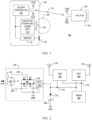
- FIG. 1 is a simplified block diagram of an electronic key-based control system 100 implemented according to one embodiment of the present disclosure.
- An electronic control key, or key fob 102 is configured to establish authorized wireless communications with an access controller 104 contained within a vehicle 106, such as an automobile, van, SUV, truck or the like.
- vehicle 106 may also represent any type of controlled location, such as, for example, hotel rooms, apartments, buildings, secure areas, etc.
- the key fob 102 may be used to perform a variety of different functions, such as locking/unlocking doors, opening a trunk, activating an alarm, starting an engine of the vehicle 106, etc.
- the key fob 102 and the access controller 104 may each be equipped with wireless communication circuitry that are configured to wirelessly communicate with each other to perform wake up, connection, and communication tasks for access, control and data transfer functions and the like, and for also performing distance measurements between the key fob 102 and the vehicle 106.
- each includes a communication (COM) antenna coupled to internal communication circuitry for performing the primary communications.
- each may include a wireless Bluetooth device configured to operate according to the Bluetooth wireless standard including low power versions, such as Bluetooth Low Energy (BLE).
- BLE Bluetooth Low Energy
- alternative wireless communication technologies are also contemplated for performing the same or similar functions, such as 5G or Wi-Fi and the like.
- the key fob 102 and the access controller 104 may each be equipped with additional wireless communication circuitry configured to wirelessly communicate with each other to perform distance (DIST) measurements or and the like for localization functions including determining the relative proximity of the key fob 102.
- DIST distance
- each includes a distance antenna DIST coupled to internal communication circuitry for performing wireless communications associated with measuring a distance between the key fob 102 and the access controller 104.
- each may include an ultra-wideband (UWB) device configured to operate using UWB technology.
- UWB ultra-wideband
- the key fob 102 may be used to perform any of one or more different authorized functions, such as locking/unlocking doors, opening a trunk, activating an alarm system, starting an engine of the vehicle 106, etc. Many of these authorized functions may be activated by one or more pushes of one or more buttons other interfaces (not shown) provided on the key fob 102. Other authorized functions, such as passive keyless entry (PKE), may be performed without human action.
- PKE passive keyless entry
- an authorized wireless communication session may be established to allow wireless communications between the key fob 102 and the access controller 104 to perform any of the desired authorized functions.
- the threshold distance 101 is a predetermined to ensure that the key fob 102 is nearby the vehicle 106 for enabling the authorized functions.
- the predetermined threshold distance 101 is on the order of a few meters, such as 2-3 meters or the like, although any suitable distance threshold less than or greater than 2-3 meters is contemplated.
- the key fob 102 may include memory or the like storing a secure key or code which may be encrypted and transferred for purposes of authentication.
- the COM and DIST functions are supported by corresponding communication circuitry, described further below, powered by a battery or the like.
- the key fob 102 includes an inductive element 103 which may be used to establish an inductive link with a corresponding inductive element 105 located on or within the vehicle 106.
- the inductive elements 103 and 105 may each be implemented as physical inductors, although alternative inductive configurations are contemplated.
- the inductive link may be established for transferring power and energizing the circuitry of the key fob 102.
- the location of the inductive element 105 of the vehicle 106 is marked or otherwise known by the user, such as at or near a door handle or the like.
- the coupling zone 108 may be a predetermined distance, such as 5-8 centimeters (or 2-3 inches) or the like.
- the user positions the key fob 102 so that the inductive element 103 of the key fob 102 is within the coupling zone 108 of the inductive element 105.
- a sensor 110 is provided on or within the vehicle 106.
- the sensor 110 may be configured according to any suitable method and may include a sensor interface 107 configured according to the particular sensor type.
- the sensor interface 107 may a button, an inductive object detector, a capacitive sensor, etc.
- the sensor interface 107 may be sufficiently close to the inductive element 105 for detecting the inductive element 103 when within the coupling zone 108.
- the sensor interface 107 is a button that is pressed by a user.
- the sensor interface 107 may be a touch pad or the like configured as a capacitive sensor.
- the senor 110 is avoided and the inductive element 105 itself may be used as the sensing device. Once proximity is detected indicating a possible inductive link, the sensor 110 wakes up or otherwise activates the access controller 104. Either the sensor 110 or the access controller 104 activates an inductive power generator (IPG) 112 electrically interfaced with the inductive element 105. When activated, the IPG 112 energizes the inductive element 105 to transfer power to the inductive element 103 of the key fob 102. As described further herein, once energized, the primary wireless communications (COM) of the key fob 102 are powered to enable normal wireless communications to commence.
- IPG inductive power generator
- only limited circuitry of the key fob 102 is energized by the inductive link, such as, only the COM functions.
- the DIST communications remain disabled since not necessary for measuring distance of the key fob 102 since assumed to be within the coupling zone 108 which has a radius much smaller than the threshold distance 101.
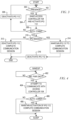
- FIG. 2 is a simplified schematic and block diagram of the circuitry of the key fob 102 according to one embodiment of the present disclosure.
- the circuitry includes COM circuitry 202, DIST circuitry 204, and MEMS circuitry 206.
- the COM circuitry 202 establishes primary wireless communications with corresponding COM circuitry (not shown) of the access controller 104, which is otherwise referred to as "authorized" communications.
- COM is the primary communication method between the key fob 102 and the access controller 104, although alternative wireless communication technologies are contemplated.
- the DIST circuitry 204 operates according to suitable wireless technology for performing distance measurements for localization of the key fob 102.
- the COM and DIST circuitry of the key fob 102 may be combined into a single wireless communication device performing the functions of both.
- BLE or the like is used for performing the COM functions, however, BLE may not be able to perform proper localization in a targeted environment with acceptable speed, so that UWB circuitry or the like is better suited for the DIST functions.
- the MEMS circuitry 206 may be used for various purposes including energy savings and the like.
- the key fob circuitry further includes a battery 208 having a negative terminal coupled to ground (GND) and a positive terminal coupled to an anode of a power diode 210, having its cathode coupled to a power supply node 212 developing a supply voltage VDD.
- the power supply node 212 is coupled to power inputs of the COM circuitry 202, the DIST circuitry 204, and the MEMS circuitry 206.
- a communication bus 214 is provided to enable internal communications between the COM circuitry 202, the DIST circuitry 204, and the MEMS circuitry 206, and may be implemented in any suitable manner such as, for example, a serial peripheral interface (SPI) or the like.
- a COM antenna 216 is coupled to the COM circuitry 202 and a DIST antenna 218 is coupled to the DIST circuitry 204, although a single antenna is contemplated in different embodiments.
- the circuitry of the key fob 102 further includes an inductive power circuit 220.
- the inductive power circuit 220 includes an LC tank circuit 222, a rectifier circuit 224, and a regulator circuit 225.
- the LC tank circuit 222 includes the inductive element 103, shown as an inductor, and a filter capacitor C1.
- the inductive element 103 has a first terminal coupled to a first terminal of C1 at a first node 226 and has a second terminal coupled to a second terminal of C1 at a second node 228.
- the rectifier circuit 224 includes four diodes D1, D2, D3, and D4 coupled in a bridge configuration.
- Node 226 is coupled to the cathode of D1 and to the anode of D2, and node 228 is coupled to the cathode of D3 and to the anode of D4.
- the anodes of D1 and D3 are coupled to GND, and the cathodes of D2 and D4 are coupled to a node 230.
- the regulator circuit 225 is shown coupled between node 230 and the power supply node 212 and may be referenced to GND.
- a filter capacitor C2 is coupled between node 230 and GND.
- the regulator circuit 225 may simply be a Zener diode or a voltage limiter or the like coupled between node 230 and GND for limiting voltage of VDD to a predetermined voltage level, in which case node 230 may be directly coupled to (or otherwise may be the same as) the power supply node 212.
- Alternative voltage limiting or voltage protection or regulator devices or circuits are contemplated, such as a low-dropout (LDO) regulator or a DC-DC regulator or the like for converting or limiting the voltage developed on node 230 to limit VDD to a desired voltage level or within a desired voltage range.
- LDO low-dropout
- the battery voltage forward biases the power diode 210 and charges the supply voltage VDD to provide power to the COM circuitry 202, the DIST circuitry 204, and the MEMS circuitry 206 for normal operation.
- the IPG 112 When the battery 208 is absent, disconnected, or otherwise not functional (e.g., dead or substantially discharged) and the inductive elements 103 and 105 are within the coupling zone 108 establishing an inductive link, and when the IPG 112 is activated to energize the inductive element 105 with alternating current (AC) for inductive power mode, corresponding AC current flows through the inductive element 103 generating AC voltage across the nodes 226 and 228.
- the AC voltage is full wave rectified by the rectifier circuit 224 and filtered by the capacitor C2 to develop a corresponding voltage on node 230.
- the regulator 230 either limits the voltage or converts the voltage to the desired voltage level of the supply voltage VDD. Rather than providing separate backup communications via the inductive link, the COM circuitry 202 is powered to enable primary wireless communications with the access controller 104.
- the DIST circuitry 204 and the MEMS circuitry 206 are both disabled to conserve energy for the COM circuitry 202. In another embodiment of the inductive power mode, only the DIST circuitry 204 is disabled and the MEMS circuitry 206 is enabled. It is noted that during the inductive power mode when the inductive elements 103 and 105 are inductively linked, the distance measurement functions of the DIST circuitry 204 may be considered superfluous and unnecessary. Also, it is noted that during the inductive power mode when the inductive elements 103 and 105 are inductively linked, any motion sensor functions of the MEMS circuitry 206 may be considered superfluous and unnecessary.
- the inductive link formed by the inductive elements 103 and 105 is only used to transfer power from the IPG 112 to the circuitry of the key fob 102 using the inductive power circuit 220 and is not used for purposes of communication.
- the key fob 102 may include additional circuitry not shown, such as battery charging circuitry for charging the battery 208 via the inductive link, in no event is the inductive link used for purposes of communication. In this manner, a separate secure backup communication device is eliminated substantially simplifying the circuitry of the key fob 102. This eliminates the need for a separate microcontroller and corresponding memory for supporting the functions of backup communication configurations.
- the inductive link need not be classified as radio equipment requiring related compliance tests and certification since only used for power transfer functions, resulting in reduced effort for compliance tests (radio compliance) and certification. Also, since data communication is avoided on the inductive link, no modulation is done and thus the system can be tuned for highest efficiency, such as a high Q factor and the like.
- FIG. 3 is a flowchart diagram illustrating operation of the circuitry of the vehicle 106 including the access controller 104, the sensor 110 and the IPG 112 according to one embodiment of the present disclosure. Operation begins at block 302 to perform a presence inquiry.
- the presence inquiry is performed by the sensor 110 which depends upon its particular configuration.
- the sensor interface 107 is configured as a button and the button is pressed by a user, then presence is true.
- the sensor interface 107 is configured as a capacitive sensor configuration and when a user comes close to or touches the sensor interface 107, then presence is true.
- the sensor interface 107 is configured as an inductive object load detector and when the inductive element 103 (or any similar inductive element or device) is sufficiently close to the sensor interface 107, then presence is true. While presence is false, operation loops at block 302 representing sensor 110 monitoring.
- operation advances to block 304 in which the sensor 110 awakens the access controller 104, and either the sensor 110 or the awakened access controller 104 then activates the IPG 112. If the key fob 102 is present and inductively linked, then activation of the IPG 112 provides power to the circuitry of the key fob 102 as previously described.
- it is queried whether authorized communication (AUTH. COMM) with the key fob 102 is established. In one embodiment, authorized communication is established between the COM circuitry 202 of the key fob 102 and corresponding COM circuitry within the access controller 104. When the key fob 102 is powered on or otherwise awakened, it attempts to establish a communication session with the access controller 104.
- authorized communication is established between the COM circuitry 202 of the key fob 102 and corresponding COM circuitry within the access controller 104.
- the access controller 104 determines whether the key fob 102 is authorized, such as detection of a correct key or code value. If the key fob 102 is not present, or if a nearby device or entity triggering presence is not an authorized device, such as a different or unauthorized key fob or simply a nearby foreign inductive or capacitive element or accidental pressing of the sensor button, then operation advances to block 308 in which the IPG 112 is deactivated, and then operation loops back to block 302. It is noted that a timeout function may be implemented to deactivate the IPG 112 to prevent damage to a foreign object.
- operation advances to block 310 to query whether the IPG 112 is needed for providing power. For normal operations in which the battery 208 is present and charged, then operation proceeds to block 312 in which the IPG 112 is deactivated, the communication session is completed per normal operation, and operation is completed. On the other hand, if the IPG 112 is needed to provide power to the key fob 102, then operation advances instead to block 314 in which the IPG 112 remains activated to complete the communication session. When the communication session is completed, operation advances to block 316 to deactivate the IPG 112, and operation is completed.
- the key fob 102 informs the access controller 104 whether the IPG 112 is needed or not, such as by setting a bit in a register or control field or the like, or else by sending an instruction or command or the like.
- the IPG 112 may sense power consumption via the inductive element 105 and if authorized communication is established with the key fob 102, then it is assumed that the IPG 112 is necessary to provide power to the key fob 102.
- FIG. 4 is a flowchart illustrating operation of the circuitry of the key fob 102 during inductive linking according to one embodiment of the present disclosure.
- battery power from the battery 208 is not available (disconnected, absent, discharged) and an inductive link is established.
- operation advances to block 402 to query whether power is being provided only by the inductive link of the inductive power circuit 220.
- additional detection circuitry such as a battery detector or inductive field detector or the like, provides an indication to the COM circuitry 202 regarding the source of power within the key fob 102, such as either from the battery 208 or the inductive power circuit 220.
- the battery 208 may be available so that normal operations apply. In this case, the functions of inductive coupling do not apply and operation loops at block 402. If power is only being provided by the inductive link, then operation advances to block 404 in which the COM circuitry 202 attempts to establish authorized communications with the COM circuitry of the access controller 104. Assuming authorized communications are established as determined at next query block 406, then operation advances to block 408 in which the communication session is completed while maintaining activation of the IPG 112. In one embodiment, the key fob 102 commands or otherwise indicates whether the IPG 112 is needed or not. In another embodiment, power via the inductive link is detected by the IPG 112 which communicates to the access controller 104 the need to remain activated.
- the circuitry of the key fob 102 then goes back to sleep after communications are completed. Referring back to block 406, if authorized communications are not established with the access controller 104, then power may be provided by another device without the access controller 104 and circuitry of the key fob 102 goes back to sleep.
- a key fob includes at least one wireless communication circuit, a power supply node coupled to provide power to the at least one wireless communication circuit, a battery node, a battery power circuit, and an inductive power circuit for only providing power.
- the battery power circuit provides power when a battery with sufficient charge is provided.
- the inductive power circuit provides power when energized with inductive power when the battery is not provided or is not sufficiently charged, in which the inductive power circuit does not perform wireless communications thereby simplifying circuitry and operation of the key fob and a corresponding access system.
- the inductive power circuit may include a rectifier circuit and an inductor and may further include regulator circuitry. Since only configured to transfer power, the inductive power circuit may be optimized for power transfer.
- the access system inductively provides power to the key fob when within a predetermined coupling zone distance.
Landscapes
- Engineering & Computer Science (AREA)
- Computer Networks & Wireless Communication (AREA)
- Mechanical Engineering (AREA)
- Signal Processing (AREA)
- Power Engineering (AREA)
- Physics & Mathematics (AREA)
- General Physics & Mathematics (AREA)
- Lock And Its Accessories (AREA)
Description
- The present invention relates in general to electronic control keys, and more particularly to a system and method of optimized backup functionality for electronic control key or "key fob."
-
US 2014/0062655 A1 relates to an electronic key that can operate a vehicle. An electronic control key, or "key fob," is a keyless entry remote device which may be used to perform one or more authorized functions, such as locking or unlocking doors or the like for controlling access to vehicles or other controlled locations (e.g., hotel rooms, apartments, buildings, secure areas, etc.), opening a trunk, activating an alarm, starting an engine, etc. Modem key fobs may include wireless communication technology, such as 5G, Wi-Fi, Bluetooth, Bluetooth Low Energy (BLE), etc., for communicating with a corresponding access control system or the like at the vehicle or other secure location. The key fob and the access control system may include additional wireless technologies, such as ultra-wide band (UWB) or the like, for performing secure distance measurements such as proximity determinations between the key fob and the access control system. A UWB device, for example, may be used to determine when the key fob is within a predetermined threshold distance to facilitate access or other control decisions. The key fob typically includes a battery that provides power to the wireless communication devices. The term "key fob" as used herein contemplates many different configurations of electronic control devices, including conventional vehicle key fob devices and various other electronic Smart Device configurations, such as SmartFOBs, Smart cards, Smart watches, mobile or cellular phones, etc. - When the battery of the key fob is dead or otherwise disconnected, the battery-powered primary communication circuitry of the key fob may be disabled or otherwise unavailable. For this reason, key fobs may include backup communication circuitry remotely powered and controlled. The backup communication circuitry may be independent and secure so that it independently performs the same functions and applications of the primary communication circuitry including secure cryptographic and key store functions. An inductive element may be provided on the key fob that inductively links with the access control system to establish an inductive power and communication link. Existing automotive systems, for example, may use low frequency (LF) technologies in which the cable length to the central base station is critical, or may use near-field communication (NFC) technologies in which the reader electronics are integrated into each coupling device.
- There are several issues with current and proposed backup communication devices. The backup communication device must include its own microcontroller and flash memory and must be stand-alone so that it can perform the full application set of the primary communication device. In addition, each of the communication nodes, including the primary communication circuit, the backup communication circuit, and corresponding circuitry in the access control system, is classified as radio equipment requiring related compliance tests and certification. The resulting key fob is relatively complex, expensive to manufacture, and requires significant development time to design and implement appropriate functionality of each microcontroller for each separate communication interface, including, for example, wake up, connection, communications for transferring information, secure distance checks, etc. The inductively linked backup communication devices typically must perform all of these functions except secure distance checks.
- According to the invention, there is provided a key fob system as defined by the appended claims.
- Embodiments of the present invention are illustrated by way of example and are not limited by the accompanying figures. Similar references in the figures may indicate similar elements. Elements in the figures are illustrated for simplicity and clarity and have not necessarily been drawn to scale.
-
FIG. 1 is a simplified block diagram of a key-based access system implemented according to one embodiment of the present disclosure. -
FIG. 2 is a simplified schematic and block diagram of the circuitry of the key fob ofFIG. 1 according to one embodiment of the present disclosure. -
FIG. 3 is a flowchart diagram illustrating operation of the circuitry of the vehicle including the access controller, the sensor and the IPG ofFIG. 1 according to one embodiment of the present disclosure. -
FIG. 4 is a flowchart illustrating operation of the circuitry of the key fob ofFIG. 1 during inductive linking according to one embodiment of the present disclosure. - The inventors have recognized the need to provide backup functionality for battery-powered electronic control keys (a.k.a., key fobs) when the battery is absent, disconnected, or otherwise not useful (e.g., dead or substantially discharged). They have therefore developed a system and method of optimized backup functionality for key fobs including an inductive link that provides power to the primary circuitry of the key fob but that does not perform communications.
-
FIG. 1 is a simplified block diagram of an electronic key-basedcontrol system 100 implemented according to one embodiment of the present disclosure. An electronic control key, orkey fob 102, is configured to establish authorized wireless communications with anaccess controller 104 contained within avehicle 106, such as an automobile, van, SUV, truck or the like. Thevehicle 106 may also represent any type of controlled location, such as, for example, hotel rooms, apartments, buildings, secure areas, etc. Thekey fob 102 may be used to perform a variety of different functions, such as locking/unlocking doors, opening a trunk, activating an alarm, starting an engine of thevehicle 106, etc. Thekey fob 102 and theaccess controller 104 may each be equipped with wireless communication circuitry that are configured to wirelessly communicate with each other to perform wake up, connection, and communication tasks for access, control and data transfer functions and the like, and for also performing distance measurements between thekey fob 102 and thevehicle 106. - As shown, each includes a communication (COM) antenna coupled to internal communication circuitry for performing the primary communications. In one embodiment, for example, each may include a wireless Bluetooth device configured to operate according to the Bluetooth wireless standard including low power versions, such as Bluetooth Low Energy (BLE). Although Bluetooth and BLE are commonly used for such functions, alternative wireless communication technologies are also contemplated for performing the same or similar functions, such as 5G or Wi-Fi and the like. In addition, the
key fob 102 and theaccess controller 104 may each be equipped with additional wireless communication circuitry configured to wirelessly communicate with each other to perform distance (DIST) measurements or and the like for localization functions including determining the relative proximity of thekey fob 102. As shown, for example, each includes a distance antenna DIST coupled to internal communication circuitry for performing wireless communications associated with measuring a distance between thekey fob 102 and theaccess controller 104. In one embodiment, for example, each may include an ultra-wideband (UWB) device configured to operate using UWB technology. - During normal operation, the
key fob 102 may be used to perform any of one or more different authorized functions, such as locking/unlocking doors, opening a trunk, activating an alarm system, starting an engine of thevehicle 106, etc. Many of these authorized functions may be activated by one or more pushes of one or more buttons other interfaces (not shown) provided on thekey fob 102. Other authorized functions, such as passive keyless entry (PKE), may be performed without human action. When thekey fob 102 is within apredetermined threshold distance 101 from thevehicle 106, an authorized wireless communication session may be established to allow wireless communications between thekey fob 102 and theaccess controller 104 to perform any of the desired authorized functions. Thethreshold distance 101 is a predetermined to ensure that thekey fob 102 is nearby thevehicle 106 for enabling the authorized functions. In one embodiment, thepredetermined threshold distance 101 is on the order of a few meters, such as 2-3 meters or the like, although any suitable distance threshold less than or greater than 2-3 meters is contemplated. Thekey fob 102 may include memory or the like storing a secure key or code which may be encrypted and transferred for purposes of authentication. The COM and DIST functions are supported by corresponding communication circuitry, described further below, powered by a battery or the like. - When the battery of the
key fob 102 is absent, disconnected, or dead (or substantially discharged), then the normal wireless communications, including COM and DIST functions, might otherwise be disabled such as is the case for legacy or conventional key fob configurations. Thekey fob 102 includes aninductive element 103 which may be used to establish an inductive link with a correspondinginductive element 105 located on or within thevehicle 106. Theinductive elements inductive elements predetermined coupling zone 108, then the inductive link may be established for transferring power and energizing the circuitry of thekey fob 102. In one embodiment, the location of theinductive element 105 of thevehicle 106 is marked or otherwise known by the user, such as at or near a door handle or the like. Thecoupling zone 108 may be a predetermined distance, such as 5-8 centimeters (or 2-3 inches) or the like. The user positions thekey fob 102 so that theinductive element 103 of thekey fob 102 is within thecoupling zone 108 of theinductive element 105. - Various methods are contemplated for detection of the presence of the
key fob 102. In the illustrated embodiment, a sensor 110 is provided on or within thevehicle 106. The sensor 110 may be configured according to any suitable method and may include asensor interface 107 configured according to the particular sensor type. Thesensor interface 107 may a button, an inductive object detector, a capacitive sensor, etc. In one embodiment, thesensor interface 107 may be sufficiently close to theinductive element 105 for detecting theinductive element 103 when within thecoupling zone 108. In another embodiment, thesensor interface 107 is a button that is pressed by a user. In yet another embodiment, thesensor interface 107 may be a touch pad or the like configured as a capacitive sensor. In yet another embodiment, the sensor 110 is avoided and theinductive element 105 itself may be used as the sensing device. Once proximity is detected indicating a possible inductive link, the sensor 110 wakes up or otherwise activates theaccess controller 104. Either the sensor 110 or theaccess controller 104 activates an inductive power generator (IPG) 112 electrically interfaced with theinductive element 105. When activated, theIPG 112 energizes theinductive element 105 to transfer power to theinductive element 103 of thekey fob 102. As described further herein, once energized, the primary wireless communications (COM) of thekey fob 102 are powered to enable normal wireless communications to commence. - According to the claimed invention, only limited circuitry of the
key fob 102 is energized by the inductive link, such as, only the COM functions. In this limited activation embodiment, the DIST communications remain disabled since not necessary for measuring distance of thekey fob 102 since assumed to be within thecoupling zone 108 which has a radius much smaller than thethreshold distance 101. -
FIG. 2 is a simplified schematic and block diagram of the circuitry of thekey fob 102 according to one embodiment of the present disclosure. The circuitry includesCOM circuitry 202,DIST circuitry 204, andMEMS circuitry 206. TheCOM circuitry 202 establishes primary wireless communications with corresponding COM circuitry (not shown) of theaccess controller 104, which is otherwise referred to as "authorized" communications. In the illustrated embodiment, COM is the primary communication method between thekey fob 102 and theaccess controller 104, although alternative wireless communication technologies are contemplated. TheDIST circuitry 204 operates according to suitable wireless technology for performing distance measurements for localization of thekey fob 102. It is noted that the COM and DIST circuitry of thekey fob 102 may be combined into a single wireless communication device performing the functions of both. When BLE or the like is used for performing the COM functions, however, BLE may not be able to perform proper localization in a targeted environment with acceptable speed, so that UWB circuitry or the like is better suited for the DIST functions. - The
MEMS circuitry 206 may be used for various purposes including energy savings and the like. The key fob circuitry further includes abattery 208 having a negative terminal coupled to ground (GND) and a positive terminal coupled to an anode of apower diode 210, having its cathode coupled to apower supply node 212 developing a supply voltage VDD. Thepower supply node 212 is coupled to power inputs of theCOM circuitry 202, theDIST circuitry 204, and theMEMS circuitry 206. Acommunication bus 214 is provided to enable internal communications between theCOM circuitry 202, theDIST circuitry 204, and theMEMS circuitry 206, and may be implemented in any suitable manner such as, for example, a serial peripheral interface (SPI) or the like. ACOM antenna 216 is coupled to theCOM circuitry 202 and aDIST antenna 218 is coupled to theDIST circuitry 204, although a single antenna is contemplated in different embodiments. - The circuitry of the
key fob 102 further includes aninductive power circuit 220. Theinductive power circuit 220 includes anLC tank circuit 222, arectifier circuit 224, and aregulator circuit 225. TheLC tank circuit 222 includes theinductive element 103, shown as an inductor, and a filter capacitor C1. Theinductive element 103 has a first terminal coupled to a first terminal of C1 at afirst node 226 and has a second terminal coupled to a second terminal of C1 at asecond node 228. Therectifier circuit 224 includes four diodes D1, D2, D3, and D4 coupled in a bridge configuration.Node 226 is coupled to the cathode of D1 and to the anode of D2, andnode 228 is coupled to the cathode of D3 and to the anode of D4. The anodes of D1 and D3 are coupled to GND, and the cathodes of D2 and D4 are coupled to anode 230. Theregulator circuit 225 is shown coupled betweennode 230 and thepower supply node 212 and may be referenced to GND. A filter capacitor C2 is coupled betweennode 230 and GND. - In one embodiment, the
regulator circuit 225 may simply be a Zener diode or a voltage limiter or the like coupled betweennode 230 and GND for limiting voltage of VDD to a predetermined voltage level, in whichcase node 230 may be directly coupled to (or otherwise may be the same as) thepower supply node 212. Alternative voltage limiting or voltage protection or regulator devices or circuits are contemplated, such as a low-dropout (LDO) regulator or a DC-DC regulator or the like for converting or limiting the voltage developed onnode 230 to limit VDD to a desired voltage level or within a desired voltage range. - In operation of the circuitry of the
key fob 102 shown inFIG. 2 , when thebattery 208 is provided and sufficiently charged for battery operation, the battery voltage forward biases thepower diode 210 and charges the supply voltage VDD to provide power to theCOM circuitry 202, theDIST circuitry 204, and theMEMS circuitry 206 for normal operation. When thebattery 208 is absent, disconnected, or otherwise not functional (e.g., dead or substantially discharged) and theinductive elements coupling zone 108 establishing an inductive link, and when theIPG 112 is activated to energize theinductive element 105 with alternating current (AC) for inductive power mode, corresponding AC current flows through theinductive element 103 generating AC voltage across thenodes rectifier circuit 224 and filtered by the capacitor C2 to develop a corresponding voltage onnode 230. Theregulator 230 either limits the voltage or converts the voltage to the desired voltage level of the supply voltage VDD. Rather than providing separate backup communications via the inductive link, theCOM circuitry 202 is powered to enable primary wireless communications with theaccess controller 104. - In one embodiment of the inductive power mode, the
DIST circuitry 204 and theMEMS circuitry 206 are both disabled to conserve energy for theCOM circuitry 202. In another embodiment of the inductive power mode, only theDIST circuitry 204 is disabled and theMEMS circuitry 206 is enabled. It is noted that during the inductive power mode when theinductive elements DIST circuitry 204 may be considered superfluous and unnecessary. Also, it is noted that during the inductive power mode when theinductive elements MEMS circuitry 206 may be considered superfluous and unnecessary. - In any event, the inductive link formed by the
inductive elements IPG 112 to the circuitry of thekey fob 102 using theinductive power circuit 220 and is not used for purposes of communication. Although thekey fob 102 may include additional circuitry not shown, such as battery charging circuitry for charging thebattery 208 via the inductive link, in no event is the inductive link used for purposes of communication. In this manner, a separate secure backup communication device is eliminated substantially simplifying the circuitry of thekey fob 102. This eliminates the need for a separate microcontroller and corresponding memory for supporting the functions of backup communication configurations. In addition, the inductive link need not be classified as radio equipment requiring related compliance tests and certification since only used for power transfer functions, resulting in reduced effort for compliance tests (radio compliance) and certification. Also, since data communication is avoided on the inductive link, no modulation is done and thus the system can be tuned for highest efficiency, such as a high Q factor and the like. -
FIG. 3 is a flowchart diagram illustrating operation of the circuitry of thevehicle 106 including theaccess controller 104, the sensor 110 and theIPG 112 according to one embodiment of the present disclosure. Operation begins atblock 302 to perform a presence inquiry. The presence inquiry is performed by the sensor 110 which depends upon its particular configuration. When thesensor interface 107 is configured as a button and the button is pressed by a user, then presence is true. When thesensor interface 107 is configured as a capacitive sensor configuration and when a user comes close to or touches thesensor interface 107, then presence is true. When thesensor interface 107 is configured as an inductive object load detector and when the inductive element 103 (or any similar inductive element or device) is sufficiently close to thesensor interface 107, then presence is true. While presence is false, operation loops atblock 302 representing sensor 110 monitoring. - When presence is true, operation advances to block 304 in which the sensor 110 awakens the
access controller 104, and either the sensor 110 or the awakenedaccess controller 104 then activates theIPG 112. If thekey fob 102 is present and inductively linked, then activation of theIPG 112 provides power to the circuitry of thekey fob 102 as previously described. Atnext block 306, it is queried whether authorized communication (AUTH. COMM) with thekey fob 102 is established. In one embodiment, authorized communication is established between theCOM circuitry 202 of thekey fob 102 and corresponding COM circuitry within theaccess controller 104. When thekey fob 102 is powered on or otherwise awakened, it attempts to establish a communication session with theaccess controller 104. Atblock 306, theaccess controller 104 determines whether thekey fob 102 is authorized, such as detection of a correct key or code value. If thekey fob 102 is not present, or if a nearby device or entity triggering presence is not an authorized device, such as a different or unauthorized key fob or simply a nearby foreign inductive or capacitive element or accidental pressing of the sensor button, then operation advances to block 308 in which theIPG 112 is deactivated, and then operation loops back to block 302. It is noted that a timeout function may be implemented to deactivate theIPG 112 to prevent damage to a foreign object. - If the
key fob 102 is present and an authorized communication session is established, then operation advances to block 310 to query whether theIPG 112 is needed for providing power. For normal operations in which thebattery 208 is present and charged, then operation proceeds to block 312 in which theIPG 112 is deactivated, the communication session is completed per normal operation, and operation is completed. On the other hand, if theIPG 112 is needed to provide power to thekey fob 102, then operation advances instead to block 314 in which theIPG 112 remains activated to complete the communication session. When the communication session is completed, operation advances to block 316 to deactivate theIPG 112, and operation is completed. In one embodiment, during authorized communication, thekey fob 102 informs theaccess controller 104 whether theIPG 112 is needed or not, such as by setting a bit in a register or control field or the like, or else by sending an instruction or command or the like. In another embodiment, theIPG 112 may sense power consumption via theinductive element 105 and if authorized communication is established with thekey fob 102, then it is assumed that theIPG 112 is necessary to provide power to thekey fob 102. -
FIG. 4 is a flowchart illustrating operation of the circuitry of thekey fob 102 during inductive linking according to one embodiment of the present disclosure. In this case, battery power from thebattery 208 is not available (disconnected, absent, discharged) and an inductive link is established. When thekey fob 102 is powered up, operation advances to block 402 to query whether power is being provided only by the inductive link of theinductive power circuit 220. Although not explicitly shown, additional detection circuitry, such as a battery detector or inductive field detector or the like, provides an indication to theCOM circuitry 202 regarding the source of power within thekey fob 102, such as either from thebattery 208 or theinductive power circuit 220. If power is not provided by the inductive link, then thebattery 208 may be available so that normal operations apply. In this case, the functions of inductive coupling do not apply and operation loops atblock 402. If power is only being provided by the inductive link, then operation advances to block 404 in which theCOM circuitry 202 attempts to establish authorized communications with the COM circuitry of theaccess controller 104. Assuming authorized communications are established as determined atnext query block 406, then operation advances to block 408 in which the communication session is completed while maintaining activation of theIPG 112. In one embodiment, thekey fob 102 commands or otherwise indicates whether theIPG 112 is needed or not. In another embodiment, power via the inductive link is detected by theIPG 112 which communicates to theaccess controller 104 the need to remain activated. The circuitry of thekey fob 102 then goes back to sleep after communications are completed. Referring back to block 406, if authorized communications are not established with theaccess controller 104, then power may be provided by another device without theaccess controller 104 and circuitry of thekey fob 102 goes back to sleep. - A key fob according to one embodiment includes at least one wireless communication circuit, a power supply node coupled to provide power to the at least one wireless communication circuit, a battery node, a battery power circuit, and an inductive power circuit for only providing power. The battery power circuit provides power when a battery with sufficient charge is provided. The inductive power circuit provides power when energized with inductive power when the battery is not provided or is not sufficiently charged, in which the inductive power circuit does not perform wireless communications thereby simplifying circuitry and operation of the key fob and a corresponding access system. The inductive power circuit may include a rectifier circuit and an inductor and may further include regulator circuitry. Since only configured to transfer power, the inductive power circuit may be optimized for power transfer. The access system inductively provides power to the key fob when within a predetermined coupling zone distance.
- Although the present invention has been described in connection with several embodiments, the invention is not intended to be limited to the specific forms set forth herein. On the contrary, it is intended to cover such alternatives, modifications, and equivalents as can be reasonably included within the scope of the invention as defined by the appended claims. For example, variations of positive logic or negative logic may be used in various embodiments in which the present invention is not limited to specific logic polarities, device types or voltage levels or the like. For example, logic states, such as logic low and logic high may be reversed depending upon whether the pin or signal is implemented in positive or negative logic or the like. In some cases, the logic state may be programmable in which the logic state may be reversed for a given logic function.
- The terms "a" or "an," as used herein, are defined as one or more than one. Also, the use of introductory phrases such as "at least one" and "one or more" in the claims should not be construed to imply that the introduction of another claim element by the indefinite articles "a" or "an" limits any particular claim containing such introduced claim element to inventions containing only one such element, even when the same claim includes the introductory phrases "one or more" or "at least one" and indefinite articles such as "a" or "an." The same holds true for the use of definite articles. Unless stated otherwise, terms such as "first" and "second" are used to arbitrarily distinguish between the elements such terms describe. Thus, these terms are not necessarily intended to indicate temporal or other prioritization of such elements.
Claims (13)
- A key fob system (100), comprising:a key fob (102) and an access system (106),the key fob (102) comprising:at least one wireless communication circuit;a power supply node (212) coupled to provide power to the at least one wireless communication circuit;a battery node;a battery power circuit that provides power via the power supply node when a battery (208) with sufficient charge is coupled to the battery node; andan inductive power circuit (220) that, with the key fob in an inductive power mode, only provides power via the power supply node (212) when energized with inductive power and when the battery node does not provide power,the access system (106) comprising:an inductive power generator (112) that can inductively couple to the inductive power circuit (220) of the key fob (102) when the inductive power circuit (220) is within a predetermined coupling zone distance of the inductive power generator (112);an access controller (104) comprising at least one wireless communication circuit; and characterized bya sensor (110) that senses and reports a presence of the key fob (102) to the access controller (104) ,wherein when the presence of the key fob (102) is detected, the inductive power generator (112) is configured to activate and the access controller (104) is configured to attempt to establish wireless communications with the key fob (102),wherein the key fob (102) comprises COM circuitry (202) for establishing primary wireless communications with corresponding COM circuitry of the access controller and DIST circuitry (204) for performing distance measurements for localization of the key fob (102), the key fob (102) being configured to enable the COM circuitry (202) and disable the DIST circuitry (204) when in the inductive power mode.
- The key fob system (100) of claim 1, wherein the inductive power circuit (220) comprises a rectifier circuit (224) and an inductor (103).
- The key fob system (100) of claim 2, wherein the rectifier circuit (224) comprises a full-wave rectifier.
- The key fob system (100) of claim 2 or 3, wherein the inductive power circuit (220) further comprises regulator circuitry (225) coupled to the power supply node (212).
- The key fob system (100) of any preceding claim, wherein the inductive power circuit (220) is not configured to perform wireless communications.
- The key fob system (100) of any preceding claim, wherein the inductive power circuit (220) is optimized for inductive power transfer.
- The key fob system (100) of any preceding claim, wherein the at least one wireless communication circuit comprises a Bluetooth wireless circuit.
- The key fob system (100) of any preceding claim, wherein the at least one wireless communication circuit comprises an ultra-wideband wireless circuit.
- The key fob system (100) of any preceding claim, wherein the at least one wireless communication circuit of the key fob (102) provides an indication to maintain power to the inductive power circuit (220) during a communication session.
- The key fob system (100) of any preceding claim, wherein the access controller (104) maintains activation of the inductive power generator (220) when indicated by the key fob (102) after establishing wireless communications.
- The key fob system (100) of any preceding claim, wherein the access controller (104) and the key fob (102) wireless communicate with each other according to Bluetooth.
- The key fob system (100) of any preceding claim, wherein the access controller (104) and the key fob (102) each include a wireless Bluetooth communication circuit and a wireless ultra-wideband communication circuit.
- The key fob system (100) of any preceding claim, wherein the sensor (110) comprises a button and/or a capacitive sensor.
Applications Claiming Priority (1)
| Application Number | Priority Date | Filing Date | Title |
|---|---|---|---|
| US16/835,681 US11258480B2 (en) | 2020-03-31 | 2020-03-31 | System and method of optimized backup functionality for electronic control key |
Publications (2)
| Publication Number | Publication Date |
|---|---|
| EP3889917A1 EP3889917A1 (en) | 2021-10-06 |
| EP3889917B1 true EP3889917B1 (en) | 2025-02-19 |
Family
ID=75173038
Family Applications (1)
| Application Number | Title | Priority Date | Filing Date |
|---|---|---|---|
| EP21164113.9A Active EP3889917B1 (en) | 2020-03-31 | 2021-03-22 | System and method of optimized backup functionality for electronic control key |
Country Status (3)
| Country | Link |
|---|---|
| US (1) | US11258480B2 (en) |
| EP (1) | EP3889917B1 (en) |
| CN (1) | CN113463978B (en) |
Families Citing this family (4)
| Publication number | Priority date | Publication date | Assignee | Title |
|---|---|---|---|---|
| US12157434B2 (en) * | 2021-05-20 | 2024-12-03 | Hyundai Mobis Co., Ltd. | Smart key system capable of operating even when UWB communication is impossible due to battery voltage drop of fob and operation method thereof |
| EP4403407A1 (en) * | 2023-01-18 | 2024-07-24 | Nxp B.V. | Battery system and method of configuring the same |
| US20250061759A1 (en) * | 2023-08-15 | 2025-02-20 | Assa Abloy Americas Residential Inc. | Electronic lock with battery use mitigation |
| DE102025125691A1 (en) | 2025-07-02 | 2026-04-02 | Mercedes-Benz Group AG | Method for operating a locking system of a motor vehicle, as well as locking system and communication unit |
Citations (1)
| Publication number | Priority date | Publication date | Assignee | Title |
|---|---|---|---|---|
| US20050195067A1 (en) * | 2004-01-20 | 2005-09-08 | Harrow Products Llc | Access control system with energy-saving optical token presence sensor system |
Family Cites Families (30)
| Publication number | Priority date | Publication date | Assignee | Title |
|---|---|---|---|---|
| KR20010057356A (en) * | 1999-12-22 | 2001-07-04 | 송문섭 | Power backup circuit of mobile communication terminal |
| US6943666B2 (en) | 2001-02-15 | 2005-09-13 | Agere Systems, Inc. | Recharging key based wireless device |
| DE10259590A1 (en) * | 2002-12-19 | 2004-07-01 | Daimlerchrysler Ag | Vehicle security system |
| US7597250B2 (en) * | 2003-11-17 | 2009-10-06 | Dpd Patent Trust Ltd. | RFID reader with multiple interfaces |
| EP2158497A4 (en) * | 2007-06-19 | 2012-03-21 | Magna Electronics Inc | Mobile control node system and method for vehicles |
| US8018092B2 (en) * | 2008-04-15 | 2011-09-13 | General Electric Company | System and method for managing power supply to a circuit breaker control unit |
| US8531268B2 (en) * | 2008-05-15 | 2013-09-10 | Lear Corporation | Passive entry system for an automotive vehicle |
| US20110115605A1 (en) * | 2009-11-17 | 2011-05-19 | Strattec Security Corporation | Energy harvesting system |
| US8284020B2 (en) * | 2009-12-22 | 2012-10-09 | Lear Corporation | Passive entry system and method for a vehicle |
| FR2963711B1 (en) | 2010-08-06 | 2013-04-26 | Delphi Tech Inc | PASSIVE ENTRY SYSTEM FOR VEHICLE |
| JP5847651B2 (en) * | 2012-06-01 | 2016-01-27 | 株式会社東芝 | Power receiving device and power transmitting / receiving system |
| US9058704B2 (en) * | 2012-09-04 | 2015-06-16 | Craig Alexander Colburn | Electronic vehicle key |
| GB2515007A (en) * | 2013-05-31 | 2014-12-17 | Jaguar Land Rover Ltd | Vehicle communication system |
| JPWO2015068403A1 (en) | 2013-11-11 | 2017-03-09 | パナソニックIpマネジメント株式会社 | Smart entry system |
| US20150296348A1 (en) * | 2014-04-14 | 2015-10-15 | Lear Corporation | Polling between wireless device and vehicle transceivers |
| US9460846B2 (en) * | 2014-06-20 | 2016-10-04 | Apple Inc. | Methods for forming shield materials onto inductive coils |
| CH709804B1 (en) * | 2014-06-23 | 2018-12-28 | Legic Identsystems Ag | Electronic access control device and access control method. |
| US9328531B1 (en) * | 2014-10-09 | 2016-05-03 | Everald Lloyd Smeikle | Rechargeable automobile ignition key |
| CN106296880A (en) * | 2015-05-25 | 2017-01-04 | 鸿富锦精密工业(深圳)有限公司 | Wireless charging electric lockset |
| US10963870B2 (en) * | 2015-11-10 | 2021-03-30 | Vaposun Inc. | Method and system for network communication |
| KR101716240B1 (en) * | 2016-01-04 | 2017-03-15 | 현대자동차주식회사 | Vehicle and controlling method for the same |
| US9875591B2 (en) * | 2016-04-26 | 2018-01-23 | Ford Global Techologies, Llc | Systems and methods for phone-as-a-key range extension |
| US10971953B2 (en) * | 2016-08-26 | 2021-04-06 | Maxell, Ltd. | Contactless power receiving device, contactless power transfer device, and contactless power transfer and receiving device |
| US10483806B2 (en) * | 2016-10-18 | 2019-11-19 | Powersphyr Inc. | Multi-mode energy receiver system |
| KR102388756B1 (en) * | 2017-03-08 | 2022-04-21 | 삼성전자주식회사 | Apparatus and method for performing wireless charging and payment |
| US20190104473A1 (en) * | 2017-09-29 | 2019-04-04 | QUALCOMM Incorporaged | Managing device power on sequences and communications control for wireless power transfer |
| US10716068B2 (en) * | 2017-10-13 | 2020-07-14 | Denso International America, Inc. | Power saving methods for communication in localization systems |
| EP3506216A1 (en) * | 2017-12-28 | 2019-07-03 | Netatmo | Smart lock with power saving having an electromechanical key |
| US10440576B1 (en) * | 2018-08-23 | 2019-10-08 | Nxp B.V. | System for securing keyless entry systems |
| US20200119586A1 (en) * | 2018-10-15 | 2020-04-16 | Avigilon Corporation | Wireless charging of depleted mobile device for access control |
-
2020
- 2020-03-31 US US16/835,681 patent/US11258480B2/en active Active
-
2021
- 2021-03-22 EP EP21164113.9A patent/EP3889917B1/en active Active
- 2021-03-24 CN CN202110316647.5A patent/CN113463978B/en active Active
Patent Citations (1)
| Publication number | Priority date | Publication date | Assignee | Title |
|---|---|---|---|---|
| US20050195067A1 (en) * | 2004-01-20 | 2005-09-08 | Harrow Products Llc | Access control system with energy-saving optical token presence sensor system |
Also Published As
| Publication number | Publication date |
|---|---|
| EP3889917A1 (en) | 2021-10-06 |
| US11258480B2 (en) | 2022-02-22 |
| CN113463978A (en) | 2021-10-01 |
| US20210306033A1 (en) | 2021-09-30 |
| CN113463978B (en) | 2025-10-24 |
Similar Documents
| Publication | Publication Date | Title |
|---|---|---|
| EP3889917B1 (en) | System and method of optimized backup functionality for electronic control key | |
| US8774714B2 (en) | External power supply system for a lock comprising NFC-type contactless communication means | |
| CN111385000B (en) | System and method for RF backscatter communications for vehicle remote control | |
| CN106907069B (en) | Keyless vehicle system | |
| US10322694B2 (en) | Bluetooth verification for vehicle access systems | |
| US9082241B2 (en) | Wireless communications circuit | |
| CN103625425B (en) | Utilize the keyless entry and the system of keyless activation of near-field communication | |
| CN105630171B (en) | A kind of intelligent spire lamella and the control method for vehicle based on the intelligent spire lamella | |
| US20170243420A1 (en) | Electric lock adapted to be activated by a mobile phone and method thereof | |
| US20100144269A1 (en) | Low-energy detection of a transponder by means of read unit and a system for identity determination and/or authorization determination, optionally in the form of a locking system | |
| CN106688019B (en) | Data for door handle acquire and measure the device of acquisition and for the method for this device | |
| CN117395603A (en) | Multiband identification and ranging | |
| CN110944884B (en) | Mobile identification transmitter | |
| CN102270314A (en) | Non-contact control method and device | |
| KR20170086723A (en) | Control method and apparatus of proximity access controller | |
| EP3889919B1 (en) | System and method of improving security during backup functionality of electronic control key | |
| KR100966526B1 (en) | Non-contact door lock system and control method thereof | |
| CN108848485B (en) | Low-power consumption container management system and management method | |
| CN108334920B (en) | Composite intelligent card for vehicle charging and power supply management method thereof | |
| JP2009218713A (en) | Composite radio communication system | |
| JP2019085777A (en) | Electronic key and electronic key system | |
| CN111260825A (en) | Bank card-based car key control method, system, key and electronic lock | |
| US11438028B2 (en) | Communication set-up for wireless communication and method for controlling such a communication set-up | |
| WO2024132100A1 (en) | Key fob for controlling a vehicle function | |
| JP2009217380A (en) | Hybrid radio communication system |
Legal Events
| Date | Code | Title | Description |
|---|---|---|---|
| PUAI | Public reference made under article 153(3) epc to a published international application that has entered the european phase |
Free format text: ORIGINAL CODE: 0009012 |
|
| STAA | Information on the status of an ep patent application or granted ep patent |
Free format text: STATUS: THE APPLICATION HAS BEEN PUBLISHED |
|
| AK | Designated contracting states |
Kind code of ref document: A1 Designated state(s): AL AT BE BG CH CY CZ DE DK EE ES FI FR GB GR HR HU IE IS IT LI LT LU LV MC MK MT NL NO PL PT RO RS SE SI SK SM TR |
|
| STAA | Information on the status of an ep patent application or granted ep patent |
Free format text: STATUS: REQUEST FOR EXAMINATION WAS MADE |
|
| 17P | Request for examination filed |
Effective date: 20220406 |
|
| RBV | Designated contracting states (corrected) |
Designated state(s): AL AT BE BG CH CY CZ DE DK EE ES FI FR GB GR HR HU IE IS IT LI LT LU LV MC MK MT NL NO PL PT RO RS SE SI SK SM TR |
|
| STAA | Information on the status of an ep patent application or granted ep patent |
Free format text: STATUS: EXAMINATION IS IN PROGRESS |
|
| 17Q | First examination report despatched |
Effective date: 20240507 |
|
| GRAP | Despatch of communication of intention to grant a patent |
Free format text: ORIGINAL CODE: EPIDOSNIGR1 |
|
| STAA | Information on the status of an ep patent application or granted ep patent |
Free format text: STATUS: GRANT OF PATENT IS INTENDED |
|
| INTG | Intention to grant announced |
Effective date: 20241021 |
|
| GRAS | Grant fee paid |
Free format text: ORIGINAL CODE: EPIDOSNIGR3 |
|
| GRAA | (expected) grant |
Free format text: ORIGINAL CODE: 0009210 |
|
| STAA | Information on the status of an ep patent application or granted ep patent |
Free format text: STATUS: THE PATENT HAS BEEN GRANTED |
|
| AK | Designated contracting states |
Kind code of ref document: B1 Designated state(s): AL AT BE BG CH CY CZ DE DK EE ES FI FR GB GR HR HU IE IS IT LI LT LU LV MC MK MT NL NO PL PT RO RS SE SI SK SM TR |
|
| REG | Reference to a national code |
Ref country code: GB Ref legal event code: FG4D |
|
| REG | Reference to a national code |
Ref country code: CH Ref legal event code: EP |
|
| REG | Reference to a national code |
Ref country code: IE Ref legal event code: FG4D |
|
| REG | Reference to a national code |
Ref country code: DE Ref legal event code: R096 Ref document number: 602021026236 Country of ref document: DE |
|
| PGFP | Annual fee paid to national office [announced via postgrant information from national office to epo] |
Ref country code: AT Payment date: 20250417 Year of fee payment: 5 |
|
| REG | Reference to a national code |
Ref country code: NL Ref legal event code: MP Effective date: 20250219 |
|
| PG25 | Lapsed in a contracting state [announced via postgrant information from national office to epo] |
Ref country code: RS Free format text: LAPSE BECAUSE OF FAILURE TO SUBMIT A TRANSLATION OF THE DESCRIPTION OR TO PAY THE FEE WITHIN THE PRESCRIBED TIME-LIMIT Effective date: 20250519 |
|
| PG25 | Lapsed in a contracting state [announced via postgrant information from national office to epo] |
Ref country code: FI Free format text: LAPSE BECAUSE OF FAILURE TO SUBMIT A TRANSLATION OF THE DESCRIPTION OR TO PAY THE FEE WITHIN THE PRESCRIBED TIME-LIMIT Effective date: 20250219 |
|
| PG25 | Lapsed in a contracting state [announced via postgrant information from national office to epo] |
Ref country code: PL Free format text: LAPSE BECAUSE OF FAILURE TO SUBMIT A TRANSLATION OF THE DESCRIPTION OR TO PAY THE FEE WITHIN THE PRESCRIBED TIME-LIMIT Effective date: 20250219 |
|
| PG25 | Lapsed in a contracting state [announced via postgrant information from national office to epo] |
Ref country code: ES Free format text: LAPSE BECAUSE OF FAILURE TO SUBMIT A TRANSLATION OF THE DESCRIPTION OR TO PAY THE FEE WITHIN THE PRESCRIBED TIME-LIMIT Effective date: 20250219 |
|
| REG | Reference to a national code |
Ref country code: LT Ref legal event code: MG9D |
|
| PG25 | Lapsed in a contracting state [announced via postgrant information from national office to epo] |
Ref country code: IS Free format text: LAPSE BECAUSE OF FAILURE TO SUBMIT A TRANSLATION OF THE DESCRIPTION OR TO PAY THE FEE WITHIN THE PRESCRIBED TIME-LIMIT Effective date: 20250619 Ref country code: NO Free format text: LAPSE BECAUSE OF FAILURE TO SUBMIT A TRANSLATION OF THE DESCRIPTION OR TO PAY THE FEE WITHIN THE PRESCRIBED TIME-LIMIT Effective date: 20250519 |
|
| PG25 | Lapsed in a contracting state [announced via postgrant information from national office to epo] |
Ref country code: NL Free format text: LAPSE BECAUSE OF FAILURE TO SUBMIT A TRANSLATION OF THE DESCRIPTION OR TO PAY THE FEE WITHIN THE PRESCRIBED TIME-LIMIT Effective date: 20250219 |
|
| PG25 | Lapsed in a contracting state [announced via postgrant information from national office to epo] |
Ref country code: HR Free format text: LAPSE BECAUSE OF FAILURE TO SUBMIT A TRANSLATION OF THE DESCRIPTION OR TO PAY THE FEE WITHIN THE PRESCRIBED TIME-LIMIT Effective date: 20250219 |
|
| PG25 | Lapsed in a contracting state [announced via postgrant information from national office to epo] |
Ref country code: LV Free format text: LAPSE BECAUSE OF FAILURE TO SUBMIT A TRANSLATION OF THE DESCRIPTION OR TO PAY THE FEE WITHIN THE PRESCRIBED TIME-LIMIT Effective date: 20250219 Ref country code: PT Free format text: LAPSE BECAUSE OF FAILURE TO SUBMIT A TRANSLATION OF THE DESCRIPTION OR TO PAY THE FEE WITHIN THE PRESCRIBED TIME-LIMIT Effective date: 20250620 |
|
| PG25 | Lapsed in a contracting state [announced via postgrant information from national office to epo] |
Ref country code: GR Free format text: LAPSE BECAUSE OF FAILURE TO SUBMIT A TRANSLATION OF THE DESCRIPTION OR TO PAY THE FEE WITHIN THE PRESCRIBED TIME-LIMIT Effective date: 20250520 Ref country code: BG Free format text: LAPSE BECAUSE OF FAILURE TO SUBMIT A TRANSLATION OF THE DESCRIPTION OR TO PAY THE FEE WITHIN THE PRESCRIBED TIME-LIMIT Effective date: 20250219 |
|
| REG | Reference to a national code |
Ref country code: AT Ref legal event code: MK05 Ref document number: 1769080 Country of ref document: AT Kind code of ref document: T Effective date: 20250219 |
|
| PG25 | Lapsed in a contracting state [announced via postgrant information from national office to epo] |
Ref country code: SE Free format text: LAPSE BECAUSE OF FAILURE TO SUBMIT A TRANSLATION OF THE DESCRIPTION OR TO PAY THE FEE WITHIN THE PRESCRIBED TIME-LIMIT Effective date: 20250219 |
|
| PG25 | Lapsed in a contracting state [announced via postgrant information from national office to epo] |
Ref country code: SM Free format text: LAPSE BECAUSE OF FAILURE TO SUBMIT A TRANSLATION OF THE DESCRIPTION OR TO PAY THE FEE WITHIN THE PRESCRIBED TIME-LIMIT Effective date: 20250219 |
|
| PG25 | Lapsed in a contracting state [announced via postgrant information from national office to epo] |
Ref country code: DK Free format text: LAPSE BECAUSE OF FAILURE TO SUBMIT A TRANSLATION OF THE DESCRIPTION OR TO PAY THE FEE WITHIN THE PRESCRIBED TIME-LIMIT Effective date: 20250219 |
|
| PG25 | Lapsed in a contracting state [announced via postgrant information from national office to epo] |
Ref country code: IT Free format text: LAPSE BECAUSE OF FAILURE TO SUBMIT A TRANSLATION OF THE DESCRIPTION OR TO PAY THE FEE WITHIN THE PRESCRIBED TIME-LIMIT Effective date: 20250219 |
|
| PG25 | Lapsed in a contracting state [announced via postgrant information from national office to epo] |
Ref country code: AT Free format text: LAPSE BECAUSE OF FAILURE TO SUBMIT A TRANSLATION OF THE DESCRIPTION OR TO PAY THE FEE WITHIN THE PRESCRIBED TIME-LIMIT Effective date: 20250219 |
|
| PG25 | Lapsed in a contracting state [announced via postgrant information from national office to epo] |
Ref country code: CZ Free format text: LAPSE BECAUSE OF FAILURE TO SUBMIT A TRANSLATION OF THE DESCRIPTION OR TO PAY THE FEE WITHIN THE PRESCRIBED TIME-LIMIT Effective date: 20250219 Ref country code: EE Free format text: LAPSE BECAUSE OF FAILURE TO SUBMIT A TRANSLATION OF THE DESCRIPTION OR TO PAY THE FEE WITHIN THE PRESCRIBED TIME-LIMIT Effective date: 20250219 |
|
| PG25 | Lapsed in a contracting state [announced via postgrant information from national office to epo] |
Ref country code: RO Free format text: LAPSE BECAUSE OF FAILURE TO SUBMIT A TRANSLATION OF THE DESCRIPTION OR TO PAY THE FEE WITHIN THE PRESCRIBED TIME-LIMIT Effective date: 20250219 |
|
| REG | Reference to a national code |
Ref country code: CH Ref legal event code: H13 Free format text: ST27 STATUS EVENT CODE: U-0-0-H10-H13 (AS PROVIDED BY THE NATIONAL OFFICE) Effective date: 20251024 |
|
| PG25 | Lapsed in a contracting state [announced via postgrant information from national office to epo] |
Ref country code: SK Free format text: LAPSE BECAUSE OF FAILURE TO SUBMIT A TRANSLATION OF THE DESCRIPTION OR TO PAY THE FEE WITHIN THE PRESCRIBED TIME-LIMIT Effective date: 20250219 |
|
| PG25 | Lapsed in a contracting state [announced via postgrant information from national office to epo] |
Ref country code: LU Free format text: LAPSE BECAUSE OF NON-PAYMENT OF DUE FEES Effective date: 20250322 |
|
| REG | Reference to a national code |
Ref country code: DE Ref legal event code: R097 Ref document number: 602021026236 Country of ref document: DE |
|
| REG | Reference to a national code |
Ref country code: BE Ref legal event code: MM Effective date: 20250331 |
|
| PG25 | Lapsed in a contracting state [announced via postgrant information from national office to epo] |
Ref country code: MC Free format text: LAPSE BECAUSE OF FAILURE TO SUBMIT A TRANSLATION OF THE DESCRIPTION OR TO PAY THE FEE WITHIN THE PRESCRIBED TIME-LIMIT Effective date: 20250219 |
|
| PLBE | No opposition filed within time limit |
Free format text: ORIGINAL CODE: 0009261 |
|
| STAA | Information on the status of an ep patent application or granted ep patent |
Free format text: STATUS: NO OPPOSITION FILED WITHIN TIME LIMIT |
|
| PG25 | Lapsed in a contracting state [announced via postgrant information from national office to epo] |
Ref country code: BE Free format text: LAPSE BECAUSE OF NON-PAYMENT OF DUE FEES Effective date: 20250331 |
|
| PG25 | Lapsed in a contracting state [announced via postgrant information from national office to epo] |
Ref country code: CH Free format text: LAPSE BECAUSE OF NON-PAYMENT OF DUE FEES Effective date: 20250331 |
|
| PG25 | Lapsed in a contracting state [announced via postgrant information from national office to epo] |
Ref country code: IE Free format text: LAPSE BECAUSE OF NON-PAYMENT OF DUE FEES Effective date: 20250322 |
|
| 26N | No opposition filed |
Effective date: 20251120 |
|
| GBPC | Gb: european patent ceased through non-payment of renewal fee |
Effective date: 20250519 |
|
| PG25 | Lapsed in a contracting state [announced via postgrant information from national office to epo] |
Ref country code: GB Free format text: LAPSE BECAUSE OF NON-PAYMENT OF DUE FEES Effective date: 20250519 |
|
| PGFP | Annual fee paid to national office [announced via postgrant information from national office to epo] |
Ref country code: DE Payment date: 20260219 Year of fee payment: 6 |
|
| PGFP | Annual fee paid to national office [announced via postgrant information from national office to epo] |
Ref country code: FR Payment date: 20260220 Year of fee payment: 6 |