EP3889855A1 - Ac/dc bulk power grid dynamic security risk situation rolling prospective early warning method and system - Google Patents
Ac/dc bulk power grid dynamic security risk situation rolling prospective early warning method and system Download PDFInfo
- Publication number
- EP3889855A1 EP3889855A1 EP20845767.1A EP20845767A EP3889855A1 EP 3889855 A1 EP3889855 A1 EP 3889855A1 EP 20845767 A EP20845767 A EP 20845767A EP 3889855 A1 EP3889855 A1 EP 3889855A1
- Authority
- EP
- European Patent Office
- Prior art keywords
- early warning
- ttc
- fast
- atc
- estimation model
- Prior art date
- Legal status (The legal status is an assumption and is not a legal conclusion. Google has not performed a legal analysis and makes no representation as to the accuracy of the status listed.)
- Granted
Links
Images

Classifications
-
- G—PHYSICS
- G06—COMPUTING OR CALCULATING; COUNTING
- G06Q—INFORMATION AND COMMUNICATION TECHNOLOGY [ICT] SPECIALLY ADAPTED FOR ADMINISTRATIVE, COMMERCIAL, FINANCIAL, MANAGERIAL OR SUPERVISORY PURPOSES; SYSTEMS OR METHODS SPECIALLY ADAPTED FOR ADMINISTRATIVE, COMMERCIAL, FINANCIAL, MANAGERIAL OR SUPERVISORY PURPOSES, NOT OTHERWISE PROVIDED FOR
- G06Q10/00—Administration; Management
- G06Q10/04—Forecasting or optimisation specially adapted for administrative or management purposes, e.g. linear programming or "cutting stock problem"
-
- G—PHYSICS
- G05—CONTROLLING; REGULATING
- G05B—CONTROL OR REGULATING SYSTEMS IN GENERAL; FUNCTIONAL ELEMENTS OF SUCH SYSTEMS; MONITORING OR TESTING ARRANGEMENTS FOR SUCH SYSTEMS OR ELEMENTS
- G05B19/00—Program-control systems
- G05B19/02—Program-control systems electric
- G05B19/04—Program control other than numerical control, i.e. in sequence controllers or logic controllers
- G05B19/042—Program control other than numerical control, i.e. in sequence controllers or logic controllers using digital processors
- G05B19/0428—Safety, monitoring
-
- G—PHYSICS
- G06—COMPUTING OR CALCULATING; COUNTING
- G06N—COMPUTING ARRANGEMENTS BASED ON SPECIFIC COMPUTATIONAL MODELS
- G06N3/00—Computing arrangements based on biological models
- G06N3/02—Neural networks
- G06N3/08—Learning methods
- G06N3/088—Non-supervised learning, e.g. competitive learning
-
- G—PHYSICS
- G06—COMPUTING OR CALCULATING; COUNTING
- G06Q—INFORMATION AND COMMUNICATION TECHNOLOGY [ICT] SPECIALLY ADAPTED FOR ADMINISTRATIVE, COMMERCIAL, FINANCIAL, MANAGERIAL OR SUPERVISORY PURPOSES; SYSTEMS OR METHODS SPECIALLY ADAPTED FOR ADMINISTRATIVE, COMMERCIAL, FINANCIAL, MANAGERIAL OR SUPERVISORY PURPOSES, NOT OTHERWISE PROVIDED FOR
- G06Q10/00—Administration; Management
- G06Q10/06—Resources, workflows, human or project management; Enterprise or organisation planning; Enterprise or organisation modelling
- G06Q10/063—Operations research, analysis or management
- G06Q10/0635—Risk analysis of enterprise or organisation activities
-
- G—PHYSICS
- G05—CONTROLLING; REGULATING
- G05B—CONTROL OR REGULATING SYSTEMS IN GENERAL; FUNCTIONAL ELEMENTS OF SUCH SYSTEMS; MONITORING OR TESTING ARRANGEMENTS FOR SUCH SYSTEMS OR ELEMENTS
- G05B2219/00—Program-control systems
- G05B2219/20—Pc systems
- G05B2219/26—Pc applications
- G05B2219/2639—Energy management, use maximum of cheap power, keep peak load low
-
- G—PHYSICS
- G06—COMPUTING OR CALCULATING; COUNTING
- G06Q—INFORMATION AND COMMUNICATION TECHNOLOGY [ICT] SPECIALLY ADAPTED FOR ADMINISTRATIVE, COMMERCIAL, FINANCIAL, MANAGERIAL OR SUPERVISORY PURPOSES; SYSTEMS OR METHODS SPECIALLY ADAPTED FOR ADMINISTRATIVE, COMMERCIAL, FINANCIAL, MANAGERIAL OR SUPERVISORY PURPOSES, NOT OTHERWISE PROVIDED FOR
- G06Q50/00—Information and communication technology [ICT] specially adapted for implementation of business processes of specific business sectors, e.g. utilities or tourism
- G06Q50/06—Energy or water supply
-
- H—ELECTRICITY
- H02—GENERATION; CONVERSION OR DISTRIBUTION OF ELECTRIC POWER
- H02J—ELECTRIC POWER NETWORKS; CIRCUIT ARRANGEMENTS OR SYSTEMS FOR SUPPLYING OR DISTRIBUTING ELECTRIC POWER; SYSTEMS FOR STORING ELECTRIC ENERGY
- H02J2103/00—Details of circuit arrangements for mains or AC distribution networks
- H02J2103/30—Simulating, planning, modelling, reliability check or computer assisted design [CAD] of electric power networks
- H02J2103/35—Grid-level management of power transmission or distribution systems, e.g. load flow analysis or active network management
-
- H—ELECTRICITY
- H02—GENERATION; CONVERSION OR DISTRIBUTION OF ELECTRIC POWER
- H02J—ELECTRIC POWER NETWORKS; CIRCUIT ARRANGEMENTS OR SYSTEMS FOR SUPPLYING OR DISTRIBUTING ELECTRIC POWER; SYSTEMS FOR STORING ELECTRIC ENERGY
- H02J3/00—Circuit arrangements for AC mains or AC distribution networks
- H02J3/001—Arrangements for handling faults or abnormalities, e.g. emergencies or contingencies
-
- Y—GENERAL TAGGING OF NEW TECHNOLOGICAL DEVELOPMENTS; GENERAL TAGGING OF CROSS-SECTIONAL TECHNOLOGIES SPANNING OVER SEVERAL SECTIONS OF THE IPC; TECHNICAL SUBJECTS COVERED BY FORMER USPC CROSS-REFERENCE ART COLLECTIONS [XRACs] AND DIGESTS
- Y04—INFORMATION OR COMMUNICATION TECHNOLOGIES HAVING AN IMPACT ON OTHER TECHNOLOGY AREAS
- Y04S—SYSTEMS INTEGRATING TECHNOLOGIES RELATED TO POWER NETWORK OPERATION, COMMUNICATION OR INFORMATION TECHNOLOGIES FOR IMPROVING THE ELECTRICAL POWER GENERATION, TRANSMISSION, DISTRIBUTION, MANAGEMENT OR USAGE, i.e. SMART GRIDS
- Y04S10/00—Systems supporting electrical power generation, transmission or distribution
- Y04S10/50—Systems or methods supporting the power network operation or management, involving a certain degree of interaction with the load-side end user applications
Definitions
- the present invention belongs to the field of power system dynamic security risk early warning, and in particular relates to a rolling early warning method and system of dynamic security risk situation for large scale hybrid alternating current/direct current (AC/DC) grids.
- AC/DC alternating current/direct current
- HVDC high-capacity high-voltage direct-current
- modern power systems have become large scale hybrid AC/DC grids.
- Local short-circuit faults in the AC system can trigger successive commutation failures or blocking of HVDC links, which can result in large scale power flow transfer and huge power imbalance in AC systems, and destroy the security of the whole system.
- Security risk situation early warning is one of key techniques to safeguard the secure operation of power systems, which performs dynamic security assessment (DSA) for future possible operating conditions (OCs) in advance and identifies high-risk OCs. It can set aside sufficient time and provide valuable decision information for preventive control.
- DSA dynamic security assessment
- OCs operating conditions
- Existing researches of security risk situation early warning mainly include the method based on severity function, the method based on the unserved MW load, and the method based on control cost.
- the type and the parameters of the severity functions are chosen by transmission system operators (TSOs) subjectively, which makes the early warning results have insufficient engineering meaning.
- TSOs transmission system operators
- the index of the unserved MW load cannot provide valuable decision information for subsequent preventive control.
- the early warning method based on control cost analyzes the control cost of different types of control actions, and then ranks the OCs according to the type of control actions needed to ensure the system security, which has explicit engineering meaning and can provide valuable decision information for preventive control.
- the existing early warning method based on control cost has the following shortcomings: (1) HVDC set-point control is one of important control actions of hybrid AC/DC grids, but the existing early warning ranking strategies do not include this control action. (2) After dynamic security constraints are considered, the computing speed of existing early warning methods cannot satisfy the speed request of online application. (3) According to the satisfaction of security constraints, the operating states of power systems are divided into the normal and secure state, the normal and insecure state, and the emergency state, which cannot be reflected by existing early warning ranking results.
- the present invention provides a rolling early warning method and system of dynamic security risk situation for large scale hybrid AC/DC grids.
- Available transfer capability ATC
- Deep learning technology is deployed to fast evaluate the ATC considering dynamic security constraints.
- the layered and hierarchical early warning is achieved.
- the latest load power forecasts, the latest renewable generation forecasts and the available preventive control resource information are periodically acquired.
- the early warning results are updated and the rolling early warning is achieved.
- the present invention adopts the following technical scheme.
- the present invention proposes a rolling early warning method of dynamic security risk situation for large scale hybrid AC/DC grids, which includes the following steps: Construct a fast total transfer capability (TTC) estimation model based on stacking denoising autoencoders (SDAE) and extreme learning machine (ELM). Train the fast TTC estimation model by training samples.
- TTC total transfer capability
- SDAE stacking denoising autoencoders
- ELM extreme learning machine
- the present invention proposes a rolling early warning system of dynamic security risk situation for large scale hybrid AC/DC grids, which includes: The module of fast TTC estimation model construction, which is used to construct the fast TTC estimation model based on SDAE and ELM, and train the fast TTC estimation model by training samples.
- the module of OC set generation which is used to generate future OCs based on the load forecasts and the renewable generation forecasts.
- the module of control cost calculation which is used to determine the type of preventive control actions needed to satisfy the ATC margin constraint by combining the fast TTC estimation model and a heuristic search algorithm.
- the module of early warning ranking which is used to perform the layered and hierarchical early warning for future OCs according to the type of operating state and the type of preventive control actions that is needed.
- the module of rolling update of early warning results which is used to periodically acquire the latest load power forecasts, the latest renewable generation forecasts and the latest preventive control resource information, update the early warning results, and achieve the rolling early warning.
- the present invention proposes a rolling early warning method of dynamic security risk situation for large scale hybrid AC/DC grids, which includes:
- the original feature set of the fast TTC estimation model is constructed by considering the operating features relevant to TTC and the control variables of preventive control actions.
- the original feature set includes the active power of loads, generators, wind farms and HVDC links, the amount of power of generator power re-dispatch, HVDC set-point control and load shedding.
- the input features of the fast TTC estimation model need to include all factors influencing TTC. Assuming that load power factors and wind generation power factors are constant, the active power of loads, generators, wind farms and HVDC links is chosen as the features that represent an OC. Additionally, TTC can be improved by preventive control actions. Therefore, control variables of preventive control actions are also chosen as input features.
- the input feature set includes the active power of loads, generators, wind farms and HVDC links, and the control variables of preventive control actions.
- the typical preventive control variables that are considered include the amount of power of generator power re-dispatch, HVDC set-point control and load shedding.
- the model output is the TTC value of the given OC considering all contingencies.
- the fast TTC estimation model consists of SDAE and ELM.
- SDAE is used to extract high-level representations from original input features.
- ELM is utilized to construct the nonlinear mapping relationship between the high-level representations and TTC.
- the structure of the TTC estimation model is shown in Fig. 2 .
- Deep learning uses multiple hidden layers to extract high-level representations from original input features, which can improve the accuracy of subsequent regression models.
- SDAE has better stability and robustness when facing practical data. Therefore, SDAE is deployed to extract high-level representations in the fast TTC estimation model.
- w e * J T J + I h C 1 ⁇ 1 J T Y
- h the number of hidden neurons of ELM
- I h the identity matrix of dimension h.
- ETC existing transfer commitment
- CBM capacity benefit margin
- TRM transmission reliability margin
- ATC margin which is defined as the ratio of ATC to ETC.
- ATC margin constraint that needs to be satisfied is ATC ETC ⁇ m where m is the predefined minimum margin value.
- the termination conditions include: a) An available control scheme is searched out. b) The maximum iterative number is reached. c) After the calculation of the control sensitivities, the control sensitivities of all control variables do not exceed the predefined sensitivity thresholds.
- the first-layer early warning ranking is performed according to the type of operating state of the power system.
- the ranking strategy is:
- the second-layer early warning ranking is conducted, which is based on the type of preventive control actions needed to satisfy the ATC margin constraint.
- Three typical preventive control actions are considered, which include intra-area generator power re-dispatch, inter-area HVDC set-point control and load shedding.
- intra-area power re-dispatch does not change inter-area power transactions, which has lower control cost than inter-area HVDC set-point control.
- Load shedding can lead to large economic loss and negative social impacts, which has the highest control cost.
- Optimal power flow has been used to calculate the type of control actions needed to satisfy security constraints.
- ATC is restricted by dynamic security constraints, it is difficult to express the ATC margin constraint in OPF analytically. Therefore, a heuristic algorithm is used to determine the rank of the second-layer early warning.
- the core step in Fig. 4 is to consider certain types of preventive control actions and search for a preventive control scheme to satisfy the ATC margin constraint.
- the forecast information of load power and renewable generation will be updated periodically after a period of time.
- the available preventive control resources will also continuously change.
- the forecast information of load power and renewable generation will become more accurate along with the rolling update, and the uncertainty will decrease.
- Performing the early warning calculation based on the latest forecast information can also improve the accuracy of early warning results.
- this embodiment updates the previous early warning results based on the latest forecast information and the latest preventive control resource information, and achieves the rolling early warning.
- the present invention proposes a rolling early warning system of dynamic security risk situation for large scale hybrid AC/DC grids, which includes: The module of fast TTC estimation model construction, which is used to construct the fast TTC estimation model based on SDAE and ELM, and train the fast TTC estimation model by training samples.
- the module of control cost calculation which is used to determine the type of preventive control actions needed to satisfy the ATC margin constraint by combining the fast TTC estimation model and a heuristic search algorithm.
- the module of early warning ranking which is used to perform the layered and hierarchical early warning for future OCs according to the type of operating state and the type of preventive control actions that is needed.
- the module of rolling update of early warning results which is used to periodically acquire the latest load power forecasts, the latest renewable generation forecasts and the latest preventive control resource information, perform the early warning calculation repeatedly, update the early warning results, and achieve the rolling early warning.
- the module of fast TTC estimation model construction also includes: The sub-module of forecast information acquirement, which is used to acquire the network topology, the load power forecast intervals, the renewable generation forecast intervals and the variation intervals of the preventive control variables of a period of time in the future.
- the sub-module of training sample set generation which is used to generate many possible OCs and calculate their TTC values based on the relevant forecast information, in order to generate the training sample set.
- the training sample set generation includes:
- the training process of the fast TTC estimation model is:
- CBM and TRM are usually predefined as constants for a given system, they are not considered in the ATC calculation.
- ATC margin which is defined as the ratio of ATC to ETC.
- ATC margin constraint that needs to be satisfied is ATC ETC ⁇ m where m is the predefined minimum margin value.
- the heuristic search algorithm includes:
- the termination conditions include: a) An available control scheme is searched out. b) The maximum iterative number is reached. c) After the calculation of the control sensitivities, the control sensitivities of all control variables do not exceed the predefined sensitivity thresholds.
- the first-layer early warning ranking is performed according to the type of operating state of the power system.
- the ranking strategy is:
- the second-layer early warning ranking is conducted, which is based on the type of preventive control actions needed to satisfy the ATC margin constraint.
- Three typical preventive control actions are considered, which include intra-area generator power re-dispatch, inter-area HVDC set-point control and load shedding.
- intra-area power re-dispatch does not change inter-area power transactions, which has lower control cost than inter-area HVDC set-point control.
- Load shedding can lead to large economic loss and negative social impacts, which has the highest control cost.
- the ranking strategy is:
- the forecast information of load power and renewable generation will be updated periodically after a period of time.
- the available preventive control resources will also continuously change.
- the forecast information of load power and renewable generation will become more accurate along with the rolling update, and the uncertainty will decrease.
- Performing the early warning calculation based on the latest forecast information can also improve the accuracy of early warning results.
- this embodiment updates the previous early warning results based on the latest forecast information and the latest preventive control resource information, and achieves the rolling early warning.
Landscapes
- Business, Economics & Management (AREA)
- Engineering & Computer Science (AREA)
- Human Resources & Organizations (AREA)
- Economics (AREA)
- Strategic Management (AREA)
- Physics & Mathematics (AREA)
- General Physics & Mathematics (AREA)
- Theoretical Computer Science (AREA)
- Entrepreneurship & Innovation (AREA)
- Tourism & Hospitality (AREA)
- Marketing (AREA)
- General Business, Economics & Management (AREA)
- Operations Research (AREA)
- Quality & Reliability (AREA)
- Game Theory and Decision Science (AREA)
- Development Economics (AREA)
- Educational Administration (AREA)
- Health & Medical Sciences (AREA)
- General Health & Medical Sciences (AREA)
- Automation & Control Theory (AREA)
- Life Sciences & Earth Sciences (AREA)
- Biophysics (AREA)
- Computational Linguistics (AREA)
- Data Mining & Analysis (AREA)
- Evolutionary Computation (AREA)
- Biomedical Technology (AREA)
- Molecular Biology (AREA)
- Computing Systems (AREA)
- General Engineering & Computer Science (AREA)
- Mathematical Physics (AREA)
- Software Systems (AREA)
- Artificial Intelligence (AREA)
- Public Health (AREA)
- Water Supply & Treatment (AREA)
- Primary Health Care (AREA)
- Supply And Distribution Of Alternating Current (AREA)
- Management, Administration, Business Operations System, And Electronic Commerce (AREA)
Abstract
Description
- The present invention belongs to the field of power system dynamic security risk early warning, and in particular relates to a rolling early warning method and system of dynamic security risk situation for large scale hybrid alternating current/direct current (AC/DC) grids.
- With the application of high-capacity high-voltage direct-current (HVDC) transmission technology, modern power systems have become large scale hybrid AC/DC grids. Local short-circuit faults in the AC system can trigger successive commutation failures or blocking of HVDC links, which can result in large scale power flow transfer and huge power imbalance in AC systems, and destroy the security of the whole system. Security risk situation early warning is one of key techniques to safeguard the secure operation of power systems, which performs dynamic security assessment (DSA) for future possible operating conditions (OCs) in advance and identifies high-risk OCs. It can set aside sufficient time and provide valuable decision information for preventive control. Because of the interconnection of power systems and the application of power electronics technology, the scale of power systems is significantly enlarged and the mathematical models of devices are more complex. The computing burden of time-domain simulation is significantly increased, which cannot satisfy the computing time request of online application. Meanwhile, large scale renewable generation is integrated into power systems. Due to the uncertainty of renewable generation, the OC number at the future moment is significantly increased, which further increases the difficulty of early warning.
- Existing researches of security risk situation early warning mainly include the method based on severity function, the method based on the unserved MW load, and the method based on control cost. In the method based on severity function, the type and the parameters of the severity functions are chosen by transmission system operators (TSOs) subjectively, which makes the early warning results have insufficient engineering meaning. In the method based on the unserved MW load, the index of the unserved MW load cannot provide valuable decision information for subsequent preventive control. The early warning method based on control cost analyzes the control cost of different types of control actions, and then ranks the OCs according to the type of control actions needed to ensure the system security, which has explicit engineering meaning and can provide valuable decision information for preventive control.
- However, the existing early warning method based on control cost has the following shortcomings: (1) HVDC set-point control is one of important control actions of hybrid AC/DC grids, but the existing early warning ranking strategies do not include this control action. (2) After dynamic security constraints are considered, the computing speed of existing early warning methods cannot satisfy the speed request of online application. (3) According to the satisfaction of security constraints, the operating states of power systems are divided into the normal and secure state, the normal and insecure state, and the emergency state, which cannot be reflected by existing early warning ranking results.
- In order to solve the above shortcomings, the present invention provides a rolling early warning method and system of dynamic security risk situation for large scale hybrid AC/DC grids. Available transfer capability (ATC) is taken as the security margin index of hybrid AC/DC grids. Deep learning technology is deployed to fast evaluate the ATC considering dynamic security constraints. Considering the type of operating state and the type of preventive control actions needed to ensure the system security, the layered and hierarchical early warning is achieved. In the online application, the latest load power forecasts, the latest renewable generation forecasts and the available preventive control resource information are periodically acquired. The early warning results are updated and the rolling early warning is achieved.
- To achieve the above purposes, the present invention adopts the following technical scheme.
- In the first aspect, the present invention proposes a rolling early warning method of dynamic security risk situation for large scale hybrid AC/DC grids, which includes the following steps:
Construct a fast total transfer capability (TTC) estimation model based on stacking denoising autoencoders (SDAE) and extreme learning machine (ELM). Train the fast TTC estimation model by training samples. - Generate future OCs based on the forecast information of load power and renewable generation.
- Determine the type of preventive control actions needed to satisfy the ATC margin constraint by combining the fast TTC estimation model and a heuristic search algorithm.
- According to the type of operating state and the type of preventive control actions that is needed, perform the layered and hierarchical early warning for future OCs.
- Periodically acquire the latest load power forecasts, the latest renewable generation forecasts and the latest preventive control resource information. Update the early warning results and achieve the rolling early warning.
- In the second aspect, the present invention proposes a rolling early warning system of dynamic security risk situation for large scale hybrid AC/DC grids, which includes:
The module of fast TTC estimation model construction, which is used to construct the fast TTC estimation model based on SDAE and ELM, and train the fast TTC estimation model by training samples. - The module of OC set generation, which is used to generate future OCs based on the load forecasts and the renewable generation forecasts.
- The module of control cost calculation, which is used to determine the type of preventive control actions needed to satisfy the ATC margin constraint by combining the fast TTC estimation model and a heuristic search algorithm.
- The module of early warning ranking, which is used to perform the layered and hierarchical early warning for future OCs according to the type of operating state and the type of preventive control actions that is needed.
- The module of rolling update of early warning results, which is used to periodically acquire the latest load power forecasts, the latest renewable generation forecasts and the latest preventive control resource information, update the early warning results, and achieve the rolling early warning.
- Compared with the existing technologies, the beneficial effects of the present invention are:
- (1) The present invention reasonably analyzes the control cost of HVDC set-point control, and adds this control action into the early warning ranking strategy, which improves the validity of early warning results.
- (2) The present invention utilizes the deep learning technique to construct a fast TTC estimation model, which can fast estimate the TTC of given OCs considering multiple dynamic security constraints. As the time-domain simulation is avoided, the early warning results of security risk situation considering dynamic security constraints can be fast determined.
- (3) The present invention proposes the layered and hierarchical early warning system considering the type of operating state and the control cost that is needed. Compared with the existing early warning methods based on control cost, the proposed method can reflect the security of OCs more comprehensively, and has explicit engineering meaning.
- The drawings constituting a part of the present application are used for providing a further understanding of the present application, and illustrative embodiments of the present application and the explanations thereof are used for interpreting the present application, and do not constitute undue limits to the present disclosure.
-
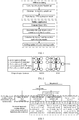
FIG. 1 illustrates the flowchart of the rolling early warning of dynamic security risk situation for large scale hybrid AC/DC grids. -
FIG. 2 illustrates the structure of the fast TTC estimation model. -
FIG. 3 illustrates the layered and hierarchical early warning. -
FIG. 4 illustrates the flowchart of the early warning rank determination based on the type of preventive control actions that is needed. -
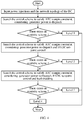
FIG. 5 illustrates the flowchart of the rolling update of the early warning results. -
FIG. 6 illustrates the diagram of the rolling early warning system of dynamic security risk situation for large scale hybrid AC/DC grids. - It should be noted that the following detailed descriptions are illustrative and are intended to provide a further description of the present disclosure. Unless otherwise indicated, all technical and scientific terms used herein have the same meanings as commonly understood by those of ordinary skill in the art to which the present application belongs.
- It should be noted that the terms used herein are merely for the purpose of describing particular embodiments, rather than limiting the exemplary embodiments of the present disclosure. As used herein, unless otherwise explicitly stated in the context, a singular form is intended to include plural forms. In addition, it should also be understood that when the terms "comprise" and/or "include" are used in the specification, they indicate the presence of features, steps, operations, devices, components, and/or combinations thereof.
- As shown in
Fig. 1 , the present invention proposes a rolling early warning method of dynamic security risk situation for large scale hybrid AC/DC grids, which includes: - S1: SDAE and ELM are deployed to construct the fast TTC estimation model. The training sample set is utilized to train the fast TTC estimation model.
- S2: The future OCs are generated based on the forecast information of load power and renewable generation.
- S3: The type of preventive control actions needed to satisfy the ATC margin constraint is determined by combining the fast TTC estimation model and the heuristic search algorithm.
- S4: According to the type of operating state and the type of preventive control actions that is needed, the layered and hierarchical early warning is performed for future OCs.
- S5: The latest load power forecasts, the latest renewable generation forecasts, and the latest preventive control resource information are periodically acquired. The early warning results are updated and the rolling early warning is achieved.
- In S1, the original feature set of the fast TTC estimation model is constructed by considering the operating features relevant to TTC and the control variables of preventive control actions. The original feature set includes the active power of loads, generators, wind farms and HVDC links, the amount of power of generator power re-dispatch, HVDC set-point control and load shedding.
- The input features of the fast TTC estimation model need to include all factors influencing TTC. Assuming that load power factors and wind generation power factors are constant, the active power of loads, generators, wind farms and HVDC links is chosen as the features that represent an OC. Additionally, TTC can be improved by preventive control actions. Therefore, control variables of preventive control actions are also chosen as input features.
- Hence the input feature set includes the active power of loads, generators, wind farms and HVDC links, and the control variables of preventive control actions. The typical preventive control variables that are considered include the amount of power of generator power re-dispatch, HVDC set-point control and load shedding. The model output is the TTC value of the given OC considering all contingencies.
- In S1, the fast TTC estimation model consists of SDAE and ELM. SDAE is used to extract high-level representations from original input features. ELM is utilized to construct the nonlinear mapping relationship between the high-level representations and TTC. The structure of the TTC estimation model is shown in
Fig. 2 . - Deep learning uses multiple hidden layers to extract high-level representations from original input features, which can improve the accuracy of subsequent regression models. As a typical deep learning model, SDAE has better stability and robustness when facing practical data. Therefore, SDAE is deployed to extract high-level representations in the fast TTC estimation model.
- (1) SDAE is constructed by stacking denoising autoencoders (DAEs). The model structure of DAE is the same as the autoencoder. When DAE is trained, the sample data are corrupted by the noise information to make the DAE extract more robust high-level representations.
The activation function of DAE is sigmoid function. The cost function of DAE, denoted as L, is expressed as
- (2) ELM is deployed as the regressor, whose cost function is expressed as

- By setting the gradient of Le with respect to we to zero, the optimal we , denoted as we *, can be expressed as

- In S1, the process of generating the training sample set is as follows:
- (a) The load power fluctuation intervals, the wind power fluctuation intervals and the network topology of a period of time in the future are acquired.
- (b) The unlabeled samples are generated. Load power and wind power are varied in the fluctuation intervals. Generator power is calculated by predefined dispatching principles. Preventive control variables are varied in predefined variation intervals.
- (c) The TTC values of the unlabeled samples are calculated. Continuation power flow is used to verify static security constraints, and time-domain simulation is used to verify dynamic security constraints.
- In S1, the training process of the fast TTC estimation model is as follows:
- (a) Each hidden layer of SDAE is decoupled and constructed as a DAE. DAEs are trained one by one by unsupervised learning with all training samples.
- (b) After SDAE is trained, the high-level representations extracted by SDAE are taken as the new sample features. ELM is trained by supervised learning with all training samples.
- In S3, ATC represents the remaining transfer capability of a physical transmission network under a group of security constraints, which is defined as

- The system security is reflected by the index of ATC margin, which is defined as the ratio of ATC to ETC. To guarantee the secure operation of power systems, the ATC margin constraint that needs to be satisfied is

- In S3, the process of determining the type of preventive control actions needed to satisfy the ATC margin constraint by the heuristic search algorithm is as follows.
- (1) Control sensitivities of every control variable to the ATC margin are approximately calculated. First, a certain control variable is changed with a small increment. Then, the variation of TTC is calculated by the TTC estimation model, and the variation of the ATC margin is calculated.
- (2) All control variables, whose control sensitivities exceed predefined sensitivity thresholds, are changed a step toward the direction of improving the ATC margin.
- (3) Control variables are checked to judge whether to exceed control limits. If a control variable exceeds the predefined control limit, the control variable is set as the corresponding upper or lower limit.
- (4) Loop termination conditions are checked. If one of termination conditions is satisfied, the search process is terminated.
- The termination conditions include: a) An available control scheme is searched out. b) The maximum iterative number is reached. c) After the calculation of the control sensitivities, the control sensitivities of all control variables do not exceed the predefined sensitivity thresholds.
- In S4, the diagram of layered and hierarchical early warning is shown in
Fig. 3 . After the contingency set is given, if the system satisfies the ATC margin constraint, the system is in the normal and secure state. If the system cannot satisfy the ATC margin constraint due to the restriction of static security constraints, the system is in the normal and statically insecure state. If the system cannot satisfy the ATC margin constraint due to the restriction of dynamic security constraints, the system is in the normal and dynamically insecure state. If the system cannot satisfy the static security constraints in the static operating point before contingencies happen, the system is in the emergency state. - The first-layer early warning ranking is performed according to the type of operating state of the power system. In increasing order of insecurity, the ranking strategy is:
- No warning: The system is in the normal and secure state.
- Level I: The system is in the normal and statically insecure state.
- Level II: The system is in the normal and dynamically insecure state.
- Level III: The system is in the emergency state.
- After the first-layer early warning ranking is finished, if the system is not in the normal and secure state, the second-layer early warning ranking is conducted, which is based on the type of preventive control actions needed to satisfy the ATC margin constraint. Three typical preventive control actions are considered, which include intra-area generator power re-dispatch, inter-area HVDC set-point control and load shedding. In general, intra-area power re-dispatch does not change inter-area power transactions, which has lower control cost than inter-area HVDC set-point control. Load shedding can lead to large economic loss and negative social impacts, which has the highest control cost. Based on the above analysis, in increasing order of insecurity, the ranking strategy is:
- Level 1: Intra-area generator power re-dispatch is needed.
- Level 2: Inter-area HVDC set-point control is needed.
- Level 3: Load shedding is needed.
- Level 4: ATC margin constraint cannot be satisfied even by the best combination of available preventive control actions.
- The flowchart of early warning ranking determination based on the type of preventive control actions that is needed is shown in
Fig. 4 . Optimal power flow (OPF) has been used to calculate the type of control actions needed to satisfy security constraints. As ATC is restricted by dynamic security constraints, it is difficult to express the ATC margin constraint in OPF analytically. Therefore, a heuristic algorithm is used to determine the rank of the second-layer early warning. The core step inFig. 4 is to consider certain types of preventive control actions and search for a preventive control scheme to satisfy the ATC margin constraint. - In S5, the flowchart of rolling update of early warning results is shown in
Fig. 5 . The process of rolling early warning is: - (1) After the forecasts of load power and renewable generation are periodically updated, acquire the latest forecast information and the latest preventive control resource information.
- (2) Generate the future OC set for early warning based on the latest forecast information.
- (3) Determine the first-layer early warning results for the future OCs that are generated.
- (4) Determine the second-layer early warning results for the future OCs.
- (5) Periodically update the previous early warning results.
- (6) If the forecast information will be periodically updated again, wait for the next update. Otherwise, the process of the rolling early warning is stopped.
- In the actual power system operation, the forecast information of load power and renewable generation will be updated periodically after a period of time. The available preventive control resources will also continuously change. The forecast information of load power and renewable generation will become more accurate along with the rolling update, and the uncertainty will decrease. Performing the early warning calculation based on the latest forecast information can also improve the accuracy of early warning results. After the forecast information of load power and renewable generation is periodically updated, this embodiment updates the previous early warning results based on the latest forecast information and the latest preventive control resource information, and achieves the rolling early warning.
- As shown in
Fig. 6 , the present invention proposes a rolling early warning system of dynamic security risk situation for large scale hybrid AC/DC grids, which includes:
The module of fast TTC estimation model construction, which is used to construct the fast TTC estimation model based on SDAE and ELM, and train the fast TTC estimation model by training samples. - The module of control cost calculation, which is used to determine the type of preventive control actions needed to satisfy the ATC margin constraint by combining the fast TTC estimation model and a heuristic search algorithm.
- The module of early warning ranking, which is used to perform the layered and hierarchical early warning for future OCs according to the type of operating state and the type of preventive control actions that is needed.
- The module of rolling update of early warning results, which is used to periodically acquire the latest load power forecasts, the latest renewable generation forecasts and the latest preventive control resource information, perform the early warning calculation repeatedly, update the early warning results, and achieve the rolling early warning.
- The module of fast TTC estimation model construction also includes:
The sub-module of forecast information acquirement, which is used to acquire the network topology, the load power forecast intervals, the renewable generation forecast intervals and the variation intervals of the preventive control variables of a period of time in the future. - The sub-module of training sample set generation, which is used to generate many possible OCs and calculate their TTC values based on the relevant forecast information, in order to generate the training sample set.
- In the sub-module of training sample set generation, the training sample set generation includes:
- (1) The load power fluctuation intervals, the wind power fluctuation intervals and the network topology of a period of time in the future are acquired.
- (2) The unlabeled samples are generated. Load power and wind power are randomly varied in the fluctuation intervals. Generator power is calculated by predefined dispatching principles. Preventive control variables are randomly varied in predefined variation intervals.
- (3) The TTC values of the unlabeled samples are calculated. Continuation power flow is used to verify static security constraints, and time-domain simulation is used to verify dynamic security constraints.
- In the module of fast TTC estimation model construction, the training process of the fast TTC estimation model is:
- (1) Each hidden layer of SDAE is decoupled and constructed as a DAE. DAEs are trained one by one by unsupervised learning with all training samples.
- (2) After SDAE is trained, the high-level representations extracted by SDAE are taken as the new sample features. ELM is trained by supervised learning with all training samples.
- In the module of control cost calculation, ATC represents the remaining transfer capability of a physical transmission network under a group of security constraints, which is defined as

- The system security is reflected by the index of ATC margin, which is defined as the ratio of ATC to ETC. To guarantee the secure operation of power systems, the ATC margin constraint that needs to be satisfied is

- In the module of control cost calculation, the heuristic search algorithm includes:
- (1) Control sensitivities of every control variable to the ATC margin are approximately calculated. First, a certain control variable is changed with a small increment. Then, the variation of TTC is calculated by the TTC estimation model, and the variation of the ATC margin is calculated.
- (2) All control variables, whose control sensitivities exceed predefined sensitivity thresholds, are changed a step toward the direction of improving the ATC margin.
- (3) Control variables are checked to judge whether to exceed control limits. If a control variable exceeds the predefined control limit, the control variable is set as the corresponding upper or lower limit.
- (4) Loop termination conditions are checked. If one of termination conditions is satisfied, the search process is terminated.
- The termination conditions include: a) An available control scheme is searched out. b) The maximum iterative number is reached. c) After the calculation of the control sensitivities, the control sensitivities of all control variables do not exceed the predefined sensitivity thresholds.
- In the module of early warning ranking, the first-layer early warning ranking is performed according to the type of operating state of the power system. In increasing order of insecurity, the ranking strategy is:
- No warning: The system is in the normal and secure state.
- Level I: The system is in the normal and statically insecure state.
- Level II: The system is in the normal and dynamically insecure state.
- Level III: The system is in the emergency state.
- After the first-layer early warning ranking is finished, if the system is not in the normal and secure state, the second-layer early warning ranking is conducted, which is based on the type of preventive control actions needed to satisfy the ATC margin constraint. Three typical preventive control actions are considered, which include intra-area generator power re-dispatch, inter-area HVDC set-point control and load shedding. In general, intra-area power re-dispatch does not change inter-area power transactions, which has lower control cost than inter-area HVDC set-point control. Load shedding can lead to large economic loss and negative social impacts, which has the highest control cost.
- Based on the above analysis, in increasing order of insecurity, the ranking strategy is:
- Level 1: Intra-area generator power re-dispatch is needed.
- Level 2: Inter-area HVDC set-point control is needed.
- Level 3: Load shedding is needed.
- Level 4: ATC margin constraint cannot be satisfied even by the best combination of available preventive control actions.
- In the module of rolling update of early warning results, the process of the rolling early warning is:
- (1) After the forecasts of load power and renewable generation are periodically updated, acquire the latest forecast information and the latest preventive control resource information.
- (2) Generate the future OC set for early warning based on the latest forecast information.
- (3) Determine the first-layer early warning results for the future OCs that are generated.
- (4) Determine the second-layer early warning results for the future OCs.
- (5) Periodically update the previous early warning results.
- (6) If the forecast information will be periodically updated again, wait for the next update. Otherwise, the process of the rolling early warning is stopped.
- In the actual power system operation, the forecast information of load power and renewable generation will be updated periodically after a period of time. The available preventive control resources will also continuously change. The forecast information of load power and renewable generation will become more accurate along with the rolling update, and the uncertainty will decrease. Performing the early warning calculation based on the latest forecast information can also improve the accuracy of early warning results. After the forecast information of load power and renewable generation is periodically updated, this embodiment updates the previous early warning results based on the latest forecast information and the latest preventive control resource information, and achieves the rolling early warning.
- Although the detailed embodiments of the present invention are described above in combination with the accompanying drawings, the protection scope of the present invention is not limited thereto. It should be understood by those skilled in the art that various modifications or variations could be made by those skilled in the art based on the technical solution of the present invention without any creative effort, and these modifications or variations shall fall into the protection scope of the present invention.
Claims (10)
- A rolling early warning method of dynamic security risk situation for large scale hybrid alternating current/direct current (AC/DC) grids, the method comprising:construct a fast total transfer capability (TTC) estimation model based on stacking denoising autoencoders (SDAE) and extreme learning machine (ELM); train the fast TTC estimation model by training samples;generate future operating conditions (OCs) based on forecast information of load power and renewable generation;determine the type of preventive control actions needed to satisfy an available transfer capability (ATC) margin constraint by combining the fast TTC estimation model and a heuristic search algorithm;according to type of operating state and type of preventive control actions that is needed, perform layered and hierarchical early warning for future OCs;periodically acquire latest load power forecasts, latest renewable generation forecasts and latest preventive control resource information; update early warning results and achieve rolling early warning.
- The method of claim 1, wherein, a process of generating the training sample set is:load power fluctuation intervals, wind power fluctuation intervals and network topology of a period of time in the future are acquired;unlabeled samples are generated; load power and wind power are randomly varied in the fluctuation intervals; generator power is calculated by predefined dispatching principles; preventive control variables are randomly varied in predefined variation intervals;TTC values of the unlabeled samples are calculated; continuation power flow is used to verify static security constraints, and time-domain simulation is used to verify dynamic security constraints.
- The method of claim 1, wherein, an original feature set of the fast TTC estimation model is constructed by considering operating features relevant to TTC and control variables of preventive control actions; the original feature set includes active power of loads, generators, wind farms and high-voltage direct-current (HVDC) links, amount of power of generator power re-dispatch, HVDC set-point control and load shedding.
- The method of claim 1, wherein, in the fast TTC estimation model, SDAE is used to extract high-level representations from original input features; ELM is utilized to construct nonlinear mapping relationship between the high-level representations and TTC; model output is TTC value of a given OC considering all contingencies.
- The method of claim 1, wherein, a training process of the fast TTC estimation model is:each hidden layer of SDAE is decoupled and constructed as a denoising autoencoder (DAE); DAEs are trained one by one by unsupervised learning with all training samples;after SDAE is trained, high-level representations extracted by SDAE are taken as new sample features; ELM is trained by supervised learning with all training samples.
- The method of claim 1, wherein, ATC margin is defined as ratio of ATC to existing transfer commitment (ETC); the ATC margin constraint that needs to be satisfied is

- The method of claim 1, wherein, a process of determining the type of preventive control actions needed to satisfy the ATC margin constraint is:control sensitivities of every control variable to the ATC margin are approximately calculated; first, a certain control variable is changed with a small increment; then, variation of TTC is calculated by the TTC estimation model, and variation of the ATC margin is calculated;all control variables, whose control sensitivities exceed predefined sensitivity thresholds, are changed a step toward direction of improving the ATC margin;control variables are checked to judge whether to exceed control limits; if a control variable exceeds predefined control limit, the control variable is set as corresponding upper or lower limit;loop termination conditions are checked, if one of termination conditions is satisfied, the search process is terminated.
- The method of claim 1, wherein, a process of rolling early warning is:after forecasts of load power and renewable generation are periodically updated, acquire latest forecast information and latest preventive control resource information;generate a future OC set for early warning based on the latest forecast information;determine first-layer early warning results and second-layer early warning results for future OCs that are generated;periodically update the previous early warning results; if the forecast information will be periodically updated again, wait for the next update; otherwise, the process of the rolling early warning is stopped.
- The method of claim 1, wherein, a process of layered and hierarchical early warning is:first-layer early warning ranking is performed according to type of operating state of a power system; in increasing order of insecurity, a ranking strategy includes: no warning, level I, level II, and level III;after the first-layer early warning ranking is finished, if the power system is not in a normal and secure state, second-layer early warning ranking is conducted, which is based on type of preventive control actions needed to satisfy the ATC margin constraint; a ranking strategy is:level 1: intra-area generator power re-dispatch is needed;level 2: inter-area HVDC set-point control is needed;level 3: load shedding is needed;level 4: ATC margin constraint cannot be satisfied even by a best combination of available preventive control actions.
- A rolling early warning system of dynamic security risk situation for large scale hybrid AC/DC grids, the system comprising:a module of fast TTC estimation model construction, which is used to construct the fast TTC estimation model based on SDAE and ELM, and train the fast TTC estimation model by training samples;a module of OC set generation, which is used to generate future OCs based on load forecasts and renewable generation forecasts;a module of control cost calculation, which is used to determine the type of preventive control actions needed to satisfy the ATC margin constraint by combining the fast TTC estimation model and a heuristic search algorithm;a module of early warning ranking, which is used to perform the layered and hierarchical early warning for future OCs according to the type of operating state and the type of preventive control actions that is needed;a module of rolling update of early warning results, which is used to periodically acquire latest load power forecasts, latest renewable generation forecasts and latest preventive control resource information, update early warning results, and achieve rolling early warning.
Applications Claiming Priority (2)
| Application Number | Priority Date | Filing Date | Title |
|---|---|---|---|
| CN202010107988.7A CN111311008B (en) | 2020-02-21 | 2020-02-21 | AC/DC large power grid dynamic security risk situation rolling prospective early warning method and system |
| PCT/CN2020/085397 WO2021164118A1 (en) | 2020-02-21 | 2020-04-17 | Ac/dc bulk power grid dynamic security risk situation rolling prospective early warning method and system |
Publications (3)
| Publication Number | Publication Date |
|---|---|
| EP3889855A1 true EP3889855A1 (en) | 2021-10-06 |
| EP3889855A4 EP3889855A4 (en) | 2021-11-17 |
| EP3889855B1 EP3889855B1 (en) | 2025-08-13 |
Family
ID=71156869
Family Applications (1)
| Application Number | Title | Priority Date | Filing Date |
|---|---|---|---|
| EP20845767.1A Active EP3889855B1 (en) | 2020-02-21 | 2020-04-17 | Ac/dc bulk power grid dynamic security risk situation rolling prospective early warning method and system |
Country Status (4)
| Country | Link |
|---|---|
| US (1) | US20220113695A1 (en) |
| EP (1) | EP3889855B1 (en) |
| CN (1) | CN111311008B (en) |
| WO (1) | WO2021164118A1 (en) |
Families Citing this family (25)
| Publication number | Priority date | Publication date | Assignee | Title |
|---|---|---|---|---|
| CN112003735B (en) * | 2020-07-28 | 2021-11-09 | 四川大学 | Risk-aware deep learning-driven limit transmission capacity adjustment method |
| CN113890112B (en) * | 2021-09-29 | 2023-09-15 | 合肥工业大学 | A forward-looking dispatching method for power grid based on multi-scenario parallel learning |
| CN114936527B (en) * | 2022-06-06 | 2025-03-21 | 浙江大学 | A fast evaluation method for power limit of transmission section based on hybrid supervised learning |
| CN115241876B (en) * | 2022-08-30 | 2026-02-13 | 中国电力科学研究院有限公司 | A method, apparatus, equipment and medium for generating power system security control measures |
| WO2024059965A1 (en) * | 2022-09-19 | 2024-03-28 | 浙江大学 | Product quality prediction method based on dual-channel information complementary fusion stacked auto-encoder |
| CN115617014B (en) * | 2022-09-26 | 2026-04-28 | 上海应用技术大学 | A Fault Detection Method for Related and Independent Variable Chemical Processes Based on SDAE-LSVDD |
| CN115528736B (en) * | 2022-10-20 | 2023-04-18 | 山东大学 | Electric power system forward-looking scheduling method and system |
| US11853915B1 (en) * | 2022-11-03 | 2023-12-26 | Xcel Energy Inc. | Automated screening, remediation, and disposition of issues in energy facilities |
| CN115796579A (en) * | 2022-11-21 | 2023-03-14 | 中国南方电网有限责任公司超高压输电公司检修试验中心 | Risk assessment method, device and equipment for direct-current transmission line and storage medium |
| CN115759546A (en) * | 2022-11-28 | 2023-03-07 | 广东电网有限责任公司 | Probability limit transmission capacity evaluation method and device for power transmission section |
| CN116230258A (en) * | 2022-12-26 | 2023-06-06 | 核工业西南物理研究院 | Real-time prediction method and system for magnetic confinement nuclear fusion plasma edge local mode |
| CN116388296B (en) * | 2023-04-04 | 2024-01-23 | 山东大学 | Power angle stable control method and system based on sensitivity mapping |
| CN117674119B (en) * | 2023-12-05 | 2024-11-22 | 广西电网有限责任公司 | Power grid operation risk assessment method, device, computer equipment and storage medium |
| CN117519107B (en) * | 2023-12-13 | 2024-08-23 | 铵泰克(北京)科技有限公司 | Fault prediction method based on networked control system |
| CN117408535B (en) * | 2023-12-15 | 2024-04-12 | 国网山东省电力公司电力科学研究院 | A rolling warning method and system for new energy ramp-up events based on deep learning |
| CN117856249B (en) * | 2024-01-11 | 2024-09-20 | 国网江西省电力有限公司 | An intelligent control system for electric power equipment |
| CN117674140B (en) * | 2024-01-31 | 2024-06-04 | 希格玛电气(珠海)有限公司 | A distribution network measurement and control system and method |
| CN117834299A (en) * | 2024-03-04 | 2024-04-05 | 福建银数信息技术有限公司 | A network security intelligent supervision and management method and system |
| CN118157225B (en) * | 2024-03-13 | 2024-10-18 | 国网甘肃省电力公司 | Real-time monitoring, early warning and future state analysis method and system for power generation and consumption balance in different regions |
| CN118646253B (en) * | 2024-08-13 | 2024-10-25 | 山东大学 | Commutation failure warning method and system considering dynamic changes of large disturbance amplitude and frequency |
| CN118657546B (en) * | 2024-08-19 | 2024-11-05 | 国网浙江省电力有限公司宁波供电公司 | Power grid cost analysis method and system based on artificial intelligence |
| CN119362484B (en) * | 2024-10-08 | 2025-05-23 | 武汉华源电力设计院有限公司 | Static centralized and dynamic distributed coordination control method for reactive power/voltage of power distribution network |
| CN120087748B (en) * | 2025-01-02 | 2026-02-13 | 国家电网有限公司华东分部 | Risk assessment method, device, equipment and medium for power grid running state |
| CN120184896B (en) * | 2025-05-22 | 2025-07-22 | 浙江大学 | Online prediction method and device for node voltage of time-varying topology direct-current power distribution network |
| CN120433200B (en) * | 2025-07-02 | 2025-09-12 | 北京交通大学 | Method for dynamically reconstructing power distribution network disaster based on look-ahead-pre-algorithm |
Family Cites Families (13)
| Publication number | Priority date | Publication date | Assignee | Title |
|---|---|---|---|---|
| CN101266665A (en) * | 2008-04-29 | 2008-09-17 | 上海交通大学 | A Scalable Distributed System Supporting Power System Dynamic Security Assessment and Early Warning |
| CN101325337B (en) * | 2008-07-25 | 2011-08-17 | 河南省电力公司 | Method for prewarning safety of electric network operation fourth-order gradient |
| US10770899B2 (en) * | 2014-09-11 | 2020-09-08 | Gerald Bernard Sheble | Resource control by probability tree convolution production cost valuation by iterative equivalent demand duration curve expansion (aka. tree convolution) |
| CN107636659B (en) * | 2015-05-11 | 2021-10-12 | 西门子保健有限责任公司 | Method and system for detecting landmarks in medical images using deep neural networks |
| US11100423B2 (en) * | 2016-01-27 | 2021-08-24 | Microsoft Technology Licensing, Llc | Artificial intelligence engine hosted on an online platform |
| CN105762826B (en) * | 2016-04-15 | 2018-12-18 | 华北电力大学 | A kind of total transfer capability calculation method of ac and dc systems containing VSC-HVDC |
| KR101943410B1 (en) * | 2017-04-28 | 2019-01-29 | 효성중공업 주식회사 | Asset management method for electric power apparatus |
| CN109086913B (en) * | 2018-07-11 | 2020-06-09 | 山东大学 | A method and system for transient stability assessment of power system based on deep learning |
| CN109066651B (en) * | 2018-07-20 | 2020-04-28 | 国网四川省电力公司经济技术研究院 | Calculation method of limit transmission power for wind power-load scenario |
| CN108899904B (en) * | 2018-08-30 | 2021-04-30 | 山东大学 | Method and system for rapidly searching cascading failures of alternating current and direct current large power grid |
| CN109103883A (en) * | 2018-10-31 | 2018-12-28 | 国网上海市电力公司 | A kind of assessment, early warning and the decision-making technique of power distribution network security risk |
| CN109524982B (en) * | 2018-12-12 | 2020-06-16 | 国网山东省电力公司电力科学研究院 | AC/DC power grid transient stability risk assessment method |
| CN110543720B (en) * | 2019-09-03 | 2021-06-08 | 北京交通大学 | State estimation method based on SDAE-ELM pseudo-measurement model |
-
2020
- 2020-02-21 CN CN202010107988.7A patent/CN111311008B/en active Active
- 2020-04-17 US US17/265,852 patent/US20220113695A1/en not_active Abandoned
- 2020-04-17 EP EP20845767.1A patent/EP3889855B1/en active Active
- 2020-04-17 WO PCT/CN2020/085397 patent/WO2021164118A1/en not_active Ceased
Also Published As
| Publication number | Publication date |
|---|---|
| US20220113695A1 (en) | 2022-04-14 |
| CN111311008B (en) | 2021-04-30 |
| WO2021164118A1 (en) | 2021-08-26 |
| EP3889855A4 (en) | 2021-11-17 |
| EP3889855B1 (en) | 2025-08-13 |
| CN111311008A (en) | 2020-06-19 |
Similar Documents
| Publication | Publication Date | Title |
|---|---|---|
| EP3889855B1 (en) | Ac/dc bulk power grid dynamic security risk situation rolling prospective early warning method and system | |
| Huang et al. | Resilient distribution networks by microgrid formation using deep reinforcement learning | |
| Xie et al. | A review of machine learning applications in power system resilience | |
| Li et al. | A hierarchical data-driven method for event-based load shedding against fault-induced delayed voltage recovery in power systems | |
| CN112310980B (en) | Safety and stability evaluation method and system for direct-current blocking frequency of alternating-current and direct-current series-parallel power grid | |
| Mohammadi et al. | Machine learning assisted stochastic unit commitment during hurricanes with predictable line outages | |
| CN111628501B (en) | AC/DC large power grid transient voltage stability assessment method and system | |
| Dai et al. | Real-time prediction of event-driven load shedding for frequency stability enhancement of power systems | |
| CN109086913A (en) | A kind of transient stability evaluation in power system method and system based on deep learning | |
| Wang et al. | Data-driven transient stability assessment using sparse PMU sampling and online self-check function | |
| CN113344283B (en) | Evaluation method for new energy consumption capacity of Energy Internet based on edge intelligence | |
| Kharlamova et al. | Evaluating machine-learning-based methods for modeling a digital twin of battery systems providing frequency regulation | |
| Wang et al. | Transmission network dynamic planning based on a double deep-Q network with deep ResNet | |
| Ren et al. | A universal defense strategy for data-driven power system stability assessment models under adversarial examples | |
| CN110634082A (en) | Low-frequency load shedding system operation stage prediction method based on deep learning | |
| CN112821424A (en) | Power system frequency response analysis method based on data-model fusion drive | |
| Li et al. | System strength assessment based on multi-task learning | |
| Mahto et al. | MPGCN-OPF: A message passing graph convolution approach for optimal power flow for distribution network | |
| Crozier et al. | Data-driven contingency selection for fast security constrained optimal power flow | |
| CN121546568A (en) | A multi-source collaborative method, system, device, and storage medium for optimizing self-healing and recovery of distribution network faults. | |
| Karapidakis | Machine learning for frequency estimation of power systems | |
| CN120185094A (en) | Online evaluation method of transient stability of power system with small sample size based on semi-supervised learning | |
| CN120409754A (en) | Multi-agent collaborative optimization scheduling method, device and electronic equipment for power system | |
| Hagmar et al. | Fast dynamic voltage security margin estimation: concept and development | |
| Shi et al. | Study on stability feature extraction of power system using deep learning |
Legal Events
| Date | Code | Title | Description |
|---|---|---|---|
| STAA | Information on the status of an ep patent application or granted ep patent |
Free format text: STATUS: UNKNOWN |
|
| STAA | Information on the status of an ep patent application or granted ep patent |
Free format text: STATUS: THE INTERNATIONAL PUBLICATION HAS BEEN MADE |
|
| PUAI | Public reference made under article 153(3) epc to a published international application that has entered the european phase |
Free format text: ORIGINAL CODE: 0009012 |
|
| STAA | Information on the status of an ep patent application or granted ep patent |
Free format text: STATUS: REQUEST FOR EXAMINATION WAS MADE |
|
| 17P | Request for examination filed |
Effective date: 20210205 |
|
| AK | Designated contracting states |
Kind code of ref document: A1 Designated state(s): AL AT BE BG CH CY CZ DE DK EE ES FI FR GB GR HR HU IE IS IT LI LT LU LV MC MK MT NL NO PL PT RO RS SE SI SK SM TR |
|
| A4 | Supplementary search report drawn up and despatched |
Effective date: 20211020 |
|
| RIC1 | Information provided on ipc code assigned before grant |
Ipc: G05B 13/02 20060101ALI20211014BHEP Ipc: H02J 3/36 20060101ALI20211014BHEP Ipc: H02M 1/32 20070101ALI20211014BHEP Ipc: G06Q 50/06 20120101ALI20211014BHEP Ipc: G06Q 10/06 20120101ALI20211014BHEP Ipc: G06Q 10/04 20120101AFI20211014BHEP |
|
| STAA | Information on the status of an ep patent application or granted ep patent |
Free format text: STATUS: EXAMINATION IS IN PROGRESS |
|
| 17Q | First examination report despatched |
Effective date: 20230404 |
|
| DAV | Request for validation of the european patent (deleted) | ||
| DAX | Request for extension of the european patent (deleted) | ||
| GRAP | Despatch of communication of intention to grant a patent |
Free format text: ORIGINAL CODE: EPIDOSNIGR1 |
|
| STAA | Information on the status of an ep patent application or granted ep patent |
Free format text: STATUS: GRANT OF PATENT IS INTENDED |
|
| INTG | Intention to grant announced |
Effective date: 20250314 |
|
| GRAS | Grant fee paid |
Free format text: ORIGINAL CODE: EPIDOSNIGR3 |
|
| GRAA | (expected) grant |
Free format text: ORIGINAL CODE: 0009210 |
|
| STAA | Information on the status of an ep patent application or granted ep patent |
Free format text: STATUS: THE PATENT HAS BEEN GRANTED |
|
| AK | Designated contracting states |
Kind code of ref document: B1 Designated state(s): AL AT BE BG CH CY CZ DE DK EE ES FI FR GB GR HR HU IE IS IT LI LT LU LV MC MK MT NL NO PL PT RO RS SE SI SK SM TR |
|
| REG | Reference to a national code |
Ref country code: GB Ref legal event code: FG4D |
|
| REG | Reference to a national code |
Ref country code: CH Ref legal event code: EP |
|
| REG | Reference to a national code |
Ref country code: DE Ref legal event code: R096 Ref document number: 602020056651 Country of ref document: DE |
|
| REG | Reference to a national code |
Ref country code: IE Ref legal event code: FG4D |
|
| REG | Reference to a national code |
Ref country code: NL Ref legal event code: MP Effective date: 20250813 |
|
| PG25 | Lapsed in a contracting state [announced via postgrant information from national office to epo] |
Ref country code: IS Free format text: LAPSE BECAUSE OF FAILURE TO SUBMIT A TRANSLATION OF THE DESCRIPTION OR TO PAY THE FEE WITHIN THE PRESCRIBED TIME-LIMIT Effective date: 20251213 |
|
| PG25 | Lapsed in a contracting state [announced via postgrant information from national office to epo] |
Ref country code: NO Free format text: LAPSE BECAUSE OF FAILURE TO SUBMIT A TRANSLATION OF THE DESCRIPTION OR TO PAY THE FEE WITHIN THE PRESCRIBED TIME-LIMIT Effective date: 20251113 |
|
| REG | Reference to a national code |
Ref country code: LT Ref legal event code: MG9D |
|
| PG25 | Lapsed in a contracting state [announced via postgrant information from national office to epo] |
Ref country code: PT Free format text: LAPSE BECAUSE OF FAILURE TO SUBMIT A TRANSLATION OF THE DESCRIPTION OR TO PAY THE FEE WITHIN THE PRESCRIBED TIME-LIMIT Effective date: 20251215 |
|
| PG25 | Lapsed in a contracting state [announced via postgrant information from national office to epo] |
Ref country code: FI Free format text: LAPSE BECAUSE OF FAILURE TO SUBMIT A TRANSLATION OF THE DESCRIPTION OR TO PAY THE FEE WITHIN THE PRESCRIBED TIME-LIMIT Effective date: 20250813 |
|
| PG25 | Lapsed in a contracting state [announced via postgrant information from national office to epo] |
Ref country code: NL Free format text: LAPSE BECAUSE OF FAILURE TO SUBMIT A TRANSLATION OF THE DESCRIPTION OR TO PAY THE FEE WITHIN THE PRESCRIBED TIME-LIMIT Effective date: 20250813 Ref country code: HR Free format text: LAPSE BECAUSE OF FAILURE TO SUBMIT A TRANSLATION OF THE DESCRIPTION OR TO PAY THE FEE WITHIN THE PRESCRIBED TIME-LIMIT Effective date: 20250813 |
|
| PG25 | Lapsed in a contracting state [announced via postgrant information from national office to epo] |
Ref country code: GR Free format text: LAPSE BECAUSE OF FAILURE TO SUBMIT A TRANSLATION OF THE DESCRIPTION OR TO PAY THE FEE WITHIN THE PRESCRIBED TIME-LIMIT Effective date: 20251114 |
|
| PG25 | Lapsed in a contracting state [announced via postgrant information from national office to epo] |
Ref country code: SE Free format text: LAPSE BECAUSE OF FAILURE TO SUBMIT A TRANSLATION OF THE DESCRIPTION OR TO PAY THE FEE WITHIN THE PRESCRIBED TIME-LIMIT Effective date: 20250813 |
|
| PG25 | Lapsed in a contracting state [announced via postgrant information from national office to epo] |
Ref country code: LV Free format text: LAPSE BECAUSE OF FAILURE TO SUBMIT A TRANSLATION OF THE DESCRIPTION OR TO PAY THE FEE WITHIN THE PRESCRIBED TIME-LIMIT Effective date: 20250813 |
|
| PG25 | Lapsed in a contracting state [announced via postgrant information from national office to epo] |
Ref country code: PL Free format text: LAPSE BECAUSE OF FAILURE TO SUBMIT A TRANSLATION OF THE DESCRIPTION OR TO PAY THE FEE WITHIN THE PRESCRIBED TIME-LIMIT Effective date: 20250813 Ref country code: BG Free format text: LAPSE BECAUSE OF FAILURE TO SUBMIT A TRANSLATION OF THE DESCRIPTION OR TO PAY THE FEE WITHIN THE PRESCRIBED TIME-LIMIT Effective date: 20250813 |
|
| PG25 | Lapsed in a contracting state [announced via postgrant information from national office to epo] |
Ref country code: RS Free format text: LAPSE BECAUSE OF FAILURE TO SUBMIT A TRANSLATION OF THE DESCRIPTION OR TO PAY THE FEE WITHIN THE PRESCRIBED TIME-LIMIT Effective date: 20251113 |
|
| PG25 | Lapsed in a contracting state [announced via postgrant information from national office to epo] |
Ref country code: ES Free format text: LAPSE BECAUSE OF FAILURE TO SUBMIT A TRANSLATION OF THE DESCRIPTION OR TO PAY THE FEE WITHIN THE PRESCRIBED TIME-LIMIT Effective date: 20250813 |
|
| REG | Reference to a national code |
Ref country code: AT Ref legal event code: MK05 Ref document number: 1825511 Country of ref document: AT Kind code of ref document: T Effective date: 20250813 |
|
| PG25 | Lapsed in a contracting state [announced via postgrant information from national office to epo] |
Ref country code: SM Free format text: LAPSE BECAUSE OF FAILURE TO SUBMIT A TRANSLATION OF THE DESCRIPTION OR TO PAY THE FEE WITHIN THE PRESCRIBED TIME-LIMIT Effective date: 20250813 |
|
| PG25 | Lapsed in a contracting state [announced via postgrant information from national office to epo] |
Ref country code: DK Free format text: LAPSE BECAUSE OF FAILURE TO SUBMIT A TRANSLATION OF THE DESCRIPTION OR TO PAY THE FEE WITHIN THE PRESCRIBED TIME-LIMIT Effective date: 20250813 |
|
| PG25 | Lapsed in a contracting state [announced via postgrant information from national office to epo] |
Ref country code: AT Free format text: LAPSE BECAUSE OF FAILURE TO SUBMIT A TRANSLATION OF THE DESCRIPTION OR TO PAY THE FEE WITHIN THE PRESCRIBED TIME-LIMIT Effective date: 20250813 |
|
| PG25 | Lapsed in a contracting state [announced via postgrant information from national office to epo] |
Ref country code: IT Free format text: LAPSE BECAUSE OF FAILURE TO SUBMIT A TRANSLATION OF THE DESCRIPTION OR TO PAY THE FEE WITHIN THE PRESCRIBED TIME-LIMIT Effective date: 20250813 |
|
| PG25 | Lapsed in a contracting state [announced via postgrant information from national office to epo] |
Ref country code: CZ Free format text: LAPSE BECAUSE OF FAILURE TO SUBMIT A TRANSLATION OF THE DESCRIPTION OR TO PAY THE FEE WITHIN THE PRESCRIBED TIME-LIMIT Effective date: 20250813 |
|
| PG25 | Lapsed in a contracting state [announced via postgrant information from national office to epo] |
Ref country code: SK Free format text: LAPSE BECAUSE OF FAILURE TO SUBMIT A TRANSLATION OF THE DESCRIPTION OR TO PAY THE FEE WITHIN THE PRESCRIBED TIME-LIMIT Effective date: 20250813 Ref country code: EE Free format text: LAPSE BECAUSE OF FAILURE TO SUBMIT A TRANSLATION OF THE DESCRIPTION OR TO PAY THE FEE WITHIN THE PRESCRIBED TIME-LIMIT Effective date: 20250813 |