EP3889836A1 - Image description information generation method and device, and electronic device - Google Patents
Image description information generation method and device, and electronic device Download PDFInfo
- Publication number
- EP3889836A1 EP3889836A1 EP19891662.9A EP19891662A EP3889836A1 EP 3889836 A1 EP3889836 A1 EP 3889836A1 EP 19891662 A EP19891662 A EP 19891662A EP 3889836 A1 EP3889836 A1 EP 3889836A1
- Authority
- EP
- European Patent Office
- Prior art keywords
- description information
- network
- image
- sample
- image description
- Prior art date
- Legal status (The legal status is an assumption and is not a legal conclusion. Google has not performed a legal analysis and makes no representation as to the accuracy of the status listed.)
- Granted
Links
Images





Classifications
-
- G—PHYSICS
- G06—COMPUTING OR CALCULATING; COUNTING
- G06N—COMPUTING ARRANGEMENTS BASED ON SPECIFIC COMPUTATIONAL MODELS
- G06N3/00—Computing arrangements based on biological models
- G06N3/02—Neural networks
- G06N3/08—Learning methods
- G06N3/088—Non-supervised learning, e.g. competitive learning
-
- G—PHYSICS
- G06—COMPUTING OR CALCULATING; COUNTING
- G06F—ELECTRIC DIGITAL DATA PROCESSING
- G06F18/00—Pattern recognition
- G06F18/20—Analysing
- G06F18/21—Design or setup of recognition systems or techniques; Extraction of features in feature space; Blind source separation
- G06F18/213—Feature extraction, e.g. by transforming the feature space; Summarisation; Mappings, e.g. subspace methods
- G06F18/2132—Feature extraction, e.g. by transforming the feature space; Summarisation; Mappings, e.g. subspace methods based on discrimination criteria, e.g. discriminant analysis
-
- G—PHYSICS
- G06—COMPUTING OR CALCULATING; COUNTING
- G06F—ELECTRIC DIGITAL DATA PROCESSING
- G06F18/00—Pattern recognition
- G06F18/20—Analysing
- G06F18/21—Design or setup of recognition systems or techniques; Extraction of features in feature space; Blind source separation
- G06F18/214—Generating training patterns; Bootstrap methods, e.g. bagging or boosting
-
- G—PHYSICS
- G06—COMPUTING OR CALCULATING; COUNTING
- G06F—ELECTRIC DIGITAL DATA PROCESSING
- G06F18/00—Pattern recognition
- G06F18/20—Analysing
- G06F18/22—Matching criteria, e.g. proximity measures
-
- G—PHYSICS
- G06—COMPUTING OR CALCULATING; COUNTING
- G06F—ELECTRIC DIGITAL DATA PROCESSING
- G06F18/00—Pattern recognition
- G06F18/20—Analysing
- G06F18/24—Classification techniques
-
- G—PHYSICS
- G06—COMPUTING OR CALCULATING; COUNTING
- G06N—COMPUTING ARRANGEMENTS BASED ON SPECIFIC COMPUTATIONAL MODELS
- G06N3/00—Computing arrangements based on biological models
- G06N3/02—Neural networks
- G06N3/04—Architecture, e.g. interconnection topology
- G06N3/044—Recurrent networks, e.g. Hopfield networks
-
- G—PHYSICS
- G06—COMPUTING OR CALCULATING; COUNTING
- G06N—COMPUTING ARRANGEMENTS BASED ON SPECIFIC COMPUTATIONAL MODELS
- G06N3/00—Computing arrangements based on biological models
- G06N3/02—Neural networks
- G06N3/04—Architecture, e.g. interconnection topology
- G06N3/044—Recurrent networks, e.g. Hopfield networks
- G06N3/0442—Recurrent networks, e.g. Hopfield networks characterised by memory or gating, e.g. long short-term memory [LSTM] or gated recurrent units [GRU]
-
- G—PHYSICS
- G06—COMPUTING OR CALCULATING; COUNTING
- G06N—COMPUTING ARRANGEMENTS BASED ON SPECIFIC COMPUTATIONAL MODELS
- G06N3/00—Computing arrangements based on biological models
- G06N3/02—Neural networks
- G06N3/04—Architecture, e.g. interconnection topology
- G06N3/045—Combinations of networks
-
- G—PHYSICS
- G06—COMPUTING OR CALCULATING; COUNTING
- G06N—COMPUTING ARRANGEMENTS BASED ON SPECIFIC COMPUTATIONAL MODELS
- G06N3/00—Computing arrangements based on biological models
- G06N3/02—Neural networks
- G06N3/04—Architecture, e.g. interconnection topology
- G06N3/045—Combinations of networks
- G06N3/0455—Auto-encoder networks; Encoder-decoder networks
-
- G—PHYSICS
- G06—COMPUTING OR CALCULATING; COUNTING
- G06N—COMPUTING ARRANGEMENTS BASED ON SPECIFIC COMPUTATIONAL MODELS
- G06N3/00—Computing arrangements based on biological models
- G06N3/02—Neural networks
- G06N3/04—Architecture, e.g. interconnection topology
- G06N3/0464—Convolutional networks [CNN, ConvNet]
-
- G—PHYSICS
- G06—COMPUTING OR CALCULATING; COUNTING
- G06N—COMPUTING ARRANGEMENTS BASED ON SPECIFIC COMPUTATIONAL MODELS
- G06N3/00—Computing arrangements based on biological models
- G06N3/02—Neural networks
- G06N3/04—Architecture, e.g. interconnection topology
- G06N3/0475—Generative networks
-
- G—PHYSICS
- G06—COMPUTING OR CALCULATING; COUNTING
- G06N—COMPUTING ARRANGEMENTS BASED ON SPECIFIC COMPUTATIONAL MODELS
- G06N3/00—Computing arrangements based on biological models
- G06N3/02—Neural networks
- G06N3/08—Learning methods
-
- G—PHYSICS
- G06—COMPUTING OR CALCULATING; COUNTING
- G06N—COMPUTING ARRANGEMENTS BASED ON SPECIFIC COMPUTATIONAL MODELS
- G06N3/00—Computing arrangements based on biological models
- G06N3/02—Neural networks
- G06N3/08—Learning methods
- G06N3/092—Reinforcement learning
-
- G—PHYSICS
- G06—COMPUTING OR CALCULATING; COUNTING
- G06N—COMPUTING ARRANGEMENTS BASED ON SPECIFIC COMPUTATIONAL MODELS
- G06N3/00—Computing arrangements based on biological models
- G06N3/02—Neural networks
- G06N3/08—Learning methods
- G06N3/094—Adversarial learning
-
- G—PHYSICS
- G06—COMPUTING OR CALCULATING; COUNTING
- G06V—IMAGE OR VIDEO RECOGNITION OR UNDERSTANDING
- G06V10/00—Arrangements for image or video recognition or understanding
- G06V10/70—Arrangements for image or video recognition or understanding using pattern recognition or machine learning
- G06V10/764—Arrangements for image or video recognition or understanding using pattern recognition or machine learning using classification, e.g. of video objects
-
- G—PHYSICS
- G06—COMPUTING OR CALCULATING; COUNTING
- G06V—IMAGE OR VIDEO RECOGNITION OR UNDERSTANDING
- G06V10/00—Arrangements for image or video recognition or understanding
- G06V10/70—Arrangements for image or video recognition or understanding using pattern recognition or machine learning
- G06V10/82—Arrangements for image or video recognition or understanding using pattern recognition or machine learning using neural networks
-
- G—PHYSICS
- G06—COMPUTING OR CALCULATING; COUNTING
- G06N—COMPUTING ARRANGEMENTS BASED ON SPECIFIC COMPUTATIONAL MODELS
- G06N3/00—Computing arrangements based on biological models
- G06N3/004—Artificial life, i.e. computing arrangements simulating life
- G06N3/006—Artificial life, i.e. computing arrangements simulating life based on simulated virtual individual or collective life forms, e.g. social simulations or particle swarm optimisation [PSO]
-
- Y—GENERAL TAGGING OF NEW TECHNOLOGICAL DEVELOPMENTS; GENERAL TAGGING OF CROSS-SECTIONAL TECHNOLOGIES SPANNING OVER SEVERAL SECTIONS OF THE IPC; TECHNICAL SUBJECTS COVERED BY FORMER USPC CROSS-REFERENCE ART COLLECTIONS [XRACs] AND DIGESTS
- Y02—TECHNOLOGIES OR APPLICATIONS FOR MITIGATION OR ADAPTATION AGAINST CLIMATE CHANGE
- Y02T—CLIMATE CHANGE MITIGATION TECHNOLOGIES RELATED TO TRANSPORTATION
- Y02T10/00—Road transport of goods or passengers
- Y02T10/10—Internal combustion engine [ICE] based vehicles
- Y02T10/40—Engine management systems
Definitions
- the present disclosure relates to the field of computer technologies, and specifically, to an image description information generation method and apparatus, and an electronic device.
- an image description generating algorithm is usually adopted to automatically generate image description information matching the content in the image.
- a commonly used generation manner is implemented by using an encoder-decoder structure, in which a convolutional neural network (CNN) is used as an encoder, to encode image information from a pixel space to a hidden space, and then a recurrent neural network (RNN) is used as a decoder, to decode encoded image information in the hidden space to a language space.
- CNN convolutional neural network
- RNN recurrent neural network
- image description information generated by using the foregoing structure can express content in an image
- quality of a sentence used in the image description information cannot be ensured.
- the sentence is hardly smooth, or does not conform to daily oral expression habits.
- generation quality is relatively low in an image description information generation method provided in the conventional technology.
- An image description information generation method, an image description information generation apparatus, and an electronic device are provided according to embodiments of the present disclosure, to resolve at least a technical problem that generation quality is relatively low in an image description information generation method provided in the conventional technology.
- an image description information generation method including: obtaining a to-be-processed target image; inputting the target image into a target-image description information generation network, the target-image description information generation network being a generation network that is obtained by performing adversarial training using multiple sample images and that is configured to generate image description information, the adversarial training being alternate training that is performed based on an initialized image description information generation network and an initialized discriminative network that match the target-image description information generation network, the discriminative network being configured to discriminate an output result of the image description information generation network; and generating, according to the output result of the target-image description information generation network, target-image description information for describing the target image.
- an image description information generation apparatus including: an obtaining unit, configured to obtain a to-be-processed target image; an input unit, configured to input the target image into a target-image description information generation network, the target-image description information generation network being a generation network that is obtained by performing adversarial training using multiple sample images and that is configured to generate image description information, the adversarial training being alternate training that is performed based on an initialized image description information generation network and an initialized discriminative network that match the target-image description information generation network, the discriminative network being configured to discriminate an output result of the image description information generation network; and a generation unit, configured to generate, according to the output result of the target-image description information generation network, target-image description information for describing the target image.
- the apparatus further includes a training unit.
- the training unit includes: a determining module, configured to: before a current image description information generation network is adjusted according to a sample discrimination probability value to obtain a trained image description information generation network, and a current discriminative network is adjusted according to the trained image description information generation network to obtain a trained discriminative network, determine the sample discrimination probability value outputted by the current discriminative network; an obtaining module, configured to obtain a first matching degree between sample image description generation information and the sample image by using a language model, the language model including one or more parameters for evaluating the sample image description generation information; and a weighted average processing module, configured to perform weighted average processing on the sample discrimination probability value and the first matching degree, to obtain a sample feedback coefficient.
- the training unit adjusts the current image description information generation network according to the sample discrimination probability value to obtain the trained image description information generation network through following steps: adjusting a parameter in at least one of following structures in the current image description information generation network according to the sample discrimination probability value: a current region-based convolutional neural network, a current attention serialization language model, and a current double-layer long-short term memory network.
- the training unit adjusts the current discriminative network according to the trained image description information generation network to obtain the trained discriminative network through following steps: obtaining sample image description generation information after training or sample image reference description information after training that is outputted by the trained image description information generation network; and adjusting a parameter in a convolutional neural network structure in the current discriminative network by using the sample image description information, the sample image description generation information after training, or the sample image reference description information after training, to obtain the trained discriminative network.
- the training unit adjusts the current discriminative network according to the trained image description information generation network to obtain the trained discriminative network through following steps: obtaining sample image description generation information after training or sample image reference description information after training that is outputted by the trained image description information generation network; and adjusting a parameter in a recurrent neural network structure in the current discriminative network by using the sample image description information, the sample image description generation information after training, or the sample image reference description information after training, to obtain the trained discriminative network.
- an electronic device including a memory, a processor, and a computer program that is stored on the memory and that is executable on the processor, the processor performing the foregoing image description information generation method through the computer program.
- the target image is inputted into a target-image description information generation network obtained through adversarial training, and target-image description information matching the target image is generated by using the target-image description information generation network.
- image description information of an image is no longer generated by using a CNN-RNN structure provided in the conventional technology, and instead a target-image description information generation network that is obtained based on adversarial training is used.
- a discriminative network is introduced in an adversarial training process, to discriminate an output result of an image description information generation network; and the image description information generation network and the discriminative network are trained alternately, to implement reinforcement learning of a finally generated target-image description information generation network.
- CNN convolutional neural network, used for extracting an image feature in an image.
- RNN recurrent neural network, used for language modeling, and learning a context feature.
- R-CNN region-based CNN, used for detecting and positioning a target.
- Faster R-CNN an improved version of R-CNN, having a higher speed and a better effect.
- RPN region proposal network, which is a module in a faster R-CNN, and is used for extracting an eigenvector of a box in which an object possibly exists.
- LSTM long-short term memory network, which is capable of learning a relationship in a long term and is a most widely applied RNN.
- CNN-RNN structure a general framework of an image description algorithm in which a CNN is used as an encoder, and an RNN is used as a decoder.
- Attention mechanism weighted calculation on input features in RNN modeling.
- Self-critical a reinforcement learning method based on a policy gradient.
- Policy gradient a method in reinforcement learning, in which each updated policy is directly learned.
- GAN generative adversary net, which is a game-type generation network in which no sample probability distribution needs to be preset, where a generator is a generator in a GAN, and a discriminator is a discriminator in a GAN.
- BLEU bilingual evaluation understudy, which is a bilingual translation quality evaluation auxiliary tool, mainly used for quality evaluation of machine translation.
- ROUGE recall-oriented understudy for gisting evaluation, which is standard for evaluating quality of a text abstract or summary.
- METEOR a standard for evaluating quality of a translation in any language.
- CIDEr consensus-based image description evaluation, which is a standard for evaluating quality of image description.
- SPICE semantic propositional image caption evaluation, which is a semantics-based standard for evaluating quality of image description.
- MOCOCO a Microsoft common objects in context dataset, which is used in key point detection, target detection, image description, and the like.
- Genome a dataset of dense annotations of images.
- MLE maximize likelihood estimation, which is used for estimating a parameter of a probability model, and is a training manner of an RNN.
- an image description information generation method is provided.
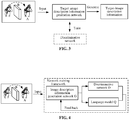
- the image description information generation method may be applied to, but is not limited to, a hardware environment shown in FIG. 1 .
- user equipment 102 obtains a to-be-processed target image.
- the target image includes a character object A and a wall object B.
- a memory 104 in the user equipment 102 stores the target image, and a processor 106 sends the target image to a server 110 by using a network 108, as shown in steps S104 to S106.
- the server 110 performs step S108 by using a processing engine 114.
- the received target image is inputted into a target-image description information generation network.
- target-image description information for describing the target image is generated.
- the target-image description information generation network is a generation network that is obtained by performing adversarial training using multiple sample images obtained from a database 112 and that is configured to generate image description information.
- the adversarial training is alternate training that is performed based on an initialized image description information generation network and an initialized discriminative network that match the target-image description information generation network.
- the discriminative network is configured to discriminate an output result of the image description information generation network.
- the target-image description information may be "the character object A has crossed over the wall object B".
- the server 110 sends, by using the network 108, the generated target-image description information to the user equipment 102 for presentation, as shown in steps S112 to S114.
- the target image is inputted into a target-image description information generation network obtained through adversarial training, and target-image description information matching the target image is generated by using the target-image description information generation network.
- the adversarial training is alternate training that is performed based on an initialized image description information generation network and an initialized discriminative network that match the target-image description information generation network.
- image description information of an image is no longer generated by using a CNN-RNN structure provided in the conventional technology, and instead a target-image description information generation network that is obtained based on adversarial training is used.
- a discriminative network is introduced in an adversarial training process, to discriminate an output result of the image description information generation network; and the image description information generation network and the discriminative network are trained alternately, to implement reinforcement learning of a finally generated target-image description information generation network. Therefore, comprehensive optimization of evaluation indexes of image description information generated by using the target-image description information generation network is implemented, thereby improving generation quality of the image description information, and resolving a problem that generation quality is relatively low in the conventional technology.
- the image description information generation method may be applied to, but is not limited to, a terminal device having functions such as image acquisition, image recognition, or image processing.
- the terminal device may be user equipment, for example, a terminal such as a mobile phone, a tablet computer, a notebook computer, or a PC, or may be a server such as a data processing server or a distributed processing server.
- the image description information generation method may be implemented on an independent terminal device. To be specific, the terminal device directly obtains the to-be-processed target image, and generates the target-image description information of the target image by using the target-image description information generation network, to reduce generation delay problems caused by data transmission, thereby improving generation efficiency.
- the image description information generation method may alternatively be implemented through data exchange on at least two terminal devices.
- the to-be-processed target image is obtained in the user equipment 102, then the target image is sent to the server 112 by using the network 108; the target-image description information generation network in the server generates the target-image description information of the target image, and the generated target-image description information is returned to the user equipment 102. Therefore, a generation process of the image description information is completed through data exchange, thereby reducing processing burdens of the user equipment.
- the network 108 may include, but is not limited to, a wireless network or a wired network.
- the wireless network includes: Bluetooth, Wi-Fi, and another network implementing wireless communication.
- the wired network may include, but is not limited to: a wide area network, a metropolitan area network, and a local area network.
- the image description information generation method includes the following steps S202 to S206.
- step S202 a to-be-processed target image is obtained.
- step S204 the target image is inputted into a target-image description information generation network
- the target-image description information generation network being a generation network that is obtained by performing adversarial training using multiple sample images and that is configured to generate image description information
- the adversarial training being alternate training that is performed based on an initialized image description information generation network and an initialized discriminative network that match the target-image description information generation network, the discriminative network being configured to discriminate an output result of the image description information generation network.
- step S206 target-image description information for describing the target image is generated according to the output result of the target-image description information generation network.
- the image description information generation method may be applied to, but is not limited to, scenarios, such as an image recognition scenario, an image retrieval scenario, and an image verification scenario, in which image description information matching image content presented in an image needs to be obtained.
- scenarios such as an image recognition scenario, an image retrieval scenario, and an image verification scenario, in which image description information matching image content presented in an image needs to be obtained.
- the target image is inputted into a target-image description information generation network obtained through adversarial training, and target-image description information matching the target image is generated by using the target-image description information generation network. Further, information verification is performed on the target-image description information of which generation quality has been improved, to determine whether the target image passes the verification, thereby ensuring accuracy of image verification.
- a target-image description information generation network obtained through adversarial training
- target-image description information matching the target image is generated by using the target-image description information generation network. Further, information verification is performed on the target-image description information of which generation quality has been improved, to determine whether the target image passes the verification, thereby ensuring accuracy of image verification.
- the target image is inputted into a target-image description information generation network, to generate target-image description information matching the target image.
- the target-image description information generation network is a generation network that is obtained by performing adversarial training using a newly introduced discriminative network and that is configured to image description information.
- the target-image description information generated by the target-image description information generation network may be as follows: "character object A", "crosses over”, and "wall object B". The description herein is merely an example, and no limitation is intended.
- the method before the obtaining a to-be-processed target image, the method further includes: constructing the initialized image description information generation network and the initialized discriminative network; and performing adversarial training of the initialized image description information generation network and the initialized discriminative network, to obtain the target-image description information generation network.
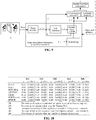
- a network training framework constructed for performing adversarial training in one embodiment may be, but is not limited to, illustration in FIG. 4 , in which sample images are sequentially inputted into the network training framework, an image description information generation network G generates sample image description generation information corresponding to the sample images, sends the sample image description generation information to a discriminative network D for discrimination, and sends the sample image description generation information to a language model Q for obtaining a corresponding evaluation score.
- a feedback coefficient r for adjusting the image description information generation network G is obtained according to a discrimination result p of the discriminative network D and an evaluation score s of the language model Q, so that the image description information generation network is trained and optimized based on r, and further the discriminative network D is trained and optimized by using the trained and optimized image description information generation network.
- the image description information generation network G and the discriminative network D are trained alternately, to obtain a final converged target-image description information generation network.
- the language model may include, but is not limited to, one or more index parameters, such as BLEU, ROUGE, METEOR, CIDEr, and SPICE, for evaluating generation quality of image description generation information.
- index parameters such as BLEU, ROUGE, METEOR, CIDEr, and SPICE.
- the parameters are correlated to human subjective evaluation of image description generation information. Therefore, a comprehensive evaluation score of the parameters can objectively reflect generation quality of the image description generation information.
- the initialized image description information generation network constructed in one embodiment may include, but is not limited to: a convolutional neural network CNN, an attention serialization language model Attention, and a recurrent neural network RNN.
- the CNN is configured to extract image features in an image
- the Attention is a mechanism for updating weights in a serialization language model
- the RNN is configured to learn context features.
- a sample image is an image I
- corresponding sample image description information is x 1: T .
- the local eigenvectors are inputted into the Attention for weighted average processing to obtain v ⁇ t . v ⁇ t . is correlated to a time point t.
- v ⁇ t and v are inputted into the RNN, and x 1: T is inputted into the RNN by using a word embedding matrix Embedding.
- an output result of the RNN is used as image description generation information y 1:T that is generated by an image description information generation network and that matches the image I, and is inputted into the discriminative network D and the language model Q, to adjust and optimize the image description information generation network G through alternate training.
- the word embedding matrix Embedding is a model for linear transformation.
- the CNN may be, but is not limited to, an improved version of the region-based convolutional neural network R-CNN (namely, a Faster R-CNN).
- a backbone network of the CNN is Resnet101, which may be pre-trained in an MSCOCO dataset and a Genome dataset.
- the attention serialization language model Attention adopts a soft attention policy, to perform weighted average processing on image vectors of each image.
- the recurrent neural network RNN may have, but is not limited to, a double-layer long-short term memory LSTM network structure.
- the initialized discriminative network constructed in one embodiment may include, but is not limited to, one of the following:
- a first initialized discriminative network based on a CNN structure In the first initialized discriminative network, an eigenvector outputted by the CNN is inputted into a first multi-layer perception (MLP) and a first classification network (for example, softmax), to obtain through conversion a probability value for indicating a discrimination result.
- the CNN may include, but is not limited to, M layers of convolution kernels. Convolution kernels of an i th layer among the M layers of convolution kernels are configured to perform a convolution operation on a sample image vector of the sample image according to an i th size, where i is a positive integer less than or equal to M.
- a second initialized discriminative network based on an RNN structure In the second initialized discriminative network, an eigenvector outputted by the RNN is inputted into a second MLP and a second classification network (for example, softmax), to obtain through conversion a probability value for indicating a discrimination result.
- the RNN may include, but is not limited to, a standard N-layer LSTM network.
- the image description information generation network G in an adversarial training process, generates image description generation information corresponding to an image, sends the image description generation information to the discriminative network D for discrimination, and sends the image description generation information to the language model Q for obtaining a corresponding evaluation score. Then, a feedback coefficient r for adjusting the image description information generation network G is obtained according to a discrimination result p of the discriminative network D and an evaluation score s of the language model Q, so that the image description information generation network is trained and optimized based on r.
- the feedback coefficient r is obtained, and the image description information generation network is adjusted and optimized according to a value of the feedback coefficient r. Further, the discriminative network is adjusted and optimized by using an output result of the adjusted image description information generation network. Convergence is finally achieved through alternate training, thereby obtaining the target-image description information generation network.
- the to-be-processed target image is learned by using the target-image description information generation network obtained through adversarial training by using the network training framework shown in the foregoing accompanying drawing, to generate improved and optimized target-image description information matching the target image, thereby improving generation quality of the image description information.
- the target-image description information generation network obtained based on adversarial training is used.
- a discriminative network is introduced in an adversarial training process, to discriminate the output result of the image description information generation network; and the image description information generation network and the discriminative network are trained alternately, to implement reinforcement learning of a finally generated target-image description information generation network. Therefore, comprehensive optimization of evaluation indexes of image description information generated by using the target-image description information generation network is implemented, thereby improving generation quality of the image description information.
- the method before the obtaining a to-be-processed target image, the method further includes the following steps S1 and S2.
- step S1 the initialized image description information generation network and the initialized discriminative network are constructed.
- step S2 adversarial training of the initialized image description information generation network and the initialized discriminative network is performed, to obtain the target-image description information generation network.
- the initialized image description information generation network and the initialized discriminative network need to be first constructed before the obtaining a to-be-processed target image. Subsequently, the initialized image description information generation network and the initialized discriminative network need to be pre-trained, and adversarial training is performed on the pre-trained image description information generation network and the pre-trained discriminative network.
- the initialized image description information generation network may be constructed based on, but not limited to, an R-CNN, an attention serialization language model, and an RNN having a double-layer LSTM network.
- an R-CNN an attention serialization language model
- an RNN having a double-layer LSTM network.
- the constructed framework of the initialized image description information generation network reference may be made to the image description information generation network G shown in FIG. 5 .
- the initialized discriminative network may include, but is not limited to: a CNN-type discriminative network and an RNN-type discriminative network.
- the CNN-type network may be, but is not limited to, a first initialized discriminative network constructed based on a CNN, a first MLP, and a first classification network; and the RNN-type discriminative network may be, but is not limited to, a second initialized discriminative network constructed based on an RNN, a second MLP, and a second classification network.
- the initialized image description information generation network and the initialized discriminative network are constructed, the initialized image description information generation network and the initialized discriminative network are pre-trained through following steps.
- G 0 is pre-trained based on the training set S by using a maximum likelihood method MLE, to obtain G ⁇ that is pre-trained.
- D 0 is pre-trained based on S D to obtain D ⁇ .
- ⁇ and ⁇ are respectively parameters determined through training in the image description information generation network G and the discriminative network D.
- alternate training is started by using G ⁇ that is pre-trained and D ⁇ that is pre-trained, to implement adversarial training of the two neural networks, thereby optimizing generation quality of the image description information generation network G.
- the initialized image description information generation network and the initialized discriminative network are constructed, and adversarial training of the constructed initialized image description information generation network and the constructed initialized discriminative network is performed, to implement mutual restriction and training, thereby optimizing and improving generation quality of the image description information generation network.
- constructing the initialized discriminative network includes the following steps 1) and 2).
- a first initialized discriminative network is constructed based on a CNN, a first MLP, and a first classification network, the first MLP and the first classification network being configured to convert an eigenvector outputted by the CNN structure into a probability value, the CNN including M layers of convolution kernels, convolution kernels of an i th layer among the M layers of convolution kernels being configured to perform a convolution operation on a sample image vector of the sample image according to an i th size, i being a positive integer less than or equal to M, and the sample image vector being determined according to image eigenvectors of the sample image and word eigenvectors included in sample image description information corresponding to the sample image.
- the multi-layer perception MLP may be, but is not limited to, a forward triggered neural network structure. Nodes in two adjacent layers are fully connected. There is no connection between nodes in the same layer, and there is no cross-layer connection.
- the first initialized discriminative network includes the CNN structure having M layers of convolution kernels, the first multi-layer perception (MLP), and the first classification network (for example, softmax).
- Convolution kernels of each of the M layers are configured to indicate a size for performing a convolution operation. For example, for the convolution kernels of the i th layer, convolution is performed based on an i th size, and there are n i corresponding convolution kernels.
- the first MLP and the first classification network (for example, softmax) are configured to convert an output result of the M layers of convolution kernels, to obtain a probability value for indicating a discrimination result.
- a sample image is an image I
- sample image description information corresponding to the image I is x 1: T
- the image I is inputted into the CNN to obtain a d-dimensional image eigenvector v
- the sample image description information x 1: T is simultaneously inputted into a word embedding matrix Embedding, to obtain T d-dimensional word eigenvectors.
- the T+1 eigenvectors are cascaded, to obtain a feature matrix.
- ⁇ ⁇ ⁇ ⁇ E ⁇ x 1 ⁇ E ⁇ x 2 ⁇ ⁇ ⁇ E ⁇ x T
- ⁇ ⁇ R d ⁇ ( T+ 1) convolution is performed on ⁇ by using convolution kernels w of different sizes, to obtain new eigenvectors.
- c c 1 c 2 ⁇ c T ⁇ l + 2
- c i ReLU w * ⁇ i : i + l ⁇ 1 + b
- a second initialized discriminative network is constructed based on an RNN, a second MLP, and a second classification network, the second MLP and the second classification network being configured to convert an eigenvector outputted by an RNN structure into a probability value, the RNN structure including N layers of LSTM networks, N being determined according to a sample image vector of the sample image, the sample image vector being determined according to image eigenvectors of the sample image and word eigenvectors included in sample image description information corresponding to the sample image.
- the second initialized discriminative network includes the RNN having N layers of LSTMs, the second multi-layer perception (MLP), and the second classification network (for example, softmax).
- the second MLP and the second classification network softmax are configured to convert an output result of the N layers of LSTMs, to obtain a probability value for indicating a discrimination result.
- a sample image is an image I
- sample image description information corresponding to the image I is x 1: T .
- the image I is inputted into the CNN to obtain a d-dimensional image eigenvector v as an input of a first layer of LSTM.
- a corresponding word eigenvector in the sample image description information x 1: T is then separately inputted into each layer of LSTM, to obtain a corresponding hidden vector hi.
- a discriminative network and an image description information generation network are introduced for performing adversarial training, to improve generation quality of the image description information generation network.
- Two construction structures for the discriminative network are provided in one embodiment, and are respectively a convolutional neural network CNN-based structure and an recurrent neural network RNN-based structure. Discriminative networks of different structures make an adversarial training process more diversified, thereby helping improve a training effect.
- constructing the initialized image description information generation network includes the following steps S1 and S2.
- the initialized image description information generation network is constructed by using an R-CNN, an attention serialization language model, and a double-layer LSTM network, the R-CNN being configured to extract local eigenvectors and a global eigenvector from the sample image, the attention serialization language model being configured to perform weighted average processing on the local eigenvectors, to obtain an average eigenvector, and the double-layer LSTM network being configured to obtain a to-be-discriminated object vector by using the average eigenvector and the global eigenvector, and input the to-be-discriminated object vector into the initialized discriminative network.
- the R-CNN being configured to extract local eigenvectors and a global eigenvector from the sample image
- the attention serialization language model being configured to perform weighted average processing on the local eigenvectors, to obtain an average eigenvector
- the double-layer LSTM network being configured to obtain a to-be-dis
- the RNN may be, but is not limited to, a top-down model.
- the model is a double-layer long-short term memory LSTM network, and performs cross inputting and outputting in a training process.
- the to-be-discriminated object vector may include, but is not limited to, a hidden vector h t 2 outputted by the double-layer long-short term memory LSTM network.
- a sample image is an image I
- corresponding sample image description information is x 1: T .
- the image I is inputted into a Faster R-CNN, and the Faster R-CNN extracts local eigenvectors, for example, ⁇ v 1 , v 2 , ⁇ ,v k
- k ⁇ 10, 11, 12, ⁇ , 100 ⁇ , and a global eigenvector v of the image I.
- the local eigenvectors are inputted into Soft Attention for weighted average processing, to obtain v ⁇ t ⁇ v ⁇ t is correlated to a time point t.
- v is inputted into a first layer LSTM1 in the RNN
- x 1: T is inputted into the first layer LSTM1 in the RNN by using a word embedding matrix Embedding.
- v ⁇ t is inputted into a second layer LSTM2 of the RNN.
- the LSTM1 determines a hidden vector at a current time point t according to hidden vectors at a previous time point t-1.
- the first layer LSTM1 determines a hidden vector h t 1 according to a hidden vector h t ⁇ 1 1 and a hidden vector h t ⁇ 1 2
- the second layer LSTM2 determines a hidden vector h t 2 according to a hidden vector h t ⁇ 1 1 and a hidden vector h t ⁇ 1 2
- the output h t ⁇ 1 1 of the LSTM1 is used for training a weight in Soft Attention
- the output h t 2 of the LSTM2 is outputted into the discriminative network D through a softmax layer.
- a loss corresponding to this training can further be calculated, and the loss is to be used for alternate training to adjust and optimize the image description information generation network G.
- the word embedding matrix Embedding is a model for linear transformation.
- an initialized image description information generation network is constructed by using an R-CNN, an attention serialization language model, and a double-layer LSTM network, and then a discriminative network is introduced based on the initialized image description information generation network for alternate training, to help optimize and improve the image description information generation network, thereby resolving a problem that generation quality of image description information generated based on a CNN-RNN structure is relatively low in the conventional technology.
- the performing adversarial training of the initialized image description information generation network and the initialized discriminative network, to obtain the target-image description information generation network includes:
- S1 Perform following flowing steps S12 to S22 repeatedly until the target-image description information generation network is obtained.
- step S12 a current image description information generation network and a current discriminative network are determined, an initial value of the current image description information generation network being the initialized image description information generation network, and an initial value of the current discriminative network being the initialized discriminative network.
- step S14 the sample image and sample image description information corresponding to the sample image are obtained.
- step S16 the sample image and the sample image description information are inputted into a current image description information generation network, to obtain sample image description generation information matching the sample image or sample image reference description information matching the sample image, a first matching degree between the sample image description generation information and the sample image being greater than a second matching degree between the sample image reference description information and the sample image.
- step S18 to-be-discriminated sample description information in the sample image description information, the sample image description generation information, or the sample image reference description information is determined.
- step S20 the sample image and the to-be-discriminated sample description information are inputted into the current discriminative network, to obtain a sample discrimination probability value and a sample feedback coefficient.
- step S22 in a case that the sample feedback coefficient indicates that the sample discrimination probability value does not meet a convergence condition, the current image description information generation network is adjusted according to the sample discrimination probability value, to obtain a trained image description information generation network, and the current discriminative network is adjusted according to the trained image description information generation network, to obtain a trained discriminative network; the trained image description information generation network is used as the current image description information generation network, and the trained discriminative network is used as the current discriminative network; and the current image description information generation network is used as the target-image description information generation network in a case that the sample feedback coefficient indicates that the sample discrimination probability value meets the convergence condition.
- the image I is inputted into a Faster R-CNN in the current image description information generation network, and the Faster R-CNN extracts local eigenvectors, for example, ⁇ v 1 , v 2 , ⁇ ,v k
- k ⁇ 10, 11, 12, ⁇ , 100 ⁇ , and a global eigenvector v of the image I.
- the local eigenvectors are inputted into Soft Attention for weighted average processing, to obtain v ⁇ t .
- v ⁇ t is correlated to a time point t.
- the global eigenvector v used as an image eigenvector of the image I is separately inputted into a double-layer LSTM network and a discriminative network D.
- the sample image description information x 1: T is inputted into a word embedding matrix Embedding in the current image description information generation network, to obtain word eigenvectors corresponding to the image I.
- the image eigenvector and the word eigenvectors form image vectors for identifying features of the image I.
- the current discriminative network D obtains a positive sample ⁇ ( I, x 1: T ) ⁇ and negative samples ⁇ ( I, y 1: T ) ⁇ and ⁇ ( I, x ⁇ 1: T ) ⁇ .
- the positive sample ⁇ ( I, x 1: T ) ⁇ is obtained according to the image I and the sample image description information x 1: T ;
- the negative sample ⁇ ( I, y 1: T ) ⁇ is obtained according to the image I and sample image description generation information y 1: T generated by the current image description information generation network G;
- ⁇ ( I, x ⁇ 1: T ) ⁇ is obtained according to the image I and sample image reference description information x ⁇ 1: T generated by the current image description information generation network G.
- the sample image reference description information x ⁇ 1: T is image description information that is generated by the current image description information generation network G and that has description quality different from that of the sample image description generation information y 1: T .
- an expression sequence of the sample image reference description information x ⁇ 1: T is different from that of the sample image description generation information y 1: T
- an expression habit of the sample image reference description information x ⁇ 1: T is different from that of the sample image description generation information y 1: T
- a matching degree between the sample image description generation information y 1: T and the image I is higher than a matching degree between the sample image reference description information x ⁇ 1: T and the image I.
- generation quality of the sample image description generation information y 1: T is higher than that of the sample image reference description information x ⁇ 1: T .
- the current discriminative network D randomly selects a sample from the positive sample and the negative samples as to-be-discriminated sample description information, and discriminates the to-be-discriminated sample description information, to obtain a sample discrimination probability value p.
- a language model Q also calculates a corresponding evaluation score s.
- a sample feedback coefficient r is calculated by using the sample discrimination probability value p and the evaluation score s, and a parameter in the current image description information generation network G is adjusted and optimized based on r, to implement training of the current image description information generation network.
- a current image description information generation network G k is adjusted according to the sample discrimination probability value p, to obtain a trained image description information generation network G k +1
- a current discriminative network D k is adjusted according to the trained image description information generation network G k +1
- the trained image description information generation network G k +1 is used as the current image description information generation network G k
- the trained discriminative network D k+1 is used as the current discriminative network D k .
- the training is continued by repeating the foregoing steps.
- the current image description information generation network G k is used as a target-image description information generation network G target .
- the current image description information generation network and the current discriminative network are trained alternately repeatedly, to implement adversarial training and optimization, until a target-image description information generation network whose image description information generation quality is improved is obtained. Therefore, a problem that description quality of image description information obtained through simple encoding and decoding operations performed on an image merely by using an RNN-CNN structure is relatively low in the conventional technology is resolved, and image description quality is further improved.
- the method before the adjusting the current image description information generation network according to the sample discrimination probability value, to obtain a trained image description information generation network, and adjusting the current discriminative network according to the trained image description information generation network, to obtain a trained discriminative network, the method further includes following step S1 to S3.
- step S1 the sample discrimination probability value outputted by the current discriminative network is determined.
- step S2 the first matching degree between the sample image description generation information and the sample image is obtained by using a language model, the language model including one or more parameters for evaluating the sample image description generation information.
- step S3 weighted average processing is performed on the sample discrimination probability value and the first matching degree, to obtain the sample feedback coefficient.
- the language model may include, but is not limited to, one or more index parameters, such as BLEU, ROUGE, METEOR, CIDEr, and SPICE, used for evaluating generation quality of image description generation information.
- index parameters such as BLEU, ROUGE, METEOR, CIDEr, and SPICE
- the parameters are correlated to human subjective evaluation for image description generation information. Therefore, a comprehensive evaluation score of the parameters can be used for indicating a correlation, for example, a matching degree, between the sample image description generation information and the sample image. Further, the matching degree may be used for objectively reflecting generation quality of the image description generation information.
- an image description information generation network G generates image description generation information y 1: T corresponding to an image I; the image description generation information y 1: T is sent to a discriminative network D for discrimination, and sent to a language model Q for obtaining a corresponding evaluation score.
- a sample feedback coefficient r for adjusting the image description information generation network G is obtained according to a discrimination result p of the discriminative network D and an evaluation score s of the language model Q, so that the image description information generation network is trained and optimized based on r.
- content for adjustment and optimization on an image description information generation network is jointly determined based on a discriminative network and a language model, which helps to improve training quality of the image description information generation network. Therefore, target-image description information generated by a target-image description information generation network finally obtained through training has higher quality, thereby helping to objectively and accurately reflect content in an image.
- the adjusting the current image description information generation network according to the sample discrimination probability value, to obtain a trained image description information generation network includes following steps S1.
- step S1 a parameter in at least one of the following structures in the current image description information generation network is adjusted according to the sample discrimination probability value: a current R-CNN, a current attention serialization language model, and a current double-layer LSTM network.
- the adjusted parameter in the image description information generation network includes a parameter in at least one of the following structures: the current R-CNN, the current attention serialization language model, and the current double-layer LSTM network.
- a parameter in at least one structure may be adjusted and optimized, to ensure higher generation quality of the image description information generation network obtained through training.
- the adjusting the current discriminative network according to the trained image description information generation network, to obtain a trained discriminative network includes the following steps S1 and S2.
- step S1 sample image description generation information after training or sample image reference description information after training that is outputted by the trained image description information generation network is obtained.
- step S2 a parameter in a CNN structure in the current discriminative network is adjusted by using the sample image description information, the sample image description generation information after training, or the sample image reference description information after training, to obtain the trained discriminative network.
- adjustment and optimization may be performed on the parameters in the CNN structure in the discriminative network by using, but not limited to, to-be-discriminated sample description information randomly selected from the sample image description information, the sample image description generation information after training, or the sample image reference description information after training, to perform joint training of the discriminative network and the image description information generation network.
- the adjusting the current discriminative network according to the trained image description information generation network, to obtain a trained discriminative network includes following steps S1 and S2.
- step S1 sample image description generation information after training or sample image reference description information after training that is outputted by the trained image description information generation network is obtained.
- step S2 a parameter in an RNN structure in the current discriminative network is adjusted by using the sample image description information, the sample image description generation information after training, or the sample image reference description information after training, to obtain the trained discriminative network.
- adjustment and optimization may be performed on the parameters in the RNN structure in the discriminative network by using, but not limited to, to-be-discriminated sample description information randomly selected from the sample image description information, the sample image description generation information after training, or the sample image reference description information after training, to perform joint training of the discriminative network and the image description information generation network.
- correlations between objective evaluation indexes (BLEU, ROUGE, METEOR, CIDEr, and SPICE) and a subjective evaluation index of a user are provided. It can be seen that SPICE has a highest correlation with the evaluation index of the user, METEOR and CIDEr also have relatively high correlations with the evaluation index of the user, and for BLEU and ROUGE, the correlations are relatively low.
- FIG. 11 and FIG. 12 show comparison results of all evaluation indexes.
- columns respectively represents different objective evaluation standards of BLEU, METEOR, ROUGE, CIDEr, and SPICE
- CNN-D and RNN-D in the last two columns are respectively discrimination results of the target-image description information generation network obtained based on a CNN discriminator and the target-image description information generation network obtained based on an RNN discriminator that are provided in the embodiments of the present disclosure.
- Ensemble is an integration result of 4 CNN-GAN models and 4 RNN-GAN models. From the comparison results in FIG. 11 , it can be seen that values of all objective indexes can be effectively improved by using the training method in the embodiments of the present disclosure. The increases vary from 1.28% to 13.93%.
- FIG. 12 shown test results of various algorithms on an MSCOCO contest list, and from the last row it can be seen that generation quality of the solutions provided in the embodiments of the present disclosure has been comprehensively optimized.
- an image description information generation apparatus for performing the foregoing image description information generation method.
- the image description information generation apparatus may be applied to, but is not limited to, a hardware environment shown in FIG. 1 .
- the apparatus may include:
- the image description information generation apparatus may be applied to, but is not limited to, scenarios, such as an image recognition scenario, an image retrieval scenario, and an image verification scenario, in which image description information matching image content presented in an image needs to be obtained.
- scenarios such as an image recognition scenario, an image retrieval scenario, and an image verification scenario, in which image description information matching image content presented in an image needs to be obtained.
- the apparatus further includes:
- the construction unit 1102 includes a first construction module and a second construction module.
- the MLP may be, but is not limited to, a forward triggered neural network structure. Nodes in two adjacent layers are fully connected. There is no connection between nodes in the same layer, and there is no cross-layer connection.
- the second construction module is configured to construct a second initialized discriminative network based on an RNN structure, a second MLP, and a second classification network, the second MLP and the second classification network being configured to convert an eigenvector outputted by the RNN structure into a probability value, the RNN structure including N layers of LSTM networks, N being determined according to a sample image vector of the sample image, the sample image vector being determined according to image eigenvectors of the sample image and word eigenvectors included in sample image description information corresponding to the sample image.
- the construction unit 1102 includes:
- the training unit 1404 includes:
- the training unit 1404 further includes:
- the training unit implements the adjusting the current image description information generation network according to the sample discrimination probability value, to obtain a trained image description information generation network through following step:
- S1 Adjust a parameter in at least one of the following structures in the current image description information generation network according to the sample discrimination probability value: a current R-CNN, a current attention serialization language model, and a current double-layer LSTM network.
- the training unit implements the adjusting the current discriminative network according to the trained image description information generation network to obtain a trained discriminative network through the following steps:
- S1 Obtain sample image description generation information after training or sample image reference description information after training that is outputted by the trained image description information generation network.
- S2 Adjust a parameter in a CNN structure in the current discriminative network by using the sample image description information, the sample image description generation information after training, or the sample image reference description information after training, to obtain the trained discriminative network.
- the training unit implements the adjusting the current discriminative network according to the trained image description information generation network to obtain a trained discriminative network through the following steps:
- an electronic device for performing the foregoing image description information generation method is further provided.
- the electronic device includes a memory 1502 and a processor 1504, the memory 1502 storing a computer program, and the processor 1504 being configured to perform steps in any one of the foregoing method embodiments by using the computer program.
- the foregoing electronic device may be located in at least one of multiple network devices in a computer network.
- the processor may be configured to perform following steps by using the computer program:
- the electronic device may be a terminal device such as a smartphone (for example, an Android mobile phone or an iOS mobile phone), a tablet computer, a palmtop computer, a mobile Internet device (MID), or a PAD.
- FIG. 15 does not limit the structure of the foregoing electronic device.
- the electronic device may further include more or fewer components (such as a network interface) than those shown in FIG. 15 , or have configuration different from that shown in FIG. 15 .
- the memory 1502 may be configured to store a software program and a module, for example, a program instruction/module corresponding to the image description information generation method and apparatus in the embodiments of the present disclosure, and the processor 1304 performs various functional applications and data processing by running a software program and a module stored in the memory 1502, that is, implementing the image description information generation method.
- the memory 1302 may include a high speed random access memory, and may further include a non-volatile memory, for example, one or more magnetic storage apparatuses, a flash memory, or another non-volatile solid-state memory.
- the memory 1202 may further include memories remotely disposed relative to the processor 1504, and these remote memories may be connected to a terminal through a network.
- the memory 1502 may specifically be configured to store, without being limited to, information such as sample feature of an object and a target virtual resource account.
- the memory 1502 may include, but is not limited to, an obtaining unit 1302, an input unit 1304, a generation unit 1306, a construction unit 1402, and a training unit 1404 in the foregoing image description information generation apparatus.
- the memory may further include, but is not limited to, other modules or units in the image description information generation apparatus, and details are not described in this example again.
- the transmission apparatus 1506 is configured to receive or transmit data by using a network.
- the network may include a wired network and a wireless network.
- the transmission apparatus 1506 includes a network interface controller (NIC), which may be connected to another network device and router by using a cable, so as to communicate with the Internet or a local area network.
- the transmission apparatus 1506 is a radio frequency (RF) module, which communicates with the Internet in a wireless manner.
- RF radio frequency
- the foregoing electronic device further includes: a display 1508, configured to display the to-be-processed target image and target-image description information; and a connection bus 1510, configured to connect various module components in the foregoing electronic device.
- a storage medium stores a computer program, the computer program being configured to perform, when run, steps in any one of the foregoing method embodiments.
- the storage medium may be configured to store a computer program for performing the following steps:
- a person of ordinary skill in the art may understand that all or some of the steps of the methods in the foregoing embodiments may be implemented by a program instructing relevant hardware of a terminal device.
- the program may be stored in a computer-readable storage medium.
- the storage medium may include a flash disk, a read-only memory (ROM), a random access memory (RAM), a magnetic disk, an optical disc, and the like.
- the integrated unit in the foregoing embodiments is implemented in the form of a software functional unit and sold or used as an independent product
- the integrated unit may be stored in the foregoing computer-readable storage medium.
- the technical solutions of the present disclosure essentially, or the part contributing to the existing technology, or all or some of the technical solutions may be implemented in a form of a software product.
- the computer software product is stored in a storage medium and includes several instructions for instructing one or more computer devices (which may be a personal computer, a server, a network device, or the like) to perform all or some of the steps of the methods described in the embodiments of the present disclosure.
- the disclosed client may be implemented in another manner.
- the described apparatus embodiments are merely exemplary.
- the unit division is merely logical function division and may be other division during actual implementation.
- multiple units or components may be combined or integrated into another system, or some features may be ignored or not performed.
- the displayed or discussed mutual couplings or direct couplings or communication connections may be implemented by using some interfaces.
- the indirect couplings or communication connections between the units or modules may be implemented in electronic, mechanical, or other forms.
- the units described as separate parts may or may not be physically separate, and the parts displayed as units may or may not be physical units, may be located in one position, or may be distributed on multiple network units. Some or all of the units may be selected according to actual requirements to achieve the objectives of the solutions of the embodiments.
- functional units in the embodiments of the present disclosure may be integrated into one processing unit, or each of the units may exist alone physically, or two or more units are integrated into one unit.
- the integrated unit may be implemented in a form of hardware, or may be implemented in a form of a software functional unit.
Landscapes
- Engineering & Computer Science (AREA)
- Theoretical Computer Science (AREA)
- Physics & Mathematics (AREA)
- Evolutionary Computation (AREA)
- Data Mining & Analysis (AREA)
- Artificial Intelligence (AREA)
- General Physics & Mathematics (AREA)
- Life Sciences & Earth Sciences (AREA)
- General Engineering & Computer Science (AREA)
- Health & Medical Sciences (AREA)
- Software Systems (AREA)
- General Health & Medical Sciences (AREA)
- Computing Systems (AREA)
- Biophysics (AREA)
- Molecular Biology (AREA)
- Mathematical Physics (AREA)
- Computational Linguistics (AREA)
- Biomedical Technology (AREA)
- Computer Vision & Pattern Recognition (AREA)
- Bioinformatics & Cheminformatics (AREA)
- Bioinformatics & Computational Biology (AREA)
- Evolutionary Biology (AREA)
- Databases & Information Systems (AREA)
- Medical Informatics (AREA)
- Multimedia (AREA)
- Image Analysis (AREA)
Abstract
Description
- This application claims priority to
Chinese Patent Application No. CN201811460241.9 - The present disclosure relates to the field of computer technologies, and specifically, to an image description information generation method and apparatus, and an electronic device.
- Currently, to accurately recognize content included in an image, an image description generating algorithm is usually adopted to automatically generate image description information matching the content in the image. A commonly used generation manner is implemented by using an encoder-decoder structure, in which a convolutional neural network (CNN) is used as an encoder, to encode image information from a pixel space to a hidden space, and then a recurrent neural network (RNN) is used as a decoder, to decode encoded image information in the hidden space to a language space.
- However, although image description information generated by using the foregoing structure can express content in an image, quality of a sentence used in the image description information cannot be ensured. For example, the sentence is hardly smooth, or does not conform to daily oral expression habits. In other words, there is a problem that generation quality is relatively low in an image description information generation method provided in the conventional technology.
- For the foregoing problem, no effective solution has been provided yet.
- An image description information generation method, an image description information generation apparatus, and an electronic device are provided according to embodiments of the present disclosure, to resolve at least a technical problem that generation quality is relatively low in an image description information generation method provided in the conventional technology.
- According to an aspect of the embodiments of the present disclosure, an image description information generation method is provided, including: obtaining a to-be-processed target image; inputting the target image into a target-image description information generation network, the target-image description information generation network being a generation network that is obtained by performing adversarial training using multiple sample images and that is configured to generate image description information, the adversarial training being alternate training that is performed based on an initialized image description information generation network and an initialized discriminative network that match the target-image description information generation network, the discriminative network being configured to discriminate an output result of the image description information generation network; and generating, according to the output result of the target-image description information generation network, target-image description information for describing the target image.
- According to another aspect of the embodiments of the present disclosure, an image description information generation apparatus is further provided, including: an obtaining unit, configured to obtain a to-be-processed target image; an input unit, configured to input the target image into a target-image description information generation network, the target-image description information generation network being a generation network that is obtained by performing adversarial training using multiple sample images and that is configured to generate image description information, the adversarial training being alternate training that is performed based on an initialized image description information generation network and an initialized discriminative network that match the target-image description information generation network, the discriminative network being configured to discriminate an output result of the image description information generation network; and a generation unit, configured to generate, according to the output result of the target-image description information generation network, target-image description information for describing the target image.
- In an optional example, the apparatus further includes a training unit. The training unit includes: a determining module, configured to: before a current image description information generation network is adjusted according to a sample discrimination probability value to obtain a trained image description information generation network, and a current discriminative network is adjusted according to the trained image description information generation network to obtain a trained discriminative network, determine the sample discrimination probability value outputted by the current discriminative network; an obtaining module, configured to obtain a first matching degree between sample image description generation information and the sample image by using a language model, the language model including one or more parameters for evaluating the sample image description generation information; and a weighted average processing module, configured to perform weighted average processing on the sample discrimination probability value and the first matching degree, to obtain a sample feedback coefficient.
- In an optional example, the training unit adjusts the current image description information generation network according to the sample discrimination probability value to obtain the trained image description information generation network through following steps: adjusting a parameter in at least one of following structures in the current image description information generation network according to the sample discrimination probability value: a current region-based convolutional neural network, a current attention serialization language model, and a current double-layer long-short term memory network.
- In an optional example, the training unit adjusts the current discriminative network according to the trained image description information generation network to obtain the trained discriminative network through following steps: obtaining sample image description generation information after training or sample image reference description information after training that is outputted by the trained image description information generation network; and adjusting a parameter in a convolutional neural network structure in the current discriminative network by using the sample image description information, the sample image description generation information after training, or the sample image reference description information after training, to obtain the trained discriminative network.
- In an optional example, the training unit adjusts the current discriminative network according to the trained image description information generation network to obtain the trained discriminative network through following steps: obtaining sample image description generation information after training or sample image reference description information after training that is outputted by the trained image description information generation network; and adjusting a parameter in a recurrent neural network structure in the current discriminative network by using the sample image description information, the sample image description generation information after training, or the sample image reference description information after training, to obtain the trained discriminative network.
- According to another aspect of the embodiments of the present disclosure, an electronic device is further provided, including a memory, a processor, and a computer program that is stored on the memory and that is executable on the processor, the processor performing the foregoing image description information generation method through the computer program.
- In the embodiments of the present disclosure, after a to-be-processed target image is obtained, the target image is inputted into a target-image description information generation network obtained through adversarial training, and target-image description information matching the target image is generated by using the target-image description information generation network. In other words, image description information of an image is no longer generated by using a CNN-RNN structure provided in the conventional technology, and instead a target-image description information generation network that is obtained based on adversarial training is used. A discriminative network is introduced in an adversarial training process, to discriminate an output result of an image description information generation network; and the image description information generation network and the discriminative network are trained alternately, to implement reinforcement learning of a finally generated target-image description information generation network. Therefore, comprehensive optimization of evaluation indexes of image description information generated by using the target-image description information generation network is implemented, thereby improving generation quality of the image description information, and resolving a technical problem that generation quality is relatively low in an image description information generation method provided in the conventional technology.
- The accompanying drawings described herein are used for providing further understanding for the present disclosure and constitute a part of the present disclosure. Exemplary embodiments of the present disclosure and descriptions thereof are used for explaining the present disclosure and do not constitute an improper limitation to the present disclosure. In the accompanying drawings:
-
FIG. 1 is a schematic diagram of a hardware environment of an optional image description information generation method according to an embodiment of the present disclosure; -
FIG. 2 is a flowchart of an optional image description information generation method according to an embodiment of the present disclosure; -
FIG. 3 is a schematic diagram of an optional image description information generation method according to an embodiment of the present disclosure; -
FIG. 4 is a schematic diagram of another optional image description information generation method according to an embodiment of the present disclosure; -
FIG. 5 is a schematic diagram of another optional image description information generation method according to an embodiment of the present disclosure; -
FIG. 6 is a schematic diagram of another optional image description information generation method according to an embodiment of the present disclosure; -
FIG. 7 is a schematic diagram of another optional image description information generation method according to an embodiment of the present disclosure; -
FIG. 8 is a schematic diagram of another optional image description information generation method according to an embodiment of the present disclosure; -
FIG. 9 is a schematic diagram of another optional image description information generation method according to an embodiment of the present disclosure; -
FIG. 10 is a schematic diagram of evaluation indexes of an optional image description information generation method according to an embodiment of the present disclosure; -
FIG. 11 is a schematic diagram showing an effect of an optional image description information generation method according to an embodiment of the present disclosure; -
FIG. 12 is a schematic diagram showing an effect of another optional image description information generation method according to an embodiment of the present disclosure; -
FIG. 13 is a schematic structural diagram of an optional image description information generation apparatus according to an embodiment of the present disclosure; -
FIG. 14 is a schematic structural diagram of another optional image description information generation apparatus according to an embodiment of the present disclosure; and -
FIG. 15 is a schematic structural diagram of an optional electronic device according to an embodiment of the present disclosure. - To make a person skilled in the art better understand solutions of the present disclosure, the technical solutions in embodiments of the present disclosure are clearly and completely described below with reference to the accompanying drawings in the embodiments of the present disclosure. Apparently, the described embodiments are merely some rather than all of the embodiments of the present disclosure. All other embodiments obtained by a person of ordinary skill in the art based on the embodiments of the present disclosure without creative efforts shall fall within the protection scope of the present disclosure.
- The terms such as "first" and "second" in the specification, claims, and accompanying drawings of the present disclosure that are intended to distinguish between similar objects rather than describe a particular sequence or a chronological order. It is to be understood that the data termed in such a way are interchangeable in proper circumstances, so that the embodiments of the present disclosure described herein can be implemented in other orders than the order illustrated or described herein. In addition, the terms "include" and "have" and any other variants are intended to cover the non-exclusive inclusion. For example, a process, method, system, product, or device that includes a list of steps or units is not necessarily limited to those expressly listed steps or units, but may include other steps or units not expressly listed or inherent to such a process, method, product, or device.
- For describing the foregoing image description information generation method, the embodiments of the present disclosure relate to the following technical terms.
- CNN: convolutional neural network, used for extracting an image feature in an image.
- RNN: recurrent neural network, used for language modeling, and learning a context feature.
- R-CNN: region-based CNN, used for detecting and positioning a target.
- Faster R-CNN: an improved version of R-CNN, having a higher speed and a better effect.
- RPN: region proposal network, which is a module in a faster R-CNN, and is used for extracting an eigenvector of a box in which an object possibly exists.
- LSTM: long-short term memory network, which is capable of learning a relationship in a long term and is a most widely applied RNN.
- CNN-RNN structure: a general framework of an image description algorithm in which a CNN is used as an encoder, and an RNN is used as a decoder.
- Attention mechanism: weighted calculation on input features in RNN modeling.
- Self-critical: a reinforcement learning method based on a policy gradient.
- Policy gradient: a method in reinforcement learning, in which each updated policy is directly learned.
- GAN: generative adversary net, which is a game-type generation network in which no sample probability distribution needs to be preset, where a generator is a generator in a GAN, and a discriminator is a discriminator in a GAN.
- BLEU: bilingual evaluation understudy, which is a bilingual translation quality evaluation auxiliary tool, mainly used for quality evaluation of machine translation.
- ROUGE: recall-oriented understudy for gisting evaluation, which is standard for evaluating quality of a text abstract or summary.
- METEOR: a standard for evaluating quality of a translation in any language.
- CIDEr: consensus-based image description evaluation, which is a standard for evaluating quality of image description.
- SPICE: semantic propositional image caption evaluation, which is a semantics-based standard for evaluating quality of image description.
- MOCOCO: a Microsoft common objects in context dataset, which is used in key point detection, target detection, image description, and the like.
- Genome: a dataset of dense annotations of images.
- MLE: maximize likelihood estimation, which is used for estimating a parameter of a probability model, and is a training manner of an RNN.
- According to an aspect of the embodiments of the present disclosure, an image description information generation method is provided. In an embodiment, the image description information generation method may be applied to, but is not limited to, a hardware environment shown in
FIG. 1 . Through step S102,user equipment 102 obtains a to-be-processed target image. The target image includes a character object A and a wall object B. Amemory 104 in theuser equipment 102 stores the target image, and aprocessor 106 sends the target image to aserver 110 by using anetwork 108, as shown in steps S104 to S106. Theserver 110 performs step S108 by using aprocessing engine 114. As shown in step S1082, the received target image is inputted into a target-image description information generation network. As shown in step S1084, target-image description information for describing the target image is generated. The target-image description information generation network is a generation network that is obtained by performing adversarial training using multiple sample images obtained from adatabase 112 and that is configured to generate image description information. The adversarial training is alternate training that is performed based on an initialized image description information generation network and an initialized discriminative network that match the target-image description information generation network. The discriminative network is configured to discriminate an output result of the image description information generation network. For the target image shown inFIG. 1 , the target-image description information may be "the character object A has crossed over the wall object B". Then theserver 110 sends, by using thenetwork 108, the generated target-image description information to theuser equipment 102 for presentation, as shown in steps S112 to S114. - In the image description information generation method provided in this embodiment, after a to-be-processed target image is obtained, the target image is inputted into a target-image description information generation network obtained through adversarial training, and target-image description information matching the target image is generated by using the target-image description information generation network. The adversarial training is alternate training that is performed based on an initialized image description information generation network and an initialized discriminative network that match the target-image description information generation network. In other words, image description information of an image is no longer generated by using a CNN-RNN structure provided in the conventional technology, and instead a target-image description information generation network that is obtained based on adversarial training is used. A discriminative network is introduced in an adversarial training process, to discriminate an output result of the image description information generation network; and the image description information generation network and the discriminative network are trained alternately, to implement reinforcement learning of a finally generated target-image description information generation network. Therefore, comprehensive optimization of evaluation indexes of image description information generated by using the target-image description information generation network is implemented, thereby improving generation quality of the image description information, and resolving a problem that generation quality is relatively low in the conventional technology.
- Optionally, the image description information generation method may be applied to, but is not limited to, a terminal device having functions such as image acquisition, image recognition, or image processing. The terminal device may be user equipment, for example, a terminal such as a mobile phone, a tablet computer, a notebook computer, or a PC, or may be a server such as a data processing server or a distributed processing server. Further, the image description information generation method may be implemented on an independent terminal device. To be specific, the terminal device directly obtains the to-be-processed target image, and generates the target-image description information of the target image by using the target-image description information generation network, to reduce generation delay problems caused by data transmission, thereby improving generation efficiency. In addition, the image description information generation method may alternatively be implemented through data exchange on at least two terminal devices. As shown in
FIG. 1 , the to-be-processed target image is obtained in theuser equipment 102, then the target image is sent to theserver 112 by using thenetwork 108; the target-image description information generation network in the server generates the target-image description information of the target image, and the generated target-image description information is returned to theuser equipment 102. Therefore, a generation process of the image description information is completed through data exchange, thereby reducing processing burdens of the user equipment. Thenetwork 108 may include, but is not limited to, a wireless network or a wired network. The wireless network includes: Bluetooth, Wi-Fi, and another network implementing wireless communication. The wired network may include, but is not limited to: a wide area network, a metropolitan area network, and a local area network. - Optionally, in an embodiment, as shown in
FIG. 2 , the image description information generation method includes the following steps S202 to S206. - In step S202, a to-be-processed target image is obtained.
- In step S204, the target image is inputted into a target-image description information generation network, the target-image description information generation network being a generation network that is obtained by performing adversarial training using multiple sample images and that is configured to generate image description information, the adversarial training being alternate training that is performed based on an initialized image description information generation network and an initialized discriminative network that match the target-image description information generation network, the discriminative network being configured to discriminate an output result of the image description information generation network.
- In step S206, target-image description information for describing the target image is generated according to the output result of the target-image description information generation network.
- Optionally, in one embodiment, the image description information generation method may be applied to, but is not limited to, scenarios, such as an image recognition scenario, an image retrieval scenario, and an image verification scenario, in which image description information matching image content presented in an image needs to be obtained.
- By using the image verification scenario as an example, after a to-be-verified target image is obtained, the target image is inputted into a target-image description information generation network obtained through adversarial training, and target-image description information matching the target image is generated by using the target-image description information generation network. Further, information verification is performed on the target-image description information of which generation quality has been improved, to determine whether the target image passes the verification, thereby ensuring accuracy of image verification. The foregoing scenario is merely an example, and no limitation is intended.
- For example, as shown in
FIG. 3 , after a target image is obtained, the target image is inputted into a target-image description information generation network, to generate target-image description information matching the target image. The target-image description information generation network is a generation network that is obtained by performing adversarial training using a newly introduced discriminative network and that is configured to image description information. In the example shown inFIG. 3 , the target-image description information generated by the target-image description information generation network may be as follows: "character object A", "crosses over", and "wall object B". The description herein is merely an example, and no limitation is intended. - Optionally, in one embodiment, before the obtaining a to-be-processed target image, the method further includes: constructing the initialized image description information generation network and the initialized discriminative network; and performing adversarial training of the initialized image description information generation network and the initialized discriminative network, to obtain the target-image description information generation network.
- A network training framework constructed for performing adversarial training in one embodiment may be, but is not limited to, illustration in
FIG. 4 , in which sample images are sequentially inputted into the network training framework, an image description information generation network G generates sample image description generation information corresponding to the sample images, sends the sample image description generation information to a discriminative network D for discrimination, and sends the sample image description generation information to a language model Q for obtaining a corresponding evaluation score. A feedback coefficient r for adjusting the image description information generation network G is obtained according to a discrimination result p of the discriminative network D and an evaluation score s of the language model Q, so that the image description information generation network is trained and optimized based on r, and further the discriminative network D is trained and optimized by using the trained and optimized image description information generation network. By analogy, the image description information generation network G and the discriminative network D are trained alternately, to obtain a final converged target-image description information generation network. - The language model may include, but is not limited to, one or more index parameters, such as BLEU, ROUGE, METEOR, CIDEr, and SPICE, for evaluating generation quality of image description generation information. The parameters are correlated to human subjective evaluation of image description generation information. Therefore, a comprehensive evaluation score of the parameters can objectively reflect generation quality of the image description generation information.
- Optionally, the initialized image description information generation network constructed in one embodiment may include, but is not limited to: a convolutional neural network CNN, an attention serialization language model Attention, and a recurrent neural network RNN. The CNN is configured to extract image features in an image, the Attention is a mechanism for updating weights in a serialization language model, and the RNN is configured to learn context features.
- For example, as shown in
FIG. 5 , it is assumed that a sample image is an image I, and corresponding sample image description information is x 1:T . The image I is inputted into the CNN, and the CNN extracts local eigenvectors, for example, {v 1 ,v 2,···,vk I k = {10, 11, 12, ···, 100} } , and a global eigenvectorv of the image I. The local eigenvectors are inputted into the Attention for weighted average processing to obtain v̂t . v̂t . is correlated to a time point t. v̂t andv are inputted into the RNN, and x 1:T is inputted into the RNN by using a word embedding matrix Embedding. Subsequently, an output result of the RNN is used as image description generation information y1:T that is generated by an image description information generation network and that matches the image I, and is inputted into the discriminative network D and the language model Q, to adjust and optimize the image description information generation network G through alternate training. In one embodiment, the word embedding matrix Embedding is a model for linear transformation. - Optionally, in one embodiment, the CNN may be, but is not limited to, an improved version of the region-based convolutional neural network R-CNN (namely, a Faster R-CNN). A backbone network of the CNN is Resnet101, which may be pre-trained in an MSCOCO dataset and a Genome dataset. The attention serialization language model Attention adopts a soft attention policy, to perform weighted average processing on image vectors of each image. The recurrent neural network RNN may have, but is not limited to, a double-layer long-short term memory LSTM network structure.
- Optionally, the initialized discriminative network constructed in one embodiment may include, but is not limited to, one of the following:
- 1) A first initialized discriminative network based on a CNN structure. In the first initialized discriminative network, an eigenvector outputted by the CNN is inputted into a first multi-layer perception (MLP) and a first classification network (for example, softmax), to obtain through conversion a probability value for indicating a discrimination result. The CNN may include, but is not limited to, M layers of convolution kernels. Convolution kernels of an ith layer among the M layers of convolution kernels are configured to perform a convolution operation on a sample image vector of the sample image according to an ith size, where i is a positive integer less than or equal to M.
- 2) A second initialized discriminative network based on an RNN structure. In the second initialized discriminative network, an eigenvector outputted by the RNN is inputted into a second MLP and a second classification network (for example, softmax), to obtain through conversion a probability value for indicating a discrimination result. The RNN may include, but is not limited to, a standard N-layer LSTM network.
- Optionally, in one embodiment, in an adversarial training process, the image description information generation network G generates image description generation information corresponding to an image, sends the image description generation information to the discriminative network D for discrimination, and sends the image description generation information to the language model Q for obtaining a corresponding evaluation score. Then, a feedback coefficient r for adjusting the image description information generation network G is obtained according to a discrimination result p of the discriminative network D and an evaluation score s of the language model Q, so that the image description information generation network is trained and optimized based on r. Calculation manners of the feedback coefficient r may include, but are not limited to:

- After the obtained target image is inputted into the to-be-trained image description information generation network and the to-be-trained discriminative network based on the foregoing equation (1), the feedback coefficient r is obtained, and the image description information generation network is adjusted and optimized according to a value of the feedback coefficient r. Further, the discriminative network is adjusted and optimized by using an output result of the adjusted image description information generation network. Convergence is finally achieved through alternate training, thereby obtaining the target-image description information generation network.
- Optionally, in one embodiment, the to-be-processed target image is learned by using the target-image description information generation network obtained through adversarial training by using the network training framework shown in the foregoing accompanying drawing, to generate improved and optimized target-image description information matching the target image, thereby improving generation quality of the image description information.
- Through the embodiments provided in the present disclosure, the target-image description information generation network obtained based on adversarial training is used. A discriminative network is introduced in an adversarial training process, to discriminate the output result of the image description information generation network; and the image description information generation network and the discriminative network are trained alternately, to implement reinforcement learning of a finally generated target-image description information generation network. Therefore, comprehensive optimization of evaluation indexes of image description information generated by using the target-image description information generation network is implemented, thereby improving generation quality of the image description information.
- In an optional solution, before the obtaining a to-be-processed target image, the method further includes the following steps S1 and S2.
- In step S1, the initialized image description information generation network and the initialized discriminative network are constructed.
- In step S2, adversarial training of the initialized image description information generation network and the initialized discriminative network is performed, to obtain the target-image description information generation network.
- Optionally, in one embodiment, before the obtaining a to-be-processed target image, the initialized image description information generation network and the initialized discriminative network need to be first constructed. Subsequently, the initialized image description information generation network and the initialized discriminative network need to be pre-trained, and adversarial training is performed on the pre-trained image description information generation network and the pre-trained discriminative network.
- In an optional construction manner, the initialized image description information generation network may be constructed based on, but not limited to, an R-CNN, an attention serialization language model, and an RNN having a double-layer LSTM network. For example, for the constructed framework of the initialized image description information generation network, reference may be made to the image description information generation network G shown in
FIG. 5 . - In an optional construction manner, the initialized discriminative network may include, but is not limited to: a CNN-type discriminative network and an RNN-type discriminative network. The CNN-type network may be, but is not limited to, a first initialized discriminative network constructed based on a CNN, a first MLP, and a first classification network; and the RNN-type discriminative network may be, but is not limited to, a second initialized discriminative network constructed based on an RNN, a second MLP, and a second classification network.
- Further, in one embodiment, after the initialized image description information generation network and the initialized discriminative network are constructed, the initialized image description information generation network and the initialized discriminative network are pre-trained through following steps.
- For example, it is assumed that an initialized image description information generation network G 0, an initialized discriminative network D 0, and a pre-training set S are obtained, where S = {(I, x 1:T )}. G 0 is pre-trained based on the training set S by using a maximum likelihood method MLE, to obtain G θ that is pre-trained. A pre-training set SD is generated by using G θ, where SD = {(I,x 1:T ),(I, y 1:T ),(I,x̂ 1:T )}. Subsequently, D 0 is pre-trained based on SD to obtain D φ . θ and φ are respectively parameters determined through training in the image description information generation network G and the discriminative network D.
- Further, alternate training is started by using G θ that is pre-trained and D φ that is pre-trained, to implement adversarial training of the two neural networks, thereby optimizing generation quality of the image description information generation network G.
- Through the embodiments provided in the present disclosure, the initialized image description information generation network and the initialized discriminative network are constructed, and adversarial training of the constructed initialized image description information generation network and the constructed initialized discriminative network is performed, to implement mutual restriction and training, thereby optimizing and improving generation quality of the image description information generation network.
- In an optional solution, constructing the initialized discriminative network includes the following steps 1) and 2).
- In step 1), a first initialized discriminative network is constructed based on a CNN, a first MLP, and a first classification network, the first MLP and the first classification network being configured to convert an eigenvector outputted by the CNN structure into a probability value, the CNN including M layers of convolution kernels, convolution kernels of an ith layer among the M layers of convolution kernels being configured to perform a convolution operation on a sample image vector of the sample image according to an ith size, i being a positive integer less than or equal to M, and the sample image vector being determined according to image eigenvectors of the sample image and word eigenvectors included in sample image description information corresponding to the sample image.
- The multi-layer perception MLP may be, but is not limited to, a forward triggered neural network structure. Nodes in two adjacent layers are fully connected. There is no connection between nodes in the same layer, and there is no cross-layer connection.
- Specifically, description is made with reference to
FIG. 6 . The first initialized discriminative network includes the CNN structure having M layers of convolution kernels, the first multi-layer perception (MLP), and the first classification network (for example, softmax). Convolution kernels of each of the M layers are configured to indicate a size for performing a convolution operation. For example, for the convolution kernels of the ith layer, convolution is performed based on an ith size, and there are ni corresponding convolution kernels. The first MLP and the first classification network (for example, softmax) are configured to convert an output result of the M layers of convolution kernels, to obtain a probability value for indicating a discrimination result. - For example, it is assumed that a sample image is an image I, and sample image description information corresponding to the image I is x 1:T . The image I is inputted into the CNN to obtain a d-dimensional image eigenvector
v , and the sample image description information x 1:T is simultaneously inputted into a word embedding matrix Embedding, to obtain T d-dimensional word eigenvectors. Subsequently, the T+1 eigenvectors are cascaded, to obtain a feature matrix.


- The M layers of convolution kernels have M different sizes, and there are ni convolution kernels of an ith size. In other words, there are

Table 1 T (Window size, the number of convolution kernels) FIG. 16 (1,100)(2,200)(3,200)(4,200) (5,200)(6,200)(7,100)(8,100) (9,100)(10,100)(15,160)(16,160) - Further, after the new eigenvectors c are obtained, max-pooling is performed on the eigenvectors c, and all the eigenvectors c are cascaded to obtain a new eigenvector


- Finally, a probability value for discriminating whether the image description generation information that is generated by the image description information generation network and that matches the image I is true or not is outputted by using a fully-connected layer and a sigmoid function:

- In step 2), a second initialized discriminative network is constructed based on an RNN, a second MLP, and a second classification network, the second MLP and the second classification network being configured to convert an eigenvector outputted by an RNN structure into a probability value, the RNN structure including N layers of LSTM networks, N being determined according to a sample image vector of the sample image, the sample image vector being determined according to image eigenvectors of the sample image and word eigenvectors included in sample image description information corresponding to the sample image.
- Specifically, description is made with reference to
FIG. 7 . The second initialized discriminative network includes the RNN having N layers of LSTMs, the second multi-layer perception (MLP), and the second classification network (for example, softmax). The second MLP and the second classification network softmax are configured to convert an output result of the N layers of LSTMs, to obtain a probability value for indicating a discrimination result. - For example, it is assumed that a sample image is an image I, and sample image description information corresponding to the image I is x 1:T . The image I is inputted into the CNN to obtain a d-dimensional image eigenvector
v as an input of a first layer of LSTM. A corresponding word eigenvector in the sample image description information x 1:T is then separately inputted into each layer of LSTM, to obtain a corresponding hidden vector hi.
- Finally, a probability value for discriminating whether the image description generation information that is generated by the image description information generation network and that matches the image I is true or not is outputted by using a fully-connected layer and a sigmoid layer:

- Through the embodiments provided in the present disclosure, a discriminative network and an image description information generation network are introduced for performing adversarial training, to improve generation quality of the image description information generation network. Two construction structures for the discriminative network are provided in one embodiment, and are respectively a convolutional neural network CNN-based structure and an recurrent neural network RNN-based structure. Discriminative networks of different structures make an adversarial training process more diversified, thereby helping improve a training effect.
- In an optional solution, constructing the initialized image description information generation network includes the following steps S1 and S2.
- In step S1, the initialized image description information generation network is constructed by using an R-CNN, an attention serialization language model, and a double-layer LSTM network, the R-CNN being configured to extract local eigenvectors and a global eigenvector from the sample image, the attention serialization language model being configured to perform weighted average processing on the local eigenvectors, to obtain an average eigenvector, and the double-layer LSTM network being configured to obtain a to-be-discriminated object vector by using the average eigenvector and the global eigenvector, and input the to-be-discriminated object vector into the initialized discriminative network.
- In one embodiment, the RNN may be, but is not limited to, a top-down model. The model is a double-layer long-short term memory LSTM network, and performs cross inputting and outputting in a training process. Optionally, in one embodiment, the to-be-discriminated object vector may include, but is not limited to, a hidden
vector 
- Specifically, description is made with reference to
FIG. 8 . It is assumed that a sample image is an image I, and corresponding sample image description information is x 1:T . The image I is inputted into a Faster R-CNN, and the Faster R-CNN extracts local eigenvectors, for example, {v 1,v 2, ···,vk | k = {10, 11, 12, ···, 100}}, and a global eigenvectorv of the image I. The local eigenvectors are inputted into Soft Attention for weighted average processing, to obtain v̂t · v̂t is correlated to a time point t.v is inputted into a first layer LSTM1 in the RNN, and x 1:T is inputted into the first layer LSTM1 in the RNN by using a word embedding matrix Embedding. v̂t is inputted into a second layer LSTM2 of the RNN. The LSTM1 determines a hidden vector at a current time point t according to hidden vectors at a previous time point t-1. For example, the first layer LSTM1 determines a hiddenvector 


vector 


output 
- Through the embodiments provided in the present disclosure, an initialized image description information generation network is constructed by using an R-CNN, an attention serialization language model, and a double-layer LSTM network, and then a discriminative network is introduced based on the initialized image description information generation network for alternate training, to help optimize and improve the image description information generation network, thereby resolving a problem that generation quality of image description information generated based on a CNN-RNN structure is relatively low in the conventional technology.
- In an optional solution, the performing adversarial training of the initialized image description information generation network and the initialized discriminative network, to obtain the target-image description information generation network includes:
- S1: Perform following flowing steps S12 to S22 repeatedly until the target-image description information generation network is obtained.
- In step S12, a current image description information generation network and a current discriminative network are determined, an initial value of the current image description information generation network being the initialized image description information generation network, and an initial value of the current discriminative network being the initialized discriminative network.
- In step S14, the sample image and sample image description information corresponding to the sample image are obtained.
- In step S16, the sample image and the sample image description information are inputted into a current image description information generation network, to obtain sample image description generation information matching the sample image or sample image reference description information matching the sample image, a first matching degree between the sample image description generation information and the sample image being greater than a second matching degree between the sample image reference description information and the sample image.
- In step S18, to-be-discriminated sample description information in the sample image description information, the sample image description generation information, or the sample image reference description information is determined.
- In step S20, the sample image and the to-be-discriminated sample description information are inputted into the current discriminative network, to obtain a sample discrimination probability value and a sample feedback coefficient.
- In step S22, in a case that the sample feedback coefficient indicates that the sample discrimination probability value does not meet a convergence condition, the current image description information generation network is adjusted according to the sample discrimination probability value, to obtain a trained image description information generation network, and the current discriminative network is adjusted according to the trained image description information generation network, to obtain a trained discriminative network; the trained image description information generation network is used as the current image description information generation network, and the trained discriminative network is used as the current discriminative network; and the current image description information generation network is used as the target-image description information generation network in a case that the sample feedback coefficient indicates that the sample discrimination probability value meets the convergence condition.
- Specifically, description is provided with reference to the example shown in
FIG. 9 . It is assumed that an obtained sample image is an image I, and corresponding sample image description information is x 1:T . For the network frameworks of the current image information generation network and the current discriminative network, the constructed frameworks in the foregoing examples are used as an example. - The image I is inputted into a Faster R-CNN in the current image description information generation network, and the Faster R-CNN extracts local eigenvectors, for example, {v 1,v 2, ···,vk | k = {10, 11, 12, ···, 100}}, and a global eigenvector
v of the image I. The local eigenvectors are inputted into Soft Attention for weighted average processing, to obtain v̂t . v̂t is correlated to a time point t. The global eigenvectorv used as an image eigenvector of the image I is separately inputted into a double-layer LSTM network and a discriminative network D. The sample image description information x 1:T is inputted into a word embedding matrix Embedding in the current image description information generation network, to obtain word eigenvectors corresponding to the image I. The image eigenvector and the word eigenvectors form image vectors for identifying features of the image I. - Further, during a process in which adversarial training is performed based on the foregoing constructed network frameworks, the current discriminative network D obtains a positive sample {(I, x 1:T )} and negative samples {(I, y 1:T )} and {(I, x̂ 1:T )}. The positive sample {(I, x 1:T )} is obtained according to the image I and the sample image description information x 1:T ; the negative sample {(I, y 1:T )} is obtained according to the image I and sample image description generation information y 1:T generated by the current image description information generation network G; and {(I, x̂ 1:T )} is obtained according to the image I and sample image reference description information x̂ 1:T generated by the current image description information generation network G. The sample image reference description information x̂ 1:T is image description information that is generated by the current image description information generation network G and that has description quality different from that of the sample image description generation information y 1:T . For example, an expression sequence of the sample image reference description information x̂ 1:T is different from that of the sample image description generation information y 1:T , or an expression habit of the sample image reference description information x̂ 1:T is different from that of the sample image description generation information y 1:T . A matching degree between the sample image description generation information y 1:T and the image I is higher than a matching degree between the sample image reference description information x̂ 1:T and the image I. In other words, generation quality of the sample image description generation information y 1:T is higher than that of the sample image reference description information x̂ 1:T .
- Subsequently, the current discriminative network D randomly selects a sample from the positive sample and the negative samples as to-be-discriminated sample description information, and discriminates the to-be-discriminated sample description information, to obtain a sample discrimination probability value p. Further, a language model Q also calculates a corresponding evaluation score s. A sample feedback coefficient r is calculated by using the sample discrimination probability value p and the evaluation score s, and a parameter in the current image description information generation network G is adjusted and optimized based on r, to implement training of the current image description information generation network.
- In a case that the sample feedback coefficient indicates that the sample discrimination probability value does not meet a convergence condition, a current image description information generation network G k is adjusted according to the sample discrimination probability value p, to obtain a trained image description information generation network G k+1, and a current discriminative network D k is adjusted according to the trained image description information generation network G k+1, to obtain a trained discriminative network D k+1. Subsequently, the trained image description information generation network G k+1 is used as the current image description information generation network Gk , and the trained discriminative network D k+1 is used as the current discriminative network Dk . The training is continued by repeating the foregoing steps. In a case that the sample feedback coefficient r indicates that the sample discrimination probability value p meets a convergence condition, the current image description information generation network Gk is used as a target-image description information generation network Gtarget .
- Through the embodiments provided in the present disclosure, after a current image description information generation network and a current discriminative network are determined, the current image description information generation network and the current discriminative network are trained alternately repeatedly, to implement adversarial training and optimization, until a target-image description information generation network whose image description information generation quality is improved is obtained. Therefore, a problem that description quality of image description information obtained through simple encoding and decoding operations performed on an image merely by using an RNN-CNN structure is relatively low in the conventional technology is resolved, and image description quality is further improved.
- In an optional solution, before the adjusting the current image description information generation network according to the sample discrimination probability value, to obtain a trained image description information generation network, and adjusting the current discriminative network according to the trained image description information generation network, to obtain a trained discriminative network, the method further includes following step S1 to S3.
- In step S1, the sample discrimination probability value outputted by the current discriminative network is determined.
- In step S2, the first matching degree between the sample image description generation information and the sample image is obtained by using a language model, the language model including one or more parameters for evaluating the sample image description generation information.
- In step S3, weighted average processing is performed on the sample discrimination probability value and the first matching degree, to obtain the sample feedback coefficient.
- The language model may include, but is not limited to, one or more index parameters, such as BLEU, ROUGE, METEOR, CIDEr, and SPICE, used for evaluating generation quality of image description generation information. The parameters are correlated to human subjective evaluation for image description generation information. Therefore, a comprehensive evaluation score of the parameters can be used for indicating a correlation, for example, a matching degree, between the sample image description generation information and the sample image. Further, the matching degree may be used for objectively reflecting generation quality of the image description generation information.
- Specifically, description is made with reference to the example shown in
FIG. 9 . In an adversarial training process, an image description information generation network G generates image description generation information y 1:T corresponding to an image I; the image description generation information y 1:T is sent to a discriminative network D for discrimination, and sent to a language model Q for obtaining a corresponding evaluation score. Subsequently, a sample feedback coefficient r for adjusting the image description information generation network G is obtained according to a discrimination result p of the discriminative network D and an evaluation score s of the language model Q, so that the image description information generation network is trained and optimized based on r. Calculation manners of the sample feedback coefficient r may include, but are not limited to:
- Through the embodiments provided in the present disclosure, content for adjustment and optimization on an image description information generation network is jointly determined based on a discriminative network and a language model, which helps to improve training quality of the image description information generation network. Therefore, target-image description information generated by a target-image description information generation network finally obtained through training has higher quality, thereby helping to objectively and accurately reflect content in an image.
- In an optional solution, the adjusting the current image description information generation network according to the sample discrimination probability value, to obtain a trained image description information generation network includes following steps S1.
- In step S1, a parameter in at least one of the following structures in the current image description information generation network is adjusted according to the sample discrimination probability value: a current R-CNN, a current attention serialization language model, and a current double-layer LSTM network.
- Optionally, in one embodiment, in a case that the image description information generation network is constructed based on an R-CNN, an attention serialization language model, and a double-layer LSTM network, in an adversarial training process, the adjusted parameter in the image description information generation network includes a parameter in at least one of the following structures: the current R-CNN, the current attention serialization language model, and the current double-layer LSTM network. In other words, in the adversarial training process, a parameter in at least one structure, but not limited thereto, may be adjusted and optimized, to ensure higher generation quality of the image description information generation network obtained through training.
- In an optional solution, the adjusting the current discriminative network according to the trained image description information generation network, to obtain a trained discriminative network includes the following steps S1 and S2.
- In step S1, sample image description generation information after training or sample image reference description information after training that is outputted by the trained image description information generation network is obtained.
- In step S2, a parameter in a CNN structure in the current discriminative network is adjusted by using the sample image description information, the sample image description generation information after training, or the sample image reference description information after training, to obtain the trained discriminative network.
- Optionally, in one embodiment, in a case that the discriminative network is constructed based on a CNN structure, in the adversarial training process, adjustment and optimization may be performed on the parameters in the CNN structure in the discriminative network by using, but not limited to, to-be-discriminated sample description information randomly selected from the sample image description information, the sample image description generation information after training, or the sample image reference description information after training, to perform joint training of the discriminative network and the image description information generation network.
- In an optional solution, the adjusting the current discriminative network according to the trained image description information generation network, to obtain a trained discriminative network includes following steps S1 and S2.
- In step S1, sample image description generation information after training or sample image reference description information after training that is outputted by the trained image description information generation network is obtained.
- In step S2: a parameter in an RNN structure in the current discriminative network is adjusted by using the sample image description information, the sample image description generation information after training, or the sample image reference description information after training, to obtain the trained discriminative network.
- Optionally, in one embodiment, in a case that the discriminative network is constructed based on an RNN structure, in the adversarial training process, adjustment and optimization may be performed on the parameters in the RNN structure in the discriminative network by using, but not limited to, to-be-discriminated sample description information randomly selected from the sample image description information, the sample image description generation information after training, or the sample image reference description information after training, to perform joint training of the discriminative network and the image description information generation network.
- Details are described with reference to the following example. It is assumed that an image description generation network G θ, a discriminative network D ϕ, a language model Q , and a training set S = {(I,x 1:T )} are obtained. Adversarial training is performed through the following steps, to obtain an optimal parameter θ of the image description generation network G θ and an optimal parameter φ of the discriminative network D ϕ.
- S1: Randomly obtain G θ and D ϕ that are initialized.
- S2: Pre-train G θ on a training set S by using an MLE method.
- S3: Generate a pre-training set SD = {(I,x 1:T ),(I,y 1:T )(I,x̂ 1:T )) by using a pre-trained G θ.
- S4: Pre-train D ϕ on SD .
- S5: Perform the following steps repeatedly until a convergence condition is met.
- S6: for g-steps=1:g do
- S7: Generate a mini-batch {(I, y1:T )} by using G θ.
- S8: Calculate a value of p by using D ϕ.
- S9: Calculate a value of s by using Q.
- S10: Calculate a value of r with reference to D ϕ and Q.
- S11: Update a parameter θ by using the reinforcement learning method self-critical.
- S12: end for
- S13: for d-steps=1:d do
- S14: Generate a negative sample {(I, y 1:T )} by using G θ, and combine a negative sample {(I, x̂ 1:T )} and a positive sample {(I, x 1:T )}.
- S15: Update the parameter φ.
- S16: end for
- Optionally, through the foregoing adversarial training, parameters may be determined as, but is not limited to, the following: λ=0.3, Q=CIDErD, g=1, and d=1. The description herein is merely an example, and no limitation is intended.
- As shown in
FIG. 10 , correlations between objective evaluation indexes (BLEU, ROUGE, METEOR, CIDEr, and SPICE) and a subjective evaluation index of a user are provided. It can be seen that SPICE has a highest correlation with the evaluation index of the user, METEOR and CIDEr also have relatively high correlations with the evaluation index of the user, and for BLEU and ROUGE, the correlations are relatively low. - There is an obvious improvement in generation quality of target-image description information generated by the target-image description information generation network provided in the embodiments of the present disclosure. The image description generation frameworks in the embodiments of the present disclosure may alternatively be applied to other image description algorithms based on reinforcement learning and training. Specifically,
FIG. 11 and FIG. 12 show comparison results of all evaluation indexes. InFIG. 11 , columns respectively represents different objective evaluation standards of BLEU, METEOR, ROUGE, CIDEr, and SPICE, and CNN-D and RNN-D in the last two columns are respectively discrimination results of the target-image description information generation network obtained based on a CNN discriminator and the target-image description information generation network obtained based on an RNN discriminator that are provided in the embodiments of the present disclosure. None means a training method without using a GAN, and a CNN-GAN and an RNN-GAN are respectively results of training by using the CNN discriminator and the RNN discriminator. Ensemble is an integration result of 4 CNN-GAN models and 4 RNN-GAN models. From the comparison results inFIG. 11 , it can be seen that values of all objective indexes can be effectively improved by using the training method in the embodiments of the present disclosure. The increases vary from 1.28% to 13.93%.FIG. 12 shown test results of various algorithms on an MSCOCO contest list, and from the last row it can be seen that generation quality of the solutions provided in the embodiments of the present disclosure has been comprehensively optimized. - For simple descriptions, the foregoing method embodiments are stated as a series of action combinations. However, a person skilled in the art shall appreciate that the present disclosure is not limited to the sequence of the described actions, because according to the present disclosure, some steps may be performed in another order or may be simultaneously performed. In addition, a person skilled in the art is further to understand that the embodiments described in this specification are exemplary embodiments, and the involved actions and modules mentioned are not necessarily required by the present disclosure.
- According to another aspect of the embodiments of the present disclosure, an image description information generation apparatus for performing the foregoing image description information generation method is further provided. In an embodiment, the image description information generation apparatus may be applied to, but is not limited to, a hardware environment shown in
FIG. 1 . Optionally, as shown inFIG. 13 , the apparatus may include: - 1) an obtaining
unit 1302, configured to obtain a to-be-processed target image; - 2) an
input unit 1304, configured to input the target image into a target-image description information generation network, the target-image description information generation network being a generation network that is obtained by performing adversarial training using multiple sample images and that is configured to generate image description information, the adversarial training being alternate training that is performed based on an initialized image description information generation network and an initialized discriminative network that match the target-image description information generation network, the discriminative network being configured to discriminate an output result of the image description information generation network; and - 3) a
generation unit 1306, configured to generate, according to the output result of the target-image description information generation network, target-image description information for describing the target image. - Optionally, in one embodiment, the image description information generation apparatus may be applied to, but is not limited to, scenarios, such as an image recognition scenario, an image retrieval scenario, and an image verification scenario, in which image description information matching image content presented in an image needs to be obtained. As an optional solution, as shown in
FIG. 14 , the apparatus further includes: - 1) a
construction unit 1402, configured to: before the obtaining a to-be-processed target image, construct the initialized image description information generation network and the initialized discriminative network; and - 2) a
training unit 1404, configured to perform adversarial training of the initialized image description information generation network and the initialized discriminative network, to obtain the target-image description information generation network. - In an optional solution, the construction unit 1102 includes a first construction module and a second construction module.
- 1) The first construction module is configured to construct a first initialized discriminative network based on a CNN structure, a first MLP, and a first classification network, the first MLP and the first classification network being configured to convert an eigenvector outputted by the CNN structure into a probability value, the CNN structure including M layers of convolution kernels, convolution kernels of an ith layer in the M layers of convolution kernels being configured to perform a convolution operation on a sample image vector of the sample image according to an ith size, i being a positive integer less than or equal to M, and the sample image vector being determined according to image eigenvectors of the sample image and word eigenvectors included in sample image description information corresponding to the sample image.
- The MLP may be, but is not limited to, a forward triggered neural network structure. Nodes in two adjacent layers are fully connected. There is no connection between nodes in the same layer, and there is no cross-layer connection.
- For a structure of the first initialized discriminative network, reference may be made to the foregoing related description of
FIG. 6 , and details are not described herein again. 2) The second construction module is configured to construct a second initialized discriminative network based on an RNN structure, a second MLP, and a second classification network, the second MLP and the second classification network being configured to convert an eigenvector outputted by the RNN structure into a probability value, the RNN structure including N layers of LSTM networks, N being determined according to a sample image vector of the sample image, the sample image vector being determined according to image eigenvectors of the sample image and word eigenvectors included in sample image description information corresponding to the sample image. - For a structure of the second initialized discriminative network, reference may be made to the foregoing related description of
FIG. 7 . Details are not described herein again. - In an optional solution, the construction unit 1102 includes:
- 1) a third construction module, configured to construct the initialized image description information generation network by using an R-CNN, an attention serialization language model, and a double-layer LSTM network, the R-CNN being configured to extract local eigenvectors and a global eigenvector from the sample image, the attention serialization language model being configured to perform weighted average processing on the local eigenvectors, to obtain an average eigenvector, and the double-layer LSTM network being configured to obtain a to-be-discriminated object vector by using the average eigenvector and the global eigenvector, and input the to-be-discriminated object vector into the initialized discriminative network.
- For a specific implementation of the third construction module, reference may be made to the foregoing related description of
FIG. 8 , and details are not described herein again. In an optional solution, thetraining unit 1404 includes: - 1) a processing module, configured to perform following operations repeatedly until the target-image description information generation network is obtained:
- S1: Determine a current image description information generation network and a current discriminative network, an initial value of the current image description information generation network being the initialized image description information generation network, and an initial value of the current discriminative network being the initialized discriminative network.
- S2: Obtain the sample image and sample image description information corresponding to the sample image.
- S3: Input the sample image and the sample image description information into the current image description information generation network, to obtain sample image description generation information matching the sample image or sample image reference description information matching the sample image, a first matching degree between the sample image description generation information and the sample image being greater than a second matching degree between the sample image reference description information and the sample image.
- S4: Determine to-be-discriminated sample description information in the sample image description information, the sample image description generation information, or the sample image reference description information.
- S5: Input the sample image and the to-be-discriminated sample description information into the current discriminative network, to obtain a sample discrimination probability value and a sample feedback coefficient.
- S6: In a case that the sample feedback coefficient indicates that the sample discrimination probability value does not meet a convergence condition, adjust the current image description information generation network according to the sample discrimination probability value, to obtain a trained image description information generation network, and adjust the current discriminative network according to the trained image description information generation network, to obtain a trained discriminative network; use the trained image description information generation network as the current image description information generation network, and use the trained discriminative network as the current discriminative network; and use the current image description information generation network as the target-image description information generation network in a case that the sample feedback coefficient indicates that the sample discrimination probability value meets the convergence condition.
- For a specific implementation process of the processing module, reference may be made to the foregoing related description of
FIG. 9 , and details are not described herein again. - In an optional solution, the
training unit 1404 further includes: - 1) a determining module, configured to: before the adjusting the current image description information generation network according to the sample discrimination probability value, to obtain a trained image description information generation network, and adjusting the current discriminative network according to the trained image description information generation network, to obtain a trained discriminative network, determine the sample discrimination probability value outputted by the current discriminative network;
- 2) an obtaining module, configured to obtain the first matching degree between the sample image description generation information and the sample image by using a language model, the language model including one or more parameters for evaluating the sample image description generation information; and
- 3) a weighted average processing module, configured to perform weighted average processing on the sample discrimination probability value and the first matching degree, to obtain the sample feedback coefficient.
- For a specific implementation of the language model, reference may be made to the foregoing related description, and details are not described herein again.
- For a specific implementation process of the training unit, reference may be made to the foregoing related description of
FIG. 9 , and details are not described herein again. - In an optional solution, the training unit implements the adjusting the current image description information generation network according to the sample discrimination probability value, to obtain a trained image description information generation network through following step:
- S1: Adjust a parameter in at least one of the following structures in the current image description information generation network according to the sample discrimination probability value: a current R-CNN, a current attention serialization language model, and a current double-layer LSTM network.
- In an optional solution, the training unit implements the adjusting the current discriminative network according to the trained image description information generation network to obtain a trained discriminative network through the following steps:
- S1: Obtain sample image description generation information after training or sample image reference description information after training that is outputted by the trained image description information generation network.
- S2: Adjust a parameter in a CNN structure in the current discriminative network by using the sample image description information, the sample image description generation information after training, or the sample image reference description information after training, to obtain the trained discriminative network.
- In an optional solution, the training unit implements the adjusting the current discriminative network according to the trained image description information generation network to obtain a trained discriminative network through the following steps:
- S1: Obtain sample image description generation information after training or sample image reference description information after training that is outputted by the trained image description information generation network.
- S2: Adjust a parameter in an RNN structure in the current discriminative network by using the sample image description information, the sample image description generation information after training, or the sample image reference description information after training, to obtain the trained discriminative network.
- For specific implementation of the units and modules in the image description information generation apparatus provided in one embodiment of the present disclosure, reference may be made to the related descriptions of the image description generation method provided in the embodiments of the present disclosure. According to still another aspect of the embodiments of the present disclosure, an electronic device for performing the foregoing image description information generation method is further provided. As shown in
FIG. 15 , the electronic device includes amemory 1502 and aprocessor 1504, thememory 1502 storing a computer program, and theprocessor 1504 being configured to perform steps in any one of the foregoing method embodiments by using the computer program. - Optionally, in one embodiment, the foregoing electronic device may be located in at least one of multiple network devices in a computer network.
- Optionally, in one embodiment, the processor may be configured to perform following steps by using the computer program:
- S1: Obtain a to-be-processed target image.
- S2: Input the target image into a target-image description information generation network, the target-image description information generation network being a generation network that is obtained by performing adversarial training using multiple sample images and that is configured to generate image description information, the adversarial training being alternate training that is performed based on an initialized image description information generation network and an initialized discriminative network that match the target-image description information generation network, the discriminative network being configured to discriminate an output result of the image description information generation network.
- S3: Generate, according to the output result of the target-image description information generation network, target-image description information for describing the target image.
- Optionally, a person of ordinary skill in the art may understand that, the structure shown in
FIG. 15 is only illustrative. The electronic device may be a terminal device such as a smartphone (for example, an Android mobile phone or an iOS mobile phone), a tablet computer, a palmtop computer, a mobile Internet device (MID), or a PAD.FIG. 15 does not limit the structure of the foregoing electronic device. For example, the electronic device may further include more or fewer components (such as a network interface) than those shown inFIG. 15 , or have configuration different from that shown inFIG. 15 . - The
memory 1502 may be configured to store a software program and a module, for example, a program instruction/module corresponding to the image description information generation method and apparatus in the embodiments of the present disclosure, and theprocessor 1304 performs various functional applications and data processing by running a software program and a module stored in thememory 1502, that is, implementing the image description information generation method. Thememory 1302 may include a high speed random access memory, and may further include a non-volatile memory, for example, one or more magnetic storage apparatuses, a flash memory, or another non-volatile solid-state memory. In some examples, the memory 1202 may further include memories remotely disposed relative to theprocessor 1504, and these remote memories may be connected to a terminal through a network. Examples of the network include but are not limited to, the Internet, an intranet, a local area network, a mobile communication network, and a combination thereof. Thememory 1502 may specifically be configured to store, without being limited to, information such as sample feature of an object and a target virtual resource account. In an example, as shown inFIG. 15 , thememory 1502 may include, but is not limited to, an obtainingunit 1302, aninput unit 1304, ageneration unit 1306, aconstruction unit 1402, and atraining unit 1404 in the foregoing image description information generation apparatus. In addition, the memory may further include, but is not limited to, other modules or units in the image description information generation apparatus, and details are not described in this example again. - Optionally, the
transmission apparatus 1506 is configured to receive or transmit data by using a network. Specific examples of the network may include a wired network and a wireless network. In an example, thetransmission apparatus 1506 includes a network interface controller (NIC), which may be connected to another network device and router by using a cable, so as to communicate with the Internet or a local area network. In an example, thetransmission apparatus 1506 is a radio frequency (RF) module, which communicates with the Internet in a wireless manner. - In addition, the foregoing electronic device further includes: a
display 1508, configured to display the to-be-processed target image and target-image description information; and aconnection bus 1510, configured to connect various module components in the foregoing electronic device. - According to still another aspect of the embodiments of the present disclosure, a storage medium is further provided. The storage medium stores a computer program, the computer program being configured to perform, when run, steps in any one of the foregoing method embodiments.
- Optionally, in one embodiment, the storage medium may be configured to store a computer program for performing the following steps:
- S1: Obtain a to-be-processed target image.
- S2: Input the target image into a target-image description information generation network, the target-image description information generation network being a generation network that is obtained by performing adversarial training using multiple sample images and that is configured to generate image description information, the adversarial training being alternate training that is performed based on an initialized image description information generation network and an initialized discriminative network that match the target-image description information generation network, the discriminative network being configured to discriminate an output result of the image description information generation network.
- S3: Generate, according to the output result of the target-image description information generation network, target-image description information for describing the target image.
- Optionally, in one embodiment, a person of ordinary skill in the art may understand that all or some of the steps of the methods in the foregoing embodiments may be implemented by a program instructing relevant hardware of a terminal device. The program may be stored in a computer-readable storage medium. The storage medium may include a flash disk, a read-only memory (ROM), a random access memory (RAM), a magnetic disk, an optical disc, and the like.
- The sequence numbers of the foregoing embodiments of the present disclosure are merely for illustrative purposes, and are not intended to indicate priorities of the embodiments.
- In a case that the integrated unit in the foregoing embodiments is implemented in the form of a software functional unit and sold or used as an independent product, the integrated unit may be stored in the foregoing computer-readable storage medium. Based on such an understanding, the technical solutions of the present disclosure essentially, or the part contributing to the existing technology, or all or some of the technical solutions may be implemented in a form of a software product. The computer software product is stored in a storage medium and includes several instructions for instructing one or more computer devices (which may be a personal computer, a server, a network device, or the like) to perform all or some of the steps of the methods described in the embodiments of the present disclosure.
- In the foregoing embodiments of the present disclosure, the descriptions of the embodiments have their respective focuses. For a part that is not described in detail in an embodiment, reference may be made to related descriptions in other embodiments.
- In the several embodiments provided in the present disclosure, it is to be understood that the disclosed client may be implemented in another manner. For example, the described apparatus embodiments are merely exemplary. For example, the unit division is merely logical function division and may be other division during actual implementation. For example, multiple units or components may be combined or integrated into another system, or some features may be ignored or not performed. In addition, the displayed or discussed mutual couplings or direct couplings or communication connections may be implemented by using some interfaces. The indirect couplings or communication connections between the units or modules may be implemented in electronic, mechanical, or other forms.
- The units described as separate parts may or may not be physically separate, and the parts displayed as units may or may not be physical units, may be located in one position, or may be distributed on multiple network units. Some or all of the units may be selected according to actual requirements to achieve the objectives of the solutions of the embodiments.
- In addition, functional units in the embodiments of the present disclosure may be integrated into one processing unit, or each of the units may exist alone physically, or two or more units are integrated into one unit. The integrated unit may be implemented in a form of hardware, or may be implemented in a form of a software functional unit.
- The foregoing descriptions are exemplary embodiments of the present disclosure. A person of ordinary skill in the art may make several improvements and refinements without departing from the principle of the present disclosure, and the improvements and refinements shall fall within the protection scope of the present disclosure.
Claims (15)
- An image description information generation method, applied to a server, the method comprising:obtaining a to-be-processed target image;inputting the target image into a target-image description information generation network, the target-image description information generation network being a generation network that is obtained by performing adversarial training using a plurality of sample images and that is configured to generate image description information, the adversarial training being training an initialized image description information generation network and an initialized discriminative network alternately, the discriminative network being configured to discriminate an output result of the image description information generation network; andgenerating, according to the output result of the target-image description information generation network, target-image description information for describing the target image.
- The method according to claim 1, wherein before the obtaining a to-be-processed target image, the method further comprises:constructing the initialized image description information generation network and the initialized discriminative network; andperforming adversarial training of the initialized image description information generation network and the initialized discriminative network, to obtain the target-image description information generation network.
- The method according to claim 2, wherein the constructing the initialized discriminative network comprises:constructing a first initialized discriminative network based on a convolutional neural network, a first multi-layer perception, and a first classification network, the first multi-layer perception and the first classification network being configured to convert an eigenvector outputted by the convolutional neural network into a probability value, the convolutional neural network comprising M layers of convolution kernels, convolution kernels of an ith layer among the M layers of convolution kernels being configured to perform a convolution operation on a sample image vector of the sample image according to an ith size, i being a positive integer less than or equal to M, and the sample image vector being determined according to image eigenvectors of the sample image and word eigenvectors comprised in sample image description information corresponding to the sample image; orconstructing a second initialized discriminative network based on a recurrent neural network, a second multi-layer perception, and a second classification network, the second multi-layer perception and the second classification network being configured to convert an eigenvector outputted by the recurrent neural network into a probability value, the recurrent neural network comprising N layers of long-short term memory networks, N being determined according to a sample image vector of the sample image, the sample image vector being determined according to image eigenvectors of the sample image and word eigenvectors comprised in sample image description information corresponding to the sample image.
- The method according to claim 3, wherein the constructing the initialized image description information generation network comprises:
constructing the initialized image description information generation network by using a region-based convolutional neural network, an attention serialization language model, and a double-layer long-short term memory network, the region-based convolutional neural network being configured to extract local eigenvectors and a global eigenvector from the sample image, the attention serialization language model being configured to perform weighted average processing on the local eigenvectors, to obtain an average eigenvector, and the double-layer long-short term memory network being configured to obtain a to-be-discriminated object vector by using the average eigenvector and the global eigenvector, and input the to-be-discriminated object vector into the initialized discriminative network. - The method according to claim 2, wherein the performing adversarial training of the initialized image description information generation network and the initialized discriminative network, to obtain the target-image description information generation network comprises:obtaining the sample image and sample image description information corresponding to the sample image;inputting the sample image and the sample image description information into a current image description information generation network, to obtain sample image description generation information matching the sample image or sample image reference description information matching the sample image, a first matching degree between the sample image description generation information and the sample image being greater than a second matching degree between the sample image reference description information and the sample image, an initial value of the current image description information generation network being the initialized image description information generation network, and a network parameter of the current image description information generation network in a training process being adjusted and updated along with the training process; and determining to-be-discriminated sample description information in the sample image description information, the sample image description generation information, or the sample image reference description information;inputting the sample image and the to-be-discriminated sample description information into a current discriminative network, to obtain a sample discrimination probability value and a sample feedback coefficient; andadjusting the current image description information generation network according to the sample discrimination probability value in a case that the sample feedback coefficient indicates that the sample discrimination probability value does not meet a convergence condition, to obtain a trained image description information generation network; adjusting the current discriminative network according to the trained image description information generation network to obtain a trained discriminative network; returning to the operation of obtaining the sample image and sample image description information corresponding to the sample image, and continuing to train the trained image description information generation network and the trained discriminative network; and using the current image description information generation network as the target-image description information generation network in a case that the sample feedback coefficient indicates that the sample discrimination probability value meets the convergence condition.
- The method according to claim 5, wherein before the adjusting the current image description information generation network according to the sample discrimination probability value, and adjusting the current discriminative network according to the trained image description information generation network, the method further comprises:determining the sample discrimination probability value outputted by the current discriminative network;obtaining the first matching degree between the sample image description generation information and the sample image by using a language model; andperforming weighted average processing on the sample discrimination probability value and the first matching degree, to obtain the sample feedback coefficient.
- The method according to claim 5, wherein the adjusting the current image description information generation network according to the sample discrimination probability value comprises:
adjusting a parameter in at least one of following structures in the current image description information generation network according to the sample discrimination probability value: a current region-based convolutional neural network, a current attention serialization language model, and a current double-layer long-short term memory network. - The method according to claim 5, wherein the adjusting the current discriminative network according to the trained image description information generation network to obtain a trained discriminative network comprises:obtaining sample image description generation information after training or sample image reference description information after training that is outputted by the trained image description information generation network; andadjusting a parameter in a convolutional neural network structure in the current discriminative network by using the sample image description information, the sample image description generation information after training, or the sample image reference description information after training, to obtain the trained discriminative network.
- The method according to claim 5, wherein the adjusting the current discriminative network according to the trained image description information generation network to obtain a trained discriminative network comprises:obtaining sample image description generation information after training or sample image reference description information after training that is outputted by the trained image description information generation network; andadjusting a parameter in a recurrent neural network structure in the current discriminative network by using the sample image description information, the sample image description generation information after training, or the sample image reference description information after training, to obtain the trained discriminative network.
- An image description information generation apparatus, comprising:an obtaining unit, configured to obtain a to-be-processed target image;an input unit, configured to input the target image into a target-image description information generation network, the target-image description information generation network being a generation network that is obtained by performing adversarial training using a plurality of sample images and that is configured to generate image description information, the adversarial training being training an initialized image description information generation network and an initialized discriminative network alternately, the discriminative network being configured to discriminate an output result of the image description information generation network; anda generation unit, configured to generate, according to the output result of the target-image description information generation network, target-image description information for describing the target image.
- The apparatus according to claim 10, further comprising:a construction unit, configured to: before the obtaining a to-be-processed target image, construct the initialized image description information generation network and the initialized discriminative network; anda training unit, configured to perform adversarial training of the initialized image description information generation network and the initialized discriminative network, to obtain the target-image description information generation network.
- The apparatus according to claim 11, wherein the construction unit comprises:a first construction module, configured to construct a first initialized discriminative network based on a convolutional neural network, a first multi-layer perception, and a first classification network, the first multi-layer perception and the first classification network being configured to convert an eigenvector outputted by the convolutional neural network into a probability value, the convolutional neural network comprising M layers of convolution kernels, convolution kernels of an ith layer among the M layers of convolution kernels being configured to perform a convolution operation on a sample image vector of the sample image according to an ith size, i being a positive integer less than or equal to M, and the sample image vector being determined according to image eigenvectors of the sample image and word eigenvectors comprised in sample image description information corresponding to the sample image; ora second construction module, configured to construct a second initialized discriminative network based on a recurrent neural network, a second multi-layer perception, and a second classification network, the second multi-layer perception and the second classification network being configured to convert an eigenvector outputted by the recurrent neural network into a probability value, the recurrent neural network comprising N layers of long-short term memory networks, N being determined according to a sample image vector of the sample image, the sample image vector being determined according to image eigenvectors of the sample image and word eigenvectors comprised in sample image description information corresponding to the sample image.
- The apparatus according to claim 12, wherein the construction unit comprises:
a third construction module, configured to construct the initialized image description information generation network by using a region-based convolutional neural network, an attention serialization language model, and a double-layer long-short term memory network, the region-based convolutional neural network being configured to extract local eigenvectors and a global eigenvector from the sample image, the attention serialization language model being configured to perform weighted average processing on the local eigenvectors, to obtain an average eigenvector, and the double-layer long-short term memory network being configured to obtain a to-be-discriminated object vector by using the average eigenvector and the global eigenvector, and input the to-be-discriminated object vector into the initialized discriminative network. - The apparatus according to claim 11, wherein the training unit is configured to:obtain the sample image and sample image description information corresponding to the sample image;input the sample image and the sample image description information into a current image description information generation network, to obtain sample image description generation information matching the sample image or sample image reference description information matching the sample image, a first matching degree between the sample image description generation information and the sample image being greater than a second matching degree between the sample image reference description information and the sample image, an initial value of the current image description information generation network being the initialized image description information generation network, and a network parameter of the current image description information generation network in a training process being adjusted and updated along with the training process;determine to-be-discriminated sample description information in the sample image description information, the sample image description generation information, or the sample image reference description information;input the sample image and the to-be-discriminated sample description information into a current discriminative network, to obtain a sample discrimination probability value and a sample feedback coefficient;adjust the current image description information generation network according to the sample discrimination probability value in a case that the sample feedback coefficient indicates that the sample discrimination probability value does not meet a convergence condition, to obtain a trained image description information generation network; adjust the current discriminative network according to the trained image description information generation network to obtain a trained discriminative network; and return to the operation of obtaining the sample image and sample image description information corresponding to the sample image, and continue to train the trained image description information generation network and the trained discriminative network; anduse the current image description information generation network as the target-image description information generation network in a case that the sample feedback coefficient indicates that the sample discrimination probability value meets the convergence condition.
- An electronic device, comprising a memory and a processor, the memory storing a computer program, and the processor being configured to perform the method according to any one of claims 1 to 9 through the computer program.
Applications Claiming Priority (2)
| Application Number | Priority Date | Filing Date | Title |
|---|---|---|---|
| CN201811460241.9A CN109685116B (en) | 2018-11-30 | 2018-11-30 | Image description information generation method and device and electronic device |
| PCT/CN2019/111946 WO2020108165A1 (en) | 2018-11-30 | 2019-10-18 | Image description information generation method and device, and electronic device |
Publications (3)
| Publication Number | Publication Date |
|---|---|
| EP3889836A1 true EP3889836A1 (en) | 2021-10-06 |
| EP3889836A4 EP3889836A4 (en) | 2022-01-26 |
| EP3889836B1 EP3889836B1 (en) | 2025-10-01 |
Family
ID=66185129
Family Applications (1)
| Application Number | Title | Priority Date | Filing Date |
|---|---|---|---|
| EP19891662.9A Active EP3889836B1 (en) | 2018-11-30 | 2019-10-18 | Image description information generation method and device, and electronic device |
Country Status (4)
| Country | Link |
|---|---|
| US (1) | US11783199B2 (en) |
| EP (1) | EP3889836B1 (en) |
| CN (1) | CN109685116B (en) |
| WO (1) | WO2020108165A1 (en) |
Cited By (1)
| Publication number | Priority date | Publication date | Assignee | Title |
|---|---|---|---|---|
| US20230401835A1 (en) * | 2022-05-19 | 2023-12-14 | Deepmind Technologies Limited | Training a speaker neural network using one or more listener neural networks |
Families Citing this family (70)
| Publication number | Priority date | Publication date | Assignee | Title |
|---|---|---|---|---|
| US11663441B2 (en) * | 2018-09-27 | 2023-05-30 | Deepmind Technologies Limited | Action selection neural network training using imitation learning in latent space |
| CN109685116B (en) * | 2018-11-30 | 2022-12-30 | 腾讯科技(深圳)有限公司 | Image description information generation method and device and electronic device |
| CN113168713B (en) * | 2018-12-14 | 2024-09-06 | 富士胶片株式会社 | Small batch learning device, working program, working method and image processing device thereof |
| CN110188620B (en) * | 2019-05-08 | 2022-11-04 | 腾讯科技(深圳)有限公司 | Method and related device for adversarial testing of a picture-seeing and speaking system |
| CN111915339B (en) * | 2019-05-09 | 2024-11-15 | 阿里巴巴集团控股有限公司 | Data processing method, device and equipment |
| CN110348877B (en) * | 2019-05-27 | 2023-11-14 | 上海大学 | Intelligent business recommendation algorithm and computer-readable storage media based on big data |
| CN112150174B (en) * | 2019-06-27 | 2024-04-02 | 百度在线网络技术(北京)有限公司 | Advertisement picture allocation method and device and electronic equipment |
| CN110458282B (en) * | 2019-08-06 | 2022-05-13 | 齐鲁工业大学 | An image description generation method and system integrating multi-angle and multi-modality |
| CN110458829B (en) * | 2019-08-13 | 2024-01-30 | 腾讯医疗健康(深圳)有限公司 | Image quality control method, device, equipment and storage medium based on artificial intelligence |
| CN110633655A (en) * | 2019-08-29 | 2019-12-31 | 河南中原大数据研究院有限公司 | Attention-attack face recognition attack algorithm |
| US11120268B2 (en) * | 2019-08-30 | 2021-09-14 | Microsoft Technology Licensing, Llc | Automatically evaluating caption quality of rich media using context learning |
| CN110717421A (en) * | 2019-09-25 | 2020-01-21 | 北京影谱科技股份有限公司 | Video content understanding method and device based on generation countermeasure network |
| CN110727868B (en) * | 2019-10-12 | 2022-07-15 | 腾讯音乐娱乐科技(深圳)有限公司 | Object recommendation method, device and computer-readable storage medium |
| CN111105013B (en) * | 2019-11-05 | 2023-08-11 | 中国科学院深圳先进技术研究院 | Optimization method of countermeasure network architecture, image description generation method and system |
| CN111046187B (en) * | 2019-11-13 | 2023-04-18 | 山东财经大学 | Sample knowledge graph relation learning method and system based on confrontation type attention mechanism |
| CN110941945B (en) * | 2019-12-02 | 2021-03-23 | 百度在线网络技术(北京)有限公司 | Language model pre-training method and device |
| CN111126282B (en) * | 2019-12-25 | 2023-05-12 | 中国矿业大学 | A Method for Description of Remote Sensing Image Content Based on Variational Self-Attention Reinforcement Learning |
| CN111159454A (en) * | 2019-12-30 | 2020-05-15 | 浙江大学 | Picture description generation method and system based on Actor-Critic generation type countermeasure network |
| CN111339343A (en) * | 2020-02-12 | 2020-06-26 | 腾讯科技(深圳)有限公司 | Image retrieval method, device, storage medium and equipment |
| CN111428091B (en) * | 2020-03-19 | 2020-12-08 | 腾讯科技(深圳)有限公司 | An encoder training method, information recommendation method and related device |
| CN111639547B (en) * | 2020-05-11 | 2021-04-30 | 山东大学 | Video description method and system based on generative adversarial network |
| CN112084841B (en) * | 2020-07-27 | 2023-08-04 | 齐鲁工业大学 | Cross-mode image multi-style subtitle generating method and system |
| CN111916050A (en) * | 2020-08-03 | 2020-11-10 | 北京字节跳动网络技术有限公司 | Speech synthesis method, speech synthesis device, storage medium and electronic equipment |
| CN112052906B (en) * | 2020-09-14 | 2024-02-02 | 南京大学 | An image description optimization method based on pointer network |
| CN112102294B (en) * | 2020-09-16 | 2024-03-01 | 推想医疗科技股份有限公司 | Generative adversarial network training methods and devices, image registration methods and devices |
| CN112329801B (en) * | 2020-12-03 | 2022-06-14 | 中国石油大学(华东) | Convolutional neural network non-local information construction method |
| CN112529857B (en) * | 2020-12-03 | 2022-08-23 | 重庆邮电大学 | Ultrasonic image diagnosis report generation method based on target detection and strategy gradient |
| CN112529154B (en) * | 2020-12-07 | 2024-11-15 | 北京百度网讯科技有限公司 | Image generation model training method and device, image generation method and device |
| US11893792B2 (en) * | 2021-03-25 | 2024-02-06 | Adobe Inc. | Integrating video content into online product listings to demonstrate product features |
| CN115249317A (en) * | 2021-04-08 | 2022-10-28 | 南京大学 | Method and device for generating image description information |
| CN113378919B (en) * | 2021-06-09 | 2022-06-14 | 重庆师范大学 | Image description generation method for fusing visual sense and enhancing multilayer global features |
| CN113392775B (en) * | 2021-06-17 | 2022-04-29 | 广西大学 | Sugarcane seedling automatic identification and counting method based on deep neural network |
| CN113361628B (en) * | 2021-06-24 | 2023-04-14 | 海南电网有限责任公司电力科学研究院 | A CNN insulator aging spectrum classification method under multi-task learning |
| CN113673349B (en) * | 2021-07-20 | 2022-03-11 | 广东技术师范大学 | Method, system and device for generating Chinese text from images based on feedback mechanism |
| CN113806631B (en) * | 2021-08-20 | 2025-10-28 | 华为技术有限公司 | Recommendation method, training method, device, equipment and news recommendation system |
| CN113706663B (en) | 2021-08-27 | 2024-02-02 | 脸萌有限公司 | Image generation method, device, equipment and storage medium |
| CN113792853B (en) * | 2021-09-09 | 2023-09-05 | 北京百度网讯科技有限公司 | Training method of character generation model, character generation method, device and equipment |
| CN114006752A (en) * | 2021-10-29 | 2022-02-01 | 中电福富信息科技有限公司 | DGA domain name threat detection system based on GAN compression algorithm and training method thereof |
| CN113779282B (en) * | 2021-11-11 | 2022-01-28 | 南京码极客科技有限公司 | Fine-grained cross-media retrieval method based on self-attention and generation countermeasure network |
| CN116152690B (en) * | 2021-11-17 | 2025-11-28 | 瑞昱半导体股份有限公司 | Video classification system and method, and neural network training system and method |
| US12210825B2 (en) * | 2021-11-18 | 2025-01-28 | Adobe Inc. | Image captioning |
| CN114117682B (en) * | 2021-12-03 | 2022-06-03 | 湖南师范大学 | Fault identification method, device, equipment and storage medium of gearbox |
| CN114386569B (en) * | 2021-12-21 | 2024-08-23 | 大连理工大学 | Novel image description generation method using capsule network |
| CN114255386A (en) * | 2021-12-23 | 2022-03-29 | 国家电网有限公司信息通信分公司 | Data processing method and device |
| CN114372537B (en) * | 2022-01-17 | 2022-10-21 | 浙江大学 | Image description system-oriented universal countermeasure patch generation method and system |
| CN115035304B (en) * | 2022-05-31 | 2025-02-25 | 中国科学院计算技术研究所 | A method and system for generating image description based on curriculum learning |
| CN114898121B (en) * | 2022-06-13 | 2023-05-30 | 河海大学 | Automatic generation method for concrete dam defect image description based on graph attention network |
| CN115098727A (en) * | 2022-06-16 | 2022-09-23 | 电子科技大学 | Video description generation method based on visual common sense knowledge representation |
| CN115223013B (en) * | 2022-07-04 | 2026-04-28 | 深圳万兴软件有限公司 | Model training methods, devices, equipment, and media based on small data generation networks |
| US12531052B2 (en) | 2022-07-05 | 2026-01-20 | Capital One Services, Llc | Image description generation for a screen reader based on a setting indicating a level of verbosity |
| US12100082B2 (en) | 2022-11-09 | 2024-09-24 | Mohamed bin Zayed University of Artificial Intelligence | System and method of cross-modulated dense local fusion for few-shot image generation |
| CN116258876B (en) * | 2023-02-06 | 2026-04-28 | 中国石油大学(北京) | Methods for determining descriptive text for rock thin section images, storage media, and processors. |
| KR20240143918A (en) * | 2023-03-24 | 2024-10-02 | 가우디오랩 주식회사 | Audio signal processing device and method for alignmenting using machine learning model |
| US20240331066A1 (en) * | 2023-04-03 | 2024-10-03 | Reai, Inc. | Artificial intelligence auto generation of full property listing for real property |
| CN116738202B (en) * | 2023-04-14 | 2026-03-31 | 浙江大学 | An automated feature engineering method and apparatus for collaborative feature set search |
| CN116312861A (en) * | 2023-05-09 | 2023-06-23 | 济南作为科技有限公司 | Gas concentration prediction method, device, equipment and storage medium for denitrification system |
| CN116775928B (en) * | 2023-06-28 | 2026-06-05 | 北京瑞莱智慧科技有限公司 | Similar image acquisition methods, devices, electronic equipment and storage media |
| CN116543146B (en) * | 2023-07-06 | 2023-09-26 | 贵州大学 | A dense image description method based on window self-attention and multi-scale mechanism |
| CN116629346B (en) * | 2023-07-24 | 2023-10-20 | 成都云栈科技有限公司 | Language model training method and device |
| CN116912639B (en) * | 2023-09-13 | 2024-02-09 | 腾讯科技(深圳)有限公司 | Image generation model training method and device, storage medium and electronic equipment |
| CN117422671B (en) * | 2023-10-08 | 2026-06-26 | 浙江大学 | A medical image detection method, system, storage medium, and electronic device. |
| CN117671409B (en) * | 2023-10-20 | 2025-02-18 | 北京百度网讯科技有限公司 | Sample generation, model training and image processing methods, devices, equipment and media |
| JP7850196B2 (en) * | 2024-04-16 | 2026-04-22 | ソフトバンク株式会社 | Evaluation system, evaluation program, and evaluation method |
| CN118334604B (en) * | 2024-06-12 | 2024-10-01 | 海信集团控股股份有限公司 | Accident detection and data set construction method and equipment based on multi-mode large model |
| US12142047B1 (en) | 2024-05-31 | 2024-11-12 | 3Play Media, Inc. | Automated audio description system and method |
| US12675998B2 (en) | 2024-05-31 | 2026-07-07 | 3Play Media, Inc. | Automated audio description system and method |
| CN118862959B (en) * | 2024-07-03 | 2025-08-26 | 徐州高新区安全应急装备产业技术研究院 | A diverse and controllable image description method based on grammatical structure embedding learning |
| CN119358605B (en) * | 2024-12-25 | 2025-06-03 | 蚂蚁智信(杭州)信息技术有限公司 | Method, apparatus, storage medium and electronic device for generating challenge-resistant samples |
| CN120387026A (en) * | 2025-03-12 | 2025-07-29 | 中国电力科学研究院有限公司 | Method and device for generating neural network training samples for power transformers |
| CN119904880B (en) * | 2025-03-31 | 2025-07-29 | 阿里云飞天(杭州)云计算技术有限公司 | Sample set construction method, question-answer model training method, question-answer processing method, request processing method and task platform |
Family Cites Families (10)
| Publication number | Priority date | Publication date | Assignee | Title |
|---|---|---|---|---|
| US10095950B2 (en) * | 2015-06-03 | 2018-10-09 | Hyperverge Inc. | Systems and methods for image processing |
| CN106844442A (en) * | 2016-12-16 | 2017-06-13 | 广东顺德中山大学卡内基梅隆大学国际联合研究院 | Multi-modal Recognition with Recurrent Neural Network Image Description Methods based on FCN feature extractions |
| US10387776B2 (en) * | 2017-03-10 | 2019-08-20 | Adobe Inc. | Recurrent neural network architectures which provide text describing images |
| CN107133354B (en) | 2017-05-25 | 2020-11-10 | 北京小米移动软件有限公司 | Image description information acquisition method and device |
| CN107330444A (en) * | 2017-05-27 | 2017-11-07 | 苏州科技大学 | A kind of image autotext mask method based on generation confrontation network |
| CN107451994A (en) * | 2017-07-25 | 2017-12-08 | 宸盛科华(北京)科技有限公司 | Object detecting method and device based on generation confrontation network |
| CN109754357B (en) * | 2018-01-26 | 2021-09-21 | 京东方科技集团股份有限公司 | Image processing method, processing device and processing equipment |
| CN108334497A (en) * | 2018-02-06 | 2018-07-27 | 北京航空航天大学 | The method and apparatus for automatically generating text |
| CN108564550B (en) * | 2018-04-25 | 2020-10-02 | Oppo广东移动通信有限公司 | Image processing method and device and terminal equipment |
| CN109685116B (en) * | 2018-11-30 | 2022-12-30 | 腾讯科技(深圳)有限公司 | Image description information generation method and device and electronic device |
-
2018
- 2018-11-30 CN CN201811460241.9A patent/CN109685116B/en active Active
-
2019
- 2019-10-18 WO PCT/CN2019/111946 patent/WO2020108165A1/en not_active Ceased
- 2019-10-18 EP EP19891662.9A patent/EP3889836B1/en active Active
-
2020
- 2020-10-27 US US17/082,002 patent/US11783199B2/en active Active
Cited By (2)
| Publication number | Priority date | Publication date | Assignee | Title |
|---|---|---|---|---|
| US20230401835A1 (en) * | 2022-05-19 | 2023-12-14 | Deepmind Technologies Limited | Training a speaker neural network using one or more listener neural networks |
| US12437528B2 (en) * | 2022-05-19 | 2025-10-07 | Deepmind Technologies Limited | Training a speaker neural network using one or more listener neural networks |
Also Published As
| Publication number | Publication date |
|---|---|
| EP3889836A4 (en) | 2022-01-26 |
| CN109685116A (en) | 2019-04-26 |
| WO2020108165A1 (en) | 2020-06-04 |
| EP3889836B1 (en) | 2025-10-01 |
| US20210042579A1 (en) | 2021-02-11 |
| US11783199B2 (en) | 2023-10-10 |
| CN109685116B (en) | 2022-12-30 |
Similar Documents
| Publication | Publication Date | Title |
|---|---|---|
| EP3889836B1 (en) | Image description information generation method and device, and electronic device | |
| US11748919B2 (en) | Method of image reconstruction for cross-modal communication system and device thereof | |
| US11868738B2 (en) | Method and apparatus for generating natural language description information | |
| CN111523621B (en) | Image recognition method, device, computer equipment and storage medium | |
| US11468262B2 (en) | Deep network embedding with adversarial regularization | |
| CN108052512B (en) | An image description generation method based on deep attention mechanism | |
| CN110263324B (en) | Text processing method, model training method and device | |
| CN109902546B (en) | Face recognition method, face recognition device and computer readable medium | |
| CN113656563A (en) | Neural network searching method and related equipment | |
| CN110033022A (en) | Processing method, device and the storage medium of text | |
| CN109902665A (en) | Similar face retrieval method, device and storage medium | |
| CN111368142B (en) | Video intensive event description method based on generation countermeasure network | |
| CN115063666B (en) | Decoder training method, target detection method, device and storage medium | |
| US20240177506A1 (en) | Method and Apparatus for Generating Captioning Device, and Method and Apparatus for Outputting Caption | |
| US11068524B2 (en) | Computer-readable recording medium recording analysis program, information processing apparatus, and analysis method | |
| CN111414928A (en) | Method, device and equipment for generating face image data | |
| CN113569867B (en) | Image processing method, device, computer equipment and storage medium | |
| CN111105013A (en) | Optimization method for adversarial network architecture, image description generation method and system | |
| CN110717525A (en) | Adversarial attack defense method and device for channel adaptive optimization | |
| CN115131802B (en) | Image description method, device, storage medium and terminal based on local representation enhancement | |
| CN110659392A (en) | Retrieval method and device, storage medium | |
| CN109101984B (en) | Image identification method and device based on convolutional neural network | |
| WO2021095213A1 (en) | Learning method, learning program, and learning device | |
| CN108154165B (en) | Marriage and love object matching data processing method and device based on big data and deep learning, computer equipment and storage medium | |
| US20240386274A1 (en) | Data Processing Method and Related Device |
Legal Events
| Date | Code | Title | Description |
|---|---|---|---|
| STAA | Information on the status of an ep patent application or granted ep patent |
Free format text: STATUS: THE INTERNATIONAL PUBLICATION HAS BEEN MADE |
|
| PUAI | Public reference made under article 153(3) epc to a published international application that has entered the european phase |
Free format text: ORIGINAL CODE: 0009012 |
|
| STAA | Information on the status of an ep patent application or granted ep patent |
Free format text: STATUS: REQUEST FOR EXAMINATION WAS MADE |
|
| 17P | Request for examination filed |
Effective date: 20201105 |
|
| AK | Designated contracting states |
Kind code of ref document: A1 Designated state(s): AL AT BE BG CH CY CZ DE DK EE ES FI FR GB GR HR HU IE IS IT LI LT LU LV MC MK MT NL NO PL PT RO RS SE SI SK SM TR |
|
| A4 | Supplementary search report drawn up and despatched |
Effective date: 20211223 |
|
| RIC1 | Information provided on ipc code assigned before grant |
Ipc: G06N 3/00 20060101ALN20211217BHEP Ipc: G06N 3/04 20060101ALI20211217BHEP Ipc: G06N 3/08 20060101ALI20211217BHEP Ipc: G06K 9/62 20060101AFI20211217BHEP |
|
| DAV | Request for validation of the european patent (deleted) | ||
| DAX | Request for extension of the european patent (deleted) | ||
| RAP3 | Party data changed (applicant data changed or rights of an application transferred) |
Owner name: TENCENT TECHNOLOGY (SHENZHEN) COMPANY LIMITED |
|
| STAA | Information on the status of an ep patent application or granted ep patent |
Free format text: STATUS: EXAMINATION IS IN PROGRESS |
|
| 17Q | First examination report despatched |
Effective date: 20230809 |
|
| REG | Reference to a national code |
Ref country code: DE Ref legal event code: R079 Free format text: PREVIOUS MAIN CLASS: G06K0009620000 Ipc: G06V0010764000 Ref country code: DE Ref legal event code: R079 Ref document number: 602019076498 Country of ref document: DE Free format text: PREVIOUS MAIN CLASS: G06K0009620000 Ipc: G06V0010764000 |
|
| GRAP | Despatch of communication of intention to grant a patent |
Free format text: ORIGINAL CODE: EPIDOSNIGR1 |
|
| STAA | Information on the status of an ep patent application or granted ep patent |
Free format text: STATUS: GRANT OF PATENT IS INTENDED |
|
| RIC1 | Information provided on ipc code assigned before grant |
Ipc: G06N 3/006 20230101ALN20250325BHEP Ipc: G06N 3/045 20230101ALN20250325BHEP Ipc: G06N 3/044 20230101ALN20250325BHEP Ipc: G06N 3/088 20230101ALN20250325BHEP Ipc: G06N 3/04 20060101ALI20250325BHEP Ipc: G06N 3/08 20060101ALI20250325BHEP Ipc: G06V 10/82 20220101ALI20250325BHEP Ipc: G06V 10/764 20220101AFI20250325BHEP |
|
| INTG | Intention to grant announced |
Effective date: 20250403 |
|
| GRAS | Grant fee paid |
Free format text: ORIGINAL CODE: EPIDOSNIGR3 |
|
| GRAA | (expected) grant |
Free format text: ORIGINAL CODE: 0009210 |
|
| STAA | Information on the status of an ep patent application or granted ep patent |
Free format text: STATUS: THE PATENT HAS BEEN GRANTED |
|
| AK | Designated contracting states |
Kind code of ref document: B1 Designated state(s): AL AT BE BG CH CY CZ DE DK EE ES FI FR GB GR HR HU IE IS IT LI LT LU LV MC MK MT NL NO PL PT RO RS SE SI SK SM TR |
|
| REG | Reference to a national code |
Ref country code: GB Ref legal event code: FG4D Ref country code: CH Ref legal event code: F10 Free format text: ST27 STATUS EVENT CODE: U-0-0-F10-F00 (AS PROVIDED BY THE NATIONAL OFFICE) Effective date: 20251001 |
|
| REG | Reference to a national code |
Ref country code: DE Ref legal event code: R096 Ref document number: 602019076498 Country of ref document: DE |
|
| REG | Reference to a national code |
Ref country code: IE Ref legal event code: FG4D |
|
| PGFP | Annual fee paid to national office [announced via postgrant information from national office to epo] |
Ref country code: DE Payment date: 20251127 Year of fee payment: 7 |
|
| REG | Reference to a national code |
Ref country code: NL Ref legal event code: MP Effective date: 20251001 |
|
| REG | Reference to a national code |
Ref country code: AT Ref legal event code: MK05 Ref document number: 1843327 Country of ref document: AT Kind code of ref document: T Effective date: 20251001 |
|
| PG25 | Lapsed in a contracting state [announced via postgrant information from national office to epo] |
Ref country code: NL Free format text: LAPSE BECAUSE OF FAILURE TO SUBMIT A TRANSLATION OF THE DESCRIPTION OR TO PAY THE FEE WITHIN THE PRESCRIBED TIME-LIMIT Effective date: 20251001 |
|
| PG25 | Lapsed in a contracting state [announced via postgrant information from national office to epo] |
Ref country code: ES Free format text: LAPSE BECAUSE OF FAILURE TO SUBMIT A TRANSLATION OF THE DESCRIPTION OR TO PAY THE FEE WITHIN THE PRESCRIBED TIME-LIMIT Effective date: 20251001 |
|
| REG | Reference to a national code |
Ref country code: LT Ref legal event code: MG9D |
|
| PG25 | Lapsed in a contracting state [announced via postgrant information from national office to epo] |
Ref country code: NO Free format text: LAPSE BECAUSE OF FAILURE TO SUBMIT A TRANSLATION OF THE DESCRIPTION OR TO PAY THE FEE WITHIN THE PRESCRIBED TIME-LIMIT Effective date: 20260101 |
|
| PG25 | Lapsed in a contracting state [announced via postgrant information from national office to epo] |
Ref country code: FI Free format text: LAPSE BECAUSE OF FAILURE TO SUBMIT A TRANSLATION OF THE DESCRIPTION OR TO PAY THE FEE WITHIN THE PRESCRIBED TIME-LIMIT Effective date: 20251001 Ref country code: AT Free format text: LAPSE BECAUSE OF FAILURE TO SUBMIT A TRANSLATION OF THE DESCRIPTION OR TO PAY THE FEE WITHIN THE PRESCRIBED TIME-LIMIT Effective date: 20251001 Ref country code: HR Free format text: LAPSE BECAUSE OF FAILURE TO SUBMIT A TRANSLATION OF THE DESCRIPTION OR TO PAY THE FEE WITHIN THE PRESCRIBED TIME-LIMIT Effective date: 20251001 |
|
| PG25 | Lapsed in a contracting state [announced via postgrant information from national office to epo] |
Ref country code: RS Free format text: LAPSE BECAUSE OF FAILURE TO SUBMIT A TRANSLATION OF THE DESCRIPTION OR TO PAY THE FEE WITHIN THE PRESCRIBED TIME-LIMIT Effective date: 20260101 |
|
| PG25 | Lapsed in a contracting state [announced via postgrant information from national office to epo] |
Ref country code: IS Free format text: LAPSE BECAUSE OF FAILURE TO SUBMIT A TRANSLATION OF THE DESCRIPTION OR TO PAY THE FEE WITHIN THE PRESCRIBED TIME-LIMIT Effective date: 20260201 |
|
| PG25 | Lapsed in a contracting state [announced via postgrant information from national office to epo] |
Ref country code: PT Free format text: LAPSE BECAUSE OF FAILURE TO SUBMIT A TRANSLATION OF THE DESCRIPTION OR TO PAY THE FEE WITHIN THE PRESCRIBED TIME-LIMIT Effective date: 20260202 Ref country code: CZ Free format text: LAPSE BECAUSE OF FAILURE TO SUBMIT A TRANSLATION OF THE DESCRIPTION OR TO PAY THE FEE WITHIN THE PRESCRIBED TIME-LIMIT Effective date: 20251001 |
|
| PG25 | Lapsed in a contracting state [announced via postgrant information from national office to epo] |
Ref country code: PL Free format text: LAPSE BECAUSE OF FAILURE TO SUBMIT A TRANSLATION OF THE DESCRIPTION OR TO PAY THE FEE WITHIN THE PRESCRIBED TIME-LIMIT Effective date: 20251001 |
|
| PG25 | Lapsed in a contracting state [announced via postgrant information from national office to epo] |
Ref country code: LV Free format text: LAPSE BECAUSE OF FAILURE TO SUBMIT A TRANSLATION OF THE DESCRIPTION OR TO PAY THE FEE WITHIN THE PRESCRIBED TIME-LIMIT Effective date: 20251001 |
|
| PG25 | Lapsed in a contracting state [announced via postgrant information from national office to epo] |
Ref country code: BG Free format text: LAPSE BECAUSE OF FAILURE TO SUBMIT A TRANSLATION OF THE DESCRIPTION OR TO PAY THE FEE WITHIN THE PRESCRIBED TIME-LIMIT Effective date: 20251001 |
|
| REG | Reference to a national code |
Ref country code: CH Ref legal event code: H13 Free format text: ST27 STATUS EVENT CODE: U-0-0-H10-H13 (AS PROVIDED BY THE NATIONAL OFFICE) Effective date: 20260527 |
|
| PG25 | Lapsed in a contracting state [announced via postgrant information from national office to epo] |
Ref country code: RO Free format text: LAPSE BECAUSE OF FAILURE TO SUBMIT A TRANSLATION OF THE DESCRIPTION OR TO PAY THE FEE WITHIN THE PRESCRIBED TIME-LIMIT Effective date: 20251001 |
|
| PG25 | Lapsed in a contracting state [announced via postgrant information from national office to epo] |
Ref country code: LU Free format text: LAPSE BECAUSE OF NON-PAYMENT OF DUE FEES Effective date: 20251018 |
|
| REG | Reference to a national code |
Ref country code: BE Ref legal event code: MM Effective date: 20251031 |
|
| PG25 | Lapsed in a contracting state [announced via postgrant information from national office to epo] |
Ref country code: LT Free format text: LAPSE BECAUSE OF FAILURE TO SUBMIT A TRANSLATION OF THE DESCRIPTION OR TO PAY THE FEE WITHIN THE PRESCRIBED TIME-LIMIT Effective date: 20251001 |
|
| PG25 | Lapsed in a contracting state [announced via postgrant information from national office to epo] |
Ref country code: MC Free format text: LAPSE BECAUSE OF FAILURE TO SUBMIT A TRANSLATION OF THE DESCRIPTION OR TO PAY THE FEE WITHIN THE PRESCRIBED TIME-LIMIT Effective date: 20251001 |
|
| REG | Reference to a national code |
Ref country code: DE Ref legal event code: R097 Ref document number: 602019076498 Country of ref document: DE |
|
| PG25 | Lapsed in a contracting state [announced via postgrant information from national office to epo] |
Ref country code: SM Free format text: LAPSE BECAUSE OF FAILURE TO SUBMIT A TRANSLATION OF THE DESCRIPTION OR TO PAY THE FEE WITHIN THE PRESCRIBED TIME-LIMIT Effective date: 20251001 |
|
| PG25 | Lapsed in a contracting state [announced via postgrant information from national office to epo] |
Ref country code: DK Free format text: LAPSE BECAUSE OF FAILURE TO SUBMIT A TRANSLATION OF THE DESCRIPTION OR TO PAY THE FEE WITHIN THE PRESCRIBED TIME-LIMIT Effective date: 20251001 |
|
| PG25 | Lapsed in a contracting state [announced via postgrant information from national office to epo] |
Ref country code: IT Free format text: LAPSE BECAUSE OF FAILURE TO SUBMIT A TRANSLATION OF THE DESCRIPTION OR TO PAY THE FEE WITHIN THE PRESCRIBED TIME-LIMIT Effective date: 20251001 |
|
| PG25 | Lapsed in a contracting state [announced via postgrant information from national office to epo] |
Ref country code: BE Free format text: LAPSE BECAUSE OF NON-PAYMENT OF DUE FEES Effective date: 20251031 Ref country code: CH Free format text: LAPSE BECAUSE OF NON-PAYMENT OF DUE FEES Effective date: 20251031 |
|
| PG25 | Lapsed in a contracting state [announced via postgrant information from national office to epo] |
Ref country code: EE Free format text: LAPSE BECAUSE OF FAILURE TO SUBMIT A TRANSLATION OF THE DESCRIPTION OR TO PAY THE FEE WITHIN THE PRESCRIBED TIME-LIMIT Effective date: 20251001 |
|
| PG25 | Lapsed in a contracting state [announced via postgrant information from national office to epo] |
Ref country code: SK Free format text: LAPSE BECAUSE OF FAILURE TO SUBMIT A TRANSLATION OF THE DESCRIPTION OR TO PAY THE FEE WITHIN THE PRESCRIBED TIME-LIMIT Effective date: 20251001 |
|
| PG25 | Lapsed in a contracting state [announced via postgrant information from national office to epo] |
Ref country code: SE Free format text: LAPSE BECAUSE OF FAILURE TO SUBMIT A TRANSLATION OF THE DESCRIPTION OR TO PAY THE FEE WITHIN THE PRESCRIBED TIME-LIMIT Effective date: 20251001 |
|
| PLBE | No opposition filed within time limit |
Free format text: ORIGINAL CODE: 0009261 |
|
| STAA | Information on the status of an ep patent application or granted ep patent |
Free format text: STATUS: NO OPPOSITION FILED WITHIN TIME LIMIT |
|
| REG | Reference to a national code |
Ref country code: CH Ref legal event code: L10 Free format text: ST27 STATUS EVENT CODE: U-0-0-L10-L00 (AS PROVIDED BY THE NATIONAL OFFICE) Effective date: 20260812 |