EP3889544B1 - Depth image processing method and device, and unmanned aerial vehicle - Google Patents
Depth image processing method and device, and unmanned aerial vehicle Download PDFInfo
- Publication number
- EP3889544B1 EP3889544B1 EP19905206.9A EP19905206A EP3889544B1 EP 3889544 B1 EP3889544 B1 EP 3889544B1 EP 19905206 A EP19905206 A EP 19905206A EP 3889544 B1 EP3889544 B1 EP 3889544B1
- Authority
- EP
- European Patent Office
- Prior art keywords
- thread
- execution time
- hardware acceleration
- images
- ring queue
- Prior art date
- Legal status (The legal status is an assumption and is not a legal conclusion. Google has not performed a legal analysis and makes no representation as to the accuracy of the status listed.)
- Active
Links
Images

Classifications
-
- G—PHYSICS
- G06—COMPUTING OR CALCULATING; COUNTING
- G06T—IMAGE DATA PROCESSING OR GENERATION, IN GENERAL
- G06T7/00—Image analysis
- G06T7/50—Depth or shape recovery
- G06T7/55—Depth or shape recovery from multiple images
- G06T7/593—Depth or shape recovery from multiple images from stereo images
-
- G—PHYSICS
- G01—MEASURING; TESTING
- G01C—MEASURING DISTANCES, LEVELS OR BEARINGS; SURVEYING; NAVIGATION; GYROSCOPIC INSTRUMENTS; PHOTOGRAMMETRY OR VIDEOGRAMMETRY
- G01C11/00—Photogrammetry or videogrammetry, e.g. stereogrammetry; Photographic surveying
- G01C11/04—Interpretation of pictures
-
- G—PHYSICS
- G05—CONTROLLING; REGULATING
- G05D—SYSTEMS FOR CONTROLLING OR REGULATING NON-ELECTRIC VARIABLES
- G05D1/00—Control of position, course, altitude or attitude of land, water, air or space vehicles, e.g. using automatic pilots
- G05D1/10—Simultaneous control of position or course in three dimensions
- G05D1/101—Simultaneous control of position or course in three dimensions specially adapted for aircraft
- G05D1/106—Change initiated in response to external conditions, e.g. avoidance of elevated terrain or of no-fly zones
-
- B—PERFORMING OPERATIONS; TRANSPORTING
- B64—AIRCRAFT; AVIATION; COSMONAUTICS
- B64C—AEROPLANES; HELICOPTERS
- B64C39/00—Aircraft not otherwise provided for
- B64C39/02—Aircraft not otherwise provided for characterised by special use
- B64C39/024—Aircraft not otherwise provided for characterised by special use of the remote controlled vehicle type, i.e. RPV
-
- B—PERFORMING OPERATIONS; TRANSPORTING
- B64—AIRCRAFT; AVIATION; COSMONAUTICS
- B64D—EQUIPMENT FOR FITTING IN OR TO AIRCRAFT; FLIGHT SUITS; PARACHUTES; ARRANGEMENT OR MOUNTING OF POWER PLANTS OR PROPULSION TRANSMISSIONS IN AIRCRAFT
- B64D47/00—Equipment not otherwise provided for
- B64D47/08—Arrangements of cameras
-
- B—PERFORMING OPERATIONS; TRANSPORTING
- B64—AIRCRAFT; AVIATION; COSMONAUTICS
- B64U—UNMANNED AERIAL VEHICLES [UAV]; EQUIPMENT THEREFOR
- B64U20/00—Constructional aspects of UAVs
- B64U20/80—Arrangement of on-board electronics, e.g. avionics systems or wiring
- B64U20/87—Mounting of imaging devices, e.g. mounting of gimbals
-
- G—PHYSICS
- G05—CONTROLLING; REGULATING
- G05D—SYSTEMS FOR CONTROLLING OR REGULATING NON-ELECTRIC VARIABLES
- G05D1/00—Control of position, course, altitude or attitude of land, water, air or space vehicles, e.g. using automatic pilots
- G05D1/60—Intended control result
- G05D1/606—Compensating for or utilising external environmental conditions, e.g. wind or water currents
-
- G—PHYSICS
- G06—COMPUTING OR CALCULATING; COUNTING
- G06T—IMAGE DATA PROCESSING OR GENERATION, IN GENERAL
- G06T1/00—General purpose image data processing
- G06T1/20—Processor architectures; Processor configuration, e.g. pipelining
-
- G—PHYSICS
- G06—COMPUTING OR CALCULATING; COUNTING
- G06T—IMAGE DATA PROCESSING OR GENERATION, IN GENERAL
- G06T7/00—Image analysis
- G06T7/50—Depth or shape recovery
- G06T7/55—Depth or shape recovery from multiple images
-
- G—PHYSICS
- G06—COMPUTING OR CALCULATING; COUNTING
- G06T—IMAGE DATA PROCESSING OR GENERATION, IN GENERAL
- G06T7/00—Image analysis
- G06T7/70—Determining position or orientation of objects or cameras
- G06T7/73—Determining position or orientation of objects or cameras using feature-based methods
-
- H—ELECTRICITY
- H04—ELECTRIC COMMUNICATION TECHNIQUE
- H04N—PICTORIAL COMMUNICATION, e.g. TELEVISION
- H04N13/00—Stereoscopic video systems; Multi-view video systems; Details thereof
- H04N13/20—Image signal generators
- H04N13/204—Image signal generators using stereoscopic image cameras
- H04N13/239—Image signal generators using stereoscopic image cameras using two two-dimensional [2D] image sensors having a relative position equal to or related to the interocular distance
-
- B—PERFORMING OPERATIONS; TRANSPORTING
- B64—AIRCRAFT; AVIATION; COSMONAUTICS
- B64U—UNMANNED AERIAL VEHICLES [UAV]; EQUIPMENT THEREFOR
- B64U2101/00—UAVs specially adapted for particular uses or applications
- B64U2101/30—UAVs specially adapted for particular uses or applications for imaging, photography or videography
-
- G—PHYSICS
- G06—COMPUTING OR CALCULATING; COUNTING
- G06T—IMAGE DATA PROCESSING OR GENERATION, IN GENERAL
- G06T2207/00—Indexing scheme for image analysis or image enhancement
- G06T2207/10—Image acquisition modality
- G06T2207/10016—Video; Image sequence
- G06T2207/10021—Stereoscopic video; Stereoscopic image sequence
-
- G—PHYSICS
- G06—COMPUTING OR CALCULATING; COUNTING
- G06T—IMAGE DATA PROCESSING OR GENERATION, IN GENERAL
- G06T2207/00—Indexing scheme for image analysis or image enhancement
- G06T2207/10—Image acquisition modality
- G06T2207/10028—Range image; Depth image; 3D point clouds
-
- G—PHYSICS
- G06—COMPUTING OR CALCULATING; COUNTING
- G06T—IMAGE DATA PROCESSING OR GENERATION, IN GENERAL
- G06T2207/00—Indexing scheme for image analysis or image enhancement
- G06T2207/10—Image acquisition modality
- G06T2207/10032—Satellite or aerial image; Remote sensing
-
- G—PHYSICS
- G06—COMPUTING OR CALCULATING; COUNTING
- G06T—IMAGE DATA PROCESSING OR GENERATION, IN GENERAL
- G06T2207/00—Indexing scheme for image analysis or image enhancement
- G06T2207/30—Subject of image; Context of image processing
- G06T2207/30248—Vehicle exterior or interior
- G06T2207/30252—Vehicle exterior; Vicinity of vehicle
- G06T2207/30261—Obstacle
Definitions
- Embodiments of the present invention relate to the technical field of unmanned aerial vehicles (UAV), and in particular, to a method, apparatus and UAV for processing a depth map.
- UAV unmanned aerial vehicles
- the UAV During an autonomous flight, the UAV needs to avoid obstacles. Therefore, it is necessary to detect positions of the obstacles, so that the UAV can take obstacle avoidance measures according to the positions of the obstacles.
- the UAV mostly adopts a vision system (such as a monocular vision system, a binocular vision system, etc.) for obstacle position detection, which uses a camera apparatus to take images of an area surrounding the UAV and processes the images to determine location information of surrounding obstacles. Then, the UAV takes obstacle avoidance measures such as detour, deceleration or pause according to its own speed, posture and the location information of the obstacles to avoid the obstacles.
- a vision system such as a monocular vision system, a binocular vision system, etc.
- obstacle avoidance measures such as detour, deceleration or pause according to its own speed, posture and the location information of the obstacles to avoid the obstacles.
- An objective of embodiments of the present invention is to provide a method, apparatus and UAV for processing a depth map, which can alleviate the problem of image processing blockage and a large delay during using a vision system on the UAV.
- an embodiment of the present invention provides a method for processing a depth map, applicable to a controller of the UAV.
- the UAV further includes an image collection apparatus, the image collection apparatus being communicatively connected to the controller.
- the method includes the following steps:
- the establishing at least two threads and at least one ring queue according to the execution time of step S1, the execution time of step S2 and the execution time of step S3, and executing step S1, step S2 and step S3 by the at least two threads to reduce a total execution time includes:
- the first preset condition is that: the sum of the execution time of step S1, the execution time of step S2 and the execution time of step S3 is greater than a preset value.
- the preset value is 1000/P, P being an image frame rate.
- the first thread executes two of step S1, step S2 and step S3, and the second thread executes one of step S1, step S2 and step S3; and the establishing a first thread, a second thread and a first ring queue, and executing step S1, step S2 and step S3 by the first thread and the second thread if the sum of the execution time of step S1, the execution time of step S2 and the execution time of step S3 meets the first preset condition includes:
- the second preset condition is that a sum of the execution times of the two steps executed by the first thread is greater than a preset value.
- the preset value is 1000/P, P being an image frame rate.
- the performing binocular matching on the image to obtain a depth map of the target area includes: transmitting images collected by the at least two sets of binocular units to the hardware acceleration channel; performing time division multiplexing on the hardware acceleration channel; and performing binocular matching on the images collected by the at least two sets of binocular units to obtain the depth map.
- the hardware acceleration channel includes four hardware acceleration channels, i.e., a first hardware acceleration channel, a second hardware acceleration channel, a third hardware acceleration channel and a fourth hardware acceleration channel, respectively;
- an embodiment of the present invention provides an apparatus for processing a depth map, applicable to a controller of the UAV.
- the UAV further includes an image collection apparatus, the image collection apparatus being communicatively connected to the controller.
- the apparatus includes:
- the apparatus further includes:
- the thread and ring queue establishing module includes:
- the first preset condition is that: the sum of the execution time of step S1, the execution time of step S2 and the execution time of step S3 is greater than a preset value.
- the preset value is 1000/P, P being an image frame rate.
- the first thread executes two of step S1, step S2 and step S3, and the second thread executes one of step S1, step S2 and step S3; and the thread and ring queue establishing submodule is further configured to:
- the second preset condition is that a sum of the execution times of the two steps executed by the first thread is greater than a preset value.
- the preset value is 1000/P, P being an image frame rate.
- the controller includes a hardware acceleration channel
- the image collection apparatus includes at least two sets of binocular units
- the depth map acquisition module is further configured to: transmit images collected by the at least two sets of binocular units to the hardware acceleration channel, and perform, by performing time division multiplexing on the hardware acceleration channel, binocular matching on the images collected by the at least two sets of binocular units, to obtain the depth map.
- the hardware acceleration channel includes at least two hardware acceleration channels, and the images collected by the at least two sets of binocular units include a set of images having a first resolution and a set of images having a second resolution, the second resolution being greater than the first resolution; and the depth map acquisition module is further configured to:
- the hardware acceleration channel includes four hardware acceleration channels, i.e., a first hardware acceleration channel, a second hardware acceleration channel, a third hardware acceleration channel and a fourth hardware acceleration channel, respectively;
- an embodiment of the present invention provides a UAV.
- the UAV includes:
- an embodiment of the present invention provides a non-volatile computer-readable storage medium, the computer-readable storage medium storing computer executable instructions which, when executed by a UAV, cause the UAV to execute the foregoing method.
- At least two threads and at least one ring queue are established according to the execution times of all steps during depth map processing by the controller of the UAV, and the at least two threads execute all of the steps for method of processing the depth map.
- Each of the threads can obtain processing results from other threads through the at least one ring queue.
- a method, apparatus and UAV for processing a depth map provided in embodiments of the present invention are applicable to an application scenario shown in FIG. 1 .
- the application scenario includes a UAV 100 and an obstacle 200.
- the UAV 100 may be a suitable UAV, including a fixed-wing UAV and a rotary-wing UAV, such as a helicopter, a quadrotor and an aircraft with other numbers of rotors and/or rotor configuration.
- the UAV 100 may further be other movable objects, such as a manned aircraft, a model airplane, an unmanned airship and an unmanned hot air balloon.
- the obstacle 200 may be, for example, a building, a mountain, a tree, a forest, a signal tower or other movable or non-movable objects (only one obstacle is shown in FIG. 1 , there may be more obstacles or no obstacle in actual application).
- the UAV 100 includes a fuselage 10, a wing connected to the fuselage 10, a power apparatus and a control system disposed on the fuselage 10.
- the power apparatus is configured to provide push force or lift force for the UAV 10 to fly.
- the control system is a central nervous system of the UAV 100 and may include a plurality of functional units, such as a flight control system, a vision system and other systems with specific functions.
- the vision system includes an image collection apparatus 30 and a vision chip 20, and the flight control system includes various sensors (such as a gyroscope and an accelerometer) and a flight control chip.
- the UAV 100 needs to recognize and avoid the obstacle 200 in front by itself.
- the UAV 100 may detect location information of obstacles around the UAV 100 through the image collection apparatus 30 and the vision chip 20, and take obstacle avoidance measures according to the location information.
- the image collection apparatus 30 is configured to acquire a target image of the target area, and may adopt, for example, a high-definition camera, a sport camera or the like.
- the vision chip 20 is communicatively connected to the image collection apparatus 30, may acquire the target image collected by the image collection apparatus 30, and perform image processing on the target image to obtain depth information of a corresponding area of the target image, thereby obtaining location information of the obstacle 200 around the UAV 100.
- the vision chip 20 can take obstacle avoidance measures according to the location information of the obstacle 200.
- the flight control chip controls the UAV 100 according to the obstacle avoidance measures.
- the obstacle avoidance measures include controlling the UAV to slow down, pause or the like.
- the vision chip 20 may further determine a distance of an obstacle and perform three-dimensional reconstruction according to the location information of the obstacle 200.
- the image collection apparatus 30 may include at least one monocular unit or at least one binocular unit (the binocular unit is used as an example for description below). Each binocular unit may obtain a set of target images, and each binocular unit collects the target images at a preset frame rate.
- the vision chip 20 needs to perform image processing on sets of target images obtained by the binocular units to obtain depth information corresponding to each of the sets of target images.
- the vision chip 20 also needs to obtain a distribution of obstacles 200 around the UAV 100 according to the depth information corresponding to each of the sets of target images.
- the frame rate at which the target images are collected is relatively high, it may cause incapability of processing by the vision chip 20, which in turn hampers the processing of the sets of target images of an inputted source, causing image processing blockage and a large delay.
- At least two threads and at least one ring queue may be established according to the execution times of all steps during depth map processing by the controller of the UAV, and when a sum of the execution times of all steps is relatively large, the at least two threads execute all of the steps for processing the depth map.
- Each of the threads can obtain processing results from other threads through the at least one ring queue.
- the vision chip 20 is disposed for the UAV 100 to obtain the obstacle avoidance measures of the UAV 100 according to the image acquired by the image collection apparatus 30.
- the UAV 100 may also use other controllers to implement the function of the vision chip 20.
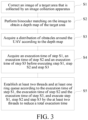
- FIG. 3 is a schematic flowchart of a method for processing a depth map according to an embodiment of the present invention.
- the method is used in the controller of the UAV 100 shown in FIG. 1 or FIG. 2 .
- the controller may be the vision chip 20 of the UAV 100.
- the method includes the following steps.
- the image collection apparatus may be a binocular unit, and the correcting an image collected by the image collection apparatus includes correcting the image and calibrating each set of images collected by the binocular unit to acquire calibration parameters corresponding to each set of images.
- S2 Perform binocular matching on the image to obtain a depth map of the target area.
- binocular matching is performed on each set of images to acquire a disparity map corresponding to each set of images, and depth information of an area corresponding to each set of images is acquired according to the disparity map and the calibration parameters.
- Data processing is performed according to the depth map to obtain the distribution of obstacles around the UAV, where the distribution of obstacles is, for example, location information of the obstacles, the distances of the obstacles, a three-dimensional map of a surrounding environment of the UAV and the like.
- step S4 Acquire an execution time of step S1, an execution time of step S2 and an execution time of step S3 before executing step S1, step S2 and step S3.
- step S1, step S2 and step S3 are first executed for trial operation in the controller for a period of time, and the controller detects the execution times of the steps to obtain the execution time of step S 1, the execution time of step S2 and the execution time of step S3.
- step S5 Establish at least two threads and at least one ring queue according to the execution time of step S1, the execution time of step S2 and the execution time of step S3, and respectively execute step S1, step S2 and step S3 by the at least two threads to reduce a total execution time, where of two of the at least two threads that execute adjacent ones of the steps, a processing result from a thread executing a former step is transmitted to the ring queue, and a thread executing a latter step fetches the processing result from the ring queue and executes the latter step according to the processing result.
- step S1 It is determined, according to the obtained execution time of step S1, the execution time of step S2 and the execution time of step S3, whether the at least two threads are adopted to execute step S1, step S2 and step S3 in parallel.
- the number of threads and ring queues may be determined according to the execution times of the above steps, for example, there may be two threads and one ring queue or three threads and two ring queues.
- step S1, step S2 and step S3 are relatively long (for example, greater than 1000/P, where P is the image frame rate at which the image collection apparatus collects the image), image blockage may occur.
- P is the image frame rate at which the image collection apparatus collects the image
- step S1, step S2 and step S3 are relatively long.
- the thread executing a former step may transmit a processing result to the ring queue, and the thread executing a latter step acquires the processing result from the ring queue.
- the first thread, the second thread and the first ring queue may be set.
- the first thread executes two of step S1, step S2 and step S3, and the second thread executes one of step S1, step S2 and step S3.
- the second thread executes two of step S1, step S2 and step S3, and the first thread executes one of step S1, step S2 and step S3.
- the first thread executes step S 1 and step S2, and the second thread executes step S3.
- the first thread transmits the processing result of step S2 to the first ring queue, and the second thread acquires the processing result from the first ring queue and executes step S3.
- the first thread executes step S1, and the second thread executes step S2 and step S3, and so on.
- step S1 the execution time of step S2 is t2 and the execution time of step S3 is t3, if t1+t2+t3 > 1000/P, t1+t2 ⁇ 1000/P and t3 ⁇ 1000/P, the first thread executes step S1 and step S2, and the second thread executes step S3.
- step S1 step S1 and step S2
- step S3 the total execution time max(t1+t2, t3) ⁇ 1000/P, which reduces the total execution time, effectively avoiding image blockage.
- the two steps may also be executed separately by two threads.
- the first thread executes steps S1 and S2, and the second thread executes step S3. If t1+t2 > 1000/P and t3 ⁇ 1000/P, then a third thread and a second ring queue can be established.
- the second thread executes step S1, the third thread executes step S2, the first thread transmits the processing result of step S1 to a second ring queue, and the third thread fetches the processing result from the second ring queue and executes step S2.
- the third thread executes step S1, and the first thread executes step S2.
- step S1 if the execution time of one of step S1, step S2 and step S3 is relatively long, for example, t3 > 1000/P, two or more threads may be further adopted to execute step S3.
- the binocular matching may be performed by a hardware acceleration channel disposed in the controller.
- the hardware acceleration channel is an apparatus composed of hardware and interface software that can increase the operating speed of the software.
- a hardware acceleration channel may be used to increase the operating speed.
- Each set of images consecutively captured by the at least two sets of binocular units are sequentially transmitted to the hardware acceleration channel, and each set of images are processed by performing time division multiplexing on the hardware acceleration channel, so as to obtain depth information corresponding to each set of images. That is, a first set of images are transmitted to the hardware acceleration channel for processing, and upon completion of the processing, a second set of images are transmitted to the hardware acceleration channel for processing, and so on.
- the hardware acceleration channel is multiplexed by polling.
- At least two hardware acceleration channels are used to increase the operating speed.
- binocular matching processing is performed, by using a hardware acceleration channel, on the set of images obtained by the high-resolution binocular unit and the set of images obtained by the low-resolution binocular unit, to further increase the operating speed.
- the set of images obtained by one high-resolution binocular unit may also be processed by using a hardware acceleration channel, and the set of images obtained by at least two low-resolution binocular units (for example, two binocular units or three binocular units) are processed by using the same hardware acceleration channel.
- the set of images obtained by at least two low-resolution binocular units share a hardware acceleration channel, which can make full and reasonable use of the hardware acceleration channel without affecting the operating speed of the software when the number of hardware acceleration channels is small.
- the sets of target images may be processed by using a method of performing time division multiplexing on the hardware acceleration channel.
- an implementation of a UAV includes two pairs of binocular units having a resolution of 720P and four pairs of binocular units having a resolution of VGA, and there are four hardware acceleration channels in the controller.
- a high-resolution 720P binocular unit may use one hardware acceleration channel alone, and every two binocular units in the low-resolution VGA binocular unit share one hardware acceleration channel.
- a correspondence between the binocular unit and the hardware acceleration channel may be set in advance, so that the set of images obtained by each binocular unit can be transmitted to the corresponding hardware acceleration channel for processing.
- an embodiment of the present invention further provides an apparatus 500 for processing a depth map.
- the apparatus is used in the controller of the UAV 100 shown in FIG. 1 or FIG. 2 .
- the controller may be the vision chip 20 of the UAV 100.
- the apparatus 500 for processing a depth map includes:
- the apparatus further includes:
- At least two threads and at least one ring queue are established according to the execution times of all steps during depth map processing by the controller of the UAV, and the at least two threads execute all of the steps for processing the depth map.
- Each of the threads can obtain processing results from other threads through the at least one ring queue.
- the thread and ring queue establishing module 505 includes:
- the first preset condition is that: the sum of the execution time of step S1, the execution time of step S2 and the execution time of step S3 is greater than a preset value.
- the preset value is 1000/P, P being an image frame rate.
- the first thread executes two of step S1, step S2 and step S3, and the second thread executes one of step S1, step S2 and step S3.
- the thread and ring queue establishing submodule 5052 is further configured to:
- the second preset condition is that a sum of the execution times of the two steps executed by the first thread is greater than a preset value.
- the preset value is 1000/P, P being an image frame rate.
- the controller includes a hardware acceleration channel
- the image collection apparatus includes at least two sets of binocular units
- the depth map acquisition module 502 is further configured to: transmit images collected by the at least two sets of binocular units to the hardware acceleration channel, and perform, by performing time division multiplexing on the hardware acceleration channel, binocular matching on the images collected by the at least two sets of binocular units, to obtain the depth map.
- the hardware acceleration channel includes at least two hardware acceleration channels, and the images collected by the at least two sets of binocular units include a set of images having a first resolution and a set of images having a second resolution, the second resolution being greater than the first resolution; and the depth map acquisition module 502 is further configured to:
- the hardware acceleration channel includes four hardware acceleration channels, i.e., a first hardware acceleration channel, a second hardware acceleration channel, a third hardware acceleration channel and a fourth hardware acceleration channel, respectively;
- the foregoing apparatus may perform the method provided in the embodiments of this application, and has the corresponding functional modules for performing the method and beneficial effects thereof.
- the method provided in the embodiments of this application may perform the method provided in the embodiments of this application, and has the corresponding functional modules for performing the method and beneficial effects thereof.
- FIG. 7 is a schematic structural diagram of hardware of a vision chip 20 in an embodiment of the UAV 100.
- the vision chip 20 includes: one or more processors 21 and a memory 22.
- One processor 21 is used as an example in FIG. 7 .
- the processor 21 and the memory 22 may be connected through a bus or in other manners and are, for example, connected through a bus in FIG. 7 .
- the memory 22 may be configured to store a non-volatile software program, a non-volatile computer-executable program and module, for example, a program instruction/module (for example, the image correction module 501, the depth map acquisition module 502, the obstacle distribution acquisition module 503, the time acquisition module 504 and the thread and ring queue establishing module 505 shown in FIG. 5 ) corresponding to the method for processing a depth map in the embodiments of the present application.
- the processor 21 executes various functional applications and data processing of the UAV by executing the non-volatile software program, instructions and the module stored in the memory 22, to implement the method for processing a depth map in the foregoing method embodiment.
- the memory 22 may include a program storage area and a data storage area.
- the program storage area may store an operating system and an application program that is required by at least one function.
- the data storage area may store data created according to use of the vision chip, and the like.
- the memory 22 may include a high speed random access memory, and may also include a non-volatile memory such as at least one magnetic disk storage device, a flash memory, or another non-volatile solid-state storage device.
- the memory 22 optionally includes memories remotely disposed relative to the processor 21, and these remote memories may be connected to the UAV by using a network. Examples of the network include, but are not limited to, the Internet, an intranet, a local area network, a mobile communication network, and a combination thereof.
- the one or more modules are stored in the memory 22.
- the method for processing a depth map in any of the above method embodiments is executed.
- the above method steps 101-105 in FIG. 3 are executed, and functions of the modules 501-505 in FIG. 5 and the modules 501-505 and 5051-5052 in FIG. 6 are implemented.
- the foregoing product may perform the method provided in the embodiments of the present application, and have the corresponding functional modules for performing the method and beneficial effects thereof.
- the method provided in the embodiments of the present application may perform the method provided in the embodiments of the present application, and have the corresponding functional modules for performing the method and beneficial effects thereof.
- technical details not described in detail in this embodiment refer to the method provided in the embodiments of the present application.
- An embodiment of the present application provides a non-transitory computer-readable storage medium storing computer-executable instructions that are executed by one or more processors, for example, the processor 21 in FIG. 7 , so that the one or more processors may execute the method for processing a depth map in any of the foregoing method embodiments, for example, execute step 101 to step 105 in the foregoing method in FIG. 3 , and implement functions of the modules 501-505 in FIG. 5 and the modules 501-505 and 5051-5052 in FIG. 6 .
- the foregoing described device embodiments are merely examples.
- the units described as separate parts may or may not be physically separate, and the parts displayed as units may or may not be physical units, may be located in one position, or may be distributed on a plurality of network units. Some or all of the modules may be selected according to actual needs to achieve the objectives of the solutions of the embodiments.
- the embodiments may be implemented by software in combination with a universal hardware platform, and may certainly be implemented by hardware.
- a person of ordinary skill in the art may understand that, all or some of the processes of the method in the foregoing embodiments may be implemented by a computer program instructing relevant hardware.
- the program may be stored in a computer-readable storage medium. During execution of the program, the processes of the foregoing method embodiments may be included.
- the foregoing storage medium may be a magnetic disk, an optical disc, a read-only memory (ROM), a random access memory (RAM), or the like.
Landscapes
- Engineering & Computer Science (AREA)
- General Physics & Mathematics (AREA)
- Physics & Mathematics (AREA)
- Aviation & Aerospace Engineering (AREA)
- Remote Sensing (AREA)
- Theoretical Computer Science (AREA)
- Radar, Positioning & Navigation (AREA)
- Computer Vision & Pattern Recognition (AREA)
- Microelectronics & Electronic Packaging (AREA)
- Mechanical Engineering (AREA)
- Multimedia (AREA)
- Automation & Control Theory (AREA)
- Signal Processing (AREA)
- Image Processing (AREA)
Description
- Embodiments of the present invention relate to the technical field of unmanned aerial vehicles (UAV), and in particular, to a method, apparatus and UAV for processing a depth map.
- During an autonomous flight, the UAV needs to avoid obstacles. Therefore, it is necessary to detect positions of the obstacles, so that the UAV can take obstacle avoidance measures according to the positions of the obstacles. At present, the UAV mostly adopts a vision system (such as a monocular vision system, a binocular vision system, etc.) for obstacle position detection, which uses a camera apparatus to take images of an area surrounding the UAV and processes the images to determine location information of surrounding obstacles. Then, the UAV takes obstacle avoidance measures such as detour, deceleration or pause according to its own speed, posture and the location information of the obstacles to avoid the obstacles.
- During implementation of the present invention, it is found that there are at least the following problems in the related art: when the UAV performs image processing and performs obstacle avoidance measures according to processing results, if a frame rate of image collection is relatively high, it is likely to cause image processing blockage, thus causing a large delay.
- Conventional methods for processing a depth map are disclosed in
CN108594851A andUS2018365074A1 . - An objective of embodiments of the present invention is to provide a method, apparatus and UAV for processing a depth map, which can alleviate the problem of image processing blockage and a large delay during using a vision system on the UAV.
- In a first aspect, an embodiment of the present invention provides a method for processing a depth map, applicable to a controller of the UAV. The UAV further includes an image collection apparatus, the image collection apparatus being communicatively connected to the controller. The method includes the following steps:
- S1: correcting an image of a target area that is collected by the image collection apparatus;
- S2: performing binocular matching on the image to obtain a depth map of the target area; and
- S3: acquiring a distribution of obstacles around the UAV according to the depth map; and
- the method further includes:
- acquiring an execution time of step S1, an execution time of step S2 and an execution time of step S3 before executing step S1, step S2 and step S3; and
- establishing at least two threads and at least one ring queue according to the execution time of step S1, the execution time of step S2 and the execution time of step S3, and executing step S1, step S2 and step S3 by the at least two threads to reduce a total execution time, where
- of two of the at least two threads that execute adjacent ones of the steps, a processing result from a thread executing a former step is transmitted to the ring queue, and a thread executing a latter step fetches the processing result from the ring queue and executes the latter step according to the processing result, wherein
- the controller comprises a hardware acceleration channel, and the image collection apparatus comprises at least two sets of binocular units, the hardware acceleration channel comprises at least two hardware acceleration channels, and the images collected by the at least two sets of binocular units comprise a set of images having a first resolution and a set of images having a second resolution, the second resolution being greater than the first resolution; and
- the performing binocular matching on the image to obtain a depth map of the target area comprises:
- transmitting the set of images having the second resolution to one of the at least two hardware acceleration channels for binocular matching, so as to obtain a depth map corresponding to the set of images; and
- transmitting the set of images having the first resolution to the other of the at least two hardware acceleration channels for binocular matching, so as to obtain a depth map corresponding to the set of images.
- In some embodiments, the establishing at least two threads and at least one ring queue according to the execution time of step S1, the execution time of step S2 and the execution time of step S3, and executing step S1, step S2 and step S3 by the at least two threads to reduce a total execution time includes:
- determining whether a sum of the execution time of step S1, the execution time of step S2 and the execution time of step S3 meets a first preset condition; and
- establishing a first thread, a second thread and a first ring queue, and executing step S1, step S2 and step S3 by the first thread and the second thread if the sum of the execution time of step S1, the execution time of step S2 and the execution time of step S3 meets the first preset condition, where
- of the first thread and the second thread, a processing result from a thread executing a former step is transmitted to the first ring queue, and a thread executing a latter step fetches the processing result from the first ring queue and executes the latter step according to the processing result.
- In some embodiments, the first preset condition is that:
the sum of the execution time of step S1, the execution time of step S2 and the execution time of step S3 is greater than a preset value. - In some embodiments, the preset value is 1000/P, P being an image frame rate.
- In some embodiments, the first thread executes two of step S1, step S2 and step S3, and the second thread executes one of step S1, step S2 and step S3; and
the establishing a first thread, a second thread and a first ring queue, and executing step S1, step S2 and step S3 by the first thread and the second thread if the sum of the execution time of step S1, the execution time of step S2 and the execution time of step S3 meets the first preset condition includes: - determining whether a sum of the execution times of the two steps executed by the first thread meets a second preset condition; and
- if so, establishing a third thread and a second ring queue, and executing the two steps respectively by the first thread and the third thread, where
- of the first thread and the third thread, a processing result from a thread executing a former step is transmitted to the second ring queue, and a thread executing a latter step fetches the processing result from the second ring queue and executes the latter step according to the processing result.
- In some embodiments, the second preset condition is that a sum of the execution times of the two steps executed by the first thread is greater than a preset value.
- In some embodiments, the preset value is 1000/P, P being an image frame rate.
- In some embodiments,
the performing binocular matching on the image to obtain a depth map of the target area includes:
transmitting images collected by the at least two sets of binocular units to the hardware acceleration channel; performing time division multiplexing on the hardware acceleration channel; and performing binocular matching on the images collected by the at least two sets of binocular units to obtain the depth map. - In some embodiments, the hardware acceleration channel includes four hardware acceleration channels, i.e., a first hardware acceleration channel, a second hardware acceleration channel, a third hardware acceleration channel and a fourth hardware acceleration channel, respectively;
- the image collection apparatus includes six sets of binocular units, a set of images collected by four of the six sets of binocular units being the set of images having the first resolution, and a set of images collected by two of the six sets of binocular units being the set of images having the second resolution;
- the transmitting the set of images having the first resolution to the other of the at least two hardware acceleration channels for binocular matching, so as to obtain a depth map corresponding to the set of images includes:
- transmitting the set of images collected by the two sets of binocular units respectively to the first hardware acceleration channel and the second hardware acceleration channel; and
- the transmitting the set of images having the second resolution to one of the at least two hardware acceleration channels for binocular matching, so as to obtain a depth map corresponding to the set of images includes:
transmitting a set of images collected by two of the four sets of binocular units to the third hardware acceleration channel, and transmitting a set of images collected by the remaining two of the four sets of binocular units to the fourth hardware acceleration channel.
- In a second aspect, an embodiment of the present invention provides an apparatus for processing a depth map, applicable to a controller of the UAV. The UAV further includes an image collection apparatus, the image collection apparatus being communicatively connected to the controller. The apparatus includes:
- an image correction module, configured to: execute step S1 of correcting an image of a target area that is collected by the image collection apparatus;
- a depth map acquisition module, configured to execute step S2 of performing binocular matching on the image to obtain a depth map of the target area; and
- an obstacle distribution acquisition module, configured to execute step S3 of acquiring a distribution of obstacles around the UAV according to the depth map.
- The apparatus further includes:
- a time acquisition module, configured to: acquire an execution time of step S1, an execution time of step S2 and an execution time of step S3 before the execution of step S1, step S2 and step S3; and
- a thread and ring queue establishing module, configured to establish at least two threads and at least one ring queue according to the execution time of step S1, the execution time of step S2 and the execution time of step S3, and execute step S1, step S2 and step S3 by the at least two threads to reduce a total execution time, where
- of two of the at least two threads that execute adjacent ones of the steps, a processing result from a thread executing a former step is transmitted to the ring queue, and a thread executing a latter step fetches the processing result from the ring queue and executes the latter step according to the processing result; the controller comprises a hardware acceleration channel, and the image collection apparatus comprises at least two sets of binocular units, the hardware acceleration channel comprises at least two hardware acceleration channels, and the images collected by the at least two sets of binocular units comprise a set of images having a first resolution and a set of images having a second resolution, the second resolution being greater than the first resolution; and
- the depth map acquisition module comprises: transmitting the set of images having the second resolution to one of the at least two hardware acceleration channels for binocular matching, so as to obtain a depth map corresponding to the set of images; and
- transmitting the set of images having the first resolution to the other of the at least two hardware acceleration channels for binocular matching, so as to obtain a depth map corresponding to the set of images.
- In some embodiments, the thread and ring queue establishing module includes:
- a determination submodule, configured to determine whether a sum of the execution time of step S1, the execution time of step S2 and the execution time of step S3 meets a first preset condition; and
- a thread and ring queue establishing submodule, configured to establish a first thread, a second thread and a first ring queue, and execute step S1, step S2 and step S3 by the first thread and the second thread if the sum of the execution time of step S1, the execution time of step S2 and the execution time of step S3 meets a first preset condition, where
- of the first thread and the second thread, a processing result from a thread executing a former step is transmitted to the first ring queue, and a thread executing a latter step fetches the processing result from the first ring queue and executes the latter step according to the processing result.
- In some embodiments, the first preset condition is that:
the sum of the execution time of step S1, the execution time of step S2 and the execution time of step S3 is greater than a preset value. - In some embodiments, the preset value is 1000/P, P being an image frame rate.
- In some embodiments, the first thread executes two of step S1, step S2 and step S3, and the second thread executes one of step S1, step S2 and step S3; and
the thread and ring queue establishing submodule is further configured to: - determine whether a sum of the execution times of the two steps executed by the first thread meets a second preset condition; and
- if so, establish a third thread and a second ring queue, and executing the two steps respectively by the first thread and the third thread, where
- of the first thread and the third thread, a processing result from a thread executing a former step is transmitted to the second ring queue, and a thread executing a latter step fetches the processing result from the second ring queue and executes the latter step according to the processing result.
- In some embodiments, the second preset condition is that a sum of the execution times of the two steps executed by the first thread is greater than a preset value.
- In some embodiments, the preset value is 1000/P, P being an image frame rate.
- In some embodiments, the controller includes a hardware acceleration channel, and the image collection apparatus includes at least two sets of binocular units; and
the depth map acquisition module is further configured to:
transmit images collected by the at least two sets of binocular units to the hardware acceleration channel, and perform, by performing time division multiplexing on the hardware acceleration channel, binocular matching on the images collected by the at least two sets of binocular units, to obtain the depth map. - In some embodiments, the hardware acceleration channel includes at least two hardware acceleration channels, and the images collected by the at least two sets of binocular units include a set of images having a first resolution and a set of images having a second resolution, the second resolution being greater than the first resolution; and
the depth map acquisition module is further configured to: - transmit the set of images having the second resolution to one of the at least two hardware acceleration channels for binocular matching, so as to obtain a depth map corresponding to the set of images; and
- transmit the set of images having the first resolution to the other of the at least two hardware acceleration channels for binocular matching, so as to obtain a depth map corresponding to the set of images.
- In some embodiments, the hardware acceleration channel includes four hardware acceleration channels, i.e., a first hardware acceleration channel, a second hardware acceleration channel, a third hardware acceleration channel and a fourth hardware acceleration channel, respectively;
- the image collection apparatus includes six sets of binocular units, a set of images collected by four of the six sets of binocular units being the set of images having the first resolution, and a set of images collected by two of the six sets of binocular units being the set of images having the second resolution;
- the depth map acquisition module is further configured to:
- transmit the set of images collected by the two sets of binocular units respectively to the first hardware acceleration channel and the second hardware acceleration channel; and
- transmit a set of images collected by two of the four sets of binocular units to the third hardware acceleration channel, and transmit a set of images collected by the remaining two of the four sets of binocular units to the fourth hardware acceleration channel.
- In a third aspect, an embodiment of the present invention provides a UAV. The UAV includes:
- a fuselage;
- a wing connected to the fuselage;
- a power apparatus, disposed on the wing;
- an image collection apparatus disposed on the fuselage, the image collection apparatus being configured to acquire a target image of a target area of the UAV; and
- a vision chip disposed in the fuselage, the vision chip being communicatively connected to the image collection apparatus, where
- the vision chip includes:
- at least one processor; and
- a memory, communicatively connected to the at least one processor, the memory storing instructions executable by the at least one processor, the instructions, when being executed by the at least one processor, causing the at least one processor to perform the method.
- In a fourth aspect, an embodiment of the present invention provides a non-volatile computer-readable storage medium, the computer-readable storage medium storing computer executable instructions which, when executed by a UAV, cause the UAV to execute the foregoing method.
- According to the method, apparatus and UAV for processing a depth map of the embodiments of the present invention, at least two threads and at least one ring queue are established according to the execution times of all steps during depth map processing by the controller of the UAV, and the at least two threads execute all of the steps for method of processing the depth map. Each of the threads can obtain processing results from other threads through the at least one ring queue. Through the mode of the ring queue and parallel multi-thread running, the problem of image processing blockage is solved, and a delay is reduced.
- One or more embodiments are exemplarily described with reference to the corresponding figures in the accompanying drawings, and the descriptions are not to be construed as limiting the embodiments. Elements in the accompanying drawings that have same reference numerals are represented as similar elements, and unless otherwise particularly stated, the figures in the accompanying drawings are not drawn to scale.
-
FIG. 1 is a schematic diagram of an application scenario of a method and apparatus for processing a depth map according to an embodiment of the present invention. -
FIG. 2 is a schematic structural diagram of hardware of an embodiment of a UAV according to the present invention. -
FIG. 3 is a schematic flowchart of an embodiment of the method for processing a depth map according to the present invention. -
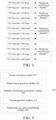
FIG. 4 is a schematic diagram of applying hardware acceleration channels in an embodiment of the method for processing a depth map according to the present invention. -
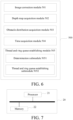
FIG. 5 is a schematic structural diagram of an embodiment of the apparatus for processing a depth map according to the present invention. -
FIG. 6 is a schematic structural diagram of an embodiment of the apparatus for processing a depth map according to the present invention. -
FIG. 7 is a schematic structural diagram of hardware of a vision chip in an embodiment of the UAV according to the present invention. - To make the objectives, technical solutions, and advantages of the embodiments of the present invention clearer, the following clearly and completely describes the technical solutions in the embodiments of the present invention with reference to the accompanying drawings in the embodiments of the present invention. Apparently, the described embodiments are merely some embodiments of the present invention rather than all of the embodiments.
- A method, apparatus and UAV for processing a depth map provided in embodiments of the present invention are applicable to an application scenario shown in
FIG. 1 . The application scenario includes aUAV 100 and anobstacle 200. TheUAV 100 may be a suitable UAV, including a fixed-wing UAV and a rotary-wing UAV, such as a helicopter, a quadrotor and an aircraft with other numbers of rotors and/or rotor configuration. TheUAV 100 may further be other movable objects, such as a manned aircraft, a model airplane, an unmanned airship and an unmanned hot air balloon. Theobstacle 200 may be, for example, a building, a mountain, a tree, a forest, a signal tower or other movable or non-movable objects (only one obstacle is shown inFIG. 1 , there may be more obstacles or no obstacle in actual application). - In some embodiments, referring to
FIG. 2 (FIG. 2 only shows a part of the composition of the UAV 100). TheUAV 100 includes a fuselage 10, a wing connected to the fuselage 10, a power apparatus and a control system disposed on the fuselage 10. The power apparatus is configured to provide push force or lift force for the UAV 10 to fly. The control system is a central nervous system of theUAV 100 and may include a plurality of functional units, such as a flight control system, a vision system and other systems with specific functions. The vision system includes an image collection apparatus 30 and avision chip 20, and the flight control system includes various sensors (such as a gyroscope and an accelerometer) and a flight control chip. - During autonomous flight, the
UAV 100 needs to recognize and avoid theobstacle 200 in front by itself. TheUAV 100 may detect location information of obstacles around theUAV 100 through the image collection apparatus 30 and thevision chip 20, and take obstacle avoidance measures according to the location information. - The image collection apparatus 30 is configured to acquire a target image of the target area, and may adopt, for example, a high-definition camera, a sport camera or the like. The
vision chip 20 is communicatively connected to the image collection apparatus 30, may acquire the target image collected by the image collection apparatus 30, and perform image processing on the target image to obtain depth information of a corresponding area of the target image, thereby obtaining location information of theobstacle 200 around theUAV 100. Thevision chip 20 can take obstacle avoidance measures according to the location information of theobstacle 200. The flight control chip controls theUAV 100 according to the obstacle avoidance measures. The obstacle avoidance measures include controlling the UAV to slow down, pause or the like. Thevision chip 20 may further determine a distance of an obstacle and perform three-dimensional reconstruction according to the location information of theobstacle 200. - The image collection apparatus 30 may include at least one monocular unit or at least one binocular unit (the binocular unit is used as an example for description below). Each binocular unit may obtain a set of target images, and each binocular unit collects the target images at a preset frame rate. The
vision chip 20 needs to perform image processing on sets of target images obtained by the binocular units to obtain depth information corresponding to each of the sets of target images. Thevision chip 20 also needs to obtain a distribution ofobstacles 200 around theUAV 100 according to the depth information corresponding to each of the sets of target images. When the frame rate at which the target images are collected is relatively high, it may cause incapability of processing by thevision chip 20, which in turn hampers the processing of the sets of target images of an inputted source, causing image processing blockage and a large delay. - In order to solve the problem of image processing blockage and the large delay, in the embodiments of the present invention, at least two threads and at least one ring queue may be established according to the execution times of all steps during depth map processing by the controller of the UAV, and when a sum of the execution times of all steps is relatively large, the at least two threads execute all of the steps for processing the depth map. Each of the threads can obtain processing results from other threads through the at least one ring queue. Through the mode of the ring queue and parallel multi-thread running, the problem of image processing blockage is solved, and a delay is reduced.
- In the foregoing embodiment, the
vision chip 20 is disposed for theUAV 100 to obtain the obstacle avoidance measures of theUAV 100 according to the image acquired by the image collection apparatus 30. In some other embodiments, theUAV 100 may also use other controllers to implement the function of thevision chip 20. -
FIG. 3 is a schematic flowchart of a method for processing a depth map according to an embodiment of the present invention. The method is used in the controller of theUAV 100 shown inFIG. 1 or FIG. 2 . In some of the embodiments, the controller may be thevision chip 20 of theUAV 100. As shown inFIG. 3 , the method includes the following steps. - S1: Correct an image of a target area that is collected by the image collection apparatus.
- The image collection apparatus may be a binocular unit, and the correcting an image collected by the image collection apparatus includes correcting the image and calibrating each set of images collected by the binocular unit to acquire calibration parameters corresponding to each set of images.
- S2: Perform binocular matching on the image to obtain a depth map of the target area.
- That is, binocular matching is performed on each set of images to acquire a disparity map corresponding to each set of images, and depth information of an area corresponding to each set of images is acquired according to the disparity map and the calibration parameters.
- S3: Acquire a distribution of obstacles around the UAV according to the depth map.
- Data processing is performed according to the depth map to obtain the distribution of obstacles around the UAV, where the distribution of obstacles is, for example, location information of the obstacles, the distances of the obstacles, a three-dimensional map of a surrounding environment of the UAV and the like.
- S4: Acquire an execution time of step S1, an execution time of step S2 and an execution time of step S3 before executing step S1, step S2 and step S3.
- The execution time of all of the steps may be preset by a designer based on the basic knowledge of the processing time of each step. Alternatively, step S1, step S2 and step S3 are first executed for trial operation in the controller for a period of time, and the controller detects the execution times of the steps to obtain the execution time of
step S 1, the execution time of step S2 and the execution time of step S3. - S5: Establish at least two threads and at least one ring queue according to the execution time of step S1, the execution time of step S2 and the execution time of step S3, and respectively execute step S1, step S2 and step S3 by the at least two threads to reduce a total execution time, where of two of the at least two threads that execute adjacent ones of the steps, a processing result from a thread executing a former step is transmitted to the ring queue, and a thread executing a latter step fetches the processing result from the ring queue and executes the latter step according to the processing result.
- It is determined, according to the obtained execution time of step S1, the execution time of step S2 and the execution time of step S3, whether the at least two threads are adopted to execute step S1, step S2 and step S3 in parallel. The number of threads and ring queues may be determined according to the execution times of the above steps, for example, there may be two threads and one ring queue or three threads and two ring queues.
- In some embodiments, if the total execution time of step S1, step S2 and step S3 is relatively long (for example, greater than 1000/P, where P is the image frame rate at which the image collection apparatus collects the image), image blockage may occur. In order to avoid the image blockage, at least two threads can be established to execute step S1, step S2 and step S3 in parallel. If two adjacent ones of the steps are executed by different threads, the thread executing a former step may transmit a processing result to the ring queue, and the thread executing a latter step acquires the processing result from the ring queue.
- For example, the first thread, the second thread and the first ring queue may be set. The first thread executes two of step S1, step S2 and step S3, and the second thread executes one of step S1, step S2 and step S3. Alternatively, the second thread executes two of step S1, step S2 and step S3, and the first thread executes one of step S1, step S2 and step S3.
- For example, the first thread executes
step S 1 and step S2, and the second thread executes step S3. The first thread transmits the processing result of step S2 to the first ring queue, and the second thread acquires the processing result from the first ring queue and executes step S3. In some other embodiments, alternatively, the first thread executes step S1, and the second thread executes step S2 and step S3, and so on. - Assuming that the execution time of step S1 is t1, the execution time of step S2 is t2 and the execution time of step S3 is t3, if t1+t2+t3 > 1000/P, t1+t2 < 1000/P and t3 < 1000/P, the first thread executes step S1 and step S2, and the second thread executes step S3. After the two threads execute step S1, step S2 and step S3 in parallel, the total execution time max(t1+t2, t3) < 1000/P, which reduces the total execution time, effectively avoiding image blockage.
- In some embodiments, if a thread executes two adjacent ones of the steps, and the total execution time of the two steps is still relatively large (for example, greater than 1000/P), in order to further avoid image blockage, the two steps may also be executed separately by two threads.
- For example, the first thread executes steps S1 and S2, and the second thread executes step S3. If t1+t2 > 1000/P and t3 < 1000/P, then a third thread and a second ring queue can be established. The second thread executes step S1, the third thread executes step S2, the first thread transmits the processing result of step S1 to a second ring queue, and the third thread fetches the processing result from the second ring queue and executes step S2. In some other embodiments, alternatively, the third thread executes step S1, and the first thread executes step S2.
- In some other embodiments, if the execution time of one of step S1, step S2 and step S3 is relatively long, for example, t3 > 1000/P, two or more threads may be further adopted to execute step S3.
- In practical application, a plurality of sets of binocular units are usually adopted for depth detection, and the image binocular matching takes a long time. In some embodiments, in order to increase the operating speed, the binocular matching may be performed by a hardware acceleration channel disposed in the controller. The hardware acceleration channel is an apparatus composed of hardware and interface software that can increase the operating speed of the software.
- In some of the embodiments, a hardware acceleration channel may be used to increase the operating speed. Each set of images consecutively captured by the at least two sets of binocular units are sequentially transmitted to the hardware acceleration channel, and each set of images are processed by performing time division multiplexing on the hardware acceleration channel, so as to obtain depth information corresponding to each set of images. That is, a first set of images are transmitted to the hardware acceleration channel for processing, and upon completion of the processing, a second set of images are transmitted to the hardware acceleration channel for processing, and so on. The hardware acceleration channel is multiplexed by polling.
- According to the invention, at least two hardware acceleration channels are used to increase the operating speed. In the set of images obtained by the binocular units, binocular matching processing is performed, by using a hardware acceleration channel, on the set of images obtained by the high-resolution binocular unit and the set of images obtained by the low-resolution binocular unit, to further increase the operating speed.
- According to an example not falling under the scope of the claims, the set of images obtained by one high-resolution binocular unit may also be processed by using a hardware acceleration channel, and the set of images obtained by at least two low-resolution binocular units (for example, two binocular units or three binocular units) are processed by using the same hardware acceleration channel. The set of images obtained by at least two low-resolution binocular units share a hardware acceleration channel, which can make full and reasonable use of the hardware acceleration channel without affecting the operating speed of the software when the number of hardware acceleration channels is small. When the set of images obtained by at least two binocular units share one hardware acceleration channel, the sets of target images may be processed by using a method of performing time division multiplexing on the hardware acceleration channel.
- For example below, an implementation of a UAV includes two pairs of binocular units having a resolution of 720P and four pairs of binocular units having a resolution of VGA, and there are four hardware acceleration channels in the controller. During specific implementation, as shown in
FIG. 4 , a high-resolution 720P binocular unit may use one hardware acceleration channel alone, and every two binocular units in the low-resolution VGA binocular unit share one hardware acceleration channel. A correspondence between the binocular unit and the hardware acceleration channel may be set in advance, so that the set of images obtained by each binocular unit can be transmitted to the corresponding hardware acceleration channel for processing. - Correspondingly, as shown in
FIG. 5 , an embodiment of the present invention further provides anapparatus 500 for processing a depth map. The apparatus is used in the controller of theUAV 100 shown inFIG. 1 or FIG. 2 . In some of the embodiments, the controller may be thevision chip 20 of theUAV 100. As shown inFIG. 5 , theapparatus 500 for processing a depth map includes: - an
image correction module 501, configured to execute step S1 of correcting an image of a target area that is collected by the image collection apparatus; - a depth
map acquisition module 502, configured to execute step S2 of performing binocular matching on the image, so as to obtain a depth map of the target area; and - an obstacle
distribution acquisition module 503, configured to execute step S3 of acquiring a distribution of obstacles around the UAV according to the depth map. - The apparatus further includes:
- a
time acquisition module 504, configured to acquire an execution time of step S1, an execution time of step S2 and an execution time of step S3 before the execution of step S1, step S2 and step S3; and - a thread and ring
queue establishing module 505, configured to establish at least two threads and at least one ring queue according to the execution time of step S1, the execution time of step S2 and the execution time of step S3, and execute step S1, step S2 and step S3 by the at least two threads to reduce a total execution time, where - of two of the at least two threads that execute adjacent ones of the steps, a processing result from a thread executing a former step is transmitted to the ring queue, and a thread executing a latter step fetches the processing result from the ring queue and executes the latter step according to the processing result.
- In the embodiments of the present invention, at least two threads and at least one ring queue are established according to the execution times of all steps during depth map processing by the controller of the UAV, and the at least two threads execute all of the steps for processing the depth map. Each of the threads can obtain processing results from other threads through the at least one ring queue. Through the mode of the ring queue and parallel multi-thread running, the problem of image processing blockage is solved, and a delay is reduced.
- In some embodiments of the
apparatus 500 for processing a depth map, as shown inFIG. 6 , the thread and ringqueue establishing module 505 includes: - a
determination submodule 5051, configured to determine whether a sum of the execution times of step S1, step S2 and step S3 meets a first preset condition; and - a thread and ring
queue establishing submodule 5052, configured to establish a first thread, a second thread and a first ring queue, and execute step S1, step S2 and step S3 by the first thread and the second thread if the sum of the execution time of step S1, the execution time of step S2 and the execution time of step S3 meets a first preset condition, where - of the first thread and the second thread, a processing result from a thread executing a former step is transmitted to the first ring queue, and a thread executing a latter step fetches the processing result from the first ring queue and executes the latter step according to the processing result.
- In some embodiments of the
apparatus 500 for processing a depth map, the first preset condition is that:
the sum of the execution time of step S1, the execution time of step S2 and the execution time of step S3 is greater than a preset value. - In some embodiments of the
apparatus 500 for processing a depth map, the preset value is 1000/P, P being an image frame rate. - In some embodiments of the
apparatus 500 for processing a depth map, the first thread executes two of step S1, step S2 and step S3, and the second thread executes one of step S1, step S2 and step S3. - The thread and ring
queue establishing submodule 5052 is further configured to: - determine whether a sum of the execution times of the two steps executed by the first thread meets a second preset condition; and
- if so, establish a third thread and a second ring queue, and execute the two steps respectively by the first thread and the third thread, where
- of the first thread and the third thread, a processing result from a thread executing a former step is transmitted to the second ring queue, and a thread executing a latter step fetches the processing result from the second ring queue and executes the latter step according to the processing result.
- In some embodiments of the
apparatus 500 for processing a depth map, the second preset condition is that a sum of the execution times of the two steps executed by the first thread is greater than a preset value. - In some embodiments of the
apparatus 500 for processing a depth map, the preset value is 1000/P, P being an image frame rate. - In some embodiments of the
apparatus 500 for processing a depth map, the controller includes a hardware acceleration channel, and the image collection apparatus includes at least two sets of binocular units; and
the depthmap acquisition module 502 is further configured to:
transmit images collected by the at least two sets of binocular units to the hardware acceleration channel, and perform, by performing time division multiplexing on the hardware acceleration channel, binocular matching on the images collected by the at least two sets of binocular units, to obtain the depth map. - According to the invention, the hardware acceleration channel includes at least two hardware acceleration channels, and the images collected by the at least two sets of binocular units include a set of images having a first resolution and a set of images having a second resolution, the second resolution being greater than the first resolution; and
the depthmap acquisition module 502 is further configured to: - transmit the set of images having the second resolution to one of the at least two hardware acceleration channels for binocular matching, so as to obtain a depth map corresponding to the set of images; and
- transmit the set of images having the first resolution to the other of the at least two hardware acceleration channels for binocular matching, so as to obtain a depth map corresponding to the set of images.
- In some embodiments of the
apparatus 500 for processing a depth map, the hardware acceleration channel includes four hardware acceleration channels, i.e., a first hardware acceleration channel, a second hardware acceleration channel, a third hardware acceleration channel and a fourth hardware acceleration channel, respectively; - the image collection apparatus includes six sets of binocular units, a set of images collected by four of the six sets of binocular units being the set of images having the first resolution, and a set of images collected by two of the six sets of binocular units being the set of images having the second resolution;
- the depth
map acquisition module 502 is further configured to:- transmit the set of images collected by the two sets of binocular units respectively to the first hardware acceleration channel and the second hardware acceleration channel; and
- transmit a set of images collected by two of the four sets of binocular units to the third hardware acceleration channel, and transmit a set of images collected by the remaining two of the four sets of binocular units to the fourth hardware acceleration channel.
- The foregoing apparatus may perform the method provided in the embodiments of this application, and has the corresponding functional modules for performing the method and beneficial effects thereof. For technical details not described in detail in the apparatus embodiment, reference may be made to the method provided in the embodiments of this application.
-
FIG. 7 is a schematic structural diagram of hardware of avision chip 20 in an embodiment of theUAV 100. As shown inFIG. 7 , thevision chip 20 includes:
one ormore processors 21 and amemory 22. Oneprocessor 21 is used as an example inFIG. 7 . - The
processor 21 and thememory 22 may be connected through a bus or in other manners and are, for example, connected through a bus inFIG. 7 . - As a non-volatile computer-readable storage medium, the
memory 22 may be configured to store a non-volatile software program, a non-volatile computer-executable program and module, for example, a program instruction/module (for example, theimage correction module 501, the depthmap acquisition module 502, the obstacledistribution acquisition module 503, thetime acquisition module 504 and the thread and ringqueue establishing module 505 shown inFIG. 5 ) corresponding to the method for processing a depth map in the embodiments of the present application. Theprocessor 21 executes various functional applications and data processing of the UAV by executing the non-volatile software program, instructions and the module stored in thememory 22, to implement the method for processing a depth map in the foregoing method embodiment. - The
memory 22 may include a program storage area and a data storage area. The program storage area may store an operating system and an application program that is required by at least one function. The data storage area may store data created according to use of the vision chip, and the like. In addition, thememory 22 may include a high speed random access memory, and may also include a non-volatile memory such as at least one magnetic disk storage device, a flash memory, or another non-volatile solid-state storage device. In some embodiments, thememory 22 optionally includes memories remotely disposed relative to theprocessor 21, and these remote memories may be connected to the UAV by using a network. Examples of the network include, but are not limited to, the Internet, an intranet, a local area network, a mobile communication network, and a combination thereof. - The one or more modules are stored in the
memory 22. When executed by the one ormore processors 21, the method for processing a depth map in any of the above method embodiments is executed. For example, the above method steps 101-105 inFIG. 3 are executed, and functions of the modules 501-505 inFIG. 5 and the modules 501-505 and 5051-5052 inFIG. 6 are implemented. - The foregoing product may perform the method provided in the embodiments of the present application, and have the corresponding functional modules for performing the method and beneficial effects thereof. For technical details not described in detail in this embodiment, refer to the method provided in the embodiments of the present application.
- An embodiment of the present application provides a non-transitory computer-readable storage medium storing computer-executable instructions that are executed by one or more processors, for example, the
processor 21 inFIG. 7 , so that the one or more processors may execute the method for processing a depth map in any of the foregoing method embodiments, for example, execute step 101 to step 105 in the foregoing method inFIG. 3 , and implement functions of the modules 501-505 inFIG. 5 and the modules 501-505 and 5051-5052 inFIG. 6 . - The foregoing described device embodiments are merely examples. The units described as separate parts may or may not be physically separate, and the parts displayed as units may or may not be physical units, may be located in one position, or may be distributed on a plurality of network units. Some or all of the modules may be selected according to actual needs to achieve the objectives of the solutions of the embodiments.
- Through the description of the foregoing embodiments, a person skilled in the art may clearly understand that the embodiments may be implemented by software in combination with a universal hardware platform, and may certainly be implemented by hardware. A person of ordinary skill in the art may understand that, all or some of the processes of the method in the foregoing embodiments may be implemented by a computer program instructing relevant hardware. The program may be stored in a computer-readable storage medium. During execution of the program, the processes of the foregoing method embodiments may be included. The foregoing storage medium may be a magnetic disk, an optical disc, a read-only memory (ROM), a random access memory (RAM), or the like.
- Finally, it should be noted that the foregoing embodiments are merely used for describing the technical solutions of the present invention, but are not intended to limit the present invention.
Claims (14)
- A method for processing a depth map, applicable to a controller of an unmanned aerial vehicle (UAV) (100), the UAV (100) further comprising an image collection apparatus (30), the image collection apparatus (30) being communicatively connected to the controller, the method comprising the following steps:correcting (S1) an image of a target area that is collected by the image collection apparatus;performing (S2) binocular matching on the image to obtain a depth map of the target area;acquiring (S3) a distribution of obstacles around the UAV according to the depth map;acquiring (S4) an execution time of step S1, an execution time of step S2 and an execution time of step S3 before executing step S1, step S2 and step S3; andestablishing (S5) at least two threads and at least one ring queue according to the execution time of step S1, the execution time of step S2 and the execution time of step S3, and executing step S1, step S2 and step S3 by the at least two threads to reduce a total execution time, whereinof two of the at least two threads that execute adjacent ones of the steps, a processing result from a thread executing a former step is transmitted to the ring queue, and a thread executing a latter step fetches the processing result from the ring queue and executes the latter step according to the processing result;characterized in that the controller comprises a hardware acceleration channel, and the image collection apparatus comprises at least two sets of binocular units, the hardware acceleration channel comprises at least two hardware acceleration channels, and the images collected by the at least two sets of binocular units comprise a set of images having a first resolution and a set of images having a second resolution, the second resolution being greater than the first resolution; andthe performing (S2) binocular matching on the image to obtain a depth map of the target area comprises:transmitting the set of images having the second resolution to one of the at least two hardware acceleration channels; andtransmitting the set of images having the first resolution to the other of the at least two hardware acceleration channels.
- The method according to claim 1, characterized in that the establishing at least two threads and at least one ring queue according to the execution time of step S1, the execution time of step S2 and the execution time of step S3, and executing step S1, step S2 and step S3 by the at least two threads to reduce a total execution time comprises:determining whether a sum of the execution time of step S1, the execution time of step S2 and the execution time of step S3 meets a first preset condition; andestablishing a first thread, a second thread and a first ring queue, and executing step S1, step S2 and step S3 by the first thread and the second thread if the sum of the execution time of step S1, the execution time of step S2 and the execution time of step S3 meets the first preset condition, whereinof the first thread and the second thread, a processing result from a thread executing a former step is transmitted to the first ring queue, and a thread executing a latter step fetches the processing result from the first ring queue and executes the latter step according to the processing result.
- The method according to claim 2, characterized in that the first preset condition is that:
the sum of the execution time of step S1, the execution time of step S2 and the execution time of step S3 is greater than a preset value. - The method according to claim 3, characterized in that the preset value is 1000/P, P being an image frame rate.
- The method according to any one of claims 2 to 4, characterized in that the first thread executes two of step S 1, step S2 and step S3, and the second thread executes one of step S 1, step S2 and step S3; and
the establishing a first thread, a second thread and a first ring queue, and executing step S 1, step S2 and step S3 by the first thread and the second thread if the sum of the execution time of step S 1, the execution time of step S2 and the execution time of step S3 meets the first preset condition comprises:determining whether a sum of the execution times of the two steps executed by the first thread meets a second preset condition; andif so, establishing a third thread and a second ring queue, and executing the two steps respectively by the first thread and the third thread, whereinof the first thread and the third thread, a processing result from a thread executing a former step is transmitted to the second ring queue, and a thread executing a latter step fetches the processing result from the second ring queue and executes the latter step according to the processing result. - The method according to claim 5, characterized in that the second preset condition is that a sum of the execution times of the two steps executed by the first thread is greater than a preset value.
- The method according to claim 6, characterized in that the preset value is 1000/P, P being an image frame rate.
- The method according to any one of claims 1 to 7, characterized in that
the performing binocular matching on the image to obtain a depth map of the target area comprises:transmitting images collected by the at least two sets of binocular units to the hardware acceleration channel;performing time division multiplexing on the hardware acceleration channel; andperforming binocular matching on the images collected by the at least two sets of binocular units to obtain the depth map. - The method according to claim 8, characterized in that the hardware acceleration channel comprises four hardware acceleration channels, i.e., a first hardware acceleration channel, a second hardware acceleration channel, a third hardware acceleration channel and a fourth hardware acceleration channel, respectively;the image collection apparatus comprises six sets of binocular units, a set of images collected by four of the six sets of binocular units being the set of images having the first resolution, and a set of images collected by two of the six sets of binocular units being the set of images having the second resolution;the transmitting the set of images having the first resolution to the other of the at least two hardware acceleration channels comprises:transmitting the set of images collected by the two sets of binocular units respectively to the first hardware acceleration channel and the second hardware acceleration channel; andthe transmitting the set of images having the second resolution to one of the at least two hardware acceleration channels comprises:
transmitting a set of images collected by two of the four sets of binocular units to the third hardware acceleration channel, and transmitting a set of images collected by the remaining two of the four sets of binocular units to the fourth hardware acceleration channel. - An apparatus (500) for processing a depth map, applicable to a controller of a UAV (100), the UAV (100) further comprising an image collection apparatus (30), the image collection apparatus (30) being communicatively connected to the controller, the apparatus comprising:an image correction module (501), configured to execute step S1 of correcting an image of a target area that is collected by the image collection apparatus (30);a depth map acquisition module (502), configured to execute step S2 of performing binocular matching on the image to obtain a depth map of the target area;an obstacle distribution acquisition module (503), configured to execute step S3 of acquiring a distribution of obstacles around the UAV (100) according to the depth map;
anda time acquisition module (504), configured to acquire an execution time of step S1, an execution time of step S2 and an execution time of step S3 before the execution of step S1, step S2 and step S3; anda thread and ring queue establishing module (505), configured to establish at least two threads and at least one ring queue according to the execution time of step S1, the execution time of step S2 and the execution time of step S3, and execute step S1, step S2 and step S3 by the at least two threads to reduce a total execution time, whereinof two of the at least two threads that execute adjacent ones of the steps, a processing result from a thread executing a former step is transmitted to the ring queue, and a thread executing a latter step fetches the processing result from the ring queue and executes the latter step according to the processing result;characterized in that the controller comprises a hardware acceleration channel, and the image collection apparatus comprises at least two sets of binocular units, the hardware acceleration channel comprises at least two hardware acceleration channels, and the images collected by the at least two sets of binocular units comprise a set of images having a first resolution and a set of images having a second resolution, the second resolution being greater than the first resolution; andthe depth map acquisition module (502) comprises:transmitting the set of images having the second resolution to one of the at least two hardware acceleration channels; andtransmitting the set of images having the first resolution to the other of the at least two hardware acceleration channels. - The apparatus (500) according to claim 10, characterized in that the thread and ring queue establishing module (505) comprises:a determination submodule (5051), configured to determine whether a sum of the execution time of step S1, the execution time of step S2 and the execution time of step S3 meets a first preset condition; anda thread and ring queue establishing submodule (5052), configured to establish a first thread, a second thread and a first ring queue, and execute step S1, step S2 and step S3 by the first thread and the second thread if the sum of the execution time of step S1, the execution time of step S2 and the execution time of step S3 meets a first preset condition, whereinof the first thread and the second thread, a processing result from a thread executing a former step is transmitted to the first ring queue, and a thread executing a latter step fetches the processing result from the first ring queue and executes the latter step according to the processing result; andthe first preset condition is that the sum of the execution time of step S1, the execution time of step S2 and the execution time of step S3 is greater than a preset value.
- The apparatus (500) according to any one of claims 11, characterized in that the first thread executes two of step S1, step S2 and step S3, and the second thread executes one of step S1, step S2 and step S3; and
the thread and ring queue establishing submodule (5052) is further configured to:determine whether a sum of the execution times of the two steps executed by the first thread meets a second preset condition; andif so, establish a third thread and a second ring queue, and execute the two steps respectively by the first thread and the third thread, whereinof the first thread and the third thread, a processing result from a thread executing a former step is transmitted to the second ring queue, and a thread executing a latter step fetches the processing result from the second ring queue and executes the latter step according to the processing result. - A UAV (100), characterized by comprising:a fuselage (10);a wing connected to the fuselage (10);a power apparatus disposed on the wing;an image collection apparatus (30) disposed on the fuselage (10), the image collection apparatus (30) being configured to acquire a target image of a target area of the UAV (100); anda vision chip (20) disposed in the fuselage (10), the vision chip (20) being communicatively connected to the image collection apparatus (30), whereinthe vision chip (20) comprises:at least one processor (21); anda memory (22) communicatively connected to the at least one processor (21), the memory (22) storing instructions executable by the at least one processor (21), the instructions, when executed by the at least one processor (21), causing the at least one processor (21) to perform the method according to any one of claims 1 to 9.
- A non-volatile computer-readable storage medium, characterized in that the computer-readable storage medium stores computer-executable instructions which, when executed by a UAV (100), cause the UAV (100) to perform the method according to any one of claims 1 to 9.
Applications Claiming Priority (2)
| Application Number | Priority Date | Filing Date | Title |
|---|---|---|---|
| CN201811634006.9A CN109631853A (en) | 2018-12-29 | 2018-12-29 | A depth map processing method, device and unmanned aerial vehicle |
| PCT/CN2019/129562 WO2020135797A1 (en) | 2018-12-29 | 2019-12-28 | Depth image processing method and device, and unmanned aerial vehicle |
Publications (3)
| Publication Number | Publication Date |
|---|---|
| EP3889544A1 EP3889544A1 (en) | 2021-10-06 |
| EP3889544A4 EP3889544A4 (en) | 2022-01-26 |
| EP3889544B1 true EP3889544B1 (en) | 2023-09-27 |
Family
ID=66054507
Family Applications (1)
| Application Number | Title | Priority Date | Filing Date |
|---|---|---|---|
| EP19905206.9A Active EP3889544B1 (en) | 2018-12-29 | 2019-12-28 | Depth image processing method and device, and unmanned aerial vehicle |
Country Status (4)
| Country | Link |
|---|---|
| US (1) | US12130641B2 (en) |
| EP (1) | EP3889544B1 (en) |
| CN (2) | CN109631853A (en) |
| WO (1) | WO2020135797A1 (en) |
Cited By (1)
| Publication number | Priority date | Publication date | Assignee | Title |
|---|---|---|---|---|
| CN113776503A (en) * | 2018-12-29 | 2021-12-10 | 深圳市道通智能航空技术股份有限公司 | Depth map processing method and device and unmanned aerial vehicle |
Families Citing this family (3)
| Publication number | Priority date | Publication date | Assignee | Title |
|---|---|---|---|---|
| CN113542712B (en) * | 2020-04-16 | 2024-08-20 | 钰立微电子股份有限公司 | Multi-depth information processing method and processing system |
| CN113688868B (en) * | 2021-07-21 | 2023-08-22 | 深圳市安软科技股份有限公司 | Multithreading image processing method and device |
| JP2024116011A (en) | 2023-02-15 | 2024-08-27 | 信越化学工業株式会社 | Pattern Formation Method |
Family Cites Families (16)
| Publication number | Priority date | Publication date | Assignee | Title |
|---|---|---|---|---|
| US20070044103A1 (en) * | 2005-07-25 | 2007-02-22 | Mark Rosenbluth | Inter-thread communication of lock protected data |
| US8443375B2 (en) * | 2009-12-14 | 2013-05-14 | Verisign, Inc. | Lockless queues |
| US10002031B2 (en) * | 2013-05-08 | 2018-06-19 | Nvidia Corporation | Low overhead thread synchronization using hardware-accelerated bounded circular queues |
| US10061619B2 (en) * | 2015-05-29 | 2018-08-28 | Red Hat, Inc. | Thread pool management |
| CN108594851A (en) * | 2015-10-22 | 2018-09-28 | 飞智控(天津)科技有限公司 | A kind of autonomous obstacle detection system of unmanned plane based on binocular vision, method and unmanned plane |
| RU2623806C1 (en) * | 2016-06-07 | 2017-06-29 | Акционерное общество Научно-производственный центр "Электронные вычислительно-информационные системы" (АО НПЦ "ЭЛВИС") | Method and device of processing stereo images |
| CN106358003B (en) * | 2016-08-31 | 2019-02-19 | 华中科技大学 | A video analysis acceleration method based on thread-level pipeline |
| CN106384382A (en) * | 2016-09-05 | 2017-02-08 | 山东省科学院海洋仪器仪表研究所 | Three-dimensional reconstruction system and method based on binocular stereoscopic vision |
| US10296393B2 (en) * | 2016-09-19 | 2019-05-21 | Texas Instruments Incorporated | Method for scheduling a processing device |
| WO2018086050A1 (en) * | 2016-11-11 | 2018-05-17 | 深圳市大疆创新科技有限公司 | Depth map generation method and unmanned aerial vehicle based on this method |
| CN107636679B (en) * | 2016-12-30 | 2021-05-25 | 达闼机器人有限公司 | An obstacle detection method and device |
| CN107703951B (en) * | 2017-07-27 | 2019-02-01 | 上海拓攻机器人有限公司 | A kind of unmanned plane barrier-avoiding method and system based on binocular vision |
| CN108874555A (en) * | 2018-05-23 | 2018-11-23 | 福建天泉教育科技有限公司 | A kind of method and device for writing message to message-oriented middleware |
| CN108733344B (en) * | 2018-05-28 | 2023-07-04 | 深圳市道通智能航空技术股份有限公司 | Data reading and writing method and device and annular queue |
| CN109034018B (en) * | 2018-07-12 | 2022-01-21 | 北京航空航天大学 | Low-altitude small unmanned aerial vehicle obstacle sensing method based on binocular vision |
| CN109631853A (en) * | 2018-12-29 | 2019-04-16 | 深圳市道通智能航空技术有限公司 | A depth map processing method, device and unmanned aerial vehicle |
-
2018
- 2018-12-29 CN CN201811634006.9A patent/CN109631853A/en active Pending
- 2018-12-29 CN CN202111075076.7A patent/CN113776503B/en active Active
-
2019
- 2019-12-28 WO PCT/CN2019/129562 patent/WO2020135797A1/en not_active Ceased
- 2019-12-28 EP EP19905206.9A patent/EP3889544B1/en active Active
-
2021
- 2021-06-29 US US17/361,694 patent/US12130641B2/en active Active
Cited By (2)
| Publication number | Priority date | Publication date | Assignee | Title |
|---|---|---|---|---|
| CN113776503A (en) * | 2018-12-29 | 2021-12-10 | 深圳市道通智能航空技术股份有限公司 | Depth map processing method and device and unmanned aerial vehicle |
| CN113776503B (en) * | 2018-12-29 | 2024-04-12 | 深圳市道通智能航空技术股份有限公司 | Depth map processing method and device and unmanned aerial vehicle |
Also Published As
| Publication number | Publication date |
|---|---|
| EP3889544A4 (en) | 2022-01-26 |
| WO2020135797A1 (en) | 2020-07-02 |
| US20210325909A1 (en) | 2021-10-21 |
| CN113776503B (en) | 2024-04-12 |
| CN109631853A (en) | 2019-04-16 |
| CN113776503A (en) | 2021-12-10 |
| EP3889544A1 (en) | 2021-10-06 |
| US12130641B2 (en) | 2024-10-29 |
Similar Documents
| Publication | Publication Date | Title |
|---|---|---|
| US12130641B2 (en) | Method, apparatus and unmanned aerial vehicle for processing depth map | |
| US12025996B2 (en) | Unmanned aerial vehicle path planning method and apparatus and unmanned aerial vehicle | |
| US11604479B2 (en) | Methods and system for vision-based landing | |
| US11924538B2 (en) | Target tracking method and apparatus and unmanned aerial vehicle | |
| US11073389B2 (en) | Hover control | |
| WO2020244649A1 (en) | Obstacle avoidance method and apparatus, and electronic device | |
| US20200191556A1 (en) | Distance mesurement method by an unmanned aerial vehicle (uav) and uav | |
| US20170131725A1 (en) | Operating a uav with a narrow obstacle-sensor field-of-view | |
| GB2557715A (en) | Unmanned aerial vehicles | |
| CN110291481B (en) | Information prompting method and control terminal | |
| US11949844B2 (en) | Image data processing method and apparatus, image processing chip, and aircraft | |
| WO2021088684A1 (en) | Omnidirectional obstacle avoidance method and unmanned aerial vehicle | |
| WO2021027886A1 (en) | Unmanned aerial vehicle flight control method and unmanned aerial vehicle | |
| WO2018045976A1 (en) | Flight control method for aircrafts and flight control apparatus | |
| CN110832420A (en) | Unmanned aerial vehicle control method and device and unmanned aerial vehicle | |
| CN110139038A (en) | It is a kind of independently to surround image pickup method, device and unmanned plane | |
| CN114740885A (en) | A method, device, equipment and storage medium for returning an unmanned aerial vehicle | |
| US20200410219A1 (en) | Moving object detection device, control device, movable body, moving object detection method and program | |
| WO2021238743A1 (en) | Flight control method and apparatus for unmanned aerial vehicle, and unmanned aerial vehicle | |
| CN110622086B (en) | Movable object application framework | |
| WO2018223378A1 (en) | Unmanned aerial vehicle control method and device, and unmanned aerial vehicle | |
| US12147245B2 (en) | Method for controlling an unmanned aerial vehicle for an inspection flight to inspect an object and inspection unmanned aerial vehicle | |
| US11722791B2 (en) | Ranging device, image processing device and method | |
| WO2021056144A1 (en) | Method and apparatus for controlling return of movable platform, and movable platform | |
| CN112567308A (en) | Airspace detection method, movable platform, equipment and storage medium |
Legal Events
| Date | Code | Title | Description |
|---|---|---|---|
| STAA | Information on the status of an ep patent application or granted ep patent |
Free format text: STATUS: THE INTERNATIONAL PUBLICATION HAS BEEN MADE |
|
| PUAI | Public reference made under article 153(3) epc to a published international application that has entered the european phase |
Free format text: ORIGINAL CODE: 0009012 |
|
| STAA | Information on the status of an ep patent application or granted ep patent |
Free format text: STATUS: REQUEST FOR EXAMINATION WAS MADE |
|
| 17P | Request for examination filed |
Effective date: 20210701 |
|
| AK | Designated contracting states |
Kind code of ref document: A1 Designated state(s): AL AT BE BG CH CY CZ DE DK EE ES FI FR GB GR HR HU IE IS IT LI LT LU LV MC MK MT NL NO PL PT RO RS SE SI SK SM TR |
|
| A4 | Supplementary search report drawn up and despatched |
Effective date: 20220104 |
|
| RIC1 | Information provided on ipc code assigned before grant |
Ipc: G06T 7/593 20170101ALI20211221BHEP Ipc: G01C 11/04 20060101AFI20211221BHEP |
|
| DAV | Request for validation of the european patent (deleted) | ||
| DAX | Request for extension of the european patent (deleted) | ||
| GRAP | Despatch of communication of intention to grant a patent |
Free format text: ORIGINAL CODE: EPIDOSNIGR1 |
|
| STAA | Information on the status of an ep patent application or granted ep patent |
Free format text: STATUS: GRANT OF PATENT IS INTENDED |
|
| RIC1 | Information provided on ipc code assigned before grant |
Ipc: B64U 101/30 20230101ALN20230403BHEP Ipc: G06T 7/593 20170101ALI20230403BHEP Ipc: G01C 11/04 20060101AFI20230403BHEP |
|
| INTG | Intention to grant announced |
Effective date: 20230428 |
|
| GRAS | Grant fee paid |
Free format text: ORIGINAL CODE: EPIDOSNIGR3 |
|
| GRAA | (expected) grant |
Free format text: ORIGINAL CODE: 0009210 |
|
| STAA | Information on the status of an ep patent application or granted ep patent |
Free format text: STATUS: THE PATENT HAS BEEN GRANTED |
|
| AK | Designated contracting states |
Kind code of ref document: B1 Designated state(s): AL AT BE BG CH CY CZ DE DK EE ES FI FR GB GR HR HU IE IS IT LI LT LU LV MC MK MT NL NO PL PT RO RS SE SI SK SM TR |
|
| REG | Reference to a national code |
Ref country code: GB Ref legal event code: FG4D |
|
| REG | Reference to a national code |
Ref country code: CH Ref legal event code: EP |
|
| REG | Reference to a national code |
Ref country code: DE Ref legal event code: R096 Ref document number: 602019038428 Country of ref document: DE |
|
| REG | Reference to a national code |
Ref country code: IE Ref legal event code: FG4D |
|
| REG | Reference to a national code |
Ref country code: LT Ref legal event code: MG9D |
|
| PG25 | Lapsed in a contracting state [announced via postgrant information from national office to epo] |
Ref country code: GR Free format text: LAPSE BECAUSE OF FAILURE TO SUBMIT A TRANSLATION OF THE DESCRIPTION OR TO PAY THE FEE WITHIN THE PRESCRIBED TIME-LIMIT Effective date: 20231228 |
|
| PGFP | Annual fee paid to national office [announced via postgrant information from national office to epo] |
Ref country code: GB Payment date: 20231220 Year of fee payment: 5 |
|
| PG25 | Lapsed in a contracting state [announced via postgrant information from national office to epo] |
Ref country code: SE Free format text: LAPSE BECAUSE OF FAILURE TO SUBMIT A TRANSLATION OF THE DESCRIPTION OR TO PAY THE FEE WITHIN THE PRESCRIBED TIME-LIMIT Effective date: 20230927 Ref country code: RS Free format text: LAPSE BECAUSE OF FAILURE TO SUBMIT A TRANSLATION OF THE DESCRIPTION OR TO PAY THE FEE WITHIN THE PRESCRIBED TIME-LIMIT Effective date: 20230927 Ref country code: NO Free format text: LAPSE BECAUSE OF FAILURE TO SUBMIT A TRANSLATION OF THE DESCRIPTION OR TO PAY THE FEE WITHIN THE PRESCRIBED TIME-LIMIT Effective date: 20231227 Ref country code: LV Free format text: LAPSE BECAUSE OF FAILURE TO SUBMIT A TRANSLATION OF THE DESCRIPTION OR TO PAY THE FEE WITHIN THE PRESCRIBED TIME-LIMIT Effective date: 20230927 Ref country code: LT Free format text: LAPSE BECAUSE OF FAILURE TO SUBMIT A TRANSLATION OF THE DESCRIPTION OR TO PAY THE FEE WITHIN THE PRESCRIBED TIME-LIMIT Effective date: 20230927 Ref country code: HR Free format text: LAPSE BECAUSE OF FAILURE TO SUBMIT A TRANSLATION OF THE DESCRIPTION OR TO PAY THE FEE WITHIN THE PRESCRIBED TIME-LIMIT Effective date: 20230927 Ref country code: GR Free format text: LAPSE BECAUSE OF FAILURE TO SUBMIT A TRANSLATION OF THE DESCRIPTION OR TO PAY THE FEE WITHIN THE PRESCRIBED TIME-LIMIT Effective date: 20231228 Ref country code: FI Free format text: LAPSE BECAUSE OF FAILURE TO SUBMIT A TRANSLATION OF THE DESCRIPTION OR TO PAY THE FEE WITHIN THE PRESCRIBED TIME-LIMIT Effective date: 20230927 |
|
| REG | Reference to a national code |
Ref country code: NL Ref legal event code: MP Effective date: 20230927 |
|
| REG | Reference to a national code |
Ref country code: AT Ref legal event code: MK05 Ref document number: 1615810 Country of ref document: AT Kind code of ref document: T Effective date: 20230927 |
|
| PG25 | Lapsed in a contracting state [announced via postgrant information from national office to epo] |
Ref country code: NL Free format text: LAPSE BECAUSE OF FAILURE TO SUBMIT A TRANSLATION OF THE DESCRIPTION OR TO PAY THE FEE WITHIN THE PRESCRIBED TIME-LIMIT Effective date: 20230927 |
|
| PG25 | Lapsed in a contracting state [announced via postgrant information from national office to epo] |
Ref country code: IS Free format text: LAPSE BECAUSE OF FAILURE TO SUBMIT A TRANSLATION OF THE DESCRIPTION OR TO PAY THE FEE WITHIN THE PRESCRIBED TIME-LIMIT Effective date: 20240127 |
|
| PG25 | Lapsed in a contracting state [announced via postgrant information from national office to epo] |
Ref country code: AT Free format text: LAPSE BECAUSE OF FAILURE TO SUBMIT A TRANSLATION OF THE DESCRIPTION OR TO PAY THE FEE WITHIN THE PRESCRIBED TIME-LIMIT Effective date: 20230927 |
|
| PG25 | Lapsed in a contracting state [announced via postgrant information from national office to epo] |
Ref country code: ES Free format text: LAPSE BECAUSE OF FAILURE TO SUBMIT A TRANSLATION OF THE DESCRIPTION OR TO PAY THE FEE WITHIN THE PRESCRIBED TIME-LIMIT Effective date: 20230927 |
|
| PG25 | Lapsed in a contracting state [announced via postgrant information from national office to epo] |
Ref country code: SM Free format text: LAPSE BECAUSE OF FAILURE TO SUBMIT A TRANSLATION OF THE DESCRIPTION OR TO PAY THE FEE WITHIN THE PRESCRIBED TIME-LIMIT Effective date: 20230927 Ref country code: RO Free format text: LAPSE BECAUSE OF FAILURE TO SUBMIT A TRANSLATION OF THE DESCRIPTION OR TO PAY THE FEE WITHIN THE PRESCRIBED TIME-LIMIT Effective date: 20230927 Ref country code: IS Free format text: LAPSE BECAUSE OF FAILURE TO SUBMIT A TRANSLATION OF THE DESCRIPTION OR TO PAY THE FEE WITHIN THE PRESCRIBED TIME-LIMIT Effective date: 20240127 Ref country code: ES Free format text: LAPSE BECAUSE OF FAILURE TO SUBMIT A TRANSLATION OF THE DESCRIPTION OR TO PAY THE FEE WITHIN THE PRESCRIBED TIME-LIMIT Effective date: 20230927 Ref country code: EE Free format text: LAPSE BECAUSE OF FAILURE TO SUBMIT A TRANSLATION OF THE DESCRIPTION OR TO PAY THE FEE WITHIN THE PRESCRIBED TIME-LIMIT Effective date: 20230927 Ref country code: CZ Free format text: LAPSE BECAUSE OF FAILURE TO SUBMIT A TRANSLATION OF THE DESCRIPTION OR TO PAY THE FEE WITHIN THE PRESCRIBED TIME-LIMIT Effective date: 20230927 Ref country code: AT Free format text: LAPSE BECAUSE OF FAILURE TO SUBMIT A TRANSLATION OF THE DESCRIPTION OR TO PAY THE FEE WITHIN THE PRESCRIBED TIME-LIMIT Effective date: 20230927 Ref country code: SK Free format text: LAPSE BECAUSE OF FAILURE TO SUBMIT A TRANSLATION OF THE DESCRIPTION OR TO PAY THE FEE WITHIN THE PRESCRIBED TIME-LIMIT Effective date: 20230927 Ref country code: PT Free format text: LAPSE BECAUSE OF FAILURE TO SUBMIT A TRANSLATION OF THE DESCRIPTION OR TO PAY THE FEE WITHIN THE PRESCRIBED TIME-LIMIT Effective date: 20240129 |
|
| PG25 | Lapsed in a contracting state [announced via postgrant information from national office to epo] |
Ref country code: PL Free format text: LAPSE BECAUSE OF FAILURE TO SUBMIT A TRANSLATION OF THE DESCRIPTION OR TO PAY THE FEE WITHIN THE PRESCRIBED TIME-LIMIT Effective date: 20230927 Ref country code: IT Free format text: LAPSE BECAUSE OF FAILURE TO SUBMIT A TRANSLATION OF THE DESCRIPTION OR TO PAY THE FEE WITHIN THE PRESCRIBED TIME-LIMIT Effective date: 20230927 |
|
| REG | Reference to a national code |
Ref country code: DE Ref legal event code: R097 Ref document number: 602019038428 Country of ref document: DE |
|
| PG25 | Lapsed in a contracting state [announced via postgrant information from national office to epo] |
Ref country code: DK Free format text: LAPSE BECAUSE OF FAILURE TO SUBMIT A TRANSLATION OF THE DESCRIPTION OR TO PAY THE FEE WITHIN THE PRESCRIBED TIME-LIMIT Effective date: 20230927 |
|
| PG25 | Lapsed in a contracting state [announced via postgrant information from national office to epo] |
Ref country code: DK Free format text: LAPSE BECAUSE OF FAILURE TO SUBMIT A TRANSLATION OF THE DESCRIPTION OR TO PAY THE FEE WITHIN THE PRESCRIBED TIME-LIMIT Effective date: 20230927 |
|
| REG | Reference to a national code |
Ref country code: CH Ref legal event code: PL |
|
| PLBE | No opposition filed within time limit |
Free format text: ORIGINAL CODE: 0009261 |
|
| STAA | Information on the status of an ep patent application or granted ep patent |
Free format text: STATUS: NO OPPOSITION FILED WITHIN TIME LIMIT |
|
| PG25 | Lapsed in a contracting state [announced via postgrant information from national office to epo] |
Ref country code: LU Free format text: LAPSE BECAUSE OF NON-PAYMENT OF DUE FEES Effective date: 20231228 |
|
| PG25 | Lapsed in a contracting state [announced via postgrant information from national office to epo] |
Ref country code: MC Free format text: LAPSE BECAUSE OF FAILURE TO SUBMIT A TRANSLATION OF THE DESCRIPTION OR TO PAY THE FEE WITHIN THE PRESCRIBED TIME-LIMIT Effective date: 20230927 |
|
| REG | Reference to a national code |
Ref country code: BE Ref legal event code: MM Effective date: 20231231 |
|
| PG25 | Lapsed in a contracting state [announced via postgrant information from national office to epo] |
Ref country code: MC Free format text: LAPSE BECAUSE OF FAILURE TO SUBMIT A TRANSLATION OF THE DESCRIPTION OR TO PAY THE FEE WITHIN THE PRESCRIBED TIME-LIMIT Effective date: 20230927 Ref country code: LU Free format text: LAPSE BECAUSE OF NON-PAYMENT OF DUE FEES Effective date: 20231228 |
|
| 26N | No opposition filed |
Effective date: 20240628 |
|
| REG | Reference to a national code |
Ref country code: IE Ref legal event code: MM4A |
|
| PG25 | Lapsed in a contracting state [announced via postgrant information from national office to epo] |
Ref country code: IE Free format text: LAPSE BECAUSE OF NON-PAYMENT OF DUE FEES Effective date: 20231228 |
|
| PG25 | Lapsed in a contracting state [announced via postgrant information from national office to epo] |
Ref country code: BE Free format text: LAPSE BECAUSE OF NON-PAYMENT OF DUE FEES Effective date: 20231231 |
|
| PG25 | Lapsed in a contracting state [announced via postgrant information from national office to epo] |
Ref country code: CH Free format text: LAPSE BECAUSE OF NON-PAYMENT OF DUE FEES Effective date: 20231231 |
|
| PG25 | Lapsed in a contracting state [announced via postgrant information from national office to epo] |
Ref country code: SI Free format text: LAPSE BECAUSE OF FAILURE TO SUBMIT A TRANSLATION OF THE DESCRIPTION OR TO PAY THE FEE WITHIN THE PRESCRIBED TIME-LIMIT Effective date: 20230927 |
|
| PG25 | Lapsed in a contracting state [announced via postgrant information from national office to epo] |
Ref country code: SI Free format text: LAPSE BECAUSE OF FAILURE TO SUBMIT A TRANSLATION OF THE DESCRIPTION OR TO PAY THE FEE WITHIN THE PRESCRIBED TIME-LIMIT Effective date: 20230927 Ref country code: IE Free format text: LAPSE BECAUSE OF NON-PAYMENT OF DUE FEES Effective date: 20231228 Ref country code: CH Free format text: LAPSE BECAUSE OF NON-PAYMENT OF DUE FEES Effective date: 20231231 Ref country code: BE Free format text: LAPSE BECAUSE OF NON-PAYMENT OF DUE FEES Effective date: 20231231 |
|
| PG25 | Lapsed in a contracting state [announced via postgrant information from national office to epo] |
Ref country code: BG Free format text: LAPSE BECAUSE OF FAILURE TO SUBMIT A TRANSLATION OF THE DESCRIPTION OR TO PAY THE FEE WITHIN THE PRESCRIBED TIME-LIMIT Effective date: 20230927 |
|
| PG25 | Lapsed in a contracting state [announced via postgrant information from national office to epo] |
Ref country code: BG Free format text: LAPSE BECAUSE OF FAILURE TO SUBMIT A TRANSLATION OF THE DESCRIPTION OR TO PAY THE FEE WITHIN THE PRESCRIBED TIME-LIMIT Effective date: 20230927 |
|
| PG25 | Lapsed in a contracting state [announced via postgrant information from national office to epo] |
Ref country code: CY Free format text: LAPSE BECAUSE OF FAILURE TO SUBMIT A TRANSLATION OF THE DESCRIPTION OR TO PAY THE FEE WITHIN THE PRESCRIBED TIME-LIMIT; INVALID AB INITIO Effective date: 20191228 |
|
| PG25 | Lapsed in a contracting state [announced via postgrant information from national office to epo] |
Ref country code: HU Free format text: LAPSE BECAUSE OF FAILURE TO SUBMIT A TRANSLATION OF THE DESCRIPTION OR TO PAY THE FEE WITHIN THE PRESCRIBED TIME-LIMIT; INVALID AB INITIO Effective date: 20191228 |
|
| GBPC | Gb: european patent ceased through non-payment of renewal fee |
Effective date: 20241228 |
|
| PG25 | Lapsed in a contracting state [announced via postgrant information from national office to epo] |
Ref country code: GB Free format text: LAPSE BECAUSE OF NON-PAYMENT OF DUE FEES Effective date: 20241228 |
|
| PG25 | Lapsed in a contracting state [announced via postgrant information from national office to epo] |
Ref country code: TR Free format text: LAPSE BECAUSE OF FAILURE TO SUBMIT A TRANSLATION OF THE DESCRIPTION OR TO PAY THE FEE WITHIN THE PRESCRIBED TIME-LIMIT Effective date: 20230927 |
|
| PGFP | Annual fee paid to national office [announced via postgrant information from national office to epo] |
Ref country code: DE Payment date: 20251211 Year of fee payment: 7 |
|
| PGFP | Annual fee paid to national office [announced via postgrant information from national office to epo] |
Ref country code: FR Payment date: 20251229 Year of fee payment: 7 |