EP3888936B1 - Non-pneumatic tire - Google Patents
Non-pneumatic tire Download PDFInfo
- Publication number
- EP3888936B1 EP3888936B1 EP19889040.2A EP19889040A EP3888936B1 EP 3888936 B1 EP3888936 B1 EP 3888936B1 EP 19889040 A EP19889040 A EP 19889040A EP 3888936 B1 EP3888936 B1 EP 3888936B1
- Authority
- EP
- European Patent Office
- Prior art keywords
- tire
- radial direction
- circumferential direction
- base portion
- tire radial
- Prior art date
- Legal status (The legal status is an assumption and is not a legal conclusion. Google has not performed a legal analysis and makes no representation as to the accuracy of the status listed.)
- Active
Links
Images




Classifications
-
- B—PERFORMING OPERATIONS; TRANSPORTING
- B60—VEHICLES IN GENERAL
- B60C—VEHICLE TYRES; TYRE INFLATION; TYRE CHANGING; CONNECTING VALVES TO INFLATABLE ELASTIC BODIES IN GENERAL; DEVICES OR ARRANGEMENTS RELATED TO TYRES
- B60C7/00—Non-inflatable or solid tyres
- B60C7/10—Non-inflatable or solid tyres characterised by means for increasing resiliency
- B60C7/14—Non-inflatable or solid tyres characterised by means for increasing resiliency using springs
- B60C7/143—Non-inflatable or solid tyres characterised by means for increasing resiliency using springs having a lateral extension disposed in a plane parallel to the wheel axis
-
- B—PERFORMING OPERATIONS; TRANSPORTING
- B60—VEHICLES IN GENERAL
- B60C—VEHICLE TYRES; TYRE INFLATION; TYRE CHANGING; CONNECTING VALVES TO INFLATABLE ELASTIC BODIES IN GENERAL; DEVICES OR ARRANGEMENTS RELATED TO TYRES
- B60C7/00—Non-inflatable or solid tyres
- B60C7/10—Non-inflatable or solid tyres characterised by means for increasing resiliency
- B60C7/14—Non-inflatable or solid tyres characterised by means for increasing resiliency using springs
- B60C7/146—Non-inflatable or solid tyres characterised by means for increasing resiliency using springs extending substantially radially, e.g. like spokes
-
- B—PERFORMING OPERATIONS; TRANSPORTING
- B60—VEHICLES IN GENERAL
- B60C—VEHICLE TYRES; TYRE INFLATION; TYRE CHANGING; CONNECTING VALVES TO INFLATABLE ELASTIC BODIES IN GENERAL; DEVICES OR ARRANGEMENTS RELATED TO TYRES
- B60C7/00—Non-inflatable or solid tyres
- B60C7/10—Non-inflatable or solid tyres characterised by means for increasing resiliency
- B60C7/14—Non-inflatable or solid tyres characterised by means for increasing resiliency using springs
- B60C7/16—Non-inflatable or solid tyres characterised by means for increasing resiliency using springs of helical or flat coil form
- B60C7/18—Non-inflatable or solid tyres characterised by means for increasing resiliency using springs of helical or flat coil form disposed radially relative to wheel axis
-
- B—PERFORMING OPERATIONS; TRANSPORTING
- B60—VEHICLES IN GENERAL
- B60C—VEHICLE TYRES; TYRE INFLATION; TYRE CHANGING; CONNECTING VALVES TO INFLATABLE ELASTIC BODIES IN GENERAL; DEVICES OR ARRANGEMENTS RELATED TO TYRES
- B60C7/00—Non-inflatable or solid tyres
- B60C7/24—Non-inflatable or solid tyres characterised by means for securing tyres on rim or wheel body
Definitions
- the present invention relates to a non-pneumatic tire.
- a non-pneumatic tire including an inner cylinder that is attached to an axle, an outer cylinder that surrounds the inner cylinder from an outside in a tire radial direction and has a tread member mounted on an outer peripheral surface thereof, and a plurality of connecting members that connect an outer peripheral surface of the inner cylinder and an inner peripheral surface of the outer cylinder and are arranged at intervals in a tire circumferential direction, in which the outer cylinder and the connecting members are formed to be elastically deformable.
- Patent Document 1 a configuration is known in which the connecting member is arranged with a buffer stopper protruding in the tire circumferential direction, and when the buffer stopper is mounted on a vehicle and travels on a flat ground plane, the buffer stopper abuts the other connecting member adjacent in the tire circumferential direction.
- the buffer stopper when the buffer stopper is mounted on a vehicle and travels on a flat ground plane, the buffer stopper abuts other connecting members adjacent in the tire circumferential direction, so that the riding comfort may deteriorate.
- a non-pneumatic tire according to an aspect of the present invention is defined in claim 1.
- the non-pneumatic tire 1 of the present embodiment is used by being mounted on, for example, a bicycle, a two-wheeled vehicle, an automobile, a handle type electric wheelchair, or the like.
- the wheel portion 2 is formed in a disk shape
- the tire portion 7 is formed in an annular shape
- each central axis is positioned on a common axis.
- the common axis is referred to as a central axis O
- a direction along the central axis O is called a tire width direction.
- a direction orbiting around the central axis O is referred to as a tire circumferential direction
- a direction intersecting the central axis O is referred to as a tire radial direction.
- each of the wheel portion 2, the tire portion 7, and the tread member 5 in the tire width direction coincide with each other.
- the wheel portion 2, the tire portion 7, and the tread member 5 exhibit, as a whole, a line symmetrical shape with a straight line passing through the center portion (tire equator part) in the tire width direction as a reference.
- the wheel portion 2 includes a cylindrical boss 2d extending in the tire width direction with the central axis O as a center, a mounting cylinder portion 2a fixed to an outer peripheral surface of the boss 2d, an exterior cylinder portion 2c surrounding the mounting cylinder portion 2a from an outside in the tire radial direction, and a plurality of ribs 2b connecting the mounting cylinder portion 2a and the exterior cylinder portion 2c to each other.
- Each of the mounting cylinder portion 2a and the exterior cylinder portion 2c are disposed coaxially with the boss 2d.
- the plurality of ribs 2b are disposed at equal intervals in the tire circumferential direction, for example.
- Each of the plurality of ribs 2b extends radially with the boss 2d as a center.
- the mounting cylinder portion 2a, the plurality of ribs 2b, and the exterior cylinder portion 2c are integrally formed of a thermoplastic resin.
- the wheel portion 2 can be formed by insert molding using the boss 2d as an insert product, and is suitable for mass production.
- Each of the boss 2d, the mounting cylinder portion 2a, the plurality of ribs 2b, and the exterior cylinder portion 2c may be separately formed.
- the mounting cylinder portion 2a, the plurality of ribs 2b, and the exterior cylinder portion 2c may be formed of a material other than the thermoplastic resin.
- the tire portion 7 includes an inner cylinder 6 that is externally fitted to the exterior cylinder portion 2c of the wheel portion 2, an outer cylinder 4 that surrounds the inner cylinder 6 from the outside in the tire radial direction and has a tread member 5 mounted on an outer peripheral surface thereof, and a plurality of connecting members 3 that connect the outer peripheral surface of the inner cylinder 6 and the inner peripheral surface of the outer cylinder 4 and are arranged at intervals in the tire circumferential direction.
- the elastic modulus of a material forming the tire portion 7 is, for example, 300 MPa or more and 1500 MPa or less.
- the inner cylinder 6 is attached to the axle via the wheel portion 2.
- the central axes of the inner cylinder 6 and the outer cylinder 4 are disposed coaxially with the central axis O.
- the center portion in the tire width direction of each of the inner cylinder 6, the connecting member 3, and the outer cylinder 4 is disposed in coincidence with each other.
- the inner cylinder 6, the connecting member 3, and the outer cylinder 4 are integrally formed of the thermoplastic resin.
- the tire portion 7 can be formed by injection molding and is suitable for mass production.
- the thermoplastic resin may be, for example, only one kind of resin or a mixture containing two or more kinds of resins, or a mixture containing one or more kinds of resins and one or more kinds of elastomers, and may further include, for example, additives such as anti-aging agents, plasticizers, fillers, or pigments.
- the inner cylinder 6, the connecting members 3, and the outer cylinder 4 may be separately formed.
- the inner cylinder 6, the connecting members 3, and the outer cylinder 4 may be formed of a material other than the thermoplastic resin.
- the tire portion 7 and the wheel portion 2 may be integrally formed or may be separately formed.
- the wheel portion 2 has a function of connecting the axle and the tire portion 7, and the tire portion 7 has a function of absorbing vibration transmitted from the ground to the axle.
- the wheel portion 2 and the tire portion 7 may be formed of different materials.
- the tire portion 7 is formed of a material having a relatively small elastic modulus to secure vibration absorption performance
- the wheel portion 2 may be formed of a material having a larger elastic modulus than the tire portion 7 to secure robustness.
- the wheel portion 2 may be formed of a material having a relatively small specific gravity to reduce the weight of the whole non-pneumatic tire 1.
- the tread member 5 is formed in a tubular shape extending in the tire width direction with the central axis O as a center.
- the tread member 5 is externally fitted to the outer cylinder 4 formed to be elastically deformable.
- the tread member 5 covers not only the outer peripheral surface of the outer cylinder 4 but also an outer end portion in the tire radial direction of the outer cylinder 4 of side surfaces of the oouter cylinder 4 facing the tire width direction.
- the elastic modulus of the material forming the tread member 5 is smaller than the elastic modulus of the material forming the tire portion 7. As shown in Fig.
- the outer peripheral surface of the tread member 5 exhibits a curved shape which protrudes toward the outside in the tire radial direction in the cross-sectional view taken along a line II-II in Fig. 1 , that is, in the longitudinal sectional view along both directions of the tire width direction and the tire radial direction.
- the tread member 5 is formed of, for example, natural rubber and/or vulcanized rubber obtained by vulcanizing a rubber composition, a thermoplastic material, or the like. From the viewpoint of wear resistance, it is preferable to form the tread member 5 with the vulcanized rubber.
- the thermoplastic material include a thermoplastic elastomer and a thermoplastic resin.
- thermoplastic elastomer examples include an amide thermoplastic elastomer (TPA), an ester thermoplastic elastomer (TPC), an olefin thermoplastic elastomer (TPO), a styrene thermoplastic elastomer (TPS), a urethane thermoplastic elastomer (TPU), a thermoplastic rubber cross-linked body (TPV), or other thermoplastic elastomer (TPZ) as defined in JIS K 6418.
- TPA amide thermoplastic elastomer
- TPC ester thermoplastic elastomer
- TPO olefin thermoplastic elastomer
- TPS styrene thermoplastic elastomer
- TPU urethane thermoplastic elastomer
- TPV thermoplastic rubber cross-linked body
- TPZ thermoplastic elastomer
- thermoplastic resin examples include a urethane resin, an olefin resin, a vinyl chloride resin, a polyamide resin, and the like.
- the connecting member 3 is formed in a rectangular plate shape that is curved as a whole, and the front and back surfaces face the tire circumferential direction or the tire radial direction, and the side surfaces face the tire width direction.
- the connecting member 3 is formed of a material that is capable of elastic deformation, and connects the outer peripheral surface of the inner cylinder 6 and the inner peripheral surface of the outer cylinder 4 so as to be relatively elastically displaceable.
- a plurality of connecting members 3 are disposed at equal intervals in the tire circumferential direction.
- the connecting member 3 includes a vertical base portion 11, a horizontal base portion 12, and an inclined portion 13.
- the vertical base portion 11 extends toward the inside in the tire radial direction from the inner peripheral surface of the outer cylinder 4.
- the front and back surfaces of the vertical base portion 11 face the tire circumferential direction.
- the whole front and back surfaces of the vertical base portion 11 except for the connection part with the outer cylinder 4 extend linearly in the side view from the tire width direction.
- the front and back surfaces of the vertical base portions 11 at the connection part with the outer cylinder 4 gradually extend in a direction apart from each other toward the outside in the tire radial direction, and exhibit a curved shape recessed in the tire circumferential direction.
- the central line CL of the vertical base portion 11 When viewed from the tire width direction, the central line CL of the vertical base portion 11 is slightly inclined toward one side in the tire circumferential direction with respect to a straight line L1 passing through the central axis O and an outer end edge P1 in the tire radial direction of a central line CL passing through the center portion in the thickness direction of the vertical base portion 11.
- An inclination angle ⁇ 1 is, for example, 25° or less.
- the central line CL of the vertical base portion 11 may coincide with the straight line L1.
- the thickness of the vertical base portion 11 in the tire circumferential direction is the same over an entire length in the tire radial direction except for the connection part with the outer cylinder 4.
- the thickness of the vertical base portion 11 is thickest in the connecting member 3.
- the thickness of the vertical base portion 11 means the thickness of a part of the vertical base portions 11 which is positioned inside in the tire radial direction from a connection part with the outer cylinder 4 and has the front and back surfaces extending linearly in a side view viewed from the tire width direction.
- the thickness of the part differs depending on a position in the tire radial direction, it means the average value of the thickness.
- the horizontal base portion 12 extends from the inner end portion in the tire radial direction of the vertical base portion 11 toward one side in the tire circumferential direction along the tire circumferential direction.
- the front and back surfaces of the horizontal base portion 12 face in the tire radial direction.
- the horizontal base portion 12 extends linearly in a side view seen from the tire width direction. In the horizontal base portion 12, when viewed from the tire width direction, at least one of the central line CL passing through the center portion in the thickness direction, a surface facing inside in the tire radial direction, and a surface facing outside in the tire radial direction extend along the tire circumferential direction.
- the surface facing inside in the tire radial direction extends along the tire circumferential direction, and the surface facing outside in the tire radial direction gradually extends toward the inside in the tire radial direction toward one side in the tire circumferential direction.
- the thickness of the horizontal base portion 12 in the tire radial direction gradually decreases from the other side in the tire circumferential direction toward one side.
- the length of the horizontal base portion 12 is the same as the length of the vertical base portion 11.
- connection part 14 between the horizontal base portion 12 and the vertical base portion 11 is curved so as to protrude toward the other side in the tire circumferential direction.
- the inclined portion 13 gradually extends toward one side in the tire circumferential direction from an end portion on one side in the tire circumferential direction of the horizontal base portion 12 toward the inside in the tire radial direction, and is connected to the outer peripheral surface of the inner cylinder 6.
- connection part 15 between the inclined portion 13 and the horizontal base portion 12 is curved so as to protrude toward the one side in the tire circumferential direction.
- the radius of curvature of the second connection part 15 is larger than the radius of curvature of the first connection part 14 when viewed from the tire width direction.
- an inclination angle ⁇ 2 toward one side in the tire circumferential direction with respect to the straight line L1 of a straight line L2 connecting an inner end edge P2 in the tire radial direction of the central line CL passing through a center portion in the thickness direction of the inclined portion 13 and the outer end edge P1 in the tire radial direction of the central line CL passing through a center portion in the thickness direction of the vertical base portion 11 is larger than the inclination angle ⁇ 1 and is 32° or more and 45° or less.
- the whole of the central line CL of the vertical base portion 11 except for the outer end edge P1 in the tire radial direction is positioned on the other side in the tire circumferential direction from the straight line L2
- the whole of the central line CL of the inclined portion 13 except for the inner end edge P2 in the tire radial direction is positioned on one side in the tire circumferential direction from the straight line L2.
- the length of the inclined portion 13 When viewed from the tire width direction, the length of the inclined portion 13 is longer than the lengths of the vertical base portion 11 and the horizontal base portion 12. When viewed from the tire width direction, the length of the inclined portion 13 is, for example, about three times the length of each of the vertical base portion 11 and the horizontal base portion 12.
- the thickness of the inclined portion 13 is thinner than the thickness of each of the vertical base portion 11 and the horizontal base portion 12.
- the thickness of a part (hereinafter referred to as minimum stress part) 13a in which the minimum stress is generated is thinner than the thickness of the other parts.
- the minimum stress part 13a is curved so as to protrude toward the other side in the tire circumferential direction.
- the minimum stress part 13a is positioned in a central region of the inclined portion 13 in the tire radial direction.
- the minimum stress part 13a is positioned inside in the tire radial direction from the center portion in the tire radial direction between the inner cylinder 6 and the outer cylinder 4.
- the stress generated in the minimum stress part 13a as described above becomes the minimum in the connecting member 3.
- a surface (hereinafter referred to as an abutment surface) 13b facing one side in the tire circumferential direction in the outer part 13c positioned outside the central region in the tire radial direction is gradually extended linearly toward one side in the tire circumferential direction from the outside toward the inside in the tire radial direction when viewed from the tire width direction.
- At least the outer part 13c in the tire radial direction of the inclined portions 13 is positioned outside in the tire radial direction from the center portion in the tire radial direction between the inner cylinder 6 and the outer cylinder 4.
- a gap between the connecting members 3 adjacent in the tire circumferential direction is minimized between the center portion of the abutment surface 13b of the inclined portion 13 of the other connecting member 3 and the top portion of the first connection part 14 of the one connecting member 3.
- the gap between the vertical base portions 11 adjacent in the tire circumferential direction is wider than the gap between the inclined portions 13 adjacent in the tire circumferential direction.
- the center portion 4a in the tire width direction extends straight in the tire width direction, and both end portions 4b in the tire width direction extend gradually toward the inside in the tire radial direction toward the outside in the tire width direction.
- the thickest part of the outer cylinder 4 is the center portion 4a in the tire width direction.
- the thickness of the center portion 4a of the outer cylinder 4 in the tire width direction is thicker than the thickness of the vertical base portion 11 which has the thickest thickness in the connecting member 3.
- the thickness of the center portion 4a of the outer cylinder 4 in the tire width direction is 1.1 to 3.0 times the thickness of the vertical base portion 11.
- the connecting member 3 positioned between the protrusion W and the inner cylinder 6 and the other connecting member 3 adjacent to the connecting member 3 in the tire circumferential direction abut each other when the outer cylinder 4 is pushed by the protrusion W and deformed toward the inside in the tire radial direction (back ring deformation), that is, when the outer peripheral surface of the outer cylinder 4 is recessed toward the inside in the tire radial direction and the inner peripheral surface of the outer cylinder 4 bulges toward the inside in the tire radial direction (hereinafter referred to as "when riding over a step").
- the first connection part 14 of the connecting member 3 positioned on one side in the tire circumferential direction among the connecting member 3 positioned between the protrusion W and the inner cylinder 6 and the other connecting members 3 adjacent to the connecting member 3 in the tire circumferential direction, and the abutment surface 13b of the outer part 13c in the tire radial direction of the inclined portion 13 of the connecting member 3 positioned on the other side in the tire circumferential direction abut each other.
- At least a part that abuts the first connection part 14 of the other connecting member 3 when riding over a step is positioned outside in the tire radial direction from the center portion in the tire radial direction between the inner cylinder 6 and the outer cylinder 4.
- the inner end portion in the tire radial direction of the outer part 13c of the connecting member 3 positioned on the other side in the tire circumferential direction and the top portion of the first connection part 14 of the connecting member 3 positioned on the one side in the tire circumferential direction abut each other.
- a part except for the inner end portion in the tire radial direction of the outer part 13c of the connecting member 3 positioned on the other side in the tire circumferential direction and a part except for the top portion of the first connection part 14 of the connecting member 3 positioned on the one side in the tire circumferential direction may abut each other.
- the whole of the outer part 13c of the connecting member 3 is positioned outside in the tire radial direction from the center portion in the tire radial direction between the inner cylinder 6 and the outer cylinder 4.
- the outer end portion in the tire radial direction may be positioned outside in the tire radial direction from the center portion in the tire radial direction between the inner cylinder 6 and the outer cylinder 4, or the whole of the outer part 13c of the connecting member 3 may be positioned inside in the tire radial direction from the center portion in the tire radial direction between the inner cylinder 6 and the outer cylinder 4.
- the thickness of the center portion 4a in the tire width direction, which has the thickest thickness of the outer cylinder 4 is larger than the thickness of the vertical base portion 11, which has the thickest thickness of the connecting member 3, the rigidity of the outer cylinder 4 can be secured, and when the non-pneumatic tire 1 rides over a step such as a curb, the large deformation of the outer cylinder 4 toward the inside in the tire radial direction can be suppressed.
- the gap between the connecting member 3 positioned between the ground plane L and the inner cylinder 6 and the other connecting members 3 adjacent to the connecting member 3 in the tire circumferential direction is secured, so that at least a part of the connecting member 3 positioned between the protrusion W and the inner cylinder 6 and the other connecting members 3 adjacent to the connecting member 3 in the tire circumferential direction can be abutted each other only when riding over a step, thereby preventing deterioration of riding comfort when traveling on the flat ground plane L.
- the first connection part 14 of the connecting member 3 positioned on one side in the tire circumferential direction among the connecting member 3 positioned between the protrusion W and the inner cylinder 6 and the other connecting members 3 adjacent to the connecting member 3 in the tire circumferential direction, and the outer part 13c in the tire radial direction of the inclined portion 13 of the connecting member 3 positioned on the other side in the tire circumferential direction abut each other.
- the horizontal base portion 12 extends along the tire circumferential direction, when the outer cylinder 4 is deformed toward the inside in the tire radial direction as described above, the outer part 13c in the tire radial direction of the inclined portion 13 can easily be deflected and deformed toward one side in the tire circumferential direction, and the outer part 13c can be reliably abutted on the other connecting member 3 adjacent to the connecting member 3 on one side in the tire circumferential direction when riding over a step.
- At least a part that abuts the first connection part 14 of the other connecting member 3 when riding over a step is positioned outside in the tire radial direction from the center portion in the tire radial direction between the inner cylinder 6 and the outer cylinder 4.
- a part that abuts each other in the connecting member 3 positioned between the protrusion W and the inner cylinder 6 and each of the other connecting members 3 adjacent to the connecting member 3 in the tire circumferential direction are positioned closer to the outside in the tire radial direction between the inner cylinder 6 and the outer cylinder 4, and the connecting members 3 adjacent in the tire circumferential direction can be abutted each other at an early stage when the inner peripheral surface of the outer cylinder 4 bulges toward the inside in the tire radial direction.
- the inclined portion 13 having the thickness thinner than the thicknesses of each of the vertical base portion 11 and the horizontal base portion 12 reaches the outside in the tire radial direction than the center portion in the tire radial direction between the inner cylinder 6 and the outer cylinder 4 and the ratio of the length of the inclined portion 13 occupied to the connecting member 3 is increased, a bending rigidity of the inclined portion 13 is reliably reduced, the connecting member 3 can be easily elastically deformed, and the riding comfort when traveling on the flat ground plane L can be secured.
- the inclined portion 13 is arranged at a position where the outer end portion in the tire radial direction where the stress is most concentrated when the non-pneumatic tire 1 is grounded is avoided in the connecting member 3, the deterioration of durability can be prevented.
- the inclination angle ⁇ 2 is 32° or more and 45° or less, it is possible to reliably suppress the deterioration of riding comfort while suppressing the increase in weight.
- the connecting member 3 When the inclination angle ⁇ 2 is less than 32°, the connecting member 3 cannot be easily elastically deformed when the non-pneumatic tire 1 is grounded, and when the inclination angle ⁇ 2 is more than 45°, the connecting member 3 becomes too long to be excessively elastically deformed and the weight also increases.
- non-pneumatic tire 1 includes the wheel portion 2 and the tread member 5
- a configuration in which the non-pneumatic tire 1 may be configured to include only the tire portion 7 without the wheel portion 2 and the tread member 5 may be employed.
- the present invention is not limited to this, and the thickness of the whole inclined portion 13 including the minimum stress part 13a may be suitably changed to be equal, for example.
- the minimum stress part 13a is curved so as to protrude toward the other side in the tire circumferential direction, but the present invention is not limited to this, and it may be curved so as to protrude toward one side in the tire circumferential direction, or it may be appropriately changed such that the minimum stress portion is not curved but is simply recessed in the tire circumferential direction.
- the thickness of the vertical base portion 11 is made to be thickest in the connecting member 3, but instead, for example, the thickness of the horizontal base portion 12, the first connection part 14, or the second connection part 15 may be made to be thickest in the connecting member 3.
- the abutment surface 13b of the outer part 13c in the tire radial direction of the inclined portion 13 is gradually extended linearly toward one side in the tire circumferential direction from the outside toward the inside in the tire radial direction, as viewed from the tire width direction, is shown, but the present invention is not limited to this, and for example, the abutment surface 13b may be formed in a curved shape which protrudes toward one side in the tire circumferential direction, when viewed from the tire width direction, or in a curved shape which is recessed toward the other side in the tire circumferential direction.
- a gap between the abutment surface 13b and the first connection part 14 of the connecting member 3 positioned on the one side in the tire circumferential direction can be easily secured when the non-pneumatic tire 1 is mounted on a vehicle and travels on the flat ground plane L.
- the top portion of the first connection part 14 of the connecting member 3 positioned on the one side in the tire circumferential direction is locked to the abutment surface 13b, and the large deformation of the outer cylinder 4 toward the inside in the tire radial direction can be reliably suppressed.
- the aspect of the connecting member 3 is not limited to the shown example, and other configurations may be adopted as long as a gap is provided between the connecting member 3 positioned between the ground plane L and the inner cylinder 6 and the other connecting members 3 adjacent to the connecting member 3 in the tire circumferential direction in a state where the non-pneumatic tire 1 is grounded to the flat ground plane L, and at least a part of the connecting member 3 positioned between the protrusion W and the inner cylinder 6 and other connecting members 3 adjacent to the connecting member 3 in the tire circumferential direction abut each other when riding over a step.
- a configuration in which a disk-shaped connecting member between the inner cylinder 6 and the outer cylinder 4 is fleshed out in a honeycomb shape, a configuration in which a plate-shaped connecting member is radially disposed with axle as a center, and a configuration in which radial connecting members are connected to each other by an intermediate member may be adopted.
- the thickness of the thickest part of the outer cylinder is thicker than the thickness of the thickest part of the connecting member, the rigidity of the outer cylinder can be secured, and when the non-pneumatic tire rides over a step such as a curb, the large deformation of the outer cylinder toward the inside in the tire radial direction can be suppressed.
- the gap between the connecting member positioned between the ground plane L and the inner cylinder and the other connecting members adjacent to the connecting member in the tire circumferential direction is secured, so that at least a part of the connecting member positioned between the protrusion W and the inner cylinder and the other connecting members adjacent to the connecting member in the tire circumferential direction can be abutted each other only when riding over a step, thereby preventing deterioration of riding comfort when traveling on the flat ground plane.
- the connecting member may include a vertical base portion that extends toward the inside in the tire radial direction from the inner peripheral surface of the outer cylinder, a horizontal base portion that extends along the tire circumferential direction from an inner end portion in the tire radial direction of the vertical base portion toward one side in the tire circumferential direction, and an inclined portion that gradually extends toward one side in the tire circumferential direction from an end portion on one side in the tire circumferential direction of the horizontal base portion toward the inside in the tire radial direction, and when the outer cylinder is pushed by a protrusion, and at least a part of the connecting member positioned between the protrusion and the inner cylinder and other connecting members adjacent to the connecting member in the tire circumferential direction abut each other, among the connecting members, a connection part between the vertical base portion and the horizontal base portion of the connecting member positioned on one side in the tire circumferential direction and an outer part of the inclined portion in the tire radial direction of the connecting member positioned on the other side in the tire circumferential direction may
- connection part between the vertical base portion and the horizontal base portion in the connecting member positioned on one side in the tire circumferential direction among the connecting member positioned between the protrusion and the inner cylinder and the other connecting members adjacent to the connecting member in the tire circumferential direction, and the outer part in the tire radial direction of the inclined portion of the connecting member positioned on the other side in the tire circumferential direction abut each other.
- the horizontal base portion extends along the tire circumferential direction, when the outer cylinder is deformed toward the inside in the tire radial direction as described above, the outer part in the tire radial direction of the inclined portion can easily be deflected and deformed toward one side in the tire circumferential direction, and the outer part can be reliably abutted on the other connecting member adjacent to the connecting member on one side in the tire circumferential direction when riding over a step.
- the thickness of the inclined portion may be thinner than the thicknesses of each of the vertical base portion and the horizontal base portion, and in the outer part of the inclined portion in the tire radial direction, at least a part that abuts the connection part of the other connecting member may be positioned outside in the tire radial direction from a center portion in the tire radial direction between the inner cylinder and the outer cylinder when the outer cylinder is deformed toward the inside in the tire radial direction such that the inner peripheral surface of the outer cylinder bulges toward the inside in the tire radial direction.
- At least a part that abuts the connection part of the other connecting member when riding over a step is positioned outside in the tire radial direction from the center portion in the tire radial direction between the inner cylinder and the outer cylinder.
- each part that abuts each other in the connecting member positioned between the protrusion and the inner cylinder and other connecting members adjacent to the connecting member in the tire circumferential direction are positioned closer to the outside in the tire radial direction between the inner cylinder and the outer cylinder, and the connecting members adjacent in the tire circumferential direction can be abutted each other at an early stage when the inner peripheral surface of the outer cylinder bulges toward the inside in the tire radial direction.
- the inclined portion having the thickness thinner than the thicknesses of each of the vertical base portion and the horizontal base portion reaches the outside in the tire radial direction than the center portion in the tire radial direction between the inner cylinder and the outer cylinder and the ratio of the length of the inclined portion occupied to the connecting member is increased, a bending rigidity of the inclined portion is reliably reduced, the connecting member can be easily elastically deformed, and the riding comfort when traveling on the flat ground plane can be secured.
- the inclined portion is arranged at a position where the outer end portion in the tire radial direction where the stress is most concentrated when the non-pneumatic tire is grounded is avoided in the connecting member, the deterioration of durability can be prevented.
- the non-pneumatic tire of the present invention By applying the non-pneumatic tire of the present invention to the field, it is possible to suppress a large deformation of an outer cylinder toward the inside in a tire radial direction without deteriorating the riding comfort.
Landscapes
- Engineering & Computer Science (AREA)
- Mechanical Engineering (AREA)
- Tires In General (AREA)
Description
- The present invention relates to a non-pneumatic tire.
- Priority is claimed on
Japanese Patent Application No. 2018-224767, filed on November 30, 2018 - Conventionally, there is known a non-pneumatic tire including an inner cylinder that is attached to an axle, an outer cylinder that surrounds the inner cylinder from an outside in a tire radial direction and has a tread member mounted on an outer peripheral surface thereof, and a plurality of connecting members that connect an outer peripheral surface of the inner cylinder and an inner peripheral surface of the outer cylinder and are arranged at intervals in a tire circumferential direction, in which the outer cylinder and the connecting members are formed to be elastically deformable.
- As a non-pneumatic tire of this kind, for example, as shown in
Patent Document 1, a configuration is known in which the connecting member is arranged with a buffer stopper protruding in the tire circumferential direction, and when the buffer stopper is mounted on a vehicle and travels on a flat ground plane, the buffer stopper abuts the other connecting member adjacent in the tire circumferential direction. -
-
Japanese Unexamined Patent Application, First Publication No. H02-310102 - International Publication No.
WO2017/106723A1 discloses a wheel for a vehicle (e.g., an all-terrain vehicle (ATV), a construction vehicle, etc.) or other device, in which the wheel comprises a non-pneumatic tire and may be designed to enhance its use and performance and/or use and performance of the vehicle or other device - US Patent Publication No.
US2018/029422A1 discloses a non-pneumatic tire for a vehicle or other machine. The non-pneumatic tire may include an annular beam. The annular beam may include a plurality of layers of different elastomeric materials. The annular beam may be free of a substantially inextensible reinforcing layer running in a circumferential direction of the non-pneumatic tire. The annular beam may include a plurality of openings distributed in the circumferential direction of the non-pneumatic tire. - International Publication No.
WO2007/137858A2 discloses a, preferably airless, rimless, tire for vehicles, composed of the tire's tread and a parallel internal ring linked to the wheel disc. There are linking means, neighboring but not joining each other, between the tire's tread and the inner ring. Another non-pneumatic tire is known fromWO2018/092635 A1 . - However, in the conventional non-pneumatic tire, when the buffer stopper is mounted on a vehicle and travels on a flat ground plane, the buffer stopper abuts other connecting members adjacent in the tire circumferential direction, so that the riding comfort may deteriorate.
- The present invention has been made in view of the above-described circumstances, and an object of the present invention is to provide a non-pneumatic tire capable of suppressing a large deformation of an outer cylinder toward the inside in a tire radial direction, for example, when riding over a step such as a curb, without deteriorating the riding comfort.
- A non-pneumatic tire according to an aspect of the present invention is defined in
claim 1. - According to the present invention, it is possible to suppress a large deformation of an outer cylinder toward the inside in a tire radial direction without deteriorating the riding comfort.
-
-
Fig. 1 is a side view of a non-pneumatic tire according to an embodiment of the present invention. -
Fig. 2 is a cross-sectional view taken along a line II-II of the non-pneumatic tire ofFig. 1 . -
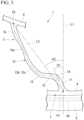
Fig. 3 is an enlarged view of the connecting member shown inFig. 1 . -
Fig. 4 is an enlarged side view showing a state in which the non-pneumatic tire shown inFigs. 1 to 3 is grounded to a flat ground plane. -
Fig. 5 is an enlarged side view showing a state in which the outer cylinder is deformed toward an inside in the tire radial direction such that an inner peripheral surface of the outer cylinder bulges toward the inside in the tire radial direction, in the non-pneumatic tires shown inFigs. 1 to 3 . - Hereinafter, configurations of the non-pneumatic tire according to the present embodiment will be described with reference to
Figs. 1 to 5 . - As shown in
Fig. 1 , thenon-pneumatic tire 1 includes awheel portion 2 attached to an axle, atire portion 7 disposed on an outer periphery of thewheel portion 2, and atread member 5 disposed on an outer periphery of thetire portion 7. - The
non-pneumatic tire 1 of the present embodiment is used by being mounted on, for example, a bicycle, a two-wheeled vehicle, an automobile, a handle type electric wheelchair, or the like. - Here, the
wheel portion 2 is formed in a disk shape, thetire portion 7 is formed in an annular shape, and each central axis is positioned on a common axis. The common axis is referred to as a central axis O, and a direction along the central axis O is called a tire width direction. In addition, when viewed from the tire width direction, a direction orbiting around the central axis O is referred to as a tire circumferential direction, and a direction intersecting the central axis O is referred to as a tire radial direction. - The center portion of each of the
wheel portion 2, thetire portion 7, and thetread member 5 in the tire width direction coincide with each other. In a cross-sectional view along both directions in the tire width direction and the tire radial direction, thewheel portion 2, thetire portion 7, and thetread member 5 exhibit, as a whole, a line symmetrical shape with a straight line passing through the center portion (tire equator part) in the tire width direction as a reference. - The
wheel portion 2 includes acylindrical boss 2d extending in the tire width direction with the central axis O as a center, amounting cylinder portion 2a fixed to an outer peripheral surface of theboss 2d, anexterior cylinder portion 2c surrounding themounting cylinder portion 2a from an outside in the tire radial direction, and a plurality ofribs 2b connecting themounting cylinder portion 2a and theexterior cylinder portion 2c to each other. - Each of the
mounting cylinder portion 2a and theexterior cylinder portion 2c are disposed coaxially with theboss 2d. The plurality ofribs 2b are disposed at equal intervals in the tire circumferential direction, for example. Each of the plurality ofribs 2b extends radially with theboss 2d as a center. - In the present embodiment, the
mounting cylinder portion 2a, the plurality ofribs 2b, and theexterior cylinder portion 2c are integrally formed of a thermoplastic resin. As a result, thewheel portion 2 can be formed by insert molding using theboss 2d as an insert product, and is suitable for mass production. - Each of the
boss 2d, themounting cylinder portion 2a, the plurality ofribs 2b, and theexterior cylinder portion 2c may be separately formed. In addition, themounting cylinder portion 2a, the plurality ofribs 2b, and theexterior cylinder portion 2c may be formed of a material other than the thermoplastic resin. - The
tire portion 7 includes aninner cylinder 6 that is externally fitted to theexterior cylinder portion 2c of thewheel portion 2, anouter cylinder 4 that surrounds theinner cylinder 6 from the outside in the tire radial direction and has atread member 5 mounted on an outer peripheral surface thereof, and a plurality of connectingmembers 3 that connect the outer peripheral surface of theinner cylinder 6 and the inner peripheral surface of theouter cylinder 4 and are arranged at intervals in the tire circumferential direction. The elastic modulus of a material forming thetire portion 7 is, for example, 300 MPa or more and 1500 MPa or less. - The
inner cylinder 6 is attached to the axle via thewheel portion 2. The central axes of theinner cylinder 6 and theouter cylinder 4 are disposed coaxially with the central axis O. The center portion in the tire width direction of each of theinner cylinder 6, the connectingmember 3, and theouter cylinder 4 is disposed in coincidence with each other. - In the present embodiment, the
inner cylinder 6, the connectingmember 3, and theouter cylinder 4 are integrally formed of the thermoplastic resin. As a result, thetire portion 7 can be formed by injection molding and is suitable for mass production. The thermoplastic resin may be, for example, only one kind of resin or a mixture containing two or more kinds of resins, or a mixture containing one or more kinds of resins and one or more kinds of elastomers, and may further include, for example, additives such as anti-aging agents, plasticizers, fillers, or pigments. - The
inner cylinder 6, the connectingmembers 3, and theouter cylinder 4 may be separately formed. Theinner cylinder 6, the connectingmembers 3, and theouter cylinder 4 may be formed of a material other than the thermoplastic resin. - The
tire portion 7 and thewheel portion 2 may be integrally formed or may be separately formed. Thewheel portion 2 has a function of connecting the axle and thetire portion 7, and thetire portion 7 has a function of absorbing vibration transmitted from the ground to the axle. As described above, since thewheel portion 2 and thetire portion 7 have different functions, they may be formed of different materials. For example, thetire portion 7 is formed of a material having a relatively small elastic modulus to secure vibration absorption performance, and thewheel portion 2 may be formed of a material having a larger elastic modulus than thetire portion 7 to secure robustness. In addition, for example, thewheel portion 2 may be formed of a material having a relatively small specific gravity to reduce the weight of the wholenon-pneumatic tire 1. - The
tread member 5 is formed in a tubular shape extending in the tire width direction with the central axis O as a center. Thetread member 5 is externally fitted to theouter cylinder 4 formed to be elastically deformable. As shown inFig. 2 , thetread member 5 covers not only the outer peripheral surface of theouter cylinder 4 but also an outer end portion in the tire radial direction of theouter cylinder 4 of side surfaces of theoouter cylinder 4 facing the tire width direction. The elastic modulus of the material forming thetread member 5 is smaller than the elastic modulus of the material forming thetire portion 7. As shown inFig. 2 , the outer peripheral surface of thetread member 5 exhibits a curved shape which protrudes toward the outside in the tire radial direction in the cross-sectional view taken along a line II-II inFig. 1 , that is, in the longitudinal sectional view along both directions of the tire width direction and the tire radial direction. - The
tread member 5 is formed of, for example, natural rubber and/or vulcanized rubber obtained by vulcanizing a rubber composition, a thermoplastic material, or the like. From the viewpoint of wear resistance, it is preferable to form thetread member 5 with the vulcanized rubber. Examples of the thermoplastic material include a thermoplastic elastomer and a thermoplastic resin. - Examples of the thermoplastic elastomer include an amide thermoplastic elastomer (TPA), an ester thermoplastic elastomer (TPC), an olefin thermoplastic elastomer (TPO), a styrene thermoplastic elastomer (TPS), a urethane thermoplastic elastomer (TPU), a thermoplastic rubber cross-linked body (TPV), or other thermoplastic elastomer (TPZ) as defined in JIS K 6418.
- Examples of the thermoplastic resin include a urethane resin, an olefin resin, a vinyl chloride resin, a polyamide resin, and the like.
- As shown in
Figs. 1 and3 , the connectingmember 3 is formed in a rectangular plate shape that is curved as a whole, and the front and back surfaces face the tire circumferential direction or the tire radial direction, and the side surfaces face the tire width direction. The connectingmember 3 is formed of a material that is capable of elastic deformation, and connects the outer peripheral surface of theinner cylinder 6 and the inner peripheral surface of theouter cylinder 4 so as to be relatively elastically displaceable. A plurality of connectingmembers 3 are disposed at equal intervals in the tire circumferential direction. - The connecting
member 3 includes avertical base portion 11, ahorizontal base portion 12, and aninclined portion 13. - The
vertical base portion 11 extends toward the inside in the tire radial direction from the inner peripheral surface of theouter cylinder 4. The front and back surfaces of thevertical base portion 11 face the tire circumferential direction. The whole front and back surfaces of thevertical base portion 11 except for the connection part with theouter cylinder 4 extend linearly in the side view from the tire width direction. In the side view, the front and back surfaces of thevertical base portions 11 at the connection part with theouter cylinder 4 gradually extend in a direction apart from each other toward the outside in the tire radial direction, and exhibit a curved shape recessed in the tire circumferential direction. - When viewed from the tire width direction, the central line CL of the
vertical base portion 11 is slightly inclined toward one side in the tire circumferential direction with respect to a straight line L1 passing through the central axis O and an outer end edge P1 in the tire radial direction of a central line CL passing through the center portion in the thickness direction of thevertical base portion 11. An inclination angle θ1 is, for example, 25° or less. - The central line CL of the
vertical base portion 11 may coincide with the straight line L1. - The thickness of the
vertical base portion 11 in the tire circumferential direction is the same over an entire length in the tire radial direction except for the connection part with theouter cylinder 4. The thickness of thevertical base portion 11 is thickest in the connectingmember 3. - Here, the thickness of the
vertical base portion 11 means the thickness of a part of thevertical base portions 11 which is positioned inside in the tire radial direction from a connection part with theouter cylinder 4 and has the front and back surfaces extending linearly in a side view viewed from the tire width direction. For example, when the thickness of the part differs depending on a position in the tire radial direction, it means the average value of the thickness. - The
horizontal base portion 12 extends from the inner end portion in the tire radial direction of thevertical base portion 11 toward one side in the tire circumferential direction along the tire circumferential direction. The front and back surfaces of thehorizontal base portion 12 face in the tire radial direction. Thehorizontal base portion 12 extends linearly in a side view seen from the tire width direction. In thehorizontal base portion 12, when viewed from the tire width direction, at least one of the central line CL passing through the center portion in the thickness direction, a surface facing inside in the tire radial direction, and a surface facing outside in the tire radial direction extend along the tire circumferential direction. In the shown example, in the front and back surfaces of thehorizontal base portion 12, the surface facing inside in the tire radial direction extends along the tire circumferential direction, and the surface facing outside in the tire radial direction gradually extends toward the inside in the tire radial direction toward one side in the tire circumferential direction. The thickness of thehorizontal base portion 12 in the tire radial direction gradually decreases from the other side in the tire circumferential direction toward one side. The length of thehorizontal base portion 12 is the same as the length of thevertical base portion 11. - The connection part (hereinafter, referred to as the first connection part) 14 between the
horizontal base portion 12 and thevertical base portion 11 is curved so as to protrude toward the other side in the tire circumferential direction. - The
inclined portion 13 gradually extends toward one side in the tire circumferential direction from an end portion on one side in the tire circumferential direction of thehorizontal base portion 12 toward the inside in the tire radial direction, and is connected to the outer peripheral surface of theinner cylinder 6. - The connection part (hereinafter, referred to as the second connection part) 15 between the
inclined portion 13 and thehorizontal base portion 12 is curved so as to protrude toward the one side in the tire circumferential direction. The radius of curvature of thesecond connection part 15 is larger than the radius of curvature of thefirst connection part 14 when viewed from the tire width direction. - When viewed from the tire width direction, an inclination angle θ2 toward one side in the tire circumferential direction with respect to the straight line L1 of a straight line L2 connecting an inner end edge P2 in the tire radial direction of the central line CL passing through a center portion in the thickness direction of the
inclined portion 13 and the outer end edge P1 in the tire radial direction of the central line CL passing through a center portion in the thickness direction of thevertical base portion 11 is larger than the inclination angle θ1 and is 32° or more and 45° or less. - When viewed from the tire width direction, the whole of the central line CL of the
vertical base portion 11 except for the outer end edge P1 in the tire radial direction is positioned on the other side in the tire circumferential direction from the straight line L2, and the whole of the central line CL of theinclined portion 13 except for the inner end edge P2 in the tire radial direction is positioned on one side in the tire circumferential direction from the straight line L2. - When viewed from the tire width direction, the length of the
inclined portion 13 is longer than the lengths of thevertical base portion 11 and thehorizontal base portion 12. When viewed from the tire width direction, the length of theinclined portion 13 is, for example, about three times the length of each of thevertical base portion 11 and thehorizontal base portion 12. - The thickness of the
inclined portion 13 is thinner than the thickness of each of thevertical base portion 11 and thehorizontal base portion 12. As shown inFig. 4 , when thenon-pneumatic tire 1 is grounded to the ground plane L, in theinclined portion 13 of the connectingmember 3 where thevertical base portion 11 is positioned between the ground plane L and theinner cylinder 6, the thickness of a part (hereinafter referred to as minimum stress part) 13a in which the minimum stress is generated, is thinner than the thickness of the other parts. Theminimum stress part 13a is curved so as to protrude toward the other side in the tire circumferential direction. Theminimum stress part 13a is positioned in a central region of theinclined portion 13 in the tire radial direction. In the shown example, theminimum stress part 13a is positioned inside in the tire radial direction from the center portion in the tire radial direction between theinner cylinder 6 and theouter cylinder 4. When thenon-pneumatic tire 1 is grounded to the ground plane L, the stress generated in theminimum stress part 13a as described above becomes the minimum in the connectingmember 3. - In the
inclined portion 13, a surface (hereinafter referred to as an abutment surface) 13b facing one side in the tire circumferential direction in theouter part 13c positioned outside the central region in the tire radial direction is gradually extended linearly toward one side in the tire circumferential direction from the outside toward the inside in the tire radial direction when viewed from the tire width direction. At least theouter part 13c in the tire radial direction of theinclined portions 13 is positioned outside in the tire radial direction from the center portion in the tire radial direction between theinner cylinder 6 and theouter cylinder 4. - When viewed from the tire width direction, a center portion of the
abutment surface 13b of theinclined portion 13 in the other connectingmember 3 positioned on the other side in the tire circumferential direction among the connectingmembers 3 adjacent in the tire circumferential direction, and a top portion of thefirst connection part 14 in the one connectingmember 3 positioned on one side in the tire circumferential direction face each other in a direction orthogonal to theabutment surface 13b. A gap between the connectingmembers 3 adjacent in the tire circumferential direction is minimized between the center portion of theabutment surface 13b of theinclined portion 13 of the other connectingmember 3 and the top portion of thefirst connection part 14 of the one connectingmember 3. - When viewed from the tire width direction, the gap between the
vertical base portions 11 adjacent in the tire circumferential direction is wider than the gap between theinclined portions 13 adjacent in the tire circumferential direction. - As shown in
Fig. 2 , in the cross-sectional view along both directions of the tire width direction and the tire radial direction, in the outer peripheral surface of theouter cylinder 4, thecenter portion 4a in the tire width direction extends straight in the tire width direction, and bothend portions 4b in the tire width direction extend gradually toward the inside in the tire radial direction toward the outside in the tire width direction. The thickest part of theouter cylinder 4 is thecenter portion 4a in the tire width direction. - The thickness of the
center portion 4a of theouter cylinder 4 in the tire width direction is thicker than the thickness of thevertical base portion 11 which has the thickest thickness in the connectingmember 3. The thickness of thecenter portion 4a of theouter cylinder 4 in the tire width direction is 1.1 to 3.0 times the thickness of thevertical base portion 11. - In the present embodiment, as shown in
Fig. 5 , the connectingmember 3 positioned between the protrusion W and theinner cylinder 6 and the other connectingmember 3 adjacent to the connectingmember 3 in the tire circumferential direction abut each other when theouter cylinder 4 is pushed by the protrusion W and deformed toward the inside in the tire radial direction (back ring deformation), that is, when the outer peripheral surface of theouter cylinder 4 is recessed toward the inside in the tire radial direction and the inner peripheral surface of theouter cylinder 4 bulges toward the inside in the tire radial direction (hereinafter referred to as "when riding over a step"). - In the shown example, when riding over a step, the
first connection part 14 of the connectingmember 3 positioned on one side in the tire circumferential direction among the connectingmember 3 positioned between the protrusion W and theinner cylinder 6 and the other connectingmembers 3 adjacent to the connectingmember 3 in the tire circumferential direction, and theabutment surface 13b of theouter part 13c in the tire radial direction of theinclined portion 13 of the connectingmember 3 positioned on the other side in the tire circumferential direction abut each other. - Among the
outer parts 13c of the connectingmember 3, at least a part that abuts thefirst connection part 14 of the other connectingmember 3 when riding over a step is positioned outside in the tire radial direction from the center portion in the tire radial direction between theinner cylinder 6 and theouter cylinder 4. - In the shown example, when riding over a step, the inner end portion in the tire radial direction of the
outer part 13c of the connectingmember 3 positioned on the other side in the tire circumferential direction and the top portion of thefirst connection part 14 of the connectingmember 3 positioned on the one side in the tire circumferential direction abut each other. - When riding over a step, a part except for the inner end portion in the tire radial direction of the
outer part 13c of the connectingmember 3 positioned on the other side in the tire circumferential direction and a part except for the top portion of thefirst connection part 14 of the connectingmember 3 positioned on the one side in the tire circumferential direction may abut each other. - In the present embodiment, the whole of the
outer part 13c of the connectingmember 3 is positioned outside in the tire radial direction from the center portion in the tire radial direction between theinner cylinder 6 and theouter cylinder 4. - In the
outer part 13c of the connectingmember 3, for example, only the outer end portion in the tire radial direction may be positioned outside in the tire radial direction from the center portion in the tire radial direction between theinner cylinder 6 and theouter cylinder 4, or the whole of theouter part 13c of the connectingmember 3 may be positioned inside in the tire radial direction from the center portion in the tire radial direction between theinner cylinder 6 and theouter cylinder 4. - As shown in
Fig. 4 , when thenon-pneumatic tire 1 is mounted on a vehicle and travels on the flat ground plane L, the gap is secured between the connectingmember 3 positioned between the ground plane L and theinner cylinder 6 and the other connectingmember 3 adjacent to the connectingmember 3 in the tire circumferential direction. - As described above, with the
non-pneumatic tire 1 according to the present embodiment, since the thickness of thecenter portion 4a in the tire width direction, which has the thickest thickness of theouter cylinder 4, is larger than the thickness of thevertical base portion 11, which has the thickest thickness of the connectingmember 3, the rigidity of theouter cylinder 4 can be secured, and when thenon-pneumatic tire 1 rides over a step such as a curb, the large deformation of theouter cylinder 4 toward the inside in the tire radial direction can be suppressed. - Since at least a part of the connecting
member 3 positioned between the protrusion W and theinner cylinder 6 and the other connectingmembers 3 adjacent to the connectingmember 3 in the tire circumferential direction abut each other when riding over a step as shown inFig. 5 , further deformation can be restrained, and large deformation of theouter cylinder 4 toward the inside in the tire radial direction can be reliably suppressed. - On the other hand, when the
non-pneumatic tire 1 is mounted on a vehicle and travels on the flat ground plane L, the gap between the connectingmember 3 positioned between the ground plane L and theinner cylinder 6 and the other connectingmembers 3 adjacent to the connectingmember 3 in the tire circumferential direction is secured, so that at least a part of the connectingmember 3 positioned between the protrusion W and theinner cylinder 6 and the other connectingmembers 3 adjacent to the connectingmember 3 in the tire circumferential direction can be abutted each other only when riding over a step, thereby preventing deterioration of riding comfort when traveling on the flat ground plane L. - In the present embodiment, when riding over a step, the
first connection part 14 of the connectingmember 3 positioned on one side in the tire circumferential direction among the connectingmember 3 positioned between the protrusion W and theinner cylinder 6 and the other connectingmembers 3 adjacent to the connectingmember 3 in the tire circumferential direction, and theouter part 13c in the tire radial direction of theinclined portion 13 of the connectingmember 3 positioned on the other side in the tire circumferential direction abut each other. - Accordingly, when the
outer cylinder 4 is deformed toward the inside in the tire radial direction as described above, a part that abuts each other between the connectingmembers 3 adjacent in the tire circumferential direction is defined at a specific portion, so that the large deformation of theouter cylinder 4 toward the inside in the tire radial direction can be reliably suppressed. - Since the
horizontal base portion 12 extends along the tire circumferential direction, when theouter cylinder 4 is deformed toward the inside in the tire radial direction as described above, theouter part 13c in the tire radial direction of theinclined portion 13 can easily be deflected and deformed toward one side in the tire circumferential direction, and theouter part 13c can be reliably abutted on the other connectingmember 3 adjacent to the connectingmember 3 on one side in the tire circumferential direction when riding over a step. - In the present embodiment, in the
outer part 13c in the tire radial direction of theinclined portion 13, at least a part that abuts thefirst connection part 14 of the other connectingmember 3 when riding over a step is positioned outside in the tire radial direction from the center portion in the tire radial direction between theinner cylinder 6 and theouter cylinder 4. In other words, when riding over a step, a part that abuts each other in the connectingmember 3 positioned between the protrusion W and theinner cylinder 6 and each of the other connectingmembers 3 adjacent to the connectingmember 3 in the tire circumferential direction are positioned closer to the outside in the tire radial direction between theinner cylinder 6 and theouter cylinder 4, and the connectingmembers 3 adjacent in the tire circumferential direction can be abutted each other at an early stage when the inner peripheral surface of theouter cylinder 4 bulges toward the inside in the tire radial direction. As a result, it is possible to more reliably suppress a large deformation of theouter cylinder 4 toward the inside in the tire radial direction. - Since the
inclined portion 13 having the thickness thinner than the thicknesses of each of thevertical base portion 11 and thehorizontal base portion 12 reaches the outside in the tire radial direction than the center portion in the tire radial direction between theinner cylinder 6 and theouter cylinder 4 and the ratio of the length of theinclined portion 13 occupied to the connectingmember 3 is increased, a bending rigidity of theinclined portion 13 is reliably reduced, the connectingmember 3 can be easily elastically deformed, and the riding comfort when traveling on the flat ground plane L can be secured. - Moreover, since the
inclined portion 13 is arranged at a position where the outer end portion in the tire radial direction where the stress is most concentrated when thenon-pneumatic tire 1 is grounded is avoided in the connectingmember 3, the deterioration of durability can be prevented. - Since the inclination angle θ2 is 32° or more and 45° or less, it is possible to reliably suppress the deterioration of riding comfort while suppressing the increase in weight.
- When the inclination angle θ2 is less than 32°, the connecting
member 3 cannot be easily elastically deformed when thenon-pneumatic tire 1 is grounded, and when the inclination angle θ2 is more than 45°, the connectingmember 3 becomes too long to be excessively elastically deformed and the weight also increases. - The technical scope of the present invention is not limited to the above-described embodiment, and various modifications can be made without departing from the scope of the present invention.
- In the above embodiment, a configuration in which the
non-pneumatic tire 1 includes thewheel portion 2 and thetread member 5 is shown, but a configuration in which thenon-pneumatic tire 1 may be configured to include only thetire portion 7 without thewheel portion 2 and thetread member 5 may be employed. - In the embodiment described above, a configuration in which the thickness of the
minimum stress part 13a of theinclined portions 13 is thinner than the thickness of the other parts is shown, but the present invention is not limited to this, and the thickness of the wholeinclined portion 13 including theminimum stress part 13a may be suitably changed to be equal, for example. - In the above embodiment, the
minimum stress part 13a is curved so as to protrude toward the other side in the tire circumferential direction, but the present invention is not limited to this, and it may be curved so as to protrude toward one side in the tire circumferential direction, or it may be appropriately changed such that the minimum stress portion is not curved but is simply recessed in the tire circumferential direction. - In the above embodiment, a configuration in which the thickest part of the
outer cylinder 4 is thecenter portion 4a in the tire width direction is shown, but the present invention is not limited to this, and may be suitably changed, for example, to theend portion 4b in the tire width direction. - In the above embodiment, the thickness of the
vertical base portion 11 is made to be thickest in the connectingmember 3, but instead, for example, the thickness of thehorizontal base portion 12, thefirst connection part 14, or thesecond connection part 15 may be made to be thickest in the connectingmember 3. - In the above embodiment, a configuration in which the
abutment surface 13b of theouter part 13c in the tire radial direction of theinclined portion 13 is gradually extended linearly toward one side in the tire circumferential direction from the outside toward the inside in the tire radial direction, as viewed from the tire width direction, is shown, but the present invention is not limited to this, and for example, theabutment surface 13b may be formed in a curved shape which protrudes toward one side in the tire circumferential direction, when viewed from the tire width direction, or in a curved shape which is recessed toward the other side in the tire circumferential direction. - Among them, when the
abutment surface 13b is formed in the curved shape which is recessed toward the other side in the tire circumferential direction, when viewed from the tire width direction, a gap between theabutment surface 13b and thefirst connection part 14 of the connectingmember 3 positioned on the one side in the tire circumferential direction can be easily secured when thenon-pneumatic tire 1 is mounted on a vehicle and travels on the flat ground plane L. On the other hand, when riding over a step as shown inFig. 5 , the top portion of thefirst connection part 14 of the connectingmember 3 positioned on the one side in the tire circumferential direction is locked to theabutment surface 13b, and the large deformation of theouter cylinder 4 toward the inside in the tire radial direction can be reliably suppressed. - The aspect of the connecting
member 3 is not limited to the shown example, and other configurations may be adopted as long as a gap is provided between the connectingmember 3 positioned between the ground plane L and theinner cylinder 6 and the other connectingmembers 3 adjacent to the connectingmember 3 in the tire circumferential direction in a state where thenon-pneumatic tire 1 is grounded to the flat ground plane L, and at least a part of the connectingmember 3 positioned between the protrusion W and theinner cylinder 6 and other connectingmembers 3 adjacent to the connectingmember 3 in the tire circumferential direction abut each other when riding over a step. - For example, a configuration in which a disk-shaped connecting member between the
inner cylinder 6 and theouter cylinder 4 is fleshed out in a honeycomb shape, a configuration in which a plate-shaped connecting member is radially disposed with axle as a center, and a configuration in which radial connecting members are connected to each other by an intermediate member may be adopted. - In addition, it is possible to replace the components in the above-described embodiment with known components without departing from the scope of the present invention, and the above-described modification examples may be combined appropriately.
- According to the present invention, since the thickness of the thickest part of the outer cylinder is thicker than the thickness of the thickest part of the connecting member, the rigidity of the outer cylinder can be secured, and when the non-pneumatic tire rides over a step such as a curb, the large deformation of the outer cylinder toward the inside in the tire radial direction can be suppressed.
- When the outer cylinder is pushed by the protrusion and deformed toward the inside in the tire radial direction (back ring deformation), that is, when the outer peripheral surface of the outer cylinder is recessed toward the inside in the tire radial direction and the inner peripheral surface of the outer cylinder bulges toward the inside in the tire radial direction (hereinafter referred to as "when riding over a step"), since at least a part of the connecting member positioned between the protrusion and the inner cylinder and the other connecting members adjacent to the connecting member in the tire circumferential direction abut each other, further deformation can be suppressed, and large deformation of the outer cylinder toward the inside in the tire radial direction can be reliably suppressed.
- On the other hand, when the non-pneumatic tire is mounted on a vehicle and travels on the flat ground plane, the gap between the connecting member positioned between the ground plane L and the inner cylinder and the other connecting members adjacent to the connecting member in the tire circumferential direction is secured, so that at least a part of the connecting member positioned between the protrusion W and the inner cylinder and the other connecting members adjacent to the connecting member in the tire circumferential direction can be abutted each other only when riding over a step, thereby preventing deterioration of riding comfort when traveling on the flat ground plane.
- Here, the connecting member may include a vertical base portion that extends toward the inside in the tire radial direction from the inner peripheral surface of the outer cylinder, a horizontal base portion that extends along the tire circumferential direction from an inner end portion in the tire radial direction of the vertical base portion toward one side in the tire circumferential direction, and an inclined portion that gradually extends toward one side in the tire circumferential direction from an end portion on one side in the tire circumferential direction of the horizontal base portion toward the inside in the tire radial direction, and when the outer cylinder is pushed by a protrusion, and at least a part of the connecting member positioned between the protrusion and the inner cylinder and other connecting members adjacent to the connecting member in the tire circumferential direction abut each other, among the connecting members, a connection part between the vertical base portion and the horizontal base portion of the connecting member positioned on one side in the tire circumferential direction and an outer part of the inclined portion in the tire radial direction of the connecting member positioned on the other side in the tire circumferential direction may abut each other.
- In this case, when riding over a step, the connection part between the vertical base portion and the horizontal base portion in the connecting member positioned on one side in the tire circumferential direction among the connecting member positioned between the protrusion and the inner cylinder and the other connecting members adjacent to the connecting member in the tire circumferential direction, and the outer part in the tire radial direction of the inclined portion of the connecting member positioned on the other side in the tire circumferential direction abut each other.
- Accordingly, when the outer cylinder is deformed toward the inside in the tire radial direction as described above, a part that abuts each other between the connecting members adjacent in the tire circumferential direction is defined at a specific portion, so that the large deformation of the outer cylinder toward the inside in the tire radial direction can be reliably suppressed.
- Since the horizontal base portion extends along the tire circumferential direction, when the outer cylinder is deformed toward the inside in the tire radial direction as described above, the outer part in the tire radial direction of the inclined portion can easily be deflected and deformed toward one side in the tire circumferential direction, and the outer part can be reliably abutted on the other connecting member adjacent to the connecting member on one side in the tire circumferential direction when riding over a step.
- In addition, the thickness of the inclined portion may be thinner than the thicknesses of each of the vertical base portion and the horizontal base portion, and in the outer part of the inclined portion in the tire radial direction, at least a part that abuts the connection part of the other connecting member may be positioned outside in the tire radial direction from a center portion in the tire radial direction between the inner cylinder and the outer cylinder when the outer cylinder is deformed toward the inside in the tire radial direction such that the inner peripheral surface of the outer cylinder bulges toward the inside in the tire radial direction.
- In this case, in the outer part of the inclined portion in the tire radial direction, at least a part that abuts the connection part of the other connecting member when riding over a step is positioned outside in the tire radial direction from the center portion in the tire radial direction between the inner cylinder and the outer cylinder. In other words, when riding over a step, each part that abuts each other in the connecting member positioned between the protrusion and the inner cylinder and other connecting members adjacent to the connecting member in the tire circumferential direction are positioned closer to the outside in the tire radial direction between the inner cylinder and the outer cylinder, and the connecting members adjacent in the tire circumferential direction can be abutted each other at an early stage when the inner peripheral surface of the outer cylinder bulges toward the inside in the tire radial direction. As a result, it is possible to more reliably suppress a large deformation of the outer cylinder toward the inside in the tire radial direction.
- Since the inclined portion having the thickness thinner than the thicknesses of each of the vertical base portion and the horizontal base portion reaches the outside in the tire radial direction than the center portion in the tire radial direction between the inner cylinder and the outer cylinder and the ratio of the length of the inclined portion occupied to the connecting member is increased, a bending rigidity of the inclined portion is reliably reduced, the connecting member can be easily elastically deformed, and the riding comfort when traveling on the flat ground plane can be secured.
- Moreover, since the inclined portion is arranged at a position where the outer end portion in the tire radial direction where the stress is most concentrated when the non-pneumatic tire is grounded is avoided in the connecting member, the deterioration of durability can be prevented.
- By applying the non-pneumatic tire of the present invention to the field, it is possible to suppress a large deformation of an outer cylinder toward the inside in a tire radial direction without deteriorating the riding comfort.
-
- 1: Non-pneumatic tire
- 3: Connecting member
- 4: Outer cylinder
- 5: Tread member
- 6: Inner cylinder
- 11: Vertical base portion
- 12: Horizontal base portion
- 13: Inclined portion
- 13c: Outer part
- 14: First connection part (connection part)
- L: Ground plane
- W: Protrusion
Claims (2)
- A non-pneumatic tire (1) comprising:an inner cylinder (6) that is attachable to an axle;an outer cylinder (4) that surrounds the inner cylinder (6) from an outside in a tire radial direction and has a tread member (5) mounted on an outer peripheral surface thereof; anda plurality of connecting members (3) that connect an outer peripheral surface of the inner cylinder (6) and an inner peripheral surface of the outer cylinder (4) and are arranged at equal intervals in a tire circumferential direction, whereinthe outer cylinder (4) and the connecting members (3) are formed to be elastically deformable,a thickness of a thickest part of the outer cylinder (4) is thicker than a thickness of a thickest part of each of the plurality of connecting members (3),each of the plurality of connecting members (3) includes:a vertical base portion (11) that extends toward the inside in the tire radial direction from the inner peripheral surface of the outer cylinder (4),a horizontal base portion (12) that extends along the tire circumferential direction from an inner end portion in the tire radial direction of the vertical base portion (11) toward a first side in the tire circumferential direction, andan inclined portion (13) that gradually extends toward the first side in the tire circumferential direction from an end portion on the first side in the tire circumferential direction of the horizontal base portion (12) toward the inside in the tire radial direction, and is connected to the outer peripheral surface of the inner cylinder (6),each of the connecting members (3) is:formed in a rectangular plate shape that is curved as a whole, and the front and back surfaces face the tire circumferential direction or the tire radial direction, and the side surfaces face the tire width direction, andformed of a material that is capable of elastic deformation, and connects the outer peripheral surface of the inner cylinder (6) and the inner peripheral surface of the outer cylinder (4) so as to be relatively elastically displaceable,the front and back surfaces of the vertical base portion (11) face the tire circumferential direction,the whole front and back surfaces of the vertical base portion (11) except for a connection part with outer cylinder (4) extend linearly in the side view from the tire width direction,in the side view, the front and back surfaces of the vertical base portions (11) at the connection part with the outer cylinder (4) gradually extend in a direction apart from each other toward the outside in the tire radial direction, and exhibit a curved shape recessed in the tire circumferential direction,when viewed from the tire width direction, the central line (CL) of the vertical base portion (11) is inclined by inclination angle (θ1) toward the first side in the tire circumferential direction with respect to a straight line (L1) passing through the central axis (O) and an outer end edge (P1) in the tire radial direction of a central line (CL) passing through the center portion in the thickness direction of the vertical base portion (11),the thickness of the vertical base portion (11) in the tire circumferential direction is the same over an entire length in the tire radial direction except for the connection part with the outer cylinder (4),the thickness of the vertical base portion (11) is thickest in the connecting member (3), wherein the thickness of the vertical base portion (11) means the thickness of a part of the vertical base portion (11) which is positioned inside in the tire radial direction from a connection part with the outer cylinder (4) and has the front and back surfaces extending linearly in a side view viewed from the tire width direction,the thickness of the horizontal base portion (12) in the tire radial direction gradually decreases from a second side in the tire circumferential direction toward the first side in the tire circumferential direction,a first connection part (14) between the horizontal base portion (12) and the vertical base portion (11) is curved so as to protrude toward the second side in the tire circumferential direction,a second connection part (15) between the inclined portion (13) and the horizontal base portion (12) is curved so as to protrude toward the first side in the tire circumferential direction,when viewed from the tire width direction, an inclination angle (θ2) toward the first side in the tire circumferential direction with respect to the straight line (L1) of a straight line (L2) connecting an inner edge (P2) in the tire radial direction of the central line (CL) passing through a center portion in the thickness direction of the inclined portion (13) and the outer end edge (P1) in tire radial direction of the central line (CL) passing through a center portion in the thickness direction of the vertical base portion (11) is larger than the inclination angle (θ1) and is 32° or more and 45° or less,when viewed from the tire width direction, the whole of the central line (CL) of the vertical base portion (11) except for the outer end edge (P1) in the tire radial direction is positioned on the second side in the tire circumferential direction from the straight line (L2), and the whole of the central line (CL) of the inclined portion (13) except for the inner end edge (P2) in the tire radial direction is positioned on the first side in the tire circumferential direction from the straight line (L2),when viewed from the tire width direction, the length of the inclined portion (13) is longer than the length of the vertical base portion (11) and the horizontal base portion (12),the thickness of the inclined portion (13) is thinner than the thickness of each of the vertical base portion (11) and the horizontal base portion (12),in the inclined portion (13), an abutment surface (13b) facing the first side in the tire circumferential direction in the outer part (13c) positioned outside the central region in the tire radial direction is gradually extended linearly toward the first side in tire circumferential direction from the outside toward the inside in the tire radial direction when viewed from the tire width direction,at least the outer part (13c) in the tire radial direction of the inclined portions (13) is positioned outside in the tire radial direction from the center portion in the tire radial direction between the inner cylinder (6) and the outer cylinder (4),when viewed from the tire width direction, a center portion of the abutment surface (13b) of the inclined portion (13) in the other connecting member (3) positioned on the second side in the tire circumferential direction among the connecting members (3) adjacent in the tire circumferential direction, and a top portion of the first connection part (14) in the one connecting member (3) positioned on the first side in the tire circumferential direction face each other in a direction orthogonal to the abutment surface (13b),a gap between the connecting members (3) adjacent in the tire circumferential direction is minimized between the center portion of the abutment surface (13b) of the inclined portion (13) of the other connecting member (3) and the top portion of the first connection part (14) of the one connecting member (3),when viewed from the tire width direction, the gap between the vertical base portions (11) adjacent in the tire circumferential direction is wider than the gap between the inclined portions (13) adjacent in the tire circumferential direction,when the non-pneumatic tire (1) is mounted on a bicycle, a two-wheeled vehicle, an automobile, or a handle type electric wheelchair and travels on a flat ground plane, when the non-pneumatic tire (1) is grounded to the ground plane (L), in the inclined portion (13) of the connecting member (3) where the vertical base portion (11) is positioned between the ground plane (L) and the inner cylinder (6), the thickness of a minimum stress part (13a) in which the minimum stress is generated, is thinner than the thickness of the other parts,the minimum stress part (13a) is curved so as to protrude toward the second side in the tire circumferential direction,the minimum stress part (13a) is positioned in a central region of the inclined portion (13) in the tire radial direction,when the non-pneumatic tire is mounted on a bicycle, a two-wheeled vehicle, an automobile, or a handle type electric wheelchair and travels on a flat ground plane, a gap is secured between the connecting member (3) positioned between the ground plane and the inner cylinder (6) and the other connecting members (3) adjacent to the connecting member (3) in the tire circumferential direction,characterized in thatthe whole front and back surfaces of the vertical base portion (11) except for the connection part with the outer cylinder (4) extend linearly in the side view from the width direction,the front and back surfaces of the horizontal base portion (12) face in the tire radial direction,the horizontal base portion (12) extends linearly in a side view seen from the tire width direction,the length of the horizontal base portion (12) is the same as the length of the vertical base portion (11),the radius of curvature of the second connection part (15) is larger than the radius of curvature of the first connection part (14) when viewed from the tire width direction, andin the horizontal base portion (12), when viewed from a tire width direction, at least one: of a central line (CL) passing through the center portion in a thickness direction, a surface facing inside in the tire radial direction, and a surface facing outside in the tire radial direction, extend along the tire circumferential direction.
- The non-pneumatic tire (1) according to Claim 1, wherein
in the outer part of the inclined portion (13) in the tire radial direction, at least a part that abuts the connection part of the other connecting member (3) is positioned outside in the tire radial direction from a center portion in the tire radial direction between the inner cylinder (6) and the outer cylinder (4) when the outer cylinder (4) is deformed toward the inside in the tire radial direction such that the inner peripheral surface of the outer cylinder (4) bulges toward the inside in the tire radial direction.
Applications Claiming Priority (2)
| Application Number | Priority Date | Filing Date | Title |
|---|---|---|---|
| JP2018224767A JP7123771B2 (en) | 2018-11-30 | 2018-11-30 | non-pneumatic tire |
| PCT/JP2019/044489 WO2020110722A1 (en) | 2018-11-30 | 2019-11-13 | Pneumatic tire |
Publications (3)
| Publication Number | Publication Date |
|---|---|
| EP3888936A1 EP3888936A1 (en) | 2021-10-06 |
| EP3888936A4 EP3888936A4 (en) | 2022-08-10 |
| EP3888936B1 true EP3888936B1 (en) | 2025-06-04 |
Family
ID=70854290
Family Applications (1)
| Application Number | Title | Priority Date | Filing Date |
|---|---|---|---|
| EP19889040.2A Active EP3888936B1 (en) | 2018-11-30 | 2019-11-13 | Non-pneumatic tire |
Country Status (5)
| Country | Link |
|---|---|
| US (1) | US11766894B2 (en) |
| EP (1) | EP3888936B1 (en) |
| JP (1) | JP7123771B2 (en) |
| CN (1) | CN113165422B (en) |
| WO (1) | WO2020110722A1 (en) |
Families Citing this family (6)
| Publication number | Priority date | Publication date | Assignee | Title |
|---|---|---|---|---|
| JP7603444B2 (en) * | 2020-12-28 | 2024-12-20 | Toyo Tire株式会社 | Non-pneumatic tires |
| JP7546913B2 (en) * | 2021-02-12 | 2024-09-09 | エイチティーアール エスエー | Variable Compliance Metal Wheel Containing Torque Measuring Device |
| FR3130201B1 (en) * | 2021-12-14 | 2024-07-26 | Michelin & Cie | Airless pneumatic with optimized shear band |
| CN119278133B (en) * | 2022-06-17 | 2025-12-26 | 普利司通美国轮胎运营有限责任公司 | Mounting arrangement for self-supporting spoke structures of non-pneumatic tires |
| GB2620751A (en) * | 2022-07-19 | 2024-01-24 | Jijibaba Ltd | A wheel for a pushchair and a pushchair having a wheel |
| WO2025079144A1 (en) * | 2023-10-10 | 2025-04-17 | 日産自動車株式会社 | Airless tire |
Citations (1)
| Publication number | Priority date | Publication date | Assignee | Title |
|---|---|---|---|---|
| US20170136814A1 (en) * | 2014-06-24 | 2017-05-18 | Bridgestone Corporation | Non-pneumatic tire |
Family Cites Families (23)
| Publication number | Priority date | Publication date | Assignee | Title |
|---|---|---|---|---|
| CA2011473C (en) | 1989-05-22 | 1998-01-06 | Richard L. Palinkas | Trapezoidal non-pneumatic tire with supporting and cushioning members |
| US7418988B2 (en) * | 1999-12-10 | 2008-09-02 | Michelin Recherche Et Technique S.A. | Non-pneumatic tire |
| EP1378377A2 (en) * | 2002-07-01 | 2004-01-07 | Technology Investments Limited | A lightweight resilient wheel |
| WO2007137858A2 (en) | 2006-05-31 | 2007-12-06 | Terramark Markencreation Gmbh | Airless tire for vehicles |
| US8944125B2 (en) * | 2009-07-20 | 2015-02-03 | Polaris Industries Inc. | Tension-based non-pneumatic tire |
| JP6043582B2 (en) * | 2012-10-22 | 2016-12-14 | 株式会社ブリヂストン | Non pneumatic tire |
| JP5930941B2 (en) * | 2012-10-31 | 2016-06-08 | 株式会社ブリヂストン | Non pneumatic tire |
| JP6288928B2 (en) * | 2013-03-26 | 2018-03-07 | 株式会社ブリヂストン | Non pneumatic tire |
| JP6303235B2 (en) * | 2013-10-22 | 2018-04-04 | 株式会社ブリヂストン | Non pneumatic tire |
| WO2015194088A1 (en) * | 2014-06-16 | 2015-12-23 | 株式会社ブリヂストン | Tire |
| JP2016107751A (en) * | 2014-12-04 | 2016-06-20 | 株式会社ブリヂストン | Non-pneumatic tire |
| EP3240695B1 (en) * | 2014-12-31 | 2020-02-05 | Compagnie Générale des Etablissements Michelin | Cross spoke non-pneumatic tire |
| CN107206841B (en) * | 2015-01-15 | 2019-12-27 | 株式会社普利司通 | Non-pneumatic tire |
| EP3253591B1 (en) | 2015-02-04 | 2021-06-30 | Camso Inc. | Non-pneumatic tire and other annular devices |
| CN108136835B (en) * | 2015-10-09 | 2019-11-22 | 株式会社普利司通 | Non-pneumatic tires |
| JP6610161B2 (en) * | 2015-10-22 | 2019-11-27 | 住友ゴム工業株式会社 | Airless tire |
| JP6534920B2 (en) * | 2015-12-02 | 2019-06-26 | 株式会社ブリヂストン | Non-pneumatic tire, mold and method of manufacturing non-pneumatic tire |
| CA3006801A1 (en) | 2015-12-16 | 2017-06-22 | Jeremie Zuchoski | Wheel comprising a non-pneumatic tire |
| JP6632916B2 (en) * | 2016-03-14 | 2020-01-22 | 株式会社ブリヂストン | Non-pneumatic tire |
| KR101841655B1 (en) * | 2016-09-01 | 2018-03-23 | 금호타이어 주식회사 | Non pneumatic tire |
| BR112019006711B1 (en) * | 2016-10-03 | 2022-11-08 | Compagnie Generale Des Etablissements Michelin | REINFORCED RUBBER RADIUS FOR A TIRE |
| JP6762857B2 (en) * | 2016-11-21 | 2020-09-30 | 株式会社ブリヂストン | Non-pneumatic tires |
| WO2018211734A1 (en) * | 2017-05-18 | 2018-11-22 | 株式会社ブリヂストン | Tire |
-
2018
- 2018-11-30 JP JP2018224767A patent/JP7123771B2/en active Active
-
2019
- 2019-11-13 US US17/296,858 patent/US11766894B2/en active Active
- 2019-11-13 EP EP19889040.2A patent/EP3888936B1/en active Active
- 2019-11-13 CN CN201980077751.4A patent/CN113165422B/en active Active
- 2019-11-13 WO PCT/JP2019/044489 patent/WO2020110722A1/en not_active Ceased
Patent Citations (1)
| Publication number | Priority date | Publication date | Assignee | Title |
|---|---|---|---|---|
| US20170136814A1 (en) * | 2014-06-24 | 2017-05-18 | Bridgestone Corporation | Non-pneumatic tire |
Also Published As
| Publication number | Publication date |
|---|---|
| JP7123771B2 (en) | 2022-08-23 |
| WO2020110722A1 (en) | 2020-06-04 |
| EP3888936A1 (en) | 2021-10-06 |
| US11766894B2 (en) | 2023-09-26 |
| CN113165422A (en) | 2021-07-23 |
| JP2020083244A (en) | 2020-06-04 |
| CN113165422B (en) | 2024-07-16 |
| EP3888936A4 (en) | 2022-08-10 |
| US20220024252A1 (en) | 2022-01-27 |
Similar Documents
| Publication | Publication Date | Title |
|---|---|---|
| EP3888936B1 (en) | Non-pneumatic tire | |
| EP3623174B1 (en) | Non-pneumatic tire | |
| JP6746598B2 (en) | Non-pneumatic tire | |
| US11312178B2 (en) | Non-pneumatic tire | |
| EP3888937B1 (en) | Non-pneumatic tire | |
| CN107000474A (en) | Non-inflatable tyre | |
| WO2014103723A1 (en) | Non-pneumatic tyre | |
| WO2014103721A1 (en) | Non-pneumatic tyre | |
| JP6842361B2 (en) | Non-pneumatic tires | |
| WO2014103701A1 (en) | Non-pneumatic tyre | |
| JP5615624B2 (en) | Tire guards, wheels, and tire / wheel assemblies | |
| WO2020121937A1 (en) | Non-pneumatic tire | |
| JP2024057474A (en) | Tire and rim assembly | |
| JP2020097251A (en) | Rotational assembly |
Legal Events
| Date | Code | Title | Description |
|---|---|---|---|
| STAA | Information on the status of an ep patent application or granted ep patent |
Free format text: STATUS: THE INTERNATIONAL PUBLICATION HAS BEEN MADE |
|
| PUAI | Public reference made under article 153(3) epc to a published international application that has entered the european phase |
Free format text: ORIGINAL CODE: 0009012 |
|
| STAA | Information on the status of an ep patent application or granted ep patent |
Free format text: STATUS: REQUEST FOR EXAMINATION WAS MADE |
|
| 17P | Request for examination filed |
Effective date: 20210527 |
|
| AK | Designated contracting states |
Kind code of ref document: A1 Designated state(s): AL AT BE BG CH CY CZ DE DK EE ES FI FR GB GR HR HU IE IS IT LI LT LU LV MC MK MT NL NO PL PT RO RS SE SI SK SM TR |
|
| DAV | Request for validation of the european patent (deleted) | ||
| DAX | Request for extension of the european patent (deleted) | ||
| REG | Reference to a national code |
Ref legal event code: R079 Free format text: PREVIOUS MAIN CLASS: B60B0009040000 Ipc: B60C0007140000 Ref country code: DE Ref legal event code: R079 Ref document number: 602019070902 Country of ref document: DE Free format text: PREVIOUS MAIN CLASS: B60B0009040000 Ipc: B60C0007140000 |
|
| A4 | Supplementary search report drawn up and despatched |
Effective date: 20220708 |
|
| RIC1 | Information provided on ipc code assigned before grant |
Ipc: B60C 7/00 20060101ALI20220704BHEP Ipc: B60C 7/18 20060101ALI20220704BHEP Ipc: B60C 7/14 20060101AFI20220704BHEP |
|
| STAA | Information on the status of an ep patent application or granted ep patent |
Free format text: STATUS: EXAMINATION IS IN PROGRESS |
|
| 17Q | First examination report despatched |
Effective date: 20230808 |
|
| GRAP | Despatch of communication of intention to grant a patent |
Free format text: ORIGINAL CODE: EPIDOSNIGR1 |
|
| STAA | Information on the status of an ep patent application or granted ep patent |
Free format text: STATUS: GRANT OF PATENT IS INTENDED |
|
| INTG | Intention to grant announced |
Effective date: 20241212 |
|
| P01 | Opt-out of the competence of the unified patent court (upc) registered |
Free format text: CASE NUMBER: APP_455/2025 Effective date: 20250106 |
|
| GRAS | Grant fee paid |
Free format text: ORIGINAL CODE: EPIDOSNIGR3 |
|
| GRAA | (expected) grant |
Free format text: ORIGINAL CODE: 0009210 |
|
| STAA | Information on the status of an ep patent application or granted ep patent |
Free format text: STATUS: THE PATENT HAS BEEN GRANTED |
|
| AK | Designated contracting states |
Kind code of ref document: B1 Designated state(s): AL AT BE BG CH CY CZ DE DK EE ES FI FR GB GR HR HU IE IS IT LI LT LU LV MC MK MT NL NO PL PT RO RS SE SI SK SM TR |
|
| REG | Reference to a national code |
Ref country code: GB Ref legal event code: FG4D |
|
| REG | Reference to a national code |
Ref country code: CH Ref legal event code: EP |
|
| REG | Reference to a national code |
Ref country code: DE Ref legal event code: R096 Ref document number: 602019070902 Country of ref document: DE |
|
| REG | Reference to a national code |
Ref country code: IE Ref legal event code: FG4D |
|
| REG | Reference to a national code |
Ref country code: NL Ref legal event code: MP Effective date: 20250604 |
|
| PG25 | Lapsed in a contracting state [announced via postgrant information from national office to epo] |
Ref country code: ES Free format text: LAPSE BECAUSE OF FAILURE TO SUBMIT A TRANSLATION OF THE DESCRIPTION OR TO PAY THE FEE WITHIN THE PRESCRIBED TIME-LIMIT Effective date: 20250604 Ref country code: FI Free format text: LAPSE BECAUSE OF FAILURE TO SUBMIT A TRANSLATION OF THE DESCRIPTION OR TO PAY THE FEE WITHIN THE PRESCRIBED TIME-LIMIT Effective date: 20250604 |
|
| REG | Reference to a national code |
Ref country code: LT Ref legal event code: MG9D |
|
| PG25 | Lapsed in a contracting state [announced via postgrant information from national office to epo] |
Ref country code: NO Free format text: LAPSE BECAUSE OF FAILURE TO SUBMIT A TRANSLATION OF THE DESCRIPTION OR TO PAY THE FEE WITHIN THE PRESCRIBED TIME-LIMIT Effective date: 20250904 Ref country code: GR Free format text: LAPSE BECAUSE OF FAILURE TO SUBMIT A TRANSLATION OF THE DESCRIPTION OR TO PAY THE FEE WITHIN THE PRESCRIBED TIME-LIMIT Effective date: 20250905 |
|
| PG25 | Lapsed in a contracting state [announced via postgrant information from national office to epo] |
Ref country code: PL Free format text: LAPSE BECAUSE OF FAILURE TO SUBMIT A TRANSLATION OF THE DESCRIPTION OR TO PAY THE FEE WITHIN THE PRESCRIBED TIME-LIMIT Effective date: 20250604 |
|
| PG25 | Lapsed in a contracting state [announced via postgrant information from national office to epo] |
Ref country code: BG Free format text: LAPSE BECAUSE OF FAILURE TO SUBMIT A TRANSLATION OF THE DESCRIPTION OR TO PAY THE FEE WITHIN THE PRESCRIBED TIME-LIMIT Effective date: 20250604 |
|
| PG25 | Lapsed in a contracting state [announced via postgrant information from national office to epo] |
Ref country code: HR Free format text: LAPSE BECAUSE OF FAILURE TO SUBMIT A TRANSLATION OF THE DESCRIPTION OR TO PAY THE FEE WITHIN THE PRESCRIBED TIME-LIMIT Effective date: 20250604 |
|
| PG25 | Lapsed in a contracting state [announced via postgrant information from national office to epo] |
Ref country code: RS Free format text: LAPSE BECAUSE OF FAILURE TO SUBMIT A TRANSLATION OF THE DESCRIPTION OR TO PAY THE FEE WITHIN THE PRESCRIBED TIME-LIMIT Effective date: 20250904 |
|
| PG25 | Lapsed in a contracting state [announced via postgrant information from national office to epo] |
Ref country code: LV Free format text: LAPSE BECAUSE OF FAILURE TO SUBMIT A TRANSLATION OF THE DESCRIPTION OR TO PAY THE FEE WITHIN THE PRESCRIBED TIME-LIMIT Effective date: 20250604 |
|
| PG25 | Lapsed in a contracting state [announced via postgrant information from national office to epo] |
Ref country code: NL Free format text: LAPSE BECAUSE OF FAILURE TO SUBMIT A TRANSLATION OF THE DESCRIPTION OR TO PAY THE FEE WITHIN THE PRESCRIBED TIME-LIMIT Effective date: 20250604 |
|
| PG25 | Lapsed in a contracting state [announced via postgrant information from national office to epo] |
Ref country code: PT Free format text: LAPSE BECAUSE OF FAILURE TO SUBMIT A TRANSLATION OF THE DESCRIPTION OR TO PAY THE FEE WITHIN THE PRESCRIBED TIME-LIMIT Effective date: 20251006 |
|
| REG | Reference to a national code |
Ref country code: AT Ref legal event code: MK05 Ref document number: 1800010 Country of ref document: AT Kind code of ref document: T Effective date: 20250604 |
|
| PG25 | Lapsed in a contracting state [announced via postgrant information from national office to epo] |
Ref country code: IS Free format text: LAPSE BECAUSE OF FAILURE TO SUBMIT A TRANSLATION OF THE DESCRIPTION OR TO PAY THE FEE WITHIN THE PRESCRIBED TIME-LIMIT Effective date: 20251004 |
|
| PGFP | Annual fee paid to national office [announced via postgrant information from national office to epo] |
Ref country code: DE Payment date: 20251119 Year of fee payment: 7 |
|
| PG25 | Lapsed in a contracting state [announced via postgrant information from national office to epo] |
Ref country code: AT Free format text: LAPSE BECAUSE OF FAILURE TO SUBMIT A TRANSLATION OF THE DESCRIPTION OR TO PAY THE FEE WITHIN THE PRESCRIBED TIME-LIMIT Effective date: 20250604 Ref country code: SM Free format text: LAPSE BECAUSE OF FAILURE TO SUBMIT A TRANSLATION OF THE DESCRIPTION OR TO PAY THE FEE WITHIN THE PRESCRIBED TIME-LIMIT Effective date: 20250604 |
|
| PGFP | Annual fee paid to national office [announced via postgrant information from national office to epo] |
Ref country code: FR Payment date: 20251126 Year of fee payment: 7 |
|
| PG25 | Lapsed in a contracting state [announced via postgrant information from national office to epo] |
Ref country code: CZ Free format text: LAPSE BECAUSE OF FAILURE TO SUBMIT A TRANSLATION OF THE DESCRIPTION OR TO PAY THE FEE WITHIN THE PRESCRIBED TIME-LIMIT Effective date: 20250604 |
|
| PG25 | Lapsed in a contracting state [announced via postgrant information from national office to epo] |
Ref country code: EE Free format text: LAPSE BECAUSE OF FAILURE TO SUBMIT A TRANSLATION OF THE DESCRIPTION OR TO PAY THE FEE WITHIN THE PRESCRIBED TIME-LIMIT Effective date: 20250604 |
|
| PG25 | Lapsed in a contracting state [announced via postgrant information from national office to epo] |
Ref country code: RO Free format text: LAPSE BECAUSE OF FAILURE TO SUBMIT A TRANSLATION OF THE DESCRIPTION OR TO PAY THE FEE WITHIN THE PRESCRIBED TIME-LIMIT Effective date: 20250604 Ref country code: SK Free format text: LAPSE BECAUSE OF FAILURE TO SUBMIT A TRANSLATION OF THE DESCRIPTION OR TO PAY THE FEE WITHIN THE PRESCRIBED TIME-LIMIT Effective date: 20250604 |
|
| PG25 | Lapsed in a contracting state [announced via postgrant information from national office to epo] |
Ref country code: IT Free format text: LAPSE BECAUSE OF FAILURE TO SUBMIT A TRANSLATION OF THE DESCRIPTION OR TO PAY THE FEE WITHIN THE PRESCRIBED TIME-LIMIT Effective date: 20250604 |
|
| REG | Reference to a national code |
Ref country code: DE Ref legal event code: R097 Ref document number: 602019070902 Country of ref document: DE |
|
| PLBE | No opposition filed within time limit |
Free format text: ORIGINAL CODE: 0009261 |
|
| STAA | Information on the status of an ep patent application or granted ep patent |
Free format text: STATUS: NO OPPOSITION FILED WITHIN TIME LIMIT |
|
| PG25 | Lapsed in a contracting state [announced via postgrant information from national office to epo] |
Ref country code: DK Free format text: LAPSE BECAUSE OF FAILURE TO SUBMIT A TRANSLATION OF THE DESCRIPTION OR TO PAY THE FEE WITHIN THE PRESCRIBED TIME-LIMIT Effective date: 20250604 |
|
| REG | Reference to a national code |
Ref country code: CH Ref legal event code: L10 Free format text: ST27 STATUS EVENT CODE: U-0-0-L10-L00 (AS PROVIDED BY THE NATIONAL OFFICE) Effective date: 20260416 |