EP3887306B1 - Method for producing haloamines and haloamine solutions - Google Patents
Method for producing haloamines and haloamine solutions Download PDFInfo
- Publication number
- EP3887306B1 EP3887306B1 EP19827905.1A EP19827905A EP3887306B1 EP 3887306 B1 EP3887306 B1 EP 3887306B1 EP 19827905 A EP19827905 A EP 19827905A EP 3887306 B1 EP3887306 B1 EP 3887306B1
- Authority
- EP
- European Patent Office
- Prior art keywords
- solution
- halogen
- hypochlorite
- site
- haloamine
- Prior art date
- Legal status (The legal status is an assumption and is not a legal conclusion. Google has not performed a legal analysis and makes no representation as to the accuracy of the status listed.)
- Active
Links
Images


Classifications
-
- C—CHEMISTRY; METALLURGY
- C01—INORGANIC CHEMISTRY
- C01B—NON-METALLIC ELEMENTS; COMPOUNDS THEREOF; METALLOIDS OR COMPOUNDS THEREOF NOT COVERED BY SUBCLASS C01C
- C01B21/00—Nitrogen; Compounds thereof
- C01B21/082—Compounds containing nitrogen and non-metals and optionally metals
- C01B21/087—Compounds containing nitrogen and non-metals and optionally metals containing one or more hydrogen atoms
- C01B21/088—Compounds containing nitrogen and non-metals and optionally metals containing one or more hydrogen atoms containing also one or more halogen atoms
- C01B21/09—Halogeno-amines, e.g. chloramine
-
- A—HUMAN NECESSITIES
- A01—AGRICULTURE; FORESTRY; ANIMAL HUSBANDRY; HUNTING; TRAPPING; FISHING
- A01N—PRESERVATION OF BODIES OF HUMANS OR ANIMALS OR PLANTS OR PARTS THEREOF; BIOCIDES, e.g. AS DISINFECTANTS, AS PESTICIDES OR AS HERBICIDES; PEST REPELLANTS OR ATTRACTANTS; PLANT GROWTH REGULATORS
- A01N59/00—Biocides, pest repellants or attractants, or plant growth regulators containing elements or inorganic compounds
-
- C—CHEMISTRY; METALLURGY
- C01—INORGANIC CHEMISTRY
- C01B—NON-METALLIC ELEMENTS; COMPOUNDS THEREOF; METALLOIDS OR COMPOUNDS THEREOF NOT COVERED BY SUBCLASS C01C
- C01B11/00—Oxides or oxyacids of halogens; Salts thereof
- C01B11/04—Hypochlorous acid
- C01B11/06—Hypochlorites
-
- C—CHEMISTRY; METALLURGY
- C01—INORGANIC CHEMISTRY
- C01B—NON-METALLIC ELEMENTS; COMPOUNDS THEREOF; METALLOIDS OR COMPOUNDS THEREOF NOT COVERED BY SUBCLASS C01C
- C01B21/00—Nitrogen; Compounds thereof
- C01B21/082—Compounds containing nitrogen and non-metals and optionally metals
- C01B21/087—Compounds containing nitrogen and non-metals and optionally metals containing one or more hydrogen atoms
- C01B21/088—Compounds containing nitrogen and non-metals and optionally metals containing one or more hydrogen atoms containing also one or more halogen atoms
- C01B21/09—Halogeno-amines, e.g. chloramine
- C01B21/091—Chloramine, i.e. NH2Cl or dichloramine, i.e. NHCl2
-
- C—CHEMISTRY; METALLURGY
- C02—TREATMENT OF WATER, WASTE WATER, SEWAGE, OR SLUDGE
- C02F—TREATMENT OF WATER, WASTE WATER, SEWAGE, OR SLUDGE
- C02F1/00—Treatment of water, waste water, or sewage
- C02F1/46—Treatment of water, waste water, or sewage by electrochemical methods
- C02F1/461—Treatment of water, waste water, or sewage by electrochemical methods by electrolysis
- C02F1/467—Treatment of water, waste water, or sewage by electrochemical methods by electrolysis by electrochemical disinfection; by electrooxydation or by electroreduction
- C02F1/4672—Treatment of water, waste water, or sewage by electrochemical methods by electrolysis by electrochemical disinfection; by electrooxydation or by electroreduction by electrooxydation
- C02F1/4674—Treatment of water, waste water, or sewage by electrochemical methods by electrolysis by electrochemical disinfection; by electrooxydation or by electroreduction by electrooxydation with halogen or compound of halogens, e.g. chlorine, bromine
-
- C—CHEMISTRY; METALLURGY
- C02—TREATMENT OF WATER, WASTE WATER, SEWAGE, OR SLUDGE
- C02F—TREATMENT OF WATER, WASTE WATER, SEWAGE, OR SLUDGE
- C02F1/00—Treatment of water, waste water, or sewage
- C02F1/72—Treatment of water, waste water, or sewage by oxidation
- C02F1/76—Treatment of water, waste water, or sewage by oxidation with halogens or compounds of halogens
-
- C—CHEMISTRY; METALLURGY
- C25—ELECTROLYTIC OR ELECTROPHORETIC PROCESSES; APPARATUS THEREFOR
- C25B—ELECTROLYTIC OR ELECTROPHORETIC PROCESSES FOR THE PRODUCTION OF COMPOUNDS OR NON-METALS; APPARATUS THEREFOR
- C25B1/00—Electrolytic production of inorganic compounds or non-metals
- C25B1/01—Products
- C25B1/24—Halogens or compounds thereof
- C25B1/26—Chlorine; Compounds thereof
Definitions
- the present invention relates to methods for producing haloamines comprising monochloramine (MCA), that are useful as biocidal agents.
- MCA monochloramine
- MCA monochloramine
- Haloamines can be formed by reacting a dilute ammonia solution or at least one ammonium salt or other nitrogen source with at least one halogen-containing oxidant.
- the required parent reagents are commonly available as concentrated solutions.
- the parent solutions are commonly stored near a haloamine generator in which they are combined in defined proportions to form the biocide treatment.
- storage results in a degradation of actives in the parent solutions.
- the degradation of halogen-containing oxidants results in the accumulation of harmful halogen polyoxyanions such as chlorite, chlorate, perchlorate, and/or analogous bromine ions including bromate.
- Halogen oxyanions can be generally presented by the formula: XO n - where X is a halogen atom such as fluorine, chlorine, bromine, iodine, and astatine bonded with up to n oxygen atoms.
- X is a halogen atom such as fluorine, chlorine, bromine, iodine, and astatine bonded with up to n oxygen atoms.
- the halogen oxyanions of interest to the present invention can be listed in the order of increasing number of oxygen atoms as follows: XO - ⁇ XO 2 - ⁇ XO 3 - ⁇ XO 4 -
- halogen oxyanions containing more than one oxygen atom, or halogen polyoxyanions have been found to be particularly harmful to human health.
- the perchlorate and chlorate ions have been found to inhibit thyroid iodine uptake and thus are a potential health concern for children, especially those with mild or moderate iodine deficiency.
- Bromate has been found mutagenic in vitro and in vivo and classified as a probable human carcinogen under the 1986 EPA Guidelines for Carcinogen Risk Assessment.
- halogen-containing oxidant solutions will contain significant amounts of halogen polyoxyanions formed during storage that will end up in produced haloamine solutions, other methods of producing halogen-containing precursors of haloamines are needed.
- the current invention provides a solution to these needs.
- WO2018/125531 discloses a process for substantially reducing the corrosiveness of a composition containing in situ generated sodium hypochlorite in which the sodium hypochlorite is converted to a haloamine.
- EP-B 2501647 discloses a method for preparing a solution comprising monochloramine which includes the steps of: a) in an electrolyser including an anode area and a cathode area separated by a membrane limiting the migration of hypochlorite ions, forming hypochlorite ions in the anode area by means of the oxidation of chloride ions in an aqueous solution, and forming ammonium ions in the cathode area by means of the reduction of nitrate and/or nitrite ions in an aqueous solution; and b) reacting the ammonium ions with at least one portion of the hypochlorite ions, with a molar ratio of hypochlorite ions to ammonium ions no lower than 1, resulting in the formation of monochloramine.
- US2014/322362 discloses production of a biocidal solution in situ, including a reaction between an ammonium salt and an electrolytically generated bromine oxidative species.
- the present invention provides methods of producing a haloamine solution comprising less than 5% by weight of halogen polyoxyanions comprising (a) the on-site generation of a halogen-containing oxidant solution and (b) reacting on-site the halogen-containing oxidant with a nitrogen source, to thereby produce the haloamine solution, wherein the halogen is chlorine, the on-site generation comprises reacting chlorine gas with an alkaline solution and wherein the haloamine comprises monochloramine (MCA).Both reactions may be combined into a single step.
- the present invention is directed to online production of biocidal haloamines solutions with reduced amounts of halogen polyoxyanions, preferably that are substantially free of halogen polyoxyanions.
- the formed solutions contain less than 5% by weight, or less than 1% by weight, or less than 0.1% by weight, or less than 0.01 percent, or less than 0.0001 percent by weight of halogen polyoxyanions, such as chlorates, or no measurable amount of any halogen polyoxyanions or chlorates.
- the present methods provide a haloamine product for which the risks to human health related to the presence of halogen polyoxyanions such as chlorate are effectively reduced or eliminated.
- the haloamine comprises monochoramine.
- the invention reduces the amount of chlorate anion, depending on the halogen-containing precursors used and depending if sodium salts or another starting compound is used.
- the methods can reduce all halogen polyoxyanions, and preferably produce haloamines solutions free of halogen polyoxyanions of any type.
- biocidal haloamines chloramine solutions
- bleach a solution of sodium hypochlorite, NaOCl
- ammonia-containing solution a solution of sodium hypochlorite, NaOCl
- monochloramine the most efficacious of biocidal chloramines, proceeds according to the following overall reaction: NaOCl + NH 3 ⁇ NH 2 Cl + NaOH
- the ammonia-containing solution may vary between an ammonium carbamate solution, an ammonium bromide solution, and an ammonium sulfate solution and others.
- any desired source of nitrogen can be used, including ammonium salts.
- Commercial bleach is intended to deliver a certain concentration of hypochlorite ion.
- hypochlorite (OCl - ) decomposes with formation of chlorine polyoxyanions such as chlorite (ClO 2 - ) and further into chlorate (ClO 3 - ) via the following disproportionation reaction: 2OCl - ⁇ ClO 2 - + Cl - ClO 2 - + OCl - ⁇ ClO 3 - + Cl -
- Perchlorate ion forms as a result of interaction between hypochlorite and chlorate: OCl - + ClO 3 - ⁇ ClO 4 - + Cl -
- hypochlorite in commercial bleach (12-13 weight %) decomposes within 150 - 160 days.
- Chlorate is the most abundant decomposition product present in commercial bleach at as high as 20%.
- any halogen oxyanions are balanced by available metal cations, with cations of transition metals such as iron or manganese, if present, accelerating increasing hypohalite decomposition by more than 10 times.
- the present invention provides methods of producing haloamines comprising MCA which result in a significantly reduced content of halogen polyoxyanions.
- the present method uses hypochlorite produced in-situ, which contains less of the undesired by-product chlorate anions.
- the produced hypochlorite can be used directly and immediately such that undesired chlorate anions are not formed.
- the hypochlorite used in the invention can be produced in-situ by reacting chlorine gas with caustic soda.
- electrolysis or passing an electric current through a solution is not used in any stage of the method, for example, not used to produce chlorine or the hypochlorite.
- the ammonia-containing component then reacts with, and converts, the sodium hypochlorite to monochloramine having biocidal properties.
- the reaction of the ammonia-containing component and the in-situ generated sodium hypochlorite can be controlled to achieve a quantitative conversion of sodium hypochlorite to monochloramine (i.e., a reaction yield of at least about 95 percent, preferably at least about 97 percent). Control of the reaction can avoid production of unwanted byproducts, such as dichloramine and nitrogen trichloride.
- an excess of ammonia, or at least no excess hypochlorite can be used; and/or (b) an alkaline pH, preferably at least about 10 to about 11 can be used.
- the conversion of sodium hypochlorite to monochloramine can be about 95 percent, or 97% or higher.
- the produced monochloramine solution can contain, for example, 0.0001 to 10% or 0.05 to 5% or 0.05 to 2% by weight of MCA.
- the hypochlorite solution is produced by reacting chlorine gas with an alkaline solution.
- Any desired alkaline solution can be used.
- the chlorine gas can be provided in a compressed form.
- the reaction of chlorine gas can be conducted using a continuous or intermittent process with the resulting hypochlorite solution accumulated, for example, in a storage tank downstream from the gas source and/or by mixing chlorine gas with alkaline water in such an intermediate tank.
- Preparing concentrated solutions of hypochlorite is not necessary. In fact, only a dilute solution, with hypochlorite concentration in the range 0.5-25 g/L, or 1-25 g/L or 2-10 g/L or 1-5 g/L is advantageously needed. Such a concentration is more than 5 times lower than that of the most common commercial 125 g/L hypochlorite solution.
- the hypochlorite tank volume and residence time should be selected to ensure the proper retention time of hypochlorite solution to avoid chlorate formation.
- the ammonium ion containing solution can be prepared in a separate tank using any suitable ammonium source including, for example, ammonia, aqueous ammonia, ammonium sulfate, ammonium phosphate, ammonium chloride, and ammonium fluoride.
- the source of ammonia can be provided by many different ammonia-containing components.
- the ammonia source may be the Busan ® 1474 product, which is commercially available from Buckman Laboratories (Memphis, Tennessee) and is a blend of ammonia-containing compounds containing a total of 7.59% ammonia.
- a suitable chloramine solution is produced using a dilute hypochlorite solution obtained from a mixture of caustic, water, and chlorine gas, wherein the latter is generated electrolytically.
- the hypochlorite solution is accumulated at a minimal volume in an intermediate tank and/or fed directly into a chloramines generator.
- a chloramines solution is produced using a dilute hypochlorite solution instantly delivered by an electrolytic generator / electrolyzer.
- Suitable electrolyzers are available commercially from such suppliers as Electrolytic Technologies Systems LLC, North Miami Beach, FL, MIOX Corporation, Albuquerque, NM, or VDH Products, Roden, Drenthe, Netherlands.
- the electrolyzers produce hypochlorite solutions using salt brines or sea water.
- the electrolyzer output can optionally be adjusted to proper pH such as 9-12 or 11-12, with caustic and water and accumulated in an intermediate tank or fed directly into a chloramines generator.
- the hypochlorite solution can be fed directly into a chloramines generator without any time in an intermediate tank.
- the chloramine producing reactions are combined into a single step as shown in Figure 4 .
- electrolysis or passing an electric current through a solution is not used to produce chlorine gas or hypochlorite solution in an intermediate upstream stage.
- the present invention can be realized using a system comprising one or more or all the above configurations as shown in Figure 5 .
- the dilute hypochlorite solution can be obtained simultaneously or intermittently from a number of sources selected but not limited to a group of those using chlorine gas, an electrolytic chlorine gas generator, or an electrolytic hypochlorite generator (not claimed).
- the present invention provides on-site generation of halogen-containing oxidant solutions such as hypochlorite solutions by reacting chlorine gas with an alkaline solution, which then can be used immediately to produce biocidal haloamines.
- halogen-containing oxidant solutions such as hypochlorite solutions by reacting chlorine gas with an alkaline solution, which then can be used immediately to produce biocidal haloamines.
- Such immediate conversion with no storage period of the hypochlorite solutions eliminates formation of harmful halogen polyoxyanions, such as chlorates.
- a short storage period for example, less than an hour
- Such a short residence time especially with the lower concentration hypochlorite solutions that can be used in the invention, reduces or eliminates the formation of harmful chlorates.
- haloamines such as chloramines
- solutions thereof produced in the present invention can be used anywhere such biocides are used.
- biocidal haloamine applications in food processing and sanitation industry are known.
- the invention can be used in all current haloamine applications, especially including those regulated for the presence of chlorate or other halogen polyoxyanions, such as at starch and sugar mills, in brewing industry, bioethanol plants, the oil and gas industry, and swimming pools.
- the present invention is especially useful in the food processing industry.
- the flexible methods of the present invention produce the lowest possible chlorate level in the chloramine solutions produced.
- hypochlorite many different on-site methods of producing the hypochlorite can be used, including use of a gaseous chlorine as a source of hypochlorite instead of or in combination with an electrolytic generator. Also, a stand-alone electrolytic generator of chlorine gas can be usedinstead of or in addition to electrolytic generation of hypochlorite solutions.
- the present invention is flexible in that an optional intermediate hypochlorite tank having a low residence time (for example, less than 48 hours, or less than 24 hours, or less than one hour, or less than half an hour, or less than 15 minutes, or less than 1 minute, such as one minute to 48 hours or 15 minutes to 24 hours) can be used.
- a low residence time for example, less than 48 hours, or less than 24 hours, or less than one hour, or less than half an hour, or less than 15 minutes, or less than 1 minute, such as one minute to 48 hours or 15 minutes to 24 hours
- commercial hypochlorite generators can be used without regard to the actual method utilized to generate hypochlorite.
- the haloamine producing unit was set up utilizing an electolytic chlorine gas generator in accordance with the diagram provided in Figure 2 .
- the gaseous chlorine from the generator was combined with a sodium hydroxide solution to form a hypochlorite solution in a storage tank with about 1-hour residence time.
- the free active chlorine concentration in the tank was in the 2-9 g/L range.
- the chlorate content in the tank was in the range of 100-500 mg per kg of Free Active Chlorine.
- the produced haloamine solution contained a very low amount of halogen polyoxyanions.
- the chlorate levels measured in the processed starch were below 0.7 mg/L.
Landscapes
- Chemical & Material Sciences (AREA)
- Organic Chemistry (AREA)
- Life Sciences & Earth Sciences (AREA)
- Inorganic Chemistry (AREA)
- Engineering & Computer Science (AREA)
- Zoology (AREA)
- Chemical Kinetics & Catalysis (AREA)
- Health & Medical Sciences (AREA)
- Pest Control & Pesticides (AREA)
- Dentistry (AREA)
- General Health & Medical Sciences (AREA)
- Wood Science & Technology (AREA)
- Agronomy & Crop Science (AREA)
- Environmental Sciences (AREA)
- Electrochemistry (AREA)
- Plant Pathology (AREA)
- Hydrology & Water Resources (AREA)
- Environmental & Geological Engineering (AREA)
- Water Supply & Treatment (AREA)
- Geology (AREA)
- General Life Sciences & Earth Sciences (AREA)
- Materials Engineering (AREA)
- Metallurgy (AREA)
- General Chemical & Material Sciences (AREA)
- Agricultural Chemicals And Associated Chemicals (AREA)
- Electrolytic Production Of Non-Metals, Compounds, Apparatuses Therefor (AREA)
- Organic Low-Molecular-Weight Compounds And Preparation Thereof (AREA)
Description
- The present invention relates to methods for producing haloamines comprising monochloramine (MCA), that are useful as biocidal agents.
- Biocidal solutions of haloamines, particularly monochloramine (MCA), have generated a great deal of interest for control of microbiological growth in a number of industries, including the dairy industry, the food and beverage industry, the pulp and paper industries, the oil and gas industries, the fruit and vegetable processing industries, various canning plants, the poultry industry, the beef processing industry, and miscellaneous other food processing applications.
- Haloamines can be formed by reacting a dilute ammonia solution or at least one ammonium salt or other nitrogen source with at least one halogen-containing oxidant. The required parent reagents are commonly available as concentrated solutions. The parent solutions are commonly stored near a haloamine generator in which they are combined in defined proportions to form the biocide treatment. Unfortunately, storage results in a degradation of actives in the parent solutions. In addition to creating difficulties for maintaining the proper ratio of reactants, the degradation of halogen-containing oxidants results in the accumulation of harmful halogen polyoxyanions such as chlorite, chlorate, perchlorate, and/or analogous bromine ions including bromate.
- Halogen oxyanions can be generally presented by the formula:
XOn -
where X is a halogen atom such as fluorine, chlorine, bromine, iodine, and astatine bonded with up to n oxygen atoms. The halogen oxyanions of interest to the present invention can be listed in the order of increasing number of oxygen atoms as follows:
XO- < XO2 - < XO3 - < XO4 -
- The halogen oxyanions containing more than one oxygen atom, or halogen polyoxyanions, have been found to be particularly harmful to human health. For example, the perchlorate and chlorate ions have been found to inhibit thyroid iodine uptake and thus are a potential health concern for children, especially those with mild or moderate iodine deficiency. Bromate has been found mutagenic in vitro and in vivo and classified as a probable human carcinogen under the 1986 EPA Guidelines for Carcinogen Risk Assessment.
- For this reason, various regulatory agencies are restricting or banning the presence of halogen polyoxyanions in certain applications. Since commercially-available halogen-containing oxidant solutions will contain significant amounts of halogen polyoxyanions formed during storage that will end up in produced haloamine solutions, other methods of producing halogen-containing precursors of haloamines are needed.
- Thus, there is a need in the art for methods of preparing haloamine solutions with reduced amounts of halogen polyoxyanions. There is also need in the art for haloamine solutions with reduced amounts of harmful compounds, such as halogen polyoxyanions.
- The current invention provides a solution to these needs.
-
WO2018/125531 discloses a process for substantially reducing the corrosiveness of a composition containing in situ generated sodium hypochlorite in which the sodium hypochlorite is converted to a haloamine. -
EP-B 2501647 discloses a method for preparing a solution comprising monochloramine which includes the steps of: a) in an electrolyser including an anode area and a cathode area separated by a membrane limiting the migration of hypochlorite ions, forming hypochlorite ions in the anode area by means of the oxidation of chloride ions in an aqueous solution, and forming ammonium ions in the cathode area by means of the reduction of nitrate and/or nitrite ions in an aqueous solution; and b) reacting the ammonium ions with at least one portion of the hypochlorite ions, with a molar ratio of hypochlorite ions to ammonium ions no lower than 1, resulting in the formation of monochloramine. -
US2014/322362 discloses production of a biocidal solution in situ, including a reaction between an ammonium salt and an electrolytically generated bromine oxidative species. - In a paper presented at the 68th Annual Water Industry Engineers and Operators' Conference on 7-8 September 2005 (XP055116316), John Hooper discussed basic operating principles and design considerations for the on-site generation of sodium hypochlorite.
- The present invention provides methods of producing a haloamine solution comprising less than 5% by weight of halogen polyoxyanions comprising (a) the on-site generation of a halogen-containing oxidant solution and (b) reacting on-site the halogen-containing oxidant with a nitrogen source, to thereby produce the haloamine solution, wherein the halogen is chlorine, the on-site generation comprises reacting chlorine gas with an alkaline solution and wherein the haloamine comprises monochloramine (MCA).Both reactions may be combined into a single step.
- Further objects, features, and advantages of the present invention will become apparent from a review of the detailed description that follows.
-
-
FIG. 1 shows production of monochloramine from a dilute hypochlorite solution obtained using a source of gaseous chlorine. FAC - Free Active Chlorine. -
FIG. 2 shows production of monochloramine from a dilute hypochlorite solution obtained using electrolytically generated chlorine gas -
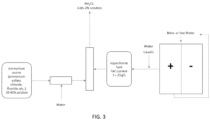
FIG. 3 (reference) shows production of monochloramine from a dilute hypochlorite solution obtained using a brine or sea water electrolyzer. -
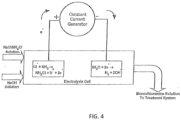
FIG. 4 (reference) shows production of monochloramine without the use of an intermediate tank. -
FIG. 5 shows production of monochloramine from a dilute hypochlorite solution obtained simultaneously or intermittently from a number of sources selected but not limited to a group of those using 1) chlorine gas, 2) an electrolytic chlorine gas generator, or 3) an electrolytic hypochlorite generator (reference). - The present invention is directed to online production of biocidal haloamines solutions with reduced amounts of halogen polyoxyanions, preferably that are substantially free of halogen polyoxyanions. The formed solutions contain less than 5% by weight, or less than 1% by weight, or less than 0.1% by weight, or less than 0.01 percent, or less than 0.0001 percent by weight of halogen polyoxyanions, such as chlorates, or no measurable amount of any halogen polyoxyanions or chlorates. The present methods provide a haloamine product for which the risks to human health related to the presence of halogen polyoxyanions such as chlorate are effectively reduced or eliminated.
- The haloamine comprises monochoramine. The invention reduces the amount of chlorate anion, depending on the halogen-containing precursors used and depending if sodium salts or another starting compound is used. The methods can reduce all halogen polyoxyanions, and preferably produce haloamines solutions free of halogen polyoxyanions of any type.
- The most common of biocidal haloamines, chloramine solutions, can be produced by combining bleach (a solution of sodium hypochlorite, NaOCl) with an ammonia-containing solution. Formation of monochloramine, the most efficacious of biocidal chloramines, proceeds according to the following overall reaction:
NaOCl + NH3 → NH2Cl + NaOH
- The ammonia-containing solution may vary between an ammonium carbamate solution, an ammonium bromide solution, and an ammonium sulfate solution and others. For example, any desired source of nitrogen can be used, including ammonium salts. Commercial bleach is intended to deliver a certain concentration of hypochlorite ion. However, during storage, hypochlorite (OCl-) decomposes with formation of chlorine polyoxyanions such as chlorite (ClO2 -) and further into chlorate (ClO3 -) via the following disproportionation reaction:
2OCl- → ClO2 - + Cl-
ClO2 - + OCl- → ClO3 - + Cl-
- Overall reaction:
3OCl- → ClO3 - + 2Cl-
- Perchlorate ion forms as a result of interaction between hypochlorite and chlorate:
OCl- + ClO3 - → ClO4 - + Cl-
- At room temperature (25 ° C), about 50% of hypochlorite in commercial bleach (12-13 weight %) decomposes within 150 - 160 days. Chlorate is the most abundant decomposition product present in commercial bleach at as high as 20%. In solutions, any halogen oxyanions are balanced by available metal cations, with cations of transition metals such as iron or manganese, if present, accelerating increasing hypohalite decomposition by more than 10 times.
- The present invention provides methods of producing haloamines comprising MCA which result in a significantly reduced content of halogen polyoxyanions. In particular, the present method uses hypochlorite produced in-situ, which contains less of the undesired by-product chlorate anions. The produced hypochlorite can be used directly and immediately such that undesired chlorate anions are not formed.
- The hypochlorite used in the invention can be produced in-situ by reacting chlorine gas with caustic soda. In certain embodiments, electrolysis or passing an electric current through a solution is not used in any stage of the method, for example, not used to produce chlorine or the hypochlorite. The ammonia-containing component then reacts with, and converts, the sodium hypochlorite to monochloramine having biocidal properties.
- The reaction of the ammonia-containing component and the in-situ generated sodium hypochlorite can be controlled to achieve a quantitative conversion of sodium hypochlorite to monochloramine (i.e., a reaction yield of at least about 95 percent, preferably at least about 97 percent). Control of the reaction can avoid production of unwanted byproducts, such as dichloramine and nitrogen trichloride.
- For example, (a) an excess of ammonia, or at least no excess hypochlorite can be used; and/or (b) an alkaline pH, preferably at least about 10 to about 11 can be used. With these reaction controls, the conversion of sodium hypochlorite to monochloramine can be about 95 percent, or 97% or higher. The produced monochloramine solution can contain, for example, 0.0001 to 10% or 0.05 to 5% or 0.05 to 2% by weight of MCA.
- In one embodiment of the present invention, shown in
Figure 1 , the hypochlorite solution is produced by reacting chlorine gas with an alkaline solution. Any desired alkaline solution can be used. The chlorine gas can be provided in a compressed form. The reaction of chlorine gas can be conducted using a continuous or intermittent process with the resulting hypochlorite solution accumulated, for example, in a storage tank downstream from the gas source and/or by mixing chlorine gas with alkaline water in such an intermediate tank. Preparing concentrated solutions of hypochlorite is not necessary. In fact, only a dilute solution, with hypochlorite concentration in the range 0.5-25 g/L, or 1-25 g/L or 2-10 g/L or 1-5 g/L is advantageously needed. Such a concentration is more than 5 times lower than that of the most common commercial 125 g/L hypochlorite solution. The hypochlorite tank volume and residence time should be selected to ensure the proper retention time of hypochlorite solution to avoid chlorate formation. - The ammonium ion containing solution can be prepared in a separate tank using any suitable ammonium source including, for example, ammonia, aqueous ammonia, ammonium sulfate, ammonium phosphate, ammonium chloride, and ammonium fluoride. The source of ammonia can be provided by many different ammonia-containing components. For example, the ammonia source may be the Busan® 1474 product, which is commercially available from Buckman Laboratories (Memphis, Tennessee) and is a blend of ammonia-containing compounds containing a total of 7.59% ammonia.
- In another embodiment of the present invention, shown in
Figure 2 , a suitable chloramine solution is produced using a dilute hypochlorite solution obtained from a mixture of caustic, water, and chlorine gas, wherein the latter is generated electrolytically. The hypochlorite solution is accumulated at a minimal volume in an intermediate tank and/or fed directly into a chloramines generator. - In another process (not claimed), shown in
Figure 3 , a chloramines solution is produced using a dilute hypochlorite solution instantly delivered by an electrolytic generator / electrolyzer. Suitable electrolyzers are available commercially from such suppliers as Electrolytic Technologies Systems LLC, North Miami Beach, FL, MIOX Corporation, Albuquerque, NM, or VDH Products, Roden, Drenthe, Netherlands. The electrolyzers produce hypochlorite solutions using salt brines or sea water. The electrolyzer output can optionally be adjusted to proper pH such as 9-12 or 11-12, with caustic and water and accumulated in an intermediate tank or fed directly into a chloramines generator. Alternatively, the hypochlorite solution can be fed directly into a chloramines generator without any time in an intermediate tank. - In another process (not claimed), the chloramine producing reactions are combined into a single step as shown in
Figure 4 . In such a method, electrolysis or passing an electric current through a solution is not used to produce chlorine gas or hypochlorite solution in an intermediate upstream stage. - In yet another embodiment, the present invention can be realized using a system comprising one or more or all the above configurations as shown in
Figure 5 . Thus, the dilute hypochlorite solution can be obtained simultaneously or intermittently from a number of sources selected but not limited to a group of those using chlorine gas, an electrolytic chlorine gas generator, or an electrolytic hypochlorite generator (not claimed). - The present invention provides on-site generation of halogen-containing oxidant solutions such as hypochlorite solutions by reacting chlorine gas with an alkaline solution, which then can be used immediately to produce biocidal haloamines. Such immediate conversion with no storage period of the hypochlorite solutions eliminates formation of harmful halogen polyoxyanions, such as chlorates. In some embodiments, there is no storage period, and in others, a short storage period (for example, less than an hour), in an intermediate tank can be used. Such a short residence time, especially with the lower concentration hypochlorite solutions that can be used in the invention, reduces or eliminates the formation of harmful chlorates.
- The haloamines, such as chloramines, and solutions thereof produced in the present invention can be used anywhere such biocides are used. For example, biocidal haloamine applications in food processing and sanitation industry are known. The invention can be used in all current haloamine applications, especially including those regulated for the presence of chlorate or other halogen polyoxyanions, such as at starch and sugar mills, in brewing industry, bioethanol plants, the oil and gas industry, and swimming pools.
- The present invention is especially useful in the food processing industry. The flexible methods of the present invention produce the lowest possible chlorate level in the chloramine solutions produced.
- Advantageously, many different on-site methods of producing the hypochlorite can be used, including use of a gaseous chlorine as a source of hypochlorite instead of or in combination with an electrolytic generator. Also, a stand-alone electrolytic generator of chlorine gas can be usedinstead of or in addition to electrolytic generation of hypochlorite solutions.
- The present invention is flexible in that an optional intermediate hypochlorite tank having a low residence time (for example, less than 48 hours, or less than 24 hours, or less than one hour, or less than half an hour, or less than 15 minutes, or less than 1 minute, such as one minute to 48 hours or 15 minutes to 24 hours) can be used. Furthermore, commercial hypochlorite generators can be used without regard to the actual method utilized to generate hypochlorite.
- An embodiment of the present invention was tested for treating microbial contamination at a facility processing of starch into a value-added food and nutrition products. The haloamine producing unit was set up utilizing an electolytic chlorine gas generator in accordance with the diagram provided in
Figure 2 . The gaseous chlorine from the generator was combined with a sodium hydroxide solution to form a hypochlorite solution in a storage tank with about 1-hour residence time. The free active chlorine concentration in the tank was in the 2-9 g/L range. The chlorate content in the tank was in the range of 100-500 mg per kg of Free Active Chlorine. The produced haloamine solution contained a very low amount of halogen polyoxyanions. The chlorate levels measured in the processed starch were below 0.7 mg/L.
Claims (13)
- A method for producing a haloamine solution comprising less than 5% by weight of halogen polyoxyanions comprising (a) on-site generation of a halogen-containing oxidant solution and (b) reacting on-site the on-site generated halogen-containing oxidant with a nitrogen source, to thereby produce the haloamine solution comprising less than 5% by weight of halogen polyoxyanions,
wherein the halogen is chlorine, the on-site generation comprises reacting chlorine gas with an alkaline solution and wherein the haloamine comprises monochloramine (MCA). - The method according to claim 1, wherein the halogen-containing oxidant solution contains hypochlorite.
- The method according to any of the above claims, wherein the nitrogen source is ammonia, an ammonia solution, or an ammonium salt.
- The method according to any of the above claims, wherein the on-site generation comprises generating chlorine gas electrolytically and reacting the chlorine gas with a mixture of caustic and water.
- The method according to any of the above claims, wherein the halogen-containing oxidant solution is a dilute solution having a hypochlorite concentration of 0.5-25 g/L.
- The method according to claim 5, wherein the halogen-containing oxidant solution is a dilute solution having a hypochlorite concentration of 0.5-5 g/L.
- The method according to any of the above claims, wherein the halogen-containing oxidant solution is a dilute solution having a hypochlorite concentration of 1-5 g/L.
- The method according to any of the above claims, wherein the solution generated on-site is fed directly, without storage, into a haloamine generator and reacted with the nitrogen source.
- The method according to any of claims 2 or 6 to 8, wherein the hypochlorite solution generated on-site is accumulated into an intermediate tank for up to 24 hours and then fed to a chloramine generator and reacted with the nitrogen source.
- The method according to any of claims 2 or 5 to 7, wherein the hypochlorite solution generated on-site is accumulated into an intermediate tank for up to 1 hour and then fed to a chloramine generator and reacted with the nitrogen source.
- The method according to any of claims 2 or 5 to 7, wherein hypochlorite solution generated on-site is used immediately to produce the haloamine, thereby eliminating formation of halogen oxyanions containing more than one oxygen atom.
- The method according to any of claims 1-3, 5-11, wherein the on-site generation does not use electrolysis.
- The method according to claim 12, wherein the on-site generation comprises reacting chlorine gas not produced from an on-site electrolytic generator with an alkaline solution.
Priority Applications (1)
| Application Number | Priority Date | Filing Date | Title |
|---|---|---|---|
| EP25162692.5A EP4553046A3 (en) | 2018-11-30 | 2019-11-26 | Method for producing haloamines and haloamine solutions |
Applications Claiming Priority (2)
| Application Number | Priority Date | Filing Date | Title |
|---|---|---|---|
| US201862773819P | 2018-11-30 | 2018-11-30 | |
| PCT/US2019/063290 WO2020112803A1 (en) | 2018-11-30 | 2019-11-26 | Method for producing haloamines and haloamine solutions |
Related Child Applications (1)
| Application Number | Title | Priority Date | Filing Date |
|---|---|---|---|
| EP25162692.5A Division EP4553046A3 (en) | 2018-11-30 | 2019-11-26 | Method for producing haloamines and haloamine solutions |
Publications (3)
| Publication Number | Publication Date |
|---|---|
| EP3887306A1 EP3887306A1 (en) | 2021-10-06 |
| EP3887306C0 EP3887306C0 (en) | 2025-03-12 |
| EP3887306B1 true EP3887306B1 (en) | 2025-03-12 |
Family
ID=69005844
Family Applications (2)
| Application Number | Title | Priority Date | Filing Date |
|---|---|---|---|
| EP25162692.5A Pending EP4553046A3 (en) | 2018-11-30 | 2019-11-26 | Method for producing haloamines and haloamine solutions |
| EP19827905.1A Active EP3887306B1 (en) | 2018-11-30 | 2019-11-26 | Method for producing haloamines and haloamine solutions |
Family Applications Before (1)
| Application Number | Title | Priority Date | Filing Date |
|---|---|---|---|
| EP25162692.5A Pending EP4553046A3 (en) | 2018-11-30 | 2019-11-26 | Method for producing haloamines and haloamine solutions |
Country Status (10)
| Country | Link |
|---|---|
| US (2) | US11802050B2 (en) |
| EP (2) | EP4553046A3 (en) |
| JP (1) | JP2022510262A (en) |
| CN (1) | CN113348147A (en) |
| AU (1) | AU2019387099A1 (en) |
| CA (1) | CA3121212A1 (en) |
| ES (1) | ES3015168T3 (en) |
| MX (2) | MX2021006340A (en) |
| WO (1) | WO2020112803A1 (en) |
| ZA (1) | ZA202104080B (en) |
Families Citing this family (3)
| Publication number | Priority date | Publication date | Assignee | Title |
|---|---|---|---|---|
| CN113348147A (en) * | 2018-11-30 | 2021-09-03 | 巴克曼实验室国际公司 | Method for producing haloamines and haloamine solutions |
| AU2020396917B2 (en) * | 2019-12-03 | 2022-02-10 | Monash University | Methods of reducing dinitrogen |
| IL297765A (en) * | 2020-04-29 | 2022-12-01 | Solenis Tech Lp | Method and device for controlling production of haloamine biocide |
Family Cites Families (17)
| Publication number | Priority date | Publication date | Assignee | Title |
|---|---|---|---|---|
| US6717014B1 (en) * | 1996-06-28 | 2004-04-06 | Fmc Corporation | Processes for preparing haloamines and tertiary aminoalkylorganometallic compounds |
| JP4734586B2 (en) * | 2004-02-10 | 2011-07-27 | 株式会社片山化学工業研究所 | Wastewater treatment system |
| JP4713128B2 (en) * | 2004-11-09 | 2011-06-29 | 株式会社トクヤマ | Method for producing sodium hypochlorite aqueous solution |
| CN101296862B (en) * | 2005-08-26 | 2011-06-15 | 赫尔克里士公司 | Method for producing synergistic biocide |
| PL1928784T3 (en) * | 2005-08-26 | 2010-03-31 | Solenis Technologies Cayman Lp | Method and apparatus for producing synergistic biocide |
| US20080156740A1 (en) | 2006-12-29 | 2008-07-03 | Amit Gupta | Method for producing a stable oxidizing biocide |
| US8747740B2 (en) * | 2007-01-25 | 2014-06-10 | Hercules Incorporated | Process and apparatus for generating haloamine biocide |
| CN102036921B (en) * | 2008-05-23 | 2016-01-20 | 凯米罗总公司 | For effectively controlling the chemical action of microorganism with the reduction of gaseous corrosion in paper pulp and sheet processing system |
| FR2952630B1 (en) * | 2009-11-16 | 2012-08-03 | Centre Nat Rech Scient | PROCESS FOR PREPARING A SOLUTION COMPRISING MONOCHLORAMINE |
| JP2015507089A (en) * | 2011-12-22 | 2015-03-05 | ブローミン コンパウンズ リミテッド | In situ production of biocidal bromine species by electrolysis |
| TWI542570B (en) * | 2012-02-17 | 2016-07-21 | 拜耳智慧財產有限公司 | Process for preparing chloroamines |
| MX2015000281A (en) * | 2012-07-12 | 2015-04-10 | Solenis Technologies Cayman Lp | Electrochemical generation of chlorinated urea derivatives. |
| WO2016010621A1 (en) * | 2014-05-19 | 2016-01-21 | Buckman Laboratories International, Inc. | Systems and methods for generating haloamines and application thereof in oil and gas operations |
| WO2016094591A1 (en) * | 2014-12-09 | 2016-06-16 | Miox Corporation | Methods for the direct electrolytic production of stable, high concentration aqueous halosulfamate or halosulfonamide solutions |
| BR112019013275A2 (en) * | 2016-12-27 | 2019-12-17 | Buckman Labor Inc | process for reducing the corrosiveness of a biocidal composition containing in situ generated sodium hypochlorite |
| CN111670160A (en) * | 2018-01-31 | 2020-09-15 | 巴克曼实验室国际公司 | Process for preparing halogenated amines using at least one solid reactant and products made therefrom |
| CN113348147A (en) * | 2018-11-30 | 2021-09-03 | 巴克曼实验室国际公司 | Method for producing haloamines and haloamine solutions |
-
2019
- 2019-11-26 CN CN201980090168.7A patent/CN113348147A/en active Pending
- 2019-11-26 US US16/697,054 patent/US11802050B2/en active Active
- 2019-11-26 EP EP25162692.5A patent/EP4553046A3/en active Pending
- 2019-11-26 MX MX2021006340A patent/MX2021006340A/en unknown
- 2019-11-26 JP JP2021530842A patent/JP2022510262A/en active Pending
- 2019-11-26 ES ES19827905T patent/ES3015168T3/en active Active
- 2019-11-26 WO PCT/US2019/063290 patent/WO2020112803A1/en not_active Ceased
- 2019-11-26 AU AU2019387099A patent/AU2019387099A1/en active Pending
- 2019-11-26 CA CA3121212A patent/CA3121212A1/en active Pending
- 2019-11-26 EP EP19827905.1A patent/EP3887306B1/en active Active
-
2021
- 2021-05-28 MX MX2025013603A patent/MX2025013603A/en unknown
- 2021-06-14 ZA ZA2021/04080A patent/ZA202104080B/en unknown
-
2023
- 2023-09-25 US US18/473,949 patent/US12434970B2/en active Active
Also Published As
| Publication number | Publication date |
|---|---|
| WO2020112803A1 (en) | 2020-06-04 |
| CN113348147A (en) | 2021-09-03 |
| EP4553046A3 (en) | 2025-12-24 |
| ZA202104080B (en) | 2024-11-27 |
| JP2022510262A (en) | 2022-01-26 |
| EP3887306C0 (en) | 2025-03-12 |
| BR112021010509A2 (en) | 2021-08-24 |
| ES3015168T3 (en) | 2025-04-29 |
| AU2019387099A1 (en) | 2021-06-24 |
| US11802050B2 (en) | 2023-10-31 |
| EP3887306A1 (en) | 2021-10-06 |
| US12434970B2 (en) | 2025-10-07 |
| MX2025013603A (en) | 2025-12-01 |
| CA3121212A1 (en) | 2020-06-04 |
| MX2021006340A (en) | 2021-08-11 |
| US20200172398A1 (en) | 2020-06-04 |
| EP4553046A2 (en) | 2025-05-14 |
| US20240018000A1 (en) | 2024-01-18 |
Similar Documents
| Publication | Publication Date | Title |
|---|---|---|
| US12434970B2 (en) | Method for producing haloamines and haloamine solutions | |
| AU2008209432B2 (en) | Process and apparatus for generating haloamine biocides | |
| US6306281B1 (en) | Electrolytic process for the generation of stable solutions of chlorine dioxide | |
| FI126250B (en) | Method for the production of chlorine dioxide | |
| KR102101320B1 (en) | Process for treating reverse-osmosis with an on-site producing biocide and apparatus thereof | |
| JPWO2016175006A1 (en) | Ammonia nitrogen-containing wastewater treatment method and ammonia nitrogen decomposing agent | |
| JP2016209837A (en) | Sterilization method of water | |
| WO2013093915A1 (en) | In situ production of a biocidal bromine species via electrolysis | |
| CN104487616A (en) | Electrochemical generation of chlorinated urea derivatives | |
| US9446952B2 (en) | Batch methods for producing chlorine dioxide solutions | |
| CA2429908C (en) | An electrolytic process for the generation of stable solutions of chlorine dioxide | |
| BR112021010509B1 (en) | METHOD FOR PRODUCING A HALOAMINE SOLUTION | |
| US20210337801A1 (en) | Method and apparatus for controlling the production of a haloamine biocide | |
| EP4402094B1 (en) | Chemical composition, method for manufacturing hypochlorous acid for obtaining said chemical composition and installation to perform said method | |
| KR890002542B1 (en) | Method for preparation of chlorine dioxide | |
| JP2024135166A (en) | How chlorous acid water is produced | |
| Lee et al. | Evaluation of mixed oxidants generated by an electrochemical method |
Legal Events
| Date | Code | Title | Description |
|---|---|---|---|
| STAA | Information on the status of an ep patent application or granted ep patent |
Free format text: STATUS: UNKNOWN |
|
| STAA | Information on the status of an ep patent application or granted ep patent |
Free format text: STATUS: THE INTERNATIONAL PUBLICATION HAS BEEN MADE |
|
| PUAI | Public reference made under article 153(3) epc to a published international application that has entered the european phase |
Free format text: ORIGINAL CODE: 0009012 |
|
| STAA | Information on the status of an ep patent application or granted ep patent |
Free format text: STATUS: REQUEST FOR EXAMINATION WAS MADE |
|
| 17P | Request for examination filed |
Effective date: 20210629 |
|
| AK | Designated contracting states |
Kind code of ref document: A1 Designated state(s): AL AT BE BG CH CY CZ DE DK EE ES FI FR GB GR HR HU IE IS IT LI LT LU LV MC MK MT NL NO PL PT RO RS SE SI SK SM TR |
|
| DAV | Request for validation of the european patent (deleted) | ||
| DAX | Request for extension of the european patent (deleted) | ||
| STAA | Information on the status of an ep patent application or granted ep patent |
Free format text: STATUS: EXAMINATION IS IN PROGRESS |
|
| 17Q | First examination report despatched |
Effective date: 20220929 |
|
| GRAP | Despatch of communication of intention to grant a patent |
Free format text: ORIGINAL CODE: EPIDOSNIGR1 |
|
| STAA | Information on the status of an ep patent application or granted ep patent |
Free format text: STATUS: GRANT OF PATENT IS INTENDED |
|
| RIC1 | Information provided on ipc code assigned before grant |
Ipc: C02F 1/467 20060101ALI20240926BHEP Ipc: C02F 1/76 20060101ALI20240926BHEP Ipc: A01N 59/00 20060101ALI20240926BHEP Ipc: C01B 21/09 20060101AFI20240926BHEP |
|
| INTG | Intention to grant announced |
Effective date: 20241010 |
|
| GRAS | Grant fee paid |
Free format text: ORIGINAL CODE: EPIDOSNIGR3 |
|
| GRAA | (expected) grant |
Free format text: ORIGINAL CODE: 0009210 |
|
| STAA | Information on the status of an ep patent application or granted ep patent |
Free format text: STATUS: THE PATENT HAS BEEN GRANTED |
|
| AK | Designated contracting states |
Kind code of ref document: B1 Designated state(s): AL AT BE BG CH CY CZ DE DK EE ES FI FR GB GR HR HU IE IS IT LI LT LU LV MC MK MT NL NO PL PT RO RS SE SI SK SM TR |
|
| REG | Reference to a national code |
Ref country code: GB Ref legal event code: FG4D |
|
| REG | Reference to a national code |
Ref country code: CH Ref legal event code: EP |
|
| REG | Reference to a national code |
Ref country code: DE Ref legal event code: R096 Ref document number: 602019067253 Country of ref document: DE |
|
| REG | Reference to a national code |
Ref country code: IE Ref legal event code: FG4D |
|
| U01 | Request for unitary effect filed |
Effective date: 20250312 |
|
| U07 | Unitary effect registered |
Designated state(s): AT BE BG DE DK EE FI FR IT LT LU LV MT NL PT RO SE SI Effective date: 20250319 |
|
| REG | Reference to a national code |
Ref country code: ES Ref legal event code: FG2A Ref document number: 3015168 Country of ref document: ES Kind code of ref document: T3 Effective date: 20250429 |
|
| PG25 | Lapsed in a contracting state [announced via postgrant information from national office to epo] |
Ref country code: RS Free format text: LAPSE BECAUSE OF FAILURE TO SUBMIT A TRANSLATION OF THE DESCRIPTION OR TO PAY THE FEE WITHIN THE PRESCRIBED TIME-LIMIT Effective date: 20250612 |
|
| PG25 | Lapsed in a contracting state [announced via postgrant information from national office to epo] |
Ref country code: NO Free format text: LAPSE BECAUSE OF FAILURE TO SUBMIT A TRANSLATION OF THE DESCRIPTION OR TO PAY THE FEE WITHIN THE PRESCRIBED TIME-LIMIT Effective date: 20250612 |
|
| PG25 | Lapsed in a contracting state [announced via postgrant information from national office to epo] |
Ref country code: HR Free format text: LAPSE BECAUSE OF FAILURE TO SUBMIT A TRANSLATION OF THE DESCRIPTION OR TO PAY THE FEE WITHIN THE PRESCRIBED TIME-LIMIT Effective date: 20250312 |
|
| PG25 | Lapsed in a contracting state [announced via postgrant information from national office to epo] |
Ref country code: GR Free format text: LAPSE BECAUSE OF FAILURE TO SUBMIT A TRANSLATION OF THE DESCRIPTION OR TO PAY THE FEE WITHIN THE PRESCRIBED TIME-LIMIT Effective date: 20250613 |
|
| PG25 | Lapsed in a contracting state [announced via postgrant information from national office to epo] |
Ref country code: SM Free format text: LAPSE BECAUSE OF FAILURE TO SUBMIT A TRANSLATION OF THE DESCRIPTION OR TO PAY THE FEE WITHIN THE PRESCRIBED TIME-LIMIT Effective date: 20250312 |
|
| PG25 | Lapsed in a contracting state [announced via postgrant information from national office to epo] |
Ref country code: PL Free format text: LAPSE BECAUSE OF FAILURE TO SUBMIT A TRANSLATION OF THE DESCRIPTION OR TO PAY THE FEE WITHIN THE PRESCRIBED TIME-LIMIT Effective date: 20250312 |
|
| PG25 | Lapsed in a contracting state [announced via postgrant information from national office to epo] |
Ref country code: CZ Free format text: LAPSE BECAUSE OF FAILURE TO SUBMIT A TRANSLATION OF THE DESCRIPTION OR TO PAY THE FEE WITHIN THE PRESCRIBED TIME-LIMIT Effective date: 20250312 |
|
| PG25 | Lapsed in a contracting state [announced via postgrant information from national office to epo] |
Ref country code: SK Free format text: LAPSE BECAUSE OF FAILURE TO SUBMIT A TRANSLATION OF THE DESCRIPTION OR TO PAY THE FEE WITHIN THE PRESCRIBED TIME-LIMIT Effective date: 20250312 |
|
| PG25 | Lapsed in a contracting state [announced via postgrant information from national office to epo] |
Ref country code: IS Free format text: LAPSE BECAUSE OF FAILURE TO SUBMIT A TRANSLATION OF THE DESCRIPTION OR TO PAY THE FEE WITHIN THE PRESCRIBED TIME-LIMIT Effective date: 20250712 |
|
| U20 | Renewal fee for the european patent with unitary effect paid |
Year of fee payment: 7 Effective date: 20251126 |
|
| PGFP | Annual fee paid to national office [announced via postgrant information from national office to epo] |
Ref country code: GB Payment date: 20251127 Year of fee payment: 7 |
|
| PLBE | No opposition filed within time limit |
Free format text: ORIGINAL CODE: 0009261 |
|
| STAA | Information on the status of an ep patent application or granted ep patent |
Free format text: STATUS: NO OPPOSITION FILED WITHIN TIME LIMIT |
|
| REG | Reference to a national code |
Ref country code: CH Ref legal event code: L10 Free format text: ST27 STATUS EVENT CODE: U-0-0-L10-L00 (AS PROVIDED BY THE NATIONAL OFFICE) Effective date: 20260121 |
|
| PGFP | Annual fee paid to national office [announced via postgrant information from national office to epo] |
Ref country code: ES Payment date: 20251201 Year of fee payment: 7 |
|
| 26N | No opposition filed |
Effective date: 20251215 |