EP3886265B1 - Charging connector - Google Patents
Charging connector Download PDFInfo
- Publication number
- EP3886265B1 EP3886265B1 EP21155602.2A EP21155602A EP3886265B1 EP 3886265 B1 EP3886265 B1 EP 3886265B1 EP 21155602 A EP21155602 A EP 21155602A EP 3886265 B1 EP3886265 B1 EP 3886265B1
- Authority
- EP
- European Patent Office
- Prior art keywords
- charging connector
- lock
- movable
- recited
- regulated
- Prior art date
- Legal status (The legal status is an assumption and is not a legal conclusion. Google has not performed a legal analysis and makes no representation as to the accuracy of the status listed.)
- Active
Links
Images





Classifications
-
- H—ELECTRICITY
- H01—ELECTRIC ELEMENTS
- H01R—ELECTRICALLY-CONDUCTIVE CONNECTIONS; STRUCTURAL ASSOCIATIONS OF A PLURALITY OF MUTUALLY-INSULATED ELECTRICAL CONNECTING ELEMENTS; COUPLING DEVICES; CURRENT COLLECTORS
- H01R13/00—Details of coupling devices of the kinds covered by groups H01R12/70 or H01R24/00 - H01R33/00
- H01R13/46—Bases; Cases
- H01R13/52—Dustproof, splashproof, drip-proof, waterproof, or flameproof cases
- H01R13/5202—Sealing means between parts of housing or between housing part and a wall, e.g. sealing rings
-
- H—ELECTRICITY
- H01—ELECTRIC ELEMENTS
- H01R—ELECTRICALLY-CONDUCTIVE CONNECTIONS; STRUCTURAL ASSOCIATIONS OF A PLURALITY OF MUTUALLY-INSULATED ELECTRICAL CONNECTING ELEMENTS; COUPLING DEVICES; CURRENT COLLECTORS
- H01R13/00—Details of coupling devices of the kinds covered by groups H01R12/70 or H01R24/00 - H01R33/00
- H01R13/62—Means for facilitating engagement or disengagement of coupling parts or for holding them in engagement
- H01R13/627—Snap or like fastening
- H01R13/6275—Latching arms not integral with the housing
-
- B—PERFORMING OPERATIONS; TRANSPORTING
- B60—VEHICLES IN GENERAL
- B60L—PROPULSION OF ELECTRICALLY-PROPELLED VEHICLES; SUPPLYING ELECTRIC POWER FOR AUXILIARY EQUIPMENT OF ELECTRICALLY-PROPELLED VEHICLES; ELECTRODYNAMIC BRAKE SYSTEMS FOR VEHICLES IN GENERAL; MAGNETIC SUSPENSION OR LEVITATION FOR VEHICLES; MONITORING OPERATING VARIABLES OF ELECTRICALLY-PROPELLED VEHICLES; ELECTRIC SAFETY DEVICES FOR ELECTRICALLY-PROPELLED VEHICLES
- B60L53/00—Methods of charging batteries, specially adapted for electric vehicles; Charging stations or on-board charging equipment therefor; Exchange of energy storage elements in electric vehicles
- B60L53/10—Methods of charging batteries, specially adapted for electric vehicles; Charging stations or on-board charging equipment therefor; Exchange of energy storage elements in electric vehicles characterised by the energy transfer between the charging station and the vehicle
- B60L53/14—Conductive energy transfer
- B60L53/16—Connectors, e.g. plugs or sockets, specially adapted for charging electric vehicles
-
- H—ELECTRICITY
- H01—ELECTRIC ELEMENTS
- H01R—ELECTRICALLY-CONDUCTIVE CONNECTIONS; STRUCTURAL ASSOCIATIONS OF A PLURALITY OF MUTUALLY-INSULATED ELECTRICAL CONNECTING ELEMENTS; COUPLING DEVICES; CURRENT COLLECTORS
- H01R13/00—Details of coupling devices of the kinds covered by groups H01R12/70 or H01R24/00 - H01R33/00
- H01R13/46—Bases; Cases
- H01R13/502—Bases; Cases composed of different pieces
-
- H—ELECTRICITY
- H01—ELECTRIC ELEMENTS
- H01R—ELECTRICALLY-CONDUCTIVE CONNECTIONS; STRUCTURAL ASSOCIATIONS OF A PLURALITY OF MUTUALLY-INSULATED ELECTRICAL CONNECTING ELEMENTS; COUPLING DEVICES; CURRENT COLLECTORS
- H01R13/00—Details of coupling devices of the kinds covered by groups H01R12/70 or H01R24/00 - H01R33/00
- H01R13/46—Bases; Cases
- H01R13/52—Dustproof, splashproof, drip-proof, waterproof, or flameproof cases
- H01R13/5227—Dustproof, splashproof, drip-proof, waterproof, or flameproof cases with evacuation of penetrating liquids
-
- H—ELECTRICITY
- H01—ELECTRIC ELEMENTS
- H01R—ELECTRICALLY-CONDUCTIVE CONNECTIONS; STRUCTURAL ASSOCIATIONS OF A PLURALITY OF MUTUALLY-INSULATED ELECTRICAL CONNECTING ELEMENTS; COUPLING DEVICES; CURRENT COLLECTORS
- H01R13/00—Details of coupling devices of the kinds covered by groups H01R12/70 or H01R24/00 - H01R33/00
- H01R13/62—Means for facilitating engagement or disengagement of coupling parts or for holding them in engagement
- H01R13/639—Additional means for holding or locking coupling parts together, after engagement, e.g. separate keylock, retainer strap
- H01R13/6397—Additional means for holding or locking coupling parts together, after engagement, e.g. separate keylock, retainer strap with means for preventing unauthorised use
-
- H—ELECTRICITY
- H01—ELECTRIC ELEMENTS
- H01R—ELECTRICALLY-CONDUCTIVE CONNECTIONS; STRUCTURAL ASSOCIATIONS OF A PLURALITY OF MUTUALLY-INSULATED ELECTRICAL CONNECTING ELEMENTS; COUPLING DEVICES; CURRENT COLLECTORS
- H01R13/00—Details of coupling devices of the kinds covered by groups H01R12/70 or H01R24/00 - H01R33/00
- H01R13/66—Structural association with built-in electrical component
- H01R13/70—Structural association with built-in electrical component with built-in switch
- H01R13/703—Structural association with built-in electrical component with built-in switch operated by engagement or disengagement of coupling parts, e.g. dual-continuity coupling part
- H01R13/7036—Structural association with built-in electrical component with built-in switch operated by engagement or disengagement of coupling parts, e.g. dual-continuity coupling part the switch being in series with coupling part, e.g. dead coupling, explosion proof coupling
- H01R13/7038—Structural association with built-in electrical component with built-in switch operated by engagement or disengagement of coupling parts, e.g. dual-continuity coupling part the switch being in series with coupling part, e.g. dead coupling, explosion proof coupling making use of a remote controlled switch, e.g. relais, solid state switch activated by the engagement of the coupling parts
-
- Y—GENERAL TAGGING OF NEW TECHNOLOGICAL DEVELOPMENTS; GENERAL TAGGING OF CROSS-SECTIONAL TECHNOLOGIES SPANNING OVER SEVERAL SECTIONS OF THE IPC; TECHNICAL SUBJECTS COVERED BY FORMER USPC CROSS-REFERENCE ART COLLECTIONS [XRACs] AND DIGESTS
- Y02—TECHNOLOGIES OR APPLICATIONS FOR MITIGATION OR ADAPTATION AGAINST CLIMATE CHANGE
- Y02T—CLIMATE CHANGE MITIGATION TECHNOLOGIES RELATED TO TRANSPORTATION
- Y02T10/00—Road transport of goods or passengers
- Y02T10/60—Other road transportation technologies with climate change mitigation effect
- Y02T10/70—Energy storage systems for electromobility, e.g. batteries
-
- Y—GENERAL TAGGING OF NEW TECHNOLOGICAL DEVELOPMENTS; GENERAL TAGGING OF CROSS-SECTIONAL TECHNOLOGIES SPANNING OVER SEVERAL SECTIONS OF THE IPC; TECHNICAL SUBJECTS COVERED BY FORMER USPC CROSS-REFERENCE ART COLLECTIONS [XRACs] AND DIGESTS
- Y02—TECHNOLOGIES OR APPLICATIONS FOR MITIGATION OR ADAPTATION AGAINST CLIMATE CHANGE
- Y02T—CLIMATE CHANGE MITIGATION TECHNOLOGIES RELATED TO TRANSPORTATION
- Y02T90/00—Enabling technologies or technologies with a potential or indirect contribution to GHG emissions mitigation
- Y02T90/10—Technologies relating to charging of electric vehicles
- Y02T90/14—Plug-in electric vehicles
Definitions
- This invention relates to a charging connector, particularly to a charging connector which is used outdoors.
- a charging connector 90 of Patent Document 1 is provided with a body 901, a lock lever 903, a release mechanism 905 and a release regulating mechanism 907.
- the lock lever 903 has a locking portion 913.
- the release mechanism 905 has a release button 915. Upon operating the release button 915, the release mechanism 905 releases the lock of the mated state of the charging connector 90 and the inlet 95.
- the release regulating mechanism 907 regulates releasing the lock of the mated state that is carried out by the release mechanism 905.
- each of the lock lever 903 and the release button 915 is arranged to extend from inside to outside the body 901. Moreover, each of the lock lever 903 and the release button 915 is attached to the body 901 so as to be movable with respect to the body 901. Accordingly, a gap inevitably exists between the body 901 and each of the lock lever 903 and the release button 915. And, this gap could be an entrance for water such as rainwater. In order to drain the water entered into the body 901, the charging connector 90 is provided with a drain hole (not shown).
- the water entering the body 901 is not always drained through the drain hole.
- the water left in the body 901 may be frozen by the drop in outside temperature.
- the water frozen in the body 901 may prevent a movable portion arranged in the body 901 from operating.
- the regulating portion of the button member and the regulated portion of the operation regulating mechanism are covered with the cover portion of the button member when viewed from above. Accordingly, the water entering the charging connector from around the button member is interrupted by the cover portion and does not reach the regulating portion and the regulated portion substantially. Therefore, even if the water entering the charging connector is frozen, the regulating portion and the regulated portion are maintained in a movable state. In other words, even if the water entering the charging connector is frozen, movement of the movable portion of the charging connector is not influenced by the frozen water but is allowed.
- a charging connector 10 is attached to an end of a cable 80.
- the charging connector 10 is a connector mateable with an inlet (not shown) having a locked portion (not shown) along a front-rear direction.
- the charging connector 10 has a mating portion 12 at a front end thereof in the front-rear direction.
- the front-rear direction is a Y-direction. A negative Y-direction is directed forward while a positive Y-direction is directed rearward.
- the charging connector 10 is provided with a body 20, a plug 30 and a lock mechanism assembly 40.
- the body 20 consists of a pair of shells 201 and 203 and has a trunk portion 22 and a grip portion 24.
- the plug 30 and the lock mechanism assembly 40 are held by the body 20.
- the trunk portion 22 of the body 20 extends in the front-rear direction.
- the trunk portion 22 forms a part of the mating portion 12 in part.
- the grip portion 24 extends rearward-diagonally downward from the trunk portion 22.
- the trunk portion 22 is provided with a lock aperture portion 221 and a button aperture portion 223.
- the grip portion 24 is provided with a sign window 241.
- Each of the lock aperture portion 221, the button aperture portion 223 and the sign window 241 could be an entrance for water such as rainwater.
- the up-down direction is a Z-direction perpendicular to the front-rear direction. A positive Z-direction is directed upward while a negative Z-direction is directed downward.
- the plug 30 is provided to a front portion of the trunk portion 22.
- the lock mechanism assembly 40 is provided to extend from the trunk portion 22 to the grip portion 24.
- the trunk portion 22 is provided with a lock spring 227 which acts on the lock mechanism assembly 40.
- the cable 80 is connected to the plug 30, the cable 80 is connected. The cable 80 extends from a rear portion of the grip portion 24 to outside the grip portion 24.
- the plug 30 protrudes forward from the trunk portion 22 of the body 20 in part. In the front-rear direction, a front end 32 of the plug 30 forms a front end of the charging connector 10. The protruding part of the plug 30 forms a remaining part of the mating portion 12. Since the plug 30 is not related to the present invention directly, and its detail description will be omitted.
- the lock mechanism assembly 40 is provided with a base portion 42, a case 48, a solenoid 52, a lock plate 54, a button member 56, a lock lever 60, springs 621 and 623, fixing screws 641, 643 and 645 and pivoting axes 661, 663, 665 and 667.
- the base portion 42 has a base plate 44 and a sensor portion 46.
- the base plate 44 has a front portion 441, a middle portion 443 and a rear portion 445 each of which extends in a first predetermined direction D1. Between the front portion 441 and the middle portion 443, a step is provided. Also, between the middle portion 443 and the rear portion 445, another step is provided.
- the base plate 44 may have a simple shape having no step.
- the sensor portion 46 is mounted on the front portion 441 of the base plate 44.
- the first predetermined direction D1 is a direction intersecting with the front-rear direction.
- the first predetermined direction D1 is also a direction perpendicular to a lateral direction perpendicular to both of the front-rear direction and the up-down direction.
- the lateral direction is an X-direction. Since the sensor portion 46 is not related to the present invention directly, and its detail description will be omitted.
- the case 48 has a front portion 481, a middle portion 483 and a rear portion 485.
- the case 48 is made of a transparent material.
- the front portion 481 extends forward-diagonally upward from an upper front portion of the middle portion 483 in the first predetermined direction D1.
- the rear portion 485 extends rearward-diagonally downward from a lower rear portion of the middle portion 483 in the first predetermined direction D1.
- the middle portion 483 of the case 48 has an upper portion 491, a pair of sidewalls 493 and a rear wall 495.
- the sidewalls 493 are located at both sides of the upper portion 491 in the lateral direction and extend downward in the up-down direction.
- the sidewalls 493 extend diagonally downward in a second predetermined direction D2 perpendicular to the first predetermined direction D1.
- the rear wall 495 extends downward in the up-down direction from a rear edge of the upper portion 491.
- the rear wall 495 extends diagonally downward in the second predetermined direction D2.
- the rear wall 495 couples rear edges of the sidewalls 493 with each other in the lateral direction.
- the upper portion 491 of the case 48 is provided with an opening portion 501 and a bearing portion 503.
- the bearing portion 503 is located forward of the opening portion 501 in the front-rear direction. As understood from Fig. 10 , the bearing portion 503 has a size larger than that of the opening portion 501 in the lateral direction.
- the opening portion 501 could be a passage of water
- the bearing portion 503 prevents the water from flowing toward the opening portion 501.
- the bearing portion 503 interrupts the water flowing rearward-diagonally downward on a surface of the upper portion 491 of the case 48 along the first predetermined direction D1 and prevents the water from entering the opening portion 501.
- a pair of shield portions 505 extending in a direction intersecting with the lateral direction is provided around the opening portion 501.
- the shield portions 505 are parts of the sidewalls 493 and extend in a direction perpendicular to the lateral direction.
- An upper edge of each of the shield portions 505 is provided with a step.
- the shield portions 505 may be provided to be independent of the sidewalls 493 or to substitute for the sidewalls 493.
- the shield portions 505 may be provided to extend in directions intersecting with each other. In that case, the shield portions 505 may be provided so that an interval therebetween is increased as a distance from the opening portion 501 is increased.
- the upper edges of the shield portions 505 may be straight or curved.
- the case 48 is fixed to the base plate 44 of the base portion 42 using the fixing screws 641 and 643.
- the case 48 and the base plate 44 form a housing 403.
- the housing 403 holds the solenoid 52, the lock plate 54 and the springs 621 and 623.
- the housing 403, the solenoid 52, the lock plate 54 and the springs 621 and 623 form an operation regulating mechanism 401.
- the charging connector 10 is provided with the operation regulating mechanism 401
- the operation regulating mechanism 401 is provided with the housing 403, the solenoid 52, the lock plate 54 and the springs 621 and 623.
- the solenoid 52 is mounted on the middle portion 443 of the base plate 44 and is accommodated inside the housing 403. Inside the housing 403, there remains an additional protection room 405 rearward of the solenoid 52. Thus, the housing 403 forms the additional protection room 405. In other words, the operation regulating mechanism 401 has the additional protection room 405.
- the solenoid 52 is provided with a frame 521, a coil 523, a fixed iron core 525, a plunger 527 and a return spring 529.
- the frame 521 is fixed to the case 48 using fixing screws 643 and 645.
- the coil 523 is arranged inside the frame 521.
- the fixed iron core 525 is arranged inside the coil 523.
- the plunger 527 is inserted inside the coil 523 in part. A rear end of the plunger 527 protrudes rearward-diagonally downward from the coil 523 in the first predetermined direction D1.
- a front end of the plunger 527 is provided with a push pin 531.
- the push pin 531 pierces the fixed iron core 525 and the frame 521 and protrudes forward-diagonally upward in the first predetermined direction D1.
- the return spring 529 applies a force directed rearward-diagonally downward to the plunger 527 in the first predetermined direction D1.
- the plunger 527 of the solenoid 52 is movable with respect to the frame 521, the coil 523 and the fixed iron core 525.
- the plunger 527 forms a movable portion 407 in the operation regulating mechanism 401 at least in part.
- the plunger 527 forms the movable portion 407 in part.
- the plunger 527 is movable along the first predetermined direction D1 intersecting with the front-rear direction. Since a moving direction of the plunger 527 is inclined against the front-rear direction, a size of the charging connector 10 can be decreased in the front-rear direction.
- the coil 523 of the solenoid 52 forms, at least in part, a driving portion 409 which drives the movable portion 407 in the operation regulating mechanism 401.
- the coil 523 forms the driving portion 409 in part.
- the coil 523 forms the driving portion 409 together with the fixed iron core 525 and the return spring 529.
- the operation regulating mechanism 401 is provided with the driving portion 409.
- the driving portion 409 drives the movable portion 407 between a regulated position and a release position.
- the additional protection room 405 is located rearward of the driving portion 409 in the front-rear direction and accommodates the movable portion 407 in part.
- the plunger 527 extends from the driving portion 409 to the inside of the additional protection room 405.
- the opening portion 501 of the case 48 is provided to an upper portion of the additional protection room 405.
- the lock plate 54 has a slide portion 541 and a driven portion 543.
- the slide portion 541 extends in the first predetermined direction D1.
- the driven portion 543 is located at a front end of the slide portion 541 in the front-rear direction.
- the driven portion 543 extends from the slide portion 541 in the second predetermined direction D2.
- the lock plate 54 has an about L-shape when viewed along the lateral direction.
- An upper end of the driven portion 543 forms a regulating portion 545.
- the regulating portion 545 is provided on the lock plate 54.
- the driven portion 543 is accommodated in the additional protection room 405 in part and protrudes outside the case 48 through the opening portion 501.
- the regulating portion 545 is located outside the case 48.
- the regulating portion 545 may be located inside the additional protection room 405.
- the lock plate 54 is provided with a lock sign 547.
- the lock sign 547 may be formed by means of a resin plate, a label or coating.
- the lock sign 547 is provided at a position which is visible through the sign window 241 when the driving portion 409 is positioned at the regulated position.
- the lock sign 547 is provided on an upper surface of the slide portion 541.
- the position of the lock sign 547 may be changed according to a shape of the lock plate 54 and a position of the sign window 241.
- a release sign may be provided in place of the lock sign 547 so that the release sign is visible through the sign window 241 when the driving portion 409 is positioned at the release position.
- the lock plate 54 is arranged above the base plate 44 and rearward of the solenoid 52.
- the driven portion 543 of the lock plate 54 face a rear end of the plunger 527 of the solenoid 52 in the first predetermined direction D1.
- the pivoting axes 661 and 663 are provided between the lock plate 54 and the base plate 44.
- the lock plate 54 is movable on the pivoting axes 661 and 663 in the first predetermined direction D1.
- the lock plate 54 is movable in conjunction with the plunger 527 in the predetermined direction D1.
- the lock plate 54 forms the movable portion 407 of the operation regulating mechanism 401 together with the plunger 527.
- the operation regulating mechanism 401 is provided with the movable portion 407, and the movable portion 407 has the regulating portion 545.
- the button member 56 has a button portion 561, a cover portion 563 and a regulated portion 565.
- An upper surface of the button portion 561 functions as an operation portion 567.
- the button member 56 has the operation portion 567.
- the operation portion 567 has two flat surfaces and a curved surface therebetween.
- the present invention is not limited thereto. A shape of the operation portion 567 may be changed freely.
- the cover portion 563 has an upper portion 571 and a protection portion 573.
- the upper portion 571 is formed in a staircase shape.
- the upper portion 571 may be formed in a single flat shape.
- the operation portion 567 is provided on the upper portion 571 of the cover portion 563. In other words, the cover portion 563 is located downward of the operation portion 567 in the up-down direction.
- the protection portion 573 of the cover portion 563 extends downward from the upper portion 571 in the up-down direction.
- the protection portion 573 is formed with an axis hole 575 which pierces the protection portion 573 in the lateral direction.
- the upper portion 571 and the protection portion 573 form a protection room 577.
- the upper portion 571 has a lower surface 579 which defines the protection room 577 in part.
- the lower surface 579 of the upper portion 571 is the lower surface 579 of the cover portion 563.
- the lower surface 579 is formed with a hollow portion 581 corresponding to the pivoting axis 665.
- the lower surface 579 is provided with the regulated portion 565.
- the regulated portion 565 extends downward from the lower surface 579 of the cover portion 563.
- the button member 56 further has an upper extension portion 583, a lower extension portion 585 and a guide portion 587.
- the guide portion 587 is formed on the cover portion 563.
- the guide portion 587 is located around the middle of the button member 56 in the front-rear direction.
- the upper extension portion 583 protrudes forward from the guide portion 587 of the cover portion 563.
- the lower extension portion 585 extends forward from the upper portion 571 of the cover portion 563. However, there is not a clear boundary between the lower extension portion 585 and the upper portion 571 of the cover portion 563.
- the upper extension portion 583 and the lower extension portion 585 are apart from and face each other in the up-down direction. In the present embodiment, the upper extension portion 583 and the lower extension portion 585 are coupled with each other by supporting wall 589.
- the button member 56 is attached to the bearing portion 503 provided in the operation regulating mechanism 401 by means of the pivoting axis 665.
- the pivoting axis 665 is supported by the bearing portion 503 pivotably, and the button member 56 can seesaw around the pivoting axis 665.
- the button portion 561 protrudes, in part, outside the body 20 from the button aperture portion 223 when in an unloaded state.
- the operation portion 567 is located outside the body 20.
- the cover portion 563 covers the opening portion 501 of the case 48 from above in the up-down direction.
- the opening portion 501 of the case 48 is located in the protection room 577 formed by the cover portion 563.
- the bearing portion 503 is received by the protection room 577.
- Each of the shield portions 505 and the rear wall 495 is received by the protection room 577 at least in part.
- the shield portions 505 overlap with the protection portion 573.
- water entering the body 20 from the button aperture portion 223 does not pass through the opening portion 501 to enter the housing 403, provided that it follows gravity.
- the water does not even reach to the regulating portion 545 and the regulated portion 565 which are located inside or in the vicinity of the opening portion 501. Accordingly, the movable portion 407 would not stop working due to the water that enters the body 20 through the button aperture portion 223.
- the lock lever 60 has a lock lug 601, an arm portion 603 and an operated portion 605.
- the lock lug 601 is provided in the vicinity of a front end of the arm portion 603.
- a rear surface 607 of the lock lug 601 functions as a locking portion 607.
- the charging connector 10 is provided with the lock lever 60 and the locking portion 607, and the locking portion 607 is provided to the lock lever 60.
- the locking portion 607 locks a mated state of the charging connector 10 and an inlet (not shown). In other words, the locking portion 607 engages with the locked portion (not shown) when the charging connector 10 is mated with the inlet.
- the operated portion 605 is provided to a rear end of the arm portion 603.
- a rear end portion 609 of the operated portion 605 coincides with a rear end portion 609 of the lock lever 60.
- the rear end portion 609 is apart from the locking portion 607 in the front-rear direction.
- a middle portion of the arm portion 603 is provided with an axis hole 611.
- the lock lever 60 is attached to the case 48 by means of a pivoting axis 667.
- the lock lever 60 can seesaw around the pivoting axis 667.
- the lock lug 601 is movable with respect to the body 20 at least in up-down direction.
- the lock lug 601 protrudes outside the mating portion 12 at least in part through the lock aperture portion 221 when the lock lever 60 is in an initial position.
- the initial position of the lock lever 60 is a lock position where a mated state of the charging connector 10 and the inlet (not shown) is locked.
- the lock aperture portion 221 is apart from the lock mechanism assembly 40 in the front-rear direction. Accordingly, the water entering the body 20 through the lock aperture portion 221 would not substantially affect movement of the movable portion 407.
- the lock spring 227 works so as to place the lock lever 60 at the initial position.
- the lock lever 60 is supported by the lock spring 227 and positioned at the initial position when in an unloaded state.
- the lock lug 601 is pushed down in the up-down direction once in the middle of mating of the charging connector 10 and the inlet (not shown). In this time, the lock spring 227 is resiliently deformed. Then, the lock spring 227 returns the lock lever 60 to the initial position by its reaction force when mating of the charging connector 10 and the inlet (not shown) is completed.
- the rear end portion 609 of the operated portion 605 of the lock lever 60 is located between the upper extension portion 583 of the button member 56 and the lower extension portion 585 of the button member 56.
- a thickness size of the operated portion 605 is smaller than an interval size between the upper extension portion 583 and the lower extension portion 585.
- the operated portion 605 is always apart from at least one of the upper extension portion 583 and the lower extension portion 585.
- the operated portion 605 may be in contact with the upper extension portion 583.
- the lock mechanism assembly 40 is held by the body 20 to be immovable.
- the pivoting axes 661 and 663 are held by axis supporting portions 225 of the body 20 so as to be immovable. Accordingly, the case 48 cannot be moved with respect to the body 20.
- each of the lock lever 60 and the button member 56 is attached to the case 48 so as to be able to seesaw. Accordingly, the lock lug 601 of the lock lever 60 is movable with respect to the body 20.
- the operation portion 567 of the button member 56 is movable with respect to the body 20. In detail, the operation portion 567 is movable with respect to the body 20 at least in the up-down direction.
- the spring 621 is arranged between the lower surface 579 of the button member 56 and the rear wall 495 of the case 48.
- the spring 621 supports the button portion 561 of the button member 56 from beneath.
- the button portion 561 of the button member 56 is operable to be pressed down in the up-down direction.
- the operation portion 567 is operable to be pressed down in the up-down direction.
- the spring 621 serves to push back the button portion 561 upward when the operation portion 567 of the button member 56 is pressed down in the up-down direction.
- the button member 56 When in the unloaded state, the button member 56 is positioned at the initial position due to a function of the spring 621.
- a spring 623 is arranged between the driven portion 543 of the lock plate 54 and the rear wall 495 of the case 48.
- the spring 623 gives a force directed to the solenoid 52 on the driven portion 543 of the lock plate 54.
- the force of the spring 623 is weaker than the force of the return spring 529.
- the return spring 529 of the solenoid 52 moves the plunger 527 rearward-diagonally downward in the predetermined direction D1.
- a rear end of the plunger 527 pushes the driven portion 543 of the lock plate 54 rearward-diagonally downward in the predetermined direction D1.
- the lock plate 54 is moved rearward-diagonally downward in the predetermined direction D1 against the force of the spring 623.
- the plunger 527 and the lock plate 54 are moved in conjunction with each other, so that the movable portion 407 is positioned at the regulated position.
- the plunger 527 when the solenoid 52 is in a pull state, the plunger 527 is moved forward-diagonally upward in the predetermined direction D1 by the coil 523 and the fixed iron core 525. This movement of the plunger 527 is performed against the force of the return spring 529. Accordingly, the lock plate 54 does not receive a pushing force directed rearward-diagonally downward in the predetermined direction D1. Moreover, in this time, the plunger 527 works as an electromagnet and attracts the driven portion 543 of the lock plate 54. As a result, the lock plate 54 is moved forward-diagonally upward in the predetermined direction D1 with help of a function of the spring 623. In this way, the plunger 527 and the lock plate 54 work in conjunction with each other, so that the movable portion 407 is positioned at a release position.
- the regulating portion 545 and the regulated portion 565 do not face each other.
- the operation portion 567 of the button member 56 is allowed to be moved downward in the up-down direction.
- the rear end portion 609 of the lock lever 60 can push up the upper extension portion 583 of the button member 56. Accordingly, the charging connector 10 can be mated with the inlet (not shown).
- the regulating portion 545 and the regulated portion 565 face each other in the protection room 577.
- the regulating portion 545 and the regulated portion 565 may face each other outside the protection room 577.
- “outside the protection room 577” is an area lower than it in the up-down direction and inside the housing 403.
- the regulating portion 545 regulates downward movement of the regulated portion 565 to regulate downward movement of the operation portion 567.
- the operated portion 605 is tried to be moved upward in the up-down direction if unexpected downward force works on the lock lug 601 in the up-down direction. Then, the rear end portion 609 of the operated portion 605 is brought into abutment with the upper extension portion 583.
- the button portion 561 is tried to be moved downward in the up-down direction. This movement of the button portion 561 is regulated by functions of the regulated portion 565 and the regulating portion 545. Accordingly, in a case where the unexpected force acts on the lock lug 601, the lock state is maintained when the charging connector 10 and the inlet (not shown) are mated with each other and in a locked state.
- the lower extension portion 585 of the button member 56 is positioned apart from the rear end portion 609 of the operated portion 605 of the lock lever 60. Accordingly, even if the operation portion 567 is pressed down in the up-down direction to move the button member 56, the lower extension portion 585 never pushes the rear end portion 609 of the operated portion 605. In other words, since the rear end portion 609 of the lock lever 60 is apart from the lower extension portion 585 of the button member 56, the button member 56 cannot move the lock lever 60 accidentally even if the button member 56 is slightly moved under a condition where the mated state is locked. Therefore, the lock lug 601 is never moved downward in the up-down direction. Thus, when the charging connector 10 and the inlet are mated with each other and in the locked state, the locked state is maintained.
- the regulating portion 545 and the regulated portion 565 do not face each other.
- the regulating portion 545 allows downward movement of the regulated portion 565 to allow downward movement of the operation portion 567.
- the operation portion 567 can be moved downward in the up-down direction.
- the lower extension portion 585 of the button member 56 pushes up the rear end portion 609 of the operated portion 605 of the lock lever 60 in the up-down direction so that the lock lug 601 is moved downward in the up-down direction.
- the lock lug 601 does not protrude from the mating portion 12 so that the lock state is released into an unlock state.
- the housing 403 of the operation regulating mechanism 401 covers the lock sign 547.
- the case 48 forming the housing 403 is made of a transparent material.
- the lock sign 547 when the movable portion 407 is positioned at the release position, the lock sign 547 is apart from the sign window 241 in the first predetermined direction D1. Accordingly, the lock sign 547 is invisible through the sign window 241.
- the lock sign 547 when the movable portion 407 is positioned at the regulated position, the lock sign 547 overlaps with the sign window 241 in the predetermined direction D1. Accordingly, the lock sign 547 is visible through the sign window 241 and the housing 403.
- the water entering from the sign window 241 is blocked by the case 48 and never reaches the lock plate 54.
- the sign window 241 is located downward of the opening portion 501 in the up-down direction. Accordingly, the water entering from the sign window 241 neither enter the housing 403 from the opening portion 501 nor reach the regulating portion 545 and the regulated portion 565. Thus, also the water entering from the sign window 241 into the charging connector 10 never interrupt movement of the movable portion 407.
- the lock lug 601 protrudes upward in the up-down direction in the aforementioned embodiment, it may protrude downward. In that case, appropriate modify will be applied to the button member 56.
- the charging connector 10 has no drain hole in the aforementioned embodiment, the charging connector 10 may have drain holes.
Landscapes
- Engineering & Computer Science (AREA)
- Power Engineering (AREA)
- Transportation (AREA)
- Mechanical Engineering (AREA)
- Details Of Connecting Devices For Male And Female Coupling (AREA)
- Connector Housings Or Holding Contact Members (AREA)
Description
- This invention relates to a charging connector, particularly to a charging connector which is used outdoors.
- There is a charging connector supposed to be used outdoors. For example, a charging connector used to charge an electric car is supposed to be used outdoors. An example of the charging connector of this type is disclosed in
JP 2017-27824 A - As shown in
Fig. 14 , acharging connector 90 of Patent Document 1 is provided with abody 901, alock lever 903, arelease mechanism 905 and a release regulatingmechanism 907. Thelock lever 903 has alocking portion 913. When thecharging connector 90 is mated with aninlet 95, thelocking portion 913 engages with a lockedportion 951 and locks a mated state of thecharging connector 90 and theinlet 95. Therelease mechanism 905 has arelease button 915. Upon operating therelease button 915, therelease mechanism 905 releases the lock of the mated state of thecharging connector 90 and theinlet 95. Under a predetermined condition, the release regulatingmechanism 907 regulates releasing the lock of the mated state that is carried out by therelease mechanism 905. - As understood from
Fig. 14 , each of thelock lever 903 and therelease button 915 is arranged to extend from inside to outside thebody 901. Moreover, each of thelock lever 903 and therelease button 915 is attached to thebody 901 so as to be movable with respect to thebody 901. Accordingly, a gap inevitably exists between thebody 901 and each of thelock lever 903 and therelease button 915. And, this gap could be an entrance for water such as rainwater. In order to drain the water entered into thebody 901, thecharging connector 90 is provided with a drain hole (not shown). -
DE 10 2009 044179 A1 - In the
charging connector 90 of Patent Document 1, all the water entering thebody 901 is not always drained through the drain hole. In addition, the water left in thebody 901 may be frozen by the drop in outside temperature. The water frozen in thebody 901 may prevent a movable portion arranged in thebody 901 from operating. - It is therefore an object of the present invention to provide a charging connector in which, even if the water entering the charging connector is frozen, movement of a movable portion is not affected by the frozen water.
- The above mentioned object of the present invention is achieved by the charging connector according to claim 1.
- In the charging connector of one aspect of the present invention, the regulating portion of the button member and the regulated portion of the operation regulating mechanism are covered with the cover portion of the button member when viewed from above. Accordingly, the water entering the charging connector from around the button member is interrupted by the cover portion and does not reach the regulating portion and the regulated portion substantially. Therefore, even if the water entering the charging connector is frozen, the regulating portion and the regulated portion are maintained in a movable state. In other words, even if the water entering the charging connector is frozen, movement of the movable portion of the charging connector is not influenced by the frozen water but is allowed.
- An appreciation of the objectives of the present invention and a more complete understanding of its structure may be had by studying the following description of the preferred embodiment and by referring to the accompanying drawings.
-
-
Fig. 1 is a perspective view showing a charging connector according to an embodiment of the present invention. The charging connector is attached to an end of a cable. -
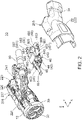
Fig. 2 is an exploded, perspective view showing the charging connector ofFig. 1 . -
Fig. 3 is a front view showing the charging connector ofFig. 1 . -
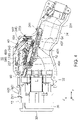
Fig. 4 is a cross-sectional view showing the charging connector ofFig. 3 , taken along line A-A. However, a plug included in the charging connector is drawn as a side view. Moreover, the charging connector is not attached to the cable. -
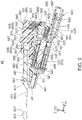
Fig. 5 is a cross-sectional view showing a lock mechanism assembly included in the charging connector ofFig. 4 . A lock lever and a button member which are included in the lock mechanism assembly are positioned at initial positions, respectively. A movable portion of an operation regulating mechanism included in the lock mechanism assembly is positioned at a release position. -
Fig. 6 is another cross-sectional view showing the lock mechanism assembly included in the charging connector ofFig. 4 . The lock lever and the button member are positioned at the initial positions, respectively. The movable portion of the operation regulating mechanism is positioned at a regulated position. -
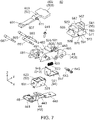
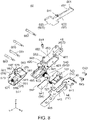
Fig. 7 is an exploded, perspective view showing the lock mechanism assembly included in the charging connector ofFig. 2 . -
Fig. 8 is another exploded, perspective view showing the lock mechanism assembly included in the charging connector ofFig. 2 . -
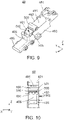
Fig. 9 is a perspective view showing a case included in the lock mechanism assembly ofFig. 7 or8 . -
Fig. 10 is a rear view showing the case ofFig. 9 . -
Fig. 11 is a plane view showing the lock mechanism assembly included in the charging connector ofFig. 2 . -
Fig. 12 is a side view showing the lock mechanism assembly ofFig. 11 . -
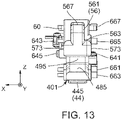
Fig. 13 is a rear view showing the lock mechanism assembly ofFig. 11 . -
Fig. 14 is a cross-sectional view showing a charging connector and an inlet which are disclosed in Patent Document 1. - While the invention is susceptible to various modifications and alternative forms, specific embodiments thereof are shown by way of example in the drawings and will herein be described in detail. It should be understood, however, that the drawings and detailed description thereto are not intended to limit the invention to the particular form disclosed, but on the contrary, the intention is to cover all modifications, equivalents and alternatives falling within the scope of the present invention as defined by the appended claims.
- Referring to
Fig. 1 , acharging connector 10 according to an embodiment of the present invention is attached to an end of acable 80. Thecharging connector 10 is a connector mateable with an inlet (not shown) having a locked portion (not shown) along a front-rear direction. Thecharging connector 10 has amating portion 12 at a front end thereof in the front-rear direction. In the present embodiment, the front-rear direction is a Y-direction. A negative Y-direction is directed forward while a positive Y-direction is directed rearward. - As shown in
Fig. 2 , thecharging connector 10 is provided with abody 20, aplug 30 and alock mechanism assembly 40. Thebody 20 consists of a pair ofshells trunk portion 22 and agrip portion 24. Theplug 30 and thelock mechanism assembly 40 are held by thebody 20. - As understood from
Fig. 1 , thetrunk portion 22 of thebody 20 extends in the front-rear direction. Thetrunk portion 22 forms a part of themating portion 12 in part. Thegrip portion 24 extends rearward-diagonally downward from thetrunk portion 22. Thetrunk portion 22 is provided with alock aperture portion 221 and abutton aperture portion 223. Moreover, thegrip portion 24 is provided with asign window 241. Each of thelock aperture portion 221, thebutton aperture portion 223 and thesign window 241 could be an entrance for water such as rainwater. In the present embodiment, the up-down direction is a Z-direction perpendicular to the front-rear direction. A positive Z-direction is directed upward while a negative Z-direction is directed downward. - As shown in
Fig. 2 , theplug 30 is provided to a front portion of thetrunk portion 22. Thelock mechanism assembly 40 is provided to extend from thetrunk portion 22 to thegrip portion 24. Thetrunk portion 22 is provided with alock spring 227 which acts on thelock mechanism assembly 40. To theplug 30, thecable 80 is connected. Thecable 80 extends from a rear portion of thegrip portion 24 to outside thegrip portion 24. - As understood from
Figs. 3 and4 , theplug 30 protrudes forward from thetrunk portion 22 of thebody 20 in part. In the front-rear direction, afront end 32 of theplug 30 forms a front end of the chargingconnector 10. The protruding part of theplug 30 forms a remaining part of themating portion 12. Since theplug 30 is not related to the present invention directly, and its detail description will be omitted. - As shown in
Figs. 7 and8 , thelock mechanism assembly 40 is provided with abase portion 42, acase 48, asolenoid 52, alock plate 54, abutton member 56, alock lever 60, springs 621 and 623, fixingscrews axes - As understood from
Fig. 7 , thebase portion 42 has abase plate 44 and asensor portion 46. As shown inFigs. 5 and6 , thebase plate 44 has afront portion 441, amiddle portion 443 and arear portion 445 each of which extends in a first predetermined direction D1. Between thefront portion 441 and themiddle portion 443, a step is provided. Also, between themiddle portion 443 and therear portion 445, another step is provided. However, the present invention is not limited thereto. Thebase plate 44 may have a simple shape having no step. Thesensor portion 46 is mounted on thefront portion 441 of thebase plate 44. In the present embodiment, the first predetermined direction D1 is a direction intersecting with the front-rear direction. The first predetermined direction D1 is also a direction perpendicular to a lateral direction perpendicular to both of the front-rear direction and the up-down direction. In the present embodiment, the lateral direction is an X-direction. Since thesensor portion 46 is not related to the present invention directly, and its detail description will be omitted. - As shown in
Figs. 7 to 9 , thecase 48 has afront portion 481, amiddle portion 483 and arear portion 485. In the present embodiment, thecase 48 is made of a transparent material. As understood fromFigs. 5 and6 , thefront portion 481 extends forward-diagonally upward from an upper front portion of themiddle portion 483 in the first predetermined direction D1. Therear portion 485 extends rearward-diagonally downward from a lower rear portion of themiddle portion 483 in the first predetermined direction D1. - As understood from
Figs. 7 to 10 , themiddle portion 483 of thecase 48 has anupper portion 491, a pair ofsidewalls 493 and arear wall 495. Thesidewalls 493 are located at both sides of theupper portion 491 in the lateral direction and extend downward in the up-down direction. In detail, thesidewalls 493 extend diagonally downward in a second predetermined direction D2 perpendicular to the first predetermined direction D1. Therear wall 495 extends downward in the up-down direction from a rear edge of theupper portion 491. In detail, therear wall 495 extends diagonally downward in the second predetermined direction D2. Moreover, therear wall 495 couples rear edges of thesidewalls 493 with each other in the lateral direction. - As shown in
Fig. 9 , theupper portion 491 of thecase 48 is provided with anopening portion 501 and a bearingportion 503. The bearingportion 503 is located forward of theopening portion 501 in the front-rear direction. As understood fromFig. 10 , the bearingportion 503 has a size larger than that of theopening portion 501 in the lateral direction. Although theopening portion 501 could be a passage of water, the bearingportion 503 prevents the water from flowing toward theopening portion 501. In detail, the bearingportion 503 interrupts the water flowing rearward-diagonally downward on a surface of theupper portion 491 of thecase 48 along the first predetermined direction D1 and prevents the water from entering theopening portion 501. - As shown in
Figs. 9 and 10 , around theopening portion 501, a pair ofshield portions 505 extending in a direction intersecting with the lateral direction is provided. In the present embodiment, theshield portions 505 are parts of thesidewalls 493 and extend in a direction perpendicular to the lateral direction. An upper edge of each of theshield portions 505 is provided with a step. However, the present invention is not limited thereto. Theshield portions 505 may be provided to be independent of thesidewalls 493 or to substitute for thesidewalls 493. Moreover, theshield portions 505 may be provided to extend in directions intersecting with each other. In that case, theshield portions 505 may be provided so that an interval therebetween is increased as a distance from theopening portion 501 is increased. In addition, the upper edges of theshield portions 505 may be straight or curved. - As understood from
Figs. 7 and8 , thecase 48 is fixed to thebase plate 44 of thebase portion 42 using the fixing screws 641 and 643. Thecase 48 and thebase plate 44 form ahousing 403. Thehousing 403 holds thesolenoid 52, thelock plate 54 and thesprings housing 403, thesolenoid 52, thelock plate 54 and thesprings operation regulating mechanism 401. Thus, the chargingconnector 10 is provided with theoperation regulating mechanism 401, and theoperation regulating mechanism 401 is provided with thehousing 403, thesolenoid 52, thelock plate 54 and thesprings - As shown in
Figs. 5 and6 , thesolenoid 52 is mounted on themiddle portion 443 of thebase plate 44 and is accommodated inside thehousing 403. Inside thehousing 403, there remains anadditional protection room 405 rearward of thesolenoid 52. Thus, thehousing 403 forms theadditional protection room 405. In other words, theoperation regulating mechanism 401 has theadditional protection room 405. - As shown in
Figs. 5 to 8 , thesolenoid 52 is provided with aframe 521, acoil 523, a fixediron core 525, a plunger 527 and areturn spring 529. Theframe 521 is fixed to thecase 48 using fixingscrews coil 523 is arranged inside theframe 521. The fixediron core 525 is arranged inside thecoil 523. The plunger 527 is inserted inside thecoil 523 in part. A rear end of the plunger 527 protrudes rearward-diagonally downward from thecoil 523 in the first predetermined direction D1. A front end of the plunger 527 is provided with apush pin 531. Thepush pin 531 pierces the fixediron core 525 and theframe 521 and protrudes forward-diagonally upward in the first predetermined direction D1. Thereturn spring 529 applies a force directed rearward-diagonally downward to the plunger 527 in the first predetermined direction D1. - As understood from
Figs. 5 and6 , the plunger 527 of thesolenoid 52 is movable with respect to theframe 521, thecoil 523 and the fixediron core 525. The plunger 527 forms amovable portion 407 in theoperation regulating mechanism 401 at least in part. In the present embodiment, the plunger 527 forms themovable portion 407 in part. The plunger 527 is movable along the first predetermined direction D1 intersecting with the front-rear direction. Since a moving direction of the plunger 527 is inclined against the front-rear direction, a size of the chargingconnector 10 can be decreased in the front-rear direction. - As understood from
Figs. 5 and6 , thecoil 523 of thesolenoid 52 forms, at least in part, a drivingportion 409 which drives themovable portion 407 in theoperation regulating mechanism 401. In the present embodiment, thecoil 523 forms the drivingportion 409 in part. In detail, thecoil 523 forms the drivingportion 409 together with the fixediron core 525 and thereturn spring 529. Thus, theoperation regulating mechanism 401 is provided with the drivingportion 409. The drivingportion 409 drives themovable portion 407 between a regulated position and a release position. - As shown in
Figs. 5 and6 , theadditional protection room 405 is located rearward of the drivingportion 409 in the front-rear direction and accommodates themovable portion 407 in part. The plunger 527 extends from the drivingportion 409 to the inside of theadditional protection room 405. Moreover, theopening portion 501 of thecase 48 is provided to an upper portion of theadditional protection room 405. - As shown in
Figs. 5 to 8 , thelock plate 54 has aslide portion 541 and a drivenportion 543. Theslide portion 541 extends in the first predetermined direction D1. The drivenportion 543 is located at a front end of theslide portion 541 in the front-rear direction. The drivenportion 543 extends from theslide portion 541 in the second predetermined direction D2. Thelock plate 54 has an about L-shape when viewed along the lateral direction. An upper end of the drivenportion 543 forms a regulatingportion 545. In other words, the regulatingportion 545 is provided on thelock plate 54. The drivenportion 543 is accommodated in theadditional protection room 405 in part and protrudes outside thecase 48 through theopening portion 501. In the present embodiment, the regulatingportion 545 is located outside thecase 48. However, the present invention is not limited thereto. The regulatingportion 545 may be located inside theadditional protection room 405. - As shown in
Figs. 4 to 7 , thelock plate 54 is provided with alock sign 547. Thelock sign 547 may be formed by means of a resin plate, a label or coating. Thelock sign 547 is provided at a position which is visible through thesign window 241 when the drivingportion 409 is positioned at the regulated position. In the present embodiment, thelock sign 547 is provided on an upper surface of theslide portion 541. However, the present invention is not limited thereto. The position of thelock sign 547 may be changed according to a shape of thelock plate 54 and a position of thesign window 241. Moreover, a release sign may be provided in place of thelock sign 547 so that the release sign is visible through thesign window 241 when the drivingportion 409 is positioned at the release position. - As shown in
Figs. 5 and6 , thelock plate 54 is arranged above thebase plate 44 and rearward of thesolenoid 52. The drivenportion 543 of thelock plate 54 face a rear end of the plunger 527 of thesolenoid 52 in the first predetermined direction D1. Between thelock plate 54 and thebase plate 44, the pivotingaxes lock plate 54 is movable on the pivoting axes 661 and 663 in the first predetermined direction D1. In the present embodiment, thelock plate 54 is movable in conjunction with the plunger 527 in the predetermined direction D1. In other words, thelock plate 54 forms themovable portion 407 of theoperation regulating mechanism 401 together with the plunger 527. Thus, theoperation regulating mechanism 401 is provided with themovable portion 407, and themovable portion 407 has the regulatingportion 545. - As shown in
Figs. 7 and8 , thebutton member 56 has abutton portion 561, acover portion 563 and aregulated portion 565. An upper surface of thebutton portion 561 functions as anoperation portion 567. In other words, thebutton member 56 has theoperation portion 567. In the present embodiment, theoperation portion 567 has two flat surfaces and a curved surface therebetween. However, the present invention is not limited thereto. A shape of theoperation portion 567 may be changed freely. - As understood from
Figs. 7 and8 , thecover portion 563 has anupper portion 571 and aprotection portion 573. In the present embodiment, theupper portion 571 is formed in a staircase shape. However, the present invention is not limited thereto. Theupper portion 571 may be formed in a single flat shape. Theoperation portion 567 is provided on theupper portion 571 of thecover portion 563. In other words, thecover portion 563 is located downward of theoperation portion 567 in the up-down direction. - As shown in
Fig. 7 and8 , theprotection portion 573 of thecover portion 563 extends downward from theupper portion 571 in the up-down direction. Theprotection portion 573 is formed with anaxis hole 575 which pierces theprotection portion 573 in the lateral direction. Theupper portion 571 and theprotection portion 573 form aprotection room 577. Theupper portion 571 has alower surface 579 which defines theprotection room 577 in part. Thelower surface 579 of theupper portion 571 is thelower surface 579 of thecover portion 563. Thelower surface 579 is formed with ahollow portion 581 corresponding to the pivotingaxis 665. Also, thelower surface 579 is provided with theregulated portion 565. Theregulated portion 565 extends downward from thelower surface 579 of thecover portion 563. - As shown in
Figs. 7 and8 , thebutton member 56 further has anupper extension portion 583, alower extension portion 585 and aguide portion 587. Theguide portion 587 is formed on thecover portion 563. Theguide portion 587 is located around the middle of thebutton member 56 in the front-rear direction. Theupper extension portion 583 protrudes forward from theguide portion 587 of thecover portion 563. Thelower extension portion 585 extends forward from theupper portion 571 of thecover portion 563. However, there is not a clear boundary between thelower extension portion 585 and theupper portion 571 of thecover portion 563. Theupper extension portion 583 and thelower extension portion 585 are apart from and face each other in the up-down direction. In the present embodiment, theupper extension portion 583 and thelower extension portion 585 are coupled with each other by supportingwall 589. - As understood from
Figs. 5 and6 , thebutton member 56 is attached to the bearingportion 503 provided in theoperation regulating mechanism 401 by means of the pivotingaxis 665. The pivotingaxis 665 is supported by the bearingportion 503 pivotably, and thebutton member 56 can seesaw around the pivotingaxis 665. As shown inFigs. 1 and4 , thebutton portion 561 protrudes, in part, outside thebody 20 from thebutton aperture portion 223 when in an unloaded state. In addition, theoperation portion 567 is located outside thebody 20. - As understood from
Figs. 5 ,6 and11 to 13 , thecover portion 563 covers theopening portion 501 of thecase 48 from above in the up-down direction. In detail, theopening portion 501 of thecase 48 is located in theprotection room 577 formed by thecover portion 563. Moreover, the bearingportion 503 is received by theprotection room 577. Each of theshield portions 505 and therear wall 495 is received by theprotection room 577 at least in part. With this structure, when viewed from above in the up-down direction, the regulatingportion 545 and theregulated portion 565 are covered with thecover portion 563. Moreover, when viewed from above in the up-down direction, theshield portions 505 are located in a region formed by alower edge 591 of theprotection portion 573. Furthermore, when viewed along the lateral direction, theshield portions 505 overlap with theprotection portion 573. In this structure, water entering thebody 20 from thebutton aperture portion 223 does not pass through theopening portion 501 to enter thehousing 403, provided that it follows gravity. The water does not even reach to the regulatingportion 545 and theregulated portion 565 which are located inside or in the vicinity of theopening portion 501. Accordingly, themovable portion 407 would not stop working due to the water that enters thebody 20 through thebutton aperture portion 223. - As shown in
Figs. 7 and8 , thelock lever 60 has alock lug 601, anarm portion 603 and an operatedportion 605. Thelock lug 601 is provided in the vicinity of a front end of thearm portion 603. Arear surface 607 of thelock lug 601 functions as a lockingportion 607. In other words, the chargingconnector 10 is provided with thelock lever 60 and the lockingportion 607, and the lockingportion 607 is provided to thelock lever 60. The lockingportion 607 locks a mated state of the chargingconnector 10 and an inlet (not shown). In other words, the lockingportion 607 engages with the locked portion (not shown) when the chargingconnector 10 is mated with the inlet. The operatedportion 605 is provided to a rear end of thearm portion 603. Arear end portion 609 of the operatedportion 605 coincides with arear end portion 609 of thelock lever 60. Therear end portion 609 is apart from the lockingportion 607 in the front-rear direction. A middle portion of thearm portion 603 is provided with anaxis hole 611. - As understood from
Figs. 5 to 8 , thelock lever 60 is attached to thecase 48 by means of a pivotingaxis 667. Thelock lever 60 can seesaw around the pivotingaxis 667. With this structure, thelock lug 601 is movable with respect to thebody 20 at least in up-down direction. As shown inFigs. 1 and4 , thelock lug 601 protrudes outside themating portion 12 at least in part through thelock aperture portion 221 when thelock lever 60 is in an initial position. The initial position of thelock lever 60 is a lock position where a mated state of the chargingconnector 10 and the inlet (not shown) is locked. Here, thelock aperture portion 221 is apart from thelock mechanism assembly 40 in the front-rear direction. Accordingly, the water entering thebody 20 through thelock aperture portion 221 would not substantially affect movement of themovable portion 407. - As understood from
Fig. 4 , thelock spring 227 works so as to place thelock lever 60 at the initial position. Thelock lever 60 is supported by thelock spring 227 and positioned at the initial position when in an unloaded state. Thelock lug 601 is pushed down in the up-down direction once in the middle of mating of the chargingconnector 10 and the inlet (not shown). In this time, thelock spring 227 is resiliently deformed. Then, thelock spring 227 returns thelock lever 60 to the initial position by its reaction force when mating of the chargingconnector 10 and the inlet (not shown) is completed. - As understood from
Figs. 5 and6 , therear end portion 609 of the operatedportion 605 of thelock lever 60 is located between theupper extension portion 583 of thebutton member 56 and thelower extension portion 585 of thebutton member 56. In the up-down direction, a thickness size of the operatedportion 605 is smaller than an interval size between theupper extension portion 583 and thelower extension portion 585. With this structure, the operatedportion 605 is always apart from at least one of theupper extension portion 583 and thelower extension portion 585. In the present embodiment, when thelock lever 60 is positioned at the initial position, the operatedportion 605 is positioned nearer to theupper extension portion 583 than to thelower extension portion 585. In this time, the operatedportion 605 may be in contact with theupper extension portion 583. - As understood from
Fig. 2 , thelock mechanism assembly 40 is held by thebody 20 to be immovable. In detail, the pivotingaxes axis supporting portions 225 of thebody 20 so as to be immovable. Accordingly, thecase 48 cannot be moved with respect to thebody 20. On the other hand, each of thelock lever 60 and thebutton member 56 is attached to thecase 48 so as to be able to seesaw. Accordingly, thelock lug 601 of thelock lever 60 is movable with respect to thebody 20. In addition, theoperation portion 567 of thebutton member 56 is movable with respect to thebody 20. In detail, theoperation portion 567 is movable with respect to thebody 20 at least in the up-down direction. - As shown in
Figs. 5 and6 , between thelower surface 579 of thebutton member 56 and therear wall 495 of thecase 48, thespring 621 is arranged. Thespring 621 supports thebutton portion 561 of thebutton member 56 from beneath. Thebutton portion 561 of thebutton member 56 is operable to be pressed down in the up-down direction. In other words, theoperation portion 567 is operable to be pressed down in the up-down direction. Thespring 621 serves to push back thebutton portion 561 upward when theoperation portion 567 of thebutton member 56 is pressed down in the up-down direction. When in the unloaded state, thebutton member 56 is positioned at the initial position due to a function of thespring 621. - As shown in
Figs. 5 and6 , between the drivenportion 543 of thelock plate 54 and therear wall 495 of thecase 48, aspring 623 is arranged. Thespring 623 gives a force directed to thesolenoid 52 on the drivenportion 543 of thelock plate 54. The force of thespring 623 is weaker than the force of thereturn spring 529. - As understood from
Fig. 6 , when thesolenoid 52 is in a return state, thereturn spring 529 of thesolenoid 52 moves the plunger 527 rearward-diagonally downward in the predetermined direction D1. In this time, a rear end of the plunger 527 pushes the drivenportion 543 of thelock plate 54 rearward-diagonally downward in the predetermined direction D1. Thelock plate 54 is moved rearward-diagonally downward in the predetermined direction D1 against the force of thespring 623. Thus, the plunger 527 and thelock plate 54 are moved in conjunction with each other, so that themovable portion 407 is positioned at the regulated position. - As shown in
Fig. 5 , when thesolenoid 52 is in a pull state, the plunger 527 is moved forward-diagonally upward in the predetermined direction D1 by thecoil 523 and the fixediron core 525. This movement of the plunger 527 is performed against the force of thereturn spring 529. Accordingly, thelock plate 54 does not receive a pushing force directed rearward-diagonally downward in the predetermined direction D1. Moreover, in this time, the plunger 527 works as an electromagnet and attracts the drivenportion 543 of thelock plate 54. As a result, thelock plate 54 is moved forward-diagonally upward in the predetermined direction D1 with help of a function of thespring 623. In this way, the plunger 527 and thelock plate 54 work in conjunction with each other, so that themovable portion 407 is positioned at a release position. - As shown in
Fig. 5 , when themovable portion 407 is positioned at the release position, the regulatingportion 545 and theregulated portion 565 do not face each other. In this state, theoperation portion 567 of thebutton member 56 is allowed to be moved downward in the up-down direction. This means that when thelock lug 601 is moved downward in the up-down direction, therear end portion 609 of thelock lever 60 can push up theupper extension portion 583 of thebutton member 56. Accordingly, the chargingconnector 10 can be mated with the inlet (not shown). - As shown in
Fig. 6 , when themovable portion 407 is positioned at the regulated position, the regulatingportion 545 and theregulated portion 565 face each other in theprotection room 577. However, the present invention is not limited thereto. The regulatingportion 545 and theregulated portion 565 may face each other outside theprotection room 577. In this case, "outside theprotection room 577" is an area lower than it in the up-down direction and inside thehousing 403. At any rate, when themovable portion 407 is positioned at the regulated position, the regulatingportion 545 and theregulated portion 565 face each other through theopening portion 501. - As understood from
Fig. 6 , when themovable portion 407 is positioned at the regulated position, theregulated portion 565 is brought into abutment with the regulatingportion 545 if theoperation portion 567 is pressed down in the up-down direction. Accordingly, theoperation portion 567 cannot be moved downward in the up-down direction. In other words, when themovable portion 407 is positioned at the regulated position, the regulatingportion 545 regulates downward movement of theregulated portion 565 to regulate downward movement of theoperation portion 567. - As understood from
Fig. 6 , when themovable portion 407 is positioned at the regulated position, the operatedportion 605 is tried to be moved upward in the up-down direction if unexpected downward force works on thelock lug 601 in the up-down direction. Then, therear end portion 609 of the operatedportion 605 is brought into abutment with theupper extension portion 583. When theupper extension portion 583 receives an upward force, thebutton portion 561 is tried to be moved downward in the up-down direction. This movement of thebutton portion 561 is regulated by functions of theregulated portion 565 and the regulatingportion 545. Accordingly, in a case where the unexpected force acts on thelock lug 601, the lock state is maintained when the chargingconnector 10 and the inlet (not shown) are mated with each other and in a locked state. - As understood from
Fig. 4 , when the chargingconnector 10 and the inlet (not shown) are mated with each other, upward movement of thelock lug 601 is regulated by the inlet in the up-down direction. Moreover, as mentioned above, when themovable portion 407 is positioned at the regulated position, downward movement of thelock lug 601 is regulated in the up-down direction. Accordingly, when themovable portion 407 is positioned at the regulated position, thelock lever 60 is positioned at the initial position. - As shown in
Fig. 6 , when thelock lever 60 is positioned at the initial position, thelower extension portion 585 of thebutton member 56 is positioned apart from therear end portion 609 of the operatedportion 605 of thelock lever 60. Accordingly, even if theoperation portion 567 is pressed down in the up-down direction to move thebutton member 56, thelower extension portion 585 never pushes therear end portion 609 of the operatedportion 605. In other words, since therear end portion 609 of thelock lever 60 is apart from thelower extension portion 585 of thebutton member 56, thebutton member 56 cannot move thelock lever 60 accidentally even if thebutton member 56 is slightly moved under a condition where the mated state is locked. Therefore, thelock lug 601 is never moved downward in the up-down direction. Thus, when the chargingconnector 10 and the inlet are mated with each other and in the locked state, the locked state is maintained. - As shown in
Fig. 5 , when themovable portion 407 is positioned at the release position, the regulatingportion 545 and theregulated portion 565 do not face each other. Thus, the regulatingportion 545 allows downward movement of theregulated portion 565 to allow downward movement of theoperation portion 567. In other words, theoperation portion 567 can be moved downward in the up-down direction. Then, when theoperation portion 567 is pressed down, thelower extension portion 585 of thebutton member 56 pushes up therear end portion 609 of the operatedportion 605 of thelock lever 60 in the up-down direction so that thelock lug 601 is moved downward in the up-down direction. Thus, thelock lug 601 does not protrude from themating portion 12 so that the lock state is released into an unlock state. - As shown in
Figs. 5 and6 , thehousing 403 of theoperation regulating mechanism 401 covers thelock sign 547. In order that thelock sign 547 is visible through thehousing 403, thecase 48 forming thehousing 403 is made of a transparent material. As shown inFig. 4 , when themovable portion 407 is positioned at the release position, thelock sign 547 is apart from thesign window 241 in the first predetermined direction D1. Accordingly, thelock sign 547 is invisible through thesign window 241. On the other hand, when themovable portion 407 is positioned at the regulated position, thelock sign 547 overlaps with thesign window 241 in the predetermined direction D1. Accordingly, thelock sign 547 is visible through thesign window 241 and thehousing 403. - As understood from
Fig. 4 , the water entering from thesign window 241 is blocked by thecase 48 and never reaches thelock plate 54. Moreover, thesign window 241 is located downward of theopening portion 501 in the up-down direction. Accordingly, the water entering from thesign window 241 neither enter thehousing 403 from theopening portion 501 nor reach the regulatingportion 545 and theregulated portion 565. Thus, also the water entering from thesign window 241 into the chargingconnector 10 never interrupt movement of themovable portion 407. - Although the
lock lug 601 protrudes upward in the up-down direction in the aforementioned embodiment, it may protrude downward. In that case, appropriate modify will be applied to thebutton member 56. Moreover, although the chargingconnector 10 has no drain hole in the aforementioned embodiment, the chargingconnector 10 may have drain holes.
Claims (12)
- A charging connector (10) mateable, along a front-rear direction, with an inlet having a locked portion, wherein:the charging connector comprises a locking portion (607), a button member (56) and an operation regulating mechanism (401);the locking portion and the locked portion are designed to lock a mated state of the inlet and the charging connector;the button member has an operation portion (567), a cover portion (563) and a regulated portion (565);the operation portion is operable to be pressed down in an up-down direction perpendicular to the front-rear direction;the cover portion is located downward of the operation portion in the up-down direction;the cover portion has a lower surface (579);the regulated portion is provided on the lower surface of the cover portion;the operation regulating mechanism comprises a movable portion (407) and a driving portion (409);the driving portion drives the movable portion between a regulation position and a release position;the movable portion has a regulating portion (545);when the movable portion is in the regulation position, the regulating portion regulates downward movement of the regulated portion to regulate downward movement of the operation portion; andwhen the movable portion is in the release position, the regulating portion allows the downward movement of the regulated portion to allow the downward movement of the operation portion; characterized in thatwhen viewed from above in the up-down direction, the regulating portion (545) and the regulated portion (565) are covered by the cover portion (563);the cover portion has an upper portion (571) and a protection portion (573);the protection portion extends downward in the up-down direction from the upper portion;the operation portion (567) is formed on the upper portion;the upper portion and the protection portion form a protection room (577);the lower surface of the cover portion is a lower surface (579) of the upper portion;the regulated portion (565) extends downward from the lower surface (579) of the upper portion; andwhen the movable portion i (407) is in the regulation position, the regulating portion (545) and the regulated portion (565) face each other in the protection room (577).
- The charging connector as recited in claim 1, wherein:the charging connector has a mating portion (12) to be mated with the inlet;the mating portion is located at a front end of the charging connector in the front-rear direction;the operation regulating mechanism has an additional protection room (405);the additional protection room is located rearward of the driving portion in the front-rear direction and accommodates the movable portion in part;an upper portion of the additional protection room is provided with an opening portion (501); andwhen the movable portion is in the regulation position, the regulating portion and the regulated portion face each other through the opening portion.
- The charging connector as recited in claim 2, wherein:around the opening portion, a shield portion (505) is provided; andthe shield portion extends in a direction intersecting to a lateral direction perpendicular to both of the up-down direction and the front-rear direction.
- The charging connector as recited in claim 3, wherein when viewed from above in the up-down direction, the shield portion is in a region formed by a lower edge of the protection portion.
- The charging connector as recited in claim 3 or 4, wherein when viewed along the lateral direction, the shield portion overlaps with the protection portion.
- The charging connector as recited in any one of claims 2 to 5, wherein:the operation regulating mechanism comprises a solenoid (52);the solenoid comprises a coil (523) and a plunger (527);the coil forms the driving portion at least in part;the plunger forms the movable portion at least in part; andthe plunger extends from the driving portion into the additional protection room.
- The charging connector as recited in claim 6, wherein:the operation regulating mechanism comprises a lock plate (54) which is moved in conjunction with the plunger; andthe regulating portion is provided on the lock plate.
- The charging connector as recited in claim 7, wherein:the operation regulating mechanism further comprises a spring (529) and a housing (403);the spring applies a force directed toward the solenoid to the lock plate;the housing holds the solenoid, the lock plate and the spring; andthe housing forms the additional protection room.
- The charging connector as recited in claim 8, wherein:the charging connector further comprises a body (20);the body is provided with a sign window (241);the lock plate is provided with a lock sign (547);the housing of the operation regulating mechanism covers the lock sign; andwhen the movable portion is in the regulation position, the lock sign is visible through the housing and the sign window.
- The charging connector as recited in any one of claims 6 to 9, wherein the plunger has a movable direction inclined against the front-rear direction.
- The charging connector as recited in any one of claims 2 to 10, wherein:the operation regulating mechanism is provided with a bearing portion (503);the button member is able to seesaw around an axis (665) pivotably supported by the bearing portion; andthe bearing portion is located forward of the opening portion in the front-rear direction and has a size larger than that of the opening portion in a lateral direction perpendicular to both of the up-down direction and the front-rear direction.
- The charging connector as recited in any one of claims 1 to 10, wherein:the charging connector comprises a lock lever (60);the locking portion is provided on the lock lever;the lock lever has a rear end portion (609) which is apart from the locking portion in the front-rear direction;the operation regulating mechanism is provided with a bearing portion (503);the button member is able to seesaw around an axis (665) pivotably supported by the bearing portion;the button member has a lower extension portion (585) and an upper extension portion(583);the lower extension portion and the upper extension portion are apart from and face each other in the up-down direction;the rear end portion of the lock lever is located between the lower extension portion and the upper extension portion;when the locking portion is moved downward, the rear end portion of the lock lever pushes the upper extension portion of the button member upward so that the operation portion of the button member is moved downward;when the operation portion is pressed down, the lower extension portion of the button member pushes the rear end portion of the lock lever upward so that the locking portion is moved downward; andwhen the lock lever is in an initial position, the lower extension portion is positioned apart from the rear end portion of the lock lever.
Applications Claiming Priority (1)
| Application Number | Priority Date | Filing Date | Title |
|---|---|---|---|
| JP2020054322A JP7437205B2 (en) | 2020-03-25 | 2020-03-25 | charging connector |
Publications (2)
| Publication Number | Publication Date |
|---|---|
| EP3886265A1 EP3886265A1 (en) | 2021-09-29 |
| EP3886265B1 true EP3886265B1 (en) | 2022-08-24 |
Family
ID=74556825
Family Applications (1)
| Application Number | Title | Priority Date | Filing Date |
|---|---|---|---|
| EP21155602.2A Active EP3886265B1 (en) | 2020-03-25 | 2021-02-05 | Charging connector |
Country Status (4)
| Country | Link |
|---|---|
| EP (1) | EP3886265B1 (en) |
| JP (1) | JP7437205B2 (en) |
| CN (1) | CN113517596B (en) |
| ES (1) | ES2926929T3 (en) |
Cited By (1)
| Publication number | Priority date | Publication date | Assignee | Title |
|---|---|---|---|---|
| WO2024151377A1 (en) * | 2023-01-12 | 2024-07-18 | Crown Equipment Corporation | Tamper resistant connector assembly |
Families Citing this family (2)
| Publication number | Priority date | Publication date | Assignee | Title |
|---|---|---|---|---|
| JP7811350B2 (en) * | 2021-12-22 | 2026-02-05 | 日本航空電子工業株式会社 | Charging connector |
| JP2025034743A (en) * | 2023-08-31 | 2025-03-13 | 株式会社日本エナジーコンポーネンツ | Electrical Connectors |
Family Cites Families (10)
| Publication number | Priority date | Publication date | Assignee | Title |
|---|---|---|---|---|
| JP5123144B2 (en) * | 2008-11-21 | 2013-01-16 | 矢崎総業株式会社 | Charging connector |
| DE102009044179A1 (en) * | 2009-10-05 | 2010-12-30 | Rema Lipprandt Gmbh & Co. Kg | Power connector part of a charging connector for an electric vehicle |
| JP5471890B2 (en) * | 2010-06-28 | 2014-04-16 | 住友電装株式会社 | Charging connector |
| JP5197699B2 (en) * | 2010-09-09 | 2013-05-15 | 住友電装株式会社 | Charging connector |
| JP5080662B2 (en) * | 2011-01-27 | 2012-11-21 | 日本航空電子工業株式会社 | connector |
| JP2013053471A (en) * | 2011-09-05 | 2013-03-21 | Tokai Rika Co Ltd | Power feeding plug lock device |
| JP6050680B2 (en) | 2012-05-21 | 2016-12-21 | 住電機器システム株式会社 | connector |
| JP6452563B2 (en) * | 2015-07-14 | 2019-01-16 | 日本航空電子工業株式会社 | Electrical connector and return jig |
| JP6452568B2 (en) * | 2015-07-24 | 2019-01-16 | 日本航空電子工業株式会社 | Electrical connector |
| JP2017188194A (en) | 2016-04-01 | 2017-10-12 | 三菱電機株式会社 | Charge/discharge connector |
-
2020
- 2020-03-25 JP JP2020054322A patent/JP7437205B2/en active Active
-
2021
- 2021-02-02 CN CN202110145706.7A patent/CN113517596B/en active Active
- 2021-02-05 EP EP21155602.2A patent/EP3886265B1/en active Active
- 2021-02-05 ES ES21155602T patent/ES2926929T3/en active Active
Cited By (1)
| Publication number | Priority date | Publication date | Assignee | Title |
|---|---|---|---|---|
| WO2024151377A1 (en) * | 2023-01-12 | 2024-07-18 | Crown Equipment Corporation | Tamper resistant connector assembly |
Also Published As
| Publication number | Publication date |
|---|---|
| JP7437205B2 (en) | 2024-02-22 |
| CN113517596B (en) | 2023-07-14 |
| CN113517596A (en) | 2021-10-19 |
| JP2021157871A (en) | 2021-10-07 |
| ES2926929T3 (en) | 2022-10-31 |
| EP3886265A1 (en) | 2021-09-29 |
Similar Documents
| Publication | Publication Date | Title |
|---|---|---|
| EP3886265B1 (en) | Charging connector | |
| US10995526B2 (en) | Door latch system | |
| US8500470B2 (en) | Plug connector having a releasing mechanism and a connector assembly having the same | |
| US9263831B2 (en) | Plug having improved release mechanism | |
| US5263346A (en) | Locking device for lid | |
| EP0883212B1 (en) | Connector engaging structure | |
| US6960091B2 (en) | Card connector | |
| US4677716A (en) | Buckle in particular for a safety belt | |
| EP4012846B1 (en) | Connector assembly | |
| JP2010192452A (en) | Trigger switch | |
| EP4203200B1 (en) | Charging connector | |
| JP4492493B2 (en) | Lever type connector | |
| EP3960524B1 (en) | Charging connector | |
| CN111630241A (en) | Outer handle device of vehicle door | |
| JP2002362312A (en) | Seat belt device | |
| EP3950408B1 (en) | Charging connector | |
| US6390835B1 (en) | Connector connecting structure | |
| US20100303417A1 (en) | Optical connector device | |
| KR101285871B1 (en) | Charging connector locking apparatus | |
| EP1087465B1 (en) | Connector | |
| CN223202862U (en) | Handle assembly and lock including the same | |
| CN219892536U (en) | Electric connector and connector combination | |
| JP2002203639A (en) | Connector with lever | |
| JP2025037582A (en) | Connector Locking Mechanism | |
| JP2025037581A (en) | Connector Locking Mechanism |
Legal Events
| Date | Code | Title | Description |
|---|---|---|---|
| PUAI | Public reference made under article 153(3) epc to a published international application that has entered the european phase |
Free format text: ORIGINAL CODE: 0009012 |
|
| STAA | Information on the status of an ep patent application or granted ep patent |
Free format text: STATUS: THE APPLICATION HAS BEEN PUBLISHED |
|
| AK | Designated contracting states |
Kind code of ref document: A1 Designated state(s): AL AT BE BG CH CY CZ DE DK EE ES FI FR GB GR HR HU IE IS IT LI LT LU LV MC MK MT NL NO PL PT RO RS SE SI SK SM TR |
|
| STAA | Information on the status of an ep patent application or granted ep patent |
Free format text: STATUS: REQUEST FOR EXAMINATION WAS MADE |
|
| 17P | Request for examination filed |
Effective date: 20220121 |
|
| RBV | Designated contracting states (corrected) |
Designated state(s): AL AT BE BG CH CY CZ DE DK EE ES FI FR GB GR HR HU IE IS IT LI LT LU LV MC MK MT NL NO PL PT RO RS SE SI SK SM TR |
|
| GRAP | Despatch of communication of intention to grant a patent |
Free format text: ORIGINAL CODE: EPIDOSNIGR1 |
|
| STAA | Information on the status of an ep patent application or granted ep patent |
Free format text: STATUS: GRANT OF PATENT IS INTENDED |
|
| RIC1 | Information provided on ipc code assigned before grant |
Ipc: B60L 53/16 20190101ALI20220222BHEP Ipc: H01R 13/627 20060101AFI20220222BHEP |
|
| INTG | Intention to grant announced |
Effective date: 20220318 |
|
| GRAS | Grant fee paid |
Free format text: ORIGINAL CODE: EPIDOSNIGR3 |
|
| GRAA | (expected) grant |
Free format text: ORIGINAL CODE: 0009210 |
|
| STAA | Information on the status of an ep patent application or granted ep patent |
Free format text: STATUS: THE PATENT HAS BEEN GRANTED |
|
| AK | Designated contracting states |
Kind code of ref document: B1 Designated state(s): AL AT BE BG CH CY CZ DE DK EE ES FI FR GB GR HR HU IE IS IT LI LT LU LV MC MK MT NL NO PL PT RO RS SE SI SK SM TR |
|
| REG | Reference to a national code |
Ref country code: CH Ref legal event code: EP |
|
| REG | Reference to a national code |
Ref country code: DE Ref legal event code: R096 Ref document number: 602021000333 Country of ref document: DE |
|
| REG | Reference to a national code |
Ref country code: IE Ref legal event code: FG4D |
|
| REG | Reference to a national code |
Ref country code: AT Ref legal event code: REF Ref document number: 1514309 Country of ref document: AT Kind code of ref document: T Effective date: 20220915 |
|
| REG | Reference to a national code |
Ref country code: ES Ref legal event code: FG2A Ref document number: 2926929 Country of ref document: ES Kind code of ref document: T3 Effective date: 20221031 |
|
| REG | Reference to a national code |
Ref country code: LT Ref legal event code: MG9D |
|
| REG | Reference to a national code |
Ref country code: NL Ref legal event code: FP |
|
| PG25 | Lapsed in a contracting state [announced via postgrant information from national office to epo] |
Ref country code: SE Free format text: LAPSE BECAUSE OF FAILURE TO SUBMIT A TRANSLATION OF THE DESCRIPTION OR TO PAY THE FEE WITHIN THE PRESCRIBED TIME-LIMIT Effective date: 20220824 Ref country code: RS Free format text: LAPSE BECAUSE OF FAILURE TO SUBMIT A TRANSLATION OF THE DESCRIPTION OR TO PAY THE FEE WITHIN THE PRESCRIBED TIME-LIMIT Effective date: 20220824 Ref country code: PT Free format text: LAPSE BECAUSE OF FAILURE TO SUBMIT A TRANSLATION OF THE DESCRIPTION OR TO PAY THE FEE WITHIN THE PRESCRIBED TIME-LIMIT Effective date: 20221226 Ref country code: NO Free format text: LAPSE BECAUSE OF FAILURE TO SUBMIT A TRANSLATION OF THE DESCRIPTION OR TO PAY THE FEE WITHIN THE PRESCRIBED TIME-LIMIT Effective date: 20221124 Ref country code: LV Free format text: LAPSE BECAUSE OF FAILURE TO SUBMIT A TRANSLATION OF THE DESCRIPTION OR TO PAY THE FEE WITHIN THE PRESCRIBED TIME-LIMIT Effective date: 20220824 Ref country code: LT Free format text: LAPSE BECAUSE OF FAILURE TO SUBMIT A TRANSLATION OF THE DESCRIPTION OR TO PAY THE FEE WITHIN THE PRESCRIBED TIME-LIMIT Effective date: 20220824 Ref country code: FI Free format text: LAPSE BECAUSE OF FAILURE TO SUBMIT A TRANSLATION OF THE DESCRIPTION OR TO PAY THE FEE WITHIN THE PRESCRIBED TIME-LIMIT Effective date: 20220824 |
|
| REG | Reference to a national code |
Ref country code: AT Ref legal event code: MK05 Ref document number: 1514309 Country of ref document: AT Kind code of ref document: T Effective date: 20220824 |
|
| PG25 | Lapsed in a contracting state [announced via postgrant information from national office to epo] |
Ref country code: PL Free format text: LAPSE BECAUSE OF FAILURE TO SUBMIT A TRANSLATION OF THE DESCRIPTION OR TO PAY THE FEE WITHIN THE PRESCRIBED TIME-LIMIT Effective date: 20220824 Ref country code: IS Free format text: LAPSE BECAUSE OF FAILURE TO SUBMIT A TRANSLATION OF THE DESCRIPTION OR TO PAY THE FEE WITHIN THE PRESCRIBED TIME-LIMIT Effective date: 20221224 Ref country code: HR Free format text: LAPSE BECAUSE OF FAILURE TO SUBMIT A TRANSLATION OF THE DESCRIPTION OR TO PAY THE FEE WITHIN THE PRESCRIBED TIME-LIMIT Effective date: 20220824 Ref country code: GR Free format text: LAPSE BECAUSE OF FAILURE TO SUBMIT A TRANSLATION OF THE DESCRIPTION OR TO PAY THE FEE WITHIN THE PRESCRIBED TIME-LIMIT Effective date: 20221125 |
|
| PG25 | Lapsed in a contracting state [announced via postgrant information from national office to epo] |
Ref country code: SM Free format text: LAPSE BECAUSE OF FAILURE TO SUBMIT A TRANSLATION OF THE DESCRIPTION OR TO PAY THE FEE WITHIN THE PRESCRIBED TIME-LIMIT Effective date: 20220824 Ref country code: RO Free format text: LAPSE BECAUSE OF FAILURE TO SUBMIT A TRANSLATION OF THE DESCRIPTION OR TO PAY THE FEE WITHIN THE PRESCRIBED TIME-LIMIT Effective date: 20220824 Ref country code: DK Free format text: LAPSE BECAUSE OF FAILURE TO SUBMIT A TRANSLATION OF THE DESCRIPTION OR TO PAY THE FEE WITHIN THE PRESCRIBED TIME-LIMIT Effective date: 20220824 Ref country code: CZ Free format text: LAPSE BECAUSE OF FAILURE TO SUBMIT A TRANSLATION OF THE DESCRIPTION OR TO PAY THE FEE WITHIN THE PRESCRIBED TIME-LIMIT Effective date: 20220824 Ref country code: AT Free format text: LAPSE BECAUSE OF FAILURE TO SUBMIT A TRANSLATION OF THE DESCRIPTION OR TO PAY THE FEE WITHIN THE PRESCRIBED TIME-LIMIT Effective date: 20220824 |
|
| PGFP | Annual fee paid to national office [announced via postgrant information from national office to epo] |
Ref country code: ES Payment date: 20230317 Year of fee payment: 3 |
|
| REG | Reference to a national code |
Ref country code: DE Ref legal event code: R097 Ref document number: 602021000333 Country of ref document: DE |
|
| PG25 | Lapsed in a contracting state [announced via postgrant information from national office to epo] |
Ref country code: SK Free format text: LAPSE BECAUSE OF FAILURE TO SUBMIT A TRANSLATION OF THE DESCRIPTION OR TO PAY THE FEE WITHIN THE PRESCRIBED TIME-LIMIT Effective date: 20220824 Ref country code: EE Free format text: LAPSE BECAUSE OF FAILURE TO SUBMIT A TRANSLATION OF THE DESCRIPTION OR TO PAY THE FEE WITHIN THE PRESCRIBED TIME-LIMIT Effective date: 20220824 |
|
| PGFP | Annual fee paid to national office [announced via postgrant information from national office to epo] |
Ref country code: BE Payment date: 20230220 Year of fee payment: 3 |
|
| PG25 | Lapsed in a contracting state [announced via postgrant information from national office to epo] |
Ref country code: AL Free format text: LAPSE BECAUSE OF FAILURE TO SUBMIT A TRANSLATION OF THE DESCRIPTION OR TO PAY THE FEE WITHIN THE PRESCRIBED TIME-LIMIT Effective date: 20220824 |
|
| PLBE | No opposition filed within time limit |
Free format text: ORIGINAL CODE: 0009261 |
|
| STAA | Information on the status of an ep patent application or granted ep patent |
Free format text: STATUS: NO OPPOSITION FILED WITHIN TIME LIMIT |
|
| 26N | No opposition filed |
Effective date: 20230525 |
|
| PG25 | Lapsed in a contracting state [announced via postgrant information from national office to epo] |
Ref country code: SI Free format text: LAPSE BECAUSE OF FAILURE TO SUBMIT A TRANSLATION OF THE DESCRIPTION OR TO PAY THE FEE WITHIN THE PRESCRIBED TIME-LIMIT Effective date: 20220824 |
|
| PG25 | Lapsed in a contracting state [announced via postgrant information from national office to epo] |
Ref country code: MC Free format text: LAPSE BECAUSE OF FAILURE TO SUBMIT A TRANSLATION OF THE DESCRIPTION OR TO PAY THE FEE WITHIN THE PRESCRIBED TIME-LIMIT Effective date: 20220824 |
|
| PG25 | Lapsed in a contracting state [announced via postgrant information from national office to epo] |
Ref country code: LU Free format text: LAPSE BECAUSE OF NON-PAYMENT OF DUE FEES Effective date: 20230205 |
|
| REG | Reference to a national code |
Ref country code: IE Ref legal event code: MM4A |
|
| PG25 | Lapsed in a contracting state [announced via postgrant information from national office to epo] |
Ref country code: FR Free format text: LAPSE BECAUSE OF NON-PAYMENT OF DUE FEES Effective date: 20230228 Ref country code: IE Free format text: LAPSE BECAUSE OF NON-PAYMENT OF DUE FEES Effective date: 20230205 |
|
| PG25 | Lapsed in a contracting state [announced via postgrant information from national office to epo] |
Ref country code: BG Free format text: LAPSE BECAUSE OF FAILURE TO SUBMIT A TRANSLATION OF THE DESCRIPTION OR TO PAY THE FEE WITHIN THE PRESCRIBED TIME-LIMIT Effective date: 20220824 |
|
| PG25 | Lapsed in a contracting state [announced via postgrant information from national office to epo] |
Ref country code: BG Free format text: LAPSE BECAUSE OF FAILURE TO SUBMIT A TRANSLATION OF THE DESCRIPTION OR TO PAY THE FEE WITHIN THE PRESCRIBED TIME-LIMIT Effective date: 20220824 |
|
| REG | Reference to a national code |
Ref country code: BE Ref legal event code: MM Effective date: 20240229 |
|
| PG25 | Lapsed in a contracting state [announced via postgrant information from national office to epo] |
Ref country code: BE Free format text: LAPSE BECAUSE OF NON-PAYMENT OF DUE FEES Effective date: 20240229 |
|
| PG25 | Lapsed in a contracting state [announced via postgrant information from national office to epo] |
Ref country code: BE Free format text: LAPSE BECAUSE OF NON-PAYMENT OF DUE FEES Effective date: 20240229 |
|
| PGFP | Annual fee paid to national office [announced via postgrant information from national office to epo] |
Ref country code: NL Payment date: 20250106 Year of fee payment: 5 |
|
| REG | Reference to a national code |
Ref country code: ES Ref legal event code: FD2A Effective date: 20250326 |
|
| PGFP | Annual fee paid to national office [announced via postgrant information from national office to epo] |
Ref country code: DE Payment date: 20250227 Year of fee payment: 5 |
|
| PG25 | Lapsed in a contracting state [announced via postgrant information from national office to epo] |
Ref country code: ES Free format text: LAPSE BECAUSE OF NON-PAYMENT OF DUE FEES Effective date: 20240206 |
|
| PGFP | Annual fee paid to national office [announced via postgrant information from national office to epo] |
Ref country code: CH Payment date: 20250301 Year of fee payment: 5 |
|
| PGFP | Annual fee paid to national office [announced via postgrant information from national office to epo] |
Ref country code: IT Payment date: 20250110 Year of fee payment: 5 |
|
| PG25 | Lapsed in a contracting state [announced via postgrant information from national office to epo] |
Ref country code: CY Free format text: LAPSE BECAUSE OF FAILURE TO SUBMIT A TRANSLATION OF THE DESCRIPTION OR TO PAY THE FEE WITHIN THE PRESCRIBED TIME-LIMIT; INVALID AB INITIO Effective date: 20210205 |
|
| PG25 | Lapsed in a contracting state [announced via postgrant information from national office to epo] |
Ref country code: HU Free format text: LAPSE BECAUSE OF FAILURE TO SUBMIT A TRANSLATION OF THE DESCRIPTION OR TO PAY THE FEE WITHIN THE PRESCRIBED TIME-LIMIT; INVALID AB INITIO Effective date: 20210205 |
|
| GBPC | Gb: european patent ceased through non-payment of renewal fee |
Effective date: 20250205 |
|
| PG25 | Lapsed in a contracting state [announced via postgrant information from national office to epo] |
Ref country code: TR Free format text: LAPSE BECAUSE OF FAILURE TO SUBMIT A TRANSLATION OF THE DESCRIPTION OR TO PAY THE FEE WITHIN THE PRESCRIBED TIME-LIMIT Effective date: 20220824 |
|
| PG25 | Lapsed in a contracting state [announced via postgrant information from national office to epo] |
Ref country code: GB Free format text: LAPSE BECAUSE OF NON-PAYMENT OF DUE FEES Effective date: 20250205 |