EP3885978A1 - Method, system and computer programs for the automatic counting of the number of insects in a trap - Google Patents
Method, system and computer programs for the automatic counting of the number of insects in a trap Download PDFInfo
- Publication number
- EP3885978A1 EP3885978A1 EP20382241.6A EP20382241A EP3885978A1 EP 3885978 A1 EP3885978 A1 EP 3885978A1 EP 20382241 A EP20382241 A EP 20382241A EP 3885978 A1 EP3885978 A1 EP 3885978A1
- Authority
- EP
- European Patent Office
- Prior art keywords
- trap
- insects
- algorithm
- images
- type
- Prior art date
- Legal status (The legal status is an assumption and is not a legal conclusion. Google has not performed a legal analysis and makes no representation as to the accuracy of the status listed.)
- Withdrawn
Links
Images


Classifications
-
- G—PHYSICS
- G06—COMPUTING OR CALCULATING; COUNTING
- G06T—IMAGE DATA PROCESSING OR GENERATION, IN GENERAL
- G06T7/00—Image analysis
- G06T7/10—Segmentation; Edge detection
- G06T7/136—Segmentation; Edge detection involving thresholding
-
- G—PHYSICS
- G06—COMPUTING OR CALCULATING; COUNTING
- G06T—IMAGE DATA PROCESSING OR GENERATION, IN GENERAL
- G06T7/00—Image analysis
- G06T7/10—Segmentation; Edge detection
- G06T7/11—Region-based segmentation
-
- G—PHYSICS
- G06—COMPUTING OR CALCULATING; COUNTING
- G06T—IMAGE DATA PROCESSING OR GENERATION, IN GENERAL
- G06T7/00—Image analysis
- G06T7/10—Segmentation; Edge detection
- G06T7/174—Segmentation; Edge detection involving the use of two or more images
-
- G—PHYSICS
- G06—COMPUTING OR CALCULATING; COUNTING
- G06T—IMAGE DATA PROCESSING OR GENERATION, IN GENERAL
- G06T7/00—Image analysis
- G06T7/70—Determining position or orientation of objects or cameras
-
- G—PHYSICS
- G06—COMPUTING OR CALCULATING; COUNTING
- G06T—IMAGE DATA PROCESSING OR GENERATION, IN GENERAL
- G06T7/00—Image analysis
- G06T7/80—Analysis of captured images to determine intrinsic or extrinsic camera parameters, i.e. camera calibration
-
- G—PHYSICS
- G06—COMPUTING OR CALCULATING; COUNTING
- G06V—IMAGE OR VIDEO RECOGNITION OR UNDERSTANDING
- G06V10/00—Arrangements for image or video recognition or understanding
- G06V10/10—Image acquisition
- G06V10/12—Details of acquisition arrangements; Constructional details thereof
- G06V10/14—Optical characteristics of the device performing the acquisition or on the illumination arrangements
- G06V10/143—Sensing or illuminating at different wavelengths
-
- G—PHYSICS
- G06—COMPUTING OR CALCULATING; COUNTING
- G06V—IMAGE OR VIDEO RECOGNITION OR UNDERSTANDING
- G06V10/00—Arrangements for image or video recognition or understanding
- G06V10/20—Image preprocessing
- G06V10/28—Quantising the image, e.g. histogram thresholding for discrimination between background and foreground patterns
-
- G—PHYSICS
- G06—COMPUTING OR CALCULATING; COUNTING
- G06V—IMAGE OR VIDEO RECOGNITION OR UNDERSTANDING
- G06V10/00—Arrangements for image or video recognition or understanding
- G06V10/20—Image preprocessing
- G06V10/30—Noise filtering
-
- G—PHYSICS
- G06—COMPUTING OR CALCULATING; COUNTING
- G06V—IMAGE OR VIDEO RECOGNITION OR UNDERSTANDING
- G06V10/00—Arrangements for image or video recognition or understanding
- G06V10/40—Extraction of image or video features
- G06V10/60—Extraction of image or video features relating to illumination properties, e.g. using a reflectance or lighting model
-
- G—PHYSICS
- G06—COMPUTING OR CALCULATING; COUNTING
- G06V—IMAGE OR VIDEO RECOGNITION OR UNDERSTANDING
- G06V20/00—Scenes; Scene-specific elements
- G06V20/50—Context or environment of the image
- G06V20/52—Surveillance or monitoring of activities, e.g. for recognising suspicious objects
-
- G—PHYSICS
- G06—COMPUTING OR CALCULATING; COUNTING
- G06V—IMAGE OR VIDEO RECOGNITION OR UNDERSTANDING
- G06V20/00—Scenes; Scene-specific elements
- G06V20/60—Type of objects
- G06V20/66—Trinkets, e.g. shirt buttons or jewellery items
-
- G—PHYSICS
- G06—COMPUTING OR CALCULATING; COUNTING
- G06V—IMAGE OR VIDEO RECOGNITION OR UNDERSTANDING
- G06V40/00—Recognition of biometric, human-related or animal-related patterns in image or video data
- G06V40/10—Human or animal bodies, e.g. vehicle occupants or pedestrians; Body parts, e.g. hands
- G06V40/103—Static body considered as a whole, e.g. static pedestrian or occupant recognition
-
- G—PHYSICS
- G06—COMPUTING OR CALCULATING; COUNTING
- G06T—IMAGE DATA PROCESSING OR GENERATION, IN GENERAL
- G06T2207/00—Indexing scheme for image analysis or image enhancement
- G06T2207/10—Image acquisition modality
- G06T2207/10141—Special mode during image acquisition
- G06T2207/10152—Varying illumination
-
- G—PHYSICS
- G06—COMPUTING OR CALCULATING; COUNTING
- G06T—IMAGE DATA PROCESSING OR GENERATION, IN GENERAL
- G06T2207/00—Indexing scheme for image analysis or image enhancement
- G06T2207/30—Subject of image; Context of image processing
- G06T2207/30242—Counting objects in image
Definitions
- the present invention generally relates to techniques for the automatic counting of insects in traps.
- the invention relates to a method, a system and computer programs for the automatic counting of insects, for example the California red scale, amongst others, from the acquisition of images in two or more different spectral regions, and the subsequent analysis of intensities in said regions and morphological properties of the insects.
- patent application CN107484732A [4] discloses a device and a methodology for controlling plagues by means of the use of visible light (400 nm - 700 nm) and by means of the measurement of the spectrum emitted by the insects thanks to the optical sensor without forming an image, thus, without spatial resolution.
- the light source is also used to kill the insects.
- Patent application US20190000059-A1 [5] describes various spectrometric techniques for the detection of insects such as mosquitos, flies and bedbugs. These consist in the use of stroboscopic illumination, lasers, spectrometers and cameras combined with different types of processors for the identification of the insects.
- Patent application GB2480496-A [6] mainly focuses on the plague control of a mite ( Varroa mite) which affects beehives.
- the described device uses multispectral illumination based on light emitting diodes (LEDs) in the range from 450 nm to 1000 nm and a CCD (Charge Coupled Device) type camera.
- a laser 650 nm - 1000 nm is used to eliminate the plagues.
- Patent application CN106489876-A discloses a hyperspectral system of scan-derived images for detecting worms within rice grains. It also includes elements to eliminate the plague.
- Embodiments of the present invention provide, according to a first aspect, a method for the automatic counting of the number of insects in a trap.
- the method comprises the acquisition, by means of an acquisition system, of a plurality of images of a trap, or of a portion of the trap.
- the images are acquired by means of at least two different spectral ranges, a first spectral range and a second spectral range, after having illuminated the trap, or a portion of the trap, with light at said two different spectral ranges.
- the trap, or portion of the trap contains a series of objects adhered thereto, for example, one or several types of insects, and optionally other particles, generally dust or other types of dirt.
- the second spectral range comprises greater wavelengths than the first spectral range.
- the method comprises the counting, by means of at least one processor, of the number of insects of a first type of said insects included in the trap, or portion of the trap, through the detection and differentiation of the insects of said first type, taking spectral and morphological parameters thereof into account.
- the first type of insects is the California red scale, which has a very small size (approximately 1 mm 2 and with an approximately circular shape).
- the first spectral range is comprised between 300-500 nm and the second spectral range is comprised between 600-900 nm.
- the counting comprises executing a first algorithm on at least one of the acquired images in one of the two different spectral ranges applying an intensity threshold to said image, providing a first mask as a result with values equal to 1 for the image pixels corresponding to the background and equal to 0 for the image pixels which comprise objects; executing a second algorithm on said first mask applying an area threshold to a number of areas of the first mask with values equal to 0 and assigning a value of 1 to the areas with an area value below said area threshold, providing a second mask as a result; calculating a parameter which relates an intensity value of the two acquired images based on their spectral range and applying a second mask on the calculated parameter, providing a new image; and executing a third algorithm on said provided new image, wherein the objects of the trap, or portion of the trap, with a value of said calculated parameter greater than or equal to a set threshold value are considered insects of said first type.
- the first algorithm can comprise the Otsu, entropy or k-mean methods, amongst others.
- the first algorithm is carried out using the image corresponding to the first spectral range.
- the third algorithm also comprises applying a pixel connectivity threshold on the new provided image and using said pixel connectivity threshold for considering if an insect is of the first type or not.
- the method also comprises executing a fourth algorithm, based on eccentricity, wherein the method comprises removing from the new image objects with an eccentricity value greater than a certain threshold value of eccentricity.
- a conditioning algorithm Prior to the counting of the insects of the first type, a conditioning algorithm can be applied to the acquired images.
- the conditioning algorithm comprises calculating the reflectances of the first type of insects from a number of intensity values from each pixel of the acquired images.
- a calibration of the acquisition system is carried out, prior to the acquisition of the plurality of images, wherein the calibration comprises setting the acquisition parameters, and/or illumination, for obtaining equivalent intensity values for both different spectral ranges.
- the illumination and the acquisition can be carried out in a direction perpendicular to the trap, or portion of the trap, or alternatively with a certain angle relative to the trap, or portion of the trap.
- Embodiments of the present invention provide, according to a second aspect, a system for the automatic counting of the number of insects in a trap.
- the system includes a trap which contains a series of objects adhered thereto, wherein the objects include insects of one or several types, and optionally other particles; one or more illumination devices for emitting light towards the trap, or towards a portion of the trap, in at least a spectral range; an acquisition system, optionally connected to said one or more illumination devices, for acquiring a plurality of images of the trap, or of the portion of the trap, wherein the plurality of images are acquired for at least two different spectral ranges; and a computing unit which includes one or more processors and at least one memory, wherein said one or more processors are adapted to count the number of insects of a first type of said insects included in the trap, or portion of the trap, through the detection and differentiation of the insects of said first type, taking spectral and morphological parameters thereof into account.
- the system also includes one or more polarizers located in front of the acquisition system and/or illumination device.
- the system can also include a scanning system, operatively connected to said one or more illumination devices and/or acquisition system, for carrying out a sequential scanning of other portions of the trap.
- the first spectral range is comprised between 300-500 nm and the second spectral range is comprised between 600-900 nm.
- a computer program product is an embodiment which has a computing system-readable medium which includes code instructions coded therein, which, when executed in at least one processor of a computing system cause the processor to carry out the operations specified in this document as embodiments of the invention.
- the invention allows to improve the efficiency of the integrated plague control, for example, in citrus production, by improving the precision and the detection speed of the insects.
- a system and methods are provided for the automatic counting of insects, in particular the California red scale, in a trap based on the acquisition and the analysis of spectral and morphological information.
- California red scale Alignidiella aurantii, red scale or red lice
- the order of the different implemented steps and/or of the described ranges and parameters can be modified without departing from the scope of protection of the present invention.
- the system comprises a trap 13; an acquisition system 10 formed by one or more cameras, CCD or CMOS cameras for example, amongst others; multiplexed illumination devices 11, in particular light sources which emit, at least, in one spectral band or range of the electromagnetic spectrum, for example two light emitting diodes LEDs; and a computing unit 14, such as a computer, a (physical or cloud-based) server, a tablet, a smart mobile communication device, or any other programmable hardware device, for executing/implementing algorithms based on computer-aided viewing on the images acquired by the acquisition system 10 taking spectral and morphological parameters of the insects to be detected into account.
- the computing unit 14 can be built into the same system/device or can be remote thereto.
- the computing unit 14 can communicate with the acquisition system 10 either wirelessly or by means of a wire.
- the data or information calculated by the computing unit 14 can also be visualized through the software application o through a webpage, in the computing unit itself, or in a different computing unit and operatively connected/in communication with the computing unit 14.
- the spectral ranges corresponding to the red scale are from 300 nm to 500 nm (first spectral range) and from 600 nm to 900 nm (second spectral range), approximately.
- the system/device of Fig. 1 also includes polarizers 15 arranged in front of the acquisition system 10 and in front of the illumination devices 11; and a scanning system 16, such as a linear shifter, amongst others, which allows for the sequentially assessing of traps 13 of large dimensions.
- polarizers 15 and the scanning system 16 are optional.
- the proposed system/device might not include them or might only include one of them.
- the proposed system/device only needs to include one illumination device 11 configured to emit in at least two different spectral ranges.
- Fig. 2 shows an embodiment of a method for counting the California red scale.
- the method of this embodiment comprises acquiring, by means of the acquisition system 10, a series of images of the trap 13, or of a portion of the trap 13.
- the images are acquired once the trap 13, or a portion thereof, has been illuminated, uniformly, under, at least, both previously described spectral ranges.
- said polarizers 15 can be used in front of the illumination device/s 11 and/or in front of the acquisition system 10, varying the relative position of their polarization axes for reducing the specular reflections in the images.
- the situation wherein the specular reflections are minimized is when the axes of the polarizers 15 are perpendicular to each other.
- the detection and counting of the red scale are undertaken.
- first the detection and later removal of the insects from the trap 13 which are not red scale (generally, of greater size), and optionally, the removal of the grid from the trap 13 (often, traps contain a dark grid for helping in the manual counting of the insects and with the aid of an optical magnification system) are carried out making use of the intensity and morphological characteristics of the insects (or other adhered particles, dust for example) in the images.
- a first algorithm is executed which applies an intensity threshold to at least one of the acquired images in one of the two spectral ranges (in particular, the range corresponding to the shorter wavelengths as it is the one that presents greater contrast between the insects and the trap background).
- Said intensity threshold can be obtained, for example, applying the Otsu method, which is based on the discriminating analysis of the histogram of the image in intensities (digital levels). That is, an intensity limit is established to differentiate between the white background and the objects (grid/insects/particles) thereon, which are darker (that is, the grid (if present), all the insects, including the red scale, and other particles); the values of the image over this threshold are considered background and those below the threshold are considered belonging to the grid/insects/particles.
- a first mask is obtained with values equal to 1 for the pixels corresponding to the background and equal to 0 for the pixels wherein objects are present ( Fig. 4 ).
- a second algorithm is applied on the first mask.
- An area value is established in the number of pixels and all those objects over this value are kept in the mask, which is established above the size of the red scale.
- Fig. 5 shows the result of this process for a region of the trap 13. Comparing Fig. 5 with Fig. 4 , it is observed that the smaller-sized objects, such as the red scale, are not considered in this second mask so as not to remove them from the images.
- the filtering consisting in the application of the first and second algorithms is not enough as there are objects of the size of the red scale that are not removed effectively, such as, for example, parts of insects that have been fragmented and particles floating in air (dust, plant fragments, etc.) of similar size.
- the proposed method comprises calculating a parameter which relates an intensity value of the two acquired images based on their spectral range.
- REDIN i j I ⁇ ⁇ 2 i j I ⁇ ⁇ 1 i j , wherein I ⁇ 1 ( i, j ) and I ⁇ ⁇ 2 ( i , j ) ) are the pixel (i, j) intensities of the acquired images in the spectral range corresponding to the short and long wavelengths, respectively; REDIN (i,j) is the resulting image which contains the values of the division of the image intensities at said wavelengths.
- a second mask shown in Fig. 5 is applied to this image (REDIN).
- Fig. 6 shows an example of the REDIN image once the masks are applied, wherein mainly the red scale with high intensity (white dots) are distinguished, whereas the other insects, and optionally the grid, have been removed (black areas).
- a new threshold is defined based on the spectral properties which allow to distinguish the red scale from other insects.
- a third algorithm is executed which establishes an intensity threshold on REDIN to locate the red scale with greater precision.
- a threshold value of 3 is established. Therefore, the objects of the trap 13, or portion of the trap 13, with a REDIN parameter value ⁇ 3 are considered red scale.
- the third algorithm also comprises applying a pixel connectivity threshold for considering if an insect is a red scale or not and establishing an area range associated with the red scale, that is, based on the morphological properties of the insects to be detected.
- a connectivity threshold of 8 is set. Therefore, after the application of the third algorithm, pixels with a REDIN value ⁇ 3 and a connectivity of 8 will be considered red scale if they present an area within the established range.
- the connectivity is applied to each pixel and it is assessed if this and its 8 neighbouring pixels present a REDIN value equal to or greater than the set threshold; if they do and they jointly form an area within the established range, they are counted as red scale and if not, they are discarded.
- Eccentricity is defined as the ratio of the distance between a focal point of an ellipse and its major axis, with values comprised between 0 (circle) and 1 (line). In an embodiment, the more elongated objects are removed from the image, with an eccentricity greater than 0.95, which are assigned a minimum intensity or digital value (0), whereas the rest of the pixels are assigned a maximum value (1).
- I F i j k ⁇ I i j ⁇ I D i j I W i j ⁇ I D i j
- I F (i,j), I(i,j), I D (i,j), I W (i,j) are the pixel (i, j) intensities of the conditioned final image, an original image of the trap 13, a dark image taken with the illumination device/s 11 turned off and an image of a reference target (white sample with a high spectral reflectance in all of the wavelengths), respectively.
- the capture of the reference target image is used to compensate for the small unevenness of the illumination in the trap 13 plane.
- the reference target calibration in terms of spectral reflectance (or equivalent) is included in k. This equation is applied for each of the captured images to the different spectral ranges considered.
- the reference target and the dark image measurements can be omitted although, to guarantee that the differences in terms of intensity between the acquired (raw) images at different wavelengths are due to the insects themselves, it is necessary to carry out an initial calibration of the acquisition system 10 which consists in setting the acquisition parameters (exposure time, aperture of the lens, etc.) equal for all the spectral ranges (wavelengths) used, and regulating the output of each illumination device 11 such that the average digital level of the image of a uniform white sample be the same when the trap 13 is illuminated at different wavelengths.
- another alternative is setting the output of the illumination device/s 11 but varying the acquisition parameters of the acquisition system 10 (for example, the exposure time) for each of the spectral ranges used.
- the proposed invention can be implemented in hardware, software, firmware or any combination thereof. If it is implemented in software, the functions can be stored on or be coded such as one or more instructions or codes in a computer-readable medium.
Landscapes
- Engineering & Computer Science (AREA)
- Physics & Mathematics (AREA)
- General Physics & Mathematics (AREA)
- Theoretical Computer Science (AREA)
- Multimedia (AREA)
- Computer Vision & Pattern Recognition (AREA)
- Human Computer Interaction (AREA)
- Software Systems (AREA)
- Catching Or Destruction (AREA)
Abstract
A method and system are proposed for the automatic counting of the number of insects in a trap. The method comprises acquiring, by means of an acquisition system, a plurality of images of a trap or of a portion of the trap, wherein the images are acquired for at least two different spectral ranges after having illuminated the trap, or portion of the trap, with light at said two spectral ranges. The trap, or portion of the trap, contains a series of objects adhered thereto, including insects, and optionally other particles. In addition, the method comprises counting, by means of a processor, the number of insects of a first type of said insects through the detection and differentiation of the insects of said first type taking the spectral and morphological parameters thereof into account.
Description
- The present invention generally relates to techniques for the automatic counting of insects in traps. In particular, the invention relates to a method, a system and computer programs for the automatic counting of insects, for example the California red scale, amongst others, from the acquisition of images in two or more different spectral regions, and the subsequent analysis of intensities in said regions and morphological properties of the insects.
- Several techniques exist for the detection of insects in plague control, but one of the most widespread consists in the use of traps formed by cardboard sheets with adhesive and pheromones to attract the insects and trap them. These techniques require significant human involvement as the counting of the insects in the traps is carried out manually from the counting of the insects based on a grid which the traps usually include and the aid of some optical magnification system (magnifying glass or microscope) in order to make said task easier.
- Currently, commercial instruments also exist based on cameras which carry out the detection task in a more automatic manner, such as Trapview [1], the DTN Smart Trap [2] device and/or the Semios [3] trap, but all of these instruments are mainly focused on insects of the Lepidoptera, Coleoptera and Arthropoda orders, which have a relatively large size (of several centimetres).
- In addition, some patents and/or patent applications are known in this field.
- For example, patent application
CN107484732A [4] discloses a device and a methodology for controlling plagues by means of the use of visible light (400 nm - 700 nm) and by means of the measurement of the spectrum emitted by the insects thanks to the optical sensor without forming an image, thus, without spatial resolution. The light source is also used to kill the insects. - Patent application
US20190000059-A1 [5] describes various spectrometric techniques for the detection of insects such as mosquitos, flies and bedbugs. These consist in the use of stroboscopic illumination, lasers, spectrometers and cameras combined with different types of processors for the identification of the insects. - Patent application
GB2480496-A - Patent application
CN106489876-A [7] discloses a hyperspectral system of scan-derived images for detecting worms within rice grains. It also includes elements to eliminate the plague. -
- [1]
EP3482630 "Method, system and computer programme for performing a pest forecast". - [2] https://www.dtn.com/agriculture/agribusiness/dtn-smart-trap/.
- [3]
US2019364871 A1 "Arthropod trapping apparatus and method". - [4]
CN107484732A "Device and method for full-automatically counting number of culled insects in field and culling insects in field". - [5]
US20190000059 "Automated multispectral detection, identification and remediation of pests and disease vectors". - [6]
GB2480496 - [7]
CN106489876 "High-spectral-imaging-based field pest monitoring and trapping device". - Embodiments of the present invention provide, according to a first aspect, a method for the automatic counting of the number of insects in a trap. The method comprises the acquisition, by means of an acquisition system, of a plurality of images of a trap, or of a portion of the trap. The images are acquired by means of at least two different spectral ranges, a first spectral range and a second spectral range, after having illuminated the trap, or a portion of the trap, with light at said two different spectral ranges. The trap, or portion of the trap, contains a series of objects adhered thereto, for example, one or several types of insects, and optionally other particles, generally dust or other types of dirt.
- In particular, the second spectral range comprises greater wavelengths than the first spectral range.
- In addition, the method comprises the counting, by means of at least one processor, of the number of insects of a first type of said insects included in the trap, or portion of the trap, through the detection and differentiation of the insects of said first type, taking spectral and morphological parameters thereof into account.
- In particular, the first type of insects is the California red scale, which has a very small size (approximately 1 mm2 and with an approximately circular shape). In this particular case, the first spectral range is comprised between 300-500 nm and the second spectral range is comprised between 600-900 nm.
- In an embodiment, the counting comprises executing a first algorithm on at least one of the acquired images in one of the two different spectral ranges applying an intensity threshold to said image, providing a first mask as a result with values equal to 1 for the image pixels corresponding to the background and equal to 0 for the image pixels which comprise objects; executing a second algorithm on said first mask applying an area threshold to a number of areas of the first mask with values equal to 0 and assigning a value of 1 to the areas with an area value below said area threshold, providing a second mask as a result; calculating a parameter which relates an intensity value of the two acquired images based on their spectral range and applying a second mask on the calculated parameter, providing a new image; and executing a third algorithm on said provided new image, wherein the objects of the trap, or portion of the trap, with a value of said calculated parameter greater than or equal to a set threshold value are considered insects of said first type.
- The first algorithm can comprise the Otsu, entropy or k-mean methods, amongst others. In particular, the first algorithm is carried out using the image corresponding to the first spectral range.
- In an embodiment, the third algorithm also comprises applying a pixel connectivity threshold on the new provided image and using said pixel connectivity threshold for considering if an insect is of the first type or not.
- In an embodiment, the method also comprises executing a fourth algorithm, based on eccentricity, wherein the method comprises removing from the new image objects with an eccentricity value greater than a certain threshold value of eccentricity.
- Prior to the counting of the insects of the first type, a conditioning algorithm can be applied to the acquired images. In an embodiment, the conditioning algorithm comprises calculating the reflectances of the first type of insects from a number of intensity values from each pixel of the acquired images. In another embodiment, a calibration of the acquisition system is carried out, prior to the acquisition of the plurality of images, wherein the calibration comprises setting the acquisition parameters, and/or illumination, for obtaining equivalent intensity values for both different spectral ranges.
- In the proposed method, the illumination and the acquisition can be carried out in a direction perpendicular to the trap, or portion of the trap, or alternatively with a certain angle relative to the trap, or portion of the trap.
- Embodiments of the present invention provide, according to a second aspect, a system for the automatic counting of the number of insects in a trap. The system includes a trap which contains a series of objects adhered thereto, wherein the objects include insects of one or several types, and optionally other particles; one or more illumination devices for emitting light towards the trap, or towards a portion of the trap, in at least a spectral range; an acquisition system, optionally connected to said one or more illumination devices, for acquiring a plurality of images of the trap, or of the portion of the trap, wherein the plurality of images are acquired for at least two different spectral ranges; and a computing unit which includes one or more processors and at least one memory, wherein said one or more processors are adapted to count the number of insects of a first type of said insects included in the trap, or portion of the trap, through the detection and differentiation of the insects of said first type, taking spectral and morphological parameters thereof into account.
- In an embodiment, the system also includes one or more polarizers located in front of the acquisition system and/or illumination device. In addition, the system can also include a scanning system, operatively connected to said one or more illumination devices and/or acquisition system, for carrying out a sequential scanning of other portions of the trap.
- In particular, for the counting of the California red scale, the first spectral range is comprised between 300-500 nm and the second spectral range is comprised between 600-900 nm.
- Other embodiments of the invention that are disclosed in the present document also include computer program products for carrying out the steps and operations of the method proposed in the first aspect of the invention. More in particular, a computer program product is an embodiment which has a computing system-readable medium which includes code instructions coded therein, which, when executed in at least one processor of a computing system cause the processor to carry out the operations specified in this document as embodiments of the invention.
- The invention allows to improve the efficiency of the integrated plague control, for example, in citrus production, by improving the precision and the detection speed of the insects.
- The foregoing and other characteristics and advantages will be more clearly understood from the following detailed description of a number of embodiments, which is purely illustrative and not limiting, with reference to the attached drawings, wherein:
-
Fig. 1 schematically shows a system (or device) for the automatic counting of insects in a trap, according to an embodiment of the present invention. -
Fig. 2 schematically shows an embodiment of a method for the automatic counting of the California red scale in a trap. -
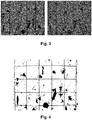
Fig. 3 shows the reflectance images of a region of a trap at two spectral ranges corresponding to short wavelengths (left) and long wavelengths (right). -
Fig. 4 shows an example of themask 1 resulting from the application of the first algorithm. The white areas correspond to the background (values = 1) and the black areas correspond to a grid/insects/particles (values = 0). -
Fig. 5 shows an example of themask 2 resulting from combining the first and second algorithms (in intensities and area) for removing the insects different from the red scale and the grid from the captured image in the spectral range corresponding to shorter wavelengths. The black regions (values = 0) indicate the objects to be removed corresponding to insects and particles of large size and the grid of the trap. -
Fig. 6 shows an example of a REDIN image once applied to the mask ofFig. 5 . -
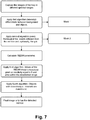
Fig. 7 schematically shows another embodiment of a method for the automatic counting of the California red scale in a trap. - A system and methods are provided for the automatic counting of insects, in particular the California red scale, in a trap based on the acquisition and the analysis of spectral and morphological information. In the following description, by way of explanation, several specific details are explained for counting California red scale (Aonidiella aurantii, red scale or red lice), in order to provide a thorough understanding of the present invention. In any case, it must be understood that, for counting other insects different from red scale, the order of the different implemented steps and/or of the described ranges and parameters can be modified without departing from the scope of protection of the present invention.
- Referring to
Fig. 1 , therein an embodiment of the system (or device) proposed for counting the red scale is shown. According to this embodiment, the system comprises atrap 13; anacquisition system 10 formed by one or more cameras, CCD or CMOS cameras for example, amongst others; multiplexedillumination devices 11, in particular light sources which emit, at least, in one spectral band or range of the electromagnetic spectrum, for example two light emitting diodes LEDs; and acomputing unit 14, such as a computer, a (physical or cloud-based) server, a tablet, a smart mobile communication device, or any other programmable hardware device, for executing/implementing algorithms based on computer-aided viewing on the images acquired by theacquisition system 10 taking spectral and morphological parameters of the insects to be detected into account. It must be pointed out that thecomputing unit 14 can be built into the same system/device or can be remote thereto. Thecomputing unit 14 can communicate with theacquisition system 10 either wirelessly or by means of a wire. - The data or information calculated by the
computing unit 14 can also be visualized through the software application o through a webpage, in the computing unit itself, or in a different computing unit and operatively connected/in communication with thecomputing unit 14. - In particular, the spectral ranges corresponding to the red scale are from 300 nm to 500 nm (first spectral range) and from 600 nm to 900 nm (second spectral range), approximately.
- In addition, the system/device of
Fig. 1 also includespolarizers 15 arranged in front of theacquisition system 10 and in front of theillumination devices 11; and ascanning system 16, such as a linear shifter, amongst others, which allows for the sequentially assessing oftraps 13 of large dimensions. It must be pointed out that thesepolarizers 15 and thescanning system 16 are optional. In other embodiments, the proposed system/device might not include them or might only include one of them. In addition, it must be pointed out that the proposed system/device only needs to include oneillumination device 11 configured to emit in at least two different spectral ranges. -
Fig. 2 shows an embodiment of a method for counting the California red scale. The method of this embodiment comprises acquiring, by means of theacquisition system 10, a series of images of thetrap 13, or of a portion of thetrap 13. The images are acquired once thetrap 13, or a portion thereof, has been illuminated, uniformly, under, at least, both previously described spectral ranges. - The measuring geometry (illumination/observation) can vary to avoid unwanted reflections on the images. This can consist, for example, in illuminating and carrying out the capture in a direction perpendicular to the sample, that is, in the normal direction (d/0º = diffused illumination/capture at 0º); or, in another example, in illuminating at greater angles relative to the normal direction for keeping the reflections from entering the
acquisition system 10, such as is shown inFig. 1 , wherein the illumination is carried out positioning thelight sources 11 at approximately 45º relative to the normal. Instead of varying the measuring geometry, saidpolarizers 15 can be used in front of the illumination device/s 11 and/or in front of theacquisition system 10, varying the relative position of their polarization axes for reducing the specular reflections in the images. In particular, the situation wherein the specular reflections are minimized is when the axes of thepolarizers 15 are perpendicular to each other. - Continuing the explanation of
Fig. 2 , subsequent to the image acquisition, the detection and counting of the red scale are undertaken. To that end, first the detection and later removal of the insects from thetrap 13 which are not red scale (generally, of greater size), and optionally, the removal of the grid from the trap 13 (often, traps contain a dark grid for helping in the manual counting of the insects and with the aid of an optical magnification system) are carried out making use of the intensity and morphological characteristics of the insects (or other adhered particles, dust for example) in the images. To that end, a first algorithm is executed which applies an intensity threshold to at least one of the acquired images in one of the two spectral ranges (in particular, the range corresponding to the shorter wavelengths as it is the one that presents greater contrast between the insects and the trap background). - Said intensity threshold can be obtained, for example, applying the Otsu method, which is based on the discriminating analysis of the histogram of the image in intensities (digital levels). That is, an intensity limit is established to differentiate between the white background and the objects (grid/insects/particles) thereon, which are darker (that is, the grid (if present), all the insects, including the red scale, and other particles); the values of the image over this threshold are considered background and those below the threshold are considered belonging to the grid/insects/particles. Thus, a first mask is obtained with values equal to 1 for the pixels corresponding to the background and equal to 0 for the pixels wherein objects are present (
Fig. 4 ). - Other alternative methods to the Otsu method are the entropy or k-mean methods, amongst others.
- For keeping the red scale in the image and removing the rest of insects of greater size and, optionally, the grid therefrom, a second algorithm is applied on the first mask. An area value is established in the number of pixels and all those objects over this value are kept in the mask, which is established above the size of the red scale.
Fig. 5 shows the result of this process for a region of thetrap 13. ComparingFig. 5 withFig. 4 , it is observed that the smaller-sized objects, such as the red scale, are not considered in this second mask so as not to remove them from the images. - Often, the filtering consisting in the application of the first and second algorithms (intensity and area) is not enough as there are objects of the size of the red scale that are not removed effectively, such as, for example, parts of insects that have been fragmented and particles floating in air (dust, plant fragments, etc.) of similar size. For the removal of these, the proposed method comprises calculating a parameter which relates an intensity value of the two acquired images based on their spectral range. To quantify said ratio, known as REDIN, in an embodiment, the following equation is applied on a pixel-by-pixel base in the acquired images:

1 (i, j) and I Δλ2 (i, j)) are the pixel (i, j) intensities of the acquired images in the spectral range corresponding to the short and long wavelengths, respectively; REDIN (i,j) is the resulting image which contains the values of the division of the image intensities at said wavelengths. In addition, a second mask shown inFig. 5 is applied to this image (REDIN). -
Fig. 6 shows an example of the REDIN image once the masks are applied, wherein mainly the red scale with high intensity (white dots) are distinguished, whereas the other insects, and optionally the grid, have been removed (black areas). - Once the REDIN image has been calculated and the referred masks have been applied, a new threshold is defined based on the spectral properties which allow to distinguish the red scale from other insects. To that end, a third algorithm is executed which establishes an intensity threshold on REDIN to locate the red scale with greater precision. In an embodiment, a threshold value of 3 is established. Therefore, the objects of the
trap 13, or portion of thetrap 13, with a REDIN parameter value ≥ 3 are considered red scale. - Referring now to
Fig. 7 , another embodiment of a counting method of the California red scale is shown. In addition to the steps described inFig. 2 , in this embodiment, the third algorithm also comprises applying a pixel connectivity threshold for considering if an insect is a red scale or not and establishing an area range associated with the red scale, that is, based on the morphological properties of the insects to be detected. In an embodiment, a connectivity threshold of 8 is set. Therefore, after the application of the third algorithm, pixels with a REDIN value ≥ 3 and a connectivity of 8 will be considered red scale if they present an area within the established range. The connectivity is applied to each pixel and it is assessed if this and its 8 neighbouring pixels present a REDIN value equal to or greater than the set threshold; if they do and they jointly form an area within the established range, they are counted as red scale and if not, they are discarded. - Likewise, the detected objects are also mistakenly filtered as red scale because they have a similar size. To that end, a fourth algorithm is applied based on the eccentricity. This way, elongated insect remains are removed, such as legs usually are (maximum eccentricity ∼ 1). Eccentricity is defined as the ratio of the distance between a focal point of an ellipse and its major axis, with values comprised between 0 (circle) and 1 (line). In an embodiment, the more elongated objects are removed from the image, with an eccentricity greater than 0.95, which are assigned a minimum intensity or digital value (0), whereas the rest of the pixels are assigned a maximum value (1).
- In an embodiment, prior to the processing of the acquired images for carrying out the counting of the insects, it is necessary to condition them so that their intensity levels are comparable. In a first approach, this can be achieved by means of the following reflectance calculation from the intensity values of each pixel of the captured images:

trap 13, a dark image taken with the illumination device/s 11 turned off and an image of a reference target (white sample with a high spectral reflectance in all of the wavelengths), respectively. The use of the dark image allows to remove the possible noise generated by theacquisition system 10 electronics. On the other hand, the capture of the reference target image is used to compensate for the small unevenness of the illumination in thetrap 13 plane. The reference target calibration in terms of spectral reflectance (or equivalent) is included in k. This equation is applied for each of the captured images to the different spectral ranges considered. - As an alternative to this first approach, the reference target and the dark image measurements can be omitted although, to guarantee that the differences in terms of intensity between the acquired (raw) images at different wavelengths are due to the insects themselves, it is necessary to carry out an initial calibration of the
acquisition system 10 which consists in setting the acquisition parameters (exposure time, aperture of the lens, etc.) equal for all the spectral ranges (wavelengths) used, and regulating the output of eachillumination device 11 such that the average digital level of the image of a uniform white sample be the same when thetrap 13 is illuminated at different wavelengths. With the same objective, another alternative is setting the output of the illumination device/s 11 but varying the acquisition parameters of the acquisition system 10 (for example, the exposure time) for each of the spectral ranges used. - The proposed invention can be implemented in hardware, software, firmware or any combination thereof. If it is implemented in software, the functions can be stored on or be coded such as one or more instructions or codes in a computer-readable medium.
- The scope of the present invention is defined in the attached claims.
Claims (15)
- A method for the automatic counting of the number of insects in a trap, the method comprising:acquiring, by an acquisition system, a plurality of images of a trap or of a portion of the trap,
wherein the plurality of images are acquired for at least two different spectral ranges, a first spectral range and a second spectral range, after having illuminated the trap, or portion of the trap, with light at said two different spectral ranges, and
wherein the trap, or portion of the trap, contains a series of objects adhered thereto, wherein the objects include insects of one or several types, and optionally other particles; andcounting, by a processor, the number of insects of a first type of said insects included in the trap, or portion of the trap, through the detection and differentiation of the insects of said first type taking spectral and morphological parameters thereof into account. - A method according to claim 1, wherein the counting comprises:executing a first algorithm on at least one of the acquired images in one of the two different spectral ranges, wherein the first algorithm comprises applying an intensity threshold to said image, providing a first mask as a result with values equal to 1 for the image pixels corresponding to the background and equal to 0 for the image pixels which comprise objects;executing a second algorithm on said first mask, wherein the second algorithm comprises applying an area threshold to a number of areas of the first mask with pixel values equal to 0 and assigning a value of 1 to the areas with an area value below said area threshold, providing a second mask as a result;calculating a parameter which relates an intensity value of both acquired images based on their spectral range and applying the second mask on the calculated parameter, providing a new image; andexecuting a third algorithm on said provided new image, wherein the objects of the trap, or portion of the trap, with a value of said calculated parameter greater than or equal to a set threshold value are considered insects of said first type.
- The method according to claim 2, wherein the third algorithm also comprises applying a pixel connectivity threshold to the provided new image, establishing an area range associated with the insect of the first type, and using said pixel connectivity threshold for considering if an insect is of the first type or not, as long as its size falls within the established area range.
- The method according to claim 2 or 3, further comprising executing a fourth algorithm, based on eccentricity, wherein the method comprises removing from said new image the objects with an eccentricity value greater than a given eccentricity threshold value.
- A method according to any one of the previous claims, wherein before the counting of the insects of the first type the method comprises applying a conditioning algorithm on the acquired images, wherein the conditioning algorithm comprises:calculating a number of reflectances of the first type of insects from a number of intensity values of each pixel of the acquired images; orcarrying out a calibration of said acquisition system, before the acquisition of the plurality of images, wherein the calibration comprises setting, at least, the same acquisition parameters of the acquisition system for said two different spectral ranges.
- The method of claim 2, wherein the first algorithm comprises the Otsu, entropy or k-mean methods.
- The method of claim 2 or 6, wherein the first algorithm is carried out using the image corresponding to the first spectral range.
- The method according to any one of the previous claims, wherein the illumination and the acquisition are carried out in a direction perpendicular to the trap, or portion of the trap, or with a certain angle relative to the trap, or portion of the trap.
- The method according to any one of the previous claims, wherein the first type of insect is the California red scale.
- The method according to any one of the previous claims, wherein the first spectral range is comprised between 300-500 nm and the second spectral range is comprised between 600-900 nm.
- A system for the automatic counting of the number of insects in a trap, comprising:a trap (13) which contains a series of objects adhered thereto, wherein the objects include insects of one or several types, and optionally other particles;one or more illumination devices (11) configured to emit light towards the trap (13), or towards a portion of the trap (13), in at least one spectral range;an acquisition system (10), operatively connected to said one or more illumination devices (11), and configured to acquire a plurality of images of the trap (13), or of the portion of the trap (13), wherein the plurality of images are acquired for at least two different spectral ranges; anda computing unit (14) including one or more processors and at least one memory, wherein said one or more processors are adapted to count the number of insects of a first type of said insects included in the trap (13), or portion of the trap (13), through the detection and differentiation of the insects of said first type taking spectral and morphological parameters thereof into account.
- The system of claim 11, further comprising one or more polarizers (15) arranged in front of the acquisition system (10) and/or in front of the illumination device (11).
- The system of claim 11 or 12, further comprising a scanning system (16), operatively connected to said one or more illumination devices (11) and/or to the acquisition system (10), to carry out a sequential scanning of other portions of the trap (13).
- The system according to any one of claims 11 to 13, wherein the first type of insects is the California red scale and wherein the first spectral range is comprised between 300-500 nm and the second spectral range is comprised between 600-900 nm.
- A computer program product including code instructions, which, when implemented in a computing device, execute a method according to any one of claims 1 to 10.
Priority Applications (8)
| Application Number | Priority Date | Filing Date | Title |
|---|---|---|---|
| EP20382241.6A EP3885978A1 (en) | 2020-03-27 | 2020-03-27 | Method, system and computer programs for the automatic counting of the number of insects in a trap |
| PCT/EP2021/056775 WO2021191012A1 (en) | 2020-03-27 | 2021-03-17 | Method, system and computer programs for the automatic counting of the number of insects in a trap |
| AU2021240899A AU2021240899A1 (en) | 2020-03-27 | 2021-03-17 | Method, system and computer programs for the automatic counting of the number of insects in a trap |
| ES21711892T ES2966765T3 (en) | 2020-03-27 | 2021-03-17 | Procedure, system and computer programs for automatic counting of the number of insects in a trap |
| PE2022002096A PE20230010A1 (en) | 2020-03-27 | 2021-03-17 | PROCEDURE, SYSTEM AND COMPUTER PROGRAMS FOR THE AUTOMATIC COUNT OF THE NUMBER OF INSECTS IN A TRAP |
| EP21711892.6A EP4128018B1 (en) | 2020-03-27 | 2021-03-17 | Method, system and computer programs for the automatic counting of the number of insects in a trap |
| US17/915,037 US12423829B2 (en) | 2020-03-27 | 2021-03-17 | Method, system and computer programs for the automatic counting of the number of insects in a trap |
| CL2022002581A CL2022002581A1 (en) | 2020-03-27 | 2022-09-23 | Procedure, system and computer programs for the automatic counting of the number of insects in |
Applications Claiming Priority (1)
| Application Number | Priority Date | Filing Date | Title |
|---|---|---|---|
| EP20382241.6A EP3885978A1 (en) | 2020-03-27 | 2020-03-27 | Method, system and computer programs for the automatic counting of the number of insects in a trap |
Publications (1)
| Publication Number | Publication Date |
|---|---|
| EP3885978A1 true EP3885978A1 (en) | 2021-09-29 |
Family
ID=70189875
Family Applications (2)
| Application Number | Title | Priority Date | Filing Date |
|---|---|---|---|
| EP20382241.6A Withdrawn EP3885978A1 (en) | 2020-03-27 | 2020-03-27 | Method, system and computer programs for the automatic counting of the number of insects in a trap |
| EP21711892.6A Active EP4128018B1 (en) | 2020-03-27 | 2021-03-17 | Method, system and computer programs for the automatic counting of the number of insects in a trap |
Family Applications After (1)
| Application Number | Title | Priority Date | Filing Date |
|---|---|---|---|
| EP21711892.6A Active EP4128018B1 (en) | 2020-03-27 | 2021-03-17 | Method, system and computer programs for the automatic counting of the number of insects in a trap |
Country Status (7)
| Country | Link |
|---|---|
| US (1) | US12423829B2 (en) |
| EP (2) | EP3885978A1 (en) |
| AU (1) | AU2021240899A1 (en) |
| CL (1) | CL2022002581A1 (en) |
| ES (1) | ES2966765T3 (en) |
| PE (1) | PE20230010A1 (en) |
| WO (1) | WO2021191012A1 (en) |
Families Citing this family (1)
| Publication number | Priority date | Publication date | Assignee | Title |
|---|---|---|---|---|
| US20220232813A1 (en) * | 2021-01-23 | 2022-07-28 | PestNotify Patent Holdco, LLC | Insect Trap and Classification System |
Citations (8)
| Publication number | Priority date | Publication date | Assignee | Title |
|---|---|---|---|---|
| US20050025357A1 (en) * | 2003-06-13 | 2005-02-03 | Landwehr Val R. | Method and system for detecting and classifying objects in images, such as insects and other arthropods |
| GB2480496A (en) | 2010-05-21 | 2011-11-23 | Henry James Innes Baxendell | Method and apparatus for the monitoring and control of pests in honeybee colonies |
| CN106489876A (en) | 2016-09-28 | 2017-03-15 | 浙江大学 | A kind of Agriculture field pests monitoring trap based on high light spectrum image-forming |
| CN107484732A (en) | 2017-08-18 | 2017-12-19 | 昆明理工大学 | A kind of device and method for automatically counting, slaughtering field borer population |
| US20190000059A1 (en) | 2016-01-04 | 2019-01-03 | Szabolcs Marka | Automated Multispectral Detection, Identification and Remediation of Pests and Disease Vectors |
| US20190034736A1 (en) * | 2017-07-14 | 2019-01-31 | Illumitex, Inc. | System and Method for Identifying a Number of Insects in a Horticultural Area |
| EP3482630A1 (en) | 2017-11-13 | 2019-05-15 | EFOS d.o.o. | Method, system and computer program for performing a pest forecast |
| US20190364871A1 (en) | 2018-05-31 | 2019-12-05 | Semiosbio Technologies Inc. | Arthropod trapping apparatus and method |
Family Cites Families (4)
| Publication number | Priority date | Publication date | Assignee | Title |
|---|---|---|---|---|
| US8400348B1 (en) * | 1999-05-14 | 2013-03-19 | Applied Information Movement and Management, Inc. | Airborne biota monitoring and control system |
| US11695826B2 (en) * | 2017-08-14 | 2023-07-04 | Comcast Cable Communications, Llc | Assignment of processing resource based on session data |
| US11582963B2 (en) * | 2018-04-25 | 2023-02-21 | Terrier Technologies, Llc | Flying insect light trap monitoring system |
| US11003908B2 (en) * | 2019-07-23 | 2021-05-11 | Regents Of The University Of Minnesota | Remote-sensing-based detection of soybean aphid induced stress in soybean |
-
2020
- 2020-03-27 EP EP20382241.6A patent/EP3885978A1/en not_active Withdrawn
-
2021
- 2021-03-17 US US17/915,037 patent/US12423829B2/en active Active
- 2021-03-17 AU AU2021240899A patent/AU2021240899A1/en active Pending
- 2021-03-17 WO PCT/EP2021/056775 patent/WO2021191012A1/en not_active Ceased
- 2021-03-17 PE PE2022002096A patent/PE20230010A1/en unknown
- 2021-03-17 EP EP21711892.6A patent/EP4128018B1/en active Active
- 2021-03-17 ES ES21711892T patent/ES2966765T3/en active Active
-
2022
- 2022-09-23 CL CL2022002581A patent/CL2022002581A1/en unknown
Patent Citations (8)
| Publication number | Priority date | Publication date | Assignee | Title |
|---|---|---|---|---|
| US20050025357A1 (en) * | 2003-06-13 | 2005-02-03 | Landwehr Val R. | Method and system for detecting and classifying objects in images, such as insects and other arthropods |
| GB2480496A (en) | 2010-05-21 | 2011-11-23 | Henry James Innes Baxendell | Method and apparatus for the monitoring and control of pests in honeybee colonies |
| US20190000059A1 (en) | 2016-01-04 | 2019-01-03 | Szabolcs Marka | Automated Multispectral Detection, Identification and Remediation of Pests and Disease Vectors |
| CN106489876A (en) | 2016-09-28 | 2017-03-15 | 浙江大学 | A kind of Agriculture field pests monitoring trap based on high light spectrum image-forming |
| US20190034736A1 (en) * | 2017-07-14 | 2019-01-31 | Illumitex, Inc. | System and Method for Identifying a Number of Insects in a Horticultural Area |
| CN107484732A (en) | 2017-08-18 | 2017-12-19 | 昆明理工大学 | A kind of device and method for automatically counting, slaughtering field borer population |
| EP3482630A1 (en) | 2017-11-13 | 2019-05-15 | EFOS d.o.o. | Method, system and computer program for performing a pest forecast |
| US20190364871A1 (en) | 2018-05-31 | 2019-12-05 | Semiosbio Technologies Inc. | Arthropod trapping apparatus and method |
Non-Patent Citations (1)
| Title |
|---|
| NAIT AMARA BAYA ET AL: "Hydrothermal alteration mapping and structural features in the Guelma basin (Northeastern Algeria): contribution of Landsat-8 data", ARABIAN JOURNAL OF GEOSCIENCES, SPRINGER BERLIN HEIDELBERG, BERLIN/HEIDELBERG, vol. 12, no. 3, 31 January 2019 (2019-01-31), pages 1 - 14, XP036700513, ISSN: 1866-7511, [retrieved on 20190131], DOI: 10.1007/S12517-019-4224-4 * |
Also Published As
| Publication number | Publication date |
|---|---|
| US12423829B2 (en) | 2025-09-23 |
| EP4128018C0 (en) | 2023-09-27 |
| AU2021240899A1 (en) | 2022-10-27 |
| EP4128018B1 (en) | 2023-09-27 |
| CL2022002581A1 (en) | 2023-05-05 |
| US20230162365A1 (en) | 2023-05-25 |
| PE20230010A1 (en) | 2023-01-09 |
| ES2966765T3 (en) | 2024-04-24 |
| WO2021191012A1 (en) | 2021-09-30 |
| EP4128018A1 (en) | 2023-02-08 |
Similar Documents
| Publication | Publication Date | Title |
|---|---|---|
| US7123750B2 (en) | Automated plant analysis method, apparatus, and system using imaging technologies | |
| CN108369635B (en) | Method for aerial image acquisition and analysis | |
| US20200170226A1 (en) | Method and System for Underwater Hyperspectral Imaging of Fish | |
| JP6913953B2 (en) | Digitization method of quality standard of meat quality grade, digital processing method of quality evaluation using the quality standard, automatic meat quality evaluation device using them, and software installed in it | |
| Lee et al. | Correlation analysis of hyperspectral imagery for multispectral wavelength selection for detection of defects on apples | |
| Wouters et al. | Multispectral detection of floral buds for automated thinning of pear | |
| CA2879220A1 (en) | Kernel counter | |
| CN115361865A (en) | Real-time monitoring and early detection system for insect activity in grain during storage | |
| Heitschmidt et al. | Improved hyperspectral imaging system for fecal detection on poultry carcasses | |
| EP4128018B1 (en) | Method, system and computer programs for the automatic counting of the number of insects in a trap | |
| JP7305902B1 (en) | Yellowing information acquisition method and yellowing information acquisition system | |
| RU2388203C2 (en) | Device for detection of homogeneity in batch of seeds | |
| Vroegindeweij et al. | Object discrimination in poultry housing using spectral reflectivity | |
| JP5246798B2 (en) | Biological tissue identification apparatus and method | |
| JPH0534281A (en) | Appearance evaluation device for melon | |
| JPWO2017018150A1 (en) | Optical sensor device, optical sensor unit and optical sensor system | |
| US12276612B2 (en) | Active illumination-based multispectral contamination sanitation inspection system | |
| WO2017217325A1 (en) | Data recovery device, microscope system, and data recovery method | |
| Yao et al. | Spectral angle mapper classification of fluorescence hyperspectral image for aflatoxin contaminated corn | |
| Park et al. | Line-scan hyperspectral imaging for real-time poultry fecal detection | |
| Xing et al. | Combining multispectral reflectance and fluorescence imaging for identifying bruises and stem-end/calyx regions on Golden Delicious apples | |
| ES1247165U (en) | DEVICE FOR AUTOMATIC COUNTING OF THE NUMBER OF INSECTS IN A TRAP | |
| García-Guerra et al. | Use of spectral information for red scale pest control | |
| JP2024177832A (en) | Method and system for diagnosing an object | |
| JP2025008444A (en) | Method and system for acquiring information on yellowing, and method for inspecting plant diseases |
Legal Events
| Date | Code | Title | Description |
|---|---|---|---|
| PUAI | Public reference made under article 153(3) epc to a published international application that has entered the european phase |
Free format text: ORIGINAL CODE: 0009012 |
|
| STAA | Information on the status of an ep patent application or granted ep patent |
Free format text: STATUS: THE APPLICATION HAS BEEN PUBLISHED |
|
| AK | Designated contracting states |
Kind code of ref document: A1 Designated state(s): AL AT BE BG CH CY CZ DE DK EE ES FI FR GB GR HR HU IE IS IT LI LT LU LV MC MK MT NL NO PL PT RO RS SE SI SK SM TR |
|
| STAA | Information on the status of an ep patent application or granted ep patent |
Free format text: STATUS: THE APPLICATION IS DEEMED TO BE WITHDRAWN |
|
| 18D | Application deemed to be withdrawn |
Effective date: 20220330 |