EP3885952A1 - Learning identification device, learning identification method, and learning identification program - Google Patents
Learning identification device, learning identification method, and learning identification program Download PDFInfo
- Publication number
- EP3885952A1 EP3885952A1 EP18942817.0A EP18942817A EP3885952A1 EP 3885952 A1 EP3885952 A1 EP 3885952A1 EP 18942817 A EP18942817 A EP 18942817A EP 3885952 A1 EP3885952 A1 EP 3885952A1
- Authority
- EP
- European Patent Office
- Prior art keywords
- learning
- recognition
- processing
- unit
- output
- Prior art date
- Legal status (The legal status is an assumption and is not a legal conclusion. Google has not performed a legal analysis and makes no representation as to the accuracy of the status listed.)
- Granted
Links
Images





Classifications
-
- G—PHYSICS
- G06—COMPUTING OR CALCULATING; COUNTING
- G06F—ELECTRIC DIGITAL DATA PROCESSING
- G06F21/00—Security arrangements for protecting computers, components thereof, programs or data against unauthorised activity
- G06F21/50—Monitoring users, programs or devices to maintain the integrity of platforms, e.g. of processors, firmware or operating systems
- G06F21/55—Detecting local intrusion or implementing counter-measures
-
- G—PHYSICS
- G06—COMPUTING OR CALCULATING; COUNTING
- G06F—ELECTRIC DIGITAL DATA PROCESSING
- G06F21/00—Security arrangements for protecting computers, components thereof, programs or data against unauthorised activity
- G06F21/70—Protecting specific internal or peripheral components, in which the protection of a component leads to protection of the entire computer
- G06F21/71—Protecting specific internal or peripheral components, in which the protection of a component leads to protection of the entire computer to assure secure computing or processing of information
- G06F21/75—Protecting specific internal or peripheral components, in which the protection of a component leads to protection of the entire computer to assure secure computing or processing of information by inhibiting the analysis of circuitry or operation
-
- G—PHYSICS
- G06—COMPUTING OR CALCULATING; COUNTING
- G06N—COMPUTING ARRANGEMENTS BASED ON SPECIFIC COMPUTATIONAL MODELS
- G06N3/00—Computing arrangements based on biological models
- G06N3/02—Neural networks
- G06N3/04—Architecture, e.g. interconnection topology
- G06N3/045—Combinations of networks
-
- G—PHYSICS
- G06—COMPUTING OR CALCULATING; COUNTING
- G06N—COMPUTING ARRANGEMENTS BASED ON SPECIFIC COMPUTATIONAL MODELS
- G06N3/00—Computing arrangements based on biological models
- G06N3/02—Neural networks
- G06N3/04—Architecture, e.g. interconnection topology
- G06N3/049—Temporal neural networks, e.g. delay elements, oscillating neurons or pulsed inputs
-
- G—PHYSICS
- G06—COMPUTING OR CALCULATING; COUNTING
- G06N—COMPUTING ARRANGEMENTS BASED ON SPECIFIC COMPUTATIONAL MODELS
- G06N3/00—Computing arrangements based on biological models
- G06N3/02—Neural networks
- G06N3/04—Architecture, e.g. interconnection topology
- G06N3/0499—Feedforward networks
-
- G—PHYSICS
- G06—COMPUTING OR CALCULATING; COUNTING
- G06N—COMPUTING ARRANGEMENTS BASED ON SPECIFIC COMPUTATIONAL MODELS
- G06N3/00—Computing arrangements based on biological models
- G06N3/02—Neural networks
- G06N3/08—Learning methods
-
- G—PHYSICS
- G06—COMPUTING OR CALCULATING; COUNTING
- G06N—COMPUTING ARRANGEMENTS BASED ON SPECIFIC COMPUTATIONAL MODELS
- G06N3/00—Computing arrangements based on biological models
- G06N3/02—Neural networks
- G06N3/04—Architecture, e.g. interconnection topology
- G06N3/047—Probabilistic or stochastic networks
Definitions
- the present invention relates to a learning-and-recognition apparatus, a learning-and-recognition method, and a learning-and-recognition program and, in particular, relates to countermeasures against timing attacks on deep learning.
- Adversarial examples can be generated artificially.
- Non-Patent Literature 1 countermeasures against attacks using adversarial examples include a built-in detection function and introducing and learning anomalous data. Concealing internal parameters or probability information that is output, each of which serves as a clue for an attack, is considered to be one of effective countermeasures. In Non-Patent Literature 1, consideration is not given to information leakage based on the processing time of deep learning.
- Patent Literature 1 a countermeasure against leakage is implemented by executing dummy processing while encryption or decryption is being executed, delaying the execution start time of encryption or decryption, causing the amounts of change in data to be uniform, or changing a processing order.
- Patent Literature 1 JP 2014-192793 A
- Non-Patent Literature 1 Xiaoyong Yuana, et al., "Adversarial Examples: Attacks and Defenses for Deep Learning” arXiv:1712.07107v3 [cs.LG] 7 Jul 2018
- An attacker on deep learning may generate adversarial examples based on the relationship between input data and the processing time. Since the attacker focuses on the relationship between input data and the processing time, a problem is that attacks cannot be prevented by concealing internal parameters or probability information, which is a conventional countermeasure.
- a learning-and-recognition apparatus includes
- a time control unit causes the processing time on input data to be independent of the input data, so that defense against attacks on a learning-and-recognition apparatus can be provided.
- Countermeasures against timing attacks to be described in the embodiments to be discussed hereinafter are to cause the processing time on input data to be independent of the input data.
- the countermeasures against timing attacks to be described in the embodiments are to cause a time period from an input time point of input data to an output time point of output data to be independent of the input data, and output the output data.
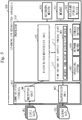
- Fig. 1 is a configuration diagram of a learning-and-recognition apparatus 200.
- the learning-and-recognition apparatus 200 is an apparatus that performs recognition work on input data while learning the input data.
- the learning-and-recognition apparatus 200 has a learning-and-recognition unit 102.
- the learning-and-recognition unit 102 performs learning-and-recognition processing on input data 101 and outputs output data 103.
- the learning-and-recognition unit 102 conducts deep learning.
- the learning-and-recognition unit 102 has a plurality of neural network layers 1001.
- Each of the neural network layers 1001 executes a plurality of perceptron processes 1002.
- the learning-and-recognition unit 102 executes the perceptron processes 1002 in parallel as calculations of each of the neural network layers 1001.
- the learning-and-recognition unit 102 outputs calculation results of the perceptron processes 1002 of the final neural network layer 1001.
- the learning-and-recognition apparatus 200 has a time control unit 111.
- the time control unit 111 causes the processing time on the input data 101 by the learning-and-recognition unit 102 to be independent of the input data 101.
- the time control unit 111 has an input control unit 112.
- the input control unit 112 performs processing on the input data 101 to change the processing time of the learning-and-recognition unit 102.
- the input control unit 112 has a data masking unit 201.
- the data masking unit 201 applies random noise to the input data 101.
- the data masking unit 201 to apply random noise to the input data 101 is added anterior to the learning-and-recognition unit 102, so as to cause the input data 101 and the processing time of the learning-and-recognition apparatus 200 to be independent of each other.
- Training-and-recognition processing processing executed by the learning-and-recognition apparatus 200.
- Processing time of learning-and-recognition processing a time period from a time point when the input data 101 is input to the learning-and-recognition apparatus 200 to a time point when the output data 103 is output from the learning-and-recognition apparatus 200.
- Processing time of the learning-and-recognition apparatus 200 the same as “processing time of learning-and-recognition processing”.
- Processing of the learning-and-recognition unit 102 processing executed by the learning-and-recognition unit 102.
- Processing time of the learning-and-recognition unit 102 a time period from a time point when the input data 101 is input to the learning-and-recognition unit 102 to a time point when the output data 103 is output from the learning-and-recognition unit 102.
- the learning-and-recognition apparatus 200 includes a processor 910.
- the learning-and-recognition apparatus 200 includes other hardware components, such as a memory 921, an auxiliary storage device 922, a communication interface 923, and a recording medium 920.
- the processor 910 is connected with other hardware components via signal lines and controls these other hardware components.
- the learning-and-recognition apparatus 200 includes the time control unit 111 and the learning-and-recognition unit 102 as functional elements.
- the functions of the time control unit 111 and the learning-and-recognition unit 102 are realized by software.
- the processor 910 is a device that executes a learning-and-recognition program.
- the learning-and-recognition program is a program for realizing the functions of the time control unit 111 and the learning-and-recognition unit 102.
- the processor 910 is an integrated circuit (IC) that performs operational processing.
- IC integrated circuit
- a specific example of the processor 910 is a central processing unit (CPU), a digital signal processor (DSP), or a graphics processing unit (GPU).
- CPU central processing unit
- DSP digital signal processor
- GPU graphics processing unit
- the memory 921 is a storage device to temporarily store data.
- a specific example of the memory 921 is a static random access memory (SRAM) or a dynamic random access memory (DRAM).
- SRAM static random access memory
- DRAM dynamic random access memory
- the recording medium 920 and the auxiliary storage device 922 are storage devices to store data.
- each of the recording medium 920 and the auxiliary storage device 922 is a hard disk drive (HDD).
- HDD hard disk drive
- Each of the recording medium 920 and the auxiliary storage device 922 may be a portable storage medium, such as a NAND flash, a flexible disk, an optical disc, a compact disc, or a digital versatile disk (DVD).
- a portable storage medium such as a NAND flash, a flexible disk, an optical disc, a compact disc, or a digital versatile disk (DVD).
- the communication interface 923 has the reception unit 901 to receive data and the transmission unit 902 to transmit data.
- the communication interface 923 has a communication chip, a network interface card (NIC), or the like.
- the learning-and-recognition program is read from the memory 921 into the processor 910 and executed by the processor 910.
- the memory 921 stores not only the learning-and-recognition program but also an operating system 607, a network driver 608, and a storage driver 609.
- the processor 910 executes the learning-and-recognition program while executing the operating system 607, the network driver 608, and the storage driver 609.
- the learning-and-recognition program, the operating system 607, the network driver 608, and the storage driver 609 may be stored in the auxiliary storage device 922.
- the learning-and-recognition program, the operating system 607, the network driver 608, and the storage driver 609 that are stored in the auxiliary storage device 922 are loaded into the memory 921 and executed by the processor 910.
- the learning-and-recognition apparatus 200 may include a plurality of processors as an alternative to the processor 910.
- the plurality of processors share execution of the learning-and-recognition program.
- Each of the processors is, like the processor 910, a device that executes the learning-and-recognition program.
- Data, information, signal values, and variable values that are used, processed, or output by the learning-and-recognition program are stored in the memory 921 or the auxiliary storage device 922, or stored in a register or a cache memory in the processor 910.
- the "unit” of each of the time control unit 111 and the learning-and-recognition unit 102 may be interpreted as “process”, “procedure”, or “step”.
- the "process” of each process of the time control unit 111 and the learning-and-recognition unit 102 may be interpreted as "program”, “program product”, or "computer readable storage medium recording a program”.
- the learning-and-recognition program causes a computer to execute each process, each procedure, or each step, where the "unit" of each of the units is interpreted as "process", “procedure”, or "step”.
- a learning-and-recognition method is a method performed by execution of the program by the learning-and-recognition apparatus 200.
- the program may be stored and provided in a computer readable recording medium.
- the program may be provided as a program product.
- the learning-and-recognition apparatus 200 may be realized by a processing circuit, such as a logic integrated circuit (IC), a gate array (GA), an application specific integrated circuit (ASIC), or a field-programmable gate array (FPGA).
- a processing circuit such as a logic integrated circuit (IC), a gate array (GA), an application specific integrated circuit (ASIC), or a field-programmable gate array (FPGA).
- a superordinate concept of a processor, a memory, a combination of a processor and a memory, and a processing circuit is referred to as processing circuitry. That is, each of a processor, a memory, a combination of a processor and a memory, and a processing circuit is a specific example of processing circuitry.
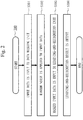
- Fig. 2 is a flowchart 300 illustrating operation of the learning-and-recognition method of the learning-and-recognition apparatus 200 of this embodiment. The following processing is realized by execution of the learning-and-recognition program by the processor 910.
- step S301 the input control unit 112 inputs, to the data masking unit 201, the input data 101 input to the reception unit 901 of the learning-and-recognition apparatus 200.
- step S302 the data masking unit 201 applies random noise to the input data 101.
- the intensity of noise to be applied by the data masking unit 201 is set to be equivalent to or greater than noise that would be applied by an attacker, and the upper limit is a level that does not affect processing of the learning-and-recognition unit 102.
- step S303 the data masking unit 201 inputs, to the learning-and-recognition unit 102, the input data to which the random noise has been applied.
- the learning-and-recognition unit 102 executes the perceptron processes 1002 in the plurality of neural network layers 1001.
- the processing time of input data to which random noise has not been applied and the processing time of input data to which random noise has been applied are different.
- Each of the neural network layers 1001 outputs calculation results of corresponding ones of the perceptron processes 1002.
- the neural network layer 1001 that is the final layer is a learning-and-recognition result.
- the learning-and-recognition unit 102 obtains the learning-and-recognition result from the input data 101 and outputs the learning-and-recognition result.
- step S304 the learning-and-recognition unit 102 outputs, to the transmission unit 902, the learning-and-recognition result as the output data 103 of the learning-and-recognition apparatus 200.
- the transmission unit 902 outputs the output data 103 to the outside.
- the time control unit 111 causes the processing time on the input data 101 by the learning-and-recognition unit 102 to be independent of the input data 101.
- the learning-and-recognition unit 102 performs learning-and-recognition processing on the input data 101, and outputs output data.
- the learning-and-recognition program of this embodiment causes a computer that executes learning-and-recognition processing to perform learning-and-recognition processing on the input data 101, to cause a time period from an input time point when the input data 101 is input to the learning-and-recognition unit 102 to an output time point when the output data 103 is output from the learning-and-recognition unit 102 to be independent of the input data, and to output the output data 103.
- the learning-and-recognition apparatus 200 of this embodiment is characterized in that means for processing the input data 101 is added anterior to the learning-and-recognition unit 102, so as to cause the input data 101 and the processing time of the learning-and-recognition unit 102 to be independent of each other.
- the learning-and-recognition apparatus 200 of this embodiment is characterized in that the means for processing the input data 101 is realized by means for applying random noise to the input data 101 of the learning-and-recognition apparatus 200.
- the data masking unit 201 to apply random noise to the input data 101 is added anterior to the learning-and-recognition unit 102, so as to cause the input data 101 and the processing time of the learning-and-recognition unit 102 to be independent of each other.
- the learning-and-recognition apparatus 200 of this embodiment provides a countermeasure against timing attacks by causing the processing time of the learning-and-recognition unit 102 to be a processing time dependent on the input data 101 to which random noise has been applied, by the data masking unit 201 to apply random noise to the input data 101.
- the learning-and-recognition apparatus 200 of this embodiment causes the processing time of the learning-and-recognition unit 102 to be dependent on the input data 101 to which random noise has been applied, so that defense against timing attacks that focus on the relationship between the input data 101 and the processing time can be provided.
- Fig. 3 is a configuration diagram of the learning-and-recognition apparatus 200.
- the learning-and-recognition apparatus 200 has the time control unit 111.
- the time control unit 111 has the input control unit 112.
- the input control unit 112 has the input time point distribution unit 401.
- the input time point distribution unit 401 randomizes an input time point when the input data 101 is input to the learning-and-recognition unit 102.
- the input time point distribution unit 401 to randomize an input time point is added anterior to the learning-and-recognition unit 102, so as to cause the input data 101 and the processing time of the learning-and-recognition apparatus 200 to be independent of each other.
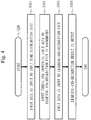
- Fig. 4 is a flowchart 500 illustrating operation of the learning-and-recognition method of the learning-and-recognition apparatus 200 of this embodiment. The following processing is realized by execution of the learning-and-recognition program by the processor 910.
- step S501 the input data 101 input to the learning-and-recognition apparatus 200 is input to the input time point distribution unit 401.
- step S502 the input time point distribution unit 401 randomizes an input time point when the input data 101 is input to the learning-and-recognition unit 102.
- the input time point distribution unit 401 randomizes a time period from a time point when the input data 101 is received by the reception unit 901 to a time point when the input data 101 is output to the learning-and-recognition unit 102.
- the randomization of the input time point is realized by dummy processing, wait processing, or the like.
- step S503 the input time point distribution unit 401 inputs the input data 101 to the learning-and-recognition unit 102 according to the randomized input time point.
- step S504 the learning-and-recognition unit 102 outputs a learning-and-recognition result as the output data 103.
- the learning-and-recognition apparatus 200 of this embodiment is characterized in that means for processing input data is added anterior to the learning-and-recognition unit, so as to cause the input data 101 and the processing time of the learning-and-recognition apparatus 200 to be independent of each other.
- the learning-and-recognition apparatus 200 of this embodiment is characterized in that the means for processing input data is realized by means for randomizing an input timing to the learning-and-recognition unit of the learning-and-recognition apparatus 200.
- the learning-and-recognition apparatus 200 of this embodiment provides a countermeasure against timing attacks by causing the processing time of the learning-and-recognition apparatus 200 to be a processing time dependent on an input time point that results in a randomized processing time, by the input time point distribution unit 401 to randomize an input time point of the input data 101.
- the learning-and-recognition apparatus 200 of this embodiment causes the processing time of the learning-and-recognition apparatus 200 to be dependent on a randomized input time point, so that defense against timing attacks that focus on the relationship between the input data 101 and the processing time can be provided.
- Fig. 5 is a configuration diagram of the learning-and-recognition apparatus 200.
- the output time point distribution unit 601 to randomize an output time point is added posterior to the learning-and-recognition unit 102, so as to cause the input data 101 and the processing time of the learning-and-recognition apparatus 200 to be independent of each other.
- the learning-and-recognition apparatus 200 has the time control unit 111.
- the time control unit 111 has an output control unit 113.
- the output control unit 113 performs processing on the output data 103 to change the processing time of the learning-and-recognition apparatus 200.
- the input control unit 112 has the output time point distribution unit 601.
- the output time point distribution unit 601 randomizes an output time point of the output data 103.
- the output time point distribution unit 601 to randomize an output time point of the output data 103 of the learning-and-recognition apparatus 200 is added posterior to the learning-and-recognition unit 102, so as to cause the input data 101 and the processing time of the learning-and-recognition apparatus 200 to be independent of each other.
- Fig. 6 is a flowchart 700 illustrating operation of the learning-and-recognition method of the learning-and-recognition apparatus 200 of this embodiment. The following processing is realized by execution of the learning-and-recognition program by the processor 910.
- step S701 the input data 101 input to the learning-and-recognition apparatus 200 is input to the learning-and-recognition unit 102.
- step S702 a learning-and-recognition result output from the learning-and-recognition unit 102 is input to the output time point distribution unit 601.
- step S703 the output time point distribution unit 601 randomizes an output time point of the output data 103 of the learning-and-recognition apparatus 200.
- the output time point distribution unit 601 randomizes a time period from an input time point when the output data 103 is input from the learning-and-recognition unit 102 to an output time point when it is output to the transmission unit 902.
- the randomization of the output time point is realized by dummy processing, wait processing, or the like.
- step S704 the output time point distribution unit 601 outputs, to the transmission unit 902, the learning-and-recognition result output from the learning-and-recognition unit 102, as the output data 103, in accordance with the randomized output time point.
- the learning-and-recognition apparatus 200 of this embodiment is characterized in that means for processing the output data 103 is added posterior to the learning-and-recognition unit 102, so as to cause the input data 101 and the processing time of the learning-and-recognition apparatus 200 to be independent of each other.
- the learning-and-recognition apparatus 200 of this embodiment is characterized in that the means for processing the output data 103 is realized by means for randomizing an output timing of the learning-and-recognition apparatus 200.
- the learning-and-recognition apparatus 200 of this embodiment provides a countermeasure against timing attacks by randomizing an output time point of the output data 103 by the output time point distribution unit 601, so as to cause the processing time of the learning-and-recognition apparatus 200 to be a processing time dependent on a randomized output time point.
- the learning-and-recognition apparatus 200 of this embodiment causes the processing time of the learning-and-recognition apparatus 200 to be dependent not on the input data 101 but on a randomized output time point of the output data 103, so that defense against timing attacks that focus on the relationship between the input data 101 and the processing time can be provided.
- Fig. 7 is a configuration diagram of the learning-and-recognition apparatus 200.
- the learning-and-recognition apparatus 200 has the time control unit 111.
- the time control unit 111 has the output control unit 113.
- the output control unit 113 has a time stamp generation unit 801 and an output time point adjustment unit 803.
- the time stamp generation unit 801 records, as a time stamp 802, an input time point when the input data 101 is input to the time stamp generation unit 801.
- the output time point adjustment unit 803 uses the time stamp 802 to cause a time period from the input time point of the input data 101 to an output time point of the output data 103 to be uniform.
- the output time point adjustment unit 803 sets the output time point of the output data 103 by adding a certain period of time to the input time point of the input data 101 indicated by the time stamp 802.
- Fig. 8 is a flowchart 900 illustrating operation of the learning-and-recognition method of the learning-and-recognition apparatus 200 of this embodiment. The following processing is realized by execution of the learning-and-recognition program by the processor 910.
- step S901 the input data 101 input to the learning-and-recognition apparatus 200 is input to the time stamp generation unit 801.
- step S902 the time stamp generation unit 801 generates a time stamp 802 according to the input time point of the input data 101.
- the time stamp 802 contains the input time point when the input data 101 is input to the time stamp generation unit 801.
- the time stamp 802 is stored in the memory 921.
- step S903 the time stamp generation unit 801 inputs, to the learning-and-recognition unit 102, the input data 101 for which the time stamp 802 has been recorded in the memory 921.
- step S904 the learning-and-recognition unit 102 inputs a learning-and-recognition result to the output time point adjustment unit 803.
- step S905 the output time point adjustment unit 803 refers to the time stamp 802 generated by the time stamp generation unit 801, and causes the processing time to be uniform.
- the time stamp generation unit 801 sets the output time point of the learning-and-recognition result to a time point resulting from adding a certain period of time to the input time point indicated by the time stamp 802.
- Causing the processing time to be uniform is realized by dummy processing, wait processing, or the like.
- step S906 the output time point adjustment unit 803 outputs, to the transmission unit 902, the learning-and-recognition result output from the learning-and-recognition unit 102, as the output data 103, in accordance with the output time point that causes the processing time to be uniform.
- the learning-and-recognition apparatus 200 of this embodiment is characterized in that means for processing the output data 103 is added posterior to the learning-and-recognition unit 102, so as to cause the input data 101 and the processing time of the learning-and-recognition apparatus 200 to be independent of each other.
- the learning-and-recognition apparatus 200 of this embodiment is characterized in that the means for processing the output data 103 is realized by means for generating a time stamp in advance of the learning-and-recognition unit 102 of the learning-and-recognition apparatus 200, and referring to the time stamp 802 and setting the output timing of the learning-and-recognition apparatus 200 so as to cause the processing time of the learning-and-recognition unit 102 to be uniform.
- the learning-and-recognition apparatus 200 of this embodiment adjusts the output time point of the output data 103, independently of the input data 101, by the time stamp generation unit 801 to record the input time point of the input data 101 and the output time point adjustment unit 803 to cause the processing time of the learning-and-recognition unit 102 to be uniform.
- the learning-and-recognition apparatus 200 of this embodiment adjusts the output time point of the output data 103 so as to cause the processing time of the learning-and-recognition apparatus 200 to be uniform, so that defense against timing attacks that focus on the relationship between the input data 101 and the processing time can be provided.
- Fig. 9 is a configuration diagram of the learning-and-recognition apparatus 200.
- the learning-and-recognition unit 102 has processes of a plurality of layers constituted by the neural network layers 1001.
- an output time point adjustment unit 1003 to cause output time points of processing results of perceptron processes of each neural network layer 1001 in the learning-and-recognition unit 102 to be random or uniform is added, so as to cause the input data 101 and the processing time of the learning-and-recognition unit 102 to be independent of each other.
- the learning-and-recognition apparatus 200 has the time control unit 111.
- the time control unit 111 has a processing control unit 114.
- the processing control unit 114 controls processing time points of the learning-and-recognition unit 102 to change processing times of the learning-and-recognition unit 102.
- the processing control unit 114 has a plurality of output time point adjustment units 1003.
- Each of the output time point adjustment units 1003 is provided posterior to a corresponding one of the neural network layers 1001.
- the neural network layers 1001 and the output time point adjustment units 1003 correspond to each other, and the number of the neural network layers 1001 and the number of the output time point adjustment units 1003 are equal. However, it is sufficient that there is at least one output time point adjustment unit 1003.
- Each of the output time point adjustment units 1003 causes output time points of each layer of the learning-and-recognition unit 102 to be random or causes learning time points of each layer of the learning-and-recognition unit 102 to be uniform.
- the output time point adjustment unit 1003 to cause output time points to be random or uniform is added to the perceptron processes 1002 of each layer of the neural network layers 1001 in the learning-and-recognition unit 102, so as to cause the input data 101 and the processing time of the learning-and-recognition unit 102 to be independent of each other.
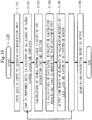
- Fig. 10 is a flowchart 1100 illustrating operation of the learning-and-recognition method of the learning-and-recognition apparatus 200 of this embodiment. The following processing is realized by execution of the learning-and-recognition program by the processor 910.
- step S1101 the input data 101 input to the learning-and-recognition apparatus 200 is input to the learning-and-recognition unit 102.
- the processor 910 performs processing from step S1102 to step S1105 in a loop in each layer until calculations of all layers of the neural network layers 1001 are completed.
- step S1103 the neural network layer 1001 executes the perceptron processes 1002.
- step S1104 the neural network layer 1001 inputs an output of calculation results of the perceptron processes 1002 to the output time point adjustment unit 1003.
- step S1105 the output time point adjustment unit 1003 receives the calculation results of the neural network layer 1001 as intermediate data 109, and causes output time points of the intermediate data 109 to be uniform or random.
- the output time point adjustment unit 1003 receives a plurality of processing results of a plurality of perceptron processes 1002 as a plurality of pieces of intermediate data 109, and outputs the plurality of pieces of intermediate data 109 by causing their output time points to be random or uniform.
- Causing the output time points of the plurality of pieces of intermediate data 109 to be uniform or random is realized by dummy processing, wait processing, or the like.
- the output time point adjustment unit 1003 receives a plurality of pieces of intermediate data 109 and simultaneously outputs the plurality of pieces of intermediate data 109, so as to cause the output time points of the intermediate data 109 to be uniform.
- the output time point adjustment unit 1003 receives a plurality of pieces of intermediate data 109 and outputs the plurality of pieces of intermediate data 109 at mutually random time points, so as to cause the output time points of the plurality of pieces of intermediate data 109 to be random.
- Causing the output time points of the plurality of pieces of intermediate data 109 to be uniform or random may be realized as part of the perceptron processes 1002.
- step S1106 after calculations of all layers of the neural network layers 1001 have been completed, the learning-and-recognition unit 102 outputs a learning-and-recognition result to the transmission unit 902 as the output data 103.
- the learning-and-recognition apparatus 200 of this embodiment is characterized in that means for processing intermediate data 109 is added between the perceptron processes 1002 of adjacent layers in the learning-and-recognition unit of the learning-and-recognition apparatus 200, so as to change the processing time of the learning-and-recognition unit 102 and to cause input data and the processing time of the learning-and-recognition apparatus 200 to be independent of each other.
- the learning-and-recognition apparatus 200 of this embodiment is characterized in that the means for processing intermediate data 109 is realized by means for causing output timings of a plurality of pieces of intermediate data 109 of each layer in the learning-and recognition unit of the learning-and-recognition apparatus 200 to be random or uniform.
- the learning-and-recognition apparatus 200 of this embodiment causes the output time points of a plurality of pieces of intermediate data 109 to be uniform or random, so as to change the processing time of the learning-and-recognition unit 102, so that defense against timing attacks that focus on the relationship between the input data 101 and the processing time can be provided.
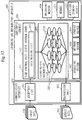
- Fig. 11 is a diagram illustrating another configuration of the learning-and-recognition apparatus 200 according to this embodiment.
- Fig. 11 is a variation such that the output time point adjustment units 1003 of the learning-and-recognition apparatus 200 illustrated in Fig. 9 are modified.
- Each of the output time point adjustment units 1003 illustrated in Fig. 11 receives intermediate data 109 from some perceptron processes 1002 of all the perceptron processes 1002 in a corresponding one of the neural network layers 1001, instead of receiving intermediate data 109 from all the perceptron processes 1002 in the corresponding one of the neural network layers 1001.
- Fig. 12 is a diagram illustrating a configuration of the learning-and-recognition apparatus 200 according to this embodiment.
- Fig. 12 the processor 910 of the learning-and-recognition apparatus 200 illustrated in Fig. 1 is replaced with an electronic circuit 909.
- the learning-and-recognition apparatus 200 includes the electronic circuit 909, the memory 921, the auxiliary storage device 922, the communication interface 923, and the recording medium 920.
- the electronic circuit 909 is a dedicated electronic circuit that realizes the functions of the time control unit 111 and the learning-and-recognition unit 102.
- the electronic circuit 909 is a single circuit, a composite circuit, a programmed processor, a parallel-programmed processor, a logic IC, a GA, an ASIC, or an FPGA.
- GA is an abbreviation for Gate Array.
- ASIC is an abbreviation for Application Specific Integrated Circuit.
- FPGA is an abbreviation for Field-Programmable Gate Array.
- the functions of the time control unit 111 and the learning-and-recognition unit 102 may be realized by one electronic circuit, or may be distributed among and realized by a plurality of electronic circuits.
- the functions of the time control unit 111 and the learning-and-recognition unit 102 may be realized by software.
- the functions of the time control unit 111 and the learning-and-recognition unit 102 may be realized by hardware.
- time control unit 111 and the learning-and-recognition unit 102 may be realized by the electronic circuit, and the rest of the functions may be realized by software.
- Each of the processor and the electronic circuit is also referred to as processing circuitry. That is, in the learning-and-recognition apparatus 200, the functions of the time control unit 111 and the learning-and-recognition unit 102 are realized by the processing circuitry.
- processor 910 of the learning-and-recognition apparatus 200 of any one of the embodiments other than the first embodiment may be replaced with the electronic circuit 909.
- the learning-and-recognition apparatus 200 that performs recognition work while learning has been described.
- a learning apparatus that performs learning or a recognition apparatus that performs recognition work may be implemented.
Landscapes
- Engineering & Computer Science (AREA)
- Theoretical Computer Science (AREA)
- Physics & Mathematics (AREA)
- Software Systems (AREA)
- General Engineering & Computer Science (AREA)
- General Physics & Mathematics (AREA)
- Mathematical Physics (AREA)
- Computer Security & Cryptography (AREA)
- Computer Hardware Design (AREA)
- Biomedical Technology (AREA)
- General Health & Medical Sciences (AREA)
- Molecular Biology (AREA)
- Computing Systems (AREA)
- Evolutionary Computation (AREA)
- Data Mining & Analysis (AREA)
- Computational Linguistics (AREA)
- Biophysics (AREA)
- Artificial Intelligence (AREA)
- Life Sciences & Earth Sciences (AREA)
- Health & Medical Sciences (AREA)
- Image Analysis (AREA)
- Character Discrimination (AREA)
Abstract
Description
- The present invention relates to a learning-and-recognition apparatus, a learning-and-recognition method, and a learning-and-recognition program and, in particular, relates to countermeasures against timing attacks on deep learning.
- Samples that deceive a neural network that has performed learning are called adversarial examples. Adversarial examples can be generated artificially.
- Conventional adversarial examples are generated based on internal parameters of deep learning or probability information that is output.
- According to Non-Patent Literature 1, countermeasures against attacks using adversarial examples include a built-in detection function and introducing and learning anomalous data. Concealing internal parameters or probability information that is output, each of which serves as a clue for an attack, is considered to be one of effective countermeasures. In Non-Patent Literature 1, consideration is not given to information leakage based on the processing time of deep learning.
- In conventional countermeasures against timing attacks, attention is focused on countermeasures against leakage of a secret key based on the processing time of an encryption device.
- In Patent Literature 1, a countermeasure against leakage is implemented by executing dummy processing while encryption or decryption is being executed, delaying the execution start time of encryption or decryption, causing the amounts of change in data to be uniform, or changing a processing order.
- Patent Literature 1:
JP 2014-192793 A - Non-Patent Literature 1: Xiaoyong Yuana, et al., "Adversarial Examples: Attacks and Defenses for Deep Learning" arXiv:1712.07107v3 [cs.LG] 7 Jul 2018
- An attacker on deep learning may generate adversarial examples based on the relationship between input data and the processing time. Since the attacker focuses on the relationship between input data and the processing time, a problem is that attacks cannot be prevented by concealing internal parameters or probability information, which is a conventional countermeasure.
- Another problem is that the conventional countermeasures against timing attacks are specifically for encryption devices and cannot be directly applied to deep learning.
- It is an object of the present invention to provide countermeasures against timing attacks on deep learning.
- A learning-and-recognition apparatus according to one aspect of the present invention includes
- a learning-and-recognition unit to perform learning-and-recognition processing on input data, and output output data; and
- a time control unit to cause a processing time of the learning-and-recognition processing on the input data to be independent of the input data.
- In the present invention, a time control unit causes the processing time on input data to be independent of the input data, so that defense against attacks on a learning-and-recognition apparatus can be provided.
-
-
Fig. 1 is an overall configuration diagram of a learning-and-recognition apparatus according to a first embodiment; -
Fig. 2 is an operation chart of the learning-and-recognition apparatus according to the first embodiment; -
Fig. 3 is an overall configuration diagram of a learning-and-recognition apparatus according to a second embodiment; -
Fig. 4 is an operation chart of the learning-and-recognition apparatus according to the second embodiment; -
Fig. 5 is an overall configuration diagram of a learning-and-recognition apparatus according to a third embodiment; -
Fig. 6 is an operation chart of the learning-and-recognition apparatus according to the third embodiment; -
Fig. 7 is an overall configuration diagram of a learning-and-recognition apparatus according to a fourth embodiment; -
Fig. 8 is an operation chart of the learning-and-recognition apparatus according to the fourth embodiment; -
Fig. 9 is an overall configuration diagram of a learning-and-recognition apparatus according to a fifth embodiment; -
Fig. 10 is an operation chart of the learning-and-recognition apparatus according to the fifth embodiment; -
Fig. 11 is an overall configuration diagram of the learning-and-recognition apparatus according to the fifth embodiment; and -
Fig. 12 is an overall configuration diagram of a learning-and-recognition apparatus according to a sixth embodiment. - Embodiments of the present invention will be described hereinafter with reference to the drawings. Throughout the drawings, the same or corresponding parts are denoted by the same reference sign. In the description of the embodiments, description of the same or corresponding parts will be suitably omitted or simplified.
- Countermeasures against timing attacks to be described in the embodiments to be discussed hereinafter are to cause the processing time on input data to be independent of the input data. In other words, the countermeasures against timing attacks to be described in the embodiments are to cause a time period from an input time point of input data to an output time point of output data to be independent of the input data, and output the output data.
- In the embodiments, the following countermeasures against timing attacks will be described.
- 1. Countermeasures using inputs to deep learning
- First embodiment: countermeasure of masking input data
- Second embodiment: countermeasure of randomizing input timings
- 2. Countermeasures using outputs from deep learning
- Third embodiment: countermeasure of randomizing output timings
- Fourth embodiment: countermeasure of causing processing times to be uniform
- 3. Countermeasures within deep learning
Fifth embodiment: countermeasure of causing internal processing times to be random or uniform - A configuration of an apparatus according to this embodiment, operation of the apparatus according to this embodiment, and effects of this embodiment will be described.
-
Fig. 1 is a configuration diagram of a learning-and-recognition apparatus 200. - The learning-and-
recognition apparatus 200 is an apparatus that performs recognition work on input data while learning the input data. - The learning-and-
recognition apparatus 200 has a learning-and-recognition unit 102. - The learning-and-
recognition unit 102 performs learning-and-recognition processing oninput data 101 andoutputs output data 103. - The learning-and-
recognition unit 102 conducts deep learning. - The learning-and-
recognition unit 102 has a plurality of neural network layers 1001. - Each of the neural network layers 1001 executes a plurality of perceptron processes 1002.
- The learning-and-
recognition unit 102 executes the perceptron processes 1002 in parallel as calculations of each of the neural network layers 1001. - The learning-and-
recognition unit 102 outputs calculation results of the perceptron processes 1002 of the finalneural network layer 1001. - The learning-and-
recognition apparatus 200 has atime control unit 111. - The
time control unit 111 causes the processing time on theinput data 101 by the learning-and-recognition unit 102 to be independent of theinput data 101. - The
time control unit 111 has aninput control unit 112. - The
input control unit 112 performs processing on theinput data 101 to change the processing time of the learning-and-recognition unit 102. - The
input control unit 112 has adata masking unit 201. - The
data masking unit 201 applies random noise to theinput data 101. - In the learning-and-
recognition apparatus 200, thedata masking unit 201 to apply random noise to theinput data 101 is added anterior to the learning-and-recognition unit 102, so as to cause theinput data 101 and the processing time of the learning-and-recognition apparatus 200 to be independent of each other. - The meanings of terms to be used in the description of the embodiments are as indicated below.
- "Learning-and-recognition processing": processing executed by the learning-and-
recognition apparatus 200. - "Processing of the learning-and-
recognition apparatus 200": the same as "learning-and-recognition processing". - "Processing time of learning-and-recognition processing": a time period from a time point when the
input data 101 is input to the learning-and-recognition apparatus 200 to a time point when theoutput data 103 is output from the learning-and-recognition apparatus 200. - "Processing time of the learning-and-
recognition apparatus 200": the same as "processing time of learning-and-recognition processing". - "Processing of the learning-and-
recognition unit 102": processing executed by the learning-and-recognition unit 102. - "Processing time of the learning-and-
recognition unit 102": a time period from a time point when theinput data 101 is input to the learning-and-recognition unit 102 to a time point when theoutput data 103 is output from the learning-and-recognition unit 102. - When the "processing time of the learning-and-
recognition unit 102" changes, the "processing time of the learning-and-recognition apparatus 200" or the "processing time of learning-and-recognition processing" also changes. - In the following, the embodiments will be described assuming that data input/output times of a
reception unit 901 and atransmission unit 902 are negligible. - The learning-and-
recognition apparatus 200 includes aprocessor 910. - The learning-and-
recognition apparatus 200 includes other hardware components, such as amemory 921, anauxiliary storage device 922, acommunication interface 923, and arecording medium 920. - The
processor 910 is connected with other hardware components via signal lines and controls these other hardware components. - The learning-and-
recognition apparatus 200 includes thetime control unit 111 and the learning-and-recognition unit 102 as functional elements. - The functions of the
time control unit 111 and the learning-and-recognition unit 102 are realized by software. - The
processor 910 is a device that executes a learning-and-recognition program. - The learning-and-recognition program is a program for realizing the functions of the
time control unit 111 and the learning-and-recognition unit 102. - The
processor 910 is an integrated circuit (IC) that performs operational processing. A specific example of theprocessor 910 is a central processing unit (CPU), a digital signal processor (DSP), or a graphics processing unit (GPU). - The
memory 921 is a storage device to temporarily store data. - A specific example of the
memory 921 is a static random access memory (SRAM) or a dynamic random access memory (DRAM). - The
recording medium 920 and theauxiliary storage device 922 are storage devices to store data. - A specific example of each of the
recording medium 920 and theauxiliary storage device 922 is a hard disk drive (HDD). - Each of the
recording medium 920 and theauxiliary storage device 922 may be a portable storage medium, such as a NAND flash, a flexible disk, an optical disc, a compact disc, or a digital versatile disk (DVD). - The
communication interface 923 has thereception unit 901 to receive data and thetransmission unit 902 to transmit data. - The
communication interface 923 has a communication chip, a network interface card (NIC), or the like. - The learning-and-recognition program is read from the
memory 921 into theprocessor 910 and executed by theprocessor 910. - The
memory 921 stores not only the learning-and-recognition program but also anoperating system 607, anetwork driver 608, and astorage driver 609. - The
processor 910 executes the learning-and-recognition program while executing theoperating system 607, thenetwork driver 608, and thestorage driver 609. - The learning-and-recognition program, the
operating system 607, thenetwork driver 608, and thestorage driver 609 may be stored in theauxiliary storage device 922. - The learning-and-recognition program, the
operating system 607, thenetwork driver 608, and thestorage driver 609 that are stored in theauxiliary storage device 922 are loaded into thememory 921 and executed by theprocessor 910. - Note that part or the entirety of the learning-and-recognition program may be embedded in the
operating system 607. - The learning-and-
recognition apparatus 200 may include a plurality of processors as an alternative to theprocessor 910. The plurality of processors share execution of the learning-and-recognition program. Each of the processors is, like theprocessor 910, a device that executes the learning-and-recognition program. - Data, information, signal values, and variable values that are used, processed, or output by the learning-and-recognition program are stored in the
memory 921 or theauxiliary storage device 922, or stored in a register or a cache memory in theprocessor 910. - The "unit" of each of the
time control unit 111 and the learning-and-recognition unit 102 may be interpreted as "process", "procedure", or "step". The "process" of each process of thetime control unit 111 and the learning-and-recognition unit 102 may be interpreted as "program", "program product", or "computer readable storage medium recording a program". - The learning-and-recognition program causes a computer to execute each process, each procedure, or each step, where the "unit" of each of the units is interpreted as "process", "procedure", or "step". A learning-and-recognition method is a method performed by execution of the program by the learning-and-
recognition apparatus 200. - The program may be stored and provided in a computer readable recording medium. The program may be provided as a program product.
- The learning-and-
recognition apparatus 200 may be realized by a processing circuit, such as a logic integrated circuit (IC), a gate array (GA), an application specific integrated circuit (ASIC), or a field-programmable gate array (FPGA). - A superordinate concept of a processor, a memory, a combination of a processor and a memory, and a processing circuit is referred to as processing circuitry. That is, each of a processor, a memory, a combination of a processor and a memory, and a processing circuit is a specific example of processing circuitry.
- Operation will now be described.
-
Fig. 2 is aflowchart 300 illustrating operation of the learning-and-recognition method of the learning-and-recognition apparatus 200 of this embodiment. The following processing is realized by execution of the learning-and-recognition program by theprocessor 910. - First in step S301, the
input control unit 112 inputs, to thedata masking unit 201, theinput data 101 input to thereception unit 901 of the learning-and-recognition apparatus 200. - In step S302, the
data masking unit 201 applies random noise to theinput data 101. Note that the intensity of noise to be applied by thedata masking unit 201 is set to be equivalent to or greater than noise that would be applied by an attacker, and the upper limit is a level that does not affect processing of the learning-and-recognition unit 102. - In step S303, the
data masking unit 201 inputs, to the learning-and-recognition unit 102, the input data to which the random noise has been applied. - The learning-and-
recognition unit 102 executes the perceptron processes 1002 in the plurality of neural network layers 1001. - In the perceptron processes 1002, the processing time of input data to which random noise has not been applied and the processing time of input data to which random noise has been applied are different.
- Each of the neural network layers 1001 outputs calculation results of corresponding ones of the perceptron processes 1002.
- The
neural network layer 1001 that is the final layer is a learning-and-recognition result. - The learning-and-
recognition unit 102 obtains the learning-and-recognition result from theinput data 101 and outputs the learning-and-recognition result. - Finally in step S304, the learning-and-
recognition unit 102 outputs, to thetransmission unit 902, the learning-and-recognition result as theoutput data 103 of the learning-and-recognition apparatus 200. - The
transmission unit 902 outputs theoutput data 103 to the outside. - As described above, in the learning-and-recognition method of this embodiment, the
time control unit 111 causes the processing time on theinput data 101 by the learning-and-recognition unit 102 to be independent of theinput data 101. - Then, the learning-and-
recognition unit 102 performs learning-and-recognition processing on theinput data 101, and outputs output data. - The learning-and-recognition program of this embodiment causes a computer that executes learning-and-recognition processing to perform learning-and-recognition processing on the
input data 101, to cause a time period from an input time point when theinput data 101 is input to the learning-and-recognition unit 102 to an output time point when theoutput data 103 is output from the learning-and-recognition unit 102 to be independent of the input data, and to output theoutput data 103. - The learning-and-
recognition apparatus 200 of this embodiment is characterized in that means for processing theinput data 101 is added anterior to the learning-and-recognition unit 102, so as to cause theinput data 101 and the processing time of the learning-and-recognition unit 102 to be independent of each other. - The learning-and-
recognition apparatus 200 of this embodiment is characterized in that the means for processing theinput data 101 is realized by means for applying random noise to theinput data 101 of the learning-and-recognition apparatus 200. - In the learning-and-
recognition apparatus 200 of this embodiment, thedata masking unit 201 to apply random noise to theinput data 101 is added anterior to the learning-and-recognition unit 102, so as to cause theinput data 101 and the processing time of the learning-and-recognition unit 102 to be independent of each other. - The learning-and-
recognition apparatus 200 of this embodiment provides a countermeasure against timing attacks by causing the processing time of the learning-and-recognition unit 102 to be a processing time dependent on theinput data 101 to which random noise has been applied, by thedata masking unit 201 to apply random noise to theinput data 101. - As described above, the learning-and-
recognition apparatus 200 of this embodiment causes the processing time of the learning-and-recognition unit 102 to be dependent on theinput data 101 to which random noise has been applied, so that defense against timing attacks that focus on the relationship between theinput data 101 and the processing time can be provided. - Differences from the first embodiment will be described below.
- An embodiment in which an input time
point distribution unit 401 to randomize an input time point when theinput data 101 is input to the learning-and-recognition unit 102 is added as a countermeasure against timing attacks will be presented in this embodiment. -
Fig. 3 is a configuration diagram of the learning-and-recognition apparatus 200. - The learning-and-
recognition apparatus 200 has thetime control unit 111. - The
time control unit 111 has theinput control unit 112. - The
input control unit 112 has the input timepoint distribution unit 401. - The input time
point distribution unit 401 randomizes an input time point when theinput data 101 is input to the learning-and-recognition unit 102. - In the learning-and-
recognition apparatus 200, the input timepoint distribution unit 401 to randomize an input time point is added anterior to the learning-and-recognition unit 102, so as to cause theinput data 101 and the processing time of the learning-and-recognition apparatus 200 to be independent of each other. - Operation will now be described.
-
Fig. 4 is aflowchart 500 illustrating operation of the learning-and-recognition method of the learning-and-recognition apparatus 200 of this embodiment. The following processing is realized by execution of the learning-and-recognition program by theprocessor 910. - First in step S501, the
input data 101 input to the learning-and-recognition apparatus 200 is input to the input timepoint distribution unit 401. - In step S502, the input time
point distribution unit 401 randomizes an input time point when theinput data 101 is input to the learning-and-recognition unit 102. - Specifically, the input time
point distribution unit 401 randomizes a time period from a time point when theinput data 101 is received by thereception unit 901 to a time point when theinput data 101 is output to the learning-and-recognition unit 102. - The randomization of the input time point is realized by dummy processing, wait processing, or the like.
- In step S503, the input time
point distribution unit 401 inputs theinput data 101 to the learning-and-recognition unit 102 according to the randomized input time point. - Finally in step S504, the learning-and-
recognition unit 102 outputs a learning-and-recognition result as theoutput data 103. - The learning-and-
recognition apparatus 200 of this embodiment is characterized in that means for processing input data is added anterior to the learning-and-recognition unit, so as to cause theinput data 101 and the processing time of the learning-and-recognition apparatus 200 to be independent of each other. - The learning-and-
recognition apparatus 200 of this embodiment is characterized in that the means for processing input data is realized by means for randomizing an input timing to the learning-and-recognition unit of the learning-and-recognition apparatus 200. - The learning-and-
recognition apparatus 200 of this embodiment provides a countermeasure against timing attacks by causing the processing time of the learning-and-recognition apparatus 200 to be a processing time dependent on an input time point that results in a randomized processing time, by the input timepoint distribution unit 401 to randomize an input time point of theinput data 101. - As described above, the learning-and-
recognition apparatus 200 of this embodiment causes the processing time of the learning-and-recognition apparatus 200 to be dependent on a randomized input time point, so that defense against timing attacks that focus on the relationship between theinput data 101 and the processing time can be provided. - Differences from the first embodiment will be described below.
- An embodiment in which adding an output time
point distribution unit 601 to randomize an output time point of the learning-and-recognition unit 102 serves as a countermeasure against timing attacks will now be presented. -
Fig. 5 is a configuration diagram of the learning-and-recognition apparatus 200. - In the learning-and-
recognition apparatus 200, the output timepoint distribution unit 601 to randomize an output time point is added posterior to the learning-and-recognition unit 102, so as to cause theinput data 101 and the processing time of the learning-and-recognition apparatus 200 to be independent of each other. - The learning-and-
recognition apparatus 200 has thetime control unit 111. - The
time control unit 111 has anoutput control unit 113. - The
output control unit 113 performs processing on theoutput data 103 to change the processing time of the learning-and-recognition apparatus 200. - The
input control unit 112 has the output timepoint distribution unit 601. - The output time
point distribution unit 601 randomizes an output time point of theoutput data 103. - In the learning-and-
recognition apparatus 200 of this embodiment, the output timepoint distribution unit 601 to randomize an output time point of theoutput data 103 of the learning-and-recognition apparatus 200 is added posterior to the learning-and-recognition unit 102, so as to cause theinput data 101 and the processing time of the learning-and-recognition apparatus 200 to be independent of each other. - Operation will now be described.
-
Fig. 6 is aflowchart 700 illustrating operation of the learning-and-recognition method of the learning-and-recognition apparatus 200 of this embodiment. The following processing is realized by execution of the learning-and-recognition program by theprocessor 910. - First in step S701, the
input data 101 input to the learning-and-recognition apparatus 200 is input to the learning-and-recognition unit 102. - In step S702, a learning-and-recognition result output from the learning-and-
recognition unit 102 is input to the output timepoint distribution unit 601. - In step S703, the output time
point distribution unit 601 randomizes an output time point of theoutput data 103 of the learning-and-recognition apparatus 200. - Specifically, the output time
point distribution unit 601 randomizes a time period from an input time point when theoutput data 103 is input from the learning-and-recognition unit 102 to an output time point when it is output to thetransmission unit 902. - The randomization of the output time point is realized by dummy processing, wait processing, or the like.
- Finally in step S704, the output time
point distribution unit 601 outputs, to thetransmission unit 902, the learning-and-recognition result output from the learning-and-recognition unit 102, as theoutput data 103, in accordance with the randomized output time point. - The learning-and-
recognition apparatus 200 of this embodiment is characterized in that means for processing theoutput data 103 is added posterior to the learning-and-recognition unit 102, so as to cause theinput data 101 and the processing time of the learning-and-recognition apparatus 200 to be independent of each other. - The learning-and-
recognition apparatus 200 of this embodiment is characterized in that the means for processing theoutput data 103 is realized by means for randomizing an output timing of the learning-and-recognition apparatus 200. - The learning-and-
recognition apparatus 200 of this embodiment provides a countermeasure against timing attacks by randomizing an output time point of theoutput data 103 by the output timepoint distribution unit 601, so as to cause the processing time of the learning-and-recognition apparatus 200 to be a processing time dependent on a randomized output time point. - As described above, the learning-and-
recognition apparatus 200 of this embodiment causes the processing time of the learning-and-recognition apparatus 200 to be dependent not on theinput data 101 but on a randomized output time point of theoutput data 103, so that defense against timing attacks that focus on the relationship between theinput data 101 and the processing time can be provided. - Differences from the first embodiment will be described below.
- An embodiment in which a countermeasure against timing attacks is provided by causing processing times of the learning-and-
recognition unit 102 to be uniform will be presented in this embodiment. -
Fig. 7 is a configuration diagram of the learning-and-recognition apparatus 200. - The learning-and-
recognition apparatus 200 has thetime control unit 111. - The
time control unit 111 has theoutput control unit 113. - The
output control unit 113 has a timestamp generation unit 801 and an output timepoint adjustment unit 803. - The time
stamp generation unit 801 records, as atime stamp 802, an input time point when theinput data 101 is input to the timestamp generation unit 801. - The output time
point adjustment unit 803 uses thetime stamp 802 to cause a time period from the input time point of theinput data 101 to an output time point of theoutput data 103 to be uniform. - The output time
point adjustment unit 803 sets the output time point of theoutput data 103 by adding a certain period of time to the input time point of theinput data 101 indicated by thetime stamp 802. - In the learning-and-
recognition apparatus 200, the timestamp generation unit 801 to record an input time point when theinput data 101 is input to the timestamp generation unit 801 is added anterior to the learning-and-recognition unit 102, and the output timepoint adjustment unit 803 to cause the processing time of the learning-and-recognition unit 102 to be uniform is added posterior to the learning-and-recognition unit 102, so as to cause theinput data 101 and the processing time of the learning-and-recognition apparatus 200 to be independent of each other. - Operation will now be described.
-
Fig. 8 is aflowchart 900 illustrating operation of the learning-and-recognition method of the learning-and-recognition apparatus 200 of this embodiment. The following processing is realized by execution of the learning-and-recognition program by theprocessor 910. - First in step S901, the
input data 101 input to the learning-and-recognition apparatus 200 is input to the timestamp generation unit 801. - In step S902, the time
stamp generation unit 801 generates atime stamp 802 according to the input time point of theinput data 101. - The
time stamp 802 contains the input time point when theinput data 101 is input to the timestamp generation unit 801. - The
time stamp 802 is stored in thememory 921. - In step S903, the time
stamp generation unit 801 inputs, to the learning-and-recognition unit 102, theinput data 101 for which thetime stamp 802 has been recorded in thememory 921. - In step S904, the learning-and-
recognition unit 102 inputs a learning-and-recognition result to the output timepoint adjustment unit 803. - In step S905, the output time
point adjustment unit 803 refers to thetime stamp 802 generated by the timestamp generation unit 801, and causes the processing time to be uniform. - Specifically, the time
stamp generation unit 801 sets the output time point of the learning-and-recognition result to a time point resulting from adding a certain period of time to the input time point indicated by thetime stamp 802. - Causing the processing time to be uniform is realized by dummy processing, wait processing, or the like.
- Finally in step S906, the output time
point adjustment unit 803 outputs, to thetransmission unit 902, the learning-and-recognition result output from the learning-and-recognition unit 102, as theoutput data 103, in accordance with the output time point that causes the processing time to be uniform. - The learning-and-
recognition apparatus 200 of this embodiment is characterized in that means for processing theoutput data 103 is added posterior to the learning-and-recognition unit 102, so as to cause theinput data 101 and the processing time of the learning-and-recognition apparatus 200 to be independent of each other. - The learning-and-
recognition apparatus 200 of this embodiment is characterized in that the means for processing theoutput data 103 is realized by means for generating a time stamp in advance of the learning-and-recognition unit 102 of the learning-and-recognition apparatus 200, and referring to thetime stamp 802 and setting the output timing of the learning-and-recognition apparatus 200 so as to cause the processing time of the learning-and-recognition unit 102 to be uniform. - The learning-and-
recognition apparatus 200 of this embodiment adjusts the output time point of theoutput data 103, independently of theinput data 101, by the timestamp generation unit 801 to record the input time point of theinput data 101 and the output timepoint adjustment unit 803 to cause the processing time of the learning-and-recognition unit 102 to be uniform. - As described above, the learning-and-
recognition apparatus 200 of this embodiment adjusts the output time point of theoutput data 103 so as to cause the processing time of the learning-and-recognition apparatus 200 to be uniform, so that defense against timing attacks that focus on the relationship between theinput data 101 and the processing time can be provided. - Differences from the first embodiment will be described below.
- An embodiment in which a countermeasure against timing attacks is implemented in the perceptron processes 1002 of each
neural network layer 1001 in the learning-and-recognition unit 102 will be presented in this embodiment. -
Fig. 9 is a configuration diagram of the learning-and-recognition apparatus 200. - The learning-and-
recognition unit 102 has processes of a plurality of layers constituted by the neural network layers 1001. - In the learning-and-
recognition apparatus 200, an output timepoint adjustment unit 1003 to cause output time points of processing results of perceptron processes of eachneural network layer 1001 in the learning-and-recognition unit 102 to be random or uniform is added, so as to cause theinput data 101 and the processing time of the learning-and-recognition unit 102 to be independent of each other. - The learning-and-
recognition apparatus 200 has thetime control unit 111. - The
time control unit 111 has aprocessing control unit 114. - The
processing control unit 114 controls processing time points of the learning-and-recognition unit 102 to change processing times of the learning-and-recognition unit 102. - The
processing control unit 114 has a plurality of output timepoint adjustment units 1003. - Each of the output time
point adjustment units 1003 is provided posterior to a corresponding one of the neural network layers 1001. - The neural network layers 1001 and the output time
point adjustment units 1003 correspond to each other, and the number of the neural network layers 1001 and the number of the output timepoint adjustment units 1003 are equal. However, it is sufficient that there is at least one output timepoint adjustment unit 1003. - Each of the output time
point adjustment units 1003 causes output time points of each layer of the learning-and-recognition unit 102 to be random or causes learning time points of each layer of the learning-and-recognition unit 102 to be uniform. - In the learning-and-
recognition apparatus 200, the output timepoint adjustment unit 1003 to cause output time points to be random or uniform is added to the perceptron processes 1002 of each layer of the neural network layers 1001 in the learning-and-recognition unit 102, so as to cause theinput data 101 and the processing time of the learning-and-recognition unit 102 to be independent of each other. - Operation will now be described.
-
Fig. 10 is aflowchart 1100 illustrating operation of the learning-and-recognition method of the learning-and-recognition apparatus 200 of this embodiment. The following processing is realized by execution of the learning-and-recognition program by theprocessor 910. - First in step S1101, the
input data 101 input to the learning-and-recognition apparatus 200 is input to the learning-and-recognition unit 102. - Then, the
processor 910 performs processing from step S1102 to step S1105 in a loop in each layer until calculations of all layers of the neural network layers 1001 are completed. - In step S1103, the
neural network layer 1001 executes the perceptron processes 1002. - In step S1104, the
neural network layer 1001 inputs an output of calculation results of the perceptron processes 1002 to the output timepoint adjustment unit 1003. - In step S1105, the output time
point adjustment unit 1003 receives the calculation results of theneural network layer 1001 asintermediate data 109, and causes output time points of theintermediate data 109 to be uniform or random. - Specifically, the output time
point adjustment unit 1003 receives a plurality of processing results of a plurality ofperceptron processes 1002 as a plurality of pieces ofintermediate data 109, and outputs the plurality of pieces ofintermediate data 109 by causing their output time points to be random or uniform. - Causing the output time points of the plurality of pieces of
intermediate data 109 to be uniform or random is realized by dummy processing, wait processing, or the like. - The output time
point adjustment unit 1003 receives a plurality of pieces ofintermediate data 109 and simultaneously outputs the plurality of pieces ofintermediate data 109, so as to cause the output time points of theintermediate data 109 to be uniform. - Alternatively, the output time
point adjustment unit 1003 receives a plurality of pieces ofintermediate data 109 and outputs the plurality of pieces ofintermediate data 109 at mutually random time points, so as to cause the output time points of the plurality of pieces ofintermediate data 109 to be random. - Causing the output time points of the plurality of pieces of
intermediate data 109 to be uniform or random may be realized as part of the perceptron processes 1002. - Finally in step S1106, after calculations of all layers of the neural network layers 1001 have been completed, the learning-and-
recognition unit 102 outputs a learning-and-recognition result to thetransmission unit 902 as theoutput data 103. - The learning-and-
recognition apparatus 200 of this embodiment is characterized in that means for processingintermediate data 109 is added between the perceptron processes 1002 of adjacent layers in the learning-and-recognition unit of the learning-and-recognition apparatus 200, so as to change the processing time of the learning-and-recognition unit 102 and to cause input data and the processing time of the learning-and-recognition apparatus 200 to be independent of each other. - The learning-and-
recognition apparatus 200 of this embodiment is characterized in that the means for processingintermediate data 109 is realized by means for causing output timings of a plurality of pieces ofintermediate data 109 of each layer in the learning-and recognition unit of the learning-and-recognition apparatus 200 to be random or uniform. - As described above, the learning-and-
recognition apparatus 200 of this embodiment causes the output time points of a plurality of pieces ofintermediate data 109 to be uniform or random, so as to change the processing time of the learning-and-recognition unit 102, so that defense against timing attacks that focus on the relationship between theinput data 101 and the processing time can be provided. -
Fig. 11 is a diagram illustrating another configuration of the learning-and-recognition apparatus 200 according to this embodiment. -
Fig. 11 is a variation such that the output timepoint adjustment units 1003 of the learning-and-recognition apparatus 200 illustrated inFig. 9 are modified. - Each of the output time
point adjustment units 1003 illustrated inFig. 11 receivesintermediate data 109 from someperceptron processes 1002 of all the perceptron processes 1002 in a corresponding one of the neural network layers 1001, instead of receivingintermediate data 109 from all the perceptron processes 1002 in the corresponding one of the neural network layers 1001. - When
intermediate data 109 of aperceptron process 1002 is not received by the corresponding one of the output timepoint adjustment units 1003, theintermediate data 109 is directly input to the nextneural network layer 1001. - In this embodiment, differences from the first embodiment will be described.
-
Fig. 12 is a diagram illustrating a configuration of the learning-and-recognition apparatus 200 according to this embodiment. - In
Fig. 12 , theprocessor 910 of the learning-and-recognition apparatus 200 illustrated inFig. 1 is replaced with anelectronic circuit 909. - The learning-and-
recognition apparatus 200 includes theelectronic circuit 909, thememory 921, theauxiliary storage device 922, thecommunication interface 923, and therecording medium 920. - The
electronic circuit 909 is a dedicated electronic circuit that realizes the functions of thetime control unit 111 and the learning-and-recognition unit 102. - Specifically, the
electronic circuit 909 is a single circuit, a composite circuit, a programmed processor, a parallel-programmed processor, a logic IC, a GA, an ASIC, or an FPGA. GA is an abbreviation for Gate Array. ASIC is an abbreviation for Application Specific Integrated Circuit. FPGA is an abbreviation for Field-Programmable Gate Array. - The functions of the
time control unit 111 and the learning-and-recognition unit 102 may be realized by one electronic circuit, or may be distributed among and realized by a plurality of electronic circuits. - In this embodiment, the functions of the
time control unit 111 and the learning-and-recognition unit 102 may be realized by software. - Alternatively, the functions of the
time control unit 111 and the learning-and-recognition unit 102 may be realized by hardware. - Alternatively, some of the functions of the
time control unit 111 and the learning-and-recognition unit 102 may be realized by the electronic circuit, and the rest of the functions may be realized by software. - Each of the processor and the electronic circuit is also referred to as processing circuitry. That is, in the learning-and-
recognition apparatus 200, the functions of thetime control unit 111 and the learning-and-recognition unit 102 are realized by the processing circuitry. - Although not illustrated, the
processor 910 of the learning-and-recognition apparatus 200 of any one of the embodiments other than the first embodiment may be replaced with theelectronic circuit 909. - In the embodiments described above, the learning-and-
recognition apparatus 200 that performs recognition work while learning has been described. However, instead of the learning-and-recognition apparatus 200, a learning apparatus that performs learning or a recognition apparatus that performs recognition work may be implemented. - The embodiments have been described above. Two or more of these embodiments may be implemented in combination. Alternatively, one embodiment or a combination of two or more embodiments of these embodiments may be partially implemented. Note that the present invention is not limited to these embodiments, and various modifications are possible depending on needs.
- 101: input data, 102: learning-and-recognition unit, 103: output data, 109: intermediate data, 111: time control unit, 112: input control unit, 113: output control unit, 114: processing control unit, 200: learning-and-recognition apparatus, 201: data masking unit, 401: input time point distribution unit, 601: output time point distribution unit, 607: operating system, 608: network driver, 609: storage driver, 801: time stamp generation unit, 802: time stamp, 803: output time point adjustment unit, 901: reception unit, 902: transmission unit, 909: electronic circuit, 910: processor, 920: recording medium, 921: memory, 922: auxiliary storage device, 923: communication interface, 1001: neural network layer, 1002: perceptron process, 1003: output time point adjustment unit
Claims (11)
- A learning-and-recognition apparatus comprising:a learning-and-recognition unit to perform learning-and-recognition processing on input data, and output output data; anda time control unit to cause a processing time of the learning-and-recognition processing on the input data to be independent of the input data.
- The learning-and-recognition apparatus according to claim 1,
wherein the time control unit includes an input control unit to perform processing on the input data to change the processing time of the learning-and-recognition processing. - The learning-and-recognition apparatus according to claim 2,
wherein the input control unit has a data masking unit to apply random noise to the input data. - The learning-and-recognition apparatus according to claim 2,
wherein the input control unit has an input time point distribution unit to randomize an input time point of the input data. - The learning-and-recognition apparatus according to claim 1,
wherein the time control unit includes an output control unit to perform processing on the output data to change the processing time of the learning-and-recognition processing. - The learning-and-recognition apparatus according to claim 5,
wherein the output control unit has an output time point distribution unit to randomize an output time point of the output data. - The learning-and-recognition apparatus according to claim 5,
wherein the output control unit has an output time point adjustment unit to cause a time period from an input time point of the input data to an output time point of the output data to be uniform. - The learning-and-recognition apparatus according to claim 1,
wherein the time control unit includes a processing control unit to control a processing time point of the learning-and-recognition unit to change the processing time of the learning-and-recognition processing. - The learning-and-recognition apparatus according to claim 8,wherein the learning-and-recognition unit has processes of a plurality of layers, andwherein the processing control unit has an output time point adjustment unit to randomize an output time point of each layer of the learning-and-recognition unit, or cause an output time point of each layer of the learning-and-recognition unit to be uniform.
- A learning-and-recognition method comprising:causing a processing time of learning-and-recognition processing on input data to be independent of the input data, by a time control unit; andperforming learning-and-recognition processing on the input data and outputting output data, by a learning-and-recognition unit.
- A learning-and-recognition program for causing a computer that executes learning-and-recognition processing to:perform learning-and-recognition processing on input data; andcause a time period from an input time point of the input data to an output time point of output data to be independent of the input data, and output the output data.
Applications Claiming Priority (1)
| Application Number | Priority Date | Filing Date | Title |
|---|---|---|---|
| PCT/JP2018/046158 WO2020121527A1 (en) | 2018-12-14 | 2018-12-14 | Learning identification device, learning identification method, and learning identification program |
Publications (3)
| Publication Number | Publication Date |
|---|---|
| EP3885952A1 true EP3885952A1 (en) | 2021-09-29 |
| EP3885952A4 EP3885952A4 (en) | 2021-12-01 |
| EP3885952B1 EP3885952B1 (en) | 2025-01-29 |
Family
ID=69166785
Family Applications (1)
| Application Number | Title | Priority Date | Filing Date |
|---|---|---|---|
| EP18942817.0A Active EP3885952B1 (en) | 2018-12-14 | 2018-12-14 | Learning identification device, learning identification method, and learning identification program |
Country Status (5)
| Country | Link |
|---|---|
| US (1) | US20210232923A1 (en) |
| EP (1) | EP3885952B1 (en) |
| JP (1) | JP6632773B1 (en) |
| CN (1) | CN113168466B (en) |
| WO (1) | WO2020121527A1 (en) |
Families Citing this family (1)
| Publication number | Priority date | Publication date | Assignee | Title |
|---|---|---|---|---|
| CN109740735B (en) * | 2018-12-29 | 2020-12-29 | 百度在线网络技术(北京)有限公司 | Multi-neural-network output method and device, server and computer readable medium |
Family Cites Families (21)
| Publication number | Priority date | Publication date | Assignee | Title |
|---|---|---|---|---|
| JPH03121636A (en) * | 1989-10-04 | 1991-05-23 | Seiko Epson Corp | Cryptographic equipment |
| JP4049288B2 (en) * | 1999-08-04 | 2008-02-20 | 株式会社リコー | Canonical discriminant analyzer, feature extractor and recording medium |
| JP4494561B2 (en) * | 1999-09-17 | 2010-06-30 | 徹 中川 | Pattern identification device |
| JP2002008027A (en) * | 2000-06-20 | 2002-01-11 | Ricoh Co Ltd | Pattern recognition method, pattern recognition device, and recording medium storing pattern recognition program |
| JP2006197458A (en) * | 2005-01-17 | 2006-07-27 | Matsushita Electric Ind Co Ltd | Distance and partner authentication method |
| WO2008013083A1 (en) * | 2006-07-25 | 2008-01-31 | Nec Corporation | Pseudo random number generator, stream encrypting device, and program |
| JP2009187179A (en) * | 2008-02-05 | 2009-08-20 | Seiko Instruments Inc | Time stamp device and method |
| JP5276503B2 (en) * | 2009-04-03 | 2013-08-28 | 日本電信電話株式会社 | Data analysis apparatus, data analysis program and recording medium thereof |
| US9887833B2 (en) * | 2012-03-07 | 2018-02-06 | The Trustees Of Columbia University In The City Of New York | Systems and methods to counter side channel attacks |
| JP2014192793A (en) | 2013-03-28 | 2014-10-06 | Mega Chips Corp | Cryptographic device |
| JP6009105B2 (en) * | 2014-02-07 | 2016-10-19 | 三菱電機株式会社 | System identification device |
| JP2016143354A (en) * | 2015-02-04 | 2016-08-08 | エヌ・ティ・ティ・コムウェア株式会社 | Learning device, learning method and program |
| KR102449837B1 (en) * | 2015-02-23 | 2022-09-30 | 삼성전자주식회사 | Neural network training method and apparatus, and recognizing method |
| JP6145623B2 (en) * | 2015-03-23 | 2017-06-14 | 石川県 | POSITION MEASUREMENT SYSTEM, POSITION MEASUREMENT DEVICE, POSITION MEASUREMENT METHOD, AND PROGRAM |
| US11170262B2 (en) * | 2015-10-30 | 2021-11-09 | Morpho, Inc. | Training system, training device, method for training, training data creation device, training data creation method, terminal device, and threshold value changing device |
| JP6801491B2 (en) * | 2017-02-14 | 2020-12-16 | オムロン株式会社 | Identification device |
| JP6791800B2 (en) * | 2017-04-05 | 2020-11-25 | 株式会社日立製作所 | Calculation method using computer system and recurrent neural network |
| DE202017102381U1 (en) * | 2017-04-21 | 2017-05-11 | Robert Bosch Gmbh | Device for improving the robustness against "Adversarial Examples" |
| JP6648730B2 (en) * | 2017-05-09 | 2020-02-14 | オムロン株式会社 | Control device, time stamp correction method and program |
| FR3081241B1 (en) * | 2018-05-17 | 2020-05-29 | Stmicroelectronics (Rousset) Sas | METHOD FOR MANAGING THE VALUE OF THE SUPPLY VOLTAGE OF A MODULE OF AN INTEGRATED CIRCUIT, AND ASSOCIATED INTEGRATED CIRCUIT |
| US10878133B2 (en) * | 2018-11-18 | 2020-12-29 | Nuvoton Technology Corporation | Mitigation of side-channel attacks using small-overhead random pre-charging |
-
2018
- 2018-12-14 JP JP2019533122A patent/JP6632773B1/en active Active
- 2018-12-14 WO PCT/JP2018/046158 patent/WO2020121527A1/en not_active Ceased
- 2018-12-14 CN CN201880100081.9A patent/CN113168466B/en active Active
- 2018-12-14 EP EP18942817.0A patent/EP3885952B1/en active Active
-
2021
- 2021-04-15 US US17/231,505 patent/US20210232923A1/en not_active Abandoned
Also Published As
| Publication number | Publication date |
|---|---|
| EP3885952B1 (en) | 2025-01-29 |
| CN113168466A (en) | 2021-07-23 |
| EP3885952A4 (en) | 2021-12-01 |
| JPWO2020121527A1 (en) | 2021-02-15 |
| CN113168466B (en) | 2024-08-23 |
| JP6632773B1 (en) | 2020-01-22 |
| US20210232923A1 (en) | 2021-07-29 |
| WO2020121527A1 (en) | 2020-06-18 |
Similar Documents
| Publication | Publication Date | Title |
|---|---|---|
| Dubey et al. | BoMaNet: Boolean masking of an entire neural network | |
| Balasch et al. | DPA, bitslicing and masking at 1 GHz | |
| Dubey et al. | Guarding machine learning hardware against physical side-channel attacks | |
| Wegener et al. | A first-order SCA resistant AES without fresh randomness | |
| US8955157B2 (en) | Method and apparatus for differential power analysis protection | |
| CN107004084B (en) | Multiplicative mask for cryptographic operations | |
| CN104281554A (en) | Circuit configuration and operating method for same | |
| US20200235910A1 (en) | Lightweight mitigation against first-order probing side-channel attacks on block ciphers | |
| Dubey et al. | High-fidelity model extraction attacks via remote power monitors | |
| US11824969B2 (en) | Method and circuit for performing a substitution operation | |
| US20160119136A1 (en) | Cryptographic device and secret key protection method | |
| EP3885952A1 (en) | Learning identification device, learning identification method, and learning identification program | |
| US11914870B2 (en) | Side-channel-attack-resistant memory access on embedded central processing units | |
| US20210367755A1 (en) | Devices and methods for protecting cryptographic programs | |
| KR101666974B1 (en) | Prime number generation | |
| Wang et al. | An efficient profiling-based side-channel attack on graphics processing units | |
| Regazzoni et al. | Side channel attacks vs approximate computing | |
| CN114868127A (en) | Information processing apparatus, information processing method, and information processing program | |
| US20240275575A1 (en) | Fault attack countermeasure using unified mask logic | |
| JP4327169B2 (en) | Encryption device | |
| US20250094646A1 (en) | Enhancing security for cryptographic components | |
| US20240313948A1 (en) | Deterministic local key masking for high-speed encryption with key reuse | |
| Tsai et al. | Implementation and Analysis of Using Autoencoder to Suppress Noise Interference on Side-Channel Attacks | |
| CN107451481A (en) | The high-speed storage device and method of a kind of discretionary security | |
| CN119249448A (en) | Model operation method, electronic device and readable storage medium |
Legal Events
| Date | Code | Title | Description |
|---|---|---|---|
| STAA | Information on the status of an ep patent application or granted ep patent |
Free format text: STATUS: THE INTERNATIONAL PUBLICATION HAS BEEN MADE |
|
| PUAI | Public reference made under article 153(3) epc to a published international application that has entered the european phase |
Free format text: ORIGINAL CODE: 0009012 |
|
| STAA | Information on the status of an ep patent application or granted ep patent |
Free format text: STATUS: REQUEST FOR EXAMINATION WAS MADE |
|
| 17P | Request for examination filed |
Effective date: 20210608 |
|
| AK | Designated contracting states |
Kind code of ref document: A1 Designated state(s): AL AT BE BG CH CY CZ DE DK EE ES FI FR GB GR HR HU IE IS IT LI LT LU LV MC MK MT NL NO PL PT RO RS SE SI SK SM TR |
|
| A4 | Supplementary search report drawn up and despatched |
Effective date: 20211103 |
|
| RIC1 | Information provided on ipc code assigned before grant |
Ipc: G06F 21/75 20130101ALI20211027BHEP Ipc: G06N 20/00 20190101ALI20211027BHEP Ipc: G06F 21/55 20130101AFI20211027BHEP |
|
| DAV | Request for validation of the european patent (deleted) | ||
| DAX | Request for extension of the european patent (deleted) | ||
| STAA | Information on the status of an ep patent application or granted ep patent |
Free format text: STATUS: EXAMINATION IS IN PROGRESS |
|
| 17Q | First examination report despatched |
Effective date: 20220803 |
|
| REG | Reference to a national code |
Ref country code: DE Ref legal event code: R079 Free format text: PREVIOUS MAIN CLASS: G06F0021550000 Ipc: G06N0003080000 Ref country code: DE Ref legal event code: R079 Ref document number: 602018078928 Country of ref document: DE Free format text: PREVIOUS MAIN CLASS: G06F0021550000 Ipc: G06N0003080000 |
|
| GRAP | Despatch of communication of intention to grant a patent |
Free format text: ORIGINAL CODE: EPIDOSNIGR1 |
|
| STAA | Information on the status of an ep patent application or granted ep patent |
Free format text: STATUS: GRANT OF PATENT IS INTENDED |
|
| RIC1 | Information provided on ipc code assigned before grant |
Ipc: G06N 3/045 20230101ALI20240814BHEP Ipc: G06F 21/75 20130101ALI20240814BHEP Ipc: G06F 21/55 20130101ALI20240814BHEP Ipc: G06N 3/08 20060101AFI20240814BHEP |
|
| INTG | Intention to grant announced |
Effective date: 20240829 |
|
| GRAS | Grant fee paid |
Free format text: ORIGINAL CODE: EPIDOSNIGR3 |
|
| GRAA | (expected) grant |
Free format text: ORIGINAL CODE: 0009210 |
|
| STAA | Information on the status of an ep patent application or granted ep patent |
Free format text: STATUS: THE PATENT HAS BEEN GRANTED |
|
| AK | Designated contracting states |
Kind code of ref document: B1 Designated state(s): AL AT BE BG CH CY CZ DE DK EE ES FI FR GB GR HR HU IE IS IT LI LT LU LV MC MK MT NL NO PL PT RO RS SE SI SK SM TR |
|
| REG | Reference to a national code |
Ref country code: GB Ref legal event code: FG4D |
|
| REG | Reference to a national code |
Ref country code: CH Ref legal event code: EP |
|
| REG | Reference to a national code |
Ref country code: DE Ref legal event code: R096 Ref document number: 602018078928 Country of ref document: DE |
|
| REG | Reference to a national code |
Ref country code: IE Ref legal event code: FG4D |
|
| REG | Reference to a national code |
Ref country code: NL Ref legal event code: MP Effective date: 20250129 |
|
| PG25 | Lapsed in a contracting state [announced via postgrant information from national office to epo] |
Ref country code: NL Free format text: LAPSE BECAUSE OF FAILURE TO SUBMIT A TRANSLATION OF THE DESCRIPTION OR TO PAY THE FEE WITHIN THE PRESCRIBED TIME-LIMIT Effective date: 20250129 |
|
| PG25 | Lapsed in a contracting state [announced via postgrant information from national office to epo] |
Ref country code: RS Free format text: LAPSE BECAUSE OF FAILURE TO SUBMIT A TRANSLATION OF THE DESCRIPTION OR TO PAY THE FEE WITHIN THE PRESCRIBED TIME-LIMIT Effective date: 20250429 |
|
| PG25 | Lapsed in a contracting state [announced via postgrant information from national office to epo] |
Ref country code: FI Free format text: LAPSE BECAUSE OF FAILURE TO SUBMIT A TRANSLATION OF THE DESCRIPTION OR TO PAY THE FEE WITHIN THE PRESCRIBED TIME-LIMIT Effective date: 20250129 |
|
| PG25 | Lapsed in a contracting state [announced via postgrant information from national office to epo] |
Ref country code: PL Free format text: LAPSE BECAUSE OF FAILURE TO SUBMIT A TRANSLATION OF THE DESCRIPTION OR TO PAY THE FEE WITHIN THE PRESCRIBED TIME-LIMIT Effective date: 20250129 |
|
| PG25 | Lapsed in a contracting state [announced via postgrant information from national office to epo] |
Ref country code: ES Free format text: LAPSE BECAUSE OF FAILURE TO SUBMIT A TRANSLATION OF THE DESCRIPTION OR TO PAY THE FEE WITHIN THE PRESCRIBED TIME-LIMIT Effective date: 20250129 |
|
| REG | Reference to a national code |
Ref country code: LT Ref legal event code: MG9D |
|
| PG25 | Lapsed in a contracting state [announced via postgrant information from national office to epo] |
Ref country code: IS Free format text: LAPSE BECAUSE OF FAILURE TO SUBMIT A TRANSLATION OF THE DESCRIPTION OR TO PAY THE FEE WITHIN THE PRESCRIBED TIME-LIMIT Effective date: 20250529 Ref country code: NO Free format text: LAPSE BECAUSE OF FAILURE TO SUBMIT A TRANSLATION OF THE DESCRIPTION OR TO PAY THE FEE WITHIN THE PRESCRIBED TIME-LIMIT Effective date: 20250429 |
|
| REG | Reference to a national code |
Ref country code: AT Ref legal event code: MK05 Ref document number: 1764180 Country of ref document: AT Kind code of ref document: T Effective date: 20250129 |
|
| PG25 | Lapsed in a contracting state [announced via postgrant information from national office to epo] |
Ref country code: HR Free format text: LAPSE BECAUSE OF FAILURE TO SUBMIT A TRANSLATION OF THE DESCRIPTION OR TO PAY THE FEE WITHIN THE PRESCRIBED TIME-LIMIT Effective date: 20250129 |
|
| PG25 | Lapsed in a contracting state [announced via postgrant information from national office to epo] |
Ref country code: PT Free format text: LAPSE BECAUSE OF FAILURE TO SUBMIT A TRANSLATION OF THE DESCRIPTION OR TO PAY THE FEE WITHIN THE PRESCRIBED TIME-LIMIT Effective date: 20250529 Ref country code: LV Free format text: LAPSE BECAUSE OF FAILURE TO SUBMIT A TRANSLATION OF THE DESCRIPTION OR TO PAY THE FEE WITHIN THE PRESCRIBED TIME-LIMIT Effective date: 20250129 |
|
| PG25 | Lapsed in a contracting state [announced via postgrant information from national office to epo] |
Ref country code: GR Free format text: LAPSE BECAUSE OF FAILURE TO SUBMIT A TRANSLATION OF THE DESCRIPTION OR TO PAY THE FEE WITHIN THE PRESCRIBED TIME-LIMIT Effective date: 20250430 Ref country code: BG Free format text: LAPSE BECAUSE OF FAILURE TO SUBMIT A TRANSLATION OF THE DESCRIPTION OR TO PAY THE FEE WITHIN THE PRESCRIBED TIME-LIMIT Effective date: 20250129 |
|
| PG25 | Lapsed in a contracting state [announced via postgrant information from national office to epo] |
Ref country code: AT Free format text: LAPSE BECAUSE OF FAILURE TO SUBMIT A TRANSLATION OF THE DESCRIPTION OR TO PAY THE FEE WITHIN THE PRESCRIBED TIME-LIMIT Effective date: 20250129 |
|
| PG25 | Lapsed in a contracting state [announced via postgrant information from national office to epo] |
Ref country code: SE Free format text: LAPSE BECAUSE OF FAILURE TO SUBMIT A TRANSLATION OF THE DESCRIPTION OR TO PAY THE FEE WITHIN THE PRESCRIBED TIME-LIMIT Effective date: 20250129 |
|
| P01 | Opt-out of the competence of the unified patent court (upc) registered |
Free format text: CASE NUMBER: UPC_APP_4937_3885952/2025 Effective date: 20250827 |
|
| PG25 | Lapsed in a contracting state [announced via postgrant information from national office to epo] |
Ref country code: SM Free format text: LAPSE BECAUSE OF FAILURE TO SUBMIT A TRANSLATION OF THE DESCRIPTION OR TO PAY THE FEE WITHIN THE PRESCRIBED TIME-LIMIT Effective date: 20250129 |
|
| PG25 | Lapsed in a contracting state [announced via postgrant information from national office to epo] |
Ref country code: DK Free format text: LAPSE BECAUSE OF FAILURE TO SUBMIT A TRANSLATION OF THE DESCRIPTION OR TO PAY THE FEE WITHIN THE PRESCRIBED TIME-LIMIT Effective date: 20250129 |
|
| PG25 | Lapsed in a contracting state [announced via postgrant information from national office to epo] |
Ref country code: IT Free format text: LAPSE BECAUSE OF FAILURE TO SUBMIT A TRANSLATION OF THE DESCRIPTION OR TO PAY THE FEE WITHIN THE PRESCRIBED TIME-LIMIT Effective date: 20250129 |
|
| PG25 | Lapsed in a contracting state [announced via postgrant information from national office to epo] |
Ref country code: EE Free format text: LAPSE BECAUSE OF FAILURE TO SUBMIT A TRANSLATION OF THE DESCRIPTION OR TO PAY THE FEE WITHIN THE PRESCRIBED TIME-LIMIT Effective date: 20250129 Ref country code: CZ Free format text: LAPSE BECAUSE OF FAILURE TO SUBMIT A TRANSLATION OF THE DESCRIPTION OR TO PAY THE FEE WITHIN THE PRESCRIBED TIME-LIMIT Effective date: 20250129 |
|
| PG25 | Lapsed in a contracting state [announced via postgrant information from national office to epo] |
Ref country code: RO Free format text: LAPSE BECAUSE OF FAILURE TO SUBMIT A TRANSLATION OF THE DESCRIPTION OR TO PAY THE FEE WITHIN THE PRESCRIBED TIME-LIMIT Effective date: 20250129 |
|
| PG25 | Lapsed in a contracting state [announced via postgrant information from national office to epo] |
Ref country code: SK Free format text: LAPSE BECAUSE OF FAILURE TO SUBMIT A TRANSLATION OF THE DESCRIPTION OR TO PAY THE FEE WITHIN THE PRESCRIBED TIME-LIMIT Effective date: 20250129 |
|
| REG | Reference to a national code |
Ref country code: DE Ref legal event code: R097 Ref document number: 602018078928 Country of ref document: DE |
|
| PLBE | No opposition filed within time limit |
Free format text: ORIGINAL CODE: 0009261 |
|
| STAA | Information on the status of an ep patent application or granted ep patent |
Free format text: STATUS: NO OPPOSITION FILED WITHIN TIME LIMIT |
|
| 26N | No opposition filed |
Effective date: 20251030 |
|
| PGFP | Annual fee paid to national office [announced via postgrant information from national office to epo] |
Ref country code: DE Payment date: 20251028 Year of fee payment: 8 |
|
| PGFP | Annual fee paid to national office [announced via postgrant information from national office to epo] |
Ref country code: GB Payment date: 20251030 Year of fee payment: 8 |
|
| PGFP | Annual fee paid to national office [announced via postgrant information from national office to epo] |
Ref country code: FR Payment date: 20251117 Year of fee payment: 8 |