EP3885186B1 - Collapsible support device and child safety seat therewith - Google Patents
Collapsible support device and child safety seat therewith Download PDFInfo
- Publication number
- EP3885186B1 EP3885186B1 EP21174096.4A EP21174096A EP3885186B1 EP 3885186 B1 EP3885186 B1 EP 3885186B1 EP 21174096 A EP21174096 A EP 21174096A EP 3885186 B1 EP3885186 B1 EP 3885186B1
- Authority
- EP
- European Patent Office
- Prior art keywords
- supporting part
- child safety
- supporting
- safety seat
- seat
- Prior art date
- Legal status (The legal status is an assumption and is not a legal conclusion. Google has not performed a legal analysis and makes no representation as to the accuracy of the status listed.)
- Active
Links
Images




Classifications
-
- B—PERFORMING OPERATIONS; TRANSPORTING
- B60—VEHICLES IN GENERAL
- B60N—SEATS SPECIALLY ADAPTED FOR VEHICLES; VEHICLE PASSENGER ACCOMMODATION NOT OTHERWISE PROVIDED FOR
- B60N2/00—Seats specially adapted for vehicles; Arrangement or mounting of seats in vehicles
- B60N2/24—Seats specially adapted for vehicles; Arrangement or mounting of seats in vehicles for particular purposes or particular vehicles
- B60N2/26—Seats specially adapted for vehicles; Arrangement or mounting of seats in vehicles for particular purposes or particular vehicles for children
- B60N2/28—Seats readily mountable on, and dismountable from, existing seats or other parts of the vehicle
- B60N2/2857—Seats readily mountable on, and dismountable from, existing seats or other parts of the vehicle characterised by the peculiar orientation of the child
-
- B—PERFORMING OPERATIONS; TRANSPORTING
- B60—VEHICLES IN GENERAL
- B60N—SEATS SPECIALLY ADAPTED FOR VEHICLES; VEHICLE PASSENGER ACCOMMODATION NOT OTHERWISE PROVIDED FOR
- B60N2/00—Seats specially adapted for vehicles; Arrangement or mounting of seats in vehicles
- B60N2/24—Seats specially adapted for vehicles; Arrangement or mounting of seats in vehicles for particular purposes or particular vehicles
- B60N2/26—Seats specially adapted for vehicles; Arrangement or mounting of seats in vehicles for particular purposes or particular vehicles for children
- B60N2/28—Seats readily mountable on, and dismountable from, existing seats or other parts of the vehicle
- B60N2/2857—Seats readily mountable on, and dismountable from, existing seats or other parts of the vehicle characterised by the peculiar orientation of the child
- B60N2/286—Seats readily mountable on, and dismountable from, existing seats or other parts of the vehicle characterised by the peculiar orientation of the child forward facing
-
- B—PERFORMING OPERATIONS; TRANSPORTING
- B60—VEHICLES IN GENERAL
- B60N—SEATS SPECIALLY ADAPTED FOR VEHICLES; VEHICLE PASSENGER ACCOMMODATION NOT OTHERWISE PROVIDED FOR
- B60N2/00—Seats specially adapted for vehicles; Arrangement or mounting of seats in vehicles
- B60N2/24—Seats specially adapted for vehicles; Arrangement or mounting of seats in vehicles for particular purposes or particular vehicles
- B60N2/26—Seats specially adapted for vehicles; Arrangement or mounting of seats in vehicles for particular purposes or particular vehicles for children
- B60N2/28—Seats readily mountable on, and dismountable from, existing seats or other parts of the vehicle
- B60N2/2857—Seats readily mountable on, and dismountable from, existing seats or other parts of the vehicle characterised by the peculiar orientation of the child
- B60N2/2863—Seats readily mountable on, and dismountable from, existing seats or other parts of the vehicle characterised by the peculiar orientation of the child backward facing
Definitions
- the invention relates to a child safety seat.
- the child safety seat is equipment that is installed on a car seat and constrains a child on the child safety seat by a constraining device.
- the child safety seat can reduce hurt to the child more than a car air bag. Therefore, the child safety seat is acceptable to customers rapidly and gradually spreads over the whole world.
- some child safety seat may be used forward or rearward.
- the child safety seat needs to be adjusted in its height relative to the car seat in accordance with the height of the child, so that the child can be seated more comfortably and safely.
- JP 2008 290580 A discloses a child seat comprising a frame constituting a seat main body with a connecting rod, a block-shaped reclining frame and a supporting leg.
- the connecting rod is connected to the frame on one end of the connecting rod and to the block-shaped reclining frame on the other end of the connecting rod.
- the supporting leg is connected to the block-shaped reclining frame and extends to the floor of the vehicle to support the child seat.
- EP 0 554 807 A2 discloses that a child safety seat for holding a child is either formed integrally with, or designed to be installed on, a seat of a vehicle that is subject to sudden deceleration.
- the child safety seat comprises a base section which is releasably mounted on onto the vehicle seat, and a seat section. The movement of the seat section relative to the base section is controlled by ramps and linkages and by various combinations of ramps and links.
- the child safety seat comprises an apparatus for tightening the seat belt in response to the sudden deceleration of the vehicle and energy absorbing members which are permanently deformed as the seat belt is tightened.
- US 4 913 490 A discloses an auxiliary chair with a fixing mechanism.
- the auxiliary chair is to be removably mounted on an automotive seat.
- the chair comprises a seat portion having a front edge and a rear edge, a backrest extending from said rear edge of the seat portion, and an adjuster a slant angle of the seat portion.
- the adjuster includes a pair of adjusting bars each of which pivotally attached at its proximal end to a lower portion of the seat portion, so that the adjusting bar may take a forward position and a rearward position.
- the fixing mechanism includes a pair of engaging levers each of which is pivotally attached at its proximal end portion to a side surface of the seat portion so that its distal end portion may freely be angularly moved.
- the fixing mechanism further includes associated engagement mechanisms each of which is provided at the side of the seat portion and is engagable with the proximal end portion of the engaging lever.
- the present invention aims at providing a child safety seat, which use a simple collapsible structure for providing convenient adjustment in sitting angle.
- the claimed collapsible support device is adapted to be installed on a seat body of the claimed child safety seat.
- the collapsible support device includes a first supporting part and a second supporting part.
- the second supporting part is pivotally connected to an end of the first supporting part to be capable of being collapsed to the first supporting part.
- Another end of the first supporting part is pivotally connected to the seat body of the child safety seat.
- the first supporting part is selectively rotated relative to the child safety seat to be located at one of a use position, where the first supporting part (11) protrudes out the seat body (20), and a storage position, where the first supporting part (11) is stored in the seat body (20).
- the second supporting part is selectively rotated relative to the first supporting part to be located at one of a supporting position and a collapsed position.
- the collapsible support device further comprises another one of the first supporting part, the two first supporting parts being disposed at two opposite sides of the second supporting part.
- the collapsible support device further comprises a limitation part and a rotation part, the rotation part rotatably passing through the second supporting part, the rotation part and the first supporting part being fixedly connected, an end of the limitation part being inserted into the first supporting part, another end of the limitation part extending into the second supporting part, the second supporting part having a rotation room for the limitation part to extend into, the second supporting part having at least one positioning protrusion, a first positioning area and a second positioning area being formed between the positioning protrusion and a sidewall of the rotation room, when the second supporting part is rotated to locate the limitation part in the first positioning area, the second supporting part being located at the supporting position, when the second supporting part is rotated to locate the limitation part in the second positioning area, the second supporting part being located at the collapsed position.
- the child safety seat of another example of the present application can comprise a seat body and the collapsible support device, the other end of the first supporting part being pivotally connected to the seat body, and the first supporting part being selectively rotated relative to the seat body.
- a child safety seat 100 of an embodiment of the invention includes a seat body 20 and a collapsible support device 10.
- the collapsible support device 10 includes a first supporting part 11 and a second supporting part 12.
- the second supporting part 12 is capable of being collapsed to the first supporting part 11.
- the second supporting part 12 is pivotally connected to an end of the first supporting part 11.
- the other end of the first supporting part 11 is pivotally connected to the seat body 20.
- the first supporting part 11 has a circular installation hole 11f; the seat body 20 has a protrusive circular installation shaft 23 correspondingly.
- the installation shaft 23 fittingly passes through the installation hole 11f and protrudes out, so that the first supporting part 11 can be rotated around the installation shaft 23, so as to achieve the purpose of the first supporting part 11 being pivotally connected to the seat body 20. Furthermore, the first supporting part 11 is selectively rotated relative to the seat body 20 to keep being at a use position (i.e. the position where the first supporting part 11 protrudes out the seat body 20 in FIG. 1 ) or a storage position (i.e. the position where the first supporting part 11 is stored in the seat body 20 in FIG. 12 ).
- a use position i.e. the position where the first supporting part 11 protrudes out the seat body 20 in FIG. 1
- a storage position i.e. the position where the first supporting part 11 is stored in the seat body 20 in FIG. 12 .
- the second supporting part 12 is selectively rotated relative to the first supporting part 11 to keep being at a supporting position (i.e. the position where the second supporting part 12 protrudes out the first supporting part 11 in FIG. 5 ) or a collapsed position (i.e. the position where the second supporting part 12 is collapsed to the first supporting part 11 in FIG. 8 ).
- a supporting position i.e. the position where the second supporting part 12 protrudes out the first supporting part 11 in FIG. 5
- a collapsed position i.e. the position where the second supporting part 12 is collapsed to the first supporting part 11 in FIG. 8 .
- the collapsible support device 10 further includes a limitation part 13 and a cylindrical rotation part 14.
- the rotation part 14 rotatably passes through the second supporting part 12.
- the second supporting part 12 has a pivotal connection hole 121 for the rotation part 14 to pass through.
- the purpose of the rotation part 14 passing through the second supporting part 12 is achieved.
- the rotation part 14 and the first supporting part 11 are fixedly connected.
- the fixedly connecting way for the rotation part 14 and the first supporting part 11 is to dispose fixing holes 14a at two ends of the rotation part 14.
- the first supporting part 11 has a bearing portion 11a protruding toward the second supporting part 12.
- the bearing portion 11a is used for bearing the rotation part 14 and made in hollow structure.
- the two ends of the rotation part 14 are inserted into the bearing portions 11a.
- One end of the rotation part 14 is fixedly connected to the bearing portion 11a of the first supporting part 11 by a rivet 30.
- the other end of the rotation part 14 is fixedly connected to the bearing portion 11a of the other first supporting part 11 by a screw 40. Thereby, the installation of the rotation part 14 onto the first supporting part 11 is conveniently performed, so as to achieve the purpose of the rotation part 14 being fixedly connected to the first supporting part 11.
- the way for inserting the limitation part 13 into the first supporting part 11 is described in the following.
- the first supporting part 11 has an insertion block 11b protruding toward the second supporting part 12.
- the insertion block 11b and the bearing portion 11a are parallel.
- the limitation part 13 is sleeved on the insertion block 11b, so as to achieve the purpose of inserting the limitation part 13 into the first supporting part 11.
- the second supporting part 12 has a rotation room 12a for the limitation part 13 to extend into.
- the second supporting part 12 has at least one positioning protrusion 12b.
- the positioning protrusion 12b protrudes from the second supporting part 12 into the rotation room 12a in the passing-through direction of the rotation part 14.
- the two positioning protrusions 12b are arranged in a line in the rotation room 12a.
- the two positioning protrusion 12b and a sidewall 122 of the rotation room 12a form a first positioning area 12c and a second positioning area 12d.
- the limitation part 13 is located in the second positioning area 12d
- the second supporting part 12 is located at the collapsed position, as shown by FIG. 8 .
- the limitation part 13 can be located in the first positioning area 12c or the second positioning area 12d reliably.
- the limitation part 13 and the rotation part 14 the second supporting part 12 can be rotated around the first supporting part 11 reliably.
- the positioning protrusion 12b the second supporting part 12 which enters the first positioning area 12c or the second positioning area 12d can be located, so that the second supporting part 12 is selectively rotated relative to the first supporting part 11 to keep being at the supporting position or the collapsed position.
- a bottom wall of the rotation room 12a has a first separating hole 12e and a first cantilever portion 12f.
- the first cantilever portion 12f protrudes from the bottom wall of the rotation room 12a in the first separating hole 12e.
- the positioning protrusion 12b is disposed to protrude on the first cantilever portion 12f.
- the rotation room 12a is designed in semi-circle shape.
- the first positioning area 12c and the second positioning area 12d are formed between the positioning protrusion 12b and the sidewall 122 of the rotation room 12a. The structure thereof is simple and convenient for the limitation part 13 to rotate in the rotation room 12a.
- the second supporting part 12 includes a first supporting block 12g and a second supporting block 12h connected linearly with each other.
- the second supporting block 12h fits in the first supporting block 12g, so that the manufacturing of the second supporting part 12 is easier and the supporting thereof is more reliable.
- the second supporting block 12h has a sleeve portion 12i protruding toward the first supporting block 12g.
- the first supporting block 12g has a sleeve room 12j corresponding to the sleeve portion 12i.
- the first supporting block 12g is sleeved on the second supporting block 12h, so that the first supporting block 12g and the second supporting block 12h are at a linearly-connected state after the fitting. Furthermore, for more reliable contact between the second supporting part 12 and a car seat 200 (shown in FIG. 11 ), the bottom end of the second supporting part 12 is designed be a flat contact surface.
- the first supporting part 11 has an engagement protrusion 11c protruding outward in a direction away from a side of the second supporting part 12.
- the seat body 20 has an engagement hole 21 (referring to FIG. 4 ) corresponding to the engagement protrusion 11c.
- the seat body 20 has a storage room 22 for the first supporting part 11 to be stored in.
- the engagement hole 21 is disposed on a bottom wall of the storage room 22.
- the engagement protrusion 11c is engaged in the engagement hole 21.
- the purpose therefor is to store the first supporting part 11 with the second supporting part 12 collapsed therein at the bottom of the seat body 20, so as to ensure the reliability of rearward use of the child safety seat 100.
- the first supporting part 11 has a second separating hole 11d and a second cantilever portion 11e.
- the second cantilever portion 11e protrudes in the second separating hole 11d.
- the engagement protrusion 11c is disposed to protrude on the second cantilever portion 11e.
- the engagement protrusion 11c is slightly pushed into the first supporting part 11 by the seat body 20 before engaging with the engagement hole 21, and then the engagement protrusion 11c can lock the first supporting part 11 which is stored, so that the first supporting part 11 can work more reliably.
- the first supporting part 11 is located at the use position, the first supporting part 11 is against a sidewall 24 of the storage room 22 and the sidewall 24 of the storage room 22 supports the first supporting part 11.
- collapsible support device 10 has been illustrated in the process of describing the child safety seat 100, which will not be described herein in addition.
- Description for an adjustment of the child safety seat 100 to the car seat 200 is based on the combination of FIGS. 10 through 12 .
- the first supporting part 11 is rotated to the use position.
- the second supporting part 12 is located at the collapsed position (that is the second supporting part 12 is collapsed to the first supporting part 11), so that the child safety seat 100 is at the first forward use state, as shown by FIG. 10 , by the first supporting part 11 and a first supporting surface 102 and a seat back surface 106 of the seat body 20 contacting the car seat 200.
- the second supporting part 12 can be rotated in a direction indicated by an arrow C in FIG. 10 , so as to locate the second supporting part 12 at the supporting position and to expand the second supporting part 12 out the first supporting part 11.
- the child safety seat 100 is at the second forward use state, as shown by FIG. 11 , by the second supporting part 12 and first supporting surface 102 and the seat back surface 106 of the seat body 20 contacting the car seat 200.
- the second supporting part 12 can be rotated in a direction indicated by an arrow D in FIG. 11 to be collapsed to the first supporting part 11 first.
- the first supporting part 11 with the second supporting part 12 collapsed therein is then stored onto the seat body 20.
- the child safety seat 100 is installed onto the car seat 200 and fixed on the car seat 200 by a fastening strap 300.
- the child safety seat 100 at the rearward use state as shown by FIG. 12 , by a second supporting surface 104 of the seat body 20 contacting the car seat 200.
- the second supporting part 12 is pivotally connected to one end of the first supporting part 11 to be capable of being collapsed to the first supporting part 11.
- the other end of the first supporting part 11 is pivotally connected to the seat body 20.
- the first supporting part 11 is selectively rotated relative to the seat body 20 to be located at one of the use position and the storage position.
- the second supporting part 12 is selectively rotated relative to the first supporting part 11 to be located at one of the supporting position and the collapsed position.
- the child safety seat 100 is supported by the first supporting part 11 when the first supporting part 11 is located at the use position and the second supporting part 12 at the collapsed position, so that the child safety seat 100 is at the first forward use state by the first supporting part 11 and the first supporting surface 102 and the seat back surface 106 of the seat body 20 contacting the car seat 200.
- the child safety seat 100 is supported by the first supporting part 11 through the second supporting part 12 so as to be boosted further, so that the child safety seat 100 is at the second forward use state by the second supporting part 12 and the first supporting surface 102 and the seat back surface 106 of the seat body 20 contacting the car seat 200.
- the collapsible support device 10 achieves the purpose of quickly and conveniently changing the child safety seat 100 in forward or rearward use just by changing the position of the first supporting part 11 relative to the child safety seat 100 and the position of the second supporting part 12 relative to the first supporting part 11, and achieves the purpose of adjusting the sitting angle of the child safety seat 100 in forward use by switching the child safety seat 100 between the first forward use sate and the second forward use state.
- the collapsible support device 10 has simple structure and providing convenience of operation to users.
- the child safety seat 100 has a wider use range because of having the collapsible support device 10 and is suitable for infants in various ages and bodies. Furthermore, the switching between the first forward use state and the second forward use state of the child safety seat 100 is performed by rotating the second supporting part 12 on the first supporting part 11, so that the child safety seat 100 has the function of adjusting the sitting angle.
Landscapes
- Engineering & Computer Science (AREA)
- Health & Medical Sciences (AREA)
- Child & Adolescent Psychology (AREA)
- General Health & Medical Sciences (AREA)
- Aviation & Aerospace Engineering (AREA)
- Transportation (AREA)
- Mechanical Engineering (AREA)
- Seats For Vehicles (AREA)
Description
- The invention relates to a child safety seat.
- As economic growth increases and technical level improves, much abundant resources are provided to people, leading to continuous improvement in quality of living of people. Precisely because of the continuous improvement, a good platform for development is therefore provided for various consumer products. Therein, child safety seat is one of the various consumer products.
- The child safety seat is equipment that is installed on a car seat and constrains a child on the child safety seat by a constraining device. When an emergency brake or an unexpected collision occurs, the child safety seat can reduce hurt to the child more than a car air bag. Therefore, the child safety seat is acceptable to customers rapidly and gradually spreads over the whole world.
- Therein, in practice, some child safety seat may be used forward or rearward. When used in a forward way, the child safety seat needs to be adjusted in its height relative to the car seat in accordance with the height of the child, so that the child can be seated more comfortably and safely.
- However, most child safety seats capable of being used forward or rearward have disadvantages of complex structural design, inconvenient operation, and inconvenience to adjustment in disposition angle of the child safety seat for children.
- Therefore, there is a need for a collapsible support device, having simple structure and providing convenience of operation to users, and a child safety seat having the support device, so as to overcome the above disadvantages.
-
JP 2008 290580 A -
EP 0 554 807 A2 discloses that a child safety seat for holding a child is either formed integrally with, or designed to be installed on, a seat of a vehicle that is subject to sudden deceleration. The child safety seat comprises a base section which is releasably mounted on onto the vehicle seat, and a seat section. The movement of the seat section relative to the base section is controlled by ramps and linkages and by various combinations of ramps and links. The child safety seat comprises an apparatus for tightening the seat belt in response to the sudden deceleration of the vehicle and energy absorbing members which are permanently deformed as the seat belt is tightened. -
US 4 913 490 A discloses an auxiliary chair with a fixing mechanism. The auxiliary chair is to be removably mounted on an automotive seat. The chair comprises a seat portion having a front edge and a rear edge, a backrest extending from said rear edge of the seat portion, and an adjuster a slant angle of the seat portion. The adjuster includes a pair of adjusting bars each of which pivotally attached at its proximal end to a lower portion of the seat portion, so that the adjusting bar may take a forward position and a rearward position. The fixing mechanism includes a pair of engaging levers each of which is pivotally attached at its proximal end portion to a side surface of the seat portion so that its distal end portion may freely be angularly moved. The fixing mechanism further includes associated engagement mechanisms each of which is provided at the side of the seat portion and is engagable with the proximal end portion of the engaging lever. - This in mind, the present invention aims at providing a child safety seat, which use a simple collapsible structure for providing convenient adjustment in sitting angle.
- This is achieved by a child safety seat according to
claim 1. The dependent claims pertain to corresponding further developments and improvements. - As will be seen more clearly from the detailed description following below, the claimed collapsible support device is adapted to be installed on a seat body of the claimed child safety seat. The collapsible support device includes a first supporting part and a second supporting part. The second supporting part is pivotally connected to an end of the first supporting part to be capable of being collapsed to the first supporting part. Another end of the first supporting part is pivotally connected to the seat body of the child safety seat. The first supporting part is selectively rotated relative to the child safety seat to be located at one of a use position, where the first supporting part (11) protrudes out the seat body (20), and a storage position, where the first supporting part (11) is stored in the seat body (20). The second supporting part is selectively rotated relative to the first supporting part to be located at one of a supporting position and a collapsed position. The collapsible support device further comprises another one of the first supporting part, the two first supporting parts being disposed at two opposite sides of the second supporting part. When the first supporting part is located at the use position, the child safety seat is at a first forward use state. When the first supporting part is located at the storage position, the child safety seat is at a rearward use state. Therefore, the child safety seat can be adjusted in sitting angle conveniently by use of the collapsible support device. Further, the collapsible support device further comprises a limitation part and a rotation part, the rotation part rotatably passing through the second supporting part, the rotation part and the first supporting part being fixedly connected, an end of the limitation part being inserted into the first supporting part, another end of the limitation part extending into the second supporting part, the second supporting part having a rotation room for the limitation part to extend into, the second supporting part having at least one positioning protrusion, a first positioning area and a second positioning area being formed between the positioning protrusion and a sidewall of the rotation room, when the second supporting part is rotated to locate the limitation part in the first positioning area, the second supporting part being located at the supporting position, when the second supporting part is rotated to locate the limitation part in the second positioning area, the second supporting part being located at the collapsed position.
- The child safety seat of another example of the present application can comprise a seat body and the collapsible support device, the other end of the first supporting part being pivotally connected to the seat body, and the first supporting part being selectively rotated relative to the seat body.
- These and other objectives of the present invention will no doubt become obvious to those of ordinary skill in the art after reading the following detailed description of the preferred embodiment that is illustrated in the various figures and drawings.
- In the following, the invention is further illustrated by way of example, taking reference to the accompanying drawings. Thereof:
-
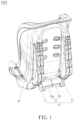
FIG. 1 is a schematic diagram illustrating a child safety seat of an embodiment of the invention being at a first forward use state, -
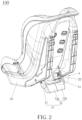
FIG. 2 is a schematic diagram illustrating the child safety seat of the embodiment of the invention being at a second forward use state, -
FIG. 3 is an enlarged view of the A portion inFIG. 2 , -
FIG. 4 is another schematic diagram illustrating the child safety seat inFIG. 2 in another view point, -
FIG. 5 is a schematic diagram illustrating a collapsible support device of the embodiment of the invention, wherein a second supporting part thereof is located at a supporting position relative to first supporting parts thereof, -
FIG. 6 is an exploded view of the collapsible support device inFIG. 5 , -
FIG. 7 is a schematic diagram illustrating the collapsible support device inFIG. 5 , of which one of the first supporting parts is detached, -
FIG. 8 is a schematic diagram illustrating the collapsible support device inFIG. 7 , of which the second supporting part is located at a collapsed position relative to the first supporting part, -
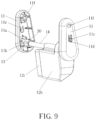
FIG. 9 is a schematic diagram illustrating the collapsible support device, of which a first supporting block of the second supporting part is detached, -
FIG. 10 is a schematic diagram illustrating the child safety seat installed on a car seat to be at the first forward use state, -
FIG. 11 is a schematic diagram illustrating the child safety seat installed on the car seat to be at the second forward use state, and -
FIG. 12 is a schematic diagram illustrating the child safety seat installed on the car seat to be at a rearward use state. - Please refer to
FIGS. 1 through 4 . Achild safety seat 100 of an embodiment of the invention includes aseat body 20 and acollapsible support device 10. Thecollapsible support device 10 includes a first supportingpart 11 and a second supportingpart 12. The second supportingpart 12 is capable of being collapsed to the first supportingpart 11. The second supportingpart 12 is pivotally connected to an end of the first supportingpart 11. The other end of the first supportingpart 11 is pivotally connected to theseat body 20. In the embodiment, the first supportingpart 11 has acircular installation hole 11f; theseat body 20 has a protrusivecircular installation shaft 23 correspondingly. Theinstallation shaft 23 fittingly passes through theinstallation hole 11f and protrudes out, so that the first supportingpart 11 can be rotated around theinstallation shaft 23, so as to achieve the purpose of the first supportingpart 11 being pivotally connected to theseat body 20. Furthermore, the first supportingpart 11 is selectively rotated relative to theseat body 20 to keep being at a use position (i.e. the position where the first supportingpart 11 protrudes out theseat body 20 inFIG. 1 ) or a storage position (i.e. the position where the first supportingpart 11 is stored in theseat body 20 inFIG. 12 ). - The second supporting
part 12 is selectively rotated relative to the first supportingpart 11 to keep being at a supporting position (i.e. the position where the second supportingpart 12 protrudes out the first supportingpart 11 inFIG. 5 ) or a collapsed position (i.e. the position where the second supportingpart 12 is collapsed to the first supportingpart 11 inFIG. 8 ). When the first supportingpart 11 is located at the use position and the second supportingpart 12 is located at the collapsed position, thechild safety seat 100 is at the first forward use state, as shown byFIG. 10 . When the first supportingpart 11 is located at the use position and the second supportingpart 12 is located at the supporting position, thechild safety seat 100 is at the second forward use state, as shown byFIG. 11 . When the first supportingpart 11 is located at the storage position and the second supportingpart 12 is located at the collapsed position, thechild safety seat 100 is at the rearward use state, as shown byFIG. 12 . Therein, for more reliable supporting of the first supportingpart 11 and the second supportingpart 12 to theseat body 20, the first supportingpart 11 is disposed in pair at two opposite sides of the second supportingpart 12; that is, the second supportingpart 12 is located between the two first supportingparts 11. In an embodiment, as follows:
Please refer toFIGS. 6 through 9 . Thecollapsible support device 10 further includes alimitation part 13 and acylindrical rotation part 14. Therotation part 14 rotatably passes through the second supportingpart 12. In practice, the second supportingpart 12 has apivotal connection hole 121 for therotation part 14 to pass through. By use of thepivotal connection hole 121, the purpose of therotation part 14 passing through the second supportingpart 12 is achieved. Therotation part 14 and the first supportingpart 11 are fixedly connected. In the embodiment, the fixedly connecting way for therotation part 14 and the first supportingpart 11 is to dispose fixingholes 14a at two ends of therotation part 14. The first supportingpart 11 has a bearing portion 11a protruding toward the second supportingpart 12. The bearing portion 11a is used for bearing therotation part 14 and made in hollow structure. The two ends of therotation part 14 are inserted into the bearing portions 11a. One end of therotation part 14 is fixedly connected to the bearing portion 11a of the first supportingpart 11 by arivet 30. The other end of therotation part 14 is fixedly connected to the bearing portion 11a of the other first supportingpart 11 by ascrew 40. Thereby, the installation of therotation part 14 onto the first supportingpart 11 is conveniently performed, so as to achieve the purpose of therotation part 14 being fixedly connected to the first supportingpart 11. - Furthermore, an end of the
limitation part 13 is inserted into the first supportingpart 11. Another end of thelimitation part 13 extends into the second supportingpart 12. The way for inserting thelimitation part 13 into the first supportingpart 11 is described in the following. The first supportingpart 11 has aninsertion block 11b protruding toward the second supportingpart 12. Theinsertion block 11b and the bearing portion 11a are parallel. Thelimitation part 13 is sleeved on theinsertion block 11b, so as to achieve the purpose of inserting thelimitation part 13 into the first supportingpart 11. Further, the second supportingpart 12 has arotation room 12a for thelimitation part 13 to extend into. The second supportingpart 12 has at least onepositioning protrusion 12b. Thepositioning protrusion 12b protrudes from the second supportingpart 12 into therotation room 12a in the passing-through direction of therotation part 14. In practice, there are two positioningprotrusions 12b. The twopositioning protrusions 12b are arranged in a line in therotation room 12a. The twopositioning protrusion 12b and asidewall 122 of therotation room 12a form afirst positioning area 12c and asecond positioning area 12d. When the second supportingpart 12 is rotated in an anticlockwise direction inFIG. 8 , such that thelimitation part 13 is located in thefirst positioning area 12c, the second supportingpart 12 is located at the supporting position, as shown byFIG. 7 . When the second supportingpart 12 is rotated in a direction indicated by an arrow B inFIG. 7 , such that thelimitation part 13 is located in thesecond positioning area 12d, the second supportingpart 12 is located at the collapsed position, as shown byFIG. 8 . By use of thefirst positioning area 12c and thesecond positioning area 12d, thelimitation part 13 can be located in thefirst positioning area 12c or thesecond positioning area 12d reliably. By use of thelimitation part 13 and therotation part 14, the second supportingpart 12 can be rotated around the first supportingpart 11 reliably. By use of thepositioning protrusion 12b, the second supportingpart 12 which enters thefirst positioning area 12c or thesecond positioning area 12d can be located, so that the second supportingpart 12 is selectively rotated relative to the first supportingpart 11 to keep being at the supporting position or the collapsed position. Therein, when thelimitation part 13 totally enters thefirst positioning area 12c or thesecond positioning area 12d, thelimitation part 13 gets rid of pushing thepositioning protrusion 12b. Thepositioning protrusion 12b returns to the original state automatically, so as to achieve the purpose of locking thelimitation part 13 which totally enters the first positioning area or the second positioning area. In practice, a bottom wall of therotation room 12a has afirst separating hole 12e and afirst cantilever portion 12f. Thefirst cantilever portion 12f protrudes from the bottom wall of therotation room 12a in thefirst separating hole 12e. Thepositioning protrusion 12b is disposed to protrude on thefirst cantilever portion 12f. Preferably, therotation room 12a is designed in semi-circle shape. Thefirst positioning area 12c and thesecond positioning area 12d are formed between the positioningprotrusion 12b and thesidewall 122 of therotation room 12a. The structure thereof is simple and convenient for thelimitation part 13 to rotate in therotation room 12a. - Please refer to
FIGS. 5 through 9 . The second supportingpart 12 includes a first supportingblock 12g and a second supportingblock 12h connected linearly with each other. The second supportingblock 12h fits in the first supportingblock 12g, so that the manufacturing of the second supportingpart 12 is easier and the supporting thereof is more reliable. In practice, the second supportingblock 12h has a sleeve portion 12i protruding toward the first supportingblock 12g. The first supportingblock 12g has asleeve room 12j corresponding to the sleeve portion 12i. By the fitting of the sleeve portion 12i and thesleeve room 12j, the first supportingblock 12g is sleeved on the second supportingblock 12h, so that the first supportingblock 12g and the second supportingblock 12h are at a linearly-connected state after the fitting. Furthermore, for more reliable contact between the second supportingpart 12 and a car seat 200 (shown inFIG. 11 ), the bottom end of the second supportingpart 12 is designed be a flat contact surface. - Please refer to
FIGS. 1 through 7 andFIG. 9 . The first supportingpart 11 has anengagement protrusion 11c protruding outward in a direction away from a side of the second supportingpart 12. Theseat body 20 has an engagement hole 21 (referring toFIG. 4 ) corresponding to theengagement protrusion 11c. By the fitting of theengagement hole 21 with theengagement protrusion 11c, the first supportingpart 11 can be engaged into theseat body 20 reliably so as to achieve the purpose of the first supportingpart 11 with the second supportingpart 12 collapsed therein being stored at the bottom of theseat body 20 reliably. - In the embodiment, the
seat body 20 has astorage room 22 for the first supportingpart 11 to be stored in. Theengagement hole 21 is disposed on a bottom wall of thestorage room 22. When the first supportingpart 11 is stored in thestorage room 22, theengagement protrusion 11c is engaged in theengagement hole 21. The purpose therefor is to store the first supportingpart 11 with the second supportingpart 12 collapsed therein at the bottom of theseat body 20, so as to ensure the reliability of rearward use of thechild safety seat 100. - Furthermore, the first supporting
part 11 has asecond separating hole 11d and asecond cantilever portion 11e. Thesecond cantilever portion 11e protrudes in thesecond separating hole 11d. Theengagement protrusion 11c is disposed to protrude on thesecond cantilever portion 11e. Thereby, theengagement protrusion 11c is slightly pushed into the first supportingpart 11 by theseat body 20 before engaging with theengagement hole 21, and then theengagement protrusion 11c can lock the first supportingpart 11 which is stored, so that the first supportingpart 11 can work more reliably. Furthermore, when the first supportingpart 11 is located at the use position, the first supportingpart 11 is against asidewall 24 of thestorage room 22 and thesidewall 24 of thestorage room 22 supports the first supportingpart 11. - It is worth notice that the
collapsible support device 10 has been illustrated in the process of describing thechild safety seat 100, which will not be described herein in addition. - Description for an adjustment of the
child safety seat 100 to thecar seat 200 is based on the combination ofFIGS. 10 through 12 . When thechild safety seat 100 is used as a forward-use child safety seat, the first supportingpart 11 is rotated to the use position. At this moment, the second supportingpart 12 is located at the collapsed position (that is the second supportingpart 12 is collapsed to the first supporting part 11), so that thechild safety seat 100 is at the first forward use state, as shown byFIG. 10 , by the first supportingpart 11 and a first supportingsurface 102 and a seat backsurface 106 of theseat body 20 contacting thecar seat 200. - If the
child safety seat 100 is required to be boosted further to be at the second forward use state, as shown byFIG. 11 , the second supportingpart 12 can be rotated in a direction indicated by an arrow C inFIG. 10 , so as to locate the second supportingpart 12 at the supporting position and to expand the second supportingpart 12 out the first supportingpart 11. At this moment, thechild safety seat 100 is at the second forward use state, as shown byFIG. 11 , by the second supportingpart 12 and first supportingsurface 102 and the seat backsurface 106 of theseat body 20 contacting thecar seat 200. - If the
child safety seat 100 is to be installed on thecar seat 200 to be used in the rearward use for infant, the second supportingpart 12 can be rotated in a direction indicated by an arrow D inFIG. 11 to be collapsed to the first supportingpart 11 first. The first supportingpart 11 with the second supportingpart 12 collapsed therein is then stored onto theseat body 20. At last, thechild safety seat 100 is installed onto thecar seat 200 and fixed on thecar seat 200 by afastening strap 300. At this moment, thechild safety seat 100 at the rearward use state, as shown byFIG. 12 , by a second supportingsurface 104 of theseat body 20 contacting thecar seat 200. - The second supporting
part 12 is pivotally connected to one end of the first supportingpart 11 to be capable of being collapsed to the first supportingpart 11. The other end of the first supportingpart 11 is pivotally connected to theseat body 20. The first supportingpart 11 is selectively rotated relative to theseat body 20 to be located at one of the use position and the storage position. Furthermore, the second supportingpart 12 is selectively rotated relative to the first supportingpart 11 to be located at one of the supporting position and the collapsed position. Therefore, thechild safety seat 100 is supported by the first supportingpart 11 when the first supportingpart 11 is located at the use position and the second supportingpart 12 at the collapsed position, so that thechild safety seat 100 is at the first forward use state by the first supportingpart 11 and the first supportingsurface 102 and the seat backsurface 106 of theseat body 20 contacting thecar seat 200. When the first supportingpart 11 is located at the use position and the second supportingpart 12 is located at the supporting position, thechild safety seat 100 is supported by the first supportingpart 11 through the second supportingpart 12 so as to be boosted further, so that thechild safety seat 100 is at the second forward use state by the second supportingpart 12 and the first supportingsurface 102 and the seat backsurface 106 of theseat body 20 contacting thecar seat 200. When the first supportingpart 11 is located at the storage position and the second supportingpart 12 is located at the collapsed position, the first supportingpart 11 and the second supportingpart 12 are stored in the bottom of theseat body 20, so that thechild safety seat 100 can be at the rearward use state by the second supportingsurface 104 of theseat body 20 contacting thecar seat 200. Therefore, thecollapsible support device 10 achieves the purpose of quickly and conveniently changing thechild safety seat 100 in forward or rearward use just by changing the position of the first supportingpart 11 relative to thechild safety seat 100 and the position of the second supportingpart 12 relative to the first supportingpart 11, and achieves the purpose of adjusting the sitting angle of thechild safety seat 100 in forward use by switching thechild safety seat 100 between the first forward use sate and the second forward use state. Therefore, thecollapsible support device 10 has simple structure and providing convenience of operation to users. Thechild safety seat 100 has a wider use range because of having thecollapsible support device 10 and is suitable for infants in various ages and bodies. Furthermore, the switching between the first forward use state and the second forward use state of thechild safety seat 100 is performed by rotating the second supportingpart 12 on the first supportingpart 11, so that thechild safety seat 100 has the function of adjusting the sitting angle. - Those skilled in the art will readily observe that numerous modifications and alterations of the device and method may be made while retaining the teachings of the invention. Accordingly, the above invention should be construed as limited only by the metes and bounds of the appended claims.
Claims (12)
- A child safety seat (100), comprising a seat body (20) and a collapsible support device (10), which is installed on the child safety seat (100), wherein the collapsible support device (10) comprises a first supporting part (11) and a second supporting part (12), the second supporting part (12) being pivotally connected to an end of the first supporting part (11) to be capable of being collapsed to the first supporting part (11), another end of the first supporting part (11) being pivotally connected to the child safety seat (100), the first supporting part (11) being selectively rotated relative to the child safety seat (100) to be located at one of a use position, where the first supporting part (11) protrudes out the seat body (20), and a storage position, where the first supporting part (11) is stored in the seat body (20), the second supporting part (12) being selectively rotated relative to the first supporting part (11) to be located at one of a supporting position and a collapsed position,wherein the collapsible support device (10) further comprises another one of the first supporting part (11), the two first supporting parts (11) being disposed at two opposite sides of the second supporting part (12),wherein, when the first supporting part (11) is located at the use position, the child safety seat (100) is at a first forward use state,wherein, when the first supporting part (11) is located at the storage position, the child safety seat (100) is at a rearward use state, andwherein the collapsible support device (10) further comprises a limitation part (13) and a rotation part (14), the rotation part (14) rotatably passing through the second supporting part (12), the rotation part (14) and the first supporting part (11) being fixedly connected, an end of the limitation part (13) being inserted into the first supporting part (11), another end of the limitation part (13) extending into the second supporting part (12), the second supporting part (12) having a rotation room (12a) for the limitation part (13) to extend into, the second supporting part (12) having at least one positioning protrusion (12b), a first positioning area (12c) and a second positioning area (12d) being formed between the positioning protrusion (12b) and a sidewall (122) of the rotation room (12a), when the second supporting part (12) is rotated to locate the limitation part (13) in the first positioning area (12c), the second supporting part (12) being located at the supporting position, when the second supporting part (12) is rotated to locate the limitation part (13) in the second positioning area (12d), the second supporting part (12) being located at the collapsed position.
- The child safety seat (100) of claim 1, characterized in that when the first supporting part (11) is located at the use position and the second supporting part (12) is located at the supporting position, the child safety seat (100) is at a second forward use state.
- The child safety seat (100) of claim 1, characterized in that a bottom wall of the rotation room (12a) has a first separating hole (12e) and a first cantilever portion (12f), the first cantilever portion (12f) protrudes in the first separating hole (12e), and the positioning protrusion (12b) is disposed to protrude on the first cantilever portion (12f).
- The child safety seat (100) of claim 1, characterized in that the first supporting part (11) has a bearing portion (11a) protruding toward the second supporting part (12), and the rotation part (14) is inserted into the bearing portion (11a) and fixedly connected to the bearing portion (11a).
- The child safety seat (100) of claim 1, characterized in that the first supporting part (11) has an insertion block (11b) protruding toward the second supporting part (12), and the limitation part (13) is sleeved on the insertion block (11b).
- The child safety seat (100) of claim 1, characterized in that the first supporting part (11) has an engagement protrusion (11c) protruding outward in a direction away from a side of the second supporting part (12), and the child safety seat (100) has an engagement hole (21) corresponding to the engagement protrusion (11c).
- The child safety seat (100) of claim 6, characterized in that the first supporting part (11) further has a second separating hole (11d) and a second cantilever portion (11e), the second cantilever portion (11e) protrudes in the second separating hole (11d), and the engagement protrusion (11c) is disposed to protrude on the second cantilever portion (11e).
- The child safety seat (100) of claim 1, characterized in that the second supporting part (12) comprises a first supporting block (12g) and a second supporting block (12h) connected linearly with each other, and the second supporting block (12h) fits in the first supporting block (12g).
- The child safety seat (100) of claim 1, the other end of the first supporting part (11) being pivotally connected to the seat body (20), and the first supporting part (11) being selectively rotated relative to the seat body (20).
- The child safety seat (100) of claim 9, characterized in that the first supporting part (11) has an engagement protrusion (11c) protruding outward in a direction away from a side of the second supporting part (12), and the seat body (20) has an engagement hole (21) corresponding to the engagement protrusion (11c).
- The child safety seat (100) of claim 10, characterized in that the seat body (20) has a storage room (22) for the first supporting part (11) to be stored in, the engagement hole (21) is disposed on a bottom wall of the storage room (22), and when the first supporting part (11) is stored in the storage room (22), the engagement protrusion (11c) is engaged in the engagement hole (21).
- The child safety seat (100) of claim 11, characterized in that when the first supporting part (11) is located at the use position, the first supporting part (11) is against a sidewall (24) of the storage room (22) and the sidewall (24) of the storage room (22) supports the first supporting part (11).
Applications Claiming Priority (2)
| Application Number | Priority Date | Filing Date | Title |
|---|---|---|---|
| CN201210168704.0A CN103419684B (en) | 2012-05-25 | 2012-05-25 | Foldable supporting device and child safety seat with same |
| EP13002018.3A EP2666666B1 (en) | 2012-05-25 | 2013-04-17 | Collapsible support device and child safety seat therewith |
Related Parent Applications (1)
| Application Number | Title | Priority Date | Filing Date |
|---|---|---|---|
| EP13002018.3A Division EP2666666B1 (en) | 2012-05-25 | 2013-04-17 | Collapsible support device and child safety seat therewith |
Publications (2)
| Publication Number | Publication Date |
|---|---|
| EP3885186A1 EP3885186A1 (en) | 2021-09-29 |
| EP3885186B1 true EP3885186B1 (en) | 2025-02-12 |
Family
ID=48143422
Family Applications (2)
| Application Number | Title | Priority Date | Filing Date |
|---|---|---|---|
| EP21174096.4A Active EP3885186B1 (en) | 2012-05-25 | 2013-04-17 | Collapsible support device and child safety seat therewith |
| EP13002018.3A Active EP2666666B1 (en) | 2012-05-25 | 2013-04-17 | Collapsible support device and child safety seat therewith |
Family Applications After (1)
| Application Number | Title | Priority Date | Filing Date |
|---|---|---|---|
| EP13002018.3A Active EP2666666B1 (en) | 2012-05-25 | 2013-04-17 | Collapsible support device and child safety seat therewith |
Country Status (5)
| Country | Link |
|---|---|
| US (1) | US9073459B2 (en) |
| EP (2) | EP3885186B1 (en) |
| JP (1) | JP5632503B2 (en) |
| CN (1) | CN103419684B (en) |
| ES (2) | ES3022357T3 (en) |
Families Citing this family (7)
| Publication number | Priority date | Publication date | Assignee | Title |
|---|---|---|---|---|
| USD758085S1 (en) * | 2013-05-30 | 2016-06-07 | Smart Trike Mnf Pte Ltd. | Chair for tricycle |
| CN104709123B (en) * | 2013-12-13 | 2017-03-01 | 明门香港股份有限公司 | Child safety seat and supporting leg device thereof |
| US11447047B2 (en) | 2019-01-10 | 2022-09-20 | Wonderland Switzerland Ag | Child safety seat |
| US11440446B2 (en) * | 2019-01-10 | 2022-09-13 | Wonderland Switzerland Ag | Child restraint system |
| US11155188B2 (en) | 2019-01-10 | 2021-10-26 | Wonderland Switzerland Ag | Child restraint system and adjustable headrest assembly thereof |
| CN112026602A (en) * | 2019-06-03 | 2020-12-04 | 宝钜瑞士股份有限公司 | Automobile safety seat |
| CN113547965B (en) * | 2021-08-31 | 2022-10-25 | 东莞金旺儿童用品有限公司 | Safe seat hand-basket base angular adjustment subassembly |
Citations (1)
| Publication number | Priority date | Publication date | Assignee | Title |
|---|---|---|---|---|
| US4913490A (en) * | 1987-10-26 | 1990-04-03 | Combi Co., Ltd. | Auxiliary chair mounted in vehicle |
Family Cites Families (9)
| Publication number | Priority date | Publication date | Assignee | Title |
|---|---|---|---|---|
| US4186962A (en) * | 1977-12-22 | 1980-02-05 | Meeker Paul K | Car seat support and restraining stand |
| US4688850A (en) * | 1985-09-30 | 1987-08-25 | Graco Metal Products | Infant seat |
| US5462333A (en) * | 1988-10-21 | 1995-10-31 | Life Forece Associates, Lp | Child safety seat |
| US5957531A (en) * | 1996-10-25 | 1999-09-28 | Fisher Price Inc. | Child car seat |
| DE19646621C1 (en) * | 1996-11-12 | 1997-11-20 | Kiddy Gmbh Auto Kindersitze | Safety seat for child in car |
| JPH11291799A (en) | 1998-04-09 | 1999-10-26 | Combi Corp | child seat |
| JP2008290580A (en) * | 2007-05-24 | 2008-12-04 | Tokai Rika Co Ltd | Child seat |
| CN101708696B (en) * | 2009-11-30 | 2012-05-23 | 好孩子儿童用品有限公司 | Child car seat |
| CN201769703U (en) * | 2010-08-24 | 2011-03-23 | 好孩子儿童用品有限公司 | Car seat for children |
-
2012
- 2012-05-25 CN CN201210168704.0A patent/CN103419684B/en active Active
-
2013
- 2013-04-17 EP EP21174096.4A patent/EP3885186B1/en active Active
- 2013-04-17 EP EP13002018.3A patent/EP2666666B1/en active Active
- 2013-04-17 ES ES21174096T patent/ES3022357T3/en active Active
- 2013-04-17 ES ES13002018T patent/ES2879281T3/en active Active
- 2013-04-26 US US13/870,994 patent/US9073459B2/en active Active
- 2013-05-01 JP JP2013096110A patent/JP5632503B2/en active Active
Patent Citations (1)
| Publication number | Priority date | Publication date | Assignee | Title |
|---|---|---|---|---|
| US4913490A (en) * | 1987-10-26 | 1990-04-03 | Combi Co., Ltd. | Auxiliary chair mounted in vehicle |
Also Published As
| Publication number | Publication date |
|---|---|
| US20130313872A1 (en) | 2013-11-28 |
| EP2666666B1 (en) | 2021-05-19 |
| JP2013244957A (en) | 2013-12-09 |
| ES3022357T3 (en) | 2025-05-28 |
| EP2666666A3 (en) | 2017-12-06 |
| US9073459B2 (en) | 2015-07-07 |
| JP5632503B2 (en) | 2014-11-26 |
| ES2879281T3 (en) | 2021-11-22 |
| EP3885186A1 (en) | 2021-09-29 |
| CN103419684A (en) | 2013-12-04 |
| EP2666666A2 (en) | 2013-11-27 |
| CN103419684B (en) | 2016-01-13 |
Similar Documents
| Publication | Publication Date | Title |
|---|---|---|
| EP3885186B1 (en) | Collapsible support device and child safety seat therewith | |
| JP6452053B2 (en) | Child safety seat | |
| US5277472A (en) | Multi-function infant car seat including glider assembly | |
| KR101274894B1 (en) | Stroller connectable with a car seat | |
| CN216942790U (en) | child car seat system | |
| US5505519A (en) | Leg rest attachments for child car seats | |
| US6264278B1 (en) | Adjustable footrest for car seat | |
| US5106154A (en) | Car seat with integral convertible frame | |
| CA2466468C (en) | An infant seat with armrests for motorcars | |
| CN211731131U (en) | Child safety seat with supporting legs | |
| KR100461102B1 (en) | A reclining device for a rear seat in automobile | |
| US6591763B2 (en) | Collapsible seat back tray assembly | |
| US6877805B1 (en) | Seating apparatus | |
| EP1591305A3 (en) | Child seat to be used in vehicles | |
| KR101689710B1 (en) | Rotable and removable baby car-seat | |
| CN221852005U (en) | Foldable carrier and child carrier | |
| JP2008290580A (en) | Child seat | |
| KR19990064763A (en) | Baby car-sheet convertible to baby carriage | |
| AU2006203692B2 (en) | Adjustable recline device for child safety seat | |
| KR19980024868A (en) | Baby Seats | |
| JP2905440B2 (en) | Built-in child seat structure | |
| JPH042821Y2 (en) | ||
| JP2569965Y2 (en) | Childcare chair | |
| KR20190141296A (en) | A stroller that can be mounted on a vehicle | |
| JP2005095611A (en) | Auxiliary chair |
Legal Events
| Date | Code | Title | Description |
|---|---|---|---|
| PUAI | Public reference made under article 153(3) epc to a published international application that has entered the european phase |
Free format text: ORIGINAL CODE: 0009012 |
|
| STAA | Information on the status of an ep patent application or granted ep patent |
Free format text: STATUS: THE APPLICATION HAS BEEN PUBLISHED |
|
| STAA | Information on the status of an ep patent application or granted ep patent |
Free format text: STATUS: REQUEST FOR EXAMINATION WAS MADE |
|
| AC | Divisional application: reference to earlier application |
Ref document number: 2666666 Country of ref document: EP Kind code of ref document: P |
|
| AK | Designated contracting states |
Kind code of ref document: A1 Designated state(s): AL AT BE BG CH CY CZ DE DK EE ES FI FR GB GR HR HU IE IS IT LI LT LU LV MC MK MT NL NO PL PT RO RS SE SI SK SM TR |
|
| 17P | Request for examination filed |
Effective date: 20210913 |
|
| RBV | Designated contracting states (corrected) |
Designated state(s): AL AT BE BG CH CY CZ DE DK EE ES FI FR GB GR HR HU IE IS IT LI LT LU LV MC MK MT NL NO PL PT RO RS SE SI SK SM TR |
|
| STAA | Information on the status of an ep patent application or granted ep patent |
Free format text: STATUS: EXAMINATION IS IN PROGRESS |
|
| 17Q | First examination report despatched |
Effective date: 20220120 |
|
| GRAP | Despatch of communication of intention to grant a patent |
Free format text: ORIGINAL CODE: EPIDOSNIGR1 |
|
| STAA | Information on the status of an ep patent application or granted ep patent |
Free format text: STATUS: GRANT OF PATENT IS INTENDED |
|
| INTG | Intention to grant announced |
Effective date: 20240423 |
|
| GRAJ | Information related to disapproval of communication of intention to grant by the applicant or resumption of examination proceedings by the epo deleted |
Free format text: ORIGINAL CODE: EPIDOSDIGR1 |
|
| STAA | Information on the status of an ep patent application or granted ep patent |
Free format text: STATUS: EXAMINATION IS IN PROGRESS |
|
| INTC | Intention to grant announced (deleted) | ||
| GRAP | Despatch of communication of intention to grant a patent |
Free format text: ORIGINAL CODE: EPIDOSNIGR1 |
|
| STAA | Information on the status of an ep patent application or granted ep patent |
Free format text: STATUS: GRANT OF PATENT IS INTENDED |
|
| P01 | Opt-out of the competence of the unified patent court (upc) registered |
Free format text: CASE NUMBER: APP_46039/2024 Effective date: 20240808 |
|
| INTG | Intention to grant announced |
Effective date: 20240902 |
|
| GRAS | Grant fee paid |
Free format text: ORIGINAL CODE: EPIDOSNIGR3 |
|
| GRAA | (expected) grant |
Free format text: ORIGINAL CODE: 0009210 |
|
| STAA | Information on the status of an ep patent application or granted ep patent |
Free format text: STATUS: THE PATENT HAS BEEN GRANTED |
|
| AC | Divisional application: reference to earlier application |
Ref document number: 2666666 Country of ref document: EP Kind code of ref document: P |
|
| AK | Designated contracting states |
Kind code of ref document: B1 Designated state(s): AL AT BE BG CH CY CZ DE DK EE ES FI FR GB GR HR HU IE IS IT LI LT LU LV MC MK MT NL NO PL PT RO RS SE SI SK SM TR |
|
| REG | Reference to a national code |
Ref country code: GB Ref legal event code: FG4D |
|
| REG | Reference to a national code |
Ref country code: CH Ref legal event code: EP |
|
| REG | Reference to a national code |
Ref country code: DE Ref legal event code: R096 Ref document number: 602013086515 Country of ref document: DE |
|
| REG | Reference to a national code |
Ref country code: IE Ref legal event code: FG4D |
|
| REG | Reference to a national code |
Ref country code: NL Ref legal event code: FP |
|
| PGFP | Annual fee paid to national office [announced via postgrant information from national office to epo] |
Ref country code: NL Payment date: 20250424 Year of fee payment: 13 |
|
| REG | Reference to a national code |
Ref country code: ES Ref legal event code: FG2A Ref document number: 3022357 Country of ref document: ES Kind code of ref document: T3 Effective date: 20250528 |
|
| PG25 | Lapsed in a contracting state [announced via postgrant information from national office to epo] |
Ref country code: RS Free format text: LAPSE BECAUSE OF FAILURE TO SUBMIT A TRANSLATION OF THE DESCRIPTION OR TO PAY THE FEE WITHIN THE PRESCRIBED TIME-LIMIT Effective date: 20250512 |
|
| PG25 | Lapsed in a contracting state [announced via postgrant information from national office to epo] |
Ref country code: FI Free format text: LAPSE BECAUSE OF FAILURE TO SUBMIT A TRANSLATION OF THE DESCRIPTION OR TO PAY THE FEE WITHIN THE PRESCRIBED TIME-LIMIT Effective date: 20250212 |
|
| PG25 | Lapsed in a contracting state [announced via postgrant information from national office to epo] |
Ref country code: PL Free format text: LAPSE BECAUSE OF FAILURE TO SUBMIT A TRANSLATION OF THE DESCRIPTION OR TO PAY THE FEE WITHIN THE PRESCRIBED TIME-LIMIT Effective date: 20250212 |
|
| PGFP | Annual fee paid to national office [announced via postgrant information from national office to epo] |
Ref country code: DE Payment date: 20250416 Year of fee payment: 13 |
|
| PGFP | Annual fee paid to national office [announced via postgrant information from national office to epo] |
Ref country code: ES Payment date: 20250513 Year of fee payment: 13 |
|
| REG | Reference to a national code |
Ref country code: LT Ref legal event code: MG9D |
|
| PG25 | Lapsed in a contracting state [announced via postgrant information from national office to epo] |
Ref country code: NO Free format text: LAPSE BECAUSE OF FAILURE TO SUBMIT A TRANSLATION OF THE DESCRIPTION OR TO PAY THE FEE WITHIN THE PRESCRIBED TIME-LIMIT Effective date: 20250512 Ref country code: IS Free format text: LAPSE BECAUSE OF FAILURE TO SUBMIT A TRANSLATION OF THE DESCRIPTION OR TO PAY THE FEE WITHIN THE PRESCRIBED TIME-LIMIT Effective date: 20250612 |
|
| PG25 | Lapsed in a contracting state [announced via postgrant information from national office to epo] |
Ref country code: HR Free format text: LAPSE BECAUSE OF FAILURE TO SUBMIT A TRANSLATION OF THE DESCRIPTION OR TO PAY THE FEE WITHIN THE PRESCRIBED TIME-LIMIT Effective date: 20250212 |
|
| PG25 | Lapsed in a contracting state [announced via postgrant information from national office to epo] |
Ref country code: LV Free format text: LAPSE BECAUSE OF FAILURE TO SUBMIT A TRANSLATION OF THE DESCRIPTION OR TO PAY THE FEE WITHIN THE PRESCRIBED TIME-LIMIT Effective date: 20250212 Ref country code: PT Free format text: LAPSE BECAUSE OF FAILURE TO SUBMIT A TRANSLATION OF THE DESCRIPTION OR TO PAY THE FEE WITHIN THE PRESCRIBED TIME-LIMIT Effective date: 20250612 |
|
| PG25 | Lapsed in a contracting state [announced via postgrant information from national office to epo] |
Ref country code: BG Free format text: LAPSE BECAUSE OF FAILURE TO SUBMIT A TRANSLATION OF THE DESCRIPTION OR TO PAY THE FEE WITHIN THE PRESCRIBED TIME-LIMIT Effective date: 20250212 Ref country code: GR Free format text: LAPSE BECAUSE OF FAILURE TO SUBMIT A TRANSLATION OF THE DESCRIPTION OR TO PAY THE FEE WITHIN THE PRESCRIBED TIME-LIMIT Effective date: 20250513 |
|
| PGFP | Annual fee paid to national office [announced via postgrant information from national office to epo] |
Ref country code: CH Payment date: 20250501 Year of fee payment: 13 |
|
| REG | Reference to a national code |
Ref country code: AT Ref legal event code: MK05 Ref document number: 1765792 Country of ref document: AT Kind code of ref document: T Effective date: 20250212 |
|
| PG25 | Lapsed in a contracting state [announced via postgrant information from national office to epo] |
Ref country code: SE Free format text: LAPSE BECAUSE OF FAILURE TO SUBMIT A TRANSLATION OF THE DESCRIPTION OR TO PAY THE FEE WITHIN THE PRESCRIBED TIME-LIMIT Effective date: 20250212 |
|
| PG25 | Lapsed in a contracting state [announced via postgrant information from national office to epo] |
Ref country code: SM Free format text: LAPSE BECAUSE OF FAILURE TO SUBMIT A TRANSLATION OF THE DESCRIPTION OR TO PAY THE FEE WITHIN THE PRESCRIBED TIME-LIMIT Effective date: 20250212 |
|
| PG25 | Lapsed in a contracting state [announced via postgrant information from national office to epo] |
Ref country code: DK Free format text: LAPSE BECAUSE OF FAILURE TO SUBMIT A TRANSLATION OF THE DESCRIPTION OR TO PAY THE FEE WITHIN THE PRESCRIBED TIME-LIMIT Effective date: 20250212 |
|
| PG25 | Lapsed in a contracting state [announced via postgrant information from national office to epo] |
Ref country code: IT Free format text: LAPSE BECAUSE OF FAILURE TO SUBMIT A TRANSLATION OF THE DESCRIPTION OR TO PAY THE FEE WITHIN THE PRESCRIBED TIME-LIMIT Effective date: 20250212 |
|
| PG25 | Lapsed in a contracting state [announced via postgrant information from national office to epo] |
Ref country code: AT Free format text: LAPSE BECAUSE OF FAILURE TO SUBMIT A TRANSLATION OF THE DESCRIPTION OR TO PAY THE FEE WITHIN THE PRESCRIBED TIME-LIMIT Effective date: 20250212 |
|
| PG25 | Lapsed in a contracting state [announced via postgrant information from national office to epo] |
Ref country code: CZ Free format text: LAPSE BECAUSE OF FAILURE TO SUBMIT A TRANSLATION OF THE DESCRIPTION OR TO PAY THE FEE WITHIN THE PRESCRIBED TIME-LIMIT Effective date: 20250212 Ref country code: EE Free format text: LAPSE BECAUSE OF FAILURE TO SUBMIT A TRANSLATION OF THE DESCRIPTION OR TO PAY THE FEE WITHIN THE PRESCRIBED TIME-LIMIT Effective date: 20250212 |
|
| PG25 | Lapsed in a contracting state [announced via postgrant information from national office to epo] |
Ref country code: RO Free format text: LAPSE BECAUSE OF FAILURE TO SUBMIT A TRANSLATION OF THE DESCRIPTION OR TO PAY THE FEE WITHIN THE PRESCRIBED TIME-LIMIT Effective date: 20250212 |
|
| PG25 | Lapsed in a contracting state [announced via postgrant information from national office to epo] |
Ref country code: SK Free format text: LAPSE BECAUSE OF FAILURE TO SUBMIT A TRANSLATION OF THE DESCRIPTION OR TO PAY THE FEE WITHIN THE PRESCRIBED TIME-LIMIT Effective date: 20250212 |
|
| REG | Reference to a national code |
Ref country code: DE Ref legal event code: R097 Ref document number: 602013086515 Country of ref document: DE |
|
| PG25 | Lapsed in a contracting state [announced via postgrant information from national office to epo] |
Ref country code: LU Free format text: LAPSE BECAUSE OF NON-PAYMENT OF DUE FEES Effective date: 20250417 |
|
| PLBE | No opposition filed within time limit |
Free format text: ORIGINAL CODE: 0009261 |
|
| STAA | Information on the status of an ep patent application or granted ep patent |
Free format text: STATUS: NO OPPOSITION FILED WITHIN TIME LIMIT |
|
| PG25 | Lapsed in a contracting state [announced via postgrant information from national office to epo] |
Ref country code: MC Free format text: LAPSE BECAUSE OF FAILURE TO SUBMIT A TRANSLATION OF THE DESCRIPTION OR TO PAY THE FEE WITHIN THE PRESCRIBED TIME-LIMIT Effective date: 20250212 |
|
| REG | Reference to a national code |
Ref country code: BE Ref legal event code: MM Effective date: 20250430 |
|
| PG25 | Lapsed in a contracting state [announced via postgrant information from national office to epo] |
Ref country code: BE Free format text: LAPSE BECAUSE OF NON-PAYMENT OF DUE FEES Effective date: 20250430 |
|
| 26N | No opposition filed |
Effective date: 20251113 |
|
| PGFP | Annual fee paid to national office [announced via postgrant information from national office to epo] |
Ref country code: GB Payment date: 20260226 Year of fee payment: 14 |
|
| PG25 | Lapsed in a contracting state [announced via postgrant information from national office to epo] |
Ref country code: IE Free format text: LAPSE BECAUSE OF NON-PAYMENT OF DUE FEES Effective date: 20250417 |
|
| PGFP | Annual fee paid to national office [announced via postgrant information from national office to epo] |
Ref country code: FR Payment date: 20260331 Year of fee payment: 14 |