EP3883198A1 - Load control in a wireless communication system - Google Patents
Load control in a wireless communication system Download PDFInfo
- Publication number
- EP3883198A1 EP3883198A1 EP21163548.7A EP21163548A EP3883198A1 EP 3883198 A1 EP3883198 A1 EP 3883198A1 EP 21163548 A EP21163548 A EP 21163548A EP 3883198 A1 EP3883198 A1 EP 3883198A1
- Authority
- EP
- European Patent Office
- Prior art keywords
- proxy function
- information
- scp
- proxy
- response message
- Prior art date
- Legal status (The legal status is an assumption and is not a legal conclusion. Google has not performed a legal analysis and makes no representation as to the accuracy of the status listed.)
- Granted
Links
Images




Classifications
-
- H—ELECTRICITY
- H04—ELECTRIC COMMUNICATION TECHNIQUE
- H04L—TRANSMISSION OF DIGITAL INFORMATION, e.g. TELEGRAPHIC COMMUNICATION
- H04L67/00—Network arrangements or protocols for supporting network services or applications
- H04L67/50—Network services
- H04L67/56—Provisioning of proxy services
- H04L67/562—Brokering proxy services
-
- H—ELECTRICITY
- H04—ELECTRIC COMMUNICATION TECHNIQUE
- H04L—TRANSMISSION OF DIGITAL INFORMATION, e.g. TELEGRAPHIC COMMUNICATION
- H04L47/00—Traffic control in data switching networks
- H04L47/10—Flow control; Congestion control
- H04L47/33—Flow control; Congestion control using forward notification
-
- H—ELECTRICITY
- H04—ELECTRIC COMMUNICATION TECHNIQUE
- H04L—TRANSMISSION OF DIGITAL INFORMATION, e.g. TELEGRAPHIC COMMUNICATION
- H04L67/00—Network arrangements or protocols for supporting network services or applications
- H04L67/50—Network services
- H04L67/56—Provisioning of proxy services
-
- H—ELECTRICITY
- H04—ELECTRIC COMMUNICATION TECHNIQUE
- H04L—TRANSMISSION OF DIGITAL INFORMATION, e.g. TELEGRAPHIC COMMUNICATION
- H04L67/00—Network arrangements or protocols for supporting network services or applications
- H04L67/50—Network services
- H04L67/60—Scheduling or organising the servicing of application requests, e.g. requests for application data transmissions using the analysis and optimisation of the required network resources
- H04L67/63—Routing a service request depending on the request content or context
-
- H—ELECTRICITY
- H04—ELECTRIC COMMUNICATION TECHNIQUE
- H04L—TRANSMISSION OF DIGITAL INFORMATION, e.g. TELEGRAPHIC COMMUNICATION
- H04L69/00—Network arrangements, protocols or services independent of the application payload and not provided for in the other groups of this subclass
- H04L69/22—Parsing or analysis of headers
-
- H—ELECTRICITY
- H04—ELECTRIC COMMUNICATION TECHNIQUE
- H04W—WIRELESS COMMUNICATION NETWORKS
- H04W28/00—Network traffic management; Network resource management
- H04W28/02—Traffic management, e.g. flow control or congestion control
- H04W28/0284—Traffic management, e.g. flow control or congestion control detecting congestion or overload during communication
-
- H—ELECTRICITY
- H04—ELECTRIC COMMUNICATION TECHNIQUE
- H04W—WIRELESS COMMUNICATION NETWORKS
- H04W28/00—Network traffic management; Network resource management
- H04W28/02—Traffic management, e.g. flow control or congestion control
- H04W28/0289—Congestion control
-
- H—ELECTRICITY
- H04—ELECTRIC COMMUNICATION TECHNIQUE
- H04L—TRANSMISSION OF DIGITAL INFORMATION, e.g. TELEGRAPHIC COMMUNICATION
- H04L69/00—Network arrangements, protocols or services independent of the application payload and not provided for in the other groups of this subclass
- H04L69/24—Negotiation of communication capabilities
Definitions
- the present application relates to a method, apparatus, and computer program for a wireless communication system.
- a communication system can be seen as a facility that enables communication sessions between two or more entities such as user terminals, base stations/access points and/or other nodes by providing carriers between the various entities involved in the communications path.
- a communication system can be provided, for example, by means of a communication network and one or more compatible communication devices.
- the communication sessions may comprise, for example, communication of data for carrying communications such as voice, electronic mail (email), text message, multimedia and/or content data and so on.
- Non-limiting examples of services provided comprise two-way or multi-way calls, data communication or multimedia services and access to a data network system, such as the Internet.
- an apparatus comprising means for: issuing a request message to a first proxy function for forwarding to a network server; and receiving a response message from the first proxy function, the response message comprising information about a signalling capacity of the first proxy function, wherein the information about the signalling capacity comprises at least one of: load control information and overload control information of the first proxy function.
- the first proxy function may comprise one of: a service communication proxy, and a security edge protection proxy.
- the information about the signalling capacity of the first proxy function may be comprised within a header of the response message.
- the header may comprise an identifier of the first proxy function to link the information about the signalling capacity with the first proxy function.
- the response message may additionally comprise information about a signalling capacity of the network server.
- the means may be further configured to perform: issuing a further request message to at least one of: the first proxy function, a further proxy network function, and directly to the network server, based on the received information about the signalling capacity of the first proxy function.
- the means for issuing the further request message may be for issuing the further request message to a further proxy function when the received overload control information indicates that the first proxy function is in an overload condition.
- the means for issuing the further request message may be for issuing the further request message to the first proxy function at a reduced rate according to the overload control information.
- the means for issuing the further request message may be for issuing the further request message to a further proxy function when the received load control information indicates that the first proxy function has at least one of: a load above a predetermined threshold, and a load above a load of the further proxy function.
- the means for issuing a further request message may be for issuing the further service request directly to the network server when at least one of: the received overload control information indicates that the first proxy function is in an overload condition, and the received load control information indicates that the first proxy function has a load above a predetermined threshold.
- the means may comprise at least one processor and at least one memory including computer program code, wherein the at least one memory and the computer program code are configured to, with the at least one processor, cause the apparatus at least to perform functions defined herein for the apparatus.
- the apparatus may be comprised in a network client.
- an apparatus at a first proxy function comprising means for: receiving a request message from a network client for forwarding to a network server; and providing a response message to the network client, the response message comprising information about a signalling capacity of the first proxy function, wherein the information about the signalling capacity comprises at least one of: load control information and overload control information of the first proxy function.
- the first proxy function may comprise one of: a service communication proxy, and a security edge protection proxy.
- the information about the signalling capacity of the first proxy function may be comprised within a header of the response message.
- the header may comprise an identifier of the first proxy function to link the information about the signalling capacity with the first proxy function.
- the response message may additionally comprise information about a signalling capacity of the network server.
- the means may be further configured to perform: providing the request message to the network server.
- the response message may comprise information about a signalling capacity of the network server.
- the means may comprise at least one processor and at least one memory including computer program code, wherein the at least one memory and the computer program code are configured to, with the at least one processor, cause the apparatus at least to perform functions defined herein for the apparatus.
- the apparatus may be comprised in a first proxy function.
- a method comprising: issuing a request message to a first proxy function for forwarding to a network server; and receiving a response message from the first proxy function, the response message comprising information about a signalling capacity of the first proxy function, wherein the information about the signalling capacity comprises at least one of: load control information and overload control information of the first proxy function.
- the first proxy function may comprise one of: a service communication proxy, and a security edge protection proxy.
- the information about the signalling capacity of the first proxy function may be comprised within a header of the response message.
- the header may comprise an identifier of the first proxy function to link the information about the signalling capacity with the first proxy function.
- the response message may additionally comprise information about a signalling capacity of the network server.
- the method may further comprise: issuing a further request message to at least one of: the first proxy function, a further proxy network function, and directly to the network server, based on the received information about the signalling capacity of the first proxy function.
- Issuing the further request message may comprise issuing the further request message to a further proxy function when the received overload control information indicates that the first proxy function is in an overload condition.
- Issuing the further request message may comprise issuing the further request message to the first proxy function at a reduced rate according to the overload control information.
- Issuing the further request message may comprise issuing the further request message to a further proxy function when the received load control information indicates that the first proxy function has at least one of: a load above a predetermined threshold, and a load above a load of the further proxy function.
- Issuing the further request message may comprise issuing the further service request directly to the network server when at least one of: the received overload control information indicates that the first proxy function is in an overload condition, and the received load control information indicates that the first proxy function has a load above a predetermined threshold.
- the method may be performed by a network client.
- a method comprising: receiving a request message from a network client for forwarding to a network server; and providing a response message to the network client, the response message comprising information about a signalling capacity of a first proxy function, wherein the information about the signalling capacity comprises at least one of: load control information and overload control information of the first proxy function.
- the first proxy function may comprise one of: a service communication proxy, and a security edge protection proxy.
- the information about the signalling capacity of the first proxy function may be comprised within a header of the response message.
- the header may comprise an identifier of the first proxy function to link the information about the signalling capacity with the first proxy function.
- the response message may additionally comprise information about a signalling capacity of the network server.
- the method may further comprise: providing the request message to the network server.
- the response message may comprise information about a signalling capacity of the network server.
- the method may be performed by a first proxy function.
- a computer program comprising computer executable instructions which when run on one or more processors perform: issuing a request message to a first proxy function for forwarding to a network server; and receiving a response message from the first proxy function, the response message comprising information about a signalling capacity of the first proxy function, wherein the information about the signalling capacity comprises at least one of: load control information and overload control information of the first proxy function.
- a computer program comprising computer executable instructions which when run on one or more processors perform: receiving a request message from a network client for forwarding to a network server; and providing a response message to the network client, the response message comprising information about a signalling capacity of a first proxy function, wherein the information about the signalling capacity comprises at least one of: load control information and overload control information of the first proxy function.
- a computer product stored on a medium may cause an apparatus to perform one or more or all steps of one or more of the methods as described herein.
- An electronic device may comprise an apparatus as described herein.
- mobile communication devices/terminals or user apparatuses, and/or user equipments (UE), and/or machine-type communication devices 102 are provided wireless access via at least one base station (not shown) or similar wireless transmitting and/or receiving node or point.
- a communication device is provided with an appropriate signal receiving and transmitting apparatus for enabling communications, for example enabling access to a communication network or communications directly with other devices.
- the communication device may access a carrier provided by a station or access point, and transmit and/or receive communications on the carrier.
- FIG. 1 shows a schematic representation of a 5G system (5GS).
- the 5GS may comprises a terminal, a 5G access network (5G-AN), a 5G core network (5GC), one or more network functions (NF), one or more application function (AF) and one or more data networks (DN).
- 5G-AN 5G access network
- 5GC 5G core network
- NF network functions
- AF application function
- DN data networks
- the 5G-AN may comprise one or more gNodeB (gNB) distributed unit functions connected to one or more gNodeB (gNB) centralized unit functions.
- gNB gNodeB
- gNB gNodeB
- the 5GC may comprise an access management function (AMF), a session management function (SMF), an authentication server function (AUSF), a user data management (UDM), a user plane function (UPF), a network exposure function (NEF) and/or other NFs.
- AMF access management function
- SMF session management function
- AUSF authentication server function
- UDM user data management
- UPF user plane function
- NEF network exposure function
- mobile communication devices/terminals or user apparatuses, and/or user equipments (UE), and/or machine-type communication devices are provided with wireless access via at least one base station or similar wireless transmitting and/or receiving node or point.
- the terminal is provided with an appropriate signal receiving and transmitting apparatus for enabling communications, for example enabling access to a communication network or communications directly with other devices.
- the communication device may access a carrier provided by a station or access point, and transmit and/or receive communications on the carrier.
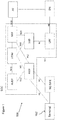
- FIG 2 illustrates an example of a control apparatus 200 for controlling a function of the 5G-AN or the 5GC as illustrated on Figure 1 .
- the control apparatus may comprise at least one random access memory (RAM) 211a, at least on read only memory (ROM) 211b, at least one processor 212, 213 and an input/output interface 214.
- the at least one processor 212, 213 may be coupled to the RAM 211a and the ROM 211b.
- the at least one processor 212, 213 may be configured to execute an appropriate software code 215.
- the software code 215 may for example allow to perform one or more steps to perform one or more of the present aspects.
- the software code 215 may be stored in the ROM 211b.
- the control apparatus 200 may be interconnected with another control apparatus 200 controlling another function of the 5G-AN or the 5GC.
- each function of the 5G-AN or the 5GC comprises a control apparatus 200.
- two or more functions of the 5G-AN or the 5GC may share a control apparatus.
- FIG 3 illustrates an example of a terminal 300, such as the terminal illustrated on Figure 1 .
- the terminal 300 may be provided by any device capable of sending and receiving radio signals.
- Non-limiting examples comprise a user equipment, a mobile station (MS) or mobile device such as a mobile phone or what is known as a 'smart phone', a computer provided with a wireless interface card or other wireless interface facility (e.g., USB dongle), a personal data assistant (PDA) or a tablet provided with wireless communication capabilities, a machine-type communications (MTC) device, a Cellular Internet of things (CloT) device or any combinations of these or the like.
- the terminal 300 may provide, for example, communication of data for carrying communications.
- the communications may be one or more of voice, electronic mail (email), text message, multimedia, data, machine data and so on.
- the terminal 300 may receive signals over an air or radio interface 307 via appropriate apparatus for receiving and may transmit signals via appropriate apparatus for transmitting radio signals.
- transceiver apparatus is designated schematically by block 306.
- the transceiver apparatus 306 may be provided for example by means of a radio part and associated antenna arrangement.
- the antenna arrangement may be arranged internally or externally to the mobile device.
- the terminal 300 may be provided with at least one processor 301, at least one memory ROM 302a, at least one RAM 302b and other possible components 303 for use in software and hardware aided execution of tasks it is designed to perform, including control of access to and communications with access systems and other communication devices.
- the at least one processor 301 is coupled to the RAM 302a and the ROM 211b.
- the at least one processor 301 may be configured to execute an appropriate software code 308.
- the software code 308 may for example allow to perform one or more of the present aspects.
- the software code 308 may be stored in the ROM 302b.
- the processor, storage and other relevant control apparatus can be provided on an appropriate circuit board and/or in chipsets. This feature is denoted by reference 304.
- the device may optionally have a user interface such as key pad 305, touch sensitive screen or pad, combinations thereof or the like.
- a display, a speaker and a microphone may be provided depending on the type of the device.
- 3GPP CT4 is due to complete the Rel-16 stage 3 work on enhanced Service Based Architecture (eSBA).
- eSBA introduces the support of indirect communication between a network function (NF) Service Consumer and a NF Service Producer via one or more Service Communication Proxy (SCP).
- SCP Service Communication Proxy
- This is also referred to as Model C & D (see Annexes E and G of 3GPP TS 23.501).
- SCP Service Communication Proxy
- This is in addition to direct communications where NFs interact directly with each other. Details on the technical realization of support of indirect communication are found in clause 6.10 of 3GPP TS 29.500.
- 3GPP CT4 standardises load and overload control solutions in Rel-16. However, some issues with these releases are not solved. For example, specifying potential additional extensions for the support of load and overload control for indirect communications.
- SCP Service Communication Proxy
- An SCP may have a complete network view (obtained from the NRF) which can be used to take several actions, such as for example, failover as and when needed, end-to-end signalling tracing and central monitoring which can make network-wide troubleshooting easier.
- the SCP may provide a point of entry for a cluster of NFs.
- the SCP may support the discovery and selection of an NF service producer on behalf of an NF service consumer (referenced as "delegated discovery" in 3GPP specifcications). This allows the SCP to become a delegated discovery point in a data centre.
- Multiple SCPs may be deployed in networks using indirect communications.
- an NF service consumer for example an HTTP client may select an SCP towards which the NF service consumer sends the request.
- the NF service consumer may discover and select the SCP based on, for example, a local configuration and operator policy.
- the NF service consumer may select the SCP using other suitable means. For instance, the addresses of two or more SCPs may be configured in NFs, with SCPs working in active-active mode.
- an HTTP client acting as a NF service consumer may distribute network traffic among multiple SCPs based on a round-robin approach or other suitable methods.
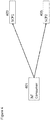
- Figure 4 shows a consumer NF1 401 which is connected to two SCPs, namely SCP1 403 and SCP2 405.
- the consumer 401 distributes the traffic among these SCPs 403, 405 using, for example, a round-robin method.
- a round robin method may comprise distributing the traffic in equal portions to both SCPs 403, 405.
- Both SCP 403, 405 addresses may be configured in the NF1 consumer 401. For example, a fully qualified domain name or IP address could be used as an address of the SCP 403, 405.
- SCP1 is in overload situation wherein the load of SCP1 403 is reaching to 80%, but SCP2 405 is at 20% load, there is no way for SCP1 403 to inform the consumer 401 that SCP1 403 is in 80% load and the consumer should send more traffic towards SCP2, rather than SCP1. Also, SCP1 403 cannot signal to the NF service consumer 401 that it should reduce the traffic it sends towards SCP1 403. It should be understood that the values used above to indicate overload are shown an example values only. In other examples, other suitable values can be used.
- Some 3GPP custom header have been defined. For example, HTTP custom headers "3gpp-Sbi-Lci" and “3gpp-Sbi-Oci” have been defined for the 5G core network Service Based Interfaces (SBI). These headers may allow a NF to learn load control information or overload control information of the NF service producer.
- Load control information may provide information regarding the load capacity of the NF.
- LCI may provide information about the operating status of the resources available to that NF. As an example only, if an LCI indicated a load metric of 25% then this may correspond to a 25% usage of the resource capabilities of the entity providing the LCI.
- Resource capabilities may comprise, for example, memory resources or processing resources.
- OCI Overload control information
- An NF may instruct peers to reduce sending traffic according to the NFs available signalling, by transmitting OCI.
- OCI indicated a overload reduction metric of 50% then this may correspond to a request for the receiver of that OCI to reduce the traffic it sends to the transmitting entity by 50%.
- the values of load metric and overload reduction metric are given as examples only. In other examples, other suitable values may be used.
- SEPP in 5G has similar functionality as the DEA does in 4G systems.
- SEPP is provided on the edge of the network protecting the network from threats.
- SEPP can perform topology hiding, traffic throttling, and roaming partner management.
- an SCP or SEPP may signal information about signalling capacity to peer NFs or SCPs/SEPPs.
- the signalling capacity may be 'dynamic' information reflecting the available resources of the SCP or SEPP to process incoming requests.
- an SCP or SEPP may signal load and/or overload information to peer NFs/SCPs/SEPPs. This can enable NF service consumers, for example HTTP clients, to distribute the load across the available SCPs or SEPPs according to the signalled load and/or overload information. Therefore, an NF service consumer can reduce their traffic towards overloaded SCP/SEPPs. This will be described in detail below.
- an SCP or SEPP may signal its load control information to an NF service consumer.
- the NF service consumer may be an HTTP client.
- the NF service consumer may be another suitable consumer.
- An SCP or SEPP may signal its load information by including a "3gpp-Sbi-Lci" header in HTTP responses (with any HTTP status code) or notification requests it forwards or originates, with information identifying the SCP or SEPP.
- the 3gpp-Sbi-Lci header may contain the load control information (LCI) of the SCP or SEPP.
- the 3gpp-Sbi-Lci header may be defined, in an example, as follows:
- the mandatory structured parameter which in the actual header may be replaced by its sub-parameters.
- the scope information may contain other identifiers of the SCP or SEPP.
- an identifier of the SCP or SEPP may take the form of a UUID (Universally Unique Identifier).
- An HTTP response or a notification request may additionally convey an 3gpp-Sbi-Lci header with the load control information signalled by the NF service producer, i.e. two 3gpp-Sbi-Lci headers may be present in the same HTTP response or notification request.
- a single header may be used with a comma separating a list of load control information.
- no load control information is received from an NF service producer.
- the following example header shows load control information being inserted by an SCP/SEPP:
- load information is received from the NF service producer.
- the following example header shows load control information being inserted by an SCP/SEPP:
- an HTTP response may contain multiple headers. For example, one 3gpp-Sbi-Lci header for SCP load control and another 3gpp-Sbi-Lci header from the NF producer.
- the encoding of the header may follow the augmented Backus-Naur form (ABNF) as defined in internet engineering task force (IETF) RFC 7230.
- ABNF Backus-Naur form
- the SCP/SEPP information about load is sent via an existing "NF-Instance" parameter to the NF service consumer, wherein the SCP/SEPP is identified by a NF Instance ID.
- an SCP or SEPP may signal its overload control information to an NF service consumer.
- an SCP or SEPP may signal its overload control information to an NF service producer.
- the NF service consumer or NF service producer may be an HTTP client. In other examples, the NF service consumer or NF service producer may be another suitable consumer or producer respectively.
- the SCP or SEPP may signal its overload control information by including a "3gpp-Sbi-Oci" header in HTTP requests or responses (with an HTTP status code) that the SCP or SEPP forwards or originates.
- the SCP or SEPP may include in the header, information identifying the SCP or SEPP.
- the 3gpp-Sbi-Oci header may contain the overload control information (OCI) of SCP or SEPP.
- OCI overload control information
- SEPP SEPP
- the mandatory structured parameter which is the actual header may be replaced by its sub-parameters.
- the scope information may contain other identifiers of the SCP or SEPP.
- an identifier of the SCP or SEPP may take the form of a UUID (Universally Unique Identifier).
- An HTTP request or response may additionally convey an 3gpp-Sbi-Oci header with the overload control information signalled by the NF service producer or NF service consumer, i.e. two 3gpp-Sbi-Oci headers may be present in the same http request or response.
- a single header may be used with a comma separating a list of overload control information.
- no overload control information is received from the NF service producer or consumer.
- the following example header shows overload control information inserted by an SCP or SEPP:
- overload information is received from the NF service producer.
- the following example header shows overload control information inserted by an SCP/SEPP:
- An HTTP request or response may then contain multiple such headers (e.g. one 3gpp-Sbi-Oci header for SCP overload control and another 3gpp-Sbi-Oci header from the NF producer or consumer).
- the encoding of the header may follow the augmented Backus-Naur form (ABNF) as defined in internet engineering task force (IETF) RFC 7230.
- ABNF Backus-Naur form
- the SCP/SEPP information about overload is sent via an existing "NF-Instance" parameter to the NF service consumer, wherein the SCP/SEPP is identified by a NF Instance ID.
- FIG. 5 An example messaging flow is shown in Figure 5.
- Figure 5 shows communications between an NF service consumer/NF consumer/network client, a first proxy function and an NF producer/network server.
- the first proxy function is a first SCP.
- NF service consumer, NF consumer and network client can be used interchangeably.
- NF service producer, NF producer and network server can be used interchangeably.
- An NF service producer can also act as a network client, e.g. when the NF service producer generates notification requests towards an NF service consumer; accordingly, it should also be understood that the terms NF service producer, NF producer and network client can also be used interchangeably.
- there is communication and selection of SCPs but it should be understood that this signal flow is also suitable for SEPPs and other proxies. SCPs and SEPPs could be used interchangeably in this signal flow.
- the NF consumer may be configured with an address of a first SCP (SCP1) and a second SCP (SCP2) (not shown). Therefore, the NF consumer may communicate with the NF producer via the first SCP or the second SCP.
- the NF consumer may, for example, be an HTTP client.
- the first/second SCP may be identified using an internet protocol (IP) address of the first/second SCP.
- IP internet protocol
- the first/second SCP may be identified using a fully qualified domain name of the first/second SCP.
- the NF consumer provides a first message to the first SCP.
- the first message may be a service request message. In other examples, the first message may be another suitable message type.
- the first SCP may be selected by the NF consumer based on a local configuration at the NF consumer.
- the first message may include information defining the destination of the message as the NF producer. As the NF consumer is communicating with the NF producer via a proxy function this may be classed as an indirect communication.
- the first SCP forwards the first message to the NF producer.
- the NF producer can determine information about the current signalling capacity of the NF producer. This may comprise the NF determining its own OCI and/or LCI information.
- the NF producer provides a first message response to the first SCP.
- the first message response may comprise the information about the current signalling capacity, such as for example OCI and/or LCI information of the NF producer.
- the first SCP receives the first message response.
- the first SCP may add information about a current signalling capacity of the first SCP into the first response message. This may comprise adding OCI and/or LCI of the first SCP into the first response message. Once the additional information about the current signalling capacity has been added into the first message response, this will become a so-called amended first message response.
- the first SCP then forwards the amended first message response to the NF consumer.
- the NF consumer will determine, based on the received information about the current signalling capacity of the first SCP, whether to select the first SCP or another SCP when performing future communications. For example, if the received information indicates that the first SCP is at a load above a predetermined threshold then the NF consumer may decide not to select the first SCP for future communications. In another example, if the received information indicates that the first SCP is in an overload condition then the NF consumer may decide to reduce traffic it sends towards the first SCP for future communications.
- the NF consumer may decide to communicate directly with the NF producer without using an SCP when the SCP has advertised an overload condition. In some examples, the NF consumer may decide to communicate directly with an NF producer if all available SCPs have a load above a predetermined threshold or are in an overload.
- the NF consumer will transmit a second message.
- the destination of the message will be determined as shown above in S505.
- a network server may refer to an HTTP server, which can be either an NF service producer or an NF service consumer (when sending requests to a consumer).
- LCI may only be returned to an NF service consumer.
- OCI can be sent towards an NF service consumer or a NF service producer.
- a different signal flow may be implemented by the network functions to the same end. Some messages may have been missed out of the signal flow of Figure 5 . This signal flow is shown as an example only, to help with the understanding of the concept of the disclosure.
- some embodiments allow NF consumers to select the SCP/SEPP according to their dynamic load status and distribute the load accordingly. This can result in improved load balancing across SCPs/SEPPs. Therefore, there may be a higher success in processing service requests.
- Some embodiments allow NF consumers to reduce the traffic they send towards an overloaded SCP or SEPP. Some embodiments allow NF consumers to choose to send messages directly to a NF producer rather than via SCP/SEPP when the SCP/SEPP is overloaded. This may reduce the likelihood of crashing an overloaded SCP or SEPP. This may result in avoiding a crash down of the overloaded SCP or SEPP. Therefore the likelihood of successful request processing may be improved.
- Figure 6 shows an example method flow performed by a first apparatus.
- the first apparatus may be comprised within a NF service consumer or network client.
- the method comprises issuing a request message to a first proxy function for forwarding to a network server.
- the method comprises receiving a response message from the first proxy function, the response message comprising information about a signalling capacity of the first proxy function.
- Figure 7 shows an example method flow performed by second apparatus.
- the second apparatus may be comprised within an proxy function.
- a proxy function could be an SCP or an SEPP.
- the method comprises receiving a request message from a network client for forwarding to a network server.
- the method comprises providing a response message to the network client, the response message comprising information about a signalling capacity of a first proxy function.
- Figure 8 shows a schematic representation of non-volatile memory media 800a (e.g. computer disc (CD) or digital versatile disc (DVD)) and 800b (e.g. universal serial bus (USB) memory stick) storing instructions and/or parameters 802 which when executed by a processor allow the processor to perform one or more of the steps of the methods of Figures 6 and 7 .
- 800a e.g. computer disc (CD) or digital versatile disc (DVD)
- 800b e.g. universal serial bus (USB) memory stick
- some embodiments may be implemented in hardware or special purpose circuits, software, logic or any combination thereof.
- some aspects may be implemented in hardware, while other aspects may be implemented in firmware or software which may be executed by a controller, microprocessor or other computing device, although embodiments are not limited thereto.
- firmware or software which may be executed by a controller, microprocessor or other computing device, although embodiments are not limited thereto. While various embodiments may be illustrated and described as block diagrams, flow charts, or using some other pictorial representation, it is well understood that these blocks, apparatus, systems, techniques or methods described herein may be implemented in, as non-limiting examples, hardware, software, firmware, special purpose circuits or logic, general purpose hardware or controller or other computing devices, or some combination thereof.
- the examples may be implemented by computer software stored in a memory and executable by at least one data processor of the involved entities or by hardware, or by a combination of software and hardware.
- any procedures e.g., as in Figures 12 and 13, may represent program steps, or interconnected logic circuits, blocks and functions, or a combination of program steps and logic circuits, blocks and functions.
- the software may be stored on such physical media as memory chips, or memory blocks implemented within the processor, magnetic media such as hard disk or floppy disks, and optical media such as for example DVD and the data variants thereof, CD.
- the memory may be of any type suitable to the local technical environment and may be implemented using any suitable data storage technology, such as semiconductor based memory devices, magnetic memory devices and systems, optical memory devices and systems, fixed memory and removable memory.
- the data processors may be of any type suitable to the local technical environment, and may include one or more of general purpose computers, special purpose computers, microprocessors, digital signal processors (DSPs), application specific integrated circuits (ASIC), gate level circuits and processors based on multi core processor architecture, as non-limiting examples.
- circuitry may be configured to perform one or more of the functions and/or method steps previously described. That circuitry may be provided in the base station and/or in the communications device.
- circuitry may refer to one or more or all of the following:
- circuitry also covers an implementation of merely a hardware circuit or processor (or multiple processors) or portion of a hardware circuit or processor and its (or their) accompanying software and/or firmware.
- circuitry also covers, for example integrated device.
Landscapes
- Engineering & Computer Science (AREA)
- Computer Networks & Wireless Communication (AREA)
- Signal Processing (AREA)
- Computer Security & Cryptography (AREA)
- Mobile Radio Communication Systems (AREA)
Abstract
Description
- The present application relates to a method, apparatus, and computer program for a wireless communication system.
- A communication system can be seen as a facility that enables communication sessions between two or more entities such as user terminals, base stations/access points and/or other nodes by providing carriers between the various entities involved in the communications path. A communication system can be provided, for example, by means of a communication network and one or more compatible communication devices. The communication sessions may comprise, for example, communication of data for carrying communications such as voice, electronic mail (email), text message, multimedia and/or content data and so on. Non-limiting examples of services provided comprise two-way or multi-way calls, data communication or multimedia services and access to a data network system, such as the Internet.
- According to an aspect, there is provided an apparatus comprising means for: issuing a request message to a first proxy function for forwarding to a network server; and receiving a response message from the first proxy function, the response message comprising information about a signalling capacity of the first proxy function, wherein the information about the signalling capacity comprises at least one of: load control information and overload control information of the first proxy function.
- The first proxy function may comprise one of: a service communication proxy, and a security edge protection proxy.
- The information about the signalling capacity of the first proxy function may be comprised within a header of the response message.
- The header may comprise an identifier of the first proxy function to link the information about the signalling capacity with the first proxy function.
- The response message may additionally comprise information about a signalling capacity of the network server.
- The means may be further configured to perform: issuing a further request message to at least one of: the first proxy function, a further proxy network function, and directly to the network server, based on the received information about the signalling capacity of the first proxy function.
- The means for issuing the further request message may be for issuing the further request message to a further proxy function when the received overload control information indicates that the first proxy function is in an overload condition.
- The means for issuing the further request message may be for issuing the further request message to the first proxy function at a reduced rate according to the overload control information.
- The means for issuing the further request message may be for issuing the further request message to a further proxy function when the received load control information indicates that the first proxy function has at least one of: a load above a predetermined threshold, and a load above a load of the further proxy function.
- The means for issuing a further request message may be for issuing the further service request directly to the network server when at least one of: the received overload control information indicates that the first proxy function is in an overload condition, and the received load control information indicates that the first proxy function has a load above a predetermined threshold.
- The means may comprise at least one processor and at least one memory including computer program code, wherein the at least one memory and the computer program code are configured to, with the at least one processor, cause the apparatus at least to perform functions defined herein for the apparatus.
- The apparatus may be comprised in a network client.
- According to another aspect, there is provided an apparatus at a first proxy function comprising means for: receiving a request message from a network client for forwarding to a network server; and providing a response message to the network client, the response message comprising information about a signalling capacity of the first proxy function, wherein the information about the signalling capacity comprises at least one of: load control information and overload control information of the first proxy function.
- The first proxy function may comprise one of: a service communication proxy, and a security edge protection proxy.
- The information about the signalling capacity of the first proxy function may be comprised within a header of the response message.
- The header may comprise an identifier of the first proxy function to link the information about the signalling capacity with the first proxy function.
- The response message may additionally comprise information about a signalling capacity of the network server.
- The means may be further configured to perform: providing the request message to the network server.
- The response message may comprise information about a signalling capacity of the network server.
- The means may comprise at least one processor and at least one memory including computer program code, wherein the at least one memory and the computer program code are configured to, with the at least one processor, cause the apparatus at least to perform functions defined herein for the apparatus.
- The apparatus may be comprised in a first proxy function.
- According to another aspect, there is provided a method comprising: issuing a request message to a first proxy function for forwarding to a network server; and receiving a response message from the first proxy function, the response message comprising information about a signalling capacity of the first proxy function, wherein the information about the signalling capacity comprises at least one of: load control information and overload control information of the first proxy function.
- The first proxy function may comprise one of: a service communication proxy, and a security edge protection proxy.
- The information about the signalling capacity of the first proxy function may be comprised within a header of the response message.
- The header may comprise an identifier of the first proxy function to link the information about the signalling capacity with the first proxy function.
- The response message may additionally comprise information about a signalling capacity of the network server.
- The method may further comprise: issuing a further request message to at least one of: the first proxy function, a further proxy network function, and directly to the network server, based on the received information about the signalling capacity of the first proxy function.
- Issuing the further request message may comprise issuing the further request message to a further proxy function when the received overload control information indicates that the first proxy function is in an overload condition.
- Issuing the further request message may comprise issuing the further request message to the first proxy function at a reduced rate according to the overload control information.
- Issuing the further request message may comprise issuing the further request message to a further proxy function when the received load control information indicates that the first proxy function has at least one of: a load above a predetermined threshold, and a load above a load of the further proxy function.
- Issuing the further request message may comprise issuing the further service request directly to the network server when at least one of: the received overload control information indicates that the first proxy function is in an overload condition, and the received load control information indicates that the first proxy function has a load above a predetermined threshold.
- The method may be performed by a network client.
- According to another aspect, there is provided a method comprising: receiving a request message from a network client for forwarding to a network server; and providing a response message to the network client, the response message comprising information about a signalling capacity of a first proxy function, wherein the information about the signalling capacity comprises at least one of: load control information and overload control information of the first proxy function.
- The first proxy function may comprise one of: a service communication proxy, and a security edge protection proxy.
- The information about the signalling capacity of the first proxy function may be comprised within a header of the response message.
- The header may comprise an identifier of the first proxy function to link the information about the signalling capacity with the first proxy function.
- The response message may additionally comprise information about a signalling capacity of the network server.
- The method may further comprise: providing the request message to the network server.
- The response message may comprise information about a signalling capacity of the network server.
- The method may be performed by a first proxy function.
- According to another aspect, there is provided a computer program comprising computer executable instructions which when run on one or more processors perform: issuing a request message to a first proxy function for forwarding to a network server; and receiving a response message from the first proxy function, the response message comprising information about a signalling capacity of the first proxy function, wherein the information about the signalling capacity comprises at least one of: load control information and overload control information of the first proxy function.
- According to another aspect, there is provided a computer program comprising computer executable instructions which when run on one or more processors perform: receiving a request message from a network client for forwarding to a network server; and providing a response message to the network client, the response message comprising information about a signalling capacity of a first proxy function, wherein the information about the signalling capacity comprises at least one of: load control information and overload control information of the first proxy function.
- A computer product stored on a medium may cause an apparatus to perform one or more or all steps of one or more of the methods as described herein.
- An electronic device may comprise an apparatus as described herein.
- In the above, various aspects have been described. It should be appreciated that further aspects may be provided by the combination of any two or more of the various aspects described above.
- Various other aspects and further embodiments are also described in the following detailed description and in the attached claims.
- According to some aspects, there is provided the subject matter of the independent claims. Some further aspects are defined in the dependent claims. The embodiments that do not fall under the scope of the claims are to be interpreted as examples useful for understanding the disclosure.
-
- AF:
- Application Function
- AUSF:
- Authentication Server Function
- AMF:
- Access Management Function
- BS:
- Base Station
- DN:
- Data Network
- DU:
- Distributed Unit
- eNB:
- eNodeB
- eSBA:
- Enhanced Service Based Architecture
- FQDN:
- Fully Qualified Domain Name
- gNB:
- gNodeB
- HTTP:
- Hypertext Transfer Protocol
- LTE:
- Long Term Evolution
- NEF:
- Network Exposure Function
- NF:
- Network Function
- NR:
- New radio
- NRF:
- Network Repository Function
- MS:
- Mobile Station
- PLMN:
- Public Land Mobile Network
- RAN:
- Radio Access Network
- RF:
- Radio Frequency
- RRC:
- Radio Resource Control
- SBA:
- Service Based Architecture
- SBI:
- Service Based Interface
- SCP:
- Service Communication Proxy
- SEPP:
- Security Edge Protection Proxy
- UE:
- User Equipment
- 3GPP:
- 3rd Generation Partnership Project
- 5G:
- 5th Generation
- 5GC:
- 5G Core network
- 5G-AN:
- 5G Radio Access Network
- 5GS:
- 5G System
- Embodiments will now be described, by way of example only, with reference to the accompanying Figures in which:
-
Figure 1 shows a schematic representation of a 5G system; -
Figure 2 shows a schematic representation of a control apparatus; -
Figure 3 shows a schematic representation of a terminal; -
Figure 4 shows a schematic representation of communications between a network function and service communication proxies; -
Figure 5 shows an example signalling diagram between a network client, network proxy and network server; -
Figure 6 shows an example method flow diagram performed by a network client; -
Figure 7 shows an example method flow diagram performed by a proxy function; and -
Figure 8 shows a schematic representation of a non-volatile memory medium storing instructions which when executed by a processor allow a processor to perform one or more of the steps of the method ofFigures 6 and7 . - Before explaining in detail some examples of the present disclosure, certain general principles of a wireless communication system and mobile communication devices are briefly explained with reference to
Figures 1 to 3 to assist in understanding the technology underlying the described examples. - In a
wireless communication system 100, such as that shown inFigure 1 , mobile communication devices/terminals or user apparatuses, and/or user equipments (UE), and/or machine-type communication devices 102 are provided wireless access via at least one base station (not shown) or similar wireless transmitting and/or receiving node or point. A communication device is provided with an appropriate signal receiving and transmitting apparatus for enabling communications, for example enabling access to a communication network or communications directly with other devices. The communication device may access a carrier provided by a station or access point, and transmit and/or receive communications on the carrier. - In the following certain examples are explained with reference to mobile communication devices capable of communication via a wireless cellular system and mobile communication systems serving such mobile communication devices. Before explaining in detail the examples of disclose, certain general principles of a wireless communication system, access systems thereof, and mobile communication devices are briefly explained with reference to
Figures 1 ,2 and3 to assist in understanding the technology underlying the described examples. -
Figure 1 shows a schematic representation of a 5G system (5GS). The 5GS may comprises a terminal, a 5G access network (5G-AN), a 5G core network (5GC), one or more network functions (NF), one or more application function (AF) and one or more data networks (DN). - The 5G-AN may comprise one or more gNodeB (gNB) distributed unit functions connected to one or more gNodeB (gNB) centralized unit functions.
- The 5GC may comprise an access management function (AMF), a session management function (SMF), an authentication server function (AUSF), a user data management (UDM), a user plane function (UPF), a network exposure function (NEF) and/or other NFs. Some of the examples as shown below may be applicable to
3GPP 5G standards. However, some examples may also be applicable to 4G, 3G and other 3GPP standards. - In a communication system, such as that shown in
Figure 1 , mobile communication devices/terminals or user apparatuses, and/or user equipments (UE), and/or machine-type communication devices are provided with wireless access via at least one base station or similar wireless transmitting and/or receiving node or point. The terminal is provided with an appropriate signal receiving and transmitting apparatus for enabling communications, for example enabling access to a communication network or communications directly with other devices. The communication device may access a carrier provided by a station or access point, and transmit and/or receive communications on the carrier. -
Figure 2 illustrates an example of acontrol apparatus 200 for controlling a function of the 5G-AN or the 5GC as illustrated onFigure 1 . The control apparatus may comprise at least one random access memory (RAM) 211a, at least on read only memory (ROM) 211b, at least oneprocessor output interface 214. The at least oneprocessor RAM 211a and theROM 211b. The at least oneprocessor appropriate software code 215. Thesoftware code 215 may for example allow to perform one or more steps to perform one or more of the present aspects. Thesoftware code 215 may be stored in theROM 211b. Thecontrol apparatus 200 may be interconnected with anothercontrol apparatus 200 controlling another function of the 5G-AN or the 5GC. In some examples, each function of the 5G-AN or the 5GC comprises acontrol apparatus 200. In alternative examples, two or more functions of the 5G-AN or the 5GC may share a control apparatus. -
Figure 3 illustrates an example of a terminal 300, such as the terminal illustrated onFigure 1 . The terminal 300 may be provided by any device capable of sending and receiving radio signals. Non-limiting examples comprise a user equipment, a mobile station (MS) or mobile device such as a mobile phone or what is known as a 'smart phone', a computer provided with a wireless interface card or other wireless interface facility (e.g., USB dongle), a personal data assistant (PDA) or a tablet provided with wireless communication capabilities, a machine-type communications (MTC) device, a Cellular Internet of things (CloT) device or any combinations of these or the like. The terminal 300 may provide, for example, communication of data for carrying communications. The communications may be one or more of voice, electronic mail (email), text message, multimedia, data, machine data and so on. - The terminal 300 may receive signals over an air or
radio interface 307 via appropriate apparatus for receiving and may transmit signals via appropriate apparatus for transmitting radio signals. InFigure 3 transceiver apparatus is designated schematically byblock 306. Thetransceiver apparatus 306 may be provided for example by means of a radio part and associated antenna arrangement. The antenna arrangement may be arranged internally or externally to the mobile device. - The terminal 300 may be provided with at least one
processor 301, at least onememory ROM 302a, at least oneRAM 302b and otherpossible components 303 for use in software and hardware aided execution of tasks it is designed to perform, including control of access to and communications with access systems and other communication devices. The at least oneprocessor 301 is coupled to theRAM 302a and theROM 211b. The at least oneprocessor 301 may be configured to execute anappropriate software code 308. Thesoftware code 308 may for example allow to perform one or more of the present aspects. Thesoftware code 308 may be stored in theROM 302b. - The processor, storage and other relevant control apparatus can be provided on an appropriate circuit board and/or in chipsets. This feature is denoted by
reference 304. The device may optionally have a user interface such askey pad 305, touch sensitive screen or pad, combinations thereof or the like. Optionally one or more of a display, a speaker and a microphone may be provided depending on the type of the device. - 3GPP CT4 is due to complete the Rel-16 stage 3 work on enhanced Service Based Architecture (eSBA). eSBA introduces the support of indirect communication between a network function (NF) Service Consumer and a NF Service Producer via one or more Service Communication Proxy (SCP). This is also referred to as Model C & D (see Annexes E and G of 3GPP TS 23.501). This is in addition to direct communications where NFs interact directly with each other. Details on the technical realization of support of indirect communication are found in clause 6.10 of 3GPP TS 29.500. 3GPP CT4 standardises load and overload control solutions in Rel-16. However, some issues with these releases are not solved. For example, specifying potential additional extensions for the support of load and overload control for indirect communications.
- Service Communication Proxy (SCP) is a network entity of the 5G core network. Signalling flows may pass through SCP. An SCP may have a complete network view (obtained from the NRF) which can be used to take several actions, such as for example, failover as and when needed, end-to-end signalling tracing and central monitoring which can make network-wide troubleshooting easier. The SCP may provide a point of entry for a cluster of NFs. The SCP may support the discovery and selection of an NF service producer on behalf of an NF service consumer (referenced as "delegated discovery" in 3GPP specifcications). This allows the SCP to become a delegated discovery point in a data centre.
- Multiple SCPs may be deployed in networks using indirect communications. When issuing a service request using indirect communication, an NF service consumer, for example an HTTP client may select an SCP towards which the NF service consumer sends the request. The NF service consumer may discover and select the SCP based on, for example, a local configuration and operator policy. In other examples, the NF service consumer may select the SCP using other suitable means. For instance, the addresses of two or more SCPs may be configured in NFs, with SCPs working in active-active mode.
- In some examples, an HTTP client acting as a NF service consumer may distribute network traffic among multiple SCPs based on a round-robin approach or other suitable methods.
- However, there are problems associated with this approach:
- 1) The HTTP clients cannot select the SCP based on the dynamic load of the SCP and distribute the traffic accordingly. This can result in unequal load distribution by HTTP clients on the SCPs. This can overload some of the SCPs and cause failures of the overloaded SCP to process the service request. Distributing the signalling without considering the actual instantaneous load of SCPs does not consider instances of deployments wherein the SCPs have different processing capabilities. It also does not consider cases where new SCP instances are instantiated in the network or are restarted thus having very little load.
- 2) An SCP in overload has no means to signal to HTTP clients that they should reduce the signalling traffic they send towards the SCP. This may lead to the SCP receiving service requests exceeding the maximum number of requests it can support and causing a possible crash of the SCP.
- An example is shown in
Figure 4. Figure 4 shows aconsumer NF1 401 which is connected to two SCPs, namely SCP1 403 andSCP2 405. Theconsumer 401 distributes the traffic among theseSCPs SCPs SCP NF1 consumer 401. For example, a fully qualified domain name or IP address could be used as an address of theSCP SCP1 403 is reaching to 80%, butSCP2 405 is at 20% load, there is no way forSCP1 403 to inform theconsumer 401 thatSCP1 403 is in 80% load and the consumer should send more traffic towards SCP2, rather than SCP1. Also,SCP1 403 cannot signal to theNF service consumer 401 that it should reduce the traffic it sends towardsSCP1 403. It should be understood that the values used above to indicate overload are shown an example values only. In other examples, other suitable values can be used. - Some 3GPP custom header have been defined. For example, HTTP custom headers "3gpp-Sbi-Lci" and "3gpp-Sbi-Oci" have been defined for the 5G core network Service Based Interfaces (SBI). These headers may allow a NF to learn load control information or overload control information of the NF service producer. Load control information (LCI) may provide information regarding the load capacity of the NF. LCI may provide information about the operating status of the resources available to that NF. As an example only, if an LCI indicated a load metric of 25% then this may correspond to a 25% usage of the resource capabilities of the entity providing the LCI. Resource capabilities may comprise, for example, memory resources or processing resources. Overload control information (OCI) may be used by a NF becoming or being overloaded. OCI may be used in an attempt to reduce an incoming signalling load for an NF. An NF may instruct peers to reduce sending traffic according to the NFs available signalling, by transmitting OCI. As an example only, if an OCI indicated a overload reduction metric of 50% then this may correspond to a request for the receiver of that OCI to reduce the traffic it sends to the transmitting entity by 50%. The values of load metric and overload reduction metric are given as examples only. In other examples, other suitable values may be used.
- However, there is no defined solution for managing load and overload for a service communication proxy (SCP) or a security edge protection proxy (SEPP).
- SEPP in 5G has similar functionality as the DEA does in 4G systems. SEPP is provided on the edge of the network protecting the network from threats. In some examples, SEPP can perform topology hiding, traffic throttling, and roaming partner management.
- Therefore, it has been identified that there are no ways of determining load and controlling overload situations for SCP or SEPP. Examples of this disclosure will address these problems.
- Some embodiments allow an SCP or SEPP to signal information about signalling capacity to peer NFs or SCPs/SEPPs. The signalling capacity may be 'dynamic' information reflecting the available resources of the SCP or SEPP to process incoming requests. In some examples, an SCP or SEPP may signal load and/or overload information to peer NFs/SCPs/SEPPs. This can enable NF service consumers, for example HTTP clients, to distribute the load across the available SCPs or SEPPs according to the signalled load and/or overload information. Therefore, an NF service consumer can reduce their traffic towards overloaded SCP/SEPPs. This will be described in detail below.
- In an example, an SCP or SEPP may signal its load control information to an NF service consumer. In an example, the NF service consumer may be an HTTP client. In other examples, the NF service consumer may be another suitable consumer. An SCP or SEPP may signal its load information by including a "3gpp-Sbi-Lci" header in HTTP responses (with any HTTP status code) or notification requests it forwards or originates, with information identifying the SCP or SEPP.
- The 3gpp-Sbi-Lci header may contain the load control information (LCI) of the SCP or SEPP. The 3gpp-Sbi-Lci header may be defined, in an example, as follows:
- 3gpp-Sbi-Lci = "3gpp-Sbi-Lci:" SP timestamp SP IcMetric SP IcScope
- IcScope = IciScope OWS [dnn] OWS [sNssai]
- The mandatory structured parameter, which in the actual header may be replaced by its sub-parameters.
IciScope=("NF-Instance="nfinst)/("NF-Set="nfset)/"(NF-Service-Instance="c)/("NF-Service-Set="nfserviceset)/("SCP="fqdn)/("SEPP="fqpn)";" with the fully qualified domain name (fqdn) containing the SCP and SEPP FQDN respectively. Alternatively, the scope information may contain other identifiers of the SCP or SEPP. For example, an identifier of the SCP or SEPP may take the form of a UUID (Universally Unique Identifier). - An HTTP response or a notification request may additionally convey an 3gpp-Sbi-Lci header with the load control information signalled by the NF service producer, i.e. two 3gpp-Sbi-Lci headers may be present in the same HTTP response or notification request. In another example, a single header may be used with a comma separating a list of load control information.
- In an example, no load control information is received from an NF service producer. The following example header shows load control information being inserted by an SCP/SEPP:
- 3gpp-Sbi-Lci: Timestamp: Tue, 04 Feb 2020 08:49:37 GMT; Load-Metric: 25%; SCP=scp1.example.com
- 3gpp-Sbi-Lci: Timestamp: Tue, 04 Feb 2020 08:49:37 GMT; Load-Metric: 25%; SEPP=seppxyz.operator.com
- In another example, load information is received from the NF service producer. The following example header shows load control information being inserted by an SCP/SEPP:
- 3gpp-Sbi-Lci: Timestamp: Tue, 04 Feb 2020 08:49:39 GMT; Load-Metric: 25%; SCP=scp1.example.com, Timestamp: Tue, 04 Feb 2020 08:49:37 GMT; Load-Metric: 55%; NF-Instance=54804518-4191-46b3-955c-ac631f953ed8
- In an example, an HTTP response may contain multiple headers. For example, one 3gpp-Sbi-Lci header for SCP load control and another 3gpp-Sbi-Lci header from the NF producer.
- The encoding of the header may follow the augmented Backus-Naur form (ABNF) as defined in internet engineering task force (IETF) RFC 7230.
- In another example, the SCP/SEPP information about load is sent via an existing "NF-Instance" parameter to the NF service consumer, wherein the SCP/SEPP is identified by a NF Instance ID.
- It should be understood that the numbers and domain names used above are shown as examples only.
- In another example, an SCP or SEPP may signal its overload control information to an NF service consumer. In another example, an SCP or SEPP may signal its overload control information to an NF service producer. In an example, the NF service consumer or NF service producer may be an HTTP client. In other examples, the NF service consumer or NF service producer may be another suitable consumer or producer respectively.
- The SCP or SEPP may signal its overload control information by including a "3gpp-Sbi-Oci" header in HTTP requests or responses (with an HTTP status code) that the SCP or SEPP forwards or originates. The SCP or SEPP may include in the header, information identifying the SCP or SEPP.
- The 3gpp-Sbi-Oci header may contain the overload control information (OCI) of SCP or SEPP. The 3gpp-Sbi-Oci header may be defined, for example, as follows:
- 3gpp-Sbi-Oci = "3gpp-Sbi-Oci:" SP timestamp SP validityPeriod SP olcMetric SP olcScope
- olcScope = ociScope OWS [dnn] OWS [sNssai]
- The mandatory structured parameter, which is the actual header may be replaced by its sub-parameters.

- An HTTP request or response may additionally convey an 3gpp-Sbi-Oci header with the overload control information signalled by the NF service producer or NF service consumer, i.e. two 3gpp-Sbi-Oci headers may be present in the same http request or response. In another example, a single header may be used with a comma separating a list of overload control information.
- In an example, no overload control information is received from the NF service producer or consumer. The following example header shows overload control information inserted by an SCP or SEPP:
- 3gpp-Sbi-Oci: Timestamp: Tue, 04 Feb 2020 08:49:37 GMT; Period-of-Validity: 75s; Overload-Reduction-Metric: 50%; SCP= scp1.example.com
- 3gpp-Sbi-Oci: Timestamp: Tue, 04 Feb 2020 08:49:37 GMT; Period-of-Validity: 75s; Overload-Reduction-Metric: 50%; SEPP= seppxyz.example.com
- In another example, overload information is received from the NF service producer. The following example header shows overload control information inserted by an SCP/SEPP:
- 3gpp-Sbi-Oci: Timestamp: Tue, 04 Feb 2020 08:49:39 GMT; Period-of-Validity: 75s; Overload-Reduction-Metric: 20%; SCP= scp1.example.com, Timestamp: Tue, 04 Feb 2020 08:49:37 GMT; Period-of-Validity: 75s; Overload-Reduction-Metric: 50%; NF-Instance=54804518-4191-46b3-955c-ac631f953ed8
- An HTTP request or response may then contain multiple such headers (e.g. one 3gpp-Sbi-Oci header for SCP overload control and another 3gpp-Sbi-Oci header from the NF producer or consumer). The encoding of the header may follow the augmented Backus-Naur form (ABNF) as defined in internet engineering task force (IETF) RFC 7230.
- In another example, the SCP/SEPP information about overload is sent via an existing "NF-Instance" parameter to the NF service consumer, wherein the SCP/SEPP is identified by a NF Instance ID.
- It should be understood that the numbers and domain names used above are shown as examples only.
- An example messaging flow is shown in
Figure 5. Figure 5 shows communications between an NF service consumer/NF consumer/network client, a first proxy function and an NF producer/network server. In the example ofFigure 5 , the first proxy function is a first SCP. It should be understood that the terms NF service consumer, NF consumer and network client can be used interchangeably. It should be understood that the terms NF service producer, NF producer and network server can be used interchangeably. An NF service producer can also act as a network client, e.g. when the NF service producer generates notification requests towards an NF service consumer; accordingly, it should also be understood that the terms NF service producer, NF producer and network client can also be used interchangeably. In this example, there is communication and selection of SCPs but it should be understood that this signal flow is also suitable for SEPPs and other proxies. SCPs and SEPPs could be used interchangeably in this signal flow. - The NF consumer may be configured with an address of a first SCP (SCP1) and a second SCP (SCP2) (not shown). Therefore, the NF consumer may communicate with the NF producer via the first SCP or the second SCP. The NF consumer may, for example, be an HTTP client. As an example, the first/second SCP may be identified using an internet protocol (IP) address of the first/second SCP. In another example, the first/second SCP may be identified using a fully qualified domain name of the first/second SCP.
- At S501 the NF consumer provides a first message to the first SCP. The first message may be a service request message. In other examples, the first message may be another suitable message type. The first SCP may be selected by the NF consumer based on a local configuration at the NF consumer. The first message may include information defining the destination of the message as the NF producer. As the NF consumer is communicating with the NF producer via a proxy function this may be classed as an indirect communication.
- At S502 the first SCP forwards the first message to the NF producer. Once the NF producer received the first message, the NF producer can determine information about the current signalling capacity of the NF producer. This may comprise the NF determining its own OCI and/or LCI information.
- At S503 the NF producer provides a first message response to the first SCP. The first message response may comprise the information about the current signalling capacity, such as for example OCI and/or LCI information of the NF producer. For example, the header may comprise the parameters '3gpp-Sbi-Oci=Producer1 Details' and/or '3gpp-Sbi-Lci=Producer1 Details'.
- At S504 the first SCP receives the first message response. The first SCP may add information about a current signalling capacity of the first SCP into the first response message. This may comprise adding OCI and/or LCI of the first SCP into the first response message. Once the additional information about the current signalling capacity has been added into the first message response, this will become a so-called amended first message response. The first SCP then forwards the amended first message response to the NF consumer. For example, the amended header of the first message response may comprise the parameters '3gpp-Sbi-Oci=scp1 Details' and/or '3gpp-Sbi-Lci=scp1 Details'.
- At S505 the NF consumer will determine, based on the received information about the current signalling capacity of the first SCP, whether to select the first SCP or another SCP when performing future communications. For example, if the received information indicates that the first SCP is at a load above a predetermined threshold then the NF consumer may decide not to select the first SCP for future communications. In another example, if the received information indicates that the first SCP is in an overload condition then the NF consumer may decide to reduce traffic it sends towards the first SCP for future communications.
- In some examples, the NF consumer may decide to communicate directly with the NF producer without using an SCP when the SCP has advertised an overload condition. In some examples, the NF consumer may decide to communicate directly with an NF producer if all available SCPs have a load above a predetermined threshold or are in an overload.
- At S506 the NF consumer will transmit a second message. The destination of the message will be determined as shown above in S505.
- A network server may refer to an HTTP server, which can be either an NF service producer or an NF service consumer (when sending requests to a consumer). LCI may only be returned to an NF service consumer. OCI can be sent towards an NF service consumer or a NF service producer.
- In other examples, a different signal flow may be implemented by the network functions to the same end. Some messages may have been missed out of the signal flow of
Figure 5 . This signal flow is shown as an example only, to help with the understanding of the concept of the disclosure. - Therefore, some embodiments allow NF consumers to select the SCP/SEPP according to their dynamic load status and distribute the load accordingly. This can result in improved load balancing across SCPs/SEPPs. Therefore, there may be a higher success in processing service requests.
- Some embodiments allow NF consumers to reduce the traffic they send towards an overloaded SCP or SEPP. Some embodiments allow NF consumers to choose to send messages directly to a NF producer rather than via SCP/SEPP when the SCP/SEPP is overloaded. This may reduce the likelihood of crashing an overloaded SCP or SEPP. This may result in avoiding a crash down of the overloaded SCP or SEPP. Therefore the likelihood of successful request processing may be improved.
-
Figure 6 shows an example method flow performed by a first apparatus. The first apparatus may be comprised within a NF service consumer or network client. - In S601, the method comprises issuing a request message to a first proxy function for forwarding to a network server.
- In S603, the method comprises receiving a response message from the first proxy function, the response message comprising information about a signalling capacity of the first proxy function.
-
Figure 7 shows an example method flow performed by second apparatus. The second apparatus may be comprised within an proxy function. For example, a proxy function could be an SCP or an SEPP. - In S701, the method comprises receiving a request message from a network client for forwarding to a network server.
- In S703, the method comprises providing a response message to the network client, the response message comprising information about a signalling capacity of a first proxy function.
-
Figure 8 shows a schematic representation ofnon-volatile memory media 800a (e.g. computer disc (CD) or digital versatile disc (DVD)) and 800b (e.g. universal serial bus (USB) memory stick) storing instructions and/orparameters 802 which when executed by a processor allow the processor to perform one or more of the steps of the methods ofFigures 6 and7 . - It is noted that while the above describes example embodiments, there are several variations and modifications which may be made to the disclosed solution without departing from the scope of the present invention.
- The examples may thus vary within the scope of the attached claims. In general, some embodiments may be implemented in hardware or special purpose circuits, software, logic or any combination thereof. For example, some aspects may be implemented in hardware, while other aspects may be implemented in firmware or software which may be executed by a controller, microprocessor or other computing device, although embodiments are not limited thereto. While various embodiments may be illustrated and described as block diagrams, flow charts, or using some other pictorial representation, it is well understood that these blocks, apparatus, systems, techniques or methods described herein may be implemented in, as non-limiting examples, hardware, software, firmware, special purpose circuits or logic, general purpose hardware or controller or other computing devices, or some combination thereof.
- The examples may be implemented by computer software stored in a memory and executable by at least one data processor of the involved entities or by hardware, or by a combination of software and hardware. Further in this regard it should be noted that any procedures, e.g., as in Figures 12 and 13, may represent program steps, or interconnected logic circuits, blocks and functions, or a combination of program steps and logic circuits, blocks and functions. The software may be stored on such physical media as memory chips, or memory blocks implemented within the processor, magnetic media such as hard disk or floppy disks, and optical media such as for example DVD and the data variants thereof, CD.
- The memory may be of any type suitable to the local technical environment and may be implemented using any suitable data storage technology, such as semiconductor based memory devices, magnetic memory devices and systems, optical memory devices and systems, fixed memory and removable memory. The data processors may be of any type suitable to the local technical environment, and may include one or more of general purpose computers, special purpose computers, microprocessors, digital signal processors (DSPs), application specific integrated circuits (ASIC), gate level circuits and processors based on multi core processor architecture, as non-limiting examples.
- Alternatively or additionally some examples may be implemented using circuitry. The circuitry may be configured to perform one or more of the functions and/or method steps previously described. That circuitry may be provided in the base station and/or in the communications device.
- As used in this application, the term "circuitry" may refer to one or more or all of the following:
- (a) hardware-only circuit implementations (such as implementations in only analogue and/or digital circuitry);
- (b) combinations of hardware circuits and software, such as:
- (i) a combination of analogue and/or digital hardware circuit(s) with software/firmware and
- (ii) any portions of hardware processor(s) with software (including digital signal processor(s)), software, and memory(ies) that work together to cause an apparatus, such as the communications device or base station to perform the various functions previously described; and
- (c) hardware circuit(s) and or processor(s), such as a microprocessor(s) or a portion of a microprocessor(s), that requires software (e.g., firmware) for operation, but the software may not be present when it is not needed for operation.
- This definition of circuitry applies to all uses of this term in this application, including in any claims. As a further example, as used in this application, the term circuitry also covers an implementation of merely a hardware circuit or processor (or multiple processors) or portion of a hardware circuit or processor and its (or their) accompanying software and/or firmware. The term circuitry also covers, for example integrated device.
- The foregoing description has provided by way of exemplary and non-limiting examples a full and informative description of some embodiments However, various modifications and adaptations may become apparent to those skilled in the relevant arts in view of the foregoing description, when read in conjunction with the accompanying drawings and the appended claims. However, all such and similar modifications of the teachings will still fall within the scope as defined in the appended claims.
Claims (13)
- An apparatus comprising means for:issuing a request message to a first proxy function for forwarding to a network server; andreceiving a response message from the first proxy function, the response message comprising information about a signalling capacity of the first proxy function,
wherein the information about the signalling capacity comprises at least one of: load control information and overload control information of the first proxy function. - The apparatus as claimed in claim 1, wherein the first proxy function comprises one of: a service communication proxy, and a security edge protection proxy.
- The apparatus as claimed in any of claims 1 to 2, wherein the information about the signalling capacity of the first proxy function, is comprised within a header of the response message.
- The apparatus as claimed in claim 3, wherein the header comprises an identifier of the first proxy function to link the information about the signalling capacity with the first proxy function.
- The apparatus as claimed in any of claims 1 to 4, wherein the means are further configured to perform: issuing a further request message to at least one of: the first proxy function, a further proxy network function, and directly to the network server, based on the received information about the signalling capacity of the first proxy function.
- An apparatus at a first proxy function comprising means for:receiving a request message from a network client for forwarding to a network server; andproviding a response message to the network client, the response message comprising information about a signalling capacity of the first proxy function, wherein the information about the signalling capacity comprises at least one of: load control information and overload control information of the first proxy function.
- The apparatus as claimed in claim 6, wherein the first proxy function comprises one of: a service communication proxy, and a security edge protection proxy.
- The apparatus as claimed in any of claims 6 to 7, wherein the information about the signalling capacity of the first proxy function is comprised within a header of the response message.
- The apparatus as claimed in claim 8, wherein the header comprises an identifier of the first proxy function to link the information about the signalling capacity with the first proxy function.
- A method comprising:issuing a request message to a first proxy function for forwarding to a network server; andreceiving a response message from the first proxy function, the response message comprising information about a signalling capacity of the first proxy function,
wherein the information about the signalling capacity comprises at least one of: load control information and overload control information of the first proxy function. - A method comprising:receiving a request message from a network client for forwarding to a network server; andproviding a response message to the network client, the response message comprising information about a signalling capacity of a first proxy function, wherein the information about the signalling capacity comprises at least one of: load control information and overload control information of the first proxy function.
- A computer program comprising computer executable instructions which when run on one or more processors perform:issuing a request message to a first proxy function for forwarding to a network server; andreceiving a response message from the first proxy function, the response message comprising information about a signalling capacity of the first proxy function,
wherein the information about the signalling capacity comprises at least one of: load control information and overload control information of the first proxy function. - A computer program comprising computer executable instructions which when run on one or more processors perform:receiving a request message from a network client for forwarding to a network server; andproviding a response message to the network client, the response message comprising information about a signalling capacity of a first proxy function, wherein the information about the signalling capacity comprises at least one of:
load control information and overload control information of the first proxy function.
Applications Claiming Priority (1)
| Application Number | Priority Date | Filing Date | Title |
|---|---|---|---|
| IN202041012192 | 2020-03-20 |
Publications (2)
| Publication Number | Publication Date |
|---|---|
| EP3883198A1 true EP3883198A1 (en) | 2021-09-22 |
| EP3883198B1 EP3883198B1 (en) | 2025-09-03 |
Family
ID=75111410
Family Applications (1)
| Application Number | Title | Priority Date | Filing Date |
|---|---|---|---|
| EP21163548.7A Active EP3883198B1 (en) | 2020-03-20 | 2021-03-18 | Load control in a wireless communication system |
Country Status (4)
| Country | Link |
|---|---|
| US (1) | US11765618B2 (en) |
| EP (1) | EP3883198B1 (en) |
| CN (1) | CN113497825B (en) |
| ES (1) | ES3048217T3 (en) |
Families Citing this family (8)
| Publication number | Priority date | Publication date | Assignee | Title |
|---|---|---|---|---|
| US11943616B2 (en) * | 2020-11-13 | 2024-03-26 | Oracle International Corporation | Methods, systems, and computer readable media for utilizing network function identifiers to implement ingress message rate limiting |
| US11895501B2 (en) | 2020-12-08 | 2024-02-06 | Oracle International Corporation | Methods, systems, and computer readable media for automatic key management of network function (NF) repository function (NRF) access token public keys for 5G core (5GC) authorization to mitigate security attacks |
| CN118201003A (en) * | 2021-04-01 | 2024-06-14 | 瑞典爱立信有限公司 | Method for network node reselection, network node and computer readable medium |
| US11716252B2 (en) | 2021-07-14 | 2023-08-01 | Oracle International Corporation | Methods, systems, and computer readable media for generating network function (NF) set load information aware NF discovery response |
| US11671369B2 (en) * | 2021-07-14 | 2023-06-06 | Oracle International Corporation | Methods, systems, and computer readable media for generating and using network function (NF) set overload control information (OCI) and load control information (LCI) at service communication proxy (SCP) |
| US12015923B2 (en) * | 2021-12-21 | 2024-06-18 | Oracle International Corporation | Methods, systems, and computer readable media for mitigating effects of access token misuse |
| EP4255003A1 (en) * | 2022-03-29 | 2023-10-04 | Nokia Technologies Oy | Enhanced interconnection between cellular communication networks |
| US12256321B2 (en) * | 2022-05-23 | 2025-03-18 | Oracle International Corporation | Methods, systems, and computer readable media for reporting a reserved load to network functions in a communications network |
Citations (2)
| Publication number | Priority date | Publication date | Assignee | Title |
|---|---|---|---|---|
| WO2015048992A1 (en) * | 2013-10-02 | 2015-04-09 | Telefonaktiebolaget L M Ericsson (Publ) | Handling overload of a network node |
| US9699045B2 (en) * | 2012-04-13 | 2017-07-04 | Tekelec, Inc. | Methods, systems, and computer readable media for performing diameter overload control |
Family Cites Families (21)
| Publication number | Priority date | Publication date | Assignee | Title |
|---|---|---|---|---|
| US7299276B1 (en) * | 2000-12-14 | 2007-11-20 | Cisco Technology, Inc. | Technique for monitoring health of network device using data format verification |
| ATE322790T1 (en) * | 2002-01-18 | 2006-04-15 | Stonesoft Corp | MONITORING DATA FLOW TO IMPROVE NETWORK SECURITY PROTECTION |
| US7461134B2 (en) * | 2004-11-19 | 2008-12-02 | W.A. Krapf, Inc. | Bi-directional communication between a web client and a web server |
| US7664879B2 (en) * | 2004-11-23 | 2010-02-16 | Cisco Technology, Inc. | Caching content and state data at a network element |
| US20060155862A1 (en) * | 2005-01-06 | 2006-07-13 | Hari Kathi | Data traffic load balancing based on application layer messages |
| JP4961146B2 (en) * | 2006-02-20 | 2012-06-27 | 株式会社日立製作所 | Load balancing method and system |
| WO2011071850A2 (en) * | 2009-12-07 | 2011-06-16 | Coach Wei | System and method for website performance optimization and internet traffic processing |
| WO2013064185A1 (en) * | 2011-11-03 | 2013-05-10 | Telefonaktiebolaget Lm Ericsson (Publ) | Unobtrusive content compression in a telecommunications network |
| US9232002B1 (en) * | 2011-12-27 | 2016-01-05 | Amazon Technologies, Inc. | Migrating connection flows |
| KR101777187B1 (en) * | 2012-04-23 | 2017-09-11 | 노키아 솔루션스 앤드 네트웍스 오와이 | Failover functionality for client-related security association |
| US9130829B2 (en) * | 2012-10-19 | 2015-09-08 | Alcatel Lucent | Methods and systems for obtaining load information in networks |
| US9450872B2 (en) * | 2013-06-24 | 2016-09-20 | Oracle International Corporation | Methods, systems and computer readable media for collecting and distributing diameter overload control information to non-adjacent nodes |
| US9648018B2 (en) * | 2014-05-02 | 2017-05-09 | Oracle International Corporation | Methods, systems, and computer readable media for controlling deep parsing of diameter messages |
| US20160241667A1 (en) * | 2015-02-18 | 2016-08-18 | Actmobile Networks, Inc. | Extended http object cache system and method |
| US10560543B2 (en) * | 2015-03-26 | 2020-02-11 | Fortinet, Inc. | Rule based cache processing in application delivery controller for load balancing |
| US9819762B2 (en) * | 2015-06-26 | 2017-11-14 | Cloudflare, Inc. | Method and apparatus for reducing loading time of web pages |
| CN110650515B (en) * | 2018-06-26 | 2024-07-16 | 苹果公司 | Apparatus and method for selecting a core network based on supported cellular internet of things features |
| CN113407317A (en) * | 2018-09-11 | 2021-09-17 | 华为技术有限公司 | Resource scheduling method and device |
| JP7137072B2 (en) * | 2018-12-10 | 2022-09-14 | 富士通株式会社 | Information processing system, load distribution processing device, and load distribution processing program |
| CN110234140B (en) * | 2019-06-17 | 2022-07-08 | 腾讯科技(深圳)有限公司 | Communication method, device, entity and storage medium |
| CN112565324B (en) * | 2019-09-26 | 2022-04-05 | 华为技术有限公司 | Method, apparatus and system for non-access stratum message transmission |
-
2021
- 2021-03-15 US US17/201,932 patent/US11765618B2/en active Active
- 2021-03-18 ES ES21163548T patent/ES3048217T3/en active Active
- 2021-03-18 EP EP21163548.7A patent/EP3883198B1/en active Active
- 2021-03-19 CN CN202110296380.8A patent/CN113497825B/en active Active
Patent Citations (2)
| Publication number | Priority date | Publication date | Assignee | Title |
|---|---|---|---|---|
| US9699045B2 (en) * | 2012-04-13 | 2017-07-04 | Tekelec, Inc. | Methods, systems, and computer readable media for performing diameter overload control |
| WO2015048992A1 (en) * | 2013-10-02 | 2015-04-09 | Telefonaktiebolaget L M Ericsson (Publ) | Handling overload of a network node |
Non-Patent Citations (1)
| Title |
|---|
| HUAWEI: "Solution for Overload Conveyance by Signalling", vol. CT WG4, no. Montreal, Canada; 20190225 - 20190301, 1 March 2019 (2019-03-01), XP051599069, Retrieved from the Internet <URL:http://www.3gpp.org/ftp/tsg%5Fct/WG4%5Fprotocollars%5Fex%2DCN4/TSGCT4%5F89%5FMontreal/Docs/C4%2D190615%2Ezip> [retrieved on 20190301] * |
Also Published As
| Publication number | Publication date |
|---|---|
| US20210297896A1 (en) | 2021-09-23 |
| EP3883198B1 (en) | 2025-09-03 |
| CN113497825A (en) | 2021-10-12 |
| CN113497825B (en) | 2024-11-22 |
| US11765618B2 (en) | 2023-09-19 |
| ES3048217T3 (en) | 2025-12-09 |
Similar Documents
| Publication | Publication Date | Title |
|---|---|---|
| EP3883198B1 (en) | Load control in a wireless communication system | |
| US11564154B2 (en) | Apparatus, method and computer program related to information about SCP(s) and SEPP(s) stored in NRF | |
| US20230413214A1 (en) | Method, apparatus and computer program | |
| CN111615844B (en) | Method and apparatus for selecting a session management entity serving a wireless communication device | |
| CN113473560A (en) | System and method for session management | |
| US12317077B2 (en) | Communication system | |
| US20230217355A1 (en) | METHODS, SYSTEMS, AND COMPUTER READABLE MEDIA FOR COMMUNICATING DELEGATED NETWORK FUNCTION (NF) DISCOVERY RESULTS BETWEEN SERVICE COMMUNICATION PROXIES (SCPs) AND USING THE DELEGATED NF DISCOVERY RESULTS FOR ALTERNATE ROUTING | |
| US12531792B2 (en) | Scope parameter for binding indication | |
| CN114402570A (en) | Method, apparatus and system for performing load distribution in a network | |
| US20130122921A1 (en) | Dynamic optimization of radio network resources based on user equipment type | |
| WO2020253531A1 (en) | Communication method and apparatus, entity and storage medium | |
| US12177752B2 (en) | Optimization of services applied to data packet sessions | |
| US12604253B2 (en) | Analytics and path selection | |
| CN113965545B (en) | DNS request resolution method, communication device and communication system | |
| WO2021013321A1 (en) | Apparatus, method, and computer program | |
| CN111757313A (en) | A communication method and device | |
| WO2025245814A1 (en) | Method, apparatus and computer program | |
| US20250254229A1 (en) | Method, apparatus and computer program | |
| WO2025087781A1 (en) | Apparatus, method and computer program | |
| WO2025013018A1 (en) | Method and system for managing a packet data unit session establishment in a network | |
| WO2026103766A1 (en) | Communication method, related device, and communication system |
Legal Events
| Date | Code | Title | Description |
|---|---|---|---|
| PUAI | Public reference made under article 153(3) epc to a published international application that has entered the european phase |
Free format text: ORIGINAL CODE: 0009012 |
|
| STAA | Information on the status of an ep patent application or granted ep patent |
Free format text: STATUS: THE APPLICATION HAS BEEN PUBLISHED |
|
| AK | Designated contracting states |
Kind code of ref document: A1 Designated state(s): AL AT BE BG CH CY CZ DE DK EE ES FI FR GB GR HR HU IE IS IT LI LT LU LV MC MK MT NL NO PL PT RO RS SE SI SK SM TR |
|
| STAA | Information on the status of an ep patent application or granted ep patent |
Free format text: STATUS: REQUEST FOR EXAMINATION WAS MADE |
|
| 17P | Request for examination filed |
Effective date: 20220322 |
|
| RBV | Designated contracting states (corrected) |
Designated state(s): AL AT BE BG CH CY CZ DE DK EE ES FI FR GB GR HR HU IE IS IT LI LT LU LV MC MK MT NL NO PL PT RO RS SE SI SK SM TR |
|
| STAA | Information on the status of an ep patent application or granted ep patent |
Free format text: STATUS: EXAMINATION IS IN PROGRESS |
|
| 17Q | First examination report despatched |
Effective date: 20230222 |
|
| REG | Reference to a national code |
Ref country code: DE Ref legal event code: R079 Ref document number: 602021037538 Country of ref document: DE Free format text: PREVIOUS MAIN CLASS: H04L0012801000 Ipc: H04L0067020000 |
|
| GRAP | Despatch of communication of intention to grant a patent |
Free format text: ORIGINAL CODE: EPIDOSNIGR1 |
|
| STAA | Information on the status of an ep patent application or granted ep patent |
Free format text: STATUS: GRANT OF PATENT IS INTENDED |
|
| RIC1 | Information provided on ipc code assigned before grant |
Ipc: H04W 28/02 20090101ALI20250326BHEP Ipc: H04L 69/22 20220101ALI20250326BHEP Ipc: H04L 47/33 20220101ALI20250326BHEP Ipc: H04L 67/56 20220101ALI20250326BHEP Ipc: H04L 67/02 20220101AFI20250326BHEP |
|
| INTG | Intention to grant announced |
Effective date: 20250402 |
|
| GRAS | Grant fee paid |
Free format text: ORIGINAL CODE: EPIDOSNIGR3 |
|
| GRAA | (expected) grant |
Free format text: ORIGINAL CODE: 0009210 |
|
| STAA | Information on the status of an ep patent application or granted ep patent |
Free format text: STATUS: THE PATENT HAS BEEN GRANTED |
|
| AK | Designated contracting states |
Kind code of ref document: B1 Designated state(s): AL AT BE BG CH CY CZ DE DK EE ES FI FR GB GR HR HU IE IS IT LI LT LU LV MC MK MT NL NO PL PT RO RS SE SI SK SM TR |
|
| REG | Reference to a national code |
Ref country code: CH Ref legal event code: EP |
|
| REG | Reference to a national code |
Ref country code: DE Ref legal event code: R096 Ref document number: 602021037538 Country of ref document: DE |
|
| REG | Reference to a national code |
Ref country code: IE Ref legal event code: FG4D |
|
| REG | Reference to a national code |
Ref country code: ES Ref legal event code: FG2A Ref document number: 3048217 Country of ref document: ES Kind code of ref document: T3 Effective date: 20251209 |
|
| REG | Reference to a national code |
Ref country code: NL Ref legal event code: MP Effective date: 20250903 |
|
| PG25 | Lapsed in a contracting state [announced via postgrant information from national office to epo] |
Ref country code: NO Free format text: LAPSE BECAUSE OF FAILURE TO SUBMIT A TRANSLATION OF THE DESCRIPTION OR TO PAY THE FEE WITHIN THE PRESCRIBED TIME-LIMIT Effective date: 20251203 |
|
| REG | Reference to a national code |
Ref country code: LT Ref legal event code: MG9D |
|
| PG25 | Lapsed in a contracting state [announced via postgrant information from national office to epo] |
Ref country code: FI Free format text: LAPSE BECAUSE OF FAILURE TO SUBMIT A TRANSLATION OF THE DESCRIPTION OR TO PAY THE FEE WITHIN THE PRESCRIBED TIME-LIMIT Effective date: 20250903 |
|
| PG25 | Lapsed in a contracting state [announced via postgrant information from national office to epo] |
Ref country code: HR Free format text: LAPSE BECAUSE OF FAILURE TO SUBMIT A TRANSLATION OF THE DESCRIPTION OR TO PAY THE FEE WITHIN THE PRESCRIBED TIME-LIMIT Effective date: 20250903 |
|
| PG25 | Lapsed in a contracting state [announced via postgrant information from national office to epo] |
Ref country code: GR Free format text: LAPSE BECAUSE OF FAILURE TO SUBMIT A TRANSLATION OF THE DESCRIPTION OR TO PAY THE FEE WITHIN THE PRESCRIBED TIME-LIMIT Effective date: 20251204 |
|
| PG25 | Lapsed in a contracting state [announced via postgrant information from national office to epo] |
Ref country code: SE Free format text: LAPSE BECAUSE OF FAILURE TO SUBMIT A TRANSLATION OF THE DESCRIPTION OR TO PAY THE FEE WITHIN THE PRESCRIBED TIME-LIMIT Effective date: 20250903 |
|
| PG25 | Lapsed in a contracting state [announced via postgrant information from national office to epo] |
Ref country code: LV Free format text: LAPSE BECAUSE OF FAILURE TO SUBMIT A TRANSLATION OF THE DESCRIPTION OR TO PAY THE FEE WITHIN THE PRESCRIBED TIME-LIMIT Effective date: 20250903 |
|
| PG25 | Lapsed in a contracting state [announced via postgrant information from national office to epo] |
Ref country code: BG Free format text: LAPSE BECAUSE OF FAILURE TO SUBMIT A TRANSLATION OF THE DESCRIPTION OR TO PAY THE FEE WITHIN THE PRESCRIBED TIME-LIMIT Effective date: 20250903 Ref country code: PL Free format text: LAPSE BECAUSE OF FAILURE TO SUBMIT A TRANSLATION OF THE DESCRIPTION OR TO PAY THE FEE WITHIN THE PRESCRIBED TIME-LIMIT Effective date: 20250903 |
|
| PG25 | Lapsed in a contracting state [announced via postgrant information from national office to epo] |
Ref country code: RS Free format text: LAPSE BECAUSE OF FAILURE TO SUBMIT A TRANSLATION OF THE DESCRIPTION OR TO PAY THE FEE WITHIN THE PRESCRIBED TIME-LIMIT Effective date: 20251203 |
|
| REG | Reference to a national code |
Ref country code: AT Ref legal event code: MK05 Ref document number: 1834568 Country of ref document: AT Kind code of ref document: T Effective date: 20250903 |
|
| PG25 | Lapsed in a contracting state [announced via postgrant information from national office to epo] |
Ref country code: NL Free format text: LAPSE BECAUSE OF FAILURE TO SUBMIT A TRANSLATION OF THE DESCRIPTION OR TO PAY THE FEE WITHIN THE PRESCRIBED TIME-LIMIT Effective date: 20250903 |
|
| PG25 | Lapsed in a contracting state [announced via postgrant information from national office to epo] |
Ref country code: SM Free format text: LAPSE BECAUSE OF FAILURE TO SUBMIT A TRANSLATION OF THE DESCRIPTION OR TO PAY THE FEE WITHIN THE PRESCRIBED TIME-LIMIT Effective date: 20250903 |
|
| PGFP | Annual fee paid to national office [announced via postgrant information from national office to epo] |
Ref country code: DE Payment date: 20260204 Year of fee payment: 6 |
|
| PG25 | Lapsed in a contracting state [announced via postgrant information from national office to epo] |
Ref country code: AT Free format text: LAPSE BECAUSE OF FAILURE TO SUBMIT A TRANSLATION OF THE DESCRIPTION OR TO PAY THE FEE WITHIN THE PRESCRIBED TIME-LIMIT Effective date: 20250903 |
|
| PGFP | Annual fee paid to national office [announced via postgrant information from national office to epo] |
Ref country code: IT Payment date: 20260220 Year of fee payment: 6 |
|
| PG25 | Lapsed in a contracting state [announced via postgrant information from national office to epo] |
Ref country code: IS Free format text: LAPSE BECAUSE OF FAILURE TO SUBMIT A TRANSLATION OF THE DESCRIPTION OR TO PAY THE FEE WITHIN THE PRESCRIBED TIME-LIMIT Effective date: 20260103 |
|
| PG25 | Lapsed in a contracting state [announced via postgrant information from national office to epo] |
Ref country code: PT Free format text: LAPSE BECAUSE OF FAILURE TO SUBMIT A TRANSLATION OF THE DESCRIPTION OR TO PAY THE FEE WITHIN THE PRESCRIBED TIME-LIMIT Effective date: 20260105 Ref country code: CZ Free format text: LAPSE BECAUSE OF FAILURE TO SUBMIT A TRANSLATION OF THE DESCRIPTION OR TO PAY THE FEE WITHIN THE PRESCRIBED TIME-LIMIT Effective date: 20250903 |
|
| PG25 | Lapsed in a contracting state [announced via postgrant information from national office to epo] |
Ref country code: SK Free format text: LAPSE BECAUSE OF FAILURE TO SUBMIT A TRANSLATION OF THE DESCRIPTION OR TO PAY THE FEE WITHIN THE PRESCRIBED TIME-LIMIT Effective date: 20250903 Ref country code: EE Free format text: LAPSE BECAUSE OF FAILURE TO SUBMIT A TRANSLATION OF THE DESCRIPTION OR TO PAY THE FEE WITHIN THE PRESCRIBED TIME-LIMIT Effective date: 20250903 |