EP3882915A1 - Noise reduction based on in-vehicle sound zones - Google Patents
Noise reduction based on in-vehicle sound zones Download PDFInfo
- Publication number
- EP3882915A1 EP3882915A1 EP20214633.8A EP20214633A EP3882915A1 EP 3882915 A1 EP3882915 A1 EP 3882915A1 EP 20214633 A EP20214633 A EP 20214633A EP 3882915 A1 EP3882915 A1 EP 3882915A1
- Authority
- EP
- European Patent Office
- Prior art keywords
- noise reduction
- sound zone
- vehicle
- target sound
- sound
- Prior art date
- Legal status (The legal status is an assumption and is not a legal conclusion. Google has not performed a legal analysis and makes no representation as to the accuracy of the status listed.)
- Withdrawn
Links
Images

Classifications
-
- H—ELECTRICITY
- H04—ELECTRIC COMMUNICATION TECHNIQUE
- H04R—LOUDSPEAKERS, MICROPHONES, GRAMOPHONE PICK-UPS OR LIKE ACOUSTIC ELECTROMECHANICAL TRANSDUCERS; ELECTRIC HEARING AIDS; PUBLIC ADDRESS SYSTEMS
- H04R3/00—Circuits for transducers
- H04R3/04—Circuits for transducers for correcting frequency response
-
- G—PHYSICS
- G10—MUSICAL INSTRUMENTS; ACOUSTICS
- G10L—SPEECH ANALYSIS TECHNIQUES OR SPEECH SYNTHESIS; SPEECH RECOGNITION; SPEECH OR VOICE PROCESSING TECHNIQUES; SPEECH OR AUDIO CODING OR DECODING
- G10L15/00—Speech recognition
- G10L15/22—Procedures used during a speech recognition process, e.g. man-machine dialogue
-
- B—PERFORMING OPERATIONS; TRANSPORTING
- B60—VEHICLES IN GENERAL
- B60R—VEHICLES, VEHICLE FITTINGS, OR VEHICLE PARTS, NOT OTHERWISE PROVIDED FOR
- B60R11/00—Arrangements for holding or mounting articles, not otherwise provided for
- B60R11/02—Arrangements for holding or mounting articles, not otherwise provided for for radio sets, television sets, telephones, or the like; Arrangement of controls thereof
- B60R11/0247—Arrangements for holding or mounting articles, not otherwise provided for for radio sets, television sets, telephones, or the like; Arrangement of controls thereof for microphones or earphones
-
- G—PHYSICS
- G10—MUSICAL INSTRUMENTS; ACOUSTICS
- G10L—SPEECH ANALYSIS TECHNIQUES OR SPEECH SYNTHESIS; SPEECH RECOGNITION; SPEECH OR VOICE PROCESSING TECHNIQUES; SPEECH OR AUDIO CODING OR DECODING
- G10L15/00—Speech recognition
- G10L15/08—Speech classification or search
-
- G—PHYSICS
- G10—MUSICAL INSTRUMENTS; ACOUSTICS
- G10L—SPEECH ANALYSIS TECHNIQUES OR SPEECH SYNTHESIS; SPEECH RECOGNITION; SPEECH OR VOICE PROCESSING TECHNIQUES; SPEECH OR AUDIO CODING OR DECODING
- G10L15/00—Speech recognition
- G10L15/20—Speech recognition techniques specially adapted for robustness in adverse environments, e.g. in noise, of stress induced speech
-
- G—PHYSICS
- G10—MUSICAL INSTRUMENTS; ACOUSTICS
- G10L—SPEECH ANALYSIS TECHNIQUES OR SPEECH SYNTHESIS; SPEECH RECOGNITION; SPEECH OR VOICE PROCESSING TECHNIQUES; SPEECH OR AUDIO CODING OR DECODING
- G10L21/00—Speech or voice signal processing techniques to produce another audible or non-audible signal, e.g. visual or tactile, in order to modify its quality or its intelligibility
- G10L21/02—Speech enhancement, e.g. noise reduction or echo cancellation
- G10L21/0208—Noise filtering
-
- G—PHYSICS
- G10—MUSICAL INSTRUMENTS; ACOUSTICS
- G10L—SPEECH ANALYSIS TECHNIQUES OR SPEECH SYNTHESIS; SPEECH RECOGNITION; SPEECH OR VOICE PROCESSING TECHNIQUES; SPEECH OR AUDIO CODING OR DECODING
- G10L25/00—Speech or voice analysis techniques not restricted to a single one of groups G10L15/00 - G10L21/00
- G10L25/48—Speech or voice analysis techniques not restricted to a single one of groups G10L15/00 - G10L21/00 specially adapted for particular use
- G10L25/51—Speech or voice analysis techniques not restricted to a single one of groups G10L15/00 - G10L21/00 specially adapted for particular use for comparison or discrimination
-
- H—ELECTRICITY
- H04—ELECTRIC COMMUNICATION TECHNIQUE
- H04R—LOUDSPEAKERS, MICROPHONES, GRAMOPHONE PICK-UPS OR LIKE ACOUSTIC ELECTROMECHANICAL TRANSDUCERS; ELECTRIC HEARING AIDS; PUBLIC ADDRESS SYSTEMS
- H04R5/00—Stereophonic arrangements
- H04R5/04—Circuit arrangements, e.g. for selective connection of amplifier inputs/outputs to loudspeakers, for loudspeaker detection, or for adaptation of settings to personal preferences or hearing impairments
-
- B—PERFORMING OPERATIONS; TRANSPORTING
- B60—VEHICLES IN GENERAL
- B60R—VEHICLES, VEHICLE FITTINGS, OR VEHICLE PARTS, NOT OTHERWISE PROVIDED FOR
- B60R16/00—Electric or fluid circuits specially adapted for vehicles and not otherwise provided for; Arrangement of elements of electric or fluid circuits specially adapted for vehicles and not otherwise provided for
- B60R16/02—Electric or fluid circuits specially adapted for vehicles and not otherwise provided for; Arrangement of elements of electric or fluid circuits specially adapted for vehicles and not otherwise provided for electric constitutive elements
- B60R16/037—Electric or fluid circuits specially adapted for vehicles and not otherwise provided for; Arrangement of elements of electric or fluid circuits specially adapted for vehicles and not otherwise provided for electric constitutive elements for occupant comfort, e.g. for automatic adjustment of appliances according to personal settings, e.g. seats, mirrors, steering wheel
- B60R16/0373—Voice control
-
- G—PHYSICS
- G10—MUSICAL INSTRUMENTS; ACOUSTICS
- G10L—SPEECH ANALYSIS TECHNIQUES OR SPEECH SYNTHESIS; SPEECH RECOGNITION; SPEECH OR VOICE PROCESSING TECHNIQUES; SPEECH OR AUDIO CODING OR DECODING
- G10L15/00—Speech recognition
- G10L15/08—Speech classification or search
- G10L2015/088—Word spotting
-
- G—PHYSICS
- G10—MUSICAL INSTRUMENTS; ACOUSTICS
- G10L—SPEECH ANALYSIS TECHNIQUES OR SPEECH SYNTHESIS; SPEECH RECOGNITION; SPEECH OR VOICE PROCESSING TECHNIQUES; SPEECH OR AUDIO CODING OR DECODING
- G10L15/00—Speech recognition
- G10L15/22—Procedures used during a speech recognition process, e.g. man-machine dialogue
- G10L2015/223—Execution procedure of a spoken command
-
- G—PHYSICS
- G10—MUSICAL INSTRUMENTS; ACOUSTICS
- G10L—SPEECH ANALYSIS TECHNIQUES OR SPEECH SYNTHESIS; SPEECH RECOGNITION; SPEECH OR VOICE PROCESSING TECHNIQUES; SPEECH OR AUDIO CODING OR DECODING
- G10L21/00—Speech or voice signal processing techniques to produce another audible or non-audible signal, e.g. visual or tactile, in order to modify its quality or its intelligibility
- G10L21/02—Speech enhancement, e.g. noise reduction or echo cancellation
- G10L21/0208—Noise filtering
- G10L2021/02082—Noise filtering the noise being echo, reverberation of the speech
-
- H—ELECTRICITY
- H04—ELECTRIC COMMUNICATION TECHNIQUE
- H04R—LOUDSPEAKERS, MICROPHONES, GRAMOPHONE PICK-UPS OR LIKE ACOUSTIC ELECTROMECHANICAL TRANSDUCERS; ELECTRIC HEARING AIDS; PUBLIC ADDRESS SYSTEMS
- H04R2499/00—Aspects covered by H04R or H04S not otherwise provided for in their subgroups
- H04R2499/10—General applications
- H04R2499/13—Acoustic transducers and sound field adaptation in vehicles
-
- Y—GENERAL TAGGING OF NEW TECHNOLOGICAL DEVELOPMENTS; GENERAL TAGGING OF CROSS-SECTIONAL TECHNOLOGIES SPANNING OVER SEVERAL SECTIONS OF THE IPC; TECHNICAL SUBJECTS COVERED BY FORMER USPC CROSS-REFERENCE ART COLLECTIONS [XRACs] AND DIGESTS
- Y02—TECHNOLOGIES OR APPLICATIONS FOR MITIGATION OR ADAPTATION AGAINST CLIMATE CHANGE
- Y02D—CLIMATE CHANGE MITIGATION TECHNOLOGIES IN INFORMATION AND COMMUNICATION TECHNOLOGIES [ICT], I.E. INFORMATION AND COMMUNICATION TECHNOLOGIES AIMING AT THE REDUCTION OF THEIR OWN ENERGY USE
- Y02D30/00—Reducing energy consumption in communication networks
- Y02D30/70—Reducing energy consumption in communication networks in wireless communication networks
Definitions
- the present disclosure relates to a field of computer technologies, especially to a noise reduction technology, and specifically, to a noise reduction method and apparatus based on in-vehicle sound zones, a device and a medium.
- a vehicle is usually divided into several sound zones. A sound zone to which a user that wakes up a vehicle-mounted terminal belongs is recognized first, and then recognition and interaction are performed based on voice of the user, thereby reducing the impact of voice data from other sound zones on the speech recognition.
- each microphone corresponds to a noise reduction algorithm to eliminate the echo reference signal and the ambient noise.
- four noise reduction algorithms running at the same time generate a high central processing unit (CPU) occupancy rate.
- CPU central processing unit
- Embodiments of the present disclosure provide a noise reduction method and apparatus based on in-vehicle sound zones, a device and a medium, so as to solve a problem of a slow running speed of a vehicle-mounted terminal resulted from a high central processing unit (CPU) occupancy rate in the prior art.
- CPU central processing unit
- embodiments of the present disclosure provide a noise reduction method based on in-vehicle sound zones, including: determining, based on voice signals obtained by sound zones, a target sound zone to which a voice signal waking up a vehicle-mounted terminal belongs, in which each sound zone has a corresponding noise reduction module; and sending a noise reduction termination instruction to noise reduction modules of sound zones other than the target sound zone, in which the noise reduction termination instruction is configured to instruct the noise reduction modules of the sound zones other than the target sound zone to terminate noise reduction algorithms in a process of performing voice interaction for the target sound zone.
- An embodiment of the present disclosure has the following advantages or beneficial effects.
- determining, based on the voice signals obtained by the sound zones, the target sound zone to which the voice signal waking up the vehicle-mounted terminal belongs includes: determining, based on the voice signals obtained by the sound zones, the target sound zone to which the voice signal waking up the vehicle-mounted terminal belongs by adopting a sound zone decision algorithm.
- Adopting the sound zone decision algorithm may accurately determine the target sound zone to which the voice signal waking up the vehicle-mounted terminal belongs, thereby ensuring a smooth progress of subsequent operations.
- the method further includes activating a speech recognition engine of the vehicle-mounted terminal.
- the speech recognition engine may recognize and interact with the voice signal from the target sound zone when the speech recognition engine is activated.
- the method includes: in response to failing to receive a voice signal from the target sound zone within a preset time period, sending a noise reduction resume instruction to the noise reduction modules of the sound zones other than the target sound zone.
- the noise reduction resume instruction is configured to instruct the noise reduction modules of the sound zones other than the target sound zone to restore the noise reduction algorithms.
- An embodiment of the present disclosure has the following advantages or beneficial effects.
- no voice signal appears in the target sound zone it indicates that the voice interaction based on the target sound zone has ended.
- the noise reduction modules of the sound zones except the target sound zone may be restored to ensure that when voice from another sound zone wakes up the vehicle-mounted terminal, a voice signal from the another sound zone may be recognized and interacted normally.
- the method before determining the target sound zone, the method further includes recognizing the voice signal waking up the vehicle-mounted terminal.
- An embodiment of the present disclosure has the following advantages or beneficial effects. It is recognized whether the vehicle-mounted terminal is woken up. When it is recognized that the vehicle-mounted terminal is woken up, the target sound zone is recognized, and accordingly, the noise reduction modules are turned off and restored to avoid unnecessary operations and to ensure the normal operation of the noise reduction modules.
- embodiments of the present disclosure provide a noise reduction apparatus based on in-vehicle sound zones, including: a sound zone determination module, configured to determine, based on voice signals obtained by sound zones, a target sound zone to which a voice signal waking up a vehicle-mounted terminal belongs, in which each sound zone has a corresponding noise reduction module; and an instruction sending module, configured to send a noise reduction termination instruction to noise reduction modules of sound zones other than the target sound zone, in which the noise reduction termination instruction is configured to instruct the noise reduction modules of the sound zones other than the target sound zone to terminate noise reduction algorithms in a process of performing voice interaction for the target sound zone.
- the sound zone determination module is configured to: determine, based on the voice signals obtained by the sound zones, the target sound zone to which the voice signal waking up the vehicle-mounted terminal belongs by adopting a sound zone decision algorithm.
- the apparatus also includes: a recognition engine activation module, configured to, after the sound zone determination module determines the target sound zone, activate a speech recognition engine of the vehicle-mounted terminal.
- a recognition engine activation module configured to, after the sound zone determination module determines the target sound zone, activate a speech recognition engine of the vehicle-mounted terminal.
- the instruction sending module is configured to: after sending the noise reduction termination instruction to the noise reduction modules of the sound zones other than the target sound zone, in response to failing to receive a voice signal from the target sound zone within a preset time period, send a noise reduction resume instruction to the noise reduction modules of the sound zones other than the target sound zone, in which the noise reduction resume instruction is configured to instruct the noise reduction modules of the sound zones other than the target sound zone to restore the noise reduction algorithms.
- the apparatus also includes: a wake-up recognition module, configured to, before the sound zone determination module determines the target sound zone, recognize the voice signal waking up the vehicle-mounted terminal.
- a wake-up recognition module configured to, before the sound zone determination module determines the target sound zone, recognize the voice signal waking up the vehicle-mounted terminal.
- embodiments of the present disclosure provide a non-transitory computer-readable storage medium having a computer instruction stored thereon.
- the computer instruction is configured to cause a computer performing the noise reduction method based on in-vehicle sound zones according to any embodiment of the present disclosure.
- An embodiment of the present disclosure has the following advantages or beneficial effects.
- the CPU consumption is reduced without affecting speech recognition and interaction, avoiding a slow running speed of the vehicle-mounted terminal.
- the noise reduction modules of the sound zones except the target sound zone may be restored to ensure that when voice from another sound zone wakes up the vehicle-mounted terminal, the voice signal from the another sound zone may be recognized and interacted normally.
- FIG. 1 is a flowchart of a noise reduction method based on in-vehicle sound zones according to Embodiment 1 of the present disclosure.
- the embodiment may be applied to a situation where noise reduction is performed during a voice interaction process based on in-vehicle sound zones, for example, four in-vehicle sound zones.
- the method may be implemented by a noise reduction apparatus based on in-vehicle sound zones.
- the apparatus is implemented by software and/or hardware, and is preferably configured in an electronic device, such as a vehicle-mounted terminal. As illustrated in FIG. 1 , the method includes the following.
- a target sound zone to which a voice signal waking up a vehicle-mounted terminal belongs is determined based on voice signals obtained by sound zones.
- Each sound zone has a corresponding noise reduction module.
- Each sound zone in the vehicle is provided with a microphone and other pickup devices to obtain a voice signal from a user.
- Each sound zone corresponds to a noise reduction module configured to perform noise reduction on a voice signal obtained from the sound zone, for example, to eliminate an echo reference signal or ambient noise.
- the noise reduction algorithms of the four noise reduction modules run at the same time, and the voice signal obtained will be denoised in real time. Consequently, certain operating pressure will be brought on the central processing module (CPU), causing the CPU to consume a lot of energy.
- CPU central processing module
- the vehicle-mounted terminal determines the target sound zone to which the voice signal waking up the vehicle-mounted terminal belongs based on the voice signals obtained by the sound zones.
- the target sound zone to which the voice waking up the vehicle-mounted terminal belongs may be determined based on the voice signals obtained by the sound zones.
- the embodiment of the present disclosure may adopt any sound zone decision algorithm in the prior art to determine the target sound zone, and the embodiment of the present disclosure does not make any limitation on the specific content of the sound zone decision algorithm.
- a noise reduction termination instruction is sent to noise reduction modules of sound zones other than the target sound zone.
- the noise reduction termination instruction is configured to instruct the noise reduction modules of the sound zones other than the target sound zone to terminate noise reduction algorithms in a process of performing voice interaction for the target sound zone.
- the noise reduction algorithms of the noise reduction modules run at the same time, which causes a high CPU occupancy rate. Therefore, according to the embodiment of the present disclosure, after the target sound zone is determined, only the noise reduction module corresponding to the target sound zone is allowed to run the noise reduction algorithm, and the noise reduction termination instruction is sent to the noise reduction modules of the sound zones other than the target sound zone so as to instruct the noise reduction modules of the sound zones other than the target sound zone to terminate the noise reduction algorithms in the process of voice interaction for the target sound zone.
- the voice signal that wakes up the vehicle-mounted terminal belongs to the target sound zone, it is indicated that the user in the target sound zone is planning to perform voice interaction with the vehicle-mounted terminal. Therefore, recognition and interaction are only needed to be performed on the voice signal from the target sound zone while the noise reduction algorithms of the noise reduction modules of the sound zones other than the target sound zone are terminated. Consequently, the CPU occupancy rate may be reduced without affecting the speech recognition and voice interaction in the target sound zone.
- the vehicle-mounted terminal activates the speech recognition engine of the vehicle-mounted terminal to perform speech recognition on the voice signal from the target sound zone.
- the CPU consumption is reduced without affecting speech recognition and interaction, avoiding a slow running speed of the vehicle-mounted terminal.
- FIG. 2 is a flowchart of a noise reduction method based on in-vehicle sound zones according to Embodiment 2 of the present disclosure.
- Embodiment 2 is optimized on the basis of the foregoing embodiment. As illustrated in FIG. 2 , the method includes the following.
- the voice signal waking up the vehicle-mounted terminal is recognized.
- the vehicle-mounted terminal needs to be woken up by the user before performing voice interaction with the user.
- a wake-up word may be preset. Voice obtained in real time may be matched with the wake-up word through keyword matching. If the voice obtained in real time matches with the wake-up word, it indicates that the user is waking up the vehicle-mounted terminal.
- the vehicle-mounted terminal it is recognized whether the vehicle-mounted terminal is woken up.
- the target sound zone is recognized, and accordingly, the noise reduction modules are turned off and restored to avoid unnecessary operations and to ensure the normal operation of the noise reduction modules.
- a target sound zone to which a voice signal waking up a vehicle-mounted terminal belongs is determined based on voice signals obtained by sound zones.
- Each sound zone has a corresponding noise reduction module.
- a noise reduction termination instruction is sent to noise reduction modules of sound zones other than the target sound zone.
- the noise reduction termination instruction is configured to instruct the noise reduction modules of the sound zones other than the target sound zone to terminate noise reduction algorithms in a process of performing voice interaction for the target sound zone.
- a noise reduction resume instruction is sent to the noise reduction modules of the sound zones other than the target sound zone.
- the noise reduction resume instruction is configured to instruct the noise reduction modules of the sound zones other than the target sound zone to restore the noise reduction algorithms.
- Terminating the noise reduction algorithms of other sound zones and maintaining the operation of the noise reduction algorithm of the noise reduction module of the target sound zone are implemented in the process of voice interaction for the target sound zone.
- the target sound zone no longer generates a voice signal, it indicates that the current voice interaction process has ended.
- it may be determined that the voice interaction process has ended when the voice signal from the target sound zone is not received within the preset time period.
- the preset time period is pre-configured by a technician, and there is no limitation here.
- the noise reduction resume instruction is sent to the noise reduction modules of the sound zones other than the target sound zone to instruct the noise reduction modules of the sound zones other than the target sound zone to restore the noise reduction algorithms.
- the vehicle-mounted terminal re-recognizes a new target sound zone and sends the noise reduction termination instruction to noise reduction modules of sound zones other than the new target sound zone.
- the noise reduction resume instruction is sent to the noise reduction modules of the sound zones other than the new target sound zone.
- the above operations are repeated. Consequently, not only the current voice interaction process will not be affected, but also the next voice interaction process.
- the CPU occupancy rate may be reduced.
- the CPU consumption is reduced without affecting speech recognition and interaction, avoiding a slow running speed of the vehicle-mounted terminal.
- the noise reduction modules of the sound zones except the target sound zone may be restored to ensure that when voice from another sound zone wakes up the vehicle-mounted terminal, the voice signal from the another sound zone may be recognized and interacted normally.
- FIG. 3 is a schematic diagram of a noise reduction apparatus based on in-vehicle sound zones according to Embodiment 3 of the present disclosure.
- the embodiment may be applied to a situation where noise reduction is performed during a voice interaction process based on in-vehicle sound zones, for example, four in-vehicle sound zones.
- the apparatus may implement the noise reduction method based on in-vehicle sound zones according to any embodiment of the present disclosure.
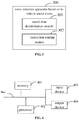
- a noise reduction apparatus 300 based on in-vehicle sound zones includes a sound zone determination module 301 and an instruction sending module 302.
- the sound zone determination module 301 is configured to determine, based on voice signals obtained by sound zones, a target sound zone to which a voice signal waking up a vehicle-mounted terminal belongs. Each sound zone has a corresponding noise reduction module.
- the instruction sending module 302 is configured to send a noise reduction termination instruction to noise reduction modules of sound zones other than the target sound zone.
- the noise reduction termination instruction is configured to instruct the noise reduction modules of the sound zones other than the target sound zone to terminate noise reduction algorithms in a process of performing voice interaction for the target sound zone.
- the sound zone determination module 301 is configured to determine, based on the voice signals obtained by the sound zones, the target sound zone to which the voice signal waking up the vehicle-mounted terminal belongs by adopting a sound zone decision algorithm.
- the apparatus includes a recognition engine activation module.
- the recognition engine activation module is configured to, after the sound zone determination module 301 determines the target sound zone, activate a speech recognition engine of the vehicle-mounted terminal.
- the instruction sending module 302 is configured to, in response to failing to receive a voice signal from the target sound zone within a preset time period, send a noise reduction resume instruction to the noise reduction modules of the sound zones other than the target sound zone.
- the noise reduction resume instruction is configured to instruct the noise reduction modules of the sound zones other than the target sound zone to restore the noise reduction algorithms.
- the apparatus includes a wake-up recognition module.
- the wake-up recognition module is configured to, before the sound zone determination module 301 determines the target sound zone, recognize the voice signal waking up the vehicle-mounted terminal.
- the noise reduction apparatus 300 based on in-vehicle sound zones 300 may perform the noise reduction method based on in-vehicle sound zones according to any embodiment of the present disclosure, and has corresponding functional modules for performing the method and beneficial effects.
- an electronic device and a readable storage medium are provided.
- FIG. 4 is a block diagram of an electronic device configured to implement a noise reduction method based on in-vehicle sound zones according to an embodiment of the present disclosure.
- the electronic device is intended to represent various forms of digital computers, such as a laptop computer, a desktop computer, a workbench, a personal digital assistant, a server, a blade server, a mainframe computer and other suitable computers.
- the electronic device may also represent various forms of mobile devices, such as a personal digital processor, a cellular phone, a smart phone, a wearable device and other similar computing devices.
- Components shown herein, their connections and relationships as well as their functions are merely examples, and are not intended to limit the implementation of the present disclosure described and/or required herein.
- the electronic device includes: one or more processors 401, a memory 402, and interfaces for connecting various components, including a high-speed interface and a low-speed interface.
- the components are interconnected by different buses and may be mounted on a common motherboard or otherwise installed as required.
- the processor may process instructions executed within the electronic device, including instructions stored in or on the memory to display graphical information of the GUI on an external input/output device (such as a display device coupled to the interface).
- an external input/output device such as a display device coupled to the interface.
- multiple processors and/or multiple buses may be used with multiple memories.
- multiple electronic devices may be connected, each providing some of the necessary operations (for example, as a server array, a group of blade servers, or a multiprocessor system).
- One processor 401 is taken as an example in FIG. 4 .
- the memory 402 is a non-transitory computer-readable storage medium according to embodiments of the present disclosure.
- the memory stores instructions executable by at least one processor, so that the at least one processor executes the noise reduction method based on in-vehicle sound zones provided by the present disclosure.
- the non-transitory computer-readable storage medium according to the present disclosure stores computer instructions, which are configured to make the computer execute the noise reduction method based on in-vehicle sound zones provided by the present disclosure.
- the memory 402 may be configured to store non-transitory software programs, non-transitory computer executable programs and modules, such as program instructions/modules (for example, the sound zone determination module 301 and the instruction sending module 302 illustrated in FIG. 3 ) corresponding to the noise reduction method based on in-vehicle sound zones according to embodiments of the present disclosure.
- the processor 401 executes various functional applications and performs data processing of the server by running non-transitory software programs, instructions and modules stored in the memory 402, that is, the noise reduction method based on in-vehicle sound zones according to the foregoing method embodiments is implemented.
- the memory 402 may include a storage program area and a storage data area, where the storage program area may store an operating system and applications required for at least one function; and the storage data area may store data created based on the use of the electronic device that implements the noise reduction method based on in-vehicle sound zones according to embodiments of the present disclosure, and the like.
- the memory 402 may include a high-speed random access memory, and may further include a non-transitory memory, such as at least one magnetic disk memory, a flash memory device, or other non-transitory solid-state memories.
- the memory 402 may optionally include memories remotely disposed with respect to the processor 401, and these remote memories may be connected to the electronic device, which is configured to implement the noise reduction method based on in-vehicle sound zones according to embodiments of the present disclosure, through a network.
- the network include, but are not limited to, the Internet, an intranet, a local area network, a mobile communication network, and combinations thereof.
- the electronic device configured to implement the noise reduction method based on in-vehicle sound zones may further include an input device 403 and an output device 404.
- the processor 401, the memory 402, the input device 403 and the output device 404 may be connected through a bus or in other manners.
- FIG. 4 is illustrated by establishing the connection through a bus.
- the input device 403 may receive input numeric or character information, and generate key signal inputs related to user settings and function control of the electronic device configured to implement the noise reduction method based on in-vehicle sound zones according to the embodiments of the present disclosure, such as a touch screen, a keypad, a mouse, a trackpad, a touchpad, a pointing stick, one or more mouse buttons, trackballs, joysticks and other input devices.
- the output device 404 may include a display device, an auxiliary lighting device (for example, an LED), a haptic feedback device (for example, a vibration motor), and so on.
- the display device may include, but is not limited to, a liquid crystal display (LCD), a light emitting diode (LED) display and a plasma display. In some embodiments, the display device may be a touch screen.
- Various implementations of systems and technologies described herein may be implemented in digital electronic circuit systems, integrated circuit systems, application-specific ASICs (application-specific integrated circuits), computer hardware, firmware, software, and/or combinations thereof. These various implementations may include: being implemented in one or more computer programs that are executable and/or interpreted on a programmable system including at least one programmable processor.
- the programmable processor may be a dedicated or general-purpose programmable processor that may receive data and instructions from a storage system, at least one input device and at least one output device, and transmit the data and instructions to the storage system, the at least one input device and the at least one output device.
- the systems and technologies described herein may be implemented on a computer having: a display device (for example, a cathode ray tube (CRT) or a liquid crystal display (LCD) monitor) for displaying information to the user; and a keyboard and a pointing device (such as a mouse or trackball) through which the user may provide input to the computer.
- a display device for example, a cathode ray tube (CRT) or a liquid crystal display (LCD) monitor
- a keyboard and a pointing device such as a mouse or trackball
- Other kinds of devices may also be used to provide interactions with the user; for example, the feedback provided to the user may be any form of sensory feedback (e.g., visual feedback, auditory feedback or haptic feedback); and input from the user may be received in any form (including acoustic input, voice input or tactile input).
- the systems and technologies described herein may be implemented in a computing system that includes back-end components (for example, as a data server), a computing system that includes middleware components (for example, an application server), or a computing system that includes front-end components (for example, a user computer with a graphical user interface or a web browser, through which the user may interact with the implementation of the systems and technologies described herein), or a computing system including any combination of the back-end components, the middleware components or the front-end components.
- the components of the system may be interconnected by digital data communication (e.g., a communication network) in any form or medium. Examples of the communication network include: a local area network (LAN), a wide area network (WAN), the Internet, and a blockchain-based network.
- Computer systems may include a client and a server.
- the client and server are generally remote from each other and typically interact through the communication network.
- a client-server relationship is generated by computer programs running on respective computers and having a client-server relationship with each other.
- the CPU consumption is reduced without affecting speech recognition and interaction, avoiding a slow running speed of the vehicle-mounted terminal.
- the noise reduction modules of the sound zones except the target sound zone may be restored to ensure that when voice from another sound zone wakes up the vehicle-mounted terminal, the voice signal from the another sound zone may be recognized and interacted normally.
Landscapes
- Engineering & Computer Science (AREA)
- Acoustics & Sound (AREA)
- Physics & Mathematics (AREA)
- Audiology, Speech & Language Pathology (AREA)
- Human Computer Interaction (AREA)
- Health & Medical Sciences (AREA)
- Computational Linguistics (AREA)
- Multimedia (AREA)
- Signal Processing (AREA)
- Quality & Reliability (AREA)
- Mechanical Engineering (AREA)
- Soundproofing, Sound Blocking, And Sound Damping (AREA)
- Fittings On The Vehicle Exterior For Carrying Loads, And Devices For Holding Or Mounting Articles (AREA)
Abstract
Description
- The present disclosure relates to a field of computer technologies, especially to a noise reduction technology, and specifically, to a noise reduction method and apparatus based on in-vehicle sound zones, a device and a medium.
- With the development of the Internet and intelligent terminals, the use of intelligent vehicles has become more and more widespread. Drivers or passengers can interact with vehicle-mounted terminals through voice to realize operations such as playing music or navigation. In order to accurately perform speech recognition and interaction, a vehicle is usually divided into several sound zones. A sound zone to which a user that wakes up a vehicle-mounted terminal belongs is recognized first, and then recognition and interaction are performed based on voice of the user, thereby reducing the impact of voice data from other sound zones on the speech recognition.
- In a scene where the vehicle is divided into four sound zones, there are four microphones to obtain the voice from the user, an echo reference signal and ambient noise. Correspondingly, each microphone corresponds to a noise reduction algorithm to eliminate the echo reference signal and the ambient noise. However, four noise reduction algorithms running at the same time generate a high central processing unit (CPU) occupancy rate. In particular, when a recognition engine is activated after a speech recognition function is woken up by the user, resources of the CPU will be further consumed, such that the vehicle-mounted terminal cannot operate smoothly.
- Embodiments of the present disclosure provide a noise reduction method and apparatus based on in-vehicle sound zones, a device and a medium, so as to solve a problem of a slow running speed of a vehicle-mounted terminal resulted from a high central processing unit (CPU) occupancy rate in the prior art.
- In a first aspect, embodiments of the present disclosure provide a noise reduction method based on in-vehicle sound zones, including: determining, based on voice signals obtained by sound zones, a target sound zone to which a voice signal waking up a vehicle-mounted terminal belongs, in which each sound zone has a corresponding noise reduction module; and sending a noise reduction termination instruction to noise reduction modules of sound zones other than the target sound zone, in which the noise reduction termination instruction is configured to instruct the noise reduction modules of the sound zones other than the target sound zone to terminate noise reduction algorithms in a process of performing voice interaction for the target sound zone.
- An embodiment of the present disclosure has the following advantages or beneficial effects. By maintaining the normal operation of the noise reduction algorithm of the target sound zone, and temporarily terminating the noise reduction algorithms of other sound zones, the CPU consumption is reduced without affecting speech recognition and interaction, avoiding a slow running speed of the vehicle-mounted terminal.
- Optionally, determining, based on the voice signals obtained by the sound zones, the target sound zone to which the voice signal waking up the vehicle-mounted terminal belongs includes: determining, based on the voice signals obtained by the sound zones, the target sound zone to which the voice signal waking up the vehicle-mounted terminal belongs by adopting a sound zone decision algorithm.
- An embodiment of the present disclosure has the following advantages or beneficial effects. Adopting the sound zone decision algorithm may accurately determine the target sound zone to which the voice signal waking up the vehicle-mounted terminal belongs, thereby ensuring a smooth progress of subsequent operations.
- Optionally, after determining the target sound zone, the method further includes activating a speech recognition engine of the vehicle-mounted terminal.
- An embodiment of the present disclosure has the following advantages or beneficial effects. After determining the target sound zone, the speech recognition engine may recognize and interact with the voice signal from the target sound zone when the speech recognition engine is activated.
- Optionally, after sending the noise reduction termination instruction to the noise reduction modules of the sound zones other than the target sound zone, the method includes: in response to failing to receive a voice signal from the target sound zone within a preset time period, sending a noise reduction resume instruction to the noise reduction modules of the sound zones other than the target sound zone. The noise reduction resume instruction is configured to instruct the noise reduction modules of the sound zones other than the target sound zone to restore the noise reduction algorithms.
- An embodiment of the present disclosure has the following advantages or beneficial effects. When no voice signal appears in the target sound zone, it indicates that the voice interaction based on the target sound zone has ended. At this time, the noise reduction modules of the sound zones except the target sound zone may be restored to ensure that when voice from another sound zone wakes up the vehicle-mounted terminal, a voice signal from the another sound zone may be recognized and interacted normally.
- Optionally, before determining the target sound zone, the method further includes recognizing the voice signal waking up the vehicle-mounted terminal.
- An embodiment of the present disclosure has the following advantages or beneficial effects. It is recognized whether the vehicle-mounted terminal is woken up. When it is recognized that the vehicle-mounted terminal is woken up, the target sound zone is recognized, and accordingly, the noise reduction modules are turned off and restored to avoid unnecessary operations and to ensure the normal operation of the noise reduction modules.
- In a second aspect, embodiments of the present disclosure provide a noise reduction apparatus based on in-vehicle sound zones, including: a sound zone determination module, configured to determine, based on voice signals obtained by sound zones, a target sound zone to which a voice signal waking up a vehicle-mounted terminal belongs, in which each sound zone has a corresponding noise reduction module; and an instruction sending module, configured to send a noise reduction termination instruction to noise reduction modules of sound zones other than the target sound zone, in which the noise reduction termination instruction is configured to instruct the noise reduction modules of the sound zones other than the target sound zone to terminate noise reduction algorithms in a process of performing voice interaction for the target sound zone.
- In an embodiment, the sound zone determination module is configured to: determine, based on the voice signals obtained by the sound zones, the target sound zone to which the voice signal waking up the vehicle-mounted terminal belongs by adopting a sound zone decision algorithm.
- In an embodiment, the apparatus also includes: a recognition engine activation module, configured to, after the sound zone determination module determines the target sound zone, activate a speech recognition engine of the vehicle-mounted terminal.
- In an embodiment, the instruction sending module is configured to: after sending the noise reduction termination instruction to the noise reduction modules of the sound zones other than the target sound zone, in response to failing to receive a voice signal from the target sound zone within a preset time period, send a noise reduction resume instruction to the noise reduction modules of the sound zones other than the target sound zone, in which the noise reduction resume instruction is configured to instruct the noise reduction modules of the sound zones other than the target sound zone to restore the noise reduction algorithms.
- In an embodiment, the apparatus also includes: a wake-up recognition module, configured to, before the sound zone determination module determines the target sound zone, recognize the voice signal waking up the vehicle-mounted terminal. In a third aspect, embodiments of the present disclosure provide an electronic device including at least one processor and a memory communicatively connected to the at least one processor. The memory stores an instruction executable by the at least one processor. When the instruction is executed by the at least one processor, the at least one processor may perform the noise reduction method based on in-vehicle sound zones according to any embodiment of the present disclosure.
- In a fourth aspect, embodiments of the present disclosure provide a non-transitory computer-readable storage medium having a computer instruction stored thereon. The computer instruction is configured to cause a computer performing the noise reduction method based on in-vehicle sound zones according to any embodiment of the present disclosure.
- An embodiment of the present disclosure has the following advantages or beneficial effects. By maintaining the normal operation of the noise reduction algorithm of the target sound zone, and temporarily terminating the noise reduction algorithms of other sound zones, the CPU consumption is reduced without affecting speech recognition and interaction, avoiding a slow running speed of the vehicle-mounted terminal. In addition, when no voice signal appears in the target sound zone, it indicates that the voice interaction based on the target sound zone has ended. At this time, the noise reduction modules of the sound zones except the target sound zone may be restored to ensure that when voice from another sound zone wakes up the vehicle-mounted terminal, the voice signal from the another sound zone may be recognized and interacted normally.
- Other effects of the above optional implementations will be described below in combination with specific embodiments.
- The accompanying drawings are used for a better understanding of the solution, and do not constitute a limitation to the present disclosure.
-
FIG. 1 is a flowchart of a noise reduction method based on in-vehicle sound zones according to Embodiment 1 of the present disclosure. -
FIG. 2 is a flowchart of a noise reduction method based on in-vehicle sound zones according to Embodiment 2 of the present disclosure. -
FIG. 3 is a schematic diagram of a noise reduction apparatus based on in-vehicle sound zones according to Embodiment 3 of the present disclosure. -
FIG. 4 is a block diagram of an electronic device configured to implement a noise reduction method based on in-vehicle sound zones according to an embodiment of the present disclosure. - Exemplary embodiments of the present disclosure are described below with reference to the accompanying drawings, which include various details of the embodiments of the present disclosure to facilitate understanding, and should be considered as merely exemplary. Therefore, those skilled in the art should recognize that various changes and modifications may be made to the embodiments described herein without departing from the scope and spirit of the present disclosure. Also, for clarity and conciseness, descriptions of well-known functions and structures are omitted in the following description.
-
FIG. 1 is a flowchart of a noise reduction method based on in-vehicle sound zones according to Embodiment 1 of the present disclosure. The embodiment may be applied to a situation where noise reduction is performed during a voice interaction process based on in-vehicle sound zones, for example, four in-vehicle sound zones. The method may be implemented by a noise reduction apparatus based on in-vehicle sound zones. The apparatus is implemented by software and/or hardware, and is preferably configured in an electronic device, such as a vehicle-mounted terminal. As illustrated inFIG. 1 , the method includes the following. - At block S101, a target sound zone to which a voice signal waking up a vehicle-mounted terminal belongs is determined based on voice signals obtained by sound zones. Each sound zone has a corresponding noise reduction module.
- Take the four in-vehicle sound zones as an example. Each sound zone in the vehicle is provided with a microphone and other pickup devices to obtain a voice signal from a user. Each sound zone corresponds to a noise reduction module configured to perform noise reduction on a voice signal obtained from the sound zone, for example, to eliminate an echo reference signal or ambient noise. Under normal circumstances, the noise reduction algorithms of the four noise reduction modules run at the same time, and the voice signal obtained will be denoised in real time. Consequently, certain operating pressure will be brought on the central processing module (CPU), causing the CPU to consume a lot of energy.
- According to the division of the in-vehicle sound zones, it is possible to locate the sound zone to which the voice signal that wakes up the vehicle-mounted terminal belongs each time. And then, speech recognition is performed on the voice signal obtained from the sound zone, and voice interaction is performed based on a result of the speech recognition. Therefore, in the embodiment of the present disclosure, after the vehicle-mounted terminal is woken up, the vehicle-mounted terminal determines the target sound zone to which the voice signal waking up the vehicle-mounted terminal belongs based on the voice signals obtained by the sound zones.
- It should be noted that when a user speaks in the vehicle, all of the microphones in the sound zones may obtain the voice signal. However, since distances from the location of the user speaking to the microphones in the sound zones are different from each other, voice signals acquired by the microphones are different. By adopting a sound zone decision algorithm, the target sound zone to which the voice waking up the vehicle-mounted terminal belongs may be determined based on the voice signals obtained by the sound zones. The embodiment of the present disclosure may adopt any sound zone decision algorithm in the prior art to determine the target sound zone, and the embodiment of the present disclosure does not make any limitation on the specific content of the sound zone decision algorithm.
- At block S102, a noise reduction termination instruction is sent to noise reduction modules of sound zones other than the target sound zone. The noise reduction termination instruction is configured to instruct the noise reduction modules of the sound zones other than the target sound zone to terminate noise reduction algorithms in a process of performing voice interaction for the target sound zone.
- The noise reduction algorithms of the noise reduction modules run at the same time, which causes a high CPU occupancy rate. Therefore, according to the embodiment of the present disclosure, after the target sound zone is determined, only the noise reduction module corresponding to the target sound zone is allowed to run the noise reduction algorithm, and the noise reduction termination instruction is sent to the noise reduction modules of the sound zones other than the target sound zone so as to instruct the noise reduction modules of the sound zones other than the target sound zone to terminate the noise reduction algorithms in the process of voice interaction for the target sound zone.
- It is understandable that when the voice signal that wakes up the vehicle-mounted terminal belongs to the target sound zone, it is indicated that the user in the target sound zone is planning to perform voice interaction with the vehicle-mounted terminal. Therefore, recognition and interaction are only needed to be performed on the voice signal from the target sound zone while the noise reduction algorithms of the noise reduction modules of the sound zones other than the target sound zone are terminated. Consequently, the CPU occupancy rate may be reduced without affecting the speech recognition and voice interaction in the target sound zone.
- In addition, after the target sound zone is determined, the vehicle-mounted terminal activates the speech recognition engine of the vehicle-mounted terminal to perform speech recognition on the voice signal from the target sound zone.
- With the technical solution of the embodiment of the present disclosure, by maintaining the normal operation of the noise reduction algorithm of the target sound zone, and temporarily terminating the noise reduction algorithms of other sound zones, the CPU consumption is reduced without affecting speech recognition and interaction, avoiding a slow running speed of the vehicle-mounted terminal.
-
FIG. 2 is a flowchart of a noise reduction method based on in-vehicle sound zones according to Embodiment 2 of the present disclosure. Embodiment 2 is optimized on the basis of the foregoing embodiment. As illustrated inFIG. 2 , the method includes the following. - At block S201, the voice signal waking up the vehicle-mounted terminal is recognized.
- The vehicle-mounted terminal needs to be woken up by the user before performing voice interaction with the user. Generally, a wake-up word may be preset. Voice obtained in real time may be matched with the wake-up word through keyword matching. If the voice obtained in real time matches with the wake-up word, it indicates that the user is waking up the vehicle-mounted terminal.
- According to the embodiment of the present disclosure, it is recognized whether the vehicle-mounted terminal is woken up. When it is recognized that the vehicle-mounted terminal is woken up, the target sound zone is recognized, and accordingly, the noise reduction modules are turned off and restored to avoid unnecessary operations and to ensure the normal operation of the noise reduction modules.
- At block S202, a target sound zone to which a voice signal waking up a vehicle-mounted terminal belongs is determined based on voice signals obtained by sound zones. Each sound zone has a corresponding noise reduction module.
- At block S203, a noise reduction termination instruction is sent to noise reduction modules of sound zones other than the target sound zone. The noise reduction termination instruction is configured to instruct the noise reduction modules of the sound zones other than the target sound zone to terminate noise reduction algorithms in a process of performing voice interaction for the target sound zone.
- At block S204, in response to failing to receive a voice signal from the target sound zone within a preset time period, a noise reduction resume instruction is sent to the noise reduction modules of the sound zones other than the target sound zone. The noise reduction resume instruction is configured to instruct the noise reduction modules of the sound zones other than the target sound zone to restore the noise reduction algorithms.
- Terminating the noise reduction algorithms of other sound zones and maintaining the operation of the noise reduction algorithm of the noise reduction module of the target sound zone are implemented in the process of voice interaction for the target sound zone. When the target sound zone no longer generates a voice signal, it indicates that the current voice interaction process has ended. In the embodiment of the present disclosure, it may be determined that the voice interaction process has ended when the voice signal from the target sound zone is not received within the preset time period. The preset time period is pre-configured by a technician, and there is no limitation here.
- After the voice interaction process is over, it is impossible to predict which sound zone the next voice interaction will be for. Therefore, in the embodiment of the present disclosure, in response to failing to receive the voice signal from the target sound zone within the preset time period, the noise reduction resume instruction is sent to the noise reduction modules of the sound zones other than the target sound zone to instruct the noise reduction modules of the sound zones other than the target sound zone to restore the noise reduction algorithms. In this manner, when the vehicle-mounted terminal is woken up next time, the vehicle-mounted terminal re-recognizes a new target sound zone and sends the noise reduction termination instruction to noise reduction modules of sound zones other than the new target sound zone. When the voice interaction process of the new target sound zone is over, the noise reduction resume instruction is sent to the noise reduction modules of the sound zones other than the new target sound zone. By analogy, each time the vehicle-mounted terminal is woken up, the above operations are repeated. Consequently, not only the current voice interaction process will not be affected, but also the next voice interaction process. In addition, the CPU occupancy rate may be reduced.
- With the technical solution of the embodiment of the present disclosure, by maintaining the normal operation of the noise reduction algorithm of the target sound zone, and temporarily terminating the noise reduction algorithms of other sound zones, the CPU consumption is reduced without affecting speech recognition and interaction, avoiding a slow running speed of the vehicle-mounted terminal. In addition, when no voice signal appears in the target sound zone, it indicates that the voice interaction based on the target sound zone has ended. At this time, the noise reduction modules of the sound zones except the target sound zone may be restored to ensure that when voice from another sound zone wakes up the vehicle-mounted terminal, the voice signal from the another sound zone may be recognized and interacted normally.
-
FIG. 3 is a schematic diagram of a noise reduction apparatus based on in-vehicle sound zones according to Embodiment 3 of the present disclosure. The embodiment may be applied to a situation where noise reduction is performed during a voice interaction process based on in-vehicle sound zones, for example, four in-vehicle sound zones. The apparatus may implement the noise reduction method based on in-vehicle sound zones according to any embodiment of the present disclosure. As illustrated inFIG. 3 , anoise reduction apparatus 300 based on in-vehicle sound zones includes a soundzone determination module 301 and aninstruction sending module 302. - The sound
zone determination module 301 is configured to determine, based on voice signals obtained by sound zones, a target sound zone to which a voice signal waking up a vehicle-mounted terminal belongs. Each sound zone has a corresponding noise reduction module. - The
instruction sending module 302 is configured to send a noise reduction termination instruction to noise reduction modules of sound zones other than the target sound zone. The noise reduction termination instruction is configured to instruct the noise reduction modules of the sound zones other than the target sound zone to terminate noise reduction algorithms in a process of performing voice interaction for the target sound zone. - Optionally, the sound
zone determination module 301 is configured to determine, based on the voice signals obtained by the sound zones, the target sound zone to which the voice signal waking up the vehicle-mounted terminal belongs by adopting a sound zone decision algorithm. - Optionally, the apparatus includes a recognition engine activation module. The recognition engine activation module is configured to, after the sound
zone determination module 301 determines the target sound zone, activate a speech recognition engine of the vehicle-mounted terminal. - Optionally, after the noise reduction termination instruction is sent to the noise reduction modules of the sound zones other than the target sound zone, the
instruction sending module 302 is configured to, in response to failing to receive a voice signal from the target sound zone within a preset time period, send a noise reduction resume instruction to the noise reduction modules of the sound zones other than the target sound zone. The noise reduction resume instruction is configured to instruct the noise reduction modules of the sound zones other than the target sound zone to restore the noise reduction algorithms. - Optionally, the apparatus includes a wake-up recognition module. The wake-up recognition module is configured to, before the sound
zone determination module 301 determines the target sound zone, recognize the voice signal waking up the vehicle-mounted terminal. - The
noise reduction apparatus 300 based on in-vehicle sound zones 300 according to the embodiment of the present disclosure may perform the noise reduction method based on in-vehicle sound zones according to any embodiment of the present disclosure, and has corresponding functional modules for performing the method and beneficial effects. For content not described in detail in the embodiment, reference may be made to the description in any method embodiment of the present disclosure. - According to embodiments of the present disclosure, an electronic device and a readable storage medium are provided.
-
FIG. 4 is a block diagram of an electronic device configured to implement a noise reduction method based on in-vehicle sound zones according to an embodiment of the present disclosure. The electronic device is intended to represent various forms of digital computers, such as a laptop computer, a desktop computer, a workbench, a personal digital assistant, a server, a blade server, a mainframe computer and other suitable computers. The electronic device may also represent various forms of mobile devices, such as a personal digital processor, a cellular phone, a smart phone, a wearable device and other similar computing devices. Components shown herein, their connections and relationships as well as their functions are merely examples, and are not intended to limit the implementation of the present disclosure described and/or required herein. - As shown in
FIG. 4 , the electronic device includes: one ormore processors 401, amemory 402, and interfaces for connecting various components, including a high-speed interface and a low-speed interface. The components are interconnected by different buses and may be mounted on a common motherboard or otherwise installed as required. The processor may process instructions executed within the electronic device, including instructions stored in or on the memory to display graphical information of the GUI on an external input/output device (such as a display device coupled to the interface). In other embodiments, when necessary, multiple processors and/or multiple buses may be used with multiple memories. Similarly, multiple electronic devices may be connected, each providing some of the necessary operations (for example, as a server array, a group of blade servers, or a multiprocessor system). Oneprocessor 401 is taken as an example inFIG. 4 . - The
memory 402 is a non-transitory computer-readable storage medium according to embodiments of the present disclosure. The memory stores instructions executable by at least one processor, so that the at least one processor executes the noise reduction method based on in-vehicle sound zones provided by the present disclosure. The non-transitory computer-readable storage medium according to the present disclosure stores computer instructions, which are configured to make the computer execute the noise reduction method based on in-vehicle sound zones provided by the present disclosure. - As a non-transitory computer-readable storage medium, the
memory 402 may be configured to store non-transitory software programs, non-transitory computer executable programs and modules, such as program instructions/modules (for example, the soundzone determination module 301 and theinstruction sending module 302 illustrated inFIG. 3 ) corresponding to the noise reduction method based on in-vehicle sound zones according to embodiments of the present disclosure. Theprocessor 401 executes various functional applications and performs data processing of the server by running non-transitory software programs, instructions and modules stored in thememory 402, that is, the noise reduction method based on in-vehicle sound zones according to the foregoing method embodiments is implemented. - The
memory 402 may include a storage program area and a storage data area, where the storage program area may store an operating system and applications required for at least one function; and the storage data area may store data created based on the use of the electronic device that implements the noise reduction method based on in-vehicle sound zones according to embodiments of the present disclosure, and the like. In addition, thememory 402 may include a high-speed random access memory, and may further include a non-transitory memory, such as at least one magnetic disk memory, a flash memory device, or other non-transitory solid-state memories. In some embodiments, thememory 402 may optionally include memories remotely disposed with respect to theprocessor 401, and these remote memories may be connected to the electronic device, which is configured to implement the noise reduction method based on in-vehicle sound zones according to embodiments of the present disclosure, through a network. Examples of the network include, but are not limited to, the Internet, an intranet, a local area network, a mobile communication network, and combinations thereof. - The electronic device configured to implement the noise reduction method based on in-vehicle sound zones according to the embodiments of the present disclosure may further include an
input device 403 and anoutput device 404. Theprocessor 401, thememory 402, theinput device 403 and theoutput device 404 may be connected through a bus or in other manners.FIG. 4 is illustrated by establishing the connection through a bus. - The
input device 403 may receive input numeric or character information, and generate key signal inputs related to user settings and function control of the electronic device configured to implement the noise reduction method based on in-vehicle sound zones according to the embodiments of the present disclosure, such as a touch screen, a keypad, a mouse, a trackpad, a touchpad, a pointing stick, one or more mouse buttons, trackballs, joysticks and other input devices. Theoutput device 404 may include a display device, an auxiliary lighting device (for example, an LED), a haptic feedback device (for example, a vibration motor), and so on. The display device may include, but is not limited to, a liquid crystal display (LCD), a light emitting diode (LED) display and a plasma display. In some embodiments, the display device may be a touch screen. - Various implementations of systems and technologies described herein may be implemented in digital electronic circuit systems, integrated circuit systems, application-specific ASICs (application-specific integrated circuits), computer hardware, firmware, software, and/or combinations thereof. These various implementations may include: being implemented in one or more computer programs that are executable and/or interpreted on a programmable system including at least one programmable processor. The programmable processor may be a dedicated or general-purpose programmable processor that may receive data and instructions from a storage system, at least one input device and at least one output device, and transmit the data and instructions to the storage system, the at least one input device and the at least one output device.
- These computing programs (also known as programs, software, software applications, or codes) include machine instructions of a programmable processor, and may implement these calculation procedures by utilizing high-level procedures and/or object-oriented programming languages, and/or assembly/machine languages. As used herein, terms "machine-readable medium" and "computer-readable medium" refer to any computer program product, device and/or apparatus configured to provide machine instructions and/or data to a programmable processor (for example, a magnetic disk, an optical disk, a memory and a programmable logic device (PLD)), and includes machine-readable media that receive machine instructions as machine-readable signals. The term "machine-readable signals" refers to any signal used to provide machine instructions and/or data to a programmable processor.
- In order to provide interactions with the user, the systems and technologies described herein may be implemented on a computer having: a display device (for example, a cathode ray tube (CRT) or a liquid crystal display (LCD) monitor) for displaying information to the user; and a keyboard and a pointing device (such as a mouse or trackball) through which the user may provide input to the computer. Other kinds of devices may also be used to provide interactions with the user; for example, the feedback provided to the user may be any form of sensory feedback (e.g., visual feedback, auditory feedback or haptic feedback); and input from the user may be received in any form (including acoustic input, voice input or tactile input).
- The systems and technologies described herein may be implemented in a computing system that includes back-end components (for example, as a data server), a computing system that includes middleware components (for example, an application server), or a computing system that includes front-end components (for example, a user computer with a graphical user interface or a web browser, through which the user may interact with the implementation of the systems and technologies described herein), or a computing system including any combination of the back-end components, the middleware components or the front-end components. The components of the system may be interconnected by digital data communication (e.g., a communication network) in any form or medium. Examples of the communication network include: a local area network (LAN), a wide area network (WAN), the Internet, and a blockchain-based network.
- Computer systems may include a client and a server. The client and server are generally remote from each other and typically interact through the communication network. A client-server relationship is generated by computer programs running on respective computers and having a client-server relationship with each other.
- With the technical solution according to embodiments of the present disclosure, by maintaining the normal operation of the noise reduction algorithm of the target sound zone, and temporarily terminating the noise reduction algorithms of other sound zones, the CPU consumption is reduced without affecting speech recognition and interaction, avoiding a slow running speed of the vehicle-mounted terminal. In addition, when no voice signal appears in the target sound zone, it indicates that the voice interaction based on the target sound zone has ended. At this time, the noise reduction modules of the sound zones except the target sound zone may be restored to ensure that when voice from another sound zone wakes up the vehicle-mounted terminal, the voice signal from the another sound zone may be recognized and interacted normally.
- It should be understood that various forms of processes shown above may be reordered, added or deleted. For example, the blocks described in the present disclosure may be executed in parallel, sequentially, or in different orders. As long as the desired results of the technical solution disclosed in the present disclosure may be achieved, there is no limitation herein.
Claims (12)
- A noise reduction method based on in-vehicle sound zones, comprising:determining (S101; S202), based on voice signals obtained by sound zones, a target sound zone to which a voice signal waking up a vehicle-mounted terminal belongs, wherein each sound zone has a corresponding noise reduction module; andsending (S102; S203) a noise reduction termination instruction to noise reduction modules of sound zones other than the target sound zone, wherein the noise reduction termination instruction is configured to instruct the noise reduction modules of the sound zones other than the target sound zone to terminate noise reduction algorithms in a process of performing voice interaction for the target sound zone.
- The method of claim 1, wherein determining (S101; S202), based on the voice signals obtained by the sound zones, the target sound zone to which the voice signal waking up the vehicle-mounted terminal belongs comprises:
determining, based on the voice signals obtained by the sound zones, the target sound zone to which the voice signal waking up the vehicle-mounted terminal belongs by adopting a sound zone decision algorithm. - The method of claim 1 or 2, after determining the target sound zone, further comprising:
activating a speech recognition engine of the vehicle-mounted terminal. - The method of any of claims 1-3, after sending (S102; S203) the noise reduction termination instruction to the noise reduction modules of the sound zones other than the target sound zone, further comprising:
in response to failing to receive a voice signal from the target sound zone within a preset time period, sending (S204) a noise reduction resume instruction to the noise reduction modules of the sound zones other than the target sound zone, wherein the noise reduction resume instruction is configured to instruct the noise reduction modules of the sound zones other than the target sound zone to restore the noise reduction algorithms. - The method of any of claims 1-4, before determining the target sound zone, further comprising:
recognizing (S201) the voice signal waking up the vehicle-mounted terminal. - A noise reduction apparatus (300) based on in-vehicle sound zones, comprising:a sound zone determination module (301), configured to determine, based on voice signals obtained by sound zones, a target sound zone to which a voice signal waking up a vehicle-mounted terminal belongs, wherein each sound zone has a corresponding noise reduction module; andan instruction sending module (302), configured to send a noise reduction termination instruction to noise reduction modules of sound zones other than the target sound zone, wherein the noise reduction termination instruction is configured to instruct the noise reduction modules of the sound zones other than the target sound zone to terminate noise reduction algorithms in a process of performing voice interaction for the target sound zone.
- The apparatus (300) of claim 6, wherein the sound zone determination module (301) is configured to:
determine, based on the voice signals obtained by the sound zones, the target sound zone to which the voice signal waking up the vehicle-mounted terminal belongs by adopting a sound zone decision algorithm. - The apparatus (300) of claim 6 or 7, further comprising:
a recognition engine activation module, configured to, after the sound zone determination module (301) determines the target sound zone, activate a speech recognition engine of the vehicle-mounted terminal. - The apparatus (300) of any of claims 6-8, wherein the instruction sending module (302) is configured to:
after sending the noise reduction termination instruction to the noise reduction modules of the sound zones other than the target sound zone, in response to failing to receive a voice signal from the target sound zone within a preset time period, send a noise reduction resume instruction to the noise reduction modules of the sound zones other than the target sound zone, wherein the noise reduction resume instruction is configured to instruct the noise reduction modules of the sound zones other than the target sound zone to restore the noise reduction algorithms. - The apparatus (300) of any of claims 6-9, further comprising:
a wake-up recognition module, configured to, before the sound zone determination module (301) determines the target sound zone, recognize the voice signal waking up the vehicle-mounted terminal. - An electronic device, comprising:at least one processor; anda memory communicatively connected to the at least one processor; wherein,the memory stores an instruction executable by the at least one processor, and when the instruction is executed by the at least one processor, the at least one processor may perform the noise reduction method based on in-vehicle sound zones of any one of claims 1 to 5.
- A non-transitory computer-readable storage medium having a computer instruction stored thereon, wherein the computer instruction is configured to cause a computer performing the noise reduction method based on in-vehicle sound zones of any one of claims 1 to 5.
Applications Claiming Priority (1)
| Application Number | Priority Date | Filing Date | Title |
|---|---|---|---|
| CN202010188707.5A CN111402877B (en) | 2020-03-17 | 2020-03-17 | Noise reduction method, device, equipment and medium based on vehicle-mounted multitone area |
Publications (1)
| Publication Number | Publication Date |
|---|---|
| EP3882915A1 true EP3882915A1 (en) | 2021-09-22 |
Family
ID=71430976
Family Applications (1)
| Application Number | Title | Priority Date | Filing Date |
|---|---|---|---|
| EP20214633.8A Withdrawn EP3882915A1 (en) | 2020-03-17 | 2020-12-16 | Noise reduction based on in-vehicle sound zones |
Country Status (4)
| Country | Link |
|---|---|
| US (1) | US11197094B2 (en) |
| EP (1) | EP3882915A1 (en) |
| JP (1) | JP7258932B2 (en) |
| CN (1) | CN111402877B (en) |
Families Citing this family (11)
| Publication number | Priority date | Publication date | Assignee | Title |
|---|---|---|---|---|
| CA3148488A1 (en) * | 2019-09-02 | 2021-03-11 | Shenbin ZHAO | Vehicle avatar devices for interactive virtual assistant |
| CN114842840A (en) * | 2021-02-02 | 2022-08-02 | 宝马股份公司 | Voice control method and system based on in-vehicle subareas |
| CN113053402B (en) * | 2021-03-04 | 2024-03-12 | 广州小鹏汽车科技有限公司 | Speech processing method, device and vehicle |
| CN113327608B (en) * | 2021-06-03 | 2022-12-09 | 阿波罗智联(北京)科技有限公司 | Voice processing method and device for vehicle, electronic equipment and medium |
| CN116941185A (en) * | 2021-07-09 | 2023-10-24 | Oppo广东移动通信有限公司 | Noise reduction method based on transfer learning, terminal equipment, network equipment and storage medium |
| CN113611334A (en) * | 2021-08-10 | 2021-11-05 | 合众新能源汽车有限公司 | A method and system for perceiving sound outside a vehicle |
| CN113948077A (en) * | 2021-08-31 | 2022-01-18 | 岚图汽车科技有限公司 | In-vehicle voice control method and device, storage medium and vehicle |
| CN114063969A (en) * | 2021-11-15 | 2022-02-18 | 阿波罗智联(北京)科技有限公司 | Audio data processing method, apparatus, equipment, storage medium and program product |
| CN115440206B (en) * | 2022-03-16 | 2025-03-28 | 北京罗克维尔斯科技有限公司 | Multi-zone speech recognition method, device, vehicle and storage medium |
| CN116863968A (en) * | 2023-08-07 | 2023-10-10 | 思必驰科技股份有限公司 | Voice signal processing method, device and vehicle system |
| CN118609584B (en) * | 2024-06-27 | 2025-01-14 | 深圳海冰科技有限公司 | Method, device and storage medium for vehicle-mounted voice noise reduction |
Citations (4)
| Publication number | Priority date | Publication date | Assignee | Title |
|---|---|---|---|---|
| JP2011152820A (en) * | 2010-01-26 | 2011-08-11 | Denso Corp | Noise cancel device for vehicle and noise cancel system for vehicle |
| WO2014026165A2 (en) * | 2012-08-10 | 2014-02-13 | Johnson Controls Technology Company | Systems and methods for vehicle cabin controlled audio |
| US20180190282A1 (en) * | 2016-12-30 | 2018-07-05 | Qualcomm Incorporated | In-vehicle voice command control |
| US20190237067A1 (en) * | 2018-01-31 | 2019-08-01 | Toyota Motor Engineering & Manufacturing North America, Inc. | Multi-channel voice recognition for a vehicle environment |
Family Cites Families (18)
| Publication number | Priority date | Publication date | Assignee | Title |
|---|---|---|---|---|
| JP2001075594A (en) * | 1999-08-31 | 2001-03-23 | Pioneer Electronic Corp | Speech recognition system |
| DE19944467C2 (en) * | 1999-09-16 | 2002-06-06 | Siemens Audiologische Technik | Method for reducing acoustic interference signals |
| US8126159B2 (en) * | 2005-05-17 | 2012-02-28 | Continental Automotive Gmbh | System and method for creating personalized sound zones |
| US20090248411A1 (en) * | 2008-03-28 | 2009-10-01 | Alon Konchitsky | Front-End Noise Reduction for Speech Recognition Engine |
| US9773495B2 (en) * | 2016-01-25 | 2017-09-26 | Ford Global Technologies, Llc | System and method for personalized sound isolation in vehicle audio zones |
| EP3414759B1 (en) * | 2016-02-10 | 2020-07-01 | Cerence Operating Company | Techniques for spatially selective wake-up word recognition and related systems and methods |
| CN106960670B (en) * | 2017-03-27 | 2020-06-23 | 联想(北京)有限公司 | Recording method and electronic equipment |
| CN107146628A (en) * | 2017-04-07 | 2017-09-08 | 宇龙计算机通信科技(深圳)有限公司 | A kind of voice call processing method and mobile terminal |
| CN107623783A (en) * | 2017-09-11 | 2018-01-23 | 安徽省未来博学信息技术有限公司 | A kind of call voice optimizes system |
| KR102174168B1 (en) * | 2018-10-26 | 2020-11-04 | 주식회사 에스큐그리고 | Forming Method for Personalized Acoustic Space Considering Characteristics of Speakers and Forming System Thereof |
| CN109545230B (en) * | 2018-12-05 | 2021-10-19 | 百度在线网络技术(北京)有限公司 | Audio signal processing method and device in vehicle |
| CN113986187B (en) * | 2018-12-28 | 2024-05-17 | 阿波罗智联(北京)科技有限公司 | Audio region amplitude acquisition method and device, electronic equipment and storage medium |
| CN109754803B (en) * | 2019-01-23 | 2021-06-22 | 上海华镇电子科技有限公司 | Vehicle-mounted multi-sound-zone voice interaction system and method |
| CN110310633B (en) * | 2019-05-23 | 2022-05-20 | 阿波罗智联(北京)科技有限公司 | Multi-vocal-zone voice recognition method, terminal device and storage medium |
| CN110459234B (en) * | 2019-08-15 | 2022-03-22 | 思必驰科技股份有限公司 | Vehicle-mounted voice recognition method and system |
| CN110366156B (en) * | 2019-08-26 | 2021-03-26 | 科大讯飞(苏州)科技有限公司 | Communication processing method, device, equipment, storage medium and audio management system |
| US11164557B2 (en) * | 2019-11-14 | 2021-11-02 | Bose Corporation | Active noise cancellation systems with convergence detection |
| CN115641861B (en) * | 2022-10-13 | 2026-05-05 | 科大讯飞股份有限公司 | A method, apparatus, storage medium, and device for enhancing in-vehicle voice. |
-
2020
- 2020-03-17 CN CN202010188707.5A patent/CN111402877B/en active Active
- 2020-09-23 US US17/029,923 patent/US11197094B2/en active Active
- 2020-12-16 EP EP20214633.8A patent/EP3882915A1/en not_active Withdrawn
-
2021
- 2021-03-15 JP JP2021040999A patent/JP7258932B2/en active Active
Patent Citations (4)
| Publication number | Priority date | Publication date | Assignee | Title |
|---|---|---|---|---|
| JP2011152820A (en) * | 2010-01-26 | 2011-08-11 | Denso Corp | Noise cancel device for vehicle and noise cancel system for vehicle |
| WO2014026165A2 (en) * | 2012-08-10 | 2014-02-13 | Johnson Controls Technology Company | Systems and methods for vehicle cabin controlled audio |
| US20180190282A1 (en) * | 2016-12-30 | 2018-07-05 | Qualcomm Incorporated | In-vehicle voice command control |
| US20190237067A1 (en) * | 2018-01-31 | 2019-08-01 | Toyota Motor Engineering & Manufacturing North America, Inc. | Multi-channel voice recognition for a vehicle environment |
Also Published As
| Publication number | Publication date |
|---|---|
| JP7258932B2 (en) | 2023-04-17 |
| JP2021105725A (en) | 2021-07-26 |
| CN111402877A (en) | 2020-07-10 |
| US20210297776A1 (en) | 2021-09-23 |
| CN111402877B (en) | 2023-08-11 |
| US11197094B2 (en) | 2021-12-07 |
Similar Documents
| Publication | Publication Date | Title |
|---|---|---|
| US11197094B2 (en) | Noise reduction method and apparatus based on in-vehicle sound zones, and medium | |
| EP3916719B1 (en) | Speech recognition | |
| EP3923272B1 (en) | Method and apparatus for adapting a wake-up model | |
| CN113138737B (en) | Display control method, device, equipment, medium and program product for screen-throwing scene | |
| JP2021099533A (en) | Voice interaction processing method, device and electronic apparatus | |
| CN111506401B (en) | Automatic driving simulation task scheduling method, device, electronic equipment and storage medium | |
| CN111968642A (en) | Voice data processing method and device and intelligent vehicle | |
| US11216615B2 (en) | Method, device and storage medium for predicting punctuation in text | |
| EP4030424B1 (en) | Method and apparatus of processing voice for vehicle, electronic device and medium | |
| US20210096814A1 (en) | Speech control method, speech control device, electronic device, and readable storage medium | |
| US20220044049A1 (en) | Method, apparatus, device and storage medium for determining displayed recognized text | |
| CN111966939A (en) | Page skipping method and device | |
| CN112102816A (en) | Speech recognition method, apparatus, system, electronic device and storage medium | |
| KR20210039354A (en) | Speech interaction method, speech interaction device and electronic device | |
| CN112017659A (en) | Processing method, device and equipment for multi-sound zone voice signals and storage medium | |
| EP4068278A2 (en) | Method and apparatus for voice recognition, electronic device and storage medium | |
| CN112669839B (en) | Voice interaction method, device, equipment and storage medium | |
| EP4056424B1 (en) | Audio signal playback delay estimation for smart rearview mirror | |
| CN113448668A (en) | Method and device for skipping popup window and electronic equipment | |
| US11330383B2 (en) | Method and apparatus for detecting echo delay and electronic device | |
| CN112114874A (en) | Data processing method and device, electronic equipment and storage medium | |
| CN115145730B (en) | Operation monitoring method and device, electronic equipment and storage medium | |
| CN120164461A (en) | A method and device for voice processing | |
| CN117631836A (en) | Gesture data processing method, device, electronic device and storage medium | |
| CN119047476A (en) | Method, device and system for executing corpus of vehicle and machine, vehicle and storage medium |
Legal Events
| Date | Code | Title | Description |
|---|---|---|---|
| PUAI | Public reference made under article 153(3) epc to a published international application that has entered the european phase |
Free format text: ORIGINAL CODE: 0009012 |
|
| STAA | Information on the status of an ep patent application or granted ep patent |
Free format text: STATUS: THE APPLICATION HAS BEEN PUBLISHED |
|
| AK | Designated contracting states |
Kind code of ref document: A1 Designated state(s): AL AT BE BG CH CY CZ DE DK EE ES FI FR GB GR HR HU IE IS IT LI LT LU LV MC MK MT NL NO PL PT RO RS SE SI SK SM TR |
|
| RAP1 | Party data changed (applicant data changed or rights of an application transferred) |
Owner name: APOLLO INTELLIGENT CONNECTIVITY (BEIJING) TECHNOLOGY CO., LTD. |
|
| STAA | Information on the status of an ep patent application or granted ep patent |
Free format text: STATUS: REQUEST FOR EXAMINATION WAS MADE |
|
| 17P | Request for examination filed |
Effective date: 20220322 |
|
| RBV | Designated contracting states (corrected) |
Designated state(s): AL AT BE BG CH CY CZ DE DK EE ES FI FR GB GR HR HU IE IS IT LI LT LU LV MC MK MT NL NO PL PT RO RS SE SI SK SM TR |
|
| STAA | Information on the status of an ep patent application or granted ep patent |
Free format text: STATUS: EXAMINATION IS IN PROGRESS |
|
| 17Q | First examination report despatched |
Effective date: 20230223 |
|
| GRAP | Despatch of communication of intention to grant a patent |
Free format text: ORIGINAL CODE: EPIDOSNIGR1 |
|
| STAA | Information on the status of an ep patent application or granted ep patent |
Free format text: STATUS: GRANT OF PATENT IS INTENDED |
|
| INTG | Intention to grant announced |
Effective date: 20240108 |
|
| RIC1 | Information provided on ipc code assigned before grant |
Ipc: G10L 15/22 20060101ALN20231215BHEP Ipc: B60R 16/037 20060101ALN20231215BHEP Ipc: G10L 21/0208 20130101AFI20231215BHEP |
|
| STAA | Information on the status of an ep patent application or granted ep patent |
Free format text: STATUS: THE APPLICATION IS DEEMED TO BE WITHDRAWN |
|
| 18D | Application deemed to be withdrawn |
Effective date: 20240509 |