EP3882454B1 - Locking linear actuator - Google Patents
Locking linear actuator Download PDFInfo
- Publication number
- EP3882454B1 EP3882454B1 EP21163645.1A EP21163645A EP3882454B1 EP 3882454 B1 EP3882454 B1 EP 3882454B1 EP 21163645 A EP21163645 A EP 21163645A EP 3882454 B1 EP3882454 B1 EP 3882454B1
- Authority
- EP
- European Patent Office
- Prior art keywords
- locking
- actuator
- lock sleeve
- actuator piston
- piston
- Prior art date
- Legal status (The legal status is an assumption and is not a legal conclusion. Google has not performed a legal analysis and makes no representation as to the accuracy of the status listed.)
- Active
Links
Images



Classifications
-
- F—MECHANICAL ENGINEERING; LIGHTING; HEATING; WEAPONS; BLASTING
- F15—FLUID-PRESSURE ACTUATORS; HYDRAULICS OR PNEUMATICS IN GENERAL
- F15B—SYSTEMS ACTING BY MEANS OF FLUIDS IN GENERAL; FLUID-PRESSURE ACTUATORS, e.g. SERVOMOTORS; DETAILS OF FLUID-PRESSURE SYSTEMS, NOT OTHERWISE PROVIDED FOR
- F15B15/00—Fluid-actuated devices for displacing a member from one position to another; Gearing associated therewith
- F15B15/08—Characterised by the construction of the motor unit
- F15B15/14—Characterised by the construction of the motor unit of the straight-cylinder type
- F15B15/1423—Component parts; Constructional details
-
- F—MECHANICAL ENGINEERING; LIGHTING; HEATING; WEAPONS; BLASTING
- F02—COMBUSTION ENGINES; HOT-GAS OR COMBUSTION-PRODUCT ENGINE PLANTS
- F02K—JET-PROPULSION PLANTS
- F02K1/00—Plants characterised by the form or arrangement of the jet pipe or nozzle; Jet pipes or nozzles peculiar thereto
- F02K1/54—Nozzles having means for reversing jet thrust
- F02K1/76—Control or regulation of thrust reversers
- F02K1/766—Control or regulation of thrust reversers with blocking systems or locking devices; Arrangement of locking devices for thrust reversers
-
- B—PERFORMING OPERATIONS; TRANSPORTING
- B64—AIRCRAFT; AVIATION; COSMONAUTICS
- B64C—AEROPLANES; HELICOPTERS
- B64C15/00—Attitude, flight direction, or altitude control by jet reaction
- B64C15/02—Attitude, flight direction, or altitude control by jet reaction the jets being propulsion jets
-
- B—PERFORMING OPERATIONS; TRANSPORTING
- B64—AIRCRAFT; AVIATION; COSMONAUTICS
- B64D—EQUIPMENT FOR FITTING IN OR TO AIRCRAFT; FLIGHT SUITS; PARACHUTES; ARRANGEMENT OR MOUNTING OF POWER PLANTS OR PROPULSION TRANSMISSIONS IN AIRCRAFT
- B64D29/00—Power-plant nacelles, fairings or cowlings
-
- F—MECHANICAL ENGINEERING; LIGHTING; HEATING; WEAPONS; BLASTING
- F02—COMBUSTION ENGINES; HOT-GAS OR COMBUSTION-PRODUCT ENGINE PLANTS
- F02K—JET-PROPULSION PLANTS
- F02K1/00—Plants characterised by the form or arrangement of the jet pipe or nozzle; Jet pipes or nozzles peculiar thereto
- F02K1/54—Nozzles having means for reversing jet thrust
- F02K1/76—Control or regulation of thrust reversers
- F02K1/763—Control or regulation of thrust reversers with actuating systems or actuating devices; Arrangement of actuators for thrust reversers
-
- F—MECHANICAL ENGINEERING; LIGHTING; HEATING; WEAPONS; BLASTING
- F15—FLUID-PRESSURE ACTUATORS; HYDRAULICS OR PNEUMATICS IN GENERAL
- F15B—SYSTEMS ACTING BY MEANS OF FLUIDS IN GENERAL; FLUID-PRESSURE ACTUATORS, e.g. SERVOMOTORS; DETAILS OF FLUID-PRESSURE SYSTEMS, NOT OTHERWISE PROVIDED FOR
- F15B15/00—Fluid-actuated devices for displacing a member from one position to another; Gearing associated therewith
- F15B15/08—Characterised by the construction of the motor unit
- F15B15/14—Characterised by the construction of the motor unit of the straight-cylinder type
- F15B15/1423—Component parts; Constructional details
- F15B15/1447—Pistons; Piston to piston rod assemblies
-
- F—MECHANICAL ENGINEERING; LIGHTING; HEATING; WEAPONS; BLASTING
- F15—FLUID-PRESSURE ACTUATORS; HYDRAULICS OR PNEUMATICS IN GENERAL
- F15B—SYSTEMS ACTING BY MEANS OF FLUIDS IN GENERAL; FLUID-PRESSURE ACTUATORS, e.g. SERVOMOTORS; DETAILS OF FLUID-PRESSURE SYSTEMS, NOT OTHERWISE PROVIDED FOR
- F15B15/00—Fluid-actuated devices for displacing a member from one position to another; Gearing associated therewith
- F15B15/20—Other details, e.g. assembly with regulating devices
-
- F—MECHANICAL ENGINEERING; LIGHTING; HEATING; WEAPONS; BLASTING
- F15—FLUID-PRESSURE ACTUATORS; HYDRAULICS OR PNEUMATICS IN GENERAL
- F15B—SYSTEMS ACTING BY MEANS OF FLUIDS IN GENERAL; FLUID-PRESSURE ACTUATORS, e.g. SERVOMOTORS; DETAILS OF FLUID-PRESSURE SYSTEMS, NOT OTHERWISE PROVIDED FOR
- F15B15/00—Fluid-actuated devices for displacing a member from one position to another; Gearing associated therewith
- F15B15/20—Other details, e.g. assembly with regulating devices
- F15B15/26—Locking mechanisms
- F15B15/261—Locking mechanisms using positive interengagement, e.g. balls and grooves, for locking in the end positions
-
- F—MECHANICAL ENGINEERING; LIGHTING; HEATING; WEAPONS; BLASTING
- F15—FLUID-PRESSURE ACTUATORS; HYDRAULICS OR PNEUMATICS IN GENERAL
- F15B—SYSTEMS ACTING BY MEANS OF FLUIDS IN GENERAL; FLUID-PRESSURE ACTUATORS, e.g. SERVOMOTORS; DETAILS OF FLUID-PRESSURE SYSTEMS, NOT OTHERWISE PROVIDED FOR
- F15B15/00—Fluid-actuated devices for displacing a member from one position to another; Gearing associated therewith
- F15B15/20—Other details, e.g. assembly with regulating devices
- F15B15/28—Means for indicating the position, e.g. end of stroke
- F15B15/2807—Position switches, i.e. means for sensing of discrete positions only, e.g. limit switches
Definitions
- This disclosure relates to hydraulic linear actuators. More specifically, the disclosure relates to locking linear actuators that can be used to deploy thrust reversers on aircraft.
- thrust reversal or reverse thrust
- Target-type thrust reversers There are three major types of thrust reverser systems: Target-type thrust reversers, clam-shell (or cascade) thrust reversers, and cold stream thrust reversers. Each type of system operates by redirecting at least a portion of engine thrust in a substantially forward direction.
- the target-type thrust reverser employs hydraulic actuators to deploy a pair of 'bucket' type doors that redirect the exhaust stream from the engines forward.
- An actuator includes a cylinder and a piston disposed in the cylinder.
- the piston has a head and a rod.
- the actuator further includes a collapsible locking member disposed in the head of the piston, and a gas-filled capsule disposed in the cylinder.
- the gas-filled capsule is in an expanded position when fluid in the cylinder is below a threshold pressure, and the gas-filled capsule is in a collapsed position when fluid in the cylinder is above the threshold pressure.
- the actuator also includes a lock piston operably connected to the gas-filled capsule. The lock piston engages the collapsible locking member and biases the collapsible locking member radially outward to a locked position when the gas-filled capsule is in the expanded position".
- US2018/335115A1 mentions in its abstract that "An actuator comprises a ball nut and a lock housing arranged radially outwardly of the ball nut and overlapping a proximal end of the ball nut when the ball nut is in a stowed position.
- the lock housing comprises a sleeve in which is located an aperture, and a locking element is retained within the aperture and can move in a radial direction through the aperture. When the ball nut is in the stowed position, the locking element engages with a locking projection on the ball nut, to retain the ball nut in the stowed position".
- a locking linear actuator as defined in claim 1 of the appended claims.
- a thrust reverser for an aircraft engine as defined in appended claim 12.
- a method of manufacturing a locking linear actuator as defined in appended claim 13. The present disclosure provides locking linear actuators, thrust reversers employing locking linear actuators, and methods of manufacturing locking linear actuators.
- the present disclosure relates to locking linear actuators that include an actuator housing that defines an internal longitudinal bore, an actuator piston disposed in the internal longitudinal bore, where the actuator piston is configured to slidably move between a proximal retracted position and a distal extended position, and a lock sleeve disposed in the internal longitudinal bore where the lock sleeve is configured to slidably move between a distal locking position and a proximal unlocked position.
- a distal portion of the lock sleeve extends into a proximal portion of the actuator piston and prevents the actuator piston from leaving the retracted position.
- the present disclosure relates to a thrust reverser for an aircraft engine, where the thrust reverser includes an aircraft engine nacelle having at least one deployable thrust reverser, and at least one linear actuator within the aircraft engine nacelle that is coupled to the deployable thrust reverser so that deploying the thrust reverser includes extending the at least one linear actuator.
- the linear actuator includes an actuator housing that defines an internal longitudinal bore, an actuator piston disposed in the internal longitudinal bore that is configured to slidably move between a proximal retracted position and a distal extended position, and a lock sleeve disposed in the internal longitudinal bore that is configured to slidably move between a distal locking position and a proximal unlocked position.
- a distal portion of the lock sleeve extends into a proximal portion of the actuator piston to prevent the actuator piston from leaving the retracted position.
- the present disclosure relates to a method of manufacturing a locking linear actuator.
- the method includes manufacturing an elongate actuator housing, where the actuator housing defines an internal longitudinal bore, installing an actuator piston within the internal longitudinal bore, so that the actuator piston is slidably moveable between a proximal retracted position and a distal extended position, and installing a lock sleeve within the internal longitudinal bore proximal to the actuator piston, so that the lock sleeve is slidably moveable between a distal locking position and a proximal unlocked position, so that when the actuator piston is in the retracted position and the lock sleeve is in the locking position, a distal portion of the lock sleeve extends into a proximal portion of the actuator piston to prevent the actuator piston from leaving the retracted position.
- substantially means to be predominantly conforming to the particular dimension, range, shape, concept, or other aspect modified by the term, such that a feature or component need not conform exactly, so long as it is suitable for its intended purpose or function.
- Coupled means to be in such relation that the performance of one influences the performance of the other, may include being connected, either permanently or releasably, whether directly or indirectly through intervening components, and is not necessarily limited to physical connection(s).
- the locking linear actuators of the present disclosure may offer enhanced utility in any application where a linear hydraulic actuator is utilized, and in particular those applications where it may be advantageous to employ a hydraulic linear actuator having a smaller profile, fewer moving parts, an enhanced locking mechanism, and an enhanced lock sensor.
- Selected representative applications can include manufacturing, construction, agriculture, and commercial transportation, particularly the use of linear actuators in commercial aircraft.
- the locking linear actuators of the present disclosure will primarily be discussed in the context of thrust reverser systems of commercial aircraft, this should not be considered to limit the utility or applicability of the present locking linear actuators in any way.
- the rear nozzle portion of a representative turbofan jet engine nacelle 10 is shown in Figs. 1 and 2 .
- the representative jet engine nacelle 10 includes a target-type thrust reverser system 12 that has two thrust reverser doors or panels 14 as shown in their retracted or stowed positions in Fig. 1 , and in their actuated or deployed positions in Fig. 2 .
- the thrust reverser panels 14 are coupled to jet engine 16 of nacelle 10 by one or more locking linear actuators 20, as depicted semi-schematically in Fig. 3 , and the overall performance of the thrust reverser can be improved by incorporation of one or more aspects of the construction and features of the presently disclosed locking linear actuators.
- a representative locking linear actuator 20 is depicted in Fig. 4 , as a longitudinal and vertical cross-section view.
- the locking linear actuator 20 includes an elongate actuator housing 22 that encloses and secures the linear actuator mechanism.
- Actuator housing 22 has a distal end 24 and a proximal end 26, where proximal end 26 is directly or indirectly attached to jet engine 16 and/or a jet engine nacelle 10.
- An actuator piston 28 is disposed within an internal longitudinal bore 30 defined by actuator housing 22, and having a longitudinal bore axis 31.
- a distal end 32 of actuator piston 28 can be directly or indirectly coupled to a panel 14 of a thrust reverser system 12.
- Actuator piston 28 can be configured so that the actuator piston is slidably disposed within internal longitudinal bore 30, and is therefore capable of slidably moving between a proximal position, corresponding to thrust reverser panel 14 being retracted or stowed, and a distal position, corresponding to thrust reverser panel 14 being extended or deployed.
- lock sleeve 34 is disposed within internal longitudinal bore 30, in a position that is proximal to actuator piston 28, in a position that is proximal to actuator piston 28, is a lock sleeve 34. Similar to actuator piston 28, lock sleeve 34 is configured to slidably translate within internal longitudinal bore 30 between a distal locking position and a proximal unlocked position.
- the actuator piston 28 and the lock sleeve 34 are configured such that, when the actuator piston 28 is in the retracted position and the lock sleeve 34 is in the locking position, a distal portion 64 of the lock sleeve extends into a proximal portion 36 of the actuator piston to prevent the actuator piston 28 from leaving the retracted position.
- At least a proximal portion 36 of actuator piston 28 defines a substantially cylindrical piston sidewall 38.
- Cylindrical piston sidewall 38 defines at least one lock aperture 40 that extends through the cylindrical piston sidewall.
- a locking tab 42 is movably disposed in the lock aperture 40, and both locking tab 42 and lock aperture 40 are sized and shaped so that locking tab 42 can readily translate radially within lock aperture 40.
- locking tab 42 can translate inwardly and/or outwardly along a radius of the circle defined by the cross-section.
- representative cylindrical piston sidewall 38 defines three lock apertures 40 that are disposed 120 degrees apart. As shown, the three corresponding locking tabs 42 are in their radially outermost positions.
- Cylindrical piston sidewall 38 is surrounded by an inner surface 44 of internal longitudinal bore 30 in actuator housing 22.
- inner surface 44 can be configured to define a step 46, where step 46 is defined as any feature that a corresponding locking tab 42 can positively interact with while in their radially outermost positions.
- step 46 can have the form of a circumferential ledge around the entire inner surface 44, and the defined step 46 can include a surface orthogonal to longitudinal bore axis 31, or can be angled with respect to longitudinal bore axis 31, as shown.
- Step 46 can be continuous or intermittent, provided that a step is disposed at the one or more positions suitable for interacting with locking tabs 42. Any configuration of step 46 and locking tabs 42 that provides a positive interaction between actuator piston 28 and actuator housing 22 can be a useful configuration.
- Step 46 can be positioned and shaped so that when actuator piston 28 is in the proximal and retracted position, and locking tab 42 is disposed radially outwardly sufficiently, that an outer edge of locking tab 42 extends sufficiently beyond lock aperture 40 that outer edge 48 engages step 46 in inner surface 44.
- actuator piston 28 is prevented from translating out of the proximal and retracted position. In this configuration, actuator piston 28 is locked in place, and linear actuator 20 as a whole can be described as being locked.
- Locking tab 42 may also have any suitable shape and configuration.
- outer edge 48 of locking tab 42 is curved so as to provide a strong interaction with the curve of step 46.
- the outer edge can be more or less curved, or even exhibit no curvature, provided locking tab 42 can engage positively with step 46.
- locking tab 42 also defines an outer face 50, an inner face 52, a distal face 54 and a proximal face 56.
- Locking tab 42 can further include an outer chamfered edge 58, that can be angled to be complementary to the angle of step 46.
- locking tab 42 when locking tab 42 is urged outwardly during locking, the interaction of outer chamfered edge 58 with step 46 helps to seat actuator piston 28 in the locked configuration.
- locking tab 42 can include an inner chamfered edge 60, that can be angled to be complementary to a chamfered edge 62 on lock sleeve 34, so that an interaction between chamfered edge 62 of the lock sleeve and inner chamfered edge 60 of the locking tab when lock sleeve is being urged in the distal direction will help to seat locking tab 42 against step 46.
- a distal portion 64 of lock sleeve 34 can define a cylindrical sleeve sidewall 66 that is sized and shaped so that cylindrical sleeve sidewall 66 can be inserted, or nested, concentrically within cylindrical piston sidewall 38 of actuator piston 28 when lock sleeve 34 is in the distal and locked position.
- cylindrical sleeve sidewall 66 prevents each locking tab 42 from moving radially inward within its respective lock aperture 40, and therefore prevents each locking tab 42 from disengaging with step 46 in inner surface 44 of internal longitudinal bore 30.
- Lock sleeve 34 can be kept in the distal and locking position by any appropriate lock sleeve biasing mechanism 68, for example such as a lock sleeve biasing spring that can be positioned between a proximal surface 70 within internal longitudinal bore 30 and lock sleeve 34, and therefore acts by continuously urging lock sleeve 34 in a distal direction and therefore toward the locking position, keeping linear actuator 20 locked, and preventing the actuator from deploying.
- lock sleeve biasing mechanism 68 for example such as a lock sleeve biasing spring that can be positioned between a proximal surface 70 within internal longitudinal bore 30 and lock sleeve 34, and therefore acts by continuously urging lock sleeve 34 in a distal direction and therefore toward the locking position, keeping linear actuator 20 locked, and preventing the actuator from deploying.
- Actuator housing 22 defines an internal hydraulic space 72 that is in fluid communication with internal longitudinal bore 30, as shown in Fig. 6 .
- Hydraulic space 72 encloses a synchronization screw 74 that can regulate the flow of pressurized hydraulic fluid into hydraulic space 72 from a suitable source, such as a large hydraulic system providing power to multiple aircraft systems, or a smaller, closed-circuit hydraulic system dedicated to the thrust reverser system, or to even a single linear actuator.
- Actuator housing 22 can additionally define one or more channels 76 in fluid communication with both hydraulic space 72 and a region 78 of internal longitudinal bore 30 that includes the one or more steps 46, as shown in Fig. 6 .
- region 78 encloses the proximal portion 36 of actuator piston 28, including the outer faces 50 of the one or more locking tabs 42, which are being retained in engagement with step 46 by the presence of cylindrical sleeve sidewall 66 of lock sleeve 34.
- lock sleeve 34 maintains the distal locking position, locking tabs 42 are prevented from moving inwardly, and actuator piston 28 remains in the locked configuration.
- hydraulic pressure can be increased within hydraulic space 72.
- the increased pressure urges lock sleeve 34 to translate in the proximal direction against the force applied by lock sleeve biasing mechanism 68.
- lock sleeve 34 is urged in the proximal direction.
- Distal cylindrical sleeve sidewall 66 of lock sleeve 34 is therefore retracted from its nested position within cylindrical actuator piston cylindrical piston sidewall 38.
- Fig. 8 shows linear actuator 20 with lock sleeve 34 urged into the proximal unlocked configuration.
- each locking tab 42 can move inwardly until it abuts an internal stop 80 defined by lock aperture 40.
- Locking tab 42 is configured and sized so that once it is in contact with internal stop 80, locking tab 42 no longer protrudes from lock aperture 40, and is no longer engaged with step 46, as shown in Figs. 8 and 9 .
- lock sleeve 34 is permitted a smaller range of travel between the locking and unlocked positions than is required for actuator piston 28 when translating from proximal position to distal position. As a result, under the influence of hydraulic pressure lock sleeve 34 can translate very quickly to the unlocked configuration. The movement of actuator piston 28 is typically slower, due to its greater size and mass, and greater range of travel.
- the locking linear actuator 20, and therefore its associated thrust reverser panel 14, can be returned to the stowed configuration by reducing the pressure of the hydraulic fluid being provided to hydraulic space 72.
- actuator piston 28 With the reduction of internal pressure, actuator piston 28 is urged back to the original proximal position by the action of an actuator piston biasing mechanism 82, which can be any suitable biasing mechanism, such as an actuator piston biasing spring, among others.
- Actuator piston biasing mechanism 82 can be at least somewhat stronger than lock sleeve biasing mechanism 68 for lock sleeve 34 in order to help ensure that actuator piston 28 returns to the proximal position before lock sleeve 34 is urged into the distal, locked position. As shown in Fig.
- actuator piston 28 has been returned to the proximal position, but locking tabs 42 remain within lock apertures 40.
- lock sleeve 34 is urged by lock sleeve biasing mechanism 68 to the locked position, the chamfered edge 62 of lock sleeve 34 can interact with chamfered edge 60 of locking tab 42, which then urges each locking tab 42 outward to engage with step 46.
- the operation of locking linear actuator 20 can be coordinated with one or more additional locking linear actuators using a synchronization coupling 84.
- Synchronization coupling 84 ( Figs. 4 , 7, and 8 ) can include a flexible-shafted cable 86 ( Figs. 7 and 8 ) that couples the operation of synchronization screw 74 ( Figs. 7, 8 , 10, and 11 ) with the synchronization screws of those additional locking linear actuators in order to coordinate operation.
- the synchronization coupling 84 can be configured to ensure that where multiple locking linear actuators are operating in a single thrust reverser system, that the thrust reverser panels are moved in a substantially synchronized manner.
- any other thrust reverser panel in the same thrust reverser system is moved an equivalent distance at substantially the same time.
- Other mechanical systems to synchronize linear actuator operation can include any other appropriate linkage in order to coordinate operation of coupled linear actuators.
- locking linear actuator 20 can be monitored by a sensor 88 disposed adjacent the proximal end 26 of actuator housing 22, where sensor 88 can be configured to detect an associated sensor target 90 that can be coupled to proximal end 92 of lock sleeve 34.
- sensor target 90 can be coupled to proximal end 92 of lock sleeve 34.
- Any suitable sensing technology can be used for the sensor target and sensor of locking linear actuator 20, such as capacitive sensing, inductive sensing, optical sensing, magnetic sensing, among others.
- Sensor target 90 can include two sensor activation regions 94 and 96, and a sensor deactivation region 98.
- sensor 88 can be a type of metal detector
- sensor target 90 can include two metallic disks which, when adjacent to sensor 88 (i.e. centered beneath the sensor) can activate or trigger the sensor.
- Deactivation region 98 then corresponds to a region between the metallic disks, which when disposed adjacent to sensor 88 does not trigger the sensor.
- linear actuator 20 When linear actuator 20 is in the locked configuration, as shown in Fig. 12 , sensor 88 is aligned with and adjacent to deactivation region 98. Sensor 88 is not activated, and the result is a signal that the locking linear actuator is in the locked configuration. In practical terms, this configuration can signal to a flight crew that the thrust reverser system coupled to the linear actuator is stowed and locked.
- linear actuator 20 When linear actuator 20 is the unlocked configuration, as shown in Fig. 13 , lock sleeve 34 is in the proximal unlocked position, and sensor activation region 94 is aligned with and adjacent to sensor 88. Sensor 88 is activated, and the result is a signal indicating that the locking linear actuator is in the unlocked configuration, and is deploying.
- This configuration can signal the flight crew that the thrust reverser system coupled to the linear actuator is deployed or in the process of deploying.
- lock sleeve 34 is more responsive to changes in hydraulic pressure, and able to translate more rapidly than actuator piston 28, when linear actuator 20 is in the process of being stowed or retracted, lock sleeve 34 may be urged in the distal direction beyond the locked configuration, until the actuator piston 28 is seated in the locked configuration and urges lock sleeve 34 into the locked configuration.
- This configuration of sensor target 90 is shown in Fig. 14 .
- sensor activation region 96 is adjacent to sensor 88
- sensor 88 generates a signal indicating that the locking linear actuator is in the unlocked configuration, but is being stowed or retracted.
- sensor 88 should again align with sensor deactivation region 98, and signal that the linear actuator is locked and stowed.
- the manufacture of an illustrative locking linear actuator 20 may be accomplished according to flowchart 100 of Fig. 15 .
- the method of manufacture includes manufacturing an elongate actuator housing, as shown at step 102 of flowchart 100.
- the elongate actuator housing can be manufactured so as to define an internal longitudinal bore, an internal hydraulic space in fluid communication with the internal longitudinal bore, and a step on the inner surface of the internal longitudinal bore.
- the method of manufacture further includes installing an actuator piston within the internal longitudinal bore as shown at step 104 of flowchart 100, so that the actuator piston is slidably moveable between a proximal retracted position and a distal extended position.
- the install actuator piston can be configured so that at least a proximal portion of the actuator piston includes a cylindrical piston sidewall defining at least one lock aperture.
- the method of manufacture further includes installing a lock sleeve within the internal longitudinal bore proximal to the actuator piston, shown at step 106 of flowchart 100, so that the lock sleeve is slidably moveable between a distal locking position and a proximal unlocked position, such that when the actuator piston is in the retracted position and the lock sleeve is in the locking position, a distal portion of the lock sleeve extends into a proximal portion of the actuator piston to prevent the actuator piston from leaving the retracted position.
- the method of manufacture can further include installing a locking tab in the at least one lock aperture, as shown at step 108 of flowchart 100, such that the locking tab can translate radially within the lock aperture, and when the locking tab extends radially beyond an outer surface of the actuator piston the locking tab engages the step in the inner surface of the internal longitudinal bore and prevents the actuator piston from leaving the retracted position, and the locking tab is in fluid communication with the hydraulic space, such that an increase in hydraulic pressure within the hydraulic space would urge the locking tab inward within the lock aperture, and when the actuator piston is in the retracted position and the lock sleeve is in the locking position, a distal portion of the lock sleeve extends into a proximal portion of the actuator piston and prevents the locking tab from moving inwardly and disengaging from the step in the inner surface of the internal longitudinal bore, and an increase in hydraulic pressure within the internal hydraulic space will urge the lock sleeve in a proximal direction and urge the actuator piston in a distal direction.
- the method of manufacture further includes installing an actuator piston biasing mechanism to urge the actuator piston in a proximal direction within the internal longitudinal bore and can optionally further include installing a lock sleeve biasing mechanism configured to urge the lock sleeve in a distal direction in the internal longitudinal bore, as shown at step 110 of flowchart 100, such that upon a decrease in the hydraulic pressure in the hydraulic space the actuator piston will return to the retracted position, the lock sleeve will returned to the locking position, and the locking tab will engage with the step, locking the linear actuator.
- the method of manufacture can alternatively and optionally further include attaching a sensor adjacent to a proximal end of the actuator housing, and attaching an associated sensor target to a proximal end of the lock sleeve, as shown at step 112 of flowchart 100, such that movement of the lock sleeve from one of the locking position and unlocked position to the other results in a movement of the sensor target that is detectable by the sensor and provides an indication that the linear actuator is locked or unlocked.
- the method of manufacture can alternatively and optionally further include coupling the hydraulic space to a source of pressurized hydraulic fluid, as shown at step 114 of flowchart 100.
- the method of manufacture can alternatively and optionally further include coupling the actuator housing to an aircraft engine and coupling the actuator piston to a thrust reverser, as shown at step 116 of flowchart 100.
- the method of manufacture can alternatively and optionally further include coupling the thrust reverser to one or more additional linear actuators, and linking the plurality of linear actuators with a synchronization mechanism so that an operation of the plurality of linear actuators is synchronized, as shown at step 118 of flowchart 100.
- a thrust reverser for an aircraft engine including an aircraft engine nacelle including at least one deployable thrust reverser; at least one locking linear actuator within the aircraft engine nacelle coupled to the deployable thrust reverser such that deploying the thrust reverser includes extending the at least one linear actuator;
- the linear actuator includes: an actuator housing defining an internal longitudinal bore; an actuator piston disposed in the internal longitudinal bore, the actuator piston being configured to slidably move between a proximal retracted position and a distal extended position; a lock sleeve disposed in the internal longitudinal bore, the lock sleeve being configured to slidably move between a distal locking position and a proximal unlocked position; where when the actuator piston is in the retracted position and the lock sleeve is in the locking position, a distal portion of the lock sleeve extends into a proximal portion of the actuator piston to prevent the actuator piston from leaving the retracted position.
- At least a proximal portion of the actuator piston defines a cylindrical piston sidewall, with the cylindrical piston sidewall defining a lock aperture within the cylindrical piston sidewall; a locking tab is disposed in the lock aperture, such that the locking tab can translate radially within the lock aperture; an inner surface of the internal longitudinal bore defines a step, where the step is positioned so that when the actuator piston is in the retracted position and the locking tab within the lock aperture extends beyond the cylindrical piston sidewall of the actuator piston the locking tab engages the step in the inner surface and the actuator piston is thereby prevented from leaving the retracted position; and when the actuator piston is in the retracted position and the lock sleeve is in the locking position, a distal portion of the lock sleeve extending into the proximal portion of the actuator piston prevents the locking tab from moving inwardly and disengaging from the step in the inner surface of the internal longitudinal bore.
- the actuator housing additionally defines a hydraulic space disposed between the actuator piston and the lock sleeve, such that an increase in hydraulic pressure within the hydraulic space urges the lock sleeve in a proximal direction and urge the actuator piston in a distal direction; and the hydraulic space is in fluid communication with a portion of the internal longitudinal bore defining the step, such that an increase in hydraulic pressure within the hydraulic space would urge the locking tab inward within the lock aperture; such that increasing the hydraulic pressure within the hydraulic space translates the lock sleeve in a proximal direction and the distal portion of the lock sleeve therefore moves from the locking position to the unlocked position, permitting the locking tab to move inwardly in the lock aperture under the urging of the increased hydraulic pressure and to disengage from the step, permitting the actuator piston to move from the retracted position to the extended position under the urging of the increased hydraulic pressure.
- the thrust reverser further includes an actuator piston biasing spring configured to urge the actuator piston in a proximal direction within the internal longitudinal bore, such that upon a decrease in the hydraulic pressure in the hydraulic space the actuator piston is returned to the retracted position; and optionally, the thrust reverser further includes a lock sleeve biasing spring configured to urge the lock sleeve in a distal direction in the internal longitudinal bore, such that upon a decrease in the hydraulic pressure in the hydraulic space the lock sleeve is returned to the locking position.
- the thrust reverser further includes a plurality of linear actuators, where each of the plurality of linear actuators includes a source of hydraulic fluid that is coupled to a synchronization mechanism that is coupled to each other linear actuator, so that the synchronization mechanism is configured to coordinate a simultaneous operation of the plurality of linear actuators when deploying the thrust reverser.
- the synchronization mechanism of each linear actuator includes a flexible-shafted cable that extends through an interior of each actuator piston and couples to a synchronization screw that controls hydraulic pressure within that linear actuator.
- the thrust reverser further includes a sensor disposed adjacent to a proximal end of the actuator housing, the sensor configured to detect an associated sensor target that is coupled to a proximal end of the lock sleeve, such that movement of the lock sleeve from the locking position to the unlocked position is detectable by the sensor.
- a method of manufacturing a locking linear actuator including manufacturing an elongate actuator housing, where the actuator housing defines an internal longitudinal bore; installing an actuator piston within the internal longitudinal bore, so that the actuator piston is slidably moveable between a proximal retracted position and a distal extended position; and installing a lock sleeve within the internal longitudinal bore proximal to the actuator piston, so that the lock sleeve is slidably moveable between a distal locking position and a proximal unlocked position; such that when the actuator piston is in the retracted position and the lock sleeve is in the locking position, a distal portion of the lock sleeve extends into a proximal portion of the actuator piston to prevent the actuator piston from leaving the retracted position.
- the actuator housing further defines an internal hydraulic space in fluid communication with the internal longitudinal bore and a step on an inner surface of the internal longitudinal bore; where at least a proximal portion of the actuator piston includes a cylindrical piston sidewall defining at least one lock aperture; where the method further includes installing a locking tab in the at least one lock aperture, such that the locking tab can translate radially within the lock aperture, and when the locking tab extends radially beyond an outer surface of the actuator piston the locking tab engages the step in the inner surface of the internal longitudinal bore and prevents the actuator piston from leaving the retracted position, and the locking tab is in fluid communication with the hydraulic space, such that an increase in hydraulic pressure within the hydraulic space would urge the locking tab inward within the lock aperture; where when the actuator piston is in the retracted position and the lock sleeve is in the locking position, the distal portion of the lock sleeve extended into the proximal portion of the actuator piston prevents the locking tab from moving inwardly and disengaging from the step in the inner surface of the internal longitudinal bore;
- the method of the preceding paragraph further includes installing an actuator piston biasing mechanism to urge the actuator piston in a proximal direction within the internal longitudinal bore, and optionally a lock sleeve biasing mechanism configured to urge the lock sleeve in a distal direction in the internal longitudinal bore, such that upon a decrease in the hydraulic pressure in the hydraulic space the actuator piston will return to the retracted position, the lock sleeve will returned to the locking position, and the locking tab will engage with the step, locking the linear actuator.
- the method further includes attaching a sensor adjacent to a proximal end of the actuator housing, and attaching an associated sensor target to a proximal end of the lock sleeve, such that movement of the lock sleeve from one of the locking position and unlocked position to the other of the locking position and unlocked position results in a movement of the sensor target that is detectable by the sensor and provides an indication that the linear actuator is locked or unlocked.
- the method of either of the two preceding paragraphs further includes coupling the hydraulic space to a source of pressurized hydraulic fluid.
- the method of the preceding paragraph further includes coupling the actuator housing to an aircraft engine and coupling the actuator piston to a thrust reverser.
- the method of the preceding paragraph further includes coupling the thrust reverser to one or more additional linear actuators, and linking each of the coupled linear actuators with a synchronization mechanism so that an operation of the coupled linear actuators is synchronized.
- the locking linear actuators disclosed herein, thrust reverser systems that can include one or more of the disclosed locking linear actuators, and methods of manufacturing the disclosed locking linear actuators provide significant benefits when compared to prior linear actuator designs, particularly with respect to the actuation of aircraft engine thrust reversers.
- the presently disclosed locking linear actuators require fewer parts, and cheaper parts, than existing linear actuators.
- the new actuators exhibit reduced internal wear, and the improved mechanism is simpler to manufacture than previous actuator designs.
- the actuator cylinder is slimmer and simpler, and does not have to be machined from a large initial piece of stock, reducing costs.
- the lock sleeve of the disclosed locking actuator is smaller and more streamlined than in previous linear actuators, resulting in savings on materials and a decrease in overall actuator size and weight, which results in fuel savings.
- the slimmer and smaller geometry of the disclosed linear actuators also permits them to be fitted into aircraft that could not accommodate the larger existing linear actuators, or they will require smaller housings when installed.
- the mechanism for lock engagement in the disclosed linear actuators is simpler, but both stronger and more reliable than existing locking mechanisms.
- the new locking mechanism additionally eliminates sources of potential wear that were created in previous linear actuators.
- the improved lock sensor system provides both a visual confirmation of lock engagement at the actuator itself, as well as an electronic confirmation within the aircraft cockpit.
- the disclosed linear actuators are configured so that disengagement of the lock sleeve, unlocking the linear actuator, can occur very quickly, and the lock sleeve becomes completely disengaged before the actuator piston can begins to move.
- the presently described locking linear actuators are smaller, simpler in operation and manufacture, provide a more robust lock engagement, and are less expensive than previously disclosed locking linear actuators, particularly for those used in thrust reverser systems.
Landscapes
- Engineering & Computer Science (AREA)
- Mechanical Engineering (AREA)
- General Engineering & Computer Science (AREA)
- Physics & Mathematics (AREA)
- Fluid Mechanics (AREA)
- Chemical & Material Sciences (AREA)
- Combustion & Propulsion (AREA)
- Aviation & Aerospace Engineering (AREA)
- Actuator (AREA)
Description
- This disclosure relates to hydraulic linear actuators. More specifically, the disclosure relates to locking linear actuators that can be used to deploy thrust reversers on aircraft.
- Commercial jet aircraft typically employ thrust reversal, or reverse thrust, during landings to help slow the aircraft after touch-down. By temporarily diverting either jet exhaust or bypass air forward, thrust reversal can provide rapid deceleration, permitting shorter landing distances and also reducing the wear experienced by brake systems.
- There are three major types of thrust reverser systems: Target-type thrust reversers, clam-shell (or cascade) thrust reversers, and cold stream thrust reversers. Each type of system operates by redirecting at least a portion of engine thrust in a substantially forward direction. The target-type thrust reverser employs hydraulic actuators to deploy a pair of 'bucket' type doors that redirect the exhaust stream from the engines forward.
- Current thrust reversers employ hydraulic actuators that are fitted with locking mechanisms, in order to prevent inadvertent actuation, and lock indicators so that the status of the actuator lock can be readily determined. Unfortunately, the current actuators are relatively bulky, and include a large number of cooperating parts, creating disadvantages with respect to maintenance and service as well as component weight. In addition, the lock indicator system of the current actuators can in some instances create mechanical wear on the locking mechanism of the actuator, necessitating more frequent service and replacement.
-
US2014/090551A1 mentions in its abstract that "An actuator includes a cylinder and a piston disposed in the cylinder. The piston has a head and a rod. The actuator further includes a collapsible locking member disposed in the head of the piston, and a gas-filled capsule disposed in the cylinder. The gas-filled capsule is in an expanded position when fluid in the cylinder is below a threshold pressure, and the gas-filled capsule is in a collapsed position when fluid in the cylinder is above the threshold pressure. The actuator also includes a lock piston operably connected to the gas-filled capsule. The lock piston engages the collapsible locking member and biases the collapsible locking member radially outward to a locked position when the gas-filled capsule is in the expanded position". -
US5431085A mentions in its abstract that "An actuator for a thrust reverser is disclosed which will prevent retraction of the thrust reverser door from its open, reverse thrust position should there be a malfunction in the locking system which locks the thrust reverser door in its closed forward thrust position. Upon deployment of the thrust reverser during a normal aircraft landing, should there be a malfunction in the thrust reverser door locking system, the actuator holds the thrust reverser doors in their opened positions so as to provide a positive, visual indication of such a system malfunction. The actuator has an internal device in the actuator head which, in cooperation with the control rod of the secondary mechanical locking system prevents hydraulic fluid from retracting the actuating piston and rod assembly from their extended positions and thereby prevents retraction of the thrust reverser door from the reverse thrust positions. Since thrust reverser doors are always fitted with position sensors, the failure of the thrust reverser door to return to its forward thrust position will be sensed by the normal aircraft position sensors so as to provide a positive indication to the aircraft crew of a defect in the mechanical locking system". -
US2018/335115A1 mentions in its abstract that "An actuator comprises a ball nut and a lock housing arranged radially outwardly of the ball nut and overlapping a proximal end of the ball nut when the ball nut is in a stowed position. The lock housing comprises a sleeve in which is located an aperture, and a locking element is retained within the aperture and can move in a radial direction through the aperture. When the ball nut is in the stowed position, the locking element engages with a locking projection on the ball nut, to retain the ball nut in the stowed position". - In a first aspect there is provided a locking linear actuator as defined in claim 1 of the appended claims. In a second aspect there is provided a thrust reverser for an aircraft engine, as defined in appended
claim 12. In a third aspect there is provided a method of manufacturing a locking linear actuator, as defined in appended claim 13. The present disclosure provides locking linear actuators, thrust reversers employing locking linear actuators, and methods of manufacturing locking linear actuators. - In some examples, the present disclosure relates to locking linear actuators that include an actuator housing that defines an internal longitudinal bore, an actuator piston disposed in the internal longitudinal bore, where the actuator piston is configured to slidably move between a proximal retracted position and a distal extended position, and a lock sleeve disposed in the internal longitudinal bore where the lock sleeve is configured to slidably move between a distal locking position and a proximal unlocked position. In addition, when the actuator piston is in the retracted position and the lock sleeve is in the locking position, a distal portion of the lock sleeve extends into a proximal portion of the actuator piston and prevents the actuator piston from leaving the retracted position.
- In some examples, the present disclosure relates to a thrust reverser for an aircraft engine, where the thrust reverser includes an aircraft engine nacelle having at least one deployable thrust reverser, and at least one linear actuator within the aircraft engine nacelle that is coupled to the deployable thrust reverser so that deploying the thrust reverser includes extending the at least one linear actuator. The linear actuator includes an actuator housing that defines an internal longitudinal bore, an actuator piston disposed in the internal longitudinal bore that is configured to slidably move between a proximal retracted position and a distal extended position, and a lock sleeve disposed in the internal longitudinal bore that is configured to slidably move between a distal locking position and a proximal unlocked position. Additionally, when the actuator piston is in the retracted position and the lock sleeve is in the locking position, a distal portion of the lock sleeve extends into a proximal portion of the actuator piston to prevent the actuator piston from leaving the retracted position.
- In some examples, the present disclosure relates to a method of manufacturing a locking linear actuator. The method includes manufacturing an elongate actuator housing, where the actuator housing defines an internal longitudinal bore, installing an actuator piston within the internal longitudinal bore, so that the actuator piston is slidably moveable between a proximal retracted position and a distal extended position, and installing a lock sleeve within the internal longitudinal bore proximal to the actuator piston, so that the lock sleeve is slidably moveable between a distal locking position and a proximal unlocked position, so that when the actuator piston is in the retracted position and the lock sleeve is in the locking position, a distal portion of the lock sleeve extends into a proximal portion of the actuator piston to prevent the actuator piston from leaving the retracted position.
- Features, functions, and advantages can be achieved independently in various examples of the present disclosure, or can be combined in yet other examples, further details of which can be seen with reference to the following description and drawings.
-
-
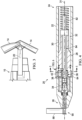
Fig. 1 depicts a representative jet engine nacelle, with thrust reverser doors retracted (stowed). -
Fig. 2 depicts the jet engine nacelle ofFig 1 , with thrust reverser doors deployed (actuated) to divert the jet engine exhaust in a direction having a forward component. -
Fig. 3 schematically depicts a locking linear actuator coupled to the thrust reverser panels of a thrust reverser system. -
Fig. 4 depicts an illustrative locking linear actuator according to the present disclosure. -
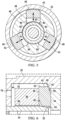
Fig. 5 is a cross-sectional view of the locking linear actuator as indicated inFig. 4 . -
Fig. 6 is a detailed view of the locking tab, lock aperture, and distal portion of the lock sleeve of the locking linear actuator ofFig. 4 . -
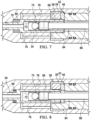
Fig. 7 illustrates the hydraulic space defined within the locking linear actuator ofFig. 4 . -
Fig. 8 illustrates the initial movement of the lock sleeve upon actuation of the locking linear actuator ofFig. 4 . -
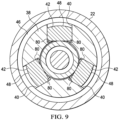
Fig. 9 is the cross-sectional view ofFig. 5 , showing the inward translation of the locking tabs of the locking linear actuator ofFig. 4 . -
Fig. 10 illustrates the movement of the actuator piston of the locking linear actuator ofFig. 4 , when the lock sleeve is in the proximal position. -
Fig. 11 illustrates the actuator piston of the locking linear actuator ofFig. 4 returned to the proximal position prior to the engagement of the lock sleeve and outward movement of the locking tabs. -
Fig. 12 depicts the sensor and sensor target of the locking linear actuator ofFig. 4 when the linear actuator is locked. -
Fig. 13 depicts the sensor and sensor target of the locking linear actuator ofFig. 4 when the linear actuator is unlocked. -
Fig. 14 depicts the sensor and sensor target of the locking linear actuator ofFig. 4 when the linear actuator is unlocked and being stowed. -
Fig. 15 is a flowchart depicting an illustrative method of manufacturing a locking linear actuator according to the present disclosure. - Various aspects and examples of locking linear actuators, thrust reverser systems incorporating the locking linear actuators, and methods of manufacturing locking linear actuators are described below and illustrated in the associated drawings. The following description of various examples is merely illustrative in nature and is in no way intended to limit the examples, their applications, or their uses. Additionally, the advantages provided by the examples and embodiments described below are illustrative in nature and not all examples and embodiments provide the same advantages or the same degree of advantages.
- This Detailed Description includes the following sections, which follow immediately below: (1) Definitions; (2) Overview; (3) Examples, Components, and Alternatives; (4) Methods of Manufacture; (5) Additional Examples; (6) Advantages, Features, and Benefits; and (7) Conclusion.
- The following definitions apply herein, unless otherwise indicated.
- "Substantially" means to be predominantly conforming to the particular dimension, range, shape, concept, or other aspect modified by the term, such that a feature or component need not conform exactly, so long as it is suitable for its intended purpose or function.
- "Comprising," "including," and "having" (and conjugations thereof) are used interchangeably to mean including but not necessarily limited to, and are open-ended terms not intended to exclude additional, unrecited elements or method steps.
- Terms such as "first", "second", and "third" are used to distinguish or identify various members of a group, or the like, in the order they are introduced in a particular context and are not intended to show serial or numerical limitation, or be fixed identifiers for the group members.
- "Coupled" means to be in such relation that the performance of one influences the performance of the other, may include being connected, either permanently or releasably, whether directly or indirectly through intervening components, and is not necessarily limited to physical connection(s).
- The locking linear actuators of the present disclosure may offer enhanced utility in any application where a linear hydraulic actuator is utilized, and in particular those applications where it may be advantageous to employ a hydraulic linear actuator having a smaller profile, fewer moving parts, an enhanced locking mechanism, and an enhanced lock sensor. Selected representative applications can include manufacturing, construction, agriculture, and commercial transportation, particularly the use of linear actuators in commercial aircraft. Although the locking linear actuators of the present disclosure will primarily be discussed in the context of thrust reverser systems of commercial aircraft, this should not be considered to limit the utility or applicability of the present locking linear actuators in any way.
- The rear nozzle portion of a representative turbofan
jet engine nacelle 10 is shown inFigs. 1 and 2 . The representativejet engine nacelle 10 includes a target-typethrust reverser system 12 that has two thrust reverser doors orpanels 14 as shown in their retracted or stowed positions inFig. 1 , and in their actuated or deployed positions inFig. 2 . Thethrust reverser panels 14 are coupled tojet engine 16 ofnacelle 10 by one or more lockinglinear actuators 20, as depicted semi-schematically inFig. 3 , and the overall performance of the thrust reverser can be improved by incorporation of one or more aspects of the construction and features of the presently disclosed locking linear actuators. - A representative locking
linear actuator 20 is depicted inFig. 4 , as a longitudinal and vertical cross-section view. The lockinglinear actuator 20 includes anelongate actuator housing 22 that encloses and secures the linear actuator mechanism.Actuator housing 22 has adistal end 24 and aproximal end 26, whereproximal end 26 is directly or indirectly attached tojet engine 16 and/or ajet engine nacelle 10. Anactuator piston 28 is disposed within an internallongitudinal bore 30 defined by actuatorhousing 22, and having alongitudinal bore axis 31. Adistal end 32 ofactuator piston 28 can be directly or indirectly coupled to apanel 14 of athrust reverser system 12.Actuator piston 28 can be configured so that the actuator piston is slidably disposed within internallongitudinal bore 30, and is therefore capable of slidably moving between a proximal position, corresponding to thrustreverser panel 14 being retracted or stowed, and a distal position, corresponding to thrustreverser panel 14 being extended or deployed. - Also disposed within internal
longitudinal bore 30, in a position that is proximal toactuator piston 28, is alock sleeve 34. Similar toactuator piston 28,lock sleeve 34 is configured to slidably translate within internallongitudinal bore 30 between a distal locking position and a proximal unlocked position. - With reference to
Fig. 4 , theactuator piston 28 and thelock sleeve 34 are configured such that, when theactuator piston 28 is in the retracted position and thelock sleeve 34 is in the locking position, adistal portion 64 of the lock sleeve extends into aproximal portion 36 of the actuator piston to prevent theactuator piston 28 from leaving the retracted position. - At least a
proximal portion 36 ofactuator piston 28 defines a substantiallycylindrical piston sidewall 38.Cylindrical piston sidewall 38 defines at least onelock aperture 40 that extends through the cylindrical piston sidewall. A lockingtab 42 is movably disposed in thelock aperture 40, and both lockingtab 42 andlock aperture 40 are sized and shaped so that lockingtab 42 can readily translate radially withinlock aperture 40. As shown for a circular cross-section ofcylindrical piston sidewall 38 inFig. 5 , lockingtab 42 can translate inwardly and/or outwardly along a radius of the circle defined by the cross-section. In the illustrative example ofFig. 5 , representativecylindrical piston sidewall 38 defines threelock apertures 40 that are disposed 120 degrees apart. As shown, the three corresponding lockingtabs 42 are in their radially outermost positions. -
Cylindrical piston sidewall 38 is surrounded by aninner surface 44 of internallongitudinal bore 30 inactuator housing 22. As shown inFigs. 5 and 6 ,inner surface 44 can be configured to define astep 46, wherestep 46 is defined as any feature that acorresponding locking tab 42 can positively interact with while in their radially outermost positions. As shown for representative and exemplary lockinglinear actuator 20,step 46 can have the form of a circumferential ledge around the entireinner surface 44, and the definedstep 46 can include a surface orthogonal tolongitudinal bore axis 31, or can be angled with respect tolongitudinal bore axis 31, as shown.Step 46 can be continuous or intermittent, provided that a step is disposed at the one or more positions suitable for interacting with lockingtabs 42. Any configuration ofstep 46 and lockingtabs 42 that provides a positive interaction betweenactuator piston 28 andactuator housing 22 can be a useful configuration. -
Step 46 can be positioned and shaped so that whenactuator piston 28 is in the proximal and retracted position, and lockingtab 42 is disposed radially outwardly sufficiently, that an outer edge of lockingtab 42 extends sufficiently beyondlock aperture 40 thatouter edge 48 engagesstep 46 ininner surface 44. As lockingtab 42 is engaged withstep 46, andactuator piston 28 is engaged withlocking tab 42 vialock aperture 40,actuator piston 28 is prevented from translating out of the proximal and retracted position. In this configuration,actuator piston 28 is locked in place, andlinear actuator 20 as a whole can be described as being locked. - Locking
tab 42, and itsouter edge 48, may also have any suitable shape and configuration. In the example depicted inFigs. 5 and9 ,outer edge 48 of lockingtab 42 is curved so as to provide a strong interaction with the curve ofstep 46. The outer edge can be more or less curved, or even exhibit no curvature, provided lockingtab 42 can engage positively withstep 46. As shown in greater detail inFig. 6 , lockingtab 42 also defines anouter face 50, an inner face 52, adistal face 54 and aproximal face 56. Lockingtab 42 can further include an outer chamferededge 58, that can be angled to be complementary to the angle ofstep 46. Additionally, when lockingtab 42 is urged outwardly during locking, the interaction of outer chamferededge 58 withstep 46 helps to seatactuator piston 28 in the locked configuration. Similarly, lockingtab 42 can include an inner chamferededge 60, that can be angled to be complementary to a chamferededge 62 onlock sleeve 34, so that an interaction betweenchamfered edge 62 of the lock sleeve and inner chamferededge 60 of the locking tab when lock sleeve is being urged in the distal direction will help to seat lockingtab 42 againststep 46. - The locked configuration of
linear actuator 20, as shown inFigs. 4 and7 , can be secured and maintained by an appropriate positioning oflock sleeve 34. Adistal portion 64 oflock sleeve 34 can define acylindrical sleeve sidewall 66 that is sized and shaped so thatcylindrical sleeve sidewall 66 can be inserted, or nested, concentrically withincylindrical piston sidewall 38 ofactuator piston 28 whenlock sleeve 34 is in the distal and locked position. In this configuration,cylindrical sleeve sidewall 66 prevents each lockingtab 42 from moving radially inward within itsrespective lock aperture 40, and therefore prevents each lockingtab 42 from disengaging withstep 46 ininner surface 44 of internallongitudinal bore 30.Lock sleeve 34 can be kept in the distal and locking position by any appropriate locksleeve biasing mechanism 68, for example such as a lock sleeve biasing spring that can be positioned between aproximal surface 70 within internallongitudinal bore 30 and locksleeve 34, and therefore acts by continuously urginglock sleeve 34 in a distal direction and therefore toward the locking position, keepinglinear actuator 20 locked, and preventing the actuator from deploying. -
Actuator housing 22 defines an internalhydraulic space 72 that is in fluid communication with internallongitudinal bore 30, as shown inFig. 6 .Hydraulic space 72 encloses asynchronization screw 74 that can regulate the flow of pressurized hydraulic fluid intohydraulic space 72 from a suitable source, such as a large hydraulic system providing power to multiple aircraft systems, or a smaller, closed-circuit hydraulic system dedicated to the thrust reverser system, or to even a single linear actuator. -
Actuator housing 22 can additionally define one ormore channels 76 in fluid communication with bothhydraulic space 72 and aregion 78 of internallongitudinal bore 30 that includes the one ormore steps 46, as shown inFig. 6 . Whenlinear actuator 20 is locked,region 78 encloses theproximal portion 36 ofactuator piston 28, including the outer faces 50 of the one ormore locking tabs 42, which are being retained in engagement withstep 46 by the presence ofcylindrical sleeve sidewall 66 oflock sleeve 34. As long aslock sleeve 34 maintains the distal locking position, lockingtabs 42 are prevented from moving inwardly, andactuator piston 28 remains in the locked configuration. - In order to unlock and deploy
linear actuator 20, hydraulic pressure can be increased withinhydraulic space 72. As hydraulic pressure withinhydraulic space 72 increases, the increased pressure urges locksleeve 34 to translate in the proximal direction against the force applied by locksleeve biasing mechanism 68. As the increased hydraulic pressure becomes greater than the force applied againstlock sleeve 34 by locksleeve biasing mechanism 68,lock sleeve 34 is urged in the proximal direction. Distalcylindrical sleeve sidewall 66 oflock sleeve 34 is therefore retracted from its nested position within cylindrical actuator pistoncylindrical piston sidewall 38.Fig. 8 showslinear actuator 20 withlock sleeve 34 urged into the proximal unlocked configuration. - Due to the presence of
channel 76, the pressure inhydraulic space 72 also creates increased pressure inregion 78 of internallongitudinal bore 30. This increased pressure urgesactuator piston 28 in the distal direction within internallongitudinal bore 30, which urges lockingtabs 42 to move inwardly, as well as exerting pressure onouter face 50 of each lockingtab 42 directly. Oncelock sleeve 34 has translated to the unlocked configuration it no longer prevents the inward motion of lockingtabs 42, and each lockingtab 42 moves inwardly until stopped. For the illustrative apparatus ofFig. 9 , for example, each lockingtab 42 can move inwardly until it abuts aninternal stop 80 defined bylock aperture 40. Lockingtab 42 is configured and sized so that once it is in contact withinternal stop 80, lockingtab 42 no longer protrudes fromlock aperture 40, and is no longer engaged withstep 46, as shown inFigs. 8 and9 . - As soon as locking
tabs 42 are fully disengaged fromstep 46, the increased hydraulic pressure existing withinhydraulic space 72 immediately urgesactuator piston 28 in the distal direction, resulting in the translation ofactuator piston 28 to the distal position, resulting in thethrust reverser panel 14 that is coupled toactuator piston 28 being deployed, as shown inFig. 10 . - As shown,
lock sleeve 34 is permitted a smaller range of travel between the locking and unlocked positions than is required foractuator piston 28 when translating from proximal position to distal position. As a result, under the influence of hydraulicpressure lock sleeve 34 can translate very quickly to the unlocked configuration. The movement ofactuator piston 28 is typically slower, due to its greater size and mass, and greater range of travel. - The locking
linear actuator 20, and therefore its associatedthrust reverser panel 14, can be returned to the stowed configuration by reducing the pressure of the hydraulic fluid being provided tohydraulic space 72. With the reduction of internal pressure,actuator piston 28 is urged back to the original proximal position by the action of an actuatorpiston biasing mechanism 82, which can be any suitable biasing mechanism, such as an actuator piston biasing spring, among others. Actuatorpiston biasing mechanism 82 can be at least somewhat stronger than locksleeve biasing mechanism 68 forlock sleeve 34 in order to help ensure thatactuator piston 28 returns to the proximal position beforelock sleeve 34 is urged into the distal, locked position. As shown inFig. 11 ,actuator piston 28 has been returned to the proximal position, but lockingtabs 42 remain withinlock apertures 40. Aslock sleeve 34 is urged by locksleeve biasing mechanism 68 to the locked position, the chamferededge 62 oflock sleeve 34 can interact withchamfered edge 60 of lockingtab 42, which then urges each lockingtab 42 outward to engage withstep 46. - The operation of locking
linear actuator 20 can be coordinated with one or more additional locking linear actuators using asynchronization coupling 84. Synchronization coupling 84 (Figs. 4 ,7, and 8 ) can include a flexible-shafted cable 86 (Figs. 7 and 8 ) that couples the operation of synchronization screw 74 (Figs. 7, 8 ,10, and 11 ) with the synchronization screws of those additional locking linear actuators in order to coordinate operation. Thesynchronization coupling 84 can be configured to ensure that where multiple locking linear actuators are operating in a single thrust reverser system, that the thrust reverser panels are moved in a substantially synchronized manner. That is, when one thrust reverser panel is moved, any other thrust reverser panel in the same thrust reverser system is moved an equivalent distance at substantially the same time. Other mechanical systems to synchronize linear actuator operation can include any other appropriate linkage in order to coordinate operation of coupled linear actuators. - The operation of locking
linear actuator 20 can be monitored by asensor 88 disposed adjacent theproximal end 26 ofactuator housing 22, wheresensor 88 can be configured to detect an associatedsensor target 90 that can be coupled toproximal end 92 oflock sleeve 34. Various combinations of sensor and sensor target can be useful in the context of the present disclosure. Any suitable sensing technology can be used for the sensor target and sensor of lockinglinear actuator 20, such as capacitive sensing, inductive sensing, optical sensing, magnetic sensing, among others. -
Sensor target 90 can include twosensor activation regions sensor deactivation region 98. As illustrated inFigs. 12 and 13 ,sensor 88 can be a type of metal detector, andsensor target 90 can include two metallic disks which, when adjacent to sensor 88 (i.e. centered beneath the sensor) can activate or trigger the sensor.Deactivation region 98 then corresponds to a region between the metallic disks, which when disposed adjacent tosensor 88 does not trigger the sensor. - When
linear actuator 20 is in the locked configuration, as shown inFig. 12 ,sensor 88 is aligned with and adjacent to deactivationregion 98.Sensor 88 is not activated, and the result is a signal that the locking linear actuator is in the locked configuration. In practical terms, this configuration can signal to a flight crew that the thrust reverser system coupled to the linear actuator is stowed and locked. - When
linear actuator 20 is the unlocked configuration, as shown inFig. 13 ,lock sleeve 34 is in the proximal unlocked position, andsensor activation region 94 is aligned with and adjacent tosensor 88.Sensor 88 is activated, and the result is a signal indicating that the locking linear actuator is in the unlocked configuration, and is deploying. This configuration can signal the flight crew that the thrust reverser system coupled to the linear actuator is deployed or in the process of deploying. - Because
lock sleeve 34 is more responsive to changes in hydraulic pressure, and able to translate more rapidly thanactuator piston 28, whenlinear actuator 20 is in the process of being stowed or retracted,lock sleeve 34 may be urged in the distal direction beyond the locked configuration, until theactuator piston 28 is seated in the locked configuration and urges locksleeve 34 into the locked configuration. This configuration ofsensor target 90 is shown inFig. 14 . Assensor activation region 96 is adjacent tosensor 88,sensor 88 generates a signal indicating that the locking linear actuator is in the unlocked configuration, but is being stowed or retracted. Once the locking linear actuator is fully retracted and locked,sensor 88 should again align withsensor deactivation region 98, and signal that the linear actuator is locked and stowed. - The manufacture of an illustrative locking
linear actuator 20 may be accomplished according toflowchart 100 ofFig. 15 . The method of manufacture includes manufacturing an elongate actuator housing, as shown atstep 102 offlowchart 100. - The elongate actuator housing can be manufactured so as to define an internal longitudinal bore, an internal hydraulic space in fluid communication with the internal longitudinal bore, and a step on the inner surface of the internal longitudinal bore.
- The method of manufacture further includes installing an actuator piston within the internal longitudinal bore as shown at
step 104 offlowchart 100, so that the actuator piston is slidably moveable between a proximal retracted position and a distal extended position. - The install actuator piston can be configured so that at least a proximal portion of the actuator piston includes a cylindrical piston sidewall defining at least one lock aperture.
- The method of manufacture further includes installing a lock sleeve within the internal longitudinal bore proximal to the actuator piston, shown at
step 106 offlowchart 100, so that the lock sleeve is slidably moveable between a distal locking position and a proximal unlocked position, such that when the actuator piston is in the retracted position and the lock sleeve is in the locking position, a distal portion of the lock sleeve extends into a proximal portion of the actuator piston to prevent the actuator piston from leaving the retracted position. - The method of manufacture can further include installing a locking tab in the at least one lock aperture, as shown at
step 108 offlowchart 100, such that the locking tab can translate radially within the lock aperture, and when the locking tab extends radially beyond an outer surface of the actuator piston the locking tab engages the step in the inner surface of the internal longitudinal bore and prevents the actuator piston from leaving the retracted position, and the locking tab is in fluid communication with the hydraulic space, such that an increase in hydraulic pressure within the hydraulic space would urge the locking tab inward within the lock aperture, and when the actuator piston is in the retracted position and the lock sleeve is in the locking position, a distal portion of the lock sleeve extends into a proximal portion of the actuator piston and prevents the locking tab from moving inwardly and disengaging from the step in the inner surface of the internal longitudinal bore, and an increase in hydraulic pressure within the internal hydraulic space will urge the lock sleeve in a proximal direction and urge the actuator piston in a distal direction. - When the resulting locking linear actuator is in use, by increasing the hydraulic pressure within the hydraulic space the lock sleeve will translate in a proximal direction, permitting the locking tab to move inwardly in the lock aperture under the urging of the increased hydraulic pressure and disengage from the step, permitting the actuator piston to move from the retracted position to the extended position under the urging of the increased hydraulic pressure.
- The method of manufacture further includes installing an actuator piston biasing mechanism to urge the actuator piston in a proximal direction within the internal longitudinal bore and can optionally further include installing a lock sleeve biasing mechanism configured to urge the lock sleeve in a distal direction in the internal longitudinal bore, as shown at
step 110 offlowchart 100, such that upon a decrease in the hydraulic pressure in the hydraulic space the actuator piston will return to the retracted position, the lock sleeve will returned to the locking position, and the locking tab will engage with the step, locking the linear actuator. - The method of manufacture can alternatively and optionally further include attaching a sensor adjacent to a proximal end of the actuator housing, and attaching an associated sensor target to a proximal end of the lock sleeve, as shown at
step 112 offlowchart 100, such that movement of the lock sleeve from one of the locking position and unlocked position to the other results in a movement of the sensor target that is detectable by the sensor and provides an indication that the linear actuator is locked or unlocked. - The method of manufacture can alternatively and optionally further include coupling the hydraulic space to a source of pressurized hydraulic fluid, as shown at
step 114 offlowchart 100. - The method of manufacture can alternatively and optionally further include coupling the actuator housing to an aircraft engine and coupling the actuator piston to a thrust reverser, as shown at step 116 of
flowchart 100. - The method of manufacture can alternatively and optionally further include coupling the thrust reverser to one or more additional linear actuators, and linking the plurality of linear actuators with a synchronization mechanism so that an operation of the plurality of linear actuators is synchronized, as shown at
step 118 offlowchart 100. - This section describes additional examples and features of the disclosed thrust reversers employing locking linear actuators, and methods of manufacturing locking linear actuators, presented without limitation as a series of paragraphs.
- In a first example there is disclosed a thrust reverser for an aircraft engine, including an aircraft engine nacelle including at least one deployable thrust reverser; at least one locking linear actuator within the aircraft engine nacelle coupled to the deployable thrust reverser such that deploying the thrust reverser includes extending the at least one linear actuator; where the linear actuator includes: an actuator housing defining an internal longitudinal bore; an actuator piston disposed in the internal longitudinal bore, the actuator piston being configured to slidably move between a proximal retracted position and a distal extended position; a lock sleeve disposed in the internal longitudinal bore, the lock sleeve being configured to slidably move between a distal locking position and a proximal unlocked position; where when the actuator piston is in the retracted position and the lock sleeve is in the locking position, a distal portion of the lock sleeve extends into a proximal portion of the actuator piston to prevent the actuator piston from leaving the retracted position.
- Optionally, at least a proximal portion of the actuator piston defines a cylindrical piston sidewall, with the cylindrical piston sidewall defining a lock aperture within the cylindrical piston sidewall; a locking tab is disposed in the lock aperture, such that the locking tab can translate radially within the lock aperture; an inner surface of the internal longitudinal bore defines a step, where the step is positioned so that when the actuator piston is in the retracted position and the locking tab within the lock aperture extends beyond the cylindrical piston sidewall of the actuator piston the locking tab engages the step in the inner surface and the actuator piston is thereby prevented from leaving the retracted position; and when the actuator piston is in the retracted position and the lock sleeve is in the locking position, a distal portion of the lock sleeve extending into the proximal portion of the actuator piston prevents the locking tab from moving inwardly and disengaging from the step in the inner surface of the internal longitudinal bore.
- Optionally, the actuator housing additionally defines a hydraulic space disposed between the actuator piston and the lock sleeve, such that an increase in hydraulic pressure within the hydraulic space urges the lock sleeve in a proximal direction and urge the actuator piston in a distal direction; and the hydraulic space is in fluid communication with a portion of the internal longitudinal bore defining the step, such that an increase in hydraulic pressure within the hydraulic space would urge the locking tab inward within the lock aperture; such that increasing the hydraulic pressure within the hydraulic space translates the lock sleeve in a proximal direction and the distal portion of the lock sleeve therefore moves from the locking position to the unlocked position, permitting the locking tab to move inwardly in the lock aperture under the urging of the increased hydraulic pressure and to disengage from the step, permitting the actuator piston to move from the retracted position to the extended position under the urging of the increased hydraulic pressure.
- The thrust reverser further includes an actuator piston biasing spring configured to urge the actuator piston in a proximal direction within the internal longitudinal bore, such that upon a decrease in the hydraulic pressure in the hydraulic space the actuator piston is returned to the retracted position; and optionally, the thrust reverser further includes a lock sleeve biasing spring configured to urge the lock sleeve in a distal direction in the internal longitudinal bore, such that upon a decrease in the hydraulic pressure in the hydraulic space the lock sleeve is returned to the locking position.
- Optionally, the thrust reverser further includes a plurality of linear actuators, where each of the plurality of linear actuators includes a source of hydraulic fluid that is coupled to a synchronization mechanism that is coupled to each other linear actuator, so that the synchronization mechanism is configured to coordinate a simultaneous operation of the plurality of linear actuators when deploying the thrust reverser. Optionally, the synchronization mechanism of each linear actuator includes a flexible-shafted cable that extends through an interior of each actuator piston and couples to a synchronization screw that controls hydraulic pressure within that linear actuator.
- Optionally, the thrust reverser further includes a sensor disposed adjacent to a proximal end of the actuator housing, the sensor configured to detect an associated sensor target that is coupled to a proximal end of the lock sleeve, such that movement of the lock sleeve from the locking position to the unlocked position is detectable by the sensor.
- In a second example there is disclosed a method of manufacturing a locking linear actuator, including manufacturing an elongate actuator housing, where the actuator housing defines an internal longitudinal bore; installing an actuator piston within the internal longitudinal bore, so that the actuator piston is slidably moveable between a proximal retracted position and a distal extended position; and installing a lock sleeve within the internal longitudinal bore proximal to the actuator piston, so that the lock sleeve is slidably moveable between a distal locking position and a proximal unlocked position; such that when the actuator piston is in the retracted position and the lock sleeve is in the locking position, a distal portion of the lock sleeve extends into a proximal portion of the actuator piston to prevent the actuator piston from leaving the retracted position.
- Optionally, the actuator housing further defines an internal hydraulic space in fluid communication with the internal longitudinal bore and a step on an inner surface of the internal longitudinal bore; where at least a proximal portion of the actuator piston includes a cylindrical piston sidewall defining at least one lock aperture; where the method further includes installing a locking tab in the at least one lock aperture, such that the locking tab can translate radially within the lock aperture, and when the locking tab extends radially beyond an outer surface of the actuator piston the locking tab engages the step in the inner surface of the internal longitudinal bore and prevents the actuator piston from leaving the retracted position, and the locking tab is in fluid communication with the hydraulic space, such that an increase in hydraulic pressure within the hydraulic space would urge the locking tab inward within the lock aperture; where when the actuator piston is in the retracted position and the lock sleeve is in the locking position, the distal portion of the lock sleeve extended into the proximal portion of the actuator piston prevents the locking tab from moving inwardly and disengaging from the step in the inner surface of the internal longitudinal bore; and an increase in hydraulic pressure within the internal hydraulic space will urge the lock sleeve in a proximal direction and urge the actuator piston in a distal direction; such that by increasing the hydraulic pressure within the hydraulic space the lock sleeve will translate in a proximal direction, permitting the locking tab to move inwardly in the lock aperture under the urging of the increased hydraulic pressure and disengage from the step, permitting the actuator piston to move from the retracted position to the extended position under the urging of the increased hydraulic pressure.
- The method of the preceding paragraph further includes installing an actuator piston biasing mechanism to urge the actuator piston in a proximal direction within the internal longitudinal bore, and optionally a lock sleeve biasing mechanism configured to urge the lock sleeve in a distal direction in the internal longitudinal bore, such that upon a decrease in the hydraulic pressure in the hydraulic space the actuator piston will return to the retracted position, the lock sleeve will returned to the locking position, and the locking tab will engage with the step, locking the linear actuator. Optionally, the method further includes attaching a sensor adjacent to a proximal end of the actuator housing, and attaching an associated sensor target to a proximal end of the lock sleeve, such that movement of the lock sleeve from one of the locking position and unlocked position to the other of the locking position and unlocked position results in a movement of the sensor target that is detectable by the sensor and provides an indication that the linear actuator is locked or unlocked.
- Optionally, the method of either of the two preceding paragraphs further includes coupling the hydraulic space to a source of pressurized hydraulic fluid.
- Optionally, the method of the preceding paragraph further includes coupling the actuator housing to an aircraft engine and coupling the actuator piston to a thrust reverser.
- Optionally, the method of the preceding paragraph further includes coupling the thrust reverser to one or more additional linear actuators, and linking each of the coupled linear actuators with a synchronization mechanism so that an operation of the coupled linear actuators is synchronized.
- The locking linear actuators disclosed herein, thrust reverser systems that can include one or more of the disclosed locking linear actuators, and methods of manufacturing the disclosed locking linear actuators, provide significant benefits when compared to prior linear actuator designs, particularly with respect to the actuation of aircraft engine thrust reversers.
- The presently disclosed locking linear actuators require fewer parts, and cheaper parts, than existing linear actuators. The new actuators exhibit reduced internal wear, and the improved mechanism is simpler to manufacture than previous actuator designs. For example, the actuator cylinder is slimmer and simpler, and does not have to be machined from a large initial piece of stock, reducing costs. Like the actuator cylinder, the lock sleeve of the disclosed locking actuator is smaller and more streamlined than in previous linear actuators, resulting in savings on materials and a decrease in overall actuator size and weight, which results in fuel savings.
- The slimmer and smaller geometry of the disclosed linear actuators also permits them to be fitted into aircraft that could not accommodate the larger existing linear actuators, or they will require smaller housings when installed.
- The mechanism for lock engagement in the disclosed linear actuators is simpler, but both stronger and more reliable than existing locking mechanisms. The new locking mechanism additionally eliminates sources of potential wear that were created in previous linear actuators. The improved lock sensor system provides both a visual confirmation of lock engagement at the actuator itself, as well as an electronic confirmation within the aircraft cockpit.
- Further, the disclosed linear actuators are configured so that disengagement of the lock sleeve, unlocking the linear actuator, can occur very quickly, and the lock sleeve becomes completely disengaged before the actuator piston can begins to move.
- The presently described locking linear actuators are smaller, simpler in operation and manufacture, provide a more robust lock engagement, and are less expensive than previously disclosed locking linear actuators, particularly for those used in thrust reverser systems.
- The disclosure set forth above may encompass multiple distinct examples with independent utility. Although each of these has been disclosed in its preferred form(s), the specific examples thereof as disclosed and illustrated herein are not to be considered in a limiting sense, because numerous variations are possible. To the extent that section headings are used within this disclosure, such headings are for organizational purposes only. The scope of protection is defined by the appended claims.
Claims (15)
- A locking linear actuator (20), comprising:an actuator housing (22) defining an internal longitudinal bore (30);an actuator piston (28) disposed in the internal longitudinal bore (30), the actuator piston being configured to slidably move between a proximal retracted position and a distal extended position; anda lock sleeve (34) disposed in the internal longitudinal bore (30), the lock sleeve being configured to slidably move between a distal locking position and a proximal unlocked position; andan actuator piston biasing mechanism (82) configured to urge the actuator piston (28) in a proximal direction in the internal longitudinal bore (30), toward the retracted position;wherein when the actuator piston (28) is in the retracted position and the lock sleeve (34) is in the locking position, a distal portion (64) of the lock sleeve extends into a proximal portion (36) of the actuator piston (28) to prevent the actuator piston from leaving the retracted position.
- The locking linear actuator of claim 1, wherein:at least a proximal portion (36) of the actuator piston (28) defines a cylindrical piston sidewall (38), with the cylindrical piston sidewall defining a lock aperture (40) within the cylindrical piston sidewall;a locking tab (42) is disposed in the lock aperture (40), such that the locking tab can translate radially within the lock aperture; andan inner surface (44) of the internal longitudinal bore (30) defines a step (46), where the step is positioned so that when the actuator piston (28) is in the retracted position and the locking tab (42) within the lock aperture (40) extends beyond the cylindrical piston sidewall (38) of the actuator piston (28) the locking tab engages the step in the inner surface and the actuator piston (28) is thereby prevented from leaving the retracted position.
- The locking linear actuator of claim 2, wherein when the actuator piston (28) is in the retracted position and the lock sleeve (34) is in the locking position, a distal portion (64) of the lock sleeve extends into a proximal portion (36) of the actuator piston (28) and prevents the locking tab (42) from moving inwardly and disengaging from the step (46) in the inner surface (44) of the internal longitudinal bore (30).
- The locking linear actuator of any preceding claim, wherein the actuator housing (22) additionally defines a hydraulic space (72) disposed between the actuator piston (28) and the lock sleeve (34), such that an increase in hydraulic pressure within the hydraulic space urges the lock sleeve in a proximal direction and urges the actuator piston (28) in a distal direction.
- The locking linear actuator of claim 4 when dependent upon claim 2 or claim 3, wherein the hydraulic space (72) is in fluid communication with a portion of the internal longitudinal bore (30) defining the step (46), such that an increase in hydraulic pressure within the hydraulic space would urge the locking tab (42) inward within the lock aperture (40); such that increasing the hydraulic pressure within the hydraulic space (72) urges the lock sleeve in a proximal direction from the locking position to the unlocked position, thereby permitting the locking tab (42) to move inwardly in the lock aperture (40) under the urging of the increased hydraulic pressure and to disengage from the step (46), permitting the actuator piston (28) to move from the retracted position to the extended position under the urging of the increased hydraulic pressure.
- The locking linear actuator of claim 5, further comprising a lock sleeve biasing mechanism (68) configured to urge the lock sleeve (34) in a distal direction in the internal longitudinal bore (30), such that upon a decrease in the hydraulic pressure in the hydraulic space (72), the lock sleeve is returned to the locking position.
- The locking linear actuator of any of claims 5 to 6, wherein the linear actuator (20) is further configured so that returning the actuator piston (28) to the retracted position and returning the lock sleeve (34) to the locking position urges the locking tab (42) radially outward to engage the step (46), thereby locking the actuator piston (28) in the retracted position.
- The locking linear actuator of any of claims 4 to 7, wherein the hydraulic space (72) disposed between the actuator piston (28) and the lock sleeve (34) further comprises a controllable hydraulic fluid source that is coupled to a synchronization mechanism (84) that is in turn coupled to one or more additional linear actuators, wherein the synchronization mechanism is configured to coordinate a simultaneous operation of the linear actuators.
- The locking linear actuator of claim 8, wherein the controllable hydraulic fluid source includes a synchronization screw (74), and the synchronization mechanism (84) includes a flexible-shafted cable (86) that extends through an interior of the actuator piston (28) and couples to the synchronization screw.
- The locking linear actuator of any of claims 1 to 9, further comprising a sensor (88) disposed adjacent a proximal end of the actuator housing (22), the sensor configured to detect an associated sensor target (90) that is coupled to a proximal end of the lock sleeve (34), such that movement of the lock sleeve from the locking position to the unlocked position is detectable by the sensor.
- The locking linear actuator of claim 10, wherein the sensor target (90) includes a deactivation region (98) that is detectable by the sensor (88) when the lock sleeve (34) is in the locked position, and a first activation region (94) that is detectable by the sensor when the lock sleeve is in the unlocked position.
- A thrust reverser for an aircraft engine, comprising:an aircraft engine nacelle (10) including at least one deployable thrust reverser (12); andat least one locking linear actuator (20) within the aircraft engine nacelle coupled to the deployable thrust reverser such that deploying the thrust reverser includes extending the at least one linear actuator (20);wherein the linear actuator (20) is a locking linear actuator according to any preceding claim.
- A method of manufacturing a locking linear actuator (20), comprising:manufacturing an elongate actuator housing (22), where the actuator housing (22) defines an internal longitudinal bore (30);installing an actuator piston (28) within the internal longitudinal bore (30), so that the actuator piston is slidably moveable between a proximal retracted position and a distal extended position;installing an actuator piston biasing mechanism (82) to urge the actuator piston (28) in a proximal direction within the internal longitudinal bore (30), toward the retracted position; andinstalling a lock sleeve (34) within the internal longitudinal bore (30) proximal to the actuator piston (28), so that the lock sleeve is slidably moveable between a distal locking position and a proximal unlocked position; such that when the actuator piston is in the retracted position and the lock sleeve is in the locking position, a distal portion (64) of the lock sleeve extends into a proximal portion (36) of the actuator piston to prevent the actuator piston from leaving the retracted position.
- The method of claim 13, where the actuator housing (22) further defines an internal hydraulic space (72) in fluid communication with the internal longitudinal bore (30) and a step (46) on an inner surface (44) of the internal longitudinal bore;wherein at least a proximal portion (36) of the actuator piston (28) includes a cylindrical piston sidewall (38) defining at least one lock aperture (40); andwherein the method further comprises:
installing a locking tab (42) in the at least one lock aperture (40), such that the locking tab can translate radially within the lock aperture, and when the locking tab extends radially beyond an outer surface of the actuator piston (28) the locking tab engages the step (46) in the inner surface (44) of the internal longitudinal bore (30) and prevents the actuator piston (28) from leaving the retracted position, and the locking tab is in fluid communication with the hydraulic space (72), such that an increase in hydraulic pressure within the hydraulic space would urge the locking tab inward within the lock aperture;wherein when the actuator piston (28) is in the retracted position and the lock sleeve (34) is in the locking position, the distal portion (64) of the lock sleeve (34) extended into the proximal portion (36) of the actuator piston prevents the locking tab (42) from moving inwardly and disengaging from the step (46) in the inner surface (44) of the internal longitudinal bore (30); andan increase in hydraulic pressure within the internal hydraulic space (72) will urge the lock sleeve (34) in a proximal direction and urge the actuator piston (28) in a distal direction;such that by increasing the hydraulic pressure within the hydraulic space (72) the lock sleeve (34) will translate in a proximal direction, permitting the locking tab (42) to move inwardly in the lock aperture (40) under the urging of the increased hydraulic pressure and disengage from the step (46), permitting the actuator piston (28) to move from the retracted position to the extended position under the urging of the increased hydraulic pressure. - The method of claim 13 or 14, further comprising attaching a sensor (88) adjacent to a proximal end of the actuator housing (22), and attaching an associated sensor target (90) to a proximal end of the lock sleeve (34), such that movement of the lock sleeve from one of the locking position and unlocked position to the other of the locking position and unlocked position results in a movement of the sensor target (90) that is detectable by the sensor (88) and provides an indication that the linear actuator is locked or unlocked.
Applications Claiming Priority (1)
| Application Number | Priority Date | Filing Date | Title |
|---|---|---|---|
| US16/826,092 US11512665B2 (en) | 2020-03-20 | 2020-03-20 | Locking linear actuator |
Publications (2)
| Publication Number | Publication Date |
|---|---|
| EP3882454A1 EP3882454A1 (en) | 2021-09-22 |
| EP3882454B1 true EP3882454B1 (en) | 2024-09-18 |
Family
ID=75111458
Family Applications (1)
| Application Number | Title | Priority Date | Filing Date |
|---|---|---|---|
| EP21163645.1A Active EP3882454B1 (en) | 2020-03-20 | 2021-03-19 | Locking linear actuator |
Country Status (4)
| Country | Link |
|---|---|
| US (1) | US11512665B2 (en) |
| EP (1) | EP3882454B1 (en) |
| JP (1) | JP7604284B2 (en) |
| CN (1) | CN113494501A (en) |
Families Citing this family (1)
| Publication number | Priority date | Publication date | Assignee | Title |
|---|---|---|---|---|
| US11788490B1 (en) * | 2022-12-05 | 2023-10-17 | Woodward, Inc. | Traveling finger lock for an actuator |
Family Cites Families (14)
| Publication number | Priority date | Publication date | Assignee | Title |
|---|---|---|---|---|
| DE3942348A1 (en) * | 1989-12-21 | 1991-06-27 | Pacoma Hydraulik Gmbh | LOCKABLE HYDRAULIC CYLINDER |
| FR2706536B1 (en) | 1993-06-16 | 1995-07-21 | Snecma | Thrust reverser cylinder comprising an internal locking device and a device for detecting the failure of the internal locking device. |
| US5685141A (en) * | 1995-12-26 | 1997-11-11 | General Electric Company | Lock for nozzle control in the event of hydraulic failure |
| US5826823A (en) | 1996-02-07 | 1998-10-27 | Rohr, Inc. | Actuator and safety lock system for pivoting door thrust reverser for aircraft jet engine |
| US6487846B1 (en) | 2001-09-07 | 2002-12-03 | Honeywell International, Inc. | Thrust reverser actuator including an integrated locking mechanism |
| US6832540B2 (en) * | 2003-03-17 | 2004-12-21 | Kenneth E. Hart | Locking hydraulic actuator |
| US7216581B2 (en) * | 2004-01-16 | 2007-05-15 | The Boeing Company | Piston locking actuator |
| EP2479414B1 (en) * | 2007-08-08 | 2015-06-10 | Rohr, Inc. | Variable area fan nozzle with bypass flow |
| JP5306838B2 (en) * | 2008-12-26 | 2013-10-02 | ナブテスコ株式会社 | Electric actuator |
| US8978356B2 (en) * | 2010-12-03 | 2015-03-17 | The Boeing Company | Thrust reverser and variable area fan nozzle actuation system and method |
| US9188081B2 (en) | 2012-04-10 | 2015-11-17 | Honeywell International Inc. | Thrust reverser actuator with primary lock |
| US9021936B2 (en) | 2012-09-28 | 2015-05-05 | Eaton Corporation | Ventless actuator lock |
| CA2895679C (en) * | 2015-06-26 | 2017-12-12 | V-Bond Lee | Dual locking hydraulic actuator for structural brace |
| EP3406888B1 (en) | 2017-05-22 | 2022-03-23 | Goodrich Actuation Systems Limited | Actuator |
-
2020
- 2020-03-20 US US16/826,092 patent/US11512665B2/en active Active
-
2021
- 2021-03-11 CN CN202110263341.8A patent/CN113494501A/en active Pending
- 2021-03-19 JP JP2021045624A patent/JP7604284B2/en active Active
- 2021-03-19 EP EP21163645.1A patent/EP3882454B1/en active Active
Also Published As
| Publication number | Publication date |
|---|---|
| JP2021177094A (en) | 2021-11-11 |
| EP3882454A1 (en) | 2021-09-22 |
| US20210293203A1 (en) | 2021-09-23 |
| JP7604284B2 (en) | 2024-12-23 |
| US11512665B2 (en) | 2022-11-29 |
| CN113494501A (en) | 2021-10-12 |
Similar Documents
| Publication | Publication Date | Title |
|---|---|---|
| US6625972B1 (en) | Thrust reverser sleeve lock | |
| EP1288479B1 (en) | Thrust reverser sleeve lock | |
| EP3577332B1 (en) | Thrust reverser flow limiting valve | |
| US6021636A (en) | Lightweight tertiary thrust reverser lock assembly with a blocking member | |
| EP0743443B1 (en) | Thrust reverser synchronization shaft lock | |
| US6286784B1 (en) | Automatic restow system for aircraft thrust reverser | |
| US9476384B2 (en) | Actuation device for moving a movable cowling of a thrust-reverser | |
| US9476383B2 (en) | Aircraft turbojet engine thrust reverser with a reduced number of latches | |
| EP3205867B1 (en) | Translating cowl thrust reverser system with over-stow unlocking capability | |
| US9109541B2 (en) | Lock for a translating sleeve of a nacelle | |
| US5431085A (en) | Thrust reverser actuator | |
| US6604355B1 (en) | Thrust reverser hook latch system | |
| CN108657446B (en) | Locking device for thrust reverser translating sleeve | |
| EP3931434B1 (en) | Traveling finger lock for an actuator | |
| EP3882454B1 (en) | Locking linear actuator | |
| EP3737849B1 (en) | Thrust reverser and method of controlling hydraulic actuation | |
| US10914267B2 (en) | Thrust reverser system for a turbojet engine | |
| CA2913527C (en) | Engine with a thrust reverser lockout mechanism |
Legal Events
| Date | Code | Title | Description |
|---|---|---|---|
| PUAI | Public reference made under article 153(3) epc to a published international application that has entered the european phase |
Free format text: ORIGINAL CODE: 0009012 |
|
| STAA | Information on the status of an ep patent application or granted ep patent |
Free format text: STATUS: THE APPLICATION HAS BEEN PUBLISHED |
|
| AK | Designated contracting states |
Kind code of ref document: A1 Designated state(s): AL AT BE BG CH CY CZ DE DK EE ES FI FR GB GR HR HU IE IS IT LI LT LU LV MC MK MT NL NO PL PT RO RS SE SI SK SM TR |
|
| STAA | Information on the status of an ep patent application or granted ep patent |
Free format text: STATUS: REQUEST FOR EXAMINATION WAS MADE |
|
| 17P | Request for examination filed |
Effective date: 20220322 |
|
| RBV | Designated contracting states (corrected) |
Designated state(s): AL AT BE BG CH CY CZ DE DK EE ES FI FR GB GR HR HU IE IS IT LI LT LU LV MC MK MT NL NO PL PT RO RS SE SI SK SM TR |
|
| RAP3 | Party data changed (applicant data changed or rights of an application transferred) |
Owner name: THE BOEING COMPANY |
|
| GRAP | Despatch of communication of intention to grant a patent |
Free format text: ORIGINAL CODE: EPIDOSNIGR1 |
|
| STAA | Information on the status of an ep patent application or granted ep patent |
Free format text: STATUS: GRANT OF PATENT IS INTENDED |
|
| INTG | Intention to grant announced |
Effective date: 20231129 |
|
| GRAJ | Information related to disapproval of communication of intention to grant by the applicant or resumption of examination proceedings by the epo deleted |
Free format text: ORIGINAL CODE: EPIDOSDIGR1 |
|
| STAA | Information on the status of an ep patent application or granted ep patent |
Free format text: STATUS: REQUEST FOR EXAMINATION WAS MADE |
|
| P01 | Opt-out of the competence of the unified patent court (upc) registered |
Effective date: 20240229 |
|
| GRAP | Despatch of communication of intention to grant a patent |
Free format text: ORIGINAL CODE: EPIDOSNIGR1 |
|
| STAA | Information on the status of an ep patent application or granted ep patent |
Free format text: STATUS: GRANT OF PATENT IS INTENDED |
|
| INTC | Intention to grant announced (deleted) | ||
| INTG | Intention to grant announced |
Effective date: 20240419 |
|
| GRAS | Grant fee paid |
Free format text: ORIGINAL CODE: EPIDOSNIGR3 |
|
| GRAA | (expected) grant |
Free format text: ORIGINAL CODE: 0009210 |
|
| STAA | Information on the status of an ep patent application or granted ep patent |
Free format text: STATUS: THE PATENT HAS BEEN GRANTED |
|
| RIN1 | Information on inventor provided before grant (corrected) |
Inventor name: MIAO, SAM |
|
| AK | Designated contracting states |
Kind code of ref document: B1 Designated state(s): AL AT BE BG CH CY CZ DE DK EE ES FI FR GB GR HR HU IE IS IT LI LT LU LV MC MK MT NL NO PL PT RO RS SE SI SK SM TR |
|
| REG | Reference to a national code |
Ref country code: GB Ref legal event code: FG4D |
|
| REG | Reference to a national code |
Ref country code: CH Ref legal event code: EP |
|
| REG | Reference to a national code |
Ref country code: DE Ref legal event code: R096 Ref document number: 602021018843 Country of ref document: DE |
|
| REG | Reference to a national code |
Ref country code: IE Ref legal event code: FG4D |
|
| REG | Reference to a national code |
Ref country code: LT Ref legal event code: MG9D |
|
| PG25 | Lapsed in a contracting state [announced via postgrant information from national office to epo] |
Ref country code: NO Free format text: LAPSE BECAUSE OF FAILURE TO SUBMIT A TRANSLATION OF THE DESCRIPTION OR TO PAY THE FEE WITHIN THE PRESCRIBED TIME-LIMIT Effective date: 20241218 |
|
| PG25 | Lapsed in a contracting state [announced via postgrant information from national office to epo] |
Ref country code: GR Free format text: LAPSE BECAUSE OF FAILURE TO SUBMIT A TRANSLATION OF THE DESCRIPTION OR TO PAY THE FEE WITHIN THE PRESCRIBED TIME-LIMIT Effective date: 20241219 Ref country code: FI Free format text: LAPSE BECAUSE OF FAILURE TO SUBMIT A TRANSLATION OF THE DESCRIPTION OR TO PAY THE FEE WITHIN THE PRESCRIBED TIME-LIMIT Effective date: 20240918 |
|
| PG25 | Lapsed in a contracting state [announced via postgrant information from national office to epo] |
Ref country code: BG Free format text: LAPSE BECAUSE OF FAILURE TO SUBMIT A TRANSLATION OF THE DESCRIPTION OR TO PAY THE FEE WITHIN THE PRESCRIBED TIME-LIMIT Effective date: 20240918 |
|
| PG25 | Lapsed in a contracting state [announced via postgrant information from national office to epo] |
Ref country code: LV Free format text: LAPSE BECAUSE OF FAILURE TO SUBMIT A TRANSLATION OF THE DESCRIPTION OR TO PAY THE FEE WITHIN THE PRESCRIBED TIME-LIMIT Effective date: 20240918 |
|
| PG25 | Lapsed in a contracting state [announced via postgrant information from national office to epo] |
Ref country code: HR Free format text: LAPSE BECAUSE OF FAILURE TO SUBMIT A TRANSLATION OF THE DESCRIPTION OR TO PAY THE FEE WITHIN THE PRESCRIBED TIME-LIMIT Effective date: 20240918 |
|
| REG | Reference to a national code |
Ref country code: NL Ref legal event code: MP Effective date: 20240918 |
|
| PG25 | Lapsed in a contracting state [announced via postgrant information from national office to epo] |
Ref country code: RS Free format text: LAPSE BECAUSE OF FAILURE TO SUBMIT A TRANSLATION OF THE DESCRIPTION OR TO PAY THE FEE WITHIN THE PRESCRIBED TIME-LIMIT Effective date: 20241218 |
|
| PG25 | Lapsed in a contracting state [announced via postgrant information from national office to epo] |
Ref country code: RS Free format text: LAPSE BECAUSE OF FAILURE TO SUBMIT A TRANSLATION OF THE DESCRIPTION OR TO PAY THE FEE WITHIN THE PRESCRIBED TIME-LIMIT Effective date: 20241218 Ref country code: NO Free format text: LAPSE BECAUSE OF FAILURE TO SUBMIT A TRANSLATION OF THE DESCRIPTION OR TO PAY THE FEE WITHIN THE PRESCRIBED TIME-LIMIT Effective date: 20241218 Ref country code: LV Free format text: LAPSE BECAUSE OF FAILURE TO SUBMIT A TRANSLATION OF THE DESCRIPTION OR TO PAY THE FEE WITHIN THE PRESCRIBED TIME-LIMIT Effective date: 20240918 Ref country code: HR Free format text: LAPSE BECAUSE OF FAILURE TO SUBMIT A TRANSLATION OF THE DESCRIPTION OR TO PAY THE FEE WITHIN THE PRESCRIBED TIME-LIMIT Effective date: 20240918 Ref country code: GR Free format text: LAPSE BECAUSE OF FAILURE TO SUBMIT A TRANSLATION OF THE DESCRIPTION OR TO PAY THE FEE WITHIN THE PRESCRIBED TIME-LIMIT Effective date: 20241219 Ref country code: FI Free format text: LAPSE BECAUSE OF FAILURE TO SUBMIT A TRANSLATION OF THE DESCRIPTION OR TO PAY THE FEE WITHIN THE PRESCRIBED TIME-LIMIT Effective date: 20240918 Ref country code: BG Free format text: LAPSE BECAUSE OF FAILURE TO SUBMIT A TRANSLATION OF THE DESCRIPTION OR TO PAY THE FEE WITHIN THE PRESCRIBED TIME-LIMIT Effective date: 20240918 |
|
| REG | Reference to a national code |
Ref country code: AT Ref legal event code: MK05 Ref document number: 1724872 Country of ref document: AT Kind code of ref document: T Effective date: 20240918 |
|
| PG25 | Lapsed in a contracting state [announced via postgrant information from national office to epo] |
Ref country code: NL Free format text: LAPSE BECAUSE OF FAILURE TO SUBMIT A TRANSLATION OF THE DESCRIPTION OR TO PAY THE FEE WITHIN THE PRESCRIBED TIME-LIMIT Effective date: 20240918 |
|
| PG25 | Lapsed in a contracting state [announced via postgrant information from national office to epo] |
Ref country code: PT Free format text: LAPSE BECAUSE OF FAILURE TO SUBMIT A TRANSLATION OF THE DESCRIPTION OR TO PAY THE FEE WITHIN THE PRESCRIBED TIME-LIMIT Effective date: 20250120 Ref country code: IS Free format text: LAPSE BECAUSE OF FAILURE TO SUBMIT A TRANSLATION OF THE DESCRIPTION OR TO PAY THE FEE WITHIN THE PRESCRIBED TIME-LIMIT Effective date: 20250118 |
|
| PG25 | Lapsed in a contracting state [announced via postgrant information from national office to epo] |
Ref country code: RO Free format text: LAPSE BECAUSE OF FAILURE TO SUBMIT A TRANSLATION OF THE DESCRIPTION OR TO PAY THE FEE WITHIN THE PRESCRIBED TIME-LIMIT Effective date: 20240918 Ref country code: SM Free format text: LAPSE BECAUSE OF FAILURE TO SUBMIT A TRANSLATION OF THE DESCRIPTION OR TO PAY THE FEE WITHIN THE PRESCRIBED TIME-LIMIT Effective date: 20240918 |
|
| PG25 | Lapsed in a contracting state [announced via postgrant information from national office to epo] |
Ref country code: ES Free format text: LAPSE BECAUSE OF FAILURE TO SUBMIT A TRANSLATION OF THE DESCRIPTION OR TO PAY THE FEE WITHIN THE PRESCRIBED TIME-LIMIT Effective date: 20240918 |
|
| PG25 | Lapsed in a contracting state [announced via postgrant information from national office to epo] |
Ref country code: EE Free format text: LAPSE BECAUSE OF FAILURE TO SUBMIT A TRANSLATION OF THE DESCRIPTION OR TO PAY THE FEE WITHIN THE PRESCRIBED TIME-LIMIT Effective date: 20240918 Ref country code: AT Free format text: LAPSE BECAUSE OF FAILURE TO SUBMIT A TRANSLATION OF THE DESCRIPTION OR TO PAY THE FEE WITHIN THE PRESCRIBED TIME-LIMIT Effective date: 20240918 |
|
| PG25 | Lapsed in a contracting state [announced via postgrant information from national office to epo] |
Ref country code: PL Free format text: LAPSE BECAUSE OF FAILURE TO SUBMIT A TRANSLATION OF THE DESCRIPTION OR TO PAY THE FEE WITHIN THE PRESCRIBED TIME-LIMIT Effective date: 20240918 Ref country code: CZ Free format text: LAPSE BECAUSE OF FAILURE TO SUBMIT A TRANSLATION OF THE DESCRIPTION OR TO PAY THE FEE WITHIN THE PRESCRIBED TIME-LIMIT Effective date: 20240918 |
|
| PG25 | Lapsed in a contracting state [announced via postgrant information from national office to epo] |
Ref country code: SK Free format text: LAPSE BECAUSE OF FAILURE TO SUBMIT A TRANSLATION OF THE DESCRIPTION OR TO PAY THE FEE WITHIN THE PRESCRIBED TIME-LIMIT Effective date: 20240918 Ref country code: IT Free format text: LAPSE BECAUSE OF FAILURE TO SUBMIT A TRANSLATION OF THE DESCRIPTION OR TO PAY THE FEE WITHIN THE PRESCRIBED TIME-LIMIT Effective date: 20240918 |
|
| REG | Reference to a national code |
Ref country code: DE Ref legal event code: R097 Ref document number: 602021018843 Country of ref document: DE |
|
| PG25 | Lapsed in a contracting state [announced via postgrant information from national office to epo] |
Ref country code: DK Free format text: LAPSE BECAUSE OF FAILURE TO SUBMIT A TRANSLATION OF THE DESCRIPTION OR TO PAY THE FEE WITHIN THE PRESCRIBED TIME-LIMIT Effective date: 20240918 |
|
| PLBE | No opposition filed within time limit |
Free format text: ORIGINAL CODE: 0009261 |
|
| STAA | Information on the status of an ep patent application or granted ep patent |
Free format text: STATUS: NO OPPOSITION FILED WITHIN TIME LIMIT |
|
| 26N | No opposition filed |
Effective date: 20250619 |
|
| PG25 | Lapsed in a contracting state [announced via postgrant information from national office to epo] |
Ref country code: SE Free format text: LAPSE BECAUSE OF FAILURE TO SUBMIT A TRANSLATION OF THE DESCRIPTION OR TO PAY THE FEE WITHIN THE PRESCRIBED TIME-LIMIT Effective date: 20240918 |
|
| PG25 | Lapsed in a contracting state [announced via postgrant information from national office to epo] |
Ref country code: MC Free format text: LAPSE BECAUSE OF FAILURE TO SUBMIT A TRANSLATION OF THE DESCRIPTION OR TO PAY THE FEE WITHIN THE PRESCRIBED TIME-LIMIT Effective date: 20240918 |
|
| REG | Reference to a national code |
Ref country code: CH Ref legal event code: H13 Free format text: ST27 STATUS EVENT CODE: U-0-0-H10-H13 (AS PROVIDED BY THE NATIONAL OFFICE) Effective date: 20251024 |
|
| PG25 | Lapsed in a contracting state [announced via postgrant information from national office to epo] |
Ref country code: LU Free format text: LAPSE BECAUSE OF NON-PAYMENT OF DUE FEES Effective date: 20250319 |
|
| REG | Reference to a national code |
Ref country code: BE Ref legal event code: MM Effective date: 20250331 |
|
| PG25 | Lapsed in a contracting state [announced via postgrant information from national office to epo] |
Ref country code: BE Free format text: LAPSE BECAUSE OF NON-PAYMENT OF DUE FEES Effective date: 20250331 |
|
| PG25 | Lapsed in a contracting state [announced via postgrant information from national office to epo] |
Ref country code: CH Free format text: LAPSE BECAUSE OF NON-PAYMENT OF DUE FEES Effective date: 20250331 |
|
| PG25 | Lapsed in a contracting state [announced via postgrant information from national office to epo] |
Ref country code: IE Free format text: LAPSE BECAUSE OF NON-PAYMENT OF DUE FEES Effective date: 20250319 |
|
| PGFP | Annual fee paid to national office [announced via postgrant information from national office to epo] |
Ref country code: GB Payment date: 20260327 Year of fee payment: 6 |
|
| PGFP | Annual fee paid to national office [announced via postgrant information from national office to epo] |
Ref country code: DE Payment date: 20260327 Year of fee payment: 6 |
|
| PGFP | Annual fee paid to national office [announced via postgrant information from national office to epo] |
Ref country code: FR Payment date: 20260325 Year of fee payment: 6 |