EP3882242A1 - Compound inhibiting yap-tead binding, and pharmaceutical composition for preventing or treating cancer, comprising compound as active ingredient - Google Patents
Compound inhibiting yap-tead binding, and pharmaceutical composition for preventing or treating cancer, comprising compound as active ingredient Download PDFInfo
- Publication number
- EP3882242A1 EP3882242A1 EP19882210.8A EP19882210A EP3882242A1 EP 3882242 A1 EP3882242 A1 EP 3882242A1 EP 19882210 A EP19882210 A EP 19882210A EP 3882242 A1 EP3882242 A1 EP 3882242A1
- Authority
- EP
- European Patent Office
- Prior art keywords
- integer
- compound
- haloc1
- cancer
- c6alkyl
- Prior art date
- Legal status (The legal status is an assumption and is not a legal conclusion. Google has not performed a legal analysis and makes no representation as to the accuracy of the status listed.)
- Withdrawn
Links
- 0 CC1NN=C(C)C1S(N1[C@]2CCCC1)(=*=C2N)=O Chemical compound CC1NN=C(C)C1S(N1[C@]2CCCC1)(=*=C2N)=O 0.000 description 15
- TXQAKKHEMYADOM-BYODILGWSA-N C/C(/c([s]1)ccc1S(N(CCC1)CC1C(Nc(c1c2c3ccc1)ccc2N(CCCOC)C3=O)=O)=O)=N\C=C/C=C Chemical compound C/C(/c([s]1)ccc1S(N(CCC1)CC1C(Nc(c1c2c3ccc1)ccc2N(CCCOC)C3=O)=O)=O)=N\C=C/C=C TXQAKKHEMYADOM-BYODILGWSA-N 0.000 description 1
- YXBPRAZSUAQNEO-RREIPUBJSA-N C/C=C(\SC)/S(N(CCC1)CC1C(Nc(c1c2c3ccc1)cc(OC)c2N(CCCOC)C3=O)=O)(=O)=O Chemical compound C/C=C(\SC)/S(N(CCC1)CC1C(Nc(c1c2c3ccc1)cc(OC)c2N(CCCOC)C3=O)=O)(=O)=O YXBPRAZSUAQNEO-RREIPUBJSA-N 0.000 description 1
- PBQJOCXABLZIQL-PGZZEAADSA-N C/C=C(\SC)/S(N(CCCC1)C1C(N/C(/C1=C[IH](C(N2CCC(OC)=O)=O)=CC=C1)=C/C=C2\I)=O)(=O)=O Chemical compound C/C=C(\SC)/S(N(CCCC1)C1C(N/C(/C1=C[IH](C(N2CCC(OC)=O)=O)=CC=C1)=C/C=C2\I)=O)(=O)=O PBQJOCXABLZIQL-PGZZEAADSA-N 0.000 description 1
- MGLMVMKRPKTZMA-UHFFFAOYSA-N CC1=NC=CN=CC=S1 Chemical compound CC1=NC=CN=CC=S1 MGLMVMKRPKTZMA-UHFFFAOYSA-N 0.000 description 1
- VVWNECBCCGTMQF-UHFFFAOYSA-N CCN(CCC(C)(C)CCN(c(c1c2cccc11)ccc2NC(C(CCCC2)N2S(c2ccc[o]2)(=O)=O)=O)C1=O)S(C)(=O)=O Chemical compound CCN(CCC(C)(C)CCN(c(c1c2cccc11)ccc2NC(C(CCCC2)N2S(c2ccc[o]2)(=O)=O)=O)C1=O)S(C)(=O)=O VVWNECBCCGTMQF-UHFFFAOYSA-N 0.000 description 1
- GAKUDPRYERYMBR-KVMPQMCLSA-O CN1CCC(CCN([C@H]2c3c4cccc3C(NC(C(CCC3)CN3S(Cc3ccc[o]3)(=[NH2+])=O)=O)=CC2)C4=O)CC1 Chemical compound CN1CCC(CCN([C@H]2c3c4cccc3C(NC(C(CCC3)CN3S(Cc3ccc[o]3)(=[NH2+])=O)=O)=CC2)C4=O)CC1 GAKUDPRYERYMBR-KVMPQMCLSA-O 0.000 description 1
- YHJLVTVTJHKXAV-UHFFFAOYSA-N COCCCN(COCc1ccc2)c(cc3)c1c2c3NC(C(CCCC1)N1S(c1cccc2n[s]nc12)(=O)=O)=O Chemical compound COCCCN(COCc1ccc2)c(cc3)c1c2c3NC(C(CCCC1)N1S(c1cccc2n[s]nc12)(=O)=O)=O YHJLVTVTJHKXAV-UHFFFAOYSA-N 0.000 description 1
- CRJICHRXESAUIE-UHFFFAOYSA-N COCCCN(c(c1c2cccc11)cc(C(F)(F)F)c2NC(C(CCCC2)N2S(c2ccc[s]2)(=O)=O)=O)C1=O Chemical compound COCCCN(c(c1c2cccc11)cc(C(F)(F)F)c2NC(C(CCCC2)N2S(c2ccc[s]2)(=O)=O)=O)C1=O CRJICHRXESAUIE-UHFFFAOYSA-N 0.000 description 1
- ATVYKYIEECTTLO-UHFFFAOYSA-N COCCCN(c(c1c2cccc11)ccc2NC(C(CC2)CCN2S(c([s]2)ccc2Cl)(=O)=O)=O)C1=O Chemical compound COCCCN(c(c1c2cccc11)ccc2NC(C(CC2)CCN2S(c([s]2)ccc2Cl)(=O)=O)=O)C1=O ATVYKYIEECTTLO-UHFFFAOYSA-N 0.000 description 1
- GUUAUEMXZAWVPY-UHFFFAOYSA-N COCCCN(c(c1c2cccc11)ccc2NC(C(CC2)CCN2S(c2cccc3c2nccc3)(=O)=O)=O)C1=O Chemical compound COCCCN(c(c1c2cccc11)ccc2NC(C(CC2)CCN2S(c2cccc3c2nccc3)(=O)=O)=O)C1=O GUUAUEMXZAWVPY-UHFFFAOYSA-N 0.000 description 1
- BAOVWKANSCSINS-UHFFFAOYSA-N COCCCN(c(c1c2cccc11)ccc2NC(C(CC2)CN2S(c(cc2)ccc2F)(=O)=O)=O)C1=O Chemical compound COCCCN(c(c1c2cccc11)ccc2NC(C(CC2)CN2S(c(cc2)ccc2F)(=O)=O)=O)C1=O BAOVWKANSCSINS-UHFFFAOYSA-N 0.000 description 1
- VFAORCGKMXNQGS-UHFFFAOYSA-N COCCCN(c(c1c2cccc11)ccc2NC(C(CCC2)CN2S(c2ccccc2)(=O)=O)=O)C1=O Chemical compound COCCCN(c(c1c2cccc11)ccc2NC(C(CCC2)CN2S(c2ccccc2)(=O)=O)=O)C1=O VFAORCGKMXNQGS-UHFFFAOYSA-N 0.000 description 1
- GTOIGDHUUIMHNM-UHFFFAOYSA-N COCCCN(c(cc1)c(c2ccc3)c3c1NC(C(CCCC1)N1S(c(cc1)ccc1N)(=O)=O)=O)C2=O Chemical compound COCCCN(c(cc1)c(c2ccc3)c3c1NC(C(CCCC1)N1S(c(cc1)ccc1N)(=O)=O)=O)C2=O GTOIGDHUUIMHNM-UHFFFAOYSA-N 0.000 description 1
- JGMGMLMXRMZJMG-UHFFFAOYSA-N COCCCNc(cc1)c2c([I]=O)cccc2c1NC(C(CCC1=O)N1S(c(cc1)cc2c1OCC2)(=O)=O)=O Chemical compound COCCCNc(cc1)c2c([I]=O)cccc2c1NC(C(CCC1=O)N1S(c(cc1)cc2c1OCC2)(=O)=O)=O JGMGMLMXRMZJMG-UHFFFAOYSA-N 0.000 description 1
- YQRQJTRAMULMJJ-UHFFFAOYSA-N COCCOCCCN(c(c1c2cccc11)ccc1NC(C(CCCC1)N1S(c1ccc[s]1)(=O)=O)=O)C2=O Chemical compound COCCOCCCN(c(c1c2cccc11)ccc1NC(C(CCCC1)N1S(c1ccc[s]1)(=O)=O)=O)C2=O YQRQJTRAMULMJJ-UHFFFAOYSA-N 0.000 description 1
- HDQKFSHLSKFAAV-UHFFFAOYSA-N CS(N1CCC(CCN(c(c2c3cccc22)ccc3NC(C(CCC3)CN3S(c([s]3)ccc3Cl)(=O)=O)=O)C2=O)CC1)(=O)=O Chemical compound CS(N1CCC(CCN(c(c2c3cccc22)ccc3NC(C(CCC3)CN3S(c([s]3)ccc3Cl)(=O)=O)=O)C2=O)CC1)(=O)=O HDQKFSHLSKFAAV-UHFFFAOYSA-N 0.000 description 1
- GQWCJCPJWPIFJS-UHFFFAOYSA-N Cc([nH]nc1C)c1S(N(CCCC1)C1C(Nc(c1c2c3ccc1)ccc2N(CCCOC)C3=O)=O)(=O)=O Chemical compound Cc([nH]nc1C)c1S(N(CCCC1)C1C(Nc(c1c2c3ccc1)ccc2N(CCCOC)C3=O)=O)(=O)=O GQWCJCPJWPIFJS-UHFFFAOYSA-N 0.000 description 1
- ZURJCRWSIPXXOV-UHFFFAOYSA-N Cc1c(C(C(N2CCCOC)=O)=C)c2ccc1NC(C(CC1)CCN1S(c(cc1)cc2c1[U]CCO2)(=O)=O)=O Chemical compound Cc1c(C(C(N2CCCOC)=O)=C)c2ccc1NC(C(CC1)CCN1S(c(cc1)cc2c1[U]CCO2)(=O)=O)=O ZURJCRWSIPXXOV-UHFFFAOYSA-N 0.000 description 1
- VZUDBJKPSMVEEY-UTCJRWHESA-N [IH]=C=C/N=C\N=[IH] Chemical compound [IH]=C=C/N=C\N=[IH] VZUDBJKPSMVEEY-UTCJRWHESA-N 0.000 description 1
- AWJUIBRHMBBTKR-UHFFFAOYSA-N c(cc1)cc2c1cncc2 Chemical compound c(cc1)cc2c1cncc2 AWJUIBRHMBBTKR-UHFFFAOYSA-N 0.000 description 1
- FCEHBMOGCRZNNI-UHFFFAOYSA-N c1c[s]c2ccccc12 Chemical compound c1c[s]c2ccccc12 FCEHBMOGCRZNNI-UHFFFAOYSA-N 0.000 description 1
- BTLJESFVQZHVKO-UHFFFAOYSA-N c1ccc2N=[I]C=Cc2c1 Chemical compound c1ccc2N=[I]C=Cc2c1 BTLJESFVQZHVKO-UHFFFAOYSA-N 0.000 description 1
Images


Classifications
-
- C—CHEMISTRY; METALLURGY
- C07—ORGANIC CHEMISTRY
- C07D—HETEROCYCLIC COMPOUNDS
- C07D401/00—Heterocyclic compounds containing two or more hetero rings, having nitrogen atoms as the only ring hetero atoms, at least one ring being a six-membered ring with only one nitrogen atom
- C07D401/14—Heterocyclic compounds containing two or more hetero rings, having nitrogen atoms as the only ring hetero atoms, at least one ring being a six-membered ring with only one nitrogen atom containing three or more hetero rings
-
- A—HUMAN NECESSITIES
- A61—MEDICAL OR VETERINARY SCIENCE; HYGIENE
- A61K—PREPARATIONS FOR MEDICAL, DENTAL OR TOILETRY PURPOSES
- A61K31/00—Medicinal preparations containing organic active ingredients
- A61K31/33—Heterocyclic compounds
- A61K31/395—Heterocyclic compounds having nitrogen as a ring hetero atom, e.g. guanethidine or rifamycins
- A61K31/435—Heterocyclic compounds having nitrogen as a ring hetero atom, e.g. guanethidine or rifamycins having six-membered rings with one nitrogen as the only ring hetero atom
- A61K31/44—Non condensed pyridines; Hydrogenated derivatives thereof
- A61K31/445—Non condensed piperidines, e.g. piperocaine
- A61K31/4523—Non condensed piperidines, e.g. piperocaine containing further heterocyclic ring systems
- A61K31/454—Non condensed piperidines, e.g. piperocaine containing further heterocyclic ring systems containing a five-membered ring with nitrogen as a ring hetero atom, e.g. pimozide, domperidone
-
- A—HUMAN NECESSITIES
- A61—MEDICAL OR VETERINARY SCIENCE; HYGIENE
- A61P—SPECIFIC THERAPEUTIC ACTIVITY OF CHEMICAL COMPOUNDS OR MEDICINAL PREPARATIONS
- A61P35/00—Antineoplastic agents
-
- C—CHEMISTRY; METALLURGY
- C07—ORGANIC CHEMISTRY
- C07D—HETEROCYCLIC COMPOUNDS
- C07D401/00—Heterocyclic compounds containing two or more hetero rings, having nitrogen atoms as the only ring hetero atoms, at least one ring being a six-membered ring with only one nitrogen atom
- C07D401/02—Heterocyclic compounds containing two or more hetero rings, having nitrogen atoms as the only ring hetero atoms, at least one ring being a six-membered ring with only one nitrogen atom containing two hetero rings
- C07D401/12—Heterocyclic compounds containing two or more hetero rings, having nitrogen atoms as the only ring hetero atoms, at least one ring being a six-membered ring with only one nitrogen atom containing two hetero rings linked by a chain containing hetero atoms as chain links
-
- C—CHEMISTRY; METALLURGY
- C07—ORGANIC CHEMISTRY
- C07D—HETEROCYCLIC COMPOUNDS
- C07D403/00—Heterocyclic compounds containing two or more hetero rings, having nitrogen atoms as the only ring hetero atoms, not provided for by group C07D401/00
- C07D403/02—Heterocyclic compounds containing two or more hetero rings, having nitrogen atoms as the only ring hetero atoms, not provided for by group C07D401/00 containing two hetero rings
- C07D403/12—Heterocyclic compounds containing two or more hetero rings, having nitrogen atoms as the only ring hetero atoms, not provided for by group C07D401/00 containing two hetero rings linked by a chain containing hetero atoms as chain links
-
- C—CHEMISTRY; METALLURGY
- C07—ORGANIC CHEMISTRY
- C07D—HETEROCYCLIC COMPOUNDS
- C07D405/00—Heterocyclic compounds containing both one or more hetero rings having oxygen atoms as the only ring hetero atoms, and one or more rings having nitrogen as the only ring hetero atom
- C07D405/14—Heterocyclic compounds containing both one or more hetero rings having oxygen atoms as the only ring hetero atoms, and one or more rings having nitrogen as the only ring hetero atom containing three or more hetero rings
-
- C—CHEMISTRY; METALLURGY
- C07—ORGANIC CHEMISTRY
- C07D—HETEROCYCLIC COMPOUNDS
- C07D409/00—Heterocyclic compounds containing two or more hetero rings, at least one ring having sulfur atoms as the only ring hetero atoms
- C07D409/02—Heterocyclic compounds containing two or more hetero rings, at least one ring having sulfur atoms as the only ring hetero atoms containing two hetero rings
- C07D409/12—Heterocyclic compounds containing two or more hetero rings, at least one ring having sulfur atoms as the only ring hetero atoms containing two hetero rings linked by a chain containing hetero atoms as chain links
-
- C—CHEMISTRY; METALLURGY
- C07—ORGANIC CHEMISTRY
- C07D—HETEROCYCLIC COMPOUNDS
- C07D409/00—Heterocyclic compounds containing two or more hetero rings, at least one ring having sulfur atoms as the only ring hetero atoms
- C07D409/14—Heterocyclic compounds containing two or more hetero rings, at least one ring having sulfur atoms as the only ring hetero atoms containing three or more hetero rings
-
- C—CHEMISTRY; METALLURGY
- C07—ORGANIC CHEMISTRY
- C07D—HETEROCYCLIC COMPOUNDS
- C07D413/00—Heterocyclic compounds containing two or more hetero rings, at least one ring having nitrogen and oxygen atoms as the only ring hetero atoms
- C07D413/14—Heterocyclic compounds containing two or more hetero rings, at least one ring having nitrogen and oxygen atoms as the only ring hetero atoms containing three or more hetero rings
-
- C—CHEMISTRY; METALLURGY
- C07—ORGANIC CHEMISTRY
- C07D—HETEROCYCLIC COMPOUNDS
- C07D417/00—Heterocyclic compounds containing two or more hetero rings, at least one ring having nitrogen and sulfur atoms as the only ring hetero atoms, not provided for by group C07D415/00
- C07D417/14—Heterocyclic compounds containing two or more hetero rings, at least one ring having nitrogen and sulfur atoms as the only ring hetero atoms, not provided for by group C07D415/00 containing three or more hetero rings
-
- C—CHEMISTRY; METALLURGY
- C07—ORGANIC CHEMISTRY
- C07D—HETEROCYCLIC COMPOUNDS
- C07D513/00—Heterocyclic compounds containing in the condensed system at least one hetero ring having nitrogen and sulfur atoms as the only ring hetero atoms, not provided for in groups C07D463/00, C07D477/00 or C07D499/00 - C07D507/00
- C07D513/02—Heterocyclic compounds containing in the condensed system at least one hetero ring having nitrogen and sulfur atoms as the only ring hetero atoms, not provided for in groups C07D463/00, C07D477/00 or C07D499/00 - C07D507/00 in which the condensed system contains two hetero rings
- C07D513/04—Ortho-condensed systems
Definitions
- the present invention relates to a compound inhibiting Yes associated protein (YAP)-transcriptional enhancer associate domain (TEAD) binding, a prodrug thereof, a hydrate thereof, a solvate thereof, or a pharmaceutically acceptable salt thereof, and a pharmaceutical composition including the same for preventing or treating cancer.
- YAP Yes associated protein
- TEAD transcriptional enhancer associate domain
- the latest anticancer drugs which have been developed so far include mainly a material which selectively hinders a function of a protein importantly involved in occurrence and growth of cancer cells as a main component.
- RTK receptor tyrosine kinases
- EGFR epidermal growth factor receptor
- VGFR vascular endothelial growth factor
- RTK receptor tyrosine kinases
- EGFR epidermal growth factor receptor
- VGFR vascular endothelial growth factor
- many signaling systems are involved in the occurrence and growth of cancer cells, and there are still many cases in which a successful inhibitor has not been developed.
- a novel inhibitor which may regulate a cell signaling system which has yet to be developed is developed, a treatment effect for patients who are not treated with the anticancer drugs to date is expected to be improved.
- Hippo signaling which is known as a signal system which is very important to occurrence and growth of cancer cells, is one of signaling routes inhibiting growth by regulating a cell cycle (for example, signaling routes in which p53 pathway, APC(adenomatous polyposis coli) gene, NF2(neurofibromatosis type 2) gene, and the like are involved), and since it was first found in drosophilas in 1995, studies therefor have been conducted so far ( Genes Dev, Vol.9; pp.534-546 ).
- Hippo pathway which is also known as “Salvador-Warts-Hippo pathway” is an important signaling system and a cell proliferation process which regulates cell proliferation and apoptosis and determine an organ size.
- the Hippo pathway was found to be a signaling system regulating a tissue size of a drosophila and a mouse 10 years ago, recently, it began to emerge as a strong tumor suppressor in mammalian cells.
- the Hippo pathway is composed of a kinase cascade of MST1/2-LATS1/2 and is inhibited by phosphorylating a YAP/TAZ transcriptional coactivator which is an oncogene.
- YAP/TAZ is activated and binds to a TEAD transcriptional regulatory factor, which plays an important role in occurrence, metastasis, drug resistance, and recurrence of various carcinomas as well as cell cycle and growth, stem cells, and regenerative medicine.
- mammalian sterile20-like (MST) kinase forms a complex with salvador family WW domain containing protein 1 (SAV1) to phosphorylate a large tumor suppressor (LATS) kinase and a LATS kinase and an MOB1 cofactor phosphorylate YAP which is a subtarget thereof.
- SAV1 salvador family WW domain containing protein 1
- LATS large tumor suppressor
- MOB1 cofactor phosphorylate YAP which is a subtarget thereof.
- the phosphorylated YAP binds to 14-3-3 protein and is decomposed in a protoplasm. Since YAP is decomposed, binding to TEAD family in a nucleus is hindered.
- YAP when the Hippo signaling is activated, YAP is inhibited and expression of a gene binding to YAP is inhibited to limit the growth of cells and tissues.
- TEAD connective tissue growth factor
- Cyr61 cystein-rich 61
- FGF fibroblast growth factor
- TEAD protein In occurrence and growth of cancer cells, it is seen that YAP protein directly enters into a nucleus and binds to TEAD protein which is a transcription factor to form a transcription complex and produce various growth factors such as CTGF and FGF in an excessive amount, thereby promoting proliferation and growth of cancer cells, and thus, it is seen that it is very important to prevent the function of TEAD protein as a transcription factor from being excessively activated ( Cancer Res. 2007; 67: 9055-65 ).
- TEAD1 overexpression is related to poor prognosis of a patient in prostate cancer ( Br J Cancer 2008; 99:1849-58 ), and also related to various human cancers such as basal-like breast cancer, fallopian tube carcinoma, and germ cell tumor ( PLoS One 2012; 7:e45498 ).
- the Hippo pathway may be involved in proliferation of cancer cells and tumors and expression of resistance to chemotherapy which is a conventional primary prescription therapeutic agent, it is evaluated as a very important mechanism in cancer treatment. According to recent research, it was reported that transcription of YAP-TEAD plays a very important role in expression of resistance to a lung cancer develop and an epidermal growth factor receptor - tyrosine kinase inhibitor (EGFR-TKI) ( Biochem. Biophys. Res. Commun. Vol. 491 (2017), PP.493-499 ; Oncotarget Vol.9 (2018), pp.4637-4646 ).
- EGFR-TKI epidermal growth factor receptor - tyrosine kinase inhibitor
- CD8+Dendritic cells are cells which are known to play an important role in anti-tumor immunity, among dendritic cells, and it was experimentally confirmed that when the Hippo signaling is inactivated, anti-tumor immunity greatly dropped.
- glycolysis is increased in human lung cancer cells to increase lactate, transcription of TAZ-TEAD is activated to greatly increase the expression of PD-L1 and G protein-coupled receptor 81 (GRP81) ( Oncogene 2017 Oct 19; 36 ).
- GFP81 G protein-coupled receptor 81
- TEAD protein is a transcription factor which plays a very important role in immune evasion mechanism in cancer tissues.
- TEAD protein in the occurrence, growth, and immune evasion mechanism of cancer cells mentioned above has been clinically proved.
- YAP Yes associated protein
- TAZ transcriptional coactivator with PDZ-binding motif
- TEAD transcriptional enhancer associate domain
- the present inventors found that a compound having a specific structure directly inhibits TEAD protein which is a transcription factor which is the most important transcription factor in Hippo signaling which is known as a very important signal system to occurrence and growth of cancer cells, thereby completing the present invention.
- An object of the present invention is to provide a compound inhibiting YAP-TEAD binding, a prodrug thereof, a hydrate thereof, a solvate thereof, or a pharmaceutically acceptable salt thereof.
- Another object of the present invention is to provide a pharmaceutical composition for preventing or treating cancer, including the compound inhibiting YAP-TEAD binding, the prodrug thereof, the hydrate thereof, the solvate thereof, or the pharmaceutically acceptable salt thereof as an effective component.
- Another object of the present invention is to provide a YAP/TAZ-TEAD inhibitor composition including the compound, the prodrug thereof, the hydrate thereof, the solvate thereof, or the salt thereof as an effective component.
- Still another object of the present invention is to provide a health functional food composition for preventing or improving cancer including the compound, the prodrug thereof, the hydrate thereof, the solvate thereof, or the pharmaceutically acceptable salt thereof as an effective component.
- a compound effectively inhibiting YAP-TEAD binding represented by the following Chemical Formula 1, a prodrug thereof, a hydrate thereof, a solvate thereof, or a pharmaceutically acceptable salt thereof: wherein
- a pharmaceutical composition for preventing or treating cancer including the compound of Chemical Formula 1, the prodrug thereof, the hydrate thereof, the solvate thereof, or the pharmaceutically acceptable salt thereof as an effective component is provided.
- a YAP/TAZ-TEAD inhibitor composition including the compound of Chemical Formula 1, the prodrug thereof, the hydrate thereof, the solvate thereof, or the pharmaceutically acceptable salt thereof as an effective component is provided.
- a health functional food composition for preventing or improving cancer including the compound of Chemical Formula 1, the prodrug thereof, the hydrate thereof, the solvate thereof, or the pharmaceutically acceptable salt thereof as an effective component is provided.
- the compound of Chemical formula 1 according to the present invention may efficiently inhibit YAP-TEAD binding in the Hippo pathway known as a very important signal system to the occurrence and growth of cancer cells, thereby significantly inhibiting proliferation and growth of cancer cells, and the compound has a low toxicity to normal cells. Therefore, the compound of Chemical Formula 1 according to the present invention may be used well as an effective component of a pharmaceutical composition treating or preventing cancer.
- C A -C B refers to "the number of carbon atoms being A or more and B or less”.
- alkyl refers to a monovalent linear or branched saturated hydrocarbon radical composed only carbon and hydrogen atoms.
- the alkyl may have 1 to 10 carbon atoms, 1 to 6 carbon atoms, or 1 to 4 carbon atoms.
- An example of the alkyl includes methyl, ethyl, propyl, isopropyl, butyl, isobutyl, t-butyl, pentyl, hexyl, and the like, but is not limited thereto.
- cycloalkyl is a saturated or unsaturated carbocyclic radical composed of one or more rings and not an aromatic group.
- the cycloalkyl may be monocyclic or fused-, spiro-, or crosslinked bicyclic ring system.
- the cycloalkyl may have 3 to 20, preferably 3 to 10, and more preferably 3 to 7 carbon atoms.
- a monocyclic cycloalkyl ring has 3 to 10 carbon atoms, preferably 3 to 7 carbon atoms in a ring.
- a bicyclic cycloalkyl ring has 7 to 17 carbon atoms, preferably 7 to 12 carbon atoms in a ring.
- a preferred bicyclic cycloalkyl ring includes 4-, 5-, 6- or 7-membered ring fused to a 5-, 6-, or 7-membered ring.
- a specific example of cycloalkyl may include cyclopropyl, cyclobutyl, cyclopentyl, cyclohexyl, and the like, but is not limited thereto.
- aryl refers to an organic radical derived from aromatic hydrocarbon by removal of one hydrogen and includes a monocyclic or fused ring system containing suitably 4 to 7, preferably 5 or 6 ring atoms in each ring, and even a form in which a plurality of aryls are linked by a single bond.
- a specific example thereof includes phenyl, naphthyl, biphenyl, anthryl, indenyl, fluorenyl, and the like, but is not limited thereto.
- heteroaryl refers to an aryl group containing 1 to 4 heteroatoms selected from N, O, and S as an aromatic ring backbone atom and carbon as a remaining aromatic ring backbone atom, includes a single or fused ring system, and may be partially saturated.
- the heteroaryl in the present specification also includes a form in which one or more heteroaryls are linked by a single bond.
- heteroaryl group includes monovalent radicals of an aromatic heterocycle such as pyrrole, quinoline, isoquinoline, pyridine, pyrimidine, oxazole, thiazole, pyrazole, thiadiazole, triazole, imidazole, benzimidazole, isoxazole, benzisoxazole, thiophene, benzothiophene, furan, benzofuran, imidazothiazole, benzothiadiazole, and benzoxadiazole, but is not limited thereto.
- aromatic heterocycle such as pyrrole, quinoline, isoquinoline, pyridine, pyrimidine, oxazole, thiazole, pyrazole, thiadiazole, triazole, imidazole, benzimidazole, isoxazole, benzisoxazole, thiophene, benzothiophene, furan, benzofuran, imidazothiazole, benzothi
- heterocycloalkyl refers to a monovalent radical of a non-aromatic heterocycle containing 1 to 4 heteroatoms selected from the group consisting of N, O, and S, in which the non-aromatic heterocycle includes all forms of a saturated or unsaturated monocycle, polycycle or spirocycle and may be bonded via a heteroatom or a carbon atom, and nitrogen, carbon, oxygen, or sulfur atom in the non-aromatic heterocyclic radical is in various oxidation states and may be oxidized if necessary.
- a nitrogen atom in the non-aromatic heterocyclic radical may be quaternarized, if necessary.
- heterocycloalkyl radical may include monovalent radicals of non-aromatic heterocycles such as aziridine, pyrrolidine, pyrrolidinone, azetidine, piperidine, tetrahydropyridine, piperazine, morpholine, thiomorpholine, 4,5,6,7-tetrahydrobenzo[b]thiophene, 2,3-dihydrobenzofuran, benzo[d][1,3]dioxole, 3,4-dihydro-2H-chromene, naphthalene-2(1H)-one, 2H-chromen-2-one, 2,3-dihydrobenzo[b][1,4]dioxine, benzo[d]oxazol-2(3H)-one, pyrimidin-2,4(1H,3H)-dione, quinazolin-2,4(1H,3H)-dione, benzo[cd]indol-2(
- alkoxy refers to an -O-alkyl radical and may have 1 to 10 carbon atoms, preferably 1 to 6 carbon atoms, and more preferably 1 to 4 carbon atoms.
- the "alkyl” herein is as defined above. A specific example thereof includes methoxy, ethoxy, propoxy, isopropoxy, butoxy, isobutoxy, t-butoxy, and the like, but is not limited thereto.
- aryloxy refers to an -O-aryl radical, in which "aryl” is as defined above.
- An example of the aryloxy radical includes phenoxy and the like, but is not limited thereto.
- halo or halogen refers to a halogen group element, and an example thereof includes fluoro, chloro, bromo, and iodo.
- haloalkyl refers to an alkyl or alkoxy group in which one or more hydrogen atoms are substituted by a halogen atom, respectively, and the alkyl and halogen are as defined above.
- An example of haloalkyl may include fluoromethyl, difluoromethyl, trifluoromethyl, fluoroethyl, difluoroethyl, perfluoroethyl, and the like
- haloalkoxy may include fluoromethoxy, difluoromethoxy, trifluoromethoxy, fluoroethoxy, difluoroethoxy, perfluoroethoxy, and the like.
- hydroxy refers to -OH
- amino refers to -NH 2
- nitro refers to -NO 2
- cyano refers to -CN
- carboxyl refers to -COOH
- formyl refers to - COH
- sulfanyl (or mercapto” refers to -SH
- sulfo refers to -SO 3 H
- sulfamoyl refers to -SO 2 NH 2
- carbbamoyl refers to -CONH 2 .
- alkylsulfanyl refers to a -S-alkyl radical, in which "alkyl” is as defined above.
- alkylsulfanyl radical includes methylsulfanyl, ethylsulfanyl, and the like, but is not limited thereto.
- arylsulfanyl refers to a -S-aryl radical, in which "aryl” is as defined above.
- An example of the arylsulfanyl radical includes phenylsulfanyl, naphthylsulfanyl, and the like, but is not limited thereto.
- alkylsulfonyl refers to a -SO 2 -alkyl radical, in which "alkyl” is as defined above.
- alkyl is as defined above.
- An example of the alkylsulfonyl radical includes methylsulfonyl, ethylsulfonyl, and the like, but is not limited thereto.
- alkylamino refers to an amino radical substituted by one or two alkyls, and a specific example thereof includes methylamino (-NHMe), dimethylamino (-NMe 2 ), ethylamino (-NHEt), diethylamino (-NEt 2 ), and the like, but is not limited thereto.
- arylamino refers to an amino radical substituted by one or two aryls, and a specific example thereof includes pheylamino (-NHPh), diphenylamino (-NPh 2 ), and the like, but is not limited thereto.
- alkylcarbonyl radical includes methylcarbonyl, ethylcarbonyl, isopropylcarbonyl, propylcarbonyl, butylcarbonyl, isobutylcarbonyl, t-butylcarbonyl, and the like, but is not limited thereto.
- alkoxycarbonyl radical includes methoxycarbonyl, ethoxycarbonyl, isopropoxycarbonyl, propoxycarbonyl, butoxycarbonyl, isobutoxycarbonyl, t-butoxycarbonyl, or the like, but not limited thereto.
- alkylcarbonyloxy radical includes methylcarbonyloxy, ethylcarbonyloxy, isopropylcarbonyloxy, propylcarbonyloxy, butylcarbonyloxy, isobutylcarbonyloxy, t-butylcarbonyloxy, and the like, but is not limited thereto.
- alkoxycarbonyloxy radical includes methoxycarbonyloxy, ethoxycarbonyloxy, isopropoxycarbonyloxy, propoxycarbonyloxy, butoxycarbonyloxy, isobutoxycarbonyloxy, t-butoxycarbonyloxy, and the like, but is not limited thereto.
- arylalkyl refers to an alkyl radical substituted by at least one R, that is, -(alkyl)-R, in which R is aryl, hydroxy, alkoxy, amino, or alkylaryl, and alkyl, aryl, hydroxy, alkoxy, amino, or alkylaryl is as defined above.
- alkoxyalkoxy or “hydroxyalkoxy” refers to an alkoxy radical substituted by at least one R, that is, -O-(alkyl)-R, in which R is the alkoxy or hydroxy defined above, and alkyl, alkoxy, or hydroxy is as defined above.
- pharmaceutically acceptable represents a characteristic of having no toxicity in an individual such as a cell or a human exposed to the composition, refers to being appropriate for use as a pharmaceutical preparation, is generally regarded as being safe for such use, and means being officially approved by a national management agency or being on the list of Korean pharmacopeia or U.S. pharmacopeia.
- pharmaceutically acceptable salt refers to any organic or inorganic adduct salt of the compound of the present invention having a concentration at which the salt is relatively non-toxic to patients and has a harmless effective function, a side effect of which does not decrease advantageous efficacy of the compound of the present invention itself.
- cancer refers to a cellular disorder characterized by unregulated or dysregulated cell proliferation, reduced cellular differentiation, inadequate ability to invade surrounding tissues, and/or ability to establish new growth in an ectopic site.
- prevention refers to all actions to suppress or delay occurrence, diffusion, and recurrence of cancer diseases by administration of the composition of the present invention.
- treatment refers to all actions to improve or cure the symptoms of cancer diseases by administration of the composition of the present invention.
- improvement refers to all actions to at least decrease parameters related to a treated state, for example, severity of symptoms by administration of the composition of the present invention.
- the term of the present specification "individual” refers to all animals including a human with cancer diseases or having a possibility of occurrence of cancer diseases.
- the animal may be not only a human but also a mammal in need of treatment of similar symptoms thereto, such as cattle, a horse, sheep, a pig, a goat, a camel, an antelope, a dog, and a cat, but is not limited thereto.
- a human may be excluded from the individual in the present invention, but the present invention is not limited thereto.
- administration refers to introduction of the composition of the present invention to an individual by any appropriate method, and an administration route of the composition of the present invention may be performed by various routes orally or parenterally as long as the composition may reach to a target tissue by the route.
- pharmaceutically effective amount refers to an amount which is sufficient to treat diseases at a reasonable profit-risk ratio applicable to a medical treatment and does not cause a side effect.
- food includes meat, sausage, bread, chocolate, candies, snacks, sweets, pizza, ramen, other noodles, gum, dairy products including ice creams, various soups, beverages, tea, drinks, alcoholic beverages, vitamin complexes, health functional foods, health food, and the like, and includes all foods in the usual sense.
- health functional food refers to food which is manufactured and processed using raw materials or components having a functionality useful for a human body in accordance with Functional Foods for Health Act No. 6727, and the term “functionality” refers to intake for regulating nutrients for the structure and functions of a human body or obtaining an effect useful for health applications such as physiological action.
- the present invention provides a compound represented by the following Chemical Formula 1, a prodrug thereof, a hydrate thereof, a solvate thereof, or a pharmaceutically acceptable salt thereof: wherein
- the compound of Chemical Formula 1 may be represented by the following Chemical formula 2: wherein R 1 , R 2 , X, Z, L, R 3 , R 4 , a, b and d are as defined in Chemical Formula 1.
- the compound of Chemical Formula 1 according to the present invention particularly preferably the compound of Chemical Formula 2 directly inhibits TEAD protein which is the most important transcription factor in Hippo signaling known as a very important signal system in the occurrence and growth of cancer cells. That is, the compound of Chemical Formula 1, particularly preferably the compound of Chemical Formula 2 shows YAP-TEAD binding inhibition activity in the Hippo pathway, and thus, is useful as a therapeutic agent and a prophylactic agent of cancer which is a disease mediated by YAP-TEAD binding. That is, the compound of Chemical Formula 1, particularly preferably the compound of Chemical Formula 2, binds to TEAD competitively with YAP to inhibit YAP-TEAD interaction to activate the Hippo pathway, thereby controlling the growth of cancer cells. In addition, the compound of Chemical Formula 1 according to the present invention shows a low toxicity to normal cells.
- a+b may be an integer of 1 or 2.
- X may be N, a may be an integer of 1 or 2, and b may be an integer of 0.
- X may be N, a may be an integer of 0, and b may be an integer of 1.
- X may be N, a may be an integer of 1, and b may be an integer of 1.
- X may be N, a may be an integer of 0, and b may be an integer of 2.
- the compound of Chemical Formula 1 may be specifically a compound represented by the following Chemical Formula 3, 4, 5, 6, or 7: wherein R 1 , R 2 , Z, L, R 3 , R 4 , and d are as defined in Chemical Formula 2.
- X may be CH
- a may be an integer of 1
- b may be an integer of 2
- L may be -SO 2 -NH-.
- X may be CH
- a may be an integer of 1
- b may be an integer of 1
- L may be -SO 2 -NH-.
- X may be CH, a may be an integer of 2, b may be an integer of 0, and L may be -SO 2 -NH-.
- the compound of Chemical Formula 2 may be specifically a compound represented by the following Chemical Formula 8, 9, or 10:
- R 1 , R 2 , R 3 , R 4 , and d are as defined in Chemical Formula 2.
- X may be N
- a may be an integer of 1
- b may be an integer of 1
- Z may be -CH 2 -
- L may be -SO 2 -.
- X may be N
- a may be an integer of 1
- b may be an integer of 1
- Z may be -CO-
- L may be -SO 2 - or C1-C5alkylene.
- X may be N
- a may be an integer of 1
- b may be an integer of 1
- Z may be -CH 2 -
- L may be -SO 2 -.
- X may be N, a may be an integer of 2, b may be an integer of 0, L may be -SO 2 -, -CO-, -NHCO-, , or and L a may be C1-C5alkylene.
- X may be N, a may be an integer of 1, b may be an integer of 1, L may be -SO 2 -, , and L a may be C1-C5alkylene.
- X may be N, a may be an integer of 0, b may be an integer of 2, L may be -SO 2 -, , and L a may be C1-C5alkylene.
- the compound of Chemical Formula 3 may be specifically a compound represented by the following Chemical Formula 11, 12, or 13:
- R 1 , R 2 , R 3 , R 4 , and d are as defined in Chemical Formula 2;
- R 3a is C3-C20heterocycloalkyl, C6-C20aryl, or C2-C20heteroaryl, and the heterocycloalkyl, aryl, and heteroaryl of R 3a may be further substituted by one or more substituents selected from the group consisting of C1-C10alkyl, halogen, haloC1-C10alkyl, nitro, cyano, C1-C10alkylcarbonylamino, C6-C20arylcarbonylamino, amino, C1-C10alkoxy, haloC1-C10alkoxy, C1-C10alkoxyC1-C10alkoxy, C6-C20aryloxy, hydroxy, C1-C10alkylcarbonyl, haloC1-C10alkylcarbonyl, C6-C20arylcarbonyl, carboxyl, formyl, sulfanyl, C1-C10alkylsulfanyl
- the compound of Chemical Formula 4 may be specifically a compound represented by the following Chemical Formula 14:
- R 1 , R 2 , R 3 , R 4 , and d are as defined in Chemical Formula 2.
- the compound of Chemical Formula 5 may be specifically a compound represented by the following Chemical Formula 15, 16, 17, 18, or 19:
- the compound of Chemical Formula 6 may be specifically a compound represented by the following Chemical Formula 20, 21, or 22:
- the compound of Chemical Formula 7 may be specifically a compound represented by the following Chemical Formula 23, 24, or 25:
- R 1 may be hydrogen
- R 1 may be selected from the following structures:
- R 3 may be C1-C6alkyl, C1-C6alkoxy, C3-C12heterocycloalkyl, C6-C12aryl, or C2-C12heteroaryl, and the heterocycloalkyl, aryl, and heteroaryl of R 3 may be further substituted by one or more substituents selected from the group consisting of C1-C6alkyl, halogen, haloC1-C6alkyl, nitro, C1-C6alkylcarbonylamino, amino, C1-C6alkoxy, haloC1-C6alkoxy, C1-C6alkoxyC1-C6alkoxy, hydroxy, haloC1-C6alkylcarbonyl, carboxyl, diC1-C6alkylaminoC1-C6alkoxy, dihydroxyaminosulfanyl, C1-C6alkylsulfonyl, C6-
- R 2 may be hydrogen or C1-C4alkoxyC1-C4alkyl
- R 4 may be halogen, haloC1-C4alkyl, or C1-C4alkoxy.
- R 3 may be selected from C1-C4alkyl, C1-C4alkoxy, or the following structures:
- R 3 may be methyl, ethyl, propyl, butyl, methoxy, ethoxy, propoxy, or butoxy, or may be selected from the following structures:
- R 4 may be bromo, fluoro, chloro, trifluoromethyl, cyano, methyl, ethyl, propyl, butyl, Ar 1 , HET 1 , C1-C4alkoxy, -O-Ar 1 , -O-HET 1 , trifluoromethoxy, hydroxy, amino, aminomethyl, aminoethyl, or aminopropyl;
- Ar 1 may be phenyl, biphenyl, or naphthyl;
- HET 1 may be pyrrolyl, furyl, thienyl, pyrazolyl, isoxazolyl, isothiazolyl, imidazolyl, oxazolyl, thiazolyl, triazolyl, oxadiazolyl, thiadiazolyl, pyridinyl, pyridazinyl, pyrimidyl, pyrazinyl, triazinyl, quinolinyl, isoquino
- the compound of Chemical Formula 1 may be represented by the following Chemical formula 26: wherein R 1 , R 2 , X, Z, R 4 , a, b, and d are as defined in Chemical Formula 1.
- X may be N
- a may be an integer of 2
- b may be an integer of 0.
- X may be N
- a may be an integer of 1
- b may be an integer of 1.
- X may be N, a may be an integer of 0, and b may be an integer of 2.
- the compound of Chemical Formula 26 may be specifically a compound represented by the following Chemical Formula 27, 28, or 29: wherein R 1 , R 2 , R 4 , and d are as defined in Chemical Formula 1.
- the compound according to an exemplary embodiment may be more preferably selected from the following group of compounds, but is not limited thereto:
- the compound of Chemical Formula 1 may be prepared by various known methods depending on the kinds of substituents, and it will be apparent to a person skilled in the art that the preparation may be performed using the method known in the art or by appropriately modifying the method, of course.
- the compound of the present invention may be used in the form of a prodrug, a hydrate, a solvent, and a pharmaceutically acceptable salt for promoting in-vivo absorption and increasing solubility, not only the compound of Chemical Formula 1 but also a form of the prodrug thereof, the hydrate thereof, the solvate thereof, or the salt thereof is included in the scope of the present invention.
- the compound of the present invention may be used in the form of a pharmaceutically acceptable salt
- the pharmaceutically acceptable salt is a salt prepared by a common method in the art, and the preparation method thereof is known to a person skilled in the art.
- the pharmaceutically acceptable salt includes salts derived from the following pharmacologically or physiologically acceptable free acids and bases, but is not limited thereto.
- the pharmaceutically acceptable salt of the compound of the present invention refers to a salt prepared according to a method common in the art, and the preparation method as such is known to a person skilled in the art.
- the pharmaceutically acceptable salt includes salts derived from the following pharmacologically or physiologically acceptable inorganic acids and organic acids and bases, but is not limited thereto.
- An acid adduct salt is prepared by a common method, for example, by dissolving the compound of the present invention in an excessive amount of an acid aqueous solution and precipitating the salt using a water-compatible organic solvent, for example, methanol, ethanol, acetone, or acetonitrile.
- a water-compatible organic solvent for example, methanol, ethanol, acetone, or acetonitrile.
- the compound and an acid or alcohol (for example, glycol monomethyl ether) in water at the same molar amounts are heated, and then the mixture may be dried by evaporation or the precipitated salt may be suction filtered.
- an organic acid and an inorganic acid may be used, and as the inorganic acid, hydrochloric acid, phosphoric acid, sulfuric acid, nitric acid, stannic acid, and the like may be used and as the organic acid, methane sulfonic acid, p-toluene sulfonic acid, acetic acid, trifluoroacetic acid, maleic acid, succinic acid, oxalic acid, benzoic acid, tartaric acid, fumaric acid, maldelic acid, propionic acid, citric acid, lactic acid, glycolic acid, gluconic acid, galacturonic acid, glutamic acid, glutaric acid, glucuronic acid, aspartic acid, ascorbic acid, carbonic acid, vanillic acid, hydroiodic acid, and the like may be used, but the present invention is not limited thereto.
- a pharmaceutically acceptable metal salt may be prepared using a base.
- An alkali metal salt or an alkali earth metal salt is obtained by, for example, dissolving the compound of the present invention in an excess amount of an alkali metal hydroxide or an alkali earth metal hydroxide solution, filtering out an undissolved compound salt of the present invention, and evaporating and drying the filtrate.
- it is pharmaceutically appropriate to prepare, in particular, a sodium, potassium, or calcium salt as the metal salt but the present invention is not limited thereto.
- a silver salt corresponding thereto may be obtained by reacting an alkali metal or an alkali earth metal salt with a suitable silver salt (for example, silver nitrate).
- the pharmaceutically acceptable salt of the compound of the present invention includes, a salt of an acid or basic group which may be present in the compound of Chemical Formula 1, unless otherwise stated.
- the pharmaceutically acceptable salt may include a sodium, calcium, and potassium salts of a hydroxyl group and the like, and other pharmaceutically acceptable salt of an amino group may include hydrobromides, sulfates, hydrogen sulfate salts, phosphates, hydrogen phosphates, dihydrogen phosphates, acetates, succinates, citrates, tartrates, lactates, mandelates, methanesulfonate (mesylate), p-toluenesulfonate (tosylate), and the like, and may be prepared by a preparation method of salts known in the art.
- the hydrate of the compound of the present invention refers to the compound of the present invention and the salt thereof including a stoichiometric or non-stoichiometric amount of water bonded by non-covalent intermolecular force.
- the solvate of the compound of the present invention refers to the compound of the present invention and the salt thereof including a stoichiometric or non-stoichiometric amount of a solvent bonded by non-covalent intermolecular force.
- Preferred solvents therefor include volatile and non-toxic solvents.
- the compound of the present invention may be administered in the form of a prodrug which is decomposed in a human or animal body to provide the compound of the present invention as an effective component.
- the prodrug may be used for modifying and/or improving a physical and/or pharmacokinetic profile of a parent compound, and may be formed when the parent compound contains an appropriate group or substituent which may be derived to form the prodrug.
- prodrug refers to the compound of the present invention which may be hydrolyzed, oxidized, and may undergo another reaction under biological conditions (ex vivo or in vivo) for supplying an active compound, in particular, the compound of the present invention.
- the prodrug examples include compounds which include a bio-hydrolyzable part such as bio-hydrolyzable amides, bio-hydrolyzable esters, bio-hydrolyzable carbamates, bio-hydrolyzable carbonates, bio-hydrolyzable ureides, and bio-hydrolyzable phosphate analogs and are bio-hydrolyzed to produce the compound of the present invention, but are not limited to specific embodiments.
- the prodrug of a compound having a carboxyl functional group is a lower alkyl ester of a carboxylic acid.
- a carboxylic ester is usually formed by esterifying a part of a carboxylic acid present in a molecule.
- the prodrug may be easily prepared using a known method such as those described in Burger's Medicinal Chemistry and Drug Discovery 6thed. (Donald J. Abrahamed., 2001, Wiley ) and Design and Application of Prodrugs (H. Bundgaard ed., 1985, Harwood Academic Publishers Gmfh ).
- the present invention provides a pharmaceutical composition for preventing or treating cancer, including the compound of Chemical Formula 1, the prodrug thereof, the hydrate thereof, the solvate thereof, or the pharmaceutically acceptable salt thereof as an effective component.
- the compound of Chemical Formula 1, preferably Chemical Formula 2, the prodrug thereof, the hydrate thereof, the solvate thereof, or the pharmaceutically acceptable salt thereof may prevent or treat cancer by activity of inhibiting YAP-TEAD binding in the Hippo pathway. That is, the compound of Chemical Formula 1, preferably Chemical Formula 2 may bind to TEAD competitively with YAP to inhibit a YAP-TEAD interaction to activate the Hippo pathway, thereby efficiently controlling growth of cancer.
- the cancer may be lung cancer, colorectal cancer, colon cancer, rectal cancer, breast cancer, prostate cancer, bladder cancer, blood cancer, leukemia, myelogenous leukemia, lymphoma, cervical carcinoma, osteosarcoma, glioblastoma, melanoma, pancreatic cancer, gastric cancer, liver cancer, kidney cancer, gallbladder cancer, biliary tract cancer, esophageal cancer, ovarian cancer, or neuroblastoma, preferably colorectal cancer, colon cancer, or rectal cancer.
- the pharmaceutical composition may further include a usual non-toxic pharmaceutically acceptable carrier, excipient, or diluent in addition to the effective component to be formulated into a preparation common in the pharmaceutical field, that is, a preparation for oral administration or parenteral administration.
- the pharmaceutically acceptable carrier, excipient, or diluent may include lactose, dextrose, sucrose, sorbitol, mannitol, xylitol, erythritol, maltitol, starch, acacia rubber, alginate, gelatin, calcium phosphate, calcium silicate, cellulose, methyl cellulose, microcrystalline cellulose, polyvinyl pyrrolidone, water, methyl hydroxybenzoate, propyl hydroxybenzoate, talc, magnesium stearate, mineral oil, or the like.
- the pharmaceutical composition of the present invention may be formulated in various forms such as oral formulations such as powders, granules, tablets, capsules, suspensions, emulsions, syrups, and aerosols, and injections of a sterile injection solution for use, and may be administrated by oral administration or by various routes including intravenous, intraperitoneal, subcutaneous, rectal, and topical administration.
- oral formulations such as powders, granules, tablets, capsules, suspensions, emulsions, syrups, and aerosols
- injections of a sterile injection solution for use and may be administrated by oral administration or by various routes including intravenous, intraperitoneal, subcutaneous, rectal, and topical administration.
- the pharmaceutical composition of the present invention may further include a filler, an anticoagulant, a lubricant, a wetting agent, a fragrance, an emulsifier, a preservative, and the like.
- a solid preparation for oral administration includes tablets, pills, powders, granules, capsules, and the like, and the solid preparation is formulated by mixing the composition with at least one excipient, for example, starch, calcium carbonate, sucrose, lactose, gelatin, and the like.
- excipient for example, starch, calcium carbonate, sucrose, lactose, gelatin, and the like.
- a lubricant such as talc and magnesium stearate may be used in addition to a simple excipient.
- An example of a liquid preparation for oral administration may include suspensions, oral liquids, emulsions, syrups, and the like, and include various excipients, for example, a wetting agent, a sweetener, an aromatic, a preservative, and the like, in addition to water and liquid paraffin which are a commonly used simple diluent.
- various excipients for example, a wetting agent, a sweetener, an aromatic, a preservative, and the like, in addition to water and liquid paraffin which are a commonly used simple diluent.
- the preparation for parenteral administration includes a sterile aqueous solution, a non-aqueous solvent, a suspension, an emulsion, a freeze-dried preparation, a suppository, and the like.
- a non-aqueous solvent and a suspension solvent propylene glycol, polyethylene glycol, a vegetable oil such as an olive oil, injectable ester such as ethyl oleate, and the like may be used.
- a base of the suppository witepsol, microgol, tween 61, cacao butter, laurin butter, glycerogelatin, and the like may be used.
- an injection may further include a conventional additive such as solubilizers, tonicity agents, suspending agents, emulsifiers, stabilizers, and preservatives.
- the pharmaceutical composition of the present invention may be sterilized, or further include an adjuvant such as preservatives, stabilizers, thickeners, hydrating agents, or emulsifying accelerators, a salt for regulating osmotic pressure, and/or a buffer, and other therapeutically useful materials, and may be formulated according to a conventional method such as dissolution, dispersion, gelation.
- an adjuvant such as preservatives, stabilizers, thickeners, hydrating agents, or emulsifying accelerators, a salt for regulating osmotic pressure, and/or a buffer, and other therapeutically useful materials
- the pharmaceutical composition of the present invention may be administered in a pharmaceutically effective amount, as an individual therapeutic agent or in combination with other therapeutic agents, sequentially or simultaneously with a conventional therapeutic agent, or in a single or multiple. It is important to administer an amount for obtaining a maximum effect with a minimum amount without any side effect, considering all of the above elements, and this will be easily determined by a person skilled in the art.
- the effective amount of the compound in the composition of the present invention may be varied with the age, gender and weight of a patent, and may be administered at 1 to 100 mg, preferably 5 to 60 mg per 1kg of a body weight, every day or every other day, or administered in a divided amount 1 to 3 times a day.
- the amount since the amount may be increased or decreased depending on the administration route, severity of the disease, gender, weight, age, and the like, the administration amount in no way limits the scope of the present invention.
- the present invention provides a method of preventing or treating cancer diseases including administrating the pharmaceutical composition to an individual having a cancer disease or a risk of a cancer disease.
- the pharmaceutical composition of the present invention is administered in a pharmaceutically effective amount.
- An effective dose level may be easily determined by a person skilled in the art depending on elements including the gender, age, weight, and health condition of a patient, type of disease, severity, drug activity, drug sensitivity, administration method, administration time, administration route, excretion rate, therapeutic period, and drugs used in combination or at the same time, and other elements which are well known in the medical field.
- the pharmaceutical composition of the present invention may be administered as an individual therapeutic agent, or in combination with other therapeutic agents, sequentially or simultaneously with the conventional therapeutic agent, and in a single dose or multiple doses. It is important to administer an amount for obtaining a maximum effect with a minimum amount without any side effect, considering all of the above elements, and this will be easily determined by a person skilled in the art.
- the administration route and the administration method of administering the pharmaceutical composition of the present invention is not particularly limited, and as long as a composition including the composition reaches a corresponding target area, any administration route and administration method may be followed.
- the composition may be administered through oral or parenteral various routes, and a non-limiting example of the administration route include oral, rectal, topical, intravenous, intraperitoneal, intramuscular, intraarterial, transdermal, nasal, or inhalation administration, and the like.
- the method of preventing or treating cancer of the present invention may be used in combination with methods using surgery, radiation therapy, hormone therapy, chemotherapy, and a biological response modifier.
- the present invention provides a YAP/TAZ-TEAD inhibitor composition including the compound represented by Chemical Formula 1, the prodrug thereof, the hydrate thereof, the solvate thereof, or the pharmaceutically acceptable salt thereof at an effective amount as an active component, as an effective component.
- the present invention provides a health functional food composition for preventing or improving cancer, including the compound represented by Chemical Formula 1, the prodrug thereof, the hydrate thereof, the solvate thereof, or the pharmaceutically acceptable salt thereof at an effective amount as an active component, as an effective component.
- the health functional food composition may be provided in the form of powders, granules, tablets, capsules, syrups, or beverages, and the health functional food is used with other food or food additives in addition to the compound of Chemical Formula 1 as an effective component and may be appropriately used according to a common method.
- a mixed amount of the effective component may be appropriately determined depending on the purpose of use, for example, prevention, health, or therapeutic treatment.
- the compound of Chemical Formula 1 included in the health functional food composition may be used according to the effective dose of the pharmaceutical composition, but in the case of long-term ingestion for health and hygiene or for health control, the effective dose may be less than the above range, and since the effective component has no problem in terms of safety, it may be used more than the amount in the above range, of course.
- the health functional food composition may be formulated in various formulations such as meat, sausage, bread, chocolate, candy, snacks, confectionery, pizza, ramen, other noodles, gum, dairy products including ice creams, various soups, beverages, tea, drinks, alcoholic beverages, and vitamin complexes.
- a nitration reaction was performed using benzo[cd]indol-2(1H)-one, which is available from a reagent company, as a starting material to obtain an intermediate a-1, which was alkylated by N-alkylation to obtain an intermediate b-1-1, of which the nitro group was reduced to obtain an amine intermediate c-1-1, which was amide-coupled with a Boc-protected piperidine carboxylic acid compound d-1-1 to obtain an intermediate e-1-1. Thereafter, amine f-1-1 obtained after Boc-deprotection was sulfonylated with a sulfonyl chloride compound to obtain a final compound g-1-1.
- a general method of each reaction is specified below.
- Benzo[cd]indol-2(1H)-one (10 g, 59.1 mmol) was dissolved in acetic acid (45 mL) and then stirred at 10°C.
- Nitric acid (60%, 5.88 mL, 76.8 mmol) was slowly added, and stirring was performed at 50°C for 24 hours.
- the reaction mixture was cooled down to room temperature, water was added, filtration was performed, and washing with water was performed to obtain an ochre solid compound a-1 (12.6 g, 100 %).
- the reaction was completed by adding water, extraction with ethyl acetate (5 mL ⁇ 3) was performed, drying with anhydrous Na 2 SO 4 was performed, and purification with flash chromatography was performed to obtain a yellow solid compound e-1-1 (40%-77%).
- Step 7 Synthesis of compound g -1-1
- piperidine acid was first sulfonylated to obtain an intermediate d-1-2, which was then amide-coupled with an amine intermediate c-1-2, thereby synthesizing a final compound g-1-2.
- HEK293T cells were purchased from American Type Culture Collection and incubated in DMEM media containing 10% FBS, L-glutamine, and penicillin/streptomycin.
- the HEK293T cells were seeded in a 24 well plate at a density of 1 ⁇ 10 5 , and coated with polyethyleneamine (10 ⁇ g/mL).
- 8XGTIIC-luciferase (Addgene reference 34615) which is TEAD luciferase reporter plasmid and control ⁇ -galactosidase plasmid CMV- ⁇ -Gal using a lipofectamine 2000 reagent (Life Technologies, Inc.) according to the manufacturer's manual.
- the compound of the present invention was treated at a concentration of 10 ⁇ M for 24 hours, the cells were lysed using a Reporter lysis buffer (Promega, France), luciferase activity was read with a Mithras LB940 plate reader, and then normalization was performed with ⁇ -galactosidase.
- the results are shown in the following Table 3.
- the compounds of the present invention showed an inhibition rate of 50% or more at a concentration of 10 ⁇ M, and due to the structural characteristic of the compounds of the present invention, TEAD-dependent transcription by inhibition of YAP-TEAD binding was able to be effectively inhibited. Therefore, the compounds of the present invention may inhibit the expression of cyr61, CTGF, PD-L1, and the like which play an important role in the cancer occurrence process among main target genes of TEAD-dependent transcription, thereby showing anticancer activity.
- HT-29 which is a commercially available colorectal cancer cell line was treated with trypsin-EDTA, incubated, and seeded in a 96 well plate. After an isothermal treatment for 24 hours, each cell was treated with a candidate compound (compound of the present invention) so that a final concentration was 0-2 ⁇ M. The treated cells were incubated for further 72 hours and cell viability was measured by an ATP detection method (CellTiter-Glo LuminescentCell Viability Assay, Promega).
- a proliferation assay for HT29 cells which are a colorectal cancer cell line was performed by the above method, and IC 50 values as a result are listed in the following Table 4: [Table 4] Compound Proliferation Assay (IC 50 , ⁇ M) Compound Proliferation Assay (IC 50 , ⁇ M) 5 7.1 58 10.2 6 7.29 59 7.6 9 25.28 60 12.5 12 30.71 61 5.6 15 2.99 64 24.7 16 4.24 65 17.5 17 6.91 66 8.7 18 26.39 68 10.9 20 32.3 69 16.8 21 34.2 75 16.8 29 12.2 78 30.1 30 22 79 14 34 13.3 80 5.6 38 2.2 81 45.4 39 20.3 82 30.6 42 44.5 83 19.4 43 35 84 8.2 45 40.4 117 12 47 29.2 118 2.9 56 9.8 122 6.5
- the compounds of the present invention showed a IC 50 value of 45.4 ⁇ M or less, specifically 2.2 to 45.4 ⁇ M, and the compounds of the present invention were confirmed to inhibit cell proliferation of HT29 cells which are a colorectal cancer cell line by binding inhibition of YAP-TEAD.
- a B6 mouse was adapted to an animal room for one week and then azoxymethane (AOM) was injected intraperitoneally at 10 mg/kg. After one week, the B6 mouse was supplied with a 2.5% dextran sulfate sodium (DSS) solution for one week and alternatively supplied with fresh water for two weeks, which was repeated three time, thereby causing colorectal cancer. After colorectal cancer was caused, the YAP-TEAD inhibition compound 17 of the present invention was injected intraperitoneally at 50 mg/kg, five times a week, for three weeks. After the dosing period was over, an intestine tissue was surgically isolated and the number and size of cancer tissue in the intestine tissue were measured and quantitatively analyzed, and the results are illustrated in FIGS. 1 to 3 .
- AOM azoxymethane
- FIG. 1 The results of observing the size and number of tumors following the administration of the compound of the present invention are shown in FIG. 1 , and it was confirmed therefrom that when the compound of the present invention was administered, a degree of an increase in tumor size was significantly decreased for the size and the number as compared with the case in which the compound of the present invention was not administered.
- a normal weight increase was observed in all individuals during the experiment, and as a result of an autopsy after the experiment, nothing unusual was observed in each tissue and organ.
- the weight in the entire section of drug treatment was measured and the results are shown in FIG. 2 , and the weight of the group treated with only DSS was decreased as compared with the group treated with no DSS, but any further weight loss by the administration of the compound of the present invention was not observed.
- FACS analysis was performed. The method was as follows: a cancer tissue in an intestinal tissue was cut and made into a single cell using collagenase, antibody staining for labels CD4 and Fop3 was performed, and then FACS analysis was performed, and the results are shown in FIG. 3 .
- Treg cells which are known to play an important role in immunosuppression in Tumor microenvironment were greatly increased in an AOM/DSS-induced colorectal cancer tissue.
- Treg cell decrease was confirmed. Accordingly, it was seen that the compound of the present invention decreases immunosuppression by Treg overexpression in the process of colorectal cancer generation to increase immune anticancer activity.
Landscapes
- Chemical & Material Sciences (AREA)
- Organic Chemistry (AREA)
- Health & Medical Sciences (AREA)
- Veterinary Medicine (AREA)
- General Health & Medical Sciences (AREA)
- Medicinal Chemistry (AREA)
- Public Health (AREA)
- Pharmacology & Pharmacy (AREA)
- Life Sciences & Earth Sciences (AREA)
- Animal Behavior & Ethology (AREA)
- General Chemical & Material Sciences (AREA)
- Nuclear Medicine, Radiotherapy & Molecular Imaging (AREA)
- Chemical Kinetics & Catalysis (AREA)
- Epidemiology (AREA)
- Pharmaceuticals Containing Other Organic And Inorganic Compounds (AREA)
- Nitrogen And Oxygen Or Sulfur-Condensed Heterocyclic Ring Systems (AREA)
- Coloring Foods And Improving Nutritive Qualities (AREA)
- Plural Heterocyclic Compounds (AREA)
Abstract
Description
- The present invention relates to a compound inhibiting Yes associated protein (YAP)-transcriptional enhancer associate domain (TEAD) binding, a prodrug thereof, a hydrate thereof, a solvate thereof, or a pharmaceutically acceptable salt thereof, and a pharmaceutical composition including the same for preventing or treating cancer.
- The latest anticancer drugs which have been developed so far include mainly a material which selectively hinders a function of a protein importantly involved in occurrence and growth of cancer cells as a main component. For example, among various receptor tyrosine kinases (RTK) which play a very important role in cancer cell growth, development of an inhibitor for epidermal growth factor receptor (EGFR), vascular endothelial growth factor (VGFR), or the like was followed by very encouraging clinical results. However, still, many signaling systems are involved in the occurrence and growth of cancer cells, and there are still many cases in which a successful inhibitor has not been developed. In the case in which a novel inhibitor which may regulate a cell signaling system which has yet to be developed is developed, a treatment effect for patients who are not treated with the anticancer drugs to date is expected to be improved.
- "Hippo signaling", which is known as a signal system which is very important to occurrence and growth of cancer cells, is one of signaling routes inhibiting growth by regulating a cell cycle (for example, signaling routes in which p53 pathway, APC(adenomatous polyposis coli) gene, NF2(neurofibromatosis type 2) gene, and the like are involved), and since it was first found in drosophilas in 1995, studies therefor have been conducted so far (Genes Dev, Vol.9; pp.534-546). Hippo pathway, which is also known as "Salvador-Warts-Hippo pathway", is an important signaling system and a cell proliferation process which regulates cell proliferation and apoptosis and determine an organ size.
- Since the Hippo pathway was found to be a signaling system regulating a tissue size of a drosophila and a
mouse 10 years ago, recently, it began to emerge as a strong tumor suppressor in mammalian cells. The Hippo pathway is composed of a kinase cascade of MST1/2-LATS1/2 and is inhibited by phosphorylating a YAP/TAZ transcriptional coactivator which is an oncogene. When the Hippo pathway is inhibited, YAP/TAZ is activated and binds to a TEAD transcriptional regulatory factor, which plays an important role in occurrence, metastasis, drug resistance, and recurrence of various carcinomas as well as cell cycle and growth, stem cells, and regenerative medicine. - That is, when the Hippo signaling is activated, mammalian sterile20-like (MST) kinase forms a complex with salvador family WW domain containing protein 1 (SAV1) to phosphorylate a large tumor suppressor (LATS) kinase and a LATS kinase and an MOB1 cofactor phosphorylate YAP which is a subtarget thereof. The phosphorylated YAP binds to 14-3-3 protein and is decomposed in a protoplasm. Since YAP is decomposed, binding to TEAD family in a nucleus is hindered. That is, when the Hippo signaling is activated, YAP is inhibited and expression of a gene binding to YAP is inhibited to limit the growth of cells and tissues. However, with inactivation of the Hippo signaling, YAP enters into a nucleus to form a complex with TEAD which is a transcription factor and to cause gene expression, and cell growth is promoted and apoptosis is inhibited by secretion of growth factors such as connective tissue growth factor (CTGF), cystein-rich 61 (Cyr61), and fibroblast growth factor (FGF) (Genes Dev, Vol.26; pp.1300-1305). In occurrence and growth of cancer cells, it is seen that YAP protein directly enters into a nucleus and binds to TEAD protein which is a transcription factor to form a transcription complex and produce various growth factors such as CTGF and FGF in an excessive amount, thereby promoting proliferation and growth of cancer cells, and thus, it is seen that it is very important to prevent the function of TEAD protein as a transcription factor from being excessively activated (Cancer Res. 2007; 67: 9055-65). As an example, it is reported that high TEAD1 overexpression is related to poor prognosis of a patient in prostate cancer (Br J Cancer 2008; 99:1849-58), and also related to various human cancers such as basal-like breast cancer, fallopian tube carcinoma, and germ cell tumor (PLoS One 2012; 7:e45498).
- Since the Hippo pathway may be involved in proliferation of cancer cells and tumors and expression of resistance to chemotherapy which is a conventional primary prescription therapeutic agent, it is evaluated as a very important mechanism in cancer treatment. According to recent research, it was reported that transcription of YAP-TEAD plays a very important role in expression of resistance to a lung cancer develop and an epidermal growth factor receptor - tyrosine kinase inhibitor (EGFR-TKI) (Biochem. Biophys. Res. Commun. Vol. 491 (2017), PP.493-499; Oncotarget Vol.9 (2018), pp.4637-4646).
- In addition, there are important reports of research to show that there is programmed death-ligand 1 (PD-L1) which is important protein to regulate an immune environment in a cancer tissue among transcription targets by YAP-TEAD protein (Cancer Res. 2018 Mar 15; 78(6): 1457-1470; Oncotarget. 2017 Dec 9; 8(70): 114576-114587). According to the research results of the papers, it was reported that TAZ-TEAD transcription complex as well as YAP-TEAD plays a key role in overexpression of PD-L1 which is one of important proteins used as immune evasion mechanism by cancer cells in cancer patients. In addition, there are various reports for immunomodulation of Hippo signaling. As an example, an important pathway regulating a function of CD8+Dendritic cells has been recently reported (Nature 2018, Jun, 558 (7708)). The CD8+Dendritic cells are cells which are known to play an important role in anti-tumor immunity, among dendritic cells, and it was experimentally confirmed that when the Hippo signaling is inactivated, anti-tumor immunity greatly dropped. In addition, it was reported that when glycolysis is increased in human lung cancer cells to increase lactate, transcription of TAZ-TEAD is activated to greatly increase the expression of PD-L1 and G protein-coupled receptor 81 (GRP81) (Oncogene 2017 Oct 19; 36). It is an important research result showing that metabolic change in the majority of cancer tissues is an inevitable process and the resulting decrease in immune function is closely connected thereto, and it is seen that transcription by TEAD protein is very important in this process. Finally, there is an important report showing that YAP-TEAD protein increase a regulatory T cell (Treg cell) which is a core element of immune evasion mechanism in a cancer tissue (Cancer discovery 2018, Jun 15).
- According to various reports as such, it is seen that TEAD protein is a transcription factor which plays a very important role in immune evasion mechanism in cancer tissues.
- The importance of the roles of TEAD protein in the occurrence, growth, and immune evasion mechanism of cancer cells mentioned above has been clinically proved. The fact that a cancer occurrence process and the prognosis of YAP-TEAD and TAZ-TEAD transcription proteins are clinically correlated was reported, and as a result of analyzing clinical specimens of cancer patients, it was reported that Yes associated protein (YAP), transcriptional coactivator with PDZ-binding motif (TAZ), transcriptional enhancer associate domain (TEAD), and the like which are main factors of the Hippo pathway are overexpressed, and an expression degree thereof and a cancer patient survival period show statistical significance (Sci. Rep. Vol. 8 (2018), 271.; Oncotarget Vol.9 (2018), pp.4637-4646).
- Accordingly, development of an inhibitor which may directly inhibit YAP-TEAD binding in the Hippo pathway which plays a key role in a cancer occurrence process is demanded, and it is considered that it will be possible to develop an anticancer drug having a high therapeutic effect and a low toxicity therefrom (Trends in biochem. Sci. 2017, 42, 862-872.; Int. J. of Mol. Sci. 2016, 17, 138).
- Thus, the present inventors found that a compound having a specific structure directly inhibits TEAD protein which is a transcription factor which is the most important transcription factor in Hippo signaling which is known as a very important signal system to occurrence and growth of cancer cells, thereby completing the present invention.
- An object of the present invention is to provide a compound inhibiting YAP-TEAD binding, a prodrug thereof, a hydrate thereof, a solvate thereof, or a pharmaceutically acceptable salt thereof.
- Another object of the present invention is to provide a pharmaceutical composition for preventing or treating cancer, including the compound inhibiting YAP-TEAD binding, the prodrug thereof, the hydrate thereof, the solvate thereof, or the pharmaceutically acceptable salt thereof as an effective component.
- Another object of the present invention is to provide a YAP/TAZ-TEAD inhibitor composition including the compound, the prodrug thereof, the hydrate thereof, the solvate thereof, or the salt thereof as an effective component.
- Still another object of the present invention is to provide a health functional food composition for preventing or improving cancer including the compound, the prodrug thereof, the hydrate thereof, the solvate thereof, or the pharmaceutically acceptable salt thereof as an effective component.
- In one general aspect, a compound effectively inhibiting YAP-TEAD binding, represented by the following Chemical Formula 1, a prodrug thereof, a hydrate thereof, a solvate thereof, or a pharmaceutically acceptable salt thereof:

- Ra is hydrogen or -L-R3;
- R1 is hydrogen or -(CH2)n-R;
- R is C1-C10alkoxy, C6-C20aryloxy, hydroxy, C1-C10alkylcarbonyloxy, C6-C20arylcarbonyloxy, cyano, halogen, nitro, C1-C10alkylsulfanyl, C6-C20arylsulfanyl, sulfanyl, - NRa1Ra2, C1-C10alkoxyC1-C10alkyl, C6-C20aryloxyC1-C10alkyl, C1-C10alkoxyC1-C10alkoxy, C1-C10alkoxyC1-C10alkoxyC1-C10alkyl, C1-C10alkylsulfonyl, C6-C20arylsulfonyl, C1-C10alkylC6-C20arylsulfonyl, C6-C20arylC1-C10alkylsulfonyl, sulfo, C6-C20aryl, C3-C20cycloalkyl, carbamoyl, C1-C10alkylaminocarbonyl, C6-C20arylaminocarbonyl, sulfamoyl, C1-C10alkylaminosulfonyl, C6-C20arylaminosulfonyl, C1-C10alkylcarbonyl, C6-C20arylcarbonyl, C1-C10alkoxycarbonyl, C6-C20aryloxycarbonyl, carboxyl, formyl, C2-C20heteroaryl, or C3-C20heterocycloalkyl, and the aryl, heteroaryl, and heterocycloalkyl of R may be further substituted by one or more substituents selected from the group consisting of C1-C10alkyl, halogen, nitro, cyano, hydroxy, C1-C10alkoxy, C6-C20aryloxy, C1-C10alkylsulfanyl, haloC1-C10alkylsulfanyl, C6-C20arylsulfanyl, diC1-C10alkylamino, C1-C10alkylsulfonyl, C6-C20arylsulfonyl, C1-C10alkylC6-C20arylsulfonyl, C6-C20arylCl-C10alkylsulfonyl, C3-C20cycloalkyl, carboxyl, sulfo, formyl, carbamoyl, sulfamoyl, amino, C1-C10alkylcarbonyl, C6-C20arylcarbonyl, C1-C10alkoxycarbonyl, C6-C20aryloxycarbonyl, C1-C10alkylcarbonyloxy, C6-C20arylcarbonyloxy, C2-C20heteroaryl, and C3-C20heterocycloalkyl;
- Ra1 and Ra2 are independently of each other hydrogen, C1-C10alkyl, C1-C10alkylsulfonyl, C6-C20arylsulfonyl, C1-C10alkylC6-C20arylsulfonyl, C6-C20arylC1-C10alkylsulfonyl, sulfo, C6-C20aryl, C3-C20cycloalkyl, or sulfamoyl;
- n is an integer of 1 to 10;
- R2 is hydrogen, C1-C10alkyl, C1-C10alkoxyC1-C10alkyl, C3-C20cycloalkyl, C3-C20cycloalkyloxyC1-C10alkyl, C6-C20aryl, or C6-C20aryloxyCl-C10alkyl;
- X is CH or N;
- Z is -CH2- or -CO-;
- L is -SO2-, -SO2-L'-, -NHCO-, -CONH-, C1-C10 alkylene, or -CO-;
- L' is -NH- or

- La is C1-C10alkylene;
- n1 is an integer of 1 to 3;
- m 1 is an integer of 0 or 1;
- with a proviso that (i) when X is CH, L is -SO2-NH-, and
- (ii) when L is C1-C10 alkylene, a case in which R3 is C1-C10alkyl, C1-C10alkoxy, or C6-C20aryloxy is excluded;
- R3 is C1-C10alkyl, C1-C10alkoxy, C6-C20aryloxy, C3-C20heterocycloalkyl, C6-C20aryl, or C2-C20heteroaryl, and the heterocycloalkyl, aryl, and heteroaryl of R3 may be further substituted by one or more substituents selected from the group consisting of C1-C10alkyl, halogen, haloC1-C10alkyl, nitro, cyano, C1-C10alkylcarbonylamino, C6-C20arylcarbonylamino, amino, C1-C10alkoxy, haloC1-C10alkoxy, C1-C10alkoxyC1-C10alkoxy, C6-C20aryloxy, hydroxy, C1-C10alkylcarbonyl, haloC1-C10alkylcarbonyl, C6-C20arylcarbonyl, C1-C10alkoxycarbonyl, C6-C20aryloxycarbonyl, carboxyl, formyl, sulfanyl, C1-C10alkylsulfanyl, C6-C20arylsulfanyl, diC1-C10alkylaminoC1-C10alkoxy, dihydroxyaminosulfanyl, C1-C10alkylsulfonyl, C6-C20arylsulfonyl, C1-C10alkylC6-C20arylsulfonyl, C6-C20arylC1-C10alkylsulfonyl, sulfo, carbamoyl, C1-C10alkylaminocarbonyl, C6-C20arylaminocarbonyl, sulfamoyl, C1-C10alkylaminosulfonyl, C6-C20arylaminosulfonyl, C6-C20aryl, C2-C20heteroaryl, C1-C10alkylcarbonyloxy, C6-C20arylcarbonyloxy, and C3-C20heterocycloalkyl;
- R4 is halogen, haloC1-C10alkyl, cyano, C1-C10alkyl, C6-C20aryl, C2-C20heteroaryl, C1-C10alkoxy, C6-C20aryloxy, C2-C20heteroaryloxy, haloC1-C10alkoxy, hydroxy, amino, or aminoC1-C10alkyl;
- d is an integer of 0 to 5, and when d is an integer of 2 or more, R4 may be the same as or different from each other;
- a and b are independently of each other an integer of 0, 1, or 2, and a+b is an integer of 1, 2 or 3; and
- the heteroaryl and the heterocycloalkyl contains one or more heteroatoms selected from nitrogen, oxygen, and sulfur.
- In another general aspect, a pharmaceutical composition for preventing or treating cancer, including the compound of Chemical Formula 1, the prodrug thereof, the hydrate thereof, the solvate thereof, or the pharmaceutically acceptable salt thereof as an effective component is provided.
- In another general aspect, a YAP/TAZ-TEAD inhibitor composition including the compound of Chemical Formula 1, the prodrug thereof, the hydrate thereof, the solvate thereof, or the pharmaceutically acceptable salt thereof as an effective component is provided.
- In still another general aspect, a health functional food composition for preventing or improving cancer including the compound of Chemical Formula 1, the prodrug thereof, the hydrate thereof, the solvate thereof, or the pharmaceutically acceptable salt thereof as an effective component is provided.
- The compound of Chemical formula 1 according to the present invention may efficiently inhibit YAP-TEAD binding in the Hippo pathway known as a very important signal system to the occurrence and growth of cancer cells, thereby significantly inhibiting proliferation and growth of cancer cells, and the compound has a low toxicity to normal cells. Therefore, the compound of Chemical Formula 1 according to the present invention may be used well as an effective component of a pharmaceutical composition treating or preventing cancer.
-
-
FIG. 1 shows a size and the number of colorectal cancer occurring in each group in an AOM/DSS model. (the number of experimental animal for each experimental group = 3) [initial point = the number of colorectal cancer directly before medication] -
FIG. 2 shows weight change during medication in an AOM/DSS model. -
FIG. 3 shows results of measuring a change degree in Treg cells by intestinal tissue FACS analysis in an AOM/DSS model. - Hereinafter, the present invention will be described in detail. Technical terms and scientific terms used in the present specification have the general meaning understood by those skilled in the art to which the present invention pertains unless otherwise defined, and a description for the known function and configuration obscuring the present invention will be omitted in the following description.
- The following terms used in the present specification are defined as follows, but these are only illustrative and the present invention, the present application, or a use thereof is not limited thereto.
- The terms of the present specification "substituent", "radical", "group", "moiety", and "fragment" may be used interchangeably.
- The term of the present specification "CA-CB" refers to "the number of carbon atoms being A or more and B or less".
- The term of the present specification "alkyl" refers to a monovalent linear or branched saturated hydrocarbon radical composed only carbon and hydrogen atoms. The alkyl may have 1 to 10 carbon atoms, 1 to 6 carbon atoms, or 1 to 4 carbon atoms. An example of the alkyl includes methyl, ethyl, propyl, isopropyl, butyl, isobutyl, t-butyl, pentyl, hexyl, and the like, but is not limited thereto.
- The term of the present specification "cycloalkyl" is a saturated or unsaturated carbocyclic radical composed of one or more rings and not an aromatic group. The cycloalkyl may be monocyclic or fused-, spiro-, or crosslinked bicyclic ring system. The cycloalkyl may have 3 to 20, preferably 3 to 10, and more preferably 3 to 7 carbon atoms. Specifically, a monocyclic cycloalkyl ring has 3 to 10 carbon atoms, preferably 3 to 7 carbon atoms in a ring. A bicyclic cycloalkyl ring has 7 to 17 carbon atoms, preferably 7 to 12 carbon atoms in a ring. A preferred bicyclic cycloalkyl ring includes 4-, 5-, 6- or 7-membered ring fused to a 5-, 6-, or 7-membered ring. A specific example of cycloalkyl may include cyclopropyl, cyclobutyl, cyclopentyl, cyclohexyl, and the like, but is not limited thereto.
- The term of the present specification "aryl" refers to an organic radical derived from aromatic hydrocarbon by removal of one hydrogen and includes a monocyclic or fused ring system containing suitably 4 to 7, preferably 5 or 6 ring atoms in each ring, and even a form in which a plurality of aryls are linked by a single bond. A specific example thereof includes phenyl, naphthyl, biphenyl, anthryl, indenyl, fluorenyl, and the like, but is not limited thereto.
- The term of the present specification "heteroaryl" refers to an aryl group containing 1 to 4 heteroatoms selected from N, O, and S as an aromatic ring backbone atom and carbon as a remaining aromatic ring backbone atom, includes a single or fused ring system, and may be partially saturated. In addition, the heteroaryl in the present specification also includes a form in which one or more heteroaryls are linked by a single bond. An example of the heteroaryl group includes monovalent radicals of an aromatic heterocycle such as pyrrole, quinoline, isoquinoline, pyridine, pyrimidine, oxazole, thiazole, pyrazole, thiadiazole, triazole, imidazole, benzimidazole, isoxazole, benzisoxazole, thiophene, benzothiophene, furan, benzofuran, imidazothiazole, benzothiadiazole, and benzoxadiazole, but is not limited thereto.
- The term of the present specification "heterocycloalkyl" refers to a monovalent radical of a non-aromatic heterocycle containing 1 to 4 heteroatoms selected from the group consisting of N, O, and S, in which the non-aromatic heterocycle includes all forms of a saturated or unsaturated monocycle, polycycle or spirocycle and may be bonded via a heteroatom or a carbon atom, and nitrogen, carbon, oxygen, or sulfur atom in the non-aromatic heterocyclic radical is in various oxidation states and may be oxidized if necessary. In addition, a nitrogen atom in the non-aromatic heterocyclic radical may be quaternarized, if necessary. An example of the heterocycloalkyl radical may include monovalent radicals of non-aromatic heterocycles such as aziridine, pyrrolidine, pyrrolidinone, azetidine, piperidine, tetrahydropyridine, piperazine, morpholine, thiomorpholine, 4,5,6,7-tetrahydrobenzo[b]thiophene, 2,3-dihydrobenzofuran, benzo[d][1,3]dioxole, 3,4-dihydro-2H-chromene, naphthalene-2(1H)-one, 2H-chromen-2-one, 2,3-dihydrobenzo[b][1,4]dioxine, benzo[d]oxazol-2(3H)-one, pyrimidin-2,4(1H,3H)-dione, quinazolin-2,4(1H,3H)-dione, benzo[cd]indol-2(1H)-one, 3-azabicyclo[3.1.0]hexane, octahydropyrrolo[3,4-c]pyrrole, 2,7-diazaspiro[4.4]nonane, and 2-azaspiro[4.4]nonane.
- The term of the present specification "alkoxy" refers to an -O-alkyl radical and may have 1 to 10 carbon atoms, preferably 1 to 6 carbon atoms, and more preferably 1 to 4 carbon atoms. The "alkyl" herein is as defined above. A specific example thereof includes methoxy, ethoxy, propoxy, isopropoxy, butoxy, isobutoxy, t-butoxy, and the like, but is not limited thereto.
- The term of the present specification "aryloxy" refers to an -O-aryl radical, in which "aryl" is as defined above. An example of the aryloxy radical includes phenoxy and the like, but is not limited thereto.
- The term of the present specification "halo" or "halogen" refers to a halogen group element, and an example thereof includes fluoro, chloro, bromo, and iodo.
- The term of the present specification "haloalkyl" or "haloalkoxy" refers to an alkyl or alkoxy group in which one or more hydrogen atoms are substituted by a halogen atom, respectively, and the alkyl and halogen are as defined above. An example of haloalkyl may include fluoromethyl, difluoromethyl, trifluoromethyl, fluoroethyl, difluoroethyl, perfluoroethyl, and the like, and an example of haloalkoxy may include fluoromethoxy, difluoromethoxy, trifluoromethoxy, fluoroethoxy, difluoroethoxy, perfluoroethoxy, and the like.
- In the present specification, the term "hydroxy" refers to -OH, the term "amino" refers to -NH2, the term "nitro" refers to -NO2, the term "cyano" refers to -CN, the term "carboxyl" refers to -COOH, the term "formyl" refers to - COH, the term "sulfanyl (or mercapto" refers to -SH, the term "sulfo" refers to -SO3H, the term "sulfamoyl" refers to -SO2NH2, and the term "carbamoyl" refers to -CONH2.
- The term of the present specification "alkylsulfanyl" refers to a -S-alkyl radical, in which "alkyl" is as defined above. An example of the alkylsulfanyl radical includes methylsulfanyl, ethylsulfanyl, and the like, but is not limited thereto.
- The term of the present specification "arylsulfanyl" refers to a -S-aryl radical, in which "aryl" is as defined above. An example of the arylsulfanyl radical includes phenylsulfanyl, naphthylsulfanyl, and the like, but is not limited thereto.
- The term of the present specification "alkylsulfonyl" refers to a -SO2-alkyl radical, in which "alkyl" is as defined above. An example of the alkylsulfonyl radical includes methylsulfonyl, ethylsulfonyl, and the like, but is not limited thereto.
- The term of the present specification "alkylamino" refers to an amino radical substituted by one or two alkyls, and a specific example thereof includes methylamino (-NHMe), dimethylamino (-NMe2), ethylamino (-NHEt), diethylamino (-NEt2), and the like, but is not limited thereto.
- The term of the present specification "arylamino" refers to an amino radical substituted by one or two aryls, and a specific example thereof includes pheylamino (-NHPh), diphenylamino (-NPh2), and the like, but is not limited thereto.
- The term of the present specification "alkylcarbonyl" refers to a -C(=O) alkyl radical, in which "alkyl" is as defined above. An example of the alkylcarbonyl radical includes methylcarbonyl, ethylcarbonyl, isopropylcarbonyl, propylcarbonyl, butylcarbonyl, isobutylcarbonyl, t-butylcarbonyl, and the like, but is not limited thereto.
- The term of the present specification "alkoxycarbonyl" refers to a -C(=O)alkoxy radical, in which "alkoxy" is as defined above. An example of the alkoxycarbonyl radical includes methoxycarbonyl, ethoxycarbonyl, isopropoxycarbonyl, propoxycarbonyl, butoxycarbonyl, isobutoxycarbonyl, t-butoxycarbonyl, or the like, but not limited thereto.
- The term of the present specification "alkylcarbonyloxy" refers to a -OC(=O) alkyl radical, in which "alkyl" is as defined above. An example of the alkylcarbonyloxy radical includes methylcarbonyloxy, ethylcarbonyloxy, isopropylcarbonyloxy, propylcarbonyloxy, butylcarbonyloxy, isobutylcarbonyloxy, t-butylcarbonyloxy, and the like, but is not limited thereto.
- The term of the present specification "alkoxycarbonyloxy" refers to a -OC(=O)alkoxy radical, in which "alkoxy" is as defined above. An example of the alkoxycarbonyloxy radical includes methoxycarbonyloxy, ethoxycarbonyloxy, isopropoxycarbonyloxy, propoxycarbonyloxy, butoxycarbonyloxy, isobutoxycarbonyloxy, t-butoxycarbonyloxy, and the like, but is not limited thereto.
- The term of the present specification "arylalkyl", "hydroxyalkyl", "akoxyalkyl", "aminoalkyl", or " (alkylaryl) alkyl" refers to an alkyl radical substituted by at least one R, that is, -(alkyl)-R, in which R is aryl, hydroxy, alkoxy, amino, or alkylaryl, and alkyl, aryl, hydroxy, alkoxy, amino, or alkylaryl is as defined above.
- The term of the present specification "alkoxyalkoxy" or "hydroxyalkoxy" refers to an alkoxy radical substituted by at least one R, that is, -O-(alkyl)-R, in which R is the alkoxy or hydroxy defined above, and alkyl, alkoxy, or hydroxy is as defined above.
- The term of the present specification "pharmaceutically acceptable" represents a characteristic of having no toxicity in an individual such as a cell or a human exposed to the composition, refers to being appropriate for use as a pharmaceutical preparation, is generally regarded as being safe for such use, and means being officially approved by a national management agency or being on the list of Korean pharmacopeia or U.S. pharmacopeia.
- The term of the present specification "pharmaceutically acceptable salt" refers to any organic or inorganic adduct salt of the compound of the present invention having a concentration at which the salt is relatively non-toxic to patients and has a harmless effective function, a side effect of which does not decrease advantageous efficacy of the compound of the present invention itself.
- The term of the present specification "cancer" refers to a cellular disorder characterized by unregulated or dysregulated cell proliferation, reduced cellular differentiation, inadequate ability to invade surrounding tissues, and/or ability to establish new growth in an ectopic site.
- The term of the present specification "prevention" refers to all actions to suppress or delay occurrence, diffusion, and recurrence of cancer diseases by administration of the composition of the present invention.
- The term of the present specification "treatment" refers to all actions to improve or cure the symptoms of cancer diseases by administration of the composition of the present invention.
- The term of the present specification "improvement" refers to all actions to at least decrease parameters related to a treated state, for example, severity of symptoms by administration of the composition of the present invention.
- The term of the present specification "individual" refers to all animals including a human with cancer diseases or having a possibility of occurrence of cancer diseases. The animal may be not only a human but also a mammal in need of treatment of similar symptoms thereto, such as cattle, a horse, sheep, a pig, a goat, a camel, an antelope, a dog, and a cat, but is not limited thereto. In addition, a human may be excluded from the individual in the present invention, but the present invention is not limited thereto.
- The term of the present specification "administration" refers to introduction of the composition of the present invention to an individual by any appropriate method, and an administration route of the composition of the present invention may be performed by various routes orally or parenterally as long as the composition may reach to a target tissue by the route.
- The term of the present specification "pharmaceutically effective amount" refers to an amount which is sufficient to treat diseases at a reasonable profit-risk ratio applicable to a medical treatment and does not cause a side effect.
- The term of the present specification "food" includes meat, sausage, bread, chocolate, candies, snacks, sweets, pizza, ramen, other noodles, gum, dairy products including ice creams, various soups, beverages, tea, drinks, alcoholic beverages, vitamin complexes, health functional foods, health food, and the like, and includes all foods in the usual sense.
- The term of the present specification "health functional food" refers to food which is manufactured and processed using raw materials or components having a functionality useful for a human body in accordance with Functional Foods for Health Act No. 6727, and the term "functionality" refers to intake for regulating nutrients for the structure and functions of a human body or obtaining an effect useful for health applications such as physiological action.
- The present invention provides a compound represented by the following Chemical Formula 1, a prodrug thereof, a hydrate thereof, a solvate thereof, or a pharmaceutically acceptable salt thereof:

- Ra is hydrogen or -L-R3;
- R1 is hydrogen or -(CH2)n-R;
- R is C1-C10alkoxy, C6-C20aryloxy, hydroxy, C1-C10alkylcarbonyloxy, C6-C20arylcarbonyloxy, cyano, halogen, nitro, C1-C10alkylsulfanyl, C6-C20arylsulfanyl, sulfanyl, - NRa1Ra2, C1-C10alkoxyC1-C10alkyl, C6-C20aryloxyC1-C10alkyl, C1-C10alkoxyC1-C10alkoxy, C1-C10alkoxyC1-C10alkoxyC1-C10alkyl, C1-C10alkylsulfonyl, C6-C20arylsulfonyl, C1-C10alkylC6-C20arylsulfonyl, C6-C20arylC1-C10alkylsulfonyl, sulfo, C6-C20aryl, C3-C20cycloalkyl, carbamoyl, C1-C10alkylaminocarbonyl, C6-C20arylaminocarbonyl, sulfamoyl, C1-C10alkylaminosulfonyl, C6-C20arylaminosulfonyl, C1-C10alkylcarbonyl, C6-C20arylcarbonyl, C1-C10alkoxycarbonyl, C6-C20aryloxycarbonyl, carboxyl, formyl, C2-C20heteroaryl, or C3-C20heterocycloalkyl, and the aryl, heteroaryl, and heterocycloalkyl of R may be further substituted by one or more substituents selected from the group consisting of C1-C10alkyl, halogen, nitro, cyano, hydroxy, C1-C10alkoxy, C6-C20aryloxy, C1-C10alkylsulfanyl, haloC1-C10alkylsulfanyl, C6-C20arylsulfanyl, diC1-C10alkylamino, C1-C10alkylsulfonyl, C6-C20arylsulfonyl, C1-C10alkylC6-C20arylsulfonyl, C6-C20arylC1-C10alkylsulfonyl, C3-C20cycloalkyl, carboxyl, sulfo, formyl, carbamoyl, sulfamoyl, amino, C1-C10alkylcarbonyl, C6-C20arylcarbonyl, C1-C10alkoxycarbonyl, C6-C20aryloxycarbonyl, C1-C10alkylcarbonyloxy, C6-C20arylcarbonyloxy, C2-C20heteroaryl, and C3-C20heterocycloalkyl;
- Ra1 and Ra2 are independently of each other hydrogen, C1-C10alkyl, C1-C10alkylsulfonyl, C6-C20arylsulfonyl, C1-C10alkylC6-C20arylsulfonyl, C6-C20arylC1-C10alkylsulfonyl, sulfo, C6-C20aryl, C3-C20cycloalkyl, or sulfamoyl;
- n is an integer of 1 to 10;
- R2 is hydrogen, C1-C10alkyl, C1-C10alkoxyC1-C10alkyl, C3-C20cycloalkyl, C3-C20cycloalkyloxyC1-C10alkyl, C6-C20aryl, or C6-C20aryloxyC1-C10alkyl;
- X is CH or N;
- Z is -CH2- or -CO-;
- L is -SO2-, -SO2-L'-, -NHCO-, -CONH-, C1-C10 alkylene, or -CO-;
- L' is -NH- or

- La is C1-C10alkylene;
- n1 is an integer of 1 to 3;
- m 1 is an integer of 0 or 1;
- with a proviso that (i) when X is CH, L is -SO2-NH-, and
- (ii) when L is C1-C10 alkylene, a case in which R3 is C1-C10alkyl, C1-C10alkoxy, or C6-C20aryloxy is excluded;
- R3 is C1-C10alkyl, C1-C10alkoxy, C6-C20aryloxy, C3-C20heterocycloalkyl, C6-C20aryl, or C2-C20heteroaryl, and the heterocycloalkyl, aryl, and heteroaryl of R3 may be further substituted by one or more substituents selected from the group consisting of C1-C10alkyl, halogen, haloC1-C10alkyl, nitro, cyano, C1-C10alkylcarbonylamino, C6-C20arylcarbonylamino, amino, C1-C10alkoxy, haloC1-C10alkoxy, C1-C10alkoxyC1-C10alkoxy, C6-C20aryloxy, hydroxy, C1-C10alkylcarbonyl, haloC1-C10alkylcarbonyl, C6-C20arylcarbonyl, C1-C10alkoxycarbonyl, C6-C20aryloxycarbonyl, carboxyl, formyl, sulfanyl, C1-C10alkylsulfanyl, C6-C20arylsulfanyl, diC1-C10alkylaminoC1-C10alkoxy, dihydroxyaminosulfanyl, C1-C10alkylsulfonyl, C6-C20arylsulfonyl, C1-C10alkylC6-C20arylsulfonyl, C6-C20arylCl-C10alkylsulfonyl, sulfo, carbamoyl, C1-C10alkylaminocarbonyl, C6-C20arylaminocarbonyl, sulfamoyl, C1-C10alkylaminosulfonyl, C6-C20arylaminosulfonyl, C6-C20aryl, C2-C20heteroaryl, C1-C10alkylcarbonyloxy, C6-C20arylcarbonyloxy, and C3-C20heterocycloalkyl;
- R4 is halogen, haloC1-C10alkyl, cyano, C1-C10alkyl, C6-C20aryl, C2-C20heteroaryl, C1-C10alkoxy, C6-C20aryloxy, C2-C20heteroaryloxy, haloC1-C10alkoxy, hydroxy, amino, or aminoC1-C10alkyl;
- d is an integer of 0 to 5, and when d is an integer of 2 or more, R4 may be the same as or different from each other;
- a and b are independently of each other an integer of 0, 1, or 2, and a+b is an integer of 1, 2 or 3; and
- the heteroaryl and the heterycycloalkyl contains one or more heteroatoms selected from nitrogen, oxygen, and sulfur.
- In an exemplary embodiment, the compound of Chemical Formula 1 may be represented by the following Chemical formula 2:

- The compound of Chemical Formula 1 according to the present invention, particularly preferably the compound of
Chemical Formula 2 directly inhibits TEAD protein which is the most important transcription factor in Hippo signaling known as a very important signal system in the occurrence and growth of cancer cells. That is, the compound of Chemical Formula 1, particularly preferably the compound ofChemical Formula 2 shows YAP-TEAD binding inhibition activity in the Hippo pathway, and thus, is useful as a therapeutic agent and a prophylactic agent of cancer which is a disease mediated by YAP-TEAD binding. That is, the compound of Chemical Formula 1, particularly preferably the compound ofChemical Formula 2, binds to TEAD competitively with YAP to inhibit YAP-TEAD interaction to activate the Hippo pathway, thereby controlling the growth of cancer cells. In addition, the compound of Chemical Formula 1 according to the present invention shows a low toxicity to normal cells. - In
Chemical Formula 2 according to an exemplary embodiment, a+b may be an integer of 1 or 2. - In
Chemical Formula 2 according to an exemplary embodiment, X may be N, a may be an integer of 1 or 2, and b may be an integer of 0. - In
Chemical Formula 2 according to an exemplary embodiment, X may be N, a may be an integer of 0, and b may be an integer of 1. - In
Chemical Formula 2 according to an exemplary embodiment, X may be N, a may be an integer of 1, and b may be an integer of 1. - In
Chemical Formula 2 according to an exemplary embodiment, X may be N, a may be an integer of 0, and b may be an integer of 2. - The compound of Chemical Formula 1 may be specifically a compound represented by the following
Chemical Formula 


Chemical Formula 2. - In
Chemical Formula 2 according to an exemplary embodiment, X may be CH, a may be an integer of 0, b may be an integer of 2, and L may be -SO2-NH-. - In
Chemical Formula 2 according to an exemplary embodiment, X may be CH, a may be an integer of 1, b may be an integer of 1, and L may be -SO2-NH-. - In
Chemical Formula 2 according to an exemplary embodiment, X may be CH, a may be an integer of 2, b may be an integer of 0, and L may be -SO2-NH-. - The compound of
Chemical Formula 2 may be specifically a compound represented by the followingChemical Formula 8, 9, or 10:


- wherein R1, R2, R3, R4, and d are as defined in
Chemical Formula 2. - In
Chemical Formula 2 according to an exemplary embodiment, X may be N, a may be an integer of 1, b may be an integer of 0, Z may be -CH2-, and L may be -SO2-. - In
Chemical Formula 2 according to an exemplary embodiment, X may be N, a may be an integer of 1, b may be an integer of 0, Z may be -CO-, and L may be -SO2- or C1-C5alkylene. - In
Chemical Formula 2 according to an exemplary embodiment, X may be N, a may be an integer of 0, b may be an integer of 1, Z may be -CH2-, and L may be -SO2-. - In
Chemical Formula 2 according to an exemplary embodiment, X may be N, a may be an integer of 2, b may be an integer of 0, L may be -SO2-, -CO-, -NHCO-,

- In
Chemical Formula 2 according to an exemplary embodiment, X may be N, a may be an integer of 1, b may be an integer of 1, L may be -SO2-,
- In
Chemical Formula 2 according to an exemplary embodiment, X may be N, a may be an integer of 0, b may be an integer of 2, L may be -SO2-,
- The compound of Chemical Formula 3 may be specifically a compound represented by the following Chemical Formula 11, 12, or 13:


- wherein R1, R2, R3, R4, and d are as defined in
Chemical Formula 2; and - R3a is C3-C20heterocycloalkyl, C6-C20aryl, or C2-C20heteroaryl, and the heterocycloalkyl, aryl, and heteroaryl of R3a may be further substituted by one or more substituents selected from the group consisting of C1-C10alkyl, halogen, haloC1-C10alkyl, nitro, cyano, C1-C10alkylcarbonylamino, C6-C20arylcarbonylamino, amino, C1-C10alkoxy, haloC1-C10alkoxy, C1-C10alkoxyC1-C10alkoxy, C6-C20aryloxy, hydroxy, C1-C10alkylcarbonyl, haloC1-C10alkylcarbonyl, C6-C20arylcarbonyl, carboxyl, formyl, sulfanyl, C1-C10alkylsulfanyl, C6-C20arylsulfanyl, diC1-C10alkylaminoC1-C10alkoxy, dihydroxyaminosulfanyl, C1-C10alkylsulfonyl, C6-C20arylsulfonyl, sulfo, carbamoyl, C1-C10alkylaminocarbonyl, C6-C20arylaminocarbonyl, sulfamoyl, C1-C10alkylaminosulfonyl, C6-C20arylaminosulfonyl, C6-C20aryl, C2-C20heteroaryl, and C3-C20heterocycloalkyl.
- The compound of Chemical Formula 4 may be specifically a compound represented by the following Chemical Formula 14:


- wherein R1, R2, R3, R4, and d are as defined in
Chemical Formula 2. - The compound of
Chemical Formula 5 may be specifically a compound represented by the followingChemical Formula 


- wherein R1, R2, R3, R4, and d are as defined in
Chemical Formula 2; and - La is C1-C5alkylene.
- The compound of
Chemical Formula 6 may be specifically a compound represented by the followingChemical Formula 20, 21, or 22: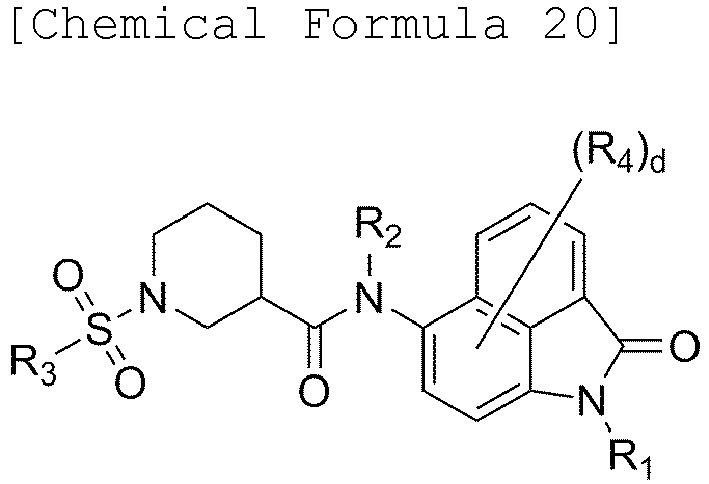


- wherein R1, R2, R3, R4, and d are as defined in
Chemical Formula 2; and - La is C1-C5alkylene.
- The compound of Chemical Formula 7 may be specifically a compound represented by the following Chemical Formula 23, 24, or 25:


- wherein R1, R2, R3, R4, and d are as defined in
Chemical Formula 2; and - La is C1-C5alkylene.
- In the compounds of
Chemical Formulae 8 to 25 according to an exemplary embodiment: - R1 may be hydrogen or -(CH2)n-R;
- R may be C1-C6alkoxy, C6-C12aryloxy, hydroxy, cyano, halogen, nitro, C1-C6alkylsulfanyl, C6-C12arylsulfanyl, sulfanyl, -NRa1Ra2, C1-C6alkoxyC1-C6alkyl, C6-C12aryloxyC1-C6alkyl, C1-C6alkoxyC1-C6alkoxy, C1-C6alkoxyC1-C6alkoxyC1-C6alkyl, C1-C6alkylsulfonyl, C6-C12arylsulfonyl, C1-C6alkylC6-C12arylsulfonyl, C6-C12arylC1-C6alkylsulfonyl, sulfo, C6-C12aryl, C1-C6alkoxycarbonyl, C6-C12aryloxycarbonyl, carboxyl, formyl, C2-C12heteroaryl, or C3-C12heterocycloalkyl, and the aryl, heteroaryl, and heterocycloalkyl of R may be further substituted by one or more substituents selected from the group consisting of C1-C6alkyl, halogen, nitro, cyano, hydroxy, C1-C6alkoxy, C6-C12aryloxy, C1-C6alkylsulfonyl, C6-C12arylsulfonyl, C1-C6alkylC6-C12arylsulfonyl, C6-C12arylC1-C6alkylsulfonyl, carboxyl, sulfo, formyl, carbamoyl, sulfamoyl, and amino;
- Ra1 and Ra2 are independently of each other hydrogen, C1-C6alkyl, C1-C6alkylsulfonyl, C6-C12arylsulfonyl, C1-C6alkylC6-C12arylsulfonyl, C6-C12arylC1-C6alkylsulfonyl, sulfo, or sulfamoyl;
- n may be an integer of 1 to 5;
- R2 may be hydrogen, C1-C6alkyl, C1-C6alkoxyC1-C6alkyl, or C6-C12aryloxyC1-C6alkyl;
- R3 may be C1-C6alkyl, C1-C6alkoxy, C6-C12aryloxy, C3-C12heterocycloalkyl, C6-C12aryl, or C2-C12heteroaryl;
- R3a may be C3-C12heterocycloalkyl, C6-C12aryl, or C2-C12heteroaryl;
- the heterocycloalkyl, aryl, and heteroaryl of R3 and R3a may be further substituted by one or more substituents selected from the group consisting of C1-C6alkyl, halogen, haloC1-C6alkyl, nitro, cyano, C1-C6alkylcarbonylamino, C6-C12arylcarbonylamino, amino, C1-C6alkoxy, haloC1-C6alkoxy, C1-C6alkoxyC1-C6alkoxy, C6-C12aryloxy, hydroxy, C1-C6alkylcarbonyl, haloC1-C6alkylcarbonyl, C6-C12arylcarbonyl, carboxyl, formyl, sulfanyl, C1-C6alkylsulfanyl, C6-C12arylsulfanyl, diC1-C6alkylaminoC1-C6alkoxy, dihydroxyaminosulfanyl, C1-C6alkylsulfonyl, C6-C12arylsulfonyl, sulfo, carbamoyl, C1-C6alkylaminocarbonyl, C6-C12arylaminocarbonyl, sulfamoyl, C1-C6alkylaminosulfonyl, C6-C12arylaminosulfonyl, C6-C12aryl, C2-C12heteroaryl, and C3-C12heterocycloalkyl;
- La may be C1-C5alkylene;
- R4 may be halogen, haloC1-C6alkyl, cyano, C1-C6alkyl, C6-C12aryl, C2-C12heteroaryl, C1-C6alkoxy, C6-C12aryloxy, C2-C12heteroaryloxy, haloC1-C6alkoxy, hydroxy, amino, or aminoCl-C6alkyl; and
- d may be an integer of 0 to 5, and when d is an integer of 2 or more, R4 may be the same as or different from each other.
- In an exemplary embodiment, the compound of
Chemical Formula 2 may be preferably a compound selected fromChemical Formulae 8 to 25. - In the compound according to an exemplary embodiment, R1 may be hydrogen or -(CH2)n-R;
- R may be C1-C6alkoxy, hydroxy, cyano, halogen, C1-C6alkylsulfanyl, -NRa1Ra2, C1-C6alkoxyC1-C6alkyl, C1-C6alkoxyC1-C6alkoxy, C1-C6alkoxyC1-C6alkoxyC1-C6alkyl, C1-C6alkylsulfonyl, C6-C12arylsulfonyl, C6-C12aryl, C1-C6alkoxycarbonyl, C6-C12aryloxycarbonyl, C2-C12heteroaryl, or C3-C12heterocycloalkyl, and the aryl, heteroaryl, and heterocycloalkyl of R may be further substituted by one or more substituents selected from the group consisting of C1-C6alkyl, halogen, nitro, cyano, hydroxy, C1-C6alkoxy, C6-C12aryloxy, C1-C6alkylsulfonyl, C6-C12arylsulfonyl, C1-C6alkylC6-C12arylsulfonyl, C6-C12arylC1-C6alkylsulfonyl, carboxyl, sulfo, and formyl;
- Ra1 and Ra2 may be independently of each other C1-C6alkyl, C1-C6alkylsulfonyl, or C6-C12arylsulfonyl;
- n may be an integer of 1 to 3;
- R2 may be hydrogen or C1-C6alkoxyC1-C6alkyl;
- R3 may be C1-C6alkyl, C1-C6alkoxy, C3-C12heterocycloalkyl, C6-C12aryl, or C2-C12heteroaryl;
- R3a may be C3-C12heterocycloalkyl, C6-C12aryl, or C2-C12heteroaryl;
- the heterocycloalkyl, aryl, and heteroaryl of R3 and R3a may be further substituted by one or more substituents selected from the group consisting of C1-C6alkyl, halogen, haloC1-C6alkyl, nitro, cyano, C1-C6alkylcarbonylamino, C6-C12arylcarbonylamino, amino, C1-C6alkoxy, haloC1-C6alkoxy, C1-C6alkoxyC1-C6alkoxy, hydroxy, C1-C6alkylcarbonyl, haloC1-C6alkylcarbonyl, C6-C12arylcarbonyl, carboxyl, formyl, sulfanyl, C1-C6alkylsulfanyl, C6-C12arylsulfanyl, diC1-C6alkylaminoC1-C6alkoxy, dihydroxyaminosulfanyl, C1-C6alkylsulfonyl, C6-C12arylsulfonyl, sulfo, carbamoyl, sulfamoyl, C6-C12aryl, C2-C12heteroaryl, and C3-C12heterocycloalkyl;
- R4 may be halogen, haloC1-C6alkyl, cyano, C1-C6alkyl, C6-C12aryl, C2-C12heteroaryl, C1-C6alkoxy, C6-C12aryloxy, C2-C12heteroaryloxy, haloC1-C6alkoxy, hydroxy, amino, or aminoCl-C6alkyl; and
- d may be an integer of 0 to 5, and when d is an integer of 2 or more, R4 may be the same as or different from each other.
- In the compound according to an exemplary embodiment, R1 may be hydrogen.
- In the compound according to an exemplary embodiment, preferably, R1 may be -(CH2)n-OR11, -(CH2)n-OH, -(CH2)n-CN, - (CH2)n-X1, - (CH2)n-SR12, - (CH2)n-NR13R14, - (CH2)n-NR13-SO2R15, - (CH2)n-L1-ORn, - (CH2)n-SO2R16, or - (CH2)n-C(=O)OR17, or may be selected from the following structures:


- wherein R11 is C1-C4alkyl or C1-C4alkoxyC1-C4alkyl;
- X1 is halogen;
- R12 to R14 are independently of each other C1-C4alkyl;
- R15, R16, R17, and R20 are independently of one another C1-C4alkyl or C6-C12aryl;
- L1 is C1-C4 alkylene;
- R18 and R19 are independently of each other C1-C4alkyl, halogen, nitro, cyano, hydroxy, C1-C4alkoxy, C6-C12aryloxy, carboxyl, sulfo, or formyl;
- R' is hydrogen or C1-C4alkyl;
- Q is CH2, NH, O, or S;
- n is an integer of 1 to 3;
- p is an integer of 0 to 5, and when p is an integer of 2 or more, R18 may be the same as or different from each other; and
- q is an integer of 0 to 4, and when q is an integer of 2 or more, R19 may be the same or different from each other.
- More preferably, R1 may be selected from the following structures:

- In the compound according to an exemplary embodiment, R3 may be C1-C6alkyl, C1-C6alkoxy, C3-C12heterocycloalkyl, C6-C12aryl, or C2-C12heteroaryl, and the heterocycloalkyl, aryl, and heteroaryl of R3 may be further substituted by one or more substituents selected from the group consisting of C1-C6alkyl, halogen, haloC1-C6alkyl, nitro, C1-C6alkylcarbonylamino, amino, C1-C6alkoxy, haloC1-C6alkoxy, C1-C6alkoxyC1-C6alkoxy, hydroxy, haloC1-C6alkylcarbonyl, carboxyl, diC1-C6alkylaminoC1-C6alkoxy, dihydroxyaminosulfanyl, C1-C6alkylsulfonyl, C6-C12aryl, and C2-C12heteroaryl.
- In the compound according to an exemplary embodiment, R2 may be hydrogen or C1-C4alkoxyC1-C4alkyl;
- R3 may be selected from C1-C4alkyl, C1-C4alkoxy, or the following structures:


- R21 to R26 may be independently of one another C1-C4alkyl, halogen, haloC1-C4alkyl, nitro, cyano, C1-C4alkylcarbonylamino, C6-C12arylcarbonylamino, amino, C1-C4alkoxy, haloC1-C4alkoxy, C1-C4alkoxyC1-C4alkoxy, hydroxy, C1-C4alkylcarbonyl, haloC1-C4alkylcarbonyl, C6-C12arylcarbonyl, carboxyl, formyl, sulfanyl, C1-C4alkylsulfanyl, C6-C12arylsulfanyl, diC1-C4alkylaminoC1-C4alkoxy, dihydroxyaminosulfanyl, C1-C4alkylsulfonyl, C6-C12arylsulfonyl, sulfo, carbamoyl, sulfamoyl, C6-C12aryl, C2-C12heteroaryl, or C3-C12heterocycloalkyl;
- Y1 and Y2 may be independently of each other NR", O, or S;
- Z may be - (CR27R28)x-;
- R27 and R28 may be independently of each other hydrogen, C1-C4alkyl, or halogen;
- x may be an integer of 1 to 3;
- T may be CH2 or O;
- R" may be hydrogen or C1-C4alkyl;
- r may be an integer of 0 to 3, and when r is an integer of 2 or more, R21 may be the same as or different from each other; s may be an integer of 0 to 2, and when s is an integer of 2 or more, R22 may be the same as or different from each other; t may be an integer of 0 to 4, and when t is an integer of 2 or more, R23 may be the same as or different from each other; u may be an integer of 0 to 5, and when u is an integer of 2 or more, R24 may be the same as or different from each other; v may be an integer of 0 to 6, and when v is an integer of 2 or more, R25 may be the same as or different from each other; and w may be an integer of 0 to 7, and when w is an integer of 2 or more, R26 may be the same as or different from each other;
- R4 may be halogen, haloC1-C4alkyl, cyano, C1-C4alkyl, Ar1, HET1, C1-C4alkoxy, -O-Ar1, -O-HET1, haloC1-C4alkoxy, hydroxy, amino, or aminoC1-C4alkyl;
- Ar1 may be phenyl, biphenyl, or naphthyl;
- HET1 may be pyrrolyl, furyl, thienyl, pyrazolyl, isoxazolyl, isothiazolyl, imidazolyl, oxazolyl, thiazolyl, triazolyl, oxadiazolyl, thiadiazolyl, pyridinyl, pyridazinyl, pyrimidyl, pyrazinyl, triazinyl, quinolinyl, isoquinolinyl, indolyl, benzofuranyl, benzothienyl, isoindolyl, indazolyl, benzoisoxazolyl, benzoisothiazolyl, benzoimidazolyl, benzoxazolyl, benzothiazolyl, or benzotriazolyl; and
- d may be an integer of 0 to 3, and when d is an integer of 2 or more, R4 may be the same as or different from each other.
- In the compound according to an exemplary embodiment, preferably, R4 may be halogen, haloC1-C4alkyl, or C1-C4alkoxy.
- In the compound according to an exemplary embodiment, R3 may be selected from C1-C4alkyl, C1-C4alkoxy, or the following structures:


- wherein R21 to R26 are independently of one another C1-C4alkyl, halogen, haloC1-C4alkyl, nitro, C1-C4alkylcarbonylamino, amino, C1-C4alkoxy, haloC1-C4alkoxy, C1-C4alkoxyC1-C4alkoxy, hydroxy, haloC1-C4alkylcarbonyl, carboxyl, diC1-C4alkylaminoC1-C4alkoxy, dihydroxyaminosulfanyl, C1-C4alkylsulfonyl, C6-C12aryl, or C2-C12heteroaryl;
- Z is -(CR27R28)x-;
- R27 and R28 are independently of each other hydrogen, C1-C4alkyl, or halogen;
- x is an integer of 1 to 3;
- R" is hydrogen or C1-C4alkyl; and
- r is an integer of 0 to 3, and when r is an integer of 2 or more, R21 may be the same as or different from each other; s is an integer of 0 to 2, and when s is an integer of 2 or more, R22 may be the same as or different from each other; t is an integer of 0 to 4, and when t is an integer of 2 or more, R23 may be the same as or different from each other; u is an integer of 0 to 5, and when u is an integer of 2 or more, R24 may be the same as or different from each other; v is an integer of 0 to 6, and when v is an integer of 2 or more, R25 may be the same as or different from each other; and w is an integer of 0 to 7, and when w is an integer of 2 or more, R26 may be the same as or different from each other.
- More specifically, R3 may be methyl, ethyl, propyl, butyl, methoxy, ethoxy, propoxy, or butoxy, or may be selected from the following structures:





- More specifically, R4 may be bromo, fluoro, chloro, trifluoromethyl, cyano, methyl, ethyl, propyl, butyl, Ar1, HET1, C1-C4alkoxy, -O-Ar1, -O-HET1, trifluoromethoxy, hydroxy, amino, aminomethyl, aminoethyl, or aminopropyl; Ar1 may be phenyl, biphenyl, or naphthyl; HET1 may be pyrrolyl, furyl, thienyl, pyrazolyl, isoxazolyl, isothiazolyl, imidazolyl, oxazolyl, thiazolyl, triazolyl, oxadiazolyl, thiadiazolyl, pyridinyl, pyridazinyl, pyrimidyl, pyrazinyl, triazinyl, quinolinyl, isoquinolinyl, indolyl, benzofuranyl, benzothienyl, isoindolyl, indazolyl, benzoisoxazolyl, benzoisothiazolyl, benzimidazolyl, benzoxazolyl, benzothiazolyl, or benzotriazolyl; and d may be an integer of 0 to 3, and when d is an integer of 2 or more, R4 may be the same as or different from each other.
- In an exemplary embodiment, the compound of Chemical Formula 1 may be represented by the following Chemical formula 26:

- In the compound of Chemical formula 26 according to an exemplary embodiment, X may be N, a may be an integer of 2, and b may be an integer of 0.
- In the compound of Chemical formula 26 according to an exemplary embodiment, X may be N, a may be an integer of 1, and b may be an integer of 1.
- In the compound of Chemical formula 26 according to an exemplary embodiment, X may be N, a may be an integer of 0, and b may be an integer of 2.
- The compound of Chemical Formula 26 may be specifically a compound represented by the following Chemical Formula 27, 28, or 29:


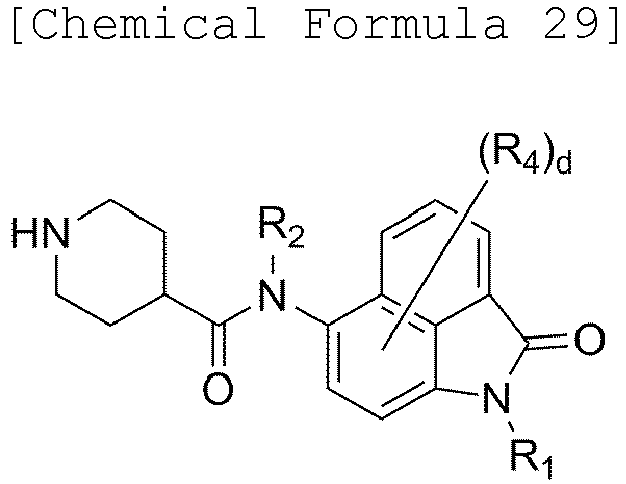
- The compound according to an exemplary embodiment may be more preferably selected from the following group of compounds, but is not limited thereto:








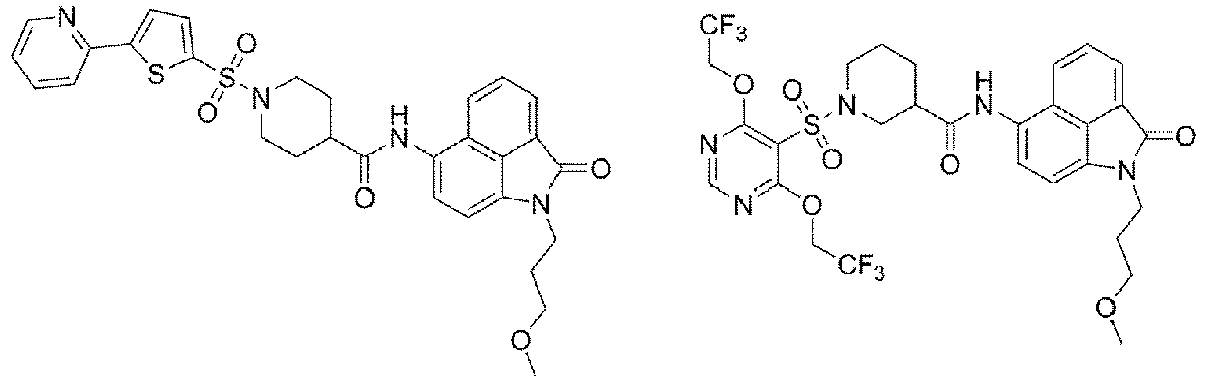


- The compound of Chemical Formula 1 may be prepared by various known methods depending on the kinds of substituents, and it will be apparent to a person skilled in the art that the preparation may be performed using the method known in the art or by appropriately modifying the method, of course.
- Since the compound of the present invention may be used in the form of a prodrug, a hydrate, a solvent, and a pharmaceutically acceptable salt for promoting in-vivo absorption and increasing solubility, not only the compound of Chemical Formula 1 but also a form of the prodrug thereof, the hydrate thereof, the solvate thereof, or the salt thereof is included in the scope of the present invention.
- The compound of the present invention may be used in the form of a pharmaceutically acceptable salt, and the pharmaceutically acceptable salt is a salt prepared by a common method in the art, and the preparation method thereof is known to a person skilled in the art. Specifically, the pharmaceutically acceptable salt includes salts derived from the following pharmacologically or physiologically acceptable free acids and bases, but is not limited thereto.
- The pharmaceutically acceptable salt of the compound of the present invention refers to a salt prepared according to a method common in the art, and the preparation method as such is known to a person skilled in the art. Specifically, the pharmaceutically acceptable salt includes salts derived from the following pharmacologically or physiologically acceptable inorganic acids and organic acids and bases, but is not limited thereto.
- An acid adduct salt is prepared by a common method, for example, by dissolving the compound of the present invention in an excessive amount of an acid aqueous solution and precipitating the salt using a water-compatible organic solvent, for example, methanol, ethanol, acetone, or acetonitrile. The compound and an acid or alcohol (for example, glycol monomethyl ether) in water at the same molar amounts are heated, and then the mixture may be dried by evaporation or the precipitated salt may be suction filtered. Here, as the free acid, an organic acid and an inorganic acid may be used, and as the inorganic acid, hydrochloric acid, phosphoric acid, sulfuric acid, nitric acid, stannic acid, and the like may be used and as the organic acid, methane sulfonic acid, p-toluene sulfonic acid, acetic acid, trifluoroacetic acid, maleic acid, succinic acid, oxalic acid, benzoic acid, tartaric acid, fumaric acid, maldelic acid, propionic acid, citric acid, lactic acid, glycolic acid, gluconic acid, galacturonic acid, glutamic acid, glutaric acid, glucuronic acid, aspartic acid, ascorbic acid, carbonic acid, vanillic acid, hydroiodic acid, and the like may be used, but the present invention is not limited thereto.
- In addition, a pharmaceutically acceptable metal salt may be prepared using a base. An alkali metal salt or an alkali earth metal salt is obtained by, for example, dissolving the compound of the present invention in an excess amount of an alkali metal hydroxide or an alkali earth metal hydroxide solution, filtering out an undissolved compound salt of the present invention, and evaporating and drying the filtrate. Here, it is pharmaceutically appropriate to prepare, in particular, a sodium, potassium, or calcium salt as the metal salt, but the present invention is not limited thereto. In addition, a silver salt corresponding thereto may be obtained by reacting an alkali metal or an alkali earth metal salt with a suitable silver salt (for example, silver nitrate).
- The pharmaceutically acceptable salt of the compound of the present invention includes, a salt of an acid or basic group which may be present in the compound of Chemical Formula 1, unless otherwise stated. For example, the pharmaceutically acceptable salt may include a sodium, calcium, and potassium salts of a hydroxyl group and the like, and other pharmaceutically acceptable salt of an amino group may include hydrobromides, sulfates, hydrogen sulfate salts, phosphates, hydrogen phosphates, dihydrogen phosphates, acetates, succinates, citrates, tartrates, lactates, mandelates, methanesulfonate (mesylate), p-toluenesulfonate (tosylate), and the like, and may be prepared by a preparation method of salts known in the art.
- The hydrate of the compound of the present invention refers to the compound of the present invention and the salt thereof including a stoichiometric or non-stoichiometric amount of water bonded by non-covalent intermolecular force.
- The solvate of the compound of the present invention refers to the compound of the present invention and the salt thereof including a stoichiometric or non-stoichiometric amount of a solvent bonded by non-covalent intermolecular force. Preferred solvents therefor include volatile and non-toxic solvents.
- The compound of the present invention may be administered in the form of a prodrug which is decomposed in a human or animal body to provide the compound of the present invention as an effective component. The prodrug may be used for modifying and/or improving a physical and/or pharmacokinetic profile of a parent compound, and may be formed when the parent compound contains an appropriate group or substituent which may be derived to form the prodrug.
- In the case in which a certain compound (prodrug) is decomposed in the body to produce the compound of the present invention or the salt thereof, the compound is also included in the scope of the present invention. Unless otherwise used and indicated in the present specification, the term "prodrug" refers to the compound of the present invention which may be hydrolyzed, oxidized, and may undergo another reaction under biological conditions (ex vivo or in vivo) for supplying an active compound, in particular, the compound of the present invention. Examples of the prodrug include compounds which include a bio-hydrolyzable part such as bio-hydrolyzable amides, bio-hydrolyzable esters, bio-hydrolyzable carbamates, bio-hydrolyzable carbonates, bio-hydrolyzable ureides, and bio-hydrolyzable phosphate analogs and are bio-hydrolyzed to produce the compound of the present invention, but are not limited to specific embodiments. Preferably, the prodrug of a compound having a carboxyl functional group is a lower alkyl ester of a carboxylic acid. A carboxylic ester is usually formed by esterifying a part of a carboxylic acid present in a molecule. The prodrug may be easily prepared using a known method such as those described in Burger's Medicinal Chemistry and Drug Discovery 6thed. (Donald J. Abrahamed., 2001, Wiley) and Design and Application of Prodrugs (H. Bundgaard ed., 1985, Harwood Academic Publishers Gmfh).
- In addition, the present invention provides a pharmaceutical composition for preventing or treating cancer, including the compound of Chemical Formula 1, the prodrug thereof, the hydrate thereof, the solvate thereof, or the pharmaceutically acceptable salt thereof as an effective component.
- Here, the compound of Chemical Formula 1, preferably
Chemical Formula 2, the prodrug thereof, the hydrate thereof, the solvate thereof, or the pharmaceutically acceptable salt thereof may prevent or treat cancer by activity of inhibiting YAP-TEAD binding in the Hippo pathway. That is, the compound of Chemical Formula 1, preferablyChemical Formula 2 may bind to TEAD competitively with YAP to inhibit a YAP-TEAD interaction to activate the Hippo pathway, thereby efficiently controlling growth of cancer. - In the pharmaceutical composition according to an exemplary embodiment, the cancer may be lung cancer, colorectal cancer, colon cancer, rectal cancer, breast cancer, prostate cancer, bladder cancer, blood cancer, leukemia, myelogenous leukemia, lymphoma, cervical carcinoma, osteosarcoma, glioblastoma, melanoma, pancreatic cancer, gastric cancer, liver cancer, kidney cancer, gallbladder cancer, biliary tract cancer, esophageal cancer, ovarian cancer, or neuroblastoma, preferably colorectal cancer, colon cancer, or rectal cancer.
- In an exemplary embodiment, the pharmaceutical composition may further include a usual non-toxic pharmaceutically acceptable carrier, excipient, or diluent in addition to the effective component to be formulated into a preparation common in the pharmaceutical field, that is, a preparation for oral administration or parenteral administration.
- The pharmaceutically acceptable carrier, excipient, or diluent may include lactose, dextrose, sucrose, sorbitol, mannitol, xylitol, erythritol, maltitol, starch, acacia rubber, alginate, gelatin, calcium phosphate, calcium silicate, cellulose, methyl cellulose, microcrystalline cellulose, polyvinyl pyrrolidone, water, methyl hydroxybenzoate, propyl hydroxybenzoate, talc, magnesium stearate, mineral oil, or the like.
- The pharmaceutical composition of the present invention may be formulated in various forms such as oral formulations such as powders, granules, tablets, capsules, suspensions, emulsions, syrups, and aerosols, and injections of a sterile injection solution for use, and may be administrated by oral administration or by various routes including intravenous, intraperitoneal, subcutaneous, rectal, and topical administration.
- In addition, the pharmaceutical composition of the present invention may further include a filler, an anticoagulant, a lubricant, a wetting agent, a fragrance, an emulsifier, a preservative, and the like.
- A solid preparation for oral administration includes tablets, pills, powders, granules, capsules, and the like, and the solid preparation is formulated by mixing the composition with at least one excipient, for example, starch, calcium carbonate, sucrose, lactose, gelatin, and the like. In addition, a lubricant such as talc and magnesium stearate may be used in addition to a simple excipient.
- An example of a liquid preparation for oral administration may include suspensions, oral liquids, emulsions, syrups, and the like, and include various excipients, for example, a wetting agent, a sweetener, an aromatic, a preservative, and the like, in addition to water and liquid paraffin which are a commonly used simple diluent.
- The preparation for parenteral administration includes a sterile aqueous solution, a non-aqueous solvent, a suspension, an emulsion, a freeze-dried preparation, a suppository, and the like. As a non-aqueous solvent and a suspension solvent, propylene glycol, polyethylene glycol, a vegetable oil such as an olive oil, injectable ester such as ethyl oleate, and the like may be used. As a base of the suppository, witepsol, microgol, tween 61, cacao butter, laurin butter, glycerogelatin, and the like may be used. Meanwhile, an injection may further include a conventional additive such as solubilizers, tonicity agents, suspending agents, emulsifiers, stabilizers, and preservatives.
- The pharmaceutical composition of the present invention may be sterilized, or further include an adjuvant such as preservatives, stabilizers, thickeners, hydrating agents, or emulsifying accelerators, a salt for regulating osmotic pressure, and/or a buffer, and other therapeutically useful materials, and may be formulated according to a conventional method such as dissolution, dispersion, gelation.
- The pharmaceutical composition of the present invention may be administered in a pharmaceutically effective amount, as an individual therapeutic agent or in combination with other therapeutic agents, sequentially or simultaneously with a conventional therapeutic agent, or in a single or multiple. It is important to administer an amount for obtaining a maximum effect with a minimum amount without any side effect, considering all of the above elements, and this will be easily determined by a person skilled in the art.
- Specifically, the effective amount of the compound in the composition of the present invention may be varied with the age, gender and weight of a patent, and may be administered at 1 to 100 mg, preferably 5 to 60 mg per 1kg of a body weight, every day or every other day, or administered in a divided amount 1 to 3 times a day. However, since the amount may be increased or decreased depending on the administration route, severity of the disease, gender, weight, age, and the like, the administration amount in no way limits the scope of the present invention.
- In addition, the present invention provides a method of preventing or treating cancer diseases including administrating the pharmaceutical composition to an individual having a cancer disease or a risk of a cancer disease.
- The pharmaceutical composition of the present invention is administered in a pharmaceutically effective amount.
- An effective dose level may be easily determined by a person skilled in the art depending on elements including the gender, age, weight, and health condition of a patient, type of disease, severity, drug activity, drug sensitivity, administration method, administration time, administration route, excretion rate, therapeutic period, and drugs used in combination or at the same time, and other elements which are well known in the medical field. The pharmaceutical composition of the present invention may be administered as an individual therapeutic agent, or in combination with other therapeutic agents, sequentially or simultaneously with the conventional therapeutic agent, and in a single dose or multiple doses. It is important to administer an amount for obtaining a maximum effect with a minimum amount without any side effect, considering all of the above elements, and this will be easily determined by a person skilled in the art.
- The administration route and the administration method of administering the pharmaceutical composition of the present invention is not particularly limited, and as long as a composition including the composition reaches a corresponding target area, any administration route and administration method may be followed. Specifically, the composition may be administered through oral or parenteral various routes, and a non-limiting example of the administration route include oral, rectal, topical, intravenous, intraperitoneal, intramuscular, intraarterial, transdermal, nasal, or inhalation administration, and the like.
- In addition, the method of preventing or treating cancer of the present invention may be used in combination with methods using surgery, radiation therapy, hormone therapy, chemotherapy, and a biological response modifier.
- In addition, the present invention provides a YAP/TAZ-TEAD inhibitor composition including the compound represented by Chemical Formula 1, the prodrug thereof, the hydrate thereof, the solvate thereof, or the pharmaceutically acceptable salt thereof at an effective amount as an active component, as an effective component.
- In addition, the present invention provides a health functional food composition for preventing or improving cancer, including the compound represented by Chemical Formula 1, the prodrug thereof, the hydrate thereof, the solvate thereof, or the pharmaceutically acceptable salt thereof at an effective amount as an active component, as an effective component.
- The health functional food composition may be provided in the form of powders, granules, tablets, capsules, syrups, or beverages, and the health functional food is used with other food or food additives in addition to the compound of Chemical Formula 1 as an effective component and may be appropriately used according to a common method. A mixed amount of the effective component may be appropriately determined depending on the purpose of use, for example, prevention, health, or therapeutic treatment.
- The compound of Chemical Formula 1 included in the health functional food composition may be used according to the effective dose of the pharmaceutical composition, but in the case of long-term ingestion for health and hygiene or for health control, the effective dose may be less than the above range, and since the effective component has no problem in terms of safety, it may be used more than the amount in the above range, of course.
- The health functional food composition may be formulated in various formulations such as meat, sausage, bread, chocolate, candy, snacks, confectionery, pizza, ramen, other noodles, gum, dairy products including ice creams, various soups, beverages, tea, drinks, alcoholic beverages, and vitamin complexes.
- Hereinafter, the present invention will be described in detail through the preferred Examples. However, the Examples are suggested for illustration of the present invention, and the scope of a right of the present invention is in no sense limited by the Example, and the scope of a right of the present invention is only defined by the scope of the appended claims described later.
- Preparation Example A
- A nitration reaction was performed using benzo[cd]indol-2(1H)-one, which is available from a reagent company, as a starting material to obtain an intermediate a-1, which was alkylated by N-alkylation to obtain an intermediate b-1-1, of which the nitro group was reduced to obtain an amine intermediate c-1-1, which was amide-coupled with a Boc-protected piperidine carboxylic acid compound d-1-1 to obtain an intermediate e-1-1. Thereafter, amine f-1-1 obtained after Boc-deprotection was sulfonylated with a sulfonyl chloride compound to obtain a final compound g-1-1. A general method of each reaction is specified below.

- Benzo[cd]indol-2(1H)-one (10 g, 59.1 mmol) was dissolved in acetic acid (45 mL) and then stirred at 10°C. Nitric acid (60%, 5.88 mL, 76.8 mmol) was slowly added, and stirring was performed at 50°C for 24 hours. The reaction mixture was cooled down to room temperature, water was added, filtration was performed, and washing with water was performed to obtain an ochre solid compound a-1 (12.6 g, 100 %).
1H NMR (300 MHz, DMSO-d6) δ 11.41 (s, 1H), 8.89 (d, J = 8.4 Hz, 1H), 8.63 (d, J = 8.1 Hz, 1H), 8.18 (d, J = 6.9 Hz, 1H), 8.07 (dd, J = 8.5, 7.0 Hz, 1H), 7.13 (d, J = 8.0 Hz, 1H) - Compound a-1 (5.24 g, 24.5 mmol) prepared in Step 1 was dissolved in DMF (20 mL) and stirred at 0°C. K2CO3 (6.76 g, 48.9 mmol) and 1-bromo-3-methoxypropane (3.01 mL, 26.9 mmol) were added, the temperature was raised to 50°C, and stirring was performed for 24 hours. The reaction mixture was cooled down to room temperature, water was added, filtration was performed, and washing with water was performed to obtain an ochre solid compound b-1-1 (6.99 g, 100 %).
- Compound b-1-1 (3.63 g, 12.7 mmol) prepared in
Step 2 was dissolved in methanol/ethyl acetate (1/1 v/v, 40 mL),palladium 10% on carbon (363 mg) was added, and stirring was performed for 24 hours under a hydrogen gas. The reaction mixture was filtrated using celite and concentrated under reduced pressure to obtain a red solid compound c-1-1 (90%-100%). - Piperidine carboxylic acid (803 mg, 6.22 mmol) was dissolved in dioxane/water (2/1 v/v, 15 mL), NaOH (274 mg, 6.84 mmol) was added with stirring, and then stirring was performed at 0°C. Boc anhydride (1.57 mL, 6.84 mmol) was added, stirring was performed at room temperature for 24 hours, concentration under reduced pressure was performed to leave the solvent a little, and cooling to 0°C was performed. Acidification with 1M HCl was performed to adjust pH to 2 and extraction with ethyl acetate (10 mL×3) was performed. The obtained organic layer was dried with MgSO4 and concentration under reduced pressure was performed to obtain a white solid compound d-1-1 (1.42 g, 100%).
- Compound d-1-1 (111 mg, 0.482 mmol) prepared in Step 4 was dissolved in DMF (4 mL) and stirred at 0°C. DIEA (252 µL, 1.45 mmol) and HATU (367 mg, 0.965 mmol) were added and stirring was performed for 1 hour. Compound c-1-1 (124 mg, 0.482 mmol) prepared in Step 3 was dissolved in DMF (2 mL), the solution was slowly added to the reaction mixture, the temperature was raised to 60°C, and stirring was performed for 24 hours. The reaction was completed by adding water, extraction with ethyl acetate (5 mL×3) was performed, drying with anhydrous Na2SO4 was performed, and purification with flash chromatography was performed to obtain a yellow solid compound e-1-1 (40%-77%).
- Compound e-1-1 (170 mg, 0.364 mmol) prepared in
Step 5 was dissolved in CH2Cl2 (5 mL) and stirred at 0°C. Trifluoroacetic acid (278 µL, 3.64 mmol) was added and stirring was performed at room temperature. After completing the reaction, pH was basified topH 8 with sat. NaHCO3, extraction with CHCl3 (10 mL×3) was performed, drying with anhydrous Na2SO4 was performed, and purification with flash chromatography was performed to obtain a yellow solid compound f-1-1 (78%-97%). - Compound f-1-1 (17.8 mg, 0.0484 mmol) prepared in
Step 6 was dissolved in CHCl3 (2 mL) and stirred at 0°C. Triethylamine (10 µL, 0.0727 mmol) and compound Ar-sulfonyl-Cl (1.2 eq) were added and stirring was performed at room temperature for 12 hours. The reaction mixture was concentrated under reduced pressure to remove the solvent and purification with flash chromatography was performed to obtain a yellow solid compound g-1-1 (20%-99%). - Unlike Preparation Example A, piperidine acid was first sulfonylated to obtain an intermediate d-1-2, which was then amide-coupled with an amine intermediate c-1-2, thereby synthesizing a final compound g-1-2.

- Piperidine carboxylic acid (1 g, 7.74 mmol) was dissolved in THF/H2O=1/1 (v/v) (100 mL), Na2CO3 (17 mL, 17.0 mmol) was added with stirring at 0°C, stirring was performed for 30 minutes, a compound Ar-sulfonyl-Cl (1.2 eq) was added, and stirring was performed for 12 hours. The reaction mixture was extracted with ether (150 mL×2) to obtain a water layer, to which a KHSO4 solid was added to adjust pH to 3, and then extraction was performed with ethyl acetate (15 mL×3). The obtained organic layer was dried with anhydrous Na2SO4 and then was concentrated under reduced pressure to obtain a compound d-1-2 (100%).
- Compound d-1-2 (1 eq) prepared in Step 1 was dissolved in MeCN, 3-picoline (2.2 eq) and methanesulfonyl chloride (1.2 eq) were added with stirring at 0°C, and stirring was performed for 1 hour. Compound c-1-2 (1.2 eq) was dissolved in MeCN and slowly added thereto, and stirring was performed at room temperature for 24 hours. The reaction mixture was concentrated under reduced pressure to remove the solvent and then purification with flash chromatography was performed to obtain a yellow solid compound g-1-2 (20%-70%)
-

- Compound c-1-5 was obtained in the same manner as in Step 3 of Preparation Example A, except that compound a-1 was used instead of compound b-1-1.
- Compound g-1-4 was obtained in the same manner as in
Step 2 of Preparation Example B, except that compound c-1-5 was used instead of compound c-1-2 and compound d-1-3 was used instead of compound d-1-2. - 3-((tert-butyldimethylsilyl)oxy)-propanol (39 mg, 0.204 mmol) and PPh3 (54 mg, 0.204 mmol) were dissolved in THF (1 mL) and stirred at 0°C. Compound g-1-4 (30 mg, 0.0679 mmol) was dissolved in THF (1 mL) and added thereto, and stirring was performed at the same temperature for 15 minutes. DIAD (40 µL, 0.204 mmol) was added, the temperature was raised to 70°C, and stirring was performed for 12 hours. The reaction mixture was concentrated under reduced pressure to remove the solvent and purification with flash chromatography was performed to obtain a yellow liquid compound g-1-5.
- Compound g-1-5 (67 mg, 0.109 mmol) was dissolved in THF (2 mL), TBAF (1.0 M, 328 µL, 0.328 mmol) was added with stirring at 0°C, and stirring was performed at room temperature. The reaction mixture was concentrated under reduced pressure to remove the solvent and purification with flash chromatography was performed to obtain a yellow solid compound 45 (5.7 mg, 17 %).
- Compounds 1 to 169 of Table 1 were prepared according to the methods of Preparation Examples A to C, and the identification data of compounds 1 to 169 prepared is listed in the following Table 2.
[Table 1] No. Structure No. Structure 1 
2 
3 
4 
5 
6 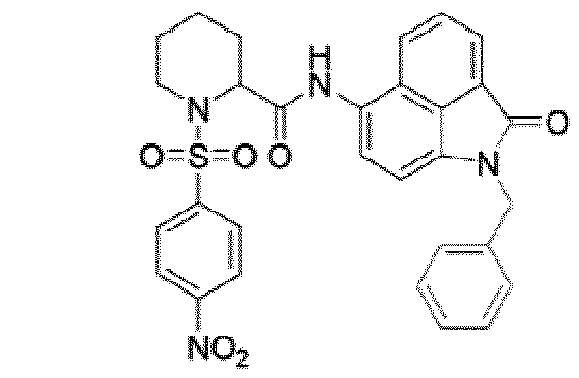
7 
8 
9 
10 
11 
12 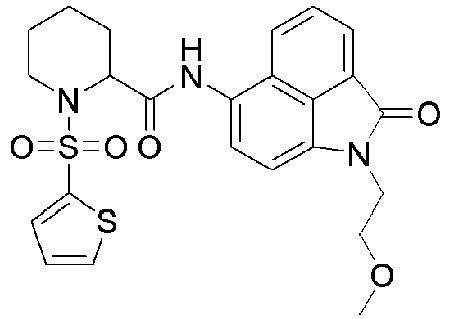
13 
14 
15 
16 
17 
18 
19 
20 
21 
22 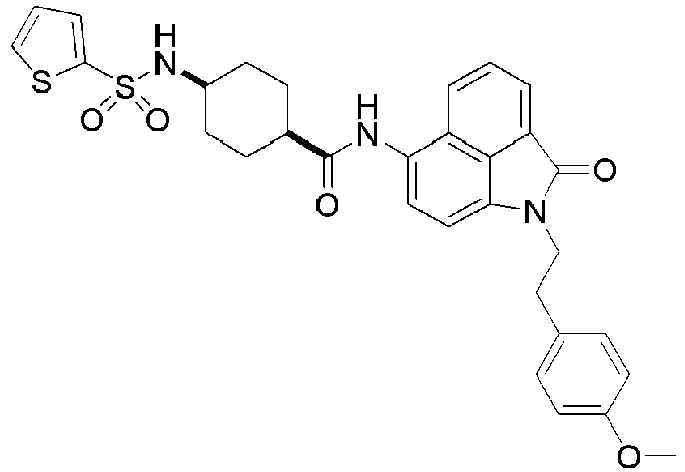
23 
24 
25 
26 
27 
28 
29 
30 
31 
32 
33 
34 
35 
36 
37 
38 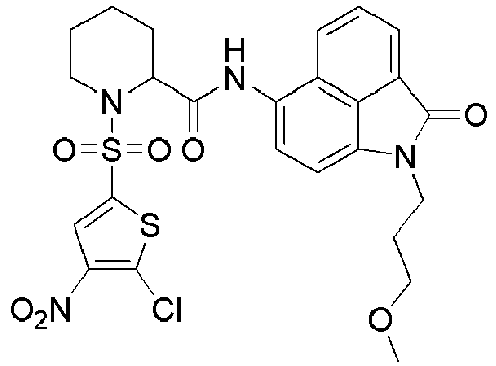
39 
40 
41 
42 
43 
44 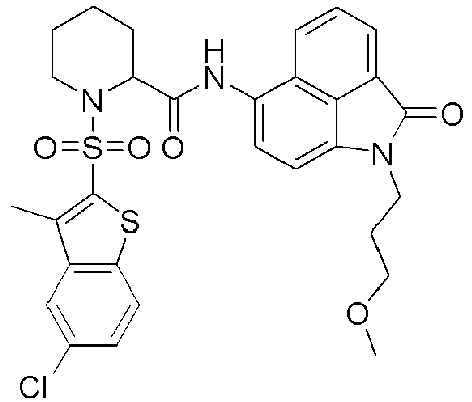
45 
46 
47 
48 
49 
50 
51 
52 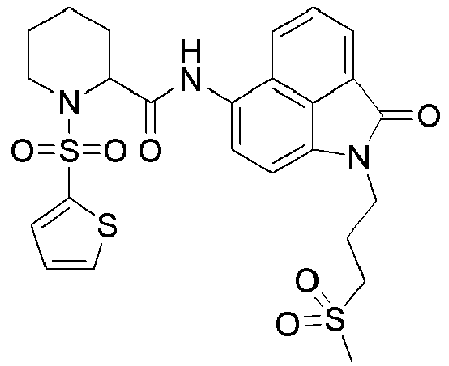
53 
54 
55 
56 
57 
58 
59 
60 
61 
62 
63 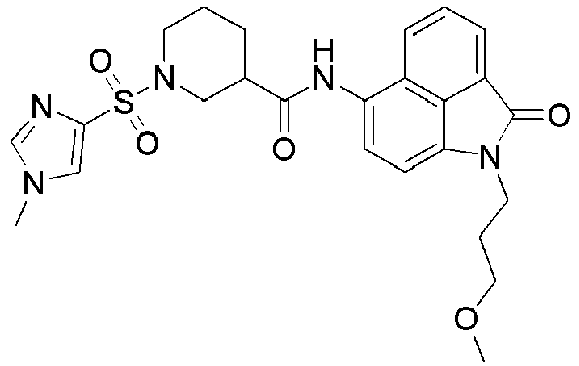
64 
65 
66 
67 
68 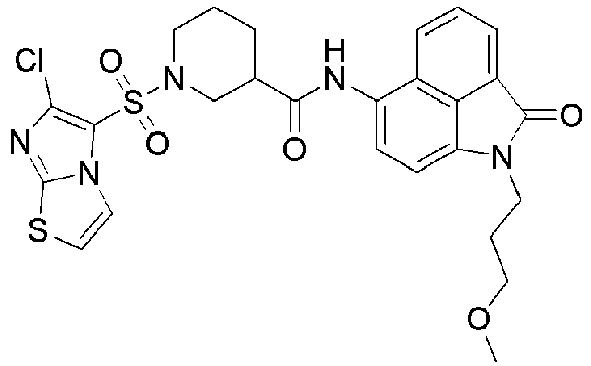
69 
70 
71 
72 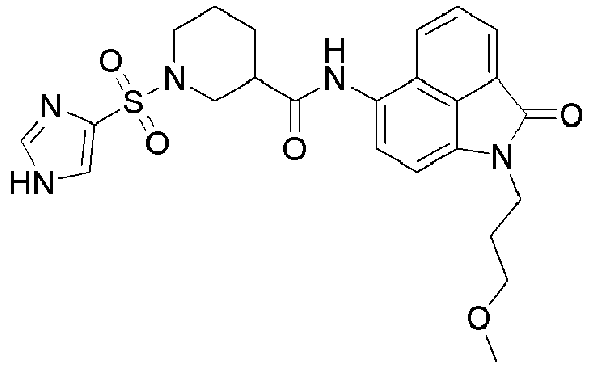
73 
74 
75 
76 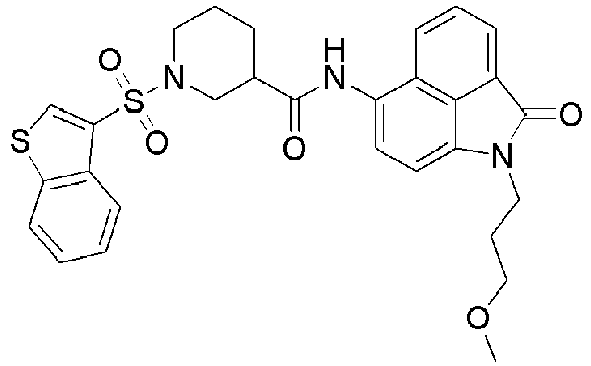
77 
78 
79 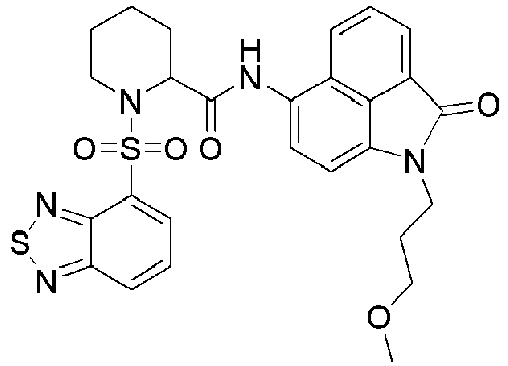
80 
81 
82 
83 
84 
85 
86 
87 
88 
89 
90 
91 
92 
93 
94 
95 
96 
97 
98 
99 
100 
101 
102 
103 
104 
105 
106 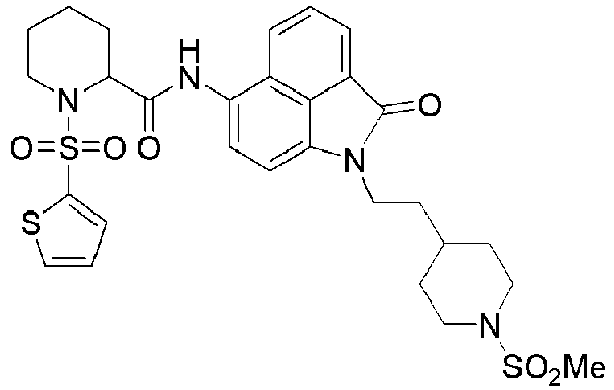
107 
108 
109 
110 
111 
112 
113 
114 
115 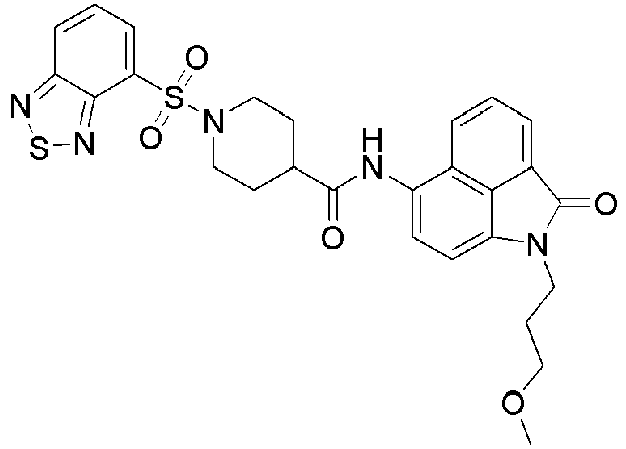
116 
117 
118 
119 
120 
121 
122 
123 
124 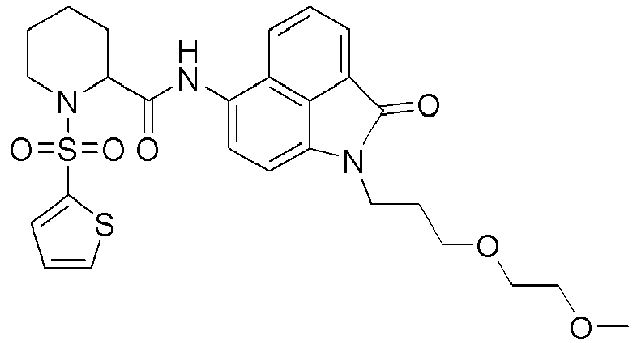
125 
126 
127 
128 
129 
130 
131 
132 
133 
134 
135 
136 
137 
138 
139 
140 
141 
142 
143 
144 
145 
146 
147 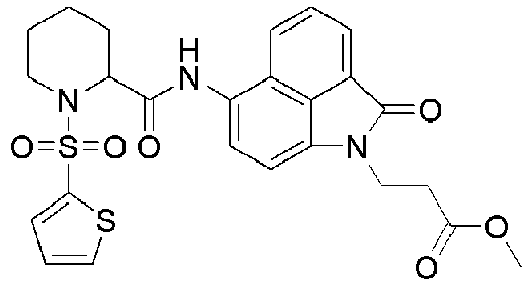
148 
149 
150 
151 
152 
153 
154 
155 
156 
157 
158 
159 
160 
161 
162 
163 
164 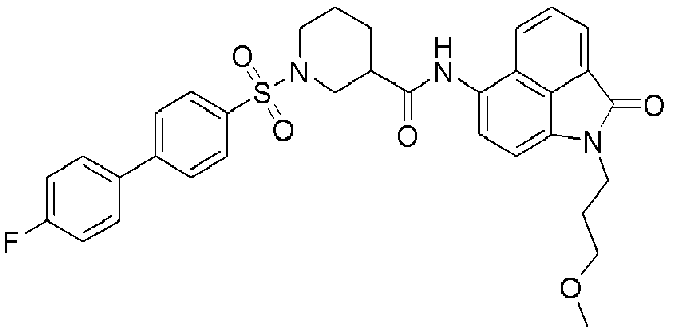
165 
166 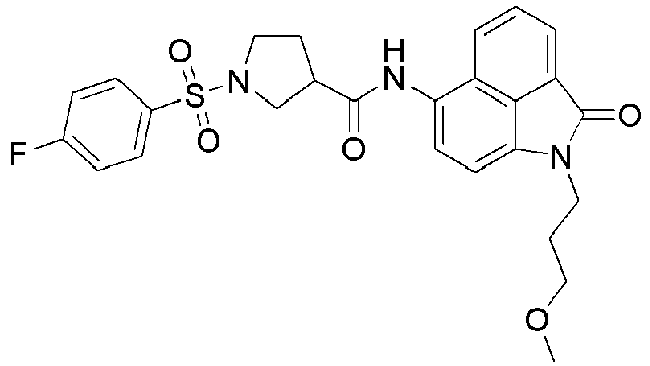
167 
168 
169 
[Table 2] No. Identification data (1H NMR; LC/MS) 1 1H NMR (300 MHz, Chloroform-d) δ 8.92 (s, 1H), 8.13 (d, J = 7.0 Hz, 1H), 8.03 (d, J = 11.0 Hz, 2H), 7.74 (dd, J = 8.3, 7.0 Hz, 1H), 7.40 - 7.27 (m, 4H), 6.73 (d, J = 7.8 Hz, 1H), 5.12 (d, J = 3.7 Hz, 2H), 4.98 (d, J = 5.1 Hz, 1H), 4.12 (q, J = 7.5 Hz, 1H), 2.89 {t, J = 12.7 Hz, 1H), 2.37 (d, J = 13.0 Hz, 1H), 1.78 - 1.59 (m, 4H), 1.48 (s, 9H). 2 1H NMR (300 MHz, Chloroform-d) δ 8.94 (s, 1H), 8.15 (d, J = 7.0 Hz, 1H), 8.06 (d, J = 8.3 Hz, 1H), 7.94 (d, J = 7.7 Hz, 1H), 7.80 (dd, J = 8.3, 7.0 Hz, 1H), 7.70 (ddd, J = 10.3, 4.4, 1.4 Hz, 2H), 7.40 - 7.27 (m, 5H), 7.17 (dd, J = 5.1, 3.8 Hz, 1H), 6.75 (d, J = 7,8 Hz, 1H), 5.13 (s, 2H), 4.77 (d, J = 5.4 Hz, 1H), 4.22 - 4.07 (m, 1H), 3.22 (t, J = 13.5 Hz, 1H), 2.40 (d, J = 13.9 Hz, 1H), 1.44 (s, 5H), 1.26 (q, J = 6.9, 5.4 Hz, 4H), 0.87 (d, J = 7.1 Hz, 1H). 3 1H NMR (300 MHz, Chloroform-o) δ 9.20 (s, 1H), 8.21 (d, J = 8.3 Hz, 1H), 8.14 (d, J = 7.0 Hz, 1H), 7.87 (d, J = 7.7 Hz, 1H), 7.81 (dd, J = 8.3, 7.0 Hz, 1H), 7.33 (q, J = 7.9 Hz, 4H), 7.25 - 7.20 (m, 1H), 6.75 (d, J = 7.7 Hz, 1H), 5.13 (s, 2H), 4.36 (dd, J = 8.8, 2.4 Hz, 1H), 3.74 (ddd, J = 10.4, 7.2, 2.9 Hz, 1H), 3.35 (td, J = 9.8, 6.7 Hz, 1H), 2.46 (d, J = 6.0 Hz, 1H), 2.01 - 1.61 (m, 3H). 4 1H NMR (300 MHz, Chloroform-d) δ 9.08 (s, 1H), 8.12 (dd, J = 15.4, 7.6 Hz, 2H), 7.97 (d, J = 7.8 Hz, 1H), 7.87 (d, J = 8.6 Hz, 2H), 7.80 (dd, J = 8.3, 7.0 Hz, 1H), 7.40 - 7.27 (m, 5H), 7.04 (d, J = 8.6 Hz, 2H), 6.75 (d, J = 7.7 Hz, 1H), 5.13 (s, 2H), 4.69 (d, J = 5.3 Hz, 1H), 4.18 - 4.02 (m, 1H), 3.16 (t, J = 13.5 Hz, 1H), 2.36 (d, J = 13.7 Hz, 1H), 1.55 - 1.38 (m, 2H), 1.23 - 1.06 (m, 2H). 5 1H NMR (300 MHz, Chloroform-d) δ 9.06 (s, 1H), 8.12 (dd, J = 15.3, 7.5 Hz, 2H), 7.97 (d, J = 7.7 Hz, 1H), 7.82 (dd, J = 7.8, 5.9 Hz, 3H), 7.34 (dt, J = 18.5, 8.0 Hz, 7H), 7.24 (d, J = 6.0 Hz, 1H), 6.75 (d, J = 7.7 Hz, 1H), 5.13 (s, 2H), 4.70 (d, J = 5.3 Hz, 1H), 4.17 - 4.02 (m, 2H), 3.47 (s, 1H), 3.16 (t, J = 13.9 Hz, 1H), 2.47 (s, 3H), 2.35 (d, J = 13.6 Hz, 1H), 1.64 - 1.52 (m, 3H), 1.16 (ddd, J = 18.3, 11.7, 5.0 Hz, 2H). 6 1H NMR (300 MHz, Chloroform-d) δ 8.84 (s, 1H), 8.44 - 8.35 (m, 2H), 8.11 (dd, J = 7.9, 2.7 Hz, 3H), 8.04 (d, J = 8.2 Hz, 1H), 7.85 (d, J = 7.6 Hz, 1H), 7.81 - 7.72 (m, 1H), 7.40 - 7.27 (m, 5H), 6.72 (d, J = 7.7 Hz, 1H), 5.11 (s, 2H), 4.77 (d, J = 5.3 Hz, 1H), 4.12 - 4.01 (m, 1H), 3.29 (td, J = 14.3, 13.7, 2.6 Hz, 1H), 2.37 (d, J = 13.9 Hz, 1H), 1.68 - 1.51 (m, 4H), 1.24 - 1.10 (m, 2H). 7 1H NMR (300 MHz, Methanol-d4 ) δ 8.12 (dd, J = 10.3, 7.7 Hz, 2H), 7.81 (d, J = 7.6 Hz, 1H), 7.73 (d, J = 7.6 Hz, 1H), 7.42 (s, 1H), 7.37 - 7.18 (m, 7H), 6.90 - 6.82 (m, 2H), 6.79 (d, J = 7.7 Hz, 1H), 3.88 (d, J = 13.6 Hz, 2H), 3.78 (s, 3H), 3.25 (t, J = 11.9 Hz, 1H), 2.33 (d, J = 9.6 Hz, 1H), 1.77 (t, J = 6.7 Hz, 4H), 1.63 (s, 1H). 8 1H NMR (300 MHz, Chloroform-d) δ 8.99 (s, 1H), 8.11 (dd, J = 7.6, 3.0 Hz, 2H), 8.03 (d, J = 7.7 Hz, 1H), 7.87 - 7.63 (m, 4H), 7.18 (dd, J = 5.0, 3.7 Hz, 1H), 6.95 (d, J = 7.7 Hz, 1H), 4.79 (d, J = 5.7 Hz, 1H), 4.17 (d, J = 14.6 Hz, 1H), 3.26 (t, J = 13.6 Hz, 1H), 2.42 (d, J = 13.7 Hz, 1H), 1.62 (s, 2H), 1.54 (s, 1H), 1.41 - 1.21 (m, 4H). 9 1H NMR (300 MHz, Chloroform-d) δ 8.77 (s, 1H), 8.11 (d, J = 7.0 Hz, 1H), 8.02 (d, J = 8.3 Hz, 1H), 7.87 (d, J = 7.7 Hz, 1H), 7.75 (dd, J = 8.3, 7.0 Hz, 1H), 7.39 - 7.27 (m, 4H), 6.72 (d, J = 7.7 Hz, 1H), 5.11 (s, 2H), 4.74 (d, J = 3.9 Hz, 1H), 3.96 (d, J = 14.1 Hz, 1H), 3.23 (td, J = 14.3, 13.4, 2.6 Hz, 1H), 3.05 (s, 3H), 2.52 (d, J = 6.9 Hz, 1H), 1.93 - 1.44 (m, 6H). 10 1H NMR (300 MHz, Chloroform-d) δ 9.08 (s, 1H), 8.55 - 8.49 (m, 1H), 8.16 - 7.83 (m, 7H), 7.79 - 7.60 (m, 3H), 7.38 - 7.27 (m, 5H), 6.74 (d, J = 7.7 Hz, 1H), 5.13 (s, 2H), 4.80 (d, J = 5.3 Hz, 1H), 4.19 (dd, J = 14.8, 3.8 Hz, 1H), 3.22 (t, J = 12.5 Hz, 1H), 2.34 (d, J = 13.6 Hz, 1H), 1.63 (s, 1H), 1.59 - 1.47 (m, 3H), 1.23 - 1.11 (m, 2H). 11 1H NMR (300 MHz, Chloroform-d) δ 9.90 (s, 1H), 8.20 (dd, J = 31.8, 7.7 Hz, 3H), 7.81 (dd, J = 8.3, 7.0 Hz, 1H), 7.51 (d, J = 8.7 Hz, 2H), 7.41 - 7.27 (m, 4H), 7.22 (d, J = 6.8 Hz, 1H), 6.95 (d, J = 8.8 Hz, 2H), 6.73 (d, J = 7.8 Hz, 1H), 5.33 (s, 1H), 5.21 - 5.04 (m, 2H), 3.88 (d, J = 7.7 Hz, 1H), 3.85 (s, 3H), 3.04 (ddd, J = 14.3, 11.3, 4.1 Hz, 1H), 2.43 (d, J = 13.5 Hz, 1H), 2.12 (d, J = 14.3 Hz, 1H), 1.94 - 1.58 (m, 5H), 1.49 - 1.30 (m, 1H), 0.94 - 0.80 (m, 1H). 12 1H NMR (300 MHz, Chloroform-d) δ 8.95 (s, 1H), 8.15 - 7.99 (m, 3H), 7.83 - 7.65 (m, 3H), 7.18 (dd, J = 5.0, 3.8 Hz, 1H), 7.01 (d, J = 7.8 Hz, 1H), 4.79 (d, J = 5.5 Hz, 1H), 4.19 (s, 1H), 4.11 (t, J = 5.6 Hz, 2H), 3.71 (t, J = 5.5 Hz, 2H), 3.34 (s, 3H), 3.25 (t, J = 13.6 Hz, 1H), 2.42 (d, J = 13.4 Hz, 1H), 1.62 (s, 2H), 0.86 (s, 1H). 13 1H NMR (300 MHz, Chloroform-d) δ 10.05 (s, 1H), 8.21 (d, J = 7.8 Hz, 1H), 8.16 - 8.05 (m, 5H), 8.00 (d, J = 14.4 Hz, 1H), 7.89 - 7.73 (m, 2H), 7.68 (s, 1H), 7.63 (d, J = 7.8 Hz, 1H), 7.38 (d, J = 7.9 Hz, 1H), 7.25-7.06 (m, 4H), 6.96 (d, J = 7.7 Hz, 1H), 4.46 (t, J = 7.1 Hz, 2H), 3.87 (s, 3H), 3.65 (s, 1H), 3.15 (t, J = 7.1 Hz, 2H), 2.64 (s, 2H), 1.80 (s, 1H). 14 1H NMR (300 MHz, Chloroform-d) δ 9.00 (s, 1H), 8.15 - 8.07 (m, 2H), 8.02 (d, J = 7.8 Hz, 1H), 7.86 - 7.76 (m, 1H), 7.75 - 7.65 (m, 2H), 7.24-7.13 (m, 1H), 4.62 (s, 1H), 4.42 (t, J = 11.8 Hz, 3H), 4.14 (s, 2H), 3.81 (d, J = 11.6 Hz, 5H), 3.58 - 3.15 (m, 8H), 2.39 (s, 1H), 2.24 (d, J = 7.4 Hz, 1H), 2.02 (d, J = 11.9 Hz, 3H), 1.27 (d, J = 8.4 Hz, 7H), 1.03 - 0.77 (m, 3H). 15 1H NMR (300 MHz, Chloroform-d) δ 8.96 (s, 1H), 8.07 (dd, J = 9.6, 7.6 Hz, 2H), 7.99 (d, J = 7.6 Hz, 1H), 7.82 - 7.66 (m, 3H), 7.21 - 7.11 (m, 3H), 6.80 (d, J = 8.3 Hz, 2H), 6.73 (d, J = 7.7 Hz, 1H), 4.78 (d, J = 5.5 Hz, 1H), 4.25 - 4.04 (m, 3H), 3.77 (s, 3H), 3.25 (t, J = 13.5 Hz, 1H), 3.02 (t, J = 7.4 Hz, 2H), 2.42 (d, J = 13.7 Hz, 1H), 2.02 (s, 2H). 16 1H NMR (500 MHz, Chloroform-d) δ 9.03 (s, 1H), 8.16 - 8.03 (m, 5H), 7.86 - 7.80 (m, 1H), 7.78 - 7.70 (m, 2H), 7.43-7.38 (m, 2H), 7.29 (s, 5H), 7.21 (dd, J = 5.0, 3.7 Hz, 1H), 6.78 (d, J = 7.7 Hz, 1H), 4.81 (d, J = 5.6 Hz, 1H), 4.24 (td, J = 7.1, 2.7 Hz, 2H), 4.20 (s, 1H), 3.25 (q, J = 7.4 Hz, 3H), 2.44 (d, J = 13.7 Hz, 1H), 1.57 (s, 7H), 1.39 - 1.30 (m, 3H), 0.03 (s, 4H). 17 1H NMR (300 MHz, Chloroform-d) δ 8.96 (s, 1H), 8.13 - 7.98 (m, 3H), 7.83 - 7.64 (m, 3H), 7.18 (dd, J = 5.0, 3.8 Hz, 1H), 6.95 (d, J = 7.7 Hz, 1H), 4.79 (d, J = 5.5 Hz, 1H), 4.16 (dd, J = 13.9, 3.8 Hz, 1H), 4.02 (t, J = 6.8 Hz, 2H), 3.42 (t, J = 6.0 Hz, 2H), 3.33 (s, 3H), 3.25 (t, J = 12.9 Hz, 1H), 2.42 (d, J = 13.7 Hz, 1H), 2.05 (p, J = 6.4 Hz, 3H), 1.58 (d, J = 14.2 Hz, 5H). 18 1H NMR (300 MHz, Chloroform-d) δ 9.00 (s, 1H), 8.60 - 8.51 (m, 2H), 8.15 (dd, J = 15.6, 7.6 Hz, 2H), 7.99 (d, J = 7.8 Hz, 1H), 7.91 - 7.77 (m, 1H), 7.76 - 7.65 (m, 2H), 7.24 (d, J = 5.2 Hz, 1H), 7.18 (t, J = 4.4 Hz, 1H), 6.71 (d, J = 7.7 Hz, 1H), 5.14 (s, 2H), 4.77 (d, J = 5.5 Hz, 1H), 4.18 (s, 1H), 3.22 (t, J = 13.5 Hz, 1H), 2.40 (d, J = 14.0 Hz, 1H), 1.27 (q, J = 7.2, 6.7 Hz, 3H). 19 1H NMR (300 MHz, Chloroform-d) δ 8.96 (s, 1H), 8.13 - 7.97 (m, 3H), 7.78 (dd, J = 8.3, 7.0 Hz, 1H), 7.73 (dd, J = 3.8, 1.4 Hz, 1H), 7.69 (dt, J = 5.1, 1.5 Hz, 1H), 7.18 (dd, J = 5.1, 3.7 Hz, 1H), 7.12 (d, J = 8.5 Hz, 2H), 6.81 (dd, J = 8.1, 5.5 Hz, 3H), 4.79 (d, J = 5.5 Hz, 1H), 4.16 (d, J = 15.0 Hz, 1H), 3.95 (t, J = 7.1 Hz, 2H), 3.78 (s, 3H), 3.25 (t, J = 13.6 Hz, 1H), 2.68 (t, J = 7.7 Hz, 2H), 2.42 (d, J = 14.0 Hz, 1H), 2.17 - 2.07 (m, 2H), 1.31 (s, 2H). 20 1H NMR (300 MHz, Chloroform-d) δ 9.00 (s, 1H), 8.14 - 8.06 (m, 3H), 7.85 - 7.77 (m, 1H), 7.75 - 7.67 (m, 2H), 7.18 (dd, J = 5.1, 3.7 Hz, 1H), 6.97 (d, J = 7.7 Hz, 1H), 4.79 (d, J = 5.7 Hz, 1H), 4.16 (d, J = 17.4 Hz, 1H), 4.07 (t, J = 6.6 Hz, 2H), 3.25 (t, J = 12.4 Hz, 1H), 2.52 - 2.36 (m, 3H), 2.21 (q, J = 7.0 Hz, 2H). 21 1H NMR (300 MHz, Chloroform-d) δ 9.02 (s, 1H), 8.15 - 8.09 (m, 3H), 7.81 (dd, J = 8.3, 7.0 Hz, 1H), 7.75 - 7.66 (m, 2H), 7.18 (dd, J = 5.0, 3.7 Hz, 1H), 7.01 (d, J = 7.8 Hz, 1H), 4.78 (d, J = 5.6 Hz, 1H), 4.34 - 4.06 (m, 4H), 3.32 - 3.17 (m, 1H), 2.87 (t, J = 6.9 Hz, 2H), 2.41 (d, J = 14.0 Hz, 1H), 1.65 (s, 2H), 1.44-1.27 (m, 3H). 22 1H NMR (300 MHz, Chloroform-o) δ 8.04 (d, J = 6.9 Hz, 1H), 7.87 (d, J = 8.3 Hz, 1H), 7.75 - 7.49 (m, 5H), 7.14 (d, J = 8.6 Hz, 2H), 7.09 - 7.04 (m, 1H), 6.80 (d, J = 8.5 Hz, 2H), 6.68 (d, J = 7.7 Hz, 1H), 5.10 (d, J = 7.4 Hz, 1H), 4.16 - 4.04 (m, 2H), 3.77 (s, 3H), 3.62 (s, 1H), 3.00 (t, J = 7.5 Hz, 2H), 2.49 (s, 1H), 2.04 (s, 1H), 2.03 - 1.79 (m, 6H), 1.66 (s, 3H). 23 1H NMR (300 MHz, Chloroform-d) δ 8.07 (d, J = 6.9 Hz, 1H), 7.86 (d, J = 8.4 Hz, 1H), 7.76 - 7.55 (m, 4H), 7.41 (s, 1H), 7.20 - 7.09 (m, 3H), 6.79 (d, J = 8.3 Hz, 2H), 6.69 (d, J = 7.7 Hz, 1H), 4.09 (t, J = 7.4 Hz, 2H), 3.89 (d, J = 11.8 Hz, 2H), 3.77 (s, 3H), 3.00 (t, J = 7.4 Hz, 2H), 2.64 (t, J = 11.7 Hz, 2H), 2.43 (s, 1H), 2.20 - 1.98 (m, 4H). 24 1H NMR (300 MHz, Chloroform-d) δ 8.19 (s, 1H), 8.07 (dd, J = 7.6, 5.2 Hz, 2H), 7.83 (d, J = 7.7 Hz, 1H), 7.79 - 7.72 (m, 1H), 7.68 (d, J = 5.1 Hz, 1H), 7.62 - 7.58 (m, 1H), 7.19 (t, J = 4.4 Hz, 1H), 7.15 (d, J = 8.3 Hz, 2H), 6.80 (d, J = 8.5 Hz, 2H), 6.71 (d, J = 7.7 Hz, 1H), 4.09 (t, J = 7.5 Hz, 2H), 3.77 (s, 3H), 3.55 (d, J = 12.6 Hz, 1H), 3.38 - 3.24 (m, 2H), 3.01 (t, J = 7.5 Hz, 3H), 2.86 (s, 1H), 1.94 (s, 4H), 1.83 (d, J = 4.0 Hz, 1H). 25 1H NMR (300 MHz, DMSO-d6 ) δ 9.82 (s, 1H), 8.24 (d, J = 8.2 Hz, 1H), 8.02 (d, J = 7.0 Hz, 1H), 7.91 (t, J = 6.1 Hz, 2H), 7.79 (t, J = 7.6 Hz, 1H), 7.67 (d, J = 7.7 Hz, 1H), 7.62 (d, J = 3.6 Hz, 1H), 7.21 - 7.06 (m, 4H), 6.79 (d, J = 8.3 Hz, 2H), 4.05 (t, J = 7.2 Hz, 2H), 3.68 (s, 3H), 2.94 (t, J = 7.2 Hz, 2H), 1.90 (d, J = 13.2 Hz, 2H), 1.77 (d, J = 12.4 Hz, 2H), 1.46 (q, J = 13.0, 12.2 Hz, 2H), 1.27 (d, J = 19.4 Hz, 4H). 26 LC/MS : 614.1 27 1H NMR (300 MHz, Chloroform-a) δ 8.10 - 7.98 (m, 3H), 7.84 - 7.71 (m, 2H), 7.38 (d, J = 4.0 Hz, 1H), 7.15 (d, J = 8.5 Hz, 2H), 7.02 (d, J = 4.0 Hz, 1H), 6.84 - 6.77 (m, 2H), 6.71 (d, J = 7.7 Hz, 1H), 4.10 (t, J = 7.5 Hz, 2H), 3.77 (s, 3H), 3.61 (d, J = 12.1 Hz, 1H), 3.39 (d, J = 11.8 Hz, 1H), 3.29 - 3.16 (m, 1H), 3.01 (t, J = 7.5 Hz, 3H), 2.84 (s, 1H), 1.90 (d, J = 39.7 Hz, 4H). 28 1H NMR (300 MHz, Chloroform-d) δ 8.18 (s, 1H), 8.08 (dd, J = 7.6, 4.5 Hz, 2H), 7.88 (d, J = 7.6 Hz, 1H), 7.76 (t, J = 7.7 Hz, 1H), 7.71 - 7.65 (m, 1H), 7.60 (d, J = 3.6 Hz, 1H), 7.19 (t, J = 4.4 Hz, 1H), 6.93 (d, J = 7.7 Hz, 1H), 4.01 (t, J = 6.7 Hz, 2H), 3.56 (d, J = 11.8 Hz, 1H), 3.42 (t, J = 6.0 Hz, 2H), 3.33 (s, 5H), 3.01 (t, J = 10.2 Hz, 1H), 2.87 (s, 1H), 2.04 (p, J = 6.5 Hz, 2H), 1.94 (s, 3H), 1.83 (d, J = 3.7 Hz, 1H). 29 1H NMR (300 MHz, Chloroform-d) δ 8.18 (s, 1H), 8.03 (dd, J = 7.6, 3.4 Hz, 2H), 7.81 (d, J = 7.7 Hz, 1H), 7.70 (t, J = 7.6 Hz, 1H), 7.37 (d, J = 4.0 Hz, 1H), 7.01 (d, J = 4.0 Hz, 1H), 6.89 (d, J = 7.7 Hz, 1H), 3.99 (t, J = 6.7 Hz, 2H), 3.75 - 3.62 (m, 1H), 3.41 (t, J = 6.0 Hz, 3H), 3.33 (s, 3H), 3.15 (t, J = 10.2 Hz, 1H), 2.86 (d, J = 9.9 Hz, 2H), 2.10 - 1.79 (m, 6H). 30 1H NMR (300 MHz, Chloroform-d) δ 8.89 (s, 1H), 8.12 (d, J = 7.0 Hz, 1H), 8.06 (dd, J = 8.0, 1.5 Hz, 2H), 7.80 (dd, J = 8.3, 7.0 Hz, 1H), 7.53 (d, J = 4.0 Hz, 1H), 7.03 (d, J = 4.1 Hz, 1H), 6.98 (d, J = 7.7 Hz, 1H), 4.77 (d, J = 5.5 Hz, 1H), 4.19 - 4.09 (m, 1H), 4.04 (t, J = 6.7 Hz, 2H), 3.45 (t, J = 6.0 Hz, 2H), 3.36 (s, 3H), 3.35 - 3.24 (m, 1H), 2.48 (d, J = 13.8 Hz, 1H), 2.14 - 2.02 (m, 2H), 1.76 - 1.60 (m, 2H), 1.40 (tt, J = 12.3, 5.9 Hz, 2H). 31 1H NMR (300 MHz, Chloroform-d) δ 8.14 (dd, J = 10.6, 6.8 Hz, 1H), 7.98 - 7.72 (m, 2H), 7.54 (ddd, J = 12.5, 5.0, 1.3 Hz, 1H), 7.46 - 7.40 (m, 1H), 7.37 - 7.30 (m, 1H), 7.15 - 7.00 (m, 2H), 6.95 (d, J = 7.5 Hz, 1H), 4.30 - 3.97 (m, 3H), 3.90 - 3.80 (m, 1H), 3.78 - 3.68 (m, 1H), 3.67 - 3.55 (m, 1H), 3.49 (qd, J = 5.5, 4.8, 2.0 Hz, 4H), 3.36 (d, J = 3.3 Hz, 3H), 3.26 (d, J = 4.3 Hz, 3H), 2.45 (d, J = 5.0 Hz, 1H), 2.37 - 2.27 (m, 1H), 2.24 - 2.17 (m, 1H), 2.09 (p, J = 6.6 Hz, 2H), 1.61 (s, 2H), 0.92 - 0.66 (m, 6H). 32 1H NMR (300 MHz, Chloroform-d) δ 8.09 (d, J = 6.9 Hz, 1H), 7.89 (d, J = 8.1 Hz, 1H), 7.82 - 7.75 (m, 1H), 7.63 - 7.54 (m, 2H), 7.44 - 7.33 (m, 1H), 7.06 (d, J = 7.5 Hz, 1H), 6.95 - 6.91 (m, 1H), 4.87 - 4.81 (m, 1H), 4.08 - 3.98 (m, 3H), 3.88 (td, J = 11.9, 3.1 Hz, 1H), 3.78 - 3.65 (m, 2H), 3.57 - 3.42 (m, 5H), 3.39 - 3.32 (m, 5H), 3.26 (d, J = 1.5 Hz, 3H), 2.06 (h, J = 6.7 Hz, 3H), 1.76 - 1.52 (m, 6H), 0.91 - 0.66 (m, 5H). 33 1H NMR (300 MHz, Chloroform-d) δ 8.09 (d, J = 7.0 Hz, 1H), 7.98 (d, J = 6.8 Hz, 1H), 7.88 - 7.71 (m, 3H), 6.94 (d, J = 7.7 Hz, 1H), 4.01 (t, J = 6.7 Hz, 2H), 3.85 (d, J = 12.4 Hz, 1H), 3.65 (d, J = 13.1 Hz, 1H), 3.42 (t, J = 5.9 Hz, 2H), 3.33 (s, 3H), 3.16 - 3.04 (m, 1H), 2.84 (s, 1H), 2.16 - 1.79 (m, 6H). 34 1H NMR (300 MHz, Chloroform-d) δ 8.36 (s, 1H), 8.16 (d, J = 8.3 Hz, 1H), 8.08 (d, J = 7.0 Hz, 1H), 7.94 (d, J = 7.7 Hz, 1H), 7.83 - 7.73 (m, 1H), 7.60 (d, J = 9.0 Hz, 2H), 6.92 (dd, J = 13.4, 7.9 Hz, 2H), 4.71 (t, J = 8.8 Hz, 2H), 4.01 (t, J = 6.7 Hz, 2H), 3.42 (t, J = 5.9 Hz, 2H), 3.31 (d, J = 12.1 Hz, 7H), 3.11 (s, 2H), 2.84 (s, 1H), 2.11 - 1.72 (m, 7H). 35 1H NMR (300 MHz, Chloroform-d) δ 8.03 (dd, J = 15.6, 7.5 Hz, 3H), 7.82 (d, J = 7.7 Hz, 1H), 7.73 (dd, J = 8.3, 7.0 Hz, 1H), 6.92 (d, J = 7.7 Hz, 1H), 4.00 (t, J = 6.8 Hz, 2H), 3.72 (dd, J = 11.9, 3.7 Hz, 1H), 3.49 (d, J = 10.9 Hz, 1H), 3.41 (t, J = 5.9 Hz, 2H), 3.33 (s, 3H), 3.23 (dd, J = 12.0, 8.6 Hz, 1H), 2.94 (t, J = 9.7 Hz, 1H), 2.83 (dt, J = 8.6, 4.5 Hz, 1H), 2.68 (s, 3H), 2.44 (s, 3H), 2.11 - 1.75 (m, 6H). 36 1H NMR (300 MHz, Chloroform-d) δ 8.49 (s, 1H), 8.06 (dd, J = 12.5, 7.6 Hz, 2H), 7.83 (d, J = 7.7 Hz, 1H), 7.71 (t, J = 7.6 Hz, 1H), 6.90 (d, J = 7.7 Hz, 1H), 3.99 (t, J = 6.8 Hz, 2H), 3.55 (d, J = 11.2 Hz, 1H), 3.41 (t, J = 5.9 Hz, 2H), 3.32 (s, 5H), 3.01 (t, J = 9.6 Hz, 1H), 2.88 (s, 1H), 2.47 (s, 6H), 2.09 - 1.86 (m, 6H). 37 1H NMR (300 MHz, Chloroform-d) δ 9.08 (s, 1H), 8.26 - 8.11 (m, 3H), 7.89 - 7.77 (m, 2H), 7.72 (ddd, J = 9.7, 4.4, 1.3 Hz, 2H), 7.19 (dd, J = 5.0, 3.8 Hz, 1H), 5.33 (p, J = 6.3 Hz, 1H), 4.79 (d, J = 5.6 Hz, 1H), 4.17 (d, J = 14.5 Hz, 1H), 3.33 - 3.17 (m, 1H), 2.44 (s, 1H), 1.62 (d, J = 3.4 Hz, 2H), 1.52 (s, 3H), 1.49 (s, 3H), 1.29 (dd, J = 14.6, 6.4 Hz, 4H). 38 1H NMR (300 MHz, Chloroform-d) δ 8.52 (s, 1H), 8.15 - 8.04 (m, 2H), 7.95 (dd, J = 13.9, 8.0 Hz, 2H), 7.83 - 7.71 (m, 1H), 6.95 (d, J = 7.7 Hz, 1H), 4.80 (d, J = 5.3 Hz, 1H), 4.15 - 3.96 (m, 3H), 3.42 (t, J = 5.9 Hz, 2H), 3.34 (s, 3H), 2.47 (d, J = 13.2 Hz, 1H), 2.06 (q, J = 6.4 Hz, 2H), 1.75 (d, J = 12.0 Hz, 3H), 1.43 (s, 2H). 39 1H NMR (300 MHz, Chloroform-d) δ 9.11 (s, 1H), 8.14 - 8.02 (m, 3H), 7.84 - 7.68 (m, 3H), 6.94 (dd, J = 11.8, 8.0 Hz, 2H), 4.72 (t, J = 8.8 Hz, 3H), 4.16 - 3.95 (m, 3H), 3.43 (t, J = 5.9 Hz, 2H), 3.38 - 3.12 (m, 6H), 2.40 (d, J = 13.7 Hz, 1H), 2.05 (p, J = 6.4 Hz, 2H), 1.73 - 1.46 (m, 6H), 1.25 (s, 3H). 40 1H NMR (300 MHz, Chloroform-d) δ 8.91 (s, 1H), 8.13 - 7.99 (m, 3H), 7.79 (dd, J = 8.3, 7.0 Hz, 1H), 6.96 (d, J = 7.7 Hz, 1H), 4.74 (d, J = 5.4 Hz, 1H), 4.08 - 3.87 (m, 3H), 3.43 (t, J = 6.0 Hz, 2H), 3.34 (s, 4H), 2.74 (s, 3H), 2.50 (s, 4H), 2.05 (p, J = 6.4 Hz, 2H), 1.83 - 1.61 (m, 3H), 1.55 - 1.18 (m, 4H). 41 1H NMR (300 MHz, Chloroform-d) δ 9.97 (s, 1H), 9.18 (s, 1H), 8.19 - 8.01 (m, 3H), 7.78 (dd, J = 8.3, 7.0 Hz, 1H), 6.96 (d, J = 7.7 Hz, 1H), 4.74 (d, J = 5.4 Hz, 1H), 4.09 - 3.88 (m, 3H), 3.43 (t, J = 6.0 Hz, 2H), 3.34 (s, 3H), 3.22 (t, J = 13.7 Hz, 1H), 2.54 (s, 6H), 2.06 (p, J = 6.4 Hz, 2H), 1.72 - 1.23 (m, 9H). 42 1H NMR (300 MHz, Chloroform-d) δ 9.09 (s, 1H), 8.16 - 7.98 (m, 3H), 7.78 (dd, J = 8.3, 6.9 Hz, 1H), 7.61 - 7.52 (m, 1H), 7.38 (d, J = 2.1 Hz, 1H), 6.98 (dd, J = 12.4, 8.1 Hz, 2H), 4.72 (d, J = 5.5 Hz, 1H), 4.17 - 3.90 (m, 9H), 3.43 (t, J = 5.9 Hz, 2H), 3.34 (s, 3H), 3.20 (t, J = 13.4 Hz, 1H), 2.40 (d, J = 13.4 Hz, 1H), 2.05 (t, j = 6.3 Hz, 2H), 1.53 (s, 2H), 1.23 (d, J = 16.3 Hz, 3H). 43 1H NMR (300 MHz, Chloroform-d) δ 9.00 (d, J = 8.6 Hz, 2H), 8.08 (td, J = 8.8, 7.9, 5.5 Hz, 3H), 7.84 - 7.73 (m, 1H), 6.96 (d, J = 7.7 Hz, 1H), 4.80 (d, j = 5.4 Hz, 1H), 4.12 (d, J = 14.5 Hz, 1H), 4.02 (t, J = 6.7 Hz, 2H), 3.43 (t, J = 5.9 Hz, 2H), 3.34 (s, 4H), 2.63 (s, 3H), 2.55 - 2.43 (m, 1H), 2.32 (s, 3H), 2.06 (q, J = 6.4 Hz, 2H), 1.65 (s, 2H), 1.56 (s, 1H), 1.39 (d, J = 13.1 Hz, 2H). 44 1H NMR (300 MHz, Chloroform-d) δ 8.95 (s, 1H), 8.15 - 7.99 (m, 3H), 7.87 - 7.71 (m, 3H), 7.51 (d, J = 7.6 Hz, 1H), 6.95 (d, J = 7.7 Hz, 1H), 4.88 (d, J = 5.3 Hz, 1H), 4.20 (d, J = 14.7 Hz, 1H), 4.02 (t, J = 6.8 Hz, 2H), 3.43 (t, J = 5.9 Hz, 2H), 3.37 - 3.22 (m, 4H), 2.77 (d, J = 0.9 Hz, 3H), 2.46 (d, J = 13.8 Hz, 1H), 2.05 (t, J = 6.3 Hz, 2H), 1.62 (d, J = 13.5 Hz, 3H), 1.54 - 1.48 (m, 1H), 1.30 (d, J = 24.4 Hz, 4H). 45 1H NMR (300 MHz, Chloroform-d) δ 9.01 (s, 2H), 8.19 - 8.03 (m, 6H), 7.86 - 7.77 (m, 2H), 7.75 - 7.66 (m, 4H), 7.18 (d, J = 8.9 Hz, 3H), 6.96 (d, J = 7.7 Hz, 2H), 4.79 (d, J = 5.8 Hz, 2H), 4.34 (s, 1H), 4.19 (s, 2H), 4.11 (t, J = 6.3 Hz, 4H), 3.62 (s, 4H), 3.24 (t, J = 13.5 Hz, 3H), 3.02 (s, 2H), 2.42 (d, J = 13.8 Hz, 3H), 2.02 - 1.92 (m, 5H), 1.28 (s, 10H). 46 1H NMR (300 MHz, Chloroform-d) δ 8.31 (s, 1H), 8.12 (dd, J = 19.8, 7.7 Hz, 2H), 7.92 (d, J = 7.7 Hz, 1H), 7.78 (t, J = 7.7 Hz, 1H), 7.42 (d, J = 8.6 Hz, 1H), 7.25 (s, 1H), 6.97 (dd, J = 15.2, 8.1 Hz, 2H), 4.01 (t, J = 6.7 Hz, 2H), 3.95 (d, J = 7.9 Hz, 6H), 3.42 (t, J = 6.0 Hz, 2H), 3.37 (s, 1H), 3.33 (s, 3H), 3.13 (s, 2H), 2.84 (s, 1H), 2.06 (q, J = 6.4 Hz, 2H), 1.89 (t, J = 19.1 Hz, 5H). 47 1H NMR (300 MHz, DMSO-d6 ) δ 12.64 (s, 1H), 10.12 (s, 1H), 8.27 (d, J = 8.3 Hz, 1H), 8.07 (d, J = 6.9 Hz, 1H), 7.88 - 7.79 (m, 1H), 7.71 (d, J = 7.7 Hz, 1H), 7.12 (d, J = 7.7 Hz, 1H), 4.03 (d, J = 7.1 Hz, 1H), 3.92 (t, J = 6.9 Hz, 2H), 3.81 (d, J = 11.0 Hz, 1H), 3.63 (d, J = 11.4 Hz, 1H), 3.21 (s, 2H), 1.97 - 1.85 (m, 3H), 1.65 - 1.46 (m, 2H). 48 1H NMR (300 MHz, Chloroform-d) δ 8.06 (t, J = 6.7 Hz, 3H), 7.89 - 7.70 (m, 4H), 7.48 (dd, J = 8.7, 1.9 Hz, 1H), 6.92 (d, J = 7.6 Hz, 1H), 4.01 (t, J = 6.7 Hz, 2H), 3.76 (d, J = 12.2 Hz, 1H), 3.53 (d, J = 11.6 Hz, 1H), 3.42 (t, J = 5.8 Hz, 2H), 3.38 (s, 1H), 3.33 (s, 3H), 3.12 (d, J = 9.1 Hz, 1H), 2.85 (s, 1H), 2.72 (s, 3H), 2.05 (q, J = 6.3 Hz, 2H), 1.90 (d, J = 40.4 Hz, 4H). 49 1H NMR (300 MHz, Chloroform-d) δ 8.40 (s, 1H), 8.14 (d, J = 8.3 Hz, 1H), 8.06 (d, J = 7.0 Hz, 1H), 7.90 (d, J = 7.7 Hz, 1H), 7.75 (dd, J = 8.3, 7.0 Hz, 1H), 7.33 - 7.27 (m, 2H), 7.00 (d, J = 8.4 Hz, 1H), 6.92 (d, J = 7.7 Hz, 1H), 4.38 - 4.27 (m, 4H), 4.00 (t, J = 6.7 Hz, 2H), 3.42 (t, J = 5.9 Hz, 3H), 3.33 (s, 3H), 3.26 (dd, J = 21.3, 9.6 Hz, 2H), 3.01 (s, 1H), 2.86 (s, 1H), 2.04 (p, J = 6.4 Hz, 2H), 1.91 (s, 4H). 50 1H NMR (300 MHz, Chloroform-d) δ 8.06 (d, J = 7.0 Hz, 1H), 7.91 (d, J = 8.3 Hz, 1H), 7.83 (s, 1H), 7.75 - 7.64 (m, 2H), 6.91 (d, J = 7.7 Hz, 1H), 4.00 (t, J = 6.8 Hz, 2H), 3.72 (dd, J = 13.0, 3.7 Hz, 1H), 3.42 (t, J = 5.9 Hz, 3H), 3.33 (s, 4H), 3.13 (d, J = 8.0 Hz, 1H), 2.93 (d, J = 4.5 Hz, 2H), 2.89 - 2.76 (m, 1H), 2.49 (d, J = 3.7 Hz, 6H), 2.04 (d, J = 10.9 Hz, 7H), 1.85 (s, 2H), 1.59 (s, 3H), 1.46 (d, J = 6.2 Hz, 6H), 1.26 (s, 1H). 51 1H NMR (300 MHz, Chloroform-d) δ 8.97 (s, 1H), 8.25 - 7.99 (m, 3H), 7.82 - 7.65 (m, 3H), 7.18 (dd, J = 5.0, 3.7 Hz, 1H), 6.96 (d, J = 7.7 Hz, 1H), 4.84 - 4.73 (m, 1H), 4.22 - 4.07 (m, 1H), 4.04 (t, J = 6.9 Hz, 2H), 3.25 (t, J = 15.0 Hz, 2H), 2.58 (t, J = 7.2 Hz, 1H), 2.42 (d, J = 13.7 Hz, 1H), 2.14 - 2.02 (m, 4H), 1.55 - 1.45 (m, 1H), 1.33 - 1.21 (m, 5H). 52 1H NMR (300 MHz, Chloroform-d) δ 9.00 (s, 1H), 8.17 - 7.99 (m, 3H), 7.81 (dd, J = 8.4, 6.9 Hz, 1H), 7.77 - 7.65 (m, 2H), 7.18 (dd, J = 5.0, 3.7 Hz, 1H), 6.96 (d, J = 7.7 Hz, 1H), 4.79 (d, J = 5.5 Hz, 1H), 4.19 (brs, 1H), 4.13 (t, J = 6.6 Hz, 2H), 3.25 (t, J = 12.5 Hz, 1H), 3.18 - 3.06 (m, 2H), 2.92 (s, 3H), 2.46 - 2.31 (m, 2H), 2.03 (d, J = 7.0 Hz, 1H), 1.42 - 1.15 (m, 5H). 53 1H NMR (300 MHz, MeOD) δ 8.51 (s, 1H), 8.20 (m, 2H), 8.01 (m, 2H), 7.78 (m, 1H), 7.42 (d, J = 8.6 Hz, 1H), 7.25 (s, 1H), 6.97 (dd, J = 15.2, 8.1 Hz, 2H), 4.01 (t, J = 6.7 Hz, 2H), 3.95 (d, J = 7.9 Hz, 6H), 3.42 (t, J = 6.0 Hz, 2H), 3.37 (s, 1H), 3.33 (s, 3H), 3.13 (s, 2H), 2.84 (s, 1H), 2.06 (q, J = 6.4 Hz, 2H), 1.89 (t, J = 19.1 Hz, 5H). 54 1H NMR (300 MHz, MeOD) δ 8.70 (s, 1H), 8.18 (m, 2H), 7.99 (m, 2H), 7.78 (m, 1H), 7.42 (m, 1H), 7.25 (s, 1H), 6.97 (m, 2H), 4.00 (t, J = 6.7 Hz, 2H), 3.90 (d, J = 7.9 Hz, 6H), 3.41 (t, J = 6.0 Hz, 2H), 3.37 (s, 1H), 3.30 (s, 3H), 3.08 (s, 2H), 2.82 (s, 1H), 2.16 (q, J = 6.4 Hz, 2H), 1.80 (t, J = 19.1 Hz, 5H). 55 LC/MS: 599.1 56 1H NMR (300 MHz, Chloroform-d) δ 8.53 (s, 1H), 8.10 (dd, J = 19.8, 7.7 Hz, 2H), 8.00 (d, J = 7.7 Hz, 1H), 7.82 (d, J = 19.8 Hz, 1H), 7.67 (t, J = 7.7 Hz, 1H), 7.35 (m, 1H), 7.19 (s, 1H), 6.93 (m, 2H), 6.09 (s, 2H), 3.98 (t, J = 6.7 Hz, 2H), 3.60 (m, 1H), 3.42 (t, J = 6.0 Hz, 2H), 3.35 (m, 3H), 3.10 (m, 1H), 2.91 (m, 2H), 2.14 (m, 6H). 57 1H NMR (300 MHz, Chloroform-d) δ 8.96 (s, 1H), 8.15 - 8.00 (m, 3H), 7.85 - 7.62 (m, 3H), 7.25 - 7.14 (m, 1H), 6.94 (d, J = 7.7 Hz, 1H), 5.11 - 4.98 (m, 1H), 4.79 (d, J = 5.8 Hz, 1H), 4.17 (d, J = 14.6 Hz, 1H), 4.10 - 3.96 (m, 2H), 3.60 - 3.48 (m, 2H), 3.32 (s, 3H), 3.18 - 3.06 (m, 2H), 2.92 (s, 3H), 2.58 - 2.39 (m, 2H), 1.19 (s, 3H). 58 1H NMR (300 MHz, Chloroform-d) δ 8.96 (s, 1H), 8.12 - 8.01 (m, 3H), 7.82 - 7.67 (m, 3H), 7.21 - 7.14 (m, 1H), 6.94 (d, J = 7.7 Hz, 1H), 4.79 (d, J = 5.7 Hz, 1H), 4.31 - 4.17 (m, 2H), 4.05 - 3.93 (m, 2H), 3.29 (s, 3H), 3.19 (s, 3H), 2.42 (d, J = 13.4 Hz, 2H), 1.99 - 1.80 (m, 6H), 1.18 (s, 3H). 59 1H NMR (300 MHz, Chloroform-d) δ 8.18 (s, 1H), 8.03 (dd, J = 7.6, 3.6 Hz, 2H), 7.82 (d, J = 7.7 Hz, 1H), 7.71 (dd, J = 8.3, 7.0 Hz, 1H), 7.33 (d, J = 4.0 Hz, 1H), 7.15 (d, J = 4.0 Hz, 1H), 6.90 (d, J = 7.7 Hz, 1H), 3.99 (t, J = 6.8 Hz, 2H), 3.73 - 3.62 (m, 1H), 3.41 (t, J = 5.9 Hz, 3H), 3.32 (s, 3H), 3.21 - 3.09 (m, 1H), 2.94 - 2.81 (m, 2H), 2.06 - 1.75 (m, 6H). 60 1H NMR (300 MHz, Chloroform-d) δ 8.87 (s, 1H), 8.09 (d, J = 7.0 Hz, 1H), 8.03 (d, J = 8.0 Hz, 2H), 7.78 (dd, J = 8.3, 7.0 Hz, 1H), 7.47 (d, J = 4.0 Hz, 1H), 7.14 (s, 1H), 6.96 (d, J = 7.7 Hz, 1H), 4.75 (d, J = 5.5 Hz, 1H), 4.17 - 4.07 (m, 1H), 4.02 (t, J = 6.8 Hz, 2H), 3.42 (t, J = 5.9 Hz, 2H), 3.34 (s, 3H), 3.26 (t, J = 13.0 Hz, 1H), 2.45 (d, J = 13.5 Hz, 1H), 2.12 - 1.97 (m, 2H), 1.73 - 1.58 (m, 3H), 1.53 (s, 1H), 1.37 (dt, J = 12.3, 6.6 Hz, 2H), 1.29 - 1.23 (m, 1H). 61 1H NMR (300 MHz, Chloroform-d) δ 8.11 - 7.96 (m, 3H), 7.79 (d, J = 7.7 Hz, 1H), 7.71 (dd, J = 8.3, 7.0 Hz, 1H), 7.36 (s, 1H), 6.90 (d, J = 7.7 Hz, 1H), 3.99 (t, J = 6.8 Hz, 2H), 3.75 (d, J = 9.8 Hz, 1H), 3.52 (d, J = 11.7 Hz, 1H), 3.41 (t, J = 5.9 Hz, 2H), 3.33 (s, 3H), 3.18 - 3.05 (m, 1H), 2.84 (t, J = 9.7 Hz, 2H), 2.09 - 1.76 (m, 6H). 62 1H NMR (300 MHz, Chloroform-d) δ 9.11 (s, 1H), 8.28 (d, J = 8.0 Hz, 1H), 8.06 (d, J = 7.0 Hz, 1H), 8.02 - 7.93 (m, 2H), 7.89 (d, J = 8.2 Hz, 1H), 7.81 - 7.68 (m, 2H), 6.91 (d, J = 7.7 Hz, 1H), 4.00 (t, J = 6.8 Hz, 2H), 3.86 (d, J = 11.2 Hz, 1H), 3.64 (d, J = 11.4 Hz, 1H), 3.42 (t, J = 5.9 Hz, 2H), 3.33 (s, 3H), 3.10 - 2.97 (m, 1H), 2.79 (q, J = 10.5 Hz, 2H), 2.08 - 1.78 (m, 6H). 63 1H NMR (300 MHz, Chloroform-d) δ 8.57 (s, 1H), 8.09 (d, J = 8.2 Hz, 1H), 8.00 (d, J = 6.9 Hz, 1H), 7.80 (d, J = 7.7 Hz, 1H), 7.68 (dd, J = 8.2, 7.0 Hz, 1H), 7.51 (dd, J = 11.4, 1.4 Hz, 2H), 6.87 (d, J = 7.7 Hz, 1H), 3.98 (t, J = 6.7 Hz, 2H), 3.77 (s, 3H), 3.75 - 3.66 (m, 1H), 3.55 - 3.44 (m, 1H), 3.41 (t, J = 6.0 Hz, 2H), 3.32 (s, 3H), 3.14 (t, J = 9.9 Hz, 1H), 2.88 (s, 1H), 2.02 (p, J = 6.5 Hz, 3H), 1.97 - 1.89 (m, 3H), 1.85 (d, J = 5.0 Hz, 1H). 64 1H NMR (500 MHz, Chloroform-d) δ 8.90 (s, 1H), 8.14 (s, 1H), 8.04 (dd, J = 14.5, 7.6 Hz, 2H), 7.81 (d, J = 7.7 Hz, 1H), 7.72 (t, J = 7.6 Hz, 1H), 6.91 (d, J = 7.7 Hz, 1H), 4.00 (t, J = 6.8 Hz, 2H), 3.77 (d, J = 11.0 Hz, 1H), 3.55 (d, J = 11.6 Hz, 1H), 3.42 (t, J = 6.0 Hz, 2H), 3.33 (s, 3H), 3.22 (t, J = 10.4 Hz, 1H), 2.95 (t, J = 10.7 Hz, 1H), 2.87 (dt, J = 8.7, 4.6 Hz, 1H), 2.76 (s, 3H), 2.03 (p, J = 6.1 Hz, 3H), 1.94 (t, J = 11.0 Hz, 2H), 1.82 (dd, J = 9.9, 3.6 Hz, 1H). 65 1H NMR (300 MHz, Chloroform-d) δ 8.32 (s, 1H), 8.09 (dd, J = 15.1, 7.6 Hz, 2H), 7.90 (d, J = 7.7 Hz, 1H), 7.75 (t, J = 7.6 Hz, 1H), 7.24 (s, 1H), 6.93 (d, J = 7.7 Hz, 1H), 4.01 (t, J = 6.7 Hz, 2H), 3.50 (d, J = 11.5 Hz, 1H), 3.42 (t, J = 6.0 Hz, 2H), 3.33 (s, 5H), 3.11 - 2.99 (m, 1H), 2.93 - 2.84 (m, 1H), 2.79 (d, J = 6.2 Hz, 2H), 2.64 (t, J = 5.8 Hz, 2H), 2.04 (p, J = 6.4 Hz, 2H), 1.98 - 1.74 (m, 8H). 66 1H NMR (300 MHz, Chloroform-d)) δ 8.10 (s, 1H), 7.99 (dd, J = 13.5, 7.6 Hz, 2H), 7.74 (d, J = 7.7 Hz, 1H), 7.68 (dd, J = 8.3, 7.0 Hz, 1H), 6.88 (d, J = 7.7 Hz, 1H), 4.08 - 3.92 (m, 3H), 3.79 (d, J = 12.2 Hz, 1H), 3.41 (t, J = 5.9 Hz, 2H), 3.32 (s, 4H), 3.04 (t, J = 11.7 Hz, 1H), 2.84 (dt, J = 10.0, 5.5 Hz, 1H), 2.18 - 2.06 (m, 1H), 2.02 (t, J = 6.3 Hz, 2H), 1.98 - 1.86 (m, 2H), 1.80 (t, J = 11.7 Hz, 1H). 67 1H NMR (300 MHz, Chloroform-d) δ 10.45 (s, 1H), 8.26 (d, J = 8.3 Hz, 1H), 8.08 (d, J = 6.9 Hz, 1H), 7.90 (d, J = 7.7 Hz, 1H), 7.72 (dd, J = 8.3, 7.0 Hz, 1H), 7.57 (d, J = 1.4 Hz, 1H), 7.31 (d, J = 1.3 Hz, 1H), 6.97 (d, J = 7.7 Hz, 1H), 5.01 (s, 1H), 4.02 (t, J = 6.8 Hz, 2H), 3.88 (d, J = 14.2 Hz, 1H), 3.75 (s, 3H), 3.43 (t, J = 6.0 Hz, 2H), 3.34 (s, 3H), 3.09 (t, J = 12.2 Hz, 1H), 2.61 (d, J = 11.5 Hz, 1H), 2.05 (p, J = 6.3 Hz, 2H), 1.86 - 1.61 (m, 5H), 1.26 (s, 2H). 68 1H NMR (300 MHz, Chloroform-d) δ 8.11 - 7.97 (m, 3H), 7.92 (d, J = 4.6 Hz, 1H), 7.79 (d, J = 7.7 Hz, 1H), 7.72 (t, J = 7.6 Hz, 1H), 7.07 (d, J = 4.5 Hz, 1H), 6.90 (d, J = 7.7 Hz, 1H), 3.99 (t, J = 6.8 Hz, 2H), 3.85 (dd, J = 12.2, 3.9 Hz, 1H), 3.63 (d, J = 12.2 Hz, 1H), 3.41 (t, J = 5.9 Hz, 2H), 3.33 (s, 4H), 3.06 (t, J = 10.1 Hz, 1H), 2.83 (t, J = 4.4 Hz, 1H), 1.99 (dt, J = 25.9, 8.6 Hz, 5H), 1.86 - 1.69 (m, 1H). 69 1H NMR (300 MHz, Chloroform-d) δ 8.32 (s, 1H), 8.29 - 8.21 (m, 2H), 8.04 (t, J = 7.2 Hz, 2H), 7.71 (ddd, J = 15.2, 12.2, 7.4 Hz, 3H), 6.89 (d, J = 7.6 Hz, 1H), 3.99 (t, J = 6.7 Hz, 3H), 3.76 (d, J = 12.4 Hz, 1H), 3.41 (t, J = 5.9 Hz, 3H), 3.33 (s, 3H), 3.06 (t, J = 10.2 Hz, 1H), 2.94 - 2.83 (m, 1H), 2.09 - 1.74 (m, 6H). 70 1H NMR (300 MHz, Chloroform-d) δ 8.10 (s, 1H), 7.99 (dd, J = 13.5, 7.6 Hz, 2H), 7.74 (d, J = 7.7 Hz, 1H), 7.68 (dd, J = 8.3, 7.0 Hz, 1H), 6.88 (d, J = 7.7 Hz, 1H), 4.08 - 3.92 (m, 3H), 3.79 (d, J = 12.2 Hz, 1H), 3.41 (t, J = 5.9 Hz, 2H), 3.32 (s, 4H), 3.04 (t, J = 11.7 Hz, 1H), 2.84 (dt, J = 10.0, 5.5 Hz, 1H), 2.18 - 2.06 (m, 1H), 2.02 (t, J = 6.3 Hz, 2H), 1.98 - 1.86 (m, 2H), 1.80 (t, J = 11.7 Hz, 1H). 71 1H NMR (300 MHz, Chloroform-d) δ 8.26 (s, 1H), 8.00 (dd, J = 7.6, 2.5 Hz, 2H), 7.76 (d, J = 7.7 Hz, 1H), 7.66 (dd, J = 8.3, 7.0 Hz, 1H), 7.05 (s, 1H), 6.87 (d, J = 7.7 Hz, 1H), 3.97 (t, J = 6.8 Hz, 2H), 3.88 (dd, J = 12.1, 3.7 Hz, 1H), 3.65 (d, J = 12.0 Hz, 1H), 3.40 (t, J = 5.9 Hz, 2H), 3.32 (s, 3H), 3.21 (dd, J = 12.1, 9.2 Hz, 1H), 3.00 - 2.81 (m, 2H), 2.14 - 1.74 (m, 6H). 72 1H NMR (300 MHz, Chloroform-d) δ 8.14 (d, J = 8.2 Hz, 1H), 8.02 (d, J = 7.0 Hz, 1H), 7.79 - 7.65 (m, 3H), 7.56 (d, J = 1.2 Hz, 1H), 6.90 (d, J = 7.7 Hz, 1H), 3.97 (t, J = 6.8 Hz, 3H), 3.59 (d, J = 12.5 Hz, 1H), 3.40 (t, J = 5.9 Hz, 2H), 3.30 (s, 3H), 3.12 (q, J = 9.8, 8.7 Hz, 1H), 3.01 - 2.78 (m, 2H), 2.07 - 1.70 (m, 6H). 73 1H NMR (300 MHz, Chloroform-d) δ 8.11 (d, J = 8.1 Hz, 1H), 8.07 - 7.95 (m, 2H), 7.80 - 7.64 (m, 2H), 6.92 (d, J = 7.6 Hz, 1H), 4.06 - 3.90 (m, 3H), 3.66 (d, J = 12.6 Hz, 1H), 3.37 (dd, J = 13.7, 7.6 Hz, 3H), 3.28 (s, 3H), 3.18 (t, J = 11.5 Hz, 1H), 2.09 - 1.51 (m, 8H). 74 1H NMR (300 MHz, Chloroform-d)) δ 8.71 (d, J = 2.2 Hz, 1H), 8.28 (d, J = 2.2 Hz, 1H), 8.07 (d, J = 7.0 Hz, 1H), 7.99 (d, J = 8.3 Hz, 1H), 7.89 (s, 1H), 7.83 - 7.71 (m, 2H), 6.93 (d, J = 7.7 Hz, 1H), 4.00 (t, J = 6.8 Hz, 2H), 3.81 (d, J = 11.2 Hz, 1H), 3.59 (d, J = 11.5 Hz, 1H), 3.42 (t, J = 6.0 Hz, 2H), 3.33 (s, 3H), 3.15 - 3.04 (m, 1H), 2.82 (s, 2H), 2.04 (p, J = 6.6 Hz, 3H), 1.90 (dd, J = 23.1, 10.9 Hz, 3H). 75 1H NMR (500 MHz, Chloroform-o) δ 9.01 (d, J = 4.1 Hz, 1H), 8.58 (s, 1H), 8.49 (d, J = 7.4 Hz, 1H), 8.22 (d, J = 8.3 Hz, 1H), 8.09 (d, J = 8.3 Hz, 1H), 8.04 (d, J = 8.2 Hz, 1H), 8.00 (d, J = 7.0 Hz, 1H), 7.75 (d, J = 7.7 Hz, 1H), 7.63 (q, J = 7.1 Hz, 2H), 7.49 (dd, J = 8.6, 4.2 Hz, 1H), 6.88 (d, J = 7.6 Hz, 1H), 3.98 (d, J = 7.1 Hz, 3H), 3.72 (d, J = 12.2 Hz, 1H), 3.59 (t, J = 10.6 Hz, 1H), 3.41 (t, J = 6.0 Hz, 2H), 3.32 (d, J = 1.7 Hz, 3H), 3.28 (s, 1H), 2.92 (s, 1H), 2.03 (t, J = 6.4 Hz, 2H), 1.99 (d, J = 6.1 Hz, 2H), 1.88 (s, 1H), 1.81 (s, 1H). 76 1H NMR (300 MHz, Chloroform-d) δ 8.38 (s, 1H), 8.33 - 8.25 (m, 1H), 8.22 (s, 1H), 8.04 (dd, J = 13.0, 7.6 Hz, 2H), 7.95 - 7.88 (m, 1H), 7.81 (d, J = 7.7 Hz, 1H), 7.67 (dd, J = 8.5, 6.9 Hz, 1H), 7.48 (tt, J = 7.3, 5.5 Hz, 2H), 6.88 (d, J = 7.7 Hz, 1H), 3.99 (t, J = 6.8 Hz, 2H), 3.74 (d, J = 12.3 Hz, 1H), 3.52 (dd, J = 13.0, 6.0 Hz, 1H), 3.41 (t, J = 5.9 Hz, 2H), 3.32 (s, 4H), 3.00 (t, J = 10.0 Hz, 1H), 2.87 (d, J = 3.9 Hz, 1H), 2.03 (p, J = 6.5 Hz, 2H), 1.97 - 1.73 (m, 4H). 77 1H NMR (300 MHz, Chloroform-d) δ 8.12 (s, 1H), 8.06 (dd, J = 7.6, 6.2 Hz, 2H), 7.84 (d, J = 7.7 Hz, 1H), 7.72 (d, J = 12.6 Hz, 3H), 6.92 (d, J = 7.7 Hz, 1H), 4.00 (t, J = 6.8 Hz, 2H), 3.63 (d, J = 12.0 Hz, 1H), 3.42 (t, J = 5.9 Hz, 3H), 3.33 (s, 3H), 3.22 - 3.08 (m, 1H), 2.87 (d, J = 10.6 Hz, 2H), 2.11 - 1.87 (m, 6H). 78 1H NMR (300 MHz, Chloroform-d) δ 8.83 (s, 1H), 8.14 - 7.95 (m, 4H), 7.79 (dd, J = 8.3, 7.0 Hz, 1H), 7.14 (d, J = 4.5 Hz, 1H), 6.96 (d, J = 7.7 Hz, 1H), 4.83 (d, J = 5.5 Hz, 1H), 4.12 (d, J = 7.2 Hz, 1H), 4.02 (t, J = 6.8 Hz, 2H), 3.44 (d, J = 6.0 Hz, 2H), 3.34 (s, 4H), 2.48 (d, J = 13.5 Hz, 1H), 2.10 - 1.99 (m, 2H), 1.64 (d, J = 17.1 Hz, 3H), 1.47 - 1.20 (m, 4H). 79 1H NMR (300 MHz, Chloroform-d) δ 9.37 (s, 1H), 8.45 (dd, J = 7.0, 1.0 Hz, 1H), 8.35 - 8.28 (m, 1H), 8.07 (dd, J = 13.0, 7.6 Hz, 2H), 7.94 (d, J = 7.7 Hz, 1H), 7.77 (ddd, J = 13.8, 8.5, 7.0 Hz, 2H), 6.96 (d, J = 7.7 Hz, 1H), 5.24 (d, J = 5.4 Hz, 1H), 4.19 - 3.97 (m, 3H), 3.43 (t, J = 6.0 Hz, 2H), 3.34 (s, 3H), 3.32 - 3.19 (m, 1H), 2.47 (d, J = 13.5 Hz, 1H), 2.17 - 1.95 (m, 3H), 1.63 (s, 1H), 1.55 (s, 1H), 1.27 (q, J = 9.9, 7.0 Hz, 4H). 80 1H NMR (300 MHz, Chloroform-d) δ 8.75 (s, 1H), 8.09 (d, J = 7.0 Hz, 1H), 8.01 (d, J = 8.0 Hz, 2H), 7.78 (dd, J = 8.3, 7.0 Hz, 1H), 7.50 (s, 1H), 6.96 (d, J = 7.7 Hz, 1H), 4.75 (d, J = 5.5 Hz, 1H), 4.16 - 4.06 (m, 1H), 4.02 (t, J = 6.8 Hz, 2H), 3.42 (t, J = 6.0 Hz, 2H), 3.34 (s, 4H), 2.47 (d, J = 13.7 Hz, 1H), 2.12 - 1.98 (m, 3H), 1.67 (d, J = 16.7 Hz, 3H), 1.53 (d, J = 1.5 Hz, 1H), 1.43 (td, J = 12.6, 5.6 Hz, 2H), 1.26 (t, J = 7.1 Hz, 2H). 81 1H NMR (300 MHz, Chloroform-d) δ 8.92 (s, 1H), 8.89 (s, 1H), 8.13 - 7.99 (m, 3H), 7.84 - 7.74 (m, 1H), 6.96 (d, J = 7.8 Hz, 1H), 4.81 (d, J = 5.6 Hz, 1H), 4.13 (d, J = 14.2 Hz, 1H), 4.02 (t, J = 6.8 Hz, 2H), 3.43 (t, J = 5.9 Hz, 2H), 3.34 (s, 4H), 2.81 (s, 3H), 2.49 (d, J = 13.4 Hz, 1H), 2.11 - 1.98 (m, 3H), 1.65 (d, J = 14.4 Hz, 3H), 1.53 (s, 1H), 1.41 - 1.29 (m, 3H), 1.18 (s, 1H), 0.87 (p, J = 8.4, 7.6 Hz, 2H). 82 1H NMR (300 MHz, Chloroform-d) δ 9.24 (s, 1H), 8.72 (s, 1H), 8.41 (d, J = 7.3 Hz, 1H), 8.15 - 7.87 (m, 4H), 7.84 - 7.76 (m, 1H), 6.96 (d, J = 7.7 Hz, 1H), 4.80 (d, J = 5.6 Hz, 1H), 4.11 (d, J = 11.2 Hz, 1H), 4.02 (t, J = 6.7 Hz, 2H), 3.38 (d, J = 27.0 Hz, 6H), 2.44 (d, J = 13.8 Hz, 1H), 2.05 (p, J = 6.3 Hz, 2H), 1.68 (d, J = 8.9 Hz, 3H), 1.53 (s, 1H), 1.26 (s, 4H). 83 1H NMR (300 MHz, Chloroform-d) δ 9.07 (s, 1H), 8.12 - 8.04 (m, 3H), 7.78 (dd, J = 8.3, 7.0 Hz, 1H), 7.50 - 7.40 (m, 2H), 7.03 (d, J = 8.4 Hz, 1H), 6.96 (d, J = 7.7 Hz, 1H), 4.71 (d, J = 5.5 Hz, 1H), 4.34 (q, J = 5.3 Hz, 4H), 4.16 - 3.94 (m, 4H), 3.42 (t, J = 6.0 Hz, 2H), 3.34 (s, 3H), 3.18 (s, 1H), 2.40 (d, J = 13.7 Hz, 1H), 2.12 - 1.98 (m, 3H), 1.61 (s, 1H), 1.34 - 1.21 (m, 5H). 84 1H NMR (300 MHz, Chloroform-d) δ 9.01 (s, 1H), 8.12 - 8.02 (m, 3H), 7.77 (dd, J = 8.3, 7.1 Hz, 1H), 7.38 (s, 1H), 6.95 (d, J = 7.7 Hz, 1H), 4.75 (d, J = 5.4 Hz, 1H), 4.12 (d, J = 14.2 Hz, 1H), 4.02 (t, J = 6.7 Hz, 2H), 3.42 (t, J = 6.0 Hz, 2H), 3.33 (s, 3H), 3.21 (t, J = 12.2 Hz, 1H), 2.81 (t, J = 5.9 Hz, 2H), 2.64 (t, J = 6.0 Hz, 2H), 2.43 (d, J = 13.2 Hz, 1H), 2.05 (p, J = 6.4 Hz, 2H), 1.84 (dd, J = 11.5, 6.7 Hz, 4H), 1.67 (s, 2H), 1.51 - 1.33 (m, 3H), 1.25 (d, J = 8.5 Hz, 2H). 85 1H NMR (300 MHz, Chloroform-d) δ 8.95 (s, 1H), 8.16 - 8.00 (m, 5H), 7.84 - 7.72 (m, 2H), 7.53 (d, J = 8.7 Hz, 1H), 6.96 (d, J = 7.7 Hz, 1H), 6.58 (d, J = 9.6 Hz, 1H), 4.75 (d, J = 5.5 Hz, 1H), 4.12 (d, J = 14.1 Hz, 1H), 4.02 (t, J = 6.8 Hz, 2H), 3.43 (t, J = 6.0 Hz, 2H), 3.34 (d, J = 0.8 Hz, 4H), 2.41 (d, J = 13.7 Hz, 1H), 2.05 (p, J = 6.4 Hz, 2H), 1.62 (s, 2H), 1.21 (s, 2H). 86 1H NMR (300 MHz, Chloroform-d) δ 8.91 (s, 1H), 8.13 - 7.86 (m, 4H), 7.79 - 7.70 (m, 1H), 6.99 - 6.88 (m, 1H), 4.75 (dd, J = 12.3, 5.2 Hz, 1H), 4.01 (t, J = 6.8 Hz, 3H), 3.43 (t, J = 5.9 Hz, 2H), 3.37 - 3.19 (m, 4H), 2.42 (d, J = 13.7 Hz, 1H), 2.04 (t, J = 6.4 Hz, 2H), 1.62 (d, J = 16.4 Hz, 3H), 1.26 (d, J = 9.5 Hz, 2H). 87 1H NMR (300 MHz, Chloroform-d) δ 9.91 (s, 1H), 8.81 (dd, J = 4.3, 1.8 Hz, 1H), 8.69 (dd, J = 7.4, 1.5 Hz, 1H), 8.26 (dd, J = 8.4, 1.8 Hz, 1H), 8.14 (dd, J = 8.2, 1.4 Hz, 1H), 8.03 (d, J = 7.0 Hz, 1H), 7.86 (d, J = 7.7 Hz, 1H), 7.81 - 7.67 (m, 2H), 7.58 (dd, J = 8.3, 7.0 Hz, 1H), 7.40 (dd, J = 8.3, 4.3 Hz, 1H), 6.95 (d, J = 7.7 Hz, 1H), 5.39 (d, J = 4.5 Hz, 1H), 4.01 (t, J = 6.8 Hz, 3H), 3.43 (t, J = 6.0 Hz, 2H), 3.34 (s, 3H), 3.28 - 3.09 (m, 1H), 2.52 (d, J = 11.4 Hz, 1H), 2.05 (p, J = 6.4 Hz, 2H), 1.66 - 1.37 (m, 5H). 88 1H NMR (300 MHz, Chloroform-d) δ 8.83 (d, J = 2.2 Hz, 1H), 8.78 (s, 1H), 8.39 (d, J = 2.2 Hz, 1H), 8.07 (d, J = 7.0 Hz, 1H), 8.00 (d, J = 8.2 Hz, 1H), 7.90 (d, J = 7.7 Hz, 1H), 7.75 (dd, J = 8.3, 7.0 Hz, 1H), 6.94 (d, J = 7.7 Hz, 1H), 4.83 (d, J = 5.5 Hz, 1H), 4.02 (t, J = 6.8 Hz, 3H), 3.44 (t, J = 6.0 Hz, 2H), 3.35 (s, 3H), 2.44 (d, J = 13.6 Hz, 1H), 2.06 (p, J = 6.4 Hz, 2H), 1.80 - 1.57 (m, 4H), 1.50 - 1.30 (m, 2H). 89 1H NMR (300 MHz, Chloroform-d) δ 8.87 (s, 1H), 8.13 - 8.00 (m, 3H), 7.78 (dd, J = 8.3, 7.0 Hz, 1H), 7.21 (s, 1H), 6.96 (d, J = 7.8 Hz, 1H), 4.83 (d, J = 5.4 Hz, 1H), 4.11 (d, J = 14.9 Hz, 1H), 4.02 (t, J = 6.8 Hz, 2H), 3.43 (t, J = 6.0 Hz, 2H), 3.34 (s, 4H), 2.51 (d, J = 13.8 Hz, 1H), 2.05 (p, J = 6.5 Hz, 2H), 1.77 - 1.61 (m, 3H), 1.42 (t, J = 6.3 Hz, 2H). 90 1H NMR (300 MHz, Chloroform-d) δ 8.05 (d, J = 6.9 Hz, 1H), 7.86 (d, J = 8.3 Hz, 1H), 7.72 (dd, J = 7.6, 4.9 Hz, 2H), 7.64 (d, J = 5.0 Hz, 1H), 7.57 (d, J = 3.7 Hz, 1H), 7.52 (s, 1H), 7.20 - 7.13 (m, 1H), 6.91 (d, J = 7.7 Hz, 1H), 3.99 (t, J = 6.8 Hz, 2H), 3.88 (d, J = 11.8 Hz, 2H), 3.41 (t, J = 5.9 Hz, 2H), 3.32 (s, 3H), 2.70 - 2.56 (m, 2H), 2.44 (dt, J = 10.6, 6.0 Hz, 1H), 2.21 - 1.97 (m, 6H). 91 1H NMR (300 MHz, DMSO-d 6) δ 9.94 (s, 1H), 8.22 (d, J = 8.3 Hz, 1H), 8.06 (d, J = 6.9 Hz, 1H), 7.81 (dd, J = 8.3, 7.0 Hz, 1H), 7.70 (d, J = 7.7 Hz, 1H), 7.61 (d, J = 4.1 Hz, 1H), 7.40 (d, J = 4.1 Hz, 1H), 7.12 (d, J = 7.7 Hz, 1H), 3.92 (t, J = 6.9 Hz, 2H), 3.68 (d, J = 11.8 Hz, 2H), 3.36 (d, J = 6.2 Hz, 2H), 3.21 (s, 3H), 2.58 (t, J = 11.4 Hz, 3H), 2.03 (d, J = 13.2 Hz, 2H), 1.91 (p, J = 6.5 Hz, 2H), 1.85 - 1.67 (m, 2H). 92 1H NMR (300 MHz, Chloroform-d) δ 8.06 (d, J = 6.9 Hz, 1H), 7.86 (d, J = 8.2 Hz, 1H), 7.78 - 7.68 (m, 2H), 7.46 (s, 1H), 7.30 (d, J = 4.3 Hz, 1H), 6.98 (d, J = 8.4 Hz, 1H), 6.92 (d, J = 7.7 Hz, 1H), 4.39 - 4.26 (m, 4H), 4.00 (t, J = 6.8 Hz, 2H), 3.82 (d, J = 11.6 Hz, 2H), 3.41 (t, J = 6.0 Hz, 2H), 3.32 (s, 3H), 2.57 (t, J = 11.3 Hz, 2H), 2.40 (d, J = 11.7 Hz, 1H), 2.16 - 1.93 (m, 6H). 93 1H NMR (300 MHz, Chloroform-d) δ 8.07 (d, J = 6.9 Hz, 1H), 7.94 (d, J = 4.5 Hz, 1H), 7.87 (d, J = 8.3 Hz, 1H), 7.79 - 7.68 (m, 2H), 7.49 (s, 1H), 7.08 (d, J = 4.6 Hz, 1H), 6.93 (d, J = 7.7 Hz, 1H), 3.98 (q, J = 10.1, 8.5 Hz, 4H), 3.41 (t, J = 5.9 Hz, 2H), 3.32 (s, 3H), 2.89 (t, J = 11.6 Hz, 2H), 2.49 (d, J = 10.8 Hz, 1H), 2.22 - 1.95 (m, 6H). 94 1H NMR (300 MHz, Chloroform-d) δ 8.53 (d, J = 2.1 Hz, 1H), 8.07 - 7.94 (m, 3H), 7.81 - 7.66 (m, 2H), 7.19 (d, J = 8.7 Hz, 1H), 6.90 (d, J = 7.7 Hz, 1H), 4.72 (d, J = 5.3 Hz, 1H), 3.94 (t, J = 6.7 Hz, 3H), 3.27 (s, 3H), 3.18 (d, J = 7.3 Hz, 3H), 2.26 (d, J = 13.4 Hz, 1H), 1.98 (t, J = 6.4 Hz, 2H), 1.63 - 1.22 (m, 6H). 95 1H NMR (300 MHz, Chloroform-o) δ 9.04 (s, 1H), 8.37 (s, 1H), 8.28 - 8.19 (m, 1H), 8.06 (d, J = 7.0 Hz, 1H), 7.96 (ddd, J = 9.6, 7.5, 1.7 Hz, 3H), 7.72 (dd, J = 8.3, 7.0 Hz, 1H), 7.59 - 7.44 (m, 2H), 6.92 (d, J = 7.7 Hz, 1H), 4.84 (d, J = 5.4 Hz, 1H), 4.27 - 4.13 (m, 1H), 4.00 (t, J = 6.8 Hz, 2H), 3.42 (t, J = 6.0 Hz, 2H), 3.33 (s, 3H), 3.31 - 3.20 (m, 1H), 2.38 (d, J = 13.6 Hz, 1H), 2.04 (p, J = 6.4 Hz, 2H), 1.52 (dd, J = 10.1, 3.1 Hz, 3H), 1.21 - 1.01 (m, 2H). 96 1H NMR (300 MHz, Chloroform-d) δ 8.06 (d, J = 6.9 Hz, 1H), 7.86 (d, J = 8.2 Hz, 1H), 7.78 - 7.67 (m, 2H), 7.59 (d, J = 10.3 Hz, 2H), 7.48 (s, 1H), 6.89 (dd, J = 12.8, 8.0 Hz, 2H), 4.69 (t, J = 8.8 Hz, 2H), 3.99 (t, J = 6.8 Hz, 2H), 3.81 (d, J = 11.5 Hz, 2H), 3.41 (t, J = 6.0 Hz, 2H), 3.32 (s, 5H), 2.55 (t, J = 10.9 Hz, 2H), 2.39 (d, J = 11.0 Hz, 1H), 2.19 - 1.94 (m, 6H). 97 1H NMR (300 MHz, Chloroform-d) δ 8.05 (d, J = 6.9 Hz, 1H), 7.85 (d, J = 8.3 Hz, 1H), 7.71 (q, J = 7.6 Hz, 2H), 7.52 (s, 1H), 7.40 (dd, J = 8.4, 2.1 Hz, 1H), 7.24 (d, J = 2.1 Hz, 1H), 6.97 (d, J = 8.4 Hz, 1H), 6.91 (d, J = 7.7 Hz, 1H), 4.04 - 3.91 (m, 8H), 3.84 (d, J = 11.7 Hz, 2H), 3.41 (t, J = 5.9 Hz, 2H), 3.32 (s, 3H), 2.55 (t, J = 11.0 Hz, 2H), 2.47 - 2.34 (m, 1H), 2.03 (td, J = 14.9, 12.7, 9.0 Hz, 6H). 98 1H NMR (300 MHz, Chloroform-d) δ 8.28 (d, J = 7.8 Hz, 1H), 8.21 (s, 1H), 8.04 (d, J = 6.9 Hz, 1H), 7.92 (d, J = 7.6 Hz, 1H), 7.82 (d, J = 8.3 Hz, 1H), 7.75 - 7.65 (m, 2H), 7.48 (dd, J = 14.5, 7.4 Hz, 3H), 6.90 (d, J = 7.6 Hz, 1H), 3.98 (t, J = 6.7 Hz, 4H), 3.40 (t, J = 5.9 Hz, 2H), 3.32 (s, 3H), 2.72 (t, J = 10.8 Hz, 2H), 2.47 - 2.33 (m, 1H), 2.03 (td, J = 14.6, 12.4, 8.1 Hz, 6H). 99 LC/MS : 592.0 100 LC/MS : 582.1 101 LC/MS : 544.1 102 LC/MS : 592.0 103 LC/MS : 582.1 104 LC/MS : 544.1 105 1H NMR (300 MHz, Chloroform-d) δ 8.16 (s, 1H), 8.09 - 8.01 (m, 2H), 7.98 - 7.87 (m, 2H), 7.81 (d, J = 7.7 Hz, 1H), 7.75 (dd, J = 8.8, 4.8 Hz, 2H), 7.49 (d, J = 8.6 Hz, 1H), 6.91 (d, J = 7.7 Hz, 1H), 6.55 (d, J = 9.6 Hz, 1H), 3.99 (t, J = 6.8 Hz, 2H), 3.72 (d, J = 11.4 Hz, 1H), 3.49 (d, J = 10.8 Hz, 1H), 3.41 (t, J = 5.9 Hz, 2H), 3.33 (s, 3H), 3.07 (t, J = 10.2 Hz, 1H), 2.81 (dd, J = 21.3, 9.5 Hz, 2H), 2.08 - 1.76 (m, 6H). 106 1H NMR (300 MHz, Chloroform-d) δ 9.01 (s, 1H), 8.14 (t, J = 6.5 HZ, 2H), 8.06 (d, J = 7.7 Hz, 1H), 7.84 (t, J = 7.7 Hz, 1H), 7.78 - 7.69 (m, 3H), 7.21 (s, 1H), 6.97 (d, J = 7.7 Hz, 1H), 4.81 (s, 1H), 4.32 (t, J = 6.1 Hz, 1H), 4.19 (d, J = 14.2 Hz, 1H), 3.84 (d, J = 11.9 Hz, 2H), 3.28 (t, J = 13.8 Hz, 2H), 3.05 (s, 3H), 2.80 (s, 3H), 2.68 (t, J = 11.9 Hz, 2H), 2.45 (d, J = 13.7 Hz, 1H), 1.87 (d, J = 13.5 Hz, 2H), 1.81 - 1.72 (m, 2H), 1.46 - 1.24 (m, 5H). 107 1H NMR (300 MHz, Chloroform-o) δ 9.00 - 8.96 (m, 1H), 8.09 (t, J = 8.3 Hz, 2H), 8.04 - 8.00 (m, 1H), 7.78 (d, J = 10.5 Hz, 3H), 7.17 (d, J = 8.2 Hz, 1H), 6.96 (d, J = 7.7 Hz, 1H), 4.74 (d, J = 5.5 Hz, 1H), 4.10 (d, J = 15.2 Hz, 1H), 4.03 (t, J = 6.7 Hz, 2H), 3.44 (t, J = 5.9 Hz, 2H), 3.34 (d, J = 1.6 Hz, 4H), 3.27 (t, J = 13.6 Hz, 1H), 2.39 (d, J = 13.8 Hz, 1H), 2.08 - 2.03 (m, 2H), 1.59 - 1.53 (m, 2H), 1.33 - 1.14 (m, 3H). 108 1H NMR (300 MHz, Chloroform-d) δ 9.18 (s, 1H), 9.07 (s, 1H), 9.00 (d, J = 9.1 Hz, 1H), 8.44 (d, J = 8.6 Hz, 1H), 8.12 - 8.04 (m, 3H), 7.77 (t, J = 7.9 Hz, 1H), 7.66 (d, J = 9.4 Hz, 1H), 7.15 (d, J = 8.4 Hz, 1H), 6.96 (d, J = 7.6 Hz, 1H), 4.76 (d, J = 5.0 Hz, 1H), 4.22 (s, 3H), 4.09 - 3.99 (m, 3H), 3.43 (t, J = 5.9 Hz, 2H), 3.34 (d, J = 1.5 Hz, 3H), 3.23 (s, 1H), 2.41 (d, J = 12.0 Hz, 1H), 2.11 - 2.02 (m, 2H), 1.25 (s, 1H), 1.09 (s, 2H). 109 1H NMR (300 MHz, Methanol-d4 ) δ 8.45 (d, J = 2.1 Hz, 1H), 8.16 (dd, J = 8.3, 3.4 Hz, 1H), 8.07 (d, J = 7.1 Hz, 1H), 7.96 (dd, J = 8.8, 2.1 Hz, 1H), 7.78 (t, J = 7.7 Hz, 1H), 7.69 (d, J = 7.6 Hz, 1H), 7.32 (d, J = 8.7 Hz, 1H), 7.02 (d, J = 7.7 Hz, 1H), 4.07 - 3.90 (m, 3H), 3.76 (d, J = 11.4 Hz, 1H), 3.45 (t, J = 6.0 Hz, 2H), 3.33 (s, 3H), 2.89 (d, J = 10.5 Hz, 1H), 2.67 (t, J = 11.0 Hz, 1H), 2.51 - 2.38 (m, 1H), 2.16 - 1.74 (m, 6H). 110 1H NMR (300 MHz, Chloroform-d) δ 8.96 (s, 1H), 8.13 - 7.99 (m, 3H), 7.79 (ddd, J = 8.3, 4.4, 2.5 Hz, 2H), 7.67 (d, J = 1.8 Hz, 1H), 7.29 (s, 1H), 6.96 (d, J = 7.7 Hz, 1H), 4.76 (d, J = 5.5 Hz, 1H), 4.15 - 3.99 (m, 3H), 3.44 (t, J = 6.0 Hz, 2H), 3.35 (s, 4H), 2.44 (d, J = 13.8 Hz, 1H), 2.07 (p, J = 6.4 Hz, 2H), 1.63 (d, J = 13.7 Hz, 3H), 1.35 - 1.17 (m, 2H). 111 1H NMR (300 MHz, DMSO-d6 ) δ 9.93 (s, 1H), 8.22 (d, J = 8.3 Hz, 1H), 8.06 (d, J = 6.7 Hz, 1H), 7.81 (dd, J = 8.3, 7.0 Hz, 1H), 7.70 (d, J = 7.7 Hz, 1H), 7.56 (d, J = 4.0 Hz, 1H), 7.49 (d, J = 4.0 Hz, 1H), 7.12 (d, J = 7.7 Hz, 1H), 3.92 (t, J = 6.9 Hz, 2H), 3.68 (d, J = 11.5 Hz, 2H), 3.36 (d, J = 6.2 Hz, 2H), 3.21 (s, 3H), 2.59 (d, J = 12.1 Hz, 3H), 2.03 (d, J = 13.3 Hz, 2H), 1.91 (p, J = 6.5 Hz, 2H), 1.77 (q, J = 10.2 Hz, 2H). 112 1H NMR (300 MHz, Chloroform-d) δ 9.07 (d, J = 3.8 Hz, 1H), 8.50 (d, J = 7.3 Hz, 1H), 8.25 (d, J = 8.4 Hz, 1H), 8.05 (dd, J = 7.5, 3.5 Hz, 2H), 7.87 (d, J = 8.3 Hz, 1H), 7.78 - 7.58 (m, 3H), 7.57 - 7.45 (m, 2H), 6.90 (d, J = 7.7 Hz, 1H), 4.23 (d, J = 12.9 Hz, 2H), 3.99 (t, J = 6.8 Hz, 2H), 3.41 (t, J = 6.0 Hz, 2H), 3.32 (s, 3H), 3.04 (t, J = 12.3 Hz, 2H), 2.48 (t, J = 11.5 Hz, 1H), 2.13 - 1.88 (m, 6H). 113 1H NMR (300 MHz, DMSO-d6 ) δ 9.98 (s, 1H), 8.26 - 8.13 (m, 2H), 8.06 (d, J = 7.0 Hz, 1H), 7.87 - 7.77 (m, 1H), 7.68 (d, J = 7.7 Hz, 1H), 7.12 (d, J = 7.7 Hz, 1H), 3.92 (t, J = 6.9 Hz, 2H), 3.75 (d, J = 12.0 Hz, 2H), 3.35 (t, J = 6.1 Hz, 2H), 3.21 (s, 2H), 3.12 (t, J = 11.9 Hz, 1H), 2.73 (t, J = 11.4 Hz, 2H), 2.62 (d, J = 11.1 Hz, 1H), 2.04 (s, 2H), 1.96 - 1.86 (m, 2H), 1.78 (q, J = 10.9 Hz, 2H). 114 1H NMR (300 MHz, Chloroform-d) δ 8.06 (d, J = 6.9 Hz, 1H), 7.88 (d, J = 8.2 Hz, 1H), 7.79 - 7.69 (m, 2H), 7.51 (s, 1H), 7.07 (s, 1H), 6.93 (d, J = 7.7 Hz, 1H), 4.04 - 3.89 (m, 4H), 3.41 (t, J = 6.0 Hz, 2H), 3.33 (s, 3H), 2.87 (t, J = 11.5 Hz, 2H), 2.53 (t, J = 10.6 Hz, 1H), 2.20 - 1.95 (m, 6H). 115 1H NMR (300 MHz, Chloroform-d) δ 8.25 (d, J = 8.7 Hz, 2H), 8.05 (d, J = 7.0 Hz, 1H), 7.85 (d, J = 8.3 Hz, 1H), 7.71 (d, J = 7.8 Hz, 3H), 7.50 (s, 1H), 6.90 (d, J = 7.7 Hz, 1H), 4.16 (d, J = 12.7 Hz, 2H), 3.98 (t, J = 6.8 Hz, 2H), 3.40 (t, J = 5.9 Hz, 2H), 3.32 (s, 3H), 2.97 (t, J = 11.8 Hz, 2H), 2.48 (s, 1H), 2.20 - 1.87 (m, 6H). 116 1H NMR (300 MHz, Chloroform-d) δ 8.37 (s, 1H), 8.03 (dd, J = 7.7, 2.5 Hz, 2H), 7.76 - 7.63 (m, 2H), 7.48 (d, J = 15.9 Hz, 2H), 6.89 (d, J = 7.6 Hz, 1H), 4.02 - 3.86 (m, 4H), 3.76 (s, 3H), 3.40 (t, J = 6.0 Hz, 2H), 3.31 (s, 3H), 2.83 (t, J = 11.4 Hz, 2H), 2.59 (d, J = 11.4 Hz, 1H), 2.10 - 1.96 (m, 6H). 117 1H NMR (300 MHz, Chloroform-o) δ 8.97 (s, 1H), 8.12 - 8.02 (m, 3H), 7.80 (dd, J = 8.3, 7.0 Hz, 1H), 7.75 - 7.67 (m, 2H), 7.18 (dd, J = 5.0, 3.8 Hz, 1H), 6.93 (d, J = 7.7 Hz, 1H), 4.79 (d, J = 5.5 Hz, 1H), 4.16 (d, J = 15.7 Hz, 1H), 4.00 (t, J = 7.1 Hz, 2H), 3.31 - 3.23 (m, 3H), 2.88 (s, 3H), 2.81 (s, 3H), 2.42 (d, J = 13.8 Hz, 1H), 2.15 - 2.08 (m, 2H), 1.63 (d, J = 11.8 Hz, 2H), 1.37 - 1.23 (m, 4H). 118 1H NMR (400 MHz, Chloroform-d) δ 8.97 (s, 1H), 8.62 (ddd, J = 4.9, 1.8, 1.0 Hz, 1H), 8.10 - 8.04 (m, 3H), 7.80 - 7.69 (m, 4H), 7.56 (d, J = 4.0 Hz, 1H), 7.29 (ddd, J = 7.5, 4.9, 1.2 Hz, 2H), 6.95 (d, J = 7.7 Hz, 1H), 4.83 (d, J = 5.5 Hz, 1H), 4.19 (d, J = 14.2 Hz, 1H), 4.02 (t, J = 6.8 Hz, 2H), 3.43 (t, J = 6.0 Hz, 2H), 3.34 (s, 3H), 3.27 (t, J = 12.4 Hz, 1H), 2.44 (d, J = 13.7 Hz, 1H), 2.09 - 2.01 (m, 3H), 1.69 - 1.58 (m, 4H), 1.49 - 1.39 (m, 3H), 0.92 - 0.82 (m, 3H). 119 1H NMR (400 MHz, Chloroform-a) δ 8.60 (dt, J = 4.7, 1.4 Hz, 1H), 8.19 (s, 1H), 8.09 (dd, J = 12.0, 7.6 Hz, 2H), 7.90 (d, J = 7.7 Hz, 1H), 7.80 - 7.74 (m, 2H), 7.71 (d, J = 7.9 Hz, 1H), 7.57 (q, J = 4.0 Hz, 2H), 7.29 - 7.27 (m, 1H), 6.93 (d, J = 7.7 Hz, 1H), 4.01 (t, J = 6.7 Hz, 2H), 3.58 (d, J = 11.5 Hz, 1H), 3.42 (t, J = 6.0 Hz, 2H), 3.40 - 3.36 (m, 1H), 3.33 (s, 3H), 3.14 (s, 1H), 2.87 (s, 1H), 2.04 (q, J = 6.5 Hz, 2H), 1.96 (d, J = 21.5 Hz, 3H), 1.88 - 1.80 (m, 1H). 120 1H NMR (400 MHz, Chloroform-d) δ 8.61 (d, J = 4.8 Hz, 1H), 8.05 (d, J = 6.9 Hz, 1H), 7.86 (d, J = 8.2 Hz, 1H), 7.81 - 7.67 (m, 4H), 7.55 (s, 2H), 7.43 (s, 1H), 7.29 (s, 1H), 6.91 (d, J = 7.7 Hz, 1H), 3.99 (t, J = 6.8 Hz, 2H), 3.92 (d, J = 11.4 Hz, 2H), 3.41 (t, J = 5.9 Hz, 2H), 3.32 (s, 3H), 2.71 (t, J = 10.7 Hz, 2H), 2.42 (d, J = 10.4 Hz, 1H), 2.19 - 2.10 (m, 3H), 2.05 - 2.00 (m, 2H). 121 1H NMR (300 MHz, DMSO-d6 ) δ 10.15 (s, 1H), 8.76 (s, 1H), 8.24 (d, J = 8.3 Hz, 1H), 8.07 (d, J = 6.9 Hz, 1H), 7.84 - 7.80 (m, 1H), 7.66 (d, J = 7.7 Hz, 1H), 7.13 (d, J = 7.8 Hz, 1H), 3.92 (t, J = 7.0 Hz, 3H), 3.77 (d, J = 12.0 Hz, 1H), 3.21 (s, 3H), 3.02 (d, J = 7.7 Hz, 4H), 2.86 (d, J = 7.9 Hz, 2H), 2.77 - 2.72 (m, 1H), 1.91 (dd, J = 7.9, 5.1 Hz, 3H), 1.85 - 1.72 (m, 2H), 1.56 (d, J = 8.8 Hz, 2H). 122 1H NMR (300 MHz, Chloroform-d) δ 8.55 (s, 1H), 8.19 (d, J = 8.3 Hz, 1H), 8.07 (d, J = 7.0 Hz, 1H), 7.97 - 7.88 (m, 1H), 7.75 (dd, J = 8.3, 7.0 Hz, 1H), 7.61 (dd, J = 8.5, 2.4 Hz, 1H), 7.56 (s, 1H), 6.94 (dd, J = 9.0, 6.8 Hz, 2H), 4.20 (dd, J = 5.7, 3.8 Hz, 2H), 4.01 (t, J = 6.7 Hz, 2H), 3.81 (dd, J = 5.7, 3.7 Hz, 2H), 3.47 (s, 3H), 3.42 (t, J = 5.9 Hz, 3H), 3.33 (s, 3H), 3.15 (s, 1H), 3.03 (s, 1H), 2.89 (s, 1H), 2.29 (s, 3H), 2.07 - 2.01 (m, 2H), 1.93 (d, J = 8.1 Hz, 4H). 123 1H NMR (300 MHz, Chloroform-d) δ 8.46 (s, 1H), 8.20 (d, J = 8.3 Hz, 1H), 8.10 (d, J = 7.0 Hz, 1H), 7.96 (d, J = 7.7 Hz, 1H), 7.84 - 7.76 (m, 1H), 7.64 (d, J = 9.3 Hz, 1H), 7.58 (s, 1H), 6.95 (dd, J = 8.2, 3.5 Hz, 2H), 4.18 (t, J = 5.7 Hz, 2H), 4.04 (t, J = 6.7 Hz, 2H), 3.44 (t, J = 6.0 Hz, 3H), 3.36 (s, 3H), 3.12 (s, 2H), 2.84 (t, J = 5.7 Hz, 3H), 2.41 (s, 6H), 2.30 (s, 3H), 2.07 (t, J = 6.4 Hz, 2H), 1.87 (d, J = 15.0 Hz, 4H). 124 1H NMR (300 MHz, Chloroform-d) δ 8.64 (s, 1H), 8.11 (d, J = 6.9 Hz, 1H), 8.01 (dd, J = 7.9, 5.7 Hz, 2H), 7.77 (dd, J = 8.2, 7.0 Hz, 1H), 7.71 - 7.63 (m, 1H), 7.54 (dd, J = 7.3, 1.6 Hz, 1H), 7.51 - 7.43 (m, 1H), 6.94 (d, J = 7.7 Hz, 1H), 4.09 (t, J = 6.1 Hz, 2H), 3.61 (s, 3H), 3.53 (q, J = 5.6 Hz, 2H), 2.87 (d, J = 15.9 Hz, 1H), 2.12 (d, J = 11.1 Hz, 1H), 2.00 - 1.92 (m, 2H), 1.68 (s, 2H), 1.49 - 1.40 (m, 2H), 1.25 (s, 4H). 125 1H NMR (300 MHz, Chloroform-d) δ 8.07 (d, J = 8.3 Hz, 1H), 8.00 (d, J = 6.9 Hz, 1H), 7.77 (d, J = 7.4 Hz, 2H), 7.58 (d, J = 10.1 Hz, 4H), 6.87 (d, J = 7.6 Hz, 1H), 6.64 (d, J = 8.2 Hz, 1H), 4.85 (s, 1H), 4.73 (t, J = 8.9 Hz, 1H), 4.55 (t, J = 8.8 Hz, 3H), 3.42 (t, J = 5.9 Hz, 2H), 3.33 (s, 3H), 2.69 (d, J = 10.2 Hz, 3H), 2.50 (d, J = 7.4 Hz, 2H), 2.04 (d, J = 6.1 Hz, 2H). 126 1H NMR (300 MHz, Chloroform-d) δ 8.07 (d, J = 6.8 Hz, 1H), 8.05 - 7.98 (m, 1H), 7.83 - 7.76 (m, 1H), 7.18 (d, J = 3.8 Hz, 1H), 7.10 (d, J = 3.9 Hz, 1H), 7.00 (s, 1H), 6.96 (s, 1H), 6.89 (d, J = 3.9 Hz, 1H), 4.00 (t, J = 6.6 Hz, 2H), 3.42 (t, J = 6.0 Hz, 2H), 3.33 (s, 3H), 2.67 (t, J = 10.4 Hz, 2H), 2.49 (t, J = 6.6 Hz, 2H), 2.08 - 2.00 (m, 2H). 127 1H NMR (300 MHz, Chloroform-d) δ 8.10 (ddd, J = 6.7, 3.5, 1.5 Hz, 1H), 7.77 - 7.65 (m, 2H), 7.24 (dt, J = 5.4, 1.9 Hz, 3H), 7.19 - 7.12 (m, 2H), 6.94 (dd, J = 7.5, 5.3 Hz, 1H), 6.84 (dd, J = 7.5, 1.6 Hz, 1H), 5.80 (d, J = 38.6 Hz, 1H), 5.43 (dd, J = 19.5, 13.8 Hz, 1H), 4.50 (dd, J = 16.3, 13.8 Hz, 1H), 4.00 (t, J = 6.9 Hz, 2H), 3.44 (td, J = 6.0, 1.6 Hz, 2H), 3.32 (s, 3H), 2.63 (s, 1H), 2.43 - 2.30 (m, 1H), 2.16 - 2.08 (m, 1H), 2.07 - 2.01 (m, 2H). 128 1H NMR (300 MHz, Chloroform-d) δ 8.10 (d, J = 6.6 Hz, 1H), 7.78 - 7.69 (m, 2H), 7.66 (d, J = 7.8 Hz, 1H), 7.07 (dd, J = 8.7, 2.8 Hz, 2H), 6.91 (d, J = 7.4 Hz, 1H), 6.85 (d, J = 7.5 Hz, 1H), 6.76 (d, J = 8.7 Hz, 2H), 5.37 (d, J = 16.1 Hz, 1H), 4.43 (d, J = 13.3 Hz, 1H), 4.00 (t, J = 6.9 Hz, 2H), 3.78 (s, 3H), 3.45 (t, J = 6.0 Hz, 2H), 3.33 (s, 3H), 2.43 - 2.30 (m, 2H), 2.15 - 2.10 (m, 1H), 2.05 (s, 2H). 129 1H NMR (300 MHz, Chloroform-d) δ 8.49 (d, J = 2.6 Hz, 1H), 8.13 (q, J = 3.6, 2.6 Hz, 2H), 7.91 (d, J = 8.4 Hz, 1H), 7.82 - 7.76 (m, 2H), 7.76 - 7.64 (m, 3H), 6.99 - 6.92 (m, 1H), 6.86 (d, J = 7.5 Hz, 1H), 6.46 (dd, J = 2.7, 1.6 Hz, 1H), 5.92 (d, J = 44.1 Hz, 1H), 5.56 - 5.41 (m, 1H), 4.55 - 4.42 (m, 1H), 4.00 (t, J = 6.9 Hz, 2H), 3.44 (t, J = 5.9 Hz, 2H), 3.32 (s, 3H), 2.52 - 2.27 (m, 2H), 2.16 - 2.09 (m, 1H), 2.04 (t, J = 6.4 Hz, 2H). 130 1H NMR (300 MHz, Chloroform-d) δ 8.57 (s, 1H), 8.16 (d, J = 8.2 Hz, 1H), 8.05 (d, J = 7.0 Hz, 1H), 7.90 (d, J = 7.6 Hz, 1H), 7.73 (dd, J = 8.3, 1.3 Hz, 1H), 7.63 - 7.55 (m, 2H), 6.96 (d, J = 7.7 Hz, 1H), 6.88 (d, J = 8.2 Hz, 1H), 4.70 (t, J = 8.8 Hz, 3H), 4.07 (t, J = 6.6 Hz, 2H), 3.61 (t, J = 6.2 Hz, 2H), 3.34 - 3.18 (m, 5H), 2.98 - 2.85 (m, 2H), 2.26 (t, J = 6.3 Hz, 2H), 1.96 - 1.85 (m, 3H), 1.84 - 1.76 (m, 1H). 131 1H NMR (400 MHz, DMSO-d6 ) δ 9.84 (s, 1H), 7.98 (d, J = 10.8 Hz, 1H), 7.77 (d, J = 10.0 Hz, 2H), 7.52 (t, J = 10.8 Hz, 1H), 7.47 - 7.30 (m, 2H), 7.01 (t, J = 4.9 Hz, 1H), 6.86 (d, J = 10.0 Hz, 1H), 3.77 - 3.45 (m, 3H), 3.32 (d, J = 13.5 Hz, 1H), 3.20 (d, J = 14.6 Hz, 1H), 2.71 - 2.54 (m, 1H), 2.30 (t, J = 14.5 Hz, 1H), 2.23 - 2.10 (m, 3H), 2.03 (t, J = 15.1 Hz, 1H), 1.81 - 1.63 (m, 2H), 1.63 - 1.48 (m, 3H), 1.46 - 1.30 (m, 3H), 1.28 - 1.10 (m, 1H), 1.00 - 0.79 (m, 3H). 132 1H NMR (400 MHz, DMSO-d6 ) δ 9.85 (s, 1H), 7.98 (d, J = 11.0 Hz, 1H), 7.77 (d, J = 9.2 Hz, 1H), 7.55 (t, J = 9.8 Hz, 1H), 7.41 (d, J = 10.2 Hz, 1H), 7.30 (d, J = 5.4 Hz, 1H), 7.10 (d, J = 5.4 Hz, 1H), 6.87 (d, J = 10.2 Hz, 1H), 3.63 (t, J = 9.1 Hz, 1H), 3.50 (d, J = 11.5 Hz, 1H), 3.30 (d, J = 15.0 Hz, 1H), 3.20 (d, J = 15.5 Hz, 1H), 2.68 - 2.55 (m, 1H), 2.37 - 2.23 (m, 3H), 2.23 - 2.09 (m, 4H), 1.79 - 1.65 (m, 1H), 1.57 (d, J = 15.2 Hz, 1H), 1.44 - 1.30 (m, 2H), 1.30 - 1.15 (m, 2H), 1.06 - 0.78 (m, 4H). 133 1H NMR (400 MHz, Chloroform-d) δ 8.53 (s, 1H), 8.18 (d, J = 8.4 Hz, 1H), 8.06 (d, J = 7.2 Hz, 1H), 7.91 (d, J = 8.0 Hz, 1H), 7.76 (d, J = 7.2, 8.2 Hz, 1H), 7.63 - 7.56 (m, 2H), 6.90 (d, J = 8.0 Hz, 1H), 6.85 (d, J = 7.6 Hz, 1H), 4.71 (t, J = 8.8 Hz, 2H), 3.98 (t, J = 6.8 Hz, 2H), 3.78 (d, J = 12.0 Hz, 2H), 3.40 - 3.25 (m, 4H), 3.18 - 3.01 (m, 2H), 2.92 - 2.84 (m, 1H), 2.73 (s, 3H), 2.60 (t, J = 11.6 Hz, 2H), 2.01 - 1.81 (m, 6H), 1.45 - 1.23 (m, 5H). 134 1H NMR (400 MHz, Chloroform-d) δ 9.10 (s, 1H), 8.13 - 8.03 (m, 3H), 7.79 (t, J = 7.6 Hz, 1H), 7.48 - 7.40 (m, 2H), 7.03 (d, J = 8.4 Hz, 1H), 6.88 (d, J = 7.6 Hz, 1H), 4.71 (d, J = 5.2 Hz, 1H), 4.34 (dd, J = 4.8, 12.4 Hz, 4H), 4.00 (d, J = 14.8 Hz, 1H), 3.99 (t, J = 6.8 Hz, 2H), 3.78 (d, J = 12.0 Hz, 2H), 3.23 - 3.13 (m, 1H), 2.73 (s, 3H), 2.60 (t, J = 11.2 Hz, 2H), 2.39 (d, J = 13.2 Hz, 1H), 1.95 (d, J = 10.4 Hz, 2H), 1.77 (q, J = 6.4 Hz, 2H), 1.61 (s, 3H), 1.44 - 1.37 (m, 2H), 1.29 - 1.21 (m, 3H). 135 1H NMR (400 MHz, DMSO-d 6) δ 10.09 (s, 1H), 8.58 (s, 1H), 8.21 - 8.08 (m, 3H), 8.06 (d, J = 6.8 Hz, 1H), 7.81 (dd, J = 7.2, 8.4 Hz, 1H), 7.52 - 7.42 (m, 2H), 7.39 (d, J = 7.6 Hz, 1H), 7.10 (d, J = 7.6 Hz, 1H), 5.00 (d, J = 5.2 Hz, 1H), 3.99 - 3.81 (m, 3H), 3.72 (t, J = 10.0 Hz, 1H), 3.51 (d, J = 11.6 Hz, 2H), 2.81 (s, 3H), 2.61 (t, J = 10.8 Hz, 2H), 2.15 (d, J = 10.8 Hz, 1H), 1.86 (d, J = 12.4 Hz, 2H), 1.75 - 1.52 (m, 5H), 1.46 - 1.11 (m, 5H). 136 1H NMR (400 MHz, DMSO-d6 ) δ 10.13 (s, 1H), 8.27 (d, J = 8.4 Hz, 1H), 8.07 (dd, J = 3.2, 3.6 Hz, 2H), 7.83 (d, J = 7.2 Hz, 1H), 7.70 (d, J = 7.6 Hz, 1H), 7.26 (d, J = 3.6 Hz, 1H), 7.17 (d, J = 7.6 Hz, 1H), 6.80 - 6.73 (m, 1H), 3.93 (t, J = 6.8 Hz, 2H), 3.86 (d, J = 10.4 Hz, 1H), 3.65 (d, J = 11.2 Hz, 1H), 3.51 (d, J = 12.0 Hz, 2H), 2.92 - 2.80 (m, 1H), 2.71 (t, J = 11.2 Hz, 1H), 2.61 (t, J = 12.0 Hz, 3H), 2.08 (s, 3H), 2.07 - 2.01 (m, 1H), 1.87 (d, J = 10.8 Hz, 1H), 1.69 (d, J = 6.8 Hz, 2H), 1.59 - 1.49 (m, 2H), 1.41 - 1.19 (m, 3H). 137 1H NMR (400 MHz, DMSO-d6 ) δ 10.12 (s, 1H), 8.29 (d, J = 8.0 Hz, 1H), 8.07 (d, J = 7.2 Hz, 1H), 7.83 (dd, J = 7.6, 8.0 Hz, 1H), 7.80 - 7.71 (m, 4H), 7.71 - 7.64 (m, 2H), 7.12 (d, J = 8.0Hz, 1H), 3.92 (t, J = 6.8Hz, 2H), 3.84 (d, J = 10.8 Hz, 1H), 3.65 (d, J = 12.4 Hz, 1H), 3.36 (t, J = 6.0 Hz, 2H), 3.21 (s, 3H), 2.93 - 2.83 (m, 1H), 2.38 (d, J = 10.8 Hz, 1H), 2.24 (d, J = 10.8 Hz, 1H), 2.03 - 1.96 (m, 1H), 1.91 (quintet, J=6.4Hz, 2H), 1.88 - 1.80 (m, 1H), 1.65 - 1.51 (m, 1H), 1.51 - 1.35 (m, 1H). 138 1H NMR (400 MHz, Chloroform-d) δ 9.67 (s, 1H), 8.13 - 8.05 (m, 3H), 7.97 (d, J = 7.2 Hz, 2H), 7.82 - 7.77 (m, 1H), 7.71 - 7.56 (m, 3H), 6.96 (d, J = 8.0 Hz, 1H), 4.74 (d, J = 5.6 Hz, 1H), 4.13 (d, J = 14.0 Hz, 1H), 4.02 (t, J = 6.8 Hz, 2H), 3.43 (t, J = 6.0 Hz, 2H), 3.34 (s, 3H), 3.26 - 3.16 (m, 1H), 2.38 (d, J = 13.2 Hz, 1H), 2.10 - 2.01 (m, 2H), 1.54 - 1.49(m, 1H), 1.29 - 1.08 (m, 4H). 139 1H NMR (400 MHz, Chloroform-d) δ 8.92 (s, 1H), 8.13 - 7.98 (m, 3H), 7.80 (t, J = 8.0 Hz, 1H), 7.65 (s, 1H), 7.18 (d, J = 3.2 Hz, 1H), 6.89 (d, J = 7.6 Hz, 1H), 6.63 - 6.58 (m, 1H), 4.77 (d, J = 6.0 Hz, 1H), 4.16 - 4.08 (m, 2H), 4.30 - 3.95 (m, 2H), 3.84 - 3.73 (m, 2H), 3.30 - 3.12 (m, 1H), 2.74 (s, 3H), 2.65 - 2.56 (m, 2H), 2.49 - 2.42 (m, 1H), 2.04 (s, 1H), 1.99 - 1.92 (m, 2H), 1.82 - 1.74 (m, 2H), 1.71 - 1.66 (m, 1H), 4.66 - 1.58 (m, 2H), 1.45 - 1.21 (m, 7H). 140 1H NMR (400 MHz, Chloroform-d) δ 9.27 (s, 1H), 8.13 - 8.05 (m, 2H), 7.96 (d, J = 8.4 Hz, 1H), 7.80 - 7.72 (m, 1H), 6.90 (d, J = 7.6 Hz, 1H), 4.03 - 3.95 (m, 2H), 3.79 (d, J = 12.4 Hz, 2H), 3.66 (t, J = 13.6 Hz, 2H), 3.23 (d, J = 10.8 Hz, 1H), 3.01 - 2.95 (m, 1H), 2.78 - 2.72 (m, 4H), 2.65 (s, 3H), 2.62 - 2.56 (m, 2H), 2.52 - 2.44 (m, 1H), 2.41 - 2.35 (m, 2H), 2.19 - 2.10 (m, 3H), 2.06 - 2.00 (m, 1H), 1.99 - 1.91 (m, 2H), 1.83 - 1.67 (m, 9H), 1.45 - 1.36 (m, 3H), 1.29 - 1.23 (m, 3H). 141 1H NMR (400 MHz, DMSO-d6 ) δ 10.23 (s, 1H), 8.25 (d, J = 8.0 Hz, 1H), 8.08 (d, J = 7.2 Hz, 1H), 7.84 (t, J = 7.6 Hz, 1H), 7.73 (s, 1H), 7.18 (d, J = 8.0Hz, 1H), 3.94 (t, J = 6.4Hz, 2H), 3.51 (d, J = 10.8 Hz, 3H), 3.32 (s, 3H), 3.31 - 3.26 (m, 2H), 3.13 - 3.04 (m, 4H), 2.88 - 2.81 (m, 2H), 2.81 (s, 3H), 2.62 (t, J = 12.0 Hz, 3H), 1.87 (d, J = 11.5 Hz, 2H), 1.81 - 1.61 (m, 5H), 1.27 - 1.13 (m, 8H). 142 1H NMR (400 MHz, Chloroform-d) δ 8.56 (s, 1H), 8.18 (d, J = 8.4 Hz, 1H), 8.06 (d, J = 6.8 Hz, 1H), 7.93 (d, J = 7.6 Hz, 1H), 7.75 (t, J = 7.2 Hz, 1H), 7.57 (d, J = 8.4Hz, 2H), 6.92 (d, J = 7.6 Hz, 1H), 6.72 (d, J = 8.8 Hz, 2H), 4.20 (br s, 2H), 4.01 (t, J = 6.8 Hz, 2H), 3.42 (d, J = 6.0 Hz, 2H), 3.33 (s, 3H), 3.16 - 3.00 (m, 2H), 2.91 - 2.79 (m, 1H), 2.04 - 1.73 (m, 6H), 1.30 - 1.20 (m, 2H). 143 1H NMR (400 MHz, Chloroform-d) δ 8.23 (s, 1H), 8.05 (d, J = 8.0 Hz, 2H), 7.79 (d, J = 7.6 Hz, 1H), 7.73(t, J = 7.6 Hz, 1H), 6.83 (d, J = 7.6 Hz, 1H), 3.96 (t, J = 6.8 Hz, 2H), 3.83 - 3.69 (m, 3H), 3.56 - 3.37 (m, 2H), 3.19 - 3.09 (m, 1H), 2.86 (s, 3H), 2.73 (s, 3H), 2.59 (t, J = 12.0 Hz, 2H), 2.11 - 2.00 (m, 3H), 1.99 - 1.87 (m, 3H), 1.85 - 1.70 (m, 3H), 1.45 - 1.29 (m, 3H). 144 1H NMR (400 MHz, Chloroform-d) δ 8.51 (s, 1H), 8.37 (s, 1H), 8.15 (d, J = 8.0 Hz, 1H), 8.08 - 7.91 (m, 4H), 7.86 (d, J = 7.2 Hz, 1H), 7.81 - 7.60 (m, 4H), 6.83 (d, J = 7.2 Hz, 1H), 4.02 - 3.90 (m, 2H), 3.77 (d, J = 10.4 Hz, 2H), 3.65 - 3.55 (m, 1H), 3.40 - 3.25 (m, 2H), 3.07 - 2.97 (m, 1H), 2.91 (s, 1H), 2.73 (s, 3H), 2.65 - 2.55 (m, 2H), 1.97 - 1.86 (m, 4H), 1.80 - 1.71 (m, 2H), 1.64 (s, 1H), 1.45 - 1.24 (m, 3H). 145 1H NMR (400 MHz, Chloroform-d) δ 9.16 (s, 1H), 8.15 - 8.04 (m, 3H), 7.77 (d, J = 8.0 Hz, 2H), 7.71 (d, J = 8.4 Hz, 1H), 6.95 (d, J = 7.6 Hz, 1H), 6.76 (d, J = 8.8 Hz, 2H), 4.21 (br s, 2H), 4.10 - 4.05 (m, 1H), 4.02 (t, J = 6.8 Hz, 2H), 3.43 (t, J = 6.0 Hz, 1H), 3.33 (s, 3H), 3.23 - 3.11 (m, 1H), 2.38 (d, J = 14.0 Hz, 1H), 2.11 - 1.98 (m, 3H), 1.33 - 1.16 (m, 5H). 146 1H NMR (400 MHz, Chloroform-d) δ 8.56 (s, 1H), 8.06 (d, J = 10.8 Hz, 1H), 8.01 (d, J = 9.2 Hz, 1H), 7.82 (d, J = 10.4 Hz, 1H), 7.74 - 7.63 (m, 2H), 7.59 (s, 1H), 7.19 (t, J = 5.6 Hz, 1H), 6.92 (d, J = 10.0 Hz, 1H), 4.19 (t, J = 9.2 Hz, 2H), 3.65 (s, 3H), 3.64 - 3.53 (m, 2H), 3.50 - 3.31 (m, 1H), 3.17 (t, J = 9.6 Hz, 1H), 2.99 - 2.84 (m, 3H), 2.81 (t, J = 9.6 Hz, 2H), 1.92 - 1.75 (m, 2H). 147 1H NMR (400 MHz, Chloroform-d) δ 8.97 (s, 1H), 8.13 - 8.02 (m, 3H), 7.81 - 7.76 (m, 1H), 7.74 - 7.68 (m, 2H), 7.20 - 7.16 (m, 1H), 6.99 (d, J = 7.6 Hz, 1H), 4.81 - 4.76 (m, 1H), 4.27 - 4.09 (m, 4H), 3.66 (s, 2H), 3.29 - 3.20 (m, 1H), 2.87 - 2.80 (m, 2H), 2.42 (d, J = 14.0 Hz, 1H), 1.37 - 1.22 (m, 5H). 148 1H NMR (400 MHz, Chloroform-d) δ 10.31 (br s, 1H), 8.08 (d, J = 6.8 Hz, 1H), 7.98 (d, J = 7.6 Hz, 1H), 7.92 (d, J = 8.4 Hz, 1H), 7.84 (d, J = 7.6 Hz, 2H), 7.74 (t, J = 7.2 Hz, 1H), 7.65 (t, J = 7.6 Hz, 1H), 7.53 (d, J = 7.6 Hz, 2H), 6.75 (d, J = 7.6 Hz, 1H), 4.01 (t, J = 6.8 Hz, 2H), 3.42 (t, J = 6.0 Hz, 2H), 3.38 - 3.27 (m, 5H), 3.24 - 3.15 (m, 1H), 3.12 - 2.95 (m, 3H), 2.80 - 2.74 (m, 1H), 2.50 (d, J = 9.2 Hz, 1H), 2.26 (t, J = 9.6 Hz, 1H), 2.17 - 2.09 (m, 1H), 2.04 (quintet, J = 6.4 Hz, 2H), 1.97 - 1.88 (m, 1H), 1.79 - 1.67 (m, 2H). 149 1H NMR (400 MHz, Chloroform-d) 8.13 (s, 1H), 8.08 - 8.04 (m, 2H), 7.83 (d, J = 7.6 Hz, 1H), 7.77 - 7.70 (m, 1H), 7.74 (d, J = 7.2 Hz, 1H), 7.51 (s, 1H), 7.25 - 7.22 (m, 1H), 6.91 (d, J = 7.6 Hz, 1H), 4.00 (t, J = 6.8 Hz, 2H), 3.64 (d, J = 11.6 Hz, 1H), 3.42 (t, J = 6.0 Hz, 3H), 3.33 (s, 3H), 3.15 - 3.06 (m, 1H), 2.89 - 2.79 (m, 2H), 2.03 (quintet, J = 6.4 Hz, 2H), 1.97 - 1.89 (m, 2H), 1.86 - 1.78 (m, 1H), 1.25 (s, 1H). 150 1H NMR (400 MHz, Chloroform-d) δ 9.39 (s, 1H), 8.08 (d, J = 3.2 Hz, 1H), 8.05 (d, J = 5.2 Hz, 1H), 7.95 (d, J = 10.4 Hz, 1H), 7.84 (d, J = 9.6 Hz, 2H), 7.74 (dd, J = 9.2, 10.8 Hz, 1H), 7.58 - 7.50 (m, 1H), 7.46 (d, J = 9.2Hz, 1H), 7.45 - 7.40 (m, 1H), 6.96 (d, J = 10.0 Hz, 1H), 4.02 (t, J = 8.8 Hz, 2H), 3.43 (t, J = 8.0Hz, 2H), 3.36 (t, J = 6.4 Hz, 2H), 3.34 (s, 3H), 3.17 - 3.05 (m, 2H), 3.01 - 2.88 (m, 1H), 2.43 - 2.29 (m, 1H), 2.05 (quintet, J = 8.4 Hz, 2H), 2.00 - 1.85 (m, 2H), 1.70 - 1.53 (m, 3H), 1.55 - 1.34 (m, 2H). 151 1H NMR (500 MHz, Chloroform-d) δ 8.33 (s, 1H), 8.17 (d, J = 10.5 Hz, 1H), 8.10 (d, J = 8.5 Hz, 1H), 7.95 - 7.87 (m, 3H), 7.82 - 7.77 (m, 3H), 7.66 - 7.61 (m, 2H), 7.56 - 7.43 (m, 3H), 6.96 (d, J = 9.5 Hz, 1H), 4.04 (t, J = 8.5 Hz, 2H), 3.61 - 3.51 (m, 1H), 3.45 (t, J = 7.5 Hz, 2H), 3.36 (s, 5H), 3.12 - 3.02 (m, 1H), 2.93 - 2.86 (m, 1H), 2.07 (quintet, J = 8.0 Hz, 2H), 2.00 - 1.92 (m, 3H), 1.89 - 1.78 (m, 1H). 152 1H NMR (400 MHz, Chloroform-d) δ 9.16 (s, 1H), 8.14 - 8.04 (m, 3H), 8.01 (d, J = 8.4 Hz, 2H), 7.80 (d, J = 8.4 Hz, 2H), 7.78 - 7.74 (m, 1H), 7.64 (d, J = 7.2 Hz, 2H), 7.51 (t, J = 6.8 Hz, 2H), 7.48 - 7.41 (m, 1H), 6.96 (d, J = 7.6 Hz, 1H), 4.79 (d, J = 5.2 Hz, 1H), 4.17 (d, J = 14.8 Hz, 1H), 4.02 (t, J = 6.4 Hz, 2H), 3.43 (d, J = 6.0 Hz, 2H), 3.34 (s, 3H), 3.25 (t, J = 12.8 Hz, 1H), 2.41 (d, J = 13.2 Hz, 1H), 2.05 (quintet, J = 6.4 Hz, 1H), 1.60 - 1.51 (m, 2H), 1.33 - 1.15 (m, 3H). 153 1H NMR (400 MHz, Chloroform-d) δ 9.09 (s, 1H), 8.12 - 8.03 (m, 3H), 8.01 (d, J = 7.6 Hz, 1H), 7.84 (d, J = 8.4 Hz, 2H), 7.81 - 7.71 (m, 3H), 6.94 (d, J = 8.0 Hz, 1H), 4.71 (d, J = 4.8 Hz, 1H), 4.11 (d, J = 13.6 Hz, 1H), 4.01 (t, J = 6.4 Hz, 2H), 3.42 (t, J = 6.0 Hz, 2H), 3.33 (s, 3H), 3.21 (t, J = 13.2 Hz, 1H), 2.36 (d, J = 13.2 Hz, 1H), 2.22 (s, 3H), 2.04 (quintet, J = 6.4 Hz, 2H), 1.64 - 1.46 (m, 2H), 1.28 - 1.11 (m, 3H). 154 1H NMR (400 MHz, Chloroform-d) δ 8.33 (s, 1H), 8.11 (d, J = 8.0 Hz, 1H), 8.06 (d, J = 8.0 Hz, 1H), 7.87 (d, J = 7.6 Hz, 1H), 7.78 - 7.68 (m, 4H), 7.56 (s, 1H), 6.92 (d, J = 7.6 Hz, 1H), 4.04 - 3.95 (m, 2H), 3.49 - 3.38 (m, 3H), 3.33 (s, 3H), 3.27 - 3.19 (m, 2H), 3.00 - 2.91 (m, 1H), 2.83 (s, 1H), 2.22 (s, 1H), 2.09 - 1.99 (m, 3H), 1.95 - 1.87 (m, 3H), 1.31 - 1.20 (m, 2H). 155 1H NMR (400 MHz, Chloroform-d) δ 8.50 (s, 1H), 8.15 (d, J = 8.0 Hz, 1H), 7.93 (d, J = 7.2 Hz, 2H), 7.78 (d, J = 7.2 Hz, 2H), 7.70 (t, J = 7.2 Hz, 1H), 7.64 - 7.56 (m, 2H), 7.43 (t, J = 7.2 Hz, 1H), 7.34 (t, J = 8.0 Hz, 2H), 6.91 (t, J = 8.0 Hz, 2H), 4.71 (t, J = 8.8 Hz, 2H), 4.31 (t, J = 6.8 Hz, 2H), 3.68 (t, J = 6.8 Hz, 2H), 3.41 - 3.25 (m, 4H), 3.20 - 3.01 (m, 2H), 2.93 - 2.80 (m, 1H), 1.99 - 1.75 (m, 4H). 156 1H NMR (400 MHz, Chloroform-d) 9.14 (s, 1H), 8.13 - 8.06 (m, 2H), 7.98 - 7.94 (m, 1H), 7.83 - 7.70 (m, 5H), 7.46 - 7.41 (m, 1H), 7.38 - 7.31 (m, 2H), 6.97 - 6.88 (m, 2H), 4.78 - 4.67 (m, 3H), 4.32(t, J = 7 Hz, 2H), 4.09(d, J= 15.2 Hz, 1H), 3.70(t, J= 6.8 Hz, 2H), 3.31(t, J= 8.8 Hz, 2H), 3.24 - 3.13 (m, 1H), 2.40 (d, J= 13.6 Hz, 1H), 1.70 - 1.60 (m, 1H), 1.32 - 1.14 (m, 4H). 157 1H NMR (500 MHz, Chloroform-d) δ 8.09 (d, J = 9.0 Hz, 1H), 8.05 - 7.98 (m, 2H), 7.94 (s, 1H), 7.80 - 7.72 (m, 2H), 7.58 (d, J = 9.0 Hz, 1H), 6.93 (d, J = 9.5 Hz, 1H), 4.13 - 4.07 (m, 1H), 4.05 - 4.00 (m, 2H), 3.91 - 3.82 (m, 1H), 3.48 - 3.42 (m, 2H), 3.56 (s, 3H), 3.34 - 3.27 (m, 1H), 3.11 - 3.01 (m, 1H), 2.86 - 2.79 (m, 1H), 2.11 - 2.04 (m, 3H), 1.99 - 1.92 (m, 2H), 1.32 - 1.27 (m, 1H). 158 1H NMR (400 MHz, Chloroform-d) δ 8.97 (s, 1H), 8.09 (d, J = 4.4 Hz, 1H), 8.06 (t, J = 8.0 Hz, 2H), 7.77 (dd, J = 7.2, 8.4 Hz, 1H), 7.68 (d, J = 4.0 Hz, 1H), 7.64 - 7.59 (m, 2H), 7.47 - 7.40 (m, 3H), 7.32 (d, J = 4.0 Hz, 1H), 6.95 (d, J = 7.6 Hz, 1H), 4.82 (d, J = 5.2 Hz, 1H), 4.22 - 4.13 (m, 1H), 4.02 (t, J = 6.8 Hz, 2H), 3.43 (t, J = 6.0 Hz, 2H), 3.34 (s, 3H), 3.32 - 3.23 (m, 1H), 2.45 (d, J = 14.4 Hz, 1H), 2.05 (quintet, J = 6.4 Hz, 2H), 1.73 - 1.57 (m, 3H), 1.46 - 1.35 (m, 2H). 159 1H NMR (400 MHz, Chloroform-o) δ 8.97 (s, 1H), 8.10 - 8.02 (m, 3H), 7.77 (dd, J = 7.2, 8.4 Hz, 1H), 7.68 (d, J = 4.0 Hz, 1H), 7.64 - 7.59 (m, 2H), 7.48 - 7.39 (m, 3H), 7.32 (d, J = 4.0 Hz, 1H), 6.95 (d, J = 7.6 Hz, 1H), 4.82 (d, J = 5.2 Hz, 1H), 4.18 (d, J = 14.0 Hz, 1H), 4.02 (t, J = 6.8 Hz, 2H), 3.43 (t, J = 6.0 Hz, 2H), 3.34 (s, 3H), 3.31 - 3.22 (m, 1H), 2.45 (d, J = 14.4 Hz, 1H), 2.08 - 2.01 (m, 2H), 1.68 - 1.57 (m, 3H), 1.48 - 1.37 (m, 2H). 160 1H NMR (500 MHz, Chloroform-d) δ 8.93 (s, 1H), 8.14 - 8.03 (m, 3H), 7.84 - 7.77 (m, 1H), 7.66 (dd, J = 1.0, 2.5 Hz, 1H), 7.20 (dd, J = 1.0, 4.0 Hz, 1H), 6.99 (d, J = 9.5 Hz, 1H), 6.63 (d, J = 2.0, 4.5 Hz, 1H), 4.05 (t, J = 8.5 Hz, 2H), 3.45 (t, J = 7.5 Hz, 2H), 3.36 (s, 4H), 3.30 - 3.21 (m, 1H), 2.54 - 2.47 (m, 1H), 2.08 (quintet, J = 8.0 Hz, 2H), 1.76 - 1.62 (m, 3H), 1.42 - 1.26 (m, 3H). 161 1H NMR (400 MHz, Chloroform-d) δ 8.20 (s, 1H), 8.07 (dd, J = 7.2, 8.8 Hz, 2H), 7.86 (d, J = 7.6 Hz, 1H), 7.84 (dd, J = 5.2, 8.4 Hz, 2H), 7.74 (dd, J = 7.2, 8.0 Hz, 1H), 7.30 - 7.20 (m, 2H), 6.92 (d, J = 7.6 Hz, 1H), 4.00 (t, J = 6.8 Hz, 2H), 3.56 (d, J = 11.6 Hz, 1H), 3.42 (t, J = 6.0 Hz, 2H), 3.33 (s, 3H), 3.17 (dd, J = 9.6, 10.0 Hz, 1H), 2.96 - 2.79 (m, 2H), 2.09 - 2.00 (m, 3H), 1.97 - 1.77 (m, 4H). 162 1H NMR (400 MHz, Chloroform-d) δ 8.97 (s, 1H), 8.06 (dd, J = 7.2, 8.4 Hz, 2H), 8.01 (d, J = 7.6 Hz, 1H), 7.70 - 7.71 (m, 2H), 7.67 - 7.62 (m, 1H), 7.58 (td, J = 5.2, 2.8 Hz, 1H), 7.34 (dt, J = 2.0, 8.0 Hz, 1H), 6.93 (d, J = 7.6 Hz, 1H), 4.74 (d, J = 5.2 Hz, 1H), 4.14 - 4.06 (m, 1H), 4.01 (t, J = 6.4 Hz, 2H), 3.42 (t, J = 6.0 Hz, 2H), 3.33 (s, 3H), 3.30 - 3.20 (m, 1H), 2.39 (d, J = 13.6 Hz, 1H), 2.08 - 2.00 (m, 2H), 1.74 (s, 1H), 1.56 (s, 1H), 1.28 - 1.13 (m, 3H). 163 1H NMR (400 MHz, Chloroform-d) δ 8.77 (s, 1H), 7.96 (d, J = 8.0 Hz, 1H), 7.89 (d, J = 6.4 Hz, 1H), 7.65 (d, J = 7.6 Hz, 1H), 7.58 - 7.42 (m, 4H), 7.34 - 7.27 (m, 1H), 6.77 (d, J = 7.6 Hz, 1H), 3.97 - 3.80 (m, 3H), 3.59 (d, J = 9.2 Hz, 1H), 3.41 - 3.25 (m, 5H), 2.97 - 2.81 (m, 3H), 2.60 - 2.52 (m, 1H), 2.09 - 1.78 (m, 5H). 164 1H NMR (500 MHz, Chloroform-d) δ 8.32 (s, 1H), 8.15 (d, J = 10.5 Hz, 1H), 8.09 (d, J = 8.5 Hz, 1H), 7.94 - 7.86 (m, 3H), 7.81 - 7.72 (m, 3H), 7.63 - 7.57 (m, 2H), 7.24 - 7.18 (m, 2H), 6.96 (d, J = 9.5 Hz, 1H), 4.03 (t, J = 8.5 Hz, 2H), 3.64 - 3.56 (m, 1H), 3.45 (t, J = 3.0 Hz, 2H), 3.38 - 3.34 (m, 4H), 3.32 - 3.24 (m, 1H), 3.05 - 2.96 (m, 1H), 2.95 - 2.86 (m, 1H), 2.07 (quintet, J= 6.4 Hz, 2H), 2.00 - 1.91 (m, 3H), 1.90 - 1.80 (m, 1H). 165 1H NMR (400 MHz, Chloroform-d) δ 8.46 (s, 1H), 7.96 (d, J = 7.2 Hz, 1H), 7.95 (d, J = 5.2 Hz, 1H), 7.71 (d, J = 7.6 Hz, 1H), 7.67 - 7.55 (m, 3H), 6.83 (d, J = 8.0 Hz, 2H), 4.65 (t, J = 8.4 Hz, 2H), 3.95 (t, J = 6.0 Hz, 2H), 3.72 (t, J = 8.0 Hz, 1H), 3.77 - 3.64 (m, 1H), 3.48 - 3.31 (m, 6H), 3.30 (s, 3H), 3.23 (t, J = 8.4 Hz, 2H), 2.31 - 2.16 (m, 2H), 2.07 - 1.93 (m, 2H). 166 1H NMR (400 MHz, Chloroform-d) δ 8.53 (s, 1H), 7.95 - 7.76 (m, 4H), 7.59 (d, J = 7.2 Hz, 1H), 7.51 (t, J = 7.6 Hz, 1H), 7.17 (t, J = 8.4 Hz, 2H), 6.77 (d, J = 7.2 Hz, 1H), 3.91 (t, J = 6.0 Hz, 2H), 3.73 (t, J = 8.4 Hz, 1H), 3.47 - 3.41 (m, 1H), 3.39 - 3.31 (m, 4H), 3.28 (s, 3H), 2.29 - 2.13 (m, 2H), 2.11 - 1.89 (m, 3H). 167 1H NMR (400 MHz, Chloroform-d) δ 8.96 (s, 1H), 8.12 - 7.96 (m, 3H), 7.69 (t, J = 7.6 Hz, 1H), 6.91 (d, J = 8.0 Hz, 1H), 4.99 (d, J = 4.4 Hz, 1H), 3.98 (t, J = 6.8 Hz, 2H), 3.39 (t, J = 6.0 Hz, 2H), 3.35 - 3.33 (m, 1H), 3.31 (s, 3H), 3.26 - 3.23 (m, 1H), 2.06 - 1.97 (m, 3H), 1.77 - 1.59 (m, 5H) 1.53 (s, 9H). 168 1H NMR (400 MHz, Chloroform-d) δ 10.41 (s, 1H), 8.09 (d, J = 8.4 Hz, 1H), 7.83 (d, J = 6.8 Hz, 1H), 7.58 - 7.43 (m, 2H), 6.67 (d, J = 7.6 Hz, 1H), 4.28 (d, J = 11.6 Hz, 1H), 3.82 (t, J = 6.8 Hz, 2H), 3.34 - 3.21 (m, 3H), 3.23 (s, 3H), 2.94 - 2.86 (m, 1H), 2.20 (d, J = 12.0 Hz, 1H), 1.87 (quintet, J = 6.0 Hz, 2H), 1.83 - 1.58 (m, 4H), 1.54 - 1.43 (m, 1H). 169 1H NMR (400 MHz, Chloroform-d) δ 9.07 (s, 1H), 8.13 - 8.03 (m, 3H), 8.00 (d, J = 8.4 Hz, 2H), 7.80 - 7.76 (m, 1H), 7.75 (d, J = 8.4 Hz, 2H), 7.60 (dd, J = 5.6, 8.4 Hz, 2H), 7.19 (t, J = 8.4 Hz, 2H), 6.95 (d, J = 8.0 Hz, 1H), 4.77 (d, J = 5.2 Hz, 1H), 4.16 (d, J = 14.4 Hz, 1H), 4.02 (t, J = 6.8 Hz, 2H), 3.43 (t, J = 5.6 Hz, 2H), 3.33 (s, 3H), 3.25 (t, J = 12.8 Hz, 1H), 2.41 (d, J = 13.2 Hz, 1H), 2.09 - 2.01 (m, 2H), 1.68 - 1.51 (m, 3H), 1.29 - 1.17 (m, 2H). - A Luciferase assay which allows an inhibition degree of YAP-TEAD, previously reported in Cancers 2018, 10(5), 140, was used to measure an in vitro binding inhibition rate of YAP-TEAD.
- HEK293T cells were purchased from American Type Culture Collection and incubated in DMEM media containing 10% FBS, L-glutamine, and penicillin/streptomycin. The HEK293T cells were seeded in a 24 well plate at a density of 1×10⁵, and coated with polyethyleneamine (10 µg/mL). These cells were transfected with 8XGTIIC-luciferase (Addgene reference 34615) which is TEAD luciferase reporter plasmid and control β-galactosidase plasmid CMV-β-Gal using a lipofectamine 2000 reagent (Life Technologies, Inc.) according to the manufacturer's manual. Thereafter, the compound of the present invention was treated at a concentration of 10 µM for 24 hours, the cells were lysed using a Reporter lysis buffer (Promega, France), luciferase activity was read with a Mithras LB940 plate reader, and then normalization was performed with β-galactosidase. The results are shown in the following Table 3.
[Table 3] Compound Inhibition(%) Compound Inhibition(%) 3 63 75 93 13 50 76 87 15 81 78 53 16 77 79 71 17 78 80 77 20 65 83 92 21 59 84 83 22 78 106 99.2 24 61 117 85 25 61 118 84 26 100 119 68 28 81 122 68 29 87 123 54 30 56 131 78 34 87 133 59 35 56 134 62 36 54 136 80 39 66 137 87 42 68 138 79 43 50 139 98 48 58 145 53 49 51 149 59 50 63 151 57 55 50 152 77 56 63 153 55 58 65 155 66 59 87 156 64 60 67 158 61 64 76 159 84 66 59 160 53 68 81 161 88 69 94 162 74 71 91 - From the results of Table 3, it was confirmed that the compounds of the present invention showed an inhibition rate of 50% or more at a concentration of 10 µM, and due to the structural characteristic of the compounds of the present invention, TEAD-dependent transcription by inhibition of YAP-TEAD binding was able to be effectively inhibited. Therefore, the compounds of the present invention may inhibit the expression of cyr61, CTGF, PD-L1, and the like which play an important role in the cancer occurrence process among main target genes of TEAD-dependent transcription, thereby showing anticancer activity.
- HT-29 which is a commercially available colorectal cancer cell line was treated with trypsin-EDTA, incubated, and seeded in a 96 well plate. After an isothermal treatment for 24 hours, each cell was treated with a candidate compound (compound of the present invention) so that a final concentration was 0-2 µM. The treated cells were incubated for further 72 hours and cell viability was measured by an ATP detection method (CellTiter-Glo LuminescentCell Viability Assay, Promega).
- In order to confirm the anticancer effect of the compounds according to the present invention, a proliferation assay for HT29 cells which are a colorectal cancer cell line was performed by the above method, and IC50 values as a result are listed in the following Table 4:
[Table 4] Compound Proliferation Assay (IC50, µM) Compound Proliferation Assay (IC50, µM) 5 7.1 58 10.2 6 7.29 59 7.6 9 25.28 60 12.5 12 30.71 61 5.6 15 2.99 64 24.7 16 4.24 65 17.5 17 6.91 66 8.7 18 26.39 68 10.9 20 32.3 69 16.8 21 34.2 75 16.8 29 12.2 78 30.1 30 22 79 14 34 13.3 80 5.6 38 2.2 81 45.4 39 20.3 82 30.6 42 44.5 83 19.4 43 35 84 8.2 45 40.4 117 12 47 29.2 118 2.9 56 9.8 122 6.5 - From the results of Table 4, the compounds of the present invention showed a IC50 value of 45.4 µM or less, specifically 2.2 to 45.4 µM, and the compounds of the present invention were confirmed to inhibit cell proliferation of HT29 cells which are a colorectal cancer cell line by binding inhibition of YAP-TEAD.
- In order to measure an anticancer effect in the state of immunity existing in a large intestine, a conventionally known AOM/DSS model was used to measure anticancer activity ( J. Vis. Exp. (67), e4100 10.3791/4100 , Cell Death & Dis. 2018, 9, 153 .).
- A B6 mouse was adapted to an animal room for one week and then azoxymethane (AOM) was injected intraperitoneally at 10 mg/kg. After one week, the B6 mouse was supplied with a 2.5% dextran sulfate sodium (DSS) solution for one week and alternatively supplied with fresh water for two weeks, which was repeated three time, thereby causing colorectal cancer. After colorectal cancer was caused, the YAP-
TEAD inhibition compound 17 of the present invention was injected intraperitoneally at 50 mg/kg, five times a week, for three weeks. After the dosing period was over, an intestine tissue was surgically isolated and the number and size of cancer tissue in the intestine tissue were measured and quantitatively analyzed, and the results are illustrated inFIGS. 1 to 3 . - The results of observing the size and number of tumors following the administration of the compound of the present invention are shown in
FIG. 1 , and it was confirmed therefrom that when the compound of the present invention was administered, a degree of an increase in tumor size was significantly decreased for the size and the number as compared with the case in which the compound of the present invention was not administered. In addition, a normal weight increase was observed in all individuals during the experiment, and as a result of an autopsy after the experiment, nothing unusual was observed in each tissue and organ. - In addition, in order to conform potential toxicity of the compound of the present invention, the weight in the entire section of drug treatment was measured and the results are shown in
FIG. 2 , and the weight of the group treated with only DSS was decreased as compared with the group treated with no DSS, but any further weight loss by the administration of the compound of the present invention was not observed. - In addition, in order to confirm a ratio of Treg cells which play an important role in immunosuppression in cancer tissues, FACS analysis was performed. The method was as follows: a cancer tissue in an intestinal tissue was cut and made into a single cell using collagenase, antibody staining for labels CD4 and Fop3 was performed, and then FACS analysis was performed, and the results are shown in
FIG. 3 . - Treg cells which are known to play an important role in immunosuppression in Tumor microenvironment were greatly increased in an AOM/DSS-induced colorectal cancer tissue. However, in the group to which the
compound 17 of the present invention was administered intraperitoneally for three weeks, Treg cell decrease was confirmed. Accordingly, it was seen that the compound of the present invention decreases immunosuppression by Treg overexpression in the process of colorectal cancer generation to increase immune anticancer activity.
Claims (17)
- A compound represented by the following Chemical Formula 1, a prodrug thereof, a hydrate thereof, a solvate thereof, or a pharmaceutically acceptable salt thereof:
 Ra is hydrogen or -L-R3;R1 is hydrogen or -(CH2)n-R;R is C1-C10alkoxy, C6-C20aryloxy, hydroxy, C1-C10alkylcarbonyloxy, C6-C20arylcarbonyloxy, cyano, halogen, nitro, C1-C10alkylsulfanyl, C6-C20arylsulfanyl, sulfanyl, - NRa1Ra2, C1-C10alkoxyC1-C10alkyl, C6-C20aryloxyC1-C10alkyl, C1-C10alkoxyC1-C10alkoxy, C1-C10alkoxyC1-C10alkoxyC1-C10alkyl, C1-C10alkylsulfonyl, C6-C20arylsulfonyl, C1-C10alkylC6-C20arylsulfonyl, C6-C20arylC1-C10alkylsulfonyl, sulfo, C6-C20aryl, C3-C20cycloalkyl, carbamoyl, C1-C10alkylaminocarbonyl, C6-C20arylaminocarbonyl, sulfamoyl, C1-C10alkylaminosulfonyl, C6-C20arylaminosulfonyl, C1-C10alkylcarbonyl, C6-C20arylcarbonyl, C1-C10alkoxycarbonyl, C6-C20aryloxycarbonyl, carboxyl, formyl, C2-C20heteroaryl, or C3-C20heterocycloalkyl, and the aryl, heteroaryl, and heterocycloalkyl of R may be further substituted by one or more substituents selected from the group consisting of C1-C10alkyl, halogen, nitro, cyano, hydroxy, C1-C10alkoxy, C6-C20aryloxy, C1-C10alkylsulfanyl, haloC1-C10alkylsulfanyl, C6-C20arylsulfanyl, diC1-C10alkylamino, C1-C10alkylsulfonyl, C6-C20arylsulfonyl, C1-C10alkylC6-C20arylsulfonyl, C6-C20arylC1-C10alkylsulfonyl, C3-C20cycloalkyl, carboxyl, sulfo, formyl, carbamoyl, sulfamoyl, amino, C1-C10alkylcarbonyl, C6-C20arylcarbonyl, C1-C10alkoxycarbonyl, C6-C20aryloxycarbonyl, C1-C10alkylcarbonyloxy, C6-C20arylcarbonyloxy, C2-C20heteroaryl, and C3-C20heterocycloalkyl;Ra1 and Ra2 are independently of each other hydrogen, C1-C10alkyl, C1-C10alkylsulfonyl, C6-C20arylsulfonyl, C1-C10alkylC6-C20arylsulfonyl, C6-C20arylC1-C10alkylsulfonyl, sulfo, C6-C20aryl, C3-C20cycloalkyl, or sulfamoyl;n is an integer of 1 to 10;R2 is hydrogen, C1-C10alkyl, C1-C10alkoxyC1-C10alkyl, C3-C20cycloalkyl, C3-C20cycloalkyloxyC1-C10alkyl, C6-C20aryl, or C6-C20aryloxyC1-C10alkyl;X is CH or N;Z is -CH2- or -CO-;L is -SO2-, -SO2-L-, -NHCO-, -CONH-, C1-C10 alkylene, or -CO-;L' is -NH- or
 La is C1-C10alkylene;n1 is an integer of 1 to 3;m 1 is an integer of 0 or 1;with a proviso that (i) when X is CH, L is necessarily -SO2-NH-, and(ii) when L is C1-C10 alkylene, a case in which R3 is C1-C10alkyl, C1-C10alkoxy, or C6-C20aryloxy is excluded;R3 is C1-C10alkyl, C1-C10alkoxy, C6-C20aryloxy, C3-C20heterocycloalkyl, C6-C20aryl, or C2-C20heteroaryl, and the heterocycloalkyl, aryl, and heteroaryl of R3 may be further substituted by one or more substituents selected from the group consisting of C1-C10alkyl, halogen, haloC1-C10alkyl, nitro, cyano, C1-C10alkylcarbonylamino, C6-C20arylcarbonylamino, amino, C1-C10alkoxy, haloC1-C10alkoxy, C1-C10alkoxyC1-C10alkoxy, C6-C20aryloxy, hydroxy, C1-C10alkylcarbonyl, haloC1-C10alkylcarbonyl, C6-C20arylcarbonyl, C1-C10alkoxycarbonyl, C6-C20aryloxycarbonyl, carboxyl, formyl, sulfanyl, C1-C10alkylsulfanyl, C6-C20arylsulfanyl, diC1-C10alkylaminoC1-C10alkoxy, dihydroxyaminosulfanyl, C1-C10alkylsulfonyl, C6-C20arylsulfonyl, C1-C10alkylC6-C20arylsulfonyl, C6-C20arylC1-C10alkylsulfonyl, sulfo, carbamoyl, C1-C10alkylaminocarbonyl, C6-C20arylaminocarbonyl, sulfamoyl, C1-C10alkylaminosulfonyl, C6-C20arylaminosulfonyl, C6-C20aryl, C2-C20heteroaryl, C1-C10alkylcarbonyloxy, C6-C20arylcarbonyloxy, and C3-C20heterocycloalkyl;R4 is halogen, haloC1-C10alkyl, cyano, C1-C10alkyl, C6-C20aryl, C2-C20heteroaryl, C1-C10alkoxy, C6-C20aryloxy, C2-C20heteroaryloxy, haloC1-C10alkoxy, hydroxy, amino, or aminoC1-C10alkyl;d is an integer of 0 to 5, and when d is an integer of 2 or more, R4 may be the same as or different from each other;a and b are independently of each other an integer of 0, 1, or 2, and a+b is an integer of 1, 2 or 3; andthe heteroaryl and the heterocycloalkyl contains one or more heteroatoms selected from nitrogen, oxygen, and sulfur.
 - The compound, the prodrug thereof, the hydrate thereof, the solvate thereof, or the pharmaceutically acceptable salt thereof of claim 1, wherein the compound is represented by the following Chemical Formula 2:

- The compound, the prodrug thereof, the hydrate thereof, the solvate thereof, or the pharmaceutically acceptable salt thereof of claim 2, wherein the compound is represented by the following Chemical Formula 3, 4, 5, 6, or 7:


- The compound, the prodrug thereof, the hydrate thereof, the solvate thereof, or the pharmaceutically acceptable salt thereof of claim 1, wherein the compound is represented by the following Chemical Formula 8, 9, or 10:


- The compound, the prodrug thereof, the hydrate thereof, the solvate thereof, or the pharmaceutically acceptable salt thereof of claim 3, wherein the compound is represented by any one selected from the following Chemical Formulae 11 to 25:


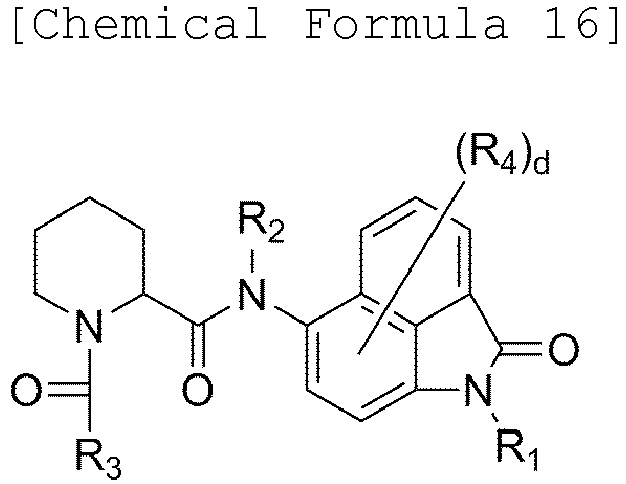


 wherein R1, R2, R3, R4, and d are as defined in Chemical Formula 2 of claim 2;R3a is C3-C20heterocycloalkyl, C6-C20aryl, or C2-C20heteroaryl, and the heterocycloalkyl, aryl, and heteroaryl of R3a may be further substituted by one or more substituents selected from the group consisting of C1-C10alkyl, halogen, haloC1-C10alkyl, nitro, cyano, C1-C10alkylcarbonylamino, C6-C20arylcarbonylamino, amino, C1-C10alkoxy, haloC1-C10alkoxy, C1-C10alkoxyC1-C10alkoxy, C6-C20aryloxy, hydroxy, C1-C10alkylcarbonyl, haloC1-C10alkylcarbonyl, C6-C20arylcarbonyl, carboxyl, formyl, sulfanyl, C1-C10alkylsulfanyl, C6-C20arylsulfanyl, diC1-C10alkylaminoC1-C10alkoxy, dihydroxyaminosulfanyl, C1-C10alkylsulfonyl, C6-C20arylsulfonyl, sulfo, carbamoyl, C1-C10alkylaminocarbonyl, C6-C20arylaminocarbonyl, sulfamoyl, C1-C10alkylaminosulfonyl, C6-C20arylaminosulfonyl, C6-C20aryl, C2-C20heteroaryl, and C3-C20heterocycloalkyl; andLa is C1-C5alkylene.
 - The compound, the prodrug thereof, the hydrate thereof, the solvate thereof, or the pharmaceutically acceptable salt thereof of claim 4 or 5, whereinR1 is hydrogen or - (CH2)n-R;R is C1-C6alkoxy, C6-C12aryloxy, hydroxy, cyano, halogen, nitro, C1-C6alkylsulfanyl, C6-C12arylsulfanyl, sulfanyl, -NRa1Ra2, C1-C6alkoxyC1-C6alkyl, C6-C12aryloxyC1-C6alkyl, C1-C6alkoxyC1-C6alkoxy, C1-C6alkoxyC1-C6alkoxyC1-C6alkyl, C1-C6alkylsulfonyl, C6-C12arylsulfonyl, C1-C6alkylC6-C12arylsulfonyl, C6-C12arylC1-C6alkylsulfonyl, sulfo, C6-C12aryl, C1-C6alkoxycarbonyl, C6-C12aryloxycarbonyl, carboxyl, formyl, C2-C12heteroaryl, or C3-C12heterocycloalkyl, and the aryl, heteroaryl, and heterocycloalkyl of R may be further substituted by one or more substituents selected from the group consisting of C1-C6alkyl, halogen, nitro, cyano, hydroxy, C1-C6alkoxy, C6-C12aryloxy, C1-C6alkylsulfonyl, C6-C12arylsulfonyl, C1-C6alkylC6-C12arylsulfonyl, C6-C12arylC1-C6alkylsulfonyl, carboxyl, sulfo, formyl, carbamoyl, sulfamoyl, and amino;Ra1 and Ra2 are independently of each other hydrogen, C1-C6alkyl, C1-C6alkylsulfonyl, C6-C12arylsulfonyl, C1-C6alkylC6-C12arylsulfonyl, C6-C12arylC1-C6alkylsulfonyl, sulfo, or sulfamoyl;n is an integer of 1 to 5;R2 is hydrogen, C1-C6alkyl, C1-C6alkoxyC1-C6alkyl, or C6-C12aryloxyC1-C6alkyl ;R3 is C1-C6alkyl, C1-C6alkoxy, C6-C12aryloxy, C3-C12heterocycloalkyl, C6-C12aryl, or C2-C12heteroaryl;R3a is C3-C12heterocycloalkyl, C6-C12aryl, or C2-C12heteroaryl;the heterocycloalkyl, aryl, and heteroaryl of R3 and R3a may be further substituted by one or more substituents selected from the group consisting of C1-C6alkyl, halogen, haloC1-C6alkyl, nitro, cyano, C1-C6alkylcarbonylamino, C6-C12arylcarbonylamino, amino, C1-C6alkoxy, haloC1-C6alkoxy, C1-C6alkoxyC1-C6alkoxy, C6-C12aryloxy, hydroxy, C1-C6alkylcarbonyl, haloC1-C6alkylcarbonyl, C6-C12arylcarbonyl, carboxyl, formyl, sulfanyl, C1-C6alkylsulfanyl, C6-C12arylsulfanyl, diC1-C6alkylaminoC1-C6alkoxy, dihydroxyaminosulfanyl, C1-C6alkylsulfonyl, C6-C12arylsulfonyl, sulfo, carbamoyl, C1-C6alkylaminocarbonyl, C6-C12arylaminocarbonyl, sulfamoyl, C1-C6alkylaminosulfonyl, C6-C12arylaminosulfonyl, C6-C12aryl, C2-C12heteroaryl, and C3-C12heterocycloalkyl;La is C1-C5alkylene;R4 is halogen, haloC1-C6alkyl, cyano, C1-C6alkyl, C6-C12aryl, C2-C12heteroaryl, C1-C6alkoxy, C6-C12aryloxy, C2-C12heteroaryloxy, haloC1-C6alkoxy,hydroxy, amino, or aminoC1-C6alkyl; andd is an integer of 0 to 5, and when d is an integer of 2 or more, R4 may be the same as or different from each other.
- The compound, the prodrug thereof, the hydrate thereof, the solvate thereof, or the pharmaceutically acceptable salt thereof of claim 6, whereinR1 is hydrogen or - (CH2) n-R;R is C1-C6alkoxy, hydroxy, cyano, halogen, C1-C6alkylsulfanyl, -NRa1Ra2, C1-C6alkoxyC1-C6alkyl, C1-C6alkoxyC1-C6alkoxy, C1-C6alkoxyC1-C6alkoxyC1-C6alkyl, C1-C6alkylsulfonyl, C6-C12arylsulfonyl, C6-C12aryl, C1-C6alkoxycarbonyl, C6-C12aryloxycarbonyl, C2-C12heteroaryl, or C3-C12heterocycloalkyl, and the aryl, heteroaryl, and heterocycloalkyl of R may be further substituted by one or more substituents selected from the group consisting of C1-C6alkyl, halogen, nitro, cyano, hydroxy, C1-C6alkoxy, C6-C12aryloxy, C1-C6alkylsulfonyl, C6-C12arylsulfonyl, C1-C6alkylC6-C12arylsulfonyl, C6-C12arylC1-C6alkylsulfonyl, carboxyl, sulfo, and formyl;Ra1 and Ra2 is independently of each other C1-C6alkyl, C1-C6alkylsulfonyl, or C6-C12arylsulfonyl;n is an integer of 1 to 3;R2 is hydrogen or C1-C6alkoxyC1-C6alkyl;R3 is C1-C6alkyl, C1-C6alkoxy, C3-C12heterocycloalkyl, C6-C12aryl, or C2-C12heteroaryl;R3a is C3-C12heterocycloalkyl, C6-C12aryl, or C2-C12heteroaryl;the heterocycloalkyl, aryl, and heteroaryl of R3 and R3a may be further substituted by one or more substituents selected from the group consisting of C1-C6alkyl, halogen, haloC1-C6alkyl, nitro, cyano, C1-C6alkylcarbonylamino, C6-C12arylcarbonylamino, amino, C1-C6alkoxy, haloC1-C6alkoxy, C1-C6alkoxyC1-C6alkoxy, hydroxy, C1-C6alkylcarbonyl, haloC1-C6alkylcarbonyl, C6-C12arylcarbonyl, carboxyl, formyl, sulfanyl, C1-C6alkylsulfanyl, C6-C12arylsulfanyl, diC1-C6alkylaminoC1-C6alkoxy, dihydroxyaminosulfanyl, C1-C6alkylsulfonyl, C6-C12arylsulfonyl, sulfo, carbamoyl, sulfamoyl, C6-C12aryl, C2-C12heteroaryl, and C3-C12heterocycloalkyl;R4 is halogen, haloC1-C6alkyl, cyano, C1-C6alkyl, C6-C12aryl, C2-C12heteroaryl, C1-C6alkoxy, C6-C12aryloxy, C2-C12heteroaryloxy, haloC1-C6alkoxy,hydroxy, amino, or aminoC1-C6alkyl; andd is an integer of 0 to 5, and when d is an integer of 2 or more, R4 may be the same as or different from each other.
- The compound, the prodrug thereof, the hydrate thereof, the solvate thereof, or the pharmaceutically acceptable salt thereof of claim 7, wherein R1 is hydrogen.
- The compound, the prodrug thereof, the hydrate thereof, the solvate thereof, or the pharmaceutically acceptable salt thereof of claim 7, wherein
R1 is -(CH2)n-OR11, - (CH2) n-OH, -(CH2)n-CN, -(CH2)n-X1, - (CH2)n-SR12, - (CH2)-NR13R14, - (CH2) n-NR13-SO2R15, - (CH2) n-L1-OR11, - (CH2)n-SO2R16, or - (CH2)n-C (=O) OR17, or is selected from the following structures:
 wherein R11 is C1-C4alkyl or C1-C4alkoxyC1-C4alkyl;X1 is halogen;R12 to R14 are independently of each other C1-C4alkyl;R15, R16, R17, and R20 are independently of one another C1-C4alkyl or C6-C12aryl;L1 is C1-C4 alkylene;R18 and R19 are independently of each other C1-C4alkyl, halogen, nitro, cyano, hydroxy, C1-C4alkoxy, C6-C12aryloxy, carboxyl, sulfo, or formyl;R' is hydrogen or C1-C4alkyl;Q is CH2, NH, O, or S;n is an integer of 1 to 3;p is an integer of 0 to 5, and when p is an integer of 2 or more, R18 may be the same as or different from each other; andq is an integer of 0 to 4, and when q is an integer of 2 or more, R19 may be the same or different from each other.
 - The compound, the prodrug thereof, the hydrate thereof, the solvate thereof, or the pharmaceutically acceptable salt thereof of claim 7, whereinR2 is hydrogen or C1-C4alkoxyC1-C4alkyl;R3 is selected from C1-C4alkyl,C1-C4alkoxy, or the following structures:


 R21 to R26 are independently of each one another C1-C4alkyl, halogen, haloC1-C4alkyl, nitro, cyano, C1-C4alkylcarbonylamino, C6-C12arylcarbonylamino, amino, C1-C4alkoxy, haloC1-C4alkoxy, C1-C4alkoxyC1-C4alkoxy, hydroxy, C1-C4alkylcarbonyl, haloC1-C4alkylcarbonyl, C6-C12arylcarbonyl, carboxyl, formyl, sulfanyl, C1-C4alkylsulfanyl, C6-C12arylsulfanyl, diC1-C4alkylaminoC1-C4alkoxy, dihydroxyaminosulfanyl, C1-C4alkylsulfonyl, C6-C12arylsulfonyl, sulfo, carbamoyl, sulfamoyl, C6-C12aryl, C2-C12heteroaryl, or C3-C12heterocycloalkyl;Y1 and Y2 are independently of each other NR", O, or S;Z is - (CR27R28)x- ;R27 and R28 are independently of each other hydrogen, C1-C4alkyl,or halogen;x is an integer of 1 to 3;T is CH2 or O;R" is hydrogen or C1-C4alkyl;andr is an integer of 0 to 3, and when r is an integer of 2 or more, R21 may be the same as or different from each other; s is an integer of 0 to 2, and when s is an integer of 2 or more, R22 may be the same as or different from each other; t is an integer of 0 to 4, and when t is an integer of 2 or more, R23 may be the same as or different from each other; u is an integer of 0 to 5, and when u is an integer of 2 or more, R24 may be the same as or different from each other; v is an integer of 0 to 6, and when v is an integer of 2 or more, R25 may be the same as or different from each other; and w is an integer of 0 to 7, and when w is an integer of 2 or more, R26 may be the same as or different from each other;R4 is halogen, haloC1-C4alkyl, cyano, C1-C4alkyl,Ar1, HET1, C1-C4alkoxy, -O-Ar1, -O-HET1, haloC1-C4alkoxy, hydroxy, amino, or aminoC1-C4alkyl;Ar1 is phenyl, biphenyl, or naphthyl;HET1 is pyrrole, furyl, thienyl, pyrazolyl, isoxazolyl, isothiazolyl, imidazolyl, oxazolyl, thiazolyl, triazolyl, oxadiazolyl, thiadiazolyl, pyridinyl, pyridazinyl, pyrimidyl, pyrazinyl, triazinyl, quinolinyl, isoquinolinyl, indolyl, benzofuranyl, benzothienyl, isoindolyl, indazolyl, benzoisoxazolyl, benzoisothiazolyl, benzoimidazolyl, benzoxazolyl, benzothiazolyl, or benzotriazolyl;d is an integer of 0 to 5, and when d is an integer of 2 or more, R4 may be the same as or different from each other.
 - The compound, the prodrug thereof, the hydrate thereof, the solvate thereof, or the pharmaceutically acceptable salt thereof of claim 10, wherein
R3 is C1-C4 alkyl or C1-C4 alkoxy, or is selected from the following structures:


 wherein R21 to R26 are independently of one another C1-C4alkyl, halogen, haloC1-C4alkyl, nitro, C1-C4alkylcarbonylamino, amino, C1-C4alkoxy, haloC1-C4alkoxy, C1-C4alkoxyC1-C4alkoxy, hydroxy, haloC1-C4alkylcarbonyl, carboxyl, diC1-C4alkylaminoC1-C4alkoxy, dihydroxyaminosulfanyl, C1-C4alkylsulfonyl, C6-C12aryl, or C2-C12heteroaryl;Z is - (CR27R28)x-;R27 and R28 are independently of each other hydrogen, C1-C4alkyl,or halogen;x is an integer of 1 to 3;R" is hydrogen or C1-C4alkyl;andr is an integer of 0 to 3, and when r is an integer of 2 or more, R21 may be the same as or different from each other; s is an integer of 0 to 2, and when s is an integer of 2 or more, R22 may be the same as or different from each other; t is an integer of 0 to 4, and when t is an integer of 2 or more, R23 may be the same as or different from each other; u is an integer of 0 to 5, and when u is an integer of 2 or more, R24 may be the same as or different from each other; v is an integer of 0 to 6, and when v is an integer of 2 or more, R25 may be the same as or different from each other; and w is an integer of 0 to 7, and when w is an integer of 2 or more, R26 may be the same as or different from each other.
 - The compound, the prodrug thereof, the hydrate thereof, the solvate thereof, or the pharmaceutically acceptable salt thereof of claim 1, wherein the compound is any one selected from the following:


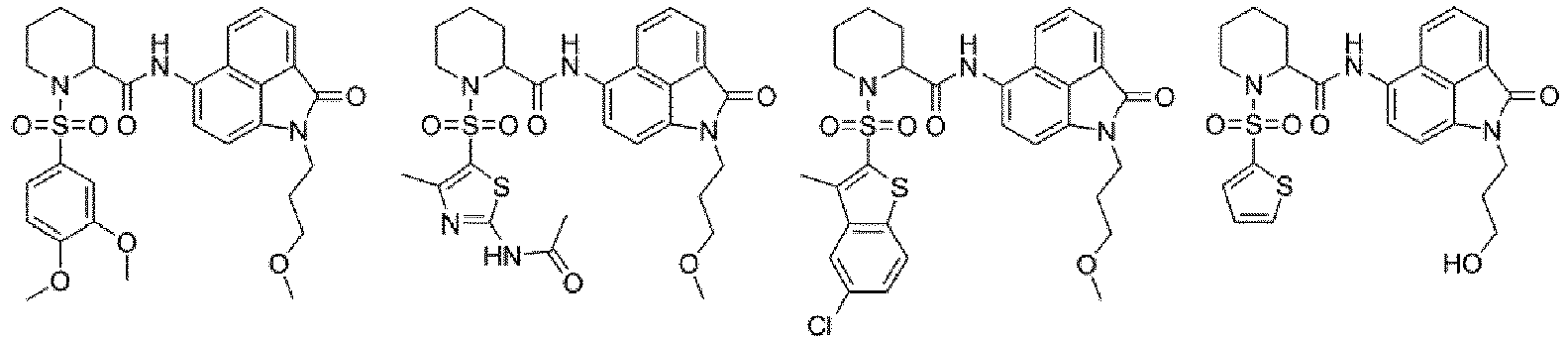


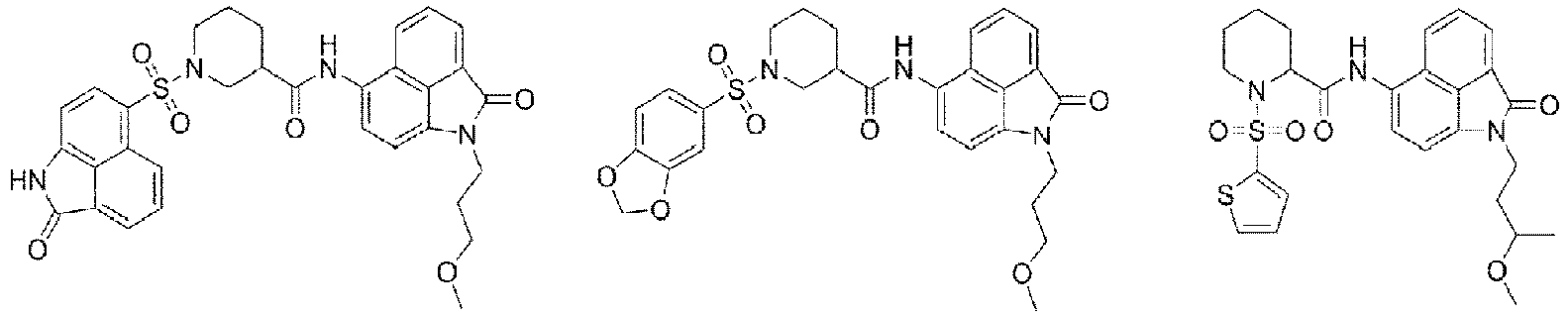


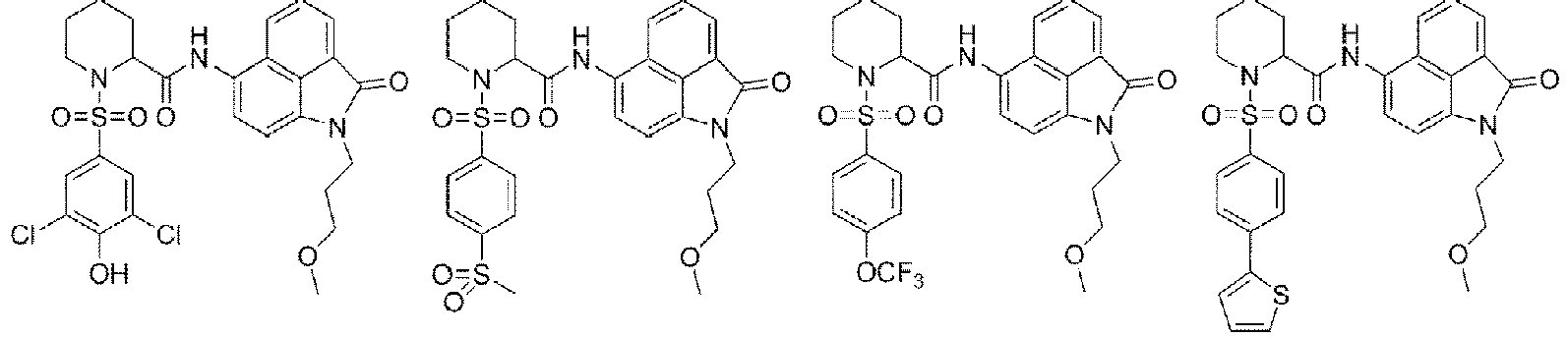


- A pharmaceutical composition for preventing or treating cancer comprising the compound, the prodrug thereof, the hydrate thereof, the solvate thereof, or the pharmaceutically acceptable salt thereof of claim 1 as an effective component.
- The pharmaceutical composition of claim 13, wherein the cancer is lung cancer, colorectal cancer, colon cancer, rectal cancer, breast cancer, prostate cancer, bladder cancer, blood cancer, leukemia, myelogenous leukemia, lymphoma, cervical carcinoma, osteosarcoma, glioblastoma, melanoma, pancreatic cancer, gastric cancer, liver cancer, kidney cancer, gallbladder cancer, biliary tract cancer, esophageal cancer, ovarian cancer, thyroid cancer, skin cancer, or neuroblastoma.
- The pharmaceutical composition of claim 13, further comprising a pharmaceutically acceptable carrier, diluent, or excipient.
- A YAP/TAZ-TEAD inhibitor composition comprising the compound, the prodrug thereof, the hydrate thereof, the solvate thereof, or the pharmaceutically acceptable salt thereof of claim 1 as an effective component.
- A health functional food composition for preventing or improving cancer comprising the compound, the prodrug thereof, the hydrate thereof, the solvate thereof, or the pharmaceutically acceptable salt thereof of claim 1 as an effective component.
Applications Claiming Priority (3)
| Application Number | Priority Date | Filing Date | Title |
|---|---|---|---|
| KR20180137079 | 2018-11-09 | ||
| KR1020190141613A KR102343865B1 (en) | 2018-11-09 | 2019-11-07 | Compound inhibiting YAP-TEAD interaction and pharmaceutical composition for treating or preventing cancer comprising the same as an active ingredient |
| PCT/KR2019/015172 WO2020096416A1 (en) | 2018-11-09 | 2019-11-08 | Compound inhibiting yap-tead binding, and pharmaceutical composition for preventing or treating cancer, comprising compound as active ingredient |
Publications (2)
| Publication Number | Publication Date |
|---|---|
| EP3882242A1 true EP3882242A1 (en) | 2021-09-22 |
| EP3882242A4 EP3882242A4 (en) | 2022-08-31 |
Family
ID=70913463
Family Applications (1)
| Application Number | Title | Priority Date | Filing Date |
|---|---|---|---|
| EP19882210.8A Withdrawn EP3882242A4 (en) | 2018-11-09 | 2019-11-08 | YAP-TEAD BONDING INHIBITING COMPOUND AND PHARMACEUTICAL COMPOSITION FOR THE PREVENTION OR TREATMENT OF CANCER CONTAINING THE COMPOUND AS AN ACTIVE SUBSTANCE |
Country Status (5)
| Country | Link |
|---|---|
| US (1) | US20220017491A1 (en) |
| EP (1) | EP3882242A4 (en) |
| JP (1) | JP7181565B2 (en) |
| KR (1) | KR102343865B1 (en) |
| CN (1) | CN112996781A (en) |
Cited By (1)
| Publication number | Priority date | Publication date | Assignee | Title |
|---|---|---|---|---|
| WO2024228496A1 (en) | 2023-05-04 | 2024-11-07 | 에스에프씨 주식회사 | Non-fluorescent compound and uses thereof |
Families Citing this family (5)
| Publication number | Priority date | Publication date | Assignee | Title |
|---|---|---|---|---|
| US11787775B2 (en) | 2020-07-24 | 2023-10-17 | Genentech, Inc. | Therapeutic compounds and methods of use |
| KR20220161077A (en) * | 2021-05-28 | 2022-12-06 | 삼진제약주식회사 | Novel benzoindolone compounds and pharmaceutical composition comprising the same |
| WO2023238939A1 (en) * | 2022-06-09 | 2023-12-14 | 慶應義塾 | Prophylactic or therapeutic against exacerbation or recurrence of cancer, and screening method therefor |
| WO2024091511A1 (en) * | 2022-10-25 | 2024-05-02 | Light Horse Therapeutics, Inc. | Heterocyclic tead inhibitors |
| WO2024120519A1 (en) * | 2022-12-09 | 2024-06-13 | 捷思英达控股有限公司 | Tead inhibitor, preparation method therefor. and medical use thereof |
Family Cites Families (9)
| Publication number | Priority date | Publication date | Assignee | Title |
|---|---|---|---|---|
| ZA917355B (en) * | 1990-09-17 | 1992-08-26 | Agouron Pharma | Antiproliferative substituted naphthalene compounds |
| WO2007050795A2 (en) * | 2005-10-25 | 2007-05-03 | Alvine Pharmaceuticals, Inc. | Transglutaminase inhibitors and methods of use thereof |
| WO2009016081A2 (en) | 2007-08-02 | 2009-02-05 | Actar Ab | Benzoind0l-2-one derivatives for use in therapy |
| US8642660B2 (en) * | 2007-12-21 | 2014-02-04 | The University Of Rochester | Method for altering the lifespan of eukaryotic organisms |
| ES2763527T3 (en) | 2014-04-04 | 2020-05-29 | Univ Michigan Regents | Mcl-1 small molecule inhibitors and uses thereof |
| CN105985282B (en) * | 2015-01-28 | 2020-12-08 | 中国科学院广州生物医药与健康研究院 | A kind of 2-oxo-1,2-dihydrobenzo[cd]indole compounds and application thereof |
| EP3353156B1 (en) | 2015-09-23 | 2021-11-03 | The General Hospital Corporation | Tead transcription factor autopalmitoylation inhibitors |
| EP3156404A1 (en) | 2015-10-15 | 2017-04-19 | Inventiva | New compounds inhibitors of the yap/taz-tead interaction and their use in the treatment of malignant mesothelioma |
| KR102652866B1 (en) | 2017-04-06 | 2024-04-02 | 엥방티바 | Novel compounds that are inhibitors of YAP/TAZ-TAD interaction and their use in the treatment of malignant mesothelioma |
-
2019
- 2019-11-07 KR KR1020190141613A patent/KR102343865B1/en active Active
- 2019-11-08 EP EP19882210.8A patent/EP3882242A4/en not_active Withdrawn
- 2019-11-08 CN CN201980073858.1A patent/CN112996781A/en active Pending
- 2019-11-08 US US17/292,699 patent/US20220017491A1/en not_active Abandoned
- 2019-11-08 JP JP2021525071A patent/JP7181565B2/en active Active
Cited By (2)
| Publication number | Priority date | Publication date | Assignee | Title |
|---|---|---|---|---|
| WO2024228496A1 (en) | 2023-05-04 | 2024-11-07 | 에스에프씨 주식회사 | Non-fluorescent compound and uses thereof |
| EP4685144A1 (en) | 2023-05-04 | 2026-01-28 | SFC Co., Ltd. | Non-fluorescent compound and uses thereof |
Also Published As
| Publication number | Publication date |
|---|---|
| JP7181565B2 (en) | 2022-12-01 |
| CN112996781A (en) | 2021-06-18 |
| US20220017491A1 (en) | 2022-01-20 |
| JP2022509047A (en) | 2022-01-20 |
| KR20200054096A (en) | 2020-05-19 |
| KR102343865B1 (en) | 2021-12-28 |
| EP3882242A4 (en) | 2022-08-31 |
Similar Documents
| Publication | Publication Date | Title |
|---|---|---|
| US20220017491A1 (en) | Compound inhibiting yap-tead binding, and pharmaceutical composition for preventing or treating cancer, comprising compound as active ingredient | |
| CN104470902B (en) | N-(3-heteroarylaryl)-4-arylaryl carboxamides and analogues as Hedgehog pathway inhibitors and their use | |
| JP6921101B2 (en) | Protein kinase inhibitor and its preparation method and pharmaceutical use | |
| WO2023130012A1 (en) | Compounds for mutant kras protein degradation and uses thereof | |
| ES2917979T3 (en) | 1,4-disubstituted pyridazine derivatives and their use to treat conditions related to SMN deficiency | |
| AU2020342189B2 (en) | 3, 5-disubstituted pyrazole compounds as kinase inhibitors and uses thereof | |
| KR20190099209A (en) | 8,9-dihydroimidazole [1,2-a] pyrimido [5,4-e] pyrimidine-5 (6H) -ketone compounds | |
| CN118215664B (en) | Substituted triazoloheteroaryl compounds as USP1 inhibitors and uses thereof | |
| CN111484491B (en) | Substituted pyrido-cyclic compounds, process for their preparation and their use | |
| KR102038401B1 (en) | Preparation and Application of Kinase Inhibitors | |
| AU2014367284A1 (en) | WNT pathway modulators | |
| CA3152512A1 (en) | Perk inhibiting compounds | |
| KR20230043885A (en) | tricyclic heterocycle | |
| JPWO2020071550A1 (en) | CDK8 Inhibitors and Their Applications | |
| JP2022515309A (en) | Substituted aryl compounds, their production methods and uses | |
| CN102718745A (en) | Novel amino pyridine compound, its preparation method, pharmaceutical composition containing compound and application thereof | |
| CN105712992B (en) | Compound and its preparation method and application as cMet inhibitor | |
| CN112135821B (en) | 1H-Indazole-3-carboxamide compounds as glycogen synthase kinase 3β inhibitors | |
| WO2021018173A1 (en) | Adenosine receptor antagonist | |
| EP3356331A1 (en) | Pyrazolidine derivatives and related compounds | |
| KR101777475B1 (en) | Novel dihydropyranopyrimidinone derivatives, and use thereof | |
| KR20230022861A (en) | Tricyclic heterocycles useful as TEAD binders | |
| CN118434743A (en) | Tricyclic heterocycles | |
| CN110143948B (en) | CDK4/6 inhibitor, pharmaceutical composition, preparation method and application thereof | |
| KR102344185B1 (en) | Novel Pim Kinase Inhibitor and Uses Thereof |
Legal Events
| Date | Code | Title | Description |
|---|---|---|---|
| STAA | Information on the status of an ep patent application or granted ep patent |
Free format text: STATUS: THE INTERNATIONAL PUBLICATION HAS BEEN MADE |
|
| PUAI | Public reference made under article 153(3) epc to a published international application that has entered the european phase |
Free format text: ORIGINAL CODE: 0009012 |
|
| STAA | Information on the status of an ep patent application or granted ep patent |
Free format text: STATUS: REQUEST FOR EXAMINATION WAS MADE |
|
| 17P | Request for examination filed |
Effective date: 20210518 |
|
| AK | Designated contracting states |
Kind code of ref document: A1 Designated state(s): AL AT BE BG CH CY CZ DE DK EE ES FI FR GB GR HR HU IE IS IT LI LT LU LV MC MK MT NL NO PL PT RO RS SE SI SK SM TR |
|
| DAV | Request for validation of the european patent (deleted) | ||
| DAX | Request for extension of the european patent (deleted) | ||
| A4 | Supplementary search report drawn up and despatched |
Effective date: 20220729 |
|
| RIC1 | Information provided on ipc code assigned before grant |
Ipc: C07D 513/04 20060101ALI20220725BHEP Ipc: A61P 35/00 20060101ALI20220725BHEP Ipc: A61K 31/454 20060101ALI20220725BHEP Ipc: C07D 417/14 20060101ALI20220725BHEP Ipc: C07D 413/14 20060101ALI20220725BHEP Ipc: C07D 409/14 20060101ALI20220725BHEP Ipc: C07D 409/12 20060101ALI20220725BHEP Ipc: C07D 405/14 20060101ALI20220725BHEP Ipc: C07D 401/12 20060101AFI20220725BHEP |
|
| P01 | Opt-out of the competence of the unified patent court (upc) registered |
Effective date: 20230524 |
|
| STAA | Information on the status of an ep patent application or granted ep patent |
Free format text: STATUS: THE APPLICATION IS DEEMED TO BE WITHDRAWN |
|
| 18D | Application deemed to be withdrawn |
Effective date: 20240601 |