EP3880678B1 - Crystalline forms of p2x3 modulator methyl (s)-2-((2-(2,6-difluoro-4-(methylcarbamoyl )phenyl)-7-methylimidazo[1,2-a]pyridin-3-yl)methyl)morpholine-4-carboxylate - Google Patents
Crystalline forms of p2x3 modulator methyl (s)-2-((2-(2,6-difluoro-4-(methylcarbamoyl )phenyl)-7-methylimidazo[1,2-a]pyridin-3-yl)methyl)morpholine-4-carboxylate Download PDFInfo
- Publication number
- EP3880678B1 EP3880678B1 EP19884611.5A EP19884611A EP3880678B1 EP 3880678 B1 EP3880678 B1 EP 3880678B1 EP 19884611 A EP19884611 A EP 19884611A EP 3880678 B1 EP3880678 B1 EP 3880678B1
- Authority
- EP
- European Patent Office
- Prior art keywords
- type
- crystalline form
- methyl
- theta
- compound
- Prior art date
- Legal status (The legal status is an assumption and is not a legal conclusion. Google has not performed a legal analysis and makes no representation as to the accuracy of the status listed.)
- Active
Links
Images




Classifications
-
- A—HUMAN NECESSITIES
- A61—MEDICAL OR VETERINARY SCIENCE; HYGIENE
- A61P—SPECIFIC THERAPEUTIC ACTIVITY OF CHEMICAL COMPOUNDS OR MEDICINAL PREPARATIONS
- A61P29/00—Non-central analgesic, antipyretic or antiinflammatory agents, e.g. antirheumatic agents; Non-steroidal antiinflammatory drugs [NSAID]
-
- A—HUMAN NECESSITIES
- A61—MEDICAL OR VETERINARY SCIENCE; HYGIENE
- A61K—PREPARATIONS FOR MEDICAL, DENTAL OR TOILETRY PURPOSES
- A61K31/00—Medicinal preparations containing organic active ingredients
- A61K31/33—Heterocyclic compounds
- A61K31/395—Heterocyclic compounds having nitrogen as a ring hetero atom, e.g. guanethidine or rifamycins
- A61K31/535—Heterocyclic compounds having nitrogen as a ring hetero atom, e.g. guanethidine or rifamycins having six-membered rings with at least one nitrogen and one oxygen as the ring hetero atoms, e.g. 1,2-oxazines
- A61K31/5375—1,4-Oxazines, e.g. morpholine
- A61K31/5377—1,4-Oxazines, e.g. morpholine not condensed and containing further heterocyclic rings, e.g. timolol
-
- A—HUMAN NECESSITIES
- A61—MEDICAL OR VETERINARY SCIENCE; HYGIENE
- A61P—SPECIFIC THERAPEUTIC ACTIVITY OF CHEMICAL COMPOUNDS OR MEDICINAL PREPARATIONS
- A61P11/00—Drugs for disorders of the respiratory system
- A61P11/14—Antitussive agents
-
- A—HUMAN NECESSITIES
- A61—MEDICAL OR VETERINARY SCIENCE; HYGIENE
- A61P—SPECIFIC THERAPEUTIC ACTIVITY OF CHEMICAL COMPOUNDS OR MEDICINAL PREPARATIONS
- A61P13/00—Drugs for disorders of the urinary system
-
- A—HUMAN NECESSITIES
- A61—MEDICAL OR VETERINARY SCIENCE; HYGIENE
- A61P—SPECIFIC THERAPEUTIC ACTIVITY OF CHEMICAL COMPOUNDS OR MEDICINAL PREPARATIONS
- A61P15/00—Drugs for genital or sexual disorders; Contraceptives
-
- A—HUMAN NECESSITIES
- A61—MEDICAL OR VETERINARY SCIENCE; HYGIENE
- A61P—SPECIFIC THERAPEUTIC ACTIVITY OF CHEMICAL COMPOUNDS OR MEDICINAL PREPARATIONS
- A61P17/00—Drugs for dermatological disorders
- A61P17/04—Antipruritics
-
- C—CHEMISTRY; METALLURGY
- C07—ORGANIC CHEMISTRY
- C07D—HETEROCYCLIC COMPOUNDS
- C07D471/00—Heterocyclic compounds containing nitrogen atoms as the only ring hetero atoms in the condensed system, at least one ring being a six-membered ring with one nitrogen atom, not provided for by groups C07D451/00 - C07D463/00
- C07D471/02—Heterocyclic compounds containing nitrogen atoms as the only ring hetero atoms in the condensed system, at least one ring being a six-membered ring with one nitrogen atom, not provided for by groups C07D451/00 - C07D463/00 in which the condensed system contains two hetero rings
- C07D471/04—Ortho-condensed systems
-
- C—CHEMISTRY; METALLURGY
- C07—ORGANIC CHEMISTRY
- C07B—GENERAL METHODS OF ORGANIC CHEMISTRY; APPARATUS THEREFOR
- C07B2200/00—Indexing scheme relating to specific properties of organic compounds
- C07B2200/13—Crystalline forms, e.g. polymorphs
Definitions
- P2X purinoreceptors are a family of ion channels that are activated by extracellular adenosine triphosphate (ATP). Purinoreceptors have been implicated in a variety of biological functions, especially those related to pain sensitivity.
- the P2X3 receptor subunit is a member of this family.
- P2X3 is selectively expressed on nociceptive, small diameter sensory neurons (i.e., neurons that are stimulated by pain or injury), which is consistent with a role in pain sensitivity.
- Blocking P2X3 receptors has been reported to be analgesic in animal models of chronic inflammatory and neuropathic pain. Jarvis, et al., PNAS, 99, 17179-17184 (2002 ). It is, therefore, believed that reducing the P2X3 level or activity would be useful for modulating pain sensation in a subject suffering from pain and other disorders associated with P2X3 activity.
- US10111883B1 describes certain imidazopyridine compounds as P2X3 modulators and methods for avoiding loss of taste response while treating chronic cough patients.
- Pharm Res, 12(7), 945-954 (1995 ) describes the characterization of pharmaceutical solids.
- crystalline form of methyl ( S )-2-((2-(2,6-difluoro-4-(methylcarbamoyl)phenyl)-7-methylimidazo[1,2-a]pyridin-3-yl)methyl)morpholine-4-carboxylate wherein the crystalline form has an X-ray powder diffraction (XRPD) pattern as shown in Figure 1 .
- XRPD X-ray powder diffraction
- crystalline form of methyl ( S )-2-((2-(2,6-difluoro-4-(methylcarbamoyl)phenyl)-7-methylimidazo[1,2-a]pyridin-3-yl)methyl)morpholine-4-carboxylate wherein the crystalline form has an X-ray powder diffraction (XRPD) pattern with characteristic peaks at about 6.9° 2-Theta, 11.3° 2-Theta, 11.5° 2-Theta, 12.8° 2-Theta, 17.8° 2-Theta, 20.7° 2-Theta, 21.6° 2-Theta, and 22.6° 2-Theta.
- XRPD X-ray powder diffraction
- thermo-gravimetric analysis TGA
- crystalline form of methyl ( S )-2-((2-(2,6-difluoro-4-(methylcarbamoyl)phenyl)-7-methylimidazo[1,2-a]pyridin-3-yl)methyl)morpholine-4-carboxylate wherein the crystalline form has a DSC thermogram with an endotherm having an onset at about 167°C.
- crystalline form of methyl ( S )-2-((2-(2,6-difluoro-4-(methylcarbamoyl)phenyl)-7-methylimidazo[1,2-a]pyridin-3-yl)methyl)morpholine-4-carboxylate wherein the crystalline form is characterized as having properties: (a) an X-ray powder diffraction (XRPD) pattern as shown in Figure 1 ; (b) an X-ray powder diffraction (XRPD) pattern with characteristic peaks at about 6.9° 2-Theta, 11.3° 2-Theta, 11.5° 2-Theta, 12.8° 2-Theta, 17.8° 2-Theta, 20.7° 2-Theta, 21.6° 2-Theta, and 22.6° 2-Theta; (c) a thermo-gravimetric analysis (TGA) as set forth in Figure 2 ; (d) a DSC thermogram as set forth in Figure 2 ; and (e) a DSC thermo
- a crystalline form of methyl ( S )-2-((2-(2,6-difluoro-4-(methylcarbamoyl)phenyl)-7-methylimidazo[1,2-a]pyridin-3-yl)methyl)morpholine-4-carboxylate wherein the crystalline form is obtained from acetonitrile, acetone, tert -butyl methyl ether, water, methanol, ethanol, isopropanol, propanol, butanol, diethyleneglycol, ethyl acetate, isopropyl acetate, tetrahydrofuran, 2-methyltetrahydrofuran, dimethylsulfoxide, dimethylformamide, methyl ethyl ketone, methyl isobutyl ketone, butyl acetate, hexane, heptane, dichloromethane, chloroform, 1,2-dichloroethane, dimeth
- a pharmaceutical composition comprising a crystalline form of methyl ( S )-2-((2-(2,6-difluoro-4-(methylcarbamoyl)phenyl)-7-methylimidazo[1,2-a]pyridin-3-yl)methyl)morpholine-4-carboxylate described herein and at least one inactive ingredient selected from pharmaceutically acceptable carriers, diluents, and excipients.
- the methyl ( S )-2-((2-(2,6-difluoro-4-(methylcarbamoyl)phenyl)-7-methylimidazo[1,2- a ]pyridin-3-yl)methyl)morpholine-4-carboxylate pharmaceutical composition is formulated for administration to a mammal by intravenous administration, subcutaneous administration, oral administration, inhalation, nasal administration, topical administration, or ophthalmic administration.
- the methyl ( S )-2-((2-(2,6-difluoro-4-(methylcarbamoyl)phenyl)-7-methylimidazo[1,2- a ]pyridin-3-yl)methyl)morpholine-4-carboxylate pharmaceutical composition is in the form of a tablet, a pill, a capsule, a liquid, a suspension, a gel, a dispersion, a solution, an emulsion, an ointment, or a lotion.
- described herein is a crystalline form of methyl ( S )-2-((2-(2,6-difluoro-4-(methylcarbamoyl)phenyl)-7-methylimidazo[1,2- a ]pyridin-3-yl)methyl)morpholine-4-carboxylate as described herein for use in the reduction or prevention of uncontrolled loss of urine in a mammal in need thereof.
- described herein is a crystalline form of methyl ( S )-2-((2-(2,6-difluoro-4-(methylcarbamoyl)phenyl)-7-methylimidazo[1,2- a ]pyridin-3-yl)methyl)morpholine-4-carboxylate as described herein for use in the treatment of cough in a mammal in need thereof.
- ACE an
- described herein is a crystalline form of methyl ( S )-2-((2-(2,6-difluoro-4-(methylcarbamoyl)phenyl)-7-methylimidazo[1,2- a ]pyridin-3-yl)methyl)morpholine-4-carboxylate as described herein for use in the treatment of pruritus in a mammal in need thereof.
- an inflammatory skin disease selected from the group consisting of atopic dermatitis, allergic, irritant contact dermatitis, exsiccation dermatitis, nu
- PEP polymorphic eruption of pregnancy
- pemphigoid gestationis pemphigoid gestationis
- neoplasias cutaneous T-cell lymphoma
- described herein is a crystalline form of methyl ( S )-2-((2-(2,6-difluoro-4-(methylcarbamoyl)phenyl)-7-methylimidazo[1,2- a ]pyridin-3-yl)methyl)morpholine-4-carboxylate as described herein for use in the treatment of endometriosis, endometriosis-associated pain, and endometriosis-associated symptoms in a mammal in need thereof.
- the mammal is a human.
- crystalline forms of P2X3 modulator methyl ( S )-2-((2-(2,6-difluoro-4-(methylcarbamoyl)phenyl)-7-methylimidazo[1,2-a]pyridin-3-yl)methyl)morpholine-4-carboxylate are also described herein.
- pharmaceutical compositions that include the crystalline forms of methyl ( S )-2-((2-(2,6-difluoro-4-(methylcarbamoyl)phenyl)-7-methylimidazo[1,2-a]pyridin-3-yl)methyl)morpholine-4-carboxylate and methods of using the compound in the treatment of diseases or conditions.
- Compound 1 is methyl ( S )-2-((2-(2,6-difluoro-4-(methylcarbamoyl)phenyl)-7-methylimidazo[1,2-a]pyridin-3-yl)methyl)morpholine-4-carboxylate.
- “Compound 1” or "methyl ( S )-2-((2-(2,6-difluoro-4-(methylcarbamoyl)phenyl)-7-methylimidazo[1,2-a]pyridin-3-yl)methyl)morpholine-4-carboxylate” refers to the compound with the following structure:
- Compound 1 includes the solvent addition forms (solvates).
- Solvates contain either stoichiometric or non-stoichiometric amounts of a solvent, and are formed during the process of product formation or isolation with pharmaceutically acceptable solvents such as water, ethanol, methanol, tert-butyl methyl ether (MTBE), diisopropyl ether (DIPE), ethyl acetate, isopropyl acetate, isopropyl alcohol, methyl isobutyl ketone (MIBK), methyl ethyl ketone (MEK), acetone, nitromethane, tetrahydrofuran (THF), dichloromethane (DCM), dioxane, heptanes, toluene, anisole, and acetonitrile.
- solvents such as water, ethanol, methanol, tert-butyl methyl ether (MTBE), diisopropyl ether (DIPE),
- solvates are formed using, but not limited to, Class 3 solvent(s). In some embodiments, solvates are formed using, but not limited to, Class 2 solvent(s). Categories of solvents are defined in, for example, the International Conference on Harmonization of Technical Requirements for Registration of Pharmaceuticals for Human Use (ICH), "Impurities: Guidelines for Residual Solvents Q3C(R6),” (October 2016 ). Hydrates are formed when the solvent is water, or alcoholates are formed when the solvent is alcohol.
- Compound 1 is prepared in various forms, including but not limited to, an amorphous phase, crystalline forms, milled forms, and nano-particulate forms.
- certain solid forms are characterized by physical properties, e.g ., stability, solubility, and dissolution rate, appropriate for pharmaceutical and therapeutic dosage forms.
- certain solid forms are characterized by physical properties (e.g ., density, compressibility, hardness, morphology, cleavage, stickiness, solubility, water uptake, electrical properties, thermal behavior, solid-state reactivity, physical stability, and chemical stability) affecting particular processes (e.g ., yield, filtration, washing, drying, milling, mixing, tableting, flowability, dissolution, formulation, and lyophilization) which make certain solid forms suitable for the manufacture of a solid dosage form.
- Such properties can be determined using particular analytical chemical techniques, including solid-state analytical techniques (e.g ., X-ray diffraction, microscopy, spectroscopy and thermal analysis), as described herein.
- a solid form of a pharmaceutical compound are complex, given that a change in solid form may affect a variety of physical and chemical properties, which may provide benefits or drawbacks in processing, formulation, stability, bioavailability, storage, and handling ( e.g ., shipping), among other important pharmaceutical characteristics.
- Useful pharmaceutical solids include crystalline solids and amorphous solids, depending on the product and its mode of administration. Amorphous solids are characterized by a lack of long-range structural order, whereas crystalline solids are characterized by structural periodicity.
- the desired class of pharmaceutical solid depends upon the specific application; amorphous solids are sometimes selected on the basis of, e.g., an enhanced dissolution profile, while crystalline solids may be desirable for properties such as, e.g ., physical or chemical stability.
- crystalline or amorphous, solid forms of a pharmaceutical compound include single-component and multiple-component solids.
- Single-component solids consist essentially of the pharmaceutical compound or active ingredient in the absence of other compounds. Variety among single-component crystalline materials may potentially arise from the phenomenon of polymorphism, wherein multiple three-dimensional arrangements exist for a particular pharmaceutical compound.
- Crystalline Compound 1, Type A* Family (Type A, Type A0, Type A1, Type A2, and Type A3)
- the crystal five forms (Type A, Type A0, Type A1, Type A2, and Type A3) are attributed to the same crystal family (Type A* family).
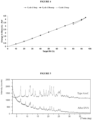
- the interconversion among Type A* family crystal forms is caused by different amounts of water residing in the crystal lattice resulting in slight peak shifts in the XRPD patterns.
- Compound 1 is crystalline. In some embodiments, Compound 1 is crystalline and a hydrate. In some embodiments, Compound 1 is crystalline and a channel hydrate. In one aspect, crystalline Compound 1 comprises the Type A* family of crystalline forms selected from the group consisting of Type A0, Type A, Type A1, Type A2, and Type A3. In one aspect, crystalline Compound 1 comprises the Type A* family of crystalline forms selected from the group consisting of Type A0, Type A, Type A1, Type A2, and Type A3 and is characterized as having at least one of the following properties:
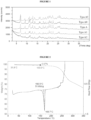
- crystalline Compound 1, Type A* Family has an X-ray powder diffraction (XRPD) pattern as shown in Figure 1 .
- crystalline Compound 1, Type A* Family has an X-ray powder diffraction (XRPD) pattern with characteristic peaks at about 6.9° 2-Theta, 11.3° 2-Theta, 11.5° 2-Theta, 12.8° 2-Theta, 17.8° 2-Theta, 20.7° 2-Theta, 21.6° 2-Theta, and 22.6° 2-Theta.
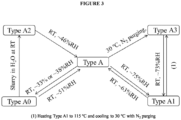
- crystalline Compound 1, Type A* Family has a thermo-gravimetric analysis (TGA) thermogram as set forth in Figure 2 .
- TGA thermo-gravimetric analysis
- crystalline Compound 1, Type A* Family has a DSC thermogram as set forth in Figure 2 . In some embodiments, crystalline Compound 1, Type A* Family, has a DSC thermogram with an endotherm having an onset at about 167°C.
- crystalline Compound 1 comprises the Type A* family of crystalline forms selected from the group consisting of Type A0, Type A, and Type A1.
- the Compound 1 crystalline form is Type A0.
- the Compound 1 crystalline form is Type A.
- the Compound 1 crystalline form is Type A1.
- the Compound 1 crystalline form is Type A2.
- the Compound 1 crystalline form is Type A3.
- Crystalline Type K of Compound 1 is characterized as having at least one of the following properties:
- crystalline Compound 1, Type K is characterized as having at least two of the properties selected from (a) to (e). Also described herein, crystalline Compound 1, Type K, is characterized as having at least three of the properties selected from (a) to (e). Also described herein, crystalline Compound 1, Type K, is characterized as having at least four of the properties selected from (a) to (e). Also described herein, crystalline Compound 1, Type K, is characterized as having properties (a) to (e).
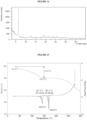
- crystalline Compound 1, Type K has an X-ray powder diffraction (XRPD) pattern as shown in Figure 12 . Also described herein, crystalline Compound 1, Type K, has an X-ray powder diffraction (XRPD) pattern with characteristic peaks at about 11.4° 2-Theta, 11.8° 2-Theta, 12.3° 2-Theta, 20.0° 2-Theta, and 20.7° 2-Theta. Also described herein, crystalline Compound 1, Type K, has a thermo-gravimetric analysis (TGA) thermogram as set forth in Figure 13 . Also described herein, crystalline Compound 1, Type K, has a DSC thermogram as set forth in Figure 13 .
- TGA thermo-gravimetric analysis
- crystalline Compound 1, Type K has a DSC thermogram with multiple endotherms at about 131°C, 152°C, 168°C, and 172°C. Also described herein, crystalline Compound 1, Type K, is a hydrate. Also described herein, crystalline Compound 1, Type K, is a solvate. Also described herein, crystalline Compound 1, Type K, is solvated with isopropyl acetate. Also described herein, Type K, is unsolvated. Also described herein, crystalline Compound 1, Type K, is anhydrous.
- Crystalline Type N of Compound 1 is characterized as having at least one of the following properties:
- crystalline Compound 1, Type N is characterized as having at least two of the properties selected from (a) to (e). Also described herein, crystalline Compound 1, Type N, is characterized as having at least three of the properties selected from (a) to (e). Also described herein, crystalline Compound 1, Type N, is characterized as having at least four of the properties selected from (a) to (e). Also described herein, crystalline Compound 1, Type N, is characterized as having properties (a) to (e).
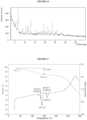
- crystalline Compound 1, Type N has an X-ray powder diffraction (XRPD) pattern as shown in Figure 14 . Also described herein, crystalline Compound 1, Type N, has an X-ray powder diffraction (XRPD) pattern with characteristic peaks at about 6.4° 2-Theta, 19.0° 2-Theta, and 19.6° 2-Theta. Also described herein, crystalline Compound 1, Type N, has a thermo-gravimetric analysis (TGA) thermogram as set forth in Figure 15 . Also described herein, crystalline Compound 1, Type N, has a DSC thermogram as set forth in Figure 15 .
- TGA thermo-gravimetric analysis
- crystalline Compound 1, Type N has a DSC thermogram with two endotherms at about 144°C and 170°C. Also described herein, crystalline Compound 1, Type N, is a hydrate. Also described herein, crystalline Compound 1, Type N, is a solvate. Also described herein, crystalline Compound 1, Type N, is solvated with butyl acetate. Also described herein, crystalline Compound 1, Type N, is unsolvated. Also described herein, crystalline Compound 1, Type N, is anhydrous.
- Crystalline Type O of Compound 1 is characterized as having at least one of the following properties:
- crystalline Compound 1, Type O is characterized as having at least two of the properties selected from (a) to (e). Also described herein, crystalline Compound 1, Type O, is characterized as having at least three of the properties selected from (a) to (e). Also described herein, crystalline Compound 1, Type O, is characterized as having at least four of the properties selected from ( €to (e). Also described herein, crystalline Compound 1, Type O, is characterized as having properties (a) to (e).
- crystalline Compound 1, Type O has an X-ray powder diffraction (XRPD) pattern as shown in Figure 16 . Also described herein, crystalline Compound 1, Type O, has an X-ray powder diffraction (XRPD) pattern with characteristic peaks at about 6.6° 2-Theta, 12.9° 2-Theta, 19.3° 2-Theta, 21.4° 2-Theta, and 23.5° 2-Theta. Also described herein, crystalline Compound 1, Type O, has a thermo-gravimetric analysis (TGA) thermogram as set forth in Figure 17 . Also described herein, crystalline Compound 1, Type O, has a DSC thermogram as set forth in Figure 17 .
- TGA thermo-gravimetric analysis
- crystalline Compound 1, Type O has a DSC thermogram with two endotherms at about 141°C and 163°C. Also described herein, crystalline Compound 1, Type O, is a hydrate. Also described herein, crystalline Compound 1, Type O, is a solvate. Also described herein, crystalline Compound 1, Type O, is solvated with dimethylsulfoxide. Also described herein, crystalline Compound 1, Type O, is unsolvated. Also described herein, crystalline Compound 1, Type O, is anhydrous.
- Crystalline Type B of Compound 1 is an ethyl acetate solvate characterized as having at least one of the following properties:
- crystalline Compound 1, Type B is characterized as having at least two of the properties selected from (a) to (e). Also described herein, crystalline Compound 1, Type B, is characterized as having at least three of the properties selected from (a) to (e). Also described herein, crystalline Compound 1, Type B, is characterized as having at least four of the properties selected from (a) to (e). Also described herein, crystalline Compound 1, Type B, is characterized as having properties (a) to (e).
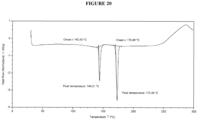
- crystalline Compound 1, Type B has an X-ray powder diffraction (XRPD) pattern as shown in Figure 18 . Also described herein, crystalline Compound 1, Type B, has an X-ray powder diffraction (XRPD) pattern with characteristic peaks at about 6.6° 2-Theta, 12.9° 2-Theta, 19.3° 2-Theta, 21.4° 2-Theta, and 23.5° 2-Theta. Also described herein, crystalline Compound 1, Type B, has a thermo-gravimetric analysis (TGA) thermogram as set forth in Figure 19 . Also described herein, crystalline Compound 1, Type B, has a DSC thermogram as set forth in Figure 20 . Also described herein, crystalline Compound 1, Type B, has a DSC thermogram with two endotherms at about 142°C and 170°C.
- TGA thermo-gravimetric analysis
- the crystalline form of Compound 1 is crystalline Type B. Also described herein, the crystalline form of Compound 1 is crystalline Type C. Also described herein, the crystalline form of Compound 1 is crystalline Type D. Also described herein, the crystalline form of Compound 1 is crystalline Type E. Also described herein, the crystalline form of Compound 1 is crystalline Type F. Also described herein, the crystalline form of Compound 1 is crystalline Type G. Also described herein, the crystalline form of Compound 1 is crystalline Type I. Also described herein, the crystalline form of Compound 1 is crystalline Type J. Also described herein, the crystalline form of Compound 1 is crystalline Type L. Also described herein, the crystalline form of Compound 1 is crystalline Type M.
- solvents disclosed herein are those that are suitable for use in GMP facilities and consistent with industrial safety concerns. Categories of solvents are defined in, for example, the International Conference on Harmonization of Technical Requirements for Registration of Pharmaceuticals for Human Use (ICH), "Impurities: Guidelines for Residual Solvents Q3C(R6)," (October 2016 ).
- Solvents are categorized into three classes. Class 1 solvents are toxic and are to be avoided. Class 2 solvents are solvents to be limited in use during the manufacture of the therapeutic agent. Class 3 solvents are solvents with low toxic potential and of lower risk to human health. Data for Class 3 solvents indicate that they are less toxic in acute or short-term studies and negative in genotoxicity studies.
- Class 1 solvents which are to be avoided, include: benzene; carbon tetrachloride; 1,2-dichloroethane; 1,1-dichloroethene; and 1,1,1-trichloroethane.
- Class 2 solvents are: acetonitrile, chlorobenzene, chloroform, cumene, cyclohexane, 1,2-dichloroethene, dichloromethane, 1,2-dimethoxyethane, N,N-dimethylacetamide, N,N-dimethylformamide, 1,4-dioxane, 2-ethoxyethanol, ethylene glycol, formamide, hexane, methanol, 2-methoxyethanol, methylbutyl ketone, methylcyclohexane, methylisobutylketone, N-methylpyrrolidone, nitromethane, pyridine, sulfolane, tetrahydrofuran, tetralin, toluene, 1,1,2-trichloroethene and xylene.
- Class 3 solvents which possess low toxicity, include: acetic acid, acetone, anisole, 1-butanol, 2-butanol, butyl acetate, tert -butyl methyl ether (MTBE), dimethyl sulfoxide, ethanol, ethyl acetate, ethyl ether, ethyl formate, formic acid, heptane, isobutyl acetate, isopropyl acetate, methyl acetate, 3-methyl-1-butanol, methylethyl ketone, 2-methyl-1-propanol, pentane, 1-pentanol, 1-propanol, 2-propanol, propyl acetate, and triethylamine.
- acetic acid acetone, anisole, 1-butanol, 2-butanol, butyl acetate, tert -butyl methyl ether (MTBE), dimethyl sulfoxide, ethanol
- Residual solvents in active pharmaceutical ingredients originate from the manufacture of APIs. In some cases, the solvents are not completely removed by practical manufacturing techniques. Appropriate selection of the solvent for the synthesis of APIs may enhance the yield, or determine characteristics such as crystal form, purity, and solubility. Therefore, the solvent is a critical parameter in the synthetic process.
- compositions comprising Compound 1 comprise an organic solvent(s). In some embodiments, compositions comprising Compound 1 comprise a residual amount of an organic solvent(s). In some embodiments, compositions comprising Compound 1 comprise a residual amount of a Class 3 solvent. In some embodiments, the organic solvent is a Class 3 solvent.
- the Class 3 solvent is selected from the group consisting of acetic acid, acetone, anisole, 1-butanol, 2-butanol, butyl acetate, tert -butyl methyl ether (MTBE), dimethyl sulfoxide, ethanol, ethyl acetate, ethyl ether, ethyl formate, formic acid, heptane, isobutyl acetate, isopropyl acetate, methyl acetate, 3-methyl-1-butanol, methylethyl ketone, 2-methyl-1-propanol, pentane, 1-pentanol, 1-propanol, 2-propanol, propyl acetate, and triethylamine.
- MTBE tert -butyl methyl ether
- the Class 3 solvent is selected from the group consisting of acetone, ethyl acetate, isopropyl acetate, tert -butyl methyl ether, heptane, isopropanol, and ethanol.
- compositions comprising Compound 1 comprise a residual amount of a Class 2 solvent.
- the organic solvent is a Class 2 solvent.
- the Class 2 solvent is selected from the group consisting of acetonitrile, chlorobenzene, chloroform, cumene, cyclohexane, 1,2-dichloroethene, dichloromethane, 1,2-dimethoxyethane, N,N-dimethylacetamide, N,N-dimethylformamide, 1,4-dioxane, 2-ethoxyethanol, ethylene glycol, formamide, hexane, methanol, 2-methoxyethanol, methylbutyl ketone, methylcyclohexane, methylisobutylketone, N-methylpyrrolidone, nitromethane, pyridine, sulfolane, tetrahydrofuran, tetralin, toluene, 1, 1,2-trichloro
- compositions comprising Compound 1 comprise a residual amount of a solvent for which no adequate toxicological data were found.
- the organic solvent is a solvent for which no adequate toxicological data were found.
- the solvent is selected from the group consisting of 2-butanone and 2-methyltetrahydrofuran.
- acceptable or “pharmaceutically acceptable”, with respect to a formulation, composition or ingredient, as used herein, means having no persistent detrimental effect on the general health of the subject being treated or does not abrogate the biological activity or properties of the compound, and is relatively nontoxic.
- amelioration of the symptoms of a particular disease, disorder, or condition by administration of a particular compound or pharmaceutical composition refers to any lessening of severity, delay in onset, slowing of progression, or shortening of duration, whether permanent or temporary, lasting or transient that can be attributed to or associated with administration of the compound or composition.
- Bioavailability refers to the percentage of Compound 1 dosed that is delivered into the general circulation of the animal or human being studied. The total exposure (AUC (0- ⁇ ) ) of a drug when administered intravenously is usually defined as 100% bioavailable (F%). “Oral bioavailability” refers to the extent to which Compound 1 is absorbed into the general circulation when the pharmaceutical composition is taken orally as compared to intravenous injection.
- Blood plasma concentration refers to the concentration of Compound 1 in the plasma component of blood of a subject. It is understood that the plasma concentration of Compound 1 may vary significantly between subjects, due to variability with respect to metabolism and/or possible interactions with other therapeutic agents. In accordance with one embodiment disclosed herein, the blood plasma concentration of Compound 1 may vary from subject to subject. Likewise, values such as maximum plasma concentration (C max ) or time to reach maximum plasma concentration (T max ), or total area under the plasma concentration time curve (AUC (0- ⁇ ) ) may vary from subject to subject. Due to this variability, the amount necessary to constitute "a therapeutically effective amount" of Compound 1 may vary from subject to subject.
- co-administration are meant to encompass administration of the selected therapeutic agents to a single patient, and are intended to include treatment regimens in which the agents are administered by the same or different route of administration or at the same or different time.
- an “effective amount” or “therapeutically effective amount,” as used herein, refer to a sufficient amount of an agent or a compound being administered which will relieve to some extent one or more of the symptoms of the disease or condition being treated. The result can be reduction and/or alleviation of the signs, symptoms, or causes of a disease, or any other desired alteration of a biological system.
- an “effective amount” for therapeutic uses is the amount of the composition including a compound as disclosed herein required to provide a clinically significant decrease in disease symptoms without undue adverse side effects.
- An appropriate “effective amount” in any individual case may be determined using techniques, such as a dose escalation study.
- the term "therapeutically effective amount” includes, for example, a prophylactically effective amount.
- an “effective amount” of a compound disclosed herein is an amount effective to achieve a desired pharmacologic effect or therapeutic improvement without undue adverse side effects. It is understood that “an effect amount” or “a therapeutically effective amount” can vary from subject to subject, due to variation in metabolism of Compound 1, age, weight, general condition of the subject, the condition being treated, the severity of the condition being treated, and the judgment of the prescribing physician. By way of example only, therapeutically effective amounts may be determined by a dose escalation clinical trial.
- enhancing means to increase or prolong either in potency or duration a desired effect.
- enhancing the effect of therapeutic agents refers to the ability to increase or prolong, either in potency or duration, the effect of therapeutic agents on during treatment of a disease, disorder, or condition.
- An “enhancing-effective amount,” as used herein, refers to an amount adequate to enhance the effect of a therapeutic agent in the treatment of a disease, disorder, or condition. When used in a patient, amounts effective for this use will depend on the severity and course of the disease, disorder, or condition, previous therapy, the patient's health status and response to the drugs, and the judgment of the treating physician.
- prophylactically effective amount refers that amount of a composition applied to a patient which will relieve to some extent one or more of the symptoms of a disease, condition or disorder being treated. In such prophylactic applications, such amounts may depend on the patient's state of health and weight. As an example, one can determine such prophylactically effective amounts by a dose escalation clinical trial.
- subject refers to an animal which is the object of treatment, observation or experiment.
- a subject may be, but is not limited to, a mammal including, but not limited to, a human.
- target activity refers to a biological activity capable of being modulated by a selective modulator.
- Certain exemplary target activities include, but are not limited to, binding affinity, signal transduction, enzymatic activity, tumor growth, inflammation or inflammation-related processes, and amelioration of one or more symptoms associated with a disease or condition.
- treat include alleviating, abating or ameliorating a disease or condition symptoms, preventing additional symptoms, ameliorating or preventing the underlying metabolic causes of symptoms, inhibiting the disease or condition, e.g., arresting the development of the disease or condition, relieving the disease or condition, causing regression of the disease or condition, relieving a condition caused by the disease or condition, or stopping the symptoms of the disease or condition.
- the terms “treat,” “treating” or “treatment”, include, but are not limited to, prophylactic and/or therapeutic treatments.
- EC 50 refers to a dosage, concentration or amount of a particular test compound that elicits a dose-dependent response at 50% of maximal expression of a particular response that is induced, provoked or potentiated by the particular test compound.
- a pharmaceutical composition comprising a crystalline form of Compound 1 and at least one inactive ingredient selected from pharmaceutically acceptable carriers, diluents, and excipients.
- a pharmaceutical composition comprising a crystalline form of Compound 1 and at least one inactive ingredient selected from pharmaceutically acceptable carriers, diluents, and excipients, wherein the crystalline form of Compound 1 comprises the Type A* family of crystalline forms selected from the group consisting of Type A0, Type A, Type A1, Type A2, and Type A3.
- a pharmaceutical composition comprising a crystalline form of Compound 1 and at least one inactive ingredient selected from pharmaceutically acceptable carriers, diluents, and excipients, wherein the crystalline form of Compound 1 comprises the Type A* family of crystalline forms selected from the group consisting of Type A0, Type A, and Type A1.
- a pharmaceutical composition comprising a crystalline form of Compound 1 and at least one inactive ingredient selected from pharmaceutically acceptable carriers, diluents, and excipients, wherein the crystalline form of Compound 1 is Type A0, Type A, Type A1, Type A2, and Type A3.
- a pharmaceutical composition comprising a crystalline form of Compound 1 and at least one inactive ingredient selected from pharmaceutically acceptable carriers, diluents, and excipients, wherein the crystalline form of Compound 1 is Type A0.
- a pharmaceutical composition comprising a crystalline form of Compound 1 and at least one inactive ingredient selected from pharmaceutically acceptable carriers, diluents, and excipients, wherein the crystalline form of Compound 1 is Type A.
- a pharmaceutical composition comprising a crystalline form of Compound 1 and at least one inactive ingredient selected from pharmaceutically acceptable carriers, diluents, and excipients, wherein the crystalline form of Compound 1 is Type A1.
- a pharmaceutical composition comprising a crystalline form of Compound 1 and at least one inactive ingredient selected from pharmaceutically acceptable carriers, diluents, and excipients, wherein the crystalline form of Compound 1 is Type A2.
- a pharmaceutical composition comprising a crystalline form of Compound 1 and at least one inactive ingredient selected from pharmaceutically acceptable carriers, diluents, and excipients, wherein the crystalline form of Compound 1 is Type A3.
- a pharmaceutical composition comprising a crystalline form of Compound 1 and at least one inactive ingredient selected from pharmaceutically acceptable carriers, diluents, and excipients, wherein the crystalline form of Compound 1 is Type K. Also described herein is a pharmaceutical composition comprising a crystalline form of Compound 1 and at least one inactive ingredient selected from pharmaceutically acceptable carriers, diluents, and excipients, wherein the crystalline form of Compound 1 is Type N. Also described herein is a pharmaceutical composition comprising a crystalline form of Compound 1 and at least one inactive ingredient selected from pharmaceutically acceptable carriers, diluents, and excipients, wherein the crystalline form of Compound 1 is Type O.
- a pharmaceutical composition comprising a crystalline form of Compound 1 and at least one inactive ingredient selected from pharmaceutically acceptable carriers, diluents, and excipients, wherein the crystalline form of Compound 1 is Type B. Also described herein is a pharmaceutical composition comprising a crystalline form of Compound 1 and at least one inactive ingredient selected from pharmaceutically acceptable carriers, diluents, and excipients, wherein the crystalline form of Compound 1 is Type C. Also described herein is a pharmaceutical composition comprising a crystalline form of Compound 1 and at least one inactive ingredient selected from pharmaceutically acceptable carriers, diluents, and excipients, wherein the crystalline form of Compound 1 is Type D.
- a pharmaceutical composition comprising a crystalline form of Compound 1 and at least one inactive ingredient selected from pharmaceutically acceptable carriers, diluents, and excipients, wherein the crystalline form of Compound 1 is Type E. Also described herein is a pharmaceutical composition comprising a crystalline form of Compound 1 and at least one inactive ingredient selected from pharmaceutically acceptable carriers, diluents, and excipients, wherein the crystalline form of Compound 1 is Type F. Also described herein is a pharmaceutical composition comprising a crystalline form of Compound 1 and at least one inactive ingredient selected from pharmaceutically acceptable carriers, diluents, and excipients, wherein the crystalline form of Compound 1 is Type G.
- a pharmaceutical composition comprising a crystalline form of Compound 1 and at least one inactive ingredient selected from pharmaceutically acceptable carriers, diluents, and excipients, wherein the crystalline form of Compound 1 is Type I. Also described herein is a pharmaceutical composition comprising a crystalline form of Compound 1 and at least one inactive ingredient selected from pharmaceutically acceptable carriers, diluents, and excipients, wherein the crystalline form of Compound 1 is Type J. Also described herein is a pharmaceutical composition comprising a crystalline form of Compound 1 and at least one inactive ingredient selected from pharmaceutically acceptable carriers, diluents, and excipients, wherein the crystalline form of Compound 1 is Type L. Also described herein is a pharmaceutical composition comprising a crystalline form of Compound 1 and at least one inactive ingredient selected from pharmaceutically acceptable carriers, diluents, and excipients, wherein the crystalline form of Compound 1 is Type M.
- compositions may be formulated in a conventional manner using one or more physiologically acceptable carriers including excipients and auxiliaries which facilitate processing of the active compounds into preparations which can be used pharmaceutically. Proper formulation is dependent upon the route of administration chosen.
- a summary of pharmaceutical compositions described herein may be found, for example, in Remington: The Science and Practice of Pharmacy, Nineteenth Ed (Easton, Pa.: Mack Publishing Company, 1995 ); Hoover, John E., Remington's Pharmaceutical Sciences, Mack Publishing Co., Easton, Pennsylvania 1975 ; Liberman, H.A. and Lachman, L., Eds., Pharmaceutical Dosage Forms, Marcel Decker, New York, N.Y., 1980 ; and Pharmaceutical Dosage Forms and Drug Delivery Systems, Seventh Ed. (Lippincott Williams & Wilkins1999 ).
- a pharmaceutical composition refers to a mixture of Compound 1 with other chemical components, such as carriers, stabilizers, diluents, dispersing agents, suspending agents, thickening agents, and/or excipients.
- the pharmaceutical composition facilitates administration of the compound to a mammal.
- therapeutically effective amounts of Compound 1 are administered in a pharmaceutical composition to a mammal having a disease, disorder, or condition to be treated.
- the mammal is a human.
- a therapeutically effective amount can vary widely depending on the severity of the disease, the age and relative health of the subject, the potency of the compound used and other factors.
- the compounds can be used singly or in combination with one or more therapeutic agents as components of mixtures.
- pharmaceutical combination means a product that results from the mixing or combining of more than one active ingredient and includes both fixed and non-fixed combinations of the active ingredients.
- fixed combination means that the active ingredients, e.g. Compound 1, and a co-agent, are both administered to a patient simultaneously in the form of a single entity or dosage.
- non-fixed combination means that the active ingredients, e.g. Compound 1, and a co-agent, are administered to a patient as separate entities either simultaneously, concurrently or sequentially with no specific intervening time limits, wherein such administration provides effective levels of the two compounds in the body of the patient.
- cocktail therapy e.g. the administration of three or more active ingredients.
- crystalline Compound 1 is incorporated into pharmaceutical compositions to provide solid oral dosage forms. In other embodiments, crystalline Compound 1 is used to prepare pharmaceutical compositions other than oral solid dosage forms.
- the pharmaceutical formulations described herein can be administered to a subject by multiple administration routes, including but not limited to, oral, parenteral (e.g., intravenous, subcutaneous, intramuscular), intranasal, buccal, topical, rectal, or transdermal administration routes.
- the pharmaceutical formulations described herein include, but are not limited to, aqueous liquid dispersions, self-emulsifying dispersions, solid solutions, liposomal dispersions, aerosols, solid dosage forms, powders, immediate release formulations, controlled release formulations, fast melt formulations, tablets, capsules, pills, delayed release formulations, extended release formulations, pulsatile release formulations, multiparticulate formulations, and mixed immediate and controlled release formulations.
- compositions including a compound described herein may be manufactured in a conventional manner, such as, by way of example only, by means of conventional mixing, dissolving, granulating, dragee-making, levigating, emulsifying, encapsulating, entrapping or compression processes.
- compositions described herein can be formulated for administration to a mammal via any conventional means including, but not limited to, oral, parenteral (e.g., intravenous, subcutaneous, or intramuscular), buccal, intranasal, rectal, or transdermal administration routes.
- parenteral e.g., intravenous, subcutaneous, or intramuscular
- buccal e.g., intranasal, rectal, or transdermal administration routes.
- intranasal e.g., transdermal administration routes.
- rectal e.g., transdermal administration routes.
- transdermal administration routes e.g., transdermal administration routes.
- subject is used to mean an animal, preferably a mammal, including a human or non-human.
- patient and subject may be used interchangeably.
- compositions described herein, which include Compound 1 can be formulated into any suitable dosage form, including but not limited to, solid oral dosage forms, controlled release formulations, fast melt formulations, effervescent formulations, tablets, powders, pills, capsules, delayed release formulations, extended release formulations, pulsatile release formulations, multiparticulate formulations, and mixed immediate release and controlled release formulations.
- compositions for oral use can be obtained by mixing one or more solid excipients with one or more of the compounds described herein, optionally grinding the resulting mixture, and processing the mixture of granules, after adding suitable auxiliaries, if desired, to obtain tablets or dragee cores.
- Suitable excipients include, for example, fillers such as sugars, including lactose, sucrose, mannitol, or sorbitol; cellulose preparations such as, for example, maize starch, wheat starch, rice starch, potato starch, gelatin, gum tragacanth, methylcellulose, microcrystalline cellulose, hydroxypropylmethylcellulose, sodium carboxymethylcellulose; or others such as: polyvinylpyrrolidone (PVP or povidone) or calcium phosphate.
- disintegrating agents may be added, such as the cross-linked croscarmellose sodium, polyvinylpyrrolidone, agar, or alginic acid or a salt thereof such as sodium alginate.
- the solid dosage forms disclosed herein may be in the form of a tablet, (including a suspension tablet, a fast-melt tablet, a bite-disintegration tablet, a rapid-disintegration tablet, an effervescent tablet, or a caplet), a pill, a powder (including a sterile packaged powder, a dispensable powder, or an effervescent powder) a capsule (including both soft or hard capsules, e.g., capsules made from animal-derived gelatin or plant-derived HPMC, or "sprinkle capsules"), solid dispersion, solid solution, bioerodible dosage form, controlled release formulations, pulsatile release dosage forms, multiparticulate dosage forms, pellets, granules, or an aerosol.
- a tablet including a suspension tablet, a fast-melt tablet, a bite-disintegration tablet, a rapid-disintegration tablet, an effervescent tablet, or a caplet
- a pill including a sterile
- the pharmaceutical formulation is in the form of a powder. In still other embodiments, the pharmaceutical formulation is in the form of a tablet, including but not limited to, a fast-melt tablet. Additionally, pharmaceutical formulations described herein may be administered as a single capsule or in multiple capsule dosage form. In some embodiments, the pharmaceutical formulation is administered in two, or three, or four, capsules or tablets.
- the pharmaceutical solid dosage forms described herein can include Compound 1, and one or more pharmaceutically acceptable additives such as a compatible carrier, binder, filling agent, suspending agent, flavoring agent, sweetening agent, disintegrating agent, dispersing agent, surfactant, lubricant, colorant, diluent, solubilizer, moistening agent, plasticizer, stabilizer, penetration enhancer, wetting agent, anti-foaming agent, antioxidant, preservative, or one or more combination thereof.
- a film coating is provided around the formulation of Compound 1.
- some or all of the particles of the Compound 1 are coated.
- some or all of the particles of the Compound 1 are microencapsulated.
- the particles of the Compound 1 are not microencapsulated and are uncoated.
- Suitable carriers for use in the solid dosage forms described herein include, but are not limited to, acacia, gelatin, colloidal silicon dioxide, calcium glycerophosphate, calcium lactate, maltodextrin, glycerine, magnesium silicate, sodium caseinate, soy lecithin, sodium chloride, tricalcium phosphate, dipotassium phosphate, sodium stearoyl lactylate, carrageenan, monoglyceride, diglyceride, pregelatinized starch, hydroxypropylmethylcellulose, hydroxypropylmethylcellulose acetate stearate, sucrose, microcrystalline cellulose, lactose, and mannitol.
- Suitable filling agents for use in the solid dosage forms described herein include, but are not limited to, lactose, calcium carbonate, calcium phosphate, dibasic calcium phosphate, calcium sulfate, microcrystalline cellulose, cellulose powder, dextrose, dextrates, dextran, starches, pregelatinized starch, hydroxypropylmethycellulose (HPMC), hydroxypropylmethycellulose phthalate, hydroxypropylmethylcellulose acetate stearate (HPMCAS), sucrose, xylitol, lactitol, mannitol, sorbitol, sodium chloride, and polyethylene glycol.
- disintegrants are often used in the formulation, especially when the dosage forms are compressed with binder. Disintegrants help rupturing the dosage form matrix by swelling or capillary action when moisture is absorbed into the dosage form.
- Suitable disintegrants for use in the solid dosage forms described herein include, but are not limited to, natural starch such as corn starch or potato starch, a pregelatinized starch such as National 1551 or Amijel ® , or sodium starch glycolate such as Promogel ® or Explotab ® , a cellulose such as a wood product, methylcrystalline cellulose, e.g., Avicel ® , Avicel ® PH101, Avicel ® PH102, Avicel ® PH105, Elcema ® P100, Emcocel ® , Vivacel ® , Ming Tia ® , and Solka-Floc ® , methylcellulose, croscarmellose, or a cross-linked cellulose, such as cross-linked sodium carboxymethylcellulose (Ac-Di-Sol ® ), cross-linked carboxymethylcellulose, or cross-linked croscarmellose, a cross-linked starch such as sodium starch glycolate, a cross-linked
- the disintegrating agent is selected from the group consisting of natural starch, a pregelatinized starch, a sodium starch, methyl crystalline cellulose, methylcellulose, croscarmellose, croscarmellose sodium, cross-linked sodium carboxymethylcellulose, cross-linked carboxymethylcellulose, cross-linked croscarmellose, cross-linked starch such as sodium starch glycolate, cross-linked polymer such as crospovidone, cross-linked polyvinylpyrrolidone, sodium alginate, a clay, or a gum.
- the disintegrating agent is croscarmellose sodium.
- Binders impart cohesiveness to solid oral dosage form formulations: for powder filled capsule formulation, they aid in plug formation that can be filled into soft or hard shell capsules and for tablet formulation, they ensure the tablet remaining intact after compression and help assure blend uniformity prior to a compression or fill step.
- Materials suitable for use as binders in the solid dosage forms described herein include, but are not limited to, carboxymethylcellulose, methylcellulose (e.g., Methocel ® ), hydroxypropylmethylcellulose (e.g.
- binder levels of 20-70% are used in powder-filled gelatin capsule formulations.
- Binder usage level in tablet formulations varies whether direct compression, wet granulation, roller compaction, or usage of other excipients such as fillers which itself can act as moderate binder.
- Formulators skilled in art can determine the binder level for the formulations, but binder usage level of up to 70% in tablet formulations is common.
- Suitable lubricants or glidants for use in the solid dosage forms described herein include, but are not limited to, stearic acid, calcium hydroxide, talc, corn starch, sodium stearyl fumarate, alkali-metal and alkaline earth metal salts, such as calcium, magnesium, stearic acid, sodium stearates, magnesium stearate, zinc stearate, waxes, Stearowet ® , boric acid, sodium benzoate, sodium acetate, sodium chloride, leucine, a polyethylene glycol or a methoxypolyethylene glycol such as Carbowax TM , PEG 4000, PEG 5000, PEG 6000, propylene glycol, sodium oleate, glyceryl behenate, glyceryl palmitostearate, glyceryl benzoate, magnesium or sodium lauryl sulfate.
- stearic acid calcium hydroxide, talc, corn starch, sodium
- the lubricant is selected from the group consisting of stearic acid, calcium hydroxide, talc, corn starch, sodium stearyl fumarate, stearic acid, sodium stearates, magnesium stearate, zinc stearate, and waxes. In some embodiments provided herein, the lubricant is magnesium stearate.
- Suitable diluents for use in the solid dosage forms described herein include, but are not limited to, sugars (including lactose, sucrose, and dextrose), polysaccharides (including dextrates and maltodextrin), polyols (including mannitol, xylitol, and sorbitol), and cyclodextrins.
- the diluent is selected from the group consisting of lactose, sucrose, dextrose, dextrates, maltodextrin, mannitol, xylitol, sorbitol, cyclodextrins, calcium phosphate, calcium sulfate, starches, modified starches, microcrystalline cellulose, microcellulose, and talc. In some embodiments provided herein, the diluent is microcrystalline cellulose.
- non water-soluble diluent represents compounds typically used in the formulation of pharmaceuticals, such as calcium phosphate, calcium sulfate, starches, modified starches, microcrystalline cellulose, microcellulose (e.g., having a density of about 0.45 g/cm 3 , e.g. Avicel, powdered cellulose), and talc.
- Suitable wetting agents for use in the solid dosage forms described herein include, for example, oleic acid, glyceryl monostearate, sorbitan monooleate, sorbitan monolaurate, triethanolamine oleate, polyoxyethylene sorbitan monooleate, polyoxyethylene sorbitan monolaurate, quaternary ammonium compounds (e.g., Polyquat 10 ® ), sodium oleate, sodium lauryl sulfate, magnesium stearate, sodium docusate, triacetin, and vitamin E TPGS.
- quaternary ammonium compounds e.g., Polyquat 10 ®
- Suitable surfactants for use in the solid dosage forms described herein include, for example, sodium lauryl sulfate, sorbitan monooleate, polyoxyethylene sorbitan monooleate, polysorbates, polaxomers, bile salts, glyceryl monostearate, copolymers of ethylene oxide and propylene oxide, e.g., Pluronic ® (BASF).
- Pluronic ® BASF
- the surfactant is selected from the group consisting of sodium lauryl sulfate, sorbitan monooleate, polyoxyethylene sorbitan monooleate, polysorbates, polaxomers, bile salts, glyceryl monostearate, copolymers of ethylene oxide and propylene oxide.
- the surfactant is sodium lauryl sulfate.
- Suitable suspending agents for use in the solid dosage forms described here include, but are not limited to, polyvinylpyrrolidone, e.g., polyvinylpyrrolidone K12, polyvinylpyrrolidone K17, polyvinylpyrrolidone K25, or polyvinylpyrrolidone K30, polyethylene glycol, e.g., the polyethylene glycol can have a molecular weight of about 300 to about 6000, or about 3350 to about 4000, or about 7000 to about 5400, vinyl pyrrolidone/vinyl acetate copolymer (S630), sodium carboxymethylcellulose, methylcellulose, hydroxy-propylmethylcellulose, polysorbate-80, hydroxyethylcellulose, sodium alginate, gums, such as, e.g., gum tragacanth and gum acacia, guar gum, xanthans, including xanthan gum, sugars, cellulosics, such as,
- Suitable antioxidants for use in the solid dosage forms described herein include, for example, e.g., butylated hydroxytoluene (BHT), sodium ascorbate, and tocopherol.
- BHT butylated hydroxytoluene
- sodium ascorbate sodium ascorbate
- tocopherol sodium ascorbate
- additives used in the solid dosage forms described herein there is considerable overlap between additives used in the solid dosage forms described herein.
- the above-listed additives should be taken as merely exemplary, and not limiting, of the types of additives that can be included in solid dosage forms described herein.
- the amounts of such additives can be readily determined by one skilled in the art, according to the particular properties desired.
- one or more layers of the pharmaceutical formulation are plasticized.
- a plasticizer is generally a high boiling point solid or liquid. Suitable plasticizers can be added from about 0.01% to about 50% by weight (w/w) of the coating composition.
- Plasticizers include, but are not limited to, diethyl phthalate, citrate esters, polyethylene glycol, glycerol, acetylated glycerides, triacetin, polypropylene glycol, polyethylene glycol, triethyl citrate, dibutyl sebacate, stearic acid, stearol, stearate, and castor oil.
- a capsule may be prepared, for example, by placing the bulk blend of the formulation of Compound 1 inside of a capsule.
- the formulations non-aqueous suspensions and solutions
- the formulations are placed in a soft gelatin capsule.
- the formulations are placed in a hard shell gelatin capsule.
- the formulations are placed in standard gelatin capsules or non-gelatin capsules such as capsules comprising HPMC.
- the formulation is placed in a sprinkle capsule, wherein the capsule may be swallowed whole or the capsule may be opened and the contents sprinkled on food prior to eating.
- the therapeutic dose is split into multiple (e.g., two, three, or four) capsules.
- the entire dose of the formulation is delivered in a capsule form.
- the particles of Compound 1 and one or more excipients are dry blended and compressed into a mass, such as a tablet, having a hardness sufficient to provide a pharmaceutical composition that substantially disintegrates within less than about 30 minutes, less than about 35 minutes, less than about 40 minutes, less than about 45 minutes, less than about 50 minutes, less than about 55 minutes, or less than about 60 minutes, after oral administration, thereby releasing the formulation into the gastrointestinal fluid.
- plasticizers such as polyethylene glycols, e.g., PEG 300, PEG 400, PEG 600, PEG 1450, PEG 3350, and PEG 800, stearic acid, propylene glycol, oleic acid, and triacetin are incorporated into the microencapsulation material.
- the microencapsulating material useful for delaying the release of the pharmaceutical compositions is from the USP or the National Formulary (NF).
- the microencapsulation material is Klucel.
- the microencapsulation material is methocel.
- a powder including the formulations with Compound 1 may be formulated to include one or more pharmaceutical excipients and flavors. Such a powder may be prepared, for example, by mixing the formulation and optional pharmaceutical excipients to form a bulk blend composition. Additional embodiments also include a suspending agent and/or a wetting agent. This bulk blend is uniformly subdivided into unit dosage packaging or multi-dosage packaging units.
- Effervescent powders are also prepared in accordance with the present disclosure.
- Effervescent salts have been used to disperse medicines in water for oral administration.
- Effervescent salts are granules or coarse powders containing a medicinal agent in a dry mixture, usually composed of sodium bicarbonate, citric acid and/or tartaric acid.
- a medicinal agent in a dry mixture, usually composed of sodium bicarbonate, citric acid and/or tartaric acid.
- the acids and the base react to liberate carbon dioxide gas, thereby causing "effervescence.”
- effervescent salts include, e.g., the following ingredients: sodium bicarbonate or a mixture of sodium bicarbonate and sodium carbonate, citric acid and/or tartaric acid. Any acid-base combination that results in the liberation of carbon dioxide can be used in place of the combination of sodium bicarbonate and citric and tartaric acids, as long as the ingredients were suitable for pharmaceutical use and result in a pH of about 6.0 or higher.
- the solid dosage forms described herein can be formulated as enteric coated delayed release oral dosage forms, i.e., as an oral dosage form of a pharmaceutical composition as described herein which utilizes an enteric coating to affect release in the small intestine of the gastrointestinal tract.
- the enteric coated dosage form may be a compressed or molded or extruded tablet/mold (coated or uncoated) containing granules, powder, pellets, beads or particles of the active ingredient and/or other composition components, which are themselves coated or uncoated.
- the enteric coated oral dosage form may also be a capsule (coated or uncoated) containing pellets, beads or granules of the solid carrier or the composition, which are themselves coated or uncoated.
- pharmaceutical formulations include particles of Compound 1 and at least one dispersing agent or suspending agent for oral administration to a subject.
- the formulations may be a powder and/or granules for suspension and, upon admixture with water, a substantially uniform suspension is obtained.
- described herein is a crystalline form of methyl (S)-2-((2-(2,6-difluoro-4-(methylcarbamoyl)phenyl)-7-methylimidazo[1,2-a]pyridin-3-yl)methyl)morpholine-4-carboxylate as described herein for use in the treatment of a disorder associated with P2X3 activity in a mammal in need thereof.
- described herein is a crystalline form of methyl (S)-2-((2-(2,6-difluoro-4-(methylcarbamoyl)phenyl)-7-methylimidazo[1,2- a ]pyridin-3-yl)methyl)morpholine-4-carboxylate as described herein for use in the treatment of pain in a mammal in need thereof.
- described herein is a crystalline form of methyl ( S )-2-((2-(2,6-difluoro-4-(methylcarbamoyl)phenyl)-7-methylimidazo[1 , 2-a]pyridin-3-yl)methyl)morpholine-4-carboxylate as described herein for use in the treatment of a urinary tract disorder in a mammal in need thereof, comprising administering to the mammal in need thereof.
- described herein is a crystalline form of methyl ( S )-2-((2-(2,6-difluoro-4-(methylcarbamoyl)phenyl)-7-methylimidazo[1,2- a ]pyridin-3-yl)methyl)morpholine-4-carboxylate as described herein for use in the treatment of cough in a mammal in need thereof.
- ACE an
- an inflammatory skin disease selected from the group consisting of atopic dermatitis, allergic, irritant contact dermatitis, exsiccation dermatitis, nummular
- PEP polymorphic eruption of pregnancy
- pemphigoid gestationis pemphigoid gestationis
- neoplasias cutaneous T-cell lymphoma
- compositions described herein can be administered for prophylactic and/or therapeutic treatments.
- the compositions are administered to a patient already suffering from a disease or condition, in an amount sufficient to cure or at least partially arrest the symptoms of the disease or condition. Amounts effective for this use will depend on the severity and course of the disease or condition, previous therapy, the patient's health status, weight, and response to the drugs, and the judgment of the treating physician.
- compositions containing the compounds described herein are administered to a patient susceptible to or otherwise at risk of a particular disease, disorder, or condition.
- a patient susceptible to or otherwise at risk of a particular disease, disorder, or condition is defined to be a "prophylactically effective amount or dose.”
- dose a pharmaceutically effective amount or dose.
- the precise amounts also depend on the patient's state of health and weight.
- effective amounts for this use will depend on the severity and course of the disease, disorder, or condition, previous therapy, the patient's health status and response to the drugs, and the judgment of the treating physician.
- the administration of the compounds may be administered chronically, that is, for an extended period of time, including throughout the duration of the patient's life in order to ameliorate or otherwise control or limit the symptoms of the patient's disease or condition.
- a maintenance dose is administered, if necessary. Subsequently, the dosage or the frequency of administration, or both, can be reduced, as a function of the symptoms, to a level at which the improved disease, disorder, or condition is retained. Patients can, however, require intermittent treatment on a long-term basis upon any recurrence of symptoms.
- the amount of a given agent that will correspond to such an amount will vary depending upon factors such as the particular compound, disease or condition and its severity, the identity (e.g., weight) of the subject or host in need of treatment, but can nevertheless be determined in a manner recognized in the field according to the particular circumstances surrounding the case, including, e.g., the specific agent being administered, the route of administration, the condition being treated, and the subject or host being treated.
- doses employed for adult human treatment will typically be in the range of about 0.02 - about 5000 mg per day, in some embodiments, about 1 - about 1500 mg per day.
- the desired dose may conveniently be presented in a single dose or as divided doses administered simultaneously (or over a short period of time) or at appropriate intervals, for example as two, three, four or more sub-doses per day.
- the pharmaceutical composition described herein may be in unit dosage forms suitable for single administration of precise dosages.
- the formulation is divided into unit doses containing appropriate quantities of one or more compound.
- the unit dosage may be in the form of a package containing discrete quantities of the formulation.
- Non-limiting examples are packaged tablets or capsules, and powders in vials or ampoules.
- Aqueous suspension compositions can be packaged in single-dose non-reclosable containers.
- multiple-dose reclosable containers can be used, in which case it is typical to include a preservative in the composition.
- formulations for parenteral injection may be presented in unit dosage form, which include, but are not limited to ampoules, or in multi-dose containers, with an added preservative.
- the daily dosages appropriate for the compounds described herein are from about 0.01 mg/kg to about 20 mg/kg. In one embodiment, the daily dosages are from about 0.1 mg/kg to about 10 mg/kg.
- An indicated daily dosage in the larger mammal, including, but not limited to, humans, is in the range from about 0.5 mg to about 1000 mg, conveniently administered in a single dose or in divided doses, including, but not limited to, up to four times a day or in extended release form.
- Suitable unit dosage forms for oral administration include from about 1 to about 500 mg active ingredient. In one embodiment, the unit dosage is about 1 mg, about 5 mg, about, 10 mg, about 20 mg, about 50 mg, about 100 mg, about 200 mg, about 250 mg, about 400 mg, or about 500 mg.
- Toxicity and therapeutic efficacy of such therapeutic regimens can be determined by standard pharmaceutical procedures in cell cultures or experimental animals, including, but not limited to, the determination of the LD 50 (the dose lethal to 50% of the population) and the ED 50 (the dose therapeutically effective in 50% of the population).
- the dose ratio between the toxic and therapeutic effects is the therapeutic index and it can be expressed as the ratio between LD 50 and ED 50 .
- the data obtained from cell culture assays and animal studies can be used in formulating a range of dosage for use in human.
- the dosage of such compounds lies preferably within a range of circulating concentrations that include the ED 50 with minimal toxicity.
- the dosage may vary within this range depending upon the dosage form employed and the route of administration utilized.
- Crystalline forms of Compound 1 described herein, and compositions thereof may also be used in combination with other therapeutic agents that are selected for their therapeutic value for the condition to be treated.
- the compositions described herein and, in embodiments where combinational therapy is employed other agents do not have to be administered in the same pharmaceutical composition, and may, because of different physical and chemical characteristics, have to be administered by different routes.
- the determination of the mode of administration and the advisability of administration, where possible, in the same pharmaceutical composition is well within the knowledge of the clinician.
- the initial administration can be made according to established protocols recognized in the field, and then, based upon the observed effects, the dosage, modes of administration and times of administration can be modified by the clinician.
- the one or more additional pharmaceutical agents are selected from the group consisting of antihistamines, including but not limited to antihistamines that inhibit action at the histamine H 1 receptor (e.g., acrivastine, antazoline, azelastine, bilastine, brompheniramine, buclizine, bromodiphenhydramine, carbinoxamine, cetirizine, chlorpromazine, cyclizine, chlorpheniramine, chlorodiphenhydramine, clemastine, cyproheptadine, desloratadine, dexbrompheniramine, dexchlorpheniramine, dimenhydrinate, dimetindene, diphenhydramine, doxepin, doxylamine, ebastine, embramine, fexofenadine, hydroxyzine, levocetirizine, loratadine, meclozine, mepyramine, mirtazapine, olopatadine, orphen
- the one or more additional pharmaceutical agents is an NK-1 antagonist wherein the NK-1 antagonist is selected from the group consisting of, but not limited to serlopitant, aprepitant, casopitant, dapitant, ezlopitant, fosaprepitant, lanepitant, maropitant, netupitant, nolpitant, orvepitant, rolapitant, vestipitant, vofopitant, AV-818, BIIF 1149CL, CP122,721, DNK-333, GSK-424887, L-733060, L-759274, LY-686017, M516102, and TA-5538, and analogs and derivatives thereof.
- the NK-1 antagonist is selected from the group consisting of, but not limited to serlopitant, aprepitant, casopitant, dapitant, ezlopitant, fosaprepitant, lanepitant, maropitant, netupitant, nolpitant, orvepitant, rolapitant, vestipit
- the NK-1 antagonist is selected from the group consisting of serlopitant, orvepitant, rolapitant, aprepitant, and fosaprepitant, or a pharmaceutically acceptable salt thereof.
- the NK-1 antagonist is serlopitant, or a pharmaceutically acceptable salt thereof.
- the NK-1 antagonist is orvepitant, or a pharmaceutically acceptable salt thereof.
- the NK-1 antagonist is rolapitant, or a pharmaceutically acceptable salt thereof.
- the NK-1 antagonist is aprepitant, or a pharmaceutically acceptable salt thereof.
- the NK-1 antagonist is fosaprepitant, or a pharmaceutically acceptable salt thereof.
- Combination therapy also embraces the administration of the therapeutic agents as described above in further combination with other biologically active ingredients and non-drug therapies.
- the combination therapy further comprises a non-drug treatment
- the non-drug treatment is conducted at any suitable time so long as a beneficial effect from the co-action of the combination of the therapeutic agents and non-drug treatment is achieved.
- the beneficial effect is still achieved when the non-drug treatment is temporally removed from the administration of the therapeutic agents, perhaps by days or even weeks.
- the components of the combination are administered to a patient simultaneously or sequentially. It will be appreciated that the components are present in the same pharmaceutically acceptable carrier and, therefore, are administered simultaneously. Alternatively, the active ingredients are present in separate pharmaceutical carriers, such as conventional oral dosage forms, that are administered either simultaneously or sequentially.
- Example 2A Polymorph Screen - Slurry at Room Temperature
- Example 2B Polymorph Screen - Slurry at 50 °C
- Example 2C Polymorph Screen - Solid Vapor Diffusion
- Example 2D Polymorph Screen - Liquid Vapor Diffusion
- Example 2E Polymorph Screen - Slow Evaporation
- Example 2F Polymorph Screen - Polymer Induced Crystallization
- polymer mixture A polyvinyl pyrrolidone (PVP), polyvinyl alcohol (PVA), polyvinylchloride (PVC), polyvinyl acetate (PVAC), hypromellose (HPMC), methyl cellulose (MC); mass ratio of 1:1:1:1:1:1) or polymer mixture B (polycaprolactone (PCL), polyethylene glycol (PEG), poly (methyl methacrylate) (PMMA) sodium alginate (SA), and hydroxyethyl cellulose (HEC); mass ratio of 1:1:1:1:1) was added into the clear solution. The solutions were then covered by Parafilm ® with 6 pinholes and subjected to evaporation at RT.
- PVP polyvinyl pyrrolidone
- PVA polyvinyl alcohol
- PVC polyvinylchloride
- PVC polyvinyl acetate
- HPMC hypromellose
- MC hypromellose
- MC hypromellose
- Type A XRPD analysis of Compound 1, Type A, ( Figure 1 ) showed Type A to be crystalline with characteristic peaks at about 6.9° 2-Theta, 11.3° 2-Theta, 11.5° 2-Theta, 12.8° 2-Theta, 17.8° 2-Theta, 20.7° 2-Theta, 21.6° 2-Theta, and 22.6° 2-Theta.
- Compound 1 crystalline form Type A was found to be a channel hydrate, which can accommodate different amounts of water in the crystal lattice depending on the ambient humidity, resulting in slight peak shifts in the XRPD patterns.
- Type A related forms (Type A0, Type A1, Type A02, and Type A3) were found and also shown to be crystalline ( Figure 1 ).
- Tables 11-15 show the XRPD peak information for the Type A* family (Type A, Type A0, Type A1, Type A02, and Type A3).
- Table 11 - XRPD Peak List of Compound 1 Type A Pos. [°2Th.] Height [cts] FWHM Left [°2Th.] d-spacing [ ⁇ ] Rel. Int.
- TGA data were collected using a Q500/5000 and Discovery 5500 TGA from TA Instruments with the following instrument parameters: Method Ramp Sample pan Aluminum, open Temperature RT - 350 °C Heating rate 10 °C/min Purge gas N 2
- TGA of Compound 1, Type A0, ( Figure 2 ) showed a weight loss of 1% up to 150°C.
- DSC was performed using a Q200/2000 and Discovery 2500 DSC from TA Instruments with the following instrument parameters: Method Ramp Sample pan Aluminum, crimped Temperature 25 °C - 300 °C Heating rate 10 °C/min Purge gas N 2
- DVS test was performed using an SMS (Surface Measurement Systems) DVS Intrinsic instrument.
- the relative humidity were calibrated against deliquescence point of LiCl, Mg(NO 3 ) 2 and KCl.
- the following instrument parameters were used at 25 °C and 40 °C: Temperature 25°C 40 °C Sample size 10 ⁇ 20 mg 10 ⁇ 20 mg Gas and flow rate N 2 , 200 mL/min N 2 , 200 mL/min dm/dt 0.002%/min 0.002%/min Min. dm/dt stability duration 10 min 10 min Max.
- DVS test was performed for Type A* family to investigate its form stability as a function of relative humidity.
- the DVS test was first conducted in a couple of cycles with different ends (30% and 95%RH) at 25 °C. The samples were equilibrated at each RH point until wt% change was lower than 0.002% or the total time reached 3 hrs.
- the water uptake of Type A* family at 25 °C exhibited almost linear increase/decrease without history sense, which behaved similarly to a hydrate with structural voids (e.g., water channels).
- the crystal forms after DVS test were detected by XRPD.
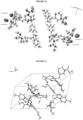
- the crystal form after DVS test was determined to be Type A ( Figure 5 ), corresponding to the ambient humidity (61.5%RH) when performing XRPD analysis.
- Type A1 was observed after DVS test ( Figure 7 ), corresponding to the ambient humidity (66.3%RH) when performing XRPD analysis. Based on these results, the crystal forms detected after DVS test were dependent on the ambient humidity when XRPD test was performed, which may be caused by the fast inter-conversion among Type A* family under different humidity.
- Cell parameters and an orientation matrix for data collection were retrieved and refined (least-squares refinement) by SAINT (Bruker, V8.37A, 2015) software using the setting angles of 9952 reflections in the range 2.458° ⁇ ⁇ ⁇ 23.390°.
- the data were collected to a maximum diffraction angle ( ⁇ ) of 27.587 ° at 296.15.
- the data set was 99 % complete out to 67.587° in ⁇ , having a Mean I/ ⁇ of 11.0 and D min (Mo) of 0.77 ⁇ .
- the asymmetric unit of Type A* family single crystal structure is composed of four API molecules (crystallographic-independent conformers) and theoretically four water molecules, which indicates that the single crystal is a hydrate ( Figure 10 ).
- the unit cell of the single crystal is shown in Figure 11 .
Landscapes
- Health & Medical Sciences (AREA)
- Chemical & Material Sciences (AREA)
- Organic Chemistry (AREA)
- Veterinary Medicine (AREA)
- Public Health (AREA)
- General Health & Medical Sciences (AREA)
- Animal Behavior & Ethology (AREA)
- Life Sciences & Earth Sciences (AREA)
- Medicinal Chemistry (AREA)
- Pharmacology & Pharmacy (AREA)
- Chemical Kinetics & Catalysis (AREA)
- General Chemical & Material Sciences (AREA)
- Nuclear Medicine, Radiotherapy & Molecular Imaging (AREA)
- Bioinformatics & Cheminformatics (AREA)
- Engineering & Computer Science (AREA)
- Dermatology (AREA)
- Endocrinology (AREA)
- Reproductive Health (AREA)
- Pulmonology (AREA)
- Urology & Nephrology (AREA)
- Epidemiology (AREA)
- Pain & Pain Management (AREA)
- Rheumatology (AREA)
- Pharmaceuticals Containing Other Organic And Inorganic Compounds (AREA)
- Nitrogen Condensed Heterocyclic Rings (AREA)
- Medicinal Preparation (AREA)
Description
- P2X purinoreceptors are a family of ion channels that are activated by extracellular adenosine triphosphate (ATP). Purinoreceptors have been implicated in a variety of biological functions, especially those related to pain sensitivity. The P2X3 receptor subunit is a member of this family.
- P2X3 is selectively expressed on nociceptive, small diameter sensory neurons (i.e., neurons that are stimulated by pain or injury), which is consistent with a role in pain sensitivity. Blocking P2X3 receptors has been reported to be analgesic in animal models of chronic inflammatory and neuropathic pain. Jarvis, et al., PNAS, 99, 17179-17184 (2002). It is, therefore, believed that reducing the P2X3 level or activity would be useful for modulating pain sensation in a subject suffering from pain and other disorders associated with P2X3 activity.
US10111883B1 - In one aspect, described herein is a crystalline form of methyl (S)-2-((2-(2,6-difluoro-4-(methylcarbamoyl)phenyl)-7-methylimidazo[1,2-a]pyridin-3-yl)methyl)morpholine-4-carboxylate; wherein the crystalline form of methyl (S)-2-((2-(2,6-difluoro-4-(methylcarbamoyl)phenyl)-7-methylimidazo[1,2-a]pyridin-3-yl)methyl)morpholine-4-carboxylate comprises the Type A* family of crystalline forms selected from the group consisting of Type A0, Type A, Type A1, Type A2, and Type A3, having at least one of the following properties:
- (a) an X-ray powder diffraction (XRPD) pattern as shown in
Figure 1 ; - (b) an X-ray powder diffraction (XRPD) pattern with characteristic peaks at about 6.9° 2-Theta, 11.3° 2-Theta, 11.5° 2-Theta, 12.8° 2-Theta, 17.8° 2-Theta, 20.7° 2-Theta, 21.6° 2-Theta, and 22.6° 2-Theta;
- (c) a thermo-gravimetric analysis (TGA) as set forth in
Figure 2 ; - (d) a DSC thermogram as set forth in
Figure 2 ; - (e) a DSC thermogram with an endotherm having an onset at about 167°C; or
- (f) combinations thereof.
- In some embodiments is a crystalline form of methyl (S)-2-((2-(2,6-difluoro-4-(methylcarbamoyl)phenyl)-7-methylimidazo[1,2-a]pyridin-3-yl)methyl)morpholine-4-carboxylate, wherein the crystalline form has an X-ray powder diffraction (XRPD) pattern as shown in
Figure 1 . - In some embodiments is a crystalline form of methyl (S)-2-((2-(2,6-difluoro-4-(methylcarbamoyl)phenyl)-7-methylimidazo[1,2-a]pyridin-3-yl)methyl)morpholine-4-carboxylate, wherein the crystalline form has an X-ray powder diffraction (XRPD) pattern with characteristic peaks at about 6.9° 2-Theta, 11.3° 2-Theta, 11.5° 2-Theta, 12.8° 2-Theta, 17.8° 2-Theta, 20.7° 2-Theta, 21.6° 2-Theta, and 22.6° 2-Theta.
- In some embodiments is a crystalline form of methyl (S)-2-((2-(2,6-difluoro-4-(methylcarbamoyl)phenyl)-7-methylimidazo[1,2-a]pyridin-3-yl)methyl)morpholine-4-carboxylate, wherein the crystalline form has a thermo-gravimetric analysis (TGA) as set forth in
Figure 2 . - In some embodiments is a crystalline form of methyl (S)-2-((2-(2,6-difluoro-4-(methylcarbamoyl)phenyl)-7-methylimidazo[1,2-a]pyridin-3-yl)methyl)morpholine-4-carboxylate, wherein the crystalline form has a DSC thermogram as set forth in
Figure 2 . - In some embodiments is a crystalline form of methyl (S)-2-((2-(2,6-difluoro-4-(methylcarbamoyl)phenyl)-7-methylimidazo[1,2-a]pyridin-3-yl)methyl)morpholine-4-carboxylate, wherein the crystalline form has a DSC thermogram with an endotherm having an onset at about 167°C.
- In some embodiments is a crystalline form of methyl (S)-2-((2-(2,6-difluoro-4-(methylcarbamoyl)phenyl)-7-methylimidazo[1,2-a]pyridin-3-yl)methyl)morpholine-4-carboxylate, wherein the crystalline form is characterized as having properties: (a) an X-ray powder diffraction (XRPD) pattern as shown in
Figure 1 ; (b) an X-ray powder diffraction (XRPD) pattern with characteristic peaks at about 6.9° 2-Theta, 11.3° 2-Theta, 11.5° 2-Theta, 12.8° 2-Theta, 17.8° 2-Theta, 20.7° 2-Theta, 21.6° 2-Theta, and 22.6° 2-Theta; (c) a thermo-gravimetric analysis (TGA) as set forth inFigure 2 ; (d) a DSC thermogram as set forth inFigure 2 ; and (e) a DSC thermogram with an endotherm having an onset at about 167°C. - In some embodiments is a crystalline form of methyl (S)-2-((2-(2,6-difluoro-4-(methylcarbamoyl)phenyl)-7-methylimidazo[1,2-a]pyridin-3-yl)methyl)morpholine-4-carboxylate, wherein the crystalline form is obtained from acetonitrile, acetone, tert-butyl methyl ether, water, methanol, ethanol, isopropanol, propanol, butanol, diethyleneglycol, ethyl acetate, isopropyl acetate, tetrahydrofuran, 2-methyltetrahydrofuran, dimethylsulfoxide, dimethylformamide, methyl ethyl ketone, methyl isobutyl ketone, butyl acetate, hexane, heptane, dichloromethane, chloroform, 1,2-dichloroethane, dimethoxyethane, toluene, anisole, or combinations thereof.
- In some embodiments is a crystalline form of methyl (S)-2-((2-(2,6-difluoro-4-(methylcarbamoyl)phenyl)-7-methylimidazo[1,2-a]pyridin-3-yl)methyl)morpholine-4-carboxylate, wherein the crystalline form is a hydrate. In some embodiments is a crystalline form of methyl (S)-2-((2-(2,6-difluoro-4-(methylcarbamoyl)phenyl)-7-methylimidazo[1,2-a]pyridin-3-yl)methyl)morpholine-4-carboxylate, wherein the crystalline form is a channel hydrate.
- In some embodiments, is a pharmaceutical composition comprising a crystalline form of methyl (S)-2-((2-(2,6-difluoro-4-(methylcarbamoyl)phenyl)-7-methylimidazo[1,2-a]pyridin-3-yl)methyl)morpholine-4-carboxylate described herein and at least one inactive ingredient selected from pharmaceutically acceptable carriers, diluents, and excipients. In some embodiments, the methyl (S)-2-((2-(2,6-difluoro-4-(methylcarbamoyl)phenyl)-7-methylimidazo[1,2-a]pyridin-3-yl)methyl)morpholine-4-carboxylate pharmaceutical composition is formulated for administration to a mammal by intravenous administration, subcutaneous administration, oral administration, inhalation, nasal administration, topical administration, or ophthalmic administration. In some embodiments, the methyl (S)-2-((2-(2,6-difluoro-4-(methylcarbamoyl)phenyl)-7-methylimidazo[1,2-a]pyridin-3-yl)methyl)morpholine-4-carboxylate pharmaceutical composition is in the form of a tablet, a pill, a capsule, a liquid, a suspension, a gel, a dispersion, a solution, an emulsion, an ointment, or a lotion.
- In some embodiments, is a crystalline form of methyl (S)-2-((2-(2,6-difluoro-4-(methylcarbamoyl)phenyl)-7-methylimidazo[1,2-a]pyridin-3-yl)methyl)morpholine-4-carboxylate described herein for use in the treatment of pain, a urinary tract disorder, cough, pruritis, endometriosis, endometriosis-associated pain, or endometriosis-associated symptoms selected from dysmenorrhea, dyspareunia, dysuria, and dyschezia in a mammal in need thereof. In some embodiments is a crystalline form of methyl (S)-2-((2-(2,6-difluoro-4-(methylcarbamoyl)phenyl)-7-methylimidazo[1,2-a]pyridin-3-yl)methyl)morpholine-4-carboxylate as described herein for use in the treatment of pain in a mammal in need thereof. In some embodiments is a crystalline form of methyl (S)-2-((2-(2,6-difluoro-4-(methylcarbamoyl)phenyl)-7-methylimidazo[1,2-a]pyridin-3-yl)methyl)morpholine-4-carboxylate as described herein for use in the treatment of a urinary tract disorder in a mammal in need thereof. In some embodiments is a crystalline form of methyl (S)-2-((2-(2,6-difluoro-4-(methylcarbamoyl)phenyl)-7-methylimidazo[1,2-a]pyridin-3-yl)methyl)morpholine-4-carboxylate as described herein for use in the treatment of a urinary tract disorder in a mammal in need thereof, wherein the urinary tract disorder comprises an overactive bladder. In some embodiments is a crystalline form of methyl (S)-2-((2-(2,6-difluoro-4-(methylcarbamoyl)phenyl)-7-methylimidazo[1,2-a]pyridin-3-yl)methyl)morpholine-4-carboxylate as described herein for use in the treatment of a urinary tract disorder in a mammal in need thereof, wherein the urinary tract disorder comprises neurogenic overactive bladder, non-neurogenic overactive bladder, interstitial cystitis, prostatitis, prostadynia, and benign prostatic hyperplasia.
- In some embodiments, described herein is a crystalline form of methyl (S)-2-((2-(2,6-difluoro-4-(methylcarbamoyl)phenyl)-7-methylimidazo[1,2-a]pyridin-3-yl)methyl)morpholine-4-carboxylate as described herein for use in the reduction or prevention of uncontrolled loss of urine in a mammal in need thereof. In some embodiments is a crystalline form of methyl (S)-2-((2-(2,6-difluoro-4-(methylcarbamoyl)phenyl)-7-methylimidazo[1,2-a]pyridin-3-yl)methyl)morpholine-4-carboxylate as described herein for use in the reduction or prevention of uncontrolled loss of urine in a mammal in need thereof, wherein the uncontrolled loss of urine is associated with urge incontinence, cough incontinence, stress incontinence, overflow incontinence, functional incontinence, neurogenic incontinence, post-prostatectomy incontinence, urinary urgency, nocturia, and enuresis.
- In some embodiments, described herein is a crystalline form of methyl (S)-2-((2-(2,6-difluoro-4-(methylcarbamoyl)phenyl)-7-methylimidazo[1,2-a]pyridin-3-yl)methyl)morpholine-4-carboxylate as described herein for use in the treatment of cough in a mammal in need thereof. In some embodiments is a crystalline form of methyl (S)-2-((2-(2,6-difluoro-4-(methylcarbamoyl)phenyl)-7-methylimidazo[1,2-a]pyridin-3-yl)methyl)morpholine-4-carboxylate as described herein for use in the treatment of cough in a mammal in need thereof, wherein the cough is chronic cough. In some embodiments is a crystalline form of methyl (S)-2-((2-(2,6-difluoro-4-(methylcarbamoyl)phenyl)-7-methylimidazo[1,2-a]pyridin-3-yl)methyl)morpholine-4-carboxylate as described herein for use in the treatment of cough in a mammal in need thereof, wherein the cough is associated with a disease, disorder, or condition selected from chronic obstructive pulmonary disease, asthma, tuberculosis, bronchitis, bronchiectasis, suppurative pulmonary disease, respiratory malignancies, allergy, cystic fibrosis, pulmonary fibrosis, respiratory tract inflammation, emphysema, pneumonia, lung cancer, lung neoplasia, sore throat, common cold, influenza, respiratory tract infection, bronchoconstriction, sarcoidosis, viral or bacterial infection of the upper airways, angiotension converting enzyme (ACE) inhibitor therapy, smoker's cough, chronic non-productive cough, neoplastic cough, cough due to gastroesophageal reflux, and inhalation of irritants, smoke, smog, dust, or air pollution.
- In some embodiments, described herein is a crystalline form of methyl (S)-2-((2-(2,6-difluoro-4-(methylcarbamoyl)phenyl)-7-methylimidazo[1,2-a]pyridin-3-yl)methyl)morpholine-4-carboxylate as described herein for use in the treatment of pruritus in a mammal in need thereof. In some embodiments is a crystalline form of methyl (S)-2-((2-(2,6-difluoro-4-(methylcarbamoyl)phenyl)-7-methylimidazo[1,2-a]pyridin-3-yl)methyl)morpholine-4-carboxylate as described herein for use in the treatment of pruritus in a mammal in need thereof, wherein the pruritus is associated with an inflammatory skin disease, an infectious skin disease, an autoimmune skin disease, or a pregnancy-related skin disease. In some embodiments is a crystalline form of methyl (S)-2-((2-(2,6-difluoro-4-(methylcarbamoyl)phenyl)-7-methylimidazo[1,2-a]pyridin-3-yl)methyl)morpholine-4-carboxylate as described herein for use in the treatment of pruritus in a mammal in need thereof, wherein the pruritus is associated with an inflammatory skin disease selected from the group consisting of atopic dermatitis, allergic, irritant contact dermatitis, exsiccation dermatitis, nummular and dyshidrotic dermatitis, lichen planus, lichen sclerosus et atrophicus, polymorphous light eruption psoriasis, Grover's disease, mucinosis, mastocytosis, and urticaria. In some embodiments is a crystalline form of methyl (S)-2-((2-(2,6-difluoro-4-(methylcarbamoyl)phenyl)-7-methylimidazo[1,2-a]pyridin-3-yl)methyl)morpholine-4-carboxylate as described herein for use in the treatment of pruritus in a mammal in need thereof, wherein the pruritus is associated with an infectious skin disease selected from the group consisting of mycoses, bacterial and viral infections, scabies, pediculosis, insect bites, and folliculitides. In some embodiments is a crystalline form of methyl (S)-2-((2-(2,6-difluoro-4-(methylcarbamoyl)phenyl)-7-methylimidazo[1,2-a]pyridin-3-yl)methyl)morpholine-4-carboxylate as described herein for use in the treatment of pruritus in a mammal in need thereof, wherein the pruritus is associated with an autoimmune skin disease selected from the group consisting of dermatitis herpetiformis (Duhring's disease), bullous pemphigoid; genodermatoses, Darier's disease, and Hailey-Hailey disease. In some embodiments is a crystalline form of methyl (S)-2-((2-(2,6-difluoro-4-(methylcarbamoyl)phenyl)-7-methylimidazo[1,2-a]pyridin-3-yl)methyl)morpholine-4-carboxylate as described herein for use in the treatment of pruritus in a mammal in need thereof, wherein the pruritus is associated with a pregnancy-related skin disease selected from the group consisting of polymorphic eruption of pregnancy (PEP), atopic eruption of pregnancy, pemphigoid gestationis, neoplasias, and cutaneous T-cell lymphoma. In some embodiments is a crystalline form of methyl (S)-2-((2-(2,6-difluoro-4-(methylcarbamoyl)phenyl)-7-methylimidazo[1,2-a]pyridin-3-yl)methyl)morpholine-4-carboxylate as described herein for use in the treatment of pruritus in a mammal in need thereof, wherein the pruritus is associated with prurigo nodularis. In some embodiments is a crystalline form of methyl (S)-2-((2-(2,6-difluoro-4-(methylcarbamoyl)phenyl)-7-methylimidazo[1,2-a]pyridin-3-yl)methyl)morpholine-4-carboxylate as described herein for use in the treatment of pruritus in a mammal in need thereof, wherein the pruritus is associated with a kidney disease or a therapeutic procedure to treat a kidney disease. In some embodiments is a crystalline form of methyl (S)-2-((2-(2,6-difluoro-4-(methylcarbamoyl)phenyl)-7-methylimidazo[1,2-a]pyridin-3-yl)methyl)morpholine-4-carboxylate as described herein for use in the treatment of pruritus in a mammal in need thereof, wherein the pruritus is associated with a chronic kidney disease. In some embodiments is a crystalline form of methyl (S)-2-((2-(2,6-difluoro-4-(methylcarbamoyl)phenyl)-7-methylimidazo[1,2-a]pyridin-3-yl)methyl)morpholine-4-carboxylate as described herein for use in the treatment of pruritus in a mammal in need thereof, wherein the pruritus is associated with a therapeutic procedure to treat a kidney disease, wherein the therapeutic procedure to treat the kidney disease is selected from the group consisting of hemodialysis and peritoneal dialysis. In some embodiments is a crystalline form of methyl (S)-2-((2-(2,6-difluoro-4-(methylcarbamoyl)phenyl)-7-methylimidazo[1,2-a]pyridin-3-yl)methyl)morpholine-4-carboxylate as described herein for use in the treatment of pruritus in a mammal in need thereof, wherein the pruritus is associated with a medical procedure or treatment. In some embodiments is a crystalline form of methyl (S)-2-((2-(2,6-difluoro-4-(methylcarbamoyl)phenyl)-7-methylimidazo[1,2-a]pyridin-3-yl)methyl)morpholine-4-carboxylate as described herein for use in the treatment of pruritus in a mammal in need thereof, wherein the pruritus is associated with a medical treatment with a drug selected from the group consisting of opioids, anti-malarial drugs, anti-cancer therapies and epidermal growth factor receptor inhibitors.
- In some embodiments, described herein is a crystalline form of methyl (S)-2-((2-(2,6-difluoro-4-(methylcarbamoyl)phenyl)-7-methylimidazo[1,2-a]pyridin-3-yl)methyl)morpholine-4-carboxylate as described herein for use in the treatment of endometriosis, endometriosis-associated pain, and endometriosis-associated symptoms in a mammal in need thereof. In some embodiments is a crystalline form of methyl (S)-2-((2-(2,6-difluoro-4-(methylcarbamoyl)phenyl)-7-methylimidazo[1,2-a]pyridin-3-yl)methyl)morpholine-4-carboxylate as described herein for use in the treatment of endometriosis in a mammal in need thereof. In some embodiments is a crystalline form of methyl (S)-2-((2-(2,6-difluoro-4-(methylcarbamoyl)phenyl)-7-methylimidazo[1,2-a]pyridin-3-yl)methyl)morpholine-4-carboxylate as described herein for use in the treatment of endometriosis-associated pain in a mammal in need thereof. In some embodiments is a crystalline form of methyl (S)-2-((2-(2,6-difluoro-4-(methylcarbamoyl)phenyl)-7-methylimidazo[1,2-a]pyridin-3-yl)methyl)morpholine-4-carboxylate as described herein for use in the treatment of endometriosis-associated symptoms in a mammal in need thereof. In some embodiments is a crystalline form of methyl (S)-2-((2-(2,6-difluoro-4-(methylcarbamoyl)phenyl)-7-methylimidazo[1,2-a]pyridin-3-yl)methyl)morpholine-4-carboxylate as described herein for use in the treatment of endometriosis-associated symptoms in a mammal in need thereof, wherein the endometriosis-associated symptoms are selected from dysmenorrhea, dyspareunia, dysuria, and dyschezia.
- In some embodiments of the methods described herein, the mammal is a human.
-
-
Figure 1 . Illustrates an XRPD spectrum of crystalline methyl (S)-2-((2-(2,6-difluoro-4-(methylcarbamoyl)phenyl)-7-methylimidazo[1,2-a]pyridin-3-yl)methyl)morpholine-4-carboxylate (Compound 1), Type A* family (Type A, Type A0, Type A1, Type A02, and Type A3). -
Figure 2 . Illustrates a TGA and DSC thermogram of crystalline (S)-2-((2-(2,6-difluoro-4-(methylcarbamoyl)phenyl)-7-methylimidazo[1,2-a]pyridin-3-yl)methyl)morpholine-4-carboxylate (Compound 1), Type A* family crystalline form (Type A0). -
Figure 3 . Illustrates the conversion relationship of crystalline methyl (S)-2-((2-(2,6-difluoro-4-(methylcarbamoyl)phenyl)-7-methylimidazo[1,2-a]pyridin-3-yl)methyl)morpholine-4-carboxylate (Compound 1), Type A* family. -
Figure 4 . Illustrates the dynamic vapor sorption (DVS) plot of crystalline methyl (S)-2-((2-(2,6-difluoro-4-(methylcarbamoyl)phenyl)-7-methylimidazo[1,2-a]pyridin-3-yl)methyl)morpholine-4-carboxylate (Compound 1), Type A* family at 25 °C (ambient RH-95%RH-0%RH-30%RH). -
Figure 5 . Illustrates X-ray powder diffraction (XRPD) patterns of crystalline methyl (S)-2-((2-(2,6-difluoro-4-(methylcarbamoyl)phenyl)-7-methylimidazo[1,2-a]pyridin-3-yl)methyl)morpholine-4-carboxylate (Compound 1), Type A* family, before and after DVS analysis at 25 °C (ambient RH-95%RH-0%RH-30%RH) (top pattern = before DVS, bottom pattern = after DVS). -
Figure 6 . Illustrates the dynamic vapor sorption (DVS) plot of crystalline methyl (S)-2-((2-(2,6-difluoro-4-(methylcarbamoyl)phenyl)-7-methylimidazo[1,2-a]pyridin-3-yl)methyl)morpholine-4-carboxylate (Compound 1), Type A* family at 25 °C (ambient RH-95%RH-0%RH-95%RH). -
Figure 7 . Illustrates X-ray powder diffraction (XRPD) patterns of crystalline methyl (S)-2-((2-(2,6-difluoro-4-(methylcarbamoyl)phenyl)-7-methylimidazo[1,2-a]pyridin-3-yl)methyl)morpholine-4-carboxylate (Compound 1), Type A* family, before and after DVS analysis at 25 °C (ambient RH-95%RH-0%RH-95%RH) (top pattern = before DVS, bottom pattern = after DVS). -
Figure 8 . Illustrates the dynamic vapor sorption (DVS) plot of crystalline methyl (S)-2-((2-(2,6-difluoro-4-(methylcarbamoyl)phenyl)-7-methylimidazo[1,2-a]pyridin-3-yl)methyl)morpholine-4-carboxylate (Compound 1), Type A* family at 40 °C (ambient RH-95%RH-0%RH-95%RH). -
Figure 9 . Illustrates X-ray powder diffraction (XRPD) patterns of crystalline methyl (S)-2-((2-(2,6-difluoro-4-(methylcarbamoyl)phenyl)-7-methylimidazo[1,2-a]pyridin-3-yl)methyl)morpholine-4-carboxylate (Compound 1), Type A* family, before and after DVS analysis at 40 °C (ambient RH-95%RH-0%RH-95%RH) (top pattern = before DVS, bottom pattern = after DVS). -
Figure 10 . Illustrates the asymmetric unit of methyl (S)-2-((2-(2,6-difluoro-4-(methylcarbamoyl)phenyl)-7-methylimidazo[1,2-a]pyridin-3-yl)methyl)morpholine-4-carboxylate (Compound 1),Type A* family, single crystal structure. -
Figure 11 . Illustrates the unit cell of methyl (S)-2-((2-(2,6-difluoro-4-(methylcarbamoyl)phenyl)-7-methylimidazo[1,2-a]pyridin-3-yl)methyl)morpholine-4-carboxylate (Compound 1),Type A* family, single crystal structure. -
Figure 12 . Illustrates an XRPD spectrum of crystalline methyl (S)-2-((2-(2,6-difluoro-4-(methylcarbamoyl)phenyl)-7-methylimidazo[1,2-a]pyridin-3-yl)methyl)morpholine-4-carboxylate (Compound 1), Type K. -
Figure 13 . Illustrates a TGA and DSC thermogram of crystalline (S)-2-((2-(2,6-difluoro-4-(methylcarbamoyl)phenyl)-7-methylimidazo[1,2-a]pyridin-3-yl)methyl)morpholine-4-carboxylate (Compound 1), Type K. -
Figure 14 . Illustrates an XRPD spectrum of crystalline methyl (S)-2-((2-(2,6-difluoro-4-(methylcarbamoyl)phenyl)-7-methylimidazo[1,2-a]pyridin-3-yl)methyl)morpholine-4-carboxylate (Compound 1), Type N. -
Figure 15 . Illustrates a TGA and DSC thermogram of crystalline (S)-2-((2-(2,6-difluoro-4-(methylcarbamoyl)phenyl)-7-methylimidazo[1,2-a]pyridin-3-yl)methyl)morpholine-4-carboxylate (Compound 1), Type N. -
Figure 16 . Illustrates an XRPD spectrum of crystalline methyl (S)-2-((2-(2,6-difluoro-4-(methylcarbamoyl)phenyl)-7-methylimidazo[1,2-a]pyridin-3-yl)methyl)morpholine-4-carboxylate (Compound 1), Type O. -
Figure 17 . Illustrates a TGA and DSC thermogram of crystalline (S)-2-((2-(2,6-difluoro-4-(methylcarbamoyl)phenyl)-7-methylimidazo[1,2-a]pyridin-3-yl)methyl)morpholine-4-carboxylate (Compound 1), Type O. -
Figure 18 . Illustrates an XRPD spectrum of crystalline methyl (S)-2-((2-(2,6-difluoro-4-(methylcarbamoyl)phenyl)-7-methylimidazo[1,2-a]pyridin-3-yl)methyl)morpholine-4-carboxylate (Compound 1), Type B. -
Figure 19 . Illustrates a TGA thermogram of crystalline (S)-2-((2-(2,6-difluoro-4-(methylcarbamoyl)phenyl)-7-methylimidazo[1,2-a]pyridin-3-yl)methyl)morpholine-4-carboxylate (Compound 1), Type B. -
Figure 20 . Illustrates a DSC thermogram of crystalline (S)-2-((2-(2,6-difluoro-4-(methylcarbamoyl)phenyl)-7-methylimidazo[1,2-a]pyridin-3-yl)methyl)morpholine-4-carboxylate (Compound 1), Type B. - Described herein are crystalline forms of P2X3 modulator methyl (S)-2-((2-(2,6-difluoro-4-(methylcarbamoyl)phenyl)-7-methylimidazo[1,2-a]pyridin-3-yl)methyl)morpholine-4-carboxylate. Also described herein are pharmaceutical compositions that include the crystalline forms of methyl (S)-2-((2-(2,6-difluoro-4-(methylcarbamoyl)phenyl)-7-methylimidazo[1,2-a]pyridin-3-yl)methyl)morpholine-4-carboxylate and methods of using the compound in the treatment of diseases or conditions.
- As described herein,
Compound 1 is methyl (S)-2-((2-(2,6-difluoro-4-(methylcarbamoyl)phenyl)-7-methylimidazo[1,2-a]pyridin-3-yl)methyl)morpholine-4-carboxylate. "Compound 1" or "methyl (S)-2-((2-(2,6-difluoro-4-(methylcarbamoyl)phenyl)-7-methylimidazo[1,2-a]pyridin-3-yl)methyl)morpholine-4-carboxylate" refers to the compound with the following structure:
- In some embodiments,
Compound 1 includes the solvent addition forms (solvates). Solvates contain either stoichiometric or non-stoichiometric amounts of a solvent, and are formed during the process of product formation or isolation with pharmaceutically acceptable solvents such as water, ethanol, methanol, tert-butyl methyl ether (MTBE), diisopropyl ether (DIPE), ethyl acetate, isopropyl acetate, isopropyl alcohol, methyl isobutyl ketone (MIBK), methyl ethyl ketone (MEK), acetone, nitromethane, tetrahydrofuran (THF), dichloromethane (DCM), dioxane, heptanes, toluene, anisole, and acetonitrile. In some embodiments, solvates are formed using, but not limited to,Class 3 solvent(s). In some embodiments, solvates are formed using, but not limited to,Class 2 solvent(s). Categories of solvents are defined in, for example, the International Conference on Harmonization of Technical Requirements for Registration of Pharmaceuticals for Human Use (ICH), "Impurities: Guidelines for Residual Solvents Q3C(R6)," (October 2016). Hydrates are formed when the solvent is water, or alcoholates are formed when the solvent is alcohol. - Described herein,
Compound 1 is prepared in various forms, including but not limited to, an amorphous phase, crystalline forms, milled forms, and nano-particulate forms. - While not intending to be bound by any particular theory, certain solid forms are characterized by physical properties, e.g., stability, solubility, and dissolution rate, appropriate for pharmaceutical and therapeutic dosage forms. Moreover, while not wishing to be bound by any particular theory, certain solid forms are characterized by physical properties (e.g., density, compressibility, hardness, morphology, cleavage, stickiness, solubility, water uptake, electrical properties, thermal behavior, solid-state reactivity, physical stability, and chemical stability) affecting particular processes (e.g., yield, filtration, washing, drying, milling, mixing, tableting, flowability, dissolution, formulation, and lyophilization) which make certain solid forms suitable for the manufacture of a solid dosage form. Such properties can be determined using particular analytical chemical techniques, including solid-state analytical techniques (e.g., X-ray diffraction, microscopy, spectroscopy and thermal analysis), as described herein.
- The identification and selection of a solid form of a pharmaceutical compound are complex, given that a change in solid form may affect a variety of physical and chemical properties, which may provide benefits or drawbacks in processing, formulation, stability, bioavailability, storage, and handling (e.g., shipping), among other important pharmaceutical characteristics. Useful pharmaceutical solids include crystalline solids and amorphous solids, depending on the product and its mode of administration. Amorphous solids are characterized by a lack of long-range structural order, whereas crystalline solids are characterized by structural periodicity. The desired class of pharmaceutical solid depends upon the specific application; amorphous solids are sometimes selected on the basis of, e.g., an enhanced dissolution profile, while crystalline solids may be desirable for properties such as, e.g., physical or chemical stability.
- Whether crystalline or amorphous, solid forms of a pharmaceutical compound include single-component and multiple-component solids. Single-component solids consist essentially of the pharmaceutical compound or active ingredient in the absence of other compounds. Variety among single-component crystalline materials may potentially arise from the phenomenon of polymorphism, wherein multiple three-dimensional arrangements exist for a particular pharmaceutical compound.
- Notably, it is not possible to predict a priori if crystalline forms of a compound even exist, let alone how to successfully prepare them (see, e.g., Braga and Grepioni, 2005, "Making crystals from crystals: a green route to crystal engineering and polymorphism," Chem. Commun.:3635-3645 (with respect to crystal engineering, if instructions are not very precise and/or if other external factors affect the process, the result can be unpredictable); Jones et al., 2006, Pharmaceutical Cocrystals: An Emerging Approach to Physical Property Enhancement," MRS Bulletin 31:875-879 (At present it is not generally possible to computationally predict the number of observable polymorphs of even the simplest molecules); Price, 2004, "The computational prediction of pharmaceutical crystal structures and polymorphism," Advanced Drug Delivery Reviews 56:301-319 ("Price"); and Bernstein, 2004, "Crystal Structure Prediction and Polymorphism," ACA Transactions 39:14-23 (a great deal still needs to be learned and done before one can state with any degree of confidence the ability to predict a crystal structure, much less polymorphic forms)).
- The variety of possible solid forms creates potential diversity in physical and chemical properties for a given pharmaceutical compound. The discovery and selection of solid forms are of great importance in the development of an effective, stable, and marketable pharmaceutical product.
- A series of
Compound 1 crystal forms (Type A, Type A0, Type A1, Type A2, and Type A3) were found which show similar diffraction patterns (Figure 1 ). These crystal forms convert to each other under different humidity conditions (Table 1 andFigure 3 ).Table 1 Crystal form Conversion conditions Relative humidity Type A3 N2 purging of Type A at 30 °C N2 purging Type A3 Heating Type A1 to 115 °C and then cooling to 30 °C with N2 purging N2 purging Type A0 Storage of Type A1 under ambient conditions ~33% or ~38%RH Type A Storage of Type A2 under ambient conditions ~46%RH Type A Storage of Type A0 under ambient conditions ~51%RH Type A Storage of Type A1 under ambient conditions ~63%RH Type A1 Storage of Type A3 under ambient conditions ~73%RH Type A1 Storage of Type A under ambient conditions ~75%RH Type A2 Slurry of Type A0 in H2O at RT H2O - Therefore, the crystal five forms (Type A, Type A0, Type A1, Type A2, and Type A3) are attributed to the same crystal family (Type A* family). The interconversion among Type A* family crystal forms is caused by different amounts of water residing in the crystal lattice resulting in slight peak shifts in the XRPD patterns.
- In one aspect,
Compound 1 is crystalline. In some embodiments,Compound 1 is crystalline and a hydrate. In some embodiments,Compound 1 is crystalline and a channel hydrate. In one aspect,crystalline Compound 1 comprises the Type A* family of crystalline forms selected from the group consisting of Type A0, Type A, Type A1, Type A2, and Type A3. In one aspect,crystalline Compound 1 comprises the Type A* family of crystalline forms selected from the group consisting of Type A0, Type A, Type A1, Type A2, and Type A3 and is characterized as having at least one of the following properties: - (a) an X-ray powder diffraction (XRPD) pattern as shown in
Figure 1 ; - (b) an X-ray powder diffraction (XRPD) pattern with characteristic peaks at about 6.9° 2-Theta, 11.3° 2-Theta, 11.5° 2-Theta, 12.8° 2-Theta, 17.8° 2-Theta, 20.7° 2-Theta, 21.6° 2-Theta, and 22.6° 2-Theta;
- (c) a thermo-gravimetric analysis (TGA) as set forth in
Figure 2 ; - (d) a DSC thermogram as set forth in
Figure 2 ; - (e) a DSC thermogram with an endotherm having an onset at about 167°C; or
- (f) combinations thereof.
- In some embodiments,
crystalline Compound 1, Type A* Family, is characterized as having at least two of the properties selected from (a) to (e). In some embodiments,crystalline Compound 1, Type A* Family, is characterized as having at least three of the properties selected from (a) to (e). In some embodiments,crystalline Compound 1, Type A* Family, is characterized as having at least four of the properties selected from (a) to (e). In some embodiments,crystalline Compound 1, Type A* Family, is characterized as having properties (a) to (e). - In some embodiments,
crystalline Compound 1, Type A* Family, has an X-ray powder diffraction (XRPD) pattern as shown inFigure 1 . In some embodiments,crystalline Compound 1, Type A* Family, has an X-ray powder diffraction (XRPD) pattern with characteristic peaks at about 6.9° 2-Theta, 11.3° 2-Theta, 11.5° 2-Theta, 12.8° 2-Theta, 17.8° 2-Theta, 20.7° 2-Theta, 21.6° 2-Theta, and 22.6° 2-Theta. In some embodiments,crystalline Compound 1, Type A* Family, has a thermo-gravimetric analysis (TGA) thermogram as set forth inFigure 2 . In some embodiments,crystalline Compound 1, Type A* Family, has a DSC thermogram as set forth inFigure 2 . In some embodiments,crystalline Compound 1, Type A* Family, has a DSC thermogram with an endotherm having an onset at about 167°C. - In some embodiments,
crystalline Compound 1 comprises the Type A* family of crystalline forms selected from the group consisting of Type A0, Type A, and Type A1. In some embodiments, theCompound 1 crystalline form is Type A0. In some embodiments, theCompound 1 crystalline form is Type A. In some embodiments, theCompound 1 crystalline form is Type A1. In some embodiments, theCompound 1 crystalline form is Type A2. In some embodiments, theCompound 1 crystalline form is Type A3. - Also described herein, the crystalline form of
Compound 1 is crystalline Type K. Crystalline Type K ofCompound 1 is characterized as having at least one of the following properties: - (a) an X-ray powder diffraction (XRPD) pattern as shown in
Figure 12 ; - (b) an X-ray powder diffraction (XRPD) pattern with characteristic peaks at about 11.4° 2-Theta, 11.8° 2-Theta, 12.3° 2-Theta, 20.0° 2-Theta, and 20.7° 2-Theta;
- (c) a thermo-gravimetric analysis (TGA) as set forth in
Figure 13 ; - (d) a DSC thermogram as set forth in
Figure 13 ; - (e) a DSC thermogram with multiple endotherms at about 131°C, 152°C, 168°C, and 172°C; or
- (f) combinations thereof.
- Also described herein,
crystalline Compound 1, Type K, is characterized as having at least two of the properties selected from (a) to (e). Also described herein,crystalline Compound 1, Type K, is characterized as having at least three of the properties selected from (a) to (e). Also described herein,crystalline Compound 1, Type K, is characterized as having at least four of the properties selected from (a) to (e). Also described herein,crystalline Compound 1, Type K, is characterized as having properties (a) to (e). - Also described herein,
crystalline Compound 1, Type K, has an X-ray powder diffraction (XRPD) pattern as shown inFigure 12 . Also described herein,crystalline Compound 1, Type K, has an X-ray powder diffraction (XRPD) pattern with characteristic peaks at about 11.4° 2-Theta, 11.8° 2-Theta, 12.3° 2-Theta, 20.0° 2-Theta, and 20.7° 2-Theta. Also described herein,crystalline Compound 1, Type K, has a thermo-gravimetric analysis (TGA) thermogram as set forth inFigure 13 . Also described herein,crystalline Compound 1, Type K, has a DSC thermogram as set forth inFigure 13 . Also described herein,crystalline Compound 1, Type K, has a DSC thermogram with multiple endotherms at about 131°C, 152°C, 168°C, and 172°C. Also described herein,crystalline Compound 1, Type K, is a hydrate. Also described herein,crystalline Compound 1, Type K, is a solvate. Also described herein,crystalline Compound 1, Type K, is solvated with isopropyl acetate. Also described herein, Type K, is unsolvated. Also described herein,crystalline Compound 1, Type K, is anhydrous. - Also described herein, the crystalline form of
Compound 1 is crystalline Type N. Crystalline Type N ofCompound 1 is characterized as having at least one of the following properties: - (a) An X-ray powder diffraction (XRPD) pattern as shown in
Figure 14 ; - (b) an X-ray powder diffraction (XRPD) pattern with characteristic peaks at about 6.4° 2-Theta, 19.0° 2-Theta, and 19.6° 2-Theta;
- (c) a thermo-gravimetric analysis (TGA) as set forth in
Figure 15 ; - (d) a DSC thermogram as set forth in
Figure 15 ; - (e) a DSC thermogram with two endotherms at about 144°C and 170°C; or
- (f) combinations thereof.
- Also described herein,
crystalline Compound 1, Type N, is characterized as having at least two of the properties selected from (a) to (e). Also described herein,crystalline Compound 1, Type N, is characterized as having at least three of the properties selected from (a) to (e). Also described herein,crystalline Compound 1, Type N, is characterized as having at least four of the properties selected from (a) to (e). Also described herein,crystalline Compound 1, Type N, is characterized as having properties (a) to (e). - Also described herein,
crystalline Compound 1, Type N, has an X-ray powder diffraction (XRPD) pattern as shown inFigure 14 . Also described herein,crystalline Compound 1, Type N, has an X-ray powder diffraction (XRPD) pattern with characteristic peaks at about 6.4° 2-Theta, 19.0° 2-Theta, and 19.6° 2-Theta. Also described herein,crystalline Compound 1, Type N, has a thermo-gravimetric analysis (TGA) thermogram as set forth inFigure 15 . Also described herein,crystalline Compound 1, Type N, has a DSC thermogram as set forth inFigure 15 . Also described herein,crystalline Compound 1, Type N, has a DSC thermogram with two endotherms at about 144°C and 170°C. Also described herein,crystalline Compound 1, Type N, is a hydrate. Also described herein,crystalline Compound 1, Type N, is a solvate. Also described herein,crystalline Compound 1, Type N, is solvated with butyl acetate. Also described herein,crystalline Compound 1, Type N, is unsolvated. Also described herein,crystalline Compound 1, Type N, is anhydrous. - Also described herein, the crystalline form of
Compound 1 is crystalline Type O. Crystalline Type O ofCompound 1 is characterized as having at least one of the following properties: - (a) an X-ray powder diffraction (XRPD) pattern as shown in
Figure 16 ; - (b) an X-ray powder diffraction (XRPD) pattern with characteristic peaks at about 6.6° 2-Theta, 12.9° 2-Theta, 19.3° 2-Theta, 21.4° 2-Theta, and 23.5° 2-Theta;
- (c) a thermo-gravimetric analysis (TGA) as set forth in
Figure 17 ; - (d) a DSC thermogram as set forth in
Figure 17 ; - (e) a DSC thermogram with two endotherms at about 141°C and 163°C; or
- (f) combinations thereof.
- Also described herein,
crystalline Compound 1, Type O, is characterized as having at least two of the properties selected from (a) to (e). Also described herein,crystalline Compound 1, Type O, is characterized as having at least three of the properties selected from (a) to (e). Also described herein,crystalline Compound 1, Type O, is characterized as having at least four of the properties selected from (€to (e). Also described herein,crystalline Compound 1, Type O, is characterized as having properties (a) to (e). - Also described herein,
crystalline Compound 1, Type O, has an X-ray powder diffraction (XRPD) pattern as shown inFigure 16 . Also described herein,crystalline Compound 1, Type O, has an X-ray powder diffraction (XRPD) pattern with characteristic peaks at about 6.6° 2-Theta, 12.9° 2-Theta, 19.3° 2-Theta, 21.4° 2-Theta, and 23.5° 2-Theta. Also described herein,crystalline Compound 1, Type O, has a thermo-gravimetric analysis (TGA) thermogram as set forth inFigure 17 . Also described herein,crystalline Compound 1, Type O, has a DSC thermogram as set forth inFigure 17 . Also described herein,crystalline Compound 1, Type O, has a DSC thermogram with two endotherms at about 141°C and 163°C. Also described herein,crystalline Compound 1, Type O, is a hydrate. Also described herein,crystalline Compound 1, Type O, is a solvate. Also described herein,crystalline Compound 1, Type O, is solvated with dimethylsulfoxide. Also described herein,crystalline Compound 1, Type O, is unsolvated. Also described herein,crystalline Compound 1, Type O, is anhydrous. - Also described herein, the crystalline form of
Compound 1 is crystalline Type B. Also described herein, Crystalline Type B ofCompound 1 is an ethyl acetate solvate characterized as having at least one of the following properties: - (a) an X-ray powder diffraction (XRPD) pattern as shown in
Figure 18 ; - (b) an X-ray powder diffraction (XRPD) pattern with characteristic peaks at about 6.4° 2-Theta, 12.7° 2-Theta, 18.1° 2-Theta, 19.1° 2-Theta, 21.2° 2-Theta, and 23.7° 2-Theta;
- (c) a thermo-gravimetric analysis (TGA) as set forth in
Figure 19 ; - (d) a DSC thermogram as set forth in
Figure 20 ; - (e) a DSC thermogram with two endotherms at about 142°C and 170°C; or
- (f) combinations thereof.
- Also described herein,
crystalline Compound 1, Type B, is characterized as having at least two of the properties selected from (a) to (e). Also described herein,crystalline Compound 1, Type B, is characterized as having at least three of the properties selected from (a) to (e). Also described herein,crystalline Compound 1, Type B, is characterized as having at least four of the properties selected from (a) to (e). Also described herein,crystalline Compound 1, Type B, is characterized as having properties (a) to (e). - Also described herein,
crystalline Compound 1, Type B, has an X-ray powder diffraction (XRPD) pattern as shown inFigure 18 . Also described herein,crystalline Compound 1, Type B, has an X-ray powder diffraction (XRPD) pattern with characteristic peaks at about 6.6° 2-Theta, 12.9° 2-Theta, 19.3° 2-Theta, 21.4° 2-Theta, and 23.5° 2-Theta. Also described herein,crystalline Compound 1, Type B, has a thermo-gravimetric analysis (TGA) thermogram as set forth inFigure 19 . Also described herein,crystalline Compound 1, Type B, has a DSC thermogram as set forth inFigure 20 . Also described herein,crystalline Compound 1, Type B, has a DSC thermogram with two endotherms at about 142°C and 170°C. - Also described herein, the crystalline form of
Compound 1 is crystalline Type B. Also described herein, the crystalline form ofCompound 1 is crystalline Type C. Also described herein, the crystalline form ofCompound 1 is crystalline Type D. Also described herein, the crystalline form ofCompound 1 is crystalline Type E. Also described herein, the crystalline form ofCompound 1 is crystalline Type F. Also described herein, the crystalline form ofCompound 1 is crystalline Type G. Also described herein, the crystalline form ofCompound 1 is crystalline Type I. Also described herein, the crystalline form ofCompound 1 is crystalline Type J. Also described herein, the crystalline form ofCompound 1 is crystalline Type L. Also described herein, the crystalline form ofCompound 1 is crystalline Type M. - Therapeutic agents that are administrable to mammals, such as humans, must be prepared by following regulatory guidelines. Such government regulated guidelines are referred to as Good Manufacturing Practice (GMP). GMP guidelines outline acceptable contamination levels of active therapeutic agents, such as, for example, the amount of residual solvent in the final product. In some embodiments, solvents disclosed herein are those that are suitable for use in GMP facilities and consistent with industrial safety concerns. Categories of solvents are defined in, for example, the International Conference on Harmonization of Technical Requirements for Registration of Pharmaceuticals for Human Use (ICH), "Impurities: Guidelines for Residual Solvents Q3C(R6)," (October 2016).
- Solvents are categorized into three classes.
Class 1 solvents are toxic and are to be avoided.Class 2 solvents are solvents to be limited in use during the manufacture of the therapeutic agent.Class 3 solvents are solvents with low toxic potential and of lower risk to human health. Data forClass 3 solvents indicate that they are less toxic in acute or short-term studies and negative in genotoxicity studies. -
Class 1 solvents, which are to be avoided, include: benzene; carbon tetrachloride; 1,2-dichloroethane; 1,1-dichloroethene; and 1,1,1-trichloroethane. - Examples of
Class 2 solvents are: acetonitrile, chlorobenzene, chloroform, cumene, cyclohexane, 1,2-dichloroethene, dichloromethane, 1,2-dimethoxyethane, N,N-dimethylacetamide, N,N-dimethylformamide, 1,4-dioxane, 2-ethoxyethanol, ethylene glycol, formamide, hexane, methanol, 2-methoxyethanol, methylbutyl ketone, methylcyclohexane, methylisobutylketone, N-methylpyrrolidone, nitromethane, pyridine, sulfolane, tetrahydrofuran, tetralin, toluene, 1,1,2-trichloroethene and xylene. -
Class 3 solvents, which possess low toxicity, include: acetic acid, acetone, anisole, 1-butanol, 2-butanol, butyl acetate, tert-butyl methyl ether (MTBE), dimethyl sulfoxide, ethanol, ethyl acetate, ethyl ether, ethyl formate, formic acid, heptane, isobutyl acetate, isopropyl acetate, methyl acetate, 3-methyl-1-butanol, methylethyl ketone, 2-methyl-1-propanol, pentane, 1-pentanol, 1-propanol, 2-propanol, propyl acetate, and triethylamine. - Residual solvents in active pharmaceutical ingredients (APIs) originate from the manufacture of APIs. In some cases, the solvents are not completely removed by practical manufacturing techniques. Appropriate selection of the solvent for the synthesis of APIs may enhance the yield, or determine characteristics such as crystal form, purity, and solubility. Therefore, the solvent is a critical parameter in the synthetic process.
- In some embodiments,
compositions comprising Compound 1 comprise an organic solvent(s). In some embodiments,compositions comprising Compound 1 comprise a residual amount of an organic solvent(s). In some embodiments,compositions comprising Compound 1 comprise a residual amount of aClass 3 solvent. In some embodiments, the organic solvent is aClass 3 solvent. In some embodiments, theClass 3 solvent is selected from the group consisting of acetic acid, acetone, anisole, 1-butanol, 2-butanol, butyl acetate, tert-butyl methyl ether (MTBE), dimethyl sulfoxide, ethanol, ethyl acetate, ethyl ether, ethyl formate, formic acid, heptane, isobutyl acetate, isopropyl acetate, methyl acetate, 3-methyl-1-butanol, methylethyl ketone, 2-methyl-1-propanol, pentane, 1-pentanol, 1-propanol, 2-propanol, propyl acetate, and triethylamine. In some embodiments, theClass 3 solvent is selected from the group consisting of acetone, ethyl acetate, isopropyl acetate, tert-butyl methyl ether, heptane, isopropanol, and ethanol. - In some embodiments,
compositions comprising Compound 1 comprise a residual amount of aClass 2 solvent. In some embodiments, the organic solvent is aClass 2 solvent. In some embodiments, theClass 2 solvent is selected from the group consisting of acetonitrile, chlorobenzene, chloroform, cumene, cyclohexane, 1,2-dichloroethene, dichloromethane, 1,2-dimethoxyethane, N,N-dimethylacetamide, N,N-dimethylformamide, 1,4-dioxane, 2-ethoxyethanol, ethylene glycol, formamide, hexane, methanol, 2-methoxyethanol, methylbutyl ketone, methylcyclohexane, methylisobutylketone, N-methylpyrrolidone, nitromethane, pyridine, sulfolane, tetrahydrofuran, tetralin, toluene, 1, 1,2-trichloroethene and xylene. In some embodiments, theClass 2 solvent is selected from the group consisting of acetonitrile, tetrahydrofuran, and toluene. In some embodiments, theClass 2 solvent is acetonitrile. - In some embodiments,
compositions comprising Compound 1 comprise a residual amount of a solvent for which no adequate toxicological data were found. In some embodiments, the organic solvent is a solvent for which no adequate toxicological data were found. In some embodiments, the solvent is selected from the group consisting of 2-butanone and 2-methyltetrahydrofuran. - Unless defined otherwise, all technical and scientific terms used herein have the same meaning as is commonly understood by one of skill in the art to which the claimed subject matter belongs. It is to be understood that the foregoing general description and the following detailed description are exemplary and explanatory only and are not restrictive of any subject matter claimed. In this application, the use of the singular includes the plural unless specifically stated otherwise. It must be noted that, as used in the specification and the appended claims, the singular forms "a," "an" and "the" include plural referents unless the context clearly dictates otherwise. In this application, the use of "or" means "and/or" unless stated otherwise. Furthermore, use of the term "including" as well as other forms, such as "include", "includes," and "included," is not limiting. The term "comprising" (and related terms such as "comprise" or "comprises" or "having" or "including") is not intended to exclude that in other certain embodiments, for example, an embodiment of any composition of matter, composition, method, or process, or the like, described herein, may "consist of" or "consist essentially of" the described features. The term "about" when referring to a number or a numerical range means that the number or numerical range referred to is an approximation within experimental variability (or within statistical experimental error), and thus the number or numerical range may vary between 1% and 15% of the stated number or numerical range.
- The term "acceptable" or "pharmaceutically acceptable", with respect to a formulation, composition or ingredient, as used herein, means having no persistent detrimental effect on the general health of the subject being treated or does not abrogate the biological activity or properties of the compound, and is relatively nontoxic.
- As used herein, "amelioration" of the symptoms of a particular disease, disorder, or condition by administration of a particular compound or pharmaceutical composition refers to any lessening of severity, delay in onset, slowing of progression, or shortening of duration, whether permanent or temporary, lasting or transient that can be attributed to or associated with administration of the compound or composition.
- "Bioavailability" refers to the percentage of
Compound 1 dosed that is delivered into the general circulation of the animal or human being studied. The total exposure (AUC(0-∞)) of a drug when administered intravenously is usually defined as 100% bioavailable (F%). "Oral bioavailability" refers to the extent to whichCompound 1 is absorbed into the general circulation when the pharmaceutical composition is taken orally as compared to intravenous injection. - "Blood plasma concentration" refers to the concentration of
Compound 1 in the plasma component of blood of a subject. It is understood that the plasma concentration ofCompound 1 may vary significantly between subjects, due to variability with respect to metabolism and/or possible interactions with other therapeutic agents. In accordance with one embodiment disclosed herein, the blood plasma concentration ofCompound 1 may vary from subject to subject. Likewise, values such as maximum plasma concentration (Cmax) or time to reach maximum plasma concentration (Tmax), or total area under the plasma concentration time curve (AUC(0-∞)) may vary from subject to subject. Due to this variability, the amount necessary to constitute "a therapeutically effective amount" ofCompound 1 may vary from subject to subject. - The terms "co-administration" or the like, as used herein, are meant to encompass administration of the selected therapeutic agents to a single patient, and are intended to include treatment regimens in which the agents are administered by the same or different route of administration or at the same or different time.
- The terms "effective amount" or "therapeutically effective amount," as used herein, refer to a sufficient amount of an agent or a compound being administered which will relieve to some extent one or more of the symptoms of the disease or condition being treated. The result can be reduction and/or alleviation of the signs, symptoms, or causes of a disease, or any other desired alteration of a biological system. For example, an "effective amount" for therapeutic uses is the amount of the composition including a compound as disclosed herein required to provide a clinically significant decrease in disease symptoms without undue adverse side effects. An appropriate "effective amount" in any individual case may be determined using techniques, such as a dose escalation study. The term "therapeutically effective amount" includes, for example, a prophylactically effective amount. An "effective amount" of a compound disclosed herein is an amount effective to achieve a desired pharmacologic effect or therapeutic improvement without undue adverse side effects. It is understood that "an effect amount" or "a therapeutically effective amount" can vary from subject to subject, due to variation in metabolism of
Compound 1, age, weight, general condition of the subject, the condition being treated, the severity of the condition being treated, and the judgment of the prescribing physician. By way of example only, therapeutically effective amounts may be determined by a dose escalation clinical trial. - The terms "enhance" or "enhancing" means to increase or prolong either in potency or duration a desired effect. By way of example, "enhancing" the effect of therapeutic agents refers to the ability to increase or prolong, either in potency or duration, the effect of therapeutic agents on during treatment of a disease, disorder, or condition. An "enhancing-effective amount," as used herein, refers to an amount adequate to enhance the effect of a therapeutic agent in the treatment of a disease, disorder, or condition. When used in a patient, amounts effective for this use will depend on the severity and course of the disease, disorder, or condition, previous therapy, the patient's health status and response to the drugs, and the judgment of the treating physician.
- The term "prophylactically effective amount," as used herein, refers that amount of a composition applied to a patient which will relieve to some extent one or more of the symptoms of a disease, condition or disorder being treated. In such prophylactic applications, such amounts may depend on the patient's state of health and weight. As an example, one can determine such prophylactically effective amounts by a dose escalation clinical trial.
- The term "subject" as used herein, refers to an animal which is the object of treatment, observation or experiment. By way of example only, a subject may be, but is not limited to, a mammal including, but not limited to, a human.
- As used herein, the term "target activity" refers to a biological activity capable of being modulated by a selective modulator. Certain exemplary target activities include, but are not limited to, binding affinity, signal transduction, enzymatic activity, tumor growth, inflammation or inflammation-related processes, and amelioration of one or more symptoms associated with a disease or condition.
- The terms "treat," "treating" or "treatment", as used herein, include alleviating, abating or ameliorating a disease or condition symptoms, preventing additional symptoms, ameliorating or preventing the underlying metabolic causes of symptoms, inhibiting the disease or condition, e.g., arresting the development of the disease or condition, relieving the disease or condition, causing regression of the disease or condition, relieving a condition caused by the disease or condition, or stopping the symptoms of the disease or condition. The terms "treat," "treating" or "treatment", include, but are not limited to, prophylactic and/or therapeutic treatments.
- As used herein, EC50 refers to a dosage, concentration or amount of a particular test compound that elicits a dose-dependent response at 50% of maximal expression of a particular response that is induced, provoked or potentiated by the particular test compound.
- In some embodiments described herein is a pharmaceutical composition comprising a crystalline form of
Compound 1 and at least one inactive ingredient selected from pharmaceutically acceptable carriers, diluents, and excipients. In some embodiments described herein is a pharmaceutical composition comprising a crystalline form ofCompound 1 and at least one inactive ingredient selected from pharmaceutically acceptable carriers, diluents, and excipients, wherein the crystalline form ofCompound 1 comprises the Type A* family of crystalline forms selected from the group consisting of Type A0, Type A, Type A1, Type A2, and Type A3. In some embodiments described herein is a pharmaceutical composition comprising a crystalline form ofCompound 1 and at least one inactive ingredient selected from pharmaceutically acceptable carriers, diluents, and excipients, wherein the crystalline form ofCompound 1 comprises the Type A* family of crystalline forms selected from the group consisting of Type A0, Type A, and Type A1. In some embodiments described herein is a pharmaceutical composition comprising a crystalline form ofCompound 1 and at least one inactive ingredient selected from pharmaceutically acceptable carriers, diluents, and excipients, wherein the crystalline form ofCompound 1 is Type A0, Type A, Type A1, Type A2, and Type A3. In some embodiments described herein is a pharmaceutical composition comprising a crystalline form ofCompound 1 and at least one inactive ingredient selected from pharmaceutically acceptable carriers, diluents, and excipients, wherein the crystalline form ofCompound 1 is Type A0. In some embodiments described herein is a pharmaceutical composition comprising a crystalline form ofCompound 1 and at least one inactive ingredient selected from pharmaceutically acceptable carriers, diluents, and excipients, wherein the crystalline form ofCompound 1 is Type A. In some embodiments described herein is a pharmaceutical composition comprising a crystalline form ofCompound 1 and at least one inactive ingredient selected from pharmaceutically acceptable carriers, diluents, and excipients, wherein the crystalline form ofCompound 1 is Type A1. In some embodiments described herein is a pharmaceutical composition comprising a crystalline form ofCompound 1 and at least one inactive ingredient selected from pharmaceutically acceptable carriers, diluents, and excipients, wherein the crystalline form ofCompound 1 is Type A2. In some embodiments described herein is a pharmaceutical composition comprising a crystalline form ofCompound 1 and at least one inactive ingredient selected from pharmaceutically acceptable carriers, diluents, and excipients, wherein the crystalline form ofCompound 1 is Type A3. Also described herein is a pharmaceutical composition comprising a crystalline form of Compound 1 and at least one inactive ingredient selected from pharmaceutically acceptable carriers, diluents, and excipients, wherein the crystalline form of Compound 1 is Type K. Also described herein is a pharmaceutical composition comprising a crystalline form of Compound 1 and at least one inactive ingredient selected from pharmaceutically acceptable carriers, diluents, and excipients, wherein the crystalline form of Compound 1 is Type N. Also described herein is a pharmaceutical composition comprising a crystalline form of Compound 1 and at least one inactive ingredient selected from pharmaceutically acceptable carriers, diluents, and excipients, wherein the crystalline form of Compound 1 is Type O. Also described herein is a pharmaceutical composition comprising a crystalline form of Compound 1 and at least one inactive ingredient selected from pharmaceutically acceptable carriers, diluents, and excipients, wherein the crystalline form of Compound 1 is Type B. Also described herein is a pharmaceutical composition comprising a crystalline form of Compound 1 and at least one inactive ingredient selected from pharmaceutically acceptable carriers, diluents, and excipients, wherein the crystalline form of Compound 1 is Type C. Also described herein is a pharmaceutical composition comprising a crystalline form of Compound 1 and at least one inactive ingredient selected from pharmaceutically acceptable carriers, diluents, and excipients, wherein the crystalline form of Compound 1 is Type D. Also described herein is a pharmaceutical composition comprising a crystalline form of Compound 1 and at least one inactive ingredient selected from pharmaceutically acceptable carriers, diluents, and excipients, wherein the crystalline form of Compound 1 is Type E. Also described herein is a pharmaceutical composition comprising a crystalline form of Compound 1 and at least one inactive ingredient selected from pharmaceutically acceptable carriers, diluents, and excipients, wherein the crystalline form of Compound 1 is Type F. Also described herein is a pharmaceutical composition comprising a crystalline form of Compound 1 and at least one inactive ingredient selected from pharmaceutically acceptable carriers, diluents, and excipients, wherein the crystalline form of Compound 1 is Type G. Also described herein is a pharmaceutical composition comprising a crystalline form of Compound 1 and at least one inactive ingredient selected from pharmaceutically acceptable carriers, diluents, and excipients, wherein the crystalline form of Compound 1 is Type I. Also described herein is a pharmaceutical composition comprising a crystalline form of Compound 1 and at least one inactive ingredient selected from pharmaceutically acceptable carriers, diluents, and excipients, wherein the crystalline form of Compound 1 is Type J. Also described herein is a pharmaceutical composition comprising a crystalline form of Compound 1 and at least one inactive ingredient selected from pharmaceutically acceptable carriers, diluents, and excipients, wherein the crystalline form of Compound 1 is Type L. Also described herein is a pharmaceutical composition comprising a crystalline form of Compound 1 and at least one inactive ingredient selected from pharmaceutically acceptable carriers, diluents, and excipients, wherein the crystalline form of Compound 1 is Type M. - Pharmaceutical compositions may be formulated in a conventional manner using one or more physiologically acceptable carriers including excipients and auxiliaries which facilitate processing of the active compounds into preparations which can be used pharmaceutically. Proper formulation is dependent upon the route of administration chosen. A summary of pharmaceutical compositions described herein may be found, for example, in Remington: The Science and Practice of Pharmacy, Nineteenth Ed (Easton, Pa.: Mack Publishing Company, 1995); Hoover, John E., Remington's Pharmaceutical Sciences, Mack Publishing Co., Easton, Pennsylvania 1975; Liberman, H.A. and Lachman, L., Eds., Pharmaceutical Dosage Forms, Marcel Decker, New York, N.Y., 1980; and Pharmaceutical Dosage Forms and Drug Delivery Systems, Seventh Ed. (Lippincott Williams & Wilkins1999).
- A pharmaceutical composition, as used herein, refers to a mixture of
Compound 1 with other chemical components, such as carriers, stabilizers, diluents, dispersing agents, suspending agents, thickening agents, and/or excipients. The pharmaceutical composition facilitates administration of the compound to a mammal. In practicing the methods of treatment or use provided herein, therapeutically effective amounts ofCompound 1 are administered in a pharmaceutical composition to a mammal having a disease, disorder, or condition to be treated. Preferably, the mammal is a human. A therapeutically effective amount can vary widely depending on the severity of the disease, the age and relative health of the subject, the potency of the compound used and other factors. The compounds can be used singly or in combination with one or more therapeutic agents as components of mixtures. - The term "pharmaceutical combination" as used herein, means a product that results from the mixing or combining of more than one active ingredient and includes both fixed and non-fixed combinations of the active ingredients. The term "fixed combination" means that the active ingredients,
e.g. Compound 1, and a co-agent, are both administered to a patient simultaneously in the form of a single entity or dosage. The term "non-fixed combination" means that the active ingredients,e.g. Compound 1, and a co-agent, are administered to a patient as separate entities either simultaneously, concurrently or sequentially with no specific intervening time limits, wherein such administration provides effective levels of the two compounds in the body of the patient. The latter also applies to cocktail therapy, e.g. the administration of three or more active ingredients. - In some embodiments,
crystalline Compound 1 is incorporated into pharmaceutical compositions to provide solid oral dosage forms. In other embodiments,crystalline Compound 1 is used to prepare pharmaceutical compositions other than oral solid dosage forms. The pharmaceutical formulations described herein can be administered to a subject by multiple administration routes, including but not limited to, oral, parenteral (e.g., intravenous, subcutaneous, intramuscular), intranasal, buccal, topical, rectal, or transdermal administration routes. The pharmaceutical formulations described herein include, but are not limited to, aqueous liquid dispersions, self-emulsifying dispersions, solid solutions, liposomal dispersions, aerosols, solid dosage forms, powders, immediate release formulations, controlled release formulations, fast melt formulations, tablets, capsules, pills, delayed release formulations, extended release formulations, pulsatile release formulations, multiparticulate formulations, and mixed immediate and controlled release formulations. - Pharmaceutical compositions including a compound described herein may be manufactured in a conventional manner, such as, by way of example only, by means of conventional mixing, dissolving, granulating, dragee-making, levigating, emulsifying, encapsulating, entrapping or compression processes.
- The pharmaceutical compositions described herein can be formulated for administration to a mammal via any conventional means including, but not limited to, oral, parenteral (e.g., intravenous, subcutaneous, or intramuscular), buccal, intranasal, rectal, or transdermal administration routes. As used herein, the term "subject" is used to mean an animal, preferably a mammal, including a human or non-human. The terms patient and subject may be used interchangeably.
- Moreover, the pharmaceutical compositions described herein, which include
Compound 1 can be formulated into any suitable dosage form, including but not limited to, solid oral dosage forms, controlled release formulations, fast melt formulations, effervescent formulations, tablets, powders, pills, capsules, delayed release formulations, extended release formulations, pulsatile release formulations, multiparticulate formulations, and mixed immediate release and controlled release formulations. - Pharmaceutical preparations for oral use can be obtained by mixing one or more solid excipients with one or more of the compounds described herein, optionally grinding the resulting mixture, and processing the mixture of granules, after adding suitable auxiliaries, if desired, to obtain tablets or dragee cores. Suitable excipients include, for example, fillers such as sugars, including lactose, sucrose, mannitol, or sorbitol; cellulose preparations such as, for example, maize starch, wheat starch, rice starch, potato starch, gelatin, gum tragacanth, methylcellulose, microcrystalline cellulose, hydroxypropylmethylcellulose, sodium carboxymethylcellulose; or others such as: polyvinylpyrrolidone (PVP or povidone) or calcium phosphate. If desired, disintegrating agents may be added, such as the cross-linked croscarmellose sodium, polyvinylpyrrolidone, agar, or alginic acid or a salt thereof such as sodium alginate.
- In some embodiments, the solid dosage forms disclosed herein may be in the form of a tablet, (including a suspension tablet, a fast-melt tablet, a bite-disintegration tablet, a rapid-disintegration tablet, an effervescent tablet, or a caplet), a pill, a powder (including a sterile packaged powder, a dispensable powder, or an effervescent powder) a capsule (including both soft or hard capsules, e.g., capsules made from animal-derived gelatin or plant-derived HPMC, or "sprinkle capsules"), solid dispersion, solid solution, bioerodible dosage form, controlled release formulations, pulsatile release dosage forms, multiparticulate dosage forms, pellets, granules, or an aerosol. In other embodiments, the pharmaceutical formulation is in the form of a powder. In still other embodiments, the pharmaceutical formulation is in the form of a tablet, including but not limited to, a fast-melt tablet. Additionally, pharmaceutical formulations described herein may be administered as a single capsule or in multiple capsule dosage form. In some embodiments, the pharmaceutical formulation is administered in two, or three, or four, capsules or tablets.
- The pharmaceutical solid dosage forms described herein can include
Compound 1, and one or more pharmaceutically acceptable additives such as a compatible carrier, binder, filling agent, suspending agent, flavoring agent, sweetening agent, disintegrating agent, dispersing agent, surfactant, lubricant, colorant, diluent, solubilizer, moistening agent, plasticizer, stabilizer, penetration enhancer, wetting agent, anti-foaming agent, antioxidant, preservative, or one or more combination thereof. In still other aspects, using standard coating procedures, such as those described in Remington's Pharmaceutical Sciences, 20th Edition (2000), a film coating is provided around the formulation ofCompound 1. In one embodiment, some or all of the particles of theCompound 1 are coated. In another embodiment, some or all of the particles of theCompound 1 are microencapsulated. In still another embodiment, the particles of theCompound 1 are not microencapsulated and are uncoated. - Suitable carriers for use in the solid dosage forms described herein include, but are not limited to, acacia, gelatin, colloidal silicon dioxide, calcium glycerophosphate, calcium lactate, maltodextrin, glycerine, magnesium silicate, sodium caseinate, soy lecithin, sodium chloride, tricalcium phosphate, dipotassium phosphate, sodium stearoyl lactylate, carrageenan, monoglyceride, diglyceride, pregelatinized starch, hydroxypropylmethylcellulose, hydroxypropylmethylcellulose acetate stearate, sucrose, microcrystalline cellulose, lactose, and mannitol.
- Suitable filling agents for use in the solid dosage forms described herein include, but are not limited to, lactose, calcium carbonate, calcium phosphate, dibasic calcium phosphate, calcium sulfate, microcrystalline cellulose, cellulose powder, dextrose, dextrates, dextran, starches, pregelatinized starch, hydroxypropylmethycellulose (HPMC), hydroxypropylmethycellulose phthalate, hydroxypropylmethylcellulose acetate stearate (HPMCAS), sucrose, xylitol, lactitol, mannitol, sorbitol, sodium chloride, and polyethylene glycol.
- In order to release the
Compound 1 from a solid dosage form matrix as efficiently as possible, disintegrants are often used in the formulation, especially when the dosage forms are compressed with binder. Disintegrants help rupturing the dosage form matrix by swelling or capillary action when moisture is absorbed into the dosage form. Suitable disintegrants for use in the solid dosage forms described herein include, but are not limited to, natural starch such as corn starch or potato starch, a pregelatinized starch such as National 1551 or Amijel®, or sodium starch glycolate such as Promogel® or Explotab®, a cellulose such as a wood product, methylcrystalline cellulose, e.g., Avicel®, Avicel® PH101, Avicel® PH102, Avicel® PH105, Elcema® P100, Emcocel®, Vivacel®, Ming Tia®, and Solka-Floc®, methylcellulose, croscarmellose, or a cross-linked cellulose, such as cross-linked sodium carboxymethylcellulose (Ac-Di-Sol®), cross-linked carboxymethylcellulose, or cross-linked croscarmellose, a cross-linked starch such as sodium starch glycolate, a cross-linked polymer such as crospovidone, a cross-linked polyvinylpyrrolidone, alginate such as alginic acid or a salt of alginic acid such as sodium alginate, a clay such as Veegum® HV (magnesium aluminum silicate), a gum such as agar, guar, locust bean, Karaya, pectin, or tragacanth, sodium starch glycolate, bentonite, a natural sponge, a surfactant, a resin such as a cation-exchange resin, citrus pulp, sodium lauryl sulfate, and sodium lauryl sulfate in combination starch. In some embodiments provided herein, the disintegrating agent is selected from the group consisting of natural starch, a pregelatinized starch, a sodium starch, methyl crystalline cellulose, methylcellulose, croscarmellose, croscarmellose sodium, cross-linked sodium carboxymethylcellulose, cross-linked carboxymethylcellulose, cross-linked croscarmellose, cross-linked starch such as sodium starch glycolate, cross-linked polymer such as crospovidone, cross-linked polyvinylpyrrolidone, sodium alginate, a clay, or a gum. In some embodiments provided herein, the disintegrating agent is croscarmellose sodium. - Binders impart cohesiveness to solid oral dosage form formulations: for powder filled capsule formulation, they aid in plug formation that can be filled into soft or hard shell capsules and for tablet formulation, they ensure the tablet remaining intact after compression and help assure blend uniformity prior to a compression or fill step. Materials suitable for use as binders in the solid dosage forms described herein include, but are not limited to, carboxymethylcellulose, methylcellulose (e.g., Methocel®), hydroxypropylmethylcellulose (e.g. Hypromellose USP Pharmacoat-603, hydroxypropylmethylcellulose acetate stearate (Aqoate HS-LF and HS), hydroxyethylcellulose, hydroxypropylcellulose (e.g., Klucel®), ethylcellulose (e.g., Ethocel®), and microcrystalline cellulose (e.g., Avicel®), microcrystalline dextrose, amylose, magnesium aluminum silicate, polysaccharide acids, bentonites, gelatin, polyvinylpyrrolidone/vinyl acetate copolymer, crospovidone, povidone, starch, pregelatinized starch, tragacanth, dextrin, a sugar, such as sucrose (e.g., Dipac®), glucose, dextrose, molasses, mannitol, sorbitol, xylitol (e.g., Xylitab®), lactose, a natural or synthetic gum such as acacia, tragacanth, ghatti gum, mucilage of isapol husks, starch, polyvinylpyrrolidone (e.g., Povidone® CL, Kollidon® CL, Polyplasdone® XL-10, and Povidone® K-12), larch arabogalactan, Veegum®, polyethylene glycol, waxes, and sodium alginate.
- In general, binder levels of 20-70% are used in powder-filled gelatin capsule formulations. Binder usage level in tablet formulations varies whether direct compression, wet granulation, roller compaction, or usage of other excipients such as fillers which itself can act as moderate binder. Formulators skilled in art can determine the binder level for the formulations, but binder usage level of up to 70% in tablet formulations is common.
- Suitable lubricants or glidants for use in the solid dosage forms described herein include, but are not limited to, stearic acid, calcium hydroxide, talc, corn starch, sodium stearyl fumarate, alkali-metal and alkaline earth metal salts, such as calcium, magnesium, stearic acid, sodium stearates, magnesium stearate, zinc stearate, waxes, Stearowet®, boric acid, sodium benzoate, sodium acetate, sodium chloride, leucine, a polyethylene glycol or a methoxypolyethylene glycol such as Carbowax™,
PEG 4000,PEG 5000, PEG 6000, propylene glycol, sodium oleate, glyceryl behenate, glyceryl palmitostearate, glyceryl benzoate, magnesium or sodium lauryl sulfate. In some embodiments provided herein, the lubricant is selected from the group consisting of stearic acid, calcium hydroxide, talc, corn starch, sodium stearyl fumarate, stearic acid, sodium stearates, magnesium stearate, zinc stearate, and waxes. In some embodiments provided herein, the lubricant is magnesium stearate. - Suitable diluents for use in the solid dosage forms described herein include, but are not limited to, sugars (including lactose, sucrose, and dextrose), polysaccharides (including dextrates and maltodextrin), polyols (including mannitol, xylitol, and sorbitol), and cyclodextrins. In some embodiments provided herein, the diluent is selected from the group consisting of lactose, sucrose, dextrose, dextrates, maltodextrin, mannitol, xylitol, sorbitol, cyclodextrins, calcium phosphate, calcium sulfate, starches, modified starches, microcrystalline cellulose, microcellulose, and talc. In some embodiments provided herein, the diluent is microcrystalline cellulose.
- The term "non water-soluble diluent" represents compounds typically used in the formulation of pharmaceuticals, such as calcium phosphate, calcium sulfate, starches, modified starches, microcrystalline cellulose, microcellulose (e.g., having a density of about 0.45 g/cm3, e.g. Avicel, powdered cellulose), and talc.
- Suitable wetting agents for use in the solid dosage forms described herein include, for example, oleic acid, glyceryl monostearate, sorbitan monooleate, sorbitan monolaurate, triethanolamine oleate, polyoxyethylene sorbitan monooleate, polyoxyethylene sorbitan monolaurate, quaternary ammonium compounds (e.g., Polyquat 10®), sodium oleate, sodium lauryl sulfate, magnesium stearate, sodium docusate, triacetin, and vitamin E TPGS.
- Suitable surfactants for use in the solid dosage forms described herein include, for example, sodium lauryl sulfate, sorbitan monooleate, polyoxyethylene sorbitan monooleate, polysorbates, polaxomers, bile salts, glyceryl monostearate, copolymers of ethylene oxide and propylene oxide, e.g., Pluronic® (BASF). In some embodiments provided herein, the surfactant is selected from the group consisting of sodium lauryl sulfate, sorbitan monooleate, polyoxyethylene sorbitan monooleate, polysorbates, polaxomers, bile salts, glyceryl monostearate, copolymers of ethylene oxide and propylene oxide. In some embodiments provided herein, the surfactant is sodium lauryl sulfate.
- Suitable suspending agents for use in the solid dosage forms described here include, but are not limited to, polyvinylpyrrolidone, e.g., polyvinylpyrrolidone K12, polyvinylpyrrolidone K17, polyvinylpyrrolidone K25, or polyvinylpyrrolidone K30, polyethylene glycol, e.g., the polyethylene glycol can have a molecular weight of about 300 to about 6000, or about 3350 to about 4000, or about 7000 to about 5400, vinyl pyrrolidone/vinyl acetate copolymer (S630), sodium carboxymethylcellulose, methylcellulose, hydroxy-propylmethylcellulose, polysorbate-80, hydroxyethylcellulose, sodium alginate, gums, such as, e.g., gum tragacanth and gum acacia, guar gum, xanthans, including xanthan gum, sugars, cellulosics, such as, e.g., sodium carboxymethylcellulose, methylcellulose, sodium carboxymethylcellulose, hydroxypropylmethylcellulose, hydroxyethylcellulose, polysorbate-80, sodium alginate, polyethoxylated sorbitan monolaurate, polyethoxylated sorbitan monolaurate, and povidone.
- Suitable antioxidants for use in the solid dosage forms described herein include, for example, e.g., butylated hydroxytoluene (BHT), sodium ascorbate, and tocopherol.
- It should be appreciated that there is considerable overlap between additives used in the solid dosage forms described herein. Thus, the above-listed additives should be taken as merely exemplary, and not limiting, of the types of additives that can be included in solid dosage forms described herein. The amounts of such additives can be readily determined by one skilled in the art, according to the particular properties desired.
- In other embodiments, one or more layers of the pharmaceutical formulation are plasticized. Illustratively, a plasticizer is generally a high boiling point solid or liquid. Suitable plasticizers can be added from about 0.01% to about 50% by weight (w/w) of the coating composition. Plasticizers include, but are not limited to, diethyl phthalate, citrate esters, polyethylene glycol, glycerol, acetylated glycerides, triacetin, polypropylene glycol, polyethylene glycol, triethyl citrate, dibutyl sebacate, stearic acid, stearol, stearate, and castor oil.
- A capsule may be prepared, for example, by placing the bulk blend of the formulation of
Compound 1 inside of a capsule. In some embodiments, the formulations (non-aqueous suspensions and solutions) are placed in a soft gelatin capsule. In some embodiments, the formulations (non-aqueous suspensions and solutions) are placed in a hard shell gelatin capsule. In other embodiments, the formulations are placed in standard gelatin capsules or non-gelatin capsules such as capsules comprising HPMC. In other embodiments, the formulation is placed in a sprinkle capsule, wherein the capsule may be swallowed whole or the capsule may be opened and the contents sprinkled on food prior to eating. In some embodiments, the therapeutic dose is split into multiple (e.g., two, three, or four) capsules. In some embodiments, the entire dose of the formulation is delivered in a capsule form. - In various embodiments, the particles of
Compound 1 and one or more excipients are dry blended and compressed into a mass, such as a tablet, having a hardness sufficient to provide a pharmaceutical composition that substantially disintegrates within less than about 30 minutes, less than about 35 minutes, less than about 40 minutes, less than about 45 minutes, less than about 50 minutes, less than about 55 minutes, or less than about 60 minutes, after oral administration, thereby releasing the formulation into the gastrointestinal fluid. - In still other embodiments, plasticizers such as polyethylene glycols, e.g.,
PEG 300,PEG 400,PEG 600, PEG 1450, PEG 3350, andPEG 800, stearic acid, propylene glycol, oleic acid, and triacetin are incorporated into the microencapsulation material. In other embodiments, the microencapsulating material useful for delaying the release of the pharmaceutical compositions is from the USP or the National Formulary (NF). In yet other embodiments, the microencapsulation material is Klucel. In still other embodiments, the microencapsulation material is methocel. - In other embodiments, a powder including the formulations with
Compound 1 may be formulated to include one or more pharmaceutical excipients and flavors. Such a powder may be prepared, for example, by mixing the formulation and optional pharmaceutical excipients to form a bulk blend composition. Additional embodiments also include a suspending agent and/or a wetting agent. This bulk blend is uniformly subdivided into unit dosage packaging or multi-dosage packaging units. - In still other embodiments, effervescent powders are also prepared in accordance with the present disclosure. Effervescent salts have been used to disperse medicines in water for oral administration. Effervescent salts are granules or coarse powders containing a medicinal agent in a dry mixture, usually composed of sodium bicarbonate, citric acid and/or tartaric acid. When salts of the compositions described herein are added to water, the acids and the base react to liberate carbon dioxide gas, thereby causing "effervescence." Examples of effervescent salts include, e.g., the following ingredients: sodium bicarbonate or a mixture of sodium bicarbonate and sodium carbonate, citric acid and/or tartaric acid. Any acid-base combination that results in the liberation of carbon dioxide can be used in place of the combination of sodium bicarbonate and citric and tartaric acids, as long as the ingredients were suitable for pharmaceutical use and result in a pH of about 6.0 or higher.
- In some embodiments, the solid dosage forms described herein can be formulated as enteric coated delayed release oral dosage forms, i.e., as an oral dosage form of a pharmaceutical composition as described herein which utilizes an enteric coating to affect release in the small intestine of the gastrointestinal tract. The enteric coated dosage form may be a compressed or molded or extruded tablet/mold (coated or uncoated) containing granules, powder, pellets, beads or particles of the active ingredient and/or other composition components, which are themselves coated or uncoated. The enteric coated oral dosage form may also be a capsule (coated or uncoated) containing pellets, beads or granules of the solid carrier or the composition, which are themselves coated or uncoated.
- In some embodiments, pharmaceutical formulations are provided that include particles of
Compound 1 and at least one dispersing agent or suspending agent for oral administration to a subject. The formulations may be a powder and/or granules for suspension and, upon admixture with water, a substantially uniform suspension is obtained. - It is to be appreciated that there is overlap between the above-listed additives used in the pharmaceutical formulations described herein, since a given additive is often classified differently by different practitioners in the field, or is commonly used for any of several different functions. Thus, the above-listed additives should be taken as merely exemplary, and not limiting, of the types of additives that can be included in formulations described herein. The amounts of such additives can be readily determined by one skilled in the art, according to the particular properties desired.
- In some embodiments, described herein is a crystalline form of methyl (S)-2-((2-(2,6-difluoro-4-(methylcarbamoyl)phenyl)-7-methylimidazo[1,2-a]pyridin-3-yl)methyl)morpholine-4-carboxylate as described herein for use in the treatment of a disorder associated with P2X3 activity in a mammal in need thereof. In some embodiments, described herein is a crystalline form of methyl (S)-2-((2-(2,6-difluoro-4-(methylcarbamoyl)phenyl)-7-methylimidazo[1,2-a]pyridin-3-yl)methyl)morpholine-4-carboxylate as described herein for use in the treatment of pain in a mammal in need thereof. In some embodiments, described herein is a crystalline form of methyl (S)-2-((2-(2,6-difluoro-4-(methylcarbamoyl)phenyl)-7-methylimidazo[1,2-a]pyridin-3-yl)methyl)morpholine-4-carboxylate as described herein for use in the treatment of a urinary tract disorder in a mammal in need thereof, comprising administering to the mammal in need thereof. In some embodiments is a crystalline form of methyl (S)-2-((2-(2,6-difluoro-4-(methylcarbamoyl)phenyl)-7-methylimidazo[1,2-a]pyridin-3-yl)methyl)morpholine-4-carboxylate as described herein for use in the treatment of a urinary tract disorder in a mammal in need thereof. In some embodiments is a crystalline form of methyl (S)-2-((2-(2,6-difluoro-4-(methylcarbamoyl)phenyl)-7-methylimidazo[1,2-a]pyridin-3-yl)methyl)morpholine-4-carboxylate as described herein for use in the treatment of a urinary tract disorder in a mammal in need thereof, wherein the urinary tract disorder comprises an overactive bladder. In some embodiments is a crystalline form of methyl (S)-2-((2-(2,6-difluoro-4-(methylcarbamoyl)phenyl)-7-methylimidazo[1,2-a]pyridin-3-yl)methyl)morpholine-4-carboxylate as described herein for use in the treatment of a urinary tract disorder in a mammal in need thereof, wherein the urinary tract disorder comprises neurogenic overactive bladder, non-neurogenic overactive bladder, interstitial cystitis, prostatitis, prostadynia, and benign prostatic hyperplasia.
- In another aspect, described herein is a crystalline form of methyl (S)-2-((2-(2,6-difluoro-4-(methylcarbamoyl)phenyl)-7-methylimidazo[1,2-a]pyridin-3-yl)methyl)morpholine-4-carboxylate as described herein for use in the reduction or prevention of uncontrolled loss of urine in a mammal in need thereof. In some embodiments is a crystalline form of methyl (S)-2-((2-(2,6-difluoro-4-(methylcarbamoyl)phenyl)-7-methylimidazo[1,2-a]pyridin-3-yl)methyl)morpholine-4-carboxylate as described herein for use in the reduction or prevention of uncontrolled loss of urine in a mammal in need thereof, wherein the uncontrolled loss of urine is associated with urge incontinence, cough incontinence, stress incontinence, overflow incontinence, functional incontinence, neurogenic incontinence, post-prostatectomy incontinence, urinary urgency, nocturia, and enuresis.
- In some embodiments, described herein is a crystalline form of methyl (S)-2-((2-(2,6-difluoro-4-(methylcarbamoyl)phenyl)-7-methylimidazo[1,2-a]pyridin-3-yl)methyl)morpholine-4-carboxylate as described herein for use in the treatment of cough in a mammal in need thereof. In some embodiments is a crystalline form of methyl (S)-2-((2-(2,6-difluoro-4-(methylcarbamoyl)phenyl)-7-methylimidazo[1,2-a]pyridin-3-yl)methyl)morpholine-4-carboxylate as described herein for use in the treatment of cough in a mammal in need thereof, wherein the cough is chronic cough. In some embodiments is a crystalline form of methyl (S)-2-((2-(2,6-difluoro-4-(methylcarbamoyl)phenyl)-7-methylimidazo[1,2-a]pyridin-3-yl)methyl)morpholine-4-carboxylate as described herein for use in the treatment of cough in a mammal in need thereof, wherein the cough is an acute cough. In some embodiments is a crystalline form of methyl (S)-2-((2-(2,6-difluoro-4-(methylcarbamoyl)phenyl)-7-methylimidazo[1,2-a]pyridin-3-yl)methyl)morpholine-4-carboxylate as described herein for use in the treatment of cough in a mammal in need thereof, wherein the cough is associated with a disease, disorder, or condition selected from chronic obstructive pulmonary disease, asthma, tuberculosis, bronchitis, bronchiectasis, suppurative pulmonary disease, respiratory malignancies, allergy, cystic fibrosis, pulmonary fibrosis, respiratory tract inflammation, emphysema, pneumonia, lung cancer, lung neoplasia, sore throat, common cold, influenza, respiratory tract infection, bronchoconstriction, sarcoidosis, viral or bacterial infection of the upper airways, angiotension converting enzyme (ACE) inhibitor therapy, smoker's cough, chronic non-productive cough, neoplastic cough, cough due to gastroesophageal reflux, and inhalation of irritants, smoke, smog, dust, or air pollution.
- In another aspect, described herein is a crystalline form of methyl (S)-2-((2-(2,6-difluoro-4-(methylcarbamoyl)phenyl)-7-methylimidazo[1,2-a]pyridin-3-yl)methyl)morpholine-4-carboxylate as described herein for use in the treatment of pruritus in a mammal in need thereof,. In some embodiments is a crystalline form of methyl (S)-2-((2-(2,6-difluoro-4-(methylcarbamoyl)phenyl)-7-methylimidazo[1,2-a]pyridin-3-yl)methyl)morpholine-4-carboxylate as described herein for use in the treatment of pruritus in a mammal in need thereof, wherein the pruritus is associated with an inflammatory skin disease, an infectious skin disease, an autoimmune skin disease, or a pregnancy-related skin disease. In some embodiments is a crystalline form of methyl (S)-2-((2-(2,6-difluoro-4-(methylcarbamoyl)phenyl)-7-methylimidazo[1,2-a]pyridin-3-yl)methyl)morpholine-4-carboxylate as described herein for use in the treatment of pruritus in a mammal in need thereof, wherein the pruritus is associated with an inflammatory skin disease. In some embodiments is a crystalline form of methyl (S)-2-((2-(2,6-difluoro-4-(methylcarbamoyl)phenyl)-7-methylimidazo[1,2-a]pyridin-3-yl)methyl)morpholine-4-carboxylate as described herein for use in the treatment of pruritus in a mammal in need thereof, wherein the pruritus is associated with an inflammatory skin disease selected from the group consisting of atopic dermatitis, allergic, irritant contact dermatitis, exsiccation dermatitis, nummular and dyshidrotic dermatitis, lichen planus, lichen sclerosus et atrophicus, polymorphous light eruption psoriasis, Grover's disease, mucinosis, mastocytosis, and urticaria. In some embodiments is a crystalline form of methyl (S)-2-((2-(2,6-difluoro-4-(methylcarbamoyl)phenyl)-7-methylimidazo[1,2-a]pyridin-3-yl)methyl)morpholine-4-carboxylate as described herein for use in the treatment of pruritus in a mammal in need thereof, , wherein the pruritus is associated with an infectious skin disease. In some embodiments is a crystalline form of methyl (S)-2-((2-(2,6-difluoro-4-(methylcarbamoyl)phenyl)-7-methylimidazo[1,2-a]pyridin-3-yl)methyl)morpholine-4-carboxylate as described herein for use in the treatment of pruritus in a mammal in need thereof, wherein the pruritus is associated with an infectious skin disease selected from the group consisting of mycoses, bacterial and viral infections, scabies, pediculosis, insect bites, and folliculitides. In some embodiments is a crystalline form of methyl (S)-2-((2-(2,6-difluoro-4-(methylcarbamoyl)phenyl)-7-methylimidazo[1,2-a]pyridin-3-yl)methyl)morpholine-4-carboxylate as described herein for use in the treatment of pruritus in a mammal in need thereof, wherein the pruritus is associated with an autoimmune skin disease. In some embodiments is a crystalline form of methyl (S)-2-((2-(2,6-difluoro-4-(methylcarbamoyl)phenyl)-7-methylimidazo[1,2-a]pyridin-3-yl)methyl)morpholine-4-carboxylate as described herein for use in the treatment of pruritus in a mammal in need thereof, wherein the pruritus is associated with an autoimmune skin disease selected from the group consisting of dermatitis herpetiformis (Duhring's disease), bullous pemphigoid; genodermatoses, Darier's disease, and Hailey-Hailey disease. In some embodiments is a crystalline form of methyl (S)-2-((2-(2,6-difluoro-4-(methylcarbamoyl)phenyl)-7-methylimidazo[1,2-a]pyridin-3-yl)methyl)morpholine-4-carboxylate as described herein for use in the treatment of pruritus in a mammal in need thereof, wherein the pruritus is associated with a pregnancy-related skin disease. In some embodiments is a crystalline form of methyl (S)-2-((2-(2,6-difluoro-4-(methylcarbamoyl)phenyl)-7-methylimidazo[1,2-a]pyridin-3-yl)methyl)morpholine-4-carboxylate as described herein for use in the treatment of pruritus in a mammal in need thereof, wherein the pruritus is associated with a pregnancy-related skin disease selected from the group consisting of polymorphic eruption of pregnancy (PEP), atopic eruption of pregnancy, pemphigoid gestationis, neoplasias, and cutaneous T-cell lymphoma. In some embodiments is a crystalline form of methyl (S)-2-((2-(2,6-difluoro-4-(methylcarbamoyl)phenyl)-7-methylimidazo[1,2-a]pyridin-3-yl)methyl)morpholine-4-carboxylate as described herein for use in the treatment of pruritus in a mammal in need thereof, wherein the pruritus is associated with prurigo nodularis. In some embodiments is a crystalline form of methyl (S)-2-((2-(2,6-difluoro-4-(methylcarbamoyl)phenyl)-7-methylimidazo[1,2-a]pyridin-3-yl)methyl)morpholine-4-carboxylate as described herein for use in the treatment of pruritus in a mammal in need thereof, wherein the pruritus is associated with a kidney disease or a therapeutic procedure to treat a kidney disease. In some embodiments is a crystalline form of methyl (S)-2-((2-(2,6-difluoro-4-(methylcarbamoyl)phenyl)-7-methylimidazo[1,2-a]pyridin-3-yl)methyl)morpholine-4-carboxylate as described herein for use in the treatment of pruritus in a mammal in need thereof, wherein the pruritus is associated with a chronic kidney disease. In some embodiments is a crystalline form of methyl (S)-2-((2-(2,6-difluoro-4-(methylcarbamoyl)phenyl)-7-methylimidazo[1,2-a]pyridin-3-yl)methyl)morpholine-4-carboxylate as described herein for use in the treatment of pruritus in a mammal in need thereof, wherein the pruritus is associated with a therapeutic procedure to treat a kidney disease, wherein the therapeutic procedure to treat the kidney disease is selected from the group consisting of hemodialysis and peritoneal dialysis. In some embodiments is a crystalline form of methyl (S)-2-((2-(2,6-difluoro-4-(methylcarbamoyl)phenyl)-7-methylimidazo[1,2-a]pyridin-3-yl)methyl)morpholine-4-carboxylate as described herein for use in the treatment of pruritus in a mammal in need thereof, wherein the pruritus is associated with a medical procedure or treatment. In some embodiments is a crystalline form of methyl (S)-2-((2-(2,6-difluoro-4-(methylcarbamoyl)phenyl)-7-methylimidazo[1,2-a]pyridin-3-yl)methyl)morpholine-4-carboxylate as described herein for use in the treatment of pruritus in a mammal in need thereof, wherein the pruritus is associated with a medical treatment with a drug selected from the group consisting of opioids, anti-malarial drugs, anti-cancer therapies and epidermal growth factor receptor inhibitors.
- In another aspect, described herein is a crystalline form of methyl (S)-2-((2-(2,6-difluoro-4-(methylcarbamoyl)phenyl)-7-methylimidazo[1,2-a]pyridin-3-yl)methyl)morpholine-4-carboxylate as described herein for use in the treatment of endometriosis, endometriosis-associated pain, and endometriosis-associated symptoms in a mammal in need thereof. In some embodiments is a crystalline form of methyl (S)-2-((2-(2,6-difluoro-4-(methylcarbamoyl)phenyl)-7-methylimidazo[1,2-a]pyridin-3-yl)methyl)morpholine-4-carboxylate as described herein for use in the treatment of endometriosis in a mammal in need thereof. In some embodiments is a crystalline form of methyl (S)-2-((2-(2,6-difluoro-4-(methylcarbamoyl)phenyl)-7-methylimidazo[1,2-a]pyridin-3-yl)methyl)morpholine-4-carboxylate as described herein for use in the treatment of endometriosis-associated pain in a mammal in need thereof. In some embodiments is a crystalline form of methyl (S)-2-((2-(2,6-difluoro-4-(methylcarbamoyl)phenyl)-7-methylimidazo[1,2-a]pyridin-3-yl)methyl)morpholine-4-carboxylate as described herein for use in the treatment of endometriosis-associated symptoms in a mammal in need thereof. In some embodiments is a crystalline form of methyl (S)-2-((2-(2,6-difluoro-4-(methylcarbamoyl)phenyl)-7-methylimidazo[1,2-a]pyridin-3-yl)methyl)morpholine-4-carboxylate as described herein for use in the treatment of endometriosis-associated symptoms in a mammal in need thereof, wherein the endometriosis-associated symptoms are selected from dysmenorrhea, dyspareunia, dysuria, and dyschezia.
- The compositions described herein can be administered for prophylactic and/or therapeutic treatments. In therapeutic applications, the compositions are administered to a patient already suffering from a disease or condition, in an amount sufficient to cure or at least partially arrest the symptoms of the disease or condition. Amounts effective for this use will depend on the severity and course of the disease or condition, previous therapy, the patient's health status, weight, and response to the drugs, and the judgment of the treating physician.
- In prophylactic applications, compositions containing the compounds described herein are administered to a patient susceptible to or otherwise at risk of a particular disease, disorder, or condition. Such an amount is defined to be a "prophylactically effective amount or dose." In this use, the precise amounts also depend on the patient's state of health and weight. When used in a patient, effective amounts for this use will depend on the severity and course of the disease, disorder, or condition, previous therapy, the patient's health status and response to the drugs, and the judgment of the treating physician.
- In the case wherein the patient's condition does not improve, upon the doctor's discretion the administration of the compounds may be administered chronically, that is, for an extended period of time, including throughout the duration of the patient's life in order to ameliorate or otherwise control or limit the symptoms of the patient's disease or condition.
- Once improvement of the patient's conditions has occurred, a maintenance dose is administered, if necessary. Subsequently, the dosage or the frequency of administration, or both, can be reduced, as a function of the symptoms, to a level at which the improved disease, disorder, or condition is retained. Patients can, however, require intermittent treatment on a long-term basis upon any recurrence of symptoms.
- The amount of a given agent that will correspond to such an amount will vary depending upon factors such as the particular compound, disease or condition and its severity, the identity (e.g., weight) of the subject or host in need of treatment, but can nevertheless be determined in a manner recognized in the field according to the particular circumstances surrounding the case, including, e.g., the specific agent being administered, the route of administration, the condition being treated, and the subject or host being treated. In general, however, doses employed for adult human treatment will typically be in the range of about 0.02 - about 5000 mg per day, in some embodiments, about 1 - about 1500 mg per day. The desired dose may conveniently be presented in a single dose or as divided doses administered simultaneously (or over a short period of time) or at appropriate intervals, for example as two, three, four or more sub-doses per day.
- The pharmaceutical composition described herein may be in unit dosage forms suitable for single administration of precise dosages. In unit dosage form, the formulation is divided into unit doses containing appropriate quantities of one or more compound. The unit dosage may be in the form of a package containing discrete quantities of the formulation. Non-limiting examples are packaged tablets or capsules, and powders in vials or ampoules. Aqueous suspension compositions can be packaged in single-dose non-reclosable containers. Alternatively, multiple-dose reclosable containers can be used, in which case it is typical to include a preservative in the composition. By way of example only, formulations for parenteral injection may be presented in unit dosage form, which include, but are not limited to ampoules, or in multi-dose containers, with an added preservative.
- The daily dosages appropriate for the compounds described herein are from about 0.01 mg/kg to about 20 mg/kg. In one embodiment, the daily dosages are from about 0.1 mg/kg to about 10 mg/kg. An indicated daily dosage in the larger mammal, including, but not limited to, humans, is in the range from about 0.5 mg to about 1000 mg, conveniently administered in a single dose or in divided doses, including, but not limited to, up to four times a day or in extended release form. Suitable unit dosage forms for oral administration include from about 1 to about 500 mg active ingredient. In one embodiment, the unit dosage is about 1 mg, about 5 mg, about, 10 mg, about 20 mg, about 50 mg, about 100 mg, about 200 mg, about 250 mg, about 400 mg, or about 500 mg. The foregoing ranges are merely suggestive, as the number of variables in regard to an individual treatment regime is large, and considerable excursions from these recommended values are not uncommon. Such dosages may be altered depending on a number of variables, not limited to the activity of the compound used, the disease or condition to be treated, the mode of administration, the requirements of the individual subject, the severity of the disease or condition being treated, and the judgment of the practitioner.
- Toxicity and therapeutic efficacy of such therapeutic regimens can be determined by standard pharmaceutical procedures in cell cultures or experimental animals, including, but not limited to, the determination of the LD50 (the dose lethal to 50% of the population) and the ED50 (the dose therapeutically effective in 50% of the population). The dose ratio between the toxic and therapeutic effects is the therapeutic index and it can be expressed as the ratio between LD50 and ED50. The data obtained from cell culture assays and animal studies can be used in formulating a range of dosage for use in human. The dosage of such compounds lies preferably within a range of circulating concentrations that include the ED50 with minimal toxicity. The dosage may vary within this range depending upon the dosage form employed and the route of administration utilized.
- Crystalline forms of
Compound 1 described herein, and compositions thereof, may also be used in combination with other therapeutic agents that are selected for their therapeutic value for the condition to be treated. In general, the compositions described herein and, in embodiments where combinational therapy is employed, other agents do not have to be administered in the same pharmaceutical composition, and may, because of different physical and chemical characteristics, have to be administered by different routes. The determination of the mode of administration and the advisability of administration, where possible, in the same pharmaceutical composition, is well within the knowledge of the clinician. The initial administration can be made according to established protocols recognized in the field, and then, based upon the observed effects, the dosage, modes of administration and times of administration can be modified by the clinician. - In some embodiments, the one or more additional pharmaceutical agents are selected from the group consisting of antihistamines, including but not limited to antihistamines that inhibit action at the histamine H1 receptor (e.g., acrivastine, antazoline, azelastine, bilastine, brompheniramine, buclizine, bromodiphenhydramine, carbinoxamine, cetirizine, chlorpromazine, cyclizine, chlorpheniramine, chlorodiphenhydramine, clemastine, cyproheptadine, desloratadine, dexbrompheniramine, dexchlorpheniramine, dimenhydrinate, dimetindene, diphenhydramine, doxepin, doxylamine, ebastine, embramine, fexofenadine, hydroxyzine, levocetirizine, loratadine, meclozine, mepyramine, mirtazapine, olopatadine, orphenadrine, phenindamine, pheniramine, phenyltoloxamine, promethazine, pyrilamine, quetiapine, rupatadine, tripelennamine and triprolidine), and antihistamines that inhibit action at the histamine H4 receptor (e.g., thioperamide, JNJ 7777120 and VUF-6002), and analogs and derivatives thereof; serotonin receptor antagonists, including but not limited to 5-HT2 antagonists (e.g., clozapine, cyproheptadine, ketanserin, pizotifen and quetiapine) and 5-HT3 antagonists (e.g., alosetron, cilansetron, dolasetron, granisetron, ondansetron, palonosetron and tropisetron), and analogs and derivatives thereof; neurokinin-1 (NK-1) receptor antagonists, including but not limited to serlopitant, aprepitant, casopitant (GW679769), dapitant, ezlopitant, fosaprepitant, lanepitant (LY-303870), maropitant, netupitant, nolpitant, orvepitant, rolapitant, vestipitant, vofopitant, AV-818, BIIF 1149CL, CP122,721, DNK-333, GSK-424887, L-733060, L-759274, LY-686017, M516102, and TA-5538, and analogs and derivatives thereof; opioid receptor antagonists, including but not limited to butorphanol, cyprodime, levallorphan (lorfan or naloxiphan), nalbuphine, nalorphine (lethidrone or nalline), naloxone, naloxol, nalmefene, naltrexone (e.g., naltrexone 1% cream) and naltrexol, and analogs and derivatives thereof; opioid receptor agonists, including but not limited to selective kappa opioid receptor agonists (e.g., asimadoline, bremazocine, dynorphin, enadoline, ketazocine, nalfurafine, salvinorin A, 2-methoxymethyl salvinorin B, 2-ethoxymethyl salvinorin B, 2-fluoroethoxymethyl salvinorin B, spiradoline, tifluadom, BRL-52537, FE 200665, GR-89696, HZ-2, ICI-199,441, ICI-204,448, LPK-26, U-50488 and U-69,593), and analogs and derivatives thereof; Janus kinase (JAK) inhibitors, including but not limited to JAK1 inhibitors (e.g., GLPG0634 and GSK2586184), JAK2 inhibitors (e.g., lestaurtinib, pacritinib, CYT387 and TG101348), JAK1/JAK2 inhibitors (e.g., baricitinib and ruxolitinib), and JAK3 inhibitors (e.g., tofacitinib), and analogs and derivatives thereof; immunomodulators and immunosuppressants, including but not limited to thalidomide, antimetabolites (e.g., antifolates such as methotrexate), and calcineurin inhibitors (e.g., ciclosporin [cyclosporin], pimecrolimus and tacrolimus), and analogs and derivatives thereof; antidepressants, including but not limited to tricyclic antidepressants (e.g., amitriptyline, amitriptylinoxide, amoxapine, dosulepin [dothiepin], doxepin and melitracen), tetracyclic antidepressants (e.g., amoxapine, maprotiline, mazindol, mianserin, mirtazapine and setiptiline), selective serotonin reuptake inhibitors (SSRIs, e.g., citalopram, dapoxetine, escitalopram, fluoxetine, fluvoxamine, paroxetine and sertraline), and serotonin-norepinephrine reuptake inhibitors (SNRIs, e.g., bicifadine, duloxetine, milnacipran, levomilnacipran, sibutramine, venlafaxine, desvenlafaxine and SEP-227162), and analogs and derivatives thereof; anticonvulsants, including but not limited to carbamazepine, gabapentin, pregabalin, and valproic acid and salts thereof (e.g., sodium valproate), and analogs and derivatives thereof; corticosteroids, including but not limited to hydrocortisone types (e.g., cortisone and derivatives thereof [e.g., cortisone acetate], hydrocortisone and derivatives thereof [e.g., hydrocortisone acetate, hydrocortisone-17-aceponate, hydrocortisone-17-buteprate, hydrocortisone-17-butyrate and hydrocortisone-17-valerate], prednisolone, methylprednisolone and derivatives thereof [e.g., methylprednisolone aceponate], prednisone, and tixocortol and derivatives thereof [e.g., tixocortol pivalate]), betamethasone types (e.g., betamethasone and derivatives thereof [e.g., betamethasone dipropionate, betamethasone sodium phosphate and betamethasone valerate], dexamethasone and derivatives thereof [e.g., dexamethasone sodium phosphate], and fluocortolone and derivatives thereof [e.g., fluocortolone caproate and fluocortolone pivalate]), halogenated steroids (e.g., alclometasone and derivatives thereof [e.g., alclometasone dipropionate], beclometasone and derivatives thereof [e.g., beclometasone dipropionate], clobetasol and derivatives thereof [e.g., clobetasol-17-propionate], clobetasone and derivatives thereof [e.g., clobetasone-17-butyrate], desoximetasone and derivatives thereof [e.g., desoximetasone acetate], diflorasone and derivatives thereof [e.g., diflorasone diacetate], diflucortolone and derivatives thereof [e.g., diflucortolone valerate], fluprednidene and derivatives thereof [e.g., fluprednidene acetate], fluticasone and derivatives thereof [e.g., fluticasone propionate], halobetasol [ulobetasol] and derivatives thereof [e.g., halobetasol proprionate], halometasone and derivatives thereof [e.g., halometasone acetate], and mometasone and derivatives thereof [e.g., mometasone furoate]), acetonides and related substances (e.g., amcinonide, budesonide, ciclesonide, desonide, fluocinonide, fluocinolone acetonide, flurandrenolide [flurandrenolone or fludroxycortide], halcinonide, triamcinolone acetonide and triamcinolone alcohol), and carbonates (e.g., prednicarbate), and analogs and derivatives thereof; local anesthetics, including but not limited to amides (e.g., articaine, bupivacaine, cinchocaine [dibucaine], etidocaine, levobupivacaine, lidocaine [e.g., lidocaine 2.5-5% cream], prilocaine [e.g., prilocaine 2.5% cream], EMLA [lidocaine 2.5%/prilocaine 2.5% cream], mepivacaine, ropivacaine and trimecaine), esters (e.g., benzocaine, chloroprocaine, cocaine, cyclomethycaine, dimethocaine [larocaine], piperocaine, procaine [novocaine], proparacaine, propoxycaine, stovaine and tetracaine [amethocaine]), ethers (e.g., polidocanol [e.g., polidocanol 3% foam] and pramocaine [pramoxine] [e.g., pramoxine 1% cream]), and naturally derived local anesthetics (e.g., cocaine, eugenol, menthol, saxitoxin, neosaxitoxin and tetrodotoxin), and analogs and derivatives thereof; counterirritants and cooling agents, including but not limited to capsaicin, camphor, mint oil, menthol (e.g., menthol 1-3% cream), and phenol (e.g., in calamine lotion), and analogs and derivatives thereof; moisturizers, including but not limited to aqueous moisturizers, low pH moisturizers containing an acid (e.g., lactic acid), and moisturizers containing a humectant that attracts and retains water (e.g., glycerol, sorbitol, lactate, urea, and hyaluronic acid and salts thereof), an occlusive that prevents evaporation {e.g., oils (e.g., mineral oil and silicone oil [e.g., dimethicone]) and petroleum jelly (petrolatum)}, and/or an emollient that provides partial hydration and occlusion (e.g., oils, waxes [e.g., lanolin and paraffin], lipids [e.g., phospholipids, ceramides, triglycerides, glycol stearate, glyceryl stearate, fatty acids and squalene], and sterols [e.g., cholesterol and phytosterol]), and analogs and derivatives thereof; and other kinds of antipruritic agents, including but not limited to S-adenosyl methionine, botulinum toxin (e.g., botulinum toxin types A and B), vitamin D and analogs and derivatives thereof (e.g., calcitriol and calcipotriol [calcipotriene]), non-steroidal anti-inflammatory drugs (NSAIDs, e.g., aspirin), cannabinoid receptor agonists (e.g., CB2 agonists, such as palmitoylethanolamide), inhibitors of cytokines (e.g., antibodies to interleukins, such as IL-31), antagonists of the prostaglandin D2 receptor (DP1) and/or the chemoattractant receptor homologous molecule expressed on TH2 cells (CRTH2) (e.g., TS-022), phosphodiesterase (PDE) inhibitors (e.g., PDE4 inhibitors, such as apremilast), protease-activated receptor 2 (PAR2) antagonists (e.g., GB83), transient receptor potential vanilloid (TRPV) antagonists (e.g., TRPV1 antagonists, such as capsazepine and SB-705498), inhibitors of neurotrophic tyrosine kinase receptors (e.g., TrkA inhibitors, such as CT327), antimicrobials (including antibiotics, antifungals, antivirals and antiparasitics, such as crotamiton and rifampin [rifampicin]), bile absorption-reducing or bile sequestering agents (e.g., ursodeoxycholic acid [ursodiol]), ultraviolet radiation (e.g., ultraviolet A and B), and therapeutic agents that treat the underlying causes of the pruritus-associated conditions, and analogs and derivatives thereof.
- In some embodiments, the one or more additional pharmaceutical agents is an NK-1 antagonist wherein the NK-1 antagonist is selected from the group consisting of, but not limited to serlopitant, aprepitant, casopitant, dapitant, ezlopitant, fosaprepitant, lanepitant, maropitant, netupitant, nolpitant, orvepitant, rolapitant, vestipitant, vofopitant, AV-818, BIIF 1149CL, CP122,721, DNK-333, GSK-424887, L-733060, L-759274, LY-686017, M516102, and TA-5538, and analogs and derivatives thereof. In some embodiments, the NK-1 antagonist is selected from the group consisting of serlopitant, orvepitant, rolapitant, aprepitant, and fosaprepitant, or a pharmaceutically acceptable salt thereof. In some embodiments, the NK-1 antagonist is serlopitant, or a pharmaceutically acceptable salt thereof. In some embodiments, the NK-1 antagonist is orvepitant, or a pharmaceutically acceptable salt thereof. In some embodiments, the NK-1 antagonist is rolapitant, or a pharmaceutically acceptable salt thereof. In some embodiments, the NK-1 antagonist is aprepitant, or a pharmaceutically acceptable salt thereof. In some embodiments, the NK-1 antagonist is fosaprepitant, or a pharmaceutically acceptable salt thereof.
- Combination therapy also embraces the administration of the therapeutic agents as described above in further combination with other biologically active ingredients and non-drug therapies. Where the combination therapy further comprises a non-drug treatment, the non-drug treatment is conducted at any suitable time so long as a beneficial effect from the co-action of the combination of the therapeutic agents and non-drug treatment is achieved. For example, in appropriate cases, the beneficial effect is still achieved when the non-drug treatment is temporally removed from the administration of the therapeutic agents, perhaps by days or even weeks.
- The components of the combination are administered to a patient simultaneously or sequentially. It will be appreciated that the components are present in the same pharmaceutically acceptable carrier and, therefore, are administered simultaneously. Alternatively, the active ingredients are present in separate pharmaceutical carriers, such as conventional oral dosage forms, that are administered either simultaneously or sequentially.
- As used throughout the description of the invention, the following abbreviations, unless otherwise indicated, shall be understood to have the following meanings:
- ACN or MeCN
- acetonitrile
- Bn
- benzyl
- BOC or Boc
- tert-butyl carbamate
- t-Bu
- tert-butyl
- Cy
- cyclohexyl
- DCE
- dichloroethane (ClCH2CH2Cl)
- DCM
- dichloromethane (CH2Cl2)
- DIPEA or DIEA
- diisopropylethylamine
- DMAP
- 4-(N,N-dimethylamino)pyridine
- DMF
- dimethylformamide
- DMA
- N,N-dimethylacetamide
- DMSO
- dimethylsulfoxide
- eq or equiv
- equivalent(s)
- Et
- ethyl
- Et2O
- diethyl ether
- EtOH
- ethanol
- EtOAc
- ethyl acetate
- GC
- gas chromatography
- h
- hour(s)
- HPLC
- high performance liquid chromatography
- IPA
- isopropyl alcohol
- IPAc
- isopropyl acetate
- KF
- Karl Fischer
- Me
- methyl
- MeOH
- methanol
- MS
- mass spectroscopy
- MEK
- methyl ethyl ketone
- MIBK
- methyl isobutyl ketone
- MTBE
- methyl t-butyl ether
- min
- minutes
- MsOH
- methanesulfonic acid
- NMR
- nuclear magnetic resonance
- RP-HPLC
- reverse phase-high performance liquid chromatography
- RT
- room temperature
- TFA
- trifluoroacetic acid
- THF
- tetrahydrofuran
- TLC
- thin layer chromatography
- The preparation of
Compound 1 is disclosed inU.S. Patent No. 9,598,409 - Approximate solubility of starting material (
Compound 1, Form A0) was determined in 28 solvents at RT (25±3 °C). ~2 mg of the starting material was added into each 3-mL glass vial. Solvents were then added stepwise (50/50/200/700 µL per step) into the vials until the solids were dissolved visually or a total volume of 1 mL was reached. Solubility results summarized in Table 2 were used to guide the solvent selection in screening design.Table 2 Solvent Solubility (mg/mL) Solvent Solubility (mg/mL) DMSO S>48.0 MEK 7.7<S<23.0 EtOH S>46.0 Diethyleneglycol 2.4<S<8.0 THF S>46.0 1,4-Dioxane 2.4<S<8.0 MeOH S>44.0 Anisole 2.0<S<6.7 n-Butanol S>42.0 2-MeTHF 1.8<S<6.0 CHCl3 S>40.0 H2O S<2.4 DCM S>40.0 Butyl acetate S<2.4 DMF S>38.0 MIBK S<2.2 1-Propanol S>38.0 MTBE S<2.2 1,2-Dichloroethane S>38.0 n-Hexane S<2.2 ACN 20.0<S<40.0 EtOAc S<2.0 IPA 20.0<S<40.0 Toluene S<2.0 Acetone 19.0<S<38.0 IPAc S<1.9 Dimethoxyethane 6.7<S<20.0 n-Heptane S<1.9 - Polymorph screening experiments were performed using different crystallization or solid transition methods.
- Twenty-four slurry conversion experiments were conducted at RT in different solvent systems. About 15 mg of
Compound 1 starting material was suspended in 0.3 mL of the corresponding solvent in an HPLC vial. After the suspensions were magnetically stirred at RT for 5 days, the residual solids were isolated for XRPD analysis. Results are shown in Table 3 and indicated that Type A* family, Types B~G, I, J, M, N and amorphous sample were obtained.Table 3 Solvent (v/v) Solid form DMSO/H2O (1:1) Amorphous EtOH/n-Heptane (1:1) Type M THF/H2O (1:1) Type A* family CHCl3/n-Hexane (1:1) Type B DCM/n-Heptane (1:1) Type A* family n-Butanol/H2O (1:1) Amorphous ACN Type A* family IPA Type G Acetone Type B 1,4-Dioxane Type E Anisole Type I 2-MeTHF Type C H2O Type A* family MIBK Type D MTBE Type J EtOAc Type B Toluene Type I Butyl acetate Type N MeOH Type A* family MEK Type F MeOH/H2O (937:63, aw=0.2) Type A* family MeOH/H2O (844:156, aw=0.4) Type A* family MeOH/H2O (696:304, aw=0.6) Type A* family MeOH/H2O (418:582, aw=0.8) Type A* family - Fifteen slurry conversion experiments were conducted at 50 °C in different solvent systems. About 20 mg of
Compound 1 starting material was suspended in 0.2 mL of the corresponding solvent in an HPLC vial. After the suspensions were magnetically stirred at 50 °C for about 5 days, the residual solids were isolated for XRPD analysis. Results are shown in Table 4 and indicated that Type A* family, Types B~F, I, J, K, and M were obtained.Table 4 Solvent(v/v) Solid form MeOH Type A* family 1-Propanol/H2O (1:1) Type M Acetone/H2O (1:1) Type B MEK Type F MIBK Type D THF/H2O (1:1) Type B 2- MeTHF Type C 1,2-Dichloroethane/n-Heptane (1:1) Type A* family + Type B MTBE Type J EtOAc Type B Anisole Type I IPAc Type K Toluene Type I H2O Type A* family ACN Type A* family + Type B - Solid vapor diffusion experiments were conducted in an atmosphere of 13 different solvents. Approximate 10 mg of
Compound 1 starting material was weighed into each 3-mL glass vial, which was then placed into a 20-mL glass vial with 2 mL of the corresponding solvent. The 20-mL glass vial was sealed with a cap and kept at RT allowing sufficient time for solvent vapor to interact with the solids. The residual solids were tested by XRPD. Results are shown in Table 5 and indicated that Type A* family, Types B, J, L, M, and amorphous sample were generated.Table 5 Solvent Solid form H2O Type A* family DCM Amorphous EtOH Type M MeOH Type A* family ACN Type A* family + Type B Dimethoxyethane Type B CHCl3 Amorphous Acetone Type B n-Butanol Type M EtOAc Type B MTBE Type A* family + Type J Diethyleneglycol Type M DMSO Type L - Eleven liquid vapor diffusion experiments were conducted. Approximately 15 mg of
Compound 1 starting material was dissolved in appropriate solvent to obtain a clear solution in each 3-mL glass vial. The 3-mL glass vial was then placed into a 20-mL glass vial with 3 mL of the corresponding solvent. The 20-mL glass vial was sealed with a cap and kept at RT allowing sufficient time for solvent vapor to interact with the solution. The precipitates were isolated for XRPD analysis. Results are shown in Table 6 and indicated that Type A* family, Types B, D, F, I, J, M, and amorphous sample were generated.Table 6 Solvent Anti-solvent Solid form THF H2O Type A* family + Type B THF MTBE Type B + J THF MEK Type F THF n-Heptane Type A* family + Type B ACN H2O Amorphous ACN MIBK Type D + J ACN EtOAc Type B ACN Toluene Amorphous EtOH Toluene Type I EtOH H2O Type M EtOH n-Hexane Type M - Slow evaporation experiments were performed under eight conditions. 15 mg of
Compound 1 starting material was dissolved in 0.2~1.0 mL of corresponding solvent in each 3-mL glass vial. If complete dissolution was not achieved, suspensions were filtered using a PTFE membrane (pore size of 0.45 µm) and the filtrates were used for the following steps. The visually clear solutions were covered by Parafilm® with 6 pinholes and subjected to evaporation at RT. The precipitates were isolated for XRPD analysis. Results are shown in Table 7 and indicated that Type A* family, Types B, M, and amorphous sample were obtained.Table 7 Solvent Solid form DMSO Type A* family EtOH Type M MeOH Type A* family CHCl3 Amorphous DCM Type A* family ACN Type A* family IPA Type M Acetone Type B - Polymer-induced crystallization experiments were performed under six conditions. 15 mg of
Compound 1 starting material was dissolved in 0.8~3.5 mL of corresponding solvent in each 3-mL glass vial. If complete dissolution was not achieved, suspensions were filtered using a PTFE membrane (pore size of 0.45 µm) and the filtrates were used for the following steps. ~ 2 mg of polymer mixture A (polyvinyl pyrrolidone (PVP), polyvinyl alcohol (PVA), polyvinylchloride (PVC), polyvinyl acetate (PVAC), hypromellose (HPMC), methyl cellulose (MC); mass ratio of 1:1:1:1:1:1) or polymer mixture B (polycaprolactone (PCL), polyethylene glycol (PEG), poly (methyl methacrylate) (PMMA) sodium alginate (SA), and hydroxyethyl cellulose (HEC); mass ratio of 1:1:1:1:1) was added into the clear solution. The solutions were then covered by Parafilm® with 6 pinholes and subjected to evaporation at RT. The precipitates were isolated for XRPD analysis. Results are shown in Table 8 and indicated that Type A* family, Types B, M, and amorphous sample were obtained.Table 8 Solvent Polymer Mixture Solid form Dimethoxyethane A Amorphous DCM A Type A* family CHCl3 A Amorphous Acetone B Type B 1-Propanol B Type M EtOH B Type M - Slow cooling experiments were conducted in eight solvent systems. About 20 mg of
Compound 1 starting material was suspended in 1.0 mL of the corresponding solvent in each 3-mL glass vial at RT. The suspensions were then heated to 50 °C, equilibrated for about two hours and then filtered using a PTFE membrane (pore size of 0.45 µm). Filtrates were slowly cooled down to 5 °C at a rate of 0.1 °C/min. If no solids were obtained during cooling, the solution was then transferred to 5 °C/-20 °C or further subjected to evaporation at RT. The solids were isolated for XRPD analysis. Results are shown in Table 9 and indicated that Types B, I, J, and amorphous sample were obtained.Table 9 Solvent (v/v) Solid form ACN Type I IPA Amorphous Acetone Type B Dimethoxyethane Type B Anisole Type I 2-MeTHF Type J THF/H2O (1:1) Amorphous CHCl3/n-Heptane (1:1) Type B - A total of 18 anti-solvent addition experiments were carried out. About 15 mg of
Compound 1 starting material was dissolved in 0.05-0.8 mL of the corresponding solvent to obtain a clear solution. The solution was magnetically stirred with addition of 0.2 mL of the corresponding anti-solvent per step until precipitates appeared or the total amount of anti-solvent reached 15.0 mL. The precipitates were isolated for XRPD analysis. Results are shown in Table 10 and indicated that Type A* family, Types B, D, I, J, M, gel sample, and amorphous sample were obtained.Table 10 Solvent Anti-solvent Solid form DMSO H2O Type A* family DMSO EtOAc Type B 1-Propanol n-Hexane Type A* family + Type M 1-Propanol H2O Type A* family THF Toluene Type I THF n-Heptane Type A* family + Type B MeOH MIBK Type D + J MeOH H2O Type A* family n-Butanol MTBE Amorphous n-Butanol IPAc Amorphous DCM Toluene Type I DCM n-Heptane Type A* family Acetone MTBE Amorphous Acetone H2O Amorphous ACN H2O Amorphous ACN Toluene Amorphous 1,2-Dichloroethane H2O Gel 1,2-Dichloroethane n-Hexane Type A* family - X-ray powder diffraction studies were performed using PANalytical and Bruker X-ray powder diffractometers in reflection mode with the following instrument parameters:
Parameters PANalytical PANalytical Bruker Model Empyrean X' Pert3 D2 PHASER X-Ray wavelength Cu, kα, Cu, kα, Cu, kα, Kα1 (Å): 1.540598, Kα1 (Å): 1.540598, Kα1 (Å): 1.54060 Kα2 (Å): 1.544426 Kα2 (Å): 1.544426 Kα2 (Å): 1.54439 Kα2/Kα1 intensity ratio: Kα2/Kα1 intensity ratio: Kα2/Kα1 intensity ratio: 0.50 0.50 0.50 X-Ray tube setting 45 kV, 40 mA 45 kV, 40 mA 30 kV, 10 mA Divergence slit Automatic 1/8° 0.6 mm Scan mode Continuous Continuous Continuous Scan range (°2TH) 3°-40° 3°-40° 3°-40° Scan step time (s) 17.8 46.7 0.1 Step size (°2TH) 0.0167 0.0263 0.0201 Test Time 5 min 30 s 5 min 04 s 3 min 28 s - XRPD analysis of
Compound 1, Type A, (Figure 1 ) showed Type A to be crystalline with characteristic peaks at about 6.9° 2-Theta, 11.3° 2-Theta, 11.5° 2-Theta, 12.8° 2-Theta, 17.8° 2-Theta, 20.7° 2-Theta, 21.6° 2-Theta, and 22.6° 2-Theta.Compound 1 crystalline form Type A was found to be a channel hydrate, which can accommodate different amounts of water in the crystal lattice depending on the ambient humidity, resulting in slight peak shifts in the XRPD patterns. Four Type A related forms (Type A0, Type A1, Type A02, and Type A3) were found and also shown to be crystalline (Figure 1 ). Tables 11-15 show the XRPD peak information for the Type A* family (Type A, Type A0, Type A1, Type A02, and Type A3).Table 11 - XRPD Peak List of Compound 1, Type APos. [°2Th.] Height [cts] FWHM Left [°2Th.] d-spacing [Å] Rel. Int. [%] 6.937452 767.132200 0.150552 12.74198 85.80 9.157135 548.766100 0.083640 9.65771 61.38 10.917440 538.455200 0.150552 8.10416 60.23 11.289910 753.093000 0.133824 7.83761 84.23 11.506490 765.956200 0.167280 7.69057 85.67 12.801290 637.916100 0.133824 6.91546 71.35 13.748880 462.567200 0.200736 6.44090 51.74 15.979300 492.163100 0.150552 5.54654 55.05 16.265890 398.943400 0.133824 5.44945 44.62 17.303940 160.195200 0.133824 5.12482 17.92 17.804100 610.135500 0.066912 4.98196 68.24 18.375130 336.355600 0.167280 4.82841 37.62 19.046480 551.892700 0.100368 4.65970 61.73 20.203340 449.605800 0.150552 4.39542 50.29 20.742600 894.043300 0.066912 4.28235 100.00 21.591220 794.269200 0.167280 4.11592 88.84 22.569850 818.152100 0.184008 3.93962 91.51 23.839390 245.305000 0.267648 3.73262 27.44 24.609190 403.934400 0.133824 3.61758 45.18 24.916890 440.139800 0.100368 3.57360 49.23 25.380410 426.789000 0.167280 3.50937 47.74 25.796050 552.332900 0.200736 3.45376 61.78 26.750220 183.389000 0.334560 3.33270 20.51 27.864560 167.794500 0.468384 3.20190 18.77 28.705330 194.177600 0.200736 3.11000 21.72 29.383970 140.834700 0.200736 3.03970 15.75 30.970270 79.833320 0.267648 2.88753 8.93 31.871760 102.633200 0.267648 2.80789 11.48 33.743060 46.432270 0.401472 2.65633 5.19 Table 12 - XRPD Peak List of Compound 1, Type A0Pos. [°2Th.] Height [cts] FWHM Left [°2Th.] d-spacing [Å] Rel. Int. [%] 7.052154 1105.568000 0.230256 12.53499 100.00 9.226489 534.327100 0.127920 9.58527 48.33 11.011350 585.336100 0.102336 8.03525 52.94 11.398860 683.049700 0.076752 7.76295 61.78 11.567530 694.960900 0.102336 7.65013 62.86 12.518360 252.570700 0.102336 7.07112 22.85 12.897610 622.976100 0.127920 6.86403 56.35 13.813190 393.869300 0.102336 6.41106 35.63 16.029290 357.942400 0.102336 5.52936 32.38 16.375130 347.410100 0.102336 5.41335 31.42 17.924780 407.343700 0.127920 4.94869 36.84 18.473940 211.760800 0.127920 4.80281 19.15 19.118280 316.294700 0.230256 4.64236 28.61 20.254580 310.253100 0.127920 4.38442 28.06 20.779910 541.609000 0.102336 4.27475 48.99 21.554790 443.889000 0.153504 4.12280 40.15 22.602610 559.456800 0.127920 3.93398 50.60 23.869090 130.054300 0.307008 3.72804 11.76 24.701550 242.840500 0.127920 3.60426 21.97 25.037700 183.740200 0.409344 3.55663 16.62 25.509000 325.365700 0.127920 3.49197 29.43 25.943290 323.593100 0.127920 3.43449 29.27 26.843070 85.631520 0.307008 3.32138 7.75 27.895730 80.375630 0.409344 3.19839 7.27 28.850400 123.174200 0.153504 3.09469 11.14 29.552870 72.513820 0.307008 3.02271 6.56 31.889120 58.896500 0.307008 2.80640 5.33 Table 13 - XRPD Peak List of Compound 1, Type A1Pos. [°2Th.] Height [cts] FWHM Left [°2Th.] d-spacing [Å] Rel. Int. [%] 6.975453 983.788100 0.153504 12.67265 100.00 9.238976 367.891200 0.076752 9.57234 37.40 11.032450 396.125600 0.102336 8.01993 40.27 11.198830 382.825300 0.051168 7.90115 38.91 11.402110 453.023900 0.076752 7.76074 46.05 11.594000 469.564700 0.076752 7.63272 47.73 11.997660 110.675300 0.076752 7.37681 11.25 12.403510 193.732600 0.153504 7.13634 19.69 12.761300 483.940100 0.127920 6.93705 49.19 13.780000 385.573600 0.102336 6.42643 39.19 15.858990 163.012200 0.127920 5.58835 16.57 16.063160 224.952500 0.076752 5.51777 22.87 16.223450 195.285000 0.076752 5.46362 19.85 16.640570 74.625240 0.153504 5.32759 7.59 17.832800 298.942800 0.102336 4.97401 30.39 18.328770 155.649100 0.127920 4.84052 15.82 18.883300 150.673400 0.076752 4.69960 15.32 19.103560 162.358900 0.204672 4.64591 16.50 20.220260 232.443600 0.127920 4.39178 23.63 20.725530 614.416600 0.127920 4.28584 62.45 20.999270 287.697300 0.102336 4.23059 29.24 21.598770 509.877700 0.153504 4.11450 51.83 22.591660 537.506800 0.127920 3.93587 54.64 23.927610 112.478200 0.204672 3.71906 11.43 25.023530 322.673300 0.153504 3.55861 32.80 25.212040 416.606600 0.127920 3.53243 42.35 25.666820 383.124100 0.102336 3.47086 38.94 26.772800 109.297100 0.127920 3.32994 11.11 27.624260 78.333130 0.409344 3.22920 7.96 28.544020 114.981800 0.102336 3.12721 11.69 28.703410 57.681500 0.818688 3.11021 5.86 32.010810 21.751020 0.511680 2.79601 2.21 Table 14 - XRPD Peak List of Compound 1, Type A2Pos. [°2Th.] Height [cts] FWHM Left [°2Th.] d-spacing [Å] Rel. Int. [%] 3.106108 934.188100 0.255840 28.44515 100.00 6.858556 422.061000 0.063960 12.88838 45.18 9.242472 317.792900 0.063960 9.56873 34.02 11.090770 472.788500 0.076752 7.97789 50.61 11.429380 607.596700 0.076752 7.74229 65.04 11.623750 629.048800 0.063960 7.61325 67.34 12.561090 249.379400 0.102336 7.04716 26.69 13.744410 258.777900 0.076752 6.44299 27.70 16.067670 535.082800 0.127920 5.51623 57.28 16.394570 303.354200 0.076752 5.40697 32.47 16.643300 247.388900 0.255840 5.32672 26.48 17.660940 336.240500 0.076752 5.02202 35.99 18.124140 246.817900 0.089544 4.89470 26.42 18.692630 66.680110 0.153504 4.74710 7.14 19.159750 239.619400 0.076752 4.63241 25.65 20.160580 118.654800 0.127920 4.40465 12.70 20.668580 412.245300 0.127920 4.29752 44.13 21.284290 254.620000 0.076752 4.17458 27.26 21.574750 339.161300 0.063960 4.11903 36.31 22.555880 316.574400 0.102336 3.94203 33.89 23.846040 180.754300 0.127920 3.73159 19.35 24.649270 404.866600 0.063960 3.61178 43.34 24.986170 421.209300 0.102336 3.56384 45.09 25.283260 276.699800 0.102336 3.52264 29.62 26.064600 199.683000 0.153504 3.41878 21.38 27.222960 214.770700 0.089544 3.27589 22.99 28.070090 129.338700 0.127920 3.17892 13.85 28.978800 173.338400 0.076752 3.08127 18.55 30.324760 87.345550 0.204672 2.94751 9.35 31.642360 58.915590 0.307008 2.82772 6.31 Table 15 - XRPD Peak List of Compound 1, Type A3Pos. [°2Th.] Height [cts] FWHM Left [°2Th.] d-spacing [Å] Rel. Int. [%] 6.939484 4901.742000 0.117096 12.73825 100.00 8.626023 355.983800 0.133824 10.25112 7.26 9.083663 1384.279000 0.150552 9.73566 28.24 10.875770 1948.399000 0.117096 8.13511 39.75 11.384440 2417.799000 0.234192 7.77275 49.33 12.383190 1855.601000 0.133824 7.14800 37.86 12.871570 3546.026000 0.167280 6.87787 72.34 13.686800 2238.386000 0.133824 6.46997 45.67 13.961720 1340.470000 0.117096 6.34319 27.35 14.656250 386.715400 0.200736 6.04413 7.89 15.849620 2240.850000 0.150552 5.59163 45.72 16.337180 2698.021000 0.150552 5.42584 55.04 17.179710 666.603500 0.200736 5.16159 13.60 17.848540 2154.465000 0.117096 4.96966 43.95 18.454930 1284.539000 0.133824 4.80771 26.21 18.948690 2110.082000 0.100368 4.68353 43.05 20.038030 2678.331000 0.150552 4.43131 54.64 20.619510 3175.488000 0.167280 4.30764 64.78 21.032110 3163.758000 0.167280 4.22406 64.54 21.316330 3001.577000 0.133824 4.16837 61.23 21.789280 2057.597000 0.133824 4.07895 41.98 22.330630 3375.890000 0.100368 3.98128 68.87 23.678990 1412.789000 0.200736 3.75754 28.82 24.740260 2165.739000 0.334560 3.59871 44.18 25.051770 2453.556000 0.167280 3.55466 50.05 25.547240 3446.841000 0.184008 3.48683 70.32 25.989310 2957.744000 0.167280 3.42852 60.34 26.562370 1290.737000 0.267648 3.35584 26.33 27.630080 1124.267000 0.200736 3.22854 22.94 27.942330 1265.072000 0.133824 3.19316 25.81 28.952600 1502.745000 0.133824 3.08400 30.66 29.686600 787.233500 0.133824 3.00940 16.06 31.088340 586.889500 0.267648 2.87683 11.97 31.712030 523.747800 0.267648 2.82166 10.68 34.069700 267.460200 0.401472 2.63160 5.46 36.400380 112.813100 0.401472 2.46828 2.30 - TGA data were collected using a Q500/5000 and Discovery 5500 TGA from TA Instruments with the following instrument parameters:
Method Ramp Sample pan Aluminum, open Temperature RT - 350 ° C Heating rate 10 °C/min Purge gas N2 - TGA of
Compound 1, Type A0, (Figure 2 ) showed a weight loss of 1% up to 150°C. - DSC was performed using a Q200/2000 and
Discovery 2500 DSC from TA Instruments with the following instrument parameters:Method Ramp Sample pan Aluminum, crimped Temperature 25 °C - 300 ° C Heating rate 10 °C/min Purge gas N2 - DSC result of
crystalline Compound 1, Type A0, (Figure 2 ) showed a single sharp endothermic peak with an onset at about 167°C. - DVS test was performed using an SMS (Surface Measurement Systems) DVS Intrinsic instrument. The relative humidity were calibrated against deliquescence point of LiCl, Mg(NO3)2 and KCl. The following instrument parameters were used at 25 °C and 40 °C:
Temperature 25° C 40 ° C Sample size 10 ~ 20 mg 10 ~ 20 mg Gas and flow rate N2, 200 mL/min N2, 200 mL/min dm/dt 0.002%/min 0.002%/min Min. dm/ dt stability duration 10 min 10 min Max. equilibrium time 180 min 180 min RH range ambient RH-95%RH-0%RH-30%RH ambient RH-95%RH-0%RH-95%RH ambient RH-95%RH-0%RH-95%RH RH step size 10%RH from 0%RH to 90%RH and 90%RH to 0 %RH 10%RH from 0%RH to 90%RH and 90%RH to 0 %RH 5%RH from 90%RH to 95%RH and 95%RH to 90 %RH 5%RH from 90%RH to 95%RH and 95%RH to 90%RH - DVS test was performed for Type A* family to investigate its form stability as a function of relative humidity. The DVS test was first conducted in a couple of cycles with different ends (30% and 95%RH) at 25 °C. The samples were equilibrated at each RH point until wt% change was lower than 0.002% or the total time reached 3 hrs.
- As shown in
Figure 4 andFigure 6 , the water uptake of Type A* family at 25 °C exhibited almost linear increase/decrease without history sense, which behaved similarly to a hydrate with structural voids (e.g., water channels). The crystal forms after DVS test were detected by XRPD. For the cycle (ambient RH-95%RH-0%RH-30%RH), the crystal form after DVS test was determined to be Type A (Figure 5 ), corresponding to the ambient humidity (61.5%RH) when performing XRPD analysis. While for the cycle (ambient RH-95%RH-0%RH-95%RH), Type A1 was observed after DVS test (Figure 7 ), corresponding to the ambient humidity (66.3%RH) when performing XRPD analysis. Based on these results, the crystal forms detected after DVS test were dependent on the ambient humidity when XRPD test was performed, which may be caused by the fast inter-conversion among Type A* family under different humidity. - DVS test was also conducted in the cycle (ambient RH-95%RH-0%RH-95%RH) at 40 °C. The water uptake of Type A* family at 40 °C exhibited almost linear increase/decrease without history sense, except the 80%RH points presumably caused by the slower water uptake and release under the corresponding conditions (
Figure 8 ). The crystal form detected after DVS test was also dependent on the ambient humidity when XRPD test was performed, and Type A1 was observed in this case (69.5%RH) (Figure 9 ). - A single crystal structure of
Compound 1 Type A* family (form Type A0) was collected using crystals grown in ACN/H2O (1:3, v/v). Data were collected at 123 K using a Bruker D8 VENTURE diffractometer (Mo/Kα λ = 0.71073 Å) with the following instrument parameters:X-Ray sources generator TXS Microfocus Rotating Anode X-ray source (Mo/kα: 0.71073Å) Detector PHOTON 100 CMOS detector (Active area: 100 x 100 mm2) Goniometer FIXED-CHI Goniometer Low Temperature Devices Cobra (Oxford Cryosystems) Software package APEX3 - Cell parameters and an orientation matrix for data collection were retrieved and refined (least-squares refinement) by SAINT (Bruker, V8.37A, 2015) software using the setting angles of 9952 reflections in the range 2.458° < θ < 23.390°. The data were collected to a maximum diffraction angle (θ) of 27.587 ° at 296.15. The data set was 99 % complete out to 67.587° in θ, having a Mean I/σ of 11.0 and D min (Mo) of 0.77 Å.
- The
Compound 1 Type A* family (form Type A0) crystal system is triclinic and the space group is P1. Crystal data are summarized below:Empirical formula C23H24F2N4O4•H2O* Formula weight 476.48 Temperature 296.15 K Wavelength Mo/Kα (λ=0.71073 Å) Crystal system, space group Triclinic, P1 Unit cell dimensions a = 11.440(3) Å b = 14.484(3) Å c = 16.358(4) Å α = 113.336(6)° β = 102.435(7)° γ = 98.492(7)° Volume 2346.9(9) Å3 Z, Calculated density 4, 1.349 g/cm3 Absorption coefficient 0.106 F(000) 1000.0 Crystal size 0.6 × 0.2 × 0.1 2 Theta range for data collection 4.916° to 55.174° Index ranges -14 ≤ h ≤ 14 -18 ≤ k ≤ 18 -21 ≤ 1 ≤ 21 Reflections collected/Independent reflections 87754/21252 [Rint = 0.0813, Rsigma = 0.0910] Refinement method Full-matrix least-squares on F2 Completeness 99% Data/restraints/parameters 21252/28/1250 Goodness-of-fit on F2 1.010 Final R indices [I ≥ 2sigma(I)] R1 = 0.0707, wR2 = 0.1819 Final R indices [all data] R1 = 0.1487, wR2 = 0.2178 Largest diff. peak and hole 0.57/-0.23 e.Å-3 Flack parameter 0.2(3) * The theoretical maxima of water incorporation would correspond to a monohydrate from the single crystal data. The actual stoichiometry of water:API in Type A* family crystals may be less than 1:1 as the water molecules in the crystal lattice exhibited disorder. - The asymmetric unit of Type A* family single crystal structure is composed of four API molecules (crystallographic-independent conformers) and theoretically four water molecules, which indicates that the single crystal is a hydrate (
Figure 10 ). The unit cell of the single crystal is shown inFigure 11 . - From the single crystal structure, there are four possible hydration sites in the unit cell. If each of the hydration sites is occupied by one water molecule, a monohydrate would be expected, which should correspond to the theoretical maxima water incorporation in the crystal lattice of Type A* family crystals. For a monohydrate, if only lattice waters are considered, the theoretical maxima water uptake is 3.9%, which is very close to the experimental DVS results (~4.1-4.2% at 100%RH at 25 °C). In addition, there may be less than one water molecule on each hydration site because of the disorder, and a stoichiometry of less than 1:1 for water:API may be expected in an actual Type A* family crystal which is consistent with the almost linear increase/decrease of water content as a function of humidity in the DVS test.
Claims (15)
- A crystalline form of methyl (S)-2-((2-(2,6-difluoro-4-(methylcarbamoyl)phenyl)-7-methylimidazo[1,2-a]pyridin-3-yl)methyl)morpholine-4-carboxylate;
wherein the crystalline form of methyl (S)-2-((2-(2,6-difluoro-4-(methylcarbamoyl)phenyl)-7-methylimidazo[1,2-a]pyridin-3-yl)methyl)morpholine-4-carboxylate comprises the Type A* family of crystalline forms selected from the group consisting of Type A0, Type A, Type A1, Type A2, and Type A3, having at least one of the following properties:(a) an X-ray powder diffraction (XRPD) pattern as shown in Figure 1;(b) an X-ray powder diffraction (XRPD) pattern with characteristic peaks at about 6.9° 2-Theta, 11.3° 2-Theta, 11.5° 2-Theta, 12.8° 2-Theta, 17.8° 2-Theta, 20.7° 2-Theta, 21.6° 2-Theta, and 22.6° 2-Theta;(c) a thermo-gravimetric analysis (TGA) as set forth in Figure 2;(d) a DSC thermogram as set forth in Figure 2;(e) a DSC thermogram with an endotherm having an onset at about 167°C; or(f) combinations thereof. - The crystalline form of claim 1, wherein the crystalline form has an X-ray powder diffraction (XRPD) pattern as shown in Figure 1.
- The crystalline form of claim 1, wherein the crystalline form has an X-ray powder diffraction (XRPD) pattern with characteristic peaks at about 6.9° 2-Theta, 11.3° 2-Theta, 11.5° 2-Theta, 12.8° 2-Theta, 17.8° 2-Theta, 20.7° 2-Theta, 21.6° 2-Theta, and 22.6° 2-Theta.
- The crystalline form of claim 1, wherein the crystalline form has a thermo-gravimetric analysis (TGA) as set forth in Figure 2.
- The crystalline form of claim 1, wherein the crystalline form has a DSC thermogram as set forth in Figure 2.
- The crystalline form of claim 1, wherein the crystalline form has a DSC thermogram with an endotherm having an onset at about 167°C.
- The crystalline form of claim 1, wherein the crystalline form is characterized as having properties (a), (b), (c), (d), and (e).
- The crystalline form of any one of claims 1-7, wherein the crystalline form is obtained from acetonitrile, acetone, tert-butyl methyl ether, water, methanol, ethanol, isopropanol, propanol, butanol, diethyleneglycol, ethyl acetate, isopropyl acetate, tetrahydrofuran, 2-methyltetrahydrofuran, dimethylsulfoxide, dimethylformamide, methyl ethyl ketone, methyl isobutyl ketone, butyl acetate, hexane, heptane, dichloromethane, chloroform, 1,2-dichloroethane, dimethoxyethane, toluene, anisole, or combinations thereof.
- The crystalline form of any one of claims 1-8, wherein the crystalline form is a hydrate.
- The crystalline form of any one of claims 1-8, wherein the crystalline form is a channel hydrate.
- The crystalline form of any one of claims 1-10 for use in medicine.
- A pharmaceutical composition comprising the crystalline form of any one of claims 1-10, and at least one inactive ingredient selected from pharmaceutically acceptable carriers, diluents, and excipients.
- The crystalline form of any one of claims 1-10 for use in the treatment of pain, a urinary tract disorder, cough, pruritis, endometriosis, endometriosis-associated pain, or endometriosis-associated symptoms selected from dysmenorrhea, dyspareunia, dysuria, and dyschezia in a mammal in need thereof.
- The crystalline form of any one of claims 1-10 for use in the treatment of cough.
- The crystalline form for use according to claim 14, wherein the cough is chronic cough.
Priority Applications (4)
| Application Number | Priority Date | Filing Date | Title |
|---|---|---|---|
| RS20250594A RS66922B1 (en) | 2018-11-13 | 2019-11-12 | Crystalline forms of p2x3 modulator methyl (s)-2-((2-(2,6-difluoro-4-(methylcarbamoyl )phenyl)-7-methylimidazo[1,2-a]pyridin-3-yl)methyl)morpholine-4-carboxylate |
| HRP20250864TT HRP20250864T1 (en) | 2018-11-13 | 2019-11-12 | CRYSTAL FORMS OF THE P2X3 MODULATOR METHYL (S)‑2‑((2‑(2,6‑DIFLUORO‑4‑(METHYLCARBAMOYL)PHENYL)‑7‑METHYLIMIDAZO[1,2‑A] PYRIDINE‑3‑YL)METHYL)MORPHOLINE‑4‑CARBOXYLATE |
| SI201930943T SI3880678T1 (en) | 2018-11-13 | 2019-11-12 | Crystalline forms of p2x3 modulator methyl (s)-2-((2-(2,6-difluoro-4-(methylcarbamoyl )phenyl)-7-methylimidazo[1,2-a]pyridin-3-yl)methyl)morpholine-4-carboxylate |
| SM20250237T SMT202500237T1 (en) | 2018-11-13 | 2019-11-12 | Crystalline forms of p2x3 modulator methyl (s)-2-((2-(2,6-difluoro-4-(methylcarbamoyl )phenyl)-7-methylimidazo[1,2-a]pyridin-3-yl)methyl)morpholine-4-carboxylate |
Applications Claiming Priority (2)
| Application Number | Priority Date | Filing Date | Title |
|---|---|---|---|
| US201862760307P | 2018-11-13 | 2018-11-13 | |
| PCT/IB2019/001199 WO2020099923A1 (en) | 2018-11-13 | 2019-11-12 | Crystalline forms of a substituted imidazopyridine compound and use thereof as p2x3 modulator |
Publications (3)
| Publication Number | Publication Date |
|---|---|
| EP3880678A1 EP3880678A1 (en) | 2021-09-22 |
| EP3880678A4 EP3880678A4 (en) | 2022-08-31 |
| EP3880678B1 true EP3880678B1 (en) | 2025-05-07 |
Family
ID=70732059
Family Applications (1)
| Application Number | Title | Priority Date | Filing Date |
|---|---|---|---|
| EP19884611.5A Active EP3880678B1 (en) | 2018-11-13 | 2019-11-12 | Crystalline forms of p2x3 modulator methyl (s)-2-((2-(2,6-difluoro-4-(methylcarbamoyl )phenyl)-7-methylimidazo[1,2-a]pyridin-3-yl)methyl)morpholine-4-carboxylate |
Country Status (20)
| Country | Link |
|---|---|
| US (1) | US20220002292A1 (en) |
| EP (1) | EP3880678B1 (en) |
| JP (2) | JP2022507251A (en) |
| CN (1) | CN113302191A (en) |
| AU (1) | AU2019378161B2 (en) |
| CA (1) | CA3119711A1 (en) |
| DK (1) | DK3880678T3 (en) |
| ES (1) | ES3033466T3 (en) |
| FI (1) | FI3880678T3 (en) |
| HR (1) | HRP20250864T1 (en) |
| HU (1) | HUE071480T2 (en) |
| IL (1) | IL282996A (en) |
| LT (1) | LT3880678T (en) |
| MX (1) | MX2021005424A (en) |
| PL (1) | PL3880678T3 (en) |
| PT (1) | PT3880678T (en) |
| RS (1) | RS66922B1 (en) |
| SI (1) | SI3880678T1 (en) |
| SM (1) | SMT202500237T1 (en) |
| WO (1) | WO2020099923A1 (en) |
Families Citing this family (10)
| Publication number | Priority date | Publication date | Assignee | Title |
|---|---|---|---|---|
| US20210346391A1 (en) * | 2018-10-10 | 2021-11-11 | Bellus Health Cough Inc. | Treatment of pruritus with p2x3 modulators |
| WO2020174283A1 (en) * | 2019-02-25 | 2020-09-03 | Bellus Health Cough Inc. | Treatment with p2x3 modulators |
| CN114085220B (en) * | 2020-06-22 | 2023-06-16 | 上海海雁医药科技有限公司 | Substituted morpholine-4-carboxylic acid ester derivatives, compositions and pharmaceutical uses thereof |
| EP4169921A4 (en) * | 2020-06-29 | 2024-06-19 | Wuhan LL Science and Technology Development Co., Ltd. | CRYSTALLINE FORM OF A HETEROCYCLIC COMPOUND, METHOD OF PREPARING IT AND APPLICATION THEREOF |
| WO2022161462A1 (en) * | 2021-01-29 | 2022-08-04 | 上海海雁医药科技有限公司 | Morpholine derivative, and pharmaceutical composition and use thereof |
| TW202525285A (en) * | 2023-12-29 | 2025-07-01 | 大陸商人福醫藥集團股份公司 | Solid dispersion of p2x3 receptor antagonist and preperation method thereof |
| WO2025191081A1 (en) | 2024-03-15 | 2025-09-18 | Glaxosmithkline Intellectual Property (No.3) Limited | Crystalline form of camlipixant |
| WO2025210540A1 (en) | 2024-04-02 | 2025-10-09 | Assia Chemical Industries Ltd. | Solid state forms of camlipixant and process for preparation thereof |
| WO2026022326A1 (en) * | 2024-07-25 | 2026-01-29 | Glaxosmithkline Intellectual Property (No.3) Limited | P2x3 antagonist formulation |
| JP2026049185A (en) | 2024-09-06 | 2026-03-18 | キヤノン株式会社 | Imaging device, imaging method, and computer program |
Family Cites Families (2)
| Publication number | Priority date | Publication date | Assignee | Title |
|---|---|---|---|---|
| CA2898665C (en) * | 2013-01-31 | 2021-02-16 | Neomed Institute | Imidazopyridine compounds and their use as p2x purinoreceptor modulators |
| US10111883B1 (en) * | 2017-09-18 | 2018-10-30 | Bellus Health Cough Inc. | Selective P2X3 modulators |
-
2019
- 2019-11-12 PL PL19884611.5T patent/PL3880678T3/en unknown
- 2019-11-12 CA CA3119711A patent/CA3119711A1/en active Pending
- 2019-11-12 PT PT198846115T patent/PT3880678T/en unknown
- 2019-11-12 HU HUE19884611A patent/HUE071480T2/en unknown
- 2019-11-12 WO PCT/IB2019/001199 patent/WO2020099923A1/en not_active Ceased
- 2019-11-12 MX MX2021005424A patent/MX2021005424A/en unknown
- 2019-11-12 RS RS20250594A patent/RS66922B1/en unknown
- 2019-11-12 AU AU2019378161A patent/AU2019378161B2/en active Active
- 2019-11-12 CN CN201980088914.9A patent/CN113302191A/en active Pending
- 2019-11-12 EP EP19884611.5A patent/EP3880678B1/en active Active
- 2019-11-12 SI SI201930943T patent/SI3880678T1/en unknown
- 2019-11-12 DK DK19884611.5T patent/DK3880678T3/en active
- 2019-11-12 JP JP2021525726A patent/JP2022507251A/en active Pending
- 2019-11-12 LT LTEPPCT/IB2019/001199T patent/LT3880678T/en unknown
- 2019-11-12 SM SM20250237T patent/SMT202500237T1/en unknown
- 2019-11-12 HR HRP20250864TT patent/HRP20250864T1/en unknown
- 2019-11-12 FI FIEP19884611.5T patent/FI3880678T3/en active
- 2019-11-12 US US17/292,663 patent/US20220002292A1/en active Pending
- 2019-11-12 ES ES19884611T patent/ES3033466T3/en active Active
-
2021
- 2021-05-06 IL IL282996A patent/IL282996A/en unknown
-
2024
- 2024-07-05 JP JP2024109053A patent/JP2024153665A/en active Pending
Also Published As
| Publication number | Publication date |
|---|---|
| HUE071480T2 (en) | 2025-08-28 |
| MX2021005424A (en) | 2021-06-15 |
| EP3880678A4 (en) | 2022-08-31 |
| AU2019378161B2 (en) | 2025-01-30 |
| SI3880678T1 (en) | 2025-08-29 |
| WO2020099923A1 (en) | 2020-05-22 |
| PL3880678T3 (en) | 2025-08-04 |
| AU2019378161A1 (en) | 2021-06-03 |
| JP2024153665A (en) | 2024-10-29 |
| PT3880678T (en) | 2025-05-22 |
| JP2022507251A (en) | 2022-01-18 |
| IL282996A (en) | 2021-06-30 |
| CA3119711A1 (en) | 2020-05-22 |
| DK3880678T3 (en) | 2025-06-10 |
| LT3880678T (en) | 2025-06-25 |
| SMT202500237T1 (en) | 2025-07-22 |
| EP3880678A1 (en) | 2021-09-22 |
| RS66922B1 (en) | 2025-07-31 |
| ES3033466T3 (en) | 2025-08-04 |
| US20220002292A1 (en) | 2022-01-06 |
| FI3880678T3 (en) | 2025-08-01 |
| HRP20250864T1 (en) | 2025-09-26 |
| CN113302191A (en) | 2021-08-24 |
Similar Documents
| Publication | Publication Date | Title |
|---|---|---|
| AU2019378161B2 (en) | Crystalline forms of a substituted imidazopyridine compound and use thereof as P2x3 modulator | |
| JP7187488B2 (en) | fixed dose formulation | |
| KR102562571B1 (en) | Prodrugs of phenolic trpv1 agonists | |
| CN101686976B (en) | Stable solid preparation comprising 4,5-epoxymorphinan derivative | |
| JP2025026857A (en) | Crystalline forms of compounds for treating or preventing gout or hyperuricemia | |
| WO2004054574A1 (en) | Solid drug for oral use | |
| KR20150123248A (en) | Formulations of organic compounds | |
| CA3121624A1 (en) | Methods for treating or preventing gout or hyperuricemia | |
| US20120141586A1 (en) | Thrombin receptor antagonist and clopidogrel fixed dose tablet | |
| JP2008044960A (en) | Solid drug for oral use | |
| EP4268816B1 (en) | Oral solid preparation | |
| CN114867469A (en) | Oral pharmaceutical composition comprising carbamate compound and preparation method thereof | |
| JP2021532183A (en) | PEGylated prodrug of phenolic TRPV1 agonist | |
| EP3205343B1 (en) | Pharmaceutical composition of fused aminodihydrothiazine derivative | |
| EP3675865B1 (en) | Crystalline forms of compounds for preventing or treating sensory hair cell death | |
| EP3570820A1 (en) | A pharmaceutical composition comprising an oxazine derivative and its use in the treatment or prevention of alzheimer's disease | |
| JP7271869B2 (en) | Tablets containing levocetirizine | |
| EP4074313A1 (en) | Solid pharmaceutical preparation | |
| EP4413987A1 (en) | Antifibrotic composition | |
| HK40099642A (en) | Oral solid preparation | |
| WO2026085383A1 (en) | Crystalline forms of an nlrp3 modulator | |
| WO2024011136A1 (en) | Crystalline forms of a tyk2 inhibitor | |
| JP2007297348A (en) | Tablet comprising ebastine | |
| HK40009165A (en) | A crystalline form of a magl inhibitor |
Legal Events
| Date | Code | Title | Description |
|---|---|---|---|
| REG | Reference to a national code |
Ref country code: HR Ref legal event code: TUEP Ref document number: P20250864T Country of ref document: HR |
|
| STAA | Information on the status of an ep patent application or granted ep patent |
Free format text: STATUS: THE INTERNATIONAL PUBLICATION HAS BEEN MADE |
|
| PUAI | Public reference made under article 153(3) epc to a published international application that has entered the european phase |
Free format text: ORIGINAL CODE: 0009012 |
|
| STAA | Information on the status of an ep patent application or granted ep patent |
Free format text: STATUS: REQUEST FOR EXAMINATION WAS MADE |
|
| 17P | Request for examination filed |
Effective date: 20210506 |
|
| AK | Designated contracting states |
Kind code of ref document: A1 Designated state(s): AL AT BE BG CH CY CZ DE DK EE ES FI FR GB GR HR HU IE IS IT LI LT LU LV MC MK MT NL NO PL PT RO RS SE SI SK SM TR |
|
| DAV | Request for validation of the european patent (deleted) | ||
| DAX | Request for extension of the european patent (deleted) | ||
| A4 | Supplementary search report drawn up and despatched |
Effective date: 20220802 |
|
| RIC1 | Information provided on ipc code assigned before grant |
Ipc: A61P 29/00 20060101ALI20220727BHEP Ipc: A61P 17/04 20060101ALI20220727BHEP Ipc: A61P 15/00 20060101ALI20220727BHEP Ipc: A61P 13/00 20060101ALI20220727BHEP Ipc: A61P 11/14 20060101ALI20220727BHEP Ipc: A61K 31/5377 20060101ALI20220727BHEP Ipc: C07D 471/04 20060101AFI20220727BHEP |
|
| P01 | Opt-out of the competence of the unified patent court (upc) registered |
Effective date: 20230429 |
|
| STAA | Information on the status of an ep patent application or granted ep patent |
Free format text: STATUS: EXAMINATION IS IN PROGRESS |
|
| 17Q | First examination report despatched |
Effective date: 20230710 |
|
| RAP1 | Party data changed (applicant data changed or rights of an application transferred) |
Owner name: GLAXOSMITHKLINE INTELLECTUAL PROPERTY (NO.3) LIMITED |
|
| GRAP | Despatch of communication of intention to grant a patent |
Free format text: ORIGINAL CODE: EPIDOSNIGR1 |
|
| STAA | Information on the status of an ep patent application or granted ep patent |
Free format text: STATUS: GRANT OF PATENT IS INTENDED |
|
| INTG | Intention to grant announced |
Effective date: 20241203 |
|
| RIN1 | Information on inventor provided before grant (corrected) |
Inventor name: CHAURET, NATHALIE Inventor name: PAYZA, KEMAL Inventor name: WENSLOW, ROBERT M. Inventor name: GARCEAU, DENIS |
|
| GRAS | Grant fee paid |
Free format text: ORIGINAL CODE: EPIDOSNIGR3 |
|
| GRAA | (expected) grant |
Free format text: ORIGINAL CODE: 0009210 |
|
| STAA | Information on the status of an ep patent application or granted ep patent |
Free format text: STATUS: THE PATENT HAS BEEN GRANTED |
|
| AK | Designated contracting states |
Kind code of ref document: B1 Designated state(s): AL AT BE BG CH CY CZ DE DK EE ES FI FR GB GR HR HU IE IS IT LI LT LU LV MC MK MT NL NO PL PT RO RS SE SI SK SM TR |
|
| REG | Reference to a national code |
Ref country code: GB Ref legal event code: FG4D |
|
| REG | Reference to a national code |
Ref country code: CH Ref legal event code: EP |
|
| REG | Reference to a national code |
Ref country code: PT Ref legal event code: SC4A Ref document number: 3880678 Country of ref document: PT Date of ref document: 20250522 Kind code of ref document: T Free format text: AVAILABILITY OF NATIONAL TRANSLATION Effective date: 20250519 |
|
| REG | Reference to a national code |
Ref country code: DE Ref legal event code: R096 Ref document number: 602019069785 Country of ref document: DE |
|
| REG | Reference to a national code |
Ref country code: IE Ref legal event code: FG4D |
|
| REG | Reference to a national code |
Ref country code: DK Ref legal event code: T3 Effective date: 20250603 |
|
| REG | Reference to a national code |
Ref country code: SE Ref legal event code: TRGR |
|
| RAP4 | Party data changed (patent owner data changed or rights of a patent transferred) |
Owner name: GLAXOSMITHKLINE INTELLECTUAL PROPERTY (NO.3)LIMITED |
|
| REG | Reference to a national code |
Ref country code: NL Ref legal event code: FP |
|
| REG | Reference to a national code |
Ref country code: SE Ref legal event code: RPOT |
|
| REG | Reference to a national code |
Ref country code: FI Ref legal event code: FGE |
|
| REG | Reference to a national code |
Ref country code: ES Ref legal event code: FG2A Ref document number: 3033466 Country of ref document: ES Kind code of ref document: T3 Effective date: 20250804 |
|
| REG | Reference to a national code |
Ref country code: SK Ref legal event code: T3 Ref document number: E 46578 Country of ref document: SK |
|
| REG | Reference to a national code |
Ref country code: GR Ref legal event code: EP Ref document number: 20250401255 Country of ref document: GR Effective date: 20250707 |
|
| REG | Reference to a national code |
Ref country code: HU Ref legal event code: AG4A Ref document number: E071480 Country of ref document: HU |
|
| REG | Reference to a national code |
Ref country code: EE Ref legal event code: FG4A Ref document number: E025149 Country of ref document: EE Effective date: 20250613 |
|
| REG | Reference to a national code |
Ref country code: HR Ref legal event code: T1PR Ref document number: P20250864 Country of ref document: HR |
|
| PGFP | Annual fee paid to national office [announced via postgrant information from national office to epo] |
Ref country code: NL Payment date: 20251022 Year of fee payment: 7 Ref country code: LU Payment date: 20251022 Year of fee payment: 7 |
|
| REG | Reference to a national code |
Ref country code: HR Ref legal event code: ODRP Ref document number: P20250864 Country of ref document: HR Payment date: 20251027 Year of fee payment: 7 |
|
| REG | Reference to a national code |
Ref country code: CH Ref legal event code: U11 Free format text: ST27 STATUS EVENT CODE: U-0-0-U10-U11 (AS PROVIDED BY THE NATIONAL OFFICE) Effective date: 20251201 |
|
| PGFP | Annual fee paid to national office [announced via postgrant information from national office to epo] |
Ref country code: PT Payment date: 20251024 Year of fee payment: 7 |
|
| PGFP | Annual fee paid to national office [announced via postgrant information from national office to epo] |
Ref country code: HU Payment date: 20251117 Year of fee payment: 7 |
|
| PGFP | Annual fee paid to national office [announced via postgrant information from national office to epo] |
Ref country code: IS Payment date: 20251111 Year of fee payment: 7 Ref country code: DE Payment date: 20251022 Year of fee payment: 7 |
|
| PGFP | Annual fee paid to national office [announced via postgrant information from national office to epo] |
Ref country code: LT Payment date: 20251022 Year of fee payment: 7 Ref country code: GB Payment date: 20251023 Year of fee payment: 7 |
|
| PGFP | Annual fee paid to national office [announced via postgrant information from national office to epo] |
Ref country code: MC Payment date: 20251028 Year of fee payment: 7 Ref country code: NO Payment date: 20251024 Year of fee payment: 7 |
|
| PGFP | Annual fee paid to national office [announced via postgrant information from national office to epo] |
Ref country code: SM Payment date: 20251023 Year of fee payment: 7 Ref country code: MK Payment date: 20251028 Year of fee payment: 7 Ref country code: AT Payment date: 20251024 Year of fee payment: 7 |
|
| PGFP | Annual fee paid to national office [announced via postgrant information from national office to epo] |
Ref country code: FI Payment date: 20251022 Year of fee payment: 7 Ref country code: DK Payment date: 20251022 Year of fee payment: 7 Ref country code: IT Payment date: 20251022 Year of fee payment: 7 |
|
| PGFP | Annual fee paid to national office [announced via postgrant information from national office to epo] |
Ref country code: HR Payment date: 20251027 Year of fee payment: 7 Ref country code: FR Payment date: 20251022 Year of fee payment: 7 |
|
| PGFP | Annual fee paid to national office [announced via postgrant information from national office to epo] |
Ref country code: TR Payment date: 20251027 Year of fee payment: 7 Ref country code: AL Payment date: 20251121 Year of fee payment: 7 Ref country code: GR Payment date: 20251024 Year of fee payment: 7 Ref country code: BE Payment date: 20251022 Year of fee payment: 7 |
|
| PGFP | Annual fee paid to national office [announced via postgrant information from national office to epo] |
Ref country code: CH Payment date: 20251201 Year of fee payment: 7 Ref country code: SE Payment date: 20251022 Year of fee payment: 7 |
|
| PGFP | Annual fee paid to national office [announced via postgrant information from national office to epo] |
Ref country code: IE Payment date: 20251024 Year of fee payment: 7 Ref country code: CY Payment date: 20251023 Year of fee payment: 7 Ref country code: CZ Payment date: 20251030 Year of fee payment: 7 |
|
| PGFP | Annual fee paid to national office [announced via postgrant information from national office to epo] |
Ref country code: MT Payment date: 20251029 Year of fee payment: 7 Ref country code: LV Payment date: 20251022 Year of fee payment: 7 |
|
| PGFP | Annual fee paid to national office [announced via postgrant information from national office to epo] |
Ref country code: PL Payment date: 20251024 Year of fee payment: 7 Ref country code: BG Payment date: 20251028 Year of fee payment: 7 |
|
| PGFP | Annual fee paid to national office [announced via postgrant information from national office to epo] |
Ref country code: EE Payment date: 20251028 Year of fee payment: 7 |
|
| PGFP | Annual fee paid to national office [announced via postgrant information from national office to epo] |
Ref country code: RO Payment date: 20251110 Year of fee payment: 7 Ref country code: SK Payment date: 20251029 Year of fee payment: 7 |
|
| PGFP | Annual fee paid to national office [announced via postgrant information from national office to epo] |
Ref country code: RS Payment date: 20251029 Year of fee payment: 7 |
|
| PGFP | Annual fee paid to national office [announced via postgrant information from national office to epo] |
Ref country code: SI Payment date: 20251029 Year of fee payment: 7 Ref country code: ES Payment date: 20251201 Year of fee payment: 7 |
|
| REG | Reference to a national code |
Ref country code: DE Ref legal event code: R097 Ref document number: 602019069785 Country of ref document: DE |
|
| PLBE | No opposition filed within time limit |
Free format text: ORIGINAL CODE: 0009261 |
|
| STAA | Information on the status of an ep patent application or granted ep patent |
Free format text: STATUS: NO OPPOSITION FILED WITHIN TIME LIMIT |
|
| REG | Reference to a national code |
Ref country code: CH Ref legal event code: L10 Free format text: ST27 STATUS EVENT CODE: U-0-0-L10-L00 (AS PROVIDED BY THE NATIONAL OFFICE) Effective date: 20260318 |
|
| 26N | No opposition filed |
Effective date: 20260210 |