EP3880208B1 - Kras g12c inhibitors - Google Patents
Kras g12c inhibitors Download PDFInfo
- Publication number
- EP3880208B1 EP3880208B1 EP19886028.0A EP19886028A EP3880208B1 EP 3880208 B1 EP3880208 B1 EP 3880208B1 EP 19886028 A EP19886028 A EP 19886028A EP 3880208 B1 EP3880208 B1 EP 3880208B1
- Authority
- EP
- European Patent Office
- Prior art keywords
- mmol
- mixture
- pyrimidin
- stirred
- methoxy
- Prior art date
- Legal status (The legal status is an assumption and is not a legal conclusion. Google has not performed a legal analysis and makes no representation as to the accuracy of the status listed.)
- Active
Links
Classifications
-
- C—CHEMISTRY; METALLURGY
- C07—ORGANIC CHEMISTRY
- C07D—HETEROCYCLIC COMPOUNDS
- C07D471/00—Heterocyclic compounds containing nitrogen atoms as the only ring hetero atoms in the condensed system, at least one ring being a six-membered ring with one nitrogen atom, not provided for by groups C07D451/00 - C07D463/00
- C07D471/02—Heterocyclic compounds containing nitrogen atoms as the only ring hetero atoms in the condensed system, at least one ring being a six-membered ring with one nitrogen atom, not provided for by groups C07D451/00 - C07D463/00 in which the condensed system contains two hetero rings
- C07D471/04—Ortho-condensed systems
-
- A—HUMAN NECESSITIES
- A61—MEDICAL OR VETERINARY SCIENCE; HYGIENE
- A61K—PREPARATIONS FOR MEDICAL, DENTAL OR TOILETRY PURPOSES
- A61K31/00—Medicinal preparations containing organic active ingredients
- A61K31/33—Heterocyclic compounds
- A61K31/395—Heterocyclic compounds having nitrogen as a ring hetero atom, e.g. guanethidine or rifamycins
- A61K31/495—Heterocyclic compounds having nitrogen as a ring hetero atom, e.g. guanethidine or rifamycins having six-membered rings with two or more nitrogen atoms as the only ring heteroatoms, e.g. piperazine or tetrazines
- A61K31/505—Pyrimidines; Hydrogenated pyrimidines, e.g. trimethoprim
- A61K31/519—Pyrimidines; Hydrogenated pyrimidines, e.g. trimethoprim ortho- or peri-condensed with heterocyclic rings
-
- A—HUMAN NECESSITIES
- A61—MEDICAL OR VETERINARY SCIENCE; HYGIENE
- A61K—PREPARATIONS FOR MEDICAL, DENTAL OR TOILETRY PURPOSES
- A61K31/00—Medicinal preparations containing organic active ingredients
- A61K31/33—Heterocyclic compounds
- A61K31/395—Heterocyclic compounds having nitrogen as a ring hetero atom, e.g. guanethidine or rifamycins
- A61K31/535—Heterocyclic compounds having nitrogen as a ring hetero atom, e.g. guanethidine or rifamycins having six-membered rings with at least one nitrogen and one oxygen as the ring hetero atoms, e.g. 1,2-oxazines
- A61K31/5355—Non-condensed oxazines and containing further heterocyclic rings
-
- A—HUMAN NECESSITIES
- A61—MEDICAL OR VETERINARY SCIENCE; HYGIENE
- A61K—PREPARATIONS FOR MEDICAL, DENTAL OR TOILETRY PURPOSES
- A61K31/00—Medicinal preparations containing organic active ingredients
- A61K31/33—Heterocyclic compounds
- A61K31/395—Heterocyclic compounds having nitrogen as a ring hetero atom, e.g. guanethidine or rifamycins
- A61K31/535—Heterocyclic compounds having nitrogen as a ring hetero atom, e.g. guanethidine or rifamycins having six-membered rings with at least one nitrogen and one oxygen as the ring hetero atoms, e.g. 1,2-oxazines
- A61K31/5375—1,4-Oxazines, e.g. morpholine
- A61K31/5377—1,4-Oxazines, e.g. morpholine not condensed and containing further heterocyclic rings, e.g. timolol
-
- A—HUMAN NECESSITIES
- A61—MEDICAL OR VETERINARY SCIENCE; HYGIENE
- A61P—SPECIFIC THERAPEUTIC ACTIVITY OF CHEMICAL COMPOUNDS OR MEDICINAL PREPARATIONS
- A61P35/00—Antineoplastic agents
-
- A—HUMAN NECESSITIES
- A61—MEDICAL OR VETERINARY SCIENCE; HYGIENE
- A61P—SPECIFIC THERAPEUTIC ACTIVITY OF CHEMICAL COMPOUNDS OR MEDICINAL PREPARATIONS
- A61P35/00—Antineoplastic agents
- A61P35/02—Antineoplastic agents specific for leukemia
-
- C—CHEMISTRY; METALLURGY
- C07—ORGANIC CHEMISTRY
- C07D—HETEROCYCLIC COMPOUNDS
- C07D491/00—Heterocyclic compounds containing in the condensed ring system both one or more rings having oxygen atoms as the only ring hetero atoms and one or more rings having nitrogen atoms as the only ring hetero atoms, not provided for by groups C07D451/00 - C07D459/00, C07D463/00, C07D477/00 or C07D489/00
- C07D491/02—Heterocyclic compounds containing in the condensed ring system both one or more rings having oxygen atoms as the only ring hetero atoms and one or more rings having nitrogen atoms as the only ring hetero atoms, not provided for by groups C07D451/00 - C07D459/00, C07D463/00, C07D477/00 or C07D489/00 in which the condensed system contains two hetero rings
- C07D491/08—Bridged systems
-
- C—CHEMISTRY; METALLURGY
- C07—ORGANIC CHEMISTRY
- C07D—HETEROCYCLIC COMPOUNDS
- C07D519/00—Heterocyclic compounds containing more than one system of two or more relevant hetero rings condensed among themselves or condensed with a common carbocyclic ring system not provided for in groups C07D453/00 or C07D455/00
Definitions
- the present invention relates to compounds that inhibit KRas G12C.
- the present invention relates to compounds that irreversibly inhibit the activity of KRas G12C, pharmaceutical compositions comprising the compounds and the compounds or the pharmaceutical compositions for use in methods for treating cancer.
- Kirsten Rat Sarcoma 2 Viral Oncogene Homolog (“KRas”) is a small GTPase and a member of the Ras family of oncogenes. KRas serves as a molecular switch cycling between inactive (GDP-bound) and active (GTP-bound) states to transduce upstream cellular signals received from multiple tyrosine kinases to downstream effectors to regulate a wide variety of processes, including cellular proliferation (e.g., see Alamgeer et al., (2013) Current Opin Pharmcol. 13:394-401 ).
- KRas The role of activated KRas in malignancy was observed over thirty years ago (e.g., see Santos et al., (1984) Science 223:661-664 ).
- Aberrant expression of KRas accounts for up to 20% of all cancers and oncogenic KRas mutations that stabilize GTP binding and lead to constitutive activation of KRas and downstream signaling have been reported in 25 -30% of lung adenocarcinomas. (e.g., see Samatar and Poulikakos (2014) Nat Rev Drug Disc 13(12): 928-942 doi: 10.1038/nrd428 ).
- Single nucleotide substitutions that result in missense mutations at codons 12 and 13 of the KRas primary amino acid sequence comprise approximately 40% of these KRas driver mutations in lung adenocarcinoma, with a G12C transversion being the most common activating mutation (e.g., see Dogan et al., (2012) Clin Cancer Res. 18(22):6169-6177, published online 2012 Sep 26. doi: 10.1158/1078-0432.CCR-11-3265 ).
- KRAs The well-known role of KRAs in malignancy and the discovery of these frequent mutations in KRas in various tumor types made KRas a highly attractable target of the pharmaceutical industry for cancer therapy. Notwithstanding thirty years of large scale discovery efforts to develop inhibitors of KRas for treating cancer, no KRas inhibitor has demonstrated sufficient safety and/or efficacy to obtain regulatory approval (e.g., see McCormick (2015) Clin Cancer Res. 21 (8): 1797-1801 ).
- KRas G12C Compounds that inhibit KRas activity are still highly desirable and under investigation, including those that disrupt effectors such as guanine nucleotide exchange factors (e.g., see Sun et al., (2012) Agnew Chem Int Ed Engl. 51(25):6140-6143 doi: 10.1002/ame201201358 ) as well target KRas G12C (e.g., see Ostrem et al., (2013) Nature 503:548-551 ).
- guanine nucleotide exchange factors e.g., see Sun et al., (2012) Agnew Chem Int Ed Engl. 51(25):6140-6143 doi: 10.1002/ame201201358
- target KRas G12C e.g., see Ostrem et al., (2013) Nature 503:548-551 .
- KRas G12C e.g., see Ostrem et al., (2013) Nature 503:548
- a compound wherein the compound is:
- compositions comprising a therapeutically effective amount of a compound of the present invention or a pharmaceutically acceptable salt thereof and a pharmaceutically acceptable excipient.
- compounds or pharmaceutical compositions of the present invention for use in methods for treating cancer in a patient comprising administering a therapeutically effective amount of a compound or pharmaceutical composition of the present invention or a pharmaceutically acceptable salt thereof to a patient in need thereof.
- the present invention relates to inhibitors of KRas G12C.
- the present invention relates to compounds that irreversibly inhibit the activity of KRas G12C, pharmaceutical compositions comprising a therapeutically effective amount of the compounds and the compounds or the pharmaceutical compositions for use in methods for treating cancer.
- KRas G12C refers to a mutant form of a mammalian KRas protein that contains an amino acid substitution of a cysteine for a glycine at amino acid position 12.
- the assignment of amino acid codon and residue positions for human KRas is based on the amino acid sequence identified by UniProtKB/Swiss-Prot P01116: Variant p.Gly12Cys.
- KRas G12C inhibitor refers to compounds of the present invention as described herein. These compounds are capable of negatively modulating or inhibiting all or a portion of the enzymatic activity of KRas G12C.
- the KRas G12C inhibitors of the present invention interact with and irreversibly bind to KRas G12C by forming a covalent adduct with the sulfhydryl side chain of the cysteine residue at position 12 resulting in the inhibition of the enzymatic activity of KRas G12C.
- KRas G12C-associated disease or disorder refers to diseases or disorders associated with or mediated by or having a KRas G12C mutation.
- a non-limiting example of a KRas G12C-associated disease or disorder is a KRas G12C-associated cancer.
- the term "subject,” “individual,” or “patient,” used interchangeably, refers to any animal, including mammals such as mice, rats, other rodents, rabbits, dogs, cats, swine, cattle, sheep, horses, primates, and humans.
- the patient is a human.
- the subject has experienced and/or exhibited at least one symptom of the disease or disorder to be treated and/or prevented.
- the subject has been identified or diagnosed as having a cancer having a KRas G12C mutation (e.g., as determined using a regulatory agency-approved, e.g., FDA-approved, assay or kit).
- the subject has a tumor that is positive for a KRas G12C mutation (e.g., as determined using a regulatory agency-approved assay or kit).
- the subject can be a subject with a tumor(s) that is positive for a KRas G12C mutation (e.g., identified as positive using a regulatory agency-approved, e.g., FDA-approved, assay or kit).
- the subject can be a subject whose tumors have a KRas G12C mutation (e.g., where the tumor is identified as such using a regulatory agency-approved, e.g., FDA-approved, kit or assay).
- the subject is suspected of having a KRas G12C gene-associated cancer.
- the subject has a clinical record indicating that the subject has a tumor that has a KRas G12C mutation (and optionally the clinical record indicates that the subject should be treated with any of the compositions provided herein).
- an assay is used to determine whether the patient has KRas G12C mutation using a sample (e.g., a biological sample or a biopsy sample (e.g., a paraffin-embedded biopsy sample) from a patient (e.g., a patient suspected of having a KRas G12C-associated cancer, a patient having one or more symptoms of a KRas G12C-associated cancer, and/or a patient that has an increased risk of developing a KRas G12C-associated cancer) can include, for example, next generation sequencing, immunohistochemistry, fluorescence microscopy, break apart FISH analysis, Southern blotting, Western blotting, FACS analysis, Northern blotting, and PCR-based amplification (e.g., RT-PCR and quantitative real-time RT-PCR).
- the assays are typically performed, e.g., with at least one labelled nucleic
- regulatory agency is a country's agency for the approval of the medical use of pharmaceutical agents with the country.
- regulatory agency is the U.S. Food and Drug Administration (FDA).
- amino refers to -NH 2 ;
- acyl refers to -C(O)CH 3 .
- alkyl refers to straight and branched chain aliphatic groups having from 1 to 12 carbon atoms, 1-8 carbon atoms 1-6 carbon atoms, or 1-3 carbon atoms which is optionally substituted with one, two or three substituents.
- alkyl groups include, without limitation, methyl, ethyl, propyl, isopropyl, butyl, isobutyl, sec-butyl, tert-butyl, pentyl, and hexyl.
- haloalkyl refers to an alkyl chain in which one or more hydrogen has been replaced by a halogen. Examples of haloalkyls are trifluoromethyl, difluoromethyl and fluoromethyl.
- haloalkyloxy refers to -O-haloalkyl
- alkylene group is an alkyl group, as defined hereinabove, that is positioned between and serves to connect two other chemical groups.
- alkylene groups include, without limitation, methylene, ethylene, propylene, and butylene.
- alkoxy refers to -OC1 - C6 alkyl.
- cycloalkyl as employed herein includes saturated and partially unsaturated cyclic hydrocarbon groups having 3 to 12 carbons, for example 3 to 8 carbons, and as a further example 3 to 6 carbons, wherein the cycloalkyl group additionally is optionally substituted.
- cycloalkyl groups include, without limitation, cyclopropyl, cyclobutyl, cyclopentyl, cyclopentenyl, cyclohexyl, cyclohexenyl, cycloheptyl, and cyclooctyl.
- cycloalkyl also includes bridged cycloalkyls, such as bicyclo[1.1.1]pentanyl.
- heteroalkyl refers to an alkyl group, as defined hereinabove, wherein one or more carbon atoms in the chain are replaced by a heteroatom selected from the group consisting of O, S, and N.
- hydroxyalkyl refers to -alkyl-OH.
- dihydroxyalkyl refers to an alkyl group as defined herein wherein two carbon atoms are each substituted with a hydroxyl group.
- alkylaminyl refers to -NR x -alkyl, wherein R x is hydrogen. In one embodiment, R x is hydrogen.
- dialkylaminyl refers to -N(R y ) 2 , wherein each R y is C1 - C3 alkyl.
- alkylaminylalkyl refers to -alkyl-NR x -alkyl, wherein R x is hydrogen. In one embodiment, R x is hydrogen.
- dialkylaminylalkyl refers to -alkyl-N(R y ) 2 , wherein each R y is C1 - C4 alkyl, wherein the alkyl of the--alkyl-N(R y ) 2 may be optionally substituted with hydroxy or hydroxyalkyl.
- aryl group is a C 6 -C 14 aromatic moiety comprising one to three aromatic rings, which is optionally substituted.
- the aryl group is a C 6 -C 10 aryl group.
- aryl groups include, without limitation, phenyl, naphthyl, anthracenyl, fluorenyl, and dihydrobenzofuranyl.
- an “aralkyl” or “arylalkyl” group comprises an aryl group covalently linked to an alkyl group, either of which may independently be optionally substituted or unsubstituted.
- An example of an aralkyl group is (C 1 - C 6 )alkyl(C 6 -C 10 )aryl, including, without limitation, benzyl, phenethyl, and naphthylmethyl.
- An example of a substituted aralkyl is wherein the alkyl group is substituted with hydroxyalkyl.
- a “heterocyclyl” or “heterocyclic” group is a ring structure having from 3 to 12 atoms, for example 4 to 8 atoms, wherein one or more atoms are selected from the group consisting of N, O, and S, the remainder of the ring atoms being carbon.
- the heterocyclyl may be a monocyclic, a bicyclic, a spirocyclic or a bridged ring system.
- the heterocyclic group is optionally substituted with R 7 on ring carbon or ring nitrogen at one or more positions, wherein R 7 is as defined for Formula II.
- the heterocyclic group is also independently optionally substituted on a ring nitrogen atom with alkyl, aryl, aralkyl, alkylcarbonyl, alkylsulfonyl, arylcarbonyl, arylsulfonyl, alkoxycarbonyl, aralkoxycarbonyl, or on sulfur with oxo or lower alkyl.
- heterocyclic groups include, without limitation, epoxy, azetidinyl, aziridinyl, tetrahydrofuranyl, tetrahydropyranyl, pyrrolidinyl, pyrrolidinonyl, piperidinyl, piperazinyl, imidazolidinyl, thiazolidinyl, dithianyl, trithianyl, dioxolanyl, oxazolidinyl, oxazolidinonyl, decahydroquinolinyl, piperidonyl, 4-piperidinonyl, quinuclidinyl, thiomorpholinyl, thiomorpholinyl 1,1 dioxide, morpholinyl, azepanyl, oxazepanyl, azabicyclohexanes, azabicycloheptanes, azabicyclooctanes, azabicyclononanes (e.g., octahydr
- heterocyclylalkyl refers to a heterocyclyl group as defined herein linked to the remaining portion of the molecule via an alkyl group as defined herein, wherein the alkyl portion of the heterocyclylalkyl may be optionally substituted with hydroxy or hydroxyalkyl.
- heteroaryl refers to groups having 5 to 14 ring atoms, preferably 5, 6, 9, or 10 ring atoms; having 6, 10, or 14 ⁇ electrons shared in a cyclic array; and having, in addition to carbon atoms, from one to three heteroatoms per ring selected from the group consisting of N, O, and S.
- heteroaryl groups include acridinyl, azocinyl, benzimidazolyl, benzofuranyl, benzothiofuranyl, benzothiophenyl, benzoxazolyl, benzthiazolyl, benztriazolyl, benztetrazolyl, benzisoxazolyl, benzisothiazolyl, benzimidazolinyl, carbazolyl, 4aH-carbazolyl, carbolinyl, chromanyl, chromenyl, cinnolinyl, 6,7-dihydro-5H-pyrrolo[1,2-a]imidazole, furanyl, furazanyl, imidazolinyl, imidazolyl, 1H-indazolyl, indolenyl, indolinyl, indolizinyl, indolyl, 3H-indolyl, isobenzofuranyl, isochromanyl,
- heteroarylalkyl comprises a heteroaryl group covalently linked to an alkyl group as defined herein, wherein the radical is on the alkyl group, either of which is independently optionally substituted or unsubstituted.
- heteroarylalkyl groups include a heteroaryl group having 5, 6, 9, or 10 ring atoms bonded to a C1-C6 alkyl group.
- heteroaralkyl groups include pyridylmethyl, pyridylethyl, pyrrolylmethyl, pyrrolylethyl, imidazolylmethyl, imidazolylethyl, thiazolylmethyl, thiazolylethyl, benzimidazolylmethyl, benzimidazolylethyl quinazolinylmethyl, quinolinylmethyl, quinolinylethyl, benzofuranylmethyl, indolinylethyl isoquinolinylmethyl, isoinodylmethyl, cinnolinylmethyl, and benzothiophenylethyl. Specifically excluded from the scope of this term are compounds having adjacent annular O and/or S atoms.
- an effective amount of a compound is an amount that is sufficient to negatively modulate or inhibit the activity of KRas G12C. Such amount may be administered as a single dosage or may be administered according to a regimen, whereby it is effective.
- a "therapeutically effective amount" of a compound is an amount that is sufficient to ameliorate, or in some manner reduce a symptom or stop or reverse progression of a condition, or negatively modulate or inhibit the activity of KRas G12C. Such amount may be administered as a single dosage or may be administered according to a regimen, whereby it is effective.
- treatment means any manner in which the symptoms or pathology of a condition, disorder or disease are ameliorated or otherwise beneficially altered. Treatment also encompasses any pharmaceutical use of the compositions herein.
- amelioration of the symptoms of a particular disorder by administration of a particular pharmaceutical composition refers to any lessening, whether permanent or temporary, lasting or transient that can be attributed to or associated with administration of the composition.
- the compounds of the invention include trifluoroacetic acid salts of the above compounds.
- the compounds of the invention may be formulated into pharmaceutical compositions.
- the invention provides pharmaceutical compositions comprising a KRas G12C inhibitor according to the invention and a pharmaceutically acceptable carrier, excipient, or diluent.
- Compounds of the invention may be formulated by any method well known in the art and may be prepared for administration by any route, including, without limitation, parenteral, oral, sublingual, transdermal, topical, intranasal, intratracheal, or intrarectal.
- compounds of the invention are for use in a method of treating cancer, wherein the compounds of the invention are administered intravenously in a hospital setting. In one embodiment, administration may be by the oral route.
- compositions according to the invention may contain, in addition to the inhibitor, diluents, fillers, salts, buffers, stabilizers, solubilizers, and other materials well known in the art.
- diluents fillers, salts, buffers, stabilizers, solubilizers, and other materials well known in the art.
- the preparation of pharmaceutically acceptable formulations is described in, e.g., Remington's Pharmaceutical Sciences, 18th Edition, ed. A. Gennaro, Mack Publishing Co., Easton, Pa., 1990 .
- the term pharmaceutically acceptable salt refers to salts that retain the desired biological activity of the above-identified compounds and exhibit minimal or no undesired toxicological effects.
- examples of such salts include, but are not limited to acid addition salts formed with inorganic acids (for example, hydrochloric acid, hydrobromic acid, sulfuric acid, phosphoric acid, nitric acid, and the like), and salts formed with organic acids such as acetic acid, oxalic acid, tartaric acid, succinic acid, malic acid, ascorbic acid, benzoic acid, tannic acid, pamoic acid, alginic acid, polyglutamic acid, naphthalenesulfonic acid, naphthalenedisulfonic acid, and polygalacturonic acid.
- inorganic acids for example, hydrochloric acid, hydrobromic acid, sulfuric acid, phosphoric acid, nitric acid, and the like
- organic acids such as acetic acid, oxalic acid, tartaric acid
- the compounds can also be administered as pharmaceutically acceptable quaternary salts known by those skilled in the art, which specifically include the quaternary ammonium salt of the formula --NR+Z-, wherein R is hydrogen, alkyl, or benzyl, and Z is a counterion, including chloride, bromide, iodide, --O-alkyl, toluenesulfonate, methylsulfonate, sulfonate, phosphate, or carboxylate (such as benzoate, succinate, acetate, glycolate, maleate, malate, citrate, tartrate, ascorbate, benzoate, cinnamoate, mandeloate, benzyloate, and diphenylacetate).
- R is hydrogen, alkyl, or benzyl
- Z is a counterion, including chloride, bromide, iodide, --O-alkyl, toluenesulfonate, methylsulfonate,
- the active compound is included in the pharmaceutically acceptable carrier or diluent in an amount sufficient to deliver to a patient a therapeutically effective amount without causing serious toxic effects in the patient treated.
- a dose of the active compound for all of the above-mentioned conditions is in the range from about 0.01 to 300 mg/kg, for example 0.1 to 100 mg/kg per day, and as a further example 0.5 to about 25 mg per kilogram body weight of the recipient per day.
- a typical topical dosage will range from 0.01-3% wt/wt in a suitable carrier.
- the effective dosage range of the pharmaceutically acceptable derivatives can be calculated based on the weight of the parent compound to be delivered. If the derivative exhibits activity in itself, the effective dosage can be estimated as above using the weight of the derivative, or by other means known to those skilled in the art.
- compositions comprising compounds of the present invention may be used in the methods of use described herein.
- a compound or a pharmaceutical composition of the present invention for use in methods of treating cancer in a patient in need thereof, comprising administering to said patient a therapeutically effective amount of a compound of the invention, pharmaceutically acceptable salts thereof or pharmaceutical compositions comprising the compound or pharmaceutically acceptable salts thereof are provided.
- the cancers may include a wide variety of cancers including tumors such as lung, prostate, breast, brain, skin, cervical carcinomas, testicular carcinomas, etc. More particularly, cancers include, but are not limited to tumor types such as astrocytic, breast, cervical, colorectal, endometrial, esophageal, gastric, head and neck, hepatocellular, laryngeal, lung, oral, ovarian, prostate and thyroid carcinomas and sarcomas.
- tumor types such as astrocytic, breast, cervical, colorectal, endometrial, esophageal, gastric, head and neck, hepatocellular, laryngeal, lung, oral, ovarian, prostate and thyroid carcinomas and sarcomas.
- these compounds can be used to treat: Cardiac: sarcoma (angiosarcoma, fibrosarcoma, rhabdomyosarcoma, liposarcoma), myxoma, rhabdomyoma, fibroma, lipoma and teratoma; Lung: bronchogenic carcinoma (squamous cell, undifferentiated small cell, undifferentiated large cell, adenocarcinoma), alveolar (bronchiolar) carcinoma, bronchial adenoma, sarcoma, lymphoma, chondromatous hamartoma, mesothelioma; Gastrointestinal: esophagus (squamous cell carcinoma, adenocarcinoma, leiomyosarcoma, lymphoma), stomach (carcinoma, lymphoma, leiomyosarcoma), pancreas (ductal adenocarcinoma, insulinom
- the concentration and route of administration to the patient will vary depending on the cancer to be treated.
- the compounds, pharmaceutically acceptable salts thereof and pharmaceutical compositions comprising such compounds and salts also may be co-administered with other anti-neoplastic compounds, e.g., chemotherapy, or used in combination with other treatments, such as radiation or surgical intervention, either as an adjuvant prior to surgery or post-operatively.
- Also provided herein is a compound of the invention, or a pharmaceutically acceptable salt or solvate thereof or a pharmaceutical composition thereof as defined herein for use in the treatment of cancer.
- a compound or pharmaceutical composition of the present invention for use in a method for treating cancer in a patient in need thereof, the method comprising (a) determining that cancer is associated with a KRas G12C mutation (e.g., a KRas G12C-associated cancer) (e.g., as determined using a regulatory agency-approved, e.g., FDA-approved, assay or kit); and (b) administering to the patient a therapeutically effective amount of a compound of the invention, or a pharmaceutically acceptable salt thereof, or a pharmaceutical composition thereof is disclosed.
- a KRas G12C mutation e.g., a KRas G12C-associated cancer
- a regulatory agency-approved e.g., FDA-approved, assay or kit
- the compounds of the present invention may be prepared from commercially available reagents using the synthetic methods and reaction schemes described herein, or using other reagents and conventional methods well known to those skilled in the art.
- compounds of the present invention may be prepared according to the General Reaction Schemes I and II.
- step A an appropriately functionalized tetrahydropyridopyrimidine (1) is coupled to a heterocycle containing one nucleophilic amine species, with the other bound to a protecting group to provide compound (2).
- This coupling proceeds in a solvent such as dichloromethane in the presence of a base such as triethylamine or Hunig's base.
- step B the Boc group of compound (2) is removed using conditions known in the art, for example with trifluoroacetic acid in a solvent such as dichloromethane, to provide compound (3).
- step C the substituent R 4 is introduced with a palladium coupling, using a suitable functionalized aryl or heteroaryl system, for example an aryl triflate, in the presence of a palladium catalyst such as Pd 2 DBA 3 /Xantphos in a solvent such as toluene with a base such as sodium tert-butoxide to provide compound (4).
- a palladium catalyst such as Pd 2 DBA 3 /Xantphos
- a solvent such as toluene
- a base such as sodium tert-butoxide
- step D the protecting group of ring X compound (4) is removed, for example hydrogenolysis by Pd/C in the presence of H 2 in a polar solvent such as EtOH/THF to provide compound (5).
- R 1 is introduced to provide a compound of Formula (II), for example by treating with an acid chloride having the formula Cl-C(O)C(R A ) C(R B ) p or Cl-SO 2 C(R A ) C(R B ) p , or an anhydride having the formula C(R B ) p C(R A )C(O)OC(O)C(R A ) C(R B ) p , where R A , R B and p are as defined for Formula (II).
- R 1 is an acryloyl group
- this reaction proceeds, for example, in a solvent such as methylene chloride in the presence of acryloyl chloride or an acryloyl anhydride and a base such as Hunig's base.
- the species R 4 will also contain a protecting group, which can be removed at a subsequent step in the synthetic sequence.
- step A an appropriately functionalized tetrahydropyridopyrimidine (6) is coupled to a heterocycle containing one nucleophilic amine species, with the other bound to a protecting group to provide compound (7).
- This coupling proceeds in a solvent such as dichloromethane in the presence of a base such as triethylamine or Hunig's base.
- step B the substituent -Y-R 2 is introduced by substitution of the chlorine by a nucleophile, for example (S)-1-(dimethylamino-propan-2-ol in a polar solvent such as dioxane to provide compound (8).
- step C the Boc group is removed using conditions known in the art, for example with trifluoroacetic acid in a solvent such as dichloromethane to provide compound (9).
- step D the substituent R 4 is introduced with a palladium coupling, using a suitable functionalized aryl or heteroaryl system, for example an aryl triflate, in the presence of a palladium catalyst such as Pd 2 DBA 3 /BINAP in a solvent such as toluene with a base such as sodium tert-butoxide to provide compound (10).
- a palladium catalyst such as Pd 2 DBA 3 /BINAP
- a solvent such as toluene
- a base such as sodium tert-butoxide
- step E the protecting group of ring X is removed, for example hydrogenolysis by Pd/C in the presence of H 2 in a polar solvent such as EtOH/THF to provide compound (11).
- R 1 is introduced to provide a compound of Formula (II), for example by treating with an acid chloride having the formula Cl-C(O)C(R A ) C(R B ) p or Cl-SO 2 C(R A ) C(R B ) p , or an anhydride having the formula C(R B ) p C(R A )C(O)OC(O)C(R A ) C(R B ) p , where R A , R B and p are as defined for Formula (II).
- R 1 is an acryloyl group
- this reaction proceeds, for example, in a solvent such as methylene chloride in the presence of acryloyl chloride acryloyl anhydride and a base such as Hunig's base.
- the species R 4 and R 2 may also contain protecting groups, which can be removed at a subsequent step in the synthetic sequence.
- R 1 , R 3 , R 4 , L and m are as defined for Formula (II)
- R 2 is heterocyclylalkyl optionally substituted with one or more R 9 wherein R 9 is as defined for Formula (II)
- the piperazinyl ring is optionally substituted with R 8 , where R 8 is as defined for Formula (II).
- a process for preparing a compound of Formula (II), comprises:
- the compounds of the present invention may have one or more chiral center and may be synthesized as stereoisomeric mixtures, isomers of identical constitution that differ in the arrangement of their atoms in space.
- the compounds may be used as mixtures or the individual components/isomers may be separated using commercially available reagents and conventional methods for isolation of stereoisomers and enantiomers well-known to those skilled in the art, e.g., using CHIRALPAK ® (Sigma-Aldrich) or CHIRALCEL ® (Diacel Corp) chiral chromatographic HPLC columns according to the manufacturer's instructions.
- compounds of the present invention may be synthesized using optically pure, chiral reagents and intermediates to prepare individual isomers or enantiomers. Unless otherwise indicated, all chiral (enantiomeric and diastereomeric) and racemic forms are within the scope of the invention. Unless otherwise indicated, whenever the specification, including the claims, refers to compounds of the invention, the term "compound” is to be understood to encompass all chiral (enantiomeric and diastereomeric) and racemic forms.
- the concentrated material was loaded onto a 120 g RediSep ® gold silica gel column with dichloromethane and purified by normal phase chromatography (CombiFlash ® , 0%-20% ethyl acetate/hexanes as the eluent) to give 3-(methoxymethoxy)naphthalen-1-yl trifluoromethanesulfonate (11.785 g, 35.045 mmol, 78.171 % yield).
- R-(+)-Propylene oxide (3.69 mL, 52.7 mmol) was cooled to -78°C and then sparged with anhydrous dimethyl amine for a few minutes. The reaction mixture was heated to 70°C for 16 hours. The reaction was cooled and concentrated in vacuo for 20 minutes to provide (R)-1-(pyrrolidin-1-yl)propan-2-ol (5.35 g, 41.4 mmol, 98.2% yield).
- Step A tert-butyl 4-hydroxy-2-(methylthio)-5,8-dihydropyrido[3,4-d]pyrimidine-7(6H)-carboxylate: To a stirred solution of 1-tert-butyl 4-ethyl 3-oxopiperidine-1,4-dicarboxylate (50.0 g, 184 mmol, 1.00 eq ) in MeOH (1.00 L) at 25 °C under nitrogen was added NaOMe (49.8 g, 921 mmol, 5.00 eq ) , followed by 2-methylisothiourea (62.4 g, 331 mmol, 1.80 eq, H 2 SO 4 ) as a solid.
- the reaction mixture was stirred at 25 °C for 16 hours.
- the reaction mixture was adjusted to pH 5 with HCl (2 M), and the mixture was concentrated under reduced pressure to removed MeOH.
- the residue was suspended in 300 mL of ethyl acetate and 300 mL of water and stirred rapidly. The suspension was filtered and the white solid was collected. The filtrate was separated and the organic layer was washed with water (1 ⁇ 300 mL) and brine (1 ⁇ 200 mL).
- Step B tert -butyl 2-methylsulfanyl-4-(trifluoromethylsulfonyloxy)-6,8-dihydro-5 H- pyrido[3,4-d]pyrimidine-7-carboxylate: To a stirred suspension of tert- butyl 4-hydroxy-2-methylsulfanyl-6,8-dihydro-5 H -pyrido[3,4-d]pyrimidine-7-carboxylate (51.0 g, 171 mmol, 1.00 eq ) in DCM (500 mL) at 0 °C was added DIEA (44.3 g, 343 mmol, 59.9 mL, 2.00 eq ) , followed by trifluoromethanesulfonic anhydride (72.6 g, 257 mmol, 42.4 mL, 1.50 eq ) under nitrogen.
- DIEA 44.3 g, 343 mmol, 59.9 mL, 2.00
- Step C tert -butyl 4-(4-benzyloxycarbonylpiperazin-1-yl)-2-methylsulfanyl-6,8-dihydro-5 H -pyrido[3,4-d]pyrimidine-7-carboxylate: To a stirred solution of tert -butyl 2-methylsulfanyl-4- (trifluoromethylsulfonyloxy)-6,8-dihydro-5 H -pyrido[3,4-d]pyrimidine-7-carboxylate (46.0 g, 107 mmol, 1.00 eq ) in DMF (500 mL) was added DIEA (27.7 g, 214 mmol, 37.4 mL, 2.00 eq ) followed by benzyl piperazine-1-carboxylate (25.9 g, 117 mmol, 22.7 mL, 1.10 eq ) .
- reaction was heated to 100 °C for 1 hour under a nitrogen atmosphere.
- the reaction mixture was poured into ethyl acetate (300 mL), washed with H 2 O (300 mL ⁇ 3) and brine (200 mL), dried over anhydrous Na 2 SO 4 , filtered and concentrated under vacuum.
- Step D Benzyl 4-(2-methylsulfanyl-5,6,7,8-tetrahydropyrido[3,4-d]pyrimidin-4-yl) piperazine-1-carboxylate: To a solution of tert-butyl 4-(4-benzyloxycarbonylpiperazin-1-yl)-2-methylsulfanyl-6,8-dihydro-5 H -pyrido[3,4-d]pyrimidine-7-carboxylate (25.0 g, 50.0 mmol, 1.00 eq) in DCM (50.0 mL) was added TFA (85.6 g, 750 mmol, 55.6 mL, 15.0 eq ).
- Step E Benzyl 4-[7-(3-benzyloxy-1-naphthyl)-2-methylsulfanyl-6,8-dihydro-5 H- pyrido[3,4-d]pyrimidin-4-yl]piperazine-1-carboxylate: A mixture of 3-benzyloxy-1-bromo-naphthalene (16.3 g, 52.1 mmol, 1.30 eq ) , benzyl 4-(2-methylsulfanyl-5,6,7,8-tetrahydropyrido[3,4-d]pyrimidin-4-yl)piperazine-1-carboxylate (16.0 g, 40.1 mmol, 1.00 eq), Cs 2 CO 3 (32.6 g, 100 mmol, 2.50 eq ) , Pd 2 (dba) 3 (5.50 g, 6.01 mmol, 0.15 eq ) and 2-dicyclohexylphosphino-2',6',
- the mixture was stirred at 85 °C for 5 hours under a nitrogen atmosphere.
- the reaction mixture was quenched by adding water (200 mL) at 0 °C, and extracted with ethyl acetate (3 ⁇ 200 mL). The combined organic layers were washed with brine (3 ⁇ 150 mL), dried over Na 2 SO 4 , filtered and concentrated under reduced pressure.
- Step F Benzyl 4-[7-(3-benzyloxy-1-naphthyl)-2-methylsulfinyl-6.8-dihydro-5 H -pyrido [3,4-d]pyrimidin-4-yl]piperazine-1-carboxylate :To a stirred solution of benzyl 4-[7-(3-benzyloxy-1-naphthyl)-2- methylsulfanyl-6,8-dihydro-5 H -pyrido[3,4-d]pyrimidin-4-yl]piperazine-1-carboxylate (8.00 g, 12.7 mmol, 1.00 eq) in DCM (200 mL) was added m-CPBA (2.73 g, 12.7 mmol, 80.0 % purity, 1.00 eq) at 0 °C under nitrogen.
- reaction mixture was quenched by adding Na 2 S 2 O 3 (10.0 mL) at 0 °C, diluted with water (100 mL) and extracted with DCM (200 mL). The combined organic layers were washed with brine (200 mL), dried over Na 2 SO 4 , filtered and concentrated under reduced pressure to give a residue.
- Step A 1-[4-[(2 R )-2-hydroxyl]piperazin-1-yl]ethanone: (2R)-2-methyloxirane (1.00 g, 17.2 mmol, 1.20 mL, 1.00 eq ) and 1-piperazin-1-ylethanone (8.00 g, 62.4 mmol, 3.62 eq ) were taken up into a microwave tube. The sealed tube was heated at 150 °C for 1 hour under microwave. The mixture was dissolved in DCM (80.0 mL), added (Boc) 2 O (3.62 eq, 13.6 g) and stirred at 20 °C for 1 hour.
- Step B 1-benzyloxy-3-bromo-5-cyclopropylbenzene: To a mixture of 1-benzyloxy-3,5-dibromobenzene (1.20 g, 3.51 mmol, 1.00 eq ) and cyclopropylboronic acid (392 mg, 4.56 mmol, 1.30 eq ) in H 2 O (4.00 mL) and dioxane (20.0 mL) was added Pd(dppf)Cl 2 (513 mg, 702 ⁇ mol, 0.20 eq ) and Cs 2 CO 3 (2.29 g, 7.02 mmol, 2.00 eq ) . The reaction mixture was stirred at 90 °C for 12 hours under N 2 .
- Step A tert -butvl 4-(4-benzyloxycarbonylpiperazin-1-yl)-2-(3-morpholinopropoxy)-6,8-dihydro-5 H -pyrido[3,4-d]pyrimidine-7-carboxylate: To a mixture of 3-morpholinopropan-1-ol (5.46 g, 37.6 mmol, 2.00 eq ) in THF (100 mL) was added NaH (2.26 g, 56.4 mmol, 60.0 % purity, 3.00 eq ) in portions at 0 °C.
- Step B benzyl 4-[2-(3-morpholinopropoxy)-5,6,7,8-tetrahydropyrido[3,4-d]pyrimidin-4-yl]piperazine-1-carboxylate: To a mixture of tert -butyl 4-(4-benzyloxycarbonylpiperazin-1-yl)-2-(3-morpholinopropoxy)-6,8-dihydro-5 H -pyrido[3,4-d]pyrimidine-7-carboxylate (7.70 g, 12.9 mmol, 1.00 eq ) in DCM (80.0 mL) was added TFA (119 g, 1.04 mol, 76.9 mL, 80.6 eq ) , and the reaction mixture was stirred at 15 °C for 1 hour.
- DAST diethylaminosulfur trifluoride
- Step B 3-fluoropyrrolidine: To a solution of tert-butyl 3-fluoropyrrolidine-1-carboxylate (4.30 g, 22.7 mmol, 1.00 eq) in DCM (50.00 mL) was added HCl/dioxane (4 M, 35.0 mL, 6.16 eq) dropwise at 0 °C. The mixture was warmed to 20 °C and stirred for 1 hour. The mixture was concentrated under vacuum. The residue was triturated with diisopropyl ether (20 mL) and the precipitate was filtered and dried under vacuum to provide 3-fluoropyrrolidine (2.70 g, 21.5 mmol, 94.6 % yield, HCl) as a white solid.
- Step C methyl 2-(3-fluoropyrrolidin-1-yl)acetate: A suspension of 3-fluoropyrrolidine (2.70 g, 21.5 mmol, 1.00 eq, HCl) in DCM (27.00 mL) was cooled to 0° C. Triethylamine (5.44 g, 53.8 mmol, 7.45 mL, 2.50 eq ) and methyl 2-bromoacetate (3.62 g, 23.7 mmol, 2.23 mL, 1.10 eq ) were added and the reaction mixture was stirred at 20 °C for 16 h. The reaction mixture was diluted with CH 2 Cl 2 (100 mL) and water (50 mL).
- Step D 2-(3-fluoropyrrolidin-1-yl)ethanol: To a solution of LiAlH 4 (706 mg, 18.6 mmol, 1.50 eq ) in THF (20 mL) was added a solution of methyl 2-(3-fluoropyrrolidin-1-yl)acetate (2.00 g, 12.4 mmol, 1.00 eq ) in THF (10 mL) dropwise at 0 °C. The mixture was warmed up to 20 °C and stirred for 3 hours. The mixture was quenched with saturated aqueous sodium sulfate solution (1 mL). The mixture was filtered and the filtrate was concentrated under vacuum.
- Step A methyl piperazine-2-carboxylate: To a mixture of 1-tert-butyl 2-methyl piperazine-1,2-dicarboxylate (5.0 g, 22.6 mmol, 1.00 eq) in MeOH (50.0 mL) was added HCl/dioxane (4.0 M, 134 mL). The reaction mixture was degassed and purged with nitrogen 3 times, and the mixture was stirred at 25 °C for 12 hours under a nitrogen atmosphere. The reaction mixture was concentrated under reduced pressure to dryness to give methyl piperazine-2-carboxylate (4.89 g, 2HCl, crude) as a white solid, which was used directly in the next step without further purification.
- HCl/dioxane 4.0 M, 134 mL
- Step B 1-(tert-butyl) 3-methyl piperazine-1,3-dicarboxylate: To a solution of methyl piperazine-2-carboxylate (4.30 g, crude) and TEA (8.02 g, 79.2 mmol, 11.0 mL) in MeOH (50.0 mL) was added di-tert-butyl dicarbonate (4.32 g, 19.8 mmol, 4.55 mL). After stirring at 25 °C for 12 hours, the reaction mixture was filtered and concentrated under reduced pressure to dryness.
- Step B 4-bromo-1-diazonio-naphthalen-2-olate: To a solution of 2,4-dibromonaphthalen-1-amine (60.0 g, 199 mmol, 1.00 eq ) in AcOH (900 mL) and propionic acid (150 mL) was added NaNO 2 (16.5 g, 239 mmol, 13.0 mL, 1.20 eq ) portionwise at 5-8 °C over 30 min, and then the reaction mixture was stirred at 5-8 °C for 30 min.
- Step C 4-bromonaphthalen-2-ol: To a solution of 4-bromo-1-diazonio-naphthalen-2-olate (100 g, 402 mmol, 1.00 eq ) in EtOH (2.00 L) was added portionwise NaBH 4 (30.4 g, 803 mmol, 2.00 eq ) at 13-15 °C over 1 h, and the reaction mixture was stirred at 15-18 °C for 3 hrs. The reaction was filtered and concentrated to dryness. The residue was dissolved in DCM (1000 mL) and washed with water (500 mL ⁇ 2). The organic phase was dried over Na 2 SO 4 and concentrated to dryness.
- Step D 3-benzyloxy-1-bromo-naphthalene: A mixture of 4-bromonaphthalen-2-ol (30.0 g, 134 mmol, 1.00 eq ) , benzyl bromide (25.3 g, 148 mmol, 17.6 mL, 1.10 eq) and K 2 CO 3 (55.7 g, 403 mmol, 3.00 eq ) in MeCN (500 mL) was heated at 80 °C for 1 hr. The reaction mixture was filtered and concentrated to dryness.
- Step B (3-methoxy-1-naphthyl) trifluoromethanesulfonate: To a solution of 3-methoxynaphthalen-1-ol (2.10 g, 12.0 mmol, 1.00 eq) in DCM (40.0 mL) was added DIEA (7.79 g, 60.3 mmol, 10.5 mL, 5.00 eq) and trifluoromethanesulfonic anhydride (5.10 g, 18.1 mmol, 2.98 mL, 1.50 eq) at 0 °C. The mixture was stirred at 25 °C for 1 hour. The mixture was diluted with DCM (30 mL) and water (10 mL) and extracted with DCM (20 mL).
- Step A 7-benzyl-6,8-dihydro-5H-pyrido[3,4-d]pyrimidine-2,4-diol: To EtOH (600 mL) was added Na (5.56 g, 241 mmol, 5.73 mL, 2.40 eq) in portions. The reaction mixture was stirred for 1 hour. To the mixture was added ethyl 1-benzyl-3-oxo-piperidine-4-carboxylate (30.0 g, 100 mmol, 1.00 eq, HCl) and urea (14.5 g, 242 mmol, 13.0 mL, 2.40 eq). The reaction mixture was stirred at 75 °C for 36 hours, and then the solvent was removed under vacuum.
- Step B 7-benzyl-2,4-dichloro-6,8-dihydro-5 H -pyrido[3,4-d]pyrimidine: To a solution of DIEA (30.1 g, 233 mmol, 40.7 mL, 3.00 eq) in POCl 3 (330 g, 2.15 mol, 200 mL) was added 7-benzyl-6,8-dihydro-5 H -pyrido[3,4-d]pyrimidine-2,4-diol (20.0 g, 77.7 mmol, 1.00 eq). The reaction mixture was stirred at 110 °C for 5 hours. The reaction mixture was concentrated under vacuum.
- Step A tert -butyl4-hydroxy-2-methylsulfanyl-6,8-dihydro-5H-pyrido[3,4-d]pyrimidine-7-carboxylate: To a stirred solution of 1- tert -butyl 4-ethyl-3-oxopiperidine-1,4-dicarboxylate (44.0 g, 162 mmol, 1.00 eq ) in MeOH (1.00 mL) at 25 °C under nitrogen was added a solution of NaOMe (35.0 g, 649 mmol, 4.00 eq ) in MeOH (600 mL) by syringe followed by 2-methylisothiourea (61.1 g, 324 mmol, 2.00 eq, H 2 SO 4 ).
- Step B give tert -butyl 2-methylsulfanyl-4-(trifluoromethylsulfonyloxy)-6,8-dihydro-5 H- pyrido [3,4-d]pyrimidine-7-carboxylate: To a stirred suspension of tert -butyl 4-hydroxy-2-methylsulfanyl -6,8-dihydro-5H-pyrido[3,4-d]pyrimidine-7-carboxylate (15.0 g, 50.4 mmol, 1.00 eq ) in DCM (200 mL) was added DIEA (26.1 g, 202 mmol, 35.2 mL, 4.00 eq ) at 0 °C under nitrogen and followed by trifluoromethanesulfonic anhydride (28.5 g, 101 mmol, 16.6 mL, 2.00 eq ) by syringe.
- Step C tert -butyl 4-(4-benaloxycarbonylpiperazin-1-yl)-2-methylsulfanyl-6,8- dihydro-5H-pyrido[3,4-d]pyrimidine-7-carboxylate: To a stirred solution of tert -butyl2-methylsulfanyl-4-(trifluoromethyl sulfonyloxy)-6,8-dihydro-5H-pyrido[3,4-d]pyrimidine-7-carboxylate (16.7 g, 38.9 mmol, 1.00 eq) in DMF (100 mL) was added DIEA (10.0 g, 77.9 mmol, 2.00 eq ) and benzyl piperazine-1-carboxylate (9.41 g, 42.8 mmol, 1.10 eq ) .
- the reaction was heated to 100 °C and stirred for 1 hour under a nitrogen atmosphere.
- the reaction mixture was diluted with water (150 mL) and the reaction mixture was adjusted to pH 5 with HCl (2 M) and extracted with DCM (3 ⁇ 200 mL).
- Step D tert-butyl 4-(4-benzyloxycarbonylpiperazin-1-yl)-2- methylsulfonyl-6,8-dihydro-5H-pyrido[3,4-d]pyrimidine-7-carboxylate: To a stirred solution of tert-butyl4-(4-benzyloxycarbonylpiperazin -1-yl)-2-methylsulfanyl-6,8-dihydro-SH-pyrido[3,4-d]pyrimidine-7-carboxylate (14.4 g, 28.9 mmol, 1.00 eq) in DCM (150 mL) at 0 °C under nitrogen was added meta-chloroperoxybenzoic acid (17.4 g, 101 mmol, 3.50 eq) as a solid.
- reaction mixture was diluted with water (300 mL) and the reaction mixture was adjusted to pH 8 with saturated aqueous NaHCO 3 and extracted with DCM (3 ⁇ 200 mL). The combined organic layers were washed with brine (3 ⁇ 200 mL), dried over Na 2 SO 4 , filtered and concentrated under reduced pressure to dryness.
- Step A 3-methoxynaphthalen-1-ol: To a solution of naphthalene-1,3-diol (40.0 g, 250 mmol, 1.00 eq ) in MeOH (800 mL) was added HCl (4 M, 750 mL, 12.0 eq, 4 M in MeOH) at 0 °C. The mixture was warmed up to 18 °C and stirred for 30 hours. The mixture was concentrated under vacuum. The residue was purified by column chromatography over silica gel (petroleum ether/ethyl acetate 100/1 to 1/1).
- Step B tert -butyl-[(3-methoxy-1-naphthyl)oxy]-dimethyl-silane: To a solution of 3-methoxynaphthalen-1-ol (20.0 g, 115 mmol, 1.00 eq ) and imidazole (23.5 g, 344 mmol, 3.00 eq ) in THF (400 mL) was added TBSCl (26.0 g, 172 mmol, 21.1 mL, 1.50 eq ) dropwise at 0 °C. The mixture was warmed up to 25 °C and stirred for 16 hours.
- Step C tert -butyl-[[3-methoxy-6-(4,4,5,5-tetramethyl-1,3,2-dioxaborolan-2-yl)-1-naphthyl]oxy]-dimethyl-silane and tert -butyl((3-methoxy-7-(4,4,5,5-tetramethyl-1,3,2-dioxaborolan-2-yl)naphthalen-1-yl)oxy)dimethylsilane: A mixture of tert -butyl-[(3-methoxy-1-naphthyl) oxy]-dimethyl-silane (26.0 g, 90.1 mmol, 1.00 eq ) , 4,4,5,5-tetramethyl-2-(4,4,5,5-tetramethyl-1,3,2-dioxaborolan-2-yl)-1,3,2-dioxaborolane (45.8 g, 180 mmol, 2.00 eq
- Step D 8-[ tert- butyl(dimethyl)silyl]oxy-6-methoxy- naphthalen-2-ol: To a solution of mixture (36.0 g, 86.9 mmol, 1.00 eq ) of tert-butyl-[[3-methoxy-6-(4,4,5,5- tetramethyl-1,3,2-dioxaborolan-2-yl)-1- naphthyl]oxy]-dimethyl-silane and tert -butyl((3-methoxy-7-(4,4,5,5-tetramethyl-1,3, 2-dioxaborolan-2-yl)naphthalen-1-yl)oxy)dimethylsilanein in acetone (400 mL) was added a solution of Oxone (58.7 g, 95.6 mmol, 1.10 eq ) in H 2 O (400 mL) at 0 °C.
- Oxone 58.7 g
- Step E [5-[ tert -butyl(dimethyl)silylloxy-7-methoxy-2-naphthyl] trifluoromethanesulfonate: To a solution of 5-[ tert -butyl(dimethyl)silyl]oxy-7- methoxy-naphthalen-2-ol (11.0 g, 36.1 mmol, 1.00 eq ) and DIEA (14.0 g, 108 mmol, 18.9 mL, 3.00 eq ) in DCM (150 mL) was added Tf 2 O (12.2 g, 43.4 mmol, 7.15 mL, 1.20 eq ) dropwise at - 40 °C.
- Step F tert -butyl-[(3-methoxy-6-methyl-1-naphthyl)oxy]-dimethyl-silane: To a solution of [5-[ tert -butyl(dimethyl)silyl]oxy-7-methoxy-2- naphthyl]trifluoromethanesulfonate (12.5 g, 28.6 mmol, 1.00 eq) and K 2 CO 3 (11.9 g, 85.9 mmol, 3.00 eq) in dioxane (160 mL) was added Pd(PPh 3 ) 4 (3.31 g, 2.86 mmol, 0.10 eq) and trimethylboroxine (14.4 g, 57.3 mmol, 16.0 mL, 2.00 eq) under nitrogen atmosphere.
- the reaction was heated to 100 °C for 16 hours.
- the mixture was diluted with ethyl acetate (200 mL) and then washed with water (1 ⁇ 200 mL) and brine (1 ⁇ 200 mL).
- the separated organic layer was dried over sodium sulfate, filtered and concentrated under vacuum.
- the residue was purified by column chromatography over silica gel (petroleum ether/ethyl acetate 100/1 to 5/1).
- Step G 3-methoxy-6-methyl-naphthalen-1-ol: To a solution of tert -butyl-[(3-methoxy-6-methyl-1-naphthyl) oxy]-dimethyl-silane (8.00 g, 26.5 mmol, 1.00 eq) in THF (100 mL) was added TBAF (10.4 g, 39.7 mmol, 1.50 eq) at 0 °C. The mixture was stirred at 0 °C for 3 hours. The mixture was diluted with water (100 mL) and ethyl acetate (200 mL).
- Step H 3-methoxy-6-methyl-1-naphthyl trifluoromethanesulfonate: To a solution of 3-methoxy-6-methyl-naphthalen-1-ol (4.70 g, 25.0 mmol, 1.00 eq) and DIEA (9.68 g, 74.9 mmol, 13.1 mL, 3.00 eq) in DCM (3.00 mL) was added Tf 2 O (8.45 g, 30.0 mmol, 4.94 mL, 1.20 eq) dropwise at - 40 °C. The mixture was stirred for 1 hour.
- Step 1 3-fluoro-4-methylphenol (1.016 g, 8.055 mmol) was placed in Cs 2 (3.9 mL, 64.44 mmol) and was cooled to 0°C. Br 2 (0.4150 mL, 8.055 mmol) was added and the mixture was stirred at room temperature for 2 hrs. 10% Na 2 S 2 O 2 was added and the mixture was extracted with DCM. The organic layers were combined, dried and filtered to provide 2-bromo-3-fluoro-4-methylphenol (1.389 g, 6.775 mmol, 84.10 % yield) which was used directly in the next step.
- Step 2 2-bromo-3-fluoro-1-(methoxymethoxy)-4-methylbenzene was prepared according to the procedure for Intermediate 8 using 2-bromo-3-fluoro-4-methylphenol in place of 2-bromo-3-fluorophenol.
- Step 1 4-isopropoxyphenol (1.00 g, 6.57 mmol) and TEA (1.83 mL, 13.1 mmol) were placed in DCM (25 mL). Acetyl chloride (7.56 mL, 7.56 mmol) was added dropwise and the reaction was stirred at room temperature for 2hr. Water was added and the mixture was extracted with DCM. The organic layer was dried, filtered and concentrated to provide 4-isopropoxyphenyl acetate (1.24 g, 6.38 mmol, 97.2 % yield) which was directly in the next step.
- Step2 4-Isopropoxyphenyl acetate (1.24 g, 6.585 mmol) was placed in ACN (20 mL) and N-bromosuccinimide (1.173 g, 6.590 mmol) was added. The mixture was stirred for 18 hr. Water was added and the mixture was extracted with ether. The organic layers were combined, dried, and concentrated to provide 3-bromo-4-isopropoxyphenyl acetate (1.584 g, 5.800 mmol, 88.00 % yield) which was directly in the next step.
- Step 3 3-Bromo-4-isopropoxyphenyl acetate (500 mg, 1.83 mmol) was placed in MeOH (7 mL). A solution of KOH (111 mg, 1.98 mmol) in water (2 mL) was added to mixture and was stirred for 1 hr at room temperature. The reaction mixture was adjusted to pH 3 by the addition of 1N HCl. The mixture was extracted with DCM. The extracts were combined, dried, filtered and concentrated to provide crude 3-bromo-4-isopropoxyphenol which was used directly the next reaction.
- Step 4 2-Bromo-1-isopropoxy-4-(methoxymethoxy)benzene was prepared according to the procedure for Intermediate 8 using 3-bromo-4-isopropoxyphenol in place of 2-bromo-3-fluorophenol
- Step 1 1-bromo-3-chloro-2-isopropyl-5-methoxybenzene (952 mg, 3.61 mmol) was placed in DCM (3 mL) and was cooled to 0°C. BBr3 (9030 ⁇ L, 9.03 mmol) was added and the reaction was stirred at 0°C for 2 hr. Water was added and the mixture was extracted with DCM. The extracts were combined and concentrated. The resulting residue was purified by silica gel (0-20% EtOAc in hexane) to provide 3-bromo-5-chloro-4-isopropylphenol (575 mg, 2.30 mmol, 63.8 % yield)
- Step 2 1-bromo-3-chloro-2-isopropyl-5-(methoxymethoxy)benzene was prepared according to the procedure for Intermediate 8 using 3-bromo-5-chloro-4-isopropylphenol in place of 2-
- Step B 4-bromo-1-diazonio-naphthalen-2-olate: To a solution of 2,4-dibromonaphthalen-1-amine (60.0 g, 199 mmol) in AcOH (900 mL) and propionic acid (150 mL) was added NaNO 2 (16.5 g, 239 mmol, 13.0 mL) portionwise at 5-8 °C over 30 minutes and the reaction mixture stirred at 5-8 °C for 30 minutes.
- Step C 4-bromonaphthalen-2-ol: To a solution of 4-bromo-1-diazonio-naphthalen-2-olate (100 g, 402 mmol) in EtOH (2.00 L) was added portion-wise NaBH 4 (30.4 g, 803 mmol) at 13-15 °C over 1 hour and the reaction stirred at 15-18 °C for 3 hours. The reaction was filtered and concentrated to dryness. The residue was dissolved in DCM (1000 mL) and washed with water (500 mL ⁇ 2). The organics were dried over Na 2 SO 4 and concentrated to dryness.
- Step D 3-benzyloxy-1-bromo-naphthalene: A mixture of 4-bromonaphthalen-2-ol (30.0 g, 134 mmol), BnBr (25.3 g, 148 mmol, 17.6 mL) and K 2 CO 3 (55.7 g, 403 mmol) in MeCN (500 mL) was heated at 80 °C for 1 hr. The reaction mixture was filtered and concentrated to dryness. The residue was purified by silica gel column eluting with PE/EA (100/1 to 60/1) to give 3-benzyloxy-1-bromo-naphthalene (40.0 g, 128 mmol, 95 % yield).
- Step A tert -butyl 4-hydroxy-2-methylsulfanyl-6,8-dihydro-5 H -pyrido[3,4-d]pyrimidine-7- carboxylate: To a solution of 1-tert-butyl 4-ethyl 3-oxopiperidine-1,4-dicarboxylate (50.0 g, 184 mmol) in MeOH (1.00 L) under nitrogen was added NaOMe (49.8 g, 921 mmol) and 2-methylisothiourea (62.4 g, 331 mmol, H 2 SO 4 ). The reaction mixture was stirred at 25 °C for 16 hours. HCl (2 M) was added to the reaction mixture until pH ⁇ 5 and then the mixture was concentrated under reduced pressure.
- Step B tert -butyl 2-methylsulfanyl-4-(trifluoromethylsulfonyloxy)-6,8-dihydro-5 H- pyridor3.4-dlpyrimidine-7-carboxylate: To a solution of tert -butyl 4-hydroxy-2-methylsulfanyl-6,8-dihydro-5 H -pyrido[3,4-d]pyrimidine-7-carboxylate (51.0 g, 171 mmol) in DCM (500 mL) was added DIEA (44.3 g, 343 mmol, 59.9 mL) and Tf 2 O (72.6 g, 257 mmol, 42.4 mL) sequentially at 0 °C under nitrogen.
- Step C tert -butyl 4-(4-benzyloxycarbonylpiperazin-1-yl)-2-methylsulfanyl -6,8-dihydro-5 H -pyrido[3,4-d]pyrimidine-7-carboxylate: To a solution of tert -butyl 2-methylsulfanyl-4-(trifluoromethylsulfonyloxy)-6,8-dihydro-5 H -pyrido[3,4-d]pyrimidine-7-carboxylate (46.0 g, 107 mmolin DMF (500 mL) was added DIEA (27.7 g, 214 mmol, 37.4 mL) and benzyl piperazine-1-carboxylate (25.9 g, 117 mmol, 22.7 mL).
- the reaction was heated to 100 °C for one hour under N 2 atmosphere.
- the reaction mixture was poured into ethyl acetate (300 mL).
- the mixture was washed with H 2 O (300 mL ⁇ 3).
- the organic phase was washed with brine (200 mL), dried over anhydrous Na 2 SO 4 , concentrated in vacuo.
- Step D Benzyl 4-(2-methylsulfanyl-5,6,7,8-tetrahydropyrido[3,4-d]pyrimidin-4-vl)piperazine-1 -carboxylate: To a solution of tert -butyl 4-(4-benzyloxycarbonylpiperazin-1-yl)-2-methylsulfanyl-6,8-dihydro-5 H -pyrido[3,4-d]pyrimidine-7-carboxylate (25.0 g, 50 mmol) in DCM (50 mL) was added TFA (85.6 g, 750 mmol, 55.6 mL). The mixture was stirred at 25 °C for 1 hour.
- Step E benzyl 4-[7-(3-benzyloxy-1-naphthyl)-2-methylsulfanyl-6,8-dihydro-5 H- pyrido[3,4-d] pyrimidin-4-yl]piperazine-1-carboxylate: A mixture of 3-benzyloxy-1-bromo-naphthalene (16.3 g, 52.1 mmol), benzyl 4-(2-methylsulfanyl-5,6,7,8-tetrahydropyrido[3,4-d]pyrimidin-4-yl)piperazine-1 -carboxylate (16.0 g, 40.1 mmol), Cs 2 CO 3 (32.6 g, 100 mmol), Pd 2 (dba) 3 (5.50 g, 6.01 mmol) and RuPhos (3.74 g, 8.01 mmol) in dioxane (300 mL) was degassed with N 2 3 times and the mixture stirred at 85 °C for
- reaction mixture was quenched by addition water (200 mL) at 0 °C, and extracted with EtOAc (3 ⁇ 200 mL). The combined organic layers were washed with brine (3 ⁇ 150 mL), dried over Na 2 SO 4 , filtered and concentrated under reduced pressure.
- Step F benzyl 4-[7-(3-benzyloxy-1-naphthyl)-2-methylsulfinyl-6,8-dihydro-5 H- pyrido[3,4-d]pyrimidin-4-yl]piperazine-1-carboxylate: To a solution of benzyl 4-[7-(3-benzyloxy-1-naphthyl)-2-methylsulfanyl-6,8-dihydro-5 H -pyrido[3,4-d]pyrimidin-4-yl]piperazine-1-carboxylate (8.00 g, 12.7 mmol) in DCM (200 mL) was added m-CPBA (2.73 g, 12.7 mmol, 80.0 % purity) at 0 °C under nitrogen atmosphere.
- reaction mixture was stirred for two hours under 0 °C.
- the reaction mixture was quenched by addition Na 2 S 2 O 3 (10 mL) at 0 °C, and then diluted with water (100 mL) and extracted with DCM (200 mL). The combined organic layers were washed with brine (200 mL), dried over Na 2 SO 4 , filtered and concentrated under reduced pressure.
- Step A tert -butyl 4-(4-benzyloxycarbonylpiperazin-1-yl)-2-methylsulfonyl-6,8-dihydro-5 h -pyrido[3,4-d]pyrimidine-7-carboxylate: To a stirred solution of tert -butyl4-(4-benzyloxycarbonylpiperazin -1-yl)-2-methylsulfanyl-6,8-dihydro-5 H- pyrido[3,4-d]pyrimidine-7-carboxylate (14.4 g, 28.9 mmol) in DCM (150 mL) was added m-CPBA solid (17.4 g, 101 mmol) at 0 °C under nitrogen.
- reaction mixture was diluted with water (300 mL) and basified with saturated NaHCOs aqueous solution to pH ⁇ 8 and then extracted with DCM (3 ⁇ 200 mL). The combined organic layers were washed with brine (3 ⁇ 200 mL), dried over Na 2 SO 4 , filtered and concentrated under reduced pressure.
- Step A 4-bromo-5-methyl-1-tetrahydropyran-2-yl-indazole: To a mixture of 4-bromo-5-methyl-1 H -indazole (3 g, 14.2 mmol) and 3,4-dihydro-2 H -pyran (2.39 g, 28.4 mmol, 2.60 mL) in DCM (30 mL) was added TsOH*H 2 O (270 mg, 1.42 mmol) and the mixture stirred at 15 °C for 2 hours.
- Step A ethyl 2-methyl-3-oxo-4-phenyl-butanoate.
- ethyl 3-oxo-4-phenyl-butanoate 4.00 g, 19.4 mmol.
- THF 50.0 mL
- sodium hydride 931 mg, 23.3 mmol
- a solution of methyl iodide (3.03 g, 21.3) was next added drop-wise. After addition was completed, the reaction mixture was warmed to 20 °C and stirred for two hours at 20°C.
- reaction mixture was quenched by addition of water (10.0 mL) at 20 °C and then diluted with ethyl acetate (20.0 mL) and the layers separated. The aqueous layer was next extracted with ethyl acetate (20.0 mL ⁇ 3). The combined organic layers were washed with brine (30.0 mL), dried over anhydrous sodium sulfate, filtered and concentrated under reduced pressure to give a residue.
- Step B 2-methylnaphthalene-1,3-diol .
- a solution of ethyl 2-methyl-3-oxo-4-phenyl-butanoate (3.60 g, 16.3 mmol) in concentrated sulfuric acid (19.9 g, 203 mmol) was stirred at 15 °C for 12 hours.
- the reaction mixture was poured into ice-water (30.0 mL) and the resulting solid collected by filtration and dried under vacuum to afford 2-methylnaphthalene-1,3-diol (1.80 g, 10.3 mmol, 63.2% yield) as a red solid.
- Step C 3-methoxy-2-methyl-naphthalen-1-ol.
- 2-methylnaphthalene-1,3-diol (1.70 g, 9.76 mmol) was added to HCl/MeOH (2 M, 35.0 mL) and the result mixture was stirred at 30 °C for 3 days.
- the reaction was concentrated in vacuo and the residue purified by Prep-TLC (Petroleum ether : Ethyl acetate 1:1) to give 3-methoxy-2-methyl-naphthalen-1-ol (800 mg, 4.25 mmol, 43.5% yield) as a white solid.
- Step D (3-methoxy-2-methyl-1-naphthyl)trifluoromethanesulfonate.
- 3-methoxy-2-methyl-naphthalen-1-ol 800 mg, 4.25 mmol.
- pyridine 504 mg, 6.38 mmol
- DCM DCM
- trifluoroacetic anhydride 1.44 g, 5.10 mmol
- Step E 1-bromo-3-methoxy-2-methyl-naphthalene : In a sealed tube was added (3-methoxy-2-methyl-1-naphthyl)trifluoromethanesulfonate (466 mg, 1.45 mmol), t-Bu-Brettphos (154 mg, 290 umol), potassium bromide (259 mg, 2.17 mmol), PEG-200 (175 mg), 2-butanone (157 mg, 2.17 mmol) and Pd 2 (dba) 3 (133 mg, 145 umol) in toluene (10.0 mL) and the mixture de-gassed with N2 for 5 minutes.
- 3-methoxy-2-methyl-1-naphthyl)trifluoromethanesulfonate 466 mg, 1.45 mmol
- t-Bu-Brettphos 154 mg, 290 umol
- potassium bromide (259 mg, 2.17 mmol
- PEG-200
- Step F 4-bromo-3-methyl-naphthalen-2-ol: To a solution of 1-bromo-3-methoxy-2-methyl-naphthalene (580 mg, 2.31 mmol) and tetrabutylammonium iodide (2.13 g, 5.78 mmol) in DCM (11.0 mL) cooled to -78 °C was added a solution of BCl 3 (1 M, 5.78 mL) dropwise over a period of 10 minutes while under N 2 . The reaction mixture was warmed to 0 °C and stirred for 2 hours at room temperature.
- Step G 3-benzyloxy-1-bromo-2-methyl-naphthalene.
- acetonitrile 3.00 mL
- potassium carbonate 310 mg, 2.24 mmol
- Step A (4-bromo-2-naphthyl) 2,2-dimethylpropanoate.
- 4-bromonaphthalen-2-ol 10 g, 44.8 mmol
- TEA 9.07 g, 89.7 mmol
- DCM 200 mL
- 2,2-dimethylpropanoyl chloride 8.11 g, 67.2 mmol
- T reaction mixture was quenched by addition of water (50 mL) and the layers separated. The organic layer was washed with brine (30 mL), dried over Na 2 SO 4 filtered and concentrated under vacuum.
- Step A 7-benzyl-6,8-dihydro-5 H -pyrido[3,4- d ]pyrimidine-2,4-diol.
- EtOH 600 mL
- Na 5.56 g, 241 mmol
- ethyl 1-benzyl-3-oxo-piperidine-4-carboxylate 30.0 g, 100 mmol
- urea 14.5 g, 242 mmol
- Step B 7-benzyl-2,4-dichloro-6,8-dihydro-5 H -pyrido[3,4-d]pyrimidine.
- DIEA 30.1 g, 233 mmol
- POCl 3 3 g, 2.15 mol
- 7-benzyl-6,8-dihydro-5 H- pyrido[3,4-d] pyrimidine-2,4-diol 20.0 g, 77.7 mmol
- the reaction mixture was concentrated under vacuum.
- the residue was dissolved in DCM (400 mL) and poured into sat.
- Step C tert -butyl 4-(7-benzyl-2-chloro-6,8-dihydro-5 H -pyrido[3,4-d]pyrimidin-4-yl) piperazine-1-carboxylate.
- Step D tert -Butyl 4-[7-benzyl-2-(3-morpholinopropoxy)-6,8-dihydro-5 H -pyrido[3,4-d]pyrimidin-4-yl] piperazine-1-carboxylate.
- Step E tert -butyl 4-[2-(3-morpholinopropoxy)-5,6,7,8-tetrahydropyrido[3,4- d ]pyrimidin-4-yl] piperazine-1-carboxylate.
- tert-butyl 4-[7-benzyl-2-(3-morpholinopropoxy)- 6,8-dihydro-5 H -pyrido[3,4-d]pyrimidin-4-yl]piperazine-1-carboxylate (14 g, 25.3 mmol) in MeOH (1 L) was added dry Pd/C (3 g, 10% purity) under N 2 . The suspension was degassed under vacuum and purged with H 2 several times.
- Naphthalen-1-yl trifluoromethanesulfonate alpha-Naphthol (4 g, 27.74 mmol) was dissolved in DCM (200 mL) in a 3 neck flask. The reaction was cooled to 10°C in a water bath. N-ethyl-N-isopropylpropan-2-amine (4.846 ml, 27.74 mmol) and trifluoromethanesulfonic anhydride (4.668 ml, 27.74 mmol) were added to the solution dropwise. The reaction was stirred at 10°C for 2 hours. TLC (25% EtOAc, UV vis) showed reaction complete. The organics were with water (2X) and brine (2X).
- Step A 4-bromo-1-tetrahydropyran-2-yl-5-(trifluoromethyl)indazole: To a solution of 4-bromo-5-(trifluoromethyl)-1H-indazole (500 mg, 1.89 mmol, 1 eq) in DCM (10 mL) was added 3,4-dihydro-2H-pyran (476 mg, 5.66 mmol, 517 ⁇ L, 3 eq ) and TsOH ⁇ H 2 O (35.9 mg, 188 umol, 0.1 eq ) . The mixture was stirred at 15 °C for 1 hour. The mixture was concentrated.
- 8-bromo-6-(methoxvmethoxv)quinoline A stirred suspension of 8-bromoquinolin-6-ol (1.00 g, 4.46 mmol) in DCM (20 mL) was cooled to 0°C and diisopropylethylamine (1.2 mL, 6.7 mmol, 1.5 eq.) was added followed by chloro(methoxy)methane (0.41 mL, 5.4 mmol, 1.2 eq.) dropwise and the reaction mixture was warmed to room temperature overnight. Concentrated aqueous ammonia (0.5 mL, ⁇ 5 mmol) was next added and the resulted mixture was stirred for 1hour at room temperature.
- Step A To a solution of 7-benzyl-4-chloro-2-methylsulfanyl-6,8-dihydro- 5 H- pyrido[3,4-d]pyrimidine (20.0 g, 65.4 mmol, 1 eq) in DCE (200 mL) was added 1-chloroethyl carbonochloridate (28.1 g, 196 mmol, 3 eq) at 0 °C. The mixture was stirred at 0 °C for 30 minutes and 70 °C for 15 hours. The mixture was concentrated under vacuum. The residue was dissolved in MeOH (200 mL) and stirred at 70 °C for 0.5 hours. Upon completion, the mixture was concentrated under vacuum.
- Step B To a solution of 4-chloro-2-methylsulfanyl-5,6,7,8-tetrahydropyrido [3,4-d]pyrimidine (16.5 g, crude, HCl) and TEA (20.0 g, 196 mmol, 27.3 mL) in THF (400 mL) was added benzyl carbonochloridate (16.7 g, 98.1 mmol, 13.9 mL) dropwise at 0 °C. The mixture was stirred at 25 °C for 0.5 hour. Upon completion, the mixture was diluted with water (80 mL) and the organic layer was separated. The aqueous phase was extracted with EtOAc (200 mL).
- Step C To a solution of benzyl 4-chloro-2-methylsulfanyl-6,8-dihydro-5 H - pyrido[3,4-d]pyrimidine-7-carboxylate (21.5 g, 55.3 mmol, 1.00 eq) in DMF (400 mL) was added DIEA (35.7 g, 277 mmol, 48.2 mL, 5.00 eq) and 2-[(2 S )-piperazin-2-yl]acetonitrile (6.92 g, 55.3 mmol, 1.00 eq).
- Step D To a solution of benzyl 4-[(3 S )-4- tert -butoxycarbonyl-3-(cyanomethyl) piperazin-1-yl]-2-methylsulfanyl-6,8-dihydro-5 H -pyrido[3,4-d]pyrimidine-7-carboxylate (24.3 g, 45.1 mmol, 1 eq) in EtOAc (480 mL) was added m -CPBA (8.70 g, 42.9 mmol, 85% purity, 0.95 eq) potionwise at 0 °C. The mixture was stirred at 0 °C for 0.5 hour. Upon completion, the mixture was diluted with water (800 mL).
- Step E To a solution of benzyl 4-[(3 S )-4- tert -butoxycarbonyl-3-(cyanomethyl) piperazin-1-yl]-2-methylsulfinyl-6,8-dihydro-5 H -pyrido[3,4- d ]pyrimidine-7-carboxylate (20.9 g, 37.6 mmol, 1 eq) and [(2 S )-1-methylpyrrolidin-2-yl]methanol (8.67 g, 75.3 mmol, 8.94 mL, 2 eq) in toluene (400 mL) was added t -BuONa (7.23 g, 75.3 mmol, 2 eq) at 0 °C.
- Step F To a solution of benzyl 4-[(3 S )-4- tert -butoxycarbonyl-3-(cyanomethyl) piperazin-1-yl]-2-[[(2 S )-1-methylpyrrolidin-2-yl]methoxy]-6,8-dihydro-5 H -pyrido[3,4- d ]pyrimidine-7-carboxylate (3.50 g, 5.78 mmol, 1 eq) in MeOH (60.0 mL) was added NH 3 /MeOH (60.0 mL), Pd/C (1.00 g, 10% purity) under N 2 . The suspension was degassed under vacuum and purged with H 2 several times.
- Step A tert -butyl 4-hydroxy-2-methylsulfaal-6,8-dihydro-5 H -pyrido[3,4-d]pyrimidine-7- carboxylate.
- 1-tert-butyl 4-ethyl 3-oxopiperidine-1,4-dicarboxylate 50.0 g, 184 mmol, 1.00 eq
- MeOH MeOH
- 2-methylisothiourea 62.4 g, 331 mmol, 1.80 eq, H 2 SO 4
- the reaction mixture was stirred at 25 °C for 16 hours.
- the reaction mixture was acidified with HCl (2 M) until pH-5, and then the mixture was concentrated under reduced pressure to removed MeOH.
- the residue was suspended in 300 mL of ethyl acetate and 300 mL of water and stirred rapidly. The suspension was filtered and the white solid was collected. The filtrate was separated and the organics washed with water (1 ⁇ 300 mL) and brine (1 ⁇ 200 mL). The organics were isolated, dried over Na 2 SO 4 , filtered and concentrated to a white solid.
- Step B tert -butyl 2-methylsulfanyl-4-(trifluoromethylsulfonyloxy) -6,8-dihydro-5 H- pyrido[3,4-d]pyrimidine-7-carboxylate.
- Step A tert -butyl 4-[(3 S )-4-benzyloxycarbonyl-3-(cyanomethyl)piperazin-1-yl]-2-methylsulfanyl-6,8-dihydro-5 H -pyrido[3,4-d]pyrimidine-7-carboxylate.
- Step A 1-bromo-8-methyl-naphthalene.
- 1,8-dibromonaphthalene (1 g, 3.50 mmol, 1 eq) in THF (20 mL) was added MeLi (1.6 M in diethyl ether, 2.62 mL, 1.2 eq) at 0°C dropwise.
- iodomethane (3.38 g, 23.8 mmol, 1.48 mL, 6.81 eq) was added dropwise.
- the mixture was warmed up to 25°C and stirred for another 3 hours.
- the reaction mixture was quenched with water (20 mL) and extracted with ethyl acetate (20 mL ⁇ 3).
- Step A 1 H -naphtho[1,8-de][1,2,3]triazine.
- naphthalene-1,8-diamine 100 g, 632 mmol, 1 eq
- AcOH 200 mL
- EtOH 1000 mL
- isoamyl nitrite 72.6 g, 619 mmol, 83.4 mL, 0.98 eq
- the resulting red suspension was stirred at 25 °C for 16 hours.
- the solid was collected by filtration, washed with ethanol (2 ⁇ 500 mL) and dried under vacuum.
- Step B 8-chloronaphthalen-1-amine.
- 1 H- naphtho[1,8-de][1,2,3]triazine 84 g, 496 mmol, 1 eq
- HCl 1.5 L
- Cu 2.10 g, 33.1 mmol, 234 ⁇ L, 0.0665 eq
- the mixture was stirred at 25 °C for 12 hours.
- the resulting mixture was diluted with water (500 mL) and heated at 85 °C for 30 mins.
- the resulting almost clear aqueous solution was filtered, cooled, basified with aqueous ammonia (until blue to litmus paper) and the solution was extracted with ether acetate (2 ⁇ 1000 mL).
- Step C 1-bromo-8-chloro-naphthalene.
- 8-chloronaphthalen-1-amine 56 g, 320 mmol, 1 eq
- TsOH•H 2 O 219 g, 1.16 mol, 3.6 eq
- MeCN 1000 mL
- NaNO 2 39.8 g, 577 mmol, 1.8 eq
- CuBr 138 g, 963 mmol, 29.3 mL, 3 eq
- Step A 2-[(2 S )-4-[7-(8-chloro-1-naphthyl)-2-[[(2 S )-1-methyl pyrrolidin-2-yl]methoxy]-6,8-dihydro-5 H -pyrido[3,4-d]pyrimidin-4-yl]piperazin-2-yl]acetonitrile.
- Step A (2 S )-2-(cyanomethyl)-4-[7-(2,3-dimethylphenyl)-2-[[(2 S )-1-methylpyrrolidin-2-yl]methoxy]-6,8-dihydro-5 H -pyrido[3,4- d ]pyrimidin-4-yl]piperazine-1-carboxylate.
- Step B 2-[(2 S )-4-[7-(2,3-dimethylphenyl)-2-[[(2 S )-1-methylpyrrolidin-2-yl]methoxyl-6,8-dihydro-5 H -pyrido[3,4- d ]pyrimidin-4-yl]piperazin-2-yl]acetonitrile.
- NH 3 was bubbled into MeOH (20 mL) at -70 °C for 30 minutes.
- Step A tert -butyl (2 S )-2-(cyanomethyl)-4-[7-(2,3-dimethylphenyl)-2-methylsulfanyl-6,8-dihydro-5 H -pyrido[3,4- d ]pyrimidin-4-yl]piperazine-1-carboxylate.
- Step B tert -butyl (2 S )-2-(cyanomethyl)-4-[7-(2,3-dimethylphenyl)-2-methylsulfinyl-6,8-dihydro-5 H -pyrido[3,4- d ]pyrimidin-4-yl]piperazine-1-carboxylate.
- Step C tert -butyl (2 S )-2-(cyanomethyl)-4-[7-(2,3-dimethylphenyl)-2-[[(2 S )-1-methylpyrrolidin-2-yl]methoxy]-6,8-dihydro-5 H -pyrido[3,4- d ]pyrimidin-4-yl]piperazine-1-carboxylate.
- Step A A mixture of 1,1,2-trimethoxyethane (30 g, 250 mmol, 32.2 mL, 1 eq) in HCl (12 M, 1 mL, 0.48 eq) and H 2 O (100 mL) was stirred at 40 °C for 5 hours. After completion, the mixture was added NaCl (10 g), extracted with dichloromethane (2 ⁇ 50 mL). The mixture was distilled at 70 °C affording 2-methoxyacetaldehyde (6 g, 32%) as a colorless oil.
- Step B To a solution of ethyl 2-(diethoxyphosphoryl)-2-fluoroacetate (24.5 g, 101 mmol, 20.6 mL, 1.5 eq) in THF (50 mL) was added n -BuLi (2.5 M, 32.4 mL, 1.2 eq) at -65 °C. After stirring at - 65 °C for 0.5 h, 2-methoxyacetaldehyde (5 g, 67.5 mmol, 1.09 mL, 1 eq) was added into the mixture. The mixture was stirred at -65 °C for 30 minutes, then the mixture was quenched with water (10 mL) at -78 °C.
- Step C A mixture of ethyl (Z)-2-fluoro-4-methoxybut-2-enoate (1 g, 6.17 mmol, 1 eq) and LiOH (591 mg, 24.7 mmol, 4 eq) in THF (4 mL) and H 2 O (1 mL) was stirred at 15 °C for 3 hours. After completion, the pH was adjusted to 1 by addition of 1M HCl (in water). The mixture was extracted with ethyl acetate (2 ⁇ 10 mL), dried over Na 2 SO 4 , filtered, and concentrated in vacuo to provide (Z)-2-fluoro-4-methoxybut-2-enoic acid (600 mg, 73%) as a colorless oil.
- Step A To a solution of ethyl 2-(diethoxyphosphoryl)-2-fluoroacetate (10.0 g, 41.3 mmol, 8.40 mL, 1.0 eq) in THF (60 mL) was added n -BuLi (2.5 M, 19.8 mL, 1.2 eq) dropwise under N 2 at -65 °C, the mixture was stirred at -65 °C for 1 hour.
- Step B To a solution of ethyl (Z)-4-((tert-butyldimethylsilyl)oxy)-2-fluorobut-2-enoate (500 mg, 1.91 mmol, 1.0 eq) in THF (3 mL) and H 2 O (3 mL) was added LiOH•H 2 O (959 mg, 22.9 mmol, 12.0 eq) at 25 °C, the mixture was stirred at 50 °C for 2 hours. After completion, the reaction mixture was concentrated under reduced pressure and the resultant residue was diluted with water (5 mL) and extracted with methyl tert -butyl ether (3 ⁇ 10 mL). The combined organic layers were dried over anhydrous sodium sulfate and filtered.
- LiOH•H 2 O 959 mg, 22.9 mmol, 12.0 eq
- the pH of the mixture was adjusted to 12 with aq NaOH solution (40%), filtered and concentrated under reduced pressure to remove the majority of the methanol.
- the aqueous phase extracted with ethyl acetate (20.0 mL ⁇ 3).
- the combined organic layer was dried over sodium sulfate, filtered and concentrated under reduced pressure to give a residue (1- tert- butylazetidin-2-yl)methanol (1.86 g, 13.0 mmol) as a colorless oil.
- Step A To a mixture of 1-bromo-2,4-difluoro-3-methyl-benzene (2.20 g, 10.6 mmol, 1.0 eq.) and furan (1.45 g, 21.2 mmol, 1.55 mL, 2.0 eq.) in toluene (30.0 mL) was added dropwise n-BuLi (2.5 M, 5.1 mL, 1.2 eq.) at -20 °C under nitrogen. The mixture was gradually warmed to room temperature over 14 h. The mixture was quenched with saturated aq NH 4 Cl (200 mL) and then extracted with ethyl acetate (100 mL ⁇ 3).
- Step B To a solution of 7-fluoro-5-methyl-11-oxatricycloundeca- 1,3,5(7),6(8)-tetraene (550 mg, 3.12 mmol, 1.0 eq.) in ethanol (6.50 mL) was added conc. HCl (12.0 M, 3.50 mL, 13.4 eq .) at 25 °C. The mixture was stirred at 78 °C for 1 h and subsequently the mixture was concentrated at reduced pressure at 45 °C.
- Step C A mixture of 7-fluoro-8-methyl-naphthalen-1-ol (500 mg, 2.8 mmol, 1.0 eq.), DIEA (1.1 g, 8.5 mmol, 1.48 mL, 3.0 eq.) and 4 ⁇ molecular sieves (100 mg) in dichloromethane (10.0 mL) was stirred at -40 °C under an atmosphere of nitrogen for 20 min. To this solution was added dropwise Tf 2 O (801 mg, 2.84 mmol, 468 ⁇ L, 1.0 eq.) at -40 °C and the mixture was stirred at this temperature for 40 min.
- Tf 2 O 801 mg, 2.84 mmol, 468 ⁇ L, 1.0 eq.
- Step A To a solution 1-bromo-3-chloro-2,4-difluoro-benzene (20 g, 87.9 mmol, 1 eq.) and furan (12.0 g, 176 mmol, 12.8 mL, 2 eq.) in toluene (400 mL) was added n -BuLi (2.5 M, 42.2 mL, 1.2 eq.) in hexane dropwise over 0.5 hour at -15 °C. The reaction mixture gradually warmed to room temperature over 12 h. The reaction mixture was quenched by water (100 mL) and filtered. The aqueous layer was separated and extracted with ethyl acetate (3 ⁇ 100 mL).
- Step C A reaction mixture of 8-chloro-7-fluoro-naphthalen-1-ol (1 g, 5.09 mmol, 1 eq.) and DIEA (3.29 g, 25.4 mmol, 4.43 mL, 5.0 eq.), 4 ⁇ molecular sieves (1 g) in DCM (20 mL) was stirred for 10 min at 20 °C. To this mixture was added Tf 2 O (1.87 g, 6.61 mmol, 1.09 mL, 1.3 eq.) at -40 °C. The reaction mixture was allowed to stir at this temperature for 10 min. The reaction was subsequently quenched with water (1 mL) and the layers were separated.
- Step A To a solution of (3,4-difluorophenyl)methanamine (5 g, 34.9 mmol, 4.13 mL, 1 eq) and NaHCO 3 (5.87 g, 69.9 mmol, 2.72 mL, 2 eq) in ethyl acetate (100 mL) was added 4-toluenesulfonyl chloride (7.99 g, 42.0 mmol, 1.2 eq) at 5-10 °C, The reaction mixture was stirred at this temperature for 1 hour, then at 20-25 °C for 16 hours. The mixture was washed with water (100 mL).
- Step B To a solution of N-(3,4-difluorobenzyl)-4-methylbenzenesulfonamide (7.1 g, 23.9 mmol, 1 eq) in THF (106 mL) was added NaH (1.24 g, 31.0 mmol, 60 % purity, 1.3 eq) at -5 °C, after 30 min, tert -butyl 2-bromoacetate (6.99 g, 35.82 mmol, 5.29 mL, 1.5 eq) was added at -5 °C. The reaction mixture was stirred at -5°C for 2 hours.
- Step C A solution of tert -butyl N -(3,4-difluorobenzyl)-N-tosylglycinate (10.3 g, 25.0 mmol, 1 eq) in TFA (50 mL) was stirred at 25 °C for 1 hour. The mixture was concentrated in vacuo, and the crude product was triturated with MTBE (10 mL) at 25 °C for 20 min to give N- (3,4-difluorobenzyl)-N-tosylglycine (8.6 g, 24.1 mmol, 96 % yield, 99.7 % purity) as a yellow solid.
- Step D A solution of N -(3,4-difluorobenzyl)- N -tosylglycine (4.5 g, 12.7 mmol, 1 eq) in (COCl) 2 (32.6 g, 257 mmol, 22.5 mL, 20.3 eq) was stirred at 55 °C for 2 hours. Then the mixture was monitored by TLC. After completion, the mixture was concentrated in vacuo and the residue was dissolved in DCM (45 mL). To the mixture was added AlCl 3 (8.44 g, 63.3 mmol, 3.46 mL, 5.0 eq) at 0 °C and stirred at 25 °C for 1.5 hours.
- Step E To a solution of 6,7-difluoro-2-tosyl-2,3-dihydroisoquinolin-4(1 H )-one (5.08 g, 15.1 mmol, 1 eq) in EtOH (450 mL) was added a solution of NaHCO 3 (21.0 g, 250 mmol, 9.72 mL, 16.6 eq) in H 2 O (250 mL), and the mixture was stirred at 100 °C for 16 hours. The mixture was then concentrated in vacuo and to the resultant residue was added water (150 mL).
- Step F To a mixture of 6,7-difluoroisoquinolin-4-ol (1.50 g, 8.28 mmol, 1 eq ), Et 3 N (5.03 g, 49.7 mmol, 6.92 mL, 6 eq) and 4 ⁇ molecular sieves (1.5 g) in DCM (75 mL) was stirred at 25 °C for 10 min.
- Step B To a solution of 7-benzyl-2-(methylthio)-5,6,7,8-tetrahydropyrido[3,4-d]pyrimidin-4-ol (40 g, 139 mmol, 1.0 eq) in CHCl 3 (500 mL) was added POCl 3 (128 g, 835 mmol, 77.6 mL, 6.0 eq). The reaction mixture was stirred at 80 °C for 12 hours. Upon completion, the reaction mixture was concentrated in vacuo. The residue was dissolved in ethyl acetate (500 mL) and poured into saturated aqueous NaHCO 3 (1L).
- Step C To a solution of 7-benzyl-4-chloro-2-(methylthio)-5,6,7,8-tetrahydropyrido[3,4- d ]pyrimidine (23 g, 75.2 mmol, 1.0 eq) and DIEA (29.2 g, 226 mmol, 39.3 mL, 3.0 eq) in DMAc (230 mL) was added ( S )-2-(piperazin-2-yl)acetonitrile (11.3 g, 90.3 mmol, 1.2 eq). The reaction mixture was stirred at 80 °C for 3 hrs.
- Step D To a solution of ( S )-4-(7-benzyl-2-(methylthio)-5,6,7,8-tetrahydropyrido[3,4- d ]pyrimidin-4-yl)-2-(cyanomethyl)piperazine-1-carboxylate (35 g, 70.8 mmol, 1.0 eq) and DIEA (27.4 g, 212 mmol, 37.0 mL, 3.0 eq) in DCE (700 mL) was added 1-chloroethyl carbonochloridate (25.3 g, 177 mmol, 2.5 eq) at 0 °C. After stirring at 0 - 10 °C for 1 hour, the mixture was concentrated in vacuo.
- Step E To a reaction mixture of tert-butyl ( S )-2-(cyanomethyl)-4-(2-(methylthio)-5,6,7,8-tetrahydropyrido[3,4- d ]pyrimidin-4-yl)piperazine-1-carboxylate (2 g, 4.94 mmol, 1.0 eq), 4 ⁇ MS (5 g, 4.94 mmol, 1.0 eq), and Cs 2 CO 3 (4.03 g, 12.4 mmol, 2.5 eq) in toluene (40 mL) was added 8-chloro-7-fluoronaphthalen-1-yl trifluoromethanesulfonate (2.44 g, 7.42 mmol, 1.5 eq), XantPhos Pd G3 (469 mg, 494 ⁇ mol, 0.1 eq) and Xantphos (572 mg, 989 ⁇ mol, 0.2 eq). The reaction mixture was stirred at 110 °C for 24
- Step F To a solution of tert- butyl ( S )-4-(7-(8-chloro-7-fluoronaphthalen-1-yl)-2-(methylthio)-5,6,7,8-tetrahydropyrido[3,4- d ]pyrimidin-4-yl)-2-(cyanomethyl)piperazine-1-carboxylate (3.6 g, 6.17 mmol, 1.0 eq) in DCM (80 mL) was added m -CPBA (1.73 g, 8.03 mmol, 80% purity, 1.3 eq) at 0 °C. The reaction mixture was stirred at 0 °C for 30 min.
- reaction mixture was washed with NaHCO 3 (saturated aqueous solution, 3 ⁇ 50 mL), dried over anhydrous sodium sulfate, filtered, and concentrated under vacuum to provide tert -butyl (2 S )-4-(7-(8-chloro-7-fluoronaphthalen-1-yl)-2-(methylsulfinyl)-5,6,7,8-tetrahydropyrido[3,4- d ]pyrimidin-4-yl)-2-(cyanomethyl)piperazine-1-carboxylate (3.7 g, 5.56 mmol, 90% yield, 90% purity) as a brown solid.
- Step A To a mixture of benzyl 4-hydroxy-2-methylsulfanyl-6,8-dihydro-5 H -pyrido[3,4- d ]pyrimidine-7-carboxylate (3.00 g, 9.05 mmol, 1.0 eq) in dichloromethane (45 mL) was added DIEA (4.68 g, 36.2 mmol, 6.31 mL, 4.0 eq) and Tf 2 O (5.11 g, 18.1 mmol, 2.99 mL, 2.0 eq) at - 40 °C. The mixture was stirred at - 40 °C for 1 hour.
- Step B To a mixture of benzyl 2-(methylthio)-4-(((trifluoromethyl)sulfonyl)oxy)-5,8-dihydropyrido[3,4- d ]pyrimidine-7(6 H )-carboxylate (3.84 g, 8.29 mmol, 1.0 eq) in DMAc (60 mL) was added DIEA (2.14 g, 16.6 mmol, 2.89 mL, 2.0 eq) and tert -butyl ( S )-2-(cyanomethyl)piperazine-1-carboxylate (1.68 g, 7.46 mmol, 0.9 eq). The mixture was stirred at 15 °C for 30 minutes.
- Step C To a mixture of benzyl ( S )-4-(4-(tert-butoxycarbonyl)-3-(cyanomethyl)piperazin-1-yl)-2-(methylthio)-5,8-dihydropyrido[3,4- d ]pyrimidine-7(6H)-carboxylate (3.90 g, 7.24 mmol, 1.0 eq) in dichloromethane (40 mL) was added m -CPBA (1.56 g, 7.24 mmol, 80% purity, 1.0 eq) at 0 °C. The mixture was stirred at 0 °C for 1 hour.
- Step A 2-[(2 S )-4-[7-(2,3-dimethylphenyl)-2-[[(2 S )-1-methylpyrrolidin-2-yl]methoxyl-6,8-dihydro-5 H -pyrido[3,4- d ]pyrimidin-4-yl]piperazin-2-yl]acetonitrile.
- Step B 2-[(2 S )-4-[7-(2,3-dimethylphenyl)-2-[[(2 S )-1-methylpyrrolidin-2-yl]methoxy]-6,8-dihydro-5 H -pyrido[3,4- d ]pyrimidin-4-yl]-1-(2-fluoroprop-2-enoyl)piperazin-2-yl]acetonitrile.
- Step A 2-[(2 S )-4-[7-(2,3-dimethylphenyl)-2-[[(2 S )-1- methylpyrrolidin-2-yl]methoxyl-6,8-dihydro-5 H -pyrido[3,4- d ]pyrimidin-4-yl]piperazin-2-yl]acetonitrile.
- Step B 2-[(2 S )-1-(2-chloroprop-2-enoyl)-4-[7-(2,3-dimethylphenyl)-2-[[(2 S )-1-methylpyrrolidin-2-yl]methoxyl-6,8-dihydro-5 H -pyrido[3,4- d ]pyrimidin-4-yl]piperazin-2-yllacetonitrile.
- Step A benzyl (2 S )-2-(cyanomethyl)-4-[2-[[(2 S )-1- methylpyrrolidin-2-yl]methoxyl-7-(1-naphthyl)-6,8-dihydro-5 H -pyrido[3,4- d ]pyrimidin-4-yl]piperazine-1-carboxylate.
- the mixture was degassed and purged with N 2 for 3 times, then heated to 90 °C and stirred for 2 hours.
- the reaction mixture was diluted with water (15 mL) and extracted with ethyl acetate (50 mL ⁇ 3).
- the combined organic layers were washed with water (50 mL ⁇ 1), dried over Na 2 SO 4 , filtered and concentrated under reduced pressure to give a residue.
- the residue was purified by reversed phase flash [water (0.1% TFA)/acetonitrile].
- the desired fractions were collected and neutralized with saturated NaHCO 3 solution (6 mL) and extracted with ethyl acetate (100 mL ⁇ 2).
- the separated organic layers were dried over sodium sulfate, filtered and concentrated under vacuum.
- Step B 2-[(2 S )-4-[2-[[(2 S )-1-methylpyrrolidin-2-yl]methoxy]- 7-(1-naphthyl)-6,8-dihydro-5 H -pyrido[3,4-d]pyrimidin-4-yl]piperazin-2-yl]acetonitrile.
- Step C 2-[(2 S )-1-(4-hydroxybut-2-ynoyl)-4-[2-[[(2 S )-1-methylpyrrolidin-2-yl]methoxy]-7-(1-naphthyl)-6,8-dihydro-5 H- pyrido[3,4- d ]pyrimidin-4-yl]piperazin-2-yl]acetonitrile.
- Step A 2-[(2 S )-4-[2-1[(2 S )-1-methylpyrrolidin-2-yl]methoxy]-7-(1-naphthyl)-6,8-dihydro-5 H -pyrido[3,4-d]pyrimidin-4-yl]-1-(2,3,3-trideuterioprop-2-enoyl)piperazin-2-yl]acetonitrile .
- Step A 2-[(2 S )-4-[7-(2,3-dimethylphenyl)-2-[[(2 S )-1-methypyrrolidin-2-yl]methoxy]-6,8-dihydro-5 H -pyrido[3,4- d ]pyrimidin-4-yl]piperazin-2-yl]acetonitrile .
- Step B 2-[(2 S )-1-[(E)-4-bromobut-2-enoyl]-4-[7-(2,3-dimethylphenyl)-2-[[(2 S )-1-methypyrrolidin-2-yl]methoxcy]-6,8-dihydro-5 H -pyrido[3,4- d ]pyrimidin-4-yl])piperazin-2-yl]acetonitrile .
- Step C 2-[(2 S )-4-[7-(2,3-dimethylphemyl)-2-[[(2 S )-1-methylpyrrolidin-2-yl]methoxyl-6,8-dihydro-5 H -pyrido[3,4- d ]pyrimidin-4-yl]-1-[(E)-4-(3-fluoropyrrolidin-1-yl)but-2-enoyl]piperazin-2-yl]acetonitrile .
- Step A 2-[(2 S )-4-[7-(8-chloro-1-naphthyl)-2-[[(2 S )-1-methylpyrrolidin-2-yl]methoxy]-6,8-dihydro-5 H -pyrido[3,4- d ]pyrimidin-4-yl]-1-(2,3,3-trideuterioprop-2-enoyl)piperazin-2-yl]acetonitrile.
- reaction mixture was purified by prep-HPLC (column: Phenomenex Gemini 150*25mm*10um;mobile phase: [water (0.05 % ammonia hydroxide v/v)-ACN];B%: 50 % - 80 %,10 min) to give title compound 2-[(2 S )-4-[7-(8-chloro-1-naphthyl)-2-[[(2 S )-1-methylpyrrolidin-2-yl]methoxy]-6,8-dihydro-5 H -pyrido[3,4- d ]pyrimidin-4-yl]-1-(2,3,3-trideuterioprop-2-enoyl)piperazin-2-yl]acetonitrile (EXAMPLE 6, 13.0 mg, 21.6 umol, 9 % yield, 98.2 % purity) as a off-white solid.
- Step A 2-[(2 S )-4-[7-(8-chloro-1-naphthyl)-2-[[(2 S )-1- methylpyrrolidin-2-yllmethoxyl-6,8-dihydro-5 H -pyrido[3,4- d ]pyrimidin-4-yl]-1-(2-fluoroprop-2-enoyl)piperazin-2-yl]acetonitrile .
- the mixture was stirred at 0 °C for 1 hour.
- the reaction mixture was concentrated under reduced pressure to give a residue.
- the residue was purified by prep-HPLC (column: Gemini 150 * 25 5u; mobile phase: [water (0.05% ammonia hydroxide v / v) - ACN]; B%: 55% - 85%, 12min).
- the residue was purified by prep-HPLC (column: Phenomenex Synergi C18 150 * 30mm * 4um; mobile phase: [water (0.225% FA) - ACN]; B%: 20% - 50%, 10.5min).
- Step A ethyl ( E )-4-fluorobut-2-enoate.
- a mixture of ethyl ( E )-4-bromobut-2-enoate (2.00 g, 10.4 mmol, 1.43 mL, 1.00 eq) and AgF (3.94 g, 31.1 mmol, 674 ⁇ L, 3.00 eq) in acetonitrile (20.0 mL) was stirred at 25 °C for 12 hours. The mixture was filtered and washed with THF (10.0 mL), then concentrated under vacuum to give ethyl (E)-4-fluorobut-2-enoate (2.50 g, crude) as a yellow oil and used into next step without further purification.
- Step B ( E )-4-fluorobut-2-enoic acid .
- Step C 2-[(2 S )-4-[7-(8-chloro-1-naphthyl)-2-[[(2 S )-1-methylpyrrolidin-2-yl]methoxy]-6,8- dihydro-5 H -pyrido[3,4- d ]pyrimidin-4-yl]-1-[( E )-4-fluorobut-2-enoyl]piperazin-2-yllacetonitrile.
- Step A 2-[(2 S )-1-[( E )-4-bromobut-2-enoyl]-4-[7-(8-chloro- 1-naphthyl)-2-[[(2 S )-1-methylpyrrolidin-2-yl]methoxy]-6,8-dihydro-5 H -pyrido[3,4- d ]pyrimidin-4-yl]piperazin-2-yl]acetonitrile .
- Step B 2-[(2 S )-4-[7-(8-chloro-1-naphthyl)-2-[[(2 S )-1-methylpyrrolidin-2-yl]methoxyl-6,8-dihydro-5 H -pyrido[3,4- d ]pyrimidin-4-yl]-1-[( E )-4-(3-fluoropyrrolidin-1-yl)but-2-enoyl]piperazin-2-yl]acetonitrile.
- the mixture was stirred at 0 °C for 0.5 hour. After completion, the reaction mixture was concentrated under reduced pressure to give a residue.
- the residue was adjusted pH ⁇ 7 with saturated NaHCOs aqueous solution and extracted with EA (3 ⁇ 10 mL). The combined organic layers were washed with brine (20 mL), dried over Na 2 SO 4 , filtered and concentrated under reduced pressure to give the residue.
- the residue was purified by prep-HPLC (column: Gemini 150*25 5u; mobile phase: [water (0.04%NH 3 •H 2 O)-ACN]; B%: 60%-84%, 10 min). The residue was concentrated under reduced pressure and then lyophilization.
- Step A Intermediate 71, 2-[(2 S )-4-[7-(8-chloro-1-naphthyl)-2-[[(2 S )-1-methylpyrrolidin-2-yl]methoxy]-6,8-dihydro-5 H -pyrido[3,4- d ]pyrimidin-4-yl]piperazin-2-yl]acetonitrile .
- Step B 2-[(2 S )-4-[7-(8-chloro-1-naphthyl)-2-[[(2 S )-1-methylpyrrolidin-2-yl]methoxy]-6,8-dihydro-5 H -pyrido[3,4- d ]pyrimidin-4-yl]-1-[( E )-4-(3)-fluoroazetidin-1-yl)but-2-enoyl]piperazin-2-yl]acetonitrile .
- Step A 2-[(2 S )-1-[( E )- 4-bromobut-2-enoyl]-4-[7-(8-chloro-1-naphthyl)-2-[[(2 S )-1-methylpyrrolidin-2-yl]methoy]-6,8-dihydro-5 H -pyrido[3,4- d ]pyrimidin-4-piperazin-2-yl]acetonitrile.
- Step B 2-[(2 S )-4-[7- (8-chloro-1-naphthyl)-2-[[(2 S )-1-methylpyrrolidin-2-yl]methoxy]-6,8-dihydro-5 H -pyrido[3,4- d ]pyrimidin-4-yl]-1-[( E )-4-[methyl(2,2,2-trifluoroethyl)amino)amino]but-2-enoyl]piperazin-2-yl]acetonitrile .
- Step A 2-[(2 S )-4-[7-(8-chloro-1-naphthyl)-2-[[(2 S )-1-methypyrrolidin-2-yl]methoxyl-6,8-dihydro-5 H -pyrido[3,4- d ]pyrimidin-4-yl]-1-(4-hydroxybut-2-ynoyl)piperazin-2-yl]acetonitrile .
- Step 1 4,4-difluoro-3-hydroxy -butanoate .
- ethyl 4,4-difluoro-3-oxo-butanoate 5.00 g, 30.1 mmol, 1.00 eq
- NaBH 4 1.20 g, 31.7 mmol, 1.05 eq
- the mixture was diluted with water (50.0 mL) at 0 °C and extracted with ethyl acetate (3 ⁇ 100 mL).
- Step 2 ethyl ( E )-4,4-difluorobut-2-enoate.
- TEA ethyl 4,4-difluoro-3-hydroxybutanoate
- MsCl ethyl 4,4-difluoro-3-hydroxybutanoate
- Step 3 ( E )-4,4-difluorobut-2-enoic acid .
- a mixture of ethyl ( E )-4,4-difluorobut-2-enoate (1.30 g, 8.66 mmol, 1.00 eq) and NaOH (1.39 g, 34.6 mmol, 4.00 eq) in THF (5.00 mL) and H 2 O (5.00 mL) was stirred at 25 °C for 2 hours.
- Step A 2-[(2 S )-4-[7-(8-chloro-1-naphthyl)-2-[[(2 S )-1-methylpyrrolidin-2-yl]methoxy]-6,8-dihydro-5 H -pyrido[3,4- d ]pyrimidin-4-yl]-1-[( E )-4,4-difluorobut-2-enoyl]piperazin-2-yl]acetonitrile .
- Step 1 1-(2-(ethoxycarbonyl)allyl)-1,4-diazabicyclo[2.2.2]octan-1-ium bromide.
- ethyl 2-(bromomethyl)prop-2-enoate 15 g, 77.7 mmol, 1 eq
- DABCO 10.5 g, 93.6 mmol, 10.3 mL, 1.20 eq
- the precipitate was formed and filtered under nitrogen atmosphere.
- Step 2 ethyl 2-(methoxymethyl)prop-2-enoate .
- a mixture of 1-(2-(ethoxycarbonyl)allyl)-1,4-diazabicyclo[2.2.2] octan-1-ium bromide (15 g, 49.6 mmol, 1 eq ) and TEA (10.5 g, 104 mmol, 14.5 mL, 2.09 eq ) in MeOH (150 mL) was stirred at 25 °C for 16 hours. The solvent was evaporated under vacuum (25 °C).
- Step 3 2-(methoxymethyl)prop)-2-enoic acid.
- ethyl 2-(methoxymethyl)prop-2-enoate 5.1 g, 35.4 mmol, 1 eq
- THF 71 mL
- NaOH 5.66 g, 142 mmol, 4 eq
- H 2 O 71 mL
- the mixture was stirred at 25 °C for 2 hours.
- the THF was evaporated under vacuum.
- the pH of the mixture was adjusted to 3 with 1 M HCl and extracted with EtOAc (3 ⁇ 70 mL).
- Step A 2-[(2 S )-4-[7-(8-chloro-1-naphthyl)-2-[[(2 S )-1-methylpyrrolidin-2-yl]methoxyl-6,8-dihydro-5 H -pyrido[3,4-d]pyrimidin-4-yl]-1-[2-(methoxymethyl)prop-2-enoyl]piperazin-2-yl]acetonitrile .
- Step A 2- tert-butyl 4-((S)-4-((benzyloxy)carbonyl)-3-(cyanomethyl)piperazin-1-yl)-2-(((S)-1-methylpyrrolidin-2-yl)methoxy)-5,8-dihydropyrido[3,4-d]pyrimidine-7(6H)-carboxylate.
- Step B benzyl (S)-2-(cyanomethyl)-4-(2-(((S)-1-methylpyrrolidin-2-yl)methoxy)-5,6,7,8-tetrahydropyrido[3,4-d]pyrimidin-4-yl)piperazine-1-carboxylate : tert-butyl 4-((S)-4-((benzyloxy)carbonyl)-3 -(cyanomethyl)piperazin-1 -yl)-2-(((S)-1 -methylpyrrolidin-2-yl)methoxy)-5,8-dihydropyrido[3,4-d]pyrimidine-7(6H)-carboxylate (5.4 g, 8.915 mmol) was dissolved in dichloromethane (89.15 ml, 8.915 mmol) and treated with Hydrochloric Acid (4.0M solution in 1,4-dioxane) (11.14 ml, 44.57 mmol).
- Step C 2-((S)-4-(7-(2,3-dimethylphenyl)-2-(((S)-1-methylpyrrolidin-2-yl)methoxy)-5,6,7,8-tetrahydropyrido[3,4-d]pyrimidin-4-yl)piperazin-2-yl)acetonitrile : In a round bottom flask, a solution of benzyl (S)-2-(cyanomethyl)-4-(2-(((S)-1-methylpyrrolidin-2-yl)methoxy)-5,6,7,8-tetrahydropyrido[3,4-d]pyrimidin-4-yl)piperazine-1-carboxylate (4.364 g, 8.631 mmol) in dioxane (43.15 ml, 8.631 mmol) was sparged with Argon for 5 minutes.
- Step D 2-((S)-4-(7-(2,3-dimethylphenyl)-2-(((S)-1-methylpyrrolidin-2-yl)methoxy)-5,6,7,8-tetrahydropyrido[3,4-d]pyrimidin-4-yl)-1-((E)-4,4,4-trifluorobut-2-enoyl)piperazin-2-yl)acetonitrile : To a solution of 2-((S)-4-(7-(2,3-dimethylphenyl)-2-(((S)-1-methylpyrrolidin-2-yl)methoxy)-5,6,7,8-tetrahydropyrido[3,4-d]pyrimidin-4-yl)piperazin-2-yl)acetonitrile (200 mg, 0.420 mmol), 4,4,4-Trifluorocrotonic Acid (118 mg, 0.841 mmol), DIEA (367 ⁇ l, 2.10 mmol)
- reaction mixture was washed with Brine and the aqueous layer extracted with DCM (2x).
- the combined organic layers were dried over Na 2 SO 4 , concentrated, diluted in 60:40 ACN:H 2 O and purified on the Gilson (reverse prep HPLC), eluting with 5-->95% ACN/0.1% TFA in water/0.1% TFA.
- Fractions containing product were combined and free based with saturated bicarb and the organics extracted with DCM.
- Step A 2-((S)-4-(7-(2,3-dimethylphenyl)-2-(((S)-1-methylpyrrolidin-2-yl)methoxy)-5,6,7,8-tetrahydropyrido[3,4-d]pyrimidin-4-yl)-1-((E)-4-methoxybut-2-enoyl)piperazin-2-yl)acetonitrile : To a solution of 2-((S)-4-(7-(2,3-dimethylphenyl)-2-(((S)-1-methylpyrrolidin-2-yl)methoxy)-5,6,7,8-tetrahydropyrido[3,4-d]pyrimidin-4-yl)piperazin-2-yl)acetonitrile (50 mg, 0.1051 mmol) in DCM (1 mL) was added (E)-4-methoxybut-2-enoic acid (24.41 mg, 0.2102 mmol), N-e
- Step A benzyl (S)-4-(7-(8-chloronaphthalen-1-yl)-2-(((S)-1-methylpyrrolidin-2-yl)methoxy)-5,6,7,8-tetrahydropyrido[3,4-d]pyrimidin-4-yl)-2-(cyanomethyl)piperazine-1-carboxylate: To a solution ofbenzyl (S)-2-(cyanomethyl)-4-(2-(((S)-1-methylpyrrolidin-2-yl)methoxy)-5,6,7,8-tetrahydropyrido[3,4-d]pyrimidin-4-yl)piperazine-1-carboxylate (0.6 g, 1.2 mmol) in dioxanes (10 mL) was added 1-bromo-8-chloronaphthalene (0.37 g, 1.5 mmol) and the reaction degassed with Ar for 15 minutes followed by addition of Cs 2 CO 3 (1.2 g,
- Step B 2-((S)-4-(7-(8-chloronapthalen-1-yl)-2-(((S)-1-methylpyrrolidin-2-yl)methoxy)-5,6,7,8-tetrahydropyrido[3,4-d]pyrimidin-4-yl)piperazin-2-yl)acetonitrile : A solution of benzyl (S)-4-(7-(8-chloronaphthalen-1-yl)-2-(((S)-1-methylpyrrolidin-2-yl)methoxy)-5,6,7,8-tetrahydropyrido[3,4-d]pyrimidin-4-yl)-2-(cyanomethyl)piperazine-1-carboxylate (0.17 g, 0.255 mmol) in THF (30 mL) was purged with N 2 followed by addition of Pd/C (0.0272 g, 0.255 mmol).
- Step C 2-((S)-4-(7-(8-chloronaphthalen-1-yl)-2-(((S)-1-methylpyrrohdin-2-yl)methoxy)-5,6,7,8-tetrahydropyrido[3,4-d]pyrimidin-4-yl)-1-((E)-4,4,4-trifluorobut-2-enoyl)piperazin-2-yl)acetonitrile :To a solution of 2-((S)-4-(7-(8-chloronaphthalen-1-yl)-2-(((S)-1-methylpyrrolidin-2-yl)methoxy)-5,6,7,8-tetrahydropyrido[3,4-d]pyrimidin-4-yl)piperazin-2-yl)acetonitrile (0.055 g, 0.10 mmol) in DCM (20 mL) was added N-ethyl-N-isopropylpropan-2-amine
- Step A 2-((S)-4-(7-(8-methylnaphthalen-1-yl)-2-(((S)-1-methylpyrrolidin-2-yl)methoxy)-5,6,7,8-tetrahydropyrido[3,4-d]pyrimidin-4-yl)-1-((E)-4,4,4-trifluorobut-2-enoyl)piperazin-2-yl)acetonitrile: At 0°C, to a 25 mL RBF containing N,N-dimethylformamide (2932 ⁇ l, 0.293 mmol) was added 2-((S)-4-(7-(8-methylnaphthalen-1-yl)-2-(((S)-1-methylpyrrolidin-2-yl)methoxy)-5,6,7,8-tetrahydropyrido[3,4-d]pyrimidin-4-yl)piperazin-2-yl)acetonitrile (150 mg, 0.293
- Step A To a solution of 2-((S)-4-(7-(8-methylnaphthalen-1-yl)-2-(((S)-1-methylpyrrolidin-2-yl)methoxy)-5,6,7,8-tetrahydropyrido[3,4-d]pyrimidin-4-yl)piperazin-2-yl)acetonitrile (0.12 g, 0.23 mmol) in DCM (10 mL) N-ethyl-N-isopropylpropan-2-amine (0.13 ml, 0.70 mmol), (E)-3-(pyridin-3-yl)acrylic acid (0.070 g, 0.47 mmol) and 2,4,6-tripropyl-1,3,5,2,4,6-trioxatriphosphinane 2,4,6-trioxide (0.30 g, 0.47 mmol) and the reaction stirred at room temperature for 3 hours.
- reaction was next poured into 1N NaOH and the layers separated. The organics were next washed with brine, dried over MgSO4 and concentrated in vacuo. The material was next purified by Gilson reverse prep HPLC eluting with 5 ⁇ 95 ACN/water with 0.1% TFA as modifier. Fractions containing product were pooured into 1N NaOH and the aqueous layer extracted with EtOAc (3X).
- Step A 2-((S)-4-(7-(8-methylnaphthalen-1-yl)-2-(((S)-1-methylpyrrolidin-2-yl)methoxy)-5,6,7,8-tetrahydropyrido[3,4-d]pyrimidin-4-yl)-1-(3-oxocyclopent-1-ene-1-carbonyl)piperazin-2-yl)acetonitrile: 2-((S)-4-(7-(8-methylnaphthalen-1-yl)-2-(((S)-1-methylpyrrolidin-2-yl)methoxy)-5,6,7,8-tetrahydropyrido[3,4-d]pyrimidin-4-yl)piperazin-2-yl)acetonitrile (30 mg, 0.05863 mmol) and 3-oxocyclopent-1-enecarboxylic acid (9.612 mg, 0.07622 mmol) were diluted with DMF (400 u
- Step A 2-((S)-1-((E)-4-chlorobut-2-enoyl)-4-(7-(8-methylnaphthalen-1-yl)-2-(((S)-1-methylpyrrolidin-2-yl)methoxy)-5,6,7,8-tetrahydropyrido[3,4-d]pyrimidin-4-yl)piperazin-2-yl)acetonitrile: 2-((S)-4-(7-(8-methylnaphthalen-1-yl)-2-(((S)-1-methylpyrrolidin-2-yl)methoxy)-5,6,7,8-tetrahydropyrido[3,4-d]pyrimidin-4-yl)piperazin-2-yl)acetonitrile (30 mg, 0.05863 mmol) and gamma-chlorocrotonic acid (10.60 mg, 0.08795 mmol) were diluted with DMF (400 uL) followed by the addition of
- Step B (E)-4-(dimethylamino)-4-oxobut-2-enoic acid: Ethyl (E)-4-(dimethylamino)-4-oxobut-2-enoate (382 mg, 2.23 mmol) was diluted with methanol (8 mL) followed by the addition of NaOH (4463 ⁇ l, 8.93 mmol). After stirring for 4 hours, the reaction was diluted with 2N HCl (4.5 mL) and extracted with ethyl acetate. The ethyl acetate was dried over MgSO4, filtered and concentrated to afford (E)-4-(dimethylamino)-4-oxobut-2-enoic acid.
- Step C (E)-4-((S)-2-(cyanomethyl)-4-(7-(8-methylnaphthalen-1-yl)-2-(((S)-1-methylpyrrolidin-2-yl)methoxy)-5,6,7,8-tetrahydropyrido[3,4-d]pyrimidin-4-yl)piperazin-1-yl)-N,N-dimethyl-4-oxobut-2-enamide: 2-((S)-4-(7-(8-methylnaphthalen-1-yl)-2-(((S)-1-methylpyrrolidin-2-yl)methoxy)-5,6,7,8-tetrahydropyrido[3,4-d]pyrimidin-4-yl)piperazin-2-yl)acetonitrile (30 mg, 0.05863 mmol) was diluted with DMF followed by the addition of (E)-4-(dimethylamino)-4-oxobut-2-enoic acid (10.
- Step B (E)-4-amino-4-oxobut-2-enoic acid: Ethyl (E)-3-cyanoacrylate (300 mg, 2.40 mmol) was diluted with HCl (3996 ⁇ l, 24.0 mmol). The reaction was placed under nitrogen and heated to 100°C for 4 hours. The reaction was allowed to cool and then concentrated to afford (E)-4-amino-4-oxobut-2-enoic acid (214 mg, 1.86 mmol, 77.6 % yield).
- Step C (E)-4-((S)-2-(cyanomethyl)-4-(7-(8-methylnaphthalen-1-yl)-2-(((S)-1-methylpyrrolidin-2-yl)methoxy)-5,6,7,8-tetrahydropyrido[3,4-d]pyrimidin-4-yl)piperazin-1-yl)-4-oxobut-2-enamide: 2-((S)-4-(7-(8-methylnaphthalen-1-yl)-2-(((S)-1-methylpyrrolidin-2-yl)methoxy)-5,6,7,8-tetrahydropyrido[3,4-d]pyrimidin-4-yl)piperazin-2-yl)acetonitrile (20 mg, 0.039 mmol), HATU (30 mg, 0.078 mmol) and (E)-4-amino-4-oxobut-2-enoic acid (9.0 mg, 0.078 mmol) were
- Step B (E)-3-cyanoacrylic acid: Ethyl (E)-3-cyanoacrylate (10 mg, 0.080 mmol) was diluted with HCl (133 ⁇ l, 0.80 mmol), placed under nitrogen and heated to 100°C. After stirring for 15 minutes the reaction was concentrated to afford (E)-3-cyanoacrylic acid (7.5 mg, 0.077 mmol, 97 % yield).
- Step C (E)-4-((S)-2-(cyanomethyl)-4-(7-(8-methylnaphthalen-1-yl)-2-(((S)-1-methylpyrrolidin-2-yl)methoxy)-5,6,7,8-tetrahydropyrido[3,4-d]pyrimidin-4-yl)piperazin-1-yl)-4-oxobut-2-enenitrile: 2-((S)-4-(7-(8-methylnaphthalen-1-yl)-2-(((S)-1-methylpyrrolidin-2-yl)methoxy)-5,6,7,8-tetrahydropyrido[3,4-d]pyrimidin-4-yl)piperazin-2-yl)acetonitrile (20 mg, 0.03909 mmol) and (E)-3-cyanoacrylic acid (5.312 mg, 0.05472 mmol) were diluted with DMF (400 uL) followed by the addition of DIEA
- Step B (Z)-4-((S)-2-(cyanomethyl)-4-(7-(8-methylnaphthalen-1-yl)-2-(((S)-1-methylpyrrolidin-2-yl)methoxy)-5,6,7,8-tetrahydropyrido[3,4-d]pyrimidin-4-yl)piperazin-1-yl)-4-oxobut-2-enenitrile: 2-((S)-4-(7-(8-methylnaphthalen-1-yl)-2-(((S)-1-methylpyrrolidin-2-yl)methoxy)-5,6,7,8-tetrahydropyrido[3,4-d]pyrimidin-4-yl)piperazin-2-yl)acetonitrile (20 mg, 0.03909 mmol) and (Z)-3-cyanoacrylic acid (6.071 mg, 0.06254 mmol) were diluted with DMF (400 uL) followed by the addition of DIEA
- Step 1 ( E )-4-[tert-butoxycarbonyl(methyl)aminol-2-fluoro-but-2-enoic acid.
- ethyl 2-diethoxyphosphoryl-2-fluoro-acetate (2 g, 8.26 mmol, 1.68 mL, 1 eq)
- tert- butyl N -methyl- N -(2-oxoethyl)carbamate (2.15 g, 12.4 mmol, 1.5 eq)
- NaH 661 mg, 16.5 mmol, 60% purity, 2 eq
- Step A tert -butyl N -[( E )-4-[(2 S )-4-[7-(8-chloro-1-naphthyl)-2-[[(2 S )-1-methylpyrrolidin-2-yl]methoxy]-6,8-dihydro-5 H -pyrido[3,4-d]pyrimidin-4-yl]-2-(cyanomethyl)piperazin-1-yl]-3-fluoro-4-oxo-but-2-enyl]- N -methyl-carbamate.
- Step B 2-[(2 S )-4-[7-(8-chloro-1-nai)hthyl)-2-[[(2 S )-1-methylpyrrolidin-2-yl]methoxy]-6,8-dihydro-5H-pyrido[3,4-d]pyrimidin-4-yl]-1-[( E )-2-fluoro-4-(methylamino)but-2-enoyl]piperazin-2-yl]acetonitrile .
- Step C 2-[(2 S )-4-[7-(8-chloro-1-naphthyl)-2-[[(2 S )-1-methylpyrrolidin-2-yl]methoxy]-6,8-dihydro-5H-pyrido[3,4-d]pyrimidin-4-yl]-1-[( E )-4-(dimethylamino)-2-fluoro-but-2-enoyl]piperazin-2-yl]acetonitrile .
- Step A 2-[(2 S )-4-[7-(8-chloro-l-naphthyl)-2-[[(2 S )-1- methylpyrrolidin-2-yl]methoxy]-6,8-dihydro-5 H- pyrido[3,4- d ]pyrimidin-4-yl]-1-[2-(trifluoromethyl)prop-2-enoyl]piperazin-2-yl]acetonitrile.
- Step A 2-((S)-1-((E)-4-fluorobut-2-enoyl)-4-(7-(8-methylnaphthalen-1 -yl)-2-(((S)-1 - methylpyrrolidin-2-yl)methoxy)-5,6,7,8-tetrahydropyrido[3,4-d]pyrimidin-4-yl)piperazin-2-yl)acetonitrile : At 0°C, to a 25 mL RBF containing N,N-dimethylformamide (3909 ⁇ l, 0.39 mmol) was added 2-((S)-4-(7-(8-methylnaphthalen-1-yl)-2-(((S)-1-methylpyrrolidin-2-yl)methoxy)-5,6,7,8-tetrahydropyrido[3,4-d]pyrimidin-4-yl)piperazin-2-yl)acetonitrile (200 mg, 0.391 m
- Step A 2-((S)-1-(2-fluoroacryloyl)-4-(7-(8-methylnaphthalen-1-yl)-2-(((S)-1-methylpyrrolidin-2-yl)methoxy)-5,6,7,8-tetrahydropyrido[3,4-d]pyrimidin-4-yl)piperazin-2-yl)acetonitrile : 2-((S)-4-(7-(8-methylnaphthalen-1-yl)-2-(((S)-1-methylpyrrolidin-2-yl)methoxy)-5,6,7,8-tetrahydropyrido[3,4-d]pyrimidin-4-yl)piperazin-2-yl)acetonitrile (8 g, 15.63 mmol) was diluted with DMF (78.17 ml, 15.63 mmol), placed under nitrogen and cooled to 0°C.
- Step A (E)-4-(1H-pyrazol-1-yl)but-2-enoic acid .
- a solution of 4-bromocrotonic acid (100 mg, 0.606 mmol) and pyrazole (37.1 mg, 0.546 mmol) in acetonitrile (1 ml, 19.1 mmol) was heated in a closed vial for 48h to 60°C with stirring.
- the resulted light-green solution was divided between water (5 mL) and EtOAc (15 mL), the organics were separated, the organic layer was washed with brine, dried over Na 2 SO 4 and evaporated in vacuo.
- the material was chromatographed on silica gel in 2 to 5% MeOH/DCM + 0.2% TFA. The resulting solid was dissolved in minimal amount of 6M HCl and evaporated under slow N 2 flow. This material was used in the next step without further purification.
- Step B 2-((S)-1-((E)-4-(1H-pyrazol-1-yl)but-2-enoyl)-4-(7-(8-methylnaphthalen-1-yl)-2-(((S)-1-methylpyrrolidin-2-yl)methoxy)-5,6,7,8-tetrahydropyrido[3,4-d]pyrimidin-4-yl)piperazin-2-yl)acetonitrile .
- reaction mixture was allowed to warm up to r.t. over 5 min and was stirred at r.t. overnight.
- the reaction mixture was divided between 0.5M Na 2 CO 3 (5 mL) and EtOAc (10 mL), the organics were separated, the organic layer was washed with water and brine (5 mL each), dried over Na 2 SO 4 and evaporated in vacuo.
- the product was purified by silicia gel chromatography using 5%MeOH +0.5% NH 4 OH in DCM to give title compound as a colorless solid (EXAMPLE 38, 11.46 mg, 23%).
- Step A (E)-4-hydroxybut-2-enoic acid.
- a 2M solution of potassium hydroxide (4.921 g, 87.72 mmol) was added dropwise and the resulted solution was heated to reflux for 5 min.
- the reaction mixture was left under a N 2 stream to cool and concentrate.
- the residue was cooled on ice bath, acidified with 4M H 2 SO 4 to pH 1-2, the resulted suspension was evaporated in vacuo by half and then extracted with EtOAc (3*60 mL). The combined extracts were dried over Na 2 SO 4 and evaporated in vacuo.
- the material was purified by chromatography using 2 to 5% MeOH +0.2% TFA to afford the target acid as colorless crystals (2.165 g, 73%).
- Step B 2-((S)-1-((E)-4-hydroxybut-2-enoyl)-4-(7-(8-methylnaphthalen-1-yl)-2-(((S)-1-methylpyrrolidin-2-yl)methoxy)-5,6,7,8-tetrahydropyrido[3,4-d]pyrimidin-4-yl)piperazin-2-yl)acetonitrile.
- Step A 2-((S)-1-((E)-4-methoxybut-2-enoyl)-4-(7-(8-methylnaphthalen-1-yl)-2-(((S)-1-methylpyrrolidin-2-yl)methoxy)-5,6,7,8-tetrahydropyrido[3,4-d]pyrimidin-4-yl)piperazin-2-yl)acetonitrile.
- the reaction mixture was allowed to warm to r.t. over 5 min, and stirred at r.t. for 2h.
- the resulted solution was divided between 0.5M Na 2 CO 3 (10 mL) and EtOAc (30 mL), the organic layer was separated, washed with water and brine (10 mL each), dried over Na 2 SO 4 and evaporated in vacuo.
- the material was purified by silica gel chromatography using 5% MeOH +0.5% NH 4 OH in DCM.
- the material was further purified by the reverse phase chromatography, Gilson, 25 to 75% MeCN/H 2 O + 0.1% TFA.
- Target fractions were basified with excess of 2M Na 2 CO 3 and extracted with DCM (3*50 mL).
- Step A methyl 2,2-dimethoxypropanoate .
- ethyl 2-oxopropanoate (4.00 g, 34.5 mmol, 3.81 mL, 1.00 eq) and trimethoxymethane (4.75 g, 44.8 mmol, 4.91 mL, 1.30 eq) in methanol (10.0 mL) was added H 2 SO 4 (33.8 mg, 344 umol, 18.4 ⁇ L, 0.01 eq).
- the pH value was adjusted > 7 by KOH (120 mg in 20.0 mL water) and extracted with ethyl acetate (3 ⁇ 20.0 mL).
- Step B methyl 2-methoxyprop-2-enoate .
- methyl 2,2-dimethoxypropanoate (2.00 g, 13.5 mmol, 1.00 eq) in DMF (20.0 mL) was added P 2 O 5 (1.05 g, 7.42 mmol, 458 ⁇ L, 0.55 eq) in portions.
- the mixture was diluted with saturated sodium bicarbonate (20.0 mL), extracted with isopropyl ether (3 ⁇ 30.0 mL), washed with brine (3 ⁇ 40.0 mL), dried over Na 2 SO 4 , filtered and concentrated under vacuum.
- the residue was distilled under oil pump to give methyl 2-methoxyprop-2-enoate (0.65 g, 5.60 mmol, 41% yield) as a colorless oil and used into next step without further purification.
- Step C 2-methoxyprop-2-enoic acid .
- a mixture of methyl 2-methoxyprop-2-enoate (0.60 g, 5.17 mmol, 1.00 eq) and NaOH (827 mg, 20.7 mmol, 4.00 eq) in H 2 O (5.00 mL) and THF (5.00 mL) was stirred at 60 °C for 1 hour.
- the mixture was adjusted to pH ⁇ 3 by concentrated HCl (10.0 mL) and extracted with ethyl acetate (3 ⁇ 20.0 mL).
- Step D 2-[(2 S )-1-(2-methoxyprop-2-enoyl)-4-[7-(8-methyl-1- naphthyl)-2-[[(2 S )-1-methylpyrrolidin-2-yl]methoxy]-6,8-dihydro-5 H -pyrido[3,4-d]pyrimidin-4-yl]piperazin-2-yllacetonitrile.
- Step 1 ethyl ( E )-4-hydroxybut-2-enoate.
- THF 6.0 mL
- BH 3 -Me 2 S 10.0 M, 692 ⁇ L, 0.95 eq
- THF 8.0 mL
- the reaction mixture was gradually warmed to 25 °C and stirred for 17 hours. After completion, the reaction mixture was quenched by addition water (30.0 mL) and extracted with Ethyl acetate (30.0 mL ⁇ 3).
- Step 2 ( E )-4-tricyloxybut-2-enoate .
- Step 3 (E)-4-trityloxybut-2-enoic acid.
- Step A 2-[(2 S )-4-[7-(8-chloro-1-naphthyl)-2-[[(2 S )-1-methylpyrrolidin-2-yl]methoxy]-6,8-dihydro-5 H -pyrido[3,4- d ]pyrimidin-4-yl]-1-[( E )-4-trityloxybut-2-enoyl])piperazin-2-yllacetonitrile.
- Step B 2-[(2 S )-4-[7-(8-chloro-1-naphthyl)-2-[[(2 S )-1-methylpyrrolidin-2-yl]methoxy]-6,8-dihydro-5 H -pyrido[3,4-d]pyrimidin-4-yl]-1-[( E )-4-hydroxybut-2-enoyl])piperazin-2-yl]acetonitrile .
- the residue was purified by prep-HPLC (column: Phenomenex Gemini 150*25 mm*10 um; mobile phase: [water (0.04% NH 3 H 2 O + 10 mMNH 4 HCO 3 )-ACN]; B%: 48%-72%, 10min.) and lyophilization.
- Step 1 methyl 2,2-dimethoxypropanoate .
- ethyl 2-oxopropanoate (4.00 g, 34.5 mmol, 3.81 mL, 1.00 eq) and trimethoxymethane (4.75 g, 44.8 mmol, 4.91 mL, 1.30 eq) in methanol (10.0 mL) was added H 2 SO 4 (33.8 mg, 344 umol, 18.4 ⁇ L, 0.01 eq).
- the reaction mixture was adjusted to pH value was adjusted > 7 by KOH aqueous (120 mg in 20.0 mL water) and extracted with ethyl acetate (3 ⁇ 20.0 mL).
- Step 2 methyl 2-methoxyprop-2-enoate .
- methyl 2,2-dimethoxypropanoate (2.00 g, 13.5 mmol, 1.00 eq) in DMF (20.0 mL) was added P 2 O 5 (1.05 g, 7.42 mmol, 458 ⁇ L, 0.55 eq) in portions.
- the mixture was diluted with saturated sodium bicarbonate (20.0 mL), extracted with isopropyl ether (3 ⁇ 30.0 mL). The extracts were washed with brine (3 ⁇ 40.0 mL), dried over Na 2 SO 4 , filtered and concentrated under vacuum. The residue was distilled under vacuum to give methyl 2-methoxyprop-2-enoate (0.65 g, 5.60 mmol, 41% yield) as a colorless oil which was used to next step without further purification.
- Step 3 2-methoxyprop-2-enoic acid.
- a mixture of methyl 2-methoxyprop-2-enoate (0.60 g, 5.17 mmol, 1.00 eq) and NaOH (827 mg, 20.7 mmol, 4.00 eq) in H 2 O (5.00 mL) and THF (5.00 mL) was stirred at 60 °C for 1 hour.
- the mixture was adjusted to pH ⁇ 3 by concentrated HCl (10.0 mL) and extracted with ethyl acetate (3 ⁇ 20.0 mL).
- Step A 2-[(2 S )-4-[7-(8-chloro-1-naphthyl)-2-[[(2 S )-1-methyl pyrrolidin-2-yl]methoxy]-6,8-dihydro-5 H -pyrido[3,4- d ]pyrimidin-4-yl]-1-(2-methoxyprop-2-enoyl)piperazin-2-yl]acetonitrile .
- reaction was purified by reversed phase flash [water (FA, 0.1%)/acetonitrile], prep-HPLC (column: Luna C18 150*25 5u;mobile phase: [water(0.225% FA) - ACN]; B%: 25% - 45%, 7.8 min) and further prep-HPLC (column: Waters Xbridge 150*25 5u;mobile phase: [water (0.05% ammonia hydroxide v/v) - ACN]; B%: 55% - 79%, 10 min).
- Step A 2-[(2 S )-1-[( E )-4-bromobut-2-enoyl]-4-[7-(8-methyl-1-naphthyl)-2-[[(2 S )-1-methylpyrrolidin-2-yl]methoxy]-6,8-dihydro-5 H -pyrido[3,4- d ]pyrimidin-4-yl]piperazin-2-yllacetonitrile.
- Step B 2-[(2 S )-1-[( E )-4-(3- fluoroazetidin-1 -yl)but-2-enoyl] -4- [7-(8-methyl-1 -naphthyl)-2-[[(2 S )-1-methylpyrrolidin-2-yl]methoxy]-6,8-dihydro-5 H -pyrido[3,4- d ]pyrimidin-4-yl]piperazin-2-yl]acetonitrile.
- Step A tert -Butyl 4-[(3 S )-4-benzyloxycarbonyl-3-(cyanomethyl)piperazin-1-yl]-2-[[(2 R )- 1-methylpyrrolidin-2-yl]methoxy]-6,8-dihydro-5 H -pyrido[3,4- d ]pyrimidine-7-carboxylate .
- the reaction mixture was concentrated under reduced pressure to give a residue.
- the residue was diluted with ethyl acetate (100 mL) and water (50 mL). Then the mixture was acidified to PH ⁇ 4 with 1 M HCl aqueous solution. The water phase was separated and basified to PH ⁇ 8 with saturated Na 2 CO 3 aqueous solution, then the mixture was extracted with ethyl acetate (50 mL ⁇ 2). The combined organic layers were washed with brine (30 mL), dried over Na 2 SO 4 , filtered and concentrated under reduced pressure.
- Step B benzyl (2 S )-2-(cyanomethyl)-4-[2-[[(2 R )-1-methylpyrrolidin-2-yl]methoxy]-5,6,7,8-tetrahydropyrido[3,4- d ]yrimidin-4-yl]piperazine-1-carboxylate .
- the solid residue was diluted with water (50 mL) and dichloromethane (100 mL), then the mixture was basified to pH ⁇ 8 with saturated Na 2 CO 3 aqueous solution and extracted with dichloromethane (100 mL ⁇ 3). The combined organic layers were washed with brine (50m L), dried over Na 2 SO 4 , filtered and concentrated under reduced pressure.
- Step C benzyl (2 S )-2-(cyanomethyl)-4-[7-(8-methyl-1-naphthyl)-2-[[(2 R )-1-methylpyrrolidin-2-yl]methoxy]-6,8-dihydro-5 H -pyrido[3,4- d ]pyrimidin-4-yl]piperazine-1-carboxylate.
- Step D 2-[(2 S )-4-[7-(8-methyl-1-naphtyl)-2-[[(2 R )-1- methylpyrrolidin-2-yl]methoxy]-6,8-dihydro-5 H -pyrido[3,4- d ]pyrimidin-4-yl]piperazin-2-yl]acetonitril e.
- Step E 2-[(2 S )-1-(2-fluoroprop-2-enoyl)-4-[7-(8-methyl-1-naphthyl)-2 -[[(2 R )-1-methylpyrrolidin-2-yl]methoxy]-6,8-dihydro-5 H -pyrido[3,4- d ]pyrimidin-4-yl]piperazin-2-yl]acetonitrile .
- Step A 2-[(2 S )-4-[7-(8-methyl-1-naphthyl)-2-[(2 R )-1-methylpyrrolidin-2-yl]methoxy]-6,8-dihydro-5 H -pyrido[3,4- d ]pyrimidin-4-yl]-1-[( E )-4-trityloxybut-2-enoyl]piperazin-2-yllacetonitrile.
- Step B 2-[(2 S )-1-[( E )-4-hydroxybut-2-enoyl]-4-[7-(8-methyl-1-naphthyl)-2-[[(2 R )-1-methylpyrrolidin-2-yl]methoxy]-6,8-dihydro-5 H -pyrido[3,4- d ]pyrimidin-4-yl]piperazin-2-yllacetonitrile.
- the mixture was stirred at 0 °C for 1 hour.
- the reaction mixture was diluted with water (5 mL) and basified to pH ⁇ 8 with NaHCO 3 aqueous solution (2 mL).
- the mixture was extracted with dichloromethane (5 mL ⁇ 3).
- the combined organic layers were washed with brine (3 mL), dried over Na 2 SO 4 , filtered and concentrated under reduced pressure to give a residue.
- the residue was purified by prep-HPLC (column: Gemini 150*25 5u; mobile phase: [water (0.05% ammonia hydroxide v/v) - ACN]; B%: 50% - 80%, 12 min).
- the mixture was collected and lyophlizated.
Landscapes
- Chemical & Material Sciences (AREA)
- Organic Chemistry (AREA)
- Health & Medical Sciences (AREA)
- Life Sciences & Earth Sciences (AREA)
- Veterinary Medicine (AREA)
- Public Health (AREA)
- General Health & Medical Sciences (AREA)
- Medicinal Chemistry (AREA)
- Animal Behavior & Ethology (AREA)
- Pharmacology & Pharmacy (AREA)
- Chemical Kinetics & Catalysis (AREA)
- Nuclear Medicine, Radiotherapy & Molecular Imaging (AREA)
- General Chemical & Material Sciences (AREA)
- Epidemiology (AREA)
- Oncology (AREA)
- Hematology (AREA)
- Pharmaceuticals Containing Other Organic And Inorganic Compounds (AREA)
- Nitrogen Condensed Heterocyclic Rings (AREA)
- Nitrogen And Oxygen Or Sulfur-Condensed Heterocyclic Ring Systems (AREA)
- Plural Heterocyclic Compounds (AREA)
Description
- This application claims benefit of priority under 35 U.S.C. §120 from
U.S. Application Serial No. 16/191,190, filed November 14, 2018 U.S. Provisional Application No. 62/586,775, filed November 15, 2017 - The present invention relates to compounds that inhibit KRas G12C. In particular, the present invention relates to compounds that irreversibly inhibit the activity of KRas G12C, pharmaceutical compositions comprising the compounds and the compounds or the pharmaceutical compositions for use in methods for treating cancer.
- Kirsten Rat Sarcoma 2 Viral Oncogene Homolog ("KRas") is a small GTPase and a member of the Ras family of oncogenes. KRas serves as a molecular switch cycling between inactive (GDP-bound) and active (GTP-bound) states to transduce upstream cellular signals received from multiple tyrosine kinases to downstream effectors to regulate a wide variety of processes, including cellular proliferation (e.g., see Alamgeer et al., (2013) Current Opin Pharmcol. 13:394-401).
- The role of activated KRas in malignancy was observed over thirty years ago (e.g., see Santos et al., (1984) Science 223:661-664). Aberrant expression of KRas accounts for up to 20% of all cancers and oncogenic KRas mutations that stabilize GTP binding and lead to constitutive activation of KRas and downstream signaling have been reported in 25 -30% of lung adenocarcinomas. (e.g., see Samatar and Poulikakos (2014) Nat Rev Drug Disc 13(12): 928-942 doi: 10.1038/nrd428). Single nucleotide substitutions that result in missense mutations at codons 12 and 13 of the KRas primary amino acid sequence comprise approximately 40% of these KRas driver mutations in lung adenocarcinoma, with a G12C transversion being the most common activating mutation (e.g., see Dogan et al., (2012) Clin Cancer Res. 18(22):6169-6177, published online 2012 Sep 26. doi: 10.1158/1078-0432.CCR-11-3265).
- The well-known role of KRAs in malignancy and the discovery of these frequent mutations in KRas in various tumor types made KRas a highly attractable target of the pharmaceutical industry for cancer therapy. Notwithstanding thirty years of large scale discovery efforts to develop inhibitors of KRas for treating cancer, no KRas inhibitor has demonstrated sufficient safety and/or efficacy to obtain regulatory approval (e.g., see McCormick (2015) Clin Cancer Res. 21 (8): 1797-1801).
- Compounds that inhibit KRas activity are still highly desirable and under investigation, including those that disrupt effectors such as guanine nucleotide exchange factors (e.g., see Sun et al., (2012) Agnew Chem Int Ed Engl. 51(25):6140-6143 doi: 10.1002/ame201201358) as well target KRas G12C (e.g., see Ostrem et al., (2013) Nature 503:548-551). Clearly there remains a continued interest and effort to develop inhibitors of KRas, particularly inhibitors of activating KRas mutants, including KRas G12C.
- Thus, there is a need to develop new KRas G12C inhibitors that demonstrate sufficient efficacy, stability and/or safety for treating KRas G12C-mediated cancer.
- In an aspect of the invention, a compound is provided, wherein the compound is:
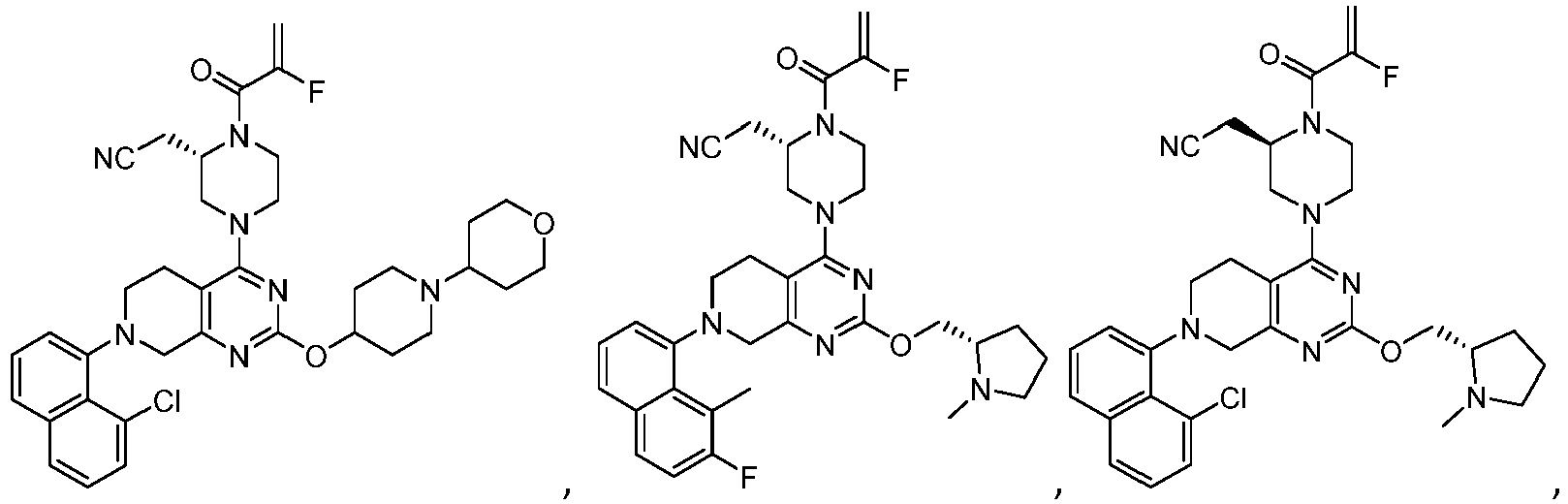


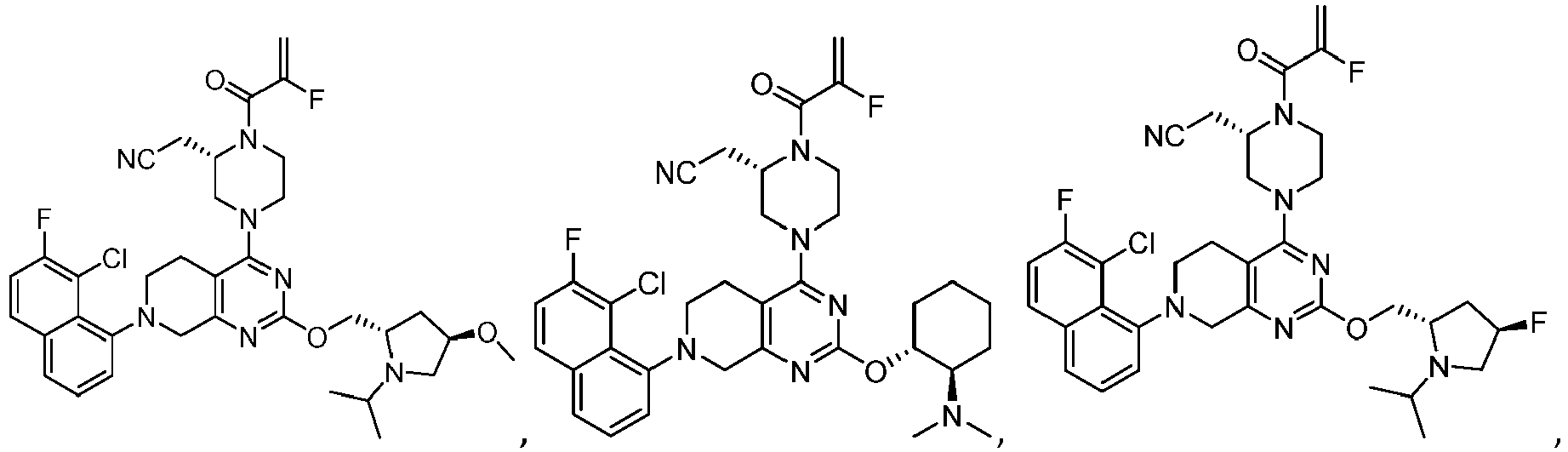


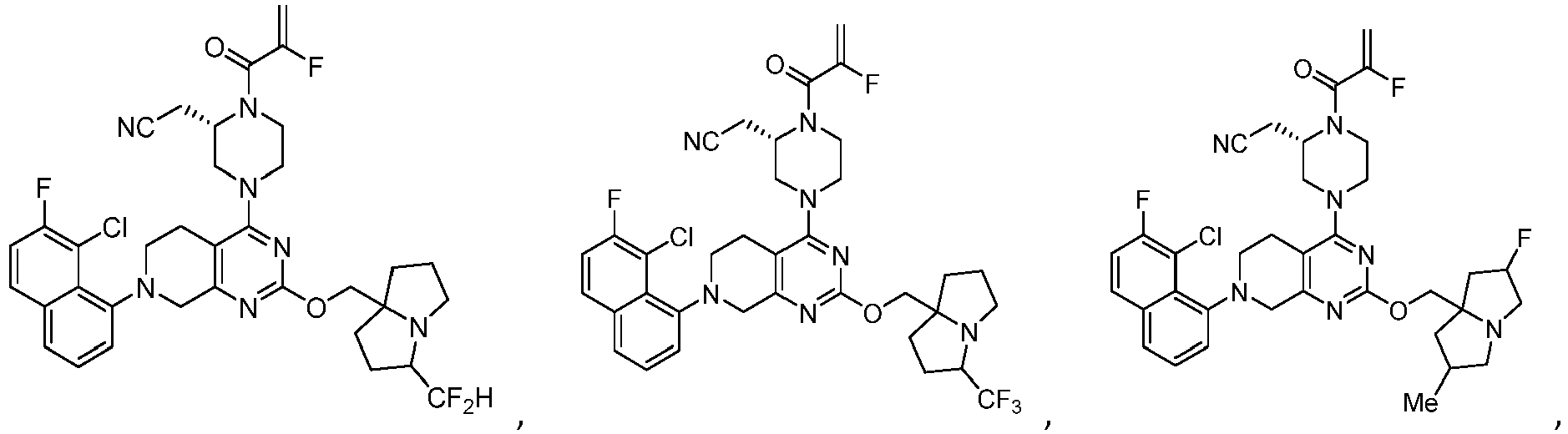


- In another aspect of the invention, pharmaceutical compositions are provided comprising a therapeutically effective amount of a compound of the present invention or a pharmaceutically acceptable salt thereof and a pharmaceutically acceptable excipient.
- In another aspect of the invention there is provided compounds or pharmaceutical compositions of the present invention for use in methods for treating cancer in a patient comprising administering a therapeutically effective amount of a compound or pharmaceutical composition of the present invention or a pharmaceutically acceptable salt thereof to a patient in need thereof.
- The present invention relates to inhibitors of KRas G12C. In particular, the present invention relates to compounds that irreversibly inhibit the activity of KRas G12C, pharmaceutical compositions comprising a therapeutically effective amount of the compounds and the compounds or the pharmaceutical compositions for use in methods for treating cancer.
- Unless defined otherwise, all technical and scientific terms used herein have the same meaning as is commonly understood by one of skill in the art to which this invention belongs.
- As used herein, "KRas G12C" refers to a mutant form of a mammalian KRas protein that contains an amino acid substitution of a cysteine for a glycine at amino acid position 12. The assignment of amino acid codon and residue positions for human KRas is based on the amino acid sequence identified by UniProtKB/Swiss-Prot P01116: Variant p.Gly12Cys.
- As used herein, a "KRas G12C inhibitor" refers to compounds of the present invention as described herein. These compounds are capable of negatively modulating or inhibiting all or a portion of the enzymatic activity of KRas G12C. The KRas G12C inhibitors of the present invention interact with and irreversibly bind to KRas G12C by forming a covalent adduct with the sulfhydryl side chain of the cysteine residue at position 12 resulting in the inhibition of the enzymatic activity of KRas G12C.
- A "KRas G12C-associated disease or disorder" as used herein refers to diseases or disorders associated with or mediated by or having a KRas G12C mutation. A non-limiting example of a KRas G12C-associated disease or disorder is a KRas G12C-associated cancer.
- As used herein, the term "subject," "individual," or "patient," used interchangeably, refers to any animal, including mammals such as mice, rats, other rodents, rabbits, dogs, cats, swine, cattle, sheep, horses, primates, and humans. In some embodiments, the patient is a human. In some embodiments, the subject has experienced and/or exhibited at least one symptom of the disease or disorder to be treated and/or prevented. In some embodiments, the subject has been identified or diagnosed as having a cancer having a KRas G12C mutation (e.g., as determined using a regulatory agency-approved, e.g., FDA-approved, assay or kit). In some embodiments, the subject has a tumor that is positive for a KRas G12C mutation (e.g., as determined using a regulatory agency-approved assay or kit). The subject can be a subject with a tumor(s) that is positive for a KRas G12C mutation (e.g., identified as positive using a regulatory agency-approved, e.g., FDA-approved, assay or kit). The subject can be a subject whose tumors have a KRas G12C mutation (e.g., where the tumor is identified as such using a regulatory agency-approved, e.g., FDA-approved, kit or assay). In some embodiments, the subject is suspected of having a KRas G12C gene-associated cancer. In some embodiments, the subject has a clinical record indicating that the subject has a tumor that has a KRas G12C mutation (and optionally the clinical record indicates that the subject should be treated with any of the compositions provided herein).
- In some embodiments of any of the methods or uses described herein, an assay is used to determine whether the patient has KRas G12C mutation using a sample (e.g., a biological sample or a biopsy sample (e.g., a paraffin-embedded biopsy sample) from a patient (e.g., a patient suspected of having a KRas G12C-associated cancer, a patient having one or more symptoms of a KRas G12C-associated cancer, and/or a patient that has an increased risk of developing a KRas G12C-associated cancer) can include, for example, next generation sequencing, immunohistochemistry, fluorescence microscopy, break apart FISH analysis, Southern blotting, Western blotting, FACS analysis, Northern blotting, and PCR-based amplification (e.g., RT-PCR and quantitative real-time RT-PCR). As is well-known in the art, the assays are typically performed, e.g., with at least one labelled nucleic acid probe or at least one labelled antibody or antigen-binding fragment thereof.
- The term "regulatory agency" is a country's agency for the approval of the medical use of pharmaceutical agents with the country. For example, a non-limiting example of a regulatory agency is the U.S. Food and Drug Administration (FDA).
- The term "amino" refers to -NH2;
The term "acyl" refers to -C(O)CH3. - The term "alkyl" as employed herein refers to straight and branched chain aliphatic groups having from 1 to 12 carbon atoms, 1-8 carbon atoms 1-6 carbon atoms, or 1-3 carbon atoms which is optionally substituted with one, two or three substituents. Examples of alkyl groups include, without limitation, methyl, ethyl, propyl, isopropyl, butyl, isobutyl, sec-butyl, tert-butyl, pentyl, and hexyl.
- The term "haloalkyl" refers to an alkyl chain in which one or more hydrogen has been replaced by a halogen. Examples of haloalkyls are trifluoromethyl, difluoromethyl and fluoromethyl.
- The term "haloalkyloxy" refers to -O-haloalkyl.
- An "alkylene," group is an alkyl group, as defined hereinabove, that is positioned between and serves to connect two other chemical groups. Exemplary alkylene groups include, without limitation, methylene, ethylene, propylene, and butylene.
- The term "alkoxy" refers to -OC1 - C6 alkyl.
- The term "cycloalkyl" as employed herein includes saturated and partially unsaturated cyclic hydrocarbon groups having 3 to 12 carbons, for example 3 to 8 carbons, and as a further example 3 to 6 carbons, wherein the cycloalkyl group additionally is optionally substituted. Examples of cycloalkyl groups include, without limitation, cyclopropyl, cyclobutyl, cyclopentyl, cyclopentenyl, cyclohexyl, cyclohexenyl, cycloheptyl, and cyclooctyl. The term "cycloalkyl" also includes bridged cycloalkyls, such as bicyclo[1.1.1]pentanyl.
- The term "heteroalkyl" refers to an alkyl group, as defined hereinabove, wherein one or more carbon atoms in the chain are replaced by a heteroatom selected from the group consisting of O, S, and N.
- As used herein, the term "hydroxyalkyl" refers to -alkyl-OH.
- The term "dihydroxyalkyl" refers to an alkyl group as defined herein wherein two carbon atoms are each substituted with a hydroxyl group.
- The term "alkylaminyl" refers to -NRx-alkyl, wherein Rx is hydrogen. In one embodiment, Rx is hydrogen.
- The term "dialkylaminyl" refers to -N(Ry)2, wherein each Ry is C1 - C3 alkyl.
- The term "alkylaminylalkyl" refers to -alkyl-NRx-alkyl, wherein Rx is hydrogen. In one embodiment, Rx is hydrogen.
- The term "dialkylaminylalkyl" refers to -alkyl-N(Ry)2, wherein each Ry is C1 - C4 alkyl, wherein the alkyl of the--alkyl-N(Ry)2 may be optionally substituted with hydroxy or hydroxyalkyl.
- An "aryl" group is a C6-C14 aromatic moiety comprising one to three aromatic rings, which is optionally substituted. As one embodiment, the aryl group is a C6-C10 aryl group. Examples of aryl groups include, without limitation, phenyl, naphthyl, anthracenyl, fluorenyl, and dihydrobenzofuranyl.
- An "aralkyl" or "arylalkyl" group comprises an aryl group covalently linked to an alkyl group, either of which may independently be optionally substituted or unsubstituted. An example of an aralkyl group is (C1- C6)alkyl(C6-C10)aryl, including, without limitation, benzyl, phenethyl, and naphthylmethyl. An example of a substituted aralkyl is wherein the alkyl group is substituted with hydroxyalkyl.
- A "heterocyclyl" or "heterocyclic" group is a ring structure having from 3 to 12 atoms, for example 4 to 8 atoms, wherein one or more atoms are selected from the group consisting of N, O, and S, the remainder of the ring atoms being carbon. The heterocyclyl may be a monocyclic, a bicyclic, a spirocyclic or a bridged ring system. The heterocyclic group is optionally substituted with R7 on ring carbon or ring nitrogen at one or more positions, wherein R7 is as defined for Formula II. The heterocyclic group is also independently optionally substituted on a ring nitrogen atom with alkyl, aryl, aralkyl, alkylcarbonyl, alkylsulfonyl, arylcarbonyl, arylsulfonyl, alkoxycarbonyl, aralkoxycarbonyl, or on sulfur with oxo or lower alkyl. Examples of heterocyclic groups include, without limitation, epoxy, azetidinyl, aziridinyl, tetrahydrofuranyl, tetrahydropyranyl, pyrrolidinyl, pyrrolidinonyl, piperidinyl, piperazinyl, imidazolidinyl, thiazolidinyl, dithianyl, trithianyl, dioxolanyl, oxazolidinyl, oxazolidinonyl, decahydroquinolinyl, piperidonyl, 4-piperidinonyl, quinuclidinyl, thiomorpholinyl, thiomorpholinyl 1,1 dioxide, morpholinyl, azepanyl, oxazepanyl, azabicyclohexanes, azabicycloheptanes, azabicyclooctanes, azabicyclononanes (e.g., octahydroindolizinyl), azaspiroheptanes, dihydro-1H,3H,5H-oxazolo[3,4-c]oxazolyl, tetrahydro-1'H,3'H-spiro [cyclopropane-1 ,2'-pyrrolizine], hexahydro-1H-pyrrolo[2,1-c] [1,4] oxazine, octahydroindolizinyl, oxaazaspirononanes, diazaspirononanes, and oxa azabiocycloheptanes. Specifically excluded from the scope of this term are compounds having adjacent annular O and/or S atoms
- The term "heterocyclylalkyl" refers to a heterocyclyl group as defined herein linked to the remaining portion of the molecule via an alkyl group as defined herein, wherein the alkyl portion of the heterocyclylalkyl may be optionally substituted with hydroxy or hydroxyalkyl.
- As used herein, the term "heteroaryl" refers to groups having 5 to 14 ring atoms, preferably 5, 6, 9, or 10 ring atoms; having 6, 10, or 14 π electrons shared in a cyclic array; and having, in addition to carbon atoms, from one to three heteroatoms per ring selected from the group consisting of N, O, and S. Examples of heteroaryl groups include acridinyl, azocinyl, benzimidazolyl, benzofuranyl, benzothiofuranyl, benzothiophenyl, benzoxazolyl, benzthiazolyl, benztriazolyl, benztetrazolyl, benzisoxazolyl, benzisothiazolyl, benzimidazolinyl, carbazolyl, 4aH-carbazolyl, carbolinyl, chromanyl, chromenyl, cinnolinyl, 6,7-dihydro-5H-pyrrolo[1,2-a]imidazole, furanyl, furazanyl, imidazolinyl, imidazolyl, 1H-indazolyl, indolenyl, indolinyl, indolizinyl, indolyl, 3H-indolyl, isobenzofuranyl, isochromanyl, isoindazolyl, isoindolinyl, isoindolyl, isoquinolinyl, isothiazolyl, isoxazolyl, methylenedioxyphenyl, naphthyridinyl, octahydroisoquinolinyl, oxadiazolyl, 1,2,3-oxadiazolyl, 1,2,4-oxadiazolyl, 1,2,5-oxadiazolyl, 1,3,4-oxadiazolyl, oxazolidinyl, oxazolyl, oxazolidinyl, pyrimidinyl, phenanthridinyl, phenanthrolinyl, phenazinyl, phenothiazinyl, phenoxathiinyl, phenoxazinyl, phthalazinyl, piperonyl, pteridinyl, purinyl, pyranyl, pyrazinyl, pyrazolidinyl, pyrazolinyl, pyrazolyl, pyridazinyl, pyridooxazole, pyridoimidazole, pyridothiazole, pyridinyl, pyridyl, pyrimidinyl, pyrrolinyl, 2H-pyrrolyl, pyrrolyl, quinazolinyl, quinolinyl, 4H-quinolizinyl, quinoxalinyl, quinuclidinyl, tetrahydroisoquinolinyl, tetrahydroquinolinyl, tetrazolyl, 6H-1,2,5-thiadiazinyl, 1,2,3-thiadiazolyl, 1,2,4-thiadiazolyl, 1,2,5-thiadiazolyl, 1,3,4-thiadiazolyl, thianthrenyl, thiazolyl, thienyl, thienothiazolyl, thienooxazolyl, thienoimidazolyl, thiophenyl, triazinyl, 1,2,3-triazolyl, 1,2,4-triazolyl, 1,2,5-triazolyl, 1,3,4-triazolyl, and xanthenyl.
- A "heteroarylalkyl" group comprises a heteroaryl group covalently linked to an alkyl group as defined herein, wherein the radical is on the alkyl group, either of which is independently optionally substituted or unsubstituted. Examples of heteroarylalkyl groups include a heteroaryl group having 5, 6, 9, or 10 ring atoms bonded to a C1-C6 alkyl group. Examples of heteroaralkyl groups include pyridylmethyl, pyridylethyl, pyrrolylmethyl, pyrrolylethyl, imidazolylmethyl, imidazolylethyl, thiazolylmethyl, thiazolylethyl, benzimidazolylmethyl, benzimidazolylethyl quinazolinylmethyl, quinolinylmethyl, quinolinylethyl, benzofuranylmethyl, indolinylethyl isoquinolinylmethyl, isoinodylmethyl, cinnolinylmethyl, and benzothiophenylethyl. Specifically excluded from the scope of this term are compounds having adjacent annular O and/or S atoms.
- As used herein, "an effective amount" of a compound is an amount that is sufficient to negatively modulate or inhibit the activity of KRas G12C. Such amount may be administered as a single dosage or may be administered according to a regimen, whereby it is effective.
- As used herein, a "therapeutically effective amount" of a compound is an amount that is sufficient to ameliorate, or in some manner reduce a symptom or stop or reverse progression of a condition, or negatively modulate or inhibit the activity of KRas G12C. Such amount may be administered as a single dosage or may be administered according to a regimen, whereby it is effective.
- As used herein, treatment means any manner in which the symptoms or pathology of a condition, disorder or disease are ameliorated or otherwise beneficially altered. Treatment also encompasses any pharmaceutical use of the compositions herein.
- As used herein, amelioration of the symptoms of a particular disorder by administration of a particular pharmaceutical composition refers to any lessening, whether permanent or temporary, lasting or transient that can be attributed to or associated with administration of the composition.
- In one aspect of the invention, there is provided a compound, wherein the compound is:
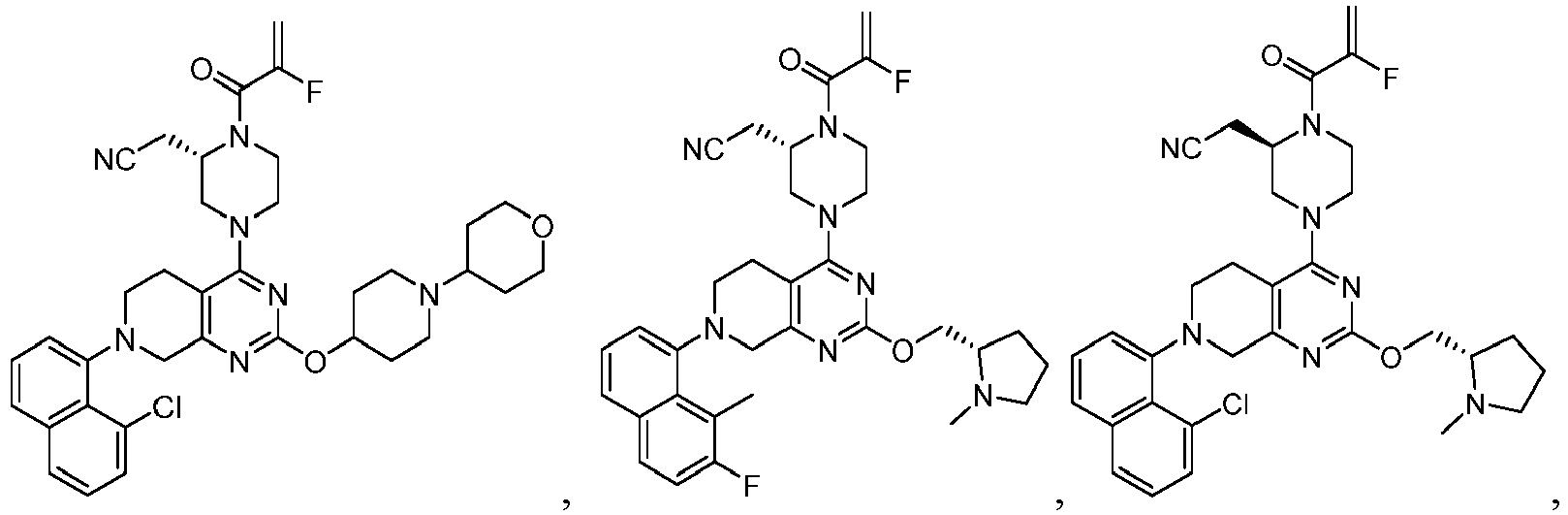


- In one embodiment, the compounds of the invention include trifluoroacetic acid salts of the above compounds. The compounds of the invention may be formulated into pharmaceutical compositions.
- In another aspect, the invention provides pharmaceutical compositions comprising a KRas G12C inhibitor according to the invention and a pharmaceutically acceptable carrier, excipient, or diluent. Compounds of the invention may be formulated by any method well known in the art and may be prepared for administration by any route, including, without limitation, parenteral, oral, sublingual, transdermal, topical, intranasal, intratracheal, or intrarectal. In certain embodiments, compounds of the invention are for use in a method of treating cancer, wherein the compounds of the invention are administered intravenously in a hospital setting. In one embodiment, administration may be by the oral route.
- The characteristics of the carrier will depend on the route of administration. As used herein, the term "pharmaceutically acceptable" means a non-toxic material that is compatible with a biological system such as a cell, cell culture, tissue, or organism, and that does not interfere with the effectiveness of the biological activity of the active ingredient(s). Thus, compositions according to the invention may contain, in addition to the inhibitor, diluents, fillers, salts, buffers, stabilizers, solubilizers, and other materials well known in the art. The preparation of pharmaceutically acceptable formulations is described in, e.g., Remington's Pharmaceutical Sciences, 18th Edition, ed. A. Gennaro, Mack Publishing Co., Easton, Pa., 1990.
- As used herein, the term pharmaceutically acceptable salt refers to salts that retain the desired biological activity of the above-identified compounds and exhibit minimal or no undesired toxicological effects. Examples of such salts include, but are not limited to acid addition salts formed with inorganic acids (for example, hydrochloric acid, hydrobromic acid, sulfuric acid, phosphoric acid, nitric acid, and the like), and salts formed with organic acids such as acetic acid, oxalic acid, tartaric acid, succinic acid, malic acid, ascorbic acid, benzoic acid, tannic acid, pamoic acid, alginic acid, polyglutamic acid, naphthalenesulfonic acid, naphthalenedisulfonic acid, and polygalacturonic acid. The compounds can also be administered as pharmaceutically acceptable quaternary salts known by those skilled in the art, which specifically include the quaternary ammonium salt of the formula --NR+Z-, wherein R is hydrogen, alkyl, or benzyl, and Z is a counterion, including chloride, bromide, iodide, --O-alkyl, toluenesulfonate, methylsulfonate, sulfonate, phosphate, or carboxylate (such as benzoate, succinate, acetate, glycolate, maleate, malate, citrate, tartrate, ascorbate, benzoate, cinnamoate, mandeloate, benzyloate, and diphenylacetate).
- The active compound is included in the pharmaceutically acceptable carrier or diluent in an amount sufficient to deliver to a patient a therapeutically effective amount without causing serious toxic effects in the patient treated. In one embodiment, a dose of the active compound for all of the above-mentioned conditions is in the range from about 0.01 to 300 mg/kg, for example 0.1 to 100 mg/kg per day, and as a further example 0.5 to about 25 mg per kilogram body weight of the recipient per day. A typical topical dosage will range from 0.01-3% wt/wt in a suitable carrier. The effective dosage range of the pharmaceutically acceptable derivatives can be calculated based on the weight of the parent compound to be delivered. If the derivative exhibits activity in itself, the effective dosage can be estimated as above using the weight of the derivative, or by other means known to those skilled in the art.
- The pharmaceutical compositions comprising compounds of the present invention may be used in the methods of use described herein.
- In another aspect of the invention, a compound or a pharmaceutical composition of the present invention is provided for use in methods of treating cancer in a patient in need thereof, comprising administering to said patient a therapeutically effective amount of a compound of the invention, pharmaceutically acceptable salts thereof or pharmaceutical compositions comprising the compound or pharmaceutically acceptable salts thereof are provided.
- The cancers may include a wide variety of cancers including tumors such as lung, prostate, breast, brain, skin, cervical carcinomas, testicular carcinomas, etc. More particularly, cancers include, but are not limited to tumor types such as astrocytic, breast, cervical, colorectal, endometrial, esophageal, gastric, head and neck, hepatocellular, laryngeal, lung, oral, ovarian, prostate and thyroid carcinomas and sarcomas. More specifically, these compounds can be used to treat: Cardiac: sarcoma (angiosarcoma, fibrosarcoma, rhabdomyosarcoma, liposarcoma), myxoma, rhabdomyoma, fibroma, lipoma and teratoma; Lung: bronchogenic carcinoma (squamous cell, undifferentiated small cell, undifferentiated large cell, adenocarcinoma), alveolar (bronchiolar) carcinoma, bronchial adenoma, sarcoma, lymphoma, chondromatous hamartoma, mesothelioma; Gastrointestinal: esophagus (squamous cell carcinoma, adenocarcinoma, leiomyosarcoma, lymphoma), stomach (carcinoma, lymphoma, leiomyosarcoma), pancreas (ductal adenocarcinoma, insulinoma, glucagonoma, gastrinoma, carcinoid tumors, vipoma), small bowel (adenocarcinoma, lymphoma, carcinoid tumors, Kaposi's sarcoma, leiomyoma, hemangioma, lipoma, neurofibroma, fibroma), large bowel (adenocarcinoma, tubular adenoma, villous adenoma, hamartoma, leiomyoma); Genitourinary tract: kidney (adenocarcinoma, Wilm's tumor (nephroblastoma), lymphoma, leukemia), bladder and urethra (squamous cell carcinoma, transitional cell carcinoma, adenocarcinoma), prostate (adenocarcinoma, sarcoma), testis (seminoma, teratoma, embryonal carcinoma, teratocarcinoma, choriocarcinoma, sarcoma, interstitial cell carcinoma, fibroma, fibroadenoma, adenomatoid tumors, lipoma); Liver: hepatoma (hepatocellular carcinoma), cholangiocarcinoma, hepatoblastoma, angiosarcoma, hepatocellular adenoma, hemangioma; Biliary tract: gall bladder carcinoma, ampullary carcinoma, cholangiocarcinoma; Bone: osteogenic sarcoma (osteosarcoma), fibrosarcoma, malignant fibrous histiocytoma, chondrosarcoma, Ewing's sarcoma, malignant lymphoma (reticulum cell sarcoma), multiple myeloma, malignant giant cell tumor chordoma, osteochronfroma (osteocartilaginous exostoses), benign chondroma, chondroblastoma, chondromyxofibroma, osteoid osteoma and giant cell tumors; Nervous system: skull (osteoma, hemangioma, granuloma, xanthoma, osteitis deformans), meninges (meningioma, meningiosarcoma, gliomatosis), brain (astrocytoma, medulloblastoma, glioma, ependymoma, germinoma (pinealoma), glioblastoma multiform, oligodendroglioma, schwannoma, retinoblastoma, congenital tumors), spinal cord neurofibroma, meningioma, glioma, sarcoma); Gynecological: uterus (endometrial carcinoma), cervix (cervical carcinoma, pre-tumor cervical dysplasia), ovaries (ovarian carcinoma (serous cystadenocarcinoma, mucinous cystadenocarcinoma, unclassified carcinoma), granulosa-thecal cell tumors, Sertoli-Leydig cell tumors, dysgerminoma, malignant teratoma), vulva (squamous cell carcinoma, intraepithelial carcinoma, adenocarcinoma, fibrosarcoma, melanoma), vagina (clear cell carcinoma, squamous cell carcinoma, botryoid sarcoma (embryonal rhabdomyosarcoma), fallopian tubes (carcinoma); Hematologic: blood (myeloid leukemia (acute and chronic), acute lymphoblastic leukemia, chronic lymphocytic leukemia, myeloproliferative diseases, multiple myeloma, myelodysplastic syndrome), Hodgkin's disease, non-Hodgkin's lymphoma (malignant lymphoma); Skin: malignant melanoma, basal cell carcinoma, squamous cell carcinoma, Kaposi's sarcoma, moles dysplastic nevi, lipoma, angioma, dermatofibroma, keloids, psoriasis; and Adrenal glands: neuroblastoma. In certain embodiments, the cancer is non-small cell lung cancer.
- The concentration and route of administration to the patient will vary depending on the cancer to be treated. The compounds, pharmaceutically acceptable salts thereof and pharmaceutical compositions comprising such compounds and salts also may be co-administered with other anti-neoplastic compounds, e.g., chemotherapy, or used in combination with other treatments, such as radiation or surgical intervention, either as an adjuvant prior to surgery or post-operatively.
- Also provided herein is a compound of the invention, or a pharmaceutically acceptable salt or solvate thereof or a pharmaceutical composition thereof as defined herein for use in the treatment of cancer.
- A compound or pharmaceutical composition of the present invention for use in a method for treating cancer in a patient in need thereof, the method comprising (a) determining that cancer is associated with a KRas G12C mutation (e.g., a KRas G12C-associated cancer) (e.g., as determined using a regulatory agency-approved, e.g., FDA-approved, assay or kit); and (b) administering to the patient a therapeutically effective amount of a compound of the invention, or a pharmaceutically acceptable salt thereof, or a pharmaceutical composition thereof is disclosed.
- One skilled in the art will recognize that, both in vivo and in vitro trials using suitable, known and generally accepted cell and/or animal models are predictive of the ability of a test compound to treat or prevent a given disorder.
- One skilled in the art will further recognize that human clinical trials including first-inhuman, dose ranging and efficacy trials, in healthy patients and/or those suffering from a given disorder, may be completed according to methods well known in the clinical and medical arts.
- The compounds of the present invention may be prepared from commercially available reagents using the synthetic methods and reaction schemes described herein, or using other reagents and conventional methods well known to those skilled in the art.
- For instance, compounds of the present invention may be prepared according to the General Reaction Schemes I and II.
-
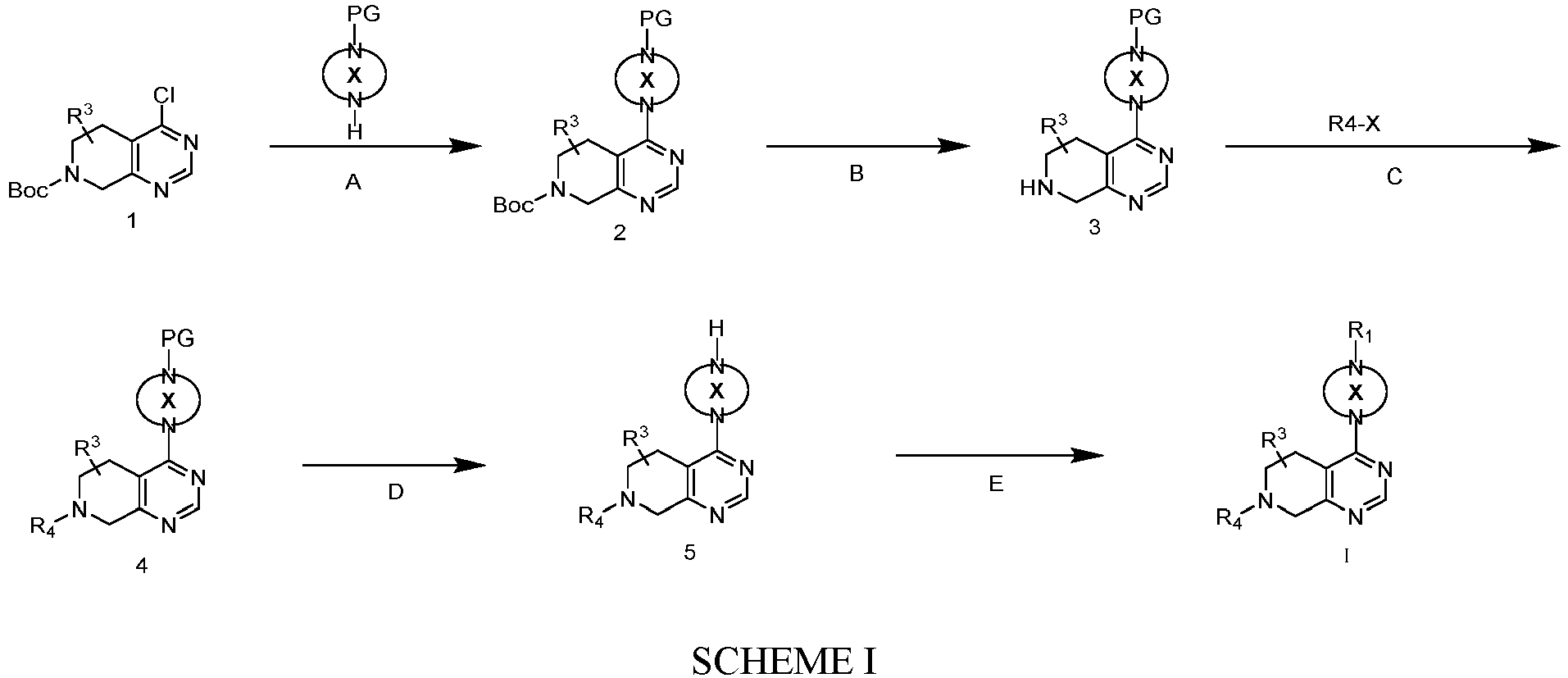
- Compounds of Formula (II) wherein L and Y are bonds, R2 is hydrogen and R4 is aryl or heteroaryl can be prepared according to Scheme I.
- Compounds of Formula (II) are represented by the general formula:

- X is a 4-12 membered saturated or partially saturated monocyclic, bridged or spirocyclic ring, wherein the saturated or partially saturated monocyclic ring is optionally substituted with one or more R8;
- Y is a bond, O, S or NR5;
- R1 is -C(O)C(RA)C(RB)p or -SO2C(RA)
 C(RB)p;
 - R2 is hydrogen, alkyl, haloalkyl, hydroxyalkyl, dihydroxyalkyl, alkylaminylalkyl, dialkylaminylalkyl, -Z-NR5R10, heterocyclyl, cycloalkyl, heterocyclylalkyl, aryl, heteroaryl, or heteroarylalkyl, wherein each of the Z, heterocyclyl, heterocyclylalkyl, aryl, heteroaryl, and heteroarylalkyl may be optionally substituted with one or more R9;
- each Z is C1 - C4 alkylene;
- each R3 is independently C1 - C3 alkyl, oxo, haloalkyl, hydroxyl or halogen;
- L is a bond, -C(O)-, or C1 - C3 alkylene;
- R4 is hydrogen, cycloalkyl, heterocyclyl, aryl, aralkyl or heteroaryl, wherein each of the cycloalkyl, heterocyclyl, aryl, aralkyl and heteroaryl may be optionally substituted with one or more R6, R7 or R8;
- each R5 is independently hydrogen or C1 - C3 alkyl;
- R6 is cycloalkyl, heterocyclyl, heterocyclylalkyl, aryl, or heteroaryl, wherein each of the cycloalkyl, heterocyclyl, aryl, or heteroaryl may be optionally substituted with one or more R7;
- each R7 is independently halogen, hydroxyl, C1 - C6 alkyl, cycloalkyl, alkoxy, haloalkyl, amino, cyano, heteroalkyl, hydroxyalkyl or Q-haloalkyl, wherein Q is O or S;
- R8 is oxo, C1 - C3 alkyl, C2 - C4 alkynyl, heteroalkyl, cyano, -C(O)OR5, -C(O)N(R5)2, - N(R5)2, wherein the C1 - C3 alkyl may be optionally substituted with cyano, halogen, -OR5, - N(R5)2, or heteroaryl;
- each R9 is independently hydrogen, oxo, acyl, hydroxyl, hydroxyalkyl, cyano, halogen, C1 - C6 alkyl, aralkyl, haloalkyl, heteroalkyl, cycloalkyl, heterocyclyl, heterocyclylalkyl, alkoxy, dialkylaminyl, dialkylamidoalkyl, or dialkylaminylalkyl, wherein the C1 - C6 alkyl may be optionally substituted with cycloalkyl or cyano;
- each R10 is independently hydrogen, acyl, C1 - C3 alkyl, haloalkyl, heteroalkyl or hydroxyalkyl;
- R11 is haloalkyl;
- RA is absent, hydrogen, deuterium, cyano, halogen, C1 - C-3 alkyl, haloalkyl, heteroalkyl, -C(O)N(R5)2, or hydroxyalkyl;
- each RB is independently hydrogen, deuterium, cyano, C1 - C3 alkyl, hydroxyalkyl, heteroalkyl, C1 - C3 alkoxy, halogen, haloalkyl, -ZNR5R11, -C(O)N(R5)2, -NHC(O)C1 - C3 alkyl, -CH2NHC(O)C1 - C3 alkyl, heteroaryl, heteroarylalkyl, dialkylaminylalkyl, or heterocyclylalkyl wherein the heterocyclyl portion is substituted with one or more substituents independently selected from halogen, hydroxyl, alkoxy and C1 - C3 alkyl, wherein the heteroaryl or the heteroaryl portion of the heteroarylalkyl is optionally substituted with one or more R7;
- or when is a double bond and p is two, one RB is hydrogen and RA and one RB and the carbon atoms to which they are attached form a 4-8 membered partially saturated cycloalkyl substituted with oxo;
- m is zero or an integer between 1 and 2;
- p is one or two; and wherein,
- when is a triple bond then RA is absent, p equals one and RB is hydroxyalkyl,
- or when is a double bond then RA is present, RB is present and p equals two, wherein when RA is hydrogen or C1 - C3 alkyl, at least one RB is deuterium, cyano, halogen, haloalkyl, hydroxyalkyl, heteroalkyl, heteroaryl, heteroarylalkyl, -ZNR5R11, -C(O)N(R5)2, - NHC(O)C1 - C3 alkyl, -CH2NHC(O)C1 - C3 alkyl or heterocyclylalkyl, wherein the heterocyclyl portion is substituted with one or more substituents independently selected from halogen, hydroxyl, alkoxy and C1 - C3 alkyl; or when each RB is hydrogen, then RA is deuterium, cyano, halogen, haloalkyl, -C(O)N(R5)2, hydroxyalkyl or heteroalkyl.
- For the avoidance of doubt, the general formula (II) is not the subject of the present invention. The compounds of the invention are set out in the claims.
- In step A, an appropriately functionalized tetrahydropyridopyrimidine (1) is coupled to a heterocycle containing one nucleophilic amine species, with the other bound to a protecting group to provide compound (2). This coupling proceeds in a solvent such as dichloromethane in the presence of a base such as triethylamine or Hunig's base. In step B, the Boc group of compound (2) is removed using conditions known in the art, for example with trifluoroacetic acid in a solvent such as dichloromethane, to provide compound (3). In step C, the substituent R4 is introduced with a palladium coupling, using a suitable functionalized aryl or heteroaryl system, for example an aryl triflate, in the presence of a palladium catalyst such as Pd2DBA3/Xantphos in a solvent such as toluene with a base such as sodium tert-butoxide to provide compound (4). In step D, the protecting group of ring X compound (4) is removed, for example hydrogenolysis by Pd/C in the presence of H2 in a polar solvent such as EtOH/THF to provide compound (5). In the final step, E, R1 is introduced to provide a compound of Formula (II), for example by treating with an acid chloride having the formula Cl-C(O)C(RA)C(RB)p or Cl-SO2C(RA)C(RB)p, or an anhydride having the formula C(RB)pC(RA)C(O)OC(O)C(RA)C(RB)p, where RA, RB and p are as defined for Formula (II). For example, in the case where R1 is an acryloyl group, this reaction proceeds, for example, in a solvent such as methylene chloride in the presence of acryloyl chloride or an acryloyl anhydride and a base such as Hunig's base. In some cases, the species R4 will also contain a protecting group, which can be removed at a subsequent step in the synthetic sequence.
- Compounds (1), (2), (3), (4) and (5) as shown and described above for Scheme 1 are useful as intermediates for preparing compounds of Formula (II).

- Compounds of Formula (II) wherein L is a bond, -Y-R2 is other than hydrogen and R4 is aryl or heteroaryl can be prepared according to Scheme II. In step A, an appropriately functionalized tetrahydropyridopyrimidine (6) is coupled to a heterocycle containing one nucleophilic amine species, with the other bound to a protecting group to provide compound (7). This coupling proceeds in a solvent such as dichloromethane in the presence of a base such as triethylamine or Hunig's base. In step B, the substituent -Y-R2 is introduced by substitution of the chlorine by a nucleophile, for example (S)-1-(dimethylamino-propan-2-ol in a polar solvent such as dioxane to provide compound (8). In step C, the Boc group is removed using conditions known in the art, for example with trifluoroacetic acid in a solvent such as dichloromethane to provide compound (9). In step D, the substituent R4 is introduced with a palladium coupling, using a suitable functionalized aryl or heteroaryl system, for example an aryl triflate, in the presence of a palladium catalyst such as Pd2DBA3/BINAP in a solvent such as toluene with a base such as sodium tert-butoxide to provide compound (10). In step E, the protecting group of ring X is removed, for example hydrogenolysis by Pd/C in the presence of H2 in a polar solvent such as EtOH/THF to provide compound (11). In step F, R1 is introduced to provide a compound of Formula (II), for example by treating with an acid chloride having the formula Cl-C(O)C(RA)C(RB)p or Cl-SO2C(RA)C(RB)p, or an anhydride having the formula C(RB)pC(RA)C(O)OC(O)C(RA)C(RB)p, where RA, RB and p are as defined for Formula (II). For example, in the case where R1 is an acryloyl group, this reaction proceeds, for example, in a solvent such as methylene chloride in the presence of acryloyl chloride acryloyl anhydride and a base such as Hunig's base. In some cases, the species R4 and R2 may also contain protecting groups, which can be removed at a subsequent step in the synthetic sequence.
- Compounds (6), (7), (8), (9), (10) and (11) as shown and described above for Scheme 2 are useful as intermediates for preparing compounds of Formula (II), Formula II-A or Formula II-B.
- Compounds of Formula II-A are represented by the formula:

- Compounds of Formula II-B are represented by the formula:

- For the avoidance of doubt, the general formulae II-A and II-B are not the subject of the present invention. The compounds of the invention are set out in the claims.
- A process for preparing a compound of Formula (II), comprises:
- (a) for a compound of Formula (II) where Y is a bond and R2 is hydrogen, reacting a compound of formula 5
 C(RB)p or Cl-SO2C(RA)C(RB)p or an anhydride having the formula C(RB)pC(RA)C(O)OC(O)C(RA)C(RB)p, where RA, RB and p are as defined for Formula (II), in the presence of a base; or
 - (b) for a compound of Formula (II) wherein L is a bond and -Y-R2 is other than hydrogen, reacting a compound of formula (11)

- wherein L is a bond, -Y-R2 is other than hydrogen, and X, R3 and R4 are as defined for Formula (II), with an acid chloride having the formula Cl-C(O)C(RA)C(RB)p or Cl-SO2C(RA)C(RB)p, or an anhydride having the formula C(RB)pC(RA)C(O)OC(O)C(RA) C(RB)p, where RA, RB and p are as defined for Formula (II), in the presence of a base; and
- optionally forming a salt thereof.
- wherein L is a bond, -Y-R2 is other than hydrogen, and X, R3 and R4 are as defined for Formula (II), with an acid chloride having the formula Cl-C(O)C(RA)
- The compounds of the present invention may have one or more chiral center and may be synthesized as stereoisomeric mixtures, isomers of identical constitution that differ in the arrangement of their atoms in space. The compounds may be used as mixtures or the individual components/isomers may be separated using commercially available reagents and conventional methods for isolation of stereoisomers and enantiomers well-known to those skilled in the art, e.g., using CHIRALPAK® (Sigma-Aldrich) or CHIRALCEL® (Diacel Corp) chiral chromatographic HPLC columns according to the manufacturer's instructions. Alternatively, compounds of the present invention may be synthesized using optically pure, chiral reagents and intermediates to prepare individual isomers or enantiomers. Unless otherwise indicated, all chiral (enantiomeric and diastereomeric) and racemic forms are within the scope of the invention. Unless otherwise indicated, whenever the specification, including the claims, refers to compounds of the invention, the term "compound" is to be understood to encompass all chiral (enantiomeric and diastereomeric) and racemic forms.
- The following Intermediates are intended to illustrate further certain embodiments of the invention.

-

- 3-Hydroxynaphthalen-1-yl trifluoromethanesulfonate (13.101 g, 44.831 mmol) was dissolved in dichloromethane (100 mL) and stirred at 0 °C. To this solution was added chloro(methoxy)methane (3.7456 ml, 49.315 mmol) and Hunig's base (11.745 mL, 67.247 mmol). The reaction was stirred at 0 °C for 4 hrs. The reaction was partitioned with 1M HCl and washed with saturated sodium bicarbonate. The combined organic layers were dried over magnesium sulfate and concentrated under vacuum. The concentrated material was loaded onto a 120 g RediSep® gold silica gel column with dichloromethane and purified by normal phase chromatography (CombiFlash®, 0%-20% ethyl acetate/hexanes as the eluent) to give 3-(methoxymethoxy)naphthalen-1-yl trifluoromethanesulfonate (11.785 g, 35.045 mmol, 78.171 % yield).

-

- To a solution of 7-bromonaphthalen-2-ol (2.0 g, 9.0 mmol) in dimethyl acetamide (40 mL) was added chloro(methoxy)methane (1.4 g, 18 mmol) and cesium carbonate (5.8 g, 18 mmol) and the reaction mixture was stirred overnight at room temperature. The reaction was diluted with water and the aqueous layer washed with ethyl acetate. The combined organic layers were washed with water and brine, dried over magnesium sulfate and concentrated under vacuum. The crude material was purified by normal phase chromatography using 5-50% ethyl acetate/hexanes as the eluent to give 2-bromo-7-(methoxymethoxy)naphthalene (1.0 g, 3.7 mmol, 42 % yield).

-

- To a stirred solution of 2-bromo-3-fluorophenol (1422 mg, 7.445 mmol) in 22 mL tetrahydrofuran at room temperature under nitrogen was added NaH (327.6 mg, 8.190 mmol) neat as a solid portion wise. After 15 minutes, a solution had formed. Chloro(methoxy)methane (678.6 µL, 8.934 mmol) was added by syringe. After stirring for 2 hours, the reaction was quenched with saturated ammonium chloride solution and then partitioned between ethyl acetate (30 mL) and water (30 mL). The combined organic layers were isolated, washed with brine, dried over MgSO4, filtered and concentrated. The crude product was loaded in a minimum of dichloromethane onto a 40 gram RediSep® column pre-wet with hexanes and eluted with an ethyl acetate/hexanes gradient (0% to 20% ethyl acetate). Fractions containing the product were combined and concentrated to provide the product as a clear oil (1.45g, 83%).

-

- To a stirred solution of 3-bromo-4-fluorophenol (327 mg, 1.71 mmol) in 5.1 mL tetrahydrofuran at room temperature under nitrogen was added NaH (75.3 mg, 1.88 mmol) neat as a solid portion wise. After 15 minutes, a solution had formed. Chloro(methoxy)methane (156 µL, 2.05 mmol) was added by syringe. After stirring for 2 hours, the reaction was quenched with saturated ammonium chloride solution and partitioned between ethyl acetate and water. The combined organic layers were washed with brine, dried over MgSO4, filtered and concentrated. The crude product was loaded in a minimum of dichloromethane onto a 24 gram RediSep® column pre-wet with hexanes and eluted with an ethyl acetate/hexanes gradient (0% to 20% ethyl acetate). Fractions containing the product were combined and concentrated to provide the product as a clear oil (120 mg, 29.8%)


-

- To a solution of 4-bromo-5-methyl-1H-indazole (0.7 g, 3.3 mmol) in dimethyl acetamide (30 mL) cooled to 0 °C was added NaH (0.19 g, 4.6 mmol) in portions and the reaction mixture was purged with nitrogen. The reaction was stirred for 20 minutes, and then (2-(chloromethoxy)ethyl)trimethylsilane (0.83 g, 5.0 mmol) was added and the reaction was stirred for 2 hours while warming to room temperature. The reaction was quenched by pouring into water and the aqueous layer was extracted into ethyl acetate. The combined organic layers were washed with water and brine, dried over MgSO4 and concentrated under vacuum. The crude material was purified by chromatography using 10-50% ethyl acetate/hexanes as the eluent to give 4-bromo-5-methyl-1-((2-(trimethylsilyl)ethoxy)methyl)-1H-indazole (0.87 g, 79%).

- In a sealed tube, R-(+)-Propylene oxide (3.69 mL, 52.7 mmol) was cooled to -78°C and then sparged with anhydrous dimethyl amine for a few minutes. The reaction mixture was heated to 70°C for 16 hours. The reaction was cooled and concentrated in vacuo for 20 minutes to provide (R)-1-(pyrrolidin-1-yl)propan-2-ol (5.35 g, 41.4 mmol, 98.2% yield).


- In a sealed tube, R-(+)-Propylene oxide (2.111 mL, 30.13 mmol) and morpholine (1.490 mL, 17.22 mmol) were heated to 70°C for 20 hours. The reaction was cooled and concentrated in vacuo to provide (R)-1-morpholinopropan-2-ol (2.47 g, 17.01 mmol, 98.80 % yield).

- In a sealed tube, R-(+)-Propylene oxide (4.00 g, 55.5 mmol) and dimethylamine (1.00 g, 22.2 mmol), were heated to 65°C for 18 hours. The reaction was cooled and concentrated in vacuo. The resulting residue was purified by silica gel (0-12% MeOH in DCM) to provide (R)-1-(dimethylamino)butan-2-ol (1.38 g, 11.8 mmol, 53.1 % yield).

- In a sealed tube, (R)-3-methoxypyrrolidine hydrochloride (1.00 g, 7.27 mmol), TEA (2.03 mL, 14.5 mmol) and R-(+)-Propylene oxide (1.27 mL, 18.2 mmol) were heated to 65°C for 18 hours. The reaction was cooled and concentrated in vacuo. The resulting residue was purified by silica gel (0-12% MeOH in DCM) to provide (R)-1-((R)-3-methoxypyrrolidin-1-yl)propan-2-ol (775 mg, 4.87 mmol, 67.0 % yield).


- In a sealed tube, (S)-3-methoxypyrrolidine hydrochloride (1.00 g, 7.27 mmol), TEA (2.03 mL, 14.5 mmol) and R-(+)-Propylene oxide (1.27 mL, 18.2 mmol) were heated to 65°C for 18 hours. The reaction was cooled and concentrated in vacuo. The resulting residue was purified by silica gel (0-12% MeOH in DCM) to provide (R)-1-((S)-3-methoxypyrrolidin-1-yl)propan-2-ol (781 mg, 4.90 mmol, 67.5 % yield)

- In a sealed tube, R-(+)-Propylene oxide (0.609 mL, 8.69 mmol) and (S)-3-((tertbutyldimethylsilyl)oxy)pyrrolidine (1.00 g, 4.97 mmol) were heated to 70°C for 20 hours. The reaction was cooled and concentrated in vacuo to provide (R)-1-((S)-3-((tertbutyldimethylsilyl)oxy)pyrrolidin-1-yl)propan-2-ol (1.29 g, 4.20 mmol, 84.6 % yield).

- To a suspension of lithium chloride (246 mg, 5.81 mmol) and Lithium Borohydride (126 mg, 5.81 mmol) in ethanol (9 mL), at 0°C under nitrogen, a solution of 1-(tert-butyl) 2-methyl 4-methylpiperazine-1,2-dicarboxylate (750 mg, 2.90 mmol) in dry THF (6 mL) was added dropwise. The reaction was stirred overnight forming a white precipitate. The precipitate was filtered and washed with ethanol. The combined filtrate and organic extracts were concentrated to provide a white residue which was extracted with ethyl acetate. The combined organic layers were washed with saturated sodium chloride solution, dried over sodium sulfate and concentrated in vacuo. The residue was purified by chromatography with isocratic 10% MeOH in DCM with 0.2% NH4OH to provide tert-butyl 2-(hydroxymethyl)-4-methylpiperazine-1-carboxylate (104 mg, 0.452 mmol, 15.6 % yield).

- A mixture of (S)-2-methylpiperidine (100 mg, 1.01 mmol), 2-bromoethanol (78 µL, 139 mg, 1.11 mmol, 1.1 eq.), sodium iodide (151 mg, 1 eq.), potassium carbonate (418 mg, 3 eq.) and acetonitrile (1 mL) in a 4-mL vial was purged with nitrogen, sealed and stirred at room temperature for 2 days. The reaction mixture was partitioned between diethyl ether (15 mL) and water (2 mL). The ether layer was washed with brine (2 mL), acidified with TFA and dried under high vacuum for 2 days. The residue was washed with ether (3 mL), diluted with water (0.5 mL) and basified with 10M NaOH (0.2 mL). The layers were separated and the upper layer was carefully dried over NaOH. The ether solution was evaporated under nitrogen to yield crude (S)-2-(2-methylpiperidin-1-yl)ethan-1-ol (100 mg, 0.698 mmol, 69.24% yield) as colorless oil.

- Synthesized according to the method of Intermediate 13, using (R)-2-methylpiperidine (99 mg, 1 mmol) in place of (S)-2-methylpiperidine.

- Synthesized according to the method of Intermediate 13, using (S)-3-methoxypiperidine (173 mg, 1.50 mmol) in place of (S)-2-methylpiperidine.

- Synthesized according to the method of Intermediate 13, using R-3-methoxypiperidine (173 mg, 1.50 mmol) in place of (S)-2-methylpiperidine.

- To a vial was added homomorpholine (0.250 g, 2.472 mmol), Acetonitrile (4.943 mL, 2.472 mmol) and 3-Bromo-1-propanol (0.2459 mL, 2.719 mmol). Potassium carbonate (0.6832 g, 4.943 mmol) was added and the mixture was warmed to 50 °C and stirred for 6 hours. The mixture was cooled to ambient temperature, diluted with DCM, filtered and the collected solids were washed with DCM. The filtrate was concentrated in vacuo and the crude oil was purified via column chromatography (Biotage Isolera, 12g Isco RediSep Gold, 10-20% MeOH/DCM with 0.2% NH4OH) to afford 3-(1,4-oxazepan-4-yl)propan-1-ol (0.272 g, 1.708 mmol) as a colorless oil.

- Synthesized according to the method of Intermediate 17, using (1S,4S)-2-Oxa-5-azabicyclo[2.2.1]heptane (0.250 g, 2.522 mmol) in place of homomorpholine.

- Synthesized according to the method of Intermediate 13, using 4-methoxypiperidine (173 mg, 1.50 mmol) in place of (S)-2-methylpiperidine.

- Synthesized according to the method of Intermediate 13, using 4,4-difluoropiperidine hydrochloride (173 mg, 1.50 mmol) in place of (S)-2-methylpiperidine.


- Synthesized according to the method of Intermediate 13, using S-3-fluoropiperidine hydrochloride (209 mg, 1.50 mmol) in place of (S)-2-methylpiperidine.
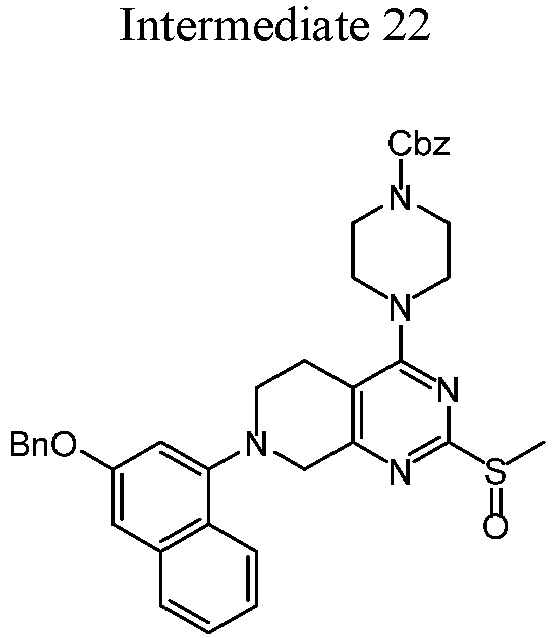
- Step A: tert-butyl 4-hydroxy-2-(methylthio)-5,8-dihydropyrido[3,4-d]pyrimidine-7(6H)-carboxylate: To a stirred solution of 1-tert-butyl 4-ethyl 3-oxopiperidine-1,4-dicarboxylate (50.0 g, 184 mmol, 1.00 eq) in MeOH (1.00 L) at 25 °C under nitrogen was added NaOMe (49.8 g, 921 mmol, 5.00 eq), followed by 2-methylisothiourea (62.4 g, 331 mmol, 1.80 eq, H2SO4) as a solid. The reaction mixture was stirred at 25 °C for 16 hours. The reaction mixture was adjusted to pH 5 with HCl (2 M), and the mixture was concentrated under reduced pressure to removed MeOH. The residue was suspended in 300 mL of ethyl acetate and 300 mL of water and stirred rapidly. The suspension was filtered and the white solid was collected. The filtrate was separated and the organic layer was washed with water (1 × 300 mL) and brine (1 × 200 mL). The combined organic layers were isolated, dried over Na2SO4, filtered and concentrated to provide tert-butyl 4-hydroxy-2-methylsulfanyl-6,8-dihydro-5H-pyrido[3,4-d]pyrimidine-7-carboxylate (51.0 g, 138 mmol, 75.4 % yield, 81.0 % purity) as a white solid which as used directly in the next step without further purification. ESI MS m/z 298.2 [M+H]+.
- Step B: tert-butyl 2-methylsulfanyl-4-(trifluoromethylsulfonyloxy)-6,8-dihydro-5H-pyrido[3,4-d]pyrimidine-7-carboxylate: To a stirred suspension of tert-butyl 4-hydroxy-2-methylsulfanyl-6,8-dihydro-5H-pyrido[3,4-d]pyrimidine-7-carboxylate (51.0 g, 171 mmol, 1.00 eq) in DCM (500 mL) at 0 °C was added DIEA (44.3 g, 343 mmol, 59.9 mL, 2.00 eq), followed by trifluoromethanesulfonic anhydride (72.6 g, 257 mmol, 42.4 mL, 1.50 eq) under nitrogen. Immediately a brown solution formed. After stirring at 25 °C for 16 hours, the reaction was concentrated to give a brown oil. The brown oil was purified by column chromatography (SiO2, Petroleum ether/Ethyl acetate = 1:0 to 10:1) to provide tert-butyl 2-methylsulfanyl-4-(trifluoromethylsulfonyloxy)-6,8-dihydro-5H-pyrido[3,4-d]pyrimidine-7-carboxylate (46.0 g, 107 mmol, 62.4 % yield) as a yellow solid ESI MS m/z 430.2 [M+H]+.
- Step C: tert-butyl 4-(4-benzyloxycarbonylpiperazin-1-yl)-2-methylsulfanyl-6,8-dihydro-5H-pyrido[3,4-d]pyrimidine-7-carboxylate: To a stirred solution of tert-butyl 2-methylsulfanyl-4- (trifluoromethylsulfonyloxy)-6,8-dihydro-5H-pyrido[3,4-d]pyrimidine-7-carboxylate (46.0 g, 107 mmol, 1.00 eq) in DMF (500 mL) was added DIEA (27.7 g, 214 mmol, 37.4 mL, 2.00 eq) followed by benzyl piperazine-1-carboxylate (25.9 g, 117 mmol, 22.7 mL, 1.10 eq). The reaction was heated to 100 °C for 1 hour under a nitrogen atmosphere. The reaction mixture was poured into ethyl acetate (300 mL), washed with H2O (300 mL × 3) and brine (200 mL), dried over anhydrous Na2SO4, filtered and concentrated under vacuum. The residue was purified by column chromatography (SiO2, Petroleum ether/Ethyl acetate = 1:0 to 5:1) to give tert-butyl 4-(4-benzyloxycarbonylpiperazin-1-yl)-2-methylsulfanyl-6,8-dihydro-5H-pyrido[3,4-d]pyrimidine-7-carboxylate (51.0 g, 96.9 mmol, 90.5 % yield, 92.0 % purity) as a white solid ESI MS m/z 500.3 [M+H]+.
- Step D: Benzyl 4-(2-methylsulfanyl-5,6,7,8-tetrahydropyrido[3,4-d]pyrimidin-4-yl) piperazine-1-carboxylate: To a solution of tert-butyl 4-(4-benzyloxycarbonylpiperazin-1-yl)-2-methylsulfanyl-6,8-dihydro-5H-pyrido[3,4-d]pyrimidine-7-carboxylate (25.0 g, 50.0 mmol, 1.00 eq) in DCM (50.0 mL) was added TFA (85.6 g, 750 mmol, 55.6 mL, 15.0 eq). After stirring at 25 °C for 1 hour, the reaction mixture was concentrated under reduced pressure. The residue was dissolved in 300 mL of ethyl acetate and 300 mL of water and stirred rapidly. The mixture was adjusted to pH 8 with Na2CO3. The organic layer was washed with water (1 × 300 mL) and brine (1 × 200 mL), dried over Na2SO4, filtered and concentrated under reduced pressure to provide benzyl 4-(2-methylsulfanyl-5,6,7,8-tetrahydropyrido[3,4-d]pyrimidin-4-yl) piperazine-1-carboxylate (19.0 g, 46.6 mmol, 93.2 % yield, 98.0 % purity) as a yellow oil. ESI MS m/z 400.2 [M+H]+.
- Step E : Benzyl 4-[7-(3-benzyloxy-1-naphthyl)-2-methylsulfanyl-6,8-dihydro-5H-pyrido[3,4-d]pyrimidin-4-yl]piperazine-1-carboxylate: A mixture of 3-benzyloxy-1-bromo-naphthalene (16.3 g, 52.1 mmol, 1.30 eq), benzyl 4-(2-methylsulfanyl-5,6,7,8-tetrahydropyrido[3,4-d]pyrimidin-4-yl)piperazine-1-carboxylate (16.0 g, 40.1 mmol, 1.00 eq), Cs2CO3 (32.6 g, 100 mmol, 2.50 eq), Pd2(dba)3 (5.50 g, 6.01 mmol, 0.15 eq) and 2-dicyclohexylphosphino-2',6'-diisopropoxybiphenyl (RuPhos) (3.74 g, 8.01 mmol, 0.20 eq) in dioxane (300 mL) was degassed and purged with nitrogen 3 times. The mixture was stirred at 85 °C for 5 hours under a nitrogen atmosphere. The reaction mixture was quenched by adding water (200 mL) at 0 °C, and extracted with ethyl acetate (3 × 200 mL). The combined organic layers were washed with brine (3 × 150 mL), dried over Na2SO4, filtered and concentrated under reduced pressure. The residue was purified by column chromatography (SiO2, DCM/MeOH = 10/1 to 5/1) to provide benzyl 4-[7-(3-benzyloxy-1-naphthyl)-2-methylsulfanyl-6,8-dihydro-5H-pyrido[3,4-d]pyrimidin-4-yl]piperazine-1-carboxylate (16.0 g, 22.8 mmol, 56.9 % yield, 90.0 % purity) as a yellow solid. ESI MS m/z 632.5 [M+H]+.
- Step F: Benzyl 4-[7-(3-benzyloxy-1-naphthyl)-2-methylsulfinyl-6.8-dihydro-5H-pyrido [3,4-d]pyrimidin-4-yl]piperazine-1-carboxylate :To a stirred solution of benzyl 4-[7-(3-benzyloxy-1-naphthyl)-2- methylsulfanyl-6,8-dihydro-5H-pyrido[3,4-d]pyrimidin-4-yl]piperazine-1-carboxylate (8.00 g, 12.7 mmol, 1.00 eq) in DCM (200 mL) was added m-CPBA (2.73 g, 12.7 mmol, 80.0 % purity, 1.00 eq) at 0 °C under nitrogen. After stirring at 0 °C for 2 hours under a nitrogen atmosphere, the reaction mixture was quenched by adding Na2S2O3 (10.0 mL) at 0 °C, diluted with water (100 mL) and extracted with DCM (200 mL). The combined organic layers were washed with brine (200 mL), dried over Na2SO4, filtered and concentrated under reduced pressure to give a residue. The residue was purified by column chromatography (SiO2, DCM/MeOH = 1/0 to 10/1) to provide benzyl 4-[7-(3-benzyloxy-1-naphthyl)-2-methylsulfinyl-6,8-dihydro-5H-pyrido [3,4-d]pyrimidin-4-yl]piperazine-1-carboxylate (3.50 g, 4.92 mmol, 38.8 % yield, 91.0 % purity) as a yellow solid. ESI MS m/z 648.5 [M+H]+.

- Step A: 1-[4-[(2R)-2-hydroxyl]piperazin-1-yl]ethanone: (2R)-2-methyloxirane (1.00 g, 17.2 mmol, 1.20 mL, 1.00 eq) and 1-piperazin-1-ylethanone (8.00 g, 62.4 mmol, 3.62 eq) were taken up into a microwave tube. The sealed tube was heated at 150 °C for 1 hour under microwave. The mixture was dissolved in DCM (80.0 mL), added (Boc)2O (3.62 eq, 13.6 g) and stirred at 20 °C for 1 hour. The residue was purified by column chromatography (DCM/MeOH 100/1 to 10/1) to give 1-[4-[(2R)-2-hydroxypropyl]piperazin-1-yl]ethanone (3.80 g, 13.5 mmol, 78.2 % yield, 66.0 % purity) as a yellow oil.

- Step A: 1-benzyloxy-3,5-dibromo-benzene: To a mixture of 3,5-dibromophenol (1.50 g, 5.95 mmol, 1.00 eq) and K2CO3 (2.47 g, 17.9 mmol, 3.00 eq) in MeCN (30.0 mL) was added benzyl bromide (1.07 g, 6.25 mmol, 742 µL, 1.05 eq), the reaction mixture was stirred at 80 °C for 2 hours. The reaction mixture was filtered and concentrated. The residue was purified by column chromatography (SiO2, Petroleum ether/Ethyl acetate = 1:1 to give 1-benzyloxy-3,5-dibromobenzene (1.60 g, 4.68 mmol, 78.6 % yield) as colorless oil.
- Step B: 1-benzyloxy-3-bromo-5-cyclopropylbenzene: To a mixture of 1-benzyloxy-3,5-dibromobenzene (1.20 g, 3.51 mmol, 1.00 eq) and cyclopropylboronic acid (392 mg, 4.56 mmol, 1.30 eq) in H2O (4.00 mL) and dioxane (20.0 mL) was added Pd(dppf)Cl2 (513 mg, 702 µmol, 0.20 eq) and Cs2CO3 (2.29 g, 7.02 mmol, 2.00 eq). The reaction mixture was stirred at 90 °C for 12 hours under N2. The reaction mixture was added to water (20 mL) and extracted with ethyl acetate (2 × 15 mL). The combined organic layers were dried over Na2SO4, filtered and concentrated. The residue was purified by column chromatography (SiO2, Petroleum ether/Ethyl acetate = 1:1 to give 1-benzyloxy-3-bromo-5-cyclopropyl -benzene (270 mg, 890 µmol, 25.4 % yield) as colorless oil.

- Step A: tert-butvl 4-(4-benzyloxycarbonylpiperazin-1-yl)-2-(3-morpholinopropoxy)-6,8-dihydro-5H-pyrido[3,4-d]pyrimidine-7-carboxylate: To a mixture of 3-morpholinopropan-1-ol (5.46 g, 37.6 mmol, 2.00 eq) in THF (100 mL) was added NaH (2.26 g, 56.4 mmol, 60.0 % purity, 3.00 eq) in portions at 0 °C. After the mixture was stirred at 0 °C for 0.5 hour, a solution of tert-butyl 4-(4-benzyloxycarbonylpiperazin-1-yl)-2-methylsulfonyl-6,8-dihydro-5H-pyrido[3,4-d]pyrimidine-7-carboxylate (10.0 g, 18.8 mmol, 1.00 eq) in THF (100 mL) was added, and the reaction mixture was stirred at 0 °C for 1.5 hours under N2. The mixture was poured into NH4Cl aqueous (300 mL), and extracted with DCM (2 × 200 mL). The combined organic layers were dried over Na2SO4, filtered and concentrated. The residue was purified by column chromatography (SiO2, Petroleum ether/Ethyl acetate=50: 1 to 10:1) to give tert-butyl 4-(4-benzyloxycarbonylpiperazin-1-yl)-2-(3-morpholinopropoxy)-6,8-dihydro-5H-pyrido[3,4-d]pyrimidine-7-carboxylate (7.70 g, 12.8 mmol, 67.8 % yield, 98.8 % purity) as a yellow oil. ESI MS m/z 597.4 [M+H]+.
- Step B: benzyl 4-[2-(3-morpholinopropoxy)-5,6,7,8-tetrahydropyrido[3,4-d]pyrimidin-4-yl]piperazine-1-carboxylate: To a mixture of tert-butyl 4-(4-benzyloxycarbonylpiperazin-1-yl)-2-(3-morpholinopropoxy)-6,8-dihydro-5H-pyrido[3,4-d]pyrimidine-7-carboxylate (7.70 g, 12.9 mmol, 1.00 eq) in DCM (80.0 mL) was added TFA (119 g, 1.04 mol, 76.9 mL, 80.6 eq), and the reaction mixture was stirred at 15 °C for 1 hour. The reaction mixture was concentrated, then diluted with DCM (100 mL) and adjusted to pH 8 with aqueous NaOH. The organic layer was separated, dried over Na2SO4, filtered and concentrated to give benzyl 4-[2-(3-morpholinopropoxy)-5,6,7,8-tetrahydropyrido[3,4-d]pyrimidin-4-yl]piperazine-1-carboxylate (6.00 g, 11.2 mmol, 86.9 % yield, 92.8 % purity) as yellow oil. ESI MS m/z 497.4 [M+H]+.

- To a solution of 3-bromo-4-fluorophenol (4.00 g, 20.9 mmol, 1.00 eq) and K2CO3 (8.68 g, 62.8 mmol, 3.00 eq) in ACN (80.0 mL) was added benzyl bromide (3.65 g, 21.4 mmol, 2.54 mL, 1.02 eq) and the reaction mixture was stirred at 60 °C for 2 hrs. The reaction mixture was filtered and concentrated in vacuum. The residue was purified by silica gel chromatography (petroleum ether: ethyl acetate; gradient from 1:0 to 10:1) to give 4-benzyloxy-2-bromo-1-fluoro-benzene (5.02 g, 17.0 mmol, 81.0 % yield, 95 % purity) was obtained as white solid.

- Step A: tert-butyl 3-fluoropyrrolidine-1-carboxylate: To a solution of tert-butyl 3-hydroxypyrrolidine-1-carboxylate (10.0 g, 53.4 mmol, 1.00 eq) in DCM (150.00 mL) was added diethylaminosulfur trifluoride (DAST) (12.9 g, 80.1 mmol, 10.6 mL, 1.50 eq) at -40 °C under a nitrogen atmosphere. After stirring at - 40 °C for 2 hours, the mixture was warmed to 20 °C and stirred for 16 hours. The mixture was poured into 5% aqueous sodium bicarbonate (200 mL) and extracted with dichloromethane (2 × 100 mL). The organic layer was dried over sodium sulfate, filtered and concentrated under vacuum. The residue was purified by column chromatography over silica gel (petroleum ether/ethyl acetate 100:1 to 5:1). The desired fractions were collected and concentrated under vacuum to give tert-butyl 3-fluoropyrrolidine-1-carboxylate (4.30 g, 22.7 mmol, 42.6 % yield) as a colorless oil. 1H NMR (400 MHz, Chloroform-d) δ = 5.27 (t, J = 3.6 Hz, 0.5H), 5.13 (t, J = 3.6 Hz, 0.5H), 3.77 - 3.38 (m, 4H), 2.26 - 2.15 (m, 1H), 2.08 - 1.85 (m, 1H), 1.46 (s, 9H).
- Step B: 3-fluoropyrrolidine: To a solution of tert-butyl 3-fluoropyrrolidine-1-carboxylate (4.30 g, 22.7 mmol, 1.00 eq) in DCM (50.00 mL) was added HCl/dioxane (4 M, 35.0 mL, 6.16 eq) dropwise at 0 °C. The mixture was warmed to 20 °C and stirred for 1 hour. The mixture was concentrated under vacuum. The residue was triturated with diisopropyl ether (20 mL) and the precipitate was filtered and dried under vacuum to provide 3-fluoropyrrolidine (2.70 g, 21.5 mmol, 94.6 % yield, HCl) as a white solid. 1H NMR (400 MHz, Methanol-d4) δ = 5.51 (t, J = 3.6 Hz, 0.5H), 5.38 (t, J=3.6 Hz, 1H), 3.66 - 3.27 (m, 5H), 2.45 - 2.12 (m, 2H).
- Step C: methyl 2-(3-fluoropyrrolidin-1-yl)acetate: A suspension of 3-fluoropyrrolidine (2.70 g, 21.5 mmol, 1.00 eq, HCl) in DCM (27.00 mL) was cooled to 0° C. Triethylamine (5.44 g, 53.8 mmol, 7.45 mL, 2.50 eq) and methyl 2-bromoacetate (3.62 g, 23.7 mmol, 2.23 mL, 1.10 eq) were added and the reaction mixture was stirred at 20 °C for 16 h. The reaction mixture was diluted with CH2Cl2 (100 mL) and water (50 mL). The organic layer was washed with 5% aqueous citric acid solution (1 × 50 mL). The water layer was basified by saturated aqueous sodium carbonate solution (20 mL) and extracted with ethyl acetate (3 × 100 mL). The combined organic layers were dried over sodium sulfate and concentrated in vacuo to give methyl 2-(3-fluoropyrrolidin-1-yl)acetate (2.20 g, 13.7 mmol, 63.5 % yield). 1H NMR (400 MHz, Chloroform-d) δ = 5.22 - 5.02 (m, 1H), 3.66 (s, 3H), 3.35 (s, 2H), 3.07 - 2.93 (m, 1H), 2.91 - 2.77 (m, 2H), 2.67 (dt, J = 5.2, 8.4 Hz, 1H), 2.21 - 1.93 (m, 2H).
- Step D: 2-(3-fluoropyrrolidin-1-yl)ethanol: To a solution of LiAlH4 (706 mg, 18.6 mmol, 1.50 eq) in THF (20 mL) was added a solution of methyl 2-(3-fluoropyrrolidin-1-yl)acetate (2.00 g, 12.4 mmol, 1.00 eq) in THF (10 mL) dropwise at 0 °C. The mixture was warmed up to 20 °C and stirred for 3 hours. The mixture was quenched with saturated aqueous sodium sulfate solution (1 mL). The mixture was filtered and the filtrate was concentrated under vacuum. The product was purified by silica gel chromatography using 5% MeOH in DMC. The desired fractions were collected and concentrated under vacuum to give 2-(3-fluoropyrrolidin-1-yl)ethanol (1.20 g, 9.01 mmol, 72.6 % yield) as a colorless oil. 1H NMR (400 MHz, Chloroform-d) δ = 5.28 - 5.05 (m, 1H), 3.68 - 3.61 (m, 2H), 2.99 - 2.73 (m, 4H), 2.72 - 2.67 (m, 2H), 2.58 - 2.45 (m, 1H), 2.28 - 1.97 (m, 2H).

- Step A: methyl piperazine-2-carboxylate: To a mixture of 1-tert-butyl 2-methyl piperazine-1,2-dicarboxylate (5.0 g, 22.6 mmol, 1.00 eq) in MeOH (50.0 mL) was added HCl/dioxane (4.0 M, 134 mL). The reaction mixture was degassed and purged with nitrogen 3 times, and the mixture was stirred at 25 °C for 12 hours under a nitrogen atmosphere. The reaction mixture was concentrated under reduced pressure to dryness to give methyl piperazine-2-carboxylate (4.89 g, 2HCl, crude) as a white solid, which was used directly in the next step without further purification.
- Step B: 1-(tert-butyl) 3-methyl piperazine-1,3-dicarboxylate: To a solution of methyl piperazine-2-carboxylate (4.30 g, crude) and TEA (8.02 g, 79.2 mmol, 11.0 mL) in MeOH (50.0 mL) was added di-tert-butyl dicarbonate (4.32 g, 19.8 mmol, 4.55 mL). After stirring at 25 °C for 12 hours, the reaction mixture was filtered and concentrated under reduced pressure to dryness. The residue was purified by column chromatography (SiO2, DCM / MeOH = 1:0 to 20:1) to give 1-(tert-butyl) 3-methyl piperazine-1,3-dicarboxylate (4.80 g, 19.7 mmol, two steps, 99.0 % yield) as a colorless oil. 1H NMR (400 MHz, chloroform-d) δ = 4.10 - 3.85 (m, 1H), 3.73 (s, 3H), 3.71 - 3.65 (m, 1H), 3.47 - 3.38 (m, 1H), 3.10 - 2.98 (m, 2H), 2.78 - 2.66 (m, 1H), 2.17 (s, 1H), 1.46 (s, 9H).

- Step A: 2,4-dibromonaphthalen-1-amine: To a solution of Br2 (246 g, 1.54 mol, 79.3 mL, 2.18 eq) in AcOH (750 mL) was added a solution of naphthalen-1-amine (101 g, 705 mmol, 99.0 mL, 1.00 eq) in AcOH (500 mL) at ambient temperature, and the reaction was stirred at 70 °C for 1 hour. The reaction mixture was cooled at room temperature and filtered. The filter cake was washed with AcOH (300 mL), then added to 20 % aqueous of NaOH (1.2 L). The mixture was stirred for 20 min and filtered. The isolated solid was washed with water (1 L) and dried under vacuum to provide 2,4-dibromonaphthalen-1-amine (200 g, 664 mmol, 94.2% yield) as gray solid. ESI MS m/z 301. 9 [M+H]+.
- Step B: 4-bromo-1-diazonio-naphthalen-2-olate: To a solution of 2,4-dibromonaphthalen-1-amine (60.0 g, 199 mmol, 1.00 eq) in AcOH (900 mL) and propionic acid (150 mL) was added NaNO2 (16.5 g, 239 mmol, 13.0 mL, 1.20 eq) portionwise at 5-8 °C over 30 min, and then the reaction mixture was stirred at 5-8 °C for 30 min. The reaction mixture was poured into ice-water (4000 mL), and the resulting solid was collected and washed with water (2 × 50 mL) to provide 4-bromo-1-diazonio-naphthalen-2-olate (150 g, wet crude) as gray solid which was used directly in the next step. 1H NMR (400 MHz, CDCl3) δ 8.12 - 8.10 (d, J=8.4 Hz, 1H), 7.62 - 7.58 (t, J=7.6 Hz, 1H), 7.41 - 7.37 (t, J=7.6 Hz, 1H), 7.31 - 7.29 (d, J=8.0 Hz, 1H), 7.20 (s, 1H).
- Step C: 4-bromonaphthalen-2-ol: To a solution of 4-bromo-1-diazonio-naphthalen-2-olate (100 g, 402 mmol, 1.00 eq) in EtOH (2.00 L) was added portionwise NaBH4 (30.4 g, 803 mmol, 2.00 eq) at 13-15 °C over 1 h, and the reaction mixture was stirred at 15-18 °C for 3 hrs. The reaction was filtered and concentrated to dryness. The residue was dissolved in DCM (1000 mL) and washed with water (500 mL × 2). The organic phase was dried over Na2SO4 and concentrated to dryness. The residue was purified by silica gel column chromatograph, eluting with diethyl ether/ethyl acetate (60:1 to 10:1). The isolated product was further purified by reversed phase HPLC to provide 4-bromonaphthalen-2-ol (40.0 g, 139 mmol, 17.3 % yield, 77.4% purity) as a gray solid. 1H NMR (400 MHz, CDCl3) δ 8.07 - 8.05 (d, J=8.0 Hz, 1H), 7.60 - 7.58 (d, J=7.6 Hz, 1H), 7.41 - 7.36 (m, 3H), 7.07 (s, 1H).
- Step D: 3-benzyloxy-1-bromo-naphthalene: A mixture of 4-bromonaphthalen-2-ol (30.0 g, 134 mmol, 1.00 eq), benzyl bromide (25.3 g, 148 mmol, 17.6 mL, 1.10 eq) and K2CO3 (55.7 g, 403 mmol, 3.00 eq) in MeCN (500 mL) was heated at 80 °C for 1 hr. The reaction mixture was filtered and concentrated to dryness. The residue was purified by silica gel column chromatography, eluting with diethyl ether/ethyl acetate (100:1 to 60:1) to provide 3-benzyloxy-1-bromo-naphthalene (40.0 g, 128 mmol, 95 % yield) as yellow oil. 1H NMR (400 MHz, CDCl3) δ 8.19 - 8.17 (d, J=8.0 Hz, 1H), 7.75 - 7.32 (d, J=8.8 Hz, 1H), 7.64 - 7.63 (d, J=2.4 Hz,1H), 7.52 - 7.37 (m, 7H), 7.23 - 7.21 (d, J=2.0 Hz,1H), 5.2 (s, 2H).

- Step A: 3-methoxynaphthalen-1-ol : To a solution of naphthalene-1,3-diol (3.00 g, 18.7 mmol, 1.00 eq) in MeOH (60.0 mL) was added HCl/MeOH (4 M, 60.0 mL, 12.8 eq) at 0 °C. The mixture was stirred at 25 °C for 60 hours. The solvent was removed under vacuum. The residue was purified by silica gel chromatography (diethyl ether:ethyl acetate=10:1 to 5:1) to give 3-methoxynaphthalen-1-ol (2.10 g, 12.1 mmol, 64.4% yield) as a brown solid. 1H NMR (400 MHz, CDCl3-d6) δ = 8.10 - 8.08 (d, J=8.4 Hz, 1H).7.73 - 7.71 (d, J=8.4 Hz, 1H), 7.47 - 7.45(m, 1H), 7.38 - 7.35(m, 1H), 6.80 - 6.79 (d, J=2.0 Hz, 1H), 6.56 - 6.55 (d, J=2.4 Hz, 1H), 3.92 (s, 3H).
- Step B: (3-methoxy-1-naphthyl) trifluoromethanesulfonate: To a solution of 3-methoxynaphthalen-1-ol (2.10 g, 12.0 mmol, 1.00 eq) in DCM (40.0 mL) was added DIEA (7.79 g, 60.3 mmol, 10.5 mL, 5.00 eq) and trifluoromethanesulfonic anhydride (5.10 g, 18.1 mmol, 2.98 mL, 1.50 eq) at 0 °C. The mixture was stirred at 25 °C for 1 hour. The mixture was diluted with DCM (30 mL) and water (10 mL) and extracted with DCM (20 mL). The combined organic layers were washed with brine (5 mL), dried over Na2SO4 and concentrated under vacuum. The residue was purified by silica gel chromatography (diethyl ether: ethyl acetate=20:1 to 10 :1) to give (3-methoxy-1-naphthyl) trifluoromethanesulfonate (3.00 g, 8.52 mmol, 70.7 % yield, 87.0 % purity) as a brown oil. ESI MS m/z 307.1 [M+H]+.

- Step A: 7-benzyl-6,8-dihydro-5H-pyrido[3,4-d]pyrimidine-2,4-diol: To EtOH (600 mL) was added Na (5.56 g, 241 mmol, 5.73 mL, 2.40 eq) in portions. The reaction mixture was stirred for 1 hour. To the mixture was added ethyl 1-benzyl-3-oxo-piperidine-4-carboxylate (30.0 g, 100 mmol, 1.00 eq, HCl) and urea (14.5 g, 242 mmol, 13.0 mL, 2.40 eq). The reaction mixture was stirred at 75 °C for 36 hours, and then the solvent was removed under vacuum. The residue was dissolved in water (50 mL) and acidified with HCl (120 mL, 2M). A white solid precipitated from the solution and was collected by filtration. The filter cake was dried under vacuum to provide 7-benzyl-6,8-dihydro-5H-pyrido[3,4-d]pyrimidine-2,4-diol (22.0 g, 83.8 mmol, 83.2 % yield, 98 % purity) as a white solid. 1HNMR (400 MHz, DMSO-d6) δ = 10.97 (br s, 1H), 10.66 (br s, 1H), 7.55 - 6.95 (m, 5H), 3.81 - 3.50 (m, 2H), 3.26 - 2.91 (m, 2H), 2.77 - 2.58 (m, 2H), 2.34 - 2.09 (m, 2H).
- Step B: 7-benzyl-2,4-dichloro-6,8-dihydro-5H-pyrido[3,4-d]pyrimidine: To a solution of DIEA (30.1 g, 233 mmol, 40.7 mL, 3.00 eq) in POCl3 (330 g, 2.15 mol, 200 mL) was added 7-benzyl-6,8-dihydro-5H-pyrido[3,4-d]pyrimidine-2,4-diol (20.0 g, 77.7 mmol, 1.00 eq). The reaction mixture was stirred at 110 °C for 5 hours. The reaction mixture was concentrated under vacuum. The residue was dissolved in DCM (400 mL) and poured into saturated NaHCO3 (200 mL). The mixture was extracted with DCM (2 × 400 mL). The combined organic layers were washed with brine (100 mL), dried over Na2SO4 and concentrated under vacuum. The residue was purified by silica gel chromatography (diethyl ether: DCM=10:1 to 0:1) to give 7-benzyl-2,4-dichloro-6,8-dihydro-5H-pyrido[3,4-d]pyrimidine (7.70 g, 26.2 mmol, 33.7 % yield) as a brown oil. 1HNMR (300 MHz, chloroform-d) δ = 7.43 - 7.28 (m, 5H), 3.73 (s, 2H), 3.66 (br s, 2H), 2.84 (br s, 4H)

- Step A: tert-butyl4-hydroxy-2-methylsulfanyl-6,8-dihydro-5H-pyrido[3,4-d]pyrimidine-7-carboxylate: To a stirred solution of 1-tert-butyl 4-ethyl-3-oxopiperidine-1,4-dicarboxylate (44.0 g, 162 mmol, 1.00 eq) in MeOH (1.00 mL) at 25 °C under nitrogen was added a solution of NaOMe (35.0 g, 649 mmol, 4.00 eq) in MeOH (600 mL) by syringe followed by 2-methylisothiourea (61.1 g, 324 mmol, 2.00 eq, H2SO4). After stirring at 25 °C for 16 hours, the reaction mixture was concentrated under reduced pressure to removed MeOH. The residue was suspended in 500 mL of ethyl acetate and 500 mL of water and stirred rapidly. The reaction mixture was adjusted to pH 5 with HCl (2 M). The precipitate was filtered and the white solid was washed with ethyl acetate and dried under vacuum to give tert-butyl4-hydroxy-2-methylsulfanyl-6,8-dihydro-5H-pyrido[3,4-d]pyrimidine-7-carboxylate (33.0 g, 103 mmol, 63.8 % yield, 93.2 % purity) as a white solid, which was used directly in the next step without further purification. 1H NMR (400 MHz, DMSO-d6) δ = 4.19 (s, 2 H), 3.49 (br s, 2 H), 2.46 (s, 3 H), 2.35 (br t, J = 5.2 Hz, 2 H), 1.42 (s, 9 H).
- Step B: give tert-butyl 2-methylsulfanyl-4-(trifluoromethylsulfonyloxy)-6,8-dihydro-5H-pyrido [3,4-d]pyrimidine-7-carboxylate: To a stirred suspension of tert-butyl 4-hydroxy-2-methylsulfanyl -6,8-dihydro-5H-pyrido[3,4-d]pyrimidine-7-carboxylate (15.0 g, 50.4 mmol, 1.00 eq) in DCM (200 mL) was added DIEA (26.1 g, 202 mmol, 35.2 mL, 4.00 eq) at 0 °C under nitrogen and followed by trifluoromethanesulfonic anhydride (28.5 g, 101 mmol, 16.6 mL, 2.00 eq) by syringe. Immediately a brown solution formed. The reaction mixture was stirred at 25 °C for 12 hours. The reaction mixture was purified by column chromatography (SiO2, Petroleum ether / Ethyl acetate = 1:0 to 10:1) to give tert-butyl 2-methylsulfanyl-4-(trifluoromethylsulfonyloxy)-6,8-dihydro-5H-pyrido [3,4-d]pyrimidine-7-carboxylate (16.7 g, 35.7 mmol, 70.9 % yield, 91.9 % purity) as a white solid. ESI MS m/z 374.0 [M+H]+.
- Step C: tert-butyl 4-(4-benaloxycarbonylpiperazin-1-yl)-2-methylsulfanyl-6,8- dihydro-5H-pyrido[3,4-d]pyrimidine-7-carboxylate: To a stirred solution of tert-butyl2-methylsulfanyl-4-(trifluoromethyl sulfonyloxy)-6,8-dihydro-5H-pyrido[3,4-d]pyrimidine-7-carboxylate (16.7 g, 38.9 mmol, 1.00 eq) in DMF (100 mL) was added DIEA (10.0 g, 77.9 mmol, 2.00 eq) and benzyl piperazine-1-carboxylate (9.41 g, 42.8 mmol, 1.10 eq). The reaction was heated to 100 °C and stirred for 1 hour under a nitrogen atmosphere. The reaction mixture was diluted with water (150 mL) and the reaction mixture was adjusted to pH 5 with HCl (2 M) and extracted with DCM (3 × 200 mL). The combined organic layers were washed with saturated NaHCO3 (3 × 150 mL), brine (3 × 150 mL) and H2O (3 × 150 mL), dried over Na2SO4, filtered and concentrated under reduced pressure to give tert-butyl 4-(4-benzyloxycarbonylpiperazin-1-yl)-2-methylsulfanyl-6,8-dihydro-5H-pyrido[3,4-d]pyrimidine-7-carboxylate (18.1 g, 36.2 mmol, 93.0 % yield, 94.1 % purity) as a yellow solid, which was used directly in the next step without further purification. ESI MS m/z 500.1 [M+H]+.
- Step D: tert-butyl 4-(4-benzyloxycarbonylpiperazin-1-yl)-2- methylsulfonyl-6,8-dihydro-5H-pyrido[3,4-d]pyrimidine-7-carboxylate: To a stirred solution of tert-butyl4-(4-benzyloxycarbonylpiperazin -1-yl)-2-methylsulfanyl-6,8-dihydro-SH-pyrido[3,4-d]pyrimidine-7-carboxylate (14.4 g, 28.9 mmol, 1.00 eq) in DCM (150 mL) at 0 °C under nitrogen was added meta-chloroperoxybenzoic acid (17.4 g, 101 mmol, 3.50 eq) as a solid. After stirring at 0 °C for 2 hours under a nitrogen atmosphere, the reaction mixture was diluted with water (300 mL) and the reaction mixture was adjusted to pH 8 with saturated aqueous NaHCO3 and extracted with DCM (3 × 200 mL). The combined organic layers were washed with brine (3 × 200 mL), dried over Na2SO4, filtered and concentrated under reduced pressure to dryness. The residue was purified by column chromatography (SiO2, Petroleum ether/Ethyl acetate = 10:1 to 1:2) to give tert-butyl 4-(4-benzyloxycarbonylpiperazin-1-yl)-2-methylsulfonyl-6,8-dihydro-5H-pyrido[3,4-d]pyrimidine-7-carboxylate (11.0 g, 19.7 mmol, 68.6 % yield, 95.4 % purity) as a white solid. ESI MS m/z 532.1 [M+H]+.

- Step A: A mixture of 1-bromoisoquinolin-3-amine (400 mg, 1.79 mmol, 1.00 eq) and tert-butoxycarbonyl tert-butyl carbonate (3.91 g, 17.9 mmol, 4.12 mL, 10.0 eq) was stirred at 70 °C for 16 hours. The residue was purified by column chromatography (SiO2, diethyl ether/ethyl acetate = 5:1) to give tert-butyl N-(1-bromo-3-isoquinolyl) carbamate (400 mg, 1.24 mmol, 69.2 % yield) as a yellow solid. ESI MS m/z 322.1, 324.1 [M+H]+.

- Step A: 3-methoxynaphthalen-1-ol: To a solution of naphthalene-1,3-diol (40.0 g, 250 mmol, 1.00 eq) in MeOH (800 mL) was added HCl (4 M, 750 mL, 12.0 eq, 4 M in MeOH) at 0 °C. The mixture was warmed up to 18 °C and stirred for 30 hours. The mixture was concentrated under vacuum. The residue was purified by column chromatography over silica gel (petroleum ether/ethyl acetate 100/1 to 1/1). The desired fractions were collected and concentrated under vacuum to give 3-methoxynaphthalen-1-ol (17.7 g, 96.5 mmol, 38.6 % yield, 95 % purity) as a red oil. 1H NMR (400MHz, Chloroform-d) δ = 8.17 (d, J = 8.4 Hz, 1H), 7.74 (d, J = 8.0 Hz, 1H), 7.50 (ddd, J = 1.2, 6.8, 8.0 Hz, 1H), 7.38 (ddd, J=1.2, 6.8, 8.0 Hz, 1H), 6.81 (d, J=2.0 Hz, 1H), 6.76 (br s, 1H), 6.62 (d, J=2.4 Hz, 1H), 3.91 (s, 3H).
- Step B: tert-butyl-[(3-methoxy-1-naphthyl)oxy]-dimethyl-silane: To a solution of 3-methoxynaphthalen-1-ol (20.0 g, 115 mmol, 1.00 eq) and imidazole (23.5 g, 344 mmol, 3.00 eq) in THF (400 mL) was added TBSCl (26.0 g, 172 mmol, 21.1 mL, 1.50 eq) dropwise at 0 °C. The mixture was warmed up to 25 °C and stirred for 16 hours. The mixture was diluted with petroleum ether (600 mL) and ethyl acetate (200 mL), and then washed with water (1 × 200 mL) and brine (1 × 200 mL). The separated organic layer was dried over sodium sulfate, filtered and concentrated under vacuum. The residue was purified by column chromatography over silica gel (petroleum ether/ethyl acetate 100/1 to 10/1). tert-butyl-[(3-methoxy-1-naphthyl)oxy]-dimethyl-silane (28.0 g, 97.1 mmol, 84.6 % yield) was obtained as a colorless oil. 1H NMR (400MHz, Chloroform-d) δ = 8.01 (d, J = 8.4 Hz, 1H), 7.61 (d, J = 8.0 Hz, 1H), 7.35 (dt, J = 1.2, 7.6 Hz, 1H), 7.24 (dt, J = 1.2, 7.6 Hz, 1H), 6.71 (d, J = 2.0 Hz, 1H), 6.48 (d, J = 2.4 Hz, 1H), 3.82 (s, 3H), 1.02 (s, 9H), 0.23 (s, 6H).
- Step C: tert-butyl-[[3-methoxy-6-(4,4,5,5-tetramethyl-1,3,2-dioxaborolan-2-yl)-1-naphthyl]oxy]-dimethyl-silane and tert-butyl((3-methoxy-7-(4,4,5,5-tetramethyl-1,3,2-dioxaborolan-2-yl)naphthalen-1-yl)oxy)dimethylsilane: A mixture of tert-butyl-[(3-methoxy-1-naphthyl) oxy]-dimethyl-silane (26.0 g, 90.1 mmol, 1.00 eq), 4,4,5,5-tetramethyl-2-(4,4,5,5-tetramethyl-1,3,2-dioxaborolan-2-yl)-1,3,2-dioxaborolane (45.8 g, 180 mmol, 2.00 eq), (1Z,5Z)-cycloocta-1,5-diene;2,4-dimethyl-BLAHbicyclo[1.1.0]butane (2.39 g, 3.61 mmol, 0.04 eq) and 4-tert-butyl-2-(4-tert-butyl-2-pyridyl)pyridine (1.45 g, 5.41 mmol, 0.06 eq) in hexane (500 mL) was stirred at 100 °C under nitrogen atmosphere for 16 hours. The mixture was diluted with water (500 mL) and ethyl acetate (1000 mL). The separated organic layer was washed with brine (1 × 500 mL), dried over sodium sulfate, filtered and concentrated under vacuum. The residue was purified by column chromatography over silica gel (petroleum etehr/ethyl acetate 100/1 to 10/1). The desired fractions were collected and concentrated under vacuum to give a mixture of tert-butyl-[[3-methoxy-6-(4,4,5,5-tetramethyl-1,3,2-dioxaborolan-2-yl)-1-naphthyl]oxy]-dimethyl-silane and tert-butyl((3-methoxy-7-(4,4,5,5-tetramethyl-1,3,2- dioxaborolan-2-yl)naphthalen-1-yl)oxy)dimethylsilane (38.0 g, 85.3 mmol, 94.6 % yield, 93 % purity) as a light yellow oil. ESI MS m/z 415.5 [M+H]+
- Step D: 8-[tert-butyl(dimethyl)silyl]oxy-6-methoxy- naphthalen-2-ol: To a solution of mixture (36.0 g, 86.9 mmol, 1.00 eq) of tert-butyl-[[3-methoxy-6-(4,4,5,5- tetramethyl-1,3,2-dioxaborolan-2-yl)-1- naphthyl]oxy]-dimethyl-silane and tert-butyl((3-methoxy-7-(4,4,5,5-tetramethyl-1,3, 2-dioxaborolan-2-yl)naphthalen-1-yl)oxy)dimethylsilanein in acetone (400 mL) was added a solution of Oxone (58.7 g, 95.6 mmol, 1.10 eq) in H2O (400 mL) at 0 °C. The mixture was stirred at 0 °C for 1 hour. The mixture was quenched with 5% aqueous sodium thiosulfate solution (50 mL) and extracted with ethyl acetate (2 × 300 mL). The extracts were combined and washed with water (1 × 200 mL), brine (1 × 200 mL), dried over magnesium sulfate, filtered and the filtrate was concentrated under vacuum. The residue was purified by column chromatography over silica gel (petroleum ether/ethyl acetate 200/1 to 20/1). The desired fractions were collected and concentrated under vacuum to give 8-[tert-butyl(dimethyl)silyl]oxy-6-methoxy- naphthalen-2-ol (9.00 g, 28.4 mmol, 32.7 % yield, 96 % purity) as a colorless oil and 5-[tert-butyl(dimethyl)silyl]oxy-7-methoxy-naphthalen-2-ol (9.00 g, 29.0 mmol, 33.4 % yield, 98 % purity) as a white solid. ESI MS m/z 305.2 [M+H]+
- Step E: [5-[tert-butyl(dimethyl)silylloxy-7-methoxy-2-naphthyl] trifluoromethanesulfonate: To a solution of 5-[tert-butyl(dimethyl)silyl]oxy-7- methoxy-naphthalen-2-ol (11.0 g, 36.1 mmol, 1.00 eq) and DIEA (14.0 g, 108 mmol, 18.9 mL, 3.00 eq) in DCM (150 mL) was added Tf2O (12.2 g, 43.4 mmol, 7.15 mL, 1.20 eq) dropwise at - 40 °C. The mixture was stirred for 1 hour. The mixture was diluted with dichloromethane (200 mL) and washed with water (1 × 200 mL) and brine (1 × 200 mL). The separated organic layer was dried over sodium sulfate, filtered and concentrated under vacuum. The residue was purified by column chromatography over silica gel (petroleum ether/ethyl acetate 100/1 to 10/1). The desired fractions were collected and concentrated under vacuum to give [5-[tert-butyl(dimethyl)silyl]oxy-7-methoxy-2-naphthyl] trifluoromethanesulfonate (13.0 g, 29.8 mmol, 82.4 % yield, 100 % purity) as a white solid. ESI MS m/z 436.9 [M+H]+
- Step F: tert-butyl-[(3-methoxy-6-methyl-1-naphthyl)oxy]-dimethyl-silane: To a solution of [5-[tert-butyl(dimethyl)silyl]oxy-7-methoxy-2- naphthyl]trifluoromethanesulfonate (12.5 g, 28.6 mmol, 1.00 eq) and K2CO3 (11.9 g, 85.9 mmol, 3.00 eq) in dioxane (160 mL) was added Pd(PPh3)4 (3.31 g, 2.86 mmol, 0.10 eq) and trimethylboroxine (14.4 g, 57.3 mmol, 16.0 mL, 2.00 eq) under nitrogen atmosphere. The reaction was heated to 100 °C for 16 hours. The mixture was diluted with ethyl acetate (200 mL) and then washed with water (1 × 200 mL) and brine (1 × 200 mL). The separated organic layer was dried over sodium sulfate, filtered and concentrated under vacuum. The residue was purified by column chromatography over silica gel (petroleum ether/ethyl acetate 100/1 to 5/1). The desired fractions were collected and concentrated under vacuum to give tert-butyl-[(3-methoxy-6-methyl-1-naphthyl)oxy]-dimethyl-silane (8.00 g, 24.6 mmol, 85.9 % yield, 93 % purity) as a colorless oil as red solid. ESI MS m/z 303.2 [M+H]+
- Step G: 3-methoxy-6-methyl-naphthalen-1-ol: To a solution of tert-butyl-[(3-methoxy-6-methyl-1-naphthyl) oxy]-dimethyl-silane (8.00 g, 26.5 mmol, 1.00 eq) in THF (100 mL) was added TBAF (10.4 g, 39.7 mmol, 1.50 eq) at 0 °C. The mixture was stirred at 0 °C for 3 hours. The mixture was diluted with water (100 mL) and ethyl acetate (200 mL). The separated organic layer was washed with brine (1 × 100 mL), dried over sodium sulfate, filtered and concentrated under vacuum. The residue was purified by column chromatography over silica gel (petroleum ether/ethyl acetate 50/1 to 5/1). The desired fractions were collected and concentrated under vacuum to give 3-methoxy-6-methyl-naphthalen-1-ol (4.70 g, 25.0 mmol, 94.4 % yield) as a red solid. ESI MS m/z 188.4 [M+H]+
- Step H: 3-methoxy-6-methyl-1-naphthyl trifluoromethanesulfonate: To a solution of 3-methoxy-6-methyl-naphthalen-1-ol (4.70 g, 25.0 mmol, 1.00 eq) and DIEA (9.68 g, 74.9 mmol, 13.1 mL, 3.00 eq) in DCM (3.00 mL) was added Tf2O (8.45 g, 30.0 mmol, 4.94 mL, 1.20 eq) dropwise at - 40 °C. The mixture was stirred for 1 hour. The mixture was diluted with dichloromethane (200 mL) and washed with water (1 × 200 mL) and brine (1 × 200 mL). The separated organic layer was dried over sodium sulfate, filtered and concentrated under vacuum. The residue was purified by column chromatography over silica gel (petroleum ether/ethyl acetate 100/1 to 10/1). 3-methoxy-6-methyl-1-naphthyl trifluoromethanesulfonate (7.70 g, 24.0 mmol, 96.2 % yield, 99.9 % purity) was obtained as a colorless oil. ESI MS m/z 320.7 [M+H]+.
- The following intermediates were prepared according to the preparation for Intermediate 3, substituting the appropriate phenol for 2-bromo-3-fluorophenol.
Intermediate No. Structure Name Intermediate 35 
2-bromo-4-(methoxymethoxy)-1- (trifluoromethoxy)benzene Intermediate 36 
2-bromo-4-(methoxymethoxy)-1- (trifluoromethyl)benzene Intermediate 37 
2-bromo-1-(methoxymethoxy)-4-(trifluoromethoxy)benzene Intermediate 38 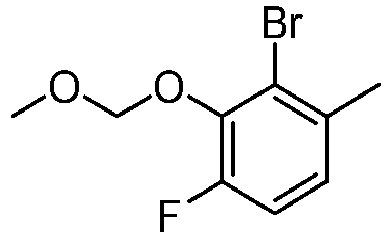
2-bromo-4-fluoro-3-(methoxymethoxy)-1- methylbenzene Intermediate 39 
1-bromo-3-(methoxymethoxy)-5-(trifluoromethoxy)benzene Intermediate 40 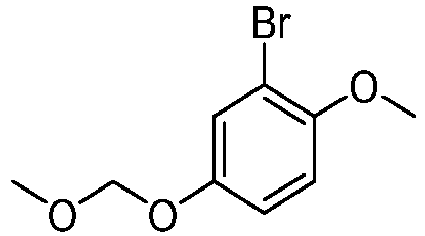
2-bromo-1-methoxy-4-(methoxymethoxy)benzene Intermediate 41 
2-bromo-1-(methoxymethoxy)-3-methylbenzene Intermediate 42 
2-bromo-4-(methoxymethoxy)-1- methylbenzene Intermediate 43 
1-bromo-4-(methoxymethoxy)-2-(trifluoromethoxy)benzene 

- Step 1: 3-fluoro-4-methylphenol (1.016 g, 8.055 mmol) was placed in Cs2 (3.9 mL, 64.44 mmol) and was cooled to 0°C. Br2 (0.4150 mL, 8.055 mmol) was added and the mixture was stirred at room temperature for 2 hrs. 10% Na2S2O2 was added and the mixture was extracted with DCM. The organic layers were combined, dried and filtered to provide 2-bromo-3-fluoro-4-methylphenol (1.389 g, 6.775 mmol, 84.10 % yield) which was used directly in the next step.
- Step 2: 2-bromo-3-fluoro-1-(methoxymethoxy)-4-methylbenzene was prepared according to the procedure for Intermediate 8 using 2-bromo-3-fluoro-4-methylphenol in place of 2-bromo-3-fluorophenol.

- Step 1: 4-isopropoxyphenol (1.00 g, 6.57 mmol) and TEA (1.83 mL, 13.1 mmol) were placed in DCM (25 mL). Acetyl chloride (7.56 mL, 7.56 mmol) was added dropwise and the reaction was stirred at room temperature for 2hr. Water was added and the mixture was extracted with DCM. The organic layer was dried, filtered and concentrated to provide 4-isopropoxyphenyl acetate (1.24 g, 6.38 mmol, 97.2 % yield) which was directly in the next step.
- Step2: 4-Isopropoxyphenyl acetate (1.24 g, 6.585 mmol) was placed in ACN (20 mL) and N-bromosuccinimide (1.173 g, 6.590 mmol) was added. The mixture was stirred for 18 hr. Water was added and the mixture was extracted with ether. The organic layers were combined, dried, and concentrated to provide 3-bromo-4-isopropoxyphenyl acetate (1.584 g, 5.800 mmol, 88.00 % yield) which was directly in the next step.
- Step 3: 3-Bromo-4-isopropoxyphenyl acetate (500 mg, 1.83 mmol) was placed in MeOH (7 mL). A solution of KOH (111 mg, 1.98 mmol) in water (2 mL) was added to mixture and was stirred for 1 hr at room temperature. The reaction mixture was adjusted to pH 3 by the addition of 1N HCl. The mixture was extracted with DCM. The extracts were combined, dried, filtered and concentrated to provide crude 3-bromo-4-isopropoxyphenol which was used directly the next reaction.
- Step 4: 2-Bromo-1-isopropoxy-4-(methoxymethoxy)benzene was prepared according to the procedure for Intermediate 8 using 3-bromo-4-isopropoxyphenol in place of 2-bromo-3-fluorophenol

- Step 1: 1-bromo-3-chloro-2-isopropyl-5-methoxybenzene (952 mg, 3.61 mmol) was placed in DCM (3 mL) and was cooled to 0°C. BBr3 (9030 µL, 9.03 mmol) was added and the reaction was stirred at 0°C for 2 hr. Water was added and the mixture was extracted with DCM. The extracts were combined and concentrated. The resulting residue was purified by silica gel (0-20% EtOAc in hexane) to provide 3-bromo-5-chloro-4-isopropylphenol (575 mg, 2.30 mmol, 63.8 % yield)
- Step 2: 1-bromo-3-chloro-2-isopropyl-5-(methoxymethoxy)benzene was prepared according to the procedure for Intermediate 8 using 3-bromo-5-chloro-4-isopropylphenol in place of 2-


- To a solution of 4-iodonaphthalen-2-ol (0.80 g, 3.0 mmol) in DCM (20 mL) was added N-ethyl-N-isopropylpropan-2-amine (1.1 mL, 5.9 mmol) and chloro(methoxy)methane (0.29 g, 3.6 mmol) and the reaction stirred at room temperature for 4 hours, with additional chloro(methoxy)methane (0.15 g) being added after 2 hours. The reaction was washed with brine and concentrated in vacuo. The material was purified by chromatography using a gradient of 0 to 10% EtOAc/hexanes as the eluent to give 1-iodo-3-(methoxymethoxy)naphthalene (0.80 g, 2.5 mmol, 86 % yield).
-
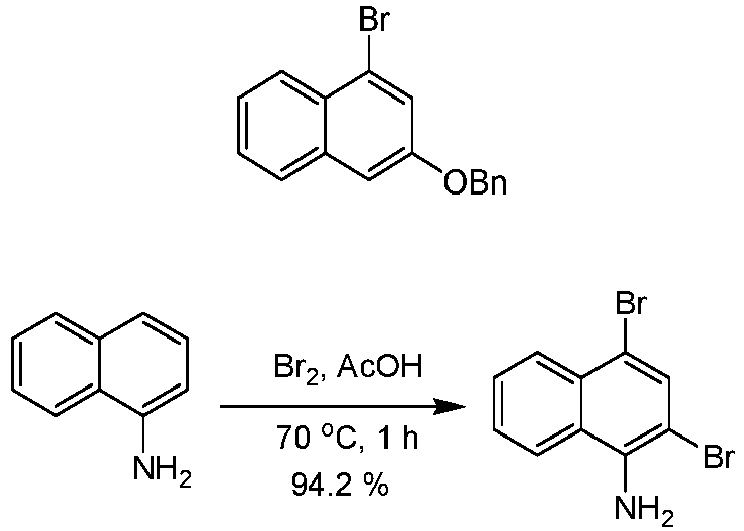
- Step A: 2,4-dibromonaphthalen-1-amine: To a solution of Br2 (246 g, 1.54 mol, 79.3 mL) in AcOH (750 mL) was added a solution of naphthalen-1-amine (101 g, 705 mmol, 99.0 mL) in AcOH (500 mL) at room temperature and the reaction stirred at 70 °C for 1 hour. The reaction mixture was cooled to room temperature and filtered. The filter cake was washed with AcOH (300 mL). The solid was next suspended in 20 % aqueous of NaOH (1.2 L). The mixture was stirred for 20 minutes and filtered. The solid was washed with water (1 L) and dried under vacuum to give 2,4-dibromonaphthalen-1-amine (200 g, 664 mmol, 94.2% yield) as gray solid. ES+APCI MS m/z 301.9 [M+H]+.

- Step B: 4-bromo-1-diazonio-naphthalen-2-olate: To a solution of 2,4-dibromonaphthalen-1-amine (60.0 g, 199 mmol) in AcOH (900 mL) and propionic acid (150 mL) was added NaNO2 (16.5 g, 239 mmol, 13.0 mL) portionwise at 5-8 °C over 30 minutes and the reaction mixture stirred at 5-8 °C for 30 minutes. The reaction mixture was poured into ice-water (4000 mL), the slurry filtered and the solid washed with water (2 × 50 mL) to give 4-bromo-1-diazonio-naphthalen-2-olate (150 g, wet crude) which was used crude in the next step immediately. 1H NMR (400 MHz, CDCl3) δ 8.12 - 8.10 (d, J=8.4 Hz, 1H), 7.62 - 7.58 (t, J=7.6 Hz, 1H), 7.41 - 7.37 (t, J=7.6 Hz, 1H), 7.31 - 7.29 (d, J=8.0 Hz, 1H), 7.20 (s, 1H).

- Step C: 4-bromonaphthalen-2-ol: To a solution of 4-bromo-1-diazonio-naphthalen-2-olate (100 g, 402 mmol) in EtOH (2.00 L) was added portion-wise NaBH4 (30.4 g, 803 mmol) at 13-15 °C over 1 hour and the reaction stirred at 15-18 °C for 3 hours. The reaction was filtered and concentrated to dryness. The residue was dissolved in DCM (1000 mL) and washed with water (500 mL × 2). The organics were dried over Na2SO4 and concentrated to dryness. The residue was purified by chromtography eluting with petroleum ether/EtOAc (60/1 → 10/1) and material re-purified by reversed phase HPLC to give 4-bromonaphthalen-2-ol (40.0 g, 139 mmol, 17.3 % yield, 77.4% purity) as a gray solid. 1H NMR (400 MHz, CDCl3) δ 8.07 - 8.05 (d, J=8.0 Hz, 1H), 7.60 - 7.58 (d, J=7.6 Hz, 1H), 7.41 - 7.36 (m, 3H), 7.07 (s, 1H).

- Step D: 3-benzyloxy-1-bromo-naphthalene: A mixture of 4-bromonaphthalen-2-ol (30.0 g, 134 mmol), BnBr (25.3 g, 148 mmol, 17.6 mL) and K2CO3 (55.7 g, 403 mmol) in MeCN (500 mL) was heated at 80 °C for 1 hr. The reaction mixture was filtered and concentrated to dryness. The residue was purified by silica gel column eluting with PE/EA (100/1 to 60/1) to give 3-benzyloxy-1-bromo-naphthalene (40.0 g, 128 mmol, 95 % yield). 1H NMR (400 MHz, CDCl3) δ 8.19 - 8.17 (d, J=8.0 Hz, 1H), 7.75 - 7.32 (d, J=8.8 Hz, 1H), 7.64 - 7.63 (d, J=2.4 Hz,1H), 7.52 - 7.37 (m, 7H), 7.23 - 7.21 (d, J=2.0 Hz,1H), 5.2 (s, 2H).
-

- Step A: tert-butyl 4-hydroxy-2-methylsulfanyl-6,8-dihydro-5H-pyrido[3,4-d]pyrimidine-7- carboxylate: To a solution of 1-tert-butyl 4-ethyl 3-oxopiperidine-1,4-dicarboxylate (50.0 g, 184 mmol) in MeOH (1.00 L) under nitrogen was added NaOMe (49.8 g, 921 mmol) and 2-methylisothiourea (62.4 g, 331 mmol, H2SO4). The reaction mixture was stirred at 25 °C for 16 hours. HCl (2 M) was added to the reaction mixture until pH~5 and then the mixture was concentrated under reduced pressure. The residue was suspended in 300 mL of ethyl acetate and 300 mL of water. The suspension was filtered. The organic phase was washed with water (1 × 300 mL), brine (1 × 200 mL), dried over Na2SO4, filtered and concentrated to give tert-butyl 4-hydroxy-2-methylsulfanyl-6,8-dihydro-5H-pyrido[3,4-d]pyrimidine-7-carboxylate (51.0 g, 138 mmol, 75.4 % yield, 81.0 % purity) which was used directly in the next reaction. ES+APCI MS m/z 298.2 [M+H]+.

- Step B: tert-butyl 2-methylsulfanyl-4-(trifluoromethylsulfonyloxy)-6,8-dihydro-5H-pyridor3.4-dlpyrimidine-7-carboxylate: To a solution of tert-butyl 4-hydroxy-2-methylsulfanyl-6,8-dihydro-5H-pyrido[3,4-d]pyrimidine-7-carboxylate (51.0 g, 171 mmol) in DCM (500 mL) was added DIEA (44.3 g, 343 mmol, 59.9 mL) and Tf2O (72.6 g, 257 mmol, 42.4 mL) sequentially at 0 °C under nitrogen. The reaction mixture was warmed up to 25 °C and stirred for 16 hours. The reaction mixture was concentrated and the residue purified by column chromatography eluting with EtOAc/Petroleum 0 → 10% to give tert-butyl 2-methylsulfanyl-4-(trifluoromethylsulfonyloxy)-6,8-dihydro-5H-pyrido[3,4-d]pyrimidine-7-carboxylate (46.0 g, 107 mmol, 62.4 % yield). ES+APCI MS m/z 430.2 [M+H]+.

- Step C: tert-butyl 4-(4-benzyloxycarbonylpiperazin-1-yl)-2-methylsulfanyl -6,8-dihydro-5H-pyrido[3,4-d]pyrimidine-7-carboxylate: To a solution of tert-butyl 2-methylsulfanyl-4-(trifluoromethylsulfonyloxy)-6,8-dihydro-5H-pyrido[3,4-d]pyrimidine-7-carboxylate (46.0 g, 107 mmolin DMF (500 mL) was added DIEA (27.7 g, 214 mmol, 37.4 mL) and benzyl piperazine-1-carboxylate (25.9 g, 117 mmol, 22.7 mL). The reaction was heated to 100 °C for one hour under N2 atmosphere. The reaction mixture was poured into ethyl acetate (300 mL). The mixture was washed with H2O (300 mL × 3). The organic phase was washed with brine (200 mL), dried over anhydrous Na2SO4, concentrated in vacuo. The residue was purified by column chromatography using 0→20% EtOAc/Petroleum as eluent to give tert-butyl 4-(4-benzyloxycarbonylpiperazin-1-yl)-2-methylsulfanyl -6,8-dihydro-57/-pyrido[3,4-d]pyrimidine-7-carboxylate (51.0 g, 96.9 mmol, 90.5 % yield, 92.0 % purity) ES+APCI MS m/z 500.3 [M+H]+.

- Step D: Benzyl 4-(2-methylsulfanyl-5,6,7,8-tetrahydropyrido[3,4-d]pyrimidin-4-vl)piperazine-1 -carboxylate: To a solution of tert-butyl 4-(4-benzyloxycarbonylpiperazin-1-yl)-2-methylsulfanyl-6,8-dihydro-5H-pyrido[3,4-d]pyrimidine-7-carboxylate (25.0 g, 50 mmol) in DCM (50 mL) was added TFA (85.6 g, 750 mmol, 55.6 mL). The mixture was stirred at 25 °C for 1 hour. The reaction mixture was concentrated under reduced pressure and the residue was dissolved in 300 mL of ethyl acetate and 300 mL of water and Na2CO3 added until pH-8. The organic layer was washed with water (1 × 300 mL ), brine(1 × 200 mL) and dried over Na2SO4, filtered and concentrated under reduced pressure to give benzyl 4-(2-methylsulfanyl-5,6,7,8-tetrahydropyrido[3,4-d]pyrimidin-4-yl)piperazine-1 -carboxylate. The product was used directly to the next step without further purification. ES+APCI MS m/z 400.2 [M+H]+.

- Step E: benzyl 4-[7-(3-benzyloxy-1-naphthyl)-2-methylsulfanyl-6,8-dihydro-5H-pyrido[3,4-d] pyrimidin-4-yl]piperazine-1-carboxylate: A mixture of 3-benzyloxy-1-bromo-naphthalene (16.3 g, 52.1 mmol), benzyl 4-(2-methylsulfanyl-5,6,7,8-tetrahydropyrido[3,4-d]pyrimidin-4-yl)piperazine-1 -carboxylate (16.0 g, 40.1 mmol), Cs2CO3 (32.6 g, 100 mmol), Pd2(dba)3 (5.50 g, 6.01 mmol) and RuPhos (3.74 g, 8.01 mmol) in dioxane (300 mL) was degassed with N2 3 times and the mixture stirred at 85 °C for 5 hour under N2 atmosphere. The reaction mixture was quenched by addition water (200 mL) at 0 °C, and extracted with EtOAc (3 × 200 mL). The combined organic layers were washed with brine (3 × 150 mL), dried over Na2SO4, filtered and concentrated under reduced pressure. The residue was purified by column chromatography eluting with 10→20% MeOH/DCM to give benzyl 4-[7-(3-benzyloxy-1-naphthyl)-2-methylsulfanyl-6,8-dihydro-5H-pyrido[3,4-d] pyrimidin-4-yl]piperazine-1-carboxylate (16.0 g, 22.8 mmol, 56.9 % yield, 90.0 % purity ES+APCI MS m/z 632.5 [M+H]+.

- Step F: benzyl 4-[7-(3-benzyloxy-1-naphthyl)-2-methylsulfinyl-6,8-dihydro-5H-pyrido[3,4-d]pyrimidin-4-yl]piperazine-1-carboxylate: To a solution of benzyl 4-[7-(3-benzyloxy-1-naphthyl)-2-methylsulfanyl-6,8-dihydro-5H-pyrido[3,4-d]pyrimidin-4-yl]piperazine-1-carboxylate (8.00 g, 12.7 mmol) in DCM (200 mL) was added m-CPBA (2.73 g, 12.7 mmol, 80.0 % purity) at 0 °C under nitrogen atmosphere. The reaction mixture was stirred for two hours under 0 °C. The reaction mixture was quenched by addition Na2S2O3 (10 mL) at 0 °C, and then diluted with water (100 mL) and extracted with DCM (200 mL). The combined organic layers were washed with brine (200 mL), dried over Na2SO4, filtered and concentrated under reduced pressure. The residue was purified by column chromatography eluting with 0→10% MeoH/DCM to benzyl 4-[7-(3-benzyloxy-1-naphthyl)-2-methylsulfinyl-6,8-dihydro-5H-pyrido[3,4-d]pyrimidin-4-yl]piperazine-1-carboxylate (3.50 g, 4.92 mmol, 38.8 % yield, 91.0 % purity) ES+APCI MS m/z 648.5 [M+H]+.
-
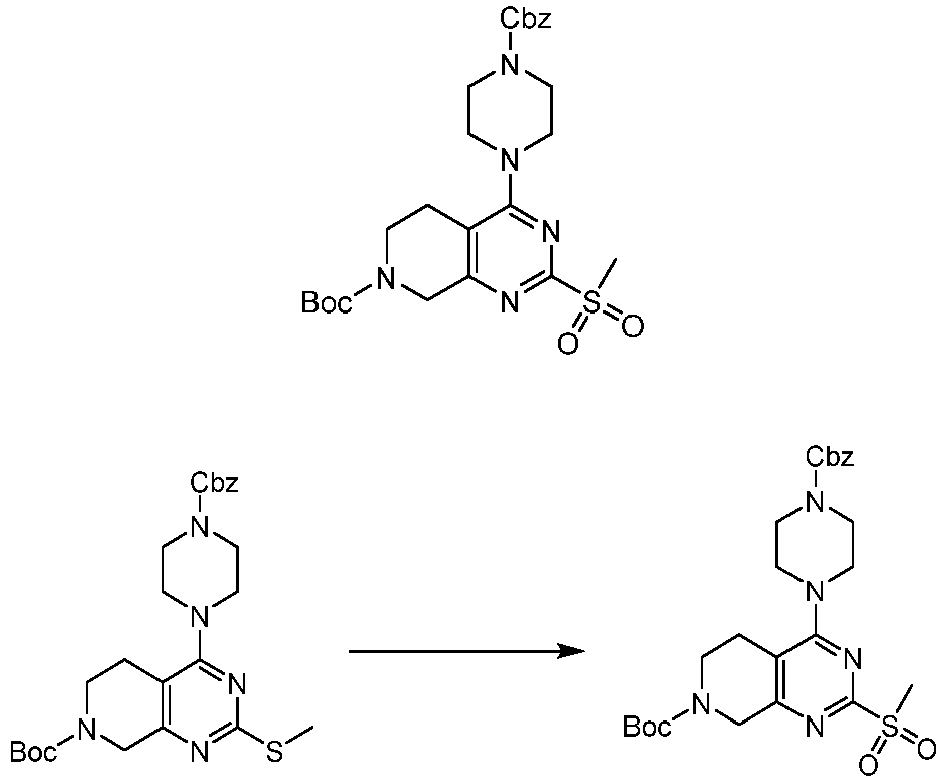
- Step A: tert-butyl 4-(4-benzyloxycarbonylpiperazin-1-yl)-2-methylsulfonyl-6,8-dihydro-5h-pyrido[3,4-d]pyrimidine-7-carboxylate: To a stirred solution of tert-butyl4-(4-benzyloxycarbonylpiperazin -1-yl)-2-methylsulfanyl-6,8-dihydro-5H-pyrido[3,4-d]pyrimidine-7-carboxylate (14.4 g, 28.9 mmol) in DCM (150 mL) was added m-CPBA solid (17.4 g, 101 mmol) at 0 °C under nitrogen. After stirring at 0 °C for 2 hours, the reaction mixture was diluted with water (300 mL) and basified with saturated NaHCOs aqueous solution to pH ~ 8 and then extracted with DCM (3 × 200 mL). The combined organic layers were washed with brine (3 × 200 mL), dried over Na2SO4, filtered and concentrated under reduced pressure. The residue was purified by column chromatography (SiO2, Petroleum ether/Ethyl acetate 10/1 to 1/2) to give tert-butyl 4-(4-benzyloxycarbonylpiperazin-1-yl)-2-methylsulfonyl-6,8-dihydro- 5H-pyrido[3,4-d]pyrimidine-7-carboxylate (11.0 g, 19.7 mmol, 68.6 % yield, 95.4 % purity). ES+APCI MS m/z 532.1 [M+H]+.
-

- Step A: 4-bromo-5-methyl-1-tetrahydropyran-2-yl-indazole: To a mixture of 4-bromo-5-methyl-1H-indazole (3 g, 14.2 mmol) and 3,4-dihydro-2H-pyran (2.39 g, 28.4 mmol, 2.60 mL) in DCM (30 mL) was added TsOH*H2O (270 mg, 1.42 mmol) and the mixture stirred at 15 °C for 2 hours. After completion, the reaction mixture was concentrated under vacuum and the residue purified by column chromatography using 5→20& EtOAc/Petroleum Ether as eluent to give 4-bromo-5-methyl-1-tetrahydropyran-2-yl-indazole (4 g, 13.6 mmol, 95.3% yield) as white solid. 1H NMR (400 MHz, chloroform-d) δ 8.01 (s, 1H), 7.47 (d, J=8.4 Hz, 1H), 7.25 (d, J=8.4 Hz, 1H), 5.70 (dd, J=2.8, 9.2 Hz, 1H), 4.05 - 3.96 (m, 1H), 3.79 - 3.70 (m, 1H), 2.66 - 2.44 (m, 4H), 2.25 - 2.04 (m, 2H), 1.84 - 1.56 (m, 3H).
-

- 4-bromo-5-methoxy-1-(tetrahydro-2H-pyran-2-yl)-1H-indazole was prepared following Intermediate 51 substituting 4-bromo-5-methoxy-1H-indazole for 4-bromo-5-methyl-1H-indazole in Step A. 1H NMR (400 MHz, chloroform-d) δ 8.00 (s, 1H), 7.53 (d, J=9.2 Hz, 1H), 7.16 (d, J=9.2 Hz, 1H), 5.70 (dd, J=2.8, 9.2 Hz, 1H), 4.04 - 3.98 (m, 1H), 3.96 (s, 3H), 2.55 - 2.49 (m, 1H), 2.23 - 2.05 (m, 2H), 1.83 - 1.69 (m, 3H).
-

- Step A: ethyl 2-methyl-3-oxo-4-phenyl-butanoate. To a dried 250 ml three-necked flask was added ethyl 3-oxo-4-phenyl-butanoate (4.00 g, 19.4 mmol.), THF (50.0 mL), sodium hydride (931 mg, 23.3 mmol) and the reaction stirred for 0.5 hours at 0°C. A solution of methyl iodide (3.03 g, 21.3) was next added drop-wise. After addition was completed, the reaction mixture was warmed to 20 °C and stirred for two hours at 20°C. The reaction mixture was quenched by addition of water (10.0 mL) at 20 °C and then diluted with ethyl acetate (20.0 mL) and the layers separated. The aqueous layer was next extracted with ethyl acetate (20.0 mL × 3). The combined organic layers were washed with brine (30.0 mL), dried over anhydrous sodium sulfate, filtered and concentrated under reduced pressure to give a residue. The residue was purified by column chromatography (SiO2, Petroleum ether : Ethyl acetate 20:1 to 10:1) to give ethyl 2-methyl-3-oxo-4-phenyl-butanoate (3.60 g, 16.3 mmol, 84.3% yield) as a colorless oil. 1H NMR (400 MHz, CDCl3) δ = 7.38 - 7.28 (m, 3H), 7.25 - 7.19 (m, 2H), 4.22 - 4.15 (m, 2H), 3.87 (d, J = 2.0 Hz, 2H), 3.65 (q, J = 7.2 Hz, 1H), 1.34 (d, J = 7.2 Hz, 3H), 1.30 - 1.26 (m, 3H).
- Step B: 2-methylnaphthalene-1,3-diol. A solution of ethyl 2-methyl-3-oxo-4-phenyl-butanoate (3.60 g, 16.3 mmol) in concentrated sulfuric acid (19.9 g, 203 mmol) was stirred at 15 °C for 12 hours. The reaction mixture was poured into ice-water (30.0 mL) and the resulting solid collected by filtration and dried under vacuum to afford 2-methylnaphthalene-1,3-diol (1.80 g, 10.3 mmol, 63.2% yield) as a red solid. 1H NMR (400 MHz, CDCl3) δ = 8.02 (d, J= 8.0 Hz, 1H), 7.65 - 7.54 (m, 1H), 7.41 (t, J = 7.2 Hz, 1H), 7.36 - 7.31 (m, 1H), 6.80 (s, 1H), 4.29 - 4.20 (s, 2H), 2.41 - 2.24 (s, 3H).
- Step C: 3-methoxy-2-methyl-naphthalen-1-ol. 2-methylnaphthalene-1,3-diol (1.70 g, 9.76 mmol) was added to HCl/MeOH (2 M, 35.0 mL) and the result mixture was stirred at 30 °C for 3 days. The reaction was concentrated in vacuo and the residue purified by Prep-TLC (Petroleum ether : Ethyl acetate 1:1) to give 3-methoxy-2-methyl-naphthalen-1-ol (800 mg, 4.25 mmol, 43.5% yield) as a white solid. 1H NMR (400 MHz, CDCl3) δ = 8.02 (d, J = 8.4 Hz, 1H), 7.69 (d, J = 8.4 Hz, 1H), 7.44 - 7.38 (m, 1H), 7.37 - 7.31 (m, 1H), 6.79 (s, 1H), 5.14 (s, 1H), 3.94 (s, 3H), 2.29 (s, 3H).
- Step D: (3-methoxy-2-methyl-1-naphthyl)trifluoromethanesulfonate. To a mixture of 3-methoxy-2-methyl-naphthalen-1-ol (800 mg, 4.25 mmol.) and pyridine (504 mg, 6.38 mmol) in DCM (10.0 mL) was added trifluoroacetic anhydride (1.44 g, 5.10 mmol) dropwise at 0°C under N2 atmosphere. The mixture was warmed to 20°C and stirred for an additional 5 hours. The solvent was removed under vacuum and the residue purified by Prep-TLC (Petroleum ether : Ethyl acetate 1:1) to give (3-methoxy-2-methyl-1-naphthyl)trifluoromethanesulfonate (1.30 g, 4.06 mmol, 95.5% yield) as a white solid. 1H NMR (400 MHz, CDCl3) δ = 7.97 (d, J = 7.6 Hz, 1H), 7.79 - 7.74 (m, 1H), 7.52 - 7.43 (m, 2H), 7.14 (s, 1H), 3.99 (s, 3H), 2.42 (s, 3H)
- Step E: 1-bromo-3-methoxy-2-methyl-naphthalene : In a sealed tube was added (3-methoxy-2-methyl-1-naphthyl)trifluoromethanesulfonate (466 mg, 1.45 mmol), t-Bu-Brettphos (154 mg, 290 umol), potassium bromide (259 mg, 2.17 mmol), PEG-200 (175 mg), 2-butanone (157 mg, 2.17 mmol) and Pd2(dba)3 (133 mg, 145 umol) in toluene (10.0 mL) and the mixture de-gassed with N2 for 5 minutes. Next, triisobutylaluminum (431 mg, 2.17 mmol) was added drop-wise at 20 °C. The mixture was heated to 100 °C for 24 hrs. The reaction mixture was poured into water (30.0 mL) and the aqueous layer extracted with ethyl acetate (20.0 mL × 3). The combined organics were washed with brine (30.0 mL), dried over anhydrous sodium sulfate and concentrated in vacuo to give a residue which was pre-purified by column chromatography (Petroleum ether:Ethyl acetate 10: 1) and then by Prep-TLC (Petroleum ether : Ethyl acetate 10: 1) to give 1-bromo-3-methoxy-2-methyl-naphthalene (700 mg, 2.79 mmol, 64.1% yield) as a white solid. 1H NMR (400 MHz, CDCl3) δ = 8.26 - 8.17 (m, 1H), 7.73 - 7.69 (m, 1H), 7.47 - 7.40 (m, 2H), 7.09 (s, 1H), 3.98 - 3.95 (m, 3H), 2.56 (s, 3H).
- Step F: 4-bromo-3-methyl-naphthalen-2-ol: To a solution of 1-bromo-3-methoxy-2-methyl-naphthalene (580 mg, 2.31 mmol) and tetrabutylammonium iodide (2.13 g, 5.78 mmol) in DCM (11.0 mL) cooled to -78 °C was added a solution of BCl3 (1 M, 5.78 mL) dropwise over a period of 10 minutes while under N2. The reaction mixture was warmed to 0 °C and stirred for 2 hours at room temperature. Next the solvent was removed under vacuum and the residue was purified by Prep-TLC (Petroleum ether : Ethyl acetate 5: 1) to give 4-bromo-3-methyl-naphthalen-2-ol (500 mg, 2.11 mmol, 91.3% yield) as a white solid. 1H NMR (400 MHz, CDCl3) δ = 8.26 - 8.15 (m, 1H), 7.63 (dd, J = 3.6, 6.0 Hz, 1H), 7.45 - 7.38 (m, 2H), 7.11 (s, 1H), 5.09 (s, 1H), 2.60 (s, 3H), 1.56 (s, 3H).
- Step G: 3-benzyloxy-1-bromo-2-methyl-naphthalene. To a mixture of 4-bromo-3-methyl-naphthalen-2-ol (265 mg, 1.12 mmol) and benzyl bromide (201 mg, 1.18 mmol) in acetonitrile (3.00 mL) was added potassium carbonate (310 mg, 2.24 mmol) in one portion at 20 °C under N2. The mixture was next stirred at 60°C for two hours. The solvent was removed under vacuum and the residue purified by Prep-TLC (Petroleum ether : Ethyl acetate 5: 1) to give the 3-benzyloxy-1-bromo-2-methyl-naphthalene (250 mg, 695 umol, 31.0% yield, 91.0% purity) as a white solid. ES+APCI MS m/z 327.0, 329.0 [M+H]+.
-
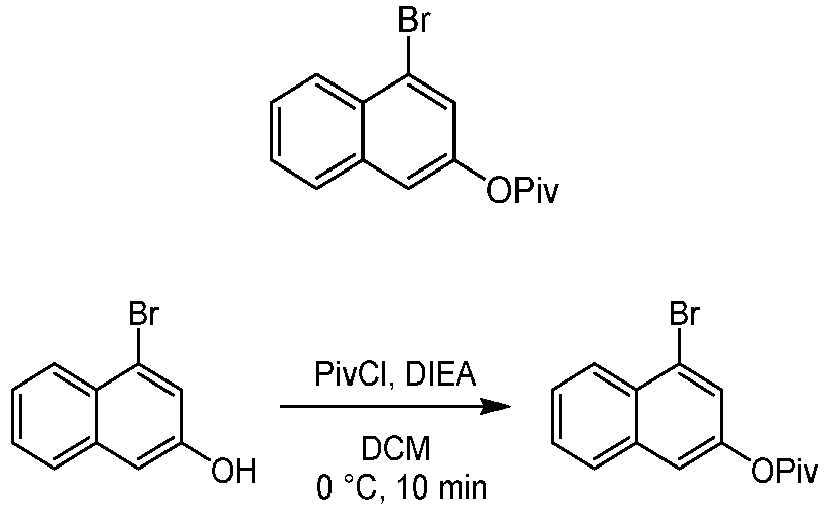
- Step A: (4-bromo-2-naphthyl) 2,2-dimethylpropanoate. To a solution of 4-bromonaphthalen-2-ol (10 g, 44.8 mmol) and TEA (9.07 g, 89.7 mmol) in DCM (200 mL) was added 2,2-dimethylpropanoyl chloride (8.11 g, 67.2 mmol) at 0°C. The reaction mixture was stirred at 0 °C for 10 min. T reaction mixture was quenched by addition of water (50 mL) and the layers separated. The organic layer was washed with brine (30 mL), dried over Na2SO4 filtered and concentrated under vacuum. The residue was purified by silica gel chromatography (PE: EA =1:0 to 100:1) to give (4-bromo-2-naphthyl) 2,2-dimethylpropanoate (9 g, 29.3 mmol, 65.4% yield) as a red oil. 1H NMR (400MHz, CHLOROFORM-d) δ = 8.22 (d, J=8.0 Hz, 1H), 7.83 - 7.77 (m, 1H), 7.63 - 7.49 (m, 4H), 1.41 (s, 9H).
-

- Step A: 7-benzyl-6,8-dihydro-5H-pyrido[3,4-d]pyrimidine-2,4-diol. To EtOH (600 mL) was added Na (5.56 g, 241 mmol) in portions and the mixture stirred for 1 hour. To this solution was added ethyl 1-benzyl-3-oxo-piperidine-4-carboxylate (30.0 g, 100 mmol) and urea (14.5 g, 242 mmol) and the reaction mixture stirred at 75 °C for 36 hours. The solvent was removed under vacuum and the residue dissolved in water (50 mL) and acidified by addition of HCl (120 mL, 2M) at which point a solid precipitated. The solid was filtered and the filter cake dried under vacuum to give 7-benzyl-6,8-dihydro-5H-pyrido[3,4-d]pyrimidine-2,4-diol (22.0 g, 83.8 mmol). 1HNMR (400MHz, DMSO-d6) δ = 10.97 (br s, 1H), 10.66 (br s, 1H), 7.55 - 6.95 (m, 5H), 3.81 - 3.50 (m, 2H), 3.26 - 2.91 (m, 2H), 2.77 - 2.58 (m, 2H), 2.34 - 2.09 (m, 2H).
- Step B: 7-benzyl-2,4-dichloro-6,8-dihydro-5H-pyrido[3,4-d]pyrimidine. To a solution of DIEA (30.1 g, 233 mmol) in POCl3 (330 g, 2.15 mol) was added 7-benzyl-6,8-dihydro-5H-pyrido[3,4-d] pyrimidine-2,4-diol (20.0 g, 77.7 mmol) and the reaction mixture stirred at 110 °C for 5 hours. Upon completion, the reaction mixture was concentrated under vacuum. The residue was dissolved in DCM (400 mL) and poured into sat. NaHCO3 (200 mL) and the layers separated. The aqueous layer was extracted with DCM (2 × 400 mL). The combined organics were washed with brine (100 mL), dried over Na2SO4 and concentrated under vacuum. The residue was purified by silica gel chromatography (PE/DCM= 10/1 to 0/1) to give 7-benzyl-2,4-dichloro-6,8-dihydro-5H-pyrido[3,4-d]pyrimidine (7.70 g, 26.2 mmol). 1HNMR (300MHz, chloroform-d) δ = 7.43 - 7.28 (m, 5H), 3.73 (s, 2H), 3.66 (br s, 2H), 2.84 (br s, 4H).
- Step C: tert-butyl 4-(7-benzyl-2-chloro-6,8-dihydro-5H-pyrido[3,4-d]pyrimidin-4-yl) piperazine-1-carboxylate. To a solution of 7-benzyl-2,4-dichloro-6,8-dihydro-5H- pyrido[3,4-d]pyrimidine (17.3 g, 58.8 mmol) in DMSO (200 mL) was added DIEA (19.0 g, 147 mmol) and tert-butyl piperazine-1-carboxylate (11.5 g, 61.7 mmol) and the mixture stirred at 55 °C for 10 hours. The reaction mixture was poured into ethyl acetate (200 mL) and washed with water (3x200mL). The combined organics were washed with brine (200 mL), dried over anhydrous Na2SO4 and concentrated under vacuum to give a residue. The residue was purified by trituration from MTBE (200 mL) to give tert-butyl 4-(7-benzyl-2-chloro-6,8-dihydro-5H-pyrido[3,4-d]pyrimidin-4-yl) piperazine-1-carboxylate (24 g, 52.9 mmol). ES+APCI MS m/z 444.2 [M+H]+.
- Step D: tert-Butyl 4-[7-benzyl-2-(3-morpholinopropoxy)-6,8-dihydro-5H-pyrido[3,4-d]pyrimidin-4-yl] piperazine-1-carboxylate. A mixture of 3-morpholinopropan-1-ol (11.8 g, 81.1 mmol), tert-butyl 4-(7-benzyl-2-chloro-6,8-dihydro-5H-pyrido[3,4-d]pyrimidin-4-yl)piperazine-1- carboxylate (18 g, 40.5 mmol), BINAP (5.05 g, 8.11 mmol), t-BuONa (9.74 g, 101 mmol) and Pd2(dba)3 (3.71 g, 4.05 mmol) in toluene (300 mL) was degassed and purged with N2 3 times, and the mixture stirred at 110 °C for 3 hours under N2 atmosphere. The reaction mixture was poured into H2O (200 mL) and the aqueous layer extracted with ethyl acetate (3x300 mL). The combined organics were washed with brine (200 mL), dried over anhydrous Na2SO4 and concentrated under vacuum to give a residue. The residue was purified by column chromatography (SiO2, Petroleum ether/Ethyl acetate = 100/1 to 5/1) to give tert-Butyl 4-[7-benzyl-2-(3-morpholinopropoxy)-6,8-dihydro-5H-pyrido[3,4-d]pyrimidin-4-yl] piperazine-1-carboxylate (14 g, 22.5 mmol). ES+APCI MS m/z 553.4 [M+H]+.
- Step E: tert-butyl 4-[2-(3-morpholinopropoxy)-5,6,7,8-tetrahydropyrido[3,4-d]pyrimidin-4-yl] piperazine-1-carboxylate. To a solution of tert-butyl 4-[7-benzyl-2-(3-morpholinopropoxy)- 6,8-dihydro-5H-pyrido[3,4-d]pyrimidin-4-yl]piperazine-1-carboxylate (14 g, 25.3 mmol) in MeOH (1 L) was added dry Pd/C (3 g, 10% purity) under N2. The suspension was degassed under vacuum and purged with H2 several times. The mixture was stirred under H2 (15 psi) at 40 °C for 10 hours. The mixture was filtered and the filtrate concentrated in vacuo to give a residue. The residue was purified by reversed phase flash [water (0.1TFA)/acetonitrile] to give tert-butyl 4-[2-(3-morpholinopropoxy)-5,6,7,8-tetrahydropyrido[3,4-d]pyrimidin-4-yl] piperazine-1-carboxylate (6.5 g, 13.9 mmol). ES+APCI MS m/z 463.4 [M+H]+.

- Naphthalen-1-yl trifluoromethanesulfonate. alpha-Naphthol (4 g, 27.74 mmol) was dissolved in DCM (200 mL) in a 3 neck flask. The reaction was cooled to 10°C in a water bath. N-ethyl-N-isopropylpropan-2-amine (4.846 ml, 27.74 mmol) and trifluoromethanesulfonic anhydride (4.668 ml, 27.74 mmol) were added to the solution dropwise. The reaction was stirred at 10°C for 2 hours. TLC (25% EtOAc, UV vis) showed reaction complete. The organics were with water (2X) and brine (2X). The organics were dried over MgSO4 and concentrated in vacuo. The concentrate was purified using normal phase chromatography on the CombiFlash (0%-12% EtOAc:Hexanes). All fractions containing clean product were combined and conentrated in vacuo to give naphthalen-1-yl trifluoromethanesulfonate (6.77 g, 24.51 mmol, 88.34 % yield).
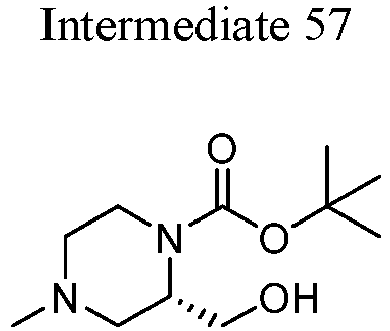
-

- To a solution of (S)-1-Boc-2-hydroxymethylpiperazine (1.0 g, 4.62 mmol) in DCE (92.47 ml, 4.624 mmol) was added formaldehyde (3.474 ml, 46.24 mmol) (37% in water) followed by sodium triacetoxyborohydride (4.9 g, 23.12 mmol). The mixture was stirred vigorously at room temperature for 2.5hours. The mixture was treated with saturated sodium bicarbonate (30 mL), stirred for 10 min then extracted with DCM (3 × 10 mL). The combined organic phases were dried over sodium sulfate, filtered and concentrated. ES+APCI MS m/z 231.1 [M+H]+.

- Title compound was prepared as in Intermediate 57, substituting tert-butyl (R)-2-(hydroxymethyl)piperazine-1-carboxylate for (S)-1-Boc-2-hydroxymethylpiperazine. ES+APCI MS m/z 231.1 [M+H]+

-

- To a round bottom flask was added THF (8.87 ml, 4.44 mmol) followed by sodium hydride, 60 % dispersion in mineral oil (0.213 g, 5.32 mmol). The mixture was cooled to 0 °C then 3-bromo-5-chloro-4-fluorophenol (1.0 g, 4.44 mmol) was added portionwise. Once the bubbling had ceased the resulting dark mixture was stirred at 0 °C for 30 min. Then chloromethyl methyl ether (0.421 ml, 5.54 mmol) was added and the mixture was warmed to ambient temperature where it was stirred for 2 hr. A saturated aqueous ammonium chloride solution was added and the mixture was extracted with DCM. The organic layer was dried over sodium sulfate, filtered and concentrated. Crude material was chromatographed (0-15% EtOAc in hexanes) to provide product as clear oil.
-

- Step A: 4-bromo-1-tetrahydropyran-2-yl-5-(trifluoromethyl)indazole: To a solution of 4-bromo-5-(trifluoromethyl)-1H-indazole (500 mg, 1.89 mmol, 1 eq) in DCM (10 mL) was added 3,4-dihydro-2H-pyran (476 mg, 5.66 mmol, 517 µL, 3 eq) and TsOH·H2O (35.9 mg, 188 umol, 0.1 eq). The mixture was stirred at 15 °C for 1 hour. The mixture was concentrated. The residue was purified by column chromatography (SiO2, PE:EA=10:1 to 1:1) to give 4-bromo-1-tetrahydropyran-2-yl-5-(trifluoromethyl)indazole (480 mg, 1.37 mmol, 72.9% yield) as yellow oil. 1H NMR (400 MHz, chloroform-d) δ 8.20 (s, 1H), 7.69 - 7.63 (m, 2H), 5.70 (dd, J=2.8, 8.8 Hz, 1H), 4.05 - 3.96 (m, 1H), 3.79 - 3.70 (m, 1H), 2.56 - 2.50 (m, 1H), 2.27 - 2.04 (m, 2H), 1.80 - 1.74 (m, 2H), 1.60 - 1.54 (m, 1H).
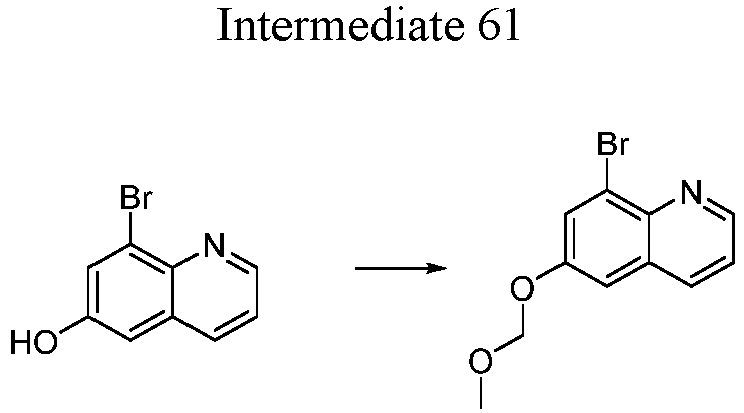
- 8-bromo-6-(methoxvmethoxv)quinoline: A stirred suspension of 8-bromoquinolin-6-ol (1.00 g, 4.46 mmol) in DCM (20 mL) was cooled to 0°C and diisopropylethylamine (1.2 mL, 6.7 mmol, 1.5 eq.) was added followed by chloro(methoxy)methane (0.41 mL, 5.4 mmol, 1.2 eq.) dropwise and the reaction mixture was warmed to room temperature overnight. Concentrated aqueous ammonia (0.5 mL, ~5 mmol) was next added and the resulted mixture was stirred for 1hour at room temperature. The mixture was evaporated in vacuo and chromatographed on silica gel, Redisep 40g, using 20% EtOAc/hexane as eluent to give a colorless powder (0.52 g, 44%). ES+APCI MS m/z 268.0, [M+H]+.

- To a solution of but-3-enenitrile (80.0 g, 1.19 mol, 96.4 mL, 1.00 eq) in tert-butanol (130 mL) and petroleum ether (480 mL) was added a solution of Br2 (191 g, 1.19 mol, 61.5 mL, 1.00 eq) in tert-butanol (130 mL). The mixture was stirred at 10 °C for 4 hours. The mixture was used into next step without any workup.
- To the above mixture (274 mL) was added a solution of N,N'-dibenzylethane-1,2-diamine (160 g, 445 mmol, 157 mL, 2 HOAc) and Et3N (178 g, 1.76 mol, 245 mL) in toluene (300 mL). After was stirred at 110 °C for 2 hours, the mixture was filtered and the filtrate was concentrated under vacuum. The residue was purified by column chromatography (SiO2, petroleum ether/ethyl acetate = 3/1) to give 2-(1, 4-dibenzylpiperazin-2-yl)acetonitrile (75.0 g, 246 mmol, two steps 55.7 % yield) as a yellow solid. LCMS [ESI, M+1]: 306.
- 1H NMR (400MHz, chloroform-d) δ = 7.37 - 7.23 (m, 10H), 3.80 (d, J = 13.2 Hz, 1H), 3.60 - 3.42 (m, 3H), 3.06 - 2.96 (m, 1H), 2.95 - 2.83 (m, 1H), 2.69 - 2.53 (m, 4H), 2.52 - 2.35 (m, 3H).
- To a solution of 2-(1,4-dibenzylpiperazin-2-yl)acetonitrile (160 g, 524 mmol, 1.00 eq) in dichloroethane (1.50 L) was added 1-chloroethyl carbonochloridate (300 g, 2.10 mol, 4.00 eq) at 15 °C. After stirred at 85 °C for 48 h, the mixture was concentrated under vacuum. The residue was then taken up into methanol (1.50 L) and heated to reflux for 1 hour. The mixture was concentrated. The solid was treated with methyl tert-butyl ether (1.00 L), 2-piperazin-2-ylacetonitrile (Intermediate 62, 90.0 g, 454 mmol, 86.7 % yield, 2HCl) was obtained as a white solid and used for next step without further purification.
- 1H NMR (400MHz, DMSO-d6) δ = 10.19 (br s, 2H), 4.01 - 3.73 (m, 1H), 3.69 - 3.41 (m, 4H), 3.32 (dt, J = 2.8, 13.2 Hz, 1H), 3.27 - 3.10 (m, 3H).

- To a solution of tert-butyl (3R)-3-(hydroxymethyl)piperazine-1-carboxylate (80.0 g, 370 mmol, 1.0 eq) in Ethyl acetate (1400 mL) was added NaHCO3 (93.2 g, 1.11 mol, 43.2 mL, 3.0 eq), H2O (700 mL) and benzyl carbonochloridate (82.0 g, 481 mmol, 68.4 mL, 1.30 eq). The mixture was stirred at 25 °C for 12 hour. After completion, the organic phase was separated, washed with water (500 mL × 2) dried over Na2SO4 and filtered. The solvent was removed under vacuum to give a residue. The residue was purified by column chromatography (SiO2, Petroleum ether/Ethyl acetate=40/1 to 1/1). The product 1-benzyl 4-tert-butyl (2R)-2-(hydroxymethyl)piperazine-1,4-dicarboxylate (85.0 g, 235 mmol, 64% yield, 96% purity) was obtained as a yellow oil. LCMS [ESI, M-99]: 251.
- To a solution of 1-benzyl 4-tert-butyl (2R)-2-(hydroxymethyl)piperazine-1,4-dicarboxylate (20.0 g, 57.1 mmol, 1.0 eq) in 2-Methyltetrahydrofuran (240 mL) was added TEA (17.3 g, 171.23 mmol, 23.8 mL, 3.0 eq) and methanesulfonyl chloride (7.74 g, 67.6 mmol, 5.23 mL, 1.18 eq). The mixture was stirred at 20 °C for 1 hour. The reaction mixture was quenched by addition H2O 150 mL at 20 °C. The reaction mixture was extracted with Ethyl acetate (300 mL × 2). The organic layers were washed with H2O (100 mL), dried over Na2SO4, and filtered. The solvent was removed under vacuum. 1-benzyl 4-tert-butyl (2R)-2-(methylsulfonyloxymethyl)piperazine-1,4-dicarboxylate (22.0 g, crude) was obtained as a yellow oil. The crude product was used directly to the next step without further purification.
- To a solution of 1-benzyl 4-tert-butyl (2R)-2-(methylsulfonyloxymethyl)piperazine-1,4-dicarboxylate (22.0 g, 51.3 mmol) in DMA (150 mL) was added NaCN (10.4 g, 211 mmol). The mixture was stirred at 60 °C for 12 hour. The solvent was removed under vacuum to give a oil residue. The residue was diluted with H2O (40.0 mL) and extracted with Ethyl acetate (50.0 mL × 3). The combined organic layers were washed with saturated brine (80.0 mL), dried over Na2SO4, filtered and concentrated under reduced pressure to give a residue. The residue was purified by column chromatography (SiO2, Petroleum ether/Ethyl acetate=40/1 to 5:1) The product 1-benzyl 4-tert-butyl (2S)-2-(cyanomethyl)piperazine-1,4-dicarboxylate (18.5 g, 46.4 mmol, two steps yield 72%) was obtained as a yellow oil. LCMS [ESI, M+1]: 360.
- To a solution of 1-benzyl 4-tert-butyl (2S)-2-(cyanomethyl)piperazine-1,4-dicarboxylate (18.5 g, 43.3 mmol, 1.00 eq) in dioxane (40.0 mL) was added HCl•dioxane (4 M, 54.1 mL, 5.0 eq). The mixture was stirred at 20 °C for 1 hour. Then the reaction mixture was added NaHCO3 to pH>7, and concentrated under reduced pressure to remove dioxane. The residue was diluted with H2O (50.0 mL) and extracted with Ethyl acetate (50.0 mL × 3). The combined organic layers were washed with H2O (20.0 mL) , dried over Na2SO4, filtered and concentrated under reduced pressure to give a residue. The product benzyl (2S)-2-(cyanomethyl)piperazine-1-carboxylate (Intermediate 63, 11.5 g, 91.8% purity, 95% yield) was obtained as a yellow oil. LCMS [ESI, M+1]: 260.
- 1H NMR (400MHz, CHLOROFORM-d) δ = 7.37 - 7.31 (m, 5H), 5.14 (s, 2H), 4.49 (br, s, 1H), 3.93 (br, s, 1H), 3.07 - 2.81 (m, 5H), 2.78 - 2.54 (m, 2H).


- A mixture of tert-butyl 2-methylsulfanyl-4 -(trifluoromethylsulfonyloxy)-6,8-dihydro-5H-pyrido[3,4-d]pyrimidine-7-carboxylate (3.81 g, 8.87 mmol, 1.0 eq), benzyl(2S)-2-(cyanomethyl)piperazine-1-carboxylate (Intermediate 63, 2.30 g, 8.87 mmol, 1.0 eq), DIEA (3.44 g, 26.6 mmol, 4.63 mL, 3.0 eq) in DMF (20.0 mL) was degassed and purged with N2 for 3 times, and then the mixture was stirred at 100 °C for 1 hour under N2 atmosphere. After completion, the solvent was removed under vacuum. The residue was purified by column chromatography (SiO2, Petroleum ether/Ethyl acetate=3/1 to 1:1) to give tert-butyl 4-[(3S)-4-benzyloxycarbonyl-3-(cyanomethyl)piperazin-1-yl]-2-methylsulfanyl-6,8-dihydro-5H-pyrido[3,4-d]pyrimidine-7-carboxylate (3.6 g, 6.16 mmol, 69% yield, 92.2% purity) as a yellow solid. LCMS [ESI, M+1]: 539.
- A mixture of tert-butyl 4-[(3S)-4-benzyloxycarbonyl-3-(cyanomethyl)piperazin-1-yl]-2-methylsulfanyl-6,8-dihydro-577pyrido[3,4-d]pyrimidine-7-carboxylate (6.0 g, 11.1 mmol, 1.0 eq), TFA (30.8 g, 270 mmol, 20.0 mL, 24.3 eq) in DCM (20.0 mL) was degassed and purged with N2 for 3 times, and then the mixture was stirred at 20 °C for 1 hour under N2 atmosphere. After completion, the reaction mixture was quenched with saturated NaHCO3 solution (500 mL). The mixture was extracted with ethyl acetate (3 × 300 mL) and the organic layer was dried over Na2SO4 and filtered. The solvent was removed under vacuum to give benzyl (2,S)-2-(cyanomethyl)-4-(2-methylsulfanyl-5,6,7,8-tetrahydropyrido[3,4-d]pyrimidin-4-yl)piperazine-1-carboxylate (4.8 g, crude) as a yellow solid which was used for the next step without further purification.
- A mixture of benzyl (2S)-2-(cyanomethyl)-4-(2-methylsulfanyl-5,6,7,8-tetrahydropyrido[3,4-d]pyrimidin-4-yl)piperazine-1-carboxylate (4.8 g), 1-bromonaphthalene (3.8 g, 18.35 mmol, 2.55 mL), Pd2(dba)3 (1.0 g, 1.09 mmol), RuPhos (1.02 g, 2.19 mmol) and Cs2CO3 (12.0 g, 36.8 mmol) in toluene (30.0 mL) was degassed and purged with N2 for 3 times, and then the mixture was stirred at 100 °C for 12 hours under N2 atmosphere. After completion, the reaction mixture was filtered. The organic solvent was removed under vacuum to give an oil residue. The residue was purified by column chromatography (SiO2, Petroleum ether/Ethyl acetate=5/1 to 3:1) to give benzyl (2S)-2-(cyanomethyl)-4-[2-methylsulfanyl-7-(1-naphthyl)-6,8-dihydro-5H-pyrido[3,4-d]pyrimidin-4-yl]piperazine-1-carboxylate (2.2 g, 3.31 mmol, 85.3% purity, two steps yield 30%) was obtained as a yellow solid. LCMS [ESI, M+1]: 565.
- A mixture of benzyl (2S)-2-(cyanomethyl)-4-[2-methylsulfanyl-7-(1-naphthyl)-6,8-dihydro-5H-pyrido[3,4-d]pyrimidin-4-yl]piperazine-1-carboxylate (2.8 g, 3.97 mmol, 1.0 eq), m-CPBA (1.05 g, 5.16 mmol, 1.3 eq) in DCM (4.0 mL) was degassed and purged with N2 for 3 times, and then the mixture was stirred at 0 °C for 1 hour under N2 atmosphere. After completion, the reaction is quenched by adding saturated Na2SO3 solution (50 mL). The mixture was extracted with ethyl acetate (3 × 10 mL). The combined organic layer was dried with Na2SO4 and filtered. The solvent was removed to give a oil residue. The residue was purified by column chromatography (SiO2, Metheanol/Ethyl acetate=1/20 to 1:10) to give benzyl (2S)-2-(cyanomethyl)-4-[2-methylsulfinyl- 7-(1-naphthyl)-6,8-dihydro-5H-pyrido[3,4-d]pyrimidin-4-yl]piperazine-1-carboxylate (Intermediate 64, 1.5 g, 2.35 mmol, 59% yield, 90.8% purity) as a yellow solid. LCMS [ESI, M+1]: 581.

- To a solution of tert-butyl 4-[(3S)-4-benzyloxycarbonyl -3-(cyanomethyl)piperazin-1-yl]-2-methylsulfanyl-6,8-dihydro-5H-pyrido[3,4-d]pyrimidine-7-carboxylate (24.3 g, 45.0 mmol, 1.0 eq) in Ethyl acetate (480 mL) was added m-CPBA (8.69 g, 42.8 mmol, 85% purity, 0.95 eq) portionwise at 0 °C. The mixture was stirred at 0 °C for 0.5 hour. Upon completion, the mixture was diluted with water (50.0 mL) and extracted with ethyl acetate (2 × 300 mL). The organic layers were dried over Na2SO4 and concentrated under vacuum. The residue was purified by reversed-phase flash [water (0.1% FA)/acetonitrile]. The mixture was neutralized with saturated sodium bicarbonate solution, concentrated under vacuum to remove MeCN and extracted with ethyl acetate (3 × 1000 mL). The organic layers were dried over Na2SO4 and concentrated under vacuum to give tert-butyl 4-[(3S)-4-benzyloxycarbonyl-3-(cyanomethyl)piperazin-1-yl]-2-methylsulfinyl-6,8-dihydro-5H-pyrido[3,4-d]pyrimidine-7-carboxylate (22.8 g, 39.3 mmol, 87% yield, 95.8% purity) as a yellow solid.
- 1H NMR (400 MHz, chloroform-d) δ 7.37 - 7.23 (m, 5H), 5.12 (s, 2H), 4.75 - 4.41 (m, 3H), 4.17 - 4.05 (m, 2H), 3.86 (d, J = 11.6 Hz, 1H), 3.81 - 3.62 (m, 1H), 3.46 - 3.18 (m, 3H), 3.10 (d, J = 3.6, 12.0 Hz, 1H), 2.81 (d, J = 3.2 Hz, 3H), 2.77 - 2.56 (m, 4H), 1.42 (s, 9H).
- To a solution of tert-butyl 4-[(3S)-4-benzyloxycarbonyl- 3-(cyanomethyl)piperazin-1-yl]-2-methylsulfinyl-6,8-dihydro-5H-pyrido[3,4-d]pyrimidine-7-carboxylate (5.0 g, 9.01 mmol, 1.0 eq) and [(2S)-1-methylpyrrolidin -2-yl]methanol (1.82 g, 15.8 mmol, 1.88 mL, 1.75 eq) in toluene (50.0 mL) was added t-BuONa (1.73 g, 18.0 mmol, 2.0 eq). The mixture was stirred at 0 °C for 0.5 hour. After completion, the mixture was added cold water (50.0 mL) and extracted with ethyl acetate (5 × 50.0 mL). The combined organic layer was dried over Na2SO4, filtered and concentrated. The obtained product was purified by column chromatography (SiO2, PE : EA = 10:1 - EA : MeOH = 5:1) to give tert-butyl 4-[(3S)-4-benzyloxycarbonyl-3-(cyanomethyl)piperazin-1-yl]-2-[[(2S)-1-methylpyrrolidin-2-yl]methoxy]-6,8-dihydro-5H-pyrido[3,4-d]pyrimidine-7-carboxylate (2.80 g, 4.62 mmol, 51.0% yield) as yellow solid.
- 1H NMR (400 MHz, chloroform-d) δ 7.44 - 7.35 (m, 5H), 5.21 (s, 2H), 4.73 - 4.54 (m, 2H), 4.44 - 4.33 (m, 2H), 4.22 - 4.10 (m, 2H), 3.41 - 3.93 (m, 1H), 3.82 (br d, J = 11.6 Hz, 2H), 3.39 - 3.22 (m, 3H), 3.11 (br t, J = 7.8 Hz, 1H), 2.99 (d, J = 3.6, 12.8 Hz, 1H), 2.90-2.56 (m, 5H), 2.49 (s, 3H), 2.35 - 2.25 (m, 1H), 2.07 - 2.02 (m, 1H), 1.91 - 1.76 (m, 3H), 1.50 (s, 9H).
- To a solution of tert-butyl 4-[(3S)-4-benzyloxycarbonyl -3-(cyanomethyl)piperazin-1-yl]-2-[[(2S)-1-methylpyrrolidin-2-yl]methoxy]-6,8-dihydro-5H-pyrido[3,4-d]pyrimidine-7-carboxylate (2.40 g, 3.96 mmol, 1.0 eq) in DCM (8.0 mL) was added TFA (13.9 g, 122 mmol, 9.0 mL, 30.7 eq). The mixture was stirred at 15 °C for 2 hours. After completion, the mixture was concentrated. The residue was added saturated NaHCO3 aqueous (20.0 mL) and extracted with DCM (5 × 10.0 mL). The organic layer was dried over Na2SO4, filtered and concentrated. The product benzyl (2S)-2-(cyanomethyl)-4-[2-[[(2S)-1-methylpyrrolidin-2-yl] methoxy]-5,6,7,8-tetrahydropyrido[3,4-d]pyrimidin-4-yl]piperazine-1-carboxylate (Intermediate 65, 1.40 g, 2.77 mmol, 70% yield) was obtained as yellow solid. LCMS [ESI, M+1]: 506.

- Step A: To a solution of 7-benzyl-4-chloro-2-methylsulfanyl-6,8-dihydro- 5H-pyrido[3,4-d]pyrimidine (20.0 g, 65.4 mmol, 1 eq) in DCE (200 mL) was added 1-chloroethyl carbonochloridate (28.1 g, 196 mmol, 3 eq) at 0 °C. The mixture was stirred at 0 °C for 30 minutes and 70 °C for 15 hours. The mixture was concentrated under vacuum. The residue was dissolved in MeOH (200 mL) and stirred at 70 °C for 0.5 hours. Upon completion, the mixture was concentrated under vacuum. The residue was triturated with methyl tert-butyl ether (60 mL). The precipitate was collected by filtration, washed with methyl tert-butyl ether (20 mL) and dried under vacuum to give 4-chloro-2-methylsulfanyl-5,6,7,8-tetrahydropyrido[3,4-d]pyrimidine (17.2 g, crude, HCl) as a yellow solid which was used directly in the next step without further purification.
- 1H NMR (400 MHz, methanol-d4) δ = 4.35 (s, 2H), 3.60 (t, J = 6.4 Hz, 2H), 3.05 (t, J= 6.4 Hz, 2H), 2.55 (s, 3H).
- Step B: To a solution of 4-chloro-2-methylsulfanyl-5,6,7,8-tetrahydropyrido [3,4-d]pyrimidine (16.5 g, crude, HCl) and TEA (20.0 g, 196 mmol, 27.3 mL) in THF (400 mL) was added benzyl carbonochloridate (16.7 g, 98.1 mmol, 13.9 mL) dropwise at 0 °C. The mixture was stirred at 25 °C for 0.5 hour. Upon completion, the mixture was diluted with water (80 mL) and the organic layer was separated. The aqueous phase was extracted with EtOAc (200 mL). The combined organic layers were dried over MgSO4, filtered and concentrated under vacuum. The residue was purified by silica gel chromatography (PE/EtOAc 80/1 to 5/1) to give benzyl 4-chloro-2-methylsulfanyl-6,8-dihydro-5H-pyrido [3,4-d]pyrimidine-7-carboxylate (19.6 g, 50.4 mmol, two steps 86% yield, 90% purity) as a yellow oil.
- 1H NMR (300 MHz, chloroform-d) δ = 7.37 (s, 5H), 5.18 (s, 2H), 4.63 (s, 2H), 3.877 (d, J = 8.0, 2H), 2.80 (br s, 2H), 2.54 (s, 3H).
- Step C: To a solution of benzyl 4-chloro-2-methylsulfanyl-6,8-dihydro-5H- pyrido[3,4-d]pyrimidine-7-carboxylate (21.5 g, 55.3 mmol, 1.00 eq) in DMF (400 mL) was added DIEA (35.7 g, 277 mmol, 48.2 mL, 5.00 eq) and 2-[(2S)-piperazin-2-yl]acetonitrile (6.92 g, 55.3 mmol, 1.00 eq). After stirred at 80 °C for 2 hours, (Boc)2O (60.4 g, 277 mmol, 63.5 mL, 5.00 eq) was added into above mixture and stirred at 80 °C for another 2 hours. Upon completion, the mixture was diluted with water (800 mL) and extracted with EtOAc (2 × 400 mL). The organic layers were washed with brine (300 mL), dried over Na2SO4 and concentrated under vacuum. The residue was purified by silica gel chromatography (PE/EtOAc 10/1 to 1/1) to give benzyl 4-[(3S)-4-tert-butoxycarbonyl-3-(cyanomethyl) piperazin-1-yl]-2-methylsulfanyl-6,8-dihydro-5H-pyrido[3,4-d]pyrimidine-7-carboxylate (24.3 g, 43.0 mmol, 78% yield, 95% purity) as a yellow solid.
- 1H NMR (400 MHz, chloroform-d) δ = 7.43 - 7.29 (m, 5H), 5.18 (s, 2H), 4.76 - 4.54 (m, 2H), 4.46 (br d, J = 18.4 Hz, 1H), 4.08 - 3.69 (m, 4H), 3.53 - 3.35 (m, 1H), 3.34 - 3.03 (m, 2H), 3.03 - 2.89 (m, 1H), 2.81 - 2.55 (m, 4H), 2.50 (s, 3H), 1.51 (s, 9H).
- Step D: To a solution of benzyl 4-[(3S)-4-tert-butoxycarbonyl-3-(cyanomethyl) piperazin-1-yl]-2-methylsulfanyl-6,8-dihydro-5H-pyrido[3,4-d]pyrimidine-7-carboxylate (24.3 g, 45.1 mmol, 1 eq) in EtOAc (480 mL) was added m-CPBA (8.70 g, 42.9 mmol, 85% purity, 0.95 eq) potionwise at 0 °C. The mixture was stirred at 0 °C for 0.5 hour. Upon completion, the mixture was diluted with water (800 mL). The pH was adjusted to 8 with NaHCO3 and the organic layer was separated. The aqueous phase was extracted with EtOAc (2 × 400 mL). The organic layers were dried over Na2SO4 and concentrated under vacuum. The residue was purified by silica gel chromatography (EtOAc/MeOH 100/1 to 10/1) to give benzyl 4-[(3S)-4-tert-butoxycarbonyl-3-(cyanomethyl)piperazin-1-yl]-2-methylsulfinyl- 6,8-dihydro-5H-pyrido[3,4-d]pyrimidine-7-carboxylate (20.9 g, 36.4 mmol, 81% yield, 96% purity) as a white solid. LCMS [ESI, M+1]: 555.
- Step E: To a solution of benzyl 4-[(3S)-4-tert-butoxycarbonyl-3-(cyanomethyl) piperazin-1-yl]-2-methylsulfinyl-6,8-dihydro-5H-pyrido[3,4-d]pyrimidine-7-carboxylate (20.9 g, 37.6 mmol, 1 eq) and [(2S)-1-methylpyrrolidin-2-yl]methanol (8.67 g, 75.3 mmol, 8.94 mL, 2 eq) in toluene (400 mL) was added t-BuONa (7.23 g, 75.3 mmol, 2 eq) at 0 °C. After stirred at 0 °C for 10 minutes, the mixture was concentrated under vacuum. The residue was diluted with water (200 mL) and extracted with EtOAc (2 × 400 mL). The organic layers were dried over Na2SO4 and concentrated under vacuum. The residue was purified by reversed-phase flash [water (0.1% FA)/acetonitrile]. The mixture was neutralized with saturated sodium bicarbonate solution, concentrated under vacuum to remove MeCN and extracted with EtOAc (2 × 1000 mL). The organic layers were dried over Na2SO4 and concentrated under vacuum to give benzyl 4-[(3S)-4-tert-butoxycarbonyl-3-(cyanomethyl)piperazin-1-yl]-2-[[(2S)-1-methylpyrrolidin-2-yl]methoxy]-6,8-dihydro-5H-pyrido[3,4-d]pyrimidine-7-carboxylate (13.5 g, 20.5 mmol, 54% yield, 92% purity) as a yellow solid. LCMS [ESI, M+1]: 606.
- Step F: To a solution of benzyl 4-[(3S)-4-tert-butoxycarbonyl-3-(cyanomethyl) piperazin-1-yl]-2-[[(2S)-1-methylpyrrolidin-2-yl]methoxy]-6,8-dihydro-5H-pyrido[3,4-d]pyrimidine-7-carboxylate (3.50 g, 5.78 mmol, 1 eq) in MeOH (60.0 mL) was added NH3/MeOH (60.0 mL), Pd/C (1.00 g, 10% purity) under N2. The suspension was degassed under vacuum and purged with H2 several times. The mixture was stirred under H2 (15 psi) at 25 °C for 4 hours. Upon completion, the catalyst was filtered off and the filtrate was concentrated under vacuum to give tert-butyl (2S)-2-(cyanomethyl)-4-[2-[[(2S)-1-methylpyrrolidin-2-yl] methoxy]-5,6,7,8-tetrahydropyrido[3,4-d]pyrimidin-4-yl]piperazine-1-carboxylate (Intermediate 66, 2.33 g, 4.55 mmol, 79% yield, 92% purity) as a yellow solid which was used directly in the next step without further purification.
- 1H NMR (400 MHz, chloroform-d) δ = 4.58 (br s, 1H), 4.34 (dd, J = 5.2, 10.8 Hz, 1H), 4.11 (dd, J = 6.8, 10.8 Hz, 1H), 4.08 - 3.88 (m, 4H), 3.84 (br d, J= 12.8 Hz, 1H), 3.25 - 3.03 (m, 4H), 3.01 - 2.88 (m, 2H), 2.82 - 2.51 (m, 5H), 2.47 (s, 3H), 2.27 (dt, J = 7.2, 9.2 Hz, 1H), 2.11 - 1.97 (m, 1H), 1.92 - 1.75 (m, 3H), 1.50 (s, 9H).

- Step A: tert-butyl 4-hydroxy-2-methylsulfaal-6,8-dihydro-5H-pyrido[3,4-d]pyrimidine-7- carboxylate. To a stirred solution of 1-tert-butyl 4-ethyl 3-oxopiperidine-1,4-dicarboxylate (50.0 g, 184 mmol, 1.00 eq) in MeOH (1.00 L) at 25 °C under nitrogen was added NaOMe (49.8 g, 921 mmol, 5.00 eq), followed by 2-methylisothiourea (62.4 g, 331 mmol, 1.80 eq, H2SO4) as a solid. The reaction mixture was stirred at 25 °C for 16 hours. The reaction mixture was acidified with HCl (2 M) until pH-5, and then the mixture was concentrated under reduced pressure to removed MeOH. The residue was suspended in 300 mL of ethyl acetate and 300 mL of water and stirred rapidly. The suspension was filtered and the white solid was collected. The filtrate was separated and the organics washed with water (1 × 300 mL) and brine (1 × 200 mL). The organics were isolated, dried over Na2SO4, filtered and concentrated to a white solid. tert-butyl 4-hydroxy-2-methylsulfanyl-6,8-dihydro-5H-pyrido[3,4-d]pyrimidine-7- carboxylate (51.0 g, 138 mmol, 75.4 % yield, 81 % purity) was obtained as a white solid and used directly for next step without further purification. LCMS [M+1]: 298.
- 1H NMR (400MHz, chloroform-d) δ = 4.33 (s, 2H), 3.61 (t, J=5.6 Hz, 2H), 2.68 - 2.49 (m, 5H), 1.50 (s, 9H).
- Step B: tert-butyl 2-methylsulfanyl-4-(trifluoromethylsulfonyloxy) -6,8-dihydro-5H-pyrido[3,4-d]pyrimidine-7-carboxylate. To a stirred suspension of tert-butyl 4-hydroxy-2-methylsulfanyl-6,8-dihydro-5H-pyrido[3,4-d]pyrimidine-7-carboxylate (51.0 g, 171 mmol, 1.00 eq) in DCM (500 mL) at 0 °C was added DIEA (44.3 g, 343 mmol, 59.9 mL, 2.00 eq), followed by Tf2O (72.6 g, 257 mmol, 42.4 mL, 1.50 eq) under nitrogen. Immediately a brown solution formed. After stirring at 25 °C for 16 hours, the reaction was concentrated to give a brown oil. The brown oil was purified by column chromatography (SiO2, Petroleum ether/Ethyl acetate = 1/0 to 10/1). Title compound tert-butyl 2-methylsulfanyl-4-(trifluoromethylsulfonyloxy) -6,8-dihydro-5H-pyrido[3,4-d]pyrimidine-7-carboxylate (46.0 g, 107 mmol, 62 % yield) was obtained as a yellow solid. LCMS [M+1]: 430.

- Step A: tert-butyl 4-[(3S)-4-benzyloxycarbonyl-3-(cyanomethyl)piperazin-1-yl]-2-methylsulfanyl-6,8-dihydro-5H-pyrido[3,4-d]pyrimidine-7-carboxylate. A mixture of tert-butyl 2-methylsulfanyl-4 -(trifluoromethylsulfonyloxy)-6,8-dihydro-5H-pyrido[3,4-d]pyrimidine-7-carboxylate(3.81 g, 8.87 mmol, 1.0 eq), benzyl(2S)-2-(cyanomethyl)piperazine-1-carboxylate (Intermediate 63, 2.30 g, 8.87 mmol, 1.0 eq), DIEA (3.44 g, 26.6 mmol, 4.63 mL, 3.0 eq) in DMF (20.0 mL) was degassed and purged with N2 for 3 times, and then the mixture was stirred at 100 °C for 1 hour under N2 atmosphere. After completion, the solvent was removed under vacuum. The residue was purified by column chromatography (SiO2, Petroleum ether/Ethyl acetate=3/1 to 1:1) to give title compound tert-butyl 4-[(3S)-4-benzyloxycarbonyl-3-(cyanomethyl)piperazin-1-yl]-2-methylsulfanyl-6,8-dihydro-5H-pyrido[3,4-d]pyrimidine-7-carboxylate (3.6 g, 6.16 mmol, 69% yield, 92.2% purity) as a yellow solid.

- Step A: 1-bromo-8-methyl-naphthalene. To a solution of 1,8-dibromonaphthalene (1 g, 3.50 mmol, 1 eq) in THF (20 mL) was added MeLi (1.6 M in diethyl ether, 2.62 mL, 1.2 eq) at 0°C dropwise. After stirring for 30 minutes at 0°C, iodomethane (3.38 g, 23.8 mmol, 1.48 mL, 6.81 eq) was added dropwise. The mixture was warmed up to 25°C and stirred for another 3 hours. The reaction mixture was quenched with water (20 mL) and extracted with ethyl acetate (20 mL × 3). The combined organic layers were washed with brine (20 mL), dried over Na2SO4, filtered and concentrated under reduced pressure to give a residue. The residue was purified by prep-HPLC (column: Phenomenex Gemini C18 250*50mm*10 um; mobile phase: [water (0.05% ammonia hydroxide v/v) - ACN]; B%: 45% - 70%, 28 MIN; 40% min). Ttitle compound 1-bromo-8-methyl-naphthalene (340 mg, 1.49 mmol, 43% yield, 97% purity) was obtained as a yellow solid after lyophilisation.
- 1H NMR (400MHz, chloroform-d) δ = 7.75 (dd, J = 0.8, 7.2 Hz, 1H), 7.69 (dd, J = 0.8, 8.0 Hz, 1H), 7.66 - 7.59 (m, 1H), 7.30 - 7.22 (m, 2H), 7.13 (t, J = 8.0 Hz, 1H), 3.05 (s, 3H).

- Step A: 1H-naphtho[1,8-de][1,2,3]triazine. To a solution of naphthalene-1,8-diamine (100 g, 632 mmol, 1 eq) in AcOH (200 mL) and EtOH (1000 mL) was added isoamyl nitrite (72.6 g, 619 mmol, 83.4 mL, 0.98 eq) dropwise over a period of 2 h with temperature controlled between 18 and 21 °C under a cold-water bath. After the addition, the resulting red suspension was stirred at 25 °C for 16 hours. The solid was collected by filtration, washed with ethanol (2 × 500 mL) and dried under vacuum. Compound 1H-naphtho[1,8-de][1,2,3]triazine (84 g, 496 mmol, 79% yield) was obtained as a red crystalline solid and directly used next step without purification. LCMS [ESI, M+1]: 170.
- Step B: 8-chloronaphthalen-1-amine. To a solution of 1H-naphtho[1,8-de][1,2,3]triazine (84 g, 496 mmol, 1 eq) in HCl (1.5 L) was added Cu (2.10 g, 33.1 mmol, 234 µL, 0.0665 eq). The mixture was stirred at 25 °C for 12 hours. The resulting mixture was diluted with water (500 mL) and heated at 85 °C for 30 mins. The resulting almost clear aqueous solution was filtered, cooled, basified with aqueous ammonia (until blue to litmus paper) and the solution was extracted with ether acetate (2 × 1000 mL). The combined extracts were dried over Na2SO4, filtered and concentrated under vacuum. The residue was purified by column chromatography (SiO2, Petroleum ether/Ethyl acetate = 200/1 to 5/1). Compound 8-chloronaphthalen-1-amine (57 g, 259 mmol, 52% yield, 81% purity) was obtained as a red solid. LCMS [ESI, M+1]: 178.
- Step C: 1-bromo-8-chloro-naphthalene. To a solution of 8-chloronaphthalen-1-amine (57 g, 320 mmol, 1 eq) and TsOH•H2O (219 g, 1.16 mol, 3.6 eq) in MeCN (1000 mL) was added a solution of NaNO2 (39.8 g, 577 mmol, 1.8 eq) and CuBr (138 g, 963 mmol, 29.3 mL, 3 eq) in H2O (120 mL) at - 5 °C, then the reaction mixture was stirred at 25 °C for 12 hours. The reaction mixture was added saturated Na2SO3 solution (100 mL) and stirred for 15 mins, then extracted with ethyl acetate (1000 mL×3). The combined organic layers were washed with brine (500 mL), dried over Na2SO4, filtered and concentrated under reduced pressure to give a residue. The residue was purified by column chromatography (SiO2, Petroleum ether). Title compound 1-bromo-8-chloro-naphthalene (56 g, 229 mmol, 72% yield, 99% purity) was obtained as white solid.
- 1H NMR (400MHz, chloroform-d) δ = 7.93 (dd, J = 1.2, 7.6 Hz, 1H), 7.82 (dd, J = 1.2, 8.4, 1H), 7.79 (dd, J = 1.2, 8.4, 1H), 7.67 (dd, J = 1.2, 7.6 Hz, 1H), 7.37 (t, J = 8.0 Hz, 1H), 7.28 (t, J = 8.0 Hz, 1H).


- Step A: 2-[(2S)-4-[7-(8-chloro-1-naphthyl)-2-[[(2S)-1-methyl pyrrolidin-2-yl]methoxy]-6,8-dihydro-5H-pyrido[3,4-d]pyrimidin-4-yl]piperazin-2-yl]acetonitrile. To a solution of tert-butyl (2S)-4-[7-(8-chloro-1-naphthyl)-2-[[(2S)- 1-methylpyrrolidin-2-yl]methoxy]-6,8-dihydro-5H-pyndo[3,4-d]pyrimidin-4-yl]-2-(cyanomethyl)piperazine-1-carboxylate (0.5 g, 791 umol, 1 eq) in dioxane (5 mL) was added HCl•dioxane (4 M, 5.00 mL, 25.3 eq) at 0 °C. The mixture was stirred at 25 °C for 1 hour. Upon completion, the mixture was concentrated under vacuum to give an impure product (500 mg, crude, HCl) as a brown solid. 60 mg of the impure product was purified by prep-HPLC (column: Phenomenex Gemini 150*25mm*10um; mobile phase: [water(0.04% NH3•H2O + 10mM NH4HCO3) - ACN]; B%: 50% - 80%, 10 min). The desired fractions were collected and lyophilized to give title compound 2-[(2S)-4-[7-(8-chloro-1-naphthyl)-2-[[(2S)-1-methyl pyrrolidin-2-yl]methoxy]-6,8-dihydro-5H-pyrido[3,4-d]pyrimidin-4-yl]piperazin-2-yl]acetonitrile (19.3 mg, 36.1 umol, 34% purification yield, 99.2% purity) as a off-white solid. LCMS [ESI, M+1]:532.
- 1H NMR (400 MHz, chloroform-d) δ = 7.75 (d, J = 8.4 Hz, 1H), 7.60 (dd, J = 1.6, 8.0 Hz, 1H), 7.52 (dd, J= 0.8, 7.2 Hz, 1H), 7.44 (dt, J = 3.6, 7.6 Hz, 1H), 7.36 - 7.29 (m, 1H), 7.22 (t, J = 6.8 Hz, 1H), 4.46 - 4.34 (m, 2H), 4.15 (td, J=6.4, 10.6 Hz, 1H), 4.04 (br d, J=12.4 Hz, 0.5H), 3.95 - 3.79 (m, 2H), 3.74 (br d, J=12.8 Hz, 0.5H), 3.63 - 3.48 (m, 1H), 3.40 - 2.99 (m, 7H), 2.98 - 2.80 (m, 2H), 2.73 - 2.61 (m, 1H), 2.60 - 2.49 (m, 3H), 2.47 (d, J=2.4 Hz, 3H), 2.32 - 2.23 (m, 1H), 2.10 - 1.99 (m, 1H), 1.82 - 1.68 (m, 3H).


- Step A: (2S)-2-(cyanomethyl)-4-[7-(2,3-dimethylphenyl)-2-[[(2S)-1-methylpyrrolidin-2-yl]methoxy]-6,8-dihydro-5H-pyrido[3,4-d]pyrimidin-4-yl]piperazine-1-carboxylate. A mixture of benzyl (2S)-2-(cyanomethyl)-4-[2-[[(2S)-1- methylpyrrolidin-2-yl]methoxy]-5,6,7,8-tetrahydropyrido[3,4-d]pyrimidin-4-yl]piperazine-1-carboxylate (1.22 g, 1.98 mmol, 1.0 eq), 1-bromo-2,3-dimethyl-benzene (1.10 g, 5.93 mmol, 802 µL, 3.0 eq), Cs2CO3 (1.93 g, 5.93 mmol, 3 eq), RuPhos (185 mg, 396 umol, 0.2 eq) and Pd2(dba)3 (181 mg, 198 umol, 0.1 eq) in toluene (8 mL) was de-gassed and then heated to 90 °C for 12 hours under N2. Upon completion, the mixture was concentrated under vacuum. The residue was diluted with water (20 mL) and extracted with EtOAc (3 × 30 mL). The organic layers were dried over Na2SO4, filtered and concentrated under vacuum. The residue was purified by reversed-phase flash [water (0.1 % FA)/acetonitrile]. The collected desired fractions were neutralized with saturated aqueous sodium bicarbonate and concentrated under vacuum to remove MeCN, and then extracted with EtOAc (3 × 50 mL). The organic layers were dried over Na2SO4 and concentrated under vacuum to give (2S)-2-(cyanomethyl)-4-[7-(2,3-dimethylphenyl)-2- [[(2S)-1-methylpyrrolidin-2-yl]methoxy]-6,8-dihydro-5H-pyrido[3,4-d]pyrimidin-4-yl]piperazine-1-carboxylate (380 mg, 623 umol, 32 % yield, 100 % purity) as a yellow solid. LCMS [ESI, M+1]: 610.
- Step B: 2-[(2S)-4-[7-(2,3-dimethylphenyl)-2-[[(2S)-1-methylpyrrolidin-2-yl]methoxyl-6,8-dihydro-5H-pyrido[3,4-d]pyrimidin-4-yl]piperazin-2-yl]acetonitrile. NH3 was bubbled into MeOH (20 mL) at -70 °C for 30 minutes. A solution of benzyl (2S)-2-(cyanomethyl)-4-[7-(2,3-dimethylphenyl)-2-[[(2S)-1- methylpyrrolidin-2-yl]methoxy]-6,8-dihydro-5H-pyrido[3,4-d]pyrimidin-4-yl]piperazine-1-carboxylate (380 mg, 623 umol, 1.0 eq) was added the above solution followed by Pd/C (200 mg, 10% purity) under N2. The suspension was degassed under vacuum and purged with H2 several times. The reaction was stirred under H2 (15 psi) at 25 °C for 1 hour. Upon completion, the catalyst was filtered and the filtrate was concentrated to give title compound 2-[(2S)-4-[7-(2,3-dimethylphenyl)-2-[[(2S)-1-methylpyrrolidin-2-yl]methoxy]-6,8-dihydro-5H-pyrido[3,4-d]pyrimidin-4-yl]piperazin-2-yl]acetonitrile (230 mg, 459 umol, 74% yield, 95% purity) as a yellow solid.
- 1H NMR (400 MHz, chloroform-d) δ = 7.11 (t, J= 8.0 Hz, 1H), 6.96 (d, J = 8.0 Hz, 2H), 4.39 (dd, J = 4.8, 10.4 Hz, 1H), 4.14 (dd, J = 7.2, 9.6 Hz, 1H), 4.02 - 3.95 (m, 3H), 3.84 - 3.78 (m, 1H), 3.31 - 3.19 (m, 1H), 3.17 - 3.04 (m, 5H), 3.04 - 2.95 (m, 1H), 2.89 (dd, J = 9.2, 11.6 Hz, 1H), 2.76 - 2.62 (m, 3H), 2.58 - 2.50 (m, 2H), 2.48 (s, 3H), 2.30 (s, 3H), 2.29 - 2.23 (m, 4H), 2.12 - 2.00 (m, 1H), 1.89 - 1.76 (m, 3H).

- Step A: tert-butyl (2S)-2-(cyanomethyl)-4-[7-(2,3-dimethylphenyl)-2-methylsulfanyl-6,8-dihydro-5H-pyrido[3,4-d]pyrimidin-4-yl]piperazine-1-carboxylate. A mixture of tert-butyl (2S)-2-(cyanomethyl)-4-(2-methylsulfanyl-5,6,7,8-tetrahydropyrido[3,4-d]pyrimidin-4-yl)piperazine-1-carboxylate (1.60 g, 3.96 mmol, 1.0 eq), 1-bromo-2,3-dimethyl-benzene (1.61 g, 8.70 mmol, 1.18 mL, 2.20 eq), Pd2(dba)3 (362 mg, 395 umol, 0.10 eq), RuPhos (369 mg, 791 umol, 0.20 eq) and Cs2CO3 (3.87 g, 11.9 mmol, 3.0 eq) in toluene (8.0 mL) was degassed and purged with N2 for 3 times, and then the mixture was stirred at 90 °C for 12 hrs under N2 atmosphere. The organic solvent was washed with water (20.0 mL). The aqueous phase was extracted with ethyl acetate (3 × 30.0 mL). Combine extracts were washed with brine (80.0 mL), dried with Na2SO4 the solvent was then removed under vacuum. The residue was purified by column chromatography (SiO2, Petroleum ether: Ethyl acetate=3 : 1 to Ethyl acetate : Methanol = 10 : 1). Compound tert-butyl (2S)-2-(cyanomethyl)-4-[7-(2,3-dimethylphenyl)-2-methylsulfanyl-6,8-dihydro-5H-pyrido[3,4-d]pyrimidin-4-yl]piperazine-1-carboxylate (900 mg, 1.59 mmol, 40% yield, 90% purity) was obtained as a yellow solid. LCMS [ESI, M+1]: 509.
- 1H NMR (400 MHz, Chloroform-d) δ 7.11 (t, J = 15.6 Hz, 1H), 6.95(d, J = 8.0 Hz,2H), 4.63 (br s, 1H), 4.10 - 3.93 (m, 4H), 3.89 (br d, J = 4.8 Hz, 1H), 3.27 (dd, J= 3.6 Hz, J = 13.6 Hz, 1H),3.24 - 3.05 (m, 3H), 3.05 - 2.95 (m, 1H), 2.89 - 2.67 (m, 4H), 2.52 (s, 3H), 2.30 (s, 3H), 2.28 (s, 3H ), 1.52 (s, 9H).
- Step B: tert-butyl (2S)-2-(cyanomethyl)-4-[7-(2,3-dimethylphenyl)-2-methylsulfinyl-6,8-dihydro-5H-pyrido[3,4-d]pyrimidin-4-yl]piperazine-1-carboxylate. A mixture of tert-butyl (2S)-2-(cyanomethyl)-4-[7-(2,3-dimethylphenyl)-2-methylsulfanyl-6,8-dihydro-5H-pyrido[3,4-d]pyrimidin-4-yl]piperazine-1-carboxylate (500 mg, 983 umol, 1.0 eq), 3-chlorobenzenecarboperoxoic acid (200 mg, 983 umol, 1.0 eq) in DCM (5.0 mL) was degassed and purged with N2 for 3 times, and then the mixture was stirred at 0 °C for 30 min under N2 atmosphere. The organic solvent was washed with water (10.0 mL). The aqueous phase was extracted with ethyl acetate (3 × 20.0 mL). Combine extracts were washed with brine (50.0 mL), dried with Na2SO4 the solvent was then removed under vacuum. The residue was purified by column chromatography (SiO2, Petroleum ether: Ethyl acetate=3 : 1 to Ethyl acetate : Methanol = 10 : 1). Compound tert-butyl (2S)-2-(cyanomethyl)-4-[7-(2,3-dimethylphenyl)-2-methylsulfinyl-6,8- dihydro-5H-pyrido[3,4-d]pyrimidin-4-yl]piperazine-1-carboxylate (450 mg, 793 umol, 81% yield, 93% purity) was obtained as a yellow solid. LCMS [ESI, M+1]:525.
- Step C: tert-butyl (2S)-2-(cyanomethyl)-4-[7-(2,3-dimethylphenyl)-2-[[(2S)-1-methylpyrrolidin-2-yl]methoxy]-6,8-dihydro-5H-pyrido[3,4-d]pyrimidin-4-yl]piperazine-1-carboxylate. A mixture of tert-butyl (2S)-2-(cyanomethyl)-4-[7-(2,3- dimethylphenyl)-2-methylsulfinyl-6,8-dihydro-5H-pyrido[3,4-d]pyrimidin-4-yl]piperazine-1-carboxylate (800 mg, 1.52 mmol, 1.0 eq), [(2S)-1-methylpyrrolidin-2-yl]methanol (369 mg, 3.20 mmol, 380 µL, 2.10 eq), t-BuONa (293 mg, 3.05 mmol, 2.0 eq) in toluene (10.0 mL) was degassed and purged with N2 for 3 times, and then the mixture was stirred at 0 °C for 30 min under N2 atmosphere. The reaction was quenched with water (20.0 mL). The crude mixture was extracted with ethyl acetate (3 × 30.0 mL). Combine extracts were washed with brine (80.0 mL), dried with Na2SO4 the solvent was then removed under vacuum. The residue was purified by column chromatography (SiO2, Petroleum ether: Ethyl acetate=5: 1 to Dichloromethane: Methanol=10:1). Title compound tert-butyl (2S)-2-(cyanomethyl)-4-[7-(2,3-dimethylphenyl)-2-[[(2S)-1-methylpyrrolidin-2-yl]methoxy]-6,8-dihydro-5H-pyrido[3,4-d]pyrimidin-4-yl]piperazine-1-carboxylate (740 mg, 1.22 mmol, 80% yield, 95% purity) was obtained as a yellow solid. LCMS [ESI, M+1]: 576.
- 1H NMR (400 MHz, Chloroform-d) δ 7.10 (t, J = 15.2 Hz, 1H), 6.95 (d, J = 8.0 Hz, 2H), 4.61 (br s, 1H), 4.39 (dd, J = 4.8 Hz, J = 9.6 Hz,1H), 4.13 - 4.00 (m, 4H), 3.89 (br d, J= 12.4 Hz 1H), 3.27 - 3.13 (m, 3H), 3.13 - 2.95 (m, 3H), 2.87 - 2.65 (m, 5H), 2.49 (s, 3H), 2.30 (s, 3H), 2.27 (s, 3H), 2.09 - 2.06 (m, 1H), 2.06 - 2.04 (m, 1H), 1.93 - 1.62 (m, 4H), 1.51 (s, 9H).

- Step A: A mixture of 1,1,2-trimethoxyethane (30 g, 250 mmol, 32.2 mL, 1 eq) in HCl (12 M, 1 mL, 0.48 eq) and H2O (100 mL) was stirred at 40 °C for 5 hours. After completion, the mixture was added NaCl (10 g), extracted with dichloromethane (2 × 50 mL). The mixture was distilled at 70 °C affording 2-methoxyacetaldehyde (6 g, 32%) as a colorless oil.
- Step B: To a solution of ethyl 2-(diethoxyphosphoryl)-2-fluoroacetate (24.5 g, 101 mmol, 20.6 mL, 1.5 eq) in THF (50 mL) was added n-BuLi (2.5 M, 32.4 mL, 1.2 eq) at -65 °C. After stirring at - 65 °C for 0.5 h, 2-methoxyacetaldehyde (5 g, 67.5 mmol, 1.09 mL, 1 eq) was added into the mixture. The mixture was stirred at -65 °C for 30 minutes, then the mixture was quenched with water (10 mL) at -78 °C. The mixture was extracted with ethyl acetate (2 × 20 mL), the combined organic layers were washed brine (20 mL), dried over Na2SO4, filtered, and concentrated in vacuo. The residue was purified by column chromatography (3/1, petroleum ether/ethyl acetate) affording ethyl (Z)-2-fluoro-4-methoxybut-2-enoate (6 g, 55%) as a colorless oil. Rf = 0.82 (3/1, petroleum ether/ethyl acetate).
- 1H NMR (400 MHz, CDCl3) δ = 6.28 - 5.97 (m, 1H), 4.41 (dd, J = 3.2, 6.0 Hz, 2H), 4.34 - 4.28 (m, 2H), 3.36 (s, 3H), 1.35 (t, J = 7.2 Hz, 3H).
- Step C: A mixture of ethyl (Z)-2-fluoro-4-methoxybut-2-enoate (1 g, 6.17 mmol, 1 eq) and LiOH (591 mg, 24.7 mmol, 4 eq) in THF (4 mL) and H2O (1 mL) was stirred at 15 °C for 3 hours. After completion, the pH was adjusted to 1 by addition of 1M HCl (in water). The mixture was extracted with ethyl acetate (2 × 10 mL), dried over Na2SO4, filtered, and concentrated in vacuo to provide (Z)-2-fluoro-4-methoxybut-2-enoic acid (600 mg, 73%) as a colorless oil.
- 1H NMR (400 MHz, CDCl3) δ = 9.39 (br s, 1H), 6.16 (td, J = 6.0, 19.2 Hz, 1H), 4.45 (dd, J = 3.2, 6.0 Hz, 2H), 3.40 (s, 3H).

- Step A: To a solution of ethyl 2-(diethoxyphosphoryl)-2-fluoroacetate (10.0 g, 41.3 mmol, 8.40 mL, 1.0 eq) in THF (60 mL) was added n-BuLi (2.5 M, 19.8 mL, 1.2 eq) dropwise under N2 at -65 °C, the mixture was stirred at -65 °C for 1 hour. Then to the mixture was added 2-[tert-butyl(dimethyl)silyl]oxyacetaldehyde (8.64 g, 49.5 mmol, 9.44 mL, 1.2 eq) at -65 °C, the mixture was stirred at -65 °C for 1 hour. After completion, the reaction mixture was quenched by addition of saturated NH4Cl (aqueous solution, 2 mL) at -65°C, and then warmed to room temperature. The reaction mixture was concentrated under reduced pressure at 35 °C to remove THF, then diluted with water (20 mL) and extracted with ethyl acetate (3 × 20 mL). The combined organic layers were dried over anhydrous sodium sulfate and filtered. The filtrate was concentrated under reduced pressure and the resultant residue was purified by column chromatography (SiO2, petroleum ether/ethyl acetate = 1/0 to 10/1) to give ethyl (Z)-4-((tert-butyldimethylsilyl)oxy)-2-fluorobut-2-enoate (8.0 g, 74 % yield) as a yellow oil. Rf = 0.80 (petroleum ether/ethyl acetate = 10/1).
- 1H NMR (400 MHz, CDCl3) δ 6.03 (td, J = 5.6, 20.0 Hz, 1H), 4.75-4.57 (m, 2H), 4.31 (q, J = 7.2 Hz, 2H), 1.36 (t, J = 7.2 Hz, 3H), 0.91 (s, 9H), 0.15-0.05 (m, 6H).
- Step B: To a solution of ethyl (Z)-4-((tert-butyldimethylsilyl)oxy)-2-fluorobut-2-enoate (500 mg, 1.91 mmol, 1.0 eq) in THF (3 mL) and H2O (3 mL) was added LiOH•H2O (959 mg, 22.9 mmol, 12.0 eq) at 25 °C, the mixture was stirred at 50 °C for 2 hours. After completion, the reaction mixture was concentrated under reduced pressure and the resultant residue was diluted with water (5 mL) and extracted with methyl tert-butyl ether (3 × 10 mL). The combined organic layers were dried over anhydrous sodium sulfate and filtered. The filtrate was concentrated under reduced pressure to provide ethyl (Z)-4-((tert-butyldimethylsilyl)oxy)-2-fluorobut-2-enoate (500 mg). as a yellow solid, which was used without further purification. Rf = 0.10 (dichloromethane/methanol = 10/1).
- 1H NMR (400 MHz, CDCl3) δ 5.78-5.62 (m, 1H), 4.63-4.50 (m, 2H), 0.89 (s, 9H), 0.07 (s, 6H); LCMS [M-1]: 233.2.

- To a mixture of 1-tert-butylazetidine-2-carboxylic acid (2.50 g, 15.9 mmol, 1.0 eq) in THF (20.0 mL) was added BH3-Me2S (9.54 mL, 6.00 eq) in portions at 0 °C under nitrogen. The mixture was stirred at 25 °C for 12 h. The reaction mixture was quenched by the addition methanol (25.0 mL) at 0 °C followed by adjusting the pH to 2 with aq HCl (2 M) and heating at 70 °C with stirring for 1 h. The pH of the mixture was adjusted to 12 with aq NaOH solution (40%), filtered and concentrated under reduced pressure to remove the majority of the methanol. The aqueous phase extracted with ethyl acetate (20.0 mL × 3). The combined organic layer was dried over sodium sulfate, filtered and concentrated under reduced pressure to give a residue (1-tert-butylazetidin-2-yl)methanol (1.86 g, 13.0 mmol) as a colorless oil.
- 1H NMR (400 MHz, CDCl3): δ = 3.66 (dt, J = 3.6, 8.0 Hz, 1H), 3.48 (dd, J = 3.6, 10.8 Hz, 1H), 3.29 (br d, J = 10.8 Hz, 1H), 3.16 (dt, J = 6.8, 8.4 Hz, 1H), 3.06 - 2.98 (m, 1H), 2.14 - 1.99 (m, 1H), 1.88 - 1.77 (m, 1H), 0.96 (s, 9H).


- Step A. To a mixture of 1-bromo-2,4-difluoro-3-methyl-benzene (2.20 g, 10.6 mmol, 1.0 eq.) and furan (1.45 g, 21.2 mmol, 1.55 mL, 2.0 eq.) in toluene (30.0 mL) was added dropwise n-BuLi (2.5 M, 5.1 mL, 1.2 eq.) at -20 °C under nitrogen. The mixture was gradually warmed to room temperature over 14 h. The mixture was quenched with saturated aq NH4Cl (200 mL) and then extracted with ethyl acetate (100 mL × 3). The combined organic layer was concentrated at reduced pressure at 40 °C to dryness. The residue was purified by reversed-phase flash chromatography [water (0.1% formic acid)/acetonitrile]to afford 7-fluoro-5-methyl-11-oxatricycloundeca-1,3,5(7),6(8)-tetraene (448 mg, 2.54 mmol, 23.9% yield, 100% purity) as a yellow oil. LCMS [M+1]: 177.
- 1H NMR (400 MHz, CDCl3) δ = 7.08 - 6.97 (m, 3H), 6.60 (dd, J = 7.6, 10.4 Hz, 1H), 5.78 (s, 1H), 5.69 (d, J = 0.8 Hz, 1H), 2.25 (d, J = 1.6 Hz, 3H).
- Step B. To a solution of 7-fluoro-5-methyl-11-oxatricycloundeca- 1,3,5(7),6(8)-tetraene (550 mg, 3.12 mmol, 1.0 eq.) in ethanol (6.50 mL) was added conc. HCl (12.0 M, 3.50 mL, 13.4 eq.) at 25 °C. The mixture was stirred at 78 °C for 1 h and subsequently the mixture was concentrated at reduced pressure at 45 °C. The crude product was purified by reversed-phase flash chromatography [water (0.1% formic acid)/acetonitrile] to afford 7-fluoro-8-methyl-naphthalen-1-ol (500 mg, 2.84 mmol, 90.9% yield) as a brown solid.
- 1H NMR (400 MHz, CDCl3) δ = 7.65 (dd, J = 5.6, 8.8 Hz, 1H), 7.44 (d, J = 8.0 Hz, 1H), 7.30 - 7.21 (m, 2H), 6.80 (d, J = 7.6 Hz, 1H), 5.26 (s, 1H), 2.90 (d, J = 2.8 Hz, 3H).
- Step C. A mixture of 7-fluoro-8-methyl-naphthalen-1-ol (500 mg, 2.8 mmol, 1.0 eq.), DIEA (1.1 g, 8.5 mmol, 1.48 mL, 3.0 eq.) and 4Å molecular sieves (100 mg) in dichloromethane (10.0 mL) was stirred at -40 °C under an atmosphere of nitrogen for 20 min. To this solution was added dropwise Tf2O (801 mg, 2.84 mmol, 468 µL, 1.0 eq.) at -40 °C and the mixture was stirred at this temperature for 40 min. The mixture was concentrated under reduced pressure at 40 °C and the resultant residue was purified by column chromatography (SiO2, petroleum ether/ethyl acetate = 1:0 to 100:1) to give (7-fluoro-8-methyl-1-naphthyl)trifluoromethanesulfonate (900 mg, crude) as a white solid.
- 1H NMR (400 MHz, CDCl3) δ = 7.84 (dd, J = 0.8, 8.0 Hz, 1H), 7.75 (dd, J = 5.6, 9.2 Hz, 1H), 7.53 (d, J = 7.6 Hz, 1H), 7.47 - 7.40 (m, 1H), 7.34 (t, J = 9.2 Hz, 1H), 2.78 (d, J = 2.8 Hz, 3H).

- Step A: To a solution 1-bromo-3-chloro-2,4-difluoro-benzene (20 g, 87.9 mmol, 1 eq.) and furan (12.0 g, 176 mmol, 12.8 mL, 2 eq.) in toluene (400 mL) was added n-BuLi (2.5 M, 42.2 mL, 1.2 eq.) in hexane dropwise over 0.5 hour at -15 °C. The reaction mixture gradually warmed to room temperature over 12 h. The reaction mixture was quenched by water (100 mL) and filtered. The aqueous layer was separated and extracted with ethyl acetate (3 × 100 mL). The combined organic layers were dried over Na2SO4, filtered and concentrated at reduced pressure. The residue was purified by reversed-phase flash [water (0.1% formic acid)/acetonitrile] to afford 7-chloro-5-fluoro-10-oxatricycloundeca-,2,4(6),5(7)-tetraene (7 g, 34.2 mmol, 39% yield, 96% purity) was obtained as a yellow oil.
- 1H NMR (400 MHz, CDCl3) δ = 7.11 - 7.07 (m, 2H), 7.05 (dd, J = 4.0, 8.0 Hz, 1H), 6.74 (dd, J = 7.8, 9.2 Hz, 1H), 5.89 (s, 1H), 5.75 (s, 1H).
- Step B. A reaction mixture of 7-chloro-5-fluoro-10-oxatricycloundeca-,2,4(6),5(7)-tetraene (7 g, 35.6 mmol, 1.0 eq.) in concentrated HCl (51.0 g, 503 mmol, 50 mL, 36% purity, 14.1 eq) and EtOH (80 mL) was heated to 78 °C for 2 h. Subsequently, the reaction mixture was concentrated under reduced pressure to provide the crude residue. The residue was purified by silica gel chromatography (petroleum ether: ethyl acetate = 1:0 to 50:1) to give 7 g of the crude product. The product was triturated with petroleum ether (20 mL) and filtered. The filter cake was dried under vacuum to afford 8-chloro-7-fluoro-naphthalen-1-ol (5.3 g, 26.6 mmol, 75% yield, 98.8% purity) was obtained as a white solid.
- 1H NMR (400 MHz, CDCl3) δ = 7.81 (s, 1H), 7.65 (dd, J = 5.6, 9.2 Hz, 1H), 7.34 - 7.27 (m, 2H), 7.23 - 7.17 (m, 1H), 7.03 - 6.97 (m, 1H).
- Step C. A reaction mixture of 8-chloro-7-fluoro-naphthalen-1-ol (1 g, 5.09 mmol, 1 eq.) and DIEA (3.29 g, 25.4 mmol, 4.43 mL, 5.0 eq.), 4Å molecular sieves (1 g) in DCM (20 mL) was stirred for 10 min at 20 °C. To this mixture was added Tf2O (1.87 g, 6.61 mmol, 1.09 mL, 1.3 eq.) at -40 °C. The reaction mixture was allowed to stir at this temperature for 10 min. The reaction was subsequently quenched with water (1 mL) and the layers were separated. The aqueous layer was extracted with ethyl acetate (2 × 3 mL). The combined organic layers were dried over Na2SO4 and concentrated under vacuum. The residue was purified by silica gel chromatography (petroleum ether: ethyl acetate =1:0 to 100:1) to afford (8-chloro-7-fluoro-1-naphthyl) trifluoromethanesulfonate (1.3 g, 3.96 mmol, 78% yield) was obtained as a colorless oil.

- Step A: To a solution of (3,4-difluorophenyl)methanamine (5 g, 34.9 mmol, 4.13 mL, 1 eq) and NaHCO3 (5.87 g, 69.9 mmol, 2.72 mL, 2 eq) in ethyl acetate (100 mL) was added 4-toluenesulfonyl chloride (7.99 g, 42.0 mmol, 1.2 eq) at 5-10 °C, The reaction mixture was stirred at this temperature for 1 hour, then at 20-25 °C for 16 hours. The mixture was washed with water (100 mL). The aqueous phase was extracted with ethyl acetate (50 mL), the combined organic phase was dried over Na2SO4 and concentrated to dryness. The residue was purified by column chromatography (SiO2, Petroleum ether/ethyl acetate=30/1 to 3 /1) to give N-(3,4-difluorobenzyl)-4-methylbenzenesulfonamide (7.1 g, 23.9 mmol, 68 % yield, 100 % purity) as a yellow solid. LCMS [M+1]: 298.
- Step B: To a solution of N-(3,4-difluorobenzyl)-4-methylbenzenesulfonamide (7.1 g, 23.9 mmol, 1 eq) in THF (106 mL) was added NaH (1.24 g, 31.0 mmol, 60 % purity, 1.3 eq) at -5 °C, after 30 min, tert-butyl 2-bromoacetate (6.99 g, 35.82 mmol, 5.29 mL, 1.5 eq) was added at -5 °C. The reaction mixture was stirred at -5°C for 2 hours. The mixture was quenched by saturated NH4Cl aqueous (150 mL), then extracted with ethyl acetate (100 mL × 2). The combined organic layers was dried over Na2SO4 and concentrated to dryness. The residue was purified by column chromatography (SiO2, Petroleum ether/ethyl acetate=50/1 to 5/1) to give tert-butyl N-(3,4-difluorobenzyl)-N-tosylglycinate (9.09 g, 22.1 mmol, 93 % yield, 100 % purity) as an off-white solid. LCMS [M-55]: 356.
- 1H NMR (400 MHz, CDCl3) δ = 7.75 (d, J = 8.4 Hz, 2H), 7.32 (d, J = 8.0 Hz, 2H), 7.16 - 7.06 (m, 2H), 7.00 (ddd, J= 2.0, 4.0, 6.4 Hz, 1H), 4.45 (s, 2H), 3.81 (s, 2H), 2.44 (s, 3H), 1.34 (s, 9H).
- Step C: A solution of tert-butyl N-(3,4-difluorobenzyl)-N-tosylglycinate (10.3 g, 25.0 mmol, 1 eq) in TFA (50 mL) was stirred at 25 °C for 1 hour. The mixture was concentrated in vacuo, and the crude product was triturated with MTBE (10 mL) at 25 °C for 20 min to give N-(3,4-difluorobenzyl)-N-tosylglycine (8.6 g, 24.1 mmol, 96 % yield, 99.7 % purity) as a yellow solid. LCMS [M+1]: 356.
- Step D: A solution of N-(3,4-difluorobenzyl)-N-tosylglycine (4.5 g, 12.7 mmol, 1 eq) in (COCl)2 (32.6 g, 257 mmol, 22.5 mL, 20.3 eq) was stirred at 55 °C for 2 hours. Then the mixture was monitored by TLC. After completion, the mixture was concentrated in vacuo and the residue was dissolved in DCM (45 mL). To the mixture was added AlCl3 (8.44 g, 63.3 mmol, 3.46 mL, 5.0 eq) at 0 °C and stirred at 25 °C for 1.5 hours. The reaction mixture was quenched by addition HCl (1 M, 25 mL) at 0 °C, then diluted with water (150 mL) and extracted with ethyl acetate (2 × 200 mL). The combined organic layers were dried over sodium sulfate, filtered, and concentrated under reduced pressure to give a residue. The residue was purified by column chromatography (SiO2, petroleum ether/ethyl acetate=50/1 to 2:1) to give 6,7-difluoro-2-tosyl-2,3-dihydroisoquinolin-4(1H)-one (3.2 g, 8.42 mmol, 67 % yield, 88.8% purity) as a white solid. LCMS [M+1]: 338.
- 1H NMR (400 MHz, CDCl3) δ = 7.67 (dd, J = 8.0, 10.0 Hz, 1H), 7.62 (d, J = 8.4 Hz, 2H), 7.27 (s, 2H), 7.08 (dd, J = 7.2, 9.6 Hz, 1H), 4.49 (s, 2H), 4.02 (s, 2H), 2.40 (s, 3H).
- Step E: To a solution of 6,7-difluoro-2-tosyl-2,3-dihydroisoquinolin-4(1H)-one (5.08 g, 15.1 mmol, 1 eq) in EtOH (450 mL) was added a solution of NaHCO3 (21.0 g, 250 mmol, 9.72 mL, 16.6 eq) in H2O (250 mL), and the mixture was stirred at 100 °C for 16 hours. The mixture was then concentrated in vacuo and to the resultant residue was added water (150 mL). The aqueous layer was extracted with ethyl acetate (500 mL), and the organic layers were dried over Na2SO4, filtered, and concentrated in vacuo pressure to give 6,7-difluoroisoquinolin-4-ol (3.11 g) as a yellow solid. The crude product was used without further purification. LCMS [M+1]: 182.1H NMR (400 MHz, CD3OD) δ = 8.68 (s, 1H), 8.00 - 7.87 (m, 3H).Step F: To a mixture of 6,7-difluoroisoquinolin-4-ol (1.50 g, 8.28 mmol, 1 eq), Et3N (5.03 g, 49.7 mmol, 6.92 mL, 6 eq) and 4Å molecular sieves (1.5 g) in DCM (75 mL) was stirred at 25 °C for 10 min. The mixture was then cooled to -40 °C and was dropwise added a solution of trifluoromethanesulfonic anhydride (3.50 g, 12.4 mmol, 2.05 mL, 1.5 eq) in DCM (10 mL). The mixture was stirred at -40 °C for 0.5 hour. The reaction mixture was quenched with water (50 mL) and the organic layer was separated, then washed with brine (90 mL), dried over sodium sulfate, filtered, and concentrated under reduced pressure to give a residue. The residue was purified by column chromatography (SiO2, petroleum ether/ethyl acetate=50/1 to 10/1) to give 6,7-difluoroisoquinolin-4-yl trifluoromethanesulfonate (668 mg, 1.94 mmol, 23 % yield, 90.8% purity) as a yellow solid. LCMS [M+1]: 314.


- Step A: To a mixture of ethyl 1-benzyl-3-oxo-piperidine-4-carboxylate (50 g, 168 mmol, 1.0 eq, HCl) and NaOMe (36.3 g, 672 mmol, 4.0 eq) in MeOH (1000 mL) was added 2-methylisothiourea hemisulfate salt (35.1 g, 252 mmol, 1.5 eq) and stirred at 20 °C for 12 hours. Upon completion, the mixture was acidified by aq HCl(1 M, 200 mL) to pH=6. The mixture was filtered and the filter cake was washed with water (2 × 50 mL) and dried in vacuo to provide 7-benzyl-2-(methylthio)-5,6,7,8-tetrahydropyrido[3,4-d]pyrimidin-4-ol (40 g, 111 mmol, 66% yield, 80% purity) as a white solid.
- Step B: To a solution of 7-benzyl-2-(methylthio)-5,6,7,8-tetrahydropyrido[3,4-d]pyrimidin-4-ol (40 g, 139 mmol, 1.0 eq) in CHCl3 (500 mL) was added POCl3 (128 g, 835 mmol, 77.6 mL, 6.0 eq). The reaction mixture was stirred at 80 °C for 12 hours. Upon completion, the reaction mixture was concentrated in vacuo. The residue was dissolved in ethyl acetate (500 mL) and poured into saturated aqueous NaHCO3 (1L). The resulting mixture was separated, and the aqueous layer was extracted with ethyl acetate (2 × 500 mL). The combined organic layers were washed with brine (300 mL), dried over anhydrous sodium sulfate, filtered, and concentrated in vacuo to provide the crude material. The crude product was purified by silica gel chromatography (5: 1, petroleum ether/ethyl acetate) affording 7-benzyl-4-chloro-2-(methylthio)-5,6,7,8-tetrahydropyrido[3,4-d]pyrimidine (28 g, 90.6 mmol, 65% yield, 99% purity) as a yellow solid. LCMS [M+1]: 306.
- 1H NMR (400 MHz, CDCl3) δ 7.38 - 7.27 (m, 5H), 3.71 (s, 2H), 3.60 (s, 2H), 2.80 (s, 4H), 2.53 (s, 3H).
- Step C: To a solution of 7-benzyl-4-chloro-2-(methylthio)-5,6,7,8-tetrahydropyrido[3,4-d]pyrimidine (23 g, 75.2 mmol, 1.0 eq) and DIEA (29.2 g, 226 mmol, 39.3 mL, 3.0 eq) in DMAc (230 mL) was added (S)-2-(piperazin-2-yl)acetonitrile (11.3 g, 90.3 mmol, 1.2 eq). The reaction mixture was stirred at 80 °C for 3 hrs. After this time, was added (Boc)2O (49.2 g, 226 mmol, 51.8 mL, 3.0 eq) and the mixture was stirred at 80 °C for 1 h. The reaction mixture was then poured into ice water (800 mL) and extracted with ethyl acetate (3 × 300 mL). The combined organic layers were dried over anhydrous sodium sulfate, filtered, and concentrated in vacuo to provide the crude material, which was purified by silica gel chromatography (3:1, petroleum ether: ethyl acetate) to give tert-butyl (S)-4-(7-benzyl-2-(methylthio)-5,6,7,8-tetrahydropyrido[3,4-d]pyrimidin-4-yl)-2-(cyanomethyl)piperazine-1-carboxylate (32.8 g, 65.7 mmol, 87% yield, 99% purity) as a yellow oil. LCMS [M+1]: 495.
- Step D: To a solution of (S)-4-(7-benzyl-2-(methylthio)-5,6,7,8-tetrahydropyrido[3,4-d]pyrimidin-4-yl)-2-(cyanomethyl)piperazine-1-carboxylate (35 g, 70.8 mmol, 1.0 eq) and DIEA (27.4 g, 212 mmol, 37.0 mL, 3.0 eq) in DCE (700 mL) was added 1-chloroethyl carbonochloridate (25.3 g, 177 mmol, 2.5 eq) at 0 °C. After stirring at 0 - 10 °C for 1 hour, the mixture was concentrated in vacuo. The residue was dissolve in MeOH (700 mL) and stirred at 70 °C for 1 hour. Upon completion, the reaction mixture was concentrated in vacuo to remove most of the MeOH. The residual MeOH layer was washed with petroleum ether (5 × 30 mL).The layer was concentrated in vacuo and diluted with ethyl acetate (50 mL) and water (20 mL). The mixture was basified by NaHCO3 (saturated aqueous solution) to pH>7 and extracted with ethyl acetate (2 × 100 mL). The combined organic layers were dried over anhydrous sodium sulfate and concentrated under vacuum to provide crude material. The crude material was purified by column chromatography (SiO2, 5:1, ethyl acetate/MeOH) to provide tert-butyl (S)-2-(cyanomethyl)-4-(2-(methylthio)-5,6,7,8-tetrahydropyrido[3,4-d]pyrimidin-4-yl)piperazine-1-carboxylate (24 g, 57.0 mmol, 80% yield, 96% purity) as a brown solid. LCMS [M+1]: 405.
- 1H NMR (400 MHz, CDCl3) δ 4.52 (br s, 1H), 4.32 - 4.20 (m, 1H), 4.05 - 3.84 (m, 4H), 3.75 (br d, J = 12.4 Hz, 1H), 3.30 - 3.01 (m, 4H), 2.99 - 2.88 (m, 1H), 2.86 - 2.57 (m, 4H), 2.43 (s, 3H), 1.43 (s, 9H).
- Step E: To a reaction mixture of tert-butyl (S)-2-(cyanomethyl)-4-(2-(methylthio)-5,6,7,8-tetrahydropyrido[3,4-d]pyrimidin-4-yl)piperazine-1-carboxylate (2 g, 4.94 mmol, 1.0 eq), 4 Å MS (5 g, 4.94 mmol, 1.0 eq), and Cs2CO3 (4.03 g, 12.4 mmol, 2.5 eq) in toluene (40 mL) was added 8-chloro-7-fluoronaphthalen-1-yl trifluoromethanesulfonate (2.44 g, 7.42 mmol, 1.5 eq), XantPhos Pd G3 (469 mg, 494 µmol, 0.1 eq) and Xantphos (572 mg, 989 µmol, 0.2 eq).The reaction mixture was stirred at 110 °C for 24 h under a nitrogen atmosphere. Upon completion, the reaction mixture was filtered and the filtered cake was washed with ethyl acetate (2 × 20 mL). The filtrate was concentrated in vacuo to provide crude material, which was purified by silica gel chromatography (4:1, petroleum/ethyl acetate), followed by reversed-phase column chromatography [water (0.1% formic acid)/acetonitrile] to yield tert-butyl (S)-4-(7-(8-chloro-7-fluoronaphthalen-1-yl)-2-(methylthio)-5,6,7,8-tetrahydropyrido[3,4-d]pyrimidin-4-yl)-2-(cyanomethyl)piperazine-1-carboxylate (1.8 g, 3.07 mmol, 62% yield, 99.6% purity) as a yellow solid. LCMS [M+1]: 583.
- 1H NMR (400 MHz, CDCl3) δ 7.77 - 7.73 (m, 1H), 7.65 - 7.56 (m, 1H), 7.46-7.38 (m, 1H), 7.35 - 7.27 (m, 2H), 4.63 (br s, 1H), 4.41 (dd, J= 14.0, 17.6 Hz, 1H), 4.10 - 3.79 (m, 4H), 3.61 - 3.52 (m, 1H), 3.41 - 2.54 (m, 8H), 2.52 (d, J = 2.0 Hz, 3H), 1.52 (s, 9H).
- Step F: To a solution of tert-butyl (S)-4-(7-(8-chloro-7-fluoronaphthalen-1-yl)-2-(methylthio)-5,6,7,8-tetrahydropyrido[3,4-d]pyrimidin-4-yl)-2-(cyanomethyl)piperazine-1-carboxylate (3.6 g, 6.17 mmol, 1.0 eq) in DCM (80 mL) was added m-CPBA (1.73 g, 8.03 mmol, 80% purity, 1.3 eq) at 0 °C. The reaction mixture was stirred at 0 °C for 30 min. Upon completion, the reaction mixture was washed with NaHCO3 (saturated aqueous solution, 3 × 50 mL), dried over anhydrous sodium sulfate, filtered, and concentrated under vacuum to provide tert-butyl (2S)-4-(7-(8-chloro-7-fluoronaphthalen-1-yl)-2-(methylsulfinyl)-5,6,7,8-tetrahydropyrido[3,4-d]pyrimidin-4-yl)-2-(cyanomethyl)piperazine-1-carboxylate (3.7 g, 5.56 mmol, 90% yield, 90% purity) as a brown solid. LCMS [M+1]: 599.


- Step A: To a mixture of benzyl 4-hydroxy-2-methylsulfanyl-6,8-dihydro-5H-pyrido[3,4-d]pyrimidine-7-carboxylate (3.00 g, 9.05 mmol, 1.0 eq) in dichloromethane (45 mL) was added DIEA (4.68 g, 36.2 mmol, 6.31 mL, 4.0 eq) and Tf2O (5.11 g, 18.1 mmol, 2.99 mL, 2.0 eq) at - 40 °C. The mixture was stirred at - 40 °C for 1 hour. After completion, the mixture was diluted with water (40 mL) and extracted with dichloromethane (2 × 30 mL). The combined organic layers were washed with saturated brine (30 mL), dried over Na2SO4, filtered and concentrated under vacuum. The residue was purified by column chromatography (SiO2, petroleum ether/ethyl acetate =10/1) to give benzyl 2-(methylthio)-4-(((trifluoromethyl)sulfonyl)oxy)-5,8-dihydropyrido[3,4-d]pyrimidine-7(6H)-carboxylate (3.84 g, 7.36 mmol, 81% yield, 88.8% purity) as a brown oil. LCMS [M+1]: 464.
- Step B: To a mixture of benzyl 2-(methylthio)-4-(((trifluoromethyl)sulfonyl)oxy)-5,8-dihydropyrido[3,4-d]pyrimidine-7(6H)-carboxylate (3.84 g, 8.29 mmol, 1.0 eq) in DMAc (60 mL) was added DIEA (2.14 g, 16.6 mmol, 2.89 mL, 2.0 eq) and tert-butyl (S)-2-(cyanomethyl)piperazine-1-carboxylate (1.68 g, 7.46 mmol, 0.9 eq). The mixture was stirred at 15 °C for 30 minutes. After this time, the mixture was diluted with ethyl acetate (70 mL), washed with water (300 mL) and separated. The aqueous phase was extracted with ethyl acetate (1 × 70 mL) and the organic layer was washed with saturated brine (2 × 50 mL), dried over Na2SO4, filtered, and concentrated in vacuo. The residue was purified by column chromatography (SiO2, petroleum ether/ethyl acetate =3/1) to give benzyl (S)-4-(4-(tert-butoxycarbonyl)-3-(cyanomethyl)piperazin-1-yl)-2-(methylthio)-5,8-dihydropyrido[3,4-d]pyrimidine-7(6H)-carboxylate (3.93 g, 6.86 mmol, 83% yield, 94.0% purity) as a yellow oil. LCMS [M+1]: 539.
- 1H NMR (400 MHz, CDCl3) δ = 7.41 - 7.31 (m, 5H), 5.19 (s, 2H), 4.74 - 4.56 (m, 2H), 4.46 (d, J = 18.8 Hz, 1H), 4.08 - 3.90 (m, 3H), 3.84 - 3.71 (m, 1H), 3.52 - 3.11 (m, 3H), 3.05 - 2.91 (m, 2H), 2.81 - 2.59 (m, 4H), 2.50 (s, 3H), 1.51 (s, 9H).
- Step C: To a mixture of benzyl (S)-4-(4-(tert-butoxycarbonyl)-3-(cyanomethyl)piperazin-1-yl)-2-(methylthio)-5,8-dihydropyrido[3,4-d]pyrimidine-7(6H)-carboxylate (3.90 g, 7.24 mmol, 1.0 eq) in dichloromethane (40 mL) was added m-CPBA (1.56 g, 7.24 mmol, 80% purity, 1.0 eq) at 0 °C. The mixture was stirred at 0 °C for 1 hour. The mixture was then washed with saturated Na2CO3 (in water, 2 × 40 mL) and brine (1 × 30 mL), then dried over Na2SO4, filtered, and concentrated in vacuo to give benzyl 4-((S)-4-(tert-butoxycarbonyl)-3-(cyanomethyl)piperazin-1-yl)-2-(methylsulfinyl)-5,8-dihydropyrido[3,4-d]pyrimidine-7(6H)-carboxylate (3.58 g) as a white solid which was used without further purification. LCMS [M+1]: 555.
- The following Examples and reference examples are intended to illustrate further certain embodiments of the invention. The examples are those defined in the claims. The compounds of the following that are not falling within the scope of the claims are reference examples.
-

-

- 2-chloroprop-2-enoyl chloride. To a solution of 2-fluoroprop-2-enoic acid (400 mg, 4.44 mmol, 1.0 eq) in DCM (1.50 mL) was added (COCl)2 (846 mg, 6.66 mmol, 583 µL, 1.50 eq) and DMF (32.5 mg, 444 umol, 34.2 µL, 0.10 eq). The mixture was stirred at 25 °C for 2 hours.2-chloroprop-2-enoyl chloride (400 mg, crude) was used for the next step directly.
- Step A: 2-[(2S)-4-[7-(2,3-dimethylphenyl)-2-[[(2S)-1-methylpyrrolidin-2-yl]methoxyl-6,8-dihydro-5H-pyrido[3,4-d]pyrimidin-4-yl]piperazin-2-yl]acetonitrile. To a solution of tert-butyl (2S)-2-(cyanomethyl)-4-[7-(2,3-dimethylphenyl)-2-[[(2S)-1-methylpyrrolidin-2-yl]methoxy]-6,8-dihydro-5H-pyrido[3,4-d]pyrimidin-4-yl]piperazine-1-carboxylate (200 mg, 347 umol, 1.0 eq) in DCM (2.0 mL) was added TFA (3.08 g, 27.0 mmol, 2.0 mL, 77.8 eq). The mixture was stirred at 20 °C for 10 min. The reaction mixture was concentrated under reduced pressure to give a residue. The product 2-[(2S)-4-[7-(2,3-dimethylphenyl)-2-[[(2S)-1-methylpyrrolidin-2-yl]methoxy]-6,8-dihydro-5H-pyrido[3,4-d]pyrimidin-4-yl]piperazin-2-yl]acetonitrile (200 mg, crude, TFA) was obtained as a yellow solid and used into the next step without further purification.
- Step B: 2-[(2S)-4-[7-(2,3-dimethylphenyl)-2-[[(2S)-1-methylpyrrolidin-2-yl]methoxy]-6,8-dihydro-5H-pyrido[3,4-d]pyrimidin-4-yl]-1-(2-fluoroprop-2-enoyl)piperazin-2-yl]acetonitrile. To a solution of 2-[(2S)-4-[7-(2,3-dimethylphenyl)-2-[[(2S)-1-methylpyrrolidin-2-yl]methoxy]-6,8-dihydro-5H-pyrido[3,4-d]pyrimidin-4-yl]piperazin-2-yl]acetonitrile (200 mg, 339 umol, 1.0 eq, TFA) in DCM (2.0 mL) was added DIEA (1.11 g, 8.61 mmol, 1.50 mL, 25.4 eq) and 2-fluoroprop-2-enoyl chloride (200 mg, 1.84 mmol, 5.43 eq) in DCM (2.0 mL). The mixture was stirred at 0 °C for 1 hour. The reaction mixture was concentrated under reduced pressure to give a residue. The residue was purified by prep-HPLC (column: Phenomenex Gemini 150*25mm*10um; mobile phase: [water (0.05% ammonia hydroxide v/v)-ACN]; B%: 55%-83%, 12min). Title compound 2-[(2S)-4-[7-(2,3-dimethylphenyl)-2-[[(2S)-1-methylpyrrolidin-2-yl]methoxy]-6,8-dihydro-5H-pyrido[3,4-d]pyrimidin-4-yl]-1-(2-fluoroprop-2-enoyl)piperazin-2-yl]acetonitrile (EXAMPLE 1, 120 mg, 217 umol, two steps 62% yield, 98.9% purity) was obtained as a yellow solid. LCMS [ESI, M+1]: 548.
- 1H NMR (400MHz, CHLOROFORM-d) δ = 7.11 (t, J=7.8 Hz, 1H), 7.01 - 6.91 (m, 2H), 5.52 - 5.32 (m, 1H), 5.26 (dd, J=3.2, 16.8 Hz, 1H), 5.08 - 4.70 (br s, 1H), 4.39 (dd, J = 5.2, 10.4 Hz, 1H), 4.25 - 4.02 (m, 5H), 3.97 (d, J = 12.8 Hz, 1H), 3.43 - 3.73 (br s, 1H) 3.32 (d, J = 13.2 Hz, 1H), 3.25 - 3.16 (m, 1H), 3.15 - 3.02 (m, 3H), 3.01 - 2.91 (m, 1H), 2.90 -2.80 (m, 2H) 2.79 - 2.60 (m, 2H), 2.49 (s, 3H), 2.31-2.28 (m, 7H), 2.13 - 1.97 (m, 1H), 1.90 - 1.70 (m, 3H).
-

-

- 2-chloroacryloyl chloride. A solution of 2-chloroprop-2-enoic acid (400 mg, 3.76 mmol, 1.0 eq) and (COCl)2 (715 mg, 5.63 mmol, 493 µL, 1.50 eq) in DCM (1.0 mL) was stirred at 25 °C for 0.5 hour. After completion, the reaction mixture was not work-up, and used for the next step directly.
- Step A: 2-[(2S)-4-[7-(2,3-dimethylphenyl)-2-[[(2S)-1- methylpyrrolidin-2-yl]methoxyl-6,8-dihydro-5H-pyrido[3,4-d]pyrimidin-4-yl]piperazin-2-yl]acetonitrile. To a solution of tert-butyl (2S)-2-(cyanomethyl)-4-[7-(2,3-dimethylphenyl)-2-[[(2S)-1-methylpyrrolidin-2-yl]methoxy]-6,8-dihydro-5H-pyrido[3,4-d]pyrimidin-4-yl]piperazine-1-carboxylate (Intermediate 73, 400 mg, 695 umol, 1.0 eq) in DCM (0.50 mL) was added TFA (3.08 g, 27.0 mmol, 2.0 mL, 38.9 eq). The mixture was stirred at 20 °C for 0.5 hour. After completion, the mixture was concentrated and adjusts with saturated NaHCO3 aqueous to pH-7, then extracted with DCM (5.0 mL × 3). The organic layer was dried over Na2SO4, filtered and concentrated. The product 2-[(2S)-4-[7-(2,3-dimethylphenyl)-2-[[(2S)-1-methylpyrrolidin-2-yl]methoxy]-6,8-dihydro-5H-pyrido[3,4-d]pyrimidin-4-yl]piperazin-2-yl]acetonitrile (400 mg, crude) was obtained as yellow oil and used to the next step without further purification.
- Step B: 2-[(2S)-1-(2-chloroprop-2-enoyl)-4-[7-(2,3-dimethylphenyl)-2-[[(2S)-1-methylpyrrolidin-2-yl]methoxyl-6,8-dihydro-5H-pyrido[3,4-d]pyrimidin-4-yl]piperazin-2-yllacetonitrile. To a solution of 2-[(2S)-4-[7-(2,3-dimethylphenyl)-2-[[(2S)-1-methylpyrrolidin-2-yl]methoxy]-6,8-dihydro-5H-pyrido[3,4-d]pyrimidin-4-yl]piperazin-2-yl]acetonitrile (300 mg, 631 umol, 1.0 eq) and DIEA (245 mg, 1.89 mmol, 330 µL, 3.0 eq) in DCM (1.0 mL) was added 2-chloroprop-2-enoyl chloride (236 mg, 1.89 mmol, 3.0 eq) at -78 °C. The mixture was stirred at -78 °C for 0.5 hour. After completion, the mixture was added saturated NaHCO3 aqueous (2.0 mL) and extracted with EA (10.0 mL × 3). The obtained product was purified by prep-HPLC (column: Gemini 150*25 5u; mobile phase: [water (0.05% ammonia hydroxide v/v)-ACN]; B%: 53%-83%,12min) to give title compound 2-[(2S)-1-(2-chloroprop-2-enoyl)-4-[7-(2,3-dimethylphenyl)-2-[[(2S)-1-methylpyrrolidin-2-yl]methoxy]-6,8-dihydro-5H-pyrido[3,4-d]pyrimidin-4-yl]piperazin-2-yl]acetonitrile (EXAMPLE 2, 4.72 mg, 8.35 umol, two steps 1% yield, 99.8% purity) as white solid. LCMS [ESI, M+1]: 564.
- 1H NMR (400 MHz, Chloroform-d) δ 7.11 (t, J = 7.8 Hz, 1H), 6.98 - 6.94 (m, 2H), 5.86 - 5.78 (m, 1H), 5.77 - 5.72 (m, 1H), 5.15 - 4.78 (m, 1H), 4.45 - 4.30 (m, 1H), 4.21 - 4.12 (m, 1H), 4.10 - 4.03 (m, 3H), 3.96 (br d, J = 12.4 Hz, 2H), 3.30 (br dd, J = 3.2, 13.6 Hz, 1H), 3.23 - 3.04 (m, 4H), 3.04 - 2.54 (m, 6H), 2.50 (br s, 3H), 2.34 - 2.23 (m, 7H), 2.12 - 2.02 (m, 1H), 1.91 - 1.66 (m, 3H).
-
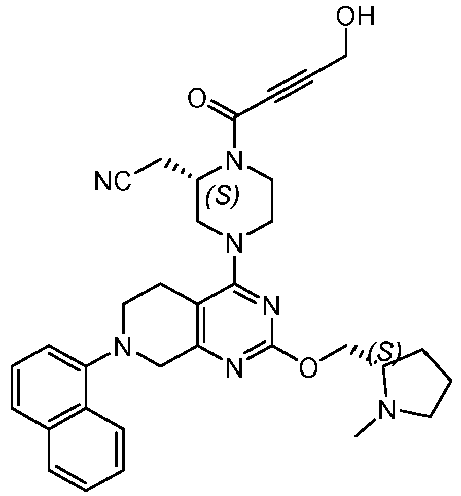
-

- Step A: benzyl (2S)-2-(cyanomethyl)-4-[2-[[(2S)-1- methylpyrrolidin-2-yl]methoxyl-7-(1-naphthyl)-6,8-dihydro-5H-pyrido[3,4-d]pyrimidin-4-yl]piperazine-1-carboxylate. To a mixture of benzyl (2S)-2-(cyanomethyl)-4-[2-[[(2S)-1- methylpyrrolidin-2-yl]methoxy]-5,6,7,8-tetrahydropyrido[3,4-d]pyrimidin-4-yl]piperazine-1-carboxylate (Intermediate 65, 1 g, 1.58 mmol, 1 eq) and 1-bromonaphthalene (655 mg, 3.16 mmol, 440 µL, 2 eq) in toluene (20 mL) was added Pd2(dba)3 (145 mg, 158 umol, 0.1 eq), RuPhos (148 mg, 316 umol, 0.2 eq), Cs2CO3 (1.55 g, 4.75 mmol, 3 eq) in one portion. The mixture was degassed and purged with N2 for 3 times, then heated to 90 °C and stirred for 2 hours. The reaction mixture was diluted with water (15 mL) and extracted with ethyl acetate (50 mL × 3). The combined organic layers were washed with water (50 mL × 1), dried over Na2SO4, filtered and concentrated under reduced pressure to give a residue. The residue was purified by reversed phase flash [water (0.1% TFA)/acetonitrile]. The desired fractions were collected and neutralized with saturated NaHCO3 solution (6 mL) and extracted with ethyl acetate (100 mL × 2). The separated organic layers were dried over sodium sulfate, filtered and concentrated under vacuum. Compound benzyl (2S)-2-(cyanomethyl)-4-[2-[[(2S)-1-methylpyrrolidin-2-yl]methoxy]-7-(1-naphthyl)-6,8-dihydro-5H-pyrido[3,4-d]pyrimidin-4-yl]piperazine-1-carboxylate (515 mg, 726 umol, 45.9% yield, 89.1% purity) was obtained as a yellow solid. LCMS [ESI, M+1]: 632.
- Step B: 2-[(2S)-4-[2-[[(2S)-1-methylpyrrolidin-2-yl]methoxy]- 7-(1-naphthyl)-6,8-dihydro-5H-pyrido[3,4-d]pyrimidin-4-yl]piperazin-2-yl]acetonitrile. To a solution of benzyl (2S)-2-(cyanomethyl)-4-[2-[[(2S)-1- methylpyrrolidin-2-yl]methoxy]-7-(1-naphthyl)-6,8-dihydro-5H-pyrido[3,4-d]pyrimidin-4-yl]piperazine-1-carboxylate (1 g, 1.58 mmol, 1 eq) in MeOH (60 mL) was added Pd/C (500 mg, 10% purity) and NH3•MeOH (20%, 50 mL) under N2. The suspension was degassed under vacuum and purged with H2 three times. The mixture was stirred under H2 (15 psi) at 25 °C for 1 hour. The reaction mixture was concentrated under reduced pressure. Compound 2-[(2S)-4-[2-[[(2S)-1-methylpyrrolidin-2-yl]methoxy]- 7-(1-naphthyl)-6,8-dihydro-5H-pyrido[3,4-d]pyrimidin-4-yl]piperazin-2-yl]acetonitrile (680 mg, 1.26 mmol, 80% yield, 92.3% purity) was obtained as a yellow solid which was used directly into the next step without further purification. LCMS [ESI, M+1]: 498.
- 1H NMR (400MHz, chloroform-d) δ = 8.26 - 8.19 (m, 1H), 7.89 - 7.83 (m, 1H), 7.60 (d, J = 8.4 Hz, 1H), 7.53 - 7.47 (m, 2H), 7.43 (t, J = 7.6 Hz, 1H), 7.16 - 7.12 (m, 1H), 4.41 (dd, J = 5.2, 10.8 Hz, 1H), 4.26 (s, 2H), 4.16 (dd, J = 7.2, 10.8 Hz, 1H), 4.01 (br d, J = 12.4 Hz, 1H), 3.95 - 3.82 (m, 1H), 3.44 - 3.21 (m, 3H), 3.18 - 2.97 (m, 4H), 2.95 - 2.76 (m, 3H), 2.74 - 2.63 (m, 1H), 2.55 (dd, J = 1.2, 5.6 Hz, 2H), 2.51 - 2.46 (m, 3H), 2.33 - 2.22 (m, 1H), 2.12 - 1.99 (m, 1H), 1.88 - 1.80 (m, 3H).
- Step C: 2-[(2S)-1-(4-hydroxybut-2-ynoyl)-4-[2-[[(2S)-1-methylpyrrolidin-2-yl]methoxy]-7-(1-naphthyl)-6,8-dihydro-5H-pyrido[3,4-d]pyrimidin-4-yl]piperazin-2-yl]acetonitrile. To a solution of 4-[tert-butyl(dimethyl)silyl]oxybut-2-ynoic acid (172 mg, 803 umol, 2 eq) and DIEA (155 mg, 1.21 mmol, 210 µL, 3 eq) in MeCN (5 mL) was added MsCl (92.1 mg, 803 umol, 62.2 µL, 2 eq) at 0 °C. After stirring at 0 °C for 20 minutes, to the mixture was added 2-[(2S)-4-[2-[[(2S) -1-methylpyrrolidin-2-yl]methoxy]-7-(1-naphthyl)-6,8-dihydro-5H-pyrido[3,4-d]pyrimidin-4-yl]piperazin-2-yl]acetonitrile (200 mg, 402 umol, 1 eq) and the mixture was stirred at 25 °C for 2 hours. Then the reaction mixture was heated to 80 °C and stirred for 10 hours. The reaction mixture was diluted with water (20 mL) and extracted with ethyl acetate (20 mL × 3). The combined organic layers were washed with brine (20 mL), dried over Na2SO4, filtered and concentrated under reduced pressure to give a residue. The residue was purified by prep-HPLC (column: Boston Green ODS 150*30 5u; mobile phase: [water (0.225% FA)-ACN]; B%: 25% - 45%, 10 min) and further purified by prep-HPLC (column: Phenomenex Gemini 150*25mm*10um; mobile phase: [water (0.05% ammonia hydroxide v/v) - ACN]; B%: 45% - 75%, 12 min). Title compound 2-[(2S)-1-(4-hydroxybut-2-ynoyl)-4-[2-[[(2S)-1-methylpyrrolidin-2-yl]methoxy]-7-(1-naphthyl)-6,8-dihydro-5H-pyrido[3,4-d]pyrimidin-4-yl]piperazin-2-yl]acetonitrile (EXAMPLE 3, 1.43 mg, 2.39 umol, 1% yield, 96.7% purity) was obtained as a white solid. LCMS [ESI, M+1]: 580.
- 1H NMR (400MHz, chloroform-d) δ = 8.22 (d, J= 6.8 Hz, 1H), 7.90 - 7.82 (m, 1H), 7.61 (d, J = 8.4 Hz, 1H), 7.55 - 7.47 (m, 2H), 7.44 (t, J = 7.6 Hz, 1H), 7.15 (d, J = 7.2 Hz, 1H), 5.26 - 4.89 (m, 1H), 4.60 - 4.34 (m, 4H), 4.33 - 4.16 (m, 3H), 4.14 - 3.96 (m, 1H), 3.95 - 3.80 (m, 1H), 3.78 - 3.50 (m, 2H), 3.50 - 3.28 (m, 2H), 3.27 - 3.07 (m, 3H), 3.06 - 2.82 (m, 3H), 2.80 - 2.64 (m, 2H), 2.51 (d, J=12.4 Hz, 3H), 2.38 - 2.24 (m, 1H), 2.14 - 2.00 (m, 1H), 1.97 - 1.85 (m, 2H).
-

-

- Step A: 2-[(2S)-4-[2-1[(2S)-1-methylpyrrolidin-2-yl]methoxy]-7-(1-naphthyl)-6,8-dihydro-5H-pyrido[3,4-d]pyrimidin-4-yl]-1-(2,3,3-trideuterioprop-2-enoyl)piperazin-2-yl]acetonitrile. To a solution of deuterio 2,3,3-trideuterioprop-2-enoate (68.8 mg, 904 umol, 3 eq) and DIEA (234 mg, 1.81 mmol, 315 µL, 6 eq) in MeCN (3 mL) was added MsCl (69.1 mg, 603 umol, 46.7 µL, 2 eq) at 5 °C for 0.5 hour. To the resulting reaction was added 2-[(2S)-4-[2-[[(2S)-1-methylpyrrolidin-2-yl]methoxy]-7-(1-naphthyl)-6,8-dihydro-5H-pyrido[3,4-d]pyrimidin-4-yl]piperazin-2-yl]acetonitrile (150 mg, 301 umol, 1 eq). The reaction mixture was stirred at 5 °C for 1 hour. Then the reaction mixture was heated to 80 °C for 12 hrs. Upon completion, the reaction mixture was quenched by water (0.5 mL). The residue mixture was purified by prep-HPLC (column: Phenomenex Gemini 150*25mm*10um;mobile phase: [water (0.05% ammonia hydroxide v/v)-ACN];B%: 50%-80%,12min) to give title compound 2-[(2S)-4-[2-[[(2S)-1-methylpyrrolidin-2-yl]methoxy]-7-(1-naphthyl)-6,8-dihydro-5H-pyrido[3,4-d]pyrimidin-4-yl]-1-(2,3,3-trideuterioprop-2-enoyl)piperazin-2-yl]acetonitrile (EXAMPLE 4, 34.2 mg, 60.2 umol, 20% yield, 97.7% purity) as a white solid. LCMS [ESI, M+1]: 555.
- 1H NMR (400MHz, CHLOROFORM-d) δ = 8.28 - 8.16 (m, 1H), 7.91 - 7.83 (m, 1H), 7.63 (d, J=8.0 Hz, 1H), 7.56 - 7.48 (m, 2H), 7.45 (t, J=7.6 Hz, 1H), 7.16 (d, J=7.2 Hz, 1H), 5.28 - 4.94 (m, 1H), 4.41 (dd,J=5.2, 10.8 Hz, 1H), 4.36 - 4.24 (m, 2H), 4.23 - 4.11 (m, 2H), 4.04 (br d, J=11.6 Hz, 2H), 3.73 - 3.25 (m, 3H), 3.22 - 2.74 (m, 7H), 2.69 (td, J=6.4, 13.2 Hz, 1H), 2.50 (s, 3H), 2.36 - 2.24 (m, 1H), 2.15 - 2.02 (m, 1H), 1.83 - 1.77 (m, 3H).
-

-

- Insert: (E)-4-bromobut-2-enoyl chloride. A solution of (E)-4-bromobut-2-enoic acid (1.0 g, 6.06 mmol, 1.0 eq) in (COCl)2 (14.5 g, 114 mmol, 10.0 mL, 18.9 eq) and DCM (10.0 mL) was stirred at 70 °C for 2 hours. After completion, the mixture was concentrated under vacuum. The product (E)-4-bromobut-2-enoyl chloride (1.0 g, crude) was obtained as yellow oil. The crude compound was used directly to the next step without further purification.
- Step A: 2-[(2S)-4-[7-(2,3-dimethylphenyl)-2-[[(2S)-1-methypyrrolidin-2-yl]methoxy]-6,8-dihydro-5H-pyrido[3,4-d]pyrimidin-4-yl]piperazin-2-yl]acetonitrile. To a solution of tert-butyl (2S)-2-(cyanomethyl)-4-[7-(2,3-dimethylphenyl)-2-[[(2S)-1-methylpyrrolidin-2-yl]methoxy]-6,8-dihydro-5H-pyrido[3,4-d]pyrimidin-4-yl]piperazine-1-carboxylate (Intermediate 73, 200 mg, 347 umol, 1.0 eq) in dioxane (2.0 mL) was added HCl•dioxane (4.0 M, 2.0 mL, 23.0 eq). The mixture was stirred at 25 °C for 0.5 hour. After completion, the reaction mixture was concentrated under reduced pressure to give a residue. The residue was adjusted pH=7 with saturated of NaHCOs aqueous solution and extracted with EA (5.0 mL × 3). The combined organic layers were washed with brine (10.0 mL), dried over Na2SO4, filtered and concentrated under reduced pressure to give the residue. The product 2-[(2S)-4-[7-(2,3-dimethylphenyl)-2-[[(2S)-1-methylpyrrolidin-2-yl]methoxy]-6,8-dihydro-5H-pyrido[3,4-d]pyrimidin-4-yl]piperazin-2-yl]acetonitrile (160 mg, crude) was obtained as a yellow solid and used into the next step without further purification.
- Step B: 2-[(2S)-1-[(E)-4-bromobut-2-enoyl]-4-[7-(2,3-dimethylphenyl)-2-[[(2S)-1-methypyrrolidin-2-yl]methoxcy]-6,8-dihydro-5H-pyrido[3,4-d]pyrimidin-4-yl])piperazin-2-yl]acetonitrile. To a solution of 2-[(2S)-4-[7-(2,3-dimethylphenyl)-2-[[(2S)-1-methylpyrrolidin-2-yl]methoxy]-6,8-dihydro-5H-pyrido[3,4-d]pyrimidin-4-yl]piperazin-2-yl]acetonitrile (160 mg, 336 umol, 1.0 eq) in DCM (6.0 mL) was added Py (532 mg, 6.73 mmol, 543 µL, 20.0 eq) and (E)-4-bromobut-2-enoyl chloride (246 mg, 1.35 mmol, 4.0 eq) in DCM (2.0 mL). The mixture was stirred at 0 °C for 1 hour. After completion, the reaction mixture was quenched by addition MeOH (5.0 mL) at 0 °C, and then concentrated under reduced pressure to give a residue. The product 2-[(2S)-1-[(E)-4-bromobut-2-enoyl]-4-[7-(2,3-dimethylphenyl)-2-[[(2S)-1-methylpyrrolidin-2-yl]methoxy]-6,8-dihydro-5H-pyrido[3,4-d]pyrimidin-4-yl]piperazin-2-yl]acetonitrile (200 mg, crude) was obtained as a yellow oil and used into the next step without further purification. LCMS [ESI, M+1]: 622.
- Step C: 2-[(2S)-4-[7-(2,3-dimethylphemyl)-2-[[(2S)-1-methylpyrrolidin-2-yl]methoxyl-6,8-dihydro-5H-pyrido[3,4-d]pyrimidin-4-yl]-1-[(E)-4-(3-fluoropyrrolidin-1-yl)but-2-enoyl]piperazin-2-yl]acetonitrile. To a solution of 2-[(2S)-1-[(E)-4-bromobut-2-enoyl]-4-[7-(2,3-dimethylphenyl)-2-[[(2S)-1-methylpyrrolidin-2-yl]methoxy]-6,8-dihydro-5H-pyrido[3,4-d]pyrimidin-4-yl]piperazin-2-yl]acetonitrile (200 mg, 321 umol, 1.0 eq) in DCM (3.0 mL) was added K2CO3 (88.8 mg, 642 umol, 2.0 eq), KI (2.67 mg, 16.1 umol, 0.05 eq) and 3-fluoropyrrolidine (403 mg, 3.21 mmol, 10.0 eq, HCl salt). The mixture was stirred at 0 °C for 1 hour. After completion, the reaction mixture was concentrated under reduced pressure to give a residue. The residue was adjusted pH=7 with saturated of NaHCO3 aqueous solution and extracted with EA (10.0 mL× 3). The combined organic layers were washed with brine (20.0 mL), dried over Na2SO4, filtered and concentrated under reduced pressure to give the residue. The residue was purified by prep-HPLC (column: Gemini 150*25 5u;mobile phase: [water(0.04%NH3H2O)-ACN];B%: 60%-84%,10min). The residue was concentrated under reduced pressure and then lyophilization to give title compound 2-[(2S)-4-[7-(2,3-dimethylphenyl)-2-[[(2S)-1-methylpyrrolidin-2-yl]methoxy]-6,8-dihydro-5H-pyrido[3,4-d]pyrimidin-4-yl]-1-[(E)-4-(3-fluoropyrrolidin-1-yl)but-2-enoyl]piperazin-2-yl]acetonitrile (EXAMPLE 5, 123 mg, 193 umol, 56% yield in three steps, 99.2% purity) was obtained as a yellow solid. LCMS [ESI, M+1]: 631.
- 1H NMR (400MHz, Chloroform-d) δ 7.16 - 7.07 (m, 1H), 7.02 - 6.92 (m, 3H), 6.59 - 6.41 (m, 1H), 5.31 - 5.10 (m, 1H), 5.09 - 4.46 (m, 1H), 4.38 (dd, J = 4.8, 10.4 Hz, 1H), 4.26 - 3.83 (m, 6H), 3.80 - 3.45 (m, 1H), 3.42 - 3.24 (m, 3H), 3.23 - 3.15 (m, 1H), 3.14 - 3.03 (m, 3H), 3.02 - 2.83 (m, 4H), 2.82 - 2.62 (m, 4H), 2.54 - 2.49 (m, 1H), 2.47 (s, 3H), 2.32 - 2.26 (m, 6H), 2.25 - 2.17 (m, 1H), 2.16 - 2.09 (m, 1H), 2.08 - 2.02 (m, 1H), 1.92 - 1.78 (m, 4H).
-

-

- Step A: 2-[(2S)-4-[7-(8-chloro-1-naphthyl)-2-[[(2S)-1-methylpyrrolidin-2-yl]methoxy]-6,8-dihydro-5H-pyrido[3,4-d]pyrimidin-4-yl]-1-(2,3,3-trideuterioprop-2-enoyl)piperazin-2-yl]acetonitrile. To the solution of deuterio 2,3,3-trideuterioprop-2-enoate (56.6 mg, 744 umol, 3 eq) and DIEA (481 mg, 3.72 mmol, 648 µL, 15 eq) in ACN (3 mL) was added MsCl (56.8 mg, 496 umol, 38.4 µL, 2 eq) at 5 °C, the mixture was stirred at 5 °C for 0.5 hour. Then to the mixture was added 2-[(2S)-4-[7-(8-chloro-1-naphthyl)-2-[[(2S)-1-methylpyrrolidin-2-yl]methoxy]-6,8-dihydro-5H-pyrido[3,4-d]pyrimidin-4-yl]piperazin-2-yl]acetonitrile (Intermediate 71, 150 mg, 248 umol, 1 eq, 2 HCl), the resulting mixture was stirred at 5 °C for 1 hour. Then the mixture was heated to 80 °C and stirred at 80 °C for 12 hours. The mixture was quenched by Water (0.5 mL). The reaction mixture was purified by prep-HPLC (column: Phenomenex Gemini 150*25mm*10um;mobile phase: [water (0.05 % ammonia hydroxide v/v)-ACN];B%: 50 % - 80 %,10 min) to give title compound 2-[(2S)-4-[7-(8-chloro-1-naphthyl)-2-[[(2S)-1-methylpyrrolidin-2-yl]methoxy]-6,8-dihydro-5H-pyrido[3,4-d]pyrimidin-4-yl]-1-(2,3,3-trideuterioprop-2-enoyl)piperazin-2-yl]acetonitrile (EXAMPLE 6, 13.0 mg, 21.6 umol, 9 % yield, 98.2 % purity) as a off-white solid. LCMS [ESI, M+1]: 589.
- 1H NMR (400 MHz, chloroform-d) δ = 7.76 (br d, J = 8.4 Hz, 1H), 7.62 (t, J = 7.6 Hz, 1H), 7.53 (d, J = 7.2 Hz, 1H), 7.45 (td, J = 8.0, 13.2 Hz, 1H), 7.34 (t, J = 7.6 Hz, 1H), 7.26 - 7.18 (m, 1H), 5.10 (br s, 1H), 4.49 - 4.33 (m, 2H), 4.21 - 4.01 (m, 3H), 3.96 - 3.79 (m, 2H), 3.60 (br d, J = 6.8 Hz, 1H), 3.44 (br d, J = 13.6 Hz, 1H), 3.32 - 2.97 (m, 5H), 2.88 - 2.53 (m, 4H), 2.48 (d, J = 2.8 Hz, 3H), 2.29 (br d, J = 8.8 Hz, 1H), 2.11 - 2.00 (m, 1H), 1.87 - 1.71 (m, 3H).
-

-

- 2-fluoroprop-2-enoyl chloride. To a solution of 2-fluoroprop-2-enoic acid (400 mg, 4.44 mmol, 1 eq) in DCM (4 mL) was added (COCl)2 (846 mg, 6.66 mmol, 583 µL, 1.5 eq) and DMF (32.5 mg, 444 umol, 34.2 µL, 0.1 eq). The mixture was stirred at 25 °C for 2 hrs. The reaction mixture was concentrated under reduced pressure to remove a part of solvent and give a residue in DCM. Compound 2-fluoroprop-2-enoyl chloride (400 mg, crude) was obtained as a yellow liquid and used into the next step without further purification.
- Step A: 2-[(2S)-4-[7-(8-chloro-1-naphthyl)-2-[[(2S)-1- methylpyrrolidin-2-yllmethoxyl-6,8-dihydro-5H-pyrido[3,4-d]pyrimidin-4-yl]-1-(2-fluoroprop-2-enoyl)piperazin-2-yl]acetonitrile. To a solution of 2-[(2S)-4-[7-(8-chloro-1-naphthyl)-2-[[(2S)- 1-methylpyrrolidin-2-yl]methoxy]-6,8-dihydro-5H-pyrido[3,4-d]pyrimidin-4-yl]piperazin-2-yl]acetonitrile (300 mg, 528 umol, 1 eq, HCl) in DCM (5 mL) was added DIEA (1.73 g, 13.4 mmol, 2.33 mL, 25.4 eq) and 2-fluoroprop-2-enoyl chloride (286 mg, 2.64 mmol, 5 eq) in DCM (5 mL). The mixture was stirred at 0 °C for 1 hour. The reaction mixture was concentrated under reduced pressure to give a residue. The residue was purified by column chromatography (Al2O3, Dichloromethane/Methanol = 10/1 to 10/1). The residue was purified by prep-HPLC (column: Gemini 150 * 25 5u; mobile phase: [water (0.05% ammonia hydroxide v / v) - ACN]; B%: 55% - 85%, 12min). The residue was purified by prep-HPLC (column: Phenomenex Synergi C18 150 * 30mm * 4um; mobile phase: [water (0.225% FA) - ACN]; B%: 20% - 50%, 10.5min). The residue was concentrated under reduced pressure to remove ACN, and then lyophlization. Title compound 2-[(2S)-4-[7-(8-chloro-1-naphthyl)-2-[[(2S)-1- methylpyrrolidin-2-yl]methoxy]-6,8-dihydro-5H-pyrido[3,4-d]pyrimidin-4-yl]-1-(2-fluoroprop-2-enoyl)piperazin-2-yl]acetonitrile (EXAMPLE 7, 24.1 mg, 36.7 umol, 7% yield, 99.1% purity, FA) was obtained as a brown solid.
- SFC condition: "AD - 3S_3_5_40_3ML Column: Chiralpak AD - 3 100 × 4.6mm I.D., 3um Mobile phase: methanol (0.05% DEA) in CO2 from 5% to 40% Flow rate: 3mL/min Wavelength: 220nm".
- 1H NMR (400 MHz, Acetic) δ = 7.82 (d, J = 8.0 Hz, 1H), 7.69 (d, J = 8.0 Hz, 1H), 7.56 (d, J = 7.6 Hz, 1H), 7.49 (t, J = 7.6 Hz, 1H), 7.41 - 7.30 (m, 2H), 5.58 - 5.25 (m, 2H), 5.17 - 4.59 (m, 4H), 4.57 - 4.28 (m, 3H), 4.24 - 3.78 (m, 4H), 3.67 - 3.13 (m, 7H), 3.08 (br d, J = 2.4 Hz, 3H), 2.98 (br d, J = 6.4 Hz, 1H), 2.83 - 2.61 (m, 1H), 2.45 - 2.29 (m, 1H), 2.24 - 2.08 (m, 3H).
-

-

- Step A: ethyl (E)-4-fluorobut-2-enoate. A mixture of ethyl (E)-4-bromobut-2-enoate (2.00 g, 10.4 mmol, 1.43 mL, 1.00 eq) and AgF (3.94 g, 31.1 mmol, 674 µL, 3.00 eq) in acetonitrile (20.0 mL) was stirred at 25 °C for 12 hours. The mixture was filtered and washed with THF (10.0 mL), then concentrated under vacuum to give ethyl (E)-4-fluorobut-2-enoate (2.50 g, crude) as a yellow oil and used into next step without further purification.
- 1H NMR (400MHz, chloroform-d) δ =7.04 - 6.89 (m, 1H), 6.12 (qd, J = 2.0, 16.0 Hz, 1H), 5.14 - 4.94 (m, 2H), 4.22 (q, J = 6.8 Hz, 2H), 1.30 (t, J = 6.8 Hz, 3H).
- Step B: (E)-4-fluorobut-2-enoic acid. A mixture of ethyl (E)-4-fluorobut-2-enoate (0.10 g, crude) and NaOH (121 mg, 3.03 mmol) in THF (1.00 mL) and H2O (1.00 mL) was stirred at 25 °C for 2 hours. The pH value was adjusted to 1∼3 by HCl (1N, 5.00 mL), extracted with ethyl acetate (3 × 10.0 mL), the organic layer was dried over Na2SO4, filtered and concentrated under vacuum to give (E)-4-fluorobut-2-enoic acid (0.02 g, 192 mmol, two steps 46%) as a yellow oil and used into next step without further purification.
- 1H NMR (400MHz, chloroform-d) δ = 8.37 - 7.31 (m, 1H), 7.15 - 7.01 (m, 1H), 6.15 (dd, J=1.6, 16.0 Hz, 1H), 5.22 - 4.96 (m, 2H).
- Step C: 2-[(2S)-4-[7-(8-chloro-1-naphthyl)-2-[[(2S)-1-methylpyrrolidin-2-yl]methoxy]-6,8- dihydro-5H-pyrido[3,4-d]pyrimidin-4-yl]-1-[(E)-4-fluorobut-2-enoyl]piperazin-2-yllacetonitrile. To a solution of (E)-4-fluorobut-2-enoic acid (7.32 mg, 70.4 umol, 2 eq) and Py (8.35 mg, 106 umol, 8.52 µL, 3.00 eq) in acetonitrile (1.00 mL) was added MsCl (8.06 mg, 70.4 umol, 5.45 µL, 2.00 eq) at 0 °C. After stirred at 0 °C for 1 hour, 2-[(2S)-4-[7-(8-chloro-1-naphthyl)-2-[[(2S)-1-methylpyrrolidin-2-yl]methoxy]-6,8-dihydro-5H-pyrido[3,4-d]pyrimidin-4-yl]piperazin-2-yl]acetonitrile (0.02 g, 35.2 umol, 1.00 eq, HCl) was added into the mixture. The mixture was stirred at 25 °C for 12 h. The mixture was diluted with water (5.00 mL), extracted with ethyl acetate (3 × 5.00 mL), the organic layer was dried over Na2SO4, filtered and concentrated under vacuum. The residue was purified by prep-HPLC (column: Gemini 150*25 5u; mobile phase: [water (0.05% ammonia hydroxide v/v) - ACN]; B%: 50% - 80%, 12min). The desired fraction was collected and lyophilized to give title compound 2-[(2S)-4-[7-(8-chloro-1-naphthyl)-2-[[(2S)-1-methylpyrrolidin-2-yl]methoxy]-6,8- dihydro-5H-pyrido[3,4-d]pyrimidin-4-yl]-1-[(E)-4-fluorobut-2-enoyl]piperazin-2-yl]acetonitrile (EXAMPLE 8, 3.01 mg, 4.82 umol, 14 % yield, 98.9% purity) as a brown solid. LCMS [ESI, M+1]: 618.
- 1H NMR (400MHz, CHLOROFORM-d) δ = 7.76 (br d, J = 8.0 Hz, 1H), 7.62 (t, J = 7.2 Hz, 1H), 7.53 (d, J = 7.2 Hz, 1H), 7.45 (td, J = 7.6, 12.8 Hz, 1H), 7.34 (t, J = 7.6 Hz, 1H), 7.26 - 7.17 (m, 1H), 7.09 - 6.91 (m, 1H), 6.59 (br d, J = 15.6 Hz, 1H), 5.19 - 5.05 (m, 2H), 4.49 - 4.36 (m, 2H), 4.22 - 3.79 (m, 5H), 3.76 - 2.96 (m, 8H), 2.92 - 2.55 (m, 4H), 2.48 (d, J = 2.4 Hz, 3H), 2.29 (br d, J = 9.6 Hz, 1H), 2.06 (br d, J = 10.0 Hz, 1H), 1.83 - 1.71 (m, 3H).
-

-

- Insert: (E)-4-bromobut-2-enoyl chloride. To a solution of (E)-4-bromobut-2-enoic acid (930 mg, 5.64 mmol, 1.0 eq) in DCM (2.0 mL) was added (COCl)2 (2.90 g, 22.9 mmol, 2.0 mL, 4.05 eq). The mixture was stirred at 60 °C for 12 hours. After completion, the mixture was concentrated under vacuum. The product (E)-4-bromobut-2-enoyl chloride (650 mg, crude) was obtained as yellow oil and used directly to the next step without further purification.
- Step A: 2-[(2S)-1-[(E)-4-bromobut-2-enoyl]-4-[7-(8-chloro- 1-naphthyl)-2-[[(2S)-1-methylpyrrolidin-2-yl]methoxy]-6,8-dihydro-5H-pyrido[3,4-d]pyrimidin-4-yl]piperazin-2-yl]acetonitrile. To a solution of 2-[(2S)-4-[7-(8-chloro-1-naphthyl)-2-[[(2S)- 1-methylpyrrolidin-2-yl]methoxy]-6,8-dihydro-5H-pyrido[3,4-d]pyrimidin-4-yl]piperazin-2-yl]acetonitrile (Intermediate 71, 150 mg, 282 umol, 1.0 eq) in DCM (3.0 mL) was added Py (446 mg, 5.64 mmol, 455 µL, 20.0 eq) and (E)-4-bromobut-2-enoyl chloride (207 mg, 1.13 mmol, 4.0 eq) in DCM (1.0 mL). The mixture was stirred at 0 °C for 1 hour. After completion, the reaction mixture was concentrated under reduced pressure to give a residue. The product 2-[(2S)-1-[(E)-4-bromobut-2-enoyl]-4-[7-(8-chloro- 1-naphthyl)-2-[[(2S)-1-methylpyrrolidin-2-yl]methoxy]-6,8-dihydro-5H-pyrido[3,4-d]pyrimidin-4-yl]piperazin-2-yl]acetonitrile (150 mg, crude) was obtained as brown oil and used into the next step without further purification. LCMS [ESI, M+1]: 680.
- Step B: 2-[(2S)-4-[7-(8-chloro-1-naphthyl)-2-[[(2S)-1-methylpyrrolidin-2-yl]methoxyl-6,8-dihydro-5H-pyrido[3,4-d]pyrimidin-4-yl]-1-[(E)-4-(3-fluoropyrrolidin-1-yl)but-2-enoyl]piperazin-2-yl]acetonitrile. To a solution of 2-[(2S)-1-[(E)-4-bromobut-2-enoyl]-4-[7-(8-chloro-1-naphthyl)-2-[[(2S)-1-methylpyrrolidin-2-yl]methoxy]-6,8-dihydro-5H-pyrido[3,4-d]pyrimidin-4-yl]piperazin-2-yl]acetonitrile (150 mg, 221 umol, 1.0 eq) in DCM (10.0 mL) was added K2CO3 (366 mg, 2.65 mmol, 12.0 eq), KI (1.83 mg, 11.0 umol, 0.05 eq) and 3-fluoropyrrolidine (277 mg, 2.21 mmol, 10.0 eq, HCl). The mixture was stirred at 0 °C for 0.5 hour. After completion, the reaction mixture was concentrated under reduced pressure to give a residue. The residue was adjusted pH~7 with saturated NaHCOs aqueous solution and extracted with EA (3 × 10 mL). The combined organic layers were washed with brine (20 mL), dried over Na2SO4, filtered and concentrated under reduced pressure to give the residue. The residue was purified by prep-HPLC (column: Gemini 150*25 5u; mobile phase: [water (0.04%NH3•H2O)-ACN]; B%: 60%-84%, 10 min). The residue was concentrated under reduced pressure and then lyophilization. Title compound 2-[(2S)-4-[7-(8-chloro-1-naphthyl)-2-[[(2S)-1-methylpyrrolidin-2-yl]methoxy]-6,8-dihydro-5H-pyrido[3,4-d]pyrimidin-4-yl]-1-[(E)-4-(3-fluoropyrrolidin-1-yl)but-2-enoyl]piperazin-2-yl]acetonitrile (EXAMPLE 9, 9.67 mg, 14.0 umol, 6% yield, 99.2% purity) was obtained as yellow solid. LCMS [ESI, M+1]: 687.
- 1H NMR (400MHz, Chloroform-d) δ 7.76 (br d, J = 8.0 Hz, 1H), 7.62 (t, J = 7.8 Hz, 1H), 7.26 (br d, J = 7.2 Hz, 1H), 7.49 - 7.40 (m, 1H), 7.34 (t, J = 7.8 Hz, 1H), 7.27 - 7.17 (m, 1H), 7.05 - 6.92 (m, 1H), 6.57 - 6.42 (m, 1H), 5.32 - 5.11 (m, 1H), 5.10 - 4.50 (m, 1H), 4.47 - 4.35 (m, 2H), 4.19 - 4.00 (m, 2H), 3.95 - 3.75 (m, 2H), 3.65 - 3.55 (m, 1H), 3.47 - 3.28 (m, 3H), 3.24 - 3.05 (m, 4H), 3.04 - 2.86 (m, 4H), 2.85 - 2.71 (m, 2H), 2.70 - 2.50 (m, 3H), 2.47 - 2.45 (m, 3H), 2.32 - 2.15 (m, 2H), 2.14 - 2.02 (m, 2H), 1.87 - 1.67 (m, 4H).
-

-

- Insert: (E)-4-bromobut-2-enoyl chloride. To a solution of (E)-4-bromobut-2-enoic acid (1 g, 6.06 mmol, 1.0 eq) in DCM (5.0 mL) was added oxalyl dichloride (7.25 g, 57.1 mmol, 5.0 mL, 9.4 eq). The mixture was stirred at 60 °C for 12 hours. After completion, the reaction mixture was concentrated under reduced pressure to give (E)-4-bromobut-2-enoyl chloride (850 mg, crude) as yellow oil which was used for the next step without further purification.
- Step A: Intermediate 71, 2-[(2S)-4-[7-(8-chloro-1-naphthyl)-2-[[(2S)-1-methylpyrrolidin-2-yl]methoxy]-6,8-dihydro-5H-pyrido[3,4-d]pyrimidin-4-yl]piperazin-2-yl]acetonitrile. To a solution of tert-butyl (2S)-4-[7-(8-chloro-1-naphthyl) -2-[[(2S)-1-methylpyrrolidin-2-yl]methoxy]-6,8-dihydro-5H-pyrido[3,4-d]pyrimidin-4-yl]-2-(cyanomethyl)piperazine-1-carboxylate (310 mg, 414 umol, 1.0 eq) in dioxane (4.0 mL) was added HCl/dioxane (4.0 M, 4.0 mL, 39.0 eq) at 25 °C. The mixture was stirred at 25 °C for 0.5 hour. After completion, the reaction mixture was quenched by saturated NaHCO3 aqueous solution (20.0 mL), and then extracted with EA (3 × 40.0 mL). The combined organic layers were washed with saturated NaCl aqueous solution (100.0 mL), dried over Na2SO4, filtered and concentrated to give a residue 2-[(2S)-4-[7-(8-chloro-1-naphthyl)-2-[[(2S)-1-methylpyrrolidin-2-yl]methoxy]-6,8-dihydro-5H-pyrido[3,4-d]pyrimidin-4-yl]piperazin-2-yl]acetonitrile (250 mg, crude) as yellow solid. The crude product was used into the next step without further purification. LCMS [ESI, M+1]: 532.
- Step B: 2-[(2S)-4-[7-(8-chloro-1-naphthyl)-2-[[(2S)-1-methylpyrrolidin-2-yl]methoxy]-6,8-dihydro-5H-pyrido[3,4-d]pyrimidin-4-yl]-1-[(E)-4-(3)-fluoroazetidin-1-yl)but-2-enoyl]piperazin-2-yl]acetonitrile. To a solution of 2-[(2S)-4-[7-(8-chloro-1-naphthyl)-2-[[(2S)-1-methylpyrrolidin-2-yl]methoxy]-6,8-dihydro-5H-pyrido[3,4-d]pyrimidin-4-yl]piperazin-2-yl]acetonitrile (Intermediate 71, 150 mg, 282 umol, 1.0 eq, crude) in DCM (6.0 mL) was added Py (446 mg, 5.6 mmol, 455 µL, 20.0 eq) and (E)-4-bromobut-2-enoyl chloride (207 mg, 1.2 mmol, 4.0 eq, crude) in DCM (1.0 mL). The mixture was stirred at 0 °C for 1 hour. Then K2CO3 (779 mg, 5.6 mmol, 20.0 eq), KI (4.6 mg, 28.2 umol, 0.1 eq) and 3-fluoroazetidine (472 mg, 4.2 mmol, 15.0 eq, HCl) was added at 0 °C. Then the mixture was stirred at 25 °C for 12 hours. After completion, the mixture was filtered and concentrated under reduced pressure. The residue was purified by prep-HPLC (column: Phenomenex Gemini 150*25 mm*10 um; mobile phase: [water (10.0 mM NH4HCO3)-ACN]; B%: 55%-85%, 10 min.) and lyophilization to give title compound 2-[(2S)-4-[7-(8-chloro-1-naphthyl)-2-[[(2S)-1-methylpyrrolidin-2-yl]methoxy]-6,8-dihydro-5H-pyrido[3,4-d]pyrimidin-4-yl]-1-[(E)-4-(3-fluoroazetidin-1-y1)but-2-enoyl]piperazin-2-yl]acetonitrile (EXAMPLE 10, 10.8 mg, 15.7 umol, 6% yield, 98% purity) as yellow solid. LCMS [ESI, M+1]: 673.
- 1H NMR (400 MHz, Chloroform-d) δ 7.77 (d, J = 8.0 Hz, 1 H), 7.63 (t, J = 7.8 Hz, 1 H), 7.54 (d, J = 7.2 Hz, 1 H), 7.50-7.43 (m, 1 H), 7.35 (t, J = 7.8 Hz, 1 H), 7.26 - 7.21 (m, 1 H), 6.89 (d, J = 15.2 Hz, 1 H), 6.42 (d, J = 14.8 Hz, 1 H), 5.26-4.62 (m, 1 H), 5.11 (t, J = 5.2 Hz, 1 H), 4.80 - 4.37 (m, 2 H), 4.20 - 4.08 (m, 2 H), 3.92 (br d, J = 17.6 Hz, 1 H), 3.86 - 3.71 (m, 3 H), 3.60 (s, 1 H), 3.52 - 3.47 (m, 1 H), 3.45 - 3.33 (m , 1 H), 3.28 - 3.21 (m, 3 H), 3.16 - 3.11 (m, 3 H), 3.03 (dd, J = 8.4, 16.8 Hz, 1 H), 2.82 - 2.60 (m, 4 H), 2.49 (d, J = 2.8 Hz, 3 H), 2.37 - 2.25 (m, 1 H), 2.09 - 2.03 (m, 1 H), 1.86 - 1.83 (m, 1 H), 1.78 - 1.76 (m, 3 H).
-

-

- Insert: (E)-4-bromobut-2-enoyl chloride. A solution of (E)-4-bromobut-2-enoic acid (600 mg, 3.64 mmol, 1.0 eq) in (COCl)2 (10.2 g, 80.0 mmol, 7.0 mL, 22.0 eq) and DCM (7.0 mL) was stirred at 70 °C for12 hours. After completion, the reaction mixture was concentrated to give (E)-4-bromobut-2-enoyl chloride (500 mg, crude) as yellow oil. The crude product was used for the next step without further purification.
- Step A: 2-[(2S)-1-[(E)- 4-bromobut-2-enoyl]-4-[7-(8-chloro-1-naphthyl)-2-[[(2S)-1-methylpyrrolidin-2-yl]methoy]-6,8-dihydro-5H-pyrido[3,4-d]pyrimidin-4-piperazin-2-yl]acetonitrile. To a solution of 2-[(2S)-4-[7-(8-chloro-1-naphthyl) -2-[[(2S)-1-methylpyrrolidin-2-yl]methoxy]-6,8-dihydro-5H-pyrido[3,4-d]pyrimidin-4-yl]piperazin-2-yl]acetonitrile (100 mg, 188 umol, 1.0 eq) and pyridine (119 mg, 1.50 mmol, 121 µL, 8.0 eq) in DCM (2.0 mL) was added (E)-4-bromobut-2-enoyl chloride (138 mg, 752 umol, 4.0 eq). The mixture was stirred at 0 °C for 0.5 hour. After completion, the reaction mixture was concentrated to give 2-[(2S)-1-[(E)- 4-bromobut-2-enoyl]-4-[7-(8-chloro-1-naphthyl)-2-[[(2S)-1-methylpyrrolidin-2-yl]methoxy]-6,8-dihydro-5H-pyrido[3,4-d]pyrimidin-4-yl]piperazin-2-yl]acetonitrile (130 mg, crude) as yellow oil. LCMS [ESI, M+1]: 678, 680.
- Step B: 2-[(2S)-4-[7- (8-chloro-1-naphthyl)-2-[[(2S)-1-methylpyrrolidin-2-yl]methoxy]-6,8-dihydro-5H-pyrido[3,4-d]pyrimidin-4-yl]-1-[(E)-4-[methyl(2,2,2-trifluoroethyl)amino)amino]but-2-enoyl]piperazin-2-yl]acetonitrile. To a solution of 2-[(2S)-1-[(E)-4-bromobut-2-enoyl] -4-[7-(8-chloro-1-naphthyl)-2-[[(2S)-1-methylpyrrolidin-2-yl]methoxy]-6,8-dihydro-5H-pyrido[3,4-d]pyrimidin-4-yl]piperazin-2-yl]acetonitrile (128 mg, 189 umol, 1.0 eq), K2CO3 (130 mg, 943 umol, 5.0 eq) and KI (9.39 mg, 56.6 umol, 0.30 eq) in DCM (3.0 mL) was added 2,2,2-trifluoro-N-methyl-ethanamine (213 mg, 1.88 mmol, 10.0 eq) in portions. The mixture was stirred at 0-25 °C for 12 hours. After completion, the mixture was concentrated under vacuum. The obtained product was purified by prep-HPLC (column: Gemini 150*25 5u; mobile phase: [water (0.04% NHs•H2O)-ACN]; B%: 70%-100%, 10 min) to give title compound 2-[(2S)-4-[7- (8-chloro-1-naphthyl)-2-[[(2S)-1-methylpyrrolidin-2-yl]methoxy]-6,8-dihydro-5H-pyrido[3,4-d]pyrimidin-4-yl]-1-[(E)-4-[methyl(2,2,2-trifluoroethyl)amino]but-2-enoyl]piperazin-2-yl]acetonitrile (EXAMPLE 11, 2.87 mg, 3.84 umol, 2% yield, 95% purity) as white solid. LCMS [ESI, M+1]: 711.
- 1H NMR (400 MHz, Chloroform-d) δ 7.76 (br d, J = 7.6 Hz, 1H), 7.62 (t, J = 7.6 Hz, 1H), 7.53 (d, J = 7.2 Hz, 1H), 7.49 - 7.40 (m, 1H), 7.34 (t, J = 7.8 Hz, 1H), 7.27 - 7.18 (m, 1H), 6.95 - 6.79 (m, 1H), 6.54 - 6.38 (m, 1H), 5.12 - 4.50 (m, 1H), 4.48 - 4.35 (m, 2H), 4.24 - 3.99 (m, 3H), 3.96 - 3.78 (m, 2H), 3.77 - 3.64 (m, 1H), 3.61 - 3.53 (m, 1H), 3.52 - 3.34 (m, 3H), 3.33 - 2.97 (m, 7H), 2.92 - 2.76 (m, 1H), 2.75 -2.65 (m, 1H), 2.63 - 2.55 (m, 1H), 2.51 (s, 3H), 2.49 (br d, J = 3.2 Hz, 3H), 2.35 - 2.25 (m, 1H), 2.13 - 1.99 (m, 1H), 1.89 - 1.67 (m, 3H).
-

-

- Step A: 2-[(2S)-4-[7-(8-chloro-1-naphthyl)-2-[[(2S)-1-methypyrrolidin-2-yl]methoxyl-6,8-dihydro-5H-pyrido[3,4-d]pyrimidin-4-yl]-1-(4-hydroxybut-2-ynoyl)piperazin-2-yl]acetonitrile. To a solution of 4-[tert-butyl(dimethyl)silyl]oxybut-2-ynoic acid (129 mg, 564 umol, 1.50 eq) and DIEA (194 mg, 1.50 mmol, 262 µL, 4.00 eq) in DMF (2.00 mL) was added HATU (214 mg, 564 umol, 1.50 eq) at 0 °C. After stirred at 0 °C for 10 mins, 2-[(2S)-4-[7-(8-chloro-1-naphthyl)-2-[[(2S)-1-methylpyrrolidin-2-yl]methoxy]-6,8-dihydro-5H-pyrido[3,4-d]pyrimidin-4-yl]piperazin-2-yl]acetonitrile (0.20 g, 376 umol, 1.00 eq) was added into the mixture. After stirred at 25 °C for 12 hours, the mixture was diluted with ethyl acetate (10.0 mL), washed with brine (3 × 10.0 mL), dried over Na2SO4, filtered and concentrated under vacuum. The residue was purified by reversed phase flash [water (FA, 0.10 %)/acetonitrile]. The desired fractions were collected, neutralized with saturated sodium bicarbonate (5.00 mL) to pH > 7 and extracted with ethyl acetate (3 × 20.0 mL). The organic layers were washed with brine (1 × 30.0 mL), dried over Na2SO4, filtered and concentrated under vacuum. The residue was purified by prep-HPLC column: Phenomenex Synergi C18 150*25*10um; mobile phase: [water (0.225%, FA) - ACN]; B%: 10% - 40%, 10 min. The desired fractions were collected and lyophilized to give title compound 2-[(2S)-4-[7-(8-chloro-1-naphthyl)-2-[[(2S)-1-methylpyrrolidin-2-yl]methoxy]-6,8-dihydro-5H-pyrido[3,4-d]pyrimidin-4-yl]-1-(4-hydroxybut-2-ynoyl)piperazin-2-yl]acetonitrile (EXAMPLE 12, 10.1 mg, 15.3 umol, 4.1 % yield, 99.6% purity, FA) as a yellow solid. LCMS [ESI, M+1]: 614.
- 1H NMR (400MHz, Acetic acid-d4) δ = 7.82 (d, J = 8.4 Hz, 1H), 7.69 (d, J = 8.4 Hz, 1H), 7.56 (d, J = 7.6 Hz, 1H), 7.49 (t, J = 7.6 Hz, 1H), 7.42 - 7.31 (m, 2H), 5.14 - 4.73 (m, 4H), 4.70 - 4.23 (m, 5H), 4.01 - 3.81 (m, 3H), 3.80 - 3.51 (m, 3H), 3.49 - 3.17 (m, 4H), 3.09 (m, 5H), 2.81 - 2.63 (m, 1H), 2.45 - 2.34 (m, 1H), 2.22 - 2.08 (m, 3H).
-
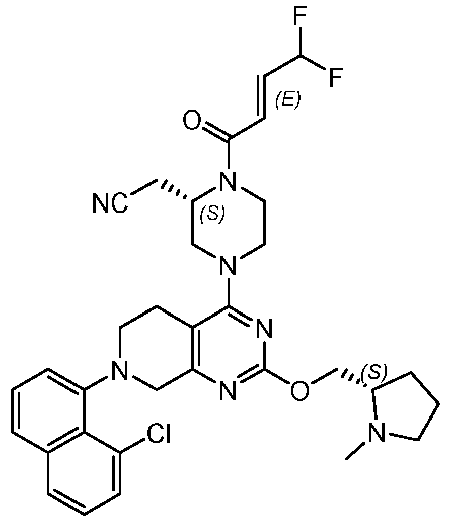
-

- Step 1: 4,4-difluoro-3-hydroxy -butanoate. To a solution of ethyl 4,4-difluoro-3-oxo-butanoate (5.00 g, 30.1 mmol, 1.00 eq) in toluene (150 mL) was added NaBH4 (1.20 g, 31.7 mmol, 1.05 eq) at 0 °C. After stirred at 25 °C for 4 hours, the mixture was diluted with water (50.0 mL) at 0 °C and extracted with ethyl acetate (3 × 100 mL). The extracts were washed with brine (1 × 100 mL), dried over Na2SO4, filtered and concentrated under vacuum to give ethyl 4,4-difluoro-3-hydroxy-butanoate (4.30 g, crude) as a yellow oil and used into next step without further purification.
- 1H NMR (400MHz, DMSO-d6) δ = 6.05 - 5.87 (m, 1H), 5.86 - 5.72 (m, 1H), 4.11 - 4.01 (m, 2H), 2.57 (dd, J = 4.0, 15.6 Hz, 1H), 2.38 (dd, J = 9.2, 15.6 Hz, 1H), 1.21 - 1.17 (m, 3H).
- Step 2: ethyl (E)-4,4-difluorobut-2-enoate. To a solution of ethyl 4,4-difluoro-3-hydroxybutanoate (3.00 g, crude) in dichloromethane (20.0 mL) was added TEA (1.81 g, 17.8 mmol, 2.48 mL,) and MsCl (3.68 g, 32.1 mmol, 2.49 mL) at 0 °C. After stirred for 4 hours, to the mixture was addded TEA (3.61 g, 35.68 mmol, 4.97 mL, 2 eq) 0 °C. After warmed up to 25 °C and stirred for 12 hours, the mixture was diluted with water (10.0 mL), washed with HCl (1N, 1 × 20.0 mL) and brine (1 × 20.0 mL), dried over Na2SO4, filtered and concentrated under vacuum to give ethyl (E)-4,4-difluorobut-2-enoate (1.40 g, 9.33 mmol, two steps 44 % yield) as a colourless oil and used into next step with further purification.
- 1H NMR (400MHz, chloroform-d) δ = 6.81 (m, 1H), 6.29 (dt, J = 2.8, 1.6 Hz, 1H), 6.23 (dd, J = 4.0, 55.2 Hz, 1H), 4.25 (q, J = 7.2 Hz, 2H), 1.31 (t, J = 7.2 Hz, 3H).
- Step 3: (E)-4,4-difluorobut-2-enoic acid. A mixture of ethyl (E)-4,4-difluorobut-2-enoate (1.30 g, 8.66 mmol, 1.00 eq) and NaOH (1.39 g, 34.6 mmol, 4.00 eq) in THF (5.00 mL) and H2O (5.00 mL) was stirred at 25 °C for 2 hours. The mixture was acidified with HCl (2N, 20.0 mL) to pH = 1 ~ 3 and extracted with ethyl acetate (3 × 20.0 mL). The organic layers were dried over Na2SO4, filtered and concentrated under vacuum to give (E)-4,4-difluorobut-2-enoic acid (0.35 g, 2.87 mmol, 33% yield) as a yellow solid and used into next step without further purification.
- 1H NMR (400MHz, chloroform-d) δ = 6.92 (m, 1H), 6.32 (dtd, J = 0.8, 2.8, 16.8 Hz, 1H), 6.27 (dtd, J = 1.2, 54.8 Hz, 4.0, 1H).
- Step A: 2-[(2 S )-4-[7-(8-chloro-1-naphthyl)-2-[[(2 S )-1-methylpyrrolidin-2-yl]methoxy]-6,8-dihydro-5 H -pyrido[3,4-d]pyrimidin-4-yl]-1-[(E)-4,4-difluorobut-2-enoyl]piperazin-2-yl]acetonitrile. A mixture of (E)-4,4-difluorobut-2-enoic acid (68.8 mg, 564 umol, 1.50 eq), EDCI (108 mg, 564 umol, 1.50 eq) and HOBt (50.8 mg, 376 umol, 1.00 eq) in Py (3 mL) was stirred at 0 °C for 15 min, then 2-[(2S)-4-[7-(8-chloro-1-naphthyl)-2-[[(2S)-1- methylpyrrolidin-2-yl]methoxy]-6,8-dihydro-5H-pyrido[3,4-d]pyrimidin-4-yl]piperazin-2-yl]acetonitrile (Intermediate 71, 0.20 g, 376 umol, 1.00 eq) was added into the mixture. After stirred at 0 °C for 1 hour and 25 °C for 1 hour, the mixture was diluted with water (10.0 mL), extracted with ethyl acetate (1 × 10.0 mL). The extracts were washed with brine (1 × 10.0 mL), dried over Na2SO4, filtered and concentrated under vacuum. The residue was purified by reversed phase flash [water (FA, 0.10 %)/acetonitrile]. The desired fractions were collected and the mixture was neutralized with saturated sodium bicarbonate (5.00 mL), extracted with ethyl acetate (3 × 20.0 mL). The organic layers were washed with brine (1 × 30.0 mL), dried over Na2SO4, filtered and concentrated under vacuum. The residue was purified by prep-HPLC (column: Gemini 150 * 25 5u; mobile phase: [water (0.05% ammonia hydroxide v/v) - ACN]; B%: 55% - 85%, 12 min). The desired fractions were collected and lyophilized to give title compound 2-[(2S)-4-[7-(8-chloro-1-naphthyl)-2-[[(2S)-1-methylpyrrolidin-2-yl]methoxy]-6,8-dihydro-5H-pyrido[3,4-d]pyrimidin-4-yl]-1-[(E)-4,4-difluorobut-2-enoyl]piperazin-2-yl]acetonitrile (EXAMPLE 13, 66.9 mg, 104 umol, 28% yield, 98.7% purity) as a yellow solid. LCMS [ESI, M+1]: 636.
- 1H NMR (400MHz, chloroform-d) δ = 7.76 (d, J = 8.0 Hz, 1H), 7.62 (t, J = 7.2 Hz, 1H), 7.52 (d, J = 7.2 Hz, 1H), 7.45 (td, J = 7.6, 12.8 Hz, 1H), 7.37 - 7.31 (m, 1H), 7.27 - 7.18 (m, 1H), 6.88 - 6.71 (m, 2H), 6.45 - 6.12 (m, 1H), 5.17 - 4.59 (m, 1H), 4.55 - 4.41 (m, 1H), 4.40 - 4.33 (m, 1H), 4.21 - 3.69 (m, 5H), 3.64 - 3.32 (m, 2H), 3.31 - 2.97 (m, 5H), 2.96 - 2.52 (m, 4H), 2.47 (d, J = 1.6 Hz, 3H), 2.33 - 2.23 (m, 1H), 2.11 - 2.00 (m, 1H), 1.90 - 1.77 (m, 3H).
-

-

- Step 1: 1-(2-(ethoxycarbonyl)allyl)-1,4-diazabicyclo[2.2.2]octan-1-ium bromide. To ethyl 2-(bromomethyl)prop-2-enoate (15 g, 77.7 mmol, 1 eq) in THF (5 mL) was added DABCO (10.5 g, 93.6 mmol, 10.3 mL, 1.20 eq ) and the resulting mixture was stirred at 25 °C for 2 hours. The precipitate was formed and filtered under nitrogen atmosphere. The filter cake was collected to give 1-(2-(ethoxycarbonyl)allyl)-1,4-diazabicyclo[2.2.2]octan-1-ium bromide (15 g, 49.6 mmol, 64% yield) as a light yellow solid which was used directly in the next step without further purification.
- Step 2: ethyl 2-(methoxymethyl)prop-2-enoate. A mixture of 1-(2-(ethoxycarbonyl)allyl)-1,4-diazabicyclo[2.2.2] octan-1-ium bromide (15 g, 49.6 mmol, 1 eq) and TEA (10.5 g, 104 mmol, 14.5 mL, 2.09 eq) in MeOH (150 mL) was stirred at 25 °C for 16 hours. The solvent was evaporated under vacuum (25 °C). The residue was dissolved into DCM (40 ml) and then washed with 5% aqueous citric acid solution (1 × 40 mL) and saturated sodium bicarbonate aqueous solution (1 × 40 mL). The organic layer was dried over sodium sulfate, filtered and concentrated under vacuum at 25 °C to give ethyl 2-(methoxymethyl)prop-2-enoate (5.3 g, 36.8 mmol, 74% yield) as a yellow liquid which was used directly in the next step without further purification.
- Step 3: 2-(methoxymethyl)prop)-2-enoic acid. To a solution of ethyl 2-(methoxymethyl)prop-2-enoate (5.1 g, 35.4 mmol, 1 eq) in THF (71 mL) was added a solution of NaOH (5.66 g, 142 mmol, 4 eq) in H2O (71 mL) at 5 °C. The mixture was stirred at 25 °C for 2 hours. Upon completion, the THF was evaporated under vacuum. The pH of the mixture was adjusted to 3 with 1 M HCl and extracted with EtOAc (3 × 70 mL). The organic layers were dried over Na2SO4 and concentrated under vacuum to give 2-(methoxymethyl)prop-2-enoic acid (3.4 g, 26.4 mmol, 75% yield, 90% purity) as a light yellow liquid which was used directly in the next step without further purification.
- 1H NMR (400 MHz, chloroform-d) δ = 6.45 (d, J = 1.2 Hz, 1H), 5.98 (q, J = 1.6 Hz, 1H), 4.16 (t, J = 1.2 Hz, 2H), 3.42 (s, 3H).
- Step A: 2-[(2S)-4-[7-(8-chloro-1-naphthyl)-2-[[(2S)-1-methylpyrrolidin-2-yl]methoxyl-6,8-dihydro-5H-pyrido[3,4-d]pyrimidin-4-yl]-1-[2-(methoxymethyl)prop-2-enoyl]piperazin-2-yl]acetonitrile. To a solution of 2-(methoxymethyl)prop-2-enoic acid (175 mg, 1.50 mmol, 2 eq) and DIEA (389 mg, 3.01 mmol, 524 µL, 4 eq) in DCM (8 mL) was added HATU (429 mg, 1.13 mmol, 1.5 eq) at -40 °C. After stirred at -40 °C for 10 minutes, 2-[(2S)-4-[7-(8-chloro-1-naphthyl)-2-[[(2S)-1-methylpyrrolidin-2-yl]methoxy]-6,8-dihydro-5H-pyrido[3,4-d]pyrimidin-4-yl]piperazin-2-yl]acetonitrile (Intermediate 71, 400 mg, 752 umol, 1 eq) was added into the mixture. The mixture was stirred at -40 °C for 20 minutes, 0 °C for 0.5 hour and 25 °C for 1 hour. Upon completion, to the mixture was added water (10 mL) and extracted with DCM (2 × 20 mL). The combined organic layers were dried over Na2SO4, filtered and concentrated under vacuum. The residue was purified by chromatography (Al2O3, EtOAc/MeOH 100/1 to 40/1) and purified by prep-HPLC (column: Gemini 150*25 5u; mobile phase: [water (0.05% ammonia hydroxide v/v) - ACN]; B%: 50% - 80%, 12 min). The desired fractions were collected and lyophilized to give title compound 2-[(2S)-4-[7-(8-chloro-1-naphthyl)-2-[[(2S)-1-methylpyrrolidin-2-yl]methoxy]-6,8-dihydro-5H-pyrido[3,4-d]pyrimidin-4-yl]-1-[2-(methoxymethyl)prop-2-enoyl]piperazin-2-yl]acetonitrile (EXAMPLE 14, 73.0 mg, 116 umol, 15% yield, 98.9% purity) as a off-white solid. LCMS [ESI, M+1]:630.
- SFC condition: Column: Chiralpak AS-3 100×4.6mm I.D., 3um Mobile phase: methanol (0.05% DEA) in CO2 from 5% to 40% Flow rate: 3mL/min Wavelength: 220nm.
- 1H NMR (400 MHz, chloroform-d) δ = 7.76 (br d, J = 8 Hz, 1H), 7.62 (t, J = 7.6 Hz, 1H), 7.52 (d, J = 7.6 Hz, 1H), 7.45 (td, J = 7.6, 13.2 Hz, 1H), 7.37 - 7.30 (m, 1H), 7.26 - 7.17 (m, 1H), 5.51 (s, 1H), 5.32 (br s, 1H), 5.19 - 4.58 (m, 1H), 4.48 - 4.34 (m, 2H), 4.23 - 4.07 (m, 4H), 4.06 - 3.78 (m, 3H), 3.64 - 3.55 (m, 1H), 3.39 (s, 3H), 3.36 - 2.72 (m, 8H), 2.71 - 2.53 (m, 2H), 2.47 (s, 3H), 2.35 - 2.22 (m, 1H), 2.14 - 1.98 (m, 1H), 1.90 - 1.73 (m, 3H).
-

-

- Step A: 2- tert-butyl 4-((S)-4-((benzyloxy)carbonyl)-3-(cyanomethyl)piperazin-1-yl)-2-(((S)-1-methylpyrrolidin-2-yl)methoxy)-5,8-dihydropyrido[3,4-d]pyrimidine-7(6H)-carboxylate. In a round bottom flask, a solution of tert-butyl (S)-4-(4-((benzyloxy)carbonyl)-3-(cyanomethyl)piperazin-1-yl)-2-chloro-5,8-dihydropyrido[3,4-d]pyrimidine-7(6H)-carboxylate (5 g, 9.487 mmol) in dioxane (94.87 ml, 9.487 mmol) was sparged with argon and (S)-(1-methylpyrrolidin-2-yl)methanol (3.278 g, 28.46 mmol), Cs2CO3 (9.273 g, 28.46 mmol), Methanesulfonato(2-dicyclohexylphosphino-2',6'-di-i-propoxy-1,1-biphenyl)(2'-methylamino-1,1'-biphenyl-2-yl)palladium(II) (0.8078 g, 0.9487 mmol) were sequentially added under Argon and sparged for an additional 5 minutes. The reaction mixture was capped and heated at 100°C overnight. The reaction was filtered through GF/F paper and concentrated in vacuo. The concentrate was purified on the Combi Flash (0-12% MeOH in DCM with 2% NH4OH) to provide tert-butyl 4-((S)-4-((benzyloxy)carbonyl)-3-(cyanomethyl)piperazin-1-yl)-2-(((S)-1-methylpyrrolidin-2-yl)methoxy)-5,8-dihydropyrido[3,4-d]pyrimidine-7(6H)-carboxylate (5.425 g, 8.508 mmol, 89.68 % yield). ESI+APCI MS m/z 606.4 [M+H]+.
- Step B : benzyl (S)-2-(cyanomethyl)-4-(2-(((S)-1-methylpyrrolidin-2-yl)methoxy)-5,6,7,8-tetrahydropyrido[3,4-d]pyrimidin-4-yl)piperazine-1-carboxylate: tert-butyl 4-((S)-4-((benzyloxy)carbonyl)-3 -(cyanomethyl)piperazin-1 -yl)-2-(((S)-1 -methylpyrrolidin-2-yl)methoxy)-5,8-dihydropyrido[3,4-d]pyrimidine-7(6H)-carboxylate (5.4 g, 8.915 mmol) was dissolved in dichloromethane (89.15 ml, 8.915 mmol) and treated with Hydrochloric Acid (4.0M solution in 1,4-dioxane) (11.14 ml, 44.57 mmol). The reaction stirred at room temperature for 1 hour. The reaction was diluted with more DCM and 1M NaOH and the layers separated. The organics were next washed with brine, dried over Na2SO4 and concentrated in vacuo to give benzyl (S)-2-(cyanomethyl)-4-(2-(((S)-1-methylpyrrolidin-2-yl)methoxy)-5,6,7,8-tetrahydropyrido[3,4-d]pyrimidin-4-yl)piperazine-1-carboxylate (4.364 g, 8.631 mmol, 96.82 % yield).. ESI+APCI MS m/z 506.3 [M+H]+.
- Step C : 2-((S)-4-(7-(2,3-dimethylphenyl)-2-(((S)-1-methylpyrrolidin-2-yl)methoxy)-5,6,7,8-tetrahydropyrido[3,4-d]pyrimidin-4-yl)piperazin-2-yl)acetonitrile: In a round bottom flask, a solution of benzyl (S)-2-(cyanomethyl)-4-(2-(((S)-1-methylpyrrolidin-2-yl)methoxy)-5,6,7,8-tetrahydropyrido[3,4-d]pyrimidin-4-yl)piperazine-1-carboxylate (4.364 g, 8.631 mmol) in dioxane (43.15 ml, 8.631 mmol) was sparged with Argon for 5 minutes. 1-Bromo-2,3-dimethylbenzene (5.851 ml, 43.15 mmol), Cs2CO3 (14.06 g, 43.15 mmol), and Methanesulfonato(2-dicyclohexylphosphino-2',6'-di-i-propoxy-1,1-biphenyl)(2'-methylamino-1,1'-biphenyl-2-yl)palladium(II) (0.7348 g, 0.8631 mmol) were sequentially added under Argon and sparged for an additional 5 min. The reaction mixture was capped and heated at 100°C ON. The reaction was cooled to room temperature. Ethyl acetate was added and the reaction filtered through GF/F paper and concentrated in vacuo. The concentrate was purified twice via normal phase chromatography on the CombiFlash using 0-15% MeOH in DCM with 2% NH4OH as eluent. Fractions containing desired product were collected and concentrated in vacuo to give 2-((S)-4-(7-(2,3-dimethylphenyl)-2-(((S)-1-methylpyrrolidin-2-yl)methoxy)-5,6,7,8-tetrahydropyrido[3,4-d]pyrimidin-4-yl)piperazin-2-yl)acetonitrile (0.411 g, 0.8641 mmol, 100.1 % yield). ESI+APCI MS m/z 476.3 [M+H]+.
- Step D : 2-((S)-4-(7-(2,3-dimethylphenyl)-2-(((S)-1-methylpyrrolidin-2-yl)methoxy)-5,6,7,8-tetrahydropyrido[3,4-d]pyrimidin-4-yl)-1-((E)-4,4,4-trifluorobut-2-enoyl)piperazin-2-yl)acetonitrile: To a solution of 2-((S)-4-(7-(2,3-dimethylphenyl)-2-(((S)-1-methylpyrrolidin-2-yl)methoxy)-5,6,7,8-tetrahydropyrido[3,4-d]pyrimidin-4-yl)piperazin-2-yl)acetonitrile (200 mg, 0.420 mmol), 4,4,4-Trifluorocrotonic Acid (118 mg, 0.841 mmol), DIEA (367 µl, 2.10 mmol) in DCM (4205 µl, 0.420 mmol) was added HATU (240 mg, 0.631 mmol) and the resulting mixture was stirred at room temperature for 5 hours.. The reaction mixture was washed with Brine and the aqueous layer extracted with DCM (2x). The combined organic layers were dried over Na2SO4, concentrated, diluted in 60:40 ACN:H2O and purified on the Gilson (reverse prep HPLC), eluting with 5-->95% ACN/0.1% TFA in water/0.1% TFA. Fractions containing product were combined and free based with saturated bicarb and the organics extracted with DCM. The organics were dried over Na2SO4 and concentrated in vacuo to give title compound 2-((S)-4-(7-(2,3-dimethylphenyl)-2-(((S)-1-methylpyrrolidin-2-yl)methoxy)-5,6,7,8-tetrahydropyrido[3,4-d]pyrimidin-4-yl)-1-((E)-4,4,4-trifluorobut-2-enoyl)piperazin-2-yl)acetonitrile (EXAMPLE 15, 28 mg, 0.0468 mmol, 11.1 % yield). ESI+APCI MS m/z 598.3 [M+H]+.
-

- 2-((S)-4-(7-(2,3-dimethylphenyl)-2-(((S)-1-methylpyrrolidin-2-yl)methoxy)-5,6,7,8-tetrahydropyrido[3,4-d]pyrimidin-4-yl)-1-(2-(trifluoromethyl)acryloyl)piperazin-2-yl)acetonitrile: The title compound was prepared following Example 15 substituting 2-(Trifluoromethyl)propenoic acid for 4,4,4-Trifluorocrotonic Acid in Step D. ESI+APCI MS m/z 598.3 [M+H]+.
-

- 2-((S)-4-(7-(2,3-dimethylphenyl)-2-(((S)-1-methylpyrrolidin-2-yl)methoxy)-5,6,7,8-tetrahydropyrido[3,4-d]pyrimidin-4-yl)-1-(2-(hydroxymethyl)acryloyl)piperazin-2-yl)acetonitrile: The title compound was prepared following Example 15 substituting 2-(hydroxymethyl)prop-2-enoic acid for 4,4,4-Trifluorocrotonic Acid in Step D. ESI+APCI MS m/z 560.3 [M+H]+.
-

-
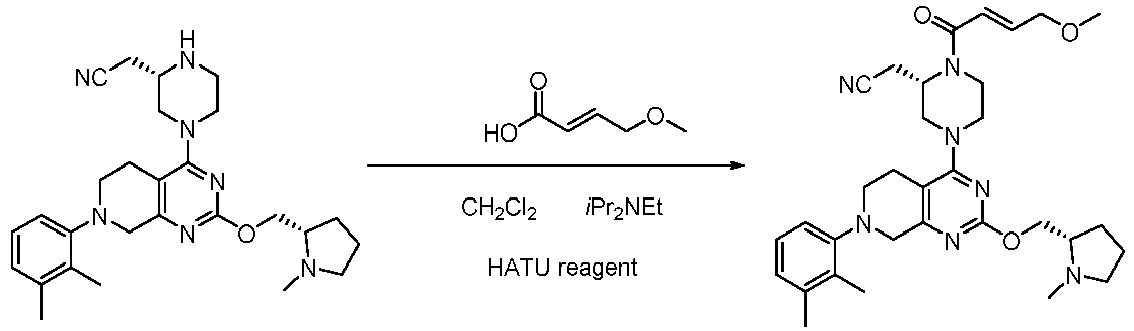
- Step A: 2-((S)-4-(7-(2,3-dimethylphenyl)-2-(((S)-1-methylpyrrolidin-2-yl)methoxy)-5,6,7,8-tetrahydropyrido[3,4-d]pyrimidin-4-yl)-1-((E)-4-methoxybut-2-enoyl)piperazin-2-yl)acetonitrile: To a solution of 2-((S)-4-(7-(2,3-dimethylphenyl)-2-(((S)-1-methylpyrrolidin-2-yl)methoxy)-5,6,7,8-tetrahydropyrido[3,4-d]pyrimidin-4-yl)piperazin-2-yl)acetonitrile (50 mg, 0.1051 mmol) in DCM (1 mL) was added (E)-4-methoxybut-2-enoic acid (24.41 mg, 0.2102 mmol), N-ethyl-N-isopropylpropan-2-amine (0.03662 ml, 0.2102 mmol) and O-(7-azabenzotriazol-1-yl)-N,N,N',N'-tetramethyluronium PF6 (59.96 mg, 0.1577 mmol) and the reaction mixture stirred at room temperature for 4 hours. Water (1 mL) was next added and the reaction mixture stirred for 5 minutes. The mixture was divided between EtOAc (10 mL) and 0.5M NaHCOs (5 mL) and the layers separated. The organics were washed with brine (3 mL), dried over Na2SO4 and evaporated in vacuo. The residue was chromatographed on silica gel using 3% MeOH + 0.3% NH4OH to 4% MeOH + 0.4% NH4OH as eluent to give title compound (EXAMPLE 18, 26 mg, 43%). ESI+APCI MS m/z 574.4 [M+H]+.
-

-

- Step A: benzyl (S)-4-(7-(8-chloronaphthalen-1-yl)-2-(((S)-1-methylpyrrolidin-2-yl)methoxy)-5,6,7,8-tetrahydropyrido[3,4-d]pyrimidin-4-yl)-2-(cyanomethyl)piperazine-1-carboxylate: To a solution ofbenzyl (S)-2-(cyanomethyl)-4-(2-(((S)-1-methylpyrrolidin-2-yl)methoxy)-5,6,7,8-tetrahydropyrido[3,4-d]pyrimidin-4-yl)piperazine-1-carboxylate (0.6 g, 1.2 mmol) in dioxanes (10 mL) was added 1-bromo-8-chloronaphthalene (0.37 g, 1.5 mmol) and the reaction degassed with Ar for 15 minutes followed by addition of Cs2CO3 (1.2 g, 3.6 mmol), Pd2(dba)3 (0.22 g, 0.24 mmol) and 2-Dicyclohexylphosphino-2',6'-di-i-propoxy-1,1'-biphenyl (0.11 g, 0.24 mmol) and the reaction heated to 100°C for overnight. The reaction was next filltered through GFF paper and the filtrated concentrated in vacuo. The residue was next chromatographed using 1→10% (MeOH+2% NH4OH)/DCM to give benzyl (S)-4-(7-(8-chloronaphthalen-1-yl)-2-(((S)-1-methylpyrrolidin-2-yl)methoxy)-5,6,7,8-tetrahydropyrido[3,4-d]pyrimidin-4-yl)-2-(cyanomethyl)piperazine-1-carboxylate (0.20 g, 0.30 mmol, 25 % yield). ESI+APCI MS m/z 666.2 [M+H]+.
- Step B: 2-((S)-4-(7-(8-chloronapthalen-1-yl)-2-(((S)-1-methylpyrrolidin-2-yl)methoxy)-5,6,7,8-tetrahydropyrido[3,4-d]pyrimidin-4-yl)piperazin-2-yl)acetonitrile: A solution of benzyl (S)-4-(7-(8-chloronaphthalen-1-yl)-2-(((S)-1-methylpyrrolidin-2-yl)methoxy)-5,6,7,8-tetrahydropyrido[3,4-d]pyrimidin-4-yl)-2-(cyanomethyl)piperazine-1-carboxylate (0.17 g, 0.255 mmol) in THF (30 mL) was purged with N2 followed by addition of Pd/C (0.0272 g, 0.255 mmol). The reaction was evacuated by vacuum and backfilled with H2 3x and the mixture was stirred for 3 days at room temperature. The reaction was again purged with N2 followed by filtering through celite and the filtrate concentrated in vacuo. The material used crude in the next reaction. ESI+APCI MS m/z 532.2 [M+H]+.
- Step C: 2-((S)-4-(7-(8-chloronaphthalen-1-yl)-2-(((S)-1-methylpyrrohdin-2-yl)methoxy)-5,6,7,8-tetrahydropyrido[3,4-d]pyrimidin-4-yl)-1-((E)-4,4,4-trifluorobut-2-enoyl)piperazin-2-yl)acetonitrile :To a solution of 2-((S)-4-(7-(8-chloronaphthalen-1-yl)-2-(((S)-1-methylpyrrolidin-2-yl)methoxy)-5,6,7,8-tetrahydropyrido[3,4-d]pyrimidin-4-yl)piperazin-2-yl)acetonitrile (0.055 g, 0.10 mmol) in DCM (20 mL) was added N-ethyl-N-isopropylpropan-2-amine (0.040 g, 0.31 mmol), (E)-4,4,4-trifluorobut-2-enoic acid (0.017 g, 0.12 mmol) and 1-Propanephosphonic acid cyclic anhydride (0.033 g, 0.10 mmol) and the reaction stirred at room temperature for 30 minutes. Next additional TEP3 and acid (0.24 mmol) were added and and the reaction an addition 1 hour. The organics were next washed with 1 N NaOH, brine, dried over MgSO4 and concentrated in vacuo. The material was chromatographed 2x on normal phase silica (1→ 10% (MeOH+2% NH4OH)/DCM) followed by purification by gilson reverse prep HPLC using 5→95% ACN/water with 0.1% TFA as additive. The PURE fractions were poured into basic water and extracted into EtOAc. The organics were washed with brine, dried over MgSO4 and concentrated in vacuo to give title compound 2-((S)-4-(7-(8-chloronaphthalen-1-yl)-2-(((S)-1-methylpyrrolidin-2-yl)methoxy)-5,6,7,8-tetrahydropyrido[3,4-d]pyrimidin-4-yl)-1-((E)-4,4,4-trifluorobut-2-enoyl)piperazin-2-yl)acetonitrile (EXAMPLE 19, 0.0094 g, 0.014 mmol, 14 % yield). ESI+APCI MS m/z 654.2 [M+H]+.
-

-

- Step A: 2-((S)-4-(7-(8-methylnaphthalen-1-yl)-2-(((S)-1-methylpyrrolidin-2-yl)methoxy)-5,6,7,8-tetrahydropyrido[3,4-d]pyrimidin-4-yl)-1-((E)-4,4,4-trifluorobut-2-enoyl)piperazin-2-yl)acetonitrile: At 0°C, to a 25 mL RBF containing N,N-dimethylformamide (2932 µl, 0.293 mmol) was added 2-((S)-4-(7-(8-methylnaphthalen-1-yl)-2-(((S)-1-methylpyrrolidin-2-yl)methoxy)-5,6,7,8-tetrahydropyrido[3,4-d]pyrimidin-4-yl)piperazin-2-yl)acetonitrile (150 mg, 0.293 mmol) and Hunig's base (102 µl, 0.586 mmol). The reaction mixture was vigorously stirred while (E)-4,4,4-trifluorobut-2-enoic acid (49.3 mg, 0.352 mmol) was added in one portion. Next, 1-Propanephosphonic acid cyclic anhydride (262 µl, 0.440 mmol) was added slowly to the stirring mixture. The reaction was stirred for 2 hours at 0°C. The reaction was treated with basic water and the aqueous layer extracted with EtOAc (3X). The combined organics were concentrated in vacuo and resuspended in a 60:40 mixture of ACN: H2O and purified on the Gilson (reverse prep HPLC), eluting with 5-->95% ACN/0.1% TFA in water/0.1% TFA. Fractions containing product were combined and partitioned between saturated bicarb and DCM. The aqueous layer was extracted with DCM two more times. The organic layers were combined, dried over Na2SO4 and concentrated in vacuo to give title compound 2-((S)-4-(7-(8-methylnaphthalen-1-yl)-2-(((S)-1-methylpyrrolidin-2-yl)methoxy)-5,6,7,8-tetrahydropyrido[3,4-d]pyrimidin-4-yl)-1-((E)-4,4,4-trifluorobut-2-enoyl)piperazin-2-yl)acetonitrile (EXAMPLE 20, 74.5 mg, 0.118 mmol, 40.1 % yield). ESI+APCI MS m/z 634.3 [M+H]+.
-

- 2-((S)-4-(7-(8-methylnaphthalen-1-yl)-2-(((S)-1-methypyrrolidin-2-yl)methoxy)-5,6,7,8-tetrahydropyrido[3,4-d]pyrimidin-4-yl)-1-(2-(trifluoromethyl)acryloyl)piperazin-2-yl)acetonitrile: The title compound was prepared following Example 20 substituting 2-(trifluoromethyl)acrylic acid for (E)-4,4,4-trifluorobut-2-enoic acid in Step A. ESI+APCI MS m/z 634.2 [M+H]+.
-

- 2-((S)-4-(7-(8-methylnaphthalen-1-yl)-2-(((S)-1-methylpyrrolidin-2-yl)methoxy)-5,6,7,8-tetrahydropyrido[3,4-d]pyrimidin-4-yl)-1-((E)-3-(pyridin-2-yl)acryloyl)piperazin-2-yl)acetonitrile: The title compound was prepared following Example 20 substituting 3-(Pyridin-2-yl)acrylic acid for (E)-4,4,4-trifluorobut-2-enoic acid in Step A. ESI+APCI MS m/z 643.3 [M+H]+.
-

- 2-((S)-1-((E)-3-(1-methyl-1H-pyrazol-4-yl)acryloyl)-4-(7-(8-methylnaphthalen-1-yl)-2-(((S)-1-methypyrrolidin-2-yl)methoxy)-5,6,7,8-tetrahydropyrido[3,4-d]pyrimidin-4-yl)piperazin-2-yl)acetonitrile: The title compound was prepared following Example 20 substituting (2E)-3-(1-Methyl-1H-pyrazol-4-yl)acrylic acid for (E)-4,4,4-trifluorobut-2-enoic acid in Step A. ESI+APCI MS m/z 646.4 [M+H]+.
-

- 2-((S)-1-((E)-4,4-difluorobut-2-enoyl)-4-(7-(8-methylnaphthalen-1-yl)-2-(((S)-1-methylpyrrolidin-2-yl)methoxy)-5,6,7,8-tetrahydropyrido[3,4-d]pyrimidin-4-yl)piperazin-2-yl)acetonitrile: The title compound was prepared following Example 20 substituting 4,4-Difluorobut-2-enoic acid for (E)-4,4,4-trifluorobut-2-enoic acid in Step A. ESI+APCI MS m/z 616.3 [M+H]+.
-

-

- Step A: To a solution of 2-((S)-4-(7-(8-methylnaphthalen-1-yl)-2-(((S)-1-methylpyrrolidin-2-yl)methoxy)-5,6,7,8-tetrahydropyrido[3,4-d]pyrimidin-4-yl)piperazin-2-yl)acetonitrile (0.12 g, 0.23 mmol) in DCM (10 mL) N-ethyl-N-isopropylpropan-2-amine (0.13 ml, 0.70 mmol), (E)-3-(pyridin-3-yl)acrylic acid (0.070 g, 0.47 mmol) and 2,4,6-tripropyl-1,3,5,2,4,6-trioxatriphosphinane 2,4,6-trioxide (0.30 g, 0.47 mmol) and the reaction stirred at room temperature for 3 hours. The reaction was next poured into 1N NaOH and the layers separated. The organics were next washed with brine, dried over MgSO4 and concentrated in vacuo. The material was next purified by Gilson reverse prep HPLC eluting with 5→95 ACN/water with 0.1% TFA as modifier. Fractions containing product were pooured into 1N NaOH and the aqueous layer extracted with EtOAc (3X). The combined organics were washed with brine, dried over MgSO4 and concentrated in vacuo to give title compound 2-((S)-4-(7-(8-methylnaphthalen-1-yl)-2-(((S)-1-methylpyrrolidin-2-yl)methoxy)-5,6,7,8-tetrahydropyrido[3,4-d]pyrimidin-4-yl)-1-((E)-3-(pyridin-3-yl)acryloyl)piperazin-2-yl)acetonitrile (EXAMPLE 25, 0.040 g, 0.062 mmol, 27 % yield). ESI+APCI MS m/z 643.3 [M+H]+.
-

-

- Step A: 2-((S)-4-(7-(8-methylnaphthalen-1-yl)-2-(((S)-1-methylpyrrolidin-2-yl)methoxy)-5,6,7,8-tetrahydropyrido[3,4-d]pyrimidin-4-yl)-1-(3-oxocyclopent-1-ene-1-carbonyl)piperazin-2-yl)acetonitrile: 2-((S)-4-(7-(8-methylnaphthalen-1-yl)-2-(((S)-1-methylpyrrolidin-2-yl)methoxy)-5,6,7,8-tetrahydropyrido[3,4-d]pyrimidin-4-yl)piperazin-2-yl)acetonitrile (30 mg, 0.05863 mmol) and 3-oxocyclopent-1-enecarboxylic acid (9.612 mg, 0.07622 mmol) were diluted with DMF (400 uL) followed by the addition of DIEA (20.48 µl, 0.1173 mmol) and 1-propanephosphonic acid cyclic anhydride (52.35 µl, 0.08795 mmol). After stirring for 12 hours, the reaction was diluted with ethyl acetate and saturated sodium bicarbonate. The layers were separated and the ethyl acetate was dried over MgSO4, filtered and concentrated. The material was purified on silica gel eluting with 10% methanol/DCM (1% NH4OH) to afford title compound 2-((S)-4-(7-(8-methylnaphthalen-1-yl)-2-(((S)-1-methylpyrrolidin-2-yl)methoxy)-5,6,7,8-tetrahydropyrido[3,4-d]pyrimidin-4-yl)-1-(3-oxocyclopent-1-ene-1-carbonyl)piperazin-2-yl)acetonitrile (EXAMPLE 26, 2.3 mg, 0.003711 mmol, 6.329 % yield). ESI+APCI MS m/z 620.3 [M+H]+.
-

-

- Step A: 2-((S)-1-((E)-4-chlorobut-2-enoyl)-4-(7-(8-methylnaphthalen-1-yl)-2-(((S)-1-methylpyrrolidin-2-yl)methoxy)-5,6,7,8-tetrahydropyrido[3,4-d]pyrimidin-4-yl)piperazin-2-yl)acetonitrile: 2-((S)-4-(7-(8-methylnaphthalen-1-yl)-2-(((S)-1-methylpyrrolidin-2-yl)methoxy)-5,6,7,8-tetrahydropyrido[3,4-d]pyrimidin-4-yl)piperazin-2-yl)acetonitrile (30 mg, 0.05863 mmol) and gamma-chlorocrotonic acid (10.60 mg, 0.08795 mmol) were diluted with DMF (400 uL) followed by the addition of DIEA (20.48 µl, 0.1173 mmol) and 1-propanephosphonic acid cyclic anhydride (55.84 µl, 0.09381 mmol). After stirring for 12 hours, the reaction was diluted with ethyl acetate and saturated sodium bicarbonate. The layers were separated and the ethyl acetate was dried over MgSO4, filtered and concentrated. The material was purified on silica gel eluting with 10% methanol/DCM (1% NH4OH) to afford title compound 2-((S)-1-((E)-4-chlorobut-2-enoyl)-4-(7-(8-methylnaphthalen-1-yl)-2-(((S)-1-methylpyrrolidin-2-yl)methoxy)-5,6,7,8-tetrahydropyrido[3,4-d]pyrimidin-4-yl)piperazin-2-yl)acetonitrile (EXAMPLE 27, 4.5 mg, 0.007327 mmol, 12.50 % yield). ESI+APCI MS m/z 614.3 [M+H]+.
-

-

- Step A: Ethyl (E)-4-(dimethylamino)-4-oxobut-2-enoate: Fumaric acid monoethyl ester (442 mg, 3.07 mmol) was diluted with DCM (5 mL) followed by the addition of oxalyl chloride (1533 µl, 3.07 mmol) and 1 drop of DMF. After stirring for 15 minutes, dimethylamine (4600 µl, 9.20 mmol) was added and the reaction was stirred for 3 hours. The reaction was diluted with ethyl acetate and water. The layers were separated and the ethyl acetate was dried over MgSO4, filtered and concentrated. The material was purified on silica gel eluting with 10-70% ethyl acetate/hexanes to afford ethyl (E)-4-(dimethylamino)-4-oxobut-2-enoate (382 mg, 2.23 mmol, 72.8 % yield). ESI+APCI MS m/z 172.1 [M+H]+.
- Step B: (E)-4-(dimethylamino)-4-oxobut-2-enoic acid: Ethyl (E)-4-(dimethylamino)-4-oxobut-2-enoate (382 mg, 2.23 mmol) was diluted with methanol (8 mL) followed by the addition of NaOH (4463 µl, 8.93 mmol). After stirring for 4 hours, the reaction was diluted with 2N HCl (4.5 mL) and extracted with ethyl acetate. The ethyl acetate was dried over MgSO4, filtered and concentrated to afford (E)-4-(dimethylamino)-4-oxobut-2-enoic acid.
- Step C: (E)-4-((S)-2-(cyanomethyl)-4-(7-(8-methylnaphthalen-1-yl)-2-(((S)-1-methylpyrrolidin-2-yl)methoxy)-5,6,7,8-tetrahydropyrido[3,4-d]pyrimidin-4-yl)piperazin-1-yl)-N,N-dimethyl-4-oxobut-2-enamide: 2-((S)-4-(7-(8-methylnaphthalen-1-yl)-2-(((S)-1-methylpyrrolidin-2-yl)methoxy)-5,6,7,8-tetrahydropyrido[3,4-d]pyrimidin-4-yl)piperazin-2-yl)acetonitrile (30 mg, 0.05863 mmol) was diluted with DMF followed by the addition of (E)-4-(dimethylamino)-4-oxobut-2-enoic acid (10.07 mg, 0.07036 mmol), DIEA (20.48 µl, 0.1173 mmol) and 1-propanephosphonic acid cyclic anhydride (52.35 µl, 0.08795 mmol). After stirring for 12 hours, the reaction was diluted with ethyl acetate and saturated sodium bicarbonate. The layers were separated and the ethyl acetate was dried over MgSO4, filtered and concentrated. The material was purified on silica gel eluting with 10% methanol/DCM (1% NH4OH) to afford title compound (E)-4-((S)-2-(cyanomethyl)-4-(7-(8-methylnaphthalen-1-yl)-2-(((S)-1-methylpyrrolidin-2-yl)methoxy)-5,6,7,8-tetrahydropyrido[3,4-d]pyrimidin-4-yl)piperazin-1-yl)-N,N-dimethyl-4-oxobut-2-enamide (EXAMPLE 28, 3.7 mg, 0.005810 mmol, 9.910 % yield). ESI+APCI MS m/z 637.3 [M+H]+.
-

-

- Step A: Ethyl (E)-3-cyanoacrylate: Ethyl cis-(beta-cyano)acrylate (1.0 g, 7.99 mmol) was diluted with ACN (30 mL), placed under nitrogen and heated to reflux for 3 days. The reaction was allowed to cool and then concentrated. The material was purified on silica gel eluting with hexanes to afford ethyl (E)-3-cyanoacrylate (300 mg, 2.40 mmol, 30.0 % yield).
- Step B: (E)-4-amino-4-oxobut-2-enoic acid: Ethyl (E)-3-cyanoacrylate (300 mg, 2.40 mmol) was diluted with HCl (3996 µl, 24.0 mmol). The reaction was placed under nitrogen and heated to 100°C for 4 hours. The reaction was allowed to cool and then concentrated to afford (E)-4-amino-4-oxobut-2-enoic acid (214 mg, 1.86 mmol, 77.6 % yield).
- Step C: (E)-4-((S)-2-(cyanomethyl)-4-(7-(8-methylnaphthalen-1-yl)-2-(((S)-1-methylpyrrolidin-2-yl)methoxy)-5,6,7,8-tetrahydropyrido[3,4-d]pyrimidin-4-yl)piperazin-1-yl)-4-oxobut-2-enamide: 2-((S)-4-(7-(8-methylnaphthalen-1-yl)-2-(((S)-1-methylpyrrolidin-2-yl)methoxy)-5,6,7,8-tetrahydropyrido[3,4-d]pyrimidin-4-yl)piperazin-2-yl)acetonitrile (20 mg, 0.039 mmol), HATU (30 mg, 0.078 mmol) and (E)-4-amino-4-oxobut-2-enoic acid (9.0 mg, 0.078 mmol) were diluted with DMF (400 uL) followed by the addition of DIEA (14 µl, 0.078 mmol). After stirring for 12 hours, the reaction was diluted with ethyl acetate and saturated sodium bicarbonate. The layers were separated and the ethyl acetate was dried over MgSO4, filtered and concentrated. The material was purified on silica gel eluting with 10% methanol/DCM (1% NH4OH) to afford title compound (E)-4-((S)-2-(cyanomethyl)-4-(7-(8-methylnaphthalen-1-yl)-2-(((S)-1-methylpyrrolidin-2-yl)methoxy)-5,6,7,8-tetrahydropyrido[3,4-d]pyrimidin-4-yl)piperazin-1-yl)-4-oxobut-2-enamide (EXAMPLE 29, 2.9 mg, 0.0048 mmol, 12 % yield). ESI+APCI MS m/z 609.3 [M+H]+.
-
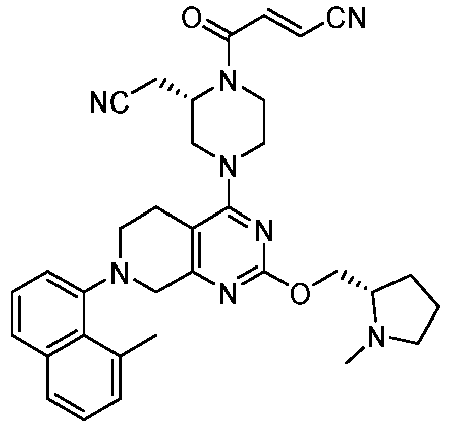
-

- Step A: Ethyl (E)-3-cyanoacrylate: Ethyl cis-(beta-cyano)acrylate (1.0 g, 7.99 mmol) was diluted with ACN (30 mL), placed under nitrogen and heated to reflux for 3 days. The reaction was allowed to cool and then concentrated. The material was purified on silica gel eluting with hexanes to afford ethyl (E)-3-cyanoacrylate (300 mg, 2.40 mmol, 30.0 % yield).
- Step B: (E)-3-cyanoacrylic acid: Ethyl (E)-3-cyanoacrylate (10 mg, 0.080 mmol) was diluted with HCl (133 µl, 0.80 mmol), placed under nitrogen and heated to 100°C. After stirring for 15 minutes the reaction was concentrated to afford (E)-3-cyanoacrylic acid (7.5 mg, 0.077 mmol, 97 % yield).
- Step C: (E)-4-((S)-2-(cyanomethyl)-4-(7-(8-methylnaphthalen-1-yl)-2-(((S)-1-methylpyrrolidin-2-yl)methoxy)-5,6,7,8-tetrahydropyrido[3,4-d]pyrimidin-4-yl)piperazin-1-yl)-4-oxobut-2-enenitrile: 2-((S)-4-(7-(8-methylnaphthalen-1-yl)-2-(((S)-1-methylpyrrolidin-2-yl)methoxy)-5,6,7,8-tetrahydropyrido[3,4-d]pyrimidin-4-yl)piperazin-2-yl)acetonitrile (20 mg, 0.03909 mmol) and (E)-3-cyanoacrylic acid (5.312 mg, 0.05472 mmol) were diluted with DMF (400 uL) followed by the addition of DIEA (13.65 µl, 0.07817 mmol) and 1-propanephosphonic acid cyclic anhydride (34.90 µl, 0.05863 mmol). After stirring for 12 hours, the reaction was diluted with ethyl acetate and saturated sodium bicarbonate. The layers were separated and the ethyl acetate was dried over MgSO4, filtered and concentrated. The material was purified on silica gel eluting with 10% methanol/DCM (1% NH4OH) to afford title compound (E)-4-((S)-2-(cyanomethyl)-4-(7-(8-methylnaphthalen-1-yl)-2-(((S)-1-methylpyrrolidin-2-yl)methoxy)-5,6,7,8-tetrahydropyrido[3,4-d]pyrimidin-4-yl)piperazin-1-yl)-4-oxobut-2-enenitrile (EXAMPLE 30, 3.5 mg, 0.005925 mmol, 15.16 % yield). ESI+APCI MS m/z 591.3 [M+H]+.
-

-

- Step A: (Z)-3-cvanoacrylic acid: Ethyl cis-(beta-cyano)acrylate (50 mg, 0.40 mmol) was diluted with HCl (200 µl, 1.2 mmol), placed under nitrogen and heated to 100°C. After stirring for 1 minute the reaction was cooled and concentrated to afford (Z)-3-cyanoacrylic acid (35 mg, 0.36 mmol, 90 % yield).
- Step B: (Z)-4-((S)-2-(cyanomethyl)-4-(7-(8-methylnaphthalen-1-yl)-2-(((S)-1-methylpyrrolidin-2-yl)methoxy)-5,6,7,8-tetrahydropyrido[3,4-d]pyrimidin-4-yl)piperazin-1-yl)-4-oxobut-2-enenitrile: 2-((S)-4-(7-(8-methylnaphthalen-1-yl)-2-(((S)-1-methylpyrrolidin-2-yl)methoxy)-5,6,7,8-tetrahydropyrido[3,4-d]pyrimidin-4-yl)piperazin-2-yl)acetonitrile (20 mg, 0.03909 mmol) and (Z)-3-cyanoacrylic acid (6.071 mg, 0.06254 mmol) were diluted with DMF (400 uL) followed by the addition of DIEA (13.65 µl, 0.07817 mmol) and 1-propanephosphonic acid cyclic anhydride (39.56 µl, 0.06645 mmol). After stirring for 12 hours, the reaction was diluted with ethyl acetate and saturated sodium bicarbonate. The layers were separated and the ethyl acetate was dried over MgSO4, filtered and concentrated. The material was purified on silica gel eluting with 10% methanol/DCM (1% NH4OH) to afford title compound (Z)-4-((S)-2-(cyanomethyl)-4-(7-(8-methylnaphthalen-1-yl)-2-(((S)-1-methylpyrrolidin-2-yl)methoxy)-5,6,7,8-tetrahydropyrido[3,4-d]pyrimidin-4-yl)piperazin-1-yl)-4-oxobut-2-enenitrile (EXAMPLE 31, 2.1 mg, 0.003555 mmol, 9.095 % yield). ESI+APCI MS m/z 591.3 [M+H]+.
-

-

- Step 1: (E)-4-[tert-butoxycarbonyl(methyl)aminol-2-fluoro-but-2-enoic acid. To the solution of ethyl 2-diethoxyphosphoryl-2-fluoro-acetate (2 g, 8.26 mmol, 1.68 mL, 1 eq) and tert-butyl N-methyl-N-(2-oxoethyl)carbamate (2.15 g, 12.4 mmol, 1.5 eq) in THF (40 mL) was added NaH (661 mg, 16.5 mmol, 60% purity, 2 eq). The mixture was stirred at 25 °C for 1.5 hour. Upon completion, the reaction mixture was quenched by saturated NH4Cl (8 mL) and concentrated under vacuum. The residue was purified by prep-HPLC (column: Phenomenex Synergi Max-RP 250*50mm*10 um;mobile phase: [water(0.225%FA)-ACN];B%: 20ACN%-50ACN%,30min; 50%min) to give (E)-4-[tert-butoxycarbonyl(methyl)amino]-2-fluoro-but-2-enoic acid (820 mg, 3.16 mmol, 38.3% yield, 90% purity) as a brown oil.
- Step A: tert-butyl N-[(E)-4-[(2S)-4-[7-(8-chloro-1-naphthyl)-2-[[(2S)-1-methylpyrrolidin-2-yl]methoxy]-6,8-dihydro-5H-pyrido[3,4-d]pyrimidin-4-yl]-2-(cyanomethyl)piperazin-1-yl]-3-fluoro-4-oxo-but-2-enyl]-N-methyl-carbamate. To a solution of 2-[(2S)-4-[7-(8-chloro-1-naphthyl)-2-[[(2S)-1-methylpyrrolidin-2-yl]methoxy]-6,8-dihydro-5H-pyrido[3,4-d]pyrimidin-4-yl]piperazin-2-yl]acetonitrile (Intermediate 71, 300 mg, 564 umol, 1 eq), (E)-4-[tert-butoxycarbonyl(methyl)amino]-2-fluoro-but-2-enoic acid (600 mg, 2.57 mmol, 4.56 eq) and DIEA (729 mg, 5.64 mmol, 982 µL, 10 eq) in DCM (10 mL) was added HATU (643 mg, 1.69 mmol, 3 eq) at 0 °C. The reaction mixture was stirred at 25 °C for 1 hour. Upon completion, the reaction mixture was quenched by water (3 mL) and extracted with DCM (3 × 8 mL). The combined organic layers were dried over Na2SO4 and concentrated under vacuum. The residue was purified by reversed flash chromatography (FA condition: 60 % MeCN in water (0.1% FA) ) to give tert-butyl N-[(E)-4-[(2S)-4-[7-(8-chloro-1-naphthyl)-2-[[(2S)-1-methylpyrrolidin-2-yl]methoxy]-6,8-dihydro-5H-pyrido[3,4-d]pyrimidin-4-yl]-2-(cyanomethyl)piperazin-1-yl]-3-fluoro-4-oxo-but-2-enyl]-N-methyl-carbamate (330 mg, 404 umol, 72% yield, 91.5% purity) as a brown solid. LCMS [ESI, M+1]: 747.
- Step B: 2-[(2S)-4-[7-(8-chloro-1-nai)hthyl)-2-[[(2S)-1-methylpyrrolidin-2-yl]methoxy]-6,8-dihydro-5H-pyrido[3,4-d]pyrimidin-4-yl]-1-[(E)-2-fluoro-4-(methylamino)but-2-enoyl]piperazin-2-yl]acetonitrile. To a solution of tert-butyl N-[(E)-4-[(2S)-4-[7-(8-chloro-1-naphthyl)-2-[[(2S)-1-methylpyrrolidin-2-yl]methoxy]-6,8-dihydro-5H-pyrido[3,4-d]pyrimidin-4-yl]-2-(cyanomethyl)piperazin-1-yl]-3-fluoro-4-oxo-but-2-enyl]-N-methyl-carbamate (300 mg, 401 umol, 1 eq) in DCM (1 mL) was added TFA (915 mg, 8.03 mmol, 594 µL, 20 eq).The reaction mixture was stirred at 25 °C for 1hour. Upon completion, the reaction mixture was diluted by DCM (10 mL) and basified by saturated NaHCOs (8 mL).The mixture was extracted with DCM (3 × 10 mL).The combined organic layer was dried over Na2SO4 and concentrated under vacuum to give 2-[(2S)-4-[7-(8-chloro-1-naphthyl)-2-[[(2S)-1-methylpyrrolidin-2-yl]methoxy]-6,8-dihydro-5H-pyrido[3,4-d]pyrimidin-4-yl]-1-[(E)-2-fluoro-4-(methylamino)but-2-enoyl]piperazin-2-yl]acetonitrile (240 mg, 356 umol, 89% yield, 95.9% purity) as a brown solid which was used for next step without further purification. LCMS [ESI, M+1]: 647.
- Step C: 2-[(2S)-4-[7-(8-chloro-1-naphthyl)-2-[[(2S)-1-methylpyrrolidin-2-yl]methoxy]-6,8-dihydro-5H-pyrido[3,4-d]pyrimidin-4-yl]-1-[(E)-4-(dimethylamino)-2-fluoro-but-2-enoyl]piperazin-2-yl]acetonitrile. To a solution of 2-[(2S)-4-[7-(8-chloro-1-naphthyl)-2-[[(2S)-1-methylpyrrolidin-2-yl]methoxy]-6,8-dihydro-5H-pyrido[3,4-d]pyrimidin-4-yl]-1-[(E)-2-fluoro-4-(methylamino)but-2-enoyl]piperazin-2-yl]acetonitrile (120 mg, 185 umol, 1 eq) and paraformaldehyde (83.5 mg, 927 umol, 5 eq), HCOOH (26.7 mg, 556 umol, 3 eq) in MeOH (5 mL) was added NaBH3CN (35.0 mg, 556 umol, 3 eq). The reaction mixture was stirred at 25 °C for 12 hours. Upon completion, the reaction mixture was quenched by water (0.5 mL) and filtered. The residue was purified by silica gel chromatography (EA:MeOH:NH3•H2O=50:1:0 to 10:1:0.1), then prep-HPLC(column: Phenomenex Gemini 150*25mm*10um;mobile phase: [water(10mM NH4HCO3)-ACN];B%:50%-100%,10min) to give title compound 2-[(2S)-4-[7-(8-chloro-1-naphthyl)-2-[[(2S)-1-methylpyrrolidin-2-yl]methoxy]-6,8-dihydro-5H-pyrido[3,4-d]pyrimidin-4-yl]-1-[(E)-4-(dimethylamino)-2-fluoro-but-2-enoyl]piperazin-2-yl]acetonitrile (EXAMPLE 32, 26.7 mg, 40.2 umol, 22% yield, 99.5% purity) as a yellow solid. LCMS [ESI, M+1]: 661.
- 1H NMR (400MHz, chloroform-d) δ = 7.68 (d, J=8.0 Hz, 1H), 7.54 (t, J=7.2 Hz, 1H), 7.45 (d, J=7.2 Hz, 1H), 7.37 (td, J=7.6, 12.8 Hz, 1H), 7.26 (t, J=8.0 Hz, 1H), 7.19 - 7.08 (m, 1H), 5.81 - 5.60 (m, 1H), 5.04 - 4.41 (m, 1H), 4.40 - 4.25 (m, 2H), 4.16 - 3.91 (m, 3H), 3.88 - 3.71 (m, 2H), 3.66 - 3.46 (m, 2H), 3.36 (br d, J=10.8 Hz, 1H), 3.27 - 2.69 (m, 9H), 2.64 - 2.56 (m, 1H), 2.55 - 2.46 (m, 1H), 2.40 (d, J=2.4 Hz, 3H), 2.27 - 2.15 (m, 7H), 2.06 - 1.90 (m, 1H), 1.85 - 1.72 (m, 3H).
-

-
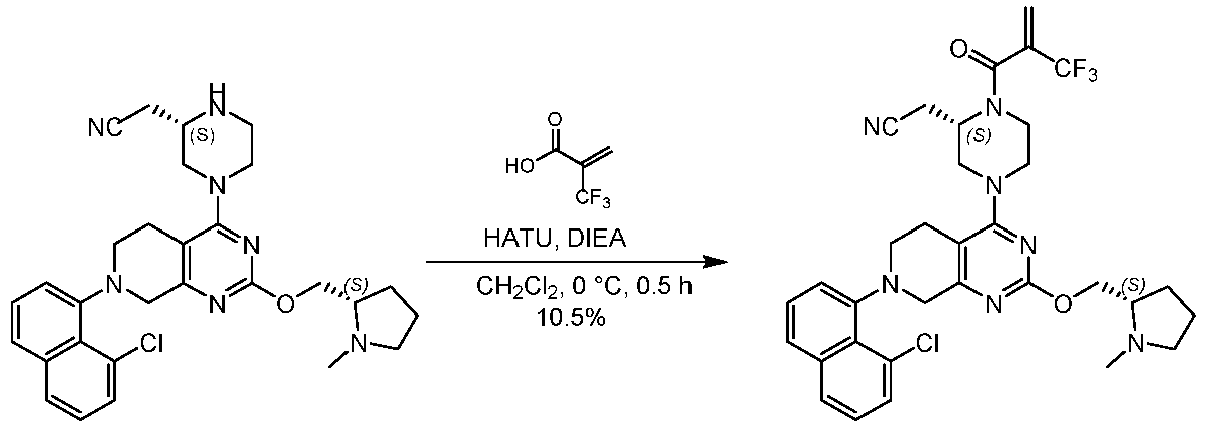
- Step A: 2-[(2S)-4-[7-(8-chloro-l-naphthyl)-2-[[(2S)-1- methylpyrrolidin-2-yl]methoxy]-6,8-dihydro-5H-pyrido[3,4-d]pyrimidin-4-yl]-1-[2-(trifluoromethyl)prop-2-enoyl]piperazin-2-yl]acetonitrile. To a solution of 2-(trifluoromethyl)prop-2-enoic acid (39.5 mg, 282 umol, 1.50 eq), 2-[(2S)-4-[7-(8-chloro-1-naphthyl)-2-[[(2S)-1-methylpyrrolidin -2-yl]methoxy] -6,8-dihydro-5H-pyrido[3,4-d]pyrimidin-4-yl]piperazin-2-yl]acetonitrile (Intermediate 71, 0.10 g, 188 umol, 1.00 eq) and DIEA (48.6 mg, 376 umol, 65.5 µL, 2.00 eq) in dichloromethane (0.20 mL) was added HATU (107 mg, 282 umol, 1.50 eq) at 0 °C. After stirred at 0 °C for 0.5 h, the mixture diluted with water and the layer was separated. The organic layer was dried over Na2SO4, filtered and concentrated under vacuum. The residue was purified by reverse phase flash [water (FA, 0.1%)/acetonitrile] and prep HPLC (column: Gemini 150*25 5u; mobile phase: [water (0.05% ammonia hydroxide v/v) - ACN]; B%: 56%-86%, 12 min). The desired fractions were collected and lyophilized to give title compound 2-[(2S)-4-[7-(8-chloro-1-naphthyl)-2-[[(2S)-1-methylpyrrolidin-2-yl]methoxy]-6,8-dihydro-5H-pyrido[3,4-d]pyrimidin-4-yl]-1-[2-(trifluoromethyl)prop-2-enoyl]piperazin-2-yl]acetonitrile (EXAMPLE 33, 13.1 mg, 19.6 umol, 10.5% yield, 97.9% purity) as a white solid. LCMS [ESI, M+1]: 654.
- SFC condition: Column: Chiralcel OJ-3 50×4.6mm I.D., 3um, Mobile phase: methanol (0.05% DEA) in CO2 from 5% to 40%, Flow rate: 3mL/min, Wavelength: 220nm.
- 1H NMR (400MHz, chloroform-d) δ = 7.76 (d, J = 8.4 Hz, 1H), 7.65 - 7.59 (m, 1H), 7.55 - 7.50 (m, 1H), 7.45 (td, J = 7.6, 10.0 Hz, 1H), 7.34 (t, J = 7.6 Hz, 1H), 7.26 - 7.18 (m, 1H), 6.18 (br s, 1H), 5.86 (br s, 1H), 5.11 (br s, 1H), 4.57 - 4.36 (m, 2H), 4.33 - 4.10 (m, 2H), 4.04 (br d, J = 12.8 Hz, 1H), 3.97 - 3.79 (m, 2H), 3.66 - 3.54 (m, 1H), 3.50 - 3.33 (m, 1H), 3.29 - 3.07 (m, 4H), 3.04 - 2.72 (m, 4H), 2.63 - 2.50 (m, 4H), 2.45 - 2.32 (m, 1H), 2.15 - 2.04 (m, 1H), 1.90 (br s, 3H).
-

- 2-((S)-1-((Z)-3-chloroacryloyl)-4-(7-(2,3-dimethylphenyl)-2-(((S)-1-methylpyrrolidin-2-yl)methoxy)-5,6,7,8-tetrahydropyrido[3,4-d]pyrimidin-4-yl)piperazin-2-yl)acetonitrile: Was prepared following Example 18 Step A, substituting (Z)-3-chloroacrylic acid for (E)-4-methoxybut-2-enoic acid. ESI+APCI MS m/z 564.3 [M+H]+.
-

-

- Step A: 2-((S)-1-((E)-4-fluorobut-2-enoyl)-4-(7-(8-methylnaphthalen-1 -yl)-2-(((S)-1 - methylpyrrolidin-2-yl)methoxy)-5,6,7,8-tetrahydropyrido[3,4-d]pyrimidin-4-yl)piperazin-2-yl)acetonitrile: At 0°C, to a 25 mL RBF containing N,N-dimethylformamide (3909 µl, 0.39 mmol) was added 2-((S)-4-(7-(8-methylnaphthalen-1-yl)-2-(((S)-1-methylpyrrolidin-2-yl)methoxy)-5,6,7,8-tetrahydropyrido[3,4-d]pyrimidin-4-yl)piperazin-2-yl)acetonitrile (200 mg, 0.391 mmol) and triethylamine (136 µl, 0.98 mmol). The reaction mixture was vigorously stirred while (E)-4-fluorobut-2-enoic acid (61.0 mg, 0.59 mmol) was added in one portion. Next, 1-propanephosphonic acid cyclic anhydride (175 µl, 0.59 mmol) was added slowly to the stirring mixture. The reaction was stirred at room temperature for 18hr. Water was added and the mixture was extracted with EtOAc (3x 15 mL). The extracts were combined and washed with water (1× 10 mL) and concentrated. The residue was purified by silica gel (5-18% MeOH in DCM with 0.25% NH4OH) to provide title compound 2-((S)-1-((E)-4-fluorobut-2-enoyl)-4-(7-(8-methylnaphthalen-1-yl)-2-(((S)-1-methylpyrrolidin-2-yl)methoxy)-5,6,7,8-tetrahydropyrido[3,4-d]pyrimidin-4-yl)piperazin-2-yl)acetonitrile (EXAMPLE 35, 89.3 mg, 0.15 mmol, 38 % yield). ESI+APCI MS m/z 598.3 [M+H]+.
-

- Step A: 2-((S)-1-(2-fluoroacryloyl)-4-(7-(8-methylnaphthalen-1-yl)-2-(((S)-1-methylpyrrolidin-2-yl)methoxy)-5,6,7,8-tetrahydropyrido[3,4-d]pyrimidin-4-yl)piperazin-2-yl)acetonitrile: 2-((S)-4-(7-(8-methylnaphthalen-1-yl)-2-(((S)-1-methylpyrrolidin-2-yl)methoxy)-5,6,7,8-tetrahydropyrido[3,4-d]pyrimidin-4-yl)piperazin-2-yl)acetonitrile (8 g, 15.63 mmol) was diluted with DMF (78.17 ml, 15.63 mmol), placed under nitrogen and cooled to 0°C. DIEA (6.827 ml, 39.09 mmol) was added followed by the addition of 2-Fluoroacrylic acid (2.112 g, 23.45 mmol) and the dropwise addition of 1-Propanephosphonic acid cyclic anhydride (9.307 ml, 15.63 mmol). The reaction was stirred at 0°C for 6 hours and left to stir for an additional 10 hours warming to ambient temperature. The reaction was poured into a 5% sodium bicarbonate solution and extracted twice with ethyl acetate. The ethyl acetate was washed with water, brine, dried over MgSO4, filtered and concentrated. The material was purified on silica gel eluting with 1-10% methanol/DCM (1% NH4OH as additive) to afford title compound 2-((S)-1-(2-fluoroacryloyl)-4-(7-(8-methylnaphthalen-1-yl)-2-(((S)-1-methylpyrrolidin-2-yl)methoxy)-5,6,7,8-tetrahydropyrido[3,4-d]pyrimidin-4-yl)piperazin-2-yl)acetonitrile (EXAMPLE 36, 6.6 g, 11.31 mmol, 72.32 % yield). ESI+APCI MS m/z 584.3 [M+H]+.
-

- 2-((S)-1-(4-hydroxybut-2-ynoyl)-4-(7-(8-methylnaphthalen-1-yl)-2-(((S)-1-methylpyrrolidin-2-yl(methoxy(-5,6,7,8-tetrahydropyrido[3,4-d]pyrimidin-4-yl)piperazin-2-yl)acetonitrile: was prepared according to Example 36, Step A, substituting 4-((tertbutyldimethylsilyl)oxy)but-2-ynoic acid for 2-Fluoroacrylic acid. ESI+APCI MS m/z 594.3 [M+H]+.
-
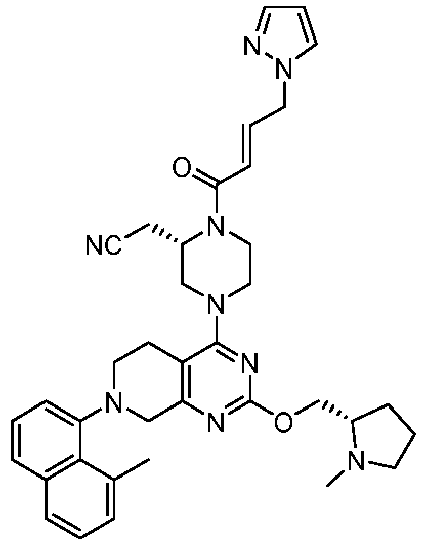
-

- Step A: (E)-4-(1H-pyrazol-1-yl)but-2-enoic acid. A solution of 4-bromocrotonic acid (100 mg, 0.606 mmol) and pyrazole (37.1 mg, 0.546 mmol) in acetonitrile (1 ml, 19.1 mmol) was heated in a closed vial for 48h to 60°C with stirring. The resulted light-green solution was divided between water (5 mL) and EtOAc (15 mL), the organics were separated, the organic layer was washed with brine, dried over Na2SO4 and evaporated in vacuo. The material was chromatographed on silica gel in 2 to 5% MeOH/DCM + 0.2% TFA. The resulting solid was dissolved in minimal amount of 6M HCl and evaporated under slow N2 flow. This material was used in the next step without further purification.
- Step B: 2-((S)-1-((E)-4-(1H-pyrazol-1-yl)but-2-enoyl)-4-(7-(8-methylnaphthalen-1-yl)-2-(((S)-1-methylpyrrolidin-2-yl)methoxy)-5,6,7,8-tetrahydropyrido[3,4-d]pyrimidin-4-yl)piperazin-2-yl)acetonitrile. A stirred mixture of 2-((S)-4-(7-(8-methylnaphthalen-1-yl)-2-(((S)-1-methylpyrrolidin-2-yl)methoxy)-5,6,7,8-tetrahydropyrido[3,4-d]pyrimidin-4-yl)piperazin-2-yl)acetonitrile (42.37 mg, 0.08281 mmol), (E)-4-(1H-pyrazol-1-yl)but-2-enoic acid (12.6 mg, 0.08281 mmol) and N,N-dimethylformamide (1 mL, 12.79 mmol) was cooled on ice-salt bath with stirring, and triethylamine (0.03463 mL, 0.2484 mmol) was added at once, followed by 2,4,6-tripropyl-1,3,5,2,4,6-trioxatriphosphinane 2,4,6-trioxide, 50% in EtOAc (0.07395 mL, 0.1242 mmol). The reaction mixture was allowed to warm up to r.t. over 5 min and was stirred at r.t. overnight. The reaction mixture was divided between 0.5M Na2CO3 (5 mL) and EtOAc (10 mL), the organics were separated, the organic layer was washed with water and brine (5 mL each), dried over Na2SO4 and evaporated in vacuo. The product was purified by silicia gel chromatography using 5%MeOH +0.5% NH4OH in DCM to give title compound as a colorless solid (EXAMPLE 38, 11.46 mg, 23%). ESI+APCI MS m/z 646.3 [M+H]+.
-

-

- Step A: (E)-4-hydroxybut-2-enoic acid. To a stirred suspension of 4-bromocrotonic acid (4824 mg, 29.24 mmol) in water (48 mL) a 2M solution of potassium hydroxide (4.921 g, 87.72 mmol) was added dropwise and the resulted solution was heated to reflux for 5 min. The reaction mixture was left under a N2 stream to cool and concentrate. The residue was cooled on ice bath, acidified with 4M H2SO4 to pH 1-2, the resulted suspension was evaporated in vacuo by half and then extracted with EtOAc (3*60 mL). The combined extracts were dried over Na2SO4 and evaporated in vacuo. The material was purified by chromatography using 2 to 5% MeOH +0.2% TFA to afford the target acid as colorless crystals (2.165 g, 73%).
- Step B: 2-((S)-1-((E)-4-hydroxybut-2-enoyl)-4-(7-(8-methylnaphthalen-1-yl)-2-(((S)-1-methylpyrrolidin-2-yl)methoxy)-5,6,7,8-tetrahydropyrido[3,4-d]pyrimidin-4-yl)piperazin-2-yl)acetonitrile. To a stirred solution of 2-((S)-4-(7-(8-methylnaphthalen-1-yl)-2-(((S)-1-methylpyrrolidin-2-yl)methoxy)-5,6,7,8-tetrahydropyrido[3,4-d]pyrimidin-4-yl)piperazin-2-yl)acetonitrile (100 mg, 0.1954 mmol), (2E)-4-hydroxybut-2-enoic acid (39.90 mg, 0.3909 mmol) and N-ethyl-N-isopropylpropan-2-amine (0.06809 ml, 0.3909 mmol) in DCM (5 mL), O-(7-Azabenzotriazol-1-yl)-N,N,N',N'-Tetramethyluronium hexafluorophosphate (111.5 mg, 0.2932 mmol) was added at once and the reaction mixture was stirred at r.t for 4 h. Water (1 mL) was added, the reaction mixture was stirred for 5 min and divided between EtOAc (10 mL) and sat. NaHCOs (5 mL). The organic layer was separated, washed with NaHCO3, brine (5 mL each), dried over K2CO3 and evaporated in vacuo. The residue was chromatographed on silica gel with 5% MeOH +0.5% NH4OH. Title compound as a colorless solid (EXAMPLE 39, 29 mg, 25%). ESI+APCI MS m/z 596.3 [M+H]+.
-

-

- Step A: 2-((S)-1-((E)-4-methoxybut-2-enoyl)-4-(7-(8-methylnaphthalen-1-yl)-2-(((S)-1-methylpyrrolidin-2-yl)methoxy)-5,6,7,8-tetrahydropyrido[3,4-d]pyrimidin-4-yl)piperazin-2-yl)acetonitrile. A stirred mixture of 2-((S)-4-(7-(8-methylnaphthalen-1-yl)-2-(((S)-1-methylpyrrolidin-2-yl)methoxy)-5,6,7,8-tetrahydropyrido[3,4-d]pyrimidin-4-yl)piperazin-2-yl)acetonitrile (250 mg, 0.4886 mmol), (E)-4-methoxybut-2-enoic acid (85.10 mg, 0.7329 mmol) and N,N-dimethylformamide (2 mL, 25.58 mmol) was cooled on an ice-salt bath and triethylamine (0.2043 mL, 1.466 mmol) was added at once, followed by 2,4,6-tripropyl-1,3,5,2,4,6-trioxatriphosphinane 2,4,6-trioxide, 50% in EtOAc (0.4363 mL, 0.7329 mmol). The reaction mixture was allowed to warm to r.t. over 5 min, and stirred at r.t. for 2h. The resulted solution was divided between 0.5M Na2CO3 (10 mL) and EtOAc (30 mL), the organic layer was separated, washed with water and brine (10 mL each), dried over Na2SO4 and evaporated in vacuo. The material was purified by silica gel chromatography using 5% MeOH +0.5% NH4OH in DCM. The material was further purified by the reverse phase chromatography, Gilson, 25 to 75% MeCN/H2O + 0.1% TFA. Target fractions were basified with excess of 2M Na2CO3 and extracted with DCM (3*50 mL). The combined organic extracts were washed with brine, dried over Na2SO4 and evaporated in vacuo. Title compound as a light-yellow solid (EXAMPLE 40, 123 mg, 41%). ESI+APCI MS m/z 610.3 [M+H]+.
-

-

- Step A: methyl 2,2-dimethoxypropanoate. To a solution of ethyl 2-oxopropanoate (4.00 g, 34.5 mmol, 3.81 mL, 1.00 eq) and trimethoxymethane (4.75 g, 44.8 mmol, 4.91 mL, 1.30 eq) in methanol (10.0 mL) was added H2SO4 (33.8 mg, 344 umol, 18.4 µL, 0.01 eq). After stirred at 65 °C for 4 hours, the pH value was adjusted > 7 by KOH (120 mg in 20.0 mL water) and extracted with ethyl acetate (3 × 20.0 mL). The organic layer was washed with brine (1 × 30.0 mL), dried over Na2SO4, filtered and concentrated under vacuum. The residue was distilled at 60 °C under oil pump to give methyl 2,2-dimethoxypropanoate (4.00 g, 27.0 mmol, 78% yield) as a colourless oil and used into next step without further purification.
- 1H NMR (400MHz, chloroform-d) δ = 3.81 (s, 3H), 3.28 (s, 6H), 1.52 (s, 3H).
- Step B: methyl 2-methoxyprop-2-enoate. To a solution of methyl 2,2-dimethoxypropanoate (2.00 g, 13.5 mmol, 1.00 eq) in DMF (20.0 mL) was added P2O5 (1.05 g, 7.42 mmol, 458 µL, 0.55 eq) in portions. After heated to 100 °C for 1 hour, the mixture was diluted with saturated sodium bicarbonate (20.0 mL), extracted with isopropyl ether (3 × 30.0 mL), washed with brine (3 × 40.0 mL), dried over Na2SO4, filtered and concentrated under vacuum. The residue was distilled under oil pump to give methyl 2-methoxyprop-2-enoate (0.65 g, 5.60 mmol, 41% yield) as a colorless oil and used into next step without further purification.
- Step C: 2-methoxyprop-2-enoic acid. A mixture of methyl 2-methoxyprop-2-enoate (0.60 g, 5.17 mmol, 1.00 eq) and NaOH (827 mg, 20.7 mmol, 4.00 eq) in H2O (5.00 mL) and THF (5.00 mL) was stirred at 60 °C for 1 hour. The mixture was adjusted to pH < 3 by concentrated HCl (10.0 mL) and extracted with ethyl acetate (3 × 20.0 mL). The organic layer was dried over Na2SO4, filtered and concentrated under vacuum to give 2-methoxyprop-2-enoic acid (0.40 g, 1.96 mmol, 38% yield, 50% purity) as a pink oil and used into next step without further purification.
- 1H NMR (400MHz, chloroform-d) δ = 8.63 (br s, 1H), 5.52 (d, J = 2.8 Hz, 1H), 4.75 (d, J = 2.8 Hz, 1H), 3.70 (s, 3H).
- Step D: 2-[(2S)-1-(2-methoxyprop-2-enoyl)-4-[7-(8-methyl-1- naphthyl)-2-[[(2S)-1-methylpyrrolidin-2-yl]methoxy]-6,8-dihydro-5H-pyrido[3,4-d]pyrimidin-4-yl]piperazin-2-yllacetonitrile. To a solution of 2-[(2S)-4-[7-(8-methyl-1-naphthyl)-2-[[(2S)-1- methylpyrrolidin-2-yl]methoxy]-6,8-dihydro-5H-pyrido[3,4-d]pyrimidin-4-yl]piperazin-2-yl]acetonitrile (0.14 g, 274 umol, 1.00 eq), 2-methoxyprop-2-enoic acid (112 mg, 1.09 mmol, 4.00 eq) and DIEA (141 mg, 1.09 mmol, 191 µL, 4.00eq) in dichloromethane (5.00 mL) was added HATU (208 mg, 547umol, 2.00 eq) at 0 °C. After stirred at 0 °C for 0.5 h, the mixture was diluted with water (3.00 mL). The organic layer was dried over Na2SO4, filtered and concentrated under vacuum. The residue was purified by reverse phase flash [water (FA, 0.10%)/acetonitrile] and prep-HPLC (column: Gemini 150*25 5u; mobile phase: [water (0.05% ammonia hydroxide v/v) - ACN]; B%: 60% - 90%, 12min). The desired fraction was collected and lyophilized to give title compound 2-[(2S)-1-(2-methoxyprop-2-enoyl)-4-[7-(8-methyl-1-naphthyl)-2-[[(2S)-1-methylpyrrolidin-2-yl]methoxy]-6,8-dihydro-5H-pyrido[3,4-d]pyrimidin-4-yl]piperazin-2-yl]acetonitrile (EXAMPLE 41, 10.27 mg, 17.22 umol, 6.3% yield, 99.9% purity) as a off-white solid. LCMS [ESI, M+1]: 596.
- SFC condition: "IC-3S_3_40_3ML, Column: Chiralpak IC-3 100×4.6mm I.D., 3 um, Mobile phase: 40% methanol (0.05% DEA) in CO2, Flow rate: 3mL/min, Wavelength: 220 nm".
- 1H NMR (400MHz, chloroform-d) δ = 7.72 - 7.61 (m, 2H), 7.45 - 7.31 (m, 2H), 7.27 - 7.17 (m, 2H), 5.05 - 4.61 (m, 1H), 4.48 (br s, 1H), 4.37 (td, J = 4.4, 10.0 Hz, 1H), 4.30 - 3.98 (m, 4H), 3.96 - 3.74 (m, 2H), 3.69 (br s, 3H), 3.59 - 3.28 (m, 2H), 3.27 - 2.93 (m, 6H), 2.92 (s, 3H), 2.88 - 2.51 (m, 4H), 2.47 (d, J = 3.2 Hz, 3H), 2.33 - 2.23 (m, 1H), 2.11 - 1.98 (m, 1H), 1.89 - 1.74 (m, 3H).
-

-

- Step 1: ethyl (E)-4-hydroxybut-2-enoate. To a solution of (E)-4-ethoxy-4-oxo-but-2-enoic acid (1.0 g, 7.29 mmol, 1.0 eq) in THF (6.0 mL) was added a solution of BH3-Me2S (10.0 M, 692 µL, 0.95 eq) in THF (8.0 mL) dropwise over 1 hour at -10°C. The reaction mixture was gradually warmed to 25 °C and stirred for 17 hours. After completion, the reaction mixture was quenched by addition water (30.0 mL) and extracted with Ethyl acetate (30.0 mL×3). The combined organic layers were washed with brine (30.0 mL×2), dried over Na2SO4, filtered and concentrated under reduced pressure to give a residue. Compound ethyl (E)-4-hydroxybut-2-enoate (900 mg, crude) was obtained as colorless oil. The crude product was used directly in the next step without further purification.
- Step 2: (E)-4-tricyloxybut-2-enoate. A mixture of ethyl (E)-4-hydroxybut-2-enoate (900 mg, crude), [chloro(diphenyl)methyl]benzene (2.89 g, 10.4 mmol), DMAP (84.5 mg, 692 umol), TEA (1.4 g, 13.8 mmol, 1.9 mL) in DCM (5.0 mL) was degassed and purged with N2 for 3 times, and then the mixture was stirred at 25 °C for 1 hour under N2 atmosphere. After completion, the reaction mixture was quenched by addition H2O (10.0 mL) and extracted with Ethyl acetate (10.0 mL×3). The combined organic layers were dried over Na2SO4, filtered and concentrated under reduced pressure to give a residue. The residue was purified by column chromatography (SiO2, Petroleum ether/Ethyl acetate=20:1 to 15:1). Compound ethyl (E)-4-trityloxybut-2-enoate (340 mg, 913 umol, 13% yield) was obtained as colorless oil.
- 1H NMR (400 MHz, Chloroform-d) δ 7.38 - 7.35 (m, 6 H), 7.26 - 7.22 (m, 6 H), 7.18 - 7.15 (m, 3 H), 6.88 (dt, J = 15.6, 3.6 Hz, 1 H), 6.29 (dt, J = 15.6, 2.2 Hz, 1 H), 4.16 (q, J = 7.1 Hz, 2 H), 3.72 (dd, J = 2.4, 2.0 Hz, 2 H), 1.25 (t, J = 7.0 Hz, 3 H).
- Step 3: (E)-4-trityloxybut-2-enoic acid. To a solution of ethyl (E)-4-trityloxybut-2-enoate (170 mg, 456 umol, 1.0 eq) in MeOH (1.0 mL) was added solution ofNaOH (54.5 mg, 1.37 mmol, 3.0 eq) in H2O (0.5 mL) and then the mixture was stirred at 40 °C for 1 hour under N2 atmosphere. After completion, the reaction mixture was quenched by addition 1M HCl at 0 °C until pH = 5, and then extracted with Ethyl acetate (8.0 mL×3). The combined organic layers were dried over Na2SO4, filtered and concentrated under reduced pressure to give a residue. The residue was purified by column chromatography (SiO2, Petroleum ether/Ethyl acetate=3:1 to 1:1). Compound (E)-4-trityloxybut-2-enoic acid (113 mg, 328 umol, 72% yield) was obtained as a white solid.
- 1H NMR (400 MHz, Chloroform-d) δ 7.38 - 7.36 (m, 6 H), 7.26 - 7.24 (m, 5 H), 7.20 - 7.16 (m, 4 H), 7.0 (dt, J = 15.6, 3.6 Hz, 1 H), 6.32 (dt, J = 15.6, 2.0 Hz, 1 H), 3.76 (dd, J = 3.2, 2.4 Hz, 2H).
- Step A: 2-[(2S)-4-[7-(8-chloro-1-naphthyl)-2-[[(2S)-1-methylpyrrolidin-2-yl]methoxy]-6,8-dihydro-5H-pyrido[3,4-d]pyrimidin-4-yl]-1-[(E)-4-trityloxybut-2-enoyl])piperazin-2-yllacetonitrile. To a solution of 2-[(2S)-4-[7-(8-chloro-1-naphthyl)-2-[[(2S)-1-methylpyrrolidin-2-yl]methoxy]-6,8-dihydro-5H-pyrido[3,4-d]pyrimidin-4-yl]piperazin-2-yl]acetonitrile (Intermediate 71, 60.0 mg, 113 umol, 1.0 eq), (E)-4-trityloxybut-2-enoic acid (77.8 mg, 226 umol, 2.0 eq) and DIEA (73.0 mg, 564 umol, 98 µL, 5.0 eq) in DCM (2.0 mL) was added HATU (64 mg, 169 umol, 1.5 eq) in one portion at 0 °C under N2. The mixture was stirred at 25°C for 1 hour. After completion, the reaction mixture was quenched by addition H2O (8.0 mL) and then extracted with Ethyl acetate (10.0 mL×3). The combined organic layers were dried over Na2SO4, filtered and concentrated under reduced pressure to give a residue. Compound 2-[(2S)-4-[7-(8-chloro-1-naphthyl)-2-[[(2S)-1-methylpyrrolidin-2-yl]methoxy]-6,8-dihydro-5H-pyrido[3,4-d]pyrimidin-4-yl]-1-[(E)-4-trityloxybut-2-enoyl]piperazin-2-yl]acetonitrile (150 mg, crude) was obtained as a yellow solid, and the crude product was used directly in the next step without further purification. LCMS [ESI, M+1]: 858.
- Step B: 2-[(2S)-4-[7-(8-chloro-1-naphthyl)-2-[[(2S)-1-methylpyrrolidin-2-yl]methoxy]-6,8-dihydro-5H-pyrido[3,4-d]pyrimidin-4-yl]-1-[(E)-4-hydroxybut-2-enoyl])piperazin-2-yl]acetonitrile. To a solution of 2-[(2S)-4-[7-(8-chloro-1-naphthyl)-2-[[(2S)-1-methylpyrrolidin-2-yl]methoxy]-6,8-dihydro-5H-pyrido[3,4-d]pyrimidin-4-yl]-1-[(E)-4-trityloxybut-2-enoyl]piperazin-2-yl]acetonitrile (150 mg, crude) in DCM (1.0 mL) was added TFA (1.0 ml, 13.5 mmol).The mixture was stirred at 25°C for 1 hour. After completion, the reaction mixture was quenched by addition NaHCO3 aqueous solution at 0 °C until pH = 8, and then extracted with Ethyl acetate (10.0 mL×3). The combined organic layers were dried over Na2SO4, filtered and concentrated under reduced pressure to give a residue. The residue was purified by prep-HPLC (column: Phenomenex Gemini 150*25 mm*10 um; mobile phase: [water (0.04% NH3H2O + 10 mMNH4HCO3)-ACN]; B%: 48%-72%, 10min.) and lyophilization. Title compound 2-[(2S)-4-[7-(8-chloro-1-naphthyl)-2-[[(2S)-1-methylpyrrolidin-2-yl]methoxy]-6,8-dihydro-5H-pyrido[3,4-d]pyrimidin-4-yl]-1-[(E')-4-hydroxybut-2-enoyl]piperazin-2-yl]acetonitrile (EXAMPLE 42, 8.21 mg, 13.3 umol, 7.6% yield, 99.8% purity) was obtained as a white solid. LCMS [ESI, M+1]: 616.
- SFC condition: 100% e.e.
- 1H NMR (400 MHz, Chloroform-d) δ 7.68 (d, J = 8.0 Hz, 1 H), 7.70-7.33 (m, 1 H), 7.49 (dd, J = 6.8, 0.8 Hz, 1 H), 7.37 (dt, J = 11.98, 7.82 Hz, 1 H), 7.26 (t, J = 11.8 Hz, 1 H), 7.19 - 7.11 (m, 1 H), 6.99 (dt, J = 14.8, 3.4 Hz, 1 H), 6.56 (br s, 1 H), 5.02-4.57 (m, 1 H), 4.39-4.29 (m, 4 H), 4.12-4.06 (m, 1 H), 4.03-3.99 (m, 2 H), 3.85-3.72 (m, 2 H), 3.67-3.36 (m, 3 H), 3.24-3.09 (m, 2 H), 3.03-2.89 (m, 3 H), 2.73 (br s, 1 H), 2.63-2.61 (m, 1 H), 2.50 (br s, 1 H), 2.41 (s, 3 H), 2.25-2.19 (m, 1 H), 2.03-1.92 (m, 1 H), 1.70-1.60 (m, 3 H).
-

-

- Step 1: methyl 2,2-dimethoxypropanoate. To a solution of ethyl 2-oxopropanoate (4.00 g, 34.5 mmol, 3.81 mL, 1.00 eq) and trimethoxymethane (4.75 g, 44.8 mmol, 4.91 mL, 1.30 eq) in methanol (10.0 mL) was added H2SO4 (33.8 mg, 344 umol, 18.4 µL, 0.01 eq). After stirring at 65 °C for 4 hours, the reaction mixture was adjusted to pH value was adjusted > 7 by KOH aqueous (120 mg in 20.0 mL water) and extracted with ethyl acetate (3 × 20.0 mL). The organic layers were washed with brine (1 × 30.0 mL), dried over Na2SO4, filtered and concentrated under vacuum. The residue was distilled at 60 °C under vacuum to give methyl 2,2-dimethoxypropanoate (4.00 g, 27.0 mmol, 78% yield) as a colorless oil.
- 1H NMR (400MHz, chloroform-d) δ = 3.81 (s, 3H), 3.28 (s, 6H), 1.52 (s, 3H).
- Step 2: methyl 2-methoxyprop-2-enoate. To a solution of methyl 2,2-dimethoxypropanoate (2.00 g, 13.5 mmol, 1.00 eq) in DMF (20.0 mL) was added P2O5 (1.05 g, 7.42 mmol, 458 µL, 0.55 eq) in portions. After stirring at 100 °C for 1 hour, the mixture was diluted with saturated sodium bicarbonate (20.0 mL), extracted with isopropyl ether (3 × 30.0 mL). The extracts were washed with brine (3 × 40.0 mL), dried over Na2SO4, filtered and concentrated under vacuum. The residue was distilled under vacuum to give methyl 2-methoxyprop-2-enoate (0.65 g, 5.60 mmol, 41% yield) as a colorless oil which was used to next step without further purification.
- 1H NMR (400MHz, chloroform-d) δ = 5.36 (d, J = 2.8 Hz, 1H), 4.63 (d, J = 2.8 Hz, 1H), 3.81 (s, 3H), 3.66 (s, 3H).
- Step 3: 2-methoxyprop-2-enoic acid. A mixture of methyl 2-methoxyprop-2-enoate (0.60 g, 5.17 mmol, 1.00 eq) and NaOH (827 mg, 20.7 mmol, 4.00 eq) in H2O (5.00 mL) and THF (5.00 mL) was stirred at 60 °C for 1 hour. The mixture was adjusted to pH < 3 by concentrated HCl (10.0 mL) and extracted with ethyl acetate (3 × 20.0 mL). The organic layer was dried over Na2SO4, filtered and concentrated under vacuum to give 2-methoxyprop-2-enoic acid (0.40 g, 1.96 mmol, 38% yield, 50% purity) as a pink oil and used into next step without further purification.
- 1H NMR (400MHz, chloroform-d) δ = 8.63 (br s, 1H), 5.52 (d, J = 2.8 Hz, 1H), 4.75 (d, J = 2.8 Hz, 1H), 3.70 (s, 3H).
- Step A: 2-[(2S)-4-[7-(8-chloro-1-naphthyl)-2-[[(2S)-1-methyl pyrrolidin-2-yl]methoxy]-6,8-dihydro-5H-pyrido[3,4-d]pyrimidin-4-yl]-1-(2-methoxyprop-2-enoyl)piperazin-2-yl]acetonitrile. To a solution of 2-[(2S)-4-[7-(8-chloro-1-naphthyl)-2-[[(2S)-1- methylpyrrolidin-2-yl]methoxy]-6,8-dihydro-5H-pyrido[3,4-d]pyrimidin-4-yl]piperazin-2-yl]acetonitrile (0.20 g, 376 umol, 1.00 eq), 2-methoxyprop-2-enoic acid (153 mg, 1.50 mmol, 4.00 eq) and DIEA (194 mg, 1.50 mmol, 262 µL, 4.00 eq) in dichloromethane (5.00 mL) was added HATU (286 mg, 752 umol, 2.00 eq) at 0 °C. After stirred at 0 °C for 0.5 h, the reaction was purified by reversed phase flash [water (FA, 0.1%)/acetonitrile], prep-HPLC (column: Luna C18 150*25 5u;mobile phase: [water(0.225% FA) - ACN]; B%: 25% - 45%, 7.8 min) and further prep-HPLC (column: Waters Xbridge 150*25 5u;mobile phase: [water (0.05% ammonia hydroxide v/v) - ACN]; B%: 55% - 79%, 10 min). The desired fractions were collected and lyophilized to give title compound 2-[(2S)-4-[7-(8-chloro-1-naphthyl)-2-[[(2S)-1-methyl pyrrolidin-2-yl]methoxy]-6,8-dihydro-5H-pyrido[3,4-d]pyrimidin-4-yl]-1-(2-methoxyprop-2-enoyl)piperazin-2-yl]acetonitrile (EXAMPLE 43, 30.1 mg, 48.9 umol, 13% yield, 100% purity) as a yellow solid. LCMS [ESI, M+1]: 616.
- SFC condition: "AS-3_ MeOH (DEA)_5_40_3mL-35T Column: Chiralpak AS-3 50×4.6mm I.D., 3um, Mobile phase: methanol (0.05% DEA) in CO2 from 5% to 40%, Flow rate: 3mL/min, Wavelength: 220nm".
- 1H NMR (400MHz, chloroform-d) δ = 7.76 (br d, J = 8.0 Hz, 1H), 7.62 (t, J = 7.6 Hz, 1H), 7.52 (d, J = 7.2 Hz, 1H), 7.44 (td, J = 7.6, 13.6 Hz, 1H), 7.34 (t, J = 8.0 Hz, 1H), 7.27 - 7.18 (m, 1H), 5.07 - 4.63 (m, 1H), 4.57 - 4.29 (m, 4H), 4.21 - 3.96 (m, 3H), 3.95 - 3.77 (m, 2H), 3.69 (br s, 3H), 3.59 (br d, J = 11.2 Hz, 1H), 3.51 - 3.32 (m, 1H), 3.30 - 3.02 (m, 5H), 2.89 - 2.50 (m, 4H), 2.47 (d, J = 2.0 Hz, 3H), 2.32 - 2.23 (m, 1H), 2.11 - 2.00 (m, 1H), 1.89 - 1.72 (m, 3H).
-

-

- Step A: 2-[(2S)-1-[(E)-4-bromobut-2-enoyl]-4-[7-(8-methyl-1-naphthyl)-2-[[(2S)-1-methylpyrrolidin-2-yl]methoxy]-6,8-dihydro-5H-pyrido[3,4-d]pyrimidin-4-yl]piperazin-2-yllacetonitrile. To a solution of 2-[(2S)-4-[7-(8-methyl-1-naphthyl)-2- [[(2S)-1-methylpyrrolidin-2-yl]methoxy]-6,8-dihydro-5H-pyrido[3,4-d]pyrimidin-4-yl]piperazin-2-yl]acetonitrile (150 mg, 293 umol, 1.0 eq) and pyridine (186 mg, 2.35 mmol, 189 µL, 8.0 eq) in dichloromethane (4.0 mL) was added (E)-4-bromobut -2-enoyl chloride (215 mg, 1.17 mmol, 4.0 eq). The mixture was stirred at 0 °C for 0.5 hour. After completion, the reaction mixture was concentrated to give the product 2-[(2S)-1-[(E)-4-bromobut-2-enoyl]-4-[7-(8-methyl-1-naphthyl)-2-[[(2S)-1-methylpyrrolidin-2-yl]methoxy]-6,8-dihydro-5H-pyrido[3,4-d]pyrimidin-4-yl]piperazin-2-yl]acetonitrile (200 mg, crude) as yellow oil. The product was used for the next step without further purification. LCMS [ESI, M+1]: 658.
- Step B: 2-[(2S)-1-[(E)-4-(3- fluoroazetidin-1 -yl)but-2-enoyl] -4- [7-(8-methyl-1 -naphthyl)-2-[[(2S)-1-methylpyrrolidin-2-yl]methoxy]-6,8-dihydro-5H-pyrido[3,4-d]pyrimidin-4-yl]piperazin-2-yl]acetonitrile. To a solution of 2-[(2S)-1-[(E)-4-bromobut-2-enoyl]-4-[7-(8-methyl-1-naphthyl)-2-[[(2S)-1-methylpyrrolidin-2-yl]methoxy]-6,8-dihydro-5H-pyrido[3,4-d]pyrimidin-4-yl]piperazin-2-yl]acetonitrile (150 mg, 228 umol, 1.0 eq) and K2CO3 (315 mg, 2.28 mmol, 10.0 eq) in acetonitrile (2.0 mL) was added 3-fluoroazetidine (152 mg, 1.37 mmol, 6.0 eq, HCl). The mixture was stirred at 0°C for 0.5 hour. After completion, the reaction mixture was added water (5.0 mL) and extracted with ethyl acetate (5.0 mL × 4). The organic layer was dried over Na2SO4, filtered and concentrated under vacuum. The residue was purified by prep-HPLC (column: Gemini 150*25 5u; mobile phase: [water (0.05% ammonia hydroxide v/v)-ACN]; B%: 60%-90%,12min) to give the title compound 2-[(2S)-1-[(E)-4-(3- fluoroazetidin-1-yl)but-2-enoyl]-4-[7-(8-methyl-l-naphthyl)-2-[[(2S)-1-methylpyrrolidin-2-yl]methoxy]-6,8-dihydro-5H-pyrido[3,4-d]pyrimidin-4-yl]piperazin-2-yl]acetonitrile (EXAMPLE 44, 45.0 mg, 66 umol, 29% yield, 96% purity) as white solid. LCMS [ESI, M+1]: 653.
- 1H NMR (400 MHz, Chloroform-d) δ 7.70 (br d, J = 8.0 Hz, 1H), 7.65 (t, J = 8.4 Hz, 1H), 7.41 (dd, J = 7.6, 15.2 Hz, 1H), 7.34 (t, J = 7.6 Hz, 1H), 7.27 - 7.18 (m, 2H), 6.92 -6.82 (m, 1H), 6.52 - 6.31 (m, 1H), 5.28 - 5.08 (m, 1H), 5.07 - 4.46 (m, 1H), 4.41 - 4.33 (m, 1H), 4.32 - 4.01 (m, 4H), 4.01 - 3.79 (m, 2H), 3.79 - 3.56 (m, 3H), 3.55 - 3.37 (m, 2H), 3.36 - 3.31 (m, 2H), 3.30 - 3.24 (m, 1H), 3.23 - 3.18 (m, 2H), 3.17 - 3.15 (m, 1H), 3.14 - 3.06 (m, 2H), 3.05 - 2.95 (m, 1H), 2.92 (s, 3H), 2.86 - 2.75 (m, 1H), 2.71 - 2.57 (m, 2H), 2.47 (d, J = 4.0 Hz, 3H), 2.33 - 2.22 (m, 1H), 2.11 - 1.99 (m, 1H), 1.88 - 1.67 (m, 3H).
-
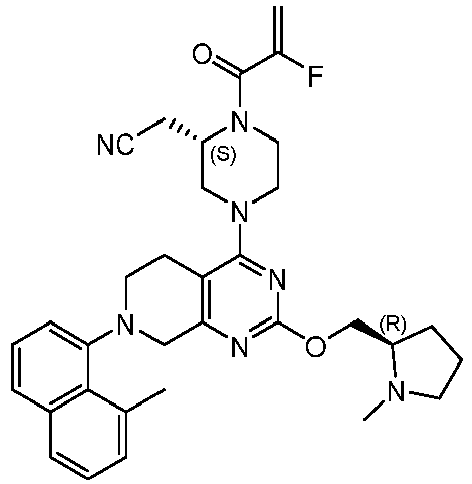
-

- Step A: tert-Butyl 4-[(3S)-4-benzyloxycarbonyl-3-(cyanomethyl)piperazin-1-yl]-2-[[(2R)-1-methylpyrrolidin-2-yl]methoxy]-6,8-dihydro-5H-pyrido[3,4-d]pyrimidine-7-carboxylate. A mixture of tert-butyl 4-[(3S)-4-benzyloxycarbonyl-3- (cyanomethyl)piperazin-1-yl]-2-chloro-6,8-dihydro-5H-pyrido[3,4-d]pyrimidine-7-carboxylate (5.5 g, 10.4 mmol, 1 eq), [(2R)-1-methylpyrrolidin-2-yl]methanol (2.40 g, 20.9 mmol, 2.25 mL, 2 eq), Pd2(dba)3 (1.91 g, 2.09 mmol, 0.2 eq), RuPhos (1.95 g, 4.17 mmol, 0.4 eq) and Cs2CO3 (8.50 g, 26.1 mmol, 2.5 eq) in toluene (100 mL) was degassed and purged with N2 for 3 times, and then the mixture was stirred at 90 °C for 5 hours under N2 atmosphere. The reaction mixture was concentrated under reduced pressure to give a residue. The residue was diluted with ethyl acetate (100 mL) and water (50 mL). Then the mixture was acidified to PH ~ 4 with 1 M HCl aqueous solution. The water phase was separated and basified to PH ~ 8 with saturated Na2CO3 aqueous solution, then the mixture was extracted with ethyl acetate (50 mL × 2). The combined organic layers were washed with brine (30 mL), dried over Na2SO4, filtered and concentrated under reduced pressure. tert-Butyl 4-[(3S)-4-benzyloxycarbonyl-3-(cyanomethyl)piperazin-1-yl]-2-[[(2R)-1-methylpyrrolidin-2-yl]methoxy]-6,8-dihydro-5H-pyrido[3,4-d]pyrimidine-7-carboxylate (4 g, 5.55 mmol, 53% yield, 84% purity) was obtained as a yellow solid and used to next step without purification.
- 1H NMR (400MHz, chloroform-d) δ = 7.46 - 7.31 (m, 5H), 5.23 (s, 2H), 4.74 - 4.49 (m, 2H), 4.43 - 4.27 (m, 2H), 4.21 - 3.70 (m, 5H), 3.42 - 3.17 (m, 3H), 3.09 (t, J = 7.6 Hz, 1H), 2.98 (td, J = 3.6, 12.4 Hz, 1H), 2.86 - 2.74 (m, 1H), 2.74 - 2.54 (m, 4H), 2.47 (s, 3H), 2.35 - 2.21 (m, 1H), 2.05 - 1.97 (m, 1H), 1.90 - 1.74 (m, 3H), 1.49 (s, 9H).
- Step B: benzyl (2S)-2-(cyanomethyl)-4-[2-[[(2R)-1-methylpyrrolidin-2-yl]methoxy]-5,6,7,8-tetrahydropyrido[3,4-d]yrimidin-4-yl]piperazine-1-carboxylate. To a solution of tert-butyl 4-[(3S)-4-benzyloxycarbonyl-3- (cyanomethyl)piperazin-1-yl]-2-[[(2R)-1-methylpyrrolidin-2-yl]methoxy]-6,8-dihydro-5H-pyrido[3,4-d]pyrimidine-7-carboxylate (3.7 g, 6.11 mmol, 1 eq) in dioxane (20 mL) was added HCl/dioxane (4 M, 22.9 mL, 15 eq). The mixture was stirred at 0 °C for 1 hour. The liquid was decanted and the solid was collected. The solid residue was diluted with water (50 mL) and dichloromethane (100 mL), then the mixture was basified to pH ~ 8 with saturated Na2CO3 aqueous solution and extracted with dichloromethane (100 mL × 3). The combined organic layers were washed with brine (50m L), dried over Na2SO4, filtered and concentrated under reduced pressure. Benzyl (2S)-2-(cyanomethyl)-4-[2-[[(2R)-1-methylpyrrolidin-2-yl]methoxy]-5,6,7,8-tetrahydropyrido[3,4-d]pyrimidin-4-yl]piperazine-1-carboxylate (2.6 g, 4.89 mmol, 80% yield, 95% purity) was obtained as a yellow solid and used next step without purification. LCMS [ESI, M+1]: 506.
- Step C: benzyl (2S)-2-(cyanomethyl)-4-[7-(8-methyl-1-naphthyl)-2-[[(2R)-1-methylpyrrolidin-2-yl]methoxy]-6,8-dihydro-5H-pyrido[3,4-d]pyrimidin-4-yl]piperazine-1-carboxylate. A mixture of benzyl (2S)-2-(cyanomethyl)-4-[2-[[(2R)-1- methylpyrrolidin-2-yl]methoxy]-5,6,7,8-tetrahydropyrido[3,4-d]pyrimidin-4-yl]piperazine-1-carboxylate (2.3 g, 4.55 mmol, 1 eq), 1-bromo-8-methyl-naphthalene (Intermediate 69,1.31 g, 5.91 mmol, 1.3 eq), Cs2CO3 (3.71 g, 11.4 mmol, 2.5 eq), Pd2(dba)3 (833 mg, 909 umol, 0.2 eq) and Xantphos (1.05 g, 1.82 mmol, 0.4 eq) in toluene (50 mL) was degassed and purged with N2 for 3 times, and then the mixture was stirred at 90 °C for 6 hours under N2 atmosphere. The reaction mixture was diluted with water (100 mL) and extracted with ethyl acetate (200 mL × 3). The combined organic layers were washed with brine (100 mL), dried over Na2SO4, filtered and concentrated under reduced pressure to give a residue. The residue was purified by column chromatography (SiO2, Ethyl acetate/ Methanol = 100/1 to 10/1). Benzyl (2S)-2-(cyanomethyl)-4-[7-(8-methyl-1-naphthyl)-2-[[(2R)-1-methylpyrrolidin-2-yl]methoxy]-6,8-dihydro-5H-pyrido[3,4-d]pyrimidin-4-yl]piperazine-1-carboxylate (1.6 g, 2.48 mmol, 54% yield) was obtained as a yellow solid.
- Step D: 2-[(2S)-4-[7-(8-methyl-1-naphtyl)-2-[[(2R)-1- methylpyrrolidin-2-yl]methoxy]-6,8-dihydro-5H-pyrido[3,4-d]pyrimidin-4-yl]piperazin-2-yl]acetonitrile. A mixture of benzyl (2S)-2-(cyanomethyl)-4-[7-(8-methyl-1- naphthyl)-2-[[(2R)-1 -methylpyrrolidin-2-yl]methoxy]-6,8-dihydro-5H-pyrido[3,4-d]pyrimidin-4-yl]piperazine-1-carboxylate (1.60 g, 2.48 mmol, 1.00 eq) in MeOH (20.0 mL) and NH3 (20% w/w in MeOH, 7 mL) was hydrogenated with Pd/C (100 mg, 2.48 mmol, 10% purity, 1.00 eq) as a catalyst under H2 (4.99 mg, 2.48 mmol, 1.00 eq, 15 psi) at 25 °C for 3 hours. The catalyst was filtered off through a pad of celite and the filtrate was concentrated under vacuum. The crude product was used to next step directly without further purification. 2-[(2S)-4-[7-(8-methyl-1-naphthyl)-2-[[(2R)-1- methylpyrrolidin-2-yl]methoxy]-6,8-dihydro-5H-pyrido[3,4-d]pyrimidin-4-yl]piperazin-2-yl]acetonitrile (1.20 g, 2.35 mmol, 95% yield) was obtained as a light yellow solid. LCMS [ESI, M+1]: 512.
- Step E: 2-[(2S)-1-(2-fluoroprop-2-enoyl)-4-[7-(8-methyl-1-naphthyl)-2 -[[(2R)-1-methylpyrrolidin-2-yl]methoxy]-6,8-dihydro-5H-pyrido[3,4-d]pyrimidin-4-yl]piperazin-2-yl]acetonitrile. To a mixture of 2-[(2S)-4-[7-(8-methyl-1-naphthyl)-2- [[(2R)-1-methylpyrrolidin-2-yl]methoxy]-6,8-dihydro-5H-pyrido[3,4-d]pyrimidin-4-yl]piperazin-2-yl]acetonitrile (140 mg, 274 umol, 1.00 eq) and 2-fluoroprop-2-enoic acid (73.9 mg, 821 umol, 3.00 eq) in dichloromethane (3.00 mL) was added DIEA (212 mg, 1.64 mmol, 286 µL, 6.00 eq), HATU (312 mg, 821 umol, 3.00 eq) in one portion at 0°C under N2. After stirring at 0 °C for 30 min, the reaction mixture was diluted with water (10.0 mL) and extracted with dichloromethane (2 × 10.0 mL). The combined organic layers were washed with water (1 × 10.0 mL), dried over sodium sulfate, filtered and concentrated under reduced pressure to give a residue. The residue was purified by prep-HPLC (column: Phenomenex Gemini 150*25mm*10um; mobile phase: [water (0.04% NH3H2O + 10 mM NH4HCO3) - ACN]; B%: 55% - 85%, 10 min). Title compound 2-[(2S)-1-(2-fluoroprop-2-enoyl)-4-[7-(8-methyl-1-naphthyl)-2 -[[(2R)-1-methylpyrrolidin-2-yl]methoxy]-6,8-dihydro-5H-pyrido[3,4-d]pyrimidin-4-yl]piperazin-2-yl]acetonitrile (EXAMPLE 45, 48.7 mg, 82.1 umol, 30% yield, 98.4% purity) was obtained as a white solid.
- SFC condition: "Column: Chiralcel OJ-3 50 × 4.6 mm I.D., 3um, Mobile phase: methanol (0.05% DEA) in CO2 from 5% to 40%, Flow rate: 3 mL/min, Wavelength: 220 nm".
- 1H NMR (400MHz, chloroform-d) δ = 7.73 - 7.62 (m, 2H), 7.45 - 7.31 (m, 2H), 7.27 - 7.17 (m, 2H), 5.53 - 5.34 (m, 1H), 5.26 (dd, J = 3.6, 17.2 Hz, 1H), 4.88 (br s, 1H), 4.41 - 4.32 (m, 1H), 4.31 - 4.22 (m, 1H), 4.21 - 4.10 (m, 2H), 4.10 - 4.02 (m, 1H), 3.89 (br d, J = 18.0 Hz, 1H), 3.78 (d, J = 18.4 Hz, 1H), 3.59 - 3.40 (m, 2H), 3.27 - 3.15 (m, 2H), 3.14 - 3.04 (m, 2H), 3.03 - 2.90 (m, 4H), 2.90 - 2.73 (m, 2H), 2.72 - 2.56 (m, 2H), 2.47 (d, J = 4.8 Hz, 3H), 2.33 - 2.23 (m, 1H), 2.11 - 1.98 (m, 1H), 1.90 - 1.74 (m, 3H).
-

-

- Step A: 2-[(2S)-4-[7-(8-methyl-1-naphthyl)-2-[(2R)-1-methylpyrrolidin-2-yl]methoxy]-6,8-dihydro-5H-pyrido[3,4-d]pyrimidin-4-yl]-1-[(E)-4-trityloxybut-2-enoyl]piperazin-2-yllacetonitrile. To a solution of 2-[(2S)-4-[7-(8-methyl-1-naphthyl) -2-[[(2R)-1-methylpyrrolidin-2-yl]methoxy]-6,8-dihydro-5H-pyrido[3,4-d]pyrimidin-4-yl]piperazin-2-yl]acetonitrile (120 mg, 234 umol, 1 eq), TEA (142 mg, 1.41 mmol, 195 µL, 6 eq) and (E)-4-trityloxybut-2-enoic acid (96.9 mg, 281 umol, 1.2 eq) in ethyl acetate (2 mL) was added T3P (448 mg, 703 umol, 418 µL, 50% purity in EtOAc, 3 eq) at 0°C. The mixture was stirred at 0 °C for 0.5 hour. The reaction mixture was diluted with water (5 mL) and extracted with ethyl acetate (10 mL × 3). The combined organic layers were washed with brine (10 mL), dried over Na2SO4, filtered and concentrated under reduced pressure to give a residue. The residue was purified by column chromatography (SiO2, Ethyl acetate/Methanol = 200/1 to 10/1). 2-[(2S)-4-[7-(8-methyl-1-naphthyl)-2-[[(2R)-1-methylpyrrolidin-2-yl]methoxy]-6,8- dihydro-5H-pyrido[3,4-d]pyrimidin-4-yl]-1-[(E)-4-trityloxybut-2-enoyl]piperazin-2-yl]acetonitrile (90 mg, 103 umol, 44% yield, 96% purity) was obtained as a yellow oil. LCMS [ESI, M+1]: 838.
- Step B: 2-[(2S)-1-[(E)-4-hydroxybut-2-enoyl]-4-[7-(8-methyl-1-naphthyl)-2-[[(2R)-1-methylpyrrolidin-2-yl]methoxy]-6,8-dihydro-5H-pyrido[3,4-d]pyrimidin-4-yl]piperazin-2-yllacetonitrile. To a solution of 2-[(2S)-4-[7-(8-methyl-1-naphthyl)-2-[[(2R- 1-methylpyrrolidin-2-yl]methoxy]-6,8-dihydro-5H-pyrido[3,4-d]pyrimidin-4-yl]-1-[(E)-4-trityloxybut-2-enoyl]piperazin-2-yl]acetonitrile (80 mg, 95.5 umol, 1 eq) in dichloromethane (200 uL) was added TFA (218 mg, 1.91 mmol, 141 µL, 20 eq). The mixture was stirred at 0 °C for 1 hour. The reaction mixture was diluted with water (5 mL) and basified to pH ~ 8 with NaHCO3 aqueous solution (2 mL). The mixture was extracted with dichloromethane (5 mL × 3). The combined organic layers were washed with brine (3 mL), dried over Na2SO4, filtered and concentrated under reduced pressure to give a residue. The residue was purified by prep-HPLC (column: Gemini 150*25 5u; mobile phase: [water (0.05% ammonia hydroxide v/v) - ACN]; B%: 50% - 80%, 12 min). The mixture was collected and lyophlizated. Title compound 2-[(2S)-1-[(E)-4-hydroxybut-2-enoyl]-4-[7-(8-methyl-1-naphthyl)-2-[[(2R)-1-methylpyrrolidin-2-yl]methoxy]-6,8-dihydro-5H-pyrido[3,4-d]pyrimidin-4-yl]piperazin-2-yl]acetonitrile (EXAMPLE 46, 10.2 mg, 16.8 umol, 18% yield, 98.5% purity) was obtained as a off-white solid. LCMS [ESI, M+1]: 596.
- SFC condition: Column: Chiralcel OD-3 50 × 4.6mm I.D., 3um, Mobile phase: 40% methanol (0.05% DEA) in CO2, Flow rate: 3mL/min, Wavelength: 220nm.
- 1H NMR (400MHz, chloroform-d) δ = 7.73 - 7.61 (m, 2H), 7.46 - 7.30 (m, 2H), 7.27 - 7.16 (m, 2H), 7.06 (d, J = 14.8 Hz, 1H), 6.62 (br d, J = 13.6 Hz, 1H), 5.25 - 4.53 (m, 1H), 4.48 - 4.32 (m, 3H), 4.30 - 3.95 (m, 4H), 3.93 - 3.82 (m, 1H), 3.81 - 3.61 (m, 1H), 3.59 - 3.39 (m, 2H), 3.30 - 2.96 (m, 5H), 2.92 (s, 3H), 2.87 - 2.53 (m, 4H), 2.47 (d, J = 4.0 Hz, 3H), 2.34 - 2.21 (m, 1H), 2.13 - 1.99 (m, 1H), 1.98 - 1.82 (m, 3H).
-

-

- Step 1: O1-tert-butyl O2-methyl (2R,4R)-4-fluoropyrrolidine-1,2- dicarboxylate. To a solution of (2R,4R)-1-tert-butoxycarbonyl-4-fluoro- pyrrolidine-2-carboxylic acid (300 mg, 1.29 mmol, 1.0 eq) and K2CO3 (533 mg, 3.86 mmol, 3.0 eq) in DMF (2.0 mL) was added MeI (4.80 g, 33.8 mmol, 2.11 mL, 26.3 eq). The mixture was stirred at 20 °C for 12 hours. After completion, the reaction mixture was added water (5.0 mL) and extracted with ethyl acetate (10.0 ml × 2). The organic layer was dried over Na2SO4, filtered and concentrated. The residue was purified by column chromatography (SiO2, Petroleum ether: Ethyl acetate=10:1-1:1) to give the product O1-tert-butyl O2-methyl (2R,4R)-4-fluoropyrrolidine-1,2- dicarboxylate (300 mg, 1.21 mmol, 94% yield) as yellow oil.
- 1H NMR (400 MHz, Chloroform-d) δ 5.30 - 5.10 (m, 1H), 4.58 - 4.37 (m, 1H), 3.94 - 3.76 (m, 1H), 3.75 (s, 3H), 3.72 - 3.55 (m, 1H), 2.54 - 2.23 (m, 2H), 1.52 - 1.40 (m, 9H).
- Step 2: [(2R,4R)-4-fluoro-1-methyl-pyrrolidin-2-yl]methanol To a solution of O1-tert-butyl O2-methyl (2R,4R)-4- fluoropyrrolidine-1,2-dicarboxylate. (300 mg, 1.21 mmol, 1.0 eq) in THF (3.0 mL) was added LiAlH4 (138 mg, 3.64 mmol, 3.0 eq) at -40 °C. The mixture was stirred at this temperature for 1 hour, then heated to 70 °C and stirred at 70 °C for 2 hours. After completion, the reaction mixture was quenched with saturated Na2SO4 aqueous (0.30 mL), then filtered. The mother liquor was collected and concentrated under vacuum to give the product [(2R,4R)-4-fluoro-1-methyl-pyrrolidin-2-yl]methanol (130 mg, 976 umol, 80% yield) as yellow oil.
- 1H NMR (400 MHz, Chloroform-d) δ 5.18 - 4.98 (m, 1H), 3.76 - 3.70 (m, 1H), 3.54 - 3.43 (m, 1H), 3.38 - 3.28 (m, 1H), 2.51 - 2.44 (m, 1H), 2.42 - 2.37 (m, 1H), 2.35 (s, 3H), 2.34 - 2.26 (m, 1H), 2.21 - 2.09 (m, 1H).
- Step A: benzyl(2S)-2-(cyanomethyl)-4-[2- [(2R,4R)-4-fluoro-1-methyl-pyrrolidin-2-yl]methoxyl-7-(8-methyl-1-naphthyl)-6,8-dihydro-5H-pyrido[3,4-d]pyrimidin-4-yl]piperazine-1-carboxylate. To a solution of [(2R,4R)-4-fluoro-1-methyl-pyrrolidin-2-yl] methanol (103 mg, 773 umol, 2.0 eq) and t-BuONa (55.8 mg, 580 umol, 1.50 eq) in toluene (2.0 mL) was added benzyl (2S)-2-(cyanomethyl)-4-[7-(8-methyl-1- naphthyl)-2-methylsulfinyl-6,8-dihydro-5H-pyrido[3,4-d]pyrimidin-4-yl]piperazine-1-carboxylate (230 mg, 387 umol, 1.0 eq). The mixture was stirred at 0 °C for 0.5 hour. After completion, the reaction mixture was added water (10.0 mL) and extracted with ethyl acetate (10.0 ml × 3). The organic layer was dried over Na2SO4, filtered and concentrated. The residue was purified by reversed phase flash HPLC (C18, 0.1 % FA in water, 0 - 60 % MeCN) to give the product benzyl(2S)-2-(cyanomethyl)-4-[2- [[(2R,4R)-4-fluoro-1-methyl-pyrrolidin-2-yl]methoxy]-7-(8-methyl-1-naphthyl)-6,8-dihydro-5H-pyrido[3,4-d]pyrimidin-4-yl]piperazine-1-carboxylate (210 mg, 316 umol, 82% yield) as yellow solid. LCMS [ESI, M+1]:664.
- 1H NMR (400 MHz, Chloroform-d) δ 7.70 (br d, J = 8.4 Hz, 1H), 7.65 (t, J = 8.6 Hz, 1H), 7.45 - 7.32 (m, 7H), 7.26 - 7.17 (m, 2H), 5.24 - 5.02 (m, 3H), 4.73 - 4.61 (m, 1H), 4.53 - 4.42 (m, 1H), 4.30 - 4.18 (m, 2H), 4.11 - 3.96 (m, 2H), 3.94 - 3.81 (m, 1H), 3.81 - 3.67 (m, 1H), 3.58 - 3.47 (m, 1H), 3.46 - 3.29 (m, 2H), 3.24 - 3.06 (m, 3H), 3.05 - 2.96 (m, 1H), 2.92 (s, 3H), 2.82 - 2.71 (m, 2H), 2.70 - 2.51 (m, 2H), 2.50 - 2.47 (m, 4H), 2.45 - 2.35 (m, 1H), 2.12 - 2.05 (m, 1H).
- Step B: 2-[(2S)-4-[2-[[(2R,4R)-4-fluoro-1-methyl-pyrrolidin-2-yl]methoxyl-7-(8- methyl-1-naphthyl)-6,8-dihydro-5H-pyrido[3,4-d]pyrimidin-4-yl]piperazin-2-yl]acetonitrile. To a solution of benzyl (2S)-2-(cyanomethyl)-4-[2-[[(2R,4R)-4- fluoro-1-methyl-pyrrolidin-2-yl]methoxy]-7-(8-methyl-1-naphthyl)-6,8-dihydro-5H-pyrido[3,4-d]pyrimidin-4-yl]piperazine-1-carboxylate (200 mg, 301 umol, 1.0 eq) and NH3•MeOH (2.0 mL, 20% purity) in methanol (4.0 mL) was added Pd/C (80 mg, 10% purity). The mixture was purged by N2 for 3 times, and then stirred under H2 atmosphere (15 Psi) at 25 °C for 1 hour. After completion, the reaction mixture was filtered through Celite. The mother liquor was concentrated under vacuum to give the product 2-[(2S)-4-[2-[[(2R,4R)-4-fluoro-1-methyl-pyrrolidin-2-yl]methoxy]-7-(8- methyl-1-naphthyl)-6,8-dihydro-5H-pyrido[3,4-d]pyrimidin-4-yl]piperazin-2-yl]acetonitrile (140 mg, 264 umol, 88% yield) as yellow oil. The product was used for the next step directly without further purification. LCMS [ESI, M+1]:664.
- Step C: 2-[(2S)-4-[2- [[(2R,4R)-4-fluoro-1-methyl-pyrrolidin-2-yl]methoxyl-7-(8-methyl-1-naphthyl)-6,8-dihydro-5H-pyrido[3,4-d]pyrimidin-4-yl]-1-(2-fluoroprop-2-enoyl)piperazin-2-yllacetonitrile. To a solution of 2-[(2S)-4-[2-[[(2R,4R)-4-fluoro-1-methyl- pyrrolidin-2-yl]methoxy]-7-(8-methyl-1-naphthyl)-6,8-dihydro-5H-pyrido[3,4-d]pyrimidin-4-yl]piperazin-2-yl]acetonitrile (120 mg, 226 umol, 1.0 eq), 2-fluoroprop-2- enoic acid (61.2 mg, 680 umol, 3.0 eq) and DIEA (176 mg, 1.36 mmol, 238 µL, 6.0 eq) in DCM (3.0 mL) was added HATU (258.44 mg, 679.69 umol, 3 eq). The mixture was stirred at 0 °C for 0.5 hour. After completion, the reaction mixture was added water (5.0 mL) and extracted with ethyl acetate (5.0 mL × 3). The organic layer was dried over Na2SO4, filtered and concentrated under vacuum. The residue was purified by prep-HPLC (column: Gemini 150*25 5u; mobile phase: [water (0.05% ammonia hydroxide v/v)-ACN]; B%: 50%-80%,12min) to give the title compound 2-[(2S)-4-[2- [[(2R,4R)-4-fluoro-1-methylpyrrolidin-2-yl]methoxy]-7-(8-methyl-1-naphthyl)-6,8-dihydro-5H-pyrido[3,4-d]pyrimidin-4-yl]-1-(2-fluoroprop-2-enoyl)piperazin-2-yl]acetonitrile (EXAMPLE 47, 37.9 mg, 60.1 umol, 27% yield, 96% purity) as white solid. LCMS [ESI, M+1]: 602.
- 1H NMR (400 MHz, Chloroform-d) δ 7.70 (br d, J = 8.0 Hz, 1H), 7.65 (t, J = 8.2 Hz, 1H), 7.45 - 7.37 (m, 1H), 7.34 (t, J = 7.6 Hz, 1H), 7.27 - 7.18 (m, 2H), 5.53 - 5.32 (m, 1H), 5.30 - 5.22 (m, 1H), 5.21 - 5.03 (m, 1H), 4.97 - 4.68 (m, 1H), 4.52 - 4.42 (m, 1H), 4.29 - 4.20 (m, 2H), 4.18 - 4.03 (m, 2H), 3.95 - 3.68 (m, 2H), 3.60 - 3.41 (m, 2H), 3.39 - 3.30 (m, 1H), 3.26 - 3.15 (m, 2H), 3.15 - 2.95 (m, 2H), 2.92 (s, 3H), 2.90 - 2.54 (m, 4H), 2.53 - 2.46 (m, 4H), 2.45 - 2.35 (m, 1H), 2.13 - 1.97 (m, 1H).
-

-
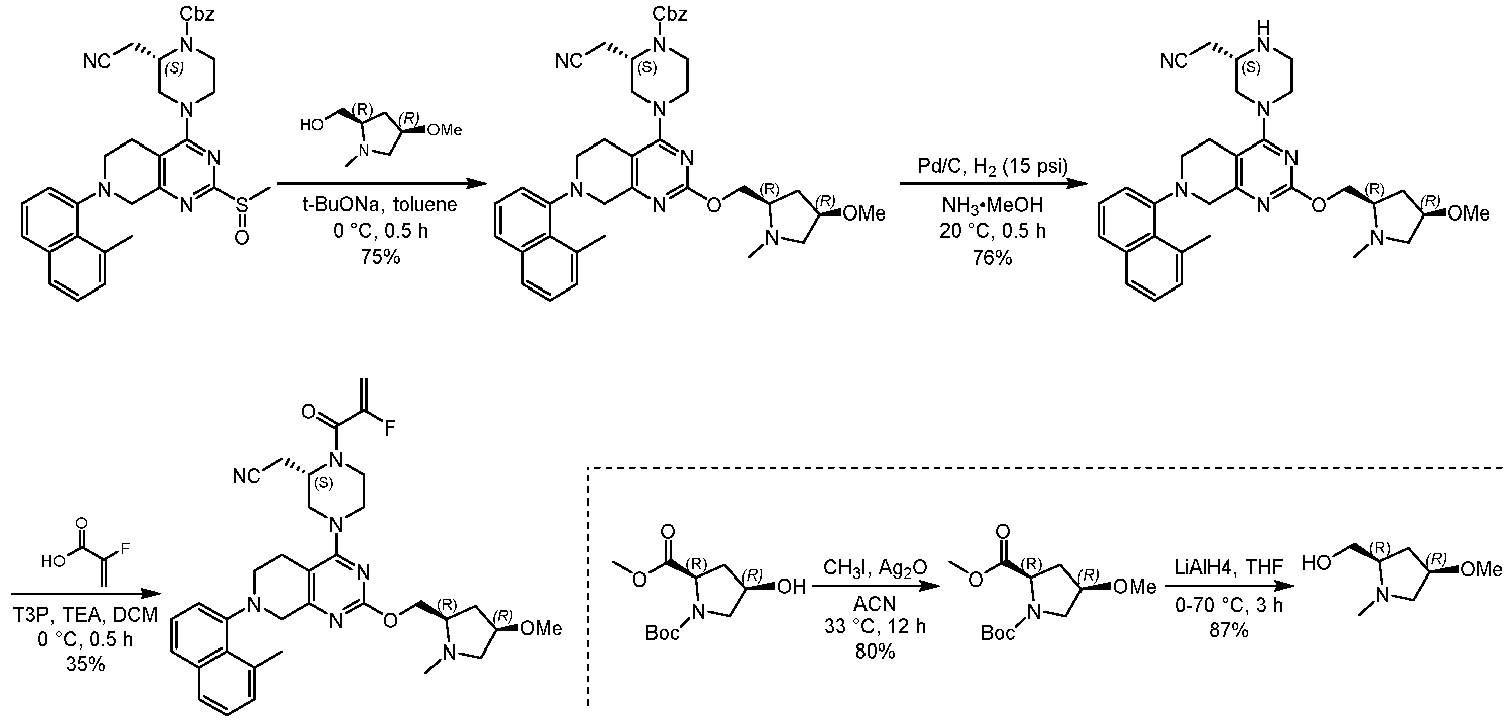
- Step 1: O1-tert-butyl O2-methyl (2R,4R)-4-methoxpyrrolidine-1,2-dicarboxylate. To a solution of O1-tert-butyl O2-methyl (2R,4R)-4-hydroxypyrrolidine-1,2-dicarboxylate (2.1 g, 8.56 mmol, 1 eq) in MeCN (42 mL) was added Ag2O (5.95 g, 25.7 mmol, 3 eq) and CH3I (7.75 g, 54.6 mmol, 3.40 mL, 6.38 eq). The reaction mixture was stirred at 33 °C for 12 hours. The reaction mixture was filtered and the filtrate was concentrated under vacuum. The residue was purified by column chromatography (SiO2, Petroleum ether/Ethyl acetate = 8/1 to 5/1) to give O1-tert-butyl O2-methyl (2R,4R)-4-methoxypyrrolidine-1,2-dicarboxylate (1.88 g, 6.89 mmol, 80 % yield, 95.0 % purity) as a colorless oil.
- 1H NMR (400 MHz, chloroform-d) δ = 4.45 - 4.26 (m, 1H), 3.96 - 3.89 (m, 1H), 3.72 (s, 3H), 3.68 - 3.55 (m, 1H), 3.54 - 3.43 (m, 1H), 3.27 (s, 3H), 2.38 - 2.17 (m, 2H), 1.51 - 1.37 (m, 9H).
- Step 2: [(2R,4R)-4-methoxy-1-methyl-pyrrolidin-2-yl]methanol. To the solution of O1-tert-butyl O2-methyl (2R,4R)-4-methoxypyrrolidine-1,2-dicarboxylate (2.98 g, 11.5 mmol, 1 eq) in THF (60 mL) was added LiAlH4 (872 mg, 23.0 mmol, 2 eq) at 0 °C, the mixture was stirred at 0 °C for 1 hour. Then the reaction mixture was heated to 80 °C and stirred for 2 hours. The mixture was quenched with saturated Na2SO4 aqueous (3 mL), then filtered and the filter cake was washed with THF (3 × 20 mL). The filtrate was concentrated under vacuum to give [(2R,4R)-4-methoxy-1-methyl-pyrrolidin-2-yl]methanol (1.53 g, 10.0 mmol, 87 % yield, 95.0 % purity) as a brown oil which was used for next step without further purification.
- 1H NMR (400 MHz, chloroform-d) δ = 3.82 - 3.76 (m, 1H), 3.69 (dd, J = 3.2, 11.2 Hz, 1H), 3.45 (dd, J = 1.6, 10.8 Hz, 1H), 3.29 (s, 3H), 3.18 (d, J = 10.4 Hz, 1H), 2.62 (br s, 1H), 2.42 (tdd, J = 2.8, 6.4, 9.2 Hz, 1H), 2.38 - 2.33 (m, 1H), 2.32 (s, 3H), 2.16 (ddd, J = 6.8, 8.8, 14.0 Hz, 1H), 1.92 (tdd, J = 1.6, 6.8, 14.0 Hz, 1H).
- Step A: (benzyl (2S)-2-(cyanomethyl)-4-[2-[[(2R,4R)-4-methoxy-1-methyl-pyrrolidin-2-yl]methoxyl-7-(8-methyl-1-naphthyl)-6,8-dihydro-5H-pyrido[3,4-d])pyrimidin-4-yl])piperazine-1-carboxylate. To the solution of [(2R,4R)-4-methoxy-1-methyl-pyrrolidin-2-yl]methanol (1.37 g, 9.42 mmol, 2.8 eq) in toluene (40 mL) was added t-BuONa (970 mg, 10.1 mmol, 3 eq) at 0 °C, then benzyl (2S)-2-(cyanomethyl)-4-[7-(8-methyl-1-naphthyl)-2-methylsulfinyl-6,8-dihydro-5H-pyrido[3,4-d]pyrimidin-4-yl]piperazine-1-carboxylate (2 g, 3.36 mmol, 1 eq) was added at 0 °C, the reaction mixture was stirred at 0 °C for 0.5 hour. Water (20 mL) was added into the mixture. The mixture was diluted with EtOAc (10 mL) and extracted with EtOAc (2 × 20 mL). The combined organic layers were washed with brine (20 mL). The combined organic layers were dried over anhydrous Na2SO4, filtered and concentrated under vacuum. The residue was purified by reversed phase flash column (ACN/Water (0.1% FA) = 57 %) to give (benzyl (2,S)-2-(cyanomethyl)-4-[2-[[(2R,4R)-4-methoxy-1-methyl-pyrrolidin-2-yl]methoxy]-7-(8-methyl-1-naphthyl)-6,8-dihydro-5H-pyrido[3,4-d]pyrimidin-4-yl]piperazine-1-carboxylate (1.8 g, 2.53 mmol, 75 % yield, 95.0 % purity)) as a yellow solid. LCMS [ESI, M+1]: 676.
- 1H NMR (400 MHz, chloroform-d) δ = 7.73 - 7.60 (m, 2H), 7.47 - 7.31 (m, 7H), 7.27 - 7.16 (m, 2H), 5.21 (s, 2H), 4.67 (br s, 1H), 4.45 (br dd, J = 4.4, 10.0 Hz, 1H), 4.24 - 4.16 (m, 2H), 4.10 - 3.96 (m, 2H), 3.96 - 3.65 (m, 3H), 3.59 - 3.40 (m, 2H), 3.29 (d, J = 1.6 Hz, 3H), 3.25 - 3.06 (m, 4H), 3.00 (dt, J = 3.6, 12.4 Hz, 1H), 2.91 (s, 3H), 2.81 - 2.55 (m, 4H), 2.45 (d, J= 6.0 Hz, 3H), 2.42 - 2.29 (m, 2H), 1.88 - 1.68 (m, 2H).
- Step B: 2-[(2S)-4-[2-1[(2R,4R)-4-methoxy-1-methyl-pyrrolidin-2-yl]methoxy]-7-(8-methyl-1-naphthyl)-6,8-dihydro-5H-pyrido[3,4-d]pyrimidin-4-yl]lpiperazin-2-yl]acetonitrile. To the solution of benzyl (2S)-2-(cyanomethyl)-4-[2-[[(2R,4R)-4-methoxy-1-methyl-pyrrolidin-2-yl]methoxy]-7-(8-methyl-1-naphthyl)-6,8-dihydro-5H-pyrido[3,4-d]pyrimidin-4-yl]piperazine-1-carboxylate (2 g, 2.96 mmol, 1 eq) and NH3-MeOH (20 mL, 20 % purity) in MeOH (40 mL) was added Pd/C (1 g, 10 % purity) under N2. The suspension was degassed under vacuum and purged with H2 several times. The mixture was stirred under H2 (15 psi) at 20 °C for 0.5 hour. The reaction mixture was filtered, the filtrate was concentrated under vacuum to give 2-[(2S)-4-[2-[[(2R,4R)-4-methoxy-1-methyl-pyrrolidin-2-yl]methoxy]-7-(8-methyl-1-naphthyl)-6,8-dihydro-5H pyrido[3,4-d]pyrimidin-4-yl]piperazin-2-yl]acetonitrile (1.29 g, 2.26 mmol, 76 % yield, 95 % purity) as a yellow solid which was used for next step without further purification. LCMS [ESI, M+1]: 542.
- Step C: 2-[(2S)-1-(2-fluoroprop)-2-enoyl)-4-[2-[[(2R,4R)-4-methoxy-1-methyl-pyrrolidin-2-yl]methoxy]-7-(8-methyl-1-naphthyl)-6,8-dihydro-5H-pyrido[3,4-d]pyrimidin-4-yl])piperazin-2-yllacetonitrile. To the solution of 2-[(2S)-4-[2-[[(2R,4R)-4-methoxy-l-methyl-pyrrolidin-2-yl]methoxy]-7-(8-methyl-1-naphthyl)-6,8-dihydro-5H-pyrido[3,4-d]pyrimidin-4-yl]piperazin-2-yl]acetonitrile (150 mg, 277 umol, 1 eq), 2-fluoroprop-2-enoic acid (74.8 mg, 831 umol, 3 eq) and TEA (336 mg, 1.66 mmol, 462 µL, 50 % purity, 6 eq) in EtOAc (3 mL) was added T3P (264 mg, 831 umol, 247 µL, 3 eq) at 0 °C, the mixture was stirred at 0 °C for 0.5 hour. Water (4 mL) was added into the mixture. The mixture was extracted with EtOAc (3×8 mL). The combined organic layers were dried over anhydrous Na2SO4, filtered and concentrated under vacuum. The residue was purified by reversed phase flash column (ACN/Water (0.1 % FA) = 32 %). Then the residue was purified by prep-HPLC (column: Gemini 150*25 5u;mobile phase: [water (0.05% ammonia hydroxide v/v)-ACN];B%: 55%-85%,12min) to give title compound 2-[(2S)-1-(2-fluoroprop-2-enoyl)-4-[2-[[(2R,4R)-4-methoxy-1-methyl-pyrrolidin-2-yl]methoxy]-7-(8-methyl-1-naphthyl)-6,8-dihydro-5H-pyrido[3,4-d]pyrimidin-4-yl]piperazin-2-yl]acetonitrile (EXAMPLE 48, 59.5 mg, 97.0 umol, 35 % yield, 100 % purity) as a white solid. LCMS [ESI, M+1]: 614.
- 1H NMR (400 MHz, chloroform-d) δ = 7.70 (br d, J = 8.4 Hz, 1H), 7.65 (t, J = 8.0 Hz, 1H), 7.45 - 7.38 (m, 1H), 7.34 (t, J = 7.6 Hz, 1H), 7.27 - 7.17 (m, 2H), 5.53 - 5.33 (m, 1H), 5.26 (dd, J = 3.6, 16.8 Hz, 1H), 4.88 (br s, 1H), 4.50 - 4.41 (m, 1H), 4.30 - 3.99 (m, 4H), 3.96 - 3.71 (m, 3H), 3.59 - 3.40 (m, 2H), 3.30 (s, 3H), 3.25 - 3.15 (m, 3H), 3.14 - 2.94 (m, 2H), 2.92 (s, 3H), 2.90 - 2.74 (m, 2H), 2.73 - 2.55 (m, 2H), 2.45 (d, J = 5.6 Hz, 3H), 2.42 - 2.29 (m, 2H), 1.81 (br dd, J= 7.2, 14.4 Hz, 1H).
-

-

- Step A: benzyl(2S)-2-(cyanomethy)-4- [2-[[(2S)-4,4-difluoro-1-methyl-pyrrolidin-2-yl]methoxy]-7-(8-me t hyl-1-naphthyl)-6,8-dihydro-5H-pyrido[3,4-d]pyrimidin-4-yl]piperazine-1-carboxylate. To a solution of [(2S)-4,4-difluoro-1-methyl-pyrrolidin-2-yl]methanol (609.98 mg, 4.04 mmol, 3.0 eq) and t-BuONa (388 mg, 4.04 mmol, 3.0 eq) in toluene (2.0 mL) was dropwise added a solution of benzyl(2S)-2-(cyanomethyl)-4-[7-(8-methyl-1-naphthyl)-2-methylsulfinyl-6,8-dihydro-5H-pyrido[3,4-d]pyrimidin-4-yl]piperazine-1-carboxylate (800 mg, 1.35 mmol, 1.0 eq) in toluene (4.0 mL) at 0 °C. The reaction mixture was stirred at 0 °C for 0.5 hour. After completion, the reaction mixture was washed with water (15.0 mL) and extracted with ethyl acetate (3 × 20.0 mL). The Combine extracts were washed with brine (50.0 mL), dried with Na2SO4, filtrated and the solvent was removed under vacuum. The residue was purified by reversed phase flash HPLC [C18, 0.1% FA in water, 0-80% MeCN].The obtained product was then concentrated, the aqueous was extracted with Ethyl acetate (3 × 50.0 mL), the combined organic layer was dried over Na2SO4, filtered and concentrated. Compound benzyl(2S)-2-(cyanomethyl)-4- [2-[[(2S)-4,4-difluoro-1-methyl-pyrrolidin-2-yl]methoxy]-7-(8-methyl-1-naphthyl)-6,8-dihydro-5H-pyrido[3,4-d]pyrimidin-4-yl]piperazine-1-carboxylate (750 mg, 1.08 mmol, 80.1% yield, 98% purity) was obtained as yellow solid. LCMS [ESI, M+1]: 682.
- Step B: 2-[(2S)-4-[2-[[(2S)-4,4-difluoro-1-methyl-pyrrolidin-2-yl]methoxy]-7-(8-methyl-1-naphthyl)-6,8-dihydro-5H-pyrido[3,4-d]pyrimidin-4-yl]piperazin-2-yl]acetonitrile. benzyl(2S)-2-(cyanomethyl)-4-[2-[[(2S)-4,4-difluoro-1-methyl-pyrrolidin-2-yl]methoxy]-7-(8-methyl-1-naphthyl)-6,8-dihydro-5H-pyrido[3,4-d]pyrimidin-4-yl]piperazine-1-carboxylate (650 mg, 953 umol, 1.0 eq) and Pd/C (200 mg, 10% purity) was added in MeOH (8.0 mL) and NH3 MeOH (8.0 mL, 20% purity) then the mixture was degassed and purged with H2 for 3 times, and then the mixture was stirred at 20 °C for 0.5 hour under H2 (15 psi) atmosphere. After completion, the crude mixture was filtered through a pad of celite. The cake was washed with MeOH (50.0 mL) and the filtrate dried under high vacuum. Compound 2-[(2S)-4-[2-[[(2S)-4,4-difluoro-1-methylpyrrolidin-2-yl]methoxy]-7-(8-methyl-1-naphthyl)-6,8-dihydro-5H-pyrido[3,4-d]pyrimidin-4-yl]piperazin-2-yl]acetonitrile (420 mg, 736 umol, 77.2% yield, 96% purity) was obtained as yellow solid. LCMS [ESI, M+1]: 548.
- Step C: 2-[(2S)-1-[(E)-4-bromobut-2-enoyl]-4-[2-[[(2S)-4,4-difluoro-1-methylpyrrolidin-2-yl]methoxy]-7-(8-methyl-1-naphthyl)-6,8-dihydro-5H-pyrido[3,4-d]pyrimidin-4-yl]piperazin-2-yl]acetonitrile. To a solution of 2-[(2S)-4-[2-[[(2S)-4,4-difluoro-1-methylpyrrolidin-2-yl]methoxy]-7-(8-methyl-1-naphthyl)-6,8-dihydro-5H-pyrido[3,4-d]pyrimidin-4-yl]piperazin-2-yl]acetonitrile (420 mg, 822 umol, 1.0 eq) and pyridine (520 mg, 6.57 mmol, 531 µL, 8.0 eq) in DCM (6.0 mL) was added (E)-4-bromobut-2-enoyl chloride (603 mg, 3.29 mmol, 4.0 eq). The mixture was stirred at 0 °C for 0.5 hour. After completion, the mixture was concentrated under vacuum. The product 2-[(2S)-1-[(E)-4-bromobut-2-enoyl] -4-[2-[[(2S)-4,4-difluoro-1-methyl-pyrrolidin-2-yl]methoxy]-7-(8-methyl-1-naphthyl)-6,8-dihydro-5H-pyrido[3,4-d]pyrimidin-4-yl]piperazin-2-yl]acetonitrile (500 mg, crude) was obtained as yellow oil. The crude product was used directly to the next step without further purification. LCMS [ESI, M+1]: 695.
- Step D: 2-[(2S)-4-[2-[[(2S)-4,4-difluoro-1-methyl-yl)prrolidin-2-yl] methoxy]-7-(8-methyl-1-naphthyl)-6,8-dihydro-5H-pyrido[3,4-d]pyrimidin-4-yl]-1-[(E)-4-(3-fluoroazetidin-1-yl)but-2-enoyl]piperazin-2-yl]acetonitrile. To a solution of 2-[(2S)-1-[(E)-4-bromobut-2-enoyl] -4-[2-[[(2S)-4,4-difluoro-1-methyl-pyrrolidin-2-yl]methoxy]-7-(8-methyl-l-naphthyl)-6,8-dihydro-5H-pyrido[3,4-d]pyrimidin-4-yl]piperazin-2-yl]acetonitrile (500 mg, 720 umol, 1.0 eq) and K2CO3 (995 mg, 7.20 mmol, 10.0 eq) in MeCN (12.0 mL) was added 3-fluoroazetidine (482 mg, 4.32 mmol, 6.0 eq, HCl) at 0 °C. The mixture was stirred at 20 °C for 1 hour. After completion, the organic solvent was washed with water (10.0 mL). The aqueous phase was extracted with ethyl acetate (3×10 mL). Combine extracts were washed with brine (20.0 mL), dried with Na2SO4 the solvent was then removed under vacuum. The residue was purified by column chromatography (Base Al2O3, Petroleum ether : Ethyl acetate = 3:1 to Ethyl acetate : Methanol = 100:1), then the crude product was concentrated and purified by prep-HPLC (column: Waters Xbridge 150×25 5u; mobile phase: [water (0.05% ammonia hydroxide v/v)-ACN];B%: 55%-79%,10min];B%: 45%-75%,12min) and lyophilization. Title compound 2-[(2S)-4-[2-[[(2S)-4,4-difluoro-1-methylpyrrolidin-2-yl] methoxy]-7-(8-methyl-1-naphthyl)-6,8-dihydro-5H-pyrido[3,4-d]pyrimidin-4-yl]-1-[(E)-4-(3-fluoroazetidin-1-yl)but-2-enoyl]piperazin-2-yl]acetonitrile (EXAMPLE 49, 45.8 mg, 66.5 umol, 9.24% yield, 100% purity) was obtained as yellow solid. LCMS [ESI, M+1]: 689.
- 1H NMR (400MHz, chloroform-d) δ = 7.74 - 7.63 (m, 2H), 7.47 - 7.32 (m, 2H), 7.27 - 7.18 (m, 2H), 6.88 (br d, J = 15.3Hz, 1H), 6.42 (br d, J = 15.4 Hz, 1H), 5.27 - 5.05 (m, 1H), 4.64 (br s, 1H), 4.48 - 4.41 (m, 1H), 4.31 - 4.18 (m, 2H), 4.16 - 3.95 (m, 2H), 3.94 - 3.84 (m, 1H), 3.82 - 3.66 (m, 3H), 3.54 (br d, J = 7.6 Hz, 1H), 3.50 - 3.36 (m, 2H), 3.34 (br d, J = 3.8 Hz, 2H), 3.30 - 3.24 (m, 1H), 3.24 - 3.08 (m, 4H), 3.07 - 2.95 (m, 2H), 2.92 (s, 3H), 2.86 - 2.76 (m, 1H), 2.76 - 2.57 (m, 3H), 2.57 - 2.47 (m, 1H), 2.46 (d, J = 4.5 Hz, 3H), 2.34 - 2.17 (m, 1H).
-

-

- Step A: 2-[(2S)-4-[7-(5,6-dimethyl-1H-indazol-4-yl)-2-[[(2S)-1-methylpyrrolidin-2-yl]methoxy]- 6,8-dihydro-5H-pyrido[3,4-d]pyrimidin-4-yl]piperazin-2-yl]acetonitrile. To a solution of tert-butyl (2S)-2-(cyanomethyl)-4-[7-(5,6-dimethyl-1- tetrahydropyran-2-yl-indazol-4-yl)-2-[[(2S)-1-methylpyrrolidin-2-yl]methoxy]-6,8-dihydro-5H-pyrido[3,4-d]pyrimidin-4-yl]piperazine-1-carboxylate (720 mg, 1.03 mmol, 1 eq) in DCM (1 mL) was added TFA (4.62 g, 40.5 mmol, 3 mL, 39.4 eq). The mixture was stirred at 20 °C for 4 hours. Upon completion, the mixture was diluted with DCM (10 mL) and neutralized with saturated aqueous NaHCO3. Then the aqueous phase was extracted with EtOAc (2 × 30 mL). The combined organic layers were dried over Na2SO4 and concentrated under vacuum to give 2-[(2S)-4-[7-(5,6-dimethyl-1H-indazol-4-yl)-2-[[(2S)-1-methylpyrrolidin-2-yl]methoxy]- 6,8-dihydro-5H-pyrido[3,4-d]pyrimidin-4-yl]piperazin-2-yl]acetonitrile (880 mg, crude) as a yellow solid which was used directly into the next step without further purification.
- Step B: 2-[(2S)-4-[7-(5,6-dimethyl-1H-indazol-4-yl)-2-[[(2S)-1-methylpyrrolidin- 2-yl]methoxyl-6,8-dihydro-5H-pyrido[3,4-d]pyrimidin-4-yl]-1-(2-fluoroprop-2-enoyl)piperazin-2-yllacetonitrile. To a solution of 2-[(2S)-4-[7-(5,6-dimethyl-1H-indazol-4-yl)-2- [[(2S)-1-methylpyrrolidin-2-yl]methoxy]-6,8-dihydro-5H-pyrido[3,4-d]pyrimidin-4-yl]piperazin-2-yl]acetonitrile (500 mg, crude), 2-fluoroprop-2-enoic acid (61.1 mg, 679 umol) and TEA (294 mg, 2.91 mmol, 405 uL) in DMF (10 mL) was added T3P (926 mg, 1.45 mmol, 865 µL, 50% purity in EtOAc) at -40 °C. Then the mixture was stirred at -40 °C for 0.5 hour and 0 °C for another 0.5 hour. Upon completion, the mixture was diluted with water (20 mL) and extracted with EtOAc (2 × 40 mL). The organic layers were washed with brine (50 mL), dried over Na2SO4 and concentrated under vacuum. The residue was purified by reversed phase flash [water (0.1% FA)/acetonitrile]. The desired fractions were collected and neutralized with saturated aqueous NaHCOs and extracted with EtOAc (2 × 70 mL). The organic layers were dried over Na2SO4 and concentrated under vacuum. The residue was purified by prep-HPLC (column: Phenomenex Synergi C18 150*30mm*4um; mobile phase: [water (0.225%FA)-ACN]; B%: 10%-40%, 12 min). The desired fractions were collected and lyophilized to give title compound 2-[(2S)-4-[7-(5,6-dimethyl-1H-indazol-4-yl)-2-[[(2S)-1-methylpyrrolidin- 2-yl]methoxy]-6,8-dihydro-5H-pyrido[3,4-d]pyrimidin-4-yl]-1-(2-fluoroprop-2-enoyl)piperazin-2-yl]acetonitrile (EXAMPLE 50, 52.5 mg, 79.8 umol, two steps 15% yield, 96.4% purity, FA) as a white solid. LCMS [ESI, M+1]:588.
- SFC condition: Column: Chiralcel OJ-3 100×4.6mm I.D., 3um, Mobile phase: methanol (0.05% DEA) in CO2 from 5% to 40%, Flow rate: 3mL/min, Wavelength: 220nm.
- 1H NMR (400 MHz, chloroform-d) δ = 8.03 (s, 1H), 7.15 (s, 1H), 5.53 - 5.34 (m, 1H), 5.25 (br dd, J = 3.2, 16.8 Hz, 1H), 5.02 - 4.61 (m, 3H), 4.43 (dd, J = 4.8, 11.6 Hz, 1H), 4.27 (s, 2H), 4.19 (br d, J = 13.2 Hz, 1H), 4.01 (br d, J = 12.4 Hz, 1H), 3.68 - 3.56 (m, 1H), 3.55 - 3.50 (m, 2H), 3.49 - 3.21 (m, 3H), 3.14 (br s, 1H), 2.98 (br s, 1H), 2.91 - 2.61 (m, 7H), 2.41 (s, 3H), 2.34 (s, 3H), 2.23 (qd, J = 8.4, 12.4 Hz, 1H), 2.14 - 1.95 (m, 3H).
-

-

- Step A: 2-[(2S)-4-[2-[[(2R,4R)-4-fluoro-1-methyl -pyrrolidin-2-yl]methoxy]-7-(8-methyl-1-naphthyl)-6,8-dihydro-5H-pyrido[3,4-d]pyrimidin-4-yl]-1-[(E)-4-trityloxybut-2-enoyl]piperazin-2-yl]acetonitrile. To a solution of 2-[(2S)-4-[2-[[(2R,4R)-4-fluoro-1-methyl - pyrrolidin-2-yl]methoxy]-7-(8-methyl-1-naphthyl)-6,8-dihydro-5H-pyrido[3,4-d]pyrimidin-4-yl]piperazin-2-yl]acetonitrile (200 mg, 378 umol, 1.0 eq), (E)-4-trityloxybut-2-enoic acid (169 mg, 491 umol, 1.3 eq) and DIEA (293 mg, 2.27 mmol, 395 µL, 6.0 eq) in DCM (3.0 mL) was added HATU (431 mg, 1.13 mmol, 3.0 eq). The mixture was stirred at 0 °C for 0.5 hour. After completion, the mixture was added water (10 mL) and extracted with ethyl acetate (2 × 10.0 mL ). The organic layer was dried over Na2SO4, filtered and concentrated. The residue was purified by column chromatography (SiO2, Petroleum ether/Ethyl acetate=3/1 to Ethyl acetate : Methanol=20:1). The product 2-[(2S)-4-[2-[[(2R,4R)-4-fluoro-1-methyl -pyrrolidin-2-yl]methoxy]-7-(8-methyl-1-naphthyl)-6,8-dihydro-5H-pyrido[3,4-d]pyrimidin-4-yl]-1-[(E)-4-trityloxybut-2-enoyl]piperazin-2-yl]acetonitrile (290 mg, 339 umol, 90% yield) was obtained as yellow solid.
- Step B: 2-[(2S)-4-[2-[[(2R,4R)-4-fluoro-1-methyl-pyrrolidin-2-yl]methoxy]-7- (8-methyl-l-naphthyl)-6 . 8-dihydro-5H-pyrido[3 . 4-d1pvrimidin-4-yl]-l-[(E)-4-hydroxybut-2-enoyl]piperazin-2-yl]acetonitrile. To a solution of 2-[(2S)-4-[2-[[(2R,4R)-4-fluoro-1-methylpyrrolidin-2-yl]methoxy]-7-(8-methyl-1-naphthyl)-6,8-dihydro-5H-pyrido[3,4-d]pyrimidin-4-yl]-1-[(E)-4-trityloxybut-2-enoyl]piperazin-2-yl]acetonitrile (290 mg, 339 umol, 1.0 eq) in dichloromethane (1.5 mL) was added TFA (2.31 g, 20.3 mmol, 1.5 mL, 59.8 eq), the mixture was stirred at 20 °C for 0.5 hour. After completion, the reaction mixture was concentrated, then added dichloromethane (10.0 mL), the organic layer was washed with saturated NaHCO3 aqueous (2 × 10.0 mL), the organic layer was dried over Na2SO4, filtered and concentrated. The residue was purified by column chromatography (Base Al2O3, Petroleum ether/Ethyl acetate=3/1 to Ethyl acetate: Methanol=20:1). The crude product was then repurified by prep-HPLC (column: Gemini 150*25 5u; mobile phase: [water (0.05% ammonia hydroxide v/v)-ACN];B%: 45%-75%,12 min), the obtained product was concentrated and under lyophilization. Title compound 2-[(2S)-4-[2-[[(2R,4R)-4-fluoro-1-methyl-pyrrolidin-2-yl]methoxy]-7-(8-methyl-1-naphthyl)-6,8-dihydro-5H-pyrido[3,4-d]pyrimidin-4-yl]-1-[(E)-4-hydroxybut-2-enoyl]piperazin-2-yl]acetonitrile (EXAMPLE 51, 61.3 mg, 99.9 umol, 29% yield, 99% purity) was obtained as white solid. LCMS [ESI, M+1]: 614.
- 1H NMR (400 MHz, chloroform-d) δ 7.73 - 7.61 (m, 2H), 7.46 - 7.31 (m, 2H), 7.27 - 7.18 (m, 2H), 7.06 (br d, J = 14.8 Hz, 1H), 6.62 (br d, J = 14.8 Hz, 1H), 5.27 - 4.97 (m, 1H), 4.74 - 4.55 (m, 1H), 4.52 - 4.34 (m, 3H), 4.31 - 4.16 (m, 2H), 4.15 - 3.96 (m, 2H), 3.94 - 3.58 (m, 3H), 3.56 - 3.48 (m, 1H), 3.46 - 3.41 (m, 1H), 3.36 - 3.29 (m, 1H), 3.26 - 3.07 (m, 3H), 3.04 - 2.97 (m, 1H), 2.92 (s, 3H), 2.85 - 2.57 (m, 4H), 2.49 (d, J = 4.8 Hz, 3H), 2.45 - 2.34 (m, 1H), 2.29 - 1.91 (m, 2H).
-

-

- Step A: 2-[(2S)-4-[2-1[(2R,4R)-4-methoxy-1-methyl-yl)]pyrrolidin-2-yl]methoxcy]-7-(8-methyl-1-naphthyl)-6,8-dihydro-5H-pyrido[3,4-d]pyrimidin-4-yl]-1-[(E)-4-trityloxybut-2-enovl]piperazin-2-yl]acetonitrile. To the solution of 2-[(2S)-4-[2-[[(2R,4R)-4-methoxy-1-methylpyrrolidin-2-yl]methoxy]-7-(8-methyl-1-naphthyl)-6,8-dihydro-5H-pyrido[3,4-d]pyrimidin-4-yl]piperazin-2-yl]acetonitrile (200 mg, 369 umol, 1 eq), (E)-4-trityloxybut-2-enoic acid (254 mg, 738 umol, 2 eq) and TEA (374 mg, 3.69 mmol, 514 µL, 10 eq) in EtOAc (4 mL) was added T3P (705 mg, 1.11 mmol, 659 µL, 50 % purity, 3 eq) at 0 °C, the mixture was stirred at 0 °C for 0.5 hour. Water (10 mL) was added into the mixture. The mixture was diluted with EtOAc (5 mL) and extracted with EtOAc (15 mL). The organic layer was washed with brine (10 mL), dried over anhydrous Na2SO4, filtered and concentrated under vacuum. The residue was purified by reversed phase flash column (ACN/Water (0.1% FA) = 70 %) to give 2-[(2S)-4-[2-[[(2R,4R)-4-methoxy-1-methyl-pyrrolidin-2-yl]methoxy]-7-(8-methyl-1-naphthyl)-6,8-dihydro-5H-pyrido[3,4-d]pyrimidin-4-yl]-1-[(E)-4-trityloxybut-2-enoyl]piperazin-2-yl]acetonitrile (230 mg, 262 umol, 71 % yield, 99 % purity) as a yellow solid.
- Step B: 2-[(2S)--[(E)-4--hydroxcybut-2-enoyl]-4-[2-[[(2R,4R)-4-methoxy-1-methylpyrrolidin-2y-l]methoxy]-7-(8-methyl-1-naphthyl)-6,8-dihydro-5H-pyrido[3,4-d]pvrimidin-4-yl]piperazin-2-yl]acetonitrile. To the solution of 2-[(2S)-4-[2-[[(2R,4R)-4-methoxy-1-methylpyrrolidin-2-yl]methoxy]-7-(8-methyl-1-naphthyl)-6,8-dihydro-5H-pyrido[3,4-d]pyrimidin-4-yl]-1-[(E)-4-trityloxybut-2-enoyl]piperazin-2-yl]acetonitrile (230 mg, 265 umol, 1 eq) in DCM (2.3 mL) was added TFA (3.54 g, 31.1 mmol, 2.3 mL, 117 eq), the mixture was stirred at 15 °C for 1 hour. The reaction mixture was basified with saturated NaHCO3 (30 mL) to PH=7-8, then extracted with DCM (2 × 15 mL). The combined organic layers were dried over anhydrous Na2SO4, filtered and concentrated under vacuum. The residue was purified by reversed phase flash column (ACN/Water (0.1% FA) = 32 %). Then the residue was purified by prep-HPLC (column: Gemini 150*25 5u;mobile phase: [water (0.05% ammonia hydroxide v/v)-ACN];B%: 37%-67%,12min) to give title compound 2-[(2S)-1-[(E)-4-hydroxybut-2-enoyl]-4-[2-[[(2R,4R)-4-methoxy-1-methyl-pyrrolidin-2-yl]methoxy]-7-(8-methyl-1-naphthyl)-6,8-dihydro-5H-pyrido[3,4-d]pyrimidin-4-yl]piperazin-2-yl]acetonitrile (EXAMPLE 52, 41.7 mg, 66.6 umol, 25 % yield, 100 % purity) as a white solid. LCMS [ESI, M+1]: 626.
- 1H NMR (400 MHz, chloroform-d) δ = 7.70 (br d, J = 8.4 Hz, 1H), 7.65 (t, J = 8.0 Hz, 1H), 7.45 - 7.38 (m, 1H), 7.37 - 7.31 (m, 1H), 7.27 - 7.17 (m, 2H), 7.07 (br d, J = 14.8 Hz, 1H), 6.62 (br d, J = 14.0 Hz, 1H), 5.07 (br s, 1H), 4.85 - 4.55 (m, 1H), 4.51 - 4.37 (m, 3H), 4.30 - 3.97 (m, 4H), 3.94 - 3.65 (m, 2H), 3.58 - 3.40 (m, 2H), 3.29 (d, J = 1.6 Hz, 3H), 3.25 - 2.96 (m, 5H), 2.92 (s, 3H), 2.86 - 2.54 (m, 4H), 2.45 (d, J = 4.8 Hz, 3H), 2.42 - 2.28 (m, 2H), 1.81 (br dd, J = 8.9, 13.6 Hz, 1H).
-

-

- Step A: 2-((S)-4-(7-(8-chloronaphthalen-1-yl)-2-(((S)-1-methylpyrrolidin-2-yl)methoxy)-5,6,7,8-tetrahydropyrido[3,4-d]pyrimidin-4-yl)-1-((E)-4-methoxybut-2-enoyl)piperazin-2-yl)acetonitrile: A stirred mixture of 2-((S)-4-(7-(8-chloronaphthalen-1-yl)-2-(((S)-1-methylpyrrolidin-2-yl)methoxy)-5,6,7,8-tetrahydropyrido[3,4-d]pyrimidin-4-yl)piperazin-2-yl)acetonitrile (100 mg, 0.1879 mmol), (E)-4-methoxybut-2-enoic acid (32.73 mg, 0.2819 mmol) and N,N-dimethylformamide (1 mL, 12.79 mmol) was cooled to 0°C followed by addition of triethylamine (0.07859 mL, 0.5638 mmol) and 2,4,6-tripropyl-1,3,5,2,4,6-trioxatriphosphinane 2,4,6-trioxide, 50% in EtOAc (0.1678 mL, 0.2819 mmol). The reaction mixture was stirred for 2 hours while warming to room temperature. The mixture was partitioned between 0.5M Na2CO3 (5 mL) and EtOAc (15 mL) and the organics separated. The organics were next washed with water and brine (5 mL each), dried over Na2SO4 and evaporated in vacuo. The residue was next chromatographed on silica gel using 4%MeOH + 0.4% NH4OH/DCM as eluent to give impure material which was further purified by Gilson reverse prep HPLC eluting with 5 to 75% ACN+0.1% TFA /H2O +0.1% TFA. Fractions containing pure product were combined and partitioned between DCM and a saturated solution of Na2CO3 and the layers separated. The organics were next washed with brine, dried over MgSO4 and concentrated in vacuo to give pure title compound (EXAMPLE 53, 33 mg, 28%). ESI+APCI MS m/z 630.3 [M+].
-

-

- Step A: N-(3-((S)-2-(cyanomethvl)-4-(7-(8-methylnaphthalen-1-yl)-2-(((S)-1-methylpyrrolidin-2-yl)methoxy)-5,6,7,8-tetrahydropyrido[3,4-d]pyrimidin-4-yl)piperazin-1-yl)-3-oxoprop-1-en-2-yl)acetamide: To a 25 mL round bottom flask containing dichloromethane (2932 µl, 0.2932 mmol) cooled to 0°C was added 2-((S)-4-(7-(8-methylnaphthalen-1-yl)-2-(((S)-1-methylpyrrolidin-2-yl)methoxy)-5,6,7,8-tetrahydropyrido[3,4-d]pyrimidin-4-yl)piperazin-2-yl)acetonitrile (150 mg, 0.2932 mmol) and Hunig's base (307.2 µl, 1.759 mmol). The reaction mixture was vigorously stirred while 2-Acetamidoacrylic acid (227.1 mg, 1.759 mmol) was added in one portion. Next, 1-Propanephosphonic acid cyclic anhydride (1047 µl, 1.759 mmol) was added slowly to the stirring mixture. The reaction was stirred for 2 hours at 0°C. The reaction was treated with basic water and the aqueous layer extracted with EtOAc (3X). The combined organics were concentrated in vacuo and purified on the Gilson (prep HPLC) eluting with 5→795% ACN+0.1% TFA /water+0.1% TFA. Fractions containing product were combined and basified with 1M NaOH and the aqueous layer extracted with DCM (2X). The organics were dried over Na2SO4 and concentrated in vacuo to give title compound N-(3-((S)-2-(cyanomethyl)-4-(7-(8-methylnaphthalen-1-yl)-2-(((S)-1-methylpyrrolidin-2-yl)methoxy)-5,6,7,8-tetrahydropyrido[3,4-d]pyrimidin-4-yl)piperazin-1-yl)-3-oxoprop-1-en-2-yl)acetamide (EXAMPLE 54, 124.2 mg, 68.03 % yield). ESI+APCI MS m/z 623.3 [M+H]+.
-

- 2-((S)-4-(7-(8-methylnaphthalen-1-yl)-2-(((S)-1-methylpyrrolidin-2-yl)methoxy)-5,6,7,8-tetrahydropyrido[3,4-d]pyrimidin-4-yl)-1-((E)-3-(pyridin-4-yl)acryloyl)piperazin-2-yl)acetonitrile: The title compound was prepared following Example 54 substituting Trans-3-(4-Pyridyl) Acrylic Acid for 2-Acetamidoacrylic acid in Step A. ESI+APCI MS m/z 643.3 [M+H]+.
-

-

- 1-bromo-5-fluoro-3-methyl-2-(trifluoromethyl)benzene. To a solution of 1-bromo-5-fluoro-2-iodo-3-methyl-benzene (2 g, 6.35 mmol, 1 eq) in DMF (40 mL) was added CuI (7.26 g, 38.1 mmol, 6 eq) and methyl 2,2-difluoro-2-fluorosulfonyl-acetate (7.32 g, 38.1 mmol, 4.85 mL, 6 eq). The mixture was stirred at 60 °C for 12 hours. The reaction mixture was diluted with ethyl acetate (20 mL) and washed with water (20 mL × 3). The organic layer was washed with brine (20 mL), dried over Na2SO4, filtered and concentrated under reduced pressure to give a residue. The residue was purified by column chromatography (SiO2, Petroleum ether/Ethyl acetate = 1/0 to 10/1). 1-bromo-5-fluoro-3-methyl-2-(trifluoromethyl)benzene (1.3 g, 3.74 mmol, 59% yield, 74% purity) was obtained as a yellow oil.
- 1H NMR (400MHz, chloroform-d) δ = 7.33 (dd, J = 2.4, 7.6 Hz, 1H), 6.95 (dd, J = 2.0, 8.8 Hz, 1H), 2.54 (q, J = 3.6 Hz, 3H).
- 2-bromo-6-fluoro-4-methyl-3-(trifluoromethyl)benzaldehyde. To a mixture of 1-bromo-5-fluoro-3-methyl-2- (trifluoromethyl)benzene (900 mg, 3.50 mmol, 1 eq) in THF (20 mL) was added LDA (2 M in THF, 3.50 mL, 2 eq) at - 60 °C under nitrogen atmosphere. After stirring for 0.5 hour, to the mixture was added DMF (768 mg, 10.5 mmol, 808 µL, 3 eq). The mixture was stirred at - 60 °C for 1 hour. The reaction was quenched with saturated NH4Cl aqueous solution (10 mL) and then extracted with ethyl acetate (50 mL × 3). The combined organic phase was washed with brine (10 mL), dried over anhydrous Na2SO4, filtered and concentrated in vacuo. The residue was purified by column chromatography (SiO2, Petroleum ether/Ethyl acetate = 200/1 to 5/1). 2-bromo-6-fluoro-4-methyl-3-(trifluoromethyl)benzaldehyde (700 mg, 2.46 mmol, 70% yield) was obtained as a yellow oil.
- 1H NMR (400MHz, chloroform-d) δ = 10.35 (s, 1H), 7.08 (d, J = 10.4 Hz, 1H), 2.66 - 2.58 (m, 3H).
- 4-bromo-6-methyl-5-(trifluoromethyl)- 1H-indazole. A solution of 2-bromo-6-fluoro-4-methyl-3- (trifluoromethyl)benzaldehyde (600 mg, 2.11 mmol, 1 eq) and hydrazine monohydrate (2.11 g, 42.1 mmol, 2.05 mL, 20 eq) in DMSO (8 mL) was stirred at 60 °C for 2 hours. The mixture was diluted with ethyl acetate (50 mL) and washed with water (3 × 50 mL) and brine (1 × 50 mL). The separated organic layer was dried over sodium sulfate, filtered and concentrated under vacuum. The residue was used to next step without further purification. 4-bromo-6-methyl-5-(trifluoromethyl)- 1H-indazole (550 mg, 1.97 mmol, 94% yield) was obtained as a white solid.
- 4-bromo-6-methyl-1-tetrahydropyran-2-yl-5-(trifluoromethyl)indazole. To a solution of 4-bromo-6-methyl-5-(trifluoromethyl)- 1H-indazole (500 mg, 1.79 mmol, 1 eq) in DCM (10 mL) was added 4-methylbenzenesulfonic acid hydrate (34.1 mg, 1791 umol, 0.1 eq) 1 followed by a solution of DHP (603 mg, 7.17 mmol, 655 µL, 4 eq) in CH3CN (2 mL). The mixture was stirred at 25 °C for 16 hours. The mixture was diluted with ethyl acetate (100 mL) and washed with water (2 × 100 mL) and brine (1 × 50 mL). The organic layer was dried over sodium sulfate, filtered and concentrated under vacuum. The residue was purified by column chromatography over silica gel (petroleum ether/ethyl acetate 20/1 to 3/1). The desired fractions were collected and concentrated under vacuum to give 4-bromo-6-methyl-1-tetrahydropyran-2-yl-5-(trifluoromethyl)indazole (600 mg, 1.54 mmol, 86% yield, 93% purity) as a light yellow gum. LCMS [MSI, M+1]: 363.
- Step A: tert-Butyl (2S)-2-(cyanomethvl)-4-[2-[[(2S)-1-methylpyrrolidin-2-yl]methoxy]-7-[6-methyl-1-tetrahydropyran-2-yl-5-(trifluoromethyl)indazol-4-yl]-6,8-dihydro-5H-pyrido[3,4-d]pyrimidin-4-yl])piperazine-1-carboxylate. To a mixture of tert-butyl (2S)-2-(cyanomethyl)-4-[2-[[(2S)-1- methylpyrrolidin-2-yl]methoxy]-5,6,7,8-tetrahydropyrido[3,4-d]pyrimidin-4-yl]piperazine-1-carboxylate (400 mg, 848 umol, 1 eq), 4-bromo-6-methyl-1-tetrahydropyran- 2-yl-5-(trifluoromethyl)indazole (431 mg, 1.19 mmol, 1.4 eq) Pd2(dba)3 (155 mg, 170 umol, 0.2 eq), RuPhos (158 mg, 339 umol, 0.4 eq) and Cs2CO3 (691 mg, 2.12 mmol, 2.5 eq) in toluene (20 mL) was degassed and purged with N2 for 3 times, and then the mixture was stirred at 100 °C for 16 hours under N2 atmosphere. To the mixture was added H2O (20 mL × 1) and Ethyl acetate (20 mL × 1). The organic phase was separated, filtered and concentrated under reduced pressure to give a residue. The residue was purified by silica gel chromatography (Ethyl acetate /Methanol = 50/1 to 2/1). tert-Butyl (2S)-2-(cyanomethyl)-4-[2-[[(2S)-1-methylpyrrolidin-2-yl]methoxy]- 7-[6-methyl-1-tetrahydropyran-2-yl-5-(trifluoromethyl)indazol-4-yl]-6,8-dihydro-5H-pyrido[3,4-d]pyrimidin-4-yl]piperazine-1-carboxylate (500 mg, 535 umol, 32% yield, 80.7% purity) was obtained as a yellow solid. LCMS [MSI, M+1]: 754.
- Step B: 2-[(2S)-4-[2-[[(2S)-1-methylpyrrolidin- 2-yl]methoxy]-7-[6-methyl-5-(trifluoromethyl)-1H-indazol-4-yl]-6,8-dihydro-5H-pyrido[3,4-d]pyrimidin-4-yl]piperazin-2-yl]acetonitrile. To a solution of tert-butyl (2S)-2-(cyanomethyl)-4-[2-[[(2S)-1- methylpyrrolidin-2-yl]methoxy]-7-[6-methyl-1-tetrahydropyran-2-yl-5-(trifluoromethyl)indazol-4-yl]-6,8-dihydro-5H-pyrido[3,4-d]pyrimidin-4-yl]piperazine-1-carboxylate (470 mg, 503 umol, 1 eq) in DCM (1 mL) was added TFA (2.29 g, 20.1 mmol, 1.49 mL, 40 eq). The mixture was stirred at 25 °C for 1 h. To the mixture was added dichloromethane (5 mL) and basified with saturated aqueous NaHCO3 solution to pH = 8 ~ 9. The organic phase was separated, dried over sodium sulfate, filtered and concentrated under reduced pressure to give 2-[(2S)-4-[2-[[(2S)-1-methylpyrrolidin-2-yl]methoxy]-7-[6-methyl-5-(trifluoromethyl)-1H-indazol-4-yl]-6,8-dihydro-5H-pyrido[3,4-d]pyrimidin-4-yl]piperazin-2-yl]acetonitrile (420 mg, 453 umol, 90% yield, 61.4% purity) was obtained as a yellow solid and used into next step without further purification. LCMS [MSI, M+1]: 570.
- Step C: 2-((S)-1-(2-fluoroacryloyl)-4-(7-(6-methyl-5- (trifluoromethyl)-1H-indazol-4-yl-2-(((S)-1-methylpyrrolidin-2-yl)methoxy)-5,6,7,8-tetrahydropyrido[3,4-d]pyrimidin-4-yl)piperazin-2-yl)acetonitrile. To a solution of 2-[(2S)-4-[2-[[(2S)-1-methylpyrrolidin-2-yl] methoxy]-7-[6-methyl-5-(trifluoromethyl)-1H-indazol-4-yl]-6,8-dihydro-5H-pyrido[3,4-d]pyrimidin-4-yl]piperazin-2-yl]acetonitrile (380 mg, 410 umol, 1 eq), 2-fluoroprop-2-enoic acid (18.4 mg, 205 umol, 0.5 eq) and TEA (124 mg, 1.23 mmol, 171 µL, 3 eq) in DMF (8 mL) was added T3P (391 mg, 614 umol, 365 µL, 50% purity in DMF, 1.5 eq) at - 40 °C. Then the mixture was stirred at -40 °C for 0.5 hour and 0 °C for another 0.5 hour. 2-fluoroprop-2-enoic acid (11 mg) and T3P (100 uL) was added and the mixture was stirred at -40 °C for further 0.5 hour. The mixture was diluted with water (15 mL) and extracted with EtOAc (2 × 40 mL). The organic layers were washed with brine (50 mL), dried over Na2SO4 and concentrated under vacuum. The residue was purified by prep-HPLC (column: Luna C18 150*25 5u; mobile phase: [water (0.225% FA) - ACN]; B%: 22% - 42%, 7.8 min) and (column: Phenomenex Gemini 150*25mm*10um; mobile phase: [water (0.04% NH3H2O + 10 mM NH4HCO3) - ACN]; B%: 50% - 68%, 12 min). The desired fractions were collected and lyophilize to give title compound 2-((S)-1-(2-fluoroacryloyl)-4-(7-(6-methyl-5- (trifluoromethyl)-1H-indazol-4-yl)-2-(((S)-1-methylpyrrolidin-2-yl)methoxy)-5,6,7,8-tetrahydropyrido[3,4-d]pyrimidin-4-yl)piperazin-2-yl)acetonitrile (EXAMPLE 56) as white solid.
-

- The title compound is prepared following Example 49 by modifying Intermediate 66 by substituting (S)-(4,4-difluoro-1-methylpyrrolidin-2-yl)methanol for (1-methylpyrrolidin-2-yl)methanol in Intermediate 66, Step E, modified Intermediate 66 is deprotected using the conditions in Intermediate 71, Step A, then substituted for Intermediate 66 in Example 49, Step A.
-

- The title compound is prepared following Example 49 substituting (E)-4-fluorobut-2-enoic acid for 3-fluoroazetidine using the conditions of Example 49, Step D.
-

- The title compound is prepared following Example 49 substituting 2-fluoroprop-2-enoyl chloride for 3-fluoroazetidine using the conditions of Example 49, Step D.
-

- The title compound is prepared following Example 49 substituting (methoxymethyl)prop-2-enoic acid for 3-fluoroazetidine using the conditions of Example 49, Step D.
-

- The title compound is prepared following Example 49 substituting 4-[tert-butyl(dimethyl)silyl]oxybut-2-ynoic acid for 3-fluoroazetidine using the conditions of Example 49, Step D.
-

- The title compound is prepared following Example 50 substituting (E)-4-fluorobut-2-enoic acid for 2-fluoroprop-2-enoic acid in Example 50, Step B.
-

- The title compound is prepared following Example 50 substituting 2-(methoxymethyl)prop-2-enoic acid for 2-fluoroprop-2-enoic acid in Example 50, Step B.
-

- The title compound is prepared following Example 50 substituting 4-[tert-butyl(dimethyl)silyl]oxybut-2-ynoic acid for 2-fluoroprop-2-enoic acid in Example 50, Step B.
-

- The title compound is prepared following Example 57 substituting 2-fluoroprop-2-enoyl chloride for 3-fluoroazetidine using the conditions of Example 49, Step A.
-
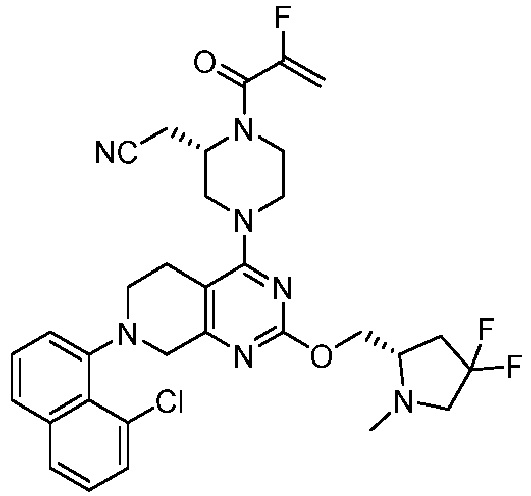
- The title compound is prepared following Example 57 substituting 2-fluoroprop-2-enoyl chloride for 3-fluoroazetidine using the conditions of Example 49, Step A.
-

- The title compound is prepared following Example 57 substituting (methoxymethyl)prop-2-enoic acid for 3-fluoroazetidine using the conditions of Example 49, Step A.
-

- The title compound is prepared following Example 57 substituting 4-[tert-butyl(dimethyl)silyl]oxybut-2-ynoic acid for 3-fluoroazetidine using the conditions of Example 49, Step A.
-

- The title compound is prepared following Example 56 substituting 2-fluoroprop-2-enoyl chloride for 2-fluoroprop-2-enoyl chloride using the conditions of Example 56, Step C.
-

- The title compound is prepared following Example 56 substituting (methoxymethyl)prop-2-enoic acid for 2-fluoroprop-2-enoyl chloride using the conditions of Example 56, Step C.
-

- The title compound is prepared following Example 56 substituting 4-[tert-butyl(dimethyl)silyl]oxybut-2-ynoic acid for 2-fluoroprop-2-enoyl chloride using the conditions of Example 56, Step C.
-

-

- Step A: 2-[(2S)-4-[2-[[(2R,4R)-4-fluoro-1-methyl-pyrrolidin-2-yl]methoxyl-7-(8-methyl-1-naphthyl)-6,8-dihydro-5H-pyrido[3,4-d]pyrimidin-4-yl]-1-[(E)-4-methoxybut-2-enoyl]piperazin-2-yl]acetonitrile. To a solution of 2-[(2S)-4-[2-[[(2R,4R)-4-fluoro-1-methylpyrrolidin-2-yl]methoxy]-7-(8-methyl-1-naphthy1)-6,8-dihydro-5H-pyrido[3,4-d]pyrimidin-4-yl]piperazin-2-yl]acetonitrile (200 mg, 378 umol, 1.0 eq), (E)-4-methoxybut-2-enoic acid (110 mg, 944 umol, 2.5 eq) in DMF (3.0 mL) was added TEA (382 mg, 3.78 mmol, 526 µL, 10.0 eq) and T3P (721 mg, 1.13 mmol, 674 µL, 50 % purity, 3.0 eq). The mixture was stirred at 0 °C for 0.5 hour. After completion, the organic solvent was washed with water (10.0 mL). The aqueous phase was extracted with ethyl acetate (3 × 10.0 mL). Combine extracts were washed with brine (20.0 mL), dried with Na2SO4 and filtrated. The solvent was then removed under vacuum. The residue was purified by column chromatography (Base Al2O3, Petroleum ether : Ethyl acetate = 10:1 to 1:1), then the crude product was concentrated and repurified by prep-HPLC (column: Phenomenex Gemini 150×25mm×10um; mobile phase: [water (0.05% ammonia hydroxide v/v)-ACN]; B%: 48%-78%,9-10min) and lyophilization to give title compound 2-[(2S)-4-[2-[[(2R,4R)-4-fluoro-1-methyl-pyrrolidin-2-yl]methoxy]-7-(8-methyl-1-naphthyl)-6,8-dihydro-5H pyrido[3,4-d]pyrimidin-4-yl]-1-[(E)-4-methoxybut-2-enoyl]piperazin-2-yl]acetonitrile (EXAMPLE 71, 50 mg, 79.6 umol, 21% yield, 99.9% purity) was obtained as yellow solid. LCMS [ESI, M+1]: 628.
- 1H NMR (400MHz, Chloroform-d) δ = 7.73 - 7.62 (m, 2H), 7.45 - 7.31 (m, 2H), 7.27 - 7.18 (m, 2H), 7.05 - 6.94 (m, 1H), 6.55 (br d, J = 15.0 Hz, 1H), 5.23 - 5.03 (m, 1H), 4.66 (br s, 1H), 4.52 - 4.42 (m, 1H), 4.30 - 4.18 (m, 2H), 4.18 - 3.94 (m, 4H), 3.93 - 3.84 (m, 1H), 3.83 - 3.65 (m, 1H), 3.54 (br d, J = 6.7 Hz, 1H), 3.44 (s, 3H), 3.42 - 3.26 (m, 2H), 3.25 - 3.15 (m, 2H), 3.05 (br dd, J = 8.5, 16.4 Hz, 2H), 2.92 (s, 3H), 2.88 - 2.58 (m, 4H), 2.57 -2.35 (m, 5H), 2.14 - 1.96 (m, 1H).
-

-

- Step A: 2-[(2S)-1-[(E)-4-methoxybut-2-enoyl]-4-[2-[[(2R,4R)-4-methoxy-1-methylpyrrolidin-2-yl]methoxy]-7-(8-methyl-1-naphthyl)-6,8-dihydro-5H-pyrido[3,4-d]pyrimidin-4-yl]piperazin-2-yl]acetonitrile. To the solution of 2-[(2S)-4-[2-[[(2R,4R)-4-methoxy-1-methylpyrrolidin-2-yl]methoxy]-7-(8-methyl-1-naphthyl)-6,8-dihydro-5H-pyrido[3,4-d]pyrimidin-4-yl]piperazin-2-yl]acetonitrile (150 mg, 277 umol, 1 eq), (E)-4-methoxybut-2-enoic acid (64.3 mg, 554 umol, 2 eq) and TEA (280 mg, 2.77 mmol, 385 µL, 10 eq) in DMF (3 mL) was added T3P (529 mg, 831 umol, 494 µL, 50 % purity, 3 eq) at 0 °C, the mixture was stirred at 0 °C for 0.5 hour. Water (10 mL) was added into the mixture. The mixture was diluted with EtOAc (5 mL) and extracted with EtOAc (2 × 10 mL). The combined organic layers were washed with brine (10 mL), dried over anhydrous Na2SO4, filtered and concentrated under vacuum. The residue was purified by reversed phase flash column (ACN/Water (0.1 % FA) = 35 %). Then the residue was purified by prep-HPLC (column: Waters Xbridge 150*25 5u; mobile phase: [water (0.05 % ammonia hydroxide v/v) - ACN]; B %: 50 % - 74 %,10min) to give title compound 2-[(2S)-1-[(E)-4-methoxybut-2-enoyl]-4-[2-[[(2R,4R)-4-methoxy-1-methyl-pyrrolidin-2-yl]methoxy]-7-(8-methyl-1-naphthyl)-6,8-dihydro-5H-pyrido[3,4-d]pyrimidin-4-yl]piperazin-2-yl]acetonitrile (EXAMPLE 72, 37.1 mg, 57.2 umol, 21 % yield, 98.7 % purity) as a white solid. LCMS [ESI, M+l1: 640.
- 1H NMR (400 MHz, chloroform-d) δ = 7.72 - 7.61 (m, 2H), 7.45 - 7.31 (m, 2H), 7.27 - 7.17 (m, 2H), 6.99 (br d, J = 14.8 Hz, 1H), 6.55 (br d, J = 15.2 Hz, 1H), 5.07 (br s, 1H), 4.51 -4.40 (m, 1H), 4.31 - 4.04 (m, 5H), 3.95 - 3.68 (m, 3H), 3.63 - 3.47 (m, 2H), 3.44 (s, 3H), 3.42 - 3.35 (m, 1H), 3.30 (d, J = 1.2 Hz, 3H), 3.24 - 2.96 (m, 5H), 2.92 (s, 3H), 2.76 (br dd, J = 8.0, 16.8 Hz, 1H), 2.72 - 2.52 (m, 3H), 2.45 (d, J = 5.2 Hz, 3H), 2.41 - 2.27 (m, 2H), 1.81 (br dd, J = 7.2, 14.0 Hz, 1H).
-

-

- Step A: methyl 3-hydroxy-4-methoxy-butanoate. To a solution of methyl 4-methoxy-3-oxo-butanoate (20 g, 137 mmol, 1.0 eq) in toluene (300 mL) was added NaBH4 (5.44 g, 144 mmol, 1.05 eq) at 0 °C. Then the mixture was stirred at 20 °C for 4 hours. After completion, the mixture was diluted with water (100 mL) at 0 °C and extracted with ethyl acetate (3 × 100 mL). The extracts were washed with brine (200 mL), dried over Na2SO4, filtered and concentrated under vacuum to give methyl 3-hydroxy-4-methoxy-butanoate (7.5 g, crude) as yellow oil and used into next step without further purification.
- 1H NMR (400MHz, chloroform-d) δ = 4.23 - 4.15 (m, 1H), 3.70 (s, 3H), 3.44 - 3.38 (m, 2H), 3.37 (s, 3H), 3.04 (br s, 1H), 2.51 (d, J = 6.4 Hz, 2H).
- Step B: methyl (E)-4-methoxybut-2-enoate. To a solution of methyl 3-hydroxy-4-methoxy-butanoate (7.5 g, crude) in DCM (50.0 mL) was added TEA (5.12 g, 50.6 mmol, 7.05 mL) and MsCl (8.70 g, 75.9 mmol, 5.88 mL) at 0 °C. After stirred for 4 hours, to the mixture was added TEA (10.2 g, 101 mmol, 14.1 mL) 0 °C. The mixture was warmed up to 20°C and stirred for 12 hours. After completion, the mixture was diluted with water (50.0 mL), washed with HCl (1N, 15.0 mL) and brine (20.0 mL), dried over Na2SO4, filtered and concentrated under vacuum. The residue was purified by column chromatography (SiO2, Petroleum ether/Ethyl acetate = 1/0 to 50:1) to give methyl (E)-4-methoxybut-2-enoate (1.7 g, 11.8 mmol, two steps 8.6% yield, 90% purity) as yellow oil.
- 1H NMR (400MHz, chloroform-d) δ = 6.93 (td, J = 4.3, 15.8 Hz, 1H), 6.04 (td, J = 2.0, 15.8 Hz, 1H), 4.06 (dd, J = 2.0, 4.3 Hz, 2H), 3.72 (s, 3H), 3.36 (s, 3H).
- Step C: (E)-4-methoxybut-2-enoic acid. A mixture of methyl (E)-4-methoxybut-2-enoate (300 mg, 2.31 mmol, 1.0 eq) and KOH (517 mg, 9.22 mmol, 4.0 eq) in MeOH (2.0 mL) and H2O (2.0 mL) was stirred at 20 °C for 2 hours. After completion, the mixture was acidified with HCl (2N, 5.0 mL) to pH = 1 - 3 and extracted with ethyl acetate (2×20 mL). The organic layers were dried over Na2SO4, filtered and concentrated under vacuum to give (E)-4-methoxybut-2-enoic acid (200 mg, 1.55 mmol, 67.3% yield, 90% purity) as yellow solid.
- 1H NMR (400MHz, chloroform-d) δ = 11.13 (br s, 1H),7.06 (td, J= 4.1, 15.7 Hz, 1H), 6.08 (td, J = 2.0, 15.7 Hz, 1H), 4.12 (dd, J = 2.0, 4.1 Hz, 2H), 3.40 (s, 3H).
- Step D: 2-[(2S)-1-[(E)-4-methoxybut-2-enoyl]-4-[7-(8-methyl-1-naphthyl)-2-[[(2R)-1-methylpyrrolidin-2-yl]methoxy]-6,8-dihydro-5H-pyrido[3,4-d]pyrimidin-4-yl]piperazin-2-yllacetonitrile. To a solution of 2-[(2S)-4-[7-(8-methyl-1-naphthyl)-2-[[(2R) -1-methylpyrrolidin-2-yl]methoxy]-6,8-dihydro-5H-pyrido[3,4-d]pyrimidin-4-yl]piperazin-2-yl]acetonitrile (200 mg, 391 umol, 1 eq), (E)-4-methoxybut-2-enoic acid (113 mg, 977 umol, 2.5 eq), TEA (395 mg, 3.91 mmol, 544 µL, 10 eq) in DMF (4 mL) was added T3P (746 mg, 1.17 mmol, 697 µL, 50% purity, 3 eq) at 0 °C. The mixture was stirred at 0 °C for 0.3 hour. The reaction mixture was diluted with ethyl acetate (20 mL) and washed with water (10 mL × 3). The organic layers were washed with brine (10 mL), dried over Na2SO4, filtered and concentrated under reduced pressure to give a residue. The residue was purified by column chromatography (SiO2, Ethyl acetate/MeOH = 100/1 to 10:1) and further purified by prep-HPLC (column: Boston pH - lex 150*25 10 um; mobile phase: [water (0.1%TFA) - ACN]; B%: 35% - 59%, 8min). The mixture was collected and lyophilized. Title compound 2-[(2S)-1-[(E)-4-methoxybut-2-enoyl]-4-[7-(8-methyl-1-naphthyl)-2-[[(2R)-1-methylpyrrolidin-2-yl]methoxy]-6,8-dihydro-5H-pyrido[3,4-d]pyrimidin-4-yl]piperazin-2-yl]acetonitrile (EXAMPLE 73, 37.5 mg, 60.4 umol, 15% yield, 98.2% purity) was obtained as a white solid. LCMS [ESI, M+1]: 610.
- 1H NMR (400MHz, chloroform-d) δ = 7.77 - 7.57 (m, 2H), 7.46 - 7.37 (m, 1H), 7.34 (t, J = 7.6 Hz, 1H), 7.27 - 7.17 (m, 2H), 6.99 (br d, J = 14.4 Hz, 1H), 6.55 (br d, J = 14.8 Hz, 1H), 5.24 - 4.49 (m, 1H), 4.46 - 4.32 (m, 1H), 4.32 - 3.74 (m, 7H), 3.73 - 3.25 (m, 6H), 3.25 - 2.94 (m, 5H), 2.92 (s, 3H), 2.86 - 2.54 (m, 4H), 2.49 (d, J = 5.6 Hz, 3H), 2.38 - 2.23 (m, 1H), 2.11 - 2.00 (m, 1H), 1.93 - 1.65 (m, 3H).
- Examples 74 - 129 are shown in Table 1:
Example No. Structure Example No. Structure 74 
102 
75 
103 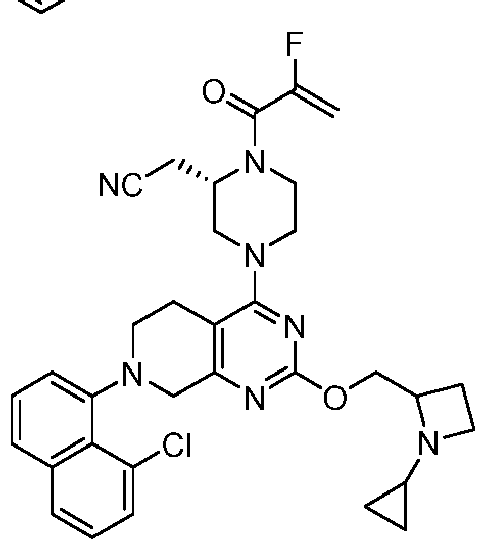
76 
104 
77 
105 
78 
106 
79 
107 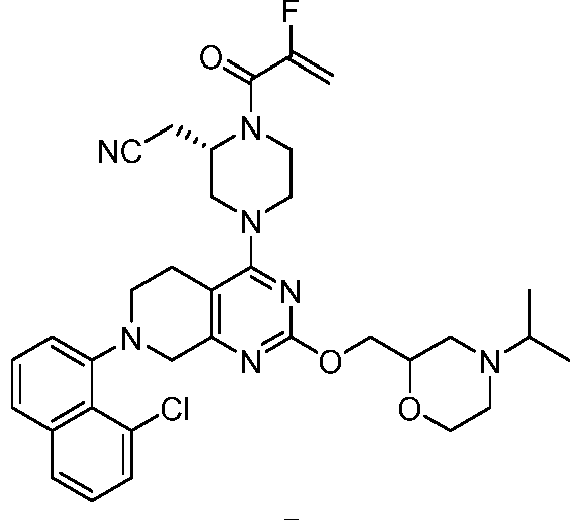
80 
108 
81 
109 
82 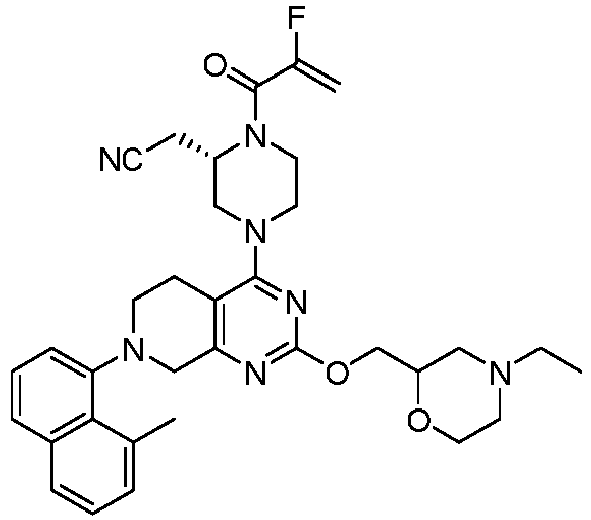
110 
83 
111 
84 
112 
85 
113 
86 
114 
87 
115 
88 
116 
89 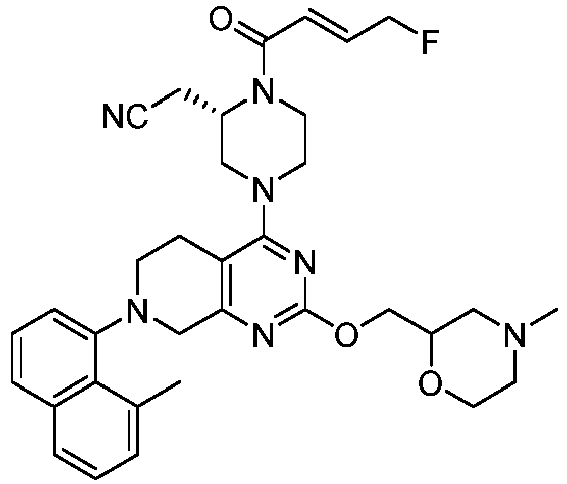
117 
90 
118 
91 
119 
92 
120 
93 
121 
94 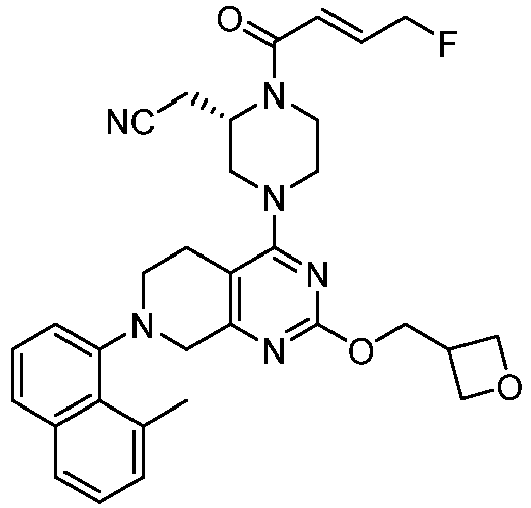
122 
95 
123 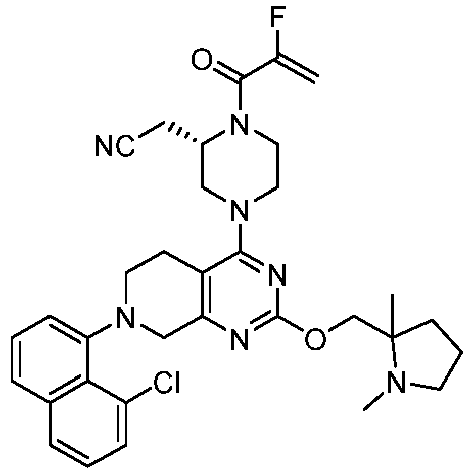
96 
124 
97 
125 
98 
126 
99 
127 
100 
128 
101 
129 
-

- Step A. To a mixture of tert-butyl (2S)-2-(cyanomethyl)-4-(7-(8-methylnaphthalen-1-yl)-2-(methylsulfinyl)-5,6,7,8-tetrahydropyrido[3,4-d]pyrimidin-4-yl)piperazine-1-carboxylate (200 mg, 357 µmol, 1.00 eq.) and (1-tert-butylazetidin-2-yl)methanol (102 mg, 713 µmol, 2.0 eq) in toluene (20.0 mL) was added t-BuONa (103 mg, 1.07 mmol, 3.0 eq) in portions at 0 °C under nitrogen. The mixture was stirred at 25 °C for 30 min. The reaction mixture was diluted with ethyl acetate (30.0 mL) and adjusted to pH 8 - 9 with 2 M aq HCl at 0 °C and then extracted with ethyl acetate (20.0 mL × 2). The combined organic layer was washed with water (15.0 mL), dried over sodium sulfate, filtered and concentrated under reduced pressure. The residue was purified by reversed phase flash chromatography [water (0.1% formic acid)/acetonitrile]. The desired fractions were collected and neutralized with saturated NaHCO3 solution (6.00 mL) and extracted with ethyl acetate (50.0 mL × 2). The separated organic layer was dried over sodium sulfate, filtered and concentrated under vacuum to afford tert-butyl (2S)-4-(2-((1-(tert-butyl)azetidin-2-yl)methoxy)-7-(8-methylnaphthalen-1-yl)-5,6,7,8-tetrahydropyrido[3,4-d]pyrimidin-4-yl)-2-(cyanomethyl)piperazine-1-carboxylate (100 mg, 150 µmol, 42% yield, 96% purity) was obtained as a yellow solid. LCMS [M+1]: 640.
- Step B. To a mixture of tert-butyl (2S)-4-(2-((1-(tert-butyl)azetidin-2-yl)methoxy)-7-(8-methylnaphthalen-1-yl)-5,6,7,8-tetrahydropyrido[3,4-d]pyrimidin-4-yl)-2-(cyanomethyl)piperazine-1-carboxylate (50.0 mg, 78.2 µmol, 1.00 eq) in MeCN (1.00 mL) was added HCl/dioxane (4 M, 1.50 mL, 76.8 eq.) and the mixture was stirred at 25 °C for 30 min. The reaction mixture was concentrated under reduced pressure to give a residue. The residue was diluted with ethyl acetate (5.00 mL) and saturated NaHCO3 solution. The aqueous layer was separated and extracted with ethyl acetate (5.00 mL × 3). The combined organic layer was washed with brine (3.00 mL), dried over sodium sulfate, filtered and concentrated under reduced pressure to provide the crude material. The residue was purified by prep-HPLC (column: Waters Xbridge 150 × 25 5 µm; mobile phase: [water(10 mM NH4HCO3) - ACN]; B%: 42% - 72%, 10 min) to afford 2-((2S)-4-(2-((1-(tert-butyl)azetidin-2-yl)methoxy)-7-(8-methylnaphthalen-1-yl)-5,6,7,8-tetrahydropyrido[3,4-d]pyrimidin-4-yl)piperazin-2-yl)acetonitrile (10.4 mg, 19.0 µmol, 24% yield, 99.2% purity) as a white solid. LCMS [M+1]: 540.
- SFC conditions: Column: Chiralpak IC-3 50 × 4.6 mm I.D., 3 um Mobile phase: Phase A for CO2, and Phase B for IPA + CAN (0.05% DEA); Gradient elution: 50% IPA + ACN (0.05% DEA) in CO2 Flow rate: 3 mL/min; Wavelength: 220 nm Column Temp: 35 C;Back Pressure: 100 Bar.
- 1H NMR (400 MHz, CDCl3): δ = 7.72 - 7.68 (m, 1H), 7.67 - 7.62 (m, 1H), 7.44 - 7.37 (m, 1H), 7.37 - 7.31 (m, 1H), 7.27 - 7.19 (m, 2H), 4.50 - 4.39 (m, 1H), 4.30 - 4.16 (m, 2H), 4.04 - 3.72 (m, 4H), 3.52 - 3.45 (m, 1H), 3.37 - 3.28 (m, 1H), 3.25 - 3.07 (m, 6H), 3.06 - 2.96 (m, 2H), 2.95 - 2.92 (m, 3H), 2.61 - 2.49 (m, 3H), 2.15 - 1.94 (m, 2H), 1.06 - 0.96 (m, 9H).
- Step C. To a mixture of 2-((2S)-4-(2-((1-(tert-butyl)azetidin-2-yl)methoxy)-7-(8-methylnaphthalen-1-yl)-5,6,7,8-tetrahydropyrido[3,4-d]pyrimidin-4-yl)piperazin-2-yl)acetonitrile (80.0 mg, 148 µmol, 1.0 eq.) and 2-fluoroprop-2-enoic acid (40.1 mg, 445 µmol, 3.0 eq) in ethyl acetate (3.00 mL) was added TEA (120 mg, 1.19 mmol, 165 µL, 8.0 eq) and T3P (283 mg, 445 µmol, 264 µL, 50% purity, 3.0 eq.) in portion at 0 °C under nitrogen. The mixture was stirred at 25 °C for 30 min. The reaction mixture was quenched by the addition of water (2.00 mL) at 0 °C and was subsequently extracted with ethyl acetate (5.00 mL × 3). The combined organic layer was washed with brine (3.00 mL), dried over sodium sulfate, filtered and concentrated under reduced pressure to give a residue. The residue was purified by prep-HPLC (column: Waters Xbridge 150 × 25 5 µm; mobile phase: [water(10 mM NH4HCO3)-ACN]; B%: 45% - 75%, 10 min) to afford 2-((2S)-4-(2-((1-(tert-butyl)azetidin-2-yl)methoxy)-7-(8-methylnaphthalen-1-yl)-5,6,7,8-tetrahydropyrido[3,4-d]pyrimidin-4-yl)-1-(2-fluoroacryloyl)piperazin-2-yl)acetonitrile (21.8 mg, 35.4 µmol, 24% yield, 99.2% purity) as a white solid. LCMS [M+1]: 612.
- SFC conditions: Column: Chiralcel OJ - 3 50 × 4.6 mm I.D., 3 µm Mobile phase: Phase A for CO2, and Phase B for MeOH(0.05% DEA); Gradient elution: MeOH (0.05% DEA) in CO2 from 5% to 40% Flow rate: 3 mL/min; Wavelength: 220 nm Column Temp: 20 C; Back Pressure: 100 Bar.
- 1H NMR (400 MHz, CDCl3): δ = 7.73 - 7.67 (m, 1H), 7.67 - 7.62 (m, 1H), 7.46 - 7.38 (m, 1H), 7.38 - 7.32 (m, 1H), 7.27 - 7.17 (m, 2H), 5.53 - 5.33 (m, 1H), 5.31 - 5.16 (m, 1H), 5.03 - 4.64 (m, 1H), 4.53 - 4.37 (m, 1H), 4.33 - 4.21 (m, 2H), 4.20 - 3.99 (m, 3H), 3.94 - 3.73 (m, 3H), 3.60 - 3.40 (m, 2H), 3.27 - 3.03 (m, 6H), 2.95 - 2.89 (m, 3H), 2.86 - 2.76 (m, 1H), 2.68 - 2.54 (m, 1H), 2.19 - 1.91 (m, 2H), 1.06 - 0.92 (m, 9H).
- Spectral data for Examples 100, 103 and 104 are provided in Table 2.
Table 2 Ex. # Structure Spectral Data 100 
[0010] 1H NMR (400 MHz, CD3OD) δ = 7.83 (d, J = 8.0 Hz, 1H), 7.69 (br d, J = 8.4 Hz, 1H), 7.56 - 7.52 (m, 1H), 7.51 - 7.46 (dd, J = 1.2 Hz, J = 8.0 Hz, 1H), 7.38 (t, J = 8.0 Hz, 1H), 7.35 - 7.30 (m, 1H), 5.43 - 5.24 (m, 2H), 4.51 - 4.41 (m, 1H), 4.36 - 4.25 (m, 3H), 4.23 - 4.03 (m, 2H), 3.99 - 3.88 (m, 1H), 3.78 - 3.67 (m, 1H), 3.64 - 3.57 (m, 1H), 3.51 - 3.38 (m, 2H), 3.30 - 3.12 (m, 6H), 3.10 - 3.01 (m, 1H), 3.00 - 2.88 (m, 1H), 2.76 - 2.62 (m, 1H), 2.15 - 2.06 (m, 1H), 2.04 - 1.94 (m, 1H), 1.06 (s, 9H). LCMS [M+1]: 632.4. 103 
1H NMR (400 MHz, MeOD) δ = 7.82 (dd, J = 0.8, 8.0 Hz, 1H), 7.67 (br d, J = 8.0 Hz, 1H), 7.52 (dd, J = 1.2, 7.6 Hz, 1H), 7.51 - 7.45 (m, 1H), 7.37 (t, J = 8.0 Hz, 1H), 7.34 - 7.29 (m, 1H), 5.40 - 5.23 (m, 2H), 4.44 - 4.25 (m, 4H), 4.20 - 4.04 (m, 2H), 3.93 - 3.85 (m, 2H), 3.77 - 3.53 (m, 4H), 3.50 - 3.39 (m, 1H), 3.28 - 3.06 (m, 5H), 2.95 - 2.85 (m, 2H), 2.75 - 2.61 (m, 2H), 2.31 (s, 3H), 2.22 - 2.12 (m, 1H), 2.09 - 2.04 (m, 1H). LCMS [M+1]: 620.5. 104 
1H NMR (400 MHz, MeOD) δ = 7.82 (d, J = 7.2 Hz, 1H), 7.68 (dd, J = 1.2, 8.0 Hz, 1H), 7.55 - 7.51 (m, 1H), 7.50 - 7.46 (m, 1H), 7.40 - 7.35 (m, 1H), 7.35 - 7.29 (m, 1H), 5.41 - 5.24 (m, 2H), 4.43 - 4.26 (m, 4H), 4.23 - 4.01 (m, 2H), 3.83 - 3.77 (m, 1H), 3.76 - 3.66 (m, 1H), 3.64 - 3.56 (m, 1H), 3.49 - 3.41 (m, 1H), 3.40 - 3.32 (m, 2H), 3.30 - 2.89 (m, 7H), 2.77 - 2.62 (m, 1H), 2.20 - 2.10 (m, 1H), 2.06 - 1.94 (m, 2H), 0.50 - 0.29 (m, 4H). LCMS [M+1]: 616.5. -

-

- Step A. A solution of tert-butyl (2S)-4-(7-(8-chloronaphthalen-1-yl)-2-(methylsulfinyl)-5,6,7,8-tetrahydropyrido[3,4-d]pyrimidin-4-yl)-2-(cyanomethyl)piperazine-1-carboxylate (200 mg, 344 µmol, 1.00 eq.) and (tetrahydro-1H-pyrrolizin-7a(5H)-yl)methanol (97.2 mg, 688 µmol, 2.00 eq.) in toluene (2.00 mL) at 0 °C was stirred for 20 min prior to the addition of sodium tert-butoxide (99.2 mg, 1.03 mmol, 3.00 eq.). The mixture was stirred at 0 °C for 10 min and The reaction mixture was diluted with water (10.0 mL) and extracted with ethyl acetate (20.0 mL × 3). The combined organic layer was washed with brine (50.0 mL × 2), dried over anhydrous sodium sulfate, filtered and concentrated under reduced pressure to give a residue. The residue was purified by prep-TLC (SiO2, dichloromethane:methanol = 10:1) to afford tert-butyl (S)-4-(7-(8-chloronaphthalen-1-yl)-2-((tetrahydro-1H-pyrrolizin-7a(5H)-yl)methoxy)-5,6,7,8-tetrahydropyrido[3,4-d]pyrimidin-4-yl)-2-(cyanomethyl)piperazine-1-carboxylate (120 mg, 182 µmol, 53.0% yield) as a red solid. LCMS [M+1]: 659.1.Step B. To a solution of tert-butyl (S)-4-(7-(8-chloronaphthalen-1-yl)-2-((tetrahydro-1H-pyrrolizin-7a(5H)-yl)methoxy)-5,6,7,8-tetrahydropyrido[3,4-d]pyrimidin-4-yl)-2-(cyanomethyl)piperazine-1-carboxylate (100 mg, 152 µmol, 1.00 eq.) in dichloromethane (2.00 mL) was added TFA (1.08 g, 9.45 mmol, 0.70 mL, 62.2 eq.). The mixture was stirred at 15 °C for 1 h. The reaction mixture was filtered and concentrated under reduced pressure to give a residue. The residue was purified by prep-HPLC (neutral conditions) to afford (S)-2-(4-(7-(8-chloronaphthalen-1-yl)-2-((tetrahydro-1H-pyrrolizin-7a(5H)-yl)methoxy)-5,6,7,8-tetrahydropyrido[3,4-d]pyrimidin-4-yl)piperazin-2-yl)acetonitrile (60.0 mg, 105 µmol, 69.3% yield, 97.9% purity) as an off-white solid. LCMS [M+1]: 558.2.1H NMR (400 MHz, MeOD): δ = 7.82 (d, J = 7.8 Hz, 1H), 7.67 (d, J = 8.0 Hz, 1H), 7.53 (dd, J = 1.2, 7.2 Hz, 1H), 7.48 (dt, J = 2.4, 7.6 Hz, 1H), 7.37 (t, J = 8.0 Hz, 1H), 7.34 - 7.30 (m, 1H), 4.37 - 4.23 (m, 2H), 4.17 - 4.07 (m, 2H), 4.05 - 3.89 (m, 1H), 3.73 - 3.62 (m, 1H), 3.61 - 3.53 (m, 1H), 3.28 - 3.23 (m, 1H), 3.21 - 3.12 (m, 2H), 3.11 - 2.95 (m, 5H), 2.88 - 2.80 (m, 1H), 2.74 - 2.65 (m, 4H), 2.65-2.57 (m, 1H), 2.09 - 1.99 (m, 2H), 1.95 - 1.81 (m, 4H), 1.75-1.65 (m, 2H).Step C. To a solution of (S)-2-(4-(7-(8-chloronaphthalen-1-yl)-2-((tetrahydro-1H-pyrrolizin-7a(5H)-yl)methoxy)-5,6,7,8-tetrahydropyrido[3,4-d]pyrimidin-4-yl)piperazin-2-yl)acetonitrile (40.0 mg, 71.7 µmol, 1.00 eq.) and 2-fluoroprop-2-enoic acid (12.9 mg, 143 µmol, 2.00 eq.) in DMF (2.00 mL) was added DIEA (37.5 µL, 215 µmol, 3.00 eq.) and T3P (42.6 µL, 143 µmol,, 2.00 eq.). The mixture was stirred at 15 °C for 1 h. The reaction mixture was diluted with water (10.0 mL) and extracted with ethyl acetate (20.0 mL × 3). The combined organic layer was washed with brine (40.0 mL × 2), dried over anhydrous sodium sulfate, filtered and concentrated under reduced pressure to give a residue. The residue was purified by prep-HPLC (neutral conditions) to afford (S)-2-(4-(7-(8-chloronaphthalen-1-yl)-2-((tetrahydro-1H-pyrrolizin-7a(5H)-yl)methoxy)-5,6,7,8-tetrahydropyrido[3,4-d]pyrimidin-4-yl)-1-(2-fluoroacryloyl)piperazin-2-yl)acetonitrile (11.6 mg, 17.3 µmol, 24.2% yield, 94.4% purity) as a white solid. LCMS [M+1]: 630.4.1H NMR (400 MHz, MeOD) δ = 7.82 (dd, J = 0.8, 8.0 Hz, 1H), 7.67 (d, J = 8.0 Hz, 1H), 7.53 (dd, J = 1.2, 7.6 Hz, 1H), 7.51 - 7.46 (m, 1H), 7.37 (t, J = 8.0 Hz, 1H), 7.34 - 7.29 (m, 1H), 5.41 - 5.23 (m, 2H), 4.35 - 4.29 (m, 1H), 4.21 - 4.08 (m, 4H), 3.75 - 3.65 (m, 1H), 3.63 - 3.57 (m, 1H), 3.50 - 3.38 (m, 1H), 3.29 - 3.27 (m, 1H), 3.26 - 2.88 (m, 8H), 2.75 - 2.62 (m, 3H), 2.09 - 1.80 (m, 7H), 1.75 - 1.65 (m, 2H).
-

-

- Step A: To a mixture of tert-butyl (S)-4-(4-((benzyloxy)carbonyl)-3-(cyanomethyl)piperazin-1-yl)-2-(methylsulfonyl)-5,8-dihydropyrido[3,4-d]pyrimidine-7(6H)-carboxylate (225 mg, 394 µmol, 1.0 eq.) and 1-tetrahydropyran-4-ylpiperidin-4-ol (110 mg, 591 µmol, 1.5 eq.) in toluene (4 mL) was added 4Å molecular sieves (100 mg). After stirring at 0 °C for 0.5 h, t-BuONa (75.8 mg, 789 µmol, 2.0 eq.) was added and the mixture was stirred at 0 °C for 0.5 h. After completion, the reaction mixture was filtered and diluted with ethyl acetate (12 mL) and water (10 mL). The aqueous phase was separated and extracted with ethyl acetate (2 × 10 mL). The combined organic layer was washed with saturated brine (10 mL), dried over Na2SO4, filtered and concentrated under reduced pressure. The residue was purified by column chromatography (SiO2, petroleum ether/ethyl acetate = 1/1 - 0/1) to afford tert-butyl (S)-4-(4-((benzyloxy)carbonyl)-3-(cyanomethyl)piperazin-1-yl)-2-((1-(tetrahydro-2H-pyran-4-yl)piperidin-4-yl)oxy)-5,8-dihydropyrido[3,4-d]pyrimidine-7(6H)-carboxylate (216 mg, 278 µmol, 70% yield, 86.8% purity) as a yellow solid. LCMS [M+1]: 676.
- 1H NMR (400 MHz, CDCl3) δ = 7.41 - 7.36 (m, 5H), 5.19 (s, 2H), 4.95 (br d, J = 3.2 Hz, 1H), 4.72 - 4.57 (m, 2H), 4.34 (br d, J = 18.8 Hz, 1H), 4.04 (br dd, J = 3.6, 11.2 Hz, 2H), 3.89 - 3.97 (br m, 1H), 3.84 - 3.71 (m, 1H), 3.34 - 3.26 (m, 5H), 2.97 (dt, J = 3.2, 12.4 Hz, 1H), 2.91 - 2.78 (m, 3H), 2.75 - 2.62 (m, 3H), 2.61 - 2.42 (m, 4H), 2.09 - 2.06 (m, 1H), 2.05 - 2.01 (m, 1H), 1.92 - 1.83 (m, 2H), 1.77 (br d, J = 10.8 Hz, 2H), 1.71 - 1.63 (m, 3H), 1.49 (s, 9H).
- To a mixture of tert-butyl (S)-4-(4-((benzyloxy)carbonyl)-3-(cyanomethyl)piperazin-1-yl)-2-((1-(tetrahydro-2H-pyran-4-yl)piperidin-4-yl)oxy)-5,8-dihydropyrido[3,4-d]pyrimidine-7(6H)-carboxylate (380 mg, 562 µmol, 1.0 eq.) in acetonitrile (2 mL) was added HCl•dioxane (4.0 M, 4 mL, 29 eq.). The mixture was stirred at 0 - 15 °C for 1 h. After completion, the mixture was concentrated under reduced pressure and the mixture was diluted with satd aq NaHCO3. The aqueous phase was extracted with dichloromethane/methanol = 10/1 (3 × 2 mL) and the organic layer was dried over Na2SO4, filtered and concentrated under reduced pressure to afford benzyl (S)-2-(cyanomethyl)-4-(2-((1-(tetrahydro-2H-pyran-4-yl)piperidin-4-yl)oxy)-5,6,7,8-tetrahydropyrido[3,4-d]pyrimidin-4-yl)piperazine-1-carboxylate (307 mg) as a yellow solid that was used in the next step without purification. LCMS [M+1]: 576.
- To a mixture of benzyl (S)-2-(cyanomethyl)-4-(2-((1-(tetrahydro-2H-pyran-4-yl)piperidin-4-yl)oxy)-5,6,7,8-tetrahydropyrido[3,4-d]pyrimidin-4-yl)piperazine-1-carboxylate (201 mg, 834 µmol), RuPhos (51.9 mg, 111 µmol), Cs2CO3 (543 mg, 1.67 mmol) in toluene (6 mL) was added Pd2(dba)3 (50.9 mg, 55.6 µmol) under an atmosphere of nitrogen. The mixture was heated at 100 °C for 3 h. The mixture was cooled to room temperature and was diluted with ethyl acetate (8 mL) and water (8 mL). The aqueous phase was extracted with ethyl acetate (2 × 7 mL) and the combined organic layer was washed with saturated brine (10 mL), dried over Na2SO4, filtered and concentrated under reduced pressure. The residue was purified by reversed phase flash [water (0.1% formic acid)/acetonitrile] to afford benzyl (S)-4-(7-(8-chloronaphthalen-1-yl)-2-((1-(tetrahydro-2H-pyran-4-yl)piperidin-4-yl)oxy)-5,6,7,8-tetrahydropyrido[3,4-d]pyrimidin-4-yl)-2-(cyanomethyl)piperazine-1-carboxylate (120 mg, 143 µmol, two steps 26% yield, 87.5% purity) as a brown solid. LCMS [M+1]: 736.
- Step B: To a mixture of benzyl (S)-4-(7-(8-chloronaphthalen-1-yl)-2-((1-(tetrahydro-2H-pyran-4-yl)piperidin-4-yl)oxy)-5,6,7,8-tetrahydropyrido[3,4-d]pyrimidin-4-yl)-2-(cyanomethyl)piperazine-1-carboxylate (118 mg, 160 µmol, 1.0 eq.) and 4Å molecular sieves (50 mg) in acetonitrile (2 mL) was added NaI (384 mg, 2.56 mmol, 16 eq.). The mixture was stirred at 0°C for 0.5 h followed by the addition of TMSCl (261 mg, 2.40 mmol, 305 µL, 15 eq.) at 0°C. The mixture was stirred at 15 °C for 16 h and subsequently loaded directly on a alumina plug (Al2O3, ethyl acetate/methanol = 10/1 - 0/1). This material was purified by reversed phase flash [water (0.1% formic acid)/acetonitrile] to afford (S)-2-(4-(7-(8-chloronaphthalen-1-yl)-2-((1-(tetrahydro-2H-pyran-4-yl)piperidin-4-yl)oxy)-5,6,7,8-tetrahydropyrido[3,4-d]pyrimidin-4-yl)piperazin-2-yl)acetonitrile (62.0 mg, 94.7 µmol, 59% yield, 91.9% purity) as a yellow solid. LCMS [M+1]: 602.
- To a mixture of (S)-2-(4-(7-(8-chloronaphthalen-1-yl)-2-((1-(tetrahydro-2H-pyran-4-yl)piperidin-4-yl)oxy)-5,6,7,8-tetrahydropyrido[3,4-d]pyrimidin-4-yl)piperazin-2-yl)acetonitrile (47.0 mg, 78.1 µmol, 1.0 eq.), 2-fluoroprop-2-enoic acid (14.1 mg, 156 µmol, 2.0 eq.), 4Å molecular sieves (20 mg) and DIEA (40.4 mg, 312 µmol, 54.4 µL, 4.0 eq.) in dichloromethane (2 mL) was added HATU (59.4 mg, 156.10 µmol, 2.0 eq.) at 0°C. The mixture was stirred at 0°C for 30 min. The mixture was diluted with dichloromethane (4 mL) and water (3 mL). The aqueous phase was collected and extracted with dichloromethane (2 × 3 mL). The combined organic layer was washed with brine (5 mL), dried over Na2SO4, filtered and concentrated under reduced pressure to provide the crude residue. The residue was purified by column chromatography (Al2O3, ethyl acetate/methanol = 10/1) followed by prep-HPLC (column: Waters Xbridge 150*50 10 µm; mobile phase: [water (0.05% ammonia hydroxide v/v) - ACN]; B%: 47% - 77%, 10min). Lyophilization afforded (S)-2-(4-(7-(8-chloronaphthalen-1-yl)-2-((1-(tetrahydro-2H-pyran-4-yl)piperidin-4-yl)oxy)-5,6,7,8-tetrahydropyrido[3,4-d]pyrimidin-4-yl)-1-(2-fluoroacryloyl)piperazin-2-yl)acetonitrile (11.6 mg, 17.2 µmol, 22% yield, 99% purity) as an off-white solid. LCMS [M+1]: 674.
- SFC conditions: Chiralcel OD - 3 50 × 4.6mm I.D., 3 µm. Mobile phase: Phase A for CO2, and Phase B for MeOH + ACN (0.05%DEA); Gradient elution: 40% MeOH + ACN (0.05% DEA) in CO2. Flow rate: 3mL/min; Wavelength: 220nm. Column Temp: 35C; Back Pressure: 100Bar.
- 1H NMR (400 MHz, CDCl3) δ = 7.78 - 7.74 (m, 1H), 7.62 (t, J = 7.6 Hz, 1H), 7.55 - 7.51 (d, J = 7.6 Hz, 1H), 7.45 (dt, J = 7.6, 14.0 Hz, 1H), 7.34 (t, J = 7.6 Hz, 1H), 7.28 - 7.19 (m, 1H), 5.52 - 5.34 (m, 1H), 5.26 (dd, J = 3.2, 16.4 Hz, 1H), 5.03 - 4.62 (m, 2H), 4.49 - 4.37 (m, 1H), 4.24 - 3.77 (m, 6H), 3.60 (br dd, J = 3.2, 11.6 Hz, 1H), 3.48 - 3.32 (m, 3H), 3.30 - 2.67 (m, 8H), 2.63 - 2.38 (m, 4H), 2.13 - 2.01 (m, 2H), 1.89 (br d, J = 8.6 Hz, 2H), 1.82 - 1.71 (m, 2H), 1.69 - 1.61 (m, 2H).
-

-

- Step A: A mixture of tert-butyl (S)-2-(cyanomethyl)-4-(2-(((S)-1-methylpyrrolidin-2-yl)methoxy)-5,6,7,8-tetrahydropyrido[3,4-d]pyrimidin-4-yl)piperazine-1-carboxylate (335 mg, 1.09 mmol, 1.6 eq.), xantphos (78.5 mg, 136 µmol, 0.2 eq.), Xantphos Pd G3 (129 mg, 136 µmol, 0.2 eq.), 4Å molecular sieves (200 mg) and Cs2CO3 (553 mg, 1.70 mmol, 2.5 eq.) in toluene (10.0 mL) was was stirred at 100 °C for 16 h under nitrogen. The mixture was subsequently purified by Al2O3 column chromatography (petroleum ether/ethyl acetate = 1:1 to ethyl acetate/methanol = 10:1) followed by reversed-phase flash chromatography [water (0.1% formic acid)/acetonitrile]to afford tert-butyl (S)-2-(cyanomethyl)-4-(7-(7-fluoro-8-methylnaphthalen-1-yl)-2-(((S)-1-methylpyrrolidin-2-yl)methoxy)-5,6,7,8-tetrahydropyrido[3,4-d]pyrimidin-4-yl)piperazine-1-carboxylate (287 mg, 437 µmol, 64.5% yield, 96% purity) as a yellow solid. LCMS [M+1]: 630.
- 1H NMR (400 MHz, CDCl3) δ = 7.67 (ddd, J = 2.0, 6.0, 8.4 Hz, 1H), 7.60 (t, J = 8.4 Hz, 1H), 7.41 - 7.31 (m, 1H), 7.27 - 7.18 (m, 2H), 4.68 - 4.55 (m, 1H), 4.44 - 4.33 (m, 1H), 4.31 - 4.15 (m, 2H), 4.09 - 3.73 (m, 4H), 3.60 - 3.48 (m, 1H), 3.40 - 3.29 (m, 1H), 3.22 - 2.90 (m, 5H), 2.84 (d, J = 3.2 Hz, 3H), 2.80 - 2.56 (m, 4H), 2.48 (d, J = 3.6 Hz, 3H), 2.34 - 2.24 (m, 1H), 2.05 - 1.99 (m, 1H), 1.86 - 1.70 (m, 3H), 1.52 (s, 9H).
- To a solution of tert-butyl (S)-2-(cyanomethyl)-4-(7-(7-fluoro-8-methylnaphthalen-1-yl)-2-(((S)-l-methylpyrrolidin-2-yl)methoxy)-5,6,7,8-tetrahydropyrido[3,4-d]pyrimidin-4-yl)piperazine-1-carboxylate (50.0 mg, 79.4 µmol, 1.0 eq.) in acetonitrile (2.0 mL) was added HCl in dioxane (4 M, 2.0 mL, 101 eq.) at 0 °C. The mixture was stirred at 0 °C for 0.5 h and then was concentrated under reduced pressure at 40 °C. To the residue was added saturated aqueous Na2CO3 (10 mL) and the aqueous layer was extracted with ethyl acetate (5 mL × 3). The combined organic layer was dried over anhydrous Na2SO4 and filtered. The filtrate was concentrated at reduced pressure at 40 °C. The residue was purified by prep-HPLC (basic conditions; column: Waters Xbridge 150 * 50 10 µm; mobile phase: [water (0.05% ammonia hydroxide v/v) - ACN]; B%: 50% - 77%, 10 min) and lyophilized to give 2-((S)-4-(7-(7-fluoro-8-methylnaphthalen-1-yl)-2-(((S)-1-methylpyrrolidin-2-yl)methoxy)-5,6,7,8-tetrahydropyrido[3,4-d]pyrimidin-4-yl)piperazin-2-yl)acetonitrile (14 mg, 26.4 µmol, 33.3% yield, 99.9% purity) as a yellow solid. LCMS [M+1]: 530.
- 1H NMR (400 MHz, CDCl3) δ = 7.67 (dd, J = 6.0, 8.8 Hz, 1H), 7.63 - 7.58 (m, 1H), 7.36 (dt, J = 4.4, 7.6 Hz, 1H), 7.23 (t, J = 8.8 Hz, 2H), 4.39 (ddd, J = 4.8, 10.8, 11.6 Hz, 1H), 4.23 (dd, J = 6.4, 18.0 Hz, 1H), 4.14 (td, J = 7.2, 10.4 Hz, 1H), 4.08 - 3.90 (m, 1H), 3.90 - 3.71 (m, 2H), 3.59 - 3.44 (m, 1H), 3.39 - 3.21 (m, 1H), 3.21 - 2.88 (m, 7H), 2.88 - 2.83 (m, 3H), 2.73 - 2.62 (m, 1H), 2.61 - 2.51 (m, 3H), 2.47 (d, J = 2.8 Hz, 3H), 2.33 - 2.23 (m, 1H), 2.11 - 2.00 (m, 1H), 1.90 - 1.75 (m, 3H).
- Step B: A mixture of 2-((S)-4-(7-(7-fluoro-8-methylnaphthalen-1-yl)-2-(((S)-1-methylpyrrolidin-2-yl)methoxy)-5,6,7,8-tetrahydropyrido[3,4-d]pyrimidin-4-yl)piperazin-2-yl)acetonitrile (80.0 mg, 151 µmol, 1.0 eq), 4Å molecular sieves (50.0 mg) and 2-fluoroprop-2-enoic acid (40.8 mg, 453 µmol, 3.0 eq.) in ethyl acetate (3.0 mL) was stirred at 0 °C for 10 min. To this mixture was added TEA (61.1 mg, 604 µmol, 84.1 µL, 4.0 eq.) and T3P (384 mg, 604 µmol, 359 µL, 50 % purity in EtOAc, 4.0 eq.) at 0 °C. The mixture was stirred at 0 °C for 20 min and subsequently the mixture was quenched with saturated aqueous NH4Cl aqueous solution (100 mL). The aqueous layer was extracted with ethyl acetate (60 mL × 3) and the combined organic layer was dried over anhydrous Na2SO4, filtered and concentrated. The residue was purified by prep-HPLC (basic conditions; column: Xtimate C18 150 * 25 mm * 5 µm; mobile phase: [water (0.05% ammonia hydroxide v/v) - ACN]; B%: 57% - 87%, 10 min) and lyophilized to afford 2-((S)-4-(7-(7-fluoro-8-methylnaphthalen-1-yl)-2-(((S)-1-methylpyrrolidin-2-yl)methoxy)-5,6,7,8-tetrahydropyrido[3,4-d]pyrimidin-4-yl)-1-(2-fluoroacryloyl)piperazin-2-yl)acetonitrile (31 mg, 51.2 µmol, 33.9% yield, 99.4% purity) as an off-white solid. LCMS [M+1]: 602.
- SFC conditions: Column: Chiralcel OJ-3 50 × 4.6 mm I.D., 3 µm; Mobile phase: methanol (0.05 % DEA) in CO2 from 5 % to 40 %; Flow rate: 3 mL/min; Wavelength: 220 nm.
- 1H NMR (400 MHz, CDCl3) δ = 7.67 (dd, J = 6.4, 8.8 Hz, 1H), 7.61 (t, J = 8.0 Hz, 1H), 7.41 - 7.31 (m, 1H), 7.27 - 7.18 (m, 2H), 5.53 - 5.33 (m, 1H), 5.26 (dd, J = 3.6, 16.8 Hz, 1H), 5.09 - 4.52 (m, 1H), 4.42 - 4.33 (m, 1H), 4.31 - 4.20 (m, 1H), 4.19 - 4.10 (m, 2H), 4.10 - 3.87 (m, 2H), 3.87 - 3.72 (m, 1H), 3.71 - 3.23 (m, 3H), 3.23 - 2.94 (m, 5H), 2.93 - 2.86 (m, 1H), 2.85 - 2.82 (m, 3H), 2.72 - 2.56 (m, 2H), 2.47 (d, J = 3.2 Hz, 3H), 2.34 - 2.22 (m, 1H), 2.10 - 1.99 (m, 1H), 1.88 - 1.74 (m, 3H).
- Following the teachings of the General Reaction Schemes, Examples 130 & 131 and the exemplary intermediates provided herein, Examples 132-137 were synthesized as shown in Table 3.
Table 3 Characterization of EXAMPLES 132 - 137 Ex. # Structure Spectral Data 132 
1H NMR (400MHz, CDCl3) δ = 7.76 (br d, J = 8.0 Hz, 1H), 7.62 (br t, J = 7.6 Hz, 1H), 7.53 (br d, J = 7.6 Hz, 1H), 7.49 - 7.40 (m, 1H), 7.34 (t, J = 7.6 Hz, 1H), 7.26 - 7.19 (m, 1H), 5.34 (br d, J = 6.0 Hz, 1H), 5.25 (br dd, J = 3.2, 16.8 Hz, 1H), 4.87 (br s, 1H), 4.51 - 4.34 (m, 2H), 4.21 - 4.01 (m, 3H), 4.00 - 3.74 (m, 2H), 3.68 - 3.36 (m, 2H), 3.31 - 3.00 (m, 5H), 2.94 - 2.53 (m, 4H), 2.48 (d, J = 3.6 Hz, 3H), 2.28 (m, 1H), 2.12 - 2.00 (m, 1H), 1.91 - 1.69 (m, 3H). LCMS [M+1]: 604. 133 
1H NMR (400MHz, CDCl3) δ = 7.72 - 7.64 (m, 1H), 7.53 (t, J = 7.2 Hz, 1H), 7.35 (td, J = 7.8, 13.2 Hz, 1H), 7.28 -7.20 (m, 2H), 5.44 - 5.26 (m, 1H), 5.18 (dd, J = 3.6, 16.8 Hz, 1H), 4.92 - 4.60 (m, 1H), 4.41 - 4.25 (m, 2H), 4.14 - 3.91 (m, 3H), 3.88 - 3.70 (m, 2H), 3.54 - 3.31 (m, 2H), 3.26 - 2.97 (m, 5H), 2.86 - 2.66 (m, 2H), 2.65 - 2.47 (m, 2H), 2.40 (d, J = 2.0 Hz, 3H), 2.28 - 2.14 (m, 1H), 2.06 - 1.93 (m, 1H), 1.82 - 1.66 (m, 3H). LCMS [M+1]: 622. 134 
1H NMR (400 MHz, CDCl3) δ = 8.95 (s, 1H), 8.28 (s, 1H), 7.88 (dd, J = 7.6, 11.1 Hz, 1H), 7.74 (dd, J = 8.0, 10.0 Hz, 1H), 5.53 - 5.34 (m, 1H), 5.27 (dd, J = 3.6, 16.8 Hz, 1H), 5.05 - 4.70 (m, 1H), 4.48 - 4.37 (m, 1H),4.28 (s, 2H), 4.25 - 4.09 (m, 3H), 4.02 (br d, J = 13.6 Hz, 1H), 3.57 - 3.44 (m, 2H), 3.43 - 3.33 (m, 2H), 3.20 - 3.08 (m, 2H), 2.98 (br dd, J = 8.4, 16.8 Hz, 2H), 2.90 - 2.70 (m, 3H), 2.52 (s, 3H), 2.38 - 2.28 (m, 1H), 2.13 - 2.02 (m, 1H), 1.89 - 1.75 (m, 3H). LCMS [M+1]: 607. 135 
1H NMR (400 MHz, CDCl3) δ = 7.14 (t, J = 7.6 Hz, 1H), 6.97 (d, J = 7.2 Hz, 1H), 6.79 (d, J = 7.6 Hz, 1H), 5.55-5.33 (m, 1H), 5.26 (dd, J = 3.6, 17.2 Hz, 1H), 5.10-4.58 (m, 1H), 4.38 (dd, J = 5.2, 10.4 Hz, 1H), 4.34-3.99 (m, 5H), 3.95 (brd, J = 13.2 Hz, 1H), 3.70-3.15 (m, 4H), 3.14-3.01 (m, 2H), 3.01-2.87 (m, 5H), 2.86-2.73 (m, 3H), 2.70-2.59 (m, 1H), 2.49 (s, 3H), 2.29 (dt, J = 7.2, 9.6 Hz, 1H), 2.12-2.00 (m, 3H), 1.90-1.71 (m, 3H). LCMS [M+1]: 560. 136 
1H NMR (400 MHz, CDCl3) δ = 7.61 (br dd, J = 5.2, 7.6 Hz, 1H), 7.54 (d, J = 8.0 Hz, 1H), 7.44 - 7.32 (m, 2H), 7.18 (br s, 1H), 5.52 - 5.35 (m, 1H), 5.26 (dd, J = 3.6, 17.2 Hz, 1H), 4.88 (br s, 1H), 4.53 - 3.81 (m, 7H), 3.70 (br s, 1H), 3.49 - 2.80 (m, 8H), 2.75 - 2.56 (m, 2H), 2.50 (s, 3H), 2.35 - 2.27 (m, 1H), 2.13 - 2.02 (m, 1H), 1.82 - 1.72 (m, 3H). LCMS [M+1]: 606.3. 137 
1H NMR (400 MHz, CDCl3) δ = 8.17 - 8.07 (m, 1H), 7.57 (td, J =8.0, 13.2 Hz, 1H), 7.45 (q, J =8.0 Hz, 2H), 7.34 - 7.27 (m, 1H), 5.56 - 5.31 (m, 1H), 5.26 (dd, J =3.6, 16.8 Hz, 1H), 4.86 (s, 1H), 4.47 - 4.32 (m, 2H), 4.24 - 3.99 (m, 3H), 3.95 - 3.34 (m, 4H), 3.33 - 2.98 (m, 5H), 2.95 - 2.37 (m, 7H), 2.29 (br d, J =7.2 Hz, 1H), 2.11 -1.99 (m, 1H), 1.91 - 1.66 (m, 3H). LCMS [M+1]: 638.1. -

-

- Step A: To a mixture of (tetrahydro-1H-pyrrolizin-7a(5H)-yl)methanol (1.34 g, 9.48 mmol) in THF (30 mL) was added NaH (474 mg, 11.9 mmol, 60% purity). After stirring at 15°C for 0.5 hour, benzyl 4-((S)-4-(tert-butoxycarbonyl)-3-(cyanomethyl)piperazin-1-yl)-2-(methylsulfinyl)-5,8-dihydropyrido[3,4-d]pyrimidine-7(6H)-carboxylate (2.63 g, 4.74 mmol) in THF (20 mL) was added to the above mixture at 0 °C and the mixture was stirred at 0°C for 1 hour. After completion, the mixture was quenched by H2O (65 mL) and separated. The aqueous phase was extracted with ethyl acetate (3 × 40 mL). Then the organic layer was washed with saturated brine (50 mL), dried over Na2SO4, filtered and concentrated under vacuum. The residue was purified by reversed phase flash [water (0.1% formic acid)/acetonitrile] to give benzyl (S)-4-(4-(tert-butoxycarbonyl)-3-(cyanomethyl)piperazin-1-yl)-2-((tetrahydro-1H-pyrrolizin-7a(5H)-yl)methoxy)-5,8-dihydropyrido[3,4-d]pyrimidine-7(6H)-carboxylate (1.9 g, 3.00 mmol, two steps 63% yield, > 99.5% purity) as a brown solid. LCMS [M+1]: 632.
- 1H NMR (400 MHz, CDCl3) δ = 7.43 - 7.30 (m, 5H), 5.18 (s, 2H), 4.69 (br d, J = 19.2 Hz, 1H), 4.58 (br s, 1H), 4.45 (d, J = 18.8 Hz, 1H), 4.09 - 3.74 (m, 6H), 3.49 - 3.36 (m, 1H), 3.31 - 3.04 (m, 4H), 3.03 - 2.90 (m, 1H), 2.81 - 2.55 (m, 6H), 2.07 (br s, 1H), 2.01 (br s, 1H), 1.90 - 1.81 (m, 4H), 1.69 - 1.62 (m, 2H), 1.51 (s, 9H), 1.27 (t, J = 7.2 Hz, 1H).
- Step B: To a mixture of benzyl (S)-4-(4-(tert-butoxycarbonyl)-3-(cyanomethyl)piperazin-1-yl)-2-((tetrahydro-1H-pyrrolizin-7a(5H)-yl)methoxy)-5,8-dihydropyrido[3,4-d]pyrimidine-7(6H)-carboxylate (1.90 g, 3.01 mmol, 1.0 eq) in MeOH (84 mL) was added Pd/C (190 mg, 10% purity) and NH3•MeOH (12 mL, 40% purity in methanol). The mixture was stirred at 30 °C under 15 psi of H2 for 2 hours. After completion, the reaction mixture was filtered through a pad of celite and concentrated in vacuum to give tert-butyl (S)-2-(cyanomethyl)-4-(2-((tetrahydro-1H-pyrrolizin-7a(5H)-yl)methoxy)-5,6,7,8-tetrahydropyrido[3,4-d]pyrimidin-4-yl)piperazine-1-carboxylate (1.42 g, 2.85 mmol, 95% yield, > 99.5% purity) as a yellow solid and used into next step without further purification. LCMS [M+1]: 498.
- Step C: To a mixture of tert-butyl (S)-2-(cyanomethyl)-4-(2-((tetrahydro-1H-pyrrolizin-7a(5H)-yl)methoxy)-5,6,7,8-tetrahydropyrido[3,4-d]pyrimidin-4-yl)piperazine-1-carboxylate (1.25 g, 2.51 mmol, 1.0 eq), 8-chloro-7-fluoronaphthalen-1-yl trifluoromethanesulfonate (1.24 g, 3.77 mmol, 1.5 eq), 4Å molecular sieves (600 mg), RuPhos (234 mg, 502 µmol, 0.2 eq) and Cs2CO3 (2.46 g, 7.54 mmol, 3 eq) in toluene (25 mL) was added Pd2(dba)3 (230 mg, 251 µmol, 0.1 eq) under N2. The mixture was de-gassed and then heated to 95 °C for 6 hours under N2. After completion, the mixture was filtered. Then the mixture was diluted with ethyl acetate (10 mL) and water (25 mL) then separated. The aqueous phase was extracted with ethyl acetate (1 × 15 mL). Then the organic layer was washed with saturated brine (20 mL), dried over Na2SO4, filtered and concentrated under vacuum. The residue was purified by column chromatography (SiO2, petroleum ether/ethyl acetate = 1/1) and reversed phase flash [water (0.1% formic acid)/acetonitrile] to give tert-butyl (S)-4-(7-(8-chloro-7-fluoronaphthalen-1-yl)-2-((tetrahydro-1H-pyrrolizin-7a(5H)-yl)methoxy)-5,6,7,8-tetrahydropyrido[3,4-d]pyrimidin-4-yl)-2-(cyanomethyl)piperazine-1-carboxylate (0.95 g, 1.40 mmol, 56% yield, 99.6% purity) as a brown solid. LCMS [M+1, M/2+1]: 676, 339.
- 1H NMR (400 MHz, CDCl3) δ = 7.77 - 7.71 (m, 1H), 7.60 (t, J = 8.0 Hz, 1H), 7.46 - 7.36 (m, 1H), 7.35 - 7.28 (m, 1H), 7.23 (d, J = 7.6 Hz, 1H), 4.61 (br s, 1H), 4.46 - 4.33 (m, 1H), 4.03 (br s, 4H), 3.99 - 3.80 (m, 2H), 3.59 - 3.49 (m, 1H), 3.35 (br dd, J= 3.6, 14.0 Hz, 1H), 3.27 - 2.50 (m, 11H), 2.16 - 2.06 (m, 2H), 1.88 (br d, J= 5.2 Hz, 4H), 1.72 - 1.63 (m, 2H), 1.52 (s, 9H).
- To a mixture of tert-butyl (S)-4-(7-(8-chloro-7-fluoronaphthalen-1-yl)-2-((tetrahydro-1H-pyrrolizin-7a(5H)-yl)methoxy)-5,6,7,8-tetrahydropyrido[3,4-d]pyrimidin-4-yl)-2-(cyanomethyl)piperazine-1-carboxylate (50.0 mg, 73.9 µmol, 1.0 eq) in acetonitrile (0.5 mL) was added HCl (4 M in dioxane, 1.00 mL, 54 eq). The mixture was stirred at 15 °C for 0.5 hour. After completion, the mixture was concentrated under vacuum. Then the pH value was adjusted to 9 with saturated Na2CO3 solution (1 mL) and the mixture was washed with methanol (2 × 5 mL), filtered and concentrated under vacuum. The residue was purified by prep-HPLC (column: Waters Xbridge 150*25mm* 5um; mobile phase: [water(10mMNH4HCO3) - ACN]; B%: 30% - 60%, 10 min) to give (S)-2-(4-(7-(8-chloro-7-fluoronaphthalen-1-yl)-2-((tetrahydro-1H-pyrrolizin-7a(5H)-yl)methoxy)-5,6,7,8-tetrahydropyrido[3,4-d]pyrimidin-4-yl)piperazin-2-yl)acetonitrile (21.3 mg, 36.9 µmol, 49.96% yield, > 99.5%) as an off-white solid. LCMS [M+1, M/2+1]: 576, 289.
- 1H NMR (400 MHz, CDCl3) δ = 7.78 - 7.71 (m, 1H), 7.63 - 7.57 (m, 1H), 7.42 (q, J = 6.8 Hz, 1H), 7.35 - 7.28 (m, 1H), 7.24 (br s, 1H), 4.39 (br dd, J = 6.4, 17.8 Hz, 1H), 4.10 - 4.00 (m, 2H), 3.95 - 3.81 (m, 2H), 3.79 - 3.27 (m, 2H), 3.25 - 3.01 (m, 7H), 2.99 - 2.82 (m, 2H), 2.69 - 2.44 (m, 5H), 2.15 - 2.02 (m, 2H), 1.89 - 1.81 (m, 4H), 1.69 - 1.59 (m, 2H).
- Step D: To a mixture of (S)-2-(4-(7-(8-chloro-7-fluoronaphthalen-1-yl)-2-((tetrahydro-1H-pyrrolizin-7a(5H)-yl)methoxy)-5,6,7,8-tetrahydropyrido[3,4-d]pyrimidin-4-yl)piperazin-2-yl)acetonitrile (534 mg, 927 µmol, 1.0 eq), 2-fluoroprop-2-enoic acid (167 mg, 1.85 mmol, 2.0 eq), DIEA (4.80 g, 3.71 mmol, 646 µL, 4.0 eq) and 4Å molecular sieves (250 mg) in dichloromethane (10 mL) was added HATU (705 mg, 1.85 mmol, 2.0 eq) at 0 °C. The mixture was stirred at 0 °C for 0.5 hour. After completion, the mixture was filtered. Then the mixture was diluted with dichloromethane (5 mL) and water (10 mL) then separated. The aqueous phase was extracted with dichloromethane (2 × 10 mL). Then the organic layer was washed with saturated brine (15 mL), dried over Na2SO4, filtered and concentrated under vacuum. The residue was purified by prep-HPLC (column: WelchXtimate C18 100*25mm*3um; mobile phase: [water(0.04%NH3H2O) - ACN]; B%: 30% - 60%, 11 min) to give (S)-2-(4-(7-(8-chloro-7-fluoronaphthalen-1-yl)-2-((tetrahydro-1H-pyrrolizin-7a(5H)-yl)methoxy)-5,6,7,8-tetrahydropyrido[3,4-d]pyrimidin-4-yl)-1-(2-fluoroacryloyl)piperazin-2-yl)acetonitrile (272 mg, 414.20 µmol, 45% yield, 98.7% purity) as a brown solid. LCMS [M+1, M/2+1]: 648, 325.
- SFC conditions: Chiralcel OD-3 50 × 4.6mm I.D., 3um; Mobile phase: Phase A for CO2, and Phase B for MeOH + ACN (0.05%DEA); Gradient elution: 50% MeOH + ACN (0.05% DEA) in CO2; Flow rate: 3mL/min;Wavelength: 220nm; Column Temp: 35C; Back Pressure: 100 Bar.
- 1H NMR (400 MHz, CDCl3) δ = 7.74 - 7.68 (m, 1H), 7.59 - 7.53 (m, 1H), 7.43 - 7.35 (m, 1H), 7.29 (s, 1H), 7.26 - 7.21 (m, 1H), 5.42 - 5.15 (m, 2H), 4.98 - 4.60 (m, 1H), 4.43 - 4.17 (m, 4H), 4.16 - 3.91 (m, 2H), 3.84 (br t, J = 17.7 Hz, 1H), 3.53 - 3.35 (m, 4H), 3.26 - 3.00 (m, 4H), 2.97 - 2.75 (m, 4H), 2.63 - 2.49 (m, 1H), 2.25 - 2.10 (m, 2H), 1.99 - 1.96 (m, 4H), 1.86 - 1.74 (m, 2H).
-

-

- Step A: To a mixture of (1,2-dimethylpyrrolidin-2-yl)methanol (512 mg, 3.97 mmol, 2.0 eq) in THF (20 mL) was added NaH (238 mg, 5.95 mmol, 60% purity, 3.0 eq). After stirring at 0 °C for 30 minutes, benzyl 4-((S)-4-(tert-butoxycarbonyl)-3-(cyanomethyl)piperazin-1-yl)-2-(methylsulfinyl)-5,8-dihydropyrido[3,4-d]pyrimidine-7(6H)-carboxylate (1.1 g, 1.98 mmol, 1 eq) in THF (10 mL) was added to the above mixture at 0 °C and the mixture was stirred at 0 °C for 1 hour. The reaction mixture was diluted with water (30 mL) and extracted with ethyl acetate (3 × 30 mL). The combined organic layers were washed with brine (30 mL), dried over Na2SO4, filtered and concentrated under reduced pressure. The residue was purified by column chromatography (SiO2, petroleum ether/ethyl acetate =3/1 to 0/1) to give a residue which was further purified by reversed phase column chromatography [water (0.1% formic acid)/acetonitrile)] to give benzyl 4-((S)-4-(tert-butoxycarbonyl)-3-(cyanomethyl)plperazin-1-yl)-2-((1,2-dimethylpyrrolidin-2-yl)methoxy)-5,8-dihydropyrido[3,4-d]pyrimidine-7(6H)-carboxylate (410 mg, 33% yield, 99.2% purity) as a yellow solid.
- Step B: To a solution of 4-((S)-4-(tert-butoxycarbonyl)-3-(cyanomethyl)piperazin-1-yl)-2-((1,2-dimethylpyrrolidin-2-yl)methoxy)-5,8-dihydropyrido[3,4-d]pyrimidine-7(6H)-carboxylate (390 mg, 629 µmol, 1.0 eq) in methanol (8.0 mL) was added dry Pd/C (50 mg, 10% purity) and NH3•MeOH (4.0 mL, 20% purity) under N2. The suspension was degassed under vacuum and purged with H2 several times. The mixture was stirred under H2 (15 psi) at 15 °C for 1 hour. The suspension was filtered through a pad of celite and the pad was washed with ethanol (3 × 15 mL). The combined filtrates were concentrated to give tert-butyl (2S)-2-(cyanomethyl)-4-(2-((1,2-dimethylpyrrolidin-2-yl)methoxy)-5,6,7,8-tetrahydropyrido[3,4-d]pyrimidin-4-yl)piperazine-1-carboxylate (220 mg, 70% yield, 96.7% purity) as a white solid. LCMS [M+1]: 486.
- Step C: To a mixture of tert-butyl (2S)-2-(cyanomethyl)-4-(2-((1,2-dimethylpyrrolidin-2-yl)methoxy)-5,6,7,8-tetrahydropyrido[3,4-d]pyrimidin-4-yl)piperazine-1-carboxylate (200 mg, 412 µmol, 1.0 eq), (8-chloro-7-fluoro-1-naphthyl)trifluoromethanesulfonate (203 mg, 618 µmol, 1.5 eq), 4Å molecular sieves (100 mg), RuPhos (38.4 mg, 82.4 µmol, 0.2 eq) and Cs2CO3 (402 mg, 1.24 mmol, 3.0 eq) in toluene (4.0 mL) was added Pd2(dba)3 (37.7 mg, 41.2 µmol, 0.1 eq) under N2. The mixture was de-gassed and then heated to 95 °C for 6 hours under N2. The reaction mixture was diluted with water (10 mL) and extracted with ethyl acetate (3 × 10 mL). The combined organic layers were washed with brine (20 mL), dried over Na2SO4, filtered and concentrated under reduced pressure. The residue was purified by column chromatography (SiO2, petroleum ether/ethyl acetate =1/0 to 20/1). The residue was purified by reversed phase flash column chromatography [water (0.1% formic acid)/acetonitrile)] to give tert-butyl (2S)-4-(7-(8-chloro-7-fluoronaphthalen-1-yl)-2-((1,2-dimethylpyrrolidin-2-yl)methoxy)-5,6,7,8-tetrahydropyrido[3,4-d]pyrimidin-4-yl)-2-(cyanomethyl)piperazine-1-carboxylate (120 mg, 36% yield, 81.8% purity) as a yellow solid. LCMS [M+1]: 664.
- To a solution of tert-butyl (2S)-4-(7-(8-chloro-7-fluoronaphthalen-1-yl)-2-((1,2-dimethylpyrrolidin-2-yl)methoxy)-5,6,7,8-tetrahydropyrido[3,4-d]pyrimidin-4-yl)-2-(cyanomethyl)piperazine-1-carboxylate (60 mg, 90.3 µmol, 1.0 eq) in acetonitrile (1.0 mL) was added HCl (4M in dioxane, 2.0 mL) at 0 °C, the mixture was stirred at 0 °C for 30 minutes. The reaction mixture was diluted with water (20 mL) and extracted with ethyl acetate (3 × 30 mL). The combined organic layers were washed with brine (30 mL), dried over Na2SO4, filtered and concentrated under reduced pressure. The residue was purified by prep-HPLC (column: Waters X bridge 150 * 25 mm * 5 µm; mobile phase: [water (0.05% ammonia hydroxide v/v) - ACN]; B%: 48% - 68%, 10 min). The desired fractions were collected and concentrated under vacuum to remove all volatiles. The mixture was lyophilized to give 2-((2S)-4-(7-(8-chloro-7-fluoronaphthalen-1-yl)-2-((1,2-dimethylpyrrolidin-2-yl)methoxy)-5,6,7,8-tetrahydropyrido[3,4-d]pyrimidin-4-yl)piperazin-2-yl)acetonitrile (9.88 mg, 19% yield) as a white solid. LCMS [M+1]: 564.
- 1H NMR (400 MHz, CDCl3) δ = 7.75 (dd, J = 5.6, 8.8 Hz, 1H), 7.60 (d, J = 8.0 Hz, 1H), 7.42 (td, J = 1.9, 7.8 Hz, 1H), 7.35 - 7.28 (m, 1H), 7.27 - 7.24 (m, 1H), 4.39 (br d, J = 17.6 Hz, 1H), 4.31 - 4.00 (m, 2H), 3.97 - 3.80 (m, 2H), 3.80 - 3.69 (m, 1H), 3.58 - 3.46 (m, 1H), 3.40 - 2.84 (m, 8H), 2.79 - 2.64 (m, 1H), 2.61 - 2.48 (m, 3H), 2.44 (br s, 3H), 2.14 - 1.98 (m, 1H), 1.94 - 1.79 (m, 3H), 1.17 (s, 3H).
- Step D: To a solution of 2-((2S)-4-(7-(8-chloro-7-fluoronaphthalen-1-yl)-2-((1,2-dimethylpyrrolidin-2-yl)methoxy)-5,6,7,8-tetrahydropyrido[3,4-d]pyrimidin-4-yl)piperazin-2-yl)acetonitrile (60 mg, 106 µmol, 1.0 eq) and 2-fluoroprop-2-enoic acid (28.7 mg, 319 µmol, 3.0 eq) in ethyl acetate (1.0 mL) was added 4Å molecular sieves (50 mg) , Et3N (86.1 mg, 851 µmol, 118 µL, 8.0 eq) , T3P (203 mg, 319 µmol, 190 µL, 50% purity in ethyl acetate, 3.0 eq). The mixture was stirred at 0 °C for 30 minutes. The reaction mixture was diluted with water (10 mL) and extracted with ethyl acetate (3 × 10 mL). The combined organic layers were washed with brine (10 mL), dried over Na2SO4, filtered and concentrated under reduced pressure. The residue was purified by prep-HPLC (column: Waters X bridge 150 * 25 mm * 5 um; mobile phase: [water (10mM NH4HCO3) - ACN]; B%: 42%-72%, 10 min). The desired fractions were collected and concentrated under vacuum to remove all volatiles. The mixture was then lyophilized to give 2-((2S)-4-(7-(8-chloro-7-fluoronaphthalen-1-yl)-2-((1,2-dimethylpyrrolldin-2-yl)methoxy)-5,6,7,8-tetrahydropyrido[3,4-d]pyrimidin-4-yl)-1-(2-fluoroacryloyl)piperazin-2-yl)acetonitrile (33.6 mg, 47% yield) as a yellow solid. LCMS [M+1]: 636.
- SFC conditions: Column: Chiralpak IC-3 50×4.6 mm I.D., 3 um. Mobile phase: Phase A for CO2, and Phase B for MeOH + ACN (0.05% DEA); Gradient elution: 60% MeOH + ACN (0.05% DEA) in CO2. Flow rate: 3 mL/min; Wavelength: 220 nm. Column Temp: 35 °C; Back Pressure: 100 Bar.
- 1H NMR (400 MHz, CDCl3) δ = 7.75-7.73 (m, 1H), 7.61 (t, J = 6.8 Hz, 1H), 7.48 - 7.38 (m, 1H), 7.36 - 7.28 (m, 1H), 7.26 - 7.23 (m, 1H), 5.53 - 5.32 (m, 1H), 5.31 - 5.19 (m, 1H), 5.10 - 4.57 (m, 1H), 4.48 - 4.34 (m, 1H), 4.23 - 3.80 (m, 6H), 3.64 - 3.36 (m, 2H), 3.31 - 2.74 (m, 7H), 2.72 - 2.52 (m, 2H), 2.43 - 2.34 (m, 3H), 2.10 - 1.98 (m, 1H), 1.87 - 1.65 (m, 3H), 1.19 - 1.11 (m, 3H).
- Following the teachings of the General Reaction Schemes, Examples 138 & 139 and the exemplary intermediates provided herein, Examples 140 - 146 were synthesized as shown in Table 4.
Table 4 Characterization of EXAMPLES 140 - 146 Ex. # Structure Spectral Data 140 
1H NMR (400 MHz, CDCl3): δ 7.51-7.44 (m, 1H), 7.05 (d, J = 8.0 Hz, 1H), 6.99-6.91 (m, 1H), 5.51-5.32 (m, 1H), 5.26 (dd, J = 3.6, 16.8 Hz, 1H), 5.06-4.57 (m, 1H), 4.29-3.89 (m, 6H), 3.63-3.23 (m, 3H), 3.20-3.02 (m, 4H), 2.99-2.90 (m, 1H), 2.89-2.68 (m, 3H), 2.63 (td, J = 6.8, 10.0 Hz, 2H), 2.14-2.01 (m, 2H), 1.92-1.80 (m, 4H), 1.71-1.60 (m, 2H). LCMS [M+1]: 632. 141 
1H NMR (400 MHz, CDCl3): δ 7.42-7.36 (m, 1H), 7.27-7.24 (m, 1H), 7.18 (d, J = 8.0 Hz, 1H), 5.52-5.30 (m, 1H), 5.23 (dd, J = 3.6, 16.8 Hz, 1H), 5.03-4.65 (m, 1H), 4.57-4.15 (m, 4H), 4.11 (s, 2H), 4.00 (br d, J = 12.4 Hz, 1H), 3.69-3.34 (m, 4H), 3.30-3.03 (m, 4H), 2.96-2.68 (m, 5H), 2.27 (td, J = 6.4, 12.8 Hz, 2H), 2.14-1.97 (m, 4H), 1.90-1.81 (m, 2H). LCMS [M+1]: 648. 142 
1H NMR (400 MHz, CDCl3) δ 7.15-7.07 (m, 1H), 6.99-6.89 (m, 2H), 5.54-5.32 (m, 1H), 5.26 (dd, J = 3.6, 16.8 Hz, 1H), 5.06-4.72 (m, 1H), 4.13-4.01 (m, 5H), 4.01-3.94 (m, 1H), 3.68-3.25 (m, 2H), 3.23-3.02 (m, 5H), 3.00-2.90 (m, 1H), 2.89-2.69 (m, 3H), 2.63 (td, J = 6.8, 10.0 Hz, 2H), 2.28 (d, J = 13.6 Hz, 6H), 2.12-2.00 (m, 2H), 1.91-1.83 (m, 3H), 1.73-1.57 (m, 2H). LCMS [M+1]: 574. 143 
1H NMR (400 MHz, CDCl3) δ 7.84-7.76 (m, 2H), 7.67-7.60 (m, 1H), 7.45 (td, J = 7.6, 15.2 Hz, 1H), 7.31-7.27 (m, 1H), 7.25-7.20 (m, 1H), 5.53-5.32 (m, 1H), 5.31-5.21 (m, 1H), 5.04-4.56 (m, 1H), 4.49-4.35 (m, 1H), 4.18-3.97 (m, 4H), 3.95-3.81 (m, 1H), 3.80-3.66 (m, 1H), 3.62-3.37 (m, 2H), 3.33-3.01 (m, 6H), 3.01-2.69 (m, 2H), 2.68-2.51 (m, 3H), 2.14-1.99 (m, 2H), 1.94-1.75 (m, 4H), 1.74-1.66 (m, 2H). LCMS [M+1]: 676. 144 
1H NMR (400 MHz, CDCl3): δ 7.38 (t, J = 7.6 Hz, 1H), 7.18 (d, J = 8.0 Hz, 1H), 7.07 (d, J = 7.6 Hz, 1H), 5.52-5.33 (m, 1H), 5.26 (br dd, J = 3.6, 16.8 Hz, 1H), 5.06-4.68 (m, 1H), 4.18-4.03 (m, 5H), 3.96 (br d, J = 12.4 Hz, 1H), 3.79-3.21 (m, 3H), 3.20-2.99 (m, 5H), 2.98-2.77 (m, 3H), 2.77-2.60 (m, 3H), 2.52 (q, J = 3.6 Hz, 3H), 2.16-2.04 (m, 2H), 1.94-1.81 (m, 4H), 1.74-1.62 (m, 2H). LCMS [M+1]: 628. 145 
1H NMR (400 MHz, CDCl3): δ = 7.79 - 7.71 (m, 1H), 7.65 - 7.59 (m, 1H), 7.48 -7.39 (m, 1H), 7.36 - 7.25 (m, 2H), 5.54 - 5.35 (m, 1H), 5.26 (dd, J = 3.6, 16.9 Hz, 1H), 4.85 (br s, 1H), 4.46 - 4.29 (m, 2H), 4.27 - 3.77 (m, 5H), 3.75 - 3.38 (m, 3H), 3.30 - 3.00 (m, 5H), 2.98 - 2.57 (m, 3H), 2.50 - 2.38 (m, 2H), 2.22 - 2.02 (m, 3H), 1.95 (q, J= 11.2 Hz, 1H), 1.70 - 1.59 (m, 2H). LCMS [M+1]: 662. 146 
1H NMR (400 MHz, CDCl3) δ 8.26-8.17 (m, 1H), 7.91-7.82 (m, 1H), 7.61 (d, J = 8.0 Hz, 1H), 7.54-7.47 (m, 2H), 7.43 (t, J = 8.0 Hz, 1H), 7.13 (d, J = 7.6 Hz, 1H), 5.56-5.33 (m, 1H), 5.27 (dd, J = 3.6, 16.8 Hz, 1H), 5.09-4.62 (m, 1H), 4.38-4.22 (m, 2H), 4.20-3.91 (m, 5H), 3.68-3.21 (m, 4H), 3.19-3.04 (m, 3H), 3.03-2.92 (m, 2H), 2.84 (br d, J = 11.2 Hz, 2H), 2.64 (td, J = 6.8, 10.0 Hz, 2H), 2.14-2.01 (m, 2H), 1.85 (qd, J = 6.4, 13.2 Hz, 4H), 1.68-1.61 (m, 2H). LCMS [M+1]: 596. -

-

- Step A: To a solution of (S)-(1-isopropylpyrrolidin-2-yl)methanol, tBuONa (217 mg, 2.25 mmol, 3.0 eq) and 4Å MS (500 mg) in toluene (10 mL) was added tert-butyl (2S)-4-(7-(8-chloro-7-fluoronaphthalen-1-yl)-2-(methylsulfinyl)-5,6,7,8-tetrahydropyrido[3,4-d]pyrimidin-4-yl)-2-(cyanomethyl)piperazine-1-carboxylate (450 mg, 751 µmol, 1.0 eq) in toluene (3.0 mL) at 0 °C. The reaction mixture was stirred at 0 °C for 10 min. Upon completion, the reaction mixture was diluted with ethyl acetate (20 mL) and water (8 mL). The mixture was separated. The organic layer was washed with brine (3 × 10 mL), dried over dried over anhydrous sodium sulfate, filtered and concentrated under vacuum, which was purified by reversed-phase flash [water (0.1% formic acid)/acetonitrile]. The fractions was concentrated under vacuum and basified by saturated NaHCO3 (5 mL) and extracted with ethyl acetate (3 × 10 mL).The combined organic layers were dried over anhydrous sodium sulfate, filtered and concentrated under vacuum, to give tert-butyl (S)-4-(7-(8-chloro-7-fluoronaphthalen-1-yl)-2-(((S)-1-isopropylpyrrolidin-2-yl)methoxy)-5,6,7,8-tetrahydropyrido[3,4-d]pyrimidin-4-yl)-2-(cyanomethyl)piperazine-1-carboxylate (200 mg, 38% yield, 98% purity) as a yellow solid. LCMS [M+1]: 678.
- 1H NMR (400 MHz, CDCl3) δ 7.69-7.65 (m, 1H), 7.53 (t, J = 8.8 Hz, 1H), 7.35 (td, J = 7.6, 17.6 Hz, 1H), 7.28-7.20 (m, 2H), 4.61-4.48 (m, 1H), 4.38-4.25 (m, 1H), 4.23-4.15 (m, 1H), 4.02-3.70 (m, 5H), 3.54-3.42 (m, 1H), 3.34-2.78 (m, 9H), 2.70-2.58 (m, 1H), 2.54-2.36 (m, 2H), 1.85-1.65 (m, 4H), 1.45 (s, 9H), 1.07 (d, J= 6.4 Hz, 3H), 0.99 (d, J= 6.4 Hz, 3H).
- Step B: To a solution of tert-butyl (S)-4-(7-(8-chloro-7-fluoronaphthalen-1-yl)-2-(((S)-1-isopropylpyrrolidin-2-yl)methoxy)-5,6,7,8-tetrahydropyrido[3,4-d]pyrimidin-4-yl)-2-(cyanomethyl)piperazine-1-carboxylate in MeCN (0.2 mL) was added HCl (4M in dioxane, 184 µL, 10 eq) at 25 °C. The reaction mixture was stirred at 25 °C for 0.5 h. The reaction mixture was basified by saturated aq Na2CO3 to pH>8 and extracted with ethyl acetate (3 × 5 mL) and the combined organic layers were concentrated under vacuum, dried over anhydrous sodium sulfate, filtered and concentrated under vacuum to provide the crude material, which was purified by prep-HPLC (column: Waters Xbridge 150 × 25mm × 5µm; mobile phase: [water(10mM NH4HCO3)-ACN]; B%: 40%-70%, 10min), followed by lyophilized, to give 2-((S)-4-(7-(8-chloro-7-fluoronaphthalen-1-yl)-2-(((S)-1-isopropylpyrrolidin-2-yl)methoxy)-5,6,7,8-tetrahydropyrido[3,4-<7]pyrimidin-4-yl)piperazin-2-yl)acetonitrile (15.8 mg, 37% yield). White solid; LCMS [M+1]: 578.
- 1H NMR (400 MHz, CDCl3) δ 7.77-7.73 (m, 1H), 7.65-7.58 (m, 1H), 7.43 (dt, J = 5.2, 7.6 Hz, 1H), 7.36-7.27 (m, 2H), 4.37 (dd, J = 4.8, 17.6 Hz, 1H), 4.28 (ddd, J = 4.0, 10.4, 16.4 Hz, 1H), 4.06-3.70 (m, 4H), 3.58-3.47 (m, 1H), 3.36-2.87 (m, 10H), 2.60-2.45 (m, 4H), 1.98-1.73 (m, 4H), 1.15 (dd, J = 2.4, 6.4 Hz, 3H), 1.07 (d, J = 6.4 Hz, 3H).
- Step C: A reaction mixture of 2-((S)-4-(7-(8-chloro-7-fluoronaphthalen-1-yl)-2-(((S)-1-isopropylpyrrolidin-2-yl)methoxy)-5,6,7,8-tetrahydropyrido[3,4-d]pyrimidin-4-yl)piperazin-2-yl)acetonitrile (124 mg, 214 µmol, 1.0 eq), 4Å MS (120 mg) and 2-fluoroprop-2-enoic acid (38.6 mg, 429 µmol, 2.0 eq) in ethyl acetate (4 mL) was stirred at 25 °C for 10 min. To the mixture was added TEA (407 mg, 4.03 mmol, 560 µL, 18.8 eq) and T3P (546 mg, 858 µmol, 510 µL, 50% purity, 4.0 eq) at 0°C. The reaction mixture was stirred at 25 °C for 0.5 hr. The reaction mixture was quenched by water (4 mL), and extracted with ethyl acetate (3 × 6 mL).The combined organic layers were dried over dried over anhydrous sodium sulfate, filtered and concentrated under vacuum to provide the crude material, which was purified by prep-HPLC (column: Waters Xbridge 150 × 25mm × 5µm; mobile phase: [water(10mM NH4HCO3)-ACN];B%: 47%-77%,10min), affording 2-((S)-4-(7-(8-chloro-7-fluoronaphthalen-1-yl)-2-(((S)-1-isopropylpyrrolidin-2-yl)methoxy)-5,6,7,8-tetrahydropyrido[3,4-d]pyrimidin-4-yl)-1-(2-fluoroacryloyl)piperazin-2-yl)acetonitrile (45.9 mg, 32% yield) as a yellow solid. LCMS [M+1]: 650.
- 1H NMR (400 MHz, CDCl3) δ 7.77-7.73 (m, 1H), 7.65-7.58 (m, 1H), 7.43 (dt, J = 5.2, 7.6 Hz, 1H), 7.36-7.27 (m, 2H), 4.37 (dd, J = 4.8, 17.6 Hz, 1H), 4.28 (ddd, J = 4.0, 10.4, 16.4 Hz, 1H), 4.06-3.70 (m, 4H), 3.58-3.47 (m, 1H), 3.36-2.87 (m, 10H), 2.60-2.45 (m, 4H), 1.98-1.73 (m, 4H), 1.15 (dd, J = 2.4, 6.4 Hz, 3H), 1.07 (d, J = 6.4 Hz, 3H).
- SFC conditions: Chiralcel OJ-3 50×4.6mm I.D., 3um, Mobile phase: Phase A for CO2, and Phase B for MeOH(0.05%DEA); Gradient elution: MeOH (0.05% DEA) in CO2 from 5% to 40%, Flow rate: 3mL/min;Wavelength: 220nm, Column Temp: 35C;Back Pressure: 100Bar.
- 1H NMR (400 MHz, CDCl3) δ 7.77-7.73 (m, 1H), 7.65-7.58 (m, 1H), 7.46-7.38 (m, 1H), 7.35-7.27 (m, 2H), 5.53-5.33 (m, 1H), 5.26 (dd, J = 3.6, 16.8 Hz, 1H), 5.03-4.71 (m, 1H), 4.46-4.33 (m, 1H), 4.32-4.24 (m, 1H), 4.15-3.81 (m, 5H), 3.63-3.50 (m, 1H), 3.48-3.37 (m, 1H), 3.31-2.75 (m, 9H), 2.65-2.47 (m, 2H), 1.94-1.73 (m, 4H), 1.14 (d, J = 6.4 Hz, 3H), 1.07 (d, J = 6.4 Hz, 3H).
-

-

- Step A: To a solution of 2-(methyl(2,2,2-trifluoroethyl)amino)ethan-1-ol (524 mg, 3.34 mmol, 4.0 eq) in toluene (10 mL) was added 4Å molecular sieves (500 mg) at 15 °C. The reaction mixture was stirred at 15 °C for 30 minutes. After this time, the reaction mixture was cooled to 0 °C, and t-BuONa (481 mg, 5.01 mmol, 6.0 eq) was added followed by tert-butyl (2S)-4-(7-(8-chloro-7-fluoronaphthalen-1-yl)-2-(methylsulfinyl)-5,6,7,8-tetrahydropyrido[3,4-d]pyrimidin-4-yl)-2-(cyanomethyl)piperazine-1-carboxylate (500 mg, 834 µmol, 1.0 eq) portionwise at 0 °C. The reaction mixture was stirred at 0 °C for 1 hour. After completion, the reaction mixture was quenched with water (10 mL) at 0 °C, diluted with ethyl acetate (20 mL) and separated. The aqueous layer was extracted with ethyl acetate (10 mL). The combined organic layers were dried over Na2SO4 and concentrated under reduced pressure. The residue was purified by reversed phased flash chromatography [water (0.1% formic acid)/acetonitrile] to give tert-butyl (S)-4-(7-(8-chloro-7-fluoronaphthalen-1-yl)-2-(2-(methyl(2,2,2-trifluoroethyl)amino)ethoxy)-5,6,7,8-tetrahydropyrido[3,4-d]pyrimidin-4-yl)-2-(cyanomethyl)piperazine-1-carboxylate (250 mg, 43 % yield). Yellow solid; LCMS [M+1]: 692.
- 1H NMR (400 MHz, CDCl3) δ = 7.79-7.72 (m, 1H), 7.61 (t, J = 7.2 Hz, 1H), 7.43 (td, J = 8.0, 14.0 Hz, 1H), 7.36-7.28 (m, 2H), 4.62 (br d, J = 1.6 Hz, 1H), 4.45-4.33 (m, 3H), 4.11-3.77 (m, 4H), 3.56 (br dd, J = 4.8, 11.2 Hz, 1H), 3.37 (br dd, J = 3.6, 13.6 Hz, 1H), 3.30-2.87 (m, 9H), 2.82-2.67 (m, 2H), 2.56 (d, J = 2.4 Hz, 3H), 1.52 (s, 9H).
- Step B: To a solution of tert-butyl (S)-4-(7-(8-chloro-7-fluoronaphthalen-1-yl)-2-(2-(methyl(2,2,2-trifluoroethyl)amino)ethoxy)-5,6,7,8-tetrahydropyrido[3,4-d]pyrimidin-4-yl)-2-(cyanomethyl)piperazine-1-carboxylate (230 mg, 332 µmol, 1.0 eq) in MeCN (5 mL) was added HCl (4M in dioxane, 5 mL, 60 eq) at 15 °C. The reaction mixture was stirred at 15 °C for 30 minutes, then concentrated under reduced pressure. The residue was diluted with ethyl acetate (15 mL), and aqueous NaHCO3 (10 mL) then separated. The aqueous layer was extracted with ethyl acetate (15 mL), and the combined organic layers were dried over Na2SO4 and concentrated under reduced pressure. The residue was purified by prep-HPLC (column: Waters Xbridge 150*25mm* 5µm; mobile phase: [water (0.05% ammonia hydroxide v/v)-ACN]; B%: 48%-75%, 10min) then lyophilized to give (,S)-2-(4-(7-(8-chloro-7-fluoronaphthalen-1-yl)-2-(2-(methyl(2,2,2-trifluoroethyl)amino)ethoxy)-5,6,7,8-tetrahydropyrido[3,4-d]pyrimidin-4-yl)piperazin-2-yl)acetonitrile (51.7 mg, 93% yield, 98.9% purity) as a white solid. LCMS [M+1]: 592.
- 1H NMR (400 MHz, CDCl3) δ = 7.75 (dd, J = 5.6, 8.8 Hz, 1H), 7.64-7.57 (m, 1H), 7.43 (dt, J = 3.2, 8.0 Hz, 1H), 7.35-7.27 (m, 2H), 4.46-4.33 (m, 3H), 4.13-3.71 (m, 3H), 3.56-3.48 (m, 1H), 3.39-3.07 (m, 8H), 3.03 (t, J = 6.0 Hz, 2H), 2.98-2.82 (m, 2H), 2.55 (s, 3H), 2.55-2.48 (m, 2H).
- Step C: To a solution of (S)-2-(4-(7-(8-chloro-7-fluoronaphthalen-1-yl)-2-(2-(methyl(2,2,2-trifluoroethyl)amino)ethoxy)-5,6,7,8-tetrahydropyrido[3,4-d]pyrimidin-4-yl)piperazin-2-yl)acetonitrile (100 mg, 169 µmol, 1.0 eq) and 2-fluoroprop-2-enoic acid (45.6 mg, 507 µmol, 3.0 eq) in ethyl acetate (5 mL) was added 4Å molecular sieves (100 mg) at 15 °C. The reaction mixture was stirred at 15 °C for 0.5 hour. After this time the reaction was cooled to -40 °C and TEA (154 mg, 1.52 mmol, 211 µL, 9.0 eq) follow by T3P (430 mg, 676 µmol, 402 µL, 50% purity, 4.0 eq) were added to the mixture. The mixture was stirred at -40 °C for 30 minutes then quenched with water (3 mL) at 0 °C, and extracted with ethyl acetate (5 mL × 2). The combined organic layers were dried over Na2SO4 and concentrated under reduced pressure to dryness. The residue was purified by prep-HPLC (column: Waters Xbridge 150*25mm* 5um; mobile phase: [water (0.05% ammonia hydroxide v/v)-ACN]; B%: 55%-80%, 10min) then lyophilized to give (,S)-2-(4-(7-(8-chloro-7-fluoronaphthalen-1-yl)-2-(2-(methyl(2,2,2-trifluoroethyl)amino)ethoxy)-5,6,7,8-tetrahydropyrido[3,4-d]pyrimidin-4-yl)-1-(2-fluoroacryloyl)piperazin-2-yl)acetonitrile (13.5 mg, 12% yield, 98.2% purity) as a white solid. LCMS [M+1]: 664.
- SFC conditions: Cellucoat 50×4.6mm I.D., 3um, Mobile phase: Phase A for CO2, and Phase B for MeOH (0.05% DEA); Gradient elution: 40% MeOH (0.05% DEA) in CO2; Flow rate: 3mL/min; Wavelength: 220nm; Column Temp: 35 °C; Back Pressure: 100Bar.
- 1H NMR (400 MHz, CDCl3) δ = 7.75 (ddd, J = 1.6, 5.6, 9.2 Hz, 1H), 7.61 (t, J = 6.8 Hz, 1H), 7.43 (td, J = 7.6, 12.0 Hz, 1H), 7.35-7.27 (m, 2H), 5.53-5.32 (m, 1H), 5.26 (dd, J = 3.6, 16.8 Hz, 1H), 5.05-4.60 (m, 1H), 4.47-4.33 (m, 3H), 4.22-3.99 (m, 2H), 3.95-3.77 (m, 2H), 3.63-3.39 (m, 2H), 3.32-2.99 (m, 8H), 2.98-2.70 (m, 2H), 2.66-2.58 (m, 1H), 2.55 (s, 3H).
- Following the teachings of the General Reaction Schemes, Examples 147 & 148 and the exemplary intermediates provided herein, Examples 149 - 205 were synthesized as shown in Table 5.
Table 5 Characterization of EXAMPLES 149 - 205 Ex. # Structure Spectral Data 149 
1H NMR (400 MHz, CDCl3) δ = 7.77-7.71 (m, 1H), 7.63-7.57 (m, 1H), 7.47-7.38 (m, 1H), 7.35-7.24 (m, 2H), 5.52-5.33 (m, 1H), 5.25 (dd, J = 3.6, 16.8 Hz, 1H), 5.02 (td, J = 7.2, 9.6 Hz, 2H), 4.37 (dd, J = 14.4, 18.0 Hz, 1H), 4.16-3.97 (m, 2H), 3.92-3.75 (m, 2H), 3.60-3.36 (m, 2H), 3.28-3.14 (m, 6H), 3.13-2.99 (m, 2H), 2.93-2.75 (m, 2H), 2.71-2.50 (m, 3H), 2.37-2.23 (m, 5H). LCMS [M+1]: 634. 150 
1H NMR (400 MHz, CDCl3) δ = 7.79-7.72 (m, 1H), 7.61 (t, J = 7.6 Hz, 1H), 7.48-7.38 (m, 1H), 7.36-7.27 (m, 2H), 5.56-5.32 (m, 2H), 5.26 (dd, J = 3.6, 16.8 Hz, 1H), 5.11-4.56 (m, 1H), 4.45-4.33 (m, 1H), 4.15-3.98 (m, 2H), 3.95-3.37 (m, 4H), 3.30-3.00 (m, 5H), 2.94-2.53 (m, 6H), 2.49-2.25 (m, 2H), 2.11-1.97 (m, 1H), 1.11 (br d, J = 6.4 Hz, 6H). LCMS [M+1]: 636. 151 
1H NMR (400 MHz, CDCl3) δ = 7.78-7.73 (m, 1H), 7.64-7.58 (m, 1H), 7.47-7.38 (m, 1H), 7.36-7.22 (m, 2H), 5.54-5.32 (m, 1H), 5.31-5.19 (m, 1H), 5.08-4.61 (m, 1H), 4.59-4.48 (m, 1H), 4.47-4.36 (m, 1H), 4.20-3.99 (m, 3H), 3.96-3.61 (m, 2H), 3.56 (br d, J = 11.2 Hz, 1H), 3.52-3.32 (m, 1H), 3.30-3.02 (m, 5H), 3.02-2.73 (m, 5H), 2.64-2.51 (m, 1H), 2.10-1.95 (m, 1H), 1.94-1.78 (m, 3H), 1.67-1.54 (m, 4H), 1.49-1.33 (m, 2H). LCMS [M+1]: 662. 152 
1H NMR (400 MHz, CDCl3): δ = 7.75 (ddd, J = 2.4, 6.0, 8.8 Hz, 1H), 7.61 (t, J = 7.2 Hz, 1H), 7.47-7.38 (m, 1H), 7.37-7.28 (m, 2H), 7.25 (br d, J = 7.6 Hz, 1H), 5.53-5.32 (m, 1H), 5.25 (dd, J = 3.6, 16.8 Hz, 1H), 5.09-4.95 (m, 1H), 4.46-4.31 (m, 1H), 4.15-3.97 (m, 2H), 3.96-3.70 (m, 2H), 3.57 (br dd, J = 4.4, 11.6 Hz, 1H), 3.49-3.33 (m, 1H), 3.26-3.00 (m, 5H), 2.97-2.68 (m, 4H), 2.65-2.50 (m, 1H), 2.29-2.09 (m, 3H), 1.87-1.74 (m, 1H), 1.64 (br s, 1H), 1.57-1.29 (m, 2H), 1.11-0.99 (m, 6H). LCMS [M+1]: 650. 153 
1H NMR (400 MHz, CDCl3) δ 7.81-7.70 (m, 1H), 7.67-7.56 (m, 1H), 7.49-7.39 (m, 1H), 7.37-7.23 (m, 2H), 5.53-5.34 (m, 1H), 5.34-5.20 (m, 2H), 5.12-4.53 (m, 1H), 4.45-4.30 (m, 1H), 4.17-3.97 (m, 2H), 3.96-3.61 (m, 2H), 3.60-3.53 (m, 1H), 3.51-3.33 (m, 1H), 3.33-2.67 (m, 7H), 2.64-2.53 (m, 1H), 2.39-2.24 (m, 6H), 2.18-2.07 (m, 1H), 2.06-1.94 (m, 1H), 1.85-1.74 (m, 3H), 1.60-1.47 (m, 1H); LCMS [M+1]: 636. 154 
1H NMR (400 MHz, CDCl3) δ = 7.79-7.72 (m, 1H), 7.61 (t, J = 7.2 Hz, 1H), 7.48-7.38 (m, 1H), 7.35-7.30 (m, 1H), 7.27-7.23 (m, 1H), 5.52 - 5.33 (m, 1H), 5.26 (dd, J = 3.6, 16.8 Hz, 1H), 4.93 (dt, J = 4.0, 8.0 Hz, 1H), 4.47-4.33 (m, 1H), 4.20-3.97 (m, 2H), 3.96-3.79 (m, 2H), 3.57 (br dd, J = 4.4, 11.6 Hz, 1H), 3.50-3.40 (m, 1H), 3.34 (br dd, J = 8.4, 14.0 Hz, 1H), 3.25-2.97 (m, 5H), 2.92-2.76 (m, 5H), 2.65-2.55 (m, 1H), 2.24-2.17 (m, 1H), 2.10 (ddd, J = 2.8, 5.2, 10.4 Hz, 1H), 1.88-1.70 (m, 3H), 1.68-1.56 (m, 1H), 1.42 (br s, 1H). LCMS [M+1]: 634. 155 
1H NMR (400 MHz, CDCl3) δ = 7.76 (dd, J = 1.6, 5.6, 9.2 Hz, 1H), 7.62 (t, J = 6.8 Hz, 1H), 7.43 (td, J = 8.0, 12.4 Hz, 1H), 7.37-7.27 (m, 2H), 5.55-5.34 (m, 1H), 5.26 (dd, J = 3.6, 16.8 Hz, 1H), 5.05-4.71 (m, 1H), 4.54 (td, J = 2.8, 5.2 Hz, 2H), 4.49-4.43 (m, 2H), 4.43-4.32 (m, 3H), 4.30-4.14 (m, 1H), 4.14-3.97 (m, 2H), 3.97-3.80 (m, 5H), 3.69-3.38 (m, 2H), 3.32-3.01 (m, 4H), 2.99-2.70 (m, 2H), 2.68-2.55 (m, 1H); LCMS [M+1]: 652. 156 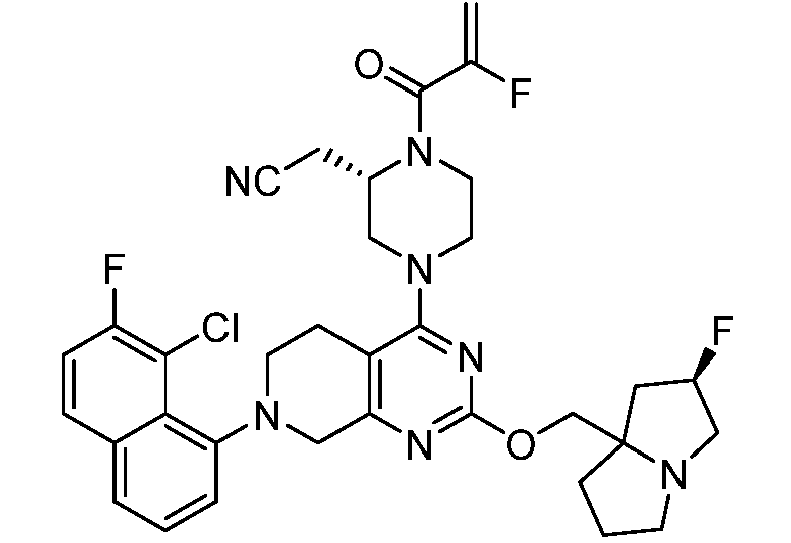
1H NMR (400 MHz, CDCl3) δ 7.79-7.72 (m, 1H), 7.64-7.57 (m, 1H), 7.47-7.38 (m, 1H), 7.36-7.24 (m, 2H), 5.52-5.17 (m, 3H), 5.07-4.70 (m, 1H), 4.45-4.24 (m, 2H), 4.20-4.01 (m, 3H), 3.98-3.62 (m, 2H), 3.60-3.37 (m, 3H), 3.28-3.00 (m, 8H), 2.69-2.53 (m, 3H), 2.19-2.08 (m, 1H), 1.98-1.79 (m, 4H). LCMS [M+1]: 666. 157 
1H NMR (400 MHz, CDCl3) δ 7.79-7.74 (m, 1H), 7.62 (t, J = 7.2 Hz, 1H), 7.48-7.39 (m, 1H), 7.36-7.27 (m, 2H), 5.53-5.34 (m, 1H), 5.30-5.18 (m, 2H), 5.05-4.66 (m, 1H), 7.38 (t, J = 17.2Hz, 1H), 4.14-4.01 (m, 2H), 3.98-3.68 (m, 4H), 3.60-3.39 (m, 2H), 3.33-3.03 (m, 6H), 2.97-2.70 (m, 4H), 2.64-2.56 (m, 1H), 2.44-2.38 (m, 2H). LCMS [M+1]: 633. 158 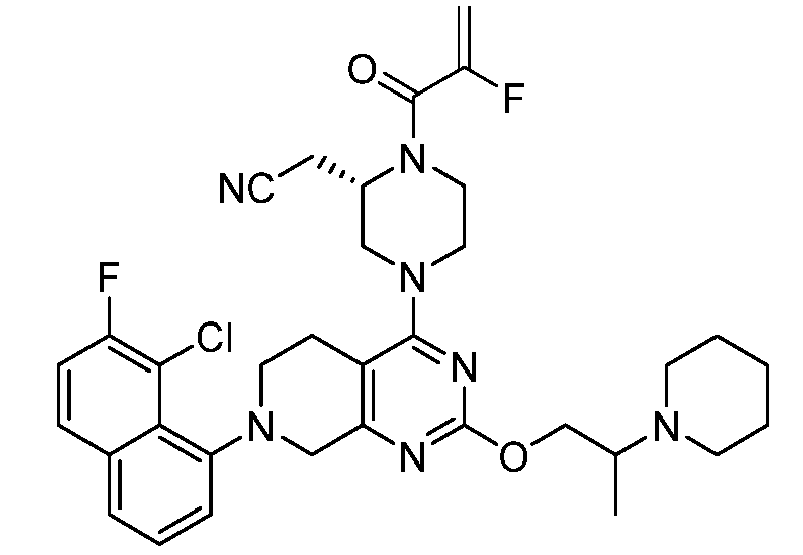
1H NMR (400 MHz, CDCl3) δ = 7.78-7.72 (m, 1H), 7.64-7.58 (m, 1H), 7.47-7.39 (m, 1H), 7.36-7.27 (m, 2H), 5.51-5.33 (m, 1H), 5.31-5.22 (m, 1H), 5.08-4.67 (m, 1H), 4.51-4.42 (m, 1H), 4.42-4.34 (m, 1H), 4.09 (br s, 2H), 4.07-3.99 (m, 1H), 3.94-3.87 (m, 1H), 3.87-3.79 (m, 1H), 3.61-3.51 (m, 1H), 3.51-3.33 (m, 1H), 3.30-3.00 (m, 5H), 2.93-2.73 (m, 2H), 2.60 (br d, J = 3.6 Hz, 5H), 1.58 (br s, 4H), 1.49-1.38 (m, 2H), 1.16 (br d, J = 6.8 Hz, 3H); LCMS [M+1]: 650. 159 
1H NMR (400 MHz, CDCl3): δ 7.75 (ddd, J = 2.0, 5.6, 8.8 Hz, 1H), 7.61 (t, J = 7.2 Hz, 1H), 7.43 (td, J = 7.6, 13.2 Hz, 1H), 7.37-7.27 (m, 2H), 5.57-5.33 (m, 1H), 5.26 (dd, J = 3.6, 16.8 Hz, 1H), 5.12-4.59 (m, 1H), 4.45-4.32 (m, 3H), 4.17-4.01 (m, 2H), 4.00-3.70 (m, 2H), 3.62-3.52 (m, 1H), 3.44 (br d, J = 12.0 Hz, 1H), 3.31-3.00 (m, 4H), 2.99-2.70 (m, 4H), 2.69-2.54 (m, 5H), 1.06 (dt, J = 2.0, 7.2 Hz, 6H). LCMS [M+1]: 624. 160 
1H NMR (400 MHz, CDCl3) δ 7.78-7.72 (m, 1H), 7.61 (t, J = 7.2 Hz, 1H), 7.47-7.38 (m, 1H), 7.36-7.27 (m, 2H), 5.53-5.32 (m, 1H), 5.26 (dd, J = 3.6, 16.8 Hz, 1H), 5.02-4.74 (m, 1H), 4.55-4.33 (m, 2H), 4.29-3.77 (m, 5H), 3.62-3.52 (m, 1H), 3.50-3.34 (m, 1H), 3.32-3.10 (m, 3H), 3.09-2.70 (m, 5H), 2.66-2.56 (m, 2H), 2.54-2.47 (m, 3H), 2.18-2.10 (m, 1H), 1.77-1.70 (m, 1H), 0.69-0.61 (m, 1H), 0.60-0.48 (m, 3H); LCMS [M+1]: 648. 161 
1H NMR (400 MHz, CDCl3): δ 7.76 (ddd, J = 1.6, 5.6, 9.2 Hz, 1H), 7.62 (t, J = 7.2 Hz, 1H), 7.43 (td, J = 7.6, 11.6 Hz, 1H), 7.36-7.27 (m, 2H), 5.51-5.33 (m, 1H), 5.26 (dd, J = 3.6, 16.8 Hz, 1H), 5.06-4.54 (m, 1H), 4.49-4.32 (m, 3H), 4.22-4.00 (m, 2H), 3.97-3.71 (m, 4H), 3.62-3.40 (m, 4H), 3.33-3.04 (m, 8H), 2.99-2.71 (m, 2H), 2.66-2.53 (m, 1H), 2.38-2.29 (m, 3H), 2.17-2.08 (m, 1H), 1.96-1.76 (m, 2H). LCMS [M+1]: 678. 162 
1H NMR (400 MHz, CDCl3): δ 7.76 (ddd, J = 1.6, 5.6, 8.8 Hz, 1H), 7.62 (t, J = 6.8 Hz, 1H), 7.43 (td, J = 7.6, 11.2 Hz, 1H), 7.37-7.28 (m, 2H), 5.54-5.32 (m, 1H), 5.26 (dd, J = 3.6, 16.8 Hz, 1H), 5.06-4.66 (m, 1H), 4.60-4.46 (m, 1H), 4.45-4.34 (m, 2H), 4.22-4.00 (m, 2H), 3.97-3.72 (m, 2H), 3.57 (br d, J = 10.4 Hz, 1H), 3.50-3.29 (m, 3H), 3.28-2.98 (m, 6H), 2.96-2.75 (m, 2H), 2.66-2.51 (m, 2H), 2.42 (br d, J = 5.6 Hz, 4H), 2.21 (s, 5H), 1.90 (br s, 3H). LCMS [M+1]: 691. 163 
1H NMR (400 MHz, CDCl3) δ 7.82-7.70 (m, 1H), 7.67-7.53 (m, 2H), 7.49-7.39 (m, 1H), 7.37-7.24 (m, 2H), 7.14-6.96 (m, 2H), 5.53-5.32 (m, 1H), 5.26 (dd, J = 3.6, 16.8 Hz, 1H), 5.07-4.71 (m, 1H), 4.66-4.52 (m, 2H), 4.43-4.31 (m, 3H), 4.29-3.70 (m, 4H), 3.67-3.39 (m, 2H), 3.37-2.70 (m, 6H), 2.66-2.51 (m, 1H); LCMS [M+1]: 619. 164 
1H NMR (400 MHz, CDCl3) δ 7.78-7.72 (m, 1H), 7.65-7.58 (m, 1H), 7.47-7.38 (m, 1H), 7.36-7.27 (m, 2H), 5.54-5.33 (m, 1H), 5.26 (dd, J = 3.2, 16.8 Hz, 1H), 5.10-4.60 (m, 1H), 4.48-4.35 (m, 2H), 4.19-3.99 (m, 3H), 3.96-3.53 (m, 5H), 3.52-3.33 (m, 1H), 3.29-2.97 (m, 5H), 2.95-2.53 (m, 5H), 2.15-2.06 (m, 2H), 1.19-1.13 (m, 9H). LCMS [M+1]: 680. 165 
1H NMR (400 MHz, CDCl3) δ 7.80-7.73 (m, 1H), 7.66-7.53 (m, 1H), 7.47-7.38 (m, 1H), 7.36-7.23 (m, 2H), 5.52-5.32 (m, 1H), 5.25 (dd, J = 3.6, 16.8 Hz, 1H), 5.09-4.60 (m, 1H), 4.46-4.34 (m, 3H), 4.20-3.98 (m, 2H), 3.96-3.33 (m, 4H), 3.32-2.67 (m, 12H), 2.66-2.53 (m, 1H), 1.68-1.55 (m, 8H). LCMS [M+1]: 650. 166 
1H NMR (400 MHz, CDCl3) δ 7.79-7.70 (m, 1H), 7.64-7.56 (m, 1H), 7.46-7.36 (m, 1H), 7.35-7.22 (m, 2H), 5.54-5.31 (m, 1H), 5.25 (dd, J = 3.6, 16.8 Hz, 1H), 5.07-4.61 (m, 1H), 4.39 (dd, J = 14.0, 18.0 Hz, 1H), 4.21-3.99 (m, 4H), 3.96-3.77 (m, 2H), 3.61-3.38 (m, 2H), 3.30-2.99 (m, 4H), 2.96-2.71 (m, 4H), 2.64-2.51 (m, 1H), 2.33 (d, J = 2.8 Hz, 3H), 2.23-1.86 (m, 4H), 1.78-1.66 (m, 3H), 1.65-1.59 (m, 1H), 1.55-1.49 (m, 1H). LCMS [M+1]: 662. 167 
1H NMR (400 MHz, CDCl3) δ 7.80-7.70 (m, 1H), 7.66-7.56 (m, 1H), 7.47-7.37 (m, 1H), 7.37-7.28 (m, 5H), 7.27-7.18 (m, 2H), 5.55-5.32 (m, 1H), 5.26 (dd, J = 3.6, 16.8 Hz, 1H), 5.06-4.70 (m, 1H), 4.61-4.48 (m, 1H), 4.46-4.31 (m, 2H), 4.15-3.93 (m, 4H), 3.92-3.53 (m, 6H), 3.52-3.32 (m, 2H), 3.31-2.64 (m, 8H), 2.63-2.52 (m, 1H), 2.39-2.27 (m, 1H). LCMS [M+1]: 714. 168 
1H NMR (400 MHz, CDCl3) δ 7.79-7.73 (m, 1H), 7.62 (t, J = 7.2 Hz, 1H), 7.43 (td, J = 7.6, 13.6 Hz, 1H), 7.37-7.27 (m, 2H), 5.55-5.34 (m, 1H), 5.26 (dd, J = 3.6, 16.8 Hz, 1H), 5.21-5.10 (m, 1H), 5.05-4.67 (m, 1H), 4.45-4.32 (m, 1H), 4.15-4.00 (m, 2H), 3.98-3.76 (m, 4H), 3.65-3.52 (m, 1H), 3.50-3.37 (m, 1H), 3.31-3.02 (m, 6H), 3.01-2.68 (m, 2H), 2.66-2.53 (m, 1H), 2.41 (d, J = 1.2 Hz, 3H). LCMS [M+1]: 594. 169 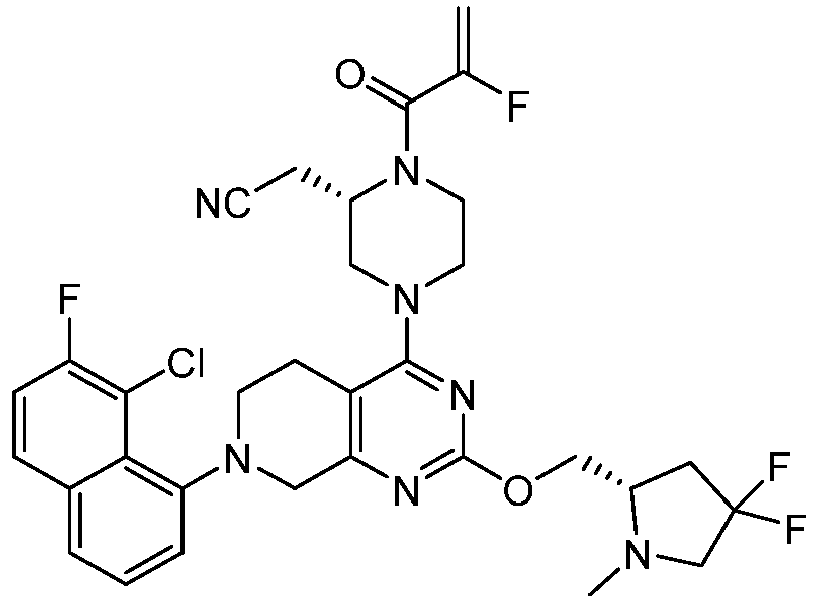
1H NMR (400 MHz, CDCl3) δ 7.79-7.73 (m, 1H), 7.62 (t, J = 7.2 Hz, 1H), 7.48-7.39 (m, 1H), 7.37-7.27 (m, 2H), 5.55-5.33 (m, 1H), 5.26 (dd, J = 3.6, 16.8 Hz, 1H), 5.02-4.59 (m, 1H), 4.52-4.33 (m, 2H), 4.32-3.77 (m, 5H), 3.61-3.36 (m, 3H), 3.32-2.95 (m, 5H), 2.94-2.48 (m, 5H), 2.46 (s, 3H), 2.34-2.18 (m, 1H). LCMS [M+1]: 658. 170 
1H NMR (400 MHz, CDCl3) δ 7.79-7.72 (m, 1H), 7.61 (t, J = 7.6 Hz, 1H), 7.47-7.38 (m, 1H), 7.36-7.27 (m, 2H), 5.54-5.33 (m, 1H), 5.26 (dd, J = 3.2, 16.8 Hz, 1H), 5.03-4.60 (m, 1H), 4.46-4.33 (m, 2H), 4.25-3.78 (m, 6H), 3.61-3.38 (m, 3H), 3.34-3.28 (m, 3H), 3.27-2.98 (m, 4H), 2.94-2.72 (m, 3H), 2.65-2.54 (m, 1H), 2.50-2.43 (m, 3H), 2.36-2.29 (m, 1H), 2.13-2.03 (m, 1H), 2.01-1.91 (m, 1H). LCMS [M+1]: 652. 171 
1H NMR (400 MHz, CDCl3) δ 7.80-7.73 (m, 1H), 7.62 (t, J = 7.2 Hz, 1H), 7.49-7.40 (m, 1H), 7.37-7.28 (m, 2H), 5.56-5.32 (m, 1H), 5.27 (dd, J = 3.6, 16.8 Hz, 1H), 5.03-4.72 (m, 1H), 4.59-4.48 (m, 2H), 4.47-4.37 (m, 1H), 4.24-3.80 (m, 4H), 3.65-3.41 (m, 2H), 3.32-3.03 (m, 5H), 2.96-2.84 (m, 1H), 2.67-2.54 (m, 1H), 2.35-2.24 (m, 3H), 1.99-1.74 (m, 5H), 1.58-1.48 (m, 2H), 1.46-1.36 (m, 2H). LCMS [M+1]: 648. 172 
1H NMR (400 MHz, CDCl3) δ 7.79-7.72 (m, 1H), 7.62 (t, J = 7.2 Hz, 1H), 7.48-7.39 (m, 1H), 7.36-7.27 (m, 2H), 5.56-5.33 (m, 1H), 5.31-5.06 (m, 2H), 5.00-4.65 (m, 1H), 4.48-4.33 (m, 2H), 4.29-3.78 (m, 5H), 3.62-3.38 (m, 3H), 3.31-2.99 (m, 5H), 2.97-2.71 (m, 2H), 2.69-2.54 (m, 2H), 2.53-2.48 (m, 3H), 2.39-2.24 (m, 1H), 2.08-1.86 (m, 1H). LCMS [M+1]: 640. 173 
1H NMR (400 MHz, CDCl3) δ = 7.75 (ddd, J = 1.6, 5.6, 8.8 Hz, 1H), 7.61 (t, J = 6.8 Hz, 1H), 7.43 (td, J = 7.6, 12.0 Hz, 1H), 7.35 - 7.24 (m, 2H), 5.52 - 5.32 (m, 1H), 5.26 (brdd, J = 3.6, 16.8 Hz, 1H), 5.03 - 4.72 (m, 1H), 4.50 - 4.32 (m, 3H), 4.22 - 3.79 (m, 4H), 3.64 - 3.51 (m, 1H), 3.48 - 3.33 (m, 3H), 3.30 - 2.98 (m, 6H), 2.96 -2.73 (m, 3H), 2.66 - 2.52 (m, 1H), 2.32 (d, J = 1.6 Hz, 3H). LCMS [M+1]: 608. 174 
1H NMR (400 MHz, CDCl3) δ 7.79-7.72 (m, 1H), 7.61 (t, J = 7.6 Hz, 1H), 7.47-7.37 (m, 1H), 7.35-7.21 (m, 2H), 5.55-5.32 (m, 1H), 5.26 (br dd, J = 3.6, 16.8 Hz, 1H), 5.10-4.65 (m, 1H), 4.45-4.34 (m, 1H), 4.28-3.76 (m, 6H), 3.60-3.36 (m, 3H), 3.31-2.70 (m, 9H), 2.67-2.47 (m, 2H), 2.34-2.14 (m, 2H), 1.98-1.76 (m, 3H); LCMS [M+1]: 684. 175 
1H NMR (400 MHz, CDCl3) δ = 7.76-7.73 (m, 1H), 7.64-7.57 (m, 1H), 7.47-7.37 (m, 1H), 7.35-7.326 (m, 2H), 5.54-5.32 (m, 1H), 5.31-5.21 (m, 1H), 5.10-4.65 (m, 1H), 4.46-4.36 (m, 1H), 4.26-3.70 (m, 6H), 3.63-3.38 (m, 2H), 3.29-2.74 (m, 8H), 2.63-2.53 (m, 1H), 2.46 (d, J = 2.4 Hz, 3H), 1.91-1.79 (m, 5H), 1.50-1.40 (m, 1H), 0.92 (t, J = 7.6 Hz, 3H); LCMS [M+1]: 650. 176 
1H NMR (400 MHz, CDCl3) δ 7.83-7.72 (m, 1H), 7.68-7.58 (m, 1H), 7.49-7.38 (m, 1H), 7.37-7.24 (m, 2H), 5.53-5.33 (m, 1H), 5.26 (dd, J = 3.6, 16.8 Hz, 1H), 5.07-4.71 (m, 1H), 4.49-4.15 (m, 5H), 4.14-3.77 (m, 5H), 3.66-3.39 (m, 2H), 3.32-3.00 (m, 4H), 2.99-2.71 (m, 2H), 2.68-2.55 (m, 1H), 2.15-2.03 (m, 1H), 2.02-1.87 (m, 2H), 1.86-1.75 (m, 1H). LCMS [M+1]: 609. 177 
1H NMR (400 MHz, CDCl3) δ= 7.79-7.73 (m, 1H), 7.62 (t, J = 7.2 Hz, 1H), 7.43 (td, J = 7.6, 12.4 Hz, 1H), 7.36-7.27 (m, 2H), 5.52-5.34 (m, 1H), 5.26 (dd, J = 3.2, 16.8 Hz, 1H), 5.01-4.70 (m, 1H), 4.52-4.34 (m, 2H), 4.23-3.98 (m, 3H), 3.95-3.78 (m, 2H), 3.70 (br d, J = 3.2 Hz, 4H), 3.62-3.40 (m, 2H), 3.26-2.76 (m, 7H), 2.71-2.52 (m, 5H), 1.18 (dd, J = 2.4, 6.8 Hz, 3H); LCMS [M+1]: 652. 178 
1H NMR (400 MHz, CDCl3) δ = 7.79 - 7.72 (m, 1H), 7.61 (t, J =7.2 Hz, 1H), 7.43 (td, J = 8.0, 13.6 Hz, 1H), 7.35 -7.29 (m, 2H), 7.25 (d, J = 7.6 Hz, 1H), 5.52 - 5.33 (m, 1H), 5.26 (dd, J = 3.6, 17.2 Hz, 1H), 5.04 - 4.67 (m, 1H), 4.60 - 4.20 (m, 4H), 4.18 - 3.79 (m, 4H), 3.72 - 3.32 (m, 5H), 3.26 - 3.02 (m, 3H), 2.95 - 2.74 (m, 2H), 2.63 - 2.44 (m, 2H), 2.28 - 1.88 (m, 2H), 1.04 (dd, J = 3.2, 6.4 Hz, 3H), 0.95 (dd, J = 2.8, 6.4 Hz, 3H). LCMS [M+1]: 636.4. 179 
1H NMR (400 MHz, CDCl3) δ = 7.79 - 7.72 (m, 1H), 7.61 (t, J = 7.2 Hz, 1H), 7.43 (td, J = 8.0, 12.6 Hz, 1H), 7.36 -7.29 (m, 2H), 7.24 (s, 1H), 5.51 - 5.32 (m, 1H), 5.26 (dd, J = 3.6, 16.8 Hz, 1H), 4.87 (br s, 1H), 4.46 - 4.27 (m, 3H), 4.20 - 4.00 (m, 2H), 3.95 - 3.79 (m, 1H), 3.60 - 2.95 (m, 9H), 2.93 - 2.69 (m, 4H), 2.59 (br d, J = 13.2 Hz, 1H), 2.44 (br s, 1H), 2.17 - 2.05 (m, 2H), 1.01 (br t, J = 7.2 Hz, 3H). LCMS [M+1]: 622.4. 180 
1H NMR (400 MHz, CDCl3) δ = 7.78-7.72 (m, 1H), 7.60 (t, J = 6.8 Hz, 1H), 7.42 (td, J = 7.6, 12.0 Hz, 1H), 7.36-7.28 (m, 2H), 5.51-5.33 (m, 1H), 5.25 (dd, J = 3.6, 16.8 Hz, 1H), 5.04-4.63 (m, 1H), 4.46-4.27 (m, 2H), 4.20-4.01 (m, 2H), 4.00-3.88 (m, 2H), 3.88-3.75 (m, 1H), 3.56 (br dd, J = 3.6, 11.6 Hz, 1H), 3.49-3.33 (m, 1H), 3.30-2.95 (m, 5H), 2.94-2.69 (m, 3H), 2.67-2.45 (m, 4H), 2.29 (br d, J = 9.6 Hz, 1H), 1.70 - 1.50 (m, 1H), 1.45 - 1.37 (m, 1H), 1.37 - 1.27 (m, 1H), 1.20 - 1.08 (m, 1H). LCMS [M+1]: 634. 181 
1H NMR (400 MHz, CDCl3-d) δ 7.78-7.73 (m, 1H), 7.62 (t, J = 7.2 Hz, 1H), 7.47-7.39 (m, 1H), 7.36-7.23 (m, 2H), 5.50-5.34 (m, 1H), 5.26 (dd, J = 3.6, 16.8 Hz, 1H), 5.07-4.69 (m, 1H), 4.46-4.32 (m, 2H), 4.19-3.79 (m, 6H), 3.60-3.53 (m, 1H), 3.48-3.30 (m, 5H), 3.29-2.99 (m, 6H), 2.95-2.72 (m, 2H), 2.69-2.49 (m, 2H), 2.15-1.92 (m, 2H), 1.24-0.91 (m, 6H). LCMS [M+1]: 680. 182 
1H NMR (400 MHz, C2D4O2) δ = 7.90-7.83 (m, 1H), 7.72 (d, J = 8.0 Hz, 1H), 7.52-7.46 (m, 1H), 7.44-7.37 (m, 2H), 5.59-5.23 (m, 3H), 5.13-4.76 (m, 1H), 4.64-4.04 (m, 4H), 3.99-3.70 (m, 2H), 3.66-3.50 (m, 3H), 3.43-3.31 (m, 1H), 3.29-3.13 (m, 2H), 3.09-2.86 (m, 7H), 2.84-2.69 (m, 1H), 2.65-2.47 (m, 1H), 2.30-2.17 (m, 1H), 1.98-1.76 (m, 3H), 1.74-1.38 (m, 4H). LCMS [M+1]; 650. 183 
1H NMR (400 MHz, CDCl3) δ = 7.79-7.72 (m, 1H), 7.65-7.59 (m, 1H), 7.48-7.39 (m, 1H), 7.36-7.27 (m, 2H), 5.54 -5.32 (m, 1H), 5.31-5.07 (m, 2H), 5.02-4.61 (m, 1H), 4.53-4.33 (m, 2H), 4.25-3.74 (m, 5H), 3.63-3.39 (m, 3H), 3.36-2.70 (m, 9H), 2.64-2.55 (m, 1H), 2.44-2.28 (m, 1H), 2.08-1.83 (m, 1H), 1.12 (br d, J = 6.4 Hz, 3H), 1.02 (br d, J = 6.0 Hz, 3H). LCMS [M+1]: 668. 184 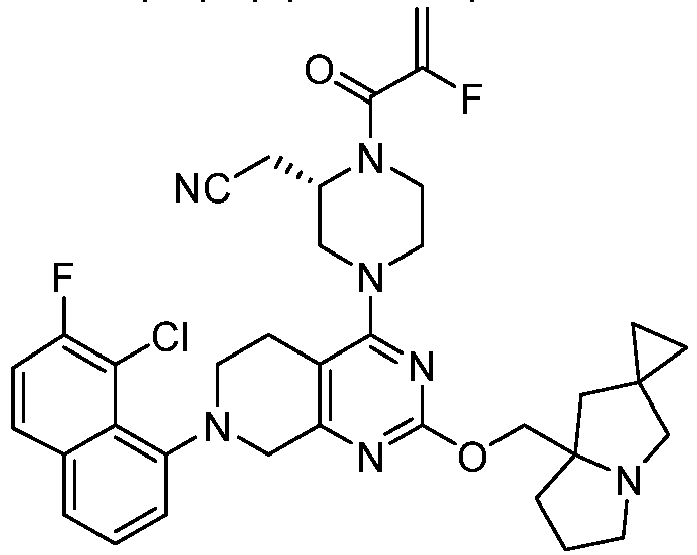
1H NMR (400 MHz, CDCl3) δ = 7.78 - 7.71 (m, 1H), 7.64 - 7.58 (m, 1H), 7.47 -7.38 (m, 1H), 7.35 - 7.30 (m, 1H), 7.27 - 7.22 (m, 1H), 5.51 - 5.32 (m, 1H), 5.30 - 5.21 (m, 1H), 4.99 - 4.59 (m, 1H), 4.46 - 4.32 (m, 2H), 4.27 - 4.03 (m, 3H), 4.01 - 3.81 (m, 2H), 3.62 - 3.41 (m, 2H), 3.33 - 3.01 (m, 6H), 2.96 - 2.75 (m, 4H), 2.64 - 2.51 (m, 1H), 2.25 - 2.12 (m, 1H), 2.10 - 1.94 (m, 3H), 1.89 - 1.82 (m, 2H), 0.68 - 0.53 (m, 4H). LCMS [M+1]: 674.2. 185 
1H NMR (400 MHz, CDCl3) δ 7.79-7.72 (m, 1H), 7.61 (t, J = 7.6 Hz, 1H), 7.47-7.38 (m, 1H), 7.36-7.27 (m, 2H), 5.54-5.32 (m, 1H), 5.26 (dd, J = 3.6, 16.8 Hz, 1H), 5.06-4.68 (m, 1H), 4.45-4.33 (m, 2H), 4.18-4.00 (m, 3H), 3.99-3.78 (m, 2H), 3.61-3.52 (m, 1H), 3.49-3.34 (m, 1H), 3.29-2.95 (m, 6H), 2.94-2.72 (m, 3H), 2.64-2.53 (m, 1H), 2.49-2.37 (m, 1H), 2.30-2.18 (m, 1H), 2.08-1.95 (m, 1H), 1.89-1.72 (m, 3H), 1.14 (t, J = 7.2 Hz, 3H). LCMS [M+1]: 636. 186 
1H NMR (400 MHz, DMSO-d6) δ = 8.02 (dd, J =6.0, 9.2 Hz, 1H), 7.79 (dd, J =4.0, 7.6 Hz, 1H), 7.60 (t, J =8.8 Hz, 1H), 7.53 (q, J =7.6 Hz, 1H), 7.46 - 7.37 (m, 1H), 5.45 - 5.18 (m, 2H), 5.04 - 4.54 (m, 1H), 4.24 - 3.54 (m, 8H), 3.47 (br s, 1H), 3.29 - 2.67 (m, 9H), 2.04 - 1.37 (m, 9H), 1.23 - 0.80 (m, 3H). LCMS [M+1]: 662.4. 187 
1H NMR (400 MHz, CDCl3) δ = 7.79 - 7.72 (m, 1H), 7.61 (t, J = 7.2 Hz, 1H), 7.43 (td, J = 7.6, 12.8 Hz, 1H), 7.36 -7.31 (m, 1H), 7.24 (s, 1H), 5.54 - 5.32 (m, 1H), 5.26 (dd, J=3.6, 16.8 Hz, 1H), 4.46 - 4.39 (m, 1H), 4.37 - 4.31 (m, 2H), 4.20 - 4.00 (m, 2H), 3.96 - 3.80 (m, 1H), 3.61 - 3.40 (m, 2H), 3.29 - 3.02 (m, 6H), 2.93 - 2.77 (m, 1H), 2.68 - 2.54 (m, 2H), 2.42 (s, 3H), 1.70 (br s, 3H), 1.27 (s, 3H), 1.17 (d, J = 1.6 Hz, 3H). LCMS [M+1]: 636.5. 188 
1H NMR (400 MHz, CDCl3) δ 7.75 (ddd, J = 1.6, 5.6, 8.8 Hz, 1H), 7.61 (t, J = 7.2 Hz, 1H), 7.43 (td, J = 7.6, 13.2 Hz, 1H), 7.36-7.27 (m, 2H), 5.52-5.33 (m, 1H), 5.26 (dd, J = 3.6, 16.8 Hz, 1H), 5.07-4.67 (m, 1H), 4.51-4.33 (m, 3H), 4.22-3.78 (m, 4H), 3.65-3.36 (m, 2H), 3.28-2.97 (m, 4H), 2.97-2.74 (m, 2H), 2.67-2.53 (m, 1H), 2.23 (d, J = 1.2 Hz, 6H), 1.78 (d, J = 1.6 Hz, 6H). LCMS [M+1]: 648. 189 
1H NMR (400 MHz, CDCl3) δ = 7.79-7.75 (m, 1H), 7.63 (t, J = 7.2 Hz, 1H), 7.45 (td, J = 8.0, 12.0 Hz, 1H), 7.37-7.29 (m, 2H), 5.60-5.34 (m, 1H), 5.27 (dd, J = 3.6, 16.8 Hz, 1H), 5.13-4.72 (m, 1H), 4.41 (br dd, J = 12.8, 17.6 Hz, 1H), 4.32-4.19 (m, 3H), 4.15-4.01 (m, 2H), 3.97-3.86 (m, 3H), 3.84-3.77 (m, 1H), 3.77-3.70 (m, 1H), 3.64-3.54 (m, 1H), 3.51-3.06 (m, 5H), 2.96-2.75 (m, 3H), 2.68-2.56 (m, 1H), 2.23-2.08 (m, 1H), 1.86-1.71 (m, 1H). LCMS [M+1]: 609. 190 
1H NMR (400 MHz, CDCl3) δ = 7.75 (ddd, J = 2.4, 6.0, 8.8 Hz, 1H), 7.61 (t, J = 7.2 Hz, 1H), 7.48-7.38 (m, 1H), 7.36-7.28 (m, 2H), 5.51-5.33 (m, 1H), 5.26 (dd, J = 3.6, 16.8 Hz, 1H), 5.07-4.59 (m, 1H), 4.48-4.30 (m, 1H), 4.22-3.98 (m, 3H), 3.97-3.74 (m, 2H), 3.64-3.52 (m, 1H), 3.49-3.35 (m, 1H), 3.30-2.98 (m, 5H), 2.95-2.68 (m, 2H), 2.65-2.55 (m, 1H), 2.41 (s, 4H), 2.32-2.23 (m, 1H), 1.99-1.88 (m, 1H), 1.81-1.70 (m, 1H), 1.68-1.60 (m, 1H), 1.42-1.21 (m, 4H). LCMS [M+1]: 648. 191 
1H NMR (400 MHz, CDCl3) δ 7.73-7.64 (m, 1H), 7.54 (t, J = 6.8 Hz, 1H), 7.40-7.31 (m, 1H), 7.29-7.15 (m, 2H), 6.91-6.84 (m, 1H), 6.77-6.71 (m, 1H), 5.47-5.25 (m, 1H), 5.18 (dd, J = 3.6, 16.8 Hz, 1H), 4.96-4.70 (m, 1H), 4.67-4.55 (m, 2H), 4.30 (dd, J = 14.4, 17.6 Hz, 1H), 4.16-3.95 (m, 2H), 3.88-3.66 (m, 2H), 3.58 (d, J = 3.6 Hz, 3H), 3.53-3.31 (m, 2H), 3.26-2.92 (m, 6H), 2.87-2.64 (m, 2H), 2.59-2.41 (m, 1H). LCMS [M+1]: 633. 192 
1H NMR (400 MHz, CDCl3) δ = 7.78-7.73 (m, 1H), 7.64-7.58 (m, 1H), 7.47-7.37 (m, 1H), 7.36-7.24 (m, 2H), 6.17-5.81 (m, 1H)), 5.54-5.34 (m, 1H), 5.26 (dd, J = 3.6, 17.2 Hz, 1H), 5.09-4.65 (m, 1H), 4.48-4.16 (m, 4H), 4.12-3.79 (m, 3H), 3.63-3.38 (m, 2H), 3.32-2.99 (m, 4H), 2.95-2.72 (m, 2H), 2.67-2.55 (m, 1H), 2.53-2.37 (m, 1H), 1.20-1.12 (m, 3H). LCMS [M+1]: 617. 193 
1H NMR (400 MHz, CDCl3) δ 7.75 (ddd, J = 1.6, 5.6, 9.2 Hz, 1H), 7.61 (t, J = 6.8 Hz, 1H), 7.43 (td, J = 8.0, 12.0 Hz, 1H), 7.36 - 7.27 (m, 2H), 5.53-5.32 (m, 1H), 5.25 (dd, J = 3.6, 16.8 Hz, 1H), 5.04-4.63 (m, 1H), 4.45-4.33 (m, 4H), 4.21-3.99 (m, 3H), 3.95-3.77 (m, 2H), 3.64 (td, J = 1.6, 8.0 Hz, 1H), 3.61-3.52 (m, 2H), 3.45 (br d, J = 14.4 Hz, 1H), 3.30-2.93 (m, 7H), 2.92-2.74 (m, 2H), 2.67-2.55 (m, 2H), 1.88 (br d, J = 10.0 Hz, 1H), 1.76-1.73 (m, 1H). LCMS [M+1]: 650. 194 
1H NMR (400 MHz, CDCl3): δ 7.75 (ddd, J = 1.6, 5.6, 8.8 Hz, 1H), 7.61 (t, J = 6.8 Hz, 1H), 7.42 (td, J = 7.6, 12.4 Hz, 1H), 7.35-7.27 (m, 2H), 5.53-5.32 (m, 1H), 5.26 (dd, J = 3.5, 16.8 Hz, 1H), 5.13-4.74 (m, 1H), 4.73-4.60 (m, 1H), 4.46-4.35 (m, 1H), 4.22-4.02 (m, 3H), 4.02-3.79 (m, 3H), 3.79-3.69 (m, 1H), 3.63-3.53 (m, 2H), 3.51-3.34 (m, 2H), 3.29-2.99 (m, 7H), 2.99-2.69 (m, 3H), 2.64-2.53 (m, 1H), 2.04-1.93 (m, 1H), 1.93-1.82 (m, 2H), 1.61-1.53 (m, 1H). LCMS [M+1]: 664. 195 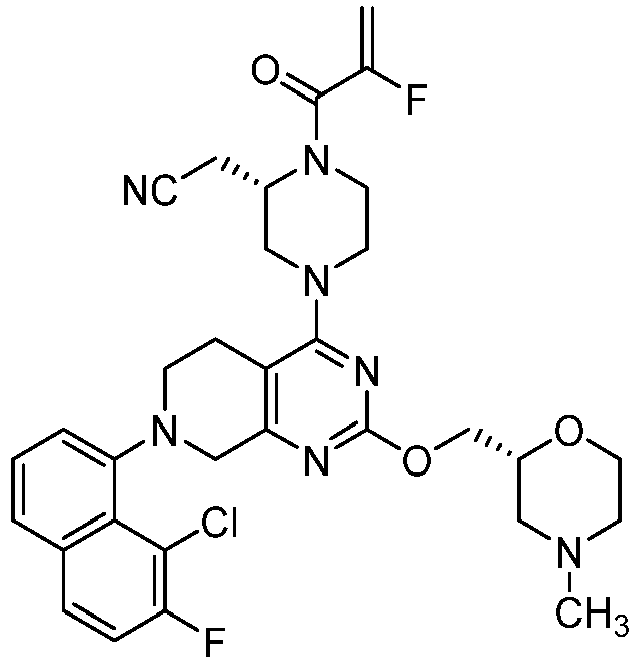
1H NMR (400 MHz, CDCl3) δ = 7.78-7.72 (m, 1H), 7.64-7.58 (m, 1H), 7.47-7.38 (m, 1H), 7.36-7.32 (m, 1H), 7.32-7.29 (m, 1H), 5.52-5.33 (m, 1H), 5.29-5.20 (m, 1H), 5.06-4.65 (m, 1H), 4.46-4.32 (m, 2H), 4.26 (s, 1H), 4.07 (br s, 2H), 4.00-3.89 (m, 3H), 3.88-3.78 (m, 1H), 3.76-3.67 (m, 1H), 3.63 - 3.40 (br d, J = 0.8 Hz, 2H), 3.30-2.98 (m, 4H), 2.94-2.73 (m, 3H), 2.70-2.52 (m, 2H), 2.34-2.29 (m, 3H), 2.24-2.14 (m, 1H), 2.06-1.97 (m, 1H). LCMS [M+1]: 638. 196 
1H NMR (400 MHz, CDCl3) δ 7.80-7.71 (m, 1H), 7.61 (t, J = 7.6 Hz, 1H), 7.43 (td, J = 7.6, 13.2 Hz, 1H), 7.37-7.27 (m, 2H), 5.55-5.34 (m, 1H), 5.26 (dd, J = 3.6, 16.8 Hz, 1H), 4.47-4.32 (m, 2H), 4.26-4.00 (m, 4H), 3.97-3.78 (m, 2H), 3.62-2.97 (m, 10H), 2.95-2.76 (m, 2H), 2.64-2.56 (m, 1H), 2.53-2.35 (m, 1H), 2.20-1.97 (m, 5H), 1.94-1.74 (m, 4H). LCMS [M+1]: 662. 197 
1H NMR (400 MHz, CDCl3) δ 7.76 (ddd, J = 1.6, 5.6, 8.8 Hz, 1H), 7.62 (t, J = 6.8 Hz, 1H), 7.44 (td, J = 7.6, 12.0 Hz, 1H), 7.37-7.27 (m, 2H), 5.54-5.34 (m, 1H), 5.26 (dd, J = 3.6, 16.8 Hz, 1H), 4.87 (dt, J = 1.2, 7.2 Hz, 2H), 4.62-4.52 (m, 4H), 4.40 (dd, J= 12.4, 18.0 Hz, 1H), 4.29-4.01 (m, 2H), 3.99-3.76 (m, 2H), 3.76-3.53 (m, 2H), 3.53-3.40 (m, 2H), 3.32-3.00 (m, 4H), 3.00-2.70 (m, 2H), 2.66-2.56 (m, 1H). LCMS [M+1]: 595. 198 
1H NMR (400 MHz, CDCl3) δ = 7.75 (ddd, J = 1.6, 5.6, 9.2 Hz, 1H), 7.61 (t, J = 6.8 Hz, 1H), 7.43 (td, J = 8.0, 12.4 Hz, 1H), 7.36-7.31 (m, 1H), 7.31-7.25 (m, 1H), 5.52-5.33 (m, 1H), 5.25 (dd, J = 3.6, 16.8 Hz, 1H), 5.08-4.64 (m, 1H), 4.44-4.32 (m, 4H), 4.20-3.99 (m, 3H), 3.95-3.78 (m, 2H), 3.64-3.53 (m, 2H), 3.51-3.39 (m, 2H), 3.29-2.99 (m, 4H), 2.96-2.67 (m, 5H), 2.64-2.51 (m, 2H), 1.94 (quin, J = 6.8 Hz, 2H), 1.86 (dd, J = 1.2, 9.6 Hz, 1H), 1.72 (br dd, J = 1.2, 9.6 Hz, 1H). LCMS [M+1]: 664. 199 
1H NMR (400 MHz, CDCl3) δ 7.79-7.72 (m, 1H), 7.61 (t, J = 7.6 Hz, 1H), 7.48-7.38 (m, 1H), 7.37-7.27 (m, 2H), 5.55-5.34 (m, 1H), 5.26 (dd, J = 3.6, 17.2 Hz, 1H), 5.11-4.75 (m, 1H), 4.50-4.34 (m, 2H), 4.24-3.99 (m, 3H), 3.96-3.80 (m, 2H), 3.61-3.53 (m, 1H), 3.49-3.37 (m, 1H), 3.30-2.93 (m, 5H), 2.93-2.73 (m, 2H), 2.65-2.54 (m, 1H), 2.32 (br s, 3H), 2.14-2.00 (m, 1H), 1.77-1.62 (m, 3H), 1.14 (br s, 3H), 0.92 (br s, 3H); LCMS [M+1]: 650. 200 
1H NMR (400 MHz, CDCl3) δ = 7.78-7.76 (m, 1H), 7.64-7.60 (m, 1H), 7.47-7.40 (m, 1H), 7.36-7.25 (m, 2H), 5.49-5.37 (m,1H), 5.29-5.24 (m, 1H), 5.06-4.55 (m, 1H), 4.44-4.35 (m, 3H), 4.25-3.79 (m, 4H), 3.60-3.56 (m, 1H), 3.50-3.41 (m, 1H), 3.30-3.04 (m, 8H), 2.97-2.74 (m, 2H), 2.65-2.56 (m, 1H). LCMS [M+1]: 650. 201 
1H NMR (400 MHz, CDCl3) δ 7.76 (ddd, J = 1.2, 5.6, 9.2 Hz, 1H), 7.61 (t, J = 6.8 Hz, 1H), 7.48-7.38 (m, 1H), 7.37-7.27 (m, 2H), 5.54-5.33 (m, 1H), 5.26 (dd, J = 3.6, 16.8 Hz, 1H), 4.45-4.19 (m, 4H), 4.18-3.97 (m, 3H), 3.96-3.62 (m, 7H), 3.61-3.40 (m, 3H), 3.32-2.72 (m, 6H), 2.67-2.51 (m, 1H). LCMS [M+1]: 625. 202 
1H NMR (400 MHz, CDCl3) δ = 7.78 -7.72 (m, 2H), 7.61 (t, J = 7.2 Hz, 2H), 7.45-7.39 (m, 2H), 7.44 (br t, J = 7.8 Hz, 1H), 7.35-7.28 (m, 3H), 7.26-7.21 (m, 1H), 5.48 (br s, 1H), 5.36 (br s, 1H), 5.26 (dd, J = 3.6, 16.8 Hz, 2H), 4.92 (br s, 1H), 4.50-4.31 (m, 3H), 4.27-4.16 (m, 5H), 4.16-3.99 (m, 3H), 3.98-3.72 (m, 4H), 3.68-3.48 (m, 3H), 3.42 (br s, 4H), 3.28-3.02 (m, 10H), 3.01-2.75 (m, 4H), 2.72-2.46 (m, 2H), 2.37-2.22 (m, 8H), 1.93-1.73 (m, 5H), 1.36 (d, J = 3.6 Hz, 6H). LCMS [M+1]: 622.3. 203 
1H NMR (400 MHz, CDCl3) δ = 7.81-7.72 (m, 1H), 7.63 (t, J = 7.2 Hz, 1H), 7.49-7.40 (m, 1H), 7.34 (t, J = 8.8 Hz, 2H), 7.07 (s, 1H), 6.90-6.86 (m, 1H), 6.00 (ddd, J = 3.2, 6.8, 10.0 Hz, 1H), 5.54-5.34 (m, 1H), 5.31-5.23 (m, 1H), 4.47-4.35 (m, 2H), 4.21-3.79 (m, 5H), 3.60 (br d, J = 10.0 Hz, 1H), 3.52-3.35 (m, 8H), 2.96-2.73 (m, 2H), 2.64 (br d, J = 14.8 Hz, 1H). LCMS [M+1]: 631.4. 204 
1H NMR (400 MHz, CDCl3) δ = 7.76 (ddd, J = 1.6, 5.6, 8.8 Hz, 1H), 7.62 (t, J = 6.8 Hz, 1H), 7.43 (td, J = 8.0, 12.0 Hz, 1H), 7.37-7.28 (m, 2H), 6.31-5.90 (m, 1H), 5.54-5.33 (m, 1H), 5.26 (dd, J = 3.6, 16.8 Hz, 1H), 5.10-4.66 (m, 1H), 4.47 (q, J = 6.0 Hz, 2H), 4.44-4.35 (m, 1H), 4.28-3.78 (m, 4H), 3.65-3.40 (m, 2H), 3.34-3.02 (m, 4H), 2.99-2.72 (m, 2H), 2.69-2.55 (m, 1H), 2.46-2.24 (m, 2H). LCMS [M+1]: 603. 205 
1H NMR (400 MHz, CDCl3) δ = 7.74-7.58 (m, 1H), 7.60 (t, J = 7.2 Hz, 1H), 7.46-7.37 (m, 1H), 7.35-7.27 (m, 2H), 5.52-5.32 (m, 1H), 5.30-4.98 (m, 2H), 4.96-4.70 (m, 1H), 4.50-4.34 (m, 2H), 4.20-4.00 (m, 3H), 3.98-3.79 (m, 2H), 3.62-3.34 (m, 2H), 3.31-2.98 (m, 6H), 2.95-2.72 (m, 3H), 2.64-2.48 (m, 2H), 2.38-2.26 (m, 1H), 2.16-1.94 (m, 2H), 1.89-1.77 (m, 2H), 1.41-1.19 (m, 1H). LCMS [M+1]: 666. -

-

- To a mixture of (S)-2-(4-(7-(8-chloro-7-fluoronaphthalen-1-yl)-2-((tetrahydro-1H-pyrrolizin-7a(5H)-yl)methoxy)-5,6,7,8-tetrahydropyrido[3,4-d]pyrimidin-4-yl)piperazin-2-yl)acetonitrile (180 mg, 312 µmol, 1 eq), TEA (379 mg, 3.75 mmol, 522 µL, 12 eq), 4Å molecular sieves (50 mg) and (Z)-2-fluoro-4-methoxybut-2-enoic acid (83.8 mg, 625 µmol, 2 eq) in ethyl acetate (5 mL) was added T3P (1.19 g, 1.87 mmol, 1.11 mL, 50% purity in ethyl acetate, 6 eq) at 0 °C. The mixture was stirred at 0 °C for 30 minutes, then diluted with ethyl acetate (5.0 mL), washed with water (3.0 mL) and brine (3.0 mL), dried over Na2SO4, filtered and concentrated in vacuo. The residue was purified by prep-HPLC (column: Waters Xbridge 150*25mm* 5µm; mobile phase: [water (10mM NH4HCO3)-ACN]; B%: 38%-68%, 10min) affording (S,Z)-2-(4-(7-(8-chloro-7-fluoronaphthalen-1-yl)-2-((tetrahydro-1H-pyrrolizin-7a(5H)-yl)methoxy)-5,6,7,8-tetrahydropyrido[3,4-d]pyrimidin-4-yl)-1-(2-fluoro-4-methoxybut-2-enoyl)piperazin-2-yl)acetonitrile (72 mg, 33% yield) as a yellow solid. LCMS [M+1]: 692.4.
- SFC conditions: Column: Chiralpak IC-3 50×4.6mm I.D., 3µm. Mobile phase: Phase A for CO2, and Phase B for MeOH + ACN(0.05%DEA); Gradient elution: 60% MeOH +ACN(0.05% DEA) in CO2. Flow rate: 3mL/min; Wavelength: 220nm. Column Temp: 35C; Back Pressure: 100Bar.
- 1H NMR (400 MHz, CDCl3) δ = 7.79 - 7.71 (m, 1H), 7.60 (t, J = 7.6 Hz, 1H), 7.47 - 7.37 (m, 1H), 7.35 - 7.28 (m, 2H), 7.23 (br d, J = 7.2 Hz, 1H), 5.99 - 5.72 (m, 1H), 5.07 - 4.48 (m, 1H), 4.40 (br t, J = 16.8 Hz, 1H), 4.28 - 3.76 (m, 8H), 3.71 - 3.29 (m, 5H), 3.27 - 2.77 (m, 8H), 2.69 - 2.51 (m, 3H), 2.06 (br dd, J = 6.0, 12.4 Hz, 2H), 1.85 (br s, 4H), 1.72 - 1.56 (m, 2H).
-

-

- Step A: A mixture of (S)-2-(4-(7-(8-chloro-7-fluoronaphthalen-1-yl)-2-((tetrahydro-1H-pyrrolizin-7a(5H)-yl)methoxy)-5,6,7,8-tetrahydropyrido[3,4-d]pyrimidin-4-yl)piperazin-2-yl)acetonitrile (120 mg, 208 µmol, 1.0 eq) and (Z)-4-((tert-butyldimethylsilyl)oxy)-2-fluorobut-2-enoic acid (146 mg, 625 µmol, 3.0 eq) in ethyl acetate (2 mL) was added 4Å molecular sieves (200 mg) and stirred at 0 °C for 30 minutes. Then to the reaction mixture was added TEA (316 mg, 3.12 mmol, 435 µL, 15.0 eq) and T3P (530 mg, 833 µmol, 495 µL, 50% purity, 4.0 eq) at 0 °C, and the mixture was stirred at 0 °C for 30 minutes. After completion, the reaction mixture was quenched by addition of saturated NH4Cl (aqueous solution, 5 mL) at 10 °C, and then diluted with water (10 mL), followed by extraction with ethyl acetate (3 × 15 mL). The combined organic layers were dried over anhydrous sodium sulfate and filtered. The filtrate was concentrated under reduced pressure to provide (S,Z)-2-(1-(4-((tert-butyldimethylsilyl)oxy)-2-fluorobut-2-enoyl)-4-(7-(8-chloro-7-fluoronaphthalen-1-yl)-2-((tetrahydro-1H-pyrrolizin-7a(5H)-yl)methoxy)-5,6,7,8-tetrahydropyrido[3,4-d]pyrimidin-4-yl)piperazin-2-yl)acetonitrile (190 mg, crude) as a yellow solid. Rf = 0.30 (dichloromethane/methanol = 10/1). LCMS [M+1]: 792.
- Step B: To a solution of (S,Z)-2-(1-(4-((tert-butyldimethylsilyl)oxy)-2-fluorobut-2-enoyl)-4-(7-(8-chloro-7-fluoronaphthalen-1-yl)-2-((tetrahydro-1H-pyrrolizin-7a(5H)-yl)methoxy)-5,6,7,8-tetrahydropyrido[3,4-d]pyrimidin-4-yl)piperazin-2-yl)acetonitrile (190 mg, 240 µmol, 1.0 eq) in THF (2.0 mL) was added TBAF (1 M, 479 µL, 2.0 eq), the mixture was stirred at 25 °C for 30 minutes. The mixture was then filtered through a pad of Al2O3 with ethyl acetate/ethanol (3/1, 100 mL). The filtrate was then concentrated under reduced pressure and the crude product was purified by reversed-phase flash chromatography [water (0.1% formic acid)/acetonitrile] affording (S,Z)-2-(4-(7-(8-chloro-7-fluoronaphthalen-1-yl)-2-((tetrahydro-1H-pyrrolizin-7a(5H)-yl)methoxy)-5,6,7,8-tetrahydropyrido[3,4-d]pyrimidin-4-yl)-1-(2-fluoro-4-hydroxybut-2-enoyl)piperazin-2-yl)acetonitrile (80.0 mg, 49% yield) as a yellow solid. Rf = 0.60 (dichloromethane/methanol = 5/1). LCMS [M+1]: 678.
- Step C: To a solution of (S,Z)-2-(4-(7-(8-chloro-7-fluoronaphthalen-1-yl)-2-((tetrahydro-1H-pyrrolizin-7a(5H)-yl)methoxy)-5,6,7,8-tetrahydropyrido[3,4-d]pyrimidin-4-yl)-1-(2-fluoro-4-hydroxybut-2-enoyl)piperazin-2-yl)acetonitrile (80.0 mg, 118 µmol, 1.0 eq) in dichloromethane (1 mL) was added DAST (57.0 mg, 354 µmol, 46.8 µL, 3.0 eq) at 0 °C, the mixture was stirred at 0 °C for 30 minutes. After completion, the reaction mixture was quenched by addition of saturated NaHCOs (aqueous solution, 10 mL) at 0 °C, and then diluted with water (5 mL), followed by extraction with ethyl acetate (3 × 15 mL). The combined organic layers were dried over anhydrous sodium sulfate and filtered. The filtrate was concentrated to dryness and the residue was purified by prep-TLC (SiO2, dichloromethane/methanol = 10/1). The desired fractions were concentrated under reduced pressure and the residue was further purified by prep-HPLC (column: Waters Xbridge 150 * 25 mm * 5 µm; mobile phase: [water (10 mM NH4HCO3) - ACN]; B%: 35% - 65%, 10 min) affording (S,Z)-2-(4-(7-(8-chloro-7-fluoronaphthalen-1-yl)-2-((tetrahydro-1H-pyrrolizin-7a(5H)-yl)methoxy)-5,6,7,8-tetrahydropyrido[3,4-d]pyrimidin-4-yl)-1-(2,4-difluorobut-2-enoyl)piperazin-2-yl)acetonitrile (3.48 mg, 4% yield, 92.7 % purity) as a white solid. Rf = 0.20 (dichloromethane/methanol = 10/1). LCMS [M+1]: 680.7.
- SFC conditions: Chiralpak IC-3 column (50 × 4.6 mm I.D., 3 um), 60% MeOH + ACN(0.05% DEA) in CO2, 3 mL/min, 220 nm; t R: 0.626 min (major), 0.816 min (minor).
- 1H NMR (400 MHz, CDCl3) δ 7.75 (ddd, J = 1.6, 5.6, 8.8 Hz, 1H), 7.61 (t, J = 7.2 Hz, 1H), 7.42 (td, J = 7.6, 13.2 Hz, 1H), 7.35-7.28 (m, 2H), 6.17-5.72 (m, 1H), 5.29-5.02 (m, 2H), 4.48 (br s, 1H), 4.45-4.34 (m, 1H), 4.17-4.01 (m, 3H), 3.99-3.63 (m, 3H), 3.60-3.50 (m, 1H), 3.49-3.33 (m, 1H), 3.30-3.00 (m, 6H), 2.98-2.77 (m, 2H), 2.71-2.52 (m, 3H), 2.09 (br dd, J = 6.0, 12.4 Hz, 2H), 1.87 (br d, J = 5.6 Hz, 4H), 1.72-1.69 (m, 2H).
-

-

- Step A: To a solution of tert-butyl (S)-4,4-difluoro-2-(hydroxymethyl)pyrrolidine-1-carboxylate (713 mg, 3.00 mmol, 3.0 eq) in toluene (6 mL) was added 4A molecular sieve (100 mg) and t-BuONa (193 mg, 2.00 mmol, 2.0 eq). After addition, the mixture was stirred at 0 °C for 30 minutes, and then tert-butyl (2S)-4-(7-(8-chloro-7-fluoronaphthalen-1-yl)-2-(methylsulfinyl)-5,6,7,8-tetrahydropyrido[3,4-d]pyrimidin-4-yl)-2-(cyanomethyl)piperazine-1-carboxylate (600 mg, 1.00 mmol, 1.0 eq) was added to the above mixture at -10 °C. The resulting mixture was stirred at -10 °C for 30 minutes. After completion, the reaction mixture was diluted with H2O (15 mL) and extracted with ethyl acetate (3 × 20 mL). The combined organic layers were washed with saturated brine (80 mL), dried over Na2SO4, filtered and concentrated under reduced pressure to give a residue. The residue was purified by reversed phase flash column chromatography [C18 column, 0.1% formic acid in water, 0-100% MeCN] to provide tert-butyl (S)-4-(2-(((S)-1-(tert-butoxycarbonyl)-4,4-difluoropyrrolidin-2-yl)methoxy)-7-(8-chloro-7-fluoronaphthalen-1-yl)-5,6,7,8-tetrahydropyrido[3,4-d]pyrimidin-4-yl)-2-(cyanomethyl)piperazine-1-carboxylate (370 mg, 41% yield) as a yellow solid. LCMS [M+1]: 772.
- Step B: To a solution of tert-butyl (S)-4-(2-(((S)-1-(tert-butoxycarbonyl)-4,4-difluoropyrrolidin-2-yl)methoxy)-7-(8-chloro-7-fluoronaphthalen-1-yl)-5,6,7,8-tetrahydropyrido[3,4-d]pyrimidin-4-yl)-2-(cyanomethyl)piperazine-1-carboxylate (60 mg, 66.0 µmol, 1.0 eq) in MeCN (1 mL) was added HCl•dioxane (4.0 M, 2 mL), the mixture was stirred at 0 °C for 30 minutes. After completion, the reaction mixture was diluted with saturated Na2CO3 aqueous (6 mL) and extracted with ethyl acetate (3 × 10 mL). The combined organic layers were washed with saturated brine (20 mL), dried over Na2SO4, filtered and concentrated under reduced pressure to give a residue. The residue was purified by reversed phased prep-HPLC (column: Waters Xbridge 150*25mm* 5µm; mobile phase: [water (10 mM NH4HCO3)-ACN]; B%: 36%-66%, 10 min) and lyophilized to give 2-((S)-4-(7-(8-chloro-7-fluoronaphthalen-1-yl)-2-(((S)-4,4-difluoropyrrolidin-2-yl)methoxy)-5,6,7,8-tetrahydropyrido[3,4-d]pyrimidin-4-yl)piperazin-2-yl)acetonitrile (8.25 mg, 22% yield) as a white solid.
- 1H NMR (400 MHz, CDCl3) δ 7.76 (dd, J = 5.6, 9.2 Hz, 1H), 7.61 (d, J = 8.0 Hz, 1H), 7.46-7.40 (m, 1H), 7.36-7.27 (m, 2H), 4.42 - 4.29 (m, 3H), 4.15-3.72 (m, 4H), 3.59-3.49 (m, 1H), 3.41-3.06 (m, 7H), 3.05-2.82 (m, 2H), 2.59-2.48 (m, 3H), 2.47-2.34 (m, 1H), 2.24-2.04 (m, 1H). LCMS [M+1]: 572.
- Step C: To a solution of 2-((S)-4-(7-(8-chloro-7-fluoronaphthalen-1-yl)-2-(((S)-4,4-difluoropyrrolidin-2-yl)methoxy)-5,6,7,8-tetrahydropyrido[3,4-d]pyrimidin-4-yl)piperazin-2-yl)acetonitrile (130 mg, 227 µmol, 1.0 eq) and DIEA (88.1 mg, 682 µmol, 119 µL, 3.0 eq) in DCM (2 mL) was added (Boc)2O (44.6 mg, 204 µmol, 47.0, 0.9 eq). The mixture was stirred at 0 °C for 30 minutes. After completion, the mixture was added water (5 mL) and extracted with ethyl acetate (3 × 5 mL). The organic layer was dried over Na2SO4, filtered and concentrated. The residue was purified by reversed phase flash Colum chromatography [C18, 0.1% formic acid in water 0-80% MeCN] affording tert-butyl (S)-2-(((7-(8-chloro-7-fluoronaphthalen-1-yl)-4-((S)-3-(cyanomethyl)piperazin-1-yl)-5,6,7,8-tetrahydropyrido[3,4-d]pyrimidin-2-yl)oxy)methyl)-4,4-difluoropyrrolidine-1-carboxylate (50 mg, 30% yield, 92.4% purity). Yellow solid; LCMS [M+1]: 672.
- Step D: To a solution of tert-butyl (S)-2-(((7-(8-chloro-7-fluoronaphthalen-1-yl)-4-((S)-3-(cyanomethyl)piperazin-1-yl)-5,6,7,8-tetrahydropyrido[3,4-d]pyrimidin-2-yl)oxy)methyl)-4,4-difluoropyrrolidine-1-carboxylate (50 mg, 74.4 µmol, 1.0 eq) in ethyl acetate (2 mL) was added TEA (45.2 mg, 446 µmol, 62.1 µL, 6.0 eq), 2-fluoroprop-2-enoic acid (13.4 mg, 149 µmol, 2.0 eq) and T3P (189 mg, 298 µmol, 177 µL, 50% purity, 4.0 eq) at 0 °C. The resulting mixture was stirred at 0 °C for 30 minutes. After completion, the reaction mixture was diluted with H2O (10 mL) and extracted with ethyl acetate (3 × 10 mL). The combined organic layers were washed with saturated brine (20 mL), dried over Na2SO4, filtered and concentrated under reduced pressure affording tert-butyl (S)-2-(((7-(8-chloro-7-fluoronaphthalen-1-yl)-4-((S)-3-(cyanomethyl)-4-(2-fluoroacryloyl)piperazin-1-yl)-5,6,7,8-tetrahydropyrido[3,4-d]pyrimidin-2-yl)oxy)methyl)-4,4-difluoropyrrolidine-1-carboxylate (50 mg, 78% yield, 86.6% purity) as a yellow solid. LCMS [M+1]: 744.
- Step E: To a solution of (S)-2-(((7-(8-chloro-7-fluoronaphthalen-1-yl)-4-((S)-3-(cyanomethyl)-4-(2-fluoroacryloyl)piperazin-1-yl)-5,6,7,8-tetrahydropyrido[3,4-d]pyrimidin-2-yl)oxy)methyl)-4,4-difluoropyrrolidine-1-carboxylate (50 mg, 58.4 µmol, 1.0 eq) in MeCN (1 mL) was added HCl (4.0 M in dioxane, 2 mL). The mixture was stirred at 0 °C for 30 minutes. After completion, the reaction mixture was diluted with saturated aqueous Na2CO3 (3 mL) and extracted with ethyl acetate (3 × 5 mL). The combined organic layers were washed with saturated brine (15 mL), dried over Na2SO4, filtered and concentrated under reduced pressure to give a residue. The residue was purified by reversed phased prep-HPLC (column: Waters Xbridge 150*25mm* 5µm; mobile phase: [water (10 mM NH4HCO3)-ACN]; B%: 46%-76%, 10 min) and lyophilized to give 2-((S)-4-(7-(8-chloro-7-fluoronaphthalen-1-yl)-2-(((,S)-4,4-difluoropyrrolidin-2-yl)methoxy)-5,6,7,8-tetrahydropyrido[3,4-d]pyrimidin-4-yl)-1-(2-fluoroacryloyl)piperazin-2-yl)acetonitrile (14.4 mg, 38% yield) as a white solid. LCMS [M+1]: 644.
- SFC conditions: Column: Chiralcel OD-3 50×4.6 mm I.D., 3 µm Mobile phase: Phase A for CO2, and Phase B for MeOH (0.05% DEA); Gradient elution: 40% MeOH (0.05% DEA) in CO2 Flow rate: 3mL/min; Wavelength: 220nm Column Temp: 35C; Back Pressure: 100 Bar.
- 1H NMR (400 MHz, CDCl3) δ 7.78-7.73 (m, 1H), 7.65-7.60 (m, 1H), 7.47-7.40 (m, 1H), 7.36-7.24 (m, 2H), 5.54-5.34 (m, 1H), 5.26 (dd, J = 3.6, 16.8 Hz, 1H), 5.05-4.63 (m, 1H), 4.46-4.31 (m, 3H), 4.27-3.71 (m, 5H), 3.62-3.53 (m, 1H), 3.50-2.74 (m, 9H), 2.65-2.55 (m, 1H), 2.48-2.35 (m, 1H), 2.24-2.06 (m, 1H).
- Following the teachings of the General Reaction Schemes, Example 208 and the exemplary intermediates provided herein, Examples 209 - 214 were synthesized as shown in Table 6.
Table 6 Characterization of EXAMPLES 209 - 214 Ex. # Structure Spectral Data 209 
1H NMR (400 MHz, CDCl3) δ = 7.79-7.72 (m, 1H), 7.65-7.59 (m, 1H), 7.47-7.38 (m, 1H), 7.36-7.24 (m, 2H), 5.54-5.14 (m, 3H), 5.07-4.65 (m, 1H), 4.45-4.17 (m, 4H), 4.14-3.78 (m, 4H), 3.62-3.40 (m, 2H), 3.32-2.97 (m, 6H), 2.94-2.72 (m, 2H), 2.67-2.52 (m, 1H), 2.34-2.18 (m, 1H), 1.94-1.87 (m, 1H). LCMS [M+1]: 626. 210 
1H NMR (400 MHz, CDCl3) δ = 7.75 (dd, J = 5.6, 8.8 Hz, 1H), 7.64-7.58 (m, 1H), 7.47-7.38 (m, 1H), 7.36-7.23 (m, 2H), 5.56-5.32 (m, 1H), 5.26 (dd, J = 3.6, 16.8 Hz, 1H), 5.07 -4.67 (m, 1H), 4.39 (br dd, J = 12.8, 17.6 Hz, 1H), 4.30-4.15 (m, 3H), 4.12-3.92 (m, 3H), 3.89-3.78 (m, 1H), 3.76-3.67 (m, 1H), 3.60-3.52 (m, 1H), 3.49-3.37 (m, 1H), 3.30 (s, 3H), 3.27-2.98 (m, 6H), 2.93-2.74 (m, 2H), 2.64-2.53 (m, 1H), 2.10-2.00 (m, 1H), 1.71-1.64 (m, 1H); LCMS [M+1]: 638. 211 
1H NMR (400 MHz, CDCl3) δ = 7.79-7.73 (m, 1H), 7.64-7.59 (m, 1H), 7.48-7.39 (m, 1H), 7.36-7.28 (m, 2H), 6.04-5.66 (m, 1H), 5.54-5.34 (m, 1H), 5.30-5.21 (m, 1H), 5.05-4.65 (m, 1H), 4.48-4.32 (m, 3H), 4.26-4.00 (m, 2H), 3.96-3.75 (m, 2H), 3.63-3.40 (m, 2H), 3.31-2.50 (m, 11H). LCMS [M+1]: 632. 212 
1H NMR (400 MHz, CDCl3) δ = 7.76 (ddd, J = 1.6, 5.6, 8.8 Hz, 1H), 7.62 (t, J = 6.8 Hz, 1H), 7.43 (td, J = 7.6, 11.6 Hz, 1H), 7.36-7.28 (m, 2H), 5.55-5.34 (m, 1H), 5.26 (dd, J = 3.6, 16.8 Hz, 1H), 5.04-4.66 (m, 1H), 4.40 (br dd, J = 13.2, 17.6 Hz, 1H), 4.28-3.93 (m, 5H), 3.91-3.80 (m, 1H), 3.63-3.41 (m, 2H), 3.36-2.97 (m, 7H), 2.96-2.71 (m, 3H), 2.66-2.50 (m, 2H), 2.39-2.26 (m, 2H), 1.89-1.73 (m, 1H). LCMS [M+1]: 658. 213 
1H NMR (400 MHz, CDCl3) δ = 7.79-7.72 (m, 1H), 7.62 (t, J = 7.6 Hz, 1H), 7.43 (td, J = 7.6, 13.2 Hz, 1H), 7.36-7.32 (m, 1H), 7.31 (s, 1H), 5.50-5.35 (m, 2H), 5.26 (dd, J = 4.0, 17.2 Hz, 1H), 5.30 - 5.22 (m, 1H), 4.88 (br s, 1H), 4.45-4.29 (m, 1H), 4.16-4.04 (m, 1H), 4.03-3.95 (m, 2H), 3.94-3.85 (m, 3H), 3.80 (br d, J = 17.6 Hz, 1H), 3.61-3.41 (m, 2H), 3.38 - 2.96 (m, 5H), 2.92-2.72 (m, 2H), 2.60 (br d, J = 14.8 Hz, 1H). LCMS [M+1]: 580.0. 214 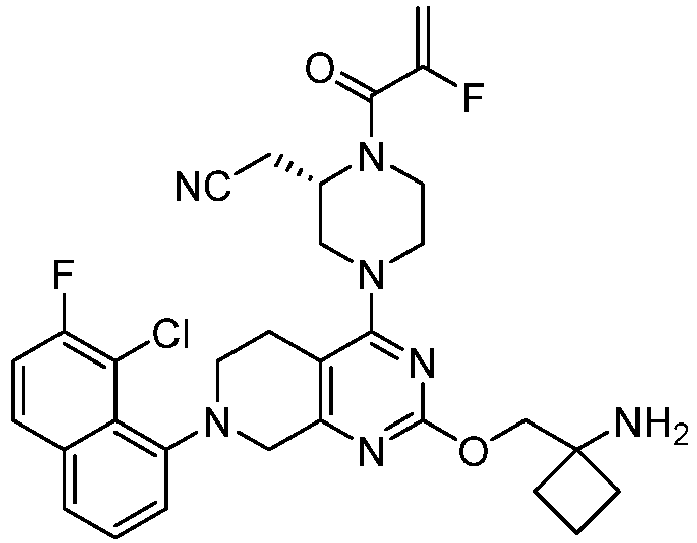
1H NMR (400 MHz, CDCl3) δ = 7.81 - 7.71 (m, 1H), 7.66 - 7.58 (m, 1H), 7.48 -7.39 (m, 1H), 7.37 - 7.29 (m, 2H), 5.48 - 5.33 (m, 1H), 5.26 (dd, J = 3.7, 16.9 Hz, 1H), 5.08 - 4.57 (m, 1H), 4.45 - 4.32 (m, 3H), 4.27 - 4.00 (m, 2H), 3.97 - 3.81 (m, 2H), 3.64 - 3.37 (m, 2H), 3.30 - 3.04 (m, 4H), 2.89 - 2.54 (m, 3H), 2.29 - 2.14 (m, 2H), 2.09 - 1.79 (m, 4H). LCMS [M+1]: 608. -

-

- Step A: To a solution of 2-(1H-imidazol-1-yl)cyclobutan-1-ol (166 mg, 1.20 mmol, 3 eq) in DMF (6 mL) was added NaH (48.1 mg, 1.20 mmol, 60% purity, 3 eq) at 0 °C and stirred for 30 minutes. Then tert-butyl (2S)-4-(7-(8-chloro-7-fluoronaphthalen-1-yl)-2-(methylsulfinyl)-5,6,7,8-tetrahydropyrido[3,4-d]pyrimidin-4-yl)-2-(cyanomethyl)piperazine-1-carboxylate (300 mg, 401 µmol, 1 eq) was added, the mixture was stirred at 20 °C for 30 minutes. Upon completion, the reaction was quenched by addition saturated NaHCOs and extracted with ethyl acetate (3 × 50 mL). The combined organic layers were washed with saturated brine (50 mL), dried over Na2SO4, filtered, and concentrated under reduced pressure to give a residue. The residue was purified by prep-TLC (DCM:MeOH = 10:1) to give tert-butyl (2S)-4-(2-(2-(1H-imidazol-1-yl)cyclobutoxy)-7-(8-chloro-7-fluoronaphthalen-1-yl)-5,6,7,8-tetrahydropyrido[3,4-d]pyrimidin-4-yl)-2-(cyanomethyl)piperazine-1-carboxylate (300 mg, 356 µmol, 89% yield) as a yellow oil. LCMS [M+1]: 673.2.
- Step B: To a solution of tert-butyl (2S)-4-(2-(2-(1H-imidazol-1-yl)cyclobutoxy)-7-(8-chloro-7-fluoronaphthalen-1-yl)-5,6,7,8-tetrahydropyrido[3,4-d]pyrimidin-4-yl)-2-(cyanomethyl)piperazine-1-carboxylate (300 mg, 446 µmol, 1 eq) in DCM (3 mL) was added TFA (3 mL). The mixture was stirred at 20 °C for 30 minutes. Upon completion, the reaction was quenched by addition saturated NaHCO3 to pH~8.0 and extracted with ethyl acetate (3 × 50 mL). The combined organic layers were washed with saturated brine (50 mL), dried over Na2SO4, filtered, and concentrated under reduced pressure to give a crude product (150 mg) as a white solid. 100 mg of the crude product was used to next step without purification. Another 50 mg of crude product was purified by prep-HPLC (column: Waters Xbridge BEH C18 100*25mm*5um; mobile phase: [water (10 mM NH4HCO3)-ACN]; B%: 35%-65%, 8 min) affording 2-((2S)-4-(2-(2-(1H-imidazol-1-yl)cyclobutoxy)-7-(8-chloro-7-fluoronaphthalen-1-yl)-5,6,7,8-tetrahydropyrido[3,4-d]pyrimidin-4-yl)piperazin-2-yl)acetonitrile (5.66 mg, 9.85 µmol, 6.6% yield) as a yellow solid.
- 1H NMR (400 MHz, CDCl3) δ 7.75 (dd, J = 5.6, 9.2 Hz, 1H), 7.64-7.58 (m, 2H), 7.47-7.40 (m, 1H), 7.33 (dt, J = 2.0, 8.8 Hz, 1H), 7.26 (br s, 1H), 7.09-6.99 (m, 2H), 5.52-5.37 (m, 1H), 4.73-4.63 (m, 1H), 4.34-4.22 (m, 1H), 4.05-3.56 (m, 3H), 3.55-3.44 (m, 1H), 3.24-2.98 (m, 5H), 2.96-2.67 (m, 2H), 2.66-2.39 (m, 5H), 2.12-1.94 (m, 2H). LCMS [M+1]: 573.
- Step C: To a solution of 2-((2S)-4-(2-(2-(1H-imidazol-1-yl)cyclobutoxy)-7-(8-chloro-7-fluoronaphthalen-1-yl)-5,6,7,8-tetrahydropyrido[3,4-d]pyrimidin-4-yl)piperazin-2-yl)acetonitrile (100 mg, 174 µmol, 1 eq) and 2-fluoroprop-2-enoic acid (31.4 mg, 349 µmol, 2.0 eq) in ethyl acetate (2 mL) was added triethylamine (35.3 mg, 349 µmol, 48.6 µL, 2 eq), then cooled to 0 °C, followed by T3P (222 mg, 349 µmol, 207 µL, 50% purity, 2 eq). The reaction was quenched by addition saturated NaHCOs and extracted with ethyl acetate (3 × 50 mL). The combined organic layers were washed with saturated brine (50 mL), dried over Na2SO4, filtered, and concentrated under reduced pressure to give a residue. The residue was purified by prep-HPLC (column: Waters Xbridge BEH C18 100*30mm*10µm; mobile phase: [water (10mM NH4HCO3)-ACN]; B%: 45%-65%, 10 min) affording 2-((2S)-4-(2-(2-(1H-imidazol-1-yl)cyclobutoxy)-7-(8-chloro-7-fluoronaphthalen-1-yl)-5,6,7,8-tetrahydropyrido[3,4-d]pyrimidin-4-yl)-1-(2-fluoroacryloyl)piperazin-2-yl)acetonitrile (23.0 mg, 35.0 µmol, 20% yield) as a white solid. LCMS [M+1]: 645.
- SFC condition: Column: CD-PH 150×4.6mm I.D., 5µm, Mobile phase A: water with 0.375% TFA B: acetonitrile with 0.1875% A /B =65/35, Flow rate: 1.0mL/min; Wavelength: 220nm.
- 1H NMR (400 MHz, CDCl3) δ 7.80 - 7.71 (m, 1H), 7.66 - 7.52 (m, 2H), 7.48 - 7.39 (m, 1H), 7.36 - 7.29 (m, 1H), 7.27 - 7.21 (m, 1H), 7.10 - 6.84 (m, 2H), 5.62 - 5.32 (m, 2H), 5.30 - 5.20 (m, 1H), 5.06 - 4.58 (m, 2H), 4.38 - 4.19 (m, 1H), 4.14 - 3.86 (m, 2H), 3.85 - 3.67 (m, 1H), 3.65 - 3.46 (m, 2H), 3.44 - 2.94 (m, 5H), 2.92 - 2.74 (m, 2H), 2.66 - 2.42 (m, 3H), 2.23 - 1.95 (m, 2H).
-

-

- Step A: To a solution of tert-butyl (2S)-4-(7-(8-chloro-7-fluoronaphthalen-1-yl)-2-(methylsulfinyl)-5,6,7,8-tetrahydropyrido[3,4-d]pyrimidin-4-yl)-2-(cyanomethyl)piperazine-1-carboxylate (200 mg, 334 µmol, 1 eq) and 2-(azetidin-1-yl)cyclobutan-1-ol (127 mg, 1.0 mmol, 3 eq) in toluene (6 mL) was added 4Å molecular sieves (100 mg) and t-BuONa (48.1 mg, 500.7 µmol, 1.5 eq) at 0 °C and stirred for 1 hour. The reaction was quenched by addition H2O (50 mL) and extracted with ethyl acetate (3 × 10 mL). The combined organic layer was washed with sat. NaCl 10 mL, dried over Na2SO4, filtered, and concentrated under reduced pressure to give a residue. The residue was purified by prep-TLC (Dichloromethane: Methanol = 10: 1) to give the product tert-butyl (2S)-4-(2-(2-(azetidin-1-yl)cyclobutoxy)-7-(8-chloro-7-fluoronaphthalen-1-yl)-5,6,7,8-tetrahydropyrido[3,4-d]pyrimidin-4-yl)-2-(cyanomethyl)piperazine-1-carboxylate (200 mg, 302.0 µmol, 90% yield) as a yellow oil. LCMS [M+1]: 662.2.
- Step B: To a solution of tert-butyl (2S)-4-(2-(2-(azetidin-1-yl)cyclobutoxy)-7-(8-chloro-7-fluoronaphthalen-1-yl)-5,6,7,8-tetrahydropyrido[3,4-d]pyrimidin-4-yl)-2-(cyanomethyl)piperazine-1-carboxylate (200 mg, 302 µmol, 1 eq) in DCM (1 mL) was added TFA (1 mL). The mixture was stirred at 20 °C for 1 hour. Upon completion, the reaction was quenched by addition of sat. NaHCOs and extracted with ethyl acetate (3 × 50 mL). The combined organic layers were washed with sat. NaCl (50 mL), dried over Na2SO4, filtered, and concentrated under reduced pressure to give a crude product (150 mg) as a yellow solid. 100 mg of the crude product was used to next step without purification. Another 50 mg of crude product was purified by prep-HPLC (column: Waters Xbridge BEH C18 100*25mm*5µm; mobile phase: [water (10mM NH4HCO3)-ACN]; B%: 40%-65%, 8 min) to give 2-((2S)-4-(2-(2-(azetidin-1-yl)cyclobutoxy)-7-(8-chloro-7-fluoronaphthalen-1-yl)-5,6,7,8-tetrahydropyrido[3,4-d]pyrimidin-4-yl)piperazin-2-yl)acetonitrile (7.6 mg, 13.5 µmol, 15% yield) as a yellow solid. LCMS [M+1]: 562.
- 1H NMR (400 MHz, CDCl3) δ = 7.75 (dd, J = 5.6, 9.2 Hz, 1H), 7.60 (d, J = 8.0 Hz, 1H), 7.46-7.39 (m, 1H), 7.35-7.27 (m, 2H), 5.09-4.99 (m, 1H), 4.37 (br d, J = 17.6 Hz, 1H), 4.13-3.89 (m, 1H), 3.89-3.69 (m, 2H), 3.58-3.47 (m, 1H), 3.41-2.78 (m, 12H), 2.58-2.44 (m, 4H), 2.37-2.26 (m, 1H), 2.10-1.98 (m, 2H), 1.72-1.53 (m, 2H).
- Step C: To a solution of 2-((2S)-4-(2-(2-(azetidin-1-yl)cyclobutoxy)-7-(8-chloro-7-fluoronaphthalen-1 -yl)-5,6,7,8-tetrahydropyrido[3,4-d]pyrimidin-4-yl)piperazin-2-yl)acetonitrile (100 mg, 178 µmol, 1 eq) and 2-fluoroprop-2-enoic acid (32.0 mg, 356 µmol, 2 eq) in ethyl acetate (2 mL) was added TEA (36.0 mg, 356 µmol, 49.5 µL, 2 eq) and cooled to -40 °C, then T3P (226 mg, 356 µmol, 212 µL, 50% purity, 2 eq) was added at -40 °C and stirred for 1 hour. The reaction was quenched by addition saturated NaHCOs and extracted with ethyl acetate (3 × 50 mL). The combined organic layer was washed with saturated NaCl (50 mL), dried over Na2SO4, filtered, and concentrated under reduced pressure to give a crude product (150 mg). The crude product was purified by prep-HPLC (column: Waters Xbridge BEH C18 100*25mm*5µm; mobile phase: [water (10 mM NH4HCO3)-ACN]; B%: 45%-70%, 8 min) to give the product 2-((2S)-4-(2-(2-(azetidin-1-yl)cyclobutoxy)-7-(8-chloro-7-fluoronaphthalen-1-yl)-5,6,7,8-tetrahydropyrido[3,4-d]pyrimidin-4-yl)-1-(2-fluoroacryloyl)piperazin-2-yl)acetonitrile (19.4 mg, 17% yield) as a white solid. LCMS [M+1]: 634.
- SFC condition: Column: CD-PH 150×4.6mm I.D., 5um, Mobile phase A: water with 0.375% TFA B: acetonitrile with 0.1875% A /B =65/35, Flow rate: 1.0mL/min; Wavelength: 220nm.
- 1H NMR (400 MHz, CDCl3) δ 7.80-7.72 (m, 1H), 7.61 (t, J = 7.6Hz, 1H), 7.43 (td, J = 7.6, 12.0 Hz, 1H), 7.36-7.27 (m, 2H), 5.53-5.33 (m, 1H), 5.26 (br dd, J = 3.2, 16.8 Hz, 1H), 5.11-4.74 (m, 2H), 4.45-4.34 (m, 1H), 4.20-4.00 (m, 2H), 3.95-3.76 (m, 2H), 3.63-3.52 (m, 1H), 3.49-3.38 (m, 1H), 3.34-3.04 (m, 9H), 2.95-2.73 (m, 2H), 2.65-2.44 (m, 2H), 2.38-2.27 (m, 1H), 2.11-1.98 (m, 2H), 1.67-1.57 (m, 2H).
- Following the teachings of the General Reaction Schemes and the exemplary intermediates provided herein, Examples 217 - 228 shown in Table 7 may be synthesized:
Table 7 EXAMPLES 217 - 228 Example No. Structure Example No. Structure 217 
223 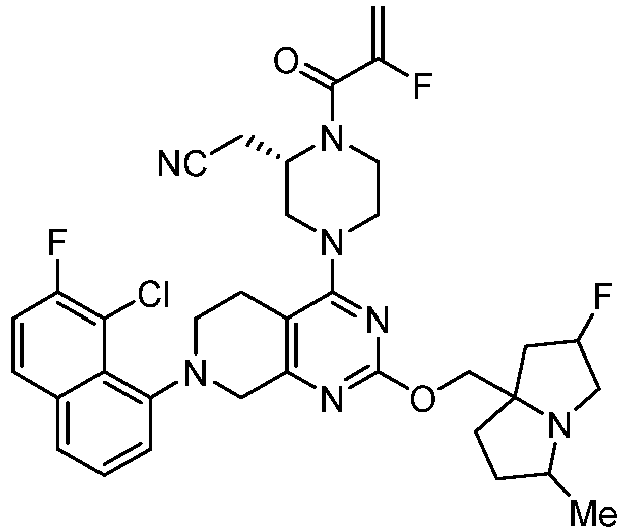
218 
224 
219 
225 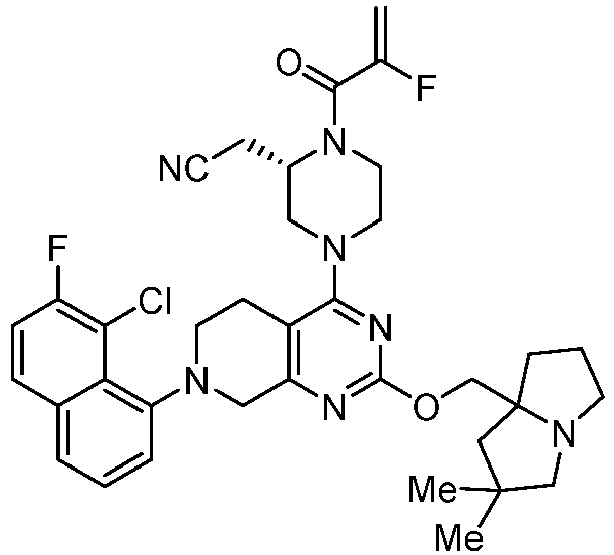
220 
226 
221 
227 
222 
228 
- This Example illustrates that exemplary compounds of the present invention covalently bind to KRas G12C using a LCMS assay to detect a covalent adduct of the exemplary compound and KRAS G12C.
- The protein concentration of GDP-loaded K-Ras (1-169) G12C, C51S,C80L,C118S and GTP-loaded K-Ras (1-169) G12C,C51S,C80L,C118S,Q61H was adjusted to 2 µM in K-Ras Assay Buffer (25 mM HEPES,150 mM NaCl, 5 mM MgCl2, and 10 mM Octyl β-glucopyranoside at pH 7.5). A 10 µL aliquot of each protein solution was then transferred to a 384 well microtiter plate. Initial compound stocks were generated at fifty times their desired final assay concentration in DMSO.
- Exemplary compounds of Formula (II) were diluted 25-fold into K-Ras Assay Buffer to a final of two times their final concentration. A 10 µL aliquot of each diluted compound solution was then added to each of the protein solutions in the microtiter plate to initiate reaction. Typical final compound concentrations were 3.0, 5.0 and 25.0 µM. At each time point, the reactions were quenched with 20 µL of a 25 mM acetic acid solution. Usual assay endpoints were 15, 180 and 1440 minutes. Once all reactions were quenched, the plates were heat sealed and the samples were injected into a LC/MS system for data acquisition.
- Data collection took place on an Agilent 6520 Q-TOF Accurate Mass Spectrometer. Samples were injected in their liquid phase onto a C-3 reverse phase column to remove assay buffer and prepare the samples for mass spectrometer. The proteins were eluted from the column using an acetonitrile gradient and fed directly into the mass analyzer. Initial raw data analysis took place in Agilent MassHunter software immediately post data acquisition.
- Raw data analysis of the intact protein was exclusively a deconvolution of the multiple charge states of each protein in solution using a maximum entropy deconvolution provided in Mass Hunter. To minimize complexity, only the data over limited mass ranges were considered for analysis, with a minimum of one Dalton mass step intervals. The heights of all masses identified during raw data analysis were exported to be further analyzed in Spotfire® data analysis software.
- Final data analysis was a multistep process in the Spotfire® data analysis software package. Briefly, each protein mass was calculated as a percent of the total signal of that sample, that percentage was then normalized to the percentage of signal of the protein in the absence of reactive compounds. Those normalized signals were reported as normalized percent of control (POC). An increased POC value indicates a compound that displays a higher degree of modification at a given condition compared to other compounds under the same conditions. The results for exemplary compounds of Formula (II), Formula II-A and Formula II-B tested at 5 µM concentration for 3 hours are shown in Table 8. Key: "A" ≤ 25% POC; "B" > 25% POC - ≤ 50% POC; "C" > 50% POC and ND = not determined.
Table 8 Inhibition of KRas G12C Activity by Exemplary Compounds of Formula (II) Example No. POC 1 C 2 C 3 C 4 C 5 C 6 C 7 C 8 C 9 C 10 C 11 C 12 C 13 C 14 A 15 C 16 A 17 B 18 C 19 C 20 C 21 A 22 C 23 C 24 C 25 C 26 C 27 C 28 C 29 C 30 C 31 C 32 C 33 C 34 C 35 C 36 C 37 C 38 C 39 C 40 C 41 A 42 C 43 A 53 C 54 B 55 C - This Example illustrates that exemplary compounds of the present invention inhibit the growth of tumor cell lines that express KRas G12C.
- The cellular inhibition of KRAs G12C by exemplary compounds of the present invention was determined by measuring the amount of a downstream marker of KRas activity, phosphorylated ERK ("Phospho-ERK").
- NCI-H358 cells express KRas G12C and were grown in RPMI medium supplemented with 10% fetal bovine serum, penicillin/streptomycin and 10 mM HEPES. Cells were plated in poly-D-Lysine coated 96-well plates at a concentration of 50,000 cells/well and allowed to attach for 8-12 hours. Diluted compounds were then added at a final concentration of 0.5 % DMSO. After 3 hours, the medium was removed, 150 µL of 4% formaldehyde was added and the plates were incubated for 20 minutes. The plates were washed with PBS, and permeabilized using 150 µL of ice cold 100% methanol for 10 minutes. Non-specific antibody binding to the plates was blocked using 100 µL Licor Blocking Buffer (Li-Cor Biotechnology, Lincoln NE) for 1 hour at room temperature. Positive control samples and samples lacking cells were parallel processed with test samples as standards.
- The amount Phospho-ERK was determined using an antibody specific for the phosphorylated form of ERK and compared to the amount of GAPDH. Primary antibodies used for detection were added as follows: Phospho-ERK (Cell Signaling cs9101) diluted 1:500 and GAPDH (Millipore MAB374) diluted 1:5000 in Licor block + 0.05% Tween 20. The plates were incubated for 2 hours at room temperature. The plates were washed with PBS + 0.05% Tween 20.
- Secondary antibodies used to visualize primary antibodies were added as follows: Anti-rabbit-680 diluted 1:1000 and Anti-mouse-800 diluted 1:1000 in Licor Block + 0.05% Tween 20 and incubated for 1 hour at room temperature. The plates were washed with PBS + 0.05% Tween 20. A 100 µL aliquot of PBS was added to each well and the plates were read on a LICOR AERIUS plate reader.
- The pERK(Thr202/Tyr204) signal was normalized with the GAPDH signal and percent of DMSO control values were calculated. IC50 values were generated using a 4 parameter fit of the dose response curve. The results for exemplary compounds of Formula (II) are shown in Table 9. Key: "A" ≥ 0.0001 - ≤ 1 µM; "B" > 1 µM - ≤ 10 µm, and ND = not determined.
Table 9 Inhibition of KRas G12C-mediated Cell Proliferation by Exemplary Compounds Example No. IC50 1 A 2 A 3 A 4 A 5 A 6 A 7 A 8 A 9 A 10 A 11 A 12 A 13 A 14 A 15 A 16 A 17 B 18 A 19 A 20 A 21 A 22 A 23 B 24 A 25 A 26 A 27 A 28 A 29 A 30 A 31 A 32 B 33 A 34 B 35 A 36 A 37 A 38 A 39 A 40 A 41 B 42 A 43 B 44 N.D. 45 A 46 A 47 A 48 A 49 A 50 A 51 A 52 A 53 A 54 A 55 A 56 A 57 B 58 A 59 A 60 A 61 N.D. 74 A 103 A 104 A 105 A 130 B 131 A 132 B 133 A 134 A 135 A 136 A 137 B 138 A 139 A 140 A 141 A 142 A 143 A 144 A 145 B 146 A 147 A 148 B 149 B 150 A 151 A 152 B 153 B 154 B 155 A 156 A 157 B 158 A 159 A 160 A 161 A 162 A 163 B 164 B 165 A 166 A 167 A 168 B 169 A 170 A 171 A 172 A 173 A 174 A 175 A 176 A 177 A 178 A 179 A 180 A 181 A 182 B 183 A 184 A 185 A 186 A 187 A 188 A 189 B 190 A 191 A 192 B 193 A 194 A 195 A 196 A 197 A 198 A 199 A 200 A 201 A 206 A 207 A 208 A 209 A 210 A 211 A
Claims (7)
- A compound, wherein the compound is:


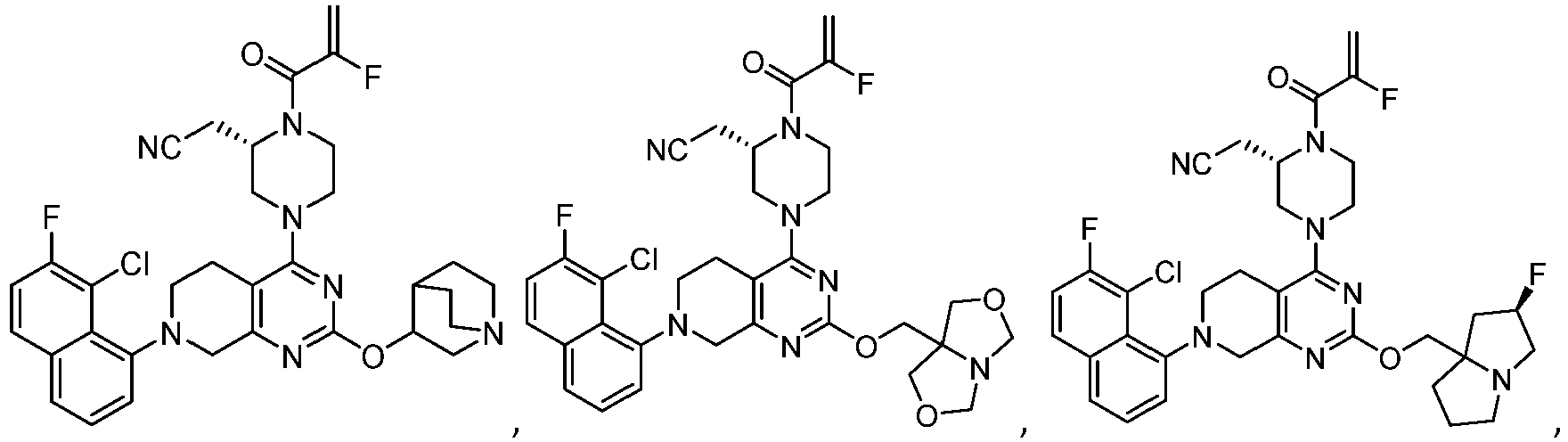


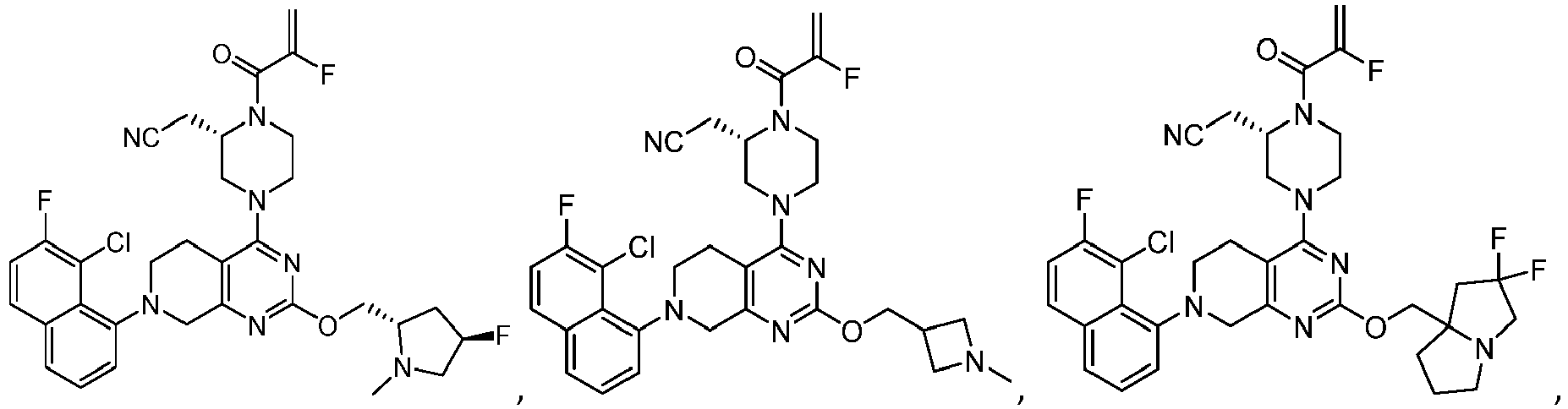

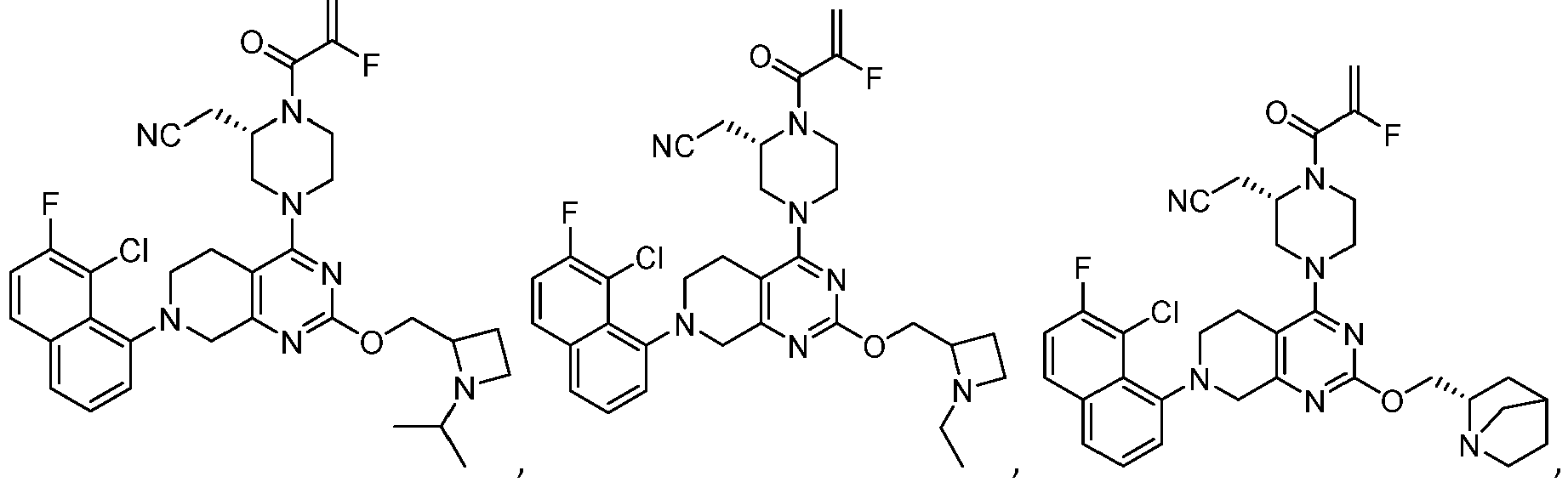


- A pharmaceutical composition, comprising a therapeutically effective amount of a compound of claim 1, and a pharmaceutically acceptable excipient.
- A compound of claim 1 or a pharmaceutical composition of claim 2 for use in a method for treating cancer comprising administering to a patient having cancer a therapeutically effective amount of a compound of claim 1 or a pharmaceutical composition of claim 2.
- A compound of claim 1 or a pharmaceutical composition of claim 2 for use according to claim 3, wherein the therapeutically effective amount of the compound is between about 0.01 to 100 mg/kg per day.
- A compound of claim 1 or a pharmaceutical composition of claim 2 for use according to claim 4, wherein the therapeutically effective amount of the compound is between about 0.1 to 50 mg/kg per day.
- A compound of claim 1 or a pharmaceutical composition of claim 2 for use according to claim 3, wherein the cancer is selected from the group consisting of Cardiac: sarcoma (angiosarcoma, fibrosarcoma, rhabdomyosarcoma, liposarcoma), myxoma, rhabdomyoma, fibroma, lipoma and teratoma; Lung: bronchogenic carcinoma (squamous cell, undifferentiated small cell, undifferentiated large cell, adenocarcinoma), alveolar (bronchiolar) carcinoma, bronchial adenoma, sarcoma, lymphoma, chondromatous hamartoma, mesothelioma; Gastrointestinal: esophagus (squamous cell carcinoma, adenocarcinoma, leiomyosarcoma, lymphoma), stomach (carcinoma, lymphoma, leiomyosarcoma), pancreas (ductal adenocarcinoma, insulinoma, glucagonoma, gastrinoma, carcinoid tumors, vipoma), small bowel (adenocarcinoma, lymphoma, carcinoid tumors, Kaposi's sarcoma, leiomyoma, hemangioma, lipoma, neurofibroma, fibroma), large bowel (adenocarcinoma, tubular adenoma, villous adenoma, hamartoma, leiomyoma); Genitourinary tract: kidney (adenocarcinoma, Wilm's tumor (nephroblastoma), lymphoma, leukemia), bladder and urethra (squamous cell carcinoma, transitional cell carcinoma, adenocarcinoma), prostate (adenocarcinoma, sarcoma), testis (seminoma, teratoma, embryonal carcinoma, teratocarcinoma, choriocarcinoma, sarcoma, interstitial cell carcinoma, fibroma, fibroadenoma, adenomatoid tumors, lipoma); Liver: hepatoma (hepatocellular carcinoma), cholangiocarcinoma, hepatoblastoma, angiosarcoma, hepatocellular adenoma, hemangioma; Biliary tract: gall bladder carcinoma, ampullary carcinoma, cholangiocarcinoma; Bone: osteogenic sarcoma (osteosarcoma), fibrosarcoma, malignant fibrous histiocytoma, chondrosarcoma, Ewing's sarcoma, malignant lymphoma (reticulum cell sarcoma), multiple myeloma, malignant giant cell tumor chordoma, osteochronfroma (osteocartilaginous exostoses), benign chondroma, chondroblastoma, chondromyxofibroma, osteoid osteoma and giant cell tumors; Nervous system: skull (osteoma, hemangioma, granuloma, xanthoma, osteitis deformans), meninges (meningioma, meningiosarcoma, gliomatosis), brain (astrocytoma, medulloblastoma, glioma, ependymoma, germinoma (pinealoma), glioblastoma multiform, oligodendroglioma, schwannoma, retinoblastoma, congenital tumors), spinal cord neurofibroma, meningioma, glioma, sarcoma); Gynecological: uterus (endometrial ' carcinoma (serous cystadenocarcinoma, mucinous cystadenocarcinoma, unclassified carcinoma), granulosa-thecal cell tumors, Sertoli-Leydig cell tumors, dysgerminoma, malignant teratoma), vulva (squamous cell carcinoma, intraepithelial carcinoma, adenocarcinoma, fibrosarcoma, melanoma), vagina (clear cell carcinoma, squamous cell carcinoma, botryoid sarcoma (embryonal rhabdomyosarcoma), fallopian tubes (carcinoma); Hematologic: blood (myeloid leukemia (acute and chronic), acute lymphoblastic leukemia, chronic lymphocytic leukemia, myeloproliferative diseases, multiple myeloma, myelodysplastic syndrome), Hodgkin's disease, non-Hodgkin's lymphoma (malignant lymphoma); Skin: malignant melanoma, basal cell carcinoma, squamous cell carcinoma, Kaposi's sarcoma, moles dysplastic nevi, lipoma, angioma, dermatofibroma, keloids, psoriasis; and Adrenal glands: neuroblastoma.
- A compound of claim 1 or a pharmaceutical composition of claim 2 for use according to claim 3, wherein the cancer is non-small cell lung cancer.
Priority Applications (1)
| Application Number | Priority Date | Filing Date | Title |
|---|---|---|---|
| EP24206860.9A EP4501932A3 (en) | 2017-11-15 | 2019-05-14 | Kras g12c inhibitors |
Applications Claiming Priority (3)
| Application Number | Priority Date | Filing Date | Title |
|---|---|---|---|
| US201762586775P | 2017-11-15 | 2017-11-15 | |
| US16/191,190 US10689377B2 (en) | 2017-11-15 | 2018-11-14 | KRas G12C inhibitors |
| PCT/US2019/032249 WO2020101736A1 (en) | 2017-11-15 | 2019-05-14 | Kras g12c inhibitors |
Related Child Applications (2)
| Application Number | Title | Priority Date | Filing Date |
|---|---|---|---|
| EP24206860.9A Division EP4501932A3 (en) | 2017-11-15 | 2019-05-14 | Kras g12c inhibitors |
| EP24206860.9A Division-Into EP4501932A3 (en) | 2017-11-15 | 2019-05-14 | Kras g12c inhibitors |
Publications (3)
| Publication Number | Publication Date |
|---|---|
| EP3880208A1 EP3880208A1 (en) | 2021-09-22 |
| EP3880208A4 EP3880208A4 (en) | 2022-08-17 |
| EP3880208B1 true EP3880208B1 (en) | 2024-11-20 |
Family
ID=66431793
Family Applications (3)
| Application Number | Title | Priority Date | Filing Date |
|---|---|---|---|
| EP18879484.6A Active EP3710439B1 (en) | 2017-11-15 | 2018-11-14 | Kras g12c inhibitors |
| EP19886028.0A Active EP3880208B1 (en) | 2017-11-15 | 2019-05-14 | Kras g12c inhibitors |
| EP24206860.9A Pending EP4501932A3 (en) | 2017-11-15 | 2019-05-14 | Kras g12c inhibitors |
Family Applications Before (1)
| Application Number | Title | Priority Date | Filing Date |
|---|---|---|---|
| EP18879484.6A Active EP3710439B1 (en) | 2017-11-15 | 2018-11-14 | Kras g12c inhibitors |
Family Applications After (1)
| Application Number | Title | Priority Date | Filing Date |
|---|---|---|---|
| EP24206860.9A Pending EP4501932A3 (en) | 2017-11-15 | 2019-05-14 | Kras g12c inhibitors |
Country Status (35)
| Country | Link |
|---|---|
| US (4) | US10689377B2 (en) |
| EP (3) | EP3710439B1 (en) |
| JP (2) | JP7322019B2 (en) |
| KR (1) | KR102861303B1 (en) |
| CN (2) | CN111989321B (en) |
| AU (1) | AU2018369759B2 (en) |
| BR (1) | BR112020009818A2 (en) |
| CA (1) | CA3082579A1 (en) |
| CL (1) | CL2020001271A1 (en) |
| CO (1) | CO2020007244A2 (en) |
| CY (2) | CY1125974T1 (en) |
| DK (1) | DK3710439T3 (en) |
| EA (1) | EA202091186A1 (en) |
| ES (2) | ES2944547T3 (en) |
| FI (2) | FI3710439T3 (en) |
| FR (1) | FR24C1026I2 (en) |
| HR (1) | HRP20230377T1 (en) |
| HU (2) | HUE061599T2 (en) |
| IL (1) | IL274601B2 (en) |
| LT (2) | LT3710439T (en) |
| LU (1) | LUC00350I2 (en) |
| MX (1) | MX2020005063A (en) |
| MY (1) | MY200356A (en) |
| NL (1) | NL301279I2 (en) |
| PH (1) | PH12020550622A1 (en) |
| PL (1) | PL3710439T3 (en) |
| PT (1) | PT3710439T (en) |
| RS (1) | RS64182B1 (en) |
| SA (1) | SA520411982B1 (en) |
| SG (1) | SG11202004427TA (en) |
| SI (1) | SI3710439T1 (en) |
| TW (1) | TWI809005B (en) |
| UA (1) | UA125802C2 (en) |
| WO (2) | WO2019099524A1 (en) |
| ZA (1) | ZA202002105B (en) |
Families Citing this family (222)
| Publication number | Priority date | Publication date | Assignee | Title |
|---|---|---|---|---|
| CN109843856B (en) * | 2016-05-18 | 2023-05-02 | 米拉蒂治疗股份有限公司 | KRAS G12C inhibitors |
| KR102861303B1 (en) * | 2017-11-15 | 2025-09-17 | 미라티 테라퓨틱스, 인크. | KRAs G12C inhibitor |
| MX2020010836A (en) * | 2018-05-04 | 2021-01-08 | Amgen Inc | Kras g12c inhibitors and methods of using the same. |
| WO2019217307A1 (en) | 2018-05-07 | 2019-11-14 | Mirati Therapeutics, Inc. | Kras g12c inhibitors |
| TW202012415A (en) | 2018-05-08 | 2020-04-01 | 瑞典商阿斯特捷利康公司 | Chemical compounds |
| US20210230170A1 (en) * | 2018-08-31 | 2021-07-29 | Mirati Therapeutics, Inc. | Kras g12c inhibitors |
| WO2020055761A1 (en) | 2018-09-10 | 2020-03-19 | Mirati Therapeutics, Inc. | Combination therapies |
| KR102871791B1 (en) * | 2018-09-10 | 2025-10-15 | 미라티 테라퓨틱스, 인크. | combination therapy |
| JP2022500385A (en) * | 2018-09-10 | 2022-01-04 | ミラティ セラピューティクス, インコーポレイテッド | Combination therapy |
| RS66727B1 (en) | 2018-09-10 | 2025-05-30 | Mirati Therapeutics Inc | Combination of dasatinib and adagrasib for use in the treatment of non-small cell lung cancer |
| ES3004338T3 (en) | 2018-09-10 | 2025-03-12 | Mirati Therapeutics Inc | Combination therapies |
| TWI831855B (en) | 2018-10-26 | 2024-02-11 | 日商大鵬藥品工業股份有限公司 | Novel indazole compounds or salts thereof |
| ES3004042T3 (en) | 2018-11-09 | 2025-03-11 | Hoffmann La Roche | Fused ring compounds |
| CA3112129A1 (en) | 2018-12-05 | 2020-06-11 | Mirati Therapeutics, Inc. | Combination therapies |
| JP7592601B2 (en) | 2019-01-10 | 2024-12-02 | ミラティ セラピューティクス, インコーポレイテッド | KRAS G12C inhibitors |
| US20220152026A1 (en) * | 2019-02-12 | 2022-05-19 | Novartis Ag | Pharmaceutical combination comprising tno155 and a krasg12c inhibitor |
| PH12021552083A1 (en) | 2019-03-05 | 2022-06-06 | Astrazeneca Ab | Fused tricyclic compounds useful as anticancer agents |
| TW202110837A (en) * | 2019-05-24 | 2021-03-16 | 大陸商江蘇恆瑞醫藥股份有限公司 | A hydrogenated pyridopyrimidine derivative, a preparation method thereof, and a medical use thereof |
| WO2020239077A1 (en) * | 2019-05-29 | 2020-12-03 | 上海翰森生物医药科技有限公司 | Nitrogen-containing heterocyclic derivative regulator, preparation method therefor and application thereof |
| CN112047939B (en) * | 2019-06-06 | 2023-05-02 | 江苏先声药业有限公司 | Tetrahydropyridopyrimidine compound with anti-tumor activity |
| CN112300153B (en) * | 2019-07-26 | 2023-06-13 | 博瑞生物医药(苏州)股份有限公司 | Heterocyclic compound, pharmaceutical composition and application |
| CA3149403A1 (en) * | 2019-08-02 | 2021-02-11 | Shanghai Jemincare Pharmaceuticals Co., Ltd | Tetracyclic compound, preparation method and use thereof |
| US20210040089A1 (en) * | 2019-08-07 | 2021-02-11 | Jacobio Pharmaceuticals Co., Ltd. | Kras mutant protein inhibitors |
| CN112390788A (en) * | 2019-08-13 | 2021-02-23 | 苏州闻天医药科技有限公司 | Compound for inhibiting KRASG12C mutant protein and preparation method and application thereof |
| CN112390797A (en) * | 2019-08-15 | 2021-02-23 | 微境生物医药科技(上海)有限公司 | Novel spirocyclic K-Ras G12C inhibitor |
| CN114616232B (en) * | 2019-09-06 | 2026-05-05 | 正大天晴药业集团南京顺欣制药有限公司 | Azaheptanopyrimidine derivatives and their pharmaceutical uses |
| WO2021055728A1 (en) | 2019-09-18 | 2021-03-25 | Merck Sharp & Dohme Corp. | Small molecule inhibitors of kras g12c mutant |
| US12122787B2 (en) | 2019-09-20 | 2024-10-22 | Shanghai Jemincare Pharmaceuticals Co., Ltd | Fused pyridone compound, and preparation method therefor and use thereof |
| CN114761012B (en) * | 2019-09-24 | 2025-03-21 | 米拉蒂治疗股份有限公司 | Combination therapy |
| WO2021057832A1 (en) * | 2019-09-25 | 2021-04-01 | Jacobio Pharmaceuticals Co., Ltd. | Kras mutant protein inhibitor |
| CN114728934B (en) | 2019-10-02 | 2024-08-27 | 托雷莫治疗股份公司 | Heterocyclic derivatives, pharmaceutical compositions and their use for treating or ameliorating cancer |
| US20230257374A1 (en) * | 2019-10-10 | 2023-08-17 | Innovent Biologics (Suzhou) Co., Ltd. | Novel kras g12c protein inhibitor, preparation method therefor, and use thereof |
| CN112694475B (en) * | 2019-10-23 | 2025-09-23 | 苏州泽璟生物制药股份有限公司 | Cycloalkyl and heterocycloalkyl inhibitors and their preparation methods and applications |
| CA3158793A1 (en) | 2019-10-28 | 2021-05-06 | Merck Sharp & Dohme Corp. | Small molecule inhibitors of kras g12c mutant |
| CA3156777A1 (en) * | 2019-10-30 | 2021-05-06 | Fusheng ZHOU | Substituted heterocyclic fused cyclic compound, preparation method therefor and pharmaceutical use thereof |
| WO2021088458A1 (en) * | 2019-11-04 | 2021-05-14 | Jacobio Pharmaceuticals Co., Ltd. | Kras mutant protein inhibitor |
| CN114867735A (en) | 2019-11-04 | 2022-08-05 | 锐新医药公司 | RAS inhibitors |
| CN114786777A (en) | 2019-11-04 | 2022-07-22 | 锐新医药公司 | RAS inhibitors |
| PE20221277A1 (en) | 2019-11-04 | 2022-09-05 | Revolution Medicines Inc | RAS INHIBITORS |
| CN112778301A (en) * | 2019-11-07 | 2021-05-11 | 苏州泽璟生物制药股份有限公司 | Tetrahydropyridopyrimidine inhibitor and preparation method and application thereof |
| CN112824410A (en) * | 2019-11-21 | 2021-05-21 | 苏州泽璟生物制药股份有限公司 | Aza-heptacyclic inhibitor and preparation method and application thereof |
| EP4065231A1 (en) | 2019-11-27 | 2022-10-05 | Revolution Medicines, Inc. | Covalent ras inhibitors and uses thereof |
| JP7670711B2 (en) | 2019-11-27 | 2025-04-30 | ターニング・ポイント・セラピューティクス・インコーポレイテッド | Combination Therapies Containing Diaryl Macrocycles - Patent application |
| WO2021106231A1 (en) * | 2019-11-29 | 2021-06-03 | Taiho Pharmaceutical Co., Ltd. | A compound having inhibitory activity against kras g12d mutation |
| WO2021106230A1 (en) | 2019-11-29 | 2021-06-03 | 大鵬薬品工業株式会社 | Novel phenol compound or salt thereof |
| BR112022010254A2 (en) * | 2019-12-02 | 2022-09-06 | Shanghai Yingli Pharm Co Ltd | HETEROCYCLIC COMPOUND CONTAINING OXYGEN REPRESENTED BY FORMULA I, METHOD FOR PREPARING THE HETEROCYCLIC COMPOUND CONTAINING OXYGEN, COMPOUND, PHARMACEUTICAL COMPOSITION AND USE HETEROCYCLIC COMPOUND OXYGEN CONTAINING |
| RS63719B1 (en) * | 2019-12-11 | 2022-11-30 | Lilly Co Eli | KRAS G12C INHIBITORS |
| CN113004269B (en) * | 2019-12-19 | 2024-11-05 | 首药控股(北京)股份有限公司 | Heterocyclic compounds that are inhibitors of Kras-G12C |
| AU2020404319B2 (en) * | 2019-12-19 | 2026-01-15 | Jacobio Pharmaceuticals Co., Ltd. | KRAS mutant protein inhibitors |
| KR20220130126A (en) | 2019-12-20 | 2022-09-26 | 미라티 테라퓨틱스, 인크. | SOS1 inhibitor |
| WO2021120890A1 (en) | 2019-12-20 | 2021-06-24 | Novartis Ag | Pyrazolyl derivatives useful as anti-cancer agents |
| CN113045565A (en) * | 2019-12-27 | 2021-06-29 | 微境生物医药科技(上海)有限公司 | Novel K-Ras G12C inhibitors |
| CN112094269B (en) * | 2020-01-01 | 2021-12-07 | 上海凌达生物医药有限公司 | Saturated six-membered ring heterocyclic compound, preparation method and application |
| TWI770760B (en) * | 2020-01-08 | 2022-07-11 | 大陸商蘇州亞盛藥業有限公司 | Spirocyclic tetrahydroquinazolines |
| GB202001344D0 (en) | 2020-01-31 | 2020-03-18 | Redx Pharma Plc | Ras Inhibitors |
| US20230099858A1 (en) * | 2020-02-20 | 2023-03-30 | Beta Pharma, Inc. | Pyridopyrimidine derivatives as kras inhibitors |
| TW202140450A (en) * | 2020-02-24 | 2021-11-01 | 大陸商泰勵生物科技(上海)有限公司 | Kras inhibitors useful for the treatment of cancers |
| WO2023205701A1 (en) | 2022-04-20 | 2023-10-26 | Kumquat Biosciences Inc. | Macrocyclic heterocycles and uses thereof |
| IL296357B1 (en) * | 2020-03-12 | 2026-04-01 | D3 Bio Wuxi Co Ltd | Pyrimidoheterocyclic compounds and application thereof |
| WO2021218939A1 (en) * | 2020-04-28 | 2021-11-04 | 贝达药业股份有限公司 | Fused ring compound and application thereof in medicine |
| CN116194456B (en) * | 2020-04-30 | 2025-08-29 | 上海科州药物股份有限公司 | Preparation and application of heterocyclic compounds as KRAS inhibitors |
| WO2021231526A1 (en) * | 2020-05-13 | 2021-11-18 | Incyte Corporation | Fused pyrimidine compounds as kras inhibitors |
| CN113666923A (en) * | 2020-05-15 | 2021-11-19 | 苏州泽璟生物制药股份有限公司 | Alkoxy alkyl substituted heterocyclic inhibitor and preparation method and application thereof |
| AU2021285032A1 (en) | 2020-06-02 | 2022-12-08 | Boehringer Ingelheim International Gmbh | Annulated 2-amino-3-cyano thiophenes and derivatives for the treatment of cancer |
| CA3182507A1 (en) * | 2020-06-04 | 2021-12-09 | Bo Shan | Inhibitors of kras g12c protein and uses thereof |
| KR20230042600A (en) | 2020-06-18 | 2023-03-28 | 레볼루션 메디슨즈, 인크. | Methods of Delaying, Preventing, and Treating Acquired Resistance to RAS Inhibitors |
| EP4171570A1 (en) | 2020-06-24 | 2023-05-03 | Boehringer Ingelheim International GmbH | Anticancer combination therapy comprising a sos1 inhibitor and a kras g12c inhibitor |
| AU2021298154A1 (en) * | 2020-06-25 | 2023-02-23 | Tolremo Therapeutics Ag | Combination of a CBP/p300 bromodomain inhibitor and a KRAS inhibitor for the treatment of cancer |
| CN113912608B (en) * | 2020-07-10 | 2023-07-14 | 江苏恒瑞医药股份有限公司 | Pyrimidopyrimidinone derivatives, their preparation method and their application in medicine |
| CN113980014B (en) * | 2020-07-27 | 2023-05-12 | 江苏恒瑞医药股份有限公司 | Hydrogenated pyridopyrimidine derivative, preparation method and medical application thereof |
| JP2023538060A (en) * | 2020-08-17 | 2023-09-06 | 貝達薬業股▲ふん▼有限公司 | BICYCLIC COMPOUNDS, COMPOSITIONS CONTAINING SAME, AND THEIR USE |
| EP4203952A4 (en) | 2020-08-28 | 2024-12-11 | Kumquat Biosciences Inc. | Heterocyclic compounds and uses thereof |
| CA3187757A1 (en) | 2020-09-03 | 2022-03-24 | Ethan AHLER | Use of sos1 inhibitors to treat malignancies with shp2 mutations |
| US12286431B2 (en) * | 2020-09-11 | 2025-04-29 | Mirati Therapeutics, Inc. | Crystalline forms of a KRas G12C inhibitor |
| CN116133662A (en) | 2020-09-11 | 2023-05-16 | 南京明德新药研发有限公司 | Crystal forms of azetidine substituted compounds |
| CN116601151A (en) * | 2020-09-11 | 2023-08-15 | 米拉蒂治疗股份有限公司 | Crystalline forms of a KRAS G12C inhibitor |
| AU2021345111B2 (en) | 2020-09-15 | 2025-11-27 | Revolution Medicines, Inc. | Indole derivatives as Ras inhibitors in the treatment of cancer |
| MX2023003338A (en) | 2020-09-23 | 2023-06-14 | Erasca Inc | Tricyclic pyridones and pyrimidones. |
| US20220112204A1 (en) * | 2020-10-14 | 2022-04-14 | Accutar Biotechnology Inc. | Substituted dihydropyranopyrimidine compounds as kras inhibitors |
| WO2022087270A1 (en) | 2020-10-23 | 2022-04-28 | Mirati Therapeutics, Inc. | Methods for treatment of lung cancers |
| MX2023005078A (en) * | 2020-10-30 | 2023-05-16 | Novartis Ag | New crystalline forms of a kras g12c inhibitor compound. |
| CN120887884A (en) | 2020-11-06 | 2025-11-04 | 泰励生物科技(上海)有限公司 | KRas inhibitors for cancer treatment |
| US20230416266A1 (en) * | 2020-11-23 | 2023-12-28 | Merck Sharp & Dohme Corp. | 6,7-DIHYDRO-PYRANO[2,3-d]PYRIMIDINE INHIBITORS OF KRAS G12C MUTANT |
| CN114591319B (en) * | 2020-12-04 | 2024-06-28 | 江苏先声药业有限公司 | Tetrahydropyridopyrimidine derivative and application thereof |
| CN116829151A (en) * | 2020-12-15 | 2023-09-29 | 米拉蒂治疗股份有限公司 | Azaquinazoline pan-KRas inhibitor |
| US12398154B2 (en) | 2020-12-15 | 2025-08-26 | Mirati Therapeutics, Inc. | Azaquinazoline pan-KRas inhibitors |
| EP4262803A4 (en) | 2020-12-16 | 2025-03-12 | Mirati Therapeutics, Inc. | PAN-KRAS TETRAHYDROPYRIDOPYRIMIDINE INHIBITORS |
| CN116529249A (en) * | 2020-12-18 | 2023-08-01 | 正大天晴药业集团股份有限公司 | Pyridopyrimidinones |
| PE20240545A1 (en) | 2020-12-18 | 2024-03-19 | Amphista Therapeutics Ltd | NOVEL BIFUNCTIONAL MOLECULES FOR DIRECTED PROTEIN DEGRADATION |
| US20230107642A1 (en) | 2020-12-18 | 2023-04-06 | Erasca, Inc. | Tricyclic pyridones and pyrimidones |
| US20240100172A1 (en) | 2020-12-21 | 2024-03-28 | Hangzhou Jijing Pharmaceutical Technology Limited | Methods and compounds for targeted autophagy |
| AU2021408129A1 (en) * | 2020-12-22 | 2023-07-13 | Novartis Ag | Pharmaceutical combinations comprising a kras g12c inhibitor and uses of a kras g12c inhibitor for the treatment of cancers |
| CN114716436A (en) * | 2021-01-04 | 2022-07-08 | 广州百霆医药科技有限公司 | KRAS G12C mutation inhibitor and application thereof |
| WO2022148421A1 (en) * | 2021-01-08 | 2022-07-14 | Beigene, Ltd. | Bridged compounds as kras g12d inhibitor and degrader and the use thereof |
| US20250177399A1 (en) * | 2021-01-29 | 2025-06-05 | Mirati Therapeutics, Inc. | Combination therapies |
| TWI793999B (en) * | 2021-02-01 | 2023-02-21 | 大陸商南京明德新藥研發有限公司 | Pyrimidinopyrane compounds |
| WO2022171143A1 (en) * | 2021-02-09 | 2022-08-18 | 南京明德新药研发有限公司 | 5,6,7,8-tetrahydropyridine[3,4-d] pyrimidine compound |
| WO2022187527A1 (en) * | 2021-03-05 | 2022-09-09 | Nikang Therapeutics, Inc | Quinazoline nitrile derivatives as kras inhibitors |
| US20250276964A1 (en) | 2021-03-15 | 2025-09-04 | Novartis Ag | Benzisoxazole Derivatives and Uses thereof |
| CN116801883A (en) * | 2021-03-18 | 2023-09-22 | 四川科伦博泰生物医药股份有限公司 | A class of heteroaromatic compounds, their preparation methods and uses |
| WO2022204112A1 (en) | 2021-03-22 | 2022-09-29 | Incyte Corporation | Imidazole and triazole kras inhibitors |
| CN115124524A (en) * | 2021-03-26 | 2022-09-30 | 浙江海正药业股份有限公司 | Tricyclic derivative and preparation method and application thereof |
| CN116157400B (en) * | 2021-03-30 | 2024-10-22 | 浙江海正药业股份有限公司 | Heterocyclic derivative and preparation method and application thereof |
| KR20230167092A (en) | 2021-04-07 | 2023-12-07 | 톨레모 테라퓨틱스 아게 | Heterocyclic derivatives, pharmaceutical compositions, and their use in the treatment or amelioration of cancer |
| US12128048B2 (en) | 2021-04-08 | 2024-10-29 | Mirati Therapeutics, Inc. | Combination therapies using PRMT5 inhibitors for the treatment of cancer |
| US20240238294A1 (en) | 2021-04-09 | 2024-07-18 | Boehringer Ingelheim International Gmbh | Anticancer therapy |
| WO2022217042A1 (en) * | 2021-04-09 | 2022-10-13 | Ikena Oncology, Inc. | Naphthyl-substituted quinoline-4(1h)-ones and related compounds and their use in treating medical conditions |
| CN117203208A (en) * | 2021-04-23 | 2023-12-08 | 清华大学 | Inhibitors targeting activated and inactive KRAS G12D |
| AR125782A1 (en) | 2021-05-05 | 2023-08-16 | Revolution Medicines Inc | RAS INHIBITORS |
| CR20230558A (en) | 2021-05-05 | 2024-01-24 | Revolution Medicines Inc | RAS INHIBITORS FOR CANCER TREATMENT |
| EP4340883A1 (en) * | 2021-05-19 | 2024-03-27 | Genentech, Inc. | Combination therapy |
| WO2022247760A1 (en) * | 2021-05-22 | 2022-12-01 | 上海科州药物研发有限公司 | Heterocyclic compounds as kras inhibitor, and preparation therefor and use thereof in treatment |
| WO2022251193A1 (en) | 2021-05-27 | 2022-12-01 | Mirati Therapeutics, Inc. | Combination therapies |
| WO2022250170A1 (en) * | 2021-05-28 | 2022-12-01 | Taiho Pharmaceutical Co., Ltd. | Small molecule inhibitors of kras mutated proteins |
| WO2022251576A1 (en) * | 2021-05-28 | 2022-12-01 | Merck Sharp & Dohme Corp. | Small molecule inhibitors of kras g12c mutant |
| US20240228511A1 (en) | 2021-06-09 | 2024-07-11 | Eli Lilly And Company | Substituted fused azines as kras g12d inhibitors |
| CN113429405A (en) * | 2021-06-10 | 2021-09-24 | 都创(上海)医药开发有限公司 | Crystal form of MRTX849 compound and preparation method and application thereof |
| WO2022266206A1 (en) | 2021-06-16 | 2022-12-22 | Erasca, Inc. | Kras inhibitor conjugates |
| CN117529321A (en) * | 2021-06-18 | 2024-02-06 | 上海德琪医药科技有限公司 | Combination of ERK inhibitor and KRAS inhibitor and use thereof |
| TW202317100A (en) | 2021-06-23 | 2023-05-01 | 瑞士商諾華公司 | Pharmaceutical combinations comprising a kras g12c inhibitor and uses thereof for the treatment of cancers |
| CN115521312A (en) * | 2021-06-24 | 2022-12-27 | 上海希迈医药科技有限公司 | Solid forms of Adagrasib and methods for their preparation |
| CN117751116A (en) * | 2021-07-07 | 2024-03-22 | 微境生物医药科技(上海)有限公司 | Fused ring compounds as KRas G12D inhibitors |
| AU2022306671A1 (en) | 2021-07-07 | 2024-01-25 | Incyte Corporation | Tricyclic compounds as inhibitors of kras |
| CN117980310A (en) | 2021-07-14 | 2024-05-03 | 尼坎治疗公司 | Alkylene derivatives as KRAS inhibitors |
| JP2024529347A (en) | 2021-07-14 | 2024-08-06 | インサイト・コーポレイション | Tricyclic Compounds as Inhibitors of KRAS |
| WO2023283933A1 (en) * | 2021-07-16 | 2023-01-19 | Silexon Biotech Co., Ltd. | Compounds useful as kras g12d inhibitors |
| MX2024000965A (en) | 2021-07-27 | 2024-02-09 | Toray Industries | MEDICINE FOR THE TREATMENT AND/OR PREVENTION OF CANCER. |
| CN113527294A (en) * | 2021-08-25 | 2021-10-22 | 都创(上海)医药开发有限公司 | Crystal form of MRTX849 compound and its preparation method and use |
| JP2024534187A (en) | 2021-08-31 | 2024-09-18 | インサイト・コーポレイション | Naphthyridine Compounds as Inhibitors of KRAS - Patent application |
| EP4395769A1 (en) | 2021-09-01 | 2024-07-10 | Novartis AG | Pharmaceutical combinations comprising a tead inhibitor and uses thereof for the treatment of cancers |
| EP4389751A1 (en) | 2021-09-03 | 2024-06-26 | Kumquat Biosciences Inc. | Heterocyclic compounds and uses thereof |
| CA3231284A1 (en) * | 2021-09-09 | 2023-03-16 | Thomas SCATTOLIN | Processes and intermediates for synthesis of adagrasib |
| WO2023051586A1 (en) * | 2021-09-29 | 2023-04-06 | 先声再明医药有限公司 | Kras g12d inhibitor compound, and preparation method therefor and use thereof |
| AR127308A1 (en) | 2021-10-08 | 2024-01-10 | Revolution Medicines Inc | RAS INHIBITORS |
| WO2023066371A1 (en) | 2021-10-22 | 2023-04-27 | 江苏恒瑞医药股份有限公司 | Nitrogen-containing tetracyclic compound, preparation method therefor, and medical use thereof |
| IL312381A (en) | 2021-11-05 | 2024-06-01 | Frontier Medicines Corp | Kras g12c inhibitors |
| EP4436969A2 (en) | 2021-11-24 | 2024-10-02 | Genentech, Inc. | Bicyclic therapeutic compounds and methods of use in the treatment of cancer |
| EP4436957A1 (en) | 2021-11-24 | 2024-10-02 | Genentech, Inc. | Therapeutic indazole compounds and methods of use in the treatment of cancer |
| CR20240233A (en) | 2021-12-01 | 2024-07-17 | Univ Vanderbilt | 2-AMINO-3-CYANO-CANCELLED THIOPHENES AND DERIVATIVES FOR CANCER TREATMENT |
| EP4442686A4 (en) * | 2021-12-02 | 2025-10-22 | Abbisko Therapeutics Co Ltd | KRAS inhibitors, manufacturing processes therefor and pharmaceutical uses thereof |
| WO2023114954A1 (en) | 2021-12-17 | 2023-06-22 | Genzyme Corporation | Pyrazolopyrazine compounds as shp2 inhibitors |
| EP4452964A1 (en) | 2021-12-22 | 2024-10-30 | Boehringer Ingelheim International GmbH | Heteroaromatic compounds for the treatment of cancer |
| JP2025503511A (en) | 2021-12-28 | 2025-02-04 | アストラゼネカ ユーケー リミテッド | Combination of antibody-drug conjugate and RASG12C inhibitor |
| CN114409653A (en) * | 2021-12-31 | 2022-04-29 | 苏州闻天医药科技有限公司 | Bridged ring pyrimidine-fused ring compound and application thereof |
| WO2023138583A1 (en) * | 2022-01-21 | 2023-07-27 | 上海湃隆生物科技有限公司 | Heterocyclic compound, pharmaceutical composition and use thereof |
| EP4475956A1 (en) | 2022-02-09 | 2024-12-18 | Quanta Therapeutics, Inc. | Kras modulators and uses thereof |
| EP4227307A1 (en) | 2022-02-11 | 2023-08-16 | Genzyme Corporation | Pyrazolopyrazine compounds as shp2 inhibitors |
| CN118660876A (en) * | 2022-02-11 | 2024-09-17 | 波涛生命科学有限公司 | Stereoselective techniques for chiral compounds |
| WO2023172940A1 (en) | 2022-03-08 | 2023-09-14 | Revolution Medicines, Inc. | Methods for treating immune refractory lung cancer |
| EP4489738A4 (en) | 2022-03-11 | 2026-03-18 | Kumquat Biosciences Inc | HETEROCYCLICAL COMPOUNDS AND USES OF THEM |
| MX2024011631A (en) | 2022-03-25 | 2024-09-30 | Lilly Co Eli | Kras inhibitors. |
| CN116854642A (en) * | 2022-03-26 | 2023-10-10 | 重庆博腾制药科技股份有限公司 | A kind of preparation method of (S)-2-piperazine acetonitrile and its hydrochloride |
| WO2023190748A1 (en) | 2022-03-31 | 2023-10-05 | エーザイ・アール・アンド・ディー・マネジメント株式会社 | Pharmaceutical composition for treating tumors |
| CN118973584A (en) | 2022-04-04 | 2024-11-15 | 赛诺菲 | Therapeutic combination of KRAS G12C inhibitor and TEAD inhibitor |
| WO2023199180A1 (en) | 2022-04-11 | 2023-10-19 | Novartis Ag | Therapeutic uses of a krasg12c inhibitor |
| IL315864A (en) * | 2022-04-18 | 2024-11-01 | Mirati Therapeutics Inc | Processes and intermediates for the synthesis of edagracib |
| AU2023264918A1 (en) | 2022-05-06 | 2025-01-09 | Chugai Seiyaku Kabushiki Kaisha | Cyclic compound having selective kras inhibitory effect on hras and nras |
| CN114907387B (en) * | 2022-05-26 | 2023-11-10 | 中山大学 | Pyrimidopyrrole KRAS inhibitors and their preparation methods and applications |
| CN117164580A (en) * | 2022-05-27 | 2023-12-05 | 苏州泽璟生物制药股份有限公司 | Preparation method of KRAS G12C inhibitor and intermediate thereof |
| CN117164526A (en) * | 2022-05-27 | 2023-12-05 | 苏州泽璟生物制药股份有限公司 | 2- (piperazine-2-yl) acetonitrile derivative, and preparation method and application thereof |
| KR20250022140A (en) * | 2022-06-10 | 2025-02-14 | 브리스톨-마이어스 스큅 컴퍼니 | Tetrahydropyrido 3,4-D pyrimidine derivatives as KRAS inhibitors |
| AU2023285116A1 (en) | 2022-06-10 | 2024-12-19 | Revolution Medicines, Inc. | Macrocyclic ras inhibitors |
| KR20250060956A (en) | 2022-08-05 | 2025-05-07 | 컴쿼트 바이오사이언시즈 인크. | Heterocyclic compounds and their uses |
| JP2025528836A (en) | 2022-08-17 | 2025-09-02 | ツリーライン バイオサイエンシズ インコーポレイテッド | Pyridopyrimidine KRas inhibitors |
| EP4572753A2 (en) | 2022-08-19 | 2025-06-25 | Mirati Therapeutics, Inc. | Adagrasib solid pharmaceutical compositions |
| GB202212641D0 (en) | 2022-08-31 | 2022-10-12 | Jazz Pharmaceuticals Ireland Ltd | Novel compounds |
| CN120659773A (en) | 2022-11-09 | 2025-09-16 | 锐新医药公司 | Compounds, complexes, methods of preparation and uses thereof |
| JP2025541682A (en) | 2022-11-21 | 2025-12-23 | ツリーライン バイオサイエンシズ インコーポレイテッド | Spirocyclic dihydropyran pyrimidine KRas inhibitors |
| CN116789609A (en) * | 2023-03-03 | 2023-09-22 | 南京优氟医药科技有限公司 | A kind of preparation method of (R)-2-(piperazin-2-yl)acetonitrile hydrochloride |
| CN116768804A (en) * | 2023-03-15 | 2023-09-19 | 南京优氟医药科技有限公司 | Preparation method of (S) -2- (piperazine-2-yl) acetonitrile hydrochloride |
| EP4688784A1 (en) | 2023-03-30 | 2026-02-11 | Eli Lilly and Company | Kras inhibitors |
| AU2024241633A1 (en) | 2023-03-30 | 2025-11-06 | Revolution Medicines, Inc. | Compositions for inducing ras gtp hydrolysis and uses thereof |
| AU2024241889A1 (en) | 2023-03-31 | 2025-09-25 | Eli Lilly And Company | Kras inhibitors |
| CN120813358A (en) | 2023-04-06 | 2025-10-17 | 卫材R&D管理有限公司 | Pharmaceutical composition for treating tumors |
| WO2024211663A1 (en) | 2023-04-07 | 2024-10-10 | Revolution Medicines, Inc. | Condensed macrocyclic compounds as ras inhibitors |
| EP4688790A1 (en) | 2023-04-07 | 2026-02-11 | Revolution Medicines, Inc. | Macrocyclic ras inhibitors |
| AU2024252105A1 (en) | 2023-04-14 | 2025-10-16 | Revolution Medicines, Inc. | Crystalline forms of ras inhibitors, compositions containing the same, and methods of use thereof |
| WO2024216016A1 (en) | 2023-04-14 | 2024-10-17 | Revolution Medicines, Inc. | Crystalline forms of a ras inhibitor |
| CN121712509A (en) | 2023-05-04 | 2026-03-20 | 锐新医药公司 | Combination therapy for RAS related diseases or conditions |
| EP4705301A2 (en) * | 2023-05-04 | 2026-03-11 | Frontier Medicines Corporation | Pyrido[4,3-d]pyrimidine derivatives as mutant kras g12c inhibitors for the treatment of cancer |
| EP4720059A1 (en) | 2023-05-24 | 2026-04-08 | Kumquat Biosciences Inc. | Heterocyclic compounds and uses thereof |
| WO2024246114A1 (en) | 2023-05-31 | 2024-12-05 | Boehringer Ingelheim International Gmbh | Survivin as a biomarker for predicting the responsiveness of cancer treatment |
| CN116675690B (en) * | 2023-06-02 | 2026-03-27 | 北京康立生医药技术开发有限公司 | A method for preparing a lung cancer treatment drug |
| CN121219016A (en) | 2023-06-02 | 2025-12-26 | 第一三共株式会社 | Combination of anti-HER3 antibody-drug conjugate and RASG12C inhibitor |
| AU2024285370A1 (en) | 2023-06-06 | 2026-01-08 | Kumquat Biosciences Inc. | Substituted heterocycles and uses thereof |
| CN116478141B (en) * | 2023-06-20 | 2023-10-24 | 药康众拓(江苏)医药科技有限公司 | Deuterated KRAS inhibitor drug and application thereof |
| WO2025007000A1 (en) | 2023-06-30 | 2025-01-02 | Kumquat Biosciences Inc. | Substituted condensed tricyclic amine compounds and uses thereof as ras inhibitors |
| KR20260041111A (en) * | 2023-07-20 | 2026-03-26 | 미라티 테라퓨틱스, 인크. | Crystalline form of adagrative salt |
| US20250049810A1 (en) | 2023-08-07 | 2025-02-13 | Revolution Medicines, Inc. | Methods of treating a ras protein-related disease or disorder |
| AU2024344161A1 (en) | 2023-09-21 | 2026-03-26 | Treeline Biosciences, Inc. | Spirocyclic dihydropyranopyridine kras inhibitors |
| CN121909201A (en) | 2023-09-27 | 2026-04-21 | 伊莱利利公司 | KRAS inhibitors |
| IL327306A (en) | 2023-10-12 | 2026-05-01 | Revolution Medicines Inc | Macrocyclic ras inhibitors |
| WO2025085748A1 (en) | 2023-10-20 | 2025-04-24 | Merck Sharp & Dohme Llc | Small molecule inhibitors of kras proteins |
| US20250205238A1 (en) | 2023-12-20 | 2025-06-26 | Boehringer Ingelheim International Gmbh | Anti-cancer combination therapy |
| WO2025145207A1 (en) | 2023-12-29 | 2025-07-03 | Bristol-Myers Squibb Company | Combination therapy of kras inhibitor and treg-depleting agent |
| WO2025171055A1 (en) | 2024-02-06 | 2025-08-14 | Kumquat Biosciences Inc. | Heterocyclic conjugates and uses thereof |
| WO2025171296A1 (en) | 2024-02-09 | 2025-08-14 | Revolution Medicines, Inc. | Ras inhibitors |
| WO2025230971A1 (en) | 2024-04-30 | 2025-11-06 | Kumquat Biosciences Inc. | Macrocyclic heterocycles as anticancer agents |
| WO2025240847A1 (en) | 2024-05-17 | 2025-11-20 | Revolution Medicines, Inc. | Ras inhibitors |
| WO2025245127A1 (en) | 2024-05-21 | 2025-11-27 | Treeline Biosciences, Inc. | Spirocyclic dihydropyranopyrimidine kras inhibitors |
| WO2025242126A1 (en) * | 2024-05-22 | 2025-11-27 | 上海正大天晴医药科技开发有限公司 | Pharmaceutical composition and use thereof |
| WO2025255438A1 (en) | 2024-06-07 | 2025-12-11 | Revolution Medicines, Inc. | Methods of treating a ras protein-related disease or disorder |
| WO2025265060A1 (en) | 2024-06-21 | 2025-12-26 | Revolution Medicines, Inc. | Therapeutic compositions and methods for managing treatment-related effects |
| WO2026006747A1 (en) | 2024-06-28 | 2026-01-02 | Revolution Medicines, Inc. | Ras inhibitors |
| WO2026003808A1 (en) | 2024-06-28 | 2026-01-02 | Assia Chemical Industries Ltd. | Solid state form of adagrasib and process for preparation |
| WO2026015825A1 (en) | 2024-07-12 | 2026-01-15 | Revolution Medicines, Inc. | Use of ras inhibitor for treating pancreatic cancer |
| WO2026015801A1 (en) | 2024-07-12 | 2026-01-15 | Revolution Medicines, Inc. | Methods of treating a ras related disease or disorder |
| WO2026015796A1 (en) | 2024-07-12 | 2026-01-15 | Revolution Medicines, Inc. | Methods of treating a ras related disease or disorder |
| WO2026015790A1 (en) | 2024-07-12 | 2026-01-15 | Revolution Medicines, Inc. | Methods of treating a ras related disease or disorder |
| WO2026035947A1 (en) | 2024-08-07 | 2026-02-12 | Tesseract Medicines Us, Llc | Kras-targeting covalent-induced drug conjugates comprising a topoisomerase payload |
| WO2026035945A1 (en) | 2024-08-07 | 2026-02-12 | Tesseract Medicines Us, Llc | Covalent-induced drug conjugates targeting kras and comprising a topoisomerase payload |
| WO2026050446A1 (en) | 2024-08-29 | 2026-03-05 | Revolution Medicines, Inc. | Ras inhibitors |
| WO2026059955A1 (en) | 2024-09-11 | 2026-03-19 | Eli Lilly And Company | (3-((6-(2-amino-benzo[d]thiazol-4-yl)-3-(pyrrolidin-1-yl)-7,9-dihydrofuro[3,4-f]quinazolin-1-yl)amino)- piperidin-2-one derivatives as kras inhibitors for the treatment of cancer |
| WO2026064527A1 (en) | 2024-09-19 | 2026-03-26 | Tesseract Medicines Us, Llc | Kras-targeting covalent-induced drug conjugates comprising a tubulin inhibitor payload |
| WO2026064520A1 (en) | 2024-09-19 | 2026-03-26 | Tesseract Medicines Us, Llc | Covalent-induced drug conjugates targeting kras and comprising a tubulin inhibitor payload |
| WO2026072904A2 (en) | 2024-09-26 | 2026-04-02 | Revolution Medicines, Inc. | Compositions and methods for treating lung cancer |
| US12600733B2 (en) | 2024-10-01 | 2026-04-14 | Eli Lilly And Company | KRAS inhibitors |
| WO2026075942A1 (en) | 2024-10-01 | 2026-04-09 | Eli Lilly And Company | Kras inhibitors |
| WO2026090116A2 (en) | 2024-10-21 | 2026-04-30 | Revolution Medicines, Inc. | Ras inhibitors |
| US20260108528A1 (en) | 2024-10-22 | 2026-04-23 | Revolution Medicines, Inc. | Methods of treating a ras protein-related disease or disorder |
| WO2026090245A1 (en) | 2024-10-22 | 2026-04-30 | Revolution Medicines, Inc. | Use of ras inhibitors for treating cancer |
| WO2026088098A1 (en) | 2024-10-23 | 2026-04-30 | Olon S.P.A. | Adagrasib oxalate of crystalline form a and process for its preparation |
Family Cites Families (71)
| Publication number | Priority date | Publication date | Assignee | Title |
|---|---|---|---|---|
| ATE295362T1 (en) | 2001-01-02 | 2005-05-15 | Hoffmann La Roche | CHINAZOLONE DERIVATIVES AS ALFA 1A/B ADRENOCEPTOR ANTAGONISTS |
| WO2002088079A2 (en) | 2001-05-01 | 2002-11-07 | Bristol-Myers Squibb Company | Dual inhibitors of pde 7 and pde 4 |
| US7105667B2 (en) | 2001-05-01 | 2006-09-12 | Bristol-Myers Squibb Co. | Fused heterocyclic compounds and use thereof |
| US20080051387A1 (en) | 2006-06-09 | 2008-02-28 | Yuelian Xu | Tetrahydropyrido[3,4-d]pyrimidines and related analogues |
| WO2008009078A2 (en) | 2006-07-20 | 2008-01-24 | Gilead Sciences, Inc. | 4,6-dl- and 2,4,6-trisubstituted quinazoline derivatives useful for treating viral infections |
| AU2007336781C1 (en) | 2006-12-21 | 2014-10-09 | Sloan-Kettering Institute For Cancer Research | Pyridazinones and furan-containing compounds |
| WO2008103470A2 (en) | 2007-02-21 | 2008-08-28 | Trustees Of Columbia University In The City Of New York | Oncogenic-ras-signal dependent lethal compounds |
| KR20090130051A (en) | 2007-03-14 | 2009-12-17 | 엑셀리시스, 인코포레이티드 | Inhibitors of the hedgehog pathway |
| US20100298289A1 (en) | 2007-10-09 | 2010-11-25 | Ucb Pharma, S.A. | Heterobicyclic compounds as histamine h4-receptor antagonists |
| JP2011516494A (en) | 2008-04-07 | 2011-05-26 | ギリアード サイエンシーズ, インコーポレイテッド | 2H-benzo [b] [1,4] oxazin-3 (4H) -one derivatives for use as inhibitors of stearoyl-CoA desaturase |
| EP2318377B1 (en) | 2008-07-31 | 2013-08-21 | Genentech, Inc. | Pyrimidine compounds, compositions and methods of use |
| WO2010120996A1 (en) | 2009-04-17 | 2010-10-21 | Wyeth Llc | 5,6,7,8-tetrahydropyrido[3,4-d]pyrimidine compounds, their use as mtor kinase and pi3 kinase inhibitors, and their syntheses |
| JPWO2011078369A1 (en) | 2009-12-25 | 2013-05-09 | 持田製薬株式会社 | Novel aryl urea derivatives |
| AU2010339456A1 (en) | 2009-12-30 | 2012-07-05 | Celgene Avilomics Research, Inc. | Ligand-directed covalent modification of protein |
| CN104379563B (en) | 2012-04-10 | 2018-12-21 | 加利福尼亚大学董事会 | Composition and method for treating cancer |
| US9695133B2 (en) | 2012-07-13 | 2017-07-04 | The Trustees Of Columbia University In The City Of New York | Quinazolinone-based oncogenic-RAS-selective lethal compounds and their use |
| TW201524952A (en) | 2013-03-15 | 2015-07-01 | Araxes Pharma Llc | Covalent inhibitors of KRAS G12C |
| US9745319B2 (en) | 2013-03-15 | 2017-08-29 | Araxes Pharma Llc | Irreversible covalent inhibitors of the GTPase K-Ras G12C |
| US9227978B2 (en) | 2013-03-15 | 2016-01-05 | Araxes Pharma Llc | Covalent inhibitors of Kras G12C |
| JP6559123B2 (en) * | 2013-10-10 | 2019-08-14 | アラクセス ファーマ エルエルシー | Inhibitor of KRASG12C |
| JO3805B1 (en) | 2013-10-10 | 2021-01-31 | Araxes Pharma Llc | Inhibitors of kras g12c |
| MA40074A (en) | 2014-05-30 | 2015-12-03 | Univ Columbia | Multivalent ras binding compounds |
| WO2016025650A1 (en) | 2014-08-13 | 2016-02-18 | Celgene Avilomics Research, Inc. | Combinations of an erk inhibitor and a cdk4/6 inhibitor and related methods |
| JO3556B1 (en) | 2014-09-18 | 2020-07-05 | Araxes Pharma Llc | Combination therapies for treatment of cancer |
| WO2016049568A1 (en) | 2014-09-25 | 2016-03-31 | Araxes Pharma Llc | Methods and compositions for inhibition of ras |
| JP2017528498A (en) | 2014-09-25 | 2017-09-28 | アラクセス ファーマ エルエルシー | Inhibitors of KRAS G12C mutant protein |
| WO2016049565A1 (en) | 2014-09-25 | 2016-03-31 | Araxes Pharma Llc | Compositions and methods for inhibition of ras |
| US10017540B2 (en) | 2015-03-11 | 2018-07-10 | California Institute Of Technology | Cyclic peptide binder against oncogenic K-Ras |
| MX382355B (en) * | 2015-04-10 | 2025-03-13 | Araxes Pharma Llc | SUBSTITUTED QUINAZOLINE COMPOUNDS AND METHODS OF USING SAME. |
| EP3283462B1 (en) | 2015-04-15 | 2020-12-02 | Araxes Pharma LLC | Fused-tricyclic inhibitors of kras and methods of use thereof |
| WO2016172692A1 (en) | 2015-04-24 | 2016-10-27 | H. Lee Moffitt Cancer Center And Research Institute, Inc. | Mutant kras inhibitors |
| MA42061A (en) | 2015-05-06 | 2021-03-31 | Leidos Biomedical Res Inc | K-RAS MODULATORS |
| US10144724B2 (en) | 2015-07-22 | 2018-12-04 | Araxes Pharma Llc | Substituted quinazoline compounds and methods of use thereof |
| HK1255699A1 (en) | 2015-09-24 | 2019-08-23 | Ionis Pharmaceuticals, Inc. | Modulators of kras expression |
| EP3356354A1 (en) | 2015-09-28 | 2018-08-08 | Araxes Pharma LLC | Inhibitors of kras g12c mutant proteins |
| EP3356349A1 (en) | 2015-09-28 | 2018-08-08 | Araxes Pharma LLC | Inhibitors of kras g12c mutant proteins |
| WO2017058792A1 (en) | 2015-09-28 | 2017-04-06 | Araxes Pharma Llc | Inhibitors of kras g12c mutant proteins |
| US10689356B2 (en) | 2015-09-28 | 2020-06-23 | Araxes Pharma Llc | Inhibitors of KRAS G12C mutant proteins |
| EP3356351A1 (en) | 2015-09-28 | 2018-08-08 | Araxes Pharma LLC | Inhibitors of kras g12c mutant proteins |
| EP3356347A1 (en) | 2015-09-28 | 2018-08-08 | Araxes Pharma LLC | Inhibitors of kras g12c mutant proteins |
| WO2017058728A1 (en) | 2015-09-28 | 2017-04-06 | Araxes Pharma Llc | Inhibitors of kras g12c mutant proteins |
| WO2017070256A2 (en) | 2015-10-19 | 2017-04-27 | Araxes Pharma Llc | Method for screening inhibitors of ras |
| JP6953400B2 (en) | 2015-10-22 | 2021-10-27 | ザ スクリプス リサーチ インスティテュート | Cysteine-reactive probe and its use |
| WO2017080980A1 (en) | 2015-11-09 | 2017-05-18 | Astrazeneca Ab | Dihydropyrrolopyrazinone derivatives useful in the treatment of cancer |
| WO2017079864A1 (en) | 2015-11-12 | 2017-05-18 | Hangzhou Yier Biotech Co., Ltd. | Treatment of cancers related to chronically active ras |
| EP3377481A1 (en) | 2015-11-16 | 2018-09-26 | Araxes Pharma LLC | 2-substituted quinazoline compounds comprising a substituted heterocyclic group and methods of use thereof |
| WO2017100546A1 (en) | 2015-12-09 | 2017-06-15 | Araxes Pharma Llc | Methods for preparation of quinazoline derivatives |
| CN109843856B (en) * | 2016-05-18 | 2023-05-02 | 米拉蒂治疗股份有限公司 | KRAS G12C inhibitors |
| US10646488B2 (en) | 2016-07-13 | 2020-05-12 | Araxes Pharma Llc | Conjugates of cereblon binding compounds and G12C mutant KRAS, HRAS or NRAS protein modulating compounds and methods of use thereof |
| EP3519402A1 (en) | 2016-09-29 | 2019-08-07 | Araxes Pharma LLC | Inhibitors of kras g12c mutant proteins |
| US10377743B2 (en) | 2016-10-07 | 2019-08-13 | Araxes Pharma Llc | Inhibitors of RAS and methods of use thereof |
| MX2019006296A (en) | 2016-11-30 | 2019-11-12 | Bantam Pharmaceutical Llc | Methods of using substituted pyrazole and pyrazole compounds and for treatment of hyperproliferative diseases. |
| WO2018102453A1 (en) | 2016-11-30 | 2018-06-07 | Bantam Pharmaceutical, Llc | Substituted pyrazole compounds and methods of using them for treatment of hyperproliferative diseases |
| EP3555077B1 (en) | 2016-12-15 | 2023-04-19 | The Regents of The University of California | Compositions and methods for treating cancer |
| US10898487B2 (en) | 2016-12-22 | 2021-01-26 | Boehringer Ingelheim International Gmbh | Benzylamino substituted quinazolines and derivatives as SOS1 inhibitors |
| CA3048217A1 (en) | 2016-12-22 | 2018-06-28 | Amgen Inc. | Kras g12c inhibitors and methods of using the same |
| US10344026B2 (en) | 2017-01-18 | 2019-07-09 | Nantbio, Inc. | Compositions and methods of targeting mutant K-ras |
| US11136308B2 (en) | 2017-01-26 | 2021-10-05 | Araxes Pharma Llc | Substituted quinazoline and quinazolinone compounds and methods of use thereof |
| WO2018140513A1 (en) | 2017-01-26 | 2018-08-02 | Araxes Pharma Llc | 1-(3-(6-(3-hydroxynaphthalen-1-yl)benzofuran-2-yl)azetidin-1yl)prop-2-en-1-one derivatives and similar compounds as kras g12c modulators for treating cancer |
| EP3573954A1 (en) | 2017-01-26 | 2019-12-04 | Araxes Pharma LLC | Fused bicyclic benzoheteroaromatic compounds and methods of use thereof |
| EP3573966A1 (en) | 2017-01-26 | 2019-12-04 | Araxes Pharma LLC | Fused n-heterocyclic compounds and methods of use thereof |
| CN110382482A (en) | 2017-01-26 | 2019-10-25 | 亚瑞克西斯制药公司 | Condensed miscellaneous-Heterobicyclic compounds and its application method |
| US11358959B2 (en) | 2017-01-26 | 2022-06-14 | Araxes Pharma Llc | Benzothiophene and benzothiazole compounds and methods of use thereof |
| JOP20190186A1 (en) | 2017-02-02 | 2019-08-01 | Astellas Pharma Inc | Quinazoline compound |
| WO2018195439A2 (en) | 2017-04-20 | 2018-10-25 | The Regents Of The University Of California | K-ras modulators |
| CN111051306B (en) | 2017-09-08 | 2023-01-03 | 美国安进公司 | Inhibitors of KRAS G12C and methods of use thereof |
| KR102861303B1 (en) * | 2017-11-15 | 2025-09-17 | 미라티 테라퓨틱스, 인크. | KRAs G12C inhibitor |
| US10647715B2 (en) * | 2017-11-15 | 2020-05-12 | Mirati Therapeutics, Inc. | KRas G12C inhibitors |
| US10597405B2 (en) | 2017-12-08 | 2020-03-24 | Astrazeneca Ab | Chemical compounds |
| TW201942115A (en) | 2018-02-01 | 2019-11-01 | 美商輝瑞股份有限公司 | Substituted quinazolines and pyridopyrimidine derivatives as anticancer drugs |
| TW201942116A (en) | 2018-02-09 | 2019-11-01 | 美商輝瑞股份有限公司 | Tetrahydroquinazoline derivatives as anticancer agents |
-
2018
- 2018-11-14 KR KR1020207016494A patent/KR102861303B1/en active Active
- 2018-11-14 SI SI201830912T patent/SI3710439T1/en unknown
- 2018-11-14 SG SG11202004427TA patent/SG11202004427TA/en unknown
- 2018-11-14 MY MYPI2020001151A patent/MY200356A/en unknown
- 2018-11-14 EA EA202091186A patent/EA202091186A1/en unknown
- 2018-11-14 BR BR112020009818-3A patent/BR112020009818A2/en unknown
- 2018-11-14 HU HUE18879484A patent/HUE061599T2/en unknown
- 2018-11-14 UA UAA202003509A patent/UA125802C2/en unknown
- 2018-11-14 IL IL274601A patent/IL274601B2/en unknown
- 2018-11-14 RS RS20230345A patent/RS64182B1/en unknown
- 2018-11-14 CA CA3082579A patent/CA3082579A1/en active Pending
- 2018-11-14 LT LTEPPCT/US2018/061060T patent/LT3710439T/en unknown
- 2018-11-14 CN CN201880086849.1A patent/CN111989321B/en active Active
- 2018-11-14 WO PCT/US2018/061060 patent/WO2019099524A1/en not_active Ceased
- 2018-11-14 FI FIEP18879484.6T patent/FI3710439T3/en active
- 2018-11-14 PT PT188794846T patent/PT3710439T/en unknown
- 2018-11-14 EP EP18879484.6A patent/EP3710439B1/en active Active
- 2018-11-14 US US16/191,190 patent/US10689377B2/en active Active
- 2018-11-14 PL PL18879484.6T patent/PL3710439T3/en unknown
- 2018-11-14 AU AU2018369759A patent/AU2018369759B2/en active Active
- 2018-11-14 ES ES18879484T patent/ES2944547T3/en active Active
- 2018-11-14 JP JP2020526612A patent/JP7322019B2/en active Active
- 2018-11-14 CN CN202410549759.9A patent/CN118459460A/en active Pending
- 2018-11-14 DK DK18879484.6T patent/DK3710439T3/en active
- 2018-11-14 HR HRP20230377TT patent/HRP20230377T1/en unknown
- 2018-11-14 MX MX2020005063A patent/MX2020005063A/en unknown
- 2018-11-15 TW TW107140665A patent/TWI809005B/en active
-
2019
- 2019-05-14 ES ES19886028T patent/ES3009544T3/en active Active
- 2019-05-14 EP EP19886028.0A patent/EP3880208B1/en active Active
- 2019-05-14 JP JP2021526287A patent/JP7346565B2/en active Active
- 2019-05-14 WO PCT/US2019/032249 patent/WO2020101736A1/en not_active Ceased
- 2019-05-14 EP EP24206860.9A patent/EP4501932A3/en active Pending
-
2020
- 2020-05-04 ZA ZA2020/02105A patent/ZA202002105B/en unknown
- 2020-05-06 US US16/868,258 patent/US20200262837A1/en not_active Abandoned
- 2020-05-13 CL CL2020001271A patent/CL2020001271A1/en unknown
- 2020-05-13 PH PH12020550622A patent/PH12020550622A1/en unknown
- 2020-05-15 SA SA520411982A patent/SA520411982B1/en unknown
- 2020-06-12 CO CONC2020/0007244A patent/CO2020007244A2/en unknown
-
2022
- 2022-10-21 US US18/048,834 patent/US20230373999A1/en not_active Abandoned
-
2023
- 2023-05-10 CY CY20231100226T patent/CY1125974T1/en unknown
- 2023-08-04 US US18/230,580 patent/US20240101553A1/en active Pending
-
2024
- 2024-06-10 NL NL301279C patent/NL301279I2/en unknown
- 2024-06-10 FI FIC20240021C patent/FIC20240021I1/en unknown
- 2024-06-11 HU HUS2400019C patent/HUS2400019I1/en unknown
- 2024-06-11 LT LTPA2024517C patent/LTC3710439I2/lt unknown
- 2024-06-13 CY CY2024020C patent/CY2024020I2/en unknown
- 2024-06-13 FR FR24C1026C patent/FR24C1026I2/en active Active
- 2024-06-13 LU LU00350C patent/LUC00350I2/fr unknown
Also Published As
Similar Documents
| Publication | Publication Date | Title |
|---|---|---|
| US10647715B2 (en) | KRas G12C inhibitors | |
| EP3844151B1 (en) | Kras g12c inhibitors | |
| JP7346565B2 (en) | KRAS G12C inhibitor | |
| JP7626772B2 (en) | KRAS G12C inhibitors | |
| US10633381B2 (en) | KRas G12C inhibitors | |
| WO2023150284A2 (en) | Quinazoline pan-kras inhibitors | |
| EP4712961A2 (en) | Kras g12s and g12c inhibitors | |
| US20230279025A1 (en) | Kras g12d inhibitors |
Legal Events
| Date | Code | Title | Description |
|---|---|---|---|
| STAA | Information on the status of an ep patent application or granted ep patent |
Free format text: STATUS: THE INTERNATIONAL PUBLICATION HAS BEEN MADE |
|
| PUAI | Public reference made under article 153(3) epc to a published international application that has entered the european phase |
Free format text: ORIGINAL CODE: 0009012 |
|
| STAA | Information on the status of an ep patent application or granted ep patent |
Free format text: STATUS: REQUEST FOR EXAMINATION WAS MADE |
|
| 17P | Request for examination filed |
Effective date: 20210614 |
|
| AK | Designated contracting states |
Kind code of ref document: A1 Designated state(s): AL AT BE BG CH CY CZ DE DK EE ES FI FR GB GR HR HU IE IS IT LI LT LU LV MC MK MT NL NO PL PT RO RS SE SI SK SM TR |
|
| DAV | Request for validation of the european patent (deleted) | ||
| DAX | Request for extension of the european patent (deleted) | ||
| A4 | Supplementary search report drawn up and despatched |
Effective date: 20220718 |
|
| RIC1 | Information provided on ipc code assigned before grant |
Ipc: C07D 491/08 20060101ALI20220712BHEP Ipc: A61P 35/00 20060101ALI20220712BHEP Ipc: C07D 519/00 20060101ALI20220712BHEP Ipc: C07D 471/04 20060101ALI20220712BHEP Ipc: A61K 31/519 20060101AFI20220712BHEP |
|
| STAA | Information on the status of an ep patent application or granted ep patent |
Free format text: STATUS: EXAMINATION IS IN PROGRESS |
|
| 17Q | First examination report despatched |
Effective date: 20230619 |
|
| RAP3 | Party data changed (applicant data changed or rights of an application transferred) |
Owner name: ARRAY BIOPHARMA, INC. Owner name: MIRATI THERAPEUTICS, INC. |
|
| GRAP | Despatch of communication of intention to grant a patent |
Free format text: ORIGINAL CODE: EPIDOSNIGR1 |
|
| STAA | Information on the status of an ep patent application or granted ep patent |
Free format text: STATUS: GRANT OF PATENT IS INTENDED |
|
| INTG | Intention to grant announced |
Effective date: 20240619 |
|
| RAP3 | Party data changed (applicant data changed or rights of an application transferred) |
Owner name: ARRAY BIOPHARMA INC. Owner name: MIRATI THERAPEUTICS, INC. |
|
| GRAS | Grant fee paid |
Free format text: ORIGINAL CODE: EPIDOSNIGR3 |
|
| GRAA | (expected) grant |
Free format text: ORIGINAL CODE: 0009210 |
|
| STAA | Information on the status of an ep patent application or granted ep patent |
Free format text: STATUS: THE PATENT HAS BEEN GRANTED |
|
| RAP3 | Party data changed (applicant data changed or rights of an application transferred) |
Owner name: ARRAY BIOPHARMA INC. Owner name: MIRATI THERAPEUTICS, INC. |
|
| AK | Designated contracting states |
Kind code of ref document: B1 Designated state(s): AL AT BE BG CH CY CZ DE DK EE ES FI FR GB GR HR HU IE IS IT LI LT LU LV MC MK MT NL NO PL PT RO RS SE SI SK SM TR |
|
| REG | Reference to a national code |
Ref country code: GB Ref legal event code: FG4D |
|
| REG | Reference to a national code |
Ref country code: CH Ref legal event code: EP |
|
| REG | Reference to a national code |
Ref country code: DE Ref legal event code: R096 Ref document number: 602019062394 Country of ref document: DE |
|
| REG | Reference to a national code |
Ref country code: IE Ref legal event code: FG4D |
|
| P01 | Opt-out of the competence of the unified patent court (upc) registered |
Free format text: CASE NUMBER: APP_68234/2024 Effective date: 20241224 |
|
| REG | Reference to a national code |
Ref country code: LT Ref legal event code: MG9D |
|
| REG | Reference to a national code |
Ref country code: NL Ref legal event code: MP Effective date: 20241120 |
|
| REG | Reference to a national code |
Ref country code: ES Ref legal event code: FG2A Ref document number: 3009544 Country of ref document: ES Kind code of ref document: T3 Effective date: 20250327 |
|
| PG25 | Lapsed in a contracting state [announced via postgrant information from national office to epo] |
Ref country code: HR Free format text: LAPSE BECAUSE OF FAILURE TO SUBMIT A TRANSLATION OF THE DESCRIPTION OR TO PAY THE FEE WITHIN THE PRESCRIBED TIME-LIMIT Effective date: 20241120 Ref country code: PT Free format text: LAPSE BECAUSE OF FAILURE TO SUBMIT A TRANSLATION OF THE DESCRIPTION OR TO PAY THE FEE WITHIN THE PRESCRIBED TIME-LIMIT Effective date: 20250320 Ref country code: IS Free format text: LAPSE BECAUSE OF FAILURE TO SUBMIT A TRANSLATION OF THE DESCRIPTION OR TO PAY THE FEE WITHIN THE PRESCRIBED TIME-LIMIT Effective date: 20250320 |
|
| PG25 | Lapsed in a contracting state [announced via postgrant information from national office to epo] |
Ref country code: FI Free format text: LAPSE BECAUSE OF FAILURE TO SUBMIT A TRANSLATION OF THE DESCRIPTION OR TO PAY THE FEE WITHIN THE PRESCRIBED TIME-LIMIT Effective date: 20241120 Ref country code: NL Free format text: LAPSE BECAUSE OF FAILURE TO SUBMIT A TRANSLATION OF THE DESCRIPTION OR TO PAY THE FEE WITHIN THE PRESCRIBED TIME-LIMIT Effective date: 20241120 |
|
| REG | Reference to a national code |
Ref country code: AT Ref legal event code: MK05 Ref document number: 1742969 Country of ref document: AT Kind code of ref document: T Effective date: 20241120 |
|
| PG25 | Lapsed in a contracting state [announced via postgrant information from national office to epo] |
Ref country code: BG Free format text: LAPSE BECAUSE OF FAILURE TO SUBMIT A TRANSLATION OF THE DESCRIPTION OR TO PAY THE FEE WITHIN THE PRESCRIBED TIME-LIMIT Effective date: 20241120 |
|
| PG25 | Lapsed in a contracting state [announced via postgrant information from national office to epo] |
Ref country code: NO Free format text: LAPSE BECAUSE OF FAILURE TO SUBMIT A TRANSLATION OF THE DESCRIPTION OR TO PAY THE FEE WITHIN THE PRESCRIBED TIME-LIMIT Effective date: 20250220 |
|
| PG25 | Lapsed in a contracting state [announced via postgrant information from national office to epo] |
Ref country code: AT Free format text: LAPSE BECAUSE OF FAILURE TO SUBMIT A TRANSLATION OF THE DESCRIPTION OR TO PAY THE FEE WITHIN THE PRESCRIBED TIME-LIMIT Effective date: 20241120 Ref country code: LV Free format text: LAPSE BECAUSE OF FAILURE TO SUBMIT A TRANSLATION OF THE DESCRIPTION OR TO PAY THE FEE WITHIN THE PRESCRIBED TIME-LIMIT Effective date: 20241120 Ref country code: GR Free format text: LAPSE BECAUSE OF FAILURE TO SUBMIT A TRANSLATION OF THE DESCRIPTION OR TO PAY THE FEE WITHIN THE PRESCRIBED TIME-LIMIT Effective date: 20250221 |
|
| PG25 | Lapsed in a contracting state [announced via postgrant information from national office to epo] |
Ref country code: PL Free format text: LAPSE BECAUSE OF FAILURE TO SUBMIT A TRANSLATION OF THE DESCRIPTION OR TO PAY THE FEE WITHIN THE PRESCRIBED TIME-LIMIT Effective date: 20241120 |
|
| PG25 | Lapsed in a contracting state [announced via postgrant information from national office to epo] |
Ref country code: RS Free format text: LAPSE BECAUSE OF FAILURE TO SUBMIT A TRANSLATION OF THE DESCRIPTION OR TO PAY THE FEE WITHIN THE PRESCRIBED TIME-LIMIT Effective date: 20250220 |
|
| PG25 | Lapsed in a contracting state [announced via postgrant information from national office to epo] |
Ref country code: SM Free format text: LAPSE BECAUSE OF FAILURE TO SUBMIT A TRANSLATION OF THE DESCRIPTION OR TO PAY THE FEE WITHIN THE PRESCRIBED TIME-LIMIT Effective date: 20241120 |
|
| PGFP | Annual fee paid to national office [announced via postgrant information from national office to epo] |
Ref country code: DE Payment date: 20250402 Year of fee payment: 7 |
|
| PG25 | Lapsed in a contracting state [announced via postgrant information from national office to epo] |
Ref country code: DK Free format text: LAPSE BECAUSE OF FAILURE TO SUBMIT A TRANSLATION OF THE DESCRIPTION OR TO PAY THE FEE WITHIN THE PRESCRIBED TIME-LIMIT Effective date: 20241120 |
|
| PGFP | Annual fee paid to national office [announced via postgrant information from national office to epo] |
Ref country code: ES Payment date: 20250603 Year of fee payment: 7 |
|
| PGFP | Annual fee paid to national office [announced via postgrant information from national office to epo] |
Ref country code: IT Payment date: 20250422 Year of fee payment: 7 |
|
| PG25 | Lapsed in a contracting state [announced via postgrant information from national office to epo] |
Ref country code: EE Free format text: LAPSE BECAUSE OF FAILURE TO SUBMIT A TRANSLATION OF THE DESCRIPTION OR TO PAY THE FEE WITHIN THE PRESCRIBED TIME-LIMIT Effective date: 20241120 |
|
| PGFP | Annual fee paid to national office [announced via postgrant information from national office to epo] |
Ref country code: FR Payment date: 20250401 Year of fee payment: 7 |
|
| PG25 | Lapsed in a contracting state [announced via postgrant information from national office to epo] |
Ref country code: RO Free format text: LAPSE BECAUSE OF FAILURE TO SUBMIT A TRANSLATION OF THE DESCRIPTION OR TO PAY THE FEE WITHIN THE PRESCRIBED TIME-LIMIT Effective date: 20241120 |
|
| PG25 | Lapsed in a contracting state [announced via postgrant information from national office to epo] |
Ref country code: SK Free format text: LAPSE BECAUSE OF FAILURE TO SUBMIT A TRANSLATION OF THE DESCRIPTION OR TO PAY THE FEE WITHIN THE PRESCRIBED TIME-LIMIT Effective date: 20241120 |
|
| PG25 | Lapsed in a contracting state [announced via postgrant information from national office to epo] |
Ref country code: CZ Free format text: LAPSE BECAUSE OF FAILURE TO SUBMIT A TRANSLATION OF THE DESCRIPTION OR TO PAY THE FEE WITHIN THE PRESCRIBED TIME-LIMIT Effective date: 20241120 |
|
| REG | Reference to a national code |
Ref country code: DE Ref legal event code: R097 Ref document number: 602019062394 Country of ref document: DE |
|
| PG25 | Lapsed in a contracting state [announced via postgrant information from national office to epo] |
Ref country code: SE Free format text: LAPSE BECAUSE OF FAILURE TO SUBMIT A TRANSLATION OF THE DESCRIPTION OR TO PAY THE FEE WITHIN THE PRESCRIBED TIME-LIMIT Effective date: 20241120 |
|
| PLBE | No opposition filed within time limit |
Free format text: ORIGINAL CODE: 0009261 |
|
| STAA | Information on the status of an ep patent application or granted ep patent |
Free format text: STATUS: NO OPPOSITION FILED WITHIN TIME LIMIT |
|
| 26N | No opposition filed |
Effective date: 20250821 |
|
| REG | Reference to a national code |
Ref country code: CH Ref legal event code: H13 Free format text: ST27 STATUS EVENT CODE: U-0-0-H10-H13 (AS PROVIDED BY THE NATIONAL OFFICE) Effective date: 20251223 |
|
| PG25 | Lapsed in a contracting state [announced via postgrant information from national office to epo] |
Ref country code: LU Free format text: LAPSE BECAUSE OF NON-PAYMENT OF DUE FEES Effective date: 20250514 |
|
| PG25 | Lapsed in a contracting state [announced via postgrant information from national office to epo] |
Ref country code: CH Free format text: LAPSE BECAUSE OF NON-PAYMENT OF DUE FEES Effective date: 20250531 |
|
| REG | Reference to a national code |
Ref country code: BE Ref legal event code: MM Effective date: 20250531 |
|
| PG25 | Lapsed in a contracting state [announced via postgrant information from national office to epo] |
Ref country code: MC Free format text: LAPSE BECAUSE OF FAILURE TO SUBMIT A TRANSLATION OF THE DESCRIPTION OR TO PAY THE FEE WITHIN THE PRESCRIBED TIME-LIMIT Effective date: 20241120 |
|
| PGFP | Annual fee paid to national office [announced via postgrant information from national office to epo] |
Ref country code: GB Payment date: 20260313 Year of fee payment: 8 |
|
| PG25 | Lapsed in a contracting state [announced via postgrant information from national office to epo] |
Ref country code: IE Free format text: LAPSE BECAUSE OF NON-PAYMENT OF DUE FEES Effective date: 20250514 |
|
| PG25 | Lapsed in a contracting state [announced via postgrant information from national office to epo] |
Ref country code: BE Free format text: LAPSE BECAUSE OF NON-PAYMENT OF DUE FEES Effective date: 20250531 |