EP3879787B1 - Communication method and system under micro-service architecture - Google Patents
Communication method and system under micro-service architecture Download PDFInfo
- Publication number
- EP3879787B1 EP3879787B1 EP19882531.7A EP19882531A EP3879787B1 EP 3879787 B1 EP3879787 B1 EP 3879787B1 EP 19882531 A EP19882531 A EP 19882531A EP 3879787 B1 EP3879787 B1 EP 3879787B1
- Authority
- EP
- European Patent Office
- Prior art keywords
- executer
- session
- communication
- peer
- subscription
- Prior art date
- Legal status (The legal status is an assumption and is not a legal conclusion. Google has not performed a legal analysis and makes no representation as to the accuracy of the status listed.)
- Active
Links
Images



Classifications
-
- H—ELECTRICITY
- H04—ELECTRIC COMMUNICATION TECHNIQUE
- H04L—TRANSMISSION OF DIGITAL INFORMATION, e.g. TELEGRAPHIC COMMUNICATION
- H04L67/00—Network arrangements or protocols for supporting network services or applications
- H04L67/14—Session management
- H04L67/141—Setup of application sessions
-
- H—ELECTRICITY
- H04—ELECTRIC COMMUNICATION TECHNIQUE
- H04L—TRANSMISSION OF DIGITAL INFORMATION, e.g. TELEGRAPHIC COMMUNICATION
- H04L67/00—Network arrangements or protocols for supporting network services or applications
- H04L67/14—Session management
-
- H—ELECTRICITY
- H04—ELECTRIC COMMUNICATION TECHNIQUE
- H04L—TRANSMISSION OF DIGITAL INFORMATION, e.g. TELEGRAPHIC COMMUNICATION
- H04L67/00—Network arrangements or protocols for supporting network services or applications
- H04L67/01—Protocols
- H04L67/10—Protocols in which an application is distributed across nodes in the network
- H04L67/104—Peer-to-peer [P2P] networks
-
- H—ELECTRICITY
- H04—ELECTRIC COMMUNICATION TECHNIQUE
- H04L—TRANSMISSION OF DIGITAL INFORMATION, e.g. TELEGRAPHIC COMMUNICATION
- H04L67/00—Network arrangements or protocols for supporting network services or applications
- H04L67/50—Network services
- H04L67/51—Discovery or management thereof, e.g. service location protocol [SLP] or web services
Definitions
- the present disclosure relates, but is not limited, to the technical field of communication, and more particularly, to a communication method and system under micro-service architecture.
- the current mobile network architecture is designed for voice communication and regular Mobile Broadband (MBB) services, and has undergone the upgrade of various Third Generation Partnership Project (3GPP) versions.
- the current mobile network architecture involves a large number of network elements and complex interfaces, and its flexibility is insufficient to support multi-service scenarios in the 5th Generation mobile communication technology (5G).
- 5G is required to adapt to different types of services, such as video services, web services and vehicle networking services, and therefore is required to support rapid launching and rapid deployment of new services.
- the 5G network architecture will be driven by services, and the principles of architecture design are based on how to more flexibly and efficiently meet the needs of different services for mobile networks.
- SDN Software Defined Network
- NFV Network Function Virtualization
- a 5G network enables a core network to be totally based on a cloud.
- the core network architecture for 5G is clear, and a service-oriented framework is established in a control plane.
- Cloud-based software architecture is very different from traditional software architecture.
- the traditional software architecture is referred to as Monolithic, in which respective modules of a service system are tightly coupled with each other and run in one and the same process, the whole application process needs to be restarted for each upgrade, and if one module malfunctions, the whole system cannot be started normally.
- the cloud-based software structure requires that the arrangement of software is no longer a single piece of software, the software is divided into various services according to different dimensions, and the services may be subdivided into various micro-services, that is, the arrangement of the services follows so-called micro-service architecture.
- micro-service architecture different modules in the service system are split in the form of micro-services, each micro-service is autonomous, and a standard Application Programming Interface (API) is published for each micro-service, such that the huge single process can be split into micro-processes independent of each other.
- API Application Programming Interface
- micro-service architecture With the development requirements of 5G services and networks, the software of each communication network element using the micro-service architecture becomes an inevitable trend. At present, many influential open-source micro-service architecture platforms exist in the industry, but they are all born in the Internet field. In the micro-service modification of communication software, the existing micro-service system is difficult to adapt to the communication software due to the constraints of some characteristics in the field of communication.
- the current popular communication methods under the micro-service architecture include modes such as Remote Procedure Call (RPC) and rabbitmq message queue, but the problems about addressing, delay, load balancing and the consistency ensuring of communication context cannot be well solved when these communication methods under the micro-service architecture are applied to the field of communication.
- RPC Remote Procedure Call
- the Chinese Patent Application CN 108 206 852 A discloses a session-based service instance management method and device under micro service framework.
- Embodiments of the present disclosure provide a communication method and system under micro-service architecture, which may provide a high-performance and low-delay communication scheme for communication software modified based on micro-service architecture.
- the embodiments of the present disclosure provide a communication method and system under micro-service architecture, which may be applied to a distributed communication system so as provide a high-performance and low-delay communication scheme for communication software modified based on the micro-service architecture.
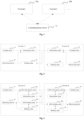
- Fig. 1 is a schematic diagram of a communication system under micro-service architecture according to an embodiment of the present disclosure.
- the communication system under the micro-service architecture provided by the present embodiment includes: a communication server 12 and at least two executers (e.g., an executer 10a and an executer 10b shown in Fig. 1 ).
- the executer is a minimum communication unit under the micro-service architecture, and one micro-service may correspond to one or more executers.
- the executer may be a process or a container, but the executer is not limited to a process or a container in the embodiments of the present disclosure.
- the executers 10a and 10b are containers, and Applications (APP) may be deployed in the executers 10a and 10b, respectively.
- a user-initiated process may contain multiple messages, and each type of process may be abstracted into a session.
- a session may be a communication connection between micro-services, and the session may be published or subscribed to.
- One session may include multiple session instances.
- the communication system is associated with a user, and multiple users may initiate the same session, i.e., a session initiated by a particular user is a session instance.
- the session instance may be represented in the form of a character string or an integer. If the session instance is represented in the form of a character string, formats such as "aaa.bbb.ccc" may be supported to enable richer representation.
- wildcard characters such as * and >
- the accuracy is lower and the priority is lower; conversely, if fewer wildcard characters are used, the accuracy is higher and the priority is higher.
- the session may be represented by a session type identifier, and the session may include one or more of the following attributes: a session scope (such as within a micro-service range; or within a network element range), a session load balancing rule (such as round robin, affix or broadcast), and an instance matching rule (such as exact matching; fuzzy matching).
- a session scope such as within a micro-service range; or within a network element range
- a session load balancing rule such as round robin, affix or broadcast
- an instance matching rule such as exact matching; fuzzy matching
- any of the at least two executers (such as a subscriber and a publisher) is adapted to send a session register request message to the communication server and receive, from the communication server, information of a peer executer that has a session subscription and publishing relationship with the executer.
- the session register request message at least carries information of the executer, a session set to be registered and an attribute of any session in the session set.
- the executer is further adapted to subscribe to a session instance of a registered session from the communication server or the peer executer, or the executer is further adapted to receive information of a session instance, subscribed to by the peer executer, of a registered session from the communication server or the peer executer.
- the session set to be registered may include at least one of the following: a publishable session set and a subscribable session set.
- One or more sessions may be included in the session set.
- the executer when at least two sessions are included in a session set that is registered to the communication server by any of the at least two executers, the executer may be further adapted to receive, from the communication server, information (e.g., a session type identifier of a registered session) of the registered session based on which the executer establishes a session subscription and publishing relationship with a peer executer.
- information e.g., a session type identifier of a registered session
- the communication server may be adapted to determine the session subscription and publishing relationship between different executers according to the received session register request message.
- the communication server may analyze a session subscription and publishing relationship between different executers according to session sets to be registered carried in session register request messages of different executers, and may store the analyzed session subscription and publishing relationship.
- the communication server may be further adapted to receive a subscription request message sent by any of the at least two executers, determine a peer executer that has a session subscription and publishing relationship with the executer, and send information of a session and a session instance subscribed to by the executer to the determined peer executer.
- the subscription request message carries the information of the session and the session instance subscribed to by the executer.
- any of the at least two executers is further adapted to determine, when publishing a communication message, a peer executer receiving the communication message according to information of a session and a session instance carried in the communication message and an attribute of the session, and send the communication message to the determined peer executer.
- the session capability registration process and the session instance subscription process are described below with reference to Fig. 1 , taking an executer 10a as an example.
- the executer 10a may determine a publishable session set, a subscribable session set and an attribute of any session in the session set according to a preset capability description file, and then send a session register request message to the communication server 12.
- the session register request message may carry information about the executer 10a (e.g., communication address information such as an Internet Protocol (IP) address and a port number), a publishable session set of the executer 10a, a subscribable session set of the executer 10a, and an attribute of any session in the session set (e.g., a session load balancing rule and an instance matching rule).
- IP Internet Protocol
- the communication server 12 can know publishable and subscribable sessions of the executer 10a by parsing the session register request message, and can know those executers (executers having completed session registration) that subscribe to or publish the same session with the executer 10a by analyzing, so as to obtain a session subscription and publishing relationship between the executer 10a and other executers, and store the analyzed session subscription and publishing relationship. Then, the communication server 12 may return a session register response (e.g., register ack) message to the executer 10a, which may carry information (e.g., a communication address of an executer 10b) of a peer executer that has a session subscription and publishing relationship with the executer 10a.
- a session register response e.g., register ack
- the session register response message returned by the communication server 12 to the executer 10a may carry information of a peer executer (e.g., the executer 10b) that has a session subscription and publishing relationship with the executer 10a and information (e.g., a session type identifier of a registered session) of the registered session based on which a session subscription and publishing relationship is established between the executer 10a and the peer executer.
- a peer executer e.g., the executer 10b
- information e.g., a session type identifier of a registered session
- the executer 10a may send a subscription request message to the communication server 12 using a subscription (sub) interface.
- the subscription request message may carry information (e.g., a session type identifier and a session instance) of a session instance, subscribed to by the executer 10a, of a registered session.
- the executer 10a may notify the communication server 12 to subscribe the executer 10a to a certain session instance under a certain session (a certain session in the session set that has been registered to the communication server 12 by the executer 10a), i.e. to indicate that the executer needs to receive a communication message of a certain session instance under a certain session.
- the session type identifier (sessiontype) and the session instance (sessionInst) carried in the subscription request message may define a subscription mode.
- the subscription mode the more accurate the session instance, the higher the priority.
- the priority of abc.123.456 is higher than that of abc.123.*
- the priority of abc.123.* is higher than that of >.
- the executer 10a (as a subscriber, i.e. a receiver) may insert information of an entity subscribing to the session and session instance in this executer, the subscribed session type identifier and session instance into a binding cache (bindcache) of the executer 10a.
- the communication server 12 After receiving the subscription request message of the executer 10a, the communication server 12 queries the stored session subscription and publishing relationship to obtain all publishers (i.e., senders) of the session subscribed to by the executer 10a, and pushes the information of the session instance subscribed to by the executer 10a to all publishers (e.g., including the executer 10b) through a subscription notification (e.g., sub Notify) message.
- the communication server 12 serves only to analyze and manage the session subscription and publishing relationship of the executers, and communication messages between the executers are not transmitted through the communication server 12, but are directly transmitted between the executers.
- the executer 10b may insert the received communication address of the executer 10a, and the information of the session and the session instance subscribed to by the executer 10a into a subscription cache (subcache) of the executer 10b.
- a subscription cache subcache
- sessions and session instances are proposed in the present embodiment.
- a peer address can be conveniently found and a call instance can be conveniently located through a two-stage discovery process (including a session capability registration process and a session instance subscription process).
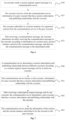
- Fig. 2 is an exemplary implementation flow diagram of a communication system under micro-service architecture according to an embodiment of the present disclosure.
- executer A and executer B have completed the session capability registration process and the session instance subscription process, i.e. the discovery of both executer A and executer B is implemented, and executer A and executer B may start sending and receiving communication messages.
- executer A may include a subscription cache (subcache) 23 and a binding cache (bindcache) 24, and executer B may include a subscription cache (subcache) 27 and a binding cache (bindcache) 28.
- the subscription cache 23 of executer A may store information (e.g., communication address) of a peer executer subscribing to a session and a session instance from executer A, and information of the session and the session instance subscribed to by the peer executer.
- the binding cache 24 of executer A may store a matching relationship between entities in executer A and subscribed sessions and session instances, that is, the binding cache records that certain entities subscribe to certain session instances under certain sessions.
- the subscription cache 27 of executer B may store information of a peer executer subscribing to a session and a session instance from executer B, and information of the session and the session instance subscribed to by the peer executer.
- the binding cache 28 of executer B may store a matching relationship between entities in executer B and subscribed sessions and session instances.
- Executer A subscribes to a session and a session instance from executer A during the subscription process.
- the subscribed session and session instance are represented by (sessiontype, sessionInst).
- a subscription mode may be defined by (sessiontype, sessionInst).
- a publishing (pub) interface may be used, and (sessiontype, sessionInst) may be used as a publishing keyword.
- the session instance (sessionInst) may not support the wildcard characteristic.
- Executer A may match the subscription mode in the subscription cache 23 according to the publishing keyword.
- the matching process may include: according to an instance matching rule (e.g., exact matching or fuzzy matching) corresponding to the session type identifier (sessiontype) in the publishing keyword, a record matched with the publishing keyword is searched in the subscription cache (subcache). If multiple subscription modes are matched, the subscription mode with the highest priority is selected. For the subscription mode, the more accurate the session instance, the higher the priority.
- the priority of abc.123.456 is higher than that of abc.123.*, and the priority of abc.123.* is higher than that of >.
- a single subscriber i.e., receiver
- a session load balancing rule e.g., round robin or random
- executer A may send a communication message to executer B.
- executer B may parse out the information of the session and the session instance, such as sessiontype and sessionInst, from a message header. Then, executer B matches the subscription mode in the binding cache 28, selects a single receiving entity (e.g., receiving entity 26), and delivers the received communication message to the selected receiving entity. Executer B may select a single receiving entity in the binding cache 28 to receive the communication message according to a locally preset selection rule (e.g., round robin or random). The embodiments of the present disclosure do not limit the specific selection rule.
- a locally preset selection rule e.g., round robin or random.
- executer B serves as a publisher (for example, a sending entity 25 publishes a communication message) and executer A serves as a receiver (for example, a receiving entity 22 receives the communication message)
- the transmission process of the communication message may refer to the above process. Therefore, the description will be omitted herein.
- a receiver may be matched during the sending process of a communication message, thereby optimizing load balancing, without the need for upper-layer service to consider the range control of message communication, load balancing of message communication, and message representation, which greatly reduces the complexity of the upper-layer service.
- the service In the process of elastic scaling of micro-services, the service only needs to focus on the rule, and the actual implementation is transparent to the service.
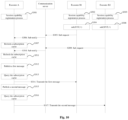
- Fig. 3 is another exemplary implementation flow diagram of a communication system under micro-service architecture according to an embodiment of the present disclosure.
- executer A and executer B have completed the session capability registration process and the session instance subscription process, i.e. the discovery of both executer A and executer B is implemented, and executer A and executer B may start sending and receiving communication messages.
- Executer A may include the following four caches: a subscription cache 33, a binding cache 34, an affix subscription cache (subcacheAff) 33a, and an affix binding cache (bindcacheAff) 34a.
- the affix subscription cache 33a corresponds to the subscription cache 33 and points to an executer (e.g., executer B).
- the affix binding cache 34a corresponds to the binding cache 34 and points to an entity in an executer (e.g., a receiving entity 32 in executer A).
- Executer B may include the following four caches: a subscription cache 37, a binding cache 38, an affix subscription cache (subcacheAff) 37a, and an affix binding cache (bindcacheAff) 38a.
- the subscription cache 33 of executer A may store information (e.g., communication address) of a peer executer subscribing to a session and a session instance from executer A, and information (e.g., sessiontype and sessionInst) of the session and the session instance subscribed to by the peer executer.
- the binding cache 34 of executer A may store a matching relationship between entities in executer A and subscribed sessions and session instances, that is, the binding cache records that certain entities subscribe to certain session instances under certain sessions.
- the subscription cache 37 of executer B may store information of a peer executer subscribing to a session and a session instance from executer B, and information of the session and the session instance subscribed to by the peer executer.
- the binding cache 38 of executer B may store a matching relationship between entities in executer B and subscribed sessions and session instances.
- Executer A subscribes to a session and a session instance from executer A during the subscription process.
- the subscribed session and session instance are represented by (sessiontype, sessionInst).
- a subscription mode may be defined by (sessiontype, sessionInst).
- a publishing (pub) interface may be used, and (sessiontype, sessionInst) may be used as a publishing keyword.
- Executer A may first match the subscription mode in the affix subscription cache 33a according to the publishing keyword. If a peer executer matched with the publishing keyword is found in the affix subscription cache 33a, a communication message is directly sent to the matched peer executer. If no matched peer executer is found in the affix subscription cache 33a, a peer executer matched with the publishing keyword is searched in the subscription cache 33.
- executer A uses (sessiontype, sessionInst) carried in the communication message as the publishing keyword, and performs subscription mode matching in the subscription cache 33 according to an instance matching rule corresponding to sessiontype, and obtains a subscriber set (i.e., a set of peer executers). Then, executer A selects a single subscriber (e.g., executer B) from the matched subscriber set according to a session load balancing rule (e.g., round robin or random) corresponding to sessiontype, and sends a communication message to the selected subscriber.
- a session load balancing rule e.g., round robin or random
- executer A generates an affix record in the affix subscription cache 33a, which records the selected subscriber information (subInfo) (e.g., a communication address of executer B), and information of a session and a session instance.
- subscriber information e.g., a communication address of executer B
- information of a session and a session instance e.g., the above pieces of information are recorded in the affix subscription cache 33a in the form of (subInfo, sessiontype, sessionInst).
- executer B After executer B (subscriber) receives a communication message, (sessiontype, sessionInst) carried in the communication message is taken as a keyword to search for a matched entity in the affix binding cache 38a. If the entity is found, the message is delivered to the found entity (i.e., an upper-layer entity in executer B). If no matched entity is found, the binding cache 38 is searched for a matched entity. Executer B may select a single receiving entity in the binding cache 38 to receive the communication message according to a locally preset selection rule (e.g., round robin or random). The embodiments of the present disclosure do not limit the specific selection rule.
- a locally preset selection rule e.g., round robin or random
- executer B uses (sessiontype, sessionInst) carried in the communication message as a keyword to match a subscription mode in the binding cache 38, selects a single receiving entity (e.g., receiving entity 36) in executer B, and delivers the communication message to the selected receiving entity. Meanwhile, executer B generates an affix record pointing to the selected receiving entity 36 in the affix binding cache 38a, that is, adds a matching relationship between the selected receiving entity 36 and the session and session instance to the affix binding cache 38a.
- sessionInst sessionInst
- executer B may also insert a communication address of executer A sending the communication message, and the information of the session and the session instance carried in the communication message as an affix record into the affix subscription cache 37a of executer B.
- the above pieces of information are recorded in the affix subscription cache 37a in the form of (pubInfo (communication address of executer A), sessiontype, sessionInst).
- PubInfo communication address of executer A
- sessionType sessionInst
- executer B may directly query the affix subscription cache 37a of executer B to find executer A, and directly send the communication message to executer A.
- executer B serves as a publisher (for example, a sending entity 35 publishes a communication message) and executer A serves as a receiver (for example, a receiving entity 32 receives the communication message)
- the transmission process of the communication message may refer to the above process. Therefore, the description will be omitted herein.
- an affix mechanism not only supports the communication decoupling between micro-services, but also associates the session instance with a related message sequence, so that the user context in the user-level communication keeps consistent in the message interaction process within a certain period of time.
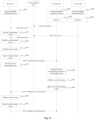
- Fig. 4 is a flow chart of a communication method under micro-service architecture according to an embodiment of the present disclosure.
- the communication method provided by the present embodiment may be implemented by an executer.
- the description of the executer, sessions, and session instances may refer to the description in the embodiments for the above communication system, and will not be repeated herein.
- the communication method under the micro-service architecture provided by the present embodiment includes the following operations S10 to S12.
- an executer sends a session register request message to a communication server.
- the session register request message at least carries information of the executer, a session set to be registered and an attribute of any session in the session set.
- the executer receives, from the communication server, information of a peer executer that has a session subscription and publishing relationship with the executer.
- the executer subscribes to a session instance of a registered session from the communication server or the peer executer, or the executer receives information of a session instance, subscribed to by the peer executer, of a registered session from the communication server or the peer executer.
- the executer completes the session capability registration through operations S10 and S11, and completes the session instance subscription process through operation S12.
- the executer may discover the peer executer and locate the session instance, and then the executer may directly transmit messages with the found peer executer.
- the executer When the executer serves as a subscriber, in operation S12, the executer may subscribe to a session instance of a registered session from the communication server or the peer executer. When the executer serves as a publisher, in operation S12, the executer may receive information of a session instance, subscribed to by the peer executer, of a registered session from the communication server or the peer executer.
- the operation that the executer subscribes to a session instance of a registered session from the communication server or the peer executer in operation S12 may include:
- the communication method provided by the present embodiment may further include: the executer receives, from the communication server, information of a registered session based on which the session subscription and publishing relationship is established between the executer and the peer executer.
- the communication server may return the following information to the executer: information of a peer executer that has a session subscription and publishing relationship with the executer, and information (e.g., a session type identifier of a registered session) of the registered session based on which the executer establishes a session subscription and publishing relationship with the peer executer.
- the communication method provided by the present embodiment may further include: when publishing a communication message, the executer determines a peer executer receiving the communication message according to information of a session and a session instance carried in the communication message and an attribute of the session, and sends the communication message to the determined peer executer.
- the communication method provided by the present embodiment may further include: after receiving a communication message, the executer determines an entity receiving the communication message in the executer according to information of a session and a session instance carried in the communication message, and delivers the communication message to the determined entity.
- Fig. 5 is an exemplary flow diagram of a communication method under micro-service architecture according to an embodiment of the present disclosure.
- an executer as a publisher (i.e., sender) of a communication message is taken as an example for description.
- the communication method under the micro-service architecture provided by the present embodiment includes the following operations S20 to S23.
- an executer sends a session register request message to a communication server.
- the session register request message at least carries information of the executer, a session set to be registered and an attribute of any session in the session set.
- the executer receives, from the communication server, information of a peer executer that has a session subscription and publishing relationship with the executer.
- the executer receives information of a session instance, subscribed to by the peer executer, of a registered session from the communication server or the peer executer.
- the executer determines a peer executer receiving the communication message according to information of a session and a session instance carried in the communication message and an attribute of the session, and sends the communication message to the determined peer executer.
- the executer may include a subscription cache for storing information of a peer executer subscribing to a session instance of a registered session from the executer, and information of the session and the session instance subscribed to by the peer executer.
- the operation that the peer executer receiving the communication message is determined according to the information of the session and the session instance carried in the communication message and the attribute of the session may include: the executer selects a peer executer subscribing to the session and the session instance from the subscription cache according to the information of the session and the session instance carried in the communication message and the attribute of the session as the peer executer receiving the communication message.
- the executer may further include an affix subscription cache.
- the communication method of the present embodiment may further include: a matching relationship between the information of the session and the session instance carried in the communication message and the peer executer is added to the affix subscription cache.
- the operation that the peer executer receiving the communication message is determined according to the information of the session and the session instance carried in the communication message and the attribute of the session may include: the executer searches for a peer executer matched with the information of the session and the session instance carried in the communication message from the affix subscription cache; in a case of finding a matched peer executer from the affix subscription cache, the executer determines the found peer executer as the peer executer receiving the communication message; and in a case of not finding the matched peer executer from the affix subscription cache, the executer selects a peer executer subscribing to the session and the session instance from the subscription cache according to the information of the session and the session instance carried in the communication message and the attribute of the session as the peer executer receiving the communication message.
- the attribute of the session may include: a session load balancing rule and an instance matching rule.
- the operation that the peer executer subscribing to the session and the session instance is selected from the subscription cache according to the information of the session and the session instance carried in the communication message and the attribute of the session as the peer executer receiving the communication message may include: peer executers subscribing to the session and the session instance are searched from the subscription cache according to the instance matching rule of the session carried in the communication message, and one of the found peer executers is selected as the peer executer receiving the communication message according to the session load balancing rule of the session.
- the embodiment of the present disclosure is not limited to the above implementation.
- the attribute of the session may include: a session load balancing rule or an instance matching rule.
- a session load balancing rule For example, when the executer searches for the peer executer from the subscription cache, a peer executer may be selected to receive the communication message according to the session load balancing rule or the instance matching rule.
- Fig. 6 is another exemplary flow diagram of a communication method under micro-service architecture according to an embodiment of the present disclosure.
- an executer as a subscriber (i.e., receiver) of a communication message is taken as an example for description.
- the communication method under the micro-service architecture provided by the present embodiment includes the following operations S30 to S33.
- an executer sends a session register request message to a communication server.
- the session register request message at least carries information of the executer, a session set to be registered and an attribute of any session in the session set.
- the executer receives, from the communication server, information of a peer executer that has a session subscription and publishing relationship with the executer.
- the executer subscribes to a session instance of a registered session from the communication server or the peer executer.
- the executer determines an entity receiving the communication message in the executer according to information of a session and a session instance carried in the communication message, and delivers the communication message to the determined entity.
- the executer may include a binding cache for storing a matching relationship between an entity in the executer and a session and a session instance subscribed to by the entity in the executer.
- the operation that the entity receiving the communication message in the executer is determined according to the information of the session and the session instance carried in the communication message may include: the executer searches for entities subscribing to the session and the session instance from the binding cache according to the information of the session and the session instance carried in the communication message, and selects one of the found entities as the entity receiving the communication message.
- the executer may further include an affix binding cache.
- the communication method of the present embodiment may further include: the executer adds a matching relationship between the selected entity in the binding cache and the session and the session instance to the affix binding cache as an affix record.
- the operation that the entity receiving the communication message in the executer is determined according to the information of the session and the session instance carried in the communication message may include: after receiving a communication message carrying information of a session and a session instance, the executer searches for an entity matched with the session and the session instance from the affix binding cache; in a case of finding a matched entity from the affix binding cache, the executer determines the found entity as the entity receiving the communication message; and in a case of not finding the matched entity from the affix binding cache, the executer searches for entities subscribing to the session and the session instance from the binding cache according to the information of the session and the session instance carried in the communication message, and selects one of the found entities as the entity receiving the communication message.
- the executer may further include an affix subscription cache.
- the communication method of the present embodiment may further include: the executer adds a matching relationship between the information of the session and the session instance carried in the communication message and the peer executer sending the communication message to the affix subscription cache as an affix record in the affix subscription cache; and in a case where the number of affix records related to the session in the affix subscription cache is greater than a preset affix quota, the executer clears the affix records related to the session in the affix subscription cache and the affix binding cache, and notifies the peer executer to clear affix records related to the session.
- Fig. 7 is a flow chart of another communication method under micro-service architecture according to an embodiment of the present disclosure.
- the communication method provided by the present embodiment may be implemented by a communication server.
- the description of the executer, sessions, and session instances may refer to the description in the above communication system, and will not be repeated herein.
- the communication method under the micro-service architecture provided by the present embodiment includes the following operations S40 to S43.
- a communication server determines a session subscription and publishing relationship between different executers according to a session register request message sent by at least one executer.
- the session register request message at least carries information of the executer, a session set to be registered and an attribute of any session in the session set.
- the communication server returns, to the executer, information of a peer executer that has a session subscription and publishing relationship with the executer.
- the communication server determines a peer executer that has a session subscription and publishing relationship with the executer.
- the subscription request message carries information of a session and a session instance subscribed to by the executer.
- the communication server sends the information of the session and the session instance subscribed to by the executer to the peer executer.
- the communication method provided by the present embodiment may further include: the communication server returns information of a registered session based on which the session subscription and publishing relationship is established between the executer and the peer executer to any executer.
- the attribute of the session may include at least one of the following: a session load balancing rule and an instance matching rule.
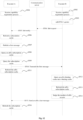
- Fig. 8 is an exemplary flow diagram of a communication method under micro-service architecture according to an embodiment of the present disclosure.
- the present exemplary embodiment describes a session capability registration process and a subscription mode of a session instance.
- the communication method under the micro-service architecture provided by the present embodiment includes operations S101 to S 112.
- executer A when powered on and initialized, executer A reads a pre-configured capability description file.
- the capability description file may be in a JavaScript Object Notation (json) format.
- the capability description file of executer A may include the following content:
- Attributes of a session in a publishing (pub) capability are as follows:
- executer B when powered on and initialized, reads a pre-configured capability description file.
- the capability description file may be in a json format.
- the capability description file of executer B may include the following content:
- executer A sends a session register request (register request) message to a communication server, which may carry a communication address of executer A (for example, the communication address of executer A may include an IP address and a port number (PORT)), a subscribable session (e.g., session XYZ), a publishable session (e.g., session XYZ), and an attribute of session XYZ.
- a communication address of executer A for example, the communication address of executer A may include an IP address and a port number (PORT)
- a subscribable session e.g., session XYZ
- a publishable session e.g., session XYZ
- an attribute of session XYZ e.g., session XYZ
- the communication server searches for a session subscription and publishing relationship stored in the communication server.
- executer A because there is no other executer in a registered state at this time, executer A has no associated executers, that is, there is no peer executer.
- the communication server may store information carried in the session register request message of executer A, and refresh the stored session subscription and publishing relationship.
- the communication server returns a session register response (e.g., register ack) message to executer A.
- a session register response e.g., register ack
- executer B sends a session register request message to a communication server, which may carry a communication address of executer B (the communication address of executer B may include an IP address and a port number), a publishable session (e.g., session XYZ), a subscribable session (e.g., session XYZ), and an attribute of session XYZ.
- a communication server which may carry a communication address of executer B (the communication address of executer B may include an IP address and a port number), a publishable session (e.g., session XYZ), a subscribable session (e.g., session XYZ), and an attribute of session XYZ.
- the communication server After receiving the session register request message of executer B, the communication server stores the information carried in the session register request message, and searches for a session subscription and publishing relationship.
- the communication server finds that executer A has the publishing capability of session XYZ and executer B has the subscription capability of session XYZ, the session subscription and publishing relationship between executer A and executer B based on session XYZ may be determined, and then the stored session subscription and publishing relationship may be refreshed.
- the communication server returns a register response message (e.g., register ack) to executer B.
- the register response message may carry the communication address of executer A.
- executer A and executer B have registered a session respectively. Therefore, the communication server only needs to return the communication address of executer A to executer B, and executer B can know that a session subscription and publishing relationship exists between executer B and executer A based on the registered session XYZ.
- the communication server needs to return the communication address of executer A to executer B and information of a session (e.g., session type identifier) having a relationship with executer A.
- a session e.g., session type identifier
- executer B can know that a session subscription and publishing relationship exists between executer B and executer A based on a certain registered session.
- the communication server needs to push a communication address of executer B to executer A immediately.
- the communication server may send a session refresh message to executer A, so that executer A knows the communication address of executer B.
- executer B may call a subscription interface to send a subscription request (e.g., sub request) message to the communication server, and the subscription request message may carry a session type identifier and one or more session instances to be subscribed to by the receiving entity.
- a subscription request e.g., sub request
- the communication server queries the stored session subscription and publishing relationship to obtain a communication address of a peer executer (i.e., executer A) of executer B.
- a peer executer i.e., executer A
- the communication server pushes the information of a session instance to be subscribed to by executer B to executer A through a subscription notification (e.g., sub notify) message.
- a subscription notification e.g., sub notify
- executer A After receiving the subscription notification message from the communication server, executer A records the information of the session instance to be subscribed to by executer B in a subscription cache of executer A.
- Fig. 9 is another exemplary flow diagram of a communication method under micro-service architecture according to an embodiment of the present disclosure.
- the present exemplary embodiment describes a session capability registration process and another subscription mode of a session instance.
- the communication method under the micro-service architecture provided by the present embodiment includes operations S201 to S210.
- executer A when powered on and initialized, reads a pre-configured capability description file.
- the capability description file may be in a json format.
- the capability description file of executer A may include the following content:
- Attributes of a session in a publishing (pub) capability are as follows:
- executer B when powered on and initialized, reads a pre-configured capability description file.
- the capability description file may be in a json format.
- the capability description file of executer B may include the following content:
- executer A sends a session register request (register request) message to a communication server.
- the register request message may carry a communication address of executer A (for example, the communication address of executer A includes an IP address and a port number), a subscribable session (e.g., session XYZ), a publishable session (e.g., session XYZ), and an attribute of session XYZ.
- the communication server searches for a session subscription and publishing relationship stored in the communication server.
- executer A because there is no other executer in a registered state at this time, executer A has no associated executers, that is, there is no peer executer.
- the communication server may store information carried in the session register request message of executer A, and refresh the stored session subscription and publishing relationship.
- the communication server returns a session register response (e.g., register ack) message to executer A.
- a session register response e.g., register ack
- executer B sends a session register request message to a communication server, which may carry a communication address of executer B (the communication address of executer B may include an IP address and a port number), a publishable session (e.g., session XYZ), a subscribable session (e.g., session XYZ), and an attribute of session XYZ.
- a communication server which may carry a communication address of executer B (the communication address of executer B may include an IP address and a port number), a publishable session (e.g., session XYZ), a subscribable session (e.g., session XYZ), and an attribute of session XYZ.
- the communication server stores the information carried in the session register request message of executer B, and searches for a session subscription and publishing relationship.
- the communication server finds that executer A has the publishing capability of session XYZ and executer B has the subscription capability of session XYZ, the session subscription and publishing relationship between executer A and executer B based on session XYZ may be determined, and then the session subscription and publishing relationship may be refreshed.
- the communication server returns a session register response (e.g., register ack) message to executer B.
- the session register response message may carry the communication address of executer A.
- the communication server needs to push a communication address of executer B to executer A immediately.
- the communication server may send a session refresh message to executer A, so that executer A knows the communication address of executer B.
- executer B may directly broadcast a subscription request (e.g., sub request) message to all the related peer executers (i.e., not through the communication server).
- the subscription request message may carry a session type identifier (sessiontype) and one or more session instances (sessionInst) to be subscribed to by the receiving entity.
- executer A After receiving the subscription notification message from the communication server, executer A records the information of the session instance to be subscribed to by executer B in a subscription cache of executer A.
- Fig. 10 is another exemplary flow diagram of a communication method under micro-service architecture according to an embodiment of the present disclosure.
- the executer is not provided with an affix subscription cache
- the attribute of the session registered by the executer includes a session load balancing rule
- the session load balancing rule is round robin.
- the communication method under the micro-service architecture provided by the present embodiment includes operations S301 to S317.
- executer A performs a session capability registration process.
- executer B1 performs a session capability registration process.
- executer B2 performs a session capability registration process.
- session capability registration process of executer A, executer B1 and executer B2 may refer to the description of operations S101 to S109 in Fig. 8 , so the description will be omitted herein.
- embodiments of the present disclosure do not limit the sequence of operations S301, S302 and S303.
- entity workB1_1 in executer B1 calls a subscription interface, sub(XYZ,>), where the subscribed session instance is >, which means that entity workB 1_1 may receive messages from any session instance under session XYZ.
- executer B1 refreshes the binding cache of executer B 1, that is, records a correspondence between entity workB1_1, session XYZ and the session instance in the binding cache.
- executer B1 sends a subscription request message to the communication server, which carries information of a session and a session instance to be subscribed to by executer B1, such as (XYZ, >).
- the communication server queries a session subscription and publishing relationship according to a session type identifier XYZ, finds that there is a related sender, i.e., executer A, sends a subscription notification (e.g., sub notify) message to executer A, and pushes the information (such as a communication address) of executer B1 and the information of the session and the session instance to be subscribed to by executer B1, such as in the format of (XYZ, >, B1), to executer A.
- a subscription notification e.g., sub notify
- executer A After receiving the subscription notification message, executer A records executer B1 and session XYZ and a session instance subscribed to by executer B1 in the subscription cache of executer A.
- entity workB2_1 in executer B2 calls a subscription interface, sub(XYZ,>), where the subscribed session instance is >, which means that entity workB2_1 may receive messages from any session instance under session XYZ.
- executer B2 refreshes the binding cache of executer B2, that is, records a correspondence between entity workB2_1, session XYZ and the session instance in the binding cache.
- executer B2 sends a subscription request message to the communication server, which carries information of a session and a session instance to be subscribed to by executer B2, such as (XYZ, >).
- the communication server queries a session subscription and publishing relationship according to a session type identifier XYZ, finds that there is a related sender, i.e., executer A, sends a subscription notification (e.g., sub notify) message to executer A, and pushes the information (such as a communication address) of executer B2 and the information of the session and the session instance to be subscribed to by executer B2, such as in the format of (XYZ, >, B2), to executer A.
- a subscription notification e.g., sub notify
- executer A After receiving the subscription notification message, executer A records executer B2 and session XYZ and a session instance subscribed to by executer B2 in the subscription cache of executer A.
- entity workA_1 in executer A calls a publishing interface to publish a first message, such as pub(XYZ, abc.123, msgdata1).
- executer A queries a subscription cache according to the information (XYZ, abc.123) of the session and session instance carried in the publishing interface. Since the session instances subscribed to by executers B1 and B2 are >, it is only required to match the session type identifier XYZ, and executer A can find two subscribers in the subscription cache, i.e., executer B1 and executer B2. Since the session load balancing rule of session XYZ is a round robin rule, executer A may select executer B1 as a peer executer.
- executer A sends the first message to executer B1 through a socket interface.
- entity workA_1 in executer A calls the publishing interface to publish a second message, such as pub(XYZ, abc.456, msgdata2).
- executer A queries a subscription cache according to the information (XYZ, abc.456) of the session and session instance carried in the publishing interface. Since the session instances subscribed to by executers B1 and B2 are >, it is only required to match the session type identifier XYZ, and executer A can find two subscribers in the subscription cache, i.e., executer B1 and executer B2. Since the session load balancing rule is a round robin rule and executer A has selected executer B1 in operation S313, executer A may select executer B2 as a peer executer at this time.
- executer A sends the second message to executer B2 through the socket interface.
- Fig. 11 is another exemplary flow diagram of a communication method under micro-service architecture according to an embodiment of the present disclosure.
- the executer includes an affix subscription cache and an affix binding cache.
- the capability description files of executer A and executers B1 and B2 may be in a json format.
- the capability description file of executer A may include:
- the capability description files of executers B1 and B2 may respectively include:
- the communication method under the micro-service architecture provided by the present embodiment includes operations S401 to S422.
- executer A performs a session capability registration process.
- executer B1 performs a session capability registration process.
- executer B2 performs a session capability registration process.
- session capability registration process of executer A, executer B1 and executer B2 may refer to the description of operations S101 to S109 in Fig. 8 , so the description will be omitted herein.
- embodiments of the present disclosure do not limit the sequence of operations S401, S402 and S403.
- entity workB1_1 in executer B1 calls a subscription interface, sub(XYZ,>), where the subscribed session instance is >, which means that entity workB 1_1 may receive messages from any session instance under session XYZ.
- executer B1 refreshes the binding cache of executer B 1, that is, records a correspondence between entity workB1_1, session XYZ and the session instance in the binding cache.
- executer B1 sends a subscription request message to the communication server, which carries information of a session and a session instance to be subscribed to by executer B1, such as (XYZ, >).
- the communication server After receiving the subscription request message of executer B1, the communication server queries a session subscription and publishing relationship according to a session type identifier XYZ, and finds that there is a related sender, i.e., executer A. Then, the communication server sends a subscription notification (e.g., sub notify) message to executer A, and pushes the information (such as a communication address) of executer B1 and the information of the session and the session instance to be subscribed to by executer B1, such as (XYZ, >, B1), to executer A.
- a subscription notification e.g., sub notify
- executer A After receiving the subscription notification message, executer A records executer B1 and session XYZ and a session instance subscribed to by executer B1 in the subscription cache of executer A.
- entity workB2_1 in executer B2 calls a subscription interface, sub(XYZ,>), where the subscribed session instance is >, which means that entity workB2_1 may receive messages from any session instance under session XYZ.
- executer B2 refreshes the binding cache of executer B2, that is, records a correspondence between entity workB2_1, session XYZ and the session instance in the binding cache.
- executer B2 sends a subscription request message to the communication server, which carries information of a session and a session instance to be subscribed to by executer B1, such as (XYZ, >).
- the communication server receives the subscription request message of executer B2, queries a session subscription and publishing relationship according to a session type identifier XYZ, finds that there is a related sender, i.e., executer A, sends a subscription notification message (e.g., sub notify) to executer A, and pushes the information (such as a communication address) of executer B2 and the information of the session and the session instance to be subscribed to by executer B2, such as in the format of (XYZ, >, B2), to executer A.
- a subscription notification message e.g., sub notify
- executer A After receiving the subscription notification message, executer A records executer B2 and session XYZ and a session instance subscribed to by executer B2 in the subscription cache of executer A.
- entity workA_1 in executer A calls a publishing interface to publish a first message, such as pub(XYZ, abc.123, msg1).
- executer A queries a subscription cache according to the information (XYZ, abc.123) of the session and session instance carried in the publishing interface. Since the session instances subscribed to by executers B1 and B2 are >, it is only required to match the session type identifier XYZ, and executer A can find two subscribers in the subscription cache, i.e., executer B1 and executer B2. Since the session load balancing rule of session XYZ is a round robin rule, executer A may select executer B1 as a peer executer.
- executer A sends the first message to executer B1 through a socket interface.
- executer A inserts a relationship between the information (XYZ, abc.123) of the session and the session instance and executer B1 as an affix record into the affix subscription cache of executer A.
- executer B1 parses a message header to obtain information (XYZ, abc.123) of the session and the session instance and a communication address of a sender (i.e., executer A), and inserts these pieces of information into the affix subscription cache of executer B1.
- Executer B1 queries the binding cache of executer B1, and searches the binding cache for a receiving entity matched with the information of the session and the session instance carried in the first message.
- executer B1 finds entity workB 1_1 in the binding cache, delivers the first message to entity workB 1_1, and inserts entity workB1_1 and the information of the session and the session instance carried in the first message as an affix record into the affix binding cache of executer B1.
- executer B1 needs to return a second message to executer A1, and may call a publishing interface to send the second message, such as pub(XYZ, abc.123, msg2).
- executer B1 queries the affix subscription cache of executer B1 according to the information (XYZ, abc.123) of the session and the session instance carried in the publishing interface, and finds a communication address of a matched peer executer (i.e., executer A). Executer B1 may directly send the second message to executer A, without performing the matching process in the subscription cache according to the round robin rule.
- executer B1 sends the second message to executer A through the socket interface.
- executer A calls the publishing interface to publish a third message, such as pub(XYZ, abc.123, msg3).
- executer A since executer A records a relationship between (XYZ, abc.123) and executer B1 in the affix subscription cache of executer A in operation S415, executer A may find a communication address of executer B1 by querying the affix subscription cache of executer A.
- executer A sends the third message to executer B1 through a socket interface.
- Fig. 12 is another exemplary flow diagram of a communication method under micro-service architecture according to an embodiment of the present disclosure.
- the executer includes an affix subscription cache and an affix binding cache, and limits the number of session instances under session XYZ in the affix subscription cache and the affix binding cache by setting an affix quota.
- the capability description files of executer A and executer B may refer to the capability description files of executer A and executer B1 in the embodiment shown in Fig. 11 , so the description will be omitted herein.
- the communication method provided by the present embodiment includes operation S501 to operation S516.
- executer A performs a session capability registration process.
- executer B performs a session capability registration process.
- session capability registration process of executer A and executer B may refer to the description of operations S101 to S109 in Fig. 8 , so the description will be omitted herein.
- embodiments of the present disclosure do not limit the sequence of operations S501 and S502.
- executer B calls a subscription interface, sub(XYZ, >, quota), where the subscribed session instance is >, which means that messages from any session instance under session XYZ may be received.
- quota means an affix quota, which means that executer B may subscribe to any session instance under session XYZ, but the number of session instances is limited and should not exceed the number indicated by quota.
- executer B sends a subscription request message to the communication server, which carries information of a session and a session instance to be subscribed to by executer B, such as (XYZ, >, quota).
- the communication server receives the subscription request message of executer B, queries a session subscription and publishing relationship according to a session type identifier XYZ, and finds that there is a related sender, i.e., executer A. Then, the communication server sends a subscription notification (e.g., sub notify) message to executer A, and pushes the address information of executer B and the information of the session and the session instance to be subscribed to by executer B, such as in the form of (XYZ, >, quota, B), to executer A.
- a subscription notification e.g., sub notify
- executer A after receiving the subscription notification message, executer A records executer B and session XYZ and a session instance subscribed to by executer B in the subscription cache of executer A.
- entity workA_1 in executer A calls a publishing interface to publish a first message, such as pub(XYZ, sessionInst1, msg1).
- executer A uses the information (XYZ, sessionInst1) of the session and session instance carried in the publishing interface as a keyword, and searches for a peer executer matched with the keyword in the affix subscription cache. If the matched peer executer is found in the affix subscription cache, the first message is directly sent to the peer executer. If not, operation S509 is performed.
- executer A searches for the peer executer matched with the keyword in the subscription cache.
- executer A since the session instance subscribed to by executer B is >, executer A may select executer B as a receiver in the subscription cache.
- executer A transmits the first message to executer B through a socket interface.
- executer A inserts a relationship between the information (XYZ, sessionInst1) of the session and the session instance and executer B as an affix record into the affix subscription cache of executer A.
- executer B takes information (XYZ, sessionInst1) of the session and the session instance carried in the first message as a keyword to search for an upper-layer entity matched with the keyword in the affix binding cache of executer B. If the entity is found, the first message is delivered to the upper-layer entity of this executer. If no entity is found, the upper-layer entity matched with the keyword is searched in the binding cache.
- Executer B uses the information (XYZ, sessionInst1) of the session and session instance carried in the first message as a keyword, searches for an upper-layer entity matched with the keyword in the binding cache, uses the found upper-layer entity in this executer as a receiving entity, and transfers the first message to the receiving entity. Meanwhile, executer B may insert the determined matching relationship between the receiving entity and the information of the session and the session instance carried in the first message as an affix record into the affix binding cache of executer B.
- executer B may insert information of a sender of the first message and information of the session and the session instance carried in the first message, such as in the form of (pubInfo, XYZ, sessionInst1), as an affix record into the affix subscription cache of executer B.
- executer B judges whether the number of affix records under session XYZ in the affix subscription cache of executer B exceeds quota. If the number of affix records exceeds quota, executer B calls an affix clear interface to clear all affix records related to session XYZ in the affix subscription cache and the affix binding cache.
- executer B sends an affix clear message to executer A, and notifies executer A to clear all the affix records related to session XYZ.
- executer A clears all the affix records related to session XYZ in the affix subscription cache and the affix binding cache, and makes a block mark on executer B in the subscription cache.
- executer A when executer A continues to send communication messages of other session instances of session XYZ (e.g., sessionInst2), and executer B is matched in the subscription cache, because executer B is marked with the block mark, executer A will select other subscribers which have subscribed to the session instead of executer B.
- sessionInst2 sessionInst2
- the communication method and system under the micro-service architecture provided by the embodiments of the present disclosure may provide a high-performance and low-delay communication platform for communication software modified based on the micro-service architecture.
- the embodiments of the present disclosure propose the concepts of sessions and session instances, and multiple calls in the same session are distinguished through the session instances.
- a call instance is located through a two-stage discovery process (including a session capability registration process and a session instance subscription process).
- the service can be selected and balanced through the matching during message sending and receiving.
- the service In the process of elastic scaling of micro-services, the service only needs to focus on the rule, and the actual implementation is transparent to the service.
- the affix mechanism i.e., setting an affix subscription cache and an affix binding cache
- the affix mechanism not only supports the communication decoupling between micro-services, but also associates the session instance with a related message sequence, so that the user context in the user-level communication keeps consistent in the message interaction process within a certain period of time.
- the number of session instances processed may also be limited by setting an affix quota.
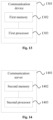
- Fig. 13 is a schematic diagram of a communication device according to an embodiment of the present disclosure.
- the embodiment of the present disclosure provides a communication device 1301, which includes: a first memory 1302 and a first processor 1303.
- the first memory 1302 is adapted to store a communication program under micro-service architecture.
- the communication program when executed by the first processor 1303, implements the operations of the communication method provided by the above embodiments, such as the operations shown in Fig. 4 or Fig. 5 or Fig. 6 . It will be understood by a person having ordinary skill in the art that the structure shown in Fig.
- the communication device 1301 is only a schematic diagram of a part of the structure related to the solution of the embodiments of the present disclosure, and does not constitute a limitation of the communication device 1301 to which the solution of the embodiments of the present disclosure is applied.
- the communication device 1301 may include more or fewer components than those shown in the figures, or may have some components combined, or may have different component arrangements.
- the first processor 1303 may include but is not limited to a processing apparatus such as a Micro Controller Unit (MCU) or a Field Programmable Gate Array (FPGA).
- the first memory 1302 may be configured to store a software program and module of application software, such as a program instruction or module corresponding to the communication method in the present embodiment.
- the first processor 1303 executes various functional applications and data processing, for example, implements the communication method provided in the present embodiment by running the software program and module stored in the first memory 1302.
- the first memory 1302 may include a high speed random access memory and may also include a non-volatile memory such as one or more magnetic storage apparatuses, a flash memory, or other non-volatile solid state memories.
- the first memory 1302 may include memories remotely located relative to the first processor 1303, which may be connected to the communication device 1301 over a network.
- the examples of such networks include, but are not limited to, the Internet, the Intranet, local area networks, mobile communication networks, and combinations thereof.
- Fig. 14 is a schematic diagram of a communication server according to an embodiment of the present disclosure.
- the embodiment of the present disclosure provides a communication server 1401, which includes: a second memory 1402 and a second processor 1403.
- the second memory 1402 is adapted to store a communication program under micro-service architecture.
- the communication program when executed by the second processor 1403, implements the operations of the communication method provided by the above embodiment, such as the operations shown in Fig. 7 . It will be understood by a person having ordinary skill in the art that the structure shown in Fig.
- the communication server 1401 may include more or fewer components than those shown in the figures, or may have some components combined, or may have different component arrangements.
- the second processor 1403 may include but is not limited to a processing apparatus such as an MCU or an FPGA.
- the second memory 1402 may be configured to store a software program and module of application software, such as a program instruction or module corresponding to the communication method in the present embodiment.
- the second processor 1403 executes various functional applications and data processing, for example, implements the communication method provided in the present embodiment by running the software program and module stored in the second memory 1402.
- the second memory 1402 may include a high speed random access memory and may also include a non-volatile memory such as one or more magnetic storage apparatuses, a flash memory, or other non-volatile solid state memories.
- the second memory 1402 may include memories remotely located relative to the second processor 1403, which may be connected to the communication server 1401 over a network.
- the examples of such networks include, but are not limited to, the Internet, the Intranet, local area networks, mobile communication networks, and combinations thereof.
- the embodiment of the present disclosure also provides a computer-readable medium, which stores a communication program under micro-service architecture.
- the communication program when executed by a processor, implements the operations of the communication method provided by the above embodiments, such as the operations described in any embodiment in Fig. 4 to Fig. 7 .
- Such software may be distributed over a computer readable medium, which may include computer storage media (or non-transitory media) and communication media (or transitory media).
- computer storage media includes volatile and non-volatile, removable and non-removable media implemented in any method or technology for storage of information (such as computer readable instructions, data structures, program modules or other data).
- the computer storage media include, but are not limited to, a RAM, a ROM, an EEPROM, a flash memory or other memory technologies, a CD-ROM, a Digital Versatile Disk (DVD) or other optical disk memories, a magnetic cassette, a magnetic tape, a magnetic disk storage or other magnetic storage devices, or any other media which may be used to store the desired information and accessed by a computer.
- the communication media typically include computer readable instructions, data structures, program modules, or other data in a modulated data signal such as a carrier wave or other transport mechanism and may include any information delivery media.
Landscapes
- Engineering & Computer Science (AREA)
- Computer Networks & Wireless Communication (AREA)
- Signal Processing (AREA)
- Computer And Data Communications (AREA)
Description
- The present disclosure relates, but is not limited, to the technical field of communication, and more particularly, to a communication method and system under micro-service architecture.
- In the field of mobile communication, the current mobile network architecture is designed for voice communication and regular Mobile Broadband (MBB) services, and has undergone the upgrade of various Third Generation Partnership Project (3GPP) versions. The current mobile network architecture involves a large number of network elements and complex interfaces, and its flexibility is insufficient to support multi-service scenarios in the 5th Generation mobile communication technology (5G). On the other hand, 5G is required to adapt to different types of services, such as video services, web services and vehicle networking services, and therefore is required to support rapid launching and rapid deployment of new services.
- The 5G network architecture will be driven by services, and the principles of architecture design are based on how to more flexibly and efficiently meet the needs of different services for mobile networks. Under the support of Software Defined Network (SDN) and Network Function Virtualization (NFV) technologies of underlying physical facilities, a 5G network enables a core network to be totally based on a cloud. In the latest 3GPP standards, the core network architecture for 5G is clear, and a service-oriented framework is established in a control plane.
- Cloud-based software architecture is very different from traditional software architecture. The traditional software architecture is referred to as Monolithic, in which respective modules of a service system are tightly coupled with each other and run in one and the same process, the whole application process needs to be restarted for each upgrade, and if one module malfunctions, the whole system cannot be started normally. The cloud-based software structure requires that the arrangement of software is no longer a single piece of software, the software is divided into various services according to different dimensions, and the services may be subdivided into various micro-services, that is, the arrangement of the services follows so-called micro-service architecture. According to micro-service architecture, different modules in the service system are split in the form of micro-services, each micro-service is autonomous, and a standard Application Programming Interface (API) is published for each micro-service, such that the huge single process can be split into micro-processes independent of each other. The rise of container technologies promotes the development of the micro-service architecture.
- With the development requirements of 5G services and networks, the software of each communication network element using the micro-service architecture becomes an inevitable trend. At present, many influential open-source micro-service architecture platforms exist in the industry, but they are all born in the Internet field. In the micro-service modification of communication software, the existing micro-service system is difficult to adapt to the communication software due to the constraints of some characteristics in the field of communication. The current popular communication methods under the micro-service architecture include modes such as Remote Procedure Call (RPC) and rabbitmq message queue, but the problems about addressing, delay, load balancing and the consistency ensuring of communication context cannot be well solved when these communication methods under the micro-service architecture are applied to the field of communication.
- The Chinese Patent Application
CN 108 206 852 A discloses a session-based service instance management method and device under micro service framework. - The document Chris Richardson et al. "MICROSERVICES-From Design to Deployment" proposes a solution related to "microservices" from design to deployment.
- However, the above technical problem still remains unsolved.
- Embodiments of the present disclosure provide a communication method and system under micro-service architecture, which may provide a high-performance and low-delay communication scheme for communication software modified based on micro-service architecture.
- The present disclosure is defined by the appended sets of claims.
- The accompanying drawings are used to provide a further understanding of the technical solution of the embodiments of the present disclosure, and constitute a part of the description. The drawings are used to explain the technical solution of the embodiments of the present disclosure together with the exemplary embodiments of the present disclosure, and do not constitute limitations to the technical solution of the embodiments of the present disclosure.
-
Fig. 1 is a schematic diagram of a communication system under micro-service architecture according to an embodiment of the present disclosure; -
Fig. 2 is an exemplary implementation flow diagram of a communication system under micro-service architecture according to an embodiment of the present disclosure; -
Fig. 3 is another exemplary implementation flow diagram of a communication system under micro-service architecture according to an embodiment of the present disclosure; -
Fig. 4 is a flow chart of a communication method under micro-service architecture according to an embodiment of the present disclosure; -
Fig. 5 is an exemplary flow diagram of a communication method under micro-service architecture according to an embodiment of the present disclosure; -
Fig. 6 is another exemplary flow diagram of a communication method under micro-service architecture according to an embodiment of the present disclosure; -
Fig. 7 is a flow chart of another communication method under micro-service architecture according to an embodiment of the present disclosure; -
Fig. 8 is an exemplary flow diagram of a communication method under micro-service architecture according to an embodiment of the present disclosure; -
Fig. 9 is another exemplary flow diagram of a communication method under micro-service architecture according to an embodiment of the present disclosure; -
Fig. 10 is yet another exemplary flow diagram of a communication method under micro-service architecture according to an embodiment of the present disclosure; -
Fig. 11 is yet another exemplary flow diagram of a communication method under micro-service architecture according to an embodiment of the present disclosure; -
Fig. 12 is yet another exemplary flow diagram of a communication method under micro-service architecture according to an embodiment of the present disclosure; -
Fig. 13 is a schematic diagram of a communication device according to an embodiment of the present disclosure; and -
Fig. 14 is a schematic diagram of a communication server according to an embodiment of the present disclosure. - The embodiments of the present disclosure will be described in detail below with reference to the accompanying drawings. It is to be noted that embodiments in the present application and characteristics in the embodiments may be combined to derive other embodiments not explicitly described.
- The operations shown in the flow chart of the drawings may be executed in a computer system including, for example, a set of computer-executable instructions. Moreover, although a logical sequence is shown in the flowchart, in some cases, the operations shown or described may be performed in a sequence different from the sequence herein.
- The embodiments of the present disclosure provide a communication method and system under micro-service architecture, which may be applied to a distributed communication system so as provide a high-performance and low-delay communication scheme for communication software modified based on the micro-service architecture.
-
Fig. 1 is a schematic diagram of a communication system under micro-service architecture according to an embodiment of the present disclosure. As shown inFig. 1 , the communication system under the micro-service architecture provided by the present embodiment includes: acommunication server 12 and at least two executers (e.g., anexecuter 10a and anexecuter 10b shown inFig. 1 ). - The executer is a minimum communication unit under the micro-service architecture, and one micro-service may correspond to one or more executers. In a practical implementation, the executer may be a process or a container, but the executer is not limited to a process or a container in the embodiments of the present disclosure. In
Fig. 1 , for example, theexecuters executers - In the communication system, a user-initiated process may contain multiple messages, and each type of process may be abstracted into a session. In the embodiment of the present disclosure, a session may be a communication connection between micro-services, and the session may be published or subscribed to. One session may include multiple session instances. For example, the communication system is associated with a user, and multiple users may initiate the same session, i.e., a session initiated by a particular user is a session instance. The session instance may be represented in the form of a character string or an integer. If the session instance is represented in the form of a character string, formats such as "aaa.bbb.ccc" may be supported to enable richer representation. In addition, wildcard characters (such as * and >) may also be adopted in the representation, for example, aaa.bbb.*. When session instances are matched, if more wildcard characters are used, the accuracy is lower and the priority is lower; conversely, if fewer wildcard characters are used, the accuracy is higher and the priority is higher.
- The session may be represented by a session type identifier, and the session may include one or more of the following attributes: a session scope (such as within a micro-service range; or within a network element range), a session load balancing rule (such as round robin, affix or broadcast), and an instance matching rule (such as exact matching; fuzzy matching).
- In the present embodiment, any of the at least two executers (such as a subscriber and a publisher) is adapted to send a session register request message to the communication server and receive, from the communication server, information of a peer executer that has a session subscription and publishing relationship with the executer. The session register request message at least carries information of the executer, a session set to be registered and an attribute of any session in the session set. The executer is further adapted to subscribe to a session instance of a registered session from the communication server or the peer executer, or the executer is further adapted to receive information of a session instance, subscribed to by the peer executer, of a registered session from the communication server or the peer executer.
- In an exemplary implementation, the session set to be registered may include at least one of the following: a publishable session set and a subscribable session set. One or more sessions may be included in the session set.
- In an exemplary implementation, when at least two sessions are included in a session set that is registered to the communication server by any of the at least two executers, the executer may be further adapted to receive, from the communication server, information (e.g., a session type identifier of a registered session) of the registered session based on which the executer establishes a session subscription and publishing relationship with a peer executer.
- In an exemplary implementation, the communication server may be adapted to determine the session subscription and publishing relationship between different executers according to the received session register request message. The communication server may analyze a session subscription and publishing relationship between different executers according to session sets to be registered carried in session register request messages of different executers, and may store the analyzed session subscription and publishing relationship.
- In an exemplary implementation, the communication server may be further adapted to receive a subscription request message sent by any of the at least two executers, determine a peer executer that has a session subscription and publishing relationship with the executer, and send information of a session and a session instance subscribed to by the executer to the determined peer executer. The subscription request message carries the information of the session and the session instance subscribed to by the executer.
- In an exemplary implementation, any of the at least two executers is further adapted to determine, when publishing a communication message, a peer executer receiving the communication message according to information of a session and a session instance carried in the communication message and an attribute of the session, and send the communication message to the determined peer executer.
- The session capability registration process and the session instance subscription process are described below with reference to
Fig. 1 , taking anexecuter 10a as an example. In an exemplary implementation, theexecuter 10a may determine a publishable session set, a subscribable session set and an attribute of any session in the session set according to a preset capability description file, and then send a session register request message to thecommunication server 12. The session register request message may carry information about theexecuter 10a (e.g., communication address information such as an Internet Protocol (IP) address and a port number), a publishable session set of theexecuter 10a, a subscribable session set of theexecuter 10a, and an attribute of any session in the session set (e.g., a session load balancing rule and an instance matching rule). - After receiving the session register request message of the
executer 10a, thecommunication server 12 can know publishable and subscribable sessions of theexecuter 10a by parsing the session register request message, and can know those executers (executers having completed session registration) that subscribe to or publish the same session with theexecuter 10a by analyzing, so as to obtain a session subscription and publishing relationship between the executer 10a and other executers, and store the analyzed session subscription and publishing relationship. Then, thecommunication server 12 may return a session register response (e.g., register ack) message to theexecuter 10a, which may carry information (e.g., a communication address of an executer 10b) of a peer executer that has a session subscription and publishing relationship with theexecuter 10a. When at least two sessions are included in a session set that is registered to thecommunication server 12 by theexecuter 10a, the session register response message returned by thecommunication server 12 to theexecuter 10a may carry information of a peer executer (e.g., the executer 10b) that has a session subscription and publishing relationship with theexecuter 10a and information (e.g., a session type identifier of a registered session) of the registered session based on which a session subscription and publishing relationship is established between the executer 10a and the peer executer. - After the
executer 10a completes session capability registration, theexecuter 10a (e.g., as a subscriber) may send a subscription request message to thecommunication server 12 using a subscription (sub) interface. The subscription request message may carry information (e.g., a session type identifier and a session instance) of a session instance, subscribed to by theexecuter 10a, of a registered session. In other words, through the subscription request message, theexecuter 10a may notify thecommunication server 12 to subscribe theexecuter 10a to a certain session instance under a certain session (a certain session in the session set that has been registered to thecommunication server 12 by theexecuter 10a), i.e. to indicate that the executer needs to receive a communication message of a certain session instance under a certain session. The session type identifier (sessiontype) and the session instance (sessionInst) carried in the subscription request message may define a subscription mode. For the subscription mode, the more accurate the session instance, the higher the priority. For example, the priority of abc.123.456 is higher than that of abc.123.*, and the priority of abc.123.* is higher than that of >. Meanwhile, theexecuter 10a (as a subscriber, i.e. a receiver) may insert information of an entity subscribing to the session and session instance in this executer, the subscribed session type identifier and session instance into a binding cache (bindcache) of theexecuter 10a. - After receiving the subscription request message of the
executer 10a, thecommunication server 12 queries the stored session subscription and publishing relationship to obtain all publishers (i.e., senders) of the session subscribed to by theexecuter 10a, and pushes the information of the session instance subscribed to by theexecuter 10a to all publishers (e.g., including the executer 10b) through a subscription notification (e.g., sub Notify) message. Thecommunication server 12 serves only to analyze and manage the session subscription and publishing relationship of the executers, and communication messages between the executers are not transmitted through thecommunication server 12, but are directly transmitted between the executers. Taking the publisher of the session instance to which theexecuter 10b subscribes is theexecuter 10a as an example, theexecuter 10b may insert the received communication address of theexecuter 10a, and the information of the session and the session instance subscribed to by theexecuter 10a into a subscription cache (subcache) of theexecuter 10b. - The concepts of sessions and session instances are proposed in the present embodiment. In the process of modifying single software architecture into micro-service architecture, when a micro-service is applied to the communication system, a peer address can be conveniently found and a call instance can be conveniently located through a two-stage discovery process (including a session capability registration process and a session instance subscription process).
-
Fig. 2 is an exemplary implementation flow diagram of a communication system under micro-service architecture according to an embodiment of the present disclosure. In the present exemplary embodiment, executer A and executer B have completed the session capability registration process and the session instance subscription process, i.e. the discovery of both executer A and executer B is implemented, and executer A and executer B may start sending and receiving communication messages. - As shown in
Fig. 2 , executer A may include a subscription cache (subcache) 23 and a binding cache (bindcache) 24, and executer B may include a subscription cache (subcache) 27 and a binding cache (bindcache) 28. Thesubscription cache 23 of executer A may store information (e.g., communication address) of a peer executer subscribing to a session and a session instance from executer A, and information of the session and the session instance subscribed to by the peer executer. The bindingcache 24 of executer A may store a matching relationship between entities in executer A and subscribed sessions and session instances, that is, the binding cache records that certain entities subscribe to certain session instances under certain sessions. Thesubscription cache 27 of executer B may store information of a peer executer subscribing to a session and a session instance from executer B, and information of the session and the session instance subscribed to by the peer executer. The bindingcache 28 of executer B may store a matching relationship between entities in executer B and subscribed sessions and session instances. - The following takes executer A as a publisher and executer B as a subscriber as an example for description. Executer B subscribes to a session and a session instance from executer A during the subscription process. For example, the subscribed session and session instance are represented by (sessiontype, sessionInst). A subscription mode may be defined by (sessiontype, sessionInst).
- When a sending
entity 21 of executer A publishes a communication message, a publishing (pub) interface may be used, and (sessiontype, sessionInst) may be used as a publishing keyword. The session instance (sessionInst) may not support the wildcard characteristic. Executer A may match the subscription mode in thesubscription cache 23 according to the publishing keyword. The matching process may include: according to an instance matching rule (e.g., exact matching or fuzzy matching) corresponding to the session type identifier (sessiontype) in the publishing keyword, a record matched with the publishing keyword is searched in the subscription cache (subcache). If multiple subscription modes are matched, the subscription mode with the highest priority is selected. For the subscription mode, the more accurate the session instance, the higher the priority. For example, the priority of abc.123.456 is higher than that of abc.123.*, and the priority of abc.123.* is higher than that of >. If there are multiple subscription modes with the same priority, a single subscriber (i.e., receiver) is selected according to a session load balancing rule (e.g., round robin or random) corresponding to the session type identifier (sessiontype) in the publishing keyword. In the present exemplary embodiment, taking that the selected single subscriber is executer B as an example, executer A may send a communication message to executer B. - After receiving the communication message, executer B may parse out the information of the session and the session instance, such as sessiontype and sessionInst, from a message header. Then, executer B matches the subscription mode in the binding
cache 28, selects a single receiving entity (e.g., receiving entity 26), and delivers the received communication message to the selected receiving entity. Executer B may select a single receiving entity in the bindingcache 28 to receive the communication message according to a locally preset selection rule (e.g., round robin or random). The embodiments of the present disclosure do not limit the specific selection rule. - Similarly, when executer B serves as a publisher (for example, a sending
entity 25 publishes a communication message) and executer A serves as a receiver (for example, a receiving entity 22 receives the communication message), the transmission process of the communication message may refer to the above process. Therefore, the description will be omitted herein. - In the present embodiment, by setting an attribute of a session, a receiver may be matched during the sending process of a communication message, thereby optimizing load balancing, without the need for upper-layer service to consider the range control of message communication, load balancing of message communication, and message representation, which greatly reduces the complexity of the upper-layer service. In the process of elastic scaling of micro-services, the service only needs to focus on the rule, and the actual implementation is transparent to the service.
-
Fig. 3 is another exemplary implementation flow diagram of a communication system under micro-service architecture according to an embodiment of the present disclosure. In the present exemplary embodiment, executer A and executer B have completed the session capability registration process and the session instance subscription process, i.e. the discovery of both executer A and executer B is implemented, and executer A and executer B may start sending and receiving communication messages. - Executer A may include the following four caches: a
subscription cache 33, a bindingcache 34, an affix subscription cache (subcacheAff) 33a, and an affix binding cache (bindcacheAff) 34a. Theaffix subscription cache 33a corresponds to thesubscription cache 33 and points to an executer (e.g., executer B). Theaffix binding cache 34a corresponds to the bindingcache 34 and points to an entity in an executer (e.g., a receivingentity 32 in executer A). Executer B may include the following four caches: asubscription cache 37, a bindingcache 38, an affix subscription cache (subcacheAff) 37a, and an affix binding cache (bindcacheAff) 38a. - The
subscription cache 33 of executer A may store information (e.g., communication address) of a peer executer subscribing to a session and a session instance from executer A, and information (e.g., sessiontype and sessionInst) of the session and the session instance subscribed to by the peer executer. The bindingcache 34 of executer A may store a matching relationship between entities in executer A and subscribed sessions and session instances, that is, the binding cache records that certain entities subscribe to certain session instances under certain sessions. Thesubscription cache 37 of executer B may store information of a peer executer subscribing to a session and a session instance from executer B, and information of the session and the session instance subscribed to by the peer executer. The bindingcache 38 of executer B may store a matching relationship between entities in executer B and subscribed sessions and session instances. - The following takes executer A as a publisher and executer B as a subscriber as an example for description. Executer B subscribes to a session and a session instance from executer A during the subscription process. For example, the subscribed session and session instance are represented by (sessiontype, sessionInst). A subscription mode may be defined by (sessiontype, sessionInst).
- When a sending
entity 31 of executer A publishes a communication message, a publishing (pub) interface may be used, and (sessiontype, sessionInst) may be used as a publishing keyword. Executer A may first match the subscription mode in theaffix subscription cache 33a according to the publishing keyword. If a peer executer matched with the publishing keyword is found in theaffix subscription cache 33a, a communication message is directly sent to the matched peer executer. If no matched peer executer is found in theaffix subscription cache 33a, a peer executer matched with the publishing keyword is searched in thesubscription cache 33. - In the present exemplary embodiment, a case where executer A cannot match the subscription mode in the
affix subscription cache 33a is taken as an example for description. Executer A uses (sessiontype, sessionInst) carried in the communication message as the publishing keyword, and performs subscription mode matching in thesubscription cache 33 according to an instance matching rule corresponding to sessiontype, and obtains a subscriber set (i.e., a set of peer executers). Then, executer A selects a single subscriber (e.g., executer B) from the matched subscriber set according to a session load balancing rule (e.g., round robin or random) corresponding to sessiontype, and sends a communication message to the selected subscriber. Meanwhile, executer A generates an affix record in theaffix subscription cache 33a, which records the selected subscriber information (subInfo) (e.g., a communication address of executer B), and information of a session and a session instance. For example, the above pieces of information are recorded in theaffix subscription cache 33a in the form of (subInfo, sessiontype, sessionInst). - After executer B (subscriber) receives a communication message, (sessiontype, sessionInst) carried in the communication message is taken as a keyword to search for a matched entity in the
affix binding cache 38a. If the entity is found, the message is delivered to the found entity (i.e., an upper-layer entity in executer B). If no matched entity is found, the bindingcache 38 is searched for a matched entity. Executer B may select a single receiving entity in the bindingcache 38 to receive the communication message according to a locally preset selection rule (e.g., round robin or random). The embodiments of the present disclosure do not limit the specific selection rule. - In the present exemplary embodiment, a case where executer B cannot find the matched entity in the
affix subscription cache 38a is taken as an example for description. Executer B uses (sessiontype, sessionInst) carried in the communication message as a keyword to match a subscription mode in the bindingcache 38, selects a single receiving entity (e.g., receiving entity 36) in executer B, and delivers the communication message to the selected receiving entity. Meanwhile, executer B generates an affix record pointing to the selected receivingentity 36 in theaffix binding cache 38a, that is, adds a matching relationship between the selected receivingentity 36 and the session and session instance to theaffix binding cache 38a. In the present exemplary embodiment, executer B (subscriber) may also insert a communication address of executer A sending the communication message, and the information of the session and the session instance carried in the communication message as an affix record into theaffix subscription cache 37a of executer B. For example, the above pieces of information are recorded in theaffix subscription cache 37a in the form of (pubInfo (communication address of executer A), sessiontype, sessionInst). Then, if executer B needs to return the communication message to executer A, executer B may directly query theaffix subscription cache 37a of executer B to find executer A, and directly send the communication message to executer A. - Similarly, when executer B serves as a publisher (for example, a sending
entity 35 publishes a communication message) and executer A serves as a receiver (for example, a receivingentity 32 receives the communication message), the transmission process of the communication message may refer to the above process. Therefore, the description will be omitted herein. - In the present embodiment, an affix mechanism not only supports the communication decoupling between micro-services, but also associates the session instance with a related message sequence, so that the user context in the user-level communication keeps consistent in the message interaction process within a certain period of time.
-
Fig. 4 is a flow chart of a communication method under micro-service architecture according to an embodiment of the present disclosure. The communication method provided by the present embodiment may be implemented by an executer. The description of the executer, sessions, and session instances may refer to the description in the embodiments for the above communication system, and will not be repeated herein. - As shown in
Fig. 4 , the communication method under the micro-service architecture provided by the present embodiment includes the following operations S10 to S12. - In operation S10, an executer sends a session register request message to a communication server. The session register request message at least carries information of the executer, a session set to be registered and an attribute of any session in the session set.
- In operation S11, the executer receives, from the communication server, information of a peer executer that has a session subscription and publishing relationship with the executer.
- In operation S12, the executer subscribes to a session instance of a registered session from the communication server or the peer executer, or the executer receives information of a session instance, subscribed to by the peer executer, of a registered session from the communication server or the peer executer.
- In the present embodiment, the executer completes the session capability registration through operations S10 and S11, and completes the session instance subscription process through operation S12. Through the session capability registration process and the instance subscription process, the executer may discover the peer executer and locate the session instance, and then the executer may directly transmit messages with the found peer executer.
- When the executer serves as a subscriber, in operation S12, the executer may subscribe to a session instance of a registered session from the communication server or the peer executer. When the executer serves as a publisher, in operation S12, the executer may receive information of a session instance, subscribed to by the peer executer, of a registered session from the communication server or the peer executer.
- In an exemplary implementation, the operation that the executer subscribes to a session instance of a registered session from the communication server or the peer executer in operation S12 may include:
- the executer sends a subscription request message to the communication server, wherein the subscription request message carries information of a session and a session instance subscribed to by the executer, and the communication server sends the information of the session and the session instance subscribed to by the executer to the peer executer; or,
- the executer broadcasts a subscription request message to the peer executer, wherein the subscription request message carries information of a session and a session instance subscribed to by the executer.
- In an exemplary implementation, after
operation S 10, the communication method provided by the present embodiment may further include: the executer receives, from the communication server, information of a registered session based on which the session subscription and publishing relationship is established between the executer and the peer executer. For example, when at least two sessions are included in a session set that is registered to the communication server by the executer, the communication server may return the following information to the executer: information of a peer executer that has a session subscription and publishing relationship with the executer, and information (e.g., a session type identifier of a registered session) of the registered session based on which the executer establishes a session subscription and publishing relationship with the peer executer. - In an exemplary implementation, after operation S12, the communication method provided by the present embodiment may further include: when publishing a communication message, the executer determines a peer executer receiving the communication message according to information of a session and a session instance carried in the communication message and an attribute of the session, and sends the communication message to the determined peer executer.
- In an exemplary implementation, after operation S12, the communication method provided by the present embodiment may further include: after receiving a communication message, the executer determines an entity receiving the communication message in the executer according to information of a session and a session instance carried in the communication message, and delivers the communication message to the determined entity.
-
Fig. 5 is an exemplary flow diagram of a communication method under micro-service architecture according to an embodiment of the present disclosure. In the present embodiment, an executer as a publisher (i.e., sender) of a communication message is taken as an example for description. As shown inFig. 5 , the communication method under the micro-service architecture provided by the present embodiment includes the following operations S20 to S23. - In operation S20, an executer sends a session register request message to a communication server. The session register request message at least carries information of the executer, a session set to be registered and an attribute of any session in the session set.
- In operation S21, the executer receives, from the communication server, information of a peer executer that has a session subscription and publishing relationship with the executer.
- In operation S22, the executer receives information of a session instance, subscribed to by the peer executer, of a registered session from the communication server or the peer executer.
- In operation S23, when publishing a communication message, the executer determines a peer executer receiving the communication message according to information of a session and a session instance carried in the communication message and an attribute of the session, and sends the communication message to the determined peer executer.
- In an exemplary implementation, the executer may include a subscription cache for storing information of a peer executer subscribing to a session instance of a registered session from the executer, and information of the session and the session instance subscribed to by the peer executer.
- In operation S23, the operation that the peer executer receiving the communication message is determined according to the information of the session and the session instance carried in the communication message and the attribute of the session may include: the executer selects a peer executer subscribing to the session and the session instance from the subscription cache according to the information of the session and the session instance carried in the communication message and the attribute of the session as the peer executer receiving the communication message.
- In an exemplary implementation, the executer may further include an affix subscription cache. After selecting the peer executer subscribing to the session and the session instance from the subscription cache as the peer executer receiving the communication message, the communication method of the present embodiment may further include: a matching relationship between the information of the session and the session instance carried in the communication message and the peer executer is added to the affix subscription cache.
- In an exemplary implementation, in operation S23, the operation that the peer executer receiving the communication message is determined according to the information of the session and the session instance carried in the communication message and the attribute of the session may include: the executer searches for a peer executer matched with the information of the session and the session instance carried in the communication message from the affix subscription cache; in a case of finding a matched peer executer from the affix subscription cache, the executer determines the found peer executer as the peer executer receiving the communication message; and in a case of not finding the matched peer executer from the affix subscription cache, the executer selects a peer executer subscribing to the session and the session instance from the subscription cache according to the information of the session and the session instance carried in the communication message and the attribute of the session as the peer executer receiving the communication message.
- In an exemplary implementation, the attribute of the session may include: a session load balancing rule and an instance matching rule. The operation that the peer executer subscribing to the session and the session instance is selected from the subscription cache according to the information of the session and the session instance carried in the communication message and the attribute of the session as the peer executer receiving the communication message may include: peer executers subscribing to the session and the session instance are searched from the subscription cache according to the instance matching rule of the session carried in the communication message, and one of the found peer executers is selected as the peer executer receiving the communication message according to the session load balancing rule of the session. However, the embodiment of the present disclosure is not limited to the above implementation. In other implementations, the attribute of the session may include: a session load balancing rule or an instance matching rule. For example, when the executer searches for the peer executer from the subscription cache, a peer executer may be selected to receive the communication message according to the session load balancing rule or the instance matching rule.
-
Fig. 6 is another exemplary flow diagram of a communication method under micro-service architecture according to an embodiment of the present disclosure. In the present embodiment, an executer as a subscriber (i.e., receiver) of a communication message is taken as an example for description. As shown inFig. 6 , the communication method under the micro-service architecture provided by the present embodiment includes the following operations S30 to S33. - In operation S30, an executer sends a session register request message to a communication server. The session register request message at least carries information of the executer, a session set to be registered and an attribute of any session in the session set.
- In operation S31, the executer receives, from the communication server, information of a peer executer that has a session subscription and publishing relationship with the executer.
- In operation S32, the executer subscribes to a session instance of a registered session from the communication server or the peer executer.
- In operation S33, after receiving a communication message, the executer determines an entity receiving the communication message in the executer according to information of a session and a session instance carried in the communication message, and delivers the communication message to the determined entity.
- In an exemplary implementation, the executer may include a binding cache for storing a matching relationship between an entity in the executer and a session and a session instance subscribed to by the entity in the executer.
- The operation that the entity receiving the communication message in the executer is determined according to the information of the session and the session instance carried in the communication message may include: the executer searches for entities subscribing to the session and the session instance from the binding cache according to the information of the session and the session instance carried in the communication message, and selects one of the found entities as the entity receiving the communication message.
- In an exemplary implementation, the executer may further include an affix binding cache. After searching for the entities subscribing to the session and the session instance from the binding cache according to the information of the session and the session instance carried in the communication message and selecting one of the found entities as the entity receiving the communication message, the communication method of the present embodiment may further include: the executer adds a matching relationship between the selected entity in the binding cache and the session and the session instance to the affix binding cache as an affix record.
- In an exemplary implementation, the operation that the entity receiving the communication message in the executer is determined according to the information of the session and the session instance carried in the communication message may include: after receiving a communication message carrying information of a session and a session instance, the executer searches for an entity matched with the session and the session instance from the affix binding cache; in a case of finding a matched entity from the affix binding cache, the executer determines the found entity as the entity receiving the communication message; and in a case of not finding the matched entity from the affix binding cache, the executer searches for entities subscribing to the session and the session instance from the binding cache according to the information of the session and the session instance carried in the communication message, and selects one of the found entities as the entity receiving the communication message.
- In an exemplary implementation, the executer may further include an affix subscription cache. After the executer adds the matching relationship between the selected entity in the binding cache and the session and the session instance to the affix binding cache, the communication method of the present embodiment may further include: the executer adds a matching relationship between the information of the session and the session instance carried in the communication message and the peer executer sending the communication message to the affix subscription cache as an affix record in the affix subscription cache; and in a case where the number of affix records related to the session in the affix subscription cache is greater than a preset affix quota, the executer clears the affix records related to the session in the affix subscription cache and the affix binding cache, and notifies the peer executer to clear affix records related to the session.
-
Fig. 7 is a flow chart of another communication method under micro-service architecture according to an embodiment of the present disclosure. The communication method provided by the present embodiment may be implemented by a communication server. The description of the executer, sessions, and session instances may refer to the description in the above communication system, and will not be repeated herein. - As shown in
Fig. 7 , the communication method under the micro-service architecture provided by the present embodiment includes the following operations S40 to S43. - In operation S40, a communication server determines a session subscription and publishing relationship between different executers according to a session register request message sent by at least one executer. The session register request message at least carries information of the executer, a session set to be registered and an attribute of any session in the session set.
- In operation S41, the communication server returns, to the executer, information of a peer executer that has a session subscription and publishing relationship with the executer.
- In operation S42, after receiving a subscription request message sent by any executer, the communication server determines a peer executer that has a session subscription and publishing relationship with the executer. The subscription request message carries information of a session and a session instance subscribed to by the executer.
- In operation S43, the communication server sends the information of the session and the session instance subscribed to by the executer to the peer executer.
- In an exemplary implementation, after operation S40, the communication method provided by the present embodiment may further include: the communication server returns information of a registered session based on which the session subscription and publishing relationship is established between the executer and the peer executer to any executer.
- In an exemplary implementation, the attribute of the session may include at least one of the following: a session load balancing rule and an instance matching rule.
- The communication method and system under the micro-service architecture provided by the embodiment of the present disclosure will be described below through multiple exemplary embodiments.
-
Fig. 8 is an exemplary flow diagram of a communication method under micro-service architecture according to an embodiment of the present disclosure. The present exemplary embodiment describes a session capability registration process and a subscription mode of a session instance. - As shown in
Fig. 8 , the communication method under the micro-service architecture provided by the present embodiment includes operations S101 toS 112. - In operation S101, when powered on and initialized, executer A reads a pre-configured capability description file. The capability description file may be in a JavaScript Object Notation (json) format.
- For example, the capability description file of executer A may include the following content:
    "Session"
    {
        "pub":[]
             {
                 Sessiontype: "XYZ" //the session type identifier is XYZ
              }
          "sub": []
              {
                   Sessiontype: "XYZ" //the session type identifier is XYZ
    }
Sessiontype:
    {
                                 Type: "XYZ"//the session type identifier is XYZ
                                 Scope: "IN NF"//the session scope is a micro-service range
                                 LbRule:"ROUNDROBIN"//the session load balancing rule is
                                 round robin
                                }
       "Session"
    {
        "pub":[]
             {
                 Sessiontype: "XYZ" //the session type identifier is XYZ
                }
          "sub": []
              {
                 Sessiontype: "XYZ" //the session type identifier is XYZ
               }
    }
    Sessiontype:
    {
                                 Type: "XYZ"//the session type identifier is XYZ
                                 Scope: "IN NF"//the session scope is a micro-service range
                                 LbRule:"ROUNDROBIN"//the session load balancing rule is
                                 round robin
    }
    "Session"
    {
        "pub":[]
             {
                 Sessiontype: "XYZ" //the session type identifier is XYZ
              }
          "sub": []
              {
                   Sessiontype: "XYZ" //the session type identifier is XYZ
                  }
    }
    Sessiontype:
    {
                                 Type: "XYZ"//the session type identifier is XYZ
                                 Scope: "IN NF"//the session scope is a micro-service range
                                 LbRule:"ROUNDROBIN"//the session load balancing rule is
                                 round robin
                                }
       "Session"
    {
        "pub":[]
             {
                 Sessiontype: "XYZ" //the session type identifier is XYZ
          "sub": []
              {
                 Sessiontype: "XYZ" //the session type identifier is XYZ
               }
    }
    Sessiontype:
    {
                                 Type: "XYZ"//the session type identifier is XYZ
                                 Scope: "IN NF"//the session scope is a micro-service range
                                 LbRule:"ROUNDROBIN"//the session load balancing rule is
                                 round robin
    }
    "Session"
    {
        "pub":[]
             {
                 Sessiontype: "XYZ" //the session type identifier is XYZ
              }
          "sub": []
              {
                   Sessiontype: "XYZ" //the session type identifier is XYZ
                  }
    }
    Sessiontype:
    {
                                 Type: "XYZ"//the session type identifier is XYZ
                                 Scope: "IN NF"//the session scope is a micro-service range
                                 LbRule:"ROUNDROBIN"//the session load balancing rule is
                                 round robin and affix
                                }
       "Session"
    {
        "pub":[]
             {
                 Sessiontype: "XYZ" //the session type identifier is XYZ
                }
          "sub": []
              {
                 Sessiontype: "XYZ" //the session type identifier is XYZ
               }
    }
    Sessiontype:
    {
                                 Type: "XYZ"//the session type identifier is XYZ
                                 Scope: "IN NF"//the session scope is a micro-service range
                                 LbRule:"ROUNDROBIN"//the session load balancing rule is
                                 round robin and affix
    }
Claims (13)
- A communication method under micro-service architecture,wherein an executer is a minimum communication unit under the micro-service architecture, and one micro-service corresponds to one or more executers, wherein the executer is a process or a container;wherein the micro-service architecture comprises a communication server (12) and at least two executers, an executer (10a) and a peer executer (10b);wherein a session is a communication connection between micro-services, and the session is able to be published or subscribed to, wherein one session comprises at least one session instances;the method comprising:sending (S10, S20, S30), by the executer (10a), a session register request message to the communication server (12), wherein the session register request message at least carries information of the executer (10a) comprising at least a communication address of the executer (10a), a session set to be registered and an attribute of any session in the session set, wherein the session set to be registered comprises at least one of a publishable session set and a subscribable session set, wherein one or more sessions are comprised in the session set;receiving (S11, S21, S31), from the communication server (12) by the executer (10a), information of the peer executer (10b) that has a session subscription and publishing relationship with the executer (10a) according to the sent session register request message; andas a subscriber, the executer (10a) sending to the communication server (12) or broadcasting to the peer executer (10b) a subscription request message which carries information of a session instance of a registered session subscribed to by the executer (10a), wherein a binding cache of the executer (10a) as the subscriber stores a matching relationship between entities in the executer (10a) and sessions and session instances subscribed to by the entities in the executer (10a); andas a publisher, the executer (10a) receiving from the communication server (12) a subscription notification message which carries information of a session instance of a registered session subscribed to by the peer executer (10b) as well as a communication address of the peer executer (10b), wherein a subscription cache of the executer as the publisher stores the communication address of the peer executer (10b) subscribing to the session instance of the registered session from the executer (10a), and the information of the session and the session instance subscribed to by the peer executer (10b);wherein communication messages for the session instance between the executer (10a) and the peer executer (10b) are not transmitted through the communication server (12), but are directly transmitted between the executer (10a) and the peer executers (10b).
- The method according to claim 1, further comprising:
when publishing a communication message, determining (S23), by the executer (10a), the peer executer (10b) receiving the communication message according to information of a session and a session instance carried in the communication message and an attribute of the session, and sending (S23), by the executer (10a), the communication message to the determined peer executer (10b). - The method according to claim 2, wherein determining (S23) the peer executer (10b) receiving the communication message according to the information of the session and the session instance carried in the communication message and the attribute of the session comprises:
selecting, by the executer (10a), a peer executer subscribing to the session and the session instance from the subscription cache according to the information of the session and the session instance carried in the communication message and the attribute of the session as the peer executer (10b) receiving the communication message. - The method according to claim 2, wherein the executer (10a) further comprises an affix subscription cache, wherein the affix subscription cache is used for storing a matching relationship between the information of the session and the session instance carried in the communication message and the peer executer (10b); and
determining (S23) the peer executer (10a) receiving the communication message according to the information of the session and the session instance carried in the communication message and the attribute of the session comprises:searching, by the executer, for a peer executer matched with the information of the session and the session instance carried in the communication message from the affix subscription cache;in a case of finding a matched peer executer from the affix subscription cache, determining, by the executer (10a), the found peer executer as the peer executer (10b) receiving the communication message; andin a case of not finding the matched peer executer from the affix subscription cache, selecting, by the executer, a peer executer subscribing to the session and the session instance from the subscription cache according to the information of the session and the session instance carried in the communication message and the attribute of the session as the peer executer (10b) receiving the communication message, and then adding a matching relationship between the information of the session and the session instance carried in the communication message and the peer executer (10a) to the affix subscription cache. - The method according to claims 3 or 4, wherein the attribute of the session comprises: a session load balancing rule and an instance matching rule; and
selecting the peer executer subscribing to the session and the session instance from the subscription cache according to the information of the session and the session instance carried in the communication message and the attribute of the session as the peer executer (10b) receiving the communication message comprises:
searching for peer executers subscribing to the session and the session instance from the subscription cache according to the instance matching rule of the session carried in the communication message, and selecting one of the found peer executers as the peer executer (10a) receiving the communication message according to the session load balancing rule of the session. - The method according to claim 1, further comprising:
after the executer (10a) receives a communication message, determining (S33) an entity receiving the communication message in the executer (10a) according to information of a session and a session instance carried in the communication message, and delivering (S33) the communication message to the determined entity. - The method according to claim 6, wherein determining (S33) the entity receiving the communication message in the executer (10a) according to the information of the session and the session instance carried in the communication message comprises:
searching, by the executer, for entities subscribing to the session and the session instance from the binding cache according to the information of the session and the session instance carried in the communication message, and selecting one of the found entities as the entity receiving the communication message. - The method according to claim 6, wherein the executer further comprises an affix binding cache, wherein the affix binding cache is used for storing a matching relationship between a selected entity in the binding cache and the session and the session instance; and
determining (S33) the entity receiving the communication message in the executer (10a) according to the information of the session and the session instance carried in the communication message comprises:after receiving a communication message carrying information of a session and a session instance, searching, by the executer (10a), for an entity matched with the session and the session instance from the affix binding cache;in a case of finding a matched entity from the affix binding cache, determining, by the executer (10a), the found entity as the entity receiving the communication message; andin a case of not finding the matched entity from the affix binding cache, searching, by the executer (10a), for entities subscribing to the session and the session instance from the binding cache according to the information of the session and the session instance carried in the communication message, selecting, by the executer (10a), one of the found entities as the entity receiving the communication message, and then adding, by the executer (10a), a matching relationship between the selected entity in the binding cache and the session and the session instance to the affix binding cache as an affix record. - The method according to claim 8, wherein the executer (10a) further comprises an affix subscription cache; and
after the executer (10a) adds the matching relationship between the selected entity in the binding cache and the session and the session instance to the affix binding cache, the method further comprises:adding, by the executer (10a), a matching relationship between the information of the session and the session instance carried in the communication message and the peer executer (10b) sending the communication message to the affix subscription cache as an affix record in the affix subscription cache; andin a case where the number of affix records related to the session in the affix subscription cache is greater than a preset affix quota, clearing, by the executer (10a), the affix records related to the session in the affix subscription cache and the affix binding cache, and notifying, by the executer (10a), the peer executer (10b) to clear affix records related to the session. - The method according to claim 1, wherein after the executer (10a) sending to the communication server (12) a subscription request message which carries information of a session instance of a registered session subscribed to by the executer (10a), the method further comprises:
sending, by the communication server (12), the information of the session and the session instance subscribed to by the executer (10a) to the peer executer (10b). - The method according to claim 1, wherein after sending (S10, S20, S30), by the executer (10a), the session register request message to the communication server (12), the method further comprises:
receiving, by the executer (10a) from the communication server (12), information of a registered session based on which the session subscription and publishing relationship is established between the executer (10a) and the peer executer (10b). - A communication system under micro-service architecture, the system comprising: a communication server (12) and at least two executers, an executer (10a) and a peer executer (10b), wherein the executer (10a, 10b) is a minimum communication unit under the micro-service architecture, and one micro-service corresponds to one or more executers, wherein the executer (10a, 10b) is a process or a container;wherein a session is a communication connection between micro-services, and the session is able to be published or subscribed to, wherein one session comprises at least one session instances;the executer (10a) is adapted to send a session register request message to the communication server (12), wherein the session register request message at least carries information of the executer (10a) comprising at least a communication address of the executer (10a), a session set to be registered and an attribute of any session in the session set, wherein the session set to be registered comprises at least one of a publishable session set and a subscribable session set, wherein one or more sessions are comprised in the session set;the executer (10a) is further adapted to receive, from the communication server (12), information of the peer executer (10b) that has a session subscription and publishing relationship with the executer (10a) according to the sent session register request message; andas a subscriber, the executer (10a) is adapted to send to the communication server (12) or broadcast to the peer executer (10b) a subscription request message which carries information of a session instance of a registered session subscribed to by the executer (10a), wherein a binding cache of the executer (10a) as the subscriber stores a matching relationship between entities in the executer (10a) and sessions and session instances subscribed to by the entities in the executer (10a);
andas a publisher, the executer (10a) is adapted to receive from the communication server (12) a subscription notification message which carries information of a session instance of a registered session subscribed to by the peer executer (10b) as well as a communication address of the peer executer (10b), wherein a subscription cache of the executer as the publisher stores the communication address of the peer executer (10b) subscribing to the session instance of the registered session from the executer (10a), and the information of the session and the session instance subscribed to by the peer executer (10b);wherein communication messages for the session instance between the executer (10a) and the peer executer (10b) are not transmitted through the communication server (12), but are directly transmitted between the executer (10a) and the peer executers (10b). - The communication system according to claim 12, wherein as a publisher, the executer (10a) is adapted to determine, when publishing a communication message, the peer executer (10b) receiving the communication message according to information of a session and a session instance carried in the communication message and an attribute of the session, and send the communication message to the determined peer executer (10b).
Applications Claiming Priority (2)
| Application Number | Priority Date | Filing Date | Title |
|---|---|---|---|
| CN201811306618.5A CN111147534B (en) | 2018-11-05 | 2018-11-05 | Communication method and system under micro-service architecture |
| PCT/CN2019/115776 WO2020094021A1 (en) | 2018-11-05 | 2019-11-05 | Communication method and system under micro-service architecture |
Publications (3)
| Publication Number | Publication Date |
|---|---|
| EP3879787A1 EP3879787A1 (en) | 2021-09-15 |
| EP3879787A4 EP3879787A4 (en) | 2021-10-13 |
| EP3879787B1 true EP3879787B1 (en) | 2025-06-18 |
Family
ID=70515602
Family Applications (1)
| Application Number | Title | Priority Date | Filing Date |
|---|---|---|---|
| EP19882531.7A Active EP3879787B1 (en) | 2018-11-05 | 2019-11-05 | Communication method and system under micro-service architecture |
Country Status (4)
| Country | Link |
|---|---|
| US (1) | US20210314406A1 (en) |
| EP (1) | EP3879787B1 (en) |
| CN (1) | CN111147534B (en) |
| WO (1) | WO2020094021A1 (en) |
Families Citing this family (8)
| Publication number | Priority date | Publication date | Assignee | Title |
|---|---|---|---|---|
| GB2586913B (en) * | 2020-06-05 | 2021-11-10 | Iotech Systems Ltd | Data processing |
| CN111935103B (en) * | 2020-07-22 | 2023-04-07 | 河南信大网御科技有限公司 | System and method for recursive simulation of executive service function |
| CN112732229A (en) * | 2020-12-31 | 2021-04-30 | 中山大学 | Multi-language learning system based on micro-service architecture |
| CN114035978A (en) * | 2021-11-04 | 2022-02-11 | 杭州东方通信软件技术有限公司 | Service arrangement processing method and device based on micro-service architecture |
| CN115913879B (en) * | 2022-11-25 | 2025-06-10 | 广东电网有限责任公司 | Information integration method and system based on distributed architecture |
| CN116455910A (en) * | 2023-03-02 | 2023-07-18 | 邦彦技术股份有限公司 | Load balancing processing method of terminal home server based on consistent hash algorithm |
| CN116800828A (en) * | 2023-03-30 | 2023-09-22 | 北京亿赛通科技发展有限责任公司 | Distributed notification method based on Netty and Nacos |
| CN116708538A (en) * | 2023-05-25 | 2023-09-05 | 北京顺实科技有限公司 | Micro-service system based on peer-to-peer network |
Family Cites Families (12)
| Publication number | Priority date | Publication date | Assignee | Title |
|---|---|---|---|---|
| US20060253455A1 (en) * | 2005-05-05 | 2006-11-09 | Microsoft Corporation | Extensible type-based publication / subscription services |
| CN1972279B (en) * | 2005-11-25 | 2010-08-11 | 华为技术有限公司 | A method for acquiring session initiation protocol resource event packets |
| US7793140B2 (en) * | 2007-10-15 | 2010-09-07 | International Business Machines Corporation | Method and system for handling failover in a distributed environment that uses session affinity |
| US9363301B2 (en) * | 2014-10-21 | 2016-06-07 | Twilio, Inc. | System and method for providing a micro-services communication platform |
| CN106612188A (en) * | 2015-10-21 | 2017-05-03 | 中兴通讯股份有限公司 | Method and device for extending software function based on micro service architecture |
| CA3027756C (en) * | 2016-06-28 | 2021-04-13 | Solano Labs, Inc. | Systems and methods for efficient distribution of stored data objects |
| CN107635022A (en) * | 2016-07-18 | 2018-01-26 | 华为软件技术有限公司 | Method and device for accessing services across internal and external networks |
| CN106453288B (en) * | 2016-09-29 | 2019-06-04 | 上海和付信息技术有限公司 | A kind of distributed micro services frame system that supporting asynchronous mode and its implementation |
| CN106411933B (en) * | 2016-11-15 | 2019-09-10 | 深圳市彬讯科技有限公司 | A kind of lightweight RPC system for carrying out service and administering with language call |
| CN108206852B (en) * | 2016-12-20 | 2020-12-22 | 华为技术有限公司 | A session-based service instance management method and device under a microservice framework |
| CN106790567A (en) * | 2016-12-27 | 2017-05-31 | 东华互联宜家数据服务有限公司 | Business support system and method |
| CN108650262B (en) * | 2018-05-09 | 2020-12-01 | 聚龙股份有限公司 | Cloud platform expansion method and system based on micro-service architecture |
-
2018
- 2018-11-05 CN CN201811306618.5A patent/CN111147534B/en active Active
-
2019
- 2019-11-05 WO PCT/CN2019/115776 patent/WO2020094021A1/en not_active Ceased
- 2019-11-05 US US17/290,349 patent/US20210314406A1/en not_active Abandoned
- 2019-11-05 EP EP19882531.7A patent/EP3879787B1/en active Active
Also Published As
| Publication number | Publication date |
|---|---|
| EP3879787A4 (en) | 2021-10-13 |
| CN111147534B (en) | 2022-12-16 |
| US20210314406A1 (en) | 2021-10-07 |
| EP3879787A1 (en) | 2021-09-15 |
| WO2020094021A1 (en) | 2020-05-14 |
| CN111147534A (en) | 2020-05-12 |
Similar Documents
| Publication | Publication Date | Title |
|---|---|---|
| EP3879787A1 (en) | Communication method and system under micro-service architecture | |
| KR102605458B1 (en) | Analysis function discovery method and device | |
| US20190174321A1 (en) | Network slice selection method, device and system | |
| US9591524B2 (en) | Method and apparatus for transmitting data in network system, and data transmission system | |
| EP3876500B1 (en) | Subscription message processing method and apparatus, and computer device and storage medium | |
| EP3041198B1 (en) | Finding services in a service-oriented architecture (soa) network | |
| US20160080529A1 (en) | Method and device for sending requests | |
| JP6542999B2 (en) | Multimedia resource reproduction system, method and server | |
| CN113347673B (en) | PDU session management, node association and UPF discovery method and device | |
| CN112769671B (en) | Message processing method, device and system | |
| JP6729918B2 (en) | SMS processing method, mobility management network element and computer program in Internet of Things | |
| CN107645386B (en) | A method and device for acquiring data resources | |
| KR20150105252A (en) | Method and system for establishing a service session between seeker device and advertiser device | |
| WO2023072801A1 (en) | Methods and apparatuses for network function discovery | |
| JP2023550972A (en) | SIM card selection method, device, terminal and storage medium | |
| CN114064275A (en) | Data processing method and device | |
| CN111385324A (en) | Data communication method, device, equipment and storage medium | |
| EP3682596B1 (en) | Serverless core network architecture | |
| EP4057577B1 (en) | Addressing method and addressing apparatus | |
| WO2017045454A1 (en) | Method, device and system for realizing terminal access | |
| CN114422591B (en) | Point-to-point communication method, data communication system, computer equipment, storage medium | |
| US20170353818A1 (en) | Method for deleting notification resource, and common service entity | |
| CN114760348B (en) | Business processing method, device, storage medium and electronic device | |
| US12554755B2 (en) | Search and retrieve operation of data | |
| EP3758308B1 (en) | Correspondence processing method and device based on interworking rcs system |
Legal Events
| Date | Code | Title | Description |
|---|---|---|---|
| STAA | Information on the status of an ep patent application or granted ep patent |
Free format text: STATUS: THE INTERNATIONAL PUBLICATION HAS BEEN MADE |
|
| PUAI | Public reference made under article 153(3) epc to a published international application that has entered the european phase |
Free format text: ORIGINAL CODE: 0009012 |
|
| STAA | Information on the status of an ep patent application or granted ep patent |
Free format text: STATUS: REQUEST FOR EXAMINATION WAS MADE |
|
| 17P | Request for examination filed |
Effective date: 20210526 |
|
| AK | Designated contracting states |
Kind code of ref document: A1 Designated state(s): AL AT BE BG CH CY CZ DE DK EE ES FI FR GB GR HR HU IE IS IT LI LT LU LV MC MK MT NL NO PL PT RO RS SE SI SK SM TR |
|
| A4 | Supplementary search report drawn up and despatched |
Effective date: 20210910 |
|
| RIC1 | Information provided on ipc code assigned before grant |
Ipc: H04L 29/08 20060101AFI20210906BHEP |
|
| DAV | Request for validation of the european patent (deleted) | ||
| DAX | Request for extension of the european patent (deleted) | ||
| STAA | Information on the status of an ep patent application or granted ep patent |
Free format text: STATUS: EXAMINATION IS IN PROGRESS |
|
| 17Q | First examination report despatched |
Effective date: 20240510 |
|
| REG | Reference to a national code |
Ref country code: DE Ref legal event code: R079 Free format text: PREVIOUS MAIN CLASS: H04L0029080000 Ipc: H04L0067104000 Ref document number: 602019071384 Country of ref document: DE |
|
| GRAJ | Information related to disapproval of communication of intention to grant by the applicant or resumption of examination proceedings by the epo deleted |
Free format text: ORIGINAL CODE: EPIDOSDIGR1 |
|
| GRAP | Despatch of communication of intention to grant a patent |
Free format text: ORIGINAL CODE: EPIDOSNIGR1 |
|
| RIC1 | Information provided on ipc code assigned before grant |
Ipc: H04L 67/104 20220101AFI20241122BHEP |
|
| GRAP | Despatch of communication of intention to grant a patent |
Free format text: ORIGINAL CODE: EPIDOSNIGR1 |
|
| STAA | Information on the status of an ep patent application or granted ep patent |
Free format text: STATUS: GRANT OF PATENT IS INTENDED |
|
| INTG | Intention to grant announced |
Effective date: 20250114 |
|
| GRAS | Grant fee paid |
Free format text: ORIGINAL CODE: EPIDOSNIGR3 |
|
| GRAA | (expected) grant |
Free format text: ORIGINAL CODE: 0009210 |
|
| STAA | Information on the status of an ep patent application or granted ep patent |
Free format text: STATUS: THE PATENT HAS BEEN GRANTED |
|
| AK | Designated contracting states |
Kind code of ref document: B1 Designated state(s): AL AT BE BG CH CY CZ DE DK EE ES FI FR GB GR HR HU IE IS IT LI LT LU LV MC MK MT NL NO PL PT RO RS SE SI SK SM TR |
|
| REG | Reference to a national code |
Ref country code: GB Ref legal event code: FG4D |
|
| REG | Reference to a national code |
Ref country code: CH Ref legal event code: EP |
|
| REG | Reference to a national code |
Ref country code: DE Ref legal event code: R096 Ref document number: 602019071384 Country of ref document: DE |
|
| REG | Reference to a national code |
Ref country code: CH Ref legal event code: EP |
|
| REG | Reference to a national code |
Ref country code: IE Ref legal event code: FG4D |
|
| PG25 | Lapsed in a contracting state [announced via postgrant information from national office to epo] |
Ref country code: FI Free format text: LAPSE BECAUSE OF FAILURE TO SUBMIT A TRANSLATION OF THE DESCRIPTION OR TO PAY THE FEE WITHIN THE PRESCRIBED TIME-LIMIT Effective date: 20250618 |
|
| REG | Reference to a national code |
Ref country code: LT Ref legal event code: MG9D |
|
| PG25 | Lapsed in a contracting state [announced via postgrant information from national office to epo] |
Ref country code: GR Free format text: LAPSE BECAUSE OF FAILURE TO SUBMIT A TRANSLATION OF THE DESCRIPTION OR TO PAY THE FEE WITHIN THE PRESCRIBED TIME-LIMIT Effective date: 20250919 Ref country code: NO Free format text: LAPSE BECAUSE OF FAILURE TO SUBMIT A TRANSLATION OF THE DESCRIPTION OR TO PAY THE FEE WITHIN THE PRESCRIBED TIME-LIMIT Effective date: 20250918 |
|
| PG25 | Lapsed in a contracting state [announced via postgrant information from national office to epo] |
Ref country code: BG Free format text: LAPSE BECAUSE OF FAILURE TO SUBMIT A TRANSLATION OF THE DESCRIPTION OR TO PAY THE FEE WITHIN THE PRESCRIBED TIME-LIMIT Effective date: 20250618 |
|
| PG25 | Lapsed in a contracting state [announced via postgrant information from national office to epo] |
Ref country code: HR Free format text: LAPSE BECAUSE OF FAILURE TO SUBMIT A TRANSLATION OF THE DESCRIPTION OR TO PAY THE FEE WITHIN THE PRESCRIBED TIME-LIMIT Effective date: 20250618 |
|
| PG25 | Lapsed in a contracting state [announced via postgrant information from national office to epo] |
Ref country code: RS Free format text: LAPSE BECAUSE OF FAILURE TO SUBMIT A TRANSLATION OF THE DESCRIPTION OR TO PAY THE FEE WITHIN THE PRESCRIBED TIME-LIMIT Effective date: 20250918 |
|
| REG | Reference to a national code |
Ref country code: NL Ref legal event code: MP Effective date: 20250618 |
|
| PG25 | Lapsed in a contracting state [announced via postgrant information from national office to epo] |
Ref country code: LV Free format text: LAPSE BECAUSE OF FAILURE TO SUBMIT A TRANSLATION OF THE DESCRIPTION OR TO PAY THE FEE WITHIN THE PRESCRIBED TIME-LIMIT Effective date: 20250618 |
|
| PG25 | Lapsed in a contracting state [announced via postgrant information from national office to epo] |
Ref country code: NL Free format text: LAPSE BECAUSE OF FAILURE TO SUBMIT A TRANSLATION OF THE DESCRIPTION OR TO PAY THE FEE WITHIN THE PRESCRIBED TIME-LIMIT Effective date: 20250618 |
|
| PG25 | Lapsed in a contracting state [announced via postgrant information from national office to epo] |
Ref country code: PT Free format text: LAPSE BECAUSE OF FAILURE TO SUBMIT A TRANSLATION OF THE DESCRIPTION OR TO PAY THE FEE WITHIN THE PRESCRIBED TIME-LIMIT Effective date: 20251020 |
|
| REG | Reference to a national code |
Ref country code: AT Ref legal event code: MK05 Ref document number: 1805255 Country of ref document: AT Kind code of ref document: T Effective date: 20250618 |
|
| PG25 | Lapsed in a contracting state [announced via postgrant information from national office to epo] |
Ref country code: IS Free format text: LAPSE BECAUSE OF FAILURE TO SUBMIT A TRANSLATION OF THE DESCRIPTION OR TO PAY THE FEE WITHIN THE PRESCRIBED TIME-LIMIT Effective date: 20251018 |
|
| PGFP | Annual fee paid to national office [announced via postgrant information from national office to epo] |
Ref country code: DE Payment date: 20251119 Year of fee payment: 7 |
|
| PGFP | Annual fee paid to national office [announced via postgrant information from national office to epo] |
Ref country code: GB Payment date: 20251121 Year of fee payment: 7 |
|
| PG25 | Lapsed in a contracting state [announced via postgrant information from national office to epo] |
Ref country code: AT Free format text: LAPSE BECAUSE OF FAILURE TO SUBMIT A TRANSLATION OF THE DESCRIPTION OR TO PAY THE FEE WITHIN THE PRESCRIBED TIME-LIMIT Effective date: 20250618 Ref country code: SM Free format text: LAPSE BECAUSE OF FAILURE TO SUBMIT A TRANSLATION OF THE DESCRIPTION OR TO PAY THE FEE WITHIN THE PRESCRIBED TIME-LIMIT Effective date: 20250618 |
|
| PGFP | Annual fee paid to national office [announced via postgrant information from national office to epo] |
Ref country code: FR Payment date: 20251126 Year of fee payment: 7 |
|
| PG25 | Lapsed in a contracting state [announced via postgrant information from national office to epo] |
Ref country code: CZ Free format text: LAPSE BECAUSE OF FAILURE TO SUBMIT A TRANSLATION OF THE DESCRIPTION OR TO PAY THE FEE WITHIN THE PRESCRIBED TIME-LIMIT Effective date: 20250618 |
|
| PG25 | Lapsed in a contracting state [announced via postgrant information from national office to epo] |
Ref country code: PL Free format text: LAPSE BECAUSE OF FAILURE TO SUBMIT A TRANSLATION OF THE DESCRIPTION OR TO PAY THE FEE WITHIN THE PRESCRIBED TIME-LIMIT Effective date: 20250618 |
|
| PG25 | Lapsed in a contracting state [announced via postgrant information from national office to epo] |
Ref country code: EE Free format text: LAPSE BECAUSE OF FAILURE TO SUBMIT A TRANSLATION OF THE DESCRIPTION OR TO PAY THE FEE WITHIN THE PRESCRIBED TIME-LIMIT Effective date: 20250618 |
|
| PG25 | Lapsed in a contracting state [announced via postgrant information from national office to epo] |
Ref country code: SK Free format text: LAPSE BECAUSE OF FAILURE TO SUBMIT A TRANSLATION OF THE DESCRIPTION OR TO PAY THE FEE WITHIN THE PRESCRIBED TIME-LIMIT Effective date: 20250618 Ref country code: RO Free format text: LAPSE BECAUSE OF FAILURE TO SUBMIT A TRANSLATION OF THE DESCRIPTION OR TO PAY THE FEE WITHIN THE PRESCRIBED TIME-LIMIT Effective date: 20250618 |
|
| PG25 | Lapsed in a contracting state [announced via postgrant information from national office to epo] |
Ref country code: ES Free format text: LAPSE BECAUSE OF FAILURE TO SUBMIT A TRANSLATION OF THE DESCRIPTION OR TO PAY THE FEE WITHIN THE PRESCRIBED TIME-LIMIT Effective date: 20250618 |
|
| REG | Reference to a national code |
Ref country code: DE Ref legal event code: R097 Ref document number: 602019071384 Country of ref document: DE |
|
| PG25 | Lapsed in a contracting state [announced via postgrant information from national office to epo] |
Ref country code: DK Free format text: LAPSE BECAUSE OF FAILURE TO SUBMIT A TRANSLATION OF THE DESCRIPTION OR TO PAY THE FEE WITHIN THE PRESCRIBED TIME-LIMIT Effective date: 20250618 |
|
| PG25 | Lapsed in a contracting state [announced via postgrant information from national office to epo] |
Ref country code: IT Free format text: LAPSE BECAUSE OF FAILURE TO SUBMIT A TRANSLATION OF THE DESCRIPTION OR TO PAY THE FEE WITHIN THE PRESCRIBED TIME-LIMIT Effective date: 20250618 |
|
| PLBE | No opposition filed within time limit |
Free format text: ORIGINAL CODE: 0009261 |
|
| STAA | Information on the status of an ep patent application or granted ep patent |
Free format text: STATUS: NO OPPOSITION FILED WITHIN TIME LIMIT |
|
| REG | Reference to a national code |
Ref country code: CH Ref legal event code: L10 Free format text: ST27 STATUS EVENT CODE: U-0-0-L10-L00 (AS PROVIDED BY THE NATIONAL OFFICE) Effective date: 20260430 |