EP3878827B1 - Glass panel unit and method for manufacturing the glass panel unit - Google Patents
Glass panel unit and method for manufacturing the glass panel unit Download PDFInfo
- Publication number
- EP3878827B1 EP3878827B1 EP19882299.1A EP19882299A EP3878827B1 EP 3878827 B1 EP3878827 B1 EP 3878827B1 EP 19882299 A EP19882299 A EP 19882299A EP 3878827 B1 EP3878827 B1 EP 3878827B1
- Authority
- EP
- European Patent Office
- Prior art keywords
- substrate
- glass panel
- panel unit
- glass
- vehicle
- Prior art date
- Legal status (The legal status is an assumption and is not a legal conclusion. Google has not performed a legal analysis and makes no representation as to the accuracy of the status listed.)
- Active
Links
Images




Classifications
-
- B—PERFORMING OPERATIONS; TRANSPORTING
- B32—LAYERED PRODUCTS
- B32B—LAYERED PRODUCTS, i.e. PRODUCTS BUILT-UP OF STRATA OF FLAT OR NON-FLAT, e.g. CELLULAR OR HONEYCOMB, FORM
- B32B17/00—Layered products essentially comprising sheet glass, or glass, slag, or like fibres
- B32B17/06—Layered products essentially comprising sheet glass, or glass, slag, or like fibres comprising glass as the main or only constituent of a layer, next to another layer of a specific material
- B32B17/10—Layered products essentially comprising sheet glass, or glass, slag, or like fibres comprising glass as the main or only constituent of a layer, next to another layer of a specific material of synthetic resin
- B32B17/10005—Layered products essentially comprising sheet glass, or glass, slag, or like fibres comprising glass as the main or only constituent of a layer, next to another layer of a specific material of synthetic resin laminated safety glass or glazing
- B32B17/10009—Layered products essentially comprising sheet glass, or glass, slag, or like fibres comprising glass as the main or only constituent of a layer, next to another layer of a specific material of synthetic resin laminated safety glass or glazing characterized by the number, the constitution or treatment of glass sheets
- B32B17/10036—Layered products essentially comprising sheet glass, or glass, slag, or like fibres comprising glass as the main or only constituent of a layer, next to another layer of a specific material of synthetic resin laminated safety glass or glazing characterized by the number, the constitution or treatment of glass sheets comprising two outer glass sheets
-
- B—PERFORMING OPERATIONS; TRANSPORTING
- B32—LAYERED PRODUCTS
- B32B—LAYERED PRODUCTS, i.e. PRODUCTS BUILT-UP OF STRATA OF FLAT OR NON-FLAT, e.g. CELLULAR OR HONEYCOMB, FORM
- B32B17/00—Layered products essentially comprising sheet glass, or glass, slag, or like fibres
- B32B17/06—Layered products essentially comprising sheet glass, or glass, slag, or like fibres comprising glass as the main or only constituent of a layer, next to another layer of a specific material
- B32B17/10—Layered products essentially comprising sheet glass, or glass, slag, or like fibres comprising glass as the main or only constituent of a layer, next to another layer of a specific material of synthetic resin
- B32B17/10005—Layered products essentially comprising sheet glass, or glass, slag, or like fibres comprising glass as the main or only constituent of a layer, next to another layer of a specific material of synthetic resin laminated safety glass or glazing
- B32B17/10009—Layered products essentially comprising sheet glass, or glass, slag, or like fibres comprising glass as the main or only constituent of a layer, next to another layer of a specific material of synthetic resin laminated safety glass or glazing characterized by the number, the constitution or treatment of glass sheets
- B32B17/10036—Layered products essentially comprising sheet glass, or glass, slag, or like fibres comprising glass as the main or only constituent of a layer, next to another layer of a specific material of synthetic resin laminated safety glass or glazing characterized by the number, the constitution or treatment of glass sheets comprising two outer glass sheets
- B32B17/10045—Layered products essentially comprising sheet glass, or glass, slag, or like fibres comprising glass as the main or only constituent of a layer, next to another layer of a specific material of synthetic resin laminated safety glass or glazing characterized by the number, the constitution or treatment of glass sheets comprising two outer glass sheets with at least one intermediate layer consisting of a glass sheet
- B32B17/10055—Layered products essentially comprising sheet glass, or glass, slag, or like fibres comprising glass as the main or only constituent of a layer, next to another layer of a specific material of synthetic resin laminated safety glass or glazing characterized by the number, the constitution or treatment of glass sheets comprising two outer glass sheets with at least one intermediate layer consisting of a glass sheet with at least one intermediate air space
-
- B—PERFORMING OPERATIONS; TRANSPORTING
- B32—LAYERED PRODUCTS
- B32B—LAYERED PRODUCTS, i.e. PRODUCTS BUILT-UP OF STRATA OF FLAT OR NON-FLAT, e.g. CELLULAR OR HONEYCOMB, FORM
- B32B17/00—Layered products essentially comprising sheet glass, or glass, slag, or like fibres
- B32B17/06—Layered products essentially comprising sheet glass, or glass, slag, or like fibres comprising glass as the main or only constituent of a layer, next to another layer of a specific material
- B32B17/10—Layered products essentially comprising sheet glass, or glass, slag, or like fibres comprising glass as the main or only constituent of a layer, next to another layer of a specific material of synthetic resin
- B32B17/10005—Layered products essentially comprising sheet glass, or glass, slag, or like fibres comprising glass as the main or only constituent of a layer, next to another layer of a specific material of synthetic resin laminated safety glass or glazing
- B32B17/10009—Layered products essentially comprising sheet glass, or glass, slag, or like fibres comprising glass as the main or only constituent of a layer, next to another layer of a specific material of synthetic resin laminated safety glass or glazing characterized by the number, the constitution or treatment of glass sheets
- B32B17/10128—Treatment of at least one glass sheet
- B32B17/10137—Chemical strengthening
-
- B—PERFORMING OPERATIONS; TRANSPORTING
- B32—LAYERED PRODUCTS
- B32B—LAYERED PRODUCTS, i.e. PRODUCTS BUILT-UP OF STRATA OF FLAT OR NON-FLAT, e.g. CELLULAR OR HONEYCOMB, FORM
- B32B17/00—Layered products essentially comprising sheet glass, or glass, slag, or like fibres
- B32B17/06—Layered products essentially comprising sheet glass, or glass, slag, or like fibres comprising glass as the main or only constituent of a layer, next to another layer of a specific material
- B32B17/10—Layered products essentially comprising sheet glass, or glass, slag, or like fibres comprising glass as the main or only constituent of a layer, next to another layer of a specific material of synthetic resin
- B32B17/10005—Layered products essentially comprising sheet glass, or glass, slag, or like fibres comprising glass as the main or only constituent of a layer, next to another layer of a specific material of synthetic resin laminated safety glass or glazing
- B32B17/10165—Functional features of the laminated safety glass or glazing
- B32B17/10293—Edge features, e.g. inserts or holes
- B32B17/10302—Edge sealing
-
- B—PERFORMING OPERATIONS; TRANSPORTING
- B32—LAYERED PRODUCTS
- B32B—LAYERED PRODUCTS, i.e. PRODUCTS BUILT-UP OF STRATA OF FLAT OR NON-FLAT, e.g. CELLULAR OR HONEYCOMB, FORM
- B32B17/00—Layered products essentially comprising sheet glass, or glass, slag, or like fibres
- B32B17/06—Layered products essentially comprising sheet glass, or glass, slag, or like fibres comprising glass as the main or only constituent of a layer, next to another layer of a specific material
- B32B17/10—Layered products essentially comprising sheet glass, or glass, slag, or like fibres comprising glass as the main or only constituent of a layer, next to another layer of a specific material of synthetic resin
- B32B17/10005—Layered products essentially comprising sheet glass, or glass, slag, or like fibres comprising glass as the main or only constituent of a layer, next to another layer of a specific material of synthetic resin laminated safety glass or glazing
- B32B17/1055—Layered products essentially comprising sheet glass, or glass, slag, or like fibres comprising glass as the main or only constituent of a layer, next to another layer of a specific material of synthetic resin laminated safety glass or glazing characterized by the resin layer, i.e. interlayer
- B32B17/10761—Layered products essentially comprising sheet glass, or glass, slag, or like fibres comprising glass as the main or only constituent of a layer, next to another layer of a specific material of synthetic resin laminated safety glass or glazing characterized by the resin layer, i.e. interlayer containing vinyl acetal
-
- B—PERFORMING OPERATIONS; TRANSPORTING
- B32—LAYERED PRODUCTS
- B32B—LAYERED PRODUCTS, i.e. PRODUCTS BUILT-UP OF STRATA OF FLAT OR NON-FLAT, e.g. CELLULAR OR HONEYCOMB, FORM
- B32B17/00—Layered products essentially comprising sheet glass, or glass, slag, or like fibres
- B32B17/06—Layered products essentially comprising sheet glass, or glass, slag, or like fibres comprising glass as the main or only constituent of a layer, next to another layer of a specific material
- B32B17/10—Layered products essentially comprising sheet glass, or glass, slag, or like fibres comprising glass as the main or only constituent of a layer, next to another layer of a specific material of synthetic resin
- B32B17/10005—Layered products essentially comprising sheet glass, or glass, slag, or like fibres comprising glass as the main or only constituent of a layer, next to another layer of a specific material of synthetic resin laminated safety glass or glazing
- B32B17/1055—Layered products essentially comprising sheet glass, or glass, slag, or like fibres comprising glass as the main or only constituent of a layer, next to another layer of a specific material of synthetic resin laminated safety glass or glazing characterized by the resin layer, i.e. interlayer
- B32B17/10788—Layered products essentially comprising sheet glass, or glass, slag, or like fibres comprising glass as the main or only constituent of a layer, next to another layer of a specific material of synthetic resin laminated safety glass or glazing characterized by the resin layer, i.e. interlayer containing ethylene vinylacetate
-
- B—PERFORMING OPERATIONS; TRANSPORTING
- B32—LAYERED PRODUCTS
- B32B—LAYERED PRODUCTS, i.e. PRODUCTS BUILT-UP OF STRATA OF FLAT OR NON-FLAT, e.g. CELLULAR OR HONEYCOMB, FORM
- B32B17/00—Layered products essentially comprising sheet glass, or glass, slag, or like fibres
- B32B17/06—Layered products essentially comprising sheet glass, or glass, slag, or like fibres comprising glass as the main or only constituent of a layer, next to another layer of a specific material
- B32B17/10—Layered products essentially comprising sheet glass, or glass, slag, or like fibres comprising glass as the main or only constituent of a layer, next to another layer of a specific material of synthetic resin
- B32B17/10005—Layered products essentially comprising sheet glass, or glass, slag, or like fibres comprising glass as the main or only constituent of a layer, next to another layer of a specific material of synthetic resin laminated safety glass or glazing
- B32B17/10807—Making laminated safety glass or glazing; Apparatus therefor
-
- B—PERFORMING OPERATIONS; TRANSPORTING
- B32—LAYERED PRODUCTS
- B32B—LAYERED PRODUCTS, i.e. PRODUCTS BUILT-UP OF STRATA OF FLAT OR NON-FLAT, e.g. CELLULAR OR HONEYCOMB, FORM
- B32B3/00—Layered products comprising a layer with external or internal discontinuities or unevennesses, or a layer of non-planar shape; Layered products comprising a layer having particular features of form
- B32B3/26—Layered products comprising a layer with external or internal discontinuities or unevennesses, or a layer of non-planar shape; Layered products comprising a layer having particular features of form characterised by a particular shape of the outline of the cross-section of a continuous layer; characterised by a layer with cavities or internal voids ; characterised by an apertured layer
- B32B3/266—Layered products comprising a layer with external or internal discontinuities or unevennesses, or a layer of non-planar shape; Layered products comprising a layer having particular features of form characterised by a particular shape of the outline of the cross-section of a continuous layer; characterised by a layer with cavities or internal voids ; characterised by an apertured layer characterised by an apertured layer, the apertures going through the whole thickness of the layer, e.g. expanded metal, perforated layer, slit layer regular cells B32B3/12
-
- B—PERFORMING OPERATIONS; TRANSPORTING
- B60—VEHICLES IN GENERAL
- B60J—WINDOWS, WINDSCREENS, NON-FIXED ROOFS, DOORS, OR SIMILAR DEVICES FOR VEHICLES; REMOVABLE EXTERNAL PROTECTIVE COVERINGS SPECIALLY ADAPTED FOR VEHICLES
- B60J1/00—Windows; Windscreens; Accessories therefor
- B60J1/001—Double glazing for vehicles
-
- B—PERFORMING OPERATIONS; TRANSPORTING
- B60—VEHICLES IN GENERAL
- B60J—WINDOWS, WINDSCREENS, NON-FIXED ROOFS, DOORS, OR SIMILAR DEVICES FOR VEHICLES; REMOVABLE EXTERNAL PROTECTIVE COVERINGS SPECIALLY ADAPTED FOR VEHICLES
- B60J1/00—Windows; Windscreens; Accessories therefor
- B60J1/008—Windows; Windscreens; Accessories therefor of special shape, e.g. beveled edges, holes for attachment, bent windows, peculiar curvatures such as when being integrally formed with roof, door, etc.
-
- B—PERFORMING OPERATIONS; TRANSPORTING
- B60—VEHICLES IN GENERAL
- B60J—WINDOWS, WINDSCREENS, NON-FIXED ROOFS, DOORS, OR SIMILAR DEVICES FOR VEHICLES; REMOVABLE EXTERNAL PROTECTIVE COVERINGS SPECIALLY ADAPTED FOR VEHICLES
- B60J1/00—Windows; Windscreens; Accessories therefor
- B60J1/08—Windows; Windscreens; Accessories therefor arranged at vehicle sides
- B60J1/10—Windows; Windscreens; Accessories therefor arranged at vehicle sides fixedly mounted
-
- C—CHEMISTRY; METALLURGY
- C03—GLASS; MINERAL OR SLAG WOOL
- C03C—CHEMICAL COMPOSITION OF GLASSES, GLAZES OR VITREOUS ENAMELS; SURFACE TREATMENT OF GLASS; SURFACE TREATMENT OF FIBRES OR FILAMENTS MADE FROM GLASS, MINERALS OR SLAGS; JOINING GLASS TO GLASS OR OTHER MATERIALS
- C03C27/00—Joining pieces of glass to pieces of other inorganic material; Joining glass to glass other than by fusing
- C03C27/06—Joining glass to glass by processes other than fusing
-
- E—FIXED CONSTRUCTIONS
- E06—DOORS, WINDOWS, SHUTTERS, OR ROLLER BLINDS IN GENERAL; LADDERS
- E06B—FIXED OR MOVABLE CLOSURES FOR OPENINGS IN BUILDINGS, VEHICLES, FENCES OR LIKE ENCLOSURES IN GENERAL, e.g. DOORS, WINDOWS, BLINDS, GATES
- E06B3/00—Window sashes, door leaves, or like elements for closing wall or like openings; Layout of fixed or moving closures, e.g. windows in wall or like openings; Features of rigidly-mounted outer frames relating to the mounting of wing frames
- E06B3/54—Fixing of glass panes or like plates
- E06B3/5436—Fixing of glass panes or like plates involving holes or indentations in the pane
-
- E—FIXED CONSTRUCTIONS
- E06—DOORS, WINDOWS, SHUTTERS, OR ROLLER BLINDS IN GENERAL; LADDERS
- E06B—FIXED OR MOVABLE CLOSURES FOR OPENINGS IN BUILDINGS, VEHICLES, FENCES OR LIKE ENCLOSURES IN GENERAL, e.g. DOORS, WINDOWS, BLINDS, GATES
- E06B3/00—Window sashes, door leaves, or like elements for closing wall or like openings; Layout of fixed or moving closures, e.g. windows in wall or like openings; Features of rigidly-mounted outer frames relating to the mounting of wing frames
- E06B3/66—Units comprising two or more parallel glass or like panes permanently secured together
- E06B3/6612—Evacuated glazing units
-
- E—FIXED CONSTRUCTIONS
- E06—DOORS, WINDOWS, SHUTTERS, OR ROLLER BLINDS IN GENERAL; LADDERS
- E06B—FIXED OR MOVABLE CLOSURES FOR OPENINGS IN BUILDINGS, VEHICLES, FENCES OR LIKE ENCLOSURES IN GENERAL, e.g. DOORS, WINDOWS, BLINDS, GATES
- E06B3/00—Window sashes, door leaves, or like elements for closing wall or like openings; Layout of fixed or moving closures, e.g. windows in wall or like openings; Features of rigidly-mounted outer frames relating to the mounting of wing frames
- E06B3/66—Units comprising two or more parallel glass or like panes permanently secured together
- E06B3/6617—Units comprising two or more parallel glass or like panes permanently secured together one of the panes being larger than another
-
- E—FIXED CONSTRUCTIONS
- E06—DOORS, WINDOWS, SHUTTERS, OR ROLLER BLINDS IN GENERAL; LADDERS
- E06B—FIXED OR MOVABLE CLOSURES FOR OPENINGS IN BUILDINGS, VEHICLES, FENCES OR LIKE ENCLOSURES IN GENERAL, e.g. DOORS, WINDOWS, BLINDS, GATES
- E06B3/00—Window sashes, door leaves, or like elements for closing wall or like openings; Layout of fixed or moving closures, e.g. windows in wall or like openings; Features of rigidly-mounted outer frames relating to the mounting of wing frames
- E06B3/66—Units comprising two or more parallel glass or like panes permanently secured together
- E06B3/6621—Units comprising two or more parallel glass or like panes permanently secured together with special provisions for fitting in window frames or to adjacent units; Separate edge protecting strips
-
- E—FIXED CONSTRUCTIONS
- E06—DOORS, WINDOWS, SHUTTERS, OR ROLLER BLINDS IN GENERAL; LADDERS
- E06B—FIXED OR MOVABLE CLOSURES FOR OPENINGS IN BUILDINGS, VEHICLES, FENCES OR LIKE ENCLOSURES IN GENERAL, e.g. DOORS, WINDOWS, BLINDS, GATES
- E06B3/00—Window sashes, door leaves, or like elements for closing wall or like openings; Layout of fixed or moving closures, e.g. windows in wall or like openings; Features of rigidly-mounted outer frames relating to the mounting of wing frames
- E06B3/66—Units comprising two or more parallel glass or like panes permanently secured together
- E06B3/67—Units comprising two or more parallel glass or like panes permanently secured together characterised by additional arrangements or devices for heat or sound insulation or for controlled passage of light
- E06B3/6715—Units comprising two or more parallel glass or like panes permanently secured together characterised by additional arrangements or devices for heat or sound insulation or for controlled passage of light specially adapted for increased thermal insulation or for controlled passage of light
- E06B3/6722—Units comprising two or more parallel glass or like panes permanently secured together characterised by additional arrangements or devices for heat or sound insulation or for controlled passage of light specially adapted for increased thermal insulation or for controlled passage of light with adjustable passage of light
-
- E—FIXED CONSTRUCTIONS
- E06—DOORS, WINDOWS, SHUTTERS, OR ROLLER BLINDS IN GENERAL; LADDERS
- E06B—FIXED OR MOVABLE CLOSURES FOR OPENINGS IN BUILDINGS, VEHICLES, FENCES OR LIKE ENCLOSURES IN GENERAL, e.g. DOORS, WINDOWS, BLINDS, GATES
- E06B3/00—Window sashes, door leaves, or like elements for closing wall or like openings; Layout of fixed or moving closures, e.g. windows in wall or like openings; Features of rigidly-mounted outer frames relating to the mounting of wing frames
- E06B3/66—Units comprising two or more parallel glass or like panes permanently secured together
- E06B3/677—Evacuating or filling the gap between the panes ; Equilibration of inside and outside pressure; Preventing condensation in the gap between the panes; Cleaning the gap between the panes
- E06B3/6775—Evacuating or filling the gap during assembly
-
- E—FIXED CONSTRUCTIONS
- E06—DOORS, WINDOWS, SHUTTERS, OR ROLLER BLINDS IN GENERAL; LADDERS
- E06B—FIXED OR MOVABLE CLOSURES FOR OPENINGS IN BUILDINGS, VEHICLES, FENCES OR LIKE ENCLOSURES IN GENERAL, e.g. DOORS, WINDOWS, BLINDS, GATES
- E06B3/00—Window sashes, door leaves, or like elements for closing wall or like openings; Layout of fixed or moving closures, e.g. windows in wall or like openings; Features of rigidly-mounted outer frames relating to the mounting of wing frames
- E06B3/66—Units comprising two or more parallel glass or like panes permanently secured together
- E06B3/673—Assembling the units
- E06B2003/67395—Non-planar units or of curvilinear outline, e.g. for vehicles
-
- Y—GENERAL TAGGING OF NEW TECHNOLOGICAL DEVELOPMENTS; GENERAL TAGGING OF CROSS-SECTIONAL TECHNOLOGIES SPANNING OVER SEVERAL SECTIONS OF THE IPC; TECHNICAL SUBJECTS COVERED BY FORMER USPC CROSS-REFERENCE ART COLLECTIONS [XRACs] AND DIGESTS
- Y02—TECHNOLOGIES OR APPLICATIONS FOR MITIGATION OR ADAPTATION AGAINST CLIMATE CHANGE
- Y02A—TECHNOLOGIES FOR ADAPTATION TO CLIMATE CHANGE
- Y02A30/00—Adapting or protecting infrastructure or their operation
- Y02A30/24—Structural elements or technologies for improving thermal insulation
- Y02A30/249—Glazing, e.g. vacuum glazing
-
- Y—GENERAL TAGGING OF NEW TECHNOLOGICAL DEVELOPMENTS; GENERAL TAGGING OF CROSS-SECTIONAL TECHNOLOGIES SPANNING OVER SEVERAL SECTIONS OF THE IPC; TECHNICAL SUBJECTS COVERED BY FORMER USPC CROSS-REFERENCE ART COLLECTIONS [XRACs] AND DIGESTS
- Y02—TECHNOLOGIES OR APPLICATIONS FOR MITIGATION OR ADAPTATION AGAINST CLIMATE CHANGE
- Y02B—CLIMATE CHANGE MITIGATION TECHNOLOGIES RELATED TO BUILDINGS, e.g. HOUSING, HOUSE APPLIANCES OR RELATED END-USER APPLICATIONS
- Y02B80/00—Architectural or constructional elements improving the thermal performance of buildings
- Y02B80/22—Glazing, e.g. vaccum glazing
Definitions
- the present disclosure generally relates to a glass panel unit and a method for manufacturing the same, and more particularly relates to a glass panel unit provided for a vehicle such as an automobile, and a method for manufacturing the same.
- a glass panel unit provided for a vehicle such as an automobile is disclosed in Patent Literature 1.
- an interlayer with thermal insulation properties is sandwiched between a pair of glass panes.
- the glass panel unit provided for a vehicle is required to have excellent thermal insulation properties and be easily mounted onto a vehicle.
- CA 2 258 314 A1 describes a window construction for vehicles such as motor coaches which includes a window panel that overlaps on the exterior of the vehicle body at least one of the edge portions defining the window opening.
- the window includes a window panel which is mounted to the vehicle body and on the exterior thereof at least partly covers the edges of the vehicle body which define the window opening, especially the window jams. Mounting the window panel flush with an exterior surface of the vehicle body facilitates insulation and sealing of the window and allows placement of draft seals between the exterior surface of the vehicle body and the panel so that they do not protrude into the window opening.
- GB 2 178 471 A describes a structural glass unit comprising a multi-ply glass assembly, for example a glass laminate or a sealed double glazing unit, which may be part of a roof structure.
- the glass assembly has a stepped configuration at a location where the assembly is secured to a supporting member by a clamp which is clamped to one glass sheet only of the glass assembly.
- EP 0 307 280 A2 describes a thin insulating windowpane for a vehicle, in particular a vertically sliding side pane, consisting of two thin sheets of glass joined together by a frame made of a plastic cord containing a humidity absorbing material.
- the plastic cord containing the humidity absorbing material has an augmented surface; it is obtained for example by placing next to the plastic cord a plastic strip that is thinner than the air space, and forms a slit and possesses an increased absorption surface.
- DE 295 03 036 U1 describes a device for connecting a window pane to a window regulator.
- JP 2001 316138 A describes a glass panel consisting of an outdoor glass plate, an indoor glass plate which is thinner than the plate and a vacuum space. A large number of spacers are distributed in the space. A fringe of the panel is sealed with a sealing part.
- WO 87/03327 A1 describes a construction and/or lighting element consisting at least of two parallel wall elements, between which are arranged spacer elements to form an evacuated intermediate area and which are connected around the edge by a flexible seal.
- Patent Literature 1 JP 2005-29083 A
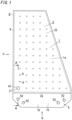
- FIGS. 1-4 show a glass panel unit 8 according to an exemplary embodiment. Constituent members of the glass panel unit 8 are schematically illustrated on the drawings. The dimensions and shapes of the constituent members illustrated are different from their actual dimensions and shapes.
- the glass panel unit 8 of the present embodiment may be fitted into a window of a vehicle 9 as shown in FIG. 5 .
- the vehicle 9 is an automobile, and the window in which the glass panel unit 8 is fitted is a side window of the automobile.
- the vehicle 9 may be configured to allow someone to travel and/or something to be carried.
- the vehicle 9 is not limited to an automobile, but may also be a railroad car, a watercraft, an aircraft, or any other type of vehicle.
- the glass panel unit 8 of the present embodiment includes a first substrate 1, a second substrate 2, a sealing portion 4, and a plurality of pillars 6.
- the first substrate 1 and the second substrate 2 are arranged to face each other with a small gap distance left between themselves.
- the first substrate 1 and the second substrate 2 are parallel to each other.
- the sealing portion 4 and the plurality of pillars 6 are provided between the first substrate 1 and the second substrate 2.
- the first substrate 1 will be described.
- the first substrate 1 includes a first glass panel 15 having a light-transmitting property.
- the first substrate 1 is configured as the first glass panel 15 but may include the first glass panel 15 and an appropriate film covering at least a part of the first glass panel 15.
- the first glass panel 15 is a thin-plate-shaped glass panel which is gently curved as a whole and which has a trapezoidal external form in a plan view.
- the thickness t1 of the first glass panel 15 (see FIG. 4 ), is for example, 3 mm.
- the first glass panel 15 is made of chemically tempered glass. However, this is not the only type of constituent glass material for the first glass panel 15. Alternatively, the first glass panel 15 may also be made of any other suitable type of glass material such as thermally tempered glass, high strain point glass, soda lime glass, alkali-free glass, or quartz glass.
- the first substrate 1 is the first glass panel 15 itself.
- the first substrate 1 is a thin-plate-shaped glass panel which is gently curved and has a trapezoidal external form in a plan view.
- the thickness of the first substrate 1 is the thickness t1 of the first glass panel 15.
- the second substrate 2 will be described.
- the second substrate 2 includes a second glass panel 25 having a light-transmitting property and a low emissivity film 27 almost entirely covering one surface of the second glass panel 25.
- the second substrate 2 is made up as the second glass panel 25 and the low emissivity film 27.
- the second substrate 2 may include either only the second glass panel 25 or the second glass panel 25 and another film covering at least a part of the second glass panel 25.
- the second glass panel 25 is a thin-plate-shaped glass panel which is gently curved as a whole.
- the outer dimensions of the second glass panel 25 in a plan view are one step smaller than the outer dimensions of the first glass panel 15.
- the thickness t2 of the second glass panel 25 (see FIG. 4 ) is smaller than the thickness t1 of the first glass panel 15.
- the thickness t2 of the second glass panel 25 is, for example, 2 mm.
- the external form of the second glass panel 25, in a plan view, is a trapezoidal one overlapping with the external form of a principal part 1a of the first substrate 1.
- the principal part 1a of the first substrate 1 is a part, facing the second substrate 2, of the first substrate 1.
- the principal part 1a of the first substrate 1 is a part forming a hermetically sealed space S1 between the second substrate 2 and the first substrate 1 itself.
- the first substrate 1 may be divided into the principal part 1a and the other part 1b. The principal part 1a and the other part 1b will be described later again.
- the external form of the second substrate 2 in a plan view is the external form of the second glass panel 25.
- the second substrate 2 is a thin-plate-shaped glass panel which is gently curved and has a trapezoidal external form in a plan view.
- the second glass panel 25, as well as the first glass panel 15, is made of chemically tempered glass. However, this is not the only type of constituent glass material for the second glass panel 25. Alternatively, the second glass panel 25 may also be made of any other suitable type of glass material such as thermally tempered glass, high strain point glass, soda lime glass, alkali-free glass, or quartz glass. Optionally, the first glass panel 15 and second glass panel 25 may be made of two different types of glass materials.
- the low emissivity film 27 is formed on one surface, facing the first substrate 1 (more specifically, the principal part 1a of the first substrate 1), of the second glass panel 25.
- the low emissivity film 27 is a film containing a metal with low emissivity such as silver and has the capability of reducing the transfer of heat due to heat radiation.
- the sealing portion 4 is formed in a frame shape using a glass frit of low melting glass.
- the sealing portion 4 is provided between the first substrate 1 and the second substrate 2.
- the sealing portion 4 is hermetically bonded, along its entire circumference, to the facing surfaces of the first substrate 1 and the second substrate 2.
- the part, facing the second substrate 2, of the first substrate 1 is configured as the surface of the first glass panel 15.
- the surface, facing the first substrate 1, of the second substrate 2 is configured as the surface of the low emissivity film 27.
- the sealing portion 4 is hermetically bonded to the peripheral edge portion of the principal part 1a of the first substrate 1 and the peripheral edge portion of the second substrate 2.
- the external form of the sealing portion 4 has a trapezoidal shape.
- the space S1 surrounded by the sealing portion 4 is formed between the principal part 1a of the first substrate 1 and the second substrate 2.
- An exhaust port 17 provided through the principal part 1a of the first substrate 1 is hermetically sealed with a sealing material 41.
- the space S1 is a hermetically sealed space surrounded by the principal part 1a of the first substrate 1, the second substrate 2, and the sealing portion 4.
- the space S1, for example, is evacuated to a degree of vacuum of 0.1 Pa or less, but only needs to be evacuated to at least a pressure lower than the atmospheric pressure.
- the exhaust port 17 is a through hole used, in the process of manufacturing a glass panel unit 8 of the present embodiment (in detail, the evacuation step to be described later), for performing an evacuation operation of the space S1.
- the plurality of pillars 6 are placed to keep distance from each other in a plan view.
- the plurality of pillars 6 are respectively placed in a state which the pillars 6 are in contact with the facing surfaces of the first substrate 1 and the second substrate 2.
- the plurality of pillars 6 are placed to be surrounded by the frame-shaped sealing portion 4.
- the plurality of pillars 6 are provided within the evacuated space S1.
- the plurality of pillars 6 function as spacers for keeping a predetermined gap distance between the first substrate 1 and the second substrate 2.
- Each of the plurality of pillars 6 is made entirely or partly of a metal-based material.
- a getter is preferably further provided within the space S1 although it is not shown in any of the drawings.
- the getter is preferably provided on one or both of the facing surfaces of the first substrate 1 and the second substrate 2.
- the part 1b of the first substrate 1 may be regarded as a part outwardly extended from one side (in detail, the bottom side) of the principal part 1a with a trapezoidal form.
- the part 1b will be hereinafter referred to as an "extended part 1b".
- the principal part 1a and the extended part 1b form a sheet of the first glass panel 15.
- the first glass panel 15 includes a part corresponding with the principal part 1a and a part corresponding with the extended part 1b.
- the other part, excluding the part corresponding with the principal part 1a, of the first glass panel 15 is the part corresponding with the extended part 1b.
- the principal part 1a of the first substrate 1 is arranged to overlap with the second substrate 2, and the extended part 1b of the first substrate 1 is arranged to stick out of an edge 2a of the second substrate 2.
- the part, arranged to overlap with the second substrate 2, of the first substrate 1 is the principal part 1a and the part, arranged to stick out of the edge 2a of the second substrate 2, of the first substrate 1 is the extended part 1b.
- the extended part 1b preferably has a form with chamfered corners shown in FIG. 1 .
- the first substrate 1 is a gently curved panel, and at least the principal part 1a gently curves alongside of the second substrate 2.
- the extended part 1b is formed as a flat part.
- a plurality of mounting holes 52 are provided through the extended part 1b.
- the plurality of mounting holes 52 are through hole for use to mount the glass panel unit 8 on a vehicle 9.
- the plurality of mounting holes 52 form a mounting portion 5 for mounting the glass panel unit 8 on the vehicle 9.
- the mounting portion 5 is provided for the first substrate 1 and not provided for the second substrate 2.
- the extended part 1b, and eventually, the whole glass panel unit 8 may be firmly mounted on the vehicle 9 by having a mounting member such as a bolt inserted into each of the plurality of mounting holes 52.
- the plurality of mounting holes 52 included in the mounting portion 5 are four circular holes that penetrate through the extended part 1b of the first substrate 1 in the thickness direction.
- the numbers, arrangement, and shape of the mounting holes 52 are not particularly limited.
- the mounting portion 5 only needs to include at least one mounting hole 52. Nevertheless, the mounting portion 5 preferably includes a plurality of mounting holes 52, and more preferably includes four or more mounting holes 52.
- the first substrate 1 and the second substrate 2 curve alongside of each other. Therefore, when the glass panel unit 8 is mounted on a vehicle 9 such as an automobile, the curve of the glass panel unit 8 may be brought into conformity with the curve of the body of the vehicle 9.
- a vehicle 9 such as an automobile
- the curve of the glass panel unit 8 may be brought into conformity with the curve of the body of the vehicle 9.
- Each of the first substrate 1 and the second substrate 2 only needs to be at least partially curved.
- the first substrate 1 and the second substrate 2 are curved in two directions perpendicular to each other (see FIGS. 2 , 3 ).
- this is only an example of the curved form of the first substrate 1 and the second substrate 2 and should not be construed as limiting.
- the first substrate 1 and the second substrate 2 may curve in only one direction out of the two directions perpendicular to each other.
- the two directions perpendicular to each other refer to a longitudinal direction and a latitudinal direction of the glass panel unit 8.
- the longitudinal directions of the glass panel unit 8, the first substrate 1, and the second substrate 2 agree with one another.
- the latitudinal directions of the glass panel unit 8, the first substrate 1, and the second substrate 2 also agree with one another.
- the principal part 1a and the extended part 1b are continuous with each other in the longitudinal direction of the first substrate 1.
- one end part in the longitudinal direction is the extended part 1b and the remaining part is the principal part 1a.
- the curvatures in the longitudinal direction and the latitudinal direction of the first substrate 1 may be the same or different from each other.
- the curvature in the longitudinal direction of the first substrate 1 is larger than the curvature in the latitudinal direction of the first substrate 1.
- the curvature in the longitudinal direction of the second substrate 2 is larger than the curvature in the latitudinal direction of the second substrate 2.
- the curvature in the longitudinal direction of the glass panel unit 8 is larger than the curvature in the latitudinal direction of the glass panel unit 8.
- the curvature in the latitudinal direction of the glass panel unit 8 may be made larger than the curvature in the longitudinal direction of the glass panel unit 8.
- the curvature in the latitudinal direction of the first substrate 1 is larger than the curvature in the longitudinal direction of the first substrate 1
- the curvature in the latitudinal direction of the second substrate 2 is larger than the curvature in the longitudinal direction of the second substrate 2.
- the manufacturing method of the present embodiment includes: a preparatory step; a pillar placement step; a bonding step; an evacuation step; and a sealing step.
- a first glass panel 15 and a second glass panel 25 are prepared.
- the first glass panel 15 is a glass panel which has a plurality of mounting holes 52 provided for a part corresponding with the extended part 1b, and an exhaust port 17 provided for a part corresponding with the principal part 1a, in a glass pane cut out from mother glass into a predetermined shape.
- the second glass panel 25 is a glass pane cut out from mother glass into a predetermined shape.
- the exhaust port 17 is provided through the first glass panel 15 and not provided through the second glass panel 25.
- the first glass panel 15 and the second glass panel 25 are laid one on top of the other and heated in this state to make both the first glass panel 15 and the second glass panel 25 curved together.
- the first glass panel 15 and the second glass panel 25 are caused to curve alongside of each other.
- the second glass panel 25 is preferably laid on top of the part corresponding with the principal part 1a of the first glass panel 15. This step is unnecessary if the glass panel unit 8 does not have to be curved.
- a low emissivity film 27 is bonded to the second glass panel 25. This step is unnecessary if the second substrate 2 does not include the low emissivity film 27.
- the low emissivity film 27 may be bonded to the other, first glass panel 15.
- a film having a different function from the low emissivity film may be bonded to at least one of the first glass panel 15 or the second glass panel 25.
- a plurality of pillars 6 are placed to keep distance from each other on one surface (in detail, the upper surface) of the first substrate 1.
- the manufacturing method of the present embodiment further includes a getter arrangement step.
- the getter arrangement step the getter is provided on one or both of the facing surfaces of the first substrate 1 and the second substrate 2.
- the getter arrangement step may be performed before, after, or in parallel with, the pillar placement step.
- the getter arranged in the getter arrangement step may be in a paste form or a solid form.
- the getter in the paste form is preferably applied, using an appropriate application device such as a dispenser, on one or both of the facing surfaces of the first substrate 1 and the second substrate 2.
- the getter in solid form is preferably arranged on a recess provided on one or both of the facing surfaces of the first substrate 1 and the second substrate 2.
- a frame-shaped sealing portion 4 is formed between the first substrate 1 and the second substrate 2, and the first substrate 1 and the second substrate 2 are bonded with the sealing portion 4.
- a glass frit of low-melting glass which is a material for the sealing portion 4 is placed in a frame shape along a peripheral edge portion of the principal part 1a of the first substrate 1.
- the entire assembly is heated in a state where the glass frit thus placed and the plurality of pillars 6 are sandwiched between the first substrate 1 and the second substrate 2.
- the frame-shaped sealing portion 4 is formed by having the glass frit sandwiched between the first substrate 1 and the second substrate 2 solidified after having been once melted.
- a space S1 is evacuated to a predetermined degree of vacuum by having the air within the space S1 exhausted through the exhaust port 17.
- the space S1 is evacuated by going through the evacuation step.
- the sealing step is a step in which the space S1 is hermetically sealed while being maintained in the evacuated state.
- the exhaust port 17 is sealed up with a sealing material 41.
- the sealing material 41 is formed, for example, of the glass frit.
- the sealing material 41 for example, is once melted by being irradiated and locally heated with an infrared ray radiated externally, and then solidified to seal up the exhaust port 17.
- the space S1 is hermetically sealed in the evacuated state.
- the method described above is only an exemplary method for hermetically sealing the space S1, and the space S1 may be sealed by any other method.
- the glass panel unit 8 of the present embodiment manufactured through the above steps includes a hermetically sealed space S1 in an evacuated state between the first substrate 1 and the second substrate 2. Therefore, the glass panel unit 8 of the present embodiment may have excellent thermal insulation properties. Moreover, in the glass panel unit 8 of the present embodiment, the extended part 1b of the first substrate 1 has four mounting holes 52 for mounting the extended part 1b onto a vehicle 9. Therefore, by using the four mounting holes 52, the glass panel unit 8 of the present embodiment may be mounted onto the vehicle 9 easily and with high reliability.
- any constituent element of this variation of the glass panel unit 8 having the same function as a counterpart of the embodiment described above, will be designated by the same reference numeral as that counterpart's, and a detailed description thereof will be omitted herein.
- the variation of the glass panel unit 8 includes a third substrate 3 in addition to the first substrate 1 and the second substrate 2.
- the third substrate 3 includes at least a third glass panel 35.
- the third substrate 3 is configured as the third glass panel 35, but an appropriate coating may be applied to the third glass panel 35.
- the third substrate 3 overlaps with, and faces, the second substrate 2. This allows creating a hermetically sealed space S2 between the second substrate 2 and the third substrate 3. This space S2 will be hereinafter referred to as a "second space S2".
- the arrangement of the third substrate 3 is not limited to this.
- the third substrate 3 may overlap with, and faces, the first substrate 1 to create the second hermetically sealed space S2 between the first substrate 1 and the third substrate 3.
- a frame-shaped spacer 45 with a hollow portion and a frame-shaped second sealing portion 47 formed to cover the outer periphery of the spacer 45 are interposed between respective peripheral edge portions of the third substrate 3 and the second substrate 2.
- the hollow portion of the spacer 45 is filled with a desiccant 46.
- the second space S2 is a hermetically sealed space surrounded by the third substrate 3, the second substrate 2, and the second sealing portion 47.
- the spacer 45 has an exhaust port 451 which allows its own hollow portion to communicate with the outside.
- the desiccant 46 is, for example, a silica gel.
- the second sealing portion 47 is made of highly airtight resin and is hermetically bonded to the third substrate 3 and the second substrate 2.
- the second space S2 is filled with a dry gas (for example, dried rare gas such as argon, or dry air).
- the third substrate 3 is a thin-plate-shaped panel which is gently curved.
- the third substrate 3 curves alongside of the second substrate 2 and the first substrate 1.
- the curvatures in the longitudinal direction and the latitudinal direction of the third substrate 3 may be the same or different from each other.
- the curvature in the longitudinal direction of the third substrate 3 may be larger than the curvature in the latitudinal direction of the third substrate 3.
- the curvature in the latitudinal direction of the third substrate 3 may be larger than the curvature in the longitudinal direction of the third substrate 3.
- the curve of the glass panel unit 8 may be brought into conformity with the curve of the body of the vehicle 9.
- Each of the first substrate 1, the second substrate 2, and the third substrate 3 only needs to be at least partially curved.
- a manufacturing method includes a second bonding step in addition to the respective steps described above.
- the second bonding step is the step of hermetically bonding the second substrate 2 and the third substrate 3 (or the first substrate 1 and the third substrate 3) with the second sealing portion 47, in a state where the spacer 45 is sandwiched between the second and the third substrates 2, 3 (or the first substrate 1 and the third substrate 3).
- the third glass panel 35 is prepared in addition to the first glass panel 15 and the second glass panel 25.
- the third glass panel 35 is a glass pane cut out from mother glass into a predetermined shape and further curved.
- the first glass panel 15, the second glass panel 25, and the third glass panel 35 are preferably laid one on top of another and heated in this state to make all of the first glass panel 15, the second glass panel 25, and the third glass panel 35 curved together.
- the second glass panel 25 is laid on top of the part corresponding with the principal part 1a of the first glass panel 15, and the third glass panel 35 is laid on top of the second glass panel 25, and the first, second, and third glass panels 15, 25, 35 are heated in this state to make all of the first, second, and third glass panels 15, 25, 35 curved together.
- this step is also unnecessary if the glass panel unit 8 does not have to be curved.
- the second space S2 is formed between the second substrate 2 and the third substrate 3 (or between the first substrate 1 and the third substrate 3).
- the second substrate 2 and the third substrate 3 may be bonded with a film, instead of having the second space S2 formed.
- the film is a film molded from, for example, an EVA resin or a PVB resin.
- a fourth substrate including a fourth glass panel may be prepared, the third substrate 3 and the second substrate 2 may be bonded with a first film, and the fourth substrate and the first substrate 1 may be bonded with a second film.
- a glass panel unit 8 has the following configuration.
- the glass panel unit 8 according to the first aspect includes: a first substrate 1 including a first glass panel 15; a second substrate 2 including a second glass panel 25 and arranged to face the first substrate 1; and a frame-shaped sealing portion 4.
- the sealing portion 4 is hermetically bonded to the first substrate 1 and the second substrate 2 so as to create an evacuated space S1 between the first substrate 1 and the second substrate 2.
- the first substrate 1 includes a part 1b arranged to stick out of an edge 2a of the second substrate 2.
- the part 1b includes a mounting portion 5 used to mount the glass panel unit 8 onto a vehicle 9.
- the glass panel unit 8 a hermetically sealed space S1 at an evacuated state is formed between the first substrate 1 and the second substrate 2. Therefore, the glass panel unit 8 may have excellent thermal insulation properties.
- a mounting portion 5 is formed on an end part 1b of the first substrate 1, and therefore, by using this mounting portion 5, the glass panel unit 8 may be mounted onto the vehicle 9 easily and with high reliability.
- the mounting portion 5 is at least one mounting hole 52 penetrating through the part 1b.
- the glass panel unit 8 may be mounted onto the vehicle 9 easily and with high reliability by having a mounting member such as a bolt inserted into at least one mounting hole 52.
- the thickness t1 of the first glass panel 15 may be greater than the thickness t2 of the second glass panel 25.
- the mounting portion 5 is provided for the first substrate 1 including a relatively thick first glass panel 15. This facilitates ensuring sufficient strength for the mounting portion 5, and therefore, allows mounting the glass panel unit 8 onto the vehicle 9 with even higher reliability.
- the first glass panel 15 and the second glass panel 25 may be made of chemically tempered glass.
- the glass panel unit 8 may be provided as a glass panel unit 8, of which the strength is increased so much as to mount the glass panel unit 8 onto the vehicle 9 with even higher reliability.
- the first substrate 1 and the second substrate 2 curve alongside of each other.
- the glass panel unit 8 to be mounted on the vehicle 9 may be provided as, for example, a glass panel unit, of which the curve is in conformity with the curve of the body of the vehicle 9.
- Each of the first substrate 1 and the second substrate 2 only needs to be at least partially curved.
- the glass panel unit 8 may further include a third substrate 3.
- the third substrate 3 may include a third glass panel 35 and may be bonded to one substrate selected from the first substrate 1 and the second substrate 2.
- the glass panel unit 8 may be provided as a glass panel unit 8, of which the thermal insulation properties are improved so much as to mount the glass panel unit 8 onto the vehicle 9 with even higher reliability.
- the glass panel unit 8 may further include a frame-shaped second sealing portion 47.
- the second sealing portion 47 may be hermetically bonded to the one substrate and the third substrate 3 to provide a hermetically sealed space S2 between the one substrate and the third substrate 3.
- the glass panel unit 8 may be provided as a glass panel unit 8, of which the thermal insulation properties are improved so much as to mount the glass panel unit 8 onto the vehicle 9 with increased reliability.
- the first substrate 1, the second substrate 2, and the third substrate 3 may curve alongside of each other.
- the glass panel unit 8 to be mounted on the vehicle 9 may be provided as, for example, a glass panel unit, of which the curve is in conformity with the curve of the body of the vehicle 9.
- Each of the first substrate 1, the second substrate 2, and the third substrate 3 only needs to be at least partially curved.
- the vehicle 9 may be an automobile.
- the glass panel unit 8 may be mounted onto an automobile easily and with high reliability by using the mounting portion 5.
- the mounting portion 5 may be a part used for fitting the glass panel unit 8 into a side window of the automobile.
- the glass panel unit 8 may be mounted onto a side window of the automobile easily and with high reliability by using the mounting portion 5.
- a manufacturing method of the glass panel unit 8 preferably includes the step of evacuating the space S1 through an exhaust port 17 provided through the first glass panel 15.
- the exhaust port 17 is provided through the relatively thick first glass panel 15. This facilitates ensuring sufficient strength for the glass panel unit 8.
- a manufacturing method of the glass panel unit 8 preferably includes the step of having both of the first glass panel 15 and the second glass panel 25 curved together in a state where the first and the second glass panels 15, 25 are laid one on top of the other.
- the glass panel unit 8 including the first substrate 1 and the second substrate 2 which curve alongside of each other may be efficiently manufactured.
- a manufacturing method of the glass panel unit 8 preferably includes the step of having all of the first glass panel 15, the second glass panel 25, and the third glass panel 35 curved together in a state where the first, second, and third glass panels 15, 25, 35 are laid one on top of another.
- the glass panel unit 8 including the first substrate 1, the second substrate 2, and the third substrate 3 which curve alongside of each other, may be efficiently manufactured.
- the embodiment is only an exemplary one of various embodiments of the present disclosure and should not be construed as limiting. Rather, the exemplary embodiment of the glass panel unit and manufacturing method thereof may be readily modified in various manners depending on a design choice or any other factor as long as it falls within the scope of the present disclosure as defined by the appended claims.
Landscapes
- Engineering & Computer Science (AREA)
- Civil Engineering (AREA)
- Structural Engineering (AREA)
- Chemical & Material Sciences (AREA)
- Mechanical Engineering (AREA)
- General Chemical & Material Sciences (AREA)
- Chemical Kinetics & Catalysis (AREA)
- Ceramic Engineering (AREA)
- Life Sciences & Earth Sciences (AREA)
- Geochemistry & Mineralogy (AREA)
- Materials Engineering (AREA)
- Organic Chemistry (AREA)
- Joining Of Glass To Other Materials (AREA)
- Securing Of Glass Panes Or The Like (AREA)
Description
- The present disclosure generally relates to a glass panel unit and a method for manufacturing the same, and more particularly relates to a glass panel unit provided for a vehicle such as an automobile, and a method for manufacturing the same.
- A glass panel unit provided for a vehicle such as an automobile is disclosed in
Patent Literature 1. In the glass panel unit, an interlayer with thermal insulation properties is sandwiched between a pair of glass panes. - The glass panel unit provided for a vehicle is required to have excellent thermal insulation properties and be easily mounted onto a vehicle.
-
CA 2 258 314 A1 describes a window construction for vehicles such as motor coaches which includes a window panel that overlaps on the exterior of the vehicle body at least one of the edge portions defining the window opening. In particular, the window includes a window panel which is mounted to the vehicle body and on the exterior thereof at least partly covers the edges of the vehicle body which define the window opening, especially the window jams. Mounting the window panel flush with an exterior surface of the vehicle body facilitates insulation and sealing of the window and allows placement of draft seals between the exterior surface of the vehicle body and the panel so that they do not protrude into the window opening. -
GB 2 178 471 A -
EP 0 307 280 A2 describes a thin insulating windowpane for a vehicle, in particular a vertically sliding side pane, consisting of two thin sheets of glass joined together by a frame made of a plastic cord containing a humidity absorbing material. In the lower part of the windowpane hidden in the door, the plastic cord containing the humidity absorbing material has an augmented surface; it is obtained for example by placing next to the plastic cord a plastic strip that is thinner than the air space, and forms a slit and possesses an increased absorption surface. -
DE 295 03 036 U1 describes a device for connecting a window pane to a window regulator. -
JP 2001 316138 A -
WO 87/03327 A1 - Patent Literature 1:
JP 2005-29083 A - It is therefore an object of the present disclosure to provide a glass panel unit which may have excellent thermal insulation properties and may be easily mounted onto a vehicle.
- This object is solved by a glass panel unit and a method for manufacturing the glass panel unit having the features of the independent claims. Additional embodiments are defined in the dependent claims.
-
-
FIG. 1 is a plan view of a glass panel unit according to an exemplary embodiment; -
FIG. 2 is a side view as viewed in a direction indicated by the arrow P inFIG. 1 ; -
FIG. 3 is a side view as viewed in a direction indicated by the arrow Q inFIG. 1 ; -
FIG. 4 is a cross-sectional view taken along the plane A-A inFIG. 1 ; -
FIG. 5 is a perspective view of a vehicle having the glass panel unit mounted thereto; -
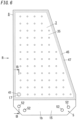
FIG. 6 is a plan view illustrating a variation of the glass panel unit; -
FIG. 7 is a side view as viewed in a direction indicated by the arrow R inFIG. 6 ; and -
FIG. 8 is a cross-sectional view taken along the B-B inFIG. 6 . -
FIGS. 1-4 show aglass panel unit 8 according to an exemplary embodiment. Constituent members of theglass panel unit 8 are schematically illustrated on the drawings. The dimensions and shapes of the constituent members illustrated are different from their actual dimensions and shapes. - As an example, the
glass panel unit 8 of the present embodiment may be fitted into a window of avehicle 9 as shown inFIG. 5 . In the present embodiment, thevehicle 9 is an automobile, and the window in which theglass panel unit 8 is fitted is a side window of the automobile. Thevehicle 9 may be configured to allow someone to travel and/or something to be carried. Thevehicle 9 is not limited to an automobile, but may also be a railroad car, a watercraft, an aircraft, or any other type of vehicle. - The
glass panel unit 8 of the present embodiment includes afirst substrate 1, asecond substrate 2, asealing portion 4, and a plurality ofpillars 6. - The
first substrate 1 and thesecond substrate 2 are arranged to face each other with a small gap distance left between themselves. Thefirst substrate 1 and thesecond substrate 2 are parallel to each other. Thesealing portion 4 and the plurality ofpillars 6 are provided between thefirst substrate 1 and thesecond substrate 2. As used herein, if something is parallel to something else, these two things do not have to be literally parallel to each other in a strict sense of the word. - The
first substrate 1 will be described. - The
first substrate 1 includes afirst glass panel 15 having a light-transmitting property. In the present embodiment, thefirst substrate 1 is configured as thefirst glass panel 15 but may include thefirst glass panel 15 and an appropriate film covering at least a part of thefirst glass panel 15. Thefirst glass panel 15 is a thin-plate-shaped glass panel which is gently curved as a whole and which has a trapezoidal external form in a plan view. The thickness t1 of the first glass panel 15 (seeFIG. 4 ), is for example, 3 mm. - The
first glass panel 15 is made of chemically tempered glass. However, this is not the only type of constituent glass material for thefirst glass panel 15. Alternatively, thefirst glass panel 15 may also be made of any other suitable type of glass material such as thermally tempered glass, high strain point glass, soda lime glass, alkali-free glass, or quartz glass. - In the
glass panel unit 8 of the present embodiment, thefirst substrate 1 is thefirst glass panel 15 itself. Thefirst substrate 1 is a thin-plate-shaped glass panel which is gently curved and has a trapezoidal external form in a plan view. The thickness of thefirst substrate 1 is the thickness t1 of thefirst glass panel 15. - The
second substrate 2 will be described. - The
second substrate 2 includes asecond glass panel 25 having a light-transmitting property and alow emissivity film 27 almost entirely covering one surface of thesecond glass panel 25. In the present embodiment, thesecond substrate 2 is made up as thesecond glass panel 25 and thelow emissivity film 27. Alternatively, thesecond substrate 2 may include either only thesecond glass panel 25 or thesecond glass panel 25 and another film covering at least a part of thesecond glass panel 25. - The
second glass panel 25 is a thin-plate-shaped glass panel which is gently curved as a whole. The outer dimensions of thesecond glass panel 25 in a plan view are one step smaller than the outer dimensions of thefirst glass panel 15. The thickness t2 of the second glass panel 25 (seeFIG. 4 ) is smaller than the thickness t1 of thefirst glass panel 15. The thickness t2 of thesecond glass panel 25 is, for example, 2 mm. - The external form of the
second glass panel 25, in a plan view, is a trapezoidal one overlapping with the external form of aprincipal part 1a of thefirst substrate 1. - The
principal part 1a of thefirst substrate 1 is a part, facing thesecond substrate 2, of thefirst substrate 1. In other words, theprincipal part 1a of thefirst substrate 1 is a part forming a hermetically sealed space S1 between thesecond substrate 2 and thefirst substrate 1 itself. Thefirst substrate 1 may be divided into theprincipal part 1a and theother part 1b. Theprincipal part 1a and theother part 1b will be described later again. - In the
glass panel unit 8 of the present embodiment, the external form of thesecond substrate 2 in a plan view is the external form of thesecond glass panel 25. Thesecond substrate 2 is a thin-plate-shaped glass panel which is gently curved and has a trapezoidal external form in a plan view. - The
second glass panel 25, as well as thefirst glass panel 15, is made of chemically tempered glass. However, this is not the only type of constituent glass material for thesecond glass panel 25. Alternatively, thesecond glass panel 25 may also be made of any other suitable type of glass material such as thermally tempered glass, high strain point glass, soda lime glass, alkali-free glass, or quartz glass. Optionally, thefirst glass panel 15 andsecond glass panel 25 may be made of two different types of glass materials. - The
low emissivity film 27 is formed on one surface, facing the first substrate 1 (more specifically, theprincipal part 1a of the first substrate 1), of thesecond glass panel 25. Thelow emissivity film 27 is a film containing a metal with low emissivity such as silver and has the capability of reducing the transfer of heat due to heat radiation. - Next, the sealing
portion 4 will be described. - The sealing
portion 4 is formed in a frame shape using a glass frit of low melting glass. The sealingportion 4 is provided between thefirst substrate 1 and thesecond substrate 2. The sealingportion 4 is hermetically bonded, along its entire circumference, to the facing surfaces of thefirst substrate 1 and thesecond substrate 2. - The part, facing the
second substrate 2, of thefirst substrate 1 is configured as the surface of thefirst glass panel 15. The surface, facing thefirst substrate 1, of thesecond substrate 2 is configured as the surface of thelow emissivity film 27. - The sealing
portion 4 is hermetically bonded to the peripheral edge portion of theprincipal part 1a of thefirst substrate 1 and the peripheral edge portion of thesecond substrate 2. The external form of the sealingportion 4 has a trapezoidal shape. - The space S1 surrounded by the sealing
portion 4 is formed between theprincipal part 1a of thefirst substrate 1 and thesecond substrate 2. Anexhaust port 17 provided through theprincipal part 1a of thefirst substrate 1 is hermetically sealed with a sealingmaterial 41. The space S1 is a hermetically sealed space surrounded by theprincipal part 1a of thefirst substrate 1, thesecond substrate 2, and the sealingportion 4. The space S1, for example, is evacuated to a degree of vacuum of 0.1 Pa or less, but only needs to be evacuated to at least a pressure lower than the atmospheric pressure. - The
exhaust port 17 is a through hole used, in the process of manufacturing aglass panel unit 8 of the present embodiment (in detail, the evacuation step to be described later), for performing an evacuation operation of the space S1. - Next, the plurality of
pillars 6 will be described. - The plurality of
pillars 6 are placed to keep distance from each other in a plan view. The plurality ofpillars 6 are respectively placed in a state which thepillars 6 are in contact with the facing surfaces of thefirst substrate 1 and thesecond substrate 2. - The plurality of
pillars 6 are placed to be surrounded by the frame-shapedsealing portion 4. The plurality ofpillars 6 are provided within the evacuated space S1. The plurality ofpillars 6 function as spacers for keeping a predetermined gap distance between thefirst substrate 1 and thesecond substrate 2. Each of the plurality ofpillars 6 is made entirely or partly of a metal-based material. - Furthermore, a getter is preferably further provided within the space S1 although it is not shown in any of the drawings. The getter is preferably provided on one or both of the facing surfaces of the
first substrate 1 and thesecond substrate 2. - Next, the
other part 1b of thefirst substrate 1 will be described. - The
part 1b of thefirst substrate 1 may be regarded as a part outwardly extended from one side (in detail, the bottom side) of theprincipal part 1a with a trapezoidal form. Thepart 1b will be hereinafter referred to as an "extended part 1b". - The
principal part 1a and theextended part 1b form a sheet of thefirst glass panel 15. In other words, thefirst glass panel 15 includes a part corresponding with theprincipal part 1a and a part corresponding with theextended part 1b. The other part, excluding the part corresponding with theprincipal part 1a, of thefirst glass panel 15 is the part corresponding with theextended part 1b. - As shown in
FIG. 1 , when viewed from a region where thesecond substrate 2 is positioned with respect to thefirst substrate 1, theprincipal part 1a of thefirst substrate 1 is arranged to overlap with thesecond substrate 2, and theextended part 1b of thefirst substrate 1 is arranged to stick out of anedge 2a of thesecond substrate 2. In other words, when viewed from a region where thesecond substrate 2 is positioned with respect to thefirst substrate 1, the part, arranged to overlap with thesecond substrate 2, of thefirst substrate 1 is theprincipal part 1a and the part, arranged to stick out of theedge 2a of thesecond substrate 2, of thefirst substrate 1 is theextended part 1b. Theextended part 1b preferably has a form with chamfered corners shown inFIG. 1 . - As previously stated, the
first substrate 1 is a gently curved panel, and at least theprincipal part 1a gently curves alongside of thesecond substrate 2. Theextended part 1b is formed as a flat part. - A plurality of mounting
holes 52 are provided through theextended part 1b. The plurality of mountingholes 52 are through hole for use to mount theglass panel unit 8 on avehicle 9. - In the
glass panel unit 8 of the present embodiment, the plurality of mountingholes 52 form a mountingportion 5 for mounting theglass panel unit 8 on thevehicle 9. The mountingportion 5 is provided for thefirst substrate 1 and not provided for thesecond substrate 2. For example, theextended part 1b, and eventually, the wholeglass panel unit 8, may be firmly mounted on thevehicle 9 by having a mounting member such as a bolt inserted into each of the plurality of mountingholes 52. - In the
glass panel unit 8 of the present embodiment, the plurality of mountingholes 52 included in the mountingportion 5 are four circular holes that penetrate through theextended part 1b of thefirst substrate 1 in the thickness direction. However, the numbers, arrangement, and shape of the mountingholes 52 are not particularly limited. The mountingportion 5 only needs to include at least one mountinghole 52. Nevertheless, the mountingportion 5 preferably includes a plurality of mountingholes 52, and more preferably includes four or more mounting holes 52. - In the
glass panel unit 8 of the present embodiment, thefirst substrate 1 and thesecond substrate 2 curve alongside of each other. Therefore, when theglass panel unit 8 is mounted on avehicle 9 such as an automobile, the curve of theglass panel unit 8 may be brought into conformity with the curve of the body of thevehicle 9. Each of thefirst substrate 1 and thesecond substrate 2 only needs to be at least partially curved. - Furthermore, in the
glass panel unit 8 of the present embodiment, thefirst substrate 1 and thesecond substrate 2 are curved in two directions perpendicular to each other (seeFIGS. 2 ,3 ). However, this is only an example of the curved form of thefirst substrate 1 and thesecond substrate 2 and should not be construed as limiting. For example, thefirst substrate 1 and thesecond substrate 2 may curve in only one direction out of the two directions perpendicular to each other. - Here, the two directions perpendicular to each other refer to a longitudinal direction and a latitudinal direction of the
glass panel unit 8. The longitudinal directions of theglass panel unit 8, thefirst substrate 1, and thesecond substrate 2 agree with one another. Similarly, the latitudinal directions of theglass panel unit 8, thefirst substrate 1, and thesecond substrate 2 also agree with one another. - In the
first substrate 1, theprincipal part 1a and theextended part 1b are continuous with each other in the longitudinal direction of thefirst substrate 1. Of thefirst substrate 1, one end part in the longitudinal direction is theextended part 1b and the remaining part is theprincipal part 1a. - The curvatures in the longitudinal direction and the latitudinal direction of the
first substrate 1 may be the same or different from each other. As an example, the curvature in the longitudinal direction of thefirst substrate 1 is larger than the curvature in the latitudinal direction of thefirst substrate 1. As in thefirst substrate 1, the curvature in the longitudinal direction of thesecond substrate 2 is larger than the curvature in the latitudinal direction of thesecond substrate 2. The curvature in the longitudinal direction of theglass panel unit 8 is larger than the curvature in the latitudinal direction of theglass panel unit 8. - Alternatively, the curvature in the latitudinal direction of the
glass panel unit 8 may be made larger than the curvature in the longitudinal direction of theglass panel unit 8. In this case, the curvature in the latitudinal direction of thefirst substrate 1 is larger than the curvature in the longitudinal direction of thefirst substrate 1, and the curvature in the latitudinal direction of thesecond substrate 2 is larger than the curvature in the longitudinal direction of thesecond substrate 2. - Next, a manufacturing method of the
glass panel unit 8 of the present embodiment (hereinafter simply referred to as a "manufacturing method of the present embodiment") will be described. - The manufacturing method of the present embodiment includes: a preparatory step; a pillar placement step; a bonding step; an evacuation step; and a sealing step.
- In the preparatory step, a
first glass panel 15 and asecond glass panel 25 are prepared. Thefirst glass panel 15 is a glass panel which has a plurality of mountingholes 52 provided for a part corresponding with theextended part 1b, and anexhaust port 17 provided for a part corresponding with theprincipal part 1a, in a glass pane cut out from mother glass into a predetermined shape. Thesecond glass panel 25 is a glass pane cut out from mother glass into a predetermined shape. Theexhaust port 17 is provided through thefirst glass panel 15 and not provided through thesecond glass panel 25. - In the preparatory step, the
first glass panel 15 and thesecond glass panel 25 are laid one on top of the other and heated in this state to make both thefirst glass panel 15 and thesecond glass panel 25 curved together. As a result, thefirst glass panel 15 and thesecond glass panel 25 are caused to curve alongside of each other. Thesecond glass panel 25 is preferably laid on top of the part corresponding with theprincipal part 1a of thefirst glass panel 15. This step is unnecessary if theglass panel unit 8 does not have to be curved. - Furthermore, a
low emissivity film 27 is bonded to thesecond glass panel 25. This step is unnecessary if thesecond substrate 2 does not include thelow emissivity film 27. Alternatively, thelow emissivity film 27 may be bonded to the other,first glass panel 15. A film having a different function from the low emissivity film may be bonded to at least one of thefirst glass panel 15 or thesecond glass panel 25. - In the pillar placement step, a plurality of
pillars 6 are placed to keep distance from each other on one surface (in detail, the upper surface) of thefirst substrate 1. - If the
glass panel unit 8 of the present embodiment includes a getter, the manufacturing method of the present embodiment further includes a getter arrangement step. In the getter arrangement step, the getter is provided on one or both of the facing surfaces of thefirst substrate 1 and thesecond substrate 2. The getter arrangement step may be performed before, after, or in parallel with, the pillar placement step. - The getter arranged in the getter arrangement step may be in a paste form or a solid form. When the getter in the paste form is used, the getter in the paste form is preferably applied, using an appropriate application device such as a dispenser, on one or both of the facing surfaces of the
first substrate 1 and thesecond substrate 2. When the getter in the solid form is used, the getter in solid form is preferably arranged on a recess provided on one or both of the facing surfaces of thefirst substrate 1 and thesecond substrate 2. - In the bonding step, a frame-shaped
sealing portion 4 is formed between thefirst substrate 1 and thesecond substrate 2, and thefirst substrate 1 and thesecond substrate 2 are bonded with the sealingportion 4. In detail, first, a glass frit of low-melting glass which is a material for the sealingportion 4 is placed in a frame shape along a peripheral edge portion of theprincipal part 1a of thefirst substrate 1. Next, the entire assembly is heated in a state where the glass frit thus placed and the plurality ofpillars 6 are sandwiched between thefirst substrate 1 and thesecond substrate 2. The frame-shapedsealing portion 4 is formed by having the glass frit sandwiched between thefirst substrate 1 and thesecond substrate 2 solidified after having been once melted. - In the evacuation step, a space S1 is evacuated to a predetermined degree of vacuum by having the air within the space S1 exhausted through the
exhaust port 17. The space S1 is evacuated by going through the evacuation step. - The sealing step is a step in which the space S1 is hermetically sealed while being maintained in the evacuated state. In the sealing step, with the space S1 kept evacuated, the
exhaust port 17 is sealed up with a sealingmaterial 41. The sealingmaterial 41 is formed, for example, of the glass frit. The sealingmaterial 41, for example, is once melted by being irradiated and locally heated with an infrared ray radiated externally, and then solidified to seal up theexhaust port 17. As a result, the space S1 is hermetically sealed in the evacuated state. The method described above is only an exemplary method for hermetically sealing the space S1, and the space S1 may be sealed by any other method. - The
glass panel unit 8 of the present embodiment manufactured through the above steps includes a hermetically sealed space S1 in an evacuated state between thefirst substrate 1 and thesecond substrate 2. Therefore, theglass panel unit 8 of the present embodiment may have excellent thermal insulation properties. Moreover, in theglass panel unit 8 of the present embodiment, theextended part 1b of thefirst substrate 1 has four mountingholes 52 for mounting theextended part 1b onto avehicle 9. Therefore, by using the four mountingholes 52, theglass panel unit 8 of the present embodiment may be mounted onto thevehicle 9 easily and with high reliability. - Next, a variation of the
glass panel unit 8 will be described with reference toFIGS. 6-8 . In the following description, any constituent element of this variation of theglass panel unit 8, having the same function as a counterpart of the embodiment described above, will be designated by the same reference numeral as that counterpart's, and a detailed description thereof will be omitted herein. - The variation of the
glass panel unit 8 includes athird substrate 3 in addition to thefirst substrate 1 and thesecond substrate 2. Thethird substrate 3 includes at least athird glass panel 35. In the variation, thethird substrate 3 is configured as thethird glass panel 35, but an appropriate coating may be applied to thethird glass panel 35. - In this variation, the
third substrate 3 overlaps with, and faces, thesecond substrate 2. This allows creating a hermetically sealed space S2 between thesecond substrate 2 and thethird substrate 3. This space S2 will be hereinafter referred to as a "second space S2". - The arrangement of the
third substrate 3 is not limited to this. Alternatively, thethird substrate 3 may overlap with, and faces, thefirst substrate 1 to create the second hermetically sealed space S2 between thefirst substrate 1 and thethird substrate 3. - A frame-shaped
spacer 45 with a hollow portion and a frame-shaped second sealingportion 47 formed to cover the outer periphery of thespacer 45 are interposed between respective peripheral edge portions of thethird substrate 3 and thesecond substrate 2. The hollow portion of thespacer 45 is filled with adesiccant 46. The second space S2 is a hermetically sealed space surrounded by thethird substrate 3, thesecond substrate 2, and thesecond sealing portion 47. - The
spacer 45 has anexhaust port 451 which allows its own hollow portion to communicate with the outside. Thedesiccant 46 is, for example, a silica gel. Thesecond sealing portion 47 is made of highly airtight resin and is hermetically bonded to thethird substrate 3 and thesecond substrate 2. The second space S2 is filled with a dry gas (for example, dried rare gas such as argon, or dry air). - In the variation, the
third substrate 3 is a thin-plate-shaped panel which is gently curved. Thethird substrate 3 curves alongside of thesecond substrate 2 and thefirst substrate 1. As in the first andsecond substrates third substrate 3 may be the same or different from each other. The curvature in the longitudinal direction of thethird substrate 3 may be larger than the curvature in the latitudinal direction of thethird substrate 3. Moreover, the curvature in the latitudinal direction of thethird substrate 3 may be larger than the curvature in the longitudinal direction of thethird substrate 3. - In this variation, when the
glass panel unit 8 is mounted on avehicle 9 such as an automobile, the curve of theglass panel unit 8 may be brought into conformity with the curve of the body of thevehicle 9. Each of thefirst substrate 1, thesecond substrate 2, and thethird substrate 3 only needs to be at least partially curved. - A manufacturing method according to this variation of the
glass panel unit 8, includes a second bonding step in addition to the respective steps described above. The second bonding step is the step of hermetically bonding thesecond substrate 2 and the third substrate 3 (or thefirst substrate 1 and the third substrate 3) with thesecond sealing portion 47, in a state where thespacer 45 is sandwiched between the second and thethird substrates 2, 3 (or thefirst substrate 1 and the third substrate 3). - Furthermore, in a preparatory step of the manufacturing method according to this variation of the
glass panel unit 8, thethird glass panel 35 is prepared in addition to thefirst glass panel 15 and thesecond glass panel 25. Thethird glass panel 35 is a glass pane cut out from mother glass into a predetermined shape and further curved. - In the preparatory step, the
first glass panel 15, thesecond glass panel 25, and thethird glass panel 35 are preferably laid one on top of another and heated in this state to make all of thefirst glass panel 15, thesecond glass panel 25, and thethird glass panel 35 curved together. As an example, thesecond glass panel 25 is laid on top of the part corresponding with theprincipal part 1a of thefirst glass panel 15, and thethird glass panel 35 is laid on top of thesecond glass panel 25, and the first, second, andthird glass panels third glass panels glass panel unit 8 does not have to be curved. - In the variation described above, the second space S2 is formed between the
second substrate 2 and the third substrate 3 (or between thefirst substrate 1 and the third substrate 3). Alternatively, thesecond substrate 2 and the third substrate 3 (or thefirst substrate 1 and the third substrate 3) may be bonded with a film, instead of having the second space S2 formed. The film is a film molded from, for example, an EVA resin or a PVB resin. - Optionally, in addition to the
third substrate 3, a fourth substrate including a fourth glass panel may be prepared, thethird substrate 3 and thesecond substrate 2 may be bonded with a first film, and the fourth substrate and thefirst substrate 1 may be bonded with a second film. This would achieve the advantages of reducing scattering of fragments at the time of breakage and improving sound insulation by having substrate(s) externally bonded with one or both of thefirst substrate 1 and thesecond substrate 2 with a film interposed between at least one pair of the substrates. - As can be seen from the foregoing description of the exemplary embodiment and its variations, a
glass panel unit 8 has the following configuration. Specifically, theglass panel unit 8 according to the first aspect includes: afirst substrate 1 including afirst glass panel 15; asecond substrate 2 including asecond glass panel 25 and arranged to face thefirst substrate 1; and a frame-shapedsealing portion 4. The sealingportion 4 is hermetically bonded to thefirst substrate 1 and thesecond substrate 2 so as to create an evacuated space S1 between thefirst substrate 1 and thesecond substrate 2. When viewed from a region where thesecond substrate 2 is positioned with respect to thefirst substrate 1, thefirst substrate 1 includes apart 1b arranged to stick out of anedge 2a of thesecond substrate 2. Thepart 1b includes a mountingportion 5 used to mount theglass panel unit 8 onto avehicle 9. - In the
glass panel unit 8, a hermetically sealed space S1 at an evacuated state is formed between thefirst substrate 1 and thesecond substrate 2. Therefore, theglass panel unit 8 may have excellent thermal insulation properties. In addition, a mountingportion 5 is formed on anend part 1b of thefirst substrate 1, and therefore, by using this mountingportion 5, theglass panel unit 8 may be mounted onto thevehicle 9 easily and with high reliability. - The mounting
portion 5 is at least one mountinghole 52 penetrating through thepart 1b. - Thus, the
glass panel unit 8 may be mounted onto thevehicle 9 easily and with high reliability by having a mounting member such as a bolt inserted into at least one mountinghole 52. - In the
glass panel unit 8, the thickness t1 of thefirst glass panel 15 may be greater than the thickness t2 of thesecond glass panel 25. - Thus, the mounting
portion 5 is provided for thefirst substrate 1 including a relatively thickfirst glass panel 15. This facilitates ensuring sufficient strength for the mountingportion 5, and therefore, allows mounting theglass panel unit 8 onto thevehicle 9 with even higher reliability. - The
first glass panel 15 and thesecond glass panel 25 may be made of chemically tempered glass. - Thus, the
glass panel unit 8 may be provided as aglass panel unit 8, of which the strength is increased so much as to mount theglass panel unit 8 onto thevehicle 9 with even higher reliability. - The
first substrate 1 and thesecond substrate 2 curve alongside of each other. - Thus, the
glass panel unit 8 to be mounted on thevehicle 9 may be provided as, for example, a glass panel unit, of which the curve is in conformity with the curve of the body of thevehicle 9. Each of thefirst substrate 1 and thesecond substrate 2 only needs to be at least partially curved. - The
glass panel unit 8 may further include athird substrate 3. Thethird substrate 3 may include athird glass panel 35 and may be bonded to one substrate selected from thefirst substrate 1 and thesecond substrate 2. - Thus, the
glass panel unit 8 may be provided as aglass panel unit 8, of which the thermal insulation properties are improved so much as to mount theglass panel unit 8 onto thevehicle 9 with even higher reliability. - The
glass panel unit 8 may further include a frame-shaped second sealingportion 47. Thesecond sealing portion 47 may be hermetically bonded to the one substrate and thethird substrate 3 to provide a hermetically sealed space S2 between the one substrate and thethird substrate 3. - Thus, the
glass panel unit 8 may be provided as aglass panel unit 8, of which the thermal insulation properties are improved so much as to mount theglass panel unit 8 onto thevehicle 9 with increased reliability. - In the
glass panel unit 8, thefirst substrate 1, thesecond substrate 2, and thethird substrate 3 may curve alongside of each other. - Thus, the
glass panel unit 8 to be mounted on thevehicle 9 may be provided as, for example, a glass panel unit, of which the curve is in conformity with the curve of the body of thevehicle 9. Each of thefirst substrate 1, thesecond substrate 2, and thethird substrate 3 only needs to be at least partially curved. - In the
glass panel unit 8, thevehicle 9 may be an automobile. - The
glass panel unit 8 may be mounted onto an automobile easily and with high reliability by using the mountingportion 5. - In the
glass panel unit 8, the mountingportion 5 may be a part used for fitting theglass panel unit 8 into a side window of the automobile. - The
glass panel unit 8 may be mounted onto a side window of the automobile easily and with high reliability by using the mountingportion 5. - A manufacturing method of the
glass panel unit 8 preferably includes the step of evacuating the space S1 through anexhaust port 17 provided through thefirst glass panel 15. - According to this manufacturing method, the
exhaust port 17 is provided through the relatively thickfirst glass panel 15. This facilitates ensuring sufficient strength for theglass panel unit 8. - A manufacturing method of the
glass panel unit 8 preferably includes the step of having both of thefirst glass panel 15 and thesecond glass panel 25 curved together in a state where the first and thesecond glass panels - According to this manufacturing method, the
glass panel unit 8 including thefirst substrate 1 and thesecond substrate 2 which curve alongside of each other may be efficiently manufactured. - A manufacturing method of the
glass panel unit 8 preferably includes the step of having all of thefirst glass panel 15, thesecond glass panel 25, and thethird glass panel 35 curved together in a state where the first, second, andthird glass panels - According to this manufacturing method, the
glass panel unit 8 including thefirst substrate 1, thesecond substrate 2, and thethird substrate 3 which curve alongside of each other, may be efficiently manufactured. - Although an embodiment of a glass panel unit and a method for manufacturing the same according to the present disclosure has been described, the embodiment is only an exemplary one of various embodiments of the present disclosure and should not be construed as limiting. Rather, the exemplary embodiment of the glass panel unit and manufacturing method thereof may be readily modified in various manners depending on a design choice or any other factor as long as it falls within the scope of the present disclosure as defined by the appended claims.
-
- 1
- First Substrate
- 1b
- Part
- 15
- First Glass Panel
- 2
- Second Substrate
- 2a
- Edge
- 25
- Second Glass Panel
- 3
- Third Substrate
- 35
- Third Glass Panel
- 4
- Sealing Portion
- 47
- Second Sealing Portion
- 5
- Mounting Portion
- 52
- Mounting Hole
- 8
- Glass Panel Unit
- 9
- Vehicle
- t1
- Thickness
- t2
- Thickness
- S1
- Space
- S2
- Space
Claims (11)
- A glass panel unit (8) comprising:a first substrate (1) including a first glass panel (15);a second substrate (2) including a second glass panel (25) and arranged to face the first substrate (1); anda frame-shaped sealing portion (4) that is hermetically bonded to the first substrate (1) and the second substrate (2) so as to create an evacuated space between the first substrate (1) and the second substrate (2), the first substrate (1) having a principal part (1a) gently curving alongside of the second substrate (2),the first substrate (1) having an extended part (1b) outwardly extending from one side of the principal part (1a) and arranged to stick out of an edge (2a) of the second substrate (2) when viewed from a region where the second substrate (2) is positioned with respect to the first substrate (1),the extended part (1b) including a mounting portion (5) used to mount the glass panel unit (8) onto a vehicle (9),the mounting portion (5) comprising at least one mounting hole (52) penetrating through the extended part (1b),
andthe extended part (1b) being formed as a flat part (1b). - The glass panel unit of claim 1, wherein
thickness of the first glass panel (15) is greater than thickness of the second glass panel (25). - The glass panel unit of any one of claims 1 or 2, wherein
the first glass panel (15) and the second glass panel (25) are made of chemically tempered glass. - The glass panel unit of any one of claims 1 to 3, further comprising
a third substrate (3) including a third glass panel (35) and bonded to one substrate (1, 2) selected from the first substrate (1) and the second substrate (2). - The glass panel unit of claim 4, further comprising
a frame-shaped second sealing portion (47) that is hermetically bonded to the one substrate (1, 2) and the third substrate (3) to provide a hermetically sealed space between the one substrate (1, 2) and the third substrate (3). - The glass panel unit of claim 4 or 5, wherein
the first substrate, the second substrate, and the third substrate curve alongside of each other. - The glass panel unit of any one of claims 1 to 6, wherein
the vehicle (9) is an automobile. - The glass panel unit of claim 7, wherein
the mounting portion (5) is a part (1b) used for fitting the glass panel into a side window of the automobile. - A method for manufacturing the glass panel unit of claim 2, the method comprising
evacuating the space through an exhaust port (17) provided through the first glass panel (15). - A method for manufacturing the glass panel unit (8) of claim 1, the method comprising
having both of the first glass panel (15) and the second glass panel (25) curved together in a state where the first and the second glass panels (15, 25) are laid one on top of the other. - A method for manufacturing the glass panel unit of claim 6, the method comprising
having all of the first glass panel (15), the second glass panel (25), and the third glass panel (35) curved together in a state where the first, second, and third glass panels (15, 25, 35) are laid one on top of another.
Applications Claiming Priority (2)
| Application Number | Priority Date | Filing Date | Title |
|---|---|---|---|
| JP2018208478 | 2018-11-05 | ||
| PCT/JP2019/037693 WO2020095560A1 (en) | 2018-11-05 | 2019-09-25 | Glass panel unit and production method for glass panel unit |
Publications (4)
| Publication Number | Publication Date |
|---|---|
| EP3878827A1 EP3878827A1 (en) | 2021-09-15 |
| EP3878827A4 EP3878827A4 (en) | 2021-12-01 |
| EP3878827B1 true EP3878827B1 (en) | 2024-08-07 |
| EP3878827C0 EP3878827C0 (en) | 2024-08-07 |
Family
ID=70611921
Family Applications (1)
| Application Number | Title | Priority Date | Filing Date |
|---|---|---|---|
| EP19882299.1A Active EP3878827B1 (en) | 2018-11-05 | 2019-09-25 | Glass panel unit and method for manufacturing the glass panel unit |
Country Status (4)
| Country | Link |
|---|---|
| US (1) | US12209454B2 (en) |
| EP (1) | EP3878827B1 (en) |
| JP (1) | JP7165866B2 (en) |
| WO (1) | WO2020095560A1 (en) |
Families Citing this family (8)
| Publication number | Priority date | Publication date | Assignee | Title |
|---|---|---|---|---|
| NL1043567B1 (en) * | 2020-02-13 | 2021-09-15 | Autoglas D & K B V | Glass pane and method for its manufacture |
| WO2024251445A1 (en) | 2023-06-05 | 2024-12-12 | Saint-Gobain Glass France | Photovoltaic vehicle pane with vacuum insulation |
| EP4474144A1 (en) | 2023-06-05 | 2024-12-11 | Autoglas D & K B.V. | Photovoltaic composite pane with evacuated aerogel layer |
| DE202024002545U1 (en) | 2023-06-05 | 2025-06-26 | Saint-Gobain Sekurit France | Composite pane with aerogel layer and vacuum insulation |
| DE202024002612U1 (en) | 2023-09-27 | 2025-10-24 | Saint-Gobain Sekurit France | Opaque vehicle roof window with vacuum insulation |
| WO2025162632A1 (en) | 2024-01-31 | 2025-08-07 | Saint-Gobain Sekurit France | Composite pane with vacuum insulation and coatings for reducing heat transfer |
| WO2025201723A1 (en) | 2024-03-26 | 2025-10-02 | Saint-Gobain Sekurit France | Vehicle side window with aerogel layer and vacuum insulation |
| WO2026059440A1 (en) | 2024-09-11 | 2026-03-19 | Autoglas D & K B.V. | Composite pane with evacuated aerogel layer |
Family Cites Families (27)
| Publication number | Priority date | Publication date | Assignee | Title |
|---|---|---|---|---|
| NL8303158A (en) * | 1983-09-13 | 1985-04-01 | G B Holst B V | Multiple glazed window frame - has one outer pane larger than other and protruding beyond it on all sides |
| DE3517581A1 (en) * | 1985-05-15 | 1986-09-18 | Daimler-Benz Ag, 7000 Stuttgart | Vehicle side window, especially for motor vehicles |
| GB8519276D0 (en) * | 1985-07-31 | 1985-10-02 | Pilkington Glass Ltd | Structural glass unit |
| JPH0684707B2 (en) * | 1985-11-29 | 1994-10-26 | ベヒリ・エミ−ル | Thermally insulating building elements and / or daylighting elements and methods for their production and apparatus for carrying out this method |
| DE3729036A1 (en) | 1987-08-31 | 1989-03-09 | Ver Glaswerke Gmbh | INSULATED GLASS PANEL FOR MOTOR VEHICLES |
| DE29503036U1 (en) * | 1995-02-23 | 1995-04-20 | Brose Fahrzeugteile Gmbh & Co Kg, 96450 Coburg | Device for connecting a window pane to a window regulator |
| JPH10297944A (en) * | 1997-04-24 | 1998-11-10 | Central Glass Co Ltd | Plural layer glass panel |
| CA2258314C (en) * | 1998-01-23 | 2005-09-27 | Prevost Car Inc. | Flush-mounted frameless vehicle window |
| EP1209130A4 (en) * | 1999-07-23 | 2005-07-20 | Nippon Sheet Glass Co Ltd | Curved glass sheet for vehicle window |
| JP2001316138A (en) * | 2000-04-28 | 2001-11-13 | Nippon Sheet Glass Co Ltd | Glass panel |
| WO2001096255A1 (en) * | 2000-06-14 | 2001-12-20 | Nippon Sheet Glass Co., Ltd. | Glass panel |
| JP2002255593A (en) | 2001-02-23 | 2002-09-11 | Central Glass Co Ltd | Method for manufacturing low pressure double glazing |
| JP2005029083A (en) | 2003-07-10 | 2005-02-03 | Safety Technical Union | Window glass for automobile |
| AT413577B (en) * | 2004-07-08 | 2006-03-15 | Manet Glas Systeme Gmbh | FITTING AND FIXING SYSTEM FOR GLASS ELEMENTS |
| DE102006061360A1 (en) * | 2006-12-22 | 2008-06-26 | Futech Gmbh | Heat-insulating glazing element, its manufacture and use |
| US20150224855A1 (en) * | 2012-08-21 | 2015-08-13 | Agc Glass Europe | Motor vehicle glazing |
| EP2931671A4 (en) * | 2012-12-14 | 2016-08-10 | Ferro Corp | METHOD FOR PRODUCING A MULTILAYER GLASS STRUCTURE |
| BE1021707B1 (en) * | 2013-01-11 | 2016-01-11 | Agc Glass Europe | GLAZING PANEL WITH PERIPHERAL SEAL AND CORRESPONDING MANUFACTURING METHOD. |
| FR3053922B1 (en) | 2016-07-12 | 2020-09-25 | Saint Gobain | LAMINATED GLASS WITH VERY THIN INSIDE GLASS WITHDRAWAL |
| EP3540169B1 (en) | 2016-11-11 | 2024-10-30 | Panasonic Intellectual Property Management Co., Ltd. | Pillar mounting device for manufacturing glass panel units and manufacturing method for glass panel units |
| AU2017368760B2 (en) * | 2016-11-29 | 2019-09-19 | Saint-Gobain Glass France | Laminated vehicle side window with a leadthrough for the fastening of a clamping element |
| DE202017006786U1 (en) * | 2017-04-28 | 2018-05-22 | Saint-Gobain Glass France | Laminated side window |
| WO2018210612A1 (en) * | 2017-05-19 | 2018-11-22 | Agc Glass Europe | Side laminated automotive glazing |
| JP6827222B2 (en) * | 2017-05-31 | 2021-02-10 | パナソニックIpマネジメント株式会社 | Manufacturing method of glass panel unit and manufacturing method of glass window |
| MX2020003516A (en) * | 2017-10-04 | 2020-10-28 | Saint Gobain | Composite glass pane having chamfered through-hole. |
| WO2020044061A1 (en) * | 2018-08-31 | 2020-03-05 | Pilkington Group Limited | Laminated glazing |
| JP7479118B2 (en) * | 2018-10-12 | 2024-05-08 | 日本板硝子株式会社 | Glass unit manufacturing method |
-
2019
- 2019-09-25 US US17/287,890 patent/US12209454B2/en active Active
- 2019-09-25 EP EP19882299.1A patent/EP3878827B1/en active Active
- 2019-09-25 WO PCT/JP2019/037693 patent/WO2020095560A1/en not_active Ceased
- 2019-09-25 JP JP2020556672A patent/JP7165866B2/en active Active
Also Published As
| Publication number | Publication date |
|---|---|
| EP3878827A4 (en) | 2021-12-01 |
| EP3878827A1 (en) | 2021-09-15 |
| US20210396072A1 (en) | 2021-12-23 |
| EP3878827C0 (en) | 2024-08-07 |
| WO2020095560A1 (en) | 2020-05-14 |
| US12209454B2 (en) | 2025-01-28 |
| JP7165866B2 (en) | 2022-11-07 |
| JPWO2020095560A1 (en) | 2021-10-07 |
Similar Documents
| Publication | Publication Date | Title |
|---|---|---|
| EP3878827B1 (en) | Glass panel unit and method for manufacturing the glass panel unit | |
| EP3705675B1 (en) | A kit-of-parts for a spacer system for installing vacuum insulated glass (vig) window unit in window frame designed to accommodate thicker ig window unit | |
| EP2893111B1 (en) | Spacer system for installing vacuum insulated glass (vig) window unit in window frame designed to accommodate thicker ig window unit | |
| US20170016269A1 (en) | Window having vacuum insulated glass (vig) unit and frame including vacuum insulated structure(s) | |
| TWI617732B (en) | Glass panel unit, glass window | |
| US20160138324A1 (en) | Vacuum windows with reticulated spacer | |
| JP6994675B2 (en) | Manufacturing method of glass panel unit and manufacturing method of glass window | |
| CN100419202C (en) | A panel comprising a frame with panel units | |
| US20200039866A1 (en) | Glass panel unit manufacturing method, glass panel unit, and glass window with same | |
| JP7199017B2 (en) | Manufacturing method of glass panel unit | |
| EP3438398B1 (en) | Glass panel unit and fixture equipped with same | |
| EP3990743B1 (en) | Heat-insulating glass panel | |
| EP3865463B1 (en) | Glass panel unit and glass window | |
| WO2018062072A1 (en) | Method for manufacturing glass panel unit, method for manufacturing glass window, and glass panel unit | |
| JP2015004167A (en) | Multi-layer glass window and method of assembling multi-layer glass window | |
| WO2016174922A1 (en) | Multilayer glass | |
| JP2002029788A (en) | Double glazing | |
| JPH10238235A5 (en) | ||
| CN114364857A (en) | Insulating glass panel | |
| JP2003314153A (en) | Double glazed panel | |
| JPH11117631A (en) | Rigid spacer, double glazing glass using it, and manufacture therefor |
Legal Events
| Date | Code | Title | Description |
|---|---|---|---|
| STAA | Information on the status of an ep patent application or granted ep patent |
Free format text: STATUS: THE INTERNATIONAL PUBLICATION HAS BEEN MADE |
|
| PUAI | Public reference made under article 153(3) epc to a published international application that has entered the european phase |
Free format text: ORIGINAL CODE: 0009012 |
|
| STAA | Information on the status of an ep patent application or granted ep patent |
Free format text: STATUS: REQUEST FOR EXAMINATION WAS MADE |
|
| 17P | Request for examination filed |
Effective date: 20210429 |
|
| AK | Designated contracting states |
Kind code of ref document: A1 Designated state(s): AL AT BE BG CH CY CZ DE DK EE ES FI FR GB GR HR HU IE IS IT LI LT LU LV MC MK MT NL NO PL PT RO RS SE SI SK SM TR |
|
| A4 | Supplementary search report drawn up and despatched |
Effective date: 20211103 |
|
| RIC1 | Information provided on ipc code assigned before grant |
Ipc: E05F 11/38 20060101ALI20211027BHEP Ipc: B60J 1/08 20060101ALI20211027BHEP Ipc: E06B 3/54 20060101ALI20211027BHEP Ipc: E06B 3/677 20060101ALI20211027BHEP Ipc: E06B 3/67 20060101ALI20211027BHEP Ipc: E06B 3/66 20060101ALI20211027BHEP Ipc: B60J 1/10 20060101ALI20211027BHEP Ipc: B60J 1/00 20060101ALI20211027BHEP Ipc: C03C 27/06 20060101AFI20211027BHEP |
|
| DAV | Request for validation of the european patent (deleted) | ||
| DAX | Request for extension of the european patent (deleted) | ||
| GRAP | Despatch of communication of intention to grant a patent |
Free format text: ORIGINAL CODE: EPIDOSNIGR1 |
|
| STAA | Information on the status of an ep patent application or granted ep patent |
Free format text: STATUS: GRANT OF PATENT IS INTENDED |
|
| INTG | Intention to grant announced |
Effective date: 20240321 |
|
| GRAS | Grant fee paid |
Free format text: ORIGINAL CODE: EPIDOSNIGR3 |
|
| GRAA | (expected) grant |
Free format text: ORIGINAL CODE: 0009210 |
|
| STAA | Information on the status of an ep patent application or granted ep patent |
Free format text: STATUS: THE PATENT HAS BEEN GRANTED |
|
| AK | Designated contracting states |
Kind code of ref document: B1 Designated state(s): AL AT BE BG CH CY CZ DE DK EE ES FI FR GB GR HR HU IE IS IT LI LT LU LV MC MK MT NL NO PL PT RO RS SE SI SK SM TR |
|
| REG | Reference to a national code |
Ref country code: GB Ref legal event code: FG4D |
|
| REG | Reference to a national code |
Ref country code: CH Ref legal event code: EP |
|
| REG | Reference to a national code |
Ref country code: IE Ref legal event code: FG4D |
|
| REG | Reference to a national code |
Ref country code: DE Ref legal event code: R096 Ref document number: 602019056770 Country of ref document: DE |
|
| U01 | Request for unitary effect filed |
Effective date: 20240823 |
|
| U07 | Unitary effect registered |
Designated state(s): AT BE BG DE DK EE FI FR IT LT LU LV MT NL PT RO SE SI Effective date: 20240903 |
|
| U20 | Renewal fee for the european patent with unitary effect paid |
Year of fee payment: 6 Effective date: 20241025 |
|
| PG25 | Lapsed in a contracting state [announced via postgrant information from national office to epo] |
Ref country code: NO Free format text: LAPSE BECAUSE OF FAILURE TO SUBMIT A TRANSLATION OF THE DESCRIPTION OR TO PAY THE FEE WITHIN THE PRESCRIBED TIME-LIMIT Effective date: 20241107 |
|
| PG25 | Lapsed in a contracting state [announced via postgrant information from national office to epo] |
Ref country code: GR Free format text: LAPSE BECAUSE OF FAILURE TO SUBMIT A TRANSLATION OF THE DESCRIPTION OR TO PAY THE FEE WITHIN THE PRESCRIBED TIME-LIMIT Effective date: 20241108 Ref country code: PL Free format text: LAPSE BECAUSE OF FAILURE TO SUBMIT A TRANSLATION OF THE DESCRIPTION OR TO PAY THE FEE WITHIN THE PRESCRIBED TIME-LIMIT Effective date: 20240807 |
|
| PG25 | Lapsed in a contracting state [announced via postgrant information from national office to epo] |
Ref country code: IS Free format text: LAPSE BECAUSE OF FAILURE TO SUBMIT A TRANSLATION OF THE DESCRIPTION OR TO PAY THE FEE WITHIN THE PRESCRIBED TIME-LIMIT Effective date: 20241207 |
|
| PG25 | Lapsed in a contracting state [announced via postgrant information from national office to epo] |
Ref country code: HR Free format text: LAPSE BECAUSE OF FAILURE TO SUBMIT A TRANSLATION OF THE DESCRIPTION OR TO PAY THE FEE WITHIN THE PRESCRIBED TIME-LIMIT Effective date: 20240807 |
|
| PG25 | Lapsed in a contracting state [announced via postgrant information from national office to epo] |
Ref country code: ES Free format text: LAPSE BECAUSE OF FAILURE TO SUBMIT A TRANSLATION OF THE DESCRIPTION OR TO PAY THE FEE WITHIN THE PRESCRIBED TIME-LIMIT Effective date: 20240807 Ref country code: RS Free format text: LAPSE BECAUSE OF FAILURE TO SUBMIT A TRANSLATION OF THE DESCRIPTION OR TO PAY THE FEE WITHIN THE PRESCRIBED TIME-LIMIT Effective date: 20241107 |
|
| PG25 | Lapsed in a contracting state [announced via postgrant information from national office to epo] |
Ref country code: RS Free format text: LAPSE BECAUSE OF FAILURE TO SUBMIT A TRANSLATION OF THE DESCRIPTION OR TO PAY THE FEE WITHIN THE PRESCRIBED TIME-LIMIT Effective date: 20241107 Ref country code: PL Free format text: LAPSE BECAUSE OF FAILURE TO SUBMIT A TRANSLATION OF THE DESCRIPTION OR TO PAY THE FEE WITHIN THE PRESCRIBED TIME-LIMIT Effective date: 20240807 Ref country code: NO Free format text: LAPSE BECAUSE OF FAILURE TO SUBMIT A TRANSLATION OF THE DESCRIPTION OR TO PAY THE FEE WITHIN THE PRESCRIBED TIME-LIMIT Effective date: 20241107 Ref country code: IS Free format text: LAPSE BECAUSE OF FAILURE TO SUBMIT A TRANSLATION OF THE DESCRIPTION OR TO PAY THE FEE WITHIN THE PRESCRIBED TIME-LIMIT Effective date: 20241207 Ref country code: HR Free format text: LAPSE BECAUSE OF FAILURE TO SUBMIT A TRANSLATION OF THE DESCRIPTION OR TO PAY THE FEE WITHIN THE PRESCRIBED TIME-LIMIT Effective date: 20240807 Ref country code: GR Free format text: LAPSE BECAUSE OF FAILURE TO SUBMIT A TRANSLATION OF THE DESCRIPTION OR TO PAY THE FEE WITHIN THE PRESCRIBED TIME-LIMIT Effective date: 20241108 Ref country code: ES Free format text: LAPSE BECAUSE OF FAILURE TO SUBMIT A TRANSLATION OF THE DESCRIPTION OR TO PAY THE FEE WITHIN THE PRESCRIBED TIME-LIMIT Effective date: 20240807 |
|
| PG25 | Lapsed in a contracting state [announced via postgrant information from national office to epo] |
Ref country code: SM Free format text: LAPSE BECAUSE OF FAILURE TO SUBMIT A TRANSLATION OF THE DESCRIPTION OR TO PAY THE FEE WITHIN THE PRESCRIBED TIME-LIMIT Effective date: 20240807 |
|
| PG25 | Lapsed in a contracting state [announced via postgrant information from national office to epo] |
Ref country code: CZ Free format text: LAPSE BECAUSE OF FAILURE TO SUBMIT A TRANSLATION OF THE DESCRIPTION OR TO PAY THE FEE WITHIN THE PRESCRIBED TIME-LIMIT Effective date: 20240807 |
|
| PG25 | Lapsed in a contracting state [announced via postgrant information from national office to epo] |
Ref country code: SK Free format text: LAPSE BECAUSE OF FAILURE TO SUBMIT A TRANSLATION OF THE DESCRIPTION OR TO PAY THE FEE WITHIN THE PRESCRIBED TIME-LIMIT Effective date: 20240807 |
|
| REG | Reference to a national code |
Ref country code: CH Ref legal event code: PL |
|
| PLBE | No opposition filed within time limit |
Free format text: ORIGINAL CODE: 0009261 |
|
| STAA | Information on the status of an ep patent application or granted ep patent |
Free format text: STATUS: NO OPPOSITION FILED WITHIN TIME LIMIT |
|
| PG25 | Lapsed in a contracting state [announced via postgrant information from national office to epo] |
Ref country code: MC Free format text: LAPSE BECAUSE OF FAILURE TO SUBMIT A TRANSLATION OF THE DESCRIPTION OR TO PAY THE FEE WITHIN THE PRESCRIBED TIME-LIMIT Effective date: 20240807 |
|
| 26N | No opposition filed |
Effective date: 20250508 |
|
| PG25 | Lapsed in a contracting state [announced via postgrant information from national office to epo] |
Ref country code: CH Free format text: LAPSE BECAUSE OF NON-PAYMENT OF DUE FEES Effective date: 20240930 |
|
| PG25 | Lapsed in a contracting state [announced via postgrant information from national office to epo] |
Ref country code: IE Free format text: LAPSE BECAUSE OF NON-PAYMENT OF DUE FEES Effective date: 20240925 |
|
| PGFP | Annual fee paid to national office [announced via postgrant information from national office to epo] |
Ref country code: GB Payment date: 20250919 Year of fee payment: 7 |
|
| U20 | Renewal fee for the european patent with unitary effect paid |
Year of fee payment: 7 Effective date: 20250924 |
|
| PG25 | Lapsed in a contracting state [announced via postgrant information from national office to epo] |
Ref country code: CY Free format text: LAPSE BECAUSE OF FAILURE TO SUBMIT A TRANSLATION OF THE DESCRIPTION OR TO PAY THE FEE WITHIN THE PRESCRIBED TIME-LIMIT; INVALID AB INITIO Effective date: 20190925 |
|
| PG25 | Lapsed in a contracting state [announced via postgrant information from national office to epo] |
Ref country code: HU Free format text: LAPSE BECAUSE OF FAILURE TO SUBMIT A TRANSLATION OF THE DESCRIPTION OR TO PAY THE FEE WITHIN THE PRESCRIBED TIME-LIMIT; INVALID AB INITIO Effective date: 20190925 |