EP3878115B1 - Apparatus and methods for real time soft combining of decrypted data - Google Patents
Apparatus and methods for real time soft combining of decrypted data Download PDFInfo
- Publication number
- EP3878115B1 EP3878115B1 EP19805069.2A EP19805069A EP3878115B1 EP 3878115 B1 EP3878115 B1 EP 3878115B1 EP 19805069 A EP19805069 A EP 19805069A EP 3878115 B1 EP3878115 B1 EP 3878115B1
- Authority
- EP
- European Patent Office
- Prior art keywords
- packet
- encrypted
- decrypted
- corrected
- encryption key
- Prior art date
- Legal status (The legal status is an assumption and is not a legal conclusion. Google has not performed a legal analysis and makes no representation as to the accuracy of the status listed.)
- Active
Links
Images





Classifications
-
- H—ELECTRICITY
- H04—ELECTRIC COMMUNICATION TECHNIQUE
- H04L—TRANSMISSION OF DIGITAL INFORMATION, e.g. TELEGRAPHIC COMMUNICATION
- H04L1/00—Arrangements for detecting or preventing errors in the information received
- H04L1/12—Arrangements for detecting or preventing errors in the information received by using return channel
- H04L1/16—Arrangements for detecting or preventing errors in the information received by using return channel in which the return channel carries supervisory signals, e.g. repetition request signals
- H04L1/18—Automatic repetition systems, e.g. Van Duuren systems
- H04L1/1829—Arrangements specially adapted for the receiver end
- H04L1/1835—Buffer management
- H04L1/1845—Combining techniques, e.g. code combining
-
- H—ELECTRICITY
- H04—ELECTRIC COMMUNICATION TECHNIQUE
- H04L—TRANSMISSION OF DIGITAL INFORMATION, e.g. TELEGRAPHIC COMMUNICATION
- H04L63/00—Network architectures or network communication protocols for network security
- H04L63/04—Network architectures or network communication protocols for network security for providing a confidential data exchange among entities communicating through data packet networks
- H04L63/0428—Network architectures or network communication protocols for network security for providing a confidential data exchange among entities communicating through data packet networks wherein the data content is protected, e.g. by encrypting or encapsulating the payload
- H04L63/0478—Network architectures or network communication protocols for network security for providing a confidential data exchange among entities communicating through data packet networks wherein the data content is protected, e.g. by encrypting or encapsulating the payload applying multiple layers of encryption, e.g. nested tunnels or encrypting the content with a first key and then with at least a second key
-
- G—PHYSICS
- G06—COMPUTING OR CALCULATING; COUNTING
- G06F—ELECTRIC DIGITAL DATA PROCESSING
- G06F11/00—Error detection; Error correction; Monitoring
- G06F11/07—Responding to the occurrence of a fault, e.g. fault tolerance
- G06F11/08—Error detection or correction by redundancy in data representation, e.g. by using checking codes
- G06F11/10—Adding special bits or symbols to the coded information, e.g. parity check, casting out 9's or 11's
- G06F11/1004—Adding special bits or symbols to the coded information, e.g. parity check, casting out 9's or 11's to protect a block of data words, e.g. CRC or checksum
-
- H—ELECTRICITY
- H04—ELECTRIC COMMUNICATION TECHNIQUE
- H04L—TRANSMISSION OF DIGITAL INFORMATION, e.g. TELEGRAPHIC COMMUNICATION
- H04L1/00—Arrangements for detecting or preventing errors in the information received
- H04L1/004—Arrangements for detecting or preventing errors in the information received by using forward error control
- H04L1/0056—Systems characterized by the type of code used
- H04L1/0061—Error detection codes
-
- H—ELECTRICITY
- H04—ELECTRIC COMMUNICATION TECHNIQUE
- H04L—TRANSMISSION OF DIGITAL INFORMATION, e.g. TELEGRAPHIC COMMUNICATION
- H04L63/00—Network architectures or network communication protocols for network security
- H04L63/04—Network architectures or network communication protocols for network security for providing a confidential data exchange among entities communicating through data packet networks
- H04L63/0428—Network architectures or network communication protocols for network security for providing a confidential data exchange among entities communicating through data packet networks wherein the data content is protected, e.g. by encrypting or encapsulating the payload
- H04L63/0435—Network architectures or network communication protocols for network security for providing a confidential data exchange among entities communicating through data packet networks wherein the data content is protected, e.g. by encrypting or encapsulating the payload wherein the sending and receiving network entities apply symmetric encryption, i.e. same key used for encryption and decryption
-
- H—ELECTRICITY
- H04—ELECTRIC COMMUNICATION TECHNIQUE
- H04L—TRANSMISSION OF DIGITAL INFORMATION, e.g. TELEGRAPHIC COMMUNICATION
- H04L69/00—Network arrangements, protocols or services independent of the application payload and not provided for in the other groups of this subclass
- H04L69/22—Parsing or analysis of headers
Definitions
- This disclosure relates generally to wireless transmissions, and more specifically, but not exclusively, to Bluetooth transmissions.
- Wireless transmission methods generally provide for protocols to transmit data and retransmit the data if the original transmission was not received or received with errors.
- the Bluetooth (BT) specification 5.0 provides for a method to transmit, and retransmit, a message until the receiving device can decode the message error free.
- Messages are usually encrypted and protected with a Message Integrity Check (MIC).
- MIC Message Integrity Check
- the initial transmission and each subsequent retransmission is encrypted with a unique nonce.
- eSCO extended synchronous connectionoriented packets use a clock-based nonce that increments for every transmission and retransmission.
- eSCO extended synchronous connectionoriented
- Using a unique nonce for each message results in a unique encryption key stream and unique MIC. This means that the received encrypted data stream for each transmission and retransmission of the same message will be completely different from each other. In other words, each message will have a different cyclic redundancy check (CRC) value.
- CRC cyclic redundancy check
- Real-time soft combining of BT transmissions and retransmissions must generate an encrypted data stream in order to validate the received CRC.
- Real-time soft combining buffers each previously received message and then attempts to correct the currently received message on the fly with combined data to validate the CRC.
- the CRC is calculated and verified using encrypted data. Therefore, the real-time soft combining must generate an encrypted data stream of the combined data in order to validate the CRC.
- performing real-time soft combining on encrypted data is not possible for Bluetooth transmissions and retransmissions when using a unique nonce for each message.
- a unique nonce essentially scrambles each encrypted message which makes it impossible to combine encrypted data as required for the CRC validation.
- Simply performing real-time soft combining on decrypted data is also not viable since the encrypted CRC is based on the encrypted data and not the decrypted data so the encrypted CRC cannot be validated with the decrypted data.
- the patent document WO2013050550 A1 discloses a method and system designed in order to soft combine encrypted packets. An original packet and its retransmission, encrypted by respective encryption keys, are soft combined before being channel decoded.
- the patent document WO0062467 A1 discloses a method wherein, in order to soft combine failed encrypted packets and their retransmissions, forces the transmitter to apply the same encryption keys to both.
- one aspect of the disclosure allows for continuously combining the contents of each transmitted message and subsequent retransmitted message even when a unique nonce is used for each encrypted message.
- the received data stream is decrypted and re-encrypted on the fly to meet all the requirements of real-time soft combining of the decrypted payload and the validation of the encrypted CRC.
- the currently received message payload is decrypted on the fly so that it can be soft-combined in real time with previously decrypted messages.
- the corrected message payload is re-encrypted on the fly so that the CRC verification can be performed on combined encrypted data.
- a unique nonce will also generate a unique decrypted MIC for each message. Therefore, real-time soft combining cannot be performed on the decrypted MIC of BT transmissions and retransmissions.
- the encryption nonce may be dynamically selected based on the logical link.
- Logical link can be communicated in various ways (e.g., a logical transport address (LT_ADDR) field in the packet header). Once the LT_ADDR is decoded, the correct nonce must be selected and the encryption key stream must be calculated immediately and pre-fetched from the crypto block. The pre-fetch of the encryption key stream is beneficial since normally such a key stream is not available until much later in time.
- the encryption key stream may be continuously pre-fetched and fed to the real-time soft combining logic.
- the crypto block is initialized much later in time since the AES-CCM B0, B1 inputs require contents from the entire packet/payload header (such as the payload length field). Also in conventional approaches, the crypto block processing lags far behind the actual received serial data because AES-CCM operates on 128-bit blocks of data.
- FIG. 1 illustrates an exemplary flow of packet retransmission for soft combining in accordance with some examples of the disclosure.
- an exemplary flow 100 may include transmission (e.g., a BT transmission) of a first encrypted packet 110, reception of the first encrypted packet 120 where the first encrypted packet 120 has one or more errors 130, storing or buffering 140 the first encrypted packet 120, real time decoding 150 of the stored first encrypted packet 120, performing a CRC 160 on the first encrypted packet 120, and performing a MIC 170 on the first encrypted packet 120.
- transmission e.g., a BT transmission
- reception of the first encrypted packet 120 where the first encrypted packet 120 has one or more errors 130
- storing or buffering 140 the first encrypted packet 120
- real time decoding 150 of the stored first encrypted packet 120 performing a CRC 160 on the first encrypted packet 120
- performing a MIC 170 on the first encrypted packet 120.
- NACK negative acknowledgment or no acknowledgment
- the flow 100 may include transmission (e.g., a BT transmission) of a second encrypted packet 114 (e.g., retransmission of the first encrypted packet 110 payload), reception of the second encrypted packet 124 where the second encrypted packet 124 has one or more errors 134, storing or buffering 144 the second encrypted packet 124 along with the first encrypted packet 120, real time decoding 154 of the stored first corrected packet 124 that includes portions of the first encrypted packet 120 and the second encrypted packet 124 after soft combining, performing a CRC 164 on the first corrected packet 121, and performing a MIC 174 on the first corrected packet 121.
- the CRC 164 and/or MIC 174 will show a mismatch and a negative acknowledgment or no acknowledgment (NACK) 184 is sent to the transmitting device.
- NACK negative acknowledgment or no acknowledgment
- Soft combining allows the transmission errors of a received packet to be replaced with correct data from subsequent packets even if those subsequent packets also have other errors. This allows a corrected packet to be assembled without the need for continuous retransmission until a packet is received without any errors.
- the flow 100 may include transmission (e.g., a BT transmission) of a third encrypted packet 116 (e.g., retransmission of the first encrypted packet 110 payload), reception of the third encrypted packet 126 where the third encrypted packet 126 has one or more errors 136, storing or buffering 146 the third encrypted packet 126 along with the previous encrypted packets, real time decoding 156 of the stored second corrected packet 126 that includes portions of the first encrypted packet 120, the second encrypted packet 124, the third encrypted packet 126 etc. after soft combining, performing a CRC 166 on the second corrected packet 123, and performing a MIC 176 on the second corrected packet 123.
- transmission e.g., a BT transmission
- reception of the third encrypted packet 126 where the third encrypted packet 126 has one or more errors 136 storing or buffering 146 the third encrypted packet 126 along with the previous encrypted packets
- real time decoding 156 of the stored second corrected packet 126 that includes portions of the first encrypted packet 120, the second encrypted packet 124
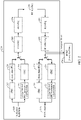
- FIG. 2 illustrates an exemplary partial process for real time soft combining of a Basic Rate/Enhanced Data Rate (BR/EDR) bit stream in accordance with some examples of the disclosure.
- a partial process 200 for data transmission may include a payload 205 for transmission that may follow one of the two paths shown prior to transmission. For instance, in one path, a CRC 210 value may be determined for the payload 205 and then the payload may be encrypted 220. In the second path, a payload 205 may be subject to encryption and MIC generation 230 such as AES-CCM then a CRC 210 value may be determined.
- the encrypted payload 205 may be subject to whitening 240 and then encoding 250.
- the encoded payload 205 is transmitted to a receiving device through an RF interface 260.
- the received encoded payload 275 is decoded 251, then subject to de-whitening 241 followed by real time soft-combining 270 of the encrypted data of the payload (e.g., flow 100) prior to following one of two paths depending on how the payload 205 was encrypted prior to transmission. For instances, in one path, a CRC 211 value may checked for the received payload 275, and then the received payload 275 may be subject to a decryption and MIC verification 231.
- the received payload 275 may be subject to decryption 221 and then a CRC 211 value may be checked.
- the real time soft-combining 270 may include storage of decrypted packets, prefetching of encryption codes so that the received payload 275 may be decoded, combined with any retransmission of the received payload 275 to remove errors, and re-encoding the received payload after correction to verify CRC values or MIC values.
- FIG. 3 illustrates an exemplary partial process for real time soft combining of a low energy uncoded physical (LE Uncoded PHY) bit stream in accordance with some examples of the disclosure.
- a partial process 300 for data transmission may include a payload 305 for transmission that may be subject to encryption 320, followed by a CRC 310 value generation, then the payload 305 may be subject to whitening 340 and transmitted to a receiving device through an RF interface 360.
- the received encoded payload 305 is subject to de-whitening 341 followed by real time soft-combining 370 of the encrypted data of the payload (e.g., flow 100) to generate a correct payload 375 prior to any integrity checks.
- a CRC 311 value may checked for the corrected payload 375 and then the corrected payload 375 may be subject to a decryption process 321.
- the real time soft-combining 370 may include storage of decrypted packets, prefetching of encryption codes so that the received payload may be decoded in real time on the fly, combined with any retransmission of the received payload to remove errors, and re-encoding the received payload after correction to verify CRC values (or MIC values). It should be understood that the soft combining of received payloads is in response to detected errors in a payload and the combining of subsequent retransmitted messages to correct the payload even when unique nonces are used.
- Figure 4 illustrates an exemplary partial process for real time soft combining of a low energy coded physical (LE Coded PHY) bit stream in accordance with some examples of the disclosure.
- a partial process 400 for data transmission may include a payload 405 for transmission that may be subject to encryption 420, followed by a CRC 410 value generation, then the payload 405 may be subject to whitening 440, Forward Error Correction (FEC) encoding 445, pattern mapping 455, and transmitted to a receiving device through an RF interface 460.
- FEC Forward Error Correction
- the received encoded payload 405 is subject to pattern de-mapping 457, FEC decoding 447, and de-whitening 441 followed by real time soft-combining 470 of the encrypted data of the payload (e.g., flow 100) 405 to generate a correct payload 475 prior to any integrity checks. For instance, a CRC 411 value may checked for the corrected payload 475 and then the corrected payload 475 may be subject to a decryption process 421.
- the real time soft-combining 470 may include storage of decrypted packets, prefetching of encryption codes so that the received payload may be decoded in real time on the fly, combined with any retransmission of the received payload to remove errors, and re-encoding the received payload after correction to verify CRC values (or MIC values). It should be understood that the soft combining of received payloads is in response to detected errors in a payload and the combining of subsequent retransmitted messages to correct the payload even when unique nonces are used.
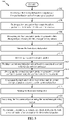
- Figure 5 illustrates the claimed method for soft combining of decrypted data.
- the partial method 500 begins in block 502 with receiving a first encrypted packet comprising a first packet header and a first encrypted payload.
- the partial method 500 continues in block 504 with fetching a first encryption key stream based on a portion of a first packet header and a first nonce.
- the partial method 500 continues in block 506 with decrypting the first encrypted packet to generate a first decrypted packet using the first encryption key stream.
- the partial method 500 continues in block 508 with storing the first decrypted packet.
- the partial method 500 continues in block 510 with receiving a second encrypted packet.
- the partial method 500 continues in block 512 with fetching a second encryption key stream based on a portion of a second packet header and a second nonce.
- the partial method 500 continues in block 514 with decrypting the second encrypted packet to generate a second decrypted packet using the second encryption key stream.
- the partial method 500 continues in block 516 with combining the first stored decrypted packet and the second decrypted packet to generate a first corrected packet.
- the partial method 500 continues in block 518 with storing the first corrected packet.
- the partial method 500 continues in block 520 with encrypting the first corrected packet using the second encryption key stream.
- the partial method 500 concludes in block 522 with performing a second cyclic redundancy check (CRC) on the first corrected packet after encrypting the first corrected packet.
- CRC cyclic redundancy check
- the partial method 500 includes performing a first CRC on the first encrypted packet and requesting a retransmission of the first encrypted packet when the first CRC indicates an error.
- the method further includes requesting a re-transmission of the first encrypted packet when the second CRC indicates an error; receiving a third encrypted packet; decrypting the third encrypted packet to generate a third decrypted packet; storing the third decrypted packet; combining the first decrypted packet, the second decrypted packet, and the third decrypted packet to generate a second corrected packet; encrypting the second corrected packet using the encryption key stream; performing a third CRC on the second corrected packet; and transmitting an acknowledge message when the third CRC indicates no errors.
- FIG. 6 illustrates an exemplary mobile device in accordance with some examples of the disclosure.
- a block diagram of a mobile device that is configured according to exemplary aspects is depicted and generally designated 600.
- mobile device 600 may be configured as a wireless communication device.
- mobile device 600 includes processor 601, which may be configured to implement the methods described herein in some aspects.
- Processor 601 is shown to comprise instruction pipeline 612, buffer processing unit (BPU) 608, branch instruction queue (BIQ) 611, and throttler 610 as is well known in the art.
- Other well-known details e.g., counters, entries, confidence fields, weighted sum, comparator, etc.
- these blocks have been omitted from this view of processor 601 for the sake of clarity.
- Processor 601 may be communicatively coupled to memory 632 over a link, which may be a die-to-die or chip-to-chip link.
- Mobile device 600 also include display 628 and display controller 626, with display controller 626 coupled to processor 601 and to display 628.
- Figure 6 may include coder/decoder (CODEC) 634 (e.g., an audio and/or voice CODEC) coupled to processor 601; speaker 636 and microphone 638 coupled to CODEC 634; and wireless controller 640 (which may include a modem) coupled to wireless antenna 642 and to processor 601.
- CDEC coder/decoder
- wireless controller 640 which may include a modem
- processor 601, display controller 626, memory 632, CODEC 634, and wireless controller 640 can be included in a system-in-package or system-on-chip device 622.
- Input device 630 e.g., physical or virtual keyboard
- power supply 644 e.g., battery
- display 628 e.g., input device 630, speaker 636, microphone 638, wireless antenna 642, and power supply 644 may be external to system-on-chip device 622 and may be coupled to a component of system-on-chip device 622, such as an interface or a controller.
- processor 601 and memory 632 may also be integrated into a set top box, a music player, a video player, an entertainment unit, a navigation device, a personal digital assistant (PDA), a fixed location data unit, a computer, a laptop, a tablet, a communications device, a mobile phone, or other similar devices.
- PDA personal digital assistant
- Figure 7 illustrates various electronic devices that may be integrated with any of the aforementioned integrated device, semiconductor device, integrated circuit, die, interposer, package or package-on-package (PoP) in accordance with some examples of the disclosure.
- a mobile phone device 702, a laptop computer device 704, and a fixed location terminal device 706 may include an integrated device 700 as described herein.
- the integrated device 700 may be, for example, any of the integrated circuits, dies, integrated devices, integrated device packages, integrated circuit devices, device packages, integrated circuit (IC) packages, package-on-package devices described herein.
- the devices 702, 704, 706 illustrated in Figure 7 are merely exemplary.
- Other electronic devices may also feature the integrated device 700 including, but not limited to, a group of devices (e.g., electronic devices) that includes mobile devices, hand-held personal communication systems (PCS) units, portable data units such as personal digital assistants, global positioning system (GPS) enabled devices, navigation devices, set top boxes, music players, video players, entertainment units, fixed location data units such as meter reading equipment, communications devices, smartphones, tablet computers, computers, wearable devices, servers, routers, electronic devices implemented in automotive vehicles (e.g., autonomous vehicles), or any other device that stores or retrieves data or computer instructions, or any combination thereof.
- a group of devices e.g., electronic devices
- devices that includes mobile devices, hand-held personal communication systems (PCS) units, portable data units such as personal digital assistants, global positioning system (GPS) enabled devices, navigation devices, set top boxes, music players, video players, entertainment units, fixed location data units such as meter reading equipment, communications devices, smartphones, tablet computers, computers, wearable devices, servers, routers, electronic devices implemented in automotive
- an apparatus may comprise a means for performing a function or action described above, such as decryption, that may be a processor, cryptographic component, or the equivalent of those features described herein. It will be appreciated that the aforementioned aspects are merely provided as examples and the various aspects claimed are not limited to the specific references and/or illustrations cited as examples.
- Figures 1-7 may be rearranged and/or combined into a single component, process, feature or function or incorporated in several components, processes, or functions. Additional elements, components, processes, and/or functions may also be added without departing from the disclosure. It should also be noted that Figures 1-7 and its corresponding description in the present disclosure is not limited to dies and/or ICs. In some implementations, Figures 1-7 and its corresponding description may be used to manufacture, create, provide, and/or produce integrated devices.
- a device may include a die, an integrated device, a die package, an integrated circuit (IC), a device package, an integrated circuit (IC) package, a wafer, a semiconductor device, a package on package (PoP) device, and/or an interposer.
- IC integrated circuit
- IC integrated circuit
- PoP package on package
- mobile device can describe, and is not limited to, a music player, a video player, an entertainment unit, a navigation device, a communications device, a mobile device, a mobile phone, a smartphone, a personal digital assistant, a fixed location terminal, a tablet computer, a computer, a wearable device, a laptop computer, a server, an automotive device in an automotive vehicle, and/or other types of portable electronic devices typically carried by a person and/or having communication capabilities (e.g., wireless, cellular, infrared, short-range radio, etc.).
- UE user equipment
- mobile terminal mobile terminal
- wireless device wireless device
- the wireless communication between electronic devices can be based on different technologies, such as code division multiple access (CDMA), W-CDMA, time division multiple access (TDMA), frequency division multiple access (FDMA), Orthogonal Frequency Division Multiplexing (OFDM), Global System for Mobile Communications (GSM), 3GPP Long Term Evolution (LTE), Bluetooth (BT), Bluetooth Low Energy (BLE), IEEE 802.11 (WiFi), and IEEE 802.15.4 (Zigbee/Thread) or other protocols that may be used in a wireless communications network or a data communications network.
- Bluetooth Low Energy also known as Bluetooth LE, BLE, and Bluetooth Smart
- BLE Bluetooth Special Interest Group intended to provide considerably reduced power consumption and cost while maintaining a similar communication range. BLE was merged into the main Bluetooth standard in 2010 with the adoption of the Bluetooth Core Specification Version 4.0 and updated in Bluetooth 5 .
- exemplary is used herein to mean “serving as an example, instance, or illustration.” Any details described herein as “exemplary” is not to be construed as advantageous over other examples. Likewise, the term “examples” does not mean that all examples include the discussed feature, advantage or mode of operation. Furthermore, a particular feature and/or structure can be combined with one or more other features and/or structures. Moreover, at least a portion of the apparatus described hereby can be configured to perform at least a portion of a method described hereby.
- connection means any connection or coupling, either direct or indirect, between elements, and can encompass a presence of an intermediate element between two elements that are “connected” or “coupled” together via the intermediate element.
- any reference herein to an element using a designation such as “first,” “second,” and so forth does not limit the quantity and/or order of those elements. Rather, these designations are used as a convenient method of distinguishing between two or more elements and/or instances of an element. Also, unless stated otherwise, a set of elements can comprise one or more elements.
- a software module may reside in RAM memory, flash memory, ROM memory, EPROM memory, EEPROM memory, registers, hard disk, a removable disk, a CD-ROM, or any other form of storage medium known in the art including non-transitory types of memory or storage mediums.
- An exemplary storage medium is coupled to the processor such that the processor can read information from, and write information to, the storage medium. In the alternative, the storage medium may be integral to the processor.
- DSP digital signal processor
- ASIC application specific integrated circuit
- FPGA field programmable gate array
- a general purpose processor may be a microprocessor, but in the alternative, the processor may be any conventional processor, controller, microcontroller, or state machine.
- a processor may also be implemented as a combination of computing devices (e.g., a combination of a DSP and a microprocessor, a plurality of microprocessors, one or more microprocessors in conjunction with a DSP core, or any other such configuration).
- aspects described in connection with a device it goes without saying that these aspects also constitute a description of the corresponding method, and so a block or a component of a device should also be understood as a corresponding method action or as a feature of a method action. Analogously thereto, aspects described in connection with or as a method action also constitute a description of a corresponding block or detail or feature of a corresponding device.
- Some or all of the method actions can be performed by a hardware apparatus (or using a hardware apparatus), such as, for example, a microprocessor, a programmable computer or an electronic circuit. In some examples, some or a plurality of the most important method actions can be performed by such an apparatus.
- an individual action can be subdivided into a plurality of sub-actions or contain a plurality of sub-actions. Such sub-actions can be contained in the disclosure of the individual action and be part of the disclosure of the individual action.
Landscapes
- Engineering & Computer Science (AREA)
- Computer Security & Cryptography (AREA)
- Computer Networks & Wireless Communication (AREA)
- Signal Processing (AREA)
- General Engineering & Computer Science (AREA)
- Computing Systems (AREA)
- Computer Hardware Design (AREA)
- Theoretical Computer Science (AREA)
- Quality & Reliability (AREA)
- Physics & Mathematics (AREA)
- General Physics & Mathematics (AREA)
- Mobile Radio Communication Systems (AREA)
- Detection And Prevention Of Errors In Transmission (AREA)
Description
- The present Application for Patent claims priority to Non-provisional Application No.
16/183,712 entitled "APPARATUS AND METHODS FOR REAL TIME SOFT COMBINING OF DECRYPTED DATA" filed November 7, 2018 - This disclosure relates generally to wireless transmissions, and more specifically, but not exclusively, to Bluetooth transmissions.
- Wireless transmission methods generally provide for protocols to transmit data and retransmit the data if the original transmission was not received or received with errors. For example, the Bluetooth (BT) specification 5.0 provides for a method to transmit, and retransmit, a message until the receiving device can decode the message error free. Messages are usually encrypted and protected with a Message Integrity Check (MIC). In some cases, the initial transmission and each subsequent retransmission is encrypted with a unique nonce. For instance, for BT audio links, extended synchronous connectionoriented (eSCO) packets use a clock-based nonce that increments for every transmission and retransmission. Using a unique nonce for each message results in a unique encryption key stream and unique MIC. This means that the received encrypted data stream for each transmission and retransmission of the same message will be completely different from each other. In other words, each message will have a different cyclic redundancy check (CRC) value.
- Real-time soft combining of BT transmissions and retransmissions must generate an encrypted data stream in order to validate the received CRC. Real-time soft combining buffers each previously received message and then attempts to correct the currently received message on the fly with combined data to validate the CRC. In accordance with the BT specification, the CRC is calculated and verified using encrypted data. Therefore, the real-time soft combining must generate an encrypted data stream of the combined data in order to validate the CRC. However, performing real-time soft combining on encrypted data is not possible for Bluetooth transmissions and retransmissions when using a unique nonce for each message. A unique nonce essentially scrambles each encrypted message which makes it impossible to combine encrypted data as required for the CRC validation. Simply performing real-time soft combining on decrypted data is also not viable since the encrypted CRC is based on the encrypted data and not the decrypted data so the encrypted CRC cannot be validated with the decrypted data.
- Accordingly, there is a need for systems, apparatus, and methods that overcome the deficiencies of conventional approaches including the methods, system and apparatus provided hereby.
- The patent document
WO2013050550 A1 discloses a method and system designed in order to soft combine encrypted packets. An original packet and its retransmission, encrypted by respective encryption keys, are soft combined before being channel decoded. - The patent document
WO0062467 A1 - The present invention is defined by the attached claims.
- A more complete appreciation of aspects of the disclosure and many of the attendant advantages thereof will be readily obtained as the same becomes better understood by reference to the following detailed description when considered in connection with the accompanying drawings which are presented solely for illustration and not limitation of the disclosure, and in which:
-
Figure 1 illustrates an exemplary flow of packet retransmission for soft combining in accordance with some examples of the disclosure; -
Figure 2 illustrates an exemplary partial process for real time soft combining of a BR/EDR bit stream in accordance with some examples of the disclosure; -
Figure 3 illustrates an exemplary partial process for real time soft combining of a LE Uncoded PHY bit stream in accordance with some examples of the disclosure; -
Figure 4 illustrates an exemplary partial process for real time soft combining of a LE Coded PHY bit stream in accordance with some examples of the disclosure; -
Figure 5 illustrates a partial method for soft combining of decrypted data in accordance with some examples of the disclosure; -
Figure 6 illustrates an exemplary mobile device in accordance with some examples of the disclosure; and -
Figure 7 illustrates various electronic devices that may be integrated with any of the aforementioned integrated device, semiconductor device, integrated circuit, die, interposer, package or package-on-package (PoP) in accordance with some examples of the disclosure. - In accordance with common practice, the features depicted by the drawings may not be drawn to scale. Accordingly, the dimensions of the depicted features may be arbitrarily expanded or reduced for clarity. In accordance with common practice, some of the drawings are simplified for clarity. Thus, the drawings may not depict all components of a particular apparatus or method. Further, like reference numerals denote like features throughout the specification and figures.
- The exemplary methods, apparatus, and systems disclosed herein mitigate shortcomings of the conventional methods, apparatus, and systems, as well as other previously unidentified needs. For example, one aspect of the disclosure allows for continuously combining the contents of each transmitted message and subsequent retransmitted message even when a unique nonce is used for each encrypted message. The received data stream is decrypted and re-encrypted on the fly to meet all the requirements of real-time soft combining of the decrypted payload and the validation of the encrypted CRC. In this example, the currently received message payload is decrypted on the fly so that it can be soft-combined in real time with previously decrypted messages. The corrected message payload is re-encrypted on the fly so that the CRC verification can be performed on combined encrypted data. A unique nonce will also generate a unique decrypted MIC for each message. Therefore, real-time soft combining cannot be performed on the decrypted MIC of BT transmissions and retransmissions.
- One example disclosed herein allows additional real time control of the Advanced Encryption Standard Counter Code Mode (AES-CCM) encryption/decryption hardware. The encryption nonce may be dynamically selected based on the logical link. Logical link can be communicated in various ways (e.g., a logical transport address (LT_ADDR) field in the packet header). Once the LT_ADDR is decoded, the correct nonce must be selected and the encryption key stream must be calculated immediately and pre-fetched from the crypto block. The pre-fetch of the encryption key stream is beneficial since normally such a key stream is not available until much later in time. In one example, the encryption key stream may be continuously pre-fetched and fed to the real-time soft combining logic. In conventional approaches, the crypto block is initialized much later in time since the AES-CCM B0, B1 inputs require contents from the entire packet/payload header (such as the payload length field). Also in conventional approaches, the crypto block processing lags far behind the actual received serial data because AES-CCM operates on 128-bit blocks of data.
-
Figure 1 illustrates an exemplary flow of packet retransmission for soft combining in accordance with some examples of the disclosure. As shown inFigure 1 , anexemplary flow 100 may include transmission (e.g., a BT transmission) of a firstencrypted packet 110, reception of the firstencrypted packet 120 where the firstencrypted packet 120 has one ormore errors 130, storing or buffering 140 the firstencrypted packet 120, real time decoding 150 of the stored firstencrypted packet 120, performing a CRC 160 on the firstencrypted packet 120, and performing aMIC 170 on the firstencrypted packet 120. As shown inFigure 1 , when the firstencrypted packet 120 haserrors 130, the CRC 160 and/orMIC 170 will show a mismatch and a negative acknowledgment or no acknowledgment (NACK) 180 is sent to the transmitting device. If toomany errors 132 are detected in anencrypted packet 112, nothing is done with the packet and aNACK 182 is sent to the transmitting device. After a NACK 180 or 182 is received by the transmitting device, for example, theflow 100 may include transmission (e.g., a BT transmission) of a second encrypted packet 114 (e.g., retransmission of the firstencrypted packet 110 payload), reception of the secondencrypted packet 124 where the secondencrypted packet 124 has one ormore errors 134, storing or buffering 144 the secondencrypted packet 124 along with the firstencrypted packet 120,real time decoding 154 of the stored first correctedpacket 124 that includes portions of the firstencrypted packet 120 and the secondencrypted packet 124 after soft combining, performing a CRC 164 on the first corrected packet 121, and performing aMIC 174 on the first corrected packet 121. As shown inFigure 1 , when the first corrected packet 121 haserrors MIC 174 will show a mismatch and a negative acknowledgment or no acknowledgment (NACK) 184 is sent to the transmitting device. - This
flow 100 will continue until a soft combining of receive packets results in a corrected packet with the transmission errors replaced by correct data received in other encrypted packets. Soft combining allows the transmission errors of a received packet to be replaced with correct data from subsequent packets even if those subsequent packets also have other errors. This allows a corrected packet to be assembled without the need for continuous retransmission until a packet is received without any errors. For example, after a NACK is received by the transmitting device, theflow 100 may include transmission (e.g., a BT transmission) of a third encrypted packet 116 (e.g., retransmission of the firstencrypted packet 110 payload), reception of the thirdencrypted packet 126 where the thirdencrypted packet 126 has one ormore errors 136, storing or buffering 146 the thirdencrypted packet 126 along with the previous encrypted packets, real time decoding 156 of the stored second correctedpacket 126 that includes portions of the firstencrypted packet 120, the secondencrypted packet 124, the thirdencrypted packet 126 etc. after soft combining, performing aCRC 166 on the second corrected packet 123, and performing aMIC 176 on the second corrected packet 123. As shown inFigure 1 , when theCRC 166 andMIC 176 of the second corrected packet 123 has no errors, theCRC 166 and/orMIC 176 will show a match and an acknowledgment (ACK) 186 is sent to the transmitting device indicating the first payload has been received. -
Figure 2 illustrates an exemplary partial process for real time soft combining of a Basic Rate/Enhanced Data Rate (BR/EDR) bit stream in accordance with some examples of the disclosure. As shown inFigure 2 , apartial process 200 for data transmission (e.g., data eSCO transmission by a BT enabled device) may include apayload 205 for transmission that may follow one of the two paths shown prior to transmission. For instance, in one path, aCRC 210 value may be determined for thepayload 205 and then the payload may be encrypted 220. In the second path, apayload 205 may be subject to encryption andMIC generation 230 such as AES-CCM then aCRC 210 value may be determined. Next, theencrypted payload 205 may be subject towhitening 240 and then encoding 250. The encodedpayload 205 is transmitted to a receiving device through anRF interface 260. The received encodedpayload 275 is decoded 251, then subject tode-whitening 241 followed by real time soft-combining 270 of the encrypted data of the payload (e.g., flow 100) prior to following one of two paths depending on how thepayload 205 was encrypted prior to transmission. For instances, in one path, aCRC 211 value may checked for the receivedpayload 275, and then the receivedpayload 275 may be subject to a decryption andMIC verification 231. In the second path, the receivedpayload 275 may be subject todecryption 221 and then aCRC 211 value may be checked. The real time soft-combining 270 may include storage of decrypted packets, prefetching of encryption codes so that the receivedpayload 275 may be decoded, combined with any retransmission of the receivedpayload 275 to remove errors, and re-encoding the received payload after correction to verify CRC values or MIC values. -
Figure 3 illustrates an exemplary partial process for real time soft combining of a low energy uncoded physical (LE Uncoded PHY) bit stream in accordance with some examples of the disclosure. As shown inFigure 3 , apartial process 300 for data transmission (e.g., data transmission by a BT enabled device) may include apayload 305 for transmission that may be subject toencryption 320, followed by aCRC 310 value generation, then thepayload 305 may be subject towhitening 340 and transmitted to a receiving device through anRF interface 360. The received encodedpayload 305 is subject tode-whitening 341 followed by real time soft-combining 370 of the encrypted data of the payload (e.g., flow 100) to generate acorrect payload 375 prior to any integrity checks. For instance, aCRC 311 value may checked for the correctedpayload 375 and then the correctedpayload 375 may be subject to adecryption process 321. The real time soft-combining 370 may include storage of decrypted packets, prefetching of encryption codes so that the received payload may be decoded in real time on the fly, combined with any retransmission of the received payload to remove errors, and re-encoding the received payload after correction to verify CRC values (or MIC values). It should be understood that the soft combining of received payloads is in response to detected errors in a payload and the combining of subsequent retransmitted messages to correct the payload even when unique nonces are used. -
Figure 4 illustrates an exemplary partial process for real time soft combining of a low energy coded physical (LE Coded PHY) bit stream in accordance with some examples of the disclosure. As shown inFigure 4 , apartial process 400 for data transmission (e.g., data transmission by a BT enabled device) may include apayload 405 for transmission that may be subject toencryption 420, followed by aCRC 410 value generation, then thepayload 405 may be subject towhitening 440, Forward Error Correction (FEC) encoding 445,pattern mapping 455, and transmitted to a receiving device through anRF interface 460. The received encodedpayload 405 is subject topattern de-mapping 457, FEC decoding 447, and de-whitening 441 followed by real time soft-combining 470 of the encrypted data of the payload (e.g., flow 100) 405 to generate acorrect payload 475 prior to any integrity checks. For instance, aCRC 411 value may checked for the correctedpayload 475 and then the correctedpayload 475 may be subject to adecryption process 421. The real time soft-combining 470 may include storage of decrypted packets, prefetching of encryption codes so that the received payload may be decoded in real time on the fly, combined with any retransmission of the received payload to remove errors, and re-encoding the received payload after correction to verify CRC values (or MIC values). It should be understood that the soft combining of received payloads is in response to detected errors in a payload and the combining of subsequent retransmitted messages to correct the payload even when unique nonces are used. -
Figure 5 illustrates the claimed method for soft combining of decrypted data. As shown inFigure 5 , thepartial method 500 begins inblock 502 with receiving a first encrypted packet comprising a first packet header and a first encrypted payload. Thepartial method 500 continues inblock 504 with fetching a first encryption key stream based on a portion of a first packet header and a first nonce. Thepartial method 500 continues inblock 506 with decrypting the first encrypted packet to generate a first decrypted packet using the first encryption key stream. Thepartial method 500 continues inblock 508 with storing the first decrypted packet. Thepartial method 500 continues inblock 510 with receiving a second encrypted packet. Thepartial method 500 continues inblock 512 with fetching a second encryption key stream based on a portion of a second packet header and a second nonce. Thepartial method 500 continues inblock 514 with decrypting the second encrypted packet to generate a second decrypted packet using the second encryption key stream. Thepartial method 500 continues inblock 516 with combining the first stored decrypted packet and the second decrypted packet to generate a first corrected packet. Thepartial method 500 continues inblock 518 with storing the first corrected packet. Thepartial method 500 continues inblock 520 with encrypting the first corrected packet using the second encryption key stream. Thepartial method 500 concludes inblock 522 with performing a second cyclic redundancy check (CRC) on the first corrected packet after encrypting the first corrected packet. Further, thepartial method 500 includes performing a first CRC on the first encrypted packet and requesting a retransmission of the first encrypted packet when the first CRC indicates an error. In a preferred embodiment of the invention, the method further includes requesting a re-transmission of the first encrypted packet when the second CRC indicates an error; receiving a third encrypted packet; decrypting the third encrypted packet to generate a third decrypted packet; storing the third decrypted packet; combining the first decrypted packet, the second decrypted packet, and the third decrypted packet to generate a second corrected packet; encrypting the second corrected packet using the encryption key stream; performing a third CRC on the second corrected packet; and transmitting an acknowledge message when the third CRC indicates no errors. -
Figure 6 illustrates an exemplary mobile device in accordance with some examples of the disclosure. Referring now toFigure 6 , a block diagram of a mobile device that is configured according to exemplary aspects is depicted and generally designated 600. In some aspects,mobile device 600 may be configured as a wireless communication device. As shown,mobile device 600 includesprocessor 601, which may be configured to implement the methods described herein in some aspects.Processor 601 is shown to compriseinstruction pipeline 612, buffer processing unit (BPU) 608, branch instruction queue (BIQ) 611, andthrottler 610 as is well known in the art. Other well-known details (e.g., counters, entries, confidence fields, weighted sum, comparator, etc.) of these blocks have been omitted from this view ofprocessor 601 for the sake of clarity. -
Processor 601 may be communicatively coupled tomemory 632 over a link, which may be a die-to-die or chip-to-chip link.Mobile device 600 also includedisplay 628 anddisplay controller 626, withdisplay controller 626 coupled toprocessor 601 and to display 628. - In some aspects,
Figure 6 may include coder/decoder (CODEC) 634 (e.g., an audio and/or voice CODEC) coupled toprocessor 601;speaker 636 andmicrophone 638 coupled toCODEC 634; and wireless controller 640 (which may include a modem) coupled towireless antenna 642 and toprocessor 601. - In a particular aspect, where one or more of the above-mentioned blocks are present,
processor 601,display controller 626,memory 632,CODEC 634, andwireless controller 640 can be included in a system-in-package or system-on-chip device 622. Input device 630 (e.g., physical or virtual keyboard), power supply 644 (e.g., battery),display 628,input device 630,speaker 636,microphone 638,wireless antenna 642, andpower supply 644 may be external to system-on-chip device 622 and may be coupled to a component of system-on-chip device 622, such as an interface or a controller. - It should be noted that although
Figure 6 depicts a mobile device,processor 601 andmemory 632 may also be integrated into a set top box, a music player, a video player, an entertainment unit, a navigation device, a personal digital assistant (PDA), a fixed location data unit, a computer, a laptop, a tablet, a communications device, a mobile phone, or other similar devices. -
Figure 7 illustrates various electronic devices that may be integrated with any of the aforementioned integrated device, semiconductor device, integrated circuit, die, interposer, package or package-on-package (PoP) in accordance with some examples of the disclosure. For example, amobile phone device 702, alaptop computer device 704, and a fixedlocation terminal device 706 may include anintegrated device 700 as described herein. Theintegrated device 700 may be, for example, any of the integrated circuits, dies, integrated devices, integrated device packages, integrated circuit devices, device packages, integrated circuit (IC) packages, package-on-package devices described herein. Thedevices Figure 7 are merely exemplary. Other electronic devices may also feature theintegrated device 700 including, but not limited to, a group of devices (e.g., electronic devices) that includes mobile devices, hand-held personal communication systems (PCS) units, portable data units such as personal digital assistants, global positioning system (GPS) enabled devices, navigation devices, set top boxes, music players, video players, entertainment units, fixed location data units such as meter reading equipment, communications devices, smartphones, tablet computers, computers, wearable devices, servers, routers, electronic devices implemented in automotive vehicles (e.g., autonomous vehicles), or any other device that stores or retrieves data or computer instructions, or any combination thereof. - It will be appreciated that various aspects disclosed herein can be described as functional equivalents to the structures, materials and/or devices described and/or recognized by those skilled in the art. For example, in one aspect, an apparatus may comprise a means for performing a function or action described above, such as decryption, that may be a processor, cryptographic component, or the equivalent of those features described herein. It will be appreciated that the aforementioned aspects are merely provided as examples and the various aspects claimed are not limited to the specific references and/or illustrations cited as examples.
- One or more of the components, processes, features, and/or functions illustrated in
Figures 1-7 may be rearranged and/or combined into a single component, process, feature or function or incorporated in several components, processes, or functions. Additional elements, components, processes, and/or functions may also be added without departing from the disclosure. It should also be noted thatFigures 1-7 and its corresponding description in the present disclosure is not limited to dies and/or ICs. In some implementations,Figures 1-7 and its corresponding description may be used to manufacture, create, provide, and/or produce integrated devices. In some implementations, a device may include a die, an integrated device, a die package, an integrated circuit (IC), a device package, an integrated circuit (IC) package, a wafer, a semiconductor device, a package on package (PoP) device, and/or an interposer. - In this description, certain terminology is used to describe certain features. The term "mobile device" can describe, and is not limited to, a music player, a video player, an entertainment unit, a navigation device, a communications device, a mobile device, a mobile phone, a smartphone, a personal digital assistant, a fixed location terminal, a tablet computer, a computer, a wearable device, a laptop computer, a server, an automotive device in an automotive vehicle, and/or other types of portable electronic devices typically carried by a person and/or having communication capabilities (e.g., wireless, cellular, infrared, short-range radio, etc.). Further, the terms "user equipment" (UE), "mobile terminal," "mobile device," and "wireless device," can be interchangeable.
- The wireless communication between electronic devices can be based on different technologies, such as code division multiple access (CDMA), W-CDMA, time division multiple access (TDMA), frequency division multiple access (FDMA), Orthogonal Frequency Division Multiplexing (OFDM), Global System for Mobile Communications (GSM), 3GPP Long Term Evolution (LTE), Bluetooth (BT), Bluetooth Low Energy (BLE), IEEE 802.11 (WiFi), and IEEE 802.15.4 (Zigbee/Thread) or other protocols that may be used in a wireless communications network or a data communications network. Bluetooth Low Energy (also known as Bluetooth LE, BLE, and Bluetooth Smart) is a wireless personal area network technology designed and marketed by the Bluetooth Special Interest Group intended to provide considerably reduced power consumption and cost while maintaining a similar communication range. BLE was merged into the main Bluetooth standard in 2010 with the adoption of the Bluetooth Core Specification Version 4.0 and updated in Bluetooth 5 .
- The word "exemplary" is used herein to mean "serving as an example, instance, or illustration." Any details described herein as "exemplary" is not to be construed as advantageous over other examples. Likewise, the term "examples" does not mean that all examples include the discussed feature, advantage or mode of operation. Furthermore, a particular feature and/or structure can be combined with one or more other features and/or structures. Moreover, at least a portion of the apparatus described hereby can be configured to perform at least a portion of a method described hereby.
- The terminology used herein is for the purpose of describing particular examples and is not intended to be limiting of examples of the disclosure. As used herein, the singular forms "a," "an," and "the" are intended to include the plural forms as well, unless the context clearly indicates otherwise. It will be further understood that the terms "comprises," "comprising," "includes," and/or "including," when used herein, specify the presence of stated features, integers, actions, operations, elements, and/or components, but do not preclude the presence or addition of one or more other features, integers, actions, operations, elements, components, and/or groups thereof.
- It should be noted that the terms "connected," "coupled," or any variant thereof, mean any connection or coupling, either direct or indirect, between elements, and can encompass a presence of an intermediate element between two elements that are "connected" or "coupled" together via the intermediate element.
- Any reference herein to an element using a designation such as "first," "second," and so forth does not limit the quantity and/or order of those elements. Rather, these designations are used as a convenient method of distinguishing between two or more elements and/or instances of an element. Also, unless stated otherwise, a set of elements can comprise one or more elements.
- Further, many examples are described in terms of sequences of actions to be performed by, for example, elements of a computing device. It will be recognized that various actions described herein can be performed by specific circuits (e.g., application specific integrated circuits (ASICs)), by program instructions being executed by one or more processors, or by a combination of both. Additionally, these sequence of actions described herein can be considered to be incorporated entirely within any form of computer-readable storage medium having stored therein a corresponding set of computer instructions that upon execution would cause an associated processor to perform the functionality described herein. Thus, the various aspects of the disclosure may be incorporated in a number of different forms, all of which have been contemplated to be within the scope of the claimed subject matter. In addition, for each of the examples described herein, the corresponding form of any such examples may be described herein as, for example, "logic configured to" perform the described action.
- Nothing stated or illustrated depicted in this application is intended to dedicate any component, action, feature, benefit, advantage, or equivalent to the public, regardless of whether the component, action, feature, benefit, advantage, or the equivalent is recited in the claims.
- Further, those of skill in the art will appreciate that the various illustrative logical blocks, modules, circuits, and algorithm actions described in connection with the examples disclosed herein may be implemented as electronic hardware, computer software, or combinations of both. To clearly illustrate this interchangeability of hardware and software, various illustrative components, blocks, modules, circuits, and actions have been described above generally in terms of their functionality. Whether such functionality is implemented as hardware or software depends upon the particular application and design constraints imposed on the overall system. Skilled artisans may implement the described functionality in varying ways for each particular application, but such implementation decisions should not be interpreted as causing a departure from the scope of the present disclosure.
- The methods, sequences and/or algorithms described in connection with the examples disclosed herein may be incorporated directly in hardware, in a software module executed by a processor, or in a combination of the two. A software module may reside in RAM memory, flash memory, ROM memory, EPROM memory, EEPROM memory, registers, hard disk, a removable disk, a CD-ROM, or any other form of storage medium known in the art including non-transitory types of memory or storage mediums. An exemplary storage medium is coupled to the processor such that the processor can read information from, and write information to, the storage medium. In the alternative, the storage medium may be integral to the processor.
- The various illustrative logical blocks, modules, and circuits described in connection with the aspects disclosed herein may be implemented or performed with a general purpose processor, a digital signal processor (DSP), an application specific integrated circuit (ASIC), a field programmable gate array (FPGA) or other programmable logic device, discrete gate or transistor logic, discrete hardware components, or any combination thereof designed to perform the functions described herein. A general purpose processor may be a microprocessor, but in the alternative, the processor may be any conventional processor, controller, microcontroller, or state machine. A processor may also be implemented as a combination of computing devices (e.g., a combination of a DSP and a microprocessor, a plurality of microprocessors, one or more microprocessors in conjunction with a DSP core, or any other such configuration).
- Although some aspects have been described in connection with a device, it goes without saying that these aspects also constitute a description of the corresponding method, and so a block or a component of a device should also be understood as a corresponding method action or as a feature of a method action. Analogously thereto, aspects described in connection with or as a method action also constitute a description of a corresponding block or detail or feature of a corresponding device. Some or all of the method actions can be performed by a hardware apparatus (or using a hardware apparatus), such as, for example, a microprocessor, a programmable computer or an electronic circuit. In some examples, some or a plurality of the most important method actions can be performed by such an apparatus.
- In the detailed description above it can be seen that different features are grouped together in examples. This manner of disclosure should not be understood as an intention that the claimed examples have more features than are explicitly mentioned in the respective claim. Rather, the disclosure may include fewer than all features of an individual example disclosed. Therefore, the following claims should hereby be deemed to be incorporated in the description, wherein each claim by itself can stand as a separate example.
- It should furthermore be noted that methods, systems, and apparatus disclosed in the description or in the claims can be implemented by a device comprising means for performing the respective actions of this method.
- Furthermore, in some examples, an individual action can be subdivided into a plurality of sub-actions or contain a plurality of sub-actions. Such sub-actions can be contained in the disclosure of the individual action and be part of the disclosure of the individual action.
- While the foregoing disclosure shows illustrative examples of the disclosure, it should be noted that various changes and modifications could be made herein without departing from the scope of the disclosure as defined by the appended claims. The functions and/or actions of the method claims in accordance with the examples of the disclosure described herein need not be performed in any particular order. Additionally, well-known elements will not be described in detail or may be omitted so as to not obscure the relevant details of the aspects and examples disclosed herein. Furthermore, although elements of the disclosure may be described or claimed in the singular, the plural is contemplated unless limitation to the singular is explicitly stated.
Claims (8)
- A method for soft combining of decrypted data, comprising:receiving (502) a first encrypted packet comprising a first packet header and a first encrypted payload;fetching (504) a first encryption key stream based on a portion of a first packet header and a first nonce;decrypting (506) the first encrypted packet to generate a first decrypted packet using the first encryption key stream;storing (508) the first decrypted packet;performing a first cyclic redundancy check, CRC, on the first encrypted packet;requesting a re-transmission of the first encrypted packet, based on determining that the first CRC indicates an error;receiving (510) a second encrypted packet, wherein the second encrypted packet comprises the re-transmission of the first encrypted payload;fetching (512) a second encryption key stream based on a portion of a second packet header and a second nonce;decrypting (514) the second encrypted packet to generate a second decrypted packet using the second encryption key stream;combining (516) the first stored decrypted packet and the second decrypted packet to generate a first corrected packet;storing (518) the first corrected packet;encrypting (520) the first corrected packet using the second encryption key stream; andperforming (522) a second CRC on the encrypted first corrected packet after encrypting the first corrected packet.
- The method of claim 1, further comprising requesting a re-transmission of the first encrypted packet when the second CRC indicates an error.
- The method of claim 2, further comprising:receiving a third encrypted packet;fetching a third encryption key stream based on a portion of a third packet header and a third nonce;decrypting the third encrypted packet to generate a third decrypted packet using the third encryption key stream;storing the third decrypted packet;combining the first decrypted packet, the second decrypted packet, and the third decrypted packet to generate a second corrected packet;encrypting the second corrected packet using the third encryption key stream; andperforming a third CRC on the encrypted second corrected packet.
- The method of claim 3, further comprising transmitting an acknowledge message when the third CRC indicates no errors.
- The method of claim 1, wherein the method is carried out by a device selected from a group consisting of a music player, a video player, an entertainment unit, a navigation device, a communications device, a mobile device, a mobile phone, a smartphone, a personal digital assistant, a fixed location terminal, a tablet computer, a computer, a wearable device, a laptop computer, a server, and a component in an automotive vehicle.
- An apparatus, comprisingmeans for receiving (502) a first encrypted packet comprising a first packet header and a first encrypted payload;means for fetching (504) a first encryption key stream based on a portion of a first packet header and a first nonce;means for decrypting (506) the first encrypted packet to generate a first decrypted packet using the first encryption key stream;means for storing (508) the first decrypted packet;means for performing a first cyclic redundancy check, CRC, on the first encrypted packet;means for requesting a re-transmission of the first encrypted packet, based on determining that the first CRC indicates an error;means for receiving (510) a second encrypted packet, wherein the second encrypted packet comprises the re-transmission of the first encrypted payload;means for fetching (512) a second encryption key stream based on a portion of a second packet header and a second nonce;means for decrypting (514) the second encrypted packet to generate a second decrypted packet using the second encryption key stream;means for combining (516) the first stored decrypted packet and the second decrypted packet to generate a first corrected packet;means for storing (518) the first corrected packet;means for encrypting (520) the first corrected packet using the second encryption key stream; andmeans for performing (522) a second CRC on the encrypted first corrected packet after encrypting the first corrected packet.
- The apparatus of claim 6, comprising means for performing the steps of the method of one of claims 2-5.
- A computer program comprising instructions which, when the program is executed by a computer, cause the computer to carry out the steps of the method of one of claims 1-5.
Applications Claiming Priority (2)
| Application Number | Priority Date | Filing Date | Title |
|---|---|---|---|
| US16/183,712 US20200145392A1 (en) | 2018-11-07 | 2018-11-07 | Apparatus and methods for real time soft combining of decrypted data |
| PCT/US2019/058466 WO2020096806A1 (en) | 2018-11-07 | 2019-10-29 | Apparatus and methods for real time soft combining of decrypted data |
Publications (2)
| Publication Number | Publication Date |
|---|---|
| EP3878115A1 EP3878115A1 (en) | 2021-09-15 |
| EP3878115B1 true EP3878115B1 (en) | 2022-11-30 |
Family
ID=68582484
Family Applications (1)
| Application Number | Title | Priority Date | Filing Date |
|---|---|---|---|
| EP19805069.2A Active EP3878115B1 (en) | 2018-11-07 | 2019-10-29 | Apparatus and methods for real time soft combining of decrypted data |
Country Status (5)
| Country | Link |
|---|---|
| US (1) | US20200145392A1 (en) |
| EP (1) | EP3878115B1 (en) |
| CN (1) | CN112930653B (en) |
| TW (1) | TWI831861B (en) |
| WO (1) | WO2020096806A1 (en) |
Families Citing this family (2)
| Publication number | Priority date | Publication date | Assignee | Title |
|---|---|---|---|---|
| US11451331B2 (en) | 2020-09-14 | 2022-09-20 | Cypress Semiconductor Corporation | Bit error correction for Bluetooth low energy |
| CN115085987A (en) * | 2022-06-08 | 2022-09-20 | 海南电网有限责任公司信息通信分公司 | Signal encryption method for power distribution terminal |
Family Cites Families (18)
| Publication number | Priority date | Publication date | Assignee | Title |
|---|---|---|---|---|
| US5968197A (en) * | 1996-04-01 | 1999-10-19 | Ericsson Inc. | Method and apparatus for data recovery |
| US8428069B2 (en) * | 1998-08-19 | 2013-04-23 | Wayne Richard Howe | Stealth packet switching |
| FI109252B (en) * | 1999-04-13 | 2002-06-14 | Nokia Corp | Transmission process with soft combination in a telecommunication system |
| US7289497B2 (en) * | 2001-07-03 | 2007-10-30 | Telefonaktiebolaget Lm Ericsson (Publ) | Implicit packet type identification |
| DE102004004799B4 (en) * | 2004-01-30 | 2010-02-18 | Advanced Micro Devices, Inc., Sunnyvale | Hardware / software partitioning for encrypted Wi-Fi connections |
| US7562278B2 (en) * | 2005-12-29 | 2009-07-14 | Intel Corporation | Incremental forward error correction redundancy |
| US8250356B2 (en) * | 2008-11-21 | 2012-08-21 | Motorola Solutions, Inc. | Method to construct a high-assurance IPSec gateway using an unmodified commercial implementation |
| FR2981231B1 (en) * | 2011-10-07 | 2013-11-08 | Cassidian Sas | METHOD FOR TRANSMITTING DATA PACKETS |
| JP5651662B2 (en) * | 2012-09-12 | 2015-01-14 | 株式会社東芝 | Wireless communication device |
| US10127166B2 (en) * | 2013-05-21 | 2018-11-13 | Sandisk Technologies Llc | Data storage controller with multiple pipelines |
| US9076003B2 (en) * | 2013-08-20 | 2015-07-07 | Janus Technologies, Inc. | Method and apparatus for transparently encrypting and decrypting computer interface data |
| DE102015208547A1 (en) * | 2014-05-09 | 2015-11-12 | Apple Inc. | ADVANCED BLUETOOTH COMMUNICATION MODES |
| US9647689B2 (en) * | 2015-01-15 | 2017-05-09 | Texas Instruments Incorporated | Robust connection for low-energy wireless networks |
| US10341311B2 (en) * | 2015-07-20 | 2019-07-02 | Schweitzer Engineering Laboratories, Inc. | Communication device for implementing selective encryption in a software defined network |
| US10171430B2 (en) * | 2015-07-27 | 2019-01-01 | Forrest L. Pierson | Making a secure connection over insecure lines more secure |
| US10560829B2 (en) * | 2016-04-19 | 2020-02-11 | Qualcomm Incorporated | Wireless communication for angle of arrival determination |
| WO2018045459A1 (en) * | 2016-09-09 | 2018-03-15 | Socovar, Société En Commandite | Checksum-filtered decoding, checksum-aided forward error correction of data packets, forward error correction of data using bit erasure channels and sub-symbol level decoding for erroneous fountain codes |
| US10645735B2 (en) * | 2017-03-15 | 2020-05-05 | Avago Technologies International Sales Pte. Limited | Enhanced data rate low energy wireless communications |
-
2018
- 2018-11-07 US US16/183,712 patent/US20200145392A1/en not_active Abandoned
-
2019
- 2019-10-29 CN CN201980071108.0A patent/CN112930653B/en active Active
- 2019-10-29 EP EP19805069.2A patent/EP3878115B1/en active Active
- 2019-10-29 WO PCT/US2019/058466 patent/WO2020096806A1/en not_active Ceased
- 2019-11-01 TW TW108139672A patent/TWI831861B/en not_active IP Right Cessation
Also Published As
| Publication number | Publication date |
|---|---|
| WO2020096806A1 (en) | 2020-05-14 |
| TWI831861B (en) | 2024-02-11 |
| CN112930653A (en) | 2021-06-08 |
| CN112930653B (en) | 2023-10-24 |
| EP3878115A1 (en) | 2021-09-15 |
| TW202025676A (en) | 2020-07-01 |
| US20200145392A1 (en) | 2020-05-07 |
Similar Documents
| Publication | Publication Date | Title |
|---|---|---|
| US11218477B2 (en) | Encryption key updates in wireless communication systems | |
| TWI745841B (en) | Error correction for data packets in short-range wireless communications systems | |
| US10992603B2 (en) | Block acknowledgement with out-of-order packets | |
| US10341469B2 (en) | Data transmission method and apparatus and data receiving method and apparatus | |
| US20230111742A1 (en) | Real-time soft combining, crc validation, and mic validation of decrypted packets | |
| JP2010508719A (en) | Synthetic message authentication code | |
| CN103986552A (en) | Data processing method and device | |
| CN112930653B (en) | Apparatus and method for real-time soft combination of decrypted data | |
| US20220360412A1 (en) | Apparatus, method, and computer program for scrambling a transport blocked based on whether a previous transport block was successfully received | |
| US11395177B2 (en) | Sequence numbering on demand for segmentation | |
| WO2017133232A1 (en) | Data transmission method, terminal, and data transmission system | |
| US11996936B2 (en) | Bit error correction for Bluetooth low energy | |
| CN114631280B (en) | Media access controller with codec error model | |
| JP2014229944A (en) | Signal processing device, control method and communication device | |
| CN112469080A (en) | Data packet processing method and related device | |
| CN108391312B (en) | Transmission block transmitting method, receiving method, transmitting end and receiving end | |
| US11436375B2 (en) | Processing device for reducing a load on a system bus | |
| KR101588279B1 (en) | Method and apparatus for ciphering data in wireless communication system | |
| JP2006311394A (en) | Wireless communication device | |
| CN118283017A (en) | Voice processing method, device, chip and storage medium | |
| CN116032434A (en) | Communication method, device, storage medium and computer program product | |
| BR112017000636B1 (en) | BYPASS METHOD FOR ERROR CORRECTION DATA, DEVICE AND READABLE MEMORY | |
| JP2007096728A (en) | Communication apparatus, communication system, and information transmission method |
Legal Events
| Date | Code | Title | Description |
|---|---|---|---|
| STAA | Information on the status of an ep patent application or granted ep patent |
Free format text: STATUS: UNKNOWN |
|
| STAA | Information on the status of an ep patent application or granted ep patent |
Free format text: STATUS: THE INTERNATIONAL PUBLICATION HAS BEEN MADE |
|
| PUAI | Public reference made under article 153(3) epc to a published international application that has entered the european phase |
Free format text: ORIGINAL CODE: 0009012 |
|
| STAA | Information on the status of an ep patent application or granted ep patent |
Free format text: STATUS: REQUEST FOR EXAMINATION WAS MADE |
|
| 17P | Request for examination filed |
Effective date: 20210407 |
|
| AK | Designated contracting states |
Kind code of ref document: A1 Designated state(s): AL AT BE BG CH CY CZ DE DK EE ES FI FR GB GR HR HU IE IS IT LI LT LU LV MC MK MT NL NO PL PT RO RS SE SI SK SM TR |
|
| DAV | Request for validation of the european patent (deleted) | ||
| DAX | Request for extension of the european patent (deleted) | ||
| GRAP | Despatch of communication of intention to grant a patent |
Free format text: ORIGINAL CODE: EPIDOSNIGR1 |
|
| STAA | Information on the status of an ep patent application or granted ep patent |
Free format text: STATUS: GRANT OF PATENT IS INTENDED |
|
| INTG | Intention to grant announced |
Effective date: 20220615 |
|
| GRAS | Grant fee paid |
Free format text: ORIGINAL CODE: EPIDOSNIGR3 |
|
| GRAA | (expected) grant |
Free format text: ORIGINAL CODE: 0009210 |
|
| STAA | Information on the status of an ep patent application or granted ep patent |
Free format text: STATUS: THE PATENT HAS BEEN GRANTED |
|
| AK | Designated contracting states |
Kind code of ref document: B1 Designated state(s): AL AT BE BG CH CY CZ DE DK EE ES FI FR GB GR HR HU IE IS IT LI LT LU LV MC MK MT NL NO PL PT RO RS SE SI SK SM TR |
|
| REG | Reference to a national code |
Ref country code: CH Ref legal event code: EP Ref country code: GB Ref legal event code: FG4D |
|
| REG | Reference to a national code |
Ref country code: AT Ref legal event code: REF Ref document number: 1535507 Country of ref document: AT Kind code of ref document: T Effective date: 20221215 Ref country code: DE Ref legal event code: R096 Ref document number: 602019022651 Country of ref document: DE |
|
| REG | Reference to a national code |
Ref country code: IE Ref legal event code: FG4D |
|
| REG | Reference to a national code |
Ref country code: NL Ref legal event code: FP |
|
| REG | Reference to a national code |
Ref country code: LT Ref legal event code: MG9D |
|
| PG25 | Lapsed in a contracting state [announced via postgrant information from national office to epo] |
Ref country code: SE Free format text: LAPSE BECAUSE OF FAILURE TO SUBMIT A TRANSLATION OF THE DESCRIPTION OR TO PAY THE FEE WITHIN THE PRESCRIBED TIME-LIMIT Effective date: 20221130 Ref country code: PT Free format text: LAPSE BECAUSE OF FAILURE TO SUBMIT A TRANSLATION OF THE DESCRIPTION OR TO PAY THE FEE WITHIN THE PRESCRIBED TIME-LIMIT Effective date: 20230331 Ref country code: NO Free format text: LAPSE BECAUSE OF FAILURE TO SUBMIT A TRANSLATION OF THE DESCRIPTION OR TO PAY THE FEE WITHIN THE PRESCRIBED TIME-LIMIT Effective date: 20230228 Ref country code: LT Free format text: LAPSE BECAUSE OF FAILURE TO SUBMIT A TRANSLATION OF THE DESCRIPTION OR TO PAY THE FEE WITHIN THE PRESCRIBED TIME-LIMIT Effective date: 20221130 Ref country code: FI Free format text: LAPSE BECAUSE OF FAILURE TO SUBMIT A TRANSLATION OF THE DESCRIPTION OR TO PAY THE FEE WITHIN THE PRESCRIBED TIME-LIMIT Effective date: 20221130 Ref country code: ES Free format text: LAPSE BECAUSE OF FAILURE TO SUBMIT A TRANSLATION OF THE DESCRIPTION OR TO PAY THE FEE WITHIN THE PRESCRIBED TIME-LIMIT Effective date: 20221130 |
|
| REG | Reference to a national code |
Ref country code: AT Ref legal event code: MK05 Ref document number: 1535507 Country of ref document: AT Kind code of ref document: T Effective date: 20221130 |
|
| PG25 | Lapsed in a contracting state [announced via postgrant information from national office to epo] |
Ref country code: RS Free format text: LAPSE BECAUSE OF FAILURE TO SUBMIT A TRANSLATION OF THE DESCRIPTION OR TO PAY THE FEE WITHIN THE PRESCRIBED TIME-LIMIT Effective date: 20221130 Ref country code: PL Free format text: LAPSE BECAUSE OF FAILURE TO SUBMIT A TRANSLATION OF THE DESCRIPTION OR TO PAY THE FEE WITHIN THE PRESCRIBED TIME-LIMIT Effective date: 20221130 Ref country code: LV Free format text: LAPSE BECAUSE OF FAILURE TO SUBMIT A TRANSLATION OF THE DESCRIPTION OR TO PAY THE FEE WITHIN THE PRESCRIBED TIME-LIMIT Effective date: 20221130 Ref country code: IS Free format text: LAPSE BECAUSE OF FAILURE TO SUBMIT A TRANSLATION OF THE DESCRIPTION OR TO PAY THE FEE WITHIN THE PRESCRIBED TIME-LIMIT Effective date: 20230330 Ref country code: HR Free format text: LAPSE BECAUSE OF FAILURE TO SUBMIT A TRANSLATION OF THE DESCRIPTION OR TO PAY THE FEE WITHIN THE PRESCRIBED TIME-LIMIT Effective date: 20221130 Ref country code: GR Free format text: LAPSE BECAUSE OF FAILURE TO SUBMIT A TRANSLATION OF THE DESCRIPTION OR TO PAY THE FEE WITHIN THE PRESCRIBED TIME-LIMIT Effective date: 20230301 |
|
| PG25 | Lapsed in a contracting state [announced via postgrant information from national office to epo] |
Ref country code: SM Free format text: LAPSE BECAUSE OF FAILURE TO SUBMIT A TRANSLATION OF THE DESCRIPTION OR TO PAY THE FEE WITHIN THE PRESCRIBED TIME-LIMIT Effective date: 20221130 Ref country code: RO Free format text: LAPSE BECAUSE OF FAILURE TO SUBMIT A TRANSLATION OF THE DESCRIPTION OR TO PAY THE FEE WITHIN THE PRESCRIBED TIME-LIMIT Effective date: 20221130 Ref country code: EE Free format text: LAPSE BECAUSE OF FAILURE TO SUBMIT A TRANSLATION OF THE DESCRIPTION OR TO PAY THE FEE WITHIN THE PRESCRIBED TIME-LIMIT Effective date: 20221130 Ref country code: DK Free format text: LAPSE BECAUSE OF FAILURE TO SUBMIT A TRANSLATION OF THE DESCRIPTION OR TO PAY THE FEE WITHIN THE PRESCRIBED TIME-LIMIT Effective date: 20221130 Ref country code: CZ Free format text: LAPSE BECAUSE OF FAILURE TO SUBMIT A TRANSLATION OF THE DESCRIPTION OR TO PAY THE FEE WITHIN THE PRESCRIBED TIME-LIMIT Effective date: 20221130 Ref country code: AT Free format text: LAPSE BECAUSE OF FAILURE TO SUBMIT A TRANSLATION OF THE DESCRIPTION OR TO PAY THE FEE WITHIN THE PRESCRIBED TIME-LIMIT Effective date: 20221130 |
|
| PG25 | Lapsed in a contracting state [announced via postgrant information from national office to epo] |
Ref country code: SK Free format text: LAPSE BECAUSE OF FAILURE TO SUBMIT A TRANSLATION OF THE DESCRIPTION OR TO PAY THE FEE WITHIN THE PRESCRIBED TIME-LIMIT Effective date: 20221130 Ref country code: AL Free format text: LAPSE BECAUSE OF FAILURE TO SUBMIT A TRANSLATION OF THE DESCRIPTION OR TO PAY THE FEE WITHIN THE PRESCRIBED TIME-LIMIT Effective date: 20221130 |
|
| REG | Reference to a national code |
Ref country code: DE Ref legal event code: R097 Ref document number: 602019022651 Country of ref document: DE |
|
| PLBE | No opposition filed within time limit |
Free format text: ORIGINAL CODE: 0009261 |
|
| STAA | Information on the status of an ep patent application or granted ep patent |
Free format text: STATUS: NO OPPOSITION FILED WITHIN TIME LIMIT |
|
| 26N | No opposition filed |
Effective date: 20230831 |
|
| PG25 | Lapsed in a contracting state [announced via postgrant information from national office to epo] |
Ref country code: SI Free format text: LAPSE BECAUSE OF FAILURE TO SUBMIT A TRANSLATION OF THE DESCRIPTION OR TO PAY THE FEE WITHIN THE PRESCRIBED TIME-LIMIT Effective date: 20221130 |
|
| PG25 | Lapsed in a contracting state [announced via postgrant information from national office to epo] |
Ref country code: IT Free format text: LAPSE BECAUSE OF FAILURE TO SUBMIT A TRANSLATION OF THE DESCRIPTION OR TO PAY THE FEE WITHIN THE PRESCRIBED TIME-LIMIT Effective date: 20221130 Ref country code: MC Free format text: LAPSE BECAUSE OF FAILURE TO SUBMIT A TRANSLATION OF THE DESCRIPTION OR TO PAY THE FEE WITHIN THE PRESCRIBED TIME-LIMIT Effective date: 20221130 |
|
| REG | Reference to a national code |
Ref country code: CH Ref legal event code: PL |
|
| REG | Reference to a national code |
Ref country code: BE Ref legal event code: MM Effective date: 20231031 |
|
| PG25 | Lapsed in a contracting state [announced via postgrant information from national office to epo] |
Ref country code: LU Free format text: LAPSE BECAUSE OF NON-PAYMENT OF DUE FEES Effective date: 20231029 |
|
| PG25 | Lapsed in a contracting state [announced via postgrant information from national office to epo] |
Ref country code: LU Free format text: LAPSE BECAUSE OF NON-PAYMENT OF DUE FEES Effective date: 20231029 |
|
| PG25 | Lapsed in a contracting state [announced via postgrant information from national office to epo] |
Ref country code: CH Free format text: LAPSE BECAUSE OF NON-PAYMENT OF DUE FEES Effective date: 20231031 |
|
| PG25 | Lapsed in a contracting state [announced via postgrant information from national office to epo] |
Ref country code: CH Free format text: LAPSE BECAUSE OF NON-PAYMENT OF DUE FEES Effective date: 20231031 |
|
| PG25 | Lapsed in a contracting state [announced via postgrant information from national office to epo] |
Ref country code: BE Free format text: LAPSE BECAUSE OF NON-PAYMENT OF DUE FEES Effective date: 20231031 |
|
| PG25 | Lapsed in a contracting state [announced via postgrant information from national office to epo] |
Ref country code: IE Free format text: LAPSE BECAUSE OF NON-PAYMENT OF DUE FEES Effective date: 20231029 |
|
| PGFP | Annual fee paid to national office [announced via postgrant information from national office to epo] |
Ref country code: GB Payment date: 20240912 Year of fee payment: 6 |
|
| PGFP | Annual fee paid to national office [announced via postgrant information from national office to epo] |
Ref country code: FR Payment date: 20240913 Year of fee payment: 6 |
|
| PGFP | Annual fee paid to national office [announced via postgrant information from national office to epo] |
Ref country code: NL Payment date: 20240918 Year of fee payment: 6 |
|
| PG25 | Lapsed in a contracting state [announced via postgrant information from national office to epo] |
Ref country code: IE Free format text: LAPSE BECAUSE OF NON-PAYMENT OF DUE FEES Effective date: 20231029 |
|
| PG25 | Lapsed in a contracting state [announced via postgrant information from national office to epo] |
Ref country code: BG Free format text: LAPSE BECAUSE OF FAILURE TO SUBMIT A TRANSLATION OF THE DESCRIPTION OR TO PAY THE FEE WITHIN THE PRESCRIBED TIME-LIMIT Effective date: 20221130 |
|
| PG25 | Lapsed in a contracting state [announced via postgrant information from national office to epo] |
Ref country code: BG Free format text: LAPSE BECAUSE OF FAILURE TO SUBMIT A TRANSLATION OF THE DESCRIPTION OR TO PAY THE FEE WITHIN THE PRESCRIBED TIME-LIMIT Effective date: 20221130 |
|
| PGFP | Annual fee paid to national office [announced via postgrant information from national office to epo] |
Ref country code: DE Payment date: 20240913 Year of fee payment: 6 |
|
| PG25 | Lapsed in a contracting state [announced via postgrant information from national office to epo] |
Ref country code: CY Free format text: LAPSE BECAUSE OF FAILURE TO SUBMIT A TRANSLATION OF THE DESCRIPTION OR TO PAY THE FEE WITHIN THE PRESCRIBED TIME-LIMIT; INVALID AB INITIO Effective date: 20191029 |
|
| PG25 | Lapsed in a contracting state [announced via postgrant information from national office to epo] |
Ref country code: HU Free format text: LAPSE BECAUSE OF FAILURE TO SUBMIT A TRANSLATION OF THE DESCRIPTION OR TO PAY THE FEE WITHIN THE PRESCRIBED TIME-LIMIT; INVALID AB INITIO Effective date: 20191029 |
|
| PG25 | Lapsed in a contracting state [announced via postgrant information from national office to epo] |
Ref country code: TR Free format text: LAPSE BECAUSE OF FAILURE TO SUBMIT A TRANSLATION OF THE DESCRIPTION OR TO PAY THE FEE WITHIN THE PRESCRIBED TIME-LIMIT Effective date: 20221130 |
|
| REG | Reference to a national code |
Ref country code: DE Ref legal event code: R119 Ref document number: 602019022651 Country of ref document: DE |
|
| REG | Reference to a national code |
Ref country code: NL Ref legal event code: MM Effective date: 20251101 |
|
| GBPC | Gb: european patent ceased through non-payment of renewal fee |
Effective date: 20251029 |
|
| PG25 | Lapsed in a contracting state [announced via postgrant information from national office to epo] |
Ref country code: GB Free format text: LAPSE BECAUSE OF NON-PAYMENT OF DUE FEES Effective date: 20251029 |
|
| PG25 | Lapsed in a contracting state [announced via postgrant information from national office to epo] |
Ref country code: DE Free format text: LAPSE BECAUSE OF NON-PAYMENT OF DUE FEES Effective date: 20260501 |
|
| PG25 | Lapsed in a contracting state [announced via postgrant information from national office to epo] |
Ref country code: NL Free format text: LAPSE BECAUSE OF NON-PAYMENT OF DUE FEES Effective date: 20251101 |
|
| PG25 | Lapsed in a contracting state [announced via postgrant information from national office to epo] |
Ref country code: FR Free format text: LAPSE BECAUSE OF NON-PAYMENT OF DUE FEES Effective date: 20251031 |