EP3877374B1 - Methods for extraction, processing, and purification of a selected family of target compounds from cannabis - Google Patents
Methods for extraction, processing, and purification of a selected family of target compounds from cannabis Download PDFInfo
- Publication number
- EP3877374B1 EP3877374B1 EP20822282.8A EP20822282A EP3877374B1 EP 3877374 B1 EP3877374 B1 EP 3877374B1 EP 20822282 A EP20822282 A EP 20822282A EP 3877374 B1 EP3877374 B1 EP 3877374B1
- Authority
- EP
- European Patent Office
- Prior art keywords
- thca
- salt
- amine
- solvent
- purified
- Prior art date
- Legal status (The legal status is an assumption and is not a legal conclusion. Google has not performed a legal analysis and makes no representation as to the accuracy of the status listed.)
- Active
Links
Images













Classifications
-
- C—CHEMISTRY; METALLURGY
- C07—ORGANIC CHEMISTRY
- C07C—ACYCLIC OR CARBOCYCLIC COMPOUNDS
- C07C65/00—Compounds having carboxyl groups bound to carbon atoms of six—membered aromatic rings and containing any of the groups OH, O—metal, —CHO, keto, ether, groups, groups, or groups
- C07C65/01—Compounds having carboxyl groups bound to carbon atoms of six—membered aromatic rings and containing any of the groups OH, O—metal, —CHO, keto, ether, groups, groups, or groups containing hydroxy or O-metal groups
- C07C65/19—Compounds having carboxyl groups bound to carbon atoms of six—membered aromatic rings and containing any of the groups OH, O—metal, —CHO, keto, ether, groups, groups, or groups containing hydroxy or O-metal groups having unsaturation outside the aromatic ring
-
- C—CHEMISTRY; METALLURGY
- C07—ORGANIC CHEMISTRY
- C07D—HETEROCYCLIC COMPOUNDS
- C07D311/00—Heterocyclic compounds containing six-membered rings having one oxygen atom as the only hetero atom, condensed with other rings
- C07D311/02—Heterocyclic compounds containing six-membered rings having one oxygen atom as the only hetero atom, condensed with other rings ortho- or peri-condensed with carbocyclic rings or ring systems
- C07D311/78—Ring systems having three or more relevant rings
- C07D311/80—Dibenzopyrans; Hydrogenated dibenzopyrans
-
- C—CHEMISTRY; METALLURGY
- C07—ORGANIC CHEMISTRY
- C07C—ACYCLIC OR CARBOCYCLIC COMPOUNDS
- C07C39/00—Compounds having at least one hydroxy or O-metal group bound to a carbon atom of a six-membered aromatic ring
- C07C39/23—Compounds having at least one hydroxy or O-metal group bound to a carbon atom of a six-membered aromatic ring polycyclic, containing six-membered aromatic rings and other rings, with unsaturation outside the aromatic rings
-
- A—HUMAN NECESSITIES
- A23—FOODS OR FOODSTUFFS; TREATMENT THEREOF, NOT COVERED BY OTHER CLASSES
- A23L—FOODS, FOODSTUFFS OR NON-ALCOHOLIC BEVERAGES, NOT OTHERWISE PROVIDED FOR; PREPARATION OR TREATMENT THEREOF
- A23L33/00—Modifying nutritive qualities of foods; Dietetic products; Preparation or treatment thereof
- A23L33/10—Modifying nutritive qualities of foods; Dietetic products; Preparation or treatment thereof using additives
- A23L33/105—Plant extracts, their artificial duplicates or their derivatives
-
- B—PERFORMING OPERATIONS; TRANSPORTING
- B01—PHYSICAL OR CHEMICAL PROCESSES OR APPARATUS IN GENERAL
- B01D—SEPARATION
- B01D11/00—Solvent extraction
- B01D11/02—Solvent extraction of solids
- B01D11/0288—Applications, solvents
-
- B—PERFORMING OPERATIONS; TRANSPORTING
- B01—PHYSICAL OR CHEMICAL PROCESSES OR APPARATUS IN GENERAL
- B01D—SEPARATION
- B01D9/00—Crystallisation
- B01D9/0004—Crystallisation cooling by heat exchange
- B01D9/0013—Crystallisation cooling by heat exchange by indirect heat exchange
-
- B—PERFORMING OPERATIONS; TRANSPORTING
- B01—PHYSICAL OR CHEMICAL PROCESSES OR APPARATUS IN GENERAL
- B01D—SEPARATION
- B01D9/00—Crystallisation
- B01D9/005—Selection of auxiliary, e.g. for control of crystallisation nuclei, of crystal growth, of adherence to walls; Arrangements for introduction thereof
- B01D9/0054—Use of anti-solvent
-
- C—CHEMISTRY; METALLURGY
- C07—ORGANIC CHEMISTRY
- C07B—GENERAL METHODS OF ORGANIC CHEMISTRY; APPARATUS THEREFOR
- C07B63/00—Purification; Separation; Stabilisation; Use of additives
-
- C—CHEMISTRY; METALLURGY
- C07—ORGANIC CHEMISTRY
- C07B—GENERAL METHODS OF ORGANIC CHEMISTRY; APPARATUS THEREFOR
- C07B63/00—Purification; Separation; Stabilisation; Use of additives
- C07B63/02—Purification; Separation; Stabilisation; Use of additives by treatment giving rise to a chemical modification
-
- C—CHEMISTRY; METALLURGY
- C07—ORGANIC CHEMISTRY
- C07C—ACYCLIC OR CARBOCYCLIC COMPOUNDS
- C07C211/00—Compounds containing amino groups bound to a carbon skeleton
- C07C211/01—Compounds containing amino groups bound to a carbon skeleton having amino groups bound to acyclic carbon atoms
- C07C211/02—Compounds containing amino groups bound to a carbon skeleton having amino groups bound to acyclic carbon atoms of an acyclic saturated carbon skeleton
- C07C211/03—Monoamines
- C07C211/05—Mono-, di- or tri-ethylamine
-
- C—CHEMISTRY; METALLURGY
- C07—ORGANIC CHEMISTRY
- C07C—ACYCLIC OR CARBOCYCLIC COMPOUNDS
- C07C211/00—Compounds containing amino groups bound to a carbon skeleton
- C07C211/01—Compounds containing amino groups bound to a carbon skeleton having amino groups bound to acyclic carbon atoms
- C07C211/02—Compounds containing amino groups bound to a carbon skeleton having amino groups bound to acyclic carbon atoms of an acyclic saturated carbon skeleton
- C07C211/03—Monoamines
- C07C211/06—Monoamines containing only n- or iso-propyl groups
-
- C—CHEMISTRY; METALLURGY
- C07—ORGANIC CHEMISTRY
- C07C—ACYCLIC OR CARBOCYCLIC COMPOUNDS
- C07C211/00—Compounds containing amino groups bound to a carbon skeleton
- C07C211/01—Compounds containing amino groups bound to a carbon skeleton having amino groups bound to acyclic carbon atoms
- C07C211/02—Compounds containing amino groups bound to a carbon skeleton having amino groups bound to acyclic carbon atoms of an acyclic saturated carbon skeleton
- C07C211/03—Monoamines
- C07C211/07—Monoamines containing one, two or three alkyl groups, each having the same number of carbon atoms in excess of three
-
- C—CHEMISTRY; METALLURGY
- C07—ORGANIC CHEMISTRY
- C07C—ACYCLIC OR CARBOCYCLIC COMPOUNDS
- C07C211/00—Compounds containing amino groups bound to a carbon skeleton
- C07C211/01—Compounds containing amino groups bound to a carbon skeleton having amino groups bound to acyclic carbon atoms
- C07C211/02—Compounds containing amino groups bound to a carbon skeleton having amino groups bound to acyclic carbon atoms of an acyclic saturated carbon skeleton
- C07C211/09—Diamines
- C07C211/10—Diaminoethanes
-
- C—CHEMISTRY; METALLURGY
- C07—ORGANIC CHEMISTRY
- C07C—ACYCLIC OR CARBOCYCLIC COMPOUNDS
- C07C211/00—Compounds containing amino groups bound to a carbon skeleton
- C07C211/33—Compounds containing amino groups bound to a carbon skeleton having amino groups bound to carbon atoms of rings other than six-membered aromatic rings
- C07C211/34—Compounds containing amino groups bound to a carbon skeleton having amino groups bound to carbon atoms of rings other than six-membered aromatic rings of a saturated carbon skeleton
- C07C211/35—Compounds containing amino groups bound to a carbon skeleton having amino groups bound to carbon atoms of rings other than six-membered aromatic rings of a saturated carbon skeleton containing only non-condensed rings
-
- C—CHEMISTRY; METALLURGY
- C07—ORGANIC CHEMISTRY
- C07C—ACYCLIC OR CARBOCYCLIC COMPOUNDS
- C07C211/00—Compounds containing amino groups bound to a carbon skeleton
- C07C211/62—Quaternary ammonium compounds
- C07C211/63—Quaternary ammonium compounds having quaternised nitrogen atoms bound to acyclic carbon atoms
-
- C—CHEMISTRY; METALLURGY
- C07—ORGANIC CHEMISTRY
- C07C—ACYCLIC OR CARBOCYCLIC COMPOUNDS
- C07C215/00—Compounds containing amino and hydroxy groups bound to the same carbon skeleton
- C07C215/02—Compounds containing amino and hydroxy groups bound to the same carbon skeleton having hydroxy groups and amino groups bound to acyclic carbon atoms of the same carbon skeleton
- C07C215/04—Compounds containing amino and hydroxy groups bound to the same carbon skeleton having hydroxy groups and amino groups bound to acyclic carbon atoms of the same carbon skeleton the carbon skeleton being saturated
- C07C215/06—Compounds containing amino and hydroxy groups bound to the same carbon skeleton having hydroxy groups and amino groups bound to acyclic carbon atoms of the same carbon skeleton the carbon skeleton being saturated and acyclic
- C07C215/08—Compounds containing amino and hydroxy groups bound to the same carbon skeleton having hydroxy groups and amino groups bound to acyclic carbon atoms of the same carbon skeleton the carbon skeleton being saturated and acyclic with only one hydroxy group and one amino group bound to the carbon skeleton
-
- C—CHEMISTRY; METALLURGY
- C07—ORGANIC CHEMISTRY
- C07C—ACYCLIC OR CARBOCYCLIC COMPOUNDS
- C07C215/00—Compounds containing amino and hydroxy groups bound to the same carbon skeleton
- C07C215/02—Compounds containing amino and hydroxy groups bound to the same carbon skeleton having hydroxy groups and amino groups bound to acyclic carbon atoms of the same carbon skeleton
- C07C215/40—Compounds containing amino and hydroxy groups bound to the same carbon skeleton having hydroxy groups and amino groups bound to acyclic carbon atoms of the same carbon skeleton with quaternised nitrogen atoms bound to carbon atoms of the carbon skeleton
-
- C—CHEMISTRY; METALLURGY
- C07—ORGANIC CHEMISTRY
- C07C—ACYCLIC OR CARBOCYCLIC COMPOUNDS
- C07C37/00—Preparation of compounds having hydroxy or O-metal groups bound to a carbon atom of a six-membered aromatic ring
- C07C37/50—Preparation of compounds having hydroxy or O-metal groups bound to a carbon atom of a six-membered aromatic ring by reactions decreasing the number of carbon atoms
-
- C—CHEMISTRY; METALLURGY
- C07—ORGANIC CHEMISTRY
- C07C—ACYCLIC OR CARBOCYCLIC COMPOUNDS
- C07C37/00—Preparation of compounds having hydroxy or O-metal groups bound to a carbon atom of a six-membered aromatic ring
- C07C37/68—Purification; separation; Use of additives, e.g. for stabilisation
- C07C37/86—Purification; separation; Use of additives, e.g. for stabilisation by treatment giving rise to a chemical modification
-
- C—CHEMISTRY; METALLURGY
- C07—ORGANIC CHEMISTRY
- C07C—ACYCLIC OR CARBOCYCLIC COMPOUNDS
- C07C51/00—Preparation of carboxylic acids or their salts, halides or anhydrides
- C07C51/42—Separation; Purification; Stabilisation; Use of additives
- C07C51/43—Separation; Purification; Stabilisation; Use of additives by change of the physical state, e.g. crystallisation
-
- C—CHEMISTRY; METALLURGY
- C07—ORGANIC CHEMISTRY
- C07C—ACYCLIC OR CARBOCYCLIC COMPOUNDS
- C07C69/00—Esters of carboxylic acids; Esters of carbonic or haloformic acids
- C07C69/76—Esters of carboxylic acids having a carboxyl group bound to a carbon atom of a six-membered aromatic ring
- C07C69/94—Esters of carboxylic acids having a carboxyl group bound to a carbon atom of a six-membered aromatic ring of polycyclic hydroxy carboxylic acids, the hydroxy groups and the carboxyl groups of which are bound to carbon atoms of six-membered aromatic rings
-
- C—CHEMISTRY; METALLURGY
- C07—ORGANIC CHEMISTRY
- C07D—HETEROCYCLIC COMPOUNDS
- C07D295/00—Heterocyclic compounds containing polymethylene-imine rings with at least five ring members, 3-azabicyclo [3.2.2] nonane, piperazine, morpholine or thiomorpholine rings, having only hydrogen atoms directly attached to the ring carbon atoms
- C07D295/02—Heterocyclic compounds containing polymethylene-imine rings with at least five ring members, 3-azabicyclo [3.2.2] nonane, piperazine, morpholine or thiomorpholine rings, having only hydrogen atoms directly attached to the ring carbon atoms containing only hydrogen and carbon atoms in addition to the ring hetero elements
- C07D295/037—Heterocyclic compounds containing polymethylene-imine rings with at least five ring members, 3-azabicyclo [3.2.2] nonane, piperazine, morpholine or thiomorpholine rings, having only hydrogen atoms directly attached to the ring carbon atoms containing only hydrogen and carbon atoms in addition to the ring hetero elements with quaternary ring nitrogen atoms
-
- C—CHEMISTRY; METALLURGY
- C07—ORGANIC CHEMISTRY
- C07D—HETEROCYCLIC COMPOUNDS
- C07D453/00—Heterocyclic compounds containing quinuclidine or iso-quinuclidine ring systems, e.g. quinine alkaloids
- C07D453/02—Heterocyclic compounds containing quinuclidine or iso-quinuclidine ring systems, e.g. quinine alkaloids containing not further condensed quinuclidine ring systems
-
- C—CHEMISTRY; METALLURGY
- C07—ORGANIC CHEMISTRY
- C07D—HETEROCYCLIC COMPOUNDS
- C07D453/00—Heterocyclic compounds containing quinuclidine or iso-quinuclidine ring systems, e.g. quinine alkaloids
- C07D453/02—Heterocyclic compounds containing quinuclidine or iso-quinuclidine ring systems, e.g. quinine alkaloids containing not further condensed quinuclidine ring systems
- C07D453/04—Heterocyclic compounds containing quinuclidine or iso-quinuclidine ring systems, e.g. quinine alkaloids containing not further condensed quinuclidine ring systems having a quinolyl-4, a substituted quinolyl-4 or a alkylenedioxy-quinolyl-4 radical linked through only one carbon atom, attached in position 2, e.g. quinine
-
- C—CHEMISTRY; METALLURGY
- C07—ORGANIC CHEMISTRY
- C07D—HETEROCYCLIC COMPOUNDS
- C07D487/00—Heterocyclic compounds containing nitrogen atoms as the only ring hetero atoms in the condensed system, not provided for by groups C07D451/00 - C07D477/00
- C07D487/02—Heterocyclic compounds containing nitrogen atoms as the only ring hetero atoms in the condensed system, not provided for by groups C07D451/00 - C07D477/00 in which the condensed system contains two hetero rings
- C07D487/04—Ortho-condensed systems
-
- C—CHEMISTRY; METALLURGY
- C07—ORGANIC CHEMISTRY
- C07D—HETEROCYCLIC COMPOUNDS
- C07D487/00—Heterocyclic compounds containing nitrogen atoms as the only ring hetero atoms in the condensed system, not provided for by groups C07D451/00 - C07D477/00
- C07D487/02—Heterocyclic compounds containing nitrogen atoms as the only ring hetero atoms in the condensed system, not provided for by groups C07D451/00 - C07D477/00 in which the condensed system contains two hetero rings
- C07D487/08—Bridged systems
-
- B—PERFORMING OPERATIONS; TRANSPORTING
- B01—PHYSICAL OR CHEMICAL PROCESSES OR APPARATUS IN GENERAL
- B01D—SEPARATION
- B01D11/00—Solvent extraction
- B01D11/02—Solvent extraction of solids
- B01D11/0203—Solvent extraction of solids with a supercritical fluid
-
- B—PERFORMING OPERATIONS; TRANSPORTING
- B01—PHYSICAL OR CHEMICAL PROCESSES OR APPARATUS IN GENERAL
- B01D—SEPARATION
- B01D9/00—Crystallisation
- B01D9/004—Fractional crystallisation; Fractionating or rectifying columns
- B01D9/0045—Washing of crystals, e.g. in wash columns
-
- C—CHEMISTRY; METALLURGY
- C07—ORGANIC CHEMISTRY
- C07B—GENERAL METHODS OF ORGANIC CHEMISTRY; APPARATUS THEREFOR
- C07B2200/00—Indexing scheme relating to specific properties of organic compounds
- C07B2200/13—Crystalline forms, e.g. polymorphs
-
- C—CHEMISTRY; METALLURGY
- C07—ORGANIC CHEMISTRY
- C07C—ACYCLIC OR CARBOCYCLIC COMPOUNDS
- C07C2601/00—Systems containing only non-condensed rings
- C07C2601/12—Systems containing only non-condensed rings with a six-membered ring
- C07C2601/14—The ring being saturated
-
- C—CHEMISTRY; METALLURGY
- C07—ORGANIC CHEMISTRY
- C07C—ACYCLIC OR CARBOCYCLIC COMPOUNDS
- C07C2601/00—Systems containing only non-condensed rings
- C07C2601/12—Systems containing only non-condensed rings with a six-membered ring
- C07C2601/16—Systems containing only non-condensed rings with a six-membered ring the ring being unsaturated
Definitions
- Various embodiments disclosed herein generally relate to methods for processing mixtures of phytochemicals extracted from plant biomass feedstocks. More specifically, this disclosure pertains to methods for separating and purifying tetrahydrocannabinol compounds from plant extracts recovered from Cannabis sativa plant biomass feedstocks.
- THC tetrahydrocannabinol
- CBD cannabidiol
- Cannabaceae is a small family of flowering plants that includes about 170 species grouped in 11 genera that include Cannabis (hemp, marijuana). It is well known that the number of species in the Cannabis genus is disputed. The Cannabis genus is most commonly considered to comprise one specie, i.e., Cannabis sativa. However, the Cannabis genus may be also be separated by some, into three subspecies i.e., Cannabis sativa, Cannabis indica, and Cannabis ruderalis. Furthermore, some consider that the C . sativa nomenclature includes C . ruderalis. It is to be noted that herein, the term Cannabis sp. is meant to include all species and subspecies of the Cannabis genus.
- Cannabis sp. are known to produce at least 113 distinct cannabinoids and over 50 terpenes that are concentrated in viscous resins produced in plant structures known as glandular trichomes. Trichomes are located at about the axial growing tips of Cannabis plants. Perhaps the most recognized cannabinoids are tetrahydrocannabinol (THC) and cannabidiol (CBD). It is well known that THC has significant but temporary psychoactive effects (i.e., hallucinogenic) on mammalian physiology and for this reason, various formats of Cannabis sp. plant materials and extracts are consumed for recreational use.
- THC tetrahydrocannabinol
- CBD cannabidiol
- Cannabis terpenes are known to provide characteristic distinct aromas and flavors. It is also known that terpenes interact with cannabinoids to modulate the physiological effects of cannabinoids.
- fiber-type cannabis commonly known as hemp
- hemp has relatively high levels of CBD with very low levels or no levels of THC and consequently, is considered to have no or only minimal psychoactive and/or anxiogenic effects.
- hemp derives its definition from legal and/or regulatory distinctions for fiber-type cannabis strains and cultivars that stably and reproducibly have less than 0.3% THC in the USA.
- Cannabinoid compounds used for both recreational and medicinal purposes are almost exclusively extracts that have been solubilized and recovered from cannabis plants.
- the most commonly known and widely used cannabis extraction methods are based on the use of organic solvents. Some drawbacks associated with such methods include poor or inconsistent yields and high costs associated with extraction and purification of extract and toxicity of some of the extraction solvents. Government regulations and security for cannabis plants are also an important consideration that adds to the overhead cost of producing extracts containing cannabinoid compounds.
- the chemical "fingerprint" of a particular species of a botanical can vary widely depending on the age of the plant, time of harvest, soil conditions, weather conditions, and myriad other factors. It is known that botanicals with very different phytochemical profiles will have different therapeutic effects, even if the botanicals are recovered from the same plant species. Standardization of botanical extracts provides the batch-to-batch reproducibility of a final product.
- a standardized extract has a concentration of marker compound that is known to a high degree of accuracy, and because both the amount of botanical material that is extracted and the amount of a carrier that may be added can be varied, it is possible to compensate for natural variability in the plant material. Also, if endogenous phytochemical active components of a standardized botanical extract are administered to patients in known quantities, then the treatments following prognosis of a diseases can be monitored. Therefore, there is a need for standardized and reproducible extracts of botanicals, including extracts derived from C . sativa.
- US 2015/0038567 A1 discloses a method which comprises producing synthetic cannabinoid carboxylic acids in a chemical reaction or extracting natural cannabinoid carboxylic acids from plant material or cell cultures of Cannabis sativa and adding a suitable inorganic or organic base and/or a suitable inorganic or organic salt in a suitable solvent to the cannabinoid carboxylic acids or cannabinoid carboxylic acid-rich extracts.
- the present invention relates to methods for separating, recovering, and purifying tetrahydrocannabinolic acid (referred to herein as "THCA”) or a THCA-amine salt from an organic solvent solution comprising a mixture of cannabinoids, as well as THCA-amine salts as defined in the appended claims.
- THCA tetrahydrocannabinolic acid
- organic solvent solution comprising a mixture of cannabinoids, as well as THCA-amine salts as defined in the appended claims.
- any atom shown in a drawing with unsatisfied valences is assumed to be attached to enough hydrogen atoms to satisfy the valences.
- chemical bonds depicted with one solid line parallel to one dashed line encompass both single and double (e.g., aromatic) bonds, if valences permit.
- the singular forms “a”, “an”, and “the,” may also refer to plural articles, i.e., “one or more”, “at least one", “and/or”, are open-ended expressions that are both conjunctive and disjunctive in operation.
- a cannabinoid includes “one or more cannabinoids”.
- each of the expressions “at least one of A, B, and C", “at least one of A, B, or C", “one or more of A, B, and C", “one or more of A, B, or C” and “A, B, and/or C” means A alone, B alone, C alone, A and B together, A and C together, B and C together, or A, B and C together.
- the term “an entity” refers to one or more of that entity. As such, the terms “a”, “an”, “one or more”, and “at least one” can be used interchangeably herein.
- the terms “cannabis” and “cannabis biomass” encompass whole Cannabis sativa plants and also parts thereof which contain cannabinoids and cannabis phytochemicals, such as the aerial parts of the plants or isolated leaves and/or flowering heads and/or seeds.
- the term also encompasses freshly harvested cannabis plant material and also plant material, cannabis plant material that was dried after harvesting.
- Dried cannabis plant material may be in a loose form or alternatively, may be baled into square bales or rectangular bales or round bales or alternatively, may be compressed into cubes or pellets or cubes.
- Dried cannabis plant material may be separated into two or more components wherein one component comprises the cannabis stalks and stems, and a second component comprises the leaves, trichomes, and flowers.
- the second component may be further separated into leaves and trichome/flower components and the trichome/flower components may be separated into trichome and flower components.
- the separated dried cannabis plant material components may be stored in a loose form and/or processed into a baled form and/or processed into a compressed form.
- the separated dried cannabis plant material components may be packaged and stored in a packaging material.
- Freshly harvested and/or dried harvested cannabis biomass may be processed with a selected solvent to separate and recover therefrom in a crude extract, a complex mixture of cannabinoids and cannabis phytochemicals.
- cannabinoid encompasses cannabidiol (CBD), cannabidiolic acid (CBDA), cannabinol (CBN), cannabigerol (CBG), cannabigerolic acid (CBGA), cannabichromene (CBC), cannabichromenic (CBCA), cannabicyclol (CBL), cannabivarin (CBV), cannabidivarin (CBDV), cannabidivarinic (CBDVA), cannabichromevarin (CBCV), cannabigerovarin (CBGV), cannabigerol monomethyl ether (CBGM), cannabielsoin (CBE), cannabicitran (CBT), among others.
- tetrahydrocannabinol encompasses (-)- Trans - ⁇ 9 -tetrahydrocannabinol ( ⁇ 9 -THC), ⁇ 8 -tetrahydrocannabinol ( ⁇ 8 -THC), iso-tetrahydrocannabinol, tetrahydrocannabinolic acid (THCA), tetrahydrocannabivarin (THCV), tetrahydrocannabivarinic acid (THCVA), among others.
- THCA tetrahydrocannabinolic acid
- THCV tetrahydrocannabivarin
- THCVA tetrahydrocannabivarinic acid
- tetrahydrocannabinol may also be substituted for herein by the acronym "THC”.
- cinnamonbis phytochemicals refers to biologically active compounds produced by Cannabis sativa plants, and in particular, to mixtures of terpenes, terpenoids, flavonoids, alkaloids, lignans, omega fatty acids, pigments, and the like, that may be extracted and separated from cannabis biomass by solvent extraction.
- phytochemical refers to a single biologically active compound that has been separated from a mixture of phytochemicals.
- solvent as used herein, is used herein to denote a liquid or gas capable of dissolving a solid or another liquid or gas.
- solvents include alcohols such as methanol, ethanol, propanol, isopropanol, butanol, C3-C7 hydrocarbon solvents such as alkanes and ethers having b.p.
- the term "antisolvent” refers to a solvent that may be used to precipitate a target compound or molecule from another solvent in which the target compound or molecule is completely dissolved whereby, as the antisolvent is added to the solvent containing the dissolved target compound or molecule, the precipitation process is initiated by nucleation of the target compound or molecule followed by the formation of solid particles.
- crude precipitate as used herein means the solids and/or oils produced by a chemical reaction between a selected organic base with a mixture of cannabinoid carboxylic acids present in a crude cannabis extract.
- the "crude precipitate” may also be referred to herein as a “crude isolate” or a “carboxylic acid salt” or a “precipitated cannabinoid”.
- purified precipitate means the solids and/or oils remaining after the crude precipitate is washed with a selected solvent such as, for example, with ethyl acetate at 40 °C.
- a purified precipitate may also be produced via a recrystallization process wherein the crude precipitate is dissolved in a heated solvent and then cooled to an appropriate temperature to induce crystallization.
- the crude precipitate may be dissolved in a solvent which readily dissolves both the desired purified precipitate and the impurities present in the crude precipitate, followed by addition of an antisolvent in which the desired purified precipitate is insoluble and the impurities remain in solution. Subsequent filtration yields the purified precipitate.
- the "purified precipitate” may also be referred as a "purified isolate” or a "purified cannabinoid precipitate” or a "purified cannabinoid carboxylic acid”.
- a "standardized solvent-solubilized crude extract” refers to a crude extract that has been adjusted by the addition or removal of a solvent to adjust the concentrations therein of one or more bioactive markers, such as THCA, to a selected target range in comparison to the concentrations of the one or more bioactive markers in a reference solution, using analytical methods known to those skilled in these arts.
- suitable analytical methods include HPLC methods and the like.
- the examples of embodiments disclosed herein are based in part, on an unpredicted/unexpected discovery that use of an amine having a suitably placed heteroatom such as oxygen or nitrogen, can effectuate the transfer of the acidic proton from the carboxylic acid to the amine by stable/strong hydrogen bonding in the ammonium ion, as shown below, and thereby drive the acid-base reaction to completion and facilitate the crystallization of the desired salt as shown in Eqn 1 and Eqn 2:
- THCA-amine salts have very low solubilities in a number of organic solvents at room temperature and therefore, may be washed with those organic solvents to remove more soluble impurities and produce highly purified THCA-amine salts.
- TMEDA 1,3-diamines tetramethylethylenediamine
- DABCO 1,4-diazo [2,2,2] bicyclooctane
- THCA-amine salts having characteristics similar to those produced with the aforementioned amino alcohols.
- the strong hydrogen bonding in the ammonium ion of the salt as shown below may raise the melting point of the desired salt since it makes that portion of the molecule more rigid and better able to fit into a lattice. This is shown clearly in the X-ray structure of the THCA-TMEDA salt (1).
- DBN and DBU are very strong bases with rigid bicyclic structures and with a pKa value of 13.5.
- a tertiary amine selected from quinine, N,N-diisopropylethylamine (also known as Hunig's base), and triethylamine also form solid THCA-amine salts from solvent-solubilized crude C. sativa extracts.
- the structure of the precipitated THCA-amine salt produced in the above reaction can be verified by 1 H NMR spectroscopy which shows the expected 6:1:1 ratio of the hydrogen nuclei due to the dimethylamino group [2.6ppm, s, 6H] present in the basic component, the remaining single hydrogen ion on the aromatic ring [6.2 ppm, s, 1H] and the alkene H [6.8ppm, broad s, 1H] due to the THC moiety.
- the precipitated THCA-amine salt may be recrystallized and purified by (i) first slurrying and at least partially dissolving the salt in a selected volume of a solvent such as, for example, ethyl acetate or heptane or a mixture thereof, and then (ii) slowly adding a selected suitable solvent such as hexane or heptane or pentane or petroleum ether until recrystallization of the THCA into a purified salt form commences.
- a solvent such as, for example, ethyl acetate or heptane or a mixture thereof
- the precipitated THCA-amine salt can be dissolved in a minimum of a suitable organic solvent by heating, and the cooling to thereby cause recrystallization to occur.
- the recrystallized THCA salt may be dissolved in a suitable polar aprotic solvent, for example ethyl acetate, to which is added a 0.1M-HCl solution to cause partitioning of the mixture into an aqueous layer and an organic solvent layer. Sufficient 0.1M-HCl solution is added until the aqueous layer turns litmus paper a red color.
- a suitable polar aprotic solvent for example ethyl acetate
- a suitable polar aprotic solvent for example ethyl acetate
- a suitable 0.1M-HCl solution Sufficient 0.1M-HCl solution is added until the aqueous layer turns litmus paper a red color.
- the two resulting layers may be separated using separation processes known to those skilled in this art.
- HPLC analysis of the partitioned ethyl acetate layer will show the presence of very high-purity ⁇ 9 -THCA (in reference to a ⁇ 9 -THCA standard).
- crystallization is an important step for separation and purification of THCA. Crystallization involves two key steps: (i) formation of solid particles from liquid solution (nucleation) and (ii) growth due to the deposition of additional substances on existing particles.
- the thermodynamic driving force behind both steps is the difference in chemical potential between solution i.e. liquid phase and crystal i.e. solid phase.
- the difference can be represented by supersaturation, which is defined as the difference between the actual concentration of the crystallizing substance in the solution and its saturation concentration.
- crystallization of cannabinoids in a solvent mixture is a function of temperature and time.
- a way to induce crystallization is to lower the temperature below the saturation point of a particular constituent that can then precipitate out of the solution as a solid. Crystallization may also be induced by providing seed crystals to the mixture and/or by scratching an inner surface of the vessel wherein the mixture is contained.
- Suitable amine bases in addition to DMEA, that may be used in the methods disclosed herein to precipitate THCA-amine salts from solvent-solubilized crude C. sativa extracts are DMEA, piperidineethanol, TMEDA, DBU, DBN, DABCO, N,N-diisopropylethylamine (Hunig's base), and quinine.
- An embodiment of the present disclosure pertains to an example method for separating out, recovering, and purifying THCA in the form of a THCA-amine salt, from a crude extract comprising a mixture of cannabinoids and cannabis phytochemicals recovered from processing cannabis biomass, and then converting the purified THCA-amine salt into a purified ⁇ 9 -THC product.
- the example method comprises the steps of:
- the first organic solvent for use in step 2 is heptane, hexane or pentane. It is optional if so desired, to solubilize the crude C. sativa extract in a selected volume of the first organic solvent prior to assaying the crude C. sativa extract in step 1.
- a suitable target range for adjusting the THCA content to in step 2 may be from about 20 mg/mL to about 150 mg/mL.
- a particularly suitable target range may be from about 30 mg/mL to about 70 mg/mL.
- a preferred target range may be from about 31 mg/mL to about 47 mg/mL.
- the amine for use in step 3 is a N,N-dialkylethanolamine selected from DMEA and piperidineethanol, a diamine selected from TMEDA, DABCO, DBN and DBU, or a tertiary amine selected from Hunig's base, triethylamine and quinine.
- the standardized solvent-solubilized crude extract may be spiked with a selected volume of denatured alcohol prior to step 3 of adding and mixing the selected amine thereinto.
- a suitable volume of denatured alcohol may be selected from a range of about 2% to about 10% by volume of the standardized solvent-solubilized crude extract.
- the standardized solvent-solubilized crude extract may be spiked with a selected volume of acetone prior to adding and mixing the selected amine thereinto.
- a suitable volume of acetone may be selected from a range of about 4% to about 20% by volume of the standardized solvent-solubilized crude extract.
- a suitable second organic solvent for washing the recovered crude THCA-amine salt in step 5 may be a C5-C7 hydrocarbon solvent such as an alkane or a petroleum ether.
- Suitable alkanes include heptane, hexane, pentane, their isomers, and the like. Particularly suitable alkanes are heptane and hexane.
- a suitable third organic solvent for resolubilizing the washed THCA-amine salt in step 6 may be one of ethyl acetate, ethanol, methanol, dichloromethane, toluene, and the like.
- a particularly suitable solvent for resolubilizing the washed THCA-amine salt in step 7, may be ethyl acetate heated to about 60 °C.
- a suitable antisolvent for recrystallizing the solubilized THCA salt in step 7 may be an alkane such as one of heptane, hexane, pentane, and the like. Additionally, water may be a suitable antisolvent if an alcohol has been selected as the third solvent.
- the recrystallized purified THCA salt may be decarboxylated in step 8, by adding the THCA salt into a sodium carbonate (Na 2 CO 3 ) solution, then heating the mixture under constant mixing at a temperature selected from a range of about 90 °C to reflux for a period of time selected from a range of about 2 hr to about 18 hr, thereby producing an oil comprising ⁇ 9 -THC and amine in the Na 2 CO 3 solution.
- a suitable concentration of Na 2 CO 3 solution to use for this step is from a range of about 1% to about 15% (w/v).
- a particularly suitable concentration of Na 2 CO 3 solution is from a range of about 2.5% to about 10% (w/v), for example, about 5% (w/v).
- a particularly suitable temperature for this decarboxylation step is about 100 °C.
- a particularly suitable time duration for this decarboxylation step is about 4 hr.
- the ⁇ 9 -THC can be suspended and separated from the Na 2 CO 3 solution in step 9, by the addition of an alkane to the Na 2 CO 3 solution to dissolve the ⁇ 9 -THC thereinto and to partition the Na 2 CO 3 solution into an organic phase containing highly purified d ⁇ 9 -THC and amine therein and an aqueous phase containing the Na 2 CO 3 solution and residual contaminants separated from the decarboxylated ⁇ 9 -THC.
- the amine may be separated from the ⁇ 9 -THC by acidification of the organic layer with a mineral acid thereby producing an organic layer comprising highly purified ⁇ 9 -THC oil, and an aqueous layer containing the amine.
- Suitable mineral acids may be HCl or H 2 SO 4 and the like.
- the methods disclosed herein may additionally comprise steps for processing C. sativa biomass to producing and further processing crude extracts comprising complex mixtures of cannabinoids and cannabis phytochemicals prior to the step of producing a solvent-solubilized crude C. sativa extract according to the example method disclosed herein.
- C. sativa biomass may be extracted with an organic solvent, for example, an alkane such as heptane, hexane, propane, butane, pentane, and the like to produce a crude C. sativa extract.
- an organic solvent for example, an alkane such as heptane, hexane, propane, butane, pentane, and the like to produce a crude C. sativa extract.
- C. sativa biomass may be extracted with an organic solvent, for example, an alkane such as heptane, hexane, propane, butane, pentane, and the like to produce a crude C. sativa
- sativa biomass may be extracted with an alcohol such as methanol, ethanol, propanol, isopropanol, butanol, and the like to produce a crude C. sativa extract.
- an alcohol such as methanol, ethanol, propanol, isopropanol, butanol, and the like.
- the recovered crude C. sativa extract may be concentrated into a crude extract oil form by volatilization of the organic solvent, ideally under reduced pressure.
- Another embodiment of the present disclosure pertains to an example method for preparing a crude extract from cannabis biomass, then separating out, recovering, and purifying THCA from the crude extract in the form of a THCA-amine salt, then converting the purified THCA-amine salt into a purified ⁇ 9 -THC product in the form of an oil.
- the example method comprises the steps of:
- the first organic solvent for use in step 1 is heptane, hexane or pentane. Particularly suitable are heptane and hexane. It is optional if so desired, to concentrate the crude C. sativa extract into an oil form and then adding a selected volume of the C5-C5 alkane prior to assaying the crude C. sativa extract in step 2.
- a suitable target range for adjusting the THCA content to in step 3a or 3b may be from about 20 mg/mL to about 150 mg/mL.
- a particularly suitable target range may be from about 30 mg/mL to about 70 mg/mL.
- a preferred target range may be from about 31 mg/mL to about 47 mg/mL.
- the amine for use in step 3 is a N,N-dialkylethanolamine selected from DMEA and piperidineethanol, a diamine selected from TMEDA, DABCO, DBN and DBU, or a tertiary amine selected from Hunig's base, triethylamine and quinine.
- the standardized solvent-solubilized crude extract may be spiked with a selected volume of denatured ethanol prior to adding and mixing the selected amine thereinto.
- a suitable volume of denatured ethanol may be selected from a range of about 2% to about 10% by volume of the standardized solvent-solubilized crude extract.
- the standardized solvent-solubilized crude extract may be spiked with a selected volume of acetone prior to adding and mixing the selected amine thereinto.
- a suitable volume of acetone may be selected from a range of about 4% to about 20% by volume of the standardized solvent-solubilized crude extract.
- a suitable second solvent for washing the recovered crude THCA-amine salt in step 6 may be an alkane such as one of heptane, hexane, pentane, their isomers, and the like.
- alkanes are heptane and hexane.
- a suitable third solvent for resolubilizing the washed THCA-amine salt in step 7 may be one of ethyl acetate, ethanol, methanol, and the like.
- a particularly suitable solvent for resolubilizing the washed THCA-amine salt in step 7, may be ethyl acetate heated to about 60 °C to reflux.
- a suitable antisolvent for recrystallizing the solubilized THCA salt in step 8 may be an alkane such as one of heptane, hexane, pentane, their isomers, and the like.
- alkanes are heptane and hexane.
- the recrystallized purified THCA-amine salt may be decarboxylated in step 9, by adding the THCA salt into a sodium carbonate (Na 2 CO 3 ) solution, then heating the mixture under constant mixing at a temperature selected from a range of about 90 °C to reflux for a period of time selected from a range of about 2 hr to about 18 hr, thereby producing an oil comprising ⁇ 9 -THC and amine in the Na 2 CO 3 solution.
- a suitable concentration of Na 2 CO 3 solution to use for this step is from a range of about 1% to about 15% (w/v).
- a particularly suitable concentration of Na 2 CO 3 solution is from a range of about 2.5% to about 10% (w/v), for example, about 5% (w/v).
- a particularly suitable temperature for this decarboxylation step is about 100 °C.
- a particularly suitable time duration for this decarboxylation step is about 4 hr.
- the ⁇ 9 -THC and amine can be solubilized and separated from the Na 2 CO 3 solution in step 10 by the addition of an alkane to the Na 2 CO 3 solution dissolve the ⁇ 9 -THC therein and to partition the Na 2 CO 3 solution into an organic phase comprising an oil containing highly purified ⁇ 9 -THC and amine therein and an aqueous phase comprising the Na 2 CO 3 solution and residual contaminants separated from the decarboxylated ⁇ 9 -THC.
- the ⁇ 9 -THC may be converted into a highly purified ⁇ 9 -THC oil form by acidification of the decarboxylated ⁇ 9 -THC organic layer thereby producing an organic layer comprising highly purified ⁇ 9 -THC oil, and an aqueous layer comprising the amine.
- THCA-amine salts that have been precipitated and recovered from solvent-solubilized crude C. sativa extracts with an amine selected from one of DMEA, piperidineethanol, TMEDA, DBU, DBN, DABCO, N,N-diisopropylethylamine (Hunig's base), quinine and triethylamine.
- An example method for producing purified THCA-amine salts comprises the steps of:
- Another embodiment of the present disclosure pertains to an example method for separating out, recovering, and purifying THCA in the form of a THCA-amine salt, from a crude extract comprising a mixture of cannabinoids and cannabis phytochemicals recovered from processing cannabis biomass, and then separating therefrom and recovering a highly purified THCA from the THCA-amine salt.
- the example method comprises the steps of:
- the first organic solvent for use in step 2 is selected from heptane, hexane and pentane. It is optional if so desired, to solubilize the crude C. sativa extract in a selected volume of the first organic solvent prior to assaying the crude C. sativa extract in step 1.
- a suitable target range for adjusting the THCA content to in step 2 may be from about 20 mg/mL to about 150 mg/mL.
- a particularly suitable target range may be from about 30 mg/mL to about 70 mg/mL.
- a preferred target range may be from about 31 mg/mL to about 47 mg/mL.
- the amine for use in step 3 is a N,N-dialkylethanolamine selected from DMEA and piperidineethanol, a diamine selected from TMEDA, DABCO DBN and DBU, or a tertiary amine selected from Hunig's base, triethylamine and quinine.
- the standardized solvent-solubilized crude extract may be spiked with a selected volume of denatured alcohol prior to step 3 of adding and mixing the selected amine thereinto.
- a suitable volume of denatured alcohol may be selected from a range of about 2% to about 10% by volume of the standardized solvent-solubilized crude extract.
- the standardized solvent-solubilized crude extract may be spiked with a selected volume of acetone prior to adding and mixing the selected amine thereinto.
- a suitable volume of acetone may be selected from a range of about 4% to about 20% by volume of the standardized solvent-solubilized crude extract.
- a suitable second solvent for washing the recovered crude THCA-amine salt in step 5 may be a C5-C7 hydrocarbon solvent such as an alkane or a petroleum ether.
- Suitable alkanes include heptane, hexane, pentane, their isomers, and the like. Particularly suitable alkanes are heptane and hexane.
- a suitable third solvent for resolubilizing the washed THCA-amine salt in step 6 may be one of ethyl acetate, ethanol, methanol, dichloromethane, toluene, and the like.
- a particularly suitable solvent for resolubilizing the washed THCA-amine salt in step 7, may be ethyl acetate heated to about 60 °C.
- a suitable antisolvent for recrystallizing the solubilized THCA salt in step 7 may be an alkane such as one of heptane, hexane, pentane, and the like.
- DMEA may be added to and commingled with a solvent-solubilized crude C. sativa extract to precipitate therefrom a THCA-amine salt having a chemical structure shown in (4):
- the precipitated THCA-DMEA salt may be washed with a selected organic solvent to thereby produce a purified THCA-DMEA salt.
- piperidineethanol may be added to and commingled with a solvent-solubilized crude C. sativa extract to precipitate therefrom a THCA-amine salt having a chemical structure shown in (5):
- the precipitated THCA-piperidineethanol salt may be washed with a selected organic solvent to thereby produce a purified THCA-piperidineethanol salt.
- triethylamine may be added to and commingled with a solvent-solubilized crude C. sativa extract to precipitate therefrom a THCA-amine salt having a chemical structure shown in (6):
- the precipitated THCA-triethylamine salt may be washed with a selected organic solvent to thereby produce a purified THCA-triethylamine salt.
- ethyldiisopropylamine may be added to and commingled with a solvent-solubilized crude C. sativa extract to precipitate therefrom a THCA-amine salt having a chemical structure shown in (7):
- the precipitated THCA-ethyldiisopropylamine salt may be washed with a selected organic solvent to thereby produce a purified THCA-ethyldiisopropylamine salt.
- DABCO may be added to and commingled with a solvent-solubilized crude C. sativa extract to precipitate therefrom a THCA-amine salt having a chemical structure shown in (8):
- the precipitated THCA-DABCO salt may be washed with a selected organic solvent to thereby produce a purified THCA-DABCO salt.
- DBN may be added to and commingled with a solvent-solubilized crude C. sativa extract to precipitate therefrom a THCA-amine salt having a chemical structure shown in (9):
- the precipitated THCA-DBN salt may be washed with a selected organic solvent to thereby produce a purified THCA-DBN salt.
- DBU may be added to and commingled with a solvent-solubilized crude C. sativa extract to precipitate therefrom a THCA-amine salt having a chemical structure shown in (10):
- the precipitated THCA-DBU salt may be washed with a selected organic solvent to thereby produce a purified THCA-DBU salt.
- TMEDA may be added to and commingled with a solvent-solubilized crude C. sativa extract to precipitate therefrom a THCA-amine salt having a chemical structure shown in (11):
- the precipitated THCA-TMEDA salt may be washed with a selected organic solvent to thereby produce a purified THCA-TMEDA salt.
- quinine may be added to and commingled with a solvent-solubilized crude C. sativa extract to precipitate therefrom a THCA-amine salt having a chemical structure shown in (12):
- the precipitated THCA-quinine salt may be washed with a selected organic solvent to thereby produce a purified THCA-quinine salt.
- CBD cannabidivarin
- THCV tetrahydrocannbidivarin
- CBD cannabidiol
- CBD cannabigerol
- CBDA cannabidiolic acid
- CBDGA cannabigerolic acid
- CBDA cannabinol
- CBC cannabichromene
- ⁇ 8 -tetrahydrocannabinolic acid ⁇ 8 -THCA
- a mixture containing 22.73 ⁇ g/mL of each of the eleven above-noted cannabinoid phytochemical compounds was prepared and then analyzed with the Agilent 1220 Infinity II LC System. The HPLC analysis of the mixture is shown in FIG. 5 and summarized below in Table 1. Table 1.
- the heptane solvent was removed from the crude extract by distillation to thereby produce a crude resin containing therein the ⁇ 9 -THC and THCA cannabinoids (21.02 g).
- the crude resin was solubilized in fresh heptane at a 20:1 volume/mass ratio thereby producing a solvent-solubilized crude extract.
- DMEA was dissolved in heptane at a 1.5:1 DMEA:THCA molar ratio, and then was added into the solvent-solubilized crude extract under a nitrogen environment (i.e., oxygen-free environment) with constant mixing thereby causing precipitation of a solid crude THCA-DMEA salt from the crude extract.
- the precipitated crude THCA-DMEA salt was separated and recovered by pressure filtration under a nitrogen environment, and then dried under nitrogen.
- the crude THCA-DMEA salt was re-suspended in heptane (5:1 volume/mass) and washed while stirring under nitrogen, and then separated from the heptane by pressure filtration under nitrogen.
- the washed crude THCA-DMEA salt (18.88 g) was dissolved into ethyl acetate warmed to 50 °C (1:3 mass/volume) after which, the solution was cooled to about 30 °C. Then, heptane was added into the warm THCA-DMEA ethyl acetate solution in a ratio of 1:3 THCA:heptane (mass/volume), thereby causing precipitation, i.e., recrystallization of the THCA-DMEA salt. The mixture was then placed into a -20 °C freezer for at least 30 min. The recrystallized THCA-DMEA salt was recovered from the liquid phase by vacuum filtration.
- a portion of the purified THCA-DMEA salt (4.0 g) was decarboxylated by the addition of 45 mL of a 2.5% sodium carbonate (Na 2 CO 3 ) solution (10:1, vol/mass) followed by heating at about 100 °C in a rotary evaporator for about 4 hr. After the 4-hr decarboxylation process, the solution was cooled to about 60 °C after which, about 90 mL of heptane were added under constant stirring to dissolve the decarboxylated ⁇ 9 -THC and amine into the organic oil phase and partitioned the Na 2 CO 3 solution into the aqueous phase. The mixture was allowed to cool to ambient room temperature over a 12-hr period under constant stirring.
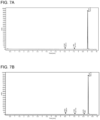
- sativa trichome powder comprised CBGA (5.85%), ⁇ 9 -THC (3.04%), and THCA (91.11%) ( FIG. 7A ; Table 6).
- Table 6 Name RT Peak Area % Amount [ng] Concentration [ ⁇ g/mL] CBG-A 6.542 5.85 22.318 4.4635 ⁇ 9-THC 7.560 3.04 23.837 4.7674 THC-A 9.012 91.11 476.082 95.2163
- the cannabinoid contents of the standardized solvent-solubilized extract included CBGA (5.41%), ⁇ 9 -THC (2.88%), CBC (0.41%) and THCA (91.31%) ( FIG. 7B ; Table 7).
- Table 7 Name RT Peak Area % Amount [ng] Concentration [ ⁇ g/mL] CBG-A 6.552 5.41 20.217 4.0434 ⁇ 9-THC 7.564 2.88 22.072 4.4144 CBC 8.575 0.41 1.326 0.2652 THC-A 9.018 91.31 467.155 93.4311
- DMEA was added dropwise to the standardized solvent-solubilized extract solution at a ratio of 1.5:1 molar ratio DMEA/THCA under constant mixing in a dynamic nitrogen environment thereby precipitating therefrom a solid crude THCA-DMEA salt.
- the crude THCA-DMEA salt was separated from the liquid phase by pressure filtration, washed with cold heptane (4 °C), and then dried under nitrogen to produce 19.52 g of crude THCA-DMEA salt.
- a sample of the crude THCA-DMEA salt was solubilized in methanol and analyzed with the Agilent HPLC system in reference to the standards mixture analysis shown in Example 1.
- the cannabinoid phytochemical contents of the crude THCA-DMEA salt included CBGA (6.66%), ⁇ 9 -THC (1.07%), CBC (0.31 %), and THCA (91.65%) ( FIG. 7C ; Table 8).
- Table 8 Name RT Peak Area % Amount [ng] Concentration [ ⁇ g/mL] CBG-A 6.552 6.66 24.442 4.8884 ⁇ 9-THC 7.574 1.07 8.050 1.6099 CBC 8.576 0.31 0.996 0.1991 THC-A 9.012 91.65 460.863 92.1726
- FIG. 7D and Table 9 show that its content were 99.08% THCA and trace amounts of CBGA (0.32%) and CBC (0.30%).
- Table 9 Name RT Peak Area % Amount [ng] Concentration [ ⁇ g/mL] CBG-A 6.558 0.62 2.349 0.4698 CBC 8.587 0.30 1.000 0.1999 THC-A 9.018 99.08 516.625 103.3249
- the purified THCA-DMEA salt was decarboxylated by dissolution in 86 mL of 2.5% Na 2 CO 3 solution and then constantly mixed under controlled heating at about 101°C for 4 hours to produce a mixture of decarboxylated ⁇ 9 -THC, oil amine, and Na 2 CO 3 solution. Then, about 40 mL of heptane was added to the mixture thereby dissolving ⁇ 9 -THC and amine into the organic phase and partitioning therefrom the aqueous Na 2 CO 3 phase. The aqueous phase was then separated from the organic phase and the organic layer was washed twice with 40 mL of a 5% HCl solution.
- the ⁇ 9 -THC was separated from the amine whereby the ⁇ 9 -THC remained in the organic phase and the amine and HCl were partitioned into the aqueous phase.
- the aqueous layer was separated from ⁇ 9 -THC organic phase after which, the ⁇ 9 -THC-containing organic phase was dried over magnesium sulfate. Heptane was then removed from the ⁇ 9 -THC organic phase by distillation thereby producing 5.74 g of highly purified ⁇ 9 -THC oil.
- a sample of the ⁇ 9 -THC oil was analyzed with the Agilent HPLC system in reference to the standards mixture analysis shown in Example 1.
- FIG. 7E and Table 10 show its content was 99% purified ⁇ 9 -THC.
- the THCA stock solution for this study was prepared as follows. First, a 23.15-g sample of finely ground C. sativa flower buds was extracted twice with 100 mL of hexane. Then, the solvent was removed under reduced pressure using a rotary evaporator to thereby produce 8.3 g of oil which was 36% of the weight of ground flower buds. The 8.3 g of oil were dissolved in 83 mL of hexane thereby producing a stock solution having a crude extract concentration of 100 mg/mL.
- Each of the above twenty two amines was solubilized in an organic solvent and then assessed for its potential to crystallize (i.e. precipitate) THCA salts by dropwise addition of an amine into a 4 mL volume of the stock solution.
- Each of the amines was dissolved in 1 mL of hexane, except for (i) DABCO which was dissolved in 2 mL of diethyl ether, and (ii) quinine which was dissolved in 2 mL of dichloromethane.
- the yield of salt ranged from 0.62 to 0.70 mmole suggesting very similar efficiencies in precipitating the THC acid present in the plant extract.
- the THCA-amine salts produced in Example 4 were characterized by taking their 1 H NMR spectra in CDCl 3 solvent and recorded with a spectrometer at 400MHz.
- Six key peaks of the THC carboxylate portion are reported starting with the most deshielded peak due to 1H followed by 2H, continuing with peaks due to and ending with peaks to the methyl groups 3, 4, 5, and 6.
- the first five peaks were singlets with relative integration 1:1: 3:3:3.
- the last reported peak integrating for 3H is a triplet due to the terminal methyl group of the C5 side chain.
- Key peaks due to the ammonium ion were also identified and listed in order of increasing field strength.
- the relative integration of the peaks due to specific hydrogens in the THCA carboxylate and the ammonium ion indicate a 1:1 ratio of the two species (structure 14):
- a 3:1 molar ratio of each amine was added dropwise to duplicate 35-mL volumes of the crude THCA stock solution while mixing by sonication to thereby cause precipitation of a solid crude THCA-amine salt.
- Each of the amines assessed was dissolved in heptane prior to addition to the crude THCA stock solutions with the exception of DABCO which was solubilized in ethyl acetate and quinine which was solubilized in dichloromethane.
- Each 35-ml volume of the crude THCA stock solution contained 1.656 g of THCA. Precipitation was encouraged by cooling each reaction mixture to -20 °C for 1-24 hours.
- FIG. 9A crude THCA-TMEDA salt
- FIG. 10A crude THCA-DABCO salt
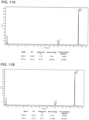
- FIG. 11A crude THCA-DBN salt
- FIG. 12A crude THCA-DBU salt
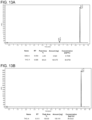
- FIG. 13A crude THCA-piperidineethanol salt
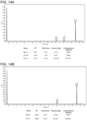
- FIG. 14A crude THCA-quinine salt
- the recrystallizing THCA-amine solutions were then cooled at 4 °C for about 2 hr, and then stored at -20 °C for 12-18 hr to complete the recrystallization processes.
- each of the recrystallized purified THCA-amine salts was then separated from their liquid phases by vacuum filtration, washed with 40 mL of cold heptane, dried under vacuum (Table 12), and then analyzed by HPLC (9B, purified THCA-TMEDA salt; FIG. 10B , purified THCA-DABCO salt; FIG. 11B , purified THCA-DBN salt; FIG. 12B , purified THCA-DBU salt; FIG. 13B , purified THCA-piperidineethanol salt; FIG. 14B , purified THCA-quinine salt).
- each of the THCA-amine salts was decarboxylated by addition into and commingling with a 2.5% Na 3 CO 2 solution at a 10:1 volume/mass ratio followed by heating of the reaction mixture at refluxing conditions (about 100 °C ⁇ 3 °C) for 4 hrs.
- the resulting biphasic solution consisting of an upper organic oil layer and lower aqueous layer was cooled to 70 °C and then, the upper organic layer was solubilized with a 1:1 v/v ratio of heptane to Na 3 CO 2 solution.
- THCA-amine salt Purified THCA-amine salt (g) Mass of decarboxylated ⁇ 9 -THC oil (g) Purified peak area % THCA-TMEDA salt 1.922 1.481 98.1% THCA-DABCO salt 2.766 1.683 90.1% THCA-DBN salt 5.439 1.783 71.1% THCA-DBU salt 3.265 0.352 65.2% THCA-piperidineethanol salt 2.329 2.101 81.0% THCA-quinine salt 5.147 0.193 82.8%
- heptane 50 mL of heptane were added to the organic layer to dissolve the ⁇ 9 -THC and DMEA thereinto.
- the DMEA was separated from the ⁇ 9 -THC by the addition of a 5% HCl solution at a ratio of 1:1 (v/v) thereby producing a biphasic solution consisting of an upper organic layer containing therein ⁇ 9 -THC and a lower aqueous layer containing the DMEA.
- the heptane was removed by distillation thereby producing a highly purified ⁇ 9 -THC ( FIG. 18B ).
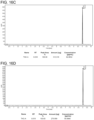
- FIG. 19B shows the HPLC analysis of the purified THCA-DMEA salt produced by dissolution in DCM and recrystallization at 4 °C (control).
- FIG. 19C shows the HPLC analysis of the purified THCA-DMEA salt produced by dissolution in DCM, and recrystallized with a spike of 33% heptane at 4 °C.
- FIG. 19D shows the HPLC analysis of the purified THCA-DMEA salt produced by dissolution in DCM, and recrystallized with a spike of 50% heptane at 4 °C.
- the dissolved THCA-DMEA salt solutions were cooled to room temperature, after which the THCA-DMEA salts were recrystallized by the addition of, i.e. spiking with (iv) 0.15 mL of distilled H 2 O (4.7%), (v) 0.3 mL of distilled H 2 O (9.1%), (vi) 0.4 mL of distilled H 2 O (12.1%), and (vii) 1.0 mL of distilled H 2 O (20.0%).
- a control sample did not receive a distilled H 2 O spike (Table 17).
- the THCA-DMEA solutions were stored at 4 °C for about 10 hr during which time recrystallization of purified THCA-DMEA salts occurred.
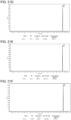
- FIG. 21A shows the HPLC analysis of the purified THCA-DMEA salt produced by dissolution in 2.0 mL of denatured alcohol and recrystallized at 4 °C (control).
- FIG. 21B shows the HPLC analysis of the purified THCA-DMEA salt produced by dissolution in 3.0 mL of denatured alcohol, and recrystallized with a spike of 4.7% of distilled H 2 O at 4 °C.
- FIG. 21C shows the HPLC analysis of the purified THCA-DMEA salt produced by dissolution in 3.0 mL of denatured alcohol, and recrystallized with a spike of 9.1 % of distilled H 2 O at 4 °C.
- FIG. 21A shows the HPLC analysis of the purified THCA-DMEA salt produced by dissolution in 2.0 mL of denatured alcohol and recrystallized at 4 °C (control).
- FIG. 21B shows the HPLC analysis of the purified THCA-DMEA salt produced by dissolution in
- FIG. 21D shows the HPLC analysis of the purified THCA-DMEA salt produced by dissolution in 4.0 mL of denatured alcohol and recrystallized at 4 °C (control).
- FIG. 21E shows the HPLC analysis of the purified THCA-DMEA salt produced by dissolution in 4.0 mL of denatured alcohol, and recrystallized with a spike of 9.1% of distilled H 2 O at 4 °C.
- FIG. 21F shows the HPLC analysis of the purified THCA-DMEA salt produced by dissolution in 4.0 mL of denatured alcohol, and recrystallized with a spike of 20.0% of distilled H 2 O at 4 °C.
- THCA-DMEA salt may be produced by dissolving crude THCA-DMEA salt in smaller volumes of denatured alcohol with or without a spike of distilled water.
- This study assessed recovery of a purified crystalline THCA from a purified THCA-DMEA salt that was produced by dissolution in warmed denatured ethanol, and then recrystallized by cooling and spiking with distilled water.
- the purified THCA-DMEA salts produced in Example 14 ( FIGs. 21A-21F ) were blended together after which, a 2.411-g sample was dissolved in 15 mL of dichloromethane (6:1 volume/mass ratio). The solution was acidified with 8 mL of a 5% HCl solution and thoroughly mixed by shaking in a separatory funnel. The aqueous layer containing the DMEA-hydrochloride was separated from the organic layer containing the THCA. The organic layer was dried over magnesium sulfate, vacuum filtered and the dichloromethane was removed by distillation, producing 1.7958 grams of crystalline THCA ( FIG 22 ).
Landscapes
- Chemical & Material Sciences (AREA)
- Organic Chemistry (AREA)
- Chemical Kinetics & Catalysis (AREA)
- Crystallography & Structural Chemistry (AREA)
- Life Sciences & Earth Sciences (AREA)
- Engineering & Computer Science (AREA)
- Physics & Mathematics (AREA)
- Thermal Sciences (AREA)
- Oil, Petroleum & Natural Gas (AREA)
- General Chemical & Material Sciences (AREA)
- Botany (AREA)
- Mycology (AREA)
- Health & Medical Sciences (AREA)
- Nutrition Science (AREA)
- Food Science & Technology (AREA)
- Polymers & Plastics (AREA)
- Pharmaceuticals Containing Other Organic And Inorganic Compounds (AREA)
- Organic Low-Molecular-Weight Compounds And Preparation Thereof (AREA)
- Pyrane Compounds (AREA)
Description
- This application claims the benefit of
United States Provisional Patent Application No. 62/860,382 filed June 12, 2019 United States Provisional Patent Application No. 62/891,013 filed August 23, 2019 - Various embodiments disclosed herein generally relate to methods for processing mixtures of phytochemicals extracted from plant biomass feedstocks. More specifically, this disclosure pertains to methods for separating and purifying tetrahydrocannabinol compounds from plant extracts recovered from Cannabis sativa plant biomass feedstocks.
- It is well known that plants from the Cannabaceae family produce at least two different classes of terpenophenolic phytochemicals that can affect human physiology and metabolism. The most prominent of these molecules are tetrahydrocannabinol (THC) and cannabidiol (CBD).
- Cannabaceae is a small family of flowering plants that includes about 170 species grouped in 11 genera that include Cannabis (hemp, marijuana). It is well known that the number of species in the Cannabis genus is disputed. The Cannabis genus is most commonly considered to comprise one specie, i.e., Cannabis sativa. However, the Cannabis genus may be also be separated by some, into three subspecies i.e., Cannabis sativa, Cannabis indica, and Cannabis ruderalis. Furthermore, some consider that the C. sativa nomenclature includes C. ruderalis. It is to be noted that herein, the term Cannabis sp. is meant to include all species and subspecies of the Cannabis genus.
- Cannabis sp. are known to produce at least 113 distinct cannabinoids and over 50 terpenes that are concentrated in viscous resins produced in plant structures known as glandular trichomes. Trichomes are located at about the axial growing tips of Cannabis plants. Perhaps the most recognized cannabinoids are tetrahydrocannabinol (THC) and cannabidiol (CBD). It is well known that THC has significant but temporary psychoactive effects (i.e., hallucinogenic) on mammalian physiology and for this reason, various formats of Cannabis sp. plant materials and extracts are consumed for recreational use. It is also well known that CBD does not have psychoactive effects (i.e., hallucinogenic) but does have significant calming and pain relief effects. As an aggregate group of compounds, Cannabis terpenes are known to provide characteristic distinct aromas and flavors. It is also known that terpenes interact with cannabinoids to modulate the physiological effects of cannabinoids.
- It is also well known that fiber-type cannabis, commonly known as hemp, has relatively high levels of CBD with very low levels or no levels of THC and consequently, is considered to have no or only minimal psychoactive and/or anxiogenic effects. The term "hemp" derives its definition from legal and/or regulatory distinctions for fiber-type cannabis strains and cultivars that stably and reproducibly have less than 0.3% THC in the USA. In Canada, a "List of Approved Cultivars for the 2019 Growing Season: Industrial Hemp Varieties Approved for Commercial Production" released by Health Canada (https://www.canada.ca/en/health-canada/services/drugs-medication/cannabis/producinq-sellinq-hemp/commercial-licence/list-approved-cultivars-cannabis-sativa.html), listed 52 approved hemp cannabis cultivars in Canada.
- Cannabinoid compounds used for both recreational and medicinal purposes are almost exclusively extracts that have been solubilized and recovered from cannabis plants. The most commonly known and widely used cannabis extraction methods are based on the use of organic solvents. Some drawbacks associated with such methods include poor or inconsistent yields and high costs associated with extraction and purification of extract and toxicity of some of the extraction solvents. Government regulations and security for cannabis plants are also an important consideration that adds to the overhead cost of producing extracts containing cannabinoid compounds.
- From a technical standpoint, conventional extraction methods using non-aqueous solvents, and the like are too crude or too complex, inefficient, time consuming, and/or expensive. Conventional methods of extraction that have been used to separate the above and other constituents of botanical materials, and to produce enriched extracts of same, include maceration, decoction, and extraction with aqueous and non-aqueous solvents, and distillation. While there is a wide variety of extraction technologies to be applied to botanical materials, such extraction methodologies do not retain as many extracted target molecules once the solvent is removed. In particular, no conventional extraction technology allows for sufficient extraction and purification of the cannabinoid compounds without substantial loss or transformation of the target compounds. Furthermore, extraction solvents used in current methodologies are not effectively removed from the extracted materials without significant simultaneous loss of target molecules.
- A significant challenge in assuring the delivery of consistent reproducible quality and content of extracts, including cannabinoid extracts of THC and CBD, is due to natural variations of endogenous phytochemicals that occur in plants. The chemical "fingerprint" of a particular species of a botanical can vary widely depending on the age of the plant, time of harvest, soil conditions, weather conditions, and myriad other factors. It is known that botanicals with very different phytochemical profiles will have different therapeutic effects, even if the botanicals are recovered from the same plant species. Standardization of botanical extracts provides the batch-to-batch reproducibility of a final product. A standardized extract has a concentration of marker compound that is known to a high degree of accuracy, and because both the amount of botanical material that is extracted and the amount of a carrier that may be added can be varied, it is possible to compensate for natural variability in the plant material. Also, if endogenous phytochemical active components of a standardized botanical extract are administered to patients in known quantities, then the treatments following prognosis of a diseases can be monitored. Therefore, there is a need for standardized and reproducible extracts of botanicals, including extracts derived from C. sativa.
-
US 2015/0038567 A1 discloses a method which comprises producing synthetic cannabinoid carboxylic acids in a chemical reaction or extracting natural cannabinoid carboxylic acids from plant material or cell cultures of Cannabis sativa and adding a suitable inorganic or organic base and/or a suitable inorganic or organic salt in a suitable solvent to the cannabinoid carboxylic acids or cannabinoid carboxylic acid-rich extracts. - The present invention relates to methods for separating, recovering, and purifying tetrahydrocannabinolic acid (referred to herein as "THCA") or a THCA-amine salt from an organic solvent solution comprising a mixture of cannabinoids, as well as THCA-amine salts as defined in the appended claims.
- The present invention will be described in conjunction with reference to the following drawings in which:
-
FIG. 1A is a chart showing a linear calibration curve for cannabidivarin (CBDV); -
FIG. 1B is a chart showing a linear calibration curve for tetrahydrocannbidivarin (THCV); -
FIG. 1C is a chart showing a linear calibration curve for cannabidiol (CBD); -
FIG. 2A is a chart showing a linear calibration curve for cannabigerol (CBG); -
FIG. 2B is a chart showing a linear calibration curve for cannabidiolic acid (CBDA); -
FIG. 2C is a chart showing a linear calibration curve for cannabigerolic acid (CBGA); -
FIG. 3A is a chart showing a linear calibration curve for cannabinol (CBN); -
FIG. 3B is a chart showing a linear calibration curve for Δ9-tetrahydrocannabinol (Δ9-THC); -
FIG. 3C is a chart showing a linear calibration curve for Δ8-tetrahydrocannabinol (Δ8-THC); -
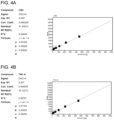
FIG. 4A is a chart showing a linear calibration curve for cannabichromene (CBC); -
FIG. 4B is a chart showing a linear calibration curve for (-)-Trans-Δ9-tetrahydrocannabinolic acid (THCA); -
FIG. 5 is an HPLC chromatogram showing separation of a standardized reference mixture of the eleven cannabinoid phytochemicals shown inFIGs. 1A-4B ; -
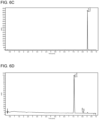
FIG. 6A is an HPLC chromatogram showing separation of cannabinoids from a solvent-solubilized crude C. sativa extract from Example 2; -
FIG. 6B is an HPLC chromatogram showing a washed crude THCA-DMEA salt precipitated and recovered from the solvent-solubilized crude C. sativa extract shown inFIG. 6A ; -
FIG. 6C is an HPLC chromatogram showing a purified THCA-DMEA salt after recrystallization of the crude THCA-DMEA salt shown inFIG. 6B ; -
Fig 6D is an HPLC chromatogram showing a highly purified Δ9-THC oil product after decarboxylation and partitioning of the purified THCA-DMEA salt shown inFIG. 6C ; -
FIG. 7A is an HPLC chromatogram showing cannabinoids present in a finely ground C. sativa trichome biomass from Example 3; -
FIG. 7B is an HPLC chromatogram showing separation of cannabinoids from a solvent-solubilized crude extract prepared from the finely ground trichome biomass shown inFIG. 7A ; -
FIG. 7C is an HPLC chromatogram showing a crude THCA-DMEA salt precipitated and recovered from the solvent-solubilized crude extract shown inFIG. 7B ; -
FIG. 7D is an HPLC chromatogram showing a purified THCA salt recrystallized from the crude THCA-DMEA salt shown inFIG. 7C ; and -
FIG. 7E is an HPLC chromatogram showing a highly purified Δ9-THC oil product prepared from the recrystallized THCA salt shown inFIG. 7D ; -
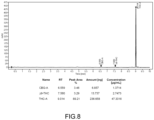
FIG. 8 is an HPLC chromatogram of a crude THCA stock solution prepared for Example 6; -
FIG. 9A is an HPLC chromatogram of a washed crude THCA-TMEDA salt prepared from the crude THCA stock solution shown inFig 8 ; -
FIG. 9B is an HPLC chromatogram of a purified THCA-TMEDA salt recrystallized from the crude salt shown inFIG. 9A ; -
FIG. 10A is an HPLC chromatogram of a washed crude THCA-DABCO salt prepared from the crude THCA stock solution shown inFig 8 ; -
FIG. 10B is an HPLC chromatogram of a purified THCA-DABCO salt recrystallized from the crude salt shown inFIG. 10A ; -
FIG. 11A is an HPLC chromatogram of a washed crude THCA-DBN salt prepared from the crude THCA stock solution shown inFig 8 ; -
FIG. 11B is an HPLC chromatogram of a purified THCA-DBN salt recrystallized from the crude salt shown inFIG. 11A ; -
FIG. 12A is an HPLC chromatogram of a washed crude THCA-DBU salt prepared from the crude THCA stock solution shown inFig 8 ; -
FIG. 12B is an HPLC chromatogram of a purified THCA-DBU salt recrystallized from the crude salt shown inFIG. 12A ; -
FIG. 13A is an HPLC chromatogram of a washed crude THCA-piperidineethanol salt; -
FIG. 13B is an HPLC chromatogram of a purified THCA-piperidineethanol salt recrystallized from the crude salt shown inFIG.13A ; -
FIG. 14A is an HPLC chromatogram of a washed crude THCA-quinine salt prepared from the crude THCA stock solution shown inFig 8 ; -
FIG. 14B is an HPLC chromatogram of a purified THCA-quinine salt recrystallized from the crude salt shown inFIG. 14A ; -
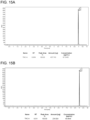
FIG. 15A is an HPLC chromatogram of a purified THCA-DMEA from Example 8; -
FIG. 15B is an HPLC chromatogram of a highly pure crystalline THCA recovered from the purified THCA-DMEA salt shown inFIG. 15A ; -
FIG. 16A is an HPLC chromatogram showing separation of cannabinoids present in a standardized solvent-solubilized C. sativa extract prepared for assessment of the effects of spiking with denatured ethanol in Example 9; -
FIG. 16B is an HPLC chromatogram of a washed crude THCA-DMEA salt recovered from the standardized solvent-solubilized C. sativa extract shown inFIG. 16A ; -
FIG. 16C is an HPLC chromatogram showing the effects of a 0.350-mL denatured alcohol spike prior to adding DMEA to the standardized solvent-solubilized C. sativa extract shown inFIG. 16A , on the separation of THCA-DMEA salt; -
FIG. 16D is an HPLC chromatogram showing the effects of a 0.525-mL denatured alcohol spike prior to adding DMEA to the standardized solvent-solubilized C. sativa extract shown inFIG. 16A , on the separation of THCA-DMEA salt; -
FIG. 17A is an HPLC chromatogram showing separation of cannabinoids present in a standardized solvent-solubilized C. sativa extract prepared for assessment of the effects of spiking with denatured ethanol in Example 10; -
FIG. 17B is an HPLC chromatogram of a washed crude THCA-DMEA salt recovered from the standardized solvent-solubilized C. sativa extract shown inFIG. 17A ; -
FIG. 17C is an HPLC chromatogram showing the effects of a 0.525-mL denatured alcohol spike prior to adding DMEA to the standardized solvent-solubilized C. sativa extract shown inFIG. 17A , on the separation of THCA-DMEA salt; -
FIG. 18A is an HPLC chromatogram showing the composition of a purified THCA-DMEA salt used in Example 11; -
FIG. 18B is an HPLC chromatogram showing the composition of a purified Δ9-THC prepared from the THCA-DMEA salt shown inFIG. 18A ; -
FIG. 19A is an HPLC chromatogram showing the composition of a crude THCA-DMEA salt used in Example 12; -
FIG. 19B is an HPLC chromatogram showing the composition of a purified THCA-DMEA salt produced from the crude THCA-DMEA salt shown inFIG. 19A by dissolution in dichloromethane and recrystallization at 4 °C; -
FIG. 19C is an HPLC chromatogram showing the composition of a purified THCA-DMEA salt produced from the crude THCA-DMEA salt shown inFIG. 19A by dissolution in dichloromethane with a spike of 33% heptane and recrystallization at 4 °C; -
FIG. 19D is an HPLC chromatogram showing the composition of a purified THCA-DMEA salt produced from the crude THCA-DMEA salt shown inFIG. 19A by dissolution in dichloromethane with a spike of 50% heptane and recrystallization at 4 °C; -
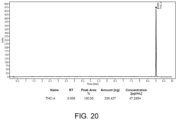
FIG. 20 is an HPLC chromatogram showing the composition of a purified crystalline THCA separated and recovered from the blended purified THCA-DMEA salts produced in Example 12 (Figs. 19B ,19C, 19D ); -
FIG. 21A is an HPLC chromatogram showing the composition of a purified THCA-DMEA salt produced from the crude THCA-DMEA salt shown inFIG. 19A , by dissolution in 2.0 mL of denatured alcohol and recrystallized at 4 °C in Example 13; -
FIG. 21B is an HPLC chromatogram showing the composition of a purified THCA-DMEA salt produced from the crude THCA-DMEA salt shown inFIG. 19A , by dissolution in 3.0 mL of denatured alcohol and recrystallized with a spike of 4.7% of distilled H2O at 4 °C; -
FIG. 21C is an HPLC chromatogram showing the composition of a purified THCA-DMEA salt produced from the crude THCA-DMEA salt shown inFIG. 19A , by dissolution in 3.0 mL of denatured alcohol and recrystallized with a spike of 9.1% of distilled H2O at 4 °C; -
FIG. 21D is an HPLC chromatogram showing the composition of a purified THCA-DMEA salt produced from the crude THCA-DMEA salt shown inFIG. 19A , by dissolution in 3.0 mL of denatured alcohol and at 4 °C (control); -
FIG. 21E is an HPLC chromatogram showing the composition of a purified THCA-DMEA salt produced from the crude THCA-DMEA salt shown inFIG. 19A , by dissolution in 3.0 mL of denatured alcohol and recrystallized with a spike of 9.1% of distilled H2O at 4 °C; -
FIG. 21F is an HPLC chromatogram showing the composition of a purified THCA-DMEA salt produced from the crude THCA-DMEA salt shown inFIG. 19A , by dissolution in 3.0 mL of denatured alcohol and recrystallized with a spike of 20.0% of distilled H2O at 4 °C; and -
FIG. 22 is an HPLC chromatogram showing the composition of a purified crystalline THCA separated and recovered from the blended purified THCA-DMEA salts produced in Example 12 (Figs. 19B ,19C, 19D ). - No language or terminology in this specification should be construed as indicating any non-claimed element as essential or critical. All methods described herein can be performed in any suitable order unless otherwise indicated herein. The use of any and all examples, or example language (e.g., "such as") provided herein, is intended merely to better illuminate example embodiments and does not pose a limitation on the scope of the claims appended hereto unless otherwise claimed.
- It should be noted that if the stereochemistry of a structure or a portion of a structure is not indicated with, for example, bold or dashed lines, the structure or the portion of the structure is to be interpreted as encompassing all stereoisomers of it. Moreover, any atom shown in a drawing with unsatisfied valences is assumed to be attached to enough hydrogen atoms to satisfy the valences. In addition, chemical bonds depicted with one solid line parallel to one dashed line encompass both single and double (e.g., aromatic) bonds, if valences permit.
- Throughout this specification, the word "comprise", or variations such as "comprises", "comprising", "including", "containing", and the like, will be understood to imply the inclusion of a stated element or integer or group of elements or integers but not the exclusion of any other element or integer or group of elements or integers, unless the context requires otherwise.
- To facilitate understanding of this example embodiments set forth herein, a number of terms are defined below. Generally, the nomenclature used herein and the laboratory procedures in biology, biochemistry, organic chemistry, medicinal chemistry, pharmacology described herein are generally well known and commonly employed in the art. Unless defined otherwise, all technical and scientific terms used herein generally have the same meaning as commonly understood in the art to which this disclosure belongs. In the event that there is a plurality of definitions for a term used herein, those in this written description shall prevail unless stated otherwise herein.
- As used herein, the singular forms "a", "an", and "the," may also refer to plural articles, i.e., "one or more", "at least one", "and/or", are open-ended expressions that are both conjunctive and disjunctive in operation. For example, the term "a cannabinoid" includes "one or more cannabinoids". Further, each of the expressions "at least one of A, B, and C", "at least one of A, B, or C", "one or more of A, B, and C", "one or more of A, B, or C" and "A, B, and/or C" means A alone, B alone, C alone, A and B together, A and C together, B and C together, or A, B and C together. The term "an entity" refers to one or more of that entity. As such, the terms "a", "an", "one or more", and "at least one" can be used interchangeably herein.
- Recitation of ranges of values herein are merely intended to serve as a shorthand method of referring individually to each separate value falling within the range, unless otherwise indicated herein, and each separate value is incorporated into the specification as if it were individually recited herein. Where a specific range of values is provided, it is understood that each intervening value, to the tenth of the unit of the lower limit unless the context clearly dictates otherwise, between the upper and lower limit of that range and any other stated or intervening value in that stated range, is included therein. All smaller subranges are also included. The upper and lower limits of these smaller ranges are also included therein, subject to any specifically excluded limit in the stated range.
- The terms "about" or "approximately" as used herein, mean an acceptable error for a particular recited value, which depends in part on how the value is measured or determined. In certain embodiments, "about" can mean one or more standard deviations. When the antecedent term "about" is applied to a recited range or value it denotes an approximation within the deviation in the range or value known or expected in the art from the measurement method. For removal of doubt, it shall be understood that any range stated in this written description that does not specifically recite the term "about" before the range or before any value within the stated range inherently includes such term to encompass the approximation within the deviation noted above.
- As used herein, the terms "cannabis" and "cannabis biomass" encompass whole Cannabis sativa plants and also parts thereof which contain cannabinoids and cannabis phytochemicals, such as the aerial parts of the plants or isolated leaves and/or flowering heads and/or seeds. The term also encompasses freshly harvested cannabis plant material and also plant material, cannabis plant material that was dried after harvesting. Dried cannabis plant material may be in a loose form or alternatively, may be baled into square bales or rectangular bales or round bales or alternatively, may be compressed into cubes or pellets or cubes. Dried cannabis plant material may be separated into two or more components wherein one component comprises the cannabis stalks and stems, and a second component comprises the leaves, trichomes, and flowers. The second component may be further separated into leaves and trichome/flower components and the trichome/flower components may be separated into trichome and flower components. The separated dried cannabis plant material components may be stored in a loose form and/or processed into a baled form and/or processed into a compressed form. The separated dried cannabis plant material components may be packaged and stored in a packaging material.
- Freshly harvested and/or dried harvested cannabis biomass may be processed with a selected solvent to separate and recover therefrom in a crude extract, a complex mixture of cannabinoids and cannabis phytochemicals.
- The term "cannabinoid" as used herein encompasses cannabidiol (CBD), cannabidiolic acid (CBDA), cannabinol (CBN), cannabigerol (CBG), cannabigerolic acid (CBGA), cannabichromene (CBC), cannabichromenic (CBCA), cannabicyclol (CBL), cannabivarin (CBV), cannabidivarin (CBDV), cannabidivarinic (CBDVA), cannabichromevarin (CBCV), cannabigerovarin (CBGV), cannabigerol monomethyl ether (CBGM), cannabielsoin (CBE), cannabicitran (CBT), among others. The term "cannabinoid" may also be substituted for herein by the acronym "CBD". The term "tetrahydrocannabinol" as used herein encompasses (-)-Trans-Δ9-tetrahydrocannabinol (Δ9-THC), Δ8-tetrahydrocannabinol (Δ8-THC), iso-tetrahydrocannabinol, tetrahydrocannabinolic acid (THCA), tetrahydrocannabivarin (THCV), tetrahydrocannabivarinic acid (THCVA), among others. The term "tetrahydrocannabinol" may also be substituted for herein by the acronym "THC".
- The term "cannabis phytochemicals" as used herein, refers to biologically active compounds produced by Cannabis sativa plants, and in particular, to mixtures of terpenes, terpenoids, flavonoids, alkaloids, lignans, omega fatty acids, pigments, and the like, that may be extracted and separated from cannabis biomass by solvent extraction. The term "phytochemical" as used herein, refers to a single biologically active compound that has been separated from a mixture of phytochemicals.
- The term "solvent" as used herein, is used herein to denote a liquid or gas capable of dissolving a solid or another liquid or gas. Non-limiting examples of solvents include alcohols such as methanol, ethanol, propanol, isopropanol, butanol, C3-C7 hydrocarbon solvents such as alkanes and ethers having b.p. less than 110 °C, toluene, ethyl acetate, acetone (also known as propanone), dichloromethane, 1,4-dioxane, tetrahydrofuran, acetonitrile, supercritical carbon dioxide (CO2), subcritical CO2, hot water, supercritical H2O, subcritical H2O, and the like.
- As used herein, the term "antisolvent" refers to a solvent that may be used to precipitate a target compound or molecule from another solvent in which the target compound or molecule is completely dissolved whereby, as the antisolvent is added to the solvent containing the dissolved target compound or molecule, the precipitation process is initiated by nucleation of the target compound or molecule followed by the formation of solid particles.
- The term "crude precipitate" as used herein means the solids and/or oils produced by a chemical reaction between a selected organic base with a mixture of cannabinoid carboxylic acids present in a crude cannabis extract. The "crude precipitate" may also be referred to herein as a "crude isolate" or a "carboxylic acid salt" or a "precipitated cannabinoid".
- The term "purified precipitate" as used herein means the solids and/or oils remaining after the crude precipitate is washed with a selected solvent such as, for example, with ethyl acetate at 40 °C. A purified precipitate may also be produced via a recrystallization process wherein the crude precipitate is dissolved in a heated solvent and then cooled to an appropriate temperature to induce crystallization. Alternatively, the crude precipitate may be dissolved in a solvent which readily dissolves both the desired purified precipitate and the impurities present in the crude precipitate, followed by addition of an antisolvent in which the desired purified precipitate is insoluble and the impurities remain in solution. Subsequent filtration yields the purified precipitate. The "purified precipitate" may also be referred as a "purified isolate" or a "purified cannabinoid precipitate" or a "purified cannabinoid carboxylic acid".
- As used herein, the term a "standardized solvent-solubilized crude extract" refers to a crude extract that has been adjusted by the addition or removal of a solvent to adjust the concentrations therein of one or more bioactive markers, such as THCA, to a selected target range in comparison to the concentrations of the one or more bioactive markers in a reference solution, using analytical methods known to those skilled in these arts. For example, suitable analytical methods include HPLC methods and the like.
- Without being bound by any theory of operation or mechanism of action, the examples of embodiments disclosed herein are based in part, on an unpredicted/unexpected discovery that use of an amine having a suitably placed heteroatom such as oxygen or nitrogen, can effectuate the transfer of the acidic proton from the carboxylic acid to the amine by stable/strong hydrogen bonding in the ammonium ion, as shown below, and thereby drive the acid-base reaction to completion and facilitate the crystallization of the desired salt as shown in
Eqn 1 and Eqn 2:

- It was surprisingly discovered that some amines precipitated THCA salts from crude C. sativa extracts solubilized in pentane, hexane or heptane. The amine-precipitated THCA salts, also referred to herein as THCA-amine salts, have very low solubilities in a number of organic solvents at room temperature and therefore, may be washed with those organic solvents to remove more soluble impurities and produce highly purified THCA-amine salts.
- For example, it was discovered that the amino alcohols N,N.dimethylaminoethanol and piperidineethanol readily produce solid salts with THCA that are present in solvent-solubilized crude extracts comprising complex mixtures of cannabinoids and cannabis phytochemicals, despite the relatively high acidity of their ammonium ions [(CH3)2NHCH2OH+pKa= 9.3]. It was also discovered that the 1,3-diamines tetramethylethylenediamine (TMEDA, pka of the protonated TMEDA is 9.0) and 1,4-diazo [2,2,2] bicyclooctane (DABCO, pka of the protonated DABCO = 8.9), also precipitate THCA-amine salts having characteristics similar to those produced with the aforementioned amino alcohols. The strong hydrogen bonding in the ammonium ion of the salt as shown below may raise the melting point of the desired salt since it makes that portion of the molecule more rigid and better able to fit into a lattice. This is shown clearly in the X-ray structure of the THCA-TMEDA salt (1).

- It was further discovered that the
diamines 1,5-diazabicyclo[4.3.0]non-5-ene (DBN) and 1,8-diazabicyclo[5.4.0]undec-7-ene (DBU) readily form salts upon reacting with THCA solubilized in organic solvents, and it was observed that such THCA-amine salts remain as solids at ambient room temperatures. DBN and DBU are very strong bases with rigid bicyclic structures and with a pKa value of 13.5.
- It was further discovered that a tertiary amine selected from quinine, N,N-diisopropylethylamine (also known as Hunig's base), and triethylamine, also form solid THCA-amine salts from solvent-solubilized crude C. sativa extracts.
- This surprisingly contrasts with the observations that many other equally and even more basic amines including benzylamine, cyclohexylamine, tert-butlyamine, piperidine, dicyclohexylamine, tributlyamine, tripropylamine, and isopropylcyclohexylamine failed to produce solid salt precipitates when added to solvent-solubilized crude cannabis extracts known to comprise THCA. Furthermore, it was observed that weakly acidic amines such as aromatic and heteroaromatic amines, for example aniline and N,N-dimethylaniline, whose conjugate bases have species with pKa values lower than 5, failed to give even insoluble oil salts when added to a solution containing THCA. In these cases, the equilibrium for salt formation is not as favorable as with the much more basic amines, as shown in Eqn 3:

- Therefore, according to an embodiment of the present disclosure, it was discovered that, at an ambient temperature, addition of an equivalent amount of DMEA into an organic hydrocarbon solvent containing therein a complex mixture of cannabis compounds extracted from C. sativa plant biomass (i.e., a crude extract), results in an immediate phase separation THCA-amine salt from the complex solvent mixture into an oil form that may be subsequently precipitated into a solid salt form. The structure of the precipitated THCA-amine salt produced in the above reaction can be verified by 1H NMR spectroscopy which shows the expected 6:1:1 ratio of the hydrogen nuclei due to the dimethylamino group [2.6ppm, s, 6H] present in the basic component, the remaining single hydrogen ion on the aromatic ring [6.2 ppm, s, 1H] and the alkene H [6.8ppm, broad s, 1H] due to the THC moiety.
- The precipitated THCA-amine salt may be recrystallized and purified by (i) first slurrying and at least partially dissolving the salt in a selected volume of a solvent such as, for example, ethyl acetate or heptane or a mixture thereof, and then (ii) slowly adding a selected suitable solvent such as hexane or heptane or pentane or petroleum ether until recrystallization of the THCA into a purified salt form commences.
- Alternatively, the precipitated THCA-amine salt can be dissolved in a minimum of a suitable organic solvent by heating, and the cooling to thereby cause recrystallization to occur.
- Then, the recrystallized THCA salt may be dissolved in a suitable polar aprotic solvent, for example ethyl acetate, to which is added a 0.1M-HCl solution to cause partitioning of the mixture into an aqueous layer and an organic solvent layer. Sufficient 0.1M-HCl solution is added until the aqueous layer turns litmus paper a red color. The two resulting layers may be separated using separation processes known to those skilled in this art. HPLC analysis of the partitioned ethyl acetate layer will show the presence of very high-purity Δ9-THCA (in reference to a Δ9-THCA standard). Ethyl acetate may be removed from the partitioned organic layer thereby producing very high-purity Δ9-THCA initially as an oil that solidifies into a powder form.
- It is to be noted that crystallization is an important step for separation and purification of THCA. Crystallization involves two key steps: (i) formation of solid particles from liquid solution (nucleation) and (ii) growth due to the deposition of additional substances on existing particles. The thermodynamic driving force behind both steps is the difference in chemical potential between solution i.e. liquid phase and crystal i.e. solid phase. In practice, the difference can be represented by supersaturation, which is defined as the difference between the actual concentration of the crystallizing substance in the solution and its saturation concentration. Generally, crystallization of cannabinoids in a solvent mixture is a function of temperature and time. For example, a way to induce crystallization is to lower the temperature below the saturation point of a particular constituent that can then precipitate out of the solution as a solid. Crystallization may also be induced by providing seed crystals to the mixture and/or by scratching an inner surface of the vessel wherein the mixture is contained.
- According to the present disclosure, other suitable amine bases, in addition to DMEA, that may be used in the methods disclosed herein to precipitate THCA-amine salts from solvent-solubilized crude C. sativa extracts are DMEA, piperidineethanol, TMEDA, DBU, DBN, DABCO, N,N-diisopropylethylamine (Hunig's base), and quinine.
- An embodiment of the present disclosure pertains to an example method for separating out, recovering, and purifying THCA in the form of a THCA-amine salt, from a crude extract comprising a mixture of cannabinoids and cannabis phytochemicals recovered from processing cannabis biomass, and then converting the purified THCA-amine salt into a purified Δ9-THC product. The example method comprises the steps of:
- 1. assaying a crude C. sativa extract to determine the concentration of THCA therein.
- 2. adding to and commingling a first organic solvent with the crude extract to reduce the THCA content therein to a level within a selected target range in reference to a THCA standard, thereby producing a standardized solvent-solubilized crude extract;
- 3. adding and mixing into the standardized solvent-solubilized crude extract, a selected volume of a selected amine whereby the amine reacts with THCA in an acid-base reaction, thereby forming and precipitating a crude THCA-amine salt;
- 4. separating and recovering the precipitated crude THCA-amine salt from the standardized solvent-solubilized crude extract;
- 5. washing the recovered crude THCA-amine salt with a selected second organic solvent one or more times to thereby produce a washed THCA-amine salt;
- 6. re-solubilizing the washed THCA-amine salt in a selected third organic solvent;
- 7. crystalizing the solubilized THCA-amine salt by cooling and optionally adding a selected antisolvent, to thereby produce a purified crystallized THCA-amine salt;
- 8. decarboxylating the purified THCA-amine salt to produce an oil comprising Δ9-THC and amine;
- 9. solubilizing the oil comprising Δ9-THC in a selected fourth organic solvent to thereby partition therefrom an organic layer containing a highly purified Δ9-THC oil and the amine, and an aqueous layer;
- 10. separating the organic layer containing the highly purified Δ9-THC and the amine from the aqueous layer;
- 11. acidifying the organic layer to partition therefrom an organic layer containing highly purified Δ9-THC in the form of an oil, and an aqueous layer containing the amine; and
- 12. concentrating the highly purified Δ9-THC oil by volatilization of the fourth organic solvent therefrom.
- The first organic solvent for use in
step 2 is heptane, hexane or pentane. It is optional if so desired, to solubilize the crude C. sativa extract in a selected volume of the first organic solvent prior to assaying the crude C. sativa extract instep 1. - According to an aspect, a suitable target range for adjusting the THCA content to in
step 2 may be from about 20 mg/mL to about 150 mg/mL. A particularly suitable target range may be from about 30 mg/mL to about 70 mg/mL. A preferred target range may be from about 31 mg/mL to about 47 mg/mL. - The amine for use in
step 3 is a N,N-dialkylethanolamine selected from DMEA and piperidineethanol, a diamine selected from TMEDA, DABCO, DBN and DBU, or a tertiary amine selected from Hunig's base, triethylamine and quinine. - According to another aspect, the standardized solvent-solubilized crude extract may be spiked with a selected volume of denatured alcohol prior to step 3 of adding and mixing the selected amine thereinto. A suitable volume of denatured alcohol may be selected from a range of about 2% to about 10% by volume of the standardized solvent-solubilized crude extract. Alternatively, the standardized solvent-solubilized crude extract may be spiked with a selected volume of acetone prior to adding and mixing the selected amine thereinto. A suitable volume of acetone may be selected from a range of about 4% to about 20% by volume of the standardized solvent-solubilized crude extract.
- According to another aspect, a suitable second organic solvent for washing the recovered crude THCA-amine salt in
step 5, may be a C5-C7 hydrocarbon solvent such as an alkane or a petroleum ether. Suitable alkanes include heptane, hexane, pentane, their isomers, and the like. Particularly suitable alkanes are heptane and hexane. - According to another aspect, a suitable third organic solvent for resolubilizing the washed THCA-amine salt in
step 6, may be one of ethyl acetate, ethanol, methanol, dichloromethane, toluene, and the like. A particularly suitable solvent for resolubilizing the washed THCA-amine salt instep 7, may be ethyl acetate heated to about 60 °C. - According to another aspect, a suitable antisolvent for recrystallizing the solubilized THCA salt in
step 7, may be an alkane such as one of heptane, hexane, pentane, and the like. Additionally, water may be a suitable antisolvent if an alcohol has been selected as the third solvent. - According to another aspect, the recrystallized purified THCA salt may be decarboxylated in
step 8, by adding the THCA salt into a sodium carbonate (Na2CO3) solution, then heating the mixture under constant mixing at a temperature selected from a range of about 90 °C to reflux for a period of time selected from a range of about 2 hr to about 18 hr, thereby producing an oil comprising Δ9-THC and amine in the Na2CO3 solution. A suitable concentration of Na2CO3 solution to use for this step is from a range of about 1% to about 15% (w/v). A particularly suitable concentration of Na2CO3 solution is from a range of about 2.5% to about 10% (w/v), for example, about 5% (w/v). A particularly suitable temperature for this decarboxylation step is about 100 °C. A particularly suitable time duration for this decarboxylation step is about 4 hr. - According to another aspect, the Δ9-THC can be suspended and separated from the Na2CO3 solution in
step 9, by the addition of an alkane to the Na2CO3 solution to dissolve the Δ9-THC thereinto and to partition the Na2CO3 solution into an organic phase containing highly purified d Δ9-THC and amine therein and an aqueous phase containing the Na2CO3 solution and residual contaminants separated from the decarboxylated Δ9-THC. - According to another aspect, the amine may be separated from the Δ9-THC by acidification of the organic layer with a mineral acid thereby producing an organic layer comprising highly purified Δ9-THC oil, and an aqueous layer containing the amine. Suitable mineral acids may be HCl or H2SO4 and the like.
- According to some embodiments, the methods disclosed herein may additionally comprise steps for processing C. sativa biomass to producing and further processing crude extracts comprising complex mixtures of cannabinoids and cannabis phytochemicals prior to the step of producing a solvent-solubilized crude C. sativa extract according to the example method disclosed herein. For example, C. sativa biomass may be extracted with an organic solvent, for example, an alkane such as heptane, hexane, propane, butane, pentane, and the like to produce a crude C. sativa extract. Alternatively, C. sativa biomass may be extracted with an alcohol such as methanol, ethanol, propanol, isopropanol, butanol, and the like to produce a crude C. sativa extract. After separating and recovering the crude C. sativa extract from the spent biomass, the recovered crude C. sativa extract may be concentrated into a crude extract oil form by volatilization of the organic solvent, ideally under reduced pressure.
- Another embodiment of the present disclosure pertains to an example method for preparing a crude extract from cannabis biomass, then separating out, recovering, and purifying THCA from the crude extract in the form of a THCA-amine salt, then converting the purified THCA-amine salt into a purified Δ9-THC product in the form of an oil. The example method comprises the steps of:
- 1. processing a C. sativa biomass in a selected first organic solvent to produce a solvent-solubilized crude extract therefrom;
- 2. assaying the crude extract to determine the content of THCA therein;
- 3a. if so desired, adding additional first organic solvent to the solvent-solubilized crude extract to reduce the THCA content therein to a level within a selected range in reference to a THCA standard, thereby producing a standardized solvent-solubilized crude extract;
- 3b. if so desired, removing some of the first organic solvent from the solvent-solubilized crude extract to increase the THCA content therein to a level within a selected range in reference to a THCA standard, thereby producing a standardized solvent-solubilized crude extract;
- 4. adding and mixing into the standardized solvent-solubilized crude extract, a selected volume of a selected amine whereby the amine reacts with THCA in an acid-base reaction, thereby forming and precipitating a crude THCA-amine salt;
- 5. separating and recovering the precipitated crude THCA-amine salt from the standardized solvent-solubilized crude extract;
- 6. washing the recovered crude THCA-amine salt with a selected second organic solvent one or more times to thereby produce a washed THCA-amine salt;
- 7. re-solubilizing the washed THCA-amine salt in a selected third organic solvent to thereby produce a solution of the THCA-amine salt;
- 8. crystalizing the solubilized THCA-amine salt by cooling, and optionally adding a selected antisolvent, to thereby produce a purified recrystallized THCA-amine salt;
- 9. decarboxylating the purified THCA-amine salt to produce an oil comprising Δ9-THC and the amine;
- 10. solubilizing the oil comprising Δ9-THC in a selected fourth organic solvent to thereby partition therefrom an organic layer containing a highly purified Δ9-THC oil and the amine, and an aqueous layer;
- 11. separating the organic layer contacting the highly purified Δ9-THC organic layer and amine from the aqueous layer;
- 12. acidifying the highly purified Δ9-THC organic layer to partition therefrom an organic layer consisting of highly purified Δ9-THC in the form of an oil, and an aqueous layer containing the amine;
- 13. separating the aqueous layer from the highly purified Δ9-THC oil; and
- 14. concentrating the highly purified Δ9-THC oil by volatilization of the fourth organic solvent therefrom.
- The first organic solvent for use in
step 1 is heptane, hexane or pentane. Particularly suitable are heptane and hexane. It is optional if so desired, to concentrate the crude C. sativa extract into an oil form and then adding a selected volume of the C5-C5 alkane prior to assaying the crude C. sativa extract instep 2. - According to an aspect, a suitable target range for adjusting the THCA content to in step 3a or 3b may be from about 20 mg/mL to about 150 mg/mL. A particularly suitable target range may be from about 30 mg/mL to about 70 mg/mL. A preferred target range may be from about 31 mg/mL to about 47 mg/mL.
- The amine for use in
step 3 is a N,N-dialkylethanolamine selected from DMEA and piperidineethanol, a diamine selected from TMEDA, DABCO, DBN and DBU, or a tertiary amine selected from Hunig's base, triethylamine and quinine. - According to another aspect, the standardized solvent-solubilized crude extract may be spiked with a selected volume of denatured ethanol prior to adding and mixing the selected amine thereinto. A suitable volume of denatured ethanol may be selected from a range of about 2% to about 10% by volume of the standardized solvent-solubilized crude extract. Alternatively, the standardized solvent-solubilized crude extract may be spiked with a selected volume of acetone prior to adding and mixing the selected amine thereinto. A suitable volume of acetone may be selected from a range of about 4% to about 20% by volume of the standardized solvent-solubilized crude extract.
- According to another aspect, a suitable second solvent for washing the recovered crude THCA-amine salt in
step 6, may be an alkane such as one of heptane, hexane, pentane, their isomers, and the like. Particularly suitable alkanes are heptane and hexane. - According to another aspect, a suitable third solvent for resolubilizing the washed THCA-amine salt in
step 7, may be one of ethyl acetate, ethanol, methanol, and the like. A particularly suitable solvent for resolubilizing the washed THCA-amine salt instep 7, may be ethyl acetate heated to about 60 °C to reflux. - According to another aspect, a suitable antisolvent for recrystallizing the solubilized THCA salt in
step 8, may be an alkane such as one of heptane, hexane, pentane, their isomers, and the like. Particularly suitable alkanes are heptane and hexane. - According to another aspect, the recrystallized purified THCA-amine salt may be decarboxylated in
step 9, by adding the THCA salt into a sodium carbonate (Na2CO3) solution, then heating the mixture under constant mixing at a temperature selected from a range of about 90 °C to reflux for a period of time selected from a range of about 2 hr to about 18 hr, thereby producing an oil comprising Δ9-THC and amine in the Na2CO3 solution. A suitable concentration of Na2CO3 solution to use for this step is from a range of about 1% to about 15% (w/v). A particularly suitable concentration of Na2CO3 solution is from a range of about 2.5% to about 10% (w/v), for example, about 5% (w/v). A particularly suitable temperature for this decarboxylation step is about 100 °C. A particularly suitable time duration for this decarboxylation step is about 4 hr. - According to another aspect, the Δ9-THC and amine can be solubilized and separated from the Na2CO3 solution in
step 10 by the addition of an alkane to the Na2CO3 solution dissolve the Δ9-THC therein and to partition the Na2CO3 solution into an organic phase comprising an oil containing highly purified Δ9-THC and amine therein and an aqueous phase comprising the Na2CO3 solution and residual contaminants separated from the decarboxylated Δ9-THC. - According to another aspect, the Δ9-THC may be converted into a highly purified Δ9-THC oil form by acidification of the decarboxylated Δ9-THC organic layer thereby producing an organic layer comprising highly purified Δ9-THC oil, and an aqueous layer comprising the amine.
- Other embodiments of the present disclosure relate to purified THCA-amine salts that have been precipitated and recovered from solvent-solubilized crude C. sativa extracts with an amine selected from one of DMEA, piperidineethanol, TMEDA, DBU, DBN, DABCO, N,N-diisopropylethylamine (Hunig's base), quinine and triethylamine. An example method for producing purified THCA-amine salts comprises the steps of:
- 1. providing a crude extract comprising a mixture of cannabinoids and cannabis phytochemicals recovered from cannabis biomass;
- 2. assaying the crude extract to determine the content of THCA therein;
- 3. adding a selected volume of a first organic solvent to crude extract to thereby adjust the THCA content therein to within a selected range in reference to a THCA standard, thereby producing a standardized solvent-solubilized crude extract;
- 4. adding and mixing into the standardized solvent-solubilized crude extract, a selected volume of a selected amine whereby the amine reacts with THCA in an acid-base reaction, thereby forming and precipitating a crude THCA-amine salt;
- 5. separating and recovering the precipitated crude THCA-amine salt from the standardized solvent-solubilized crude extract;
- 6. washing the recovered crude THCA-amine salt with a selected second organic solvent one or more times to thereby produce a washed and purified THCA-amine salt;
- 7. re-solubilizing the washed THCA-amine salt in a selected third organic solvent to thereby produce a solution containing THCA-amine salt;
- 8. crystalizing the solubilized THCA-amine salt by cooling, and optionally adding with a selected antisolvent, to thereby produce a purified crystallized THCA-amine salt;
- 9. washing the recovered purified THCA-amine salt with the antisolvent second organic solvent one or more times to thereby produce a washed and purified THCA-amine salt; and
- 10. drying the purified THCA-amine salt.
- Another embodiment of the present disclosure pertains to an example method for separating out, recovering, and purifying THCA in the form of a THCA-amine salt, from a crude extract comprising a mixture of cannabinoids and cannabis phytochemicals recovered from processing cannabis biomass, and then separating therefrom and recovering a highly purified THCA from the THCA-amine salt. The example method comprises the steps of:
- 1. assaying a crude C. sativa extract to determine the concentration of THCA therein.
- 2. adding to and commingling a first organic solvent with the crude extract to reduce the THCA content therein to a level within a selected target range in reference to a THCA standard, thereby producing a standardized solvent-solubilized crude extract;
- 3. adding and mixing into the standardized solvent-solubilized crude extract, a selected volume of a selected amine whereby the amine reacts with THCA in an acid-base reaction, thereby forming and precipitating a crude THCA-amine salt;
- 4. separating and recovering the precipitated crude THCA-amine salt from the standardized solvent-solubilized crude extract;
- 5. washing the recovered crude THCA-amine salt with a selected second organic solvent one or more times to thereby produce a washed THCA-amine salt;
- 6. re-solubilizing the washed THCA-amine salt in a selected third organic solvent;
- 7. crystallizing the solubilized THCA-amine salt by cooling, and optionally adding a selected antisolvent, to thereby produce a purified crystallized THCA-amine salt;
- 8. re-solubilizing the purified THCA-amine salt in the third selected organic solvent;
- 9. acidifying the solubilized purified THCA-amine salt to partition therefrom an organic layer containing the highly purified THCA in the form of an oil, and an aqueous layer containing the amine;
- 12. separating the aqueous layer from the organic layer containing the highly purified THCA; and
- 13a. concentrating the highly purified THCA by volatilization of the third organic solvent therefrom to thereby produce highly purified THCA; or alternatively
- 13b. placing the THCA under a negative pressure to reduce traces of remaining solvent thereby producing highly purified THCA precipitate.
- The first organic solvent for use in
step 2 is selected from heptane, hexane and pentane. It is optional if so desired, to solubilize the crude C. sativa extract in a selected volume of the first organic solvent prior to assaying the crude C. sativa extract instep 1. - According to an aspect, a suitable target range for adjusting the THCA content to in
step 2 may be from about 20 mg/mL to about 150 mg/mL. A particularly suitable target range may be from about 30 mg/mL to about 70 mg/mL. A preferred target range may be from about 31 mg/mL to about 47 mg/mL. - The amine for use in
step 3 is a N,N-dialkylethanolamine selected from DMEA and piperidineethanol, a diamine selected from TMEDA, DABCO DBN and DBU, or a tertiary amine selected from Hunig's base, triethylamine and quinine. - According to another aspect, the standardized solvent-solubilized crude extract may be spiked with a selected volume of denatured alcohol prior to step 3 of adding and mixing the selected amine thereinto. A suitable volume of denatured alcohol may be selected from a range of about 2% to about 10% by volume of the standardized solvent-solubilized crude extract. Alternatively, the standardized solvent-solubilized crude extract may be spiked with a selected volume of acetone prior to adding and mixing the selected amine thereinto. A suitable volume of acetone may be selected from a range of about 4% to about 20% by volume of the standardized solvent-solubilized crude extract.
- According to another aspect, a suitable second solvent for washing the recovered crude THCA-amine salt in
step 5, may be a C5-C7 hydrocarbon solvent such as an alkane or a petroleum ether. Suitable alkanes include heptane, hexane, pentane, their isomers, and the like. Particularly suitable alkanes are heptane and hexane. - According to another aspect, a suitable third solvent for resolubilizing the washed THCA-amine salt in
step 6, may be one of ethyl acetate, ethanol, methanol, dichloromethane, toluene, and the like. A particularly suitable solvent for resolubilizing the washed THCA-amine salt instep 7, may be ethyl acetate heated to about 60 °C. - According to another aspect, a suitable antisolvent for recrystallizing the solubilized THCA salt in
step 7, may be an alkane such as one of heptane, hexane, pentane, and the like. - According to an embodiment, DMEA may be added to and commingled with a solvent-solubilized crude C. sativa extract to precipitate therefrom a THCA-amine salt having a chemical structure shown in (4):

- According to another embodiment, piperidineethanol may be added to and commingled with a solvent-solubilized crude C. sativa extract to precipitate therefrom a THCA-amine salt having a chemical structure shown in (5):

- According to another embodiment, triethylamine may be added to and commingled with a solvent-solubilized crude C. sativa extract to precipitate therefrom a THCA-amine salt having a chemical structure shown in (6):

- According to another embodiment, ethyldiisopropylamine (Hunig's salt) may be added to and commingled with a solvent-solubilized crude C. sativa extract to precipitate therefrom a THCA-amine salt having a chemical structure shown in (7):

- According to another embodiment, DABCO may be added to and commingled with a solvent-solubilized crude C. sativa extract to precipitate therefrom a THCA-amine salt having a chemical structure shown in (8):

- According to another embodiment, DBN may be added to and commingled with a solvent-solubilized crude C. sativa extract to precipitate therefrom a THCA-amine salt having a chemical structure shown in (9):

- According to another embodiment, DBU may be added to and commingled with a solvent-solubilized crude C. sativa extract to precipitate therefrom a THCA-amine salt having a chemical structure shown in (10):

- According to another embodiment, TMEDA may be added to and commingled with a solvent-solubilized crude C. sativa extract to precipitate therefrom a THCA-amine salt having a chemical structure shown in (11):

- According to another embodiment, quinine may be added to and commingled with a solvent-solubilized crude C. sativa extract to precipitate therefrom a THCA-amine salt having a chemical structure shown in (12):

- The following examples are provided to more fully describe the invention and are presented for non-limiting illustrative purposes.
- Prior to assessing and refining the methods disclosed herein, an internal method for detecting and quantifying individual THC and CBD phytochemicals based on use of HPLC methods and equipment, was developed and tested for sensitivity, precision, and reproducibility. Eleven naturally occurring purified cannabinoid phytochemical compounds were purchased from Mandel Scientific Inc. (Guelph, ON, CA). Specifically, cannabidivarin (CBDV), tetrahydrocannbidivarin (THCV), cannabidiol (CBD), cannabigerol (CBG), cannabidiolic acid (CBDA), cannabigerolic acid (CBGA), cannabinol (CBN), (-)-trans-Δ9-tetrahydrocannabinol (Δ9-THC), cannabichromene (CBC), Δ8-tetrahydrocannabinolic acid (Δ8-THCA). Seven dilutions (1.42 µg/mL, 2.84 µg/mL, 5.68 µg/mL, 11.36 µg/mL, 22.73 µg/mL, 45.45 µg/mL, 90.90 µg/mL) of each cannabinoid standard were prepared and analyzed in triplicate following the instructions in the Agilent Application Note "Dedicated Cannabinoid Potency Testing Using the Agilent 1220 Infinity II LC System" (downloaded from www.agilent.com/chem). The average of the three measurements for each of the seven dilutions was used to create a linear calibration curve for each of the eleven cannabinoid phytochemical compounds:
FIG. 1A , CBDV;FIG. 1B , THCV;FIG. 1C , CBD;FIG. 2A , CBG;FIG. 2B , CBD-A;FIG. 2C , CBGA;FIG. 3A , CBN,FIG. 3B , Δ9-THC;FIG. 3C , Δ8-THC;FIG. 4A CBC;FIG. 4B , THCA. A mixture containing 22.73 µg/mL of each of the eleven above-noted cannabinoid phytochemical compounds was prepared and then analyzed with the Agilent 1220 Infinity II LC System. The HPLC analysis of the mixture is shown inFIG. 5 and summarized below in Table 1.Table 1. Name RT Peak Area % Amount [ng] Concentration [µg/mL] CBD-V 3.019 6.49 114.983 22.9965 THC-V 5.074 6.13 121.932 24.3865 CBD 5.344 6.34 121.629 24.3257 CBG 5.531 6.24 120.126 24.0252 CBD-A 5.830 12.32 125.316 25.0633 CBG-A 6.564 12.75 123.143 24.6285 CBN 6.877 15.31 120.991 24.1982 Δ9-THC 7.568 6.12 121.963 24.3925 Δ8-THC 7.849 5.05 118.237 23.6473 CBC 8.564 14.13 119.110 23.8221 THC-A 9.016 9.10 120.688 24.1376 - In this example, 75.942 grams of a high-THC strain of C. sativa biomass were ground to a fine powder and added to heptane in a 1:3 mass/volume ratio, and then stirred continuously for 30 min at ambient room temperature. A crude extract of cannabinoids in the heptane solvent was separated from the spent C. sativa biomass by filtration and then analyzed with an Agilent HPLC system to determine its cannabinoid composition (
FIG. 6A ; Table 2).Table 2. Name RT Peak Area % Amount [ng] Concentration [µg/mL] CBG-A 6.562 6.33 22.125 4.4249 Δ9-THC 7.577 5.63 40.399 8.0797 THC-A 9.019 86.06 411.942 82.3883 - The heptane solvent was removed from the crude extract by distillation to thereby produce a crude resin containing therein the Δ9-THC and THCA cannabinoids (21.02 g). The crude resin was solubilized in fresh heptane at a 20:1 volume/mass ratio thereby producing a solvent-solubilized crude extract.
- DMEA was dissolved in heptane at a 1.5:1 DMEA:THCA molar ratio, and then was added into the solvent-solubilized crude extract under a nitrogen environment (i.e., oxygen-free environment) with constant mixing thereby causing precipitation of a solid crude THCA-DMEA salt from the crude extract. The precipitated crude THCA-DMEA salt was separated and recovered by pressure filtration under a nitrogen environment, and then dried under nitrogen. The crude THCA-DMEA salt was re-suspended in heptane (5:1 volume/mass) and washed while stirring under nitrogen, and then separated from the heptane by pressure filtration under nitrogen. The crude THCA-DMEA salt was washed two more times with heptane (5:1 volume/mass) under nitrogen, and then dried under nitrogen (18.88 g). An aliquot of the washed crude THCA-DMEA was solubilized in methanol and then assayed by HPLC (
FIG. 6B ; Table 3).Table 3. Name RT Peak Area % Amount [ng] Concentration [µg/mL] CBD-A 5.834 0.67 2.708 0.5416 CBG-A 6.567 5.08 19.299 3.8597 Δ9-THC 7.591 1.17 9.156 1.8313 THC-A 9.019 92.13 479.237 95.8473 - The washed crude THCA-DMEA salt (18.88 g) was dissolved into ethyl acetate warmed to 50 °C (1:3 mass/volume) after which, the solution was cooled to about 30 °C. Then, heptane was added into the warm THCA-DMEA ethyl acetate solution in a ratio of 1:3 THCA:heptane (mass/volume), thereby causing precipitation, i.e., recrystallization of the THCA-DMEA salt. The mixture was then placed into a -20 °C freezer for at least 30 min. The recrystallized THCA-DMEA salt was recovered from the liquid phase by vacuum filtration. The recrystallized THCA-DMEA salt was washed with fresh heptane solvent (3:1 vol/mass) and dried to produce a recrystallized purified THCA salt (10.16 g). An aliquot of the recrystallized purified THCA-DMEA was solubilized in methanol and then assayed by HPLC (
FIG. 6C ; Table 4).Table 4. Name RT Peak Area % Amount [ng] Concentration [µg/mL] THC-A 9.019 100.00 434.405 86.8810 - A portion of the purified THCA-DMEA salt (4.0 g) was decarboxylated by the addition of 45 mL of a 2.5% sodium carbonate (Na2CO3) solution (10:1, vol/mass) followed by heating at about 100 °C in a rotary evaporator for about 4 hr. After the 4-hr decarboxylation process, the solution was cooled to about 60 °C after which, about 90 mL of heptane were added under constant stirring to dissolve the decarboxylated Δ9-THC and amine into the organic oil phase and partitioned the Na2CO3 solution into the aqueous phase. The mixture was allowed to cool to ambient room temperature over a 12-hr period under constant stirring. After separation of the Na2CO3 aqueous phase, the amine was recovered by adding an aqueous HCl to the recovered organic phase thereby partitioning the amine into the aqueous phase while the Δ9-THC remained in the organic phase. After removal of the aqueous phase, the heptane was distilled from the organic phase thereby producing a highly purified Δ9-THC oil product (3.46 g) (
FIG. 6D , Table 5).Table 5. Name RT Peak Area % Amount [ng] Concentration [µg/mL] Δ9-THC 7.572 99.02 204.398 408797 CBC 8.566 0.98 0.848 0.1696 - Dried trichomes separated from a high-THC C. sativa biomass were ground to a fine powder. A 200-mg subsample of the trichome powder was extracted with HPLC-grade methanol. A 1-ml aliquot of the extract was centrifuged in a microfuge tube, after which, a 50-µL aliquot was diluted with 950 µL of HPLC-grade methanol thereby producing a final 50X diluted sample for analysis with an Agilent 1220 II Infinity LC Gradient UV/DAD High-Pressure Liquid Chromatography System (HPLC) in reference to the standards mixture analysis shown in Example 1. The cannabinoid composition of the C. sativa trichome powder comprised CBGA (5.85%), Δ9-THC (3.04%), and THCA (91.11%) (
FIG. 7A ; Table 6).Table 6. Name RT Peak Area % Amount [ng] Concentration [µg/mL] CBG-A 6.542 5.85 22.318 4.4635 Δ9-THC 7.560 3.04 23.837 4.7674 THC-A 9.012 91.11 476.082 95.2163 - Then, 75.04 g of the trichome powder were extracted using 605 mL of heptane in a 1:8 mass/volume ratio to produce a solubilized resinous extract. The heptane solvent was removed by rotary evaporator to produce 20.16 g of a viscous resin. The resin was then re-solubilized in 403 mL of heptane to produce a 20:1 volume/mass standardized solvent-solubilized extract solution. A 20-µL sample of the standardized solvent-solubilized extract solution was then analyzed with the Agilent HPLC system in reference to the standards mixture analysis shown in Example 1. The cannabinoid contents of the standardized solvent-solubilized extract included CBGA (5.41%), Δ9-THC (2.88%), CBC (0.41%) and THCA (91.31%) (
FIG. 7B ; Table 7).Table 7. Name RT Peak Area % Amount [ng] Concentration [µg/mL] CBG-A 6.552 5.41 20.217 4.0434 Δ9-THC 7.564 2.88 22.072 4.4144 CBC 8.575 0.41 1.326 0.2652 THC-A 9.018 91.31 467.155 93.4311 - DMEA was added dropwise to the standardized solvent-solubilized extract solution at a ratio of 1.5:1 molar ratio DMEA/THCA under constant mixing in a dynamic nitrogen environment thereby precipitating therefrom a solid crude THCA-DMEA salt. The crude THCA-DMEA salt was separated from the liquid phase by pressure filtration, washed with cold heptane (4 °C), and then dried under nitrogen to produce 19.52 g of crude THCA-DMEA salt. A sample of the crude THCA-DMEA salt was solubilized in methanol and analyzed with the Agilent HPLC system in reference to the standards mixture analysis shown in Example 1. The cannabinoid phytochemical contents of the crude THCA-DMEA salt included CBGA (6.66%), Δ9-THC (1.07%), CBC (0.31 %), and THCA (91.65%) (
FIG. 7C ; Table 8).Table 8. Name RT Peak Area % Amount [ng] Concentration [µg/mL] CBG-A 6.552 6.66 24.442 4.8884 Δ9-THC 7.574 1.07 8.050 1.6099 CBC 8.576 0.31 0.996 0.1991 THC-A 9.012 91.65 460.863 92.1726 - The crude THCA-DMEA salt dissolved into ethyl acetate warmed to 60 °C (1:3 mass/volume) after which, the solution was cooled to about 30 °C. Then under gentle mixing, ambient temperature heptane antisolvent was added to the solution in a 1:3 mass/volume ratio to recrystallize THCA-DMEA salt therefrom. The recrystallization mixture was then sealed and stored for about 10 h at -20 °C. The recrystallized THCA-DMEA salt was recovered by vacuum filtration, washed with cold heptane (4 °C), recovered again by vacuum filtration, and then dried to produce 8.49 g of purified THCA-DMEA salt. A sample of the purified THCA-DMEA salt was analyzed with the Agilent HPLC system in reference to the standards mixture analysis shown in Example 1.
FIG. 7D and Table 9 show that its content were 99.08% THCA and trace amounts of CBGA (0.32%) and CBC (0.30%).Table 9. Name RT Peak Area % Amount [ng] Concentration [µg/mL] CBG-A 6.558 0.62 2.349 0.4698 CBC 8.587 0.30 1.000 0.1999 THC-A 9.018 99.08 516.625 103.3249 - The purified THCA-DMEA salt was decarboxylated by dissolution in 86 mL of 2.5% Na2CO3 solution and then constantly mixed under controlled heating at about 101°C for 4 hours to produce a mixture of decarboxylated Δ9-THC, oil amine, and Na2CO3 solution. Then, about 40 mL of heptane was added to the mixture thereby dissolving Δ9-THC and amine into the organic phase and partitioning therefrom the aqueous Na2CO3 phase. The aqueous phase was then separated from the organic phase and the organic layer was washed twice with 40 mL of a 5% HCl solution. The Δ9-THC was separated from the amine whereby the Δ9-THC remained in the organic phase and the amine and HCl were partitioned into the aqueous phase. The aqueous layer was separated from Δ9-THC organic phase after which, the Δ9-THC-containing organic phase was dried over magnesium sulfate. Heptane was then removed from the Δ9-THC organic phase by distillation thereby producing 5.74 g of highly purified Δ9-THC oil. A sample of the Δ9-THC oil was analyzed with the Agilent HPLC system in reference to the standards mixture analysis shown in Example 1.
FIG. 7E and Table 10 show its content was 99% purified Δ9-THC.Table 10. Name RT Peak Area % Amount [ng] Concentration [µg/mL] Δ9-THC 7.548 99.00 511.029 102.2058 CBC 8.562 1.00 2.184 0.4368 - This study assessed the ability of twenty two selected amines to precipitate THCA-amine salts from THCA dissolved in an organic solvent. The THCA stock solution for this study was prepared as follows. First, a 23.15-g sample of finely ground C. sativa flower buds was extracted twice with 100 mL of hexane. Then, the solvent was removed under reduced pressure using a rotary evaporator to thereby produce 8.3 g of oil which was 36% of the weight of ground flower buds. The 8.3 g of oil were dissolved in 83 mL of hexane thereby producing a stock solution having a crude extract concentration of 100 mg/mL.
- The following amines were assessed in this study:
- Group A: Primary amines
- 1. tert-butylamine
- 2. cyclohexylamine
- 3. benzylamine
- Group B: Secondary amines
- 4. pyrrolidine
- 5. diisopropylamine
- 6. dicyclohexylamine
- 7. isopropylcyclohexylamine
- Group C: Tertiary amines
- 8. triethylamine
- 9. tripropylamine
- 10. tributylamine
- 11 ethyldiisopropylamime (Hunig's base)
- 12. N-Methyldicyclohexylamine
- 13. quinine
- Group D: Amino alcohols
- 14. dimethylethanolamine (DMEA)
- 15. piperidineethanol
- Group E: Diamines
- 16. 1,8-diazabicyclo[5.4.0]undec-7-ene (DBU)
- 17. 1,5-diazabicyclo[4.3.0]non-5-ene (DBN)
- 18. 1,4-diazabicyclo[2.2. 2]octane (DABCO)
- 19. tetramethylethylenediamine (TMEDA)
- 20. N-methylpiperazine
- Group F: Aromatic amines
- 21. aniline
- 22. N.N-dimethylaniline
- Each of the above twenty two amines was solubilized in an organic solvent and then assessed for its potential to crystallize (i.e. precipitate) THCA salts by dropwise addition of an amine into a 4 mL volume of the stock solution. Each of the amines was dissolved in 1 mL of hexane, except for (i) DABCO which was dissolved in 2 mL of diethyl ether, and (ii) quinine which was dissolved in 2 mL of dichloromethane.
- For each amine that precipitated a THCA-amine salt, each of the salt products was separated from the amine/hexane mixture, and then each recovered salt was washed with hexane, dried, and weighed. The results are shown in Table 11.
Table 11. Amine Salt precipitated Yield (mg) Yield (mmol) Primary amines 1. t-butylamine No - 2. cyclohexylamine No - 3. benzylamine No - Seconary amines 4. pyrrolidine No 5. diisopropylamine No 6. isopropylcyclohexylamine No 7. dicyclohexylamine Yes 303 0.56 Tertiary amines 8. triethylamine Yes 222 0.48 9. tripropylamine No 10. tribuytlamine No 11. N- ethyldiisopropylamine Yes 320 0.66 12. N- methyldicyclohexylamine No 13. Quinine * Yes NA Aminoethanols 14. N,N-dimethyaminoethanol Yes 273 0.62 15. piperidineethanol Yes 308 0.63 Diamines 16. DBN Yes 342 070 17. DABCO Yes 322 0.69 18. DBU Yes 358 0.74 19. Tetramethylethylenediamine yes ND 20. N-methylpiperazine No Aromatic amines 21. Aniline No 22. N,N-dimethylaniline No * NMR analysis showed mixture of THCA-quinine salt plus excess quinine. A pure sample of salt was obtained by recrystallization from ethyl acetate and hexane.
NA not applicable
ND not determined - In this study, the following amines precipitated THCA-amine salts from an organic solvent containing solubilized THCA, as follows (listed in descending order in reference to the amount of THC-amine salts in mmol that crystallized from the THCA solutions):
- 1. DBU
- 2. DBN
- 3. DABCO
- 4. N-ethyldiisiopropylamine (Hunig's base)
- 5. piperidineethanol
- 6. dicyclohexylamine
- 7. dimethylaminoethanol
- 8. triethylamine
- 9. quinine
- 10. TMEDA
- For most of the amines tested in this study, the yield of salt ranged from 0.62 to 0.70 mmole suggesting very similar efficiencies in precipitating the THC acid present in the plant extract.
- The THCA-amine salts produced in Example 4 were characterized by taking their 1H NMR spectra in CDCl3 solvent and recorded with a spectrometer at 400MHz. Six key peaks of the THC carboxylate portion (see structure A), are reported starting with the most deshielded peak due to 1H followed by 2H, continuing with peaks due to and ending with peaks to the
methyl groups 
- 1. THCA-1,8-diazabicyclo[5.4.0]undec-7-ene salt (DBU)

- 1H NMR (400 Hz, CDCl3) THC carboxylate. δ: 6.53, 6.06, 1.62, 1.38, 1.06, 0.82
- Ammonium ion δ: 3.45 (t, 2H), 3.36 (m, 6H)
- 2. THCA-1,5-diazabicyclo[4.3.0]non-5-ene salt (DBN)

- 1H NMR (400 Hz, CDCl3) THC carboxylate. δ: 6.52, 6.06, 1.62, 1.38, 1.05, 0.83
- Ammonium ion δ: 3.70 (m, 4H), 3.35 (t, 2H), 1.08 (t, 2H)
- 3. THCA-1,4-diazobicylcooctane salt (DABCO)

- 1H NMR (400 Hz, CDCl3) THC carboxylate. δ: 6.47, 6.11, 1.63, 1.38, 1.06, 0.85
- Ammonium ion δ: 3.04 (s, 12H, CH2-N+)
- 4. THCA-N-ethyldiisiopropylamine salt (Hunig's base)

- 1H NMR (400 Hz, CDCl3) THC carboxylate. δ: 6.5, 6.08, 1.63, 1.38, 1.06, 0.83
- Ammonium ion δ: 3.64 (m, 2H, N-CH(CH3)2), 3.04 (q, 2H, N-CH2-CH3)
- 5. THCA-piperidineethanol salt

- 1H NMR (400 Hz, CDCl3) THC carboxylate. δ: 6.48, 6.11, 1.63, 1.39, 1.06, 0.84
- Ammonium ion δ: 3.92 (m, 2H, CH2-OH ), 3.03 (m, 2H, CH2-N )
- 6. THCA- dicyclohexylamine salt (which is not accordance with the present invention)

- 1H NMR (400 Hz, CDCl3) THC carboxylate. δ: 6.49, 6.13, 1.65, 1.40, 1.08, 0.86
- Ammonium ion δ: 2.98 (m, 2H, N-CH)
- 7. THCA-dimethylethanolamine salt (DMEA)

- 1H NMR (400 Hz, CDCl3) THC carboxylate. δ: 6.46, 6.12, 1.64, 1.39, 1.06, 0.84
- Ammonium ion δ: 3.91 (m, 2H, CH2-OH), 3.08 (m, 2H, CH2-N), 2.75 (s, 6H, N-CH3)
- 8. THCA-triethylamine salt

- 1H NMR (400 Hz, CDCl3) THC carboxylate. δ: 6.52, 6.09, 1.63, 1.38, 1.06, 0.84
- Amine δ: 3.05 (q, 6H, N-CH2), 1.28 (t, 9H, CH2-CH3)
- 9. THCA-quinine salt

- 1H NMR (400 Hz, CDCl3) THC carboxylate. δ: 6.45, 6.13, 1.60, 1.30, 1.05, 0.76
- Ammonium ion δ: [5 aromatic H: 8.64 (d, 1H), 7.93 (d, 1H), 7.55 (d,1), 7.57 (s, 1H), 7.12 (d, 1H)], 3.73 (s, 3H, OCH3)
- NOTE the initial NMR analysis showed that the precipitated TCHA-quinine salt produced in Example 4 was a mixture of THCA-quinine salt and quinine. The salt was resolubilized in warmed ethyl acetate and then recrystallized by the addition of hexane to produce a solid THCA-quinine salt.
- 10. THCA-tetramethylethylenediamine salt (TMEDA)

- 1H NMR (400 Hz, CDCl3) THC carboxylate. δ: 6.49, 6.11, 1.64, 1.39, 1.06, 0.85
- Amine δ: 2.81 (s, 4H, N-CH2-CH2-N), 2.47 (s, 12H, N-CH3)
- This study further assessed the ability of six selected amines to precipitate THCA-amine salts from a crude extract recovered from C. sativa finely ground flower buds with heptane solvent. The crude extract was adjusted with additional heptane to provide a crude THCA stock solution containing 47.332 mg/mL THCA. HPLC analysis indicated that the crude THCA stock solution also contained small amounts of CBGA and Δ9-THC (
FIG. 8 ). - The following amines were assessed in this study:
1. TMEDA 4. DBU 2. DABCO 5. 1- piperidineethanol 3. DBN 6. quinine - A 3:1 molar ratio of each amine was added dropwise to duplicate 35-mL volumes of the crude THCA stock solution while mixing by sonication to thereby cause precipitation of a solid crude THCA-amine salt. Each of the amines assessed was dissolved in heptane prior to addition to the crude THCA stock solutions with the exception of DABCO which was solubilized in ethyl acetate and quinine which was solubilized in dichloromethane. Each 35-ml volume of the crude THCA stock solution contained 1.656 g of THCA. Precipitation was encouraged by cooling each reaction mixture to -20 °C for 1-24 hours. The precipitated solid THCA-amine salts formed in each 35-mL volume were separated from the liquid phase by vacuum filtration, washed with 40 mL cold heptane, dried under vacuum (Table 12), and then analyzed by HPLC (
FIG. 9A , crude THCA-TMEDA salt;FIG. 10A , crude THCA-DABCO salt;FIG. 11A , crude THCA-DBN salt;FIG. 12A , crude THCA-DBU salt;FIG. 13A , crude THCA-piperidineethanol salt;FIG. 14A , crude THCA-quinine salt).Table 12: Amine THCA mass in crude stock (g) Mass of amine (g) Crude THCA-amine salt (g) Purified THCA-amine salt (g) TMEDA 3.313 3.070 4.756 2.142 DABCO 3.313 3.000 4.886 2.809 DBN 3.313 3.300 7.444 5.439 DBU 3.313 4.030 6.990 3.269 PiperidineEtOH 3.313 3.500 5.204 3.522 Quinine 3.313 4.380 6.941 5.323 - The duplicate solid THCA-amine salt samples precipitated from the two 35-mL volumes of stock solution with each amine, were combined and then dissolved in 5-40 mL ethyl acetate under refluxing conditions until dissolution was complete. The dissolved THCA-amine salts were recrystallized by cooling the solution under ambient conditions to about 30 °C. The recrystallizing THCA-amine solutions were then cooled at 4 °C for about 2 hr, and then stored at -20 °C for 12-18 hr to complete the recrystallization processes. Each of the recrystallized purified THCA-amine salts was then separated from their liquid phases by vacuum filtration, washed with 40 mL of cold heptane, dried under vacuum (Table 12), and then analyzed by HPLC (9B, purified THCA-TMEDA salt;
FIG. 10B , purified THCA-DABCO salt;FIG. 11B , purified THCA-DBN salt;FIG. 12B , purified THCA-DBU salt;FIG. 13B , purified THCA-piperidineethanol salt;FIG. 14B , purified THCA-quinine salt). - In summary, all six amines assessed in this study produced highly purified THCA-amine salts. TMEDA, DBU, and piperidineethanol produced 100% pure THCA-amine salts.
- Portions of the six purified THCA-amine salts produced in the study disclosed in in Example 6 were further processed to produce highly purified Δ9-THC. First, each of the THCA-amine salts was decarboxylated by addition into and commingling with a 2.5% Na3CO2 solution at a 10:1 volume/mass ratio followed by heating of the reaction mixture at refluxing conditions (about 100 °C ± 3 °C) for 4 hrs. The resulting biphasic solution consisting of an upper organic oil layer and lower aqueous layer was cooled to 70 °C and then, the upper organic layer was solubilized with a 1:1 v/v ratio of heptane to Na3CO2 solution. The organic upper organic layer was separated from the aqueous layer and then, the organic layer was washed twice with a 1:1 v/v ratio of 5% HCl and dried over magnesium sulfate. The heptane was then removed from the organic layer by distillation to thereby produce an oil containing highly purified Δ9-THC (Table 13).
Table 13. THCA-amine salt Purified THCA-amine salt (g) Mass of decarboxylated Δ9-THC oil (g) Purified peak area % THCA-TMEDA salt 1.922 1.481 98.1% THCA-DABCO salt 2.766 1.683 90.1% THCA-DBN salt 5.439 1.783 71.1% THCA-DBU salt 3.265 0.352 65.2% THCA-piperidineethanol salt 2.329 2.101 81.0% THCA-quinine salt 5.147 0.193 82.8% - This study assessed separation and recovery of highly purified crystalline THCA from a purified THCA-DMEA salt. 4.74 g of recrystallized purified THCA-DMEA salt (
FIG. 15A ) was dissolved in 24 mL of dichloromethane at ambient temperature at a ratio of 1:6 mass/volume. The THCA-DMEA salt solution was acidified by the addition of 2.5 mL of a 5% HCl solution and thoroughly mixed in a separatory funnel thereby partitioning the mixture into an upper organic layer and a lower aqueous layer. The aqueous layer containing the DMEA-hydrochloride was separated from the organic layer containing the THCA. The organic layer was dried over magnesium sulfate and then was gravity filtered. The dichloromethane was removed by distillation to yield 3.44 g of a crystalline THCA (FIG. 15B ). - This study assessed the effects of spiking a standardized solvent solubilized crude C. sativa extract on the precipitation of a THCA-amine salt from the extract. A 170-mL solution of a C. sativa extract in heptane, was prepared and standardized to contain 31.940 mg/mL THCA (
FIG. 16A ; 20-uL sample volume). 10-mL aliquots of the standardized solution were spiked with 0 mL (control), 0.350 mL, or 0.525 mL of denatured ethanol (84.15% v/v ethanol, 15% v/v methanol, 0.85% v/v ethyl acetate). Next a 3:1 molar ratio of DMEA (0.292 mL) was added to each of the four extract solutions, and the mixtures were vortexed for 10 seconds thereby producing crude THCA-DMEA salts. Each salt was washed twice with 10 mL cold heptane, separated from the liquid phase by vacuum filtration, dried, and weighed (Table 14).Table 14. THCA mass (g) DMEA vol. (mL) THCA-DMEA salt (g) Precipitate yield (%) 0.319 0 0.518 98.8% 0.319 0.350 0.472 97.6% 0.319 0.525 0.444 94.3% FIG. 16B , control;FIG. 16C spiked with 0.350 mL denatured ethanol;FIG. 16D spiked with 0.525 mL denatured ethanol). The data in Table 14 indicate that although the THCA-DMEA salt yield decreased slightly as the amount of denatured ethanol spike was increased in this study, the data inFIGs. 16B-16D show that the purity of the precipitated THCA-DMEA increased as the amount of denatured ethanol spike was increased. - This study assessed the effects of spiking a standardized solvent solubilized crude C. sativa extract on the precipitation of a THCA-amine salt from the extract. A solution of C. sativa extract in heptane was prepared and standardized to contain 143.118 mg/mL THCA (
FIG. 17A ; 20-uL sample volume). 10-mL aliquots of the standardized solution were spiked with 0 mL (control) or 0.525 mL denatured ethanol (84.15% v/v ethanol, 15% v/v methanol, 0.85% v/v ethyl acetate). Next a 3:1 molar ratio of DMEA (1.10 mL) was added to each extract solution and the mixtures were vortexed for 10 seconds thereby producing crude THCA-DMEA salts. Each salt was washed twice with 10 mL cold heptane, separated from the liquid phase by vacuum filtration, dried, and weighed (Table 15).Table 15. THCA mass (g) DMEA vol. (mL) THCA-DMEA salt (g) Precipitate yield (%) 1.431 0 1.966 99.4% 1.431 0.525 1.858 98.8% FIG. 17B , control;FIG. 17C spiked with 0.525 mL denatured ethanol). The data in Table 14 indicate that while THCA-DMEA salt yield decreased slightly when the solvent-solubilized crude C. sativa extract was spiked with denatured ethanol, the data inFIG. 17C show that the purity of the precipitated THCA-DMEA was increased. - 5.0768 g of a recrystallized purified THCA-DMEA salt (
FIG. 18A ) were decarboxylated by the addition of a 2.5:1 volume mass of a 10% Na2CO3 solution (12.75 mL) followed by heating the reaction mixture to refluxing conditions (about 100 °C ± 3 °C) for about 4 hr. After the 4-hr decarboxylation period, the resulting biphasic solution consisting of an upper organic layer containing Δ9-THC and DMEA and a lower aqueous layer containing the Na2CO3 solution, was cooled to 70 °C after which, the organic layer was separated and recovered. 50 mL of heptane were added to the organic layer to dissolve the Δ9-THC and DMEA thereinto. The DMEA was separated from the Δ9-THC by the addition of a 5% HCl solution at a ratio of 1:1 (v/v) thereby producing a biphasic solution consisting of an upper organic layer containing therein Δ9-THC and a lower aqueous layer containing the DMEA. After separation, recovery, drying of the organic layer over magnesium sulfate, the heptane was removed by distillation thereby producing a highly purified Δ9-THC (FIG. 18B ). - 50 mL of a standardized heptane-solubilized C. sativa extract containing 131.88 mg/mL THCA, was reacted with a 3:1 molar ratio volume of DMEA (5.80 mL) to produce a crude THCA-DMEA salt precipitate. The crude THCA-DMEA salt was separated from the liquid phase by vacuum filtration, washed with 50 mL of cold heptane (4 °C) followed by a second wash with 100 mL of cold pentane, and dried under vacuum to yield 10.182 g of solid crude THCA-DMEA salt. The crude THCA-DMEA salt was analyzed by HPLC (
FIG. 19A ). - About 1.0-g samples of the crude THCA-DMEA salt were recrystallized by dissolving in (i) a 1:1 volume/mass ratio of dichloromethane, (ii) a 1.5:1 volume/mass ratio of dichloromethane, or (iii) a 2:1 volume/mass ratio of dicholoromethane (DCM) at room temperature (Table 16). The solubilized THCA-DMEA salts were recrystallized by the addition of (iv) 0.75 mL of heptane at ambient temperature (33% heptane), or (v) 2 mL of heptane (50% heptane). A control sample did not receive any heptane. The samples were mixed thoroughly and then incubated at 4 °C for 10 hours during which time purified THCA-DMEA salts were recrystallized. Each of the recrystallized purified THCA-DMEA salts was then separated from its liquid phase by vacuum filtration, washed with 20 mL of cold heptane (4 °C), dried under vacuum, and analyzed by HPLC.
Table 16. Vol. of DCM solvent (mL) Vol. of heptane antisolvent (mL) % antisolvent Mass of crude THCA-DMEA (g) Mass of purified THCA-DMEA (g) 1.0 0 0 0.974 0.402 1.5 0.75 33.3% 1.021 0.271 2 2.0 50.0% 0.974 0.389 -
FIG. 19B shows the HPLC analysis of the purified THCA-DMEA salt produced by dissolution in DCM and recrystallization at 4 °C (control).FIG. 19C shows the HPLC analysis of the purified THCA-DMEA salt produced by dissolution in DCM, and recrystallized with a spike of 33% heptane at 4 °C.FIG. 19D shows the HPLC analysis of the purified THCA-DMEA salt produced by dissolution in DCM, and recrystallized with a spike of 50% heptane at 4 °C. - This study assessed the production of purified crystalline THCA from the purified THCA-DMEA salts produced in Example 12 (
FIGS. 19B-19D ). The three masses were blended together and then a 0.775-g portion was dissolved in 4.5 mL of dichloromethane (6:1 volume/mass ratio). The solution was acidified by the addition of 2.6 mL of a 5% HCl solution and thoroughly mixed in a separatory funnel to thereby produce a biphasic solution with the aqueous layer containing the DMEA-hydrochloride and the organic layer containing the THCA. After removal of the aqueous layer, the organic layer was dried over magnesium sulfate, then vacuum filtered. The dichloromethane was removed by distillation thereby producing 0.499 g of crystalline THCA. HPLC analysis confirmed that the THCA was 100% pure (FIG. 20 ). - The crude THCA-DMEA salt prepared and used in Example 12 (
FIG. 19A ), was also used as the starting point for this study. - About 1-g samples of the crude THCA-DMEA salt were recrystallized by dissolving in (i) a 2:1 volume/mass ratio of a denatured ethanol (dEtOH), (ii) a 3:1 volume/mass of denatured ethanol (2 samples), or (iii) a 4:1 volume/mass of denatured ethanol (3 samples) at about 54 °C with intensive stirring (Table 17).
- The dissolved THCA-DMEA salt solutions were cooled to room temperature, after which the THCA-DMEA salts were recrystallized by the addition of, i.e. spiking with (iv) 0.15 mL of distilled H2O (4.7%), (v) 0.3 mL of distilled H2O (9.1%), (vi) 0.4 mL of distilled H2O (12.1%), and (vii) 1.0 mL of distilled H2O (20.0%). A control sample did not receive a distilled H2O spike (Table 17). After spiking, the THCA-DMEA solutions were stored at 4 °C for about 10 hr during which time recrystallization of purified THCA-DMEA salts occurred. The recrystallized salts were then separated from their liquid phases, washed with 20 mL of heptane, dried under vacuum, weighed (Table 17), and analyzed by HPLC.
Table 17. Volume of dEtOH solvent (mL) Volume of dH2O antisolvent (mL) % antisolvent Mass of crude THCA-DMEA (g) Mass of purified THCA-DMEA (g) 2 0 0 0.985 0.770 3 0.15 4.7% 0.976 0.684 3 0.30 9.1% 0.992 0.604 4 0 0 0.959 0.681 4 0.4 9.1% 0.958 0.338 4 1.0 20.0% 1.008 0.320 -
FIG. 21A shows the HPLC analysis of the purified THCA-DMEA salt produced by dissolution in 2.0 mL of denatured alcohol and recrystallized at 4 °C (control).FIG. 21B shows the HPLC analysis of the purified THCA-DMEA salt produced by dissolution in 3.0 mL of denatured alcohol, and recrystallized with a spike of 4.7% of distilled H2O at 4 °C.FIG. 21C shows the HPLC analysis of the purified THCA-DMEA salt produced by dissolution in 3.0 mL of denatured alcohol, and recrystallized with a spike of 9.1 % of distilled H2O at 4 °C.FIG. 21D shows the HPLC analysis of the purified THCA-DMEA salt produced by dissolution in 4.0 mL of denatured alcohol and recrystallized at 4 °C (control).FIG. 21E shows the HPLC analysis of the purified THCA-DMEA salt produced by dissolution in 4.0 mL of denatured alcohol, and recrystallized with a spike of 9.1% of distilled H2O at 4 °C.FIG. 21F shows the HPLC analysis of the purified THCA-DMEA salt produced by dissolution in 4.0 mL of denatured alcohol, and recrystallized with a spike of 20.0% of distilled H2O at 4 °C. - These data indicated that highly purified THCA-DMEA salt may be produced by dissolving crude THCA-DMEA salt in smaller volumes of denatured alcohol with or without a spike of distilled water.
- This study assessed recovery of a purified crystalline THCA from a purified THCA-DMEA salt that was produced by dissolution in warmed denatured ethanol, and then recrystallized by cooling and spiking with distilled water.
- The purified THCA-DMEA salts produced in Example 14 (
FIGs. 21A-21F ) were blended together after which, a 2.411-g sample was dissolved in 15 mL of dichloromethane (6:1 volume/mass ratio). The solution was acidified with 8 mL of a 5% HCl solution and thoroughly mixed by shaking in a separatory funnel. The aqueous layer containing the DMEA-hydrochloride was separated from the organic layer containing the THCA. The organic layer was dried over magnesium sulfate, vacuum filtered and the dichloromethane was removed by distillation, producing 1.7958 grams of crystalline THCA (FIG 22 ).
Claims (13)
- A method for separating, recovering, and purifying tetrahydrocannabinolic acid (THCA) from an organic solvent solution comprising a mixture of cannabinoids, said method comprising:providing an organic solvent solution containing therein a complex mixture of cannabinoids;assaying the organic solvent solution to determine a first concentration of THCA therein;adding to the organic solvent a volume of a first organic solvent selected from pentane, hexane, and heptane, and commingling therewith to adjust the first THCA concentration to a target concentration value selected from a range of target concentrations, thereby producing a solvent-solubilized solution;adding a selected amine to the solvent-solubilized solution and commingling therewith to precipitate therefrom a THCA-amine salt, wherein said amine is:a diamine selected from one of 1,8-diazabicyclo[5.4.0]undec-7-ene (DBU), 1,5-diazabicyclo[4.3.0]non-5-ene (DBN), 1,4-diazabicyclo[2.2.2]octane (DABCO), and tetramethylethylenediamine (TMEDA), oran amino alcohol selected from one of dimethylethanolamine (DMEA), and piperidineethanol, ora tertiary amine selected from one of triethylamine, ethyldiisopropylamine (Hunig's base), and quinine;washing the precipitated THCA-amine salt at least once with said first selected organic solvent and then drying the washed THCA-amine salt;dissolving the THCA-amine salt in a selected second organic solvent and commingling therewith;adding a volume of a selected antisolvent to the dissolved THCA-amine salt and commingling therewith to thereby recrystallize the THCA-amine salt therefrom; andwashing the recrystallized THCA-amine salt at least once with said selected antisolvent to produce a purified THCA-amine salt, and then drying the purified THCA-amine salt.
- A method according to claim 1, additionally comprising the steps of:decarboxylating the purified THCA-amine salt to produce an oil comprising Δ9-tetrahydrocannabinol (Δ9-THC) and amine;solubilizing the oil comprising Δ9-THC in a selected third organic solvent to thereby partition therefrom an organic layer containing a highly purified Δ9-THC oil and the amine, and an aqueous layer;separating the aqueous layer from the organic layer containing the highly purified Δ9-THC and the amine;acidifying the organic layer with a mineral acid to partition therefrom an organic layer containing highly purified Δ9-THC in the form of an oil, and an aqueous layer containing the amine;separating the aqueous layer from the highly purified Δ9-THC oil; andconcentrating the highly purified Δ9-THC oil by volatilization of the third organic solvent therefrom.
- A method according to claim 1 or 2, wherein the organic solvent solution comprising the mixture of cannabinoids was prepared by:processing a Cannabis sativa biomass with a solvent to produce a solvent extract of cannabinoids therefrom,concentrating the C. sativa extract by removing the solvent therefrom, andsolubilizing the C. sativa extract in the first organic solvent.
- A method according to any one of claims 1-3, wherein a selected volume of a denatured ethanol or acetone is added to and commingled with the solvent-solubilized solution prior to the addition of the selected amine.
- A method according to any one of claims 1-3, wherein(i) the second organic solvent is one of ethyl acetate, methanol, ethanol, dichloromethane, and toluene, or(ii) the antisolvent is an alkane selected from pentane, hexane, heptane, petroleum ethers, and water.
- A method according to claim 2, wherein decarboxylation of the purified THCA-amine salt comprises dissolution of the purified THCA-amine salt in a selected volume of a sodium carbonate solution and then heating the sodium carbonate solution at about 100 °C under constant mixing to thereby produce therein a mixture of Δ9-THC and the amine.
- A method according to claim 6, wherein the sodium carbonate solution has a concentration selected from a range of 1% to 15% (w/v).
- A method according to claim 2, wherein(i) the third organic solvent is one of pentane, hexane, heptane, a petroleum ether having a boiling point of 30 to 100 °C, and dichloromethane, or(ii) the mineral acid is HCl.
- A method according to claim 1, additionally comprising the steps of:re-solubilizing the purified THCA-amine salt in the second selected organic solvent;acidifying the solubilized purified THCA-amine salt with a mineral acid to partition therefrom an organic layer containing the highly purified THCA in the form of an oil, and an aqueous layer containing the amine;separating the aqueous layer from the organic layer containing the highly purified THCA; andremoving the second organic acid to thereby produce a highly purified THCA powder.
- A method for separating, recovering, and purifying a tetrahydrocannabinolic acid-amine salt (THCA-amine salt) from an organic solvent solution comprising a mixture of cannabinoids, said method comprising:providing an organic solvent solution containing therein a complex mixture of cannabinoids;assaying the organic solvent solution to determine a first concentration of THCA therein;adding a volume of an alkane solvent selected from pentane, hexane, and heptane to the organic solvent solution and commingling therewith to adjust the first THCA concentration to a target concentration value selected from a range of target concentrations, thereby producing a solvent-solubilized solution;adding an amine to the solvent-solubilized solution and commingling therewith to precipitate therefrom a THCA-amine salt, wherein said amine is selected from a group consisting of 1,8-diazabicyclo[5.4.0]undec-7-ene (DBU), 1,5-diazabicyclo[4.3.0]non-5-ene (DBN), 1,4-diazabicyclo[2.2. 2]octane (DABCO), dimethylethanolamine (DMEA), piperidineethanol, triethylamine, ethyldiisopropylamine (Hunig's base), tetramethylethylenediamine (TMEDA), and quinine;separating the precipitated THCA-amine salt solvent-solubilized solution;washing the recovered THCA-amine salt at least once with said selected alkane solvent; anddrying the washed THCA-amine salt to produce the THCA-amine salt.
- A method according to claim 10, wherein a selected volume of denatured ethanol is added to and commingled with the solvent-solubilized solution prior to the addition of the selected amine.
- A method according to claim 10, wherein(i) the amine is DBU and the salt produced is a THCA-DBU salt, or(ii) the amine is DBN and the salt produced is a THCA-DBN salt, or(iii) the amine is DABCO and the salt produced is a THCA-DABCO salt.(iv) the amine is DMEA and the salt produced is a THCA-DMEA salt, or(v) the amine is piperidineethanol and the salt produced is a THCA-piperidineethanol salt, or(vi) the amine is triethylamine and the salt produced is a THCA-triethylamine salt, or(vii) the amine is Hunig's base and the salt produced is a THCA-Hunig's base salt, or(viii) the amine is TMEDA and the salt produced is a THCA-TMEDA salt, or(ix) the amine is quinine and the salt produced is a THCA-quinine salt.
- A tetrahydrocannabinolic acid-amine salt(i) having a chemical structure (4)
 (ii) having a chemical structure (5)
 (iii) having a chemical structure (6)
 (iv) having a chemical structure (7)
 (v) having a chemical structure (8)
 (vi) having a chemical structure (9)
 (vii) having a chemical structure (10)
 (viii) having a chemical structure (11)
 (ix) having a chemical structure (12)
Applications Claiming Priority (3)
| Application Number | Priority Date | Filing Date | Title |
|---|---|---|---|
| US201962860382P | 2019-06-12 | 2019-06-12 | |
| US201962891013P | 2019-08-23 | 2019-08-23 | |
| PCT/CA2020/050825 WO2020248077A1 (en) | 2019-06-12 | 2020-06-12 | Methods for extraction, processing, and purification of a selected family of target compounds from cannabis |
Publications (3)
| Publication Number | Publication Date |
|---|---|
| EP3877374A1 EP3877374A1 (en) | 2021-09-15 |
| EP3877374A4 EP3877374A4 (en) | 2021-10-06 |
| EP3877374B1 true EP3877374B1 (en) | 2024-03-20 |
Family
ID=73780669
Family Applications (2)
| Application Number | Title | Priority Date | Filing Date |
|---|---|---|---|
| EP20823396.5A Active EP3906224B1 (en) | 2019-06-12 | 2020-06-12 | Methods for extraction, processing, and purification of a selected family of target compounds from cannabis |
| EP20822282.8A Active EP3877374B1 (en) | 2019-06-12 | 2020-06-12 | Methods for extraction, processing, and purification of a selected family of target compounds from cannabis |
Family Applications Before (1)
| Application Number | Title | Priority Date | Filing Date |
|---|---|---|---|
| EP20823396.5A Active EP3906224B1 (en) | 2019-06-12 | 2020-06-12 | Methods for extraction, processing, and purification of a selected family of target compounds from cannabis |
Country Status (7)
| Country | Link |
|---|---|
| US (3) | US11208393B2 (en) |
| EP (2) | EP3906224B1 (en) |
| KR (3) | KR20220114109A (en) |
| AU (2) | AU2020293031B2 (en) |
| CA (2) | CA3105910C (en) |
| IL (2) | IL288938B (en) |
| WO (2) | WO2020248077A1 (en) |
Families Citing this family (9)
| Publication number | Priority date | Publication date | Assignee | Title |
|---|---|---|---|---|
| US11401226B2 (en) | 2019-05-17 | 2022-08-02 | Mile High Labs, Inc. | Systems and methods for refining cannabidiol |
| KR20220114109A (en) | 2019-06-12 | 2022-08-17 | 넥타 헬스 사이언시즈 인코포레이티드 | Methods for extraction, processing, and purification of a selected family of target compounds from cannabis |
| WO2022115973A1 (en) * | 2020-12-04 | 2022-06-09 | Nectar Health Sciences Inc. | Solvent-switching methods for precipitation, processing, and purification of selected cannabinoids from concentrated complex mixtures |
| US20220317097A1 (en) * | 2021-04-05 | 2022-10-06 | Grant Kraus | Atmospheric Triphasic Chromatography (ATC) method |
| CN113457062B (en) * | 2021-06-29 | 2022-06-28 | 云南滇美生物技术有限公司 | Destroying method of tetrahydrocannabinol-containing eluent |
| WO2023009954A1 (en) * | 2021-07-30 | 2023-02-02 | Noel Armand J | Solvents, methods, and systems for isolating botanical extracts from plants |
| US11911427B2 (en) | 2022-03-12 | 2024-02-27 | Wilhelm Rumpf | Extraction and infusion of active components from plant materials |
| US12304885B2 (en) | 2022-04-20 | 2025-05-20 | The Regents Of The University Of Colorado, A Body Corporate | Synthesis and purification of CBDA |
| KR102578228B1 (en) * | 2023-04-04 | 2023-09-13 | 한국콜마주식회사 | Simultaneous analytical method for cannabis compounds |
Family Cites Families (15)
| Publication number | Priority date | Publication date | Assignee | Title |
|---|---|---|---|---|
| GB0222077D0 (en) | 2002-09-23 | 2002-10-30 | Gw Pharma Ltd | Methods of preparing cannabinoids from plant material |
| US9376367B2 (en) * | 2011-09-29 | 2016-06-28 | The Health Concept Gmbh | Cannabinoid carboxylic acids, salts of cannabinoid carboxylic acids, and the production and uses of same |
| CA3135893C (en) | 2014-10-21 | 2023-11-14 | United Cannabis Corp. | Cannabis extracts and methods of preparing and using same |
| MX364559B (en) | 2015-01-22 | 2019-04-30 | Phytoplant Res S L | METHODS OF PURIFICATION OF CANNABINOIDS, COMPOSITIONS AND KITS OF THE SAME. |
| MA42057A (en) | 2015-05-07 | 2018-03-14 | Axim Biotechnologies Inc | DELTA-9-TETRAHYDROCANNABINOL EXTRACTION AND PURIFICATION PROCESS |
| US10239808B1 (en) | 2016-12-07 | 2019-03-26 | Canopy Holdings, LLC | Cannabis extracts |
| EP3449992A1 (en) | 2017-09-04 | 2019-03-06 | Bionorica Ethics GmbH | Recovery of acidic cannabinoids from plant material |
| EP3459536A1 (en) | 2017-09-25 | 2019-03-27 | Krotov, Vadym | Composition comprising cannabinoids and method for the preparation thereof |
| US10406453B2 (en) | 2017-09-29 | 2019-09-10 | NextLeaf Solutions Ltd. | Cannabinoid extraction process using brine |
| US9987567B1 (en) | 2017-09-29 | 2018-06-05 | NextLeaf Solutions Ltd. | Cannabinoid extraction process and system |
| BR112020006841A2 (en) | 2017-10-05 | 2020-10-06 | Receptor Holdings, Inc. | synthetic and plant-based cannabinoid formulations with prolonged action and quick start |
| US10478747B2 (en) | 2017-11-10 | 2019-11-19 | NextLeaf Solutions Ltd. | Closed loop chilled solvent feed for cannabinoid extraction |
| AU2019304278B2 (en) | 2018-07-19 | 2024-01-11 | Al&Am Pharmachem Ltd. | Process for purification of tetrahydrocannabinolic- and cannabidiolic acid from plant material extract |
| US20220127213A1 (en) * | 2019-02-05 | 2022-04-28 | Istok NAHTIGAL | Method for selective separation, isolation and recovery of cannabidiol and cannabidiol-like meroterpene acids from complex matrices |
| KR20220114109A (en) | 2019-06-12 | 2022-08-17 | 넥타 헬스 사이언시즈 인코포레이티드 | Methods for extraction, processing, and purification of a selected family of target compounds from cannabis |
-
2020
- 2020-06-12 KR KR1020227027229A patent/KR20220114109A/en not_active Withdrawn
- 2020-06-12 KR KR1020227000356A patent/KR102431704B1/en active Active
- 2020-06-12 KR KR1020227000813A patent/KR102415857B1/en not_active Expired - Fee Related
- 2020-06-12 EP EP20823396.5A patent/EP3906224B1/en active Active
- 2020-06-12 CA CA3105910A patent/CA3105910C/en active Active
- 2020-06-12 CA CA3111964A patent/CA3111964C/en active Active
- 2020-06-12 WO PCT/CA2020/050825 patent/WO2020248077A1/en not_active Ceased
- 2020-06-12 WO PCT/CA2020/050824 patent/WO2020248076A1/en not_active Ceased
- 2020-06-12 EP EP20822282.8A patent/EP3877374B1/en active Active
- 2020-06-12 AU AU2020293031A patent/AU2020293031B2/en not_active Ceased
- 2020-06-12 AU AU2020291032A patent/AU2020291032B2/en not_active Ceased
- 2020-06-12 US US17/285,443 patent/US11208393B2/en active Active
- 2020-06-12 US US17/617,341 patent/US11802118B2/en active Active
-
2021
- 2021-12-12 IL IL288938A patent/IL288938B/en unknown
- 2021-12-12 IL IL288933A patent/IL288933B/en unknown
-
2022
- 2022-10-14 US US18/046,521 patent/US20230089040A1/en not_active Abandoned
Also Published As
| Publication number | Publication date |
|---|---|
| IL288933B (en) | 2022-03-01 |
| US20210309629A1 (en) | 2021-10-07 |
| CA3111964A1 (en) | 2020-12-17 |
| AU2020293031A1 (en) | 2022-02-03 |
| KR20220008382A (en) | 2022-01-20 |
| IL288938A (en) | 2022-02-01 |
| US20220220057A1 (en) | 2022-07-14 |
| EP3906224A1 (en) | 2021-11-10 |
| IL288938B (en) | 2022-03-01 |
| EP3906224A4 (en) | 2022-03-16 |
| AU2020291032B2 (en) | 2022-03-17 |
| EP3906224B1 (en) | 2024-02-07 |
| WO2020248077A1 (en) | 2020-12-17 |
| AU2020293031B2 (en) | 2022-03-31 |
| US11208393B2 (en) | 2021-12-28 |
| KR20220114109A (en) | 2022-08-17 |
| US20230089040A1 (en) | 2023-03-23 |
| AU2020291032A1 (en) | 2022-02-03 |
| KR102431704B1 (en) | 2022-08-11 |
| CA3111964C (en) | 2021-06-29 |
| WO2020248076A1 (en) | 2020-12-17 |
| EP3877374A1 (en) | 2021-09-15 |
| EP3877374A4 (en) | 2021-10-06 |
| CA3105910C (en) | 2021-04-27 |
| IL288933A (en) | 2022-02-01 |
| KR20220010582A (en) | 2022-01-25 |
| US11802118B2 (en) | 2023-10-31 |
| CA3105910A1 (en) | 2020-12-17 |
| KR102415857B1 (en) | 2022-07-01 |
Similar Documents
| Publication | Publication Date | Title |
|---|---|---|
| US11208393B2 (en) | Methods for extraction, processing, and purification of a selected family of target compounds from cannabis | |
| EP3274321B1 (en) | Cannabidiol isolate from industrial-hemp and use thereof in pharmaceutical and/or cosmetic preparations | |
| EP2311475B1 (en) | Extraction of pharmaceutically active cannabinoids from plant materials | |
| US8034843B2 (en) | Compositions comprising cannabinoids for treatment of nausea, vomiting, emesis, motion sickness or like conditions | |
| US20210268402A1 (en) | Purification and separation techniques for cannabinoids | |
| EP2275097A1 (en) | Compositions comprising cannabinoids for treatment of nausea, vomiting, emesis, motion sickness or like conditions | |
| US10323014B2 (en) | Methods for purification of non-psychoactive isoprenoid compounds from biological extracts | |
| AU2021203749A1 (en) | Methods of purifying cannabinoids, compositions and kits thereof | |
| RU2359666C2 (en) | Method of allocation of secoisolariciresinol and dihydroquerticin from wood (versions) | |
| KR20250134118A (en) | Cannabinoid compositions and their use in the treatment of neurodegenerative diseases or disorders and cancer | |
| US20240190834A1 (en) | Methods for extraction, processing, and purification of minor cannabinoid compounds from complex mixtures | |
| US9861610B2 (en) | Process for selective extraction of bioactive and bioavailable cinnamon polyphenols and procyanidin oligomers and a stable composition thereof | |
| WO2022115973A1 (en) | Solvent-switching methods for precipitation, processing, and purification of selected cannabinoids from concentrated complex mixtures | |
| EP4257578B1 (en) | Process for the extraction of high purity cannabinoids | |
| JPWO2017006407A1 (en) | Neuronal cell death inhibitor, anti-Alzheimer's disease agent, anti-brain function-lowering agent, drug or food having anti-Alzheimer's disease action or anti-brain function-lowering action, and method for producing neuronal cell death inhibitor | |
| US20230382884A1 (en) | Methods for separation and isolation of tetrahydrocannabivarin | |
| US20240316081A1 (en) | Method for Prolonging Half-life of Theanine In Vivo | |
| Bitzer et al. | The Extraction and Quantification of Resveratrol from Powder and Liquid Supplements |
Legal Events
| Date | Code | Title | Description |
|---|---|---|---|
| STAA | Information on the status of an ep patent application or granted ep patent |
Free format text: STATUS: THE INTERNATIONAL PUBLICATION HAS BEEN MADE |
|
| PUAI | Public reference made under article 153(3) epc to a published international application that has entered the european phase |
Free format text: ORIGINAL CODE: 0009012 |
|
| STAA | Information on the status of an ep patent application or granted ep patent |
Free format text: STATUS: REQUEST FOR EXAMINATION WAS MADE |
|
| 17P | Request for examination filed |
Effective date: 20210423 |
|
| AK | Designated contracting states |
Kind code of ref document: A1 Designated state(s): AL AT BE BG CH CY CZ DE DK EE ES FI FR GB GR HR HU IE IS IT LI LT LU LV MC MK MT NL NO PL PT RO RS SE SI SK SM TR |
|
| A4 | Supplementary search report drawn up and despatched |
Effective date: 20210902 |
|
| RIC1 | Information provided on ipc code assigned before grant |
Ipc: C07C 211/63 20060101ALI20210827BHEP Ipc: C07C 211/10 20060101ALI20210827BHEP Ipc: C07D 487/04 20060101ALI20210827BHEP Ipc: C07D 453/02 20060101ALI20210827BHEP Ipc: C07D 295/037 20060101ALI20210827BHEP Ipc: C07D 311/80 20060101AFI20210827BHEP |
|
| STAA | Information on the status of an ep patent application or granted ep patent |
Free format text: STATUS: EXAMINATION IS IN PROGRESS |
|
| 17Q | First examination report despatched |
Effective date: 20220630 |
|
| DAV | Request for validation of the european patent (deleted) | ||
| DAX | Request for extension of the european patent (deleted) | ||
| GRAP | Despatch of communication of intention to grant a patent |
Free format text: ORIGINAL CODE: EPIDOSNIGR1 |
|
| STAA | Information on the status of an ep patent application or granted ep patent |
Free format text: STATUS: GRANT OF PATENT IS INTENDED |
|
| INTG | Intention to grant announced |
Effective date: 20230607 |
|
| GRAJ | Information related to disapproval of communication of intention to grant by the applicant or resumption of examination proceedings by the epo deleted |
Free format text: ORIGINAL CODE: EPIDOSDIGR1 |
|
| STAA | Information on the status of an ep patent application or granted ep patent |
Free format text: STATUS: EXAMINATION IS IN PROGRESS |
|
| GRAP | Despatch of communication of intention to grant a patent |
Free format text: ORIGINAL CODE: EPIDOSNIGR1 |
|
| STAA | Information on the status of an ep patent application or granted ep patent |
Free format text: STATUS: GRANT OF PATENT IS INTENDED |
|
| INTC | Intention to grant announced (deleted) | ||
| INTG | Intention to grant announced |
Effective date: 20231020 |
|
| GRAS | Grant fee paid |
Free format text: ORIGINAL CODE: EPIDOSNIGR3 |
|
| GRAA | (expected) grant |
Free format text: ORIGINAL CODE: 0009210 |
|
| STAA | Information on the status of an ep patent application or granted ep patent |
Free format text: STATUS: THE PATENT HAS BEEN GRANTED |
|
| AK | Designated contracting states |
Kind code of ref document: B1 Designated state(s): AL AT BE BG CH CY CZ DE DK EE ES FI FR GB GR HR HU IE IS IT LI LT LU LV MC MK MT NL NO PL PT RO RS SE SI SK SM TR |
|
| REG | Reference to a national code |
Ref country code: GB Ref legal event code: FG4D |
|
| REG | Reference to a national code |
Ref country code: CH Ref legal event code: EP |
|
| REG | Reference to a national code |
Ref country code: DE Ref legal event code: R096 Ref document number: 602020027641 Country of ref document: DE |
|
| REG | Reference to a national code |
Ref country code: IE Ref legal event code: FG4D |
|
| REG | Reference to a national code |
Ref country code: NL Ref legal event code: FP |
|
| PG25 | Lapsed in a contracting state [announced via postgrant information from national office to epo] |
Ref country code: LT Free format text: LAPSE BECAUSE OF FAILURE TO SUBMIT A TRANSLATION OF THE DESCRIPTION OR TO PAY THE FEE WITHIN THE PRESCRIBED TIME-LIMIT Effective date: 20240320 |
|
| REG | Reference to a national code |
Ref country code: LT Ref legal event code: MG9D |
|
| PG25 | Lapsed in a contracting state [announced via postgrant information from national office to epo] |
Ref country code: GR Free format text: LAPSE BECAUSE OF FAILURE TO SUBMIT A TRANSLATION OF THE DESCRIPTION OR TO PAY THE FEE WITHIN THE PRESCRIBED TIME-LIMIT Effective date: 20240621 |
|
| PG25 | Lapsed in a contracting state [announced via postgrant information from national office to epo] |
Ref country code: HR Free format text: LAPSE BECAUSE OF FAILURE TO SUBMIT A TRANSLATION OF THE DESCRIPTION OR TO PAY THE FEE WITHIN THE PRESCRIBED TIME-LIMIT Effective date: 20240320 Ref country code: RS Free format text: LAPSE BECAUSE OF FAILURE TO SUBMIT A TRANSLATION OF THE DESCRIPTION OR TO PAY THE FEE WITHIN THE PRESCRIBED TIME-LIMIT Effective date: 20240620 |
|
| PG25 | Lapsed in a contracting state [announced via postgrant information from national office to epo] |
Ref country code: RS Free format text: LAPSE BECAUSE OF FAILURE TO SUBMIT A TRANSLATION OF THE DESCRIPTION OR TO PAY THE FEE WITHIN THE PRESCRIBED TIME-LIMIT Effective date: 20240620 Ref country code: NO Free format text: LAPSE BECAUSE OF FAILURE TO SUBMIT A TRANSLATION OF THE DESCRIPTION OR TO PAY THE FEE WITHIN THE PRESCRIBED TIME-LIMIT Effective date: 20240620 Ref country code: LT Free format text: LAPSE BECAUSE OF FAILURE TO SUBMIT A TRANSLATION OF THE DESCRIPTION OR TO PAY THE FEE WITHIN THE PRESCRIBED TIME-LIMIT Effective date: 20240320 Ref country code: HR Free format text: LAPSE BECAUSE OF FAILURE TO SUBMIT A TRANSLATION OF THE DESCRIPTION OR TO PAY THE FEE WITHIN THE PRESCRIBED TIME-LIMIT Effective date: 20240320 Ref country code: GR Free format text: LAPSE BECAUSE OF FAILURE TO SUBMIT A TRANSLATION OF THE DESCRIPTION OR TO PAY THE FEE WITHIN THE PRESCRIBED TIME-LIMIT Effective date: 20240621 Ref country code: FI Free format text: LAPSE BECAUSE OF FAILURE TO SUBMIT A TRANSLATION OF THE DESCRIPTION OR TO PAY THE FEE WITHIN THE PRESCRIBED TIME-LIMIT Effective date: 20240320 Ref country code: BG Free format text: LAPSE BECAUSE OF FAILURE TO SUBMIT A TRANSLATION OF THE DESCRIPTION OR TO PAY THE FEE WITHIN THE PRESCRIBED TIME-LIMIT Effective date: 20240320 |
|
| REG | Reference to a national code |
Ref country code: AT Ref legal event code: MK05 Ref document number: 1667737 Country of ref document: AT Kind code of ref document: T Effective date: 20240320 |
|
| PG25 | Lapsed in a contracting state [announced via postgrant information from national office to epo] |
Ref country code: SE Free format text: LAPSE BECAUSE OF FAILURE TO SUBMIT A TRANSLATION OF THE DESCRIPTION OR TO PAY THE FEE WITHIN THE PRESCRIBED TIME-LIMIT Effective date: 20240320 Ref country code: LV Free format text: LAPSE BECAUSE OF FAILURE TO SUBMIT A TRANSLATION OF THE DESCRIPTION OR TO PAY THE FEE WITHIN THE PRESCRIBED TIME-LIMIT Effective date: 20240320 |
|
| PG25 | Lapsed in a contracting state [announced via postgrant information from national office to epo] |
Ref country code: IS Free format text: LAPSE BECAUSE OF FAILURE TO SUBMIT A TRANSLATION OF THE DESCRIPTION OR TO PAY THE FEE WITHIN THE PRESCRIBED TIME-LIMIT Effective date: 20240720 |
|
| PG25 | Lapsed in a contracting state [announced via postgrant information from national office to epo] |
Ref country code: PT Free format text: LAPSE BECAUSE OF FAILURE TO SUBMIT A TRANSLATION OF THE DESCRIPTION OR TO PAY THE FEE WITHIN THE PRESCRIBED TIME-LIMIT Effective date: 20240722 Ref country code: SM Free format text: LAPSE BECAUSE OF FAILURE TO SUBMIT A TRANSLATION OF THE DESCRIPTION OR TO PAY THE FEE WITHIN THE PRESCRIBED TIME-LIMIT Effective date: 20240320 |
|
| PG25 | Lapsed in a contracting state [announced via postgrant information from national office to epo] |
Ref country code: ES Free format text: LAPSE BECAUSE OF FAILURE TO SUBMIT A TRANSLATION OF THE DESCRIPTION OR TO PAY THE FEE WITHIN THE PRESCRIBED TIME-LIMIT Effective date: 20240320 |
|
| PG25 | Lapsed in a contracting state [announced via postgrant information from national office to epo] |
Ref country code: EE Free format text: LAPSE BECAUSE OF FAILURE TO SUBMIT A TRANSLATION OF THE DESCRIPTION OR TO PAY THE FEE WITHIN THE PRESCRIBED TIME-LIMIT Effective date: 20240320 Ref country code: CZ Free format text: LAPSE BECAUSE OF FAILURE TO SUBMIT A TRANSLATION OF THE DESCRIPTION OR TO PAY THE FEE WITHIN THE PRESCRIBED TIME-LIMIT Effective date: 20240320 |
|
| PG25 | Lapsed in a contracting state [announced via postgrant information from national office to epo] |
Ref country code: AT Free format text: LAPSE BECAUSE OF FAILURE TO SUBMIT A TRANSLATION OF THE DESCRIPTION OR TO PAY THE FEE WITHIN THE PRESCRIBED TIME-LIMIT Effective date: 20240320 |
|
| PG25 | Lapsed in a contracting state [announced via postgrant information from national office to epo] |
Ref country code: PL Free format text: LAPSE BECAUSE OF FAILURE TO SUBMIT A TRANSLATION OF THE DESCRIPTION OR TO PAY THE FEE WITHIN THE PRESCRIBED TIME-LIMIT Effective date: 20240320 |
|
| PG25 | Lapsed in a contracting state [announced via postgrant information from national office to epo] |
Ref country code: SK Free format text: LAPSE BECAUSE OF FAILURE TO SUBMIT A TRANSLATION OF THE DESCRIPTION OR TO PAY THE FEE WITHIN THE PRESCRIBED TIME-LIMIT Effective date: 20240320 |
|
| PG25 | Lapsed in a contracting state [announced via postgrant information from national office to epo] |
Ref country code: SM Free format text: LAPSE BECAUSE OF FAILURE TO SUBMIT A TRANSLATION OF THE DESCRIPTION OR TO PAY THE FEE WITHIN THE PRESCRIBED TIME-LIMIT Effective date: 20240320 Ref country code: SK Free format text: LAPSE BECAUSE OF FAILURE TO SUBMIT A TRANSLATION OF THE DESCRIPTION OR TO PAY THE FEE WITHIN THE PRESCRIBED TIME-LIMIT Effective date: 20240320 Ref country code: RO Free format text: LAPSE BECAUSE OF FAILURE TO SUBMIT A TRANSLATION OF THE DESCRIPTION OR TO PAY THE FEE WITHIN THE PRESCRIBED TIME-LIMIT Effective date: 20240320 Ref country code: PT Free format text: LAPSE BECAUSE OF FAILURE TO SUBMIT A TRANSLATION OF THE DESCRIPTION OR TO PAY THE FEE WITHIN THE PRESCRIBED TIME-LIMIT Effective date: 20240722 Ref country code: PL Free format text: LAPSE BECAUSE OF FAILURE TO SUBMIT A TRANSLATION OF THE DESCRIPTION OR TO PAY THE FEE WITHIN THE PRESCRIBED TIME-LIMIT Effective date: 20240320 Ref country code: IS Free format text: LAPSE BECAUSE OF FAILURE TO SUBMIT A TRANSLATION OF THE DESCRIPTION OR TO PAY THE FEE WITHIN THE PRESCRIBED TIME-LIMIT Effective date: 20240720 Ref country code: ES Free format text: LAPSE BECAUSE OF FAILURE TO SUBMIT A TRANSLATION OF THE DESCRIPTION OR TO PAY THE FEE WITHIN THE PRESCRIBED TIME-LIMIT Effective date: 20240320 Ref country code: EE Free format text: LAPSE BECAUSE OF FAILURE TO SUBMIT A TRANSLATION OF THE DESCRIPTION OR TO PAY THE FEE WITHIN THE PRESCRIBED TIME-LIMIT Effective date: 20240320 Ref country code: CZ Free format text: LAPSE BECAUSE OF FAILURE TO SUBMIT A TRANSLATION OF THE DESCRIPTION OR TO PAY THE FEE WITHIN THE PRESCRIBED TIME-LIMIT Effective date: 20240320 Ref country code: AT Free format text: LAPSE BECAUSE OF FAILURE TO SUBMIT A TRANSLATION OF THE DESCRIPTION OR TO PAY THE FEE WITHIN THE PRESCRIBED TIME-LIMIT Effective date: 20240320 |
|
| PG25 | Lapsed in a contracting state [announced via postgrant information from national office to epo] |
Ref country code: IT Free format text: LAPSE BECAUSE OF FAILURE TO SUBMIT A TRANSLATION OF THE DESCRIPTION OR TO PAY THE FEE WITHIN THE PRESCRIBED TIME-LIMIT Effective date: 20240320 |
|
| REG | Reference to a national code |
Ref country code: DE Ref legal event code: R097 Ref document number: 602020027641 Country of ref document: DE |
|
| PG25 | Lapsed in a contracting state [announced via postgrant information from national office to epo] |
Ref country code: IT Free format text: LAPSE BECAUSE OF FAILURE TO SUBMIT A TRANSLATION OF THE DESCRIPTION OR TO PAY THE FEE WITHIN THE PRESCRIBED TIME-LIMIT Effective date: 20240320 |
|
| PG25 | Lapsed in a contracting state [announced via postgrant information from national office to epo] |
Ref country code: DK Free format text: LAPSE BECAUSE OF FAILURE TO SUBMIT A TRANSLATION OF THE DESCRIPTION OR TO PAY THE FEE WITHIN THE PRESCRIBED TIME-LIMIT Effective date: 20240320 |
|
| PLBE | No opposition filed within time limit |
Free format text: ORIGINAL CODE: 0009261 |
|
| STAA | Information on the status of an ep patent application or granted ep patent |
Free format text: STATUS: NO OPPOSITION FILED WITHIN TIME LIMIT |
|
| PG25 | Lapsed in a contracting state [announced via postgrant information from national office to epo] |
Ref country code: DK Free format text: LAPSE BECAUSE OF FAILURE TO SUBMIT A TRANSLATION OF THE DESCRIPTION OR TO PAY THE FEE WITHIN THE PRESCRIBED TIME-LIMIT Effective date: 20240320 Ref country code: MC Free format text: LAPSE BECAUSE OF FAILURE TO SUBMIT A TRANSLATION OF THE DESCRIPTION OR TO PAY THE FEE WITHIN THE PRESCRIBED TIME-LIMIT Effective date: 20240320 |
|
| REG | Reference to a national code |
Ref country code: CH Ref legal event code: PL |
|
| PG25 | Lapsed in a contracting state [announced via postgrant information from national office to epo] |
Ref country code: LU Free format text: LAPSE BECAUSE OF NON-PAYMENT OF DUE FEES Effective date: 20240612 |
|
| 26N | No opposition filed |
Effective date: 20241223 |
|
| PG25 | Lapsed in a contracting state [announced via postgrant information from national office to epo] |
Ref country code: IE Free format text: LAPSE BECAUSE OF NON-PAYMENT OF DUE FEES Effective date: 20240612 |
|
| PG25 | Lapsed in a contracting state [announced via postgrant information from national office to epo] |
Ref country code: SI Free format text: LAPSE BECAUSE OF FAILURE TO SUBMIT A TRANSLATION OF THE DESCRIPTION OR TO PAY THE FEE WITHIN THE PRESCRIBED TIME-LIMIT Effective date: 20240320 Ref country code: BE Free format text: LAPSE BECAUSE OF NON-PAYMENT OF DUE FEES Effective date: 20240630 Ref country code: CH Free format text: LAPSE BECAUSE OF NON-PAYMENT OF DUE FEES Effective date: 20240630 |
|
| PG25 | Lapsed in a contracting state [announced via postgrant information from national office to epo] |
Ref country code: FR Free format text: LAPSE BECAUSE OF NON-PAYMENT OF DUE FEES Effective date: 20240630 |
|
| REG | Reference to a national code |
Ref country code: BE Ref legal event code: MM Effective date: 20240630 |
|
| PGFP | Annual fee paid to national office [announced via postgrant information from national office to epo] |
Ref country code: DE Payment date: 20250624 Year of fee payment: 6 |
|
| PGFP | Annual fee paid to national office [announced via postgrant information from national office to epo] |
Ref country code: GB Payment date: 20250624 Year of fee payment: 6 |
|
| PGFP | Annual fee paid to national office [announced via postgrant information from national office to epo] |
Ref country code: NL Payment date: 20250624 Year of fee payment: 6 |
|
| PG25 | Lapsed in a contracting state [announced via postgrant information from national office to epo] |
Ref country code: CY Free format text: LAPSE BECAUSE OF FAILURE TO SUBMIT A TRANSLATION OF THE DESCRIPTION OR TO PAY THE FEE WITHIN THE PRESCRIBED TIME-LIMIT; INVALID AB INITIO Effective date: 20200612 |
|
| PG25 | Lapsed in a contracting state [announced via postgrant information from national office to epo] |
Ref country code: HU Free format text: LAPSE BECAUSE OF FAILURE TO SUBMIT A TRANSLATION OF THE DESCRIPTION OR TO PAY THE FEE WITHIN THE PRESCRIBED TIME-LIMIT; INVALID AB INITIO Effective date: 20200612 |