EP3876311B1 - Battery material and preparation method thereof - Google Patents
Battery material and preparation method thereof Download PDFInfo
- Publication number
- EP3876311B1 EP3876311B1 EP20186517.7A EP20186517A EP3876311B1 EP 3876311 B1 EP3876311 B1 EP 3876311B1 EP 20186517 A EP20186517 A EP 20186517A EP 3876311 B1 EP3876311 B1 EP 3876311B1
- Authority
- EP
- European Patent Office
- Prior art keywords
- silicon
- conductive substrate
- battery
- battery material
- material layer
- Prior art date
- Legal status (The legal status is an assumption and is not a legal conclusion. Google has not performed a legal analysis and makes no representation as to the accuracy of the status listed.)
- Active
Links
Images




Classifications
-
- H—ELECTRICITY
- H01—ELECTRIC ELEMENTS
- H01M—PROCESSES OR MEANS, e.g. BATTERIES, FOR THE DIRECT CONVERSION OF CHEMICAL ENERGY INTO ELECTRICAL ENERGY
- H01M4/00—Electrodes
- H01M4/02—Electrodes composed of, or comprising, active material
- H01M4/13—Electrodes for accumulators with non-aqueous electrolyte, e.g. for lithium-accumulators; Processes of manufacture thereof
- H01M4/134—Electrodes based on metals, Si or alloys
-
- H—ELECTRICITY
- H01—ELECTRIC ELEMENTS
- H01M—PROCESSES OR MEANS, e.g. BATTERIES, FOR THE DIRECT CONVERSION OF CHEMICAL ENERGY INTO ELECTRICAL ENERGY
- H01M4/00—Electrodes
- H01M4/02—Electrodes composed of, or comprising, active material
- H01M4/13—Electrodes for accumulators with non-aqueous electrolyte, e.g. for lithium-accumulators; Processes of manufacture thereof
-
- H—ELECTRICITY
- H01—ELECTRIC ELEMENTS
- H01M—PROCESSES OR MEANS, e.g. BATTERIES, FOR THE DIRECT CONVERSION OF CHEMICAL ENERGY INTO ELECTRICAL ENERGY
- H01M10/00—Secondary cells; Manufacture thereof
- H01M10/05—Accumulators with non-aqueous electrolyte
- H01M10/052—Li-accumulators
-
- H—ELECTRICITY
- H01—ELECTRIC ELEMENTS
- H01M—PROCESSES OR MEANS, e.g. BATTERIES, FOR THE DIRECT CONVERSION OF CHEMICAL ENERGY INTO ELECTRICAL ENERGY
- H01M10/00—Secondary cells; Manufacture thereof
- H01M10/05—Accumulators with non-aqueous electrolyte
- H01M10/052—Li-accumulators
- H01M10/0525—Rocking-chair batteries, i.e. batteries with lithium insertion or intercalation in both electrodes; Lithium-ion batteries
-
- H—ELECTRICITY
- H01—ELECTRIC ELEMENTS
- H01M—PROCESSES OR MEANS, e.g. BATTERIES, FOR THE DIRECT CONVERSION OF CHEMICAL ENERGY INTO ELECTRICAL ENERGY
- H01M4/00—Electrodes
- H01M4/02—Electrodes composed of, or comprising, active material
- H01M4/04—Processes of manufacture in general
- H01M4/0402—Methods of deposition of the material
- H01M4/0421—Methods of deposition of the material involving vapour deposition
-
- H—ELECTRICITY
- H01—ELECTRIC ELEMENTS
- H01M—PROCESSES OR MEANS, e.g. BATTERIES, FOR THE DIRECT CONVERSION OF CHEMICAL ENERGY INTO ELECTRICAL ENERGY
- H01M4/00—Electrodes
- H01M4/02—Electrodes composed of, or comprising, active material
- H01M4/04—Processes of manufacture in general
- H01M4/0402—Methods of deposition of the material
- H01M4/0421—Methods of deposition of the material involving vapour deposition
- H01M4/0428—Chemical vapour deposition
-
- H—ELECTRICITY
- H01—ELECTRIC ELEMENTS
- H01M—PROCESSES OR MEANS, e.g. BATTERIES, FOR THE DIRECT CONVERSION OF CHEMICAL ENERGY INTO ELECTRICAL ENERGY
- H01M4/00—Electrodes
- H01M4/02—Electrodes composed of, or comprising, active material
- H01M4/13—Electrodes for accumulators with non-aqueous electrolyte, e.g. for lithium-accumulators; Processes of manufacture thereof
- H01M4/133—Electrodes based on carbonaceous material, e.g. graphite-intercalation compounds or CFx
-
- H—ELECTRICITY
- H01—ELECTRIC ELEMENTS
- H01M—PROCESSES OR MEANS, e.g. BATTERIES, FOR THE DIRECT CONVERSION OF CHEMICAL ENERGY INTO ELECTRICAL ENERGY
- H01M4/00—Electrodes
- H01M4/02—Electrodes composed of, or comprising, active material
- H01M4/13—Electrodes for accumulators with non-aqueous electrolyte, e.g. for lithium-accumulators; Processes of manufacture thereof
- H01M4/139—Processes of manufacture
-
- H—ELECTRICITY
- H01—ELECTRIC ELEMENTS
- H01M—PROCESSES OR MEANS, e.g. BATTERIES, FOR THE DIRECT CONVERSION OF CHEMICAL ENERGY INTO ELECTRICAL ENERGY
- H01M4/00—Electrodes
- H01M4/02—Electrodes composed of, or comprising, active material
- H01M4/13—Electrodes for accumulators with non-aqueous electrolyte, e.g. for lithium-accumulators; Processes of manufacture thereof
- H01M4/139—Processes of manufacture
- H01M4/1395—Processes of manufacture of electrodes based on metals, Si or alloys
-
- H—ELECTRICITY
- H01—ELECTRIC ELEMENTS
- H01M—PROCESSES OR MEANS, e.g. BATTERIES, FOR THE DIRECT CONVERSION OF CHEMICAL ENERGY INTO ELECTRICAL ENERGY
- H01M4/00—Electrodes
- H01M4/02—Electrodes composed of, or comprising, active material
- H01M4/36—Selection of substances as active materials, active masses, active liquids
- H01M4/362—Composites
- H01M4/364—Composites as mixtures
-
- H—ELECTRICITY
- H01—ELECTRIC ELEMENTS
- H01M—PROCESSES OR MEANS, e.g. BATTERIES, FOR THE DIRECT CONVERSION OF CHEMICAL ENERGY INTO ELECTRICAL ENERGY
- H01M4/00—Electrodes
- H01M4/02—Electrodes composed of, or comprising, active material
- H01M4/36—Selection of substances as active materials, active masses, active liquids
- H01M4/38—Selection of substances as active materials, active masses, active liquids of elements or alloys
-
- H—ELECTRICITY
- H01—ELECTRIC ELEMENTS
- H01M—PROCESSES OR MEANS, e.g. BATTERIES, FOR THE DIRECT CONVERSION OF CHEMICAL ENERGY INTO ELECTRICAL ENERGY
- H01M4/00—Electrodes
- H01M4/02—Electrodes composed of, or comprising, active material
- H01M4/36—Selection of substances as active materials, active masses, active liquids
- H01M4/38—Selection of substances as active materials, active masses, active liquids of elements or alloys
- H01M4/386—Silicon or alloys based on silicon
-
- H—ELECTRICITY
- H01—ELECTRIC ELEMENTS
- H01M—PROCESSES OR MEANS, e.g. BATTERIES, FOR THE DIRECT CONVERSION OF CHEMICAL ENERGY INTO ELECTRICAL ENERGY
- H01M4/00—Electrodes
- H01M4/02—Electrodes composed of, or comprising, active material
- H01M4/36—Selection of substances as active materials, active masses, active liquids
- H01M4/58—Selection of substances as active materials, active masses, active liquids of inorganic compounds other than oxides or hydroxides, e.g. sulfides, selenides, tellurides, halogenides or LiCoFy; of polyanionic structures, e.g. phosphates, silicates or borates
- H01M4/583—Carbonaceous material, e.g. graphite-intercalation compounds or CFx
- H01M4/587—Carbonaceous material, e.g. graphite-intercalation compounds or CFx for inserting or intercalating light metals
-
- H—ELECTRICITY
- H01—ELECTRIC ELEMENTS
- H01M—PROCESSES OR MEANS, e.g. BATTERIES, FOR THE DIRECT CONVERSION OF CHEMICAL ENERGY INTO ELECTRICAL ENERGY
- H01M4/00—Electrodes
- H01M4/02—Electrodes composed of, or comprising, active material
- H01M4/64—Carriers or collectors
- H01M4/66—Selection of materials
- H01M4/661—Metal or alloys, e.g. alloy coatings
-
- H—ELECTRICITY
- H01—ELECTRIC ELEMENTS
- H01M—PROCESSES OR MEANS, e.g. BATTERIES, FOR THE DIRECT CONVERSION OF CHEMICAL ENERGY INTO ELECTRICAL ENERGY
- H01M4/00—Electrodes
- H01M4/02—Electrodes composed of, or comprising, active material
- H01M4/64—Carriers or collectors
- H01M4/66—Selection of materials
- H01M4/663—Selection of materials containing carbon or carbonaceous materials as conductive part, e.g. graphite, carbon fibres
-
- H—ELECTRICITY
- H01—ELECTRIC ELEMENTS
- H01M—PROCESSES OR MEANS, e.g. BATTERIES, FOR THE DIRECT CONVERSION OF CHEMICAL ENERGY INTO ELECTRICAL ENERGY
- H01M4/00—Electrodes
- H01M4/02—Electrodes composed of, or comprising, active material
- H01M2004/021—Physical characteristics, e.g. porosity, surface area
-
- H—ELECTRICITY
- H01—ELECTRIC ELEMENTS
- H01M—PROCESSES OR MEANS, e.g. BATTERIES, FOR THE DIRECT CONVERSION OF CHEMICAL ENERGY INTO ELECTRICAL ENERGY
- H01M4/00—Electrodes
- H01M4/02—Electrodes composed of, or comprising, active material
- H01M2004/026—Electrodes composed of, or comprising, active material characterised by the polarity
- H01M2004/027—Negative electrodes
-
- Y—GENERAL TAGGING OF NEW TECHNOLOGICAL DEVELOPMENTS; GENERAL TAGGING OF CROSS-SECTIONAL TECHNOLOGIES SPANNING OVER SEVERAL SECTIONS OF THE IPC; TECHNICAL SUBJECTS COVERED BY FORMER USPC CROSS-REFERENCE ART COLLECTIONS [XRACs] AND DIGESTS
- Y02—TECHNOLOGIES OR APPLICATIONS FOR MITIGATION OR ADAPTATION AGAINST CLIMATE CHANGE
- Y02E—REDUCTION OF GREENHOUSE GAS [GHG] EMISSIONS, RELATED TO ENERGY GENERATION, TRANSMISSION OR DISTRIBUTION
- Y02E60/00—Enabling technologies; Technologies with a potential or indirect contribution to GHG emissions mitigation
- Y02E60/10—Energy storage using batteries
Definitions
- the present disclosure relates to battery materials, and in particular to a battery material comprising silicon fibrous spheres and a preparation method for the battery material comprising silicon fibrous spheres.
- the prior art discloses a preparation method for a battery material, which entails depositing crystalline silicon or amorphous silicon on a substrate at a high temperature to form a battery material, such that the deposited crystalline silicon or amorphous silicon attains a specific structure because of specific process conditions and substrate structure, thereby enhancing power storage performance.
- TW 201603378 A discloses an electrode conducive to formation of a silicon-containing layer on a current collector, wherein silicon-containing particles are aligned in spaces defined between protruding portions, are in contact with the silicon-containing layer, but are not in contact with the current collector.
- CN 102969529 A discloses a power storage device including: a film portion formed on a titanium plate by LPCVD and arranged in active substance layers, a root block formed on the titanium plate, and whiskers extending from the root block.
- US 2013/0164612 A1 discloses a negative electrode including: a current collector including: a plurality of protrusion portions; and a base portion connected to the plurality of protrusion portions; and an active material layer on the current collector, wherein the protrusion portions and the base portion contain titanium, wherein top surfaces and side surfaces of the protrusion portions and a top surface of the base portion are covered with the active material layer, the active material layer includes a thin film portion in contact with one of the protrusion portions and a plurality of whiskers extending from the thin film portion, wherein the active material layer includes amorphous silicon, microcrystalline silicon, polycrystalline silicon, or a combination thereof.
- EP 2741350 A1 discloses a negative electrode active material, comprising amorphous silicon oxide, crystalline silicon, carbon, metal silicide, one or more of which are included in spherical particles and whiskers.
- JP 2017137239 A discloses a method for manufacturing a nanostructure, including depositing catalyst particles (for example, spherical copper nanoparticles) on a porous substrate (for example, graphite particles) and then growing a nanostructure from the catalyst particles, wherein the nanostructure includes polycrystalline silicon nano-whiskers.
- KR 20150120132 A relates to a battery material where a silicon nano wire layer is grown on an aluminum or copper substrate.
- TW 201225385 A discloses a battery material with sphere-structure based on various silicides.
- the power storage performance of the aforesaid conventional battery materials still has room for improvement.
- An objective of the present disclosure is to provide a battery material and a preparation method thereof to further enhance the power storage of the battery material.
- the present disclosure provides a battery material, comprising: a conductive substrate; and a silicon material layer disposed on at least a side of the conductive substrate, wherein the silicon material layer comprises a plurality of silicon fibers, at least some of which aggregate to form a plurality of silicon fibrous spheres.
- the conductive substrate contains copper or aluminum.
- the conductive substrate is a copper foil or an aluminum foil.
- the silicon material layer is disposed on two sides of the conductive substrate.
- the silicon material layer is further doped with boron or phosphorus.
- the diameter of the silicon fibrous spheres ranges from 1 ⁇ m to 100 ⁇ m.
- the thickness of the silicon material layer ranges from 1 ⁇ m to 400 ⁇ m.
- the present disclosure further provides a preparation method for the battery material, comprising the steps of:
- step (c) the distance between the conductive substrate and the silicon source material ranges from 0.01 mm to 100 mm.
- the preparation method for the battery material further comprises step (e) of providing a silicon source gas, and a boron source gas or a phosphorus source gas while heating the conductive substrate and silicon source material thus arranged in step (c).
- the silicon source gas is silane (SiH4) to increase thickness of the silicon material layer.
- the phosphorus source gas is phosphine (PH3) to increase conductivity of the battery material.
- the conductive substrate contains copper or aluminum.
- the conductive substrate is a copper foil or an aluminum foil.
- the silicon-based material is a silicon wafer or a silicon film.
- step (c) entails placing the silicon source material of step (b) on two sides of the conductive substrate of step (a).
- step (d) further entails heating the conductive substrate and silicon source material thus arranged in step (c) at 300-700°C.
- the silicon material layer formed in step (d) comprises a plurality of silicon fibers, at least some of which aggregate to form a plurality of silicon fibrous spheres.
- the diameter of a plurality of silicon fibrous spheres included in the silicon material layer formed in step (d) ranges from 1 ⁇ m to 100 ⁇ m.
- the thickness of the silicon material layer formed in step (d) ranges from 1 ⁇ m to 400 ⁇ m.
- the battery material of the present disclosure has silicon fibrous spheres with unique structure and thus is free from inherent limits of crystalline silicon-based materials to thereby effectively enhance the performance of batteries made of the battery material and effectively reduce the chance of rapid reduction in the service life of the batteries due to their alternating between charging and discharging by exchange between silicon and lithium ion.
- the batteries made of the battery material of the present disclosure according to the present disclosure have longer service life than conventional commercially-available batteries.
- the battery material of the present disclosure greatly increases the area of exchange between lithium ion and silicon and effectively enhances the power capacity and service life of the batteries made of the battery material.
- the present disclosure provides a battery material.
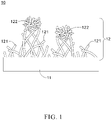
- a battery material 10 of the present disclosure comprises: a conductive substrate 11; and a silicon material layer 12 disposed on at least one side of the conductive substrate 11 and comprising a plurality of silicon fibers 121, wherein at least some of the silicon fibers 121 aggregate to form a plurality of silicon fibrous spheres 122.
- the conductive substrate contains copper or aluminum.
- the conductive substrate is a copper foil or an aluminum foil.
- the present disclosure is not limited thereto, as persons skilled in the art can choose, as needed, any other appropriate conductive material as a conductive substrate.
- the silicon material layer is disposed on two sides of the conductive substrate to further enhance the performance of batteries made of the battery material.
- the present disclosure is not limited thereto.
- the silicon material layer is disposed on just one side of the conductive substrate.
- the silicon material layer is further doped with boron or phosphorus to increase the conductivity of the battery material.
- the present disclosure is not limited thereto.
- the silicon material layer does not contain boron or phosphorus.
- the silicon fibrous spheres are of a diameter of 1 ⁇ m - 100 ⁇ m, and the silicon material layer is of a thickness of 1 ⁇ m - 400 ⁇ m.
- the present disclosure is not limited thereto, as persons skilled in the art can control, as needed, process conditions to attain the required diameter of the silicon fibrous spheres and the required thickness of the silicon material layer.
- the present disclosure further provides a preparation method for the battery material.
- the preparation method for the battery material comprises the steps of: (a) providing a conductive substrate S201; (b) providing a silicon-based material, followed by depositing on a surface of the silicon-based material a film comprising amorphous silicon or crystalline silicon to form a silicon source material S202; (c) placing the silicon source material of step (b) on at least a side of the conductive substrate of step (a), wherein a distance between the conductive substrate and the silicon source material is less than 100 mm S203; and (d) heating the conductive substrate and silicon source material thus arranged in step (c) to allow the silicon source material to release amorphous silicon or crystalline silicon, so as to deposit a silicon material layer on the conductive substrate S204.
- the present disclosure is not restrictive of the choice of the conductive substrate in step (a), and thus persons skilled in the art can choose various conventional conductive substrates as needed.
- the conductive substrate contains copper or aluminum.
- the conductive substrate is preferably a copper foil or an aluminum foil.
- the conductive substrate is sheet-shaped or film-shaped.
- the present disclosure is not limited thereto.
- the present disclosure is not restrictive of the choice of the silicon-based material in step (b), and thus persons skilled in the art can choose various conventional silicon-based material as needed.
- the silicon-based material is a silicon wafer or a silicon film.
- the silicon-based material is sheet-shaped or film-shaped.
- the present disclosure is not limited thereto.
- step (c) the silicon source material of step (b) is placed on at least one side of the conductive substrate of step (a).
- the arrangement in step (c) is shown in FIG. 3 , wherein the silicon source material 302 is disposed on one side of the conductive substrate 301, and a distance d of 0.01 mm - 100 mm is defined between the conductive substrate 301 and the silicon source material 302.
- the conductive substrate 301 and the silicon source material 302 are sheet-shaped or film-shaped and parallel to each other.
- the present disclosure is not limited thereto.
- FIG. 3 the exemplary embodiment illustrated by FIG.
- the silicon source material is disposed on one side of the conductive substrate; consequently, a silicon material layer is deposited on one side of the conductive substrate and faces the silicon source material in step (d).
- the silicon source material is disposed on two sides of the conductive substrate, and thus a silicon material layer is deposited on two sides of the conductive substrate in step (d).
- step (d) of heating the conductive substrate and silicon source material thus arranged in step (c) to allow the silicon source material to release amorphous silicon or crystalline silicon, so as to deposit a silicon material layer on the conductive substrate.
- a conventional Low Pressure Chemical Vapor Deposition (LPCVD) apparatus enables the silicon source material to release some of the crystalline silicon or amorphous silicon at 300-700°C, so as to deposit a silicon material layer on the conductive substrate.
- step (d) further entails providing a boron source material or a phosphorus source material, so as to dope boron or phosphorus in the course of depositing the silicon material layer.
- the present disclosure is not limited thereto, as persons skilled in the art can provide, as needed, a material which contains any other element to be doped in the silicon material layer.
- step (d) the silicon source material and the conductive substrate, which are covered with a film comprising amorphous silicon or crystalline silicon, are adjacent to each other, so as to generate a non-bonding interacting force between the silicon source material and the conductive substrate and thus allow the silicon material layer to grow on the conductive substrate along the force field direction, thereby forming silicon fibers. Furthermore, since the distance between the silicon source material and the conductive substrate ranges from 0.01 mm to 100 mm, it is feasible to form silicon fibrous spheres and thus enhance the characteristics of the prepared battery material, thereby allowing batteries made of the battery material to attain long service life and high power capacity.
- the silicon fibrous spheres are of a diameter of 1 ⁇ m - 100 ⁇ m, and the silicon material layer is of a thickness of 1 ⁇ m - 400 ⁇ m.
- the present disclosure is not limited thereto, as persons skilled in the art can control, as needed, process conditions (for example, temperature rising speed and temperature keeping duration in the heating process of step (d)) to attain the required diameter of the silicon fibrous spheres and the required thickness of the silicon material layer.
- the preparation method for the battery material further comprises the step: (e) providing a silicon source gas, and a boron source gas or a phosphorus source gas while heating the conductive substrate and silicon source material thus arranged in step (c).
- step (e) is dispensed with.
- the silicon source gas is silane (SiH4) to increase the thickness of the silicon material layer.
- the phosphorus source gas is phosphine (PH3) to increase the conductivity of the battery material.
- the present disclosure is not limited thereto, as persons skilled in the art can provide, as needed, a gas which contains any other element to be doped in the silicon material layer.
- step (a) involves using a copper foil as a conductive substrate
- step (b) involves using a silicon wafer as a silicon-based material and depositing a film comprising amorphous silicon or crystalline silicon on the surface of the silicon-based material so as to form a silicon source material
- step (c) involves placing the silicon source material of step (b) on a side of the conductive substrate of step (a), wherein the distance between the conductive substrate and the silicon source material is less than 20 mm
- step (d) involves heating the conductive substrate and silicon source material thus arranged in step (c) with a conventional Chemical Vapor Deposition (CVD) apparatus at 600°C for 240 minutes
- step (e) involves introducing silane (SiH4) at a flow rate of 400 sccm and phosphine (PH 3 ) at a flow rate of 300 scc
- FIG. 4 pictures taken of the battery material with a scanning electron microscope (SEM) ( FIG. 4 and FIG. 5 ) and the schematic view of FIG. 6 show that the silicon material layer of the battery material in this embodiment comprises a plurality of silicon fibers 501, and at least some of the silicon fibers 501 aggregate to form a plurality of silicon fibrous spheres 502.
- SEM scanning electron microscope
- the comparative embodiment is substantially based on the preparation method for the battery material according to the present disclosure, but in its step (c) the distance between the conductive substrate and the silicon source material is greater than 100 mm.
- the preparation method comprises: step (a) of using a copper foil as a conductive substrate; step (b) of using a silicon wafer as a silicon-based material and depositing on the surface of the silicon-based material a film comprising amorphous silicon or crystalline silicon to form a silicon source material; step (c) of placing the silicon source material of step (b) on one side of the conductive substrate of step (a), wherein the distance between the conductive substrate and silicon source material is 105 mm; and step (d) of heating the conductive substrate and silicon source material thus arranged in step (c) with a conventional Chemical Vapor Deposition (CVD) apparatus at 600°C for 240 minutes; and step (e) introducing silane (SiH 4 ) at a flow rate of 400 sccm and phosphin
- a picture taken of the battery material of the comparative embodiment with a scanning electron microscope (SEM) shows that the battery material of the comparative embodiment is advantageous in that both the silicon fibers and silicon fibrous spheres are absent from the silicon material layer, because the distance between the conductive substrate and silicon source material is greater than 100 mm in step (c).
- batteries are made of the battery materials of the embodiment and the comparative embodiment, respectively.
- the batteries made of the battery material of the embodiment have around 10 times more discharge power capacity than the batteries made of the battery material of the comparative embodiment.
- the batteries made of the battery material of the embodiment have a discharge power capacity equal to 399% that of the batteries made of commercially-available Panasonic graphite electrode material.
- the battery material of both the embodiment and the comparative embodiment as well as the commercially-available Panasonic graphite electrode material are used as a negative terminal material.
- the material is cut into pieces each of a size of 1 cm x 1 cm.
- the coating thickness of the Panasonic graphite electrode material and the thickness of the silicon material layer of the battery material of the embodiment and the comparative embodiment are 130 - 140 ⁇ m.
- the aforesaid three battery materials are packaged in button batteries by conventional technology.
- the button batteries prepared by the aforesaid method are tested.
- the batteries made of the battery material of the embodiment have around 10 times more discharge power capacity than the batteries made of the battery material of the comparative embodiment in terms of the power storage level, whereas the batteries made of the battery material of the embodiment have a discharge power capacity equal to 399% that of the batteries made of commercially-available Panasonic graphite electrode material in terms of the power storage level.
- silicon fibrous spheres contained in the silicon material layer of the battery material greatly increase the area of exchange between lithium ion and silicon and thus effectively enhance the power capacity and service life of batteries made of the battery material.
Landscapes
- Chemical & Material Sciences (AREA)
- Chemical Kinetics & Catalysis (AREA)
- Electrochemistry (AREA)
- General Chemical & Material Sciences (AREA)
- Engineering & Computer Science (AREA)
- Materials Engineering (AREA)
- Manufacturing & Machinery (AREA)
- Composite Materials (AREA)
- Inorganic Chemistry (AREA)
- Battery Electrode And Active Subsutance (AREA)
- Cell Electrode Carriers And Collectors (AREA)
- Silicon Compounds (AREA)
Description
- The present disclosure relates to battery materials, and in particular to a battery material comprising silicon fibrous spheres and a preparation method for the battery material comprising silicon fibrous spheres.
- Power storage and use of battery are obvious indicators of growth and importance of global markets. A technological breakthrough is urgently required to meet the need for advanced power storage batteries applicable to future electric vehicles, solar power generation, and various consumer electronics products. In view of this, it is important to increase power storage performance per unit volume. In this regard, related prior art discloses using silicon carbon alloy powder and a polymeric material as a lithium battery negative terminal material.
- To enhance the power storage performance of a battery material, the prior art discloses a preparation method for a battery material, which entails depositing crystalline silicon or amorphous silicon on a substrate at a high temperature to form a battery material, such that the deposited crystalline silicon or amorphous silicon attains a specific structure because of specific process conditions and substrate structure, thereby enhancing power storage performance.
-
TW 201603378 A -
CN 102969529 A discloses a power storage device including: a film portion formed on a titanium plate by LPCVD and arranged in active substance layers, a root block formed on the titanium plate, and whiskers extending from the root block. -
US 2013/0164612 A1 discloses a negative electrode including: a current collector including: a plurality of protrusion portions; and a base portion connected to the plurality of protrusion portions; and an active material layer on the current collector, wherein the protrusion portions and the base portion contain titanium, wherein top surfaces and side surfaces of the protrusion portions and a top surface of the base portion are covered with the active material layer, the active material layer includes a thin film portion in contact with one of the protrusion portions and a plurality of whiskers extending from the thin film portion, wherein the active material layer includes amorphous silicon, microcrystalline silicon, polycrystalline silicon, or a combination thereof. -
EP 2741350 A1 discloses a negative electrode active material, comprising amorphous silicon oxide, crystalline silicon, carbon, metal silicide, one or more of which are included in spherical particles and whiskers. -
JP 2017137239 A KR 20150120132 A -
TW 201225385 A - The power storage performance of the aforesaid conventional battery materials still has room for improvement.
- An objective of the present disclosure is to provide a battery material and a preparation method thereof to further enhance the power storage of the battery material.
- To achieve at least the above objective, the present disclosure provides a battery material, comprising: a conductive substrate; and a silicon material layer disposed on at least a side of the conductive substrate, wherein the silicon material layer comprises a plurality of silicon fibers, at least some of which aggregate to form a plurality of silicon fibrous spheres.
- Regarding the battery material, the conductive substrate contains copper or aluminum.
- Regarding the battery material, the conductive substrate is a copper foil or an aluminum foil.
- Regarding the battery material, the silicon material layer is disposed on two sides of the conductive substrate.
- Regarding the battery material, the silicon material layer is further doped with boron or phosphorus.
- Regarding the battery material, the diameter of the silicon fibrous spheres ranges from 1 µm to 100 µm.
- Regarding the battery material, the thickness of the silicon material layer ranges from 1 µm to 400 µm.
- To achieve at least the above objective, the present disclosure further provides a preparation method for the battery material, comprising the steps of:
- (a) providing a conductive substrate;
- (b) providing a silicon-based material, followed by depositing on a surface of the silicon-based material a film comprising amorphous silicon or crystalline silicon to form a silicon source material;
- (c) placing the silicon source material of step (b) on at least a side of the conductive substrate of step (a), wherein a distance between the conductive substrate and the silicon source material is less than 100 mm; and
- (d) heating the conductive substrate and silicon source material thus arranged in step (c) to allow the silicon source material to release amorphous silicon or crystalline silicon, so as to deposit a silicon material layer on the conductive substrate.
- Regarding the preparation method for the battery material, in step (c), the distance between the conductive substrate and the silicon source material ranges from 0.01 mm to 100 mm.
- The preparation method for the battery material further comprises step (e) of providing a silicon source gas, and a boron source gas or a phosphorus source gas while heating the conductive substrate and silicon source material thus arranged in step (c).
- Regarding the preparation method for the battery material, the silicon source gas is silane (SiH4) to increase thickness of the silicon material layer.
- Regarding the preparation method for the battery material, the phosphorus source gas is phosphine (PH3) to increase conductivity of the battery material.
- Regarding the preparation method for the battery material, the conductive substrate contains copper or aluminum.
- Regarding the preparation method for the battery material, the conductive substrate is a copper foil or an aluminum foil.
- Regarding the preparation method for the battery material, the silicon-based material is a silicon wafer or a silicon film.
- Regarding the preparation method for the battery material, step (c) entails placing the silicon source material of step (b) on two sides of the conductive substrate of step (a).
- Regarding the preparation method for the battery material, step (d) further entails heating the conductive substrate and silicon source material thus arranged in step (c) at 300-700°C.
- Regarding the preparation method for the battery material, the silicon material layer formed in step (d) comprises a plurality of silicon fibers, at least some of which aggregate to form a plurality of silicon fibrous spheres.
- Regarding the preparation method for the battery material, the diameter of a plurality of silicon fibrous spheres included in the silicon material layer formed in step (d) ranges from 1 µm to 100 µm.
- Regarding the preparation method for the battery material, the thickness of the silicon material layer formed in step (d) ranges from 1 µm to 400 µm.
- The battery material of the present disclosure has silicon fibrous spheres with unique structure and thus is free from inherent limits of crystalline silicon-based materials to thereby effectively enhance the performance of batteries made of the battery material and effectively reduce the chance of rapid reduction in the service life of the batteries due to their alternating between charging and discharging by exchange between silicon and lithium ion. The batteries made of the battery material of the present disclosure according to the present disclosure have longer service life than conventional commercially-available batteries. Furthermore, the battery material of the present disclosure greatly increases the area of exchange between lithium ion and silicon and effectively enhances the power capacity and service life of the batteries made of the battery material.
-
-
FIG. 1 is a schematic view of a battery material of the present disclosure. -
FIG. 2 is a flowchart of a preparation method for the battery material according to the present disclosure. -
FIG. 3 is a schematic view of step (c) of the preparation method for the battery material according to the present disclosure. -
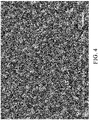
FIG. 4 is a picture taken with a scanning electron microscope SEM) of a silicon material layer of the battery material prepared according to an embodiment of the present disclosure. -
FIG. 5 is a picture taken with a scanning electron microscope (SEM) of the silicon material layer of the battery material prepared according to an embodiment of the present disclosure. -
FIG. 6 is a schematic view of the silicon material layer of the battery material prepared according to an embodiment of the present disclosure. -
FIG. 7 is a picture taken with a scanning electron microscope (SEM) of the silicon material layer of the battery material prepared according to an embodiment of the present disclosure. - To facilitate understanding of the object, characteristics and effects of this present disclosure, embodiments together with the attached drawings for the detailed description of the present disclosure are provided.
- The present disclosure provides a battery material.
- Referring to
FIG. 1 , abattery material 10 of the present disclosure comprises: aconductive substrate 11; and asilicon material layer 12 disposed on at least one side of theconductive substrate 11 and comprising a plurality ofsilicon fibers 121, wherein at least some of thesilicon fibers 121 aggregate to form a plurality of siliconfibrous spheres 122. - In an embodiment, the conductive substrate contains copper or aluminum. The conductive substrate is a copper foil or an aluminum foil. However, the present disclosure is not limited thereto, as persons skilled in the art can choose, as needed, any other appropriate conductive material as a conductive substrate.
- In an embodiment, the silicon material layer is disposed on two sides of the conductive substrate to further enhance the performance of batteries made of the battery material. However, the present disclosure is not limited thereto. In a variant embodiment, the silicon material layer is disposed on just one side of the conductive substrate.
- In an embodiment, the silicon material layer is further doped with boron or phosphorus to increase the conductivity of the battery material. However, the present disclosure is not limited thereto. In a variant embodiment, the silicon material layer does not contain boron or phosphorus.
- In an embodiment, the silicon fibrous spheres are of a diameter of 1 µm - 100 µm, and the silicon material layer is of a thickness of 1 µm - 400 µm. However, the present disclosure is not limited thereto, as persons skilled in the art can control, as needed, process conditions to attain the required diameter of the silicon fibrous spheres and the required thickness of the silicon material layer.
- The present disclosure further provides a preparation method for the battery material.
- Referring to
FIG. 2 , the preparation method for the battery material according to the present disclosure comprises the steps of: (a) providing a conductive substrate S201; (b) providing a silicon-based material, followed by depositing on a surface of the silicon-based material a film comprising amorphous silicon or crystalline silicon to form a silicon source material S202; (c) placing the silicon source material of step (b) on at least a side of the conductive substrate of step (a), wherein a distance between the conductive substrate and the silicon source material is less than 100 mm S203; and (d) heating the conductive substrate and silicon source material thus arranged in step (c) to allow the silicon source material to release amorphous silicon or crystalline silicon, so as to deposit a silicon material layer on the conductive substrate S204. - The present disclosure is not restrictive of the choice of the conductive substrate in step (a), and thus persons skilled in the art can choose various conventional conductive substrates as needed. In an embodiment, the conductive substrate contains copper or aluminum. In an embodiment, the conductive substrate is preferably a copper foil or an aluminum foil. Preferably, the conductive substrate is sheet-shaped or film-shaped. However, the present disclosure is not limited thereto.
- The present disclosure is not restrictive of the choice of the silicon-based material in step (b), and thus persons skilled in the art can choose various conventional silicon-based material as needed. In an embodiment, the silicon-based material is a silicon wafer or a silicon film. Preferably, the silicon-based material is sheet-shaped or film-shaped. However, the present disclosure is not limited thereto.
- In step (c), the silicon source material of step (b) is placed on at least one side of the conductive substrate of step (a). In an exemplary embodiment, the arrangement in step (c) is shown in
FIG. 3 , wherein thesilicon source material 302 is disposed on one side of theconductive substrate 301, and a distance d of 0.01 mm - 100 mm is defined between theconductive substrate 301 and thesilicon source material 302. Referring toFIG. 3 , preferably, theconductive substrate 301 and thesilicon source material 302 are sheet-shaped or film-shaped and parallel to each other. However, the present disclosure is not limited thereto. In an exemplary embodiment illustrated byFIG. 3 , the silicon source material is disposed on one side of the conductive substrate; consequently, a silicon material layer is deposited on one side of the conductive substrate and faces the silicon source material in step (d). In another preferred embodiment, the silicon source material is disposed on two sides of the conductive substrate, and thus a silicon material layer is deposited on two sides of the conductive substrate in step (d). - The present disclosure is not restrictive of the step (d) of heating the conductive substrate and silicon source material thus arranged in step (c) to allow the silicon source material to release amorphous silicon or crystalline silicon, so as to deposit a silicon material layer on the conductive substrate. In a variant embodiment, a conventional Low Pressure Chemical Vapor Deposition (LPCVD) apparatus enables the silicon source material to release some of the crystalline silicon or amorphous silicon at 300-700°C, so as to deposit a silicon material layer on the conductive substrate. In an embodiment, step (d) further entails providing a boron source material or a phosphorus source material, so as to dope boron or phosphorus in the course of depositing the silicon material layer. However, the present disclosure is not limited thereto, as persons skilled in the art can provide, as needed, a material which contains any other element to be doped in the silicon material layer.
- In step (d), the silicon source material and the conductive substrate, which are covered with a film comprising amorphous silicon or crystalline silicon, are adjacent to each other, so as to generate a non-bonding interacting force between the silicon source material and the conductive substrate and thus allow the silicon material layer to grow on the conductive substrate along the force field direction, thereby forming silicon fibers. Furthermore, since the distance between the silicon source material and the conductive substrate ranges from 0.01 mm to 100 mm, it is feasible to form silicon fibrous spheres and thus enhance the characteristics of the prepared battery material, thereby allowing batteries made of the battery material to attain long service life and high power capacity. In an embodiment, the silicon fibrous spheres are of a diameter of 1 µm - 100 µm, and the silicon material layer is of a thickness of 1 µm - 400 µm. However, the present disclosure is not limited thereto, as persons skilled in the art can control, as needed, process conditions (for example, temperature rising speed and temperature keeping duration in the heating process of step (d)) to attain the required diameter of the silicon fibrous spheres and the required thickness of the silicon material layer.
- The preparation method for the battery material further comprises the step: (e) providing a silicon source gas, and a boron source gas or a phosphorus source gas while heating the conductive substrate and silicon source material thus arranged in step (c). However, the present disclosure is not limited thereto. In a variant embodiment, step (e) is dispensed with.
- In step (e), the silicon source gas is silane (SiH4) to increase the thickness of the silicon material layer. However, the present disclosure is not limited thereto, as persons skilled in the art can choose any other appropriate silicon source gas as needed. In step (e), the phosphorus source gas is phosphine (PH3) to increase the conductivity of the battery material. However, the present disclosure is not limited thereto, as persons skilled in the art can provide, as needed, a gas which contains any other element to be doped in the silicon material layer.
- This embodiment relates to preparing the battery material of the present disclosure with the preparation method for the battery material according the present disclosure. Steps used in this embodiment are briefly described as follows: step (a) involves using a copper foil as a conductive substrate; step (b) involves using a silicon wafer as a silicon-based material and depositing a film comprising amorphous silicon or crystalline silicon on the surface of the silicon-based material so as to form a silicon source material; step (c) involves placing the silicon source material of step (b) on a side of the conductive substrate of step (a), wherein the distance between the conductive substrate and the silicon source material is less than 20 mm; step (d) involves heating the conductive substrate and silicon source material thus arranged in step (c) with a conventional Chemical Vapor Deposition (CVD) apparatus at 600°C for 240 minutes; and step (e) involves introducing silane (SiH4) at a flow rate of 400 sccm and phosphine (PH3) at a flow rate of 300 sccm at 600°C for 240 minutes.
- Referring to
FIG. 4 ,FIG. 5 andFIG. 6 , pictures taken of the battery material with a scanning electron microscope (SEM) (FIG. 4 andFIG. 5 ) and the schematic view ofFIG. 6 show that the silicon material layer of the battery material in this embodiment comprises a plurality ofsilicon fibers 501, and at least some of thesilicon fibers 501 aggregate to form a plurality of siliconfibrous spheres 502. - The comparative embodiment is substantially based on the preparation method for the battery material according to the present disclosure, but in its step (c) the distance between the conductive substrate and the silicon source material is greater than 100 mm. In the comparative embodiment, the preparation method comprises: step (a) of using a copper foil as a conductive substrate; step (b) of using a silicon wafer as a silicon-based material and depositing on the surface of the silicon-based material a film comprising amorphous silicon or crystalline silicon to form a silicon source material; step (c) of placing the silicon source material of step (b) on one side of the conductive substrate of step (a), wherein the distance between the conductive substrate and silicon source material is 105 mm; and step (d) of heating the conductive substrate and silicon source material thus arranged in step (c) with a conventional Chemical Vapor Deposition (CVD) apparatus at 600°C for 240 minutes; and step (e) introducing silane (SiH4) at a flow rate of 400 sccm and phosphine (PH3) at a flow rate of 300 sccm at 600°C for 240 minutes.
- Referring to
FIG. 7 , a picture taken of the battery material of the comparative embodiment with a scanning electron microscope (SEM) shows that the battery material of the comparative embodiment is advantageous in that both the silicon fibers and silicon fibrous spheres are absent from the silicon material layer, because the distance between the conductive substrate and silicon source material is greater than 100 mm in step (c). - Under the same preparation and testing conditions, batteries are made of the battery materials of the embodiment and the comparative embodiment, respectively. Regarding the power storage level, the batteries made of the battery material of the embodiment have around 10 times more discharge power capacity than the batteries made of the battery material of the comparative embodiment. Furthermore, regarding the power storage level, the batteries made of the battery material of the embodiment have a discharge power capacity equal to 399% that of the batteries made of commercially-available Panasonic graphite electrode material.
- The preparation and testing conditions are described below.
- The battery material of both the embodiment and the comparative embodiment as well as the commercially-available Panasonic graphite electrode material are used as a negative terminal material. The material is cut into pieces each of a size of 1 cm x 1 cm. The coating thickness of the Panasonic graphite electrode material and the thickness of the silicon material layer of the battery material of the embodiment and the comparative embodiment are 130 - 140 µm. The aforesaid three battery materials are packaged in button batteries by conventional technology.
- Under the same preparation and testing conditions, the button batteries prepared by the aforesaid method are tested. Despite a mere change in the negative terminal material, the batteries made of the battery material of the embodiment have around 10 times more discharge power capacity than the batteries made of the battery material of the comparative embodiment in terms of the power storage level, whereas the batteries made of the battery material of the embodiment have a discharge power capacity equal to 399% that of the batteries made of commercially-available Panasonic graphite electrode material in terms of the power storage level.
- Therefore, according to the present disclosure, silicon fibrous spheres contained in the silicon material layer of the battery material greatly increase the area of exchange between lithium ion and silicon and thus effectively enhance the power capacity and service life of batteries made of the battery material.
- While the present disclosure has been described by means of specific embodiments, numerous modifications and variations could be made thereto by those skilled in the art without departing from the scope of the present disclosure set forth in the claims.
Claims (10)
- A battery material (10), comprising:a conductive substrate (11); anda silicon material layer (12) disposed on at least a side of the conductive substrate (11),wherein the silicon material layer (12) comprises a plurality of silicon fibers (121), at least some of which aggregate to form a plurality of silicon fibrous spheres (122).
- The battery material of claim 1, wherein the conductive substrate (11) contains copper or aluminum.
- The battery material of claim 2, wherein the conductive substrate (11) is a copper foil or an aluminum foil.
- The battery material of claim 1, wherein the silicon material layer (12) is disposed on two sides of the conductive substrate (11).
- The battery material of claim 1, wherein the silicon material layer (12) is further doped with boron or phosphorus.
- The battery material of claim 1, wherein the silicon fibrous spheres (122) are of a diameter of 1 µm - 100 µm.
- The battery material of claim 1, wherein the silicon material layer (12) is of a thickness of 1 µm - 400 µm.
- A preparation method for the battery material of claim 1, comprising the steps of:(a) providing a conductive substrate (S201);(b) providing a silicon-based material, followed by depositing on a surface of the silicon-based material a film comprising amorphous silicon or crystalline silicon to form a silicon source material (S202);(c) placing the silicon source material of step (b) on at least a side of the conductive substrate of step (a), wherein a distance between the conductive substrate and the silicon source material is less than 100 mm (S203); and(d) heating the conductive substrate and silicon source material thus arranged in step (c) to allow the silicon source material to release amorphous silicon or crystalline silicon, so as to deposit a silicon material layer on the conductive substrate (S204).
- The preparation method for the battery material according to claim 8, further comprising the step of:
(e) providing a silicon source gas, and a boron source gas or a phosphorus source gas while heating the conductive substrate and silicon source material thus arranged in step (c). - The preparation method for the battery material according to claim 8, wherein step (d) further entails heating the conductive substrate and silicon source material thus arranged in step (c) at 300-700°C.
Applications Claiming Priority (1)
| Application Number | Priority Date | Filing Date | Title |
|---|---|---|---|
| TW109106797A TWI740400B (en) | 2020-03-02 | 2020-03-02 | Battery material and preparation method thereof |
Publications (2)
| Publication Number | Publication Date |
|---|---|
| EP3876311A1 EP3876311A1 (en) | 2021-09-08 |
| EP3876311B1 true EP3876311B1 (en) | 2023-01-18 |
Family
ID=71670146
Family Applications (1)
| Application Number | Title | Priority Date | Filing Date |
|---|---|---|---|
| EP20186517.7A Active EP3876311B1 (en) | 2020-03-02 | 2020-07-17 | Battery material and preparation method thereof |
Country Status (6)
| Country | Link |
|---|---|
| US (1) | US20210273214A1 (en) |
| EP (1) | EP3876311B1 (en) |
| JP (1) | JP6937875B2 (en) |
| KR (1) | KR102584630B1 (en) |
| CN (1) | CN113346044B (en) |
| TW (1) | TWI740400B (en) |
Families Citing this family (4)
| Publication number | Priority date | Publication date | Assignee | Title |
|---|---|---|---|---|
| NL2023642B1 (en) | 2019-08-14 | 2021-02-24 | Leydenjar Tech B V | Silicon composition material for use as battery anode |
| JP7638179B2 (en) | 2021-08-31 | 2025-03-03 | 三菱造船株式会社 | Floating body |
| NL2030271B1 (en) | 2021-12-23 | 2023-06-29 | Leydenjar Tech B V | Solid State Lithium-Ion Batteries Comprising a Nanoporous Silicon Anode |
| TWI866680B (en) * | 2023-12-08 | 2024-12-11 | 力哲科技股份有限公司 | Battery electrode and manufacturing method thereof |
Citations (1)
| Publication number | Priority date | Publication date | Assignee | Title |
|---|---|---|---|---|
| TW201225385A (en) * | 2010-10-22 | 2012-06-16 | Amprius Inc | Battery electrode structures for high mass loadings of high capacity active materials |
Family Cites Families (20)
| Publication number | Priority date | Publication date | Assignee | Title |
|---|---|---|---|---|
| JPH03199237A (en) * | 1989-12-28 | 1991-08-30 | Mitsui Toatsu Chem Inc | Production of electrically conductive sheet |
| GB0601319D0 (en) * | 2006-01-23 | 2006-03-01 | Imp Innovations Ltd | A method of fabricating pillars composed of silicon-based material |
| US20100285358A1 (en) * | 2009-05-07 | 2010-11-11 | Amprius, Inc. | Electrode Including Nanostructures for Rechargeable Cells |
| HUE054466T2 (en) * | 2009-05-19 | 2021-09-28 | Oned Mat Inc | Nanostructured materials for battery applications |
| KR101811068B1 (en) * | 2009-12-28 | 2017-12-20 | 도레이 카부시키가이샤 | Conductive laminated body and touch panel using the same |
| US9780365B2 (en) * | 2010-03-03 | 2017-10-03 | Amprius, Inc. | High-capacity electrodes with active material coatings on multilayered nanostructured templates |
| WO2011149958A2 (en) * | 2010-05-24 | 2011-12-01 | Amprius, Inc. | Multidimensional electrochemically active structures for battery electrodes |
| US20110294005A1 (en) | 2010-05-28 | 2011-12-01 | Semiconductor Energy Laboratory Co., Ltd. | Power storage device, electrode, and electric device |
| CN103608504B (en) * | 2011-06-15 | 2014-12-24 | 东丽株式会社 | composite fiber |
| ES2893853T3 (en) | 2011-07-26 | 2022-02-10 | Oned Mat Inc | Method for producing silicon nanowires |
| KR20130024769A (en) * | 2011-08-30 | 2013-03-08 | 가부시키가이샤 한도오따이 에네루기 켄큐쇼 | Power storage device |
| JP6050106B2 (en) | 2011-12-21 | 2016-12-21 | 株式会社半導体エネルギー研究所 | Method for producing silicon negative electrode for non-aqueous secondary battery |
| KR20240055130A (en) * | 2012-08-16 | 2024-04-26 | 에노빅스 코오퍼레이션 | Electrode structures for three-dimensional batteries |
| KR101698763B1 (en) * | 2012-12-10 | 2017-01-23 | 삼성에스디아이 주식회사 | Anode electrode material, preparation method thereof, electrode comprising the material, and lithium secondary battery comprising the electrode |
| CA2829605C (en) * | 2013-10-07 | 2016-06-14 | Springpower International Incorporated | A method for mass production of silicon nanowires and/or nanobelts, and lithium batteries and anodes using the silicon nanowires and/or nanobelts |
| JP2015125957A (en) * | 2013-12-27 | 2015-07-06 | 国立大学法人信州大学 | Negative electrode material for lithium ion battery |
| JP6441576B2 (en) * | 2014-02-03 | 2018-12-19 | デクセリアルズ株式会社 | Transparent conductive film, method for manufacturing the same, information input device, and electronic device |
| KR20150120132A (en) * | 2014-04-17 | 2015-10-27 | 한국과학기술연구원 | anode for lithium secondary battery, manufacturing method thereof and lithium secondary battery comprising the same |
| JP6743159B2 (en) * | 2016-09-23 | 2020-08-19 | 株式会社豊田自動織機 | Si particle bonded body and method for manufacturing the same |
| JP7259792B2 (en) * | 2019-07-26 | 2023-04-18 | トヨタ自動車株式会社 | Negative electrode active material, method for producing negative electrode active material, and battery |
-
2020
- 2020-03-02 TW TW109106797A patent/TWI740400B/en active
- 2020-07-07 US US16/921,971 patent/US20210273214A1/en not_active Abandoned
- 2020-07-17 EP EP20186517.7A patent/EP3876311B1/en active Active
- 2020-07-20 JP JP2020123802A patent/JP6937875B2/en active Active
-
2021
- 2021-01-26 CN CN202110105060.XA patent/CN113346044B/en active Active
- 2021-02-19 KR KR1020210022860A patent/KR102584630B1/en active Active
Patent Citations (1)
| Publication number | Priority date | Publication date | Assignee | Title |
|---|---|---|---|---|
| TW201225385A (en) * | 2010-10-22 | 2012-06-16 | Amprius Inc | Battery electrode structures for high mass loadings of high capacity active materials |
Also Published As
| Publication number | Publication date |
|---|---|
| JP6937875B2 (en) | 2021-09-22 |
| TW202134049A (en) | 2021-09-16 |
| US20210273214A1 (en) | 2021-09-02 |
| JP2021141040A (en) | 2021-09-16 |
| CN113346044A (en) | 2021-09-03 |
| CN113346044B (en) | 2024-11-22 |
| EP3876311A1 (en) | 2021-09-08 |
| KR102584630B1 (en) | 2023-10-04 |
| TWI740400B (en) | 2021-09-21 |
| KR20210111682A (en) | 2021-09-13 |
Similar Documents
| Publication | Publication Date | Title |
|---|---|---|
| EP3876311B1 (en) | Battery material and preparation method thereof | |
| JP7789479B2 (en) | Silicon nanostructured active materials for lithium-ion batteries and related processes, compositions, components and devices | |
| CN107667186B (en) | Rechargeable battery and method for manufacturing the same | |
| US9325014B2 (en) | Branched nanostructures for battery electrodes | |
| US20110183206A1 (en) | Apparatus, system, and method for carbon nanotube templated battery electrodes | |
| WO2001031723A1 (en) | Electrode for lithium secondary cell and lithium secondary cell | |
| WO2011137446A2 (en) | Fabrication of silicon nanowires | |
| KR20130111201A (en) | Power storage device, electrode, and electric device | |
| JP2008258154A (en) | LITHIUM SECONDARY BATTERY NEGATIVE ELECTRODE AND METHOD FOR PRODUCING THE SAME | |
| Kim et al. | Electrochemical characteristics of phosphorus doped silicon for the anode material of lithium secondary batteries | |
| CN101981729A (en) | Electrode for lithium secondary battery and method of manufacturing same | |
| TW202044647A (en) | Compositionally modified silicon coatings for use in a lithium ion battery anode | |
| TW201421782A (en) | Lithium ion battery and doped lithium ion battery electrode structure | |
| US10938026B2 (en) | Silicon nanowire structure embedded in nickel silicide nanowires for lithium-based battery anodes | |
| Koga et al. | Single‑step fabrication of fibrous Si/Sn composite nanowire anodes by high‑pressure He plasma sputtering for high‑capacity Li‑ion batteries |
Legal Events
| Date | Code | Title | Description |
|---|---|---|---|
| PUAI | Public reference made under article 153(3) epc to a published international application that has entered the european phase |
Free format text: ORIGINAL CODE: 0009012 |
|
| STAA | Information on the status of an ep patent application or granted ep patent |
Free format text: STATUS: THE APPLICATION HAS BEEN PUBLISHED |
|
| AK | Designated contracting states |
Kind code of ref document: A1 Designated state(s): AL AT BE BG CH CY CZ DE DK EE ES FI FR GB GR HR HU IE IS IT LI LT LU LV MC MK MT NL NO PL PT RO RS SE SI SK SM TR |
|
| STAA | Information on the status of an ep patent application or granted ep patent |
Free format text: STATUS: REQUEST FOR EXAMINATION WAS MADE |
|
| 17P | Request for examination filed |
Effective date: 20220304 |
|
| RBV | Designated contracting states (corrected) |
Designated state(s): AL AT BE BG CH CY CZ DE DK EE ES FI FR GB GR HR HU IE IS IT LI LT LU LV MC MK MT NL NO PL PT RO RS SE SI SK SM TR |
|
| GRAP | Despatch of communication of intention to grant a patent |
Free format text: ORIGINAL CODE: EPIDOSNIGR1 |
|
| STAA | Information on the status of an ep patent application or granted ep patent |
Free format text: STATUS: GRANT OF PATENT IS INTENDED |
|
| INTG | Intention to grant announced |
Effective date: 20221004 |
|
| GRAS | Grant fee paid |
Free format text: ORIGINAL CODE: EPIDOSNIGR3 |
|
| GRAA | (expected) grant |
Free format text: ORIGINAL CODE: 0009210 |
|
| STAA | Information on the status of an ep patent application or granted ep patent |
Free format text: STATUS: THE PATENT HAS BEEN GRANTED |
|
| AK | Designated contracting states |
Kind code of ref document: B1 Designated state(s): AL AT BE BG CH CY CZ DE DK EE ES FI FR GB GR HR HU IE IS IT LI LT LU LV MC MK MT NL NO PL PT RO RS SE SI SK SM TR |
|
| REG | Reference to a national code |
Ref country code: GB Ref legal event code: FG4D |
|
| REG | Reference to a national code |
Ref country code: CH Ref legal event code: EP |
|
| REG | Reference to a national code |
Ref country code: DE Ref legal event code: R096 Ref document number: 602020007637 Country of ref document: DE |
|
| REG | Reference to a national code |
Ref country code: AT Ref legal event code: REF Ref document number: 1545168 Country of ref document: AT Kind code of ref document: T Effective date: 20230215 Ref country code: IE Ref legal event code: FG4D |
|
| REG | Reference to a national code |
Ref country code: NL Ref legal event code: FP |
|
| REG | Reference to a national code |
Ref country code: SE Ref legal event code: TRGR |
|
| REG | Reference to a national code |
Ref country code: LT Ref legal event code: MG9D |
|
| REG | Reference to a national code |
Ref country code: AT Ref legal event code: MK05 Ref document number: 1545168 Country of ref document: AT Kind code of ref document: T Effective date: 20230118 |
|
| P01 | Opt-out of the competence of the unified patent court (upc) registered |
Effective date: 20230602 |
|
| PG25 | Lapsed in a contracting state [announced via postgrant information from national office to epo] |
Ref country code: RS Free format text: LAPSE BECAUSE OF FAILURE TO SUBMIT A TRANSLATION OF THE DESCRIPTION OR TO PAY THE FEE WITHIN THE PRESCRIBED TIME-LIMIT Effective date: 20230118 Ref country code: PT Free format text: LAPSE BECAUSE OF FAILURE TO SUBMIT A TRANSLATION OF THE DESCRIPTION OR TO PAY THE FEE WITHIN THE PRESCRIBED TIME-LIMIT Effective date: 20230518 Ref country code: NO Free format text: LAPSE BECAUSE OF FAILURE TO SUBMIT A TRANSLATION OF THE DESCRIPTION OR TO PAY THE FEE WITHIN THE PRESCRIBED TIME-LIMIT Effective date: 20230418 Ref country code: LV Free format text: LAPSE BECAUSE OF FAILURE TO SUBMIT A TRANSLATION OF THE DESCRIPTION OR TO PAY THE FEE WITHIN THE PRESCRIBED TIME-LIMIT Effective date: 20230118 Ref country code: LT Free format text: LAPSE BECAUSE OF FAILURE TO SUBMIT A TRANSLATION OF THE DESCRIPTION OR TO PAY THE FEE WITHIN THE PRESCRIBED TIME-LIMIT Effective date: 20230118 Ref country code: HR Free format text: LAPSE BECAUSE OF FAILURE TO SUBMIT A TRANSLATION OF THE DESCRIPTION OR TO PAY THE FEE WITHIN THE PRESCRIBED TIME-LIMIT Effective date: 20230118 Ref country code: ES Free format text: LAPSE BECAUSE OF FAILURE TO SUBMIT A TRANSLATION OF THE DESCRIPTION OR TO PAY THE FEE WITHIN THE PRESCRIBED TIME-LIMIT Effective date: 20230118 Ref country code: AT Free format text: LAPSE BECAUSE OF FAILURE TO SUBMIT A TRANSLATION OF THE DESCRIPTION OR TO PAY THE FEE WITHIN THE PRESCRIBED TIME-LIMIT Effective date: 20230118 |
|
| PG25 | Lapsed in a contracting state [announced via postgrant information from national office to epo] |
Ref country code: PL Free format text: LAPSE BECAUSE OF FAILURE TO SUBMIT A TRANSLATION OF THE DESCRIPTION OR TO PAY THE FEE WITHIN THE PRESCRIBED TIME-LIMIT Effective date: 20230118 Ref country code: IS Free format text: LAPSE BECAUSE OF FAILURE TO SUBMIT A TRANSLATION OF THE DESCRIPTION OR TO PAY THE FEE WITHIN THE PRESCRIBED TIME-LIMIT Effective date: 20230518 Ref country code: GR Free format text: LAPSE BECAUSE OF FAILURE TO SUBMIT A TRANSLATION OF THE DESCRIPTION OR TO PAY THE FEE WITHIN THE PRESCRIBED TIME-LIMIT Effective date: 20230419 Ref country code: FI Free format text: LAPSE BECAUSE OF FAILURE TO SUBMIT A TRANSLATION OF THE DESCRIPTION OR TO PAY THE FEE WITHIN THE PRESCRIBED TIME-LIMIT Effective date: 20230118 |
|
| P02 | Opt-out of the competence of the unified patent court (upc) changed |
Effective date: 20230822 |
|
| REG | Reference to a national code |
Ref country code: DE Ref legal event code: R097 Ref document number: 602020007637 Country of ref document: DE |
|
| PG25 | Lapsed in a contracting state [announced via postgrant information from national office to epo] |
Ref country code: SM Free format text: LAPSE BECAUSE OF FAILURE TO SUBMIT A TRANSLATION OF THE DESCRIPTION OR TO PAY THE FEE WITHIN THE PRESCRIBED TIME-LIMIT Effective date: 20230118 Ref country code: RO Free format text: LAPSE BECAUSE OF FAILURE TO SUBMIT A TRANSLATION OF THE DESCRIPTION OR TO PAY THE FEE WITHIN THE PRESCRIBED TIME-LIMIT Effective date: 20230118 Ref country code: EE Free format text: LAPSE BECAUSE OF FAILURE TO SUBMIT A TRANSLATION OF THE DESCRIPTION OR TO PAY THE FEE WITHIN THE PRESCRIBED TIME-LIMIT Effective date: 20230118 Ref country code: DK Free format text: LAPSE BECAUSE OF FAILURE TO SUBMIT A TRANSLATION OF THE DESCRIPTION OR TO PAY THE FEE WITHIN THE PRESCRIBED TIME-LIMIT Effective date: 20230118 Ref country code: CZ Free format text: LAPSE BECAUSE OF FAILURE TO SUBMIT A TRANSLATION OF THE DESCRIPTION OR TO PAY THE FEE WITHIN THE PRESCRIBED TIME-LIMIT Effective date: 20230118 |
|
| PLBE | No opposition filed within time limit |
Free format text: ORIGINAL CODE: 0009261 |
|
| STAA | Information on the status of an ep patent application or granted ep patent |
Free format text: STATUS: NO OPPOSITION FILED WITHIN TIME LIMIT |
|
| PG25 | Lapsed in a contracting state [announced via postgrant information from national office to epo] |
Ref country code: SK Free format text: LAPSE BECAUSE OF FAILURE TO SUBMIT A TRANSLATION OF THE DESCRIPTION OR TO PAY THE FEE WITHIN THE PRESCRIBED TIME-LIMIT Effective date: 20230118 |
|
| 26N | No opposition filed |
Effective date: 20231019 |
|
| PG25 | Lapsed in a contracting state [announced via postgrant information from national office to epo] |
Ref country code: SI Free format text: LAPSE BECAUSE OF FAILURE TO SUBMIT A TRANSLATION OF THE DESCRIPTION OR TO PAY THE FEE WITHIN THE PRESCRIBED TIME-LIMIT Effective date: 20230118 |
|
| PG25 | Lapsed in a contracting state [announced via postgrant information from national office to epo] |
Ref country code: MC Free format text: LAPSE BECAUSE OF FAILURE TO SUBMIT A TRANSLATION OF THE DESCRIPTION OR TO PAY THE FEE WITHIN THE PRESCRIBED TIME-LIMIT Effective date: 20230118 |
|
| PG25 | Lapsed in a contracting state [announced via postgrant information from national office to epo] |
Ref country code: MC Free format text: LAPSE BECAUSE OF FAILURE TO SUBMIT A TRANSLATION OF THE DESCRIPTION OR TO PAY THE FEE WITHIN THE PRESCRIBED TIME-LIMIT Effective date: 20230118 |
|
| REG | Reference to a national code |
Ref country code: CH Ref legal event code: PL |
|
| REG | Reference to a national code |
Ref country code: BE Ref legal event code: MM Effective date: 20230731 |
|
| PG25 | Lapsed in a contracting state [announced via postgrant information from national office to epo] |
Ref country code: LU Free format text: LAPSE BECAUSE OF NON-PAYMENT OF DUE FEES Effective date: 20230717 |
|
| PG25 | Lapsed in a contracting state [announced via postgrant information from national office to epo] |
Ref country code: LU Free format text: LAPSE BECAUSE OF NON-PAYMENT OF DUE FEES Effective date: 20230717 |
|
| REG | Reference to a national code |
Ref country code: IE Ref legal event code: MM4A |
|
| PG25 | Lapsed in a contracting state [announced via postgrant information from national office to epo] |
Ref country code: CH Free format text: LAPSE BECAUSE OF NON-PAYMENT OF DUE FEES Effective date: 20230731 |
|
| PG25 | Lapsed in a contracting state [announced via postgrant information from national office to epo] |
Ref country code: BE Free format text: LAPSE BECAUSE OF NON-PAYMENT OF DUE FEES Effective date: 20230731 |
|
| PG25 | Lapsed in a contracting state [announced via postgrant information from national office to epo] |
Ref country code: IE Free format text: LAPSE BECAUSE OF NON-PAYMENT OF DUE FEES Effective date: 20230717 |
|
| PG25 | Lapsed in a contracting state [announced via postgrant information from national office to epo] |
Ref country code: IE Free format text: LAPSE BECAUSE OF NON-PAYMENT OF DUE FEES Effective date: 20230717 |
|
| PG25 | Lapsed in a contracting state [announced via postgrant information from national office to epo] |
Ref country code: BG Free format text: LAPSE BECAUSE OF FAILURE TO SUBMIT A TRANSLATION OF THE DESCRIPTION OR TO PAY THE FEE WITHIN THE PRESCRIBED TIME-LIMIT Effective date: 20230118 |
|
| PG25 | Lapsed in a contracting state [announced via postgrant information from national office to epo] |
Ref country code: BG Free format text: LAPSE BECAUSE OF FAILURE TO SUBMIT A TRANSLATION OF THE DESCRIPTION OR TO PAY THE FEE WITHIN THE PRESCRIBED TIME-LIMIT Effective date: 20230118 |
|
| PG25 | Lapsed in a contracting state [announced via postgrant information from national office to epo] |
Ref country code: CY Free format text: LAPSE BECAUSE OF FAILURE TO SUBMIT A TRANSLATION OF THE DESCRIPTION OR TO PAY THE FEE WITHIN THE PRESCRIBED TIME-LIMIT; INVALID AB INITIO Effective date: 20200717 |
|
| PG25 | Lapsed in a contracting state [announced via postgrant information from national office to epo] |
Ref country code: HU Free format text: LAPSE BECAUSE OF FAILURE TO SUBMIT A TRANSLATION OF THE DESCRIPTION OR TO PAY THE FEE WITHIN THE PRESCRIBED TIME-LIMIT; INVALID AB INITIO Effective date: 20200717 |
|
| PGFP | Annual fee paid to national office [announced via postgrant information from national office to epo] |
Ref country code: NL Payment date: 20250726 Year of fee payment: 6 |
|
| PGFP | Annual fee paid to national office [announced via postgrant information from national office to epo] |
Ref country code: DE Payment date: 20250731 Year of fee payment: 6 |
|
| PGFP | Annual fee paid to national office [announced via postgrant information from national office to epo] |
Ref country code: IT Payment date: 20250718 Year of fee payment: 6 |
|
| PGFP | Annual fee paid to national office [announced via postgrant information from national office to epo] |
Ref country code: GB Payment date: 20250701 Year of fee payment: 6 |
|
| PGFP | Annual fee paid to national office [announced via postgrant information from national office to epo] |
Ref country code: FR Payment date: 20250709 Year of fee payment: 6 |
|
| PGFP | Annual fee paid to national office [announced via postgrant information from national office to epo] |
Ref country code: SE Payment date: 20250701 Year of fee payment: 6 |
|
| PG25 | Lapsed in a contracting state [announced via postgrant information from national office to epo] |
Ref country code: TR Free format text: LAPSE BECAUSE OF FAILURE TO SUBMIT A TRANSLATION OF THE DESCRIPTION OR TO PAY THE FEE WITHIN THE PRESCRIBED TIME-LIMIT Effective date: 20230118 |