EP3876187A1 - Image processing device, camera, mobile body, and image processing method - Google Patents
Image processing device, camera, mobile body, and image processing method Download PDFInfo
- Publication number
- EP3876187A1 EP3876187A1 EP19877927.4A EP19877927A EP3876187A1 EP 3876187 A1 EP3876187 A1 EP 3876187A1 EP 19877927 A EP19877927 A EP 19877927A EP 3876187 A1 EP3876187 A1 EP 3876187A1
- Authority
- EP
- European Patent Office
- Prior art keywords
- image
- singular value
- low
- rank
- value decomposition
- Prior art date
- Legal status (The legal status is an assumption and is not a legal conclusion. Google has not performed a legal analysis and makes no representation as to the accuracy of the status listed.)
- Withdrawn
Links
Images








Classifications
-
- H—ELECTRICITY
- H04—ELECTRIC COMMUNICATION TECHNIQUE
- H04N—PICTORIAL COMMUNICATION, e.g. TELEVISION
- H04N7/00—Television systems
- H04N7/18—Closed-circuit television [CCTV] systems, i.e. systems in which the video signal is not broadcast
- H04N7/183—Closed-circuit television [CCTV] systems, i.e. systems in which the video signal is not broadcast for receiving images from a single remote source
-
- G—PHYSICS
- G06—COMPUTING OR CALCULATING; COUNTING
- G06F—ELECTRIC DIGITAL DATA PROCESSING
- G06F18/00—Pattern recognition
- G06F18/20—Analysing
- G06F18/21—Design or setup of recognition systems or techniques; Extraction of features in feature space; Blind source separation
- G06F18/211—Selection of the most significant subset of features
- G06F18/2113—Selection of the most significant subset of features by ranking or filtering the set of features, e.g. using a measure of variance or of feature cross-correlation
-
- B—PERFORMING OPERATIONS; TRANSPORTING
- B60—VEHICLES IN GENERAL
- B60R—VEHICLES, VEHICLE FITTINGS, OR VEHICLE PARTS, NOT OTHERWISE PROVIDED FOR
- B60R11/00—Arrangements for holding or mounting articles, not otherwise provided for
- B60R11/04—Mounting of cameras operative during drive; Arrangement of controls thereof relative to the vehicle
-
- G—PHYSICS
- G06—COMPUTING OR CALCULATING; COUNTING
- G06V—IMAGE OR VIDEO RECOGNITION OR UNDERSTANDING
- G06V10/00—Arrangements for image or video recognition or understanding
- G06V10/40—Extraction of image or video features
- G06V10/42—Global feature extraction by analysis of the whole pattern, e.g. using frequency domain transformations or autocorrelation
-
- G—PHYSICS
- G06—COMPUTING OR CALCULATING; COUNTING
- G06V—IMAGE OR VIDEO RECOGNITION OR UNDERSTANDING
- G06V20/00—Scenes; Scene-specific elements
- G06V20/50—Context or environment of the image
- G06V20/56—Context or environment of the image exterior to a vehicle by using sensors mounted on the vehicle
-
- H—ELECTRICITY
- H04—ELECTRIC COMMUNICATION TECHNIQUE
- H04N—PICTORIAL COMMUNICATION, e.g. TELEVISION
- H04N23/00—Cameras or camera modules comprising electronic image sensors; Control thereof
- H04N23/80—Camera processing pipelines; Components thereof
-
- H—ELECTRICITY
- H04—ELECTRIC COMMUNICATION TECHNIQUE
- H04N—PICTORIAL COMMUNICATION, e.g. TELEVISION
- H04N7/00—Television systems
- H04N7/18—Closed-circuit television [CCTV] systems, i.e. systems in which the video signal is not broadcast
-
- H—ELECTRICITY
- H04—ELECTRIC COMMUNICATION TECHNIQUE
- H04N—PICTORIAL COMMUNICATION, e.g. TELEVISION
- H04N23/00—Cameras or camera modules comprising electronic image sensors; Control thereof
- H04N23/60—Control of cameras or camera modules
- H04N23/698—Control of cameras or camera modules for achieving an enlarged field of view, e.g. panoramic image capture
Definitions
- the present disclosure relates to an image processing apparatus, a camera, a mobile body, and an image processing method.
- PTL1 set forth below discloses a technique for detecting an object of interest from a captured image using a model generated by machine learning.
- An image processing apparatus includes an interface configured to acquire an image and a processor configured to perform low-rank approximation by singular value decomposition on the acquired image, and perform object recognition on the acquired image subjected to the low-rank approximation by the singular value decomposition.
- a camera includes an imaging optical system, an image sensor configured to capture an image formed via the imaging optical system, an interface configured to acquire the image captured by the image sensor, and a processor configured to perform low-rank approximation by singular value decomposition on the acquired image, and perform object recognition on the acquired image subjected to the low-rank approximation by the singular value decomposition.
- a mobile body includes a camera configured to capture an image of the surroundings of the mobile body, wherein the camera includes an imaging optical system, an image sensor configured to capture an image formed via the imaging optical system, an interface configured to acquire the image captured by the image sensor, and a processor configured to perform low-rank approximation by singular value decomposition on the acquired image, and perform object recognition on the acquired image subjected to the low-rank approximation by the singular value decomposition.
- An image processing method is an image processing method of an image processing apparatus, wherein the image processing method includes, acquiring an image and performing low-rank approximation by singular value decomposition on an acquired image, and performing object recognition on the acquired image subjected to the low-rank approximation by the singular value decomposition.
- the processing load can be reduced while a decrease in the accuracy of the object recognition is suppressed.
- FIG. 1 is a diagram illustrating an example configuration of an image processing apparatus 10 according to an embodiment of the present disclosure.
- the image processing apparatus 10 according to the present embodiment performs object recognition for recognizing an object included in an image.
- the image processing apparatus 10 is mounted on, for example, a mobile body 1, as illustrated in FIG. 1 .
- the image processing apparatus 10 performs the object recognition to recognize an object such as a person, another mobile body, or the like included in an image capturing the surroundings of the mobile body 1.
- the image processing apparatus 10 will be described as being mounted on the mobile body 1.
- the mobile body 1 is, for example, a vehicle.
- the vehicle may include automobiles and industrial vehicles. Vehicles are not limited thereto but may also include rail vehicles, domestic vehicles, and fixed-wing aircraft that travel on a runway. Automobiles include cars, trucks, buses, motorcycles, and trolley buses. Automobiles are not limited thereto and may also include other automobiles that travel on the road.
- Industrial vehicles include agricultural vehicles and construction vehicles. Industrial vehicles include, but are not limited to, forklifts and golf carts. Industrial vehicles for agricultural purpose include, but are not limited to, tractors, tillers, transplanters, binders, combined harvesters, and lawn mowers.
- Industrial vehicles for construction purposes include, but are not limited to, bulldozers, scrapers, excavators, crane trucks, dump trucks, and load rollers.
- the vehicles may include human-powered vehicles that travel on human power. Classification of the vehicles is not limited to the above.
- vehicles may include industrial vehicles authorized to travel on the road, and a plurality of categories may include the same type of vehicle.
- the image processing apparatus 10 illustrated in FIG. 1 includes an interface 12, a processor 13, and a memory 14.
- the mobile body 1 is equipped with an imaging unit 11 configured to acquire an image of the surroundings of the mobile body 1.
- the image processing apparatus 10 and the imaging unit 11 constitute a camera 1A mounted on the mobile body 1. First, the imaging unit 11 will be described.
- the imaging unit 11 is a vehicle-mounted camera mounted on the mobile body 1.
- the imaging unit 11 is configured to acquire an image capturing the surroundings of the mobile body 1.
- a plurality of imaging units 11 may be mounted on the mobile body 1.
- the imaging units 11 are respectively arranged at a location where the imaging unit 11 can capture an image of the surroundings on a front side of the mobile body 1 and at least a part of a front side surface of the mobile body 1, a location where the imaging unit 11 can capture an image of the surroundings on a rear side of the mobile body 1 and at least a part of a rear side surface of the mobile body 1, a location where the imaging unit 11 can capture an image of the surroundings on a left side of the mobile body 1 and at least a part of a left surface of the mobile body 1, and a location where the imaging unit 11 can capture an image of the surroundings on a right side of the mobile body 1 and at least a part of a right surface of the mobile body 1.
- This arrangement enables capturing of
- the imaging unit 11 includes at least an imaging optical system 11a and an image sensor 11b.
- the imaging optical system 11a includes one or more optical members such as, for example, a lens and an aperture.
- the lens included in the imaging optical system 11a may be a lens having a wide angle of view, such as a fisheye lens.
- the imaging optical system 11a is configured to form a subject image on a light receiving surface of the image sensor 11b.
- the image sensor 11b includes, for example, a CCD (Charge Coupled Device) image sensor or a CMOS (Complementary Metal-Oxide Semiconductor) image sensor.
- a plurality of pixels are arranged on the light receiving surface of the image sensor 11b.
- the image sensor 11b is configured to capture the subject image formed on the light receiving surface and generate an image.
- the imaging unit 11 may output the captured image to an external device such as an ECU (Electronic Control Unit), a display, a navigation device, or the like mounted on the mobile body 1. Further, the imaging unit 11 may have a function of performing predetermined image processing such as white balance adjustment processing, exposure adjustment processing, and gamma correction processing on the captured image.
- the interface 12 communicates with various elements included in the mobile body 1 in a wired or wireless manner.
- the interface 12 acquires the image captured by the imaging unit 11 and outputs the image to the processor 13.
- the processor 13 includes, for example, a specialized processor such as a DSP (Digital Signal Processor), a GPU (Graphics Processing Unit) or an FPGA (Field-Programmable Gate Array), or a general purpose processor such as a CPU (Central Processing Unit).
- the processor 13 controls an operation of the image processing apparatus 10 as a whole. For example, the processor 13 performs object recognition using an acquired image which is an image acquired by the interface 12. Details of the object recognition performed by the processor 13 will be described later.
- the memory 14 includes, for example, a primary storage device or a secondary storage device.
- the memory 14 stores various information and programs necessary for the operation of the image processing apparatus 10.
- the processor 13 performs mathematical processing on the acquired image acquired by the interface 12, and performs the object recognition on a processed image.
- the processor 13 performs low-rank approximation by the singular value decomposition on the acquired image and performs the object recognition on the image subjected to the low-rank approximation.
- the processor 13 generates a matrix M corresponding to the acquired image.
- the matrix M corresponding to the acquired image is a matrix representation of the acquired image.
- An image normally consists of a plurality of pixels arranged in a row direction and a column direction.
- the processor 13 generates, for example, a matrix M in which a brightness value of each pixel of the acquired image is an element corresponding to a position of each pixel.
- the processor 13 performs the singular value decomposition on the matrix M.
- A is a left singular value matrix having an orthogonal matrix of m ⁇ m
- B is a diagonal matrix of m ⁇ n
- C is a right singular value matrix having an orthogonal matrix of n ⁇ n.
- the diagonal matrix B (a first diagonal matrix) is a matrix in which a diagonal component is a positive value or 0 and a non-diagonal component is 0.
- the diagonal components of the diagonal matrix B are arranged in descending order from one with the largest value.
- the number of components that is not zero will be referred to as a rank k.
- the processor 13 performs the low-rank approximation after performing the singular value decomposition described above.
- the processor 13 generates a diagonal matrix B' (a second diagonal matrix) in which a rank of the diagonal matrix B is lowered to k-1.
- the processor 13 generates the diagonal matrix B' by setting one diagonal component to zero in order from a component having the smallest value, from among the k-number of diagonal components of the diagonal matrix B that are not zero. That is, the processor 13 generates the diagonal matrix B' in which the rank of the diagonal matrix B is lowered.
- the processor 13 generates an image corresponding to a matrix M' acquired from an inner product of the left singular value matrix A, the diagonal matrix B' in which the rank of the diagonal matrix B is lowered, and the right singular value matrix C, as an image subjected to the low-rank approximation.
- the processor 13 performs the object recognition using the image corresponding to the matrix M'.
- the image corresponding to the matrix M' calculated based on the acquired image will be referred to as an image subjected to the low-rank approximation by the singular value decomposition.
- the matrix M' after the low-rank approximation by the singular value decomposition is performed is acquired from the inner product of the left singular value matrix A, the diagonal matrix B' in which the rank of the diagonal matrix B is lowered, and the right singular value matrix C.
- the diagonal matrix B' is obtained by setting a predetermined number of diagonal components, from among the diagonal components of the diagonal matrix B, to zero in order from a diagonal component having the smallest value.
- the processor 13 determines the rank of the diagonal matrix B' according to an characteristics amount of the image required for the object recognition. That is, the processor 13 determines the rank of the diagonal matrix B' according to a desired characteristics amount in the image subjected to the low-rank approximation by the singular value decomposition. For example, the processor 13 acquires the characteristics amount in the image subjected to the low-rank approximation by the singular value decomposition in each rank while changing the rank of the diagonal matrix B' by a predetermined value, and determines the rank of the diagonal matrix B' according to a desired characteristics amount, based on a relationship between the rank of the diagonal matrix B' and the characteristics amount in the image subjected to the low-rank approximation by the value decomposition.
- the processing load of the processor 13 including this calculation can be less than a processing load of object recognition performed using the acquired image itself.
- the characteristics amount means an amount of characteristic portions necessary for the object recognition such as an edge of an object and can be expressed using, for example, a spatial frequency.
- the processor 13 may determine the desired characteristics amount according to an area of the image.
- an object such as the sky having a small influence on progress of the mobile body 1 is often included in an upper portion of the image, and an object such as another mobile body 1 or a pedestrian having a large influence on the progress of the mobile body 1 is often included in a central portion of the image.
- the upper portion of the image capturing the front side of the mobile body 1 often includes an object that is less significant for the object recognition
- the central portion of the image often includes an object that is highly significant for the object recognition.
- a lower portion of the image obtained by capturing the front side of the mobile body 1 often includes an object that has been in the central portion of the image whose distance information has been acquired and has relatively approached the mobile body 1 along with the progress of the mobile body 1.
- an image includes an area that should be preferentially subjected to the object recognition.
- the processor 13 may determine a desired characteristics amount according to an area of the acquired image and determine the rank of the diagonal matrix B' for each area according to the desired characteristics amount.
- the processor 13 may increase the desired characteristics amount in a central portion 2b of the acquired image 2, reduce desired characteristic in an upper portion 2a of the acquired image 2, and set the desired characteristics amount in a lower portion 2c to a value between the characteristics amount in the upper portion 2a and the characteristics amount in the central portion 2b, as illustrated in FIG. 2 .
- the processor 13 may determine a desired characteristics amount according to a behavior of the mobile body 1. For example, the processor 13 may increase the desired characteristics amount when the mobile body 1 is progressing at a high speed and reduce the desired characteristics amount when the mobile body 1 is progressing at a low speed.
- the processor 13 may determine the frame rate and the desired characteristics amount, according to a behavior of the mobile body 1. For example, when the mobile body 1 is progressing at a high speed, it can be said that the mobile body 1 is progressing on a highway. When the mobile body 1 is progressing on the highway, a moving amount of the mobile body 1 per unit time is large, and thus it is desirable that imaging intervals of the imaging unit 11 are not too long. Further, because of the large amount of movement of the mobile body 1 per unit time, it is desired to reduce the time required for the object recognition. Thus, when the mobile body 1 is progressing, for example, on the highway, the processor 13 increases the frame rate of the imaging unit 11 and, simultaneously, reduces the desired characteristics amount.
- the processor 13 reduces the frame rate of the imaging unit 11 and increases the desired characteristics amount. In this way, the processor 13 can perform the object recognition according to a situation in which the mobile body 1 is progressing.
- the processor 13 performs the object recognition using the image subjected to the low-rank approximation by the singular value decomposition.
- the processor 13 performs the object recognition by inputting the image subjected to the low-rank approximation by the singular value decomposition to a model generated by learning.
- the model used for the object recognition is generated by, for example, learning that uses a neural network. For model training, an image that is not subjected to the low-rank approximated by the singular value decomposition can be used.
- the captured image is assumed to be a color image.
- the color image is regarded as a third-order tensor and the color image is subjected to the low-rank approximation by Tucker Decomposition / Higher Order Singular Value Decomposition (HOSVD) will be illustrated.
- Tucker Decomposition / Higher Order Singular Value Decomposition is a method in which the singular value decomposition in a matrix (a second-order tensor) is extended to a tensor.
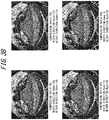
- FIG. 3A and FIG. 3B are diagrams illustrating an original captured image and images having respective compressed amounts of information obtained by performing the low-rank approximation by the singular value decomposition on the captured image.
- FIG. 3A illustrates the original captured image and images in which respective compression ratios of the amounts of characteristics are 95%, 90%, and 80%.
- FIG. 3B illustrates images in which the respective compression ratios of the amounts of characteristics are 75%, 70%, 60%, and 50%.
- the compression ratio of the characteristics amount is defined by standardizing a singular value (a diagonal component that is not zero) of the diagonal matrix B obtained by performing the singular value decomposition on the matrix corresponding to the captured image.
- the original captured image has a rank of 1280 in a width direction and a rank of 960 in the height direction.
- the image having the compression ratio of the characteristics amount at 95% has a rank of 569 in the width direction and a rank of 494 in the height direction.
- the image having the compression ratio of the characteristics amount at 90% has a rank of 371 in the width direction and a rank of 333 in the height direction.
- the image having the compression ratio of the characteristics amount at 80% has a rank of 202 in the width direction and a rank of 186 in the height direction.
- the image having the compression ratio of the characteristics amount at 75% has a rank of 156 in the width direction and a rank of 145 in the height direction.
- the image having the compression ratio of the characteristics amount at 70% has a rank of 122 in the width direction and a rank of 114 in the height direction.
- the image having the compression ratio of the characteristics amount at 60% has a rank of 73 in the width direction and a rank of 69 in the height direction.
- the image having the compression ratio of the characteristics amount at 50% has a rank of 41 in the width direction and a rank of 38 in the height direction.
- performing the low-rank approximation by the singular value decomposition causes images to be rough in less characteristic portions including, for example, the sky or a hood of a vehicle, comparing with the original captured image.
- characteristic portions such as an edge of the vehicle, and characters and lines drawn on a road surface can be recognized in the image subjected to the low-rank approximation by the singular value decomposition.
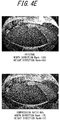
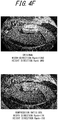
- FIG. 4A to FIG. 4F are diagrams illustrating an example result of the object recognition using captured images capturing a vehicle located behind and images obtained by subjecting the captured images to the low-rank approximation by the singular value decomposition.
- FIG. 4A to FIG. 4F illustrate the example in which the amount of information is compressed to 80% of that of the original captured image by performing the low-rank approximation by Tucker Decomposition / Higher Order Singular Value Decomposition.
- the original captured image has a rank of 1280 in the width direction and a rank of 960 in the height direction.
- FIG. 4A illustrates an original captured image in which a vehicle is located behind at a distance of 17 m and an image that is obtained by performing the low-rank approximation by the singular value decomposition on the captured image and has a compression ratio of an characteristics amount at 80%.
- the image having the compression ratio of the characteristics amount at 80% has a rank of 181 in the width direction and a rank of 163 in the height direction.
- FIG. 4B illustrates an original captured image in which a vehicle is located behind at a distance of 12 m and an image that is obtained by performing the low-rank approximation by the singular value decomposition on the captured image and has a compression ratio of a characteristics amount at 80%.
- the image having the compression ratio of the characteristics amount at 80% has a rank of 180 in the width direction and a rank of 162 in the height direction.
- FIG. 4C illustrates an original captured image in which a vehicle is located behind at a distance of 8 m and an image that is obtained by performing the low-rank approximation by the singular value decomposition on the captured image and has a compression ratio of a characteristics amount at 80%.
- the image having the compression ratio of the characteristics amount at 80% has a rank of 179 in the width direction and a rank of 161 in the height direction.
- FIG. 4D illustrates an original captured image in which a vehicle is located behind at a distance of 5 m and an image that is obtained by performing the low-rank approximation by the singular value decomposition on the captured image and has a compression ratio of a characteristics amount at 80%.
- the image having the compression ratio of the characteristics amount at 80% has a rank of 178 in the width direction and a rank of 159 in the height direction.
- FIG. 4E illustrates an original captured image in which a vehicle is located behind at a distance of 3 m and an image that is obtained by performing the low-rank approximation by the singular value decomposition on the captured image and has a compression ratio of a characteristics amount at 80%.
- the image having the compression ratio of the characteristics amount at 80% has a rank of 175 in the width direction and a rank of 157 in the height direction.
- FIG. 4F illustrates an original captured image in which a vehicle is located behind at a distance of 1 m and an image that is obtained by performing the low-rank approximation by the singular value decomposition on the captured image and has a compression ratio of a characteristics amount at 80%.
- the image having the compression ratio of the characteristics amount at 80% has a rank of 174 in the width direction and a rank of 158 in the height direction.
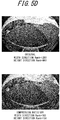
- FIG. 5A to FIG. 5F are diagrams illustrating an example result of the object recognition using actual captured images capturing a person located behind and images obtained by subjecting the captured images to the low-rank approximation by the singular value decomposition.
- FIG. 5A to FIG. 5F illustrate the example in which the amount of information is compressed to 80% of that of the original captured image by performing the low-rank approximation by Tucker Decomposition / Higher Order Singular Value Decomposition.
- the original captured image has a rank of 1280 in the width direction and a rank of 960 in the height direction.
- FIG. 5A illustrates an original captured image in which a person is located behind at a distance of 17 m and an image that is obtained by performing the low-rank approximation by the singular value decomposition on the captured image and has a compression ratio of a characteristics amount at 80%.
- the image having the compression ratio of the characteristics amount at 80% has a rank of 187 in the width direction and a rank of 168 in the height direction.
- FIG. 5B illustrates an original captured image in which a person is located behind at a distance of 12 m and an image that is obtained by performing the low-rank approximation by the singular value decomposition on the captured image and has a compression ratio of a characteristics amount at 80%.
- the image having the compression ratio of the characteristics amount at 80% has a rank of 185 in the width direction and a rank of 167 in the height direction.
- FIG. 5C illustrates an original captured image in which a person is located behind at a distance of 8 m and an image that is obtained by performing the low-rank approximation by the singular value decomposition on the captured image and has a compression ratio of a characteristics amount at 80%.
- the image having the compression ratio of the characteristics amount at 80% has a rank of 185 in the width direction and a rank of 167 in the height direction.
- FIG. 5D illustrates an original captured image in which a person is located behind at a distance of 5 m and an image that is obtained by performing the low-rank approximation by the singular value decomposition on the captured image and has a compression ratio of a characteristics amount at 80%.
- the image having the compression ratio of the characteristics amount at 80% has a rank of 183 in the width direction and a rank of 164 in the height direction.
- FIG. 5E illustrates an original captured image in which a person is located behind at a distance of 3 m and an image that is obtained by performing the low-rank approximation by the singular value decomposition on the captured image and has a compression ratio of a characteristics amount at 80%.
- the image having the compression ratio of the characteristics amount at 80% has a rank of 186 in the width direction and a rank of 167 in the height direction.
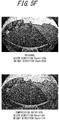
- FIG. 5F illustrates an original captured image in which a person is located behind at a distance of 1 m and an image that is obtained by performing the low-rank approximation by the singular value decomposition on the captured image and has a compression ratio of a characteristics amount at 80%.
- the image having the compression ratio of the characteristics amount at 80% has a rank of 194 in the width direction and a rank of 174 in the height direction.
- a matrix corresponding to the original captured image is a three-dimensional matrix in size of W (width): 1280 ⁇ H (height): 960 ⁇ C (color): 3 (R, G, B) in which a value is assigned to each element.
- a matrix corresponding to the image in which the compression ratio of the characteristics amount is 80% as illustrated in FIG. 4A to FIG. 4F and FIG. 5 to FIG. 5F is a sparse matrix having the same size as the matrix corresponding to the original captured image, in which elements W: 180 ⁇ H: 160 ⁇ C: 3 alone have values while the other elements are 0.
- the image processing apparatus 10 repeats the flow illustrated in FIG. 6 at, for example, predetermined time intervals.
- the interface 12 acquires the image captured by the imaging unit 11 (step S11).
- the processor 13 performs the low-rank approximation by the singular value decomposition on the acquired image acquired by the interface 12 (step S12).
- the processor 13 performs the object recognition on the image subjected to the low-rank approximation by the singular value decomposition (step S13).
- the processor 13 can also perform image analysis such as detection of a region having a large or small characteristics amount in the image. Because the characteristics amount of an asphalt road surface having a fine pattern is maintained in the image subjected to the low-rank approximation by the singular value decomposition, the processor 13 can detect the asphalt road surface on which the mobile body 1 is progressing. The processor 13 can also detect areas other than the asphalt road surface, such as a water surface, a lake surface, lawn, farms, or the like.
- a wall surface in an irradiation direction of strong light such as sunlight or outdoor illumination light has a small characteristics amount and is preferentially compressed by the low-rank approximation.
- the processor 13 can also detect the sunlight, the irradiation direction of light, and the like. Further, the processor 13 can detect a moving object and a stationary object by increasing a dimension of a matrix and performing batch processing on a still image cut out from a video image.
- the image processing apparatus 10 includes the interface 12 configured to acquire an image and the processor 13 configured to perform the low-rank approximation by the singular value decomposition on the acquired image and perform the object recognition on the image subjected to the low-rank approximation by the singular value decomposition.
Landscapes
- Engineering & Computer Science (AREA)
- Multimedia (AREA)
- Theoretical Computer Science (AREA)
- Signal Processing (AREA)
- Physics & Mathematics (AREA)
- General Physics & Mathematics (AREA)
- Data Mining & Analysis (AREA)
- Computer Vision & Pattern Recognition (AREA)
- Mechanical Engineering (AREA)
- Artificial Intelligence (AREA)
- Evolutionary Computation (AREA)
- Evolutionary Biology (AREA)
- General Engineering & Computer Science (AREA)
- Bioinformatics & Computational Biology (AREA)
- Bioinformatics & Cheminformatics (AREA)
- Life Sciences & Earth Sciences (AREA)
- Image Analysis (AREA)
- Closed-Circuit Television Systems (AREA)
- Studio Devices (AREA)
- Image Processing (AREA)
Abstract
Description
- This application claims priority to and the benefit of
Japanese Patent Application No. 2018-203193 filed on October 29, 2018 - The present disclosure relates to an image processing apparatus, a camera, a mobile body, and an image processing method.
- PTL1 set forth below discloses a technique for detecting an object of interest from a captured image using a model generated by machine learning.
- PTL 1:
JP-A-2015-73191 - An image processing apparatus according to an aspect includes an interface configured to acquire an image and a processor configured to perform low-rank approximation by singular value decomposition on the acquired image, and perform object recognition on the acquired image subjected to the low-rank approximation by the singular value decomposition.
- A camera according to an aspect includes an imaging optical system, an image sensor configured to capture an image formed via the imaging optical system, an interface configured to acquire the image captured by the image sensor, and a processor configured to perform low-rank approximation by singular value decomposition on the acquired image, and perform object recognition on the acquired image subjected to the low-rank approximation by the singular value decomposition.
- A mobile body according to an aspect includes a camera configured to capture an image of the surroundings of the mobile body, wherein the camera includes an imaging optical system, an image sensor configured to capture an image formed via the imaging optical system, an interface configured to acquire the image captured by the image sensor, and a processor configured to perform low-rank approximation by singular value decomposition on the acquired image, and perform object recognition on the acquired image subjected to the low-rank approximation by the singular value decomposition.
- An image processing method according to an aspect is an image processing method of an image processing apparatus, wherein the image processing method includes, acquiring an image and performing low-rank approximation by singular value decomposition on an acquired image, and performing object recognition on the acquired image subjected to the low-rank approximation by the singular value decomposition.
- In the accompanying drawings:
-
FIG. 1 is a diagram illustrating an example configuration of an image processing apparatus according to an embodiment of the present disclosure; -
FIG. 2 is a diagram for explaining an example desired characteristic amount determined by a processor illustrated inFIG. 1 ; -
FIG. 3A is a diagram illustrating examples of a captured image and images subjected to low-rank approximation by singular value decomposition; -
FIG. 3B is a diagram illustrating examples of a captured image and images subjected to the low-rank approximation by singular value decomposition; -
FIG. 4A is a diagram illustrating an example result of object recognition using a captured image and an image subjected to the low-rank approximation by singular value decomposition; -
FIG. 4B is a diagram illustrating an example result of the object recognition using a captured image and an image subjected to the low-rank approximation by singular value decomposition; -
FIG. 4C is a diagram illustrating an example result of the object recognition using a captured image and an image subjected to the low-rank approximation by singular value decomposition; -
FIG. 4D is a diagram illustrating an example result of the object recognition using a captured image and an image subjected to the low-rank approximation by singular value decomposition; -
FIG. 4E is a diagram illustrating an example result of the object recognition using a captured image and an image subjected to the low-rank approximation by singular value decomposition; -
FIG. 4F is a diagram illustrating an example result of the object recognition using the captured image and an image subjected to the low-rank approximation by singular value decomposition; -
FIG. 5A is a diagram illustrating an example result of object recognition using a captured image and an image subjected to the low-rank approximation by singular value decomposition; -
FIG. 5B is a diagram illustrating an example result of the object recognition using a captured image and an image subjected to the low-rank approximation by singular value decomposition; -
FIG. 5C is a diagram illustrating an example result of the object recognition using a captured image and an image subjected to the low-rank approximation by singular value decomposition; -
FIG. 5D is a diagram illustrating an example result of the object recognition using a captured image and an image subjected to the low-rank approximation by singular value decomposition; -
FIG. 5E is a diagram illustrating an example result of the object recognition using a captured image and an image subjected to the low-rank approximation by singular value decomposition; -
FIG. 5F is a diagram illustrating an example result of the object recognition using a captured image and an image subjected to the low-rank approximation by singular value decomposition; and -
FIG. 6 is a flowchart for explaining an image processing method of the image processing apparatus illustrated inFIG. 1 . - To perform object recognition of an object included in an image, it is beneficial to reduce a processing load while suppressing a decrease in an accuracy of the object recognition. According to an aspect of the present disclosure, the processing load can be reduced while a decrease in the accuracy of the object recognition is suppressed.
- Hereinafter, embodiments of the present disclosure will be described with reference to the drawings. In the drawings, the same reference numerals denote the same or equivalent elements.
-
FIG. 1 is a diagram illustrating an example configuration of animage processing apparatus 10 according to an embodiment of the present disclosure. Theimage processing apparatus 10 according to the present embodiment performs object recognition for recognizing an object included in an image. Theimage processing apparatus 10 is mounted on, for example, a mobile body 1, as illustrated inFIG. 1 . In a case in which theimage processing apparatus 10 is mounted on the mobile body 1, theimage processing apparatus 10 performs the object recognition to recognize an object such as a person, another mobile body, or the like included in an image capturing the surroundings of the mobile body 1. Hereinafter, theimage processing apparatus 10 will be described as being mounted on the mobile body 1. - The mobile body 1 according to the present disclosure is, for example, a vehicle. The vehicle may include automobiles and industrial vehicles. Vehicles are not limited thereto but may also include rail vehicles, domestic vehicles, and fixed-wing aircraft that travel on a runway. Automobiles include cars, trucks, buses, motorcycles, and trolley buses. Automobiles are not limited thereto and may also include other automobiles that travel on the road. Industrial vehicles include agricultural vehicles and construction vehicles. Industrial vehicles include, but are not limited to, forklifts and golf carts. Industrial vehicles for agricultural purpose include, but are not limited to, tractors, tillers, transplanters, binders, combined harvesters, and lawn mowers. Industrial vehicles for construction purposes include, but are not limited to, bulldozers, scrapers, excavators, crane trucks, dump trucks, and load rollers. The vehicles may include human-powered vehicles that travel on human power. Classification of the vehicles is not limited to the above. For example, vehicles may include industrial vehicles authorized to travel on the road, and a plurality of categories may include the same type of vehicle.
- The
image processing apparatus 10 illustrated inFIG. 1 includes aninterface 12, aprocessor 13, and amemory 14. The mobile body 1 is equipped with animaging unit 11 configured to acquire an image of the surroundings of the mobile body 1. Theimage processing apparatus 10 and theimaging unit 11 constitute acamera 1A mounted on the mobile body 1. First, theimaging unit 11 will be described. - The
imaging unit 11 is a vehicle-mounted camera mounted on the mobile body 1. Theimaging unit 11 is configured to acquire an image capturing the surroundings of the mobile body 1. A plurality ofimaging units 11 may be mounted on the mobile body 1. For example, in a case in which four vehicle-mounted cameras are mounted on the mobile body 1, theimaging units 11 are respectively arranged at a location where theimaging unit 11 can capture an image of the surroundings on a front side of the mobile body 1 and at least a part of a front side surface of the mobile body 1, a location where theimaging unit 11 can capture an image of the surroundings on a rear side of the mobile body 1 and at least a part of a rear side surface of the mobile body 1, a location where theimaging unit 11 can capture an image of the surroundings on a left side of the mobile body 1 and at least a part of a left surface of the mobile body 1, and a location where theimaging unit 11 can capture an image of the surroundings on a right side of the mobile body 1 and at least a part of a right surface of the mobile body 1. This arrangement enables capturing of the four regions surrounding the mobile body 1. - The
imaging unit 11 includes at least an imagingoptical system 11a and animage sensor 11b. - The imaging
optical system 11a includes one or more optical members such as, for example, a lens and an aperture. The lens included in the imagingoptical system 11a may be a lens having a wide angle of view, such as a fisheye lens. The imagingoptical system 11a is configured to form a subject image on a light receiving surface of theimage sensor 11b. Theimage sensor 11b includes, for example, a CCD (Charge Coupled Device) image sensor or a CMOS (Complementary Metal-Oxide Semiconductor) image sensor. A plurality of pixels are arranged on the light receiving surface of theimage sensor 11b. Theimage sensor 11b is configured to capture the subject image formed on the light receiving surface and generate an image. Theimaging unit 11 may output the captured image to an external device such as an ECU (Electronic Control Unit), a display, a navigation device, or the like mounted on the mobile body 1. Further, theimaging unit 11 may have a function of performing predetermined image processing such as white balance adjustment processing, exposure adjustment processing, and gamma correction processing on the captured image. - Next, a configuration of the
image processing apparatus 10 will be described. - The
interface 12 communicates with various elements included in the mobile body 1 in a wired or wireless manner. For example, theinterface 12 acquires the image captured by theimaging unit 11 and outputs the image to theprocessor 13. - The
processor 13 includes, for example, a specialized processor such as a DSP (Digital Signal Processor), a GPU (Graphics Processing Unit) or an FPGA (Field-Programmable Gate Array), or a general purpose processor such as a CPU (Central Processing Unit). Theprocessor 13 controls an operation of theimage processing apparatus 10 as a whole. For example, theprocessor 13 performs object recognition using an acquired image which is an image acquired by theinterface 12. Details of the object recognition performed by theprocessor 13 will be described later. - The
memory 14 includes, for example, a primary storage device or a secondary storage device. Thememory 14 stores various information and programs necessary for the operation of theimage processing apparatus 10. - Next, the object recognition performed by the
processor 13 will be described. - The
processor 13 performs mathematical processing on the acquired image acquired by theinterface 12, and performs the object recognition on a processed image. In particular, theprocessor 13 performs low-rank approximation by the singular value decomposition on the acquired image and performs the object recognition on the image subjected to the low-rank approximation. - The
processor 13 generates a matrix M corresponding to the acquired image. The matrix M corresponding to the acquired image is a matrix representation of the acquired image. An image normally consists of a plurality of pixels arranged in a row direction and a column direction. Theprocessor 13 generates, for example, a matrix M in which a brightness value of each pixel of the acquired image is an element corresponding to a position of each pixel. Then, theprocessor 13 performs the singular value decomposition on the matrix M. The singular value decomposition is commonly used mathematical processing that, although detailed description thereof will be omitted, decomposes a matrix M constituting any number of m × n into three matrix elements A, B, and C, as indicated by the following equation (1):
- In equation (1), A is a left singular value matrix having an orthogonal matrix of m × m, B is a diagonal matrix of m × n, and C is a right singular value matrix having an orthogonal matrix of n × n. The diagonal matrix B (a first diagonal matrix) is a matrix in which a diagonal component is a positive value or 0 and a non-diagonal component is 0. The diagonal components of the diagonal matrix B are arranged in descending order from one with the largest value. Among the diagonal components of the diagonal matrix B, the number of components that is not zero will be referred to as a rank k.
- The
processor 13 performs the low-rank approximation after performing the singular value decomposition described above. In particular, theprocessor 13 generates a diagonal matrix B' (a second diagonal matrix) in which a rank of the diagonal matrix B is lowered to k-1. Here, theprocessor 13 generates the diagonal matrix B' by setting one diagonal component to zero in order from a component having the smallest value, from among the k-number of diagonal components of the diagonal matrix B that are not zero. That is, theprocessor 13 generates the diagonal matrix B' in which the rank of the diagonal matrix B is lowered. Then, theprocessor 13 generates an image corresponding to a matrix M' acquired from an inner product of the left singular value matrix A, the diagonal matrix B' in which the rank of the diagonal matrix B is lowered, and the right singular value matrix C, as an image subjected to the low-rank approximation. - Next, the
processor 13 performs the object recognition using the image corresponding to the matrix M'. Hereinafter, the image corresponding to the matrix M' calculated based on the acquired image will be referred to as an image subjected to the low-rank approximation by the singular value decomposition. - As described above, the matrix M' after the low-rank approximation by the singular value decomposition is performed is acquired from the inner product of the left singular value matrix A, the diagonal matrix B' in which the rank of the diagonal matrix B is lowered, and the right singular value matrix C. The diagonal matrix B' includes more diagonal components having values of zero than the diagonal matrix B. Due to such a sparsity of the diagonal matrix B', the
processor 13 can reduce the processing load required for the object recognition. For example, theprocessor 13 can reduce the processing load by omitting a calculation for an obvious result such as x (any value) × 0 = 0, or x (any value) + 0 = x. - Further, the diagonal matrix B' is obtained by setting a predetermined number of diagonal components, from among the diagonal components of the diagonal matrix B, to zero in order from a diagonal component having the smallest value. Thus, in the image subjected to the low-rank approximation by the singular value decomposition, a portion of the acquired image that lacks characteristics is preferentially compressed. As a result, characteristic portions necessary for the object recognition remain in the image subjected to the low-rank approximation by singular value decomposition, whereby a decrease in the accuracy of the object recognition is suppressed.
- Generally, use of an image having a high resolution is conceived to improve the accuracy of the object recognition. However, use of a high-resolution image increases the processing load and time required for the object recognition. Also, to reduce the processing load of the object recognition, reducing an image resolution can be conceived. However, reducing the image resolution also reduces the resolution of characteristic portions required for the object recognition, whereby the accuracy of the object recognition decreases. On the other hand, because the low-rank approximation by the singular value decomposition is performed in the present embodiment, the processing load can be reduced while a decrease in the accuracy of the object recognition is suppressed.
- The
processor 13 determines the rank of the diagonal matrix B' according to an characteristics amount of the image required for the object recognition. That is, theprocessor 13 determines the rank of the diagonal matrix B' according to a desired characteristics amount in the image subjected to the low-rank approximation by the singular value decomposition. For example, theprocessor 13 acquires the characteristics amount in the image subjected to the low-rank approximation by the singular value decomposition in each rank while changing the rank of the diagonal matrix B' by a predetermined value, and determines the rank of the diagonal matrix B' according to a desired characteristics amount, based on a relationship between the rank of the diagonal matrix B' and the characteristics amount in the image subjected to the low-rank approximation by the value decomposition. Here, the relationship between the rank of the diagonal matrix B' and the characteristics amount in the image subjected to the low-rank approximation by the singular value decomposition varies in each image. Thus, although a calculation is necessary to obtain the relationship between the rank of the diagonal matrix B' and the characteristics amount in the image subjected to the low-rank approximation by the singular value decomposition, the processing load of theprocessor 13 including this calculation can be less than a processing load of object recognition performed using the acquired image itself. Note that the characteristics amount means an amount of characteristic portions necessary for the object recognition such as an edge of an object and can be expressed using, for example, a spatial frequency. - Further, the
processor 13 may determine the desired characteristics amount according to an area of the image. - For example, in an image capturing the front side of a mobile body 1, an object such as the sky having a small influence on progress of the mobile body 1 is often included in an upper portion of the image, and an object such as another mobile body 1 or a pedestrian having a large influence on the progress of the mobile body 1 is often included in a central portion of the image. That is, the upper portion of the image capturing the front side of the mobile body 1 often includes an object that is less significant for the object recognition, and the central portion of the image often includes an object that is highly significant for the object recognition. Further, a lower portion of the image obtained by capturing the front side of the mobile body 1 often includes an object that has been in the central portion of the image whose distance information has been acquired and has relatively approached the mobile body 1 along with the progress of the mobile body 1. As described above, an image includes an area that should be preferentially subjected to the object recognition. Accordingly, the
processor 13 may determine a desired characteristics amount according to an area of the acquired image and determine the rank of the diagonal matrix B' for each area according to the desired characteristics amount. For example, theprocessor 13 may increase the desired characteristics amount in acentral portion 2b of the acquiredimage 2, reduce desired characteristic in anupper portion 2a of the acquiredimage 2, and set the desired characteristics amount in alower portion 2c to a value between the characteristics amount in theupper portion 2a and the characteristics amount in thecentral portion 2b, as illustrated inFIG. 2 . - The
processor 13 may determine a desired characteristics amount according to a behavior of the mobile body 1. For example, theprocessor 13 may increase the desired characteristics amount when the mobile body 1 is progressing at a high speed and reduce the desired characteristics amount when the mobile body 1 is progressing at a low speed. - Further, in a case in which a frame rate at which the
imaging unit 11 images is variable, theprocessor 13 may determine the frame rate and the desired characteristics amount, according to a behavior of the mobile body 1. For example, when the mobile body 1 is progressing at a high speed, it can be said that the mobile body 1 is progressing on a highway. When the mobile body 1 is progressing on the highway, a moving amount of the mobile body 1 per unit time is large, and thus it is desirable that imaging intervals of theimaging unit 11 are not too long. Further, because of the large amount of movement of the mobile body 1 per unit time, it is desired to reduce the time required for the object recognition. Thus, when the mobile body 1 is progressing, for example, on the highway, theprocessor 13 increases the frame rate of theimaging unit 11 and, simultaneously, reduces the desired characteristics amount. - For example, when the mobile body 1 is progressing at a low speed, it can be said that the mobile body 1 is progressing in an urban area. When the mobile body 1 is progressing in the urban area, the amount of movement of the mobile body 1 per unit time is small. However, there is a high possibility that a pedestrian runs out in front of the mobile body 1, and thus the object recognition is often required to be performed highly accurately. Thus, for example, when the mobile body 1 is progressing at a low speed, the
processor 13 reduces the frame rate of theimaging unit 11 and increases the desired characteristics amount. In this way, theprocessor 13 can perform the object recognition according to a situation in which the mobile body 1 is progressing. - As described above, the
processor 13 performs the object recognition using the image subjected to the low-rank approximation by the singular value decomposition. In particular, theprocessor 13 performs the object recognition by inputting the image subjected to the low-rank approximation by the singular value decomposition to a model generated by learning. The model used for the object recognition is generated by, for example, learning that uses a neural network. For model training, an image that is not subjected to the low-rank approximated by the singular value decomposition can be used. - Next, an actual captured image and an image in which the characteristics amount is compressed by performing the low-rank approximation by the singular value decomposition on the captured image will be illustrated by way of example. Hereinafter, the captured image is assumed to be a color image. An example in which the color image is regarded as a third-order tensor and the color image is subjected to the low-rank approximation by Tucker Decomposition / Higher Order Singular Value Decomposition (HOSVD) will be illustrated. Tucker Decomposition / Higher Order Singular Value Decomposition is a method in which the singular value decomposition in a matrix (a second-order tensor) is extended to a tensor.
-
FIG. 3A andFIG. 3B are diagrams illustrating an original captured image and images having respective compressed amounts of information obtained by performing the low-rank approximation by the singular value decomposition on the captured image.FIG. 3A illustrates the original captured image and images in which respective compression ratios of the amounts of characteristics are 95%, 90%, and 80%.FIG. 3B illustrates images in which the respective compression ratios of the amounts of characteristics are 75%, 70%, 60%, and 50%. The compression ratio of the characteristics amount is defined by standardizing a singular value (a diagonal component that is not zero) of the diagonal matrix B obtained by performing the singular value decomposition on the matrix corresponding to the captured image. - As illustrated in
FIG. 3A andFIG. 3B , the original captured image has a rank of 1280 in a width direction and a rank of 960 in the height direction. The image having the compression ratio of the characteristics amount at 95% has a rank of 569 in the width direction and a rank of 494 in the height direction. The image having the compression ratio of the characteristics amount at 90% has a rank of 371 in the width direction and a rank of 333 in the height direction. The image having the compression ratio of the characteristics amount at 80% has a rank of 202 in the width direction and a rank of 186 in the height direction. The image having the compression ratio of the characteristics amount at 75% has a rank of 156 in the width direction and a rank of 145 in the height direction. The image having the compression ratio of the characteristics amount at 70% has a rank of 122 in the width direction and a rank of 114 in the height direction. The image having the compression ratio of the characteristics amount at 60% has a rank of 73 in the width direction and a rank of 69 in the height direction. The image having the compression ratio of the characteristics amount at 50% has a rank of 41 in the width direction and a rank of 38 in the height direction. - As illustrated in
FIG. 3A andFIG. 3B , performing the low-rank approximation by the singular value decomposition causes images to be rough in less characteristic portions including, for example, the sky or a hood of a vehicle, comparing with the original captured image. On the other hand, characteristic portions such as an edge of the vehicle, and characters and lines drawn on a road surface can be recognized in the image subjected to the low-rank approximation by the singular value decomposition. Thus, it can be seen that, even when the captured image is subjected to the low-rank approximation by the singular value decomposition and the ranks thereof are reduced by a fraction to a few tenths, compression is performed for less characteristic portions while the characteristic portions necessary for the object recognition are maintained. As a result, a decrease in the accuracy of the object recognition can be suppressed and, because of the sparsity of the matrix corresponding to the image subjected to the low-rank approximation by the singular value decomposition, the processing load can be reduced and the object recognition can be sped up. - Next, an example result of the object recognition using an image subjected to the low-rank approximation by the singular value decomposition will be described.
-
FIG. 4A to FIG. 4F are diagrams illustrating an example result of the object recognition using captured images capturing a vehicle located behind and images obtained by subjecting the captured images to the low-rank approximation by the singular value decomposition.FIG. 4A to FIG. 4F illustrate the example in which the amount of information is compressed to 80% of that of the original captured image by performing the low-rank approximation by Tucker Decomposition / Higher Order Singular Value Decomposition. The original captured image has a rank of 1280 in the width direction and a rank of 960 in the height direction. -
FIG. 4A illustrates an original captured image in which a vehicle is located behind at a distance of 17 m and an image that is obtained by performing the low-rank approximation by the singular value decomposition on the captured image and has a compression ratio of an characteristics amount at 80%. The image having the compression ratio of the characteristics amount at 80% has a rank of 181 in the width direction and a rank of 163 in the height direction. -
FIG. 4B illustrates an original captured image in which a vehicle is located behind at a distance of 12 m and an image that is obtained by performing the low-rank approximation by the singular value decomposition on the captured image and has a compression ratio of a characteristics amount at 80%. The image having the compression ratio of the characteristics amount at 80% has a rank of 180 in the width direction and a rank of 162 in the height direction. -
FIG. 4C illustrates an original captured image in which a vehicle is located behind at a distance of 8 m and an image that is obtained by performing the low-rank approximation by the singular value decomposition on the captured image and has a compression ratio of a characteristics amount at 80%. The image having the compression ratio of the characteristics amount at 80% has a rank of 179 in the width direction and a rank of 161 in the height direction. -
FIG. 4D illustrates an original captured image in which a vehicle is located behind at a distance of 5 m and an image that is obtained by performing the low-rank approximation by the singular value decomposition on the captured image and has a compression ratio of a characteristics amount at 80%. The image having the compression ratio of the characteristics amount at 80% has a rank of 178 in the width direction and a rank of 159 in the height direction. -
FIG. 4E illustrates an original captured image in which a vehicle is located behind at a distance of 3 m and an image that is obtained by performing the low-rank approximation by the singular value decomposition on the captured image and has a compression ratio of a characteristics amount at 80%. The image having the compression ratio of the characteristics amount at 80% has a rank of 175 in the width direction and a rank of 157 in the height direction. -
FIG. 4F illustrates an original captured image in which a vehicle is located behind at a distance of 1 m and an image that is obtained by performing the low-rank approximation by the singular value decomposition on the captured image and has a compression ratio of a characteristics amount at 80%. The image having the compression ratio of the characteristics amount at 80% has a rank of 174 in the width direction and a rank of 158 in the height direction. -
FIG. 5A to FIG. 5F are diagrams illustrating an example result of the object recognition using actual captured images capturing a person located behind and images obtained by subjecting the captured images to the low-rank approximation by the singular value decomposition.FIG. 5A to FIG. 5F illustrate the example in which the amount of information is compressed to 80% of that of the original captured image by performing the low-rank approximation by Tucker Decomposition / Higher Order Singular Value Decomposition. The original captured image has a rank of 1280 in the width direction and a rank of 960 in the height direction. -
FIG. 5A illustrates an original captured image in which a person is located behind at a distance of 17 m and an image that is obtained by performing the low-rank approximation by the singular value decomposition on the captured image and has a compression ratio of a characteristics amount at 80%. The image having the compression ratio of the characteristics amount at 80% has a rank of 187 in the width direction and a rank of 168 in the height direction. -
FIG. 5B illustrates an original captured image in which a person is located behind at a distance of 12 m and an image that is obtained by performing the low-rank approximation by the singular value decomposition on the captured image and has a compression ratio of a characteristics amount at 80%. The image having the compression ratio of the characteristics amount at 80% has a rank of 185 in the width direction and a rank of 167 in the height direction. -
FIG. 5C illustrates an original captured image in which a person is located behind at a distance of 8 m and an image that is obtained by performing the low-rank approximation by the singular value decomposition on the captured image and has a compression ratio of a characteristics amount at 80%. The image having the compression ratio of the characteristics amount at 80% has a rank of 185 in the width direction and a rank of 167 in the height direction. -
FIG. 5D illustrates an original captured image in which a person is located behind at a distance of 5 m and an image that is obtained by performing the low-rank approximation by the singular value decomposition on the captured image and has a compression ratio of a characteristics amount at 80%. The image having the compression ratio of the characteristics amount at 80% has a rank of 183 in the width direction and a rank of 164 in the height direction. -
FIG. 5E illustrates an original captured image in which a person is located behind at a distance of 3 m and an image that is obtained by performing the low-rank approximation by the singular value decomposition on the captured image and has a compression ratio of a characteristics amount at 80%. The image having the compression ratio of the characteristics amount at 80% has a rank of 186 in the width direction and a rank of 167 in the height direction. -
FIG. 5F illustrates an original captured image in which a person is located behind at a distance of 1 m and an image that is obtained by performing the low-rank approximation by the singular value decomposition on the captured image and has a compression ratio of a characteristics amount at 80%. The image having the compression ratio of the characteristics amount at 80% has a rank of 194 in the width direction and a rank of 174 in the height direction. - As illustrated in
FIG. 4A to FIG. 4F andFIG. 5 to FIG. 5F , in the case in which a target of the object recognition is a vehicle and in the case in which a target of the object recognition is a person, when the ranks in the width direction and in the height direction are reduced to approximately 15% by performing the low-rank approximation by the singular value decomposition, the accuracy of the object recognition similar to that of a case using the original captured images was obtained. - Here, conceptually speaking, a matrix corresponding to the original captured image is a three-dimensional matrix in size of W (width): 1280 × H (height): 960 × C (color): 3 (R, G, B) in which a value is assigned to each element. On the other hand, conceptually speaking, a matrix corresponding to the image in which the compression ratio of the characteristics amount is 80% as illustrated in
FIG. 4A to FIG. 4F andFIG. 5 to FIG. 5F is a sparse matrix having the same size as the matrix corresponding to the original captured image, in which elements W: 180 × H: 160 × C: 3 alone have values while the other elements are 0. In performing the image recognition using an image corresponding to such a sparse matrix, calculation for obvious results such as multiplying by 0 or adding 0 can be omitted, whereby the processing load of the object recognition can be reduced. Further, because less characteristics portions including the sky or the hood of the vehicle are preferentially compressed as illustrated inFIG. 4A to FIG. 4F andFIG. 5 to FIG. 5F , a decrease in the accuracy of the object recognition can be suppressed. - Next, an image processing method of the
image processing apparatus 10 according to the present embodiment will be described with reference to a flowchart illustrated inFIG. 6 . Theimage processing apparatus 10 repeats the flow illustrated inFIG. 6 at, for example, predetermined time intervals. - The
interface 12 acquires the image captured by the imaging unit 11 (step S11). - The
processor 13 performs the low-rank approximation by the singular value decomposition on the acquired image acquired by the interface 12 (step S12). - Subsequently, the
processor 13 performs the object recognition on the image subjected to the low-rank approximation by the singular value decomposition (step S13). - By using the image subjected to the low-rank approximation by the singular value decomposition, the
processor 13 can also perform image analysis such as detection of a region having a large or small characteristics amount in the image. Because the characteristics amount of an asphalt road surface having a fine pattern is maintained in the image subjected to the low-rank approximation by the singular value decomposition, theprocessor 13 can detect the asphalt road surface on which the mobile body 1 is progressing. Theprocessor 13 can also detect areas other than the asphalt road surface, such as a water surface, a lake surface, lawn, farms, or the like. - Also, in the image subjected to the low-rank approximation by the singular value decomposition, a wall surface in an irradiation direction of strong light such as sunlight or outdoor illumination light has a small characteristics amount and is preferentially compressed by the low-rank approximation. Thus, the
processor 13 can also detect the sunlight, the irradiation direction of light, and the like. Further, theprocessor 13 can detect a moving object and a stationary object by increasing a dimension of a matrix and performing batch processing on a still image cut out from a video image. - As described above, the
image processing apparatus 10 according to the present embodiment includes theinterface 12 configured to acquire an image and theprocessor 13 configured to perform the low-rank approximation by the singular value decomposition on the acquired image and perform the object recognition on the image subjected to the low-rank approximation by the singular value decomposition. - By performing the low-rank approximation on the acquired image, more elements become zero in the matrix corresponding to the image subjected to the low-rank approximation by the singular value decomposition. Because calculations for obvious results such as multiplying by 0 or adding 0 can be omitted, the processing load of the object recognition can be reduced. Further, in the low-rank approximation by the singular value decomposition, less characteristic portions are preferentially compressed while characteristics portions remain, whereby a decrease in the accuracy of the object recognition can be suppressed.
- Although the present disclosure has been described based on the figures and the embodiments, it should be appreciated that those who are skilled in the art may easily perform variations or alteration based on the present disclosure. Accordingly, such variations and alterations are to be included in the scope of the present disclosure.
-
- 1
- mobile body
- 1A
- camera
- 10
- image processing apparatus
- 11
- imaging unit
- 11a
- imaging optical system
- 11b
- image sensor
- 12
- interface
- 13
- processor
- 14
- memory
Claims (9)
- An image processing apparatus comprising:an interface configured to acquire an image; anda processor configured to perform low-rank approximation by singular value decomposition on the acquired image, and perform object recognition on the acquired image subjected to the low-rank approximation by the singular value decomposition.
- The image processing apparatus according to claim 1,
wherein the processor is configured to:perform the singular value decomposition to decompose a matrix corresponding to the acquired image into a left singular value matrix, a first diagonal matrix, and a right singular value matrix, wherein the acquired image subjected to the low-rank approximation by the singular value decomposition corresponds to a matrix obtained by an inner product of a second diagonal matrix obtained by reducing a rank of the first diagonal matrix and the right singular value matrix,determine a rank of the second diagonal matrix according to a desired characteristics amount in the acquired image subjected to the low-rank approximation by the singular value decomposition. - The image processing apparatus according to claim 2,
wherein the processor is configured to vary the desired characteristics amount depending on an area of the acquired image. - The image processing apparatus according to claim 2 or 3,wherein the acquired image is captured by a camera mounted on a mobile body, andthe processor is configured to vary the desired characteristics amount according to a behavior of the mobile body.
- The image processing apparatus according to any one of claims 1 to 4,
wherein the processor is configured to perform object recognition by inputting the acquired image subjected to the low-rank approximation by the singular value decomposition to a model generated by learning. - The image processing apparatus according to claim 5,
wherein learning data used for learning the model is an image that is not subjected to the low-rank approximation by the singular value decomposition. - A camera comprising:an imaging optical system;an image sensor configured to capture an image formed via the imaging optical system;an interface configured to acquire the image captured by the image sensor; anda processor configured to perform low-rank approximation by singular value decomposition on the acquired image, and perform object recognition on the acquired image subjected to the low-rank approximation by the singular value decomposition.
- A mobile body comprising:a camera configured to capture an image of surroundings of the mobile body,wherein the camera includes:an imaging optical system;an image sensor configured to capture an image formed via the imaging optical system;an interface configured to acquire the image captured by the image sensor; anda processor configured to perform low-rank approximation by singular value decomposition on the acquired image. and perform object recognition on the acquired image subjected to the low-rank approximation by the singular value decomposition.
- An image processing method for an image processing apparatus, the image processing method comprising:acquiring an image; andperforming low-rank approximation by singular value decomposition on the acquired image, and performing object recognition on the acquired image subjected to the low-rank approximation by the singular value decomposition.
Applications Claiming Priority (2)
| Application Number | Priority Date | Filing Date | Title |
|---|---|---|---|
| JP2018203193A JP7034050B2 (en) | 2018-10-29 | 2018-10-29 | Image processing equipment, cameras, moving objects and image processing methods |
| PCT/JP2019/038806 WO2020090330A1 (en) | 2018-10-29 | 2019-10-01 | Image processing device, camera, mobile body, and image processing method |
Publications (2)
| Publication Number | Publication Date |
|---|---|
| EP3876187A1 true EP3876187A1 (en) | 2021-09-08 |
| EP3876187A4 EP3876187A4 (en) | 2022-06-29 |
Family
ID=70462251
Family Applications (1)
| Application Number | Title | Priority Date | Filing Date |
|---|---|---|---|
| EP19877927.4A Withdrawn EP3876187A4 (en) | 2018-10-29 | 2019-10-01 | Image processing device, camera, mobile body, and image processing method |
Country Status (5)
| Country | Link |
|---|---|
| US (1) | US11675875B2 (en) |
| EP (1) | EP3876187A4 (en) |
| JP (1) | JP7034050B2 (en) |
| CN (1) | CN112912922A (en) |
| WO (1) | WO2020090330A1 (en) |
Families Citing this family (3)
| Publication number | Priority date | Publication date | Assignee | Title |
|---|---|---|---|---|
| JP7380435B2 (en) * | 2020-06-10 | 2023-11-15 | 株式会社Jvcケンウッド | Video processing device and video processing system |
| JP7586684B2 (en) * | 2020-10-23 | 2024-11-19 | 株式会社的 | ABNORMALITY DETECTION SYSTEM AND ABNORMALITY DETECTION METHOD |
| CN116703799A (en) * | 2022-02-23 | 2023-09-05 | 广州视源电子科技股份有限公司 | Feature learning method and device for medical image, computer equipment and storage medium |
Family Cites Families (14)
| Publication number | Priority date | Publication date | Assignee | Title |
|---|---|---|---|---|
| FR2667711B1 (en) * | 1990-10-09 | 1992-11-27 | Thomson Csf | METHOD FOR RECOGNIZING OBJECTS IN IMAGES AND ITS APPLICATION TO TRACKING OBJECTS IN IMAGE SEQUENCES. |
| US6807536B2 (en) | 2000-11-16 | 2004-10-19 | Microsoft Corporation | Methods and systems for computing singular value decompositions of matrices and low rank approximations of matrices |
| CN101964050B (en) * | 2010-09-06 | 2012-09-05 | 中国海洋大学 | Method for identifying modal parameter based on model order determination and signal noise elimination |
| JP2015073191A (en) | 2013-10-02 | 2015-04-16 | キヤノン株式会社 | Image processing system and control method thereof |
| CN106612435A (en) * | 2016-01-16 | 2017-05-03 | 四川用联信息技术有限公司 | Joint image compression method based on SVD-DWT-DCT |
| US9697177B1 (en) * | 2016-10-13 | 2017-07-04 | Sas Institute Inc. | Analytic system for selecting a decomposition description of sensor data |
| CN108068697A (en) * | 2016-11-11 | 2018-05-25 | 法乐第(北京)网络科技有限公司 | Camera system, method and automobile based on automobile |
| US11037330B2 (en) * | 2017-04-08 | 2021-06-15 | Intel Corporation | Low rank matrix compression |
| EP3435326B1 (en) * | 2017-07-27 | 2020-02-19 | Siemens Healthcare GmbH | Method for processing at least one x-ray image |
| CN107403124A (en) * | 2017-07-31 | 2017-11-28 | 苏州经贸职业技术学院 | A kind of barcode detection recognition methods of view-based access control model image |
| CN107680116B (en) * | 2017-08-18 | 2020-07-28 | 河南理工大学 | A method for monitoring moving objects in video images |
| US20190087729A1 (en) * | 2017-09-18 | 2019-03-21 | Intel Corporation | Convolutional neural network tuning systems and methods |
| US10271823B2 (en) * | 2017-10-02 | 2019-04-30 | General Electric Company | Extracting a cardiac-cycle signal from echocardiogram data |
| CN108509983A (en) * | 2018-03-13 | 2018-09-07 | 范大昭 | Image Matching method of purification based on singular value decomposition |
-
2018
- 2018-10-29 JP JP2018203193A patent/JP7034050B2/en active Active
-
2019
- 2019-10-01 WO PCT/JP2019/038806 patent/WO2020090330A1/en not_active Ceased
- 2019-10-01 EP EP19877927.4A patent/EP3876187A4/en not_active Withdrawn
- 2019-10-01 US US17/288,730 patent/US11675875B2/en active Active
- 2019-10-01 CN CN201980069372.0A patent/CN112912922A/en active Pending
Also Published As
| Publication number | Publication date |
|---|---|
| JP7034050B2 (en) | 2022-03-11 |
| WO2020090330A1 (en) | 2020-05-07 |
| CN112912922A (en) | 2021-06-04 |
| US20210397879A1 (en) | 2021-12-23 |
| US11675875B2 (en) | 2023-06-13 |
| EP3876187A4 (en) | 2022-06-29 |
| JP2020071532A (en) | 2020-05-07 |
Similar Documents
| Publication | Publication Date | Title |
|---|---|---|
| CN109101914B (en) | Multi-scale-based pedestrian detection method and device | |
| US7283679B2 (en) | Image processor and method thereof | |
| DE10301469B4 (en) | Infrared image processing device | |
| DE102013223039B4 (en) | Apparatus and method for providing an AVM image | |
| DE102011105628B4 (en) | Driver's vision support system | |
| EP3876187A1 (en) | Image processing device, camera, mobile body, and image processing method | |
| DE102021119920A1 (en) | Method for predicting a trajectory of a vehicle | |
| CN113191952A (en) | Spliced image evaluation method for 360-degree panoramic looking-around equipment | |
| DE112018007485T5 (en) | Road surface detection device, image display device using a road surface detection device, obstacle detection device using a road surface detection device, road surface detection method, image display method using a road surface detection method, and obstacle detection method using a road surface detection method | |
| DE102007011616A1 (en) | Vehicle environment monitoring device | |
| DE112020002319T5 (en) | IMAGE RECOGNITION DEVICE AND IMAGE RECOGNITION METHOD | |
| CN111695403A (en) | 2D and 3D image synchronous detection method based on depth perception convolutional neural network | |
| CN115134537A (en) | Image processing method and device and vehicle | |
| EP3815044B1 (en) | Method for sensor and memory-based depiction of an environment, display apparatus and vehicle having the display apparatus | |
| EP1679639B1 (en) | Object classification method for a collision warning system | |
| US20210190956A1 (en) | Ground surface imaging combining lidar and camera data | |
| CN111010545A (en) | Vehicle driving decision method, system, terminal and storage medium | |
| Wongsaree et al. | Distance detection technique using enhancing inverse perspective mapping | |
| DE112020002775T5 (en) | SEMICONDUCTOR IMAGING ELEMENT, IMAGING APPARATUS AND METHOD OF CONTROLLING A SEMICONDUCTOR IMAGING ELEMENT | |
| DE102020215696B4 (en) | Method for displaying an environment of a vehicle, computer program product, storage medium, control device and vehicle | |
| KR102089230B1 (en) | Apparatus and method for predicting vehicle speed using image | |
| DE112021003845T5 (en) | Data processing device, data processing system, data processing method and data processing program technical field | |
| EP3876199B1 (en) | Image processing apparatus, image pickup apparatus, mobile object and image processing method | |
| DE102024131893A1 (en) | IMAGE DATA ALIGNMENT FOR MOBILE SYSTEM SENSORS | |
| JP2023178691A (en) | Image processing device, control method, and program |
Legal Events
| Date | Code | Title | Description |
|---|---|---|---|
| STAA | Information on the status of an ep patent application or granted ep patent |
Free format text: STATUS: THE INTERNATIONAL PUBLICATION HAS BEEN MADE |
|
| PUAI | Public reference made under article 153(3) epc to a published international application that has entered the european phase |
Free format text: ORIGINAL CODE: 0009012 |
|
| STAA | Information on the status of an ep patent application or granted ep patent |
Free format text: STATUS: REQUEST FOR EXAMINATION WAS MADE |
|
| 17P | Request for examination filed |
Effective date: 20210419 |
|
| AK | Designated contracting states |
Kind code of ref document: A1 Designated state(s): AL AT BE BG CH CY CZ DE DK EE ES FI FR GB GR HR HU IE IS IT LI LT LU LV MC MK MT NL NO PL PT RO RS SE SI SK SM TR |
|
| DAV | Request for validation of the european patent (deleted) | ||
| DAX | Request for extension of the european patent (deleted) | ||
| REG | Reference to a national code |
Ref country code: DE Ref legal event code: R079 Free format text: PREVIOUS MAIN CLASS: G06T0007000000 Ipc: G06V0010420000 |
|
| A4 | Supplementary search report drawn up and despatched |
Effective date: 20220531 |
|
| RIC1 | Information provided on ipc code assigned before grant |
Ipc: H04N 7/18 20060101ALI20220524BHEP Ipc: H04N 5/232 20060101ALI20220524BHEP Ipc: G06V 20/56 20220101ALI20220524BHEP Ipc: G06V 10/42 20220101AFI20220524BHEP |
|
| STAA | Information on the status of an ep patent application or granted ep patent |
Free format text: STATUS: EXAMINATION IS IN PROGRESS |
|
| 17Q | First examination report despatched |
Effective date: 20230405 |
|
| P01 | Opt-out of the competence of the unified patent court (upc) registered |
Effective date: 20230505 |
|
| STAA | Information on the status of an ep patent application or granted ep patent |
Free format text: STATUS: THE APPLICATION IS DEEMED TO BE WITHDRAWN |
|
| 18D | Application deemed to be withdrawn |
Effective date: 20250820 |