EP3876131A1 - Material design device, material design method, and material design program - Google Patents
Material design device, material design method, and material design program Download PDFInfo
- Publication number
- EP3876131A1 EP3876131A1 EP19880532.7A EP19880532A EP3876131A1 EP 3876131 A1 EP3876131 A1 EP 3876131A1 EP 19880532 A EP19880532 A EP 19880532A EP 3876131 A1 EP3876131 A1 EP 3876131A1
- Authority
- EP
- European Patent Office
- Prior art keywords
- time
- design
- temperature
- property
- design condition
- Prior art date
- Legal status (The legal status is an assumption and is not a legal conclusion. Google has not performed a legal analysis and makes no representation as to the accuracy of the status listed.)
- Pending
Links
Images






Classifications
-
- G—PHYSICS
- G06—COMPUTING OR CALCULATING; COUNTING
- G06F—ELECTRIC DIGITAL DATA PROCESSING
- G06F30/00—Computer-aided design [CAD]
- G06F30/20—Design optimisation, verification or simulation
- G06F30/27—Design optimisation, verification or simulation using machine learning, e.g. artificial intelligence, neural networks, support vector machines [SVM] or training a model
-
- C—CHEMISTRY; METALLURGY
- C22—METALLURGY; FERROUS OR NON-FERROUS ALLOYS; TREATMENT OF ALLOYS OR NON-FERROUS METALS
- C22C—ALLOYS
- C22C1/00—Making non-ferrous alloys
-
- G—PHYSICS
- G06—COMPUTING OR CALCULATING; COUNTING
- G06F—ELECTRIC DIGITAL DATA PROCESSING
- G06F30/00—Computer-aided design [CAD]
- G06F30/20—Design optimisation, verification or simulation
-
- G—PHYSICS
- G06—COMPUTING OR CALCULATING; COUNTING
- G06F—ELECTRIC DIGITAL DATA PROCESSING
- G06F2113/00—Details relating to the application field
- G06F2113/26—Composites
Definitions
- the material composition of the design condition includes at least one of Zn, Pb, Bi, Sn, Fe, P, Al, Hg, Ni, Mn, Se, Te, O, S, Zr, Be, Co, Ti, and As.
- the production condition includes at least one of a molten metal temperature at the time of casting, a solution treatment temperature, a solution treatment time, a natural aging time, an artificial aging temperature, an artificial aging time, an annealing temperature, and an annealing time.
- the material property value of a copper alloy casting material includes at least one of 0.2% strength, tensile strength, elongation, conductivity, thermal conductivity, Young's modulus, and a linear expansion coefficient.
Landscapes
- Engineering & Computer Science (AREA)
- Theoretical Computer Science (AREA)
- Physics & Mathematics (AREA)
- Evolutionary Computation (AREA)
- General Physics & Mathematics (AREA)
- General Engineering & Computer Science (AREA)
- Geometry (AREA)
- Computer Hardware Design (AREA)
- Chemical & Material Sciences (AREA)
- Software Systems (AREA)
- Medical Informatics (AREA)
- Computer Vision & Pattern Recognition (AREA)
- Artificial Intelligence (AREA)
- Organic Chemistry (AREA)
- Metallurgy (AREA)
- Mechanical Engineering (AREA)
- Materials Engineering (AREA)
- Conductive Materials (AREA)
- Continuous Casting (AREA)
- Body Structure For Vehicles (AREA)
Abstract
Description
- The present invention relates to a material design device, a material design method, and a material design program.
- Conventionally, when designing a material composed of a plurality of compositions or a material to be produced by combining a plurality of production conditions, an optimal solution capable of realizing desired material properties is acquired by repeating trial productions while adjusting material compositions and production conditions based on the experience of the material developer.
- However, in some cases, such an experience-based trial production by a material developer requires production repetition until the optimal design is acquired, which takes time and effort. In addition, a condition search is often performed locally in the vicinity of a design condition that has been previously performed by the material developer, which is not suitable for a globally optimal design condition search.
- Under the circumstances, for example,
Patent Document 1 proposes a material design support system in which, when a material designer specifies the desired material function, the material candidates satisfying the specified condition are presented. In the system ofPatent Document 1, a machine learning system, such as, e.g., a neural network, can be used as a tool for deriving design conditions of the material satisfying the desired material functions (properties) or performing a so-called reverse problem analysis, which makes it possible to efficiently predict candidate materials. - Patent Document 1:
Japanese Unexamined Patent Application Publication No. 2003-178102 - However, in the conventional configuration in which a machine learning system is applied to a reverse problem analysis described in
Patent Document 1 or the like, calculations are performed to gradually reach the optimal solution while performing an adjustment in order for each property in a case where there are plural kinds of desired material properties. In many cases, a plurality of material properties has a trade-off relation, and the trial and error are repeated until it reaches the optimal solution. Therefore, although the burden on the material designer is reduced by using a machine learning system, there is still room for improvement in the time required to obtain the optimal solution of the production condition. - The preferred embodiments of the present invention have been made in view of the above-described and/or other problems in the related art. The preferred embodiments of the present invention can significantly improve upon the existing methods and/or devices.
- The present invention aims to provide a material design device, a material design method, and a material design program capable of deriving an optimal solution of a design condition satisfying desired material properties in a short time.
- The other objects and advantages of the present invention will be apparent from the following preferred embodiments.
- The present invention has the following configuration.
- [1] A material design device for designing a material to be designed including a material composed of a plurality of compositions or a material produced by combining a plurality of production conditions,
the material design device comprising:- a learned model in which a correspondence between input information including a design condition of the material to be designed and output information including a material property value are acquired by machine learning;
- a design condition setting unit configured to set a specified range of the design condition of the material to be designed;
- a comprehensive prediction point generation unit configured to generate a plurality of comprehensive prediction points within the specified range set by the design condition setting unit;
- a design condition-material property table configured to store data sets in which a material property value calculated by inputting the comprehensive prediction points generated by the comprehensive prediction point generation unit to the learned model is associated with each point of the comprehensive prediction points;
- a required property setting unit configured to set a specified range of a required property of the material to be designed; and
- a design condition extraction unit configured to extract data sets satisfying the required property set by the required property setting unit from the design condition-material property table.
- [2] The material design device as recited in the above-described Item [1], further comprising:
- a design condition adjustment unit configured to adjust a range of a design condition of the data set extracted by the design condition extraction unit,
- wherein the design condition extraction unit further narrows down from the extracted data sets to data sets satisfying the design condition adjusted by the design condition adjustment unit.
- [3] The material design device as recited in the above-described Item [2], further comprising:
- an information display unit configured to display the required property and the range of the design condition related to the data sets extracted by the design condition extraction unit,
- wherein the design condition adjustment unit adjusts the range of the design condition in response to a user operation that changes the range of the design condition displayed on the information display unit.
- [4] The material design device as recited in any one of the above-described Items [1] to [3],
- wherein the required property includes a plurality of properties, and
- wherein the design condition extraction unit extracts the data set that simultaneously satisfies the plurality of required properties.
- [5] The material design device as recited in the above-described Item [4],
wherein the material to be designed is an inorganic material. - [6] The material design device as recited in the above-described Item [5],
wherein the material to be designed is an alloy material. - [7] The material design device as recited in the above-described Item [6],
- wherein the material to be designed is an aluminum alloy working material,
- wherein the design condition includes a material composition and a production condition,
- wherein the material composition includes at least one of Si, Fe, Cu, Mn, Mg, Cr, Ni, Zn, Ti, V, Pb, Sn, Bi, B, P, Zr, and Sr,
- wherein the production condition includes at least one of a molten metal temperature at a time of material casting, a casting speed, an amount of cooling water, a homogenization temperature, a homogenization time, and a cooling rate after homogenization, a material heating temperature at a time of hot working, a working speed, a cooling rate immediately after working, a natural aging time, an artificial aging temperature, an artificial aging time, a hot working temperature, an annealing temperature, and an annealing time, and
- wherein the material property value includes at least one of 0.2% strength, tensile strength, elongation, Young's modulus, a linear expansion coefficient, and a fatigue property.
- [8] The material design device as recited in the above-described Item [6],
- wherein the material to be designed is an aluminum alloy casting material,
- wherein the design condition includes a material composition and a production condition,
- wherein the material composition includes at least one of Si, Fe, Cu, Mn, Mg, Cr, Ni, Zn, Ti, V, Pb, Sn, Bi, B, P, Zr, and Sr,
- wherein the production condition includes at least one of a molten metal temperature at the time of casting, a solution treatment temperature, a solution treatment time, a natural aging time, an artificial aging temperature, an artificial aging time, an annealing temperature, and and annealing time,
- wherein the material property value includes at least one of 0.2% strength, tensile strength, elongation, Young's modulus, a linear expansion coefficient, and a fatigue property.
- [9] The material design device as recited in the above-described Item [6],
- wherein the material to be designed is an iron alloy working material,
- wherein the design condition includes a material composition and a production condition,
- wherein the material composition includes at least one of C, B, N, Si, P, S, Mn, Al, Ti, V, Cr, Co, Ni, Cu, Zr, Nb, Mo, and W,
- wherein the production condition includes at least one of a molten metal temperature at a time of material casting, a casting speed, an amount of cooling water, a material heating temperature at a time of hot working, a material heating time at a time of hot working, a working speed, a rolling reduction, a hot working temperature, a cooling rate immediately after working, a natural aging time, a heat treatment temperature, a heat treatment time, and a cooling rate of a heat treatment, and
- wherein the material property value includes at least one of 0.2% strength, tensile strength, elongation, Young's modulus, a linear expansion coefficient, an austenite grain size, a ferrite grain size, an impact property, a fatigue property, an SCC property, and an SSC property.
- [10] The material design device as recited in the above-described Item [6],
- wherein the material to be designed is a casting iron material,
- wherein the design condition includes a material composition and a production condition,
- wherein the material composition includes at least one of C, B, N, Si, P, S, Mn, Al, Ti, V, Cr, Co, Ni, Cu, Zr, Nb, Mo, W, Ca, Mg, and Ce,
- wherein the production condition includes at least one of a molten metal temperature at a time of casting, a casting speed, a solidification rate, a cooling rate after solidification, a heat treatment temperature, a heat treatment time, and a cooling rate of a heat treatment, and
- wherein the material property value includes at least one of 0.2% strength, tensile strength, elongation, Young's modulus, a linear expansion coefficient, an impact property, and a fatigue property.
- [11] The material design device as recited in the above-described Item [6],
- wherein the material to be designed is a copper alloy working material,
- wherein the design condition includes a material composition and a production condition,
- wherein the material composition includes at least one of Zn, Pb, Bi, Sn, Fe, P, Al, Hg, Ni, Mn, Se, Te, O, S, Zr, Be, Co, Ti, and As,
- wherein the production condition includes at least one of a molten metal temperature at a time of material casting, a casting speed, an amount of cooling water, a homogenization temperature, a homogenization time, a cooling rate after homogenization, a material heating temperature at a time of hot working, a working speed, a cooling rate immediately after working, a natural aging time, an artificial aging temperature, an artificial aging time, a hot working temperature, an annealing temperature, and an annealing time, and
- wherein the material property value includes at least one of 0.2% strength, tensile strength, elongation, conductivity, thermal conductivity, Young's modulus, and a linear expansion coefficient.
- [12] The material design device as recited in the above-described Item [6],
- wherein the material to be designed is a copper alloy casting material,
- wherein the design condition includes a material composition and a production condition,
- wherein the material composition includes at least one of Zn, Pb, Bi, Sn, Fe, P, Al, Hg, Ni, Mn, Se, Te, O, S, Zr, Be, Co, Ti, and As,
- wherein the production condition includes at least one of a molten metal temperature at a time of casting, a solution treatment temperature, a solution treatment time, a natural aging time, an artificial aging temperature, an artificial aging time, an annealing temperature, and an annealing time, and
- wherein the material property value includes at least one of 0.2% strength, tensile strength, elongation, conductivity, thermal conductivity, Young's modulus, and a linear expansion coefficient.
- [13] The material design device as recited in the above-described Item [6],
- wherein the material to be designed is a titanium alloy,
- wherein the design condition includes a material composition and a production condition,
- wherein the material composition includes at least one of Al, Sn, V, Mo, Zr, Pd, Si, Cr, Ru, Ta, Co, and Ni,
- wherein the production condition includes a molten metal temperature at a time of casting, a solution treatment temperature, a solution treatment time, and an artificial aging temperature, an artificial aging time, an annealing temperature, and an annealing time, and
- wherein the material property value includes at least one of 0.2% strength, tensile strength, elongation, Young's modulus, a linear expansion coefficient, and a fatigue property.
- [14] A material design method for designing a material to be designed including a material including a material composed of a plurality of compositions or a material produced by combining a plurality of production conditions,
the material design method comprising:- a model generation step of generating a learned model in which a correspondence between input information including a design condition of the material to be designed and output information including a material property value is acquired by machine learning;
- a design condition setting step of setting a specified range of the design condition of the material to be designed;
- a comprehensive prediction point generation step of generating a plurality of comprehensive prediction points within the specified range set by the design condition setting step;
- a data set generation step of storing, to a design condition-material property table, a data set in which a material property value calculated by inputting the comprehensive prediction points generated by the comprehensive prediction point generation step to the learned model is associated with each point of the comprehensive prediction points;
- a required property setting step of setting a specified range of a specified range of a required property of the material to be designed; and
- a design condition extraction step of extracting data sets satisfying the required property set by the required property setting step from the design condition-material property table.
- [15] The material design method as recited in the above-described Item [14], further comprising:
- a design condition adjustment step of adjusting a range of a design condition of the data set extracted by the design condition extraction step; and
- a narrow down step of further narrowing down from the extracted data sets satisfying the required property to the data sets satisfying the design condition adjusted by the design condition adjustment step.
- [16] The material design method as recited in the above-described Item [14] or [15],
- wherein the material to be designed is an aluminum alloy working material,
- wherein the design condition includes a material composition and a production condition,
- wherein the material composition includes at least one of Si, Fe, Cu, Mn, Mg, Cr, Ni, Zn, Ti, V, Pb, Sn, Bi, B, P, Zr, and Sr,
- wherein the production condition includes at least one of a molten metal temperature at a time of material casting, a casting speed, an amount of cooling water, a homogenization temperature, a homogenization time, a cooling rate after a homogenization, a material heating temperature at a time of hot working, a working speed, a cooling rate immediately after working, a natural aging time, an artificial aging temperature, an artificial aging time, a hot working temperature, an annealing temperature, and an annealing time, and
- wherein the material property value includes at least one of 0.2% strength, tensile strength, elongation, Young's modulus, a linear expansion coefficient, and a fatigue property.
- [17] The material design method as recited in the above-described Item [14] or [15],
- wherein the material to be designed is an aluminum alloy casting material,
- wherein the design condition includes a material composition and a production condition,
- wherein the material composition includes at least one of Si, Fe, Cu, Mn, Mg, Cr, Ni, Zn, Ti, V, Pb, Sn, Bi, B, P, Zr, and Sr,
- wherein the production condition includes at least one of a molten metal temperature at a time of casting, a solution treatment temperature, a solution treatment time, a natural aging time, an artificial aging temperature, an artificial aging time, and an annealing temperature, and an annealing time, and
- wherein the material property value includes at least one of 0.2% strength, tensile strength, elongation, Young's modulus, a linear expansion coefficient, and a fatigue property.
- [18] The material design method as recited in the above-described Item [14] or [15],
- wherein the material to be designed is an iron alloy working material,
- wherein the design condition includes a material composition and a production condition,
- wherein the material composition includes at least one of C, B, N, Si, P, S, Mn, Al, Ti, V, Cr, Co, Ni, Cu, Zr, Nb, Mo, and W,
- wherein the production condition includes at least one of a molten metal temperature at a time of material casting, a casting speed, an amount of cooling water, a material heating temperature at a time of hot working, a material heating time at a time of hot working, a working speed, a rolling reduction, a hot working temperature, a cooling rate immediately after working, a natural aging time, a heat treatment temperature, a heat treatment time, and a cooling rate of a heat treatment, and
- wherein the material property value includes at least one of 0.2% strength, tensile strength, elongation, Young's modulus, a linear expansion coefficient, an austenite grain size, a ferrite grain size, an impact property, a fatigue property, an SCC property, and an SSC property.
- [19] The material design method as recited in the above-described Item [14] or [15],
- wherein the material to be designed is a casting iron material,
- wherein the design condition includes a material composition and a production condition,
- wherein the material composition includes at least one of C, B, N, Si, P, S, Mn, Al, Ti, V, Cr, Co, Ni, Cu, Zr, Nb, Mo, W, Ca, Mg, and Ce,
- wherein the production condition includes at least one of a molten metal temperature at a time of casting, a casting speed, a solidification rate, a cooling rate after solidification, a heat treatment temperature, a heat treatment time, and a cooling rate of a heat treatment, and
- wherein the material property value includes at least one of 0.2% strength, tensile strength, elongation, Young's modulus, a linear expansion coefficient, an impact property, and a fatigue property.
- [20] The material design method as recited in the above-described Item [14] or [15],
- wherein the material to be designed is a copper alloy working material,
- wherein the design condition includes a material composition and a production condition,
- wherein the material composition includes at least one of Zn, Pb, Bi, Sn, Fe, P, Al, Hg, Ni, Mn, Se, Te, O, S, Zr, Be, Co, Ti, and As,
- wherein the production condition includes at least one of a molten metal temperature at a time of material casting, a casting speed, an amount of cooling water, a homogenization temperature, a homogenization time, a cooling rate after homogenization, a material heating temperature at a time of hot working, a working speed, a cooling rate immediately after working, a natural aging time, an artificial aging temperature, an artificial aging time, a hot working temperature, an annealing temperature, and an annealing time, and
- wherein the material property value includes at least one of 0.2% strength, tensile strength, elongation, conductivity, thermal conductivity, Young's modulus, and a linear expansion coefficient.
- [21] The material design method as recited in the above-described Item [14] or [15],
- wherein the material to be designed is a copper alloy casting material,
- wherein the design condition includes a material composition and a production condition,
- wherein the material composition includes at least one of Zn, Pb, Bi, Sn, Fe, P, Al, Hg, Ni, Mn, Se, Te, O, S, Zr, Be, Co, Ti, and As,
- wherein the production condition includes at least one of a molten metal temperature at a time of casting, a solution treatment temperature, a solution treatment time, a natural aging time, an artificial aging temperature, an artificial aging time, an annealing temperature, and an annealing time, and
- wherein the material property value includes at least one of 0.2% strength, tensile strength, elongation, conductivity, thermal conductivity, Young's modulus, and a linear expansion coefficient.
- [22] The material design method as recited in the above-described Item [14] or [15],
- wherein the material to be designed is a titanium alloy,
- wherein the design condition includes a material composition and a production condition,
- wherein the material composition includes at least one of Al, Sn, V, Mo, Zr, Pd, Si, Cr, Ru, Ta, Co, and Ni,
- wherein the production condition includes a molten metal temperature at a time of casting, a solution treatment temperature, a solution treatment time, an artificial aging temperature, an artificial aging time, an annealing temperature, and an annealing time, and
- wherein the material property value includes at least one of 0.2% strength, tensile strength, elongation, Young's modulus, a linear expansion coefficient, and a fatigue property.
- [23] A material design program for designing a material to be designed including a material including a material composed of a plurality of compositions or a material produced by combining a plurality of production conditions, the material design program makes a computer realize:
- a model generation function of generating a learned model in which a correspondence between input information including a design condition of the material to be designed and output information including a material property value is acquired by machine learning;
- a design condition setting function of setting a specified range of the design condition of the material to be designed;
- a comprehensive prediction point generation function of generating a plurality of comprehensive prediction points within the specified range set by the design condition setting function;
- a data set generation function of storing, in a design condition-material property table, data sets in which a material property value calculated by inputting the comprehensive prediction points generated by the comprehensive prediction point generation function to the learned model is associated with each point of the comprehensive prediction points;
- a required property setting function of setting a specified range of a required property of the material to be designed; and
- a design condition extraction function of extracting the data set satisfying the required property set by the required property setting function from the design condition-material property table.
- [24] The material design program as recited in the above-described Item [23],
wherein the program makes a computer realize:- a design condition adjustment function of adjusting a range of the design condition of the data set extracted by the design condition extraction function; and
- a narrow down function of further narrowing down from the extracted data sets satisfying the required property to the data set satisfying the design condition adjusted by the design condition adjustment function.
- [25] The material design program as recited in the above-described Item [23] or [24],
- wherein the material to be designed is an aluminum alloy working material,
- wherein the design condition includes a material composition and a production condition,
- wherein the material composition includes at least one of Si, Fe, Cu, Mn, Mg, Cr, Ni, Zn, Ti, V, Pb, Sn, Bi, B, P, Zr, and Sr,
- wherein the production condition includes at least one of a molten metal temperature at a time of material casting, a casting speed, an amount of cooling water, a homogenization temperature, a homogenization time, and a cooling rate after a homogenization, a material heating temperature at a time of hot working, a working speed, a cooling rate immediately after working, a natural aging time, an artificial aging temperature, an artificial aging time, a hot working temperature, an annealing temperature, and an annealing time, and
- wherein the material property value includes at least one of 0.2% strength, tensile strength, and elongation, Young's modulus, a linear expansion coefficient, and a fatigue property.
- [26] The material design program as recited in the above-described Item [23] or [24],
- wherein the material to be designed is an aluminum alloy casting material,
- wherein the design condition includes a material composition and a production condition,
- wherein the material composition includes at least one of Si, Fe, Cu, Mn, Mg, Cr, Ni, Zn, Ti, V, Pb, Sn, Bi, B, P, Zr, and Sr,
- wherein the production condition includes at least one of a molten metal temperature at a time of casting, a solution treatment temperature, a solution treatment time, a natural aging time, an artificial aging temperature, an artificial aging time, an annealing temperature, and an annealing time, and
- wherein the material property value includes at least one of 0.2% strength, tensile strength, elongation, Young's modulus, a linear expansion coefficient, and a fatigue property.
- [27] The material design program as recited in the above-described Item [23] or [24],
- wherein the material to be designed is an iron alloy working material,
- wherein the design condition includes a material composition and a production condition,
- wherein the material composition includes at least one of C, B, N, Si, P, S, Mn, Al, Ti, V, Cr, Co, Ni, Cu, Zr, Nb, Mo, and W,
- wherein the production condition includes at least one of a molten metal temperature at a time of material casting, a casting speed, an amount of cooling water, a material heating temperature at a time of hot working, a material heating time at a time of hot working, a working speed, a rolling reduction, a hot working temperature, a cooling rate immediately after working, a natural aging time, a heat treatment temperature, a heat treatment time, and a cooling rate of a heat treatment, and
- wherein the material property value includes at least one of 0.2% strength, tensile strength, elongation, Young's modulus, a linear expansion coefficient, an austenite grain size, a ferrite grain size, an impact property, a fatigue property, an SCC property, and an SSC property.
- [28] The material design program as recited in the above-described Item [23] or [24],
- wherein the material to be designed is a casting iron material,
- wherein the design condition includes a material composition and a production condition,
- wherein the material composition includes at least one of C, B, N, Si, P, S, Mn, Al, Ti, V, Cr, Co, Ni, Cu, Zr, Nb, Mo, W, Ca, Mg, and Ce,
- wherein the production condition includes at least one of a molten metal temperature at a time of casting, a casting speed, a solidification rate, a cooling rate after solidification, a heat treatment temperature, a heat treatment time, and a cooling rate of a heat treatment, and
- wherein the material property value includes at least one of 0.2% strength, tensile strength, elongation, Young's modulus, a linear expansion coefficient, an impact property, and a fatigue property.
- [29] The Material design program as recited in the above-described Item [23] or [24],
- wherein the material to be designed is a copper alloy working material,
- wherein the design condition includes a material composition and a production condition,
- wherein the material composition includes at least one of Zn, Pb, Bi, Sn, Fe, P, Al, Hg, Ni, Mn, Se, Te, O, S, Zr, Be, Co, Ti, and AS,
- wherein the production condition includes at least one of a molten metal temperature at a time of material casting, a casting speed, an amount of cooling water, a homogenization temperature, a homogenization time, a cooling rate after a homogenization, a material heating temperature at a time of hot working, a working speed, a cooling rate immediately after working, a natural aging time, an artificial aging temperature, an artificial aging time, a hot working temperature, an annealing temperature, and an annealing time, and
- wherein the material property value includes at least one of 0.2% strength, tensile strength, elongation, conductivity, thermal conductivity, Young's modulus, and a linear expansion coefficient.
- [30] The material design program as recited in the above-described Item [23] or [24],
- wherein the material to be designed is a copper alloy casting material,
- wherein the design condition includes a material composition and a production condition,
- wherein the material composition includes at least one of Zn, Pb, Bi, Sn, Fe, P, Al, Hg, Ni, Mn, Se, Te, O, S, Zr, Be, Co, Ti, and As,
- wherein the production condition includes at least one of the molten metal temperature at a time of casting, a solution treatment temperature, a solution treatment time, a natural aging time, an artificial aging temperature, an artificial aging time, an annealing temperature, and an annealing time, and
- wherein the material property value includes at least one of 0.2% strength, tensile strength, elongation, conductivity, thermal conductivity, Young's modulus, and a linear expansion coefficient.
- [31] The material design program as recited in the above-described Item [23] or [24],
- wherein the material to be designed is a titanium alloy,
- wherein the design condition includes a material composition and a production condition,
- wherein the material composition includes at least one of Al, Sn, V, Mo, Zr, Pd, Si, Cr, Ru, Ta, Co, and Ni,
- wherein the production condition includes a molten metal temperature at a time of casting, a solution treatment temperature, a solution treatment time, and an artificial aging temperature, an artificial aging time, an annealing temperature, and an annealing time, and
- wherein the material property value includes at least one of 0.2% strength, tensile strength, elongation, Young's modulus, a linear expansion coefficient, and a fatigue property.
- According to the present invention, it is possible to provide a material design device, a material design method, and a material design program capable of deriving an optimal solution of design conditions satisfying desired material properties in a short time.
-
-
FIG. 1 is a diagram showing a schematic configuration of a material design device according to an embodiment. -
FIG. 2 is a diagram showing one example of an input screen of a design condition setting unit. -
FIG. 3 is a diagram showing one example of an input screen of s design condition setting unit. -
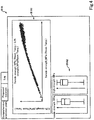
FIG. 4 is a diagram showing one example of an output screen of a forward problem analysis unit. -
FIG. 5 is a diagram showing one example of a configuration of a design condition-material property table. -
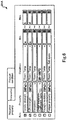
FIG. 6 is a diagram showing one example of an input screen of a required property setting unit. -
FIG. 7 is a diagram showing one example of an output screen of a reverse problem analysis unit. -
FIG. 8 is a diagram showing one example of an output screen of the reverse problem analysis unit. -
FIG. 9 is a block diagram showing a hardware configuration of a material design device. -
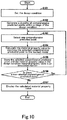
FIG. 10 is a flowchart of a forward problem analysis processing performed by a forward problem analysis unit. -
FIG. 11 is a flowchart of a reverse problem analysis processing performed by a reverse problem analysis unit and a design condition adjustment unit. - Hereinafter, an embodiment will be described with reference to the attached drawings. To make the description easier to understand, the same constitutional elements are denoted by the same reference numerals as much as possible in the respective drawings, and the repetitive explanation will be omitted.
- With reference to
FIG. 1 to FIG. 9 , the configuration of amaterial design device 1 according to an embodiment will be described.FIG. 1 is a block diagram showing the schematic configuration of thematerial design device 1 according to an embodiment. Thematerial design device 1 is a device for designing a material to be designed including a material composed of a plurality of compositions or a material to be produced by combining a plurality of production conditions. In this embodiment, the description will be made by exemplifying an aluminum alloy working as one example of the material to be designed. - As shown in
FIG. 1 , thematerial design device 1 is provided with a forwardproblem analysis unit 10, a reverseproblem analysis unit 20, and a GUI (Graphical User Interface) 30. The forwardproblem analysis unit 10 outputs material properties satisfying the desired design condition of the material designer by using a learnedmodel 13. The reverseproblem analysis unit 20 outputs a design condition satisfying the required properties desired by the material designer by using a design condition-material property table 14 generated based on the output result of the forwardproblem analysis unit 10. TheGUI 30 is a user interface having a function of displaying the output result of the forwardproblem analysis unit 10 and that of the reverseproblem analysis unit 20 to present it to the material designer or a function of accepting adjustment operations of the output result by the material designer. - The forward
problem analysis unit 10 is provided with a designcondition setting unit 11, a comprehensive predictionpoint generation unit 12, a learnedmodel 13, and a design condition-material property table 14. - The design
condition setting unit 11 is configured to set a specified range of the design condition of an aluminum alloy which is a material to be designed. The designcondition setting unit 11 can set the specified range of the design condition by, for example, displaying an input screen of design conditions on theGUI 30 to prompt the material designer to input a specified range. -
FIG. 2 andFIG. 3 are diagrams showing examples ofinput screens 11A and 11B of the designcondition setting unit 11.FIG. 2 shows an example of the input screen 11A of the items relating to the composition of a raw material among the design conditions.FIG. 3 shows an example of theinput screen 11B of the items relating to the production condition among the design conditions. In the input screens 11A and 11B, the maximum value and the minimum value of each item (in the item relating to a heat treatment, a temperature (°C) and an execution time (h)) can be input. Note that the input screens 11A and 11B may be displayed collectively on one screen. - The items of the composition of the raw material include, for example, elements, such as, e.g., Si, Fe, Cu, Mn, Mg, Cr, Ni, Zn, Ti, V, Pb, Sn, Bi, B, P, Zr, and Sr as an additive in percentage by mass (wt%). Note that the percentage by mass of Al is represented by 100% - (the sum of the percentage by mass of the above-described elements).
- As the items of the production condition, the items related to a heat treatment include, for example, the temperature (°C) and the execution time (h) of each processing, such as, e.g., annealing, a solution heat treatment, an artificial aging treatment, a natural aging treatment, a hot working treatment, a cold working treatment, and a stabilizing treatment. The items related to processing conditions include, for example, a processing rate, an extrusion rate, a reduction of area, and a product shape.
- The comprehensive prediction
point generation unit 12 generates a plurality of comprehensive prediction points within the specified range of the design condition set by the designcondition setting unit 11. For example, in a case where a percentage by mass of Si in the composition item and a range of execution time of annealing in the production condition item are specified, first, a plurality of numerical values is calculated within a specified range of the percentage by mass of Si and within the specified range of the annealing execution time in random or predetermined intervals, respectively, and all combinations of the plurality of numerical values in each item are generated. These combinations are output as comprehensive prediction points. - The learned
model 13 is a model formulated by acquiring the correspondence between the input information including the design condition of the aluminum alloy and the output information including the material property value acquired by machine learning. For example, a supervised learning model, such as, e.g., a neural network and a genetic algorithm, can be applied to the learnedmodel 13. In the learnedmodel 13, learning data including design conditions and material properties of aluminum alloys is acquired from, for example, a known material database, and machine learning is performed using the learning data. - The items of material properties include tensile strength, 0.2% strength, elongation, a linear expansion coefficient, Young's modulus, a Poisson's ratio, a fatigue property, hardness, and creep properties including creep strength and creep strain, shear strength, specific heat capacity, thermal conductivity, electrical resistivity, density, a solidus line, and a liquidus line.
-
FIG. 4 is a diagram showing an example of anoutput screen 31A of the forwardproblem analysis unit 10. Theoutput screen 31A is displayed on theGUI 30 via, for example, theinformation display unit 31. InFIG. 4 , the output (material properties) of the learnedmodel 13 are limited to only two output, i.e., "tensile strength" and "0.2% strength", for simplicity of explanation. In the example ofFIG. 4 , at the upper portion of theoutput screen 31A, a graph 31A1 is displayed in which each point of the comprehensive prediction points is plotted on the two-dimensional coordinate system with two output of the learned model, i.e., the "tensile strength" and the "0.2% strength", as the respective axes, and at the lower portion of theoutput screen 31A, box-and-whisker plots 31A2 of each material property is displayed. - The design condition-material property table 14 stores data sets in which the material property values calculated by inputting the comprehensive prediction points generated by the comprehensive prediction
point generation unit 12 to the learnedmodel 13 are associated with the respective points of the comprehensive prediction points. When performing the calculation of the comprehensive prediction points by the learnedmodel 13, the forwardproblem analysis unit 10 stores the output in the design condition-material property table 14 by associating with the comprehensive prediction points (inputs).FIG. 5 is a diagram showing an example of the configuration of the design condition-material property table 14. As shown inFIG. 5 , the inputs (production conditions, material compositions) and the output (material properties) of a learned model are put together as one data set and recorded on the same row of the design condition-material property table 14. Each row of the design condition-material property table 14 is an individual data set, and each column records numerical values of each item of the inputs and the output of the learnedmodels 13. - As described above, the forward
problem analysis unit 10 is configured to automatically generate data sets of design conditions and material properties covering all of the range of multidimensional design conditions by simply performing operations of specifying the range of the multidimensional design conditions by the material designer. - The reverse
problem analysis unit 20 is provided with a requiredproperty setting unit 21 and a designcondition extraction unit 22. Further, the above-described design condition-material property table 14 is also included in the reverseproblem analysis unit 20. - The required
property setting unit 21 sets a specified range of a required property of an aluminum alloy which is a material to be designed. The requiredproperty setting unit 21 can set specified ranges of required properties by, for example, displaying an input screen for required properties on theGUI 30 to prompt the material designer to input specified ranges. -
FIG. 6 is a diagram showing an example of aninput screen 21A of the requiredproperty setting unit 21. The items of required properties are the same as those of the material properties described above. In the example ofFIG. 6 , the "tensile strength" and the "0.2% strength" are selected as the required properties, the numerical value "a" is input as the minimum value of the "tensile strength", the numerical value "b" is input as the maximum value, the numerical value "c" is input as the minimum value of the tensile strength of "0.2% required properties", and the numerical value "d" is input as the minimum value. - The design
condition extraction unit 22 extracts the data sets satisfying the required properties set by the requiredproperty setting unit 21 from the design condition-material property table 14. -
FIG. 7 andFIG. 8 are diagrams showing examples of the output screens 31B and 31C of the reverseproblem analysis unit 20. The output screens 31B and 31C are displayed on theGUI 30 via, for example, theinformation display unit 31. In theoutput screen 31B shown inFIG. 7 , each point of the comprehensive prediction points is plotted with a black square on the two-dimensional coordinate system with the "tensile strength" and the "0.2% strength" as each axis. In addition, the points satisfying the required properties (the "tensile strength" is in the range of a to b, and the "0.2% strength" is in the range of c to d) set inFIG. 6 are plotted with white circles. Further, in the output screen 31C shown inFIG. 8 , box-and-whisker plots 31C1 of the compositions satisfying the required properties are displayed in the upper part, and the box-and-whisker plots 31C2 of the compositions satisfying the required properties are displayed in the lower part. - Note that the reverse
problem analysis unit 20 can also output the range of the production condition satisfying the required properties. The reverseproblem analysis unit 20 may include the production condition in the input information to the designcondition extraction unit 22. In this case, the reverseproblem analysis unit 20 will output the compositions satisfying the inputs of the required properties and the request production condition. - As described above, the reverse
problem analysis unit 20 is configured such that the production conditions (compositions or design conditions) satisfying multidimensional required properties can be simultaneously extracted by simply performing the operation for specifying the ranges of the multidimensional required properties by the material designer. Further, without using a simulation or a learning model for the reverse problem analysis, the design condition-material property table 14 generated by the forwardproblem analysis unit 10 is used. Therefore, the calculation cost can also be significantly reduced. - The
GUI 30 includes aninformation display unit 31. - The
information display unit 31 displays the output of the forwardproblem analysis unit 10 or that of the reverseproblem analysis unit 20. For example, as shown inFIG. 7 andFIG. 8 , the range of the required property and that of the design condition relating to the data set extracted by the designcondition extraction unit 22 are displayed. - The
GUI 30 may further include a designcondition adjustment unit 32. - The design
condition adjustment unit 32 adjusts the range of the design condition of the data set extracted by the designcondition extraction unit 22. The designcondition adjustment unit 32 can adjust the range of the design condition by, for example, the material designer's input operation of changing the composition range of theoutput screen 31c to be displayed on theGUI 30. - Further, the design
condition extraction unit 22 can further narrow down the data sets extracted according to the required properties to data sets satisfying the design condition adjusted by the above-described designcondition adjustment unit 32. - In this case, as shown by the arrow A in
FIG. 8 , for example, when an operation of lowering the maximum value of the predetermined raw material (cu in the example inFIG. 8 ) on the box-and-whisker plot 31C1 of the composition, narrowing down of the data sets is performed by the designcondition adjustment unit 32 and the designcondition extraction unit 22 in response to this operation. As a result, the box-and-whisker plot 31C2 of each required property is updated according to the narrowed down data set. For example, as indicated by the arrow B inFIG. 8 , the maximum value of the 0.2% strength of the required property is displayed in a decreased manner in response to the decrease in the maximum value of Cu. The material designer can observe the variation of the property according to the adjustment of the composition range on the output screen 31C to narrow down to a desired composition range. - The reverse
problem analysis unit 20 outputs the design conditions satisfying the required properties, but these design conditions are only those automatically extracted from the comprehensive prediction points of the design condition-material property table 14, and the production constraints, such as, e.g., the difficulty of the actual production, have not been considered. For example, there are various production constraints, such as, e.g., it is difficult to handle and therefore it is actually difficult to produce, it takes longer time to produce, it takes time for the processing, the composition causes nests when casting, it is impossible to mold, and it is possible to produce without considering the cost but impossible to produce by using an ordinary plant facility. In a case where theGUI 30 has the designcondition adjustment unit 32, it is possible to narrow down the production conditions satisfying the required properties considering the production constraints based on the material designer's rule of thumb by making it possible for the material designer to adjust the output results of the reverseproblem analysis unit 20 by using the designcondition adjustment unit 32. That is, it becomes possible to perform the material design in which the prediction by machine learning and the material designer's experience work together. -
FIG. 9 is a block diagram showing a hardware configuration of thematerial design device 1. As shown inFIG. 9 , thematerial design device 1 may be configured as a computer system physically including a CPU (Central Processing Unit) 101, a RAM (Random Access Memory) 102 as main storage devices and a ROM (Read Only Memory) 103, aninput device 104, such as, e.g., a keyboard and a mouse, anoutput device 105, such as, e.g., a display, acommunication module 106, such as, e.g., a network card, which is a data transmission and reception device, and anauxiliary storage device 107, such as, e.g., a hard disc. - Each function of the
material design device 1 shown inFIG. 1 is realized by reading predetermined computer software (material design program) on hardware, such as, e.g., aCPU 101 and aRAM 102 to operate thecommunication module 106, theinput device 104, and theoutput device 105 under the control of theCPU 101 and to read and write the data in theRAM 102 and theauxiliary storage device 107. That is, by running the material design program of this embodiment on a computer, thematerial design device 1 functions as the designcondition setting unit 11, the comprehensive predictionpoint generation unit 12, the requiredproperty setting unit 21, the designcondition extraction unit 22, theinformation display unit 31, and the designcondition adjustment unit 32 inFIG. 1 . It is also possible to realize a model generation function of generating the learnedmodel 13 in which the correspondence between the input information including design condition of the material to be designed and the output information including the material property value is acquired by machine learning and a data set generation function of storing a data set in which the material property value calculated by inputting the comprehensive prediction point generated by the comprehensive prediction point generation function to the learnedmodel 13 is associated with each point of the comprehensive prediction points to the design condition-material property table 14. The design condition-material property table 14 shown inFIG. 1 can be realized by a part of a storage device (theRAM 102, theROM 103, theauxiliary storage device 107, or the like) provided in the computer. TheGUI 30 shown inFIG. 1 can be realized by theoutput device 105 or theinput device 104 provided in a computer. - The material design program of this embodiment is stored, for example, in a storage device provided by a computer. The material design program may be configured such that a part or all of the program is transmitted via a transmission medium, such as, e.g., a communication line, and is received and recorded (including "installation") by a communication module or the like provided in a computer. The material design program may also be configured such that a part or all of the program may be recorded (including "installation") in a computer from a state in which the program is stored in a portable storage medium, such as, e.g., a CD-ROM, a DVD-ROM, and a flash memory.
- With reference to
FIG. 10 andFIG. 11 , a material design method using thematerial design device 1 according to the embodiment will be described.FIG. 10 is a flowchart of the forward problem analysis processing performed by the forwardproblem analysis unit 10. - Note that before performing the forward problem analysis processing of
FIG. 10 , the processing (model generation step) of generating the learnedmodel 13 in which the correspondence between the input information including the design condition of the material to be designed and the output information including the material property value is acquired by machine learning is performed. The model generation step may be performed by thematerial design device 1. Alternatively, it may be configured such that the model generation step is performed by another device and thematerial design device 1 acquires the learnedmodel 13 generated by the above-described another device. - In Step S101, the specified range of the design condition of the aluminum alloy which is a material to be designed is set by the design condition setting unit 11 (Design Condition Setting Step). The design
condition setting unit 11 displays, for example, the input screens 11A and 11B shown inFIG. 2 andFIG. 3 on theGUI 30 to prompt the material designer to input specified ranges. - In Step S102, a plurality of comprehensive prediction points is generated by the comprehensive prediction
point generation unit 12 within the specified range of the design condition set in Step S101 (Comprehensive Prediction Point Generation Step). - In Step S103 to S106, the forward
problem analysis unit 10 stores the data set in which the material property values calculated by inputting the comprehensive prediction points generated in Step S102 to the learnedmodel 13 are associated with each point of the comprehensive prediction points in the design condition-material property table 14 (Data Set Generation Step). - First, in Step S103, one comprehensive prediction point is selected. In Step S104, a material property value is calculated by inputting the comprehensive prediction point selected in Step S103 to the learned
model 13. In Step S105, the comprehensive prediction point of the input of the learnedmodel 13 selected in Step S103 and the material property value of the output are associated with each other and stored in the design condition-material property table 14. One data set is generated by the processing of Step S103 to S105. - In Step S106, it is determined whether or not there is an unselected comprehensive prediction point. In a case where there is an unselected comprehensive prediction point (Yes in Step S106), the process returns to Step S103 to repeat the generation of a data set. In a case where all comprehensive prediction points have been selected (No in Step S106), the generation of the data set is finished, and the process proceeds to Step S107.
- In Step S107, the material property value of each comprehensive prediction point calculated in Step S104 is displayed on the
GUI 30 by theinformation display unit 31. Theinformation display unit 31 displays, for example, theoutput screen 31A exemplified inFIG. 4 on theGUI 30. Upon completion of the process of Step S107, the forward problem analysis processing of the main control flow ends. -
FIG. 11 is a flowchart of reverse problem analysis processing performed by the reverseproblem analysis unit 20 and the designcondition adjustment unit 32. - In Step S201, the specified ranges of the required properties of the aluminum alloy which is a material to be designed are set by the required property setting unit 21 (Required Property Setting Step). The required
property setting unit 21 displays, for example, theinput screen 21A shown inFIG. 6 on theGUI 30 to prompt the material designer to input specified ranges. - In Step S202, data sets satisfying the required properties set in Step S201 are extracted from the design condition-material property table 14 by the design condition extraction unit 22 (Design Condition Extraction Step).
- In Step S203, the range of the material compositions satisfying the required properties specified in Step S201 and the required properties are displayed on the
GUI 30 by theinformation display unit 31 using the data sets extracted in Step S203. Theinformation display unit 31 displays, for example, the output screens 31B and 31C exemplified inFIG. 7 andFIG. 8 on theGUI 30. - In Step S204, whether or not the operation of the composition adjustment has been performed by the material designer is determined in the output screen 31C showing the ranges of the material compositions satisfying the required properties by the design
condition adjustment unit 32. As described with reference to the arrow A inFIG. 8 , the material designer can perform the operation to change the position of the maximum value or the minimum value of the box-and-whisker plot of the material composition in the output screen 31C (Design Condition Adjustment Step). When this operation has been performed (Yes in Step S204), the information of the composition range after the adjustment is output to the designcondition extraction unit 22 by the designcondition adjustment unit 32, and the process proceeds to Step S205. When there was no operation (No in Step S204), the reverse problem analysis processing of the main control flow is terminated. - In Step S205, since the operation of the composition adjustment has been detected in Step S204, the data satisfying the material compositions after the composition range adjustments is narrowed down by the design
condition extraction unit 22 from the data sets extracted in Step S202 (Narrow Down Step). - In Step S206, the output screen 31C of the required properties displayed in Step S203 is updated by the
information display unit 31 using the data set narrowed down in Step 205. Upon completion of the processing in Step S206, the reverse problem analysis processing is terminated. - Effects of this embodiment will be described. As the forward
problem analysis unit 10, thematerial design device 1 of this embodiment is provided with the designcondition setting unit 11 for setting the specified ranges of the design conditions of the material to be designed, the comprehensive predictionpoint generation unit 12 for generating a plurality of comprehensive prediction points within the specified range set by the designcondition setting unit 11, and the design condition-material property table 14 for storing the data set in which the material property values calculated by inputting the comprehensive prediction points generated by the comprehensive predictionpoint generation unit 12 to the learnedmodel 13 are associated with each point of the comprehensive prediction points. Further, as the reverseproblem analysis unit 20, thematerial design device 1 of this embodiment is provided with the requiredproperty setting unit 21 for setting the specified range of the required properties of the material to be designed and the designcondition extraction unit 22 for extracting the data sets satisfying the required properties set by the requiredproperty setting unit 21 from the design condition-material property table 14. - As described above, in this embodiment, during the performance of the forward problem analysis, data sets to be used in the reverse problem analysis are generated and stored in the design condition-material property table 14. And at the time of performing the reverse problem analysis, data sets satisfying the required properties are extracted by referring to the design condition-material property table 14. In other words, the reverse problem analysis performs only the task of searching for the design condition-material property table 14 without performing any numerical value calculations, such as, e.g., simulation and model calculation. Therefore, the calculation cost can be greatly reduced, and the optimal solution of the design condition satisfying the desired material properties can be derived in a short time.
- Further, in a case of performing a reverse problem analysis by a conventional simulation or in a case of adopting a machine learning system to a reverse problem analysis, in a case where there is a plurality of required properties, calculations are performed to gradually reach the optimal solution while performing the adjustment for each property in turn, and candidate material searches will not be collectively performed to satisfy several types of properties at the same time. In many cases, a plurality of material properties has a trade-off relationship, and the trial and error are repeated until it reaches the optimal solution. Therefore, it takes a long time to acquire the optimal solution of the design conditions satisfying the desired material properties. On the other hand, in this embodiment, by setting a plurality of output (material properties) of the learned
model 13 and generating items of a plurality of material properties in the design condition-material property table 14, in the reverse problem analysis, the candidate material searches can be collectively performed to satisfy the plurality of types of material properties. With this, even in the case of setting a plurality of types of required properties, the time required to derive the optimal solution can be greatly reduced as compared with the conventional method. - Further, the data set group stored in the design condition-material property table 14 is information derived from a large number of comprehensive prediction points automatically generated in the forward problem analysis. Therefore, the increment of each item of the design condition and the material property is sufficiently small, and the resolution is high. Therefore, in the reverse problem analysis, it is possible to perform the prediction of the design condition satisfying the required property with high accuracy.
- Preferably, the
material design device 1 is provided with the designcondition adjustment unit 32 for adjusting the range of the design condition of the data set extracted by the designcondition extraction unit 22. In a case where thematerial design device 1 has the designcondition adjustment unit 32, the designcondition extraction unit 22 further narrows down the data sets satisfying the design conditions adjusted by the designcondition adjustment unit 32. - In this case, depending on the required properties, the design
condition extraction unit 22 can perform the narrowing down of the design condition mechanically extracted by the design condition-material property table 14 by considering the production constraints and the like based on the experience of the material designer. With this, it becomes possible to perform the material design in which the prediction by machine learning and the material designer's experiences work together, which in turn can extract design conditions that are easier to perform the production. - Further, the
material design device 1 of this embodiment is provided with theinformation display unit 31 for displaying the required properties for the data sets extracted by the designcondition extraction unit 22 and the range of the design condition. Furthermore, in a case where thematerial design device 1 is provided with the designcondition adjustment unit 32, the designcondition adjustment unit 32 adjusts the range of the design condition according to the user's operation of changing the range of the design condition displayed on theinformation display unit 31. - In a case where the
material design device 1 is provided with the designcondition adjustment unit 32, the adjustment operation of the range of the design condition by the material designer can be performed more intuitively on theGUI 30, which can be simplified by reducing the burden of the adjustment operation. Further, the result by the adjustment operation can be reflected immediately on the output screens 31B and 31C. Therefore, the interactive adjustment operation by the material designer can be performed, which makes it possible to perform the adjustment of the range of the design condition more efficiently. - The embodiment has been described above by referring to specific examples. However, the present disclosure is not limited to these specific examples. Modifications in which these specific examples are appropriately modified by those skilled in the art are also encompassed by the scope of the present disclosure as long as they are provided with the features of the present disclosure. Each element included in each of the specific examples described above and the arrangement, condition, shape, and the like thereof are not limited to those exemplified and can be changed as appropriate. Each element provided in each of the above-described specific examples can be appropriately changed in the combination as long as no technical inconsistency occurs.
- In the above-described embodiment, as a material to be designed, an aluminum alloy working material (plastic working material), such as, e.g., a rolled material, an extruded material, a drawn material, and a forged material have been described as an example. However, the present invention is not limited thereto. In the present invention, as a material to be designed, a casting material, such as, e.g., a casting material of an aluminum alloy, may be used.
- In the above-described embodiment, an aluminum alloy was exemplified as a material to be designed by the
material design device 1, but alloys other than an aluminum alloy may be used. Such alloys include a Fe alloy (iron alloy), a Cu alloy (copper alloy), a Ni alloy (nickel alloy), a Co alloy (Cobalt alloy), a Ti alloy (titanium alloy), an Mg alloy (magnesium alloy), a Mn alloy (manganese alloy), and a Zn alloy (zinc alloy). The material to be designed may be an inorganic material in general other than alloys, or may be an organic material in general. In short, the material to be designed includes materials composed of a plurality of compositions, or materials produced by combining a plurality of production conditions/treatments (such as, e.g., temperature, pressure, processing, oxidation treatment, acid treatment, proportion, mixture, and stirring). - Further, in the present invention, as an iron alloy as a material to be designed, an iron alloy working material and a casting iron material (iron alloy casting material) are included. The iron alloy working material includes a steel material and a stainless steel, and the casting iron material includes a cast steel material. In the iron alloy working material, as the material composition of the design condition includes at least one of C, B, N, Si, P, S, Mn, Al, Ti, V, Cr, Co, Ni, Cu, Zr, Nb, Mo, and W. As the production condition, it includes at least one of a molten metal temperature at the time of material casting, a casting speed, an amount of cooling water, a material heating temperature at the time of hot working, a material heating time at the time of hot working, a working speed, a rolling reduction, a hot working temperature, a cooling rate immediately after working, a natural aging time, a heat treatment temperature, a heat treatment time, and a cooling rate of a heat treatment. The material property value of an iron alloy working material includes at least one of 0.2% strength, tensile strength, elongation, Young's modulus, a linear expansion coefficient, an austenite grain size, a ferrite grain size, an impact property, a fatigue property, an SCC property, and an SSC property.
- In a casting iron material, the material composition of the design condition includes at least one of C, B, N, Si, P, S, Mn, Al, Ti, V, Cr, Co, Ni, Cu, Zr, Nb, Mo, W, Ca, Mg, and Ce. The production condition includes at least one of a molten metal temperature at the time of casting, a casting speed, a solidification rate, a cooling rate after solidification, a heat treatment temperature, a heat treatment time, and a cooling rate of a heat treatment. The material property value of the casting iron material includes at least one of the 0.2% strength, the tensile strength, the elongation, the Young's modulus, the linear expansion coefficient, the impact property, and the fatigue property.
- In the present invention, as a copper alloy as a material to be designed, it includes a copper alloy working material and a copper alloy casting material. In the copper alloy working material, the material composition of the design condition includes at least one of Zn, Pb, Bi, Sn, Fe, P, Al, Hg, Ni, Mn, Se, Te, O, S, Zr, Be, Co, Ti, and As. The production condition includes at least one of the molten metal temperature at the time of the material casting, the casting speed, the amount of cooling water, the homogenization temperature, the homogenization time, the cooling rate after homogenization, the material heating temperature at the time of hot working, the working speed, the cooling rate immediately after the working, the natural annealing temperature, the artificial aging temperature, the artificial aging time, the hot working temperature, the annealing temperature, and the annealing time. The material property value of a copper alloy working material includes at least one of 0.2% strength, tensile strength, elongation, conductivity, thermal conductivity, Young's modulus, and a linear expansion coefficient.
- In the copper alloy casting material, the material composition of the design condition includes at least one of Zn, Pb, Bi, Sn, Fe, P, Al, Hg, Ni, Mn, Se, Te, O, S, Zr, Be, Co, Ti, and As. The production condition includes at least one of a molten metal temperature at the time of casting, a solution treatment temperature, a solution treatment time, a natural aging time, an artificial aging temperature, an artificial aging time, an annealing temperature, and an annealing time. The material property value of a copper alloy casting material includes at least one of 0.2% strength, tensile strength, elongation, conductivity, thermal conductivity, Young's modulus, and a linear expansion coefficient.
- Further, in the present invention, as the material composition of the design condition in a titanium alloy as a material to be designed, it includes at least one of Al, Sn, V, Mo, Zr, Pd, Si, Cr, Ru, Ta, Co, and Ni. As the production condition, it includes a molten metal temperature at the time of casting, a solution treatment temperature, a solution treatment time, an artificial aging temperature, an artificial aging time, an annealing temperature, and an annealing time. The material property value of a titanium alloy includes at least one of 0.2% strength, tensile strength, elongation, Young's modulus, a linear expansion coefficient, and a fatigue property.
- The material design device according to the present invention can be used in designing a material composed of a plurality of compositions or a material to be designed including a material produced by combining a plurality of production conditions.
- This application claims
Japanese Patent Application No. 2018-204439, filed on October 30, 2018 - The terms and expressions used herein are for illustration purposes only and are not used for limited interpretation, do not exclude any equivalents of the features shown and stated herein, and it should be recognized that the present invention allows various modifications within the scope of the present invention as claimed.
-
- 1:
- Material design device
- 11:
- Design condition setting unit
- 12:
- Comprehensive prediction point generation unit
- 13:
- Learned model
- 14:
- Design condition-material property table
- 21:
- Required property setting unit
- 22:
- Design condition extraction unit
- 31:
- Information display unit
- 32:
- Design condition adjustment unit
Claims (31)
- A material design device for designing a material to be designed including a material composed of a plurality of compositions or a material produced by combining a plurality of production conditions,
the material design device comprising:a learned model in which a correspondence between input information including a design condition of the material to be designed and output information including a material property value are acquired by machine learning;a design condition setting unit configured to set a specified range of the design condition of the material to be designed;a comprehensive prediction point generation unit configured to generate a plurality of comprehensive prediction points within the specified range set by the design condition setting unit;a design condition-material property table configured to store data sets in which a material property value calculated by inputting the comprehensive prediction points generated by the comprehensive prediction point generation unit to the learned model is associated with each point of the comprehensive prediction points;a required property setting unit configured to set a specified range of a required property of the material to be designed; anda design condition extraction unit configured to extract data sets satisfying the required property set by the required property setting unit from the design condition-material property table. - The material design device as recited in claim 1, further comprising:a design condition adjustment unit configured to adjust a range of a design condition of the data set extracted by the design condition extraction unit,wherein the design condition extraction unit further narrows down from the extracted data sets to data sets satisfying the design condition adjusted by the design condition adjustment unit.
- The material design device as recited in claim 2, further comprising:an information display unit configured to display the requested property and the range of the design condition related to the data sets extracted by the design condition extraction unit,wherein the design condition adjustment unit adjusts the range of the design condition in response to a user operation that changes the range of the design condition displayed on the information display unit.
- The material design device as recited in any one of claims 1 to 3,wherein the required property includes a plurality of properties, andwherein the design condition extraction unit extracts the data set that simultaneously satisfies the plurality of required properties.
- The material design device as recited in claim 4,
wherein the material to be designed is an inorganic material. - The material design device as recited in claim 5,
wherein the material to be designed is an alloy material. - The material design device as recited in claim 6,wherein the material to be designed is an aluminum alloy working material,wherein the design condition includes a material composition and a production condition,wherein the material composition includes at least one of Si, Fe, Cu, Mn, Mg, Cr, Ni, Zn, Ti, V, Pb, Sn, Bi, B, P, Zr, and Sr,wherein the production condition includes at least one of a molten metal temperature at a time of material casting, a casting speed, an amount of cooling water, a homogenization temperature, a homogenization time, and a cooling rate after homogenization, a material heating temperature at a time of hot working, a working speed, a cooling rate immediately after working, a natural aging time, an artificial aging temperature, an artificial aging time, a hot working temperature, an annealing temperature, and an annealing time, andwherein the material property value includes at least one of 0.2% strength, tensile strength, elongation, Young's modulus, a linear expansion coefficient, and a fatigue property.
- The material design device as recited in claim 6,wherein the material to be designed is an aluminum alloy casting material,wherein the design condition includes a material composition and a production condition,wherein the material composition includes at least one of Si, Fe, Cu, Mn, Mg, Cr, Ni, Zn, Ti, V, Pb, Sn, Bi, B, P, Zr, and Sr,wherein the production condition includes at least one of a molten metal temperature at the time of casting, a solution treatment temperature, a solution treatment time, a natural aging time, an artificial aging temperature, an artificial aging time, an annealing temperature, and annealing time, andwherein the material property value includes at least one of 0.2% strength, tensile strength, elongation, Young's modulus, a linear expansion coefficient, and a fatigue property.
- The material design device as recited in claim 6,wherein the material to be designed is an iron alloy working material,wherein the design condition includes a material composition and a production condition,wherein the material composition includes at least one of C, B, N, Si, P, S, Mn, Al, Ti, V, Cr, Co, Ni, Cu, Zr, Nb, Mo, and W,wherein the production condition includes at least one of a molten metal temperature at a time of material casting, a casting speed, an amount of cooling water, a material heating temperature at a time of hot working, a material heating time at a time of hot working, a working speed, a rolling reduction, a hot working temperature, a cooling rate immediately after working, a natural aging time, a heat treatment temperature, a heat treatment time, and a cooling rate of a heat treatment, andwherein the material property value includes at least one of 0.2% strength, tensile strength, elongation, Young's modulus, a linear expansion coefficient, an austenite grain size, a ferrite grain size, an impact property, a fatigue property, an SCC property, and an SSC property.
- The material design device as recited in claim 6,wherein the material to be designed is a casting iron material,wherein the design condition includes a material composition and a production condition,wherein the material composition includes at least one of C, B, N, Si, P, S, Mn, Al, Ti, V, Cr, Co, Ni, Cu, Zr, Nb, Mo, W, Ca, Mg, and Ce,wherein the production condition includes at least one of a molten metal temperature at a time of casting, a casting speed, a solidification rate, a cooling rate after solidification, a heat treatment temperature, a heat treatment time, and a cooling rate of a heat treatment, andwherein the material property value includes at least one of 0.2% strength, tensile strength, elongation, Young's modulus, a linear expansion coefficient, an impact property, and a fatigue property.
- The material design device as recited in claim 6,wherein the material to be designed is a copper alloy working material,wherein the design condition includes a material composition and a production condition,wherein the material composition includes at least one of Zn, Pb, Bi, Sn, Fe, P, Al, Hg, Ni, Mn, Se, Te, O, S, Zr, Be, Co, Ti, and As,wherein the production condition includes at least one of a molten metal temperature at a time of material casting, a casting speed, an amount of cooling water, a homogenization temperature, a homogenization time, a cooling rate after homogenization, a material heating temperature at a time of hot working, a working speed, a cooling rate immediately after working, a natural aging time, an artificial aging temperature, an artificial aging time, a hot working temperature, an annealing temperature, and an annealing time, andwherein the material property value includes at least one of 0.2% strength, tensile strength, elongation, conductivity, thermal conductivity, Young's modulus, and a linear expansion coefficient.
- The material design device as recited in claim 6,wherein the material to be designed is a copper alloy casting material,wherein the design condition includes a material composition and a production condition,wherein the material composition includes at least one of Zn, Pb, Bi, Sn, Fe, P, Al, Hg, Ni, Mn, Se, Te, O, S, Zr, Be, Co, Ti, and As,wherein the production condition includes at least one of a molten metal temperature at a time of casting, a solution treatment temperature, a solution treatment time, a natural aging time, an artificial aging temperature, an artificial aging time, an annealing temperature, and an annealing time, andwherein the material property value includes at least one of 0.2% strength, tensile strength, elongation, conductivity, thermal conductivity, Young's modulus, and a linear expansion coefficient.
- The material design device as recited in claim 6,wherein the material to be designed is a titanium alloy,wherein the design condition includes a material composition and a production condition,wherein the material composition includes at least one of Al, Sn, V, Mo, Zr, Pd, Si, Cr, Ru, Ta, Co, and Ni,wherein the production condition includes a molten metal temperature at a time of casting, a solution treatment temperature, a solution treatment time, and an artificial aging temperature, an artificial aging time, an annealing temperature, and an annealing time, andwherein the material property value includes at least one of 0.2% strength, tensile strength, elongation, Young's modulus, a linear expansion coefficient, and a fatigue property.
- A material design method for designing a material to be designed including a material composed of a plurality of compositions or a material produced by combining a plurality of production conditions,
the material design method comprising:a model generation step of generating a learned model in which a correspondence between input information including a design condition of the material to be designed and output information including a material property value is acquired by machine learning;a design condition setting step of setting a specified range of the design condition of the material to be designed;a comprehensive prediction point generation step of generating a plurality of comprehensive prediction points within the specified range set by the design condition setting step;a data set generation step of storing, to a design condition-material property table, a data set in which a material property value calculated by inputting the comprehensive prediction points generated by the comprehensive prediction point generation step to the learned model is associated with each point of the comprehensive prediction points;a required property setting step of setting a specified range of a specified range of a required property of the material to be designed; anda design condition extraction step of extracting data sets satisfying the required property set by the required property setting step from the design condition-material property table. - The material design method as recited in claim 14, further comprising:a design condition adjustment step of adjusting a range of a design condition of the data set extracted by the design condition extraction step; anda narrow down step of further narrowing down from the extracted data sets satisfying the requested property to the data sets satisfying the design condition adjusted by the design condition adjustment step.
- The material design method as recited in claim 14 or 15,wherein the material to be designed is an aluminum alloy working material,wherein the design condition includes a material composition and a production condition,wherein the material composition includes at least one of Si, Fe, Cu, Mn, Mg, Cr, Ni, Zn, Ti, V, Pb, Sn, Bi, B, P, Zr, and Sr,wherein the production condition includes at least one of a molten metal temperature at a time of material casting, a casting speed, an amount of cooling water, a homogenization temperature, a homogenization time, a cooling rate after a homogenization, a material heating temperature at a time of hot working, a working speed, a cooling rate immediately after working, a natural aging time, an artificial aging temperature, an artificial aging time, a hot working temperature, an annealing temperature, and an annealing time, andwherein the material property value includes at least one of 0.2% strength, tensile strength, elongation, Young's modulus, a linear expansion coefficient, and a fatigue property.
- The material design method as recited in claim 14 or 15,wherein the material to be designed is an aluminum alloy casting material,wherein the design condition includes a material composition and a production condition,wherein the material composition includes at least one of Si, Fe, Cu, Mn, Mg, Cr, Ni, Zn, Ti, V, Pb, Sn, Bi, B, P, Zr, and Sr,wherein the production condition includes at least one of a molten metal temperature at a time of casting, a solution treatment temperature, a solution treatment time, a natural aging time, an artificial aging temperature, an artificial aging time, and an annealing temperature, and an annealing time, andwherein the material property value includes at least one of 0.2% strength, tensile strength, elongation, Young's modulus, a linear expansion coefficient, and a fatigue property.
- The material design method as recited in claim 14 or 15,wherein the material to be designed is an iron alloy working material,wherein the design condition includes a material composition and a production condition,wherein the material composition includes at least one of C, B, N, Si, P, S, Mn, Al, Ti, V, Cr, Co, Ni, Cu, Zr, Nb, Mo, and W,wherein the production condition includes at least one of a molten metal temperature at a time of material casting, a casting speed, an amount of cooling water, a material heating temperature at a time of hot working, a material heating time at a time of hot working, a working speed, a rolling reduction, a hot working temperature, a cooling rate immediately after working, a natural aging time, a heat treatment temperature, a heat treatment time, and a cooling rate of a heat treatment, andwherein the material property value includes at least one of 0.2% strength, tensile strength, elongation, Young's modulus, a linear expansion coefficient, an austenite grain size, a ferrite grain size, an impact property, a fatigue property, an SCC property, and an SSC property.
- The material design method of claim 14 or 15,wherein the material to be designed is a casting iron material,wherein the design condition includes a material composition and a production condition,wherein the material composition includes at least one of C, B, N, Si, P, S, Mn, Al, Ti, V, Cr, Co, Ni, Cu, Zr, Nb, Mo, W, Ca, Mg, and Ce,wherein the production condition includes at least one of a molten metal temperature at a time of casting, a casting speed, a solidification rate, a cooling rate after solidification, a heat treatment temperature, a heat treatment time, and a cooling rate of a heat treatment, andwherein the material property value includes at least one of 0.2% strength, tensile strength, elongation, Young's modulus, a linear expansion coefficient, an impact property, and a fatigue property.
- The material design method as recited in claim 14 or 15,wherein the material to be designed is a copper alloy working material,wherein the design condition includes a material composition and a production condition,wherein the material composition includes at least one of Zn, Pb, Bi, Sn, Fe, P, Al, Hg, Ni, Mn, Se, Te, O, S, Zr, Be, Co, Ti, and As,wherein the production condition includes at least one of a molten metal temperature at a time of material casting, a casting speed, an amount of cooling water, a homogenization temperature, a homogenization time, a cooling rate after homogenization, a material heating temperature at a time of hot working, a working speed, a cooling rate immediately after working, a natural aging time, an artificial aging temperature, an artificial aging time, a hot working temperature, an annealing temperature, and an annealing time, andwherein the material property value includes at least one of 0.2% strength, tensile strength, elongation, conductivity, thermal conductivity, Young's modulus, and a linear expansion coefficient.
- The material design method of claim 14 or 15,wherein the material to be designed is a copper alloy casting material,wherein the design condition includes a material composition and a production condition,wherein the material composition includes at least one of Zn, Pb, Bi, Sn, Fe, P, Al, Hg, Ni, Mn, Se, Te, O, S, Zr, Be, Co, Ti, and As,wherein the production condition includes at least one of a molten metal temperature at a time of casting, a solution treatment temperature, a solution treatment time, a natural aging time, an artificial aging temperature, an artificial aging time, an annealing temperature, and an annealing time, andwherein the material property value includes at least one of 0.2% strength, tensile strength, elongation, conductivity, thermal conductivity, Young's modulus, and a linear expansion coefficient.
- The material design method as recited in claim 14 or 15,wherein the material to be designed is a titanium alloy,wherein the design condition includes a material composition and a production condition,wherein the material composition includes at least one of Al, Sn, V, Mo, Zr, Pd, Si, Cr, Ru, Ta, Co, and Ni,wherein the production condition includes a molten metal temperature at a time of casting, a solution treatment temperature, a solution treatment time, an artificial aging temperature, an artificial aging time, an annealing temperature, and an annealing time, andwherein the material property value includes at least one of 0.2% strength, tensile strength, elongation, Young's modulus, a linear expansion coefficient, and a fatigue property.
- A material design program for designing a material to be designed including a material composed of a plurality of compositions or a material produced by combining a plurality of production conditions,
the material design program makes a computer realize:a model generation function of generating a learned model in which a correspondence between input information including a design condition of the material to be designed and output information including a material property value is acquired by machine learning;a design condition setting function of setting a specified range of the design condition of the material to be designed;a comprehensive prediction point generation function of generating a plurality of comprehensive prediction points within the specified range set by the design condition setting function;a data set generation function of storing, in a design condition-material property table, data sets in which a material property value calculated by inputting the comprehensive prediction points generated by the comprehensive prediction point generation function to the learned model is associated with each point of the comprehensive prediction points;a required property setting function of setting a specified range of a required property of the material to be designed; anda design condition extraction function of extracting the data set satisfying the required property set by the required property setting function from the design condition-material property table. - The material design program as recited in claim 23,
wherein the program makes a computer realize:a design condition adjustment function of adjusting a range of the design condition of the data set extracted by the design condition extraction function; anda narrow down function of further narrowing down from the extracted data sets satisfying the requested property to the data set satisfying the design condition adjusted by the design condition adjustment function. - The material design program as recited in claim 23 or 24,wherein the material to be designed is an aluminum alloy working material,wherein the design condition includes a material composition and a production condition,wherein the material composition includes at least one of Si, Fe, Cu, Mn, Mg, Cr, Ni, Zn, Ti, V, Pb, Sn, Bi, B, P, Zr, and Sr,wherein the production condition includes at least one of a molten metal temperature at a time of material casting, a casting speed, an amount of cooling water, a homogenization temperature, a homogenization time, and a cooling rate after a homogenization, a material heating temperature at a time of hot working, a working speed, a cooling rate immediately after working, a natural aging time, an artificial aging temperature, an artificial aging time, a hot working temperature, an annealing temperature, and an annealing time, andwherein the material property value includes at least one of 0.2% strength, tensile strength, and elongation, Young's modulus, a linear expansion coefficient, and a fatigue property.
- The material design program as recited in claim 23 or 24,wherein the material to be designed is an aluminum alloy casting material,wherein the design condition includes a material composition and a production condition,wherein the material composition includes at least one of Si, Fe, Cu, Mn, Mg, Cr, Ni, Zn, Ti, V, Pb, Sn, Bi, B, P, Zr, and Sr,wherein the production condition includes at least one of a molten metal temperature at a time of casting, a solution treatment temperature, a solution treatment time, a natural aging time, an artificial aging temperature, an artificial aging time, an annealing temperature, and an annealing time, andwherein the material property value includes at least one of 0.2% strength, tensile strength, elongation, Young's modulus, a linear expansion coefficient, and a fatigue property.
- The material design program as recited in claim 23 or 24,wherein the material to be designed is an iron alloy working material,wherein the design condition includes a material composition and a production condition,wherein the material composition includes at least one of C, B, N, Si, P, S, Mn, Al, Ti, V, Cr, Co, Ni, Cu, Zr, Nb, Mo, and W,wherein the production condition includes at least one of a molten metal temperature at a time of material casting, a casting speed, an amount of cooling water, a material heating temperature at a time of hot working, a material heating time at a time of hot working, a working speed, a rolling reduction, a hot working temperature, a cooling rate immediately after working, a natural aging time, a heat treatment temperature, a heat treatment time, and a cooling rate of a heat treatment, andwherein the material property value includes at least one of 0.2% strength, tensile strength, elongation, Young's modulus, a linear expansion coefficient, an austenite grain size, a ferrite grain size, an impact property, a fatigue property, an SCC property, and an SSC property.
- The material design program as recited in claim 23 or 24,wherein the material to be designed is a casting iron material,wherein the design condition includes a material composition and a production condition,wherein the material composition includes at least one of C, B, N, Si, P, S, Mn, Al, Ti, V, Cr, Co, Ni, Cu, Zr, Nb, Mo, W, Ca, Mg, and Ce,wherein the production condition includes at least one of a molten metal temperature at a time of casting, a casting speed, a solidification rate, a cooling rate after solidification, a heat treatment temperature, a heat treatment time, and a cooling rate of a heat treatment, andwherein the material property value includes at least one of 0.2% strength, tensile strength, elongation, Young's modulus, a linear expansion coefficient, an impact property, and a fatigue property.
- The Material design program as recited in claim 23 or 24,wherein the material to be designed is a copper alloy working material,wherein the design condition includes a material composition and a production condition,wherein the material composition includes at least one of Zn, Pb, Bi, Sn, Fe, P, Al, Hg, Ni, Mn, Se, Te, O, S, Zr, Be, Co, Ti, and As,wherein the production condition includes at least one of a molten metal temperature at a time of material casting, a casting speed, an amount of cooling water, a homogenization temperature, a homogenization time, a cooling rate after a homogenization, a material heating temperature at a time of hot working, a working speed, a cooling rate immediately after working, a natural aging time, an artificial aging temperature, an artificial aging time, a hot working temperature, an annealing temperature, and an annealing time, andwherein the material property value includes at least one of 0.2% strength, tensile strength, elongation, conductivity, thermal conductivity, Young's modulus, and a linear expansion coefficient.
- The material design program as recited in claim 23 or 24,wherein the material to be designed is a copper alloy casting material,wherein the design condition includes a material composition and a production condition,wherein the material composition includes at least one of Zn, Pb, Bi, Sn, Fe, P, Al, Hg, Ni, Mn, Se, Te, O, S, Zr, Be, Co, Ti, and As,wherein the production condition includes at least one of the molten metal temperature at a time of casting, a solution treatment temperature, a solution treatment time, a natural aging time, an artificial aging temperature, an artificial aging time, an annealing temperature, and an annealing time, andwherein the material property value includes at least one of 0.2% strength, tensile strength, elongation, conductivity, thermal conductivity, Young's modulus, and a linear expansion coefficient.
- The material design program as recited in claim 23 or 24,wherein the material to be designed is a titanium alloy,wherein the design condition includes a material composition and a production condition,wherein the material composition includes at least one of Al, Sn, V, Mo, Zr, Pd, Si, Cr, Ru, Ta, Co, and Ni,wherein the production condition includes a molten metal temperature at a time of casting, a solution treatment temperature, a solution treatment time, and an artificial aging temperature, an artificial aging time, an annealing temperature, and an annealing time, andwherein the material property value includes at least one of 0.2% strength, tensile strength, elongation, Young's modulus, a linear expansion coefficient, and a fatigue property.
Applications Claiming Priority (2)
| Application Number | Priority Date | Filing Date | Title |
|---|---|---|---|
| JP2018204439 | 2018-10-30 | ||
| PCT/JP2019/042466 WO2020090848A1 (en) | 2018-10-30 | 2019-10-30 | Material design device, material design method, and material design program |
Publications (2)
| Publication Number | Publication Date |
|---|---|
| EP3876131A1 true EP3876131A1 (en) | 2021-09-08 |
| EP3876131A4 EP3876131A4 (en) | 2022-08-10 |
Family
ID=70462074
Family Applications (1)
| Application Number | Title | Priority Date | Filing Date |
|---|---|---|---|
| EP19880532.7A Pending EP3876131A4 (en) | 2018-10-30 | 2019-10-30 | MATERIAL DESIGN DEVICE, MATERIAL DESIGN METHOD AND MATERIAL DESIGN PROGRAM |
Country Status (5)
| Country | Link |
|---|---|
| US (1) | US12190032B2 (en) |
| EP (1) | EP3876131A4 (en) |
| JP (1) | JP6976456B2 (en) |
| CN (1) | CN112912884B (en) |
| WO (1) | WO2020090848A1 (en) |
Cited By (1)
| Publication number | Priority date | Publication date | Assignee | Title |
|---|---|---|---|---|
| EP3913635A4 (en) * | 2019-01-17 | 2022-03-02 | JFE Steel Corporation | Metal material design support method and design support device |
Families Citing this family (22)
| Publication number | Priority date | Publication date | Assignee | Title |
|---|---|---|---|---|
| WO2020152750A1 (en) * | 2019-01-21 | 2020-07-30 | Jfeスチール株式会社 | Design assistance method for metal material, prediction model generation method, metal material manufacturing method, and design assistance device |
| WO2021014804A1 (en) * | 2019-07-22 | 2021-01-28 | Jfeスチール株式会社 | Method for generating quality prediction model, quality prediction model, quality prediction method, method for manufacturing metal material, device for generating quality prediction model, and quality prediction device |
| CN114746356A (en) | 2020-06-30 | 2022-07-12 | 能源库公司 | Energy storage and delivery system and method |
| CN112461620A (en) * | 2020-10-16 | 2021-03-09 | 天津大学 | Model manufacturing method suitable for micro-geotechnical centrifuge test |
| JP7765175B2 (en) * | 2020-12-02 | 2025-11-06 | 住友ゴム工業株式会社 | Physical property prediction system, physical property prediction device, and physical property prediction method |
| US12132312B2 (en) * | 2020-12-24 | 2024-10-29 | Energy Vault, Inc. | Energy storage system with elevator lift system |
| US11525437B2 (en) | 2021-02-02 | 2022-12-13 | Energy Vault, Inc. | Energy storage system with elevator lift system |
| JP7642390B2 (en) * | 2021-02-12 | 2025-03-10 | 旭化成株式会社 | Method and device for predicting performance of lithium-ion secondary battery |
| EP4375915A4 (en) * | 2021-07-21 | 2025-07-16 | Resonac Corp | MATERIALS DESIGN AID DEVICE, MATERIALS DESIGN AID METHOD AND PROGRAM |
| JP7188512B1 (en) * | 2021-08-05 | 2022-12-13 | 日立金属株式会社 | Databases, materials data processing systems, and methods of creating databases |
| JP7201763B1 (en) | 2021-09-17 | 2023-01-10 | 株式会社神戸製鋼所 | Prototype support system and mass production support system |
| KR102627885B1 (en) * | 2021-10-21 | 2024-01-23 | 울산과학기술원 | Method and apparatus for designing solar cell using artificial intelligence |
| CN116262588A (en) | 2021-12-13 | 2023-06-16 | 能源库公司 | Energy storage and delivery systems and methods |
| US12468267B2 (en) | 2022-03-02 | 2025-11-11 | Proterial, Ltd. | Process estimation method and process estimation device |
| JP7380932B2 (en) * | 2022-03-02 | 2023-11-15 | 株式会社プロテリアル | Process estimation method and device |
| JPWO2023190887A1 (en) * | 2022-03-30 | 2023-10-05 | ||
| JP7409464B1 (en) | 2022-11-01 | 2024-01-09 | 株式会社プロテリアル | Material data processing device and method |
| JP7409472B1 (en) | 2022-12-14 | 2024-01-09 | 株式会社プロテリアル | Material data processing device and method |
| US11982261B1 (en) | 2023-04-10 | 2024-05-14 | Energy Vault, Inc. | Energy storage and delivery system and method |
| CN121241397A (en) * | 2023-07-28 | 2025-12-30 | 株式会社力森诺科 | Material manufacturing process search methods, material manufacturing process search devices, and material manufacturing process search programs |
| JP2025081978A (en) * | 2023-11-16 | 2025-05-28 | 株式会社ジーシー | Prediction method and prediction system |
| KR20260056453A (en) * | 2024-10-18 | 2026-04-27 | 포스코홀딩스 주식회사 | Apparatus for mixing materials and method thereof |
Family Cites Families (8)
| Publication number | Priority date | Publication date | Assignee | Title |
|---|---|---|---|---|
| US5327357A (en) * | 1991-12-03 | 1994-07-05 | Praxair Technology, Inc. | Method of decarburizing molten metal in the refining of steel using neural networks |
| AU2001286601A1 (en) * | 2000-08-22 | 2002-03-04 | Dimitris K. Agrafiotis | Method, system, and computer program product for determining properties of combinatorial library products from features of library building blocks |
| JP4047581B2 (en) | 2001-12-12 | 2008-02-13 | 社団法人化学工学会 | Material design support method and system |
| CN101751487A (en) * | 2008-12-18 | 2010-06-23 | 北京航空航天大学 | Bending displacement by utilizing artificial neural network |
| CN101763450B (en) * | 2009-12-31 | 2012-04-04 | 辽宁工业大学 | Titanium alloy component quantifying design method |
| US20160034614A1 (en) * | 2014-08-01 | 2016-02-04 | GM Global Technology Operations LLC | Materials property predictor for cast aluminum alloys |
| KR102457974B1 (en) * | 2015-11-04 | 2022-10-21 | 삼성전자주식회사 | Method and apparatus for searching new material |
| JP2018204439A (en) | 2017-05-30 | 2018-12-27 | 株式会社豊田自動織機 | Variable displacement swash plate-type compressor |
-
2019
- 2019-10-30 JP JP2020553957A patent/JP6976456B2/en active Active
- 2019-10-30 EP EP19880532.7A patent/EP3876131A4/en active Pending
- 2019-10-30 WO PCT/JP2019/042466 patent/WO2020090848A1/en not_active Ceased
- 2019-10-30 US US17/289,277 patent/US12190032B2/en active Active
- 2019-10-30 CN CN201980067776.6A patent/CN112912884B/en active Active
Cited By (1)
| Publication number | Priority date | Publication date | Assignee | Title |
|---|---|---|---|---|
| EP3913635A4 (en) * | 2019-01-17 | 2022-03-02 | JFE Steel Corporation | Metal material design support method and design support device |
Also Published As
| Publication number | Publication date |
|---|---|
| EP3876131A4 (en) | 2022-08-10 |
| JP6976456B2 (en) | 2021-12-08 |
| CN112912884A (en) | 2021-06-04 |
| JPWO2020090848A1 (en) | 2021-09-02 |
| US12190032B2 (en) | 2025-01-07 |
| US20210397769A1 (en) | 2021-12-23 |
| WO2020090848A1 (en) | 2020-05-07 |
| CN112912884B (en) | 2023-11-21 |
Similar Documents
| Publication | Publication Date | Title |
|---|---|---|
| US12190032B2 (en) | Material design device, material design method, and material design program | |
| EP4006764A1 (en) | Material design system, material design method, and material design program | |
| US11175250B2 (en) | Methods of selecting material compositions and designing materials having a target property | |
| Odetola et al. | Exploring high entropy alloys: A review on thermodynamic design and computational modeling strategies for advanced materials applications | |
| KR101011546B1 (en) | Predictive Writing Device and Predictive Writing Method | |
| JP5957731B2 (en) | Manufacturing condition determining method, manufacturing condition determining apparatus and manufacturing condition determining program for cold rolled steel sheet | |
| JPWO2020152993A1 (en) | Metal material design support method, prediction model generation method, metal material manufacturing method, and design support device | |
| JP2019159876A (en) | Future state estimation device and future state estimation method | |
| Del Vecchio et al. | Support Vector Representation Machine for superalloy investment casting optimization | |
| Srivastava et al. | AHSS applications in Industry 4.0: Determination of optimum processing parameters during coiling process through unsupervised machine learning approach | |
| CN107491040A (en) | Possessing makes the program creating device of the optimized function of processing sequence | |
| Salcedo et al. | FEM modelling and experimental analysis of an AA5083 turbine blade from ECAP processed material | |
| Solomon Jebarajan Manickam et al. | Characterization of cast rare earth WE43 magnesium alloy and parameter optimization for wire electrical discharge machining using TOPSIS & COPRAS | |
| Prasad et al. | Constitutive modelling and formability prediction of Inconel-718 sheet at elevated temperatures for space applications | |
| Liu et al. | Thermal deformation behavior of as-cast Mg-2Nd alloy: constitutive equation, microstructural analysis, and rheological stress prediction based on support vector regression | |
| EP4375915A1 (en) | Material design assistance device, material design assistance method, and program | |
| JP2002236119A (en) | Steel material estimation device | |
| Nepal et al. | Quality improvement of medical wire manufacturing process | |
| Giannetti et al. | Product specific process knowledge discovery using co-linearity index and penalty functions to support process FMEA in the steel industry | |
| CN118314234B (en) | A C-Mn steel microstructure image generation method based on an improved autoencoder network | |
| CN121030173A (en) | A method for manufacturability analysis of thick plates, a computer storage medium, and a program product. | |
| Yang et al. | An illustrative case study on application of learning based ordinal optimization approach to complex deterministic problem | |
| Korecki et al. | Meeting standards for die heat treatment | |
| Gama-Valdez | Optimal control and scheduling of an experimental laboratory-scale hot-rolling mill using intelligent systems-based paradigms. | |
| FILIPPOVA et al. | Using Genetic Algorithms when Synthetizing Planetary Mechanisms |
Legal Events
| Date | Code | Title | Description |
|---|---|---|---|
| STAA | Information on the status of an ep patent application or granted ep patent |
Free format text: STATUS: THE INTERNATIONAL PUBLICATION HAS BEEN MADE |
|
| PUAI | Public reference made under article 153(3) epc to a published international application that has entered the european phase |
Free format text: ORIGINAL CODE: 0009012 |
|
| STAA | Information on the status of an ep patent application or granted ep patent |
Free format text: STATUS: REQUEST FOR EXAMINATION WAS MADE |
|
| 17P | Request for examination filed |
Effective date: 20210430 |
|
| AK | Designated contracting states |
Kind code of ref document: A1 Designated state(s): AL AT BE BG CH CY CZ DE DK EE ES FI FR GB GR HR HU IE IS IT LI LT LU LV MC MK MT NL NO PL PT RO RS SE SI SK SM TR |
|
| DAV | Request for validation of the european patent (deleted) | ||
| DAX | Request for extension of the european patent (deleted) | ||
| A4 | Supplementary search report drawn up and despatched |
Effective date: 20220706 |
|
| RIC1 | Information provided on ipc code assigned before grant |
Ipc: G06F 113/26 20200101ALN20220701BHEP Ipc: G06F 30/27 20200101ALI20220701BHEP Ipc: G06F 30/20 20200101ALI20220701BHEP Ipc: G06F 30/00 20200101AFI20220701BHEP |
|
| RAP1 | Party data changed (applicant data changed or rights of an application transferred) |
Owner name: RESONAC CORPORATION |
|
| RAP3 | Party data changed (applicant data changed or rights of an application transferred) |
Owner name: RESONAC CORPORATION |
|
| STAA | Information on the status of an ep patent application or granted ep patent |
Free format text: STATUS: EXAMINATION IS IN PROGRESS |
|
| 17Q | First examination report despatched |
Effective date: 20250411 |