EP3875362B1 - Cargo restraint assembly - Google Patents
Cargo restraint assembly Download PDFInfo
- Publication number
- EP3875362B1 EP3875362B1 EP21160417.8A EP21160417A EP3875362B1 EP 3875362 B1 EP3875362 B1 EP 3875362B1 EP 21160417 A EP21160417 A EP 21160417A EP 3875362 B1 EP3875362 B1 EP 3875362B1
- Authority
- EP
- European Patent Office
- Prior art keywords
- bracket
- cargo
- end wall
- guide block
- flange
- Prior art date
- Legal status (The legal status is an assumption and is not a legal conclusion. Google has not performed a legal analysis and makes no representation as to the accuracy of the status listed.)
- Active
Links
Images




Classifications
-
- B—PERFORMING OPERATIONS; TRANSPORTING
- B60—VEHICLES IN GENERAL
- B60P—VEHICLES ADAPTED FOR LOAD TRANSPORTATION OR TO TRANSPORT, TO CARRY, OR TO COMPRISE SPECIAL LOADS OR OBJECTS
- B60P7/00—Securing or covering of load on vehicles
- B60P7/06—Securing of load
- B60P7/08—Securing to the vehicle floor or sides
- B60P7/0807—Attachment points
-
- B—PERFORMING OPERATIONS; TRANSPORTING
- B64—AIRCRAFT; AVIATION; COSMONAUTICS
- B64D—EQUIPMENT FOR FITTING IN OR TO AIRCRAFT; FLIGHT SUITS; PARACHUTES; ARRANGEMENT OR MOUNTING OF POWER PLANTS OR PROPULSION TRANSMISSIONS IN AIRCRAFT
- B64D9/00—Equipment for handling freight; Equipment for facilitating passenger embarkation or the like
- B64D9/003—Devices for retaining pallets or freight containers
-
- B—PERFORMING OPERATIONS; TRANSPORTING
- B60—VEHICLES IN GENERAL
- B60P—VEHICLES ADAPTED FOR LOAD TRANSPORTATION OR TO TRANSPORT, TO CARRY, OR TO COMPRISE SPECIAL LOADS OR OBJECTS
- B60P7/00—Securing or covering of load on vehicles
- B60P7/06—Securing of load
- B60P7/13—Securing freight containers or forwarding containers on vehicles
-
- B—PERFORMING OPERATIONS; TRANSPORTING
- B64—AIRCRAFT; AVIATION; COSMONAUTICS
- B64C—AEROPLANES; HELICOPTERS
- B64C1/00—Fuselages; Constructional features common to fuselages, wings, stabilising surfaces or the like
- B64C1/18—Floors
- B64C1/20—Floors specially adapted for freight
-
- B—PERFORMING OPERATIONS; TRANSPORTING
- B64—AIRCRAFT; AVIATION; COSMONAUTICS
- B64D—EQUIPMENT FOR FITTING IN OR TO AIRCRAFT; FLIGHT SUITS; PARACHUTES; ARRANGEMENT OR MOUNTING OF POWER PLANTS OR PROPULSION TRANSMISSIONS IN AIRCRAFT
- B64D9/00—Equipment for handling freight; Equipment for facilitating passenger embarkation or the like
- B64D2009/006—Rollers or drives for pallets of freight containers, e.g. PDU
Definitions
- the present disclosure relates generally to cargo handling systems, and more specifically, to a cargo restraint assembly, which can be mounted to along a centerline of adjacent cargo systems.
- Cargo handling systems such as those used by aircraft for transport of containerized cargo or pallets, also referred to as unit load devices (ULDs), typically include longitudinal trays containing transport rollers positioned along a cargo deck floor to facilitate movement of the ULDs relative to the deck floor.
- the cargo handling systems may include cargo guides configured to provide longitudinal guidance and/or lateral restraint of ULDs through the cargo deck.
- the cargo handling systems may include cargo restraints configured to restrain ULDs in various combinations of the longitudinal, lateral, and vertical directions during transport.
- US 4 457 649 A describes a cargo restrainer with spring-bias latch.
- US 3 778 012 A describes an automatic pallet lock.
- US 5 871 317 A describes a cargo latch.
- a cargo restraint assembly is disclosed herein and defined in claim 1.
- a cargo loading system is disclosed herein and defined in claim 7.
- a method of attenuating a cargo restraint assembly is disclosec herein and defined in claim 14.
- tail refers to the direction associated with the tail (i. e., the back end) of an aircraft, or generally, to the direction of exhaust of a gas turbine engine.
- forward refers to the direction associated with the nose (i.e., the front end) of an aircraft, or generally, to the direction of flight or motion.
- Cargo handling systems may comprise cargo restraint assemblies configured to guide and restrain the movement of ULDs or other cargo across the floor or "cargo deck" of an aircraft.
- the cargo restraint assemblies may be coupled to a cargo deck and disposed between a first row of a cargo system and a second row of a cargo system.
- the cargo restraint assembly may restrain a first cargo in the first row and a second cargo in the second row in the vertical and lateral directions.
- the cargo restraint assembly may comprise a first guide block and a second guide block.
- the first guide block may comprise a width greater than a gap between tabs of a respective cargo edge/lip.
- the second guide block may comprise a width greater than a gap between tabs of a respective cargo edge/lip.
- the first guide block and the second guide block may restrain a first cargo and a second cargo vertically and laterally regardless of where the tabs of the respective cargo aligns longitudinally.
- the cargo restraint assembly may be configured for attenuation during transport of the first cargo and second cargo.
- a cargo deck may bend during operation of an aircraft and the first guide block and the second guide block may extend away from each other in response and maintain contact with the tabs of the corresponding cargo.
- Aircraft 10 includes a cargo compartment 12.
- a cargo door 14 provides access to cargo compartment 12 from outside aircraft 10.
- Cargo 16 e.g., pallets or ULDs
- Cargo 16 may be loaded and unloaded through cargo door 14 and onto a cargo deck 18 of aircraft 10.
- Cargo handling system 100 may be used to load, move, and unload cargo 16 from cargo deck 18.
- Cargo handling system 100 includes components configured to facilitate translation of cargo 16 along cargo deck 18.
- cargo handling system 100 may include ball mats (or caster panels) 110, roller trays (or caster trays) 120, and edge restraint/guide assemblies 130.
- ball mats 110 may be located proximate cargo door 14, with momentary reference to FIG. 1 .
- Roller trays 120 which each include one or more rollers 140, may be oriented in a longitudinal direction.
- Cargo handling system 100 may further include one or more power drive units (PDUs) 150 configured to propel cargo 16 in a desired direction.
- PDUs 150 may be located in ball mats 110, roller trays 120, and/or in any other desired location along cargo deck 18.
- Edge restraint/guide assemblies 130 may be located along the edges of cargo deck 18. Edge restraint/guide assemblies 130 may restrict lateral and vertical translation of cargo 16.
- the term “lateral” refers to directions perpendicular to the longitudinal direction (i.e., directions parallel to the y-axis on the provided xyz axes).
- the term “vertical” refers to directions perpendicular to cargo deck 18 (i.e., direction perpendicular to the xy-plane and/or parallel to the z-axis on the provided xyz axes).
- the cargo handling system 100 may include a first cargo row 102 and a second cargo row 104. The first cargo row 102 may be disposed laterally adjacent to the second cargo row 104.
- Cargo handling system 100 may include a cargo restraint assembly 200.
- the cargo restraint assembly 200 may be disposed between the first cargo row 102 and the second cargo row 104.
- cargo restraint assembly 200 may be mounted to the cargo deck 18, a roller tray 120, or the like.
- the cargo 16 may comprise a plurality of tabs 192 disposed around a perimeter of cargo 16.
- a width W1 of the cargo restraint assembly 200 may be greater than a gap G1 between adjacent tabs in the plurality of tabs 192 from cargo 16.
- the cargo restraint assembly 200 may maintain restriction of vertical and lateral movement of the cargo 16 during transport.
- the cargo restraint assembly 200 may be positioned in stowed position. In the stowed position, a corresponding cargo may translate over roller trays 120 without contacting the cargo restraint assembly 200.
- the cargo restraint assembly 200 comprises a housing 210, a first guide block 220, a second guide block 230, a first bracket 240, a second bracket 250, and a first spring 260.
- the housing 210 comprises a first end wall 212 and a second end wall 214.
- the first end wall 212 extends from a first base 216 to a second base 218.
- the second end wall 214 extends from the first base 216 to the second base 218.
- the first base 216 and the second base 218 may be configured to be coupled to a cargo deck 18 as shown in FIG.
- the first end wall 212 may comprise a plurality of slots 213. Each slot in the plurality of slots 213 may be configured to receive a shaft (e.g., a first shaft 270 and/or a second shaft 280).
- a shaft e.g., a first shaft 270 and/or a second shaft 280.
- the first bracket 240 is disposed between first end wall 212 and second end wall 214, and the second bracket 250 may be disposed between first end wall 212 and second end wall 214.
- the first bracket comprises a first flange, a second flange, and a wall extending from the first flange to the second flange and the second bracket may comprise a first flange, a second flange, and a wall extending from the first flange to the second flange.
- the first bracket 240 comprises a first flange 241, a second flange 242, and a wall 243 extending between the first flange 241 and the second flange 242.
- the first flange 241 is disposed adjacent to the first end wall 212 of the housing 210.
- the second flange 242 is disposed adjacent to the second end wall 214 of the housing 210.
- the first flange 241 and the second flange 242 are slidably coupled to the first end wall 212 and the second end wall 214 of the housing 210.
- a first end 271 of the first shaft 270 and a first pin 272 engages respective slots in the plurality of slots 213 in the first end wall 212 of the housing 210.
- a second end (not visible) of the first shaft 270 and a second pin 273 may engage respective slots in the plurality of slots 213 in the second end wall 214 of the housing 210.
- the second bracket 250 may comprise a first flange 251, a second flange 252, and a wall 253 extending between the first flange 251 and the second flange 252.
- the first flange 251 may be disposed adjacent to the first end wall 212 of the housing 210.
- the second flange 252 may be disposed adjacent to the second end wall 214 of the housing 210.
- the first flange 251 and the second flange 252 may be slidably coupled to the first end wall 212 and the second end wall 214 of the housing 210.
- a first end 281 of the first shaft 280 and a first pin 282 may engage a respective slot in the plurality of slots 213 in the first end wall 212 of the housing 210.
- a second end (not visible) of the first shaft 270 and a second pin may engage respective slots in the plurality of slots 213 in the second end wall 214 of the housing 210.
- the first guide block 220 may comprise a lateral retention portion 223, a vertical retention portion 224, a first flange 221, and a second flange 222.
- the second guide block 230 may comprise a lateral retention portion 233, a vertical retention portion 234, a first flange 231, and a second flange 232.
- the first guide block 220 may be pivotably coupled to the first bracket 240, and the second guide block 230 may be pivotably coupled to the second bracket 250.
- first flange 221 of the first guide block 220 may be coupled to the first flange 241 of the first bracket 240 via the shaft 270 that extends through the respective holes in each, and the second flange 222 of the first guide block 220 may be coupled to the second flange 242 of the first bracket 240 via the shaft 270 that extends through respective holes in each.
- first flange 231 of the second guide block 230 may be coupled to the first flange 251 of the second bracket 250 via the shaft 280 that extends through respective holes in each, and the second flange 232 of the second guide block 230 may be coupled to the second flange 252 of the second bracket 250 via the shaft 280 that extends through respective holes in each.
- the cargo restraint assembly 200 comprises the first shaft 270 and may comprise a second shaft 280.
- the first shaft 270 slidingly couples the first bracket 240 and the first guide block 220 to the housing 210.
- the first shaft 270 extends through a respective slot in the plurality of slots 213 on the first end wall 212 through the first flange 241 of the first bracket 240 through the first flange 221 of the first guide block 220 through the second flange 222 of the first guide block 220 through the second flange 242 of the first bracket 240 to the a respective slot in the plurality of slots 213 on the second end wall 214.
- the second shaft 280 may extend from a respective slot in the plurality of slots 213 on the first end wall 212 through the first flange 251 of the second bracket 250 through the first flange 231 of the second guide block 230 through the second flange 232 of the second guide block 230 through the second flange 252 of the second bracket 250 to a respective slot in the plurality of slots 213 on the second end wall 214.
- the cargo restraint assembly 200 may further comprise a first torsional spring 292 and a second torsional spring 294.
- the first torsional spring 292 may be operably coupled to the first guide block 220 and the second torsional spring 294 may be operably coupled to the second guide block 230.
- the first torsional spring 292 may be coupled to the first shaft 270 and have its functional ends in contact with the first guide block 220 and first bracket 240
- the second torsional spring 294 may be coupled to the second shaft 280 and have its functional ends in contact with the second guide block 230 and the second bracket 250.
- the first torsional spring 292 may bias the first guide block 220 in a vertical direction to an extracted state by torsionally pushing off of the first bracket 240
- the second torsional spring 294 may bias the second guide block 230 in a vertical direction to an extracted state by torsionally pushing off of the second bracket 250.
- the cargo restraint assembly 200 may further comprise retaining mechanisms to retain the first guide block 220 and the second guide block 230 in a stowed position, such as a releasable tab, or the like.
- a default position for the cargo restraint assembly 200 may be an extracted state, as described further herein.
- the first spring 260 may be disposed between, and coupled to, the wall 243 of the first bracket 240 and the wall 253 of the second bracket 250.
- the first spring 260 may be configured to allow the first bracket 240, the second bracket 250, the first guide block 220, and the second guide block 230 to attenuate in the housing 210, via the plurality of slots 213, during transportation of cargo 16 from FIG. 2 .
- an aircraft e.g., aircraft 10 from FIG. 1
- the cargo deck 18 may stretch, so the cargo restraint assembly 200 may attenuate and allow the first guide block 220 and the second guide block 230 to translate away from each other and/or maintain vertical contact with the tabs 192 from FIG. 2 during the condition.
- the cargo restraint assembly 200 may further comprise a second spring 262 disposed between, and coupled to, the wall 243 of the first bracket 240 and the wall 253 of the second bracket 250.
- the second spring 262 may provide additional attenuation support for the cargo restraint assembly 200.
- a “default state,” as disclosed herein, refers to a state where the first spring 260 and/or the second spring 262 from FIG. 3 are in a compressed state (e.g., the first spring 260 and/or the second spring 262 are experiencing compression).
- FIG. 4B a cargo restraint assembly 200 in an attenuated state is illustrated in accordance with various embodiments.
- An “attenuated state,” as disclosed herein, refers to a state where the first spring 260 and/or the second spring 262 from FIG.
- first spring 260 and/or second spring 262 are in a lesser degree of compression.
- the first spring 260 and/or the second spring 262 may push the first bracket 240 and the second bracket 250 away from each other and into the attenuated state from FIG. 4B .
- the ULD pushes the first bracket 240 and second bracket 260 towards each other and compresses the first spring 260 and/or the second spring 262.
- first guide block 220 and the second guide block 230 may each comprise a first wing portion and a second wing portion.
- first guide block 220 may comprise first wing portion 321 and second wing portion 322.
- the first wing portion 321 may extend longitudinally from lateral retention portion 223 past first end wall 212 of housing 210.
- the second wing portion 322 may extend longitudinally from lateral retention portion 223 past second end wall 214 of housing 210.
- the first wing portion 321 and the second wing portion 322 may provide additional guidance during loading and unloading if a cargo 16 from FIG. 2 begins to skew laterally.
- the second guide block 230 may comprise first wing portion 331 and second wing portion 332.
- the first wing portion 331 may extend longitudinally from lateral retention portion 233 past first end wall 212 of housing 210.
- the second wing portion 332 may extend longitudinally from lateral retention portion 233 past second end wall 214 of housing 210.
- the vertical retention portion 224 of the first guide block 220 and the vertical retention portion 234 of the second guide block 230 may each comprise a lip.
- the first guide block 220 and the second guide block 230 may each define a shoulder at the connection of the vertical retention portion (e.g., vertical retention portions 224, 234 and the lateral retention portions 223, 233).
- the first bracket 240 and the second bracket 250 may each define an H-shape from a top down view.
- the first flange 241, the second flange 242, and the wall 243 of the first bracket 240 may define an H-shape from a top down view.
- the H-shape may maintain vertical alignment of the respective guide block.
- the first bracket 240 may maintain a vertical alignment of the first guide block 220 during operation.
- the H-shape may prevent the guide block from rotating due to the first shaft 270 and the first pin 272 that can resist torque about the X-axis while being allowed to move in the lateral direction along a respective slot in the plurality of slots 213 in the first end wall 212.
- Each slot in the plurality of slots 213 are where this torsional load is transferred.
- the first pin 245 is pushed down onto the bottom of a respective slot in the plurality of slots 213 while the first shaft 270 is pulled up into the upper face of a respective slot in the plurality of slots 213.
- the cargo restraint assembly 200 allows for a configuration to resist the torsional moment and maintain vertical alignment of the first guide block 220 and/or the second guide block 230.
- first bracket 240 and second bracket 250 may be replaced with a wall extending from first end wall 612 of the housing 610 to the second end wall 614 of the housing 610.
- first wall 615 may extend from first end wall 612 of the housing 610 to the second end wall 614 of the housing.
- the first end wall 612 of the housing may be thickened to be disposed adjacent to the first guide block 220 similar to the first bracket 240 from FIGs. 3-5 .
- a respective shaft for each guide block may couple directly to side walls (e.g., first end wall 612 and second end wall 614) of a housing 610.
- second shaft 680 may extend from first end wall 612 through the first flange 231 and the second flange 232 of the second guide block 230 to the second end wall 614.
- the first guide block 220 and the second guide block 230 may be fixed in the lateral direction.
- the cargo restraint assembly 600 may be disposed in areas of cargo deck 18 of FIG. 2 that do not experience a wing down event (e.g., areas of cargo deck 18 that are not aligned with the wings of aircraft 10 from FIG. 1 .
- references to "one embodiment”, “an embodiment”, “various embodiments”, etc. indicate that the embodiment described may include a particular feature, structure, or characteristic, but every embodiment may not necessarily include the particular feature, structure, or characteristic. Moreover, such phrases are not necessarily referring to the same embodiment. Further, when a particular feature, structure, or characteristic is described in connection with an embodiment, it is submitted that it is within the knowledge of one skilled in the art to affect such feature, structure, or characteristic in connection with other embodiments whether or not explicitly described. After reading the description, it will be apparent to one skilled in the relevant art(s) how to implement the disclosure in alternative embodiments.
- the terms “comprises”, “comprising”, or any other variation thereof, are intended to cover a non-exclusive inclusion, such that a process, method, article, or apparatus that comprises a list of elements does not include only those elements but may include other elements not expressly listed or inherent to such process, method, article, or apparatus.
Landscapes
- Engineering & Computer Science (AREA)
- Mechanical Engineering (AREA)
- Aviation & Aerospace Engineering (AREA)
- Transportation (AREA)
- Connection Of Plates (AREA)
Description
- The present disclosure relates generally to cargo handling systems, and more specifically, to a cargo restraint assembly, which can be mounted to along a centerline of adjacent cargo systems.
- Cargo handling systems, such as those used by aircraft for transport of containerized cargo or pallets, also referred to as unit load devices (ULDs), typically include longitudinal trays containing transport rollers positioned along a cargo deck floor to facilitate movement of the ULDs relative to the deck floor. The cargo handling systems may include cargo guides configured to provide longitudinal guidance and/or lateral restraint of ULDs through the cargo deck. The cargo handling systems may include cargo restraints configured to restrain ULDs in various combinations of the longitudinal, lateral, and vertical directions during transport.
US 4 457 649 A describes a cargo restrainer with spring-bias latch.US 3 778 012 A describes an automatic pallet lock.US 5 871 317 A describes a cargo latch. - A cargo restraint assembly is disclosed herein and defined in
claim 1. - A cargo loading system is disclosed herein and defined in claim 7.
- A method of attenuating a cargo restraint assembly is disclosec herein and defined in
claim 14. - Further embodiments are defined by the dependent claims.
- The subject matter of the present disclosure is particularly pointed out and distinctly claimed in the concluding portion of the specification. A more complete understanding of the present disclosure, however, may best be obtained by referring to the detailed description and claims when considered in connection with the drawing figures.
-
FIG. 1 illustrates an axonometric view of an aircraft being loaded with cargo, in accordance with various embodiments; -
FIG. 2 illustrates a top down view of a ULD located on a cargo handling system, in accordance with various embodiments; -
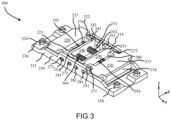
FIG. 3 illustrates a perspective view of a cargo restraint assembly in a stored position, in accordance with various embodiments; -
FIG. 4A illustrates a perspective view of a cargo restraint assembly in an erected position prior to attenuation, in accordance with various embodiments; -
FIG. 4B illustrates a perspective view of a cargo restraint assembly in an erected position during attenuation, in accordance with various embodiments; -
FIG. 5 illustrates a top view of a cargo restraint assembly in an erected position, in accordance with various embodiments; and -
FIG. 6 , an example which is not part of the claimed invention, illustrates a perspective view of a cargo restraint assembly in an erected position. - The detailed description of various embodiments herein makes reference to the accompanying drawings, which show various embodiments by way of illustration. While these various embodiments are described in sufficient detail to enable those skilled in the art to practice the disclosure, it should be understood that other embodiments may be realized and that logical mechanical changes may be made without departing from the scope of the appended claims. Thus, the detailed description herein is presented for purposes of illustration only and not of limitation. For example, the steps recited in any of the method or process descriptions may be executed in any order and are not necessarily limited to the order presented. Furthermore, any reference to singular includes plural embodiments, and any reference to more than one component or step may include a singular embodiment or step. Also, any reference to attached, fixed, connected, or the like may include permanent, removable, temporary, partial, full, and/or any other possible attachment option. Additionally, any reference to without contact (or similar phrases) may also include reduced contact or minimal contact.
- Throughout the present disclosure, like reference numbers denote like elements. Accordingly, elements with like element numbering may be shown in the figures but may not necessarily be repeated herein for the sake of clarity.
- As used herein, "aft" refers to the direction associated with the tail (i. e., the back end) of an aircraft, or generally, to the direction of exhaust of a gas turbine engine. As used herein, "forward" refers to the direction associated with the nose (i.e., the front end) of an aircraft, or generally, to the direction of flight or motion.
- Cargo handling systems, as disclosed herein, may comprise cargo restraint assemblies configured to guide and restrain the movement of ULDs or other cargo across the floor or "cargo deck" of an aircraft. In accordance with various embodiments, the cargo restraint assemblies may be coupled to a cargo deck and disposed between a first row of a cargo system and a second row of a cargo system. In this regard, the cargo restraint assembly may restrain a first cargo in the first row and a second cargo in the second row in the vertical and lateral directions. The cargo restraint assembly may comprise a first guide block and a second guide block. The first guide block may comprise a width greater than a gap between tabs of a respective cargo edge/lip. Similarly, the second guide block may comprise a width greater than a gap between tabs of a respective cargo edge/lip. In this regard, the first guide block and the second guide block may restrain a first cargo and a second cargo vertically and laterally regardless of where the tabs of the respective cargo aligns longitudinally. The cargo restraint assembly may be configured for attenuation during transport of the first cargo and second cargo. For example, a cargo deck may bend during operation of an aircraft and the first guide block and the second guide block may extend away from each other in response and maintain contact with the tabs of the corresponding cargo.
- With reference to
FIG. 1 , anaircraft 10 is illustrated.Aircraft 10 includes acargo compartment 12. Acargo door 14 provides access tocargo compartment 12 fromoutside aircraft 10. Cargo 16 (e.g., pallets or ULDs) may be loaded and unloaded throughcargo door 14 and onto acargo deck 18 ofaircraft 10. - Referring now to
FIG. 2 , acargo handling system 100, in accordance with various embodiments, is illustrated.Cargo handling system 100 may be used to load, move, and unloadcargo 16 fromcargo deck 18.Cargo handling system 100 includes components configured to facilitate translation ofcargo 16 alongcargo deck 18. For example,cargo handling system 100 may include ball mats (or caster panels) 110, roller trays (or caster trays) 120, and edge restraint/guide assemblies 130. In various embodiments,ball mats 110 may be locatedproximate cargo door 14, with momentary reference toFIG. 1 .Roller trays 120, which each include one ormore rollers 140, may be oriented in a longitudinal direction. As used herein, the term "longitudinal" refers to forward and aft directions (i.e., a direction parallel to the x-axis on the provided xyz axes). In this regard,roller trays 120 may facilitate forward and aft translation ofcargo 16.Cargo handling system 100 may further include one or more power drive units (PDUs) 150 configured to propelcargo 16 in a desired direction.PDUs 150 may be located inball mats 110,roller trays 120, and/or in any other desired location alongcargo deck 18. Edge restraint/guide assemblies 130 may be located along the edges ofcargo deck 18. Edge restraint/guide assemblies 130 may restrict lateral and vertical translation ofcargo 16. As used herein, the term "lateral" refers to directions perpendicular to the longitudinal direction (i.e., directions parallel to the y-axis on the provided xyz axes). As used herein, the term "vertical" refers to directions perpendicular to cargo deck 18 (i.e., direction perpendicular to the xy-plane and/or parallel to the z-axis on the provided xyz axes). In various embodiments, thecargo handling system 100 may include afirst cargo row 102 and asecond cargo row 104. Thefirst cargo row 102 may be disposed laterally adjacent to thesecond cargo row 104. -
Cargo handling system 100 may include acargo restraint assembly 200. Thecargo restraint assembly 200 may be disposed between thefirst cargo row 102 and thesecond cargo row 104. In various embodiments,cargo restraint assembly 200 may be mounted to thecargo deck 18, aroller tray 120, or the like. In various embodiments, thecargo 16 may comprise a plurality oftabs 192 disposed around a perimeter ofcargo 16. In various embodiments, a width W1 of thecargo restraint assembly 200 may be greater than a gap G1 between adjacent tabs in the plurality oftabs 192 fromcargo 16. In this regard, if acargo restraint assembly 200 ends up between two adjacent tabs in the plurality oftabs 192, thecargo restraint assembly 200 may maintain restriction of vertical and lateral movement of thecargo 16 during transport. To handle larger cargo, thecargo restraint assembly 200 may be positioned in stowed position. In the stowed position, a corresponding cargo may translate overroller trays 120 without contacting thecargo restraint assembly 200. - Referring now to
FIG. 3 , acargo restraint assembly 200, in accordance with various embodiments, is illustrated. In various embodiments, thecargo restraint assembly 200 comprises ahousing 210, afirst guide block 220, asecond guide block 230, afirst bracket 240, asecond bracket 250, and afirst spring 260. Thehousing 210 comprises afirst end wall 212 and asecond end wall 214. Thefirst end wall 212 extends from afirst base 216 to asecond base 218. Similarly, thesecond end wall 214 extends from thefirst base 216 to thesecond base 218. Thefirst base 216 and thesecond base 218 may be configured to be coupled to acargo deck 18 as shown inFIG. 2 by any method known in the art, such as bolt and nuts, or the like. Thefirst end wall 212 may comprise a plurality ofslots 213. Each slot in the plurality ofslots 213 may be configured to receive a shaft (e.g., afirst shaft 270 and/or a second shaft 280). - The
first bracket 240 is disposed betweenfirst end wall 212 andsecond end wall 214, and thesecond bracket 250 may be disposed betweenfirst end wall 212 andsecond end wall 214. The first bracket comprises a first flange, a second flange, and a wall extending from the first flange to the second flange and the second bracket may comprise a first flange, a second flange, and a wall extending from the first flange to the second flange. Thefirst bracket 240 comprises afirst flange 241, asecond flange 242, and awall 243 extending between thefirst flange 241 and thesecond flange 242. Thefirst flange 241 is disposed adjacent to thefirst end wall 212 of thehousing 210. Thesecond flange 242 is disposed adjacent to thesecond end wall 214 of thehousing 210. Thefirst flange 241 and thesecond flange 242 are slidably coupled to thefirst end wall 212 and thesecond end wall 214 of thehousing 210. Afirst end 271 of thefirst shaft 270 and a first pin 272 engages respective slots in the plurality ofslots 213 in thefirst end wall 212 of thehousing 210. On the opposite side, a second end (not visible) of thefirst shaft 270 and asecond pin 273 may engage respective slots in the plurality ofslots 213 in thesecond end wall 214 of thehousing 210. Similarly, thesecond bracket 250 may comprise afirst flange 251, asecond flange 252, and awall 253 extending between thefirst flange 251 and thesecond flange 252. Thefirst flange 251 may be disposed adjacent to thefirst end wall 212 of thehousing 210. Thesecond flange 252 may be disposed adjacent to thesecond end wall 214 of thehousing 210. Thefirst flange 251 and thesecond flange 252 may be slidably coupled to thefirst end wall 212 and thesecond end wall 214 of thehousing 210. For example, afirst end 281 of thefirst shaft 280 and afirst pin 282 may engage a respective slot in the plurality ofslots 213 in thefirst end wall 212 of thehousing 210. On the opposite side, a second end (not visible) of thefirst shaft 270 and a second pin (not visible) may engage respective slots in the plurality ofslots 213 in thesecond end wall 214 of thehousing 210. - In various embodiments, the
first guide block 220 may comprise alateral retention portion 223, avertical retention portion 224, afirst flange 221, and asecond flange 222. Similarly, thesecond guide block 230 may comprise alateral retention portion 233, avertical retention portion 234, afirst flange 231, and asecond flange 232. Thefirst guide block 220 may be pivotably coupled to thefirst bracket 240, and thesecond guide block 230 may be pivotably coupled to thesecond bracket 250. For example, thefirst flange 221 of thefirst guide block 220 may be coupled to thefirst flange 241 of thefirst bracket 240 via theshaft 270 that extends through the respective holes in each, and thesecond flange 222 of thefirst guide block 220 may be coupled to thesecond flange 242 of thefirst bracket 240 via theshaft 270 that extends through respective holes in each. Similarly, thefirst flange 231 of thesecond guide block 230 may be coupled to thefirst flange 251 of thesecond bracket 250 via theshaft 280 that extends through respective holes in each, and thesecond flange 232 of thesecond guide block 230 may be coupled to thesecond flange 252 of thesecond bracket 250 via theshaft 280 that extends through respective holes in each. - The
cargo restraint assembly 200 comprises thefirst shaft 270 and may comprise asecond shaft 280. Thefirst shaft 270 slidingly couples thefirst bracket 240 and thefirst guide block 220 to thehousing 210. Thefirst shaft 270 extends through a respective slot in the plurality ofslots 213 on thefirst end wall 212 through thefirst flange 241 of thefirst bracket 240 through thefirst flange 221 of thefirst guide block 220 through thesecond flange 222 of thefirst guide block 220 through thesecond flange 242 of thefirst bracket 240 to the a respective slot in the plurality ofslots 213 on thesecond end wall 214. Similarly, thesecond shaft 280 may extend from a respective slot in the plurality ofslots 213 on thefirst end wall 212 through thefirst flange 251 of thesecond bracket 250 through thefirst flange 231 of thesecond guide block 230 through thesecond flange 232 of thesecond guide block 230 through thesecond flange 252 of thesecond bracket 250 to a respective slot in the plurality ofslots 213 on thesecond end wall 214. - In various embodiments, the
cargo restraint assembly 200 may further comprise a firsttorsional spring 292 and a secondtorsional spring 294. The firsttorsional spring 292 may be operably coupled to thefirst guide block 220 and the secondtorsional spring 294 may be operably coupled to thesecond guide block 230. For example, the firsttorsional spring 292 may be coupled to thefirst shaft 270 and have its functional ends in contact with thefirst guide block 220 andfirst bracket 240, and the secondtorsional spring 294 may be coupled to thesecond shaft 280 and have its functional ends in contact with thesecond guide block 230 and thesecond bracket 250. In this regard, the firsttorsional spring 292 may bias thefirst guide block 220 in a vertical direction to an extracted state by torsionally pushing off of thefirst bracket 240, and the secondtorsional spring 294 may bias thesecond guide block 230 in a vertical direction to an extracted state by torsionally pushing off of thesecond bracket 250. As such, thecargo restraint assembly 200 may further comprise retaining mechanisms to retain thefirst guide block 220 and thesecond guide block 230 in a stowed position, such as a releasable tab, or the like. Thus, a default position for thecargo restraint assembly 200 may be an extracted state, as described further herein. - In various embodiments, the
first spring 260 may be disposed between, and coupled to, thewall 243 of thefirst bracket 240 and thewall 253 of thesecond bracket 250. Thefirst spring 260 may be configured to allow thefirst bracket 240, thesecond bracket 250, thefirst guide block 220, and thesecond guide block 230 to attenuate in thehousing 210, via the plurality ofslots 213, during transportation ofcargo 16 fromFIG. 2 . For example, when an aircraft (e.g.,aircraft 10 fromFIG. 1 ), flexes in an area of the wings within thecargo deck 18 fromFIG. 2 , thecargo deck 18 may stretch, so thecargo restraint assembly 200 may attenuate and allow thefirst guide block 220 and thesecond guide block 230 to translate away from each other and/or maintain vertical contact with thetabs 192 fromFIG. 2 during the condition. In various embodiments, thecargo restraint assembly 200 may further comprise asecond spring 262 disposed between, and coupled to, thewall 243 of thefirst bracket 240 and thewall 253 of thesecond bracket 250. In various embodiments, thesecond spring 262 may provide additional attenuation support for thecargo restraint assembly 200. - Referring now to
FIG. 4A , acargo restraint assembly 200 in a default state is illustrated, in accordance with various embodiments. A "default state," as disclosed herein, refers to a state where thefirst spring 260 and/or thesecond spring 262 fromFIG. 3 are in a compressed state (e.g., thefirst spring 260 and/or thesecond spring 262 are experiencing compression). Referring now toFIG. 4B , acargo restraint assembly 200 in an attenuated state is illustrated in accordance with various embodiments. An "attenuated state," as disclosed herein, refers to a state where thefirst spring 260 and/or thesecond spring 262 fromFIG. 3 are extended from the default state but still in compression (e.g.,first spring 260 and/orsecond spring 262 are in a lesser degree of compression). In this regard, during a wings down event, thefirst spring 260 and/or thesecond spring 262 may push thefirst bracket 240 and thesecond bracket 250 away from each other and into the attenuated state fromFIG. 4B . When the aircraft returns to its normal state, the ULD pushes thefirst bracket 240 andsecond bracket 260 towards each other and compresses thefirst spring 260 and/or thesecond spring 262. - Referring now to
FIG. 4A , thefirst guide block 220 and thesecond guide block 230 may each comprise a first wing portion and a second wing portion. For example,first guide block 220 may comprisefirst wing portion 321 andsecond wing portion 322. Thefirst wing portion 321 may extend longitudinally fromlateral retention portion 223 pastfirst end wall 212 ofhousing 210. Similarly, thesecond wing portion 322 may extend longitudinally fromlateral retention portion 223 pastsecond end wall 214 ofhousing 210. In various embodiments, thefirst wing portion 321 and thesecond wing portion 322 may provide additional guidance during loading and unloading if acargo 16 fromFIG. 2 begins to skew laterally. Similarly, thesecond guide block 230 may comprisefirst wing portion 331 andsecond wing portion 332. Thefirst wing portion 331 may extend longitudinally fromlateral retention portion 233 pastfirst end wall 212 ofhousing 210. Similarly, thesecond wing portion 332 may extend longitudinally fromlateral retention portion 233 pastsecond end wall 214 ofhousing 210. - In various embodiments, the
vertical retention portion 224 of thefirst guide block 220 and thevertical retention portion 234 of thesecond guide block 230 may each comprise a lip. For example, thefirst guide block 220 and thesecond guide block 230 may each define a shoulder at the connection of the vertical retention portion (e.g.,vertical retention portions lateral retention portions 223, 233). - Referring now to
FIG. 5 , a top view of acargo restraint assembly 200, in accordance with various embodiments, is illustrated. In various embodiments, thefirst bracket 240 and thesecond bracket 250 may each define an H-shape from a top down view. For example, thefirst flange 241, thesecond flange 242, and thewall 243 of thefirst bracket 240 may define an H-shape from a top down view. The H-shape may maintain vertical alignment of the respective guide block. For example, with combined reference toFIGs. 3 and5 , thefirst bracket 240 may maintain a vertical alignment of thefirst guide block 220 during operation. In this regard, the H-shape may prevent the guide block from rotating due to thefirst shaft 270 and the first pin 272 that can resist torque about the X-axis while being allowed to move in the lateral direction along a respective slot in the plurality ofslots 213 in thefirst end wall 212. Each slot in the plurality ofslots 213 are where this torsional load is transferred. For example, in various embodiments, during operation of thecargo restraint assembly 200, the first pin 245 is pushed down onto the bottom of a respective slot in the plurality ofslots 213 while thefirst shaft 270 is pulled up into the upper face of a respective slot in the plurality ofslots 213. In various embodiments, thecargo restraint assembly 200 allows for a configuration to resist the torsional moment and maintain vertical alignment of thefirst guide block 220 and/or thesecond guide block 230. - Referring now to
FIG. 6 , a perspective view of acargo restraint assembly 600, an example which is not part of the claimed invention, is illustrated. Thecargo restraint assembly 600 may be configured for nonattenuation. In this regard, thefirst bracket 240 andsecond bracket 250 may be replaced with a wall extending fromfirst end wall 612 of thehousing 610 to the second end wall 614 of thehousing 610. For example,first wall 615 may extend fromfirst end wall 612 of thehousing 610 to the second end wall 614 of the housing. Thefirst end wall 612 of the housing may be thickened to be disposed adjacent to thefirst guide block 220 similar to thefirst bracket 240 fromFIGs. 3-5 . In various embodiments, a respective shaft for each guide block may couple directly to side walls (e.g.,first end wall 612 and second end wall 614) of ahousing 610. For example,second shaft 680 may extend fromfirst end wall 612 through thefirst flange 231 and thesecond flange 232 of thesecond guide block 230 to the second end wall 614. In this regard, thefirst guide block 220 and thesecond guide block 230 may be fixed in the lateral direction. As such, thecargo restraint assembly 600 may be disposed in areas ofcargo deck 18 ofFIG. 2 that do not experience a wing down event (e.g., areas ofcargo deck 18 that are not aligned with the wings ofaircraft 10 fromFIG. 1 . - Benefits, other advantages, and solutions to problems have been described herein with regard to specific embodiments. Furthermore, the connecting lines shown in the various figures contained herein are intended to represent exemplary functional relationships and/or physical couplings between the various elements. It should be noted that many alternative or additional functional relationships or physical connections may be present in a practical system. However, the benefits, advantages, solutions to problems, and any elements that may cause any benefit, advantage, or solution to occur or become more pronounced are not to be construed as critical, required, or essential features or elements of the disclosure. The scope of the disclosure is accordingly to be limited by nothing other than the appended claims, in which reference to an element in the singular is not intended to mean "one and only one" unless explicitly so stated, but rather "one or more." It is to be understood that unless specifically stated otherwise, references to "a," "an," and/or "the" may include one or more than one and that reference to an item in the singular may also include the item in the plural. All ranges and ratio limits disclosed herein may be combined.
- Moreover, where a phrase similar to "at least one of A, B, or C" is used in the claims, it is intended that the phrase be interpreted to mean that A alone may be present in an embodiment, B alone may be present in an embodiment, C alone may be present in an embodiment, or that any combination of the elements A, Band C may be present in a single embodiment; for example, A and B, A and C, B and C, or A and B and C. Elements and steps in the figures are illustrated for simplicity and clarity and have not necessarily been rendered according to any particular sequence. For example, steps that may be performed concurrently or in different order are illustrated in the figures to help to improve understanding of embodiments of the present disclosure.
- Systems, methods and apparatus are provided herein. In the detailed description herein, references to "one embodiment", "an embodiment", "various embodiments", etc., indicate that the embodiment described may include a particular feature, structure, or characteristic, but every embodiment may not necessarily include the particular feature, structure, or characteristic. Moreover, such phrases are not necessarily referring to the same embodiment. Further, when a particular feature, structure, or characteristic is described in connection with an embodiment, it is submitted that it is within the knowledge of one skilled in the art to affect such feature, structure, or characteristic in connection with other embodiments whether or not explicitly described. After reading the description, it will be apparent to one skilled in the relevant art(s) how to implement the disclosure in alternative embodiments.
- As used herein, the terms "comprises", "comprising", or any other variation thereof, are intended to cover a non-exclusive inclusion, such that a process, method, article, or apparatus that comprises a list of elements does not include only those elements but may include other elements not expressly listed or inherent to such process, method, article, or apparatus.
Claims (15)
- A cargo restraint assembly (200) comprising:a housing (210) having a first end wall (212), second end wall (214), a first base (216), and a second base (218), the first end wall extending from the first base to the second base, the second end wall extending from the first base to the second base, the first end wall disposed opposite the second end wall;a first bracket (240) disposed between the first end wall and the second end wall, the first bracket slidably coupled to the first end wall and the second end wall;a first guide block (220) pivotably coupled to the first bracket; anda first shaft (270) and a first pin (272),wherein the first bracket comprises a first flange (241) and a second flange (242),wherein the first flange is disposed adjacent to the first end wall, whereinthe second flange is disposed adjacent to the second end wall, characterised in that the first shaft (270) extends from a first slot in the first end wall through the first flange through the second flange and through a second slot in the second end wall, and in that the first pin (272) extends from a third slot in the first end wall through the first flange.
- The cargo restraint assembly of claim 1, further comprising a second bracket (250) disposed
between the first end wall and the second end wall, the second bracket slidably coupled to the first end wall and the second end wall. - The cargo restraint assembly of claim 2, further comprising a second guide block (230) pivotably coupled to the second bracket, and optionally further comprising a spring disposed between the first bracket and the second bracket.
- The cargo restraint assembly of claim 2, wherein the first bracket and the second bracket each comprise an H-shape.
- The cargo restraint assembly of any preceding claim, wherein the first guide block (220) comprises a lateral retention portion (223), a vertical retention portion (224), a first wing portion (321) and a second wing portion (322), the lateral retention portion extending from the first flange to the second flange, the vertical retention portion extending from the lateral retention portion in a lateral direction, the first wing portion extending in a longitudinal direction away from the lateral retention portion past the first end wall, and the second wing portion extending in a negative longitudinal direction away from the lateral retention portion past the second end wall.
- The cargo restraint assembly of any preceding claim, wherein the first guide block is configured to rotate about the first shaft, and optionally further comprising a torsion spring coupled to the first shaft and the first guide block.
- A cargo loading system, comprising:a cargo deck (18);a first tray extending longitudinally along the cargo deck;a second tray disposed laterally adjacent to the first tray, the second tray extending longitudinally along the cargo deck;the cargo restraint assembly of claim 1 disposed between the first tray and the second tray, the cargo restraint assembly coupled to the cargo deck, the cargo restraint assembly further comprising:a second bracket (250) slidingly coupled to the housing;a spring (260) extending between the first bracket and the second bracket; anda second guide block (230) pivotably coupled to the second bracket.
- The cargo loading system of claim 7, wherein the first base and the second base are coupled to the cargo deck.
- The cargo loading system of claim 8, wherein the first end wall and the second end wall comprise a plurality of slots, and wherein the first bracket and the second bracket are slidingly coupled to the plurality of slots.
- The cargo loading system of claim 9, wherein the cargo restraint assembly further comprises a second pin (273), wherein the second bracket comprises a first flange and a second flange, wherein the second pin (273) extends from the second flange (242) of the first bracket (240) through a second slot in the plurality of slots in the second end wall, and optionally wherein the first guide block and the second guide block each comprise a lateral retention portion, a vertical retention portion, a first wing portion (321) and a second wing portion, the lateral retention portion extending from the first flange to the second flange, the vertical retention portion extending from the lateral retention portion in a lateral direction, the first wing portion (321) extending in a longitudinal direction away from the lateral retention portion past the first end wall, and the second wing portion extending in a negative longitudinal direction away from the lateral retention portion past the second end wall.
- The cargo loading system of any of claims 7 to 10, wherein the first bracket (240), the second bracket (250), the first guide block and the second guide block are configured to laterally attenuate in response to the cargo deck bending.
- The cargo loading system of any of claims 7 to 11, wherein the first bracket (240) and the second bracket (250) each comprise an H-shape.
- The cargo loading system of any of claims 7 to 12, (2^0), wherein the first guide block is configured to rotate about the first shaft, and optionally further comprising a torsion spring coupled to the first shaft (270) and the first guide block.
- A method of attenuating the cargo restraint assembly of any of claims 1 to 6, the method comprising:translating the first guide block (220) and a second guide block (230) in a lateral direction away from each other via a spring in response to a cargo deck bending; andtranslating the first guide block (220) and the second guide block (230) towards each other in response to the cargo deck no longer bending.
- The method of claim 14, wherein the first guide block and the second guide block are slidingly coupled to the housing via the first bracket (240) and a second bracket (250), and wherein the spring is disposed between the first bracket (240) and the second bracket (250).
Applications Claiming Priority (1)
| Application Number | Priority Date | Filing Date | Title |
|---|---|---|---|
| US16/809,966 US11673505B2 (en) | 2020-03-05 | 2020-03-05 | Cargo restraint assembly |
Publications (2)
| Publication Number | Publication Date |
|---|---|
| EP3875362A1 EP3875362A1 (en) | 2021-09-08 |
| EP3875362B1 true EP3875362B1 (en) | 2023-07-26 |
Family
ID=74856734
Family Applications (1)
| Application Number | Title | Priority Date | Filing Date |
|---|---|---|---|
| EP21160417.8A Active EP3875362B1 (en) | 2020-03-05 | 2021-03-03 | Cargo restraint assembly |
Country Status (2)
| Country | Link |
|---|---|
| US (1) | US11673505B2 (en) |
| EP (1) | EP3875362B1 (en) |
Families Citing this family (3)
| Publication number | Priority date | Publication date | Assignee | Title |
|---|---|---|---|---|
| ES1267699Y (en) * | 2020-12-24 | 2021-09-08 | Aerial Tools | MODULAR UTILITY CARGO DEVICE FOR UNMANNED AIRCRAFT |
| US11987212B1 (en) * | 2022-12-14 | 2024-05-21 | Wilder Side Llc | Anchor bracket assembly with adjustable pin |
| CN116729627B (en) * | 2023-08-14 | 2023-11-07 | 四川腾盾科技有限公司 | Air-drop lock and working method thereof |
Family Cites Families (16)
| Publication number | Priority date | Publication date | Assignee | Title |
|---|---|---|---|---|
| US3778012A (en) | 1970-02-27 | 1973-12-11 | Republic National Bank Of Dall | Automatic pallet lock |
| DE3107745C2 (en) | 1981-02-28 | 1987-03-19 | Messerschmitt-Bölkow-Blohm GmbH, 8012 Ottobrunn | Locking element for locking cargo items |
| US4929133A (en) | 1989-04-14 | 1990-05-29 | Airborne Express, Inc. | Loading pallet for aircraft cargo containers |
| US5011348A (en) | 1989-12-15 | 1991-04-30 | The Boeing Company | Automatically retractable centerline restraint |
| DE4210702C2 (en) * | 1992-04-01 | 1995-09-21 | Daimler Benz Aerospace Airbus | Device for guiding |
| US5564654A (en) | 1994-10-13 | 1996-10-15 | Nordstrom; Arnold | Aircraft cargo restraint apparatus |
| DE19544796C1 (en) | 1995-11-30 | 1997-05-15 | Telair Int Cargo Sys Gmbh | Locking element |
| DE19816892C2 (en) | 1998-04-16 | 2000-05-18 | Telair Int Gmbh | bars |
| US6450744B1 (en) * | 2001-02-23 | 2002-09-17 | The Boeing Company | Overrideable vertical restraint for cargo handling systems |
| US6488457B2 (en) * | 2001-03-05 | 2002-12-03 | The Boeing Company | Latching system for a palletized system of an aircraft |
| US7731460B2 (en) | 2006-10-30 | 2010-06-08 | Goodrich Corporation | Self-adjusting ULD loading guide and restraint |
| US8690103B2 (en) | 2010-01-19 | 2014-04-08 | Goodrich Corporation | Method and apparatus for converting aircraft from commercial to military freight service |
| US8221038B1 (en) * | 2010-02-26 | 2012-07-17 | Angra International, LLC. | Overridable side lock (stabber) pallet type load restraint |
| US9079665B2 (en) | 2012-06-18 | 2015-07-14 | Goodrich Corporation | Sequential latch for palletized cargo |
| US10556683B2 (en) * | 2017-08-25 | 2020-02-11 | Goodrich Corporation | Intelligent lock for cargo handling system |
| US20190248269A1 (en) | 2018-02-15 | 2019-08-15 | Goodrich Corporation | Cargo restraint system |
-
2020
- 2020-03-05 US US16/809,966 patent/US11673505B2/en active Active
-
2021
- 2021-03-03 EP EP21160417.8A patent/EP3875362B1/en active Active
Also Published As
| Publication number | Publication date |
|---|---|
| US11673505B2 (en) | 2023-06-13 |
| EP3875362A1 (en) | 2021-09-08 |
| US20210276478A1 (en) | 2021-09-09 |
Similar Documents
| Publication | Publication Date | Title |
|---|---|---|
| EP3875362B1 (en) | Cargo restraint assembly | |
| EP3778395B1 (en) | Restraint assembly for cargo system | |
| EP3508422B1 (en) | Tray mounted longitudinal guide with conveyance in the lowered position and vertical restraint in the raised position | |
| US20110150594A1 (en) | Air Cargo Centerline Restraint System Having Restraints Mounted Over Floor Joists Outside the Wingbox Area for Lateral Support | |
| US3906870A (en) | Retractable cargo restraint and center guide for cargo compartments | |
| EP3640145B1 (en) | Moveable integrated side guide and roller tray assembly for cargo management system | |
| US7988391B2 (en) | Self-locking, overrideable and attenuating cargo guide and restraint | |
| EP2441668B1 (en) | Low profile cargo handling system | |
| US8113464B2 (en) | Autonomous plane architecture for the transport and the replacement of propulsion engines | |
| US20030057326A1 (en) | Cargo handling system for aircraft compartments | |
| US7731460B2 (en) | Self-adjusting ULD loading guide and restraint | |
| US11535359B2 (en) | Flexible and simple turnaround cargo handling assemblies | |
| US5310297A (en) | Cargo restraint apparatus and system | |
| EP0921072B1 (en) | Bi-directional cargo restraint | |
| US20180305077A1 (en) | Pallet adapter | |
| EP3587266A1 (en) | Managed routing and actuation harness system | |
| US8925860B2 (en) | Cargo hold floor and aircraft having a cargo hold floor | |
| US11345475B2 (en) | Stowable cargo guide for cargo roller trays | |
| US20240278710A1 (en) | Cargo restraint system | |
| EP2360094B1 (en) | Aircraft overrideable load restraint | |
| EP3778394A1 (en) | Restraint assembly for cargo system | |
| US12162624B2 (en) | Attenuated roller restraint for aircraft cargo loading systems | |
| GB2565809A (en) | An apparatus and method for locking/unlocking a moveable wing tip device | |
| US20250026477A1 (en) | Compact vertically actuated anti-rollout restraint for use in internal cargo restraint system | |
| US12337991B2 (en) | Aircraft cargo handling system architecture |
Legal Events
| Date | Code | Title | Description |
|---|---|---|---|
| PUAI | Public reference made under article 153(3) epc to a published international application that has entered the european phase |
Free format text: ORIGINAL CODE: 0009012 |
|
| STAA | Information on the status of an ep patent application or granted ep patent |
Free format text: STATUS: THE APPLICATION HAS BEEN PUBLISHED |
|
| AK | Designated contracting states |
Kind code of ref document: A1 Designated state(s): AL AT BE BG CH CY CZ DE DK EE ES FI FR GB GR HR HU IE IS IT LI LT LU LV MC MK MT NL NO PL PT RO RS SE SI SK SM TR |
|
| STAA | Information on the status of an ep patent application or granted ep patent |
Free format text: STATUS: REQUEST FOR EXAMINATION WAS MADE |
|
| 17P | Request for examination filed |
Effective date: 20220307 |
|
| RBV | Designated contracting states (corrected) |
Designated state(s): AL AT BE BG CH CY CZ DE DK EE ES FI FR GB GR HR HU IE IS IT LI LT LU LV MC MK MT NL NO PL PT RO RS SE SI SK SM TR |
|
| GRAP | Despatch of communication of intention to grant a patent |
Free format text: ORIGINAL CODE: EPIDOSNIGR1 |
|
| STAA | Information on the status of an ep patent application or granted ep patent |
Free format text: STATUS: GRANT OF PATENT IS INTENDED |
|
| INTG | Intention to grant announced |
Effective date: 20230215 |
|
| GRAS | Grant fee paid |
Free format text: ORIGINAL CODE: EPIDOSNIGR3 |
|
| GRAA | (expected) grant |
Free format text: ORIGINAL CODE: 0009210 |
|
| STAA | Information on the status of an ep patent application or granted ep patent |
Free format text: STATUS: THE PATENT HAS BEEN GRANTED |
|
| AK | Designated contracting states |
Kind code of ref document: B1 Designated state(s): AL AT BE BG CH CY CZ DE DK EE ES FI FR GB GR HR HU IE IS IT LI LT LU LV MC MK MT NL NO PL PT RO RS SE SI SK SM TR |
|
| REG | Reference to a national code |
Ref country code: CH Ref legal event code: EP |
|
| REG | Reference to a national code |
Ref country code: IE Ref legal event code: FG4D |
|
| REG | Reference to a national code |
Ref country code: DE Ref legal event code: R096 Ref document number: 602021003688 Country of ref document: DE |
|
| P01 | Opt-out of the competence of the unified patent court (upc) registered |
Effective date: 20230922 |
|
| REG | Reference to a national code |
Ref country code: LT Ref legal event code: MG9D |
|
| REG | Reference to a national code |
Ref country code: NL Ref legal event code: MP Effective date: 20230726 |
|
| REG | Reference to a national code |
Ref country code: AT Ref legal event code: MK05 Ref document number: 1591677 Country of ref document: AT Kind code of ref document: T Effective date: 20230726 |
|
| PG25 | Lapsed in a contracting state [announced via postgrant information from national office to epo] |
Ref country code: NL Free format text: LAPSE BECAUSE OF FAILURE TO SUBMIT A TRANSLATION OF THE DESCRIPTION OR TO PAY THE FEE WITHIN THE PRESCRIBED TIME-LIMIT Effective date: 20230726 |
|
| PG25 | Lapsed in a contracting state [announced via postgrant information from national office to epo] |
Ref country code: GR Free format text: LAPSE BECAUSE OF FAILURE TO SUBMIT A TRANSLATION OF THE DESCRIPTION OR TO PAY THE FEE WITHIN THE PRESCRIBED TIME-LIMIT Effective date: 20231027 |
|
| PG25 | Lapsed in a contracting state [announced via postgrant information from national office to epo] |
Ref country code: IS Free format text: LAPSE BECAUSE OF FAILURE TO SUBMIT A TRANSLATION OF THE DESCRIPTION OR TO PAY THE FEE WITHIN THE PRESCRIBED TIME-LIMIT Effective date: 20231126 |
|
| PG25 | Lapsed in a contracting state [announced via postgrant information from national office to epo] |
Ref country code: SE Free format text: LAPSE BECAUSE OF FAILURE TO SUBMIT A TRANSLATION OF THE DESCRIPTION OR TO PAY THE FEE WITHIN THE PRESCRIBED TIME-LIMIT Effective date: 20230726 Ref country code: RS Free format text: LAPSE BECAUSE OF FAILURE TO SUBMIT A TRANSLATION OF THE DESCRIPTION OR TO PAY THE FEE WITHIN THE PRESCRIBED TIME-LIMIT Effective date: 20230726 Ref country code: PT Free format text: LAPSE BECAUSE OF FAILURE TO SUBMIT A TRANSLATION OF THE DESCRIPTION OR TO PAY THE FEE WITHIN THE PRESCRIBED TIME-LIMIT Effective date: 20231127 Ref country code: NO Free format text: LAPSE BECAUSE OF FAILURE TO SUBMIT A TRANSLATION OF THE DESCRIPTION OR TO PAY THE FEE WITHIN THE PRESCRIBED TIME-LIMIT Effective date: 20231026 Ref country code: LV Free format text: LAPSE BECAUSE OF FAILURE TO SUBMIT A TRANSLATION OF THE DESCRIPTION OR TO PAY THE FEE WITHIN THE PRESCRIBED TIME-LIMIT Effective date: 20230726 Ref country code: LT Free format text: LAPSE BECAUSE OF FAILURE TO SUBMIT A TRANSLATION OF THE DESCRIPTION OR TO PAY THE FEE WITHIN THE PRESCRIBED TIME-LIMIT Effective date: 20230726 Ref country code: IS Free format text: LAPSE BECAUSE OF FAILURE TO SUBMIT A TRANSLATION OF THE DESCRIPTION OR TO PAY THE FEE WITHIN THE PRESCRIBED TIME-LIMIT Effective date: 20231126 Ref country code: HR Free format text: LAPSE BECAUSE OF FAILURE TO SUBMIT A TRANSLATION OF THE DESCRIPTION OR TO PAY THE FEE WITHIN THE PRESCRIBED TIME-LIMIT Effective date: 20230726 Ref country code: GR Free format text: LAPSE BECAUSE OF FAILURE TO SUBMIT A TRANSLATION OF THE DESCRIPTION OR TO PAY THE FEE WITHIN THE PRESCRIBED TIME-LIMIT Effective date: 20231027 Ref country code: FI Free format text: LAPSE BECAUSE OF FAILURE TO SUBMIT A TRANSLATION OF THE DESCRIPTION OR TO PAY THE FEE WITHIN THE PRESCRIBED TIME-LIMIT Effective date: 20230726 Ref country code: AT Free format text: LAPSE BECAUSE OF FAILURE TO SUBMIT A TRANSLATION OF THE DESCRIPTION OR TO PAY THE FEE WITHIN THE PRESCRIBED TIME-LIMIT Effective date: 20230726 |
|
| PG25 | Lapsed in a contracting state [announced via postgrant information from national office to epo] |
Ref country code: PL Free format text: LAPSE BECAUSE OF FAILURE TO SUBMIT A TRANSLATION OF THE DESCRIPTION OR TO PAY THE FEE WITHIN THE PRESCRIBED TIME-LIMIT Effective date: 20230726 |
|
| PG25 | Lapsed in a contracting state [announced via postgrant information from national office to epo] |
Ref country code: ES Free format text: LAPSE BECAUSE OF FAILURE TO SUBMIT A TRANSLATION OF THE DESCRIPTION OR TO PAY THE FEE WITHIN THE PRESCRIBED TIME-LIMIT Effective date: 20230726 |
|
| REG | Reference to a national code |
Ref country code: DE Ref legal event code: R097 Ref document number: 602021003688 Country of ref document: DE |
|
| PG25 | Lapsed in a contracting state [announced via postgrant information from national office to epo] |
Ref country code: SM Free format text: LAPSE BECAUSE OF FAILURE TO SUBMIT A TRANSLATION OF THE DESCRIPTION OR TO PAY THE FEE WITHIN THE PRESCRIBED TIME-LIMIT Effective date: 20230726 Ref country code: RO Free format text: LAPSE BECAUSE OF FAILURE TO SUBMIT A TRANSLATION OF THE DESCRIPTION OR TO PAY THE FEE WITHIN THE PRESCRIBED TIME-LIMIT Effective date: 20230726 Ref country code: ES Free format text: LAPSE BECAUSE OF FAILURE TO SUBMIT A TRANSLATION OF THE DESCRIPTION OR TO PAY THE FEE WITHIN THE PRESCRIBED TIME-LIMIT Effective date: 20230726 Ref country code: EE Free format text: LAPSE BECAUSE OF FAILURE TO SUBMIT A TRANSLATION OF THE DESCRIPTION OR TO PAY THE FEE WITHIN THE PRESCRIBED TIME-LIMIT Effective date: 20230726 Ref country code: DK Free format text: LAPSE BECAUSE OF FAILURE TO SUBMIT A TRANSLATION OF THE DESCRIPTION OR TO PAY THE FEE WITHIN THE PRESCRIBED TIME-LIMIT Effective date: 20230726 Ref country code: CZ Free format text: LAPSE BECAUSE OF FAILURE TO SUBMIT A TRANSLATION OF THE DESCRIPTION OR TO PAY THE FEE WITHIN THE PRESCRIBED TIME-LIMIT Effective date: 20230726 Ref country code: SK Free format text: LAPSE BECAUSE OF FAILURE TO SUBMIT A TRANSLATION OF THE DESCRIPTION OR TO PAY THE FEE WITHIN THE PRESCRIBED TIME-LIMIT Effective date: 20230726 |
|
| PG25 | Lapsed in a contracting state [announced via postgrant information from national office to epo] |
Ref country code: IT Free format text: LAPSE BECAUSE OF FAILURE TO SUBMIT A TRANSLATION OF THE DESCRIPTION OR TO PAY THE FEE WITHIN THE PRESCRIBED TIME-LIMIT Effective date: 20230726 |
|
| PLBE | No opposition filed within time limit |
Free format text: ORIGINAL CODE: 0009261 |
|
| STAA | Information on the status of an ep patent application or granted ep patent |
Free format text: STATUS: NO OPPOSITION FILED WITHIN TIME LIMIT |
|
| 26N | No opposition filed |
Effective date: 20240429 |
|
| PG25 | Lapsed in a contracting state [announced via postgrant information from national office to epo] |
Ref country code: SI Free format text: LAPSE BECAUSE OF FAILURE TO SUBMIT A TRANSLATION OF THE DESCRIPTION OR TO PAY THE FEE WITHIN THE PRESCRIBED TIME-LIMIT Effective date: 20230726 |
|
| REG | Reference to a national code |
Ref country code: CH Ref legal event code: PL |
|
| PG25 | Lapsed in a contracting state [announced via postgrant information from national office to epo] |
Ref country code: BG Free format text: LAPSE BECAUSE OF FAILURE TO SUBMIT A TRANSLATION OF THE DESCRIPTION OR TO PAY THE FEE WITHIN THE PRESCRIBED TIME-LIMIT Effective date: 20230726 |
|
| PG25 | Lapsed in a contracting state [announced via postgrant information from national office to epo] |
Ref country code: LU Free format text: LAPSE BECAUSE OF NON-PAYMENT OF DUE FEES Effective date: 20240303 |
|
| PG25 | Lapsed in a contracting state [announced via postgrant information from national office to epo] |
Ref country code: MC Free format text: LAPSE BECAUSE OF FAILURE TO SUBMIT A TRANSLATION OF THE DESCRIPTION OR TO PAY THE FEE WITHIN THE PRESCRIBED TIME-LIMIT Effective date: 20230726 |
|
| PG25 | Lapsed in a contracting state [announced via postgrant information from national office to epo] |
Ref country code: MC Free format text: LAPSE BECAUSE OF FAILURE TO SUBMIT A TRANSLATION OF THE DESCRIPTION OR TO PAY THE FEE WITHIN THE PRESCRIBED TIME-LIMIT Effective date: 20230726 Ref country code: LU Free format text: LAPSE BECAUSE OF NON-PAYMENT OF DUE FEES Effective date: 20240303 Ref country code: BG Free format text: LAPSE BECAUSE OF FAILURE TO SUBMIT A TRANSLATION OF THE DESCRIPTION OR TO PAY THE FEE WITHIN THE PRESCRIBED TIME-LIMIT Effective date: 20230726 |
|
| REG | Reference to a national code |
Ref country code: BE Ref legal event code: MM Effective date: 20240331 |
|
| PG25 | Lapsed in a contracting state [announced via postgrant information from national office to epo] |
Ref country code: BE Free format text: LAPSE BECAUSE OF NON-PAYMENT OF DUE FEES Effective date: 20240331 |
|
| PG25 | Lapsed in a contracting state [announced via postgrant information from national office to epo] |
Ref country code: IE Free format text: LAPSE BECAUSE OF NON-PAYMENT OF DUE FEES Effective date: 20240303 |
|
| PG25 | Lapsed in a contracting state [announced via postgrant information from national office to epo] |
Ref country code: IE Free format text: LAPSE BECAUSE OF NON-PAYMENT OF DUE FEES Effective date: 20240303 Ref country code: BE Free format text: LAPSE BECAUSE OF NON-PAYMENT OF DUE FEES Effective date: 20240331 Ref country code: CH Free format text: LAPSE BECAUSE OF NON-PAYMENT OF DUE FEES Effective date: 20240331 |
|
| PGFP | Annual fee paid to national office [announced via postgrant information from national office to epo] |
Ref country code: DE Payment date: 20250218 Year of fee payment: 5 |
|
| PGFP | Annual fee paid to national office [announced via postgrant information from national office to epo] |
Ref country code: FR Payment date: 20250219 Year of fee payment: 5 |
|
| PGFP | Annual fee paid to national office [announced via postgrant information from national office to epo] |
Ref country code: GB Payment date: 20250221 Year of fee payment: 5 |
|
| PG25 | Lapsed in a contracting state [announced via postgrant information from national office to epo] |
Ref country code: CY Free format text: LAPSE BECAUSE OF FAILURE TO SUBMIT A TRANSLATION OF THE DESCRIPTION OR TO PAY THE FEE WITHIN THE PRESCRIBED TIME-LIMIT; INVALID AB INITIO Effective date: 20210303 |
|
| PG25 | Lapsed in a contracting state [announced via postgrant information from national office to epo] |
Ref country code: HU Free format text: LAPSE BECAUSE OF FAILURE TO SUBMIT A TRANSLATION OF THE DESCRIPTION OR TO PAY THE FEE WITHIN THE PRESCRIBED TIME-LIMIT; INVALID AB INITIO Effective date: 20210303 |
|
| PG25 | Lapsed in a contracting state [announced via postgrant information from national office to epo] |
Ref country code: TR Free format text: LAPSE BECAUSE OF FAILURE TO SUBMIT A TRANSLATION OF THE DESCRIPTION OR TO PAY THE FEE WITHIN THE PRESCRIBED TIME-LIMIT Effective date: 20230726 |