EP3872904B1 - Negative electrode and electrochemical apparatus containing negative electrode - Google Patents
Negative electrode and electrochemical apparatus containing negative electrode Download PDFInfo
- Publication number
- EP3872904B1 EP3872904B1 EP20866949.9A EP20866949A EP3872904B1 EP 3872904 B1 EP3872904 B1 EP 3872904B1 EP 20866949 A EP20866949 A EP 20866949A EP 3872904 B1 EP3872904 B1 EP 3872904B1
- Authority
- EP
- European Patent Office
- Prior art keywords
- particles
- anode
- active material
- material layer
- anode active
- Prior art date
- Legal status (The legal status is an assumption and is not a legal conclusion. Google has not performed a legal analysis and makes no representation as to the accuracy of the status listed.)
- Active
Links
Images

Classifications
-
- H—ELECTRICITY
- H01—ELECTRIC ELEMENTS
- H01M—PROCESSES OR MEANS, e.g. BATTERIES, FOR THE DIRECT CONVERSION OF CHEMICAL ENERGY INTO ELECTRICAL ENERGY
- H01M4/00—Electrodes
- H01M4/02—Electrodes composed of, or comprising, active material
- H01M4/36—Selection of substances as active materials, active masses, active liquids
- H01M4/362—Composites
- H01M4/366—Composites as layered products
-
- H—ELECTRICITY
- H01—ELECTRIC ELEMENTS
- H01M—PROCESSES OR MEANS, e.g. BATTERIES, FOR THE DIRECT CONVERSION OF CHEMICAL ENERGY INTO ELECTRICAL ENERGY
- H01M4/00—Electrodes
- H01M4/02—Electrodes composed of, or comprising, active material
- H01M4/13—Electrodes for accumulators with non-aqueous electrolyte, e.g. for lithium-accumulators; Processes of manufacture thereof
- H01M4/133—Electrodes based on carbonaceous material, e.g. graphite-intercalation compounds or CFx
-
- H—ELECTRICITY
- H01—ELECTRIC ELEMENTS
- H01M—PROCESSES OR MEANS, e.g. BATTERIES, FOR THE DIRECT CONVERSION OF CHEMICAL ENERGY INTO ELECTRICAL ENERGY
- H01M4/00—Electrodes
- H01M4/02—Electrodes composed of, or comprising, active material
- H01M4/13—Electrodes for accumulators with non-aqueous electrolyte, e.g. for lithium-accumulators; Processes of manufacture thereof
- H01M4/139—Processes of manufacture
- H01M4/1393—Processes of manufacture of electrodes based on carbonaceous material, e.g. graphite-intercalation compounds or CFx
-
- H—ELECTRICITY
- H01—ELECTRIC ELEMENTS
- H01M—PROCESSES OR MEANS, e.g. BATTERIES, FOR THE DIRECT CONVERSION OF CHEMICAL ENERGY INTO ELECTRICAL ENERGY
- H01M4/00—Electrodes
- H01M4/02—Electrodes composed of, or comprising, active material
- H01M4/36—Selection of substances as active materials, active masses, active liquids
- H01M4/362—Composites
- H01M4/364—Composites as mixtures
-
- H—ELECTRICITY
- H01—ELECTRIC ELEMENTS
- H01M—PROCESSES OR MEANS, e.g. BATTERIES, FOR THE DIRECT CONVERSION OF CHEMICAL ENERGY INTO ELECTRICAL ENERGY
- H01M4/00—Electrodes
- H01M4/02—Electrodes composed of, or comprising, active material
- H01M4/36—Selection of substances as active materials, active masses, active liquids
- H01M4/48—Selection of substances as active materials, active masses, active liquids of inorganic oxides or hydroxides
- H01M4/52—Selection of substances as active materials, active masses, active liquids of inorganic oxides or hydroxides of nickel, cobalt or iron
- H01M4/525—Selection of substances as active materials, active masses, active liquids of inorganic oxides or hydroxides of nickel, cobalt or iron of mixed oxides or hydroxides containing iron, cobalt or nickel for inserting or intercalating light metals, e.g. LiNiO2, LiCoO2 or LiCoOxFy
-
- H—ELECTRICITY
- H01—ELECTRIC ELEMENTS
- H01M—PROCESSES OR MEANS, e.g. BATTERIES, FOR THE DIRECT CONVERSION OF CHEMICAL ENERGY INTO ELECTRICAL ENERGY
- H01M4/00—Electrodes
- H01M4/02—Electrodes composed of, or comprising, active material
- H01M4/36—Selection of substances as active materials, active masses, active liquids
- H01M4/58—Selection of substances as active materials, active masses, active liquids of inorganic compounds other than oxides or hydroxides, e.g. sulfides, selenides, tellurides, halogenides or LiCoFy; of polyanionic structures, e.g. phosphates, silicates or borates
- H01M4/583—Carbonaceous material, e.g. graphite-intercalation compounds or CFx
- H01M4/587—Carbonaceous material, e.g. graphite-intercalation compounds or CFx for inserting or intercalating light metals
-
- H—ELECTRICITY
- H01—ELECTRIC ELEMENTS
- H01M—PROCESSES OR MEANS, e.g. BATTERIES, FOR THE DIRECT CONVERSION OF CHEMICAL ENERGY INTO ELECTRICAL ENERGY
- H01M4/00—Electrodes
- H01M4/02—Electrodes composed of, or comprising, active material
- H01M4/62—Selection of inactive substances as ingredients for active masses, e.g. binders, fillers
- H01M4/621—Binders
- H01M4/622—Binders being polymers
- H01M4/623—Binders being polymers fluorinated polymers
-
- H—ELECTRICITY
- H01—ELECTRIC ELEMENTS
- H01M—PROCESSES OR MEANS, e.g. BATTERIES, FOR THE DIRECT CONVERSION OF CHEMICAL ENERGY INTO ELECTRICAL ENERGY
- H01M10/00—Secondary cells; Manufacture thereof
- H01M10/05—Accumulators with non-aqueous electrolyte
- H01M10/052—Li-accumulators
- H01M10/0525—Rocking-chair batteries, i.e. batteries with lithium insertion or intercalation in both electrodes; Lithium-ion batteries
-
- H—ELECTRICITY
- H01—ELECTRIC ELEMENTS
- H01M—PROCESSES OR MEANS, e.g. BATTERIES, FOR THE DIRECT CONVERSION OF CHEMICAL ENERGY INTO ELECTRICAL ENERGY
- H01M4/00—Electrodes
- H01M4/02—Electrodes composed of, or comprising, active material
- H01M2004/021—Physical characteristics, e.g. porosity, surface area
-
- H—ELECTRICITY
- H01—ELECTRIC ELEMENTS
- H01M—PROCESSES OR MEANS, e.g. BATTERIES, FOR THE DIRECT CONVERSION OF CHEMICAL ENERGY INTO ELECTRICAL ENERGY
- H01M4/00—Electrodes
- H01M4/02—Electrodes composed of, or comprising, active material
- H01M2004/026—Electrodes composed of, or comprising, active material characterised by the polarity
- H01M2004/027—Negative electrodes
-
- H—ELECTRICITY
- H01—ELECTRIC ELEMENTS
- H01M—PROCESSES OR MEANS, e.g. BATTERIES, FOR THE DIRECT CONVERSION OF CHEMICAL ENERGY INTO ELECTRICAL ENERGY
- H01M4/00—Electrodes
- H01M4/02—Electrodes composed of, or comprising, active material
- H01M2004/026—Electrodes composed of, or comprising, active material characterised by the polarity
- H01M2004/028—Positive electrodes
-
- Y—GENERAL TAGGING OF NEW TECHNOLOGICAL DEVELOPMENTS; GENERAL TAGGING OF CROSS-SECTIONAL TECHNOLOGIES SPANNING OVER SEVERAL SECTIONS OF THE IPC; TECHNICAL SUBJECTS COVERED BY FORMER USPC CROSS-REFERENCE ART COLLECTIONS [XRACs] AND DIGESTS
- Y02—TECHNOLOGIES OR APPLICATIONS FOR MITIGATION OR ADAPTATION AGAINST CLIMATE CHANGE
- Y02E—REDUCTION OF GREENHOUSE GAS [GHG] EMISSIONS, RELATED TO ENERGY GENERATION, TRANSMISSION OR DISTRIBUTION
- Y02E60/00—Enabling technologies; Technologies with a potential or indirect contribution to GHG emissions mitigation
- Y02E60/10—Energy storage using batteries
Definitions
- the present application relates to the art of energy storage, and particularly to a lithium ion battery anode and an electrochemical device, which is a lithium ion battery, comprising the same.
- lithium ion batteries are widely used in notebook computers, mobile phones, and new energy electric vehicles. This raises higher requirements for energy density, cycle life, cost, and safety of lithium ion batteries.
- anode active material in prior art is susceptible to deformation and expansion after being subjected to roll and cycles of charge and discharge.
- the present application provides a lithium ion battery anode as defined in the appended claims, which includes an anode active material layer and a current collector, wherein the anode active material layer comprises first oriented particles having a first tilt angle ⁇ 1 inclined with respect to the direction of the current collector, and second oriented particles having a second tilt angle ⁇ 2 inclined with respect to the direction of the current collector, wherein the first tilt angle ⁇ 1 and the second tilt angle ⁇ 2 meets 20° ⁇ 2 ⁇ 70°.
- the first oriented particles have a first tilt angle ⁇ 1 meeting: 0° ⁇ 1 ⁇ 20°.
- An area of the first oriented particles is 9%-23%of a cross sectional area of the anode active material layer.
- particles having a particle size less than 10 ⁇ m account for 71.0%-93.0% and particles having a particle size between 10 ⁇ m and 35 ⁇ m account for 7.0%-29.0%.
- the second oriented particles have an area relative to the cross sectional area of the anode active material layer higher than that of the first oriented particles.
- an area fraction of the second oriented particles is 37%-55% of a cross sectional area of the anode active material layer.
- particles having a particle size between 10 ⁇ m and 35 ⁇ m account for 22.0%-41.0% and particles having a particle size less than 10 ⁇ m account for 3.5%-5.6%.
- the anode active material layer further comprises third oriented particles having a third tilt angle ⁇ 3 inclined with respect to the direction of the current collector.
- the third tilt angle ⁇ 3 meets 70° ⁇ 3 ⁇ 90°.
- An area of the third oriented particles is 1.0%-15.0% of a cross sectional area of the anode active material layer.
- particles with a particle size less than 10 ⁇ m account for 90.0% or more.
- the anode includes a plurality of pores,and an area of the plurality of pores is 21.0%-43.0% of a cross sectional area of the anode active material layer.
- the anode active material layer has a C004/C110 ratio of 17.0-27.0.
- the anode active material layer has a thickness of 90 ⁇ m-143 ⁇ m, and the compacted density of the anode is 1.70 g/cm 3 -1.90 g/cm 3 .
- the present application also provides an electrochemical device, which is a lithium ion battery, comprising any anode as described herein.
- the anode active material layer has a C004/C110 ratio of 10.22-19.35.
- an area of the first oriented particles is 11.0%-25.0%of a cross sectional area of the anode active material layer.
- an area of the second oriented particles is 29.0%-51.0% of a cross sectional area of the anode active material layer.
- an area of the third oriented particles is 5.0%-19.0% of a cross sectional area of the anode active material layer.
- particles with a particles size less than 10 ⁇ m account for 62.5%-87.7% of the first oriented particles.
- particles with a particles size between 10 ⁇ m and 35 ⁇ m account for 12.3%-37.5% of the first oriented particles.
- particles with a particles size less than 10 ⁇ m account for 2.1%-3.9% of the second oriented particles.
- particles with a particles size between 10 ⁇ m and 35 ⁇ m account for 21.5%-40.2% of the second oriented particles.
- particles with a particles size greater than 35 ⁇ m account for 55.9%-76.4% of the second oriented particles.
- particles with a particles size less than 10 ⁇ m account for 90.0% or more of the third oriented particles.
- the term when being used in combination with a value, the term may refer to a variation range of less than or equal to ⁇ 10% of the value, for example, less than or equal to ⁇ 5%, less than or equal to ⁇ 4%, less than or equal to ⁇ 3%, less than or equal to ⁇ 2%, less than or equal to ⁇ 1%, less than or equal to ⁇ 0.5%, less than or equal to ⁇ 0.1%, or less than or equal to ⁇ 0.05%.
- a difference between two values is less than or equal to ⁇ 10% of an average value of the value (for example, less than or equal to ⁇ 5%, less than or equal to ⁇ 4%, less than or equal to ⁇ 3%, less than or equal to ⁇ 2%, less than or equal to ⁇ 1%, less than or equal to ⁇ 0.5%, less than or equal to ⁇ 0.1%, or less than or equal to ⁇ 0.05%), it could be considered that the two values are "substantially" the same.
- first”, “second”, “third”, and the like may be used in the present application to distinguish among different components in a diagram or a series of diagrams.
- the wordings “first”, “second”, “third”, and the like are not intended to describe corresponding components.
- a list of items connected by the term "at least one of” or similar terms may mean any combination of the listed items. For example, if items A and B are listed, then the phrase "at least one of A and B" means only A; only B; or A and B. In another example, if items A, B and C are listed, then the phrase "at least one of A, B and C" means only A; or only B; only C; A and B (excluding C); A and C (excluding B); B and C (excluding A); or all of A, B and C.
- the item A may include a single component or multiple components.
- the item B may include a single component or multiple components.
- the item C may include a single component or multiple components.
- a list of items connected by the term "at least one of” or similar terms may mean any combination of the listed items. For example, if items A and B are listed, then the phrase "at least one of A and B" means only A; only B; or A and B. In another example, if items A, B and C are listed, then the phrase "at least one of A, B and C" means only A; or only B; only C; A and B (excluding C); A and C (excluding B); B and C (excluding A); or all of A, B and C.
- the item A may include a single component or multiple components.
- the item B may include a single component or multiple components.
- the item C may include a single component or multiple components.
- the anode active material is susceptible to expansion, mainly along a direction perpendicular to the current collector, after being subjected to roll and cycles of charge and discharge. Particles of the anode active material distributed in a direction parallel to the current collector are more likely to undergo expansion in the direction perpendicular to the current collector during the cycle, and particles distributed in the direction perpendicular to the current collector are more likely to undergo deformation in the direction parallel to the current collector.
- the present application can not only allow the anode to provide a high energy density, but also to solve the problem of expansion of the anode active material layer's thickness and deformation of the appearance and structure of the battery.
- the lithium ion can be intercalated in and deintercalated out of the active material layer in all directions, thereby greatly improving the rapid charge and discharge performance of the lithium ion battery.
- a first aspect of the present application relates to a lithium ion battery anode, which comprises an anode active material layer and a current collector, wherein particles in the anode active material layer have at least two different tilt angles with respect to the direction of the current collector.
- the anode active material layer of the present application comprises first oriented particles having a first tilt angle ⁇ 1 inclined with respect to the direction of the current collector, and second oriented particles having a second tilt angle ⁇ 2 inclined with respect to the direction of the current collector, wherein a first tilt angle ⁇ 1 and a second tilt angle ⁇ 2 meets 20° ⁇ 2 ⁇ 70°.
- the first tilt angle ⁇ 1 of the first oriented particles in the anode active material layer meets 0° ⁇ 1 ⁇ 20°, for example, 5°, 8°, 10°, 15°, 18°, 20°, or any ranges therebetween.
- the second tilt angle ⁇ 2 of the second oriented particles in the anode active material layer meets 20° ⁇ higher than ⁇ 70°, and may be for example, 25°, 30°, 35°, 40°, 45°, 50°, 55°, 60°, 65°, 70°, or any ranges therebetween.
- the anode active material layer of the present application further comprises third oriented particles having a third tilt angle ⁇ 3 inclined with respect to the direction of the current collector.
- a third tilt angle ⁇ 3 meets 70° ⁇ 3 ⁇ 90°, for example, 75°, 80°, 85°, 90°, any ranges therebetween.
- the optical organization structures of an anisotropic anode active material with various compacted densities can be observed under a polarization microscope. Since the irradiated light propagates at the same speed in all directions when it propagates onto the surface of an isotropic material, the refractive index is independent of the direction of light propagation.
- an anisotropic material when a beam of light is incident onto its surface, two beams of refracted light will be generated, wherein one of them following the law of refraction is called ordinary light, and referred to as o-light for short, and the other following conformity to the law of refraction is called extraordinary light, and referred to as e-light for short.
- particles of the anode active material are arranged on the current collector in various orientations (i.e., with different tilt angles).
- the gray value and color value of particles with the same orientation are basically the same.
- An area ratio of the first oriented particles relative to the cross sectional area of the anode active material layer in the anode of the present application is 9%- 23%, for example, 9%, 10%, 15%, 17%, 20%, 23%, or any ranges therebetween.
- the second oriented particles in the anode of the present application have an area ratio relative to the cross sectional area of the anode active material layer higher than that of the first oriented particles relative to the cross sectional area of the anode active material layer. In some embodiments, an area ratio of the second oriented particles relative to the cross sectional area of the anode active material layer is 37%- 55%, for example, 37%, 40%, 45%, 50%, 55%, or any ranges therebetween.
- an area ratio of the third oriented particles relative to the cross sectional area of the anode active material layer is 1.0%-15.0%, for example, 1.0%, 5.0%, 8.0%, 10.0%, 13.0%, 15.0% or any ranges therebetween.
- the anode active material layer of the present application comprises the first oriented particles, the second oriented particles, and the third oriented particles.
- the first oriented particles have an orientation 1 with respect to the direction of the current collector (that is, a first tilt angle is greater than 0 ° to 20 °), which is substantially parallel to the current collector.
- the second oriented particles have an orientation 2 with respect to the direction of the current collector (that is, a second tilt angle is greater than 20 ° and not more than 70 °).
- the third oriented particles have an orientation 3 with respect to the direction of the current collector (that is, a third tilt angle is greater than 70 ° and not more than 90 °), which is approximately perpendicular to the current collector.
- the anode active material layer of the present application consists of the first oriented particles, the second oriented particles, and the third oriented particles. In some embodiments, the anode active material layer of the present application consists of the first oriented particles and the second oriented particles as described herein. In some embodiments, the anode active material layer of the present application comprises or consists of the first oriented particles and the third oriented particles as described herein. In some embodiments, the anode active material layer of the present application comprises or consists of the second oriented particles and the third oriented particles as described herein.
- the anode active material layer has a C004/C110 ratio of 17.0 to 27.0, for example, 17.0, 18.0, 20.0, 22.0, 25.0, 27.0, or any ranges therebetween.
- the anode active material used for the first oriented particles, the second oriented particles and the third oriented particles of the present application includes natural graphite, artificial graphite or a combination thereof.
- a Bruker X-ray diffractometer is used to test the XRD according to General rules for X-ray diffractometric analysis JIS K 0131-1996 and Determination method of artificial graphite lattice parameters JB/T 4220-2011.
- Various peak positions represent different sizes of graphite crystal cells, which reflect the degree of graphitization of graphite materials.
- the peak area is obtained by integrating the peak intensity with the half-peak width.
- the ratio of the peak area of the 004 peak to the peak area of the 110 peak is referred to C004/C110, which affects the transport path of lithium ions.
- the graphite anode material due to its stacked structure of sheets, tends to be distributed in a layered structure parallel to the direction of the current collector under a certain pressure.
- the area ratio of the first oriented particles relative to the cross sectional area is too large, this will seriously affect the infiltration of the electrolyte inside the anode, thereby affecting the transport of lithium ions, and the rate performance of lithium ion batteries.
- the area ratio of the first oriented particles relative to the cross sectional area of the anode active material layer is less than 23%, whereby the above problems can be effectively avoided.
- the target compacted density when the area ratios of particles with various orientations in the anode fall within the ranges described herein, the target compacted density can be achieved.
- the anode active material layer exhibits isotropic properties, which is conducive to the rapid intercalation or deintercalation of lithium ions, thus improving the charge and discharge performance.
- stress generated by the intercalation or deintercalation of lithium ions into/out of the active material layers can be suppressed or offset by the forces from various directions.
- the area ratio of the second oriented particles relative to the cross-sectional area in the anode is less than 55%, stress in the direction perpendicular to the current collector is moderate, so as to meet the demand for high compacted density of the anode.
- an area ratio of the second oriented particles relative to the cross-sectional area in the anode is greater than 37%, the overvoltage of the anode caused by a too large area ratio of the first oriented particles relative to the cross-sectional area can be avoided, and blocking of the path of lithium ions can be avoided, and the expansion of lithium ion batteries in the thickness direction during the cycle is reduced.
- the first oriented particles, the second oriented particles, and the third oriented particles include primary particles and/or secondary particles.
- the secondary particles are particles obtained by mixing the primary particles with a binder such as asphalt and followed by graphitizing. A content of the primary particles is 20%-50%, and a content of the secondary particles is 50%-80%.
- the presence of secondary particles in the anode active material layer reduces the C004/C110 value of the overall anode active material layer. During the compression of the active material layer, the compressed area and direction are increased, thus an angle with respect to the plane of the current collector is still maintained after compression.
- the present application also achieves its purpose by adjusting the proportion of particles with different particle sizes in various oriented particles.
- particles having a particle size less than 10 ⁇ m account for 71.0%- 93.0%, for example, 71.0%, 75%, 78%, 80%, 85%, 88%, 90%, 93%, or any ranges therebetween.
- particles having a particle size of 10 ⁇ m- 35 ⁇ m account for 7.0% to 29.0%, for example, 7.0%, 10.0%, 15.0%, 18.0%, 20.0%, 25.0%, 28.0%, 29.0%, or any ranges therebetween.
- particles having a particle size between 10 ⁇ m and 35 ⁇ m account for 22.0% to 41.0%, for example, 22.0%, 25.0%, 30.0%, 35.0%, 40.0%, 41.0%, or any ranges therebetween.
- particles having a particle size less than 10 ⁇ m account for 3.5% to 5.6%, for example, 3.5%, 4.0%, 4.5%, 5.0%, 5.5%, 5.6%, or any ranges therebetween.
- the third oriented particles in the anode essentially consist of particles with a particle size less than 10 ⁇ m.
- particles having a particle size less than 10 ⁇ m account for 90.0% or more, 95% or more, 98% or more, 100%, or any ranges therebetween.
- a proportion of particles with a large particle size is greater than 22.0%.
- the large particles have a larger force-bearing surface therebetween, and will be under greater frictional force during the compressed process. Therefore, during the compression process, the tendency of distribution along the direction parallel to the current collector is hindered, so that the particles are eventually at a certain angle with respect to the current collector.
- the presence of particles with a large particle size in the second oriented particles can also ensure that the node has a high energy density.
- a proportion of particles with a large particle size in the first oriented particles is less than 29.0%, such that the degradation of the rate performance caused by the particles with a large particle size affecting the rapid intercalation or deintercalation of lithium ions can be avoided.
- the third oriented particles basically are a majority of particles with a small particle size. This is because the orientation 3 is mainly in the direction perpendicular to the current collector, and the predominance of small particles can avoid the particles being crushed under pressure.
- the anode active material layer having pores can also be observed under a polarization microscope.
- the pores in the anode active material layer do not show polarity under a polarization microscope, so they show a different color from that of the active layer.
- the proportion of the pores in the cross sectional area (excluding the area of the current collector) of the anode active material layer can be obtained through calculation.
- the distribution of porosity to a certain extent reflects the balance relationship between the compacted density of the anode and the infiltration by the electrolyte. If porosity is too small (e.g., less than 21.0%), the compacted density of the anode is too high, resulting in poor infiltration by the electrolyte in the anode. If porosity is too large (e.g., more than 43.0%), the compacted density of the anode cannot meet the demand for high energy density.
- a ratio of the pore relative to the cross sectional area of the anode active material layer is 21.0%- 43.0%, for example, 21.0%, 25.0%, 30.0%, 35.0%, 40.0%, 43.0%, or any ranges therebetween.
- the porosity of the anode is within the above ranges, good infiltration by the electrolyte can be achieved, and expansion and deformation during the cycle process are significantly reduced.
- the anode active material layer further comprises a binder and a dispersant.
- the binder and the dispersant include at least one of polyvinylidene fluoride, a copolymer of vinylidene fluoride-hexafluoropropylene, a polyamide, polyacrylonitrile, a polyacrylate ester, polyacrylic acid, a polyacrylate salt, sodium carboxymethyl cellulose, polyvinylpyrrolidone, polyvinyl ether, polymethyl methacrylate, polytetrafluoroethylene, polyhexafluoropropylene, styrene-butadiene rubber, an acrylate ester, and an epoxy resin.
- a coating weight (CW) of the anode active material layer is 0.090 mg/mm 2 to 0.120 mg/mm 2 , for example, 0.090 mg/mm 2 , 0.095 mg/mm 2 , 0.100 mg/mm 2 , 0.105 mg/mm 2 , 0.110 mg/mm 2 , 0.120 mg/mm 2 , or any ranges therebetween.
- an anode active material layer has a thickness of 90 ⁇ m to 143 ⁇ m, for example, 90 ⁇ m, 95 ⁇ m, 100 ⁇ m, 110 ⁇ m, 120 ⁇ m, 130 ⁇ m, 140 ⁇ m, 143 ⁇ m, or any ranges therebetween.
- the thickness of the anode active material layer is within the above ranges, lithium ions can be better intercalated.
- the anode of the present application has a compacted density of 1.70 g/cm 3 to 1.90 g/cm 3 , for example, 1.70 g/cm 3 , 1.75 g/cm 3 , 1.80 g/cm 3 , 1.85 g/cm 3 , 1.88 g/cm 3 , 1.90 g/cm 3 , or any ranges therebetween.
- the current collector of the anode is provided with a priming coat having a thickness of 0.1 ⁇ m to 5 ⁇ m, for example, 0.5 ⁇ m to 4 ⁇ m, 0.6 ⁇ m to 3.5 ⁇ m, or 0.7 ⁇ m to 3 ⁇ m.
- the priming coat on the current collector of the anode comprises a conductive material including at least one of graphene, graphene oxide, carbon nanotubes, carbon black, hard carbon, and artificial graphite.
- the orientation of the anode active material layer in the embodiments of the present application can be controlled by controlling the pressure applied to the surface of the anode active material layer.
- the pressure applied can be controlled by the gap between the rolls, the number of rollings, the rolling time, and the thickness of the anode active material layer.
- the present application also provides an electrochemical device comprising any anode as described herein.
- the electrochemical device is a lithium ion battery.
- an anode active material layer thereof has a C004/C110 ratio of 10.0 to 19.5, for example, 10.0, 10.22, 10.5, 11.0, 12.0, 13.0, 14.0, 15.0, 16.0, 17.0, 18.0, 19.0, 19.35, 19.5, or any ranges therebetween.
- an area fraction of the first oriented particles relative to the cross sectional area of the anode active material layer is 11.0% to 25.0%, for example, 11.0%, 13.0%, 15.0%, 18.0%, 20.0%, 25.0% or any ranges therebetween.
- an area ratio of the second oriented particles relative to the cross sectional area of the anode active material layer is 29.0% to 51.0%, for example, 29.0%, 30.0%, 35.0%, 40.0%, 42.0%, 45.0%, 50.0%, 51.0% or any ranges therebetween.
- an area fraction of the third oriented particles relative to the cross sectional area of the anode active material layer is 5.0% to 19.0%, for example, 5.0%, 8.0%, 10.0%, 13.0%, 15.0%, 17.0%, 19.0% or any ranges therebetween.
- an anode after the electrochemical device of the present application is fully discharged and disassembled, an anode has any one of the following features: (1) in the first oriented particles, particles having a particle size less than 10 ⁇ m account for 62.5% to 87.7%, and particles having a particle size between 10 ⁇ m and 35 ⁇ m account for 12.3% to 37.5%; (2) in the second oriented particles, articles having a particle size less than 10 ⁇ m accounts for 2.1% to 3.9%, particles having a particle size between 10 ⁇ m and 35 ⁇ m account for 21.5% to 40.2%, and particles having a particle size greater than 35 ⁇ m account for 55.9% to 76.4%; and (3) in the third oriented particles, particles having a particle size less than 10 ⁇ m account for 90.0% or more.
- the electrochemical device produced with the anode of the present application is suitable for use in electronic devices in various fields.
- the electrochemical device of the present application is not particularly limited and can be used for any purpose known in the art.
- the electrochemical device according to the present application is applicable to, without limitation, notebook computers, pen-input computers, mobile computers, e-book players, portable phones, portable fax machines, portable copiers, portable printers, head-mounted stereo headphones, video recorders, LCD TVs, portable cleaners, portable CD players, minidisc players, transceivers, electronic notebooks, calculators, memory cards, portable recorders, radios, backup power sources, motors, vehicles, motorcycles, scooters, bicycles, lighting apparatus, toys, game consoles, clocks, electric tools, flash lights, cameras, large batteries for household use, and lithium ion capacitors.
- An anode active material of graphite (comprising 20%-60% of primary particles and 40%-80% of secondary particles), the binder of styrene-butadiene rubber (SBR) and the thickener of sodium carboxymethyl cellulose (abbreviated as CMC) were thoroughly stirred and mixed at a weight ratio of 95:2:3 in deionized water as a solvent to form a uniform anode slurry.
- the slurry was applied on a copper foil as a current collector that was pre-coated with a priming coat (for example, carbon black) having a thickness of 1.5 ⁇ m, and dried.
- the coated anode was cold-pressed under different roll pressures, cut, and welded with tabs.
- the coating weight was 0.100 mg/mm 2 , the coating thickness was 130 ⁇ m, and the compacted density was 1.70 g/cm 3 to 1.88 g/cm 3 . Thereby, anodes with different compacted densities were obtained. The thickness and width of the anodes under different compacted densities were collected.
- the treated anode above was cut into a size of 0.5 cm x 1 cm.
- the cut anode was attached to a silicon wafer carrier having a size of 1 cm x 1.5 cm by using a conductive adhesive.
- One end of the anode was polished with argon ions (parameters: acceleration voltage of 8 KV; 4 hrs for each sample). Polishing with argon ions is a process wherein a high-voltage electric field is used to ionize argon to produce an ionic state of the argon ions that bombard the surface of the anode at a high speed under an acceleration voltage, such that the anode is corroded layer by layer to achieve the effect of polishing.
- Image acquisition process An Axio imager upright microscope (Carl Zeiss AG, Imagine A2) was used for image acquisition.
- An AxioCam MRc5 digital camera was connected to a polarization microscope by a connector, and a polarized-light optical microscopy image was taken with a shutter time of 1.6 s. The images captured by the camera were automatically transferred to a computer.
- Image analysis process An image of 1200 pixels x 1600 pixels was selected as an analysis object (which is equivalent to a field of view of 480 ⁇ m x 540 ⁇ m). The analysis was performed using AxioVision's Multiphase software. After importing the acquired photos into the software, a point with an orientation on the image was clicked, then all the areas that had a gray value and color value identical to those of the tested object were also selected. Points with other orientations were also selected using the same method. As such, areas with different orientations and different colors were obtained. The first tilt angle of the first oriented particles was 0° ⁇ 1 ⁇ 20°, and the second tilt angle of the second oriented particles was 20° ⁇ 2 ⁇ 70°. The data of particles with various orientations in the image and their areas were respectively measured using AxioVision's automatic calculation software (Axio Vision SE64 Rel.4.9).
- the test battery was allowed to stand for 5 min at a test temperature of 25°C.
- the lithium-ion battery was charged to 4.4V at a constant current of 0.7C, and then to 0.05C at a constant voltage of 4.4V.
- the test battery was allowed to stand for 5 min at a test temperature of 25°C.
- the lithium-ion battery was discharged to 3V at a constant current of 0.5C.
- the test battery was allowed to stand for 5 min at a test temperature of 25°C.
- the lithium-ion battery was charged to 4.4V at a constant current of 0.7C, and then to 0.05C at a constant voltage of 4.4V; allowed to stand for 5 min; and discharged to 3.0V at a constant current of 0.5C and allowed to stand for 5 min. After the above charge and discharge process was repeated 10 times, the battery was fully charged, disassembled in a dry chamber, and photographed to record the state of the anode.
- Determination of degree of lithium precipitation This was determined according to the state of the anode after being fully charged and disassembled. When the anode overall appears golden yellow and the area appearing gray represents less than 2%, it is determined as no lithium precipitation. When the anode largely appears golden yellow, gray is visible at some positions, and the area appearing gray represents from 2% to 20%, it is determined as slight lithium precipitation. When the anode is partially gray, and partially golden yellow, and the area appearing gray represents from 20% to 60%, it is determined as lithium precipitation. When the anode largely appears gray, and the area appearing gray represents greater than 60%, it is determined as serious lithium precipitation.
- the lithium-ion battery was charged to 4.4V at a constant current of 1.5C, and then to 0.05C at a constant voltage; allowed to stand for 30 min; and discharged at 0.1C for 10 s (sampled once every 0.1 s to record the corresponding voltage U1), and then discharged at 1C for 360 s (sampled once every 0.1 s to record the corresponding voltage U2).
- the charge and discharge procedure was repeated 5 times.
- “1C” is the current value when the battery capacity is completely discharged within 1 hr.
- the DCR mentioned in the present application is a value at 50% SOC (state of charge).
- the test battery was allowed to stand for 5 min at a test temperature of 25°C.
- the lithium ion battery was charged to 4.4V at a constant current of 0.7C and then to 0.05C at a constant voltage of 4.4V.
- the battery was disassembled in a dry chamber. Part of the anode was cut out, and the width of the anode along the X/Y-axis direction was determined using an on-line width measuring instrument (CCD) and compared with the width of the anode in Step 1 (Preparation of anode), to obtain the expansion rate of the anode along the X/Y axis.
- CCD on-line width measuring instrument
- Step 1 Preparation of anode
- the test battery was allowed to stand for 5 min at a test temperature of 45°C.
- the initial thickness of the battery (PPG 0 and MMC 0 ) was recorded.
- the lithium-ion battery was charged to 4.4V at a constant current of 0.7C, and then to 0.05C at a constant voltage of 4.4V.
- the thickness of the battery (PPG 1 and MMC 1 ) was recorded.
- the battery was allowed to stand for 5 min; and discharged to 3.0V at a constant current of 0.5C and allowed to stand for 5 min.
- the charge and discharge process was repeated 500 times.
- the battery thickness was recorded every 50 cycles of charge and discharge, and for the following 201 cycles -500 cycles, the battery thickness was recorded every 100 cycles (PPG x and MMC x , wherein X represents the number of cycles), and the residual capacity after each cycle of charge and discharge was recorded.
- PPG test In the PPG test, a PPG soft pack battery thickness gauge (manufactured by Shenzhen Altomei Automation Technology Co., Ltd.) was used for automatic detection. The test process was as follows. The battery was placed on the lower test panel of the instrument, and the upper cover was lowered at a uniform speed during the test. The thickness of the battery was measured by pressure sensing.
- MMC test The MMC test was carried out by using a micrometer tester (manufactured by Mitutoyo, model: MDC-25SX) to measure the thickness of the tab of the cathode in the battery at three points (MMC1 x , MMC2 x , and MMC3 x ), wherein the numbers 1, 2 and 3 correspond to different test positions, the subscript x corresponds to the number of cycles.
- MMC x (MMC1 x +MMC2 x +MMC3 x )/3
- MMC expansion (MMC x -MMC 0 )/MMC 0 x 100%.
- the test battery was allowed to stand for 5 min at a test temperature of 25°C.
- the lithium-ion battery was charged to 4.4V at a constant current of 0.7C, and then to 0.05C at a constant voltage of 4.4V; allowed to stand for 5 min; and discharged to 3.0V at a constant current of 2C and allowed to stand for 5 min.
- the discharge capacity was recorded, and compared with the discharge capacity at 0.1C to calculate the discharge capacity retention rate.
- Discharge capacity retention rate discharge capacity at 2C/ discharge capacity at 0.1C x 100%
- the test battery was allowed to stand for 5 min at a test temperature of 25°C, and the initial battery thickness (PPG 0 and MMC 0 , respectively) was recorded. Then the lithium ion battery was charged to 4.4V at a constant current of 0.5C and then to 0.025C at a constant voltage of 4.4V (that is, 100% SOC), then charged for 1 hr at a constant current of 0.1C, and stood for 30 min. The battery thickness was recorded. The process of charging at a constant current of 0.1C was repeated 5 times (wherein 110% SOC, 120% SOC, 130% SOC, 140% SOC, and 150 SOC% corresponded to the first, second, third, fourth, and fifth recharge process, respectively).
- Table 1 shows the relationship between the orientation of the anode active material and the electrical performance of the same anode material used in Examples 1-6 and Comparative Example 1 at various compacted densities.
- Table 1 Compacte d density, g/cm 3 Proportion of the first orientation Proportion of the second orientation Lithium precipitat ion at 25°C Expansi on after cycling (500 times) at 45°C
- Example 1 1.70 9% 39% No lithium precipitat ion 2.0%
- Example 2 1.74 11% 41% No lithium precipitat ion 2.6%
- Example 3 1.78 16% 42%
- Example 5 1.86 20% 49% Slight lithium precipitat ion 3.1%
- Example 6 1.90 23% 52% Lithium precipitat ion 3.5% Comparativ e
- Example 1 1.93 45% 42% Severe lithium precipitat ion 7.9%
- Table 2 shows the relationship between the orientation of the anode active material and the electrical performance of the different anode materials used in Examples 7-25, and 27, Reference Examples 26 and 28, and Comparative Example 2 at various compacted densities, where the third tilt angle of the third oriented particles is 70° ⁇ 3 ⁇ 90°.
- Example 13 and Example Reference 26 with the same compacted density and similar proportions of the second orientation and the third orientation, when the proportion of the first orientation exceeds the defined range, it is found that compared with the orientation distribution falling within the defined range in Examples 7-12, lithium precipitation is more likely to occur in Reference Example 26.
- Example 9 and Example 27 with the same compacted density and same proportions of the first orientation and the second orientation, although the increase of the third orientation can facilitate the intercalation and deintercalation of lithium ions to reduce lithium precipitation, the battery is prone to deformation when the proportion of the third orientation exceeds a defined range. Lithium precipitation and deformation are both alleviated in Examples 7-12 that fulfill the orientation conditions provided in the present application.
- Examples 14-20 and Examples 21-25 show the same pattern. The reason is same as described above.
- the proportion of the third orientation increases, the proportion of particles in the anode active material particles that is at an angle of 70° to 90° with respect to the orientation of the current collector increases.
- stress generated by the intercalation and deintercalation of lithium ions is mainly released in the direction parallel to the current collector, which easily causes battery deformation.
- Example 9 The proportions of the three orientations in Example 9, Example 15 and Example 19 are similar.
- the proportions of the first orientation increases significantly, the proportions of the second orientation and the third orientation decrease significantly, the degree of lithium precipitation increases. This may be due to that when the force applied on the particles increases, more particles tend to align in the direction of the current collector, which is not conducive to the infiltration by the electrolyte and causes a risk of exacerbated lithium precipitation.
- the greater the pressure applied to the surface of the anode the more severe the battery deformation is. This is because the increase in the proportion of the first orientation causes the stress generated by the intercalation and deintercalation of lithium ions to be mainly released in a direction perpendicular to the current collector, which also easily causes battery deformation.
- Table 3 gives relevant parameters of Example 11, Examples 29-34 and Comparative Example 3, and the effect of the particle size distribution of each orientation on lithium precipitation at 0.7C/0.5C at 25°C, battery expansion after cycling 500 times at 45°C, and direct current resistance (DCR) of the battery when the anode has a compacted density of 1.78 g/cm 3 , a proportion of the first orientation of 15%, a proportion of the second orientation of 42%, and a proportion of the third orientation of 8%.
- DCR direct current resistance
- Example 11 As shown in Table 3, analysis of Example 11, Examples 29-34, and Comparative Example 3 show that when the proportion of large particles in the first orientation exceeds a certain range, both the anode expansion and DCR increase significantly. This may be because most of the particles of the first orientation are arranged in a direction parallel to the current collector. If a proportion of large particles is too large, on the one hand, infiltration by the electrolyte is reduced, and on the other hand, the path of lithium ions intercalating in graphite becomes longer because of the large proportion of large particles.
- the DCR is increased, and the larger particles are amenable to a larger stress than the small particles during the intercalation and deintercalation of the lithium ions, and are more likely to be caused to expand in the direction perpendicular to the anode, so battery expansion significantly increases.
- the method of measuring the porosity in the cross section of the anode active material layer is the same as the sampling method for the orientation test of the anode.
- the cross section of the anode is photographed through a polarization microscope. The pores in the cross section are statistically counted, the porosity, and the area ratios of the anode active material and binder in the cross section are calculated by the area method.
- Table 4 shows the effect of the porosity in the cross section of the anode active material layer tested at a certain compacted density and a certain orientation on the direct current resistance (DCR), electrochemical impedance spectroscopy (EIS), and rate performance of the battery.
- Table 4 Porosity DCR/(m ⁇ ) Rct (m ⁇ ) Rate/%
- Example 11 25% 56 5.9 83.90%
- Example 35 21% 58.7 7.9 78.60%
- Example 36 28% 54.3 5.7 82.40%
- Example 37 35% 57.9 6.6 80.60%
- Table 5 shows C004/C110 of the anode before and after charge, the X/Y expansion rate of the anode, the expansion rate of the anode disassembled after the battery is charged to 50% SOC, and deformation of the battery after cycling 500 times at 45°C in Example 11, Examples 39-42 and Comparative Example 5.
- Example 11 Examples 39-42, and Comparative Examples 5 further reveal the changes in C004/C110 before and after charge, the expansion of the anode along the X/Y direction, the expansion rate of the anode disassembled after the battery is charged to 50% SOC, and battery deformation at 150% SOC at 25°C.
- C004/C110 is controlled within a certain range before and after charge. With the increase of C004/C110, the X/Y expansion rate of the anode after full charge decreases. It is generally considered that if the X/Y expansion rate of the anode after full charge is controlled within 0.5%, the risk of deformation of the battery is small.
- the deformation data after the battery is charged to 150% SOC also verifies this conclusion (battery deformation of ⁇ 3% is in a normal range).
- the C004/C110 ratio controlled to be ⁇ 17.0 is beneficial to controlling the deformation of the battery.
- the anode expansion at 50% SOC also increases.
- the C004/C110 ratio should be controlled within the range of ⁇ 27.0.
- Table 6 shows effect of the orientation of the anode particles in the anode after full discharge and the porosity in the cross section of the anode active material layer tested on the direct current resistance (DCR), electrochemical impedance spectroscopy (EIS), and rate performance of the battery in Example 11, Example 36, and Example 37.
- Table 6 Proportion of the first orientation Proportion of the second orientation Proportion of the third orientation Porosity DCR/(m ⁇ ) Rct m ⁇ Rate%
- Example 11 15% 37% 16% 21% 60.3 7.9 78.6%
- Example 36 19% 40% 11% 28% 54.3 5.7 82.4%
- Example 37 23% 49% 8% 35% 57.9 6.6 80.6%
- Example 11 Example 36, and Example 37 show the proportions of the first, the second, and the third oriented particles in the anode after full discharge.
- Example 11 Example 39, and Example 42 in Table 7 illustrate, the proportions of the particle size of the differently oriented particles in an anode after the anode is disassembled after fully discharged; the expansion rate of the disassembled anode at C004/C110 and 50% SOC before and after charging; and the battery deformation under 150%SOC at 25°C.
- Example 11 Example 39, and Example 42 show the proportions of particles with different particle sizes in the first, second, and third oriented particles in the anode after the battery is fully discharged.
- references to “embodiment”, “part of embodiments”, “one embodiment”, “another example”, “example”, “specific example” or “part of examples” mean that at least one embodiment or example of the present application includes specific features, structures, materials or characteristics described in the embodiment or example.
- references to “embodiment”, “part of embodiments”, “one embodiment”, “another example”, “example”, “specific example” or “part of examples” mean that at least one embodiment or example of the present application includes specific features, structures, materials or characteristics described in the embodiment or example.
- the descriptions appear throughout the specification, such as “in some embodiments,” “in an embodiment,” “in one embodiment,” “in another example,” “in an example,” “in a particular example” or “for example,” are not necessarily the same embodiment or example in the application.
- the specific features, structures, materials or characteristics in the descriptions can be combined in any suitable manner in one or more embodiments or examples.
Landscapes
- Chemical & Material Sciences (AREA)
- Chemical Kinetics & Catalysis (AREA)
- Electrochemistry (AREA)
- General Chemical & Material Sciences (AREA)
- Composite Materials (AREA)
- Engineering & Computer Science (AREA)
- Materials Engineering (AREA)
- Inorganic Chemistry (AREA)
- Manufacturing & Machinery (AREA)
- Battery Electrode And Active Subsutance (AREA)
- Primary Cells (AREA)
Description
- The present application relates to the art of energy storage, and particularly to a lithium ion battery anode and an electrochemical device, which is a lithium ion battery, comprising the same.
- As a new type of high-energy green batteries, lithium ion batteries are widely used in notebook computers, mobile phones, and new energy electric vehicles. This raises higher requirements for energy density, cycle life, cost, and safety of lithium ion batteries.
- Increasing the compacted density of an anode is a good way to increase the energy density of lithium ion batteries, but a too high compacted density may cause the anode particles to break up, and result in an uneven formation of the solid electrolyte interface (SEI) film, and may risk deteriorated cycle performance. In addition, excessive compacted density will also lead to poor infiltration of the electrolyte, increased surface resistance, and the risk of lithium precipitation and battery deformation. The anode active material in prior art is susceptible to deformation and expansion after being subjected to roll and cycles of charge and discharge.
- To solve the above technical problems, the present application provides a lithium ion battery anode as defined in the appended claims, which includes an anode active material layer and a current collector, wherein the anode active material layer comprises first oriented particles having a first tilt angle θ1 inclined with respect to the direction of the current collector, and second oriented particles having a second tilt angle θ2 inclined with respect to the direction of the current collector, wherein the first tilt angle θ1 and the second tilt angle θ2 meets 20°<θ2<70°.
- The first oriented particles have a first tilt angle θ1 meeting: 0°<θ1<20°.
- An area of the first oriented particles is 9%-23%of a cross sectional area of the anode active material layer.
- In some embodiments, in the first oriented particles, particles having a particle size less than 10 µm account for 71.0%-93.0% and particles having a particle size between 10 µm and 35 µm account for 7.0%-29.0%.
- In some embodiments, the second oriented particles have an area relative to the cross sectional area of the anode active material layer higher than that of the first oriented particles.
- In some embodiments, an area fraction of the second oriented particles is 37%-55% of a cross sectional area of the anode active material layer. In some embodiments, in the second oriented particles, particles having a particle size between 10 µm and 35 µm account for 22.0%-41.0% and particles having a particle size less than 10 µm account for 3.5%-5.6%.
- In some embodiments, the anode active material layer further comprises third oriented particles having a third tilt angle θ3 inclined with respect to the direction of the current collector. The third tilt angle θ3 meets 70°<θ3<90°. An area of the third oriented particles is 1.0%-15.0% of a cross sectional area of the anode active material layer. In some embodiments, in the third oriented particles, particles with a particle size less than 10 µm account for 90.0% or more.
- In some embodiments, the anode includes a plurality of pores,and an area of the plurality of pores is 21.0%-43.0% of a cross sectional area of the anode active material layer.
- In some embodiments, the anode active material layer has a C004/C110 ratio of 17.0-27.0.
- In some embodiments, the anode active material layer has a thickness of 90 µm-143 µm, and the compacted density of the anode is 1.70 g/cm3-1.90 g/cm3.
- The present application also provides an electrochemical device, which is a lithium ion battery, comprising any anode as described herein.
- In some embodiments, after the electrochemical device of the present application is fully charged and disassembled, the anode active material layer has a C004/C110 ratio of 10.22-19.35.
- In some embodiments, in the anode of the electrochemical device of the present application that is fully discharged and disassembled, an area of the first oriented particles is 11.0%-25.0%of a cross sectional area of the anode active material layer.
- In some embodiments, in the anode of the electrochemical device of the present application that is fully discharged and disassembled, an area of the second oriented particles is 29.0%-51.0% of a cross sectional area of the anode active material layer.
- In some embodiments, in the anode of the electrochemical device of the present application that is fully discharged and disassembled, an area of the third oriented particles is 5.0%-19.0% of a cross sectional area of the anode active material layer.
- In some embodiments, in the anode of the electrochemical device of the present application that is fully discharged and disassembled, particles with a particles size less than 10 µm account for 62.5%-87.7% of the first oriented particles.
- In some embodiments, in the anode of the electrochemical device of the present application that is fully discharged and disassembled, particles with a particles size between 10 µm and 35 µm account for 12.3%-37.5% of the first oriented particles.
- In some embodiments, in the anode of the electrochemical device of the present application that is fully discharged and disassembled, particles with a particles size less than 10 µm account for 2.1%-3.9% of the second oriented particles.
- In some embodiments, in the anode of the electrochemical device of the present application that is fully discharged and disassembled, particles with a particles size between 10 µm and 35 µm account for 21.5%-40.2% of the second oriented particles.
- In some embodiments, in the anode of the electrochemical device of the present application that is fully discharged and disassembled, particles with a particles size greater than 35 µm account for 55.9%-76.4% of the second oriented particles.
- In some embodiments, in the anode of the electrochemical device of the present application that is fully discharged and disassembled, particles with a particles size less than 10 µm account for 90.0% or more of the third oriented particles.
- Additional aspects and advantages of the embodiments of the present application will be described or shown in the following description or illustrated by implementing the examples of the present application.
- The following will briefly illustrate the accompanying drawings. Drawings necessary to describe the embodiments of the present application or the prior art will be briefly illustrated so as to facilitate the description of the embodiments of the present application. Obviously, the accompanying drawings described below only show some embodiments of the present application. For those skilled in the art, the drawings of other embodiments can still be obtained according to the structures illustrated in the drawings without any creative effort.
-
Fig. 1 is a schematic diagram showing the distribution of particles of an anode active material according to the present application, whereinorientation 1 indicates the first oriented particles as described herein,orientation 2 indicates the second oriented particles as described herein,orientation 3 indicates the third oriented particles as described herein, and the horizontal line L in the middle indicates the current collector. -
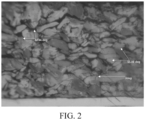
Fig. 2 is an image of an anode active material layer according to the present application under a polarization microscope. - The embodiments of the present application will be described in detail below. Throughout the specification, the same or similar components and components having the same or similar functions are denoted by similar reference numerals. The embodiments described herein with respect to the drawings are illustrative and graphical, and are used for providing a basic understanding of the present application. The embodiments of the present application should not be interpreted as limitations to the present application.
- As used in the present application, terms "approximately", "substantially", "essentially", and "about" are used for describing and explaining a small variation. When being used in combination with an event or circumstance, the term may refer to an example in which the event or circumstance occurs precisely, and an example in which the event or circumstance occurs approximately. For example, when being used in combination with a value, the term may refer to a variation range of less than or equal to ±10% of the value, for example, less than or equal to ±5%, less than or equal to ±4%, less than or equal to ±3%, less than or equal to ±2%, less than or equal to ±1%, less than or equal to ±0.5%, less than or equal to ±0.1%, or less than or equal to ±0.05%. For example, if a difference between two values is less than or equal to ±10% of an average value of the value (for example, less than or equal to ±5%, less than or equal to ±4%, less than or equal to ±3%, less than or equal to ±2%, less than or equal to ±1%, less than or equal to ±0.5%, less than or equal to ±0.1%, or less than or equal to ±0.05%), it could be considered that the two values are "substantially" the same.
- Further, to facilitate a description, "first", "second", "third", and the like may be used in the present application to distinguish among different components in a diagram or a series of diagrams. The wordings "first", "second", "third", and the like are not intended to describe corresponding components.
- In addition, sometimes, a quantity, a ratio, and another value are presented in a range format in the present application. It should be appreciated that such range formats are for convenience and conciseness, and should be flexibly understood as including not only values explicitly specified to range constraints, but also all individual values or sub-ranges within the ranges, such as explicitly specifying each value and each sub-range.
- In the detailed description and the claims, a list of items connected by the term "at least one of" or similar terms may mean any combination of the listed items. For example, if items A and B are listed, then the phrase "at least one of A and B" means only A; only B; or A and B. In another example, if items A, B and C are listed, then the phrase "at least one of A, B and C" means only A; or only B; only C; A and B (excluding C); A and C (excluding B); B and C (excluding A); or all of A, B and C. The item A may include a single component or multiple components. The item B may include a single component or multiple components. The item C may include a single component or multiple components.
- In the detailed description and the claims, a list of items connected by the term "at least one of" or similar terms may mean any combination of the listed items. For example, if items A and B are listed, then the phrase "at least one of A and B" means only A; only B; or A and B. In another example, if items A, B and C are listed, then the phrase "at least one of A, B and C" means only A; or only B; only C; A and B (excluding C); A and C (excluding B); B and C (excluding A); or all of A, B and C. The item A may include a single component or multiple components. The item B may include a single component or multiple components. The item C may include a single component or multiple components.
- The anode active material is susceptible to expansion, mainly along a direction perpendicular to the current collector, after being subjected to roll and cycles of charge and discharge. Particles of the anode active material distributed in a direction parallel to the current collector are more likely to undergo expansion in the direction perpendicular to the current collector during the cycle, and particles distributed in the direction perpendicular to the current collector are more likely to undergo deformation in the direction parallel to the current collector.
- By adjusting the orientation angle of the active material particles in the anode active material layer and the area ratio of the particles with each orientation relative to the cross sectional area, the present application can not only allow the anode to provide a high energy density, but also to solve the problem of expansion of the anode active material layer's thickness and deformation of the appearance and structure of the battery. In addition, the lithium ion can be intercalated in and deintercalated out of the active material layer in all directions, thereby greatly improving the rapid charge and discharge performance of the lithium ion battery.
- A first aspect of the present application relates to a lithium ion battery anode, which comprises an anode active material layer and a current collector, wherein particles in the anode active material layer have at least two different tilt angles with respect to the direction of the current collector.
- In some embodiments, the anode active material layer of the present application comprises first oriented particles having a first tilt angle θ1 inclined with respect to the direction of the current collector, and second oriented particles having a second tilt angle θ2 inclined with respect to the direction of the current collector, wherein a first tilt angle θ1 and a second tilt angle θ2 meets 20°<θ2<70°.
- The first tilt angle θ1 of the first oriented particles in the anode active material layer meets 0°<θ1≤ 20°, for example, 5°, 8°, 10°, 15°, 18°, 20°, or any ranges therebetween.
- According to the present invention, the second tilt angle θ2 of the second oriented particles in the anode active material layer meets 20°< higher than≤ 70°, and may be for example, 25°, 30°, 35°, 40°, 45°, 50°, 55°, 60°, 65°, 70°, or any ranges therebetween.
- In some embodiments, the anode active material layer of the present application further comprises third oriented particles having a third tilt angle θ3 inclined with respect to the direction of the current collector. A third tilt angle θ3 meets 70°<θ3≤ 90°, for example, 75°, 80°, 85°, 90°, any ranges therebetween.
- The optical organization structures of an anisotropic anode active material with various compacted densities can be observed under a polarization microscope. Since the irradiated light propagates at the same speed in all directions when it propagates onto the surface of an isotropic material, the refractive index is independent of the direction of light propagation. For an anisotropic material, when a beam of light is incident onto its surface, two beams of refracted light will be generated, wherein one of them following the law of refraction is called ordinary light, and referred to as o-light for short, and the other following conformity to the law of refraction is called extraordinary light, and referred to as e-light for short. After refraction, these two beams of light are split into linearly polarized light perpendicular to each other. The reflection of polarized light on the surface of an optically isotropic substance follows the law of reflection. The reflectivities in all directions are the same, and the field of view will not change. The reflection of polarized light on the surface of an optically anisotropic substance has different reflectivities on different phases of grains, which is exhibited as the phenomenon of bright and dark-field extinction in the field of view.
- Under a certain pressure, particles of the anode active material are arranged on the current collector in various orientations (i.e., with different tilt angles). Under a polarization microscope, the gray value and color value of particles with the same orientation are basically the same. By statistically calculating the areas of the particles with the same orientation, the area ratio of the particles with such an orientation relative to the cross-sectional area is obtained.
- An area ratio of the first oriented particles relative to the cross sectional area of the anode active material layer in the anode of the present application is 9%- 23%, for example, 9%, 10%, 15%, 17%, 20%, 23%, or any ranges therebetween.
- In some embodiments, the second oriented particles in the anode of the present application have an area ratio relative to the cross sectional area of the anode active material layer higher than that of the first oriented particles relative to the cross sectional area of the anode active material layer. In some embodiments, an area ratio of the second oriented particles relative to the cross sectional area of the anode active material layer is 37%- 55%, for example, 37%, 40%, 45%, 50%, 55%, or any ranges therebetween.
- In some embodiments, an area ratio of the third oriented particles relative to the cross sectional area of the anode active material layer is 1.0%-15.0%, for example, 1.0%, 5.0%, 8.0%, 10.0%, 13.0%, 15.0% or any ranges therebetween.
- As shown in
Fig. 1 , in some embodiments, the anode active material layer of the present application comprises the first oriented particles, the second oriented particles, and the third oriented particles. The first oriented particles have anorientation 1 with respect to the direction of the current collector (that is, a first tilt angle is greater than 0 ° to 20 °), which is substantially parallel to the current collector. The second oriented particles have anorientation 2 with respect to the direction of the current collector (that is, a second tilt angle is greater than 20 ° and not more than 70 °). The third oriented particles have anorientation 3 with respect to the direction of the current collector (that is, a third tilt angle is greater than 70 ° and not more than 90 °), which is approximately perpendicular to the current collector. - In some embodiments, the anode active material layer of the present application consists of the first oriented particles, the second oriented particles, and the third oriented particles. In some embodiments, the anode active material layer of the present application consists of the first oriented particles and the second oriented particles as described herein. In some embodiments, the anode active material layer of the present application comprises or consists of the first oriented particles and the third oriented particles as described herein. In some embodiments, the anode active material layer of the present application comprises or consists of the second oriented particles and the third oriented particles as described herein.
- In some embodiments, the anode active material layer has a C004/C110 ratio of 17.0 to 27.0, for example, 17.0, 18.0, 20.0, 22.0, 25.0, 27.0, or any ranges therebetween.
- The anode active material used for the first oriented particles, the second oriented particles and the third oriented particles of the present application includes natural graphite, artificial graphite or a combination thereof. For crystalline graphite materials, a Bruker X-ray diffractometer is used to test the XRD according to General rules for X-ray diffractometric analysis JIS K 0131-1996 and Determination method of artificial graphite lattice parameters JB/T 4220-2011. Various peak positions represent different sizes of graphite crystal cells, which reflect the degree of graphitization of graphite materials. The peak area is obtained by integrating the peak intensity with the half-peak width. The ratio of the peak area of the 004 peak to the peak area of the 110 peak is referred to C004/C110, which affects the transport path of lithium ions.
- Under normal circumstances, the graphite anode material, due to its stacked structure of sheets, tends to be distributed in a layered structure parallel to the direction of the current collector under a certain pressure. In the particles of the anode active material, if the area ratio of the first oriented particles relative to the cross sectional area is too large, this will seriously affect the infiltration of the electrolyte inside the anode, thereby affecting the transport of lithium ions, and the rate performance of lithium ion batteries. In the present application, the area ratio of the first oriented particles relative to the cross sectional area of the anode active material layer is less than 23%, whereby the above problems can be effectively avoided.
- According to the present application, when the area ratios of particles with various orientations in the anode fall within the ranges described herein, the target compacted density can be achieved. At the same time, the anode active material layer exhibits isotropic properties, which is conducive to the rapid intercalation or deintercalation of lithium ions, thus improving the charge and discharge performance. During the cycle of lithium ion batteries, in the presence of the second oriented particles with the above-mentioned area ratio relative to the cross-sectional area, stress generated by the intercalation or deintercalation of lithium ions into/out of the active material layers can be suppressed or offset by the forces from various directions. As a result, not only is the expansion of the lithium ion battery in the thickness direction during the cycle greatly reduced, battery deformation caused by the lateral expansion can also be effectively suppressed.
- In particular, when the area ratio of the second oriented particles relative to the cross-sectional area in the anode is less than 55%, stress in the direction perpendicular to the current collector is moderate, so as to meet the demand for high compacted density of the anode. When an area ratio of the second oriented particles relative to the cross-sectional area in the anode is greater than 37%, the overvoltage of the anode caused by a too large area ratio of the first oriented particles relative to the cross-sectional area can be avoided, and blocking of the path of lithium ions can be avoided, and the expansion of lithium ion batteries in the thickness direction during the cycle is reduced.
- In some embodiments, the first oriented particles, the second oriented particles, and the third oriented particles include primary particles and/or secondary particles. The secondary particles are particles obtained by mixing the primary particles with a binder such as asphalt and followed by graphitizing. A content of the primary particles is 20%-50%, and a content of the secondary particles is 50%-80%. The presence of secondary particles in the anode active material layer reduces the C004/C110 value of the overall anode active material layer. During the compression of the active material layer, the compressed area and direction are increased, thus an angle with respect to the plane of the current collector is still maintained after compression.
- In addition, the present application also achieves its purpose by adjusting the proportion of particles with different particle sizes in various oriented particles.
- In some embodiments, in the first oriented particles, particles having a particle size less than 10 µm account for 71.0%- 93.0%, for example, 71.0%, 75%, 78%, 80%, 85%, 88%, 90%, 93%, or any ranges therebetween. In some embodiments, in the first oriented particles, particles having a particle size of 10 µm- 35 µm account for 7.0% to 29.0%, for example, 7.0%, 10.0%, 15.0%, 18.0%, 20.0%, 25.0%, 28.0%, 29.0%, or any ranges therebetween.
- In some embodiments, in the second oriented particles, particles having a particle size between 10 µm and 35 µm account for 22.0% to 41.0%, for example, 22.0%, 25.0%, 30.0%, 35.0%, 40.0%, 41.0%, or any ranges therebetween. In some embodiments, in the second oriented particles, particles having a particle size less than 10 µm account for 3.5% to 5.6%, for example, 3.5%, 4.0%, 4.5%, 5.0%, 5.5%, 5.6%, or any ranges therebetween.
- In some embodiments, the third oriented particles in the anode essentially consist of particles with a particle size less than 10 µm. For example, in the third oriented particles, particles having a particle size less than 10 µm account for 90.0% or more, 95% or more, 98% or more, 100%, or any ranges therebetween.
- In the second oriented particles, a proportion of particles with a large particle size is greater than 22.0%. The large particles have a larger force-bearing surface therebetween, and will be under greater frictional force during the compressed process. Therefore, during the compression process, the tendency of distribution along the direction parallel to the current collector is hindered, so that the particles are eventually at a certain angle with respect to the current collector. In addition, the presence of particles with a large particle size in the second oriented particles can also ensure that the node has a high energy density.
- A proportion of particles with a large particle size in the first oriented particles is less than 29.0%, such that the degradation of the rate performance caused by the particles with a large particle size affecting the rapid intercalation or deintercalation of lithium ions can be avoided. The third oriented particles basically are a majority of particles with a small particle size. This is because the
orientation 3 is mainly in the direction perpendicular to the current collector, and the predominance of small particles can avoid the particles being crushed under pressure. - In some embodiments, the anode active material layer having pores can also be observed under a polarization microscope. The pores in the anode active material layer do not show polarity under a polarization microscope, so they show a different color from that of the active layer. The proportion of the pores in the cross sectional area (excluding the area of the current collector) of the anode active material layer can be obtained through calculation. The distribution of porosity to a certain extent reflects the balance relationship between the compacted density of the anode and the infiltration by the electrolyte. If porosity is too small (e.g., less than 21.0%), the compacted density of the anode is too high, resulting in poor infiltration by the electrolyte in the anode. If porosity is too large (e.g., more than 43.0%), the compacted density of the anode cannot meet the demand for high energy density.
- In some embodiments of the present application, a ratio of the pore relative to the cross sectional area of the anode active material layer is 21.0%- 43.0%, for example, 21.0%, 25.0%, 30.0%, 35.0%, 40.0%, 43.0%, or any ranges therebetween. When the porosity of the anode is within the above ranges, good infiltration by the electrolyte can be achieved, and expansion and deformation during the cycle process are significantly reduced.
- In the anode of the present application, the anode active material layer further comprises a binder and a dispersant. The binder and the dispersant include at least one of polyvinylidene fluoride, a copolymer of vinylidene fluoride-hexafluoropropylene, a polyamide, polyacrylonitrile, a polyacrylate ester, polyacrylic acid, a polyacrylate salt, sodium carboxymethyl cellulose, polyvinylpyrrolidone, polyvinyl ether, polymethyl methacrylate, polytetrafluoroethylene, polyhexafluoropropylene, styrene-butadiene rubber, an acrylate ester, and an epoxy resin.
- In some embodiments, a coating weight (CW) of the anode active material layer is 0.090 mg/mm2 to 0.120 mg/mm2, for example, 0.090 mg/mm2, 0.095 mg/mm2, 0.100 mg/mm2, 0.105 mg/mm2, 0.110 mg/mm2, 0.120 mg/mm2, or any ranges therebetween.
- In some embodiments, an anode active material layer has a thickness of 90 µm to 143 µm, for example, 90 µm, 95 µm, 100 µm, 110 µm, 120 µm, 130 µm, 140 µm, 143 µm, or any ranges therebetween. When the thickness of the anode active material layer is within the above ranges, lithium ions can be better intercalated.
- In some embodiments, the anode of the present application has a compacted density of 1.70 g/cm3 to 1.90 g/cm3, for example, 1.70 g/cm3, 1.75 g/cm3, 1.80 g/cm3, 1.85 g/cm3, 1.88 g/cm3, 1.90 g/cm3, or any ranges therebetween.
- In some embodiments, the current collector of the anode is provided with a priming coat having a thickness of 0.1 µm to 5 µm, for example, 0.5 µm to 4 µm, 0.6 µm to 3.5 µm, or 0.7 µm to 3 µm.
- In some embodiments, the priming coat on the current collector of the anode comprises a conductive material including at least one of graphene, graphene oxide, carbon nanotubes, carbon black, hard carbon, and artificial graphite.
- The orientation of the anode active material layer in the embodiments of the present application can be controlled by controlling the pressure applied to the surface of the anode active material layer. The pressure applied can be controlled by the gap between the rolls, the number of rollings, the rolling time, and the thickness of the anode active material layer.
- The present application also provides an electrochemical device comprising any anode as described herein. The electrochemical device is a lithium ion battery.
- In some embodiments, after the electrochemical device of the present application is fully charged and disassembled, an anode active material layer thereof has a C004/C110 ratio of 10.0 to 19.5, for example, 10.0, 10.22, 10.5, 11.0, 12.0, 13.0, 14.0, 15.0, 16.0, 17.0, 18.0, 19.0, 19.35, 19.5, or any ranges therebetween.
- After the electrochemical device of the present application is fully discharged and disassembled, the anode is subjected to cross section polishing (CP) and polarization analysis. In some embodiments, an area fraction of the first oriented particles relative to the cross sectional area of the anode active material layer is 11.0% to 25.0%, for example, 11.0%, 13.0%, 15.0%, 18.0%, 20.0%, 25.0% or any ranges therebetween. In some embodiments, an area ratio of the second oriented particles relative to the cross sectional area of the anode active material layer is 29.0% to 51.0%, for example, 29.0%, 30.0%, 35.0%, 40.0%, 42.0%, 45.0%, 50.0%, 51.0% or any ranges therebetween. In some embodiments, an area fraction of the third oriented particles relative to the cross sectional area of the anode active material layer is 5.0% to 19.0%, for example, 5.0%, 8.0%, 10.0%, 13.0%, 15.0%, 17.0%, 19.0% or any ranges therebetween.
- In some embodiments, after the electrochemical device of the present application is fully discharged and disassembled, an anode has any one of the following features: (1) in the first oriented particles, particles having a particle size less than 10 µm account for 62.5% to 87.7%, and particles having a particle size between 10 µm and 35 µm account for 12.3% to 37.5%; (2) in the second oriented particles, articles having a particle size less than 10 µm accounts for 2.1% to 3.9%, particles having a particle size between 10 µm and 35 µm account for 21.5% to 40.2%, and particles having a particle size greater than 35 µm account for 55.9% to 76.4%; and (3) in the third oriented particles, particles having a particle size less than 10 µm account for 90.0% or more.
- The electrochemical device produced with the anode of the present application is suitable for use in electronic devices in various fields.
- The use of the electrochemical device of the present application is not particularly limited and can be used for any purpose known in the art. In an embodiment, the electrochemical device according to the present application is applicable to, without limitation, notebook computers, pen-input computers, mobile computers, e-book players, portable phones, portable fax machines, portable copiers, portable printers, head-mounted stereo headphones, video recorders, LCD TVs, portable cleaners, portable CD players, minidisc players, transceivers, electronic notebooks, calculators, memory cards, portable recorders, radios, backup power sources, motors, vehicles, motorcycles, scooters, bicycles, lighting apparatus, toys, game consoles, clocks, electric tools, flash lights, cameras, large batteries for household use, and lithium ion capacitors.
- Implementations of the present application are illustrated by way of examples below. It is to be understood that these examples are merely illustrative of the present application and are not intended to limit the claimed protection scope of the present application.
- An anode active material of graphite (comprising 20%-60% of primary particles and 40%-80% of secondary particles), the binder of styrene-butadiene rubber (SBR) and the thickener of sodium carboxymethyl cellulose (abbreviated as CMC) were thoroughly stirred and mixed at a weight ratio of 95:2:3 in deionized water as a solvent to form a uniform anode slurry. The slurry was applied on a copper foil as a current collector that was pre-coated with a priming coat (for example, carbon black) having a thickness of 1.5 µm, and dried. The coated anode was cold-pressed under different roll pressures, cut, and welded with tabs. The coating weight was 0.100 mg/mm2, the coating thickness was 130 µm, and the compacted density was 1.70 g/cm3 to 1.88 g/cm3. Thereby, anodes with different compacted densities were obtained. The thickness and width of the anodes under different compacted densities were collected.
- The treated anode above was cut into a size of 0.5 cm x 1 cm. The cut anode was attached to a silicon wafer carrier having a size of 1 cm x 1.5 cm by using a conductive adhesive. One end of the anode was polished with argon ions (parameters: acceleration voltage of 8 KV; 4 hrs for each sample). Polishing with argon ions is a process wherein a high-voltage electric field is used to ionize argon to produce an ionic state of the argon ions that bombard the surface of the anode at a high speed under an acceleration voltage, such that the anode is corroded layer by layer to achieve the effect of polishing.
- After the anode sample was prepared, it was analyzed under a polarization microscope.
- Image acquisition process: An Axio imager upright microscope (Carl Zeiss AG, Imagine A2) was used for image acquisition. An AxioCam MRc5 digital camera was connected to a polarization microscope by a connector, and a polarized-light optical microscopy image was taken with a shutter time of 1.6 s. The images captured by the camera were automatically transferred to a computer.
- Image analysis process: An image of 1200 pixels x 1600 pixels was selected as an analysis object (which is equivalent to a field of view of 480 µm x 540 µm). The analysis was performed using AxioVision's Multiphase software. After importing the acquired photos into the software, a point with an orientation on the image was clicked, then all the areas that had a gray value and color value identical to those of the tested object were also selected. Points with other orientations were also selected using the same method. As such, areas with different orientations and different colors were obtained. The first tilt angle of the first oriented particles was 0°<θ1≤20°, and the second tilt angle of the second oriented particles was 20°<θ2<70°. The data of particles with various orientations in the image and their areas were respectively measured using AxioVision's automatic calculation software (Axio Vision SE64 Rel.4.9).
-
- (1) Preparation of cathode: The cathode active material of lithium cobalt oxide (having the molecular formula of LiCoO2), the conductive agent of acetylene black, and the binder of polyvinylidene fluoride (PVDF) were stirred and mixed fully at a weight ratio of 96:2:2 in a suitable amount of N-methylpyrrolidone (NMP) as a solvent, to form a uniform cathode slurry. The slurry was applied to a cathode current collector of Al foil, dried, cold pressed, cut, and welded with tabs to obtain a cathode.
- (2) Preparation of anode: The anode prepared in
Step 1 above was used. - (3) Separator: A porous PE polymer film having a thickness of 7 µm was used as a separator.
- (4) Preparation of electrolyte: Under a dry argon atmosphere, ethylene carbonate, propylene carbonate, and diethyl carbonate at a weight ratio of 1:1:1 were mixed, and then LiPF6 was added and mixed uniformly to form a basic electrolyte, wherein the concentration of LiPF6 was 1.15 mol/L. Based on the total weight of the electrolyte, 3% fluoroethylene carbonate and 2% adiponitrile were added and mixed uniformly to obtain the electrolyte.
- (5) Preparation of lithium ion battery: The cathode, the separator, and the anode were laminated in order such that the separator was located between the cathode and the anode. Then, they were wound up, and placed in an outer packaging foil. The electrolyte prepared above was injected, and after vacuum packaging, standing, formation, shaping, and other procedures, a lithium ion battery was obtained.
- Full charge of battery: The test battery was allowed to stand for 5 min at a test temperature of 25°C. The lithium-ion battery was charged to 4.4V at a constant current of 0.7C, and then to 0.05C at a constant voltage of 4.4V.
- Full discharge of battery: The test battery was allowed to stand for 5 min at a test temperature of 25°C. The lithium-ion battery was discharged to 3V at a constant current of 0.5C.
- The test battery was allowed to stand for 5 min at a test temperature of 25°C. The lithium-ion battery was charged to 4.4V at a constant current of 0.7C, and then to 0.05C at a constant voltage of 4.4V; allowed to stand for 5 min; and discharged to 3.0V at a constant current of 0.5C and allowed to stand for 5 min. After the above charge and discharge process was repeated 10 times, the battery was fully charged, disassembled in a dry chamber, and photographed to record the state of the anode.
- Determination of degree of lithium precipitation: This was determined according to the state of the anode after being fully charged and disassembled. When the anode overall appears golden yellow and the area appearing gray represents less than 2%, it is determined as no lithium precipitation. When the anode largely appears golden yellow, gray is visible at some positions, and the area appearing gray represents from 2% to 20%, it is determined as slight lithium precipitation. When the anode is partially gray, and partially golden yellow, and the area appearing gray represents from 20% to 60%, it is determined as lithium precipitation. When the anode largely appears gray, and the area appearing gray represents greater than 60%, it is determined as serious lithium precipitation.
- The lithium-ion battery was charged to 4.4V at a constant current of 1.5C, and then to 0.05C at a constant voltage; allowed to stand for 30 min; and discharged at 0.1C for 10 s (sampled once every 0.1 s to record the corresponding voltage U1), and then discharged at 1C for 360 s (sampled once every 0.1 s to record the corresponding voltage U2). The charge and discharge procedure was repeated 5 times. "1C" is the current value when the battery capacity is completely discharged within 1 hr.
- DCR is calculated according to the formula DCR =(U2-U1)/(1C-0.1C). The DCR mentioned in the present application is a value at 50% SOC (state of charge).
-
- a) Preparation of three-electrode battery and lithium plating: The preparation process is the same as that described above for preparing a lithium ion battery. A copper wire was connected to the battery as a reference electrode during the preparation process of the lithium ion battery. The anodes were plated with lithium for 6 hrs at a current of 20 µA, and then tested for EIS after lithium plating.
- b) EIS test step: A three-electrode battery plated with lithium was connected to a Bio-Logic VMP3B electrochemical workstation produced by Bio-Roger and tested at a frequency ranging from 30 mHz to 50 kHz, and an amplitude of 5 mV. After being collected, the data was analyzed with the complex-plane impedance spectrum to obtain the data of Rct.
- The test battery was allowed to stand for 5 min at a test temperature of 25°C. The lithium ion battery was charged to 4.4V at a constant current of 0.7C and then to 0.05C at a constant voltage of 4.4V. The battery was disassembled in a dry chamber. Part of the anode was cut out, and the width of the anode along the X/Y-axis direction was determined using an on-line width measuring instrument (CCD) and compared with the width of the anode in Step 1 (Preparation of anode), to obtain the expansion rate of the anode along the X/Y axis. The expansion of an anode along the X/Y-axis direction refers to the growth of the anode along the X/Y-axis direction. X and Y axis directions are as shown below.

-
- a) The test battery was allowed to stand for 5 min at a test temperature of 25°C. The lithium-ion battery was charged to 3.85V at a constant current of 0.7C (that is, 50% SOC), and then disassembled in a dry chamber. The thickness of the anode was recorded (number of sampled points >14).
- b) The thickness of the anode was compared with the thickness of anodes of various compacted densities in Step 1 (Preparation of node) to obtain the expansion rate of the anode along the Z-axis direction. The Z-axis direction is as shown below.

- The test battery was allowed to stand for 5 min at a test temperature of 45°C. The initial thickness of the battery (PPG0 and MMC0) was recorded. The lithium-ion battery was charged to 4.4V at a constant current of 0.7C, and then to 0.05C at a constant voltage of 4.4V. The thickness of the battery (PPG1 and MMC1) was recorded. The battery was allowed to stand for 5 min; and discharged to 3.0V at a constant current of 0.5C and allowed to stand for 5 min. The charge and discharge process was repeated 500 times. For the first 200 cycles, the battery thickness was recorded every 50 cycles of charge and discharge, and for the following 201 cycles -500 cycles, the battery thickness was recorded every 100 cycles (PPGx and MMCx, wherein X represents the number of cycles), and the residual capacity after each cycle of charge and discharge was recorded.
- PPG test: In the PPG test, a PPG soft pack battery thickness gauge (manufactured by Shenzhen Altomei Automation Technology Co., Ltd.) was used for automatic detection. The test process was as follows. The battery was placed on the lower test panel of the instrument, and the upper cover was lowered at a uniform speed during the test. The thickness of the battery was measured by pressure sensing.
- MMC test: The MMC test was carried out by using a micrometer tester (manufactured by Mitutoyo, model: MDC-25SX) to measure the thickness of the tab of the cathode in the battery at three points (MMC1x, MMC2x, and MMC3x), wherein the
numbers - Battery deformation was calculated from the recorded battery thickness. Expansion deformation after cycling at 45°C = [PPGx/(Max(MMC1x, MMC2x, MMC3x))-1] X 100%, wherein Max (MMC1x, MMC2x, MMC3x) represents the maximum value of the three test points.
- The test battery was allowed to stand for 5 min at a test temperature of 25°C. The lithium-ion battery was charged to 4.4V at a constant current of 0.7C, and then to 0.05C at a constant voltage of 4.4V; allowed to stand for 5 min; and discharged to 3.0V at a constant current of 2C and allowed to stand for 5 min. The discharge capacity was recorded, and compared with the discharge capacity at 0.1C to calculate the discharge capacity retention rate.
Discharge capacity retention rate = discharge capacity at 2C/ discharge capacity at 0.1C x 100% - The test battery was allowed to stand for 5 min at a test temperature of 25°C, and the initial battery thickness (PPG0 and MMC0, respectively) was recorded. Then the lithium ion battery was charged to 4.4V at a constant current of 0.5C and then to 0.025C at a constant voltage of 4.4V (that is, 100% SOC), then charged for 1 hr at a constant current of 0.1C, and stood for 30 min. The battery thickness was recorded. The process of charging at a constant current of 0.1C was repeated 5 times (wherein 110% SOC, 120% SOC, 130% SOC, 140% SOC, and 150 SOC% corresponded to the first, second, third, fourth, and fifth recharge process, respectively). Each charge process was continued for 1 hr, and the battery was stood for 30 min after each charge process. The battery thickness was recorded (PPGx and MMCx respectively, wherein X=1, 2, 3, 4, and 5). After the test was completed, the battery deformation was calculated. Deformation during 150% SOC process =[PPGx/ (Max(MMC1x, MMC2x, MMC3x)) -1] x 100%, wherein Max (MMC1x, MMC2x, MMC3x) represents the maximum value of the three test points.
- Table 1 shows the relationship between the orientation of the anode active material and the electrical performance of the same anode material used in Examples 1-6 and Comparative Example 1 at various compacted densities.
Table 1 Compacte d density, g/cm3 Proportion of the first orientation Proportion of the second orientation Lithium precipitat ion at 25°C Expansi on after cycling (500 times) at 45°C Example 1 1.70 9% 39% No lithium precipitat ion 2.0% Example 2 1.74 11% 41% No lithium precipitat ion 2.6% Example 3 1.78 16% 42% No lithium precipitat ion 2.7% Example 4 1.82 18% 45% Slight lithium precipitat ion 2.8% Example 5 1.86 20% 49% Slight lithium precipitat ion 3.1% Example 6 1.90 23% 52% Lithium precipitat ion 3.5% Comparativ e Example 1 1.93 45% 42% Severe lithium precipitat ion 7.9% - The comparison between Examples 1-6 and Comparative Example 1 in Table 1 shows that the compacted density of Comparative Example 1 is much larger than the compacted density range defined in the claims, and the battery is deformed seriously. This is because when the compacted density is large, the porosity decreases sharply, the particles are mostly arranged at an angle parallel to the current collector, and the pores between the particles are notably reduced, resulting in poor infiltration by the electrolyte. The contact area between the material and the electrolyte is greatly reduced, so that the intercalation or deintercalation of ions is severely hindered, causing deposition of lithium ions on the surface of the anode, which is exhibited as severe lithium precipitation.
- Table 2 shows the relationship between the orientation of the anode active material and the electrical performance of the different anode materials used in Examples 7-25, and 27, Reference Examples 26 and 28, and Comparative Example 2 at various compacted densities, where the third tilt angle of the third oriented particles is 70°<θ3<90°.
Table 2 Compacted density, g/cm3 Proportion of the first orientation Proportion of the second orientation Proportion of the third orientation Lithium precipitation at 25°C Expansion after cycling (500 times)at 45°C Example 7 1.78 9% 55% 3% No lithium precipitation 1.50% Example 8 1.78 9% 49% 7% No lithium precipitation 1.30% Example 9 1.78 9% 41% 15% No lithium precipitation 1.90% Example 10 1.78 16% 48% 1% No lithium precipitation 1.20% Example 11 1.78 16% 42% 7% No lithium precipitation 1.30% Example 12 1.78 23% 41% 1% No lithium precipitation 1.20% Example 13 1.78 23% 37% 5% No lithium precipitation 1.40% Example 14 1.8 9% 54% 7% No lithium precipitation 1.60% Example 15 1.8 9% 46% 15% No lithium precipitation 2.40% Example 16 1.8 16% 53% 1% No lithium precipitation 1.70% Example 17 1.8 16% 47% 7% No lithium precipitation 2.30% Example 18 1.8 16% 39% 15% No lithium precipitation 2.40% Example 19 1.8 23% 46% 1% Slight lithium precipitation 1.80% Example 20 1.8 23% 40% 7% Slight lithium precipitation 2.30% Example 21 1.83 9% 49% 15% Slight lithium precipitation 2.70% Example 22 1.83 16% 50% 7% Slight lithium precipitation 2.30% Example 23 1.83 16% 42% 15% Slight lithium precipitation 2.80% Example 24 1.83 23% 49% 1% Slight lithium precipitation 2.20% Example 25 1.83 23% 43% 7% Slight lithium precipitation 2.60% Reference Example 26 1.78 26% 37% 7% Slight lithium precipitation 3.60% Example 27 1.78 9% 41% 20% Slight lithium precipitation 4.40% Reference Example 28 1.78 32% 31% 4% Severe lithium precipitation 4.10% Comparative Example 2 1.92 44% 37% 2% Severe lithium precipitation 7.70% - The comparison between Examples 7-25 and 27, Reference Examples 26 and 28, and Comparative Example 2 in Table 2 shows that the compacted density of Comparative Example 2 goes beyond the compacted density range defined in the claims, and severe lithium precipitation on the anode occurs. This is because the particles are mostly arranged at an angle parallel to the current collector, resulting in poor infiltration by the electrolyte. The contact area between the material and the electrolyte is greatly reduced, so that the intercalation or deintercalation of ions is severely hindered, causing deposition of lithium ions on the surface of the anode, which is exhibited as severe lithium precipitation.
- As shown by the analysis of Example 13 and Example Reference 26, with the same compacted density and similar proportions of the second orientation and the third orientation, when the proportion of the first orientation exceeds the defined range, it is found that compared with the orientation distribution falling within the defined range in Examples 7-12, lithium precipitation is more likely to occur in Reference Example 26. As shown by the analysis of Example 9 and Example 27, with the same compacted density and same proportions of the first orientation and the second orientation, although the increase of the third orientation can facilitate the intercalation and deintercalation of lithium ions to reduce lithium precipitation, the battery is prone to deformation when the proportion of the third orientation exceeds a defined range. Lithium precipitation and deformation are both alleviated in Examples 7-12 that fulfill the orientation conditions provided in the present application. This is because under a certain pressure, when the orientation distribution of the particles meets the range defined in the claims, the target compacted density is ensured to be achieved and meanwhile the anode is isotropic, such that it is beneficial to the infiltration inside the anode by the electrolyte, facilitates the transport of lithium ions and improves the charge and discharge performance. During the cycle process of lithium ion batteries, because the first orientation is distributed at various angles, stress generated by lithium ions during intercalation and de-intercalation can be effectively dispersed to various angles instead of being focused to a certain fixed direction. This greatly reduces battery deformation caused by lateral expansion during the cycle process.
- As shown by the analysis of Examples 7-9, 10-11, and 12-13, under the same compacted density, battery deformation get worse as the proportion of the third orientation increases, but still keeps in a low level. Examples 14-20 and Examples 21-25 show the same pattern. The reason is same as described above. When the proportion of the third orientation increases, the proportion of particles in the anode active material particles that is at an angle of 70° to 90° with respect to the orientation of the current collector increases. Although it is beneficial to shorten the diffusion path of the lithium ions, stress generated by the intercalation and deintercalation of lithium ions is mainly released in the direction parallel to the current collector, which easily causes battery deformation.
- The proportions of the three orientations in Example 9, Example 15 and Example 19 are similar. As the proportion of the first orientation increases significantly, the proportions of the second orientation and the third orientation decrease significantly, the degree of lithium precipitation increases. This may be due to that when the force applied on the particles increases, more particles tend to align in the direction of the current collector, which is not conducive to the infiltration by the electrolyte and causes a risk of exacerbated lithium precipitation. In addition, the greater the pressure applied to the surface of the anode, the more severe the battery deformation is. This is because the increase in the proportion of the first orientation causes the stress generated by the intercalation and deintercalation of lithium ions to be mainly released in a direction perpendicular to the current collector, which also easily causes battery deformation.
- Table 3 gives relevant parameters of Example 11, Examples 29-34 and Comparative Example 3, and the effect of the particle size distribution of each orientation on lithium precipitation at 0.7C/0.5C at 25°C, battery expansion after cycling 500 times at 45°C, and direct current resistance (DCR) of the battery when the anode has a compacted density of 1.78 g/cm3, a proportion of the first orientation of 15%, a proportion of the second orientation of 42%, and a proportion of the third orientation of 8%.
Table 3 Proportion of particle size of the first oriented particles Proportion of particle size of The second oriented particles Proportion of particle size of the third oriented particles Lithium precipita tion at 25°C Battery expansion after cycling 500 times at 45°C(average MMC500) DCR/(mΩ) <10µm 10µm-35µm <10µm 10µm-35µm >35µm <10µm Example 11 85% 15% 5.60% 32.00% 62.40% 100% No lithium precipita tion 8.20% 56 Example 29 72% 28% 4.20% 35.00% 60.80% 100% No lithium precipita tion 8.90% 55.2 Example 30 92% 8% 4.20% 35.00% 60.80% 100% No lithium precipita tion 7.80% 55.4 Example 31 85% 15% 3.50% 30.00% 66.50% 100% No lithium precipita tion 8.30% 56.5 Example 32 85% 15% 4.30% 22.70% 73.00% 100% No lithium precipita tion 8.50% 56.2 Example 33 85% 15% 4.50% 41.00% 54.50% 100% No lithium precipita tion 7.60% 56.4 Example 34 85% 15% 4.60% 42.00% 53.40% 100% No lithium precipita tion 7.40% 56.6 Comparative Example 3 55% 45% 3.50% 22.70% 73.80% 100% Slight lithium precipita tion 9.70% 68.8 - As shown in Table 3, analysis of Example 11, Examples 29-34, and Comparative Example 3 show that when the proportion of large particles in the first orientation exceeds a certain range, both the anode expansion and DCR increase significantly. This may be because most of the particles of the first orientation are arranged in a direction parallel to the current collector. If a proportion of large particles is too large, on the one hand, infiltration by the electrolyte is reduced, and on the other hand, the path of lithium ions intercalating in graphite becomes longer because of the large proportion of large particles. As a result, the DCR is increased, and the larger particles are amenable to a larger stress than the small particles during the intercalation and deintercalation of the lithium ions, and are more likely to be caused to expand in the direction perpendicular to the anode, so battery expansion significantly increases. The method of measuring the porosity in the cross section of the anode active material layer is the same as the sampling method for the orientation test of the anode. Similarly, the cross section of the anode is photographed through a polarization microscope. The pores in the cross section are statistically counted, the porosity, and the area ratios of the anode active material and binder in the cross section are calculated by the area method.
- Table 4 shows the effect of the porosity in the cross section of the anode active material layer tested at a certain compacted density and a certain orientation on the direct current resistance (DCR), electrochemical impedance spectroscopy (EIS), and rate performance of the battery.
Table 4 Porosity DCR/(mΩ) Rct (mΩ) Rate/% Example 11 25% 56 5.9 83.90% Example 35 21% 58.7 7.9 78.60% Example 36 28% 54.3 5.7 82.40% Example 37 35% 57.9 6.6 80.60% Example 38 43% 60.2 8 78.90% Comparative Example 4 15% 87.5 12.1 63.20% - It can be found through the analysis of Examples 11 and 35-38 and Comparative Example 4 that when the porosity is in the range of 21% -43%, the DCR, Rct and rate performance are all improved to some extent. This is because the porosity in such a range allows the electrolyte to penetrate into the surface of the graphite layer more easily, such that lithium ions can directly reach the surface of the graphite to complete lithium intercalation, which greatly shortens the transmission path of the lithium ions, enables the SEI film to have a thickness in a proper range, and reduces excessive lithium ions loss. When the porosity is too small, infiltration by electrolyte is reduced and the interface formed is unstable due to the overly close contact between the particles, such that DCR, EIS, and rate performance are deteriorated, as shown in Comparative Example 5.
- Table 5 shows C004/C110 of the anode before and after charge, the X/Y expansion rate of the anode, the expansion rate of the anode disassembled after the battery is charged to 50% SOC, and deformation of the battery after cycling 500 times at 45°C in Example 11, Examples 39-42 and Comparative Example 5.
Table 5 C004/C110 before charge C004/C110 after charge X/Y expansion of anode after full charge Anode expansion at 50% SOC Deformation upon overcharge at 150% SOC Example 11 17.1 10.22 0.43 15.89% 1.15% Example 39 19.56 12.37 0.35 16.62% 0.98% Example 40 21.72 15.36 0.33 16.68% 0.82% Example 41 23.43 17.77 0.29 17.33% 0.52% Example 42 26.28 19.35 0.23 18.02% 0.43% Comparative Example 5 32 23.45 0.17 25.25% 5.72% - Based on the previous research, Example 11, Examples 39-42, and Comparative Examples 5 further reveal the changes in C004/C110 before and after charge, the expansion of the anode along the X/Y direction, the expansion rate of the anode disassembled after the battery is charged to 50% SOC, and battery deformation at 150% SOC at 25°C. C004/C110 is controlled within a certain range before and after charge. With the increase of C004/C110, the X/Y expansion rate of the anode after full charge decreases. It is generally considered that if the X/Y expansion rate of the anode after full charge is controlled within 0.5%, the risk of deformation of the battery is small. At 25°C, the deformation data after the battery is charged to 150% SOC also verifies this conclusion (battery deformation of <3% is in a normal range). The C004/C110 ratio controlled to be ≥17.0 is beneficial to controlling the deformation of the battery. However, as C004/C110 increases, the anode expansion at 50% SOC also increases. As shown in Comparative Example 5, to maintain the anode expansion in a certain range, the C004/C110 ratio should be controlled within the range of ≤27.0.
- Table 6 shows effect of the orientation of the anode particles in the anode after full discharge and the porosity in the cross section of the anode active material layer tested on the direct current resistance (DCR), electrochemical impedance spectroscopy (EIS), and rate performance of the battery in Example 11, Example 36, and Example 37.
Table 6 Proportion of the first orientation Proportion of the second orientation Proportion of the third orientation Porosity DCR/(mΩ) Rct mΩ Rate% Example 11 15% 37% 16% 21% 60.3 7.9 78.6% Example 36 19% 40% 11% 28% 54.3 5.7 82.4% Example 37 23% 49% 8% 35% 57.9 6.6 80.6% - Based on the above researches, Example 11, Example 36, and Example 37 show the proportions of the first, the second, and the third oriented particles in the anode after full discharge.
- Example 11, Example 39, and Example 42 in Table 7 illustrate, the proportions of the particle size of the differently oriented particles in an anode after the anode is disassembled after fully discharged; the expansion rate of the disassembled anode at C004/C110 and 50% SOC before and after charging; and the battery deformation under 150%SOC at 25°C.
Table 7 Proportion of particles with different particle sizes in the first oriented particles Proportion of particles with different particle sizes in the second oriented particles Proportion of particles with different particle sizes in the third oriented particles C004/C110 before charge C004/C110 after charge X/Y expansion of anode after full charge Expansion at 50%SOC Deformation upon overcharge at 150% SOC <10µm 10µm-35 µm <10µm 10µm-35 µm >35µm <10µm 10µm Example 11 63.5% 36.5% 4.6% 42.0% 53.4% 90.0% 10% 17.10 10.22 0.43 15.89% 1.15% Example 39 73.5% 26.5% 4.2% 35.0% 60.8% 95.0% 5.0% 19.56 12.37 0.35 16.62% 0.98% Example 42 85.5% 14.5% 3.2% 39.1% 57.5% 97.0% 3.0% 26.28 19.35 0.23 18.02% 0.43% - Based on the above researches, Example 11, Example 39, and Example 42 show the proportions of particles with different particle sizes in the first, second, and third oriented particles in the anode after the battery is fully discharged.
- Throughout the specification, references to "embodiment", "part of embodiments", "one embodiment", "another example", "example", "specific example" or "part of examples" mean that at least one embodiment or example of the present application includes specific features, structures, materials or characteristics described in the embodiment or example. Thus, the descriptions appear throughout the specification, such as "in some embodiments," "in an embodiment," "in one embodiment," "in another example," "in an example," "in a particular example" or "for example," are not necessarily the same embodiment or example in the application. Furthermore, the specific features, structures, materials or characteristics in the descriptions can be combined in any suitable manner in one or more embodiments or examples.
Claims (14)
- A lithium ion battery anode, comprising a current collector and an anode active material layer on the current collector; characterized in that,
the anode active material layer comprises first oriented particles having a first tilt angle θ1 inclined with respect to a direction of the current collector, and second oriented particles having a second tilt angle θ2 inclined with respect to the direction of the current collector, wherein the first tilt angle θ1 and the second tilt angle θ2 are different and are both not greater than 70°, wherein the first oriented particles meet conditions (a) and (b):(a) 0°<θ1≤20°, 20°<θ2<70°;(b) an area of the first oriented particles is 9%-23% of a cross sectional area of the anode active material layer. - The lithium ion battery anode according to claim 1, characterized in that, the first oriented particles meet at least one of conditions (c) to (d):(c) in the first oriented particles, particles having a particle size of less than 10 µm account for 71.0%-93.0%; and(d) in the first oriented particles, particles having a particle size between 10 µm and 35 µm account for 7.0%-29.0%.
- The lithium ion battery anode according to claim 1 or 2, characterized in that, the second oriented particles have an area ratio relative to a cross sectional area of the anode active material layer higher than that of the first oriented particles.
- The lithium ion battery anode according to any one of claims 1 to 3, characterized in that, an area fraction of the second oriented particles is 37%-55% of a cross sectional area of the anode active material layer.
- The lithium ion battery anode according to any one of claims 1 to 4, characterized in that, in the second oriented particles, particles having a particle size between 10 µm and 35 µm account for 22.0%-41.0% and particles having a particle size less than10 µm account for 3.5%-5.6%.
- The lithium ion battery anode according to any one of claims 1 to 5, characterized in that, the anode active material layer further comprises third oriented particles having a third tilt angle θ3 inclined with respect to the direction of the current collector, wherein 70°<θ3<90°, and an area of the third oriented particles is 1.0%-15.0% of a cross sectional area of the anode active material layer.
- The lithium ion battery anode according to claim 6, characterized in that, in the third oriented particles, particles having a particle size of less than 10 µm account for 90.0% or more.
- The lithium ion battery anode according to any one of claims 1 to 7, characterized in that, the anode active material layer includes a plurality of pores, and an area of the plurality of pores is 21.0%-43.0% of a cross sectional area of the anode active material layer.
- The lithium ion battery anode according to any one of claims 1 to 8, characterized in that, the anode active material layer has a C004/C110 ratio of 17.0-27.0.
- The lithium ion battery anode according to any one of claims 1 to 9, characterized in that, the anode active material layer has a thickness of 90 µm-143 µm, and the anode has a compacted density of 1.70 g/cm3-1.90 g/cm3.
- A lithium ion battery, characterized in that, comprising a lithium ion battery anode according to any one of claims 1 to 10.
- The lithium ion battery according to claim 11, characterized in that, after the lithium ion battery is fully charged and disassembled, the anode active material layer has a C004/C110 ratio of 10.22-19.35.
- The lithium ion battery according to claim 11, characterized in that, after the lithium ion battery is fully discharged and disassembled, the anode meets at least one of conditions (1) to (3):(1) an area of the first oriented particles is 11.0%-25.0% of a cross sectional area of the anode active material layer;(2) an area of the second oriented particles is 29.0%-51.0% of a cross sectional area of the anode active material layer; or(3) an area of the third oriented particles is 5.0%-19.0% of a cross sectional area of the anode active material layer.
- The lithium ion battery according to claim 11, characterized in that, after the lithium ion battery is fully discharged and disassembled, the anode meets at least one of conditions (4) to (6):(4) in the first oriented particles, particles having a particle size of less than 10 µm account for 62.5%-87.7%, and particles having a particle size of 10 µm-35 µm account- for 12.3%-37.5%;(5) in the second oriented particles, particles having a particle size of less than 10 µm account for 2.1%-3.9%, particles having a particle size of 10 µm-35 µm account for 21.5%-40.2%, and particles having a particle size of greater than 35 µm account for 55.9%-76.4%; or(6) in the third oriented particles, particles having a particle size of less than 10 µm account for 90.0% or more.
Priority Applications (2)
| Application Number | Priority Date | Filing Date | Title |
|---|---|---|---|
| EP24183055.3A EP4428952A3 (en) | 2020-01-02 | 2020-01-02 | Anode, and electrochemical device comprising the same |
| HUE20866949A HUE068263T2 (en) | 2020-01-02 | 2020-01-02 | Negative electrode and electrochemical apparatus containing negative electrode |
Applications Claiming Priority (1)
| Application Number | Priority Date | Filing Date | Title |
|---|---|---|---|
| PCT/CN2020/070076 WO2021134746A1 (en) | 2020-01-02 | 2020-01-02 | Negative electrode and electrochemical apparatus containing negative electrode |
Related Child Applications (2)
| Application Number | Title | Priority Date | Filing Date |
|---|---|---|---|
| EP24183055.3A Division EP4428952A3 (en) | 2020-01-02 | 2020-01-02 | Anode, and electrochemical device comprising the same |
| EP24183055.3A Division-Into EP4428952A3 (en) | 2020-01-02 | 2020-01-02 | Anode, and electrochemical device comprising the same |
Publications (3)
| Publication Number | Publication Date |
|---|---|
| EP3872904A1 EP3872904A1 (en) | 2021-09-01 |
| EP3872904A4 EP3872904A4 (en) | 2021-12-08 |
| EP3872904B1 true EP3872904B1 (en) | 2024-07-31 |
Family
ID=76686806
Family Applications (2)
| Application Number | Title | Priority Date | Filing Date |
|---|---|---|---|
| EP24183055.3A Pending EP4428952A3 (en) | 2020-01-02 | 2020-01-02 | Anode, and electrochemical device comprising the same |
| EP20866949.9A Active EP3872904B1 (en) | 2020-01-02 | 2020-01-02 | Negative electrode and electrochemical apparatus containing negative electrode |
Family Applications Before (1)
| Application Number | Title | Priority Date | Filing Date |
|---|---|---|---|
| EP24183055.3A Pending EP4428952A3 (en) | 2020-01-02 | 2020-01-02 | Anode, and electrochemical device comprising the same |
Country Status (10)
| Country | Link |
|---|---|
| US (3) | US12015145B2 (en) |
| EP (2) | EP4428952A3 (en) |
| JP (1) | JP7261868B2 (en) |
| KR (1) | KR102772970B1 (en) |
| DK (1) | DK3872904T3 (en) |
| ES (1) | ES2994050T3 (en) |
| FI (1) | FI3872904T3 (en) |
| HU (1) | HUE068263T2 (en) |
| PL (1) | PL3872904T3 (en) |
| WO (1) | WO2021134746A1 (en) |
Families Citing this family (3)
| Publication number | Priority date | Publication date | Assignee | Title |
|---|---|---|---|---|
| EP4478446A4 (en) * | 2022-12-07 | 2025-05-21 | LG Energy Solution, Ltd. | Negative electrode for lithium secondary battery and method for producing the same |
| KR102630462B1 (en) | 2022-12-23 | 2024-01-31 | 주식회사 엘지에너지솔루션 | Negative electrode for lithium secondary battery and manufacturing method thereof |
| US12613286B2 (en) | 2024-01-22 | 2026-04-28 | Garrett Transportation I Inc. | System and method for battery parameter recharacterization |
Family Cites Families (33)
| Publication number | Priority date | Publication date | Assignee | Title |
|---|---|---|---|---|
| JP2002116209A (en) | 2000-10-11 | 2002-04-19 | Wako Pure Chem Ind Ltd | AGENT AND METHOD FOR TREATMENT OF SAMPLE CONTAINING PEPTIDEGLYCAN OR/AND (1->3) beta-D-GLUCAN |
| JP4713068B2 (en) | 2003-08-01 | 2011-06-29 | パナソニック株式会社 | Nonaqueous electrolyte secondary battery |
| JP4197491B2 (en) | 2003-12-26 | 2008-12-17 | パナソニック株式会社 | Negative electrode for non-aqueous electrolyte secondary battery, method for producing the same, and non-aqueous electrolyte secondary battery using the same |
| JP4177885B2 (en) * | 2005-11-07 | 2008-11-05 | 松下電器産業株式会社 | Negative electrode for lithium secondary battery, lithium ion secondary battery and method for producing the same |
| JP5043338B2 (en) | 2006-01-19 | 2012-10-10 | パナソニック株式会社 | Lithium secondary battery |
| US20100203387A1 (en) | 2007-08-09 | 2010-08-12 | Taisuke Yamamoto | Electrode for lithium rechargeable battery and lithium rechargeable battery comprising the electrode |
| WO2009101815A1 (en) | 2008-02-14 | 2009-08-20 | Panasonic Corporation | Negative electrode for lithium secondary battery, lithium secondary battery comprising the same, and method for producing negative electrode for lithium secondary battery |
| JP5601550B2 (en) * | 2011-02-18 | 2014-10-08 | トヨタ自動車株式会社 | Lithium ion secondary battery and manufacturing method thereof |
| KR101631776B1 (en) | 2011-07-29 | 2016-06-17 | 도요타지도샤가부시키가이샤 | Lithium ion secondary battery |
| JP5535160B2 (en) * | 2011-09-20 | 2014-07-02 | 株式会社東芝 | Nonaqueous electrolyte battery and battery pack |
| JP5812336B2 (en) | 2011-10-21 | 2015-11-11 | トヨタ自動車株式会社 | Secondary battery |
| US9911972B2 (en) | 2011-12-14 | 2018-03-06 | Toyota Jidosha Kabushiki Kaisha | Non-aqueous electrolyte secondary battery and method for manufacturing negative electrode for secondary battery |
| JP5900113B2 (en) * | 2012-03-30 | 2016-04-06 | ソニー株式会社 | Lithium ion secondary battery, negative electrode for lithium ion secondary battery, battery pack, electronic device, electric vehicle, power storage device, and power system |
| JP5924253B2 (en) * | 2012-12-10 | 2016-05-25 | 株式会社豊田自動織機 | Electrode of power storage device having electrolytic solution, and method of manufacturing electrode of power storage device having electrolytic solution |
| US9577289B2 (en) | 2012-12-17 | 2017-02-21 | Sion Power Corporation | Lithium-ion electrochemical cell, components thereof, and methods of making and using same |
| JP6057124B2 (en) | 2013-01-16 | 2017-01-11 | トヨタ自動車株式会社 | Secondary battery |
| CN103078141A (en) | 2013-01-25 | 2013-05-01 | 宁德新能源科技有限公司 | Lithium-ion secondary battery and electrolyte thereof |
| WO2015087657A1 (en) | 2013-12-12 | 2015-06-18 | Necエナジーデバイス株式会社 | Secondary battery, and method for producing same |
| KR101835445B1 (en) | 2014-01-09 | 2018-03-08 | 쇼와 덴코 가부시키가이샤 | Negative electrode active material for lithium-ion secondary cell |
| JP2015138644A (en) * | 2014-01-22 | 2015-07-30 | トヨタ自動車株式会社 | Nonaqueous electrolyte secondary battery |
| EP3131143B1 (en) | 2014-03-25 | 2019-03-20 | Hitachi Chemical Company, Ltd. | Negative electrode material for lithium-ion secondary battery, method for manufacturing negative electrode material for lithium-ion secondary battery, negative electrode material slurry for lithium-ion secondary battery, negative electrode for lithium-ion secondary battery, and lithium-ion secondary battery |
| JP6405193B2 (en) * | 2014-10-30 | 2018-10-17 | マクセルホールディングス株式会社 | Lithium ion secondary battery |
| JP2016184521A (en) * | 2015-03-26 | 2016-10-20 | オートモーティブエナジーサプライ株式会社 | Nonaqueous electrolyte secondary battery |
| CN204885268U (en) | 2015-08-13 | 2015-12-16 | 株式会社杰士汤浅国际 | Electrode plate, battery and tab bending device |
| WO2018083917A1 (en) | 2016-11-04 | 2018-05-11 | 日産自動車株式会社 | Electrode for cell, and cell |
| KR102483995B1 (en) | 2016-12-07 | 2022-12-30 | 삼성에스디아이 주식회사 | Negative electrode for rechargeable battery and method for manufacturing the same |
| JP6374634B1 (en) | 2017-02-13 | 2018-08-15 | 日本碍子株式会社 | Lithium composite oxide sintered plate |
| KR102201335B1 (en) * | 2017-10-30 | 2021-01-11 | 주식회사 엘지화학 | An active material for an anode, an anode comprising the same and an electrochemical device comprising the same |
| WO2019186829A1 (en) | 2018-03-28 | 2019-10-03 | 日立化成株式会社 | Negative electrode material for lithium ion secondary battery, production method for negative electrode material for lithium ion secondary battery, negative electrode material slurry for lithium ion secondary battery, negative electrode for lithium ion secondary battery, and lithium ion secondary battery |
| JP6989430B2 (en) | 2018-03-28 | 2022-01-05 | 三星エスディアイ株式会社Samsung SDI Co., Ltd. | Lithium ion secondary battery |
| CN108807849B (en) * | 2018-05-16 | 2019-11-15 | 宁德时代新能源科技股份有限公司 | Negative pole piece and secondary battery containing the same |
| CN109449373B (en) | 2018-10-17 | 2020-09-11 | 宁德时代新能源科技股份有限公司 | Negative pole piece and battery |
| KR102570570B1 (en) * | 2019-04-24 | 2023-08-23 | 삼성에스디아이 주식회사 | Negative electrode for rechargeable lithium battery, and rechargeable lithium battery including same |
-
2020
- 2020-01-02 JP JP2021512527A patent/JP7261868B2/en active Active
- 2020-01-02 DK DK20866949.9T patent/DK3872904T3/en active
- 2020-01-02 ES ES20866949T patent/ES2994050T3/en active Active
- 2020-01-02 EP EP24183055.3A patent/EP4428952A3/en active Pending
- 2020-01-02 WO PCT/CN2020/070076 patent/WO2021134746A1/en not_active Ceased
- 2020-01-02 KR KR1020227026662A patent/KR102772970B1/en active Active
- 2020-01-02 HU HUE20866949A patent/HUE068263T2/en unknown
- 2020-01-02 US US17/265,871 patent/US12015145B2/en active Active
- 2020-01-02 FI FIEP20866949.9T patent/FI3872904T3/en active
- 2020-01-02 PL PL20866949.9T patent/PL3872904T3/en unknown
- 2020-01-02 EP EP20866949.9A patent/EP3872904B1/en active Active
-
2024
- 2024-04-29 US US18/649,030 patent/US12266790B2/en active Active
-
2025
- 2025-02-26 US US19/063,669 patent/US20250239596A1/en active Pending
Also Published As
| Publication number | Publication date |
|---|---|
| WO2021134746A1 (en) | 2021-07-08 |
| US20240290959A1 (en) | 2024-08-29 |
| US12266790B2 (en) | 2025-04-01 |
| EP3872904A1 (en) | 2021-09-01 |
| EP4428952A3 (en) | 2024-11-13 |
| FI3872904T3 (en) | 2024-08-28 |
| HUE068263T2 (en) | 2024-12-28 |
| EP3872904A4 (en) | 2021-12-08 |
| KR20220115812A (en) | 2022-08-18 |
| JP7261868B2 (en) | 2023-04-20 |
| DK3872904T3 (en) | 2024-08-26 |
| EP4428952A2 (en) | 2024-09-11 |
| US12015145B2 (en) | 2024-06-18 |
| PL3872904T3 (en) | 2024-12-23 |
| JP2022518315A (en) | 2022-03-15 |
| ES2994050T3 (en) | 2025-01-17 |
| KR102772970B1 (en) | 2025-02-24 |
| US20250239596A1 (en) | 2025-07-24 |
| US20220115644A1 (en) | 2022-04-14 |
Similar Documents
| Publication | Publication Date | Title |
|---|---|---|
| EP3900085B1 (en) | Anode material, anode and electrochemical device comprising anode material | |
| EP3886218A1 (en) | Negative electrode plate, electrochemical device, and electronic device | |
| CN111162275B (en) | A negative electrode and electrochemical device comprising the negative electrode | |
| EP3451423B1 (en) | Negative electrode slurry, negative electrode plate and electrochemical energy storage device | |
| US12266790B2 (en) | Anode, and electrochemical device comprising the same | |
| EP2634840B1 (en) | Separator including density-controlled coating layer and battery including the same | |
| WO2022206196A1 (en) | Electrochemical device and electronic device | |
| EP4109592A1 (en) | Secondary battery | |
| EP4462545A2 (en) | Lithium ion battery, battery, and electrical device | |
| EP4020614A1 (en) | Electrochemical apparatus, preparation method thereof, and electronic apparatus | |
| US12212003B2 (en) | Negative electrode slurry, negative electrode, and rechargeable battery | |
| US11081700B2 (en) | Nonaqueous electrolyte secondary battery and method for producing nonaqueous electrolyte secondary battery | |
| EP3863082B1 (en) | Method for manufacturing negative electrode active material for secondary battery, negative electrode for secondary battery, and lithium secondary battery comprising same | |
| CN113161532B (en) | Negative electrode active material, and negative electrode, secondary battery, and electronic device including same | |
| WO2021174443A1 (en) | Electrochemical device and electronic device comprising same | |
| KR20230029988A (en) | Lithium ion battery having a negative electrode with a silicon-based active material and a water-based binder with good adhesion and cohesion | |
| US20220223876A1 (en) | Electrode plate, electrochemical device, and electronic device | |
| EP4207353A1 (en) | Electrochemical device and electronic device | |
| EP4535449A1 (en) | Secondary battery and electronic apparatus | |
| EP4465377A1 (en) | Electrode sheet, electrochemical device, and electronic device | |
| US20240234730A1 (en) | Electrochemical device and electronic device | |
| KR101757964B1 (en) | Composition for preparing positive electrode of lithium secondary battery, and positive electrode and lithium secondary battery prepared by using the same | |
| US20240170651A1 (en) | Electrochemical apparatus and electronic apparatus | |
| US20240072306A1 (en) | Electrochemical device and electronic device | |
| EP4641696A1 (en) | Electrode, secondary battery, and electric device |
Legal Events
| Date | Code | Title | Description |
|---|---|---|---|
| STAA | Information on the status of an ep patent application or granted ep patent |
Free format text: STATUS: UNKNOWN |
|
| STAA | Information on the status of an ep patent application or granted ep patent |
Free format text: STATUS: THE INTERNATIONAL PUBLICATION HAS BEEN MADE |
|
| PUAI | Public reference made under article 153(3) epc to a published international application that has entered the european phase |
Free format text: ORIGINAL CODE: 0009012 |
|
| STAA | Information on the status of an ep patent application or granted ep patent |
Free format text: STATUS: REQUEST FOR EXAMINATION WAS MADE |
|
| 17P | Request for examination filed |
Effective date: 20210331 |
|
| AK | Designated contracting states |
Kind code of ref document: A1 Designated state(s): AL AT BE BG CH CY CZ DE DK EE ES FI FR GB GR HR HU IE IS IT LI LT LU LV MC MK MT NL NO PL PT RO RS SE SI SK SM TR |
|
| R17P | Request for examination filed (corrected) |
Effective date: 20210331 |
|
| A4 | Supplementary search report drawn up and despatched |
Effective date: 20211110 |
|
| RIC1 | Information provided on ipc code assigned before grant |
Ipc: H01M 4/02 20060101ALN20211104BHEP Ipc: H01M 4/36 20060101ALI20211104BHEP Ipc: H01M 4/133 20100101ALI20211104BHEP Ipc: H01M 4/587 20100101AFI20211104BHEP |
|
| DAV | Request for validation of the european patent (deleted) | ||
| DAX | Request for extension of the european patent (deleted) | ||
| STAA | Information on the status of an ep patent application or granted ep patent |
Free format text: STATUS: EXAMINATION IS IN PROGRESS |
|
| 17Q | First examination report despatched |
Effective date: 20230612 |
|
| GRAP | Despatch of communication of intention to grant a patent |
Free format text: ORIGINAL CODE: EPIDOSNIGR1 |
|
| STAA | Information on the status of an ep patent application or granted ep patent |
Free format text: STATUS: GRANT OF PATENT IS INTENDED |
|
| RIC1 | Information provided on ipc code assigned before grant |
Ipc: H01M 4/02 20060101ALN20240112BHEP Ipc: H01M 4/36 20060101ALI20240112BHEP Ipc: H01M 4/133 20100101ALI20240112BHEP Ipc: H01M 4/587 20100101AFI20240112BHEP |
|
| RIC1 | Information provided on ipc code assigned before grant |
Ipc: H01M 4/02 20060101ALN20240206BHEP Ipc: H01M 4/36 20060101ALI20240206BHEP Ipc: H01M 4/133 20100101ALI20240206BHEP Ipc: H01M 4/587 20100101AFI20240206BHEP |
|
| INTG | Intention to grant announced |
Effective date: 20240221 |
|
| GRAS | Grant fee paid |
Free format text: ORIGINAL CODE: EPIDOSNIGR3 |
|
| GRAA | (expected) grant |
Free format text: ORIGINAL CODE: 0009210 |
|
| STAA | Information on the status of an ep patent application or granted ep patent |
Free format text: STATUS: THE PATENT HAS BEEN GRANTED |
|
| AK | Designated contracting states |
Kind code of ref document: B1 Designated state(s): AL AT BE BG CH CY CZ DE DK EE ES FI FR GB GR HR HU IE IS IT LI LT LU LV MC MK MT NL NO PL PT RO RS SE SI SK SM TR |
|
| REG | Reference to a national code |
Ref country code: CH Ref legal event code: EP Ref country code: GB Ref legal event code: FG4D |
|
| P01 | Opt-out of the competence of the unified patent court (upc) registered |
Free format text: CASE NUMBER: APP_40611/2024 Effective date: 20240709 |
|
| REG | Reference to a national code |
Ref country code: DE Ref legal event code: R096 Ref document number: 602020035050 Country of ref document: DE |
|
| REG | Reference to a national code |
Ref country code: DK Ref legal event code: T3 Effective date: 20240822 |
|
| REG | Reference to a national code |
Ref country code: FI Ref legal event code: FGE Ref country code: IE Ref legal event code: FG4D |
|
| REG | Reference to a national code |
Ref country code: SE Ref legal event code: TRGR |
|
| REG | Reference to a national code |
Ref country code: NL Ref legal event code: FP |
|
| REG | Reference to a national code |
Ref country code: LT Ref legal event code: MG9D |
|
| PG25 | Lapsed in a contracting state [announced via postgrant information from national office to epo] |
Ref country code: PT Free format text: LAPSE BECAUSE OF FAILURE TO SUBMIT A TRANSLATION OF THE DESCRIPTION OR TO PAY THE FEE WITHIN THE PRESCRIBED TIME-LIMIT Effective date: 20241202 |
|
| REG | Reference to a national code |
Ref country code: AT Ref legal event code: MK05 Ref document number: 1709345 Country of ref document: AT Kind code of ref document: T Effective date: 20240731 |
|
| REG | Reference to a national code |
Ref country code: HU Ref legal event code: AG4A Ref document number: E068263 Country of ref document: HU |
|
| PG25 | Lapsed in a contracting state [announced via postgrant information from national office to epo] |
Ref country code: PT Free format text: LAPSE BECAUSE OF FAILURE TO SUBMIT A TRANSLATION OF THE DESCRIPTION OR TO PAY THE FEE WITHIN THE PRESCRIBED TIME-LIMIT Effective date: 20241202 |
|
| PG25 | Lapsed in a contracting state [announced via postgrant information from national office to epo] |
Ref country code: NO Free format text: LAPSE BECAUSE OF FAILURE TO SUBMIT A TRANSLATION OF THE DESCRIPTION OR TO PAY THE FEE WITHIN THE PRESCRIBED TIME-LIMIT Effective date: 20241031 |
|
| PG25 | Lapsed in a contracting state [announced via postgrant information from national office to epo] |
Ref country code: GR Free format text: LAPSE BECAUSE OF FAILURE TO SUBMIT A TRANSLATION OF THE DESCRIPTION OR TO PAY THE FEE WITHIN THE PRESCRIBED TIME-LIMIT Effective date: 20241101 |
|
| REG | Reference to a national code |
Ref country code: ES Ref legal event code: FG2A Ref document number: 2994050 Country of ref document: ES Kind code of ref document: T3 Effective date: 20250117 |
|
| PG25 | Lapsed in a contracting state [announced via postgrant information from national office to epo] |
Ref country code: BG Free format text: LAPSE BECAUSE OF FAILURE TO SUBMIT A TRANSLATION OF THE DESCRIPTION OR TO PAY THE FEE WITHIN THE PRESCRIBED TIME-LIMIT Effective date: 20240731 |
|
| PG25 | Lapsed in a contracting state [announced via postgrant information from national office to epo] |
Ref country code: LV Free format text: LAPSE BECAUSE OF FAILURE TO SUBMIT A TRANSLATION OF THE DESCRIPTION OR TO PAY THE FEE WITHIN THE PRESCRIBED TIME-LIMIT Effective date: 20240731 |
|
| PG25 | Lapsed in a contracting state [announced via postgrant information from national office to epo] |
Ref country code: AT Free format text: LAPSE BECAUSE OF FAILURE TO SUBMIT A TRANSLATION OF THE DESCRIPTION OR TO PAY THE FEE WITHIN THE PRESCRIBED TIME-LIMIT Effective date: 20240731 Ref country code: IS Free format text: LAPSE BECAUSE OF FAILURE TO SUBMIT A TRANSLATION OF THE DESCRIPTION OR TO PAY THE FEE WITHIN THE PRESCRIBED TIME-LIMIT Effective date: 20241130 |
|
| PG25 | Lapsed in a contracting state [announced via postgrant information from national office to epo] |
Ref country code: HR Free format text: LAPSE BECAUSE OF FAILURE TO SUBMIT A TRANSLATION OF THE DESCRIPTION OR TO PAY THE FEE WITHIN THE PRESCRIBED TIME-LIMIT Effective date: 20240731 |
|
| PG25 | Lapsed in a contracting state [announced via postgrant information from national office to epo] |
Ref country code: RS Free format text: LAPSE BECAUSE OF FAILURE TO SUBMIT A TRANSLATION OF THE DESCRIPTION OR TO PAY THE FEE WITHIN THE PRESCRIBED TIME-LIMIT Effective date: 20241031 |
|
| PG25 | Lapsed in a contracting state [announced via postgrant information from national office to epo] |
Ref country code: RS Free format text: LAPSE BECAUSE OF FAILURE TO SUBMIT A TRANSLATION OF THE DESCRIPTION OR TO PAY THE FEE WITHIN THE PRESCRIBED TIME-LIMIT Effective date: 20241031 Ref country code: NO Free format text: LAPSE BECAUSE OF FAILURE TO SUBMIT A TRANSLATION OF THE DESCRIPTION OR TO PAY THE FEE WITHIN THE PRESCRIBED TIME-LIMIT Effective date: 20241031 Ref country code: LV Free format text: LAPSE BECAUSE OF FAILURE TO SUBMIT A TRANSLATION OF THE DESCRIPTION OR TO PAY THE FEE WITHIN THE PRESCRIBED TIME-LIMIT Effective date: 20240731 Ref country code: IS Free format text: LAPSE BECAUSE OF FAILURE TO SUBMIT A TRANSLATION OF THE DESCRIPTION OR TO PAY THE FEE WITHIN THE PRESCRIBED TIME-LIMIT Effective date: 20241130 Ref country code: HR Free format text: LAPSE BECAUSE OF FAILURE TO SUBMIT A TRANSLATION OF THE DESCRIPTION OR TO PAY THE FEE WITHIN THE PRESCRIBED TIME-LIMIT Effective date: 20240731 Ref country code: GR Free format text: LAPSE BECAUSE OF FAILURE TO SUBMIT A TRANSLATION OF THE DESCRIPTION OR TO PAY THE FEE WITHIN THE PRESCRIBED TIME-LIMIT Effective date: 20241101 Ref country code: BG Free format text: LAPSE BECAUSE OF FAILURE TO SUBMIT A TRANSLATION OF THE DESCRIPTION OR TO PAY THE FEE WITHIN THE PRESCRIBED TIME-LIMIT Effective date: 20240731 Ref country code: AT Free format text: LAPSE BECAUSE OF FAILURE TO SUBMIT A TRANSLATION OF THE DESCRIPTION OR TO PAY THE FEE WITHIN THE PRESCRIBED TIME-LIMIT Effective date: 20240731 |
|
| PG25 | Lapsed in a contracting state [announced via postgrant information from national office to epo] |
Ref country code: SM Free format text: LAPSE BECAUSE OF FAILURE TO SUBMIT A TRANSLATION OF THE DESCRIPTION OR TO PAY THE FEE WITHIN THE PRESCRIBED TIME-LIMIT Effective date: 20240731 Ref country code: RO Free format text: LAPSE BECAUSE OF FAILURE TO SUBMIT A TRANSLATION OF THE DESCRIPTION OR TO PAY THE FEE WITHIN THE PRESCRIBED TIME-LIMIT Effective date: 20240731 |
|
| PG25 | Lapsed in a contracting state [announced via postgrant information from national office to epo] |
Ref country code: EE Free format text: LAPSE BECAUSE OF FAILURE TO SUBMIT A TRANSLATION OF THE DESCRIPTION OR TO PAY THE FEE WITHIN THE PRESCRIBED TIME-LIMIT Effective date: 20240731 |
|
| PG25 | Lapsed in a contracting state [announced via postgrant information from national office to epo] |
Ref country code: CZ Free format text: LAPSE BECAUSE OF FAILURE TO SUBMIT A TRANSLATION OF THE DESCRIPTION OR TO PAY THE FEE WITHIN THE PRESCRIBED TIME-LIMIT Effective date: 20240731 |
|
| PG25 | Lapsed in a contracting state [announced via postgrant information from national office to epo] |
Ref country code: SK Free format text: LAPSE BECAUSE OF FAILURE TO SUBMIT A TRANSLATION OF THE DESCRIPTION OR TO PAY THE FEE WITHIN THE PRESCRIBED TIME-LIMIT Effective date: 20240731 |
|
| REG | Reference to a national code |
Ref country code: DE Ref legal event code: R097 Ref document number: 602020035050 Country of ref document: DE |
|
| PLBE | No opposition filed within time limit |
Free format text: ORIGINAL CODE: 0009261 |
|
| STAA | Information on the status of an ep patent application or granted ep patent |
Free format text: STATUS: NO OPPOSITION FILED WITHIN TIME LIMIT |
|
| 26N | No opposition filed |
Effective date: 20250501 |
|
| PG25 | Lapsed in a contracting state [announced via postgrant information from national office to epo] |
Ref country code: LU Free format text: LAPSE BECAUSE OF NON-PAYMENT OF DUE FEES Effective date: 20250102 Ref country code: MC Free format text: LAPSE BECAUSE OF FAILURE TO SUBMIT A TRANSLATION OF THE DESCRIPTION OR TO PAY THE FEE WITHIN THE PRESCRIBED TIME-LIMIT Effective date: 20240731 |
|
| PGFP | Annual fee paid to national office [announced via postgrant information from national office to epo] |
Ref country code: GB Payment date: 20251204 Year of fee payment: 7 |
|
| PGFP | Annual fee paid to national office [announced via postgrant information from national office to epo] |
Ref country code: FI Payment date: 20251230 Year of fee payment: 7 |
|
| PGFP | Annual fee paid to national office [announced via postgrant information from national office to epo] |
Ref country code: NL Payment date: 20251215 Year of fee payment: 7 Ref country code: FR Payment date: 20251208 Year of fee payment: 7 |
|
| PGFP | Annual fee paid to national office [announced via postgrant information from national office to epo] |
Ref country code: SE Payment date: 20251210 Year of fee payment: 7 |
|
| PG25 | Lapsed in a contracting state [announced via postgrant information from national office to epo] |
Ref country code: IE Free format text: LAPSE BECAUSE OF NON-PAYMENT OF DUE FEES Effective date: 20250102 |
|
| PGFP | Annual fee paid to national office [announced via postgrant information from national office to epo] |
Ref country code: PL Payment date: 20251212 Year of fee payment: 7 |
|
| REG | Reference to a national code |
Ref country code: CH Ref legal event code: U11 Free format text: ST27 STATUS EVENT CODE: U-0-0-U10-U11 (AS PROVIDED BY THE NATIONAL OFFICE) Effective date: 20260201 |
|
| PGFP | Annual fee paid to national office [announced via postgrant information from national office to epo] |
Ref country code: HU Payment date: 20260112 Year of fee payment: 7 |
|
| PGFP | Annual fee paid to national office [announced via postgrant information from national office to epo] |
Ref country code: ES Payment date: 20260213 Year of fee payment: 7 |
|
| PGFP | Annual fee paid to national office [announced via postgrant information from national office to epo] |
Ref country code: DK Payment date: 20260113 Year of fee payment: 7 Ref country code: DE Payment date: 20251203 Year of fee payment: 7 |
|
| PGFP | Annual fee paid to national office [announced via postgrant information from national office to epo] |
Ref country code: BE Payment date: 20260106 Year of fee payment: 7 Ref country code: IT Payment date: 20251219 Year of fee payment: 7 |
|
| PGFP | Annual fee paid to national office [announced via postgrant information from national office to epo] |
Ref country code: CH Payment date: 20260201 Year of fee payment: 7 |