EP3872808A1 - Voice processing apparatus, voice processing method, and computer-readable recording medium - Google Patents
Voice processing apparatus, voice processing method, and computer-readable recording medium Download PDFInfo
- Publication number
- EP3872808A1 EP3872808A1 EP18937772.4A EP18937772A EP3872808A1 EP 3872808 A1 EP3872808 A1 EP 3872808A1 EP 18937772 A EP18937772 A EP 18937772A EP 3872808 A1 EP3872808 A1 EP 3872808A1
- Authority
- EP
- European Patent Office
- Prior art keywords
- audio
- sample data
- processing
- speaker
- signal processing
- Prior art date
- Legal status (The legal status is an assumption and is not a legal conclusion. Google has not performed a legal analysis and makes no representation as to the accuracy of the status listed.)
- Granted
Links
Images





Classifications
-
- G—PHYSICS
- G10—MUSICAL INSTRUMENTS; ACOUSTICS
- G10L—SPEECH ANALYSIS TECHNIQUES OR SPEECH SYNTHESIS; SPEECH RECOGNITION; SPEECH OR VOICE PROCESSING TECHNIQUES; SPEECH OR AUDIO CODING OR DECODING
- G10L17/00—Speaker identification or verification techniques
- G10L17/04—Training, enrolment or model building
-
- G—PHYSICS
- G10—MUSICAL INSTRUMENTS; ACOUSTICS
- G10L—SPEECH ANALYSIS TECHNIQUES OR SPEECH SYNTHESIS; SPEECH RECOGNITION; SPEECH OR VOICE PROCESSING TECHNIQUES; SPEECH OR AUDIO CODING OR DECODING
- G10L21/00—Speech or voice signal processing techniques to produce another audible or non-audible signal, e.g. visual or tactile, in order to modify its quality or its intelligibility
- G10L21/04—Time compression or expansion
-
- G—PHYSICS
- G10—MUSICAL INSTRUMENTS; ACOUSTICS
- G10L—SPEECH ANALYSIS TECHNIQUES OR SPEECH SYNTHESIS; SPEECH RECOGNITION; SPEECH OR VOICE PROCESSING TECHNIQUES; SPEECH OR AUDIO CODING OR DECODING
- G10L21/00—Speech or voice signal processing techniques to produce another audible or non-audible signal, e.g. visual or tactile, in order to modify its quality or its intelligibility
- G10L21/02—Speech enhancement, e.g. noise reduction or echo cancellation
- G10L21/038—Speech enhancement, e.g. noise reduction or echo cancellation using band spreading techniques
Definitions
- the example embodiments relate to an audio processing device and a audio processing method for generating training data necessary for speaker recognition, and further relates to a computer-readable recording medium on which a program for realizing these is recorded.
- Patent Document 1 discloses a system for speaker recognition.
- the system disclosed in Patent Document 1 first extracts a feature of a person's utterance from the input audio signal when the audio signal is input. Subsequently, the system disclosed in Patent Document 1 collates the extracted the feature with features registered in advance, and identifies the speaker based on the collation result.
- features are extracted from an audio signal by a feature extractor.
- the feature extractor uses a model constructed by machine learning to extract the characteristics of the person who spoke from the audio signal.
- the model is also constructed by optimizing the parameters of the neural network, for example, using training data obtained from a large number of people.
- Patent Document 1 International Publication No. 2016/092807
- the training data is collected by recording individual utterances, there is a problem that it costs a lot to collect the training data from many people. In addition, the cost increases as the number of people to be collected increases. Therefore, in the past, there is a limit to the collection of training data.
- An example of an object of the invention is to provide a audio processing apparatus, an audio processing method , and a computer-readable medium that solve the above-described problem, and that can improve an extraction accuracy of the feature extractor while suppressing an increase in a cost of collecting training data required for speaker recognition.
- an audio processing apparatus is apparatus for generating a training data in speaker recognition, the audio processing apparatus includes:
- an audio processing method is method for generating a training data in speaker recognition, the audio processing method includes:
- a computer-readable recording medium records a program for generating a training data in speaker recognition by a computer, the program including an instruction that causes the computer to carry out:
- an extraction accuracy of the feature extractor can be improved while suppressing an increase in a cost of collecting training data required for speaker recognition.
- FIGS. 1 to 5 an audio processing apparatus, an audio processing method and a program in a first example embodiment will be described with reference to FIGS. 1 to 5 .
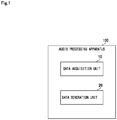
- FIG. 1 is a block diagram showing a schematic configuration of an audio processing apparatus according to the first example embodiment.
- the audio processing apparatus 100 is an apparatus for generating training data in speaker recognition. As shown in FIG. 1 , the audio processing apparatus 100 includes a data acquisition unit 10 and a data generation unit 20.
- the data acquisition unit 10 acquires a audio signal that is a source of the training data as sample data.
- the data generation unit 20 executes signal processing on the acquired sample data and generates a new audio signal whose similarity with the sample data is within the set range as training data.
- the training data required for speaker recognition can be generated from the existing audio signal, it is possible to suppress an increase in the cost for collecting the training data. Further, according to the first example embodiment, since the amount of training data can be easily increased, it is possible to improve extraction accuracy of the feature extractor in speaker recognition.
- FIG. 2 is a block diagram showing more specifically the configuration of the audio processing apparatus according to the first example embodiment.
- the audio processing apparatus 100 is connected to an external speaker database 200.
- the speaker database 200 stores the recorded audio signal of the speaker.
- the data acquisition unit 10 acquires the audio signal to be the sample from the speaker database 200.
- the data generation unit 20 includes an audio conversion unit 21 that executes signal processing.
- the audio conversion unit 21 executes a process of expanding or contracting the sample data on a time axis or a frequency axis as signal processing.
- the audio conversion unit 21 expands and contracts the audio signal, which is the sample data, on the time axis, and converts the audio signal into an audio signal that imitates a person having a different voice pitch. Further, the audio conversion unit 21 can expands and contracts the audio signal, which is the sample data, on the frequency axis, and convert the audio signal into an audio signal that imitates a person having a different vocal tract length.
- the data generation unit 20 outputs the converted audio signal as training data to the external speaker recognition apparatus 300.
- the feature extractor that calculates a feature of the speaker uses the output training data to learns the difference between the speakers.
- a speaker collator that evaluates a similarity and calculates a score, and a similarity normalizer that aligns the range of similarity in the speaker can also be learned using this training data.
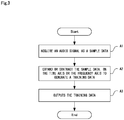
- FIG. 3 is a flow diagram showing operation of the audio processing apparatus according to the first example embodiment.
- FIG. 1 will be referred to as appropriate.
- an audio processing method is implemented by operating the audio processing apparatus 100. Therefore, the description of the audio processing method in the first example embodiment is replaced with the following description of the operation of the audio processing apparatus 100.
- the data acquisition unit 10 acquires an audio signal as a sample from the speaker database 200 (step A1).
- the audio conversion unit 21 executes a process of expanding or contracting the audio signal, which is the sample data, on the time axis or the frequency axis to generate a new audio signal as a training data. (Step A2).
- step A2 After executing step A2, the data generation unit 20 outputs the training data generated in step A2 to the speaker recognition apparatus 300 (step A3).
- step A3 the processing in the audio processing apparatus 100 is temporarily terminated, but the above-mentioned steps A1 to A3 are repeatedly executed until the necessary training data is prepared by changing the sample audio signals.
- an audio signal imitating a person having a different voice pitch or an audio signal imitating a person having a different vocal tract length can be obtained from the original audio signal. According to the first example embodiment, it is possible to improve the extraction accuracy of the feature extractor in speaker recognition while suppressing an increase in the cost for collecting training data.
- the program according to the first example embodiment may be a program that causes a computer to execute steps A1 to A3 shown in FIG. 3 .
- the audio processing apparatus 100 and the audio processing method according to the first example embodiment can be realized.
- a processor of the computer performs processing to function as the data acquisition unit 10 and the data generation unit 20.
- the program according to the first example embodiment may be executed by a computer system constructed by a plurality of computers.
- each computer may respectively function as any of the data acquisition unit 10 and the data generation unit 20.
- FIG. 4 is a block diagram showing a configuration of an audio processing apparatus according to a first modification of the first example embodiment.
- the data generation unit 20 includes a similarity determination unit 22 in addition to the audio conversion unit 21.
- the data generation unit 20 evaluates the similarity between the audio signal of the existing speaker and the audio signal after conversion by this configuration.
- the similarity determination unit 22 obtains the similarity between the speaker feature extracted from the sample data and the speaker feature extracted from the new audio signal as the similarity. Then, when the obtained similarity is not within the set range, the similarity determination unit 22 causes the audio conversion unit 21 to execute the signal processing again.
- the similarity determination unit 22 extracts an i-vector from the audio signal as a speaker feature, for example, by using an existing method. Further, the similarity determination unit 22 calculates, for example, the cosine similarity as the similarity.
- the audio conversion unit 21 acquires the obtained similarity and performs the conversion process again so that the similarity is within the set range. For example, when the similarity is larger than a predetermined value, that is, when the sample data and the new audio signal are similar, the audio conversion unit 21 executes the conversion process so that the difference in speaker characteristics becomes large.
- the first modification it is possible to reliably generate an audio signal of a speaker whose voice quality is different from that of the existing speaker, so that the extraction accuracy of the feature extractor in speaker recognition can be further improved.
- FIG. 5 is a block diagram showing a configuration of an audio processing apparatus according to a second modification of the first example embodiment.
- the data generation unit 20 includes an evaluation confirmation unit 23 in addition to the audio conversion unit 21, evaluates the voice-likeness of the new audio signal after signal processing by this configuration.
- the evaluation confirmation unit 23 evaluates a new audio signal after executing the signal processing. Then, when the obtained evaluation result does not fall within the set range, the evaluation confirmation unit 23 causes the audio conversion unit 21 to execute the signal processing again.
- the evaluation confirmation unit 23 evaluates the voice-likeness of the new audio signal after the conversion process by using the existing method.
- the existing method include VAD (Voice Activity Detection) and the like.
- the audio conversion unit 21 acquires the evaluation result. When the evaluation result is low and the voice-likeness is insufficient, the audio conversion unit 21 executes the conversion process so that the evaluation result is high.
- an audio signal that does not look like a human voice is excluded, so that the extraction accuracy of the feature extractor in speaker recognition can be further improved in this case as well.
- the first example embodiment may be a combination of the above-described first and second modification.
- the data generation unit 20 includes both the similarity determination unit 22 and the evaluation confirmation unit 23 in addition to the audio conversion unit 21.
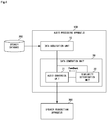
- FIG. 6 is a block diagram showing a configuration of an audio processing apparatus according to the second example embodiment.
- the audio processing apparatus 101 according to the second example embodiment shown in FIG. 6 is also an apparatus for generating training data in speaker recognition, like the audio processing apparatus 100 according to the first example embodiment shown in FIGS. 1 and 2 .
- the audio processing apparatus 101 is different from the first example embodiment in the configuration and function of the data generation unit 20. Hereinafter, the differences will be mainly described.
- the data generation unit 20 includes a coding processing unit 24, an arithmetic processing unit 25, and a decoding processing unit 26.
- the coding processing unit 24 performs coding processing on the sample data.
- the arithmetic processing unit 25 performs arithmetic processing on the latent variable obtained by the coding processing.
- the decoding processing unit 26 executes a decoding process for the arithmetically processed latent variable.
- the coding processing unit 24 encodes the audio signal using, for example, the coding unit (encoder) of the autoencoder to generate a latent variable, that is, a compressed feature.
- the arithmetic processing unit 25 adds a random number to the latent variable, for example, as arithmetic processing.
- the compound processing unit 26 uses the decoding unit (decoder) of the same autoencoder to perform decoding on the latent variable after the arithmetic processing. As a result, a new audio signal is generated.
- a variational autoencoder may be used as the autoencoder.
- the data generation unit 20 executes coding processing, arithmetic processing, and decoding processing as signal processing. Then, since the arithmetic processing is performed on the latent variable obtained by the coding, the decoded audio signal becomes an audio signal different from the original sample data.
- the arithmetic processing may be a processing other than the above-mentioned random number addition processing.
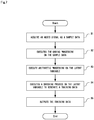
- FIG. 7 is a flow diagram showing operation of the audio processing apparatus according to the second example embodiment.
- FIG. 6 will be referred to as appropriate.
- an audio processing method is implemented by operating the audio processing apparatus 101. Therefore, the description of the audio processing method in the second example embodiment is replaced with the following description of the operation of the audio processing apparatus 100.
- the data acquisition unit 10 acquires a sample audio signal from the speaker database 200 (step B1).
- the coding processing unit 24 executes the coding processing on the sample data (step B2). Subsequently, the arithmetic processing unit 25 executes arithmetic processing on the latent variable obtained by the coding processing in step B2 (step B3). Further, the decoding processing unit 26 executes a decoding process on the latent variable calculated in step B3 to generate a new audio signal (step B4).
- step B4 the data generation unit 20 outputs the training data generated in step B4 to the speaker recognition apparatus 300 (step B5).
- step B5 the processing in the audio processing apparatus 101 is temporarily terminated, but the above-mentioned steps B1 to B5 are repeatedly executed until the necessary training data is prepared by changing the sample audio signal.
- the new audio signal different from the original audio signal can be obtained from the original audio signal as in the first example embodiment. Also, in the second example embodiment, it is possible to improve the extraction accuracy of the feature extractor in speaker recognition while suppressing an increase in the cost for collecting training data.
- the program according to the second example embodiment may be a program that causes a computer to execute steps B1 to B5 shown in FIG. 7 .
- a processor of the computer performs processing to function as the data acquisition unit 10 and the data generation unit 20.
- the program according to the second example embodiment may be executed by a computer system constructed by a plurality of computers.
- each computer may respectively function as any of the data acquisition unit 10 and the data generation unit 20.
- FIG. 8 is a block diagram showing a configuration of an audio processing apparatus according to a first modification of the second example embodiment.
- the data generation unit 20 includes a similarity determination unit 22 in addition to the coding processing unit 24, the arithmetic processing unit 25, and the decoding processing unit 26.
- the data generation unit 20 evaluate the similarity between the audio signal of the existing speaker and the audio signal after conversion by this configuration.
- the similarity determination unit 22 obtains the similarity between the speaker feature extracted from the sample data and the speaker feature extracted from the new audio signal as the similarity. Then, when the obtained similarity is not within the set range, the similarity determination unit 22 causes the coding processing unit 24, the arithmetic processing unit 25, and the decoding processing unit 26 to execute the signal processing again.
- the similarity determination unit 22 extracts an i-vector from the audio signal as a speaker feature, for example, by using an existing method. Further, the similarity determination unit 22 calculates, for example, the cosine similarity as the similarity.
- the arithmetic processing unit 25 acquires the obtained similarity and performs arithmetic processing so that the similarity is within the set range. For example, when the similarity is larger than a predetermined value, that is, when the sample data and the new audio signal are similar, the arithmetic processing unit 25 increases the value of the random number to be added and executes the arithmetic processing.
- the first modification similarly to the first modification of the first example embodiment, it is possible to reliably generate an audio signal of a speaker whose voice quality is different from that of the existing speaker, so that the extraction accuracy of the feature extractor in speaker recognition can be further improved.
- FIG. 9 is a block diagram showing a configuration of an audio processing apparatus according to a second modification of the second example embodiment.
- the data generation unit 20 includes an evaluation confirmation unit 23 in addition to the coding processing unit 24, the arithmetic processing unit 25, and the decoding processing unit 26, evaluates the voice-likeness of the new audio signal after processing by this configuration.
- the evaluation confirmation unit 23 evaluates a new audio signal after executing the signal processing, as in the second modification of the first example embodiment. Then, when the obtained evaluation result does not fall within the set range, the evaluation confirmation unit 23 causes the coding processing unit 24, the arithmetic processing unit 25, and the decoding processing unit 26 to execute the signal processing again.
- the evaluation confirmation unit 23 evaluates the voice-likeness of the new audio signal after the conversion process by using the existing method.
- the existing method include VAD (Voice Activity Detection) and the like.
- the arithmetic processing unit 25 acquires the evaluation result. When the evaluation result is low and the voice-likeness is insufficient, the arithmetic processing unit 25 executes the arithmetic processing so that the evaluation result is high.
- the second modification an audio signal that does not look like a human voice is excluded. Therefore, in this case as well, the extraction accuracy of the feature extractor in speaker recognition can be further improved as in the second modification of the first example embodiment.
- the second example embodiment may also be a combination of the above-described first and second modification as in the first example embodiment.
- the data generation unit 20 includes both the similarity determination unit 22 and the evaluation confirmation unit 23 in addition to the coding processing unit 24, the arithmetic processing unit 25, and the decoding processing unit 26.
- FIG. 10 is a block diagram showing a configuration of an audio processing apparatus according to a third modification of the second example embodiment.
- the data generation unit 20 includes a second coding processing unit 27 and a difference calculation unit 28 in addition to the coding processing unit 24, the arithmetic processing unit 25, and the decoding processing unit 26.
- the second coding processing unit 27 first acquires another audio signal of the speaker of the sample data and an audio signal of a speaker different from the speaker of the sample data, via the data acquisition unit 10, before the signal processing is executed. Then, the second coding processing unit 27 performs coding processing on each of another audio signal of the speaker of the sample data and the audio signal of the speaker different from the speaker of the sample data to generate the latent variables.
- the difference calculation unit 28 calculates the difference between the latent variables generated by the second coding processing unit 27. After that, the arithmetic processing unit 25 executes the arithmetic processing using the difference calculated by the difference calculation unit 28.
- FIG. 11 is a diagram specifically showing the processing of the data generation unit in the third modification of the second example embodiment.
- the sample data is the audio signal of the audio signal E1.
- the speaker of the sample data is a speaker whose identification number (ID) is 123.
- audio signal E3 different from the sample data of the speaker of ID 123 and audio signal E4 of the speaker of ID 456 are input to the second coding processing unit 27 via the data acquisition unit 10.
- the second coding processing unit 27 generates a latent variable of the audio signal E3 and a latent variable of the audio signal E4, and inputs these to the difference calculation unit 28.
- the difference calculation unit 28 calculates the difference D between the two-input latent variables and inputs the calculated difference D to the arithmetic processing unit 25.
- the arithmetic processing unit 25 performs arithmetic processing on the latent variable of the audio signal E1 using the input difference D.
- Examples of the arithmetic processing performed in this case include addition processing of the difference D to the latent variable of the audio signal E1. Further, in this case, the difference D may be multiplied by a predetermined coefficient ⁇ .
- the code processing unit 16 executes code processing on the latent variable after the arithmetic processing to generate a new audio signal E2.
- a new audio signal can be generated based on the difference between the existing speakers, so that the extraction accuracy of the feature extractor in speaker recognition can be further improved.
- FIG. 12 is a block diagram showing an example of a computer that realizes the audio processing apparatus according to the first and second example embodiment.
- a computer 110 includes a CPU (Central Processing Unit) 111, a main memory 112, a storage device 113, an input interface 114, a display controller 115, a data reader/writer 116, and a communication interface 117. These components are connected in such a manner that they can perform data communication with one another via a bus 121.
- the computer 110 may include a GPU (Graphics Processing Unit) or an FPGA (Field-Programmable Gate Array) in addition to the CPU 111, or in place of the CPU 111.
- the CPU 111 carries out various types of calculation by deploying the program (codes) according to the example embodiment stored in the storage device 113 to the main memory 112 and executing the codes in a predetermined order.
- the main memory 112 is typically a volatile storage device, such as a DRAM (dynamic random-access memory).
- the program according to the example embodiment is provided in a state where it is stored in a computer-readable recording medium 120. Note that the program according to the example embodiment may be distributed over the Internet connected via the communication interface 117.
- the storage device 113 includes a hard disk drive and a semiconductor storage device, such as a flash memory.
- the input interface 114 mediates data transmission between the CPU 111 and an input apparatus 118, such as a keyboard and a mouse.
- the display controller 115 is connected to a display apparatus 119, and controls display on the display apparatus 119.
- the data reader/writer 116 mediates data transmission between the CPU 111 and the recording medium 120, reads out the program from the recording medium 120, and writes the result of processing in the computer 110 to the recording medium 120.
- the communication interface 117 mediates data transmission between the CPU 111 and another computer.
- the recording medium 120 include: a general-purpose semiconductor storage device, such as CF (CompactFlash ® ) and SD (Secure Digital); a magnetic recording medium, such as a flexible disk; and an optical recording medium, such as a CD-ROM (Compact Disk Read Only Memory).
- CF CompactFlash ®
- SD Secure Digital
- CD-ROM Compact Disk Read Only Memory
- the voice processing apparatus 100 can also be realized by using items of hardware that respectively correspond to the components, rather than the computer in which the program is installed. Furthermore, a part of the voice processing apparatus 100 may be realized by the program, and the remaining part of the voice processing apparatus 100 may be realized by hardware.
- an extraction accuracy of the feature extractor can be improved while suppressing an increase in a cost of collecting training data required for speaker recognition.
- the example embodiments is useful in various fields where speaker recognition is required.
Landscapes
- Engineering & Computer Science (AREA)
- Health & Medical Sciences (AREA)
- Audiology, Speech & Language Pathology (AREA)
- Human Computer Interaction (AREA)
- Physics & Mathematics (AREA)
- Acoustics & Sound (AREA)
- Multimedia (AREA)
- Computational Linguistics (AREA)
- Quality & Reliability (AREA)
- Signal Processing (AREA)
- Information Retrieval, Db Structures And Fs Structures Therefor (AREA)
- Compression, Expansion, Code Conversion, And Decoders (AREA)
Abstract
Description
- The example embodiments relate to an audio processing device and a audio processing method for generating training data necessary for speaker recognition, and further relates to a computer-readable recording medium on which a program for realizing these is recorded.
- Conventionally, in the field of speech recognition, not only the process of converting a speech signal into text data, but also the process of extracting speech features from the audio signal and identifying the speaker based on the extracted features (speaker recognition) is performed.
- Here, speaker recognition will be described. Patent Document 1 discloses a system for speaker recognition. The system disclosed in Patent Document 1 first extracts a feature of a person's utterance from the input audio signal when the audio signal is input. Subsequently, the system disclosed in Patent Document 1 collates the extracted the feature with features registered in advance, and identifies the speaker based on the collation result.
- Further, in the system disclosed in Patent Document 1, features are extracted from an audio signal by a feature extractor. Specifically, the feature extractor uses a model constructed by machine learning to extract the characteristics of the person who spoke from the audio signal. The model is also constructed by optimizing the parameters of the neural network, for example, using training data obtained from a large number of people.
- Patent Document 1: International Publication No.
2016/092807 - By the way, in the system disclosed in Patent Document 1, in order to improve the identification accuracy of the speaker, it is necessary to improve the extraction accuracy in the feature extractor. And, in order to improve the extraction accuracy in the feature extractor, it is necessary to collect training data from as many people as possible.
- However, since the training data is collected by recording individual utterances, there is a problem that it costs a lot to collect the training data from many people. In addition, the cost increases as the number of people to be collected increases. Therefore, in the past, there is a limit to the collection of training data.
- An example of an object of the invention is to provide a audio processing apparatus, an audio processing method , and a computer-readable medium that solve the above-described problem, and that can improve an extraction accuracy of the feature extractor while suppressing an increase in a cost of collecting training data required for speaker recognition.
- To achieve the aforementioned example object, an audio processing apparatus according to an example aspect of the example embodiments is apparatus for generating a training data in speaker recognition, the audio processing apparatus includes:
- a data acquisition unit configured to acquire audio signal that is the source of the training data as sample data,
- a data generation unit configured to executes signal processing on the acquired sample data, and to generates new audio signal as the training data whose similarity with the sample data is within the set range.
- Furthermore, to achieve the aforementioned example object, an audio processing method according to an example aspect of the example embodiments is method for generating a training data in speaker recognition, the audio processing method includes:
- (a) a step of acquiring audio signal that is the source of the training data as sample data,
- (b) a step of executing signal processing on the acquired sample data, and generating new audio signal as the training data whose similarity with the sample data is within the set range.
- Furthermore, to achieve the aforementioned example object, a computer-readable recording medium records a program for generating a training data in speaker recognition by a computer, the program including an instruction that causes the computer to carry out:
- (a) a step of acquiring audio signal that is the source of the training data as sample data,
- (b) a step of executing signal processing on the acquired sample data, and generating new audio signal as the training data whose similarity with the sample data is within the set range.
- As described above, according to the example embodiments, an extraction accuracy of the feature extractor can be improved while suppressing an increase in a cost of collecting training data required for speaker recognition.
-
-
FIG. 1 is a block diagram showing a schematic configuration of a audio processing apparatus according to the first example embodiment. -
FIG. 2 is a block diagram showing more specifically the configuration of the audio processing apparatus according to the first example embodiment. -
FIG. 3 is a flow diagram showing operation of the audio processing apparatus according to the first example embodiment. -
FIG. 4 is a block diagram showing a configuration of an audio processing apparatus according to a first modification of the first example embodiment. -
FIG. 5 is a block diagram showing a configuration of an audio processing apparatus according to a second modification of the first example embodiment. -
FIG. 6 is a block diagram showing a configuration of an audio processing apparatus according to a second example embodiment. -
FIG. 7 is a flow diagram showing the operation of the audio processing apparatus according to the second example embodiment. -
FIG. 8 is a block diagram showing a configuration of an audio processing apparatus according to a first modification of the second example embodiment. -
FIG. 9 is a block diagram showing a configuration of an audio processing apparatus according to a second modification of the second example embodiment. -
FIG. 10 is a block diagram showing a configuration of an audio processing apparatus according to a third modification of the second example embodiment. -
FIG. 11 is a diagram specifically showing the processing of the data generation unit in the third modification of the second example embodiment. -
FIG. 12 is a block diagram showing an example of a computer that realizes the audio processing apparatus according to the first and second example embodiments. - Hereinafter, an audio processing apparatus, an audio processing method and a program in a first example embodiment will be described with reference to
FIGS. 1 to 5 . - Initially, schematic configurations of the audio processing apparatus in this first example embodiment will be described using
FIG. 1. FIG. 1 is a block diagram showing a schematic configuration of an audio processing apparatus according to the first example embodiment. - The
audio processing apparatus 100 according to the first example embodiment shown inFIG. 1 is an apparatus for generating training data in speaker recognition. As shown inFIG. 1 , theaudio processing apparatus 100 includes adata acquisition unit 10 and adata generation unit 20. - The
data acquisition unit 10 acquires a audio signal that is a source of the training data as sample data. Thedata generation unit 20 executes signal processing on the acquired sample data and generates a new audio signal whose similarity with the sample data is within the set range as training data. - As described above, in the first example embodiment, since the training data required for speaker recognition can be generated from the existing audio signal, it is possible to suppress an increase in the cost for collecting the training data. Further, according to the first example embodiment, since the amount of training data can be easily increased, it is possible to improve extraction accuracy of the feature extractor in speaker recognition.
- Subsequently, a more specific configuration of the audio processing apparatus according to the first example embodiment will be described with reference to
FIG.2. FIG. 2 is a block diagram showing more specifically the configuration of the audio processing apparatus according to the first example embodiment. - As shown in
FIG. 2 , in the example embodiment, theaudio processing apparatus 100 is connected to anexternal speaker database 200. Thespeaker database 200 stores the recorded audio signal of the speaker. In the example first embodiment, thedata acquisition unit 10 acquires the audio signal to be the sample from thespeaker database 200. - As shown in
FIG. 2 , in the example embodiment, thedata generation unit 20 includes anaudio conversion unit 21 that executes signal processing. Theaudio conversion unit 21 executes a process of expanding or contracting the sample data on a time axis or a frequency axis as signal processing. - Specifically, for example the
audio conversion unit 21 expands and contracts the audio signal, which is the sample data, on the time axis, and converts the audio signal into an audio signal that imitates a person having a different voice pitch. Further, theaudio conversion unit 21 can expands and contracts the audio signal, which is the sample data, on the frequency axis, and convert the audio signal into an audio signal that imitates a person having a different vocal tract length. - Further, the
data generation unit 20 outputs the converted audio signal as training data to the externalspeaker recognition apparatus 300. In this case, in thespeaker recognition apparatus 300, for example, the feature extractor that calculates a feature of the speaker uses the output training data to learns the difference between the speakers. In addition, a speaker collator that evaluates a similarity and calculates a score, and a similarity normalizer that aligns the range of similarity in the speaker can also be learned using this training data. - Next, operation of the
audio processing apparatus 100 according to the first example embodiment will be described with reference toFIG. 3. FIG. 3 is a flow diagram showing operation of the audio processing apparatus according to the first example embodiment. In the following description,FIG. 1 will be referred to as appropriate. Further, in the first example embodiment, an audio processing method is implemented by operating theaudio processing apparatus 100. Therefore, the description of the audio processing method in the first example embodiment is replaced with the following description of the operation of theaudio processing apparatus 100. - As shown in
FIG. 3 , first, thedata acquisition unit 10 acquires an audio signal as a sample from the speaker database 200 (step A1). - Next, in the
data generation unit 20, theaudio conversion unit 21 executes a process of expanding or contracting the audio signal, which is the sample data, on the time axis or the frequency axis to generate a new audio signal as a training data. (Step A2). - After executing step A2, the
data generation unit 20 outputs the training data generated in step A2 to the speaker recognition apparatus 300 (step A3). By executing step A3, the processing in theaudio processing apparatus 100 is temporarily terminated, but the above-mentioned steps A1 to A3 are repeatedly executed until the necessary training data is prepared by changing the sample audio signals. - As described above, in the first example embodiment, an audio signal imitating a person having a different voice pitch or an audio signal imitating a person having a different vocal tract length can be obtained from the original audio signal. According to the first example embodiment, it is possible to improve the extraction accuracy of the feature extractor in speaker recognition while suppressing an increase in the cost for collecting training data.
- The program according to the first example embodiment may be a program that causes a computer to execute steps A1 to A3 shown in
FIG. 3 . By installing this program in a computer and executing the program, theaudio processing apparatus 100 and the audio processing method according to the first example embodiment can be realized. In this case, a processor of the computer performs processing to function as thedata acquisition unit 10 and thedata generation unit 20. - Also, the program according to the first example embodiment may be executed by a computer system constructed by a plurality of computers. In this case, for example, each computer may respectively function as any of the
data acquisition unit 10 and thedata generation unit 20. - Here, a modification 1 of the
audio processing apparatus 100 according to the first example embodiment will be described with reference toFIG.4. FIG. 4 is a block diagram showing a configuration of an audio processing apparatus according to a first modification of the first example embodiment. - As shown in
FIG. 4 , in the modification 1, thedata generation unit 20 includes asimilarity determination unit 22 in addition to theaudio conversion unit 21. Thedata generation unit 20 evaluates the similarity between the audio signal of the existing speaker and the audio signal after conversion by this configuration. - After the signal processing is executed by the
audio conversion unit 21, thesimilarity determination unit 22 obtains the similarity between the speaker feature extracted from the sample data and the speaker feature extracted from the new audio signal as the similarity. Then, when the obtained similarity is not within the set range, thesimilarity determination unit 22 causes theaudio conversion unit 21 to execute the signal processing again. - Specifically, the
similarity determination unit 22 extracts an i-vector from the audio signal as a speaker feature, for example, by using an existing method. Further, thesimilarity determination unit 22 calculates, for example, the cosine similarity as the similarity. - In the modification 1, the
audio conversion unit 21 acquires the obtained similarity and performs the conversion process again so that the similarity is within the set range. For example, when the similarity is larger than a predetermined value, that is, when the sample data and the new audio signal are similar, theaudio conversion unit 21 executes the conversion process so that the difference in speaker characteristics becomes large. - According to the first modification, it is possible to reliably generate an audio signal of a speaker whose voice quality is different from that of the existing speaker, so that the extraction accuracy of the feature extractor in speaker recognition can be further improved.
- Subsequently, a second modification of the
audio processing apparatus 100 according to the first example embodiment will be described with reference toFIG 5. FIG. 5 is a block diagram showing a configuration of an audio processing apparatus according to a second modification of the first example embodiment. - As shown in
FIG. 5 , in the modification 2, thedata generation unit 20 includes anevaluation confirmation unit 23 in addition to theaudio conversion unit 21, evaluates the voice-likeness of the new audio signal after signal processing by this configuration. - The
evaluation confirmation unit 23 evaluates a new audio signal after executing the signal processing. Then, when the obtained evaluation result does not fall within the set range, theevaluation confirmation unit 23 causes theaudio conversion unit 21 to execute the signal processing again. - Specifically, the
evaluation confirmation unit 23 evaluates the voice-likeness of the new audio signal after the conversion process by using the existing method. Examples of the existing method include VAD (Voice Activity Detection) and the like. Further, in the second modification, theaudio conversion unit 21 acquires the evaluation result. When the evaluation result is low and the voice-likeness is insufficient, theaudio conversion unit 21 executes the conversion process so that the evaluation result is high. - According to the second modification, an audio signal that does not look like a human voice is excluded, so that the extraction accuracy of the feature extractor in speaker recognition can be further improved in this case as well.
- Further, the first example embodiment may be a combination of the above-described first and second modification. In this case, the
data generation unit 20 includes both thesimilarity determination unit 22 and theevaluation confirmation unit 23 in addition to theaudio conversion unit 21. - Hereinafter, an audio processing apparatus, an audio processing method and a program in a second example embodiment will be described with reference to
FIGS. 6 to 10 . - Initially, configurations of the audio processing apparatus in this second example embodiment will be described using
FIG. 6. FIG. 6 is a block diagram showing a configuration of an audio processing apparatus according to the second example embodiment. - The
audio processing apparatus 101 according to the second example embodiment shown inFIG. 6 is also an apparatus for generating training data in speaker recognition, like theaudio processing apparatus 100 according to the first example embodiment shown inFIGS. 1 and2 . However, in the second example embodiment, theaudio processing apparatus 101 is different from the first example embodiment in the configuration and function of thedata generation unit 20. Hereinafter, the differences will be mainly described. - In the second example embodiment, the
data generation unit 20 includes acoding processing unit 24, anarithmetic processing unit 25, and adecoding processing unit 26. Thecoding processing unit 24 performs coding processing on the sample data. Thearithmetic processing unit 25 performs arithmetic processing on the latent variable obtained by the coding processing. Thedecoding processing unit 26 executes a decoding process for the arithmetically processed latent variable. - Specifically, the
coding processing unit 24 encodes the audio signal using, for example, the coding unit (encoder) of the autoencoder to generate a latent variable, that is, a compressed feature. Thearithmetic processing unit 25 adds a random number to the latent variable, for example, as arithmetic processing. Thecompound processing unit 26 uses the decoding unit (decoder) of the same autoencoder to perform decoding on the latent variable after the arithmetic processing. As a result, a new audio signal is generated. In the second example embodiment, a variational autoencoder may be used as the autoencoder. - In the second example embodiment, as described above, the
data generation unit 20 executes coding processing, arithmetic processing, and decoding processing as signal processing. Then, since the arithmetic processing is performed on the latent variable obtained by the coding, the decoded audio signal becomes an audio signal different from the original sample data. The arithmetic processing may be a processing other than the above-mentioned random number addition processing. - Next, operation of the
audio processing apparatus 101 according to the second example embodiment will be described with reference toFIG. 7. FIG. 7 is a flow diagram showing operation of the audio processing apparatus according to the second example embodiment. In the following description,FIG. 6 will be referred to as appropriate. Further, in the second example embodiment, an audio processing method is implemented by operating theaudio processing apparatus 101. Therefore, the description of the audio processing method in the second example embodiment is replaced with the following description of the operation of theaudio processing apparatus 100. - As shown in
FIG. 7 , first, thedata acquisition unit 10 acquires a sample audio signal from the speaker database 200 (step B1). - Next, in the
data generation unit 20, thecoding processing unit 24 executes the coding processing on the sample data (step B2). Subsequently, thearithmetic processing unit 25 executes arithmetic processing on the latent variable obtained by the coding processing in step B2 (step B3). Further, thedecoding processing unit 26 executes a decoding process on the latent variable calculated in step B3 to generate a new audio signal (step B4). - After executing step B4, the
data generation unit 20 outputs the training data generated in step B4 to the speaker recognition apparatus 300 (step B5). By executing step B5, the processing in theaudio processing apparatus 101 is temporarily terminated, but the above-mentioned steps B1 to B5 are repeatedly executed until the necessary training data is prepared by changing the sample audio signal. - As described above, also in the second example embodiment, the new audio signal different from the original audio signal can be obtained from the original audio signal as in the first example embodiment. Also, in the second example embodiment, it is possible to improve the extraction accuracy of the feature extractor in speaker recognition while suppressing an increase in the cost for collecting training data.
- The program according to the second example embodiment may be a program that causes a computer to execute steps B1 to B5 shown in
FIG. 7 . By installing this program in a computer and executing the program, theaudio processing apparatus 101 and the audio processing method according to the second example embodiment can be realized. In this case, a processor of the computer performs processing to function as thedata acquisition unit 10 and thedata generation unit 20. - Also, the program according to the second example embodiment may be executed by a computer system constructed by a plurality of computers. In this case, for example, each computer may respectively function as any of the
data acquisition unit 10 and thedata generation unit 20. - Here, a modification 1 of the
audio processing apparatus 101 according to the second example embodiment will be described with reference toFIG. 8. FIG. 8 is a block diagram showing a configuration of an audio processing apparatus according to a first modification of the second example embodiment. - As shown in
FIG. 4 , in the modification 1, thedata generation unit 20 includes asimilarity determination unit 22 in addition to thecoding processing unit 24, thearithmetic processing unit 25, and thedecoding processing unit 26. Thedata generation unit 20 evaluate the similarity between the audio signal of the existing speaker and the audio signal after conversion by this configuration. - Similar to the first modification of the first example embodiment, after the signal processing is executed by the
audio conversion unit 21, thesimilarity determination unit 22 obtains the similarity between the speaker feature extracted from the sample data and the speaker feature extracted from the new audio signal as the similarity. Then, when the obtained similarity is not within the set range, thesimilarity determination unit 22 causes thecoding processing unit 24, thearithmetic processing unit 25, and thedecoding processing unit 26 to execute the signal processing again. - Specifically, also in the first modification, the
similarity determination unit 22 extracts an i-vector from the audio signal as a speaker feature, for example, by using an existing method. Further, thesimilarity determination unit 22 calculates, for example, the cosine similarity as the similarity. - In the first modification, the
arithmetic processing unit 25 acquires the obtained similarity and performs arithmetic processing so that the similarity is within the set range. For example, when the similarity is larger than a predetermined value, that is, when the sample data and the new audio signal are similar, thearithmetic processing unit 25 increases the value of the random number to be added and executes the arithmetic processing. - According to the first modification, similarly to the first modification of the first example embodiment, it is possible to reliably generate an audio signal of a speaker whose voice quality is different from that of the existing speaker, so that the extraction accuracy of the feature extractor in speaker recognition can be further improved.
- Subsequently, a second modification of the
audio processing apparatus 101 according to the second example embodiment will be described with reference toFIG.9. FIG. 9 is a block diagram showing a configuration of an audio processing apparatus according to a second modification of the second example embodiment. - As shown in
FIG. 9 , in the second modification, thedata generation unit 20 includes anevaluation confirmation unit 23 in addition to thecoding processing unit 24, thearithmetic processing unit 25, and thedecoding processing unit 26, evaluates the voice-likeness of the new audio signal after processing by this configuration. - The
evaluation confirmation unit 23 evaluates a new audio signal after executing the signal processing, as in the second modification of the first example embodiment. Then, when the obtained evaluation result does not fall within the set range, theevaluation confirmation unit 23 causes thecoding processing unit 24, thearithmetic processing unit 25, and thedecoding processing unit 26 to execute the signal processing again. - Specifically, also in the second modification, the
evaluation confirmation unit 23 evaluates the voice-likeness of the new audio signal after the conversion process by using the existing method. Examples of the existing method include VAD (Voice Activity Detection) and the like. Further, in the second modification, thearithmetic processing unit 25 acquires the evaluation result. When the evaluation result is low and the voice-likeness is insufficient, thearithmetic processing unit 25 executes the arithmetic processing so that the evaluation result is high. - According to the second modification, an audio signal that does not look like a human voice is excluded. Therefore, in this case as well, the extraction accuracy of the feature extractor in speaker recognition can be further improved as in the second modification of the first example embodiment.
- Further, the second example embodiment may also be a combination of the above-described first and second modification as in the first example embodiment. In this case, the
data generation unit 20 includes both thesimilarity determination unit 22 and theevaluation confirmation unit 23 in addition to thecoding processing unit 24, thearithmetic processing unit 25, and thedecoding processing unit 26. - Here, a third modification of the
audio processing apparatus 101 according to the second example embodiment will be described with reference toFIGS. 10 and11 .FIG. 10 is a block diagram showing a configuration of an audio processing apparatus according to a third modification of the second example embodiment. - As shown in
FIG. 10 , in the third modification, thedata generation unit 20 includes a secondcoding processing unit 27 and adifference calculation unit 28 in addition to thecoding processing unit 24, thearithmetic processing unit 25, and thedecoding processing unit 26. - The second
coding processing unit 27 first acquires another audio signal of the speaker of the sample data and an audio signal of a speaker different from the speaker of the sample data, via thedata acquisition unit 10, before the signal processing is executed. Then, the secondcoding processing unit 27 performs coding processing on each of another audio signal of the speaker of the sample data and the audio signal of the speaker different from the speaker of the sample data to generate the latent variables. - The
difference calculation unit 28 calculates the difference between the latent variables generated by the secondcoding processing unit 27. After that, thearithmetic processing unit 25 executes the arithmetic processing using the difference calculated by thedifference calculation unit 28. - Subsequently, the process of the
data generation unit 20 in the third modification will be specifically described with reference toFIG. 11. FIG. 11 is a diagram specifically showing the processing of the data generation unit in the third modification of the second example embodiment. - As shown in
FIG. 11 , first, the sample data is the audio signal of the audio signal E1. Further, the speaker of the sample data is a speaker whose identification number (ID) is 123. In this case, audio signal E3 different from the sample data of the speaker ofID 123 and audio signal E4 of the speaker ofID 456 are input to the secondcoding processing unit 27 via thedata acquisition unit 10. - Therefore, the second
coding processing unit 27 generates a latent variable of the audio signal E3 and a latent variable of the audio signal E4, and inputs these to thedifference calculation unit 28. Thedifference calculation unit 28 calculates the difference D between the two-input latent variables and inputs the calculated difference D to thearithmetic processing unit 25. - Then, since the
coding processing unit 24 generates the latent variable of the audio signal E1 which is the sample data, thearithmetic processing unit 25 performs arithmetic processing on the latent variable of the audio signal E1 using the input difference D. Examples of the arithmetic processing performed in this case include addition processing of the difference D to the latent variable of the audio signal E1. Further, in this case, the difference D may be multiplied by a predetermined coefficient α. After that, the code processing unit 16 executes code processing on the latent variable after the arithmetic processing to generate a new audio signal E2. - According to the third modification, a new audio signal can be generated based on the difference between the existing speakers, so that the extraction accuracy of the feature extractor in speaker recognition can be further improved.
- Using
FIG. 12 , the following describes a computer that realizes the audio processing apparatus by executing the program according to the example embodiment.FIG. 12 is a block diagram showing an example of a computer that realizes the audio processing apparatus according to the first and second example embodiment. - As shown in
FIG. 12 , acomputer 110 includes a CPU (Central Processing Unit) 111, amain memory 112, astorage device 113, aninput interface 114, adisplay controller 115, a data reader/writer 116, and acommunication interface 117. These components are connected in such a manner that they can perform data communication with one another via abus 121. Note that thecomputer 110 may include a GPU (Graphics Processing Unit) or an FPGA (Field-Programmable Gate Array) in addition to theCPU 111, or in place of theCPU 111. - The
CPU 111 carries out various types of calculation by deploying the program (codes) according to the example embodiment stored in thestorage device 113 to themain memory 112 and executing the codes in a predetermined order. Themain memory 112 is typically a volatile storage device, such as a DRAM (dynamic random-access memory). Also, the program according to the example embodiment is provided in a state where it is stored in a computer-readable recording medium 120. Note that the program according to the example embodiment may be distributed over the Internet connected via thecommunication interface 117. - Also, specific examples of the
storage device 113 include a hard disk drive and a semiconductor storage device, such as a flash memory. Theinput interface 114 mediates data transmission between theCPU 111 and aninput apparatus 118, such as a keyboard and a mouse. Thedisplay controller 115 is connected to adisplay apparatus 119, and controls display on thedisplay apparatus 119. - The data reader/
writer 116 mediates data transmission between theCPU 111 and therecording medium 120, reads out the program from therecording medium 120, and writes the result of processing in thecomputer 110 to therecording medium 120. Thecommunication interface 117 mediates data transmission between theCPU 111 and another computer. - Specific examples of the
recording medium 120 include: a general-purpose semiconductor storage device, such as CF (CompactFlash®) and SD (Secure Digital); a magnetic recording medium, such as a flexible disk; and an optical recording medium, such as a CD-ROM (Compact Disk Read Only Memory). - Note that the
voice processing apparatus 100 according to the example embodiment can also be realized by using items of hardware that respectively correspond to the components, rather than the computer in which the program is installed. Furthermore, a part of thevoice processing apparatus 100 may be realized by the program, and the remaining part of thevoice processing apparatus 100 may be realized by hardware. - A part or an entirety of the above-described example embodiment can be represented by (Supplementary Note 1) to (Supplementary Note 18) described below but is not limited to the description below.
- (Supplementary Note 1) An audio processing apparatus for generating a training data in speaker recognition, the audio processing apparatus including:
- a data acquisition unit configured to acquire an audio signal that is a source of the training data as sample data,
- a data generation unit configured to executes signal processing on the acquired sample data, and to generates a new audio signal as the training data whose similarity with the sample data is within the set range.
- (Supplementary Note 2) The audio processing apparatus according to Supplementary Note 1,
wherein the data generation unit executes a process of expanding or contracting the sample data on a time axis or a frequency axis as the signal processing. - (Supplementary Note 3) The audio processing apparatus according to Supplementary Note 1,
wherein the data generation unit executes, as the signal processing, a coding process for the sample data, an arithmetic process for a latent variable obtained by the coding process, and a decoding process for the latent variable that has been arithmetically processed. - (Supplementary Note 4) The audio processing apparatus according to any of Supplementary Notes 1 to 3,
wherein the data generation unit, after executing the signal processing, obtains a similarity between a speaker feature extracted from the sample data and a speaker feature extracted from the new audio signal as the similarity, if obtained similarity is not within the set range, the signal processing is executed again. - (Supplementary Note 5) The audio processing apparatus according to any of Supplementary Notes 1 to 4,
wherein the data generation unit evaluates the new audio signal after executing the signal processing, if the evaluation result does not fall within the set range, the data generation unit executes the signal processing again. - (Supplementary Note 6) The audio processing apparatus according to Supplementary Note 3,
wherein the data generation unit, prior to the signal processing, executes coding processing on another audio signal of the speaker of the sample data and an audio signal of a speaker different from the speaker of the sample data to generate latent variables, calculate the difference between the generated latent variables, and executes the arithmetic processing using the calculated difference in the signal processing. - (Supplementary Note 7) An audio processing method for generating a training data in speaker recognition, the audio processing method including:
- (a) a step of acquiring an audio signal that is a source of the training data as sample data,
- (b) a step of executing signal processing on the acquired sample data and generating a new audio signal as the training data whose similarity with the sample data is within the set range.
- (Supplementary Note 8) The audio processing method according to Supplementary Note 7, wherein
in the (b) step, a process of expanding or contracting the sample data is executed on a time axis or a frequency axis as the signal processing. - (Supplementary Note 9) The audio processing method according to Supplementary Note 7, wherein
in the (b) step, a coding process for the sample data, an arithmetic process for a latent variable obtained by the coding process, and a decoding process for the latent variable that has been arithmetically processed are executed as the signal processing. - (Supplementary Note 10) The audio processing method according to any of Supplementary Notes 7 to 9, wherein
in the (b) step, after executing the signal processing, a similarity between a speaker feature extracted from the sample data and a speaker feature extracted from the new audio signal is obtained as the similarity, if obtained similarity is not within the set range, the signal processing is executed again. - (Supplementary Note 11) The audio processing method according to any of Supplementary Notes 7 to 9, wherein
in the (b) step, the new audio signal is evaluated after executing the signal processing, if the evaluation result does not fall within the set range, the signal processing is executed again. - (Supplementary Note 12) The audio processing method according to Supplementary Note 9, wherein
in the (b) step, prior to the signal processing, coding processing on another audio signal of the speaker of the sample data and an audio signal of a speaker different from the speaker of the sample data is executed to generate latent variables, the difference between the generated latent variables is calculated, and the arithmetic processing using the calculated difference is executed in the signal processing. - (Supplementary Note 13) A computer-readable recording medium that records a program for generating a training data in speaker recognition by a computer, the program including an instruction that causes the computer to carry out:
- (a) a step of acquiring an audio signal that is a source of the training data as sample data,
- (b) a step of executing signal processing on the acquired sample data and generating a new audio signal as the training data whose similarity with the sample data is within the set range.
- (Supplementary Note 14) The computer-readable recording medium according to Supplementary Note 13, wherein
in the (b) step, a process of expanding or contracting the sample data is executed on a time axis or a frequency axis as the signal processing. - (Supplementary Note 15) The computer-readable recording medium according to Supplementary Note 13, wherein
in the (b) step, a coding process for the sample data, an arithmetic process for a latent variable obtained by the coding process, and a decoding process for the latent variable that has been arithmetically processed are executed as the signal processing. - (Supplementary Note 16) The computer-readable recording medium according to any of Supplementary Notes 13 to 15, wherein
in the (b) step, after executing the signal processing, a similarity between a speaker feature extracted from the sample data and a speaker feature extracted from the new audio signal is obtained as the similarity, if obtained similarity is not within the set range, the signal processing is executed again. - (Supplementary Note 17) The computer-readable recording medium according to any of Supplementary Notes 13 to 15, wherein
in the (b) step, the new audio signal is evaluated after executing the signal processing, if the evaluation result does not fall within the set range, the signal processing is executed again. - (Supplementary Note 18) The computer-readable recording medium according to Supplementary Note 15, wherein
in the (b) step, prior to the signal processing, coding processing on another audio signal of the speaker of the sample data and an audio signal of a speaker different from the speaker of the sample data is executed to generate latent variables, the difference between the generated latent variables is calculated, and the arithmetic processing using the calculated difference is executed in the signal processing. - Although the invention of the application has been described above with reference to the example embodiment, the invention of the application is not limited to the above-described example embodiment. Various changes that can be understood by a person skilled in the art within the scope of the invention of the application can be made to the configuration and the details of the invention of the application.
- As described above, according to the example embodiments, an extraction accuracy of the feature extractor can be improved while suppressing an increase in a cost of collecting training data required for speaker recognition. The example embodiments is useful in various fields where speaker recognition is required.
-
- 10
- data acquisition unit
- 20
- data generation unit
- 21
- audio conversion unit
- 22
- similarity determination unit
- 23
- evaluation confirmation unit
- 24
- coding processing unit
- 25
- arithmetic processing unit
- 26
- decoding processing unit
- 27
- second coding processing unit
- 28
- difference calculation unit
- 100
- audio processing apparatus (example embodiment 1)
- 101
- audio processing apparatus (example embodiment 2)
- 110
- computer
- 111
- CPU
- 112
- main memory
- 113
- storage device
- 114
- input interface
- 115
- display controller
- 116
- data reader/writer
- 117
- communication interface
- 118
- input apparatus
- 119
- display apparatus
- 120
- recording medium
- 121
- bus
- 200
- speaker database
- 300
- speaker recognition apparatus
Claims (18)
- An audio processing apparatus for generating a training data in speaker recognition, the audio processing apparatus comprising:a data acquisition unit configured to acquire an audio signal that is a source of the training data as sample data,a data generation unit configured to executes signal processing on the acquired sample data, and to generates a new audio signal as the training data whose similarity with the sample data is within the set range.
- The audio processing apparatus according to claim 1,
wherein the data generation unit executes a process of expanding or contracting the sample data on a time axis or a frequency axis as the signal processing. - The audio processing apparatus according to claim 1,
wherein the data generation unit executes, as the signal processing, a coding process for the sample data, an arithmetic process for a latent variable obtained by the coding process, and a decoding process for the latent variable that has been arithmetically processed. - The audio processing apparatus according to any of claims 1 to 3,
wherein the data generation unit, after executing the signal processing, obtains a similarity between a speaker feature extracted from the sample data and a speaker feature extracted from the new audio signal as the similarity, if obtained similarity is not within the set range, the signal processing is executed again. - The audio processing apparatus according to any of claims 1 to 4,
wherein the data generation unit evaluates the new audio signal after executing the signal processing, if the evaluation result does not fall within the set range, the data generation unit executes the signal processing again. - The audio processing apparatus according to claim 3,
wherein the data generation unit, prior to the signal processing, executes coding processing on another audio signal of the speaker of the sample data and an audio signal of a speaker different from the speaker of the sample data to generate latent variables, calculate the difference between the generated latent variables, and executes the arithmetic processing using the calculated difference in the signal processing. - An audio processing method for generating a training data in speaker recognition, the audio processing method comprising:(a) a step of acquiring an audio signal that is a source of the training data as sample data,(b) a step of executing signal processing on the acquired sample data and generating a new audio signal as the training data whose similarity with the sample data is within the set range.
- The audio processing method according to claim 7, wherein
in the (b) step, a process of expanding or contracting the sample data is executed on a time axis or a frequency axis as the signal processing. - The audio processing method according to claim 7, wherein
in the (b) step, a coding process for the sample data, an arithmetic process for a latent variable obtained by the coding process, and a decoding process for the latent variable that has been arithmetically processed are executed as the signal processing. - The audio processing method according to any of claims 7 to 9, wherein
in the (b) step, after executing the signal processing, a similarity between a speaker feature extracted from the sample data and a speaker feature extracted from the new audio signal is obtained as the similarity, if obtained similarity is not within the set range, the signal processing is executed again. - The audio processing method according to any of claims 7 to 9, wherein
in the (b) step, the new audio signal is evaluated after executing the signal processing, if the evaluation result does not fall within the set range, the signal processing is executed again. - The audio processing method according to claim 9, wherein
in the (b) step, prior to the signal processing, coding processing on another audio signal of the speaker of the sample data and an audio signal of a speaker different from the speaker of the sample data is executed to generate latent variables, the difference between the generated latent variables is calculated, and the arithmetic processing using the calculated difference is executed in the signal processing. - A computer-readable recording medium that records a program for generating a training data in speaker recognition by a computer, the program including an instruction that causes the computer to carry out:(a) a step of acquiring an audio signal that is a source of the training data as sample data,(b) a step of executing signal processing on the acquired sample data and generating a new audio signal as the training data whose similarity with the sample data is within the set range.
- The computer-readable recording medium according to claim 13, wherein
in the (b) step, a process of expanding or contracting the sample data is executed on a time axis or a frequency axis as the signal processing. - The computer-readable recording medium according to claim 13, wherein
in the (b) step, a coding process for the sample data, an arithmetic process for a latent variable obtained by the coding process, and a decoding process for the latent variable that has been arithmetically processed are executed as the signal processing. - The computer-readable recording medium according to any of claims 13 to 15, wherein
in the (b) step, after executing the signal processing, a similarity between a speaker feature extracted from the sample data and a speaker feature extracted from the new audio signal is obtained as the similarity, if obtained similarity is not within the set range, the signal processing is executed again. - The computer-readable recording medium according to any of claims 13 to 15, wherein
in the (b) step, the new audio signal is evaluated after executing the signal processing, if the evaluation result does not fall within the set range, the signal processing is executed again. - The computer-readable recording medium according to claim 15, wherein
in the (b) step, prior to the signal processing, coding processing on another audio signal of the speaker of the sample data and an audio signal of a speaker different from the speaker of the sample data is executed to generate latent variables, the difference between the generated latent variables is calculated, and the arithmetic processing using the calculated difference is executed in the signal processing.
Applications Claiming Priority (1)
| Application Number | Priority Date | Filing Date | Title |
|---|---|---|---|
| PCT/JP2018/039735 WO2020084741A1 (en) | 2018-10-25 | 2018-10-25 | Voice processing apparatus, voice processing method, and computer-readable recording medium |
Publications (3)
| Publication Number | Publication Date |
|---|---|
| EP3872808A1 true EP3872808A1 (en) | 2021-09-01 |
| EP3872808A4 EP3872808A4 (en) | 2021-11-03 |
| EP3872808B1 EP3872808B1 (en) | 2025-12-24 |
Family
ID=70332183
Family Applications (1)
| Application Number | Title | Priority Date | Filing Date |
|---|---|---|---|
| EP18937772.4A Active EP3872808B1 (en) | 2018-10-25 | 2018-10-25 | Audio processing apparatus, audio processing method, and program |
Country Status (4)
| Country | Link |
|---|---|
| US (1) | US12051424B2 (en) |
| EP (1) | EP3872808B1 (en) |
| JP (1) | JP7205546B2 (en) |
| WO (1) | WO2020084741A1 (en) |
Families Citing this family (2)
| Publication number | Priority date | Publication date | Assignee | Title |
|---|---|---|---|---|
| US12332972B2 (en) * | 2022-11-01 | 2025-06-17 | Kabushiki Kaisha Yaskawa Denki | Generation system, computer-readable storage medium, and method for generating waveform evaluation model |
| CN116092512B (en) * | 2022-12-30 | 2026-04-21 | 重庆邮电大学 | A few-sample speech separation method based on data generation |
Family Cites Families (11)
| Publication number | Priority date | Publication date | Assignee | Title |
|---|---|---|---|---|
| JPH0792673B2 (en) | 1984-10-02 | 1995-10-09 | 株式会社東芝 | Recognition dictionary learning method |
| JPS6378200A (en) | 1986-09-22 | 1988-04-08 | 松下電器産業株式会社 | Voice recognition |
| JPH04295900A (en) | 1991-03-26 | 1992-10-20 | Sekisui Chem Co Ltd | Speaker recognizing system |
| US5913187A (en) * | 1997-08-29 | 1999-06-15 | Nortel Networks Corporation | Nonlinear filter for noise suppression in linear prediction speech processing devices |
| JP3919475B2 (en) | 2001-07-10 | 2007-05-23 | シャープ株式会社 | Speaker feature extraction apparatus, speaker feature extraction method, speech recognition apparatus, and program recording medium |
| KR20140017338A (en) * | 2012-07-31 | 2014-02-11 | 인텔렉추얼디스커버리 주식회사 | Apparatus and method for audio signal processing |
| US9548056B2 (en) * | 2012-12-19 | 2017-01-17 | Dolby International Ab | Signal adaptive FIR/IIR predictors for minimizing entropy |
| JP6394709B2 (en) | 2014-12-11 | 2018-09-26 | 日本電気株式会社 | SPEAKER IDENTIFYING DEVICE AND FEATURE REGISTRATION METHOD FOR REGISTERED SPEECH |
| US10861475B2 (en) * | 2015-11-10 | 2020-12-08 | Dolby International Ab | Signal-dependent companding system and method to reduce quantization noise |
| US10373073B2 (en) | 2016-01-11 | 2019-08-06 | International Business Machines Corporation | Creating deep learning models using feature augmentation |
| JP2018139071A (en) | 2017-02-24 | 2018-09-06 | 株式会社リコー | Generation model learning method, generation model learning apparatus and program |
-
2018
- 2018-10-25 EP EP18937772.4A patent/EP3872808B1/en active Active
- 2018-10-25 JP JP2020552456A patent/JP7205546B2/en active Active
- 2018-10-25 US US17/288,154 patent/US12051424B2/en active Active
- 2018-10-25 WO PCT/JP2018/039735 patent/WO2020084741A1/en not_active Ceased
Also Published As
| Publication number | Publication date |
|---|---|
| US20220005482A1 (en) | 2022-01-06 |
| WO2020084741A1 (en) | 2020-04-30 |
| EP3872808B1 (en) | 2025-12-24 |
| US12051424B2 (en) | 2024-07-30 |
| JPWO2020084741A1 (en) | 2021-09-09 |
| JP7205546B2 (en) | 2023-01-17 |
| EP3872808A4 (en) | 2021-11-03 |
Similar Documents
| Publication | Publication Date | Title |
|---|---|---|
| JP5662276B2 (en) | Acoustic signal processing apparatus and acoustic signal processing method | |
| CN112466287B (en) | Voice segmentation method, device and computer readable storage medium | |
| CN112735383A (en) | Voice signal processing method, device, equipment and storage medium | |
| WO2016119604A1 (en) | Voice information search method and apparatus, and server | |
| JP6189818B2 (en) | Acoustic feature amount conversion device, acoustic model adaptation device, acoustic feature amount conversion method, acoustic model adaptation method, and program | |
| JP5342629B2 (en) | Male and female voice identification method, male and female voice identification device, and program | |
| CN118136001A (en) | Speech recognition model training method, device, equipment and storage medium | |
| Tanghe et al. | An algorithm for detecting and labeling drum events in polyphonic music | |
| EP3872808B1 (en) | Audio processing apparatus, audio processing method, and program | |
| CN114783417A (en) | Voice detection method and device, electronic equipment and storage medium | |
| CN114974233A (en) | Voice recognition method, device, equipment and storage medium | |
| CN114038450A (en) | Dialect identification method, dialect identification device, dialect identification equipment and storage medium | |
| CN116564278B (en) | Training methods, singing detection methods, equipment and media for singing detection models | |
| CN114708860A (en) | Voice command recognition method and device, computer equipment and computer readable medium | |
| KR102624194B1 (en) | Non autoregressive speech synthesis system and method using speech component separation | |
| CN116013369A (en) | Emotion recognition method, device, equipment and storage medium | |
| CN119229845B (en) | Speech synthesis method and device, electronic device and storage medium | |
| CN116092479B (en) | Text prosody generation method and system based on comparison text-audio pair | |
| CN115831098B (en) | Audio processing method, device, storage medium and computer program product | |
| CN119559934A (en) | Speech recognition method, device, computer equipment and storage medium | |
| CN118447820A (en) | Voice conversion method, device, equipment and medium based on style | |
| CN112435668B (en) | A speech recognition method, device and storage medium | |
| CN113113043B (en) | Method and device for converting voice into image | |
| CN114724589A (en) | Voice quality inspection method and device, electronic equipment and storage medium | |
| CN115064152A (en) | Voice recognition method, device, equipment and storage medium |
Legal Events
| Date | Code | Title | Description |
|---|---|---|---|
| STAA | Information on the status of an ep patent application or granted ep patent |
Free format text: STATUS: THE INTERNATIONAL PUBLICATION HAS BEEN MADE |
|
| PUAI | Public reference made under article 153(3) epc to a published international application that has entered the european phase |
Free format text: ORIGINAL CODE: 0009012 |
|
| STAA | Information on the status of an ep patent application or granted ep patent |
Free format text: STATUS: REQUEST FOR EXAMINATION WAS MADE |
|
| 17P | Request for examination filed |
Effective date: 20210525 |
|
| AK | Designated contracting states |
Kind code of ref document: A1 Designated state(s): AL AT BE BG CH CY CZ DE DK EE ES FI FR GB GR HR HU IE IS IT LI LT LU LV MC MK MT NL NO PL PT RO RS SE SI SK SM TR |
|
| A4 | Supplementary search report drawn up and despatched |
Effective date: 20211005 |
|
| RIC1 | Information provided on ipc code assigned before grant |
Ipc: G10L 21/038 20130101ALN20210930BHEP Ipc: G10L 21/04 20130101ALN20210930BHEP Ipc: G10L 17/04 20130101AFI20210930BHEP |
|
| DAV | Request for validation of the european patent (deleted) | ||
| DAX | Request for extension of the european patent (deleted) | ||
| STAA | Information on the status of an ep patent application or granted ep patent |
Free format text: STATUS: EXAMINATION IS IN PROGRESS |
|
| 17Q | First examination report despatched |
Effective date: 20231009 |
|
| GRAP | Despatch of communication of intention to grant a patent |
Free format text: ORIGINAL CODE: EPIDOSNIGR1 |
|
| STAA | Information on the status of an ep patent application or granted ep patent |
Free format text: STATUS: GRANT OF PATENT IS INTENDED |
|
| RIC1 | Information provided on ipc code assigned before grant |
Ipc: G10L 17/04 20130101AFI20250911BHEP Ipc: G10L 21/04 20130101ALN20250911BHEP Ipc: G10L 21/038 20130101ALN20250911BHEP |
|
| INTG | Intention to grant announced |
Effective date: 20251002 |
|
| GRAS | Grant fee paid |
Free format text: ORIGINAL CODE: EPIDOSNIGR3 |
|
| GRAA | (expected) grant |
Free format text: ORIGINAL CODE: 0009210 |
|
| STAA | Information on the status of an ep patent application or granted ep patent |
Free format text: STATUS: THE PATENT HAS BEEN GRANTED |
|
| AK | Designated contracting states |
Kind code of ref document: B1 Designated state(s): AL AT BE BG CH CY CZ DE DK EE ES FI FR GB GR HR HU IE IS IT LI LT LU LV MC MK MT NL NO PL PT RO RS SE SI SK SM TR |
|
| REG | Reference to a national code |
Ref country code: CH Ref legal event code: F10 Free format text: ST27 STATUS EVENT CODE: U-0-0-F10-F00 (AS PROVIDED BY THE NATIONAL OFFICE) Effective date: 20251224 Ref country code: GB Ref legal event code: FG4D |
|
| REG | Reference to a national code |
Ref country code: DE Ref legal event code: R096 Ref document number: 602018088203 Country of ref document: DE |
|
| REG | Reference to a national code |
Ref country code: LT Ref legal event code: MG9D |
|
| PG25 | Lapsed in a contracting state [announced via postgrant information from national office to epo] |
Ref country code: NO Free format text: LAPSE BECAUSE OF FAILURE TO SUBMIT A TRANSLATION OF THE DESCRIPTION OR TO PAY THE FEE WITHIN THE PRESCRIBED TIME-LIMIT Effective date: 20260324 |
|
| PG25 | Lapsed in a contracting state [announced via postgrant information from national office to epo] |
Ref country code: HR Free format text: LAPSE BECAUSE OF FAILURE TO SUBMIT A TRANSLATION OF THE DESCRIPTION OR TO PAY THE FEE WITHIN THE PRESCRIBED TIME-LIMIT Effective date: 20251224 Ref country code: FI Free format text: LAPSE BECAUSE OF FAILURE TO SUBMIT A TRANSLATION OF THE DESCRIPTION OR TO PAY THE FEE WITHIN THE PRESCRIBED TIME-LIMIT Effective date: 20251224 |
|
| PG25 | Lapsed in a contracting state [announced via postgrant information from national office to epo] |
Ref country code: RS Free format text: LAPSE BECAUSE OF FAILURE TO SUBMIT A TRANSLATION OF THE DESCRIPTION OR TO PAY THE FEE WITHIN THE PRESCRIBED TIME-LIMIT Effective date: 20260324 |
|
| PG25 | Lapsed in a contracting state [announced via postgrant information from national office to epo] |
Ref country code: LV Free format text: LAPSE BECAUSE OF FAILURE TO SUBMIT A TRANSLATION OF THE DESCRIPTION OR TO PAY THE FEE WITHIN THE PRESCRIBED TIME-LIMIT Effective date: 20251224 |
|
| REG | Reference to a national code |
Ref country code: NL Ref legal event code: MP Effective date: 20251224 |
|
| PG25 | Lapsed in a contracting state [announced via postgrant information from national office to epo] |
Ref country code: BG Free format text: LAPSE BECAUSE OF FAILURE TO SUBMIT A TRANSLATION OF THE DESCRIPTION OR TO PAY THE FEE WITHIN THE PRESCRIBED TIME-LIMIT Effective date: 20251224 |