EP3872660A1 - Application operation control device, application operation control method, and application operation control program - Google Patents
Application operation control device, application operation control method, and application operation control program Download PDFInfo
- Publication number
- EP3872660A1 EP3872660A1 EP19889264.8A EP19889264A EP3872660A1 EP 3872660 A1 EP3872660 A1 EP 3872660A1 EP 19889264 A EP19889264 A EP 19889264A EP 3872660 A1 EP3872660 A1 EP 3872660A1
- Authority
- EP
- European Patent Office
- Prior art keywords
- application
- integrity
- file
- operation control
- information
- Prior art date
- Legal status (The legal status is an assumption and is not a legal conclusion. Google has not performed a legal analysis and makes no representation as to the accuracy of the status listed.)
- Granted
Links
Images


Classifications
-
- G—PHYSICS
- G06—COMPUTING OR CALCULATING; COUNTING
- G06F—ELECTRIC DIGITAL DATA PROCESSING
- G06F16/00—Information retrieval; Database structures therefor; File system structures therefor
- G06F16/10—File systems; File servers
- G06F16/13—File access structures, e.g. distributed indices
- G06F16/137—Hash-based
-
- G—PHYSICS
- G06—COMPUTING OR CALCULATING; COUNTING
- G06F—ELECTRIC DIGITAL DATA PROCESSING
- G06F11/00—Error detection; Error correction; Monitoring
- G06F11/36—Prevention of errors by analysis, debugging or testing of software
- G06F11/3604—Analysis of software for verifying properties of programs
-
- G—PHYSICS
- G06—COMPUTING OR CALCULATING; COUNTING
- G06F—ELECTRIC DIGITAL DATA PROCESSING
- G06F11/00—Error detection; Error correction; Monitoring
- G06F11/07—Responding to the occurrence of a fault, e.g. fault tolerance
- G06F11/0703—Error or fault processing not based on redundancy, i.e. by taking additional measures to deal with the error or fault not making use of redundancy in operation, in hardware, or in data representation
- G06F11/0706—Error or fault processing not based on redundancy, i.e. by taking additional measures to deal with the error or fault not making use of redundancy in operation, in hardware, or in data representation the processing taking place on a specific hardware platform or in a specific software environment
-
- G—PHYSICS
- G06—COMPUTING OR CALCULATING; COUNTING
- G06F—ELECTRIC DIGITAL DATA PROCESSING
- G06F11/00—Error detection; Error correction; Monitoring
- G06F11/07—Responding to the occurrence of a fault, e.g. fault tolerance
- G06F11/0703—Error or fault processing not based on redundancy, i.e. by taking additional measures to deal with the error or fault not making use of redundancy in operation, in hardware, or in data representation
- G06F11/0751—Error or fault detection not based on redundancy
-
- G—PHYSICS
- G06—COMPUTING OR CALCULATING; COUNTING
- G06F—ELECTRIC DIGITAL DATA PROCESSING
- G06F21/00—Security arrangements for protecting computers, components thereof, programs or data against unauthorised activity
- G06F21/50—Monitoring users, programs or devices to maintain the integrity of platforms, e.g. of processors, firmware or operating systems
- G06F21/51—Monitoring users, programs or devices to maintain the integrity of platforms, e.g. of processors, firmware or operating systems at application loading time, e.g. accepting, rejecting, starting or inhibiting executable software based on integrity or source reliability
-
- G—PHYSICS
- G06—COMPUTING OR CALCULATING; COUNTING
- G06F—ELECTRIC DIGITAL DATA PROCESSING
- G06F21/00—Security arrangements for protecting computers, components thereof, programs or data against unauthorised activity
- G06F21/50—Monitoring users, programs or devices to maintain the integrity of platforms, e.g. of processors, firmware or operating systems
- G06F21/52—Monitoring users, programs or devices to maintain the integrity of platforms, e.g. of processors, firmware or operating systems during program execution, e.g. stack integrity ; Preventing unwanted data erasure; Buffer overflow
-
- G—PHYSICS
- G06—COMPUTING OR CALCULATING; COUNTING
- G06F—ELECTRIC DIGITAL DATA PROCESSING
- G06F21/00—Security arrangements for protecting computers, components thereof, programs or data against unauthorised activity
- G06F21/60—Protecting data
- G06F21/64—Protecting data integrity, e.g. using checksums, certificates or signatures
-
- G—PHYSICS
- G06—COMPUTING OR CALCULATING; COUNTING
- G06F—ELECTRIC DIGITAL DATA PROCESSING
- G06F3/00—Input arrangements for transferring data to be processed into a form capable of being handled by the computer; Output arrangements for transferring data from processing unit to output unit, e.g. interface arrangements
- G06F3/06—Digital input from, or digital output to, record carriers, e.g. RAID, emulated record carriers or networked record carriers
- G06F3/0601—Interfaces specially adapted for storage systems
- G06F3/0602—Interfaces specially adapted for storage systems specifically adapted to achieve a particular effect
- G06F3/0614—Improving the reliability of storage systems
- G06F3/0619—Improving the reliability of storage systems in relation to data integrity, e.g. data losses, bit errors
-
- G—PHYSICS
- G06—COMPUTING OR CALCULATING; COUNTING
- G06F—ELECTRIC DIGITAL DATA PROCESSING
- G06F3/00—Input arrangements for transferring data to be processed into a form capable of being handled by the computer; Output arrangements for transferring data from processing unit to output unit, e.g. interface arrangements
- G06F3/06—Digital input from, or digital output to, record carriers, e.g. RAID, emulated record carriers or networked record carriers
- G06F3/0601—Interfaces specially adapted for storage systems
- G06F3/0628—Interfaces specially adapted for storage systems making use of a particular technique
- G06F3/0638—Organizing or formatting or addressing of data
- G06F3/0643—Management of files
-
- G—PHYSICS
- G06—COMPUTING OR CALCULATING; COUNTING
- G06F—ELECTRIC DIGITAL DATA PROCESSING
- G06F3/00—Input arrangements for transferring data to be processed into a form capable of being handled by the computer; Output arrangements for transferring data from processing unit to output unit, e.g. interface arrangements
- G06F3/06—Digital input from, or digital output to, record carriers, e.g. RAID, emulated record carriers or networked record carriers
- G06F3/0601—Interfaces specially adapted for storage systems
- G06F3/0668—Interfaces specially adapted for storage systems adopting a particular infrastructure
- G06F3/0671—In-line storage system
- G06F3/0673—Single storage device
-
- G—PHYSICS
- G06—COMPUTING OR CALCULATING; COUNTING
- G06F—ELECTRIC DIGITAL DATA PROCESSING
- G06F2221/00—Indexing scheme relating to security arrangements for protecting computers, components thereof, programs or data against unauthorised activity
- G06F2221/03—Indexing scheme relating to G06F21/50, monitoring users, programs or devices to maintain the integrity of platforms
- G06F2221/034—Test or assess a computer or a system
Definitions
- the present invention relates to an application operation control device, an application operation control method, and an application operation control program.
- an operating state refers to a state in which the process is generated (that is, provided with a process ID), and not in an operating state (stopped state) refers to a state in which the process is stopped.
- Patent Literature 1 Japanese Laid-open Patent Publication No. 2009-80772 A
- an object of the present invention is to prevent abnormal operations due to files associated with applications.
- the present invention includes a storage configured to store associated file information that indicates, in association with each other, an application and an associated file that is a file whose integrity is to be verified when integrity of the application is determined, and associated application information that indicates, in association with each other, the application and an associated application that is an application that is potentially affected when the integrity of the application is damaged, a determiner configured to determine integrity of the associated file of the application, and a control target extractor configured to, in a case where, among a plurality of the associated files of the application, integrity of any of the plurality of the associated files is determined to be damaged, extract, as a target application for operation control, an application associated with an associated file the integrity of which is determined to be damaged from the associated file information, and extract an associated application associated with the application that is extracted from the associated application information.
- AP operation control device 10 of the present embodiment will be described using Fig. 1 .
- the AP to be controlled by the AP operation control device 10 may be an AP operating within the AP operation control device 10, or may be an AP operating outside the AP operation control device 10.
- the AP operation control device 10 is a device for performing AP operation control, and includes, for example, a controller 11, a storage 12, a file integrity determiner (determiner) 13, a control target extractor 14, and an AP operation controller 15.
- the controller 11 controls the storage 12, the file integrity determiner 13, the control target extractor 14, and the AP operation controller 15.
- the storage 12 stores associated AP information, associated file information, and correct answer information.
- the associated AP information is information indicating APs that may be affected if the AP integrity is damaged for each AP.
- This associated AP information is information indicating, for example, the process name of an AP (associated AP) associated with an operation of the AP for each AP (see Fig. 2 ). Note that instead of the process name of the associated AP in the associated AP information, for example, the file path name of the execution file of the associated AP may be used.
- the associated file information is information that indicates a file whose integrity is to be verified when the integrity of the AP is determined for each AP.
- the associated file information is information indicating an AP that may be affected if the integrity of a file (associated file) is damaged.
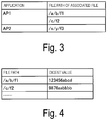
- the associated file information is, for example, information indicating a file path of a file (associated file) associated with an operation of the AP for each AP (see Fig. 3 ).
- the associated file information illustrated in Fig. 3 indicates that all associated files of the file paths associated with AP1 ("/a/b/f1" and "/c/f2") need to be verified for integrity when it is desired to determine the integrity of AP1.
- the associated file information illustrated in Fig. 3 also indicates that an AP likely to be affected is "AP1" if the integrity of any of the associated file of the file paths "/a/b/f1" and "/c/f2" is damaged.
- the correct answer information is information used to determine the integrity of the associated file.
- a digest value of the file data is used as the correct answer information.
- the correct answer information illustrated in Fig. 4 is information in which the file path of the associated file and the digest value of the file data for the file path are associated with each other.
- the correct answer information illustrated in Fig. 4 in a case where the digest value of the associated file of the file path "/a/b/f1" is "123456abcd", it is determined that the integrity of the associated file is not damaged.
- the correct answer information may be information indicating a directory path in which the associated file is stored and a file or file path directly below the directory.
- the correct answer information illustrated in Fig. 5 is information in which the directory path where the associated file is stored (verification target directory path) is associated with one or more file paths directly below the directory.
- the correct answer information illustrated in Fig. 5 indicates that the integrity of the associated file is not damaged if the following fact is verified.
- the following fact is that the file paths "/a/b/d1/f1", “/a/b/d1/f5", and "/a/b/d1/d3" are present directly below the directory path with no excess or deficiency.
- information indicating the file owner information, permission, and the like, of the associated file may be used as the correct answer information.
- the file integrity determiner 13 compares the associated file of the AP to the correct answer information of the associated file to determine the integrity of the associated file.
- the file integrity determiner 13 calculates the digest value of the associated file for each associated file of AP1 illustrated in the associated file information (see Fig. 3 ). Then, if the digest value obtained at the calculating matches the digest value of the associated file indicated in the correct answer information (see Fig. 4 ), the file integrity determiner 13 determines that integrity is not damaged. On the other hand, the file integrity determiner 13 calculates the digest value of the associated file, and determines that the integrity of the associated file is damaged if the digest value obtained at the calculating does not match the digest value of the associated file indicated in the correct answer information (see Fig. 4 ). Then, in a case where the file integrity determiner 13 determines that the integrity of at least one of the associated files of the AP is damaged, the file integrity determiner 13 notifies the control target extractor 14 of the associated file whose integrity is determined to be damaged.
- the control target extractor 14 extracts the AP to be controlled. Specifically, the control target extractor 14 extracts the AP associated with the associated file whose integrity is determined to be damaged by the file integrity determiner 13 from the associated file information (see Fig. 3 ). The control target extractor 14 extracts the associated AP associated with the extracted AP from the associated AP information (see Fig. 2 ).
- the file integrity determiner 13 determines that the integrity of the associated file of the file path "/a/b/f1" is damaged among the associated files indicated in the associated file information illustrated in Fig. 3 .
- control target extractor 14 extracts AP1 associated with the file path "/a/b/f1" from the associated file information illustrated in Fig. 3 .
- the control target extractor 14 extracts the associated AP (AP3) associated with AP1 from the associated AP information (see Fig. 2 ).
- control target extractor 14 If there is further associated AP associated with the extracted associated AP in the associated AP information, the control target extractor 14 also extracts the associated AP. The control target extractor 14 repeats such processing until the associated AP is not extracted.
- the control target extractor 14 extracts AP5 which is an associated AP of AP3 from the associated AP information illustrated in Fig. 2 .
- AP1 is described as the associated AP of AP3, but AP1 has already been extracted and thus is not extracted.
- AP3 is described as the associated AP of AP5 in the associated AP information illustrated in Fig. 2
- the control target extractor 14 does not extract AP3 because it has already been extracted.
- the control target extractor 14 extracts AP3 and AP5 from the associated AP information illustrated in Fig. 2 .
- the control target extractor 14 outputs AP1 extracted from the associated file information and AP3 and AP5 extracted from the associated AP information to the AP operation controller 15.
- the AP operation controller 15 performs operation control of the AP extracted by the control target extractor 14. For example, in a case where AP1, AP3, and AP5 extracted by the control target extractor 14 are running, the AP operation controller 15 stops these APs.
- Such AP operation control device 10 can prevent abnormal operations due to the associated file of the AP.
- the file integrity determiner 13 of the AP operation control device 10 determines the integrity of the associated file of the AP to be activated (S1).
- the file integrity determiner 13 uses the correct answer information of the storage 12 to determine the integrity for all associated files of the AP to be activated which is extracted from the associated file information (see Fig. 3 ).
- the file integrity determiner 13 determines that the integrity is damaged in any of the associated files among the associated files of the AP, the file integrity determiner 13 notifies the control target extractor 14 of the associated file the integrity of which is damaged. Also, the file integrity determiner 13 notifies the AP operation controller 15 of a determination result that the integrity of the associated file is damaged.
- the file integrity determiner 13 determines that the integrity of any of the associated files of the AP is not damaged, the file integrity determiner 13 notifies the AP operation controller 15 of the determination result that the integrity of any of the associated files of the AP is not damaged.
- control target extractor 14 extracts, based on the associated file notified by the file integrity determiner 13 (S2), the associated AP of the AP associated with that associated file.
- the control target extractor 14 extracts, from the associated file information (see Fig. 3 ), an AP associated with the associated file notified by the file integrity determiner 13 in S1. Also, the control target extractor 14 extracts the associated AP of the extracted AP from the associated AP information (see Fig. 2 ). Then, the control target extractor 14 notifies the AP operation controller 15 of the extracted AP and the associated AP of the extracted AP.
- the AP operation controller 15 controls the operation of the AP extracted by the control target extractor 14 (S3).
- the AP operation controller 15 causes the AP notified by the control target extractor 14 to transition to a stopped state.
- the AP notified by the control target extractor 14 is the AP to be activated and the associated AP of the AP to be activated.
- the AP operation controller 15 activates the AP (transition to the operating state).
- the AP operation controller 15 activates the AP (transition to the operating state).
- the fact that the AP is in the recording mode means that the AP is in a mode in which the operation control is not performed even in a case where the integrity of the associated file of the AP is damaged.
- the AP operation control device 10 may determine the integrity of the associated file of the AP in operation as a target. Further, the AP operation control device 10 may determine the integrity of the associated file on the occasion that any of the associated files indicated in the associated file information has been accessed.
- abnormal operations due to abnormalities in the associated file of the AP can be prevented.
- the AP operation control device 10 may target the associated AP of the AP for operation control only after the integrity of all of the APs in the redundant configuration are damaged.
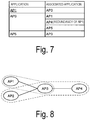
- the AP operation control device 10 determines that the integrity of AP3 is not damaged because the associated AP of AP1 is AP3 in the associated AP information illustrated in Fig. 7 but the integrity of AP4 which is a redundant configuration of AP1 is not damaged. Thus, the AP operation control device 10 does not target AP3 for operation control. On the other hand, in a case where the integrity of both AP1 and AP4 are damaged, the AP operation control device 10 targets AP3 and AP5, which are the associated APs of AP1 and AP4, for operation control.
- the associated APs which are clearly not affected even if the integrity is damaged, for example, in a case where there are multiple types of APs that operate in cooperation, may be excluded from the operation control target.
- Fig. 8 it is considered a case where AP1 and AP3 operate in cooperation, and AP2, AP3, and A4 operate in cooperation, and for example, even if the integrity of AP4 is damaged, AP1 is not affected.
- the AP operation control device 10 does not target the AP1 for operation control even if the integrity of AP4 is damaged.
- the AP operation control device 10 may only output an alert without performing the operation control of the APs as described above, even if it is determined that the integrity is damaged in any AP.
- the functions of the AP operation control device 10 described in the embodiments described above can be implemented by installing a program that achieves such functions into a desired information processor (computer).
- the information processor can function as the AP operation control device 10 by causing the information processor to execute the above-mentioned program provided as package software or online software.
- the information processor described here includes a desktop or laptop personal computer, a rack-mount type server computer, and the like.
- a mobile communication terminal such as a smartphone, a mobile phone, a personal handyphone system (PHS), and a personal digital assistant (PDA), and the like, in addition to the above, are included in a category of the information processor.
- the AP operation control device 10 may also be implemented on a cloud server.
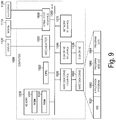
- a computer 1000 includes, for example, a memory 1010, a CPU 1020, a hard disk drive interface 1030, a disk drive interface 1040, a serial port interface 1050, a video adapter 1060, and a network interface 1070. These units are connected by a bus 1080.
- the memory 1010 includes a read only memory (ROM) 1011 and a random access memory (RAM) 1012.
- the ROM 1011 stores, for example, a boot program such as a basic input output system (BIOS).
- BIOS basic input output system
- the hard disk drive interface 1030 is connected to a hard disk drive 1090.
- the disk drive interface 1040 is connected to a disk drive 1100.
- a removable storage medium such as a magnetic disk or an optical disk is inserted into the disk drive 1100.
- a mouse 1110 and a keyboard 1120 are connected to the serial port interface 1050.
- a display 1130 for example, is connected to the video adapter 1060.
- the hard disk drive 1090 stores, for example, an OS 1091, an application program 1092, a program module 1093, and program data 1094 as illustrated in Fig. 7 .
- the various types of data and information described in the aforementioned embodiments are stored in, for example, the hard disk drive 1090 and the memory 1010.
- the CPU 1020 loads the program module 1093 and the program data 1094, stored in the hard disk drive 1090, onto the RAM 1012 as appropriate, and executes each of the aforementioned procedures.
- the program module 1093 and the program data 1094 related to the AP operation control program described above are not necessarily stored in the hard disk drive 1090.
- the program module 1093 and the program data 1094 may be stored in a removable storage medium and read out by the CPU 1020 via the disk drive 1100 or the like.
- the program module 1093 and the program data 1094 related to the program described above may be stored in another computer connected via a network such as a LAN or a wide area network (WAN), and may be read by the CPU 1020 via the network interface 1070.
- a network such as a LAN or a wide area network (WAN)
Landscapes
- Engineering & Computer Science (AREA)
- Theoretical Computer Science (AREA)
- Physics & Mathematics (AREA)
- General Engineering & Computer Science (AREA)
- General Physics & Mathematics (AREA)
- Computer Security & Cryptography (AREA)
- Software Systems (AREA)
- Computer Hardware Design (AREA)
- Quality & Reliability (AREA)
- Human Computer Interaction (AREA)
- Health & Medical Sciences (AREA)
- Bioethics (AREA)
- General Health & Medical Sciences (AREA)
- Databases & Information Systems (AREA)
- Data Mining & Analysis (AREA)
- Information Retrieval, Db Structures And Fs Structures Therefor (AREA)
Abstract
Description
- The present invention relates to an application operation control device, an application operation control method, and an application operation control program.
- In order to prevent an application from operating abnormally, it is necessary that the application is not set in operation in a state where its integrity is damaged. Note that an operating state refers to a state in which the process is generated (that is, provided with a process ID), and not in an operating state (stopped state) refers to a state in which the process is stopped.
- What is associated with the operation of the application is here, for example, as follows.
-
- (1) Those managed by an application developer (for example, application execution files, configuration files, libraries, and the like)
- (2) Those managed by those other than the application developer and directly related to operation (for example, shared libraries, and the like)
- (3) Those managed by those other than the application developer, and not directly related to operation, but required in service offerings (for example, other applications that operate in cooperation with the application, and the like)
- That is, in order to prevent an application from operating abnormally, it is necessary to control operation of the application according to a verification result of integrity of those (for example, files and applications) related to the operations of the application.
- For example, the case that three applications (APs) of AP1 through AP3 cooperate to provide a service will be considered. In this case, in order to properly operate the service, it is necessary not only verifying the integrity of AP1 to control the operation, but also verifying the integrity of AP2 and AP3 to control the operation.
- Patent Literature 1:
Japanese Laid-open Patent Publication No. 2009-80772 A -
- Non Patent Literature 1: Sophos Anti-Virus for Linux: Fanotify Overview, [Retrieved on November 19, 2018], Internet <URL: https://community.sophos.com/kb/ja-jp/118216>
- Non Patent Literature 2: Tripwire Enterprise, [Retrieved on November 19, 2018], Internet <URL: https://www.tripwire.co.jp/products/enterprise/>
- However, the related art (for example, techniques described in PTL 1 and Non Patent Literatures 1 and 2) has not been able to address abnormal operations due to files associated with applications. Thus, an object of the present invention is to prevent abnormal operations due to files associated with applications.
- In order to solve the problems described above, the present invention includes a storage configured to store associated file information that indicates, in association with each other, an application and an associated file that is a file whose integrity is to be verified when integrity of the application is determined, and associated application information that indicates, in association with each other, the application and an associated application that is an application that is potentially affected when the integrity of the application is damaged, a determiner configured to determine integrity of the associated file of the application, and a control target extractor configured to, in a case where, among a plurality of the associated files of the application, integrity of any of the plurality of the associated files is determined to be damaged, extract, as a target application for operation control, an application associated with an associated file the integrity of which is determined to be damaged from the associated file information, and extract an associated application associated with the application that is extracted from the associated application information.
- According to the present invention, it is possible to prevent abnormal operations due to files associated with applications.
-
-
Fig. 1 is a diagram illustrating a configuration example of an application (AP) operation control device. -
Fig. 2 is a diagram illustrating an example of associated AP information ofFig. 1 . -
Fig. 3 is a diagram illustrating an example of associated file information ofFig. 1 . -
Fig. 4 is a diagram illustrating an example of correct answer information ofFig. 1 . -
Fig. 5 is a diagram illustrating an example of correct answer information ofFig. 1 . -
Fig. 6 is a flowchart illustrating an example of a processing procedure of an AP operation control device ofFig. 1 . -
Fig. 7 is a diagram illustrating an example of associated AP information including an AP of a redundant configuration. -
Fig. 8 is a diagram illustrating an example of AP groups operating in cooperation with each other. -
Fig. 9 is a diagram illustrating an example of a computer that executes an AP operation control program. - Hereinafter, embodiments of the present invention will be described with reference to the drawings. A configuration example of an application (AP) operation control device 10 of the present embodiment will be described using
Fig. 1 . Note that the AP to be controlled by the AP operation control device 10 may be an AP operating within the AP operation control device 10, or may be an AP operating outside the AP operation control device 10. - The AP operation control device 10 is a device for performing AP operation control, and includes, for example, a
controller 11, astorage 12, a file integrity determiner (determiner) 13, acontrol target extractor 14, and anAP operation controller 15. - The
controller 11 controls thestorage 12, the file integrity determiner 13, thecontrol target extractor 14, and theAP operation controller 15. - The
storage 12 stores associated AP information, associated file information, and correct answer information. - The associated AP information is information indicating APs that may be affected if the AP integrity is damaged for each AP. This associated AP information is information indicating, for example, the process name of an AP (associated AP) associated with an operation of the AP for each AP (see
Fig. 2 ). Note that instead of the process name of the associated AP in the associated AP information, for example, the file path name of the execution file of the associated AP may be used. - The associated file information is information that indicates a file whose integrity is to be verified when the integrity of the AP is determined for each AP. In other words, the associated file information is information indicating an AP that may be affected if the integrity of a file (associated file) is damaged.
- The associated file information is, for example, information indicating a file path of a file (associated file) associated with an operation of the AP for each AP (see
Fig. 3 ). For example, the associated file information illustrated inFig. 3 indicates that all associated files of the file paths associated with AP1 ("/a/b/f1" and "/c/f2") need to be verified for integrity when it is desired to determine the integrity of AP1. The associated file information illustrated inFig. 3 also indicates that an AP likely to be affected is "AP1" if the integrity of any of the associated file of the file paths "/a/b/f1" and "/c/f2" is damaged. - The correct answer information is information used to determine the integrity of the associated file. For example, a digest value of the file data is used as the correct answer information. For example, the correct answer information illustrated in
Fig. 4 is information in which the file path of the associated file and the digest value of the file data for the file path are associated with each other. For example, in the correct answer information illustrated inFig. 4 , in a case where the digest value of the associated file of the file path "/a/b/f1" is "123456abcd", it is determined that the integrity of the associated file is not damaged. - Further, the correct answer information may be information indicating a directory path in which the associated file is stored and a file or file path directly below the directory.
- For example, the correct answer information illustrated in
Fig. 5 is information in which the directory path where the associated file is stored (verification target directory path) is associated with one or more file paths directly below the directory. For example, in a case where the directory path in which the associated file is stored is "/a/b/d1/", the correct answer information illustrated inFig. 5 indicates that the integrity of the associated file is not damaged if the following fact is verified. The following fact is that the file paths "/a/b/d1/f1", "/a/b/d1/f5", and "/a/b/d1/d3" are present directly below the directory path with no excess or deficiency. - Note that in addition to the above, information indicating the file owner information, permission, and the like, of the associated file may be used as the correct answer information.
- Next, the
file integrity determiner 13 will be described. The file integrity determiner 13 compares the associated file of the AP to the correct answer information of the associated file to determine the integrity of the associated file. - For example, the file integrity determiner 13 calculates the digest value of the associated file for each associated file of AP1 illustrated in the associated file information (see
Fig. 3 ). Then, if the digest value obtained at the calculating matches the digest value of the associated file indicated in the correct answer information (seeFig. 4 ), the file integrity determiner 13 determines that integrity is not damaged. On the other hand, the file integrity determiner 13 calculates the digest value of the associated file, and determines that the integrity of the associated file is damaged if the digest value obtained at the calculating does not match the digest value of the associated file indicated in the correct answer information (seeFig. 4 ). Then, in a case where the file integrity determiner 13 determines that the integrity of at least one of the associated files of the AP is damaged, the file integrity determiner 13 notifies thecontrol target extractor 14 of the associated file whose integrity is determined to be damaged. - The
control target extractor 14 extracts the AP to be controlled. Specifically, thecontrol target extractor 14 extracts the AP associated with the associated file whose integrity is determined to be damaged by thefile integrity determiner 13 from the associated file information (seeFig. 3 ). Thecontrol target extractor 14 extracts the associated AP associated with the extracted AP from the associated AP information (seeFig. 2 ). - For example, it is considered a case where the
file integrity determiner 13 determines that the integrity of the associated file of the file path "/a/b/f1" is damaged among the associated files indicated in the associated file information illustrated inFig. 3 . - In this case, the
control target extractor 14 extracts AP1 associated with the file path "/a/b/f1" from the associated file information illustrated inFig. 3 . Next, thecontrol target extractor 14 extracts the associated AP (AP3) associated with AP1 from the associated AP information (seeFig. 2 ). - If there is further associated AP associated with the extracted associated AP in the associated AP information, the
control target extractor 14 also extracts the associated AP. Thecontrol target extractor 14 repeats such processing until the associated AP is not extracted. - For example, the
control target extractor 14 extracts AP5 which is an associated AP of AP3 from the associated AP information illustrated inFig. 2 . Note that in the associated AP information illustrated inFig. 2 , AP1 is described as the associated AP of AP3, but AP1 has already been extracted and thus is not extracted. In addition, although AP3 is described as the associated AP of AP5 in the associated AP information illustrated inFig. 2 , thecontrol target extractor 14 does not extract AP3 because it has already been extracted. With the processing described above, thecontrol target extractor 14 extracts AP3 and AP5 from the associated AP information illustrated inFig. 2 . Thecontrol target extractor 14 outputs AP1 extracted from the associated file information and AP3 and AP5 extracted from the associated AP information to theAP operation controller 15. - The
AP operation controller 15 performs operation control of the AP extracted by thecontrol target extractor 14. For example, in a case where AP1, AP3, and AP5 extracted by thecontrol target extractor 14 are running, theAP operation controller 15 stops these APs. - Such AP operation control device 10 can prevent abnormal operations due to the associated file of the AP.
- Next, an example of a processing procedure of the AP operation control device 10 will be described with reference to
Fig. 6 . Further, here, an example is given of a case where the AP operation control device 10 determines the integrity of the associated file of the AP to be activated. - The
file integrity determiner 13 of the AP operation control device 10 determines the integrity of the associated file of the AP to be activated (S1). - For example, the
file integrity determiner 13 uses the correct answer information of thestorage 12 to determine the integrity for all associated files of the AP to be activated which is extracted from the associated file information (seeFig. 3 ). - Here, in a case where the
file integrity determiner 13 determines that the integrity is damaged in any of the associated files among the associated files of the AP, thefile integrity determiner 13 notifies thecontrol target extractor 14 of the associated file the integrity of which is damaged. Also, thefile integrity determiner 13 notifies theAP operation controller 15 of a determination result that the integrity of the associated file is damaged. - In a case where the
file integrity determiner 13 determines that the integrity of any of the associated files of the AP is not damaged, thefile integrity determiner 13 notifies theAP operation controller 15 of the determination result that the integrity of any of the associated files of the AP is not damaged. - After S1, the
control target extractor 14 extracts, based on the associated file notified by the file integrity determiner 13 (S2), the associated AP of the AP associated with that associated file. - For example, first, the
control target extractor 14 extracts, from the associated file information (seeFig. 3 ), an AP associated with the associated file notified by thefile integrity determiner 13 in S1. Also, thecontrol target extractor 14 extracts the associated AP of the extracted AP from the associated AP information (seeFig. 2 ). Then, thecontrol target extractor 14 notifies theAP operation controller 15 of the extracted AP and the associated AP of the extracted AP. - After S3, the
AP operation controller 15 controls the operation of the AP extracted by the control target extractor 14 (S3). - For example, in a case where the determination result notified by the
file integrity determiner 13 is that the integrity of any of the associated files of the AP to be activated is damaged, theAP operation controller 15 causes the AP notified by thecontrol target extractor 14 to transition to a stopped state. Here, the AP notified by thecontrol target extractor 14 is the AP to be activated and the associated AP of the AP to be activated. - On the other hand, in a case where the determination result notified by the
file integrity determiner 13 is that the integrity of none of the associated files of the AP to be activated is damaged, theAP operation controller 15 activates the AP (transition to the operating state). Note that when the AP is in a recording mode in a case where the determination result notified by thefile integrity determiner 13 is that the integrity of any of the associated files of the AP to be activated is damaged, theAP operation controller 15 activates the AP (transition to the operating state). Here, the fact that the AP is in the recording mode means that the AP is in a mode in which the operation control is not performed even in a case where the integrity of the associated file of the AP is damaged. - Note that in the above example, the description has been given, as an example, of a case where the AP operation control device 10 determines the integrity of the associated file of the AP to be activated, but it is not limited thereto. For example, the AP operation control device 10 may determine the integrity of the associated file of the AP in operation as a target. Further, the AP operation control device 10 may determine the integrity of the associated file on the occasion that any of the associated files indicated in the associated file information has been accessed.
- According to the AP operation control device 10 described above, abnormal operations due to abnormalities in the associated file of the AP can be prevented.
- Note that in a case where the target AP of operation control by the AP operation control device 10 described above is in a redundant configuration, the AP operation control device 10 may target the associated AP of the AP for operation control only after the integrity of all of the APs in the redundant configuration are damaged.
- For example, it is considered a case where AP4 is present as a redundant configuration of AP1 and the integrity of AP1 is damaged but the integrity of AP4 is not damaged. In this case, the AP operation control device 10 determines that the integrity of AP3 is not damaged because the associated AP of AP1 is AP3 in the associated AP information illustrated in
Fig. 7 but the integrity of AP4 which is a redundant configuration of AP1 is not damaged. Thus, the AP operation control device 10 does not target AP3 for operation control. On the other hand, in a case where the integrity of both AP1 and AP4 are damaged, the AP operation control device 10 targets AP3 and AP5, which are the associated APs of AP1 and AP4, for operation control. - Also, the associated APs, which are clearly not affected even if the integrity is damaged, for example, in a case where there are multiple types of APs that operate in cooperation, may be excluded from the operation control target. For example, as illustrated in
Fig. 8 , it is considered a case where AP1 and AP3 operate in cooperation, and AP2, AP3, and A4 operate in cooperation, and for example, even if the integrity of AP4 is damaged, AP1 is not affected. In this case, the AP operation control device 10 does not target the AP1 for operation control even if the integrity of AP4 is damaged. - The AP operation control device 10 may only output an alert without performing the operation control of the APs as described above, even if it is determined that the integrity is damaged in any AP.
- The functions of the AP operation control device 10 described in the embodiments described above can be implemented by installing a program that achieves such functions into a desired information processor (computer). For example, the information processor can function as the AP operation control device 10 by causing the information processor to execute the above-mentioned program provided as package software or online software. The information processor described here includes a desktop or laptop personal computer, a rack-mount type server computer, and the like. Further, a mobile communication terminal such as a smartphone, a mobile phone, a personal handyphone system (PHS), and a personal digital assistant (PDA), and the like, in addition to the above, are included in a category of the information processor. The AP operation control device 10 may also be implemented on a cloud server.
- One example of a computer that executes the program (AP operation control program) described above will be described with reference to
Fig. 7 . As illustrated inFig. 7 , acomputer 1000 includes, for example, amemory 1010, aCPU 1020, a harddisk drive interface 1030, adisk drive interface 1040, aserial port interface 1050, avideo adapter 1060, and anetwork interface 1070. These units are connected by a bus 1080. - The
memory 1010 includes a read only memory (ROM) 1011 and a random access memory (RAM) 1012. TheROM 1011 stores, for example, a boot program such as a basic input output system (BIOS). The harddisk drive interface 1030 is connected to ahard disk drive 1090. Thedisk drive interface 1040 is connected to adisk drive 1100. A removable storage medium such as a magnetic disk or an optical disk is inserted into thedisk drive 1100. Amouse 1110 and akeyboard 1120, for example, are connected to theserial port interface 1050. Adisplay 1130, for example, is connected to thevideo adapter 1060. - Here, the
hard disk drive 1090 stores, for example, anOS 1091, anapplication program 1092, aprogram module 1093, andprogram data 1094 as illustrated inFig. 7 . The various types of data and information described in the aforementioned embodiments are stored in, for example, thehard disk drive 1090 and thememory 1010. - The
CPU 1020 loads theprogram module 1093 and theprogram data 1094, stored in thehard disk drive 1090, onto theRAM 1012 as appropriate, and executes each of the aforementioned procedures. - The
program module 1093 and theprogram data 1094 related to the AP operation control program described above are not necessarily stored in thehard disk drive 1090. For example, theprogram module 1093 and theprogram data 1094 may be stored in a removable storage medium and read out by theCPU 1020 via thedisk drive 1100 or the like. Alternatively, theprogram module 1093 and theprogram data 1094 related to the program described above may be stored in another computer connected via a network such as a LAN or a wide area network (WAN), and may be read by theCPU 1020 via thenetwork interface 1070. -
- 10 AP operation control device
- 11 Controller
- 12 Storage
- 13 File integrity determiner
- 14 Control target extractor
- 15 AP operation controller
Claims (8)
- An application operation control device comprising:a storage configured to store associated file information that indicates, in association with each other, an application and an associated file that is a file whose integrity is to be verified when integrity of the application is determined, and associated application information that indicates, in association with each other, the application and an associated application that is an application that is potentially affected when the integrity of the application is damaged;a determiner configured to determine integrity of the associated file of the application; anda control target extractor configured to, in a case where, among a plurality of the associated files of the application, integrity of any of the plurality of the associated files is determined to be damaged, extract, as a target application for operation control, an application associated with an associated file the integrity of which is determined to be damaged from the associated file information, and extract an associated application associated with the application that is extracted from the associated application information.
- The application operation control device according to claim 1, wherein
the determiner calculates a digest value of the associated file, and compares the digest value that is obtained at the calculating and a digest value of the associated file stored in the storage in advance to determine integrity of the associated file. - The application operation control device according to claim 1, wherein
the determiner determines the integrity of an associated file of an application to be activated. - The application operation control device according to claim 1, wherein
the determiner determines the integrity of an associated file of an application in operation. - The application operation control device according to claim 1, wherein
the control target extractor repeats, in a case where, in the associated application information, there is a further associated application that is associated with the associated application that is extracted, processing of extracting the further associated application that is associated with the associated application that is extracted, from the associated application information until no new instance of the further associated application is extracted. - The application operation control device according to claim 1, further comprising:an application operation controller configured to perform operation control on an application extracted as the target application for operation control.
- An application operation control method executed by an application operation control device, the application operation control method comprising:referring to associated file information that indicates, in association with each other, an application and an associated file that is a file whose integrity is to be verified when integrity of the application is determined, to determine integrity of the associated file of the application;in a case where, among a plurality of the associated files of the application, integrity of any of the plurality of the associated files is determined to be damaged,extracting, as a target application for operation control, an application associated with an associated file the integrity of which is determined to be damaged from the associated file information; andextracting an associated application associated with the application that is extracted from associated application information that indicates, in association with each other, the application and an associated application that is an application that is potentially affected when the integrity of the application is damaged.
- An application operation control program that causes a computer to execute, the application operation control program comprising instructions for:referring to associated file information that indicates, in association with each other, an application and an associated file that is a file whose integrity is to be verified when integrity of the application is determined, to determine integrity of the associated file of the application;in a case where, among a plurality of the associated files of the application, integrity of any of the plurality of the associated files is determined to be damaged,extracting, as a target application for operation control, an application associated with an associated file the integrity of which is determined to be damaged from the associated file information; andextracting an associated application associated with the application that is extracted from associated application information that indicates, in association with each other, the application and an associated application that is an application that is potentially affected when the integrity of the application is damaged.
Applications Claiming Priority (2)
| Application Number | Priority Date | Filing Date | Title |
|---|---|---|---|
| JP2018224106A JP7020384B2 (en) | 2018-11-29 | 2018-11-29 | Application operation control device, application operation control method, and application operation control program |
| PCT/JP2019/044545 WO2020110726A1 (en) | 2018-11-29 | 2019-11-13 | Application operation control device, application operation control method, and application operation control program |
Publications (3)
| Publication Number | Publication Date |
|---|---|
| EP3872660A1 true EP3872660A1 (en) | 2021-09-01 |
| EP3872660A4 EP3872660A4 (en) | 2022-07-13 |
| EP3872660B1 EP3872660B1 (en) | 2024-03-13 |
Family
ID=70852062
Family Applications (1)
| Application Number | Title | Priority Date | Filing Date |
|---|---|---|---|
| EP19889264.8A Active EP3872660B1 (en) | 2018-11-29 | 2019-11-13 | Application operation control device, application operation control method, and application operation control program |
Country Status (6)
| Country | Link |
|---|---|
| US (1) | US11977472B2 (en) |
| EP (1) | EP3872660B1 (en) |
| JP (1) | JP7020384B2 (en) |
| CN (1) | CN113168462B (en) |
| AU (1) | AU2019386432B2 (en) |
| WO (1) | WO2020110726A1 (en) |
Family Cites Families (12)
| Publication number | Priority date | Publication date | Assignee | Title |
|---|---|---|---|---|
| US7124408B1 (en) * | 2000-06-28 | 2006-10-17 | Microsoft Corporation | Binding by hash |
| JP2002342277A (en) * | 2001-05-21 | 2002-11-29 | Nippon Telegr & Teleph Corp <Ntt> | Service cooperation system, cooperation server, secure token, program, and recording medium |
| AU2003278779A1 (en) * | 2002-09-10 | 2004-04-30 | Exagrid Systems, Inc. | Primary and remote data backup with nodal failover |
| CA2516741C (en) * | 2003-02-21 | 2013-10-08 | Caringo, Inc. | Additional hash functions in content-based addressing |
| JP4983796B2 (en) * | 2006-08-31 | 2012-07-25 | 富士通株式会社 | Application program verification method and application program verification program |
| JP2009080772A (en) | 2007-09-27 | 2009-04-16 | Toppan Printing Co Ltd | Software activation system, software activation method, and software activation program |
| CN101960462B (en) * | 2008-02-28 | 2013-05-08 | 日本电信电话株式会社 | Authentication device, authentication method, and authentication program with the method mounted thereon |
| EP2449495A1 (en) * | 2009-07-03 | 2012-05-09 | Gemalto SA | Method for remotely validating executable code |
| US8161012B1 (en) * | 2010-02-05 | 2012-04-17 | Juniper Networks, Inc. | File integrity verification using a verified, image-based file system |
| US8566937B2 (en) * | 2010-10-04 | 2013-10-22 | Panasonic Corporation | Information processing apparatus and method for preventing unauthorized cooperation of applications |
| KR20130134790A (en) * | 2012-05-31 | 2013-12-10 | 네이버비즈니스플랫폼 주식회사 | Method and system for storing the integrity information of application, method and system for checking the integrity of application |
| CN105938436A (en) * | 2016-07-14 | 2016-09-14 | 深圳市金立通信设备有限公司 | Startup control method of operation system and terminal |
-
2018
- 2018-11-29 JP JP2018224106A patent/JP7020384B2/en active Active
-
2019
- 2019-11-13 AU AU2019386432A patent/AU2019386432B2/en active Active
- 2019-11-13 EP EP19889264.8A patent/EP3872660B1/en active Active
- 2019-11-13 WO PCT/JP2019/044545 patent/WO2020110726A1/en not_active Ceased
- 2019-11-13 US US17/297,280 patent/US11977472B2/en active Active
- 2019-11-13 CN CN201980077720.9A patent/CN113168462B/en active Active
Also Published As
| Publication number | Publication date |
|---|---|
| CN113168462A (en) | 2021-07-23 |
| CN113168462B (en) | 2025-01-03 |
| JP2020087216A (en) | 2020-06-04 |
| EP3872660B1 (en) | 2024-03-13 |
| AU2019386432A1 (en) | 2021-05-27 |
| JP7020384B2 (en) | 2022-02-16 |
| WO2020110726A1 (en) | 2020-06-04 |
| AU2019386432B2 (en) | 2022-07-14 |
| EP3872660A4 (en) | 2022-07-13 |
| US11977472B2 (en) | 2024-05-07 |
| US20220027256A1 (en) | 2022-01-27 |
Similar Documents
| Publication | Publication Date | Title |
|---|---|---|
| US20180089430A1 (en) | Computer security profiling | |
| US11822659B2 (en) | Systems and methods for anti-malware scanning using automatically-created white lists | |
| EP2663944B1 (en) | Malware detection | |
| US11520889B2 (en) | Method and system for granting access to a file | |
| US9444832B1 (en) | Systems and methods for optimizing antivirus determinations | |
| US11403388B2 (en) | Assignment device, assignment method, and assignment program | |
| US20240281540A1 (en) | Risk analysis apparatus, method, and computer-readable medium | |
| US20160078227A1 (en) | Data processing system security device and security method | |
| CN102598008A (en) | Windows kernel changes search method | |
| US11977472B2 (en) | Application operation control device, application operation control method, and application operation control program | |
| US11507396B2 (en) | Method, device and computer program product for storage management | |
| EP3563281B1 (en) | Persistence probing to detect malware | |
| US10255435B1 (en) | Systems and methods for establishing a reputation for related program files | |
| US11762985B2 (en) | Systems and methods for protecting files indirectly related to user activity | |
| EP4322038B1 (en) | File confirmation apparatus, file confirmation method, and file confirmation program | |
| EP3872640B1 (en) | Information creation device, information creation method, and information creation program | |
| US11120169B1 (en) | Systems and methods for identifying malware locations based on analyses of backup files | |
| JP7574922B2 (en) | DETECTION APPARATUS, DETECTION METHOD, AND DETECTION PROGRAM | |
| US20250245324A1 (en) | Vector Variation Driven Malware Corruption Detection | |
| EP3588350B1 (en) | Method and system for generating a request for information on a file to perform an antivirus scan | |
| EP3889814B1 (en) | Update device and update method | |
| EP4276670A1 (en) | Information processing device, information processing method, and information processing program | |
| WO2020090497A1 (en) | Infection probability calculating device, infection probability calculating method, and infection probability calculating program |
Legal Events
| Date | Code | Title | Description |
|---|---|---|---|
| STAA | Information on the status of an ep patent application or granted ep patent |
Free format text: STATUS: THE INTERNATIONAL PUBLICATION HAS BEEN MADE |
|
| PUAI | Public reference made under article 153(3) epc to a published international application that has entered the european phase |
Free format text: ORIGINAL CODE: 0009012 |
|
| STAA | Information on the status of an ep patent application or granted ep patent |
Free format text: STATUS: REQUEST FOR EXAMINATION WAS MADE |
|
| 17P | Request for examination filed |
Effective date: 20210526 |
|
| AK | Designated contracting states |
Kind code of ref document: A1 Designated state(s): AL AT BE BG CH CY CZ DE DK EE ES FI FR GB GR HR HU IE IS IT LI LT LU LV MC MK MT NL NO PL PT RO RS SE SI SK SM TR |
|
| DAV | Request for validation of the european patent (deleted) | ||
| DAX | Request for extension of the european patent (deleted) | ||
| A4 | Supplementary search report drawn up and despatched |
Effective date: 20220610 |
|
| RIC1 | Information provided on ipc code assigned before grant |
Ipc: G06F 16/13 20190101ALI20220603BHEP Ipc: G06F 11/07 20060101ALI20220603BHEP Ipc: G06F 3/06 20060101ALI20220603BHEP Ipc: G06F 16/10 20190101ALI20220603BHEP Ipc: G06F 11/30 20060101ALI20220603BHEP Ipc: G06F 21/52 20130101ALI20220603BHEP Ipc: G06F 21/51 20130101AFI20220603BHEP |
|
| STAA | Information on the status of an ep patent application or granted ep patent |
Free format text: STATUS: EXAMINATION IS IN PROGRESS |
|
| 17Q | First examination report despatched |
Effective date: 20230301 |
|
| GRAP | Despatch of communication of intention to grant a patent |
Free format text: ORIGINAL CODE: EPIDOSNIGR1 |
|
| STAA | Information on the status of an ep patent application or granted ep patent |
Free format text: STATUS: GRANT OF PATENT IS INTENDED |
|
| INTG | Intention to grant announced |
Effective date: 20230907 |
|
| GRAJ | Information related to disapproval of communication of intention to grant by the applicant or resumption of examination proceedings by the epo deleted |
Free format text: ORIGINAL CODE: EPIDOSDIGR1 |
|
| STAA | Information on the status of an ep patent application or granted ep patent |
Free format text: STATUS: EXAMINATION IS IN PROGRESS |
|
| GRAP | Despatch of communication of intention to grant a patent |
Free format text: ORIGINAL CODE: EPIDOSNIGR1 |
|
| STAA | Information on the status of an ep patent application or granted ep patent |
Free format text: STATUS: GRANT OF PATENT IS INTENDED |
|
| INTC | Intention to grant announced (deleted) | ||
| INTG | Intention to grant announced |
Effective date: 20231115 |
|
| GRAS | Grant fee paid |
Free format text: ORIGINAL CODE: EPIDOSNIGR3 |
|
| GRAA | (expected) grant |
Free format text: ORIGINAL CODE: 0009210 |
|
| STAA | Information on the status of an ep patent application or granted ep patent |
Free format text: STATUS: THE PATENT HAS BEEN GRANTED |
|
| AK | Designated contracting states |
Kind code of ref document: B1 Designated state(s): AL AT BE BG CH CY CZ DE DK EE ES FI FR GB GR HR HU IE IS IT LI LT LU LV MC MK MT NL NO PL PT RO RS SE SI SK SM TR |
|
| REG | Reference to a national code |
Ref country code: GB Ref legal event code: FG4D |
|
| REG | Reference to a national code |
Ref country code: CH Ref legal event code: EP |
|
| REG | Reference to a national code |
Ref country code: DE Ref legal event code: R096 Ref document number: 602019048412 Country of ref document: DE |
|
| REG | Reference to a national code |
Ref country code: IE Ref legal event code: FG4D |
|
| REG | Reference to a national code |
Ref country code: SE Ref legal event code: TRGR |
|
| PG25 | Lapsed in a contracting state [announced via postgrant information from national office to epo] |
Ref country code: LT Free format text: LAPSE BECAUSE OF FAILURE TO SUBMIT A TRANSLATION OF THE DESCRIPTION OR TO PAY THE FEE WITHIN THE PRESCRIBED TIME-LIMIT Effective date: 20240313 |
|
| REG | Reference to a national code |
Ref country code: LT Ref legal event code: MG9D |
|
| PG25 | Lapsed in a contracting state [announced via postgrant information from national office to epo] |
Ref country code: GR Free format text: LAPSE BECAUSE OF FAILURE TO SUBMIT A TRANSLATION OF THE DESCRIPTION OR TO PAY THE FEE WITHIN THE PRESCRIBED TIME-LIMIT Effective date: 20240614 |
|
| REG | Reference to a national code |
Ref country code: NL Ref legal event code: MP Effective date: 20240313 |
|
| PG25 | Lapsed in a contracting state [announced via postgrant information from national office to epo] |
Ref country code: HR Free format text: LAPSE BECAUSE OF FAILURE TO SUBMIT A TRANSLATION OF THE DESCRIPTION OR TO PAY THE FEE WITHIN THE PRESCRIBED TIME-LIMIT Effective date: 20240313 Ref country code: RS Free format text: LAPSE BECAUSE OF FAILURE TO SUBMIT A TRANSLATION OF THE DESCRIPTION OR TO PAY THE FEE WITHIN THE PRESCRIBED TIME-LIMIT Effective date: 20240613 |
|
| PG25 | Lapsed in a contracting state [announced via postgrant information from national office to epo] |
Ref country code: ES Free format text: LAPSE BECAUSE OF FAILURE TO SUBMIT A TRANSLATION OF THE DESCRIPTION OR TO PAY THE FEE WITHIN THE PRESCRIBED TIME-LIMIT Effective date: 20240313 |
|
| PG25 | Lapsed in a contracting state [announced via postgrant information from national office to epo] |
Ref country code: RS Free format text: LAPSE BECAUSE OF FAILURE TO SUBMIT A TRANSLATION OF THE DESCRIPTION OR TO PAY THE FEE WITHIN THE PRESCRIBED TIME-LIMIT Effective date: 20240613 Ref country code: NO Free format text: LAPSE BECAUSE OF FAILURE TO SUBMIT A TRANSLATION OF THE DESCRIPTION OR TO PAY THE FEE WITHIN THE PRESCRIBED TIME-LIMIT Effective date: 20240613 Ref country code: LT Free format text: LAPSE BECAUSE OF FAILURE TO SUBMIT A TRANSLATION OF THE DESCRIPTION OR TO PAY THE FEE WITHIN THE PRESCRIBED TIME-LIMIT Effective date: 20240313 Ref country code: HR Free format text: LAPSE BECAUSE OF FAILURE TO SUBMIT A TRANSLATION OF THE DESCRIPTION OR TO PAY THE FEE WITHIN THE PRESCRIBED TIME-LIMIT Effective date: 20240313 Ref country code: GR Free format text: LAPSE BECAUSE OF FAILURE TO SUBMIT A TRANSLATION OF THE DESCRIPTION OR TO PAY THE FEE WITHIN THE PRESCRIBED TIME-LIMIT Effective date: 20240614 Ref country code: FI Free format text: LAPSE BECAUSE OF FAILURE TO SUBMIT A TRANSLATION OF THE DESCRIPTION OR TO PAY THE FEE WITHIN THE PRESCRIBED TIME-LIMIT Effective date: 20240313 Ref country code: ES Free format text: LAPSE BECAUSE OF FAILURE TO SUBMIT A TRANSLATION OF THE DESCRIPTION OR TO PAY THE FEE WITHIN THE PRESCRIBED TIME-LIMIT Effective date: 20240313 Ref country code: BG Free format text: LAPSE BECAUSE OF FAILURE TO SUBMIT A TRANSLATION OF THE DESCRIPTION OR TO PAY THE FEE WITHIN THE PRESCRIBED TIME-LIMIT Effective date: 20240313 |
|
| REG | Reference to a national code |
Ref country code: AT Ref legal event code: MK05 Ref document number: 1666426 Country of ref document: AT Kind code of ref document: T Effective date: 20240313 |
|
| PG25 | Lapsed in a contracting state [announced via postgrant information from national office to epo] |
Ref country code: LV Free format text: LAPSE BECAUSE OF FAILURE TO SUBMIT A TRANSLATION OF THE DESCRIPTION OR TO PAY THE FEE WITHIN THE PRESCRIBED TIME-LIMIT Effective date: 20240313 |
|
| PG25 | Lapsed in a contracting state [announced via postgrant information from national office to epo] |
Ref country code: NL Free format text: LAPSE BECAUSE OF FAILURE TO SUBMIT A TRANSLATION OF THE DESCRIPTION OR TO PAY THE FEE WITHIN THE PRESCRIBED TIME-LIMIT Effective date: 20240313 |
|
| PG25 | Lapsed in a contracting state [announced via postgrant information from national office to epo] |
Ref country code: NL Free format text: LAPSE BECAUSE OF FAILURE TO SUBMIT A TRANSLATION OF THE DESCRIPTION OR TO PAY THE FEE WITHIN THE PRESCRIBED TIME-LIMIT Effective date: 20240313 |
|
| PG25 | Lapsed in a contracting state [announced via postgrant information from national office to epo] |
Ref country code: IS Free format text: LAPSE BECAUSE OF FAILURE TO SUBMIT A TRANSLATION OF THE DESCRIPTION OR TO PAY THE FEE WITHIN THE PRESCRIBED TIME-LIMIT Effective date: 20240713 |
|
| PG25 | Lapsed in a contracting state [announced via postgrant information from national office to epo] |
Ref country code: SM Free format text: LAPSE BECAUSE OF FAILURE TO SUBMIT A TRANSLATION OF THE DESCRIPTION OR TO PAY THE FEE WITHIN THE PRESCRIBED TIME-LIMIT Effective date: 20240313 Ref country code: PT Free format text: LAPSE BECAUSE OF FAILURE TO SUBMIT A TRANSLATION OF THE DESCRIPTION OR TO PAY THE FEE WITHIN THE PRESCRIBED TIME-LIMIT Effective date: 20240715 |
|
| PG25 | Lapsed in a contracting state [announced via postgrant information from national office to epo] |
Ref country code: EE Free format text: LAPSE BECAUSE OF FAILURE TO SUBMIT A TRANSLATION OF THE DESCRIPTION OR TO PAY THE FEE WITHIN THE PRESCRIBED TIME-LIMIT Effective date: 20240313 Ref country code: CZ Free format text: LAPSE BECAUSE OF FAILURE TO SUBMIT A TRANSLATION OF THE DESCRIPTION OR TO PAY THE FEE WITHIN THE PRESCRIBED TIME-LIMIT Effective date: 20240313 |
|
| PG25 | Lapsed in a contracting state [announced via postgrant information from national office to epo] |
Ref country code: AT Free format text: LAPSE BECAUSE OF FAILURE TO SUBMIT A TRANSLATION OF THE DESCRIPTION OR TO PAY THE FEE WITHIN THE PRESCRIBED TIME-LIMIT Effective date: 20240313 |
|
| PG25 | Lapsed in a contracting state [announced via postgrant information from national office to epo] |
Ref country code: PL Free format text: LAPSE BECAUSE OF FAILURE TO SUBMIT A TRANSLATION OF THE DESCRIPTION OR TO PAY THE FEE WITHIN THE PRESCRIBED TIME-LIMIT Effective date: 20240313 |
|
| PG25 | Lapsed in a contracting state [announced via postgrant information from national office to epo] |
Ref country code: SK Free format text: LAPSE BECAUSE OF FAILURE TO SUBMIT A TRANSLATION OF THE DESCRIPTION OR TO PAY THE FEE WITHIN THE PRESCRIBED TIME-LIMIT Effective date: 20240313 |
|
| PG25 | Lapsed in a contracting state [announced via postgrant information from national office to epo] |
Ref country code: SM Free format text: LAPSE BECAUSE OF FAILURE TO SUBMIT A TRANSLATION OF THE DESCRIPTION OR TO PAY THE FEE WITHIN THE PRESCRIBED TIME-LIMIT Effective date: 20240313 Ref country code: SK Free format text: LAPSE BECAUSE OF FAILURE TO SUBMIT A TRANSLATION OF THE DESCRIPTION OR TO PAY THE FEE WITHIN THE PRESCRIBED TIME-LIMIT Effective date: 20240313 Ref country code: RO Free format text: LAPSE BECAUSE OF FAILURE TO SUBMIT A TRANSLATION OF THE DESCRIPTION OR TO PAY THE FEE WITHIN THE PRESCRIBED TIME-LIMIT Effective date: 20240313 Ref country code: PT Free format text: LAPSE BECAUSE OF FAILURE TO SUBMIT A TRANSLATION OF THE DESCRIPTION OR TO PAY THE FEE WITHIN THE PRESCRIBED TIME-LIMIT Effective date: 20240715 Ref country code: PL Free format text: LAPSE BECAUSE OF FAILURE TO SUBMIT A TRANSLATION OF THE DESCRIPTION OR TO PAY THE FEE WITHIN THE PRESCRIBED TIME-LIMIT Effective date: 20240313 Ref country code: IS Free format text: LAPSE BECAUSE OF FAILURE TO SUBMIT A TRANSLATION OF THE DESCRIPTION OR TO PAY THE FEE WITHIN THE PRESCRIBED TIME-LIMIT Effective date: 20240713 Ref country code: EE Free format text: LAPSE BECAUSE OF FAILURE TO SUBMIT A TRANSLATION OF THE DESCRIPTION OR TO PAY THE FEE WITHIN THE PRESCRIBED TIME-LIMIT Effective date: 20240313 Ref country code: CZ Free format text: LAPSE BECAUSE OF FAILURE TO SUBMIT A TRANSLATION OF THE DESCRIPTION OR TO PAY THE FEE WITHIN THE PRESCRIBED TIME-LIMIT Effective date: 20240313 Ref country code: AT Free format text: LAPSE BECAUSE OF FAILURE TO SUBMIT A TRANSLATION OF THE DESCRIPTION OR TO PAY THE FEE WITHIN THE PRESCRIBED TIME-LIMIT Effective date: 20240313 |
|
| REG | Reference to a national code |
Ref country code: DE Ref legal event code: R097 Ref document number: 602019048412 Country of ref document: DE |
|
| PG25 | Lapsed in a contracting state [announced via postgrant information from national office to epo] |
Ref country code: DK Free format text: LAPSE BECAUSE OF FAILURE TO SUBMIT A TRANSLATION OF THE DESCRIPTION OR TO PAY THE FEE WITHIN THE PRESCRIBED TIME-LIMIT Effective date: 20240313 |
|
| PLBE | No opposition filed within time limit |
Free format text: ORIGINAL CODE: 0009261 |
|
| STAA | Information on the status of an ep patent application or granted ep patent |
Free format text: STATUS: NO OPPOSITION FILED WITHIN TIME LIMIT |
|
| PG25 | Lapsed in a contracting state [announced via postgrant information from national office to epo] |
Ref country code: DK Free format text: LAPSE BECAUSE OF FAILURE TO SUBMIT A TRANSLATION OF THE DESCRIPTION OR TO PAY THE FEE WITHIN THE PRESCRIBED TIME-LIMIT Effective date: 20240313 |
|
| 26N | No opposition filed |
Effective date: 20241216 |
|
| PG25 | Lapsed in a contracting state [announced via postgrant information from national office to epo] |
Ref country code: SI Free format text: LAPSE BECAUSE OF FAILURE TO SUBMIT A TRANSLATION OF THE DESCRIPTION OR TO PAY THE FEE WITHIN THE PRESCRIBED TIME-LIMIT Effective date: 20240313 |
|
| REG | Reference to a national code |
Ref country code: CH Ref legal event code: PL |
|
| PG25 | Lapsed in a contracting state [announced via postgrant information from national office to epo] |
Ref country code: MC Free format text: LAPSE BECAUSE OF FAILURE TO SUBMIT A TRANSLATION OF THE DESCRIPTION OR TO PAY THE FEE WITHIN THE PRESCRIBED TIME-LIMIT Effective date: 20240313 |
|
| PG25 | Lapsed in a contracting state [announced via postgrant information from national office to epo] |
Ref country code: LU Free format text: LAPSE BECAUSE OF NON-PAYMENT OF DUE FEES Effective date: 20241113 |
|
| REG | Reference to a national code |
Ref country code: CH Ref legal event code: PL |
|
| PG25 | Lapsed in a contracting state [announced via postgrant information from national office to epo] |
Ref country code: CH Free format text: LAPSE BECAUSE OF NON-PAYMENT OF DUE FEES Effective date: 20241130 |
|
| REG | Reference to a national code |
Ref country code: BE Ref legal event code: MM Effective date: 20241130 |
|
| PG25 | Lapsed in a contracting state [announced via postgrant information from national office to epo] |
Ref country code: BE Free format text: LAPSE BECAUSE OF NON-PAYMENT OF DUE FEES Effective date: 20241130 |
|
| PG25 | Lapsed in a contracting state [announced via postgrant information from national office to epo] |
Ref country code: IE Free format text: LAPSE BECAUSE OF NON-PAYMENT OF DUE FEES Effective date: 20241113 |
|
| PGFP | Annual fee paid to national office [announced via postgrant information from national office to epo] |
Ref country code: DE Payment date: 20251119 Year of fee payment: 7 |
|
| PGFP | Annual fee paid to national office [announced via postgrant information from national office to epo] |
Ref country code: GB Payment date: 20251121 Year of fee payment: 7 |
|
| PGFP | Annual fee paid to national office [announced via postgrant information from national office to epo] |
Ref country code: IT Payment date: 20251125 Year of fee payment: 7 |
|
| PGFP | Annual fee paid to national office [announced via postgrant information from national office to epo] |
Ref country code: FR Payment date: 20251126 Year of fee payment: 7 |
|
| PGFP | Annual fee paid to national office [announced via postgrant information from national office to epo] |
Ref country code: SE Payment date: 20251119 Year of fee payment: 7 |
|
| PG25 | Lapsed in a contracting state [announced via postgrant information from national office to epo] |
Ref country code: HU Free format text: LAPSE BECAUSE OF FAILURE TO SUBMIT A TRANSLATION OF THE DESCRIPTION OR TO PAY THE FEE WITHIN THE PRESCRIBED TIME-LIMIT; INVALID AB INITIO Effective date: 20191113 |
|
| REG | Reference to a national code |
Ref country code: DE Ref legal event code: R081 Ref document number: 602019048412 Country of ref document: DE Owner name: NTT, INC., JP Free format text: FORMER OWNER: NIPPON TELEGRAPH AND TELEPHONE CORPORATION, TOKYO, JP Ref country code: DE Ref legal event code: R082 Ref document number: 602019048412 Country of ref document: DE Representative=s name: DENNEMEYER & ASSOCIATES RECHTSANWALTSGESELLSCH, DE |
|
| PG25 | Lapsed in a contracting state [announced via postgrant information from national office to epo] |
Ref country code: CY Free format text: LAPSE BECAUSE OF FAILURE TO SUBMIT A TRANSLATION OF THE DESCRIPTION OR TO PAY THE FEE WITHIN THE PRESCRIBED TIME-LIMIT; INVALID AB INITIO Effective date: 20191113 |