EP3872368B1 - Transmission and work vehicle - Google Patents
Transmission and work vehicle Download PDFInfo
- Publication number
- EP3872368B1 EP3872368B1 EP20776487.9A EP20776487A EP3872368B1 EP 3872368 B1 EP3872368 B1 EP 3872368B1 EP 20776487 A EP20776487 A EP 20776487A EP 3872368 B1 EP3872368 B1 EP 3872368B1
- Authority
- EP
- European Patent Office
- Prior art keywords
- gear
- planetary gear
- transmission
- carrier
- variable device
- Prior art date
- Legal status (The legal status is an assumption and is not a legal conclusion. Google has not performed a legal analysis and makes no representation as to the accuracy of the status listed.)
- Active
Links
Images


Classifications
-
- F—MECHANICAL ENGINEERING; LIGHTING; HEATING; WEAPONS; BLASTING
- F16—ENGINEERING ELEMENTS AND UNITS; GENERAL MEASURES FOR PRODUCING AND MAINTAINING EFFECTIVE FUNCTIONING OF MACHINES OR INSTALLATIONS; THERMAL INSULATION IN GENERAL
- F16H—GEARING
- F16H47/00—Combinations of mechanical gearing with fluid clutches or fluid gearing
- F16H47/02—Combinations of mechanical gearing with fluid clutches or fluid gearing the fluid gearing being of the volumetric type
- F16H47/04—Combinations of mechanical gearing with fluid clutches or fluid gearing the fluid gearing being of the volumetric type the mechanical gearing being of the type with members having orbital motion
-
- F—MECHANICAL ENGINEERING; LIGHTING; HEATING; WEAPONS; BLASTING
- F16—ENGINEERING ELEMENTS AND UNITS; GENERAL MEASURES FOR PRODUCING AND MAINTAINING EFFECTIVE FUNCTIONING OF MACHINES OR INSTALLATIONS; THERMAL INSULATION IN GENERAL
- F16H—GEARING
- F16H3/00—Toothed gearings for conveying rotary motion with variable gear ratio or for reversing rotary motion
- F16H3/44—Toothed gearings for conveying rotary motion with variable gear ratio or for reversing rotary motion using gears having orbital motion
- F16H3/72—Toothed gearings for conveying rotary motion with variable gear ratio or for reversing rotary motion using gears having orbital motion with a secondary drive, e.g. regulating motor, in order to vary speed continuously
-
- B—PERFORMING OPERATIONS; TRANSPORTING
- B60—VEHICLES IN GENERAL
- B60K—ARRANGEMENT OR MOUNTING OF PROPULSION UNITS OR OF TRANSMISSIONS IN VEHICLES; ARRANGEMENT OR MOUNTING OF PLURAL DIVERSE PRIME-MOVERS IN VEHICLES; AUXILIARY DRIVES FOR VEHICLES; INSTRUMENTATION OR DASHBOARDS FOR VEHICLES; ARRANGEMENTS IN CONNECTION WITH COOLING, AIR INTAKE, GAS EXHAUST OR FUEL SUPPLY OF PROPULSION UNITS IN VEHICLES
- B60K17/00—Arrangement or mounting of transmissions in vehicles
- B60K17/04—Arrangement or mounting of transmissions in vehicles characterised by arrangement, location or kind of gearing
- B60K17/06—Arrangement or mounting of transmissions in vehicles characterised by arrangement, location or kind of gearing of change-speed gearing
- B60K17/08—Arrangement or mounting of transmissions in vehicles characterised by arrangement, location or kind of gearing of change-speed gearing of mechanical type
-
- B—PERFORMING OPERATIONS; TRANSPORTING
- B60—VEHICLES IN GENERAL
- B60K—ARRANGEMENT OR MOUNTING OF PROPULSION UNITS OR OF TRANSMISSIONS IN VEHICLES; ARRANGEMENT OR MOUNTING OF PLURAL DIVERSE PRIME-MOVERS IN VEHICLES; AUXILIARY DRIVES FOR VEHICLES; INSTRUMENTATION OR DASHBOARDS FOR VEHICLES; ARRANGEMENTS IN CONNECTION WITH COOLING, AIR INTAKE, GAS EXHAUST OR FUEL SUPPLY OF PROPULSION UNITS IN VEHICLES
- B60K6/00—Arrangement or mounting of plural diverse prime-movers for mutual or common propulsion, e.g. hybrid propulsion systems comprising electric motors and internal combustion engines
-
- E—FIXED CONSTRUCTIONS
- E02—HYDRAULIC ENGINEERING; FOUNDATIONS; SOIL SHIFTING
- E02F—DREDGING; SOIL-SHIFTING
- E02F9/00—Component parts of dredgers or soil-shifting machines, not restricted to one of the kinds covered by groups E02F3/00 - E02F7/00
- E02F9/20—Drives; Control devices
- E02F9/202—Mechanical transmission, e.g. clutches, gears
-
- F—MECHANICAL ENGINEERING; LIGHTING; HEATING; WEAPONS; BLASTING
- F16—ENGINEERING ELEMENTS AND UNITS; GENERAL MEASURES FOR PRODUCING AND MAINTAINING EFFECTIVE FUNCTIONING OF MACHINES OR INSTALLATIONS; THERMAL INSULATION IN GENERAL
- F16H—GEARING
- F16H3/00—Toothed gearings for conveying rotary motion with variable gear ratio or for reversing rotary motion
- F16H3/44—Toothed gearings for conveying rotary motion with variable gear ratio or for reversing rotary motion using gears having orbital motion
- F16H3/72—Toothed gearings for conveying rotary motion with variable gear ratio or for reversing rotary motion using gears having orbital motion with a secondary drive, e.g. regulating motor, in order to vary speed continuously
- F16H3/727—Toothed gearings for conveying rotary motion with variable gear ratio or for reversing rotary motion using gears having orbital motion with a secondary drive, e.g. regulating motor, in order to vary speed continuously with at least two dynamo electric machines for creating an electric power path inside the gearing, e.g. using generator and motor for a variable power torque path
- F16H3/728—Toothed gearings for conveying rotary motion with variable gear ratio or for reversing rotary motion using gears having orbital motion with a secondary drive, e.g. regulating motor, in order to vary speed continuously with at least two dynamo electric machines for creating an electric power path inside the gearing, e.g. using generator and motor for a variable power torque path with means to change ratio in the mechanical gearing
-
- B—PERFORMING OPERATIONS; TRANSPORTING
- B60—VEHICLES IN GENERAL
- B60Y—INDEXING SCHEME RELATING TO ASPECTS CROSS-CUTTING VEHICLE TECHNOLOGY
- B60Y2200/00—Type of vehicle
- B60Y2200/40—Special vehicles
- B60Y2200/41—Construction vehicles, e.g. graders, excavators
- B60Y2200/411—Bulldozers, Graders
-
- F—MECHANICAL ENGINEERING; LIGHTING; HEATING; WEAPONS; BLASTING
- F16—ENGINEERING ELEMENTS AND UNITS; GENERAL MEASURES FOR PRODUCING AND MAINTAINING EFFECTIVE FUNCTIONING OF MACHINES OR INSTALLATIONS; THERMAL INSULATION IN GENERAL
- F16H—GEARING
- F16H37/00—Combinations of mechanical gearings, not provided for in groups F16H1/00 - F16H35/00
- F16H37/02—Combinations of mechanical gearings, not provided for in groups F16H1/00 - F16H35/00 comprising essentially only toothed or friction gearings
- F16H37/06—Combinations of mechanical gearings, not provided for in groups F16H1/00 - F16H35/00 comprising essentially only toothed or friction gearings with a plurality of driving or driven shafts; with arrangements for dividing torque between two or more intermediate shafts
- F16H37/08—Combinations of mechanical gearings, not provided for in groups F16H1/00 - F16H35/00 comprising essentially only toothed or friction gearings with a plurality of driving or driven shafts; with arrangements for dividing torque between two or more intermediate shafts with differential gearing
- F16H37/0833—Combinations of mechanical gearings, not provided for in groups F16H1/00 - F16H35/00 comprising essentially only toothed or friction gearings with a plurality of driving or driven shafts; with arrangements for dividing torque between two or more intermediate shafts with differential gearing with arrangements for dividing torque between two or more intermediate shafts, i.e. with two or more internal power paths
- F16H37/084—Combinations of mechanical gearings, not provided for in groups F16H1/00 - F16H35/00 comprising essentially only toothed or friction gearings with a plurality of driving or driven shafts; with arrangements for dividing torque between two or more intermediate shafts with differential gearing with arrangements for dividing torque between two or more intermediate shafts, i.e. with two or more internal power paths at least one power path being a continuously variable transmission, i.e. CVT
- F16H2037/0866—Power-split transmissions with distributing differentials, with the output of the CVT connected or connectable to the output shaft
- F16H2037/0873—Power-split transmissions with distributing differentials, with the output of the CVT connected or connectable to the output shaft with switching means, e.g. to change ranges
-
- F—MECHANICAL ENGINEERING; LIGHTING; HEATING; WEAPONS; BLASTING
- F16—ENGINEERING ELEMENTS AND UNITS; GENERAL MEASURES FOR PRODUCING AND MAINTAINING EFFECTIVE FUNCTIONING OF MACHINES OR INSTALLATIONS; THERMAL INSULATION IN GENERAL
- F16H—GEARING
- F16H2200/00—Transmissions for multiple ratios
- F16H2200/20—Transmissions using gears with orbital motion
- F16H2200/2002—Transmissions using gears with orbital motion characterised by the number of sets of orbital gears
- F16H2200/201—Transmissions using gears with orbital motion characterised by the number of sets of orbital gears with three sets of orbital gears
Definitions
- the invention as claimed relates to a transmission and a work vehicle.
- HMT Hydro Mechanical Transmission
- JP 2006-329244 A includes a first planetary gear mechanism, a second planetary gear mechanism, a first pump / motor, and a second pump / motor.
- An input shaft of the transmission is connected to a sun gear of the first planetary gear mechanism via a FR switching mechanism.
- a ring gear of the first planetary gear mechanism is connected to a carrier of the second planetary gear mechanism via a clutch.
- a ring gear of the second planetary gear mechanism is connected to an output shaft.
- the first pump / motor is connected to a carrier of the first planetary gear mechanism.
- the second pump / motor is connected to the ring gear of the first planetary gear mechanism.
- US 7 238 131 B2 and US 2008/119313 A1 disclose an electrically variable transmission with selective operation both in power-split variable speed ratio ranges and in fixed speed ratios, and having three planetary gears sets, two motor/generators and three or four clutches.
- US 7 238 131 B2 discloses the features of the preamble of claim 1.
- the ring gear of the first planetary gear mechanism is connected to the clutch.
- US 7 238 131 B2 and US 2008/119313 A1 also comprise a clutch that selectively connects the ring gear with the sun gear.
- the ring gear have a larger outer diameter than other gears. Therefore, as the clutch becomes larger, the transmission becomes larger.
- the ring gear of the first planetary gear mechanism and the ring gear of the second planetary gear mechanism each have an external tooth type output gear. Therefore, the transmission becomes even larger.
- An object of the invention as claimed is to reduce a size of a continuously variable transmission by a variable device.
- a transmission according to the invention as claimed in claim 1 includes an input shaft, an output shaft, a first planetary gear mechanism, a second planetary gear mechanism, and a first variable device.
- the first planetary gear mechanism includes a first carrier, a first planetary gear, a first sun gear, and a first ring gear.
- the first carrier is connected to the input shaft.
- the first planetary gear is rotatably carried by the first carrier.
- the first sun gear meshes with the first planetary gear.
- the first ring gear meshes with the first planetary gear.
- the second planetary gear mechanism includes a second sun gear, a second planetary gear, and a second ring gear.
- the second sun gear is connected to the first carrier.
- the second planetary gear meshes with the second sun gear.
- the second ring gear meshes with the second planetary gear.
- the second ring gear is connected to the first ring gear.
- the first variable device continuously changes a speed ratio of the output shaft to the input shaft.
- the first variable device is connected to the first ring gear and the second ring gear.
- the transmission comprises further a second variable device that continuously changes the speed ratio, a shaft that directly connects the first sun gear and the second variable device, a high speed gear connected to the output shaft, a high speed clutch that switches engaging and disengaging between the high speed gear and the shaft, a low speed gear connected to the shaft, and a low speed clutch that switches engaging and disengaging between the output shaft and the low speed gear.
- a work vehicle according to the invention as claimed in claim 9 includes the transmission described above.
- the second ring gear is connected to the first ring gear. Therefore, a large clutch connected to the first ring gear is unnecessary. Further, it is not necessary to provide external tooth type gears on both the first ring gear and the second ring gear. Therefore, the transmission can be downsized..
- FIG. 1 is a side view of the work vehicle 1 according to an embodiment of the present invention.
- the work vehicle 1 includes a vehicle body 2 and a work implement 3.
- the vehicle body 2 includes a front vehicle body 2a and a rear vehicle body 2b.
- the rear vehicle body 2b is connected to the front vehicle body 2a so as to be able to turn left and right.
- a hydraulic cylinder 15 is connected to the front vehicle body 2a and the rear vehicle body 2b. As the hydraulic cylinder 15 expands and contracts, the front vehicle body 2a turns left and right with respect to the rear vehicle body 2b.
- the work implement 3 is used for work such as excavation.
- the work implement 3 is attached to the front vehicle body 2a.
- the work implement 3 includes a boom 11, a bucket 12, and hydraulic cylinders 13 and 14.
- the boom 11 and the bucket 12 operate as the hydraulic cylinders 13 and 14 expand and contract.
- the work vehicle 1 includes an engine 21, a transmission 23, and a traveling device 24.
- the engine 21 is an internal combustion engine such as a diesel engine.
- the transmission 23 is connected to the engine 21.
- the transmission 23 is configured to change the gear ratio continuously.
- the traveling device 24 travels the work vehicle 1.
- the traveling device 24 includes front wheels 25 and rear wheels 26.
- the front wheels 25 is provided on the front vehicle body 2a.
- the rear wheels 26 is provided on the rear vehicle body 2b.
- the front wheels 25 and the rear wheels 26 are connected to the transmission 23 via an axle (not illustrated).
- the work vehicle 1 includes a hydraulic pump (not illustrated).
- the hydraulic pump is connected to the engine 21.
- the hydraulic pump is driven by the engine 21 and discharges hydraulic fluid.
- the hydraulic fluid discharged from the hydraulic pump is supplied to the hydraulic cylinders 13 to 15 described above.
- the work vehicle 1 includes a controller 27.
- the controller 27 includes, for example, a processor and a memory.
- the controller 27 controls the engine 21 and the transmission 23.
- FIG. 2 is a skeleton diagram showing the configuration of the transmission 23.
- the transmission 23 includes an input shaft 31, an output shaft 32, a first planetary gear mechanism 33, a second planetary gear mechanism 34, a third planetary gear mechanism 35, a first variable device 36, and a second variable device 37.
- the input shaft 31 is connected to the engine 21.
- the output shaft 32 is connected to the traveling device 24.
- the first planetary gear mechanism 33, the second planetary gear mechanism 34, and the third planetary gear mechanism 35 are arranged coaxially.
- the input shaft 31 and the output shaft 32 are arranged eccentrically from a central axis C1 of the first planetary gear mechanism 33, the second planetary gear mechanism 34, and the third planetary gear mechanism 35.
- the first planetary gear mechanism 33 includes a first carrier 41, a plurality of first planetary gears 42, a first sun gear 43, and a first ring gear 44.
- the first carrier 41 is connected to the input shaft 31.
- An input gear 45 is connected to the input shaft 31.
- the first carrier 41 includes an external tooth type gear 46.
- the gear 46 of the first carrier 41 meshes with the input gear 45.
- the first planetary gears 42 are connected to the first carrier 41.
- the first planetary gears 42 are rotatable around the central axis C1 together with the first carrier 41.
- the first sun gear 43 meshes with the first planetary gears 42 and is connected to the first planetary gears 42.
- the first ring gear 44 meshes with the first planetary gears 42 and is connected to the first planetary gears 42.
- the second planetary gear mechanism 34 includes a second sun gear 51, a plurality of second planetary gears 52, a second carrier 53, and a second ring gear 54.
- the second sun gear 51 is connected to the first carrier 41.
- the second sun gear 51 is rotatable around the central axis C1 together with the first carrier 41.
- the second planetary gears 52 mesh with the second sun gear 51 and are connected to the second sun gear 51.
- the second carrier 53 is connected to the second planetary gears 52.
- the second carrier 53 is rotatable around the central axis C1 together with the second planetary gears 52.
- the second ring gear 54 meshes with the second planetary gears 52 and is connected to the second planetary gears 52.
- the second ring gear 54 is connected to the first ring gear 44.
- the first ring gear 44 and the second ring gear 54 are integrally formed.
- the transmission 23 includes a ring member 47.
- the ring member 47 is a component including the first ring gear 44 and the second ring gear 54 that are integrated.
- An outer peripheral surface of the ring member 47 includes an external tooth type gear 48.
- the gear 48 of the ring member 47 is connected to the first variable device 36.
- the first variable device 36 is a hydraulic pump / motor.
- the displacement of the first variable device 36 is controlled by the controller 27.
- the controller 27 controls the rotation speed of the first variable device 36.
- the first variable device 36 continuously changes the speed ratio of the output shaft 32 to the input shaft 31.
- a gear 49 is connected to the rotation shaft of the first variable device 36.
- the gear 49 of the first variable device 36 meshes with the gear 48 of the ring member 47.
- the third planetary gear mechanism 35 includes a third carrier 61, a plurality of third planetary gears 62, a third sun gear 63, and a third ring gear 64.
- the third carrier 61 is connected to the second carrier 53.
- the third carrier 61 is rotatable around the central axis C1 together with the second carrier 53.
- the third carrier 61 may be integrated with the second carrier 53. Alternatively, the third carrier 61 may be provided separately from the second carrier 53.
- the third planetary gears 62 are connected to the third carrier 61.
- the third planetary gears 62 are rotatable around the central axis C1 together with the third carrier 61.
- the third sun gear 63 meshes with the third planetary gears 62 and is connected to the third planetary gears 62.
- the third ring gear 64 meshes with the third planetary gears 62 and is connected to the third planetary gears 62.
- the third ring gear 64 is non-rotatable.
- the third ring gear 64 is fixed to, for example, the housing of the transmission 23.
- the third planetary gear mechanism 35 speeds up and outputs the rotation from the second planetary gear mechanism 34.
- the second variable device 37 is a hydraulic pump / motor.
- the second variable device 37 is connected to the first variable device 36 by a hydraulic circuit (not illustrated).
- the first variable device 36 functions as a pump and discharges the hydraulic fluid
- the second variable device 37 functions as a motor and is driven by the hydraulic fluid from the first variable device 36.
- the first variable device 36 functions as a motor and is driven by the hydraulic fluid from the second variable device 37.
- the displacement of the second variable device 37 is controlled by the controller 27.
- the controller 27 controls the rotation speed of the second variable device 37.
- the second variable device 37 continuously changes the speed ratio.
- the second variable device 37 is arranged coaxially with the second planetary gear mechanism 34. In an extending direction of the central axis C1, the second planetary gear mechanism 34 and the third planetary gear mechanism 35 are arranged between the second variable device 37 and the first planetary gear mechanism 33.
- a shaft 55 is connected to the rotating shaft of the second variable device 37.
- the shaft 55 is connected to the first sun gear 43.
- the shaft 55 directly connects the first sun gear 43 and the second variable device 37.
- the shaft 55 is arranged coaxially with the first to third planetary gear mechanisms 34 to 35.
- the shaft 55 passes through an opening of the second sun gear 51 and an opening of the third sun gear 63.
- the transmission 23 includes a low speed gear 65, a high speed gear 66, a medium speed gear 67, a low speed clutch 71, a high speed clutch 72, and a medium speed clutch 73.
- the low speed gear 65, the high speed gear 66, and the medium speed gear 67 are arranged coaxially with the first to third planetary gear mechanisms 34 to 35.
- the low speed gear 65 is connected to the shaft 55.
- the low speed gear 65 is rotatable around the central axis C1 together with the shaft 55.
- the low speed gear 65 is connected to the output shaft 32 via the low speed clutch 71.
- the high speed gear 66 is connected to the shaft 55 via the high speed clutch 72. When the high speed clutch 72 is in an engaged state, the high speed gear 66 is rotatable together with the shaft 55. The high speed gear 66 is connected to the output shaft 32.
- the medium speed gear 67 is connected to the third sun gear 63.
- the medium speed gear 67 is integrally formed with the third sun gear 63. However, the medium speed gear 67 may be provided separately from the third sun gear 63.
- the medium speed gear 67 is rotatable around the central axis C1 together with the third sun gear 63.
- the low speed gear 65, the high speed gear 66, and the medium speed gear 67 are arranged between the third planetary gear mechanism 35 and the second variable device 37 in the extending direction of the central axis C1.
- the low speed clutch 71, the high speed clutch 72, and the medium speed clutch 73 are arranged between the third planetary gear mechanism 35 and the second variable device 37 in the extending direction of the central axis C1.
- the low speed clutch 71, the high speed clutch 72, and the medium speed clutch 73 are, for example, hydraulic clutches.
- the low speed clutch 71, the high speed clutch 72, and the medium speed clutch 73 are controlled by the controller 27.
- the low speed clutch 71 switches engaging and disengaging between the output shaft 32 and the shaft 55.
- the low speed clutch 71 When the low speed clutch 71 is in an engaged state, the rotation of the shaft 55 is transmitted to the output shaft 32 via the low speed gear 65.
- the high speed clutch 72 switches engaging and disengaging between the output shaft 32 and the shaft 55.
- the medium speed clutch 73 switches engaging and disengaging between the output shaft 32 and the third sun gear 63.
- the medium speed clutch 73 is in the engaged state, the rotation of the third sun gear 63 is transmitted to the output shaft 32 via the medium speed gear 67.
- FIG. 2 a part of the configuration between the clutches 71 to 73 and the output shaft 32 is omitted.
- Another clutch or gear may be arranged between the clutches 71 to 73 and the output shaft 32.
- a forward gear and a reverse gear may be arranged between the clutches 71 to 73 and the output shaft 32.
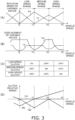
- FIG. 3 is an operating characteristic diagram of the transmission 23.
- FIG. 3A shows the rotation speeds of the first and second variable devices 36 and 37 with respect to the vehicle speed.
- the broken line indicates the rotation speed of the first variable device 36.
- the solid line shows the rotation speed of the second variable device 37.
- FIG. 3B shows the displacements of the first and second variable devices 36 and 37 with respect to the vehicle speed.
- the broken line indicates the displacement of the first variable device 36.
- the solid line shows the displacement of the second variable device 37.
- FIG. 3C shows the states of the clutches 71 to 73 for each vehicle speed range.
- the vehicle speed range includes a low speed range, a medium speed range, and a high speed range.
- the low speed range is a range in which the vehicle speed is 0 or more and less than V1.
- the medium speed range is a range in which the vehicle speed is V1 or more and less than V2.
- the high speed range is a range in which the vehicle speed is V2 or more and less than V3.
- "ON" indicates that the clutches 71 to 73 are in the engaged state.
- "OFF" indicates that the clutches 71 to 73 are in the disengaged state.
- FIG. 3D shows the relative speeds of the clutches 71 to 73 with respect to the vehicle speed.
- “Low” indicates the relative speed of the low speed clutch 71.
- “Mid” indicates the relative speed of the medium speed clutch 73.
- “High” indicates the relative speed of the high speed clutch 72.
- the controller 27 controls the displacements of the first and second variable devices 36 and 37 and the states of the clutches 71 to 73 according to the vehicle speed. As illustrated in FIG. 3D , when the vehicle speed is 0, the relative speed of the low speed clutch 71 is 0. As illustrated in FIG. 3C , the controller 27 sets the low speed clutch 71 in the engaged state when the vehicle speed is 0. Further, the controller 27 sets the medium speed clutch 73 and the high speed clutch 72 in the disengaged state. As a result, the driving force input from the engine 21 to the input shaft 31 is transmitted to the output shaft 32 via the first carrier 41, the first planetary gears 42, the first sun gear 43, the shaft 55, and the low speed gear 65.
- the controller 27 maintains the low speed clutch 71 in the engaged state when the vehicle speed is within the low speed range. As illustrated in FIG. 3B , the controller 27 controls the displacements of the first and second variable devices 36 and 37 according to the vehicle speed. As a result, as illustrated in FIG. 3A , when the vehicle speed is within the low speed range, the rotation speed of the first variable device 36 decreases and the rotation speed of the second variable device 37 increases as the vehicle speed increases.
- the controller 27 sets the medium speed clutch 73 in the engaged state. Further, the controller 27 sets the low speed clutch 71 and the high speed clutch 72 in the disengaged state. As a result, the driving force input from the engine 21 to the input shaft 31 is transmitted to the output shaft 32 via the first carrier 41, the second sun gear 51, the second carrier 53, the third carrier 61, the third planetary gears 62, the third sun gear 63, and the medium speed gear 67.
- the controller 27 maintains the medium speed clutch 73 in the engaged state when the vehicle speed is within the medium speed range. As illustrated in FIG. 3B , the controller 27 controls the displacements of the first and second variable devices 36 and 37 according to the vehicle speed. As a result, as illustrated in FIG. 3A , when the vehicle speed is within the medium speed range, the rotation speed of the first variable device 36 increases and the rotation speed of the second variable device 37 decreases as the vehicle speed increases.
- the controller 27 sets the high speed clutch 72 in the engaged state when the vehicle speed is V2. Further, the controller 27 sets the low speed clutch 71 and the medium speed clutch 73 in the disengaged state. As a result, the driving force input from the engine 21 to the input shaft 31 is transmitted to the output shaft 32 via the first carrier 41, the first planetary gears 42, the first sun gear 43, the shaft 55, and the high speed gear 66.
- the controller 27 maintains the high speed clutch 72 in the engaged state when the vehicle speed is within the high speed range. As illustrated in FIG. 3B , the controller 27 controls the displacements of the first and second variable devices 36 and 37 according to the vehicle speed. As a result, as illustrated in FIG. 3A , when the vehicle speed is within the high speed range, the rotation speed of the first variable device 36 decreases and the rotation speed of the second variable device 37 increases as the vehicle speed increases.
- the second ring gear 54 is connected to the first ring gear 44. Therefore, a large clutch connected to the first ring gear 44 or the second ring gear 54 is unnecessary. Further, the number of external tooth type gears provided in the first ring gear 44 and the second ring gear 54 can be reduced. Thereby, the transmission 23 can be downsized.
- the rotation directions of the first and second variable devices 36 and 37 are the same over the entire speed range. Therefore, a pump having a simple structure can be adopted as the first and second variable devices 36 and 37. Thereby, the transmission 23 can be downsized.
- the second carrier 53 of the second planetary gear mechanism 34 is connected to the third carrier 61 of the third planetary gear mechanism 35.
- the third sun gear 63 of the third planetary gear mechanism 35 is integrated with the medium speed gear 67.
- the third planetary gear mechanism 35 is arranged coaxially with the first planetary gear mechanism 33 and the second planetary gear mechanism 34. Thereby, the transmission 23 can be downsized.
- the work vehicle 1 is not limited to the wheel loader, and may be another vehicle such as a bulldozer or a hydraulic excavator.
- the arrangement of the first variable device 36 and / or the second variable device 37 may be changed.
- the first variable device 36 and / or the second variable device 37 is not limited to the hydraulic pump / motor, and may be another device such as an electric generator / motor.
- the arrangement of the low speed clutch 71 and / or the medium speed clutch 73 and / or the high speed clutch 72 may be changed.
Landscapes
- Engineering & Computer Science (AREA)
- General Engineering & Computer Science (AREA)
- Mechanical Engineering (AREA)
- Chemical & Material Sciences (AREA)
- Combustion & Propulsion (AREA)
- Transportation (AREA)
- Mining & Mineral Resources (AREA)
- Civil Engineering (AREA)
- Structural Engineering (AREA)
- Structure Of Transmissions (AREA)
- Motor Power Transmission Devices (AREA)
Description
- The invention as claimed relates to a transmission and a work vehicle.
- Conventionally, continuously variable transmissions such as HMT (Hydraulic Mechanical Transmission) have been known. For example, the transmission of
JP 2006-329244 A - An input shaft of the transmission is connected to a sun gear of the first planetary gear mechanism via a FR switching mechanism. A ring gear of the first planetary gear mechanism is connected to a carrier of the second planetary gear mechanism via a clutch. A ring gear of the second planetary gear mechanism is connected to an output shaft. The first pump / motor is connected to a carrier of the first planetary gear mechanism. The second pump / motor is connected to the ring gear of the first planetary gear mechanism.
-
US 7 238 131 B2 andUS 2008/119313 A1 disclose an electrically variable transmission with selective operation both in power-split variable speed ratio ranges and in fixed speed ratios, and having three planetary gears sets, two motor/generators and three or four clutches.US 7 238 131 B2 discloses the features of the preamble ofclaim 1. - In the transmission of
JP 2006-329244 A US 7 238 131 B2 andUS 2008/119313 A1 also comprise a clutch that selectively connects the ring gear with the sun gear. The ring gear have a larger outer diameter than other gears. Therefore, as the clutch becomes larger, the transmission becomes larger. Further, the ring gear of the first planetary gear mechanism and the ring gear of the second planetary gear mechanism each have an external tooth type output gear. Therefore, the transmission becomes even larger. - An object of the invention as claimed is to reduce a size of a continuously variable transmission by a variable device.
- A transmission according to the invention as claimed in
claim 1 includes an input shaft, an output shaft, a first planetary gear mechanism, a second planetary gear mechanism, and a first variable device. The first planetary gear mechanism includes a first carrier, a first planetary gear, a first sun gear, and a first ring gear. The first carrier is connected to the input shaft. The first planetary gear is rotatably carried by the first carrier. The first sun gear meshes with the first planetary gear. The first ring gear meshes with the first planetary gear.
The second planetary gear mechanism includes a second sun gear, a second planetary gear, and a second ring gear. The second sun gear is connected to the first carrier. The second planetary gear meshes with the second sun gear. The second ring gear meshes with the second planetary gear. The second ring gear is connected to the first ring gear. The first variable device continuously changes a speed ratio of the output shaft to the input shaft. The first variable device is connected to the first ring gear and the second ring gear. - The transmission comprises further a second variable device that continuously changes the speed ratio, a shaft that directly connects the first sun gear and the second variable device, a high speed gear connected to the output shaft, a high speed clutch that switches engaging and disengaging between the high speed gear and the shaft, a low speed gear connected to the shaft, and a low speed clutch that switches engaging and disengaging between the output shaft and the low speed gear.
- Preferred embodiments are described in
dependent claims 2 to 8. - A work vehicle according to the invention as claimed in claim 9 includes the transmission described above.
- In the transmission according to the invention as claimed, the second ring gear is connected to the first ring gear. Therefore, a large clutch connected to the first ring gear is unnecessary. Further, it is not necessary to provide external tooth type gears on both the first ring gear and the second ring gear. Therefore, the transmission can be downsized..
-
-
FIG. 1 is a side view of a work vehicle according to an embodiment. -
FIG. 2 is a skeleton diagram of the transmission according to the embodiment. -
FIG. 3 is an operation characteristic diagram of the transmission. - Hereinafter, embodiments of the present invention will be described with reference to the drawings.
FIG. 1 is a side view of thework vehicle 1 according to an embodiment of the present invention. As illustrated inFIG. 1 , thework vehicle 1 includes avehicle body 2 and a work implement 3. - The
vehicle body 2 includes afront vehicle body 2a and arear vehicle body 2b. Therear vehicle body 2b is connected to thefront vehicle body 2a so as to be able to turn left and right. Ahydraulic cylinder 15 is connected to thefront vehicle body 2a and therear vehicle body 2b. As thehydraulic cylinder 15 expands and contracts, thefront vehicle body 2a turns left and right with respect to therear vehicle body 2b. - The
work implement 3 is used for work such as excavation. Thework implement 3 is attached to thefront vehicle body 2a. Thework implement 3 includes aboom 11, abucket 12, andhydraulic cylinders boom 11 and thebucket 12 operate as thehydraulic cylinders - The
work vehicle 1 includes anengine 21, atransmission 23, and atraveling device 24. Theengine 21 is an internal combustion engine such as a diesel engine. Thetransmission 23 is connected to theengine 21. Thetransmission 23 is configured to change the gear ratio continuously. - The
traveling device 24 travels thework vehicle 1. The travelingdevice 24 includesfront wheels 25 andrear wheels 26. Thefront wheels 25 is provided on thefront vehicle body 2a. Therear wheels 26 is provided on therear vehicle body 2b. Thefront wheels 25 and therear wheels 26 are connected to thetransmission 23 via an axle (not illustrated). - The
work vehicle 1 includes a hydraulic pump (not illustrated). The hydraulic pump is connected to theengine 21. The hydraulic pump is driven by theengine 21 and discharges hydraulic fluid. The hydraulic fluid discharged from the hydraulic pump is supplied to thehydraulic cylinders 13 to 15 described above. - The
work vehicle 1 includes acontroller 27. Thecontroller 27 includes, for example, a processor and a memory. Thecontroller 27 controls theengine 21 and thetransmission 23. -
FIG. 2 is a skeleton diagram showing the configuration of thetransmission 23. As illustrated inFIG. 2 , thetransmission 23 includes aninput shaft 31, anoutput shaft 32, a firstplanetary gear mechanism 33, a secondplanetary gear mechanism 34, a thirdplanetary gear mechanism 35, a firstvariable device 36, and a secondvariable device 37. Theinput shaft 31 is connected to theengine 21. Theoutput shaft 32 is connected to the travelingdevice 24. The firstplanetary gear mechanism 33, the secondplanetary gear mechanism 34, and the thirdplanetary gear mechanism 35 are arranged coaxially. Theinput shaft 31 and theoutput shaft 32 are arranged eccentrically from a central axis C1 of the firstplanetary gear mechanism 33, the secondplanetary gear mechanism 34, and the thirdplanetary gear mechanism 35. - The first
planetary gear mechanism 33 includes afirst carrier 41, a plurality of firstplanetary gears 42, afirst sun gear 43, and afirst ring gear 44. Thefirst carrier 41 is connected to theinput shaft 31. Aninput gear 45 is connected to theinput shaft 31. Thefirst carrier 41 includes an externaltooth type gear 46. Thegear 46 of thefirst carrier 41 meshes with theinput gear 45. The firstplanetary gears 42 are connected to thefirst carrier 41. The firstplanetary gears 42 are rotatable around the central axis C1 together with thefirst carrier 41. Thefirst sun gear 43 meshes with the firstplanetary gears 42 and is connected to the first planetary gears 42. Thefirst ring gear 44 meshes with the firstplanetary gears 42 and is connected to the first planetary gears 42. - The second
planetary gear mechanism 34 includes asecond sun gear 51, a plurality of secondplanetary gears 52, asecond carrier 53, and asecond ring gear 54. Thesecond sun gear 51 is connected to thefirst carrier 41. Thesecond sun gear 51 is rotatable around the central axis C1 together with thefirst carrier 41. The secondplanetary gears 52 mesh with thesecond sun gear 51 and are connected to thesecond sun gear 51. Thesecond carrier 53 is connected to the second planetary gears 52. Thesecond carrier 53 is rotatable around the central axis C1 together with the second planetary gears 52. Thesecond ring gear 54 meshes with the secondplanetary gears 52 and is connected to the second planetary gears 52. - The
second ring gear 54 is connected to thefirst ring gear 44. Thefirst ring gear 44 and thesecond ring gear 54 are integrally formed. Specifically, thetransmission 23 includes aring member 47. Thering member 47 is a component including thefirst ring gear 44 and thesecond ring gear 54 that are integrated. An outer peripheral surface of thering member 47 includes an externaltooth type gear 48. Thegear 48 of thering member 47 is connected to the firstvariable device 36. - The first
variable device 36 is a hydraulic pump / motor. The displacement of the firstvariable device 36 is controlled by thecontroller 27. Thecontroller 27 controls the rotation speed of the firstvariable device 36. As a result, the firstvariable device 36 continuously changes the speed ratio of theoutput shaft 32 to theinput shaft 31. Agear 49 is connected to the rotation shaft of the firstvariable device 36. Thegear 49 of the firstvariable device 36 meshes with thegear 48 of thering member 47. - The third
planetary gear mechanism 35 includes athird carrier 61, a plurality of thirdplanetary gears 62, athird sun gear 63, and athird ring gear 64. Thethird carrier 61 is connected to thesecond carrier 53. Thethird carrier 61 is rotatable around the central axis C1 together with thesecond carrier 53. Thethird carrier 61 may be integrated with thesecond carrier 53. Alternatively, thethird carrier 61 may be provided separately from thesecond carrier 53. The thirdplanetary gears 62 are connected to thethird carrier 61. The thirdplanetary gears 62 are rotatable around the central axis C1 together with thethird carrier 61. - The
third sun gear 63 meshes with the thirdplanetary gears 62 and is connected to the third planetary gears 62. Thethird ring gear 64 meshes with the thirdplanetary gears 62 and is connected to the third planetary gears 62. Thethird ring gear 64 is non-rotatable. Thethird ring gear 64 is fixed to, for example, the housing of thetransmission 23. The thirdplanetary gear mechanism 35 speeds up and outputs the rotation from the secondplanetary gear mechanism 34. - The second
variable device 37 is a hydraulic pump / motor. The secondvariable device 37 is connected to the firstvariable device 36 by a hydraulic circuit (not illustrated). When the firstvariable device 36 functions as a pump and discharges the hydraulic fluid, the secondvariable device 37 functions as a motor and is driven by the hydraulic fluid from the firstvariable device 36. Conversely, when the secondvariable device 37 functions as a pump and discharges the hydraulic fluid, the firstvariable device 36 functions as a motor and is driven by the hydraulic fluid from the secondvariable device 37. - The displacement of the second
variable device 37 is controlled by thecontroller 27. Thecontroller 27 controls the rotation speed of the secondvariable device 37. As a result, the secondvariable device 37 continuously changes the speed ratio. The secondvariable device 37 is arranged coaxially with the secondplanetary gear mechanism 34. In an extending direction of the central axis C1, the secondplanetary gear mechanism 34 and the thirdplanetary gear mechanism 35 are arranged between the secondvariable device 37 and the firstplanetary gear mechanism 33. - A
shaft 55 is connected to the rotating shaft of the secondvariable device 37. Theshaft 55 is connected to thefirst sun gear 43. Theshaft 55 directly connects thefirst sun gear 43 and the secondvariable device 37. Theshaft 55 is arranged coaxially with the first to thirdplanetary gear mechanisms 34 to 35. Theshaft 55 passes through an opening of thesecond sun gear 51 and an opening of thethird sun gear 63. - The
transmission 23 includes alow speed gear 65, ahigh speed gear 66, amedium speed gear 67, alow speed clutch 71, ahigh speed clutch 72, and amedium speed clutch 73. Thelow speed gear 65, thehigh speed gear 66, and themedium speed gear 67 are arranged coaxially with the first to thirdplanetary gear mechanisms 34 to 35. Thelow speed gear 65 is connected to theshaft 55. Thelow speed gear 65 is rotatable around the central axis C1 together with theshaft 55. Thelow speed gear 65 is connected to theoutput shaft 32 via thelow speed clutch 71. - The
high speed gear 66 is connected to theshaft 55 via thehigh speed clutch 72. When thehigh speed clutch 72 is in an engaged state, thehigh speed gear 66 is rotatable together with theshaft 55. Thehigh speed gear 66 is connected to theoutput shaft 32. Themedium speed gear 67 is connected to thethird sun gear 63. Themedium speed gear 67 is integrally formed with thethird sun gear 63. However, themedium speed gear 67 may be provided separately from thethird sun gear 63. Themedium speed gear 67 is rotatable around the central axis C1 together with thethird sun gear 63. - The
low speed gear 65, thehigh speed gear 66, and themedium speed gear 67 are arranged between the thirdplanetary gear mechanism 35 and the secondvariable device 37 in the extending direction of the central axis C1. Thelow speed clutch 71, thehigh speed clutch 72, and the medium speed clutch 73 are arranged between the thirdplanetary gear mechanism 35 and the secondvariable device 37 in the extending direction of the central axis C1. Thelow speed clutch 71, thehigh speed clutch 72, and the medium speed clutch 73 are, for example, hydraulic clutches. Thelow speed clutch 71, thehigh speed clutch 72, and the medium speed clutch 73 are controlled by thecontroller 27. - The
low speed clutch 71 switches engaging and disengaging between theoutput shaft 32 and theshaft 55. When thelow speed clutch 71 is in an engaged state, the rotation of theshaft 55 is transmitted to theoutput shaft 32 via thelow speed gear 65. The high speed clutch 72 switches engaging and disengaging between theoutput shaft 32 and theshaft 55. When thehigh speed clutch 72 is in the engaged state, the rotation of theshaft 55 is transmitted to theoutput shaft 32. The medium speed clutch 73 switches engaging and disengaging between theoutput shaft 32 and thethird sun gear 63. When themedium speed clutch 73 is in the engaged state, the rotation of thethird sun gear 63 is transmitted to theoutput shaft 32 via themedium speed gear 67. - In
FIG. 2 , a part of the configuration between theclutches 71 to 73 and theoutput shaft 32 is omitted. Another clutch or gear may be arranged between theclutches 71 to 73 and theoutput shaft 32. For example, a forward gear and a reverse gear may be arranged between theclutches 71 to 73 and theoutput shaft 32. -
FIG. 3 is an operating characteristic diagram of thetransmission 23.FIG. 3A shows the rotation speeds of the first and secondvariable devices FIG. 3A , the broken line indicates the rotation speed of the firstvariable device 36. The solid line shows the rotation speed of the secondvariable device 37.FIG. 3B shows the displacements of the first and secondvariable devices FIG. 3B , the broken line indicates the displacement of the firstvariable device 36. The solid line shows the displacement of the secondvariable device 37. -
FIG. 3C shows the states of theclutches 71 to 73 for each vehicle speed range. The vehicle speed range includes a low speed range, a medium speed range, and a high speed range. The low speed range is a range in which the vehicle speed is 0 or more and less than V1. The medium speed range is a range in which the vehicle speed is V1 or more and less than V2. The high speed range is a range in which the vehicle speed is V2 or more and less than V3. InFIG. 3C , "ON" indicates that theclutches 71 to 73 are in the engaged state. "OFF" indicates that theclutches 71 to 73 are in the disengaged state. -
FIG. 3D shows the relative speeds of theclutches 71 to 73 with respect to the vehicle speed. InFIG. 3D , "Low" indicates the relative speed of thelow speed clutch 71. "Mid" indicates the relative speed of themedium speed clutch 73. "High" indicates the relative speed of thehigh speed clutch 72. - The
controller 27 controls the displacements of the first and secondvariable devices clutches 71 to 73 according to the vehicle speed. As illustrated inFIG. 3D , when the vehicle speed is 0, the relative speed of thelow speed clutch 71 is 0. As illustrated inFIG. 3C , thecontroller 27 sets thelow speed clutch 71 in the engaged state when the vehicle speed is 0. Further, thecontroller 27 sets themedium speed clutch 73 and the high speed clutch 72 in the disengaged state. As a result, the driving force input from theengine 21 to theinput shaft 31 is transmitted to theoutput shaft 32 via thefirst carrier 41, the firstplanetary gears 42, thefirst sun gear 43, theshaft 55, and thelow speed gear 65. - The
controller 27 maintains thelow speed clutch 71 in the engaged state when the vehicle speed is within the low speed range. As illustrated inFIG. 3B , thecontroller 27 controls the displacements of the first and secondvariable devices FIG. 3A , when the vehicle speed is within the low speed range, the rotation speed of the firstvariable device 36 decreases and the rotation speed of the secondvariable device 37 increases as the vehicle speed increases. - As illustrated in
FIG. 3D , when the vehicle speed is V1, the relative speed of themedium speed clutch 73 is 0. As illustrated inFIG. 3C , when the vehicle speed reaches V1, thecontroller 27 sets the medium speed clutch 73 in the engaged state. Further, thecontroller 27 sets thelow speed clutch 71 and the high speed clutch 72 in the disengaged state. As a result, the driving force input from theengine 21 to theinput shaft 31 is transmitted to theoutput shaft 32 via thefirst carrier 41, thesecond sun gear 51, thesecond carrier 53, thethird carrier 61, the thirdplanetary gears 62, thethird sun gear 63, and themedium speed gear 67. - The
controller 27 maintains the medium speed clutch 73 in the engaged state when the vehicle speed is within the medium speed range. As illustrated inFIG. 3B , thecontroller 27 controls the displacements of the first and secondvariable devices FIG. 3A , when the vehicle speed is within the medium speed range, the rotation speed of the firstvariable device 36 increases and the rotation speed of the secondvariable device 37 decreases as the vehicle speed increases. - As illustrated in
FIG. 3D , when the vehicle speed is V2, the relative speed of thehigh speed clutch 72 is 0. As illustrated inFIG. 3C , thecontroller 27 sets the high speed clutch 72 in the engaged state when the vehicle speed is V2. Further, thecontroller 27 sets thelow speed clutch 71 and the medium speed clutch 73 in the disengaged state. As a result, the driving force input from theengine 21 to theinput shaft 31 is transmitted to theoutput shaft 32 via thefirst carrier 41, the firstplanetary gears 42, thefirst sun gear 43, theshaft 55, and thehigh speed gear 66. - The
controller 27 maintains the high speed clutch 72 in the engaged state when the vehicle speed is within the high speed range. As illustrated inFIG. 3B , thecontroller 27 controls the displacements of the first and secondvariable devices FIG. 3A , when the vehicle speed is within the high speed range, the rotation speed of the firstvariable device 36 decreases and the rotation speed of the secondvariable device 37 increases as the vehicle speed increases. - In the
transmission 23 according to the present embodiment described above, thesecond ring gear 54 is connected to thefirst ring gear 44. Therefore, a large clutch connected to thefirst ring gear 44 or thesecond ring gear 54 is unnecessary. Further, the number of external tooth type gears provided in thefirst ring gear 44 and thesecond ring gear 54 can be reduced. Thereby, thetransmission 23 can be downsized. - As illustrated in
FIG. 3A , the rotation directions of the first and secondvariable devices variable devices transmission 23 can be downsized. - The
input shaft 31 is connected to thefirst carrier 41 of the firstplanetary gear mechanism 33. Thefirst ring gear 44 of the firstplanetary gear mechanism 33 is connected to the firstvariable device 36 via the externaltooth type gear 48. Further, thefirst sun gear 43 of the firstplanetary gear mechanism 33 is directly connected to the secondvariable device 37. Thereby, the mechanism for input division of thetransmission 23 suitable for the used rotation range of the first and secondvariable devices - The
second carrier 53 of the secondplanetary gear mechanism 34 is connected to thethird carrier 61 of the thirdplanetary gear mechanism 35. Thethird sun gear 63 of the thirdplanetary gear mechanism 35 is integrated with themedium speed gear 67. Further, the thirdplanetary gear mechanism 35 is arranged coaxially with the firstplanetary gear mechanism 33 and the secondplanetary gear mechanism 34. Thereby, thetransmission 23 can be downsized. - Although one embodiment of the present invention has been described above, the present invention is not limited to the above embodiment, and the following modifications can be made. The
work vehicle 1 is not limited to the wheel loader, and may be another vehicle such as a bulldozer or a hydraulic excavator. - The arrangement of the first
variable device 36 and / or the secondvariable device 37 may be changed. The firstvariable device 36 and / or the secondvariable device 37 is not limited to the hydraulic pump / motor, and may be another device such as an electric generator / motor. - The arrangement of the
low speed clutch 71 and / or themedium speed clutch 73 and / or the high speed clutch 72 may be changed. - According to the invention as claimed, a size of a continuously variable transmission can be reduced by a variable device.
-
- 31 Input shaft
- 32 Output shaft
- 33 First planetary gear mechanism
- 34 Second planetary gear mechanism
- 35 Third planetary gear mechanism
- 36 First variable device
- 37 Second variable device
- 41 First carrier
- 42 First planetary gear
- 43 First sun gear
- 47 Ring member
- 51 Second sun gear
- 52 Second planetary gear
- 53 Second carrier
- 54 Second ring gear
- 55 Shaft
- 61 Third carrier
- 62 Third planetary gear
- 63 Third sun gear
- 71 Low speed clutch
- 72 High speed clutch
- 73 Medium speed clutch
Claims (9)
- A transmission (23) comprising:an input shaft (31);an output shaft (32);a first planetary gear mechanism (33) including a first carrier (41) connected to the input shaft (31), a first planetary gear (42) rotatably carried by the first carrier, a first sun gear (43) meshed with the first planetary gear (42), and a ring gear (44) meshed with the first planetary gear (42);a second planetary gear mechanism (34) including a second sun gear (51) connected to the first carrier (41), a second planetary gear (52) meshed with the second sun gear (51), and a second ring gear (54) meshed with the second planetary gear (52) and connected to the first ring gear (44); anda first variable device (36) connected to the first ring gear (44) and the second ring gear (54) to continuously change a speed ratio of the output shaft (32) to the input shaft (31);a second variable device (37) that continuously changes the speed ratio; anda shaft (55) that directly connects the first sun gear (43) and the second variable device (37);
characterized bya high speed gear (66) connected to the output shaft (32);a high speed clutch (72) that switches engaging and disengaging between the high speed gear (66) and the shaft (55);a low speed gear (65) connected to the shaft (55); anda low speed clutch (71) that switches engaging and disengaging between the output shaft (32) and the low speed gear (65). - The transmission (23) according to claim 1, wherein
the second variable device (37) is arranged coaxially with the second planetary gear mechanism (34). - The transmission (23) according to any one of claims 1 or 2, whereinthe second planetary gear mechanism (34) further includes a second carrier (53) rotatably carrying the second planetary gear (52), andthe transmission (23) further comprises:
a third planetary gear mechanism (35) including a third carrier (61) connected to the second carrier (53), a third planetary gear (62) rotatably carrying the third carrier (61), and a third sun gear (63) meshed with the third planetary gear (62). - The transmission (23) according to claim 3, wherein
the third planetary gear mechanism (35) is arranged coaxially with the first planetary gear mechanism (33) and the second planetary gear mechanism (34). - The transmission (23) according to any one of the claims 3 or 4, further comprising:
an external tooth type gear (67) connected to the third sun gear (63). - The transmission (23) according to any one of claims 1 to 5, further comprising:
a medium speed clutch (73) that switches engaging and disengaging between the output shaft (32) and the third sun gear (63). - The transmission (23) according to any one of claims 1 to 6, wherein
the first ring gear (44) and the second ring gear (54) are integrally formed. - The transmission (23) according to any one of claims 1 to 7, further comprising:a ring member (47) including the first ring gear (44) and the second ring gear (54), whereinan outer peripheral surface of the ring member (47) includes an external tooth type gear (48) connected to the first variable device (36).
- A work vehicle (1) comprising:
the transmission (23) according to any one of claims 1 to 8.
Applications Claiming Priority (2)
| Application Number | Priority Date | Filing Date | Title |
|---|---|---|---|
| JP2019057931A JP7365779B2 (en) | 2019-03-26 | 2019-03-26 | Transmission and work vehicles |
| PCT/JP2020/006054 WO2020195327A1 (en) | 2019-03-26 | 2020-02-17 | Transmission and work vehicle |
Publications (3)
| Publication Number | Publication Date |
|---|---|
| EP3872368A1 EP3872368A1 (en) | 2021-09-01 |
| EP3872368A4 EP3872368A4 (en) | 2022-08-10 |
| EP3872368B1 true EP3872368B1 (en) | 2025-04-02 |
Family
ID=72609005
Family Applications (1)
| Application Number | Title | Priority Date | Filing Date |
|---|---|---|---|
| EP20776487.9A Active EP3872368B1 (en) | 2019-03-26 | 2020-02-17 | Transmission and work vehicle |
Country Status (5)
| Country | Link |
|---|---|
| US (1) | US11365787B2 (en) |
| EP (1) | EP3872368B1 (en) |
| JP (1) | JP7365779B2 (en) |
| CN (1) | CN113167365B (en) |
| WO (1) | WO2020195327A1 (en) |
Family Cites Families (10)
| Publication number | Priority date | Publication date | Assignee | Title |
|---|---|---|---|---|
| JPH09166197A (en) * | 1995-10-04 | 1997-06-24 | Taishu Sai | Non-stage transmission |
| JP4123132B2 (en) * | 2003-10-31 | 2008-07-23 | トヨタ自動車株式会社 | Shift control device for hybrid vehicle |
| US7322902B2 (en) * | 2004-05-10 | 2008-01-29 | Toyota Jidosha Kabushiki Kaisha | Control device for vehicular transmission mechanism |
| JP2005337467A (en) * | 2004-05-31 | 2005-12-08 | Fuji Univance Corp | Synthetic power transmission |
| EP2386437B1 (en) * | 2004-09-08 | 2012-11-28 | Komatsu Ltd. | Transmission |
| US7238131B2 (en) * | 2005-01-04 | 2007-07-03 | General Motors Corporation | Electrically variable transmission having three planetary gear sets and three fixed interconnections |
| JP4789507B2 (en) | 2005-05-24 | 2011-10-12 | 株式会社小松製作所 | Transmission |
| US7479082B2 (en) * | 2006-11-17 | 2009-01-20 | Gm Global Technology Operations, Inc. | Hybrid powertrain having three interconnecting members and brakes |
| JP5677340B2 (en) * | 2012-02-27 | 2015-02-25 | 株式会社クボタ | Variable speed transmission |
| DE102016208669A1 (en) * | 2016-05-19 | 2017-11-23 | Zf Friedrichshafen Ag | Transmission for a motor vehicle, and powertrain for a motor vehicle |
-
2019
- 2019-03-26 JP JP2019057931A patent/JP7365779B2/en active Active
-
2020
- 2020-02-17 WO PCT/JP2020/006054 patent/WO2020195327A1/en not_active Ceased
- 2020-02-17 US US17/413,690 patent/US11365787B2/en active Active
- 2020-02-17 CN CN202080006524.5A patent/CN113167365B/en active Active
- 2020-02-17 EP EP20776487.9A patent/EP3872368B1/en active Active
Also Published As
| Publication number | Publication date |
|---|---|
| CN113167365A (en) | 2021-07-23 |
| EP3872368A4 (en) | 2022-08-10 |
| CN113167365B (en) | 2024-11-26 |
| US11365787B2 (en) | 2022-06-21 |
| EP3872368A1 (en) | 2021-09-01 |
| US20220010864A1 (en) | 2022-01-13 |
| JP7365779B2 (en) | 2023-10-20 |
| WO2020195327A1 (en) | 2020-10-01 |
| JP2020159413A (en) | 2020-10-01 |
Similar Documents
| Publication | Publication Date | Title |
|---|---|---|
| JP4879345B2 (en) | Transmission and construction vehicle including the same | |
| KR100903069B1 (en) | Transmission apparatus | |
| EP1325249B1 (en) | Hydro-mechanical transmission | |
| JP2001200900A (en) | Transmission having variable ratio and method for connecting related components | |
| KR20150100742A (en) | Continuously variable transmission and a working machine including a continuously variable transmission | |
| EP3009711B1 (en) | Transmission and working vehicle | |
| US9909661B2 (en) | Carrier, planetary gear mechanism, transmission, and working vehicle | |
| EP3872368B1 (en) | Transmission and work vehicle | |
| JP2002227965A (en) | Hydromechanical power transmission device | |
| JP2009292225A (en) | Drive system for hybrid vehicle | |
| EP4056871B1 (en) | Transmission and work vehicle | |
| JP2022036678A (en) | Hydraulic drive unit and vehicle | |
| KR20200033382A (en) | Continuously variable transmission for vehicle | |
| KR20200033384A (en) | Continuously variable transmission for vehicle |
Legal Events
| Date | Code | Title | Description |
|---|---|---|---|
| STAA | Information on the status of an ep patent application or granted ep patent |
Free format text: STATUS: THE INTERNATIONAL PUBLICATION HAS BEEN MADE |
|
| PUAI | Public reference made under article 153(3) epc to a published international application that has entered the european phase |
Free format text: ORIGINAL CODE: 0009012 |
|
| STAA | Information on the status of an ep patent application or granted ep patent |
Free format text: STATUS: REQUEST FOR EXAMINATION WAS MADE |
|
| 17P | Request for examination filed |
Effective date: 20210528 |
|
| AK | Designated contracting states |
Kind code of ref document: A1 Designated state(s): AL AT BE BG CH CY CZ DE DK EE ES FI FR GB GR HR HU IE IS IT LI LT LU LV MC MK MT NL NO PL PT RO RS SE SI SK SM TR |
|
| DAV | Request for validation of the european patent (deleted) | ||
| DAX | Request for extension of the european patent (deleted) | ||
| A4 | Supplementary search report drawn up and despatched |
Effective date: 20220708 |
|
| RIC1 | Information provided on ipc code assigned before grant |
Ipc: F16H 37/08 20060101ALI20220704BHEP Ipc: F16H 3/72 20060101ALI20220704BHEP Ipc: F16H 47/04 20060101AFI20220704BHEP |
|
| STAA | Information on the status of an ep patent application or granted ep patent |
Free format text: STATUS: EXAMINATION IS IN PROGRESS |
|
| 17Q | First examination report despatched |
Effective date: 20240207 |
|
| GRAP | Despatch of communication of intention to grant a patent |
Free format text: ORIGINAL CODE: EPIDOSNIGR1 |
|
| STAA | Information on the status of an ep patent application or granted ep patent |
Free format text: STATUS: GRANT OF PATENT IS INTENDED |
|
| RIC1 | Information provided on ipc code assigned before grant |
Ipc: F16H 37/08 20060101ALN20240812BHEP Ipc: F16H 3/72 20060101ALI20240812BHEP Ipc: F16H 47/04 20060101AFI20240812BHEP |
|
| RIC1 | Information provided on ipc code assigned before grant |
Ipc: F16H 37/08 20060101ALN20240904BHEP Ipc: F16H 3/72 20060101ALI20240904BHEP Ipc: F16H 47/04 20060101AFI20240904BHEP |
|
| INTG | Intention to grant announced |
Effective date: 20240912 |
|
| GRAS | Grant fee paid |
Free format text: ORIGINAL CODE: EPIDOSNIGR3 |
|
| GRAA | (expected) grant |
Free format text: ORIGINAL CODE: 0009210 |
|
| STAA | Information on the status of an ep patent application or granted ep patent |
Free format text: STATUS: THE PATENT HAS BEEN GRANTED |
|
| AK | Designated contracting states |
Kind code of ref document: B1 Designated state(s): AL AT BE BG CH CY CZ DE DK EE ES FI FR GB GR HR HU IE IS IT LI LT LU LV MC MK MT NL NO PL PT RO RS SE SI SK SM TR |
|
| REG | Reference to a national code |
Ref country code: GB Ref legal event code: FG4D |
|
| REG | Reference to a national code |
Ref country code: CH Ref legal event code: EP |
|
| REG | Reference to a national code |
Ref country code: IE Ref legal event code: FG4D |
|
| REG | Reference to a national code |
Ref country code: DE Ref legal event code: R096 Ref document number: 602020048783 Country of ref document: DE |
|
| REG | Reference to a national code |
Ref country code: SE Ref legal event code: TRGR |
|
| REG | Reference to a national code |
Ref country code: NL Ref legal event code: MP Effective date: 20250402 |
|
| PG25 | Lapsed in a contracting state [announced via postgrant information from national office to epo] |
Ref country code: NL Free format text: LAPSE BECAUSE OF FAILURE TO SUBMIT A TRANSLATION OF THE DESCRIPTION OR TO PAY THE FEE WITHIN THE PRESCRIBED TIME-LIMIT Effective date: 20250402 |
|
| REG | Reference to a national code |
Ref country code: AT Ref legal event code: MK05 Ref document number: 1781528 Country of ref document: AT Kind code of ref document: T Effective date: 20250402 |
|
| PG25 | Lapsed in a contracting state [announced via postgrant information from national office to epo] |
Ref country code: FI Free format text: LAPSE BECAUSE OF FAILURE TO SUBMIT A TRANSLATION OF THE DESCRIPTION OR TO PAY THE FEE WITHIN THE PRESCRIBED TIME-LIMIT Effective date: 20250402 Ref country code: PT Free format text: LAPSE BECAUSE OF FAILURE TO SUBMIT A TRANSLATION OF THE DESCRIPTION OR TO PAY THE FEE WITHIN THE PRESCRIBED TIME-LIMIT Effective date: 20250804 Ref country code: ES Free format text: LAPSE BECAUSE OF FAILURE TO SUBMIT A TRANSLATION OF THE DESCRIPTION OR TO PAY THE FEE WITHIN THE PRESCRIBED TIME-LIMIT Effective date: 20250402 |
|
| REG | Reference to a national code |
Ref country code: LT Ref legal event code: MG9D |
|
| PG25 | Lapsed in a contracting state [announced via postgrant information from national office to epo] |
Ref country code: NO Free format text: LAPSE BECAUSE OF FAILURE TO SUBMIT A TRANSLATION OF THE DESCRIPTION OR TO PAY THE FEE WITHIN THE PRESCRIBED TIME-LIMIT Effective date: 20250702 Ref country code: GR Free format text: LAPSE BECAUSE OF FAILURE TO SUBMIT A TRANSLATION OF THE DESCRIPTION OR TO PAY THE FEE WITHIN THE PRESCRIBED TIME-LIMIT Effective date: 20250703 |
|
| PG25 | Lapsed in a contracting state [announced via postgrant information from national office to epo] |
Ref country code: PL Free format text: LAPSE BECAUSE OF FAILURE TO SUBMIT A TRANSLATION OF THE DESCRIPTION OR TO PAY THE FEE WITHIN THE PRESCRIBED TIME-LIMIT Effective date: 20250402 |
|
| PG25 | Lapsed in a contracting state [announced via postgrant information from national office to epo] |
Ref country code: BG Free format text: LAPSE BECAUSE OF FAILURE TO SUBMIT A TRANSLATION OF THE DESCRIPTION OR TO PAY THE FEE WITHIN THE PRESCRIBED TIME-LIMIT Effective date: 20250402 |
|
| PG25 | Lapsed in a contracting state [announced via postgrant information from national office to epo] |
Ref country code: HR Free format text: LAPSE BECAUSE OF FAILURE TO SUBMIT A TRANSLATION OF THE DESCRIPTION OR TO PAY THE FEE WITHIN THE PRESCRIBED TIME-LIMIT Effective date: 20250402 |
|
| PG25 | Lapsed in a contracting state [announced via postgrant information from national office to epo] |
Ref country code: AT Free format text: LAPSE BECAUSE OF FAILURE TO SUBMIT A TRANSLATION OF THE DESCRIPTION OR TO PAY THE FEE WITHIN THE PRESCRIBED TIME-LIMIT Effective date: 20250402 |
|
| PG25 | Lapsed in a contracting state [announced via postgrant information from national office to epo] |
Ref country code: RS Free format text: LAPSE BECAUSE OF FAILURE TO SUBMIT A TRANSLATION OF THE DESCRIPTION OR TO PAY THE FEE WITHIN THE PRESCRIBED TIME-LIMIT Effective date: 20250702 |
|
| PG25 | Lapsed in a contracting state [announced via postgrant information from national office to epo] |
Ref country code: IS Free format text: LAPSE BECAUSE OF FAILURE TO SUBMIT A TRANSLATION OF THE DESCRIPTION OR TO PAY THE FEE WITHIN THE PRESCRIBED TIME-LIMIT Effective date: 20250802 |
|
| PG25 | Lapsed in a contracting state [announced via postgrant information from national office to epo] |
Ref country code: LV Free format text: LAPSE BECAUSE OF FAILURE TO SUBMIT A TRANSLATION OF THE DESCRIPTION OR TO PAY THE FEE WITHIN THE PRESCRIBED TIME-LIMIT Effective date: 20250402 |
|
| REG | Reference to a national code |
Ref country code: DE Ref legal event code: R097 Ref document number: 602020048783 Country of ref document: DE |
|
| PG25 | Lapsed in a contracting state [announced via postgrant information from national office to epo] |
Ref country code: SM Free format text: LAPSE BECAUSE OF FAILURE TO SUBMIT A TRANSLATION OF THE DESCRIPTION OR TO PAY THE FEE WITHIN THE PRESCRIBED TIME-LIMIT Effective date: 20250402 Ref country code: DK Free format text: LAPSE BECAUSE OF FAILURE TO SUBMIT A TRANSLATION OF THE DESCRIPTION OR TO PAY THE FEE WITHIN THE PRESCRIBED TIME-LIMIT Effective date: 20250402 |
|
| PG25 | Lapsed in a contracting state [announced via postgrant information from national office to epo] |
Ref country code: CZ Free format text: LAPSE BECAUSE OF FAILURE TO SUBMIT A TRANSLATION OF THE DESCRIPTION OR TO PAY THE FEE WITHIN THE PRESCRIBED TIME-LIMIT Effective date: 20250402 |
|
| PG25 | Lapsed in a contracting state [announced via postgrant information from national office to epo] |
Ref country code: EE Free format text: LAPSE BECAUSE OF FAILURE TO SUBMIT A TRANSLATION OF THE DESCRIPTION OR TO PAY THE FEE WITHIN THE PRESCRIBED TIME-LIMIT Effective date: 20250402 |
|
| PG25 | Lapsed in a contracting state [announced via postgrant information from national office to epo] |
Ref country code: RO Free format text: LAPSE BECAUSE OF FAILURE TO SUBMIT A TRANSLATION OF THE DESCRIPTION OR TO PAY THE FEE WITHIN THE PRESCRIBED TIME-LIMIT Effective date: 20250402 Ref country code: SK Free format text: LAPSE BECAUSE OF FAILURE TO SUBMIT A TRANSLATION OF THE DESCRIPTION OR TO PAY THE FEE WITHIN THE PRESCRIBED TIME-LIMIT Effective date: 20250402 |
|
| PG25 | Lapsed in a contracting state [announced via postgrant information from national office to epo] |
Ref country code: IT Free format text: LAPSE BECAUSE OF FAILURE TO SUBMIT A TRANSLATION OF THE DESCRIPTION OR TO PAY THE FEE WITHIN THE PRESCRIBED TIME-LIMIT Effective date: 20250402 |
|
| PLBE | No opposition filed within time limit |
Free format text: ORIGINAL CODE: 0009261 |
|
| STAA | Information on the status of an ep patent application or granted ep patent |
Free format text: STATUS: NO OPPOSITION FILED WITHIN TIME LIMIT |
|
| REG | Reference to a national code |
Ref country code: CH Ref legal event code: L10 Free format text: ST27 STATUS EVENT CODE: U-0-0-L10-L00 (AS PROVIDED BY THE NATIONAL OFFICE) Effective date: 20260211 |
|
| 26N | No opposition filed |
Effective date: 20260105 |
|
| PGFP | Annual fee paid to national office [announced via postgrant information from national office to epo] |
Ref country code: SE Payment date: 20251230 Year of fee payment: 7 |
|
| PGFP | Annual fee paid to national office [announced via postgrant information from national office to epo] |
Ref country code: DE Payment date: 20251230 Year of fee payment: 7 |