EP3871979B1 - Structural panel with integrated coupler - Google Patents
Structural panel with integrated coupler Download PDFInfo
- Publication number
- EP3871979B1 EP3871979B1 EP21159759.6A EP21159759A EP3871979B1 EP 3871979 B1 EP3871979 B1 EP 3871979B1 EP 21159759 A EP21159759 A EP 21159759A EP 3871979 B1 EP3871979 B1 EP 3871979B1
- Authority
- EP
- European Patent Office
- Prior art keywords
- cellular core
- assembly
- skin
- bonded
- mount
- Prior art date
- Legal status (The legal status is an assumption and is not a legal conclusion. Google has not performed a legal analysis and makes no representation as to the accuracy of the status listed.)
- Active
Links
Images




Classifications
-
- B—PERFORMING OPERATIONS; TRANSPORTING
- B32—LAYERED PRODUCTS
- B32B—LAYERED PRODUCTS, i.e. PRODUCTS BUILT-UP OF STRATA OF FLAT OR NON-FLAT, e.g. CELLULAR OR HONEYCOMB, FORM
- B32B3/00—Layered products comprising a layer with external or internal discontinuities or unevennesses, or a layer of non-planar shape; Layered products comprising a layer having particular features of form
- B32B3/10—Layered products comprising a layer with external or internal discontinuities or unevennesses, or a layer of non-planar shape; Layered products comprising a layer having particular features of form characterised by a discontinuous layer, i.e. formed of separate pieces of material
- B32B3/12—Layered products comprising a layer with external or internal discontinuities or unevennesses, or a layer of non-planar shape; Layered products comprising a layer having particular features of form characterised by a discontinuous layer, i.e. formed of separate pieces of material characterised by a layer of regularly- arranged cells, e.g. a honeycomb structure
-
- B—PERFORMING OPERATIONS; TRANSPORTING
- B64—AIRCRAFT; AVIATION; COSMONAUTICS
- B64C—AEROPLANES; HELICOPTERS
- B64C7/00—Structures or fairings not otherwise provided for
- B64C7/02—Nacelles
-
- B—PERFORMING OPERATIONS; TRANSPORTING
- B64—AIRCRAFT; AVIATION; COSMONAUTICS
- B64D—EQUIPMENT FOR FITTING IN OR TO AIRCRAFT; FLIGHT SUITS; PARACHUTES; ARRANGEMENT OR MOUNTING OF POWER PLANTS OR PROPULSION TRANSMISSIONS IN AIRCRAFT
- B64D29/00—Power-plant nacelles, fairings or cowlings
-
- B—PERFORMING OPERATIONS; TRANSPORTING
- B64—AIRCRAFT; AVIATION; COSMONAUTICS
- B64D—EQUIPMENT FOR FITTING IN OR TO AIRCRAFT; FLIGHT SUITS; PARACHUTES; ARRANGEMENT OR MOUNTING OF POWER PLANTS OR PROPULSION TRANSMISSIONS IN AIRCRAFT
- B64D29/00—Power-plant nacelles, fairings or cowlings
- B64D29/06—Attaching of nacelles, fairings or cowlings
-
- B—PERFORMING OPERATIONS; TRANSPORTING
- B64—AIRCRAFT; AVIATION; COSMONAUTICS
- B64D—EQUIPMENT FOR FITTING IN OR TO AIRCRAFT; FLIGHT SUITS; PARACHUTES; ARRANGEMENT OR MOUNTING OF POWER PLANTS OR PROPULSION TRANSMISSIONS IN AIRCRAFT
- B64D29/00—Power-plant nacelles, fairings or cowlings
- B64D29/08—Inspection panels for power plants
-
- F—MECHANICAL ENGINEERING; LIGHTING; HEATING; WEAPONS; BLASTING
- F02—COMBUSTION ENGINES; HOT-GAS OR COMBUSTION-PRODUCT ENGINE PLANTS
- F02K—JET-PROPULSION PLANTS
- F02K1/00—Plants characterised by the form or arrangement of the jet pipe or nozzle; Jet pipes or nozzles peculiar thereto
- F02K1/78—Other construction of jet pipes
- F02K1/80—Couplings or connections
- F02K1/805—Sealing devices therefor, e.g. for movable parts of jet pipes or nozzle flaps
-
- F—MECHANICAL ENGINEERING; LIGHTING; HEATING; WEAPONS; BLASTING
- F02—COMBUSTION ENGINES; HOT-GAS OR COMBUSTION-PRODUCT ENGINE PLANTS
- F02K—JET-PROPULSION PLANTS
- F02K1/00—Plants characterised by the form or arrangement of the jet pipe or nozzle; Jet pipes or nozzles peculiar thereto
- F02K1/78—Other construction of jet pipes
- F02K1/82—Jet pipe walls, e.g. liners
-
- F—MECHANICAL ENGINEERING; LIGHTING; HEATING; WEAPONS; BLASTING
- F02—COMBUSTION ENGINES; HOT-GAS OR COMBUSTION-PRODUCT ENGINE PLANTS
- F02K—JET-PROPULSION PLANTS
- F02K1/00—Plants characterised by the form or arrangement of the jet pipe or nozzle; Jet pipes or nozzles peculiar thereto
- F02K1/78—Other construction of jet pipes
- F02K1/82—Jet pipe walls, e.g. liners
- F02K1/827—Sound absorbing structures or liners
-
- B—PERFORMING OPERATIONS; TRANSPORTING
- B32—LAYERED PRODUCTS
- B32B—LAYERED PRODUCTS, i.e. PRODUCTS BUILT-UP OF STRATA OF FLAT OR NON-FLAT, e.g. CELLULAR OR HONEYCOMB, FORM
- B32B2305/00—Condition, form or state of the layers or laminate
- B32B2305/02—Cellular or porous
- B32B2305/024—Honeycomb
-
- B—PERFORMING OPERATIONS; TRANSPORTING
- B32—LAYERED PRODUCTS
- B32B—LAYERED PRODUCTS, i.e. PRODUCTS BUILT-UP OF STRATA OF FLAT OR NON-FLAT, e.g. CELLULAR OR HONEYCOMB, FORM
- B32B2605/00—Vehicles
- B32B2605/18—Aircraft
-
- F—MECHANICAL ENGINEERING; LIGHTING; HEATING; WEAPONS; BLASTING
- F02—COMBUSTION ENGINES; HOT-GAS OR COMBUSTION-PRODUCT ENGINE PLANTS
- F02K—JET-PROPULSION PLANTS
- F02K1/00—Plants characterised by the form or arrangement of the jet pipe or nozzle; Jet pipes or nozzles peculiar thereto
- F02K1/78—Other construction of jet pipes
- F02K1/80—Couplings or connections
-
- F—MECHANICAL ENGINEERING; LIGHTING; HEATING; WEAPONS; BLASTING
- F05—INDEXING SCHEMES RELATING TO ENGINES OR PUMPS IN VARIOUS SUBCLASSES OF CLASSES F01-F04
- F05D—INDEXING SCHEME FOR ASPECTS RELATING TO NON-POSITIVE-DISPLACEMENT MACHINES OR ENGINES, GAS-TURBINES OR JET-PROPULSION PLANTS
- F05D2230/00—Manufacture
- F05D2230/50—Building or constructing in particular ways
-
- F—MECHANICAL ENGINEERING; LIGHTING; HEATING; WEAPONS; BLASTING
- F05—INDEXING SCHEMES RELATING TO ENGINES OR PUMPS IN VARIOUS SUBCLASSES OF CLASSES F01-F04
- F05D—INDEXING SCHEME FOR ASPECTS RELATING TO NON-POSITIVE-DISPLACEMENT MACHINES OR ENGINES, GAS-TURBINES OR JET-PROPULSION PLANTS
- F05D2250/00—Geometry
- F05D2250/20—Three-dimensional
- F05D2250/28—Three-dimensional patterned
- F05D2250/283—Three-dimensional patterned honeycomb
-
- F—MECHANICAL ENGINEERING; LIGHTING; HEATING; WEAPONS; BLASTING
- F05—INDEXING SCHEMES RELATING TO ENGINES OR PUMPS IN VARIOUS SUBCLASSES OF CLASSES F01-F04
- F05D—INDEXING SCHEME FOR ASPECTS RELATING TO NON-POSITIVE-DISPLACEMENT MACHINES OR ENGINES, GAS-TURBINES OR JET-PROPULSION PLANTS
- F05D2260/00—Function
- F05D2260/30—Retaining components in desired mutual position
- F05D2260/36—Retaining components in desired mutual position by a form fit connection, e.g. by interlocking
-
- F—MECHANICAL ENGINEERING; LIGHTING; HEATING; WEAPONS; BLASTING
- F05—INDEXING SCHEMES RELATING TO ENGINES OR PUMPS IN VARIOUS SUBCLASSES OF CLASSES F01-F04
- F05D—INDEXING SCHEME FOR ASPECTS RELATING TO NON-POSITIVE-DISPLACEMENT MACHINES OR ENGINES, GAS-TURBINES OR JET-PROPULSION PLANTS
- F05D2260/00—Function
- F05D2260/30—Retaining components in desired mutual position
- F05D2260/37—Retaining components in desired mutual position by a press fit connection
Definitions
- This disclosure (invention) relates generally to structural panels and, more particularly, to removably coupling a structural panel to another body.
- a modern aircraft propulsion system includes a gas turbine engine housed within a nacelle.
- the nacelle may include cowl doors to provide access to various components configured with the gas turbine engine.
- cowl doors Various types and configurations of cowl doors are known in the art.
- various techniques are known in the art for removably coupling those cowl doors to a fixed structure. While these known cowl doors and coupling techniques have various benefits, there is still room in the art for improvement.
- US 5,603,471 discloses a ducted fan turbine engine nozzle assembly.
- US 6,375,121 discloses a method for making a composite panel and a resulting panel.
- an assembly is provided in accordance with claim 1.
- the cellular core may be bonded to the inner skin and/or the outer skin.
- the cellular core may be configured as or otherwise include a honeycomb core.
- the first cellular core may have a first density.
- the second cellular core may have a second density that is different than (or equal to) the first density.
- the structural panel may also include an inner reinforcement sheet and/or an outer reinforcement sheet.
- the inner reinforcement sheet may be bonded to and/or arranged between the cellular core and the inner skin.
- the outer reinforcement sheet may be bonded to and/or arranged between the cellular core and the outer skin.
- the structural panel may be configured from or otherwise include metal.
- a turbine engine case may be included.
- the turbine engine case may be configured with a receptacle.
- the coupler may be configured to project into and mate with the receptacle when the cowl door is in the closed position.
- a seal element may be included.
- the seal element may be attached to the base and configured to press against the turbine engine case.
- a reinforcement sheet may be included.
- the reinforcement sheet may be bonded to and arranged between the base and the inner skin or the outer skin.
- the reinforcement sheet may be bonded to the cellular core.
- the mount may be configured as a monolithic body.
- the mount may be configured as or otherwise include metal.
- the mount may be bonded to the inner skin and/or the outer skin.
- the base may have a generally U-shaped cross-sectional geometry.
- the base may include an inner flange, an outer flange and a web.
- the web may extend between and/or may be connected to the inner flange and the outer flange.
- the inner flange may be overlapped by and/or connected to the inner skin.
- the outer flange may be overlapped by and/or connected to the outer skin.
- the present invention may include any one or more of the individual features disclosed above and/or below.
- FIG. 1 illustrates an aircraft propulsion system 20 for an aircraft such as, but not limited to, a commercial airliner or a cargo plane.
- the propulsion system 20 includes a nacelle 22 and a gas turbine engine.
- This gas turbine engine may be configured as a high-bypass turbofan engine. Alternatively, the gas turbine engine may be configured as any other type of gas turbine engine capable of propelling the aircraft during flight.
- the nacelle 22 is configured to house and provide an aerodynamic cover for the gas turbine engine.
- the nacelle 22 of FIG. 1 includes a nacelle outer structure 24 and a nacelle inner structure 26, which inner structure 26 may sometimes be referred to as an inner fixed structure (IFS).
- IFS inner fixed structure
- the inner structure 26 covers at least an axial portion (or an entirety) of a core 28 of the gas turbine engine, which engine core 28 may include a compressor section, a combustor section and a turbine section.
- the inner structure 26 includes an inner barrel 30 and at least one bifurcation structure 32; e.g., an upper bifurcation cowl.
- the inner barrel 30 may be a generally cylindrical / barrel-shaped cowl that extends circumferentially around and axially along the engine core 28 and an axial centerline 34 (e.g., rotational axis) of the aircraft propulsion system 20.
- the inner barrel 30 at least partially forms an internal compartment 36 (e.g., a core compartment) within the nacelle 22.
- This internal compartment 36 at least partially or completely houses the engine core 28; e.g., the engine core 28 is arranged within the internal compartment 36.
- the bifurcation structure 32 provides an aerodynamic housing for a pylon 38 which mounts the aircraft propulsion system 20 to the aircraft.
- the bifurcation structure 32 extends radially between the inner barrel 30 and the outer structure 24.
- the outer structure 24 covers a fan section (not shown) of the gas turbine engine.
- the outer structure 24 covers at least a forward portion of the inner structure 26 and its inner barrel 30 so as to form a bypass duct and an associated bypass flowpath 40 radially between the structures 24 and 26.
- the outer structure 24 may also be configured with a thrust reverser (not shown) for redirecting airflow from the bypass flowpath 40 out of the nacelle 22 in a forward and/or outward direction.
- the present disclosure is not limited to the foregoing exemplary general nacelle configuration.
- the bypass duct of FIG. 2 is configured as an O-Duct.
- the term "O-duct” may describe a duct through which only a single bifurcation extends between and connects a nacelle outer structure and a nacelle inner structure.
- the term “C-Duct” or “D-duct” may describe a duct through which two bifurcations (e.g., an upper bifurcation and a lower bifurcation) extend between and connect a nacelle outer structure and a nacelle inner structure.
- the exemplary duct shown in FIG. 2 is an O-duct, the present disclosure is not limited to any particular duct configurations. In particular, the present disclosure also contemplates the nacelle 22 having a C-duct or a D-duct.
- the inner structure 26 may be configured with one or more movable (e.g., pivotable) inner structure components 42.
- These inner structure components 42 may be configured as or otherwise include inner cowl doors 44.
- Each of these inner cowl doors 44 extends circumferentially about the centerline 34 and the engine core 28.
- each inner cowl door 44 extends circumferentially between an inner cowl upper end 46 and an inner cowl lower end 48.
- the inner cowl upper end 46 may be pivotally connected to the bifurcation structure 32 and/or the pylon 38 by, for example, one or more hinges.
- Each inner cowl door 44 is thereby operable to move (e.g., pivot) between a closed position (position of FIG.
- the inner cowl lower ends 48 of the inner cowl doors 44 may be configured to latch together via one or more latches so as to at least partially or completely form the inner barrel 30.
- the outer structure 24 may be configured with one or more movable (e.g., pivotable) outer structure components 50.
- These outer structure components 50 may be configured as or otherwise include outer cowl doors 52.
- Each of these outer cowl doors 52 extends circumferentially about the centerline 34.
- each outer cowl door 52 extends circumferentially between an outer cowl upper end 54 and an outer cowl lower end 56.
- the outer cowl upper end 54 may be pivotally connected to the bifurcation structure 32 and/or the pylon 38 by, for example, one or more hinges.
- Each outer cowl door 52 is thereby operable to move (e.g., pivot) between a closed position (position of FIG. 2 ) and an open position (position of FIG. 3 ).
- the outer cowl lower ends 56 of the outer cowl doors 52 may be configured to latch together via one or more latches so as to at least partially or completely form, for example, a fan cowl and/or a translatable sleeve of the outer structure 24.
- FIG. 4 illustrates an end portion of an assembly 58 for the aircraft propulsion system 20.
- This aircraft propulsion system assembly 58 includes a fixed structure 60 and a moveable (e.g., pivotable) structure 62 such as a cowl door 64.
- This cowl door 64 may be configured as one of the inner cowl doors 44.
- the cowl door 64 may be configured as one of the outer cowl doors 52, or any other moveable structure included in the aircraft propulsion system 20; e.g., a fan cowl door.
- the fixed structure 60 of FIG. 4 is configured as a turbine engine case.
- This fixed structure 60 includes a tubular (or arcuate) sidewall 66 which extends circumferentially about (or completely around) the centerline 34.
- the fixed structure 60 also includes a mount 68 with a receptacle 70 such as, but not limited to, a groove; e.g., a V-groove.
- This receptacle 70 of FIG. 4 projects partially radially into the mount 68.
- the receptacle 70 also extends circumferentially about the centerline 34 within, through or into the mount 68.
- the cowl door 64 of FIG. 4 includes a structural panel 72, a cowl door mount 74 and a seal element 76; e.g., a fire seal element and/or a bulb seal element.
- the structural panel 72 includes a first (e.g., inner) skin 78, a second (e.g., outer) skin 80 and one or more cellular cores 82 and 84.
- the structural panel 72 of FIG. 4 also includes one or more reinforcement sheets 86 and 88.
- the first cellular core 82 is configured to form one or more first cavities 90 (e.g., radially) between the first skin 78 and the second skin 80 and, more particularly, between the first (e.g., inner) reinforcement sheet 86 and the second (e.g., outer) reinforcement sheet 88.
- the first cellular core 82 of FIGS. 5 and 6 is configured as a honeycomb core.
- This first cellular core 82 includes a plurality of corrugated first sidewalls 92.
- the first sidewalls 92 are arranged in a side-by-side array and connected to one another such that each adjacent (neighboring) pair of first sidewalls 92 forms an array of the first cavities 90 therebetween.
- each of the first cavities 90 extends (e.g., generally radially) through the first cellular core 82 to and between the first reinforcement sheet 86 and the second reinforcement sheet 88.
- each first cavity 90 may have a polygonal (e.g., hexagonal) cross-sectional geometry when viewed in a plane parallel to one or more of the elements 78, 80, 86 and/or 88 (see FIG. 5 ).
- the present disclosure is not limited to any particular cellular core configurations.
- the present disclosure is also not limited to including reinforcement sheets.
- One or both of the reinforcement sheets 86 and 88, for example, may be omitted such that the first cellular core 82 is connected directly to the first skin 78 and/or the second skin 80.
- the second cellular core 84 is configured to form one or more second cavities 94 (e.g., radially) between the first skin 78 and the second skin 80.
- the second cellular core 84 of FIGS. 7 and 8 is configured as a honeycomb core.
- This second cellular core 84 includes a plurality of corrugated second sidewalls 96.
- the second sidewalls 96 are arranged in a side-by-side array and connected to one another such that each adjacent (neighboring) pair of second sidewalls 96 forms an array of the second cavities 94 therebetween. Referring to FIG.
- each of the second cavities 94 extends (e.g., generally radially) through the second cellular core 84 to and between the first skin 78 and the second skin 80.
- each second cavity 94 may have a polygonal (e.g., hexagonal) cross-sectional geometry when viewed in a plane parallel to one or more of the elements 78 and/or 80 (see FIG. 7 ).
- the present disclosure is not limited to any particular cellular core configurations.
- the present disclosure is also not limited to embodiments where the second cellular core 84 is connected directly to the first skin 78 and the second skin 80.
- At least one reinforcement sheet may be arranged between the second cellular core 84 and the first skin 78 and/or at least one reinforcement sheet may be arranged between the second cellular core 84 and the second skin 80, for example, in a similar manner as described above with respect to the reinforcement sheets 86 and 88.
- the first cellular core 82 of FIG. 6 has a first core configuration with a first density.
- the second cellular core 84 of FIG. 8 has a second core configuration with a second density.
- density may describe a ratio of material to open space in a cellular core.
- a cellular core with a relatively low density may be configured with smaller cavities than a cellular core with a relatively high density.
- the first density of the first cellular core 82 is different (e.g., greater) than the second density of the second cellular core 84.
- the present disclosure is not limited to such an exemplary embodiment.
- the first cellular core 82 is arranged (e.g., axially) between and may be next to, adjacent and/or abutted against the second cellular core 84 and the mount 74.
- the first cellular core 82 is arranged (e.g., radially) between and connected to the first skin 78 and the second skin 80. More particularly, the first cellular core 82 is arranged between and connected (e.g., bonded / liquid interface diffusion (LID) bonded) to the first reinforcement sheet 86 and the second reinforcement sheet 88.
- LID liquid interface diffusion
- the first reinforcement sheet 86 in turn is arranged between and connected (e.g., bonded / liquid interface diffusion (LID) bonded) to the first cellular core 82 and the first skin 78.
- the second reinforcement sheet 88 is arranged between and connected (e.g., bonded / liquid interface diffusion (LID) bonded) to the first cellular core 82 and the second skin 80.
- the second cellular core 84 is arranged (e.g., radially) between and connected (e.g., bonded / liquid interface diffusion (LID) bonded) to the first skin 78 and the second skin 80.
- LID liquid interface diffusion
- the mount 74 may be configured as an arcuate body; e.g., an arcuate monolithic body.
- the mount 74 of FIG. 9 for example, extends circumferentially about the centerline 34.
- the mount 74 of FIG. 4 extends axially along the centerline 34 between an interior end 98 and an exterior end 100.
- the mount 74 of FIGS. 4 , 10 and 11 includes a base 102 and a coupler 104.
- the base 102 of FIGS. 4 , 10 and 11 includes an arcuate first (e.g., inner) flange 106, an arcuate second (e.g., outer) flange 108 and an arcuate web 110.
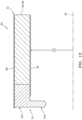
- the web 110 extends (e.g., radially) between and is connected to the first flange 106 and the second flange 108.
- the web 110 may be located at (e.g., on, adjacent or proximate) the exterior end 100 of the mount 74.
- the first flange 106 projects (e.g., axially) out from a first (e.g., inner) end 112 of the web 110 in a first direction; e.g., towards the cores 82 and 84.
- the second flange 108 projects (e.g., axially) out from a second (e.g., outer) end 114 of the web 110 in the first direction.
- the first flange 106 of FIG. 4 is (e.g., axially and circumferentially, partially) overlapped by the first skin 78.
- the first flange 106 is abutted (e.g., axially) against the first reinforcement sheet 86 and the first cellular core 82.
- the first flange 106 is connected (e.g., bonded / liquid interface diffusion (LID) bonded) to the first skin 78 using, for example, LID bonding foil.
- LID liquid interface diffusion
- the second flange 108 is (e.g., axially and circumferentially, completely) overlapped by the second skin 80 as well as the second reinforcement sheet 88.
- the second flange 108 is abutted (e.g., axially) against the first cellular core 82.
- the second flange 108 is connected to the second skin 80. More particularly, the second flange 108 is connected (e.g., bonded / liquid interface diffusion (LID) bonded) to the second reinforcement sheet 88.
- the second reinforcement sheet 88 is in turn between and connected (e.g., bonded / liquid interface diffusion (LID) bonded) to the second flange 108 and the second skin 80 using, for example, LID bonding foil.
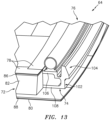
- the coupler 104 is configured as an arcuate member, specifically an arcuate flange, and more specifically an arcuate V-blade (see also FIG. 13 ).
- the coupler 104 is positioned at the exterior end 100 of the mount 74 and/or a (e.g., axial) end of the cowl door 64.
- the coupler 104 projects (e.g., radially inward) from the base 102 and its first flange 106.
- the coupler 104 also projects (e.g., radially) away from the first skin 78 (see also FIG. 13 ).
- the coupler 104 is operable to project (e.g., radially) into and mate with the receptacle 70.
- the coupler 104 may thereby reduce or prevent (e.g., axial) movement of the cowl door 64 relative to the fixed structure 60 when the cowl door 64 is in its closed position.
- the seal element 76 is mounted to the first flange 106 (see also FIG. 13 ).
- the seal element 76 is configured to press (e.g., radially) against the fixed structure 60 so as to form a sealed interface between the fixed structure 60 and the cowl door 64.
- the cowl door 64 may be configured without the first reinforcement sheet 86 and/or the second reinforcement sheet 88.
- the cowl door 64 may be configured with a single cellular core; e.g., the core 82 or 84.
- the cowl door 64 may be configured without the seal element 76.
- one or more or each component 72, 74 of the cowl door 64 of FIGS. 4 and 12 may be constructed from or otherwise include metal such as, but not limited to, pure titanium (Ti) or titanium alloy.
- the base 102 may be configured as a solid body; e.g., without a channel defined between the flanges 106 and 108 (e.g., see FIG. 4 ).
- the cowl door 64 may be configured as an inner cowl door.
Landscapes
- Engineering & Computer Science (AREA)
- Aviation & Aerospace Engineering (AREA)
- Chemical & Material Sciences (AREA)
- Combustion & Propulsion (AREA)
- Mechanical Engineering (AREA)
- General Engineering & Computer Science (AREA)
- Body Structure For Vehicles (AREA)
- Structures Of Non-Positive Displacement Pumps (AREA)
Description
- This disclosure (invention) relates generally to structural panels and, more particularly, to removably coupling a structural panel to another body.
- A modern aircraft propulsion system includes a gas turbine engine housed within a nacelle. The nacelle may include cowl doors to provide access to various components configured with the gas turbine engine. Various types and configurations of cowl doors are known in the art. Furthermore, various techniques are known in the art for removably coupling those cowl doors to a fixed structure. While these known cowl doors and coupling techniques have various benefits, there is still room in the art for improvement.
- There is a need in the art for improved cowl doors and cowl door coupling assemblies.
-
US 3,061,349 discloses a structural seam fastener. -
US 5,603,471 discloses a ducted fan turbine engine nozzle assembly. -
US 6,375,121 discloses a method for making a composite panel and a resulting panel. - According to an aspect of the present invention, an assembly is provided in accordance with
claim 1. - The following optional features may be applied to any of the above aspects.
- The cellular core may be bonded to the inner skin and/or the outer skin.
- The cellular core may be configured as or otherwise include a honeycomb core.
- The first cellular core may have a first density. The second cellular core may have a second density that is different than (or equal to) the first density.
- The structural panel may also include an inner reinforcement sheet and/or an outer reinforcement sheet. The inner reinforcement sheet may be bonded to and/or arranged between the cellular core and the inner skin. The outer reinforcement sheet may be bonded to and/or arranged between the cellular core and the outer skin.
- The structural panel may be configured from or otherwise include metal.
- A turbine engine case may be included. The turbine engine case may be configured with a receptacle. The coupler may be configured to project into and mate with the receptacle when the cowl door is in the closed position.
- A seal element may be included. The seal element may be attached to the base and configured to press against the turbine engine case.
- A reinforcement sheet may be included. The reinforcement sheet may be bonded to and arranged between the base and the inner skin or the outer skin.
- The reinforcement sheet may be bonded to the cellular core.
- The mount may be configured as a monolithic body.
- The mount may be configured as or otherwise include metal.
- The mount may be bonded to the inner skin and/or the outer skin.
- The base may have a generally U-shaped cross-sectional geometry.
- The base may include an inner flange, an outer flange and a web. The web may extend between and/or may be connected to the inner flange and the outer flange. The inner flange may be overlapped by and/or connected to the inner skin. The outer flange may be overlapped by and/or connected to the outer skin.
- The present invention may include any one or more of the individual features disclosed above and/or below.
- The foregoing features and the operation of the invention will become more apparent in light of the following description and the accompanying drawings.
-
-
FIG. 1 is a side illustration of an aircraft propulsion system. -
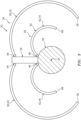
FIG. 2 is a cross-sectional illustration of a portion of the aircraft propulsion system with inner and outer cowl doors in closed positions. -
FIG. 3 is a cross-sectional illustration of a portion of the aircraft propulsion system with the inner and the outer cowl doors in open positions. -
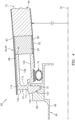
FIG. 4 is a side sectional illustration of an end portion of an assembly for the aircraft propulsion system. -
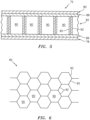
FIG. 5 is a side sectional illustration of a portion of a first cellular core configured within the end portion of the aircraft propulsion system assembly. -
FIG. 6 is a side view illustration of a portion of the first cellular core. -
FIG. 7 is a side sectional illustration of a portion of a second cellular core configured within the end portion of the aircraft propulsion system assembly. -
FIG. 8 is a side view illustration of a portion of the second cellular core. -
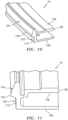
FIG. 9 is a perspective illustration of a door mount. -
FIG. 10 is a perspective illustration of an end portion of the door mount. -
FIG. 11 is another perspective illustration of an end portion of the door mount. -
FIG. 12 is a side sectional illustration of an end portion of another assembly for the aircraft propulsion system. -
FIG. 13 is a perspective illustration of a portion of the cowl door. -
FIG. 1 illustrates anaircraft propulsion system 20 for an aircraft such as, but not limited to, a commercial airliner or a cargo plane. Thepropulsion system 20 includes anacelle 22 and a gas turbine engine. This gas turbine engine may be configured as a high-bypass turbofan engine. Alternatively, the gas turbine engine may be configured as any other type of gas turbine engine capable of propelling the aircraft during flight. - The
nacelle 22 is configured to house and provide an aerodynamic cover for the gas turbine engine. Thenacelle 22 ofFIG. 1 includes a nacelleouter structure 24 and a nacelleinner structure 26, whichinner structure 26 may sometimes be referred to as an inner fixed structure (IFS). - Referring to
FIG. 2 , theinner structure 26 covers at least an axial portion (or an entirety) of acore 28 of the gas turbine engine, whichengine core 28 may include a compressor section, a combustor section and a turbine section. Theinner structure 26 includes aninner barrel 30 and at least onebifurcation structure 32; e.g., an upper bifurcation cowl. Theinner barrel 30 may be a generally cylindrical / barrel-shaped cowl that extends circumferentially around and axially along theengine core 28 and an axial centerline 34 (e.g., rotational axis) of theaircraft propulsion system 20. Theinner barrel 30 at least partially forms an internal compartment 36 (e.g., a core compartment) within thenacelle 22. Thisinternal compartment 36 at least partially or completely houses theengine core 28; e.g., theengine core 28 is arranged within theinternal compartment 36. Thebifurcation structure 32 provides an aerodynamic housing for apylon 38 which mounts theaircraft propulsion system 20 to the aircraft. Thebifurcation structure 32 extends radially between theinner barrel 30 and theouter structure 24. - The
outer structure 24 covers a fan section (not shown) of the gas turbine engine. Theouter structure 24 covers at least a forward portion of theinner structure 26 and itsinner barrel 30 so as to form a bypass duct and an associatedbypass flowpath 40 radially between thestructures outer structure 24 may also be configured with a thrust reverser (not shown) for redirecting airflow from thebypass flowpath 40 out of thenacelle 22 in a forward and/or outward direction. The present disclosure, however, is not limited to the foregoing exemplary general nacelle configuration. - Briefly, the bypass duct of
FIG. 2 is configured as an O-Duct. The term "O-duct" may describe a duct through which only a single bifurcation extends between and connects a nacelle outer structure and a nacelle inner structure. By contrast, the term "C-Duct" or "D-duct" may describe a duct through which two bifurcations (e.g., an upper bifurcation and a lower bifurcation) extend between and connect a nacelle outer structure and a nacelle inner structure. Of course, although the exemplary duct shown inFIG. 2 is an O-duct, the present disclosure is not limited to any particular duct configurations. In particular, the present disclosure also contemplates thenacelle 22 having a C-duct or a D-duct. - Referring still to
FIG. 2 , theinner structure 26 may be configured with one or more movable (e.g., pivotable) inner structure components 42. These inner structure components 42 may be configured as or otherwise include inner cowl doors 44. Each of these inner cowl doors 44 extends circumferentially about thecenterline 34 and theengine core 28. In particular, each inner cowl door 44 extends circumferentially between an inner cowlupper end 46 and an inner cowllower end 48. The inner cowlupper end 46 may be pivotally connected to thebifurcation structure 32 and/or thepylon 38 by, for example, one or more hinges. Each inner cowl door 44 is thereby operable to move (e.g., pivot) between a closed position (position ofFIG. 2 ) and an open position (position ofFIG. 3 ). Referring again toFIG. 2 , the inner cowl lower ends 48 of the inner cowl doors 44 may be configured to latch together via one or more latches so as to at least partially or completely form theinner barrel 30. - The
outer structure 24 may be configured with one or more movable (e.g., pivotable) outer structure components 50. These outer structure components 50 may be configured as or otherwise include outer cowl doors 52. Each of these outer cowl doors 52 extends circumferentially about thecenterline 34. In particular, each outer cowl door 52 extends circumferentially between an outer cowlupper end 54 and an outer cowllower end 56. The outer cowlupper end 54 may be pivotally connected to thebifurcation structure 32 and/or thepylon 38 by, for example, one or more hinges. Each outer cowl door 52 is thereby operable to move (e.g., pivot) between a closed position (position ofFIG. 2 ) and an open position (position ofFIG. 3 ). Referring again toFIG. 2 , the outer cowl lower ends 56 of the outer cowl doors 52 may be configured to latch together via one or more latches so as to at least partially or completely form, for example, a fan cowl and/or a translatable sleeve of theouter structure 24. -
FIG. 4 illustrates an end portion of anassembly 58 for theaircraft propulsion system 20. This aircraftpropulsion system assembly 58 includes a fixedstructure 60 and a moveable (e.g., pivotable) structure 62 such as acowl door 64. Thiscowl door 64 may be configured as one of the inner cowl doors 44. Alternatively, thecowl door 64 may be configured as one of the outer cowl doors 52, or any other moveable structure included in theaircraft propulsion system 20; e.g., a fan cowl door. - The fixed
structure 60 ofFIG. 4 is configured as a turbine engine case. This fixedstructure 60 includes a tubular (or arcuate)sidewall 66 which extends circumferentially about (or completely around) thecenterline 34. The fixedstructure 60 also includes amount 68 with areceptacle 70 such as, but not limited to, a groove; e.g., a V-groove. Thisreceptacle 70 ofFIG. 4 projects partially radially into themount 68. Thereceptacle 70 also extends circumferentially about thecenterline 34 within, through or into themount 68. - The
cowl door 64 ofFIG. 4 includes astructural panel 72, acowl door mount 74 and aseal element 76; e.g., a fire seal element and/or a bulb seal element. Thestructural panel 72 includes a first (e.g., inner)skin 78, a second (e.g., outer)skin 80 and one or morecellular cores structural panel 72 ofFIG. 4 also includes one ormore reinforcement sheets - Referring to
FIGS. 5 and 6 , the firstcellular core 82 is configured to form one or more first cavities 90 (e.g., radially) between thefirst skin 78 and thesecond skin 80 and, more particularly, between the first (e.g., inner)reinforcement sheet 86 and the second (e.g., outer)reinforcement sheet 88. The firstcellular core 82 ofFIGS. 5 and 6 , for example, is configured as a honeycomb core. This firstcellular core 82 includes a plurality of corrugatedfirst sidewalls 92. Thefirst sidewalls 92 are arranged in a side-by-side array and connected to one another such that each adjacent (neighboring) pair offirst sidewalls 92 forms an array of thefirst cavities 90 therebetween. Referring toFIG. 5 , each of thefirst cavities 90 extends (e.g., generally radially) through the firstcellular core 82 to and between thefirst reinforcement sheet 86 and thesecond reinforcement sheet 88. Referring toFIG. 6 , eachfirst cavity 90 may have a polygonal (e.g., hexagonal) cross-sectional geometry when viewed in a plane parallel to one or more of theelements FIG. 5 ). The present disclosure, however, is not limited to any particular cellular core configurations. The present disclosure is also not limited to including reinforcement sheets. One or both of thereinforcement sheets cellular core 82 is connected directly to thefirst skin 78 and/or thesecond skin 80. - Referring to
FIGS. 7 and 8 , the secondcellular core 84 is configured to form one or more second cavities 94 (e.g., radially) between thefirst skin 78 and thesecond skin 80. The secondcellular core 84 ofFIGS. 7 and 8 , for example, is configured as a honeycomb core. This secondcellular core 84 includes a plurality of corrugatedsecond sidewalls 96. Thesecond sidewalls 96 are arranged in a side-by-side array and connected to one another such that each adjacent (neighboring) pair ofsecond sidewalls 96 forms an array of thesecond cavities 94 therebetween. Referring toFIG. 7 , each of thesecond cavities 94 extends (e.g., generally radially) through the secondcellular core 84 to and between thefirst skin 78 and thesecond skin 80. Referring toFIG. 8 , eachsecond cavity 94 may have a polygonal (e.g., hexagonal) cross-sectional geometry when viewed in a plane parallel to one or more of theelements 78 and/or 80 (seeFIG. 7 ). The present disclosure, however, is not limited to any particular cellular core configurations. The present disclosure is also not limited to embodiments where the secondcellular core 84 is connected directly to thefirst skin 78 and thesecond skin 80. For example, in other embodiments, at least one reinforcement sheet may be arranged between the secondcellular core 84 and thefirst skin 78 and/or at least one reinforcement sheet may be arranged between the secondcellular core 84 and thesecond skin 80, for example, in a similar manner as described above with respect to thereinforcement sheets - The first
cellular core 82 ofFIG. 6 has a first core configuration with a first density. The secondcellular core 84 ofFIG. 8 has a second core configuration with a second density. Here, the term "density" may describe a ratio of material to open space in a cellular core. For example, a cellular core with a relatively low density may be configured with smaller cavities than a cellular core with a relatively high density. In the embodiments ofFIGS. 6 and8 , the first density of the firstcellular core 82 is different (e.g., greater) than the second density of the secondcellular core 84. The present disclosure, however, is not limited to such an exemplary embodiment. - Referring again to
FIG. 4 , the firstcellular core 82 is arranged (e.g., axially) between and may be next to, adjacent and/or abutted against the secondcellular core 84 and themount 74. The firstcellular core 82 is arranged (e.g., radially) between and connected to thefirst skin 78 and thesecond skin 80. More particularly, the firstcellular core 82 is arranged between and connected (e.g., bonded / liquid interface diffusion (LID) bonded) to thefirst reinforcement sheet 86 and thesecond reinforcement sheet 88. Thefirst reinforcement sheet 86 in turn is arranged between and connected (e.g., bonded / liquid interface diffusion (LID) bonded) to the firstcellular core 82 and thefirst skin 78. Similarly, thesecond reinforcement sheet 88 is arranged between and connected (e.g., bonded / liquid interface diffusion (LID) bonded) to the firstcellular core 82 and thesecond skin 80. - The second
cellular core 84 is arranged (e.g., radially) between and connected (e.g., bonded / liquid interface diffusion (LID) bonded) to thefirst skin 78 and thesecond skin 80. - Referring to
FIGS. 9-11 , themount 74 may be configured as an arcuate body; e.g., an arcuate monolithic body. Themount 74 ofFIG. 9 , for example, extends circumferentially about thecenterline 34. Themount 74 ofFIG. 4 extends axially along thecenterline 34 between aninterior end 98 and anexterior end 100. - The
mount 74 ofFIGS. 4 ,10 and 11 includes abase 102 and acoupler 104. Thebase 102 ofFIGS. 4 ,10 and 11 includes an arcuate first (e.g., inner)flange 106, an arcuate second (e.g., outer)flange 108 and anarcuate web 110. Theweb 110 extends (e.g., radially) between and is connected to thefirst flange 106 and thesecond flange 108. Theweb 110 may be located at (e.g., on, adjacent or proximate) theexterior end 100 of themount 74. Thefirst flange 106 projects (e.g., axially) out from a first (e.g., inner) end 112 of theweb 110 in a first direction; e.g., towards thecores second flange 108 projects (e.g., axially) out from a second (e.g., outer) end 114 of theweb 110 in the first direction. - The
first flange 106 ofFIG. 4 is (e.g., axially and circumferentially, partially) overlapped by thefirst skin 78. Thefirst flange 106 is abutted (e.g., axially) against thefirst reinforcement sheet 86 and the firstcellular core 82. Thefirst flange 106 is connected (e.g., bonded / liquid interface diffusion (LID) bonded) to thefirst skin 78 using, for example, LID bonding foil. - The
second flange 108 is (e.g., axially and circumferentially, completely) overlapped by thesecond skin 80 as well as thesecond reinforcement sheet 88. Thesecond flange 108 is abutted (e.g., axially) against the firstcellular core 82. Thesecond flange 108 is connected to thesecond skin 80. More particularly, thesecond flange 108 is connected (e.g., bonded / liquid interface diffusion (LID) bonded) to thesecond reinforcement sheet 88. Thesecond reinforcement sheet 88 is in turn between and connected (e.g., bonded / liquid interface diffusion (LID) bonded) to thesecond flange 108 and thesecond skin 80 using, for example, LID bonding foil. - The
coupler 104 is configured as an arcuate member, specifically an arcuate flange, and more specifically an arcuate V-blade (see alsoFIG. 13 ). Thecoupler 104 is positioned at theexterior end 100 of themount 74 and/or a (e.g., axial) end of thecowl door 64. Thecoupler 104 projects (e.g., radially inward) from thebase 102 and itsfirst flange 106. Thecoupler 104 also projects (e.g., radially) away from the first skin 78 (see alsoFIG. 13 ). With this configuration and arrangement, thecoupler 104 is operable to project (e.g., radially) into and mate with thereceptacle 70. Thecoupler 104 may thereby reduce or prevent (e.g., axial) movement of thecowl door 64 relative to the fixedstructure 60 when thecowl door 64 is in its closed position. - The
seal element 76 is mounted to the first flange 106 (see alsoFIG. 13 ). Theseal element 76 is configured to press (e.g., radially) against the fixedstructure 60 so as to form a sealed interface between the fixedstructure 60 and thecowl door 64. - In some embodiments, referring to
FIG. 12 , thecowl door 64 may be configured without thefirst reinforcement sheet 86 and/or thesecond reinforcement sheet 88. - In some embodiments, the
cowl door 64 may be configured with a single cellular core; e.g., the core 82 or 84. - In some embodiments, the
cowl door 64 may be configured without theseal element 76. - In some embodiments, one or more or each
component cowl door 64 ofFIGS. 4 and12 may be constructed from or otherwise include metal such as, but not limited to, pure titanium (Ti) or titanium alloy. - In some embodiments, the
base 102 may be configured as a solid body; e.g., without a channel defined between theflanges 106 and 108 (e.g., seeFIG. 4 ). - In some embodiments, the
cowl door 64 may be configured as an inner cowl door. - While various embodiments of the present invention have been disclosed, it will be apparent to those of ordinary skill in the art that many more embodiments and implementations are possible within the scope of the invention as defined by the claims.
Claims (15)
- An assembly (58) for an aircraft propulsion system (20), comprising:a cowl door (64) movable between a closed position and an open position;the cowl door (64) including a structural panel (72) and a mount (74);the structural panel (72) including an inner skin (78), an outer skin (80) and a cellular core (82,84) connected to and arranged between the inner skin (78) and the outer skin (80); andthe mount (74) comprising a base (102) and a coupler (104), the base (102) connected to and arranged between the inner skin (78) and the outer skin (80),wherein:the coupler (104) projects out from the base (102) and radially inward from the base (102) away from the inner skin (78); andthe coupler (104) being positioned at an axial end of the cowl door (64),characterized in that:the coupler (104) comprises an arcuate V-blade; andthe cellular core (82,84) comprises a first cellular core (82), and the structural panel (72) further includes a second cellular core (84) connected to and arranged between the inner skin (78) and the outer skin (80), and the first cellular core (82) is arranged between and is abutted against the second cellular core (84) and the mount (74).
- The assembly (58) of claim 1, wherein the cellular core (82,84) is bonded to at least one of the inner skin (78) or the outer skin (80).
- The assembly of claim 1 or 2, wherein the cellular core (82,84) comprises a honeycomb core.
- The assembly (58) of any preceding claim, wherein the structural panel (72) further includes an inner reinforcement sheet (86) bonded to and arranged between the cellular core (82,84) and the inner skin (78).
- The assembly (58) of any preceding claim, wherein the structural panel (72) further includes an outer reinforcement sheet (88) bonded to and arranged between the cellular core (82,84) and the outer skin (80).
- The assembly (58) of any preceding claim, wherein:the structural panel (72) comprises metal; and/orthe base (102) has a generally U-shaped cross-sectional geometry.
- The assembly (58) of any preceding claim, further comprising:a turbine engine case (60) configured with a receptacle (70);the coupler (104) configured to project into and mate with the receptacle (70) when the cowl door (64) is in the closed position.
- The assembly (58) of claim 7, further comprising a seal element (76) attached to the base (102) and configured to press against the turbine engine case (60).
- The assembly (58) of any preceding claim, further comprising a reinforcement sheet (86,88) bonded to and arranged between the base (102) and one of the inner skin (78) or the outer skin (80).
- The assembly (58) of claim 9, wherein the reinforcement sheet (86,88) is further bonded to the cellular core (82,84).
- The assembly (58) of any preceding claim, wherein the mount (74) is configured as a monolithic body.
- The assembly (58) of any preceding claim, wherein the mount (74) comprises metal.
- The assembly (58) of any preceding claim, wherein the mount (74) is bonded to at least one of the inner skin (78) or the outer skin (80).
- The assembly (58) of any preceding claim, whereinthe base (102) includes an inner flange (106), an outer flange (108) and a web (110) extending between and connected to the inner flange (106) and the outer flange (108);the inner flange (106) is overlapped by and connected to the inner skin (78); andthe outer flange (108) is overlapped by and connected to the outer skin (80).
- The assembly (58) of any preceding claim, wherein:the first cellular core (82) has a first density; andthe second cellular core (84) has a second density that is different than the first density.
Applications Claiming Priority (2)
| Application Number | Priority Date | Filing Date | Title |
|---|---|---|---|
| US202062983239P | 2020-02-28 | 2020-02-28 | |
| US17/060,964 US11535390B2 (en) | 2020-02-28 | 2020-10-01 | Structural panel with integrated coupler |
Publications (3)
| Publication Number | Publication Date |
|---|---|
| EP3871979A2 EP3871979A2 (en) | 2021-09-01 |
| EP3871979A3 EP3871979A3 (en) | 2021-11-17 |
| EP3871979B1 true EP3871979B1 (en) | 2024-12-04 |
Family
ID=74844718
Family Applications (1)
| Application Number | Title | Priority Date | Filing Date |
|---|---|---|---|
| EP21159759.6A Active EP3871979B1 (en) | 2020-02-28 | 2021-02-26 | Structural panel with integrated coupler |
Country Status (2)
| Country | Link |
|---|---|
| US (1) | US11535390B2 (en) |
| EP (1) | EP3871979B1 (en) |
Families Citing this family (8)
| Publication number | Priority date | Publication date | Assignee | Title |
|---|---|---|---|---|
| US11472564B2 (en) * | 2019-03-12 | 2022-10-18 | Rohr, Inc. | Seal arrangement |
| US11427341B2 (en) * | 2019-09-30 | 2022-08-30 | Rohr, Inc. | Linkage supporting a door of an aircraft propulsion system |
| FR3128206A1 (en) * | 2021-10-14 | 2023-04-21 | Safran Nacelles | Rear assembly for turbojet nacelle |
| FR3137942B1 (en) * | 2022-07-13 | 2024-09-06 | Safran Nacelles | Set comprising a nacelle panel and a housing |
| US12416261B2 (en) | 2022-09-29 | 2025-09-16 | General Electric Company | Gas turbine engine |
| FR3151837A1 (en) * | 2023-08-01 | 2025-02-07 | Airbus Operations | IMPROVED POSITIONING ASSEMBLY FOR A MOVABLE AIRCRAFT COWL AND AIRCRAFT EQUIPPED WITH SUCH AN ASSEMBLY. |
| EP4520946A3 (en) * | 2023-09-11 | 2025-06-25 | Rohr, Inc. | Exhaust nozzle assembly for aircraft propulsion system |
| FR3163057A1 (en) * | 2024-06-06 | 2025-12-12 | Safran Nacelles | Aircraft nacelle cowling |
Family Cites Families (20)
| Publication number | Priority date | Publication date | Assignee | Title |
|---|---|---|---|---|
| US3061349A (en) * | 1960-12-09 | 1962-10-30 | Camloc Fastener Corp | Structural seam fastener |
| GB1533551A (en) * | 1974-11-08 | 1978-11-29 | Gen Electric | Gas turbofan engines |
| DE3271806D1 (en) * | 1982-12-27 | 1986-07-24 | Boeing Co | Inlet cowl attachment for jet engine |
| US4509616A (en) * | 1983-05-02 | 1985-04-09 | United Technologies Corporation | Acoustical liners |
| US4826106A (en) * | 1987-02-18 | 1989-05-02 | Grumman Aerospace Corporation | Advanced composite aircraft cowl |
| US5101621A (en) | 1989-09-25 | 1992-04-07 | Rohr Industries, Inc. | Integrated corner for ducted fan engine shrouds |
| FR2661213B1 (en) * | 1990-04-19 | 1992-07-03 | Snecma | AVIATION ENGINE WITH VERY HIGH DILUTION RATES AND OF THE SAID TYPE FRONT CONTRAFAN. |
| GB9120658D0 (en) | 1991-09-27 | 1991-11-06 | Short Brothers Plc | Ducted fan turbine engine |
| FR2767560B1 (en) | 1997-08-19 | 1999-11-12 | Aerospatiale | NOISE REDUCTION ASSEMBLY FOR AN AIRCRAFT TURBOREACTOR |
| FR2771330B1 (en) | 1997-11-26 | 2004-02-27 | Aerospatiale | METHOD OF MANUFACTURING A MONOLITHIC COMPOSITE PANEL ARTICULATED WITH INTEGRATED STRAIGHTENER MEANS, ARTICULATED PANEL OBTAINED AND ARTICULATED HOOD IN AN AIRCRAFT |
| JP2004260346A (en) | 2003-02-24 | 2004-09-16 | Alps Electric Co Ltd | Electroacoustic transducer |
| US8197191B2 (en) | 2009-04-14 | 2012-06-12 | Rohr, Inc. | Inlet section of an aircraft engine nacelle |
| US7854594B2 (en) | 2009-04-28 | 2010-12-21 | General Electric Company | Segmented wind turbine blade |
| US20120308379A1 (en) | 2011-05-31 | 2012-12-06 | Mra Systems, Inc. | Aircraft engine cowl and process therefor |
| US9897007B2 (en) | 2012-07-24 | 2018-02-20 | Rohr, Inc. | Thrust reverser-integrated track beam and inner fixed structure |
| US9168716B2 (en) | 2012-09-14 | 2015-10-27 | The Boeing Company | Metallic sandwich structure having small bend radius |
| US20150041059A1 (en) | 2013-03-18 | 2015-02-12 | Rohr, Inc. | Inner fixed structure with attached corner fitting |
| US10507931B2 (en) | 2015-10-19 | 2019-12-17 | Rohr, Inc. | Panel and insert for corner radii |
| US10479517B2 (en) | 2016-12-05 | 2019-11-19 | The Boeing Company | Composite fan cowl with a core having tailored thickness |
| US10247021B2 (en) | 2016-12-07 | 2019-04-02 | Rohr, Inc. | High temperature seals for blanketless inner fixed structure |
-
2020
- 2020-10-01 US US17/060,964 patent/US11535390B2/en active Active
-
2021
- 2021-02-26 EP EP21159759.6A patent/EP3871979B1/en active Active
Also Published As
| Publication number | Publication date |
|---|---|
| US20210269168A1 (en) | 2021-09-02 |
| EP3871979A2 (en) | 2021-09-01 |
| US11535390B2 (en) | 2022-12-27 |
| EP3871979A3 (en) | 2021-11-17 |
Similar Documents
| Publication | Publication Date | Title |
|---|---|---|
| EP3871979B1 (en) | Structural panel with integrated coupler | |
| US8316632B2 (en) | Thrust reverser configuration for a short fan duct | |
| EP2459862B1 (en) | Integrated thrust reverser assembly | |
| EP3747775B1 (en) | Nacelle with a translatable inlet for an aircraft propulsion system | |
| US10731602B2 (en) | Thrust reverser system exhibiting limited aerodynamic perturbation | |
| EP2562405B1 (en) | Gas turbine engine access door | |
| EP3805108B1 (en) | Support structure for inner cowls of an aircraft propulsion system | |
| EP2863039B1 (en) | Inverted track beam attachment flange | |
| EP3798134B1 (en) | Linkage(s) between inner and outer cowl doors | |
| US9169026B2 (en) | Turbojet engine nacelle | |
| US20170138304A1 (en) | Drag link assembly for a thrust reverser | |
| EP3800126B1 (en) | Cowl door latch assembly | |
| US11878808B2 (en) | Nacelle inlet structure fitting with locator clip and hoist bracket | |
| EP4397850A1 (en) | Manufacturing thrust reverser blocker door using overmolding | |
| US10239628B2 (en) | Set of latches with identical components for nacelle doors | |
| EP2952725B1 (en) | Thrust reverser torque box with discrete major fittings | |
| US20260055742A1 (en) | Latches for nacelle inner structure sections | |
| EP4019407B1 (en) | Fan cowl failsafe gooseneck assembly |
Legal Events
| Date | Code | Title | Description |
|---|---|---|---|
| PUAI | Public reference made under article 153(3) epc to a published international application that has entered the european phase |
Free format text: ORIGINAL CODE: 0009012 |
|
| STAA | Information on the status of an ep patent application or granted ep patent |
Free format text: STATUS: THE APPLICATION HAS BEEN PUBLISHED |
|
| AK | Designated contracting states |
Kind code of ref document: A2 Designated state(s): AL AT BE BG CH CY CZ DE DK EE ES FI FR GB GR HR HU IE IS IT LI LT LU LV MC MK MT NL NO PL PT RO RS SE SI SK SM TR |
|
| PUAL | Search report despatched |
Free format text: ORIGINAL CODE: 0009013 |
|
| AK | Designated contracting states |
Kind code of ref document: A3 Designated state(s): AL AT BE BG CH CY CZ DE DK EE ES FI FR GB GR HR HU IE IS IT LI LT LU LV MC MK MT NL NO PL PT RO RS SE SI SK SM TR |
|
| RIC1 | Information provided on ipc code assigned before grant |
Ipc: F02K 1/80 20060101ALN20211012BHEP Ipc: B64D 29/06 20060101AFI20211012BHEP |
|
| STAA | Information on the status of an ep patent application or granted ep patent |
Free format text: STATUS: REQUEST FOR EXAMINATION WAS MADE |
|
| 17P | Request for examination filed |
Effective date: 20220517 |
|
| RBV | Designated contracting states (corrected) |
Designated state(s): AL AT BE BG CH CY CZ DE DK EE ES FI FR GB GR HR HU IE IS IT LI LT LU LV MC MK MT NL NO PL PT RO RS SE SI SK SM TR |
|
| STAA | Information on the status of an ep patent application or granted ep patent |
Free format text: STATUS: EXAMINATION IS IN PROGRESS |
|
| 17Q | First examination report despatched |
Effective date: 20230301 |
|
| GRAP | Despatch of communication of intention to grant a patent |
Free format text: ORIGINAL CODE: EPIDOSNIGR1 |
|
| STAA | Information on the status of an ep patent application or granted ep patent |
Free format text: STATUS: GRANT OF PATENT IS INTENDED |
|
| RIC1 | Information provided on ipc code assigned before grant |
Ipc: F02K 1/80 20060101ALN20240613BHEP Ipc: B64D 29/06 20060101AFI20240613BHEP |
|
| INTG | Intention to grant announced |
Effective date: 20240702 |
|
| GRAS | Grant fee paid |
Free format text: ORIGINAL CODE: EPIDOSNIGR3 |
|
| GRAA | (expected) grant |
Free format text: ORIGINAL CODE: 0009210 |
|
| STAA | Information on the status of an ep patent application or granted ep patent |
Free format text: STATUS: THE PATENT HAS BEEN GRANTED |
|
| AK | Designated contracting states |
Kind code of ref document: B1 Designated state(s): AL AT BE BG CH CY CZ DE DK EE ES FI FR GB GR HR HU IE IS IT LI LT LU LV MC MK MT NL NO PL PT RO RS SE SI SK SM TR |
|
| REG | Reference to a national code |
Ref country code: CH Ref legal event code: EP |
|
| REG | Reference to a national code |
Ref country code: DE Ref legal event code: R096 Ref document number: 602021022691 Country of ref document: DE |
|
| REG | Reference to a national code |
Ref country code: IE Ref legal event code: FG4D |
|
| REG | Reference to a national code |
Ref country code: LT Ref legal event code: MG9D |
|
| REG | Reference to a national code |
Ref country code: NL Ref legal event code: MP Effective date: 20241204 |
|
| PG25 | Lapsed in a contracting state [announced via postgrant information from national office to epo] |
Ref country code: HR Free format text: LAPSE BECAUSE OF FAILURE TO SUBMIT A TRANSLATION OF THE DESCRIPTION OR TO PAY THE FEE WITHIN THE PRESCRIBED TIME-LIMIT Effective date: 20241204 |
|
| PG25 | Lapsed in a contracting state [announced via postgrant information from national office to epo] |
Ref country code: FI Free format text: LAPSE BECAUSE OF FAILURE TO SUBMIT A TRANSLATION OF THE DESCRIPTION OR TO PAY THE FEE WITHIN THE PRESCRIBED TIME-LIMIT Effective date: 20241204 |
|
| PG25 | Lapsed in a contracting state [announced via postgrant information from national office to epo] |
Ref country code: BG Free format text: LAPSE BECAUSE OF FAILURE TO SUBMIT A TRANSLATION OF THE DESCRIPTION OR TO PAY THE FEE WITHIN THE PRESCRIBED TIME-LIMIT Effective date: 20241204 |
|
| PG25 | Lapsed in a contracting state [announced via postgrant information from national office to epo] |
Ref country code: ES Free format text: LAPSE BECAUSE OF FAILURE TO SUBMIT A TRANSLATION OF THE DESCRIPTION OR TO PAY THE FEE WITHIN THE PRESCRIBED TIME-LIMIT Effective date: 20241204 |
|
| PG25 | Lapsed in a contracting state [announced via postgrant information from national office to epo] |
Ref country code: NO Free format text: LAPSE BECAUSE OF FAILURE TO SUBMIT A TRANSLATION OF THE DESCRIPTION OR TO PAY THE FEE WITHIN THE PRESCRIBED TIME-LIMIT Effective date: 20250304 |
|
| PG25 | Lapsed in a contracting state [announced via postgrant information from national office to epo] |
Ref country code: LV Free format text: LAPSE BECAUSE OF FAILURE TO SUBMIT A TRANSLATION OF THE DESCRIPTION OR TO PAY THE FEE WITHIN THE PRESCRIBED TIME-LIMIT Effective date: 20241204 Ref country code: GR Free format text: LAPSE BECAUSE OF FAILURE TO SUBMIT A TRANSLATION OF THE DESCRIPTION OR TO PAY THE FEE WITHIN THE PRESCRIBED TIME-LIMIT Effective date: 20250305 |
|
| PG25 | Lapsed in a contracting state [announced via postgrant information from national office to epo] |
Ref country code: RS Free format text: LAPSE BECAUSE OF FAILURE TO SUBMIT A TRANSLATION OF THE DESCRIPTION OR TO PAY THE FEE WITHIN THE PRESCRIBED TIME-LIMIT Effective date: 20250304 |
|
| PG25 | Lapsed in a contracting state [announced via postgrant information from national office to epo] |
Ref country code: NL Free format text: LAPSE BECAUSE OF FAILURE TO SUBMIT A TRANSLATION OF THE DESCRIPTION OR TO PAY THE FEE WITHIN THE PRESCRIBED TIME-LIMIT Effective date: 20241204 |
|
| REG | Reference to a national code |
Ref country code: AT Ref legal event code: MK05 Ref document number: 1747941 Country of ref document: AT Kind code of ref document: T Effective date: 20241204 |
|
| PG25 | Lapsed in a contracting state [announced via postgrant information from national office to epo] |
Ref country code: SM Free format text: LAPSE BECAUSE OF FAILURE TO SUBMIT A TRANSLATION OF THE DESCRIPTION OR TO PAY THE FEE WITHIN THE PRESCRIBED TIME-LIMIT Effective date: 20241204 |
|
| PG25 | Lapsed in a contracting state [announced via postgrant information from national office to epo] |
Ref country code: PL Free format text: LAPSE BECAUSE OF FAILURE TO SUBMIT A TRANSLATION OF THE DESCRIPTION OR TO PAY THE FEE WITHIN THE PRESCRIBED TIME-LIMIT Effective date: 20241204 |
|
| PG25 | Lapsed in a contracting state [announced via postgrant information from national office to epo] |
Ref country code: IS Free format text: LAPSE BECAUSE OF FAILURE TO SUBMIT A TRANSLATION OF THE DESCRIPTION OR TO PAY THE FEE WITHIN THE PRESCRIBED TIME-LIMIT Effective date: 20250404 |
|
| PG25 | Lapsed in a contracting state [announced via postgrant information from national office to epo] |
Ref country code: PT Free format text: LAPSE BECAUSE OF FAILURE TO SUBMIT A TRANSLATION OF THE DESCRIPTION OR TO PAY THE FEE WITHIN THE PRESCRIBED TIME-LIMIT Effective date: 20250404 |
|
| PG25 | Lapsed in a contracting state [announced via postgrant information from national office to epo] |
Ref country code: EE Free format text: LAPSE BECAUSE OF FAILURE TO SUBMIT A TRANSLATION OF THE DESCRIPTION OR TO PAY THE FEE WITHIN THE PRESCRIBED TIME-LIMIT Effective date: 20241204 |
|
| PG25 | Lapsed in a contracting state [announced via postgrant information from national office to epo] |
Ref country code: RO Free format text: LAPSE BECAUSE OF FAILURE TO SUBMIT A TRANSLATION OF THE DESCRIPTION OR TO PAY THE FEE WITHIN THE PRESCRIBED TIME-LIMIT Effective date: 20241204 Ref country code: AT Free format text: LAPSE BECAUSE OF FAILURE TO SUBMIT A TRANSLATION OF THE DESCRIPTION OR TO PAY THE FEE WITHIN THE PRESCRIBED TIME-LIMIT Effective date: 20241204 |
|
| PG25 | Lapsed in a contracting state [announced via postgrant information from national office to epo] |
Ref country code: SK Free format text: LAPSE BECAUSE OF FAILURE TO SUBMIT A TRANSLATION OF THE DESCRIPTION OR TO PAY THE FEE WITHIN THE PRESCRIBED TIME-LIMIT Effective date: 20241204 |
|
| PG25 | Lapsed in a contracting state [announced via postgrant information from national office to epo] |
Ref country code: CZ Free format text: LAPSE BECAUSE OF FAILURE TO SUBMIT A TRANSLATION OF THE DESCRIPTION OR TO PAY THE FEE WITHIN THE PRESCRIBED TIME-LIMIT Effective date: 20241204 |
|
| PG25 | Lapsed in a contracting state [announced via postgrant information from national office to epo] |
Ref country code: IT Free format text: LAPSE BECAUSE OF FAILURE TO SUBMIT A TRANSLATION OF THE DESCRIPTION OR TO PAY THE FEE WITHIN THE PRESCRIBED TIME-LIMIT Effective date: 20241204 |
|
| REG | Reference to a national code |
Ref country code: DE Ref legal event code: R097 Ref document number: 602021022691 Country of ref document: DE |
|
| PG25 | Lapsed in a contracting state [announced via postgrant information from national office to epo] |
Ref country code: SE Free format text: LAPSE BECAUSE OF FAILURE TO SUBMIT A TRANSLATION OF THE DESCRIPTION OR TO PAY THE FEE WITHIN THE PRESCRIBED TIME-LIMIT Effective date: 20241204 |
|
| PG25 | Lapsed in a contracting state [announced via postgrant information from national office to epo] |
Ref country code: MC Free format text: LAPSE BECAUSE OF FAILURE TO SUBMIT A TRANSLATION OF THE DESCRIPTION OR TO PAY THE FEE WITHIN THE PRESCRIBED TIME-LIMIT Effective date: 20241204 |
|
| REG | Reference to a national code |
Ref country code: CH Ref legal event code: PL |
|
| PG25 | Lapsed in a contracting state [announced via postgrant information from national office to epo] |
Ref country code: DK Free format text: LAPSE BECAUSE OF FAILURE TO SUBMIT A TRANSLATION OF THE DESCRIPTION OR TO PAY THE FEE WITHIN THE PRESCRIBED TIME-LIMIT Effective date: 20241204 |
|
| PLBE | No opposition filed within time limit |
Free format text: ORIGINAL CODE: 0009261 |
|
| STAA | Information on the status of an ep patent application or granted ep patent |
Free format text: STATUS: NO OPPOSITION FILED WITHIN TIME LIMIT |
|
| PG25 | Lapsed in a contracting state [announced via postgrant information from national office to epo] |
Ref country code: LU Free format text: LAPSE BECAUSE OF NON-PAYMENT OF DUE FEES Effective date: 20250226 |
|
| PG25 | Lapsed in a contracting state [announced via postgrant information from national office to epo] |
Ref country code: CH Free format text: LAPSE BECAUSE OF NON-PAYMENT OF DUE FEES Effective date: 20250228 |
|
| 26N | No opposition filed |
Effective date: 20250905 |
|
| REG | Reference to a national code |
Ref country code: BE Ref legal event code: MM Effective date: 20250228 |
|
| PG25 | Lapsed in a contracting state [announced via postgrant information from national office to epo] |
Ref country code: BE Free format text: LAPSE BECAUSE OF NON-PAYMENT OF DUE FEES Effective date: 20250228 |
|
| PG25 | Lapsed in a contracting state [announced via postgrant information from national office to epo] |
Ref country code: IE Free format text: LAPSE BECAUSE OF NON-PAYMENT OF DUE FEES Effective date: 20250226 |
|
| PGFP | Annual fee paid to national office [announced via postgrant information from national office to epo] |
Ref country code: GB Payment date: 20260121 Year of fee payment: 6 |
|
| PGFP | Annual fee paid to national office [announced via postgrant information from national office to epo] |
Ref country code: DE Payment date: 20260121 Year of fee payment: 6 |
|
| PGFP | Annual fee paid to national office [announced via postgrant information from national office to epo] |
Ref country code: FR Payment date: 20260121 Year of fee payment: 6 |