EP3871678A1 - Pro-angiogenic compounds - Google Patents
Pro-angiogenic compounds Download PDFInfo
- Publication number
- EP3871678A1 EP3871678A1 EP20305186.7A EP20305186A EP3871678A1 EP 3871678 A1 EP3871678 A1 EP 3871678A1 EP 20305186 A EP20305186 A EP 20305186A EP 3871678 A1 EP3871678 A1 EP 3871678A1
- Authority
- EP
- European Patent Office
- Prior art keywords
- compound
- formula
- group
- use according
- triazole
- Prior art date
- Legal status (The legal status is an assumption and is not a legal conclusion. Google has not performed a legal analysis and makes no representation as to the accuracy of the status listed.)
- Withdrawn
Links
- 150000001875 compounds Chemical class 0.000 title claims abstract description 63
- 230000001023 pro-angiogenic effect Effects 0.000 title description 4
- 230000033115 angiogenesis Effects 0.000 claims abstract description 20
- 230000001737 promoting effect Effects 0.000 claims abstract description 11
- 239000000017 hydrogel Substances 0.000 claims description 68
- IQFYYKKMVGJFEH-XLPZGREQSA-N Thymidine Chemical group O=C1NC(=O)C(C)=CN1[C@@H]1O[C@H](CO)[C@@H](O)C1 IQFYYKKMVGJFEH-XLPZGREQSA-N 0.000 claims description 42
- 150000003852 triazoles Chemical group 0.000 claims description 26
- DWRXFEITVBNRMK-UHFFFAOYSA-N Beta-D-1-Arabinofuranosylthymine Natural products O=C1NC(=O)C(C)=CN1C1C(O)C(O)C(CO)O1 DWRXFEITVBNRMK-UHFFFAOYSA-N 0.000 claims description 18
- IQFYYKKMVGJFEH-UHFFFAOYSA-N beta-L-thymidine Natural products O=C1NC(=O)C(C)=CN1C1OC(CO)C(O)C1 IQFYYKKMVGJFEH-UHFFFAOYSA-N 0.000 claims description 18
- 229940104230 thymidine Drugs 0.000 claims description 18
- 125000001183 hydrocarbyl group Chemical group 0.000 claims description 15
- 239000012620 biological material Substances 0.000 claims description 13
- -1 cyclic carbohydrate Chemical class 0.000 claims description 12
- 230000017423 tissue regeneration Effects 0.000 claims description 12
- 125000002496 methyl group Chemical group [H]C([H])([H])* 0.000 claims description 11
- 125000003535 D-glucopyranosyl group Chemical group [H]OC([H])([H])[C@@]1([H])OC([H])(*)[C@]([H])(O[H])[C@@]([H])(O[H])[C@]1([H])O[H] 0.000 claims description 10
- OIRDTQYFTABQOQ-KQYNXXCUSA-N adenosine Chemical compound C1=NC=2C(N)=NC=NC=2N1[C@@H]1O[C@H](CO)[C@@H](O)[C@H]1O OIRDTQYFTABQOQ-KQYNXXCUSA-N 0.000 claims description 10
- 125000001263 nucleosidyl group Chemical group 0.000 claims description 10
- 125000001072 heteroaryl group Chemical group 0.000 claims description 9
- RAXXELZNTBOGNW-UHFFFAOYSA-N imidazole Natural products C1=CNC=N1 RAXXELZNTBOGNW-UHFFFAOYSA-N 0.000 claims description 9
- 229920006395 saturated elastomer Polymers 0.000 claims description 9
- 125000000217 alkyl group Chemical group 0.000 claims description 7
- HMFHBZSHGGEWLO-SOOFDHNKSA-N D-ribofuranose Chemical compound OC[C@H]1OC(O)[C@H](O)[C@@H]1O HMFHBZSHGGEWLO-SOOFDHNKSA-N 0.000 claims description 6
- 125000004433 nitrogen atom Chemical group N* 0.000 claims description 6
- WQZGKKKJIJFFOK-GASJEMHNSA-N Glucose Chemical compound OC[C@H]1OC(O)[C@H](O)[C@@H](O)[C@@H]1O WQZGKKKJIJFFOK-GASJEMHNSA-N 0.000 claims description 5
- HMFHBZSHGGEWLO-UHFFFAOYSA-N alpha-D-Furanose-Ribose Natural products OCC1OC(O)C(O)C1O HMFHBZSHGGEWLO-UHFFFAOYSA-N 0.000 claims description 5
- WQZGKKKJIJFFOK-UHFFFAOYSA-N alpha-D-glucopyranose Natural products OCC1OC(O)C(O)C(O)C1O WQZGKKKJIJFFOK-UHFFFAOYSA-N 0.000 claims description 5
- 150000001720 carbohydrates Chemical class 0.000 claims description 5
- 229910052799 carbon Inorganic materials 0.000 claims description 5
- 229910052760 oxygen Inorganic materials 0.000 claims description 5
- 239000001301 oxygen Substances 0.000 claims description 5
- NYHBQMYGNKIUIF-UUOKFMHZSA-N Guanosine Chemical compound C1=NC=2C(=O)NC(N)=NC=2N1[C@@H]1O[C@H](CO)[C@@H](O)[C@H]1O NYHBQMYGNKIUIF-UUOKFMHZSA-N 0.000 claims description 4
- DRTQHJPVMGBUCF-XVFCMESISA-N Uridine Chemical compound O[C@@H]1[C@H](O)[C@@H](CO)O[C@H]1N1C(=O)NC(=O)C=C1 DRTQHJPVMGBUCF-XVFCMESISA-N 0.000 claims description 4
- 125000005842 heteroatom Chemical group 0.000 claims description 4
- 229930195734 saturated hydrocarbon Natural products 0.000 claims description 4
- WQZGKKKJIJFFOK-SVZMEOIVSA-N (+)-Galactose Chemical compound OC[C@H]1OC(O)[C@H](O)[C@@H](O)[C@H]1O WQZGKKKJIJFFOK-SVZMEOIVSA-N 0.000 claims description 3
- UHDGCWIWMRVCDJ-UHFFFAOYSA-N 1-beta-D-Xylofuranosyl-NH-Cytosine Natural products O=C1N=C(N)C=CN1C1C(O)C(O)C(CO)O1 UHDGCWIWMRVCDJ-UHFFFAOYSA-N 0.000 claims description 3
- ASJSAQIRZKANQN-CRCLSJGQSA-N 2-deoxy-D-ribose Chemical group OC[C@@H](O)[C@@H](O)CC=O ASJSAQIRZKANQN-CRCLSJGQSA-N 0.000 claims description 3
- 239000002126 C01EB10 - Adenosine Substances 0.000 claims description 3
- UHDGCWIWMRVCDJ-PSQAKQOGSA-N Cytidine Natural products O=C1N=C(N)C=CN1[C@@H]1[C@@H](O)[C@@H](O)[C@H](CO)O1 UHDGCWIWMRVCDJ-PSQAKQOGSA-N 0.000 claims description 3
- LKDRXBCSQODPBY-VRPWFDPXSA-N D-fructopyranose Chemical compound OCC1(O)OC[C@@H](O)[C@@H](O)[C@@H]1O LKDRXBCSQODPBY-VRPWFDPXSA-N 0.000 claims description 3
- WQZGKKKJIJFFOK-QTVWNMPRSA-N D-mannopyranose Chemical compound OC[C@H]1OC(O)[C@@H](O)[C@@H](O)[C@@H]1O WQZGKKKJIJFFOK-QTVWNMPRSA-N 0.000 claims description 3
- WTKZEGDFNFYCGP-UHFFFAOYSA-N Pyrazole Chemical compound C=1C=NNC=1 WTKZEGDFNFYCGP-UHFFFAOYSA-N 0.000 claims description 3
- PYMYPHUHKUWMLA-LMVFSUKVSA-N Ribose Natural products OC[C@@H](O)[C@@H](O)[C@@H](O)C=O PYMYPHUHKUWMLA-LMVFSUKVSA-N 0.000 claims description 3
- 229960005305 adenosine Drugs 0.000 claims description 3
- UHDGCWIWMRVCDJ-ZAKLUEHWSA-N cytidine Chemical compound O=C1N=C(N)C=CN1[C@H]1[C@H](O)[C@@H](O)[C@H](CO)O1 UHDGCWIWMRVCDJ-ZAKLUEHWSA-N 0.000 claims description 3
- 229960002737 fructose Drugs 0.000 claims description 3
- 229910052757 nitrogen Inorganic materials 0.000 claims description 3
- 150000003536 tetrazoles Chemical class 0.000 claims description 3
- YKBGVTZYEHREMT-KVQBGUIXSA-N 2'-deoxyguanosine Chemical compound C1=NC=2C(=O)NC(N)=NC=2N1[C@H]1C[C@H](O)[C@@H](CO)O1 YKBGVTZYEHREMT-KVQBGUIXSA-N 0.000 claims description 2
- MXHRCPNRJAMMIM-SHYZEUOFSA-N 2'-deoxyuridine Chemical compound C1[C@H](O)[C@@H](CO)O[C@H]1N1C(=O)NC(=O)C=C1 MXHRCPNRJAMMIM-SHYZEUOFSA-N 0.000 claims description 2
- MIKUYHXYGGJMLM-GIMIYPNGSA-N Crotonoside Natural products C1=NC2=C(N)NC(=O)N=C2N1[C@H]1O[C@@H](CO)[C@H](O)[C@@H]1O MIKUYHXYGGJMLM-GIMIYPNGSA-N 0.000 claims description 2
- NYHBQMYGNKIUIF-UHFFFAOYSA-N D-guanosine Natural products C1=2NC(N)=NC(=O)C=2N=CN1C1OC(CO)C(O)C1O NYHBQMYGNKIUIF-UHFFFAOYSA-N 0.000 claims description 2
- MYMOFIZGZYHOMD-UHFFFAOYSA-N Dioxygen Chemical compound O=O MYMOFIZGZYHOMD-UHFFFAOYSA-N 0.000 claims description 2
- DRTQHJPVMGBUCF-PSQAKQOGSA-N beta-L-uridine Natural products O[C@H]1[C@@H](O)[C@H](CO)O[C@@H]1N1C(=O)NC(=O)C=C1 DRTQHJPVMGBUCF-PSQAKQOGSA-N 0.000 claims description 2
- MXHRCPNRJAMMIM-UHFFFAOYSA-N desoxyuridine Natural products C1C(O)C(CO)OC1N1C(=O)NC(=O)C=C1 MXHRCPNRJAMMIM-UHFFFAOYSA-N 0.000 claims description 2
- 150000004676 glycans Chemical class 0.000 claims description 2
- 229940029575 guanosine Drugs 0.000 claims description 2
- DRTQHJPVMGBUCF-UHFFFAOYSA-N uracil arabinoside Natural products OC1C(O)C(CO)OC1N1C(=O)NC(=O)C=C1 DRTQHJPVMGBUCF-UHFFFAOYSA-N 0.000 claims description 2
- 229940045145 uridine Drugs 0.000 claims description 2
- CKTSBUTUHBMZGZ-SHYZEUOFSA-N 2'‐deoxycytidine Chemical compound O=C1N=C(N)C=CN1[C@@H]1O[C@H](CO)[C@@H](O)C1 CKTSBUTUHBMZGZ-SHYZEUOFSA-N 0.000 claims 1
- CKTSBUTUHBMZGZ-UHFFFAOYSA-N Deoxycytidine Natural products O=C1N=C(N)C=CN1C1OC(CO)C(O)C1 CKTSBUTUHBMZGZ-UHFFFAOYSA-N 0.000 claims 1
- TYJHDWOWPUHBOH-LHWPNPEVSA-N N1N=NC(=C1)C1(C(NC(N([C@H]2C[C@H](O)[C@@H](CO)O2)C1)=O)=O)C Chemical compound N1N=NC(=C1)C1(C(NC(N([C@H]2C[C@H](O)[C@@H](CO)O2)C1)=O)=O)C TYJHDWOWPUHBOH-LHWPNPEVSA-N 0.000 claims 1
- 125000004432 carbon atom Chemical group C* 0.000 claims 1
- 229930195735 unsaturated hydrocarbon Natural products 0.000 claims 1
- VFNWTXUFNNOQHD-QFIPXVFZSA-N (2s)-2-(1,3-benzoxazol-2-ylamino)-3-cyclohexyl-n-[2-(4-methoxyanilino)ethyl]propanamide Chemical compound C1=CC(OC)=CC=C1NCCNC(=O)[C@@H](NC=1OC2=CC=CC=C2N=1)CC1CCCCC1 VFNWTXUFNNOQHD-QFIPXVFZSA-N 0.000 description 23
- AOSZTAHDEDLTLQ-AZKQZHLXSA-N (1S,2S,4R,8S,9S,11S,12R,13S,19S)-6-[(3-chlorophenyl)methyl]-12,19-difluoro-11-hydroxy-8-(2-hydroxyacetyl)-9,13-dimethyl-6-azapentacyclo[10.8.0.02,9.04,8.013,18]icosa-14,17-dien-16-one Chemical compound C([C@@H]1C[C@H]2[C@H]3[C@]([C@]4(C=CC(=O)C=C4[C@@H](F)C3)C)(F)[C@@H](O)C[C@@]2([C@@]1(C1)C(=O)CO)C)N1CC1=CC=CC(Cl)=C1 AOSZTAHDEDLTLQ-AZKQZHLXSA-N 0.000 description 19
- 229940126657 Compound 17 Drugs 0.000 description 19
- RWQNBRDOKXIBIV-UHFFFAOYSA-N thymine Chemical compound CC1=CNC(=O)NC1=O RWQNBRDOKXIBIV-UHFFFAOYSA-N 0.000 description 19
- 230000015556 catabolic process Effects 0.000 description 17
- 229940125810 compound 20 Drugs 0.000 description 17
- 238000006731 degradation reaction Methods 0.000 description 17
- JAXFJECJQZDFJS-XHEPKHHKSA-N gtpl8555 Chemical compound OC(=O)C[C@H](N)C(=O)N[C@@H](CCC(O)=O)C(=O)N[C@@H](C(C)C)C(=O)N[C@@H](C(C)C)C(=O)N1CCC[C@@H]1C(=O)N[C@H](B1O[C@@]2(C)[C@H]3C[C@H](C3(C)C)C[C@H]2O1)CCC1=CC=C(F)C=C1 JAXFJECJQZDFJS-XHEPKHHKSA-N 0.000 description 17
- 238000006062 fragmentation reaction Methods 0.000 description 15
- 238000013467 fragmentation Methods 0.000 description 14
- 229940126062 Compound A Drugs 0.000 description 13
- NLDMNSXOCDLTTB-UHFFFAOYSA-N Heterophylliin A Natural products O1C2COC(=O)C3=CC(O)=C(O)C(O)=C3C3=C(O)C(O)=C(O)C=C3C(=O)OC2C(OC(=O)C=2C=C(O)C(O)=C(O)C=2)C(O)C1OC(=O)C1=CC(O)=C(O)C(O)=C1 NLDMNSXOCDLTTB-UHFFFAOYSA-N 0.000 description 13
- 210000004027 cell Anatomy 0.000 description 13
- 238000011534 incubation Methods 0.000 description 13
- 239000002953 phosphate buffered saline Substances 0.000 description 13
- 239000000243 solution Substances 0.000 description 12
- 239000000499 gel Substances 0.000 description 10
- OKKJLVBELUTLKV-UHFFFAOYSA-N Methanol Chemical compound OC OKKJLVBELUTLKV-UHFFFAOYSA-N 0.000 description 9
- 235000018102 proteins Nutrition 0.000 description 9
- 102000004169 proteins and genes Human genes 0.000 description 9
- 108090000623 proteins and genes Proteins 0.000 description 9
- 210000002966 serum Anatomy 0.000 description 9
- 229940113082 thymine Drugs 0.000 description 9
- 238000004458 analytical method Methods 0.000 description 8
- 210000003711 chorioallantoic membrane Anatomy 0.000 description 8
- 238000001727 in vivo Methods 0.000 description 8
- 125000000325 methylidene group Chemical group [H]C([H])=* 0.000 description 8
- 231100000135 cytotoxicity Toxicity 0.000 description 7
- 239000007857 degradation product Substances 0.000 description 7
- 238000001179 sorption measurement Methods 0.000 description 7
- 238000012360 testing method Methods 0.000 description 7
- 210000001519 tissue Anatomy 0.000 description 7
- CZPWVGJYEJSRLH-UHFFFAOYSA-N Pyrimidine Chemical compound C1=CN=CN=C1 CZPWVGJYEJSRLH-UHFFFAOYSA-N 0.000 description 6
- 230000003013 cytotoxicity Effects 0.000 description 6
- 238000000338 in vitro Methods 0.000 description 6
- IAZDPXIOMUYVGZ-UHFFFAOYSA-N Dimethylsulphoxide Chemical compound CS(C)=O IAZDPXIOMUYVGZ-UHFFFAOYSA-N 0.000 description 5
- LFQSCWFLJHTTHZ-UHFFFAOYSA-N Ethanol Chemical compound CCO LFQSCWFLJHTTHZ-UHFFFAOYSA-N 0.000 description 5
- 241000699670 Mus sp. Species 0.000 description 5
- KDCGOANMDULRCW-UHFFFAOYSA-N Purine Natural products N1=CNC2=NC=NC2=C1 KDCGOANMDULRCW-UHFFFAOYSA-N 0.000 description 5
- 238000003556 assay Methods 0.000 description 5
- 210000004204 blood vessel Anatomy 0.000 description 5
- 230000000694 effects Effects 0.000 description 5
- 239000000047 product Substances 0.000 description 5
- 239000011734 sodium Substances 0.000 description 5
- 238000010254 subcutaneous injection Methods 0.000 description 5
- 239000007929 subcutaneous injection Substances 0.000 description 5
- 102100036475 Alanine aminotransferase 1 Human genes 0.000 description 4
- 108010082126 Alanine transaminase Proteins 0.000 description 4
- WQDUMFSSJAZKTM-UHFFFAOYSA-N Sodium methoxide Chemical compound [Na+].[O-]C WQDUMFSSJAZKTM-UHFFFAOYSA-N 0.000 description 4
- HEDRZPFGACZZDS-MICDWDOJSA-N Trichloro(2H)methane Chemical compound [2H]C(Cl)(Cl)Cl HEDRZPFGACZZDS-MICDWDOJSA-N 0.000 description 4
- 238000002513 implantation Methods 0.000 description 4
- 238000002347 injection Methods 0.000 description 4
- 239000007924 injection Substances 0.000 description 4
- 239000002609 medium Substances 0.000 description 4
- 238000000034 method Methods 0.000 description 4
- 239000002777 nucleoside Substances 0.000 description 4
- IGFXRKMLLMBKSA-UHFFFAOYSA-N purine Chemical compound N1=C[N]C2=NC=NC2=C1 IGFXRKMLLMBKSA-UHFFFAOYSA-N 0.000 description 4
- 238000001356 surgical procedure Methods 0.000 description 4
- QTBSBXVTEAMEQO-UHFFFAOYSA-N Acetic acid Chemical compound CC(O)=O QTBSBXVTEAMEQO-UHFFFAOYSA-N 0.000 description 3
- 108010003415 Aspartate Aminotransferases Proteins 0.000 description 3
- 102000004625 Aspartate Aminotransferases Human genes 0.000 description 3
- 0 CCC(C(C)NC(NCc1c[n](CC(C(C2)O)OC2N(C=C(C)C(N2Cc3c[n](C(C(C4O)O)OC(CO)C4O)nn3)=O)C2=O)nn1)=O)C(C)(*)NC(NCc1c[n](CC(C(C2)O)OC2N(C=C(C)C(N2Cc3c[n](C(C(C4O)O)OC(CO)C4O)nn3)=O)C2=O)nn1)=O Chemical compound CCC(C(C)NC(NCc1c[n](CC(C(C2)O)OC2N(C=C(C)C(N2Cc3c[n](C(C(C4O)O)OC(CO)C4O)nn3)=O)C2=O)nn1)=O)C(C)(*)NC(NCc1c[n](CC(C(C2)O)OC2N(C=C(C)C(N2Cc3c[n](C(C(C4O)O)OC(CO)C4O)nn3)=O)C2=O)nn1)=O 0.000 description 3
- 208000005422 Foreign-Body reaction Diseases 0.000 description 3
- 206010061218 Inflammation Diseases 0.000 description 3
- 102000003855 L-lactate dehydrogenase Human genes 0.000 description 3
- 108700023483 L-lactate dehydrogenases Proteins 0.000 description 3
- 231100000002 MTT assay Toxicity 0.000 description 3
- 241001465754 Metazoa Species 0.000 description 3
- 102100024616 Platelet endothelial cell adhesion molecule Human genes 0.000 description 3
- QVGXLLKOCUKJST-UHFFFAOYSA-N atomic oxygen Chemical compound [O] QVGXLLKOCUKJST-UHFFFAOYSA-N 0.000 description 3
- 210000004369 blood Anatomy 0.000 description 3
- 239000008280 blood Substances 0.000 description 3
- 238000004113 cell culture Methods 0.000 description 3
- 238000003776 cleavage reaction Methods 0.000 description 3
- 229910052731 fluorine Inorganic materials 0.000 description 3
- 239000011737 fluorine Substances 0.000 description 3
- 230000004054 inflammatory process Effects 0.000 description 3
- 238000001819 mass spectrum Methods 0.000 description 3
- 230000002503 metabolic effect Effects 0.000 description 3
- 230000004060 metabolic process Effects 0.000 description 3
- 239000002245 particle Substances 0.000 description 3
- 238000002360 preparation method Methods 0.000 description 3
- 238000011002 quantification Methods 0.000 description 3
- 230000001172 regenerating effect Effects 0.000 description 3
- 230000007017 scission Effects 0.000 description 3
- 230000001988 toxicity Effects 0.000 description 3
- 231100000419 toxicity Toxicity 0.000 description 3
- 230000035899 viability Effects 0.000 description 3
- XLYOFNOQVPJJNP-UHFFFAOYSA-N water Substances O XLYOFNOQVPJJNP-UHFFFAOYSA-N 0.000 description 3
- KIUKXJAPPMFGSW-DNGZLQJQSA-N (2S,3S,4S,5R,6R)-6-[(2S,3R,4R,5S,6R)-3-Acetamido-2-[(2S,3S,4R,5R,6R)-6-[(2R,3R,4R,5S,6R)-3-acetamido-2,5-dihydroxy-6-(hydroxymethyl)oxan-4-yl]oxy-2-carboxy-4,5-dihydroxyoxan-3-yl]oxy-5-hydroxy-6-(hydroxymethyl)oxan-4-yl]oxy-3,4,5-trihydroxyoxane-2-carboxylic acid Chemical compound CC(=O)N[C@H]1[C@H](O)O[C@H](CO)[C@@H](O)[C@@H]1O[C@H]1[C@H](O)[C@@H](O)[C@H](O[C@H]2[C@@H]([C@@H](O[C@H]3[C@@H]([C@@H](O)[C@H](O)[C@H](O3)C(O)=O)O)[C@H](O)[C@@H](CO)O2)NC(C)=O)[C@@H](C(O)=O)O1 KIUKXJAPPMFGSW-DNGZLQJQSA-N 0.000 description 2
- NWUYHJFMYQTDRP-UHFFFAOYSA-N 1,2-bis(ethenyl)benzene;1-ethenyl-2-ethylbenzene;styrene Chemical compound C=CC1=CC=CC=C1.CCC1=CC=CC=C1C=C.C=CC1=CC=CC=C1C=C NWUYHJFMYQTDRP-UHFFFAOYSA-N 0.000 description 2
- CIWBSHSKHKDKBQ-JLAZNSOCSA-N Ascorbic acid Chemical compound OC[C@H](O)[C@H]1OC(=O)C(O)=C1O CIWBSHSKHKDKBQ-JLAZNSOCSA-N 0.000 description 2
- IJGRMHOSHXDMSA-UHFFFAOYSA-N Atomic nitrogen Chemical group N#N IJGRMHOSHXDMSA-UHFFFAOYSA-N 0.000 description 2
- 108091003079 Bovine Serum Albumin Proteins 0.000 description 2
- 239000006144 Dulbecco’s modified Eagle's medium Substances 0.000 description 2
- 102000002322 Egg Proteins Human genes 0.000 description 2
- 108010000912 Egg Proteins Proteins 0.000 description 2
- 238000000729 Fisher's exact test Methods 0.000 description 2
- PXGOKWXKJXAPGV-UHFFFAOYSA-N Fluorine Chemical compound FF PXGOKWXKJXAPGV-UHFFFAOYSA-N 0.000 description 2
- HTTJABKRGRZYRN-UHFFFAOYSA-N Heparin Chemical compound OC1C(NC(=O)C)C(O)OC(COS(O)(=O)=O)C1OC1C(OS(O)(=O)=O)C(O)C(OC2C(C(OS(O)(=O)=O)C(OC3C(C(O)C(O)C(O3)C(O)=O)OS(O)(=O)=O)C(CO)O2)NS(O)(=O)=O)C(C(O)=O)O1 HTTJABKRGRZYRN-UHFFFAOYSA-N 0.000 description 2
- SIKJAQJRHWYJAI-UHFFFAOYSA-N Indole Chemical compound C1=CC=C2NC=CC2=C1 SIKJAQJRHWYJAI-UHFFFAOYSA-N 0.000 description 2
- PIWKPBJCKXDKJR-UHFFFAOYSA-N Isoflurane Chemical compound FC(F)OC(Cl)C(F)(F)F PIWKPBJCKXDKJR-UHFFFAOYSA-N 0.000 description 2
- 238000000134 MTT assay Methods 0.000 description 2
- KYQCOXFCLRTKLS-UHFFFAOYSA-N Pyrazine Chemical compound C1=CN=CC=N1 KYQCOXFCLRTKLS-UHFFFAOYSA-N 0.000 description 2
- JUJWROOIHBZHMG-UHFFFAOYSA-N Pyridine Chemical compound C1=CC=NC=C1 JUJWROOIHBZHMG-UHFFFAOYSA-N 0.000 description 2
- KAESVJOAVNADME-UHFFFAOYSA-N Pyrrole Chemical compound C=1C=CNC=1 KAESVJOAVNADME-UHFFFAOYSA-N 0.000 description 2
- 229920004890 Triton X-100 Polymers 0.000 description 2
- ISAKRJDGNUQOIC-UHFFFAOYSA-N Uracil Natural products O=C1C=CNC(=O)N1 ISAKRJDGNUQOIC-UHFFFAOYSA-N 0.000 description 2
- 102000005789 Vascular Endothelial Growth Factors Human genes 0.000 description 2
- 108010019530 Vascular Endothelial Growth Factors Proteins 0.000 description 2
- 238000002835 absorbance Methods 0.000 description 2
- 238000003149 assay kit Methods 0.000 description 2
- 238000010504 bond cleavage reaction Methods 0.000 description 2
- 239000006227 byproduct Substances 0.000 description 2
- 230000003833 cell viability Effects 0.000 description 2
- OPTASPLRGRRNAP-UHFFFAOYSA-N cytosine Chemical compound NC=1C=CNC(=O)N=1 OPTASPLRGRRNAP-UHFFFAOYSA-N 0.000 description 2
- 238000001514 detection method Methods 0.000 description 2
- 238000011161 development Methods 0.000 description 2
- 230000018109 developmental process Effects 0.000 description 2
- 238000010790 dilution Methods 0.000 description 2
- 239000012895 dilution Substances 0.000 description 2
- 208000037265 diseases, disorders, signs and symptoms Diseases 0.000 description 2
- 208000035475 disorder Diseases 0.000 description 2
- 235000013601 eggs Nutrition 0.000 description 2
- 238000011156 evaluation Methods 0.000 description 2
- 239000001963 growth medium Substances 0.000 description 2
- UYTPUPDQBNUYGX-UHFFFAOYSA-N guanine Chemical compound O=C1NC(N)=NC2=C1N=CN2 UYTPUPDQBNUYGX-UHFFFAOYSA-N 0.000 description 2
- 125000005843 halogen group Chemical group 0.000 description 2
- 229960002897 heparin Drugs 0.000 description 2
- 229920000669 heparin Polymers 0.000 description 2
- 125000000623 heterocyclic group Chemical group 0.000 description 2
- 229920002674 hyaluronan Polymers 0.000 description 2
- 229960003160 hyaluronic acid Drugs 0.000 description 2
- FDGQSTZJBFJUBT-UHFFFAOYSA-N hypoxanthine Chemical compound O=C1NC=NC2=C1NC=N2 FDGQSTZJBFJUBT-UHFFFAOYSA-N 0.000 description 2
- 230000008595 infiltration Effects 0.000 description 2
- 238000001764 infiltration Methods 0.000 description 2
- 239000003456 ion exchange resin Substances 0.000 description 2
- 229920003303 ion-exchange polymer Polymers 0.000 description 2
- 229960002725 isoflurane Drugs 0.000 description 2
- 238000004949 mass spectrometry Methods 0.000 description 2
- 239000000463 material Substances 0.000 description 2
- 238000001840 matrix-assisted laser desorption--ionisation time-of-flight mass spectrometry Methods 0.000 description 2
- 239000000203 mixture Substances 0.000 description 2
- 125000002950 monocyclic group Chemical group 0.000 description 2
- 239000013642 negative control Substances 0.000 description 2
- 231100000587 neutral red assay Toxicity 0.000 description 2
- 210000000056 organ Anatomy 0.000 description 2
- 229920003023 plastic Polymers 0.000 description 2
- 239000013641 positive control Substances 0.000 description 2
- 230000008929 regeneration Effects 0.000 description 2
- 238000011069 regeneration method Methods 0.000 description 2
- 239000007787 solid Substances 0.000 description 2
- 239000006228 supernatant Substances 0.000 description 2
- 238000002723 toxicity assay Methods 0.000 description 2
- XSQUKJJJFZCRTK-UHFFFAOYSA-N urea group Chemical group NC(=O)N XSQUKJJJFZCRTK-UHFFFAOYSA-N 0.000 description 2
- DPEYHNFHDIXMNV-UHFFFAOYSA-N (9-amino-3-bicyclo[3.3.1]nonanyl)-(4-benzyl-5-methyl-1,4-diazepan-1-yl)methanone dihydrochloride Chemical compound Cl.Cl.CC1CCN(CCN1Cc1ccccc1)C(=O)C1CC2CCCC(C1)C2N DPEYHNFHDIXMNV-UHFFFAOYSA-N 0.000 description 1
- IANQTJSKSUMEQM-UHFFFAOYSA-N 1-benzofuran Chemical compound C1=CC=C2OC=CC2=C1 IANQTJSKSUMEQM-UHFFFAOYSA-N 0.000 description 1
- 238000001644 13C nuclear magnetic resonance spectroscopy Methods 0.000 description 1
- 238000005160 1H NMR spectroscopy Methods 0.000 description 1
- XLEYFDVVXLMULC-UHFFFAOYSA-N 2',4',6'-trihydroxyacetophenone Chemical compound CC(=O)C1=C(O)C=C(O)C=C1O XLEYFDVVXLMULC-UHFFFAOYSA-N 0.000 description 1
- XNMYNYSCEJBRPZ-UHFFFAOYSA-N 2-[(3-butyl-1-isoquinolinyl)oxy]-N,N-dimethylethanamine Chemical compound C1=CC=C2C(OCCN(C)C)=NC(CCCC)=CC2=C1 XNMYNYSCEJBRPZ-UHFFFAOYSA-N 0.000 description 1
- LOJNBPNACKZWAI-UHFFFAOYSA-N 3-nitro-1h-pyrrole Chemical compound [O-][N+](=O)C=1C=CNC=1 LOJNBPNACKZWAI-UHFFFAOYSA-N 0.000 description 1
- CKTSBUTUHBMZGZ-ULQXZJNLSA-N 4-amino-1-[(2r,4s,5r)-4-hydroxy-5-(hydroxymethyl)oxolan-2-yl]-5-tritiopyrimidin-2-one Chemical compound O=C1N=C(N)C([3H])=CN1[C@@H]1O[C@H](CO)[C@@H](O)C1 CKTSBUTUHBMZGZ-ULQXZJNLSA-N 0.000 description 1
- QCVGEOXPDFCNHA-UHFFFAOYSA-N 5,5-dimethyl-2,4-dioxo-1,3-oxazolidine-3-carboxamide Chemical compound CC1(C)OC(=O)N(C(N)=O)C1=O QCVGEOXPDFCNHA-UHFFFAOYSA-N 0.000 description 1
- OZFPSOBLQZPIAV-UHFFFAOYSA-N 5-nitro-1h-indole Chemical compound [O-][N+](=O)C1=CC=C2NC=CC2=C1 OZFPSOBLQZPIAV-UHFFFAOYSA-N 0.000 description 1
- VYDWQPKRHOGLPA-UHFFFAOYSA-N 5-nitroimidazole Chemical compound [O-][N+](=O)C1=CN=CN1 VYDWQPKRHOGLPA-UHFFFAOYSA-N 0.000 description 1
- 229930024421 Adenine Natural products 0.000 description 1
- GFFGJBXGBJISGV-UHFFFAOYSA-N Adenine Chemical compound NC1=NC=NC2=C1N=CN2 GFFGJBXGBJISGV-UHFFFAOYSA-N 0.000 description 1
- 238000009020 BCA Protein Assay Kit Methods 0.000 description 1
- WKBOTKDWSSQWDR-UHFFFAOYSA-N Bromine atom Chemical compound [Br] WKBOTKDWSSQWDR-UHFFFAOYSA-N 0.000 description 1
- LPVBPYSNLXTSNJ-UHFFFAOYSA-N CC(C(N1Cc2c[n](C(C(C3O)O)OC(CO)C3O)nn2)=O)=CN(C(C2)OC(CO)C2O)C1=O Chemical compound CC(C(N1Cc2c[n](C(C(C3O)O)OC(CO)C3O)nn2)=O)=CN(C(C2)OC(CO)C2O)C1=O LPVBPYSNLXTSNJ-UHFFFAOYSA-N 0.000 description 1
- 206010048610 Cardiotoxicity Diseases 0.000 description 1
- ZAMOUSCENKQFHK-UHFFFAOYSA-N Chlorine atom Chemical compound [Cl] ZAMOUSCENKQFHK-UHFFFAOYSA-N 0.000 description 1
- KRKNYBCHXYNGOX-UHFFFAOYSA-K Citrate Chemical compound [O-]C(=O)CC(O)(CC([O-])=O)C([O-])=O KRKNYBCHXYNGOX-UHFFFAOYSA-K 0.000 description 1
- SNRUBQQJIBEYMU-UHFFFAOYSA-N Dodecane Chemical group CCCCCCCCCCCC SNRUBQQJIBEYMU-UHFFFAOYSA-N 0.000 description 1
- 206010016654 Fibrosis Diseases 0.000 description 1
- 238000001135 Friedman test Methods 0.000 description 1
- YLQBMQCUIZJEEH-UHFFFAOYSA-N Furan Chemical compound C=1C=COC=1 YLQBMQCUIZJEEH-UHFFFAOYSA-N 0.000 description 1
- 241000287828 Gallus gallus Species 0.000 description 1
- UGQMRVRMYYASKQ-UHFFFAOYSA-N Hypoxanthine nucleoside Natural products OC1C(O)C(CO)OC1N1C(NC=NC2=O)=C2N=C1 UGQMRVRMYYASKQ-UHFFFAOYSA-N 0.000 description 1
- CKLJMWTZIZZHCS-REOHCLBHSA-N L-aspartic acid Chemical compound OC(=O)[C@@H](N)CC(O)=O CKLJMWTZIZZHCS-REOHCLBHSA-N 0.000 description 1
- 231100000416 LDH assay Toxicity 0.000 description 1
- OVRNDRQMDRJTHS-CBQIKETKSA-N N-Acetyl-D-Galactosamine Chemical compound CC(=O)N[C@H]1[C@@H](O)O[C@H](CO)[C@H](O)[C@@H]1O OVRNDRQMDRJTHS-CBQIKETKSA-N 0.000 description 1
- OVRNDRQMDRJTHS-UHFFFAOYSA-N N-acelyl-D-glucosamine Natural products CC(=O)NC1C(O)OC(CO)C(O)C1O OVRNDRQMDRJTHS-UHFFFAOYSA-N 0.000 description 1
- 125000003047 N-acetyl group Chemical group 0.000 description 1
- MBLBDJOUHNCFQT-UHFFFAOYSA-N N-acetyl-D-galactosamine Natural products CC(=O)NC(C=O)C(O)C(O)C(O)CO MBLBDJOUHNCFQT-UHFFFAOYSA-N 0.000 description 1
- OVRNDRQMDRJTHS-FMDGEEDCSA-N N-acetyl-beta-D-glucosamine Chemical compound CC(=O)N[C@H]1[C@H](O)O[C@H](CO)[C@@H](O)[C@@H]1O OVRNDRQMDRJTHS-FMDGEEDCSA-N 0.000 description 1
- OVRNDRQMDRJTHS-OZRXBMAMSA-N N-acetyl-beta-D-mannosamine Chemical compound CC(=O)N[C@@H]1[C@H](O)O[C@H](CO)[C@@H](O)[C@@H]1O OVRNDRQMDRJTHS-OZRXBMAMSA-N 0.000 description 1
- MBLBDJOUHNCFQT-LXGUWJNJSA-N N-acetylglucosamine Natural products CC(=O)N[C@@H](C=O)[C@@H](O)[C@H](O)[C@H](O)CO MBLBDJOUHNCFQT-LXGUWJNJSA-N 0.000 description 1
- 206010029113 Neovascularisation Diseases 0.000 description 1
- 108091002531 OF-1 protein Proteins 0.000 description 1
- 241000283973 Oryctolagus cuniculus Species 0.000 description 1
- ZCQWOFVYLHDMMC-UHFFFAOYSA-N Oxazole Chemical compound C1=COC=N1 ZCQWOFVYLHDMMC-UHFFFAOYSA-N 0.000 description 1
- 229930040373 Paraformaldehyde Natural products 0.000 description 1
- PCNDJXKNXGMECE-UHFFFAOYSA-N Phenazine Natural products C1=CC=CC2=NC3=CC=CC=C3N=C21 PCNDJXKNXGMECE-UHFFFAOYSA-N 0.000 description 1
- BELBBZDIHDAJOR-UHFFFAOYSA-N Phenolsulfonephthalein Chemical compound C1=CC(O)=CC=C1C1(C=2C=CC(O)=CC=2)C2=CC=CC=C2S(=O)(=O)O1 BELBBZDIHDAJOR-UHFFFAOYSA-N 0.000 description 1
- VYPSYNLAJGMNEJ-UHFFFAOYSA-N Silicium dioxide Chemical compound O=[Si]=O VYPSYNLAJGMNEJ-UHFFFAOYSA-N 0.000 description 1
- DBMJMQXJHONAFJ-UHFFFAOYSA-M Sodium laurylsulphate Chemical compound [Na+].CCCCCCCCCCCCOS([O-])(=O)=O DBMJMQXJHONAFJ-UHFFFAOYSA-M 0.000 description 1
- 238000011481 absorbance measurement Methods 0.000 description 1
- 239000004480 active ingredient Substances 0.000 description 1
- 125000002252 acyl group Chemical group 0.000 description 1
- 230000006978 adaptation Effects 0.000 description 1
- 229960000643 adenine Drugs 0.000 description 1
- 210000000577 adipose tissue Anatomy 0.000 description 1
- 125000003545 alkoxy group Chemical group 0.000 description 1
- HSFWRNGVRCDJHI-UHFFFAOYSA-N alpha-acetylene Natural products C#C HSFWRNGVRCDJHI-UHFFFAOYSA-N 0.000 description 1
- 125000003277 amino group Chemical group 0.000 description 1
- 230000002491 angiogenic effect Effects 0.000 description 1
- 230000006427 angiogenic response Effects 0.000 description 1
- 238000013459 approach Methods 0.000 description 1
- 125000003118 aryl group Chemical group 0.000 description 1
- 229960005070 ascorbic acid Drugs 0.000 description 1
- 235000010323 ascorbic acid Nutrition 0.000 description 1
- 239000011668 ascorbic acid Substances 0.000 description 1
- 229940009098 aspartate Drugs 0.000 description 1
- 125000004429 atom Chemical group 0.000 description 1
- 230000003376 axonal effect Effects 0.000 description 1
- 125000000852 azido group Chemical group *N=[N+]=[N-] 0.000 description 1
- SQVRNKJHWKZAKO-UHFFFAOYSA-N beta-N-Acetyl-D-neuraminic acid Natural products CC(=O)NC1C(O)CC(O)(C(O)=O)OC1C(O)C(O)CO SQVRNKJHWKZAKO-UHFFFAOYSA-N 0.000 description 1
- AFYNADDZULBEJA-UHFFFAOYSA-N bicinchoninic acid Chemical compound C1=CC=CC2=NC(C=3C=C(C4=CC=CC=C4N=3)C(=O)O)=CC(C(O)=O)=C21 AFYNADDZULBEJA-UHFFFAOYSA-N 0.000 description 1
- 125000002619 bicyclic group Chemical group 0.000 description 1
- 125000002618 bicyclic heterocycle group Chemical group 0.000 description 1
- 230000002146 bilateral effect Effects 0.000 description 1
- 239000000560 biocompatible material Substances 0.000 description 1
- 230000033228 biological regulation Effects 0.000 description 1
- 230000015572 biosynthetic process Effects 0.000 description 1
- 229940098773 bovine serum albumin Drugs 0.000 description 1
- 210000004556 brain Anatomy 0.000 description 1
- GDTBXPJZTBHREO-UHFFFAOYSA-N bromine Substances BrBr GDTBXPJZTBHREO-UHFFFAOYSA-N 0.000 description 1
- 229910052794 bromium Inorganic materials 0.000 description 1
- 239000000872 buffer Substances 0.000 description 1
- 125000000484 butyl group Chemical group [H]C([*])([H])C([H])([H])C([H])([H])C([H])([H])[H] 0.000 description 1
- 238000004364 calculation method Methods 0.000 description 1
- 238000011088 calibration curve Methods 0.000 description 1
- 239000002775 capsule Substances 0.000 description 1
- 125000002837 carbocyclic group Chemical group 0.000 description 1
- 150000001721 carbon Chemical group 0.000 description 1
- 125000006297 carbonyl amino group Chemical group [H]N([*:2])C([*:1])=O 0.000 description 1
- 125000002915 carbonyl group Chemical group [*:2]C([*:1])=O 0.000 description 1
- 125000003178 carboxy group Chemical group [H]OC(*)=O 0.000 description 1
- 231100000259 cardiotoxicity Toxicity 0.000 description 1
- 230000007681 cardiovascular toxicity Effects 0.000 description 1
- 239000002771 cell marker Substances 0.000 description 1
- 238000002659 cell therapy Methods 0.000 description 1
- 230000001413 cellular effect Effects 0.000 description 1
- 230000019522 cellular metabolic process Effects 0.000 description 1
- 238000005119 centrifugation Methods 0.000 description 1
- 239000003795 chemical substances by application Substances 0.000 description 1
- 210000003837 chick embryo Anatomy 0.000 description 1
- 229910052801 chlorine Inorganic materials 0.000 description 1
- 239000000460 chlorine Substances 0.000 description 1
- VZWXIQHBIQLMPN-UHFFFAOYSA-N chromane Chemical compound C1=CC=C2CCCOC2=C1 VZWXIQHBIQLMPN-UHFFFAOYSA-N 0.000 description 1
- 230000001684 chronic effect Effects 0.000 description 1
- WCZVZNOTHYJIEI-UHFFFAOYSA-N cinnoline Chemical group N1=NC=CC2=CC=CC=C21 WCZVZNOTHYJIEI-UHFFFAOYSA-N 0.000 description 1
- 239000013078 crystal Substances 0.000 description 1
- 238000005520 cutting process Methods 0.000 description 1
- 125000004093 cyano group Chemical group *C#N 0.000 description 1
- 125000000753 cycloalkyl group Chemical group 0.000 description 1
- 229940104302 cytosine Drugs 0.000 description 1
- 231100000433 cytotoxic Toxicity 0.000 description 1
- 230000001472 cytotoxic effect Effects 0.000 description 1
- 230000006196 deacetylation Effects 0.000 description 1
- 238000003381 deacetylation reaction Methods 0.000 description 1
- 125000002704 decyl group Chemical group [H]C([H])([H])C([H])([H])C([H])([H])C([H])([H])C([H])([H])C([H])([H])C([H])([H])C([H])([H])C([H])([H])C([H])([H])* 0.000 description 1
- 230000000593 degrading effect Effects 0.000 description 1
- 238000013461 design Methods 0.000 description 1
- 230000004069 differentiation Effects 0.000 description 1
- 238000009792 diffusion process Methods 0.000 description 1
- LOKCTEFSRHRXRJ-UHFFFAOYSA-I dipotassium trisodium dihydrogen phosphate hydrogen phosphate dichloride Chemical compound P(=O)(O)(O)[O-].[K+].P(=O)(O)([O-])[O-].[Na+].[Na+].[Cl-].[K+].[Cl-].[Na+] LOKCTEFSRHRXRJ-UHFFFAOYSA-I 0.000 description 1
- 125000003438 dodecyl group Chemical group [H]C([H])([H])C([H])([H])C([H])([H])C([H])([H])C([H])([H])C([H])([H])C([H])([H])C([H])([H])C([H])([H])C([H])([H])C([H])([H])C([H])([H])* 0.000 description 1
- 239000003814 drug Substances 0.000 description 1
- 210000003278 egg shell Anatomy 0.000 description 1
- 235000014103 egg white Nutrition 0.000 description 1
- 210000000969 egg white Anatomy 0.000 description 1
- 230000008030 elimination Effects 0.000 description 1
- 238000003379 elimination reaction Methods 0.000 description 1
- 210000002257 embryonic structure Anatomy 0.000 description 1
- 210000002889 endothelial cell Anatomy 0.000 description 1
- 125000001495 ethyl group Chemical group [H]C([H])([H])C([H])([H])* 0.000 description 1
- 125000002534 ethynyl group Chemical group [H]C#C* 0.000 description 1
- 238000002474 experimental method Methods 0.000 description 1
- 239000000284 extract Substances 0.000 description 1
- 230000004720 fertilization Effects 0.000 description 1
- 239000012894 fetal calf serum Substances 0.000 description 1
- 230000004761 fibrosis Effects 0.000 description 1
- 238000001914 filtration Methods 0.000 description 1
- 125000001153 fluoro group Chemical group F* 0.000 description 1
- 125000004005 formimidoyl group Chemical group [H]\N=C(/[H])* 0.000 description 1
- 239000012634 fragment Substances 0.000 description 1
- 239000007789 gas Substances 0.000 description 1
- 238000001879 gelation Methods 0.000 description 1
- 125000002791 glucosyl group Chemical group C1([C@H](O)[C@@H](O)[C@H](O)[C@H](O1)CO)* 0.000 description 1
- 229910052736 halogen Inorganic materials 0.000 description 1
- 150000002367 halogens Chemical class 0.000 description 1
- 125000003187 heptyl group Chemical group [H]C([*])([H])C([H])([H])C([H])([H])C([H])([H])C([H])([H])C([H])([H])C([H])([H])[H] 0.000 description 1
- 125000004051 hexyl group Chemical group [H]C([H])([H])C([H])([H])C([H])([H])C([H])([H])C([H])([H])C([H])([H])* 0.000 description 1
- 125000004435 hydrogen atom Chemical group [H]* 0.000 description 1
- 125000002887 hydroxy group Chemical group [H]O* 0.000 description 1
- 238000003384 imaging method Methods 0.000 description 1
- 238000012744 immunostaining Methods 0.000 description 1
- 238000011065 in-situ storage Methods 0.000 description 1
- PZOUSPYUWWUPPK-UHFFFAOYSA-N indole Natural products CC1=CC=CC2=C1C=CN2 PZOUSPYUWWUPPK-UHFFFAOYSA-N 0.000 description 1
- RKJUIXBNRJVNHR-UHFFFAOYSA-N indolenine Natural products C1=CC=C2CC=NC2=C1 RKJUIXBNRJVNHR-UHFFFAOYSA-N 0.000 description 1
- 230000002757 inflammatory effect Effects 0.000 description 1
- 230000003993 interaction Effects 0.000 description 1
- PNDPGZBMCMUPRI-UHFFFAOYSA-N iodine Chemical compound II PNDPGZBMCMUPRI-UHFFFAOYSA-N 0.000 description 1
- 150000002500 ions Chemical class 0.000 description 1
- 125000000959 isobutyl group Chemical group [H]C([H])([H])C([H])(C([H])([H])[H])C([H])([H])* 0.000 description 1
- 125000004491 isohexyl group Chemical group C(CCC(C)C)* 0.000 description 1
- 125000001972 isopentyl group Chemical group [H]C([H])([H])C([H])(C([H])([H])[H])C([H])([H])C([H])([H])* 0.000 description 1
- 125000001449 isopropyl group Chemical group [H]C([H])([H])C([H])(*)C([H])([H])[H] 0.000 description 1
- CTAPFRYPJLPFDF-UHFFFAOYSA-N isoxazole Chemical compound C=1C=NOC=1 CTAPFRYPJLPFDF-UHFFFAOYSA-N 0.000 description 1
- 238000002843 lactate dehydrogenase assay Methods 0.000 description 1
- 239000007788 liquid Substances 0.000 description 1
- 230000003908 liver function Effects 0.000 description 1
- 238000004519 manufacturing process Methods 0.000 description 1
- 239000003550 marker Substances 0.000 description 1
- 238000001254 matrix assisted laser desorption--ionisation time-of-flight mass spectrum Methods 0.000 description 1
- 239000011159 matrix material Substances 0.000 description 1
- 125000000956 methoxy group Chemical group [H]C([H])([H])O* 0.000 description 1
- 238000012986 modification Methods 0.000 description 1
- 230000004048 modification Effects 0.000 description 1
- 230000000877 morphologic effect Effects 0.000 description 1
- 230000004660 morphological change Effects 0.000 description 1
- VMGAPWLDMVPYIA-HIDZBRGKSA-N n'-amino-n-iminomethanimidamide Chemical compound N\N=C\N=N VMGAPWLDMVPYIA-HIDZBRGKSA-N 0.000 description 1
- 229950006780 n-acetylglucosamine Drugs 0.000 description 1
- 125000001971 neopentyl group Chemical group [H]C([*])([H])C(C([H])([H])[H])(C([H])([H])[H])C([H])([H])[H] 0.000 description 1
- PGSADBUBUOPOJS-UHFFFAOYSA-N neutral red Chemical compound Cl.C1=C(C)C(N)=CC2=NC3=CC(N(C)C)=CC=C3N=C21 PGSADBUBUOPOJS-UHFFFAOYSA-N 0.000 description 1
- 231100001083 no cytotoxicity Toxicity 0.000 description 1
- 125000001400 nonyl group Chemical group [H]C([*])([H])C([H])([H])C([H])([H])C([H])([H])C([H])([H])C([H])([H])C([H])([H])C([H])([H])C([H])([H])[H] 0.000 description 1
- 235000015097 nutrients Nutrition 0.000 description 1
- 125000002347 octyl group Chemical group [H]C([*])([H])C([H])([H])C([H])([H])C([H])([H])C([H])([H])C([H])([H])C([H])([H])C([H])([H])[H] 0.000 description 1
- WCPAKWJPBJAGKN-UHFFFAOYSA-N oxadiazole Chemical compound C1=CON=N1 WCPAKWJPBJAGKN-UHFFFAOYSA-N 0.000 description 1
- 125000005740 oxycarbonyl group Chemical group [*:1]OC([*:2])=O 0.000 description 1
- 239000012188 paraffin wax Substances 0.000 description 1
- 229920002866 paraformaldehyde Polymers 0.000 description 1
- 125000001147 pentyl group Chemical group C(CCCC)* 0.000 description 1
- 125000005010 perfluoroalkyl group Chemical group 0.000 description 1
- 229960003531 phenolsulfonphthalein Drugs 0.000 description 1
- 239000008363 phosphate buffer Substances 0.000 description 1
- 238000007747 plating Methods 0.000 description 1
- 239000000843 powder Substances 0.000 description 1
- 230000002265 prevention Effects 0.000 description 1
- 230000008569 process Effects 0.000 description 1
- 125000001436 propyl group Chemical group [H]C([*])([H])C([H])([H])C([H])([H])[H] 0.000 description 1
- 125000002568 propynyl group Chemical group [*]C#CC([H])([H])[H] 0.000 description 1
- 238000002731 protein assay Methods 0.000 description 1
- PBMFSQRYOILNGV-UHFFFAOYSA-N pyridazine Chemical compound C1=CC=NN=C1 PBMFSQRYOILNGV-UHFFFAOYSA-N 0.000 description 1
- UMJSCPRVCHMLSP-UHFFFAOYSA-N pyridine Natural products COC1=CC=CN=C1 UMJSCPRVCHMLSP-UHFFFAOYSA-N 0.000 description 1
- 238000004445 quantitative analysis Methods 0.000 description 1
- 229960005038 quinisocaine Drugs 0.000 description 1
- 239000011541 reaction mixture Substances 0.000 description 1
- 230000009467 reduction Effects 0.000 description 1
- 238000007634 remodeling Methods 0.000 description 1
- BOLDJAUMGUJJKM-LSDHHAIUSA-N renifolin D Natural products CC(=C)[C@@H]1Cc2c(O)c(O)ccc2[C@H]1CC(=O)c3ccc(O)cc3O BOLDJAUMGUJJKM-LSDHHAIUSA-N 0.000 description 1
- 238000012216 screening Methods 0.000 description 1
- 125000002914 sec-butyl group Chemical group [H]C([H])([H])C([H])([H])C([H])(*)C([H])([H])[H] 0.000 description 1
- 125000003548 sec-pentyl group Chemical group [H]C([H])([H])C([H])([H])C([H])([H])C([H])(*)C([H])([H])[H] 0.000 description 1
- 238000001338 self-assembly Methods 0.000 description 1
- SQVRNKJHWKZAKO-OQPLDHBCSA-N sialic acid Chemical compound CC(=O)N[C@@H]1[C@@H](O)C[C@@](O)(C(O)=O)OC1[C@H](O)[C@H](O)CO SQVRNKJHWKZAKO-OQPLDHBCSA-N 0.000 description 1
- 239000000741 silica gel Substances 0.000 description 1
- 229910002027 silica gel Inorganic materials 0.000 description 1
- 239000002904 solvent Substances 0.000 description 1
- 238000010186 staining Methods 0.000 description 1
- 238000007619 statistical method Methods 0.000 description 1
- 238000003756 stirring Methods 0.000 description 1
- 239000011550 stock solution Substances 0.000 description 1
- 210000002536 stromal cell Anatomy 0.000 description 1
- 125000001424 substituent group Chemical group 0.000 description 1
- 239000000758 substrate Substances 0.000 description 1
- 239000000725 suspension Substances 0.000 description 1
- 230000008961 swelling Effects 0.000 description 1
- 231100000057 systemic toxicity Toxicity 0.000 description 1
- 125000000999 tert-butyl group Chemical group [H]C([H])([H])C(*)(C([H])([H])[H])C([H])([H])[H] 0.000 description 1
- 125000001973 tert-pentyl group Chemical group [H]C([H])([H])C([H])([H])C(*)(C([H])([H])[H])C([H])([H])[H] 0.000 description 1
- 125000002948 undecyl group Chemical group [H]C([*])([H])C([H])([H])C([H])([H])C([H])([H])C([H])([H])C([H])([H])C([H])([H])C([H])([H])C([H])([H])C([H])([H])C([H])([H])[H] 0.000 description 1
- 230000002792 vascular Effects 0.000 description 1
- 210000005166 vasculature Anatomy 0.000 description 1
- 231100000747 viability assay Toxicity 0.000 description 1
- 238000003026 viability measurement method Methods 0.000 description 1
- 125000000391 vinyl group Chemical group [H]C([*])=C([H])[H] 0.000 description 1
- 229920002554 vinyl polymer Polymers 0.000 description 1
- 230000004580 weight loss Effects 0.000 description 1
Images




Classifications
-
- A—HUMAN NECESSITIES
- A61—MEDICAL OR VETERINARY SCIENCE; HYGIENE
- A61K—PREPARATIONS FOR MEDICAL, DENTAL OR TOILETRY PURPOSES
- A61K31/00—Medicinal preparations containing organic active ingredients
- A61K31/70—Carbohydrates; Sugars; Derivatives thereof
- A61K31/7042—Compounds having saccharide radicals and heterocyclic rings
- A61K31/7052—Compounds having saccharide radicals and heterocyclic rings having nitrogen as a ring hetero atom, e.g. nucleosides, nucleotides
- A61K31/706—Compounds having saccharide radicals and heterocyclic rings having nitrogen as a ring hetero atom, e.g. nucleosides, nucleotides containing six-membered rings with nitrogen as a ring hetero atom
- A61K31/7064—Compounds having saccharide radicals and heterocyclic rings having nitrogen as a ring hetero atom, e.g. nucleosides, nucleotides containing six-membered rings with nitrogen as a ring hetero atom containing condensed or non-condensed pyrimidines
-
- A—HUMAN NECESSITIES
- A61—MEDICAL OR VETERINARY SCIENCE; HYGIENE
- A61K—PREPARATIONS FOR MEDICAL, DENTAL OR TOILETRY PURPOSES
- A61K31/00—Medicinal preparations containing organic active ingredients
- A61K31/70—Carbohydrates; Sugars; Derivatives thereof
- A61K31/7042—Compounds having saccharide radicals and heterocyclic rings
- A61K31/7052—Compounds having saccharide radicals and heterocyclic rings having nitrogen as a ring hetero atom, e.g. nucleosides, nucleotides
- A61K31/706—Compounds having saccharide radicals and heterocyclic rings having nitrogen as a ring hetero atom, e.g. nucleosides, nucleotides containing six-membered rings with nitrogen as a ring hetero atom
- A61K31/7064—Compounds having saccharide radicals and heterocyclic rings having nitrogen as a ring hetero atom, e.g. nucleosides, nucleotides containing six-membered rings with nitrogen as a ring hetero atom containing condensed or non-condensed pyrimidines
- A61K31/7068—Compounds having saccharide radicals and heterocyclic rings having nitrogen as a ring hetero atom, e.g. nucleosides, nucleotides containing six-membered rings with nitrogen as a ring hetero atom containing condensed or non-condensed pyrimidines having oxo groups directly attached to the pyrimidine ring, e.g. cytidine, cytidylic acid
- A61K31/7072—Compounds having saccharide radicals and heterocyclic rings having nitrogen as a ring hetero atom, e.g. nucleosides, nucleotides containing six-membered rings with nitrogen as a ring hetero atom containing condensed or non-condensed pyrimidines having oxo groups directly attached to the pyrimidine ring, e.g. cytidine, cytidylic acid having two oxo groups directly attached to the pyrimidine ring, e.g. uridine, uridylic acid, thymidine, zidovudine
-
- A—HUMAN NECESSITIES
- A61—MEDICAL OR VETERINARY SCIENCE; HYGIENE
- A61K—PREPARATIONS FOR MEDICAL, DENTAL OR TOILETRY PURPOSES
- A61K31/00—Medicinal preparations containing organic active ingredients
- A61K31/70—Carbohydrates; Sugars; Derivatives thereof
- A61K31/7084—Compounds having two nucleosides or nucleotides, e.g. nicotinamide-adenine dinucleotide, flavine-adenine dinucleotide
-
- A—HUMAN NECESSITIES
- A61—MEDICAL OR VETERINARY SCIENCE; HYGIENE
- A61P—SPECIFIC THERAPEUTIC ACTIVITY OF CHEMICAL COMPOUNDS OR MEDICINAL PREPARATIONS
- A61P17/00—Drugs for dermatological disorders
- A61P17/02—Drugs for dermatological disorders for treating wounds, ulcers, burns, scars, keloids, or the like
-
- A—HUMAN NECESSITIES
- A61—MEDICAL OR VETERINARY SCIENCE; HYGIENE
- A61P—SPECIFIC THERAPEUTIC ACTIVITY OF CHEMICAL COMPOUNDS OR MEDICINAL PREPARATIONS
- A61P43/00—Drugs for specific purposes, not provided for in groups A61P1/00-A61P41/00
Definitions
- the invention relates to the use of low molecular weight amphiphilic compounds derived from nucleolipids for promoting angiogenesis.
- LMWHs low molecular weight hydrogels
- hydrogels are hydrophilic, can be highly swollen and facilitate the diffusion of oxygen and nutrients throughout their structure; some hydrogels are also good platforms for cell colonization. In addition, they can be injected and their local gelling allows for a tight adaptation to the local 3-D structure of the host environment.
- all these applications where a material is injected or implanted in the body are facing the same limitations: they must be biocompatible, and the initial structure as well as the degradation products must display as low cytotoxicity as possible.
- the inflammatory reaction that is elicited by the biomaterial must be controlled, firstly to prevent a too fast elimination/degradation of the biomaterial before successful tissue regeneration is reached, and secondly to avoid a strong and/or chronic local inflammatory environment.
- FBR foreign body reaction
- VEGF clusters included in a hyaluronic acid-based gel containing heparin particles was studied as a tissue engineering approach for regenerating damaged brain, in Lina R. Nih et al., Springer Nature Switzerland AG 2018, Biophysical Regulation of Vascular Differentiation and Assembly, Chapter7, 177-187 .
- the effect on vascularization was related to the delivery of VEGF by the hyaluronic acid-based gel and that heparin particles helped generating functional axonal connections and reducing post-stroke inflammation.
- WO2016/055493 Amphiphilic glucosylnucleosides (GNLs) are disclosed in WO2016/055493 .
- WO2016/055493 also relates to hydrogels formed therefrom, as well as to their use as culture media, as biocompatible material for tissue engineering, cellular therapy or prevention of adhesion formation after abdomino-pelvic surgery, or else for control-release delivery of an active ingredient which is entrapped into the gel.
- Hydrogels formed from GNLs or amphiphilic fluorinated glucosyl-nucleosides (GNFs), useful for removing particles from a liquid medium containing them, are disclosed in WO2013/110902 .
- GNLs or hydrogels formed therefrom for controlling angiogenesis is not taught or suggested in the prior art.
- GNLs or hydrogels formed therefrom, or degradation products deriving from said hydrogels could be used promoting angiogenesis tissue regeneration, in particular for tissue regeneration.
- amphiphilic glucosyl-nucleosides in particular in the form of low molecular weight gels (LMWG) do not elicit foreign body reaction and show a good biointegration as evidenced by no sign of fibrous capsule after subcutaneous injection.
- LMWG low molecular weight gels
- amphiphilic glucosyl-nucleosides in particular in the form of low molecular weight gels (LMWG) could be of major interest in various regenerative applications.
- the invention thus relates to the use of amphiphilic glucosyl-nucleosides, in particular in the form of low molecular weight gels (LMWG) formed from therefrom, for controlling angiogenesis disorders.
- LMWG low molecular weight gels
- the invention also relates to a method of preventing or treating angiogenesis disorders, by administration to a patient in need thereof.
- the invention relates to a compound of formula (I) R 1 -X 1 -A-X 2 -R 2 (I) in which
- the invention relates to a compound of formula (I) as defined above, for use in promoting angiogenesis for tissue regeneration, in particular for tissue regeneration assisted by a biomaterial.
- tissue regeneration assisted by a biomaterial means that a biomaterial can be implanted or injected in a tissue to promote, favor or improve its regeneration.
- Heteroaryl group containing 1 to 4 oxygen or nitrogen atoms » refers to a monocyclic or bicyclic, aromatic or partially unsaturated, carbocyclic group containing 5 to 12 atoms, interrupted by 1 to 4 oxygen or nitrogen atoms, which can be, for example, selected from furane, pyrrole, oxazole, oxadiazole, isoxazole, pyrazole, triazole, tetrazole, imidazole, pyridine, pyrimidine, pyridazine, pyrazine, benzofurane, indole, quinoleine, isoquinoleine, chromane, naphtyridine or benzodiazine groups, triazole being preferred.
- Hydrocarbon chain which is partially or completely halogenated » refers to a saturated or unsaturated alkyl chain in which some or all hydrogen atoms are replaced by halogen atoms, such as fluorine, iodine, chlorine or bromine, fluorine being preferred.
- C 1 -C 12 linear or branched alkyl group refers, for example, to groups such as methyl, ethyl, propyl, isopropyl, butyl, isobutyl, sec-butyl, tert-butyl, pentyl, isopentyl, sec-pentyl, tert-pentyl, neo-pentyl, hexyl, isohexyl, sec-hexyl, tert-hexyl, heptyl, octyl, nonyl, decyl, undecyl or dodecyl, C 1 -C 6 linear or branched alkyl groups being preferred.
- Nucleosidyl group refers to a group consisting of a ribose or deoxyribose moiety which is linked to a purine or pyrimidine base, or to derivatives of said purine or pyrimidine base, or to a non-natural mono- or bicyclic heterocyclic base, all said bases being optionally substituted.
- the purine base can be, for example, selected from the group consisting of adenine, guanine and hypoxanthine.
- the pyrimidine base can be, for example, selected from the group consisting of thymine, uracile and cytosine, thymine being preferred.
- non-natural mono-or bicycle heterocyclic base is meant a universal base, such as, for example, 3-nitropyrrole, 4-nitroimidazole or 5-nitroindole.
- the purine or pyrimidine base, or the non-natural heterocyclic base can be substituted by at least one substituent chosen, for example, from a halogen, an amino group, a carboxy group, a carbonyl group, a carbonylamino group, a hydroxy, azido, cyano, alkyl, cycloalkyl, perfluoroalkyl, alkyloxy (for example, methoxy), oxycarbonyl, vinyl, ethynyl, propynyl, acyl group etc.
- substituent chosen, for example, from a halogen, an amino group, a carboxy group, a carbonyl group, a carbonylamino group, a hydroxy, azido, cyano, alkyl, cycloalkyl, perfluoroalkyl, alkyloxy (for example, methoxy), oxycarbonyl, vinyl, ethynyl, propynyl, acyl group etc.
- Residue of a cyclic carbohydrate or a derivative of the said carbohydrate » refers to a residue of a 5- or 6- membered osidic cycle, which can be, for instance, selected from D-glucopyranose, D-galactopyranose, D-mannopyranose, D-fructopyranose or D-ribofuranose, or oligosaccharide-type glycans deriving therefrom, D-glucopyranose being preferred, or else to their, N-acyl derivatives, in particular their N-acetyl derivatives, such as, for instance, N-acetylglucosamine, N-acetylgalactosamine, N-acetylmannosamine or sialic acid, or a protected derivative thereof, such as an O-acyl derivative, in particular an O-acetyl derivative.
- Preferred C 4 -C 30 hydrocarbon chains are C 8 -C 30 , preferably C 8 -C 24 , more preferably C 12 -C 20 hydrocarbon chains.
- A is a C 4 -C 30 , in particular C 8 -C 24 , more preferably C 12 -C 20 , hydrocarbon chain, linear or branched, saturated or unsaturated, which is unsubstituted or substituted by one or more C 1 -C 12 linear or branched alkyl groups
- R 6 is an oligosaccharide-type glycan deriving from a cyclic carbohydrate.
- Preferred compound of formula (I) are those in which at least one of the following conditions is fulfilled:
- a preferred compound is a compound of formula (I), in which:
- Another preferred compound is a compound of formula (I) in which:
- R 3 is covalently linked to R 4 to the carbon atom at position 5' of the ribose or deoxyribose ring of the nucleosidyl group.
- R 5 is covalently linked to R 4 via (CH 2 )p to the azote atom at position 3 of the purine or pyrimidine base moiety, for example the thymine moiety, of the nucleosidyl group.
- the compounds of formula (I) as defined above can be used in the form of a hydrogel.
- the invention also relates to a compound of formula (II) R 4 -(CH 2 ) p -R 5 -R 6 (II) in which:
- R 4 , R 5 and R 6 are as defined for formula (I).
- a preferred compound of formula (II) is the compound referred to as GN-1 in the examples, where:
- the invention relates to a compound of formula (II) as defined above, in particular a compound of formula (IIa), for use in promoting angiogenesis for tissue regeneration, in particular for tissue regeneration assisted by a biomaterial.
- Deacetylation can be performed by usual techniques, such as, for example by using sodium methoxide in an anhydrous methanol solution, and addition of an ion-exchange resin, as disclosed in WO2016/055493 .
- Example 1 Study of the in vitro degradation of the hydrogels formed from compounds of formula (I)
- Hydrogels were prepared with compound 17, compound 20, GNF at a concentration of 1.5% (w/v) by dissolving the powder in sterile phosphate buffered saline solution (PBS 1X, pH 7.4). The suspensions were heated at 65 °C for GNF and 80°C for the compounds 17 and 20. The GNF solution was incubated at 37 °C for 30 min to form a gel, whereas the other molecules formed the gel within 5 min.
- PBS 1X sterile phosphate buffered saline solution
- Hydrogels were also prepared from compound A, which was used as a control.
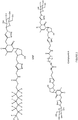
- Compound A shown on Figure 2 , is similar to compound 17, except that it has an additional carbon bond between the urea group and the triazole ring.
- Compound A can form a hydrogel but does not show the proangiogenic properties of Compounds 17, 20 and GNF, as will be explained below.
- Hydrogel disks (100 ⁇ l) were prepared and were incubated in 7 ml of PBS 1X at 37°C for 21 days. All the hydrogel samples were weighed before incubating with the phosphate buffer (initial weight). The samples were removed at different time points (1, 2, 3, 5, 7, 15, and 21 days), weighed immediately after removing the excess of PBS by gently touching the surface of a tissue (KimwipesTM) and put back in the same solution of PBS.
- the degradation products generated during the 21-day incubation of the samples was determined by analyzing the PBS solution in which they were incubated. At day 21 the PBS was collected and analyzed for the degradation products of individual hydrogels by using mass spectroscopy. Studies, performed in triplicates, allowed for the calculation of degradation kinetics.
- the degradation was monitored by measuring the weight loss of the gels after different periods of incubation. After 3 weeks at 37°C, the remaining weights were 65 ⁇ 4 %, 63 ⁇ 1 %, and 55 ⁇ 2 %, for GNF, compound 17 and compound 20, respectively, as shown on Figure 3 ..
- control compound A has a similar degradation kinetics, but no fragmentation is observed with this control compound.
- the analyses were carried out on the MALDI-TOF-TOF Ultraflex (Bruker) in positive reflector mode (detection of positively charged species in the form of [M + H] + and [M + Na] + ions).
- the external calibration of the spectrometer was carried out with a mixture of components in the mass range m / z 700-2500.
- the matrix used is a solution of 2,4,6 trihydroxyacetophenone at 20 mg / ml in EtOH / NH 4 citrate 25 mM.
- the samples were diluted by a factor of 50 in water before MS analysis.
- Example 2 Study of the in vitro non-specific protein adsorption on hydrogels formed from compounds of formula (I)
- the non-specific protein adsorption was investigated by using bovine serum albumin (BSA, GE-healthcare ref K45-001) as a model protein.
- BSA bovine serum albumin
- BCA standard bicinchoninic acid protein assay
- the samples were rinsed thoroughly several times with PBS to remove unbound BSA proteins. Then, 400 ⁇ l of sodium dodecyl sulfate solution 1 % (w/v) was added into each well and soaked for 30 min at room temperature to strip the proteins adsorbed on the surface of the hydrogels for detection. The striped protein was analyzed using the BCA protein kit (PierceTM BCA Protein Assay Kit) as recommended by the manufacturer, to determine the amount of BSA adsorbed on the hydrogels. The amount of protein was calculated according to the calibration curve of BSA. The negative control was done in a similar way excluding the incubation.
- compound 17 had intermediate BSA adsorption (78 ⁇ 6 ⁇ g/cm 2 ), whereas the hydrogels incubated without BSA gave no signal in BCA assay.
- the low non-specific protein adsorption of GNF and compound 17 are predictive for minimizing the foreign body reaction upon in vivo implantation.
- hydrogels The cytotoxicity evaluation of hydrogels was assessed according to NF-EN30993-5 and ISO10993-5 with some modifications.
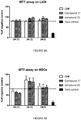
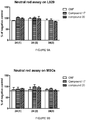
- MTT and Neutral Red assays were carried out to assess the viability and metabolic activity of cells.
- the L929 cell line and adipose tissue derived mesenchymal stromal cells were used for testing the cytotoxicity of the extracts.
- the cells were seeded at a density of 10,000 cells/cm 2 in 24-well microtiter plates (Nunc, Denmark) and the culture was maintained at 37°C for 72 h after cell plating.
- hydrogel pieces put into Falcon inserts (Ref:353096, 24 well format) were placed on the top of cell culture wells so that the gel pieces were immersed in the culture medium.
- the ratio of the sample surface area to the volume of the vehicle was 5 cm 2 /ml.
- wells containing alpha-MEM + 10% FCS alone or containing 0.1% Triton X100 (known to be cytotoxic), were processed under the same conditions to provide negative and positive controls of cytotoxicity, respectively.
- the neutral red (Ref N4638, Sigma-Aldrich, France) was resuspended at 1.25% (w/v) in alpha-MEM without serum, and 100 ⁇ l of the prepared solution was added to each well. After 3 hrs of incubation at 37°C, the supernatant was replaced by adding 100 ⁇ l of mixture (50:50) containing 50% ethanol/ 1% acetic acid in water to lyse the cells. In both cases, the intensity of colour was quantified by measuring the absorbance at 540 nm using a spectrophotometer (Perkin Elmer ®, 2030 Multilabel Reader VictorTMX3).
- the absorbance is directly proportional to the viability and metabolic activity of the cell population and inversely proportional to the toxicity of the products released by the materials.
- the mean values of absorbance measurements obtained from colourimetric tests and their corresponding standard deviation ( ⁇ SD) were calculated. The results are expressed as a percentage of the control (alpha-MEM + 10% FCS).
- Example 4 In vivo toxicity assays with hydrogels formed from compounds of formula (I)
- mice were used for this study. Before the bilateral subcutaneous injection of hydrogels, mice were anaesthetized using 4.5% isoflurane gas and maintained throughout surgery at 2.5% isoflurane with a face mask. The animals were depilated before surgery. The three different hydrogels were prepared as mentioned above and collected in 1 ml syringes, when the solution was in viscous form. The hydrogels were injected subcutaneously by 21-gauge needle on the dorsal side of the animals.
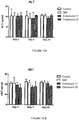
- the in vivo toxicity of the hydrogels formed from compounds 17, 20 and GNF was investigated by serum biochemical evaluation such as alanine aminotransferase (ALT Activity Assay Kit, Sigma-Aldrich, ref MAK052), aspartate aminotransaminase (AST Activity Assay Kit, Sigma-Aldrich, ref MAK055), and lactate dehydrogenase (LDH Assay Kit, Abcam, ref ab102526).
- serum biochemical evaluation such as alanine aminotransferase (ALT Activity Assay Kit, Sigma-Aldrich, ref MAK052), aspartate aminotransaminase (AST Activity Assay Kit, Sigma-Aldrich, ref MAK055), and lactate dehydrogenase (LDH Assay Kit, Abcam, ref ab102526).
- serum biochemical evaluation such as alanine aminotransferase (ALT Activity Assay Kit, Sigma-Aldrich, ref MAK052), aspartate aminotransaminas
- the hydrogels injected subcutaneously in mice and their effect on vital organs was investigated.
- the systemic toxicity was assessed by measuring biochemical serum parameters at three time points, day 3, day 7 and day 21 following the injection.
- the time points were selected based on the in vitro degradation behaviour of the hydrogels showing that, by day 3, 70-80% of the hydrogels remained whereas after 21 days, between 35% and 50% of the hydrogels were degraded.
- Example 5 Study of in vivo proangiogenic properties of the hydrogels formed from compounds of formula (I) by histology, staining and immunochemistry
- Subcutaneous injection was carried out, as indicated in example 3, in order to characterize the behavior of the hydrogels after subcutaneous injection and in situ gelation.
- Animals were sacrificed by cervical dislocation one or three weeks after injection of the hydrogel.
- the biomaterials i.e. hydrogel
- the skin surrounding the injection point were harvested after 7, or 21 days and embedded in paraffin. Histological sections of skin portions associated to the hydrogel were then stained to assess the degradation pattern, cell infiltration (data not shown) and angiogenesis.
- the blood vessels in and around the hydrogels 21 days after implantation were identified by immunolabelling with rabbit anti-CD31 antibody (Abcam, ref ab28364 dilution:1/100) followed by incubation with HRP-conjugated anti-rabbit secondary antibody (Vector MP-7401, dilution:1/2)
- CD31 an endothelial cell marker
- FIG. 11B depicts the quantification of blood vessels counted manually per 0.2mm 2 at four different random regions in the tissue surrounding each hydrogel.
- This compound was hypothesized as mimicking a degradation product of the tested hydrogels formed from compound 17, compound 20 or GNF, based on the degradation analysis of example 1.
- This compound was prepared starting from the N-3-[1-(( ⁇ -D-Glucopyranosidetetraacetate)-1H-1, 2, 3-triazol-4-yl) methyl] thymidine described as compound 7 in M. A. Ramin et al., Biomaterials, 2017, 145, 72-80 , by the following procedure : To the stirred solution of N-3-[1-(( ⁇ -D-Glucopyranosidetetraacetate)-1H-1, 2, 3-triazol-4-yl) methyl] thymidine (0.7 g, 1.07 mmol) in anhydrous methanol (10 mL) was treated with freshly prepared 1N sodium methoxide solution at room temperature.
- Example 7 Study of in vivo proangiogenic properties of compound GN-1 of example 5 by the Chick chorioallantoic membrane (CAM) assay
- the angiogenesis assay was performed on the CAM of chick embryos (Gallus gallus) (E.A.R.L. Morizeau, Dangers, France). Embryos were incubated at 37°C and 70% humidity to initiate the fertilization. On day 3 of development, 3-5 ml of egg white was withdrawn by punctuating the air chamber with the syringe, and a window was made by cutting the eggshell and sealed with Durapore® tape. On day 13, prepared plastic rings (made from Nunc Thermanox® coverslips, diameter 13 mm and thickness 0.2mm) were placed on the intact CAM.
- the angiogenic response was evaluated on day 17 based on two morphological parameters: sprouting, and presence of tortuous vessels (data not shown).
- sprouting In some CAMs, the presence of sprouting at the capillaries was observed, and of tortuous capillaries, whereas some other CAMs exhibited normal vasculature (data not shown).
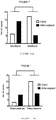
- the quantification of eggs with or without sprouting, and/or tortuous vessels showed that more CAMs that were treated with GN-1 exhibited sprouting and tortuous vessels compared to the control CAMs ( Figures 12A and 12B , "sprouting yes” and “tortuous vessels yes", respectively).
Landscapes
- Health & Medical Sciences (AREA)
- Life Sciences & Earth Sciences (AREA)
- Animal Behavior & Ethology (AREA)
- Chemical & Material Sciences (AREA)
- Veterinary Medicine (AREA)
- Medicinal Chemistry (AREA)
- Public Health (AREA)
- General Health & Medical Sciences (AREA)
- Pharmacology & Pharmacy (AREA)
- Epidemiology (AREA)
- Molecular Biology (AREA)
- Chemical Kinetics & Catalysis (AREA)
- Organic Chemistry (AREA)
- Nuclear Medicine, Radiotherapy & Molecular Imaging (AREA)
- General Chemical & Material Sciences (AREA)
- Engineering & Computer Science (AREA)
- Bioinformatics & Cheminformatics (AREA)
- Dermatology (AREA)
- Pharmaceuticals Containing Other Organic And Inorganic Compounds (AREA)
Abstract
The invention relates to the use of low molecular weight amphiphilic compounds derived from nucleolipids for promoting angiogenesis.
Description
- The invention relates to the use of low molecular weight amphiphilic compounds derived from nucleolipids for promoting angiogenesis.
- The design of hydrogels for regenerative medicine is often centered on cellular infiltration, degradation, and neovascularization. In this context, low molecular weight hydrogels (LMWHs), formed by self-assembly via non-covalent interactions, are gaining significant interest due to their soft nature, ease of use and injectability.
- Amongst the biomaterials that are considered for clinical applications, injectable hydrogels have garnered significant interest due to their ease of use and tunable mechanical properties. As mostly formed of water, hydrogels are hydrophilic, can be highly swollen and facilitate the diffusion of oxygen and nutrients throughout their structure; some hydrogels are also good platforms for cell colonization. In addition, they can be injected and their local gelling allows for a tight adaptation to the local 3-D structure of the host environment. However, all these applications where a material is injected or implanted in the body are facing the same limitations: they must be biocompatible, and the initial structure as well as the degradation products must display as low cytotoxicity as possible. In addition, the inflammatory reaction that is elicited by the biomaterial must be controlled, firstly to prevent a too fast elimination/degradation of the biomaterial before successful tissue regeneration is reached, and secondly to avoid a strong and/or chronic local inflammatory environment. Indeed, any implantation or injection of a foreign body will trigger an inflammatory reaction called the "foreign body reaction" (FBR).
- The use of VEGF clusters included in a hyaluronic acid-based gel containing heparin particles was studied as a tissue engineering approach for regenerating damaged brain, in Lina R. Nih et al., Springer Nature Switzerland AG 2018, Biophysical Regulation of Vascular Differentiation and Assembly, Chapter7, 177-187. In this study, it was shown that the effect on vascularization was related to the delivery of VEGF by the hyaluronic acid-based gel and that heparin particles helped generating functional axonal connections and reducing post-stroke inflammation.
- Amphiphilic glucosylnucleosides (GNLs) are disclosed in
WO2016/055493 .WO2016/055493 also relates to hydrogels formed therefrom, as well as to their use as culture media, as biocompatible material for tissue engineering, cellular therapy or prevention of adhesion formation after abdomino-pelvic surgery, or else for control-release delivery of an active ingredient which is entrapped into the gel. - Hydrogels formed from GNLs or amphiphilic fluorinated glucosyl-nucleosides (GNFs), useful for removing particles from a liquid medium containing them, are disclosed in
WO2013/110902 . - However, the use of GNLs or hydrogels formed therefrom for controlling angiogenesis is not taught or suggested in the prior art.
- It has now been found that GNLs or hydrogels formed therefrom, or degradation products deriving from said hydrogels could be used promoting angiogenesis tissue regeneration, in particular for tissue regeneration.
- Advantageously, it was found that said amphiphilic glucosyl-nucleosides, in particular in the form of low molecular weight gels (LMWG) do not elicit foreign body reaction and show a good biointegration as evidenced by no sign of fibrous capsule after subcutaneous injection.
- Without intending to be bound by any theory, it is contemplated that, by displaying a good biointegration without fibrosis, and by promoting efficient angiogenesis, which may be related, in particular to the release of a degradation by-product with angiogenic properties, amphiphilic glucosyl-nucleosides, in particular in the form of low molecular weight gels (LMWG), could be of major interest in various regenerative applications.
- The invention thus relates to the use of amphiphilic glucosyl-nucleosides, in particular in the form of low molecular weight gels (LMWG) formed from therefrom, for controlling angiogenesis disorders.
- The invention also relates to a method of preventing or treating angiogenesis disorders, by administration to a patient in need thereof.
- According to a first aspect, the invention relates to a compound of formula (I)
R1-X1-A-X2-R2 (I)
in which - X1 is -NH-C(O)-NH- or -C(O)-NH-;
- X2 is -NH-C(O)-NH- or -C(O)-NH- or does not exist;
- A is a C4-C30 hydrocarbon chain, linear or branched, saturated or unsaturated, which is unsubstituted or substituted by one or more C1-C12 linear or branched alkyl groups, or A represents a C4-C30 hydrocarbon chain, linear or branched, saturated or unsaturated, which is partially or completely halogenated;
- R1 and R2, identical or different, represent - (CH2)n-R3-(CH2)m-R4-(CH2)p-R5-R6 in which
- n, m and p, identical or different, are 0 to 10;
- R3 represents a heteroaryl group comprising 1 to 4 oxygen or nitrogen atom(s);
- R4 represents a nucleosidyl group;
- R5 represents a heteroaryl group comprising 1 to 4 heteroatom(s);
- R6 represents a residue of a cyclic carbohydrate or a derivative of the said carbohydrate, and
- when X2 does not exist, R2 does not exist,
provided that, when X1 and X2 are -NH-C(O)-NH-,n=2, m=p=1, R3 is a triazole group, R4 is thymidine and-R6 is D-glucopyranosyl, ,
for use in promoting angiogenesis. - Advantageously, the invention relates to a compound of formula (I) as defined above, for use in promoting angiogenesis for tissue regeneration, in particular for tissue regeneration assisted by a biomaterial.
- "Tissue regeneration assisted by a biomaterial" means that a biomaterial can be implanted or injected in a tissue to promote, favor or improve its regeneration.
- « Heteroaryl group containing 1 to 4 oxygen or nitrogen atoms » refers to a monocyclic or bicyclic, aromatic or partially unsaturated, carbocyclic group containing 5 to 12 atoms, interrupted by 1 to 4 oxygen or nitrogen atoms, which can be, for example, selected from furane, pyrrole, oxazole, oxadiazole, isoxazole, pyrazole, triazole, tetrazole, imidazole, pyridine, pyrimidine, pyridazine, pyrazine, benzofurane, indole, quinoleine, isoquinoleine, chromane, naphtyridine or benzodiazine groups, triazole being preferred.
- « Hydrocarbon chain, which is partially or completely halogenated » refers to a saturated or unsaturated alkyl chain in which some or all hydrogen atoms are replaced by halogen atoms, such as fluorine, iodine, chlorine or bromine, fluorine being preferred.
- « C1-C12 linear or branched alkyl group » refers, for example, to groups such as methyl, ethyl, propyl, isopropyl, butyl, isobutyl, sec-butyl, tert-butyl, pentyl, isopentyl, sec-pentyl, tert-pentyl, neo-pentyl, hexyl, isohexyl, sec-hexyl, tert-hexyl, heptyl, octyl, nonyl, decyl, undecyl or dodecyl, C1-C6 linear or branched alkyl groups being preferred.
- « Nucleosidyl group » refers to a group consisting of a ribose or deoxyribose moiety which is linked to a purine or pyrimidine base, or to derivatives of said purine or pyrimidine base, or to a non-natural mono- or bicyclic heterocyclic base, all said bases being optionally substituted.
- The purine base can be, for example, selected from the group consisting of adenine, guanine and hypoxanthine.
- The pyrimidine base can be, for example, selected from the group consisting of thymine, uracile and cytosine, thymine being preferred.
- By « non-natural mono-or bicycle heterocyclic base » is meant a universal base, such as, for example, 3-nitropyrrole, 4-nitroimidazole or 5-nitroindole.
- By « optionally substituted » is meant that the purine or pyrimidine base, or the non-natural heterocyclic base can be substituted by at least one substituent chosen, for example, from a halogen, an amino group, a carboxy group, a carbonyl group, a carbonylamino group, a hydroxy, azido, cyano, alkyl, cycloalkyl, perfluoroalkyl, alkyloxy (for example, methoxy), oxycarbonyl, vinyl, ethynyl, propynyl, acyl group etc.
- « Residue of a cyclic carbohydrate or a derivative of the said carbohydrate » refers to a residue of a 5- or 6- membered osidic cycle, which can be, for instance, selected from D-glucopyranose, D-galactopyranose, D-mannopyranose, D-fructopyranose or D-ribofuranose, or oligosaccharide-type glycans deriving therefrom, D-glucopyranose being preferred, or else to their, N-acyl derivatives, in particular their N-acetyl derivatives, such as, for instance, N-acetylglucosamine, N-acetylgalactosamine, N-acetylmannosamine or sialic acid, or a protected derivative thereof, such as an O-acyl derivative, in particular an O-acetyl derivative.
- Preferred C4-C30 hydrocarbon chains are C8-C30, preferably C8-C24, more preferably C12-C20 hydrocarbon chains.
- Preferably, A is a C4-C30, in particular C8-C24, more preferably C12-C20, hydrocarbon chain, linear or branched, saturated or unsaturated, which is unsubstituted or substituted by one or more C1-C12 linear or branched alkyl groups
- Preferably, R6 is an oligosaccharide-type glycan deriving from a cyclic carbohydrate.
- The general and preferred aspects mentioned above apply to compounds of formula (I) and (II), and to their uses throughout the present description.
- Preferred compound of formula (I) are those in which at least one of the following conditions is fulfilled:
- n=m=p=1
- R3 and R5, identical or different, represent a heteroaryl group containing 1 to 4 nitrogen atoms selected from the group consisting of pyrazole, triazole, tetrazole and imidazole, preferably triazole;
- R4 represents a nucleosidyl group selected from adenosine, deoxyadenosine, guanosine, deoxyguanosine, thymidine, deoxythymidine, uridine, deoxyuridine, cytidine and deoxycytidine, preferably thymidine.
- R6 represents a residue of a cyclic carbohydrate selected from D-glucopyranose, D-galactopyranose, D-mannopyranose, D-fructopyranose and D-ribofuranose, preferably D-glucopyranose.
- A preferred compound is a compound of formula (I), in which:
- X1 and X2 are -NH-C(O)-NH-;
- A represents a C12 saturated hydrocarbon chain;
- R1 and R2 are -(CH2)n-R3-(CH2)m-R4-(CH2)p-R5-R6;
- n = m = p = 1;
- R3 is a triazole group;
- R4 is thymidine;
- R5 is a triazole group, and
- R6 is D-glucopyranosyl.
- Another preferred compound is a compound of formula (I) in which:
- X1 and X2 are -C(O)-NH-;
- A represents a C14 saturated hydrocarbon chain;
- R1 and R2 are -(CH2)n-R3-(CH2)m-R4-(CH2)p-R5-R6;
- n = m = p = 1;
- R3 is a triazole group;
- R4 is thymidine;
- R5 is a triazole group, and
- R6 is D-glucopyranosyl.
- Another preferred compound of formula (I) is defined as follows:
- X1 is -C(O)-NH- and X2 does not exist
- A represents a C4-C30 hydrocarbon chain, preferably C8-C24, linear or branched, saturated or unsaturated, which is partially or completely halogenated,
- R1 represents - (CH2)n-R3-(CH2)m-R4-(CH2)p-R5-R6, as defined above.
- A preferred compound of formula (I) in which :
- A represents a saturated linear C10 hydrocarbon chain, which is completely halogenated and the halogen atom is fluorine,
- X1 is -C(O)-NH- and X2 does not exist- R1 represents - (CH2)n-R3-(CH2)m-R4-(CH2)p-R5-R6 in which n=m=p=1, R3 is a triazole group, R4 is thymidine, R5 is a triazole group and R6 is D-glucopyranosyl,
- In particular, in formula (I), R3 is covalently linked to R4 to the carbon atom at position 5' of the ribose or deoxyribose ring of the nucleosidyl group.
- In particular, in formula (I), R5 is covalently linked to R4 via (CH2)p to the azote atom at
position 3 of the purine or pyrimidine base moiety, for example the thymine moiety, of the nucleosidyl group. - Advantageously, the following compounds of formula (I) are used according to the invention:
- 1,12-bis-dodecanyl-5'-[(4-methylurea)-1H-1,2,3-triazol-1-yl]-N-3-[1-((β-D-glucopyranoside)-1H-1,2,3-triazole-4-yl)methyl]-5'-deoxy thymidine,
- 1,14-bis-tetradecanyl-5'-[(4-methylamide)-1H-1,2,3-triazol-1-yl]-N-3-[1-((β-D-glucopyranoside)-1H-1,2,3-triazole-4-yl)methyl]-5'-deoxy thymidine,
-
Compounds Figures 1 and2 . - According to a preferred aspect, the compounds of formula (I) as defined above can be used in the form of a hydrogel.
- The invention also relates to a compound of formula (II)
R4-(CH2)p-R5-R6 (II)
in which: - p is 0 to 10;
- R4 represents a nucleosidyl group;
- R5 represents a heteroaryl group comprising 1 to 4 heteroatom(s);
- R6 represents a residue of a cyclic carbohydrate or a derivative of the said carbohydrate,
- The general and preferred definitions of R4, R5 and R6 are as defined for formula (I).
- Preferably, in formula (II):
- p = 1;
- R4 is thymidine, cytidine or adenosine, thymidine being preferred;
- R5 is a triazole group, and
- R6 is D-glucopyranosyl,
- A preferred compound of formula (II) is the compound referred to as GN-1 in the examples, where:
- p = 1;
- R4 is thymidine;
- R5 is a triazole group, and
- R6 is D-glucopyranosyl.
- This compound is represented by formula (IIa) below:

- Advantageously, the invention relates to a compound of formula (II) as defined above, in particular a compound of formula (IIa), for use in promoting angiogenesis for tissue regeneration, in particular for tissue regeneration assisted by a biomaterial.
- The preparation of compounds of formula (II), in particular of formula (IIa) as described above, in the form of a protected tetra-acetylated glucosyl derivative, was reported in
WO2016/055493 and in M.A. Ramin et al., 2017, Biomaterials doi .1016/j.biomaterials.2017.08.034. - Deacetylation can be performed by usual techniques, such as, for example by using sodium methoxide in an anhydrous methanol solution, and addition of an ion-exchange resin, as disclosed in
WO2016/055493 . -
Figure 1 showscompound 17 andcompound 20. -
Figure 2 shows GNF and compound A, which is similar tocompound 17, except that it has an additional carbon bond between the urea group and the triazole ring. This compound is used as a control.Figure 3 shows the analysis of in vitro degradation of hydrogels formed fromcompound 17,compound 20, GNF and compound A. -
Figures 4A, 4B ,5A and 5B show the MALDI-TOF Mass spectra of molecules released during the 21-day incubation in PBS at 37°C ofcompound 17,compound 20 ,GNF and compound A. -
Figure 6 shows the locations were possible fragmentation occurs incompound 17,compound 20 and GNF by bond cleavage, as shown by the thick arrows. -
Figure 11 shows the quantitative analysis of blood vessels counted in the vicinity of the hydrogels formed fromcompound 17,compound 20 and GNF as compared with the control compound A. -
Figures 12A and 12B show the quantification of the presence or absence of sprouting and tortuous vessels in an in vivo chick chorioallantoic membrane (CAM) assay with compound GN-1. - The invention is illustrated by the following examples.
- Data are presented as mean ± SD. Differences between groups were evaluated using Kruskal-Wallis (for at least three compared groups) and Mann-Whitney tests (for two compared groups) for non-parametric measures. To analyze the repeated measures of hydrogel degradation follow-up, Friedman test was used; the comparison of paired values was then done with the use of the Wilcoxon matched-pair test. The Fisher exact test was used for analysis of angiogenesis on CAM. Two-tailed p values less than 0.05 were considered as significant.
- Hydrogels were prepared with
compound 17,compound 20, GNF at a concentration of 1.5% (w/v) by dissolving the powder in sterile phosphate buffered saline solution (PBS 1X, pH 7.4). The suspensions were heated at 65 °C for GNF and 80°C for thecompounds - Hydrogels were also prepared from compound A, which was used as a control.
- Compound A, shown on
Figure 2 , is similar tocompound 17, except that it has an additional carbon bond between the urea group and the triazole ring. Compound A can form a hydrogel but does not show the proangiogenic properties ofCompounds - Hydrogel disks (100 µl) were prepared and were incubated in 7 ml of PBS 1X at 37°C for 21 days. All the hydrogel samples were weighed before incubating with the phosphate buffer (initial weight). The samples were removed at different time points (1, 2, 3, 5, 7, 15, and 21 days), weighed immediately after removing the excess of PBS by gently touching the surface of a tissue (Kimwipes™) and put back in the same solution of PBS.
- The degradation products generated during the 21-day incubation of the samples was determined by analyzing the PBS solution in which they were incubated. At
day 21 the PBS was collected and analyzed for the degradation products of individual hydrogels by using mass spectroscopy. Studies, performed in triplicates, allowed for the calculation of degradation kinetics. - The degradation was monitored by measuring the weight loss of the gels after different periods of incubation. After 3 weeks at 37°C, the remaining weights were 65 ± 4 %, 63 ± 1 %, and 55 ± 2 %, for GNF,
compound 17 andcompound 20, respectively, as shown onFigure 3 .. - The control compound A has a similar degradation kinetics, but no fragmentation is observed with this control compound.
- In order to assess the fragmentation of the molecules during incubation, the by-products of degradation present in the buffer were analysed by MALDI-TOF (Matrix Assisted Laser Desorption Ionization - Time of Flight) mass spectrometry at the end of the experiment (21 days) (
Figures 4 and5 ). - The analyses were carried out on the MALDI-TOF-TOF Ultraflex (Bruker) in positive reflector mode (detection of positively charged species in the form of [M + H] + and [M + Na] + ions).The external calibration of the spectrometer was carried out with a mixture of components in the mass range m / z 700-2500. The matrix used is a solution of 2,4,6 trihydroxyacetophenone at 20 mg / ml in EtOH / NH4 citrate 25 mM. The samples were diluted by a factor of 50 in water before MS analysis.
- The analysis of the products released in PBS by the hydrogels formed from GNF (
Figure 4A ), compound 17 (Figure 4B ), compound 20 (Figure 5A ) and compound A (Figure 5B ) after the 21-day incubation showed the molecular peaks (P-1) corresponding to intact molecules: their mass was in close agreement with the calculated mass. Other peaks P-2, P-3, and P-4 were observed in the mass spectra of the products released from hydrogels GNF,compound 17 andcompound 20 which were due to fragmentations of the hydrogel molecules as a result of degradation. - It was hypothesized that the first possible fragmentation of hydrogels is due to the cleavage of the bond between the C1'-carbon of pentose ring and the N1'- nitrogen of the nucleobase (
Figure 6 , thick arrow (i),Peak 2 in mass spectrum); the second possible fragmentation is due to the bond cleavage between bridged 5'-CH2 and pentose ring (Figure 6 , thick arrow (ii),Peak 3 in mass spectrum). Calculated mass and observed mass for the fragments due to possible cleavages are summarized in Table 1 below. In comparison, only the intact molecule of compound A was detected, showing that this control compound disassembles without degradation (Figure 5B ). - In contrast to hydrogels formed from
compounds Figure 5B ).Table 1 Compound Fragmentation Cleavage Calculated mass Observed mass GNF First fragmentation (I) C1'-N1 Fragment-1: 734.41 731.12[M+Na+K]+(Peak 2) [M+Na+K]+ 368.00[M]+(Peak 4) Fragment-2: 369.33[M]+ Second fragmentation (II) CH2-Methylene CH2 Fragment-3: 492.42[M+Na]+ 495.04[M+Na]+(Peak 3) Compound 17 First fragmentation (I) C1'-N1 Methylene Fragment-2: 733.68 731.17[M+2Na+K]+ (Peak 2) [M+2Na+K]+ Second fragmentation (II) C4-Methylene Fragment-4 : 476.33[M]+ 475.47[M]+ (Peak 3) CH2 Fragment-1: 969.13[M+K]+ 967.21 [M+K]+(Peak 4) Compound 20 First fragmentation (I) C1'-N1 Methylene Fragment-1 : 736.40 [M+Na+K]+ 731.13[M+Na+K]+(Peak 2) Second fragmentation (II) C4-Methylene Fragment-3 : 474.65[M] 473.06[M]+(Peak 3) CH2 Fragment-2: 990.15 [M+Na+K]+ 989.16[M+Na+K]+(Peak 4) Compound A No fragmentation observed - The non-specific protein adsorption was investigated by using bovine serum albumin (BSA, GE-healthcare ref K45-001) as a model protein. The adsorption of BSA was evaluated by standard bicinchoninic acid protein assay (BCA). The formed hydrogels were cut into disks (100 µl) followed by incubation in PBS overnight at 37°C to reach a swelling equilibrium. On the following day, the PBS was replaced by 400 µL PBS containing BSA (2 mg/ml, freshly prepared), followed by incubation at 37 °C for 2 h.
- Further, the samples were rinsed thoroughly several times with PBS to remove unbound BSA proteins. Then, 400 µl of sodium
dodecyl sulfate solution 1 % (w/v) was added into each well and soaked for 30 min at room temperature to strip the proteins adsorbed on the surface of the hydrogels for detection. The striped protein was analyzed using the BCA protein kit (Pierce™ BCA Protein Assay Kit) as recommended by the manufacturer, to determine the amount of BSA adsorbed on the hydrogels. The amount of protein was calculated according to the calibration curve of BSA. The negative control was done in a similar way excluding the incubation. - Statistical analysis with Kruskal-Wallis followed by Mann-Whitney tests (2-tailed) was performed to compare the adsorption of BSA to the three hydrogels (mean ± s.d, n = 3, *p ≤ 0.05).
- As shown in
Figure 7 ,compound 20 showed significantly higher protein adsorption (118±21 ng/cm2) compared to GNF (60±3µg/cm2, p = 0.05, 2-tailed).compound 17 had intermediate BSA adsorption (78±6µg/cm2), whereas the hydrogels incubated without BSA gave no signal in BCA assay. - The low non-specific protein adsorption of GNF and
compound 17 are predictive for minimizing the foreign body reaction upon in vivo implantation. - The cytotoxicity evaluation of hydrogels was assessed according to NF-EN30993-5 and ISO10993-5 with some modifications.
- MTT and Neutral Red assays were carried out to assess the viability and metabolic activity of cells.
- The L929 cell line and adipose tissue derived mesenchymal stromal cells (MSCs), cultured in alpha-MEM (Gibco, Ref A10490-01, France) without ascorbic acid, and containing 10% (v/v) fetal calf serum (FCS, Lonza, France), were used for testing the cytotoxicity of the extracts. The cells were seeded at a density of 10,000 cells/cm2 in 24-well microtiter plates (Nunc, Denmark) and the culture was maintained at 37°C for 72 h after cell plating.
- At subconfluency, hydrogel pieces put into Falcon inserts (Ref:353096, 24 well format) were placed on the top of cell culture wells so that the gel pieces were immersed in the culture medium. The ratio of the sample surface area to the volume of the vehicle was 5 cm2/ml. In addition, wells containing alpha-MEM + 10% FCS alone or containing 0.1% Triton X100 (known to be cytotoxic), were processed under the same conditions to provide negative and positive controls of cytotoxicity, respectively. Culture plates were then kept in the incubator at 37°C for 24 hours, giving the "24(1)" cell culture; then, the inserts were transferred on other subconfluent L929 and MSC cultures for a second and then a third incubation of 24h, giving "24(2)" and "24(3)" cell cultures.
- At the end of each 24h incubation, cell viability was assessed by the Neutral Red assay and cell metabolic activity by using an MTT assay. The MTT (Sigma-Aldrich, ref M2128) of 5mg/ml stock solution was diluted to 1/5 with alpha-MEM (without serum) without phenol red and 125 µl of this solution was added to each well. After 3 hrs of incubation at 37°C in 5% CO2, the supernatant was removed and formed formazan crystals were dissolved by adding 100 µl of dimethyl sulfoxide (DMSO, Ref D5879-1L, Sigma-Aldrich, France).
- For the viability assay, the neutral red (Ref N4638, Sigma-Aldrich, France) was resuspended at 1.25% (w/v) in alpha-MEM without serum, and 100µl of the prepared solution was added to each well. After 3 hrs of incubation at 37°C, the supernatant was replaced by adding 100µl of mixture (50:50) containing 50% ethanol/ 1% acetic acid in water to lyse the cells. In both cases, the intensity of colour was quantified by measuring the absorbance at 540 nm using a spectrophotometer (Perkin Elmer ®, 2030 Multilabel Reader VictorTMX3). The absorbance is directly proportional to the viability and metabolic activity of the cell population and inversely proportional to the toxicity of the products released by the materials. The mean values of absorbance measurements obtained from colourimetric tests and their corresponding standard deviation (± SD) were calculated. The results are expressed as a percentage of the control (alpha-MEM + 10% FCS).
- The results are shown on
Figures 8 and9 . - Cell viability and metabolism were normalized against control alpha-MEM medium, whereas 0.1% Triton-X100 served as a positive control for cytotoxicity. The viability of L929 cells and MSCs, and the metabolism of L929, cultured with molecules released in contact of hydrogels exhibited no cytotoxicity; indeed, no significant difference was observed in comparison to the control of alpha-MEM medium, i.e., for all the test groups, they were above 80 % (shown by the dotted line) representing the cut value of cytotoxicity (
Figures 8A, 8B ,9A and 9B ). In contrast, a low decrease of MSC metabolism was observed with the hydrogels during the first 24 hours: metabolism was between 60 and 70% as shown by the MTT assays (Figure 8B ). - 10-week-old OF-1 female mice (Charles Rivers, France) were used for this study. Before the bilateral subcutaneous injection of hydrogels, mice were anaesthetized using 4.5% isoflurane gas and maintained throughout surgery at 2.5% isoflurane with a face mask. The animals were depilated before surgery. The three different hydrogels were prepared as mentioned above and collected in 1 ml syringes, when the solution was in viscous form. The hydrogels were injected subcutaneously by 21-gauge needle on the dorsal side of the animals.
- The in vivo toxicity of the hydrogels formed from
compounds day 0 before surgery and three-time points after implantation (3, 7, and 21 days), blood was collected from retro-orbital sinus. The blood samples were allowed to clot then followed by centrifugation to collect the serum. The serum was used for analysis as recommended by the manufacturers. - The results are shown on
Figures 10A, 10B and11A . - The hydrogels injected subcutaneously in mice and their effect on vital organs was investigated. The systemic toxicity was assessed by measuring biochemical serum parameters at three time points,
day 3,day 7 andday 21 following the injection. The time points were selected based on the in vitro degradation behaviour of the hydrogels showing that, byday 3, 70-80% of the hydrogels remained whereas after 21 days, between 35% and 50% of the hydrogels were degraded. The results show that the injected hydrogels did not produce any significant variation neither in hepatic function markers such as serum alanine transaminase (ALT) as shown onFigure 10A or serum aspartate transaminase (AST) as shown onFigure 10B , nor in the cardiac toxicity marker lactate dehydrogenase (LDH) as shown onFigure 11A . Compared with the control serum levels in non-injected mice, all the indicative markers remained unchanged from the normal clinical range. This confirms that the tested hydrogels (formed from GNF,compound 17, compound 20) did not show any toxicity to the vital organs. - Subcutaneous injection was carried out, as indicated in example 3, in order to characterize the behavior of the hydrogels after subcutaneous injection and in situ gelation. Animals were sacrificed by cervical dislocation one or three weeks after injection of the hydrogel. The biomaterials (i.e. hydrogel) together with the skin surrounding the injection point were harvested after 7, or 21 days and embedded in paraffin. Histological sections of skin portions associated to the hydrogel were then stained to assess the degradation pattern, cell infiltration (data not shown) and angiogenesis.
- The blood vessels in and around the
hydrogels 21 days after implantation were identified by immunolabelling with rabbit anti-CD31 antibody (Abcam, ref ab28364 dilution:1/100) followed by incubation with HRP-conjugated anti-rabbit secondary antibody (Vector MP-7401, dilution:1/2) - During the regeneration process, the development of neovessels in the remodeling tissue is of major importance. Therefore, immunostaining of CD31, an endothelial cell marker, was performed on
day 21 to assess angiogenesis. - CD31 positive cells with luminal structure were observed in close proximity of the hydrogels, and in the tissue that had invaded the degrading hydrogels. CD31 positive cells were not found inside the hydrogels, showing that the non-degraded hydrogels were bad substrates for blood vessel ingress.
Figure 11B depicts the quantification of blood vessels counted manually per 0.2mm2 at four different random regions in the tissue surrounding each hydrogel. With the hydrogel formed from the control compound A (that disassembles without molecule degradation,Figure 5B ), there was a 2.7-fold and 2.1-fold reduction in the numbers of blood vessels (bv) in the vicinity of this hydrogel (2.95 ± 0.27 bv/0.2 mm2) as compared to in the vicinity of hydrogels formed from compound 20 (7.95 ± 0.74 bv/0. 2 mm2, p=0.009), and from compound GNF (6.10 ± 1.07 bv/0.2 mm2, p=0.009), respectively. The hydrogel formed fromcompound 17 induced intermediate angiogenesis (4.30±0.41 bv/0.2mm2, p>0.05). - This compound was hypothesized as mimicking a degradation product of the tested hydrogels formed from
compound 17,compound 20 or GNF, based on the degradation analysis of example 1. - This compound was prepared starting from the N-3-[1-((β-D-Glucopyranosidetetraacetate)-1H-1, 2, 3-triazol-4-yl) methyl] thymidine described as
compound 7 in M. A. Ramin et al., Biomaterials, 2017, 145, 72-80, by the following procedure :
To the stirred solution of N-3-[1-((β-D-Glucopyranosidetetraacetate)-1H-1, 2, 3-triazol-4-yl) methyl] thymidine (0.7 g, 1.07 mmol) in anhydrous methanol (10 mL) was treated with freshly prepared 1N sodium methoxide solution at room temperature. After 1h stirring, Amberlite IRC-50 ion exchange resin was added to the reaction mixture and stirred for 30 min and filtered. After filtration, the solvent was removed under reduced pressure. The solid residue was applied to a column of silica gel, and the product eluted with DCM:MeOH (100 to 8:2) to afford the title compound as a white amorphous solid 0.5 g (96%).
1H NMR (CDCl3, 300 MHz) δ 8.12 (s, 1H, H triazole), 7.89 (s, 1H, H-6 thymine), 6.36-6.31 (t, J= 9 Hz, 1H, H-1'), 5.60-5.57 (d, J= 9 Hz, 1H, H-1), 5.29-5.19 (m, 2H, NCH2triazole), 4.43-4.39 (m, 1H, H-4'), 3.94-3.68 (m, 6H, H3', H2, H3, H4, H5, H6'), 3.46-3.60 (m, 3H, H6', H6), 2.34-2.15 (m, 2H, H-2'), 1.93 (s, 3H, CH3 thymine), 13C NMR (CDCl3 , 75 MHz) δ 163.54, 150.74 (C=O thymine),143.26 (Cq triazole), 135.36 (C-6 thymine), 122.85 (CH triazole), 109.36 (C-5 thymine), 88.19, 87.45(C-4', C-1'), 85.76 (C-1), 79.69 (C-5), 76.98, 72.53, 70.67 (C-3', C-3, C-2), 69.44 (C-4), 61.33, 60.96 (C-6, C-5'), 39.90 (C-2'), 35.66 (triazole CH2N thymine), 11.79 (CH3 thymine);
HRMS (m/z): Calculated [M+Na] + (C19H27N5O10Na) 508.1656, found 508.1650. - The angiogenesis assay was performed on the CAM of chick embryos (Gallus gallus) (E.A.R.L. Morizeau, Dangers, France). Embryos were incubated at 37°C and 70% humidity to initiate the fertilization. On
day 3 of development, 3-5 ml of egg white was withdrawn by punctuating the air chamber with the syringe, and a window was made by cutting the eggshell and sealed with Durapore® tape. On day 13, prepared plastic rings (made from Nunc Thermanox® coverslips, diameter 13 mm and thickness 0.2mm) were placed on the intact CAM. 20 µl of the molecule (concentration 500 µg/ml in DMEM medium) or an equivalent volume of DMEM alone as control were deposited in the center of the plastic rings. The treatment was repeated the following day followed by photo documentation (day 14). Onday 17, the eggs were fixed by addition of 2 ml of 4% paraformaldehyde (Antigenfix) for 30 min at room temperature. Imaging was performed with a stereomicroscope (Nikon SMZ800) using a digital camera (Nikon Coolpix 950). The images were scored for morphological changes of blood capillaries such as sprouting and tortuosity (0=normal, 1=overrepresented) by five observers using a blinded screening test (data not shown). - The angiogenic response was evaluated on
day 17 based on two morphological parameters: sprouting, and presence of tortuous vessels (data not shown). In some CAMs, the presence of sprouting at the capillaries was observed, and of tortuous capillaries, whereas some other CAMs exhibited normal vasculature (data not shown). The quantification of eggs with or without sprouting, and/or tortuous vessels showed that more CAMs that were treated with GN-1 exhibited sprouting and tortuous vessels compared to the control CAMs (Figures 12A and 12B , "sprouting yes" and "tortuous vessels yes", respectively). In line with these results, CAMs without sprouting or without tortuous vessels were more frequent in the control group (Figures 12A and 12B , "sprouting no" and "tortuous vessels no", respectively). The differences between treated and non-treated CAMs were statistically significant: p = 0.0046 and p = 0.0195, for the sprouting and tortuous vessel effects, respectively (Fisher's exact test). - The tortuosity of neovessels that was evidenced with the in vivo CAM model treated with GN-1 shows that angiogenesis is promoted.
5'-(4-((2H,2H,3H,3H-perfluoroundecanamide)methyl-1H-1,2,3-triazol-1-yl)-N3-(1-((β-D-glucopyranoside)-1H-1,2,3-triazole-4-yl)methyl)thymidine,
this compound being disclosed in
Claims (15)
- A compound of formula (I)
R1-X1-A-X2-R2 (I)
in which- X1 is -NH-C(O)-NH- or -C(O)-NH-;- X2 is -NH-C(O)-NH- or -C(O)-NH- or does not exist;- A is a C4-C30 hydrocarbon chain, linear or branched, saturated or unsaturated, which is unsubstituted or substituted by one or more C1-C12 linear or branched alkyl groups, or A represents a C4-C30 hydrocarbon chain, linear or branched, saturated or unsaturated, which is partially or completely halogenated;- R1 and R2, identical or different, represent - (CH2)n-R3-(CH2)m-R4-(CH2)p-R5-R6
in which• n, m and p, identical or different, are 0 to 10;• R3 represents a heteroaryl group comprising 1 to 4 oxygen or nitrogen atom(s);• R4 represents a nucleosidyl group;• R5 represents a heteroaryl group comprising 1 to 4 heteroatom(s);• R6 represents a residue of a cyclic carbohydrate or a derivative of the said carbohydrate, and- when X2 does not exist, R2 does not exist,
provided that, when X1 and X2 are -NH-C(O)-NH-, n= 2, m=p=1, R3 is a triazole group, R4 is thymidine and-R6 is D-glucopyranosyl, A is not a C12 unsaturated hydrocarbon chain,
for use in promoting angiogenesis. - A compound of formula (I) for use according to claim 1, for tissue regeneration.
- A compound of formula (I) for use according to claim 1 or 2, for tissue regeneration assisted by a biomaterial.
- A compound of formula (I) for use according to any one of claims 1 to 3, in which R6 is an oligosaccharide-type glycan deriving from a cyclic carbohydrate.
- A compound of formula (I) for use according to any one of claims 1 to 4, in which at least one of the following conditions is fulfilled:- n=m=p=1- R3 and R5, identical or different, represent a heteroaryl group containing 1 to 4 nitrogen atoms selected from the group consisting of pyrazole, triazole, tetrazole and imidazole;- R4 represents a nucleosidyl group selected from adenosine, deoxyadenosine, guanosine, deoxyguanosine, thymidine, deoxythymidine, uridine, deoxyuridine, cytidine and deoxycytidine.- R6 represents a residue of a cyclic carbohydrate selected from D-glucopyranose, D-galactopyranose, D-mannopyranose, D-fructopyranose and D-ribofuranose.
- A compound of formula (I) for use according to any one of claims 1 to 5, in which:- X1 and X2 are -NH-C(O)-NH-;- A represents a C14 saturated hydrocarbon chain;- R1 and R2 are -(CH2)n-R3-(CH2)m-R4-(CH2)p-R5-R6;- n = m = p = 1;- R3 is a triazole group;- R4 is thymidine;- R5 is a triazole group, and- R6 is D-glucopyranosyl.
- A compound of formula (I) for use according to any one of claims 1 to 5, in which:- X1 and X2 are -C(O)-NH-;- A represents a C12 saturated hydrocarbon chain;- R1 and R2 are -(CH2)n-R3-(CH2)m-R4-(CH2)p-R5-R6;- n = m = p = 1;- R3 is a triazole group;- R4 is thymidine;- R5 is a triazole group, and- R6 is D-glucopyranosyl.
- A compound of formula (I) for use according to any one of claims 1 to 5, in which- X1 is -C(O)-NH- and X2 does not exist,- A represents a C4-C30 hydrocarbon chain, linear or branched, saturated or unsaturated, which is partially or completely halogenated,- R1 is -(CH2)n-R3-(CH2)m-R4-(CH2)p-R5-R6,
wherein R3, R4-, R5, R6, n, m and p are as defined in any one of claims 1 to 5. - A compound of formula (I) for use according to any one of claims 1 to 8, in which R3 is covalently linked to R4 to the carbon atom at position 5' of the ribose or deoxyribose ring of the nucleosidyl group.
- A compound of formula (I) for use according any one of claims 1 to 5, which is selected from the group consisting of- 1,12-bis-dodecanyl-5'-[(4-methylurea)-1H-1,2,3-triazol-1-yl]-N-3-[1-((β-D-glucopyranoside)-1H-1,2,3-triazole-4-yl)methyl]-5'-deoxy thymidine,- 1,14-bis-tetradecanyl-5'-[(4-methylamide)-1H-1,2,3-triazol-1-yl]-N-3-[1-((β-D-glucopyranoside)-1H-1,2,3-triazole-4-yl)methyl]-5'-deoxy thymidine, and- 5'-(2H,2H,3H,3H-perfluoroundecanamide-(methylene-triazolyl), 5-(triazolyl)-thymidine.
- A compound of formula (I) for use according to any one of claims 1 to 10, which is in the form of a hydrogel.
- A compound of formula (II)
R4-(CH2)p-R5-R6 (II)
in which:- p is 0 to 10;- R4 represents a nucleosidyl group;- R5 represents a heteroaryl group comprising 1 to 4 heteroatom(s);- R6 represents a residue of a cyclic carbohydrate or a derivative of the said carbohydrate,
for use in promoting angiogenesis. - A compound of formula (II) for use according to claim 12, for tissue regeneration.
- A compound of formula (II) for use according to claim 12 or 13, for tissue regeneration assisted by a biomaterial.
- A compound of formula (II) for use according to any one of claims 12 to 14, in which- p = 1;- R4 is thymidine;- R5 is a triazole group, and- R6 is D-glucopyranosyl.
Priority Applications (1)
| Application Number | Priority Date | Filing Date | Title |
|---|---|---|---|
| EP20305186.7A EP3871678A1 (en) | 2020-02-26 | 2020-02-26 | Pro-angiogenic compounds |
Applications Claiming Priority (1)
| Application Number | Priority Date | Filing Date | Title |
|---|---|---|---|
| EP20305186.7A EP3871678A1 (en) | 2020-02-26 | 2020-02-26 | Pro-angiogenic compounds |
Publications (1)
| Publication Number | Publication Date |
|---|---|
| EP3871678A1 true EP3871678A1 (en) | 2021-09-01 |
Family
ID=69784375
Family Applications (1)
| Application Number | Title | Priority Date | Filing Date |
|---|---|---|---|
| EP20305186.7A Withdrawn EP3871678A1 (en) | 2020-02-26 | 2020-02-26 | Pro-angiogenic compounds |
Country Status (1)
| Country | Link |
|---|---|
| EP (1) | EP3871678A1 (en) |
Citations (3)
| Publication number | Priority date | Publication date | Assignee | Title |
|---|---|---|---|---|
| WO2008103618A1 (en) * | 2007-02-22 | 2008-08-28 | University Of Utah Research Foundation | Synthesis of novel xylosides and potential uses thereof |
| WO2013110902A1 (en) | 2012-01-25 | 2013-08-01 | Université Bordeaux Segalen | Hydrogel-based decontamination of aqueous samples containing nanoparticles |
| EP3006452A1 (en) * | 2014-10-06 | 2016-04-13 | Universite De Bordeaux | Bola-amphiphilic compounds and their uses for biomedical applications |
-
2020
- 2020-02-26 EP EP20305186.7A patent/EP3871678A1/en not_active Withdrawn
Patent Citations (4)
| Publication number | Priority date | Publication date | Assignee | Title |
|---|---|---|---|---|
| WO2008103618A1 (en) * | 2007-02-22 | 2008-08-28 | University Of Utah Research Foundation | Synthesis of novel xylosides and potential uses thereof |
| WO2013110902A1 (en) | 2012-01-25 | 2013-08-01 | Université Bordeaux Segalen | Hydrogel-based decontamination of aqueous samples containing nanoparticles |
| EP3006452A1 (en) * | 2014-10-06 | 2016-04-13 | Universite De Bordeaux | Bola-amphiphilic compounds and their uses for biomedical applications |
| WO2016055493A1 (en) | 2014-10-06 | 2016-04-14 | Universite de Bordeaux | Bola-amphiphilic compounds and their uses for biomedical applications |
Non-Patent Citations (3)
| Title |
|---|
| LINA R. NIH ET AL.: "Biophysical Regulation of Vascular Differentiation and Assembly", 2018, SPRINGER NATURE SWITZERLAND AG, pages: 177 - 187 |
| M. A. RAMIN ET AL., BIOMATERIALS, vol. 145, 2017, pages 72 - 80 |
| MICHAEL A. RAMIN ET AL: "Low molecular weight hydrogels derived from urea based-bolaamphiphiles as new injectable biomaterials", BIOMATERIALS, vol. 145, 1 November 2017 (2017-11-01), AMSTERDAM, NL, pages 72 - 80, XP055722032, ISSN: 0142-9612, DOI: 10.1016/j.biomaterials.2017.08.034 * |
Similar Documents
| Publication | Publication Date | Title |
|---|---|---|
| US9012413B2 (en) | FGF receptor-activating N-acyl octasaccharides, preparation thereof, and therapeutic use thereof | |
| EP3398971A1 (en) | Sulfated heparin oligosaccharide and preparation method and application thereof | |
| US11850334B2 (en) | Immobilised biological entities | |
| JP2003313201A (en) | Drug for treating or preventing corneal or conjunctival diseases containing sulfated cellulose | |
| US10633409B2 (en) | Bola-amphiphilic compounds and their uses for biomedical applications | |
| US9527930B2 (en) | FGF receptor-activating N-sulfate oligosaccharides, preparation thereof, and therapeutic use thereof | |
| EP1791872A1 (en) | Biotinylated hexadecasaccharides, preparation and use thereof | |
| CN103443114A (en) | 3-O-Alkyl oligosaccharides that activate FGF receptors, their preparation and their therapeutic use | |
| JP4530633B2 (en) | Signaling substance production inhibitor | |
| WO2001039804A2 (en) | Gd3 synthesis inhibitors for treating neuropathological disorders | |
| HK40059464B (en) | Immobilised biological entities | |
| HK40059464A (en) | Immobilised biological entities | |
| Berkin | Synthesis and biological evaluation of monosaccharides directed towards influencing glycoconjugate biosynthesis in culture. | |
| Shaikh | Design and synthesis of relevant biomolecules for functionalization of biomaterial in tissue engineering | |
| WO2000042842A1 (en) | Organoprotective solutions | |
| HK1120234B (en) | Medical composition for promotion of skin regeneration |
Legal Events
| Date | Code | Title | Description |
|---|---|---|---|
| PUAI | Public reference made under article 153(3) epc to a published international application that has entered the european phase |
Free format text: ORIGINAL CODE: 0009012 |
|
| STAA | Information on the status of an ep patent application or granted ep patent |
Free format text: STATUS: THE APPLICATION HAS BEEN PUBLISHED |
|
| AK | Designated contracting states |
Kind code of ref document: A1 Designated state(s): AL AT BE BG CH CY CZ DE DK EE ES FI FR GB GR HR HU IE IS IT LI LT LU LV MC MK MT NL NO PL PT RO RS SE SI SK SM TR |
|
| STAA | Information on the status of an ep patent application or granted ep patent |
Free format text: STATUS: THE APPLICATION IS DEEMED TO BE WITHDRAWN |
|
| 18D | Application deemed to be withdrawn |
Effective date: 20220302 |