EP3871428B1 - System for monitoring smart utilities - Google Patents
System for monitoring smart utilities Download PDFInfo
- Publication number
- EP3871428B1 EP3871428B1 EP19797410.8A EP19797410A EP3871428B1 EP 3871428 B1 EP3871428 B1 EP 3871428B1 EP 19797410 A EP19797410 A EP 19797410A EP 3871428 B1 EP3871428 B1 EP 3871428B1
- Authority
- EP
- European Patent Office
- Prior art keywords
- smart
- utilities
- building
- utility
- personal
- Prior art date
- Legal status (The legal status is an assumption and is not a legal conclusion. Google has not performed a legal analysis and makes no representation as to the accuracy of the status listed.)
- Active
Links
Images

Classifications
-
- G—PHYSICS
- G05—CONTROLLING; REGULATING
- G05B—CONTROL OR REGULATING SYSTEMS IN GENERAL; FUNCTIONAL ELEMENTS OF SUCH SYSTEMS; MONITORING OR TESTING ARRANGEMENTS FOR SUCH SYSTEMS OR ELEMENTS
- G05B19/00—Program-control systems
- G05B19/02—Program-control systems electric
- G05B19/04—Program control other than numerical control, i.e. in sequence controllers or logic controllers
- G05B19/042—Program control other than numerical control, i.e. in sequence controllers or logic controllers using digital processors
-
- F—MECHANICAL ENGINEERING; LIGHTING; HEATING; WEAPONS; BLASTING
- F24—HEATING; RANGES; VENTILATING
- F24F—AIR-CONDITIONING; AIR-HUMIDIFICATION; VENTILATION; USE OF AIR CURRENTS FOR SCREENING
- F24F11/00—Control or safety arrangements
- F24F11/30—Control or safety arrangements for purposes related to the operation of the system, e.g. for safety or monitoring
-
- G—PHYSICS
- G08—SIGNALLING
- G08B—SIGNALLING SYSTEMS, e.g. PERSONAL CALLING SYSTEMS; ORDER TELEGRAPHS; ALARM SYSTEMS
- G08B7/00—Signalling systems according to two or more of groups G08B3/00 - G08B6/00
- G08B7/06—Signalling systems according to two or more of groups G08B3/00 - G08B6/00 using electric transmission, e.g. involving audible and visible signalling through the use of sound and light sources
-
- H—ELECTRICITY
- H04—ELECTRIC COMMUNICATION TECHNIQUE
- H04L—TRANSMISSION OF DIGITAL INFORMATION, e.g. TELEGRAPHIC COMMUNICATION
- H04L67/00—Network arrangements or protocols for supporting network services or applications
- H04L67/01—Protocols
- H04L67/12—Protocols specially adapted for proprietary or special-purpose networking environments, e.g. medical networks, sensor networks, networks in vehicles or remote metering networks
-
- H—ELECTRICITY
- H04—ELECTRIC COMMUNICATION TECHNIQUE
- H04W—WIRELESS COMMUNICATION NETWORKS
- H04W4/00—Services specially adapted for wireless communication networks; Facilities therefor
- H04W4/02—Services making use of location information
- H04W4/024—Guidance services
-
- H—ELECTRICITY
- H04—ELECTRIC COMMUNICATION TECHNIQUE
- H04W—WIRELESS COMMUNICATION NETWORKS
- H04W4/00—Services specially adapted for wireless communication networks; Facilities therefor
- H04W4/30—Services specially adapted for particular environments, situations or purposes
- H04W4/33—Services specially adapted for particular environments, situations or purposes for indoor environments, e.g. buildings
-
- G—PHYSICS
- G05—CONTROLLING; REGULATING
- G05B—CONTROL OR REGULATING SYSTEMS IN GENERAL; FUNCTIONAL ELEMENTS OF SUCH SYSTEMS; MONITORING OR TESTING ARRANGEMENTS FOR SUCH SYSTEMS OR ELEMENTS
- G05B2219/00—Program-control systems
- G05B2219/20—Pc systems
- G05B2219/25—Pc structure of the system
- G05B2219/25011—Domotique, I-O bus, home automation, building automation
-
- G—PHYSICS
- G05—CONTROLLING; REGULATING
- G05B—CONTROL OR REGULATING SYSTEMS IN GENERAL; FUNCTIONAL ELEMENTS OF SUCH SYSTEMS; MONITORING OR TESTING ARRANGEMENTS FOR SUCH SYSTEMS OR ELEMENTS
- G05B2219/00—Program-control systems
- G05B2219/20—Pc systems
- G05B2219/26—Pc applications
- G05B2219/2614—HVAC, heating, ventillation, climate control
Definitions
- the present invention relates to a system including one or more smart utilities and a personal smart device and to a method of identifying installed smart utilities.
- Technicians or building owners may find it difficult to identify the installed location of various equipment including controllers of chillers, elevators, fire and security equipment etc., when seeking to maintain the location information of inventory and also aid any technicians to locate the devices.
- US 2016/327293 A1 discloses building management systems and particularly systems and methods for locating building equipment in a building management system.
- US 2016/258638 A1 discloses building systems that include actuators and more particularly using portable handheld devices to locate and communicate with actuators that may be hidden from sight.
- WO 2018/054976 A1 discloses an electronic building automation system, a servicing device, an electronic method for a building automation device, a method for a servicing device, and a computer readable medium.
- the invention provides a system as defined in claim 1.
- the invention provides a method as defined in claim 5.
- FIG. 1 disclosed is a system 200 including a plurality of smart utilities 210 distributed in a building 220, and a personal smart device 230 configured to communicate with the utilities 210.
- the smart device 230 is configured to perform a process S200 of accounting for installed smart utilities 210.
- S200 includes step S210 of the smart device 230 communicating with the smart utilities 210 over one or more telecommunication networks.
- the smart device 230 transmits first instructions the smart utilities 210 to return self-identifying information.
- the smart device 230 transmits second instructions to more than one of the smart utilities 210, individually or as a subgroup 240, to activate an identifying beacon 250.
- the smart device 210 transmits the second instructions only to smart utilities that returned self-identifying information in response to the first instructions.
- the self-identifying information includes one or more of: a type of smart utility, a geographic location identifying whether the smart utility is within the building or at an outside location, a floor in the building on which the smart utility is located, and a subdivision in the building where the smart utility is located.
- the personal smart device 230 aggregates into a dataset received self-identifying information from the one or more smart utilities 210 and forwards the aggregated dataset to a building management system (BMS) 260 explained in greater detail below.
- BMS building management system
- the subgroup 240 is one or more of the type of smart utility, a floor in the building on which the smart utility is located, and a subdivision in the building where the smart utility is located. Subdivisions may be divided areas such as laboratories, utility rooms, hotel wings, conference centers, dining areas, and the like.
- the type of the smart utility 210 may be one or more of a utility controller, heating ventilation and air conditioning (HVAC) equipment, safety device or component, and a transportation equipment such as elevators and escalators.
- HVAC heating ventilation and air conditioning
- the type of the smart utility 210 may be one or more of a chiller, an elevator, a fire extinguisher and a hazard detector.
- the personal smart device 230 communicates with the smart utilities 210 over a respective one or more dissimilar telecommunication networks 270.
- the one or more dissimilar telecommunication networks 270 may include one or more of a personal area network (PAN) 280 such as Bluetooth that communicates for example over a PAN beacon 285, a wired local area network (W-LAN) 290, a wireless local area network (LAN) 300, and ad hoc networks 310, both wired and wireless.
- PAN personal area network
- WLAN wireless local area network
- LAN wireless local area network
- ad hoc networks 310 both wired and wireless.
- the identifying beacon 250 is one or more of a visual and an audible identifier.
- the identifying beacon 250 may be a light emitting diode (LED) or a speaker.
- the above disclosed embodiments provide for locating various devices or equipment including controllers of HVAC chillers or elevators, fire and security devices or other equipment or devices in a building or other location or facility.
- a smart device such as one using a mobile app broadcasting, to the various utilities an identity request.
- the broadcast may be transmitted over various communication channels including Bluetooth, LAN including Wi-Fi.
- the devices may respond to the broadcast request with location information and other details for identifying the device.
- the smart device may transmit an "identify yourself' request to any desired device or group of devices and the device or group of devices can turn on the LED or any other visual or audible mechanism to spot the desired device.
- Benefits of the disclosed embodiments include more easily locating or identifying any type of smart utility and/or any type of controllers (for example a type of controller referenced above) in a building to help technicians or building owners to ease maintenance of the building infrastructure.
- An aggregated inventory of device locations may be automatically transmitted to a central repository such as a building management system.
- a building management system may be otherwise known as a building automation system (BAS).
- the BMS is a computer-based control system installed in buildings that may have a need for controlling and monitoring mechanical and electrical equipment such as ventilation, lighting, power systems, fire systems, security systems, fire alarm systems and elevator systems.
- BMS systems may provide for access control (access doors) for implementing building security protocols, or to control other security systems such as closed-circuit television (CCTV) and motion detectors.
- a BMS may be responsible for controlling equipment that accounts for a majority of energy usage in a building.
- PAN protocols include, for example, Bluetooth Low Energy (BTLE), which is a wireless technology standard designed and marketed by the Bluetooth Special Interest Group (SIG) for exchanging data over short distances using short-wavelength radio waves.
- PAN protocols may also include Zigbee, a technology based on Section 802.15.4 protocols from the Institute of Electrical and Electronics Engineers (IEEE). More specifically, Zigbee represents a suite of high-level communication protocols used to create personal area networks with small, low-power digital radios for low-power low-bandwidth needs, and is best suited for small scale projects using wireless connections.
- Wireless protocols may further include short range communication (SRC) protocols, which may be utilized with radiofrequency identification (RFID) technology. RFID may be used for communicating with an integrated chip (IC) on an RFID smartcard.
- SRC short range communication
- RFID radiofrequency identification
- Wireless protocols may further include long range, low powered wide area network (LoRa and LPWAN) protocols that enable low data rate communications to be made over long distances by sensors and actuators for machine-to-machine (M2M) and Internet of Things (IoT) applications.
- LoRa and LPWAN long range, low powered wide area network protocols that enable low data rate communications to be made over long distances by sensors and actuators for machine-to-machine (M2M) and Internet of Things (IoT) applications.
- M2M machine-to-machine
- IoT Internet of Things
- embodiments can be in the form of processor-implemented processes and devices for practicing those processes, such as a processor.
- Embodiments can also be in the form of computer program code containing instructions embodied in tangible media, such as network cloud storage, SD cards, flash drives, floppy diskettes, CD ROMs, hard drives, or any other computer-readable storage medium, wherein, when the computer program code is loaded into and executed by a computer, the computer becomes a device for practicing the embodiments.
- Embodiments can also be in the form of computer program code, for example, whether stored in a storage medium, loaded into and/or executed by a computer, or transmitted over some transmission medium, loaded into and/or executed by a computer, or transmitted over some transmission medium, such as over electrical wiring or cabling, through fiber optics, or via electromagnetic radiation, wherein, when the computer program code is loaded into an executed by a computer, the computer becomes an device for practicing the embodiments.
- the computer program code segments configure the microprocessor to create specific logic circuits.
Landscapes
- Engineering & Computer Science (AREA)
- Signal Processing (AREA)
- Computer Networks & Wireless Communication (AREA)
- General Physics & Mathematics (AREA)
- Physics & Mathematics (AREA)
- Mechanical Engineering (AREA)
- Chemical & Material Sciences (AREA)
- Combustion & Propulsion (AREA)
- Automation & Control Theory (AREA)
- General Engineering & Computer Science (AREA)
- Health & Medical Sciences (AREA)
- Computing Systems (AREA)
- General Health & Medical Sciences (AREA)
- Medical Informatics (AREA)
- Alarm Systems (AREA)
- Selective Calling Equipment (AREA)
Description
- The present invention relates to a system including one or more smart utilities and a personal smart device and to a method of identifying installed smart utilities.
- Technicians or building owners may find it difficult to identify the installed location of various equipment including controllers of chillers, elevators, fire and security equipment etc., when seeking to maintain the location information of inventory and also aid any technicians to locate the devices.
-
US 2016/327293 A1 discloses building management systems and particularly systems and methods for locating building equipment in a building management system. -
US 2016/258638 A1 discloses building systems that include actuators and more particularly using portable handheld devices to locate and communicate with actuators that may be hidden from sight.WO 2018/054976 A1 discloses an electronic building automation system, a servicing device, an electronic method for a building automation device, a method for a servicing device, and a computer readable medium. - Viewed from a first aspect, the invention provides a system as defined in claim 1.
- Viewed from a second aspect, the invention provides a method as defined in claim 5.
- The foregoing features and elements may be combined in various combinations without exclusivity, unless expressly indicated otherwise. These features and elements as well as the operation thereof will become more apparent in light of the following description and the accompanying drawings. It should be understood, however, that the following description and drawings are intended to be illustrative and explanatory in nature and non-limiting.
- The present disclosure is illustrated by way of example and not limited in the accompanying figures in which like reference numerals indicate similar elements.
-
FIG. 1 illustrates components of a disclosed embodiment; and -
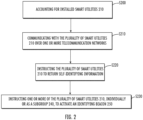
FIG. 2 illustrates steps performed by components according to an embodiment. - Turning to
FIG. 1 , disclosed is asystem 200 including a plurality ofsmart utilities 210 distributed in abuilding 220, and a personalsmart device 230 configured to communicate with theutilities 210. - Turning to
FIG. 2 , thesmart device 230 is configured to perform a process S200 of accounting for installedsmart utilities 210. S200 includes step S210 of thesmart device 230 communicating with thesmart utilities 210 over one or more telecommunication networks. At step S220 thesmart device 230 transmits first instructions thesmart utilities 210 to return self-identifying information. At step S230 thesmart device 230 transmits second instructions to more than one of thesmart utilities 210, individually or as asubgroup 240, to activate an identifyingbeacon 250. In one embodiment thesmart device 210 transmits the second instructions only to smart utilities that returned self-identifying information in response to the first instructions. - The self-identifying information includes one or more of: a type of smart utility, a geographic location identifying whether the smart utility is within the building or at an outside location, a floor in the building on which the smart utility is located, and a subdivision in the building where the smart utility is located. In one embodiment the personal
smart device 230 aggregates into a dataset received self-identifying information from the one or moresmart utilities 210 and forwards the aggregated dataset to a building management system (BMS) 260 explained in greater detail below. - In one embodiment the
subgroup 240 is one or more of the type of smart utility, a floor in the building on which the smart utility is located, and a subdivision in the building where the smart utility is located. Subdivisions may be divided areas such as laboratories, utility rooms, hotel wings, conference centers, dining areas, and the like. - In one embodiment the type of the
smart utility 210 may be one or more of a utility controller, heating ventilation and air conditioning (HVAC) equipment, safety device or component, and a transportation equipment such as elevators and escalators. As a further example, the type of thesmart utility 210 may be one or more of a chiller, an elevator, a fire extinguisher and a hazard detector. - In one embodiment the personal
smart device 230 communicates with thesmart utilities 210 over a respective one or moredissimilar telecommunication networks 270. For example the one or moredissimilar telecommunication networks 270 may include one or more of a personal area network (PAN) 280 such as Bluetooth that communicates for example over aPAN beacon 285, a wired local area network (W-LAN) 290, a wireless local area network (LAN) 300, andad hoc networks 310, both wired and wireless. These are non-limiting examples of networks with which the disclosed system is capable of communicating. - The identifying
beacon 250 is one or more of a visual and an audible identifier. For example the identifyingbeacon 250 may be a light emitting diode (LED) or a speaker. - The above disclosed embodiments provide for locating various devices or equipment including controllers of HVAC chillers or elevators, fire and security devices or other equipment or devices in a building or other location or facility. Such locating is provided by a smart device such as one using a mobile app broadcasting, to the various utilities an identity request. The broadcast may be transmitted over various communication channels including Bluetooth, LAN including Wi-Fi. The devices may respond to the broadcast request with location information and other details for identifying the device. According to the disclosed embodiments the smart device may transmit an "identify yourself' request to any desired device or group of devices and the device or group of devices can turn on the LED or any other visual or audible mechanism to spot the desired device.
- Benefits of the disclosed embodiments include more easily locating or identifying any type of smart utility and/or any type of controllers (for example a type of controller referenced above) in a building to help technicians or building owners to ease maintenance of the building infrastructure. An aggregated inventory of device locations may be automatically transmitted to a central repository such as a building management system.
- A building management system (BMS), reference above, may be otherwise known as a building automation system (BAS). The BMS is a computer-based control system installed in buildings that may have a need for controlling and monitoring mechanical and electrical equipment such as ventilation, lighting, power systems, fire systems, security systems, fire alarm systems and elevator systems. In addition to controlling an internal environment in a building, BMS systems may provide for access control (access doors) for implementing building security protocols, or to control other security systems such as closed-circuit television (CCTV) and motion detectors. A BMS may be responsible for controlling equipment that accounts for a majority of energy usage in a building.
- As used herein, "smart devices" may contain one or more processors capable of communication using with other such devices by applying wired and/or wireless telecommunication protocols. Non-limiting examples of a smart device include a mobile phone, personal data assistant (PDA), tablet, watch, wearable or other processor-based devices. Protocols applied by smart devices may include local area network (LAN) protocols and/or a private area network (PAN) protocols. LAN protocols may apply Wi-Fi technology, which is a technology based on the Section 802.11 standards from the Institute of Electrical and Electronics Engineers, or IEEE. PAN protocols include, for example, Bluetooth Low Energy (BTLE), which is a wireless technology standard designed and marketed by the Bluetooth Special Interest Group (SIG) for exchanging data over short distances using short-wavelength radio waves. PAN protocols may also include Zigbee, a technology based on Section 802.15.4 protocols from the Institute of Electrical and Electronics Engineers (IEEE). More specifically, Zigbee represents a suite of high-level communication protocols used to create personal area networks with small, low-power digital radios for low-power low-bandwidth needs, and is best suited for small scale projects using wireless connections. Wireless protocols may further include short range communication (SRC) protocols, which may be utilized with radiofrequency identification (RFID) technology. RFID may be used for communicating with an integrated chip (IC) on an RFID smartcard. Wireless protocols may further include long range, low powered wide area network (LoRa and LPWAN) protocols that enable low data rate communications to be made over long distances by sensors and actuators for machine-to-machine (M2M) and Internet of Things (IoT) applications.
- As described above, embodiments can be in the form of processor-implemented processes and devices for practicing those processes, such as a processor. Embodiments can also be in the form of computer program code containing instructions embodied in tangible media, such as network cloud storage, SD cards, flash drives, floppy diskettes, CD ROMs, hard drives, or any other computer-readable storage medium, wherein, when the computer program code is loaded into and executed by a computer, the computer becomes a device for practicing the embodiments. Embodiments can also be in the form of computer program code, for example, whether stored in a storage medium, loaded into and/or executed by a computer, or transmitted over some transmission medium, loaded into and/or executed by a computer, or transmitted over some transmission medium, such as over electrical wiring or cabling, through fiber optics, or via electromagnetic radiation, wherein, when the computer program code is loaded into an executed by a computer, the computer becomes an device for practicing the embodiments. When implemented on a general-purpose microprocessor, the computer program code segments configure the microprocessor to create specific logic circuits.
- The terminology used herein is for the purpose of describing particular embodiments only and is not intended to be limiting of the present disclosure. As used herein, the singular forms "a", "an" and "the" are intended to include the plural forms as well, unless the context clearly indicates otherwise. It will be further understood that the terms "comprises" and/or "comprising," when used in this specification, specify the presence of stated features, integers, steps, operations, elements, and/or components, but do not preclude the presence or addition of one or more other features, integers, steps, operations, element components, and/or groups thereof.
- Those of skill in the art will appreciate that various example embodiments are shown and described herein, each having certain features in the particular embodiments, but the present invention is not thus limited and instead is defined by the claims.
- Accordingly, the present invention is not to be seen as limited by the foregoing description, but is only limited by the scope of the appended claims.
Claims (8)
- A system comprising a plurality of smart utilities and a personal smart device, wherein the smart utilities include one or more of: a utility controller; transportation equipment including an elevator; HVAC equipment; electrical equipment including lighting; a safety device including one or more of a fire extinguisher and a hazard detector; and a security system component including a motion detector,
wherein the personal smart device is configured to:communicate with the smart utilities over one or more networks that are dissimilar;transmit first instructions to the smart utilities to return self-identifying information;wherein the self-identifying information includes one or more of: a type of smart utility, a geographic location identifying whether the smart utility is within a building or at an outside location, a floor in the building on which the smart utility is located, and a subdivision in the building where the smart utility is located; andwherein the personal smart device is further configured to:transmit second instructions to more than one of the plurality of smart utilities, as a subgroup, to activate an identifying beacon, wherein the subgroup includes more than one of the smart utilities, grouped by the type of smart utility, the floor in the building on which the smart utility is located, and the subdivision in the building where the smart utility is located, and wherein the identifying beacon is one or more of a visual and an audible identifier; andwherein the personal smart device aggregates into a dataset received self-identifying information from the smart utilities and forwards the aggregated dataset to a building management system, BMS, for monitoring and controlling of the smart utilities by the BMS. - The system of claim 1 wherein the personal smart device transmits the second instructions only to the smart utilities that returned self-identifying information in response to the first instructions.
- The system of claim 1 wherein the one or more dissimilar telecommunication networks include one or more of a personal area network, a wired local area network, and a wireless local area network.
- The system of claim 1 wherein the identifying beacon is one or more of a light emitting diode (LED) and a speaker.
- A method of identifying a plurality of smart utilities, comprising:communicating, with a personal smart device, over a respective one or more networks that are dissimilar, wherein the smart utilities include one or more of: a utility controller; transportation equipment including an elevator; HVAC equipment; electrical equipment including lighting; a safety device including one or more of a fire extinguisher and a hazard detector; and a security system component including a motion detector;transmitting first instructions, with the personal smart device, to the smart utilities to return self-identifying information, wherein the self-identifying information includes one or more of: a type of smart utility, a geographic location identifying whether the smart utility is within a building or at an outside location, a floor in the building on which the smart utility is located, and a subdivision in the building where the smart utility is located; andtransmitting second instructions, with the personal smart device, to more than one of the plurality of smart utilities, as a subgroup, to activate an identifying beacon, wherein the subgroup includes more than one of the smart utilities grouped by the type of smart utility, the floor in the building on which the smart utility is located, and the subdivision in the building where the smart utility is located,wherein the identifying beacon is one or more of a visual and an audible identifier; andwherein the personal smart device aggregates into a dataset received self-identifying information from the smart utilities and forwards the aggregated dataset to a building management system, BMS, for monitoring and controlling of the smart utilities by the BMS.
- The method of claim 5 wherein the personal smart device transmits the second instructions only to the smart utilities that returned self-identifying information in response to the first instructions.
- The method of claim 5 wherein the one or more dissimilar telecommunication networks include a respective one or more of a personal area network, a wired local area network, and a wireless local area network.
- The method of claim 5 wherein the identifying beacon is one or more of a light emitting diode (LED) and a speaker.
Applications Claiming Priority (2)
| Application Number | Priority Date | Filing Date | Title |
|---|---|---|---|
| IN201811040476 | 2018-10-26 | ||
| PCT/US2019/054719 WO2020086235A1 (en) | 2018-10-26 | 2019-10-04 | System for monitoring smart utilities |
Publications (2)
| Publication Number | Publication Date |
|---|---|
| EP3871428A1 EP3871428A1 (en) | 2021-09-01 |
| EP3871428B1 true EP3871428B1 (en) | 2024-12-18 |
Family
ID=68425255
Family Applications (1)
| Application Number | Title | Priority Date | Filing Date |
|---|---|---|---|
| EP19797410.8A Active EP3871428B1 (en) | 2018-10-26 | 2019-10-04 | System for monitoring smart utilities |
Country Status (4)
| Country | Link |
|---|---|
| US (1) | US11698613B2 (en) |
| EP (1) | EP3871428B1 (en) |
| CN (1) | CN112369050B (en) |
| WO (1) | WO2020086235A1 (en) |
Families Citing this family (2)
| Publication number | Priority date | Publication date | Assignee | Title |
|---|---|---|---|---|
| WO2019182972A1 (en) * | 2018-03-19 | 2019-09-26 | Carrier Corporation | Predicting the impact of flexible energy demand on thermal comfort |
| US11475397B2 (en) * | 2021-01-19 | 2022-10-18 | Ncr Corporation | Item return architecture and processing |
Family Cites Families (22)
| Publication number | Priority date | Publication date | Assignee | Title |
|---|---|---|---|---|
| CN1890992A (en) | 2003-06-06 | 2007-01-03 | 网状网络公司 | System and method for identifying the floor number where a firefighter in need of help is located using received signal strength indicator and signal propagation time |
| US20090045939A1 (en) | 2007-07-31 | 2009-02-19 | Johnson Controls Technology Company | Locating devices using wireless communications |
| CA2596250A1 (en) | 2007-08-14 | 2009-02-14 | 9172-9863 Quebec Inc. | Shoring bar device |
| US8830267B2 (en) * | 2009-11-16 | 2014-09-09 | Alliance For Sustainable Energy, Llc | Augmented reality building operations tool |
| FR2966625B1 (en) | 2010-10-26 | 2012-12-21 | Somfy Sas | METHOD OF OPERATING A DOMOTIC INSTALLATION |
| US9690265B2 (en) | 2012-07-13 | 2017-06-27 | Siemens Industry, Inc. | Mobile device with automatic acquisition and analysis of building automation system |
| US9575477B2 (en) | 2012-07-31 | 2017-02-21 | International Business Machines Corporation | Sensor installation in a building management system |
| US9247378B2 (en) | 2012-08-07 | 2016-01-26 | Honeywell International Inc. | Method for controlling an HVAC system using a proximity aware mobile device |
| US9344989B2 (en) | 2012-09-06 | 2016-05-17 | Apple Inc. | System with wireless messages to enhance location accuracy |
| US8847754B2 (en) * | 2012-11-15 | 2014-09-30 | James Buchheim | Locator beacon and radar application for mobile device |
| US9307027B2 (en) * | 2013-01-15 | 2016-04-05 | Toyota Jidosha Kabushiki Kaisha | Identifying server protocol for translation in smart grid |
| KR20140128171A (en) | 2013-04-26 | 2014-11-05 | 인텔렉추얼디스커버리 주식회사 | An appratus for guiding a location and a method for operating it |
| US20150277407A1 (en) | 2014-03-27 | 2015-10-01 | Trane International Inc. | Location detection of control equipment in a building |
| US10684030B2 (en) * | 2015-03-05 | 2020-06-16 | Honeywell International Inc. | Wireless actuator service |
| GB2536722B (en) | 2015-03-27 | 2021-02-03 | Arm Ip Ltd | Locating devices |
| US10982868B2 (en) * | 2015-05-04 | 2021-04-20 | Johnson Controls Technology Company | HVAC equipment having locating systems and methods |
| US9819509B2 (en) | 2015-07-17 | 2017-11-14 | ARC Informatique | Systems and methods for location-based control of equipment and facility resources |
| US10534326B2 (en) | 2015-10-21 | 2020-01-14 | Johnson Controls Technology Company | Building automation system with integrated building information model |
| WO2017085546A1 (en) * | 2015-11-17 | 2017-05-26 | Idee Limited | Security systems and methods for continuous authorized access to restricted access locations |
| WO2017092802A1 (en) | 2015-12-02 | 2017-06-08 | Abb Ag | Installation of building automation devices |
| US10419243B2 (en) * | 2016-09-09 | 2019-09-17 | Johnson Controls Technology Company | Smart gateway devices, systems and methods for providing communication between HVAC system networks |
| CN109791397B (en) * | 2016-09-23 | 2022-07-01 | 昕诺飞控股有限公司 | Building automation system with maintenance beacon |
-
2019
- 2019-10-04 US US17/252,965 patent/US11698613B2/en active Active
- 2019-10-04 CN CN201980041207.4A patent/CN112369050B/en active Active
- 2019-10-04 WO PCT/US2019/054719 patent/WO2020086235A1/en not_active Ceased
- 2019-10-04 EP EP19797410.8A patent/EP3871428B1/en active Active
Also Published As
| Publication number | Publication date |
|---|---|
| CN112369050A (en) | 2021-02-12 |
| US20210240152A1 (en) | 2021-08-05 |
| EP3871428A1 (en) | 2021-09-01 |
| WO2020086235A1 (en) | 2020-04-30 |
| CN112369050B (en) | 2025-04-18 |
| US11698613B2 (en) | 2023-07-11 |
Similar Documents
| Publication | Publication Date | Title |
|---|---|---|
| EP2715389B1 (en) | Positioning systems and methods and location based modification of computing device applications | |
| US9483934B2 (en) | Presence based system and method for controlling devices | |
| CN111654954B (en) | System and method for associating information with an asset or physical space | |
| EP2958347B1 (en) | Scheduling method and scheduling controller for wireless-connected apparatus | |
| US20180324933A1 (en) | Lighting Control With Location Based Communication | |
| US9389600B2 (en) | Central control system and method for setting control point thereof | |
| EP3804470B1 (en) | System, method and devices for implementing a factory reset of a luminaire | |
| US11698613B2 (en) | System for monitoring smart utilities | |
| EP2678706B1 (en) | Method for localizing the position of a wireless device in an environment comprising a wireless network having at least one access point | |
| KR101219758B1 (en) | System and method for managing a location | |
| US10645532B1 (en) | Providing navigation services using multiple electrical devices | |
| US20230269401A1 (en) | Geolocationing system and method for use of same | |
| CN113796132B (en) | Real-time localization of objects using multiple electrical devices | |
| KR101730539B1 (en) | Providing method for active information based on position and system thereof | |
| EP3969927B1 (en) | Location system congestion management | |
| US20210312403A1 (en) | Identifying attendee availability and current location, and scheduling a meeting in the nearest available conference room | |
| KR20180042477A (en) | Beacon System and Management Method Thereof | |
| KR102882449B1 (en) | Iot smart light | |
| Shen et al. | Wi-Fi location-based services (LBS) for occupancy sensing in buildings: A technical overview | |
| KR20160141055A (en) | Providing method for active information based on position and system thereof |
Legal Events
| Date | Code | Title | Description |
|---|---|---|---|
| STAA | Information on the status of an ep patent application or granted ep patent |
Free format text: STATUS: UNKNOWN |
|
| STAA | Information on the status of an ep patent application or granted ep patent |
Free format text: STATUS: THE INTERNATIONAL PUBLICATION HAS BEEN MADE |
|
| PUAI | Public reference made under article 153(3) epc to a published international application that has entered the european phase |
Free format text: ORIGINAL CODE: 0009012 |
|
| STAA | Information on the status of an ep patent application or granted ep patent |
Free format text: STATUS: REQUEST FOR EXAMINATION WAS MADE |
|
| 17P | Request for examination filed |
Effective date: 20201230 |
|
| AK | Designated contracting states |
Kind code of ref document: A1 Designated state(s): AL AT BE BG CH CY CZ DE DK EE ES FI FR GB GR HR HU IE IS IT LI LT LU LV MC MK MT NL NO PL PT RO RS SE SI SK SM TR |
|
| DAV | Request for validation of the european patent (deleted) | ||
| DAX | Request for extension of the european patent (deleted) | ||
| STAA | Information on the status of an ep patent application or granted ep patent |
Free format text: STATUS: EXAMINATION IS IN PROGRESS |
|
| 17Q | First examination report despatched |
Effective date: 20221220 |
|
| GRAP | Despatch of communication of intention to grant a patent |
Free format text: ORIGINAL CODE: EPIDOSNIGR1 |
|
| STAA | Information on the status of an ep patent application or granted ep patent |
Free format text: STATUS: GRANT OF PATENT IS INTENDED |
|
| INTG | Intention to grant announced |
Effective date: 20240712 |
|
| GRAS | Grant fee paid |
Free format text: ORIGINAL CODE: EPIDOSNIGR3 |
|
| GRAA | (expected) grant |
Free format text: ORIGINAL CODE: 0009210 |
|
| STAA | Information on the status of an ep patent application or granted ep patent |
Free format text: STATUS: THE PATENT HAS BEEN GRANTED |
|
| AK | Designated contracting states |
Kind code of ref document: B1 Designated state(s): AL AT BE BG CH CY CZ DE DK EE ES FI FR GB GR HR HU IE IS IT LI LT LU LV MC MK MT NL NO PL PT RO RS SE SI SK SM TR |
|
| REG | Reference to a national code |
Ref country code: CH Ref legal event code: EP |
|
| REG | Reference to a national code |
Ref country code: DE Ref legal event code: R096 Ref document number: 602019063724 Country of ref document: DE |
|
| REG | Reference to a national code |
Ref country code: IE Ref legal event code: FG4D |
|
| REG | Reference to a national code |
Ref country code: NL Ref legal event code: FP |
|
| REG | Reference to a national code |
Ref country code: LT Ref legal event code: MG9D |
|
| PG25 | Lapsed in a contracting state [announced via postgrant information from national office to epo] |
Ref country code: HR Free format text: LAPSE BECAUSE OF FAILURE TO SUBMIT A TRANSLATION OF THE DESCRIPTION OR TO PAY THE FEE WITHIN THE PRESCRIBED TIME-LIMIT Effective date: 20241218 |
|
| PG25 | Lapsed in a contracting state [announced via postgrant information from national office to epo] |
Ref country code: FI Free format text: LAPSE BECAUSE OF FAILURE TO SUBMIT A TRANSLATION OF THE DESCRIPTION OR TO PAY THE FEE WITHIN THE PRESCRIBED TIME-LIMIT Effective date: 20241218 |
|
| PG25 | Lapsed in a contracting state [announced via postgrant information from national office to epo] |
Ref country code: BG Free format text: LAPSE BECAUSE OF FAILURE TO SUBMIT A TRANSLATION OF THE DESCRIPTION OR TO PAY THE FEE WITHIN THE PRESCRIBED TIME-LIMIT Effective date: 20241218 |
|
| PG25 | Lapsed in a contracting state [announced via postgrant information from national office to epo] |
Ref country code: NO Free format text: LAPSE BECAUSE OF FAILURE TO SUBMIT A TRANSLATION OF THE DESCRIPTION OR TO PAY THE FEE WITHIN THE PRESCRIBED TIME-LIMIT Effective date: 20250318 |
|
| PG25 | Lapsed in a contracting state [announced via postgrant information from national office to epo] |
Ref country code: LV Free format text: LAPSE BECAUSE OF FAILURE TO SUBMIT A TRANSLATION OF THE DESCRIPTION OR TO PAY THE FEE WITHIN THE PRESCRIBED TIME-LIMIT Effective date: 20241218 Ref country code: GR Free format text: LAPSE BECAUSE OF FAILURE TO SUBMIT A TRANSLATION OF THE DESCRIPTION OR TO PAY THE FEE WITHIN THE PRESCRIBED TIME-LIMIT Effective date: 20250319 |
|
| PG25 | Lapsed in a contracting state [announced via postgrant information from national office to epo] |
Ref country code: RS Free format text: LAPSE BECAUSE OF FAILURE TO SUBMIT A TRANSLATION OF THE DESCRIPTION OR TO PAY THE FEE WITHIN THE PRESCRIBED TIME-LIMIT Effective date: 20250318 |
|
| REG | Reference to a national code |
Ref country code: AT Ref legal event code: MK05 Ref document number: 1753241 Country of ref document: AT Kind code of ref document: T Effective date: 20241218 |
|
| PG25 | Lapsed in a contracting state [announced via postgrant information from national office to epo] |
Ref country code: SM Free format text: LAPSE BECAUSE OF FAILURE TO SUBMIT A TRANSLATION OF THE DESCRIPTION OR TO PAY THE FEE WITHIN THE PRESCRIBED TIME-LIMIT Effective date: 20241218 |
|
| PG25 | Lapsed in a contracting state [announced via postgrant information from national office to epo] |
Ref country code: PL Free format text: LAPSE BECAUSE OF FAILURE TO SUBMIT A TRANSLATION OF THE DESCRIPTION OR TO PAY THE FEE WITHIN THE PRESCRIBED TIME-LIMIT Effective date: 20241218 |
|
| PG25 | Lapsed in a contracting state [announced via postgrant information from national office to epo] |
Ref country code: ES Free format text: LAPSE BECAUSE OF FAILURE TO SUBMIT A TRANSLATION OF THE DESCRIPTION OR TO PAY THE FEE WITHIN THE PRESCRIBED TIME-LIMIT Effective date: 20241218 |
|
| PG25 | Lapsed in a contracting state [announced via postgrant information from national office to epo] |
Ref country code: IS Free format text: LAPSE BECAUSE OF FAILURE TO SUBMIT A TRANSLATION OF THE DESCRIPTION OR TO PAY THE FEE WITHIN THE PRESCRIBED TIME-LIMIT Effective date: 20250418 |
|
| PG25 | Lapsed in a contracting state [announced via postgrant information from national office to epo] |
Ref country code: PT Free format text: LAPSE BECAUSE OF FAILURE TO SUBMIT A TRANSLATION OF THE DESCRIPTION OR TO PAY THE FEE WITHIN THE PRESCRIBED TIME-LIMIT Effective date: 20250421 |
|
| PG25 | Lapsed in a contracting state [announced via postgrant information from national office to epo] |
Ref country code: EE Free format text: LAPSE BECAUSE OF FAILURE TO SUBMIT A TRANSLATION OF THE DESCRIPTION OR TO PAY THE FEE WITHIN THE PRESCRIBED TIME-LIMIT Effective date: 20241218 |
|
| PG25 | Lapsed in a contracting state [announced via postgrant information from national office to epo] |
Ref country code: RO Free format text: LAPSE BECAUSE OF FAILURE TO SUBMIT A TRANSLATION OF THE DESCRIPTION OR TO PAY THE FEE WITHIN THE PRESCRIBED TIME-LIMIT Effective date: 20241218 Ref country code: AT Free format text: LAPSE BECAUSE OF FAILURE TO SUBMIT A TRANSLATION OF THE DESCRIPTION OR TO PAY THE FEE WITHIN THE PRESCRIBED TIME-LIMIT Effective date: 20241218 |
|
| PG25 | Lapsed in a contracting state [announced via postgrant information from national office to epo] |
Ref country code: SK Free format text: LAPSE BECAUSE OF FAILURE TO SUBMIT A TRANSLATION OF THE DESCRIPTION OR TO PAY THE FEE WITHIN THE PRESCRIBED TIME-LIMIT Effective date: 20241218 |
|
| PG25 | Lapsed in a contracting state [announced via postgrant information from national office to epo] |
Ref country code: CZ Free format text: LAPSE BECAUSE OF FAILURE TO SUBMIT A TRANSLATION OF THE DESCRIPTION OR TO PAY THE FEE WITHIN THE PRESCRIBED TIME-LIMIT Effective date: 20241218 |
|
| PG25 | Lapsed in a contracting state [announced via postgrant information from national office to epo] |
Ref country code: IT Free format text: LAPSE BECAUSE OF FAILURE TO SUBMIT A TRANSLATION OF THE DESCRIPTION OR TO PAY THE FEE WITHIN THE PRESCRIBED TIME-LIMIT Effective date: 20241218 |
|
| PG25 | Lapsed in a contracting state [announced via postgrant information from national office to epo] |
Ref country code: SE Free format text: LAPSE BECAUSE OF FAILURE TO SUBMIT A TRANSLATION OF THE DESCRIPTION OR TO PAY THE FEE WITHIN THE PRESCRIBED TIME-LIMIT Effective date: 20241218 |
|
| REG | Reference to a national code |
Ref country code: DE Ref legal event code: R097 Ref document number: 602019063724 Country of ref document: DE |
|
| PG25 | Lapsed in a contracting state [announced via postgrant information from national office to epo] |
Ref country code: DK Free format text: LAPSE BECAUSE OF FAILURE TO SUBMIT A TRANSLATION OF THE DESCRIPTION OR TO PAY THE FEE WITHIN THE PRESCRIBED TIME-LIMIT Effective date: 20241218 |
|
| PGFP | Annual fee paid to national office [announced via postgrant information from national office to epo] |
Ref country code: FR Payment date: 20250925 Year of fee payment: 7 |
|
| PLBE | No opposition filed within time limit |
Free format text: ORIGINAL CODE: 0009261 |
|
| STAA | Information on the status of an ep patent application or granted ep patent |
Free format text: STATUS: NO OPPOSITION FILED WITHIN TIME LIMIT |
|
| 26N | No opposition filed |
Effective date: 20250919 |
|
| PGFP | Annual fee paid to national office [announced via postgrant information from national office to epo] |
Ref country code: DE Payment date: 20250923 Year of fee payment: 7 |