EP3869812A1 - Video playing method and apparatus - Google Patents
Video playing method and apparatus Download PDFInfo
- Publication number
- EP3869812A1 EP3869812A1 EP19872396.7A EP19872396A EP3869812A1 EP 3869812 A1 EP3869812 A1 EP 3869812A1 EP 19872396 A EP19872396 A EP 19872396A EP 3869812 A1 EP3869812 A1 EP 3869812A1
- Authority
- EP
- European Patent Office
- Prior art keywords
- video
- preprocessing
- service process
- web client
- video data
- Prior art date
- Legal status (The legal status is an assumption and is not a legal conclusion. Google has not performed a legal analysis and makes no representation as to the accuracy of the status listed.)
- Pending
Links
Images


Classifications
-
- H—ELECTRICITY
- H04—ELECTRIC COMMUNICATION TECHNIQUE
- H04N—PICTORIAL COMMUNICATION, e.g. TELEVISION
- H04N21/00—Selective content distribution, e.g. interactive television or video on demand [VOD]
- H04N21/40—Client devices specifically adapted for the reception of or interaction with content, e.g. set-top-box [STB]; Operations thereof
- H04N21/47—End-user applications
- H04N21/478—Supplemental services, e.g. displaying phone caller identification, shopping application
- H04N21/4782—Web browsing, e.g. WebTV
-
- H—ELECTRICITY
- H04—ELECTRIC COMMUNICATION TECHNIQUE
- H04N—PICTORIAL COMMUNICATION, e.g. TELEVISION
- H04N21/00—Selective content distribution, e.g. interactive television or video on demand [VOD]
- H04N21/80—Generation or processing of content or additional data by content creator independently of the distribution process; Content per se
- H04N21/81—Monomedia components thereof
- H04N21/8166—Monomedia components thereof involving executable data, e.g. software
- H04N21/8173—End-user applications, e.g. Web browser, game
-
- G—PHYSICS
- G06—COMPUTING OR CALCULATING; COUNTING
- G06F—ELECTRIC DIGITAL DATA PROCESSING
- G06F8/00—Arrangements for software engineering
- G06F8/60—Software deployment
- G06F8/61—Installation
-
- G—PHYSICS
- G06—COMPUTING OR CALCULATING; COUNTING
- G06F—ELECTRIC DIGITAL DATA PROCESSING
- G06F8/00—Arrangements for software engineering
- G06F8/60—Software deployment
- G06F8/65—Updates
-
- G—PHYSICS
- G06—COMPUTING OR CALCULATING; COUNTING
- G06F—ELECTRIC DIGITAL DATA PROCESSING
- G06F9/00—Arrangements for program control, e.g. control units
- G06F9/06—Arrangements for program control, e.g. control units using stored programs, i.e. using an internal store of processing equipment to receive or retain programs
- G06F9/44—Arrangements for executing specific programs
- G06F9/445—Program loading or initiating
- G06F9/44521—Dynamic linking or loading; Link editing at or after load time, e.g. Java class loading
- G06F9/44526—Plug-ins; Add-ons
-
- G—PHYSICS
- G06—COMPUTING OR CALCULATING; COUNTING
- G06V—IMAGE OR VIDEO RECOGNITION OR UNDERSTANDING
- G06V20/00—Scenes; Scene-specific elements
- G06V20/40—Scenes; Scene-specific elements in video content
- G06V20/46—Extracting features or characteristics from the video content, e.g. video fingerprints, representative shots or key frames
-
- H—ELECTRICITY
- H04—ELECTRIC COMMUNICATION TECHNIQUE
- H04N—PICTORIAL COMMUNICATION, e.g. TELEVISION
- H04N21/00—Selective content distribution, e.g. interactive television or video on demand [VOD]
- H04N21/40—Client devices specifically adapted for the reception of or interaction with content, e.g. set-top-box [STB]; Operations thereof
- H04N21/43—Processing of content or additional data, e.g. demultiplexing additional data from a digital video stream; Elementary client operations, e.g. monitoring of home network or synchronising decoder's clock; Client middleware
- H04N21/44—Processing of video elementary streams, e.g. splicing a video clip retrieved from local storage with an incoming video stream or rendering scenes according to encoded video stream scene graphs
-
- H—ELECTRICITY
- H04—ELECTRIC COMMUNICATION TECHNIQUE
- H04N—PICTORIAL COMMUNICATION, e.g. TELEVISION
- H04N21/00—Selective content distribution, e.g. interactive television or video on demand [VOD]
- H04N21/40—Client devices specifically adapted for the reception of or interaction with content, e.g. set-top-box [STB]; Operations thereof
- H04N21/43—Processing of content or additional data, e.g. demultiplexing additional data from a digital video stream; Elementary client operations, e.g. monitoring of home network or synchronising decoder's clock; Client middleware
- H04N21/442—Monitoring of processes or resources, e.g. detecting the failure of a recording device, monitoring the downstream bandwidth, the number of times a movie has been viewed, the storage space available from the internal hard disk
- H04N21/4424—Monitoring of the internal components or processes of the client device, e.g. CPU or memory load, processing speed, timer, counter or percentage of the hard disk space used
-
- H—ELECTRICITY
- H04—ELECTRIC COMMUNICATION TECHNIQUE
- H04N—PICTORIAL COMMUNICATION, e.g. TELEVISION
- H04N21/00—Selective content distribution, e.g. interactive television or video on demand [VOD]
- H04N21/40—Client devices specifically adapted for the reception of or interaction with content, e.g. set-top-box [STB]; Operations thereof
- H04N21/43—Processing of content or additional data, e.g. demultiplexing additional data from a digital video stream; Elementary client operations, e.g. monitoring of home network or synchronising decoder's clock; Client middleware
- H04N21/443—OS processes, e.g. booting an STB, implementing a Java virtual machine in an STB or power management in an STB
-
- H—ELECTRICITY
- H04—ELECTRIC COMMUNICATION TECHNIQUE
- H04N—PICTORIAL COMMUNICATION, e.g. TELEVISION
- H04N21/00—Selective content distribution, e.g. interactive television or video on demand [VOD]
- H04N21/40—Client devices specifically adapted for the reception of or interaction with content, e.g. set-top-box [STB]; Operations thereof
- H04N21/43—Processing of content or additional data, e.g. demultiplexing additional data from a digital video stream; Elementary client operations, e.g. monitoring of home network or synchronising decoder's clock; Client middleware
- H04N21/443—OS processes, e.g. booting an STB, implementing a Java virtual machine in an STB or power management in an STB
- H04N21/4431—OS processes, e.g. booting an STB, implementing a Java virtual machine in an STB or power management in an STB characterized by the use of Application Program Interface [API] libraries
-
- H—ELECTRICITY
- H04—ELECTRIC COMMUNICATION TECHNIQUE
- H04N—PICTORIAL COMMUNICATION, e.g. TELEVISION
- H04N21/00—Selective content distribution, e.g. interactive television or video on demand [VOD]
- H04N21/40—Client devices specifically adapted for the reception of or interaction with content, e.g. set-top-box [STB]; Operations thereof
- H04N21/47—End-user applications
- H04N21/472—End-user interface for requesting content, additional data or services; End-user interface for interacting with content, e.g. for content reservation or setting reminders, for requesting event notification, for manipulating displayed content
- H04N21/47202—End-user interface for requesting content, additional data or services; End-user interface for interacting with content, e.g. for content reservation or setting reminders, for requesting event notification, for manipulating displayed content for requesting content on demand, e.g. video on demand
-
- H—ELECTRICITY
- H04—ELECTRIC COMMUNICATION TECHNIQUE
- H04N—PICTORIAL COMMUNICATION, e.g. TELEVISION
- H04N21/00—Selective content distribution, e.g. interactive television or video on demand [VOD]
- H04N21/80—Generation or processing of content or additional data by content creator independently of the distribution process; Content per se
- H04N21/81—Monomedia components thereof
- H04N21/8166—Monomedia components thereof involving executable data, e.g. software
- H04N21/8193—Monomedia components thereof involving executable data, e.g. software dedicated tools, e.g. video decoder software or IPMP tool
Definitions
- the present application relates to the technical field of multimedia, and in particular, to a video playing method and apparatus.
- NPAPI Network Plugin Application Programming Interface
- ActiveX plug-ins The NPAPI plug-in or ActiveX plug-in is embedded in the browser, and the plug-in receives the video data through the established long connection. After receiving the video data, the plug-in calls a decoding library and a rendering library to decode and render the video data. The video can be played in the browser after decoding and rendering.
- the purpose of the embodiments of the present application is to provide a video playing method and apparatus, so as to realize that videos can be played without relying on plug-ins.
- the specific technical solutions are as follows.
- an embodiment of the present application provides a video playing method, which is applied to a Web client.
- the method includes:
- an embodiment of the present application provides a video playing apparatus, which is applied to a Web client.
- the apparatus includes:
- an embodiment of the present application provides an electronic device including a processor, a communication interface, a memory and a communication bus, wherein the processor, the communication interface, and the memory are communicated with each other via the communication bus; the memory is used for storing computer programs; the processor is used for implementing steps of any video playing method described above when executing the programs stored on the memory.
- an embodiment of the present application provides a machine readable storage medium.
- the machine readable storage medium stores computer programs thereon which, when executed by a processor, cause the processor to implement the steps of any video playing method described above.
- an embodiment of the present application provides a computer program product, which implements the steps of any video playing method described above when executed by a processor.
- the main process of the Web client performs video-preprocessing on video data to be played and plays the video data obtained after the video-preprocessing; and creates and starts a video service process when the performance resource of the Web client is insufficient.
- the video service process is configured to perform the video-preprocessing on video data to be played and play the video data obtained after the video-preprocessing.
- the main process of the Web client can play videos without relying on plug-ins.
- the video service process is used to play videos for the smoothness of video playing, which can also play videos without relying on plug-ins.
- videos can be played without relying on plug-ins by means of this solution.
- the video playing method includes:
- the main process of the Web client can play videos without relying on plug-ins.
- the video service process is used to play videos for the smoothness of video playing, which can also play videos without relying on plug-ins.
- videos can be played without relying on plug-ins by means of this solution.
- the video playing method according to the embodiment of this application can be applied to a Web client.
- the Web client may be a Web page in an application.
- the Web client may be a Web page in a browser, through which videos can be played by the user.
- the web client may also be a Web page in other applications that can provide Web functions, which will not be repeated here.
- a video playing method includes the following steps: At S101, performing video-preprocessing on video data to be played, and playing the video data obtained after the video-preprocessing by means of a main process of the Web client.
- main process of the Web client is a process created by the Web client itself, and playing videos through the Web client can be realized by the main process of the Web client.
- the video-preprocessing of the video data includes at least one of decapsulation processing, decoding processing, rendering processing and the like.
- the video-preprocessing may also include other video processing methods, which are not limited here.
- the main process of the Web client can acquire the video data to be played.
- the video data to be played can be determined according to user instructions.
- the Web client is a browser client, the user uses the browser to browse a video website and clicks a link of video "a" on the video website.
- the video "a" is determined as the video to be played, and the Web client can acquire an instruction to play the video "a".
- the main process of the Web client can acquire the video data to be played from a server.
- the Web client can communicate with the server through a Web Socket protocol.
- the server can actively send the video data to be played to the main process of the Web client.
- the server can determine, based on the frame rate and code rate of the acquired video data, the rate at which the video data is sent to the Web client.
- the Web client can acquire the video data to be played from the server by calling a Web Socket callback function.
- the way the main process of the Web client acquires the video data from the server is not limited to the above two mays, and may also include other acquiring methods, which are not limited here.
- main process of the Web client may acquire the video data from the server continuously, or may acquire all the video data at one or more times.
- the main process of the Web client can decapsulate the acquired video data.
- the main process of the Web client can decapsulate the acquired video data through a Javascript/WASM (WebAssembly).
- WASM runs in a sandboxed execution environment and can be implemented in the existing JavaScript virtual machine.
- the WebAssembly can be called by the JavaScript and enter the context of the JavaScript, so as to realize the decapsulation processing of the acquired video data.
- the main process of the Web client may decode the decapsulated video data.
- the main process of the Web client can perform decoding processing on the decapsulated video data through the Javascript/WASM. Wherein in order to prevent a large amount of undecoded video data in the main process from causing too heavy load on the main process, the main process of the Web client can monitor the amount of currently undecoded video data in the main process.
- the main process of the Web client may perform rendering processing on the video data obtained after the decoding processing, and play the rendered video data.
- the main process of the Web client can perform rendering processing on the decoded video data through a WebGL (Web Graphics Library) rendering.
- WebGL Web Graphics Library
- the WebGL is a 3D (three-dimensional) drawing protocol.
- the WebGL can provide 3D accelerated rendering, so that the main process of the Web client can display 3D scenes and models more smoothly.
- the main process of the Web client can play videos without relying on plug-ins.
- the main process performs video-preprocessing on and plays video data to be played, and thus videos can be played without relying on plug-ins.
- the video service process is configured to perform the video-preprocessing on video data to be played and play the video data obtained after the video-preprocessing.
- the video service process After the video service process is created and started, a connection is established between the main process and the video service process. After connected with the main process of the Web client, the video service process can receive instructions issued by the main process and perform corresponding operations.
- the video service process may perform the video-preprocessing on video data to be played, and play video data obtained after the video-preprocessing.
- the main process of the Web client sends a video playing instruction to the video service process after receiving the video playing instruction.
- the video service process can create a video window after receiving the video playing instruction.
- the video window is a window for displaying the played video, that is, the video is played in the video window.
- the created video window is displayed in an interface of a running Web client.
- the video window is displayed in the interface where the current window of the browser is located.
- the video window can change as the interface of the running Web client changes. For example, when the interface of the running Web client is stretched, the video window is stretched according to a certain ratio; when the interface of the running Web client moves, the video window moves in the moving direction of the interface. In this way, the effect that the video window is embedded in the interface of a running Web client can be achieved.
- the video service process After creating the video window, acquires the video data to be played according to the video playing instruction. Wherein the video service process can acquire the video data to be played from the server. There are at least two ways for the video service process to obtain video data from the server. In the first way, the server can actively send the video data to be played to the video service process. In the second way, the video service can acquire the video data to be played from the server by calling a Web Socket callback function.
- the way the video service process acquires the video data from the server is not limited to the above two ways, and may also include other acquiring methods, which are not limited here.
- the video service process can perform decapsulation processing on the acquired video data. After the decapsulation processing is completed, the decapsulated video data is decoded. After the decoding process is completed, the video service process renders the decoded video data, and plays the rendered video data in the video window.
- the process of decapsulation processing, decoding processing, and rendering processing performed by the video service process is similar to that of decapsulation processing, decoding processing, and rendering processing performed by the main process of the Web client, and will not be repeated here.
- the video service process may be a process created by programs, other than the Web client, to perform the video-preprocessing on video data.
- the video service process may be a process created by an installed application, or a process created by a system itself, the system is a system run by a device in which a Web client is installed.
- the Web client may also prompt the user to choose whether to create a video service process.
- the prompt may be realized using at least one of a text prompt, a voice prompt, an image prompt, and the like.
- the prompt when there is a display screen for the Web client, the prompt can be displayed in text on the display screen. And two buttons are displayed on the display screen for the user to choose, one indicating the creation of a video service process, and the other indicating no creation of a video service process.
- the Web client creates and starts the video service process, and establishes a connection between the video service process and the main process.
- the video data to be played may be subjected to a frame-extraction-processing.
- the frame-extraction-processing can be performed on the video data to be played according to a preset frame extraction rule.
- the preset frame extraction rule can be customized.
- the frame extraction rule may be that a second number of frame images are extracted every other first number of frame images. Wherein both the first number and the second number can be customized. For example, the first number is 5 and the second number is 1, and the preset frame extraction rule is to extract 1 frame image every other 5 frame images.
- the main process After the frame-extraction-processing is completed, the main process performs the video-preprocessing on the video data obtained after the frame-extraction-processing, and plays the video data obtained after the video-preprocessing.
- the main process can complete the video-preprocessing on a reduced certain number of frame images, which leads to smooth video playing.
- the above step of creating and starting the video service process (S102) may include the following steps.
- An installation package of the video service process is acquired and installed.
- the installation package of the video service process can be pre-stored in the Web client. In this way, the Web client can directly acquire the installation package locally and install the installation package.
- the creation of the video service process is successful, and then the video service process is started, and a connection between the video service process and the main process is established.
- insufficient performance resource of the Web client may lead to a decline in the processing capability of the main process of the Web client and delayed playing of the video data processed by the main process, which affects the user experience.
- the Web client can monitor the performance resource to determine whether the performance resource of Web client is insufficient.
- the main process of the Web client can continue to perform the video-preprocessing on the video data to be played and play the video data obtained after the video-preprocessing.
- the above step S102 is executed.
- step S102 when the performance resource of the Web client is insufficient, before the step of creating and starting the video service process (step S102), the following steps may also be included.
- the Web client can acquire the duration of performing the video-preprocessing on a video frame that has been subjected to the video-preprocessing in the video data.
- the video data acquired by the main process of the Web client may include several frames of image, and each frame image is sorted according to the time sequence of playing.
- the main process of the Web client performs the video-preprocessing on each frame image according to the sequence of the frame images.
- the video data includes N frames of image
- the sequence of the N frames of image is: the first frame image, the second frame image...the Nth frame image.
- the main process of the Web client obtains the video data, it performs video-preprocessing on firstly the first frame image, then the second frame image, and finally the Nth frame image.
- the duration of the main process performing the video-preprocessing on each frame image can be the same or different. For example, when the performance resource of the Web client is sufficient, the duration of the main process performing the video-preprocessing on each frame image is short; when the performance resource of the Web client is insufficient, the duration of the main process performing the video-preprocessing on each frame image is long.
- the Web client can record the duration of performing the video-preprocessing on each frame image. In this way, the duration of performing the video-preprocessing on each frame image that has been subjected to the video-preprocessing is recoded in the Web client.
- the Web client can directly acquire the duration, that is, it can acquire the duration of performing the video-preprocessing on the frame image that has been subjected to the video-preprocessing.
- step 2 calculating the total duration of performing the video-preprocessing on continuous frame images based on the duration of performing the video-preprocessing on the acquired frame image and the preset number of the continuous frame images.
- the preset number can be customized. For example, it is generally considered that when playing a video, it is a normal playing speed to play 25 frame images in 1 second, and when the number of frame images played in 1 second is less than 25, the playing delay will occur. Therefore, the preset number can be set to 25.
- the selected preset number of frame images are frame images that have been subjected to the video-preprocessing, and the selected frame images are continuous. For example, if the preset number is 25, the selected 25 consecutive frame images may be 25 consecutive images starting from the 11th frame image, that is, the 35th frame image is the last selected image.
- the initial image of the selected preset number of consecutive frame images may be selected by users. Generally, in order to improve the accuracy of the judgment result, a frame image closer to the current time can be selected as the initial image.
- the frame image subjected to the video-preprocessing in the previous second can be selected as the initial image. That is, the frame image subjected to the video-preprocessing at 10:00:00 is selected as the initial image.
- a preset number of consecutive frame images starting from the initial image are used as the selected images.
- the duration of performing the video-preprocessing on each frame image can be acquired.
- the duration for each frame image is summed to obtain the total duration of performing the video-preprocessing on the continuous frame images.
- the preset number is 25.
- the duration of performing the video-preprocessing on each frame image is 40 milliseconds. Then the total duration of performing the video-preprocessing on the 25 consecutive frame images is 1 second.
- step 3 determining whether the total duration is greater than a preset duration threshold; if it is greater than the preset duration threshold, determining that the performance resource of the Web client is insufficient; otherwise, determining that the performance resource of the Web client is sufficient.
- the preset duration threshold can be customized.
- the preset duration threshold may be set according to the aforementioned preset number.
- the preset duration threshold may be set to 1 second.
- the total duration corresponding to 25 frame images is greater than 1 second, it means that 25 frame images cannot be played within 1 second.
- the performance resource of the Web client is insufficient and the video playing is delayed.
- the total duration corresponding to 25 frame images is not greater than 1 second, it means that 25 frame images can be played within 1 second.
- the performance resource of the Web client is sufficient and the video playing is normal.
- the step 1 in the foregoing implementation, at which the Web client can acquire the duration of performing the video-preprocessing on the video frames that have been subjected to the video-preprocessing in the video data may include the following steps.
- the current time point is recorded as an initial time point when starting to perform the video-preprocessing on the frame images in the video data.
- the object whose time point is recorded as the initial time point can be any frame image subjected to the video-preprocessing by the main process of the Web client.
- the current time point is acquired as the initial time point of the frame image.
- step B when the main process completes the video-preprocessing on the frame image, the current time point is recorded as an end time point.
- the frame image for the record of the end time point and the frame image for the record of the initial time point are the same frame image.
- the Web client detects that the main process completes the video-preprocessing on the frame image, the current time point is acquired as the end time point of the frame image.
- the duration of performing the video-preprocessing on the frame image is obtained by subtracting the initial time point from the end time point.
- the current time point is exactly 10:00:00, and this time point is recorded as the initial time point of the frame image "a”.
- the current time point is 40 milliseconds past 10:00:00, and this time point is recorded as the end time point of the frame image "a".
- a duration of 40 milliseconds is obtained by subtracting the recorded initial time point from the end time point, that is, the duration of performing the video-preprocessing on the frame image "a" is 40 milliseconds.
- the main process of the Web client when the Web client is started, the main process of the Web client will preferentially connect with the video service process. If the main process of the Web client fails to connect with the video service process, the above step S101 is executed.
- the failure in the connection between the main process of the Web client and the video service process may include the following two situations. In the first case, if the video service process is not started or fails to start, the connection between the main process of the Web client and the video service process will fail. In the second case, if the video service process is not installed in the device where the web client is installed, the connection between the main process of the web client and the video service process will fail.
- the Web client is communicated with the video service process so that the video service process performs the video-preprocessing on video data to be played, and plays the video data obtained after the video-preprocessing.
- the main process of the Web client performs video-preprocessing on video data to be played, and plays the video data obtained after the video-preprocessing; and creates and starts a video service process when the performance resource of the Web client is insufficient.
- the video service process is configured to perform the video-preprocessing on video data to be played and play the video data obtained after the video-preprocessing.
- the main process of the Web client can play videos without relying on plug-ins.
- the video service process is used to play the videos for the smoothness of video playing, which can also play videos without relying on plug-ins.
- videos can be played without relying on plug-ins by means of this solution.
- An embodiment of the present application also provides a video playing method. As shown in FIG. 2 , the video playing method includes the following steps:
- an embodiment of the present application also provides a video playing apparatus applied to a Web client.
- the video playing apparatus includes:
- the apparatus may further include:
- the apparatus may further include:
- the creation module 320 is specifically used for:
- the apparatus may further include:
- the acquisition module is specifically configured for:
- a main process of the Web client performs the video-preprocessing on video data to be played, and plays the video data obtained after the video-preprocessing; and creates and starts a video service process when the performance resource of the Web client is insufficient.
- the video service process is configured to perform the video-preprocessing on video data to be played and play the video data obtained after the video-preprocessing.
- the main process of the Web client can play videos without relying on plug-ins.
- the video service process is used to play videos for the smoothness of video playing, which can also play videos without relying on plug-ins.
- videos can be played without relying on plug-ins by means of this solution.
- an embodiment of the present application provides an electronic device, as shown in Fig. 4 , which includes a processor 410, a communication interface 420, a memory 430 and a communication bus 440, wherein the processor 410, the communication interface 420 and the memory 430 are communicated with each other via the communication bus 440; the memory 430 is used for storing computer programs; the processor 410 is used for implementing the following steps when executing the programs stored on the memory 430:
- the processor 410 may also implement any one of the foregoing video playing method when being executed by the programs stored on the memory 430.
- the main process of the Web client can play videos without relying on plug-ins.
- the video service process is used to play videos for the smoothness of video playing, which can also play videos without relying on plug-ins.
- videos can be played without relying on plug-ins by means of this solution.
- the communication bus aforementioned in the electronic device may be a peripheral component interconnect (PCI) bus or an extended industry standard architecture (EISA) bus and the like.
- the communication bus can include an address bus, a data bus, a control bus, or the like. For representation, only one thick line is shown in the figure, which does not mean there is only one communication bus or one type of communication bus.
- the communication interface is used for communication between the aforementioned electronic device and other devices.
- the memory can include a random access memory (RAM), or can include a non-volatile memory (NVM), for example at least one disk memory.
- RAM random access memory
- NVM non-volatile memory
- the memory can also be at least one storage device located away from the processor described above.
- the aforementioned processor can be a general-purpose processor, including a central processing unit (CPU), a network processor (NP), or the like; it can also be a digital signal processor (DSP), an application specific integrated circuit (ASIC), a field-programmable gate array (FPGA) or other programmable logic device, a discrete gate or a transistor logic device, a discrete hardware component.
- CPU central processing unit
- NP network processor
- DSP digital signal processor
- ASIC application specific integrated circuit
- FPGA field-programmable gate array
- an embodiment of the present application provides a machine readable storage medium.
- the machine readable storage medium stores computer programs thereon which, when executed by a processor, cause the processor to implement the steps of any one of the video playing methods described above.
- the embodiments of the present application also provide a computer program product, which implements any one of the foregoing video playing method when being executed by a processor.
Landscapes
- Engineering & Computer Science (AREA)
- Software Systems (AREA)
- Multimedia (AREA)
- Signal Processing (AREA)
- General Engineering & Computer Science (AREA)
- Theoretical Computer Science (AREA)
- Physics & Mathematics (AREA)
- General Physics & Mathematics (AREA)
- Databases & Information Systems (AREA)
- Library & Information Science (AREA)
- Computer Networks & Wireless Communication (AREA)
- Computer Security & Cryptography (AREA)
- Human Computer Interaction (AREA)
- Two-Way Televisions, Distribution Of Moving Picture Or The Like (AREA)
- Information Transfer Between Computers (AREA)
Abstract
Description
- The present application claims the priority to a
Chinese patent application No. 201811214952.8 - The present application relates to the technical field of multimedia, and in particular, to a video playing method and apparatus.
- With the development of network technology, users can use the browser to play videos online. Currently, video playing in the browser requires plug-ins. Common plug-ins include NPAPI (Netscape Plugin Application Programming Interface) plug-ins and ActiveX plug-ins. The NPAPI plug-in or ActiveX plug-in is embedded in the browser, and the plug-in receives the video data through the established long connection. After receiving the video data, the plug-in calls a decoding library and a rendering library to decode and render the video data. The video can be played in the browser after decoding and rendering.
- However, after the plug-in is embedded in the browser, the plug-in will acquire higher permissions, such as monitoring web browsing records, installing malicious programs in the background, and generating pop-up windows without authorization. This leads to network security issues. Based on this, most browsers nowadays have disabled plug-ins. Therefore, how to play videos in the browser without relying on plug-ins is an urgent problem to be solved.
- The purpose of the embodiments of the present application is to provide a video playing method and apparatus, so as to realize that videos can be played without relying on plug-ins. The specific technical solutions are as follows.
- In a first aspect, an embodiment of the present application provides a video playing method, which is applied to a Web client. The method includes:
- performing video-preprocessing on video data to be played, and playing the video data obtained after the video-preprocessing by means of a main process of the Web client;
- creating and starting a video service process when the performance resource of the Web client is insufficient, wherein the video service process is configured to perform the video-preprocessing on video data to be played and play the video data obtained after the video-preprocessing.
- In a second aspect, an embodiment of the present application provides a video playing apparatus, which is applied to a Web client. The apparatus includes:
- a processing module, configured for performing video-preprocessing on video data to be played and playing the video data obtained after the video-preprocessing by means of a main process of the Web client;
- a creation module, configured for creating and starting a video service process when the performance resource of the Web client is insufficient, wherein the video service process is configured to perform the video-preprocessing on video data to be played and play the video data obtained after the video-preprocessing.
- In a third aspect, an embodiment of the present application provides an electronic device including a processor, a communication interface, a memory and a communication bus, wherein the processor, the communication interface, and the memory are communicated with each other via the communication bus;
the memory is used for storing computer programs;
the processor is used for implementing steps of any video playing method described above when executing the programs stored on the memory. - In a fourth aspect, an embodiment of the present application provides a machine readable storage medium. The machine readable storage medium stores computer programs thereon which, when executed by a processor, cause the processor to implement the steps of any video playing method described above.
- In a fifth aspect, an embodiment of the present application provides a computer program product, which implements the steps of any video playing method described above when executed by a processor.
- In the technical solutions provided in the embodiments of this application, the main process of the Web client performs video-preprocessing on video data to be played and plays the video data obtained after the video-preprocessing; and creates and starts a video service process when the performance resource of the Web client is insufficient. Wherein the video service process is configured to perform the video-preprocessing on video data to be played and play the video data obtained after the video-preprocessing. In the technical solution according to the embodiment in the present application, the main process of the Web client can play videos without relying on plug-ins. When the performance resource of the Web client is insufficient, the video service process is used to play videos for the smoothness of video playing, which can also play videos without relying on plug-ins. Thus, videos can be played without relying on plug-ins by means of this solution.
- In order to more clearly describe the technical solutions of the embodiments of the present application and the prior art, drawings needed in the embodiments and the prior art will be briefly described below. Obviously, the drawings described below are only some embodiments of the present application, those of ordinary skills in the art can also obtain other drawings based on these drawings without any creative efforts.
-
FIG. 1 is a flowchart of a video playing method according to an embodiment of the present application; -
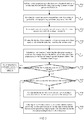
FIG. 2 is another flowchart of a video playing method according to an embodiment of the present application; -
FIG. 3 is a schematic structural diagram of a video playing apparatus according to an embodiment of the present application; -
FIG. 4 is a schematic structural diagram of an electronic device according to an embodiment of the present application. - In order to make objectives, technical solutions and advantages of the present application more apparent, the present application now will be described in detail with reference to the accompanying drawings and by way of examples. Obviously, the embodiments described are only some, rather than all, of the embodiments of the present application. All other embodiments obtained by those of ordinary skills in the art based on the embodiments herein without any creative efforts are within the scope of the present application.
- In order to play videos without relying on plug-ins, embodiments of the present application provide a video playing method and apparatus. Wherein the video playing method includes:
- performing video-preprocessing on video data to be played and playing the video data obtained after the video-preprocessing by means of a main process of the Web client;
- creating and starting a video service process when the performance resource of the Web client is insufficient, wherein the video service process is configured to perform the video-preprocessing on video data to be played and play the video data obtained after the video-preprocessing.
- In the technical solution according to the embodiment in the present application, the main process of the Web client can play videos without relying on plug-ins. When the performance resource of the Web client is insufficient, the video service process is used to play videos for the smoothness of video playing, which can also play videos without relying on plug-ins. Thus, videos can be played without relying on plug-ins by means of this solution.
- A video playing method according to an embodiment of the present application will be described below. The video playing method according to the embodiment of this application can be applied to a Web client. Wherein the Web client may be a Web page in an application. For example, the Web client may be a Web page in a browser, through which videos can be played by the user. The web client may also be a Web page in other applications that can provide Web functions, which will not be repeated here.
- As shown in
FIG. 1 , a video playing method according to an embodiment of the present application includes the following steps:
At S101, performing video-preprocessing on video data to be played, and playing the video data obtained after the video-preprocessing by means of a main process of the Web client. - Wherein the main process of the Web client is a process created by the Web client itself, and playing videos through the Web client can be realized by the main process of the Web client.
- The video-preprocessing of the video data includes at least one of decapsulation processing, decoding processing, rendering processing and the like. The video-preprocessing may also include other video processing methods, which are not limited here.
- In one implementation, the main process of the Web client can acquire the video data to be played.
- Wherein, the video data to be played can be determined according to user instructions. For example, the Web client is a browser client, the user uses the browser to browse a video website and clicks a link of video "a" on the video website. At this time, the video "a" is determined as the video to be played, and the Web client can acquire an instruction to play the video "a".
- In one implementation, the main process of the Web client can acquire the video data to be played from a server. Wherein, the Web client can communicate with the server through a Web Socket protocol. There are at least two ways for the main process to acquire the video data from a server.
- In the first way, the server can actively send the video data to be played to the main process of the Web client. Wherein the server can determine, based on the frame rate and code rate of the acquired video data, the rate at which the video data is sent to the Web client.
- In the second way, the Web client can acquire the video data to be played from the server by calling a Web Socket callback function.
- The way the main process of the Web client acquires the video data from the server is not limited to the above two mays, and may also include other acquiring methods, which are not limited here.
- Wherein the main process of the Web client may acquire the video data from the server continuously, or may acquire all the video data at one or more times.
- After acquiring the video data to be played, the main process of the Web client can decapsulate the acquired video data.
- In one implementation, the main process of the Web client can decapsulate the acquired video data through a Javascript/WASM (WebAssembly). Wherein WASM runs in a sandboxed execution environment and can be implemented in the existing JavaScript virtual machine. The WebAssembly can be called by the JavaScript and enter the context of the JavaScript, so as to realize the decapsulation processing of the acquired video data.
- After completing the decapsulation processing, the main process of the Web client may decode the decapsulated video data.
- In one implementation, the main process of the Web client can perform decoding processing on the decapsulated video data through the Javascript/WASM. Wherein in order to prevent a large amount of undecoded video data in the main process from causing too heavy load on the main process, the main process of the Web client can monitor the amount of currently undecoded video data in the main process.
- After completing the decoding process, the main process of the Web client may perform rendering processing on the video data obtained after the decoding processing, and play the rendered video data.
- In one implementation, the main process of the Web client can perform rendering processing on the decoded video data through a WebGL (Web Graphics Library) rendering. Wherein the WebGL is a 3D (three-dimensional) drawing protocol. The WebGL can provide 3D accelerated rendering, so that the main process of the Web client can display 3D scenes and models more smoothly.
- The main process of the Web client can play videos without relying on plug-ins. The main process performs video-preprocessing on and plays video data to be played, and thus videos can be played without relying on plug-ins.
- At S102, creating and starting a video service process when the performance resource of the Web client is insufficient.
- Wherein the video service process is configured to perform the video-preprocessing on video data to be played and play the video data obtained after the video-preprocessing.
- After the video service process is created and started, a connection is established between the main process and the video service process. After connected with the main process of the Web client, the video service process can receive instructions issued by the main process and perform corresponding operations.
- After a connection is established between the main process and the video service process, the video service process may perform the video-preprocessing on video data to be played, and play video data obtained after the video-preprocessing.
- In one implementation, the main process of the Web client sends a video playing instruction to the video service process after receiving the video playing instruction. The video service process can create a video window after receiving the video playing instruction. The video window is a window for displaying the played video, that is, the video is played in the video window.
- The created video window is displayed in an interface of a running Web client. For example, when the Web client is a browser client, the video window is displayed in the interface where the current window of the browser is located. In addition, the video window can change as the interface of the running Web client changes. For example, when the interface of the running Web client is stretched, the video window is stretched according to a certain ratio; when the interface of the running Web client moves, the video window moves in the moving direction of the interface. In this way, the effect that the video window is embedded in the interface of a running Web client can be achieved.
- After creating the video window, the video service process acquires the video data to be played according to the video playing instruction. Wherein the video service process can acquire the video data to be played from the server. There are at least two ways for the video service process to obtain video data from the server. In the first way, the server can actively send the video data to be played to the video service process. In the second way, the video service can acquire the video data to be played from the server by calling a Web Socket callback function.
- The way the video service process acquires the video data from the server is not limited to the above two ways, and may also include other acquiring methods, which are not limited here.
- After acquiring the video data to be played, the video service process can perform decapsulation processing on the acquired video data. After the decapsulation processing is completed, the decapsulated video data is decoded. After the decoding process is completed, the video service process renders the decoded video data, and plays the rendered video data in the video window.
- Wherein, the process of decapsulation processing, decoding processing, and rendering processing performed by the video service process is similar to that of decapsulation processing, decoding processing, and rendering processing performed by the main process of the Web client, and will not be repeated here.
- Wherein, the video service process may be a process created by programs, other than the Web client, to perform the video-preprocessing on video data. For example, the video service process may be a process created by an installed application, or a process created by a system itself, the system is a system run by a device in which a Web client is installed.
- In one implementation, when the performance resource of the Web client is insufficient, the Web client may also prompt the user to choose whether to create a video service process.
- Wherein, the prompt may be realized using at least one of a text prompt, a voice prompt, an image prompt, and the like. In one implementation, when there is a display screen for the Web client, the prompt can be displayed in text on the display screen. And two buttons are displayed on the display screen for the user to choose, one indicating the creation of a video service process, and the other indicating no creation of a video service process.
- In the case that the user chooses to create a video service process, the Web client creates and starts the video service process, and establishes a connection between the video service process and the main process.
- In one implementation, in the case that the user chooses not to create a video service process, the video data to be played may be subjected to a frame-extraction-processing. Wherein in one implementation of the frame-extraction-processing, the frame-extraction-processing can be performed on the video data to be played according to a preset frame extraction rule.
- Wherein the preset frame extraction rule can be customized. In one implementation, the frame extraction rule may be that a second number of frame images are extracted every other first number of frame images. Wherein both the first number and the second number can be customized. For example, the first number is 5 and the second number is 1, and the preset frame extraction rule is to extract 1 frame image every other 5 frame images.
- After the frame-extraction-processing is completed, the main process performs the video-preprocessing on the video data obtained after the frame-extraction-processing, and plays the video data obtained after the video-preprocessing.
- Through this implementation, after the frame-extraction-processing, the number of frame images on which the main process performs the video-preprocessing in a unit time will be reduced, and the load pressure of the main process will be reduced, so that in the unit time, the main process can complete the video-preprocessing on a reduced certain number of frame images, which leads to smooth video playing.
- In one implementation, the above step of creating and starting the video service process (S102) may include the following steps.
- An installation package of the video service process is acquired and installed. Wherein the installation package of the video service process can be pre-stored in the Web client. In this way, the Web client can directly acquire the installation package locally and install the installation package.
- After the installation is completed, it can be considered that the creation of the video service process is successful, and then the video service process is started, and a connection between the video service process and the main process is established.
- In one implementation, insufficient performance resource of the Web client may lead to a decline in the processing capability of the main process of the Web client and delayed playing of the video data processed by the main process, which affects the user experience. In order to reduce the occurrence frequency of this phenomenon and make the video playing smooth, the Web client can monitor the performance resource to determine whether the performance resource of Web client is insufficient.
- When it is determined that the performance resource of the Web client is sufficient, the main process of the Web client can continue to perform the video-preprocessing on the video data to be played and play the video data obtained after the video-preprocessing. When it is determined that the performance resource of the Web client is insufficient, the above step S102 is executed.
- In one implementation, when the performance resource of the Web client is insufficient, before the step of creating and starting the video service process (step S102), the following steps may also be included.
- At step 1, the Web client can acquire the duration of performing the video-preprocessing on a video frame that has been subjected to the video-preprocessing in the video data.
- Wherein the video data acquired by the main process of the Web client may include several frames of image, and each frame image is sorted according to the time sequence of playing. The main process of the Web client performs the video-preprocessing on each frame image according to the sequence of the frame images.
- For example, the video data includes N frames of image, and the sequence of the N frames of image is: the first frame image, the second frame image...the Nth frame image. After the main process of the Web client obtains the video data, it performs video-preprocessing on firstly the first frame image, then the second frame image, and finally the Nth frame image.
- The duration of the main process performing the video-preprocessing on each frame image can be the same or different. For example, when the performance resource of the Web client is sufficient, the duration of the main process performing the video-preprocessing on each frame image is short; when the performance resource of the Web client is insufficient, the duration of the main process performing the video-preprocessing on each frame image is long.
- When the main process performs the video-preprocessing on each frame image, the Web client can record the duration of performing the video-preprocessing on each frame image. In this way, the duration of performing the video-preprocessing on each frame image that has been subjected to the video-preprocessing is recoded in the Web client. The Web client can directly acquire the duration, that is, it can acquire the duration of performing the video-preprocessing on the frame image that has been subjected to the video-preprocessing.
- At step 2, calculating the total duration of performing the video-preprocessing on continuous frame images based on the duration of performing the video-preprocessing on the acquired frame image and the preset number of the continuous frame images.
- Wherein the preset number can be customized. For example, it is generally considered that when playing a video, it is a normal playing speed to play 25 frame images in 1 second, and when the number of frame images played in 1 second is less than 25, the playing delay will occur. Therefore, the preset number can be set to 25.
- The selected preset number of frame images are frame images that have been subjected to the video-preprocessing, and the selected frame images are continuous. For example, if the preset number is 25, the selected 25 consecutive frame images may be 25 consecutive images starting from the 11th frame image, that is, the 35th frame image is the last selected image.
- The initial image of the selected preset number of consecutive frame images may be selected by users. Generally, in order to improve the accuracy of the judgment result, a frame image closer to the current time can be selected as the initial image.
- For example, if the current time is exactly 10:00:01, the frame image subjected to the video-preprocessing in the previous second can be selected as the initial image. That is, the frame image subjected to the video-preprocessing at 10:00:00 is selected as the initial image. A preset number of consecutive frame images starting from the initial image are used as the selected images.
- For the selected preset number of consecutive frame images, the duration of performing the video-preprocessing on each frame image can be acquired. The duration for each frame image is summed to obtain the total duration of performing the video-preprocessing on the continuous frame images.
- For example, the preset number is 25. In the selected 25 consecutive frame images, the duration of performing the video-preprocessing on each frame image is 40 milliseconds. Then the total duration of performing the video-preprocessing on the 25 consecutive frame images is 1 second.
- At step 3, determining whether the total duration is greater than a preset duration threshold; if it is greater than the preset duration threshold, determining that the performance resource of the Web client is insufficient; otherwise, determining that the performance resource of the Web client is sufficient.
- Wherein the preset duration threshold can be customized. In one implementation, the preset duration threshold may be set according to the aforementioned preset number.
- For example, when the aforementioned preset number is set to 25, the preset duration threshold may be set to 1 second. In this case, when the total duration corresponding to 25 frame images is greater than 1 second, it means that 25 frame images cannot be played within 1 second. At this time, it can be determined that the performance resource of the Web client is insufficient and the video playing is delayed. When the total duration corresponding to 25 frame images is not greater than 1 second, it means that 25 frame images can be played within 1 second. At this time, it can be determined that the performance resource of the Web client is sufficient and the video playing is normal.
- In one implementation, the step 1 in the foregoing implementation, at which the Web client can acquire the duration of performing the video-preprocessing on the video frames that have been subjected to the video-preprocessing in the video data, may include the following steps.
- At step A, the current time point is recorded as an initial time point when starting to perform the video-preprocessing on the frame images in the video data.
- Wherein the object whose time point is recorded as the initial time point can be any frame image subjected to the video-preprocessing by the main process of the Web client.
- In one implementation, when the Web client detects that the main process starts to perform the video-preprocessing on one frame image in the video data, the current time point is acquired as the initial time point of the frame image.
- At step B, when the main process completes the video-preprocessing on the frame image, the current time point is recorded as an end time point.
- The frame image for the record of the end time point and the frame image for the record of the initial time point are the same frame image. In one implementation, when the Web client detects that the main process completes the video-preprocessing on the frame image, the current time point is acquired as the end time point of the frame image.
- At step C, after the initial time point and the end time point of the frame image are acquired, the duration of performing the video-preprocessing on the frame image is obtained by subtracting the initial time point from the end time point.
- For example, for the frame image "a" in the video data, when the main process of the Web client starts to perform the video-preprocessing on the frame image "a", the current time point is exactly 10:00:00, and this time point is recorded as the initial time point of the frame image "a". When the main process of the Web client completes the video-preprocessing on the frame image "a", the current time point is 40 milliseconds past 10:00:00, and this time point is recorded as the end time point of the frame image "a". A duration of 40 milliseconds is obtained by subtracting the recorded initial time point from the end time point, that is, the duration of performing the video-preprocessing on the frame image "a" is 40 milliseconds.
- In one implementation, when the Web client is started, the main process of the Web client will preferentially connect with the video service process. If the main process of the Web client fails to connect with the video service process, the above step S101 is executed.
- Wherein the failure in the connection between the main process of the Web client and the video service process may include the following two situations. In the first case, if the video service process is not started or fails to start, the connection between the main process of the Web client and the video service process will fail. In the second case, if the video service process is not installed in the device where the web client is installed, the connection between the main process of the web client and the video service process will fail.
- If the main process of the Web client is successfully connected to the video service process, the Web client is communicated with the video service process so that the video service process performs the video-preprocessing on video data to be played, and plays the video data obtained after the video-preprocessing.
- In the technical solutions provided in the embodiments of this application, the main process of the Web client performs video-preprocessing on video data to be played, and plays the video data obtained after the video-preprocessing; and creates and starts a video service process when the performance resource of the Web client is insufficient. Wherein the video service process is configured to perform the video-preprocessing on video data to be played and play the video data obtained after the video-preprocessing. In the technical solution according to the embodiment in the present application, the main process of the Web client can play videos without relying on plug-ins. When the performance resource of the Web client is insufficient, the video service process is used to play the videos for the smoothness of video playing, which can also play videos without relying on plug-ins. Thus, videos can be played without relying on plug-ins by means of this solution.
- An embodiment of the present application also provides a video playing method. As shown in
FIG. 2 , the video playing method includes the following steps: - At S201, performing video-preprocessing on video data to be played, and playing the video data obtained after the video-preprocessing by means of a main process of the Web client;
- At S202, recording the current time point as an initial time point when starting to perform the video-preprocessing on a frame image in the video data;
- At S203, recording the current time point as an end time point when the video-preprocessing on the frame image is completed;
- At S204, obtaining the duration of performing the video-preprocessing on the frame image by subtracting the initial time point from the end time point;
- At S205, calculating a total duration of performing the video-preprocessing on continuous frame images based on the duration of performing the video-preprocessing on the acquired frame image and the preset number of the continuous frame images;
- At S206, determining whether the total duration is greater than a preset duration threshold; if so, performing the step S207; otherwise, determining that the performance resource of the Web client is sufficient;
- At S207, prompting a user to choose whether to create a video service process. If the user chooses to create a video service process, executing the step S208; otherwise, executing the step S209;
- At S208, creating and starting the video service process, and establishing a connection between the video service process and the main process;
- At S209, performing frame-extraction-processing on the video data to be played, performing the video-preprocessing on the video data obtained after the frame-extraction-processing, and playing the video data obtained after the video-preprocessing by means of the main process.
- Corresponding to the foregoing embodiment of the video playing method, an embodiment of the present application also provides a video playing apparatus applied to a Web client. As shown in
FIG. 3 , the video playing apparatus includes: - a
processing module 310, configured for performing video-preprocessing on video data to be played and playing the video data obtained after the video-preprocessing by means of a main process of the Web client; - a
creation module 320, configured for creating and starting a video service process when the performance resource of the Web client is insufficient, wherein the video service process is configured to perform the video-preprocessing on video data to be played and play the video data obtained after the video-preprocessing. - In one implementation, the apparatus may further include:
- a prompt module, configured for prompting a user to choose whether to create a video service process;
- wherein the
creation module 320 is specifically configured for:
creating and starting the video service process, and establishing a connection between the video service process and the main process in the case that the user chooses to create a video service process. - In one implementation, the apparatus may further include:
- a frame extraction module, configured for performing frame-extraction-processing on the video data to be played in the case that the user chooses not to create a video service process;
- a preprocessing module, configured for performing the video-preprocessing on the video data obtained after the frame-extraction-processing, and playing the video data obtained after the video-preprocessing by means of the main process.
- In one implementation, the
creation module 320 is specifically used for: - acquiring and installing an installation package of the video service process;
- starting the video service process, and establishing a connection between the video service process and the main process after the installation is completed.
- In one implementation, the apparatus may further include:
- an acquisition module, configured for acquiring the duration of performing the video-preprocessing on the frame image that has been subjected to the video-preprocessing in the video data;
- a calculation module, configured for calculating the total duration of performing the video-preprocessing on continuous frame images based on the duration of performing the video-preprocessing on the acquired frame image and the preset number of the continuous frame images;
- a judgment module, configured for determining whether the total duration is greater than a preset duration threshold; if it is greater than the preset duration threshold, determining that the performance resource of the Web client is insufficient; otherwise, determining that the performance resource of the Web client is sufficient.
- In one implementation, the acquisition module is specifically configured for:
- recording the current time point as an initial time point when starting to perform the video-preprocessing on the frame images in the video data;
- recording the current time point as an end time point when the video-preprocessing on the frame image is completed;
- obtaining the duration of performing the video-preprocessing on the frame image by subtracting the initial time point from the end time point.
- In the technical solutions provided in the embodiments of this application, a main process of the Web client performs the video-preprocessing on video data to be played, and plays the video data obtained after the video-preprocessing; and creates and starts a video service process when the performance resource of the Web client is insufficient. Wherein the video service process is configured to perform the video-preprocessing on video data to be played and play the video data obtained after the video-preprocessing. In the technical solution according to the embodiment in the present application, the main process of the Web client can play videos without relying on plug-ins. When the performance resource of the Web client is insufficient, the video service process is used to play videos for the smoothness of video playing, which can also play videos without relying on plug-ins. Thus, videos can be played without relying on plug-ins by means of this solution.
- Corresponding to the embodiment of the above video playing method, an embodiment of the present application provides an electronic device, as shown in
Fig. 4 , which includes aprocessor 410, acommunication interface 420, amemory 430 and acommunication bus 440, wherein theprocessor 410, thecommunication interface 420 and thememory 430 are communicated with each other via thecommunication bus 440;
thememory 430 is used for storing computer programs;
theprocessor 410 is used for implementing the following steps when executing the programs stored on the memory 430: - performing the video-preprocessing on video data to be played and playing the video data obtained after the video-preprocessing by means of a main process of the Web client;
- when the performance resource of the Web client is insufficient, creating and starting a video service process, wherein the video service process is configured to perform the video-preprocessing on video data to be played and play the video data obtained after the video-preprocessing.
- In a possible implementation, the
processor 410 may also implement any one of the foregoing video playing method when being executed by the programs stored on thememory 430. - In the technical solution according to the embodiment in the present application, the main process of the Web client can play videos without relying on plug-ins. When the performance resource of the Web client is insufficient, the video service process is used to play videos for the smoothness of video playing, which can also play videos without relying on plug-ins. Thus, videos can be played without relying on plug-ins by means of this solution.
- The communication bus aforementioned in the electronic device may be a peripheral component interconnect (PCI) bus or an extended industry standard architecture (EISA) bus and the like. The communication bus can include an address bus, a data bus, a control bus, or the like. For representation, only one thick line is shown in the figure, which does not mean there is only one communication bus or one type of communication bus.
- The communication interface is used for communication between the aforementioned electronic device and other devices.
- The memory can include a random access memory (RAM), or can include a non-volatile memory (NVM), for example at least one disk memory. Optionally, the memory can also be at least one storage device located away from the processor described above.
- The aforementioned processor can be a general-purpose processor, including a central processing unit (CPU), a network processor (NP), or the like; it can also be a digital signal processor (DSP), an application specific integrated circuit (ASIC), a field-programmable gate array (FPGA) or other programmable logic device, a discrete gate or a transistor logic device, a discrete hardware component.
- Corresponding to the above embodiments of the video playing methods, an embodiment of the present application provides a machine readable storage medium. The machine readable storage medium stores computer programs thereon which, when executed by a processor, cause the processor to implement the steps of any one of the video playing methods described above.
- The embodiments of the present application also provide a computer program product, which implements any one of the foregoing video playing method when being executed by a processor.
- It should be noted that the relationship terms herein such as "first", "second", and the like are only used for distinguishing one entity or operation from another entity or operation, but do not necessarily require or imply that there is any actual relationship or order between these entities or operations. Moreover, the terms "include", "comprise" or any other variants thereof are intended to cover non-exclusive inclusions, so that processes, methods, articles or devices including a series of elements include not only those elements listed but also those not specifically listed or the elements intrinsic to these processes, methods, articles, or devices. Without further limitations, elements defined by the sentences "comprise(s) a." or "include(s) a." do not exclude that there are other identical elements in the processes, methods, articles, or devices which include these elements.
- All the embodiments in the description are described in corresponding ways, same or similar parts in each of the embodiments can be referred to one another, and the parts emphasized are differences to other embodiments. For the embodiments of the video playing apparatus, the Web client, and the machine readable storage medium, since they are similar to the embodiments of the video playing methods, the description thereof is relatively simple; the relating parts could refer to the parts of the description of embodiments of the method.
- The above description is only for preferred embodiments of the present application, and is not intended to limit the present application. Any modifications, substitutions, improvements, etc., which are made within the spirit and principles of the present application, will fall into the protection scope of the present application.
Claims (14)
- A video playing method, wherein it is applied to a Web client and comprises:performing video-preprocessing on video data to be played, and playing the video data obtained after the video-preprocessing by means of a main process of the Web client;creating and starting a video service process when a performance resource of the Web client is insufficient, wherein the video service process is configured to perform the video-preprocessing on video data to be played and play the video data obtained after the video-preprocessing.
- The method of claim 1, further comprising:prompting a user to choose whether to create a video service process;creating and starting a video service process comprises:
in a case that the user chooses to create a video service process, creating and starting the video service process, and establishing a connection between the video service process and the main process. - The method of claim 2, further comprising:in a case that the user chooses not to create a video service process, performing frame-extraction-processing on the video data to be played;performing the video-preprocessing on the video data obtained after the frame-extraction-processing, and playing the video data obtained after the video-preprocessing by means of the main process.
- The method of claim 1, wherein creating and starting a video service process comprises:acquiring and installing an installation package of the video service process;after the installation is completed, starting the video service process and establishing a connection between the video service process and the main process.
- The method of claim 1, wherein before the step of creating and starting a video service process when the performance resource of the Web client is insufficient, the method further comprises:acquiring a duration of performing the video-preprocessing on a frame image that has been subjected to the video-preprocessing in the video data;calculating a total duration of performing the video-preprocessing on continuous frame images based on the duration of performing the video-preprocessing on the acquired frame image and a preset number of the continuous frame images;determining whether the total duration is greater than a preset duration threshold;if the total duration is greater than the preset duration threshold, determining that the performance resource of the Web client is insufficient;if the total duration is not greater than the preset duration threshold, determining that the performance resource of the Web client is sufficient.
- The method of claim 5, wherein the step of acquiring the duration of performing the video-preprocessing on the frame image that has been subjected to the video-preprocessing in the video data comprises:recording a current time point as an initial time point when starting to perform the video-preprocessing on the frame image in the video data;recording a current time point as an end time point when the video-preprocessing on the frame image is completed;obtaining the duration of performing the video-preprocessing on the frame image by subtracting the initial time point from the end time point.
- A video playing apparatus, wherein it is applied to a Web client and comprises:a processing module, configured for performing video-preprocessing on video data to be played and playing the video data obtained after the video-preprocessing by means of a main process of the Web client;a creation module, configured for creating and starting a video service process when a performance resource of the Web client is insufficient, wherein the video service process is configured to perform the video-preprocessing on video data to be played and play the video data obtained after the video-preprocessing.
- The apparatus of claim 7, further comprising:a prompt module, configured for prompting a user to choose whether to create a video service process;wherein the creation module is specifically configured for:
in a case that the user chooses to create a video service process, creating and starting the video service process, and establishing a connection between the video service process and the main process. - The apparatus of claim 8, further comprising:a frame extraction module, configured for performing frame-extraction-processing on the video data to be played in a case that the user chooses not to create a video service process;a preprocessing module, configured for performing the video-preprocessing on the video data obtained after the frame-extraction-processing, and playing the video data obtained after the video-preprocessing by means of the main process.
- The apparatus of claim 7, wherein the creation module is specifically configured for:acquiring and installing an installation package of the video service process;starting the video service process, and establishing a connection between the video service process and the main process after the installation is completed.
- The apparatus of claim 7, further comprising:an acquisition module, configured for acquiring a duration of performing the video-preprocessing on a frame image that has been subjected to the video-preprocessing in the video data;a calculation module, configured for calculating a total duration of performing the video-preprocessing on continuous frame images based on the duration of performing the video-preprocessing on the acquired frame image and a preset number of the continuous frame images;a judgment module, configured for determining whether the total duration is greater than a preset duration threshold; if the total duration is greater than the preset duration threshold, determining that the performance resource of the Web client is insufficient; if the total duration is not greater than the preset duration threshold, determining that the performance resource of the Web client is sufficient.
- The apparatus of claim 11, wherein the acquisition module is specifically configured for:recording a current time point as an initial time point when starting to perform the video-preprocessing on the frame image in the video data;recording a current time point as an end time point when the video-preprocessing on the frame image is completed;obtaining the duration of performing the video-preprocessing on the frame image by subtracting the initial time point from the end time point.
- An electronic device, wherein it comprises a processor, a communication interface, a memory and a communication bus, wherein the processor, the communication interface and the memory are communicated with each other via the communication bus;
the memory is used for storing computer programs;
the processor is used for implementing the video playing method of any one of claims 1-6 when executing the programs stored on the memory. - A computer readable storage medium, wherein the computer readable storage medium stores computer programs thereon which, when executed by a processor, cause the processor to implement the video playing method of any one of claims 1-6.
Applications Claiming Priority (2)
| Application Number | Priority Date | Filing Date | Title |
|---|---|---|---|
| CN201811214952.8A CN111083569B (en) | 2018-10-18 | 2018-10-18 | A video playback method and device |
| PCT/CN2019/109156 WO2020078207A1 (en) | 2018-10-18 | 2019-09-29 | Video playing method and device |
Publications (2)
| Publication Number | Publication Date |
|---|---|
| EP3869812A1 true EP3869812A1 (en) | 2021-08-25 |
| EP3869812A4 EP3869812A4 (en) | 2021-11-03 |
Family
ID=70283548
Family Applications (1)
| Application Number | Title | Priority Date | Filing Date |
|---|---|---|---|
| EP19872396.7A Pending EP3869812A4 (en) | 2018-10-18 | 2019-09-29 | VIDEO PLAYBACK PROCESS AND APPARATUS |
Country Status (4)
| Country | Link |
|---|---|
| US (1) | US11800199B2 (en) |
| EP (1) | EP3869812A4 (en) |
| CN (1) | CN111083569B (en) |
| WO (1) | WO2020078207A1 (en) |
Families Citing this family (5)
| Publication number | Priority date | Publication date | Assignee | Title |
|---|---|---|---|---|
| CN112434234B (en) | 2020-05-15 | 2023-09-01 | 上海哔哩哔哩科技有限公司 | Frame extraction method and system based on browser |
| CN112423117B (en) * | 2020-06-11 | 2022-12-16 | 上海哔哩哔哩科技有限公司 | Web end video playing method and device and computer equipment |
| CN113055733A (en) * | 2021-03-15 | 2021-06-29 | 深圳乐播科技有限公司 | Method, device and equipment for generating video data with stable frame rate and storage medium |
| CN116801053A (en) * | 2022-03-15 | 2023-09-22 | 腾讯科技(北京)有限公司 | Multimedia data playback methods, devices, computer equipment and storage media |
| WO2023178497A1 (en) * | 2022-03-22 | 2023-09-28 | Ringcentral, Inc. | Systems and methods for handling calls in multiple browser tabs |
Family Cites Families (23)
| Publication number | Priority date | Publication date | Assignee | Title |
|---|---|---|---|---|
| GB0503141D0 (en) * | 2005-02-15 | 2005-03-23 | British Telecomm | Process configuration in a network |
| KR20070056442A (en) * | 2005-11-29 | 2007-06-04 | 삼성전자주식회사 | System and method for providing web service for devices without web browser |
| US7596540B2 (en) | 2005-12-01 | 2009-09-29 | Exent Technologies, Ltd. | System, method and computer program product for dynamically enhancing an application executing on a computing device |
| US8667540B2 (en) | 2006-07-07 | 2014-03-04 | Apple Partners, Lp | Web-based video broadcasting system having multiple channels |
| JP2008146171A (en) * | 2006-12-06 | 2008-06-26 | Matsushita Electric Ind Co Ltd | Web service apparatus and Web service method |
| US9569531B2 (en) * | 2008-06-23 | 2017-02-14 | Sri International | System and method for multi-agent event detection and recognition |
| CN101321176B (en) * | 2008-07-11 | 2011-05-25 | 中兴通讯股份有限公司 | Live broadcasting method and system of browser client terminal, browser client terminal and background client terminal |
| US8010816B2 (en) * | 2008-12-31 | 2011-08-30 | Intel Corporation | Method and system for reducing power consumption of active web page content |
| JP5500968B2 (en) * | 2009-12-16 | 2014-05-21 | シャープ株式会社 | Information processing apparatus, information processing method, and information processing program |
| US20120212575A1 (en) * | 2011-02-23 | 2012-08-23 | Broadcom Corporation | Gateway/stb interacting with cloud server that performs high end video processing |
| CN103581754A (en) * | 2012-07-20 | 2014-02-12 | 腾讯科技(深圳)有限公司 | Data display method and intelligent equipment |
| US20140052696A1 (en) * | 2012-08-20 | 2014-02-20 | United Video Properties, Inc. | Systems and methods for visual categorization of multimedia data |
| US20150347164A1 (en) | 2012-12-25 | 2015-12-03 | Beijing Qihoo Technology Company Limited | Method and Device for Playing Plug-in in Browser |
| KR102082859B1 (en) * | 2013-01-07 | 2020-02-28 | 삼성전자주식회사 | System on chip including a plurality of heterogeneous cores and operating method therof |
| US9031375B2 (en) * | 2013-04-18 | 2015-05-12 | Rapt Media, Inc. | Video frame still image sequences |
| CN104703032A (en) * | 2013-12-06 | 2015-06-10 | 乐视网信息技术(北京)股份有限公司 | Smart television media player, play message processing method thereof and smart television |
| CN104811795B (en) * | 2014-01-24 | 2018-09-11 | 北京猎豹移动科技有限公司 | Online Video playback method and device |
| CN104065896B (en) * | 2014-06-25 | 2018-10-09 | 北京奇虎科技有限公司 | The method and apparatus that audio/video information is shown are carried out in a kind of browser |
| KR102232900B1 (en) * | 2014-10-02 | 2021-03-26 | 에스케이플래닛 주식회사 | System for cloud streaming service, method of cloud streaming service using optumal gpu and apparatus for the same |
| CN104361082A (en) | 2014-11-07 | 2015-02-18 | 北京奇虎科技有限公司 | Method and device for displaying specified element in web page in browser |
| JP2018033107A (en) * | 2016-08-26 | 2018-03-01 | 株式会社holo | Video distribution device and distribution method |
| US11197010B2 (en) * | 2016-10-07 | 2021-12-07 | Microsoft Technology Licensing, Llc | Browser-based video decoder using multiple CPU threads |
| CN107729132B (en) * | 2017-10-09 | 2019-10-25 | 武汉斗鱼网络科技有限公司 | A kind of video decoding process guard method and device |
-
2018
- 2018-10-18 CN CN201811214952.8A patent/CN111083569B/en active Active
-
2019
- 2019-09-29 EP EP19872396.7A patent/EP3869812A4/en active Pending
- 2019-09-29 WO PCT/CN2019/109156 patent/WO2020078207A1/en not_active Ceased
- 2019-09-29 US US17/284,998 patent/US11800199B2/en active Active
Also Published As
| Publication number | Publication date |
|---|---|
| WO2020078207A1 (en) | 2020-04-23 |
| EP3869812A4 (en) | 2021-11-03 |
| CN111083569A (en) | 2020-04-28 |
| US20210345013A1 (en) | 2021-11-04 |
| US11800199B2 (en) | 2023-10-24 |
| CN111083569B (en) | 2021-11-05 |
Similar Documents
| Publication | Publication Date | Title |
|---|---|---|
| US11800199B2 (en) | Video playing method and apparatus | |
| CN111556353B (en) | Video playing method, video playing management device and terminal equipment | |
| US10356487B2 (en) | Video advertisement filtering method, apparatus and device | |
| CN108495185B (en) | Video title generation method and device | |
| WO2014086239A1 (en) | Method and apparatus for identifying picture | |
| KR20140091555A (en) | Measuring web page rendering time | |
| US11678024B2 (en) | Subtitle information display method and apparatus, and electronic device, and computer readable medium | |
| CN111343508B (en) | Information display control method and device, electronic equipment and storage medium | |
| CN109697245A (en) | Voice search method and device based on video web page | |
| CN111580878A (en) | Method, device, equipment and medium for realizing linkage of page and client application | |
| CN117319736A (en) | Video processing method, device, electronic equipment and storage medium | |
| CN113986161B (en) | Method and device for real-time word extraction in audio and video communication | |
| CN113919997A (en) | Watermark processing method and device, electronic equipment and storage medium | |
| US20170325003A1 (en) | A video signal caption system and method for advertising | |
| CN104427263A (en) | Method for displaying subtitles and multimedia playing device | |
| CN114285836A (en) | Video playing method, device and medium | |
| CN114637651A (en) | Memory frame rate detection method and device, computer equipment and storage medium | |
| CN107197387B (en) | Method and device for displaying video information on webpage in time-sharing manner | |
| CN111641867B (en) | Video output method, device, electronic equipment and storage medium | |
| CN112527627B (en) | Page clamping detection method, device, equipment and medium | |
| CN113627966B (en) | Advertisement interaction method, device, computer-readable medium, and electronic device | |
| CN117492883A (en) | Boot information generation method and related devices, equipment and storage media | |
| CN116682429A (en) | Browser voice control method, device, equipment and storage medium | |
| HK40055349B (en) | Advertisement interaction method and apparatus, computer readable medium and electronic device | |
| CN108008935B (en) | Media resource processing method and device |
Legal Events
| Date | Code | Title | Description |
|---|---|---|---|
| STAA | Information on the status of an ep patent application or granted ep patent |
Free format text: STATUS: THE INTERNATIONAL PUBLICATION HAS BEEN MADE |
|
| PUAI | Public reference made under article 153(3) epc to a published international application that has entered the european phase |
Free format text: ORIGINAL CODE: 0009012 |
|
| STAA | Information on the status of an ep patent application or granted ep patent |
Free format text: STATUS: REQUEST FOR EXAMINATION WAS MADE |
|
| 17P | Request for examination filed |
Effective date: 20210420 |
|
| AK | Designated contracting states |
Kind code of ref document: A1 Designated state(s): AL AT BE BG CH CY CZ DE DK EE ES FI FR GB GR HR HU IE IS IT LI LT LU LV MC MK MT NL NO PL PT RO RS SE SI SK SM TR |
|
| A4 | Supplementary search report drawn up and despatched |
Effective date: 20210930 |
|
| RIC1 | Information provided on ipc code assigned before grant |
Ipc: G06F 9/44 20180101ALI20210924BHEP Ipc: H04N 21/85 20110101ALI20210924BHEP Ipc: H04N 21/4782 20110101AFI20210924BHEP |
|
| DAV | Request for validation of the european patent (deleted) | ||
| DAX | Request for extension of the european patent (deleted) | ||
| STAA | Information on the status of an ep patent application or granted ep patent |
Free format text: STATUS: EXAMINATION IS IN PROGRESS |
|
| 17Q | First examination report despatched |
Effective date: 20240918 |