EP3869153B1 - Gyroscope with reduced bias errors due to resonance asymmetries - Google Patents
Gyroscope with reduced bias errors due to resonance asymmetries Download PDFInfo
- Publication number
- EP3869153B1 EP3869153B1 EP21155876.2A EP21155876A EP3869153B1 EP 3869153 B1 EP3869153 B1 EP 3869153B1 EP 21155876 A EP21155876 A EP 21155876A EP 3869153 B1 EP3869153 B1 EP 3869153B1
- Authority
- EP
- European Patent Office
- Prior art keywords
- resonance
- laser
- resonator
- frequencies
- ccw
- Prior art date
- Legal status (The legal status is an assumption and is not a legal conclusion. Google has not performed a legal analysis and makes no representation as to the accuracy of the status listed.)
- Active
Links
Images


Classifications
-
- G—PHYSICS
- G01—MEASURING; TESTING
- G01C—MEASURING DISTANCES, LEVELS OR BEARINGS; SURVEYING; NAVIGATION; GYROSCOPIC INSTRUMENTS; PHOTOGRAMMETRY OR VIDEOGRAMMETRY
- G01C19/00—Gyroscopes; Turn-sensitive devices using vibrating masses; Turn-sensitive devices without moving masses; Measuring angular rate using gyroscopic effects
- G01C19/58—Turn-sensitive devices without moving masses
- G01C19/64—Gyrometers using the Sagnac effect, i.e. rotation-induced shifts between counter-rotating electromagnetic beams
- G01C19/72—Gyrometers using the Sagnac effect, i.e. rotation-induced shifts between counter-rotating electromagnetic beams with counter-rotating light beams in a passive ring, e.g. fibre laser gyrometers
- G01C19/721—Details, e.g. optical or electronical details
-
- G—PHYSICS
- G01—MEASURING; TESTING
- G01C—MEASURING DISTANCES, LEVELS OR BEARINGS; SURVEYING; NAVIGATION; GYROSCOPIC INSTRUMENTS; PHOTOGRAMMETRY OR VIDEOGRAMMETRY
- G01C19/00—Gyroscopes; Turn-sensitive devices using vibrating masses; Turn-sensitive devices without moving masses; Measuring angular rate using gyroscopic effects
- G01C19/58—Turn-sensitive devices without moving masses
- G01C19/64—Gyrometers using the Sagnac effect, i.e. rotation-induced shifts between counter-rotating electromagnetic beams
- G01C19/72—Gyrometers using the Sagnac effect, i.e. rotation-induced shifts between counter-rotating electromagnetic beams with counter-rotating light beams in a passive ring, e.g. fibre laser gyrometers
- G01C19/727—Gyrometers using the Sagnac effect, i.e. rotation-induced shifts between counter-rotating electromagnetic beams with counter-rotating light beams in a passive ring, e.g. fibre laser gyrometers using a passive ring resonator
Definitions
- the Resonator Fiber Optic Gyroscope shows promise in meeting needs of many navigation and inertial stabilization markets.
- An example of a known RFOG is described in US 2008/079947 .
- RFOGs have the potential to provide a highest possible rotation sensing performance within a smallest possible volume.
- An RFOG senses rotation by measuring the frequency difference between optical resonances for counterpropagating light in a fiber ring resonator. This is accomplished by coupling separate lasers into clockwise (CW) and counterclockwise (CCW) directions of the resonator, tuning the lasers to the CW and CCW optical resonances, and then carefully measuring the center frequencies of those resonances.
- CW clockwise
- CCW counterclockwise
- a problem that can affect those measurements (and introduce a bias in the gyroscope rate output) is a resonance asymmetry that can shift the measured center frequency.
- Resonance asymmetries can be caused, for example, by optical back-reflections in the resonator.
- it is crucial to mitigate bias errors due to these resonance asymmetries.
- Much effort is put into reducing optical back-reflections, eliminating them is technically infeasible.
- mitigation techniques have been developed to reduce the bias errors by quickly modulating them and averaging them out of the gyro signal.
- Embodiments provide systems and methods to reduce resonance asymmetry induced bias error using a resonance hopping technique in which optical resonances over a very large range of frequencies are quickly sampled to average over resonance asymmetries. This averaging process reduces rotation rate errors.
- Embodiments provide systems and methods that reduce resonance asymmetry induced bias errors.
- the systems and methods are robust, low power, and can quickly average over a very large resonance-frequency range of the optical resonator.
- Embodiments reduce resonance asymmetry induced bias error with a resonance hopping technique in which optical resonances over a very large range of frequencies are quickly sampled to average over resonance asymmetries.
- embodiments employ a technique in which the lasers briefly unlock, hop multiple resonance, and then relock. This keeps the lasers operating in a stable mode hop free region. This technique may be used to quickly average over a multiple resonances over a very large frequency range. Further embodiments employing this technique provide superior results from previous techniques in which a PZT is used to stretch the length of the resonator or by changing the temperature of the resonator. Resonance hopping can sample a much larger resonance-frequency range than the PZT and is much faster (and lower power) than changing the temperature.
- counterpropagating light generated from lasers, are coupled to a fiber ring resonator.
- the counterpropagating light frequencies are locked to resonances in the CW and CCW directions.
- the center frequencies for the CW and CCW resonances are measured, and the difference of these two center frequencies provides the signal that is proportional to the rotation rate of the gyro. Any resonance asymmetry on the measured resonances produces a bias error on the signal as well.
- the laser(s) that generate the counterpropagating light (CW and CCW laser light) are briefly unlocked, quickly tuned to another set of resonances, and then relocked.
- the center frequencies are again measured, and a new rate signal is generated.
- Figure 1 illustrates a block diagram of an example RFOG 100 with components that can implement techniques described above.
- the RFOG 100 of this embodiment includes slave laser 106 that generates light in a CW direction in a resonator 110 and slave laser 104 that generates laser light in a CCW direction in the resonator 110.
- a master laser 102 is used in this example, to control the frequency of the light generated by the slave lasers 104 and 106 as discussed in detail below.
- the resonance hopping is provided, in this example, by resonance hopping control system 200 that controls the resonance of laser light provided by the master laser 102.
- the example RFOG 100 may function as part of a navigation system, a platform stabilization system, a pointing system, and the like.
- the RFOG 100 is implemented as part of an inertial sensor unit that includes one or more RFOGs and one or more linear accelerometers.
- the RFOG 100 may measure rotation rate and may output a signal indicative of the rotation rate.
- the measured rotation rate from the RFOG 100 may be provided to a processing unit or other computational device that uses the measured rotation rate when calculating parameters such as position, orientation, and angular velocity.
- the calculated parameters may be used to calculate data to be included in control signals that are provided to one or more optional actuators for controlling the operation of the actuators.
- the RFOG 100 includes transmission and reflection mode feedback control.
- light waves from the laser sources 102, 104, and 106 may circulate through the resonator coil 112 of resonator 110.
- Slave lasers 104 and 106 are optically coupled into the resonator 110 at ports 146 and 148 so that laser light can propagate within the resonator fiber coil 112 of the resonator 110.
- the ports 146 and 148 include a mirror, a fiber optic coupler, waveguide, a waveguide coupler, or other suitable component for coupling laser light into and out of the resonator 110.
- the ports 146 and 148 function as both an input port and an output port.
- the port 148 couples the laser light into the resonator 110 in a first direction (e.g., CW) and out of the resonator 110 in a second direction (e.g., CCW).
- port 146 couples the laser light into the resonator 110 in the second direction (e.g. CCW) and out of the resonator 110 in the first direction (e.g. CW).
- the resonator 110 may have separate input ports and output ports.
- laser light coupled into the resonator 110 has a "transmission port” and a "reflection port.”
- all the laser light detected at a transmission port has propagated through the resonator 110, whereas at the reflection port there is combination of the portion of the resonator incident light that did not enter the resonator 110 and laser light that has propagated through the resonator 110.
- the port 146 functions as both a transmission port for the light coupled into the resonator 110 through the port 148 and as a reflection port for light incident on the resonator 110 at port 146.
- Port 148 functions as both a transmission port for the light coupled into the resonator 110 through the port 143 and as a reflection port for light incident on the resonator 110 at port 148.
- laser light that is coupled into the resonator 110 is frequency stabilized using the resonator 110 with feedback control based on light acquired from the transmission ports at ports 146 and 148. Further, in certain implementations where a light produced by a master laser source 102 is used to further stabilize the frequency of the light propagating within the resonator 110, light can also be acquired through the reflection port at port 148. Using feedback control, electromagnetic waves that propagate within the resonator 110, may be stabilized, at both high and low frequencies. Thus, stabilization over a wide bandwidth may be achieved.
- feedback control may reduce laser phase noise using the Pound-Drever-Hall (PDH) technique.
- PDH Pound-Drever-Hall
- a laser source with PDH feedback control receives a signal from a PDH photodetector 158 that senses light from the reflection port 148 associated with the master laser 102.
- the response to changes in relative frequency between light produced by a laser source and resonant frequency within the resonator 110 is much faster at the reflection port 148 than one of the transmission ports 148 and 146.
- the light produced by the master laser source 102 is locked onto a CW resonance of the resonator 110 by using a PDH feedback control loop 120. This may be done by locking the carrier frequency of the master laser source to a resonance center or locking a modulation sideband to the resonance center.
- the light output by the master laser source 102 may be coupled with light produced by multiple slave laser sources 104 and 106 through couplers 138, 136, 140 and 134.
- the master laser 102 provides laser light to the coupler 138.
- the coupler 138 provides a portion of the light for circulation within the resonator 110 and another portion of the light to the coupler 136.
- the coupler 136 provides a portion of the light to the coupler 140 and another portion of the light to the coupler 134.
- the coupler 140 couples together a portion of the master laser from the coupler 136 along with a portion of light from slave laser 106 and provides the combined light to the CW OPLL 124 via photo detector 154. Further, coupler 134 couples a portion of the light from the master laser from coupler 136 along with a portion of light from slave laser 104 and provides the combined light to the CCW OPLL 122 via photo detector 152.
- the output of the master laser 102 is coupled into the resonator 110 through couplers 138 and 149, phase modulator (PM) 162, circulator 182 and port 148.
- the master laser 102 is configured to generate laser light for propagation within the resonator 110.
- the output of slave laser 104 is coupled into the resonator 110 through coupler 132, PM 160, intensity modulator (IM) 170, circulator 180 and port 146 in this example embodiment.
- the output of slave laser 106 is coupled into the resonator 110 through coupler 142, PM 164, IM 172, circulator 182 and port 148 in this example embodiment.
- the light produced by the master laser source 102 receives PDH feedback through the PDH feedback control loop 120 for locking the frequency of the light from the master laser 102 to the resonator 110 resonance.
- the PDH feedback control loop 120 may include a PDH photodetector 158 that receives light from the reflection port 148 of the resonator 110.
- the PDH feedback control loop 120 is further coupled to the master laser source 110 via a current source in an embodiment, where the current source controls the master frequency in an embodiment.
- the low relative frequency noise between the light produced by the master laser source 102 and resonance frequency of the resonator 110 is transferred to the laser light produced by the slave laser sources 104 and 106 by employing optical phase locked loops (OPLLs) 122 and 124.
- the OPPLs 122 and 124 are configured to lock the light produced by the slave laser sources 104 and 106 to the light produced by the master laser source 102 with some additional frequency offset.
- transmission mode feedback control loops 114 and 116 may be used to lock the optical carriers of slave laser sources 106 and 104 to resonance centers (also referred to herein as simply "resonance") of the resonator 110.
- the CCW resonance tracking loop 116 is associated with the slave laser source 104 and the CW resonance tracking loop 114 is associated with slave laser source 106, where the resonance control loops 116 and 114 may receive signals from respective photodetectors 156 and 150.
- Photodetector 156 receives light from the transmission port 148 via circulator 182 and the photodetector 150 receives light from the transmission port 146 via circulator 180.
- the RFOG 100 has slave laser 104 producing a first laser light and slave laser 106 producing a second laser light, the first laser light is propagating in the CCW direction and the second laser light is propagating in the CW direction in the resonator 110 and resonator fiber coil 112.
- CW and CCW are terms used to further indicate that first slave laser and the second slave laser are propagating in opposite directions within the resonator 100. Additionally, a portion of the first laser light and a portion of the second laser light are coupled out of the resonator 110, where the respective transmission mode feedback control loops 114 and 116 determine adjustments to be made by the slave laser sources 106 and 104 to change the frequencies of the slave lasers 106 and 104 such that the CW and CCW slave laser light propagates within the resonator 110, on a resonance of the resonator, at the center frequency of the resonant mode of the resonator 110.
- the first order modulation sidebands are locked to resonance centers whereas the laser optical carrier is locked off resonance and in the middle of the free spectral range between two resonance peaks.
- locking a laser onto a resonance mode, on a resonance, or at the center frequency of the resonant mode can mean locking the optical carrier to a resonance center or locking first order modulation sidebands to resonance centers.
- the optical carriers of the slave lasers sources 106 and 104 may be locked to an offset from the resonance centers, and that offset may be one half free spectral range of the resonator.
- a portion of the propagating CW laser light in the resonator 110 is coupled out of the resonator 110 by a coupler that functions as a transmission port 146.
- the portion of the coupled-out CW laser light is directed to photodetector 150 via circulator 180.
- Photodetector 150 may provide an electrical signal to CW resonance tracking electronics in the CW resonance tracking loop 114.
- the CW resonance tracking electronics may track departures of the frequency of slave laser 106 from the center frequency of resonant modes of the resonator 110 and provide a signal to CW OPLL 124 indicative of the departure from resonance.
- the CW OPLL 124 may provide a signal to a current source that adjusts the drive current for the second slave laser source 106 such that the frequency of the second laser moves closer to a resonance center frequency of the resonant mode of the resonator 110.
- a portion of the propagating CCW laser light in the resonator 110 is coupled out of the resonator 110 by a coupler that functions as a transmission port 148.
- the portion of the coupled-out CCW laser light is directed to photodetector 156 via a circulator 182.
- the photodetector 156 may detect the first slave laser and may provide an electrical signal to CCW resonance tracking electronics in the CCW resonance tracking loop 116.
- the CCW resonance tracking electronics may track departures of the frequency of the first slave laser from the center frequency of a resonant mode of the resonator 110 and provide a signal to the CCW OPLL 122 indicative of the departure from resonance.
- the CCW OPPL 122 may provide a signal to a current source that adjusts the drive current for the first laser source 104 such that the frequency of the first laser moves closer to a resonant mode of the resonator 110.
- the hopping may be controlled via the PDH feedback control loop 120.
- the PDH loop 120 may include a resonance hopping control system 200.
- An example of a resonance hopping control system 200 is illustrated in the block diagram of Figure 2 .
- the resonance hopping control system 200 includes a controller 202 and a memory 204 that at least stores operating instructions that are executed by the controller 202.
- controller 202 may include any one or more of a processor, microprocessor, a digital signal processor (DSP), an application specific integrated circuit (ASIC), a field program gate array (FPGA), or equivalent discrete or integrated logic circuitry.
- controller 202 may include multiple components, such as any combination of one or more microprocessors, one or more controllers, one or more DSPs, one or more ASICs, one or more FPGAs, as well as other discrete or integrated logic circuitry.
- the functions attributed to the controller 202 herein may be embodied as software, firmware, hardware or any combination thereof.
- the controller may be part of a system controller or a component controller.
- the memory 204 may include computer-readable operating instructions that, when executed by the controller 202 provides functions of the resonance hopping control system 200. Such functions may include the functions of resonance hopping described below.
- the computer readable instructions may be encoded within the memory 204.
- Memory 204 is an appropriate non-transitory storage medium or media including any volatile, nonvolatile, magnetic, optical, or electrical media, such as, but not limited to, a random access memory (RAM), read-only memory (ROM), non-volatile RAM (NVRAM), electrically-erasable programmable ROM (EEPROM), flash memory, or any other storage medium.
- RAM random access memory
- ROM read-only memory
- NVRAM non-volatile RAM
- EEPROM electrically-erasable programmable ROM
- flash memory or any other storage medium.
- a current generator 208 that provides a select amount of the current to the master laser 102 to selectively control the frequency of the laser light output by the master laser 102 and hence the frequencies of the CW and CCW laser light output from the respective slave lasers 106 and 104.
- a random number generator 206 that is communicatively coupled to a clock 210, may be used to generate a random number to the controller 202.
- the controller 202 uses random numbers from the random number generator 206 to select the resonance to hop to within a window (or range) that keeps the lasers operating in a single mode as discussed below.
- the window is determined by the controller 202 via operating instructions stored in the memory 204.
- the window is based on a frequency range in which the laser(s) can operate in a single mode and while its light or a portion of its light (for instance, a sideband) is at resonance in the resonator 110.
- embodiments force resonance hopping within a window (or range) so the lasers are operating within their own single mode, single frequency range. If the lasers run out of their range, they operate in multimode where they are lasing in more than one mode occurs which causes errors in the system. Due to factors, such as for example temperature changes, the resonance mode of the resonator 110 may vary during operation. This causes the window (or range) that allows the lasers to operate in single mode to shift to correlate with the changing resonance mode frequency of the resonator 110.
- hop control logic also in the PDH loop 120 is used to resonance hop when it is determined the resonance is getting close to an edge (rail) of a window.
- a resonance hopping flow diagram 300 of one example embodiment is illustrated.
- the resonance flow diagram is provided as a series of sequential blocks.
- the sequence of block may be different in other embodiments. Hence, embodiments are not limited to the sequence illustrated in Figure 3 .
- the resonance hopping flow diagram 300 begins when the RFOG 100 is started at block (302).
- the current window for each laser to operate in a single mode is determined in block (304).
- it is the current window of the master laser 102 that is determined since the master laser 102 controls the slave lasers 104 and 106.
- the PDH loop 120 is used to determine the then current window.
- the controller 202 in the PDH loop determines the window. This may be enabled, in part, by storing of factory-taken laser characterization data in memory of the controller 202.
- resonance hopping occurs within the window at block (308).
- the resonance hopping can occur by any method that generates frequencies within the window including, but not limited to, the use of a random number generator and sequence hopping on opposite sides of a central frequency of the window. While the resonance hopping is occurring, it is determined at block (310) whether the window has shifted. The determination may be conducted in the PDH loop as discussed above. In one embodiment the determination may be done by the resonance hopping control logic and/or the controller 202.
- the process continues at block (308) resonance hopping within the current window. If the window has shifted, the current window for the laser(s) to operate in a single mode is redetermined at block (304) and the process continues.
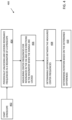
- Figure 4 illustrates a gyroscope operational flow diagram 400 of one embodiment.
- Flow diagram 400 is provided as a series of sequential blocks. The sequence may be different in other example embodiments. Hence, embodiments are not limited to the sequence provided in Figure 4 .
- the gyroscope operational diagram starts at block (402) when the gyroscope is started. While operational, the laser frequencies of light propagating in the resonator of the gyroscope are periodically unlocked and locked at block (404). In some embodiments, the period of unlocking and locking to resonance frequencies is multiple times per second. Further in some embodiments, each time the lasers frequencies are locked to a set of resonance frequencies, a different set of resonance frequencies is used (e.g. frequency hopping).
- the center frequencies for resonances in the CW and CCW directions in the resonator are measured when the light signal frequencies are locked at block (406).
- the differences between the measured center frequencies is determined at block (408).
- Rotation measured by the gyroscope is determined at block (410) based on the determined differences of the of the centered measured frequencies.
Landscapes
- Physics & Mathematics (AREA)
- Engineering & Computer Science (AREA)
- Optics & Photonics (AREA)
- Electromagnetism (AREA)
- Power Engineering (AREA)
- General Physics & Mathematics (AREA)
- Radar, Positioning & Navigation (AREA)
- Remote Sensing (AREA)
- Gyroscopes (AREA)
Description
- The Resonator Fiber Optic Gyroscope (RFOG) shows promise in meeting needs of many navigation and inertial stabilization markets. An example of a known RFOG is described in
US 2008/079947 . - RFOGs have the potential to provide a highest possible rotation sensing performance within a smallest possible volume. An RFOG senses rotation by measuring the frequency difference between optical resonances for counterpropagating light in a fiber ring resonator. This is accomplished by coupling separate lasers into clockwise (CW) and counterclockwise (CCW) directions of the resonator, tuning the lasers to the CW and CCW optical resonances, and then carefully measuring the center frequencies of those resonances.
- A problem that can affect those measurements (and introduce a bias in the gyroscope rate output) is a resonance asymmetry that can shift the measured center frequency. Resonance asymmetries can be caused, for example, by optical back-reflections in the resonator. For an RFOG to achieve a desired high performance, it is crucial to mitigate bias errors due to these resonance asymmetries. Though much effort is put into reducing optical back-reflections, eliminating them is technically infeasible. Thus, mitigation techniques have been developed to reduce the bias errors by quickly modulating them and averaging them out of the gyro signal. This has been done in the past by modulating the resonator cavity length either with a piezoelectric transducer (PZT) or by changing the resonator's temperature. However, observations show that using the PZT does not provide enough range to average over the bias errors, and changing temperature is generally too slow and has higher power requirements. Therefore, a method is needed to reduce these resonance asymmetry induced bias errors that is robust, low power, and can quickly average over a very large resonance-frequency range of the optical resonator.
- The following summary is made by way of example and not by way of limitation. It is merely provided to aid the reader in understanding some of the aspects of the subject matter described.
- The invention is defined in the attached independent claims to which reference should now be made. Optional features are defined in the sub-claims appended to the independent claims.
- Embodiments provide systems and methods to reduce resonance asymmetry induced bias error using a resonance hopping technique in which optical resonances over a very large range of frequencies are quickly sampled to average over resonance asymmetries. This averaging process reduces rotation rate errors.
- Embodiments can be more easily understood and further advantages and uses thereof will be more readily apparent, when considered in view of the detailed description and the following figures in which:
-
Figure 1 is a block diagram of a RFOG according to one exemplary embodiment; -
Figure 2 is a block diagram of a resonance hopping control system according to one exemplary embodiment; -
Figure 3 illustrates a resonance hopping flow diagram according to one exemplary embodiment; and -
Figure 4 illustrates a gyroscope operational flow diagram according to one exemplary embodiment. - In accordance with common practice, the various described features are not drawn to scale but are drawn to emphasize specific features relevant to the subject matter described. Reference characters denote like elements throughout Figures and text.
- In the following detailed description, reference is made to the accompanying drawings, which form a part hereof, and in which is shown by way of illustration specific embodiments in which the inventions may be practiced. These embodiments are described in sufficient detail to enable those skilled in the art to practice the embodiments, and it is to be understood that other embodiments may be utilized and that changes may be made without departing from the spirit and scope of the present invention. The following detailed description is, therefore, not to be taken in a limiting sense, and the scope of the present invention is defined only by the claims.
- Embodiments provide systems and methods that reduce resonance asymmetry induced bias errors. The systems and methods are robust, low power, and can quickly average over a very large resonance-frequency range of the optical resonator. Embodiments reduce resonance asymmetry induced bias error with a resonance hopping technique in which optical resonances over a very large range of frequencies are quickly sampled to average over resonance asymmetries.
- To avoid having lasers of the RFOG mode hop and thereby lose lock with the resonator, embodiments employ a technique in which the lasers briefly unlock, hop multiple resonance, and then relock. This keeps the lasers operating in a stable mode hop free region. This technique may be used to quickly average over a multiple resonances over a very large frequency range. Further embodiments employing this technique provide superior results from previous techniques in which a PZT is used to stretch the length of the resonator or by changing the temperature of the resonator. Resonance hopping can sample a much larger resonance-frequency range than the PZT and is much faster (and lower power) than changing the temperature.
- In a RFOG, counterpropagating light, generated from lasers, are coupled to a fiber ring resonator. The counterpropagating light frequencies are locked to resonances in the CW and CCW directions. The center frequencies for the CW and CCW resonances are measured, and the difference of these two center frequencies provides the signal that is proportional to the rotation rate of the gyro. Any resonance asymmetry on the measured resonances produces a bias error on the signal as well. To mitigate this error, in embodiments, the laser(s) that generate the counterpropagating light (CW and CCW laser light) are briefly unlocked, quickly tuned to another set of resonances, and then relocked. The center frequencies are again measured, and a new rate signal is generated. This is repeated multiple times per second to sample over a number a resonance frequencies (and thereby a number of resonance asymmetries) over a large range of optical frequencies. Since the resonance asymmetry can vary in sign (widening the low-frequency or the high-frequency side of the resonance) this technique averages over the bias errors caused by the resonance asymmetries and thus provides a more accurate value for the true center frequencies and thus a more accurate gyro rate.
- There are many different RFOG configurations that may include aspects of embodiments described herein. One example is illustrated in
Figure 1. Figure 1 illustrates a block diagram of anexample RFOG 100 with components that can implement techniques described above. TheRFOG 100 of this embodiment includesslave laser 106 that generates light in a CW direction in aresonator 110 andslave laser 104 that generates laser light in a CCW direction in theresonator 110. Amaster laser 102, is used in this example, to control the frequency of the light generated by theslave lasers hopping control system 200 that controls the resonance of laser light provided by themaster laser 102. - The
example RFOG 100 may function as part of a navigation system, a platform stabilization system, a pointing system, and the like. For example, in some embodiments, the RFOG 100 is implemented as part of an inertial sensor unit that includes one or more RFOGs and one or more linear accelerometers. TheRFOG 100 may measure rotation rate and may output a signal indicative of the rotation rate. The measured rotation rate from theRFOG 100 may be provided to a processing unit or other computational device that uses the measured rotation rate when calculating parameters such as position, orientation, and angular velocity. Additionally, the calculated parameters may be used to calculate data to be included in control signals that are provided to one or more optional actuators for controlling the operation of the actuators. - Further, in at least one implementation, the RFOG 100 includes transmission and reflection mode feedback control. To provide transmission and reflection mode feedback control, light waves from the
laser sources resonator coil 112 ofresonator 110.Slave lasers resonator 110 atports resonator fiber coil 112 of theresonator 110. In at least one implementation, theports resonator 110. In at least one embodiment, theports port 148 couples the laser light into theresonator 110 in a first direction (e.g., CW) and out of theresonator 110 in a second direction (e.g., CCW). Similarly,port 146 couples the laser light into theresonator 110 in the second direction (e.g. CCW) and out of theresonator 110 in the first direction (e.g. CW). In alternative implementations, theresonator 110 may have separate input ports and output ports. - In some embodiments, laser light coupled into the
resonator 110 has a "transmission port" and a "reflection port." In general, all the laser light detected at a transmission port has propagated through theresonator 110, whereas at the reflection port there is combination of the portion of the resonator incident light that did not enter theresonator 110 and laser light that has propagated through theresonator 110. For example, theport 146 functions as both a transmission port for the light coupled into theresonator 110 through theport 148 and as a reflection port for light incident on theresonator 110 atport 146.Port 148 functions as both a transmission port for the light coupled into theresonator 110 through the port 143 and as a reflection port for light incident on theresonator 110 atport 148. - In certain implementations, laser light that is coupled into the
resonator 110 is frequency stabilized using theresonator 110 with feedback control based on light acquired from the transmission ports atports master laser source 102 is used to further stabilize the frequency of the light propagating within theresonator 110, light can also be acquired through the reflection port atport 148. Using feedback control, electromagnetic waves that propagate within theresonator 110, may be stabilized, at both high and low frequencies. Thus, stabilization over a wide bandwidth may be achieved. - In at least one implementation, feedback control may reduce laser phase noise using the Pound-Drever-Hall (PDH) technique. A laser source with PDH feedback control receives a signal from a
PDH photodetector 158 that senses light from thereflection port 148 associated with themaster laser 102. The response to changes in relative frequency between light produced by a laser source and resonant frequency within theresonator 110 is much faster at thereflection port 148 than one of thetransmission ports master laser source 102 and, thus reduce the relative phase noise between the laser produced by themaster laser source 102 and resonant frequency at theresonator 110, the light produced by themaster laser source 102 is locked onto a CW resonance of theresonator 110 by using a PDHfeedback control loop 120. This may be done by locking the carrier frequency of the master laser source to a resonance center or locking a modulation sideband to the resonance center. - In certain implementations, where light produced by a
master laser source 102 is controlled through PDH feedback, the light output by themaster laser source 102 may be coupled with light produced by multipleslave laser sources couplers master laser 102 provides laser light to thecoupler 138. Thecoupler 138 provides a portion of the light for circulation within theresonator 110 and another portion of the light to thecoupler 136. Thecoupler 136 provides a portion of the light to thecoupler 140 and another portion of the light to thecoupler 134. Thecoupler 140 couples together a portion of the master laser from thecoupler 136 along with a portion of light fromslave laser 106 and provides the combined light to theCW OPLL 124 viaphoto detector 154. Further,coupler 134 couples a portion of the light from the master laser fromcoupler 136 along with a portion of light fromslave laser 104 and provides the combined light to theCCW OPLL 122 viaphoto detector 152. - The output of the
master laser 102 is coupled into theresonator 110 throughcouplers 138 and 149, phase modulator (PM) 162,circulator 182 andport 148. Themaster laser 102 is configured to generate laser light for propagation within theresonator 110. The output ofslave laser 104 is coupled into theresonator 110 throughcoupler 132,PM 160, intensity modulator (IM) 170,circulator 180 andport 146 in this example embodiment. The output ofslave laser 106 is coupled into theresonator 110 throughcoupler 142,PM 164,IM 172,circulator 182 andport 148 in this example embodiment. - The light produced by the
master laser source 102 receives PDH feedback through the PDHfeedback control loop 120 for locking the frequency of the light from themaster laser 102 to theresonator 110 resonance. For example, the PDHfeedback control loop 120 may include aPDH photodetector 158 that receives light from thereflection port 148 of theresonator 110. The PDHfeedback control loop 120 is further coupled to themaster laser source 110 via a current source in an embodiment, where the current source controls the master frequency in an embodiment. - In certain embodiments, the low relative frequency noise between the light produced by the
master laser source 102 and resonance frequency of theresonator 110 is transferred to the laser light produced by theslave laser sources OPPLs slave laser sources master laser source 102 with some additional frequency offset. To lock the laser light produced by theslave laser sources resonator 110, transmission modefeedback control loops 114 and 116 (or CW and CCWresonance tracking loops 114 and 116) may be used to lock the optical carriers ofslave laser sources resonator 110. - In this example embodiment, the CCW
resonance tracking loop 116 is associated with theslave laser source 104 and the CWresonance tracking loop 114 is associated withslave laser source 106, where theresonance control loops respective photodetectors Photodetector 156 receives light from thetransmission port 148 viacirculator 182 and thephotodetector 150 receives light from thetransmission port 146 viacirculator 180. For example, when theRFOG 100 hasslave laser 104 producing a first laser light andslave laser 106 producing a second laser light, the first laser light is propagating in the CCW direction and the second laser light is propagating in the CW direction in theresonator 110 andresonator fiber coil 112. As used herein, "CW" and "CCW" are terms used to further indicate that first slave laser and the second slave laser are propagating in opposite directions within theresonator 100. Additionally, a portion of the first laser light and a portion of the second laser light are coupled out of theresonator 110, where the respective transmission modefeedback control loops slave laser sources slave lasers resonator 110, on a resonance of the resonator, at the center frequency of the resonant mode of theresonator 110. - In some embodiments, employing high frequency phase modulation referred to as Sideband Heterodyne Detection modulation, the first order modulation sidebands are locked to resonance centers whereas the laser optical carrier is locked off resonance and in the middle of the free spectral range between two resonance peaks. Henceforth, locking a laser onto a resonance mode, on a resonance, or at the center frequency of the resonant mode, can mean locking the optical carrier to a resonance center or locking first order modulation sidebands to resonance centers. In this case, the optical carriers of the
slave lasers sources - A discussed above, a portion of the propagating CW laser light in the
resonator 110 is coupled out of theresonator 110 by a coupler that functions as atransmission port 146. The portion of the coupled-out CW laser light is directed tophotodetector 150 viacirculator 180.Photodetector 150 may provide an electrical signal to CW resonance tracking electronics in the CWresonance tracking loop 114. The CW resonance tracking electronics may track departures of the frequency ofslave laser 106 from the center frequency of resonant modes of theresonator 110 and provide a signal toCW OPLL 124 indicative of the departure from resonance. TheCW OPLL 124 may provide a signal to a current source that adjusts the drive current for the secondslave laser source 106 such that the frequency of the second laser moves closer to a resonance center frequency of the resonant mode of theresonator 110. - Similarly, a portion of the propagating CCW laser light in the
resonator 110 is coupled out of theresonator 110 by a coupler that functions as atransmission port 148. The portion of the coupled-out CCW laser light is directed tophotodetector 156 via acirculator 182. Thephotodetector 156 may detect the first slave laser and may provide an electrical signal to CCW resonance tracking electronics in the CCWresonance tracking loop 116. The CCW resonance tracking electronics may track departures of the frequency of the first slave laser from the center frequency of a resonant mode of theresonator 110 and provide a signal to theCCW OPLL 122 indicative of the departure from resonance. TheCCW OPPL 122 may provide a signal to a current source that adjusts the drive current for thefirst laser source 104 such that the frequency of the first laser moves closer to a resonant mode of theresonator 110. - As discussed above, embodiments force resonance hopping. In one example, the hopping may be controlled via the PDH
feedback control loop 120. For example, thePDH loop 120 may include a resonance hoppingcontrol system 200. An example of a resonance hoppingcontrol system 200 is illustrated in the block diagram ofFigure 2 . In this example, the resonance hoppingcontrol system 200, includes acontroller 202 and amemory 204 that at least stores operating instructions that are executed by thecontroller 202. - In general, the
controller 202 may include any one or more of a processor, microprocessor, a digital signal processor (DSP), an application specific integrated circuit (ASIC), a field program gate array (FPGA), or equivalent discrete or integrated logic circuitry. In some example embodiments,controller 202 may include multiple components, such as any combination of one or more microprocessors, one or more controllers, one or more DSPs, one or more ASICs, one or more FPGAs, as well as other discrete or integrated logic circuitry. The functions attributed to thecontroller 202 herein may be embodied as software, firmware, hardware or any combination thereof. The controller may be part of a system controller or a component controller. Thememory 204 may include computer-readable operating instructions that, when executed by thecontroller 202 provides functions of the resonance hoppingcontrol system 200. Such functions may include the functions of resonance hopping described below. The computer readable instructions may be encoded within thememory 204.Memory 204 is an appropriate non-transitory storage medium or media including any volatile, nonvolatile, magnetic, optical, or electrical media, such as, but not limited to, a random access memory (RAM), read-only memory (ROM), non-volatile RAM (NVRAM), electrically-erasable programmable ROM (EEPROM), flash memory, or any other storage medium. - Further included in the resonance hopping
control system 200 is acurrent generator 208 that provides a select amount of the current to themaster laser 102 to selectively control the frequency of the laser light output by themaster laser 102 and hence the frequencies of the CW and CCW laser light output from therespective slave lasers random number generator 206, that is communicatively coupled to aclock 210, may be used to generate a random number to thecontroller 202. Thecontroller 202 uses random numbers from therandom number generator 206 to select the resonance to hop to within a window (or range) that keeps the lasers operating in a single mode as discussed below. - Other embodiments use different methods for resonance hopping, such as but not limited to, alternating hops within a window (or range) in different directions from a central frequency in the window, hopping a select amount in both directions from a central frequency in the window and sequentially hopping off in one direction and then hopping off sequentially in another direction within the window. Hence, there are many ways anticipated to implement the hopping. Since, the hopping in embodiments may occur in the order of milliseconds, a large number of hops occur fairly quickly. As discussed above, this unlocking and locking of the lasers caused by the resonance hopping cause the bias instability errors to average out. The more hops the better the result. In one example embodiment, the window is determined by the
controller 202 via operating instructions stored in thememory 204. The window is based on a frequency range in which the laser(s) can operate in a single mode and while its light or a portion of its light (for instance, a sideband) is at resonance in theresonator 110. - As discussed above, embodiments force resonance hopping within a window (or range) so the lasers are operating within their own single mode, single frequency range. If the lasers run out of their range, they operate in multimode where they are lasing in more than one mode occurs which causes errors in the system. Due to factors, such as for example temperature changes, the resonance mode of the
resonator 110 may vary during operation. This causes the window (or range) that allows the lasers to operate in single mode to shift to correlate with the changing resonance mode frequency of theresonator 110. In embodiments, hop control logic also in thePDH loop 120 is used to resonance hop when it is determined the resonance is getting close to an edge (rail) of a window. - Referring to
Figure 3 , a resonance hopping flow diagram 300 of one example embodiment is illustrated. The resonance flow diagram is provided as a series of sequential blocks. The sequence of block may be different in other embodiments. Hence, embodiments are not limited to the sequence illustrated inFigure 3 . - The resonance hopping flow diagram 300 begins when the
RFOG 100 is started at block (302). The current window for each laser to operate in a single mode is determined in block (304). In the example above, with the master-slave laser arrangement, it is the current window of themaster laser 102 that is determined since themaster laser 102 controls theslave lasers PDH loop 120 is used to determine the then current window. In one embodiment, thecontroller 202 in the PDH loop determines the window. This may be enabled, in part, by storing of factory-taken laser characterization data in memory of thecontroller 202. - Once the current window is determined at step (304), resonance hopping occurs within the window at block (308). As discussed above, the resonance hopping can occur by any method that generates frequencies within the window including, but not limited to, the use of a random number generator and sequence hopping on opposite sides of a central frequency of the window. While the resonance hopping is occurring, it is determined at block (310) whether the window has shifted. The determination may be conducted in the PDH loop as discussed above. In one embodiment the determination may be done by the resonance hopping control logic and/or the
controller 202. - If the window has not shifted, the process continues at block (308) resonance hopping within the current window. If the window has shifted, the current window for the laser(s) to operate in a single mode is redetermined at block (304) and the process continues.
-
Figure 4 illustrates a gyroscope operational flow diagram 400 of one embodiment. Flow diagram 400 is provided as a series of sequential blocks. The sequence may be different in other example embodiments. Hence, embodiments are not limited to the sequence provided inFigure 4 . - The gyroscope operational diagram starts at block (402) when the gyroscope is started. While operational, the laser frequencies of light propagating in the resonator of the gyroscope are periodically unlocked and locked at block (404). In some embodiments, the period of unlocking and locking to resonance frequencies is multiple times per second. Further in some embodiments, each time the lasers frequencies are locked to a set of resonance frequencies, a different set of resonance frequencies is used (e.g. frequency hopping).
- The center frequencies for resonances in the CW and CCW directions in the resonator are measured when the light signal frequencies are locked at block (406). The differences between the measured center frequencies is determined at block (408). Rotation measured by the gyroscope is determined at block (410) based on the determined differences of the of the centered measured frequencies.
- Although specific embodiments have been illustrated and described herein, it will be appreciated by those of ordinary skill in the art that any arrangement, which is calculated to achieve the same purpose, may be substituted for the specific embodiment shown. This application is intended to cover any adaptations or variations of the present invention. Therefore, it is manifestly intended that this invention be limited only by the claims.
Claims (10)
- A resonator fiber optic gyroscope (RFOG) (100) comprising:at least one laser (102, 104 and 106); anda resonator (110) in operational communication with the at least one laser (102, 104 and 106) to receive clockwise (CW) laser light and counterclockwise (CCW) laser light produced by the at least one laser (102, 104 and 106); characterized by:a resonance hopping control system (200) in communication with an output of the resonator (110) and the at least one laser (102, 104 and 106), the resonance hopping control system (200) is configured to control an output of the at least one laser (102, 104 and 106) to periodically unlock, hop and lock frequencies of the laser light traveling in the CW and CCW directions in the resonator (110) to multiple resonance frequencies of the resonator to average out bias errors due to resonance asymmetries;wherein the RFOG (100) is configured is configured to measure center frequencies of resonances in the CW and CCW directions of the resonator (100) when the signals indicate the light is locked on the resonance frequencies, determine differences between the measured center frequencies of the resonances in the CW and CCW directions, and determine a rotation rate of the gyroscope (100) based at least in part on the determined differences.
- The RFOG (100) of claim 1, wherein the at least one laser (102, 104 and 106) further comprises:a master laser (102) operationally controlled by the resonance hopping control system (200);a first slave laser (106) to generate the CW laser light in the resonator (110), the first slave laser (106) operationally controlled by the master laser (102); anda second slave laser (104) to generate the CCW laser light in the resonator (110), the second slave laser (104) operationally controlled by the master laser (102).
- The RFOG (100) of claim 2, further comprising:a first optical phase lock loop (OPLL) (124) coupled to an CW output of the resonator (110) via a CW resonance tracking loop (114), the first OPLL (124) further in communication with the first slave laser (106);a second optical phase lock loop (OPLL) (122) coupled to an CCW output of the resonator (110) via CCW resonance tracking loop (116), the second OPLL (122) further in communication with the second slave laser (104);a Pound-Drever-Hall (PDH) feedback control loop (120) coupled to at least an output of the resonator (110), the PDH feedback loop (120) further in communication with the master laser (102), wherein the resonance hopping control system (200) is within the PDH feedback control loop (120).
- The RFOG (100) of claim 1, wherein the resonance hopping control system (200) further comprises:
at least one controller (202) configured to cause the at least one laser (102, 104 and 106) to unlock, hop and lock its frequency relative to resonance frequencies of the resonator. - The RFOG (100) of claim 4, wherein the controller (202) is further configured to unlock, hop and lock to resonance frequencies multiple times per second.
- The RFOG (100) of claim 1, wherein the resonance hopping control system (200) is further configured to hop within a window of frequencies that allow the at least one laser(102, 104 and 106) to be within a single mode operation.
- A method, in a resonator fiber optic gyroscope (RFOG) (100), of reducing gyroscope bias errors due to resonance asymmetries, the method characterized by:controlling, by a resonance hopping control system (200), which is in communication with an output of a resonator (110) of the RFOG (100) and at least one laser (102, 104 and 106), an output of the at least one laser (102, 104 and 106) to periodically unlock, hop and lock frequencies of laser light traveling in clockwise (CW) and counter-clockwise (CCW) directions in the resonator (110) to multiple resonance frequencies of the resonator (110) to average out bias errors due to resonance asymmetries;measuring center frequencies of resonances in the CW and CCW directions of the resonator when the signals indicate the light is locked on the resonance frequencies;determining differences between the measured center frequencies of the resonances in the CW and CCW directions; anddetermining a rotation rate of the gyroscope (100) based at least in part on the determined differences.
- The method of claim 7, wherein the hopping occurs over multiple resonances.
- The method of claim 7, wherein the period of unlocking, hopping and locking of resonance frequencies is multiple times per second.
- The method of claim 7, further comprising:determining a window of frequencies that allows at least one laser that generates the CW and CCW laser light in the resonator (110) to be within a single mode operation;hopping within the determined window, wherein the window changes based on the then current resonance mode of the resonator (110).
Applications Claiming Priority (1)
| Application Number | Priority Date | Filing Date | Title |
|---|---|---|---|
| US16/799,663 US11181374B2 (en) | 2020-02-24 | 2020-02-24 | Gyroscope with reduced bias errors due to resonance asymmetries |
Publications (2)
| Publication Number | Publication Date |
|---|---|
| EP3869153A1 EP3869153A1 (en) | 2021-08-25 |
| EP3869153B1 true EP3869153B1 (en) | 2023-10-11 |
Family
ID=74561840
Family Applications (1)
| Application Number | Title | Priority Date | Filing Date |
|---|---|---|---|
| EP21155876.2A Active EP3869153B1 (en) | 2020-02-24 | 2021-02-08 | Gyroscope with reduced bias errors due to resonance asymmetries |
Country Status (2)
| Country | Link |
|---|---|
| US (1) | US11181374B2 (en) |
| EP (1) | EP3869153B1 (en) |
Families Citing this family (1)
| Publication number | Priority date | Publication date | Assignee | Title |
|---|---|---|---|---|
| WO2022093815A1 (en) * | 2020-10-27 | 2022-05-05 | Drs Network & Imaging Systems, Llc | Optical gyroscope with weak measurement amplification readout |
Family Cites Families (6)
| Publication number | Priority date | Publication date | Assignee | Title |
|---|---|---|---|---|
| US5289258A (en) | 1992-01-15 | 1994-02-22 | Honeywell Inc. | Fiber optic gyroscope modulation error reduction |
| US5450198A (en) | 1993-10-01 | 1995-09-12 | Honeywell Inc. | Laser gyro microprocessor based smart mode acquisition and high performance mode hopping |
| US7522284B2 (en) | 2006-09-29 | 2009-04-21 | Honeywell International Inc. | Optical resonator gyro and method for reducing resonance asymmetry errors |
| US8923352B2 (en) * | 2012-08-10 | 2014-12-30 | Honeywell International Inc. | Laser with transmission and reflection mode feedback control |
| US9772189B2 (en) * | 2015-05-11 | 2017-09-26 | Honeywell International Inc. | Systems and methods for resonance switching resonator fiber optic gyroscopes (RFOGs) with feed-forward processing |
| US10094664B2 (en) * | 2016-11-23 | 2018-10-09 | Honeywell International Inc. | Apparatus and method for diminishing bias error in resonant fiber optic gyroscopes |
-
2020
- 2020-02-24 US US16/799,663 patent/US11181374B2/en active Active
-
2021
- 2021-02-08 EP EP21155876.2A patent/EP3869153B1/en active Active
Also Published As
| Publication number | Publication date |
|---|---|
| US11181374B2 (en) | 2021-11-23 |
| EP3869153A1 (en) | 2021-08-25 |
| US20210262799A1 (en) | 2021-08-26 |
Similar Documents
| Publication | Publication Date | Title |
|---|---|---|
| EP2333482B1 (en) | Light-phase-noise error reducer | |
| US7933020B1 (en) | System and method for reducing laser phase noise in a resonator fiber optic gyroscope | |
| EP2701250B1 (en) | Laser with transmission and reflection mode feedback control | |
| US9115994B2 (en) | Systems and methods sideband heterodyning detection | |
| JP5208406B2 (en) | System and method for stabilizing a light source in a resonator gyro | |
| EP3106835B1 (en) | Systems and methods for resonator fiber optic gyroscopes utilizing reference ring resonators | |
| EP2857796B1 (en) | Methods and apparatus of tracking/locking resonator free spectral range and its application in resonator fiber optic gyroscope | |
| JP5681455B2 (en) | System and method for reducing laser phase noise in a resonator fiber optic gyroscope | |
| JP2014163939A (en) | Method and system for detecting optical ring resonator resonance frequency and free spectral range to reduce the number of lasers in resonator fiber optic gyroscope | |
| JP2016212085A (en) | System and method for resonant switching of a resonator fiber optic gyroscope (RFOG) using feedforward processing | |
| EP3869153B1 (en) | Gyroscope with reduced bias errors due to resonance asymmetries | |
| EP3783311B1 (en) | Sideband heterodyne switching for resonator fiber optic gyroscopes (rfogs) | |
| EP3770552B1 (en) | Rfog resonance hopping | |
| US12618674B2 (en) | Interferometric resonator optical gyroscope with optical frequency comb | |
| EP4524513A1 (en) | Interferometric resonator optical gyroscope with optical frequency comb | |
| US12546603B2 (en) | Optical gyroscope with broadband comb interrogation | |
| JP2001165667A (en) | Resonant optical fiber gyro | |
| JP2000283769A (en) | Resonance optical fiber gyro |
Legal Events
| Date | Code | Title | Description |
|---|---|---|---|
| PUAI | Public reference made under article 153(3) epc to a published international application that has entered the european phase |
Free format text: ORIGINAL CODE: 0009012 |
|
| STAA | Information on the status of an ep patent application or granted ep patent |
Free format text: STATUS: THE APPLICATION HAS BEEN PUBLISHED |
|
| AK | Designated contracting states |
Kind code of ref document: A1 Designated state(s): AL AT BE BG CH CY CZ DE DK EE ES FI FR GB GR HR HU IE IS IT LI LT LU LV MC MK MT NL NO PL PT RO RS SE SI SK SM TR |
|
| STAA | Information on the status of an ep patent application or granted ep patent |
Free format text: STATUS: REQUEST FOR EXAMINATION WAS MADE |
|
| 17P | Request for examination filed |
Effective date: 20210915 |
|
| RBV | Designated contracting states (corrected) |
Designated state(s): AL AT BE BG CH CY CZ DE DK EE ES FI FR GB GR HR HU IE IS IT LI LT LU LV MC MK MT NL NO PL PT RO RS SE SI SK SM TR |
|
| RAP3 | Party data changed (applicant data changed or rights of an application transferred) |
Owner name: HONEYWELL INTERNATIONAL INC. |
|
| RIN1 | Information on inventor provided before grant (corrected) |
Inventor name: STRANDJORD, LEE K. Inventor name: SANDERS, GLEN A. Inventor name: SMICIKLAS, MARC |
|
| STAA | Information on the status of an ep patent application or granted ep patent |
Free format text: STATUS: EXAMINATION IS IN PROGRESS |
|
| 17Q | First examination report despatched |
Effective date: 20220614 |
|
| GRAP | Despatch of communication of intention to grant a patent |
Free format text: ORIGINAL CODE: EPIDOSNIGR1 |
|
| STAA | Information on the status of an ep patent application or granted ep patent |
Free format text: STATUS: GRANT OF PATENT IS INTENDED |
|
| INTG | Intention to grant announced |
Effective date: 20230509 |
|
| P01 | Opt-out of the competence of the unified patent court (upc) registered |
Effective date: 20230421 |
|
| GRAS | Grant fee paid |
Free format text: ORIGINAL CODE: EPIDOSNIGR3 |
|
| GRAA | (expected) grant |
Free format text: ORIGINAL CODE: 0009210 |
|
| STAA | Information on the status of an ep patent application or granted ep patent |
Free format text: STATUS: THE PATENT HAS BEEN GRANTED |
|
| AK | Designated contracting states |
Kind code of ref document: B1 Designated state(s): AL AT BE BG CH CY CZ DE DK EE ES FI FR GB GR HR HU IE IS IT LI LT LU LV MC MK MT NL NO PL PT RO RS SE SI SK SM TR |
|
| REG | Reference to a national code |
Ref country code: GB Ref legal event code: FG4D |
|
| REG | Reference to a national code |
Ref country code: CH Ref legal event code: EP |
|
| REG | Reference to a national code |
Ref country code: DE Ref legal event code: R096 Ref document number: 602021005700 Country of ref document: DE |
|
| REG | Reference to a national code |
Ref country code: IE Ref legal event code: FG4D |
|
| REG | Reference to a national code |
Ref country code: LT Ref legal event code: MG9D |
|
| REG | Reference to a national code |
Ref country code: NL Ref legal event code: MP Effective date: 20231011 |
|
| REG | Reference to a national code |
Ref country code: AT Ref legal event code: MK05 Ref document number: 1620623 Country of ref document: AT Kind code of ref document: T Effective date: 20231011 |
|
| PG25 | Lapsed in a contracting state [announced via postgrant information from national office to epo] |
Ref country code: NL Free format text: LAPSE BECAUSE OF FAILURE TO SUBMIT A TRANSLATION OF THE DESCRIPTION OR TO PAY THE FEE WITHIN THE PRESCRIBED TIME-LIMIT Effective date: 20231011 |
|
| PG25 | Lapsed in a contracting state [announced via postgrant information from national office to epo] |
Ref country code: GR Free format text: LAPSE BECAUSE OF FAILURE TO SUBMIT A TRANSLATION OF THE DESCRIPTION OR TO PAY THE FEE WITHIN THE PRESCRIBED TIME-LIMIT Effective date: 20240112 |
|
| PG25 | Lapsed in a contracting state [announced via postgrant information from national office to epo] |
Ref country code: IS Free format text: LAPSE BECAUSE OF FAILURE TO SUBMIT A TRANSLATION OF THE DESCRIPTION OR TO PAY THE FEE WITHIN THE PRESCRIBED TIME-LIMIT Effective date: 20240211 |
|
| PG25 | Lapsed in a contracting state [announced via postgrant information from national office to epo] |
Ref country code: LT Free format text: LAPSE BECAUSE OF FAILURE TO SUBMIT A TRANSLATION OF THE DESCRIPTION OR TO PAY THE FEE WITHIN THE PRESCRIBED TIME-LIMIT Effective date: 20231011 |
|
| PG25 | Lapsed in a contracting state [announced via postgrant information from national office to epo] |
Ref country code: AT Free format text: LAPSE BECAUSE OF FAILURE TO SUBMIT A TRANSLATION OF THE DESCRIPTION OR TO PAY THE FEE WITHIN THE PRESCRIBED TIME-LIMIT Effective date: 20231011 |
|
| PG25 | Lapsed in a contracting state [announced via postgrant information from national office to epo] |
Ref country code: ES Free format text: LAPSE BECAUSE OF FAILURE TO SUBMIT A TRANSLATION OF THE DESCRIPTION OR TO PAY THE FEE WITHIN THE PRESCRIBED TIME-LIMIT Effective date: 20231011 |
|
| PG25 | Lapsed in a contracting state [announced via postgrant information from national office to epo] |
Ref country code: LT Free format text: LAPSE BECAUSE OF FAILURE TO SUBMIT A TRANSLATION OF THE DESCRIPTION OR TO PAY THE FEE WITHIN THE PRESCRIBED TIME-LIMIT Effective date: 20231011 Ref country code: IS Free format text: LAPSE BECAUSE OF FAILURE TO SUBMIT A TRANSLATION OF THE DESCRIPTION OR TO PAY THE FEE WITHIN THE PRESCRIBED TIME-LIMIT Effective date: 20240211 Ref country code: GR Free format text: LAPSE BECAUSE OF FAILURE TO SUBMIT A TRANSLATION OF THE DESCRIPTION OR TO PAY THE FEE WITHIN THE PRESCRIBED TIME-LIMIT Effective date: 20240112 Ref country code: ES Free format text: LAPSE BECAUSE OF FAILURE TO SUBMIT A TRANSLATION OF THE DESCRIPTION OR TO PAY THE FEE WITHIN THE PRESCRIBED TIME-LIMIT Effective date: 20231011 Ref country code: BG Free format text: LAPSE BECAUSE OF FAILURE TO SUBMIT A TRANSLATION OF THE DESCRIPTION OR TO PAY THE FEE WITHIN THE PRESCRIBED TIME-LIMIT Effective date: 20240111 Ref country code: AT Free format text: LAPSE BECAUSE OF FAILURE TO SUBMIT A TRANSLATION OF THE DESCRIPTION OR TO PAY THE FEE WITHIN THE PRESCRIBED TIME-LIMIT Effective date: 20231011 Ref country code: PT Free format text: LAPSE BECAUSE OF FAILURE TO SUBMIT A TRANSLATION OF THE DESCRIPTION OR TO PAY THE FEE WITHIN THE PRESCRIBED TIME-LIMIT Effective date: 20240212 |
|
| PG25 | Lapsed in a contracting state [announced via postgrant information from national office to epo] |
Ref country code: SE Free format text: LAPSE BECAUSE OF FAILURE TO SUBMIT A TRANSLATION OF THE DESCRIPTION OR TO PAY THE FEE WITHIN THE PRESCRIBED TIME-LIMIT Effective date: 20231011 Ref country code: RS Free format text: LAPSE BECAUSE OF FAILURE TO SUBMIT A TRANSLATION OF THE DESCRIPTION OR TO PAY THE FEE WITHIN THE PRESCRIBED TIME-LIMIT Effective date: 20231011 Ref country code: PL Free format text: LAPSE BECAUSE OF FAILURE TO SUBMIT A TRANSLATION OF THE DESCRIPTION OR TO PAY THE FEE WITHIN THE PRESCRIBED TIME-LIMIT Effective date: 20231011 Ref country code: NO Free format text: LAPSE BECAUSE OF FAILURE TO SUBMIT A TRANSLATION OF THE DESCRIPTION OR TO PAY THE FEE WITHIN THE PRESCRIBED TIME-LIMIT Effective date: 20240111 Ref country code: LV Free format text: LAPSE BECAUSE OF FAILURE TO SUBMIT A TRANSLATION OF THE DESCRIPTION OR TO PAY THE FEE WITHIN THE PRESCRIBED TIME-LIMIT Effective date: 20231011 Ref country code: HR Free format text: LAPSE BECAUSE OF FAILURE TO SUBMIT A TRANSLATION OF THE DESCRIPTION OR TO PAY THE FEE WITHIN THE PRESCRIBED TIME-LIMIT Effective date: 20231011 |
|
| PG25 | Lapsed in a contracting state [announced via postgrant information from national office to epo] |
Ref country code: DK Free format text: LAPSE BECAUSE OF FAILURE TO SUBMIT A TRANSLATION OF THE DESCRIPTION OR TO PAY THE FEE WITHIN THE PRESCRIBED TIME-LIMIT Effective date: 20231011 |
|
| REG | Reference to a national code |
Ref country code: DE Ref legal event code: R097 Ref document number: 602021005700 Country of ref document: DE |
|
| PG25 | Lapsed in a contracting state [announced via postgrant information from national office to epo] |
Ref country code: CZ Free format text: LAPSE BECAUSE OF FAILURE TO SUBMIT A TRANSLATION OF THE DESCRIPTION OR TO PAY THE FEE WITHIN THE PRESCRIBED TIME-LIMIT Effective date: 20231011 |
|
| PG25 | Lapsed in a contracting state [announced via postgrant information from national office to epo] |
Ref country code: SK Free format text: LAPSE BECAUSE OF FAILURE TO SUBMIT A TRANSLATION OF THE DESCRIPTION OR TO PAY THE FEE WITHIN THE PRESCRIBED TIME-LIMIT Effective date: 20231011 |
|
| PG25 | Lapsed in a contracting state [announced via postgrant information from national office to epo] |
Ref country code: SM Free format text: LAPSE BECAUSE OF FAILURE TO SUBMIT A TRANSLATION OF THE DESCRIPTION OR TO PAY THE FEE WITHIN THE PRESCRIBED TIME-LIMIT Effective date: 20231011 Ref country code: SK Free format text: LAPSE BECAUSE OF FAILURE TO SUBMIT A TRANSLATION OF THE DESCRIPTION OR TO PAY THE FEE WITHIN THE PRESCRIBED TIME-LIMIT Effective date: 20231011 Ref country code: RO Free format text: LAPSE BECAUSE OF FAILURE TO SUBMIT A TRANSLATION OF THE DESCRIPTION OR TO PAY THE FEE WITHIN THE PRESCRIBED TIME-LIMIT Effective date: 20231011 Ref country code: IT Free format text: LAPSE BECAUSE OF FAILURE TO SUBMIT A TRANSLATION OF THE DESCRIPTION OR TO PAY THE FEE WITHIN THE PRESCRIBED TIME-LIMIT Effective date: 20231011 Ref country code: EE Free format text: LAPSE BECAUSE OF FAILURE TO SUBMIT A TRANSLATION OF THE DESCRIPTION OR TO PAY THE FEE WITHIN THE PRESCRIBED TIME-LIMIT Effective date: 20231011 Ref country code: DK Free format text: LAPSE BECAUSE OF FAILURE TO SUBMIT A TRANSLATION OF THE DESCRIPTION OR TO PAY THE FEE WITHIN THE PRESCRIBED TIME-LIMIT Effective date: 20231011 Ref country code: CZ Free format text: LAPSE BECAUSE OF FAILURE TO SUBMIT A TRANSLATION OF THE DESCRIPTION OR TO PAY THE FEE WITHIN THE PRESCRIBED TIME-LIMIT Effective date: 20231011 |
|
| PLBE | No opposition filed within time limit |
Free format text: ORIGINAL CODE: 0009261 |
|
| STAA | Information on the status of an ep patent application or granted ep patent |
Free format text: STATUS: NO OPPOSITION FILED WITHIN TIME LIMIT |
|
| REG | Reference to a national code |
Ref country code: DE Ref legal event code: R119 Ref document number: 602021005700 Country of ref document: DE |
|
| 26N | No opposition filed |
Effective date: 20240712 |
|
| PG25 | Lapsed in a contracting state [announced via postgrant information from national office to epo] |
Ref country code: MC Free format text: LAPSE BECAUSE OF FAILURE TO SUBMIT A TRANSLATION OF THE DESCRIPTION OR TO PAY THE FEE WITHIN THE PRESCRIBED TIME-LIMIT Effective date: 20231011 |
|
| REG | Reference to a national code |
Ref country code: CH Ref legal event code: PL |
|
| PG25 | Lapsed in a contracting state [announced via postgrant information from national office to epo] |
Ref country code: LU Free format text: LAPSE BECAUSE OF NON-PAYMENT OF DUE FEES Effective date: 20240208 |
|
| PG25 | Lapsed in a contracting state [announced via postgrant information from national office to epo] |
Ref country code: CH Free format text: LAPSE BECAUSE OF NON-PAYMENT OF DUE FEES Effective date: 20240229 |
|
| PG25 | Lapsed in a contracting state [announced via postgrant information from national office to epo] |
Ref country code: SI Free format text: LAPSE BECAUSE OF FAILURE TO SUBMIT A TRANSLATION OF THE DESCRIPTION OR TO PAY THE FEE WITHIN THE PRESCRIBED TIME-LIMIT Effective date: 20231011 |
|
| PG25 | Lapsed in a contracting state [announced via postgrant information from national office to epo] |
Ref country code: SI Free format text: LAPSE BECAUSE OF FAILURE TO SUBMIT A TRANSLATION OF THE DESCRIPTION OR TO PAY THE FEE WITHIN THE PRESCRIBED TIME-LIMIT Effective date: 20231011 Ref country code: LU Free format text: LAPSE BECAUSE OF NON-PAYMENT OF DUE FEES Effective date: 20240208 Ref country code: CH Free format text: LAPSE BECAUSE OF NON-PAYMENT OF DUE FEES Effective date: 20240229 |
|
| REG | Reference to a national code |
Ref country code: BE Ref legal event code: MM Effective date: 20240229 |
|
| PG25 | Lapsed in a contracting state [announced via postgrant information from national office to epo] |
Ref country code: DE Free format text: LAPSE BECAUSE OF NON-PAYMENT OF DUE FEES Effective date: 20240903 |
|
| PG25 | Lapsed in a contracting state [announced via postgrant information from national office to epo] |
Ref country code: BE Free format text: LAPSE BECAUSE OF NON-PAYMENT OF DUE FEES Effective date: 20240229 |
|
| PG25 | Lapsed in a contracting state [announced via postgrant information from national office to epo] |
Ref country code: IE Free format text: LAPSE BECAUSE OF NON-PAYMENT OF DUE FEES Effective date: 20240208 |
|
| PG25 | Lapsed in a contracting state [announced via postgrant information from national office to epo] |
Ref country code: IE Free format text: LAPSE BECAUSE OF NON-PAYMENT OF DUE FEES Effective date: 20240208 Ref country code: DE Free format text: LAPSE BECAUSE OF NON-PAYMENT OF DUE FEES Effective date: 20240903 Ref country code: BE Free format text: LAPSE BECAUSE OF NON-PAYMENT OF DUE FEES Effective date: 20240229 |
|
| PG25 | Lapsed in a contracting state [announced via postgrant information from national office to epo] |
Ref country code: CY Free format text: LAPSE BECAUSE OF FAILURE TO SUBMIT A TRANSLATION OF THE DESCRIPTION OR TO PAY THE FEE WITHIN THE PRESCRIBED TIME-LIMIT; INVALID AB INITIO Effective date: 20210208 |
|
| PG25 | Lapsed in a contracting state [announced via postgrant information from national office to epo] |
Ref country code: HU Free format text: LAPSE BECAUSE OF FAILURE TO SUBMIT A TRANSLATION OF THE DESCRIPTION OR TO PAY THE FEE WITHIN THE PRESCRIBED TIME-LIMIT; INVALID AB INITIO Effective date: 20210208 |
|
| PG25 | Lapsed in a contracting state [announced via postgrant information from national office to epo] |
Ref country code: FI Free format text: LAPSE BECAUSE OF FAILURE TO SUBMIT A TRANSLATION OF THE DESCRIPTION OR TO PAY THE FEE WITHIN THE PRESCRIBED TIME-LIMIT Effective date: 20231011 |
|
| GBPC | Gb: european patent ceased through non-payment of renewal fee |
Effective date: 20250208 |
|
| PG25 | Lapsed in a contracting state [announced via postgrant information from national office to epo] |
Ref country code: TR Free format text: LAPSE BECAUSE OF FAILURE TO SUBMIT A TRANSLATION OF THE DESCRIPTION OR TO PAY THE FEE WITHIN THE PRESCRIBED TIME-LIMIT Effective date: 20231011 |
|
| PG25 | Lapsed in a contracting state [announced via postgrant information from national office to epo] |
Ref country code: GB Free format text: LAPSE BECAUSE OF NON-PAYMENT OF DUE FEES Effective date: 20250208 |
|
| PGFP | Annual fee paid to national office [announced via postgrant information from national office to epo] |
Ref country code: FR Payment date: 20260224 Year of fee payment: 6 |