EP3866430A1 - Multi-connectivity capable network device and communication systems for centrally controlling multiple access of a multi-connectivity capable customer equipment to a data network and/or to services provided by the data network - Google Patents
Multi-connectivity capable network device and communication systems for centrally controlling multiple access of a multi-connectivity capable customer equipment to a data network and/or to services provided by the data network Download PDFInfo
- Publication number
- EP3866430A1 EP3866430A1 EP20157338.3A EP20157338A EP3866430A1 EP 3866430 A1 EP3866430 A1 EP 3866430A1 EP 20157338 A EP20157338 A EP 20157338A EP 3866430 A1 EP3866430 A1 EP 3866430A1
- Authority
- EP
- European Patent Office
- Prior art keywords
- network
- access
- data
- connectivity capable
- customer equipment
- Prior art date
- Legal status (The legal status is an assumption and is not a legal conclusion. Google has not performed a legal analysis and makes no representation as to the accuracy of the status listed.)
- Pending
Links
- 238000004891 communication Methods 0.000 title claims description 83
- 230000004044 response Effects 0.000 claims abstract description 19
- 230000008878 coupling Effects 0.000 claims description 24
- 238000010168 coupling process Methods 0.000 claims description 24
- 238000005859 coupling reaction Methods 0.000 claims description 24
- 230000001419 dependent effect Effects 0.000 claims description 20
- 230000000903 blocking effect Effects 0.000 claims description 7
- 238000007493 shaping process Methods 0.000 claims description 4
- 230000005540 biological transmission Effects 0.000 description 10
- 238000005516 engineering process Methods 0.000 description 9
- 238000013459 approach Methods 0.000 description 4
- 230000005641 tunneling Effects 0.000 description 3
- 230000001413 cellular effect Effects 0.000 description 2
- 238000010276 construction Methods 0.000 description 2
- 230000006870 function Effects 0.000 description 2
- 230000004048 modification Effects 0.000 description 2
- 238000012986 modification Methods 0.000 description 2
- 230000002776 aggregation Effects 0.000 description 1
- 238000004220 aggregation Methods 0.000 description 1
- 239000000835 fiber Substances 0.000 description 1
- 230000014509 gene expression Effects 0.000 description 1
Images

Classifications
-
- H—ELECTRICITY
- H04—ELECTRIC COMMUNICATION TECHNIQUE
- H04L—TRANSMISSION OF DIGITAL INFORMATION, e.g. TELEGRAPHIC COMMUNICATION
- H04L69/00—Network arrangements, protocols or services independent of the application payload and not provided for in the other groups of this subclass
- H04L69/14—Multichannel or multilink protocols
-
- H—ELECTRICITY
- H04—ELECTRIC COMMUNICATION TECHNIQUE
- H04L—TRANSMISSION OF DIGITAL INFORMATION, e.g. TELEGRAPHIC COMMUNICATION
- H04L45/00—Routing or path finding of packets in data switching networks
- H04L45/24—Multipath
Definitions
- the present invention relates to a multi-connectivity capable network device and to communication systems for centrally controlling multiple access of a multi-connectivity capable customer equipment to a data network and/or to services provided by the data network, wherein the data network may be the Internet.
- the Internet has developed into a ubiquitous communication system accessible through multiple access technologies, which, inter alia, provides a huge amount of data to end users.
- great efforts are undertaken with respect to multi-connectivity or multipath solutions for aggregation and improved traffic balancing by using different access technologies.
- One approach is the combination of a fixed access network like DSL and a mobile access network like LTE, which connect at least a hybrid customer premises equipment (HCPE) to a hybrid access gateway (HAG) of an ISP.
- HCPE hybrid customer premises equipment
- HOG hybrid access gateway
- a multi-connectivity capable customer equipment can be connected over different access interfaces and different access networks to a multi-connectivity termination point which centrally controls multiple access of the customer equipment via different access networks to a data network like the Internet and/or services provided by the data network.
- a multi-connectivity termination point is a UPF-ATSSS network device and in case of a hybrid access architecture it can be implemented in a hybrid access gateway.
- the multi-connectivity termination point is also called a multi-connectivity capable network device, which is preferably operated by an ISP.
- a further preferable aspect of the present invention may be to perform centrally a parental controlled access limiting functionality by a multi-connectivity capable network device, which gives parents the chance to easily manage children's internet access independent on the access type and user equipment, which is used. With other words: No specific app has to be installed in a user equipment.
- a still further aspect of the present invention may be seen in implementing an overarching access control functionality in a multi-connectivity capable network device, which centrally controls every possible connectivity/access of a multi-connectivity capable user equipment towards the internet. This can be exploited by setting overarching time, volume, speed or service limitations for e.g. parental control in the multi-connectivity capable network device of a service provider network itself, without any application or modification on the customer equipment.
- central access and service steering considers the individual access type of a multiple or multi-connectivity access system.
- the access type e.g. fixed or mobile access network technology
- different access and/or service limitations can be set. For example, it can be differentiated, if a multi-connectivity customer equipment is connected over a cellular access interface, a Wi-Fi access interface or both access interfaces.
- respective access limitation policies it might be applied that services are declined or reduced in speed.
- an access interface and an access network can be declined according to a parental control functionality which for example gives one hour access over cellular access interface per day and two hour access over a Wi-Fi access interface or to a total time for the combined usage of a respective multi-connectivity capable customer equipment.
- a parental control functionality which for example gives one hour access over cellular access interface per day and two hour access over a Wi-Fi access interface or to a total time for the combined usage of a respective multi-connectivity capable customer equipment.
- the present invention can be realized in any network architecture, which provides access over multiple access technologies and exploits a converged user plane implemented in a multi-connectivity capable network device of an ISP.
- the multiple access of a multi-connectivity capable customer equipment to a data network and/or to services provided by the data network can be centrally controlled or limited on the following basis: e.g. per time, volume, service, user equipment, account, budget, access type or any combination of these parameters.
- An access configuration e.g. different access control rules, can be applied from the network operator of the multi-connectivity capable network device, may be based on tariff information.
- Another option may provide an interface (API) for external configuration of access limitations by a client device or a customer web interface.
- API interface
- multi-connectivity capable network device and “multi-connectivity capable customer equipment” mean in particular the capability that the multi-connectivity customer equipment and the multi-connectivity capable network device are configured to communicate via different paths or different communication links of a single session.
- the different paths or different communication links can be, for example, established over different access networks or over a common access network.
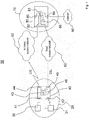
- Fig. 1 depicts an exemplary communication system 10 based on a hybrid access architecture for centrally controlling multiple or multi-connectivity access of at least one multi-connectivity capable customer equipment 20 to a data network 90 and/or to services provided by the data network 90.
- a multi-connectivity network device 80 which can be implemented in an ISP network 70.
- the data network 90 is the Internet, which can be connected via a network interface 84 to the network device 80.
- the network interface 84 for the sake of better understanding, only one multi-connectivity capable customer equipment 20 is illustrated.
- the multi-connectivity capable customer equipment 20 comprises at least a first access interface 44 and a second access interface 45.
- the first access network interface 44 is a 3GPP based wireless access network interface, e.g. a LTE or 5G based wireless access interface
- the second access interface 45 is, for example, a fixed access interface, in particular a DSL or fiber based access interface.
- the multi-connectivity capable customer equipment 20 may comprise a multi-connectivity capable coupling device 40, which includes the first access interface 44 and the second access interface 45.
- the customer equipment 20 may comprise a fixed-line end user device 30 and/or a mobile end user device 31.
- the coupling device 40 can comprise a fixed-line interface 41 and/or a Wi-Fi based interface 42, wherein the fixed-line interface 41 is connected by wire to the fixed-line end user device 30 and the Wi-Fi based interface 42 is adapted to communicate via air with a Wi-Fi interface of the mobile end user device 31.
- the coupling device 40 can be realized as a router.
- the coupling device 40 comprises a control unit 43, e.g. a microcontroller, which is adapted to perform a bundling software stored in the coupling device 40 to steer data transmission by selecting one of the access interfaces 44 and 45 or by using both access interfaces 44 and 45 simultaneously.
- the multipath TCP (MPTCP) network communication protocol can be used as the bundling software.
- the bundling software and a firmware may be stored in a memory 46 of the coupling device 40.
- the coupling device 40 is adapted to be connected via a wireless access network 50, e.g. a LTE or 5G wireless access network, and a fixed access network 60 to the multi-connectivity capable network device 80. Therefore, the multi-connectivity capable network device 80 comprises at least one network interface 82, which terminates both the wireless access network 50 and the fixed access network 60. It should be noted that the multi-connectivity capable network device 80 may comprise for example two separate network interfaces, each terminating the wireless access network 50 and the fixed access network 60, respectively.
- the network device 80 comprises a control unit 81, e.g. a microcontroller, which is adapted to perform a bundling software to steer data transmission from the data network 90 to the customer equipment 20 by selecting the wireless access network 50 and/or the fixed access network 60 or by selecting none of the access networks 50 and 60 in response to specific control instructions associated with the customer equipment 20.
- the microcontroller 81 is adapted to centrally control, in response to the control instructions stored in the network device 80 and associated with the customer equipment 20, the access of the at least one customer equipment 20 to the data network 90 and/or to services provided by the data network 90 by using the wireless access network 50 and/or the fixed access network 60 or none of the access networks 50, 60, i.e.
- the specific control instructions, a firmware and the bundling software may be stored in a memory 86.
- the control instructions define multiple access rules for centrally controlling multiple access of the customer equipment 20 to the data network 90.
- the multipath TCP (MPTCP) network communication protocol can be used as the bundling software.
- the control instructions associated with the customer equipment 20 may include service dependent control instructions and/or access network dependent control instructions and or time based control instructions and/or data volume based control instructions.
- Service dependent control instructions may define at least one specific service, which is open or blocked for access.
- Access network dependent control instructions may define which access network, i.e. the wireless access network 50 and/or the fixed access network 60, can be used for an Internet access of the customer equipment 20.
- Time based control instructions may define at least one time periode during which the customer equipment 20 obtains access or non-access to the data network 90.
- control instructions and the respective access configuration may be set by the ISP or by the user of the customer equipment 20.
- a user may be connected to an interface 85 of the network device 80 to deliver the respective control instructions to the network device 80.
- the coupling device 40 and/or the end user devices 30 and 31 have to be registered on the internet service provider network 70 and in particular in the network device 80.
- the network device 80 is now able to identify the customer equipment 20 once it will obtain access to the data network 90 and to perform the control instructions associated with that customer equipment 20.
- control instructions associated with the customer equipment 20 and preferably with the end user device 30 have been set by the parents to the following internet access limitations:
- Any other appropriate policy rules for centrally controlling multiple access of the end user 30 can be stored in the memory 86 of network device 80.
- coupling device 40 is preferably adapted to establish simultaneously
- the network device 80 receives a respective internet access request message from the end user device 30 and the coupling device 40, respectively, which contains inter alia an information identifying the end user device 30 and the coupling device 40, respectively.
- the information tells the network device 80, that the customer equipment 20 comprises a wireless access interface 44 and a fixed access interface 45.
- the network device 90 In response to the stored control information associated with the customer equipment 20 and the current time, the network device 90 allows multiple access to the data network 90 and to the online game by using both access networks 50 and 60. Once the time limit of 8pm is achieved the access to the data network 90 is dropped by the network device 80.
- FIG. 2 an alternative communication system 100 is depicted which exploits instead of a hybrid access network architecture as shown in Fig. 1 a fixed mobile convergence access network architecture according to 3GPP ATSSS.
- the exemplary communication system 100 is capable of centrally controlling multiple or multi-connectivity access of at least one multi-connectivity capable customer equipment 110 to a data network 150 and/or to services provided by the data network 150 by using a multi-connectivity network device 160, which can be implemented in an ISP network 170.
- a multi-connectivity network device 160 can be substantially identical in construction and function to network device 80.
- the data network 150 is the internet, which can be connected via a network interface 163 to the network device 160. For the sake of better understanding, only one customer equipment 110 is illustrated.
- the multi-connectivity capable customer equipment 110 comprises a mobile device 120, e.g. a mobile phone, and a coupling device 130, which may be a router.
- the mobile device 120 comprises preferably two different wireless access interfaces, namely a 3GPP based wireless access interface 121 and a Wi-Fi based wireless access interface 122.
- wireless access network interface 121 is a LTE or 5G based wireless access interface.
- the coupling device 130 comprises a Wi-Fi based interface 131, which is adapted to communicate via air with the Wi-Fi access interface 122 of the mobile end user device 120.
- the mobile device 120 comprises a control unit 123, e.g. a microcontroller, which is adapted to perform a bundling software stored in mobile device 120 to steer data transmission by selecting one of the wireless access interfaces 121 and 122 or by using both access interfaces 121 and 122 simultaneously.
- the multipath TCP (MPTCP) network communication protocol can be used as the bundling software.
- the bundling software can be stored in a storage 124 of the mobile device 120.
- the mobile end user device 120 is adapted to be connected via a wireless access network 140, e.g. a LTE or 5G wireless access network, and/or via a fixed access network 141 to the multi-connectivity capable network device 160. Therefore, network device 160 comprises at least one network interface 161, which terminates the wireless access network 140 and the fixed access network 141. It should be noted that the multi-connectivity capable network device 160 may comprise for example two separate network interfaces, each terminating the wireless access network 140 and the fixed access network 141, respectively. In addition, the network device 160 comprises a control unit 164, e.g.
- the microcontroller 164 is adapted to centrally control, in response to the control instructions stored in the network device 160 and preferably associated with the 3GPP based access interface 121 and the Wi-Fi based access interface 122 of the mobile device 120, the access of the at least one mobile device 120 to the data network 150 and/or to services provided by the data network 150.
- the specific control instructions, a firmware and the bundling software may be stored in a memory 166.
- the control instructions define multiple access rules for centrally controlling multiple access of the mobile device 120 and the customer equipment 110, respectively, to the data network 150.
- the multipath TCP (MPTCP) network communication protocol can be used as the bundling software.
- the control instructions associated with the customer equipment 110 and the mobile device 120, respectively, may include service dependent control instructions and/or access network dependent control instructions and or time based control instructions and/or data volume based control instructions.
- control instructions and the respective access configuration can be set by the ISP or preferably by the user of the customer equipment 110. Therefore, the user can be connected to an interface 165 of the network device 160 to deliver the respective control instructions to the network device 160.
- mobile device 120 and/or the coupling device 130 have to be registered in the internet service provider network 170 and in particular in the network device 160.
- the network device 160 is now able to identify the customer equipment 110 and the mobile device 120, respectively, once it will obtain access to the data network 150 and to perform the control instructions associated with that customer equipment 110.
- control instructions associated with the customer equipment 110 and preferably with the mobile device 120 have been set by the parents to the following internet access limitations:
- Each other policy rules for centrally controlling multiple access of the mobile device 120 can be stored in the memory 166 of network device 160.
- mobile device 120 When the user of the mobile device 120 is trying to obtain multiple access to the data network 150, mobile device 120 is preferably adapted to establish simultaneously i) a communication link via its wireless access interface 121 and the wireless access network 140 and ii) a communication link via its Wi-Fi access interface 122 and the fixed access network 141 to the network device 160.
- the network device 160 receives a respective internet access request message from the end user device 120 and the coupling device 130, respectively, which contains inter alia an information identifying the end user device 120 and the coupling device 130, respectively.
- the network device 160 In response to the stored control information associated with the customer equipment 120 and the current time, the network device 160 allows multiple access to the data network 150 and the online game by using both access networks 140 and 141. Once the time limit of 8pm is achieved the access to the data network 150 is dropped by the network device 160.
- both mobile end device 120 and the multi-connectivity capable network device 160 are capable of establishing tunneled communication links 180 and 181 via the wireless access network 141 and the fixed access network 140. Therefore, a respective tunneling software may be stored for example in memory 124 of the mobile device 120 and for example in memory 166 of the network device 160.
- a first and a second virtual access interface are used by the mobile end device 120, which are preferable generated in a firmware stored in memory 124.
- the first virtual access interface may be associated with the wireless access interface 121 and the second virtual access interface may be associated with the Wi-Fi access interface 122.
- the first virtual access interface is used as a termination point of a tunneled communication link over the wireless access network 140, whereas the second virtual access interface is used as a termination point of a tunneled communication link over the fixed access network.
- the network device 160 may use also a first and a second virtual network interface as termination point of a tunneled communication link via the wireless access network 140 and as a termination point of a tunneled communication link via the fixed access network 141, respectively.
- the virtual network interfaces may be implemented in a firmware stored in memory 166 of the network device 160.
- the network device 160 e.g. the microcontroller 81 centrally controls access of the mobile end 120 to the Internet 150 by selecting the first virtual network interface and/or the second virtual network interface or none of the virtual network interfaces.
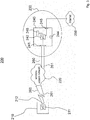
- FIG. 3 an alternative communication system 200 is depicted which exploits at least one access network.
- a single 3GPP based wireless access network 220 is implemented.
- the exemplary communication system 200 is capable of centrally controlling multiple or multi-connectivity access of at least one multi-connectivity capable customer equipment 210 to a data network 250 and/or to services provided by the data network 250 by using a multi-connectivity network device 240, which can be implemented in an ISP network 230.
- the network device 160 can be substantially identical in construction and function to network device 80.
- the data network 250 is the internet, which can be connected via a network interface 243 to the network device 240.
- the multi-connectivity capable customer equipment 210 is a mobile phone.
- the mobile phone 210 comprises at least one wireless access interfaces, preferable a 3GPP based wireless access interface 212.
- the mobile device 210 comprises a control unit 211, e.g. a microcontroller, which is adapted to perform a bundling software stored in mobile device 210 to steer single path or multipath data transmission.
- a bundling software stored in mobile device 210 to steer single path or multipath data transmission.
- the multipath TCP (MPTCP) network communication protocol can be used as the bundling software.
- MPTCP multipath TCP
- the mobile phone 210 is adapted to be connected via the wireless access network 220 to the multi-connectivity capable network device 240. Therefore, network device 240 comprises at least a multi-connectivity capable network interface 241, which terminates the wireless access network 220.
- the network device 240 comprises a control unit 242, e.g. a microcontroller, which is adapted to perform a bundling software to steer data transmission from the data network 250 to the mobile phone 210 by using a single path or multiple paths in response to specific control instructions associated with the customer equipment 210.
- the microcontroller 242 is adapted to centrally control, in response to the control instructions stored in the network device 240 and associated with the mobile phone 210 the access of the at least one mobile device 210 to the data network 240 and/or to services provided by the data network 240.
- multi-connectivity access technology used by the use equipment 20, 110 and 210 and the network device 80, 160 and 240 may be implemented in layer 2, 3, or 4 of the OSI reference model.
- the specific control instructions and the bundling software may be stored in a memory 246.
- the control instructions define multiple access rules for centrally controlling multiple access of the mobile device 210 to the data network 250.
- the multipath TCP (MPTCP) network communication protocol can be used as the bundling software.
- the control instructions associated with the mobile device 210 may include service dependent control instructions and/or access network dependent control instructions and or time based control instructions and/or data volume based control instructions.
- control instructions and the respective access configuration can be set by the ISP or preferably by a user. Therefore, the user can be connected to an interface 244 of the network device 240 to deliver the respective control instructions to the network device 240.
- the mobile device 210 In order to perform the multiple access control instructions associated with the mobile phone 210, preferably the mobile device 210 has to be registered in the internet service provider network 230 and in particular in the network device 240. As a result, the network device 240 is now able to identify the mobile phone 210, once it will obtain access to the data network 250 and to perform the control instructions associated with that mobile phone 210.
- control instructions associated with the mobile phone 21 have been set by the parents to the following internet access limitations:
- Each other policy rules for centrally controlling multiple access of the mobile device 210 can be stored in the memory 246 of network device 240.
- mobile device 210 When the user of the mobile device 210 is trying to obtain multiple access to the data network 250, mobile device 210 is preferably adapted to establish simultaneously i) a communication link 260 and a communication link 261 via its wireless access interface 212 and the wireless access network 220.
- the network device 240 receives a respective internet access request message from the mobile end user device 210, which contains inter alia an information identifying the mobile phone 210.
- the network device 240 In response to the stored control information associated with the mobile phone 210 and the current time, the network device 240 allows multiple access to the data network 250 and the online game by using both communication links 260 and 261 via the wireless access network 220. Once the time limit of 8pm is achieved the access to the data network 250 is dropped by the network device 240.
- the network device 240 is preferably configured to
- the mobile phone 210 and the multi-connectivity capable network device 240 are capable of establishing tunneled communication links via the wireless access network 220. Therefore, a respective tunneling software may be stored on the mobile device 210 and the network device 240.
- a multi-connectivity capable network device 80, 160 (see Fig. 1 and Fig 2 , respectively) is provided for centrally controlling multiple access of a multi-connectivity capable customer equipment 20, 110 to a data network 90, 150 and/or to services provided by the data network, wherein the multi-connectivity capable network device 80, 160 is configured to centrally control, in response to control instructions stored in the multi-connectivity capable network device 80, 160 and associated with a multi-connectivity capable customer equipment 20, 110 having a first access interface 44, 121 and a second access interface 45, 122, the access of a multi-connectivity capable customer equipment 20, 110 to a data network 90, 150 and/or to services provided by the data network, wherein the multi-connectivity capable network device 80, 160 comprises at least one access network interface 82, 161 configured to enable connection to a first access network 60, 141 and to a second access network 50, 140, and a network interface 84, 163 configured to enable connection to a data network 90, 150.
- the multi-connectivity capable network device 80, 160 is configured to centrally control, in response to control instructions, the access of a multi-connectivity capable customer equipment 20, 110 to the data network 90, 150 and/or to services provided by the data network by shaping data traffic provided via the first access network 50, 140 and/or the second access network 60; 141..
- the network device 80; 160 may be configured to shape the data traffic by selecting the first access network 50, 140 and/or the second access network 60; 141 or by blocking the first access network 50, 140 and the second access network 60, 141 to and/or from the multi-connectivity capable customer equipment 20, 110. It should be noted that at least a third access network can be installed between the multi-connectivity capable customer equipment 20, 110 and the network device 80, 160 to still enable the multi-connectivity capable customer equipment 20, 110 to get access to the data network 90, 150.
- the network device 80, 160 may be configured to shape the data traffic by adjusting the data rate used for the data traffic provided via the first access network 50, 140 and/or the data rate used for the data traffic provided via the second access network 60; 141. Therefore, a programmable data rate scheduler can be implemented in the network device 80, 160, to adjust or adapt the respective data rates in response to predefined parameters, like time parameters and/or access network parameters. Preferably, each data rate is higher than 0 bps.
- the multi-connectivity capable network device 80, 160 is preferably configured to
- control instructions associated with the customer equipment 20, 110 and its first access interface 44, 121 and second access interface 45, 122, respectively include service dependent control instructions and/or access network dependent control instructions and/or time based control instructions and/or data volume based control instructions.
- Service dependent control instructions may comprise a white and/or black list of different services to which access is granted or not.
- Time based control instructions preferably define at least one time interval during which access is granted or not.
- Data volume based control instructions preferably define the amount of data to be transmitted from or to the customer equipment 20, 110.
- Access network dependent control instructions preferable define the access network or access networks to be used by the customer equipment 20, 110 to communicate with the data network 90, 150.
- an interface 85, 165 for external configuration of the control instructions may be implemented in the multi-connectivity capable network device 80, 160.
- a communication system 10, 100 (see Fig. 1 and 2 , respectively) is provided for centrally controlling multiple access of a multi-connectivity capable customer equipment 20, 110 to a data network 90, 150 and/or to services provided by the data network.
- the communication system 10, 100 may comprise the following features:
- the at least one customer equipment 20, 110 is configured to control data transmission using the first and/or second access interface 44, 45; 121, 122.
- the first access network 50 is a wireless access network and the second access network 60 is a fixed access network, wherein the at least one multi-connectivity capable customer equipment 20 comprises at least one an end user device 30, 31 and a coupling device 40, which are configured to be connected to each other, wherein the first and second access interfaces 44, 45 are implemented in the coupling device 40.
- This communication system 10 is preferably based on a hybrid access network architecture.
- the first access network 140 is a wireless access network and the second access network 141 is a fixed access network
- the at least one customer equipment 110 comprises a mobile end user device 120 and a coupling device 130 connected to the second access network 141
- the first and second access interfaces 121, 122 are implemented in the mobile end user 120
- the first access interface 122 is configured to communicate via a wireless connection with the coupling device 130
- the second access interface 122 is configured to communicate via the first access network 140.
- the multi-connectivity capable network device 80, 160 is preferably configured to identify the at least one customer equipment 20 110, e.g. a respective identification and the access interfaces implemented in the customer equipment, and to detect, whether the at least one customer equipment 20, 110 is connected to the multi-connectivity capable network device 80, 160 via the first and/or second access network 50, 60; 140, 141.
- a communication system 200 for centrally controlling multiple access of a customer equipment 210 to a data network 250 and/or to services provided by the data network, as depicted in Fig. 3 .
- the communication system 200 comprises the following features:
- the network device 240 is configured to centrally control the access of the multi-connectivity capable customer equipment 210 to the data network 250 and/or to services provided by the data network 250 by shaping data traffic provided via the at least two communication links (260, 261) of the at least one access network (220).
- the network device 240 is configured to shape the data traffic by selecting at least one of the at least two communication links 260, 261 or by blocking the at least two communication links 260, 261 to and/or from the multi-connectivity capable customer equipment 210.
- the network device 240 may be configured to shape the data traffic by adjusting the data rate used for the data traffic provided via one of the at least two communication links and/or the data rate used for the data traffic provided via the other communication link of the at least two communication links.
- a programmable data rate scheduler can be implemented in the network device 240, to adjust or adapt the respective data rates preferably in response to predefined parameters, like time parameters and/or access network parameters and or communication link parameters.
- predefined parameters like time parameters and/or access network parameters and or communication link parameters.
- each data rate is higher than 0 bps.
- the multi-connectivity capable network device 240 is preferably configured to
- the control instructions may include service dependent control instructions and/or communication link dependent control instructions and/or time based control instructions and/or data volume based control instructions.
- Service dependent control instructions may comprise a white and/or black list of different services to which access is granted or not.
- Time based control instructions preferably define at least one time interval during which access is granted or not.
- Data volume based control instructions preferably define the amount of data to be transmitted from or to the customer equipment 210.
- Communication link dependent control instructions preferable define the communication links to be used by the customer equipment 210 to communicate with the data network 250.
- the multi-connectivity capable network device 240 is configured to identify the at least one customer equipment 210, e.g. a respective identification and the access interface implemented in the customer equipment, and to detect, whether the at least one customer equipment is connected to the multi-connectivity capable network device 240 via the at least two communication links 260, 261.
Landscapes
- Engineering & Computer Science (AREA)
- Computer Networks & Wireless Communication (AREA)
- Signal Processing (AREA)
- Computer Security & Cryptography (AREA)
- Mobile Radio Communication Systems (AREA)
Abstract
the multi-connectivity capable network device (80) comprises at least one access network interface (82) configured to enable connection to a first access network (50) and to a second access network (60) and a network interface (84) configured to enable connection to a data network (90).
Description
- The present invention relates to a multi-connectivity capable network device and to communication systems for centrally controlling multiple access of a multi-connectivity capable customer equipment to a data network and/or to services provided by the data network, wherein the data network may be the Internet.
- The Internet has developed into a ubiquitous communication system accessible through multiple access technologies, which, inter alia, provides a huge amount of data to end users. As a result, great efforts are undertaken with respect to multi-connectivity or multipath solutions for aggregation and improved traffic balancing by using different access technologies.
- Different approaches are pursued to provide customers multiple types of access technologies to get access to the internet. One approach is the combination of a fixed access network like DSL and a mobile access network like LTE, which connect at least a hybrid customer premises equipment (HCPE) to a hybrid access gateway (HAG) of an ISP. This approach is described in BBF, "Hybrid Access Broadband Network Architecture", TR-348, July 2016.
- An alternative approach is described for example in 3GPP, "System Architecture for the 5G System (Release 15)", TR 23.793 February 2017. This system architecture supports mobile devices having two different wireless access interfaces in getting multiple access via a 3GPP access network like LTE or 5G and an untrusted non-3GPP access network like DSL to the internet by using a multi-connectivity termination point with a user plane functionality (UPF).
- It is an object of the present invention to provide a multi-connectivity capable network device and communication systems for centrally controlling multiple access of at least one multi-connectivity capable custom equipment to a data network and/or to services provided by the data network without any modification on the multi-connectivity capable customer equipment.
- The technical problem mentioned above is solved by the features of independent claims 1, 7 and 11.
- An aspect of the invention can be seen in that that a multi-connectivity capable customer equipment can be connected over different access interfaces and different access networks to a multi-connectivity termination point which centrally controls multiple access of the customer equipment via different access networks to a data network like the Internet and/or services provided by the data network. In case of 5G ATSSS multi-connectivity termination point is a UPF-ATSSS network device and in case of a hybrid access architecture it can be implemented in a hybrid access gateway. The multi-connectivity termination point is also called a multi-connectivity capable network device, which is preferably operated by an ISP.
- A further preferable aspect of the present invention may be to perform centrally a parental controlled access limiting functionality by a multi-connectivity capable network device, which gives parents the chance to easily manage children's internet access independent on the access type and user equipment, which is used. With other words: No specific app has to be installed in a user equipment.
- A still further aspect of the present invention may be seen in implementing an overarching access control functionality in a multi-connectivity capable network device, which centrally controls every possible connectivity/access of a multi-connectivity capable user equipment towards the internet. This can be exploited by setting overarching time, volume, speed or service limitations for e.g. parental control in the multi-connectivity capable network device of a service provider network itself, without any application or modification on the customer equipment.
- In particular, central access and service steering according to the present invention considers the individual access type of a multiple or multi-connectivity access system. Based on the access type, e.g. fixed or mobile access network technology, different access and/or service limitations can be set. For example, it can be differentiated, if a multi-connectivity customer equipment is connected over a cellular access interface, a Wi-Fi access interface or both access interfaces. According to respective access limitation policies, it might be applied that services are declined or reduced in speed. Furthermore, the usage of an access interface and an access network, respectively, can be declined according to a parental control functionality which for example gives one hour access over cellular access interface per day and two hour access over a Wi-Fi access interface or to a total time for the combined usage of a respective multi-connectivity capable customer equipment.
- Independent of any mentioned use cases like 5G ATSSS and hybrid access networks, the present invention can be realized in any network architecture, which provides access over multiple access technologies and exploits a converged user plane implemented in a multi-connectivity capable network device of an ISP.
- The multiple access of a multi-connectivity capable customer equipment to a data network and/or to services provided by the data network can be centrally controlled or limited on the following basis: e.g. per time, volume, service, user equipment, account, budget, access type or any combination of these parameters.
- An access configuration, e.g. different access control rules, can be applied from the network operator of the multi-connectivity capable network device, may be based on tariff information. Another option may provide an interface (API) for external configuration of access limitations by a client device or a customer web interface.
- In the claims and the description the expressions "multi-connectivity capable network device" and "multi-connectivity capable customer equipment" mean in particular the capability that the multi-connectivity customer equipment and the multi-connectivity capable network device are configured to communicate via different paths or different communication links of a single session. The different paths or different communication links can be, for example, established over different access networks or over a common access network.
- Preferred embodiments of the invention are described in detail with respect to the following figures, wherein:
- Fig. 1
- shows an exemplary communication system according to the invention, which exploits a hybrid access network architecture,
- Fig. 2
- shows an alternative exemplary communication system according to the invention, which exploits different access technologies based on 3GPP ATSSS,
- Fig. 3
- shows an alternative exemplary communication system comprising a single access network, which provides a multi-connectivity access.
-
Fig. 1 depicts anexemplary communication system 10 based on a hybrid access architecture for centrally controlling multiple or multi-connectivity access of at least one multi-connectivitycapable customer equipment 20 to adata network 90 and/or to services provided by thedata network 90. This is realized by using amulti-connectivity network device 80, which can be implemented in anISP network 70. In particular, thedata network 90 is the Internet, which can be connected via anetwork interface 84 to thenetwork device 80. For the sake of better understanding, only one multi-connectivitycapable customer equipment 20 is illustrated. - The multi-connectivity
capable customer equipment 20 comprises at least afirst access interface 44 and asecond access interface 45. Preferably, the firstaccess network interface 44 is a 3GPP based wireless access network interface, e.g. a LTE or 5G based wireless access interface, whereas thesecond access interface 45 is, for example, a fixed access interface, in particular a DSL or fiber based access interface. As shown inFig. 1 , the multi-connectivitycapable customer equipment 20 may comprise a multi-connectivitycapable coupling device 40, which includes thefirst access interface 44 and thesecond access interface 45. Furthermore, thecustomer equipment 20 may comprise a fixed-lineend user device 30 and/or a mobileend user device 31. Thecoupling device 40 can comprise a fixed-line interface 41 and/or a Wi-Fi basedinterface 42, wherein the fixed-line interface 41 is connected by wire to the fixed-lineend user device 30 and the Wi-Fi basedinterface 42 is adapted to communicate via air with a Wi-Fi interface of the mobileend user device 31. Thecoupling device 40 can be realized as a router. In addition, thecoupling device 40 comprises acontrol unit 43, e.g. a microcontroller, which is adapted to perform a bundling software stored in thecoupling device 40 to steer data transmission by selecting one of theaccess interfaces access interfaces memory 46 of thecoupling device 40. - In order to obtain multiple access to the
data network 90 via the multi-connectivitycapable network device 80, thecoupling device 40 is adapted to be connected via awireless access network 50, e.g. a LTE or 5G wireless access network, and afixed access network 60 to the multi-connectivitycapable network device 80. Therefore, the multi-connectivitycapable network device 80 comprises at least onenetwork interface 82, which terminates both thewireless access network 50 and thefixed access network 60. It should be noted that the multi-connectivitycapable network device 80 may comprise for example two separate network interfaces, each terminating thewireless access network 50 and thefixed access network 60, respectively. - In addition, the
network device 80 comprises acontrol unit 81, e.g. a microcontroller, which is adapted to perform a bundling software to steer data transmission from thedata network 90 to thecustomer equipment 20 by selecting thewireless access network 50 and/or thefixed access network 60 or by selecting none of theaccess networks customer equipment 20. With other words: Themicrocontroller 81 is adapted to centrally control, in response to the control instructions stored in thenetwork device 80 and associated with thecustomer equipment 20, the access of the at least onecustomer equipment 20 to thedata network 90 and/or to services provided by thedata network 90 by using thewireless access network 50 and/or thefixed access network 60 or none of theaccess networks customer equipment 20 and thus blocking completely access to thedata network 90. The specific control instructions, a firmware and the bundling software may be stored in amemory 86. The control instructions define multiple access rules for centrally controlling multiple access of thecustomer equipment 20 to thedata network 90. For example, the multipath TCP (MPTCP) network communication protocol can be used as the bundling software. The control instructions associated with thecustomer equipment 20 may include service dependent control instructions and/or access network dependent control instructions and or time based control instructions and/or data volume based control instructions. Service dependent control instructions may define at least one specific service, which is open or blocked for access. Access network dependent control instructions may define which access network, i.e. thewireless access network 50 and/or thefixed access network 60, can be used for an Internet access of thecustomer equipment 20. Time based control instructions may define at least one time periode during which thecustomer equipment 20 obtains access or non-access to thedata network 90. - It should be noted, that the control instructions and the respective access configuration, respectively, may be set by the ISP or by the user of the
customer equipment 20. For example, a user may be connected to aninterface 85 of thenetwork device 80 to deliver the respective control instructions to thenetwork device 80. - In order to perform the multiple access control instructions associated with the
customer equipment 20, preferably thecoupling device 40 and/or theend user devices service provider network 70 and in particular in thenetwork device 80. As a result, thenetwork device 80 is now able to identify thecustomer equipment 20 once it will obtain access to thedata network 90 and to perform the control instructions associated with thatcustomer equipment 20. - In an exemplary use case, the control instructions associated with the
customer equipment 20 and preferably with theend user device 30 have been set by the parents to the following internet access limitations: - i) Access time from 6pm to 8pm, use of both
access networks interfaces data network 90, but only to predefined internet services. - ii) Access time from 8am to 6pm; only use via fixed
access network 50 todata network 90, but only to predetermined services. - iii) Any request for getting access to the
data network 90 generated by theend user device 30, which lies outside the defined access times is denied by thenetwork device 80. - Any other appropriate policy rules for centrally controlling multiple access of the
end user 30 can be stored in thememory 86 ofnetwork device 80. - Now it is assumed, that it is 7pm and the user of the
end device 30 will play an online game. - When the user of the
customer equipment 20 is trying to obtain multiple access to thedata network 90,coupling device 40 is preferably adapted to establish simultaneously - i) a communication link via its
wireless access interface 44 and thewireless access network 60 and - ii) a communication link via its fixed
access interface 45 and the fixedaccess network 50 to thenetwork device 80. - Now, the
network device 80 receives a respective internet access request message from theend user device 30 and thecoupling device 40, respectively, which contains inter alia an information identifying theend user device 30 and thecoupling device 40, respectively. In particular, the information tells thenetwork device 80, that thecustomer equipment 20 comprises awireless access interface 44 and a fixedaccess interface 45. - In response to the stored control information associated with the
customer equipment 20 and the current time, thenetwork device 90 allows multiple access to thedata network 90 and to the online game by using bothaccess networks data network 90 is dropped by thenetwork device 80. - In
Fig. 2 analternative communication system 100 is depicted which exploits instead of a hybrid access network architecture as shown inFig. 1 a fixed mobile convergence access network architecture according to 3GPP ATSSS. - The
exemplary communication system 100 is capable of centrally controlling multiple or multi-connectivity access of at least one multi-connectivitycapable customer equipment 110 to adata network 150 and/or to services provided by thedata network 150 by using amulti-connectivity network device 160, which can be implemented in anISP network 170. It is noted, that thenetwork device 160 can be substantially identical in construction and function to networkdevice 80. Preferably, thedata network 150 is the internet, which can be connected via anetwork interface 163 to thenetwork device 160. For the sake of better understanding, only onecustomer equipment 110 is illustrated. - The multi-connectivity
capable customer equipment 110 comprises amobile device 120, e.g. a mobile phone, and acoupling device 130, which may be a router. Themobile device 120 comprises preferably two different wireless access interfaces, namely a 3GPP basedwireless access interface 121 and a Wi-Fi basedwireless access interface 122. Preferably, wirelessaccess network interface 121 is a LTE or 5G based wireless access interface. - As shown in
Fig. 2 , thecoupling device 130 comprises a Wi-Fi basedinterface 131, which is adapted to communicate via air with the Wi-Fi access interface 122 of the mobileend user device 120. In addition, themobile device 120 comprises acontrol unit 123, e.g. a microcontroller, which is adapted to perform a bundling software stored inmobile device 120 to steer data transmission by selecting one of thewireless access interfaces access interfaces storage 124 of themobile device 120. - In order to obtain multiple access to the
data network 150 via the multi-connectivitycapable network device 160, the mobileend user device 120 is adapted to be connected via awireless access network 140, e.g. a LTE or 5G wireless access network, and/or via a fixedaccess network 141 to the multi-connectivitycapable network device 160. Therefore,network device 160 comprises at least onenetwork interface 161, which terminates thewireless access network 140 and the fixedaccess network 141. It should be noted that the multi-connectivitycapable network device 160 may comprise for example two separate network interfaces, each terminating thewireless access network 140 and the fixedaccess network 141, respectively. In addition, thenetwork device 160 comprises acontrol unit 164, e.g. a microcontroller, which is adapted to perform a bundling software to steer data transmission from thedata network 150 to thecustomer equipment 110 by selecting thewireless access network 140 and/or the fixedaccess network 141 or by blocking bothaccess networks customer equipment 110 in response to specific control instructions associated with thecustomer equipment 110 and themobile device 120, respectively. With other words: Themicrocontroller 164 is adapted to centrally control, in response to the control instructions stored in thenetwork device 160 and preferably associated with the 3GPP basedaccess interface 121 and the Wi-Fi basedaccess interface 122 of themobile device 120, the access of the at least onemobile device 120 to thedata network 150 and/or to services provided by thedata network 150. - The specific control instructions, a firmware and the bundling software may be stored in a
memory 166. The control instructions define multiple access rules for centrally controlling multiple access of themobile device 120 and thecustomer equipment 110, respectively, to thedata network 150. For example, the multipath TCP (MPTCP) network communication protocol can be used as the bundling software. The control instructions associated with thecustomer equipment 110 and themobile device 120, respectively, may include service dependent control instructions and/or access network dependent control instructions and or time based control instructions and/or data volume based control instructions. - It should be noted, that the control instructions and the respective access configuration, respectively, can be set by the ISP or preferably by the user of the
customer equipment 110. Therefore, the user can be connected to aninterface 165 of thenetwork device 160 to deliver the respective control instructions to thenetwork device 160. - In order to perform the multiple access control instructions associated with the
customer equipment 110, preferablymobile device 120 and/or thecoupling device 130 have to be registered in the internetservice provider network 170 and in particular in thenetwork device 160. As a result, thenetwork device 160 is now able to identify thecustomer equipment 110 and themobile device 120, respectively, once it will obtain access to thedata network 150 and to perform the control instructions associated with thatcustomer equipment 110. - In an exemplary use case, the control instructions associated with the
customer equipment 110 and preferably with themobile device 120 have been set by the parents to the following internet access limitations: - i) Access time from 6pm to 8pm, use of both
access networks interfaces data network 150, but only to predefined internet services. - ii) Access time from 8am to 6pm; only use of Wi-
Fi access interface 122 and the fixedaccess network 140 todata network 150, but only to predetermined services. - iii) Any request for getting access to the
data network 150 generated by theend user device 120, which lies outside the defined access times, is denied by thenetwork device 160. - Each other policy rules for centrally controlling multiple access of the
mobile device 120 can be stored in thememory 166 ofnetwork device 160. - Now, it is assumed that it is 7pm and the user of the
mobile device 120 will play an online game. - When the user of the
mobile device 120 is trying to obtain multiple access to thedata network 150,mobile device 120 is preferably adapted to establish simultaneously i) a communication link via itswireless access interface 121 and thewireless access network 140 and ii) a communication link via its Wi-Fi access interface 122 and the fixedaccess network 141 to thenetwork device 160. - Now, the
network device 160 receives a respective internet access request message from theend user device 120 and thecoupling device 130, respectively, which contains inter alia an information identifying theend user device 120 and thecoupling device 130, respectively. - In response to the stored control information associated with the
customer equipment 120 and the current time, thenetwork device 160 allows multiple access to thedata network 150 and the online game by using bothaccess networks data network 150 is dropped by thenetwork device 160. - It should be noted, that both
mobile end device 120 and the multi-connectivitycapable network device 160 are capable of establishing tunneledcommunication links wireless access network 141 and the fixedaccess network 140. Therefore, a respective tunneling software may be stored for example inmemory 124 of themobile device 120 and for example inmemory 166 of thenetwork device 160. - When using a tunneling technology, for example a first and a second virtual access interface are used by the
mobile end device 120, which are preferable generated in a firmware stored inmemory 124. The first virtual access interface may be associated with thewireless access interface 121 and the second virtual access interface may be associated with the Wi-Fi access interface 122. The first virtual access interface is used as a termination point of a tunneled communication link over thewireless access network 140, whereas the second virtual access interface is used as a termination point of a tunneled communication link over the fixed access network. Thenetwork device 160 may use also a first and a second virtual network interface as termination point of a tunneled communication link via thewireless access network 140 and as a termination point of a tunneled communication link via the fixedaccess network 141, respectively. The virtual network interfaces may be implemented in a firmware stored inmemory 166 of thenetwork device 160. In this case, thenetwork device 160, e.g. themicrocontroller 81 centrally controls access of themobile end 120 to theInternet 150 by selecting the first virtual network interface and/or the second virtual network interface or none of the virtual network interfaces. - Such a tunnel technology can also be exploited by the
communication system 10. - In
Fig. 3 analternative communication system 200 is depicted which exploits at least one access network. In the present case a single 3GPP basedwireless access network 220 is implemented. - The
exemplary communication system 200 is capable of centrally controlling multiple or multi-connectivity access of at least one multi-connectivitycapable customer equipment 210 to adata network 250 and/or to services provided by thedata network 250 by using amulti-connectivity network device 240, which can be implemented in anISP network 230. It is noted, that thenetwork device 160 can be substantially identical in construction and function to networkdevice 80. Preferably, thedata network 250 is the internet, which can be connected via a network interface 243 to thenetwork device 240. For the sake of better understanding, only onecustomer equipment 210 is illustrated. In the present case, the multi-connectivitycapable customer equipment 210 is a mobile phone. - The
mobile phone 210 comprises at least one wireless access interfaces, preferable a 3GPP basedwireless access interface 212. In addition, themobile device 210 comprises a control unit 211, e.g. a microcontroller, which is adapted to perform a bundling software stored inmobile device 210 to steer single path or multipath data transmission. For example, the multipath TCP (MPTCP) network communication protocol can be used as the bundling software. - In order to obtain multiple or multi-connectivity access to the
data network 250 via the multi-connectivitycapable network device 240, themobile phone 210 is adapted to be connected via thewireless access network 220 to the multi-connectivitycapable network device 240. Therefore,network device 240 comprises at least a multi-connectivitycapable network interface 241, which terminates thewireless access network 220. In addition, thenetwork device 240 comprises acontrol unit 242, e.g. a microcontroller, which is adapted to perform a bundling software to steer data transmission from thedata network 250 to themobile phone 210 by using a single path or multiple paths in response to specific control instructions associated with thecustomer equipment 210. With other words: Themicrocontroller 242 is adapted to centrally control, in response to the control instructions stored in thenetwork device 240 and associated with themobile phone 210 the access of the at least onemobile device 210 to thedata network 240 and/or to services provided by thedata network 240. - It should be noted, that the multi-connectivity access technology used by the
use equipment network device - The specific control instructions and the bundling software may be stored in a
memory 246. The control instructions define multiple access rules for centrally controlling multiple access of themobile device 210 to thedata network 250. For example, the multipath TCP (MPTCP) network communication protocol can be used as the bundling software. The control instructions associated with themobile device 210 may include service dependent control instructions and/or access network dependent control instructions and or time based control instructions and/or data volume based control instructions. - It should be noted, that the control instructions and the respective access configuration, respectively, can be set by the ISP or preferably by a user. Therefore, the user can be connected to an
interface 244 of thenetwork device 240 to deliver the respective control instructions to thenetwork device 240. - In order to perform the multiple access control instructions associated with the
mobile phone 210, preferably themobile device 210 has to be registered in the internetservice provider network 230 and in particular in thenetwork device 240. As a result, thenetwork device 240 is now able to identify themobile phone 210, once it will obtain access to thedata network 250 and to perform the control instructions associated with thatmobile phone 210. - In an exemplary use case, the control instructions associated with the mobile phone 21 have been set by the parents to the following internet access limitations:
- i) Access time from 6pm to 8pm, use of two
communication links data network 250, but only to predefined internet services. - ii) Access time from 8am to 6pm; use of only one communication link to get access to
data network 250, but only to predetermined services. - iii) Any request for getting access to the
data network 250 generated by user of themobile phone 210, which lies outside the defined access times, is denied by thenetwork device 240. - Each other policy rules for centrally controlling multiple access of the
mobile device 210 can be stored in thememory 246 ofnetwork device 240. - Now, it is assumed that it is 7pm and the user of the
mobile device 210 will play an online game. - When the user of the
mobile device 210 is trying to obtain multiple access to thedata network 250,mobile device 210 is preferably adapted to establish simultaneously i) acommunication link 260 and acommunication link 261 via itswireless access interface 212 and thewireless access network 220. - Now, the
network device 240 receives a respective internet access request message from the mobileend user device 210, which contains inter alia an information identifying themobile phone 210. - In response to the stored control information associated with the
mobile phone 210 and the current time, thenetwork device 240 allows multiple access to thedata network 250 and the online game by using bothcommunication links wireless access network 220. Once the time limit of 8pm is achieved the access to thedata network 250 is dropped by thenetwork device 240. - It should be noted that the
network device 240 is preferably configured to - i) deny, with respect to the at least one multi-connectivity capable
mobile phone 210, access to thedata network 250 completely or to - ii) allow, with respect to the at least one multi-connectivity capable
mobile phone 210, access to thedata network 250 by using one of the communication links 260, 261 or by using bothcommunication links network device 240. Preferably, each data rate is higher than 0 bps. - Furthermore, it should be noted, that the
mobile phone 210 and the multi-connectivitycapable network device 240 are capable of establishing tunneled communication links via thewireless access network 220. Therefore, a respective tunneling software may be stored on themobile device 210 and thenetwork device 240. - At least some of the exemplary aspects illustrated above are summarized now.
- According to a preferred aspect, a multi-connectivity
capable network device 80, 160 (seeFig. 1 andFig 2 , respectively) is provided for centrally controlling multiple access of a multi-connectivitycapable customer equipment data network capable network device capable network device capable customer equipment first access interface second access interface capable customer equipment data network capable network device access network interface first access network second access network network interface data network
Preferably, the multi-connectivitycapable network device capable customer equipment data network first access network second access network 60; 141.. - In a preferred embodiment, the
network device 80; 160 may be configured to shape the data traffic by selecting thefirst access network second access network 60; 141 or by blocking thefirst access network second access network capable customer equipment capable customer equipment network device capable customer equipment data network - Preferably, the
network device first access network second access network 60; 141. Therefore, a programmable data rate scheduler can be implemented in thenetwork device - With other words: The multi-connectivity
capable network device - i) deny, with respect to the at least one multi-connectivity
capable customer equipment data network - ii) allow, with respect to the at least one multi-connectivity
capable customer equipment data network network device - Preferably, the control instructions associated with the
customer equipment first access interface second access interface customer equipment customer equipment data network - In order to allow, for example, parents to control the control instructions an
interface capable network device - According to a further aspect, a
communication system 10, 100 (seeFig. 1 and2 , respectively) is provided for centrally controlling multiple access of a multi-connectivitycapable customer equipment data network communication system - a
first access network second access network - a multi-connectivity
capable network device access network interface first access network second access networks - at least one multi-connectivity
capable customer equipment first access interface first access network capable network device second access interface second access network capable network device capable network device network device capable customer equipment capable customer equipment data network - Preferably, the at least one
customer equipment second access interface - In a preferred embodiment of the
communication system 10, thefirst access network 50 is a wireless access network and thesecond access network 60 is a fixed access network, wherein
the at least one multi-connectivitycapable customer equipment 20 comprises at least one anend user device coupling device 40, which are configured to be connected to each other, wherein the first and second access interfaces 44, 45 are implemented in thecoupling device 40. Thiscommunication system 10 is preferably based on a hybrid access network architecture. - In an alternative preferred embodiment, the
first access network 140 is a wireless access network and thesecond access network 141 is a fixed access network, wherein the at least onecustomer equipment 110 comprises a mobileend user device 120 and acoupling device 130 connected to thesecond access network 141, wherein the first and second access interfaces 121, 122 are implemented in themobile end user 120, wherein thefirst access interface 122 is configured to communicate via a wireless connection with thecoupling device 130 and wherein thesecond access interface 122 is configured to communicate via thefirst access network 140. - In order to centrally control a multiple access of the
customer equipment capable network device customer equipment 20 110, e.g. a respective identification and the access interfaces implemented in the customer equipment, and to detect, whether the at least onecustomer equipment capable network device second access network - According to a further exemplary aspect, a
communication system 200 is provided for centrally controlling multiple access of acustomer equipment 210 to adata network 250 and/or to services provided by the data network, as depicted inFig. 3 . Thecommunication system 200 comprises the following features: - at least one
access network 220, - a multi connectivity
capable network device 240 of an operator network, wherein the multi-connectivitycapable network device 240 comprises a network interface 243 for connecting to adata network 250, and wherein the multi-connectivitycapable network device 240 terminates the at least oneaccess network 220, - at least one multi
connectivity customer equipment 210 comprising anaccess interface 212 configured to communicate via at least twoindependent communication links access network 220 with the multi-connectivitycapable network device 240, wherein the multi-connectivitycapable network device 240 is configured to centrally control, in response to control instructions stored in the network device and associated with the multi-connectivitycapable customer device 210, the access of the at least onecustomer equipment 210 to thedata network 250 and/or to services provided by the data network. - Preferably, the
network device 240 is configured to centrally control the access of the multi-connectivitycapable customer equipment 210 to thedata network 250 and/or to services provided by thedata network 250 by shaping data traffic provided via the at least two communication links (260, 261) of the at least one access network (220). - In a preferred embodiment, the
network device 240 is configured to shape the data traffic by selecting at least one of the at least twocommunication links communication links capable customer equipment 210. - Preferably, the
network device 240 may be configured to shape the data traffic by adjusting the data rate used for the data traffic provided via one of the at least two communication links and/or the data rate used for the data traffic provided via the other communication link of the at least two communication links. - Therefore, a programmable data rate scheduler can be implemented in the
network device 240, to adjust or adapt the respective data rates preferably in response to predefined parameters, like time parameters and/or access network parameters and or communication link parameters. Preferably, each data rate is higher than 0 bps. - With other words: The multi-connectivity
capable network device 240 is preferably configured to - i) deny, with respect to the at least one multi-connectivity
capable customer equipment 210, its access to thedata network 250 completely or to - ii) allow, with respect to the at least one multi-connectivity
capable customer equipment 210, its access to thedata network 250 by using at least one of the at least twocommunication links network device - The control instructions may include service dependent control instructions and/or communication link dependent control instructions and/or time based control instructions and/or data volume based control instructions. Service dependent control instructions may comprise a white and/or black list of different services to which access is granted or not. Time based control instructions preferably define at least one time interval during which access is granted or not. Data volume based control instructions preferably define the amount of data to be transmitted from or to the
customer equipment 210. Communication link dependent control instructions preferable define the communication links to be used by thecustomer equipment 210 to communicate with thedata network 250. - In order to centrally control a multiple access of the
customer equipment 210, the multi-connectivitycapable network device 240 is configured to identify the at least onecustomer equipment 210, e.g. a respective identification and the access interface implemented in the customer equipment, and to detect, whether the at least one customer equipment is connected to the multi-connectivitycapable network device 240 via the at least twocommunication links
Claims (16)
- A multi-connectivity capable network device (80; 160) for centrally controlling multiple access of a multi-connectivity capable customer equipment (20; 110) to a data network (90; 150) and/or to services provided by the data network, wherein
the network device (80; 160) is configured to centrally control, in response to control instructions stored in the network device (80; 160) and associated with a multi-connectivity capable customer equipment (20; 110) having a first access interface (44; 121) and a second access interface (45; 122), the access of the multi-connectivity capable customer equipment (20; 110) to a data network (90; 150) and/or to services provided by the data network, wherein
the multi-connectivity capable network device (80; 160) comprises at least one access network interface (82; 161) configured to enable connection to a first access network (60; 141) and to a second access network (50; 140) and a network interface (84; 163) configured to enable connection to a data network (90; 150). - The multi-connectivity capable network device of claim 1,
wherein the control instructions associated with the customer equipment (20; 110) include service dependent control instructions and/or access network dependent control instructions and/or time based control instructions and/or data volume based control instructions. - The multi-connectivity capable network device of claim 1 or 2, further comprising
an interface (85; 165) configured to enable an external configuration of the control instructions. - The multi-connectivity capable network device of any one of the preceding claims, wherein
the network device (80; 160) is configured to centrally control the access of the multi-connectivity capable customer equipment (20; 110) to the data network (90; 150) and/or to services provided by the data network by shaping data traffic provided via the first access network (50, 140) and/or the second access network (60; 141). - The multi-connectivity capable network device of claim 4, wherein
the network device (80; 160) is configured to shape the data traffic by selecting the first access network (50, 140) and/or the second access network 60; 141) or by blocking the first access network (50, 140) and the second access network (60, 141) to and/or from the multi-connectivity capable customer equipment (20, 110). - The multi-connectivity capable network device of claim 4 or 5, wherein
the network device (80, 160) is configured to shape the data traffic by adjusting the data rate used for the data traffic provided via the first access network (50, 140) and/or the data rate used for the data traffic provided via the second access network (60; 141). - A communication system (10; 100) for centrally controlling multiple access of a multi-connectivity capable customer equipment (20; 110) to a data network (90; 150) and/or to services provided by the data network, the communication system (10; 100) comprising:- a first access network (50; 140) and a second access network (60; 141),- a multi-connectivity capable network device (80; 160) according to any one of the claims 1 to 6, wherein the at least one access network interface (82; 161) is configured to terminate the first access network (50; 140) and the second access networks (60; 141),- at least one multi-connectivity capable customer equipment (20; 110) comprising a first access interface (44; 121) configured to communicate via the first access network (50; 140) with the multi-connectivity capable network device (80; 160) and a second access interface (45; 122) configured to communicate via the second access network (60; 141) with the multi-connectivity capable network device (80; 160),wherein the multi-connectivity capable network device (80; 160) is configured to centrally control, in response to control instructions stored in the network device (80; 160) and associated with the at least one multi-connectivity capable customer equipment, the access of the at least one multi-connectivity capable customer equipment (20; 110) to the data network (90; 150) and/or to services provided by the data network.
- The communication system (10) of claim 7, wherein the first access network (50) is a wireless access network and the second access network (60) is a fixed access network, wherein
the at least one multi-connectivity capable customer equipment (20) comprises at least one an end user device (30, 31) and a coupling device (40), which are configured to be connected to each other, wherein the first and second access interfaces (44, 45) are implemented in the coupling device (40). - The communication system (100) of claim 7, wherein the first access network (140) is a wireless access network and the second access network (141) is a fixed access network, wherein
the at least one customer equipment (110) comprises a mobile end user device (120) and a coupling device (130) connected to the second access network (141), wherein the first and second access interfaces (121, 122) are implemented in the mobile end user (120), wherein the first access interface (122) is configured to communicate via a wireless connection with the coupling device (130) and wherein the second access interface (122) is configured to communicate via the first access network (140). - The communication system (10; 100) of any one of the claims 7 to 9,
wherein the multi-connectivity capable network device (80; 160) is configured to identify the at least one customer equipment (20; 110) and to detect, whether the at least one customer equipment (20; 110) is connected to the multi-connectivity capable network device (80; 160) via the first and/or second access network (50, 60; 140, 141). - A communication system (200) for centrally controlling multiple access of a customer equipment (210) to a data network (250) and/or to services provided by the data network, the communication system comprising:- at least one access network (220),- a multi connectivity capable network device (240) of an operator network, wherein the multi-connectivity capable network device (240) comprises a network interface (243) for connecting to a data network (250), and wherein the multi-connectivity capable network device (240) terminates the at least one access network (220),- at least one multi connectivity customer equipment (210) comprising an access interface (212) configured to communicate via at least two independent communication links (260, 261) of the at least one access network (220) with the multi-connectivity capable network device (240),wherein the multi-connectivity capable network device (240) is configured to centrally control, in response to control instructions stored in the network device and associated with the multi-connectivity capable customer device (210), the access of the at least one customer equipment (210) to the data network (250) and/or to services provided by the data network.
- The communication system of claim 11,
wherein the control instructions associated with the at least two communication links include service dependent control instructions and/or communication link dependent control instructions and/or time based control instructions and/or data volume based control instructions. - The communication system of claim 11 or 12,
wherein the multi-connectivity capable network device (240) is configured to identify the at least one customer equipment (210) and to detect, whether the at least one customer equipment is connected to the multi-connectivity capable network device (240) via the at least two communication links (260, 261). - The communication system of any one of the preceding claims 11 to 13, wherein
the network device (240) is configured to centrally control the access of the multi-connectivity capable customer equipment (210) to the data network (250) and/or to services provided by the data network by shaping data traffic provided via the at least two communication links (260, 261) of the at least one access network (220). - The communication system of claim 14, wherein
the network device (240) is configured to shape the data traffic by selecting at least one of the at least two communication links (260, 261) or by blocking the at least two communication links (260, 261) to and/or from the multi-connectivity capable customer equipment (210). - The communication system of claim 14 or 15, wherein the network device (240) is configured to shape the data traffic by adjusting the data rate used for the data traffic provided via one of the at least two communication links and/or the data rate used for the data traffic provided via the other communication link of the at least two communication links.
Priority Applications (1)
| Application Number | Priority Date | Filing Date | Title |
|---|---|---|---|
| EP20157338.3A EP3866430A1 (en) | 2020-02-14 | 2020-02-14 | Multi-connectivity capable network device and communication systems for centrally controlling multiple access of a multi-connectivity capable customer equipment to a data network and/or to services provided by the data network |
Applications Claiming Priority (1)
| Application Number | Priority Date | Filing Date | Title |
|---|---|---|---|
| EP20157338.3A EP3866430A1 (en) | 2020-02-14 | 2020-02-14 | Multi-connectivity capable network device and communication systems for centrally controlling multiple access of a multi-connectivity capable customer equipment to a data network and/or to services provided by the data network |
Publications (1)
| Publication Number | Publication Date |
|---|---|
| EP3866430A1 true EP3866430A1 (en) | 2021-08-18 |
Family
ID=69630129
Family Applications (1)
| Application Number | Title | Priority Date | Filing Date |
|---|---|---|---|
| EP20157338.3A Pending EP3866430A1 (en) | 2020-02-14 | 2020-02-14 | Multi-connectivity capable network device and communication systems for centrally controlling multiple access of a multi-connectivity capable customer equipment to a data network and/or to services provided by the data network |
Country Status (1)
| Country | Link |
|---|---|
| EP (1) | EP3866430A1 (en) |
Citations (2)
| Publication number | Priority date | Publication date | Assignee | Title |
|---|---|---|---|---|
| WO2018149581A1 (en) * | 2017-02-15 | 2018-08-23 | Nokia Solutions And Networks Oy | Network multi-path proxy selection to route data packets |
| US20200007449A1 (en) * | 2018-06-27 | 2020-01-02 | Nokia Solutions And Networks Oy | Application-based traffic control in multipath networks |
-
2020
- 2020-02-14 EP EP20157338.3A patent/EP3866430A1/en active Pending
Patent Citations (2)
| Publication number | Priority date | Publication date | Assignee | Title |
|---|---|---|---|---|
| WO2018149581A1 (en) * | 2017-02-15 | 2018-08-23 | Nokia Solutions And Networks Oy | Network multi-path proxy selection to route data packets |
| US20200007449A1 (en) * | 2018-06-27 | 2020-01-02 | Nokia Solutions And Networks Oy | Application-based traffic control in multipath networks |
Non-Patent Citations (2)
| Title |
|---|
| "Hybrid Access Broadband Network Architecture", BBF, July 2016 (2016-07-01) |
| "System Architecture for the 5G System (Release 15", 3GPP, February 2017 (2017-02-01) |
Similar Documents
| Publication | Publication Date | Title |
|---|---|---|
| US8885539B2 (en) | Configurable quality-of-service support per virtual access point (VAP) in a wireless LAN (WLAN) access device | |
| JP3737668B2 (en) | Call establishment method in packet server | |
| CN101005454B (en) | System and method for prioritization of traffic through internet access network | |
| ES2245832T3 (en) | METHOD AND SYSTEM TO LIMIT THE QUALITY OF SERVICE OF A DATA TRANSMISSION. | |
| US7562393B2 (en) | Mobility access gateway | |
| US8077688B2 (en) | Method of user access authorization in wireless local area network | |
| JP5528563B2 (en) | Call Admission Control Method for Home Femtocell | |
| EP1368980B1 (en) | Method for assigning values of service attributes to transmissions, radio access networks and network elements | |
| US20020160811A1 (en) | Radius profiles at a base station and methods of using the radius profiles | |
| US8838752B2 (en) | Enterprise wireless local area network switching system | |
| US20100309878A1 (en) | Mobility access gateway | |
| EP2433461A1 (en) | Systems and method for communicating priority information for use in scheduling the transmission of data | |
| EP2850786A1 (en) | Routing of traffic in a multi-domain network | |
| WO2008053076A1 (en) | Quality of service mechanism | |
| CN101116364A (en) | Provide user policies to endpoints | |
| WO2011085614A1 (en) | Method for controlling resources in full service converged network and system therefor | |
| WO2004028082A1 (en) | Network management method based on quality of the service | |
| JPWO2004045173A1 (en) | Network access control system | |
| CN102136983A (en) | Method and system for controlling resource in full-service converged network | |
| EP2432278A1 (en) | Traffic management scheme | |
| US11129051B2 (en) | Proxy equipment in a cellular telecommunication system | |
| EP3866429B1 (en) | Multipath capable network device and communication systems for centrally monitoring and controlling data traffic to and/or from a multipath capable customer equipment | |
| CN102316533B (en) | The method that in call access control, information is transmitted and acceptance control system | |
| KR101970304B1 (en) | Method for processing tcp packet generated in multi-path environment | |
| US11812287B2 (en) | Broadband access for 5G capable residential gateways |
Legal Events
| Date | Code | Title | Description |
|---|---|---|---|
| PUAI | Public reference made under article 153(3) epc to a published international application that has entered the european phase |
Free format text: ORIGINAL CODE: 0009012 |
|
| STAA | Information on the status of an ep patent application or granted ep patent |
Free format text: STATUS: THE APPLICATION HAS BEEN PUBLISHED |
|
| AK | Designated contracting states |
Kind code of ref document: A1 Designated state(s): AL AT BE BG CH CY CZ DE DK EE ES FI FR GB GR HR HU IE IS IT LI LT LU LV MC MK MT NL NO PL PT RO RS SE SI SK SM TR |
|
| STAA | Information on the status of an ep patent application or granted ep patent |
Free format text: STATUS: REQUEST FOR EXAMINATION WAS MADE |
|
| 17P | Request for examination filed |
Effective date: 20220204 |
|
| RBV | Designated contracting states (corrected) |
Designated state(s): AL AT BE BG CH CY CZ DE DK EE ES FI FR GB GR HR HU IE IS IT LI LT LU LV MC MK MT NL NO PL PT RO RS SE SI SK SM TR |
|
| STAA | Information on the status of an ep patent application or granted ep patent |
Free format text: STATUS: EXAMINATION IS IN PROGRESS |
|
| 17Q | First examination report despatched |
Effective date: 20220324 |