EP3866427A1 - Transmission method and device and message transmitting terminal and receiving terminal - Google Patents
Transmission method and device and message transmitting terminal and receiving terminal Download PDFInfo
- Publication number
- EP3866427A1 EP3866427A1 EP19906425.4A EP19906425A EP3866427A1 EP 3866427 A1 EP3866427 A1 EP 3866427A1 EP 19906425 A EP19906425 A EP 19906425A EP 3866427 A1 EP3866427 A1 EP 3866427A1
- Authority
- EP
- European Patent Office
- Prior art keywords
- packet
- information
- negotiation
- transmitting terminal
- ipsec
- Prior art date
- Legal status (The legal status is an assumption and is not a legal conclusion. Google has not performed a legal analysis and makes no representation as to the accuracy of the status listed.)
- Granted
Links
Images



Classifications
-
- H—ELECTRICITY
- H04—ELECTRIC COMMUNICATION TECHNIQUE
- H04L—TRANSMISSION OF DIGITAL INFORMATION, e.g. TELEGRAPHIC COMMUNICATION
- H04L63/00—Network architectures or network communication protocols for network security
- H04L63/04—Network architectures or network communication protocols for network security for providing a confidential data exchange among entities communicating through data packet networks
- H04L63/0428—Network architectures or network communication protocols for network security for providing a confidential data exchange among entities communicating through data packet networks wherein the data content is protected, e.g. by encrypting or encapsulating the payload
- H04L63/0485—Networking architectures for enhanced packet encryption processing, e.g. offloading of IPsec packet processing or efficient security association look-up
-
- H—ELECTRICITY
- H04—ELECTRIC COMMUNICATION TECHNIQUE
- H04L—TRANSMISSION OF DIGITAL INFORMATION, e.g. TELEGRAPHIC COMMUNICATION
- H04L69/00—Network arrangements, protocols or services independent of the application payload and not provided for in the other groups of this subclass
- H04L69/24—Negotiation of communication capabilities
-
- H—ELECTRICITY
- H04—ELECTRIC COMMUNICATION TECHNIQUE
- H04L—TRANSMISSION OF DIGITAL INFORMATION, e.g. TELEGRAPHIC COMMUNICATION
- H04L63/00—Network architectures or network communication protocols for network security
- H04L63/02—Network architectures or network communication protocols for network security for separating internal from external traffic, e.g. firewalls
- H04L63/0272—Virtual private networks
-
- H—ELECTRICITY
- H04—ELECTRIC COMMUNICATION TECHNIQUE
- H04L—TRANSMISSION OF DIGITAL INFORMATION, e.g. TELEGRAPHIC COMMUNICATION
- H04L63/00—Network architectures or network communication protocols for network security
- H04L63/20—Network architectures or network communication protocols for network security for managing network security; network security policies in general
- H04L63/205—Network architectures or network communication protocols for network security for managing network security; network security policies in general involving negotiation or determination of the one or more network security mechanisms to be used, e.g. by negotiation between the client and the server or between peers or by selection according to the capabilities of the entities involved
-
- H—ELECTRICITY
- H04—ELECTRIC COMMUNICATION TECHNIQUE
- H04W—WIRELESS COMMUNICATION NETWORKS
- H04W12/00—Security arrangements; Authentication; Protecting privacy or anonymity
- H04W12/02—Protecting privacy or anonymity, e.g. protecting personally identifiable information [PII]
-
- H—ELECTRICITY
- H04—ELECTRIC COMMUNICATION TECHNIQUE
- H04W—WIRELESS COMMUNICATION NETWORKS
- H04W12/00—Security arrangements; Authentication; Protecting privacy or anonymity
- H04W12/03—Protecting confidentiality, e.g. by encryption
-
- H—ELECTRICITY
- H04—ELECTRIC COMMUNICATION TECHNIQUE
- H04W—WIRELESS COMMUNICATION NETWORKS
- H04W12/00—Security arrangements; Authentication; Protecting privacy or anonymity
- H04W12/04—Key management, e.g. using generic bootstrapping architecture [GBA]
-
- H—ELECTRICITY
- H04—ELECTRIC COMMUNICATION TECHNIQUE
- H04W—WIRELESS COMMUNICATION NETWORKS
- H04W12/00—Security arrangements; Authentication; Protecting privacy or anonymity
- H04W12/04—Key management, e.g. using generic bootstrapping architecture [GBA]
- H04W12/043—Key management, e.g. using generic bootstrapping architecture [GBA] using a trusted network node as an anchor
- H04W12/0431—Key distribution or pre-distribution; Key agreement
-
- H—ELECTRICITY
- H04—ELECTRIC COMMUNICATION TECHNIQUE
- H04L—TRANSMISSION OF DIGITAL INFORMATION, e.g. TELEGRAPHIC COMMUNICATION
- H04L63/00—Network architectures or network communication protocols for network security
- H04L63/06—Network architectures or network communication protocols for network security for supporting key management in a packet data network
- H04L63/061—Network architectures or network communication protocols for network security for supporting key management in a packet data network for key exchange, e.g. in peer-to-peer networks
-
- H—ELECTRICITY
- H04—ELECTRIC COMMUNICATION TECHNIQUE
- H04L—TRANSMISSION OF DIGITAL INFORMATION, e.g. TELEGRAPHIC COMMUNICATION
- H04L63/00—Network architectures or network communication protocols for network security
- H04L63/18—Network architectures or network communication protocols for network security using different networks or channels, e.g. using out of band channels
Definitions
- the embodiments of the present disclosure relate to, but are not limited to, the field of communication technology.
- Network security has become a concern of every user, government, network service provider and device manufacturer, and the capability to guarantee network security has become one of the basic capabilities that each company should have.
- the transmission security is a main technology for ensuring confidentiality and integrity of data transmission in an untrusted network environment, and the representative techniques of transmission security include Secure Socket Layer/Transport Layer Security (SSL/TLS), Internet Protocol Security (IPSec), etc.
- SSL/TLS Secure Socket Layer/Transport Layer Security
- IPSec Internet Protocol Security
- the IPSec can solve security problems of network layer and thus is recommended as a secure transmission protocol (3GPP TS33.310) between a base station and a core network by standard organizations such as the 3rd Generation Partnership Project (3GPP).
- Radio Access Network is a very important component in wireless communication.
- 5G Fifth Generation
- IPSec Packet Control Protocol
- user plane data from a base station to a core network are generally carried in the same IPSec security tunnel, and the processing capacity of an encryption chip is limited, so that the encryption requirements of 5G high-flow services cannot be met.
- the embodiments of the present disclosure provide a transmission method, a transmission device, a packet transmitting terminal, and a packet receiving terminal.
- An embodiment of the present disclosure provides a transmission method, including that a packet transmitting terminal negotiates with a packet receiving terminal using five-tuple information and negotiation attribute information to determine an IPSec security tunnel; and the packet transmitting terminal sends a packet to the packet receiving terminal through the IPSec security tunnel.
- An embodiment of the present disclosure further provides a transmission method, including that a packet receiving terminal negotiates with a packet transmitting terminal according to five-tuple information and negotiation attribute information sent by the packet transmitting terminal to determine an IPSec security tunnel, and the packet receiving terminal receives a packet sent by the packet transmitting terminal through the IPSec security tunnel.
- An embodiment of the present disclosure further provides a transmission device, including a first negotiation module configured to negotiate with a packet receiving terminal using five-tuple information and negotiation attribute information to determine an IPSec security tunnel; and a transmitting module configured to send a packet to the packet receiving terminal through the IPSec security tunnel.
- An embodiment of the present disclosure further provides a transmission device, including a second negotiation module configured to negotiate with a packet transmitting terminal according to five-tuple information and negotiation attribute information sent by the packet transmitting terminal to determine an IPSec security tunnel; and a receiving module configured to receive a packet sent by the packet transmitting terminal through the IPSec security tunnel.
- An embodiment of the present disclosure further provides a packet transmitting terminal, including a memory, a processor, and a computer program which is stored on the memory and is capable of running on the processor, and the processor performs the transmission method when executing the program.
- An embodiment of the present disclosure further provides a packet receiving terminal, including a memory, a processor, and a computer program which is stored on the memory and is capable of running on the processor, and the processor performs the transmission method when executing the program.
- An embodiment of the present disclosure further provides a computer-readable storage medium having a computer-executable instruction stored thereon, and the computer-executable instruction is configured to perform the transmission method.
- the IPSec is a protocol cluster, a control negotiation protocol of the IPSec is Internet Key Exchange (IKE), a current main version of the IKE is IKEv2, and a data encapsulation protocol of the IPSec is based on an Encapsulating Security Payload (ESP) protocol.
- the IKE protocol negotiates a Security Association (SA) based on a five-tuple (a source Internet protocol (IP) address, a destination IP address, a protocol number, a source port, and a destination port), different types of services are assigned to different SAs, and one SA generally corresponds to one IPSec tunnel.
- SA Security Association
- the network architecture of a 5G base station is merely slightly different from that of a 4G base station, and adopts flat base stations and core networks, and user plane data are carried in general packet radio service (GPRS) tunneling protocol user plane (GTPU) tunnels from the base stations to the core networks.
- GPRS general packet radio service
- GTPU tunneling protocol user plane
- a base station configures only one user plane IP address
- a user plane gateway of a core network corresponding to the base station also has only one IP address
- the user plane data between the base station and the core network have only one five-tuple, that is, the same source IP address, destination IP address, protocol number (UDP, User Datagram Protocol), source port, and destination port.
- UDP User Datagram Protocol
- UDP User Datagram Protocol
- the user plane data from a base station to a core network are carried in the same IPSec security tunnel in most cases according to the current IPSec protocol.
- encryption and decryption of data are realized by using internal encryption chips in most IPSec solutions, and all the solutions of the chips to a single security tunnel focus on a single core or a single encryption engine. It is difficult to process the data of the same SA among different cores, different central processing units (CPUs) or different boards, and a single encryption chip has limited processing capacity, which makes it hard to realize high-flow encryption and decryption processing capabilities.
- CPUs central processing units
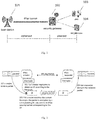
- a base station 101 encrypts a packet, and sends the encrypted packet to a security gateway 102 through an IPSec security tunnel, the security gateway 102 decrypts the received encrypted packet, and sends the obtained plaintext to an element management system (EMS) 103, and an evolved packet core (EPC, a 4G core network)/next generation core (NG-Core, a 5G core network) 104.
- EMS element management system
- EPC evolved packet core
- NG-Core a 4G core network
- 5G core network 5G core network
- a standard IPSec security tunnel negotiation includes the following steps 201 to 204.
- an IPSec initiator negotiates with an IPSec responder to obtain an SA according to a five-tuple of IKE.
- the IPSec initiator receives a to-be-transmitted packet sent by another network element.
- the IPSec initiator matches the packet with the current five-tuple, and the packet is encrypted by the corresponding SA, and sent to an IPSec security tunnel corresponding to the SA.
- the IPSec responder receives the packet, and decrypts the packet according to an IP address and a matched Security Parameter Index (SPI).
- SPI Security Parameter Index
- the IPSec responder can also negotiate with the IPSec initiator for an SA.
- the negotiation process of the IPSec responder is similar to that shown in Fig. 2 and is not repeated here. That is, a pair of SAs (corresponding to an upstream direction and a downstream direction respectively) is used for packet transmission between the IPSec initiator and the IPSec responder.
- the embodiments of the present disclosure put forward a high-traffic and single-tunnel IPSec solution for 5G, etc., which makes some extensions to the IPSec standard protocol under the condition of being compatible with the IPSec standard protocol.
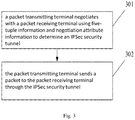
- a transmission method according to an embodiment of the present disclosure is applied to a packet transmitting terminal, and includes steps 301 and 302.
- a packet transmitting terminal negotiates with a packet receiving terminal using five-tuple information and negotiation attribute information to determine an IPSec security tunnel.
- the packet transmitting terminal is an IPSec initiator, and the packet receiving terminal is an IPSec responder; or the packet transmitting terminal is an IPSec responder, and the packet receiving terminal is an IPSec initiator.
- the IPSec initiator includes, but is not limited to, a hardware device such as a wireless base station (including a 2G base station, a 3G base station, a 4G base station, a 5G base station, etc.) and a set-top box, and may further include a general software module.
- a hardware device such as a wireless base station (including a 2G base station, a 3G base station, a 4G base station, a 5G base station, etc.) and a set-top box, and may further include a general software module.
- the IPSec responder includes, but is not limited to, a security gateway and a wireless base station, and may further include a general software module.
- the five-tuple information includes a source IP address, a destination IP address, a protocol number, source port information, and destination port information.
- the negotiation attribute information may be related to characteristics of services.
- the negotiation attribute information is related to a type of service of a packet, and is configured to distinguish the service information except the five-tuple information. Different negotiation attribute information can be used to negotiate different security tunnels and allocate service data of different packets to different security tunnels.
- the negotiation attribute information includes one of the following information: type of service, type of service and length, and type of service, length and value.
- the type of service may be distinguished according to specific services, and may be an enumerated value (e.g. 1, 2, 3...) pre-defined by both the packet transmitting terminal and the packet receiving terminal, or a specific type of service, such as a Differentiated Services Code Point (DSCP), a User Equipment (UE) IP address, and a Tunnel Endpoint Identifier (TEID).
- DSCP Differentiated Services Code Point
- UE User Equipment
- TEID Tunnel Endpoint Identifier
- the length is a length of a type-of-service parameter.
- the value (Value) is a value or range corresponding to the type of service, for example, the Quality of Service (QoS) is in a range of 36 to 46.
- the method further includes that the packet transmitting terminal determines to start up an attribute SA negotiation function. It is possible that it is the network administrator who determines to start up the attribute SA negotiation function. The network administrator or packet transmitting terminal can determine to start up the attribute SA negotiation function according to current flow, packet characteristics, etc.
- the method further includes step 401 before the step 301, the step 401 being that the packet transmitting terminal determines a type of service in the negotiation attribute information according to the identification information carried in a packet to be sent.
- the step that the packet transmitting terminal determines the type of service in the negotiation attribute information according to the identification information carried in the packet to be sent includes at least one of the following steps: in the case where the packet to be sent is an IP packet and the identification information includes DSCP information in the IP packet, the packet transmitting terminal takes the DSCP information as the type of service in the negotiation attribute information; in the case where the packet to be sent is a GTPU packet and the identification information includes a UE IP address in the GTPU packet, the packet transmitting terminal takes the UE IP address as the type of service in the negotiation attribute information; and in the case where the packet to be sent is a GTPU packet and the identification information includes a TEID in the GTPU packet, the packet transmitting terminal takes the TEID as the type of service in the negotiation attribute information.
- the negotiation attribute information may include some fields in the network packet, such as a DSCP field in the IP packet, a UE IP field in the GTPU packet, and a TEID field in the GTPU packet, and the related IP may include Internet Protocol Version 4 (IPv4) and (Internet Protocol Version 6, Internet Protocol Version 6 (IPv6).
- IPv4 Internet Protocol Version 4
- IPv6 Internet Protocol Version 6, Internet Protocol Version 6
- the step 301 includes that, when the packet transmitting terminal fails to use the negotiation attribute information to negotiate with the packet receiving terminal or the packet receiving terminal does not support the use of the negotiation attribute information in negotiation, the packet transmitting terminal negotiates with the packet receiving terminal using the five-tuple information to determine a default SA, which corresponds to an IPSec security tunnel.
- the default SA is set up through Traffic Selector (TS) negotiation according to the five-tuple information.
- TS Traffic Selector
- the packet transmitting terminal associates all packets with the default SA by default and sends the packets only through a default security tunnel.
- the step 301 includes steps 501 and 502.
- the packet transmitting terminal negotiates with the packet receiving terminal using the five-tuple information to determine a default SA, which corresponds to an IPSec security tunnel.
- the default SA is set up through TS negotiation according to the five-tuple information.
- the packet transmitting terminal negotiates with the packet receiving terminal using the five-tuple information and the negotiation attribute information to determine one or more attribute SAs, each of which corresponds to one IPSec security tunnel.
- the packet transmitting terminal sets up the attribute SA according to the five-tuple information and the negotiation attribute information.
- a plurality pieces of negotiation attribute information may exist, each piece of negotiation attribute information can be used for negotiation to set up one attribute SA, and each attribute SA corresponds to one IPSec security tunnel.
- the packet transmitting terminal sends a packet to the packet receiving terminal through the IPSec security tunnel.
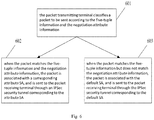
- the step 302 includes steps 601 to 603.
- the packet transmitting terminal classifies a packet to be sent according to the five-tuple information and the negotiation attribute information.
- the packet when the packet matches the five-tuple information and the negotiation attribute information, the packet is associated with a corresponding attribute SA, and is sent to the packet receiving terminal through an IPSec security tunnel corresponding to the attribute SA.
- the packet transmitting terminal classifies different types of packets according to the characteristics of the packets, the five-tuple information, and the negotiation attribute information, associates the packets with the attribute SAs, and sends the packets to different attribute security tunnels.
- the packet when the packet matches the five-tuple information but does not match the negotiation attribute information, the packet is associated with the default SA, and is sent to the packet receiving terminal through the IPSec security tunnel corresponding to the default SA.
- packets of different types of services can be distributed to different tunnels, so that the IPSec processing capability of a device or system can be improved.
- the method further includes steps 701 and 702.
- the packet transmitting terminal monitors a state of each SA, the SA including at least one of the default SA and the attribute SA.
- the state of the SA includes at least one of utilization of a CPU core where the SA is located, and network traffic of the IPSec security tunnel corresponding to the SA.
- the packet transmitting terminal sends an adjustment request to the packet receiving terminal according to the state of the SA, and negotiates with the packet receiving terminal to adjust an association relationship between the negotiation attribute information and an attribute SA.
- the packet transmitting terminal sends the adjustment request to the packet receiving terminal according to the state of the SA and a load balancing algorithm.
- the load balancing algorithm may be polling, weighting, etc.
- To adjust the association relationship between the negotiation attribute information and the attribute SA is to adjust the association relationships between the different types of packets and the attribute SAs. For example, adjusting a range of a value in the negotiation attribute information is equivalent to adjusting the association relationships between the different types of packets and the attribute SAs.
- the negotiation attribute information is used to determine the IPSec security tunnels, so that the distribution of packets can be realized, the IPSec processing capability can be improved, and the encryption requirements of the 5G high-flow services can be met.
- the transmission method includes steps 801 to 810.
- step 801 whether to initiate an attribute SA negotiation is determined according to a current application, if yes, the step 803 is to be performed, otherwise the step 802 is to be performed.
- step 802 a standard IPSec process is performed.
- a default SA and an attribute SA are configured according to five-tuple information and negotiation attribute information.
- the default SA and the attribute SA are negotiated.
- step 805 it is determined whether the attribute SA negotiation succeeds, if yes, the step 806 is to be performed, otherwise the step 808 is to be performed.
- step 806 different types of packets are matched with different SAs (including the default SA and the attribute SA).
- the packets are allocated to the IPSec tunnels corresponding to the default SA and the attribute SA, and then the step 810 is to be performed.
- the packets are directly matched with the default SA.
- the packets are allocated to an IPSec security tunnel corresponding to the default SA.
- the packets are sent.
- the attribute SA negotiation and packet transmission of an IPSec initiator includes steps 901 to 904.
- a default SA is negotiated according to five-tuple information.
- attributes SA1 to SAn are negotiated according to attributes.
- step 903 packets are sent.
- All of the packets that cannot match the negotiation attributes but can match the five-tuple are distributed to a security tunnel queue corresponding to the default SA; the packets matched with the attribute SA1 are distributed to a security tunnel corresponding to the SA1; the packets matched with the attribute SA2 are distributed to a security tunnel corresponding to the SA2; ...; and the packets matched with the attribute SAn are distributed to a security tunnel corresponding to the SAn.
- the responder decrypts the packet according to an IP address and a matched SPI.
- the attribute SA negotiation and packet transmission of an IPSec responder includes steps 1001 to 1004.
- a default SA is negotiated according to five-tuple information.
- attributes SA1 to SAn are negotiated according to attributes.
- step 1003 packets are sent.
- All of the packets that cannot match the negotiation attributes but can match the five-tuple are distributed to a security tunnel queue corresponding to the default SA; the packets matched with the attribute SA1 are distributed to a security tunnel corresponding to the SA1; the packets matched with the attribute SA2 are distributed to a security tunnel corresponding to the SA2; ...; and the packets matched with the attribute SAn are distributed to a security tunnel corresponding to the SAn.
- the initiator decrypts the packet according to an IP address and a matched SPI.
- each SA illustrated by Fig. 9 corresponds to a direction from the IPSec initiator to the IPSec responder
- each SA illustrated by Fig. 10 corresponds to a direction from the IPSec responder to the IPSec initiator
- the direction illustrated by Fig. 9 is different from that illustrated by Fig. 10 .
- the conventional IPSec device includes an IKE protocol module, an ESP protocol module, a Security Policy Database (SPD) module, a Security Association Database (SAD) module, and other protocol modules.
- the IPSec device equipped with attribute SA negotiation further includes an attribute SA switch module, an attribute classification configuration module, an attribute SA module, and a packet classification algorithm module.
- the attribute SA switch module is configured to control whether to start up an attribute SA negotiation function.
- the attribute classification configuration module is configured to configure negotiation attribute information.
- the attribute SA module is configured to configure an attribute SA.
- the packet classification algorithm module is configured to classify packets according to the negotiation attribute information.
- a transmission method of the packet receiving terminal includes steps 1201 and 1202.
- the packet receiving terminal negotiates with the packet transmitting terminal according to the five-tuple information and the negotiation attribute information sent by the packet transmitting terminal to determine an IPSec security tunnel.
- the packet transmitting terminal is an IPSec initiator, and the packet receiving terminal is an IPSec responder; or the packet transmitting terminal is an IPSec responder, and the packet receiving terminal is an IPSec initiator.
- the IPSec initiator includes, but is not limited to, a hardware device such as a wireless base station (including a 2G base station, a 3G base station, a 4G base station, a 5G base station, etc.) and a set-top box, and may further include a general software module.
- a hardware device such as a wireless base station (including a 2G base station, a 3G base station, a 4G base station, a 5G base station, etc.) and a set-top box, and may further include a general software module.
- the IPSec responder includes, but is not limited to, a security gateway and a wireless base station, and may further include a general software module.
- the five-tuple information includes a source IP address, a destination IP address, a protocol number, source port information, and destination port information.
- the negotiation attribute information may be related to characteristics of services.
- the negotiation attribute information is related to a type of service of a packet, and is configured to distinguish the service information except the five-tuple information. Different negotiation attribute information can be used to negotiate different security tunnels.
- the negotiation attribute information includes one of the following information: type of service, type of service and length, and type of service, length and value.
- the type of service (Type) may be distinguished according to specific services, and may be an enumerated value (e.g. 1, 2, 3...) pre-defined by both the packet transmitting terminal and the packet receiving terminal, or a specific type of service, such as a DSCP, a UE IP address, and a TEID.
- the length (Length) is a length of a type-of-service parameter.
- the value (Value) is a value or range corresponding to the type of service, for example, the QoS is in a range of 36 to 46.
- the step 1201 includes that, when the negotiation with the packet transmitting terminal according to the negotiation attribute information fails or the packet receiving terminal does not support the use of the negotiation attribute information in negotiation, the packet receiving terminal negotiates with the packet transmitting terminal using the five-tuple information to determine a default SA, which corresponds to an IPSec security tunnel.
- the step 1201 includes that the packet receiving terminal negotiates with the packet transmitting terminal according to the five-tuple information to determine a default SA, which corresponds to an IPSec security tunnel; and the packet receiving terminal negotiates with the packet transmitting terminal according to the five-tuple information and the negotiation attribute information to determine one or more attribute SAs, each of which corresponds to one IPSec security tunnel.
- the packet receiving terminal receives a packet sent by the packet transmitting terminal through the IPSec security tunnel.
- the packet receiving terminal receives the packets through corresponding IPSec security tunnels.
- the packets of different types of services can be distributed to different tunnels, so that the IPSec processing capability of a device or system can be improved.
- the method further includes step 1301.
- the packet receiving terminal negotiates with the packet transmitting terminal according to the adjustment request sent by the packet transmitting terminal to adjust the association relationship between the negotiation attribute information and the attribute SA.
- To adjust the association relationship between the negotiation attribute information and the attribute SA is to adjust the association relationships between different types of packets and the attribute SAs. For example, adjusting a range of a value in the negotiation attribute information is equivalent to adjusting the association relationships between the different types of packets and the attribute SAs.
- the negotiation attribute information is used to determine the IPSec security tunnels, so that the distribution of packets can be realized, the IPSec processing capability can be improved, and the encryption requirements of the 5G high-flow services can be met.
- Application Instance 1 (a base station negotiates with a security gateway, and a TEID of a GTPU packet is used as a negotiation attribute.)
- a process of setting up SAs by the security gateway with the base station is identical to the above process.
- packets of different types of services can be distributed to different tunnels, so that the IPSec processing capability of a device or system can be improved.
- Application Instance 2 (a base station negotiates with a security gateway, and a DSCP of a packet is used as a negotiation attribute.)
- a process of setting up SAs by the security gateway with the base station is identical to the above process.
- the packets of different types of services can be distributed to different tunnels, so that the IPSec processing capability of a device or system can be improved.
- Application Instance 3 (a base station A negotiates with a base station B, and a UE IP of a GTPU packet is used as a negotiation attribute.)
- a process of setting up SAs by the base station B with the base station A is identical to the above process.
- the packets of different types of services can be distributed to different tunnels, so that the IPSec processing capability of a device or system can be improved.
- Application Instance 4 (a set-top box negotiates with a security gateway, and a DSCP of a packet is used as a negotiation attribute.)
- a process of setting up SAs by the security gateway with the set-top box is identical to the above process.
- the packets of different types of services can be distributed to different tunnels, so that the IPSec processing capability of a device or system can be improved.
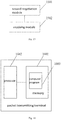
- an embodiment of the present disclosure further provides a transmission device applied to a packet transmitting terminal, including a first negotiation module 1401 configured to negotiate with a packet receiving terminal using five-tuple information and negotiation attribute information to determine an IPSec security tunnel; and a transmitting module 1402 configured to send a packet to the packet receiving terminal through the IPSec security tunnel.
- a transmission device applied to a packet transmitting terminal including a first negotiation module 1401 configured to negotiate with a packet receiving terminal using five-tuple information and negotiation attribute information to determine an IPSec security tunnel; and a transmitting module 1402 configured to send a packet to the packet receiving terminal through the IPSec security tunnel.
- the five-tuple information includes a source IP address, a destination IP address, a protocol number, source port information, and destination port information.
- the negotiation attribute information is related to a type of service of the packet.
- the negotiation attribute information includes one of the following information: type of service, type of service and length, and type of service, length and value.
- the device further includes a determination module configured to determine a type of service in the negotiation attribute information according to the identification information carried in a packet to be sent.
- the determination module is configured to take DSCP information as the type of service in the negotiation attribute information in the case where the packet to be sent is an IP packet and the identification information includes the DSCP information in the IP packet, or take an UE IP address as the type of service in the negotiation attribute information in the case where the packet to be sent is a GTPU packet and the identification information includes the UE IP address in the GTPU packet, or take a TEID as the type of service in the negotiation attribute information in the case where the packet to be sent is a GTPU packet and the identification information includes the TEID in the GTPU packet.
- the first negotiation module 1401 is configured to negotiate with the packet receiving terminal using the five-tuple information to determine a default SA which corresponds to an IPSec security tunnel when the negotiation with the packet receiving terminal according to the negotiation attribute information fails or the packet receiving terminal does not support the use of the negotiation attribute information in negotiation.
- the first negotiation module 1401 is configured to negotiate with the packet receiving terminal using the five-tuple information to determine a default SA which corresponds to an IPSec security tunnel, and negotiate with the packet receiving terminal using the five-tuple information and the negotiation attribute information to determine one or more attribute SAs, each of which corresponds to one IPSec security tunnel.
- the transmitting module 1402 is configured to classify a packet to be sent according to the five-tuple information and the negotiation attribute information; when the packet matches the five-tuple information and the negotiation attribute information, the transmitting module 1402 associates the packet with a corresponding attribute SA, and sends the packet to the packet receiving terminal through an IPSec security tunnel corresponding to the attribute SA; or, when the packet matches the five-tuple information but does not match the negotiation attribute information, the transmitting module 1402 associates the packet with the default SA, and sends the packet to the packet receiving terminal through the IPSec security tunnel corresponding to the default SA.
- the device further includes a monitoring and adjusting module configured to monitor a state of each SA, the SA including at least one of the default SA and the attribute SA, send an adjustment request to the packet receiving terminal according to the state of the SA, and negotiate with the packet receiving terminal to adjust an association relationship between the negotiation attribute information and the attribute SA.
- a monitoring and adjusting module configured to monitor a state of each SA, the SA including at least one of the default SA and the attribute SA, send an adjustment request to the packet receiving terminal according to the state of the SA, and negotiate with the packet receiving terminal to adjust an association relationship between the negotiation attribute information and the attribute SA.
- the state of the SA includes at least one of utilization of a CPU core where the SA is located, and network traffic of the IPSec security tunnel corresponding to the SA.
- the monitoring and adjusting module is configured to send the adjustment request to the packet receiving terminal according to the state of the SA and a load balancing algorithm.
- the negotiation attribute information is used to determine the IPSec security tunnels, so that the distribution of packets can be realized, the IPSec processing capability can be improved, and the encryption requirements of the 5G high-flow services can be met.
- an embodiment of the present disclosure further provides a transmission device, including a second negotiation module 1501 configured to negotiate with a packet transmitting terminal according to five-tuple information and negotiation attribute information sent by the packet transmitting terminal to determine an IPSec security tunnel; and a receiving module 1502 configured to receive a packet sent by the packet transmitting terminal through the IPSec security tunnel.
- a transmission device including a second negotiation module 1501 configured to negotiate with a packet transmitting terminal according to five-tuple information and negotiation attribute information sent by the packet transmitting terminal to determine an IPSec security tunnel; and a receiving module 1502 configured to receive a packet sent by the packet transmitting terminal through the IPSec security tunnel.
- the five-tuple information includes a source IP address, a destination IP address, a protocol number, source port information, and destination port information.
- the negotiation attribute information is related to a type of service.
- the negotiation attribute information includes one of the following information: type of service, type of service and length, and type of service, length and value.
- the second negotiation module 1501 is configured for a packet receiving terminal to negotiate with the packet transmitting terminal using the five-tuple information to determine a default SA which corresponds to an IPSec security tunnel when the negotiation with the packet transmitting terminal according to the negotiation attribute information fails or the packet receiving terminal does not support the use of the negotiation attribute information in negotiation.
- the second negotiation module 1501 is configured for a packet receiving terminal to negotiate with the packet transmitting terminal according to the five-tuple information to determine a default SA which corresponds to an IPSec security tunnel, and negotiate with the packet transmitting terminal according to the five-tuple information and the negotiation attribute information to determine one or more attribute SAs, each of which corresponds to one IPSec security tunnel.
- the device further includes an adjusting module configured to negotiate with the packet transmitting terminal according to an adjustment request sent by the packet transmitting terminal to adjust an association relationship between the negotiation attribute information and the attribute SA.
- the negotiation attribute information is used to determine the IPSec security tunnels, so that the distribution of packets can be realized, the IPSec processing capability can be improved, and the encryption requirements of the 5G high-flow services can be met.
- an embodiment of the present disclosure further provides a packet transmitting terminal, including a memory 1601, a processor 1602, and a computer program 1603 which is stored on the memory 1601 and is capable of running on the processor 1602, and the processor 1602 performs the transmission method shown in Fig. 3 when executing the program.
- an embodiment of the present disclosure further provides a packet receiving terminal, including a memory 1701, a processor 1702, and a computer program and the processor 1702 performs the transmission method shown in Fig. 12 when executing the program.
- An embodiment of the present disclosure further provides a computer-readable storage medium having a computer-executable instruction stored thereon, and the computer-executable instruction is configured to perform the transmission method.
- the above storage medium may include, but is not limited to, various media capable of storing program codes, such as a Universal Serial Bus Flash Disk (USB flash disk), a Read-Only Memory (ROM), a Random Access Memories (RAM), a mobile hard disk, a magnetic disk, and an optical disc.
- USB flash disk Universal Serial Bus Flash Disk
- ROM Read-Only Memory
- RAM Random Access Memories
- the functional modules/units in the systems and the devices may be implemented as software, firmware, hardware, or suitable combinations thereof. If implemented as hardware, the division between the functional modules/units stated above is not necessarily corresponding to the division of physical components; for example, one physical component may have a plurality of functions, or one function or step may be performed through cooperation of several physical components. Some or all of the components may be implemented as software executed by a processor, such as a digital signal processor or a microprocessor, or may be implemented as hardware, or may be implemented as an integrated circuit, such as an application specific integrated circuit.
- a processor such as a digital signal processor or a microprocessor
- Such software may be distributed on computer-readable medium, which may include computer storage medium (or non-transitory medium) and communication medium (or transitory medium).
- computer storage medium includes volatile/nonvolatile and removable/non-removable medium used in any method or technology for storing information (such as computer-readable instructions, data structures, program modules and other data).
- the computer storage medium include, but are not limited to, RAMs, ROMs, Electrically Erasable Programmable Read-Only Memories (EEPROMs), flash memories or other memory techniques, Compact Disc Read-Only Memories (CD-ROMs), Digital Video Disks (DVDs) or other optical discs, magnetic cassettes, magnetic tapes, magnetic disks or other magnetic storage devices, or any other medium which can be used to store the desired information and can be accessed by a computer.
- the communication medium generally include computer-readable instructions, data structures, program modules or other data in a modulated data signal, such as a carrier wave or other transmission mechanism, and may include any information delivery medium.
Landscapes
- Engineering & Computer Science (AREA)
- Computer Security & Cryptography (AREA)
- Computer Networks & Wireless Communication (AREA)
- Signal Processing (AREA)
- Computing Systems (AREA)
- Computer Hardware Design (AREA)
- General Engineering & Computer Science (AREA)
- Mobile Radio Communication Systems (AREA)
- Data Exchanges In Wide-Area Networks (AREA)
Abstract
Description
- The embodiments of the present disclosure relate to, but are not limited to, the field of communication technology.
- With the development of the Internet and mobile communication, various network security problems have arisen. Network security has become a concern of every user, government, network service provider and device manufacturer, and the capability to guarantee network security has become one of the basic capabilities that each company should have.
- So far the development of network security has produced relatively mature frameworks and theories and involved many scenarios and methods, such as cryptography, infrastructure security, access control, authentication management, transmission security, and sensitive data protection. The transmission security is a main technology for ensuring confidentiality and integrity of data transmission in an untrusted network environment, and the representative techniques of transmission security include Secure Socket Layer/Transport Layer Security (SSL/TLS), Internet Protocol Security (IPSec), etc. The IPSec can solve security problems of network layer and thus is recommended as a secure transmission protocol (3GPP TS33.310) between a base station and a core network by standard organizations such as the 3rd Generation Partnership Project (3GPP).
- Radio Access Network (RAN) is a very important component in wireless communication. With the coming of the fifth generation (5G) network, the current network security protocols such as the IPSec are facing tremendous challenges.
- At present, user plane data from a base station to a core network are generally carried in the same IPSec security tunnel, and the processing capacity of an encryption chip is limited, so that the encryption requirements of 5G high-flow services cannot be met.
- A summary of the subject matter described in detail herein is given below, but the summary is not intended to limit the protection scope of the claims.
- The embodiments of the present disclosure provide a transmission method, a transmission device, a packet transmitting terminal, and a packet receiving terminal.
- An embodiment of the present disclosure provides a transmission method, including that a packet transmitting terminal negotiates with a packet receiving terminal using five-tuple information and negotiation attribute information to determine an IPSec security tunnel; and the packet transmitting terminal sends a packet to the packet receiving terminal through the IPSec security tunnel.
- An embodiment of the present disclosure further provides a transmission method, including that a packet receiving terminal negotiates with a packet transmitting terminal according to five-tuple information and negotiation attribute information sent by the packet transmitting terminal to determine an IPSec security tunnel, and the packet receiving terminal receives a packet sent by the packet transmitting terminal through the IPSec security tunnel.
- An embodiment of the present disclosure further provides a transmission device, including a first negotiation module configured to negotiate with a packet receiving terminal using five-tuple information and negotiation attribute information to determine an IPSec security tunnel; and a transmitting module configured to send a packet to the packet receiving terminal through the IPSec security tunnel.
- An embodiment of the present disclosure further provides a transmission device, including a second negotiation module configured to negotiate with a packet transmitting terminal according to five-tuple information and negotiation attribute information sent by the packet transmitting terminal to determine an IPSec security tunnel; and a receiving module configured to receive a packet sent by the packet transmitting terminal through the IPSec security tunnel.
- An embodiment of the present disclosure further provides a packet transmitting terminal, including a memory, a processor, and a computer program which is stored on the memory and is capable of running on the processor, and the processor performs the transmission method when executing the program.
- An embodiment of the present disclosure further provides a packet receiving terminal, including a memory, a processor, and a computer program which is stored on the memory and is capable of running on the processor, and the processor performs the transmission method when executing the program.
- An embodiment of the present disclosure further provides a computer-readable storage medium having a computer-executable instruction stored thereon, and the computer-executable instruction is configured to perform the transmission method.
-
-
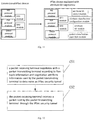
Fig. 1 is a schematic diagram of a typical network when a base station starts up an IPSec function. -
Fig. 2 is a schematic diagram illustrating standard IPSec security tunnel negotiation. -
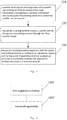
Fig. 3 is a flowchart illustrating a transmission method (applied to a packet transmitting terminal) according to an embodiment of the present disclosure. -
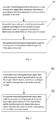
Fig. 4 is a flowchart illustrating a transmission method (applied to a packet transmitting terminal) according to another embodiment of the present disclosure. -
Fig. 5 is a flowchart ofstep 301 according to an embodiment of the present disclosure. -
Fig. 6 is a flowchart ofstep 302 according to an embodiment of the present disclosure. -
Fig. 7 is a flowchart illustrating a transmission method (applied to a packet transmitting terminal) according to still another embodiment of the present disclosure. -
Fig. 8 is a flowchart illustrating a transmission method according to an embodiment of the present disclosure. -
Fig. 9 is a schematic diagram illustrating attribute SA negotiation and packet transmission of an IPSec initiator according to an embodiment of the present disclosure. -
Fig. 10 is a schematic diagram illustrating attribute SA negotiation and packet transmission of an IPSec responder according to an embodiment of the present disclosure. -
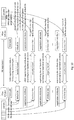
Fig. 11 is a comparison diagram of a conventional IPSec device and an IPSec device equipped with attribute SA negotiation. -
Fig. 12 is a flowchart illustrating a transmission method (applied to a packet receiving terminal) according to an embodiment of the present disclosure. -
Fig. 13 is a flowchart illustrating a transmission method (applied to a packet receiving terminal) according to another embodiment of the present disclosure. -
Fig. 14 is a schematic diagram of a transmission device (applied to a packet transmitting terminal) according to an embodiment of the present disclosure. -
Fig. 15 is a schematic diagram of a transmission device (applied to a packet receiving terminal) according to an embodiment of the present disclosure. -
Fig. 16 is a schematic diagram of a packet transmitting terminal according to an embodiment of the present disclosure. -
Fig. 17 is a schematic diagram of a packet receiving terminal according to an embodiment of the present disclosure. - The embodiments of the present disclosure are described in detail below with reference to the accompanying drawings.
- The steps illustrated in the flowcharts of the drawings may be performed in a computer system such as a set of computer-executable instructions. In addition, although a logical order is illustrated in the flowchart, the steps illustrated or described may be performed in an order different from that described herein in some cases.
- The IPSec is a protocol cluster, a control negotiation protocol of the IPSec is Internet Key Exchange (IKE), a current main version of the IKE is IKEv2, and a data encapsulation protocol of the IPSec is based on an Encapsulating Security Payload (ESP) protocol. The IKE protocol negotiates a Security Association (SA) based on a five-tuple (a source Internet protocol (IP) address, a destination IP address, a protocol number, a source port, and a destination port), different types of services are assigned to different SAs, and one SA generally corresponds to one IPSec tunnel. The IPSec protocol has been well deployed and operated for a long time.
- With the coming of 5G, the IPSec protocol has been gradually unable to meet the requirements of services. The network architecture of a 5G base station is merely slightly different from that of a 4G base station, and adopts flat base stations and core networks, and user plane data are carried in general packet radio service (GPRS) tunneling protocol user plane (GTPU) tunnels from the base stations to the core networks. However, with the downstream flow up to 40Gbps and the upstream flow up to 20Gbps, the flow of a single 5G base station far exceeds that of a 4G base station. In most cases, a base station configures only one user plane IP address, a user plane gateway of a core network corresponding to the base station also has only one IP address, and the user plane data between the base station and the core network have only one five-tuple, that is, the same source IP address, destination IP address, protocol number (UDP, User Datagram Protocol), source port, and destination port. Limited by IPSec sequence numbers (SNs) and a sliding window mechanism (see RFC2406: 3.4.3 Sequence Number Verification), the user plane data from a base station to a core network are carried in the same IPSec security tunnel in most cases according to the current IPSec protocol.
- At present, encryption and decryption of data are realized by using internal encryption chips in most IPSec solutions, and all the solutions of the chips to a single security tunnel focus on a single core or a single encryption engine. It is difficult to process the data of the same SA among different cores, different central processing units (CPUs) or different boards, and a single encryption chip has limited processing capacity, which makes it hard to realize high-flow encryption and decryption processing capabilities.
- As shown in
Fig. 1 which is a schematic diagram of a typical network when a base station starts up an IPSec function, abase station 101 encrypts a packet, and sends the encrypted packet to asecurity gateway 102 through an IPSec security tunnel, thesecurity gateway 102 decrypts the received encrypted packet, and sends the obtained plaintext to an element management system (EMS) 103, and an evolved packet core (EPC, a 4G core network)/next generation core (NG-Core, a 5G core network) 104. - As shown in
Fig. 2 , taking an IPSec initiator being a packet transmitting terminal as an example, a standard IPSec security tunnel negotiation includes thefollowing steps 201 to 204. - In the
step 201, an IPSec initiator negotiates with an IPSec responder to obtain an SA according to a five-tuple of IKE. - In the
step 202, the IPSec initiator receives a to-be-transmitted packet sent by another network element. - In the
step 203, the IPSec initiator matches the packet with the current five-tuple, and the packet is encrypted by the corresponding SA, and sent to an IPSec security tunnel corresponding to the SA. - In the
step 204, the IPSec responder receives the packet, and decrypts the packet according to an IP address and a matched Security Parameter Index (SPI). - For sending a packet to the IPSec initiator, the IPSec responder can also negotiate with the IPSec initiator for an SA. The negotiation process of the IPSec responder is similar to that shown in
Fig. 2 and is not repeated here. That is, a pair of SAs (corresponding to an upstream direction and a downstream direction respectively) is used for packet transmission between the IPSec initiator and the IPSec responder. - The embodiments of the present disclosure put forward a high-traffic and single-tunnel IPSec solution for 5G, etc., which makes some extensions to the IPSec standard protocol under the condition of being compatible with the IPSec standard protocol.
- As shown in
Fig. 3 , a transmission method according to an embodiment of the present disclosure is applied to a packet transmitting terminal, and includessteps - In the
step 301, a packet transmitting terminal negotiates with a packet receiving terminal using five-tuple information and negotiation attribute information to determine an IPSec security tunnel. - The packet transmitting terminal is an IPSec initiator, and the packet receiving terminal is an IPSec responder; or the packet transmitting terminal is an IPSec responder, and the packet receiving terminal is an IPSec initiator.
- The IPSec initiator includes, but is not limited to, a hardware device such as a wireless base station (including a 2G base station, a 3G base station, a 4G base station, a 5G base station, etc.) and a set-top box, and may further include a general software module.
- The IPSec responder includes, but is not limited to, a security gateway and a wireless base station, and may further include a general software module.
- The five-tuple information includes a source IP address, a destination IP address, a protocol number, source port information, and destination port information.
- The negotiation attribute information may be related to characteristics of services.
- In an embodiment, the negotiation attribute information is related to a type of service of a packet, and is configured to distinguish the service information except the five-tuple information. Different negotiation attribute information can be used to negotiate different security tunnels and allocate service data of different packets to different security tunnels.
- In an embodiment, the negotiation attribute information includes one of the following information: type of service, type of service and length, and type of service, length and value.
- The type of service (Type) may be distinguished according to specific services, and may be an enumerated value (e.g. 1, 2, 3...) pre-defined by both the packet transmitting terminal and the packet receiving terminal, or a specific type of service, such as a Differentiated Services Code Point (DSCP), a User Equipment (UE) IP address, and a Tunnel Endpoint Identifier (TEID). The length (Length) is a length of a type-of-service parameter. The value (Value) is a value or range corresponding to the type of service, for example, the Quality of Service (QoS) is in a range of 36 to 46.
- In an embodiment, before the
step 301, the method further includes that the packet transmitting terminal determines to start up an attribute SA negotiation function. It is possible that it is the network administrator who determines to start up the attribute SA negotiation function. The network administrator or packet transmitting terminal can determine to start up the attribute SA negotiation function according to current flow, packet characteristics, etc. - As shown in
Fig. 4 , in an embodiment, the method further includesstep 401 before thestep 301, thestep 401 being that the packet transmitting terminal determines a type of service in the negotiation attribute information according to the identification information carried in a packet to be sent. - In an embodiment, the step that the packet transmitting terminal determines the type of service in the negotiation attribute information according to the identification information carried in the packet to be sent includes at least one of the following steps: in the case where the packet to be sent is an IP packet and the identification information includes DSCP information in the IP packet, the packet transmitting terminal takes the DSCP information as the type of service in the negotiation attribute information; in the case where the packet to be sent is a GTPU packet and the identification information includes a UE IP address in the GTPU packet, the packet transmitting terminal takes the UE IP address as the type of service in the negotiation attribute information; and in the case where the packet to be sent is a GTPU packet and the identification information includes a TEID in the GTPU packet, the packet transmitting terminal takes the TEID as the type of service in the negotiation attribute information.
- That is, the negotiation attribute information may include some fields in the network packet, such as a DSCP field in the IP packet, a UE IP field in the GTPU packet, and a TEID field in the GTPU packet, and the related IP may include Internet Protocol Version 4 (IPv4) and (Internet Protocol Version 6, Internet Protocol Version 6 (IPv6).
- In an embodiment, the
step 301 includes that, when the packet transmitting terminal fails to use the negotiation attribute information to negotiate with the packet receiving terminal or the packet receiving terminal does not support the use of the negotiation attribute information in negotiation, the packet transmitting terminal negotiates with the packet receiving terminal using the five-tuple information to determine a default SA, which corresponds to an IPSec security tunnel. - When the packet transmitting terminal negotiates with the packet receiving terminal, according to the standard IPSec protocol, the default SA is set up through Traffic Selector (TS) negotiation according to the five-tuple information.
- If the packet receiving terminal does not support attribute SA negotiation or the attribute SA negotiation between the packet transmitting terminal and the packet receiving terminal fails, the packet transmitting terminal associates all packets with the default SA by default and sends the packets only through a default security tunnel.
- As shown in
Fig. 5 , in another embodiment, thestep 301 includessteps - In the
step 501, the packet transmitting terminal negotiates with the packet receiving terminal using the five-tuple information to determine a default SA, which corresponds to an IPSec security tunnel. - When the packet transmitting terminal negotiates with the packet receiving terminal, according to the standard IPSec protocol, the default SA is set up through TS negotiation according to the five-tuple information.
- In the
step 502, the packet transmitting terminal negotiates with the packet receiving terminal using the five-tuple information and the negotiation attribute information to determine one or more attribute SAs, each of which corresponds to one IPSec security tunnel. - The packet transmitting terminal sets up the attribute SA according to the five-tuple information and the negotiation attribute information. A plurality pieces of negotiation attribute information may exist, each piece of negotiation attribute information can be used for negotiation to set up one attribute SA, and each attribute SA corresponds to one IPSec security tunnel.
- In the
step 302, the packet transmitting terminal sends a packet to the packet receiving terminal through the IPSec security tunnel. - As shown in
Fig. 6 , in an embodiment, thestep 302 includessteps 601 to 603. - In the
step 601, the packet transmitting terminal classifies a packet to be sent according to the five-tuple information and the negotiation attribute information. - In the
step 602, when the packet matches the five-tuple information and the negotiation attribute information, the packet is associated with a corresponding attribute SA, and is sent to the packet receiving terminal through an IPSec security tunnel corresponding to the attribute SA. - The packet transmitting terminal classifies different types of packets according to the characteristics of the packets, the five-tuple information, and the negotiation attribute information, associates the packets with the attribute SAs, and sends the packets to different attribute security tunnels.
- In the
step 603, when the packet matches the five-tuple information but does not match the negotiation attribute information, the packet is associated with the default SA, and is sent to the packet receiving terminal through the IPSec security tunnel corresponding to the default SA. - With more security tunnels being set up through the negotiation using the negotiation attribute, packets of different types of services can be distributed to different tunnels, so that the IPSec processing capability of a device or system can be improved.
- As shown in
Fig. 7 , in an embodiment, the method further includessteps - In the
step 701, the packet transmitting terminal monitors a state of each SA, the SA including at least one of the default SA and the attribute SA. - In an embodiment, the state of the SA includes at least one of utilization of a CPU core where the SA is located, and network traffic of the IPSec security tunnel corresponding to the SA.
- In the
step 702, the packet transmitting terminal sends an adjustment request to the packet receiving terminal according to the state of the SA, and negotiates with the packet receiving terminal to adjust an association relationship between the negotiation attribute information and an attribute SA. - In an embodiment, the packet transmitting terminal sends the adjustment request to the packet receiving terminal according to the state of the SA and a load balancing algorithm. The load balancing algorithm may be polling, weighting, etc. To adjust the association relationship between the negotiation attribute information and the attribute SA is to adjust the association relationships between the different types of packets and the attribute SAs. For example, adjusting a range of a value in the negotiation attribute information is equivalent to adjusting the association relationships between the different types of packets and the attribute SAs.
- According to the embodiments of the present disclosure, the negotiation attribute information is used to determine the IPSec security tunnels, so that the distribution of packets can be realized, the IPSec processing capability can be improved, and the encryption requirements of the 5G high-flow services can be met.
- As shown in
Fig. 8 which is a flowchart illustrating a transmission method according to an embodiment, the transmission method includessteps 801 to 810. - In the
step 801, whether to initiate an attribute SA negotiation is determined according to a current application, if yes, thestep 803 is to be performed, otherwise thestep 802 is to be performed. - It is possible that it is the network administrator who controls the initiation of the attribute SA negotiation.
- In the
step 802, a standard IPSec process is performed. - In the
step 803, a default SA and an attribute SA are configured according to five-tuple information and negotiation attribute information. - In the
step 804, the default SA and the attribute SA are negotiated. - In the
step 805, it is determined whether the attribute SA negotiation succeeds, if yes, thestep 806 is to be performed, otherwise thestep 808 is to be performed. - In the
step 806, different types of packets are matched with different SAs (including the default SA and the attribute SA). - In the
step 807, the packets are allocated to the IPSec tunnels corresponding to the default SA and the attribute SA, and then thestep 810 is to be performed. - In the
step 808, the packets are directly matched with the default SA. - In the
step 809, the packets are allocated to an IPSec security tunnel corresponding to the default SA. - In the
step 810, the packets are sent. - As shown in
Fig. 9 , the attribute SA negotiation and packet transmission of an IPSec initiator includessteps 901 to 904. - In the
step 901, a default SA is negotiated according to five-tuple information. - In the
step 902, attributes SA1 to SAn are negotiated according to attributes. - In the
step 903, packets are sent. - All of the packets that cannot match the negotiation attributes but can match the five-tuple are distributed to a security tunnel queue corresponding to the default SA; the packets matched with the attribute SA1 are distributed to a security tunnel corresponding to the SA1; the packets matched with the attribute SA2 are distributed to a security tunnel corresponding to the SA2; ...; and the packets matched with the attribute SAn are distributed to a security tunnel corresponding to the SAn.
- In the
step 904, after a responder receives a packet, the responder decrypts the packet according to an IP address and a matched SPI. - As shown in
Fig. 10 , similar toFig. 9 , the attribute SA negotiation and packet transmission of an IPSec responder includessteps 1001 to 1004. - In the
step 1001, a default SA is negotiated according to five-tuple information. - In the
step 1002, attributes SA1 to SAn are negotiated according to attributes. - In the
step 1003, packets are sent. - All of the packets that cannot match the negotiation attributes but can match the five-tuple are distributed to a security tunnel queue corresponding to the default SA; the packets matched with the attribute SA1 are distributed to a security tunnel corresponding to the SA1; the packets matched with the attribute SA2 are distributed to a security tunnel corresponding to the SA2; ...; and the packets matched with the attribute SAn are distributed to a security tunnel corresponding to the SAn.
- In the
step 1004, after an initiator receives a packet, the initiator decrypts the packet according to an IP address and a matched SPI. - It should be noted that each SA illustrated by
Fig. 9 corresponds to a direction from the IPSec initiator to the IPSec responder, each SA illustrated byFig. 10 corresponds to a direction from the IPSec responder to the IPSec initiator, and the direction illustrated byFig. 9 is different from that illustrated byFig. 10 . - As shown in
Fig. 11 which is a comparison diagram of a conventional IPSec device and an IPSec device equipped with attribute SA negotiation, the conventional IPSec device includes an IKE protocol module, an ESP protocol module, a Security Policy Database (SPD) module, a Security Association Database (SAD) module, and other protocol modules. Compared with the conventional IPSec device, the IPSec device equipped with attribute SA negotiation further includes an attribute SA switch module, an attribute classification configuration module, an attribute SA module, and a packet classification algorithm module. - The attribute SA switch module is configured to control whether to start up an attribute SA negotiation function. The attribute classification configuration module is configured to configure negotiation attribute information. The attribute SA module is configured to configure an attribute SA. The packet classification algorithm module is configured to classify packets according to the negotiation attribute information.
- As shown in
Fig. 12 , corresponding to the packet transmitting terminal, a transmission method of the packet receiving terminal according to an embodiment of the present disclosure includessteps - In the
step 1201, the packet receiving terminal negotiates with the packet transmitting terminal according to the five-tuple information and the negotiation attribute information sent by the packet transmitting terminal to determine an IPSec security tunnel. - The packet transmitting terminal is an IPSec initiator, and the packet receiving terminal is an IPSec responder; or the packet transmitting terminal is an IPSec responder, and the packet receiving terminal is an IPSec initiator.
- The IPSec initiator includes, but is not limited to, a hardware device such as a wireless base station (including a 2G base station, a 3G base station, a 4G base station, a 5G base station, etc.) and a set-top box, and may further include a general software module.
- The IPSec responder includes, but is not limited to, a security gateway and a wireless base station, and may further include a general software module.
- The five-tuple information includes a source IP address, a destination IP address, a protocol number, source port information, and destination port information.
- The negotiation attribute information may be related to characteristics of services.
- In an embodiment, the negotiation attribute information is related to a type of service of a packet, and is configured to distinguish the service information except the five-tuple information. Different negotiation attribute information can be used to negotiate different security tunnels.
- In an embodiment, the negotiation attribute information includes one of the following information: type of service, type of service and length, and type of service, length and value. The type of service (Type) may be distinguished according to specific services, and may be an enumerated value (e.g. 1, 2, 3...) pre-defined by both the packet transmitting terminal and the packet receiving terminal, or a specific type of service, such as a DSCP, a UE IP address, and a TEID. The length (Length) is a length of a type-of-service parameter. The value (Value) is a value or range corresponding to the type of service, for example, the QoS is in a range of 36 to 46.
- In an embodiment, the
step 1201 includes that, when the negotiation with the packet transmitting terminal according to the negotiation attribute information fails or the packet receiving terminal does not support the use of the negotiation attribute information in negotiation, the packet receiving terminal negotiates with the packet transmitting terminal using the five-tuple information to determine a default SA, which corresponds to an IPSec security tunnel. - In an embodiment, the
step 1201 includes that the packet receiving terminal negotiates with the packet transmitting terminal according to the five-tuple information to determine a default SA, which corresponds to an IPSec security tunnel; and the packet receiving terminal negotiates with the packet transmitting terminal according to the five-tuple information and the negotiation attribute information to determine one or more attribute SAs, each of which corresponds to one IPSec security tunnel. - In the
step 1202, the packet receiving terminal receives a packet sent by the packet transmitting terminal through the IPSec security tunnel. - According to the classification of the packets of different types of services, the packet receiving terminal receives the packets through corresponding IPSec security tunnels.
- With more security tunnels being set up through the negotiation using the negotiation attribute, the packets of different types of services can be distributed to different tunnels, so that the IPSec processing capability of a device or system can be improved.
- As shown in
Fig. 13 , in an embodiment, the method further includesstep 1301. - In the
step 1301, the packet receiving terminal negotiates with the packet transmitting terminal according to the adjustment request sent by the packet transmitting terminal to adjust the association relationship between the negotiation attribute information and the attribute SA. - To adjust the association relationship between the negotiation attribute information and the attribute SA is to adjust the association relationships between different types of packets and the attribute SAs. For example, adjusting a range of a value in the negotiation attribute information is equivalent to adjusting the association relationships between the different types of packets and the attribute SAs.
- According to the embodiments of the present disclosure, the negotiation attribute information is used to determine the IPSec security tunnels, so that the distribution of packets can be realized, the IPSec processing capability can be improved, and the encryption requirements of the 5G high-flow services can be met.
- Some application instances are given below to illustrate the present disclosure.
- Application Instance 1 (a base station negotiates with a security gateway, and a TEID of a GTPU packet is used as a negotiation attribute.)
- 1. An attribute SA negotiation function is started up when the current flow of the base station exceeds an IPSec single-core flow specification or IPSec single-tunnel flow specification.
- 2. When the base station functioned as an IPSec initiator negotiates with a security gateway functioned as an IPSec responder for an IPSec tunnel, in addition to five-tuple information, TEID information of a GTPU packet is further carried as negotiation attribute information.
The negotiation attribute information consists of a type, a length, and a value, etc., the type is configured to be a TEID, the length is a length of a TEID field in the GTPU packet, and the value is a TEID value and usually configured to be a range of TEID value. - 3. When the base station negotiates with the security gateway, according to the standard IPSec protocol, a pair of default SAs (corresponding to two directions) is set up through TS negotiation according to the five-tuple information, and each default SA corresponds to one security tunnel.
- 4. The base station sets up an attribute SA according to the five-tuple information and the configuration of the range of TEID, each TEID field can be used to negotiate one attribute SA, and each attribute SA corresponds to one security tunnel.
- 5. The base station classifies different packets according to characteristics of data packets, the five-tuple information and the TEID values, associates the packets with corresponding attribute SAs (set up according to the ranges of the TEID values), and sends the packets to different attribute security tunnels.
- 6. The base station monitors states of a current default SA and each attribute SA, adjusts association relationships between different types of packets and the attribute SAs according to a certain load balancing algorithm (such as polling or weighting), and ensures that the packets having the same attribute are processed in the same attribute SA, and the state of the SA includes utilization of a CPU core where the current SA is located, network traffic, etc.
- 7. If the security gateway does not support attribute SA negotiation or the attribute SA negotiation between the base station and the security gateway fails, the base station associates all the packets with the default SA by default, and sends the packets through the default security tunnel.
- A process of setting up SAs by the security gateway with the base station is identical to the above process.
- With more security tunnels being set up through the negotiation using the negotiation attribute, packets of different types of services can be distributed to different tunnels, so that the IPSec processing capability of a device or system can be improved.
- Application Instance 2 (a base station negotiates with a security gateway, and a DSCP of a packet is used as a negotiation attribute.)
- 1. An attribute SA negotiation function is started up when the current flow of the base station exceeds an IPSec single-core flow specification or IPSec single-tunnel flow specification.
- 2. When the base station functioned as an IPSec initiator negotiates with a security gateway functioned as an IPSec responder for an IPSec tunnel, in addition to five-tuple information, DSCP information of an inner packet of a GTPU tunnel is further carried as negotiation attribute information.
The negotiation attribute information consists of a type, a length, and a value, etc., the type is configured to be a DSCP, the length is a length of a DSCP field in the GTPU packet, and the value is a DSCP value and usually configured to be in a range. - 3. When the base station negotiates with the security gateway, according to the standard IPSec protocol, a pair of default SAs is set up through TS negotiation according to the five-tuple information, and each default SA corresponds to one security tunnel.
- 4. The base station sets up an attribute SA according to the five-tuple information and the configuration of the range of DSCP, each DSCP field can be used to negotiate one attribute SA, and each attribute SA corresponds to one security tunnel.
- 5. The base station classifies different packets according to characteristics of data packets, the five-tuple information and the DSCP values, associates the packets with corresponding attribute SAs (set up according to the ranges of the DSCP values), and sends the packets to different attribute security tunnels.
- 6. The base station monitors states of a current default SA and each attribute SA, adjusts association relationships between different types of packets and the attribute SAs according to a certain load balancing algorithm (such as polling or weighting), and ensures that the packets having the same attribute are processed in the same attribute SA, and the state of the SA includes utilization of a CPU core where the current SA is located, network traffic, etc.
- 7. If the security gateway does not support attribute SA negotiation or the attribute SA negotiation between the base station and the security gateway fails, the base station associates all the packets with the default SA by default, and sends the packets through the default security tunnel.
- A process of setting up SAs by the security gateway with the base station is identical to the above process.
- With more security tunnels being set up through the negotiation using the negotiation attribute, the packets of different types of services can be distributed to different tunnels, so that the IPSec processing capability of a device or system can be improved.
- Application Instance 3 (a base station A negotiates with a base station B, and a UE IP of a GTPU packet is used as a negotiation attribute.)
- 1. An attribute SA negotiation function is started up when the current flow of the base station exceeds an IPSec single-core flow specification or IPSec single-tunnel flow specification.
- 2. When a base station A functioned as an IPSec initiator negotiates with a base station B functioned as an IPSec responder for an IPSec tunnel, in addition to five-tuple information, UE IP information of a GTPU packet is further carried as negotiation attribute information.
The negotiation attribute information consists of a type, a length, and a value, the type is configured to be a UE IP, the length is a length of a UE IP field in the GTPU packet, the value is a UE IP value and usually configured to be a range of UE IP value, and the related IP may be IPv4 or IPv6. - 3. When the base station A negotiates with the base station B, according to the standard IPSec protocol, a pair of default SAs is set up through TS negotiation according to the five-tuple information, and each default SA corresponds to one security tunnel.
- 4. The base station A sets up an attribute SA according to the five-tuple information and the configuration of the range of UE IP, each UE IP field can be used to negotiate one attribute SA, and each attribute SA corresponds to one security tunnel.
- 5. The base station A classifies different packets according to characteristics of data packets, the five-tuple information and the UE IP values, associates the packets with corresponding attribute SAs (set up according to the ranges of the UE IP values), and sends the packets to different attribute security tunnels.
- 6. The base station A monitors states of a current default SA and each attribute SA, adjusts association relationships between different types of packets and the attribute SAs according to a certain load balancing algorithm (such as polling or weighting), and ensures that the packets having the same attribute are processed in the same attribute SA, and the state of the SA includes utilization of a CPU core where the current SA is located, network traffic, etc.
- 7. If the base station B does not support attribute SA negotiation or the attribute SA negotiation between the base station A and the base station B fails, the base station A associates all the packets with the default SA by default, and sends the packets through the default security tunnel.
- A process of setting up SAs by the base station B with the base station A is identical to the above process.
- With more security tunnels being set up through the negotiation using the negotiation attribute, the packets of different types of services can be distributed to different tunnels, so that the IPSec processing capability of a device or system can be improved.
- Application Instance 4 (a set-top box negotiates with a security gateway, and a DSCP of a packet is used as a negotiation attribute.)
- 1. An attribute SA negotiation function is started up when the current flow of the set-top box exceeds an IPSec single-core flow specification or IPSec single-tunnel flow specification.
- 2. When the set-top box functioned as an IPSec initiator negotiates with a security gateway functioned as an IPSec responder for an IPSec tunnel, in addition to five-tuple information, DSCP information of an inner packet of a packet is further carried as negotiation attribute information.
The negotiation attribute information consists of a type, a length, and a value, the type is configured to be a DSCP, the length is a length of a DSCP field (6 bits), and the value is a DSCP value and usually configured to be in a range. - 3. When the set-top box negotiates with the security gateway, according to the standard IPSec protocol, a pair of default SAs is set up through TS negotiation according to the five-tuple information, and each default SA corresponds to one security tunnel.
- 4. The set-top box sets up an attribute SA according to the five-tuple information and the configuration of the range of DSCP, each DSCP field can be used to negotiate one attribute SA, and each attribute SA corresponds to one security tunnel.
- 5. The set-top box classifies different packets according to characteristics of data packets, the five-tuple information and the DSCP values, associates the packets with corresponding attribute SAs (set up according to the ranges of the DSCP values), and sends the packets to different attribute security tunnels.
- 6. The set-top box monitors states of a current default SA and each attribute SA, adjusts association relationships between different types of packets and the attribute SAs according to a certain load balancing algorithm (such as polling or weighting), and ensures that the packets having the same attribute are processed in the same attribute SA, and the state of the SA includes utilization of a CPU core where the current SA is located, network traffic, etc.
- 7. If the security gateway does not support attribute SA negotiation, the set-top box associates all the packets with the default SA by default, and sends the packets through the default security tunnel.
- A process of setting up SAs by the security gateway with the set-top box is identical to the above process.
- With more security tunnels being set up through the negotiation using the negotiation attribute, the packets of different types of services can be distributed to different tunnels, so that the IPSec processing capability of a device or system can be improved.
- As shown in
Fig. 14 , an embodiment of the present disclosure further provides a transmission device applied to a packet transmitting terminal, including afirst negotiation module 1401 configured to negotiate with a packet receiving terminal using five-tuple information and negotiation attribute information to determine an IPSec security tunnel; and atransmitting module 1402 configured to send a packet to the packet receiving terminal through the IPSec security tunnel. - In an embodiment, the five-tuple information includes a source IP address, a destination IP address, a protocol number, source port information, and destination port information.
- The negotiation attribute information is related to a type of service of the packet.
- In an embodiment, the negotiation attribute information includes one of the following information: type of service, type of service and length, and type of service, length and value.
- In an embodiment, the device further includes a determination module configured to determine a type of service in the negotiation attribute information according to the identification information carried in a packet to be sent.
- In an embodiment, the determination module is configured to take DSCP information as the type of service in the negotiation attribute information in the case where the packet to be sent is an IP packet and the identification information includes the DSCP information in the IP packet, or take an UE IP address as the type of service in the negotiation attribute information in the case where the packet to be sent is a GTPU packet and the identification information includes the UE IP address in the GTPU packet, or take a TEID as the type of service in the negotiation attribute information in the case where the packet to be sent is a GTPU packet and the identification information includes the TEID in the GTPU packet.
- In an embodiment, the
first negotiation module 1401 is configured to negotiate with the packet receiving terminal using the five-tuple information to determine a default SA which corresponds to an IPSec security tunnel when the negotiation with the packet receiving terminal according to the negotiation attribute information fails or the packet receiving terminal does not support the use of the negotiation attribute information in negotiation. - In an embodiment, the
first negotiation module 1401 is configured to negotiate with the packet receiving terminal using the five-tuple information to determine a default SA which corresponds to an IPSec security tunnel, and negotiate with the packet receiving terminal using the five-tuple information and the negotiation attribute information to determine one or more attribute SAs, each of which corresponds to one IPSec security tunnel. - In an embodiment, the
transmitting module 1402 is configured to classify a packet to be sent according to the five-tuple information and the negotiation attribute information; when the packet matches the five-tuple information and the negotiation attribute information, thetransmitting module 1402 associates the packet with a corresponding attribute SA, and sends the packet to the packet receiving terminal through an IPSec security tunnel corresponding to the attribute SA; or, when the packet matches the five-tuple information but does not match the negotiation attribute information, thetransmitting module 1402 associates the packet with the default SA, and sends the packet to the packet receiving terminal through the IPSec security tunnel corresponding to the default SA. - In an embodiment, the device further includes a monitoring and adjusting module configured to monitor a state of each SA, the SA including at least one of the default SA and the attribute SA, send an adjustment request to the packet receiving terminal according to the state of the SA, and negotiate with the packet receiving terminal to adjust an association relationship between the negotiation attribute information and the attribute SA.
- In an embodiment, the state of the SA includes at least one of utilization of a CPU core where the SA is located, and network traffic of the IPSec security tunnel corresponding to the SA.
- In an embodiment, the monitoring and adjusting module is configured to send the adjustment request to the packet receiving terminal according to the state of the SA and a load balancing algorithm.
- According to the embodiments of the present disclosure, the negotiation attribute information is used to determine the IPSec security tunnels, so that the distribution of packets can be realized, the IPSec processing capability can be improved, and the encryption requirements of the 5G high-flow services can be met.
- As shown in
Fig. 15 , an embodiment of the present disclosure further provides a transmission device, including asecond negotiation module 1501 configured to negotiate with a packet transmitting terminal according to five-tuple information and negotiation attribute information sent by the packet transmitting terminal to determine an IPSec security tunnel; and areceiving module 1502 configured to receive a packet sent by the packet transmitting terminal through the IPSec security tunnel. - In an embodiment, the five-tuple information includes a source IP address, a destination IP address, a protocol number, source port information, and destination port information.
- The negotiation attribute information is related to a type of service.
- In an embodiment, the negotiation attribute information includes one of the following information: type of service, type of service and length, and type of service, length and value.
- In an embodiment, the
second negotiation module 1501 is configured for a packet receiving terminal to negotiate with the packet transmitting terminal using the five-tuple information to determine a default SA which corresponds to an IPSec security tunnel when the negotiation with the packet transmitting terminal according to the negotiation attribute information fails or the packet receiving terminal does not support the use of the negotiation attribute information in negotiation. - In an embodiment, the
second negotiation module 1501 is configured for a packet receiving terminal to negotiate with the packet transmitting terminal according to the five-tuple information to determine a default SA which corresponds to an IPSec security tunnel, and negotiate with the packet transmitting terminal according to the five-tuple information and the negotiation attribute information to determine one or more attribute SAs, each of which corresponds to one IPSec security tunnel. - In an embodiment, the device further includes an adjusting module configured to negotiate with the packet transmitting terminal according to an adjustment request sent by the packet transmitting terminal to adjust an association relationship between the negotiation attribute information and the attribute SA.
- According to the embodiments of the present disclosure, the negotiation attribute information is used to determine the IPSec security tunnels, so that the distribution of packets can be realized, the IPSec processing capability can be improved, and the encryption requirements of the 5G high-flow services can be met.
- As shown in
Fig. 16 , an embodiment of the present disclosure further provides a packet transmitting terminal, including amemory 1601, aprocessor 1602, and acomputer program 1603 which is stored on thememory 1601 and is capable of running on theprocessor 1602, and theprocessor 1602 performs the transmission method shown inFig. 3 when executing the program. - As shown in
Fig. 17 , an embodiment of the present disclosure further provides a packet receiving terminal, including amemory 1701, aprocessor 1702, and a computer program and theprocessor 1702 performs the transmission method shown inFig. 12 when executing the program. - An embodiment of the present disclosure further provides a computer-readable storage medium having a computer-executable instruction stored thereon, and the computer-executable instruction is configured to perform the transmission method.
- In the embodiment, the above storage medium may include, but is not limited to, various media capable of storing program codes, such as a Universal Serial Bus Flash Disk (USB flash disk), a Read-Only Memory (ROM), a Random Access Memories (RAM), a mobile hard disk, a magnetic disk, and an optical disc.
- It should be understood that, all or some of the steps in the method disclosed above, the functional modules/units in the systems and the devices may be implemented as software, firmware, hardware, or suitable combinations thereof. If implemented as hardware, the division between the functional modules/units stated above is not necessarily corresponding to the division of physical components; for example, one physical component may have a plurality of functions, or one function or step may be performed through cooperation of several physical components. Some or all of the components may be implemented as software executed by a processor, such as a digital signal processor or a microprocessor, or may be implemented as hardware, or may be implemented as an integrated circuit, such as an application specific integrated circuit. Such software may be distributed on computer-readable medium, which may include computer storage medium (or non-transitory medium) and communication medium (or transitory medium). The term "computer storage medium" includes volatile/nonvolatile and removable/non-removable medium used in any method or technology for storing information (such as computer-readable instructions, data structures, program modules and other data). The computer storage medium include, but are not limited to, RAMs, ROMs, Electrically Erasable Programmable Read-Only Memories (EEPROMs), flash memories or other memory techniques, Compact Disc Read-Only Memories (CD-ROMs), Digital Video Disks (DVDs) or other optical discs, magnetic cassettes, magnetic tapes, magnetic disks or other magnetic storage devices, or any other medium which can be used to store the desired information and can be accessed by a computer. In addition, the communication medium generally include computer-readable instructions, data structures, program modules or other data in a modulated data signal, such as a carrier wave or other transmission mechanism, and may include any information delivery medium.
Claims (24)
- A transmission method, comprising:negotiating, by a packet transmitting terminal, with a packet receiving terminal using five-tuple information and negotiation attribute information to determine an Internet Protocol Security (IPSec) security tunnel; andsending, by the packet transmitting terminal, a packet to the packet receiving terminal through the IPSec security tunnel.
- The method of claim 1, wherein the five-tuple information comprises a source Internet Protocol (IP) address, a destination IP address, a protocol number, source port information, and destination port information; and
the negotiation attribute information is related to a type of service of the packet. - The method of claim 2, wherein the negotiation attribute information comprises one of following information: type of service, type of service and length, and type of service, length and value.
- The method of any one of claims 1 to 3, further comprising:
before negotiating with the packet receiving terminal using the five-tuple information and the negotiation attribute information to determine the IPSec security tunnel, determining, by the packet transmitting terminal, a type of service in the negotiation attribute information according to identification information carried in the packet to be sent. - The method of claim 4, wherein the determining the type of service in the negotiation attribute information according to the identification information carried in the packet to be sent comprises at least one of following steps:in response to that the packet to be sent is an IP packet and the identification information includes Differentiated Services Code Point (DSCP) information in the IP packet, taking, by the packet transmitting terminal, the DSCP information as the type of service in the negotiation attribute information;in response to that the packet to be sent is a general packet radio service (GPRS) tunneling protocol user plane (GTPU) packet and the identification information includes a User Equipment (UE) IP address in the GTPU packet, taking, by the packet transmitting terminal, the UE IP address as the type of service in the negotiation attribute information; andin response to that the packet to be sent is a GTPU packet and the identification information includes a Tunnel Endpoint Identifier (TEID) in the GTPU packet, taking, by the packet transmitting terminal, the TEID as the type of service in the negotiation attribute information.
- The method of claim 1, wherein the negotiating with the packet receiving terminal using the five-tuple information and the negotiation attribute information to determine the IPSec security tunnel comprises:
in response to that the packet transmitting terminal fails to use the negotiation attribute information to negotiate with the packet receiving terminal or the packet receiving terminal does not support the use of the negotiation attribute information in negotiation, negotiating, by the packet transmitting terminal, with the packet receiving terminal using the five-tuple information to determine a default Security Association (SA), which corresponds to an IPSec security tunnel. - The method of claim 1, wherein the negotiating with the packet receiving terminal using the five-tuple information and the negotiation attribute information to determine the IPSec security tunnel comprises:negotiating, by the packet transmitting terminal, with the packet receiving terminal using the five-tuple information to determine a default SA, which corresponds to an IPSec security tunnel; andnegotiating, by the packet transmitting terminal, with the packet receiving terminal using the five-tuple information and the negotiation attribute information to determine one or more attribute SAs, each of which corresponds to one IPSec security tunnel.
- The method of claim 7, wherein the sending the packet to the packet receiving terminal through the IPSec security tunnel comprises:classifying, by the packet transmitting terminal, the packet to be sent according to the five-tuple information and the negotiation attribute information;in response to that the packet matches the five-tuple information and the negotiation attribute information, associating the packet with a corresponding attribute SA, and sending the packet to the packet receiving terminal through an IPSec security tunnel corresponding to the attribute SA; orin response to that the packet matches the five-tuple information but does not match the negotiation attribute information, associating the packet with the default SA, and sending the packet to the packet receiving terminal through the IPSec security tunnel corresponding to the default SA.
- The method of claim 7, further comprising:monitoring, by the packet transmitting terminal, a state of each SA, the SA comprising at least one of the default SA and the attribute SA; andsending, by the packet transmitting terminal, an adjustment request to the packet receiving terminal according to the state of the SA, and negotiating, by the packet transmitting terminal, with the packet receiving terminal to adjust an association relationship between the negotiation attribute information and the attribute SA.
- The method of claim 9, wherein the state of the SA comprises at least one of utilization of a CPU core where the SA is located, and network traffic of the IPSec security tunnel corresponding to the SA.
- The method of claim 9, wherein the sending the adjustment request to the packet receiving terminal according to the state of the SA comprises:
sending, by the packet transmitting terminal, the adjustment request to the packet receiving terminal according to the state of the SA and a load balancing algorithm. - The method of claim 1, wherein the packet transmitting terminal is an IPSec initiator, and the packet receiving terminal is an IPSec responder; or the packet transmitting terminal is an IPSec responder, and the packet receiving terminal is an IPSec initiator.
- The method of claim 12, wherein the IPSec initiator comprises at least one of a wireless base station, and a set-top box; and the IPSec responder comprises at least one of a security gateway, and a wireless base station.
- A transmission method, comprising:negotiating, by a packet receiving terminal, with a packet transmitting terminal according to five-tuple information and negotiation attribute information sent by the packet transmitting terminal to determine an IPSec security tunnel; andreceiving, by the packet receiving terminal, a packet sent by the packet transmitting terminal through the IPSec security tunnel.
- The method of claim 14, wherein the five-tuple information comprises a source IP address, a destination IP address, a protocol number, source port information, and destination port information; and
the negotiation attribute information is related to a type of service. - The method of claim 15, wherein the negotiation attribute information comprises one of following information: type of service, type of service and length, and type of service, length and value.
- The method of claim 14, wherein the negotiating with the packet transmitting terminal according to the five-tuple information and the negotiation attribute information sent by the packet transmitting terminal to determine the IPSec security tunnel comprises:
in response to that the negotiation with the packet transmitting terminal according to the negotiation attribute information fails or the packet receiving terminal does not support the use of the negotiation attribute information in negotiation, negotiating, by the packet receiving terminal, with the packet transmitting terminal using the five-tuple information to determine a default SA, which corresponds to an IPSec security tunnel. - The method of claim 14, wherein the negotiating with the packet transmitting terminal according to the five-tuple information and the negotiation attribute information sent by the packet transmitting terminal to determine the IPSec security tunnel comprises:negotiating, by the packet receiving terminal, with the packet transmitting terminal according to the five-tuple information to determine a default SA, which corresponds to an IPSec security tunnel; andnegotiating, by the packet receiving terminal,s with the packet transmitting terminal according to the five-tuple information and the negotiation attribute information to determine one or more attribute SAs, each of which corresponds to one IPSec security tunnel.
- The method of claim 18, further comprising:
negotiating, by the packet receiving terminal, with the packet transmitting terminal according to an adjustment request sent by the packet transmitting terminal to adjust an association relationship between the negotiation attribute information and the attribute SA. - A transmission device, comprising:a first negotiation module configured to negotiate with a packet receiving terminal using five-tuple information and negotiation attribute information to determine an IPSec security tunnel; anda transmitting module configured to send a packet to the packet receiving terminal through the IPSec security tunnel.
- A transmission device, comprising:a second negotiation module configured to negotiate with a packet transmitting terminal according to five-tuple information and negotiation attribute information sent by the packet transmitting terminal to determine an IPSec security tunnel; anda receiving module configured to receive a packet sent by the packet transmitting terminal through the IPSec security tunnel.
- A packet transmitting terminal, comprising a memory, a processor, and a computer program which is stored on the memory and is capable of running on the processor, wherein the processor performs the transmission method of any one of claims 1 to 13 when executing the program.
- A packet receiving terminal, comprising a memory, a processor, and a computer program which is stored on the memory and is capable of running on the processor, wherein the processor performs the transmission method of any one of claims 14 to 19 when executing the program.
- A computer-readable storage medium having a computer-executable instruction stored thereon, wherein the computer-executable instruction is configured to perform the transmission method of any one of claims 1 to 19.
Applications Claiming Priority (2)
| Application Number | Priority Date | Filing Date | Title |
|---|---|---|---|
| CN201811584907.1A CN111355698B (en) | 2018-12-24 | 2018-12-24 | Transmission method, device, message sending end and receiving end |
| PCT/CN2019/124216 WO2020135011A1 (en) | 2018-12-24 | 2019-12-10 | Transmission method and device and message transmitting terminal and receiving terminal |
Publications (3)
| Publication Number | Publication Date |
|---|---|
| EP3866427A1 true EP3866427A1 (en) | 2021-08-18 |
| EP3866427A4 EP3866427A4 (en) | 2022-06-29 |
| EP3866427B1 EP3866427B1 (en) | 2026-01-28 |
Family
ID=71129068
Family Applications (1)
| Application Number | Title | Priority Date | Filing Date |
|---|---|---|---|
| EP19906425.4A Active EP3866427B1 (en) | 2018-12-24 | 2019-12-10 | Transmission method and device, packet transmitting terminal and receiving terminal |
Country Status (3)
| Country | Link |
|---|---|
| EP (1) | EP3866427B1 (en) |
| CN (1) | CN111355698B (en) |
| WO (1) | WO2020135011A1 (en) |
Cited By (1)
| Publication number | Priority date | Publication date | Assignee | Title |
|---|---|---|---|---|
| US11368283B2 (en) * | 2019-11-15 | 2022-06-21 | Facebook Technologies, Llc | Encryption and decryption engines with selective key expansion skipping |
Families Citing this family (5)
| Publication number | Priority date | Publication date | Assignee | Title |
|---|---|---|---|---|
| CN114697408B (en) * | 2020-12-28 | 2023-09-26 | 国家计算机网络与信息安全管理中心 | Tunnel message processing method and device |
| CN114363078A (en) * | 2022-01-10 | 2022-04-15 | 中宇联云计算服务(上海)有限公司 | Network system and network optimization method based on cloud-network integration technology |
| CN115883467B (en) * | 2022-12-09 | 2023-07-28 | 北京神州安付科技股份有限公司 | IPSec VPN security gateway |
| EP4701264A4 (en) * | 2023-10-25 | 2026-06-24 | Guangdong Oppo Mobile Telecommunications Corp Ltd | COMMUNICATION METHOD AND DEVICE |
| CN117714231B (en) * | 2023-12-26 | 2026-09-15 | 北京天融信网络安全技术有限公司 | Load processing method, device and machine-readable storage medium |
Family Cites Families (11)
| Publication number | Priority date | Publication date | Assignee | Title |
|---|---|---|---|---|
| CN100596062C (en) * | 2007-08-16 | 2010-03-24 | 杭州华三通信技术有限公司 | Distributed message transmission security protection device and method |
| CN102098207B (en) * | 2009-12-09 | 2012-08-08 | 华为技术有限公司 | Method, device and system for establishing Internet protocol security (IPSec) channel |
| WO2012140158A1 (en) * | 2011-04-12 | 2012-10-18 | Telefonaktiebolaget L M Ericsson (Publ) | Sending user plane traffic in a mobile communications network |
| CN102420755B (en) * | 2011-11-29 | 2014-12-03 | 华为技术有限公司 | Transmission processing method of data message, communication device and system |
| CN102437931B (en) * | 2011-12-29 | 2015-07-08 | 华为技术有限公司 | Detection method and device of service path |
| CN103650436B (en) * | 2013-07-25 | 2016-09-28 | 华为技术有限公司 | Service path distribution method, router and business perform entity |
| CN104601483A (en) * | 2013-10-31 | 2015-05-06 | 华为技术有限公司 | Method, device and apparatus for forwarding messages |
| CN105812322B (en) * | 2014-12-30 | 2019-11-12 | 华为数字技术(苏州)有限公司 | Method and device for establishing security association of Internet security protocol |
| CN106161340B (en) * | 2015-03-26 | 2020-06-09 | 中兴通讯股份有限公司 | Business diversion method and system |
| CN105591926B (en) * | 2015-12-11 | 2019-06-07 | 新华三技术有限公司 | A kind of flow rate protecting method and device |
| CN106850672B (en) * | 2017-03-08 | 2019-09-03 | 迈普通信技术股份有限公司 | The Security Association lookup method and device of ipsec tunnel |
-
2018
- 2018-12-24 CN CN201811584907.1A patent/CN111355698B/en active Active
-
2019
- 2019-12-10 WO PCT/CN2019/124216 patent/WO2020135011A1/en not_active Ceased
- 2019-12-10 EP EP19906425.4A patent/EP3866427B1/en active Active
Cited By (2)
| Publication number | Priority date | Publication date | Assignee | Title |
|---|---|---|---|---|
| US11368283B2 (en) * | 2019-11-15 | 2022-06-21 | Facebook Technologies, Llc | Encryption and decryption engines with selective key expansion skipping |
| US11777711B1 (en) | 2019-11-15 | 2023-10-03 | Meta Platforms Technologies, Llc | Encryption and decryption engines with selective key expansion skipping |
Also Published As
| Publication number | Publication date |
|---|---|
| CN111355698A (en) | 2020-06-30 |
| EP3866427A4 (en) | 2022-06-29 |
| CN111355698B (en) | 2022-05-20 |
| EP3866427B1 (en) | 2026-01-28 |
| WO2020135011A1 (en) | 2020-07-02 |
Similar Documents
| Publication | Publication Date | Title |
|---|---|---|
| EP3866427B1 (en) | Transmission method and device, packet transmitting terminal and receiving terminal | |
| US10462828B2 (en) | Policy and billing services in a cloud-based access solution for enterprise deployments | |
| RU2728893C1 (en) | Method of implementing safety, device and system | |
| US9712504B2 (en) | Method and apparatus for avoiding double-encryption in site-to-site IPsec VPN connections | |
| EP4020915B1 (en) | Message transmission method and device, and computer storage medium | |
| US10897509B2 (en) | Dynamic detection of inactive virtual private network clients | |
| US20140105017A1 (en) | Service data flow detection in a conforming 3gpp access network having a packet modification function | |
| CN111226452B (en) | A method and device for creating a business strategy | |
| CN111385259A (en) | Data transmission method, data transmission device, related equipment and storage medium | |
| US12549528B2 (en) | Method and apparatus for security communication | |
| US11240214B2 (en) | Flow multiplexing in IPsec | |
| WO2022002098A1 (en) | Information sending method, information receiving method and network | |
| US20090073971A1 (en) | Per-packet quality of service support for encrypted ipsec tunnels | |
| US20240357423A1 (en) | Methods and apparatus for reducing communications delay | |
| WO2024001524A1 (en) | Communication method and apparatus | |
| EP2984783B1 (en) | Secure radio information transfer over mobile radio bearer | |
| CN119011273B (en) | Message forwarding methods, devices, electronic equipment and storage media | |
| EP4779950A1 (en) | Communication method and related apparatus | |
| KR102564396B1 (en) | Encryption packet transmitting device and transmitting method | |
| RU2787511C2 (en) | Communication method and communication device | |
| CN121509544A (en) | Communication methods, devices, communication equipment and storage media | |
| WO2024178028A1 (en) | User plane ipsec sa modification |
Legal Events
| Date | Code | Title | Description |
|---|---|---|---|
| STAA | Information on the status of an ep patent application or granted ep patent |
Free format text: STATUS: THE INTERNATIONAL PUBLICATION HAS BEEN MADE |
|
| PUAI | Public reference made under article 153(3) epc to a published international application that has entered the european phase |
Free format text: ORIGINAL CODE: 0009012 |
|
| STAA | Information on the status of an ep patent application or granted ep patent |
Free format text: STATUS: REQUEST FOR EXAMINATION WAS MADE |
|
| 17P | Request for examination filed |
Effective date: 20210511 |
|
| AK | Designated contracting states |
Kind code of ref document: A1 Designated state(s): AL AT BE BG CH CY CZ DE DK EE ES FI FR GB GR HR HU IE IS IT LI LT LU LV MC MK MT NL NO PL PT RO RS SE SI SK SM TR |
|
| DAV | Request for validation of the european patent (deleted) | ||
| DAX | Request for extension of the european patent (deleted) | ||
| REG | Reference to a national code |
Ref country code: DE Ref legal event code: R079 Free format text: PREVIOUS MAIN CLASS: H04L0029060000 Ipc: H04L0009400000 Ref document number: 602019080989 Country of ref document: DE |
|
| A4 | Supplementary search report drawn up and despatched |
Effective date: 20220527 |
|
| RIC1 | Information provided on ipc code assigned before grant |
Ipc: H04W 12/0431 20210101ALI20220520BHEP Ipc: H04W 12/03 20210101ALI20220520BHEP Ipc: H04L 69/24 20220101ALI20220520BHEP Ipc: H04L 9/40 20220101AFI20220520BHEP |
|
| STAA | Information on the status of an ep patent application or granted ep patent |
Free format text: STATUS: EXAMINATION IS IN PROGRESS |
|
| 17Q | First examination report despatched |
Effective date: 20250110 |
|
| GRAP | Despatch of communication of intention to grant a patent |
Free format text: ORIGINAL CODE: EPIDOSNIGR1 |
|
| STAA | Information on the status of an ep patent application or granted ep patent |
Free format text: STATUS: GRANT OF PATENT IS INTENDED |
|
| INTG | Intention to grant announced |
Effective date: 20251103 |
|
| GRAS | Grant fee paid |
Free format text: ORIGINAL CODE: EPIDOSNIGR3 |
|
| GRAA | (expected) grant |
Free format text: ORIGINAL CODE: 0009210 |
|
| STAA | Information on the status of an ep patent application or granted ep patent |
Free format text: STATUS: THE PATENT HAS BEEN GRANTED |
|
| AK | Designated contracting states |
Kind code of ref document: B1 Designated state(s): AL AT BE BG CH CY CZ DE DK EE ES FI FR GB GR HR HU IE IS IT LI LT LU LV MC MK MT NL NO PL PT RO RS SE SI SK SM TR |
|
| REG | Reference to a national code |
Ref country code: CH Ref legal event code: F10 Free format text: ST27 STATUS EVENT CODE: U-0-0-F10-F00 (AS PROVIDED BY THE NATIONAL OFFICE) Effective date: 20260128 Ref country code: GB Ref legal event code: FG4D |
|
| REG | Reference to a national code |
Ref country code: DE Ref legal event code: R096 Ref document number: 602019080989 Country of ref document: DE |
|
| REG | Reference to a national code |
Ref country code: IE Ref legal event code: FG4D |
|
| REG | Reference to a national code |
Ref country code: NL Ref legal event code: MP Effective date: 20260128 |
|
| PG25 | Lapsed in a contracting state [announced via postgrant information from national office to epo] |
Ref country code: NL Free format text: LAPSE BECAUSE OF FAILURE TO SUBMIT A TRANSLATION OF THE DESCRIPTION OR TO PAY THE FEE WITHIN THE PRESCRIBED TIME-LIMIT Effective date: 20260128 |
|
| REG | Reference to a national code |
Ref country code: AT Ref legal event code: MK05 Ref document number: 1883035 Country of ref document: AT Kind code of ref document: T Effective date: 20260128 |
|
| PG25 | Lapsed in a contracting state [announced via postgrant information from national office to epo] |
Ref country code: RS Free format text: LAPSE BECAUSE OF FAILURE TO SUBMIT A TRANSLATION OF THE DESCRIPTION OR TO PAY THE FEE WITHIN THE PRESCRIBED TIME-LIMIT Effective date: 20260428 |
|
| PG25 | Lapsed in a contracting state [announced via postgrant information from national office to epo] |
Ref country code: ES Free format text: LAPSE BECAUSE OF FAILURE TO SUBMIT A TRANSLATION OF THE DESCRIPTION OR TO PAY THE FEE WITHIN THE PRESCRIBED TIME-LIMIT Effective date: 20260128 |
|
| PG25 | Lapsed in a contracting state [announced via postgrant information from national office to epo] |
Ref country code: PL Free format text: LAPSE BECAUSE OF FAILURE TO SUBMIT A TRANSLATION OF THE DESCRIPTION OR TO PAY THE FEE WITHIN THE PRESCRIBED TIME-LIMIT Effective date: 20260128 |
|
| PG25 | Lapsed in a contracting state [announced via postgrant information from national office to epo] |
Ref country code: GR Free format text: LAPSE BECAUSE OF FAILURE TO SUBMIT A TRANSLATION OF THE DESCRIPTION OR TO PAY THE FEE WITHIN THE PRESCRIBED TIME-LIMIT Effective date: 20260429 |
|
| REG | Reference to a national code |
Ref country code: LT Ref legal event code: MG9D |
|
| PG25 | Lapsed in a contracting state [announced via postgrant information from national office to epo] |
Ref country code: LT Free format text: LAPSE BECAUSE OF FAILURE TO SUBMIT A TRANSLATION OF THE DESCRIPTION OR TO PAY THE FEE WITHIN THE PRESCRIBED TIME-LIMIT Effective date: 20260128 |
|
| PG25 | Lapsed in a contracting state [announced via postgrant information from national office to epo] |
Ref country code: NO Free format text: LAPSE BECAUSE OF FAILURE TO SUBMIT A TRANSLATION OF THE DESCRIPTION OR TO PAY THE FEE WITHIN THE PRESCRIBED TIME-LIMIT Effective date: 20260428 |
|
| PG25 | Lapsed in a contracting state [announced via postgrant information from national office to epo] |
Ref country code: SE Free format text: LAPSE BECAUSE OF FAILURE TO SUBMIT A TRANSLATION OF THE DESCRIPTION OR TO PAY THE FEE WITHIN THE PRESCRIBED TIME-LIMIT Effective date: 20260128 Ref country code: FI Free format text: LAPSE BECAUSE OF FAILURE TO SUBMIT A TRANSLATION OF THE DESCRIPTION OR TO PAY THE FEE WITHIN THE PRESCRIBED TIME-LIMIT Effective date: 20260128 Ref country code: AT Free format text: LAPSE BECAUSE OF FAILURE TO SUBMIT A TRANSLATION OF THE DESCRIPTION OR TO PAY THE FEE WITHIN THE PRESCRIBED TIME-LIMIT Effective date: 20260128 |
|
| PG25 | Lapsed in a contracting state [announced via postgrant information from national office to epo] |
Ref country code: HR Free format text: LAPSE BECAUSE OF FAILURE TO SUBMIT A TRANSLATION OF THE DESCRIPTION OR TO PAY THE FEE WITHIN THE PRESCRIBED TIME-LIMIT Effective date: 20260128 |
|
| PG25 | Lapsed in a contracting state [announced via postgrant information from national office to epo] |
Ref country code: IS Free format text: LAPSE BECAUSE OF FAILURE TO SUBMIT A TRANSLATION OF THE DESCRIPTION OR TO PAY THE FEE WITHIN THE PRESCRIBED TIME-LIMIT Effective date: 20260528 Ref country code: PT Free format text: LAPSE BECAUSE OF FAILURE TO SUBMIT A TRANSLATION OF THE DESCRIPTION OR TO PAY THE FEE WITHIN THE PRESCRIBED TIME-LIMIT Effective date: 20260528 |
|
| PG25 | Lapsed in a contracting state [announced via postgrant information from national office to epo] |
Ref country code: LV Free format text: LAPSE BECAUSE OF FAILURE TO SUBMIT A TRANSLATION OF THE DESCRIPTION OR TO PAY THE FEE WITHIN THE PRESCRIBED TIME-LIMIT Effective date: 20260128 |
|
| PG25 | Lapsed in a contracting state [announced via postgrant information from national office to epo] |
Ref country code: BG Free format text: LAPSE BECAUSE OF FAILURE TO SUBMIT A TRANSLATION OF THE DESCRIPTION OR TO PAY THE FEE WITHIN THE PRESCRIBED TIME-LIMIT Effective date: 20260128 |