EP3866333B1 - Split power-control electronics with fiber-optic multiplexing - Google Patents
Split power-control electronics with fiber-optic multiplexing Download PDFInfo
- Publication number
- EP3866333B1 EP3866333B1 EP21156834.0A EP21156834A EP3866333B1 EP 3866333 B1 EP3866333 B1 EP 3866333B1 EP 21156834 A EP21156834 A EP 21156834A EP 3866333 B1 EP3866333 B1 EP 3866333B1
- Authority
- EP
- European Patent Office
- Prior art keywords
- control
- power electronics
- electronics modules
- control module
- power
- Prior art date
- Legal status (The legal status is an assumption and is not a legal conclusion. Google has not performed a legal analysis and makes no representation as to the accuracy of the status listed.)
- Active
Links
Images


Classifications
-
- H—ELECTRICITY
- H04—ELECTRIC COMMUNICATION TECHNIQUE
- H04B—TRANSMISSION
- H04B10/00—Transmission systems employing electromagnetic waves other than radio-waves, e.g. infrared, visible or ultraviolet light, or employing corpuscular radiation, e.g. quantum communication
- H04B10/25—Arrangements specific to fibre transmission
-
- H—ELECTRICITY
- H02—GENERATION; CONVERSION OR DISTRIBUTION OF ELECTRIC POWER
- H02P—CONTROL OR REGULATION OF ELECTRIC MOTORS, ELECTRIC GENERATORS OR DYNAMO-ELECTRIC CONVERTERS; CONTROLLING TRANSFORMERS, REACTORS OR CHOKE COILS
- H02P27/00—Arrangements or methods for the control of AC motors characterised by the kind of supply voltage
- H02P27/04—Arrangements or methods for the control of AC motors characterised by the kind of supply voltage using variable-frequency supply voltage, e.g. inverter or converter supply voltage
- H02P27/06—Arrangements or methods for the control of AC motors characterised by the kind of supply voltage using variable-frequency supply voltage, e.g. inverter or converter supply voltage using DC to AC converters or inverters
-
- B—PERFORMING OPERATIONS; TRANSPORTING
- B64—AIRCRAFT; AVIATION; COSMONAUTICS
- B64D—EQUIPMENT FOR FITTING IN OR TO AIRCRAFT; FLIGHT SUITS; PARACHUTES; ARRANGEMENT OR MOUNTING OF POWER PLANTS OR PROPULSION TRANSMISSIONS IN AIRCRAFT
- B64D41/00—Power installations for auxiliary purposes
-
- H—ELECTRICITY
- H02—GENERATION; CONVERSION OR DISTRIBUTION OF ELECTRIC POWER
- H02J—ELECTRIC POWER NETWORKS; CIRCUIT ARRANGEMENTS OR SYSTEMS FOR SUPPLYING OR DISTRIBUTING ELECTRIC POWER; SYSTEMS FOR STORING ELECTRIC ENERGY
- H02J4/00—Circuit arrangements for mains or distribution networks not specified as AC or DC; Circuit arrangements for mains or distribution networks combining AC and DC sections or sub-networks
-
- B—PERFORMING OPERATIONS; TRANSPORTING
- B64—AIRCRAFT; AVIATION; COSMONAUTICS
- B64D—EQUIPMENT FOR FITTING IN OR TO AIRCRAFT; FLIGHT SUITS; PARACHUTES; ARRANGEMENT OR MOUNTING OF POWER PLANTS OR PROPULSION TRANSMISSIONS IN AIRCRAFT
- B64D2221/00—Electric power distribution systems onboard aircraft
Definitions
- the present disclosure relates to electric power systems, and more specifically, to split power-control electronics with fiber-optic multiplexing.
- CN 109 802 592 A describes a fiber optic drive inverter.
- EP 2 690 785 A2 describes a method, system and apparatus for galvanic isolation of gate-controlled devices.
- US 2012/007531 A1 describes fan motor control systems.
- a system for split power control electronics with fiber-optic multiplexing is provided and defined in claim 1.
- the system includes a plurality of power electronics modules configured to provide power to a load wherein the plurality of power electronics modules is co-located with the load in an un-controlled temperature and pressure environment; a control card configured to control the plurality of power electronics modules; a control module configured to receive and process the control card wherein the control module is located within a temperature-controlled environment; and one or more connections, the one or more connections configured to connect a control module to the plurality of power electronics modules, wherein the one or more connections are fiber optic cables.
- further embodiments include a motor load.
- control card that is operably coupled to two or more power electronics modules.
- control module that is in a separate location from the plurality of power electronic modules.
- control module that is in a separate housing than the plurality of power electronics modules.
- further embodiments include one or more power electronics modules that are co-located with the load in an un-controlled temperature and pressure environment.
- control module that is configured to receive a second control card, wherein the second control card is configured to operate the one or more power electronics modules.
- a method for operating power electronics modules in a redundant mode includes processing, by a control module, a control card to generate control signals, wherein the control module is located in a temperature controlled environment; providing the control signals to a plurality of power electronics modules over one or more connections wherein the one or more connections are fiber-optic cables, wherein the plurality of power electronics modules is co-located with the load in an un-controlled temperature and pressure environment; controlling the plurality of power electronics modules based at least in part on the control signals from the control module; and operating a load coupled to the plurality of power electronics modules based on the control signals.
- control card In addition to one or more of the features described herein, further embodiments include operably coupling the control card to two or more power electronics modules.
- control module is located in a separate location from the plurality of power electronic modules.
- control module that is located in a separate housing or chassis than the plurality of power electronics modules.
- further embodiments include one or more power electronics modules that are co-located with the load.
- further embodiments include receiving, by the control module, a second control card, wherein the second control card is configured to operate the plurality of power electronics modules.
- further embodiments include using a second control card that is configured in a back-up mode during a failure event of a primary control card.
- further embodiments include using a second control card that is configured in a redundant mode to share control with a primary control card.
- further embodiments include using a second control card that is configured in a dedicated mode to control the plurality of power electronics modules, respectively.
- power electronics tend to be packaged in large units that contain all of the control modules and high power components. In some cases, they are coupled or packaged with the load. Since the heat-producing power components are in proximity to the control modules, the low-power control components can become thermally stressed.
- Techniques can include large passive heat sinks or active cooling provided by fans or liquid cooling. These mechanisms also take up space in the limited areas of the aircraft. The overheating of these components can lead to failing components resulting in reduced reliability of the system.
- the techniques described herein provide for re-locating the low-power, thermally-limited, sensitive electronics from the high-heat producing power electronic components. That is, the low-power control elements are split (physically separated) from the large heat-producing power electronics elements that are used for driving the load and are placed within temperature-controlled environments.
- the low-power control electronics are coupled to the high-power electronics using fiber-optic cables.
- the fiber-optic cables are much lighter than the conventional copper-based cables.
- a single cable can be used to transmit (or multiplex) multiple signals as compared to conventional copper-based signal cables which can couple only one signal.
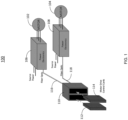
- FIG. 1 depicts a system 100 of an architecture for a split-power control electronics system with multiplexing in accordance with one or more embodiments.
- the system 100 includes electrical machines (motor, generator) 102 and 104 that are driven by power from the power electronics 106 and 108, respectively.
- the power electronics 106, 108 receive power from a power source.
- Example power electronics 106, 108 can include but are not limited to insulated-gate bipolar transistors (IGBT), gate-drives, other high-power electronic switches, filters, etc.
- the power electronics 106, 108 are used to drive the electrical machines 102, 104, respectively.
- An example electrical machine can include a 3-phase motor as shown.
- the system 100 also includes a card control module 110 that is configured to receive motor control cards 112 and 114.
- the motor drive control cards 112 and 114 can be operably connected to and processed by the control module 110.
- a single motor drive control card 112 can operate both of the power electronics 106 and 108.
- a redundant motor control card can be configured to operate both of the power electronics 106, 108 in the event there is a failure in the primary motor drive control card.
- the first and second motor drive control cards can be configured to operate half of the power electronics or be dedicatedly configured to each respective power electronics 106, 108.
- the motor drive control cards 112, 114 can be configured in different arrangements and is not limited by those described herein. The arrangement of the motor drive control cards provides for back-up modes, redundant modes, and dedicated modes of operation. In addition, it can reduce the complexity of the system 100.
- the control module 110 provides control signals to control the power electronics 106 over a first connection 116 and over a second connection 118.
- a first channel includes the motor 102, the power electronics 106, and the first fiber-optic connection 116
- the second channel includes the motor 104, the power electronics 108, and the connections 118. Although only two channels are shown, it should be understood that additional channels can be implemented and are not limited by the architecture shown in FIG. 1 .
- the connections 116 and 118 are fiber-optic cables.
- the optical fiber elements of the fiber-optic cables are packaged in bundles and carry signals in the form of light.
- the fiber-optic cables are capable of transmitting data at very high speeds.
- the fiber-optic cables are robust enough to limit the interference or cross-talk from unwanted sources such as neighboring cables.
- the high power electronics 106, 108 can be co-located with the motors 102, 104 to minimize the power-feeder weight used for the connection. Co-locating high power electronics and a motor or generator, results in reducing or eliminating bulky power quality filters in the power electronics section to further help reduce the weight and size.
- the high-power electronics 106, 108 and the motors 102, 104 can share cooling systems to conserve the limited space of the aircraft.
- FIG. 2 depicts a method 200 for operating a split power control system in accordance with one or more embodiments of the disclosure.
- the method 200 begins at block 202 and proceeds to block 204 which provides for processing, by a control module, a control card to generate control signals.
- Block 206 provides the control signals to one or more power electronics modules over one or more connections.
- the control card and control module are located in a separate location from the power electronics modules.
- the control modules are coupled to the power electronics modules using fiber-optic cables which are capable of multiplexing a plurality of control signals over the same cable.
- failure from thermal stress is greatly reduced.
- Block 208 controls one or more power electronics modules based at least in part on the control signals, and block 210 operates a load (motor) coupled to the one or more power electronics modules based on the control signals.
- the method 200 ends at block 212. It should be understood that additional steps can be used and is not intended to be limited by the steps shown in FIG. 2 .
- FIG. 3 depicts an aircraft 300 that can implement the system 100 in accordance with one or more embodiments.
- the architecture of the system 100 separating the power electronics 106, 108 from the control card(s) 112, 114 can be implemented in any vehicle and is not limited by the aircraft 300 shown in FIG. 3 .
- the control module 110, the motor drive control cards 112, 114 are located in an environmentally-regulated electronics bay.
- the low-power electronics are easier to cool when they are located within the aircraft and provide for a better environment for increased reliability.
- the motors 102, 104 and power electronics 106, 108 are co-located and leverage the same cooling systems.
- the techniques described herein provide a layout for split power-control electronics architecture that separates the low-power control elements from large heat-producing power electronics elements driving the motors.
- a single card can now control multiple power electronics modules by multiplexing the data over the fiber-optic cables, unlike the conventional systems that require dedicated control cards.
- the computer-readable storage medium can be a tangible device that can retain and store instructions for use by an instruction execution device.
- the computer-readable storage medium may be, for example, but is not limited to, an electronic storage device, a magnetic storage device, an optical storage device, an electromagnetic storage device, a semiconductor storage device, or any suitable combination of the foregoing.
- a non-exhaustive list of more specific examples of the computer-readable storage medium includes the following: a portable computer diskette, a hard disk, a random access memory (RAM), a read-only memory (ROM), an erasable programmable read-only memory (EPROM or Flash memory), a static random access memory (SRAM), a portable compact disc read-only memory (CD-ROM), a digital versatile disk (DVD), a memory stick, a floppy disk, a mechanically encoded device such as punch-cards or raised structures in a groove having instructions recorded thereon, and any suitable combination of the foregoing.
- RAM random access memory
- ROM read-only memory
- EPROM or Flash memory erasable programmable read-only memory
- SRAM static random access memory
- CD-ROM compact disc read-only memory
- DVD digital versatile disk
- memory stick a floppy disk
- a mechanically encoded device such as punch-cards or raised structures in a groove having instructions recorded thereon
- a computer-readable storage medium is not to be construed as being transitory signals per se, such as radio waves or other freely propagating electromagnetic waves, electromagnetic waves propagating through a waveguide or other transmission media (e.g., light pulses passing through a fiber-optic cable), or electrical signals transmitted through a wire.
- Computer-readable program instructions described herein can be downloaded to respective computing/processing devices from a computer-readable storage medium or to an external computer or external storage device via a network, for example, the Internet, a local area network, a wide area network and/or a wireless network.
- the network may comprise copper transmission cables, optical transmission fibers, wireless transmission, routers, firewalls, switches, gateway computers and/or edge servers.
- a network adapter card or network interface in each computing/processing device receives computer-readable program instructions from the network and forwards the computer-readable program instructions for storage in a computer-readable storage medium within the respective computing/processing device.
- each block in the flowchart or block diagrams may represent a module, segment, or portion of instructions, which comprises one or more executable instructions for implementing the specified logical function(s).
- the functions noted in the blocks may occur out of the order noted in the Figures.
- two blocks shown in succession may, in fact, be executed substantially concurrently, or the blocks may sometimes be executed in the reverse order, depending upon the functionality involved.
Landscapes
- Engineering & Computer Science (AREA)
- Power Engineering (AREA)
- Physics & Mathematics (AREA)
- Electromagnetism (AREA)
- Computer Networks & Wireless Communication (AREA)
- Signal Processing (AREA)
- Aviation & Aerospace Engineering (AREA)
- Power Conversion In General (AREA)
Description
- The present disclosure relates to electric power systems, and more specifically, to split power-control electronics with fiber-optic multiplexing.
- In today's environment, aircraft are incorporating more and more power electronics (such as motor drives, active rectifiers, power converters, etc.) for operation. Due to power requirements, the power electronics tend to be large and heavy taking up the limited real-estate in the aircraft. In addition, the reliability of the controls that are used to operate the power electronics must be maintained as these components are integrated into the aircraft system.
CN 109 802 592 A describes a fiber optic drive inverter.EP 2 690 785 A2 describes a method, system and apparatus for galvanic isolation of gate-controlled devices.US 2012/007531 A1 describes fan motor control systems. - A system for split power control electronics with fiber-optic multiplexing is provided and defined in claim 1. The system includes a plurality of power electronics modules configured to provide power to a load wherein the plurality of power electronics modules is co-located with the load in an un-controlled temperature and pressure environment; a control card configured to control the plurality of power electronics modules; a control module configured to receive and process the control card wherein the control module is located within a temperature-controlled environment; and one or more connections, the one or more connections configured to connect a control module to the plurality of power electronics modules, wherein the one or more connections are fiber optic cables.
- In addition to one or more of the features described herein, further embodiments include a motor load.
- [deleted]
- In addition to one or more of the features described herein, further embodiments include a control card that is operably coupled to two or more power electronics modules.
- In addition to one or more of the features described herein, further embodiments include a control module that is in a separate location from the plurality of power electronic modules.
- [deleted]
- In addition to one or more of the features described herein, further embodiments include a control module that is in a separate housing than the plurality of power electronics modules.
- In addition to one or more of the features described herein, further embodiments include one or more power electronics modules that are co-located with the load in an un-controlled temperature and pressure environment.
- In addition to one or more of the features described herein, further embodiments include a control module that is configured to receive a second control card, wherein the second control card is configured to operate the one or more power electronics modules.
- A method for operating power electronics modules in a redundant mode is provided and defined in claim 7. The method includes processing, by a control module, a control card to generate control signals, wherein the control module is located in a temperature controlled environment; providing the control signals to a plurality of power electronics modules over one or more connections wherein the one or more connections are fiber-optic cables, wherein the plurality of power electronics modules is co-located with the load in an un-controlled temperature and pressure environment; controlling the plurality of power electronics modules based at least in part on the control signals from the control module; and operating a load coupled to the plurality of power electronics modules based on the control signals.
- [deleted]
- In addition to one or more of the features described herein, further embodiments include operably coupling the control card to two or more power electronics modules.
- In addition to one or more of the features described herein, the control module is located in a separate location from the plurality of power electronic modules.
- [deleted]
- In addition to one or more of the features described herein, further embodiments include a control module that is located in a separate housing or chassis than the plurality of power electronics modules.
- In addition to one or more of the features described herein, further embodiments include one or more power electronics modules that are co-located with the load.
- In addition to one or more of the features described herein, further embodiments include receiving, by the control module, a second control card, wherein the second control card is configured to operate the plurality of power electronics modules.
- In addition to one or more of the features described herein, further embodiments include using a second control card that is configured in a back-up mode during a failure event of a primary control card.
- In addition to one or more of the features described herein, further embodiments include using a second control card that is configured in a redundant mode to share control with a primary control card.
- In addition to one or more of the features described herein, further embodiments include using a second control card that is configured in a dedicated mode to control the plurality of power electronics modules, respectively.
- The foregoing features and elements may be combined in various combinations without exclusivity, unless expressly indicated otherwise. These features and elements as well as the operation thereof will become more apparent in light of the following description and the accompanying drawings. It should be understood, however, that the following description and drawings are intended to be illustrative and explanatory in nature and non-limiting.
- The following descriptions should not be considered limiting in any way. With reference to the accompanying drawings, like elements are numbered alike:
-
FIG. 1 depicts a system in accordance with one or more embodiments of the disclosure; -
FIG. 2 depicts a flowchart of a method in accordance with one or more embodiments of the disclosure; and -
FIG. 3 depicts an aircraft that may be used in accordance with one or more embodiments of the disclosure. - In existing architectures, power electronics tend to be packaged in large units that contain all of the control modules and high power components. In some cases, they are coupled or packaged with the load. Since the heat-producing power components are in proximity to the control modules, the low-power control components can become thermally stressed.
- In order to reduce the overheating of these devices various cooling techniques can be used. Techniques can include large passive heat sinks or active cooling provided by fans or liquid cooling. These mechanisms also take up space in the limited areas of the aircraft. The overheating of these components can lead to failing components resulting in reduced reliability of the system.
- The techniques described herein provide for re-locating the low-power, thermally-limited, sensitive electronics from the high-heat producing power electronic components. That is, the low-power control elements are split (physically separated) from the large heat-producing power electronics elements that are used for driving the load and are placed within temperature-controlled environments. The low-power control electronics are coupled to the high-power electronics using fiber-optic cables. The fiber-optic cables are much lighter than the conventional copper-based cables. In addition, given the much higher bandwidth capabilities of the fiber-optic cables, a single cable can be used to transmit (or multiplex) multiple signals as compared to conventional copper-based signal cables which can couple only one signal.
-
FIG. 1 depicts asystem 100 of an architecture for a split-power control electronics system with multiplexing in accordance with one or more embodiments. As shown inFIG. 1 , thesystem 100 includes electrical machines (motor, generator) 102 and 104 that are driven by power from thepower electronics power electronics Example power electronics power electronics electrical machines - The
system 100 also includes acard control module 110 that is configured to receivemotor control cards 112 and 114. The motordrive control cards 112 and 114 can be operably connected to and processed by thecontrol module 110. In one or more embodiments of the disclosure, a single motordrive control card 112 can operate both of thepower electronics power electronics respective power electronics drive control cards 112, 114 can be configured in different arrangements and is not limited by those described herein. The arrangement of the motor drive control cards provides for back-up modes, redundant modes, and dedicated modes of operation. In addition, it can reduce the complexity of thesystem 100. - The
control module 110 provides control signals to control thepower electronics 106 over afirst connection 116 and over asecond connection 118. A first channel includes themotor 102, thepower electronics 106, and the first fiber-optic connection 116, and the second channel includes themotor 104, thepower electronics 108, and theconnections 118. Although only two channels are shown, it should be understood that additional channels can be implemented and are not limited by the architecture shown inFIG. 1 . - In some embodiments of the disclosure, the
connections - In one or more embodiment of the disclosure, the
high power electronics motors power electronics motors -
FIG. 2 depicts amethod 200 for operating a split power control system in accordance with one or more embodiments of the disclosure. Themethod 200 begins atblock 202 and proceeds to block 204 which provides for processing, by a control module, a control card to generate control signals.Block 206 provides the control signals to one or more power electronics modules over one or more connections. In one or more embodiments the control card and control module are located in a separate location from the power electronics modules. The control modules are coupled to the power electronics modules using fiber-optic cables which are capable of multiplexing a plurality of control signals over the same cable. In addition, by locating the control cards and control module away from the higher heat-producing power components/electronics, failure from thermal stress is greatly reduced.Block 208 controls one or more power electronics modules based at least in part on the control signals, and block 210 operates a load (motor) coupled to the one or more power electronics modules based on the control signals. Themethod 200 ends atblock 212. It should be understood that additional steps can be used and is not intended to be limited by the steps shown inFIG. 2 . -
FIG. 3 depicts anaircraft 300 that can implement thesystem 100 in accordance with one or more embodiments. It should be understood the architecture of thesystem 100 separating thepower electronics aircraft 300 shown inFIG. 3 . In one or more embodiments of the disclosure, thecontrol module 110, the motordrive control cards 112, 114 are located in an environmentally-regulated electronics bay. The low-power electronics are easier to cool when they are located within the aircraft and provide for a better environment for increased reliability. Themotors power electronics - The techniques described herein provide a layout for split power-control electronics architecture that separates the low-power control elements from large heat-producing power electronics elements driving the motors. In addition, a single card can now control multiple power electronics modules by multiplexing the data over the fiber-optic cables, unlike the conventional systems that require dedicated control cards.
- A detailed description of one or more embodiments of the disclosed apparatus and method are presented herein by way of exemplification and not limitation with reference to the Figures.
- The term "about" is intended to include the degree of error associated with measurement of the particular quantity based upon the equipment available at the time of filing the application.
- The terminology used herein is for the purpose of describing particular embodiments only and is not intended to be limiting of the present disclosure. As used herein, the singular forms "a", "an" and "the" are intended to include the plural forms as well, unless the context clearly indicates otherwise. It will be further understood that the terms "comprises" and/or "comprising," when used in this specification, specify the presence of stated features, integers, steps, operations, elements, and/or components, but do not preclude the presence or addition of one or more other features, integers, steps, operations, element components, and/or groups thereof.
- While the present disclosure has been described with reference to an exemplary embodiment or embodiments, it will be understood by those skilled in the art that various changes may be made within the scope of the appended claims. Therefore, it is intended that the present disclosure not be limited to the particular embodiment disclosed as the best mode contemplated for carrying out this present disclosure, but that the present disclosure will include all embodiments falling within the scope of the claims.
- The computer-readable storage medium can be a tangible device that can retain and store instructions for use by an instruction execution device. The computer-readable storage medium may be, for example, but is not limited to, an electronic storage device, a magnetic storage device, an optical storage device, an electromagnetic storage device, a semiconductor storage device, or any suitable combination of the foregoing. A non-exhaustive list of more specific examples of the computer-readable storage medium includes the following: a portable computer diskette, a hard disk, a random access memory (RAM), a read-only memory (ROM), an erasable programmable read-only memory (EPROM or Flash memory), a static random access memory (SRAM), a portable compact disc read-only memory (CD-ROM), a digital versatile disk (DVD), a memory stick, a floppy disk, a mechanically encoded device such as punch-cards or raised structures in a groove having instructions recorded thereon, and any suitable combination of the foregoing. A computer-readable storage medium, as used herein, is not to be construed as being transitory signals per se, such as radio waves or other freely propagating electromagnetic waves, electromagnetic waves propagating through a waveguide or other transmission media (e.g., light pulses passing through a fiber-optic cable), or electrical signals transmitted through a wire.
- Computer-readable program instructions described herein can be downloaded to respective computing/processing devices from a computer-readable storage medium or to an external computer or external storage device via a network, for example, the Internet, a local area network, a wide area network and/or a wireless network. The network may comprise copper transmission cables, optical transmission fibers, wireless transmission, routers, firewalls, switches, gateway computers and/or edge servers. A network adapter card or network interface in each computing/processing device receives computer-readable program instructions from the network and forwards the computer-readable program instructions for storage in a computer-readable storage medium within the respective computing/processing device.
- Aspects of the present invention are described herein with reference to flowchart illustrations and/or block diagrams of methods, apparatus (systems), and computer program products according to embodiments. It will be understood that each block of the flowchart illustrations and/or block diagrams, and combinations of blocks in the flowchart illustrations and/or block diagrams, can be implemented by computer-readable program instructions.
- The flowchart and block diagrams in the Figures illustrate the architecture, functionality, and operation of possible implementations of systems, methods, and computer program products according to various embodiments. In this regard, each block in the flowchart or block diagrams may represent a module, segment, or portion of instructions, which comprises one or more executable instructions for implementing the specified logical function(s). In some alternative implementations, the functions noted in the blocks may occur out of the order noted in the Figures. For example, two blocks shown in succession may, in fact, be executed substantially concurrently, or the blocks may sometimes be executed in the reverse order, depending upon the functionality involved. It will also be noted that each block of the block diagrams and/or flowchart illustration, and combinations of blocks in the block diagrams and/or flowchart illustration, can be implemented by special purpose hardware-based systems that perform the specified functions or acts or carry out combinations of special purpose hardware and computer instructions.
- The descriptions of the various embodiments have been presented for purposes of illustration but are not intended to be exhaustive or limited to the embodiments disclosed. Many modifications and variations will be apparent to those of ordinary skill in the art without departing from the scope of the appended claims. The terminology used herein was chosen to best explain the principles of the embodiments, the practical application or technical improvement over technologies found in the marketplace, or to enable others of ordinary skill in the art to understand the embodiments disclosed herein.
Claims (14)
- A system for split power-control electronics with fiber-optic multiplexing, the system characterised by comprising:a plurality of power electronics modules configured to provide power to a load, wherein the plurality of power electronics modules is co-located with the load in an un-controlled temperature and pressure environment;a control card (112, 114) configured to control the plurality of power electronics modules;a control module (110) configured to receive and process the control card, wherein the control module is located within a temperature-controlled environment; andone or more connections (118), the one or more connections configured to connect a control module to the plurality of power electronics modules, wherein the one or more connections are fiber-optic cables.
- The system of claim 1, wherein the load is a motor.
- The system of any preceding claim, wherein the control card is operably coupled to two or more power electronics modules.
- The system of any preceding claim, wherein the control module is in a separate location from the plurality of power electronic modules.
- The system of any preceding claim, wherein the control module is in a separate housing than the plurality of power electronics modules.
- The system of any preceding claim, wherein the control module is configured to receive a second control card, wherein the second control card is configured to operate the plurality of power electronics modules.
- A method (200) for operating power electronics modules in a redundant mode, the method characterised by comprising:processing (204), by a control module, a control card to generate control signals, wherein the control module is located in a temperature-controlled environment;providing (206) the control signals to a plurality of power electronics modules over one or more connections, wherein the one or more connections are fiber-optic cables, wherein the plurality of power electronics modules is co-located with the load in an un-controlled temperature and pressure environment;controlling (208) the plurality of power electronics modules based at least in part on the control signals from the control module; andoperating (210) a load coupled to the plurality of power electronics modules based on the control signals.
- The method of claim 7, further comprising operably coupling the control card to two or more power electronics modules.
- The method of any of claim 7 or 8, wherein the control module is located in a separate location from the plurality of power electronic modules.
- The method of any of claims 7, 8 or 9, wherein the control module is in a separate housing or chassis with the plurality of power electronics modules.
- The method of any of claims 7 to 10, further comprising receiving, by the control module, a second control card, wherein the second control card is configured to operate one or more of the plurality of power electronics modules.
- The method of claim 11, wherein the second control card is configured in a back-up mode during a failure event of a primary control card.
- The method of claim 11, wherein the second control card is configured in a redundant mode to share control with a primary control card.
- The method of claim 11, wherein the second control card is configured in a dedicated mode to control one or more of the plurality of power electronics modules, respectively.
Applications Claiming Priority (1)
| Application Number | Priority Date | Filing Date | Title |
|---|---|---|---|
| US16/791,034 US11121773B2 (en) | 2020-02-14 | 2020-02-14 | Split power-control electronics with fiber-optic multiplexing |
Publications (2)
| Publication Number | Publication Date |
|---|---|
| EP3866333A1 EP3866333A1 (en) | 2021-08-18 |
| EP3866333B1 true EP3866333B1 (en) | 2023-04-26 |
Family
ID=74595152
Family Applications (1)
| Application Number | Title | Priority Date | Filing Date |
|---|---|---|---|
| EP21156834.0A Active EP3866333B1 (en) | 2020-02-14 | 2021-02-12 | Split power-control electronics with fiber-optic multiplexing |
Country Status (2)
| Country | Link |
|---|---|
| US (1) | US11121773B2 (en) |
| EP (1) | EP3866333B1 (en) |
Citations (1)
| Publication number | Priority date | Publication date | Assignee | Title |
|---|---|---|---|---|
| EP2690785B1 (en) * | 2012-07-26 | 2019-03-13 | General Electric Company | Method, system and apparatus for galvanic isolation of gate-controlled devices |
Family Cites Families (16)
| Publication number | Priority date | Publication date | Assignee | Title |
|---|---|---|---|---|
| US7296753B1 (en) | 2000-01-14 | 2007-11-20 | Bae Systems Information And Electronic Systems Integration Inc. | Isolated control apparatus incorporating light controlled power semiconductors |
| US6972972B2 (en) | 2002-04-15 | 2005-12-06 | Airak, Inc. | Power inverter with optical isolation |
| ATE466451T1 (en) * | 2003-01-17 | 2010-05-15 | Tokendo | VIDEO ENDOSCOPE |
| US7922117B2 (en) | 2004-08-30 | 2011-04-12 | Hamilton Sundstrand Corporation | Primary panel and motor controller integration for aircraft power distribution system |
| US7948356B2 (en) * | 2004-11-04 | 2011-05-24 | Panasonic Corporation | Portable terminal |
| US7615892B2 (en) | 2006-11-09 | 2009-11-10 | Honeywell International Inc. | Modular and scalable power conversion system for aircraft |
| US7995914B2 (en) * | 2008-03-28 | 2011-08-09 | Mci Communications Services, Inc. | Method and system for providing fault recovery using composite transport groups |
| KR101053886B1 (en) * | 2008-08-11 | 2011-08-04 | 삼성전자주식회사 | Smart card recognition method and device in dual mode mobile terminal |
| US8807956B2 (en) | 2008-11-13 | 2014-08-19 | Marvell World Trade Ltd. | Apparatus and method for controlling speed of a fan via a first control module connected by a cable and/or conductors between a motor and a second control module |
| US9043002B2 (en) * | 2011-01-31 | 2015-05-26 | Myoonet, Inc. | Adaptive control of electrical devices to achieve desired power use characteristics |
| US9124198B2 (en) | 2013-04-08 | 2015-09-01 | Hamilton Sundstrand Corporation | Multiplexed motor controller |
| US9561761B2 (en) | 2013-10-11 | 2017-02-07 | The Boeing Company | Modular equipment center zonal standalone power system control architecture |
| US9647455B2 (en) | 2014-09-30 | 2017-05-09 | The Boeing Company | EMI filter systems and methods for parallel modular converters |
| US10602246B2 (en) * | 2016-05-20 | 2020-03-24 | Infinera Corporation | Heuristic constraint driven optical channel protection |
| FR3078845B1 (en) | 2018-03-08 | 2022-08-05 | Thales Sa | ELECTRICAL ARCHITECTURE FOR CONTROLLING CONVERTERS AND AIRCRAFT COMPRISING THE ARCHITECTURE |
| CN109802592A (en) | 2019-02-13 | 2019-05-24 | 浙江天毅半导体科技有限公司 | A kind of long-range inverter of optical fiber driving |
-
2020
- 2020-02-14 US US16/791,034 patent/US11121773B2/en active Active
-
2021
- 2021-02-12 EP EP21156834.0A patent/EP3866333B1/en active Active
Patent Citations (1)
| Publication number | Priority date | Publication date | Assignee | Title |
|---|---|---|---|---|
| EP2690785B1 (en) * | 2012-07-26 | 2019-03-13 | General Electric Company | Method, system and apparatus for galvanic isolation of gate-controlled devices |
Also Published As
| Publication number | Publication date |
|---|---|
| US20210258073A1 (en) | 2021-08-19 |
| EP3866333A1 (en) | 2021-08-18 |
| US11121773B2 (en) | 2021-09-14 |
Similar Documents
| Publication | Publication Date | Title |
|---|---|---|
| EP3229573B1 (en) | Immersion cooling systems and methods | |
| US7138733B2 (en) | Redundant data and power infrastructure for modular server components in a rack | |
| EP3281080B1 (en) | Enclosure with multiple heat dissipating surfaces | |
| US6219245B1 (en) | Electrically isolated power switching device mounting assembly for EMI reduction | |
| EP2535786A1 (en) | Server, server assemblies and fan speed control method | |
| US9317078B2 (en) | Storage device backplane with penetrating convection and computer framework | |
| EP2264883B1 (en) | Power converter for railway rolling stock | |
| US20040017655A1 (en) | Method and rack for exchanging air with modular bricks in a computer system | |
| US20230328911A1 (en) | Inverter system for a drive train of a motor vehicle | |
| US11125108B2 (en) | Liquid-cooled enclosure for turbocharger power module | |
| EP3866333B1 (en) | Split power-control electronics with fiber-optic multiplexing | |
| CN113220096B (en) | Modular Server Cooling System | |
| US9823710B2 (en) | Miniaturized computation and storage merged system | |
| CN117063188A (en) | Optical drives for qubits | |
| CN109308097B (en) | Improved storage device tray system | |
| US20240250585A1 (en) | Aircraft electric propulsion system | |
| US20110246793A1 (en) | Method of providing out of band monitoring and control of a data storage subsystem | |
| EP3339993B1 (en) | Motor drive with dynamic interval communication | |
| US20240154499A1 (en) | Aircraft propulsion liquid cooling | |
| CN110661435A (en) | Electrical equipment, electrical assembly and inverter | |
| US10939572B2 (en) | Circuit board assembly | |
| EP4410065A1 (en) | A cooling plate, a central compute unit, a vehicle and a manufacturing method for a vehicle | |
| US10791385B2 (en) | Optical to electrical conversion module | |
| CN117729753A (en) | Vehicle control system | |
| JP3010873B2 (en) | Fan unit |
Legal Events
| Date | Code | Title | Description |
|---|---|---|---|
| PUAI | Public reference made under article 153(3) epc to a published international application that has entered the european phase |
Free format text: ORIGINAL CODE: 0009012 |
|
| STAA | Information on the status of an ep patent application or granted ep patent |
Free format text: STATUS: THE APPLICATION HAS BEEN PUBLISHED |
|
| AK | Designated contracting states |
Kind code of ref document: A1 Designated state(s): AL AT BE BG CH CY CZ DE DK EE ES FI FR GB GR HR HU IE IS IT LI LT LU LV MC MK MT NL NO PL PT RO RS SE SI SK SM TR |
|
| STAA | Information on the status of an ep patent application or granted ep patent |
Free format text: STATUS: REQUEST FOR EXAMINATION WAS MADE |
|
| 17P | Request for examination filed |
Effective date: 20220216 |
|
| RBV | Designated contracting states (corrected) |
Designated state(s): AL AT BE BG CH CY CZ DE DK EE ES FI FR GB GR HR HU IE IS IT LI LT LU LV MC MK MT NL NO PL PT RO RS SE SI SK SM TR |
|
| GRAP | Despatch of communication of intention to grant a patent |
Free format text: ORIGINAL CODE: EPIDOSNIGR1 |
|
| STAA | Information on the status of an ep patent application or granted ep patent |
Free format text: STATUS: GRANT OF PATENT IS INTENDED |
|
| INTG | Intention to grant announced |
Effective date: 20221205 |
|
| GRAS | Grant fee paid |
Free format text: ORIGINAL CODE: EPIDOSNIGR3 |
|
| GRAA | (expected) grant |
Free format text: ORIGINAL CODE: 0009210 |
|
| STAA | Information on the status of an ep patent application or granted ep patent |
Free format text: STATUS: THE PATENT HAS BEEN GRANTED |
|
| AK | Designated contracting states |
Kind code of ref document: B1 Designated state(s): AL AT BE BG CH CY CZ DE DK EE ES FI FR GB GR HR HU IE IS IT LI LT LU LV MC MK MT NL NO PL PT RO RS SE SI SK SM TR |
|
| REG | Reference to a national code |
Ref country code: GB Ref legal event code: FG4D |
|
| REG | Reference to a national code |
Ref country code: CH Ref legal event code: EP |
|
| REG | Reference to a national code |
Ref country code: DE Ref legal event code: R096 Ref document number: 602021001997 Country of ref document: DE |
|
| REG | Reference to a national code |
Ref country code: AT Ref legal event code: REF Ref document number: 1563560 Country of ref document: AT Kind code of ref document: T Effective date: 20230515 |
|
| REG | Reference to a national code |
Ref country code: IE Ref legal event code: FG4D |
|
| REG | Reference to a national code |
Ref country code: LT Ref legal event code: MG9D |
|
| REG | Reference to a national code |
Ref country code: NL Ref legal event code: MP Effective date: 20230426 |
|
| REG | Reference to a national code |
Ref country code: AT Ref legal event code: MK05 Ref document number: 1563560 Country of ref document: AT Kind code of ref document: T Effective date: 20230426 |
|
| PG25 | Lapsed in a contracting state [announced via postgrant information from national office to epo] |
Ref country code: NL Free format text: LAPSE BECAUSE OF FAILURE TO SUBMIT A TRANSLATION OF THE DESCRIPTION OR TO PAY THE FEE WITHIN THE PRESCRIBED TIME-LIMIT Effective date: 20230426 |
|
| PG25 | Lapsed in a contracting state [announced via postgrant information from national office to epo] |
Ref country code: SE Free format text: LAPSE BECAUSE OF FAILURE TO SUBMIT A TRANSLATION OF THE DESCRIPTION OR TO PAY THE FEE WITHIN THE PRESCRIBED TIME-LIMIT Effective date: 20230426 Ref country code: PT Free format text: LAPSE BECAUSE OF FAILURE TO SUBMIT A TRANSLATION OF THE DESCRIPTION OR TO PAY THE FEE WITHIN THE PRESCRIBED TIME-LIMIT Effective date: 20230828 Ref country code: NO Free format text: LAPSE BECAUSE OF FAILURE TO SUBMIT A TRANSLATION OF THE DESCRIPTION OR TO PAY THE FEE WITHIN THE PRESCRIBED TIME-LIMIT Effective date: 20230726 Ref country code: ES Free format text: LAPSE BECAUSE OF FAILURE TO SUBMIT A TRANSLATION OF THE DESCRIPTION OR TO PAY THE FEE WITHIN THE PRESCRIBED TIME-LIMIT Effective date: 20230426 Ref country code: AT Free format text: LAPSE BECAUSE OF FAILURE TO SUBMIT A TRANSLATION OF THE DESCRIPTION OR TO PAY THE FEE WITHIN THE PRESCRIBED TIME-LIMIT Effective date: 20230426 |
|
| PG25 | Lapsed in a contracting state [announced via postgrant information from national office to epo] |
Ref country code: RS Free format text: LAPSE BECAUSE OF FAILURE TO SUBMIT A TRANSLATION OF THE DESCRIPTION OR TO PAY THE FEE WITHIN THE PRESCRIBED TIME-LIMIT Effective date: 20230426 Ref country code: PL Free format text: LAPSE BECAUSE OF FAILURE TO SUBMIT A TRANSLATION OF THE DESCRIPTION OR TO PAY THE FEE WITHIN THE PRESCRIBED TIME-LIMIT Effective date: 20230426 Ref country code: LV Free format text: LAPSE BECAUSE OF FAILURE TO SUBMIT A TRANSLATION OF THE DESCRIPTION OR TO PAY THE FEE WITHIN THE PRESCRIBED TIME-LIMIT Effective date: 20230426 Ref country code: LT Free format text: LAPSE BECAUSE OF FAILURE TO SUBMIT A TRANSLATION OF THE DESCRIPTION OR TO PAY THE FEE WITHIN THE PRESCRIBED TIME-LIMIT Effective date: 20230426 Ref country code: IS Free format text: LAPSE BECAUSE OF FAILURE TO SUBMIT A TRANSLATION OF THE DESCRIPTION OR TO PAY THE FEE WITHIN THE PRESCRIBED TIME-LIMIT Effective date: 20230826 Ref country code: HR Free format text: LAPSE BECAUSE OF FAILURE TO SUBMIT A TRANSLATION OF THE DESCRIPTION OR TO PAY THE FEE WITHIN THE PRESCRIBED TIME-LIMIT Effective date: 20230426 Ref country code: GR Free format text: LAPSE BECAUSE OF FAILURE TO SUBMIT A TRANSLATION OF THE DESCRIPTION OR TO PAY THE FEE WITHIN THE PRESCRIBED TIME-LIMIT Effective date: 20230727 |
|
| PG25 | Lapsed in a contracting state [announced via postgrant information from national office to epo] |
Ref country code: FI Free format text: LAPSE BECAUSE OF FAILURE TO SUBMIT A TRANSLATION OF THE DESCRIPTION OR TO PAY THE FEE WITHIN THE PRESCRIBED TIME-LIMIT Effective date: 20230426 |
|
| PG25 | Lapsed in a contracting state [announced via postgrant information from national office to epo] |
Ref country code: SK Free format text: LAPSE BECAUSE OF FAILURE TO SUBMIT A TRANSLATION OF THE DESCRIPTION OR TO PAY THE FEE WITHIN THE PRESCRIBED TIME-LIMIT Effective date: 20230426 |
|
| REG | Reference to a national code |
Ref country code: DE Ref legal event code: R097 Ref document number: 602021001997 Country of ref document: DE |
|
| PG25 | Lapsed in a contracting state [announced via postgrant information from national office to epo] |
Ref country code: SM Free format text: LAPSE BECAUSE OF FAILURE TO SUBMIT A TRANSLATION OF THE DESCRIPTION OR TO PAY THE FEE WITHIN THE PRESCRIBED TIME-LIMIT Effective date: 20230426 Ref country code: SK Free format text: LAPSE BECAUSE OF FAILURE TO SUBMIT A TRANSLATION OF THE DESCRIPTION OR TO PAY THE FEE WITHIN THE PRESCRIBED TIME-LIMIT Effective date: 20230426 Ref country code: RO Free format text: LAPSE BECAUSE OF FAILURE TO SUBMIT A TRANSLATION OF THE DESCRIPTION OR TO PAY THE FEE WITHIN THE PRESCRIBED TIME-LIMIT Effective date: 20230426 Ref country code: EE Free format text: LAPSE BECAUSE OF FAILURE TO SUBMIT A TRANSLATION OF THE DESCRIPTION OR TO PAY THE FEE WITHIN THE PRESCRIBED TIME-LIMIT Effective date: 20230426 Ref country code: DK Free format text: LAPSE BECAUSE OF FAILURE TO SUBMIT A TRANSLATION OF THE DESCRIPTION OR TO PAY THE FEE WITHIN THE PRESCRIBED TIME-LIMIT Effective date: 20230426 Ref country code: CZ Free format text: LAPSE BECAUSE OF FAILURE TO SUBMIT A TRANSLATION OF THE DESCRIPTION OR TO PAY THE FEE WITHIN THE PRESCRIBED TIME-LIMIT Effective date: 20230426 |
|
| PLBE | No opposition filed within time limit |
Free format text: ORIGINAL CODE: 0009261 |
|
| STAA | Information on the status of an ep patent application or granted ep patent |
Free format text: STATUS: NO OPPOSITION FILED WITHIN TIME LIMIT |
|
| 26N | No opposition filed |
Effective date: 20240129 |
|
| PG25 | Lapsed in a contracting state [announced via postgrant information from national office to epo] |
Ref country code: SI Free format text: LAPSE BECAUSE OF FAILURE TO SUBMIT A TRANSLATION OF THE DESCRIPTION OR TO PAY THE FEE WITHIN THE PRESCRIBED TIME-LIMIT Effective date: 20230426 |
|
| PG25 | Lapsed in a contracting state [announced via postgrant information from national office to epo] |
Ref country code: SI Free format text: LAPSE BECAUSE OF FAILURE TO SUBMIT A TRANSLATION OF THE DESCRIPTION OR TO PAY THE FEE WITHIN THE PRESCRIBED TIME-LIMIT Effective date: 20230426 Ref country code: IT Free format text: LAPSE BECAUSE OF FAILURE TO SUBMIT A TRANSLATION OF THE DESCRIPTION OR TO PAY THE FEE WITHIN THE PRESCRIBED TIME-LIMIT Effective date: 20230426 |
|
| PG25 | Lapsed in a contracting state [announced via postgrant information from national office to epo] |
Ref country code: MC Free format text: LAPSE BECAUSE OF FAILURE TO SUBMIT A TRANSLATION OF THE DESCRIPTION OR TO PAY THE FEE WITHIN THE PRESCRIBED TIME-LIMIT Effective date: 20230426 |
|
| REG | Reference to a national code |
Ref country code: CH Ref legal event code: PL |
|
| PG25 | Lapsed in a contracting state [announced via postgrant information from national office to epo] |
Ref country code: LU Free format text: LAPSE BECAUSE OF NON-PAYMENT OF DUE FEES Effective date: 20240212 |
|
| PG25 | Lapsed in a contracting state [announced via postgrant information from national office to epo] |
Ref country code: CH Free format text: LAPSE BECAUSE OF NON-PAYMENT OF DUE FEES Effective date: 20240229 |
|
| PG25 | Lapsed in a contracting state [announced via postgrant information from national office to epo] |
Ref country code: LU Free format text: LAPSE BECAUSE OF NON-PAYMENT OF DUE FEES Effective date: 20240212 Ref country code: CH Free format text: LAPSE BECAUSE OF NON-PAYMENT OF DUE FEES Effective date: 20240229 |
|
| PG25 | Lapsed in a contracting state [announced via postgrant information from national office to epo] |
Ref country code: BG Free format text: LAPSE BECAUSE OF FAILURE TO SUBMIT A TRANSLATION OF THE DESCRIPTION OR TO PAY THE FEE WITHIN THE PRESCRIBED TIME-LIMIT Effective date: 20230426 |
|
| PG25 | Lapsed in a contracting state [announced via postgrant information from national office to epo] |
Ref country code: BG Free format text: LAPSE BECAUSE OF FAILURE TO SUBMIT A TRANSLATION OF THE DESCRIPTION OR TO PAY THE FEE WITHIN THE PRESCRIBED TIME-LIMIT Effective date: 20230426 |
|
| REG | Reference to a national code |
Ref country code: BE Ref legal event code: MM Effective date: 20240229 |
|
| PG25 | Lapsed in a contracting state [announced via postgrant information from national office to epo] |
Ref country code: BE Free format text: LAPSE BECAUSE OF NON-PAYMENT OF DUE FEES Effective date: 20240229 |
|
| PG25 | Lapsed in a contracting state [announced via postgrant information from national office to epo] |
Ref country code: IE Free format text: LAPSE BECAUSE OF NON-PAYMENT OF DUE FEES Effective date: 20240212 |
|
| PG25 | Lapsed in a contracting state [announced via postgrant information from national office to epo] |
Ref country code: IE Free format text: LAPSE BECAUSE OF NON-PAYMENT OF DUE FEES Effective date: 20240212 Ref country code: BE Free format text: LAPSE BECAUSE OF NON-PAYMENT OF DUE FEES Effective date: 20240229 |
|
| PG25 | Lapsed in a contracting state [announced via postgrant information from national office to epo] |
Ref country code: CY Free format text: LAPSE BECAUSE OF FAILURE TO SUBMIT A TRANSLATION OF THE DESCRIPTION OR TO PAY THE FEE WITHIN THE PRESCRIBED TIME-LIMIT; INVALID AB INITIO Effective date: 20210212 |
|
| PG25 | Lapsed in a contracting state [announced via postgrant information from national office to epo] |
Ref country code: HU Free format text: LAPSE BECAUSE OF FAILURE TO SUBMIT A TRANSLATION OF THE DESCRIPTION OR TO PAY THE FEE WITHIN THE PRESCRIBED TIME-LIMIT; INVALID AB INITIO Effective date: 20210212 |
|
| PG25 | Lapsed in a contracting state [announced via postgrant information from national office to epo] |
Ref country code: TR Free format text: LAPSE BECAUSE OF FAILURE TO SUBMIT A TRANSLATION OF THE DESCRIPTION OR TO PAY THE FEE WITHIN THE PRESCRIBED TIME-LIMIT Effective date: 20230426 |
|
| P01 | Opt-out of the competence of the unified patent court (upc) registered |
Free format text: CASE NUMBER: UPC_APP_0018560_3866333/2025 Effective date: 20251219 |
|
| PGFP | Annual fee paid to national office [announced via postgrant information from national office to epo] |
Ref country code: GB Payment date: 20260121 Year of fee payment: 6 |
|
| PGFP | Annual fee paid to national office [announced via postgrant information from national office to epo] |
Ref country code: DE Payment date: 20260121 Year of fee payment: 6 |
|
| PGFP | Annual fee paid to national office [announced via postgrant information from national office to epo] |
Ref country code: FR Payment date: 20260121 Year of fee payment: 6 |