EP3866177A1 - Abnormal driving state determination device and method using neural network model - Google Patents
Abnormal driving state determination device and method using neural network model Download PDFInfo
- Publication number
- EP3866177A1 EP3866177A1 EP19870406.6A EP19870406A EP3866177A1 EP 3866177 A1 EP3866177 A1 EP 3866177A1 EP 19870406 A EP19870406 A EP 19870406A EP 3866177 A1 EP3866177 A1 EP 3866177A1
- Authority
- EP
- European Patent Office
- Prior art keywords
- driving state
- abnormal driving
- abnormal
- state data
- unit
- Prior art date
- Legal status (The legal status is an assumption and is not a legal conclusion. Google has not performed a legal analysis and makes no representation as to the accuracy of the status listed.)
- Pending
Links
Images



Classifications
-
- G—PHYSICS
- G06—COMPUTING OR CALCULATING; COUNTING
- G06N—COMPUTING ARRANGEMENTS BASED ON SPECIFIC COMPUTATIONAL MODELS
- G06N3/00—Computing arrangements based on biological models
- G06N3/02—Neural networks
- G06N3/04—Architecture, e.g. interconnection topology
- G06N3/0464—Convolutional networks [CNN, ConvNet]
-
- G—PHYSICS
- G06—COMPUTING OR CALCULATING; COUNTING
- G06N—COMPUTING ARRANGEMENTS BASED ON SPECIFIC COMPUTATIONAL MODELS
- G06N3/00—Computing arrangements based on biological models
- G06N3/02—Neural networks
- G06N3/08—Learning methods
-
- G—PHYSICS
- G06—COMPUTING OR CALCULATING; COUNTING
- G06N—COMPUTING ARRANGEMENTS BASED ON SPECIFIC COMPUTATIONAL MODELS
- G06N3/00—Computing arrangements based on biological models
- G06N3/02—Neural networks
- G06N3/08—Learning methods
- G06N3/09—Supervised learning
-
- G—PHYSICS
- G21—NUCLEAR PHYSICS; NUCLEAR ENGINEERING
- G21D—NUCLEAR POWER PLANT
- G21D3/00—Control of nuclear power plant
- G21D3/04—Safety arrangements
- G21D3/06—Safety arrangements responsive to faults within the plant
-
- G—PHYSICS
- G06—COMPUTING OR CALCULATING; COUNTING
- G06N—COMPUTING ARRANGEMENTS BASED ON SPECIFIC COMPUTATIONAL MODELS
- G06N3/00—Computing arrangements based on biological models
- G06N3/02—Neural networks
- G06N3/04—Architecture, e.g. interconnection topology
- G06N3/045—Combinations of networks
-
- Y—GENERAL TAGGING OF NEW TECHNOLOGICAL DEVELOPMENTS; GENERAL TAGGING OF CROSS-SECTIONAL TECHNOLOGIES SPANNING OVER SEVERAL SECTIONS OF THE IPC; TECHNICAL SUBJECTS COVERED BY FORMER USPC CROSS-REFERENCE ART COLLECTIONS [XRACs] AND DIGESTS
- Y02—TECHNOLOGIES OR APPLICATIONS FOR MITIGATION OR ADAPTATION AGAINST CLIMATE CHANGE
- Y02E—REDUCTION OF GREENHOUSE GAS [GHG] EMISSIONS, RELATED TO ENERGY GENERATION, TRANSMISSION OR DISTRIBUTION
- Y02E30/00—Energy generation of nuclear origin
Definitions
- the present disclosure relates to an apparatus and method for determining an abnormal driving state using a neural network model, and more specifically, to an apparatus and method for determining an abnormal driving state using a neural network model capable of providing an abnormal driving state by utilizing an artificial intelligence neural network.
- Nuclear power plants have a variety of abnormal driving states. When an abnormal driving state occurs, an alarm occurs in the main control room, and the state of the related power plant changes. Changes in the state of the power plant include temperature, pressure, and flow.
- An operator determines which abnormal driving state has occurred based on the alarm from the power plant, and then takes appropriate measures according to the procedure for the abnormal driving state.
- the present disclosure is to solve the problem of the related art as described above, and it is an object of the present disclosure to quickly determine an abnormal driving state of a nuclear power plant and provide an operator with relevant information.
- the present disclosure provides an abnormal driving state determination device using a neural network model, and the device includes: an abnormal driving state data generation unit configured to generate abnormal driving state data based on information on an abnormal driving state; an abnormal driving state learning unit configured to receive the abnormal driving state data so as to visualize the abnormal driving state data through a visualization algorithm, thereby allowing the abnormal driving state data to be learned by a neural network model; and an abnormal driving state determination unit provided with a neural network model for determining an abnormal state on the basis of the learned abnormal driving state data.
- the abnormal driving state learning unit may be provided with a first visualization arrangement unit, and the first visualization arrangement unit may arrange operating variables based on physical locations, thereby collecting and arranging operating variables corresponding to locations where an abnormal driving state occurs.
- abnormal driving state learning unit may be provided with a second visualization arrangement unit, and the second visualization arrangement unit may preferentially arrange physically identical variables.
- the abnormal driving state data generation unit may include a scenario database and a simulator, and the simulator may generate the abnormal driving state data by implementing the abnormal driving state based on a driving scenario for the abnormal driving state, which is stored in the scenario database.
- the abnormal driving state data to be learned may differ according to an operating variable.
- a procedure providing unit may provide an abnormal driving procedure comprising a response to the abnormal driving state.
- the abnormal driving state determination unit may further include a matching unit, and the signal matching unit transmits information on an abnormal driving state to correspond to equipment.
- the present disclosure provides an abnormal driving state determining method using a neural network model, and the method includes: generating, by an abnormal driving state data generating unit, abnormal driving state data based on information on an abnormal driving state; receiving the abnormal driving state data so as to visualize the abnormal driving state data through a visualization algorithm, thereby allowing the abnormal driving state data to be learned by a neural network model; determining an abnormal state on the basis of the learned abnormal driving state data by an abnormal driving state determination unit; and providing, by a procedure providing unit, an operator with a procedure for responding to the abnormal driving state.
- the apparatus and method for determining an abnormal driving state using a neural network model can accurately determine the type of abnormal driving state within a short time using a neural network model when various abnormal driving states occur, and provide the operator with the type of the abnormal driving state. It is possible to quickly and accurately respond to abnormal driving states of nuclear power plants, and to improve the safety of nuclear power plants.
- FIG. 1 is a schematic diagram of an abnormal driving state determining apparatus to which a neural network model is applied
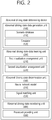
- FIG. 2 is a block diagram of an abnormal driving state determining apparatus to which a neural network model is applied according to an embodiment of the present disclosure.
- an apparatus for determining an abnormal driving(operation) state to which a neural network model according to an embodiment of the present disclosure is applied may include an abnormal driving state data generation unit 100 , an abnormal driving state data learning unit 200, an abnormal driving state determination unit 300, an abnormal driving state monitoring unit 400, and a procedure providing unit 500.
- the abnormal driving state data generation unit 100 is a configuration that virtually generates abnormal driving state data based on information on an abnormal driving state, and may include a scenario database 110 and a simulator 120.
- the scenario database 110 is a configuration in which a number of scenarios related to abnormal driving states are provided. These scenarios include scenarios according to operating variables related to change in temperature of nuclear power plant equipment, scenarios according to operating variables related to turbine bearing vibration, and the like, and scenarios related to various abnormal driving states are stored in the scenario database 110.
- the simulator 120 is a configuration that simulates an abnormal driving state with respect to a scenario selected from among the scenarios related to the abnormal driving states stored in the scenario database 110. Accordingly, data on the abnormal driving state may be virtually generated.
- the abnormal driving state data learning unit 200 is a configuration that visualizes and learns an abnormal driving state by applying a visualization algorithm based on the abnormal driving state data generated by the abnormal driving state data generation unit 100.
- the abnormal driving state data learning unit 200 may include a first visualization arrangement unit 210 and a second visualization arrangement unit 220.
- the first visualization arrangement unit 210 is a configuration that arranges based on physical locations of operating variables of equipment provided in a nuclear power plant. That is, the operating variables may be arranged in the same arrangement as the structure of an actual nuclear power plant.
- the second visualization arrangement unit 220 is a configuration that preferentially arranges physically identical operating variables. For example, operating variables related to temperature are arranged in the same zone so that when temperature changes occur, the characteristics of each event appear.
- the abnormal driving state determination unit 300 is a configuration that learns an abnormal driving state based on the abnormal driving state data learning unit 200 representing driving variables by applying a visualization algorithm and then determines whether the abnormal driving state has occurred based on operating variables of equipment obtained from process monitoring and alarming system of the nuclear power plant.
- the abnormal driving state determination unit 300 may include a neural network model 310 and a signal matching unit 320.
- the neural network model 310 is a configuration that learns abnormal driving state data visualized by the first visualization arrangement unit 210 and the second visualization arrangement unit 220 based on a visualization algorithm.
- the signal matching unit 320 is a configuration that transmits information on a monitoring signal including information on abnormal driving states to correspond to equipments, so that the procedure provision unit 500 can distinguish the abnormal driving states.
- the abnormal driving state monitoring unit 400 is a configuration that monitors whether a driving state of each equipment provided in the nuclear power plant is within a normal range.
- the abnormal driving state monitoring unit 400 may periodically acquire a monitoring signal including information on operating variables of each equipment and transmit the monitoring signal to the abnormal driving state determination unit 300.
- the procedure providing unit 500 is a configuration that provides an operator with a procedure including a response to an abnormal driving state when it is determined by the abnormal driving state determination unit 300 that the equipment is in an abnormal driving state.
- FIG. 3 is a diagram schematically illustrating an operation process of an abnormal driving state determining apparatus to which the neural network model 310 is applied according to an embodiment of the present disclosure.
- a visualization algorithm is first applied to virtually generate an abnormal driving state data.
- the abnormal driving state data may be generated in a manner in which the abnormal driving state data generation unit 100 generates information based on a scenario and then the abnormal driving state data learning unit 200 applies a visualization algorithm.
- the neural network model 310 provided in the abnormal driving state determination unit 300 learns the abnormal driving state data to which the visualization algorithm is applied.
- the neural network model 310 learns the abnormal driving state data to which the visualization algorithm is applied as described above, whether the equipments are in the abnormal driving state may be monitored periodically so as to determine the abnormal driving state.
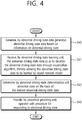
- FIG. 4 is a flowchart of an abnormal driving state determining apparatus to which the neural network model 310 is applied according to an embodiment of the present disclosure.
- the abnormal operation state data generation unit 100 initially generates abnormal operation state data based on information on an abnormal operation state.
- the simulator 120 may arbitrary generate an abnormal driving state based on a scenario for each abnormal driving state stored in the scenario database 110. As such, information on the abnormal driving state data arbitrarily generated by the simulator 120 may be transmitted to the abnormal driving state learning unit.
- the abnormal driving state learning unit receives the generated abnormal driving state data so as to visualize the abnormal driving state data through a visualization algorithm, thereby allowing the abnormal driving state data to be learned by the neural network model 310 ⁇ S41>.
- the abnormal driving state data is visualized by the first visualization arrangement unit 210 and the second visualization arrangement unit 220 through the visualization algorithm so that the neural network model 310 can learn the abnormal driving state data. This will be described with reference to FIGS. 5 and 6 .
- FIG. 5 is a diagram schematically illustrating that operating variables are arranged according to physical locations of the operating variable by the first visualization arrangement unit 210 in the abnormal driving state determining apparatus to which the neural network model 310 is applied according to an embodiment of the present disclosure.
- the first visualized arrangement unit 210 may be arranged based on the physical locations of the operating variables for equipments of a nuclear power plant.
- the first visualization arrangement unit 210 when the first visualization arrangement unit 210 visualizes temperature of a pipe in a nuclear power plant according to a pipe arranged in the actual nuclear power plant, a change according to the location of the temperature may be reflected in the visualization, and thus, the accuracy of the abnormal driving state may be increased when the state of the corresponding pipe is learned and determined. That is, Temperature 1, Temperature 2, and Temperature 3 may be arranged and visualized at adjacent locations by the first visualization arrangement unit 210 based on the visualization algorithm.
- the visualization algorithm if an event such as a pipe breakage occurs, the operating variables at the locations where the actual event occurs are collected and arranged, and thus, it may be advantageous in extracting the corresponding characteristics during the pre-processing convolution and pooling of the neural network model 310.
- the operating variables are operating factors for the driving state of the equipments of the nuclear power plant, and each equipment may include about 1000 to 2000 operating variables. These operating variables may include pressure, temperature, and flow.
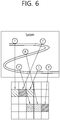
- FIG. 6 is a diagram schematically illustrating that operating variables are arranged according to physical characteristics of the operating variables by the second visualization arrangement unit 220 in the abnormal driving state determining apparatus, to which the neural network model 310 is applied according to an embodiment of the present disclosure.
- the second visualization arrangement unit 220 may preferentially arrange physically identical variables.
- the second visualization arrangement unit 220 arranges the operating variables related to temperature at the same location and visualizes the characteristics of each event when a temperature change occurs. That is, in equipment of systems distributed in various locations, T systems may be visualized to be adjacent to each other and P systems may be visualized to be adjacent to each other, so that it is possible to easily learn that abnormal driving states occur in equipment of the T systems and, similarly, it is possible to easily learn that abnormal driving sates occur in equipment of the P systems.
- the operating variables with the same physical characteristics are arranged at in the same location, a change in a system may be better reflected, and since it is advantageous in extracting the corresponding characteristics during convolution and pooling, the accuracy of the abnormal operation state may be increased when the operating variables related to temperature are learned and determined.
- the abnormal driving state determination unit 300 may learn in advance abnormal driving state data that is virtually generated and visualized by the first visualization arrangement unit 210 and the second visualization arrangement unit 220 as described above.
- the abnormal driving state determination unit 300 determines an abnormal state on the basis of the learned abnormal driving state data.
- the abnormal driving state determination unit 300 which has completed the learning may determine abnormal driving states of the equipments by determining whether the monitoring signal is within a set normal range.
- the procedure providing unit 500 provides an operator with a procedure for responding to the abnormal driving states.
- the procedure providing unit 500 When it is determined by the abnormal driving state determination unit 300 that the equipments are in the abnormal driving state, the procedure providing unit 500 provides an operator with a procedure for responding to the abnormal driving state of the corresponding equipments, and in this case, procedures are matched in the procedure providing unit 500 to correspond to the types of the equipments and the abnormal driving states.
- the signal matching unit 320 of the abnormal driving state determination unit 300 may transmit information on the abnormal driving state to correspond to the equipment, so that the procedure providing unit 500 can distinguish the equipment.
- the abnormal driving state determination unit 300 provides information on equipments with abnormal temperature to the procedure providing unit 500, and the procedure providing unit 500 may classify the equipment and provide an operator with a procedure related to the temperatures.
- the present disclosure by learning the abnormal driving state using the neural network model 310 through a visualization algorithm and then detecting the abnormal driving state of the equipments, it is possible to help the operator easily respond to the abnormal driving state.
Landscapes
- Engineering & Computer Science (AREA)
- Physics & Mathematics (AREA)
- Theoretical Computer Science (AREA)
- General Engineering & Computer Science (AREA)
- Biomedical Technology (AREA)
- Data Mining & Analysis (AREA)
- Software Systems (AREA)
- Health & Medical Sciences (AREA)
- Life Sciences & Earth Sciences (AREA)
- Artificial Intelligence (AREA)
- Mathematical Physics (AREA)
- Biophysics (AREA)
- Computational Linguistics (AREA)
- General Physics & Mathematics (AREA)
- Evolutionary Computation (AREA)
- General Health & Medical Sciences (AREA)
- Molecular Biology (AREA)
- Computing Systems (AREA)
- Plasma & Fusion (AREA)
- Business, Economics & Management (AREA)
- High Energy & Nuclear Physics (AREA)
- Emergency Management (AREA)
- Testing And Monitoring For Control Systems (AREA)
Abstract
Description
- The present disclosure relates to an apparatus and method for determining an abnormal driving state using a neural network model, and more specifically, to an apparatus and method for determining an abnormal driving state using a neural network model capable of providing an abnormal driving state by utilizing an artificial intelligence neural network.
- Nuclear power plants have a variety of abnormal driving states. When an abnormal driving state occurs, an alarm occurs in the main control room, and the state of the related power plant changes. Changes in the state of the power plant include temperature, pressure, and flow.
- An operator determines which abnormal driving state has occurred based on the alarm from the power plant, and then takes appropriate measures according to the procedure for the abnormal driving state.
- However, there are hundreds of abnormal driving states in a nuclear power plant, and since it is difficult for an inexperienced operator to make an accurate judgement on the abnormal driving state, there may be a failure to take appropriate measures for the abnormal driving state.
- Therefore, a method of quickly determining and providing an abnormal driving state is being studied so that an operator can make an appropriate judgement on the abnormal driving state.
- The present disclosure is to solve the problem of the related art as described above, and it is an object of the present disclosure to quickly determine an abnormal driving state of a nuclear power plant and provide an operator with relevant information.
- In order to achieve the above object, the present disclosure provides an abnormal driving state determination device using a neural network model, and the device includes: an abnormal driving state data generation unit configured to generate abnormal driving state data based on information on an abnormal driving state; an abnormal driving state learning unit configured to receive the abnormal driving state data so as to visualize the abnormal driving state data through a visualization algorithm, thereby allowing the abnormal driving state data to be learned by a neural network model; and an abnormal driving state determination unit provided with a neural network model for determining an abnormal state on the basis of the learned abnormal driving state data.
- Here, the abnormal driving state learning unit may be provided with a first visualization arrangement unit, and the first visualization arrangement unit may arrange operating variables based on physical locations, thereby collecting and arranging operating variables corresponding to locations where an abnormal driving state occurs.
- Further, the abnormal driving state learning unit may be provided with a second visualization arrangement unit, and the second visualization arrangement unit may preferentially arrange physically identical variables.
- Further, the abnormal driving state data generation unit may include a scenario database and a simulator, and the simulator may generate the abnormal driving state data by implementing the abnormal driving state based on a driving scenario for the abnormal driving state, which is stored in the scenario database.
- In addition, since the neural network model is provided as a plurality of neural network models, the abnormal driving state data to be learned may differ according to an operating variable.
- Further, when the abnormal driving state determination unit determines an abnormal driving state, a procedure providing unit may provide an abnormal driving procedure comprising a response to the abnormal driving state.
- Further, the abnormal driving state determination unit may further include a matching unit, and the signal matching unit transmits information on an abnormal driving state to correspond to equipment.
- Meanwhile, in order to achieve the above object, the present disclosure provides an abnormal driving state determining method using a neural network model, and the method includes: generating, by an abnormal driving state data generating unit, abnormal driving state data based on information on an abnormal driving state; receiving the abnormal driving state data so as to visualize the abnormal driving state data through a visualization algorithm, thereby allowing the abnormal driving state data to be learned by a neural network model; determining an abnormal state on the basis of the learned abnormal driving state data by an abnormal driving state determination unit; and providing, by a procedure providing unit, an operator with a procedure for responding to the abnormal driving state.
- The apparatus and method for determining an abnormal driving state using a neural network model according to the present disclosure can accurately determine the type of abnormal driving state within a short time using a neural network model when various abnormal driving states occur, and provide the operator with the type of the abnormal driving state. It is possible to quickly and accurately respond to abnormal driving states of nuclear power plants, and to improve the safety of nuclear power plants.
-
-
FIG. 1 is a diagram schematically illustrating an abnormal driving state determining apparatus to which a neural network model is applied according to an embodiment of the present disclosure. -
FIG. 2 is a block diagram of an abnormal driving state determining apparatus to which a neural network model is applied according to an embodiment of the present disclosure. -
FIG. 3 is a diagram schematically illustrating an operation process of an abnormal driving state determining apparatus to which a neural network model is applied according to an embodiment of the present disclosure. -
FIG. 4 is a flowchart of an abnormal driving state determining apparatus to which a neural network model is applied according to an embodiment of the present disclosure. -
FIG. 5 is a diagram schematically illustrating an arrangement of operating variables by a first visualization arrangement unit according to physical locations of the driving variables in an abnormal driving state determining apparatus to which a neural network model is applied according to an embodiment of the present disclosure. -
FIG. 6 is a diagram schematically illustrating an arrangement of operating variables by a second visualization arrangement unit according to physical characteristics of the driving variables in an abnormal driving state determining apparatus to which a neural network model is applied according to an embodiment of the present disclosure. - [Detailed Description of Main Elements]
-
- 100:
- abnormal driving state data generation unit
- 110:
- scenario database
- 120:
- simulator
- 200:
- abnormal driving state data learning unit
- 210:
- first visualization arrangement unit
- 220:
- second visualization arrangement unit
- 300:
- abnormal driving state determination unit
- 310:
- neural network model
- 320:
- signal matching unit
- 400:
- abnormal driving state monitoring unit
- 500:
- procedure providing unit
- Hereinafter, preferred embodiments of the present disclosure will be described with reference to the accompanying drawings. However, although some configurations unrelated to the spirit of the present disclosure will be omitted or compressed, the omitted configurations are not necessarily needless in the present disclosure and may be combined and used by those skilled in the art.
-
FIG. 1 is a schematic diagram of an abnormal driving state determining apparatus to which a neural network model is applied, andFIG. 2 is a block diagram of an abnormal driving state determining apparatus to which a neural network model is applied according to an embodiment of the present disclosure. - As shown in
FIGS. 1 and2 , an apparatus for determining an abnormal driving(operation) state to which a neural network model according to an embodiment of the present disclosure is applied (hereinafter, referred to as "abnormal driving state determination device") may include an abnormal driving statedata generation unit 100 , an abnormal driving statedata learning unit 200, an abnormal drivingstate determination unit 300, an abnormal drivingstate monitoring unit 400, and aprocedure providing unit 500. - The abnormal driving state
data generation unit 100 is a configuration that virtually generates abnormal driving state data based on information on an abnormal driving state, and may include ascenario database 110 and asimulator 120. - The
scenario database 110 is a configuration in which a number of scenarios related to abnormal driving states are provided. These scenarios include scenarios according to operating variables related to change in temperature of nuclear power plant equipment, scenarios according to operating variables related to turbine bearing vibration, and the like, and scenarios related to various abnormal driving states are stored in thescenario database 110. - The
simulator 120 is a configuration that simulates an abnormal driving state with respect to a scenario selected from among the scenarios related to the abnormal driving states stored in thescenario database 110. Accordingly, data on the abnormal driving state may be virtually generated. - The abnormal driving state
data learning unit 200 is a configuration that visualizes and learns an abnormal driving state by applying a visualization algorithm based on the abnormal driving state data generated by the abnormal driving statedata generation unit 100. The abnormal driving statedata learning unit 200 may include a firstvisualization arrangement unit 210 and a secondvisualization arrangement unit 220. - The first
visualization arrangement unit 210 is a configuration that arranges based on physical locations of operating variables of equipment provided in a nuclear power plant. That is, the operating variables may be arranged in the same arrangement as the structure of an actual nuclear power plant. - The second
visualization arrangement unit 220 is a configuration that preferentially arranges physically identical operating variables. For example, operating variables related to temperature are arranged in the same zone so that when temperature changes occur, the characteristics of each event appear. - The abnormal driving
state determination unit 300 is a configuration that learns an abnormal driving state based on the abnormal driving statedata learning unit 200 representing driving variables by applying a visualization algorithm and then determines whether the abnormal driving state has occurred based on operating variables of equipment obtained from process monitoring and alarming system of the nuclear power plant. The abnormal drivingstate determination unit 300 may include a neural network model 310 and a signal matching unit 320. - The neural network model 310 is a configuration that learns abnormal driving state data visualized by the first
visualization arrangement unit 210 and the secondvisualization arrangement unit 220 based on a visualization algorithm. - The signal matching unit 320 is a configuration that transmits information on a monitoring signal including information on abnormal driving states to correspond to equipments, so that the
procedure provision unit 500 can distinguish the abnormal driving states. - The abnormal driving
state monitoring unit 400 is a configuration that monitors whether a driving state of each equipment provided in the nuclear power plant is within a normal range. The abnormal drivingstate monitoring unit 400 may periodically acquire a monitoring signal including information on operating variables of each equipment and transmit the monitoring signal to the abnormal drivingstate determination unit 300. - The
procedure providing unit 500 is a configuration that provides an operator with a procedure including a response to an abnormal driving state when it is determined by the abnormal drivingstate determination unit 300 that the equipment is in an abnormal driving state. - Hereinafter, the overall operation process of an abnormal driving state determining apparatus to which the neural network model 310 is applied will be schematically described with reference to
FIG. 3 . -
FIG. 3 is a diagram schematically illustrating an operation process of an abnormal driving state determining apparatus to which the neural network model 310 is applied according to an embodiment of the present disclosure. - As shown in
FIG. 3 , in the present disclosure, a visualization algorithm is first applied to virtually generate an abnormal driving state data. The abnormal driving state data may be generated in a manner in which the abnormal driving statedata generation unit 100 generates information based on a scenario and then the abnormal driving statedata learning unit 200 applies a visualization algorithm. - Thereafter, the neural network model 310 provided in the abnormal driving
state determination unit 300 learns the abnormal driving state data to which the visualization algorithm is applied. - After the neural network model 310 learns the abnormal driving state data to which the visualization algorithm is applied as described above, whether the equipments are in the abnormal driving state may be monitored periodically so as to determine the abnormal driving state.
- Hereinafter, a process of determining an abnormal driving state using the neural network model 310 will be described with reference to the drawings.
-
FIG. 4 is a flowchart of an abnormal driving state determining apparatus to which the neural network model 310 is applied according to an embodiment of the present disclosure. - As shown in
FIG. 4 , the abnormal operation statedata generation unit 100 initially generates abnormal operation state data based on information on an abnormal operation state. <S40> - As the abnormal driving state
data generation unit 100 is provided with thescenario database 110 and thesimulator 120, thesimulator 120 may arbitrary generate an abnormal driving state based on a scenario for each abnormal driving state stored in thescenario database 110. As such, information on the abnormal driving state data arbitrarily generated by thesimulator 120 may be transmitted to the abnormal driving state learning unit. - Thereafter, the abnormal driving state learning unit receives the generated abnormal driving state data so as to visualize the abnormal driving state data through a visualization algorithm, thereby allowing the abnormal driving state data to be learned by the neural network model 310 <S41>.
- The abnormal driving state data is visualized by the first
visualization arrangement unit 210 and the secondvisualization arrangement unit 220 through the visualization algorithm so that the neural network model 310 can learn the abnormal driving state data. This will be described with reference toFIGS. 5 and6 . -
FIG. 5 is a diagram schematically illustrating that operating variables are arranged according to physical locations of the operating variable by the firstvisualization arrangement unit 210 in the abnormal driving state determining apparatus to which the neural network model 310 is applied according to an embodiment of the present disclosure. - As shown in
FIG. 5 , the first visualizedarrangement unit 210 may be arranged based on the physical locations of the operating variables for equipments of a nuclear power plant. - For example, when the first
visualization arrangement unit 210 visualizes temperature of a pipe in a nuclear power plant according to a pipe arranged in the actual nuclear power plant, a change according to the location of the temperature may be reflected in the visualization, and thus, the accuracy of the abnormal driving state may be increased when the state of the corresponding pipe is learned and determined. That is,Temperature 1,Temperature 2, andTemperature 3 may be arranged and visualized at adjacent locations by the firstvisualization arrangement unit 210 based on the visualization algorithm. - Therefore, in a case where the visualization algorithm is used, if an event such as a pipe breakage occurs, the operating variables at the locations where the actual event occurs are collected and arranged, and thus, it may be advantageous in extracting the corresponding characteristics during the pre-processing convolution and pooling of the neural network model 310.
- Here, the operating variables are operating factors for the driving state of the equipments of the nuclear power plant, and each equipment may include about 1000 to 2000 operating variables. These operating variables may include pressure, temperature, and flow.
- In addition,
FIG. 6 is a diagram schematically illustrating that operating variables are arranged according to physical characteristics of the operating variables by the secondvisualization arrangement unit 220 in the abnormal driving state determining apparatus, to which the neural network model 310 is applied according to an embodiment of the present disclosure. - As shown in
FIG. 6 , the secondvisualization arrangement unit 220 may preferentially arrange physically identical variables. - For example, the second
visualization arrangement unit 220 arranges the operating variables related to temperature at the same location and visualizes the characteristics of each event when a temperature change occurs. That is, in equipment of systems distributed in various locations, T systems may be visualized to be adjacent to each other and P systems may be visualized to be adjacent to each other, so that it is possible to easily learn that abnormal driving states occur in equipment of the T systems and, similarly, it is possible to easily learn that abnormal driving sates occur in equipment of the P systems. - Therefore, since the operating variables with the same physical characteristics are arranged at in the same location, a change in a system may be better reflected, and since it is advantageous in extracting the corresponding characteristics during convolution and pooling, the accuracy of the abnormal operation state may be increased when the operating variables related to temperature are learned and determined.
- As a result, the abnormal driving
state determination unit 300 may learn in advance abnormal driving state data that is virtually generated and visualized by the firstvisualization arrangement unit 210 and the secondvisualization arrangement unit 220 as described above. - Thereafter, the abnormal driving
state determination unit 300 determines an abnormal state on the basis of the learned abnormal driving state data. <S42> - When the abnormal driving
state monitoring unit 400 monitors driving states of the equipments of the nuclear power plant and periodically transmits a monitoring signal, the abnormal drivingstate determination unit 300 which has completed the learning may determine abnormal driving states of the equipments by determining whether the monitoring signal is within a set normal range. - Finally, the
procedure providing unit 500 provides an operator with a procedure for responding to the abnormal driving states. <S43> - When it is determined by the abnormal driving
state determination unit 300 that the equipments are in the abnormal driving state, theprocedure providing unit 500 provides an operator with a procedure for responding to the abnormal driving state of the corresponding equipments, and in this case, procedures are matched in theprocedure providing unit 500 to correspond to the types of the equipments and the abnormal driving states. - Therefore, depending on whether the monitoring signal for the abnormal operation state is a monitoring signal corresponding to the types of equipments and abnormal driving state, the signal matching unit 320 of the abnormal driving
state determination unit 300 may transmit information on the abnormal driving state to correspond to the equipment, so that theprocedure providing unit 500 can distinguish the equipment. - For example, when temperatures of equipment are related, the abnormal driving
state determination unit 300 provides information on equipments with abnormal temperature to theprocedure providing unit 500, and theprocedure providing unit 500 may classify the equipment and provide an operator with a procedure related to the temperatures. - As described above, in the present disclosure, by learning the abnormal driving state using the neural network model 310 through a visualization algorithm and then detecting the abnormal driving state of the equipments, it is possible to help the operator easily respond to the abnormal driving state.
- While the preferred embodiments of the present disclosure have been disclosed for illustrative purposes, those skilled in the art will appreciate that variations, modification, and addition may be made without departing from the scope and spirit of the present disclosure, and that such variation, modification, and additions are encompassed in the appended claims.
Claims (8)
- An abnormal driving state determination device using a neural network model, the device comprising:an abnormal driving state data generation unit configured to generate abnormal driving state data based on information on an abnormal driving state;an abnormal driving state learning unit configured to receive the abnormal driving state data so as to visualize the abnormal driving state data through a visualization algorithm, thereby allowing the abnormal driving state data to be learned by a neural network model; andan abnormal driving state determination unit provided with a neural network model for determining an abnormal state on the basis of the learned abnormal driving state data.
- The device of claim 1,
wherein the abnormal driving state learning unit is provided with a first visualization arrangement unit,
wherein the first visualization arrangement unit arranges operating variables based on physical locations, thereby collecting and arranging operating variables corresponding to locations where an abnormal driving state occurs. - The device of claim 1,
wherein the abnormal driving state learning unit is provided with a second visualization arrangement unit,
wherein the second visualization arrangement unit preferentially arranges physically identical variables. - The device of claim 1,
wherein the abnormal driving state data generation unit comprises a scenario database and a simulator,
wherein the simulator generates the abnormal driving state data by implementing the abnormal driving state based on a driving scenario for the abnormal driving state, which is stored in the scenario database. - The device of claim 1,
wherein since the neural network model is provided as a plurality of neural network models, the abnormal driving state data to be learned differs according to an operating variable. - The device of claim 1,
wherein when the abnormal driving state determination unit determines an abnormal driving state, a procedure providing unit provides an abnormal driving procedure comprising a response to the abnormal driving state. - The device of claim 1,
wherein the abnormal driving state determination unit further comprises a matching unit,
wherein the signal matching unit transmits information on an abnormal driving state to correspond to equipment. - An abnormal driving state determining method using a neural network model, the method comprising:generating, by an abnormal driving state data generating unit, abnormal driving state data based on information on an abnormal driving state;receiving the abnormal driving state data so as to visualize the abnormal driving state data through a visualization algorithm, thereby allowing the abnormal driving state data to be learned by a neural network model;determining an abnormal state on the basis of the learned abnormal driving state data by an abnormal driving state determination unit; andproviding, by a procedure providing unit, an operator with a procedure for responding to the abnormal driving state.
Applications Claiming Priority (2)
| Application Number | Priority Date | Filing Date | Title |
|---|---|---|---|
| KR1020180121648A KR102095653B1 (en) | 2018-10-12 | 2018-10-12 | System and method for abnormal operation state judgment using neural network model |
| PCT/KR2019/013270 WO2020076081A1 (en) | 2018-10-12 | 2019-10-10 | Abnormal driving state determination device and method using neural network model |
Publications (2)
| Publication Number | Publication Date |
|---|---|
| EP3866177A1 true EP3866177A1 (en) | 2021-08-18 |
| EP3866177A4 EP3866177A4 (en) | 2022-06-01 |
Family
ID=70002461
Family Applications (1)
| Application Number | Title | Priority Date | Filing Date |
|---|---|---|---|
| EP19870406.6A Pending EP3866177A4 (en) | 2018-10-12 | 2019-10-10 | DEVICE AND METHOD FOR DETERMINING ABNORMAL DRIVING STATE USING A NEURONAL NETWORK MODEL |
Country Status (4)
| Country | Link |
|---|---|
| US (1) | US20210397950A1 (en) |
| EP (1) | EP3866177A4 (en) |
| KR (1) | KR102095653B1 (en) |
| WO (1) | WO2020076081A1 (en) |
Families Citing this family (7)
| Publication number | Priority date | Publication date | Assignee | Title |
|---|---|---|---|---|
| KR102377489B1 (en) * | 2019-12-12 | 2022-03-24 | 한전원자력연료 주식회사 | Methodology to Classify Axial Power Shape Using Softmax Regression in Deep Learning |
| KR102537723B1 (en) | 2020-11-25 | 2023-05-26 | 한국수력원자력 주식회사 | Apparatus and method for tracking the basis of abnormal status diagnosis using neural network model |
| KR102438189B1 (en) | 2021-06-14 | 2022-08-30 | 주식회사 마키나락스 | Method and apparatus for detecting anomaly data |
| KR102696300B1 (en) | 2022-01-17 | 2024-08-20 | 한국수력원자력 주식회사 | Method for verifying abnormal operation procedures of nuclear power plant based on contribution inversion and system for performing the same |
| KR102737298B1 (en) | 2022-03-04 | 2024-12-02 | 한국수력원자력 주식회사 | Method for determining abnormal state of plant using artificial intelligence |
| KR102737299B1 (en) * | 2022-03-10 | 2024-12-02 | 한국수력원자력 주식회사 | Method for providing action plan for abnormal state of plant using artificial intelligence |
| KR102675284B1 (en) | 2022-04-26 | 2024-06-13 | 한국수력원자력 주식회사 | SMR comprising helical type steam generator |
Family Cites Families (10)
| Publication number | Priority date | Publication date | Assignee | Title |
|---|---|---|---|---|
| JP2699607B2 (en) * | 1990-04-03 | 1998-01-19 | 三菱電機株式会社 | Neural network nuclear power plant diagnostic equipment |
| JP3087974B2 (en) * | 1991-08-28 | 2000-09-18 | 株式会社日立製作所 | Plant abnormal operation support method and apparatus |
| US7277823B2 (en) * | 2005-09-26 | 2007-10-02 | Lockheed Martin Corporation | Method and system of monitoring and prognostics |
| KR101651893B1 (en) | 2015-04-13 | 2016-08-29 | 한전원자력연료 주식회사 | Method of synthesizing axial power distribution of reactor core using neural network and the In-Core Monitoring System(ICOMS) using the same |
| KR102005138B1 (en) * | 2016-08-29 | 2019-07-29 | 한국수력원자력 주식회사 | Device abnormality presensing method and system using thereof |
| CN110800273B (en) * | 2017-04-24 | 2024-02-13 | 卡内基梅隆大学 | virtual sensor system |
| CN107529667B (en) * | 2017-06-30 | 2020-05-19 | 厦门达阵信息科技有限公司 | Mixed reality nuclear power plant simulation and analysis system |
| US11630040B2 (en) * | 2017-07-11 | 2023-04-18 | Qatar University | Real-time structural damage detection by convolutional neural networks |
| CA3075764A1 (en) * | 2017-09-12 | 2019-03-21 | Schlumberger Canada Limited | Seismic image data interpretation system |
| US10771488B2 (en) * | 2018-04-10 | 2020-09-08 | Cisco Technology, Inc. | Spatio-temporal anomaly detection in computer networks using graph convolutional recurrent neural networks (GCRNNs) |
-
2018
- 2018-10-12 KR KR1020180121648A patent/KR102095653B1/en active Active
-
2019
- 2019-10-10 EP EP19870406.6A patent/EP3866177A4/en active Pending
- 2019-10-10 US US17/279,121 patent/US20210397950A1/en not_active Abandoned
- 2019-10-10 WO PCT/KR2019/013270 patent/WO2020076081A1/en not_active Ceased
Also Published As
| Publication number | Publication date |
|---|---|
| WO2020076081A1 (en) | 2020-04-16 |
| US20210397950A1 (en) | 2021-12-23 |
| KR102095653B1 (en) | 2020-03-31 |
| EP3866177A4 (en) | 2022-06-01 |
Similar Documents
| Publication | Publication Date | Title |
|---|---|---|
| US20210397950A1 (en) | Abnormal driving state determination device and method using neural network model | |
| CN109001649B (en) | Intelligent power supply diagnosis system and protection method | |
| JP6810097B2 (en) | Anomaly detector | |
| JP7068246B2 (en) | Abnormality judgment device and abnormality judgment method | |
| JP5306902B2 (en) | System and method for high performance condition monitoring of asset systems | |
| US8126679B2 (en) | Automatic remote monitoring and diagnostics system | |
| EP3355145A1 (en) | Systems and methods for reliability monitoring | |
| CN116756909A (en) | Early warning diagnosis system of thermal power plant based on data model and mechanism model | |
| JP2009053938A (en) | Equipment diagnosis system and equipment diagnosis method based on multiple models | |
| CN107678416A (en) | Diagnostic device and method for the operation of supervision control engineering facility | |
| EP4254430A1 (en) | Device and method for tracking basis of abnormal state determination by using neural network model | |
| US20240377808A1 (en) | Systems and methods for autonomous anomaly management of an industrial site | |
| CN116910615A (en) | A nuclear power plant fault traceability and auxiliary decision-making system | |
| CN107656518A (en) | A kind of system failure inference method | |
| US20220197260A1 (en) | Faulty Variable Identification Technique for Data-Driven Fault Detection Within A Process Plant | |
| CN114356460A (en) | Medical equipment health real-time acquisition monitoring method and system | |
| CN116997867A (en) | Methods and systems for predicting the operation of technical facilities | |
| KR102136956B1 (en) | Input output hot-swappable wiring interface providing method and apparatus and system therefor | |
| US20180087489A1 (en) | Method for windmill farm monitoring | |
| WO2020054725A1 (en) | Diagnostic apparatus and diagnostic method | |
| EP3819831A2 (en) | Context specific training for process operators | |
| CN115335790B (en) | Method and system for diagnosing messages | |
| KR102414537B1 (en) | Device for tracking defect location based on deep learning | |
| CN120687341B (en) | Method and device for predicting service life of server, electronic equipment and storage medium | |
| JP7624382B2 (en) | Inspection object information acquisition system and inspection object information acquisition method |
Legal Events
| Date | Code | Title | Description |
|---|---|---|---|
| STAA | Information on the status of an ep patent application or granted ep patent |
Free format text: STATUS: THE INTERNATIONAL PUBLICATION HAS BEEN MADE |
|
| PUAI | Public reference made under article 153(3) epc to a published international application that has entered the european phase |
Free format text: ORIGINAL CODE: 0009012 |
|
| STAA | Information on the status of an ep patent application or granted ep patent |
Free format text: STATUS: REQUEST FOR EXAMINATION WAS MADE |
|
| 17P | Request for examination filed |
Effective date: 20210312 |
|
| AK | Designated contracting states |
Kind code of ref document: A1 Designated state(s): AL AT BE BG CH CY CZ DE DK EE ES FI FR GB GR HR HU IE IS IT LI LT LU LV MC MK MT NL NO PL PT RO RS SE SI SK SM TR |
|
| DAV | Request for validation of the european patent (deleted) | ||
| DAX | Request for extension of the european patent (deleted) | ||
| A4 | Supplementary search report drawn up and despatched |
Effective date: 20220503 |
|
| RIC1 | Information provided on ipc code assigned before grant |
Ipc: G06N 3/04 20060101ALN20220427BHEP Ipc: G06N 3/08 20060101ALI20220427BHEP Ipc: G21D 3/06 20060101AFI20220427BHEP |
|
| STAA | Information on the status of an ep patent application or granted ep patent |
Free format text: STATUS: EXAMINATION IS IN PROGRESS |
|
| 17Q | First examination report despatched |
Effective date: 20260113 |
|
| STAA | Information on the status of an ep patent application or granted ep patent |
Free format text: STATUS: THE APPLICATION HAS BEEN WITHDRAWN |