EP3866169A1 - Simulation device, simulation method, and simulation program - Google Patents
Simulation device, simulation method, and simulation program Download PDFInfo
- Publication number
- EP3866169A1 EP3866169A1 EP19872157.3A EP19872157A EP3866169A1 EP 3866169 A1 EP3866169 A1 EP 3866169A1 EP 19872157 A EP19872157 A EP 19872157A EP 3866169 A1 EP3866169 A1 EP 3866169A1
- Authority
- EP
- European Patent Office
- Prior art keywords
- simulation
- conditions
- operation subject
- movement
- representative points
- Prior art date
- Legal status (The legal status is an assumption and is not a legal conclusion. Google has not performed a legal analysis and makes no representation as to the accuracy of the status listed.)
- Pending
Links
Images





Classifications
-
- G—PHYSICS
- G06—COMPUTING OR CALCULATING; COUNTING
- G06F—ELECTRIC DIGITAL DATA PROCESSING
- G06F30/00—Computer-aided design [CAD]
- G06F30/20—Design optimisation, verification or simulation
- G06F30/23—Design optimisation, verification or simulation using finite element methods [FEM] or finite difference methods [FDM]
-
- G—PHYSICS
- G06—COMPUTING OR CALCULATING; COUNTING
- G06F—ELECTRIC DIGITAL DATA PROCESSING
- G06F30/00—Computer-aided design [CAD]
- G06F30/20—Design optimisation, verification or simulation
- G06F30/25—Design optimisation, verification or simulation using particle-based methods
-
- G—PHYSICS
- G06—COMPUTING OR CALCULATING; COUNTING
- G06F—ELECTRIC DIGITAL DATA PROCESSING
- G06F30/00—Computer-aided design [CAD]
- G06F30/20—Design optimisation, verification or simulation
- G06F30/27—Design optimisation, verification or simulation using machine learning, e.g. artificial intelligence, neural networks, support vector machines [SVM] or training a model
-
- G—PHYSICS
- G06—COMPUTING OR CALCULATING; COUNTING
- G06N—COMPUTING ARRANGEMENTS BASED ON SPECIFIC COMPUTATIONAL MODELS
- G06N20/00—Machine learning
-
- B—PERFORMING OPERATIONS; TRANSPORTING
- B25—HAND TOOLS; PORTABLE POWER-DRIVEN TOOLS; MANIPULATORS
- B25J—MANIPULATORS; CHAMBERS PROVIDED WITH MANIPULATION DEVICES
- B25J9/00—Program-controlled manipulators
- B25J9/16—Program controls
- B25J9/1602—Program controls characterised by the control system, structure, architecture
- B25J9/1605—Simulation of manipulator lay-out, design, modelling of manipulator
-
- B—PERFORMING OPERATIONS; TRANSPORTING
- B25—HAND TOOLS; PORTABLE POWER-DRIVEN TOOLS; MANIPULATORS
- B25J—MANIPULATORS; CHAMBERS PROVIDED WITH MANIPULATION DEVICES
- B25J9/00—Program-controlled manipulators
- B25J9/16—Program controls
- B25J9/1628—Program controls characterised by the control loop
- B25J9/163—Program controls characterised by the control loop learning, adaptive, model based, rule based expert control
-
- B—PERFORMING OPERATIONS; TRANSPORTING
- B25—HAND TOOLS; PORTABLE POWER-DRIVEN TOOLS; MANIPULATORS
- B25J—MANIPULATORS; CHAMBERS PROVIDED WITH MANIPULATION DEVICES
- B25J9/00—Program-controlled manipulators
- B25J9/16—Program controls
- B25J9/1656—Program controls characterised by programming, planning systems for manipulators
- B25J9/1671—Program controls characterised by programming, planning systems for manipulators characterised by simulation, either to verify existing program or to create and verify new program, CAD/CAM oriented, graphic oriented programming systems
-
- G—PHYSICS
- G05—CONTROLLING; REGULATING
- G05B—CONTROL OR REGULATING SYSTEMS IN GENERAL; FUNCTIONAL ELEMENTS OF SUCH SYSTEMS; MONITORING OR TESTING ARRANGEMENTS FOR SUCH SYSTEMS OR ELEMENTS
- G05B17/00—Systems involving the use of models or simulators of said systems
- G05B17/02—Systems involving the use of models or simulators of said systems electric
-
- G—PHYSICS
- G05—CONTROLLING; REGULATING
- G05B—CONTROL OR REGULATING SYSTEMS IN GENERAL; FUNCTIONAL ELEMENTS OF SUCH SYSTEMS; MONITORING OR TESTING ARRANGEMENTS FOR SUCH SYSTEMS OR ELEMENTS
- G05B2219/00—Program-control systems
- G05B2219/30—Nc systems
- G05B2219/40—Robotics, robotics mapping to robotics vision
- G05B2219/40073—Carry container with liquid, compensate liquid vibration, swinging effect
-
- G—PHYSICS
- G06—COMPUTING OR CALCULATING; COUNTING
- G06F—ELECTRIC DIGITAL DATA PROCESSING
- G06F2113/00—Details relating to the application field
- G06F2113/08—Fluids
-
- G—PHYSICS
- G06—COMPUTING OR CALCULATING; COUNTING
- G06N—COMPUTING ARRANGEMENTS BASED ON SPECIFIC COMPUTATIONAL MODELS
- G06N3/00—Computing arrangements based on biological models
- G06N3/02—Neural networks
- G06N3/08—Learning methods
- G06N3/084—Backpropagation, e.g. using gradient descent
Definitions
- the present invention relates to a simulation device, a simulation method, and a simulation program.
- Patent Literature 1 discloses a method of simulating an action of an industrial machine and storing or comparing a simulation result with actual data from the action of the industrial machine.
- movement of the operation subject is simulated along with movement of the robot in some cases.
- the movement of the operation subject can be simulated by a known technology such as a finite element method or a particle method.
- the present invention provides a simulation device, a simulation method, and a simulation program for reducing a computation load required for simulation of movement of an operation subject.
- a simulation device includes: a first setting unit configured to set framing conditions for a model representing an operation subject; a second setting unit configured to set conditions for external force applied to the operation subject; a first simulation unit configured to simulate movement of the operation subject under the framing conditions and the condition for external force; a generation unit configured to generate learning data including the framing conditions, the conditions for external force, and data representing movement of a plurality of representative points located on a surface of the operation subject during simulation by the first simulation unit; and a learning unit configured to, by supervised learning using the learning data, generate a learning model that takes the framing conditions, the conditions for external force, and initial conditions of the plurality of representative points as input and outputs the data representing the movement of the plurality of representative points.
- the generation unit may generate the learning data that includes the framing conditions, the conditions for external force at a predetermined time of the simulation by the first simulation unit, and data representing movement of the plurality of representative points at the predetermined time as input data and includes data representing movement of the plurality of representative points at a time after a predetermined time passes from the predetermined time as output data.
- the learning model it is possible to predict the movement of the representative points after the predetermined time passes by the learning model. By repeatedly performing the prediction by the learning model, it is possible to predict the movement of the representative points at any time.
- the simulation device may further include a second simulation unit configured to simulate movement of a robot; and a prediction unit configured to input the framing conditions and conditions for external force added to the operation subject by the robot during simulation by the second simulation unit to the learning model and configured to predict movement of the plurality of representative points.
- the second simulation unit may combine the movement of the plurality of representative points predicted by the prediction unit and the simulated movement of the robot.
- the operation subject may include one of a flexible object, a liquid, and a gas.
- the surface of the operation subject when the operation subject is a liquid, the surface of the operation subject may be a liquid surface of the liquid and the movement of the plurality of representative points may be indicated by movement of the liquid surface in a perpendicular direction of the liquid surface at a plurality of positions.
- the first simulation unit may use the model obtained by decomposing the liquid into a plurality of particles to simulate movement of the plurality of particle.
- the data representing the movement of the plurality of representative points may be data representing movement of some particles located on the liquid surface of the liquid at a predetermined time of simulation by the first simulation unit among the plurality of particles.
- the learning model for reproducing movement of the particles located on the liquid surface in a result obtained by simulating movement of the entire liquid by the particle model.
- it is possible to further reduce the computation load of the learning model than in the case of prediction of movement of the entire liquid.
- the framing conditions may include one of a condition representing flexibility of the operation subject and a condition representing viscosity.
- the first simulation unit may use the model obtained by decomposing the operation subject into a plurality of constituents connected by nodal points to simulate movement of the nodal points.
- the number of plurality of representative points may be less than the number of nodal points.
- the learning model for reproducing movement of the nodal points located on the surface of the operation subject in a result obtained by simulating movement of the entire operation subject in accordance with a finite element method.
- it is possible to further reduce the computation load of the learning model than in the case of prediction of movement of all the nodal points representing the operation subject.
- a simulation method includes: setting framing conditions for a model representing an operation subject; setting conditions for external force applied to the operation subject; simulating movement of the operation subject under the framing conditions and the conditions for external force; generating learning data including the framing conditions, the conditions for external force, and data representing movement of a plurality of representative points located on a surface of the operation subject during simulation; and generating, by supervised learning using the learning data, a learning model that takes the framing conditions, the conditions for external force, and initial conditions of the plurality of representative points as input and outputs the data representing the movement of the plurality of representative points.
- a simulation program causes a processor included in a simulation device to function as: a first setting unit configured to set framing conditions for a model representing an operation subject; a second setting unit configured to set conditions for external force applied to the operation subject; a first simulation unit configured to simulate movement of the operation subject under the framing conditions and the condition for external force; a generation unit configured to generate learning data including the framing conditions, the conditions for external force, and data representing movement of a plurality of representative points located on a surface of the operation subject during simulation by the first simulation unit; and a learning unit configured to, by supervised learning using the learning data, generate a learning model that takes the framing conditions, the conditions for external force, and initial conditions of the plurality of representative points as input and outputs the data representing the movement of the plurality of representative points.
- the present invention provides a simulation device, a simulation method, and a simulation program for reducing a computation load required for simulation of movement of an operation subject.
- Fig. 1 is a schematic diagram illustrating movement of a first operation subject T1 simulated by a simulation device 10 according to an embodiment of the present invention.
- the first operation subject T1 is a liquid contained in a container object Ob.
- the container object Ob is gripped by a robot hand H and operates.
- the simulation device 10 simulates an action of the robot hand H caused to move the container object Ob over a short time so that the first operation subject T1 which is a liquid does not spill from the container object Ob.
- the first operation subject T1 which is in a still state is illustrated to the left and the first operation subject T1 of which a liquid surface is shaken due to an operation of the container object Ob by the robot hand H is illustrated to the right.
- the simulation device 10 sets framing conditions for a model representing the first operation subject T1 and conditions for external force applied to the first operation subject T1, and simulates movement of the first operation subject T1 in conformity with a known simulation scheme under these conditions.
- the simulation device 10 may simulate movement of a plurality of particles in conformity with a so-called particle method using a model obtained by decomposing the first operation subject T1 which is a liquid into a plurality of particles.
- the framing conditions for the model may include conditions for determining interaction between particles and particle diameters.
- the conditions for external force may include conditions for force added by the robot hand H and a boundary condition by the container object Ob.
- the simulation device 10 may use, as learning data, data representing movement of some particles located on the liquid surface of the first operation subject T1 in movement of a plurality of particles simulated in conformity with the particle method.
- the data representing movement of the particles may include data representing at least one of the positions, speeds, momenta, and accelerations of the particles.
- the surface of the operation subject may be a liquid surface of the liquid and movement of a plurality of representative points may be represented by movement of the liquid surface at a plurality of positions in the perpendicular direction.
- the simulation device 10 may partition the inside of the container object Ob into 3-dimensional lattice, may select a particle with the largest value in the Z direction (the perpendicular direction) with respect to each lattice cell of the XY plane crossing the container object Ob, may repeat a process of setting the XYZ coordinates of the particle as one representative point, and may generate data representing movement of some particles located on the liquid surface of the first operation subject T1.
- a first particle p1, a second particle p2, a third particle p3, a fourth particle p4, a fifth particle p5, a sixth particle p6, a seventh particle p7, an eighth particle p8, a ninth particle p9, a tenth particle p10, an eleventh particle p11, and a twelfth particle p12 are illustrated as some particles located on the liquid surface of the first operation subject T1.
- the first particle p1, the second particle p2, the third particle p3, the fourth particle p4, the fifth particle p5, the sixth particle p6, the seventh particle p7, the eighth particle p8, the ninth particle p9, the tenth particle p10, the eleventh particle p11, and the twelfth particle p12 are representative points located on the liquid surface of the first operation subject T1 at a certain time.
- the particles located on the liquid surface of the first operation subject T1 may be changed moment by moment and may not necessarily be the same particles.
- the simulation device 10 generates learning data including framing conditions for a model representing the first operation subject T1, conditions for external force applied to the first operation subject T1, and data representing movement of the plurality of representative points (the first to twelfth particles or the like) located on the liquid surface of the first operation subject T1 during simulation.
- the simulation device 10 generates, by supervised learning using the learning data, a learning model that takes the framing conditions for the model representing the first operation subject T1, the conditions for external force applied to the first operation subject T1, and initial conditions of the plurality of representative points (the first to twelfth particles or the like) as input and outputs data representing movement of the plurality of representative points (the first to twelfth particles or the like).
- the learning model predicts at least one of positions, speeds, momenta, and accelerations of the plurality of representative points without directly performing simulation to reproduce a physical phenomenon.
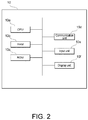
- Fig. 2 is a diagram illustrating a hardware configuration of the simulation device 10 according to the embodiment.
- the simulation device 10 includes a central processing unit (CPU) 10a, a random access memory (RAM) 10b, a read-only memory (ROM) 10c, a communication unit 10d, an input unit 10e, and a display unit 10f.
- the CPU 10a, the RAM 10b, the ROM 10c, the communication unit 10d, the input unit 10e, and the display unit 10f are connected to be able to transmit and receive data one another via a bus.
- the simulation device 10 that is configured by a single computer will be described, but the simulation device 10 may be realized by combining a plurality of computers.
- the configuration illustrated in Fig. 2 is exemplary.
- the simulation device 10 may have a configuration other than these or may not have some of the configurations.
- the CPU 10a is a processor included in the simulation device 10 and performs control of execution of programs stored in the RAM 10b and the ROM 10c and computation or processing of data.
- the CPU 10a is a computation unit that executes a program (a simulation program) that generates a learning model for reproducing a simulation result of movement of an operation subject in conformity with a known simulation scheme.
- the CPU 10a receives various kinds of data from the input unit 10e or the communication unit 10d and displays a computation result of the data on the display unit 10f or stores the computation result in the RAM 10b or the ROM 10c.
- the RAM 10b is a storage unit included in the simulation device 10 and can rewrite data.
- the RAM 10b may be configured as, for example, as semiconductor storage element.
- the RAM 10b may store the simulation program executed by the CPU 10a or data or the like for configuring a robot or a surrounding environment in a simulation space. This is exemplary and the RAM 10b may store other data or may not store some of the data.
- the ROM 10c is a storage unit included in the simulation device 10 and can read data.
- the ROM 10c may be configured as, for example, as semiconductor storage element.
- the ROM 10c may store, for example, the simulation program or unwritten data.
- the communication unit 10d is an interface that connects the simulation device 10 to another device.
- the communication unit 10d may be connected to a communication network such as a local area network (LAN) or the Internet.
- LAN local area network
- the Internet the Internet
- the input unit 10e receives data from a user as input and may include, for example, a pointing device such as a mouse, a keyboard, and a touch panel.
- a pointing device such as a mouse, a keyboard, and a touch panel.
- the display unit 10f visually displays a computation result obtained by the CPU 10a and may be configured by, for example, a liquid crystal display (LCD).
- the display unit 10f may display a simulation result of an operation subject or an entire simulation result including a robot and an operation subject.
- the simulation program may be stored in a computer-readable storage medium such as the RAM 10b or the ROM 10c to be supplied or may be supplied via a communication network connected by the communication unit 10d.
- a first processing unit 20 and a second processing unit 30 to be described with reference to the following drawings are realized by causing the CPU 10a to execute the simulation program.
- the physical configurations are exemplary and may not necessarily be independent configurations.
- the simulation device 10 may include a large-scale integration (LSI) in which the CPU 10a and the RAM 10b or the ROM 10c are integrated.
- LSI large-scale integration
- Fig. 3 is a diagram illustrating a functional configuration of the simulation device 10 according to the embodiment.
- the simulation device 10 includes the first processing unit 20 and the second processing unit 30.
- the first processing unit 20 performs a process of generating a learning model for predicting movement of an operation subject.
- the second processing unit 30 performs entire simulation including the robot and the operation subject using the generated learning model.
- the first processing unit 20 includes a first setting unit 11, a second setting unit 12, a first simulation unit 13, a generation unit 14, a learning unit 15, and a first storage unit 16.
- the second processing unit 30 includes a second simulation unit 17, a second storage unit 18, and a prediction unit 19.
- the first setting unit 11 sets framing conditions for a model representing an operation subject.
- the operation subject may be a subject directly gripped by a robot hand, a subject indirectly gripped by the robot hand, a subject directly or indirectly operated by an end effector of a robot which is not limited to a hand, or a subject directly or indirectly gripped by a person.
- the framing conditions for the model include physical conditions for moving a model representing the operation subject in a simulation space similarly to the reality and may include either conditions representing flexibility of the operation subject or conditions representing viscosity.
- the operation subject may include any of a flexible object, a liquid, or a gas.
- the flexible object has flexibility and includes, for example, a cable formed of rubber, paper, or cloth.
- a container in which the liquid or the gas which is an operation subject is stored may be gripped by a robot.
- a nozzle ejecting the gas which is an operation subject may be gripped by the robot to spray the gas to another member.
- the simulation device 10 By causing the simulation device 10 according to the embodiment to generate a learning model for predicting movement of representative points of an operation subject, it is possible to predict the movement of the representative points of the operation subject through computation by a learning model having a relatively small computation load even when the operation subject is, for example, an operation subject such as a flexible object, a liquid, and a gas having a large computation load of simulation. Thus, it is possible to reduce a computation load required for simulation of movement of the operation subject and reduce a computation amount.
- the second setting unit 12 sets conditions for external force applied to an operation subject.
- the external force applied to the operation subject may include external force directly or indirectly added to the operation subject by a robot.
- the external force applied to the operation subject may include, for example, external force added due to a configuration other than a robot, such as external force added by a transport device.
- the first simulation unit 13 simulates movement of an operation subject under the framing conditions for a model representing the operation subject and the conditions for external force applied to the operation subject.
- the first simulation unit 13 may simulate movement of the operation subject using any scheme. For example, a particle method or a finite element method may be used.
- the generation unit 14 generates learning data including the framing conditions for the model representing the operation subject, the conditions for external force applied to the operation subject, and data representing movement of the plurality of representative points located on the surface of the operation subject during simulation by the first simulation unit 13.
- the learning data generated by the generation unit 14 may be stored as learning data 16a in the first storage unit 16.
- the plurality of representative points may be located any portions of the operation subject.
- the representative points can be represented by representative points at which movement of the external shape of the operation subject is relatively small.
- the generation unit 14 may generate not only learning data including data representing movement of the plurality of representative points located on the surface of the operation subject but also learning data including the framing conditions for the model representing the operation subject, the conditions for external force applied to the operation subject, and data representing movement of the plurality of representative points located on a part of the operation subject during simulation by the first simulation unit 13.
- the generation unit 14 may generate learning data that includes the framing conditions for the model representing the operation subject, the conditions for external force applied to the model representing the operation subject at a predetermined time of the simulation by the first simulation unit 13, and data representing movement of the plurality of representative points at the predetermined time as input data and includes data representing movement of the plurality of representative points at a time after a predetermined time passes from the predetermined time as output data.
- the predetermined time may be a minimum time or several multiples of the minimum time in the simulation by the first simulation unit 13. In this way, it is possible to predict movement of the representative points by the learning model after the predetermined time passes. Thus, by repeatedly performing the prediction by the learning model, it is possible to predict movement of the representative points at any time.
- the input data included in the learning data is data input to the learning model in supervised learning of the learning model.
- the output data included in the learning data is data compared with output of the learning model in the supervised learning of the learning model and is data indicating a correct answer.
- the surface of the operation subject may be the liquid surface of the liquid and movement of the plurality of representative points may be represented as movement of the liquid surface at the plurality of positions in the perpendicular direction.
- the first simulation unit 13 may simulate movement of a plurality of particles using a model obtained by decomposing the liquid which is the operation subject into the plurality of particles.
- the framing conditions for the model representing the operation subject may include conditions regarding the number of particles, the sizes of the particles, and interaction between the particles.
- the first simulation unit 13 may simulate movement of the plurality of particles representing the operation subject by a particle method.
- Data representing movement of a plurality of representative points located on the liquid surface of the liquid may be data representing movement of some particles located on the liquid surface of the liquid at a predetermined time of the simulation by the first simulation unit 13 among the plurality of particles.
- the first simulation unit 13 may simulate movement of nodal points using a model obtained by decomposing an operation subject into a plurality of constituents connected by nodal points.
- framing conditions for a model representing the operation subject may include conditions regarding the number of constituents and the number of nodal points, the sizes of the constituents, and the shapes of the constituents.
- the first simulation unit 13 may simulate movement of the plurality of nodal points representing the operation subject by a finite element method.
- the plurality of representative points may be located on the surface of the operation subject.
- the number of plurality of representative points located on the surface of the operation subject may be less than the number of nodal points.
- the learning unit 15 generates, by supervised learning using the learning data, a learning model that takes the framing conditions of the model representing the operation subject, the conditions for external force applied to the operation subject, and initial conditions of the plurality of representative points located on the surface of the operation subject as input and outputs the data representing the movement of the plurality of representative points.
- the learning model generated by the learning unit 15 may be stored as the learning model 16b in the first storage unit 16.
- the learning model 16b generated by the learning unit 15 may be a model using, for example, a neural network.
- the learning model 16b may be generated by optimizing weighting parameters or the like of the neural network with regard to the learning data by a back propagation error method.
- the second simulation unit 17 simulates movement of a robot.
- the second simulation unit 17 simulates movement of a robot hand.
- the second simulation unit 17 simulates an action of the robot hand in a simulation space with reference to robot hand data 18a stored in the second storage unit 18.
- the robot hand data 18a may include taught data regarding a trajectory of the robot hand, data regarding dimensions of an arm included in the robot hand, and data regarding torque of a servomotor included in the robot hand.
- the second simulation unit 17 may simulate a surrounding environment along with the action of the robot hand with reference to environmental data 18b stored in the second storage unit 18.
- the environmental data 18b may include data regarding temperature, humidity, and the like of an environment in which the robot hand is installed, data regarding a transport device, a processing device, or the like used along with the robot hand, and data regarding a worker or an obstacle which can interfere with the robot hand.
- the second simulation unit 17 may simulate an action of the robot hand so that the robot hand cooperates with the transport device or the processing device while avoiding interference with the worker or the obstacle.
- the prediction unit 19 inputs the conditions for external force added to the operation subject by the robot and the framing conditions for the model representing the operation subject during the simulation by the second simulation unit 17 into the learning model 16b and predicts movement of the plurality of representative points.
- the prediction unit 19 predicts the movement of the plurality of representative points located on the surface of the operation subject without directly simulating movement of the model representing the operation subject based on data output from the learning model 16b.
- the second simulation unit 17 combines the movement of the plurality of representative points predicted by the prediction unit 19 and the simulated movement of the robot hand. For example, when the operation subject is a liquid which is in a container and an action of gripping and moving the container by the robot hand is simulated, the second simulation unit 17 performs entire simulation including the robot hand and the operation subject by causing the second simulation unit 17 to simulate an action of the robot hand, causing the prediction unit 19 to predict movement of the liquid surface of the liquid which is in the container, and combining the action and the movement.
- Fig. 4 is a flowchart illustrating a first process performed by the simulation device 10 according to the embodiment.
- the first process is a process performed by the first processing unit 20 of the simulation device 10 and is a process of generating a learning model for predicting movement of the plurality of representative points of the operation subj ect.
- the simulation device 10 sets the framing conditions for the model representing the operation subject (S10), sets the conditions for external force applied to the operation subject (S11), and sets the initial conditions for the operation subject (S12).
- the simulation device 10 simulates movement of the operation subject for a predetermined time (S13).
- the predetermined time may be a minimum time during the simulation or may be several multiples of the minimum time.
- the simulation device 10 acquires a value representing the movement of the plurality of representative points located on the surface of the operation subject (S14). Then, the simulation device 10 generates the learning data that includes the framing conditions for the model representing the operation subject, the conditions for external force at an initial time of the simulation, and data representing movement of the plurality of the representative points at the initial time as input data and includes data representing movement of the plurality of representative points at a time after a predetermined time passes from the initial time as output data (S15).
- the simulation device 10 performs the setting of the framing conditions (S10), the setting of the conditions for external force (S11), and the setting of the initial conditions (S12) again, simulates movement of the operation subject (S13), and generates the learning data (S14 and S15).
- the setting of the framing conditions (S10) may be omitted.
- the initial conditions for the operation subject in subsequent simulation may be set based on data representing movement of the operation subject obtained by the immediately previous simulation.
- the simulation device 10 when the generation of the learning data ends (YES in S16), the simulation device 10 generates and stores the learning model that outputs the data representing the movement of the plurality of representative points using the learning data (S17). Then, the first process ends.
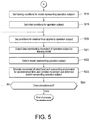
- Fig. 5 is a flowchart illustrating a second process performed by the simulation device 10 according to the embodiment.
- the second process is a process performed by the second processing unit 30 of the simulation device 10 and is a process of simulating the entirety including the robot hand and the operation subject using the learning model generated through the first process.
- the simulation device 10 sets the framing conditions for the model representing the operation subject (S18), sets the initial conditions for the operation subject (S19), and sets the conditions for external force applied to the operation subject (S20).
- the conditions for external force applied to the operation subject may be determined based on an action scheduled for the robot hand.
- the simulation device 10 outputs the data representing movement of the operation subject by the learning model (S21) and deforms the model representing the operation subject in the simulation space (S22).
- the simulation device 10 simulates movement of the robot hand and the surrounding environment for a predetermined time and combines the movement with the deformed model representing the operation subject (S23).
- the predetermined time may be the same as the predetermined time in the first process and may be a minimum time during the simulation or may be several multiples of the minimum time.
- the simulation device 10 sets the conditions for external force applied to the operation subject based on the subsequent action of the robot hand (S20), predicts movement of the operation subject by the learning model (S21), deforms the model representing the operation subject (S22), and combines the movement of the robot hand and the surrounding environment with the deformed model representing the operation subject (S23).
- the simulation device 10 writes a simulation result on the storage unit or displays the simulation result on a display unit, and then the second process ends.
- Fig. 6 is a flowchart illustrating a process performed by a simulation device of the related art.
- the process performed by the simulation device of the related art is different from the second process performed by the simulation device 10 according to the embodiment in that a process of simulating movement of an operation subject for a predetermined time (S103) is performed.
- the framing conditions for a model representing the operation subject is first set (S100), the initial conditions for the operation subject is set (S101), and the conditions for external force applied to the operation subject is set (S102).
- the conditions for external force applied to the operation subject may be determined based on an action scheduled for the robot hand.
- the simulation device of the related art simulates movement of the operation subject for a predetermined time (S103).
- the process of simulating the movement of the operation subject for the predetermined time (S103) is a process performed by a finite element method or a particle method, a computation load is generally large, and a relatively long time is required until a result is obtained.
- the simulation device of the related art deforms the model representing the operation subject in a simulation space in accordance with a simulation result of the movement of the operation subject (S104), simulates the movement of the robot hand and the surrounding environment for the predetermined time, and combines the movement and the deformed model presenting the operation subject (S105).
- the simulation device of the related art sets the conditions for external force applied to the operation subject based on the subsequent action of the robot hand (S102), simulates the movement of the operation subject for the predetermined time (S103), deforms the model representing the operation subject (S104), and combines the movement of the robot hand and the surrounding environment with the deformed model representing the operation subject (S105).
- the simulation device of the related art simulates movement of the operation subject for the predetermined time by the finite element method or the particle method whenever the simulation is advanced by a predetermined time.
- the simulation device 10 according to the embodiment calculates movement of the representative points of the operation subject by the learning model whenever the simulation is advance by a predetermined time. Due to this difference, the simulation device 10 according to the embodiment can further reduce a computation load required for simulation of movement of the operation subject than in the simulation device of the related art, and thus it is possible to reduce a computation amount.
- Fig. 7 is a schematic diagram illustrating movement of a second operation subject T2 simulated by the simulation device 10 according to the embodiment.
- the second operation subject T2 is paper or cloth which is a flexible object.
- the second operation subject T2 is gripped by a robot to operate.
- the simulation device 10 simulates an action of the robot moving the second operation subject T2 in a short time so that the second operation subject T2 which is a flexible object is not damaged or tangled.
- the second operation subject T2 which is in a still state is illustrated to the left and the second operation subject T2 gripped and deformed by the robot is illustrated to the right.
- the simulation device 10 sets framing conditions for a model representing the second operation subject T2 and conditions for external force applied to the second operation subject T2, and simulates movement of the second operation subject T2 in conformity with a known simulation scheme under these conditions.
- the simulation device 10 may simulate movement of a plurality of nodal points in conformity with a so-called finite element method using a model obtained by decomposing the second operation subject T2 which is a flexible object into the plurality of constituents connected by nodal points.
- the framing conditions for the model may include conditions regarding the number of constituents, the number of nodal points, the sizes of the constituent elements, and the shapes of the constituents.
- the conditions for external force may include conditions for force added by the robot.
- the simulation device 10 may use, as learning data, data representing movement of some nodal points located on the surface of the second operation subject T2 in movement of a plurality of nodal points simulated in conformity with the finite element method.
- the data representing movement of the nodal points may include data representing at least one of the positions, speeds, momenta, and accelerations of the nodal points.
- a first nodal point p11, a second nodal point p12, a third nodal point p13, a fourth nodal point p14, and a fifth nodal point p15 are illustrated as some nodal points located on the surface of the second operation subject T2. These nodal points are exemplary and the nodal points serving as a plurality of representative points may include other points.
- the simulation device 10 generates learning data including framing conditions for a model representing the second operation subject T2, conditions for external force applied to the second operation subject T2, and data representing movement of the plurality of representative points (the first to fifth nodal points) located on the surface of the second operation subject T2 during simulation.
- the simulation device 10 generates, by supervised learning using the learning data, a learning model that takes the framing conditions for the model representing the second operation subject T2, the conditions for external force applied to the second operation subject T2, and initial conditions of the plurality of representative points (the first to fifth nodal points) as input and outputs data representing movement of the plurality of representative points (the first to fifth nodal points).
- the learning model predicts at least one of positions, speeds, momenta, and accelerations of the plurality of representative points without directly performing simulation to reproduce a physical phenomenon.
- a simulation device (10) including:
- the simulation device (10) according to supplement 1, wherein the generation unit (14) generates the learning data that includes the framing conditions, the conditions for external force at a predetermined time of the simulation by the first simulation unit (13), and data representing movement of the plurality of representative points at the predetermined time as input data and includes data representing movement of the plurality of representative points at a time after a predetermined time passes from the predetermined time as output data.
- the generation unit (14) generates the learning data that includes the framing conditions, the conditions for external force at a predetermined time of the simulation by the first simulation unit (13), and data representing movement of the plurality of representative points at the predetermined time as input data and includes data representing movement of the plurality of representative points at a time after a predetermined time passes from the predetermined time as output data.
- the simulation device (10) according to any one of supplements 1 to 3, wherein the operation subject includes one of a flexible object, a liquid, and a gas.
- the simulation device (10) according to supplement 4, wherein, when the operation subject is a liquid, the surface of the operation subject is a liquid surface of the liquid and the movement of the plurality of representative points are indicated by movement of the liquid surface in a perpendicular direction of the liquid surface at a plurality of positions.
- the simulation device (10) uses the model obtained by decomposing the liquid into a plurality of particles to simulate movement of the plurality of particles, and wherein the data representing the movement of the plurality of representative points is data representing movement of some particles located on a liquid surface of the liquid at a predetermined time of simulation by the first simulation unit (13) among the plurality of particles.
- the simulation device (10) according to any one of supplements 1 to 6, wherein the framing conditions include one of a condition representing flexibility of the operation subject and a condition representing viscosity.
- the simulation device (10) according to any one of supplements 1 to 7, wherein the first simulation unit (13) uses the model obtained by decomposing the operation subject into a plurality of constituents connected by nodal points to simulate movement of the nodal points, and wherein the number of plurality of representative points is less than the number of nodal points.
- a simulation method comprising:
- a simulation program causing a processor included in a simulation device (10) to function as:
Landscapes
- Engineering & Computer Science (AREA)
- Theoretical Computer Science (AREA)
- Physics & Mathematics (AREA)
- Evolutionary Computation (AREA)
- General Engineering & Computer Science (AREA)
- General Physics & Mathematics (AREA)
- Software Systems (AREA)
- Geometry (AREA)
- Computer Hardware Design (AREA)
- Artificial Intelligence (AREA)
- Medical Informatics (AREA)
- Computer Vision & Pattern Recognition (AREA)
- Mathematical Physics (AREA)
- Computing Systems (AREA)
- Data Mining & Analysis (AREA)
- Robotics (AREA)
- Mechanical Engineering (AREA)
- Manipulator (AREA)
- Management, Administration, Business Operations System, And Electronic Commerce (AREA)
- Human Computer Interaction (AREA)
- Numerical Control (AREA)
- Computational Linguistics (AREA)
Abstract
Description
- The present invention relates to a simulation device, a simulation method, and a simulation program.
- In the related art, various processes have been performed on operation subjects by robots in some cases. Actions of robots have been verified by simulations and designs have been created with reference to simulation results in some cases.
- For example, Patent Literature 1 discloses a method of simulating an action of an industrial machine and storing or comparing a simulation result with actual data from the action of the industrial machine.
- Published
Japanese Translation No. 2008-542888 of the PCT - When an operation subject manipulated by a robot is a liquid or a flexible object that has flexibility, movement of the operation subject is simulated along with movement of the robot in some cases. The movement of the operation subject can be simulated by a known technology such as a finite element method or a particle method.
- However, when movement of an operation subject is simulated with high accuracy, a computation load becomes large and a time necessary for the simulation becomes long in some cases.
- Accordingly, the present invention provides a simulation device, a simulation method, and a simulation program for reducing a computation load required for simulation of movement of an operation subject.
- According to an aspect of the present disclosure, a simulation device includes: a first setting unit configured to set framing conditions for a model representing an operation subject; a second setting unit configured to set conditions for external force applied to the operation subject; a first simulation unit configured to simulate movement of the operation subject under the framing conditions and the condition for external force; a generation unit configured to generate learning data including the framing conditions, the conditions for external force, and data representing movement of a plurality of representative points located on a surface of the operation subject during simulation by the first simulation unit; and a learning unit configured to, by supervised learning using the learning data, generate a learning model that takes the framing conditions, the conditions for external force, and initial conditions of the plurality of representative points as input and outputs the data representing the movement of the plurality of representative points.
- According to the aspect of the present disclosure, by simulating movement of the model representing the operation subject in conformity with any scheme and generating the learning model by supervised learning using a simulation result, it is possible to substitute a simulation having a large computation load with a prediction of the movement of the representative points by the learning model having a relatively small computation load. Thus, it is possible to reduce a computation load required for simulation of the movement of the operation subject.
- In the simulation device according to the aspect of the embodiment, the generation unit may generate the learning data that includes the framing conditions, the conditions for external force at a predetermined time of the simulation by the first simulation unit, and data representing movement of the plurality of representative points at the predetermined time as input data and includes data representing movement of the plurality of representative points at a time after a predetermined time passes from the predetermined time as output data.
- According to the aspect of the present disclosure, it is possible to predict the movement of the representative points after the predetermined time passes by the learning model. By repeatedly performing the prediction by the learning model, it is possible to predict the movement of the representative points at any time.
- The simulation device according to the aspect of the embodiment may further include a second simulation unit configured to simulate movement of a robot; and a prediction unit configured to input the framing conditions and conditions for external force added to the operation subject by the robot during simulation by the second simulation unit to the learning model and configured to predict movement of the plurality of representative points. The second simulation unit may combine the movement of the plurality of representative points predicted by the prediction unit and the simulated movement of the robot.
- According to the aspect of the present disclosure, by predicting the movement of the representative points representing the operation subject with a relatively small computation load by the learning model and combining movement of the robot with a simulation result in conformity with any scheme, it is possible to reduce a computation load required for entire simulation including the robot and the operation subject.
- In the simulation device according to the aspect of the embodiment, the operation subject may include one of a flexible object, a liquid, and a gas.
- According to the aspect of the present disclosure, even for an operation subject in which a computation load of simulation is large, it is possible to predict the movement of the representative points of the operation subject through computation with a learning model having a relatively small computation load. Thus, it is possible to reduce a computation load required for simulation of movement of the operation subject.
- In the simulation device according to the aspect of the embodiment, when the operation subject is a liquid, the surface of the operation subject may be a liquid surface of the liquid and the movement of the plurality of representative points may be indicated by movement of the liquid surface in a perpendicular direction of the liquid surface at a plurality of positions.
- According to the aspect of the present disclosure, by predicting movement of the plurality of representative points located on the liquid surface of the liquid with the learning model, it is possible to further reduce the computation load of the learning model than in the case of prediction of movement of the entire liquid.
- In the simulation device according to the aspect of the embodiment, the first simulation unit may use the model obtained by decomposing the liquid into a plurality of particles to simulate movement of the plurality of particle. The data representing the movement of the plurality of representative points may be data representing movement of some particles located on the liquid surface of the liquid at a predetermined time of simulation by the first simulation unit among the plurality of particles.
- According to the aspect of the present disclosure, it is possible to generate the learning model for reproducing movement of the particles located on the liquid surface in a result obtained by simulating movement of the entire liquid by the particle model. Thus, it is possible to further reduce the computation load of the learning model than in the case of prediction of movement of the entire liquid.
- In the simulation device according to the aspect of the embodiment, the framing conditions may include one of a condition representing flexibility of the operation subject and a condition representing viscosity.
- According to the aspect of the present disclosure, even for an operation subject in which a computation load of simulation is large, it is possible to predict the movement of the representative points of the operation subject through computation with a learning model having a relatively small computation load. Thus, it is possible to reduce a computation load required for simulation of movement of the operation subject.
- In the simulation device according to the aspect of the embodiment, the first simulation unit may use the model obtained by decomposing the operation subject into a plurality of constituents connected by nodal points to simulate movement of the nodal points. The number of plurality of representative points may be less than the number of nodal points.
- According to the aspect of the present disclosure, it is possible to generate the learning model for reproducing movement of the nodal points located on the surface of the operation subject in a result obtained by simulating movement of the entire operation subject in accordance with a finite element method. Thus, it is possible to further reduce the computation load of the learning model than in the case of prediction of movement of all the nodal points representing the operation subject.
- According to another aspect of the present disclosure, a simulation method includes: setting framing conditions for a model representing an operation subject; setting conditions for external force applied to the operation subject; simulating movement of the operation subject under the framing conditions and the conditions for external force; generating learning data including the framing conditions, the conditions for external force, and data representing movement of a plurality of representative points located on a surface of the operation subject during simulation; and generating, by supervised learning using the learning data, a learning model that takes the framing conditions, the conditions for external force, and initial conditions of the plurality of representative points as input and outputs the data representing the movement of the plurality of representative points.
- According to the aspect of the present disclosure, by simulating the movement of the model representing the operation subject in accordance with any scheme and generating the learning model by supervised learning using the simulation result, it is possible to substitute a simulation having a large computation load with a prediction of the movement of the representative points by a learning model having a relatively small computation load. Thus, it is possible to reduce a computation load required for simulation of the movement of the operation subject.
- According to still another aspect of the present disclosure, a simulation program causes a processor included in a simulation device to function as: a first setting unit configured to set framing conditions for a model representing an operation subject; a second setting unit configured to set conditions for external force applied to the operation subject; a first simulation unit configured to simulate movement of the operation subject under the framing conditions and the condition for external force; a generation unit configured to generate learning data including the framing conditions, the conditions for external force, and data representing movement of a plurality of representative points located on a surface of the operation subject during simulation by the first simulation unit; and a learning unit configured to, by supervised learning using the learning data, generate a learning model that takes the framing conditions, the conditions for external force, and initial conditions of the plurality of representative points as input and outputs the data representing the movement of the plurality of representative points.
- According to the aspect of the present disclosure, by simulating the movement of the model representing the operation subject in accordance with any scheme and generating the learning model by supervised learning using the simulation result, it is possible to substitute a simulation having a large computation load with a prediction of the movement of the representative points by a learning model having a relatively small computation load. Thus, it is possible to reduce a computation load required for simulation of the movement of the operation subject.
- The present invention provides a simulation device, a simulation method, and a simulation program for reducing a computation load required for simulation of movement of an operation subject.
-
-
Fig. 1 is a schematic diagram illustrating movement of a first operation subject simulated by a simulation device according to an embodiment of the present invention. -
Fig. 2 is a diagram illustrating a hardware configuration of the simulation device according to the embodiment. -
Fig. 3 is a diagram illustrating a functional configuration of the simulation device according to the embodiment. -
Fig. 4 is a flowchart illustrating a first process performed by the simulation device according to the embodiment. -
Fig. 5 is a flowchart illustrating a second process performed by the simulation device according to the embodiment. -
Fig. 6 is a flowchart illustrating a process performed by a simulation device of the related art. -
Fig. 7 is a schematic diagram illustrating movement of a second operation subject simulated by the simulation device according to the embodiment. - Hereinafter, a mode related to an aspect of the present invention (hereinafter referred to as an "embodiment") will be described with reference to the drawings. In each diagram, units denoted by the same reference numerals have the same or similar configurations.
-
Fig. 1 is a schematic diagram illustrating movement of a first operation subject T1 simulated by asimulation device 10 according to an embodiment of the present invention. The first operation subject T1 is a liquid contained in a container object Ob. The container object Ob is gripped by a robot hand H and operates. When the robot hand H is caused to grip and move the container object Ob, thesimulation device 10 simulates an action of the robot hand H caused to move the container object Ob over a short time so that the first operation subject T1 which is a liquid does not spill from the container object Ob. InFig. 1 , the first operation subject T1 which is in a still state is illustrated to the left and the first operation subject T1 of which a liquid surface is shaken due to an operation of the container object Ob by the robot hand H is illustrated to the right. - The
simulation device 10 sets framing conditions for a model representing the first operation subject T1 and conditions for external force applied to the first operation subject T1, and simulates movement of the first operation subject T1 in conformity with a known simulation scheme under these conditions. For example, thesimulation device 10 may simulate movement of a plurality of particles in conformity with a so-called particle method using a model obtained by decomposing the first operation subject T1 which is a liquid into a plurality of particles. In this case, the framing conditions for the model may include conditions for determining interaction between particles and particle diameters. The conditions for external force may include conditions for force added by the robot hand H and a boundary condition by the container object Ob. - The
simulation device 10 may use, as learning data, data representing movement of some particles located on the liquid surface of the first operation subject T1 in movement of a plurality of particles simulated in conformity with the particle method. Here, the data representing movement of the particles may include data representing at least one of the positions, speeds, momenta, and accelerations of the particles. When an operation subject is a liquid like the first operation subject T1, the surface of the operation subject may be a liquid surface of the liquid and movement of a plurality of representative points may be represented by movement of the liquid surface at a plurality of positions in the perpendicular direction. For example, thesimulation device 10 may partition the inside of the container object Ob into 3-dimensional lattice, may select a particle with the largest value in the Z direction (the perpendicular direction) with respect to each lattice cell of the XY plane crossing the container object Ob, may repeat a process of setting the XYZ coordinates of the particle as one representative point, and may generate data representing movement of some particles located on the liquid surface of the first operation subject T1. - In
Fig. 1 , a first particle p1, a second particle p2, a third particle p3, a fourth particle p4, a fifth particle p5, a sixth particle p6, a seventh particle p7, an eighth particle p8, a ninth particle p9, a tenth particle p10, an eleventh particle p11, and a twelfth particle p12 are illustrated as some particles located on the liquid surface of the first operation subject T1. The first particle p1, the second particle p2, the third particle p3, the fourth particle p4, the fifth particle p5, the sixth particle p6, the seventh particle p7, the eighth particle p8, the ninth particle p9, the tenth particle p10, the eleventh particle p11, and the twelfth particle p12 are representative points located on the liquid surface of the first operation subject T1 at a certain time. Here, the particles located on the liquid surface of the first operation subject T1 may be changed moment by moment and may not necessarily be the same particles. In this example, when the container object Ob is operated by the robot hand H, a left state in which the heights of the first particle p1, the second particle p2, the third particle p3, the fourth particle p4, the fifth particle p5, and the sixth particle p6 are substantially the same transitions to a right state in which the liquid is stirred, the particles located on the liquid surface of the first operation subject T1 have changed, and the heights of the seventh particle p7, the eighth particle p8, the ninth particle p9, the tenth particle p10, the eleventh particle p11, and the twelfth particle p12 vary. - The
simulation device 10 generates learning data including framing conditions for a model representing the first operation subject T1, conditions for external force applied to the first operation subject T1, and data representing movement of the plurality of representative points (the first to twelfth particles or the like) located on the liquid surface of the first operation subject T1 during simulation. Thesimulation device 10 generates, by supervised learning using the learning data, a learning model that takes the framing conditions for the model representing the first operation subject T1, the conditions for external force applied to the first operation subject T1, and initial conditions of the plurality of representative points (the first to twelfth particles or the like) as input and outputs data representing movement of the plurality of representative points (the first to twelfth particles or the like). The learning model predicts at least one of positions, speeds, momenta, and accelerations of the plurality of representative points without directly performing simulation to reproduce a physical phenomenon. - In this way, by simulating movement of the model representing the first operation subject T1 in conformity with any scheme and generating a learning model by supervised learning using a simulation result, it is possible to substitute a simulation having a large computation load with a prediction of the movement of the representative points by the learning model having a relatively small computation load. Thus, it is possible to reduce a computation load required for simulation of the movement of the operation subject and reduce a calculation amount.
-
Fig. 2 is a diagram illustrating a hardware configuration of thesimulation device 10 according to the embodiment. Thesimulation device 10 includes a central processing unit (CPU) 10a, a random access memory (RAM) 10b, a read-only memory (ROM) 10c, acommunication unit 10d, aninput unit 10e, and adisplay unit 10f. TheCPU 10a, theRAM 10b, theROM 10c, thecommunication unit 10d, theinput unit 10e, and thedisplay unit 10f are connected to be able to transmit and receive data one another via a bus. In this example, thesimulation device 10 that is configured by a single computer will be described, but thesimulation device 10 may be realized by combining a plurality of computers. The configuration illustrated inFig. 2 is exemplary. Thesimulation device 10 may have a configuration other than these or may not have some of the configurations. - The
CPU 10a is a processor included in thesimulation device 10 and performs control of execution of programs stored in theRAM 10b and theROM 10c and computation or processing of data. TheCPU 10a is a computation unit that executes a program (a simulation program) that generates a learning model for reproducing a simulation result of movement of an operation subject in conformity with a known simulation scheme. TheCPU 10a receives various kinds of data from theinput unit 10e or thecommunication unit 10d and displays a computation result of the data on thedisplay unit 10f or stores the computation result in theRAM 10b or theROM 10c. - The
RAM 10b is a storage unit included in thesimulation device 10 and can rewrite data. TheRAM 10b may be configured as, for example, as semiconductor storage element. TheRAM 10b may store the simulation program executed by theCPU 10a or data or the like for configuring a robot or a surrounding environment in a simulation space. This is exemplary and theRAM 10b may store other data or may not store some of the data. - The
ROM 10c is a storage unit included in thesimulation device 10 and can read data. TheROM 10c may be configured as, for example, as semiconductor storage element. TheROM 10c may store, for example, the simulation program or unwritten data. - The
communication unit 10d is an interface that connects thesimulation device 10 to another device. Thecommunication unit 10d may be connected to a communication network such as a local area network (LAN) or the Internet. - The
input unit 10e receives data from a user as input and may include, for example, a pointing device such as a mouse, a keyboard, and a touch panel. - The
display unit 10f visually displays a computation result obtained by theCPU 10a and may be configured by, for example, a liquid crystal display (LCD). Thedisplay unit 10f may display a simulation result of an operation subject or an entire simulation result including a robot and an operation subject. - The simulation program may be stored in a computer-readable storage medium such as the
RAM 10b or theROM 10c to be supplied or may be supplied via a communication network connected by thecommunication unit 10d. In thesimulation device 10, actions of afirst processing unit 20 and asecond processing unit 30 to be described with reference to the following drawings are realized by causing theCPU 10a to execute the simulation program. The physical configurations are exemplary and may not necessarily be independent configurations. For example, thesimulation device 10 may include a large-scale integration (LSI) in which theCPU 10a and theRAM 10b or theROM 10c are integrated. -
Fig. 3 is a diagram illustrating a functional configuration of thesimulation device 10 according to the embodiment. Thesimulation device 10 includes thefirst processing unit 20 and thesecond processing unit 30. Thefirst processing unit 20 performs a process of generating a learning model for predicting movement of an operation subject. Thesecond processing unit 30 performs entire simulation including the robot and the operation subject using the generated learning model. Thefirst processing unit 20 includes afirst setting unit 11, asecond setting unit 12, afirst simulation unit 13, ageneration unit 14, alearning unit 15, and afirst storage unit 16. Thesecond processing unit 30 includes asecond simulation unit 17, asecond storage unit 18, and aprediction unit 19. - The
first setting unit 11 sets framing conditions for a model representing an operation subject. Here, for example, the operation subject may be a subject directly gripped by a robot hand, a subject indirectly gripped by the robot hand, a subject directly or indirectly operated by an end effector of a robot which is not limited to a hand, or a subject directly or indirectly gripped by a person. The framing conditions for the model include physical conditions for moving a model representing the operation subject in a simulation space similarly to the reality and may include either conditions representing flexibility of the operation subject or conditions representing viscosity. The operation subject may include any of a flexible object, a liquid, or a gas. The flexible object has flexibility and includes, for example, a cable formed of rubber, paper, or cloth. When the operation subject is a liquid or a gas, a container in which the liquid or the gas which is an operation subject is stored may be gripped by a robot. When the operation subject is a gas, a nozzle ejecting the gas which is an operation subject may be gripped by the robot to spray the gas to another member. - By causing the
simulation device 10 according to the embodiment to generate a learning model for predicting movement of representative points of an operation subject, it is possible to predict the movement of the representative points of the operation subject through computation by a learning model having a relatively small computation load even when the operation subject is, for example, an operation subject such as a flexible object, a liquid, and a gas having a large computation load of simulation. Thus, it is possible to reduce a computation load required for simulation of movement of the operation subject and reduce a computation amount. - The
second setting unit 12 sets conditions for external force applied to an operation subject. The external force applied to the operation subject may include external force directly or indirectly added to the operation subject by a robot. The external force applied to the operation subject may include, for example, external force added due to a configuration other than a robot, such as external force added by a transport device. - The
first simulation unit 13 simulates movement of an operation subject under the framing conditions for a model representing the operation subject and the conditions for external force applied to the operation subject. Thefirst simulation unit 13 may simulate movement of the operation subject using any scheme. For example, a particle method or a finite element method may be used. - The
generation unit 14 generates learning data including the framing conditions for the model representing the operation subject, the conditions for external force applied to the operation subject, and data representing movement of the plurality of representative points located on the surface of the operation subject during simulation by thefirst simulation unit 13. The learning data generated by thegeneration unit 14 may be stored as learningdata 16a in thefirst storage unit 16. Here, the plurality of representative points may be located any portions of the operation subject. When the representative points are located on the surface of the operation subject, the representative points can be represented by representative points at which movement of the external shape of the operation subject is relatively small. Thegeneration unit 14 may generate not only learning data including data representing movement of the plurality of representative points located on the surface of the operation subject but also learning data including the framing conditions for the model representing the operation subject, the conditions for external force applied to the operation subject, and data representing movement of the plurality of representative points located on a part of the operation subject during simulation by thefirst simulation unit 13. - The
generation unit 14 may generate learning data that includes the framing conditions for the model representing the operation subject, the conditions for external force applied to the model representing the operation subject at a predetermined time of the simulation by thefirst simulation unit 13, and data representing movement of the plurality of representative points at the predetermined time as input data and includes data representing movement of the plurality of representative points at a time after a predetermined time passes from the predetermined time as output data. Here, the predetermined time may be a minimum time or several multiples of the minimum time in the simulation by thefirst simulation unit 13. In this way, it is possible to predict movement of the representative points by the learning model after the predetermined time passes. Thus, by repeatedly performing the prediction by the learning model, it is possible to predict movement of the representative points at any time. The input data included in the learning data is data input to the learning model in supervised learning of the learning model. The output data included in the learning data is data compared with output of the learning model in the supervised learning of the learning model and is data indicating a correct answer. - When the operation subject is a liquid, the surface of the operation subject may be the liquid surface of the liquid and movement of the plurality of representative points may be represented as movement of the liquid surface at the plurality of positions in the perpendicular direction. By predicting the movement of the plurality of representative points located on the liquid surface of the liquid by the learning model, it is possible to further decrease a computation load of the learning model than in the case of prediction of movement of the entire liquid, and thus it is possible to reduce a computation amount.
- When the operation subject is a liquid, the
first simulation unit 13 may simulate movement of a plurality of particles using a model obtained by decomposing the liquid which is the operation subject into the plurality of particles. In this case, the framing conditions for the model representing the operation subject may include conditions regarding the number of particles, the sizes of the particles, and interaction between the particles. Thefirst simulation unit 13 may simulate movement of the plurality of particles representing the operation subject by a particle method. Data representing movement of a plurality of representative points located on the liquid surface of the liquid may be data representing movement of some particles located on the liquid surface of the liquid at a predetermined time of the simulation by thefirst simulation unit 13 among the plurality of particles. In this way, it is possible to generate a learning model for reproducing the movement of the particles located on the liquid surface in a result obtained by simulating movement of the entire liquid by a particle model. Thus, it is possible to further reduce a computation load of the learning model than in the case of prediction of movement of the entire liquid, and it is possible to reduce a computation amount. - The
first simulation unit 13 may simulate movement of nodal points using a model obtained by decomposing an operation subject into a plurality of constituents connected by nodal points. In this case, framing conditions for a model representing the operation subject may include conditions regarding the number of constituents and the number of nodal points, the sizes of the constituents, and the shapes of the constituents. Thefirst simulation unit 13 may simulate movement of the plurality of nodal points representing the operation subject by a finite element method. The plurality of representative points may be located on the surface of the operation subject. The number of plurality of representative points located on the surface of the operation subject may be less than the number of nodal points. It is possible to generate a learning model for reproducing movement of some nodal points located on the surface of the operation subject in a result obtained by simulating the movement of the entire operation subject by the finite element method. Thus, it is possible to further reduce a computation load of the learning model than in the case of prediction of movement of all the nodal points representing the operation subject, and it is possible to reduce a computation amount. - The
learning unit 15 generates, by supervised learning using the learning data, a learning model that takes the framing conditions of the model representing the operation subject, the conditions for external force applied to the operation subject, and initial conditions of the plurality of representative points located on the surface of the operation subject as input and outputs the data representing the movement of the plurality of representative points. The learning model generated by thelearning unit 15 may be stored as thelearning model 16b in thefirst storage unit 16. Thelearning model 16b generated by thelearning unit 15 may be a model using, for example, a neural network. Thelearning model 16b may be generated by optimizing weighting parameters or the like of the neural network with regard to the learning data by a back propagation error method. - The
second simulation unit 17 simulates movement of a robot. In the embodiment, thesecond simulation unit 17 simulates movement of a robot hand. Thesecond simulation unit 17 simulates an action of the robot hand in a simulation space with reference torobot hand data 18a stored in thesecond storage unit 18. Therobot hand data 18a may include taught data regarding a trajectory of the robot hand, data regarding dimensions of an arm included in the robot hand, and data regarding torque of a servomotor included in the robot hand. Thesecond simulation unit 17 may simulate a surrounding environment along with the action of the robot hand with reference to environmental data 18b stored in thesecond storage unit 18. The environmental data 18b may include data regarding temperature, humidity, and the like of an environment in which the robot hand is installed, data regarding a transport device, a processing device, or the like used along with the robot hand, and data regarding a worker or an obstacle which can interfere with the robot hand. Thesecond simulation unit 17 may simulate an action of the robot hand so that the robot hand cooperates with the transport device or the processing device while avoiding interference with the worker or the obstacle. - The
prediction unit 19 inputs the conditions for external force added to the operation subject by the robot and the framing conditions for the model representing the operation subject during the simulation by thesecond simulation unit 17 into thelearning model 16b and predicts movement of the plurality of representative points. Theprediction unit 19 predicts the movement of the plurality of representative points located on the surface of the operation subject without directly simulating movement of the model representing the operation subject based on data output from thelearning model 16b. - The
second simulation unit 17 combines the movement of the plurality of representative points predicted by theprediction unit 19 and the simulated movement of the robot hand. For example, when the operation subject is a liquid which is in a container and an action of gripping and moving the container by the robot hand is simulated, thesecond simulation unit 17 performs entire simulation including the robot hand and the operation subject by causing thesecond simulation unit 17 to simulate an action of the robot hand, causing theprediction unit 19 to predict movement of the liquid surface of the liquid which is in the container, and combining the action and the movement. In this way, by predicting movement of the representative points of the model representing the operation subject with a relatively small computation load by the learning model and combining the movement of the robot hand with a simulation result in conformity with any scheme, it is possible to reduce a computation load required for entire simulation including the robot hand and the operation subject, and thus it is possible to reduce a computation amount. -
Fig. 4 is a flowchart illustrating a first process performed by thesimulation device 10 according to the embodiment. The first process is a process performed by thefirst processing unit 20 of thesimulation device 10 and is a process of generating a learning model for predicting movement of the plurality of representative points of the operation subj ect. - First, the
simulation device 10 sets the framing conditions for the model representing the operation subject (S10), sets the conditions for external force applied to the operation subject (S11), and sets the initial conditions for the operation subject (S12). - Thereafter, the
simulation device 10 simulates movement of the operation subject for a predetermined time (S13). Here, the predetermined time may be a minimum time during the simulation or may be several multiples of the minimum time. - The
simulation device 10 acquires a value representing the movement of the plurality of representative points located on the surface of the operation subject (S14). Then, thesimulation device 10 generates the learning data that includes the framing conditions for the model representing the operation subject, the conditions for external force at an initial time of the simulation, and data representing movement of the plurality of the representative points at the initial time as input data and includes data representing movement of the plurality of representative points at a time after a predetermined time passes from the initial time as output data (S15). - Thereafter, when the generation of the learning data does not end (NO in S16), the
simulation device 10 performs the setting of the framing conditions (S10), the setting of the conditions for external force (S11), and the setting of the initial conditions (S12) again, simulates movement of the operation subject (S13), and generates the learning data (S14 and S15). Here, when the same operation subject is simulated, the setting of the framing conditions (S10) may be omitted. When continuous movement of the same operation subject is simulated, the initial conditions for the operation subject in subsequent simulation may be set based on data representing movement of the operation subject obtained by the immediately previous simulation. - Conversely, when the generation of the learning data ends (YES in S16), the
simulation device 10 generates and stores the learning model that outputs the data representing the movement of the plurality of representative points using the learning data (S17). Then, the first process ends. -
Fig. 5 is a flowchart illustrating a second process performed by thesimulation device 10 according to the embodiment. The second process is a process performed by thesecond processing unit 30 of thesimulation device 10 and is a process of simulating the entirety including the robot hand and the operation subject using the learning model generated through the first process. - First, the
simulation device 10 sets the framing conditions for the model representing the operation subject (S18), sets the initial conditions for the operation subject (S19), and sets the conditions for external force applied to the operation subject (S20). Here, the conditions for external force applied to the operation subject may be determined based on an action scheduled for the robot hand. - Thereafter, the
simulation device 10 outputs the data representing movement of the operation subject by the learning model (S21) and deforms the model representing the operation subject in the simulation space (S22). Thesimulation device 10 simulates movement of the robot hand and the surrounding environment for a predetermined time and combines the movement with the deformed model representing the operation subject (S23). Here, the predetermined time may be the same as the predetermined time in the first process and may be a minimum time during the simulation or may be several multiples of the minimum time. - When the simulation does not end (NO in S24), the
simulation device 10 sets the conditions for external force applied to the operation subject based on the subsequent action of the robot hand (S20), predicts movement of the operation subject by the learning model (S21), deforms the model representing the operation subject (S22), and combines the movement of the robot hand and the surrounding environment with the deformed model representing the operation subject (S23). - Conversely, when the simulation ends (YES in S24), the
simulation device 10 writes a simulation result on the storage unit or displays the simulation result on a display unit, and then the second process ends. -
Fig. 6 is a flowchart illustrating a process performed by a simulation device of the related art. The process performed by the simulation device of the related art is different from the second process performed by thesimulation device 10 according to the embodiment in that a process of simulating movement of an operation subject for a predetermined time (S103) is performed. - In the process performed by the simulation device of the related art, the framing conditions for a model representing the operation subject is first set (S100), the initial conditions for the operation subject is set (S101), and the conditions for external force applied to the operation subject is set (S102). Here, the conditions for external force applied to the operation subject may be determined based on an action scheduled for the robot hand.
- Thereafter, the simulation device of the related art simulates movement of the operation subject for a predetermined time (S103). Here, the process of simulating the movement of the operation subject for the predetermined time (S103) is a process performed by a finite element method or a particle method, a computation load is generally large, and a relatively long time is required until a result is obtained. The simulation device of the related art deforms the model representing the operation subject in a simulation space in accordance with a simulation result of the movement of the operation subject (S104), simulates the movement of the robot hand and the surrounding environment for the predetermined time, and combines the movement and the deformed model presenting the operation subject (S105).
- When the simulation does not end (NO in S106), the simulation device of the related art sets the conditions for external force applied to the operation subject based on the subsequent action of the robot hand (S102), simulates the movement of the operation subject for the predetermined time (S103), deforms the model representing the operation subject (S104), and combines the movement of the robot hand and the surrounding environment with the deformed model representing the operation subject (S105).
- In this way, the simulation device of the related art simulates movement of the operation subject for the predetermined time by the finite element method or the particle method whenever the simulation is advanced by a predetermined time. On the other hand, the
simulation device 10 according to the embodiment calculates movement of the representative points of the operation subject by the learning model whenever the simulation is advance by a predetermined time. Due to this difference, thesimulation device 10 according to the embodiment can further reduce a computation load required for simulation of movement of the operation subject than in the simulation device of the related art, and thus it is possible to reduce a computation amount. -
Fig. 7 is a schematic diagram illustrating movement of a second operation subject T2 simulated by thesimulation device 10 according to the embodiment. The second operation subject T2 is paper or cloth which is a flexible object. The second operation subject T2 is gripped by a robot to operate. When the second operation subject T2 is gripped and moved by the robot, thesimulation device 10 simulates an action of the robot moving the second operation subject T2 in a short time so that the second operation subject T2 which is a flexible object is not damaged or tangled. InFig. 7 , the second operation subject T2 which is in a still state is illustrated to the left and the second operation subject T2 gripped and deformed by the robot is illustrated to the right. - The
simulation device 10 sets framing conditions for a model representing the second operation subject T2 and conditions for external force applied to the second operation subject T2, and simulates movement of the second operation subject T2 in conformity with a known simulation scheme under these conditions. For example, thesimulation device 10 may simulate movement of a plurality of nodal points in conformity with a so-called finite element method using a model obtained by decomposing the second operation subject T2 which is a flexible object into the plurality of constituents connected by nodal points. In this case, the framing conditions for the model may include conditions regarding the number of constituents, the number of nodal points, the sizes of the constituent elements, and the shapes of the constituents. The conditions for external force may include conditions for force added by the robot. - The
simulation device 10 may use, as learning data, data representing movement of some nodal points located on the surface of the second operation subject T2 in movement of a plurality of nodal points simulated in conformity with the finite element method. Here, the data representing movement of the nodal points may include data representing at least one of the positions, speeds, momenta, and accelerations of the nodal points. - In
Fig. 7 , a first nodal point p11, a second nodal point p12, a third nodal point p13, a fourth nodal point p14, and a fifth nodal point p15 are illustrated as some nodal points located on the surface of the second operation subject T2. These nodal points are exemplary and the nodal points serving as a plurality of representative points may include other points. In this example, when the second operation subject T2 is gripped by the robot, a left state in which the first nodal point p11, the second nodal point p12, the third nodal point p13, the fourth nodal point p14, and the fifth nodal point p15 are located on a straight line transitions to a right state in which the positions of the first nodal point p11, the second nodal point p12, the third nodal point p13, the fourth nodal point p14, and the fifth nodal point p15 scatter. - The
simulation device 10 generates learning data including framing conditions for a model representing the second operation subject T2, conditions for external force applied to the second operation subject T2, and data representing movement of the plurality of representative points (the first to fifth nodal points) located on the surface of the second operation subject T2 during simulation. Thesimulation device 10 generates, by supervised learning using the learning data, a learning model that takes the framing conditions for the model representing the second operation subject T2, the conditions for external force applied to the second operation subject T2, and initial conditions of the plurality of representative points (the first to fifth nodal points) as input and outputs data representing movement of the plurality of representative points (the first to fifth nodal points). The learning model predicts at least one of positions, speeds, momenta, and accelerations of the plurality of representative points without directly performing simulation to reproduce a physical phenomenon. - In this way, by simulating movement of the model representing the second operation subject T2 in conformity with any scheme and generating a learning model by supervised learning using a simulation result, it is possible to substitute a simulation having a large computation load with a prediction of the movement of the representative points by the learning model having a relatively small computation load. Thus, it is possible to reduce a computation load required for entire simulation including the robot and the operation subject and reduce a calculation amount.
- The above-described embodiments facilitate understanding of the present invention and is not interpreted as limiting the present invention. Each element, disposition of the element, a material of the element, conditions for the element, the shape of the element, the size of the element, and the like in the embodiment are not limited to those which are exemplary, and can be appropriately changed. The configurations according to the different embodiments can be replaced or combined partially.
- A simulation device (10) including:
- a first setting unit (11) configured to set framing conditions for a model representing an operation subject;
- a second setting unit (12) configured to set conditions for external force applied to the operation subject;
- a first simulation unit (13) configured to simulate movement of the operation subject under the framing conditions and the condition for external force;
- a generation unit (14) configured to generate learning data including the framing conditions, the conditions for external force, and data representing movement of a plurality of representative points located on a surface of the operation subject during simulation by the first simulation unit (13); and
- a learning unit (15) configured to, by supervised learning using the learning data, generate a learning model that takes the framing conditions, the conditions for external force, and initial conditions of the plurality of representative points as input and outputs the data representing the movement of the plurality of representative points.
- The simulation device (10) according to supplement 1, wherein the generation unit (14) generates the learning data that includes the framing conditions, the conditions for external force at a predetermined time of the simulation by the first simulation unit (13), and data representing movement of the plurality of representative points at the predetermined time as input data and includes data representing movement of the plurality of representative points at a time after a predetermined time passes from the predetermined time as output data.
- The simulation device (10) according to supplement 1 or 2, further comprising:
- a second simulation unit (17) configured to simulate movement of a robot; and
- a prediction unit (19) configured to input the framing conditions and conditions for external force added to the operation subject by the robot during simulation by the second simulation unit (17) to the learning model and configured to predict movement of the plurality of representative points,
- wherein the second simulation unit (17) combines the movement of the plurality of representative points predicted by the prediction unit (19) and the simulated movement of the robot.
- The simulation device (10) according to any one of supplements 1 to 3, wherein the operation subject includes one of a flexible object, a liquid, and a gas.
- The simulation device (10) according to supplement 4, wherein, when the operation subject is a liquid, the surface of the operation subject is a liquid surface of the liquid and the movement of the plurality of representative points are indicated by movement of the liquid surface in a perpendicular direction of the liquid surface at a plurality of positions.
- The simulation device (10) according to supplement 5,
wherein the first simulation unit (13) uses the model obtained by decomposing the liquid into a plurality of particles to simulate movement of the plurality of particles, and
wherein the data representing the movement of the plurality of representative points is data representing movement of some particles located on a liquid surface of the liquid at a predetermined time of simulation by the first simulation unit (13) among the plurality of particles. - The simulation device (10) according to any one of supplements 1 to 6, wherein the framing conditions include one of a condition representing flexibility of the operation subject and a condition representing viscosity.
- The simulation device (10) according to any one of supplements 1 to 7,
wherein the first simulation unit (13) uses the model obtained by decomposing the operation subject into a plurality of constituents connected by nodal points to simulate movement of the nodal points, and
wherein the number of plurality of representative points is less than the number of nodal points. - A simulation method comprising:
- setting framing conditions for a model representing an operation subject;
- setting conditions for external force applied to the operation subject;
- simulating movement of the operation subject under the framing conditions and the conditions for external force;
- generating learning data including the framing conditions, the conditions for external force, and data representing movement of a plurality of representative points located on a surface of the operation subject during simulation by the first simulation unit (13); and
- generating, by supervised learning using the learning data, a learning model that takes the framing conditions, the conditions for external force, and initial conditions of the plurality of representative points as input and outputs the data representing the movement of the plurality of representative points.
- A simulation program causing a processor included in a simulation device (10) to function as:
- a first setting unit (11) configured to set framing conditions for a model representing an operation subject;
- a second setting unit (12) configured to set conditions for external force applied to the operation subject;
- a first simulation unit (13) configured to simulate movement of the operation subject under the framing conditions and the condition for external force;
- a generation unit (14) configured to generate learning data including the framing conditions, the conditions for external force, and data representing movement of a plurality of representative points located on a surface of the operation subject during simulation by the first simulation unit (13); and
- a learning unit (15) configured to, by supervised learning using the learning data, generate a learning model that takes the framing conditions, the conditions for external force, and initial conditions of the plurality of representative points as input and outputs the data representing the movement of the plurality of representative points.
Claims (10)
- A simulation device comprising:a first setting unit configured to set framing conditions for a model representing an operation subject;a second setting unit configured to set conditions for external force applied to the operation subject;a first simulation unit configured to simulate movement of the operation subject under the framing conditions and the conditions for external force;a generation unit configured to generate learning data including the framing conditions, the conditions for external force, and data representing movement of a plurality of representative points located on a surface of the operation subject during simulation by the first simulation unit; anda learning unit configured to, by supervised learning using the learning data, generate a learning model that takes the framing conditions, the conditions for external force, and initial conditions of the plurality of representative points as input and outputs data representing movement of the plurality of representative points.
- The simulation device according to claim 1, wherein the generation unit generates the learning data that includes the framing conditions, the conditions for external force at a predetermined time of simulation by the first simulation unit, and data representing movement of the plurality of representative points at the predetermined time as input data and includes data representing movement of the plurality of representative points at a time after a predetermined time passes from the predetermined time as output data.
- The simulation device according to claim 1 or 2, further comprising:a second simulation unit configured to simulate movement of a robot; anda prediction unit configured to input the framing conditions and conditions for external force added to the operation subject by the robot during simulation by the second simulation unit to the learning model and configured to predict movement of the plurality of representative points,wherein the second simulation unit combines movement of the plurality of representative points predicted by the prediction unit and simulated movement of the robot.
- The simulation device according to any one of claims 1 to 3, wherein the operation subject includes one of a flexible object, a liquid, and a gas.
- The simulation device according to claim 4, wherein, when the operation subject is a liquid, the surface of the operation subject is a liquid surface of the liquid, and movement of the plurality of representative points is indicated by movement of the liquid surface in a perpendicular direction at a plurality of positions.
- The simulation device according to claim 5, wherein the first simulation unit uses the model obtained by decomposing the liquid into a plurality of particles to simulate movement of the plurality of particles, and
wherein data representing movement of the plurality of representative points is data representing movement of some particles located on the liquid surface of the liquid at a predetermined time of simulation by the first simulation unit among the plurality of particles. - The simulation device according to any one of claims 1 to 6, wherein the framing conditions include one of a condition representing flexibility of the operation subject and a condition representing viscosity.
- The simulation device according to any one of claims 1 to 7,wherein the first simulation unit uses the model obtained by decomposing the operation subject into a plurality of constituents connected by nodal points to simulate movement of the nodal points, andwherein the number of the plurality of representative points is less than the number of the nodal points.
- A simulation method comprising:setting framing conditions for a model representing an operation subject;setting conditions for external force applied to the operation subject;simulating movement of the operation subject under the framing conditions and the conditions for external force;generating learning data including the framing conditions, the conditions for external force, and data representing movement of a plurality of representative points located on a surface of the operation subject during the simulation; andgenerating, by supervised learning using the learning data, a learning model that takes the framing conditions, the conditions for external force, and initial conditions of the plurality of representative points as input and outputs data representing movement of the plurality of representative points.
- A simulation program causing a processor included in a simulation device to function as:a first setting unit configured to set framing conditions for a model representing an operation subject;a second setting unit configured to set conditions for external force applied to the operation subject;a first simulation unit configured to simulate movement of the operation subject under the framing conditions and the conditions for external force;a generation unit configured to generate learning data including the framing conditions, the conditions for external force, and data representing movement of a plurality of representative points located on a surface of the operation subject during simulation by the first simulation unit; anda learning unit configured to, by supervised learning using the learning data, generate a learning model that takes the framing conditions, the conditions for external force, and initial conditions of the plurality of representative points as input and outputs data representing movement of the plurality of representative points.
Applications Claiming Priority (2)
| Application Number | Priority Date | Filing Date | Title |
|---|---|---|---|
| JP2018192393A JP7012944B2 (en) | 2018-10-11 | 2018-10-11 | Simulation equipment, simulation method and simulation program |
| PCT/JP2019/040142 WO2020075834A1 (en) | 2018-10-11 | 2019-10-11 | Simulation device, simulation method, and simulation program |
Publications (2)
| Publication Number | Publication Date |
|---|---|
| EP3866169A1 true EP3866169A1 (en) | 2021-08-18 |
| EP3866169A4 EP3866169A4 (en) | 2022-07-06 |
Family
ID=70163999
Family Applications (1)
| Application Number | Title | Priority Date | Filing Date |
|---|---|---|---|
| EP19872157.3A Pending EP3866169A4 (en) | 2018-10-11 | 2019-10-11 | SIMULATION DEVICE, SIMULATION METHOD AND SIMULATION PROGRAM |
Country Status (5)
| Country | Link |
|---|---|
| US (1) | US12400056B2 (en) |
| EP (1) | EP3866169A4 (en) |
| JP (1) | JP7012944B2 (en) |
| CN (1) | CN112534366B (en) |
| WO (1) | WO2020075834A1 (en) |
Families Citing this family (2)
| Publication number | Priority date | Publication date | Assignee | Title |
|---|---|---|---|---|
| CN113656995B (en) * | 2021-07-06 | 2024-03-26 | 兰州空间技术物理研究所 | Ionization gauge sensitivity numerical calculation method based on electron track integration method |
| EP4561791A1 (en) * | 2022-07-28 | 2025-06-04 | Hitachi Vantara LLC | Unsupervised multi-target motion profile sequence prediction and optimization |
Family Cites Families (15)
| Publication number | Priority date | Publication date | Assignee | Title |
|---|---|---|---|---|
| JP2006277110A (en) * | 2005-03-28 | 2006-10-12 | Fuji Xerox Co Ltd | Behavior simulation apparatus and method |
| JP4609646B2 (en) * | 2005-03-29 | 2011-01-12 | ブリヂストンスポーツ株式会社 | Golf ball trajectory simulation method and flight simulation method |
| DE102005025338B4 (en) | 2005-05-31 | 2019-03-14 | Siemens Aktiengesellschaft | 08.Method for machining a workpiece |
| US7565276B2 (en) * | 2006-04-05 | 2009-07-21 | Seoul National University Industry Foundation | Method of simulating detailed movements of fluids using derivative particles |
| JP2010198399A (en) * | 2009-02-26 | 2010-09-09 | Fuji Xerox Co Ltd | Particle behavior analyzing device and program |
| JP2011081530A (en) * | 2009-10-06 | 2011-04-21 | Univ Of Tokyo | Discrete element method analysis simulation method for particle model, discrete element method analysis simulation program and discrete element method analysis simulation device |
| DE102009057878B4 (en) * | 2009-12-11 | 2024-01-25 | Airbus Defence and Space GmbH | Method for controlling a vehicle and dropping a load from a vehicle |
| JP6107281B2 (en) * | 2013-03-22 | 2017-04-05 | セイコーエプソン株式会社 | Robot and robot control method |
| JP6425416B2 (en) * | 2013-05-10 | 2018-11-21 | 国立大学法人電気通信大学 | User interface device and user interface control program |
| KR101514806B1 (en) * | 2014-01-20 | 2015-04-24 | 동국대학교 산학협력단 | Method and apparatus of fluid simulation |
| JP5927270B2 (en) * | 2014-11-06 | 2016-06-01 | ファナック株式会社 | Robot simulation device |
| CN104484522B (en) * | 2014-12-11 | 2017-10-27 | 西南科技大学 | A kind of construction method of robot simulation's drilling system based on reality scene |
| JP2018126799A (en) * | 2017-02-06 | 2018-08-16 | セイコーエプソン株式会社 | Control device, robot and robot system |
| CN107121926A (en) * | 2017-05-08 | 2017-09-01 | 广东产品质量监督检验研究院 | A kind of industrial robot Reliability Modeling based on deep learning |
| CN107877528A (en) * | 2017-12-19 | 2018-04-06 | 北京君盾装备技术有限公司 | One kind law enforcement technical ability dual training intelligent robot system |
-
2018
- 2018-10-11 JP JP2018192393A patent/JP7012944B2/en active Active
-
2019
- 2019-10-11 US US17/269,531 patent/US12400056B2/en active Active
- 2019-10-11 WO PCT/JP2019/040142 patent/WO2020075834A1/en not_active Ceased
- 2019-10-11 EP EP19872157.3A patent/EP3866169A4/en active Pending
- 2019-10-11 CN CN201980052349.0A patent/CN112534366B/en active Active
Also Published As
| Publication number | Publication date |
|---|---|
| JP7012944B2 (en) | 2022-01-31 |
| EP3866169A4 (en) | 2022-07-06 |
| US20210182459A1 (en) | 2021-06-17 |
| US12400056B2 (en) | 2025-08-26 |
| CN112534366B (en) | 2024-07-30 |
| WO2020075834A1 (en) | 2020-04-16 |
| CN112534366A (en) | 2021-03-19 |
| JP2020060996A (en) | 2020-04-16 |
Similar Documents
| Publication | Publication Date | Title |
|---|---|---|
| US11623346B2 (en) | Configuration of robots in multi-robot operational environment | |
| Kottmann et al. | Tequila: A platform for rapid development of quantum algorithms | |
| US20220241972A1 (en) | Robotic digital twin control with industrial context simulation | |
| CN103207926A (en) | Numerically simulating structural behaviors of a product by using explicit finite element analysis with a combined technique of mass scaling and subcycling | |
| Teske et al. | qopt: An experiment-oriented software package for qubit simulation and quantum optimal control | |
| EP3866169A1 (en) | Simulation device, simulation method, and simulation program | |
| Garzia et al. | Discrete-event simulation: When prototyping of large, complex systems is impossible, this technique, based on known behaviors of interacting elements, is useful | |
| Amaya et al. | Neurorobotic reinforcement learning for domains with parametrical uncertainty | |
| CN112016678A (en) | Training method and device for strategy generation network for reinforcement learning and electronic equipment | |
| CA2775820A1 (en) | Thermodynamic process control based on pseudo-density root for equation of state | |
| CN114881239B (en) | Construction method, device, medium and electronic device of quantum generator | |
| Berrocal et al. | Evaluating pybullet and isaac sim in the scope of robotics and reinforcement learning | |
| JP7627454B2 (en) | Experimental planning program, experimental planning device, and experimental planning method | |
| Al-Azzoni et al. | Meta-heuristics for solving the software component allocation problem | |
| Guo et al. | Model reconstruction of serial manipulators: a stepwise data-driven approach | |
| Venkataswamy et al. | LaunchPad: Learning to schedule using offline and online RL methods | |
| EP4088894A1 (en) | Robot control device, robot control system, robot control method, and robot control program | |
| Petrenko et al. | Energy-Efficient Path Planning: Designed Software Implementation | |
| Tynes et al. | Will It Blend? Mixing Numerical and Machine-Learned Physics Quantities for Accurate on-the-Fly Surrogate Modeling | |
| Wang et al. | A virtual environment simulator for mechanical system dynamics with online interactive control | |
| Nair et al. | Using parallelized containers for reinforcement learning on large computer clusters | |
| Norman et al. | A distributed approach to haptic simulation | |
| US20260048500A1 (en) | Automated configuration of robots in multi-robot operational environment optimizing for wear and other parameters | |
| Ramzan et al. | Design Optimization of Analog and Digital Circuits using Artificial Intelligence | |
| Venkataswamy et al. | Launchpad: Learning to Schedule Using |
Legal Events
| Date | Code | Title | Description |
|---|---|---|---|
| STAA | Information on the status of an ep patent application or granted ep patent |
Free format text: STATUS: THE INTERNATIONAL PUBLICATION HAS BEEN MADE |
|
| PUAI | Public reference made under article 153(3) epc to a published international application that has entered the european phase |
Free format text: ORIGINAL CODE: 0009012 |
|
| STAA | Information on the status of an ep patent application or granted ep patent |
Free format text: STATUS: REQUEST FOR EXAMINATION WAS MADE |
|
| 17P | Request for examination filed |
Effective date: 20210211 |
|
| AK | Designated contracting states |
Kind code of ref document: A1 Designated state(s): AL AT BE BG CH CY CZ DE DK EE ES FI FR GB GR HR HU IE IS IT LI LT LU LV MC MK MT NL NO PL PT RO RS SE SI SK SM TR |
|
| DAV | Request for validation of the european patent (deleted) | ||
| DAX | Request for extension of the european patent (deleted) | ||
| REG | Reference to a national code |
Ref country code: DE Ref legal event code: R079 Free format text: PREVIOUS MAIN CLASS: G11C0029540000 Ipc: B25J0009160000 |
|
| A4 | Supplementary search report drawn up and despatched |
Effective date: 20220603 |
|
| RIC1 | Information provided on ipc code assigned before grant |
Ipc: G06N 20/00 20190101ALN20220530BHEP Ipc: G06N 3/08 20060101ALN20220530BHEP Ipc: G06F 30/23 20200101ALI20220530BHEP Ipc: G06F 30/25 20200101ALI20220530BHEP Ipc: G06F 30/27 20200101ALI20220530BHEP Ipc: B25J 9/16 20060101AFI20220530BHEP |
|
| STAA | Information on the status of an ep patent application or granted ep patent |
Free format text: STATUS: EXAMINATION IS IN PROGRESS |
|
| 17Q | First examination report despatched |
Effective date: 20230406 |