EP3866004B1 - Over-the-air upgrade method and related device - Google Patents
Over-the-air upgrade method and related device Download PDFInfo
- Publication number
- EP3866004B1 EP3866004B1 EP18939310.1A EP18939310A EP3866004B1 EP 3866004 B1 EP3866004 B1 EP 3866004B1 EP 18939310 A EP18939310 A EP 18939310A EP 3866004 B1 EP3866004 B1 EP 3866004B1
- Authority
- EP
- European Patent Office
- Prior art keywords
- data
- differential
- version
- encrypted
- new version
- Prior art date
- Legal status (The legal status is an assumption and is not a legal conclusion. Google has not performed a legal analysis and makes no representation as to the accuracy of the status listed.)
- Active
Links
Images








Classifications
-
- G—PHYSICS
- G06—COMPUTING OR CALCULATING; COUNTING
- G06F—ELECTRIC DIGITAL DATA PROCESSING
- G06F21/00—Security arrangements for protecting computers, components thereof, programs or data against unauthorised activity
- G06F21/50—Monitoring users, programs or devices to maintain the integrity of platforms, e.g. of processors, firmware or operating systems
- G06F21/57—Certifying or maintaining trusted computer platforms, e.g. secure boots or power-downs, version controls, system software checks, secure updates or assessing vulnerabilities
-
- G—PHYSICS
- G06—COMPUTING OR CALCULATING; COUNTING
- G06F—ELECTRIC DIGITAL DATA PROCESSING
- G06F21/00—Security arrangements for protecting computers, components thereof, programs or data against unauthorised activity
- G06F21/60—Protecting data
- G06F21/602—Providing cryptographic facilities or services
-
- G—PHYSICS
- G06—COMPUTING OR CALCULATING; COUNTING
- G06F—ELECTRIC DIGITAL DATA PROCESSING
- G06F21/00—Security arrangements for protecting computers, components thereof, programs or data against unauthorised activity
- G06F21/60—Protecting data
- G06F21/64—Protecting data integrity, e.g. using checksums, certificates or signatures
-
- G—PHYSICS
- G06—COMPUTING OR CALCULATING; COUNTING
- G06F—ELECTRIC DIGITAL DATA PROCESSING
- G06F8/00—Arrangements for software engineering
- G06F8/60—Software deployment
- G06F8/65—Updates
- G06F8/658—Incremental updates; Differential updates
-
- H—ELECTRICITY
- H04—ELECTRIC COMMUNICATION TECHNIQUE
- H04L—TRANSMISSION OF DIGITAL INFORMATION, e.g. TELEGRAPHIC COMMUNICATION
- H04L67/00—Network arrangements or protocols for supporting network services or applications
- H04L67/34—Network arrangements or protocols for supporting network services or applications involving the movement of software or configuration parameters
-
- H—ELECTRICITY
- H04—ELECTRIC COMMUNICATION TECHNIQUE
- H04W—WIRELESS COMMUNICATION NETWORKS
- H04W12/00—Security arrangements; Authentication; Protecting privacy or anonymity
- H04W12/03—Protecting confidentiality, e.g. by encryption
-
- H—ELECTRICITY
- H04—ELECTRIC COMMUNICATION TECHNIQUE
- H04W—WIRELESS COMMUNICATION NETWORKS
- H04W12/00—Security arrangements; Authentication; Protecting privacy or anonymity
- H04W12/30—Security of mobile devices; Security of mobile applications
- H04W12/35—Protecting application or service provisioning, e.g. securing SIM application provisioning
Definitions
- This application relates to the field of communications technologies, and in particular, to over-the-air upgrade methods and a related apparatuses.
- Mobile terminals Users of mobile terminals increase rapidly, and requirements for emerging communications technologies and mobile terminals are also increasingly high.
- Mobile terminals are also more intelligent and multimedia-based, and are usually installed with various system software. Although such mobile terminals have richer functions, the system software is also more prone to generate vulnerabilities. Therefore, application software of the mobile terminals needs to be upgraded and updated.
- US 2013/111455 A1 relates to a method for processing firmware based on a firmware over the air technology.
- the method includes: performing check processing on at least one firmware upgrade file to form first check data; performing encryption processing on the first check data to form first encryption data; and combining the first encryption data, the first check data, and the firmware upgrade file to a firmware upgrade package, and sending the firmware upgrade package through an air interface to a mobile terminal.
- US 2008/189695 A1 relates to a method for updating data instructions of an electronic apparatus based on updating data.
- the method comprises acquiring updating data for updating of data instructions, meta data associated with the updating data, and at least one security mechanism associated with at least one of the updating data and the meta data. Then, it is verified by means of the security mechanism whether any of the updating data and the meta data has been unauthorizedly altered
- US 2004/215755 A1 relates to a method of operating an electronic device having a nonvolatile memory containing a first code version.
- the method comprises updating at least one portion of the non-volatile memory to a second code version using an update package received via a public network, the update package comprising a set of instructions for converting the first code version to the second code version.
- KR 2008/0019454 A relates to a method for generating a delta file for updating firmware of a mobile terminal and a firmware updating method using the same to increase a patching speed by reducing the size of the delta file and replacing a block unit file of a previous version with a new version file in reference to block offset information in the delta file.
- This application provides an over-the-air technology upgrade methods and related apparatuses, to reduce a size of an OTA upgrade package, and implement fast upgrade of system software on a mobile terminal.
- the invention is defined by the attached set of claims. Further aspects and implementations are provided below, which facilitate better understanding of the invention.
- this application provides an over-the-air technology OTA data sending method, including: First, a first server obtains a new version of encrypted data and an old version of encrypted data of system software applied to a mobile terminal. Then, the first server decrypts the new version of encrypted data to obtain a new version of original data, and decrypts the old version of encrypted data to obtain an old version of original data. Next, the first server performs differentiation on the new version of original data and the old version of original data, to obtain differential data. The differential data includes data that is in the new version of original data and that is different from the old version of original data. Next, the first server generates over-the-air technology OTA data.
- the OTA data includes differential encrypted data and header information, and the differential encrypted data is data obtained after the differential data is encrypted, or the differential encrypted data is data obtained after the differential data is encrypted and signed.
- the header information includes differential data encryption header information, or the header information includes differential data encryption header information and destination data encryption header information.
- the differential data encryption header information is used by the mobile terminal to decrypt the differential encrypted data to obtain the differential data, and the destination data encryption header information is used by the mobile terminal to verify a signature of the differential encrypted data.
- the first server sends the OTA data to the mobile terminal.
- the OTA data is used to upgrade an old version (for example, version 8.1 of an EMUI system) of the system software of the mobile terminal to a new version (for example, version 8.2 of the EMUI system).
- the first server in this embodiment of this application is an OTA server.
- the first server when producing the OTA data, the first server (namely, the OTA server) may produce the differential data based on the old version of original data and the new version of original data that are obtained through decryption, and send the OTA data including the differential data to the mobile terminal. Because the OTA server performs differentiation on only the new version of original data and the old version of original data, signature data of the new version of original data is removed from the differential data, so that a size of data transmitted by the OTA server to the mobile terminal for system software upgrade is reduced, and fast upgrade of the system software is implemented.
- that the first server generates OTA data includes: First, the first server encrypts the differential data to obtain the differential encrypted data, or encrypts and signs the differential data to obtain the differential encrypted data. Then, the first server generates the header information for the differential encrypted data. Next, the first server integrates the differential encrypted data and the header information to obtain the OTA data.
- the method further includes: First, the first server receives an old version of information that is of the system software and that is sent by the mobile terminal; and then, the first server determines the old version of encrypted data from one or more historical versions of encrypted data of the system software based on the old version of information of the system software. Because the first server may have a plurality of historical versions of data of the system software, by receiving the old version of information sent by the mobile terminal, the first server can determine the old version of encrypted data from the plurality of historical versions of data, and produce the differential data on the old version, to ensure correctness of the differential data used for system software upgrade on the mobile terminal.
- that the first server decrypts the new version of encrypted data to obtain a new version of original data, and decrypts the old version of encrypted data to obtain an old version of original data includes: First, the first server removes signature data from the new version of encrypted data, to obtain a new version of encrypted original data; the first server removes signature data from the old version of encrypted data, to obtain an old version of encrypted original data; and the first server decrypts the new version of encrypted original data to obtain the new version of original data, and decrypts the old version of encrypted original data to obtain the old version of original data.
- the signature data in the new version of encrypted data increases as the new version of original data increases. In this way, after the signature data is removed, and a data volume of the differential data is reduced, so that a size of data transmitted by the OTA server to the mobile terminal for system software upgrade is reduced, and fast upgrade of the system software is implemented.
- the old version of original data includes an old version of file data block, an old version of hash data block, and an old version of check data block.
- the new version of original data includes a new version of file data block, a new version of hash data block, and a new version of check data block.
- the old version of check data block is signature data of a root hash value in the old version of hash data block, and the old version of hash data block is used to check the old version of file data block.
- the new version of check data block is signature data of a root hash value in the new version of hash data block, and the new version of hash data block is used to check the new version of file data block.
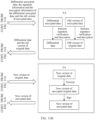
- That the first server performs differentiation on the old version of original data and the new version of original data, to obtain the differential data includes: First, the first server removes the old version of hash data block from the old version of original data, and removes the new version of hash data block from the new version of original data. Then, the first server performs data block-based differentiation based on the old version of original data from which the old version of hash data block is removed and the new version of original data from which the new version of hash data block is removed, to obtain the differential data.
- the first server (the OTA server) removes data blocks corresponding to a hash tree, and retains the new version of check data block and the new version of file data block, and then when the mobile terminal restores the differential data, by using a check random value in the restored new version of file data block and new version of check data block, a hash data block corresponding to the new version of file data block is generated to be stored in a storage medium. Because the new version of hash data block is removed from the OTA data, and the new version of hash data block generated on the mobile terminal is used, to reduce a data volume of system software update data (OTA data) released by the first server.
- OTA data system software update data
- this application provides an over-the-air upgrade method, including: First, a mobile terminal receives OTA data sent by a first server.
- the OTA data is used to upgrade an old version (for example, version 8.1 of an EMUI system) of system software (for example, the EMUI system) on the mobile terminal to a new version (for example, version 8.2 of the EMUI system).
- the OTA data includes header information and differential encrypted data, and the header information includes differential data encryption header information, or the header information includes differential data encryption header information and destination data encryption header information.
- the differential data encryption header information is used by the mobile terminal to obtain differential data through decryption, and the destination data encryption header information is used by the mobile terminal to verify a signature of the differential encrypted data.
- the differential encrypted data is data obtained after the differential data is encrypted, or the differential encrypted data is data obtained after the differential data is encrypted and signed. Then, the mobile terminal decrypts the differential encrypted data based on the differential data encryption header information, to obtain the differential data. Next, the mobile terminal obtains an old version of original data of the system software. Next, the mobile terminal integrates a new version of original data based on the differential data and the old version of original data. Finally, the mobile terminal upgrades the old version of the system software to the new version by using the new version of original data.
- the first server in this embodiment of this application is an OTA server.
- the first server when producing the OTA data, the first server (namely, the OTA server) may produce the differential data based on the old version of original data and the new version of original data that are obtained through decryption, and send the OTA data including the differential data to the mobile terminal.
- the mobile terminal decrypts the OTA data to obtain the differential data and the locally stored old version of original data, and integrates the differential data and the old version of original data to obtain the new version of original data.
- the OTA server performs differentiation on only the new version of original data and the old version of original data, signature data of the new version of original data is removed from the differential data, so that a size of the OTA data is reduced, and fast upgrade of the system software on the mobile terminal is implemented.
- the method before the mobile terminal receives the OTA data sent by the first server, the method further includes: The mobile terminal sends an old version of information of the system software to the first server.
- the old version of information of the system software is used by the first server to determine an old version of encrypted data from one or more historical versions of encrypted data.
- the mobile terminal sends the old version of information to the first server, so that the first server can determine the old version of encrypted data from the plurality of historical versions of data, and produce the differential data on the old version, to ensure that the differential data is produced based on the old version of the system software on the mobile terminal and a new version newly released by a vendor, and ensure correctness of the differential data used for system software upgrade.
- the mobile terminal includes a trusted execution environment TEE and a rich execution environment REE.
- a trusted application TA runs in the TEE, and a first client application CA and an update application run in the REE.
- that the mobile terminal decrypts the differential encrypted data based on the differential data encryption header information, to obtain the differential data includes: First, the update application extracts the differential encrypted data and the differential data encryption header information from the OTA data.
- the differential data encryption header information includes an encryption algorithm of the differential encrypted data and an encrypted random value used during encryption.
- the update application forwards the differential encrypted data, the encryption algorithm of the differential encrypted data, and the encrypted random value used during encryption to the TA by using the first CA.
- the TA decrypts the differential encrypted data based on the differential data encryption header information, to obtain the differential data. In this way, the mobile terminal decrypts the differential encrypted data by using the TA in the TEE, to obtain the differential data, to ensure security of the differential encrypted data.
- the method further includes: First, the update application extracts the destination data encryption header information from the header information, where the destination data encryption header information includes message digest algorithm information of the differential encrypted data and encryption algorithm information used for signature. Then, the update application forwards the message digest algorithm information of the differential encrypted data and the encryption algorithm information used for signature to the TA by using the first CA. Finally, the TA verifies the signature of the differential encrypted data based on signature information. If the verification succeeds, the mobile terminal integrates the new version of original data based on the differential data and the old version of original data.
- the TA before the TA integrates the new version of original data based on the differential data and the old version of original data, the TA first verifies the signature of the differential encrypted data, to determine that the differential encrypted data has not been modified. This ensures integrity of the differential data used to integrate the new version of original data.
- that the mobile terminal obtains an old version of original data of the system software includes: The update application forwards an old version of encrypted data of the system software to the TA by using the first CA.
- the TA decrypts the old version of encrypted data to obtain the old version of original data. In this way, the old version of encrypted data is decrypted by using the TA, to ensure security in the decryption process of the old version of encrypted data.
- the method further includes: The TA sends the old version of original data and the differential data to the first CA. That the mobile terminal integrates a new version of original data based on the differential data and the old version of original data includes: The first CA integrates the new version of original data based on the old version of original data and the differential data. In this way, the process of integrating the new version of original data based on the differential data and the old version of original data is performed by the first CA, so that the first CA can share a part of a data processing task of the TA, to improve a speed of system software upgrade on the mobile terminal while ensuring data security in a system software upgrade process.
- the old version of original data includes an old version of file data block, an old version of hash data block, and an old version of check data block.
- the old version of check data block is signature data of a root hash value in the old version of hash data block, and the old version of hash data block is used to check the old version of file data block.
- That the TA integrates the new version of original data based on the differential data and the old version of original data includes: First, the TA integrates a new version of file data block and a new version of check data block based on the differential data and the old version of original data; and then, the TA calculates a hash tree of the new version of file data block, and generates a new version of hash data block, to obtain the new version of original data.
- the new version of original data includes a new version of file data block, a new version of hash data block, and a new version of check data block.
- the new version of check data block is signature data of a root hash value in the new version of hash data block, and the new version of hash data block is used to check the new version of file data block.
- the first server removes data blocks corresponding to a hash tree, and retains the new version of check data block and the new version of file data block, and then when the mobile terminal restores the differential data, the first server (the OTA server) generates, by using a check random value in the restored new version of file data block and new version of check data block, a hash data block corresponding to the new version of file data block, and stores the hash data block into a storage medium.
- this application provides a server, including a memory, a transceiver, and at least one processor.
- the memory stores program code.
- the memory, the transceiver, and the at least one processor communicate with each other.
- the processor runs the code to instruct the server to perform the over-the-air technology OTA data sending method according to the first aspect or any possible implementation of the first aspect.
- this application provides a mobile terminal, including a memory, a transceiver, and at least one processor.
- the memory stores program code.
- the memory, the transceiver, and the at least one processor communicate with each other.
- the processor runs the code to instruct the mobile terminal to perform the over-the-air upgrade method according to the second aspect or any possible implementation of the second aspect.
- an embodiment of this application provides a computer readable storage medium, including computer instructions.
- the server When the computer instructions are run on a server, the server performs the over-the-air technology OTA data sending method according to the first aspect or any possible implementation of the first aspect.
- an embodiment of this application provides a computer readable storage medium, including computer instructions.
- the computer instructions When the computer instructions are run on a mobile terminal, the mobile terminal performs the over-the-air technology OTA data sending method according to the second aspect or any possible implementation of the second aspect.
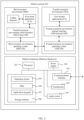
- FIG. 1 is a diagram of a network architecture according to an embodiment of this application.
- the network architecture 100 may include an over-the-air technology (over-the-air technology, OTA) server 101, a mobile terminal 102, and a wireless communications link 103.
- the mobile terminal 102 may communicate with the OTA server 101 by using a mobile communications network (for example, a 2G ⁇ 3G ⁇ 4G ⁇ 5G network), or may communicate with the OTA server 101 by using a wireless local area network (wireless local area network, WLAN).
- a mobile communications network for example, a 2G ⁇ 3G ⁇ 4G ⁇ 5G network
- WLAN wireless local area network
- the mobile terminal 200 may include but is not limited to a personal computer, a smartphone, a smart TV, a tablet computer, a personal digital assistant, or the like.
- FIG. 2 is a schematic structural diagram of a trusted execution environment of a mobile terminal according to an embodiment of this application.
- the mobile terminal 200 may include two application environments: a rich execution environment (rich execution environment, REE) and a trusted execution environment (trusted execution environment, TEE).
- An application running in the REE may be referred to as a client application (client application, CA), and the client application in the REE may include an update application and a first CA.
- An application running in the TEE may be referred to as a trusted application (TEE application, TA).
- the update application may be configured to: upload a version number of system software on the mobile terminal to the OTA server, and download, from the OTA server, OTA data used for system software upgrade.
- the first CA may be used to provide a data forwarding function to the update application and the TA, to implement indirect communication of the update application in the TA.
- the TA may be used for encryption, decryption, signature, difference restoration and the like for data.
- An operating system running in the REE may be referred to as a rich execution environment operating system (REE OS), and an operating system running in the TEE may be referred to as a trusted execution environment operating system (TEE OS).
- the TEE is a secure operating environment running in a main processor. A secure boot process of the TEE needs to be verified, and the secure boot process of the TEE is separated from the REE.
- TEE Client API trusted execution environment client interface
- TEE Internal API trusted execution environment internal interface
- the first CA and the TA share a memory. If the first CA needs to communicate with the TA, the first CA may apply to the TEE OS to establish a session (session) with the requested TA. After the session establishment between the first CA and the TA is completed, the first CA may send a processing request and data that needs to be processed to the TA by using the shared memory. After obtaining the processing request and the data that needs to be processed of the first CA from the shared memory, the TA may execute the processing request in the TEE environment, and store an obtained processing result into the shared memory. The first CA may obtain the processing result of the TA from the shared memory.
- the first CA may initiate a close session (close session) request to the TEE OS.
- the TEE OS may reclaim related resources of the TA.
- Platform hardware (platform hardware) of the mobile terminal 200 may include a processor 201, a power supply 202, a communications interface 203, a touchscreen 204, a storage medium 208, and an audio circuit 209.
- the storage medium 208 is configured to store an operating system 205, data 206, and an application program 207 of the mobile terminal 200.
- a protected area in the storage medium 208 may store a trusted execution environment operating system (trusted execution environment operating system, TEE OS) and an application (TA) in the TEE.
- An unprotected area in the storage medium 208 may store a rich execution environment operating system (rich execution environment operating system, REE OS) and an application (CA) in the REE.
- TEE OS trusted execution environment operating system
- REE OS rich execution environment operating system
- CA application
- the application program 207 includes a client application (CA) in the REE and a trusted application (TA) in the TEE.
- the operating system 205 includes an REE OS and a TEE OS.
- the REE OS may include an operating system such as an Android system and an EMUI system.
- the data 206 may include OTA data, version encrypted data of system software, and the like in this embodiment of this application.
- the processor 201 may be a central processing unit (central processing unit, CPU), a general-purpose processor, a digital signal processor (digital signal processing, DSP), an application-specific integrated circuit (application-specific integrated circuit, ASIC), a field programmable gate array (field programmable gate array, FPGA), or another programmable logical device, a transistor logical device, a hardware component, or any combination thereof.
- CPU central processing unit
- DSP digital signal processing
- ASIC application-specific integrated circuit
- FPGA field programmable gate array
- FPGA field programmable gate array
- the storage medium 208 may include a high-speed random access memory, and may further include a non-volatile memory, for example, at least one flash memory device, or another volatile solid-state storage device. Programs and received data streams of the over-the-air upgrade method provided in this embodiment of this application are stored in the memory, and may be invoked from the storage medium 208 by the processor 201 when required to be used.
- the mobile terminal 200 may further include the communications interface 203, the touchscreen 204, and the audio circuit 209.
- the communications interface 203 may be used by the mobile terminal 200 to communicate with the server 300 or another terminal.
- the audio circuit 209 may be configured to convert digital audio information into an analog audio signal for output, or may be configured to convert an analog audio input into a digital audio signal.
- the audio circuit 209 may be further configured to encode and decode an audio signal.
- the audio circuit 209 may be disposed in the processor 201, or some function modules of the audio circuit 209 may be disposed in the processor 201.
- the touchscreen 204 may include a touch sensor and a display screen.
- the touch sensor may transfer a detected touch operation to the processor 201, to determine a touch event type.
- a visual output related to the touch operation may be provided through the display screen.
- the touch sensor may alternatively be disposed on a surface of the mobile terminal 200, and is at a position different from that of the display screen.
- the server structure shown in FIG. 2 should not constitute a limitation. In specific implementation, the server may include more or fewer components than the mobile terminal 200 shown in FIG. 2 , or combine some components, or have different component arrangements.
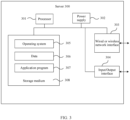
- FIG. 3 is a schematic structural diagram of a server according to an embodiment of this application.
- the server 300 may include one or more processors 301 (for example, a central processing unit (central processing unit, CPU)) and a storage medium 308.
- the storage medium 308 may store one or more application programs 307, data 306, and an operating system 305.
- the data 306 may include version data of system software involved in the over-the-air upgrade method provided in this embodiment of this application, for example, data such as an old version of encrypted data and a new version of encrypted data of the system software, and OTA data generated based on the old version of encrypted data and the new version of encrypted data.
- the storage medium 308 may be temporary storage or persistent storage.
- the processor 301 may be configured to communicate with the storage medium 308.
- the storage medium 308 may be configured to store a software program and a module.
- the processor 301 executes various function applications and data processing of the OTA server 300 by running the software program and the module stored in the storage medium 308.
- the storage medium 308 may mainly include a program storage area and a data storage area.
- the program storage area may store an operating system, an application program required by at least one function, and the like.
- the data storage area may store data created based on use of the OTA server (for example, a data upload command), and the like.
- the storage medium 308 may include a high-speed random access memory, and may further include a non-volatile memory, for example, at least one magnetic disk storage device, a flash memory device, or another volatile solid-state storage device. Programs and received data streams in the over-the-air technology upgrade method provided in this embodiment of this application are stored in the memory, and are invoked from the storage medium 308 by the processor 301 when required to be used.
- the OTA server 300 may further include one or more power supplies 302, one or more wired or wireless network interfaces 303, one or more input/output interfaces 304, and/or one or more operating systems 305, for example, Windows Serve, Mac OS X, Unix, Linux, and FreeBSD.
- Windows Serve Windows Serve
- Mac OS X Unix
- Linux FreeBSD
- the server structure shown in FIG. 3 should not constitute a limitation.
- the server may include more or fewer components than the server shown in FIG. 3 , or combine some components, or have different component arrangements.
- the mobile terminal described in this embodiment of this application may be a mobile terminal that has security environments of both the REE and the TEE, such as a smartphone, a smart TV, a tablet computer, or a personal digital assistant
- a sender of the version data needs to encrypt and sign the version data before sending the version data to a receiver of the version data. Therefore, each time a terminal of the vendor generates one version of the system software, the terminal needs to encrypt and sign version data of the system software, to ensure security of the version data of the system software.
- the version data of the system software obtained from the terminal of the vendor by the OTA server is encrypted and signed.
- the OTA server stores various versions of encrypted data of the system software (including a new version of encrypted data and a plurality of historical versions of encrypted data).
- the OTA server determines, based on a current version number of the system software on the mobile terminal, an old version of encrypted data that is consistent with the current version number from the plurality of historical versions of encrypted data stored on the OTA server.
- the OTA server performs differentiation directly on the old version of encrypted data and the new version of encrypted data to obtain a difference result. Differentiation may be directly performed on an old version of encrypted data and a new version of encrypted data of a non-compressed file class by using a binary difference (binary difference, bsdiff) algorithm, and differentiation may be performed an old version of encrypted data and a new version of encrypted data of a compressed file class by using an imgdiff algorithm.
- the difference result is sent to the mobile terminal. After receiving the difference result, the mobile terminal restores the new version of encrypted data of the system software by using the difference result and the old version of encrypted data corresponding to the current version number of the system software, and stores the new version of encrypted data into the storage medium of the mobile terminal.
- the OTA server may directly compare the old version of encrypted data and the new version of encrypted data to output a difference result.
- the OTA server sends the difference result to the mobile terminal.
- the mobile terminal may restore the new version of encrypted data by using a bspatch algorithm based on the old version of encrypted data stored on the mobile terminal and the received difference result, and write the restored new version of encrypted data into the storage medium.
- the OTA server may first decompress the old version of encrypted data and the new version of encrypted data of the compressed file class into uncompressed files, and then generate a difference result by using the bsdiff algorithm.
- the OTA server sends the difference result to the mobile terminal.
- the mobile terminal may first read the old version of encrypted data of the compressed file class stored on the mobile terminal, and decompress the old version of encrypted data into uncompressed files. Then, the OTA server restores the new version of encrypted data by using a bspath algorithm based on the old version of encrypted data and the difference result, and writes the restored new version of encrypted data into the storage medium.
- the new version of encrypted data includes ciphertext data obtained after an old version of original data of the system software is encrypted and signature data in the old version of original data (including a character string obtained after a digest of the old version of original data is encrypted).
- the new version of encrypted data includes ciphertext data obtained after a new version of original data of the system software is encrypted and signature data in the new version of original data (including a character string obtained after a digest of the new version of original data is encrypted).
- a larger old version of original data indicates a larger digest of the old version of original data.
- a larger new version of original data indicates a larger digest of the new version of original data.
- the OTA server when performing differentiation directly on the old version of encrypted data and the new version of encrypted data, also performs differentiation on the digest of the old version of original data and the digest of the new version of original data. Because the digest of the old version of original data is different from the digest of the new version of original data, the differential data includes some data that is in the new version of original data and that is different from the old version of original data, and the signature data of the new version of original data.
- the mobile terminal can restore the new version of original data only by using some different data in the differential data and the old version of original data of the system software stored on the mobile terminal, and when transmitting the differential data to the mobile terminal, the OTA server transmits not only some different data, but also transmit the signature data of the new version of original data.
- the signature data of the new version of original data also needs to occupy a data volume of some update packages.
- a larger new version of original data indicates larger signature data of the new version of original data.
- data sent by the OTA server to the mobile terminal for system software upgrade also includes relatively large signature data of the new version of original data, time for downloading data used for system software upgrade by the mobile terminal is consumed, and user experience is adversely affected.
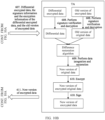
- FIG. 5a is a schematic flowchart of an over-the-air upgrade method according to an embodiment of this application.
- an old version of encrypted data includes ciphertext data obtained after an old version of original data of system software is encrypted and signature data in the old version of original data (including a character string obtained after a digest of the old version of original data is encrypted), and a new version of encrypted data includes ciphertext data obtained after a new version of original data of the system software is encrypted and signature data in the new version of original data (including a character string after a digest of the new version of original data is encrypted).
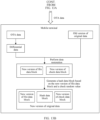
- An OTA server may remove signature data in the old version of encrypted data and signature data in the new version of encrypted data, and obtain a key from a key storage server to obtain the old version of original data and the new version of original data through decryption. Then, the OTA server may perform differentiation on the old version of original data and the new version of original data, to generate differential data. Next, the OTA server encrypts the differential data by using the key on the key storage server and an encrypted random value, and performs signature protection on an encrypted result to obtain OTA data. The OTA server may send the OTA data to a mobile terminal.
- FIG. 5b is another flowchart of an over-the-air upgrade method according to an embodiment of this application.
- the method is executed by a key storage server, a terminal, an OTA server, and a mobile terminal.
- the terminal may remove signature data in an old version of encrypted data and signature data in a new version of encrypted data, and obtain a key from the key storage server to obtain an old version of original data and a new version of original data through decryption. Then, the terminal may perform differentiation on the old version of original data and the new version of original data, to generate differential data.
- the terminal may encrypt the differential data by using the key on the key storage server and an encrypted random value, and perform signature protection on an encrypted result, to obtain OTA data.
- the terminal may upload the OTA data to the OTA server.
- the OTA server may send the OTA data to the mobile terminal.
- a first CA may be started, and differential encrypted data in the OTA data, an old version of encrypted data locally stored in the mobile terminal, and signature information and encryption information of the differential data are forwarded to a first TA by using the first CA.
- the first TA may decrypt the old version of encrypted data and the differential encrypted data, and restore the new version of original data.
- the first TA encrypts and signs the new version of original data, to generate the new version of encrypted data, and forwards the new version of encrypted data to the update application by using the first CA.
- the update application writes the new version of encrypted data to a storage medium.
- the OTA server can perform differentiation on only the new version of original data and the old version of original data, and remove signature data of the new version of original data from the differential data, so that a size of data transmitted by the OTA server to the mobile terminal for system software upgrade is reduced, and fast upgrade of the system software is implemented.
- the system software may be Android system software, emotional operating system software (for example, EMUI or MIUI) developed based on an Android system, or the like.
- the system software may alternatively be system software such as a windows phone, an IOS, or the like. This is not limited herein.
- the OTA server may receive a plurality of versions of encrypted data of the system software sent by a terminal of a vendor of the system software, where release dates of the plurality of versions of system software are different.
- the OTA server may receive current version information that is of the system software on the mobile terminal and that is sent by the mobile terminal.
- the OTA server After receiving the current version information, the OTA server determines whether a current version of the system software used on the mobile terminal is the latest version of the release date, and if the current version is not the latest version, the system software of the mobile terminal needs to be upgraded.
- the OTA server may determine, from the plurality of versions of encrypted data of the system software, an old version of encrypted data corresponding to the current version information and a new version of encrypted data with the latest release date.
- the OTA server may store version 8.0 of the EMUI system, version 8.1 of the EMUI system, and version 8.2 of the EMUI system that are sent by the terminal of the vendor of the system software.
- Version 8.2 of the EMUI system has the latest release date, and version 8.2 of the EMUI system has the earliest release date.
- Version 8.1 of the EMUI system is used on the mobile terminal.
- the OTA server may determine that version 8.1 of the EMUI system used on the mobile terminal is not the latest version.
- the OTA server may perform the over-the-air upgrade method in this embodiment of this application by using the new version of encrypted data (namely, encrypted data of version 8.2 of the EMUI system) and the old version of encrypted data (encrypted data of version 8.1 of the EMUI system).
- the old version of encrypted data may refer to data obtained after source code corresponding to an old version of system software (for example, version 8.1 of the EMUI system) is encrypted and signed.
- the new version of encrypted data may refer to data obtained after source code corresponding to a new version of system software (for example, version 8.2 of the EMUI system) is encrypted and signed.
- the source code corresponding to the old version of system software (for example, version 8.1 of the EMUI system) may be referred to as an old version of original data
- the source code corresponding to the new version of system software for example, version 8.2 of the EMUI system
- a new version of original data for example, version 8.2 of the EMUI system
- FIG. 6A and FIG. 6B are a schematic flowchart of an over-the-air upgrade method based on the system architecture in FIG. 5a according to an embodiment of this application.
- step 601 to step 603 in FIG. 6A and FIG. 6B may be performed by the terminal.
- the terminal may upload the OTA data to the OTA server, and then the mobile terminal may download the OTA data from the OTA server.
- the OTA server is the OTA server 300 in FIG. 3
- the mobile terminal is the mobile terminal 200 in FIG. 2 .
- the method includes the following steps.
- the OTA server removes signature data in the old version of encrypted data and the new version of encrypted data, and decrypts the old version of encrypted data and the new version of encrypted data to obtain an old version of original data and a new version of original data.
- the old version of encrypted data includes an old version of encrypted original data and an old version of signature data.
- the old version of signature data may include a message digest (message digest) of the old version of encrypted original data, and a message digest algorithm (message digest algorithm) (for example, a secure hash algorithm 256 (secure hash algorithm 256, SHA 256)) for generating the message digest.
- the OTA server may calculate a check message digest of the old version of encrypted original data by using the message digest algorithm (for example, an SHA 256). The OTA server may determine whether the check message digest is the same as the message digest in the old version of signature data.
- the OTA server may determine that the old version of original data has not been modified and is valid data. In other words, the old version of original data may be used to produce differential data. If the check message digest is different from the message digest in the old version of signature data, the OTA server may determine that the old version of original data has been modified and is invalid data, and the OTA server may delete the invalid data, and request to re-obtain the old version of encrypted data from the terminal of the vendor of the system software until the check message digest is the same as the message digest in the signature data of the old version.
- An encryption manner used by the old version of encrypted original data may be a symmetric encryption manner (for example, a data encryption standard (data encryption standard, DES) algorithm, an advanced encryption standard (advanced encryption standard, AES) algorithm, or a triple data encryption standard (triple data encryption standard, 3DES) algorithm).
- a data encryption standard data encryption standard, DES
- AES advanced encryption standard
- 3DES triple data encryption standard
- a same key secret key is used during encryption (encryption) and decryption (decryption).
- the OTA server may decrypt the old version of encrypted data by using a first key used during encryption of the old version of encrypted data, to obtain the old version of original data.
- the first key may be stored on the OTA server, or may be stored on another key storage server.
- the key storage server may store not only a key of a symmetric encryption manner of the OTA server, but also a pair of private key and public key of an asymmetric encryption manner of the OTA server, and other keys for data encryption or decryption.
- the new version of encrypted data may include a new version of encrypted original data and a new version of signature data.
- the new version of signature data may include a message digest (message digest) of the new version of encrypted original data encrypted by using a private key, and a message digest algorithm (for example, an SHA 256) for generating the message digest.
- the OTA server may obtain the message digest of the new version of encrypted original data through decryption by using a public key matching the private key.
- the OTA server may calculate a check message digest of the new version of encrypted original data by using the message digest algorithm (for example, an SHA 256).
- the OTA server may determine that the new version of original data has not been modified and is valid data. In other words, the new version of original data may be used to produce differential data. If the check message digest is different from the message digest in the new version of signature data, the OTA server may determine that the new version of original data has been modified and is invalid data, and the OTA server deletes the invalid data, and requests to re-obtain the new version of encrypted data from the terminal of the vendor of the system software until the check message digest is the same as the message digest in the new version of signature data.
- An encryption manner used by the new version of encrypted original data may be a symmetric encryption manner (for example, a DES algorithm, an AES algorithm, or a 3DES algorithm). In other words, a same key is used during encryption and decryption of the new version of encrypted data.
- the OTA server may separate the old version of encrypted original data and the new version of signature data in the new version of encrypted data, and the OTA server may decrypt the new version of encrypted data by using a second key used when the new version of encrypted data is encrypted, to obtain the new version of original data.
- the second key may be stored on the OTA server, or may be stored on the key storage server. The second key may be the same as or different from the first key.
- the sequence of first removing the signature data and then decrypting the signature data shown in FIG. 7a and FIG. 7b is not limited, and the OTA server may first decrypt the old version of encrypted original data in the old version of encrypted data, to obtain the old version of original data and the old version of signature data, and then remove the old version of signature data.
- the OTA server may first decrypt the new version of encrypted data to obtain the new version of original data and the new version of signature data, and then remove the new version of signature data.
- the OTA server generates differential data by using the old version of original data and the new version of original data.
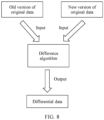
- the OTA server may use the old version of original data and the new version of original data as inputs, to perform a difference operation by using a difference algorithm (for example, a bsdiff algorithm or an imgdiff algorithm), and output differential data.
- a difference algorithm for example, a bsdiff algorithm or an imgdiff algorithm
- a difference manner in which the OTA server performs differentiation by using the old version of original data and the new version of original data may be file-based differentiation, or may be data block (data block)-based differentiation.
- the original data may include one or more data files, such as file_1, file_2, and file_3, and the new version of data may include one or more data files, such as file_1, file_2, file_3, and file_4.
- a first terminal performs, by using the one or more data files in the original data and the one or more data files in the new version of data, a difference operation by using a difference algorithm (for example, a bsdiff algorithm or an imgdiff algorithm), to obtain a difference file (for example, file_4) in the new version of data, and determines data included in the difference file (for example, file_4) in the new version of data as the differential data.
- a difference algorithm for example, a bsdiff algorithm or an imgdiff algorithm
- the old version of original data may be a mirror (mirroring) (for example, a file in the ".img” format).
- the mirror of the old version of original data may be divided into a specific quantity (for example, 32768) of fixed-size (for example, 4 Kbytes) data blocks (data blocks) at a bottom storage layer of a file system (file system).
- the new version of original data may be a mirror (for example, a file in the ".img" format).
- the mirror of the new version of data may be divided into a specific quantity (for example, 32768) of fixed-size (for example, 4 Kbytes) data blocks (data blocks) at the bottom storage layer of the file system.
- the OTA server may compare the plurality of data blocks in the old version of original data with the plurality of data blocks in the new version of original data, and perform a difference operation on the plurality of data blocks in the original data and the plurality of data blocks in the new version of data, determine one or more differential data blocks that are in the plurality of data blocks in the new version of original data and that are different from the plurality of data blocks in the old version of original data, and determine data included in the one or more differential data blocks as differential data.
- the plurality of data blocks in the new version of original data may be data blocks block 2_0 to block 2_32767
- the plurality of data blocks in the original data may be data blocks block 1_0 to block 1_32767
- the differential data blocks that are different from the plurality of data blocks in the old version of original data and that are in the plurality of data blocks in the new version of original data may be data blocks block 2_27001, block 2_27002, block 2_27003, and block 2_22704.
- the first terminal may determine data included in the data blocks block 2_27001, block 2_27002, block 2_27003, and block 2_27004 as the differential data.
- the OTA server encrypts and signs the differential data, and generates header information, to obtain OTA data.
- the OTA server may be at a fixed position of the differential data (for example, at the front of the differential data, in the differential data, or at the tail of the differential data), and insert one or more encrypted random values to generate differential plaintext data.
- the encrypted random value may be generated by a random number generator (random number generator) on the OTA server, or may be generated in another manner. This is not limited herein.
- the OTA server may encrypt, by using a third key, and a symmetric encryption algorithm (for example, a DES algorithm, an AES algorithm, a 3DES algorithm, or an IDEA algorithm), the differential data and the differential plaintext data of the one or more encrypted random values inserted into the differential data, to obtain differential ciphertext data.
- a symmetric encryption algorithm for example, a DES algorithm, an AES algorithm, a 3DES algorithm, or an IDEA algorithm
- the OTA server may sign the differential ciphertext data by using the private key of the OTA server, an asymmetric encryption algorithm (for example, an RSA algorithm), and an EIGamal encryption algorithm (EIGamal encryption algorithm).
- the private key of the OTA server may be stored locally on the OTA server, or may be stored on the key storage server.
- a digital signature needs to be verified when the mobile terminal receives the OTA data, to determine validity of the OTA data. Therefore, a public key matching the private key of the OTA server is stored on the mobile terminal.
- the OTA server calculates a message digest of the differential encrypted data by using a digest algorithm (for example, a message digest algorithm 2 (message digest algorithm 2, MD 2), a message digest algorithm 4 (message digest algorithm 4, MD 4), a message digest algorithm 5 (message digest algorithm 5, MD 5), a secure hash algorithm 1 (secure hash algorithm 1, SHA 1), a secure hash algorithm 2 (secure hash algorithm 2, algorithm SHA 2), or a secure hash algorithm 256 (secure hash algorithm 256, SHA 256)).
- a digest algorithm for example, a message digest algorithm 2 (message digest algorithm 2, MD 2), a message digest algorithm 4 (message digest algorithm 4, MD 4), a message digest algorithm 5 (message digest algorithm 5, MD 5), a secure hash algorithm 1 (secure hash algorithm 1, SHA 1), a secure hash algorithm 2 (secure hash algorithm 2, algorithm SHA 2), or a secure hash algorithm 256 (secure hash algorithm 256, SHA 256)
- the OTA server encrypt
- the header information may include differential data encryption header information and destination data encryption header information.
- the differential data encryption header information may include information such as encryption algorithm information used when the OTA server encrypts the differential plaintext data (for example, a DES algorithm, an AES algorithm, or a 3DES algorithm), and one or more encrypted random values used by the OTA server before encryption.
- the third key may be locally stored on the OTA server, or may be stored on the key storage server. The third key may be the same as the first key and the second key, or may be different from the first key and the second key. To decrypt the OTA data to obtain the differential data after the mobile terminal receives the OTA data, the mobile terminal also stores the third key.
- the OTA server may generate destination data encryption header information for the differential encrypted data.
- the destination data encryption header information may include signature verification information (including a check random value), message digest algorithm information (for example, an SHA 256), and asymmetric encryption algorithm information (for example, an RSA algorithm) used when the message digest of the differential encrypted data is encrypted.
- the OTA data may include the differential encrypted data, the differential data encryption header information, and the destination data encryption header information.
- the destination data encryption header information may be used by the mobile terminal to verify the differential signature data before the mobile terminal restores the new version of original data by using the differential data and the old version of original data.
- the mobile terminal may restore the new version of original data.
- the differential data encryption header information may be used by the mobile terminal to decrypt the differential encrypted data to obtain differential data.
- the differential data may be used by the mobile terminal to integrate new version of data.
- the mobile terminal downloads the OTA data from the OTA server.
- the OTA server may communicate with the mobile terminal by using a hypertext transfer protocol over secure socket layer (hypertext transfer protocol over secure socket layer, HTTPS).
- HTTPS hypertext transfer protocol over secure socket layer
- the OTA server and the mobile terminal may establish a secure channel by using a secure socket layer (secure sockets layer, SSL) protocol and/or a transport layer security (transport layer security, TLS) protocol, to perform secure data transmission.
- SSL secure sockets layer
- TLS transport layer security
- the update application extracts differential encrypted data, and signature information and encryption information of the differential encrypted data from the OTA data.
- the update application may extract encryption information from the differential data encryption header information, and the update application may extract signature information from the destination data encryption header information.
- the encryption information includes information such as encryption algorithm information of the differential encrypted data (for example, a DES algorithm, an AES algorithm, or a 3DES algorithm) and one or more encrypted random values of the differential encrypted data.
- the signature information includes signature verification information (including a check random value) of the differential encrypted data, message digest algorithm information (for example, an SHA 256), and asymmetric encryption algorithm information (for example, an RSA algorithm) used for signature.
- the update application starts the first CA, and sends the differential encrypted data, the signature information and the encryption information of the differential encrypted data, and the old version of encrypted data of the system software to the first CA.
- Both the update application and the first CA are client applications (client applications, CAs) in a rich execution environment operating system (rich execution environment operating system, REE OS) of the mobile terminal.
- the old version of encrypted data of the system software on the mobile terminal may be data obtained after source code corresponding to the old version of system software on the mobile terminal (for example, version 8.1 of the EMUI system) is encrypted and signed by the mobile terminal.
- the source code corresponding to the old version of system software (for example, version 8.1 of the EMUI system) included in the old version of encrypted data of the system software is the same as source code corresponding to the old version of system software included in the old version of encrypted data.
- the source code corresponding to the old version of the system software may be referred to as an old version of original data
- the source code corresponding to the new version of the system software (for example, version 8.2 of the EMUI system) may be referred to as the new version of original data.
- the first CA forwards the differential encrypted data, the signature information and the encryption information of the differential encrypted data, and the old version of encrypted data of the system software to a trusted application (trusted application, TA) in a trusted execution environment operating system (trusted execution environment operating system, TEE OS).
- TA trusted application
- TEE OS trusted execution environment operating system
- the TA performs signature verification and decryption on the differential encrypted data and the old version of encrypted data of the system software, to obtain the differential data and the old version of original data.
- the TA may verify a signature of the differential encrypted data.
- the mobile terminal locally stores a public key of the OTA server.
- the TA may decrypt the differential signature data by using the public key of the OTA server to obtain the message digest of the differential ciphertext data.
- the TA may calculate a check message digest of the differential ciphertext data by using the message digest algorithm (for example, an SHA 256).
- the differential ciphertext data has not been modified, and the signature verification succeeds.
- the TA may use the differential ciphertext data to integrate the new version of original data. If the check message digest is different from the message digest obtained through decryption by using the public key, the differential ciphertext data has been modified, and the signature verification fails.
- the mobile terminal re-downloads the OTA data from the OTA server until verification of the differential signature data in the differential encrypted data succeeds.
- the old version of encrypted data of the system software stored on the mobile terminal is data obtained after the TA encrypts the old version of original data and signs the old version of original data by using a private key of the mobile terminal.
- the TA may first verify the signature of the old version of encrypted data of the system software by using the public key of the mobile terminal. After the signature verification succeeds, the TA decrypts the old version of encrypted data of the system software to obtain the old version of original data.
- the TA may obtain the message digest of the old version of encrypted data of the system software by using the public key of the mobile terminal and an asymmetric decryption algorithm (for example, an RSA algorithm). Then, the TA may recalculate the check message digest of the old version of encrypted data of the system software by using the message digest algorithm (for example, an SHA 256) used for signature. If the check message digest of the old version of encrypted data of the system software is the same as the message digest of the old version of encrypted data of the system software obtained through decryption by using the public key, the differential encrypted data has not been modified, and the signature verification succeeds.
- the message digest algorithm for example, an SHA 256
- the TA may decrypt the differential encrypted data and the old version of encrypted data of the system software, to obtain the differential data and the old version of original data.
- the TA decrypts the differential data.
- the TA may decrypt the differential encrypted data by using the third key used when the OTA server encrypts the differential data, an encryption algorithm (for example, a DES algorithm) in the encryption information, and a random value, to obtain the differential data.
- the third key may be preset in the mobile terminal, or may be sent by the OTA server by using a secure transmission channel. This is not limited herein.
- the TA decrypts the old version of encrypted data of the system software.
- the TA may decrypt the old version of encrypted data of the system software by using a fourth key and a preset encryption and decryption algorithm (for example, an AES algorithm), to obtain the old version of original data.
- the fourth key is preset in the mobile terminal, and the fourth key may be the same as or different from the third key.
- the TA may perform chip encryption or chip decryption.
- the TA may decrypt the old version of encrypted data of the system software in a chip encryption/decryption manner, to obtain the old version of original data.
- the TA integrates and restores the new version of original data based on the differential data and the old version of original data.
- the TA may perform data integration by using a difference restoration algorithm (for example, a bspatch algorithm) based on the differential data and the old version of original data, to restore the new version of original data.
- a difference restoration algorithm for example, a bspatch algorithm
- the new version of original data is complete data obtained after the system software is updated.
- the TA encrypts and signs the new version of original data to obtain the new version of encrypted data.
- the TA may encrypt the new version of original data.
- the TA may encrypt the new version of original data by using a fifth key stored in the TEE, a random value (for example, a power-on password of the mobile terminal) stored in the TEE, and a preset encryption algorithm (for example, an AES algorithm).
- the TA may further encrypt the new version of original data in a chip encryption/decryption manner, to generate the new version of encrypted original data.
- the fifth key may be a secure storage key (secure storage key, SSK).
- SSK secure storage key
- a chip identifier (chip ID) and a hardware unique key (hardware unique key, HUK) are used to obtain the value of the SSK through calculation by using a hash-based message authentication code (hash-based message authentication code, HMAC).
- HMAC hash-based message authentication code
- Both the HUK and the chip ID are preset in a chip of the mobile terminal, or may be other keys such as a trusted application storage key (trusted application storage key, TASK). This is not specifically limited herein.
- the TA may further sign the new version of encrypted original data, to obtain the new version of encrypted data.
- the TA may sign the new version of encrypted original data by using the private key of the mobile terminal and an asymmetric encryption algorithm (for example, an RSA algorithm, an EIGamal encryption algorithm, and a DSA algorithm).
- the key used by the TA to sign the new version of encrypted original data may alternatively be a secure storage key (SSK).
- SSK secure storage key
- a chip ID and a hardware unique key HUK are used to obtain the value of the SSK through calculation by using a hash-based message authentication code (HMAC).
- HMAC hash-based message authentication code
- Both the HUK and the chip ID are preset in a chip of the mobile terminal, or other keys such as a trusted application storage key (TASK). This is not specifically limited herein.
- An RSA digital signature algorithm is used as an example.
- the TA calculates the message digest of the new version of encrypted original data by using a digest algorithm (for example, an MD 2, an MD 4, an MD 5, an SHA 1, an SHA 2, or an SHA 256).
- a digest algorithm for example, an MD 2, an MD 4, an MD 5, an SHA 1, an SHA 2, or an SHA 256.
- the TA encrypts the message digest by using the private key of the mobile terminal and an RSA algorithm, to obtain a character string obtained after the message digest is encrypted, namely, to obtain a digital signature result of the new version of encrypted original data.
- the TA may generate the new version of encrypted data based on the digital signature result and the new version of encrypted original data.
- the TA sends the new version of encrypted data to the first CA. 612.
- the first CA forwards the new version of encrypted data to the update application. 613.
- the update application may write the new version of encrypted data into the storage medium.
- the first CA may forward the new version of encrypted data to the update application.
- the update application may delete the old version of encrypted data in a storage partition corresponding to the system software, and write the new version of encrypted data into the storage medium of the mobile terminal (for example, a system (system) partition of a read-only memory (read-only memory, ROM)) to complete update and upgrade of the system software from the old version to the new version.
- a storage partition corresponding to the system software for example, a system (system) partition of a read-only memory (read-only memory, ROM)
- system software is upgraded by using an over-the-air technology (OTA).
- OTA over-the-air technology
- the OTA server may first remove signature data of the encrypted data (namely, the old version of encrypted data and the new version of encrypted data) and decrypt the encrypted data. Then, the differential data is produced based on the old version of original data and the new version of original data of the system software that are obtained through decryption, and the OTA data including the differential data is sent to the mobile terminal.
- OTA over-the-air technology
- the mobile terminal may restore the new version of original data based on the locally stored old version of original data of the system software and the differential data in the OTA data, and encrypt and sign the new version of original data by using a trusted application (TA) in a trusted execution environment (REE) of the mobile terminal.
- TA trusted application
- REE trusted execution environment
- the update application may send the signature data and the encryption information of the differential encrypted data, the differential encrypted data, and the old version of encrypted data of the system software of the mobile terminal to the first CA.
- the first CA may forward the signature data and the encryption information of the differential encrypted data, the differential encrypted data, and the old version of encrypted data of the mobile terminal system software to the TA.
- the TA may verify the signature of the differential encrypted data and the signature of the old version of encrypted data of the system software. After the signature verification succeeds, the TA may decrypt the differential encrypted data to obtain the differential data, and decrypt the old version of encrypted data of the system software to obtain the old version of original data.
- the TA may transmit the differential data and the old version of data to the first CA.
- the first CA may integrate and restore the new version of original data by using a difference restoration algorithm (for example, a bspatch algorithm) based on the differential data and the old version of original data.
- the new version of original data is complete data obtained after the system software is updated.
- the first CA may send the new version of original data to the TA.
- the TA may encrypt the new version of original data (for example, by using an advanced encryption standard (advanced encryption standard, AES)) to obtain the new version of encrypted original data.
- AES advanced encryption standard
- the TA may sign the new version of encrypted original data by using an asymmetric encryption algorithm (for example, an RSA algorithm, an EIGamal encryption algorithm, and a DSA algorithm) to generate the new version of encrypted data.
- the new version of encrypted data includes the new version of encrypted original data and a signature result of the new version of encrypted original data.
- the TA may send the new version of encrypted data to the first CA.
- the first CA may forward the new version of encrypted data to the update application.
- the update application may write the new version of encrypted data into the storage medium of the mobile terminal (for example, a system (system) partition of a read-only memory (read-only memory, ROM)), to complete update and upgrade of the system software.
- a process of restoring the new version of original data by using a difference restoration algorithm for example, a bspatch algorithm
- a difference restoration algorithm for example, a bspatch algorithm
- the CA may share a part of a data processing task of the TA, so that security of data in system software update can be ensured, and a speed of system software update on the mobile terminal can be improved.
- step 601 to step 602 shown in FIG. 6A and FIG. 6B in this embodiment of this application.
- a system mirror (for example, a mirror in an ext4 format) may be first generated from the data of the system software, and then, the file system may divide the system mirror into fixed-size (for example, 4 Kbytes) data blocks (data blocks), and generate a hash tree (hash tree) for the system mirror.
- fixed-size for example, 4 Kbytes
- hash tree hash tree
- the file system divides the system mirror into 4 Kbytes data blocks (for example, data blocks blk 0_0 to blk 0_32767) at layer 0.
- the file system may select a check random value (for example, a hexadecimal encoded value), and calculate, by using a hash algorithm (for example, an SHA 256), hash values obtained after all data blocks at layer 0 are added to the check random value. These hash values are combined into 4 Kbytes data blocks to form layer 1.
- a check random value for example, a hexadecimal encoded value
- the data blocks at layer 1 may include data blocks blk 1_0 to blk 1_255.
- the file system calculates, by using the same hash algorithm (for example, an SHA 256), hash values obtained after all data blocks at layer 1 are added to the check random value, and fills a data block (for example, a data block blk 2_0 to a data block blk 2_1) at layer 2 with a hash value of each data block at layer 1, until hash values of all data blocks in the previous layer may be put into one data block (for example, data block blk _root). In this case, a process of generating a hash tree is completed.
- the same hash algorithm for example, an SHA 256
- the final data block is a root hash data block of the hash tree, and the root hash data block includes a root hash (root hash) value of the hash tree. If a data block at a layer cannot be filled exactly by the hash values of the previous layer, "0" may be filled in the data block to obtain the required size of 4 Kbytes.
- data blocks at layer 2 need to be combined above data blocks at layer 1
- data blocks at layer 3 need to be combined above the data blocks at layer 2, and so on, until the top layer is the root hash data block (for example, blk root).
- the file system may perform an encrypted signature on the root hash data block by using an asymmetric encryption algorithm (for example, an RSA algorithm) and a preset private key, to obtain a signature result.
- the file system may write the data block included in the hash tree into a corresponding logical storage partition (for example, a system (system) partition) that is stored in the storage medium together with a mirror of the system software.
- the file system when storing data of the system software, stores a system mirror (for example, data in data blocks at layer 0), a hash tree, a signature result, and a check random value together into a corresponding logical storage partition (for example, a system partition) in the storage medium.
- the logical storage partition may include three types of data blocks: a zero-only data block, a file data block, and a non-zero non-file data block.
- the zero-only data block may be a data block that is in the logical storage partition and that is not filled with data.
- the file data block may be a data block corresponding to the system mirror, for example, a data block at layer 0 shown in FIG. 12 .
- the non-zero non-file data block may include data blocks (for example, data blocks at layer 1 to layer 2 shown in FIG. 12 ) corresponding to a hash tree and data blocks corresponding to the signature result.
- a hash data block corresponding to the hash tree in the old version of encrypted data is also different from a hash data block corresponding to the hash tree in the new version of encrypted data.
- the OTA server performs a difference operation on all non-zero data blocks (including file data blocks and non-zero non-file data blocks) in the old version of encrypted data and all non-zero data blocks (including file data blocks and non-zero non-file data blocks) in the new version of encrypted data
- the OTA server when the OTA server generates the OTA data, because the non-zero non-file data block includes a hash data block and a check data block, the OTA data includes a data volume in the hash data block. In this way, a total data volume of the OTA data is increased, which does not facilitate system software update on the mobile terminal.
- the following describes a process of producing OTA data in a block (block)-based differentiation manner according to an embodiment of this application.
- the OTA server produces differential data
- data blocks corresponding to a hash tree are removed, and a new version of check data block is retained.
- the mobile terminal when restoring the differential data, the mobile terminal generates, by using a restored new version of original data and a check random value in the new version of check data block, a hash data block corresponding to the new version of original data, and stores the hash data block into the storage medium. Because the hash data block is removed from the OTA data, and the hash data block is generated on the mobile terminal instead, a data volume of system software update data (OTA data) downloaded by the mobile terminal is reduced.
- OTA data system software update data
- the OTA server may classify data blocks in a logical storage partition (for example, a system partition) in which the old version of original data is located into three types: a zero-only data block, an old version of file data block, and a non-zero non-old version of file data block.
- the non-zero non-old version of file data block may include an old version of hash data block and an old version of check data block.
- the old version of hash data block is used to store data such as a hash tree of the old version of file data block.
- the old version of check data block is used to store a check random value used to generate a hash tree of the old version of file data block, and a signature result of the old version of file data block (namely, data obtained after the root hash value is encrypted by using a private key).
- Data blocks in a logical storage partition (for example, a system partition) in which the new version of original data is located may be classified into three types: a zero-only data block, a new version of file data block, and a non-zero non-new version of file data block.
- the non-zero non-new version of file data block may include a new version of hash data block and a new version of check data block.
- the new version of hash data block is used to store data such as a hash tree of the new version of file data block.
- the new version of check data block is used to store a check random value used to generate a hash tree of the new version of file data block, and a signature result of the new version of file data block (namely, data obtained after the root hash value is encrypted by using a private key).
- the OTA server may remove the old version of hash data block from the non-zero non-old version of file data block, and retain the old version of check data block.
- the OTA server may remove the new version of hash data block from the non-zero non-new version of file data block, and retain the new version of check data block.
- the OTA server may perform data block differentiation on the new version of file data block, the new version of check data block, the old version of file data block, and the old version of check data block in a data block-based differentiation manner, to generate differential data.
- the data block differentiation on the old version of original data and the new version of original data is performed based on the data block-based differentiation manner, to generate the differential data.
- the differential data includes a data block that is different from the old version of original data from which the old version of hash data block is removed and that is in the new version of original data from which the new version of hash data block is removed.
- the new version of check data block is different from the old version of check data block. Therefore, the differential data includes a data block that is different from the old version of file data block and that is in the new version of file data block, and the new version of check data block.
- the OTA server may generate OTA data based on the differential data, and send the OTA data to the mobile terminal.
- the OTA server may send the OTA data to the mobile terminal in a wireless communication manner such as Wi-Fi network communication or base station communication.
- the mobile terminal may parse the differential data from the OTA data.
- the mobile terminal may restore, by using a difference restoration algorithm (for example, a bspatch algorithm), a new version of file and data block and the new version of check data block based on the differential data and the old version of original data locally stored in the mobile terminal.
- a difference restoration algorithm for example, a bspatch algorithm
- the mobile terminal may generate the hash tree of the new version of file data block based on the check random value and the new version of file data block, to obtain the new version of hash data block.
- the mobile terminal may encrypt the new version of original data including the new version of file data block, the new version of hash data block, and the new version of check data block, and store the new version of original data into a corresponding logical storage partition (for example, a system partition) in the storage medium, to complete update and upgrade of the system software from the old version to the new version.
- a logical storage partition for example, a system partition
Landscapes
- Engineering & Computer Science (AREA)
- Computer Security & Cryptography (AREA)
- Theoretical Computer Science (AREA)
- Software Systems (AREA)
- General Engineering & Computer Science (AREA)
- Physics & Mathematics (AREA)
- General Physics & Mathematics (AREA)
- Computer Hardware Design (AREA)
- Signal Processing (AREA)
- Computer Networks & Wireless Communication (AREA)
- Health & Medical Sciences (AREA)
- Bioethics (AREA)
- General Health & Medical Sciences (AREA)
- Stored Programmes (AREA)
- Mobile Radio Communication Systems (AREA)
Description
- This application relates to the field of communications technologies, and in particular, to over-the-air upgrade methods and a related apparatuses.
- Users of mobile terminals increase rapidly, and requirements for emerging communications technologies and mobile terminals are also increasingly high. Mobile terminals are also more intelligent and multimedia-based, and are usually installed with various system software. Although such mobile terminals have richer functions, the system software is also more prone to generate vulnerabilities. Therefore, application software of the mobile terminals needs to be upgraded and updated.
- Currently, an over-the-air technology (over-the-air technology, OTA) is applied to system software upgrade and update of a mobile terminal because system software of the mobile terminal can be remotely managed through an air interface of a server. An OTA upgrade manner is mainly performing upgrade in a client/server mode. The mobile terminal may download an OTA upgrade package from the server to upgrade the system software on the mobile terminal. If a data volume of the OTA upgrade package is excessively large, when no Wi-Fi is configured on the mobile terminal, traffic becomes a problem that a user worries about. In addition, when the data volume of the OTA upgrade package is excessively large, problems such as an incomplete OTA upgrade package downloaded by the mobile terminal and an update upgrade failure may occur.
- Therefore, how to reduce a size of the OTA upgrade package becomes a technical problem to be urgently resolved by persons skilled in the art.
-
US 2013/111455 A1 relates to a method for processing firmware based on a firmware over the air technology. The method includes: performing check processing on at least one firmware upgrade file to form first check data; performing encryption processing on the first check data to form first encryption data; and combining the first encryption data, the first check data, and the firmware upgrade file to a firmware upgrade package, and sending the firmware upgrade package through an air interface to a mobile terminal. -
US 2008/189695 A1 relates to a method for updating data instructions of an electronic apparatus based on updating data. The method comprises acquiring updating data for updating of data instructions, meta data associated with the updating data, and at least one security mechanism associated with at least one of the updating data and the meta data. Then, it is verified by means of the security mechanism whether any of the updating data and the meta data has been unauthorizedly altered -
US 2004/215755 A1 relates to a method of operating an electronic device having a nonvolatile memory containing a first code version. The method comprises updating at least one portion of the non-volatile memory to a second code version using an update package received via a public network, the update package comprising a set of instructions for converting the first code version to the second code version. -
KR 2008/0019454 A - This application provides an over-the-air technology upgrade methods and related apparatuses, to reduce a size of an OTA upgrade package, and implement fast upgrade of system software on a mobile terminal. The invention is defined by the attached set of claims. Further aspects and implementations are provided below, which facilitate better understanding of the invention.
- According to a first aspect, this application provides an over-the-air technology OTA data sending method, including: First, a first server obtains a new version of encrypted data and an old version of encrypted data of system software applied to a mobile terminal. Then, the first server decrypts the new version of encrypted data to obtain a new version of original data, and decrypts the old version of encrypted data to obtain an old version of original data. Next, the first server performs differentiation on the new version of original data and the old version of original data, to obtain differential data. The differential data includes data that is in the new version of original data and that is different from the old version of original data. Next, the first server generates over-the-air technology OTA data. The OTA data includes differential encrypted data and header information, and the differential encrypted data is data obtained after the differential data is encrypted, or the differential encrypted data is data obtained after the differential data is encrypted and signed. The header information includes differential data encryption header information, or the header information includes differential data encryption header information and destination data encryption header information. The differential data encryption header information is used by the mobile terminal to decrypt the differential encrypted data to obtain the differential data, and the destination data encryption header information is used by the mobile terminal to verify a signature of the differential encrypted data. Finally, the first server sends the OTA data to the mobile terminal. The OTA data is used to upgrade an old version (for example, version 8.1 of an EMUI system) of the system software of the mobile terminal to a new version (for example, version 8.2 of the EMUI system).
- The first server in this embodiment of this application is an OTA server. According to this embodiment of this application, when producing the OTA data, the first server (namely, the OTA server) may produce the differential data based on the old version of original data and the new version of original data that are obtained through decryption, and send the OTA data including the differential data to the mobile terminal. Because the OTA server performs differentiation on only the new version of original data and the old version of original data, signature data of the new version of original data is removed from the differential data, so that a size of data transmitted by the OTA server to the mobile terminal for system software upgrade is reduced, and fast upgrade of the system software is implemented. In an implementation, that the first server generates OTA data includes: First, the first server encrypts the differential data to obtain the differential encrypted data, or encrypts and signs the differential data to obtain the differential encrypted data. Then, the first server generates the header information for the differential encrypted data. Next, the first server integrates the differential encrypted data and the header information to obtain the OTA data.
- In an implementation, before the first server obtains the new version of encrypted data and the old version of encrypted data of the system software applied to the mobile terminal, the method further includes: First, the first server receives an old version of information that is of the system software and that is sent by the mobile terminal; and then, the first server determines the old version of encrypted data from one or more historical versions of encrypted data of the system software based on the old version of information of the system software. Because the first server may have a plurality of historical versions of data of the system software, by receiving the old version of information sent by the mobile terminal, the first server can determine the old version of encrypted data from the plurality of historical versions of data, and produce the differential data on the old version, to ensure correctness of the differential data used for system software upgrade on the mobile terminal.
- In an implementation, that the first server decrypts the new version of encrypted data to obtain a new version of original data, and decrypts the old version of encrypted data to obtain an old version of original data includes: First, the first server removes signature data from the new version of encrypted data, to obtain a new version of encrypted original data; the first server removes signature data from the old version of encrypted data, to obtain an old version of encrypted original data; and the first server decrypts the new version of encrypted original data to obtain the new version of original data, and decrypts the old version of encrypted original data to obtain the old version of original data. The signature data in the new version of encrypted data increases as the new version of original data increases. In this way, after the signature data is removed, and a data volume of the differential data is reduced, so that a size of data transmitted by the OTA server to the mobile terminal for system software upgrade is reduced, and fast upgrade of the system software is implemented.
- In an implementation, the old version of original data includes an old version of file data block, an old version of hash data block, and an old version of check data block. The new version of original data includes a new version of file data block, a new version of hash data block, and a new version of check data block. The old version of check data block is signature data of a root hash value in the old version of hash data block, and the old version of hash data block is used to check the old version of file data block. The new version of check data block is signature data of a root hash value in the new version of hash data block, and the new version of hash data block is used to check the new version of file data block. That the first server performs differentiation on the old version of original data and the new version of original data, to obtain the differential data includes: First, the first server removes the old version of hash data block from the old version of original data, and removes the new version of hash data block from the new version of original data. Then, the first server performs data block-based differentiation based on the old version of original data from which the old version of hash data block is removed and the new version of original data from which the new version of hash data block is removed, to obtain the differential data. In this way, when producing the differential data, the first server (the OTA server) removes data blocks corresponding to a hash tree, and retains the new version of check data block and the new version of file data block, and then when the mobile terminal restores the differential data, by using a check random value in the restored new version of file data block and new version of check data block, a hash data block corresponding to the new version of file data block is generated to be stored in a storage medium. Because the new version of hash data block is removed from the OTA data, and the new version of hash data block generated on the mobile terminal is used, to reduce a data volume of system software update data (OTA data) released by the first server.
- According to a second aspect, this application provides an over-the-air upgrade method, including: First, a mobile terminal receives OTA data sent by a first server. The OTA data is used to upgrade an old version (for example, version 8.1 of an EMUI system) of system software (for example, the EMUI system) on the mobile terminal to a new version (for example, version 8.2 of the EMUI system). The OTA data includes header information and differential encrypted data, and the header information includes differential data encryption header information, or the header information includes differential data encryption header information and destination data encryption header information. The differential data encryption header information is used by the mobile terminal to obtain differential data through decryption, and the destination data encryption header information is used by the mobile terminal to verify a signature of the differential encrypted data. The differential encrypted data is data obtained after the differential data is encrypted, or the differential encrypted data is data obtained after the differential data is encrypted and signed. Then, the mobile terminal decrypts the differential encrypted data based on the differential data encryption header information, to obtain the differential data. Next, the mobile terminal obtains an old version of original data of the system software. Next, the mobile terminal integrates a new version of original data based on the differential data and the old version of original data. Finally, the mobile terminal upgrades the old version of the system software to the new version by using the new version of original data.
- The first server in this embodiment of this application is an OTA server. According to this embodiment of this application, when producing the OTA data, the first server (namely, the OTA server) may produce the differential data based on the old version of original data and the new version of original data that are obtained through decryption, and send the OTA data including the differential data to the mobile terminal. The mobile terminal decrypts the OTA data to obtain the differential data and the locally stored old version of original data, and integrates the differential data and the old version of original data to obtain the new version of original data. Because the OTA server performs differentiation on only the new version of original data and the old version of original data, signature data of the new version of original data is removed from the differential data, so that a size of the OTA data is reduced, and fast upgrade of the system software on the mobile terminal is implemented.
- In an implementation, before the mobile terminal receives the OTA data sent by the first server, the method further includes: The mobile terminal sends an old version of information of the system software to the first server. The old version of information of the system software is used by the first server to determine an old version of encrypted data from one or more historical versions of encrypted data. In other words, because the first server may have a plurality of historical versions of data of the system software, the mobile terminal sends the old version of information to the first server, so that the first server can determine the old version of encrypted data from the plurality of historical versions of data, and produce the differential data on the old version, to ensure that the differential data is produced based on the old version of the system software on the mobile terminal and a new version newly released by a vendor, and ensure correctness of the differential data used for system software upgrade.
- In an implementation, the mobile terminal includes a trusted execution environment TEE and a rich execution environment REE. A trusted application TAruns in the TEE, and a first client application CA and an update application run in the REE.
- In an implementation, that the mobile terminal decrypts the differential encrypted data based on the differential data encryption header information, to obtain the differential data includes: First, the update application extracts the differential encrypted data and the differential data encryption header information from the OTA data. The differential data encryption header information includes an encryption algorithm of the differential encrypted data and an encrypted random value used during encryption. Then, the update application forwards the differential encrypted data, the encryption algorithm of the differential encrypted data, and the encrypted random value used during encryption to the TA by using the first CA. Finally, the TA decrypts the differential encrypted data based on the differential data encryption header information, to obtain the differential data. In this way, the mobile terminal decrypts the differential encrypted data by using the TA in the TEE, to obtain the differential data, to ensure security of the differential encrypted data.
- In an implementation, when the header information includes the differential data encryption header information and the destination data encryption header information, before the mobile terminal integrates a new version of original data based on the differential data and the old version of original data, the method further includes: First, the update application extracts the destination data encryption header information from the header information, where the destination data encryption header information includes message digest algorithm information of the differential encrypted data and encryption algorithm information used for signature. Then, the update application forwards the message digest algorithm information of the differential encrypted data and the encryption algorithm information used for signature to the TA by using the first CA. Finally, the TA verifies the signature of the differential encrypted data based on signature information. If the verification succeeds, the mobile terminal integrates the new version of original data based on the differential data and the old version of original data. In this way, before the TA integrates the new version of original data based on the differential data and the old version of original data, the TA first verifies the signature of the differential encrypted data, to determine that the differential encrypted data has not been modified. This ensures integrity of the differential data used to integrate the new version of original data.
- In an implementation, that the mobile terminal obtains an old version of original data of the system software includes: The update application forwards an old version of encrypted data of the system software to the TA by using the first CA. The TA decrypts the old version of encrypted data to obtain the old version of original data. In this way, the old version of encrypted data is decrypted by using the TA, to ensure security in the decryption process of the old version of encrypted data.
- In an implementation, the method further includes: The TA sends the old version of original data and the differential data to the first CA. That the mobile terminal integrates a new version of original data based on the differential data and the old version of original data includes: The first CA integrates the new version of original data based on the old version of original data and the differential data. In this way, the process of integrating the new version of original data based on the differential data and the old version of original data is performed by the first CA, so that the first CA can share a part of a data processing task of the TA, to improve a speed of system software upgrade on the mobile terminal while ensuring data security in a system software upgrade process.
- In an implementation, the old version of original data includes an old version of file data block, an old version of hash data block, and an old version of check data block. The old version of check data block is signature data of a root hash value in the old version of hash data block, and the old version of hash data block is used to check the old version of file data block.
- That the TA integrates the new version of original data based on the differential data and the old version of original data includes: First, the TA integrates a new version of file data block and a new version of check data block based on the differential data and the old version of original data; and then, the TA calculates a hash tree of the new version of file data block, and generates a new version of hash data block, to obtain the new version of original data. The new version of original data includes a new version of file data block, a new version of hash data block, and a new version of check data block. The new version of check data block is signature data of a root hash value in the new version of hash data block, and the new version of hash data block is used to check the new version of file data block. In this way, when producing the differential data, the first server (the OTA server) removes data blocks corresponding to a hash tree, and retains the new version of check data block and the new version of file data block, and then when the mobile terminal restores the differential data, the first server (the OTA server) generates, by using a check random value in the restored new version of file data block and new version of check data block, a hash data block corresponding to the new version of file data block, and stores the hash data block into a storage medium. The new version of hash data block is removed from the OTA data, and the new version of hash data block generated on the mobile terminal is used, to reduce a data volume of system software update data (OTA data) released by the first server. According to a third aspect, this application provides a server, including a memory, a transceiver, and at least one processor. The memory stores program code. The memory, the transceiver, and the at least one processor communicate with each other. The processor runs the code to instruct the server to perform the over-the-air technology OTA data sending method according to the first aspect or any possible implementation of the first aspect.
- According to a fourth aspect, this application provides a mobile terminal, including a memory, a transceiver, and at least one processor. The memory stores program code. The memory, the transceiver, and the at least one processor communicate with each other. The processor runs the code to instruct the mobile terminal to perform the over-the-air upgrade method according to the second aspect or any possible implementation of the second aspect.
- According to a fifth aspect, an embodiment of this application provides a computer readable storage medium, including computer instructions. When the computer instructions are run on a server, the server performs the over-the-air technology OTA data sending method according to the first aspect or any possible implementation of the first aspect.
- According to a sixth aspect, an embodiment of this application provides a computer readable storage medium, including computer instructions. When the computer instructions are run on a mobile terminal, the mobile terminal performs the over-the-air technology OTA data sending method according to the second aspect or any possible implementation of the second aspect.
-
-
FIG. 1 is a schematic diagram of a system architecture according to an embodiment of this application; -
FIG. 2 is a schematic structural diagram of a mobile terminal according to an embodiment of this application; -
FIG. 3 is a schematic structural diagram of an OTA server according to an embodiment of this application; -
FIG. 4a is a schematic flowchart of a difference algorithm according to an embodiment of this application; -
FIG. 4b is a schematic flowchart of another difference algorithm according to an embodiment of this application; -
FIG. 5a is a schematic flowchart of an over-the-air upgrade method according to an embodiment of this application; -
FIG. 5b is a schematic flowchart of an over-the-air upgrade method according to another embodiment of this application; -
FIG. 6A andFIG. 6B are a schematic flowchart of an over-the-air upgrade method according to another embodiment of this application; -
FIG. 7a and FIG. 7b are a schematic flowchart of extracting data according to an embodiment of this application; -
FIG. 8 is a schematic flowchart of producing differential data according to an embodiment of this application; -
FIG. 9 is a schematic flowchart of producing OTA data according to an embodiment of this application; -
FIG. 10A andFIG. 10B are a schematic flowchart of upgrading system software by a mobile terminal according to an embodiment of this application; -
FIG. 11A andFIG. 11B are a schematic flowchart of upgrading system software by a mobile terminal according to another embodiment of this application; -
FIG. 12 is a schematic flowchart of generating a hash data block according to an embodiment of this application; and -
FIG. 13A andFIG. 13B are a schematic flowchart of an over-the-air upgrade method according to another embodiment of this application. - The technical solutions in embodiments of this application are clearly described in detail in the following with reference to the accompanying drawings. In the descriptions of the embodiments of this application, "/" means "or" unless otherwise specified. For example, A/B may represent A or B. In this specification, "and/or" describes only an association relationship for describing associated objects and represents that three relationships may exist. For example, A and/or B may represent the following three cases: Only A exists, both A and B exist, and only B exists. In addition, in the descriptions in the embodiments of this application, "a plurality of" means two or more than two. The following terms "first" and "second" are merely intended for a purpose of description, and shall not be understood as an indication or implication of relative importance or implicit indication of the number of indicated technical features. Therefore, a feature limited by "first" or "second" may explicitly or implicitly include one or more features. In the descriptions of the embodiments of this application, unless otherwise specified, "a plurality of" means two or more than two.
- Referring to
FIG. 1, FIG. 1 is a diagram of a network architecture according to an embodiment of this application. As shown inFIG. 1 , thenetwork architecture 100 may include an over-the-air technology (over-the-air technology, OTA)server 101, amobile terminal 102, and a wireless communications link 103. For example, themobile terminal 102 may communicate with theOTA server 101 by using a mobile communications network (for example, a 2G\3G\4G\5G network), or may communicate with theOTA server 101 by using a wireless local area network (wireless local area network, WLAN). - The
mobile terminal 200 may include but is not limited to a personal computer, a smartphone, a smart TV, a tablet computer, a personal digital assistant, or the like. - Referring to
FIG. 2, FIG. 2 is a schematic structural diagram of a trusted execution environment of a mobile terminal according to an embodiment of this application. Themobile terminal 200 may include two application environments: a rich execution environment (rich execution environment, REE) and a trusted execution environment (trusted execution environment, TEE). An application running in the REE may be referred to as a client application (client application, CA), and the client application in the REE may include an update application and a first CA. An application running in the TEE may be referred to as a trusted application (TEE application, TA). The update application may be configured to: upload a version number of system software on the mobile terminal to the OTA server, and download, from the OTA server, OTA data used for system software upgrade. The first CA may be used to provide a data forwarding function to the update application and the TA, to implement indirect communication of the update application in the TA. The TA may be used for encryption, decryption, signature, difference restoration and the like for data. An operating system running in the REE may be referred to as a rich execution environment operating system (REE OS), and an operating system running in the TEE may be referred to as a trusted execution environment operating system (TEE OS). The TEE is a secure operating environment running in a main processor. A secure boot process of the TEE needs to be verified, and the secure boot process of the TEE is separated from the REE. Application programs running in the TEE are independent of each other, and the application programs cannot access each other without authorization, to ensure that processing of resources and data of the application programs in the TEE is performed in a trusted environment, thereby providing a secure service for the REE operating system. The TEE has its own execution space, and has a higher security level than the REE operating system. In addition, the TEE is not an independent physical security chip, but a security architecture that overlaps a hardware architecture of a currently used application processor. Software and hardware resources that can be accessed by the TEE are separated from the REE operating system to provide hardware support isolation. A trusted execution environment client interface (TEE Client API) and a trusted execution environment internal interface (TEE Internal API) may respectively use a TEE Client API V1.0 standard and a TEE Internal API V1.0 standard. - The first CA and the TA share a memory. If the first CA needs to communicate with the TA, the first CA may apply to the TEE OS to establish a session (session) with the requested TA. After the session establishment between the first CA and the TA is completed, the first CA may send a processing request and data that needs to be processed to the TA by using the shared memory. After obtaining the processing request and the data that needs to be processed of the first CA from the shared memory, the TA may execute the processing request in the TEE environment, and store an obtained processing result into the shared memory. The first CA may obtain the processing result of the TA from the shared memory. After the first CA obtains the processing result, if the TA does not need to continue processing, the first CA may initiate a close session (close session) request to the TEE OS. After receiving the close session (close session) request, the TEE OS may reclaim related resources of the TA.
- Platform hardware (platform hardware) of the
mobile terminal 200 may include aprocessor 201, apower supply 202, acommunications interface 203, atouchscreen 204, astorage medium 208, and anaudio circuit 209. Thestorage medium 208 is configured to store anoperating system 205,data 206, and anapplication program 207 of themobile terminal 200. For example, a protected area in thestorage medium 208 may store a trusted execution environment operating system (trusted execution environment operating system, TEE OS) and an application (TA) in the TEE. An unprotected area in thestorage medium 208 may store a rich execution environment operating system (rich execution environment operating system, REE OS) and an application (CA) in the REE. Theapplication program 207 includes a client application (CA) in the REE and a trusted application (TA) in the TEE. Theoperating system 205 includes an REE OS and a TEE OS. The REE OS may include an operating system such as an Android system and an EMUI system. Thedata 206 may include OTA data, version encrypted data of system software, and the like in this embodiment of this application. Theprocessor 201 may be a central processing unit (central processing unit, CPU), a general-purpose processor, a digital signal processor (digital signal processing, DSP), an application-specific integrated circuit (application-specific integrated circuit, ASIC), a field programmable gate array (field programmable gate array, FPGA), or another programmable logical device, a transistor logical device, a hardware component, or any combination thereof. - The
storage medium 208 may include a high-speed random access memory, and may further include a non-volatile memory, for example, at least one flash memory device, or another volatile solid-state storage device. Programs and received data streams of the over-the-air upgrade method provided in this embodiment of this application are stored in the memory, and may be invoked from thestorage medium 208 by theprocessor 201 when required to be used. Themobile terminal 200 may further include thecommunications interface 203, thetouchscreen 204, and theaudio circuit 209. Thecommunications interface 203 may be used by themobile terminal 200 to communicate with theserver 300 or another terminal. Theaudio circuit 209 may be configured to convert digital audio information into an analog audio signal for output, or may be configured to convert an analog audio input into a digital audio signal. Theaudio circuit 209 may be further configured to encode and decode an audio signal. In some embodiments, theaudio circuit 209 may be disposed in theprocessor 201, or some function modules of theaudio circuit 209 may be disposed in theprocessor 201. Thetouchscreen 204 may include a touch sensor and a display screen. The touch sensor may transfer a detected touch operation to theprocessor 201, to determine a touch event type. A visual output related to the touch operation may be provided through the display screen. In some embodiments, the touch sensor may alternatively be disposed on a surface of themobile terminal 200, and is at a position different from that of the display screen. Persons skilled in the art may understand that the server structure shown inFIG. 2 should not constitute a limitation. In specific implementation, the server may include more or fewer components than themobile terminal 200 shown inFIG. 2 , or combine some components, or have different component arrangements. - Referring to
FIG. 3, FIG. 3 is a schematic structural diagram of a server according to an embodiment of this application. As shown inFIG. 3 , theserver 300 may include one or more processors 301 (for example, a central processing unit (central processing unit, CPU)) and astorage medium 308. Thestorage medium 308 may store one ormore application programs 307,data 306, and anoperating system 305. Thedata 306 may include version data of system software involved in the over-the-air upgrade method provided in this embodiment of this application, for example, data such as an old version of encrypted data and a new version of encrypted data of the system software, and OTA data generated based on the old version of encrypted data and the new version of encrypted data. Thestorage medium 308 may be temporary storage or persistent storage. Theprocessor 301 may be configured to communicate with thestorage medium 308. - The
storage medium 308 may be configured to store a software program and a module. Theprocessor 301 executes various function applications and data processing of theOTA server 300 by running the software program and the module stored in thestorage medium 308. Thestorage medium 308 may mainly include a program storage area and a data storage area. The program storage area may store an operating system, an application program required by at least one function, and the like. The data storage area may store data created based on use of the OTA server (for example, a data upload command), and the like. In addition, thestorage medium 308 may include a high-speed random access memory, and may further include a non-volatile memory, for example, at least one magnetic disk storage device, a flash memory device, or another volatile solid-state storage device. Programs and received data streams in the over-the-air technology upgrade method provided in this embodiment of this application are stored in the memory, and are invoked from thestorage medium 308 by theprocessor 301 when required to be used. - The
OTA server 300 may further include one ormore power supplies 302, one or more wired or wireless network interfaces 303, one or more input/output interfaces 304, and/or one ormore operating systems 305, for example, Windows Serve, Mac OS X, Unix, Linux, and FreeBSD. Persons skilled in the art may understand that the server structure shown inFIG. 3 should not constitute a limitation. In specific implementation, the server may include more or fewer components than the server shown inFIG. 3 , or combine some components, or have different component arrangements. - The mobile terminal described in this embodiment of this application may be a mobile terminal that has security environments of both the REE and the TEE, such as a smartphone, a smart TV, a tablet computer, or a personal digital assistant
- In an OTA upgrade process in the related art, because a vendor of system software needs to ensure security of version data of the system software in a system software upgrade process, a sender of the version data needs to encrypt and sign the version data before sending the version data to a receiver of the version data. Therefore, each time a terminal of the vendor generates one version of the system software, the terminal needs to encrypt and sign version data of the system software, to ensure security of the version data of the system software. The version data of the system software obtained from the terminal of the vendor by the OTA server is encrypted and signed. The OTA server stores various versions of encrypted data of the system software (including a new version of encrypted data and a plurality of historical versions of encrypted data). The OTA server determines, based on a current version number of the system software on the mobile terminal, an old version of encrypted data that is consistent with the current version number from the plurality of historical versions of encrypted data stored on the OTA server. The OTA server performs differentiation directly on the old version of encrypted data and the new version of encrypted data to obtain a difference result. Differentiation may be directly performed on an old version of encrypted data and a new version of encrypted data of a non-compressed file class by using a binary difference (binary difference, bsdiff) algorithm, and differentiation may be performed an old version of encrypted data and a new version of encrypted data of a compressed file class by using an imgdiff algorithm. The difference result is sent to the mobile terminal. After receiving the difference result, the mobile terminal restores the new version of encrypted data of the system software by using the difference result and the old version of encrypted data corresponding to the current version number of the system software, and stores the new version of encrypted data into the storage medium of the mobile terminal.
- As shown in
FIG. 4a , when performing differentiation on the old version of encrypted data and the new version of encrypted data of the non-compressed file class by using the bsdiff algorithm, the OTA server may directly compare the old version of encrypted data and the new version of encrypted data to output a difference result. The OTA server sends the difference result to the mobile terminal. After receiving the difference result, the mobile terminal may restore the new version of encrypted data by using a bspatch algorithm based on the old version of encrypted data stored on the mobile terminal and the received difference result, and write the restored new version of encrypted data into the storage medium. - As shown in
FIG. 4b , when performing differentiation on the old version of encrypted data and the new version of encrypted data of the compressed class file class (a compressed format may be ".Apk", ".zip", or "jar") by using the imgdiff algorithm, the OTA server may first decompress the old version of encrypted data and the new version of encrypted data of the compressed file class into uncompressed files, and then generate a difference result by using the bsdiff algorithm. The OTA server sends the difference result to the mobile terminal. After receiving the difference result, the mobile terminal may first read the old version of encrypted data of the compressed file class stored on the mobile terminal, and decompress the old version of encrypted data into uncompressed files. Then, the OTA server restores the new version of encrypted data by using a bspath algorithm based on the old version of encrypted data and the difference result, and writes the restored new version of encrypted data into the storage medium. - Because the old version of encrypted data includes ciphertext data obtained after an old version of original data of the system software is encrypted and signature data in the old version of original data (including a character string obtained after a digest of the old version of original data is encrypted), the new version of encrypted data includes ciphertext data obtained after a new version of original data of the system software is encrypted and signature data in the new version of original data (including a character string obtained after a digest of the new version of original data is encrypted). A larger old version of original data indicates a larger digest of the old version of original data. Similarly, a larger new version of original data indicates a larger digest of the new version of original data. Therefore, when performing differentiation directly on the old version of encrypted data and the new version of encrypted data, the OTA server also performs differentiation on the digest of the old version of original data and the digest of the new version of original data. Because the digest of the old version of original data is different from the digest of the new version of original data, the differential data includes some data that is in the new version of original data and that is different from the old version of original data, and the signature data of the new version of original data.
- However, the mobile terminal can restore the new version of original data only by using some different data in the differential data and the old version of original data of the system software stored on the mobile terminal, and when transmitting the differential data to the mobile terminal, the OTA server transmits not only some different data, but also transmit the signature data of the new version of original data. The signature data of the new version of original data also needs to occupy a data volume of some update packages. A larger new version of original data indicates larger signature data of the new version of original data. Therefore, even if some different data between the old version of original data and the new version of original data is relatively small, data sent by the OTA server to the mobile terminal for system software upgrade also includes relatively large signature data of the new version of original data, time for downloading data used for system software upgrade by the mobile terminal is consumed, and user experience is adversely affected.
- For this reason, referring to
FIG. 5a, FIG. 5a is a schematic flowchart of an over-the-air upgrade method according to an embodiment of this application. As shown inFIG. 5a , an old version of encrypted data includes ciphertext data obtained after an old version of original data of system software is encrypted and signature data in the old version of original data (including a character string obtained after a digest of the old version of original data is encrypted), and a new version of encrypted data includes ciphertext data obtained after a new version of original data of the system software is encrypted and signature data in the new version of original data (including a character string after a digest of the new version of original data is encrypted). An OTA server may remove signature data in the old version of encrypted data and signature data in the new version of encrypted data, and obtain a key from a key storage server to obtain the old version of original data and the new version of original data through decryption. Then, the OTA server may perform differentiation on the old version of original data and the new version of original data, to generate differential data. Next, the OTA server encrypts the differential data by using the key on the key storage server and an encrypted random value, and performs signature protection on an encrypted result to obtain OTA data. The OTA server may send the OTA data to a mobile terminal. - After the mobile terminal downloads the OTA data, after an update application on the mobile terminal identifies that the OTA data is encrypted data, a first CA may be started, and differential encrypted data in the OTA data, an old version of encrypted data locally stored in the mobile terminal, and signature information and encryption information of the differential data are forwarded to a first TA by using the first CA. The first TA may decrypt the old version of encrypted data and the differential encrypted data, and restore the new version of original data. The first TA encrypts and signs the new version of original data, to generate the new version of encrypted data, and forwards the new version of encrypted data to the update application by using the first CA. The update application writes the new version of encrypted data into a storage medium.
- In an implementation,
FIG. 5b is another flowchart of an over-the-air upgrade method according to an embodiment of this application. As shown inFIG. 5b , the method is executed by a key storage server, a terminal, an OTA server, and a mobile terminal. The terminal may remove signature data in an old version of encrypted data and signature data in a new version of encrypted data, and obtain a key from the key storage server to obtain an old version of original data and a new version of original data through decryption. Then, the terminal may perform differentiation on the old version of original data and the new version of original data, to generate differential data. Next, the terminal may encrypt the differential data by using the key on the key storage server and an encrypted random value, and perform signature protection on an encrypted result, to obtain OTA data. The terminal may upload the OTA data to the OTA server. The OTA server may send the OTA data to the mobile terminal. After the mobile terminal downloads the OTA data, after an update application on the mobile terminal identifies that the OTA data is encrypted data, a first CA may be started, and differential encrypted data in the OTA data, an old version of encrypted data locally stored in the mobile terminal, and signature information and encryption information of the differential data are forwarded to a first TA by using the first CA. The first TA may decrypt the old version of encrypted data and the differential encrypted data, and restore the new version of original data. The first TA encrypts and signs the new version of original data, to generate the new version of encrypted data, and forwards the new version of encrypted data to the update application by using the first CA. The update application writes the new version of encrypted data to a storage medium. - According to this embodiment of this application, while ensuring security of data in a system software upgrade process, the OTA server can perform differentiation on only the new version of original data and the old version of original data, and remove signature data of the new version of original data from the differential data, so that a size of data transmitted by the OTA server to the mobile terminal for system software upgrade is reduced, and fast upgrade of the system software is implemented.
- The following specifically describes the over-the-air upgrade method shown in
FIG. 5a . - In this embodiment of this application, the system software may be Android system software, emotional operating system software (for example, EMUI or MIUI) developed based on an Android system, or the like. The system software may alternatively be system software such as a windows phone, an IOS, or the like. This is not limited herein. The OTA server may receive a plurality of versions of encrypted data of the system software sent by a terminal of a vendor of the system software, where release dates of the plurality of versions of system software are different. The OTA server may receive current version information that is of the system software on the mobile terminal and that is sent by the mobile terminal. After receiving the current version information, the OTA server determines whether a current version of the system software used on the mobile terminal is the latest version of the release date, and if the current version is not the latest version, the system software of the mobile terminal needs to be upgraded. The OTA server may determine, from the plurality of versions of encrypted data of the system software, an old version of encrypted data corresponding to the current version information and a new version of encrypted data with the latest release date. Using EMUI system software as an example, the OTA server may store version 8.0 of the EMUI system, version 8.1 of the EMUI system, and version 8.2 of the EMUI system that are sent by the terminal of the vendor of the system software. Version 8.2 of the EMUI system has the latest release date, and version 8.2 of the EMUI system has the earliest release date. Version 8.1 of the EMUI system is used on the mobile terminal. After receiving the current version information sent by the mobile terminal, the OTA server may determine that version 8.1 of the EMUI system used on the mobile terminal is not the latest version. The OTA server may perform the over-the-air upgrade method in this embodiment of this application by using the new version of encrypted data (namely, encrypted data of version 8.2 of the EMUI system) and the old version of encrypted data (encrypted data of version 8.1 of the EMUI system). The old version of encrypted data may refer to data obtained after source code corresponding to an old version of system software (for example, version 8.1 of the EMUI system) is encrypted and signed. The new version of encrypted data may refer to data obtained after source code corresponding to a new version of system software (for example, version 8.2 of the EMUI system) is encrypted and signed. The source code corresponding to the old version of system software (for example, version 8.1 of the EMUI system) may be referred to as an old version of original data, and the source code corresponding to the new version of system software (for example, version 8.2 of the EMUI system) may be referred to as a new version of original data.
- Referring to
FIG. 6A andFIG. 6B ,FIG. 6A andFIG. 6B are a schematic flowchart of an over-the-air upgrade method based on the system architecture inFIG. 5a according to an embodiment of this application. In an implementation, when the process of the over-the-air upgrade method in the embodiment shown inFIG. 6A andFIG. 6B is applied to the system architecture shown inFIG. 5b , step 601 to step 603 inFIG. 6A andFIG. 6B may be performed by the terminal. Afterstep 603 is performed, the terminal may upload the OTA data to the OTA server, and then the mobile terminal may download the OTA data from the OTA server. The OTA server is theOTA server 300 inFIG. 3 , and the mobile terminal is themobile terminal 200 inFIG. 2 . As shown inFIG. 6A andFIG. 6B , the method includes the following steps. - 601. The OTA server removes signature data in the old version of encrypted data and the new version of encrypted data, and decrypts the old version of encrypted data and the new version of encrypted data to obtain an old version of original data and a new version of original data.
- As shown in
FIG. 7a , the old version of encrypted data includes an old version of encrypted original data and an old version of signature data. The old version of signature data may include a message digest (message digest) of the old version of encrypted original data, and a message digest algorithm (message digest algorithm) (for example, a secure hash algorithm 256 (secure hash algorithm 256, SHA 256)) for generating the message digest. The OTA server may calculate a check message digest of the old version of encrypted original data by using the message digest algorithm (for example, an SHA 256). The OTA server may determine whether the check message digest is the same as the message digest in the old version of signature data. If the check message digest is the same as the message digest in the old version of signature data, the OTA server may determine that the old version of original data has not been modified and is valid data. In other words, the old version of original data may be used to produce differential data. If the check message digest is different from the message digest in the old version of signature data, the OTA server may determine that the old version of original data has been modified and is invalid data, and the OTA server may delete the invalid data, and request to re-obtain the old version of encrypted data from the terminal of the vendor of the system software until the check message digest is the same as the message digest in the signature data of the old version. - An encryption manner used by the old version of encrypted original data may be a symmetric encryption manner (for example, a data encryption standard (data encryption standard, DES) algorithm, an advanced encryption standard (advanced encryption standard, AES) algorithm, or a triple data encryption standard (triple data encryption standard, 3DES) algorithm). In other words, a same key (secret key) is used during encryption (encryption) and decryption (decryption).
- The OTA server may decrypt the old version of encrypted data by using a first key used during encryption of the old version of encrypted data, to obtain the old version of original data. The first key may be stored on the OTA server, or may be stored on another key storage server. The key storage server may store not only a key of a symmetric encryption manner of the OTA server, but also a pair of private key and public key of an asymmetric encryption manner of the OTA server, and other keys for data encryption or decryption.
- As shown in
FIG. 7b , the new version of encrypted data may include a new version of encrypted original data and a new version of signature data. The new version of signature data may include a message digest (message digest) of the new version of encrypted original data encrypted by using a private key, and a message digest algorithm (for example, an SHA 256) for generating the message digest. The OTA server may obtain the message digest of the new version of encrypted original data through decryption by using a public key matching the private key. The OTA server may calculate a check message digest of the new version of encrypted original data by using the message digest algorithm (for example, an SHA 256). If the check message digest is the same as the message digest in the new version of signature data, the OTA server may determine that the new version of original data has not been modified and is valid data. In other words, the new version of original data may be used to produce differential data. If the check message digest is different from the message digest in the new version of signature data, the OTA server may determine that the new version of original data has been modified and is invalid data, and the OTA server deletes the invalid data, and requests to re-obtain the new version of encrypted data from the terminal of the vendor of the system software until the check message digest is the same as the message digest in the new version of signature data. - An encryption manner used by the new version of encrypted original data may be a symmetric encryption manner (for example, a DES algorithm, an AES algorithm, or a 3DES algorithm). In other words, a same key is used during encryption and decryption of the new version of encrypted data.
- The OTA server may separate the old version of encrypted original data and the new version of signature data in the new version of encrypted data, and the OTA server may decrypt the new version of encrypted data by using a second key used when the new version of encrypted data is encrypted, to obtain the new version of original data. The second key may be stored on the OTA server, or may be stored on the key storage server. The second key may be the same as or different from the first key.
- In an implementation, the sequence of first removing the signature data and then decrypting the signature data shown in
FIG. 7a and FIG. 7b is not limited, and the OTA server may first decrypt the old version of encrypted original data in the old version of encrypted data, to obtain the old version of original data and the old version of signature data, and then remove the old version of signature data. The OTA server may first decrypt the new version of encrypted data to obtain the new version of original data and the new version of signature data, and then remove the new version of signature data. - 602. The OTA server generates differential data by using the old version of original data and the new version of original data.
- As shown in
FIG. 8 , the OTA server may use the old version of original data and the new version of original data as inputs, to perform a difference operation by using a difference algorithm (for example, a bsdiff algorithm or an imgdiff algorithm), and output differential data. A difference manner in which the OTA server performs differentiation by using the old version of original data and the new version of original data may be file-based differentiation, or may be data block (data block)-based differentiation. - Using the file-based differentiation as an example, the original data may include one or more data files, such as file_1, file_2, and file_3, and the new version of data may include one or more data files, such as file_1, file_2, file_3, and file_4. A first terminal performs, by using the one or more data files in the original data and the one or more data files in the new version of data, a difference operation by using a difference algorithm (for example, a bsdiff algorithm or an imgdiff algorithm), to obtain a difference file (for example, file_4) in the new version of data, and determines data included in the difference file (for example, file_4) in the new version of data as the differential data.
- Using block-based differentiation as an example, the old version of original data may be a mirror (mirroring) (for example, a file in the ".img" format). The mirror of the old version of original data may be divided into a specific quantity (for example, 32768) of fixed-size (for example, 4 Kbytes) data blocks (data blocks) at a bottom storage layer of a file system (file system). The new version of original data may be a mirror (for example, a file in the ".img" format). The mirror of the new version of data may be divided into a specific quantity (for example, 32768) of fixed-size (for example, 4 Kbytes) data blocks (data blocks) at the bottom storage layer of the file system. The example is merely used to explain this embodiment of this application, and should not constitute a limitation. The OTA server may compare the plurality of data blocks in the old version of original data with the plurality of data blocks in the new version of original data, and perform a difference operation on the plurality of data blocks in the original data and the plurality of data blocks in the new version of data, determine one or more differential data blocks that are in the plurality of data blocks in the new version of original data and that are different from the plurality of data blocks in the old version of original data, and determine data included in the one or more differential data blocks as differential data.
- For example, the plurality of data blocks in the new version of original data may be data blocks block 2_0 to block 2_32767, and the plurality of data blocks in the original data may be data blocks block 1_0 to block 1_32767. The differential data blocks that are different from the plurality of data blocks in the old version of original data and that are in the plurality of data blocks in the new version of original data may be data blocks block 2_27001, block 2_27002, block 2_27003, and block 2_22704. The first terminal may determine data included in the data blocks block 2_27001, block 2_27002, block 2_27003, and block 2_27004 as the differential data.
- 603. The OTA server encrypts and signs the differential data, and generates header information, to obtain OTA data. As shown in
FIG. 9 , the OTA server may be at a fixed position of the differential data (for example, at the front of the differential data, in the differential data, or at the tail of the differential data), and insert one or more encrypted random values to generate differential plaintext data. The encrypted random value may be generated by a random number generator (random number generator) on the OTA server, or may be generated in another manner. This is not limited herein. - The OTA server may encrypt, by using a third key, and a symmetric encryption algorithm (for example, a DES algorithm, an AES algorithm, a 3DES algorithm, or an IDEA algorithm), the differential data and the differential plaintext data of the one or more encrypted random values inserted into the differential data, to obtain differential ciphertext data.
- The OTA server may sign the differential ciphertext data by using the private key of the OTA server, an asymmetric encryption algorithm (for example, an RSA algorithm), and an EIGamal encryption algorithm (EIGamal encryption algorithm). The private key of the OTA server may be stored locally on the OTA server, or may be stored on the key storage server. A digital signature needs to be verified when the mobile terminal receives the OTA data, to determine validity of the OTA data. Therefore, a public key matching the private key of the OTA server is stored on the mobile terminal.
- An RSA digital signature algorithm is used as an example. First, the OTA server calculates a message digest of the differential encrypted data by using a digest algorithm (for example, a message digest algorithm 2 (message digest
algorithm 2, MD 2), a message digest algorithm 4 (message digest algorithm 4, MD 4), a message digest algorithm 5 (message digest algorithm 5, MD 5), a secure hash algorithm 1 (securehash algorithm 1, SHA 1), a secure hash algorithm 2 (securehash algorithm 2, algorithm SHA 2), or a secure hash algorithm 256 (secure hash algorithm 256, SHA 256)). Then, the OTA server encrypts the message digest by using the private key of the OTA server, and an RSA algorithm, to obtain a character string obtained after the message digest is encrypted, namely, to obtain a digital signature result of the differential encrypted data. - The header information may include differential data encryption header information and destination data encryption header information. The differential data encryption header information may include information such as encryption algorithm information used when the OTA server encrypts the differential plaintext data (for example, a DES algorithm, an AES algorithm, or a 3DES algorithm), and one or more encrypted random values used by the OTA server before encryption. The third key may be locally stored on the OTA server, or may be stored on the key storage server. The third key may be the same as the first key and the second key, or may be different from the first key and the second key. To decrypt the OTA data to obtain the differential data after the mobile terminal receives the OTA data, the mobile terminal also stores the third key.
- The OTA server may generate destination data encryption header information for the differential encrypted data. The destination data encryption header information may include signature verification information (including a check random value), message digest algorithm information (for example, an SHA 256), and asymmetric encryption algorithm information (for example, an RSA algorithm) used when the message digest of the differential encrypted data is encrypted. As shown in
FIG. 6A andFIG. 6B , the OTA data may include the differential encrypted data, the differential data encryption header information, and the destination data encryption header information. The destination data encryption header information may be used by the mobile terminal to verify the differential signature data before the mobile terminal restores the new version of original data by using the differential data and the old version of original data. If the verification succeeds, it indicates that the differential encrypted data has not been modified, and the mobile terminal may restore the new version of original data. The differential data encryption header information may be used by the mobile terminal to decrypt the differential encrypted data to obtain differential data. The differential data may be used by the mobile terminal to integrate new version of data. - 604. The mobile terminal downloads the OTA data from the OTA server.
- The OTA server may communicate with the mobile terminal by using a hypertext transfer protocol over secure socket layer (hypertext transfer protocol over secure socket layer, HTTPS). For example, the OTA server and the mobile terminal may establish a secure channel by using a secure socket layer (secure sockets layer, SSL) protocol and/or a transport layer security (transport layer security, TLS) protocol, to perform secure data transmission.
- 605. The update application extracts differential encrypted data, and signature information and encryption information of the differential encrypted data from the OTA data.
- Because the OTA data includes the differential encrypted data, the differential data encryption header information, and the destination data encryption header information, the update application may extract encryption information from the differential data encryption header information, and the update application may extract signature information from the destination data encryption header information. The encryption information includes information such as encryption algorithm information of the differential encrypted data (for example, a DES algorithm, an AES algorithm, or a 3DES algorithm) and one or more encrypted random values of the differential encrypted data. The signature information includes signature verification information (including a check random value) of the differential encrypted data, message digest algorithm information (for example, an SHA 256), and asymmetric encryption algorithm information (for example, an RSA algorithm) used for signature.
- 606. The update application starts the first CA, and sends the differential encrypted data, the signature information and the encryption information of the differential encrypted data, and the old version of encrypted data of the system software to the first CA.
- Both the update application and the first CA are client applications (client applications, CAs) in a rich execution environment operating system (rich execution environment operating system, REE OS) of the mobile terminal. The old version of encrypted data of the system software on the mobile terminal may be data obtained after source code corresponding to the old version of system software on the mobile terminal (for example, version 8.1 of the EMUI system) is encrypted and signed by the mobile terminal. The source code corresponding to the old version of system software (for example, version 8.1 of the EMUI system) included in the old version of encrypted data of the system software is the same as source code corresponding to the old version of system software included in the old version of encrypted data. The source code corresponding to the old version of the system software (for example, version 8.1 of the EMUI system) may be referred to as an old version of original data, and the source code corresponding to the new version of the system software (for example, version 8.2 of the EMUI system) may be referred to as the new version of original data.
- As shown in
FIG. 10A andFIG. 10B , the OTA data downloaded by the mobile terminal from the OTA server may include header information and differential encrypted data. The header information includes destination data encryption header information and differential data encryption header information. The destination data encryption header information includes signature data of the differential encrypted data, and the differential data encryption header information includes encryption information of the differential encrypted data. The update application may identify, based on the header information of the OTA data, that the OTA data is encrypted data. - 607. The first CA forwards the differential encrypted data, the signature information and the encryption information of the differential encrypted data, and the old version of encrypted data of the system software to a trusted application (trusted application, TA) in a trusted execution environment operating system (trusted execution environment operating system, TEE OS).
- 608. The TA performs signature verification and decryption on the differential encrypted data and the old version of encrypted data of the system software, to obtain the differential data and the old version of original data.
- As shown in
FIG. 10A andFIG. 10B , after the TA receives the differential encrypted data, the signature information and the encryption information of the differential encrypted data, and the old version of encrypted data of the system software forwarded by the first CA, the TA may verify a signature of the differential encrypted data. For example, the mobile terminal locally stores a public key of the OTA server. The TA may decrypt the differential signature data by using the public key of the OTA server to obtain the message digest of the differential ciphertext data. The TA may calculate a check message digest of the differential ciphertext data by using the message digest algorithm (for example, an SHA 256). If the check message digest is the same as the message digest obtained through decryption by using the public key, the differential ciphertext data has not been modified, and the signature verification succeeds. The TA may use the differential ciphertext data to integrate the new version of original data. If the check message digest is different from the message digest obtained through decryption by using the public key, the differential ciphertext data has been modified, and the signature verification fails. The mobile terminal re-downloads the OTA data from the OTA server until verification of the differential signature data in the differential encrypted data succeeds. - In an implementation, before the mobile terminal downloads the OTA data from the OTA server, the old version of encrypted data of the system software stored on the mobile terminal is data obtained after the TA encrypts the old version of original data and signs the old version of original data by using a private key of the mobile terminal. After receiving the differential encrypted data, the signature information and the encryption information of the differential encrypted data, and the old version of encrypted data of the system software forwarded by the first CA, the TA may first verify the signature of the old version of encrypted data of the system software by using the public key of the mobile terminal. After the signature verification succeeds, the TA decrypts the old version of encrypted data of the system software to obtain the old version of original data. For example, the TA may obtain the message digest of the old version of encrypted data of the system software by using the public key of the mobile terminal and an asymmetric decryption algorithm (for example, an RSA algorithm). Then, the TA may recalculate the check message digest of the old version of encrypted data of the system software by using the message digest algorithm (for example, an SHA 256) used for signature. If the check message digest of the old version of encrypted data of the system software is the same as the message digest of the old version of encrypted data of the system software obtained through decryption by using the public key, the differential encrypted data has not been modified, and the signature verification succeeds.
- After the signature verification of the TA on the differential encrypted data and the old version of encrypted data of the system software succeeds, the TA may decrypt the differential encrypted data and the old version of encrypted data of the system software, to obtain the differential data and the old version of original data.
- For example, the TA decrypts the differential data. The TA may decrypt the differential encrypted data by using the third key used when the OTA server encrypts the differential data, an encryption algorithm (for example, a DES algorithm) in the encryption information, and a random value, to obtain the differential data. The third key may be preset in the mobile terminal, or may be sent by the OTA server by using a secure transmission channel. This is not limited herein.
- For example, the TA decrypts the old version of encrypted data of the system software. The TA may decrypt the old version of encrypted data of the system software by using a fourth key and a preset encryption and decryption algorithm (for example, an AES algorithm), to obtain the old version of original data. The fourth key is preset in the mobile terminal, and the fourth key may be the same as or different from the third key. In an implementation, when the TA encrypts or decrypts the data stored locally in the mobile terminal, the TA may perform chip encryption or chip decryption. For the old version of encrypted data of the system software, the TA may decrypt the old version of encrypted data of the system software in a chip encryption/decryption manner, to obtain the old version of original data.
- 609. The TA integrates and restores the new version of original data based on the differential data and the old version of original data.
- The TA may perform data integration by using a difference restoration algorithm (for example, a bspatch algorithm) based on the differential data and the old version of original data, to restore the new version of original data. The new version of original data is complete data obtained after the system software is updated.
- 610. The TA encrypts and signs the new version of original data to obtain the new version of encrypted data.
- As shown in
FIG. 10A andFIG. 10B , the TA may encrypt the new version of original data. The TA may encrypt the new version of original data by using a fifth key stored in the TEE, a random value (for example, a power-on password of the mobile terminal) stored in the TEE, and a preset encryption algorithm (for example, an AES algorithm). In an implementation, the TA may further encrypt the new version of original data in a chip encryption/decryption manner, to generate the new version of encrypted original data. For example, the fifth key may be a secure storage key (secure storage key, SSK). For example, values of SSKs in different mobile terminal devices are different. When the TEE starts, a chip identifier (chip ID) and a hardware unique key (hardware unique key, HUK) are used to obtain the value of the SSK through calculation by using a hash-based message authentication code (hash-based message authentication code, HMAC). Both the HUK and the chip ID are preset in a chip of the mobile terminal, or may be other keys such as a trusted application storage key (trusted application storage key, TASK). This is not specifically limited herein. - In an implementation, after the TA encrypts the new version of original data to obtain the new version of encrypted original data, the TA may further sign the new version of encrypted original data, to obtain the new version of encrypted data. The TA may sign the new version of encrypted original data by using the private key of the mobile terminal and an asymmetric encryption algorithm (for example, an RSA algorithm, an EIGamal encryption algorithm, and a DSA algorithm). The key used by the TA to sign the new version of encrypted original data may alternatively be a secure storage key (SSK). For example, values of SSKs in different mobile terminal devices are different. When the TEE starts, a chip ID and a hardware unique key HUK are used to obtain the value of the SSK through calculation by using a hash-based message authentication code (HMAC). Both the HUK and the chip ID are preset in a chip of the mobile terminal, or other keys such as a trusted application storage key (TASK). This is not specifically limited herein.
- An RSA digital signature algorithm is used as an example. First, the TA calculates the message digest of the new version of encrypted original data by using a digest algorithm (for example, an
MD 2, an MD 4, an MD 5, anSHA 1, anSHA 2, or an SHA 256). Then, the TA encrypts the message digest by using the private key of the mobile terminal and an RSA algorithm, to obtain a character string obtained after the message digest is encrypted, namely, to obtain a digital signature result of the new version of encrypted original data. The TA may generate the new version of encrypted data based on the digital signature result and the new version of encrypted original data. - 611. The TA sends the new version of encrypted data to the first CA. 612. The first CA forwards the new version of encrypted data to the update application. 613. After receiving the new version of encrypted data sent by the first CA, the update application may write the new version of encrypted data into the storage medium.
- The first CA may forward the new version of encrypted data to the update application. The update application may delete the old version of encrypted data in a storage partition corresponding to the system software, and write the new version of encrypted data into the storage medium of the mobile terminal (for example, a system (system) partition of a read-only memory (read-only memory, ROM)) to complete update and upgrade of the system software from the old version to the new version.
- In this embodiment of this application, system software is upgraded by using an over-the-air technology (OTA). When producing the OTA data, the OTA server may first remove signature data of the encrypted data (namely, the old version of encrypted data and the new version of encrypted data) and decrypt the encrypted data. Then, the differential data is produced based on the old version of original data and the new version of original data of the system software that are obtained through decryption, and the OTA data including the differential data is sent to the mobile terminal. After receiving the OTA data, the mobile terminal may restore the new version of original data based on the locally stored old version of original data of the system software and the differential data in the OTA data, and encrypt and sign the new version of original data by using a trusted application (TA) in a trusted execution environment (REE) of the mobile terminal. In this way, because the OTA server performs differentiation on only the new version of original data and the old version of original data, the signature data of the new version of original data is removed from the differential data, so that a size of data transmitted by the OTA server to the mobile terminal for system software upgrade is reduced, and fast upgrade of the system software is implemented.
- In an implementation,
step 609 of integrating and restoring the new version of original data based on the differential data and the old version of original data inFIG. 6A andFIG. 6B may be performed by the first CA. - As shown in
FIG. 11A andFIG. 11B , the update application may send the signature data and the encryption information of the differential encrypted data, the differential encrypted data, and the old version of encrypted data of the system software of the mobile terminal to the first CA. The first CA may forward the signature data and the encryption information of the differential encrypted data, the differential encrypted data, and the old version of encrypted data of the mobile terminal system software to the TA. The TA may verify the signature of the differential encrypted data and the signature of the old version of encrypted data of the system software. After the signature verification succeeds, the TA may decrypt the differential encrypted data to obtain the differential data, and decrypt the old version of encrypted data of the system software to obtain the old version of original data. The TA may transmit the differential data and the old version of data to the first CA. - The first CA may integrate and restore the new version of original data by using a difference restoration algorithm (for example, a bspatch algorithm) based on the differential data and the old version of original data. The new version of original data is complete data obtained after the system software is updated. The first CA may send the new version of original data to the TA.
- The TA may encrypt the new version of original data (for example, by using an advanced encryption standard (advanced encryption standard, AES)) to obtain the new version of encrypted original data. The TA may sign the new version of encrypted original data by using an asymmetric encryption algorithm (for example, an RSA algorithm, an EIGamal encryption algorithm, and a DSA algorithm) to generate the new version of encrypted data. The new version of encrypted data includes the new version of encrypted original data and a signature result of the new version of encrypted original data. The TA may send the new version of encrypted data to the first CA.
- The first CA may forward the new version of encrypted data to the update application. The update application may write the new version of encrypted data into the storage medium of the mobile terminal (for example, a system (system) partition of a read-only memory (read-only memory, ROM)), to complete update and upgrade of the system software. According to this embodiment of this application, a process of restoring the new version of original data by using a difference restoration algorithm (for example, a bspatch algorithm) based on the differential data and the old version of original data is performed by a client application (CA) in a rich execution environment (REE) of the mobile terminal. The CA may share a part of a data processing task of the TA, so that security of data in system software update can be ensured, and a speed of system software update on the mobile terminal can be improved.
- The following describes an implementation of
step 601 to step 602 shown inFIG. 6A andFIG. 6B in this embodiment of this application. - When the OTA server or a file system of the mobile terminal stores data of the system software, a system mirror (for example, a mirror in an ext4 format) may be first generated from the data of the system software, and then, the file system may divide the system mirror into fixed-size (for example, 4 Kbytes) data blocks (data blocks), and generate a hash tree (hash tree) for the system mirror.
- For example, for a process of generating the hash tree for the system mirror by the file system, refer to
FIG. 12 . As shown inFIG. 12 , the file system divides the system mirror into 4 Kbytes data blocks (for example, data blocks blk 0_0 to blk 0_32767) atlayer 0. The file system may select a check random value (for example, a hexadecimal encoded value), and calculate, by using a hash algorithm (for example, an SHA 256), hash values obtained after all data blocks atlayer 0 are added to the check random value. These hash values are combined into 4 Kbytes data blocks to formlayer 1. For example, the data blocks atlayer 1 may include data blocks blk 1_0 to blk 1_255. Next, the file system calculates, by using the same hash algorithm (for example, an SHA 256), hash values obtained after all data blocks atlayer 1 are added to the check random value, and fills a data block (for example, a data block blk 2_0 to a data block blk 2_1) atlayer 2 with a hash value of each data block atlayer 1, until hash values of all data blocks in the previous layer may be put into one data block (for example, data block blk _root). In this case, a process of generating a hash tree is completed. The final data block is a root hash data block of the hash tree, and the root hash data block includes a root hash (root hash) value of the hash tree. If a data block at a layer cannot be filled exactly by the hash values of the previous layer, "0" may be filled in the data block to obtain the required size of 4 Kbytes. To generate a hash tree, data blocks atlayer 2 need to be combined above data blocks atlayer 1, data blocks atlayer 3 need to be combined above the data blocks atlayer 2, and so on, until the top layer is the root hash data block (for example, blk root). The file system may perform an encrypted signature on the root hash data block by using an asymmetric encryption algorithm (for example, an RSA algorithm) and a preset private key, to obtain a signature result. The file system may write the data block included in the hash tree into a corresponding logical storage partition (for example, a system (system) partition) that is stored in the storage medium together with a mirror of the system software. - Therefore, when storing data of the system software, the file system stores a system mirror (for example, data in data blocks at layer 0), a hash tree, a signature result, and a check random value together into a corresponding logical storage partition (for example, a system partition) in the storage medium. The logical storage partition may include three types of data blocks: a zero-only data block, a file data block, and a non-zero non-file data block. The zero-only data block may be a data block that is in the logical storage partition and that is not filled with data. The file data block may be a data block corresponding to the system mirror, for example, a data block at
layer 0 shown inFIG. 12 . The non-zero non-file data block may include data blocks (for example, data blocks atlayer 1 tolayer 2 shown inFIG. 12 ) corresponding to a hash tree and data blocks corresponding to the signature result. - When the OTA server produces differential data in a block (block)-based differentiation manner, because a system mirror in the old version of encrypted data is different from a system mirror in the new version of encrypted data, a hash data block corresponding to the hash tree in the old version of encrypted data is also different from a hash data block corresponding to the hash tree in the new version of encrypted data. If the OTA server performs a difference operation on all non-zero data blocks (including file data blocks and non-zero non-file data blocks) in the old version of encrypted data and all non-zero data blocks (including file data blocks and non-zero non-file data blocks) in the new version of encrypted data, when the OTA server generates the OTA data, because the non-zero non-file data block includes a hash data block and a check data block, the OTA data includes a data volume in the hash data block. In this way, a total data volume of the OTA data is increased, which does not facilitate system software update on the mobile terminal.
- Therefore, the following describes a process of producing OTA data in a block (block)-based differentiation manner according to an embodiment of this application. When the OTA server produces differential data, data blocks corresponding to a hash tree are removed, and a new version of check data block is retained. Then, when restoring the differential data, the mobile terminal generates, by using a restored new version of original data and a check random value in the new version of check data block, a hash data block corresponding to the new version of original data, and stores the hash data block into the storage medium. Because the hash data block is removed from the OTA data, and the hash data block is generated on the mobile terminal instead, a data volume of system software update data (OTA data) downloaded by the mobile terminal is reduced.
- As shown in
FIG. 13A andFIG. 13B , the OTA server may classify data blocks in a logical storage partition (for example, a system partition) in which the old version of original data is located into three types: a zero-only data block, an old version of file data block, and a non-zero non-old version of file data block. The non-zero non-old version of file data block may include an old version of hash data block and an old version of check data block. The old version of hash data block is used to store data such as a hash tree of the old version of file data block. The old version of check data block is used to store a check random value used to generate a hash tree of the old version of file data block, and a signature result of the old version of file data block (namely, data obtained after the root hash value is encrypted by using a private key). - Data blocks in a logical storage partition (for example, a system partition) in which the new version of original data is located may be classified into three types: a zero-only data block, a new version of file data block, and a non-zero non-new version of file data block. The non-zero non-new version of file data block may include a new version of hash data block and a new version of check data block. The new version of hash data block is used to store data such as a hash tree of the new version of file data block. The new version of check data block is used to store a check random value used to generate a hash tree of the new version of file data block, and a signature result of the new version of file data block (namely, data obtained after the root hash value is encrypted by using a private key).
- The OTA server may remove the old version of hash data block from the non-zero non-old version of file data block, and retain the old version of check data block. The OTA server may remove the new version of hash data block from the non-zero non-new version of file data block, and retain the new version of check data block.
- The OTA server may perform data block differentiation on the new version of file data block, the new version of check data block, the old version of file data block, and the old version of check data block in a data block-based differentiation manner, to generate differential data. The data block differentiation on the old version of original data and the new version of original data is performed based on the data block-based differentiation manner, to generate the differential data. The differential data includes a data block that is different from the old version of original data from which the old version of hash data block is removed and that is in the new version of original data from which the new version of hash data block is removed. The new version of check data block is different from the old version of check data block. Therefore, the differential data includes a data block that is different from the old version of file data block and that is in the new version of file data block, and the new version of check data block.
- The OTA server may generate OTA data based on the differential data, and send the OTA data to the mobile terminal. The OTA server may send the OTA data to the mobile terminal in a wireless communication manner such as Wi-Fi network communication or base station communication.
- After receiving the OTA data, the mobile terminal may parse the differential data from the OTA data. The mobile terminal may restore, by using a difference restoration algorithm (for example, a bspatch algorithm), a new version of file and data block and the new version of check data block based on the differential data and the old version of original data locally stored in the mobile terminal. Because the new version of check data block includes the check random value used to generate a hash tree of the new version of file data block, the mobile terminal may generate the hash tree of the new version of file data block based on the check random value and the new version of file data block, to obtain the new version of hash data block. For a process of generating the new version of file data block by the mobile terminal, refer to the foregoing embodiment shown in
FIG. 12 . Details are not described herein again. - After generating the new version of hash data block, the mobile terminal may encrypt the new version of original data including the new version of file data block, the new version of hash data block, and the new version of check data block, and store the new version of original data into a corresponding logical storage partition (for example, a system partition) in the storage medium, to complete update and upgrade of the system software from the old version to the new version.
- In conclusion, the foregoing embodiments are merely intended for describing the technical solutions of this application, but not for limiting this application.
Claims (14)
- An over-the-air, OTA, technology data sending method, comprising:obtaining, by a first server (300), a new version of encrypted data and an old version of encrypted data of system software applied to a mobile terminal (200);removing, by the first server (300), signature data from the new version of encrypted data, to obtain a new version of encrypted original data;removing, by the first server (300), signature data from the old version of encrypted data, to obtain an old version of encrypted original data;decrypting, by the first server (300), the new version of encrypted original data to obtain a new version of original data, and decrypting the old version of encrypted original data to obtain an old version of original data;performing, by the first server (300), differentiation on the new version of original data and the old version of original data, to obtain differential data, wherein the differential data comprises data that is in the new version of original data and that is different from the old version of original data;generating, by the first server (300), OTA data, wherein the OTA data comprises differential encrypted data and header information, the differential encrypted data comprises differential ciphertext data obtained after the differential data is encrypted and differential signature data obtained by signing the differential ciphertext data by using a private key of the first server, the header information comprises differential data encryption header information and destination data encryption header information, the differential data encryption header information is used by the mobile terminal (200) to decrypt the differential encrypted data to obtain the differential data, and the destination data encryption header information is used by the mobile terminal (200) to verify the differential signature data of the differential encrypted data; andsending, by the first server (300), the OTA data to the mobile terminal (200), wherein the OTA data is used to upgrade an old version of the system software of the mobile terminal (200) to a new version
- The method according to claim 1, wherein the generating, by the first server (300), the OTA data comprises:encrypting, by the first server (300), the differential data to obtain the differential encrypted data;generating, by the first server (300), the header information for the differential encrypted data; andintegrating, by the first server (300), the differential encrypted data and the header information to obtain the OTA data
- The method according to claim 1 or 2, wherein before the obtaining, by a first server (300), a new version of encrypted data and an old version of encrypted data of system software applied to a mobile terminal (200), the method further comprises:receiving, by the first server (300), an old version of information that is of the system software and that is sent by the mobile terminal (200); anddetermining, by the first server (300) based on the old version of information of the system software, the old version of encrypted data from one or more historical versions of encrypted data of the system software
- The method according to any one of claims 1 to 3, wherein the old version of original data comprises an old version of file data block, an old version of hash data block, and an old version of check data block; the new version of original data comprises a new version of file data block, a new version of hash data block, and a new version of check data block; the old version of check data block is signature data of a root hash value in the old version of hash data block, and the old version of hash data block is used to check the old version of file data block; and the new version of check data block is signature data of a root hash value in the new version of hash data block, and the new version of hash data block is used to check the new version of file data block; and
the performing, by the first server (300), differentiation on the new version of original data and the old version of original data, to obtain differential data comprises:removing, by the first server (300), the old version of hash data block from the old version of original data;removing, by the first server (300), the new version of hash data block from the new version of original data; andperforming, by the first server (300), data block-based differentiation based on the old version of original data from which the old version of hash data block is removed and the new version of original data from which the new version of hash data block is removed, to obtain the differential data - An over-the-air upgrade method, comprising:receiving, by a mobile terminal (200), OTA data sent by a first server (300), wherein the OTA data is used to upgrade an old version of system software on the mobile terminal (200) to a new version, the OTA data comprises header information and differential encrypted data, the header information comprises differential data encryption header information and destination data encryption header information, the differential data encryption header information is used by the mobile terminal (200) to obtain differential data through decryption, the destination data encryption header information is used by the mobile terminal (200) to verify a signature of the differential encrypted data, the differential encrypted data comprises differential ciphertext data obtained after the differential data is encrypted and differential signature data obtained by signing the differential ciphertext data by using a private key of the first server, and the differential encrypted data neither contains signature data from the old version nor signature data from the new version;verifying, by the mobile terminal (200), the differential signature data by using the destination data encryption header information;decrypting, by the mobile terminal (200), the differential encrypted data based on the differential data encryption header information, to obtain the differential data;obtaining, by the mobile terminal (200), an old version of original data of the system software;integrating, by the mobile terminal (200), a new version of original data based on the differential data and the old version of original data; andupgrading, by the mobile terminal (200), the old version of the system software to the new version by using the new version of original data
- The method according to claim 5, wherein before receiving, by a mobile terminal (200), OTA data sent by a first server (300), the method further comprises:
sending, by the mobile terminal (200), an old version of information of the system software to the first server (300), wherein the old version of information of the system software is used by the first server (300) to determine an old version of encrypted data from one or more historical versions of encrypted data - The method according to claim 5 or 6, wherein the mobile terminal (200) comprises a trusted execution environment, TEE, and a rich execution environment, REE, a trusted application, TA, runs in the TEE, and a first client application, CA, and an update application run in the REE.
- The method according to claim 7, wherein the decrypting, by the mobile terminal (200), the differential encrypted data based on the differential data encryption header information, to obtain the differential data comprises:extracting, by the update application, the differential encrypted data and the differential data encryption header information from the OTA data, wherein the differential data encryption header information comprises an encryption algorithm of the differential encrypted data and an encrypted random value used during encryption;forwarding, by the update application, the differential encrypted data, the encryption header algorithm of the differential encrypted data, and the encrypted random value used during encryption to the TA by using the first CA; anddecrypting, by the TA, the differential encrypted data based on the differential data encryption header information, to obtain the differential data
- The method according to claim 8, wherein, before the integrating, by the mobile terminal (200), a new version of original data based on the differential data and the old version of original data, the method further comprises:extracting, by the update application, the destination data encryption header information from the header information, wherein the destination data encryption header information comprises message digest algorithm information of the differential encrypted data and encryption algorithm information used for generating the differential signature data;forwarding, by the update application, the message digest algorithm information of the differential encrypted data and the encryption algorithm information used for generating the differential signature data to the TA by using the first CA; andverifying, by the TA, the differential signature data of the differential encrypted data based on signature verification information, wherein if the verification succeeds, the mobile terminal (200) integrates the new version of original data based on the differential data and the old version of original data
- The method according to claim 7, wherein the obtaining, by the mobile terminal (200), an old version of original data of the system software comprises:forwarding, by the update application, an old version of encrypted data of the system software to the TA by using the first CA; anddecrypting, by the TA, a current version of encrypted data of the system software to obtain the old version of original data
- The method according to any one of claims 8 to 10, wherein the integrating, by the mobile terminal (200), a new version of original data based on the differential data and the old version of original data comprises:
integrating, by the first TA, the new version of original data based on the differential data and the old version of original data - The method according to claim 7, wherein the old version of original data comprises an old version of file data block, an old version of hash data block, and an old version of check data block, the old version of check data block is signature data of a root hash value in the old version of hash data block, and the old version of hash data block is used to check the old version of file data block; and
the integrating, by the TA, the new version of original data based on the differential data and the old version of original data comprises:integrating, by the TA, a new version of file data block and a new version of check data block based on the differential data and the old version of original data; andcalculating, by the TA, a hash tree of the new version of file data block, and generating a new version of hash data block, to obtain the new version of original data, wherein the new version of original data comprises a new version of file data block, a new version of hash data block, and a new version of check data block, the new version of check data block is signature data of a root hash value in the new version of hash data block, and the new version of hash data block is used to check the new version of file data block. - A server (300), comprising a memory, a transceiver, and at least one processor, wherein the memory stores program code, the memory, the transceiver, and the at least one processor communicate with each other, and the processor runs the code to instruct the server (300) to perform the method according to any one of claims 1 to 4
- A mobile terminal (200), comprising a memory, a transceiver, and at least one processor, wherein the memory stores program code, the memory, the transceiver, and the at least one processor communicate with each other, and the processor runs the code to instruct the mobile terminal (200) to perform the method according to any one of claims 5 to 12.
Applications Claiming Priority (1)
| Application Number | Priority Date | Filing Date | Title |
|---|---|---|---|
| PCT/CN2018/114911 WO2020093398A1 (en) | 2018-11-09 | 2018-11-09 | Over-the-air upgrade method and related device |
Publications (3)
| Publication Number | Publication Date |
|---|---|
| EP3866004A1 EP3866004A1 (en) | 2021-08-18 |
| EP3866004A4 EP3866004A4 (en) | 2021-11-03 |
| EP3866004B1 true EP3866004B1 (en) | 2025-01-08 |
Family
ID=70611637
Family Applications (1)
| Application Number | Title | Priority Date | Filing Date |
|---|---|---|---|
| EP18939310.1A Active EP3866004B1 (en) | 2018-11-09 | 2018-11-09 | Over-the-air upgrade method and related device |
Country Status (5)
| Country | Link |
|---|---|
| US (1) | US11947673B2 (en) |
| EP (1) | EP3866004B1 (en) |
| JP (1) | JP2022506633A (en) |
| CN (1) | CN112912847B (en) |
| WO (1) | WO2020093398A1 (en) |
Families Citing this family (19)
| Publication number | Priority date | Publication date | Assignee | Title |
|---|---|---|---|---|
| CN112073994A (en) * | 2020-09-03 | 2020-12-11 | 百度在线网络技术(北京)有限公司 | Method and device for over-the-air upgrading, electronic equipment and readable storage medium |
| CN112052018B (en) * | 2020-09-09 | 2024-02-20 | 安徽文香科技股份有限公司 | Application program installation method and device |
| CN114675865B (en) * | 2020-12-10 | 2025-07-04 | 炬芯科技股份有限公司 | Over-the-air download technology upgrade method, device, storage medium and terminal equipment |
| CN112988211B (en) * | 2021-02-25 | 2023-05-23 | 广东省安心加科技有限公司 | Equipment upgrading method and control device based on Zigbee |
| CN113568650A (en) * | 2021-07-21 | 2021-10-29 | 联合汽车电子有限公司 | Method for upgrading ECU through OTA |
| US12517722B2 (en) * | 2022-01-20 | 2026-01-06 | Red Hat, Inc. | Per-host delta-difference generation in update management systems |
| CN114546460A (en) * | 2022-02-25 | 2022-05-27 | 上海商汤科技开发有限公司 | Firmware upgrading method and device, electronic equipment and storage medium |
| CN114610335B (en) * | 2022-03-03 | 2025-07-18 | 罗普特科技集团股份有限公司 | Deployment package processing method, system and storage medium based on abstract difference tree |
| CN114978573B (en) * | 2022-03-30 | 2024-02-20 | 潍柴动力股份有限公司 | OTA data encryption method, device and system |
| CN114780124B (en) * | 2022-04-08 | 2025-08-19 | 北京字节跳动网络技术有限公司 | Differential upgrading method, differential upgrading device, differential upgrading medium and electronic equipment |
| CN114547630B (en) * | 2022-04-25 | 2022-08-09 | 宁波均联智行科技股份有限公司 | Vehicle-mounted multi-operating-system-based verification method and device |
| CN114968323A (en) * | 2022-05-24 | 2022-08-30 | 中安云科科技发展(山东)有限公司 | A Differential Upgrade Method Based on National Secret Algorithm |
| CN114780129A (en) * | 2022-05-25 | 2022-07-22 | 歌尔股份有限公司 | Differential upgrade repairing method and device, electronic equipment and readable storage medium |
| CN115454481B (en) * | 2022-08-22 | 2025-12-05 | 成都市德赛西威卡蛙科技有限公司 | An OTA difference method based on size matrix cutting |
| CN115987491B (en) * | 2022-09-26 | 2026-03-10 | 浙江苏泊尔家电制造有限公司 | Encryption and decryption algorithm updating method and device for equipment group |
| CN115883359B (en) * | 2022-10-26 | 2025-05-23 | 深圳市兆珑科技有限公司 | Upgrade installation method, device and system thereof, electronic equipment and storage medium |
| US20240146526A1 (en) * | 2022-11-02 | 2024-05-02 | Sap Se | Management of tenant-specific encryption keys |
| CN116775365B (en) * | 2023-08-17 | 2023-12-22 | 紫光同芯微电子有限公司 | Lossless upgrading method for loadable execution file, security chip and storage medium |
| CN120951361B (en) * | 2025-10-17 | 2026-01-27 | 江苏国信数智服务有限公司 | Data Encryption Storage Method and System for Regulatory Reporting |
Family Cites Families (29)
| Publication number | Priority date | Publication date | Assignee | Title |
|---|---|---|---|---|
| JP3707821B2 (en) * | 1994-03-17 | 2005-10-19 | 株式会社東芝 | File editing system and shared file editing system |
| WO1996002992A1 (en) * | 1994-07-15 | 1996-02-01 | Ntt Mobile Communications Network Inc. | Signal transmitting method and communication system |
| KR100455566B1 (en) | 2000-06-30 | 2004-11-09 | 인터내셔널 비지네스 머신즈 코포레이션 | Device and method for updating code |
| EP1337917A4 (en) | 2000-11-17 | 2009-04-08 | Hewlett Packard Development Co | System and method for updating and distributing information |
| US6832373B2 (en) * | 2000-11-17 | 2004-12-14 | Bitfone Corporation | System and method for updating and distributing information |
| DE10254320A1 (en) * | 2002-11-21 | 2004-06-03 | Philips Intellectual Property & Standards Gmbh | Circuit arrangement with non-volatile memory module and method for encrypting / decrypting data of the non-volatile memory module |
| WO2004114130A2 (en) * | 2003-06-23 | 2004-12-29 | Red Bend Ltd. | Method and system for updating versions of content stored in a storage device |
| JP4226534B2 (en) * | 2004-09-07 | 2009-02-18 | 三菱電機インフォメーションシステムズ株式会社 | Content multi-stage encryption system and content multi-stage encryption program |
| EP1712992A1 (en) * | 2005-04-11 | 2006-10-18 | Sony Ericsson Mobile Communications AB | Updating of data instructions |
| JP3924306B2 (en) | 2005-07-20 | 2007-06-06 | インターナショナル・ビジネス・マシーンズ・コーポレーション | How to rebuild a software package |
| JP5034498B2 (en) | 2006-02-20 | 2012-09-26 | 株式会社日立製作所 | Digital content encryption and decryption method, and business flow system using digital content |
| KR20080019454A (en) * | 2006-08-28 | 2008-03-04 | 웹싱크 주식회사 | Delta file generation method for firmware update of mobile terminal and delta file and firmware update method using the same |
| US7624276B2 (en) | 2006-10-16 | 2009-11-24 | Broadon Communications Corp. | Secure device authentication system and method |
| JP2010218070A (en) * | 2009-03-16 | 2010-09-30 | Toyota Motor Corp | Management device |
| CN101924607B (en) * | 2010-08-27 | 2013-01-23 | 华为终端有限公司 | Firmware processing method based on firmware air transmission technology, device and system thereof |
| US8631239B2 (en) * | 2012-01-12 | 2014-01-14 | Facebook, Inc. | Multiple system images for over-the-air updates |
| CN102902555B (en) | 2012-09-06 | 2016-09-21 | 华为终端有限公司 | A kind of upgrade method, device and updating apparatus |
| CN103825925A (en) * | 2012-11-19 | 2014-05-28 | 腾讯科技(深圳)有限公司 | Application program upgrading method and system, and application program upgrading client terminal |
| JP6190188B2 (en) * | 2013-07-05 | 2017-08-30 | クラリオン株式会社 | Information distribution system and server, in-vehicle terminal, communication terminal used therefor |
| CN104714811A (en) | 2013-12-13 | 2015-06-17 | 中兴通讯股份有限公司 | Method and device for manufacturing difference upgrade package and system difference upgrade method and device |
| JP6043738B2 (en) * | 2014-01-30 | 2016-12-14 | 株式会社日立製作所 | Key management apparatus and key management method |
| CN104239110B (en) | 2014-09-30 | 2017-06-16 | 广东欧珀移动通信有限公司 | Reduce the method and apparatus of OTA delta package sizes |
| CN105573785A (en) | 2015-12-11 | 2016-05-11 | 青岛海信电器股份有限公司 | Differential package manufacturing method and device |
| CN106886424B (en) * | 2015-12-15 | 2021-08-27 | 安波福电子(苏州)有限公司 | Device and method for upgrading automobile software according to intelligent equipment |
| CN105933150A (en) * | 2016-04-20 | 2016-09-07 | 努比亚技术有限公司 | OTA upgrade method, device and system |
| CN106250143A (en) * | 2016-07-27 | 2016-12-21 | 杭州联络互动信息科技股份有限公司 | The OTA upgrade method of a kind of wearable device and device |
| CN108023724B (en) * | 2016-11-04 | 2020-10-20 | 北京紫光展锐通信技术有限公司 | Data transmission method and device |
| WO2018092289A1 (en) * | 2016-11-21 | 2018-05-24 | 大日本印刷株式会社 | Information processing device |
| CN107391145A (en) | 2017-07-27 | 2017-11-24 | 中兴通讯股份有限公司 | AKU preparation method and device, the method and device of upgrade file |
-
2018
- 2018-11-09 JP JP2021524156A patent/JP2022506633A/en active Pending
- 2018-11-09 CN CN201880098852.5A patent/CN112912847B/en active Active
- 2018-11-09 WO PCT/CN2018/114911 patent/WO2020093398A1/en not_active Ceased
- 2018-11-09 EP EP18939310.1A patent/EP3866004B1/en active Active
-
2021
- 2021-05-06 US US17/313,199 patent/US11947673B2/en active Active
Also Published As
| Publication number | Publication date |
|---|---|
| JP2022506633A (en) | 2022-01-17 |
| US20210256114A1 (en) | 2021-08-19 |
| CN112912847B (en) | 2022-10-04 |
| WO2020093398A1 (en) | 2020-05-14 |
| CN112912847A (en) | 2021-06-04 |
| US11947673B2 (en) | 2024-04-02 |
| EP3866004A1 (en) | 2021-08-18 |
| EP3866004A4 (en) | 2021-11-03 |
Similar Documents
| Publication | Publication Date | Title |
|---|---|---|
| US11947673B2 (en) | Over-the-air upgrade method and related apparatus | |
| CN108241517B (en) | Software upgrading method, client and electronic equipment | |
| US20210124820A1 (en) | Application program integrity verification method and network device | |
| CN108140093B (en) | Migrate secrets using the hardware root of trust for the device | |
| EP3592014A1 (en) | Method for adding authentication algorithm program, and related device and system | |
| EP2271045A1 (en) | Method for firmware downloading, method for pre-processing and method for integrity authenticating based on the ota | |
| CN107888577A (en) | Upgrade method, door lock, server, system and the storage medium of door lock firmware | |
| US20240354088A1 (en) | Update agent download scheme | |
| CN109992286A (en) | Device upgrade method, server and computer-readable storage medium | |
| CN111177801A (en) | Signature method and device of electronic document, storage medium and electronic equipment | |
| WO2015042981A1 (en) | Encryption and decryption processing method, apparatus and device | |
| CN112910869B (en) | Method, device and storage medium for encrypting and decrypting data information | |
| US12259996B2 (en) | Method of protecting data and computer device | |
| CN107239299B (en) | Plug-in upgrading method and device | |
| CN114339676A (en) | Updating system, method and device for unmanned equipment | |
| CN106330936A (en) | A plug-in data transmission method, client and server | |
| CN108055585A (en) | Data processing method, set top box upgrading method, terminal and set-top box | |
| CN113556232A (en) | Signature verification method for vehicle cloud communication and file transfer | |
| JP2003304235A (en) | Wireless communication device, program download method, and computer program | |
| CN114079921A (en) | Generation method of session key, anchor point function network element and system | |
| CN107995230B (en) | A kind of method for down loading and terminal | |
| CN117640616A (en) | Download method, device, computer equipment and storage medium of the upgrade package | |
| JP2007517289A (en) | Digital signature protection for software | |
| CN109189450A (en) | A kind of method and device of server firmware upgrading | |
| CN112929871B (en) | OTA upgrade package acquisition method, electronic equipment and storage medium |
Legal Events
| Date | Code | Title | Description |
|---|---|---|---|
| STAA | Information on the status of an ep patent application or granted ep patent |
Free format text: STATUS: THE INTERNATIONAL PUBLICATION HAS BEEN MADE |
|
| PUAI | Public reference made under article 153(3) epc to a published international application that has entered the european phase |
Free format text: ORIGINAL CODE: 0009012 |
|
| STAA | Information on the status of an ep patent application or granted ep patent |
Free format text: STATUS: REQUEST FOR EXAMINATION WAS MADE |
|
| 17P | Request for examination filed |
Effective date: 20210511 |
|
| AK | Designated contracting states |
Kind code of ref document: A1 Designated state(s): AL AT BE BG CH CY CZ DE DK EE ES FI FR GB GR HR HU IE IS IT LI LT LU LV MC MK MT NL NO PL PT RO RS SE SI SK SM TR |
|
| A4 | Supplementary search report drawn up and despatched |
Effective date: 20211001 |
|
| RIC1 | Information provided on ipc code assigned before grant |
Ipc: G06F 8/658 20180101ALI20210928BHEP Ipc: H04L 29/06 20060101ALI20210928BHEP Ipc: H04L 29/08 20060101ALI20210928BHEP Ipc: G06F 9/445 20180101AFI20210928BHEP |
|
| DAV | Request for validation of the european patent (deleted) | ||
| DAX | Request for extension of the european patent (deleted) | ||
| STAA | Information on the status of an ep patent application or granted ep patent |
Free format text: STATUS: EXAMINATION IS IN PROGRESS |
|
| 17Q | First examination report despatched |
Effective date: 20230517 |
|
| GRAP | Despatch of communication of intention to grant a patent |
Free format text: ORIGINAL CODE: EPIDOSNIGR1 |
|
| STAA | Information on the status of an ep patent application or granted ep patent |
Free format text: STATUS: GRANT OF PATENT IS INTENDED |
|
| RIC1 | Information provided on ipc code assigned before grant |
Ipc: H04W 12/30 20210101ALI20240722BHEP Ipc: H04W 12/03 20210101ALI20240722BHEP Ipc: H04L 67/00 20220101ALI20240722BHEP Ipc: G06F 8/658 20180101ALI20240722BHEP Ipc: G06F 9/445 20180101AFI20240722BHEP |
|
| INTG | Intention to grant announced |
Effective date: 20240808 |
|
| GRAS | Grant fee paid |
Free format text: ORIGINAL CODE: EPIDOSNIGR3 |
|
| GRAA | (expected) grant |
Free format text: ORIGINAL CODE: 0009210 |
|
| STAA | Information on the status of an ep patent application or granted ep patent |
Free format text: STATUS: THE PATENT HAS BEEN GRANTED |
|
| AK | Designated contracting states |
Kind code of ref document: B1 Designated state(s): AL AT BE BG CH CY CZ DE DK EE ES FI FR GB GR HR HU IE IS IT LI LT LU LV MC MK MT NL NO PL PT RO RS SE SI SK SM TR |
|
| REG | Reference to a national code |
Ref country code: GB Ref legal event code: FG4D |
|
| REG | Reference to a national code |
Ref country code: CH Ref legal event code: EP |
|
| REG | Reference to a national code |
Ref country code: DE Ref legal event code: R096 Ref document number: 602018078458 Country of ref document: DE |
|
| REG | Reference to a national code |
Ref country code: IE Ref legal event code: FG4D |
|
| REG | Reference to a national code |
Ref country code: LT Ref legal event code: MG9D |
|
| REG | Reference to a national code |
Ref country code: NL Ref legal event code: MP Effective date: 20250108 |
|
| REG | Reference to a national code |
Ref country code: AT Ref legal event code: MK05 Ref document number: 1758777 Country of ref document: AT Kind code of ref document: T Effective date: 20250108 |
|
| PG25 | Lapsed in a contracting state [announced via postgrant information from national office to epo] |
Ref country code: NL Free format text: LAPSE BECAUSE OF FAILURE TO SUBMIT A TRANSLATION OF THE DESCRIPTION OR TO PAY THE FEE WITHIN THE PRESCRIBED TIME-LIMIT Effective date: 20250108 |
|
| PG25 | Lapsed in a contracting state [announced via postgrant information from national office to epo] |
Ref country code: RS Free format text: LAPSE BECAUSE OF FAILURE TO SUBMIT A TRANSLATION OF THE DESCRIPTION OR TO PAY THE FEE WITHIN THE PRESCRIBED TIME-LIMIT Effective date: 20250408 |
|
| PG25 | Lapsed in a contracting state [announced via postgrant information from national office to epo] |
Ref country code: FI Free format text: LAPSE BECAUSE OF FAILURE TO SUBMIT A TRANSLATION OF THE DESCRIPTION OR TO PAY THE FEE WITHIN THE PRESCRIBED TIME-LIMIT Effective date: 20250108 |
|
| PG25 | Lapsed in a contracting state [announced via postgrant information from national office to epo] |
Ref country code: PL Free format text: LAPSE BECAUSE OF FAILURE TO SUBMIT A TRANSLATION OF THE DESCRIPTION OR TO PAY THE FEE WITHIN THE PRESCRIBED TIME-LIMIT Effective date: 20250108 |
|
| PG25 | Lapsed in a contracting state [announced via postgrant information from national office to epo] |
Ref country code: ES Free format text: LAPSE BECAUSE OF FAILURE TO SUBMIT A TRANSLATION OF THE DESCRIPTION OR TO PAY THE FEE WITHIN THE PRESCRIBED TIME-LIMIT Effective date: 20250108 |
|
| PG25 | Lapsed in a contracting state [announced via postgrant information from national office to epo] |
Ref country code: IS Free format text: LAPSE BECAUSE OF FAILURE TO SUBMIT A TRANSLATION OF THE DESCRIPTION OR TO PAY THE FEE WITHIN THE PRESCRIBED TIME-LIMIT Effective date: 20250508 Ref country code: NO Free format text: LAPSE BECAUSE OF FAILURE TO SUBMIT A TRANSLATION OF THE DESCRIPTION OR TO PAY THE FEE WITHIN THE PRESCRIBED TIME-LIMIT Effective date: 20250408 |
|
| PG25 | Lapsed in a contracting state [announced via postgrant information from national office to epo] |
Ref country code: HR Free format text: LAPSE BECAUSE OF FAILURE TO SUBMIT A TRANSLATION OF THE DESCRIPTION OR TO PAY THE FEE WITHIN THE PRESCRIBED TIME-LIMIT Effective date: 20250108 |
|
| PG25 | Lapsed in a contracting state [announced via postgrant information from national office to epo] |
Ref country code: PT Free format text: LAPSE BECAUSE OF FAILURE TO SUBMIT A TRANSLATION OF THE DESCRIPTION OR TO PAY THE FEE WITHIN THE PRESCRIBED TIME-LIMIT Effective date: 20250508 Ref country code: LV Free format text: LAPSE BECAUSE OF FAILURE TO SUBMIT A TRANSLATION OF THE DESCRIPTION OR TO PAY THE FEE WITHIN THE PRESCRIBED TIME-LIMIT Effective date: 20250108 |
|
| PG25 | Lapsed in a contracting state [announced via postgrant information from national office to epo] |
Ref country code: BG Free format text: LAPSE BECAUSE OF FAILURE TO SUBMIT A TRANSLATION OF THE DESCRIPTION OR TO PAY THE FEE WITHIN THE PRESCRIBED TIME-LIMIT Effective date: 20250108 Ref country code: GR Free format text: LAPSE BECAUSE OF FAILURE TO SUBMIT A TRANSLATION OF THE DESCRIPTION OR TO PAY THE FEE WITHIN THE PRESCRIBED TIME-LIMIT Effective date: 20250409 |
|
| PG25 | Lapsed in a contracting state [announced via postgrant information from national office to epo] |
Ref country code: AT Free format text: LAPSE BECAUSE OF FAILURE TO SUBMIT A TRANSLATION OF THE DESCRIPTION OR TO PAY THE FEE WITHIN THE PRESCRIBED TIME-LIMIT Effective date: 20250108 |
|
| PG25 | Lapsed in a contracting state [announced via postgrant information from national office to epo] |
Ref country code: SE Free format text: LAPSE BECAUSE OF FAILURE TO SUBMIT A TRANSLATION OF THE DESCRIPTION OR TO PAY THE FEE WITHIN THE PRESCRIBED TIME-LIMIT Effective date: 20250108 |
|
| PG25 | Lapsed in a contracting state [announced via postgrant information from national office to epo] |
Ref country code: SM Free format text: LAPSE BECAUSE OF FAILURE TO SUBMIT A TRANSLATION OF THE DESCRIPTION OR TO PAY THE FEE WITHIN THE PRESCRIBED TIME-LIMIT Effective date: 20250108 |
|
| REG | Reference to a national code |
Ref country code: DE Ref legal event code: R097 Ref document number: 602018078458 Country of ref document: DE |
|
| PG25 | Lapsed in a contracting state [announced via postgrant information from national office to epo] |
Ref country code: DK Free format text: LAPSE BECAUSE OF FAILURE TO SUBMIT A TRANSLATION OF THE DESCRIPTION OR TO PAY THE FEE WITHIN THE PRESCRIBED TIME-LIMIT Effective date: 20250108 |
|
| PGFP | Annual fee paid to national office [announced via postgrant information from national office to epo] |
Ref country code: GB Payment date: 20250930 Year of fee payment: 8 |
|
| PG25 | Lapsed in a contracting state [announced via postgrant information from national office to epo] |
Ref country code: CZ Free format text: LAPSE BECAUSE OF FAILURE TO SUBMIT A TRANSLATION OF THE DESCRIPTION OR TO PAY THE FEE WITHIN THE PRESCRIBED TIME-LIMIT Effective date: 20250108 Ref country code: EE Free format text: LAPSE BECAUSE OF FAILURE TO SUBMIT A TRANSLATION OF THE DESCRIPTION OR TO PAY THE FEE WITHIN THE PRESCRIBED TIME-LIMIT Effective date: 20250108 |
|
| PG25 | Lapsed in a contracting state [announced via postgrant information from national office to epo] |
Ref country code: RO Free format text: LAPSE BECAUSE OF FAILURE TO SUBMIT A TRANSLATION OF THE DESCRIPTION OR TO PAY THE FEE WITHIN THE PRESCRIBED TIME-LIMIT Effective date: 20250108 |
|
| PG25 | Lapsed in a contracting state [announced via postgrant information from national office to epo] |
Ref country code: SK Free format text: LAPSE BECAUSE OF FAILURE TO SUBMIT A TRANSLATION OF THE DESCRIPTION OR TO PAY THE FEE WITHIN THE PRESCRIBED TIME-LIMIT Effective date: 20250108 |
|
| PLBE | No opposition filed within time limit |
Free format text: ORIGINAL CODE: 0009261 |
|
| STAA | Information on the status of an ep patent application or granted ep patent |
Free format text: STATUS: NO OPPOSITION FILED WITHIN TIME LIMIT |
|
| 26N | No opposition filed |
Effective date: 20251009 |
|
| PGFP | Annual fee paid to national office [announced via postgrant information from national office to epo] |
Ref country code: DE Payment date: 20250930 Year of fee payment: 8 |
|
| PG25 | Lapsed in a contracting state [announced via postgrant information from national office to epo] |
Ref country code: IT Free format text: LAPSE BECAUSE OF FAILURE TO SUBMIT A TRANSLATION OF THE DESCRIPTION OR TO PAY THE FEE WITHIN THE PRESCRIBED TIME-LIMIT Effective date: 20250108 |